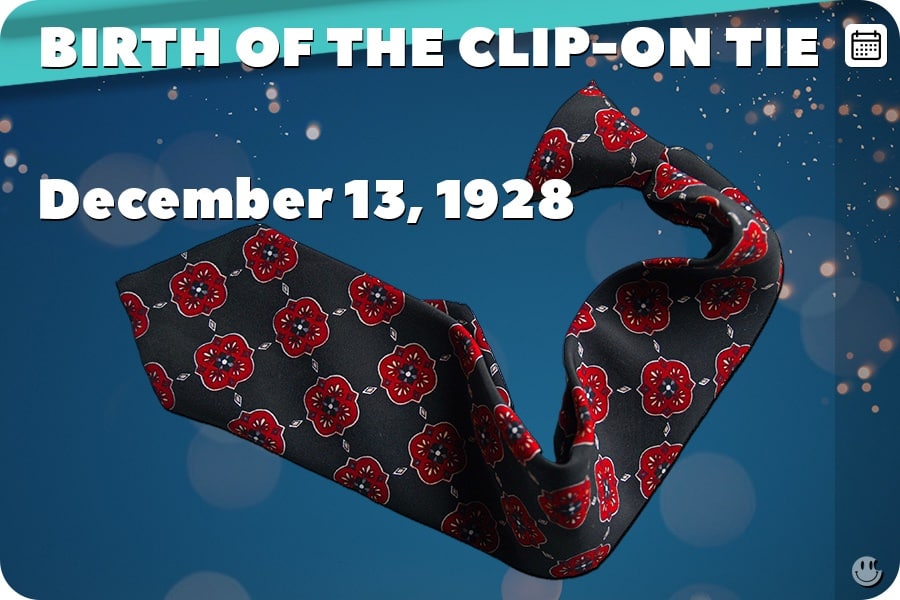
The Clip-On Tie Presented
This week marks the anniversary of the invention of the clip-on tie. Invented on December 13th, 1928 by an unknown inventor, the clip-on tie was then further developed by Eastern Creatives Industries INC into the product that we know today.
The clip-on tie serves as a convenient option for those who find difficulty in properly adjusting a traditional tie. While learning how to tie a tie is a rite of passage for some, the clip-on tie exists for those who aim for a dapper look while barely lifting a finger.
The clip-on tie is simply a tie that is permanently knotted with a metal clasp on the back that clips onto dress shirts and other clothing. While viewed as cheap and tacky to some, the clip-on tie can be a last-minute lifesaver when traveling to a business meeting, job interview or other events that require you to look sharp.
The origins of the clip-on tie can be traced back to Iowa in 1928. However, the person behind the classic invention is still unknown to this day. Eastern Creative Industries INC expanded on this idea in the 1970s, developing an easier clasp that is widely recognizable by the public today.
Besides the aforementioned tackiness, some people complain about the clip-on ties removal process which has been said is much harder than putting it on. Many who’ve owned clip-on ties say that removing them often breaks that clasp and even gets stuck to their clothing.
Others say that in more hands-on work settings, the clip-on tie is easier to fall off thus revealing the wearer’s less renowned choice in attire. Still, the clip-on tie gave many opportunities to those who refrained from wearing a regular necktie because of the complicated knotting process. The clip-on tie gave a chance to those who no longer wished to avoid wearing ties altogether.
The clip-on tie comes in all varieties of lengths and styles just as regular ties do. From patterned to solid color, clip-on ties never falter in providing style for their wearers. Most of the time, people can’t even tell the difference from a regularly tied necktie.
Since the 1920’s when it was first conceptualized, the necktie both clip-on and regular has seen a decrease in modern work settings with many choosing to work from home in today’s socio-economic climate, and due to the pandemic. The clip-on tie’s popularity has also decreased since it’s major use in the 70s and 80s.
Still, the clip-on tie has had a major impact on fashion, primarily men’s fashion and is still used by workers in office spaces and other business settings today. The clip-on tie may have a diluted history and questions on why it needs to exist, but no doubt it has helped people around the world feel fashionable with ease.
