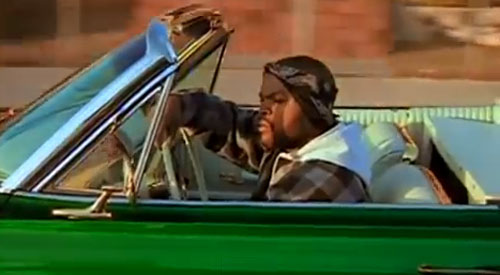
Skateboarder Donovan Starin was the first to publicize the Good Day, as described in Ice Cube’s hit “It Was A Good Day.” As Donovan researched, the facts point to a single possible day, in 1992. “The ONLY day where: Yo! MTV Raps was on the air, it was a clear and smogless day in Los Angeles, beepers or pagers were commercially sold, Lakers beat the SuperSonics and Ice Cube had no filming commitments was January 20, 1992,” Starin pointed out.
The basic clues are in the lyrics to the song, according to @DonovanStrain:
CLUE 1:
“went to short dogs house, they was watching Yo MTV RAPS”
Yo MTV RAPS first aired: Aug 6th 1988
CLUE 2:
Ice Cubes single “today was a good day” released on Feb 23 1993
CLUE 3:
”The Lakers beat the SuperSonics”
Dates between Yo MTV Raps air date AUGUST 6 1988 and the release of the single FEBRUARY 23 1993 where the Lakers beat the SuperSonics:
Nov 11 1988 114-103
Nov 30 1988 110-106
Apr 4 1989 115-97
Apr 23 1989 121-117
Jan 17 1990 100-90
Feb 28 1990 112-107
Mar 25 1990 116-94
Apr 17 1990 102-101
Jan 18 1991 105-96
Mar 24 1991 113-96
Apr 21 1991 103-100
Jan 20 1992 116-110
CLUE 4:
Dates of those Laker wins over SuperSonics where it was a clear day with no Smog:
Nov 30 1988
Apr 4 1989
Jan 18 1991
Jan 20 1992
CLUE 5:
“Got a beep from Kim, and she can **** all night” beepers weren’t adopted by mobile phone companies until the 1990s. Dates left where mobile beepers were available to the public:
Jan 18 1991
Jan 20 1992
CLUE 6:
Ice Cube starred in the film “Boyz in the Hood” that released late Summer of 1991 but was being filmed mid-late 1990 early 1991 and Ice Cube was busy on set filming the movie Jan 18 1991 too busy to be lounging around the streets with no plans. Ladies and Gentlemen..
The ONLY day where:
Yo MTV Raps was on the air
It was a clear and smogless day
Beepers were commercially sold
Lakers beat the SuperSonics
and Ice Cube had no events to attend was…
JANUARY 20 1992
National Good Day Day
“Just wakin up in the mornin gotta thank God
I don’t know but today seems kinda odd
No barkin from the dog, no smog
And momma cooked a breakfast with no hog (damn)
I got my grub on, but didn’t pig out
Finally got a call from a girl I wanna dig out
(Whassup?) Hooked it up for later as I hit the do’
Thinkin will I live, another twenty-fo’
I gotta go cause I got me a drop top
And if I hit the switch, I can make the ass drop
Had to stop, at a red light, lookin in my mirror and not”
It may be hard for anyone living in the rich commercialism of today to understand the climate of the late sixties and early seventies. You could make a good amount of cash in freelance photography. Poster art was big and companies were looking for new poster art material as well as music companies looking for record album cover material. And you had to have a basic knowledge of photography to use a film camera.
Music concerts were relatively cheap and security at music concerts was pretty basic. So basic that once I even used my counterfeiting skills to produce a fake New York Times press badge, complete with the New York Times seal trademark. I used that badge to get me into a couple of Rolling Stones concerts, a James Brown concert, and several other venues. Even if the concert was affordable, the press pass allowed me backstage access. Then one day I ran into a real New York Times reporter who had just retired and was living in Detroit. The press badge was retired.
Veterans from the war in Vietnam were returning at a record rate and government money was flowing like maple syrup over buttermilk pancakes. Not only in the area of education under the GI bill, but also in grants and small business loans. A White Vietnam vet could get one amount to start a small business, but that amount would quadruple if he partnered with a Black Vietnam veteran.
That’s one reason I was in such demand. I was a veteran, I was Black, I spoke good English and was fairly well educated as well as being congenial. I had already established myself as being a decent photographer when I was hired by the J. L. Hudson company as their first Black photographer in heir hundred year history. But besides that, I was a pretty good artist also who picked up a few jobs doing pastel portraits at the state fair. I would get proposals that only wanted use of my name, but I saw that as being unethical and maybe illegal. That’s when I met Jimmy Samuels.
Jimmy got the idea to open up a little storefront art gallery on Woodward Avenue, and my friend Bill Riser and I jumped right in and we started the “Gallery of Imo”. This was called an opportunity for Blacks in the neighborhood to see real Black artists at work and to purchase good artwork and paintings done by Black artists. The gallery was made possible with a single government grant. Jimmy was a sweet talker and a con artist who should have been an used car salesman. Barrack Obama reminded me of old Jimmy. Jimmy even brought his girlfriend into the gallery as our book keeper, but she spent more time partying with Jimmy than keeping our books. I sold several paintings while at the gallery and I sometimes wonder where they are now.
In my personal life, I was going to college under the G. I. Bill and receiving a extra stipend for housing since I had a dependent (my daughter Angela), but I lived at home with my mom and didn’t need to pay rent. That, with the paycheck from Hudson’s was more than adequate to provide for a pretty decent lifestyle, even the purchase of a bright red 1965 Chevrolet Corvair Monza and a Hasselblad camera.
F. Lee Bailey, the famous lawyer and attorney had created his program of “New Detroit”, part of which was to take the fine arts into the inner city neighborhoods through a program he financed called “Metro Arts”. The idea being to gather promising young Black artists, musicians, and dancers, train them and have them give performances at the very popular Cobo Hall Arena.
Built in 1960, Cobo became a must-stop venue for the biggest and wildest rock-and-roll bands of the ’60s and ’70s; not to mention the temporary home for the Detroit Pistons. Black Sabbath, Jimi Hendrix, the Rolling Stones and Bruce Springsteen all played shows at the arena. Thin Lizzy and Queen performed in 1977 for $7.50 a seat. Cobo Arena was the setting for one of The Doors’ best complete concert performance recording on May 8, 1970. KISS played Cobo numerous times in the 1970s, including a sold-out three-night stand in 1976.
As part of his New Detroit program, Jimmy Samuels, Bill Riser and I were successful in obtaining a grant from Mr. Bailey to purchase a defunct and abandoned motel off of Woodward for the purpose of setting up an artist commune. Bailey cut the check for two hundred and fifty thousand dollars and the money was deposited into a three party bank account. That would require all three signatures to withdraw any funds from that account.
But that’s when things began to go sour. The director of the Metro Arts program who was hired because she lived in the inner city, moved into the prestigious apartments of Lafayette Towers and bought a brand new Cadillac. The music director she had hired with six figure salary who was supposed to be so great, turned out to not have a degree in music or any degree at all. Metro Arts was in trouble. Then, our friend Jimmy Samuels figured out he could transfer money from our account without needing the other signatures. The check to pay for the motel bounced and Jimmy was nowhere to be found. The gallery, even though successful, was abandoned soon after.
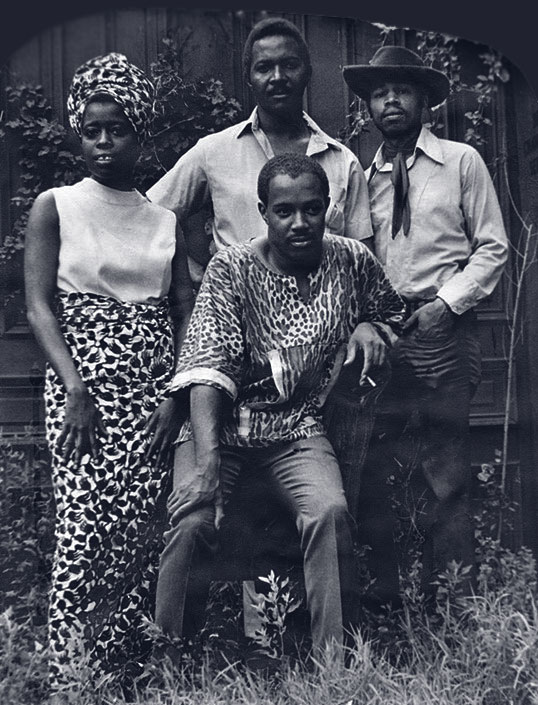
It was under those circumstances that I met Bill Hanson, another veteran and photographer, who with several other veterans had set up a small studio over an abandoned auto repair shop they called “Cinema 76″. The seventy six was in reference to the American revolution. Bill and his cohorts were more into cinematography and thought I could be useful in taking their still shots, plus being Black, I could get them more federal grant money.
Cinema 76 was successful in getting a grant, not from the U. S. Government, but from the Canadian Arts Council. The Canadian Arts Council was even more liberal in their grants than our government. Our first big professional movie would be exploring the deforestation of the Canadian forests. To narrate the movie, it was decided to use an old actor by the name of “Iron Eyes Cody”. Now Cody wasn’t a real Native American, he was really Italian, but he had played so many Indian parts in the movies that he thought he was. Cody was perfect in comparing the Native stewardship of the environment with that of the White man with scenes of the lumber industry destruction and deforestation ecological ruin. The closing scenes in the movie were of Cody walking out of the forest and standing by a river with trash and debris floating by. There would be a close up as a tear rolled down his cheek.
The movie was a success and actually aired on Canadian television. Around this time, an American group had formed that called themselves “Keep America Beautiful”. They saw our film and offered to purchase it. I wasn’t privy to whatever deal resulted and I won’t attempt to even speculate. The got the film and Cinema 76 ceased to exist. When the Keep America Beautiful folks aired their public service commercial a few months later, our film had been cut and altered to a thirty second infomercial called the “Crying Indian”.
I never saw the other fellows after that, but Chuck and I remained friends for quite a while. Dinners at Chuck’s house were always interesting. He lived in an all White neighborhood, so my visits to his house usually brought out the bevy of curious neighbors, probably afraid that I was moving in. Chuck had the honor of being the only person I know whose cat was deemed a neighborhood terror. He was all black and evidently possessed by some demonic spirit. Chuck would warn, “don’t pet the cat” on every visit. The cat would jump up on the dinner table while we were dining and Chuck would say “don’t pet the cat”. His cat had a nasty habit of lurking in the bushes and attacking whoever happened to be passing by. One swipe of his paw on anyone’s bare leg and he would scurry away before any attempt to catch him. Neighborhood kids were hi favorite targets. Chuck’s cat was s notorious that he had been cited because of it and the local newspaper had even written an article.
Chuck ultimately received a grant to document the lives of a wolf pack that required him and his wife to actually live with an isolated pack of wolves on a Michigan Island. I don’t think Chuck and his ever became as famous as the Jim and Jamie Dutcher, he wasn’t financed by National Geographic, but he was definitely a pioneer.
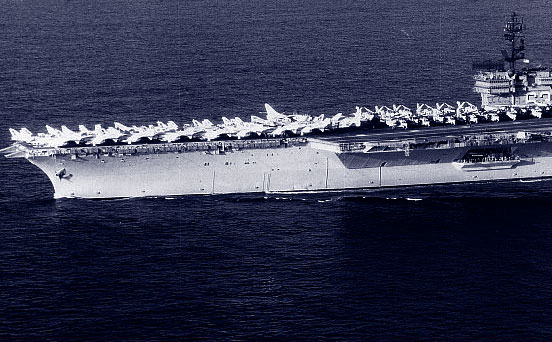
The USS Kitty Hawk riot was the first mass mutiny in the history of the U. S. Navy and were it not for military law, the incident might be passed off as a demonstration.
Following the civil rights demonstrations of the 60s, White people went over board in trying to erase any perceived appearance of racism. When I finished basic training and Engineman A school in 1962 and arrived at the submarine base in New London, Connecticut, I had not yet taken my naval career seriously and started hanging out with a group of young Black sailors who weren’t in the submarine program. It was a time when a Black sailor could get away with anything because everyone was so afraid of the race issue. Go AWOL?, no problem, just start jiving the supervisor. Didn’t finish your assigned tasks?, no problem, just say f—it!
This was also the time when we started protesting to make the Afro haircut a legal regulation style for Black sailors. The navy eagerly capitulated.
Senior White petty officers were sometimes complicit in that they were often afraid to discipline Black sailors for fear of being labeled as “racist”. This eventually led to a disintegration of military order and resentment from White sailors who were often punished for the same infractions. There would be groups of young Black sailors taking over the base recreation centers, barracks lounges, and enlisted clubs where they wouldn’t allow anything other than soul music to be played. Moreover, these young Blacks were mostly stuck in the service ratings because of their poor education and poor scoring on the enlistment exams. Their job performance left them little chance for advancement.
After almost flunking out of submarine school, I gave up hanging out as I could see no benefit to it. These guys were stuck in the same ghetto mindset that I had seen back in the hood in Detroit. I didn’t have to be “cool” to be cool. When I reported to my first submarine duty station, I had made up my mind that I wouldn’t approach my career with that racial chip on my shoulder.
White appeasement fueled by White guilt continued following the assassination of Martin Luther King in 1968 and well into the 1970s.
In 1972, the navy was rocked by a race riot on board the aircraft carrier USS Kitty Hawk.
This incident caused both ripples and over reaction by the navy. The navy created it’s own affirmative action program and ordered every sailor to attend classes on race. The only problem though, was that these classes were often facilitated by angry Black petty officers who were, in my opinion, racist themselves. The first several programs I attended, the facilitator would greet each attendee as they entered the class room with the Black power sign for Blacks and then telling each White sailor that they were “racists”.
Since racism was not a serious problem on submarines, we would bewilder the facilitators with our cavalier attitudes and eventually labeled the classes as “Watermelon U” or “Watermelon Universities”. The programs weren’t helping race relations, they were hurting it. I had a young fellow crew mate who was in tears because the facilitator had called him a racist.
Not only that, but the navy program ignored the other races and ethnic groups that were in the service. Hispanics, Asians, Muslims, etc.
I am starting to see the same old crap resurface again. No matter the inequities, you cannot pander to one group of people without causing a backlash in another. When you tell a White college applicant that he can’t get into college because of a “quota” system, it creates resentment. When a White police officer is afraid to arrest a Black felon because he’s afraid he’ll be videotaped, it creates resentment.
Even the demands for reparations are starting to resurface as well as meaningless laws being proposed. Why do we need a “hate crime” law if it’s only exercised in some cases, but not in others? Why do we need an “anti lynching law”, that also will only be used in certain circumstances and can only be applied once the action is done. An elderly White store owner is dragged out onto the street by a gang of Black thugs and beaten to death with baseball bats. But that’s not “lynching”.
After 300 years, we haven’t learned that you can’t eliminate racism with laws and legislation. Only good people meeting on a common ground can do that.
Oh well, I’ve been here before and it will all pass. There will still be those who blame their poor life decisions on race, there’ll still be those who preach hate and division, and there’ll still be politicians who use the subject of race for their own benefit and do nothing once they’re elected. We once thought the election of a Black man who promised to “heal” America would be the answer. Some even thought he could walk on water. What we found was that he was just another politician with his own agenda and goals.
Any Black person who grew up in the 1970s probably remember it as the era of racial pandering. It was common to be invited to a White friend’s party or social gathering just so they could show off their Black friend. I was often invited to parties by people who loved the way Black people danced. I was not a good dancer. Likewise, I seemed to get picked for all the ship’s basketball games because everyone knew that Blacks were good at basketball. I was lousy at basketball.
But this was also the era of tokenism. Every television show had to have at least one Black person in the cast. Sadly, that one Black was usually cast as a drug dealer or pimp. I hope we’re not going to see a repeat of these same misguided human reactions again. I still can’t dance and I’m still lousy at basketball, just a few years older.
My younger foster brother, Van, embarrassed my older foster brother and me at school when the school counselor asked him what he wanted to be after he graduated. “A pimp”, he said. The counselor got a strange look on his face and asked, “what?”. “A pimp”, Van replied. The counselor closed his notebook, stood up and walked out of the room.
WABX Free Concerts on Sundays on the WSU Campus Tartar Field
After my first enlistment expired, I moved back to Detroit and enrolled in college at the Wayne State University. After first trying to get into the medical school, I decided to major in fine art, but later realizing where the money was, switched to commercial photography. Under the GI bill, I actually made money going to school since I lived with my mom and didn’t have to pay for housing.
Wayne State University (WSU) is an American public research university and the third largest university in the state of Michigan. The WSU main campus comprises 195 acres linking more than 100 education and research buildings. All in the center of the city. In fact, it wasn’t unusual to see the Woodward Avenue street hookers being chased across our campus by the police.
This was the 1970s, a year after Woodstock, during the Vietnam war, and only three years after the street riots. Being a veteran, there was some resentment from my classmates at first, but that disappeared when they realized that I wasn’t the typical “gung ho” military guy. I participated in anti war protests, supported the Black Panther Party, and listened to “rock” music. In fact, I could probably be heard blocks away from the campus with Jethro Tull’s Aqualung blaring from the four big speakers in my 1965 red Corvair Monza convertible. I had an Afro, wore bell bottom hip hugging trousers, and the latest Carnaby Street fashions from England. I didn’t take drugs or even smoke grass, but I knew all about it. Having rolled cigarettes as a kid, I could roll a mean joint.
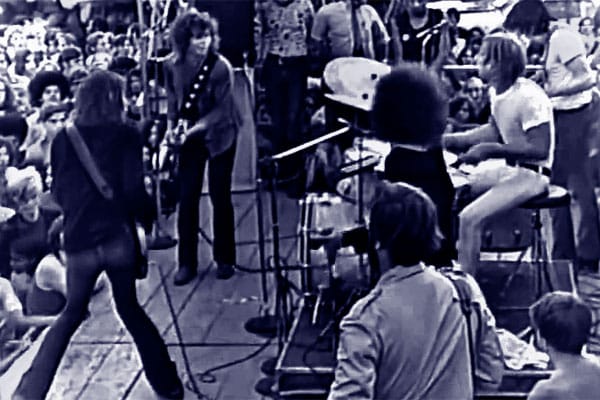
One thing that stood out while attending college were the “free” Sunday concerts on the WSU campus Tartar Field by WABX in the late 1960s and early 1970s featuring musicians like Chuck & Joni Mitchell, Alice Cooper, MC5, The Stooges, Savage Grace, Ted Nugent, Grand Funk Railroad, SRC, Stoney and Meatloaf, Rare Earth, Frigid Pink, and many others. There would be hundreds, maybe thousands of youngsters gathered on the grass, mostly students, but also some neighborhood folk. It wasn’t unusual for a girl to ask you over to her place for the night, or the guy sitting next to you to offer you a joint. No arguing, no fighting, no shootings. If you had transportation, you got burdened with taking people home or being invited to parties.
On one such night, I ended up in the all White neighborhood of GrosseIle, about 25 miles from Detroit and spent the night there with a friend. He told me later that his neighbors were “shocked” to see a Black person in their neighborhood.
During one Rare Earth concert, for example, a guy asked me to save his spot in the grass and left. He returned a few minutes later with two cases of wine that he simply passed out to the audience. He owned a liquor store just down the street.
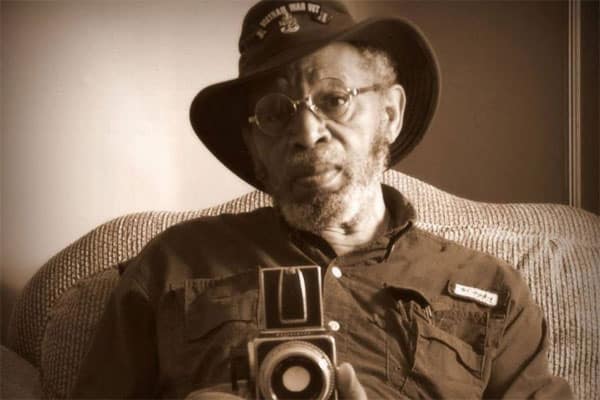
Fredric Durrette served one tour in Vietnam, retired as E8 in the navy submarine service after 23 years. Major hobbies are collecting old stuff from the 20s and restoring old racing bicycles. Worked as a commercial photographer at JL Hudsons in Detroit and continue photography as a hobby. Love Sade, sixties soul, seventies rock, and all jazz. Attended Woodstock in 69! http://snakesafe.jalbum.net/
When I returned from Vietnam in 1969, I made three decisions. One was going to Woodstock instead of the “New York City Soul Festival”, another was getting out of the navy when my enlistment expired, and yet another was moving back to Detroit.
Upon arriving in Detroit, there were other decisions to make, enrolling in college and enlisting in the naval reserves to keep my pay grade and time in service just in case I decided to re-enlist regular navy again. I actually prepared for and thought seriously about enrolling in medical school, but was talked out of it. All good, I probably would have made a poor doctor anyway. So, being interested in art, I enrolled in the Arts and Crafts Art School and later transferred to Wayne State University under the GI Bill.
I enrolled initially for a BA in fine arts and with a couple of friends, opened a small storefront art gallery on Woodward Avenue, called “The Gallery of IMO” and became the only artist selling his paintings out of the three members. Bill Riser, one of the other artists, introduced me to his brother Paul, who did musical arrangements for Motown.
The early seventies were a unique period in time. One was because of the Black renaissance and the other because of the fantastic opportunities offered to freelance photographers back then. Photographic posters had become the new craze, and record companies were constantly looking for new talent. Professional commercial photographers seldom worked weekend, leaving great money-making opportunities for us nonprofessionals. I made five hundred dollars for a two hour job photographing the Detroit Fourth of July fireworks for the Detroit Free Press newspaper. I made a thousand dollars photographing Mercedes cars for the auto show display. And about two thousand dollars over time on poster contracts. It was then that I decided to switch my major to commercial photography. Bought my first Hasselblad camera and two lenses.
I was doing very well freelancing and selling artwork on the GI bill and living with my mom, but I also needed a car and without a steady source of income, that would be impossible.
During this time, I had printed and triple-matted several of my best photographs put them in my portfolio and commenced the job search, not really knowing much about the procedure other than showing my work. My portfolio must have weighed in at about forty pounds and wasn’t the best thing to handles on crowded public transportation like the Detroit DSR buses.
After a week or two of lugging my portfolio from one business to another without much success, a friend recommended the J. L. Hudson department store that had it’s own photography studio as part of it’s advertising department.
The Hudson store opened in 1891 and was eventually moved to Gratiot Avenue and Farmer Street, and encompassed an entire block, filling the space between Woodward Avenue and Farmer, Gratiot and Grand River Avenue. The store was a 25-story structure that was the world’s tallest department store until 1961. At one point, Hudson’s claimed it was also the second-largest store in the country in terms of square feet (two million), after Macy’s Herald Square in New York City. Hudson’s had it’s own cafeteria and even an infirmary. The Hudson’s photographic studio was located on the 19th floor.
So, without even making an appointment, I walked into the store, took the employee elevator up to the 19th floor (customer elevators only went to the 14th floor) and luckily caught the manager, Mr. Syzdek during his lunch break. It was obviously an uneasy first meeting, but Mr. Syzdek was so impressed with my photographs and the way they were matted that he hired me on the spot.
So, I became the FIRST Black photographer in the history of the J. L. Hudson’s department store history. A fact that even garnered a mention in the newspapers and didn’t escape the notice of the NAACP.
Being single, my coworkers thought I’d be a good match for another Hudson employee. Portia was one of the young African American elevator operators. She was tall, thin and very pretty. So we started dating regularly right away. Portia wanted to be a model and we were a pretty good match… but Portia had one big problem. She liked to smoke marijuana, a lot of marijuana.
This presented me with two problems. Besides weed being illegal in Detroit, it was also illegal in the military. Also, I never smoked the stuff myself. However, having perfected the art of rolling homemade cigarettes, I became pretty good at rolling joints. So good, that my talent was often requested at the parties we attended. At a Tina Turner “after-hours party”, I spent all night rolling joints. There was so much weed at that party that I was getting a buzz just from the secondhand smoke and all the time praying that the reserve unit wouldn’t schedule a urine test.
People who say smoking weed isn’t harmful should meet a person like Portia. Her brain was almost toast. It was a good thing she operated the employee elevators and tot the customer ones. One day I got on the elevator and expected she’d take me up to the nineteenth floor where I worked. The doors shut and the elevator started moving upward very slowly, then very fast and eventually came to an abrupt stop. The doors opened and posted on a pole just to the left was a sign that read “21st Floor, Executive Offices”.
When Hudson’s wanted to run an ad for African American newly weds, they use Portia and I as the models. The full page ad ran in the Sunday paper and on Monday, my phone rang off the hook with friends congratulating me.
We went out to dinner one night at a local steak house. After getting our seats, I excused myself for a restroom break. As I exited the bathroom, I saw a guy sitting at our table having what seemed to be a romantic conversation with my Portia. Not wanting to cause a scene, I hesitated long enough for the guy to get up and leave. When I got to the table, Portia broke out in hysterical laughter. “What’s up?”, I said, trying to control my anger. “That guy just told me he was Fred Durrette, a photographer, and wanted me to pose for him in his apartment studio”.
Portia and I eventually dissolved our relationship as it just wasn’t enjoyable. I was always concerned about being arrested with the nickel bag of grass I was taking to her house or even being busted by some undercover narc when trying to purchase it. Either way, it would end my military career.
Fredric Durrette served one tour in Vietnam, retired as E8 in the navy submarine service after 23 years. Major hobbies are collecting old stuff from the 20s and restoring old racing bicycles. Worked as a commercial photographer at JL Hudsons in Detroit and continue photography as a hobby. Love Sade, sixties soul, seventies rock, and all jazz. Attended Woodstock in 69!
Pulling the race card (or How I got to meet Princess Grace)
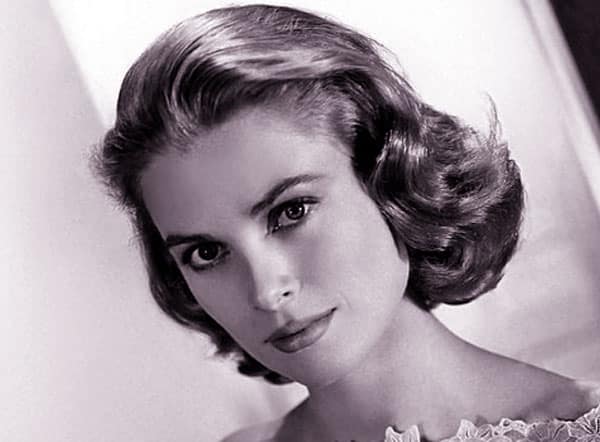
Princess Grace, Grace Patricia Kelly, was an American film actress who became Princess of Monaco by marrying Prince Rainier III in April 1956.
While making a med cruise on board the USS Piper back in 1964, we received permission to pull into the port of Monaco for Christmas. This was a special port call because we were the first American warships to pull in there since World War Two. Because of this, the principality went all out to make sure that we enjoyed the port visit first by allowing some crew members to stay at the luxurious Monte Carlo hotel for free, a dance put on by the USO with some of the best looking women on the Riviera, and a free account at the famous Monte Carlo casino.
For the Christmas day observance, seven crew members were invited to eat dinner at the castle with Princess Grace and the royal family. Seven crew members were chosen, but no one from the engineering department. Enginemen were considered to be uncouth and smelled of diesel oil even after showering. That’s when I got an idea. One, being a newbie on board, they really couldn’t say that I was totally uncouth, I had not yet been sullied by my apprenticeship with my mentor, Beetle Bailey. Two, being the only Black person on board, it was only appropriate that a “token” be sent as representing part of the crew. How “American” would that be?
After a long debate and an hour or two of my engineering chief pleading my case, the captain capitulated and agreed. What followed was a crash course in formal etiquette, what fork to eat with, how to chew politely, how to address the princess, etc. The only point of disappointment, however, was that I would be sent as the official photographer. So, naval history is devoid of any photographic evidence of one Fred Durrette formally meeting Princess Grace. However, if you ever get to the submarine museum in Groton, Connecticut, ask to see the original photograph and on the back, you’ll see my signature as the official navy photographer.
The Princess was everything that you’d expect a princess to be. She was beautiful, graceful, and still retained her American down home charm.
Way back in 1963, while stationed on board the USS Piper, we pulled into the port of Djibouti, Africa as one of our scheduled Med cruise port calls. Djibouti, is a country located in the Horn of Africa in East Africa. It is bordered by Somalia in the south, Ethiopia in the south and west, Eritrea in the north, and the Red Sea and the Gulf of Aden in the east. Due to it’s history of French colonization, the country still had a big racial divide between the very poor Black population and the rich White Europeans. For example, Blacks were not allowed into the better hotels unless hey worked there as servants. As a result, the only place for a Black U. S. Navy sailor to party was in one of the interracial bars in the native section of the city. White tourists were afraid to go there.
Standing topside watch while moored along side the pier usually drew a crowd of native dock workers who were amused to see a Black man carrying a rifle, a side arm, and a baton, seemingly just strutting around while White guys did all the physical labor. and I did play this up somewhat , being the only Black in my crew, by harassing our all White deck crew doing the usual paint chipping and painting we did during every port call. Once or twice during my rounds, I’d walk over and tap one of my shipmates on the head with my baton which would draw a big round of applause from my audience.
My mentor, Beetle Bailey, the senior first class engineman, was a huge person with the temperament of a lamb. Beetle took me under his wing from the moment I reported on board and taught me all I needed to qualify as a diesel engine throttleman. Beetle also took to calling me his little “spear chukker”, to which I would just call him a stupid honky. We often exchanged racial slurs. I had decided early on that I would not go through life with a chip on my shoulder and as long as the jokes were meant to be humorous and not derogatory, I would simply respond in kind. However, I did let it be known that there was a thin line that shouldn’t be crossed and in fact did go after one of my shipmates with a jacking wrench when he crossed that line.
But in response to Beetle’s calling me his little spear chukker, I found a souvenir shop in town and purchased a twelve foot native spear, although a reproduction and not authentic. Since our only mode of transport around town was either taxi or motor scooter, I rented a Lumbretta scooter to get back to the boat. I guess the European tourist were pretty amazed to see a navy sailor in uniform, a Black navy sailor, riding a moped and carrying a twelve foot spear. I hung that spear in the forward engine room over the number one main engine where it hung long after I had transferred and up until the day Piper was decommissioned.
One day, we had to move the boat so a U. S Navy destroyer, the USS Bigelow could moor alongside the dock. We had to move since the Bigelow was the senior ship as as the senior ship could moor directly to the pier. While we were moored in Djibouti, we needed to refuel. Now the old diesel submarines used fuel ballast tanks to maintain a stable ballast. As the fuel in the tanks was used, it would be replaced with sea water. When fueling, we take on diesel fuel into the tank that would in turn push the sea water out through an overboard pipe that had a sight glass. The sight glass going black meant that the fuel tank was full to the brim and would soon be going overboard into the harbor which would be a no no. So, as we fueled, someone would have to sit topside watching the sight glass to notify the men below to stop transferring fuel.
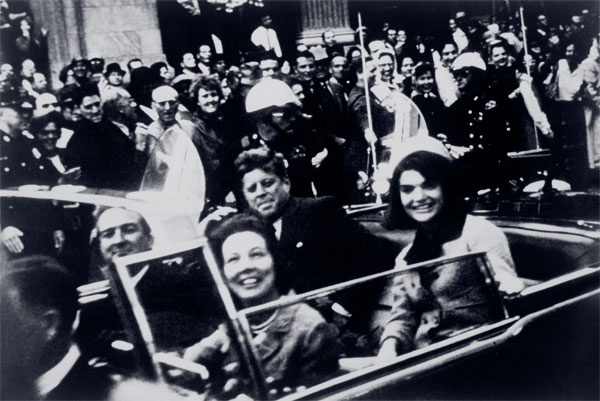
This night, as we sat alongside the Bigelow, performing our fueling operations, the night was peaceful and quiet until alarms started going on all over the Bigelow. Some sailor in a drunken stupor had climbed the Bigelow’s radar mast and got instantly fried. We were all wondering what the heck had happened. The Bigelow had lit up all of a sudden and we watched men scrambling all over her decks, some crying “Oh my God”. One of our crew came rushing back to the boat and said “The president’s dead. The president’s dead… Somebody killed JFK”.
This sent shock waves through the Piper also as some guys went through the boat turning on the lights and waking people up. We were all in shock. Were we going to war? Our radioman was in town getting drunk like all radiomen did in those days, there was no internet, email, cell phones, and diesel submarines didn’t carry televisions. The only info we received until our radioman got back was all second hand from the guys on the destroyer who didn’t know much more than we did. That was November 22, 1963.
During my stay in juvenile, my social worker was impressed with my art work and pulled enough strings to get me into a foster home run by the Wilcox family. They had two sons of their own, one younger than me and one older. Staying at their home had it’s drawbacks and it’s benefits. Their house was in the outlying area of Detroit. That meant taking two buses to get to school at Cass Tech in Detroit, one Great Lakes Transit bus and then transferring to a regular Detroit city bus. Cass didn’t care where you lived as long as you maintained a B average and could get to school on time. In fact, I had done the same thing when my mom sent me to live with my aunt Bernice first, then my uncle Shanky, and finally my aunt Jim, all in Pontiac, Michigan. That was the drawback.
The benefit, however, was that we were far enough outside of the city limits that I could hunt. Pop Wilcox let me have an old single shot 410 shotgun with a missing firing pin. Being very good at jury rigging even before I knew what that old navy term meant, I substituted a carpet tack where the firing pin should have been. The only problem was that the carpet tack actually punched a hole in the shell primer causing enough of a blowback that I couldn’t place the gun too close to my face when firing.
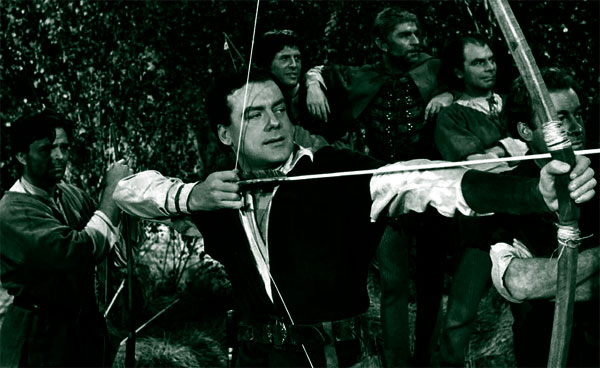
As a young kid, I had watched all the Robin Hood TV shows and fell in love with archery. Actually I got pretty good at it as evidenced by my placing an arrow in my uncle Wilford’s leg when he returned home from the Korean War. Also, we kids played a game of “chicken arrow”, where we’d stand back to back, point our bows upward with our eyes closed and shoot our arrows into the sky, counting to ten before opening our eyes again and dodging the falling arrows.
Another test of our skill was shooting water filled balloons from the hands of any kid we could talk into holding them. To be new to the neighbor meant holding the balloons. Not one neighborhood kid was ever injured, but we all became very skillful with our bows.
So, while at the foster home, I managed to score a used Bear Kodiak recurve bow with several arrows and found I could replace the target tips on the arrows with broadheads or blunt tips for bird and rabbit hunting.
We hunted mostly pheasant in that area, sometimes quail if pop Wilcox let us use his good shotgun. I liked using the bow. Shooting pheasant with a shotgun isn’t easy and shooting them with a bow is harder yet. First, you need a good birding dog and we just happened to have one. A mature German shepherd named Butch. Butch was fantastic in finding and getting the birds to take flight. Pheasant are very heavy birds and they stay on the ground as long as possible, making them hard to get a good shot. A good dog, however, will flush them out. Now, being such a heavy bird, it takes them a while to get up to flying speed during which time they’re also going up at an angle to gain altitude. At one point, they kind of level off and that’s when you have to take your shot. Wait too long and the bird is going too fast and even a shotgun will fail.
The best time to go hunting, although illegal, was any day before the season legally opened. It was suicide to go out into the woods during the season. Many times we had to dodge bullets from the weekend hunters, the guys who had desk jobs in the city and thought anything moving in the woods was a deer.
One day, I managed to bag eight pheasant and prayed that the game wardens were eating lunch as I carried my prizes home.
Lakes and creeks in Michigan are clear enough to bowfish and I would often nail a few trout or carp in a nearby stream. Now a lot of people don’t eat carp, but they’ve never had to worry about putting food on the table. You eat a lot of different things when you’re poor. Plus an adult carp can feed a family of four pretty good if cooked properly. I’ve also lost arrows shooting carp with a bow. Carp are hard headed fish and I’ve had arrows simply just bounce off their fishy little skulls and they go on their way.
Flash forward to my first submarine duty on the USS Piper…
When I finished submarine school and got my first assignment to the USS Piper, it was kind of a let down. We were only doing sub school operations. That meant taking a bunch of sub school students out and spending a whole day diving and surfacing, diving and surfacing and trying to teach them what submarines were like. I did it when I was in school. The only good thing was that you became more proficient and went home every night.
Then, one day, we received orders to participate in what was called “Springboard”. Springboard was an annual exercise that meant transiting to Puerto Rico and most likely the Bahamas and the Virgin Islands to operate with surface ships. Having seen photos of the fish in those areas, I knew I had to take my bow with me and even bought a real fancy bowfishing rig just for the trip.
Now, the old diesel submarines usually strung sets of lights along the hull when moored in foreign ports. We called them med mooring lights and the purpose was to enable the sentry to be able to spot any swimmers in the water that might be trying to get on board. The lights also attract lots of zooplankton, small fish to feed on the zooplankton, and big fish that fed on the small fish.
I was standing topside by the engine room hatch and looking over the side when I saw a flash of silver in the water. “Wow, that’s a big fish”, I thought as I started going below to get my bow. A little while later, I returned to the same spot fully armed. I saw that silver thing flash in the mooring lights several times and made my calculations for the next time it would happen. I was ready and excited.
Sure enough, there was the flash of silver and I fired my arrow where I had calculated my target would be. Nailed it. The line from my arrow to the reel on my bow started paying out. However, I couldn’t reel it back in. Whatever I had hit was too darn big, so I just let the line pay out trying to figure what to do next. That wasn’t my decision to make. As soon as the line reached it’s limit, there was a big jolt that almost pulled me over the side. I was just gaining my composure when the second jolt occurred, this time I had to make a choice between going over or simply letting go of my bow. I let the darn bow go.
Two days later, some guys on one of the tugboats were talking about the big tarpoon someone had pulled out of the water with a fishing arrow stuck in it’s side. My arrow! But no bow was ever found.
When I was ready to enter high school, my mom got the idea in her head that I had to go to Cass Tech. Cass Technical High School was the best school in the city, but my grades were borderline.
The school required an admissions exam and you had to have a B average to get in. Now Southeastern High School was the eastside ghetto school and Northwestern High School was the west side ghetto school. Northwestern was where the folks at Cass would send you if your grades fell below a C. For me, going to either ghetto school meant giving up my lunch money every day, possibly getting my butt kicked after school everyday and not learning anything useful unless I joined one of the gangs.
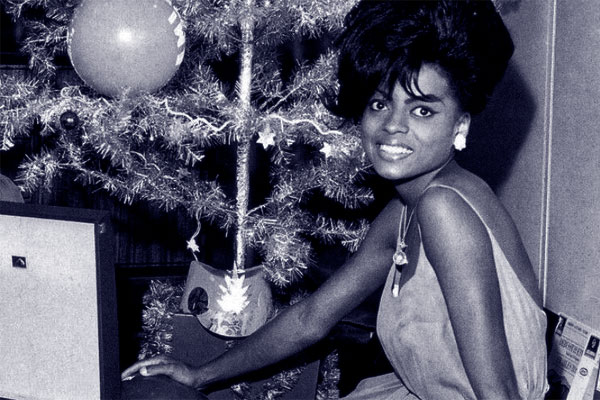
So, there was Cass. Of the more than 50,000 students graduated from it, some of the more distinguished students were comedians Lily Tomlin and David Alan Greer, auto executive John DeLorean, violinist Regina Carter, jazz musician Donald Byrd, and of course Diana Ross. Aviator Charles Lindbergh’s mother, Evangeline Lindbergh, taught chemistry at Cass from 1922 until 1942.
It was essentially a college-prep high school where the top scholar was more honored than the star quarterback of the football team. Cass served kids from all over Detroit. Some kids would have a ninety minute bus ride just to get there.
There were stories about Cass students who went away to college and found college easier than what they had in high school.
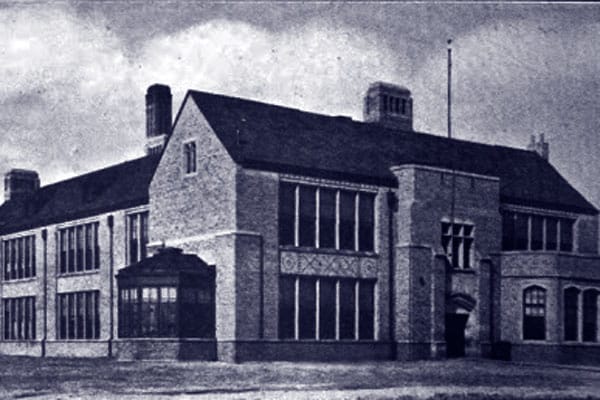
Cass Tech was connected to the High School of Commerce by the Victory Memorial Arch, a second-floor Gothic-style bridge that crossed Vernor Highway. Therefore, the combined capacity of both schools was around four thousand eight-hundred and twenty pupils. However, both schools shared Cass Tech’s cafeteria. Some Cass teachers also taught classes at Commerce.
The first floor of Cass was home to a gymnasium with an indoor track along a mezzanine, the teacher’s lounge (complete with fireplace) and a three-thousand-seat auditorium that was said to be near acoustically perfect and was complete with a balcony. The ground level also had pharmacy and physics laboratories; the second floor had a machine shop and chemistry and bacteriology labs; the third floor held the library; the fourth floor was home to cooking and mechanical drawing classrooms and art classes; the fifth floor had sewing labs and other shops; the sixth floor was the home of the music and textile programs; and the seventh floor had a foundry, baking and kitchen classrooms and the school’s original lunchroom, which could feed up to 1,000 students at a time.
Well, I got into Cass by the skin on my neck. But the bus ride from our old neighborhood was complicated and long, so my mom decided to move to a better neighborhood on the west side. Moving to the brownstone on Carter Street, right off of Dexter Boulevard, meant I could take a single bus to and from school. The Dexter bus also went down West Grand Boulevard for a while and right past the Motown or Hitsville, USA recording studios.
By this time, I had become a full blown beatnik. Jack Kerouac’s book “The Dharma Bums” was like my bible and Kerouac’s “On The Road” was my inspiration. I dabbled in Zen buddhism, took to wearing a black beret, dark sunglasses, and used my mom’s mascara to darken my mustache.
Before school started each morning, a lot of us students would gather in the auditorium to do the homework we should have done the night before, but it was also a gathering of disciplines. The performing arts students would be going through their dance routines on the stage, the music students would be practicing their instruments, and we beatniks would be reading our poetry.
Cass Tech had a strict dress code. Boys were required to wear slacks and shirts had to be tucked in, but not me. Art students at Cass were allowed to wear jeans because we worked with paints and stuff. There were several of us “cool cats” that formed our own little group, although the other guys were music students.
We didn’t eat lunch in the lunchroom like the normal kids, instead we spread our mats just outside of the main room where we played our flutes and bongo drums, read poetry and drank green tea. Needless to say, we really stood out, but because the so called “beat generation” was so cool at that time, I think the other kids either admired us or just ignored us. Remember Dobie Gillis and Maynard G. Krebbs? Peter Gunn?
Down the street from Cass was a burger, soda fountain joint called “Buddies”. Buddies was a hangout for the Cass Tech elite, meaning that freshmen almost never went to Buddies.
So, during my first year of high school, I had begun noticing how pretty the girls looked and how differently they acted from my junior high school days, but I was still pretty naïve when it came to the opposite sex. When my classmate Louise caught me in between classes in an empty class room, threw me over a desk and shoved her tongue down my throat, I was confused, but pleasantly surprised.
Just as surprised when this skinny little girl with big eyes came up to me on the school elevator and introduced herself. Yes, Cass Tech had student elevators. She said her name was Diana and we talked a bit before going to our separate classes. A few days later, we ran into each other in the lunchroom and she invited me to go with her for a burger at Buddies. Freshmen didn’t go to Buddies, I thought, what an honor, and my head began to swell. Now, I wasn’t that well heeled to be taking a girl to lunch, but I did have a few bills my mom gave me for art supplies and bus fare, so maybe this skinny little chick won’t go crazy with the menu. It would be a long walk home.
Anyways, we get to Buddies and the typical crowd of loudmouth sophomores and seniors. I was in unfamiliar territory. We grabbed an empty table and placed our order for two burgers and cokes. Not much conversation since I’m also a quiet kind of guy, and not experienced enough with women to even know where to start. She was a year ahead of me, so talking school stuff was definitely out, she wasn’t interested in art or jazz. I did manage to find out that her full name was Diana Ross.
When the waitress delivered our burgers, Diana picked up her plate and moved to a table with much older kids. I was crushed. But later, I was told that Diana made a habit of teasing freshmen and coercing burgers out of them. I left and went back to school. The next time I saw Miss Ross was in study hall when she walked over to my table and handed me one of those little fifty cent photo booth photos and apologized. Diana liked to date the older guys and she hung out with some of the thugs from Northwestern High School.
We never developed a lasting relationship since we hardly saw each other in school. I was an art student and my classes were mostly on the fourth floor. The last time I saw her was on a trip home from school. My buddies and I would get off the bus in front of the Hitsville studio and peek into the basement windows to see who was recording. We caught Mary Wells and Smokey Robinson a few times, but this day, I saw Miss Ross going into the building.
I held on to that photograph she gave me for several years until losing it when I joined the navy.
Fredric Durrette served one tour in Vietnam, retired as E8 in the navy submarine service after 23 years. Major hobbies are collecting old stuff from the 20s and restoring old racing bicycles. Worked as a commercial photographer at JL Hudsons in Detroit and continue photography as a hobby. Love Sade, sixties soul, seventies rock, and all jazz. Attended Woodstock in 69! http://snakesafe.jalbum.net/
My mom was always on a fanatical crusade to see that I got the very best education, long before she enrolled me into Cass Tech High School. My first memory of my elementary school days was when she enrolled me into Courville Elementary while we still lived on Minnesota Street.
Now Courville was at the limit of Detroit’s education expansion program and was situated in what was then a predominantly upper middle class White neighborhood built for White auto factory workers. The neighborhood itself was segregated and was White only. However, there were Black families living nearby and there were a few Black kids at Courville, and I mean just a few and those were from upper middle class Colored families. Yes, “Colored”, that’s what we called ourselves back in the 1950s.
Getting me enrolled in Courville was quite a stretch since we really didn’t live in their district. There were other schools closer to us, but they weren’t the best. Going to Courville meant that my mom would have to get up earlier, get me dressed and take me to school. It also meant that standing out in the cold during the winter waiting for the first bus and in the cold again waiting for the second bus. This ritual would be repeated when she picked me up after school. All this while she was working as a housekeeper for the Fishers. The Fishers loved my mom so much that they often gave her some flexibility. Old man Fisher actually risked his life personally bringing my mom home during the riots in 1967.
I can remember those cold winter mornings after one of those vintage Detroit snowfalls, anxiously waiting to see the bus headlights piercing the bleak darkness. Detroit bus stops in the 50s were not protected. There was only a sign that identified it as a bus stop. Riding the bus meant that you not only had to stand, but you were subjected to inclement weather and occasional splashes of ice cold water and slush if a car came too close. My mom endured all these hardships while holding my mittened hand.
When I say “vintage” Detroit snowfalls, I mean it doesn’t seem to snow in Detroit like it did in the 50s. Sometimes we had snow so deep that I could tunnel to the house next door and not even surface. Every house on the block would have a snowman or a snow fort in it’s front yard. We wore galoshes over our dress shoes, which really offered very little protection from wet feet. As much as I hated them, the old galoshes molded in one piece glossy rubber with flannel linings and four or five metal snap closures were the best. They were also heavy and hard to get off.
Even though there were few “Colored” kids at Courville, no one seemed overly fixated on race. At the start of school, we gathered in a circle, said a short prayer, then the Pledge of Allegiance, with our hands over our hearts. Many of the auto workers were European immigrants, still scarred by the previous war, proud to have become American citizens, and were instilling those values into their children. We kids never even wondered why we were all different, hell, we were just children. I seriously believe that the prayers and saying the pledge kind of brought us all together under one big umbrella as one people despite any outward differences.
I don’t know what happened while I was at Courville. Either it was discovered that we didn’t live in their district or the daily trips became too much for even my mom, but I was pulled out and enrolled in Atkinson Elementary which was closer to our home.
Atkinson wasn’t a bad school and being closer and me being older, I could now walk to school on my own.
It was at Atkinson that I saw my first male teacher and my first Black male teacher, Mr. Phillips.
Mr. Phillips wasn’t “Colored”, he was Black. In Detroit in the 50s, dark skin African Americans were subjects of racial bias from lighter skin African Americans. The perception was that Blacks with dark complexions were considered to be lower class field hands while a light complexion meant education, a better life, and a greater chance of acceptance from the White community. There were magazines like “Colored”, “Hue”, and Ebony. But Ebony never used photos of dark skin people and their ads were all about hair straighteners and skin lighteners.
So, poor Mr. Phillips. Sorry to say that we gave him a hard time. A really hard time. There was a saying on the street that we kids used whenever we had an altercation with a darker playmate. “Black boy, Black boy, you can shine, I’ll get a White boy to kick yo behind”.
Mr. Phillips spent as much time disciplining us little urchins as he did actually teaching. This went on for most of the school year until I gradually started feeling sorry for him. On a hunch one day, I skipped lunch and got into a conversation with him and found out that he was really a likeable guy and also very smart. After that, my mission was to encourage my classmates to give him more consideration and by the end of the school year, Mr. Phllips had become one of the go to guys if you had a problem at school or even at home.
Another thing I remember about my time at Atkinson was the school lunches and I was grateful that we were poor enough for my mom to make my lunch. The fried balogna and tomato sandwiches, sometimes Spam, were a heck of a lot better than government cafeteria food. And they always served tapioca for dessert. Sometimes my mom would pack an apple or an orange into the brown paper bag that served as my lunch box and give me a dime for the little half pint of milk.
There’s a scene in the movie “Christmas Story” where one of the kids gets his tongue stuck on the school flag pole. Well, this didn’t happen at Atkinson, but we did have a similar incident one extremely cold winter when a kid got his tongue stuck to the big brass doorknob of the school’s front door. This brought a rapid response from the local fire station and that kid became an instant celebrity. It must have been a very painful way to prove how brave or how stupid you were.
It was at Atkinson when I had my first seizure. I was running down the hall and about to descend a flight of stairs when everything went black. In losing consciousness from the seizure, I had also run into the wall and tumbled down the stairs.
That resulted in my transfer to yet another elementary school, White elementary. White elementary was one of the schools were the staff were trained to take care of special needs kids. They had cots in some class rooms and we were encouraged to take naps after our playground breaks. White was where I learned square dancing of all things. Good school, but my neighborhood buddies weren’t there. Besides, being a young Black kid, living in the ghetto, and going to a school with “White” in it’s name and learning square dancing didn’t give me any prestige back in the hood.
Fredric Durrette served one tour in Vietnam, retired as E8 in the navy submarine service after 23 years. Major hobbies are collecting old stuff from the 20s and restoring old racing bicycles. Worked as a commercial photographer at JL Hudsons in Detroit and continue photography as a hobby. Love Sade, sixties soul, seventies rock, and all jazz. Attended Woodstock in 69! http://snakesafe.jalbum.net/
There wasn’t a graduation ceremony, but by the time I had grown old enough to start junior high school, my mom had moved us from the projects to a nicer second floor apartment in a two family home on Lemay street. This was a big change both in the level of education and also meant making new friends.
Foch Junior High, now it’s Foch Intermediate, was an excellent school with a great mixture of several ethnic groups, but mostly Blacks and Poles. Many of the kids were still from poor neighborhoods. It was here that I met a White kid named Bob McGreevy. Bob was a great cartoonist and since I had started drawing, we made a great pair. We’d draw entire comic strips in English class and even more when we were sent to study hall. Bob would eventually end up to become a comic book artist for the Sgt. Rock comic books. I had two other good friends, Hardy Shaw and Phillip Smith, but they lived in a nicer neighborhood and their parents were definitely upper middle class.
I remember our phys ed instructor, Mr. Lee. The name sticks because a group called the “Bobettes” had just released a song called “Mr. Lee”. It was about a teacher, but not our Mr. Lee. The song, however, became Mr. Lee’s theme song and we’d sing it as we entered the gym.
Aside from phys ed, Mr. Lee was also the main disciplinary applicator in the school. When someone became too much for their regular teacher, they’d send them down to the gym to talk to Mr. Lee, who had two forms of punishment. Either you got the “board of education” or you did twenty laps around the gym. Most guys opted for the twenty lapse. We all respected Mr. Lee. He did, in fact, break up many fights, both in school and out on the campus.
Foch had an excellent library and I found several great reference books on zooplankton and other aquatic pond life. In fact, this spurred me on to get a better microscope than the one I had.
The only problem with Foch was tat it was right next door to Southeastern High School. Now because Southeastern served a larger area, it was filled with mostly Black kids from several low income neighborhoods and as they say, the inmates ran the asylum. There were fights almost every day. Fights that spilled out from the school campus onto the street. There were fights between guys, fights between girls, and once in a while someone would attack a teacher. And if there was a fight, it would attract a crowd, which created sub fights.
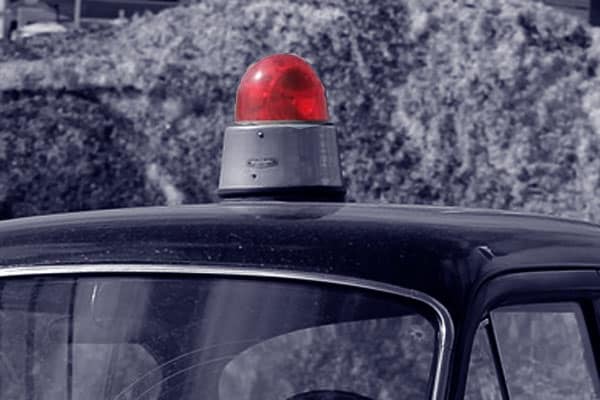
But the city had an answer for that. Aside from the regular police patrol cars, there were two special response units. One was the “Grey Ghost” and the other was the “Big Four”. The Grey Ghost was an all grey, unmarked cruiser and usually had two officers skilled in the use of night sticks. Heck, some of the high school kids were big enough to take on most adults. But, we’d come out from the relative safety of our school to walk by some thug sitting in the back of the cruiser.
The Big Four was another matter. They were the ones who responded if the Grey Ghost came under siege. The Big Four was an all black, unmarked police car that contained four of the biggest guys brutish White guys in the police department. Most of the White cops were Polish. They only knew one way to make an arrest and that was with brute force, especially when it came to dealing with minorities. This was in the 1950s, civil rights and the Miranda Rights were still several years away. Plus they carried full riot gear in the trunk. No matter what fight or how big a crowd it had drawn, every one scrambled when the Big Four rolled up. If you suffered a few bruises between being picked up and being booked, no one cared or saw anything.
The regular street cops and even the black and whites that occasionally cruised through our neighborhood were an entirely different story. Most of them were really nice guys and the first ones to go to if you were lost or needed help. But the very last thing you wanted to see were the Big Four or the Grey Ghost. That was the state of policing in the Black neighborhoods in 1950s Detroit.
Fredric Durrette served one tour in Viet Nam, retired as E8 in the navy submarine service after 23 years. Major hobbies are collecting old stuff from the 20s and restoring old racing bicycles. Worked as a commercial photographer at JL Hudsons in Detroit and continue photography as a hobby. Love Sade, sixties soul, seventies rock, and all jazz. Attended Woodstock in 69! http://snakesafe.jalbum.net/
Still recalling my very first visit back to our family home in Gore Springs, Mississippi. At least the first trip that I was old enough to remember. It was way, way back in 1955, shortly after the lynching of Emmett Till in the little town of Money, Mississippi. Money is only around 41 miles from Gore Springs. I had seen the articles in Jet Magazine that showed the explicit uncensored photos of young Till’s mutilated body. It was quite disturbing for a ten year old. My friends in Detroit and I talked about it often. Growing up in a city where we kids pretty much went anywhere in the city we wanted and had always been met with kindness by the Whites we met on our explorations, it was hard to imagine that anyone could have that much hate against another human being. Of course, we watched all the old war movies, but that was war and the villains were always foreigners.
Time to leave the safety of Detroit city life, my mom dressed me in my best Sunday suit and packed a bag of fried chicken for us to eat on the way. A friend drove us to the train terminal and we boarded our train. Back in the day, there were redcaps all over that helped with your baggage and directed you to the correct train. We kids always admired redcaps because they traveled all over and always seemed to be cheerful. Being a redcap must have been one of the greatest jobs in the world next to being a submarine sailor, I thought.
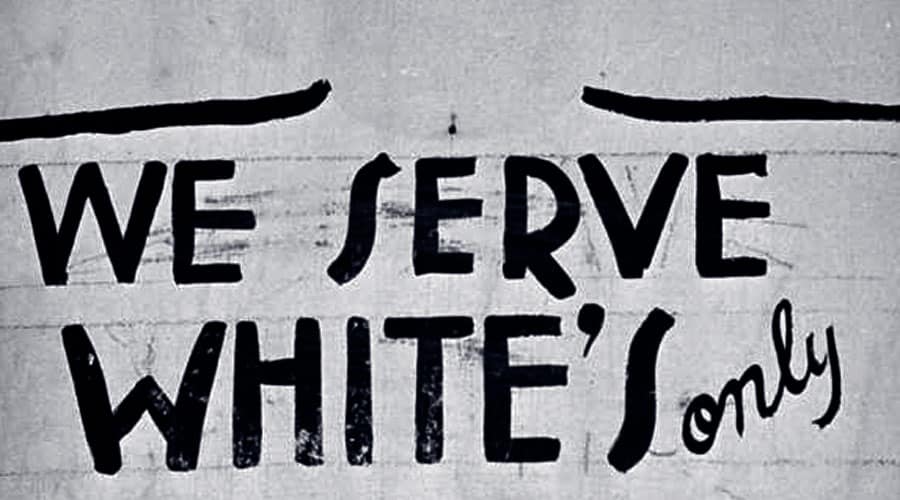
The train car we were ushered to was kind of luxurious and we were given directions to the dining car. However, when we arrived in Cincinnati, Ohio, we were told that we would have to change trains at the Cincinnati terminal. That was a lie. We were simply ushered to a less equipped car and told that we would not be allowed to eat in the dining car since that was for Whites only. However, being a naive young kid from the city, I just assumed it was for rich people who happen to be White.
The rest of the trip went without incident and soon, we were pulling into the terminal in Grenada, Mississippi. We were not allowed to leave the train until the folks in the other car had left. They were all White. Debarking the train with my mom tightly grasping my hand, we walked to the terminal entrance and being somewhat thirsty, I started toward the nearest drinking fountain, not realizing that it was for Whites only. “No, you have to use the fountain over there”, my mom said. Sure enough, there was a sign that said “for coloreds”, but it wasn’t a drinking fountain, it was a dirty old pipe with a simple valve on it. I was sue glad my uncle Havis was there to pick us up.
On the eleven mile drive from Grenada to Gore Springs, we passed by a couple of gas stations. Most were just simple stations with a four foot square building and a pump outside. But when we came to a nicer station with several pumps and a real store, I told mom I had to use the restroom. Leaving the car, I ran to the first door I saw that said “restroom” over the door, not paying attention to the other sign that said “Whites Only”. Needless to say, my uncle properly corrected me and after some hurried explaining to an old White man standing outside, we walked into the store.
Inside the store, the atmosphere was decidedly different as my uncle Havis exchanged greetings with the store owner. We were in Gore Springs now and everyone in Gore Springs knew the Conley family. The store owner said I could have a soda pop if I was thirsty, being a city fella from up north and not used to the “Sippi heat”. My first act of kindness since leaving Detroit.
Not far from our family property, there was a small general store owned by an old White man. He was always nice and I enjoyed the long walk in the hot summer afternoons to go to his store for a soda just to sink my hand in the icy cold water of his cooler to grab a cold soft drink. Mississippi was a contradiction of itself. On the one hand, I saw the respect that people in Gore Springs had for my grandparents, and how friendly they were towards the family despite the racism Mississippi was known for. Taking our cotton to the gin mill in Calhoun City, the White farmers and mill employees would call my grandfather “Mr. Conley”. One man even called him by his first name, James. They had been good friends for several years.
The movie theater was in Grenada and required the eleven mile drive to get there, so it was a big deal to go to the movies. The movie theater was also segregated. Blacks had their own entrance in the rear of the building and had to sit in the balcony seats. That didn’t make sense to my since I knew about gravity and that popcorn and even soft drinks could always accidentally fall down.
One evening after spending a day in the field, the family gathered on Big Momma’s front porch for our usual evening of telling stories and gossip. The Conley houses sat in a sort of cul de sac at the end of the county road, so it was easy to see anyone coming down the unpaved country road. People didn’t accidentally come down that road. There were two old pickup trucks with White men in the cab and several White men in the beds. Some of the men were bold enough to wear their KKK hoodie things. They were also yelling a few words that weren’t proper for a ten year old to hear.
My grandfather ushered us all into the house, grabbed his shotgun, and stepped back onto the porch. The women were all saying stuff like “Oh Lord”, but we kids all gathered at the open window. There was some discussion between my grandfather and the gang of White men, they were evidently looking for one of my distant relatives who had eloped with a White girl. They ere long gone. My grandfather told the guys to get off of his property. Silence. Then there was “Yes sir, Mr. Conley” as they piled back into their trucks, turned around the old sassafras tree in the front yard and drove off, leaving a cloud of dust down the road.
I had a lot of respect for my grandfather before, but now I knew that he had a temper and not only was he a good farmer and an excellent hunter, but he could and would protect the family at any cost.
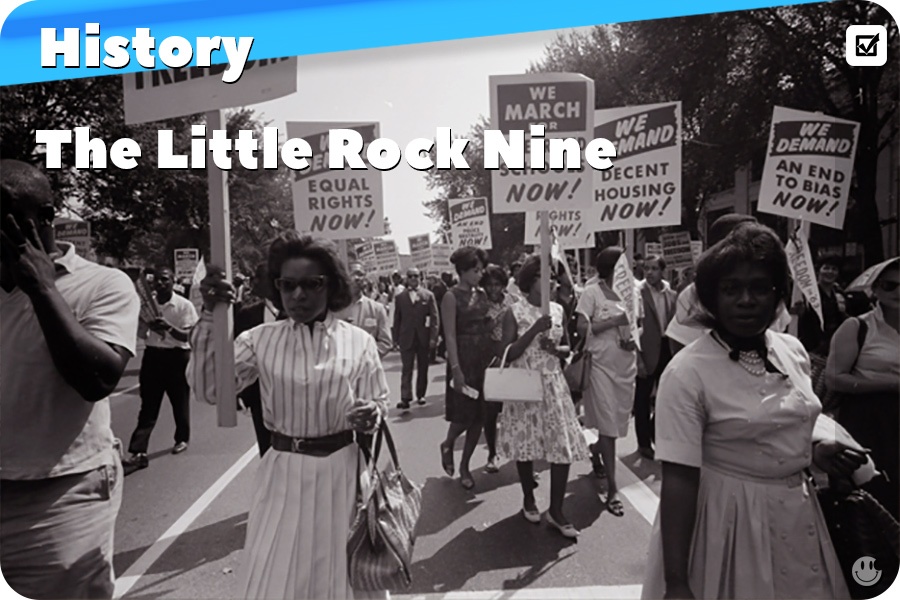
America’s history of racial discrimination has been quite ugly. However, when the year 1954 witnessed an end to segregation in schools, it brought about a wave of change the nation had long been desperate for.
Who knew that only three years later, nine teenagers would appear to be symbols of this change? The nine teenagers in question here were the first African Americans to get into Little Rock’s Central High School. However, the school’s decision to desegregate was not received well. As a result, only a day before what was supposed to be the teens’ first day at school, the governor of Arkansas gave ordered to block their entrance.
They were: Melba Pattillo, Ernest Green, Elizabeth Eckford, Minnijean Brown, Terrence Roberts, Carlotta Walls, Jefferson Thomas, Gloria Ray, and Thelma Mothershed.
Two days later, on September 4, another mob tried to stop the teens from getting inside the school. After almost two weeks, when a federal judge ordered to remove the National Guard, the Little Rock Nine again tried entering the school on September 23.
Finally, when the teens managed to enter inside, they were again threatened by an angry mob of people and fearing for the lives of these teenagers; the school authority decided to send them home. Fortunately, they were able to attend three hours’ worth of classes.
Finally, on September 25, 1957, Little Rock’s mayor pleaded to send the National Guard away, and the President agreed and decided to send army troops to the scene. After receiving security of this caliber, the Little Rock Nine were finally able to attend classes regularly. Unfortunately, their bad days weren’t entirely over yet.
Despite a smooth entrance, their day-to-day routine at school was filled with threats and harassment from the white students. Somehow, one of the nine, Ernest Green, managed to graduate from central high in 1958 and made the day historical for everyone in his community.
The courage they mustered every day and the harassment they faced every day was finally starting to pay off. Imagine being white and supporting a bunch of black students in that day and age. There’s a reason African Americans hold a special place in entire American history. There’s a reason these events existed. They weren’t merely supposed to be added into books or revisited every once in a while.
They are meant to take lessons from, and they are intended to be used to stir our souls and minds. Today, an average African American leads a much better life, but it doesn’t mean that their ordeals have been put to rest.
Discrimination still exists and demands our attention, if nothing else. Moreover, understanding African American history is the only way to understand American history as a whole.
The Smithsonian’s National Museum is a living artifact of African American history that holds a collection of several objects pertaining to the subject. It showcases the role African Americans have played in the emergence of contemporary America.
All in all, the Little Rock Nine were not only nine teenagers who attended a regular high school but were also a huge part of the African American history that the world looks up to.
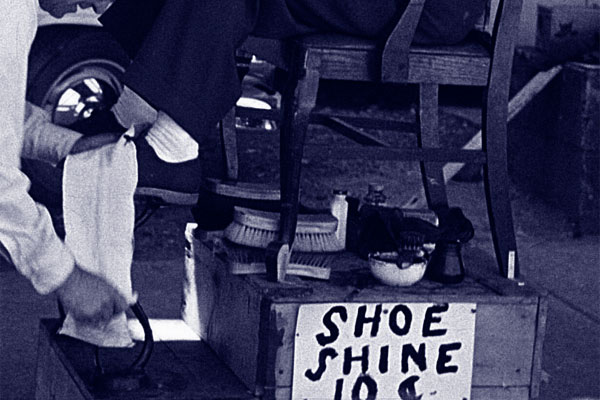
As a poor kid in Detroit, there were several ways to earn a little pocket change. If you had a bicycle, you could try to get a paper route. Another was to shine shoes. My local barber shop had a chair set up where you could shine the shoes of the customers after they got their hair cut. Then there was the Greyhound bus station and the Michigan Central railroad train terminal. Competition was high at these two sites, however, it was first come, first served, or who was the tougher to get a spot on the sidewalk just outside of the terminal. Sometimes, we’d pack our boxes and just set up on a corner of a busy street near the local bar.
In those days, adult men were very conscious of how they looked in public. Trousers had to have razor sharp creases, and shoes had to be polished. Men were extremely proud of their shoes that were genuine leather and probably Italian or brands like Florsheims.
Over time, however, adults started getting into the shoeshine business and prices increased. As the price increased, more adult men suddenly got into the shoe shining business. Men working the railroad terminal became unionized and wouldn’t even allow us to set up outside of the terminal. I can remember when the unionized shoe shiners even began wearing their own style of uniforms. Whereas before, the shoe shine stand was a place to extend friendly conversation about world affairs or sports, it was now just a place to get a quick shine. Many adults started using special shine fluids that ruined your shoes when they got wet. Then, someone invented Corfam.
When Santa finally answered my requests and delivered a brand new J. C. Higgins bicycle one Christmas, I chucked my shoe shine box and signed up to deliver newspapers.
Joining the navy many years later, I was able to put my shoe shining skills to use, always having the best shined shoes in my recruit company.
Fredric Durrette served one tour in Vietnam, retired as E8 in the navy submarine service after 23 years. Major hobbies are collecting old stuff from the 20s and restoring old racing bicycles. Worked as a commercial photographer at JL Hudsons in Detroit and continue photography as a hobby. Love Sade, sixties soul, seventies rock, and all jazz. Attended Woodstock in 69! http://snakesafe.jalbum.net/
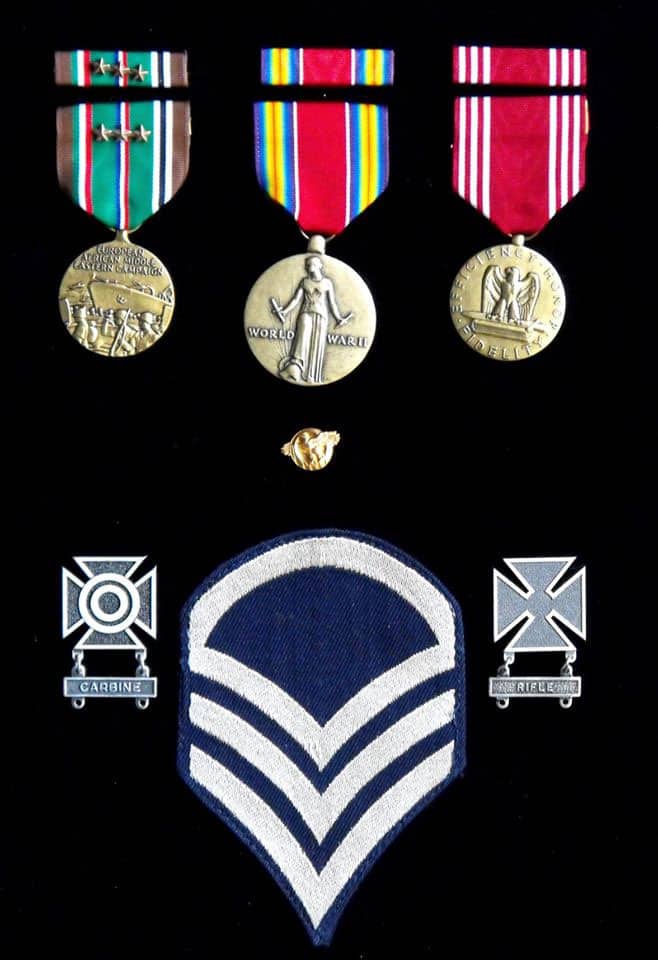
I was only three years old when my mother and father separated and divorced, so I never knew very much about my dad except that he was a strong person with a short temper. He came to visit us a few times as I was growing up until the last time I saw him he was in the VA hospital. I knew he had been a sergeant in the army and had fought in World War Two. Given the state of photography back in the 50s, we didn’t take many pictures, so I don’t have a photograph of him.
As I grew older and realized that life wasn’t easy for Black men in the fifties, especially those who had been in combat. They may have been gallant warriors over in Europe, but back home, they were just ordinary Negroes.
Over the years, my mom never said a bad word about him., he was just gone from our lives. My mom never remarried.
One day, browsing the internet, I goggled his name only to find his obituary. Having been in combat, and much older, I realized that there was a lot that I didn’t know about him, but wanted to know. I knew that he wasn’t a bad person, but had been changed by what he had experienced. Combat changes people. He was one of those forgotten Black soldiers that landed on Normandy on D-Day and served all the way from France and into Germany.
So, one day, I gathered all the information I could find and contacted the Army.
A few weeks later, I received a package with all the medals he had earned. during the war. Needless to say, even though I never really knew him, I am extremely proud to be his son. He was a true American hero.
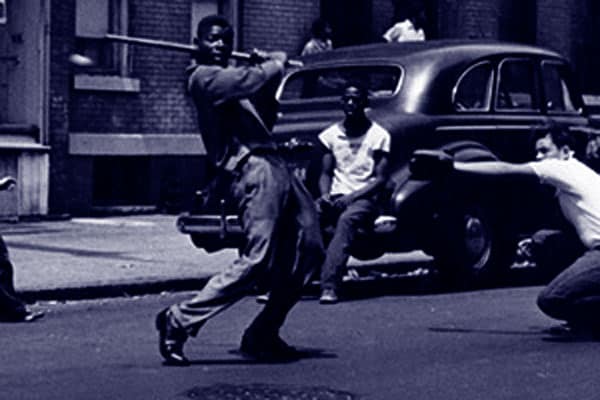
Growing up in a poor neighborhood in Detroit in the early fifties, our neighborhood gang was composed of Black kids as well as the kids of European immigrants and there was even the girl next door that hung out with us for a while.
We did fun things like exploring empty lots, laying in the grass making animals out of passing clouds, catching insects, playing cowboys and Indians, building rocket ships, making rubber band guns from clothes pins, and prowling allies for discarded “hidden treasures”.
We never stole anything, but a neighbors cherry or peach tree was open season. Pity the unfortunate neighbor who had planted watermelons.
We also had a “code of ethics”. You never cursed or used profanity on Sundays, you shared your candy with your friends even if it meant only getting a tiny piece of the Babe Ruth bar you just bought. If a friend was at your house at dinner time, you always invited them to dinner. We played the dozens with each other, a game where you’d talk down your buddy. However, if he disgraced your mother, it meant a fight. “Yo momma” was a call to action. However, even fighting had it’s own code. You never used a weapon, that was cowardly. If you knocked your opponent down, you reached out your hand to help him back up. And you NEVER kicked someone when they were down. Usually, when the fight was over, it meant a trip to the candy store together or just sharing another candy bar.
We played in the streets until dark when the street lights came on, then, we could play around the house until bed time. Our parents always seemed to know what we were doing without even looking. Neighbors watched out for us and if ole lady Byers down the street caught me doing something improper, she’d grab me by the ear and drag me home where my mom would make me get my own switch.
We also respected the police. Kids would crowd around a patrol car when it came into the neighborhood. Black cops were hero figures.
We went to the movies in groups, sometimes with as many as seven or eight, it made the scary movies more fun and you had someone to walk home with when it got dark.
In the winter, mom made ice cream from the snow and we played outside until our fingers were numb. We built snowmen in the yard and had snowball fights. You felt like you were growing up when you got your first pair of real gloves to replace the awful mittens your mom would make you wear.
Fredric Durrette served one tour in Vietnam, retired as E8 in the navy submarine service after 23 years. Major hobbies are collecting old stuff from the 20s and restoring old racing bicycles. Worked as a commercial photographer at JL Hudsons in Detroit and continue photography as a hobby. Love Sade, sixties soul, seventies rock, and all jazz. Attended Woodstock in 69! http://snakesafe.jalbum.net/
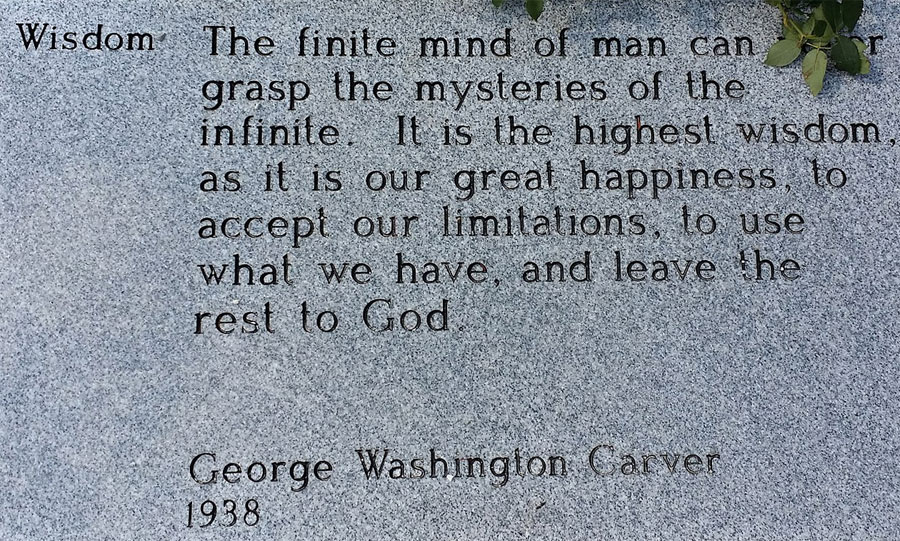
In 1950, Governor Talmadge leased shoreline to create Red Top Mountain State Park, and nearby established the first “Georgia State Park for Negroes.” The 345-acre park was named George Washington Carver Park, honoring the renowned Tuskegee Institute botanist and inventor.
John Loyd Atkinson, an airman from Tuskegee, returned from World War II looking for a recreational facility for African Americans. Immediately after the war, there were no parks for blacks, and segregation laws were strictly enforced in state parks against whites. Atkinson tried unsuccessfully on his own to obtain a permit to set up a park, but his campaign was rewarded with the creation of Lake Allatoona. Georgia State Parks leased 1,457 acres that became Red Top Mountain State Park to create George Washington Carver State Park. It was a 700-mile round trip from Atlanta and was created in the 1950s when recreational facilities for black Americans were discriminated against by their white counterparts.
Atkinson helped find a black Boy Scout camp and ran the park from 1950 to 1958, but was unlucky to get a permit before retiring from the state park system. The State Parks Division leased 345 acres that became George Washington Carver State Park for the newly created Lake Allatoona. John Atkinson became the first Black Park Superintendent in Georgia and built a new park for blacks in the town of Tuskegee, Georgia, with a total area of 1,457 acres.
The Atlanta Girl Scout Council then took over the operation of the Carver Area and Lake Allatoona, and what began as a Boy Scout camp for Negroes was fully integrated into the Red Top Mountain State, which is fully controlled by Georgia State Parks and the Georgia Department of Natural Resources. Samuel Nathan was Carver’s last superintendent, but after a cost-saving effort by the state parks division to combine all of its operations with those of Red, Nathan moved to Richmond Hill State Park to become the first black superintendent of a state park in Georgia since the end of World War II.
The park was removed from the park system in Georgia and the lease transferred to Bartow County. There is now a lease agreement between Bartows County, which operates Bartow Carver Park, the Georgia Department of Natural Resources and Georgia State Parks. The first-person narrative, shared by the Atlanta Girl Scout Council and Atlanta State Park, takes today’s visitors back to the place where George Washington Carvers Park gained its first national recognition as a national park. Together they designed a sign describing the history of the national park and its role in the development of the Georgian park system.
I am an American.
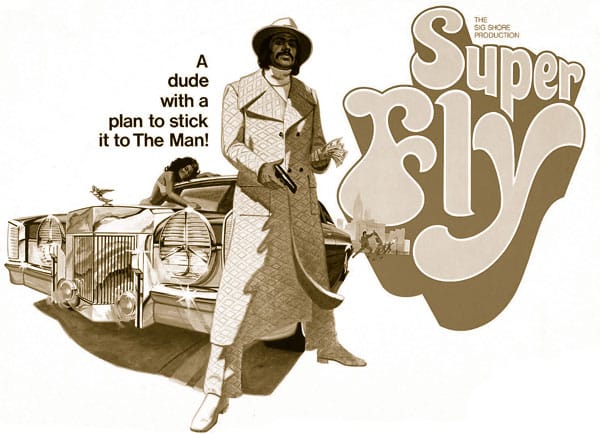
I’ve been called Colored, Negro, Black, African American, high yellow, and even uncle Tom by some. I’ve also been called bubblehead, Super Fly, senior chief by others. But first and foremost I am an American. I will always be an American even though America isn’t a perfect country.
I once swore an oath to defend America from it’s enemies, both domestic and foreign. That oath still stands. Further, I will not be pandered to nor will I accept the pandering from anyone because of my race or ethnicity. And I will not accept special consideration because of my race or ethnicity. Likewise, I will not not accept being harassed, mistreated, or denied because of my race or ethnicity. I am a man and can stand on my own through success or failure.
I have faith and I trust my life to God. We are all brothers on this planet whether we like it or not and often what’s good for one is good for the other. I also walk to the beat of my own drum, so don’t expect me to be what you think I should be.
I love my fellow man, so I try not to use harsh or vulgar language towards those I don’t agree with. I’ve seen war, death, and injustices throughout the years of my life, yet I still shed a tear when I see my country being torn apart. I’ve also seen kindness, good will, friendship, and the positive things that happen when people come together. That is the real strength of America and it makes me even more proud.
Those are the things that I am. I neither hate nor condone hate, so if you disagree with me or even dislike me, it doesn’t matter. I am who I am, given my strength by my grandparents, my family, and my mother and guided by someone far greater than most of you know.
If anyone wonders why I often post on racial issues, it’s because I believe that if we know our history, we can appreciate how far we’ve come. I’ve lived through the segregated bathrooms, the threat of KKK raids, the civil rights struggles, the riots in Detroit and a lot more. But, the one thing I have seen in my 75 years is the greatness of America and the civility of her people. Since “racism” and “racist” seem to have been entranced into the rhetoric of the left, it’s more important now than ever to put out the truth, without color or bias. Also, you can’t hold present or future generations responsible for what happened 200 years ago. The country was different then and the world was certainly less civilized. Holding grudges is the last resort of the ignorant.
However, we also need to keep in mind that no matter how oppressive America was in the past, it allowed people of all ethnicities to gain an education, become doctors, lawyers, and scientists. African Americans who were the sons of ex slaves became millionaires. “Poverty”? Americans of all ethnicities have suffered poverty at some point of their history, as well as some form of discrimination..
America has a constitution and a bill of rights. There are also volumes of state and city laws that have been passed to protect the rights of everyone. But, passing laws doesn’t change the minds of people. Only people can do that. You also have to realize that a law only gives you legal rights. You don’t eliminate racism by calling everything racist and you don’t end discrimination by burning flags or tearing down monuments. Burning the confederate flag didn’t eliminate racism, it only strengthened the position of real racists and alienated others to identify with extreme groups..
The first time I went to the movies in Grenada, Mississippi back in 1955, we had to sit in the balcony. I didn’t quite understand this as the balcony seats were probably the best seats in the house. We weren’t allowed to buy concessions in the main lobby, so the adults would carry in some sodas and bags of fried chicken for us to snack on.
I wish our politicians and world leaders would concentrate more on bringing us together that tearing us apart. We are all of one family and share the same needs and wants. Even those we call “enemies” have families, wives, sisters and brothers. The world is full of richness if we stop, look, and think… Hate, anger, avarice, and prejudice doesn’t benefit anyone. But most of all, think of what kind of world do you want your children to inherit. Each of us should strive to make the world a better place than what we were born into and it can be done by one person or with one gesture at a time.
Fredric Durrette served one tour in Vietnam, retired as E8 in the navy submarine service after 23 years. Major hobbies are collecting old stuff from the 20s and restoring old racing bicycles. Worked as a commercial photographer at JL Hudsons in Detroit and continue photography as a hobby. Love Sade, sixties soul, seventies rock, and all jazz. Attended Woodstock in 69! http://snakesafe.jalbum.net/
The Detroit Race Riots occurred during World War II, fueled by racial tensions and social inequalities in Detroit, Michigan. The riot was one of the most violent and destructive race riots in the United States, resulting in 34 deaths, hundreds of injuries, and significant property damage. The event highlighted the need for addressing racial disparities and promoting social justice in the United States.
Details:
The Detroit Race Riots on June 20-22, 1943, after a fight broke out between Black and white individuals at Belle Isle Park, a popular recreational area in Detroit. The conflict quickly escalated, and rumors spread throughout the city, leading to widespread violence between Black and white residents. Over the course of three days, the rioting resulted in the deaths of 25 African Americans and nine white individuals, as well as around 700 injuries and the destruction of numerous buildings and properties.
The riot occurred during a significant population growth in Detroit due to the migration of African Americans from the South seeking job opportunities in the city’s booming automobile industry.
The federal government intervened to quell the violence, deploying 6,000 federal troops to restore order in the city.
The Detroit Race Riot was one of several race riots in the United States in the summer of 1943, known as the “Race Riot Year.”
Effects on Pop Culture: While the Detroit Race Riot did not have an immediate impact on pop culture, it has since been referenced in various forms of media, including:
The 2017 film “Detroit,” directed by Kathryn Bigelow, which depicts the 1967 Detroit riots, also references the 1943 race riot to provide historical context and emphasize the recurring nature of racial tensions in the city.
The riot has been the subject of numerous books, articles, and documentaries examining the historical context and consequences of the event.
Prominent People and Countries Involved:
United States: As the country where the Detroit Race Riot occurred, the United States has had to grapple with the legacy of racial tensions and social inequalities that contributed to the violence.
Franklin D. Roosevelt: As the President of the United States at the time, Roosevelt authorized the deployment of federal troops to restore order in Detroit following the outbreak of the riot.
The Detroit Race Riot of 1943 was a violent and destructive event highlighting the racial tensions and social inequalities in the United States during World War II. The event has since been referenced in various forms of media, serving as a reminder of the need for continued efforts to address racial disparities and promote social justice.
The U.S. Army ‘Buffalo Soldiers’ Took a 1,900-mile Bicycle Trek to St. Louis
The Buffalo Soldiers were originally the 10th Cavalry Regiment of the US Army, founded in 1864 in Buffalo, New York, USA, in response to the Civil War. While several African American regiments were part of the Union Army during the Civil War, including the 1st, 2nd, 3rd, 4th, 5th and 6th Colored Cavalry, the Buffalo Soldier was created by Congress in 1865.
Native American tribes who fought in the Indian Wars were nicknamed the Black Cavalry by the Indians of the American Indian Reservation, who had participated in a number of battles against the US Army during the Civil War, such as the Battle of Buffalo.
On June 14, 1897, Lt. James Moss led his bicycle corps from Fort Missoula, Montana, through a wagon trail and Indian path, arriving in St. Louis on July 16, 1897.
The 25th Infantry US Army soldiers cycled 1,900 miles from St. Louis to the Indian Reservation in the western United States in 1864, the year after the Battle of Buffalo. The 20 soldiers who took part in the trip were part of a racially segregated group known as the Buffalo Soldiers. The term referred to black soldiers serving west of Mississippi in regiments established by that regiment between 1866 and the end of the Civil War.
The trip was followed in newspapers across the country, and in 1897 there was a story about it in the summer. I was embedded as a newspaperman and visited all five states and followed the journey with newspapers from all over the country.
American soldiers reportedly had difficulty using their bikes during the war. They took the trek to test the use of bicycles before the practice became more common in the United States during World War I and the Civil War.
Lieutenant James Moss demonstrated the potential of bicycles by taking eight soldiers on a three-day training trip from Buffalo to Lake Erie and back. The training consisted of a 40-mile ride through an obstacle course, which included a nine-foot fence that the men had to overcome by leaning the bike against the fence, standing on its seat, climbing over it, and then moving it up and down. Moss began his first bike ride in the US Army at the age of 18.
Success encouraged him and he ventured out on his own in March 2009 on his first bike ride in the US Army.
Some local farmers gave wrong directions. had to scrape the mud he called “Black Gumbo” from tires with a butter knife.
Runaway, uncontrolled, unstoppable acceleration was the order of the day, and the bicycle convoy passed through farms and small towns at regular intervals. Men pushed their bikes through snow, rocks, and ruts, blocked streams, crossed mountain ranges, suffered from heat, cold, hunger and lack of sleep. They suffered the worst effects of drinking alkaline water and soon realized that the spoon brake on their bicycles could not cope with the eastern slopes of Helena, Montana. They experienced searing heat and a ride along the railway tracks that numbed their hands.
Occasionally, farmers would let the men stay on their land, give them something fresh to eat, or simply ask questions. When a civilian asked a man: “Where are you going today? “And he said,” I’m on my way home.
Although the trip was a success, the soldiers had to deal with harsh conditions in their five-country travels. In June, a snowstorm in the Rocky Mountains brought 11 inches of snow to riders. On the other side of the ice, soldiers from Nebraska hit a sweltering 110 degrees. An ice storm hampered progress, and some soldiers’ hands froze on the handlebars and ice stuck to chains.
Although the trip was considered a success, it was slowed down by the Spanish-American War, which began a year after her trip.
July 6th is the anniversary of the hanging of the Rufus Buck Gang- four black and Indian teens who tried to singlehandedly, violently halt the expansion of the burgeoning United States. You’ve never heard of them, but they stand among the most notorious and politically significant outlaws of the Old West.
The famous “Hanging Judge” Isaac Parker oversaw the Buck Gang’s capture and condemned them to death. They were associated with the infamous half-black, half-Cherokee outlaw Cherokee Bill. Their crimes were motivated by the U.S. annexation of “Indian Territory” (today’s Oklahoma). The socio-politics surrounding the Buck Gang rampage clearly heralded the emergence of the 20th century United States.
The Rufus Buck Gang weren’t gunslingers like Billy the Kid, or thieves like the James-Younger gang. They wanted justice, and they sought it with the same violence that had marked their histories as blacks and Indians in America.
The Indian Territory of the late 20th century was a racial melting pot. It contained more whites than Indians as well as a significant population of black Freemen. Judge Parker’s principal deputy was a black man named Bass Reeves. Whites had come to usurp the promised Indian lands, bit by bit. But in Washington, laws were being passed to allow the wholesale submersion of Indian Territories into the United States. Native people would lose their last chance at a homeland. This enraged Buck.
By 1895 “Hanging Judge” Isaac Parker had been the sole law in Indian Territory for decades. His last major duty was to capture the Rufus Buck Gang, who embarked on a 13-day rampage in the vain hope of inciting the Territory’s blacks and Indians to violent rebellion against the encroaching United States.
Fredric Durrette served one tour in Vietnam, retired as E8 in the navy submarine service after 23 years. Major hobbies are collecting old stuff from the 20s and restoring old racing bicycles. Worked as a commercial photographer at JL Hudsons in Detroit and continue photography as a hobby. Love Sade, sixties soul, seventies rock, and all jazz. Attended Woodstock in 69! http://snakesafe.jalbum.net/