World-Changing Event: The structure of DNA was discovered at the Cavendish Laboratory at the University of Cambridge.
The First Big Bubblegum Pop Song? (How Much is That) Doggie in the Window by Patti Page
The Movies to Watch include From Here to Eternity, Houdini, The Robe, Stalag 17, The Caddy, House of Wax, The Wild One, It Came from Outer Space, and War of the Worlds.
The Most Famous Person in America was probably Gary Cooper.
Notable books include Fahrenheit 451 by Ray Bradbury, From Here to Eternity by James Jones, and Casino Royale by Ian Fleming.
Price of Packard Clipper automobile in 1953: $2,679.00
Arthur Miller’s play The Crucible premiered.
The Funny Comedy Team were: Dean Martin and Jerry Lewis
The Funniest TV Duo: Sid Caesar and Imogene Coca
The Funny Late Show Host: Steve Allen
The Funny Guy was Milton Berle
The Funny TV Lady: Lucille Ball
Atomic Espionage: Julius and Ethel Rosenberg were both found guilty of secret information about the atomic bomb to the Soviet Union and executed in 1953, becoming the first civilians to be executed for espionage in the United States.
MKUltra: The super-secret CIA program reputedly began in 1953 and ended in 1967.
Ray Bradbury wrote the first draft of Fahrenheit 451 on a coin-operated typewriter in the basement of the UCLA library. It charged 10¢ for 30 minutes, and he spent $9.80 on the machine.
Here are some significant events that took place in 1953
Queen Elizabeth II was coronated in Westminster Abbey on June 2, 1953.
The Korean War ended with the signing of the Korean Armistice Agreement on July 27, 1953.
Julius and Ethel Rosenberg were executed on June 19, 1953, after being found guilty of conspiracy to commit espionage for the Soviet Union.
The first issue of Playboy magazine was published in December 1953, featuring Marilyn Monroe as the cover model.
DNA structure was first described by James Watson and Francis Crick, who published their findings in the scientific journal Nature in April 1953. This discovery was later recognized as one of the most important scientific discoveries of the 20th century.
Top Ten Baby Names of 1953
Mary, Linda, Deborah, Patricia, Susan, Robert, James, Michael, John, David
Fashion Icons and Sex Symbols
Marilyn Monroe, Ava Gardner, Rita Hayworth, Audrey Hepburn, Doris Day, Lana Turner
Sex Symbols and Hollywood Hunks
Marlon Brando, Montgomery Clift
Oscars: 25th Academy Awards
The silver anniversary of the Oscars, also known as the 25th Academy Awards, was a spectacle held on March 19, 1953, at the RKO Pantages Theatre in Hollywood and the NBC International Theatre in New York City. This year was significant for being the first Oscars telecast, which was broadcast in black and white. Bob Hope served as host in Hollywood, while Conrad Nagel took on the role in New York. The Greatest Show on Earth secured Best Picture in a controversial win that still fuels debate among film aficionados. Gary Cooper took home Best Actor for his role in High Noon, and Shirley Booth was awarded Best Actress for her performance in Come Back, Little Sheba.
Emmy Awards: 5th Primetime Emmy Awards
For TV enthusiasts, the 5th Primetime Emmy Awards were celebrated on February 5, 1953, at the Statler Hotel in Los Angeles. Art Linkletter was the evening’s host. I Love Lucy still rode high, bagging the Best Situation Comedy award. A young and not-yet-famous James Dean was nominated for Best Actor, although the trophy ultimately went to Thomas Mitchell for The Doctor. The Best Actress accolade went to Helen Hayes for Schlitz Playhouse of Stars.
The Oscars had an eligibility period that ran from January 1, 1952, to December 31, 1952. The Emmy Awards, still in their infancy, were focused primarily on programming from the Los Angeles area.
“The Quotes:”
“The physician can bury his mistakes, but the architect can only advise his client to plant vines – so they should go as far as possible from home to build their first buildings.”
– Frank Lloyd Wright
“You’ll wonder where the yellow went when you brush your teeth with Pepsodent.”
Pepsodent toothpaste
“Shane. Shane. Come back!”
– Brandon De Wilde, in Shane
“Sometimes you feel like a nut, sometimes you don’t.”
– Peter Paul Mounds/Almond Joy
Time Magazine’s Man of the Year
Konrad Adenauer
Miss America
Neva Langley (Macon, GA)
Miss USA
Myrna Hansen (Illinois)
The Scandals
Piltdown Man, an archaeological find from 1912, was exposed as a forgery, consisting of the lower jawbone of an orangutan combined with the skull of a fully developed, modern man. The theory of Evolution took several steps back with this scandal.
Country Pop Star Death
Hank Williams (drugs and alcohol poisoning)
US Politics
January 20, 1953 (Tuesday): First inauguration of Dwight D. Eisenhower
1953 Pop Culture Facts & History
The first modern use of the word word ‘Frenemy” was first used in the 1953 article titled Howz about calling the Russians Your Frienemies? by gossip columnist Walter Winchell in the Nevada State Journal.
The Coppertone Girl was introduced to the American public. It is probably the most popular ‘butt crack’ of all time.
RCA invented the first musical synthesizer.
Officially, Ohio is listed as the 17th state in the US, but it is technically number 47. Congress forgot to vote on the formal resolution to admit Ohio to the Union but finally did on August 7, 1953.
Kenneth H. Rowe (born No Kum-Sok), a North Korean fighter pilot, defected to South Korea with his MiG-15 and was rewarded $100,000 from the United States.
Swanson had 260 tons of leftover turkey from Thanksgiving and didn’t know how to get rid of it. They asked their workers for ideas, and one man thought they should package it in individual trays with sides and freeze it. Thus, the TV Dinner was born.
Colgate-Palmolive-Peet became Colgate-Palmolive. We are not sure why, but we think that the Peet brothers suffered the same fate as Alvah Curtis Roebuck, of Sears and Roebuck fame.
Playwright and Nobel laureate Eugene O’Neill was born on October 16, 1888, in a hotel at Times Square; he also died on November 27, 1953, in another hotel in Boston. His last words were, “I knew it. I knew it. Born in a hotel room and died in a hotel room.”
The Cincinnati Reds baseball team was renamed the “Redlegs” this year through 1958 to avoid being associated with The Red Scare and communism.
Radios manufactured in the US between 1953 and 1963 had a white triangle on the dial at 640 AM to indicate where Civil Defense information would be broadcast.
Rolling Stone Keith Richards was a choirboy at the Queen’s 1953 Coronation.
Coca-Cola attempted to persuade the US Treasury to mint a 7.5-cent coin; a can of Coke had been a nickel since 1886 and needed to be raised due to inflation, but they felt a dime was too much.
Ore-Ida offered ‘Tater Tots’ in grocery stores. There were just pressed leftovers from their french fry line.
A Pennsylvania town named Mauch Chunk managed to get the remains of an early 20th-century athlete and bought the rights to his name. They renamed the town ‘Jim Thorpe,’ a tourist attraction in PA.
The first issue of Playboy, published in December 1953, featured Marilyn Monroe from her 1949 nude calendar shoot and sold over 50,000 copies.
Isaac Asimov wrote a short story, Sally, that claimed the first self-driving cars would be released around 2015.
In 1951, Ray Bradbury wrote a short story about a giant, fire-breathing lizard, which was made into the 1953 film The Beast from 20,000 Fathoms. This film inspired Ishirō Honda, a Japanese producer, to make Godzilla in 1954.
Biologists James D. Watson and Francis Crick published “Molecular Structure of Nucleic Acids: A Structure for Deoxyribose Nucleic Acid.” With little more than a drawing and some accompanying text, Watson and Crick discovered the structure of DNA.
Arthur Holly Compton (the Nobel Prize-winning chancellor of Washington University) was irritated by how fast people drove through the campus. To combat this, he designed the modern speed bump.
Doomsday Clock
Two minutes to midnight, according to the Bulletin of Atomic Scientists.
1953: After much debate, the United States decides to pursue the hydrogen bomb, a weapon far more powerful than any atomic bomb. In October 1952, the United States tests its first thermonuclear device, obliterating a Pacific Ocean islet in the process; nine months later, the Soviets test an H-bomb of their own. “The hands of the Clock of Doom have moved again,” the Bulletin announces. “Only a few more swings of the pendulum, and, from Moscow to Chicago, atomic explosions will strike midnight for Western civilization.”
1st Appearances & 1953’s Most Popular Christmas gifts, toys, and presents:
Scrabble, Mrs. Potato Head, Wiffle Ball invented, Matchbox (U.K.)
Nobel Prize Winners
Physics – Frits (Frederik) Zernike
Chemistry – Hermann Staudinger
Medicine – Hans Adolf Krebs, Fritz Albert Lipmann
Literature – Sir Winston Leonard Spencer Churchill
Peace – George Catlett Marshall
Best Film Oscar Winner
1952’s The Greatest Show On Earth
The Biggest Films of 1953
1. Peter Pan (Disney)
2. The Robe (Pop Culture Classic)
3. From Here to Eternity (Pop Culture Classic)
4. How to Marry a Millionaire
5. Shane
6. Gentlemen Prefer Blondes
7. Hondo
8. House of Wax (Pop Culture Classic)
9. The War of the Worlds (Pop Culture Classic)
10. The Beast from 20,000. Fathoms
11. Niagara
12. Abbott and Costello Meet Dr. Jekyll and Mr. Hyde
13. Stalag 17
14. Roman Holiday
15. Kiss Me, Kate
16. Charade
17. Salome
18. The Wild One (Pop Culture Classic)
19. Houdini
20. The Caddy
21. Devil’s Canyon
22. I Love Lucy
23. The Eddie Cantor Story
24. Scared Stiff
25. I Confess
26. It Came From Outer Space
27. Take The High Ground
28. Julius Caesar
29. Robot Monster
30. Glen or Glenda
*Movies beyond the Top Five are based on (a somewhat subjective) ranking based on how much they had a long-lasting effect on Pop Culture.
Broadway Show
The Teahouse of the August Moon (Play) Opened on October 15, 1953, and Closed on March 24, 1956
Popular and Best-selling Books From 1953
Battle Cry by Leon M. Uris Beyond This Place by A. J. Cronin Casino Royale by Ian Fleming The Chronicles of Narnia: The Silver Chair by C.S. Lewis The Crucible by Arthur Miller. Desirée by Annemarie Selinko Fahrenheit 451 by Ray Bradbury, From Here to Eternity by James Jones The High and the Mighty by Ernest K. Gann Lord Vanity by Samuel Shellabarger The Robe by Lloyd C. Douglas The Silver Chalice by Thomas B. Costain Time and Time Again by James Hilton The Unconquered by Ben Ames Williams
1953 Most Popular TV Shows
1. I Love Lucy (CBS)
2. Dragnet (NBC)
3. Arthur Godfrey’s Talent Scouts (CBS)
4. You Bet Your Life (NBC)
5. The Milton Berle Show (NBC)
6. Arthur Godfrey and his Friends (CBS)
7. Ford Theatre (NBC)
8. The Jackie Gleason Show (CBS)
9. Fireside Theatre (NBC)
10. The Colgate Comedy Hour (NBC)
1953 Billboard Number One Songs
December 27, 1952 – January 9, 1953: I Saw Mommy Kissing Santa Claus – Jimmy Boyd
January 10 – February 13: Don’t Let The Stars Get In Your Eyes – Perry Como
February 14 – March 20: Till I Waltz Again With You – Teresa Brewer
March 21 – May 15: The Doggie In The Window – Patti Page
May 16 – July 24: Song From Moulin Rouge – Percy Faith & his Orchestra
July 25 – August 7: I’m Walking Behind You – Eddie Fisher
August 8 – October 9: Vaya Con Dios – Les Paul & Mary Ford
October 10 – November 6: St. George And The Dragonet – Stan Freberg
November 7 – November 20: Vaya Con Dios – Les Paul & Mary Ford
November 21, 1953 – January 1, 1954: Rags To Riches – Tony Bennett
Sports
World Series Champions: New York Yankees
NFL Champions: Detroit Lions
NBA Champions: Minneapolis Lakers
Stanley Cup Champs: Montreal Canadiens
U.S. Open Golf Dick Mayer
U.S. Tennis: (Men/Ladies) Tony Trabert/Maureen Connolly
Wimbledon (Men/Women): Vic Seixas/Maureen Connolly
NCAA Football Champions: Maryland
NCAA Basketball Champions: Indiana
Kentucky Derby: Dark Star
World Changing Event: The first patent for bar code was issued to inventors Joseph Woodland and Bernard Silver.
The Bigger World-Changing Event: The United States passed its first-ever hydrogen bomb explosion test, Ivy Mike, on November 1, 1952, on Enewetak Atoll in the Pacific Ocean.
Influential Songs include Your Cheatin’ Heart by Hank Williams, Heart and Soul by The Four Aces, and High Noon (Do Not Forsake Me) by Frankie Laine.
The Movies to Watch include The Greatest Show on Earth, Hans Christian Andersen, The Quiet Man, High Noon, Moulin Rouge, The Big Sky, and Singin’ in the Rain.
The Most Famous Person in America was probably Gary Cooper.
Notable books include Charlotte’s Web by E.B. White, The Old Man and the Sea by Ernest Hemingway, and The Power of Positive Thinking by Norman Vincent Peale.
Price of Jaguar XK 120 hardtop in 1952: $5,065.00
US Life Expectancy: Males: 65.8 years, Females: 71.6 years
The Funny Comedy Duo were: Dean Martin and Jerry Lewis
The Funniest TV Duo: Sid Caesar and Imogene Coca
The Funny Guy was Milton Berle
The Funny TV Lady: Lucille Ball
The Logo: Adidas purchased its famous 3-stripe logo from Karhu Sports in 1952 for two bottles of whiskey and less than $2,000.
Top Ten Baby Names of 1952
Linda, Mary, Patricia, Deborah, Susan, James, Robert, John, Michael, David
Fashion Icons and Sex Symbols
Lauren Bacall, Martine Carol, Dorothy Dandridge, Doris Day, Diana Dors, Ava Gardner, Rita Hayworth, Grace Kelly, Eartha Kitt, Marilyn Monroe, Bettie Page, Jane Russell, Elizabeth Taylor, Lana Turner
Sex Symbols and Hollywood Hunks
Montgomery Clift
Oscars: 24th Academy Awards
In 1952, the 24th Academy Awards ceremony unfolded on March 20 at the RKO Pantages Theatre in Hollywood, California. Danny Kaye served as the show’s host. An American in Paris waltzed away with Best Picture, surprising some who thought A Streetcar Named Desire would win. Vivien Leigh won Best Actress for her role in Streetcar, while Humphrey Bogart snagged Best Actor for his performance in The African Queen. A tidbit of trivia: the Best Animated Short Film category had only two nominees that year, the lowest in the Academy’s history.
Emmy Awards: 4th Primetime Emmy Awards
Over on the television side, the 4th Primetime Emmy Awards were held on February 18, 1952, at the Ambassador Hotel in Los Angeles. Lucille Ball captured the Best Comedian award, forever immortalizing her iconic role in I Love Lucy. Her show also won Best Situation Comedy, solidifying its place in TV history. Red Skelton, the host for the evening, was awarded Best Comedy Show for The Red Skelton Show.
The eligibility period for the Oscars was from January 1, 1951, to December 31, 1951. The Emmy Awards were still working out their framework and mainly recognized shows produced in and around Los Angeles. Both events offer a fascinating snapshot into the entertainment landscape of the early 1950s.
“The Quotes:”
“Lucy, I’m home!”
– Ricky Ricardo, played by Dezi Arnez
“They’re gr-r-r-eat! ”
Tony The Tiger, voiced by Thurl Ravenscroft
“Finger-lickin’ good!”
– Kentucky Fried Chicken
Time Magazine’s Woman of the Year
Queen Elizabeth II
Miss America
Colleen Hutchins (Salt Lake City, UT)
Miss USA
Jackie Loughery (New York)
The Scandal
Area 51, if it existed at 37°14’20 N 115°48’58 W (37.239, -115.816) in southern Nevada, would have been started this year.
Pop Culture Facts & History
Boardgame Scrabble was created in 1938 but did not become popular until 1952 when the president of Macy’s played it while on vacation. Surprised that Macy’s did not carry it, he placed a large order, and within two years, four million games were sold.
French writer Alfred Sauvy invented the term “Third World” to describe the vast stretches of Africa, Asia, and Latin America whose citizens lived in dire poverty.
The “London Fog” was yellow smog so thick you couldn’t see the ground. These “pea-soupers” often carried toxic chemicals and killed 4,000 people in five days. Due to the Clean Air Act, the last London Fog was in 1962.
Wernher von Braun wrote a book called Project Mars, which imagined that human colonists on Mars would be led by someone named “Elon.”
The Immigration and Nationality Act of 1952 allows the President to “suspend the entry of all aliens or any class of aliens” who “would be detrimental to the interests of the United States.”
Joseph Woodland and Bernard Silver received the first patents for optical bar codes on October 7.
The British Hypnotism Act of 1952 prevents the broadcasting of hypnosis procedures due to the risk that people watching the broadcast are hypnotized and cannot be brought back.
‘Invasion of Washington’ was a 1952 Washington, DC, mass UFO incident that several institutions and many people witnessed. The Air Force dismissed it as a combination of weather phenomena and the night sky, a claim which was disputed by all many people.
Les Paul started selling his classic electric guitar.
The 20th Century Fox media empire, now owned by Disney, is the namesake of William Fox ((born as Vilmos Fried, January 1, 1879 – May 8, 1952)) who was born as Vilmos Fried, lost control of the company in 1930, went bankrupt after the stock market crash went to jail for perjury, and died more or less unnoticed.
Season Two of I Love Lucy included the most popular and remembered skit from the show – Lucy selling (and drinking) Vitameatavegamin. It had the expected ingredients – vitamins, meat, veggies, and minerals. It also had a high (23%) alcohol content.
1952, Tony the Tiger started telling people that Kellogg’s Frosted Flakes were “Gr-r-reat!” Thurl Ravenscroft is best known for supplying the voice of Tony. Thurl also sang You’re a Mean One, Mr. Grinch, in the original How the Grinch Stole Christmas TV special(1966), although many people mistakenly think it was narrator Boris Karloff.
The saying “Those who cannot remember the past are condemned to repeat it” was first said by philosopher, essayist, poet, and novelist George Santayana (December 16, 1863 – September 26, 1952). He was mentioned in Billy Joel’s song We Didn’t Start the Fire, whichreferred to Santayana’s death.
Albert Einstein was offered the Presidency of the State of Israel. He declined, saying that as a scientist trained to deal with objective facts, he lacked the aptitude and experience to deal with people.
The B-52 bomber, prototyped in 1952, is planned to remain in service until at least 2040.
The first rock and roll concert, the Moondog Coronation Ball of 1952 at the Cleveland Arena in Cleveland, Ohio, was also the first rock and roll concert to be shut down by the local authorities.
A volcano emerged in a cornfield 1943 named Paricutín in Michoacán, Mexico. By the time it went dormant in 1952, three people had lost their lives, and hundreds relocated, while two towns were buried by lava and three others were heavily affected. The volcano is still quiet today and is now a tourist attraction.
George Stephen designed and sold the first Weber Grill in 1952.
Albert Gunton was a London city double-decker bus driver who found himself driving his route crossing Tower Bridge when the bridge began to rise to allow a ship to pass. He accelerated, jumped the gap, and was awarded £10 for his bravery. Sadly, no smartphones existed at the time to record the event.
American Bandstand, originally called Bandstand, premiered on a Philadelphia TV Station on October 7, 1952, with DJ Bob Horn as host.
A man wrote to The Philadelphia Inquirer to tell them they had spelled his name wrong in a recent column; it was “Wolfeschlegelsteinhausenbergerdorff,” not “Wolfeschlegelsteinhasenbergerdorff.”
On May 2, the first commercial passenger jet flew from London to Johannesburg, inaugurating the age of jet travel. The trip carried 32 passengers and stopped five times en route.
Kent sold cigarettes with an asbestos filter, claiming it was healthier than regular smoking. #itwasnt
Over 200 passengers were trapped for days on a train at Donner Pass above Lake Tahoe in a massive blizzard in the California Sierra when their train hit a snowbank. Two rescuers died trying to reach them. All the passengers survived.
The United Kingdom successfully conducted a nuclear test to become the world’s third nuclear power on October 3, 1952.
The US Supreme Court passed a decision in 1915 establishing that free speech did not extend to motion pictures because they were not a form of art but a business. It was overturned in 1952
1st Appearances & 1952’s Most Popular Christmas Gifts, toys, and Presents
Mr. Potato Head (Mr. PH was the first toy advertised on American TV), Slinky Dog, PEZ candy dispensers*
*originally released in Europe starting in 1927, and the only ‘real’ human heads (For Regular Public Consumption) were Paul Revere, Daniel Boone, Santa Clause, and Betsy Ross
Nobel Prize Winners
Physics – Felix Bloch, Edward Mills Purcell
Chemistry – Archer John Porter Martin, Richard Laurence Millington Synge
Medicine – Selman Abraham Waksman
Literature – François Mauriac
Peace – Albert Schweitzer
Best Film Oscar Winner
An American in Paris (presented in 1952)
The Biggest Films of 1952
1. The Greatest Show on Earth
2. The Snows of Kilimanjaro
3. Hans Christian Anderson
4. Ivanhoe
5. Sailor Beware
6. Moulin Rouge
7. Jumping Jacks
8. The Quiet Man (Pop Culture Classic)
9. Singin’ in the Rain (Pop Culture Classic)
10. High Noon (Pop Culture Classic)
11. Come Back, Little Sheba
12. Against All Flags
13. Road to Bali
14. The Big Sky
15. Limelight
16. The Miracle of Our Lady of Fatima
17. Son of Paleface
18. Million Dollar Mermaid
19. The World in His Arms
20. Jack and the Beanstalk
21. Hiawatha
22. Red Planet Mars
23. The Stooge
24. Stars and Stripes Forever
25. The Pride of St. Louis
26. Clash By Night
27. Meet Danny Wilson
28. The Crimson Pirate
29. Monkey Business
30. Invasion, U.S.A.
*Movies beyond the Top Ten are based on (a somewhat subjective) ranking based on how much they had a long-lasting effect on Pop Culture.
Broadway Show
The Seven Year Itch (Play) Opened on November 20, 1952, and closed on August 13, 1955
Popular and Best-selling Books From 1952
The Caine Mutiny by Herman Wouk The Catcher in the Rye by J.D. Salinger Charlotte’s Web by E.B. White The Chronicles of Narnia: The Voyage of the Dawn Treader by C.S. Lewis East of Eden by John Steinbeck Giant by Edna Ferber The Gown of Glory by Agnes Sligh Turnbull The Houses in Between by Howard Spring Invisible Man by Ralph Ellison Kon-Tiki: Across the Pacific in a Raft by Thor Heyerdahl My Cousin Rachel by Daphne du Maurier The Old Man and the Sea by Ernest Hemingway The Power of Positive Thinking by Norman Vincent Peale The Saracen Blade by Frank Yerby The Silver Chalice by Thomas B. Costain Steamboat Gothic by Frances Parkinson Keyes
1952 Most Popular TV Shows
1. I Love Lucy (CBS)
2. Arthur Godfrey’s Talent Scouts (CBS)
3. Arthur Godfrey and his Friends (CBS)
4. Dragnet (NBC)
5. Texaco Star Theatre (NBC)
6. The Buick Circus Hour (NBC)
7. The Colgate Comedy Hour (NBC)
8. Gangbusters (NBC)
9. You Bet Your Life (NBC)
10. Fireside Theatre (NBC)
1952 Billboard Number One Songs
December 29, 1951 – March 14, 1952: Cry – Johnny Ray
March 15 – May 16: Wheel of Fortune – Kay Starr
May 17 – June 20: Blue Tango – Leroy Anderson
June 21 – July 4: Here in My Heart – Al Martino
July 5 – July 11: Delicado – Percy Faith & his Orchestra
July 12 – September 12: Auf Wiedersehen Sweetheart – Vera Lynn
September 13 – October 17: You Belong to Me – Jo Stafford
October 18 – November 21: I Went To Your Wedding – Patti Page
November 22 – November 28: It’s In The Book – Johnny Standley
November 29 – December 26: Why Don’t You Believe Me – Joni James
December 27, 1952 – January 9, 1953: I Saw Mommy Kissing Santa Claus – Jimmy Boyd
Sports
World Series Champions: New York Yankees
NFL Champions: Detroit Lions
NBA Champions: Minneapolis Lakers
Stanley Cup Champs: Detroit Red Wings
U.S. Open Golf Julius Boros
U.S. Tennis: (Men/Ladies) Frank Sedgman/Maureen Connolly
Wimbledon (Men/Women): Frank Sedgman/Maureen Connolly
NCAA Football Champions: Georgia Tech & Michigan State
NCAA Basketball Champions: Kansas
Kentucky Derby: Hill Gail
TV Ratings: In 1951, the first year Nielsen released television ratings, the most-watched series was Texaco Star Theater, with a 61.6 rating. The 2017 winner (Sunday Night Football) scored only 12.2.
Influential Songs include Be My Love by Mario Lanza and Cry by Johnnie Ray.
The Movies to Watch include The African Queen, Scrooge (A Christmas Carol), The Day The Earth Stood Still, Kon Tiki, A Streetcar Named Desire, and Show Boat.
The Most Famous Person in America was probably John Wayne.
Notable books include The Catcher in the Rye by J.D. Salinger and The Revolt of Mamie Stover by William Bradford Huie.
Price of children’s pair of ‘Howdy Doody’ slippers in 1951: $1.99
US Life Expectancy: Males: 65.6 years, Females: 71.4 years
The Funny Guy was Milton Berle
The Funny TV Lady: Lucille Ball
The Funniest TV Duo: Sid Caesar and Imogene Coca
The Crazy Conspiracy: J.D. Salinger did not write Catcher in the Rye; the CIA did as a brainwashing instrument. Noted celebrity killers Mark David Chapman (John Lennon), John Hinckley (Ronald Reagan, survived), Robert Bardo (Rebecca Schaeffer), as Lee Harvey Oswald all supposedly recently read or had the book with them while committing their evil actions.
Top Ten Baby Names of 1951
Linda, Mary, Patricia, Deborah, Barbara, James, Robert, John, Michael, David
Fashion Icons and Sex Symbols
Lauren Bacall, Martine Carol, Dorothy Dandridge, Doris Day, Diana Dors, Ava Gardner, Rita Hayworth, Grace Kelly, Eartha Kitt, Marilyn Monroe, Jane Russell, Elizabeth Taylor, Lana Turner
Sex Symbols and Hollywood Hunks
Marlon Brando, Humphrey Bogart, Montgomery Clift
Oscars: 23rd Academy Awards
The 23rd edition of the Academy Awards happened on March 29, 1951, at the RKO Pantages Theatre in Hollywood. Fred Astaire charmed as the host of the event. The night it belonged to All About Eve, which tied the record for the most nominations (14) and won six awards, including Best Picture. Jose Ferrer won Best Actor for Cyrano de Bergerac, becoming the first Hispanic actor to win an Academy Award. The Best Actress award went to Judy Holliday for Born Yesterday.
Emmy Awards: 3rd Primetime Emmy Awards
Fast forward to the 3rd Primetime Emmy Awards, which occurred on February 15, 1951, at the Ambassador Hotel in Los Angeles. Walter O’Keefe was the host. One notable winner was The Alan Young Show, bagging the Best Variety Show trophy. Robert Montgomery was awarded Most Outstanding Kinescoped Personality, a title that makes you appreciate how far television technology has come.
Both ceremonies were a testament to the ever-expanding scope of motion picture and television artistry. The Oscars had an eligibility period from January 1, 1950, to December 31, 1950. Meanwhile, the Emmy Awards, still in their infancy, didn’t yet have a standardized eligibility period and were still primarily recognizing shows produced in the Los Angeles area.
“The Quotes:”
“Gort! Klaatu barada nikto!”
– Patricia Neal in The Day the Earth Stood Still
“I have always depended on the kindness of strangers”
– Vivien Leigh, in A Streetcar Named Desire
“Stella! Hey, Stella!”
– Marlon Brando, in A Streetcar Named Desire
Time Magazine’s Man of the Year
Mohammed Mossadegh
Miss America
Yolande Betbeze (Mobile, AL)
1951 Pop Culture Facts & History
MLB’s Joe DiMaggio had a 56-game hitting streak.
In 1951, MGM owed the dog who played Lassie $40,000 in back pay. Not planning any more Lassie movies, MGM gave the rights to the Lassie trademark to the dog’s trainer, who spun it off into a TV show that ran for 19 seasons.
Clarence Karcher and Eugene McDermott renamed their ‘Geophysical Service Inc” to Texas Instruments.
Ike Turner, the ex-husband of Tina Turner, recorded what is considered by many to be the first rock and roll song, Rocket 88 (credited to Jackie Brenston and his Delta Cats, who were Ike Turner’s Kings of Rhythm).
1951 introduced the world to Tupperware parties, although the products were first available in 1946. 1947 saw the development of the soft-burping Tupperware seal.
UPI photographer Arthur Sasse asked Albert Einstein to smile, but instead, he stuck his tongue out, creating the famous photo. Leo Strauss coined the term ‘Reductio ad Hitlerum’ to describe the fallacy of trying to refute an opponent’s argument by comparing it to a view that Hitler or the Nazis would hold.
Eddie Gaedel, a dwarf, became the shortest person in MLB history when he went up to bat a single time. His jersey number was 1/8. He was released from the team the following day.
Joe Gold opened the first ‘Gold’s Gym’ in New Orleans. Things didn’t work out, but he started again in Venice, California, in 1965. The second time was the charm.
The first production car with power steering was the 1951 Chrysler Imperial.
The standard set for Compact Discs to hold 74 minutes of audio was made so that one disc could have Wilhelm Furtwangler’s recording of Beethoven’s Symphony No. 9 from the 1951 Bayreuth Festival.
The actor credited for performing in the most movies for a long time was Oliver Hardy, of Laurel and Hardy fame, with a record 417 movies between 1914 and 1951.
The first sex-change operation was performed in Denmark. George William Jorgensen, Jr. was transformed into Christine Jorgensen.
“The World’s First Porn Star” was 16-year-old Candy Barr (Juanita Slusher) starring in a silent porn film called Smart Alec.
“Only when my hunger was gone could I think straight. But I was still too young to understand what I had done fully,” Barr told Playboy Magazine. “I’m still sick with shame over what I did, but when you’re (young) and all alone and your insides are crying for food, you can’t always figure out right from wrong.”
Eric Morley organized a bikini contest as part of the Festival of Britain, and it was intended as a promotion for the recently introduced bikini, which was widely regarded as immodest. It then became an annual event called the Miss World Competition.
The movie Distant Drums contains the first known instance of “The Wilhelm Scream” (a sound effect of a man screaming, since used in hundreds of other films and television shows).
Le Bal Oriental was a costume ball held in Venice and was considered the “party of the century.” Hosted by Count “Charlie” Beistegui, a thousand guests attended, including Salvador Dali, Christian Dior, & Orson Wells.
Hallmark’s Hall of Fame is the longest prime-time running TV show in history. It has been on several networks but has continued without interruption and has won over 80 Emmys.
It was this year, 1951, that Lillian Vernon started mailing her catalogs.
Most of the cast and crew of the film classic The African Queen suffered from dysentery while shooting on location in Uganda. Only Humphrey Bogart remained healthy because he drank more whiskey than water.
The school board of Logan, Utah, forced 7th graders to get tattoos of their blood type in case they were injured during a nuclear war. #ouch
The 1951 Boston Marathon was the first post-World War II athletic competition to invite Japanese athletes. Shigeki Tanaka, a Japanese citizen, won it.
Alfred “Teen” Blackburn (April 26, 1842 – March 8, 1951) was the last Confederate Civil War veteran and former slave.
Two different comic strips appeared, called “Dennis The Menace,” on March 12; Dennis UK became Dennis and Gnasher. Neither author was aware of the other’s existence. They were created by Hank Ketcham in America and David Law in Britain.
The Explorers Club in NYC hosted a dinner featuring meat from a woolly mammoth.
J.D. Salinger’s cultural phenomenon, The Catcher in the Rye, was published.
The Habit
Reading J.D. Salinger’s The Catcher in the Rye
1st Appearances & 1951’s Most Popular Christmas Gifts, toys, and Presents
Muffin the Mule pull-toy, View-Master* with Disney reels, Scrabble**
*View-Master originally came out in 1939
** Scrabble was released in 1948 but didn’t become a hit until 1951/52
Nobel Prize Winners
Physics – John Cockcroft and Ernest Walton
Chemistry – Edwin McMillan and Glenn T. Seaborg
Physiology or Medicine – Max Theiler
Literature – Pär Lagerkvist
Peace – Léon Jouhaux
Popular and Best-selling Books From 1951
A Woman Called Fancy by Frank Yerby The Caine Mutiny by Herman Wouk The Cardinal by Henry Morton Robinson The Catcher in the Rye by J.D. Salinger The Chronicles of Narnia: Prince Caspian by C.S. Lewis The Cruel Sea by Nicholas Monsarrat The Foundling by Cardinal Spellman From Here to Eternity by James Jones Joy Street by Frances Parkinson Keyes Melville Goodwin, U.S.A. by John P. Marquand Moses by Sholem Asch Return to Paradise by James A. Michener The Revolt of Mamie Stover by William Bradford Huie The Wanderer by Mika Waltari
Broadway Show
The King and I (Musical) Opened on March 29, 1951, and closed: on March 20, 1954
Oscar Best Picture
All About Eve (presented in 1951)
1951 Most Popular TV Shows
1. Texaco Star Theatre (NBC)
2. Arthur Godfrey’s Talent Scouts (CBS)
3. I Love Lucy (CBS)
4. The Red Skelton Show (NBC)
5. The Colgate Comedy Hour (NBC)
6. Arthur Godfrey and his Friends (CBS)
7. Fireside Theatre (NBC)
8. Your Show of Shows (NBC)
9. The Jack Benny Show (CBS)
10. You Bet Your Life (NBC)
1951 Billboard Number One Songs
December 16, 1950 – March 2, 1951: The Tennessee Waltz – Patti Page
March 3 – March 9: If – Perry Como
March 10 – April 20: Be My Love – Mario Lanza
April 21 – June 22: How High The Moon – Les Paul & Mary Ford
June 23 – July 27: Too Young – Nat King Cole
July 28 – September 7: Come On-A My House – Rosemary Clooney
September 8 – November 2: Because Of You – Tony Bennett
November 3 – November 16: Cold, Cold Heart – Tony Bennett
November 17 – December 28: Sin (It’s No Sin) – Eddy Howard
December 29, 1951 – March 14, 1952: Cry – Johnny Ray
Sports
World Series Champions: New York Yankees
NFL Champions: Los Angeles Rams
NBA Champions: Rochester Royals
Stanley Cup Champs: Toronto Maple Leafs
U.S. Open Golf Ben Hogan
U.S. Tennis: (Men/Ladies) Frank Sedgman/Maureen Connolly
Wimbledon (Men/Women): Dick Savitt/Doris Hart
NCAA Football Champions: Tennessee
NCAA Basketball Champions: Kentucky
Kentucky Derby: Count Turf
World Changing Event: Pope Pius XII confirmed there was no conflict between Christianity and the theory of evolution, and the Church officially supported the idea of theistic evolution.
The immortal cancer cells collected from patient Henrietta Lacks months before her 1950 death are still alive and being used today for research.
Influential Songs include Goodnight, Irene by The Weavers with Gordon Jenkins, Daddy’s Little Girl by The Mills Brothers, and Here Comes Peter Cottontail by Gene Autry.
The Movies to Watch include Father of the Bride, Harvey, All About Eve, Sunset Boulevard, Rio Grande, The Asphalt Jungle, and Cinderella.
The Most Famous Person in America was probably John Wayne.
Notable books include The Lion, the Witch and the Wardrobe by C.S. Lewis and Kon-Tiki: Across the Pacific in a Raft by Thor Heyerdahl.
Minimum Wage in 1950: 75 cents per hour
Stromberg-Carlson TV: $279.95
Did You Know? Since 1950, acceptance of an Academy Award statuette requires that neither winners nor their heirs may sell the statuettes without first offering to sell them back to the Academy for $1. The Academy keeps the statuette if a winner refuses to agree to this stipulation.
The Funny Guy was Milton Berle
The Funniest TV Duo: Sid Caesar and Imogene Coca
FBI’s “10 Most Wanted Fugitives” program began.
The US Army rank of 5 Star General is still considered an active rank, although no one has attained that rank since 1950 when Omar Bradley held it.
January 21 – Alger Hiss Convicted of Perjury: Alger Hiss, a former U.S. State Department official, was convicted of perjury for denying his involvement in a Soviet spy ring.
January 31 – Truman Orders Hydrogen Bomb Development: President Harry S. Truman directed the U.S. to develop a hydrogen bomb in response to the Soviet Union’s atomic capabilities.
February 9 – McCarthy Alleges Communist Infiltration: Senator Joseph McCarthy claimed that the U.S. State Department was harboring Communists, marking the start of the Red Scare.
February 14 – Sino-Soviet Treaty Signed: China and the Soviet Union signed a mutual defense treaty, strengthening their alliance during the Cold War.
March 1 – Klaus Fuchs Convicted of Espionage: Physicist Klaus Fuchs was convicted in London for passing atomic secrets to the Soviet Union.
March 8 – Volkswagen Type 2 Production Began: The first Volkswagen Type 2, known as the Microbus, rolled off the assembly line in Germany, becoming an iconic vehicle.
April 27 – South Africa Passes Group Areas Act: The apartheid-era law was enacted, segregating communities by race and restricting land ownership.
June 25 – Korean War Begins: North Korean forces invaded South Korea, initiating a conflict that drew in international forces.
June 27 – U.S. Commits Troops to Korea: President Truman ordered U.S. military forces to assist South Korea in repelling the North Korean invasion.
July 16 – Uruguay Wins FIFA World Cup: Uruguay defeated Brazil 2-1 in the World Cup final, held in Rio de Janeiro’s Maracanã Stadium.
August 5 – Florence Chadwick Swims English Channel: American swimmer Florence Chadwick became the second woman to swim the English Channel, completing the crossing in 13 hours and 20 minutes.
September 4 – Beetle Bailey Comic Strip Debuts: The comic strip “Beetle Bailey,” created by Mort Walker, was first published, introducing readers to the antics of a lazy U.S. Army private.
September 15 – Battle of Inchon: UN forces, led by General Douglas MacArthur, launched a successful amphibious assault at Inchon, turning the tide in the Korean War.
October 2 – Peanuts Comic Strip Launched: Charles M. Schulz’s “Peanuts” comic strip debuted, introducing the world to characters like Charlie Brown and Snoopy.
October 19 – China Enters Korean War: Chinese forces crossed the Yalu River into Korea, joining the conflict in support of North Korea.
November 1 – Assassination Attempt on President Truman: Puerto Rican nationalists attempted to assassinate President Truman at Blair House in Washington, D.C.; Truman was unharmed.
November 24 – Guys and Dolls Premiered on Broadway: The musical “Guys and Dolls” opened on Broadway, becoming a major hit and winning multiple Tony Awards.
December 2 – Battle of Chosin Reservoir: A brutal 17-day battle in freezing temperatures during the Korean War, where UN forces faced a massive Chinese offensive.
December 11 – Hungnam Evacuation Begins: UN forces began a massive evacuation of troops and civilians from Hungnam, North Korea, during the Korean War.
December 31 – First 12 Hours of Sebring Race Held: The inaugural 12 Hours of Sebring endurance race took place in Florida, becoming a premier event in motorsport.
US Life Expectancy: (1950) Males, 65.6 Females, 71.1
Federal spending: $42.56 billion
Federal debt $256.9 billion
Consumer Price Index: $24.1
Unemployment: 5.9% A Gallon of Gas: 18 cents
Cost of a first-class stamp: $0.03
Fashion Icons and Sex Symbols
Lauren Bacall, Martine Carol, Doris Day, Ava Gardner, Rita Hayworth, Eartha Kitt, Marilyn Monroe, Jane Russell, Elizabeth Taylor, Lana Turner
Sex Symbols and Hollywood Hunks
Humphrey Bogart, Montgomery Clift, Gregory Peck
Oscars: 22nd Academy Awards
The 22nd Academy Awards took place on March 23, 1950, at the RKO Pantages Theatre in Hollywood. Paul Douglas served as the host for the evening. The film All the King’s Men dominated the ceremony, winning Best Picture, Best Actor for Broderick Crawford, and Best Supporting Actress for Mercedes McCambridge. Olivia de Havilland took home the Best Actress award for The Heiress. An interesting trivia nugget is that this was the first year that all five Best Picture nominees were in color. Also, this was the final year that the Best Sound category was open to original musicals only.
Emmy Awards: 2nd Primetime Emmy Awards
The second Primetime Emmy Awards were held on January 27, 1950, at the Ambassador Hotel in Los Angeles. Bill Welsh served as host. The ceremony broadened its scope by recognizing achievements in various genres, such as drama and comedy, but still primarily focused on local Los Angeles programming. One of the significant winners was The Life of Riley, starring Jackie Gleason, which won for Best New Program. Alan Young won the Most Outstanding Personality category, making him the first actor to receive a Primetime Emmy for acting.
For the Oscars, the eligibility period was January 1, 1949, to December 31, 1949. The Emmys still centered mainly around Los Angeles area programming without a strict eligibility window.
“The Quotes:”
“Most human beings have an almost infinite capacity for taking things for granted.”
– Aldous Huxley
“Fasten your seat belts. It’s going to be a bumpy night.”
– Betty Davis, in All About Eve
“All right, Mr. DeMille, I’m ready for my close-up.”
“I am big! It’s the pictures that got small.”
– Gloria Swanson, in Sunset Boulevard
Willie Sutton robbed Manufacturers Bank of $64,000 in NYC. Urban legend says that when asked why he robbed banks, he said “Because that’s where the money is.”
Time Magazine’s Man of the Year
The American Fighting-Man (Korean War Troops)
Miss America
none
Firsts
James Dean made his first appearance in a Pepsi commercial. #pepsibounce
Minute Rice appeared on the shelves for the first time.
A payment was first made by the prototype Diners Club Card at Majors Cabin Grill restaurant in New York City (the first use of a charge card). Cards became available for others on May 13, 1950.
The First TV remote control, Lazy Bones by Zenith, was sold.
Marion Donovan invented disposable diapers.
Darlington Raceway in South Carolina was the site of the inaugural Southern 500, the first 500-mile NASCAR race.
The first metal lunchbox featuring Hopalong Cassidy was produced by Aladdin (the company, NOT the 1001 Arabian Nights hero).
Corn Pops debuted in 1950 as ‘Corn Pops’. The name changed twice in 1951 to ‘Sugar Corn Pops’ then ‘Sugar Pops’. In 1978, it changed back to ‘Sugar Corn Pops’, then finally back to the original ‘Corn Pops’ in 1984. In 2006, it became ‘Pops’ and then back to ‘Corn Pops’ a few months later.
Green plastic garbage bags, made from polyethylene, were invented by Harry Wasylyk.
Bell Laboratories created a Telephone Answering Machine.
John Hopps invented the world’s first cardiac pacemaker. It was larger than life and had to be used outside the body of the first recipient.
Mort Walker created the comic strip Beetle Bailey.
Racing pioneer C.J. Hart was credited with creating the first commercial drag racing strip on the runway of the Orange County Airport in Santa Ana, California on June 19.
If I Ran the Zoo by Dr. Seuss, published in 1950, is the first recorded instance of the word “nerd.”
1950 Pop Culture Facts & History
The transistor was patented (#US 2,524,035) by William Shockley for Bell Labs.
Kathryn Johnston became the first girl to play Little League baseball in 1950 when she tucked her hair under her hat, renamed herself “Tubby”, and joined the Kings Dairy team, posing as a boy. When she told her coach she was a girl, he said “That’s O.K., you’re a darned good player.”
Earl Lloyd became the first African-American to play a game in the NBA.
The Barrier played at the Broadhurst Theatre (Nov 02, 1950 – Nov 04, 1950) for 4 performances. It is a race-based drama about a single day in the 1950s in rural Georgia.
7UP originally contained lithium citrate, a mood-stabilizing drug, until 1950.
An articulate man (and snazzy dresser), Mr. Sutton later said he never said it, although the statement was true. “Why did I rob banks? Because I enjoyed it. I loved it. I was more alive inside a bank, robbing it, than at any other time. I enjoyed everything about it so much that one or two weeks later, I’d be out looking for the next job. But to me, the money was the chips, that’s all.”
An estimated 50% of all American films made before 1950 and over 90% of films made before 1929 are lost forever.
Mother Teresa founded Missionaries of Charity in Calcutta, India.
Smokey Bear was a real bear who was rescued from a forest fire and later became a living mascot for wildfire prevention.
Groundbreaking Your Show of Shows with Sid Caesar & Imogene Coca premiered on NBC.
Radio’s Grand Ole Opry was broadcast on TV for 1st time
On February 15, Walt Disney released Cinderella.
Peter Pan opened at the Imperial Theater NYC for 320 performances.
Your Hit Parade premiered on NBC (later CBS).
Arthur Murray Party premiered on ABC TV (later DuMont, CBS, then NBC)
Crusader Rabbit, the first animated TV series, debuted.
The first printing of C.S. Lewis’ The Lion, the Witch, and the Wardrobe was released in London.
I Robot, a collection of sci-fi short stories by Isaac Asimov, was published.
Ranch Dressing originated from The Hidden Valley Dude Ranch in 1950 in Santa Barbara, California.
The Myxoma Virus (a type of poxvirus) was deliberately released into the rabbit population in Australia as a means of population control, causing the death of over 500 million rabbits.
The US Navy sprayed San Francisco with “harmless” bacteria to simulate a biological attack. The not-so-harmless bacteria caused a spike in a rare UTI, killing one man. There were many unusually high reports of increased pneumonia and urinary tract infections. A lawsuit against the government was rejected because the government-held legal immunity.
The Tollund Man, a mummified body from the 4th Century, was found in Denmark.
The modern-day “pirate accent” we know comes from Robert Newton’s portrayal of Long John Silver in the 1950 Disney adaptation of Treasure Island. Before that, there was no universal “pirate accent.” #arrrrh
The Great Brink’s Robbery: Eleven thieves stole over $2 million from the Brink’s armored car company headquarters in Boston, Massachusetts. The thieves were all caught, and Only $58,000 was recovered.
After the Empire State Building opened in New York City in 1931, much of its office space went unrented. It was nicknamed the “Empty State Building” by New Yorkers and didn’t become profitable until 1950.
The first Volkswagen Type 2 (aka the Microbus) rolls off the assembly line in Wolfsburg, Germany.
The 1950 toy lab set “Gilbert U-238 Atomic Energy Laboratory” contained uranium ore, polonium, a Geiger counter, and a cloud chamber.
L. Ron Hubbard published Dianetics: The Modern Science of Mental Health.
In South Africa, the Group Areas Act was passed, formally segregating races.
The United Nations Relief and Works Agency for Palestine Refugees in the Near East (UNRWA) began operations.
Cold War
January 12 – American Secretary of State Dean Acheson delivered his ‘Perimeter Speech,’ outlining the boundary of US security guarantees.
January 21 – Communist spy Alger Hiss was convicted on two counts of perjury.
January 30, 1950 – President Harry S. Truman ordered the development of the hydrogen bomb in response to the detonation of the Soviet Union’s first atomic bomb
February 8, 1950 -The Stasi was founded in East Germany and acted as secret police until 1990.
February 9 – In his speech to the Republican Women’s Club at the McClure Hotel in Wheeling, West Virginia, Senator Joseph McCarthy accused the United States Department of State of being filled with 205 Communists.
February 14 – The Soviet Union and the People’s Republic of China signed a mutual defense treaty.
March 1 – Klaus Fuchs was convicted in London of spying against both Britain and the United States for the Soviet Union by giving to the latter top-secret atomic bomb data.
June 17, 1950 – Julius Rosenberg was arrested on suspicion of espionage, based on David Greenglass’s confession. On August 11, 1950, Ethel Rosenberg was arrested.
July 4, 1950 – The first broadcast by Radio Free Europe.
September 8 – The Defense Production Act was enacted into law in the United States.
Korean & Vietnam Wars:
January 1 Ho Chi Minh started the offensive against French troops in Indo-China.
On KoKoMay 21, Vietnamese troops of Ho Chi-Minh attacked Cambodia.
June 25, 1950 – The Korean War began its three-year conflict when troops of North Korea, backed with Soviet weaponry, invaded South Korea. The United States sent support to South Korea 2 days later.
June 27, 1950 – Thirty-five military advisors were sent to South Vietnam to give military and economic aid to the anti-Communist government.
Jun 28 – The North Koreans captured Seoul.
Private Kenneth Shadrick was the first U.S. casualty of the Korean War on July 5, 1950.
July 7 – The UN Security Council established the United Nations Command to combat North Korean forces
July 8, 1950 -General Douglas MacArthur was named commander-in-chief of UN forces in Korea
November 26, 1950 – United Nations forces retreated south toward the 38th parallel when Chinese Communist forces opened a counteroffensive in the Korean War.
December 19 – Tibet’s Dalai Lama fled the Chinese invasion.
Crime
March 9: Willie Sutton robbed Manufacturers Bank of $64,000 in NYC. Urban legend says that when asked why he robbed banks, he said, “Because that’s where the money is.”
(not really, but the quote is often attributed to him)
1950 FBI’s “10 Most Wanted Fugitives”:
#1. Thomas James Holden
#2. Morley Vernon Kong
#3. William Nesbit
#4. Henry Randolph Mitchell
#5. Omar August Pinson
#6. Lee Emory Downs
#7. Orba Elmer Jackson
#8. Glen Roy Wright
#9. Henry Harland Shelton
#10. Morris Guralnick
Willie Sutton was number 11.
Statistics
The average worker in the US today would only have to work 11 hours per week to be as productive as the 40 Hours per week worker in 1950.
The Habit
Watching ‘Your Show of Shows’ on television.
1st Appearances & 1950’s Most Popular Christmas Gifts, toys, and presents
Little People and the Safety School Bus, Wooly Willy, official Magic-8 Ball, Silly Putty
Silly Putty was introduced as a toy on March 6, 1950, by Peter Hodgson. But it was invented in 1943 by James Wright, who was working for General Electric while trying to make synthetic rubber for the War Effort – it was in the middle of World War II. Earl Warrick also claimed to have invented it at about the same time.
Silly Putty sold pretty quickly. Kids found uses for it. Mostly making things, then squishing them. Plus, you could copy your favorite comics. In the early 1960s, they started selling internationally, and they even took one into Space in Apollo 8. In 1977, Silly Putty became part of ‘Big Crayon’ when Crayola bought it. Silly Putty entered The National Toy Hall of Fame’s Third class in 2001, along with Tonka Trucks. Silly Putty is still a popular stocking stuffer today.
Nobel Prize Winners
Physics – Cecil Frank Powell
Chemistry – Otto Paul Hermann Diels, Kurt Alder
Medicine – Edward Calvin Kendall, Tadeusz Reichstein, Philip Showalter Hench
Literature – Earl (Bertrand Arthur William) Russell
Peace – Ralph Bunche
Popular and Best-selling Books From 1950
Across the River and Into the Trees by Ernest Hemingway The Adventurer by Mika Waltari The Cardinal by Henry Morton Robinson The Chronicles of Narnia: The Lion, the Witch and the Wardrobe by C.S. Lewis The Disenchanted by Budd Schulberg The Egyptian – Mika Waltari Floodtide by Frank Yerby Joy Street by Frances Parkinson Keyes Jubilee Trail by Gwen Bristow The Parasites by Daphne du Maurier Star Money by Kathleen Winsor The Wall by John Hersey
Best Picture Oscar
All The King’s Men (presented in 1950)
Broadway Show
Guys and Dolls (Musical) Opened on November 24, 1950, and closed: on November 28, 1953
1950 Most Popular TV Shows
1. Texaco Star Theatre (NBC)
2. Fireside Theatre (NBC)
3. Philco TV Playhouse (NBC)
4. Your Show of Shows (NBC)
5. The Colgate Comedy Hour (NBC)
6. Gillette Cavalcade of Sports (NBC)
7. The Lone Ranger (ABC)
8. Arthur Godfrey’s Talent Scouts (CBS)
9. Hopalong Cassidy (NBC)
10. Mama (NBC)
1950 United States Census
Total US Population: 151,325,798
1. New York, New York – 7,891,957
2. Chicago, Illinois – 3,620,962
3. Philadelphia, Pennsylvania – 2,071,605
4. Los Angeles, California – 1,970,358
5. Detroit, Michigan – 1,849,568
6. Baltimore, Maryland – 949,708
7. Cleveland, Ohio – 914,808
8. St. Louis, Missouri – 856,796
9. Washington, District of Columbia – 802,178
10. Boston, Massachusetts – 801,444
Sports
World Series Champions: New York Yankees
NFL Champions: Cleveland Browns
NBA Champions: Minneapolis Lakers
Stanley Cup Champs: Detroit Red Wings
U.S. Open Golf Ben Hogan
U.S. Tennis: (Men/Ladies) Arthur Larsen/Margaret Osborne DuPont
Wimbledon (Men/Women): Budge Patty/Louis Brough
NCAA Football Champions: Oklahoma
NCAA Basketball Champions: CCNY
Kentucky Derby: Middleground
The Atomic Energy Lab was released by the A.C. Gilbert Company in 1950. The kit’s intention was to allow children to create and watch nuclear and chemical reactions using radioactive material.
The lab contained a cloud chamber that allowed the viewer to watch alpha particles traveling at 12,000 miles per second (19,000,000 m/s), a spinthariscope that showed the results of radioactive disintegration on a fluorescent screen, and an electroscope that measured the radioactivity of different substances that were in the set.
This toy has been called “the world’s most dangerous toy” because of the radioactive material included in the set. Gilbert claimed that none of the materials could conceivably prove dangerous. However, the instructions cautioned that “users should not take ore samples out of their jars, for they tend to flake and crumble and you would run the risk of having radioactive ore spread out in your laboratory. This would raise the level of your background count.”
Product Description:
“Produces awe-inspiring sights! Enables you to actually SEE the paths of electrons and alpha particles traveling at speeds of more than 10,000 miles per SECOND! Electrons racing at fantastic velocities produce delicate, intricate paths of electrical condensation – beautiful to watch. Viewing Cloud Chamber action is closest man has come to watching the Atom! Assembly kit (Chamber can be put together in a few minutes) includes Dri-Electric Power Pack, Deionizer, Compression Bulb, Glass Viewing Chamber, Tubings, Power Leads, Stand, and Legs.”
– Gilbert U-238 Atomic Energy Laboratory
Fredric Durrette served one tour in Vietnam, retired as E8 in the navy submarine service after 23 years. Major hobbies are collecting old stuff from the 20s and restoring old racing bicycles. Worked as a commercial photographer at JL Hudsons in Detroit and continue photography as a hobby. Love Sade, sixties soul, seventies rock, and all jazz. Attended Woodstock in 69! http://snakesafe.jalbum.net/
World Changing Event: On April 4, 1949, The North Atlantic Treaty was signed, making the United States closer to our European allies.
Influential Songs include Some Enchanted Evening from the musical South Pacific and the now-controversial Baby It’s Cold Outside by various duos.
The Movies to Watch include Mighty Joe Young, She Wore a Yellow Ribbon, White Heat, Twelve O’Clock High, Samson and Delilah, The Third Man, Adam’s Rib, and A Letter to Three Wives.
The Most Famous Person in America was probably Bob Hope
Notable books include: 1984 by George Orwell
Price of 1 pound of bacon in 1949: 49 cents
US Life Expectancy: Males: 65.2 years, Females: 70.7 years
The Funny Duo was: Abbott and Costello
The Funny Guy was Milton Berle
The First: The first science fiction television series was Captain Video and His Video Rangers, airing from 1949 to 1955.
Top Ten Baby Names of 1949
Linda, Mary, Patricia, Barbara, Susan, James, Robert, John, William, Michael
Fashion Icons and Sex Symbols
Lauren Bacall, Ingrid Bergman, Martine Carol, Ava Gardner, Rita Hayworth, Hedy Lamarr, Marilyn Monroe, Jane Russell, Lana Turner
Oscars: 21st Academy Awards
The 21st Academy Awards ceremony took place on March 24, 1949, and returned to the Academy Award Theater in Hollywood, breaking from the larger Shrine Auditorium of the previous year. Robert Montgomery was the host for the evening. The film Hamlet made history by becoming the first non-American film to win the Best Picture award. Laurence Olivier starred in and directed Hamlet, earning him the Best Actor award. The Best Actress trophy went to Jane Wyman for her role in Johnny Belinda. This ceremony is particularly notable because it was the first time the Best Foreign Language Film category was introduced, although it was only a special honorary award then.
Emmy Awards: 1st Primetime Emmy Awards
The first Primetime Emmy Awards were held on January 25, 1949, at the Hollywood Athletic Club. Walter O’Keefe hosted the event. Unlike today’s expansive categories, the first Emmy Awards had only six. The Most Outstanding Television Personality award went to ventriloquist Shirley Dinsdale for her work on Judy Splinters. Meanwhile, the “Station Award” for the best overall programming was given to KTLA, a local station in Los Angeles. The first Emmy Awards were focused primarily on Los Angeles programming and were less of a national event compared to what they’ve become today.
Both ceremonies marked significant moments in their respective histories: the Oscars for adding a new category and the Emmys for their very inception. The eligibility period for the Oscars was from January 1, 1948, to December 31, 1948, while the Emmy Awards primarily focused on Los Angeles-area programming without a specific eligibility window.
“The Quotes”
“Meep Meep”
– The Road-runner
“Made it, Ma! Top of the world!”
– James Cagney, in White Heat
“What a dump.”
– Bette Davis, in Beyond the Forest
Time Magazine’s Man of the Year
Winston Churchill
Miss America
Jacque Mercer (Litchfield, AZ)
The Biggest Pop Artists of 1949 include
The Andrews Sisters, Buddy Clark, Perry Como, Bing Crosby, Vic Damone, Gordon Jenkins and His Orchestra, Dick Haymes, Eddy Howard, Sammy Kaye, Frankie Laine, Peggy Lee, Guy Lombardo and His Royal Canadians, Tony Martin, Art Mooney, Russ Morgan, Vaughn Monroe, Gordon MacRae, Tony Martin, Art Mooney, Dinah Shore, Frank Sinatra, Jo Stafford, Kay Starr, Mel Torme, Jimmy Wakely, Margaret Whiting
US Politics
January 20, 1949 (Thursday): Second inauguration of Harry S. Truman
1949 Pop Culture Facts & History
Charles Lubin’s small chain of ‘Community Bake Shops’ became the Kitchens of Sara Lee, named after his daughter.
Fast and Furry-ous (cartoon) was released, with the debut of Wile E. Coyote and the Road Runner. It was directed by Chuck Jones (credited as Charles M. Jones).
The first “network” television broadcast, as The Dumont Network’s KDKA-TV in Pittsburgh, Pennsylvania, went on the air, connecting the East Coast and mid-west programming.
The minimum wage jumped from 40 to 75 cents on October 26.
Airplane Celebrity Death: Buddy Clark
The first credit card, Diners Club, was issued in 1949 and made of cardboard. Co-founder Frank McNamara was dining with clients and realized he had forgotten his wallet (his wife paid the tab).
The Basketball Association of America and the National Basketball League merged to form the National Basketball Association (NBA).
The Ladies Pro Golf Association of America was formed in New York.
The first Volkswagon (Type 1) car to arrive in the United States, a 1948 model, was brought to New York by Dutch businessman Ben Pon. There was little interest, and only two were sold that year.
On March 2, the B-50 Superfortress Lucky Lady II, under Captain James Gallagher, landed in Fort Worth, Texas, after completing the first non-stop around-the-world airplane flight, refueling four times in flight.
Dragnet premiered on NBC radio; later, it was a TV series.
At Wimbledon, “Gorgeous Gussie” Moran wore a skirt that exposed her knees, causing Wimbledon officials to complain that she was “bringing vulgarity and sin into tennis”.
The first automatic street light went on in New Milford, CT.
The “Hollywood” sign by Mulholland Drive used to say “Hollywoodland” when it was constructed in 1923, up until 1949.
The first Emmy Awards were presented at the Hollywood Athletic Club.
Jockey Bill Shoemaker won his 1st race in Albany, California.
Grady the Cow, a 1,200-pound cow, got stuck inside a silo on a farm in Yukon, Oklahoma, and captured national media attention. After a few days, Grady was freed and lived until 1961.
On January 19, The cognac-bearing Poe Toaster first appeared at the grave of Edgar Allan Poe.
On January 11, Los Angeles received its first recorded snowfall.
António Egas Moniz was awarded the 1949 Nobel Prize for Medicine for perfecting the lobotomy.
Red Byron won the first NASCAR Sprint Cup.
The Prohibition of Mixed Marriages Act, Act No 55, prohibiting marriage or any sexual relationship between White people and people of other races, was passed in South Africa.
The 45 RPM record was introduced. DJ’s got a pressing of Texarkana Baby/Bouquet Of Roses by Eddy Arnold, The Tennessee Plowboy, And His Guitar. The first large commercial release was You’re Adorable by Perry Como. There were several samples produced before them.
Siam renamed itself Thailand.
By a vote of 37-12, Israel became the 59th member of the United Nations.
Between 1949 and 1952, The White House was completely gutted, leaving only the outer walls around a shell. The mansion was rebuilt using concrete and steel beams instead of its original wooden joists.
The Antiquarian Booksellers Association of America was incorporated in New York.
George Orwell’s dystopian novel Nineteen Eighty-Four was published in London.
Arthur Miller’s tragedy Death of a Salesman opened at the Morosco Theatre in New York City for 742 performances.
The Tragedy
Kathy Fiscus, 3½ years old, died from falling down an abandoned well in San Marino, California.
Doomsday Clock
Three minutes to midnight, according to the Bulletin of Atomic Scientists.
1949: The Soviet Union denies it, but in the fall, President Harry Truman tells the American public that the Soviets tested their first nuclear device, officially starting the arms race. “We do not advise Americans that doomsday is near and that they can expect atomic bombs to start falling on their heads a month or year from now,” the Bulletin explains. “But we think they have reason to be deeply alarmed and to be prepared for grave decisions.”
Television Debuts
On January 10, The Goldbergs premiered on CBS
On January 12, Arthur Godfrey & His Friends premiered on CBS TV
On January 31, Daytime soap opera These Are My Children premiered on NBC in Chicago
On June 24, Hopalong Cassidy became the first network western on NBC.
On June 27, Captain Video & His Video Rangers” debuted on DUMONT-TV.
The Habits
Men started wearing argyle socks, thanks to Brooks Brothers.
Watching Arthur Miller’s Death of a Salesman on Broadway
1st Appearances & 1949’s Most Popular Christmas Gifts, Toys and Presents
Silly Putty, Candy Land, Kewpie dolls, Cootie*, Clue** (1948 in the U.K.), Bouncing Putty, Wind-up Clacking “Talking Teeth”
Nobel Prize Winners
Physics – Yukawa Hideki
Chemistry – William Francis Giauque
Medicine – Walter Rudolf Hess and António Caetano de Abreu Freire Egas Moniz
Literature – William Faulkner
Peace – John Boyd Orr
Popular and Best-selling Books From 1949
A Rage to Live by John O’Hara The Big Fisherman by Lloyd C. Douglas Cutlass Empire by Van Wyck Mason Death of a Salesman by Arthur Miller Dinner at Antoine’s by Frances Parkinson Keyes The Egyptian by Mika Waltari Father of the Bride by Edward Streeter High Towers by Thomas B. Costain Mary by Sholem Asch 1984 by George Orwell Point of No Return by John P. Marquand Pride’s Castle by Frank Yerby
Best Film Oscar Winner
Hamlet (presented in 1949)
Sports Highlights
World Series Champions: New York Yankees
NFL Champions: Philadelphia Eagles
NBA Champions: Minneapolis Lakers
Stanley Cup Champs: Toronto Maple Leafs
U.S. Open Golf Cary Middlecoff
U.S. Tennis: (Men/Ladies) Richard A. Gonzales/Margaret Osborne DuPont
Wimbledon (Men/Women): Ted Schroeder/Louis Brough
NCAA Football Champions: Notre Dame
NCAA Basketball Champions: Kentucky
Kentucky Derby: Ponder
World-Changing Event: Scientists at Bell Labs invented the transistor.
Popular Songs include Buttons and Bows by Dinah Shore, I’ve Got My Love To Keep Me Warm by Les Brown, and It’s Magic by Doris Day.
The Movies to Watch include The Treasure of the Sierra Madre, Easter Parade, Key Largo, Rope, Abbott and Costello Meet Frankenstein, The Paleface I Remember Mama and The Boy with Green Hair.
The Most Famous Person in America was probably Bing Crosby
Notable books include The Naked and the Dead by Norman Mailer and Sexual Behavior in the Human Male by Alfred C. Kinsey
Price of 2 pounds of Charcoal briquettes in 1948: 39 cents
A telephone call from Morristown, NJ-San Francisco, CA, 3 minutes: $2.50 + tax
The Funny Duo was: Abbott and Costello
The Funny Guy was Jack Benny
The World’s Smallest Park Dedicated: Mill Ends Park is a tiny urban park located in the median strip of SW Naito Parkway, approaching the esplanade along the Willamette River near SW Taylor Street in downtown Portland, Oregon, United States. The park has a total area of 452 sq inches.
Top Ten Baby Names of 1948
Linda, Mary, Barbara, Patricia, Susan, James, Robert, John, William, David
Fashion Icons and Sex Symbols
Ava Gardner, Rita Hayworth, Lauren Bacall, Lana Turner, Betty Grable
Entertainment History: The Oscars
The 20th Academy Awards ceremony was held on March 20, 1948, at the Shrine Auditorium in Los Angeles. Bob Hope served as the host of the evening. Gentleman’s Agreement, a film that dealt with anti-Semitism in America, took home the Best Picture award, and Elia Kazan received the Best Director Oscar for the same film. Meanwhile, Ronald Colman snagged the Best Actor statue for his role in A Double Life, and Loretta Young won Best Actress for The Farmer’s Daughter. Interestingly, this ceremony marked the first time the international press covered the Oscars. The eligibility period for the 20th Academy Awards spanned from December 1, 1946, to December 31, 1947. This was the first ceremony to be held at the Shrine Auditorium, which would later go on to host numerous other Academy Awards events.
“The Quotes:”
“Tonight, we have a really big show (pronounced shoe).”
– Ed Sullivan
“Badges? We ain’t got no badges! We don’t need no badges! I don’t have to show you any stinking badges!”
– Alfonso Bedoya, as Gold Hat, in ‘Treasure of the Sierra Madre’
“A diamond is forever”
– DeBeers
Time Magazine’s Man of the Year
Harry S. Truman
Miss America
BeBe Shopp (Hopkins, MN)
The Biggest Pop Artists of 1948 include
The Andrews Sisters, Tex Beneke, Frankie Carle, and His Orchestra, Buddy Clark, Nat ‘King’ Cole, Perry Como, Bing Crosby, Vic Damone, Ella Fitzgerald, Dick Haymes, Eddy Howard, Red Ingle, and the Natural Seven, Spike Jones and His City Slickers, Sammy Kaye, Stan Kenton, and His Orchestra, Evelyn Knight, Frankie Laine, Peggy Lee, Art Lund, Gordon MacRae, Vaughn Monroe, Art Mooney, Frank Sinatra, Jo Stafford, The Three Suns, Jimmy Wakely, Margaret Whiting
The Scandal
Actor Rex Harrison’s mistress, Carole Landis, committed suicide. His career survived, and his marriage to Lilli Palmer survived until 1957.
The Kindness
Since 1948, The Arlington Ladies at Arlington National Cemetery has attended every funeral to support and comfort families or to be the only one who attends to ensure no one is ever buried alone.
Dewey Did Not Defeat Truman
The presidential election of 1948 was a close one – the two candidates, Harry Truman and Thomas E. Dewey, were neck and neck in the polls. On November 3rd, just days before the general election on November 4th, it became clear that both sides had an equal number of states secured as their own. With only five percent of votes left to be counted, Truman suddenly pulled ahead with 49.6% of the vote while Dewey fell back to 48%.
The next day, Americans woke up to headlines such as “Dewey Defeats Truman” (New York Times) or “How Wrong Can They Be?” (Chicago Daily Tribune). The day after the election, Truman won an upset victory over Dewey by winning 303 electoral votes to 189 for his opponent. After holding up a newspaper that had already printed “Dewey Defeats Truman”, he told reporters: “That’s one of the happiest moments of my life.”
1948 Pop Culture Facts & History
Due to Mahatma Gandhi’s (October 2, 1869 – January 30, 1948) assassination, the Nobel Committee refused to give the Nobel Peace Prize that year because there was “no suitable living candidate.” The Prize cannot be given to deceased candidates. That kept Gandhi’s place on the list silently but respectfully left open.
“Highway Gothic” is a standard set of fonts specifically designed in 1948 to maximize legibility at a distance and high speed and are used on highway signs worldwide.
Lithium (lithium citrate) was used in the 7 UP beverage until 1948.
It is estimated that Bing Crosby’s recordings filled more than half of the radio time allocated to recorded music in 1948.
Almost all chickens eaten today come from the winner of the 1948 ‘Chicken of Tomorrow‘ Contest, whose genetics now dominate poultry farms worldwide.
Swiss engineer George de Mestral took his dog on a hike this year. When he got home, he noticed there were many burrs on the dog. He examined one under the microscope. He noticed that the burrs had small hooks that enabled them to cling to the soft fur. De Mestral patented Velcro in 1955.
London was the first city to have ever hosted the Olympics thrice: 1908, 1948, and 2012.
The shortest movie review ever was for the film Isn’t It Romantic? By Leonard Maltin, it read simply “No.”
The reason sprinkles are called Jimmies in New England is that in 1948, Dr. Farber founded The Jimmy Fund, and an ice cream shop named Brigham’s would charge an extra penny for chocolate sprinkles on a cone, which went to The Jimmy Fund.
Cheetos were first created this year.
Under the Smith–Mundt Act of 1948, Voice of America was forbidden to broadcast directly to American citizens until July 2013. The legislation intended to protect the American public from propaganda actions by its government.
Eliza Moore (1843 – January 21, 1948) was the last known black slave of the US.
Jimmy “The Greek” Snyder bet $10,000 at 17–1 odds on Harry Truman to defeat Thomas Dewey in the ’48 election because Dewey had a mustache and “American women didn’t trust men with a mustache.”
The Ford F-series truck was introduced.
Muddy Waters’ 1948 hit Rollin’ Stone inspired a 1960s band a few decades later.
(Hint: It was NOT “The Beatles”, “The Who,” “The Kinks,” or “Cream.”)
Bernard Silver and Norman Woodland invented bar codes.
The Crazy Horse Memorial in the Black Hills of South Dakota has been under construction since 1948 and is “far from completion”.
McCulloch chainsaws were introduced.
The Habit
Hiding behind their newspapers and magazines, many people were reading the Kinsey Report on Sexuality on the Human Male.
1st Appearances & 1948’s Most Popular Christmas Gifts, Toys and Presents
Scrabble, Slinky Jr.
Nobel Prize Winners
Physics – Patrick Maynard Stuart Blackett
Chemistry – Arne Tiselius
Medicine – Paul Hermann Müller
Literature – T. S. Eliot
Peace – not awarded (planned for Gandhi, but he passed away)
Popular and Best-selling Books From 1948
The Big Fisherman by Lloyd C. Douglas The Bishop’s Mantle by Agnes Sligh Turnbull Cry, the Beloved Country by Alan Paton Dinner at Antoine’s by Frances Parkinson Keyes Eagle in the Sky by Van Wyck Mason East Side, West Side by Marcia Davenport The Golden Hawk by Frank Yerby House Divided by Ben Ames Williams The Ides of March by Thornton Wilder The Naked and the Dead by Norman Mailer Pilgrim’s Inn by Elizabeth Goudge Raintree County by Ross Lockridge, Jr. Saggy Baggy Elephant by Kathryn and Byron Jackson Sexual Behavior in the Human Male by Alfred C. Kinsey Shannon’s Way by A. J. Cronin Tomorrow Will Be Better by Betty Smith The Young Lions by Irwin Shaw
Broadway Shows
Mister Roberts (Play) Opened on February 18, 1948, and closed on January 6, 1951 Kiss Me, Kate (Musical) Opened on December 30, 1948, and closed on July 28, 1951
Best Film Oscar Winner
Gentleman’s Agreement (presented in 1948)
Sports
World Series Champions: Cleveland Indians
NFL Champions: Philadelphia Eagles
NBA Champions: Baltimore Bullets
Stanley Cup Champs: Toronto Maple Leafs
U.S. Open Golf Ben Hogan
U.S. Tennis: (Men/Ladies) Richard A. Gonzales/Margaret Osborne DuPont
Wimbledon (Men/Women): Bob Falkenburg/Louis Brough
NCAA Football Champions: Michigan
NCAA Basketball Champions: Kentucky
Kentucky Derby: Citation (Triple Crown Winner: Kentucky Derby, Preakness Stakes, and Belmont Stakes)
World Changing Event: The first general-purpose computer, the almost 30-ton ENIAC ), contained 18,000 vacuum tubes, 70,000 resistors, and 10,000 capacitors.
Influential Songs include Heartaches by Ted Weems, and This Land Is Your Land by Woody Guthrie.
The Movies to Watch include Miracle on 34th Street, Gentleman’s Agreement, The Secret Life of Walter Mitty, My Favorite Brunette, Possessed, The Bachelor and the Bobby-Soxer and The Ghost and Mrs. Muir
The Most Famous Person in the World was probably Bob Hope
Notable books include Goodnight Moon by Margaret Wise Brown and A Streetcar Named Desire by Tennessee Williams
Price of Flexible Flyer Sled in 1947: $8.95
The Funny Guy was Bob Hope
The Conversation: Was it aliens or a government weather balloon that
crashed in Roswell, New Mexico?
Top Ten Baby Names of 1947
Linda, Mary, Patricia, Barbara, Sandra, James, Robert, John, William, Richard
Fashion Icons and Sex Symbols
Ava Gardner, Gene Tierney, Dorothy Dandridge, Rita Hayworth, Lauren Bacall, Lana Turner, Betty Grable
Entertainment History: The Oscar
The 19th Academy Awards took place on March 13, 1947, at the Shrine Auditorium in Los Angeles. The host for the evening was Jack Benny. The Best Years of Our Lives, a film about servicemen trying to adjust to civilian life after World War II, was the big winner, scooping up seven Oscars, including Best Picture, Best Director for William Wyler, and Best Actor for Fredric March. Harold Russell, a non-professional actor who lost both hands during WWII, received two Oscars for the same role in the film—a Best Supporting Actor award and a special Oscar for “bringing hope and courage to his fellow veterans.” For music lovers, Song of the South won for Best Original Song with Zip-a-Dee-Doo-Dah. The eligibility for these awards covered films released between December 1, 1945, and December 31, 1946. Trivia alert: This was the first year the Academy Awards were televised—though only to audiences in and around Los Angeles.
“The Quote”
“I have always depended on the kindness of strangers” from A Streetcar Named Desire.
Time Magazine’s Man of the Year
George Marshall
Miss America
Barbara Walker (Memphis, TN)
The Biggest Pop Artists of 1947 include
The Andrews Sisters, Count Basie and His Orchestra, Tex Beneke, Les Brown and His Orchestra, Frankie Carle and His Orchestra, Buddy Clark, Nat ‘King’ Cole, Perry Como, Bing Crosby, Vic Damone, Arthur Godfrey, Harmonicats, Phil Harris, Dick Haymes, Woody Herman and His Orchestra, Eddy Howard, Red Ingle and the Natural Seven, Harry James and His Orchestra, Louis Jordan, Sammy Kaye, Stan Kenton and His Orchestra, Frankie Laine, Peggy Lee, Guy Lombardo, and His Royal Canadians, Johnny Mercer, Vaughn Monroe, Pied Pipers, Alvino Rey, and His Orchestra, Dinah Shore, Frank Sinatra, Jo Stafford, The Three Suns, Martha Tilton, Ted Weems, and His Orchestra, Margaret Whiting, Tex Williams
Jackie Robinson
Jackie Robinson was the first African American player to play in Major League Baseball and broke the color barrier in a sport that had been segregated for more than 50 years.
Robinson was born Jackie Roosevelt Robinson on January 31, 1919, in Cairo, Georgia. Jackie’s father left his family when Jackie was only two years old, and Jackie grew up with a mother whose parents were both former slaves.
Jackie had one brother who died at age three from spinal meningitis. His older sister Daisy took care of Jackie and his younger brother Mack. Jackie Robinson attended the University of California, Los Angeles, on a football scholarship but was drafted into the army in 1942. Jackie served in the military for two years before being discharged in 1944.
Jackie started playing baseball while serving in the army, and after being discharged, he played for the Negro League’s Kansas City Monarchs. Jackie was signed by the Brooklyn Dodgers in 1945 and played for their minor league team, the Montreal Royals. Jackie made his debut with the Brooklyn Dodgers on April 15, 1947. Jackie Robinson was a six-time all-star and won Rookie of the Year in 1947. He also won the National League MVP award in 1949. Jackie Robinson retired from baseball in 1957 and died on October 24, 1972.
He is remembered as a civil rights pioneer who helped break the color barrier in Major League Baseball. Jackie’s number 42 was retired by Commissioner Bud Selig in 1997 to honor Jackie’s legacy and his contributions to baseball and civil rights. Jackie Robinson was a great role model for kids and adults and will always be remembered as one of the most influential figures in sports history.
The Disaster
In 1947, the SS Grandcamp docked and loaded with over 7,000 tons of ammonium nitrate, exploded in the Port of Texas City, killing 581 and injuring over 5,000. The explosion was equivalent to 3.2 kilotons of TNT, making it one of the largest non-nuclear explosions in history.
1947 Pop Culture Facts & History
Thor Heyerdahl undertook his Kon-Tiki expedition in 1947, in which he sailed 8,000 km (5,000 mi) across the Pacific Ocean in a hand-built raft from South America to the Tuamotu Islands to prove the Ancients could have accomplished this too.
The first animals in space were fruit flies, launched in a V-2 rocket by the United States in 1947. The fruit flies were recovered alive.
The United States’ “constitutionally mandated presidential address” changed names. From 1790 through 1946, it “was formally known as the Annual Message.” Since 1947, we call it “the State of the Union Address”.
Major League Baseball allowed black players, starting with Jackie Robinson.
Wataru Misaka was the first person of Asian descent to be drafted into the NBA (known as BAA at the time).
Princeton was the last Ivy League college to admit a black student in 1947. That was 90 years after Yale admitted its first black student in 1857.
The Superman radio show did a series called “Clan of the Fiery Cross,” in which they exposed many of the KKK’s most guarded secrets. Membership dwindled in the months after the show.
Meet the Press is the longest-running TV show in history. It began broadcasting in November 1947.
Before The Flintstones, the first couple shown in a bed was from a sitcom called Mary Kay and Johnny (1947).
Every California license plate since 1947 has been made in the infamous Folsom State Prison, where inmates produce 45,000-50,000 plates daily.
The two-term limit for the U.S. Presidency only came into effect in 1947, following Franklin D. Roosevelt’s four election wins. Before then, it was only a tradition to serve two terms, following the unofficial precedent set by George Washington.
The British used 6800 tons of surplus WW2 explosives to destroy military infrastructure on the tiny island of Heligoland. The loss of the island was considered acceptable. The explosion resulted in one of the largest single non-nuclear detonations recorded.
The first course in entrepreneurship was offered at the Harvard Business School in 1947 by Myles Mace.
1980s sitcom Mr. Belvedere was based on a 1947 novel that became a 1948 movie called Sitting Pretty. The movie spawned two sequels and earned the actor who played Mr. Belvedere an Academy Award nomination.
When Linda McCartney was four years old, her lawyer’s father asked a client (Jack Lawrence) to write a song named after her. Linda was recorded by Ray Noble and Buddy Clark and hit #1 in May 1947. The song was re-recorded in 1963, reaching #28 on Billboard, by Jan and Dean.
Prince Philip was not allowed to invite his three sisters to his wedding to Princess (now Queen) Elizabeth in 1947 because they were all married to German noblemen, which would have been considered inappropriate in postwar Britain. When Queen Elizabeth II married Prince Philip in 1947, their wedding cake was 9 feet tall, and she had to save up post-war clothing ration coupons to pay for her wedding dress. Fun Fact: Queen Elizabeth II and her husband, Prince Philip, started dating when he was 18 and she was 13.
Suicide: Evelyn McHale’s note read, “He is much better off without me … I wouldn’t make a good wife for anybody,” then she jumped to her death from atop the Empire State Building, landing on a United Nations vehicle. Visual artist Andy Warhol later used the photo in one of his paintings entitled Suicide.
Chung Ju-Yung, the founder of Hyundai, originally wanted to become a school teacher, but his family’s dire financial situation made him unable to get higher education. Instead, he ran away from his family to Seoul, where he started the Hyundai construction company in 1947.
The Air Force, the Department of Defense, The Joint Chiefs of Staff, the National Security Council, and the CIA were all founded by The National Security Act of 1947, two weeks after the Roswell Incident.
A UFO may have crash-landed in Roswell, New Mexico. The United States Air Force and military have denied this ever happened but have released several hole-filled stories about whatever did happen there*.
*Unrelated? Project Mogul was a US Air Force secret project to detect nuclear tests acoustically with microphones mounted on high-altitude balloons. When one such balloon crashed in Roswell, NM, in 1947, they covered it up by saying it was a weather balloon.
On July 10, 1947, Idaho Senator Glen Taylor said: “I almost wish the flying saucers would turn out to be spaceships from another planet because the possibility of hostility would unify the people of the earth as nothing else could.”
A British South American Airways flight usually flew over the Andes Mountains, about 4 minutes from landing, but it sent a Morse Code message ‘STENDEC’ three consecutive times, then vanished; the wreckage was found in 1998 on Mount Tupungato. To this day, what ‘STENDEC’ meant is a mystery.
The Transistor was invented by John Bardeen, Walter Brattain, and William Shockley. It was later presented to the world in 1948.
The Howdy Doody Show appeared on NBC and ran until 1960. Host Buffalo Bob Smith was from Buffalo, New York. Howdy Doody had/has a freckle for every state in the United States. (that would be 50 today) The Howdy Doody Show was the first television show targeted towards children.
After the murder of Elizabeth Short (better known as the Black Dahlia), reporters from the Los Angeles Examiner called her mother, telling her that her daughter had won a beauty contest; once they pried enough personal information for their story, they informed her that her daughter had been murdered.
Bing Crosby’s recording of White Christmas was so popular that he had to re-record it in 1947 using the same musicians and backup singers in the 1942 original master because it had become damaged due to its frequent use. There was no digital recording in the 1940s.
Chuck Yeager became the first person to fly faster than the speed of sound, piloting a Bell XS-1.
Meredith Baxter Birney and Michael Gross, who played the parents on Family Ties, were born on the same day, June 21, 1947.
The first Cannes Film Festival was held in Cannes, France.
The term “bug” for a software malfunction was traced back to a moth stuck in the system at Harvard. The term had been used for errors in products before that as well.
The Christmas tree in London’s Trafalgar Square has been given by the country of Norway every year since 1947. It is a token of appreciation for the friendship of the British people during World War II.
Mikhail Kalashnikov presented his invention, the Avtomat Kalashnikova Obrazets 1947, better known as the AK-47.
The first person to be blacklisted from the film industry was a man named Dalton Trumbo because of his link to Communism in 1947.
After World War II, Americans craving a front yard and home of their own began moving out of the crowded cities and into the suburbs. The first and most famous suburb, Levittown, opened in New York this year and was named after Levitt and Sons, the construction firm that built the suburb. Scientists theorize suburbanization caused Americans to become dependent on automobiles, an increase in air pollution, dependence on foreign oil, and a rising obesity rate.
The ZIKA virus was discovered in the Zika forest of Uganda in 1947.
Doomsday Clock
Seven minutes to midnight, according to the Bulletin of Atomic Scientists.
1947: As the Bulletin evolves from a newsletter into a magazine, the Clock appears on the cover for the first time. It symbolizes the urgency of the nuclear dangers that the magazine’s founders–and the broader scientific community–are trying to convey to the public and political leaders around the world.
1st Appearances & 1947’s Most Popular Christmas Gifts, Toys and Presents
Wham-O introduced its first product – a slingshot. The company name came from the sound of a slingshot hitting a target.
Nobel Prize Winners
Physics – Edward Victor Appleton
Chemistry – Sir Robert Robinson
Medicine – Carl Ferdinand Cori, Gerty Cori, Bernardo Houssay
Literature – André Gide
Peace – The Friends Service Council (UK) and The American Friends Service Committee (USA), on behalf of the Religious Society of Friends
Popular and Best-selling Books From 1947
A Streetcar Named Desire by Tennessee Williams B.F.’s Daughter by John P. Marquand The Diary of a Young Girl (aka The Diary of Anne Frank) by Anne Frank East Side, West Side by Marcia Davenport Gentleman’s Agreement by Laura Z. Hobson Goodnight Moon by Margaret Wise Brown House Divided by Ben Ames Williams Kingsblood Royal by Sinclair Lewis Lydia Bailey by Kenneth Roberts The Miracle of the Bells by Russell Janney The Moneyman by Thomas B. Costain Prince of Foxes by Samuel Shellabarger The Vixens by Frank Yerby The Wayward Bus by John Steinbeck
Best Film Oscar Winner
The Best Years of Our Lives (presented in 1947)
Sports
World Series Champions: New York Yankees
NFL Champions: Chicago Cardinals
NBA Champions: Philadelphia Warriors
Stanley Cup Champs: Toronto Maple Leafs
U.S. Open Golf Lew Worsham
U.S. Tennis: (Men/Ladies) Jack Kramer/Pauline Betz
Wimbledon (Men/Women): Jack Kramer/Margaret Osbourne
NCAA Football Champions: Notre Dame
NCAA Basketball Champions: Holy Cross
Kentucky Derby: Jet Pilot
World Changing Event: ‘ENIAC’ became the world’s first computer as we know it today.
Influential Songs include The Christmas Song by Nat ‘King’ Cole. Also, Zip a Dee Do Dah by various artists.
The Movies to Watch include Duel in the Sun, It’s A Wonderful Life, Angel on My Shoulder, Notorious, The Best Years of Our Lives, and A Night in Casablanca.
The Most Famous Person in America was probably Bing Crosby.
Notable books include The Common Sense Book of Baby and Child Care by Dr. Benjamin Spock.
US Life Expectancy: Males: 64.4 years, Females: 69.4 years
Price to enter a teen dance/mixer in 1946: 25 cents
The Funny Trio Was Bob Hope, Bing Crosby, and Dorothy Lamour
The Movie Flop?: It’s a Wonderful Life was considered a box office failure upon release in 1946. A clerical error placed the film in the public domain in 1974, causing many local TV networks to play it for free, popularizing it as a Christmas Classic.
1946 History Rundown:
January 10 – First United Nations General Assembly Convened: The inaugural session of the UN General Assembly took place in London, with representatives from 51 nations.
January 17 – First UN Security Council Meeting Held: The United Nations Security Council held its first session in London, addressing global security issues.
February 14 – Bank of England Nationalized: The UK government took control of the Bank of England, transitioning it from private to public ownership.
March 5 – Winston Churchill Delivered ‘Iron Curtain’ Speech: In Fulton, Missouri, Churchill warned of the Soviet Union’s expanding influence in Eastern Europe, coining the term “Iron Curtain.”
March 9 – Burnden Park Disaster Occurred: A human crush at Bolton Wanderers’ football stadium in England resulted in 33 deaths and hundreds of injuries.
April 1 – Aleutian Islands Earthquake Struck: An 8.6 magnitude earthquake in Alaska generated a Pacific-wide tsunami, causing significant damage in Hawaii.
April 18 – League of Nations Officially Dissolved: The League of Nations disbanded, transferring its responsibilities to the newly formed United Nations.
May 16 – ‘Annie Get Your Gun’ Premiered on Broadway: The musical, featuring songs like “There’s No Business Like Show Business,” opened in New York City.
June 6 – Basketball Association of America (BAA) Established: The BAA, a precursor to the NBA, was formed in New York City.
July 4 – Philippines Gained Independence: The United States granted independence to the Philippines after nearly 50 years of American rule.
July 25 – First Underwater Atomic Bomb Test Conducted: As part of Operation Crossroads, the U.S. detonated an atomic bomb underwater at Bikini Atoll.
August 1 – Atomic Energy Act Enacted in the U.S.: The act established the Atomic Energy Commission, ending wartime nuclear collaboration between the U.S. and the UK.
August 15 – Mass Riots in Kolkata (Calcutta) Began: Known as Direct Action Day, violent clashes between Hindus and Muslims resulted in significant casualties.
September 24 – First Cannes Film Festival Held: The inaugural festival showcased films from 21 countries, promoting international cinema.
October 1 – Nuremberg Trials Concluded: Major Nazi war criminals were sentenced, with 12 receiving the death penalty.
October 16 – Hungarian Republic Proclaimed: Hungary declared itself a republic, transitioning from a monarchy to a parliamentary system.
November 5 – UNESCO Founded: The United Nations Educational, Scientific and Cultural Organization was established to promote global collaboration.
November 10 – First U.S. Secretary of Defense Appointed: James Forrestal became the inaugural Secretary of Defense, overseeing the newly unified military departments.
November 23 – French Naval Bombardment of Haiphong Occurred: The attack in Vietnam escalated tensions, leading to the First Indochina War.
December 2 – The Best Years of Our Lives Released: The film, depicting post-war adjustments of veterans, premiered and later won multiple Academy Awards.
December 11 – UNICEF Established: The United Nations International Children’s Emergency Fund was created to relieve children affected by World War II.
December 19 – First Indochina War Began: Conflict erupted between French forces and the Viet Minh in Vietnam.
December 20 – It’s a Wonderful Life Premiered: Frank Capra’s now-classic Christmas film debuted in New York City.
December 31 – President Truman Officially Ended WWII Hostilities: A proclamation was signed, formally concluding U.S. involvement in World War II.
Baby Boom Began: A significant increase in birth rates was observed in the U.S. and other countries, marking the start of the Baby Boomer generation.
Top Ten Baby Names of 1946
Mary, Linda, Patricia, Barbara, Carol, James, Robert, John, William, Richard
Fashion Icons and Sex Symbols
Lana Turner, Ava Gardner, Gene Tierney, Rita Hayworth, Lauren Bacall, Lana Turner, Betty Grable
Entertainment History: The Oscars
The 18th Academy Awards unfolded on March 7, 1946, at the Grauman’s Chinese Theatre in Hollywood. Jimmy Stewart, fresh from his military service in World War II, served as the host. The Lost Weekend was the night’s major winner, claiming four Oscars, including Best Picture and Best Director for Billy Wilder. This film was groundbreaking for its unflinching look at alcoholism, a topic Hollywood typically shied away from. Joan Crawford won Best Actress for her role in Mildred Pierce, solidifying her comeback in Hollywood. She accepted her award in bed due to illness, making for an unforgettable photo op. Interestingly, the documentary categories were introduced this year, reflecting the genre’s significance during wartime. The eligibility period ran from January 1 to December 31, 1945. Miklós Rózsa won for Best Original Score for Spellbound, a psychological thriller that also featured a dream sequence designed by Salvador Dalí.
“The Quote”
“The unleashed power of the atom has changed everything save our modes of thinking, and we thus drift toward unparalleled catastrophe” – Albert Einstein
Time Magazine’s Man of the Year
James F. Byrnes
Miss America
Marilyn Buferd (Los Angeles, CA)
The Biggest Pop Artists of 1946 include
The Andrews Sisters, Count Basie and His Orchestra, Tex Beneke, Connee Boswell, Les Brown and His Orchestra, Frankie Carle and His Orchestra, Hoagy Carmichael, Nat ‘King’ Cole, Perry Como, Bing Crosby, Tommy Dorsey and His Orchestra, Helen Forrest, Arthur Godfrey, Dick Haymes, Phil Harris, Woody Herman, and His Orchestra, Eddy Howard, The Ink Spots, Harry James and His Orchestra, Louis Jordan, Sammy Kaye, Stan Kenton, and His Orchestra, Peggy Lee, Guy Lombardo, and His Royal Canadians, Tony Martin, Johnny Mercer, Vaughn Monroe, Pied Pipers, Dinah Shore, Frank Sinatra, Jo Stafford, Margaret Whiting
1946 Pop Culture Facts & History
Jacques Heim and Louis Reard designed the first bikini for public consumption, named after the Bikini Atoll in the Marshall Islands.
Mother Francis Xavier Cabrini became the first American Saint.
April 8th is Draw A Bird Day. It is observed to honor a 10-year-old girl who was killed when hit by a car in 1946. The Cozy Dog Drive-In is now a restaurant at 2935 South Sixth Street in Springfield, Illinois.
Ed Waldmire Jr. invented The Cozy Dog, the first corn dog on a stick in 1946. He had wanted to name his creation the “Crusty Cur,” but his wife convinced him that people wouldn’t want to eat something described as “crusty.”
The Adventures of Superman radio show revealed the ‘secret’ codes and rituals of the KKK, making it a laughingstock and drying up Klan membership within weeks.
The Misfits’ famous skull mascot is originally from a 1946 film serial titled The Crimson Ghost—the titular character plots to steal a device that can short out any electronic. The Crimson Ghost has also been featured in an Iron Maiden music video.
The BBC broadcast its first multi-episode television show, a crime drama called Telecrime, in 1938. After five episodes, the show went on a seven-year hiatus due to WWII and resumed in 146, when the remaining 12 episodes were broadcast.
7-Eleven changed its name from Tote’m to empathizing with the company’s new extended hours, from 7 a.m. to 11 p.m., seven days a week.
The fastest typing speed on an IBM electric typewriter is 216 words per minute, achieved by Stella Pajunas-Garnand. The average typist reaches 50 to 80 words per minute.
A tidal wave hit Hawaii on April 1. Many ignored the tidal warnings, thinking them an April Fools Prank. The disaster killed 159 people and caused $26 million in damages.
The United States tried to purchase Greenland from Denmark for $100 million.
Song of the South is a 1946 Disney film that has never been released on video in the United States due to controversial racial overtones.
Tom and Jerry’s episode where Tom performed Liszt’s Hungarian Rhapsody No. 2 won the Oscar for Best Animated Short Film in 1946.
Fidelity Investments was founded in Boston, Massachusettes.
United Business Company, basically an accounting firm, was founded by Henry and Richard Bloch. The company was renamed H & R Block in 1955 and specialized in taxes for businesses nationwide.
Walt Disney himself voiced Mickey Mouse from his premiere in 1928 until 1946, when Jimmy MacDonald took over.
The highest I.Q. ever recorded was 228 by Marilyn Vos Savant, an American writer born on August 11, 1946. She solved the Monty Hall Problem.
The modern concept of a diamond engagement ring is largely due to a marketing campaign from the De Beers company from 1946… possibly the most successful ad campaign of all time.
When Louis Rèard introduced the bikini in France, no respectable models were willing to wear the revealing swimwear, so Rèard had to hire a stripper, Micheline Bernardini, to model it.
Spook Busters is a 1946 comedy film about a group of recent graduates (The Bowery Boys) who set up a company to exterminate ghosts in New York. Sound familiar?
During the production of the noir classic The Big Sleep, neither the director nor the screenwriters knew if a character was supposed to have committed suicide or been murdered, so they contacted the book’s author, Raymond Chandler, and he didn’t know either.
After losing both hands, WWII Veteran Howard Russell was cast in the film The Best Years of Our Lives. For his portrayal of an injured veteran coming home from war, he went on to win the Oscar for Best Supporting Actor.
The Los Angeles Rams signed Kenny Washington, the first African-American player in the NFL.
Sept 1, 1946, The first Formula One race took place in Turin, Italy, and was won by Achille Varzi.
The Habit
Reading Baby and Child Care by Dr. Benjamin Spock
1st Appearances & 1946’s Most Popular Christmas Gifts, Toys and Presents
Physics – Percy Williams Bridgman
Chemistry – James B. Sumner, John Howard Northrop, Wendell Meredith Stanley
Physiology or Medicine – Hermann Joseph Muller
Literature – Hermann Hesse
Peace – Emily Greene Balch, John Mott
Popular and Best-selling Books From 1946
Arch of Triumph by Erich Maria Remarque B.F.’s Daughter by John P. Marquand The Black Rose by Thomas B. Costain The Common Sense Book of Baby and Child Care by Dr. Benjamin Spock East River by Sholem Asch The Foxes of Harrow by Frank Yerby The Hucksters by Frederic Wakeman, Sr. The Iceman Cometh by Eugene O’Neill The King’s General by Daphne du Maurier The Littlest Angel by Charles Tazewell The Miracle of the Bells by Russell Janney The River Road by Frances Parkinson Keyes This Side of Innocence by Taylor Caldwell The Snake Pit by Mary Jane Ward
Best Film Oscar Winner
The Lost Weekend (presented in 1946)
Broadway Shows
Born Yesterday (Play) Opened on February 4, 1946, and closed on December 31, 1949 Annie Get Your Gun (Musical) Opened on May 16, 1946, and Closed on February 12, 1949
Sports
World Series Champions: St. Louis Cardinals
NFL Champions: Chicago Bears
Stanley Cup Champs: Montreal Canadiens
U.S. Open Golf Lloyd Mangrum
U.S. Tennis: (Men/Ladies) Jack Kramer/Pauline Betz
Wimbledon (Men/Women): Yvon Petra/Pauline Betz
NCAA Football Champions: Notre Dame
NCAA Basketball Champions: Oklahoma A&M
Kentucky Derby: Assault (Triple Crown Winner: Kentucky Derby, Preakness Stakes, and Belmont Stakes)
World Cup (Soccer): not held
Road Films With Bob Hope, Bing Crosby, and Dorothy Lamour
The Road to Singapore (1940)
US Release Date: March 14, 1940 Starring: Bing Crosby, Bob Hope, Dorothy Lamour\ Plot: Best friends Josh (Bing Crosby) and Ace (Bob Hope) flee their impending marriages and sail to the exotic port of Singapore. There, they meet Mima (Dorothy Lamour), a captivating dancer, and both vie for her affections, sparking a series of comedic rivalries and adventures.
The Road to Zanzibar (1941) US Release Date: April 11, 1941 Starring: Bing Crosby, Bob Hope, Dorothy Lamour Plot: After escaping from a circus con, Josh and Ace embark on a wild African adventure. They cross paths with diamond smugglers and a princess in need of a husband, leading to a chaotic scramble through the jungle filled with humor and danger.
The Road to Morocco (1942)
US Release Date: October 5, 1942 Starring: Bing Crosby, Bob Hope, Dorothy Lamour Plot: Shipwreck survivors Josh and Ace wash up on the shores of Morocco, where they stumble into a plot involving a beautiful princess and a scheming sheik. The duo’s hilarious misadventures include romantic entanglements and mistaken identities.
The Road to Utopia (1946)
US Release Date: March 27, 1946 Starring: Bing Crosby, Bob Hope, Dorothy Lamour Plot: Seeking gold in Alaska, Josh and Ace impersonate dangerous criminals to claim a fortune. Their plans are complicated when they encounter a crooked saloon owner and a charming singer, leading to a treasure hunt filled with comic mishaps.
The Road to Rio (1947)
US Release Date: December 25, 1947 Starring: Bing Crosby, Bob Hope, Dorothy Lamour Plot: After accidentally boarding a ship to Brazil, Josh and Ace find themselves entangled in a plot to steal a priceless diamond. Their journey is fraught with zany schemes and pursuits by international criminals, all set against the backdrop of Rio’s vibrant culture.
The Road to Bali (1952)
US Release Date: November 19, 1952 Starring: Bing Crosby, Bob Hope, Dorothy Lamour Plot: Shipwrecked on a lush tropical island, Josh and Ace compete for the love of a beautiful native woman while dealing with the perils of a mad scientist and a legendary giant squid. The duo’s comic rivalry is tested in this exotic paradise.
The Road to Hong Kong (1962)
US Release Date: May 22, 1962 Starring: Bing Crosby, Bob Hope, and Joan Collins, with an extended cameo featuring Dorothy Lamour Plot: In the series’ final film, Josh and Ace find themselves involved in a mistaken top-secret espionage plot. With the help of a mysterious spy (Joan Collins) and their old flame (Dorothy Lamour), they embark on a globe-trotting adventure that takes them from Hong Kong to the Himalayas, filled with classic antics and comedic confusion.
Brief Biographies of Bob Hope, Bing Crosby, and Dorothy Lamour
Bob Hope
Personality: Known for his quick wit and impeccable comedic timing, Bob Hope was one of the most beloved entertainers of the 20th century. His on-stage persona was that of a wise-cracking everyman, often poking fun at himself, which endeared him to audiences worldwide. Hope was also famous for his tireless support of American troops, performing in numerous USO shows over the decades.
Involvement in Road Films: Hope played a central role in the “Road” film series, often portraying characters that were lovable yet bumbling sidekicks to Bing Crosby’s slightly more composed figures. His humorous and light-hearted approach perfectly counterbalanced Crosby’s smooth demeanor, creating a dynamic and entertaining duo.
Bing Crosby
Personality: Bing Crosby was known for his smooth baritone voice and laid-back, easygoing charm. He exuded a warm, approachable on-screen presence that made him a favorite in American homes. Off-camera, Crosby was a passionate golfer and a significant figure in the development of recorded media technology.
Involvement in Road Films: Crosby often played the “straight man” to Bob Hope’s comedic antics in the “Road” movies. His character usually initiated the duo’s various escapades and romantic entanglements. Crosby’s smooth singing voice was a highlight in many films, contributing to several memorable musical sequences.
Dorothy Lamour
Personality: Dorothy Lamour was known for her exotic beauty and versatility as an actress. She often played the romantic interest or the damsel in distress with a touch of intelligence and moxie. Her warm demeanor and talent for comedy and drama made her a valuable and memorable part of any cast.
Involvement in Road Films: Lamour was famously dubbed the “Road” series’ leading lady, appearing in all but one of the films. She often played the role of a smart, resourceful woman who competed with and romanced Hope and Crosby’s characters. Lamour’s performances added charm and a romantic flair to the series, and her presence was integral to the trio’s chemistry.
25 Bits of Trivia About the “Road Films”
Improvised Genius: Much of Bob Hope’s and Bing Crosby’s dialogue was ad-libbed, contributing to the films’ spontaneous and humorous atmosphere.
Recurring Leading Lady: Dorothy Lamour starred in all but the last of the original “Road” films, often wearing a sarong, which became her trademark look.
Musical Highlights: Each film featured at least one song that became a hit, including classics like “Moonlight Becomes You” and “Road to Morocco.”
Cameo Appearances: The series is known for its cameo appearances by well-known era stars, including Dean Martin, Jerry Lewis, and even Frank Sinatra.
The Formula: The “Road” films followed a successful formula where Hope and Crosby would play two adventurers who end up in exotic locales, compete for Lamour’s affections, and sing songs.
Breaking the Fourth Wall: Bob Hope and Bing Crosby frequently broke the fourth wall, directly addressing the audience, which was innovative for its time.
Last-Minute Title: The Road to Hong Kong was initially titled The Road to the Moon but was changed due to the space race context of the time.
Not the End: The Road to Hong Kong was intended to be followed by The Road to the Fountain of Youth, but it was never made due to Crosby’s death in 1977.
Technicolor Triumph: The Road to Singapore, the first in the series, was one of the early films to use Technicolor, helping to popularize the technology.
Critical Acclaim: While known for their comedic elements, the films were also critically acclaimed and received several award nominations.
Parody Element: The films often parodied other popular genres and films of the time, including adventure epics and film noir.
Animal Antics: Animals frequently played significant roles in the films, including an orangutan in The Road to Bali.
Economic Impact: The series was extremely profitable, consistently earning more than double their production costs.
Script Changes: Scripts were often rewritten on set to accommodate new jokes or plot ideas, particularly those improvised by Hope and Crosby.
Innovative Marketing: The films were among the first to use extensive cross-promotion, often featuring in radio shows and comic strips.
Film References: The series often referenced other films Hope, Crosby, and Lamour were filming at the time, poking fun at Hollywood itself.
Impact on Pop Culture: Phrases from the films, such as “pat it and mark it with a ‘B’,” became catchphrases that entered popular vocabulary.
Global Appeal: Despite their American sense of humor, the films enjoyed international success, helping to globalize Hollywood cinema.
Directorial Shifts: The films had various directors; however, Hal Walker directed several, setting much of the stylistic tone.
Unscripted Songs: Many of the songs were written impromptu on set and integrated into the films’ plots.
Costume Influence: Dorothy Lamour’s sarong became so popular that it sparked a fashion trend in the 1940s.
Legacy: The series influenced later buddy comedies, establishing a genre template of combining humor with exotic adventure.
Adaptations: There were numerous adaptations of the series in other media, including radio plays and a comic book series.
Ratings Success: The films were consistently among the top box office draws of their years of release.
Enduring Popularity: The “Road” films remain popular today, frequently screened at film festivals and on classic movie channels.
World Changing Events: The atomic bombings of Hiroshima and Nagasaki on August 6 and 9.
Horrors of the Nazi Holocaust and concentration camps were exposed.
Popular Songs include: There I’ve Said It Again by Vaughn Monroe and Pop Standards I’m Beginning To See The Light and Ac-cent-tchu-ate the Positive
The Movies to Watch include The Lost Weekend, Spellbound, They Were Expendable, State Fair, Back to Bataan, Anchors Aweigh, The Picture of Dorian Gray and And Then There Were None
The Most Famous Person in America was probably Bob Hope
US Life Expectancy: Males: 63.6 years, Females: 67.9 years
Price of 1 pound of Ritz Crackers in 1945: 21 cents
1 ounce of gold value: $37.25
The 1945 Food and Nutrition Board Paper often quoted that “humans require roughly 2.5 liters (8 glasses) per day,” which is only 1/2 of the complete statement. The other half was, “We get most of the fluid we need from food and other beverages.”
The Conversation: The term ‘cold war’ was coined by George Orwell in an October 1945 essay about the atomic bomb.
Top Ten Baby Names of 1945
Mary, Linda, Barbara, Patricia, Carol, James, Robert, John, William, Richard
WW2 News
Pulitzer Prize-winning war correspondent Ernie Pyle was killed by Japanese machine-gun fire on the island of Ie Shima off the coast of Okinawa. Extremely popular, especially with the average GI, whose life and death he reported on (American infantrymen braved enemy fire to recover Pyle’s body), Pyle had been at the London Blitz of 1941 and saw action in North Africa, Italy, France, and the Pacific. A monument exists to him to this day on Ie Shima, describing him simply as “a buddy.” Burgess Meredith portrayed him in the 1945 film The Story of GI Joe.
US Marines raised the flag on Iwo Jima on February 23rd. There are six Flag Raisers in the famous Iwo Jima photo—four in the front line and two in the back. The front four are (left to right) Ira Hayes, Franklin Sousley, John Bradley, and Harlon Block. The back two are Michael Strank (behind Sousley) and Rene Gagnon (behind Bradley). It is one of the most famous photographs of all time, taken by Joe Rosenthal.
August 14th was V-J Day (Victory over Japan day). Japan surrendered unconditionally to end WW II
August 22nd – The Vietnam conflict began as Ho Chi Minh led a successful coup.
Fashion Icons and Sex Symbols
Gene Tierney, Rita Hayworth, Lauren Bacall, Lana Turner, Betty Grable
Entertainment History: The Oscars
The 17th Academy Awards occurred on March 15, 1945, at Grauman’s Chinese Theatre in Hollywood. Bob Hope was the host, making it his fifth time leading the ceremony. The film Going My Way was the star of the evening, snagging seven awards, including Best Picture, Best Director for Leo McCarey, and Best Actor for Bing Crosby. The musical comedy-drama dominated despite stiff competition from Double Indemnity, which had seven nominations but didn’t win in any category. The ceremony was noteworthy for recognizing foreign films; Roberto Rossellini’s Rome, Open City won a special award for its significance. The eligibility year for this ceremony stretched from January 1 to December 31, 1944. Did you know that Barry Fitzgerald was nominated for Best Actor and Best Supporting Actor for the same role in Going My Way? He won in the supporting category, and this oddity led the Academy to change its rules to prevent such double nominations.
“The Quotes”
“Happiness is not achieved by the conscious pursuit of happiness; it is generally the by-product of other activities”
– Aldous Huxley
“Who’s on First?”
– Bud Abbott, in ‘The Naughty Nineties’
“I’m Chiquita Banana, and I’ve come to say – bananas have to ripen in a certain way…”
– Chiquita Bananas
“An iron curtain is drawn down upon their front. We do not know what is going on behind.”
– Winston Churchill, to Harry S. Truman, regarding the Democracies and the Russian-controlled Communist bloc.
Time Magazine’s Man of the Year
Harry S. Truman
Miss America
Bess Myerson (New York, NY)
The Biggest Pop Artists of 1945 include
The Andrews Sisters, Les Brown and His Orchestra, Frankie Carle and His Orchestra, Perry Como, Xavier Cugat, and His Waldorf-Astoria Orchestra, Bing Crosby, Jimmy Dorsey, and His Orchestra, Tommy Dorsey and His Orchestra, Helen Forrest, Benny Goodman and His Orchestra, Dick Haymes, Woody Herman, and His Orchestra, Betty Hutton, Harry James and His Orchestra, Louis Jordan, Sammy Kaye, Stan Kenton and His Orchestra, Gene Krupa and His Orchestra, Guy Lombardo and His Royal Canadians, Johnny Mercer, Freddy Martin, and His Orchestra, The Merry Macs, Vaughn Monroe, Pied Pipers, Dinah Shore, Frank Sinatra, Kate Smith, Charlie Spivak, and His Orchestra, Jo Stafford, Martha Tilton
The Terrible
On July 28th, a U.S. B-25 bomber accidentally hit the Empire State Building in New York. 14 people were killed.
US Politics
January 20, 1945 (Saturday): Fourth inauguration of Franklin D. Roosevelt
April 12, 1945 (Thursday) First inauguration of Harry S. Truman, in the Cabinet Room
WW2 News
Pulitzer Prize-winning war correspondent Ernie Pyle was killed by Japanese machine-gun fire on the island of Ie Shima off the coast of Okinawa. Extremely popular, especially with the average GI, whose life and death he reported on (American infantrymen braved enemy fire to recover Pyle’s body), Pyle had been at the London Blitz of 1941 and saw action in North Africa, Italy, France, and the Pacific. A monument exists to him to this day on Ie Shima, describing him simply as “a buddy.” Burgess Meredith portrayed him in the 1945 film The Story of GI Joe.
US Marines raised the flag on Iwo Jima on February 23rd. There are six Flag Raisers in the famous Iwo Jima photo—four in the front line and two in the back. The front four are (left to right) Ira Hayes, Franklin Sousley, John Bradley, and Harlon Block. The back two are Michael Strank (behind Sousley) and Rene Gagnon (behind Bradley). It is one of the most famous photographs of all time, taken by Joe Rosenthal.
August 14th was V-J Day (Victory over Japan Day). Japan surrendered unconditionally to end WW II.
August 22nd – The Vietnam conflict began as Ho Chi Minh led a successful coup. The world keeps turning.
1945 Pop Culture Facts & History
Pepe LePew debuted in Warner Bros cartoon Odor-able Kitty on January 5th.
Slinky is from a Swedish word meaning ‘stealthy, sleek and sinuous.’ Each slinky has about 67 feet of steel and was first invented by Richard James while working for the military in his home. He dropped a spring and it ‘slinkied’ off a tabletop and some books. In 1960, he founded (James Industries) and became an evangelical missionary in Bolivia.
October 5th – Meet the Press premiered on the radio.
FDR founded the National Foundation for Infantile Paralysis in 1938 to find a cure for polio and believed that if everyone gave only a dime, polio would be eradicated. Because of this motto, after he died in 1945, FDR’s face was put on the dime, and his organization was renamed “The March of Dimes.”
Since 1945, all British tanks have come equipped with tea-making facilities.
Three Musketeers came in three pieces: one chocolate, strawberry, and vanilla. Hence the name. This changed in 1945 because WWII caused the strawberry and vanilla flavors to be too expensive.
In November, 1st issue of Ebony magazine was published by John H Johnson.
An airplane crashed into the Empire State Building, injuring elevator operator Betty Oliver. When rescuers attempted to lower her on an elevator, the cable snapped, plunging her 75 stories down. She survived the fall and still holds the record for the longest survived elevator fall.
The last president to have a net worth under a million dollars was Harry Truman.
Abbott and Costello’s film The Naughty Nineties was released, featuring the longest version of their “Who’s on First” routine.
Percy Spencer was working in a lab testing magnetrons, the high-powered vacuum tubes inside radars that produced microwaves, when he noticed a peanut butter candy bar in his pocket had begun to melt, the basic concept behind microwave ovens, which he later invented.
America minted 500,000 Purple Hearts in anticipation of invading Japan. About 120,000 remain for future Purple Heart recipients.
July 16th – The first (and secret) test detonation of an atomic bomb took place at Trinity Site, Alamogordo, New Mexico. Kodak accidentally discovered the U.S. was testing atomic bombs after customers complained of “foggy” film.
Before the first nuclear bomb detonation in July of 1945, isotopes such as strontium-90 and cesium-137 simply did not exist in nature.” Pieces of art and bottles of wine created before then can be tested for cesium. If they contain traces of cesium, they would almost certainly be fake. Steel made after that date is not usable for much scientific research.
Tsutomu Yamaguchi is the only man on record to survive both nuclear bombs in Japan. He was in Hiroshima on business during the first bombing and returned home to Nagasaki with burns to his upper body. He died in 2010.
March 15, 1945 – Billboard published its 1st album chart (King Cole Trio was #1)
Frank Sinatra canceled a $10,000 (a lot of money in 1945) gig and traveled to Gary, Indiana, to convince white high school students striking against integration to return to school. Sinatra called it “the most shameful incident in the history of American education.”
The Number One Hits Of 1945
December 23 – February 9, 1945 Bing Crosby and The Andrews Sisters – Don’t Fence Me In
February 10, 1945 – Feb 16, 1945
Bing Crosby & The Andrews Sisters – Don’t Fence Me In (tie)
The Andrews Sisters – Rum and Coca-Cola (tie)
Feb 17, 1945 – April 6, 1946
The Andrews Sisters – Rum and Coca-Cola
April 7, 1945 – May 25, 1945
Les Brown and His Orchestra – My Dreams Are Getting Better All the Time
May 26, 1945 – July 27, 1945
Les Brown and His Orchestra – Sentimental Journey
July 28, 1945 – September 14, 1945
Johnny Mercer and The Pied Pipers – On the Atchison, Topeka and the Santa Fe
September 15, 1945 – November 16, 1945
Perry Como – Till the End of Time
November 17, 1945 – November 23, 1945
Perry Como – Till the End of Time (tie)
Sammy Kaye – Chickery Chick (tie)
November 24, 1945 – December 7, 1945
Harry James and His Orchestra – It’s Been a Long, Long Time
December 8, 1945 – December 14, 1945
Bing Crosby with The Les Paul Trio – It’s Been a Long, Long Time
December 15, 1945 – December 21, 1945
Sammy Kaye and His Orchestra – Chickery Chick
December 22, 1945 – December 28, 1945
Harry James and His Orchestra – It’s Been a Long, Long Time
December 29, 1945 – January 4, 1946
Sammy Kaye and His Orchestra – Chickery Chick
The Habit
Reading Dr. Benjamin Spock’s Baby and Child Care was necessary for young parents.
Nobel Prize Winners
Physics – Wolfgang Pauli
Chemistry – Artturi Ilmari Virtanen
Physiology or Medicine – Sir Alexander Fleming, Ernst Boris Chain, Sir Howard Florey
Literature – Gabriela Mistral
Peace – Cordell Hull
Popular and Best-selling Books From 1945
A Lion Is in the Streets by Adria Locke Langley A Street in Bronzeville by Gwendolyn Brooks The Black Rose by Thomas B. Costain Captain from Castile by Samuel Shellabarger Cass Timberlane by Sinclair Lewis Earth and High Heaven by Gwethalyn Graham Forever Amber by Kathleen Winsor
The Green Years by A.J. Cronin Immortal Wife by Irving Stone The Robe by Lloyd C. Douglas Tootle by Gertrude Crampton So Well Remembered by James Hilton The White Tower by James Ramsey Ullman
1st Appearances & 1945’s Most Popular Christmas Gifts, Toys and Presents
Slinky
Best Film Oscar Winner
Going My Way (presented in 1945)
Sports
World Series Champions: Detroit Tigers
NFL Champions: Cleveland Rams
Stanley Cup Champs: Toronto Maple Leafs
U.S. Open Golf Not played due to WWII
U.S. Tennis: (Men/Ladies) Sgt. Frank Parker/Sarah Palfrey Cooke
Wimbledon (Men/Women): not held
NCAA Football Champions: Army
NCAA Basketball Champions: Oklahoma A&M
Kentucky Derby: Hoop Jr
World Changing Event: D-Day took place on June 6, 1944, in Normandy, France, with the Allied invasion of Nazi-occupied Europe.
Another World-Changing Event: The Bretton Woods Conference ended with agreements signed to set up the International Bank for Reconstruction and Development, the General Agreement on Tariffs and Trade, and the International Monetary Fund (IMF).
Popular Songs include: You Always Hurt The One You Love by The Mills Brothers, Don’t Fence Me In by Bing Crosby and The Andrew Sisters, and It Had to Be You by Helen Forest and Dick Haymes.
The Movies to Watch include Meet Me in St. Louis, To Have and Have Not, National Velvet, Gaslight, Arsenic and Old Lace, Laura, Hollywood Canteen and Double Indemnity
The Most Famous Person in America was probably Bing Crosby
Notable books include The Glass Menagerie by Tennessee Williams and Strange Fruit by Lillian Smith
The price of 1 pound of Velveeta Cheese in 1944 42 cents
The Adventures of Ozzie and Harriet radio show debuted.
The Machine: IBM announced the first program-controlled calculator, the Automatic Sequence Controlled Calculator (The Harvard Mark I).
Top Ten Baby Names of 1944
Mary, Barbara, Linda, Patricia, Carol, James, Robert, John, William, Richard
US Life Expectancy
1944 Males: 63.6 years, Females: 66.8 years
The Stars
Lauren Bacall, Ingrid Bergman, Betty Grable, Rita Hayworth, Lena Horne, Veronica Lake, Carole Landis, Alexis Smith, Jane Russell, Gene Tierney, Lana Turner
Entertainment History: The Oscars
The 16th Academy Awards were held on March 2, 1944, at Grauman’s Chinese Theatre in Los Angeles. Bob Hope served as the host for the fourth time. Casablanca dominated the evening, winning Best Picture, Best Director for Michael Curtiz, and Best Adapted Screenplay. Humphrey Bogart was nominated for Best Actor for his iconic role but lost to Paul Lukas for Watch on the Rhine. The film The Song of Bernadette received the most nominations, with 12 but only won four awards, including Best Actress for Jennifer Jones. The eligibility period for this ceremony was the calendar year of 1943. One interesting trivia note: Harold Russell, a non-professional actor who lost both hands in a training accident during World War II, won two Oscars for his role in The Best Years of Our Lives—Best Supporting Actor and a special award “for bringing hope and courage to his fellow veterans.”
Miss America
Venus Ramey (Washington, DC)
Time Magazine’s Man of the Year
Dwight D. Eisenhower
Firsts, Inventions, and Wonders
The first issue of Human Events Magazine was published in Washington, D.C.
The United Negro College Fund was incorporated.
The New York Times didn’t mention the word ‘pizza until’ 1944, 40 years after the first pizzeria came to New York City.
The original stage version of The Glass Menagerie by Tennessee Williams premiered in Chicago.
Florence Foster Jenkins gave a recital in Carnegie Hall.
1944 Pop Culture Facts & History
In 1944, Mary Babnik Brown became the first woman to have her hair used in crosshairs for military aircraft bombsights. The hair had to fit strict criteria such as being blonde, over 22 inches long and never been treated with chemicals or hot irons.
Hitler gave orders to destroy Paris on the eve of the Allied liberation in 1944, but the Nazi German General Dietrich von Choltitz (in command) deliberately ignored the order. Frenchman Pierre Taittinger probably talked him out of giving the order.
The 1944 Summer Olympics, scheduled for London (together with the February Winter Olympics scheduled for Cortina d’Ampezzo in Italy), were suspended due to WWII.
Baseball Legend Jackie Robinson was once ordered to move to the back of a bus while in uniform. Robinson refused and received a court-martial. An army court found that Robinson was completely within his rights and fully acquitted the future baseball star.
Big Band composer/musician Glenn Miller went missing in action over the English Channel in 1944, and no trace of him has ever been found.
In 1944, Russia captured an American B-29 bomber. Stalin demanded exact clones be made for the Russian air force. A small hole was found on the left wing of the captured aircraft due to a manufacturing mistake. All Russian TU-4 bombers included an unnecessary hole in the left wing. #copycat
The term ‘Gaslighting’ comes from a 1938 play and a 1944 movie called Gas Light.
Hans Asperger published his paper on Asperger syndrome. He later said, “It seems that for success in science and art, a dash of autism is essential. The necessary ingredient may be an ability to turn away from the everyday world, to rethink a subject with originality so as to create in new untrodden ways.”
The US and the USSR’s only direct military confrontation happened in October 1944 over the Serbian town of Niš, Serbia. Both governments consider it a top secret, and the exact number of casualties is unknown.
The cause of Celiac (Coeliac) Disease, gluten intolerance, was discovered during the Dutch famine of 1944 when wheat was scarce.
A crossword puzzle was printed in The Daily Telegraph with some answers containing D-Day operation “code names,” which sent MI-5 into a panic, thinking their invasion plans had been discovered. The code words included Utah, Neptune, Omaha, Mulberry, and Overlord.
The New York Dodgers, Giants, and Yankees played a “tri-cornered game,” which consisted of all three teams competing against each other and rotating between fielding, batting, and resting.
The Disasters
Over 100 children died among the 167 deaths in The Hartford Circus Fire, one of the worst fire disasters in the history of the United States.
Cleveland East Ohio Gas Explosion: An above-ground natural gas storage tank began to leak. The gas eventually made its way into the sewers of Cleveland and ignited, blowing manhole covers miles away and shooting flames up through the plumbing of homes. 130 people were killed.
Popular Quotes
“You know how to whistle, don’t you, Steve? You just put your lips together and blow.”
– Lauren Bacall, in To Have and To Have Not
“Only you can prevent forest fires.”
– United States Forest Service
Broadway Show
Harvey (Play) Opened on November 1, 1944, and closed on January 15, 1949
Nobel Prize Winners
Physics – Isidor Isaac Rabi
Chemistry – Otto Hahn*
Medicine – Joseph Erlanger, Herbert Spencer Gasser
Literature – Johannes V. Jensen
Peace – International Committee of the Red Cross
*Even though Lise Meitner co-discovered nuclear fission of uranium, she did not receive the 1944 Nobel Prize in Chemistry for that discovery. Only her associate, Otto Hahn, did. In the 1990s, the decision was called ‘unjust’ by many scientists, and she has had several posthumous awards since then, including naming chemical element 109 meitnerium after her in 1992.
Popular and Best-selling Books From 1944
A Bell for Adano by John Hersey A Tree Grows in Brooklyn by Betty Smith The Apostle by Sholem Asch Forever Amber by Kathleen Winsor The Glass Menagerie by Tennessee Williams Green Dolphin Street by Elizabeth Goudge The Green Years by A.J. Cronin Leave Her to Heaven by Ben Ames Williams The Razor’s Edge by W. Somerset Maugham The Robe by Lloyd C. Douglas Strange Fruit by Lillian Smith The Tall Book of Nursery Tales by Feodor Rojankovsky
Sports
World Series Champions: St. Louis Cardinals
NFL Champs: Green Bay Packers
Stanley Cup Champs: Montreal Canadians
U.S. Open Golf: Not played due to WWII
U.S. Tennis (Men/Ladies): Sgt. Frank Parker/Pauline Betz
Wimbledon (Men/Women): not held
NCAA Football Champions: Army
NCAA Basketball Champions: Utah
Kentucky Derby Winner: Pensive
Boston Marathon Winner: Gérard Côté Time: 2:31:50
World Changing Event: Nachos were invented circa 1943 by Ignacio “Nacho” Anaya in Piedras Negras, Coahuila, Mexico.
Influential Songs include: Paper Doll by The Mills Brothers
The Movies to Watch include The Ox-Bow Incident, Cabin in the Sky, For Whom the Bell Tolls, A Guy Named Joe, Lassie Come Home, This is the Army, Shadow of a Doubt, and The Song of Bernadette
The Most Famous Person in America was probably Betty Grable
Notable books include A Tree Grows in Brooklyn by Betty Smith
Price of 12 Quart sized Mason Jars in 1943: 98 cents
The Football Team(s): Due to a player shortage caused by WWII, The Pittsburgh Steelers and The Philadelphia Eagles merged and were known as the Steagles.
The Mystery: The USS Eldridge, docked at the Philadelphia Naval Yard, reportedly disappeared for a few minutes in a ‘transporter experiment,’ after which crew members reportedly suffered from sporadic invisibility, madness, and spontaneous combustion. The 1984 film, The Philadelphia Experiment was very loosely based on this report.
On August 13, 1943, J. Edgar Hoover received a letter alleging that the popularity of Frank Sinatra was being used to prepare the masses to accept a new “Hitler.” The FBI kept surveillance over Sinatra for the next 40 years.
Significant 1943 History:
January: The Battle of Stalingrad ended, with Soviet forces successfully driving German troops out of the city. This was a significant turning point in the war and dealt a heavy blow to German morale.
February: General Dwight D. Eisenhower was selected to command the Allied armies in Europe.
March: Rodgers and Hammerstein’s Oklahoma! opened on Broadway, heralding a new era in “integrated” stage musicals.
April: The Jefferson Memorial in Washington, DC, was dedicated on the 200th anniversary of Thomas Jefferson’s birthday.
May: The United States Army contracted with the University of Pennsylvania’s Moore School to develop the computer ENIAC.
June: The first game of the All-American Girls Professional Baseball League was played.
July: The Allies launched Operation Husky, the invasion of Sicily. This operation marked the first major Allied offensive against the Axis powers in Europe and was a prelude to the eventual invasion of mainland Italy.
August: The Allies bombed the Ploesti oil fields in Romania, a significant fuel source for the German war effort.
September: The Allies invaded Italy, with British and American forces landing on the southern coast. Italian dictator Benito Mussolini was overthrown and arrested.
October: The Battle of Kursk, the largest tank battle in history, occurred in the Soviet Union. The Soviet Red Army successfully repelled a German offensive, further turning the tide of the war on the Eastern front.
November: The Tehran Conference took place, with leaders of the Soviet Union, the United States, and the United Kingdom meeting to discuss strategy for the war.
December: The Battle of Berlin began; it was the last and one of the bloodiest battles of the Second World War in Europe.
Top Ten Baby Names of 1943
Mary, Barbara, Patricia, Linda, Carol, James, Robert, John, William, Richard
US Life Expectancy
1943 Males: 62.4 years, Females: 64.4 years
The Stars
Ingrid Bergman, Betty Grable, Rita Hayworth, Lena Horne, Veronica Lake, Hedy Lamarr, Carole Landis, Brenda Marshall, Jane Russell, Alexis Smith, Gene Tierney, Lana Turner
Entertainment History: The Oscars
The 15th Academy Awards occurred on March 4, 1943, at the Ambassador Hotel in Los Angeles. The ceremony was hosted by Bob Hope, marking his third time as the master of ceremonies. The film Mrs. Miniver was the star of the night, winning six Oscars, including Best Picture, Best Director for William Wyler, and Best Actress for Greer Garson. Her acceptance speech, clocking in at around five and a half minutes, became legendary for its length. James Cagney won Best Actor for his energetic portrayal of George M. Cohan in Yankee Doodle Dandy. The eligibility year for these awards was from January 1 to December 31, 1942. This was the first year the Best Animated Short category was introduced, with the award going to Der Fuehrer’s Face, a Walt Disney cartoon featuring Donald Duck in a satirical jab at Nazi Germany.
Miss America
Jean Bartel (Los Angeles, CA)
Time Magazine’s Man of the Year
George Marshall
Firsts, Inventions, and Wonders
Jacques-Yves Cousteau and Émile Gagnan invented the first commercially successful open circuit type of scuba diving equipment, the Aqua-lung.
A Mexican farmer, Dionisio Pulido, had a volcano (Volcán de Parícutin) start forming in his cornfield. By the early 1950s, it was over 400 meters tall. Before being evacuated and leaving his home for the last time, he left a sign that read, “This volcano is owned and operated by Dionisio Pulido.” In 1997, CNN included Parícutin in its list of the Seven Natural Wonders of the World.
Pizza Uno first created the first Deep-Dish Pizza in 1943.
Bea Arthur (Dorothy from The Golden Girls) was a US Marine from 1943 to 1945 with an honorably discharged rank of staff sergeant.
Vicodin and Lortab were first produced in Germany.
1943 ‘Wartime’ Pennies and Nickels
‘Wartime nickels’ aka ‘war nickels’ were minted from 1943 to 1945. The temporary composition was 56% copper, 35% silver, and 9% manganese. Minted in 1938, the original design of the Jefferson nickel was created by Felix Schlag.
1943 Silver Pennies – Like nickel, copper was needed for the war effort. 1943 steel pennies were made with low-grade steel and coated with zinc. They had previously been made with a 95 percent copper-based bronze. The Mint switched back to creating copper pennies in 1944.
An estimated 40 copper pennies were created by accident in 1943 and have become some of the most valuable and sought-after coins by collectors.
World War II News
In Russia, the Battle of Stalingrad came to an end with the surrender of the German 6th Army.
Stalin’s son, Yakov Dzhugashvili, was captured by the Germans during World War 2. The Germans proposed a prisoner exchange: Stalin’s son for a German Field Marshall. Stalin’s response to this request was, ”I will not trade a Marshall for a Lieutenant.” His son died in 1943.
US General Dwight D. Eisenhower became the supreme Allied commander.
On November 5th, four bombs were dropped on the neutral Vatican City. The aircraft responsible was never identified.
The Pentagon, considered to be the world’s largest office building, was completed.
During a press conference in June 1943, Congressman Andrew May noted that Japanese depth charges detonated too soon to be effective. After the press releases, the Japanese changed depth-charge tactics, killing 800 US submariners.
The Four Chaplains of the U.S. Army were among those who drowned when their ship, Dorchester, was struck by a German torpedo in the North Atlantic.
The Gloster Meteor, the first Allied jet fighter, was introduced.
In the United States, rationing included gasoline, canned food, meat, shoes, cheese, butter, and cooking oils.
Due to wartime blackouts, a no-lit New Year’s Eve Ball was held at One Times Square in 1942 and 1943.
The RMS Queen Mary carried 16,683 American troops from New York to Great Britain, the (still) standing record for the most passengers ever transported on one vessel.
Future American President John F. Kennedy’s command, the PT-109, was sunk by a Japanese destroyer, the Amagiri. Kennedy was awarded the Purple Heart for injuries he sustained in the collision.
The Rescue
Brazilian fishermen rescued Chinese steward Poon Lim after being adrift for 130 days.
Pop Culture History
Duke Ellington played at New York City’s Carnegie Hall for the first time.
The Conical Bra was made famous by Jane Russell.
January 22, 1943, the temperature in Spearfish, South Dakota, changed from -4°F to 45°F in just two minutes, setting a world record. This was caused by a Chinook wind, which eventually increased the temperature to 54°F before dying down, dropping the temperature back to -4°F.
Sliced bread was banned temporarily in the United States in 1943 for wartime conservation.
The Governor-General of Canada declared Princess Juliana of the Netherlands’ hospital room extraterritorial so that her child born would still be in the line of succession.
Because so many players joined the WWII military service, the Pittsburgh Steelers and Philadelphia Eagles combined to become the Steagles during the 1943 season.
Disney made an animated short with Donald Duck titled Der Fuehrer’s Face to mock Hitler and the Nazis.
David Niven was the only British star in Hollywood to enlist during World War 2. When suspicious American guards asked during the Battle of the Bulge who had won the World Series in 1943, he answered, “Haven’t the foggiest idea … but I did co-star with Ginger Rogers in Bachelor Mother!”
Due to a player shortage caused by WWII, The Pittsburgh Steelers and The Philadelphia Eagles merged and were known as the Steagles.
On July 1st, the U.S. government started the payroll withholding tax.
Kryptonite, the only substance that can hurt or even kill Superman, was created as a plot device to allow his radio voice actor (1943) to take some time off, not from the comic books.
The first person ever diagnosed with autism was Mississippi resident Donald Triplett in 1943.
The Zoot Suit Riots erupted between military personnel and Mexican-American youths in East Los Angeles in early June.
Philip Morris ran an ad acknowledging Smoker’s cough in 1943. They claimed it was caused by smoking brands other than Philip Morris.
Oklahoma! was the first great American Musical. It was the first musical play that genuinely added a full story to the production. Older musicals primarily had a loose plot revolving around songs and often major dance and stage productions. The show began on March 31, 1943, and ran for 2,212 performances through its initial run, ending in 1948. It has had many revivals as well.
Packard Motors promoted three blacks to work next to whites on the assembly line, causing 25,000 workers to walk off the job.
Chinese immigrants were officially banned from the United States for 61 years (1882 to 1943).
Mohandas Gandhi held a hunger strike from February 10 until March 3, to protest his imprisonment.
Norman Rockwell’s Rosie the Riveter first appeared on the cover of The Saturday Evening Post.
The Biggest Films of 1943
1. This is the Army
2. For Whom the Bell Tolls
3. The Song of Bernadette
4. Stage Door Canteen
5. Star-Spangled Rhythm
6. Casablanca (Pop Culture Classic)
7. Cabin in the Sky (Pop Culture Classic)
8. The Outlaw
9. Frankenstein Meets the Wolf Man (Pop Culture Classic)
10. Lassie Come Home (Pop Culture Classic)
11. The Ox-Bow Incident
12. To The Shores of Tripoli
13. Girl Crazy
14. Watch on the Rhine
15. A Guy Named Joe
16. Thousands Cheer
17. Jitterbugs
18. Batman (Columbia Pictures serial)
19. Cry ‘Havoc’
20. I Walked with a Zombie
*Movies beyond the Top Five are based on (a somewhat subjective) ranking based on how much they had a long-lasting effect on Pop Culture.
The Disasters
An explosion at Smith Mine #3 in Bearcreek, Montana, United States, killed 74 coal miners.
Gulf Hotel fire: A fire at the Gulf Hotel in Houston, Texas, killed 55 people.
Popular Quote
“Grown-ups never understand anything for themselves, and it is tiresome for children to be always and forever explaining things to them.”
– The Little Prince
Unpopular Quote:
Thomas Watson, chairman of IBM, said in 1943, “I think there is a world market for maybe five computers.”
Broadway Shows
The Voice of the Turtle (Play) Opened on December 8, 1943, and closed on January 3, 1948
Oklahoma! (Musical) Opened on March 31, 1943, and closed on May 29, 1948
Nobel Prizes
Physics – Otto Stern
Chemistry – George de Hevesy
Physiology or Medicine – Carl Peter Henrik Dam, Edward Adelbert Doisy
Literature – not awarded
Peace – not awarded
Popular and Best-selling Books From 1943
A Tree Grows in Brooklyn by Betty Smith
The Apostle by Sholem Asch
The Forest and the Fort by Hervey Allen
The Fountainhead – Ayn Rand
The Human Comedy by William Saroyan
Hungry Hill by Daphne du Maurier
The Little Prince by Antoine de Saint-Exupéry
Mrs. Parkington by Louis Bromfield
The Robe by Lloyd C. Douglas
So Little Time by John P. Marquand
The Song of Bernadette by Franz Werfel
The Valley of Decision by Marcia Davenport
Sports
World Series Champions: New York Yankees
NFL Champs: Chicago Bears
Stanley Cup Champs: Detroit Red Wings
U.S. Open Golf: Not played due to WWII
U.S. Tennis (Men/Ladies): Lt. Joseph R. Hunt/Pauline Betz
Wimbledon (Men/Women): not held
NCAA Football Champions: Notre Dame
NCAA Basketball Champions: Wyoming
Kentucky Derby Winner: Pensive
Boston Marathon Winner: Gérard Côté Time: 2:28:25
World Changing Event: The Manhattan Project began secret work on the atomic bomb, and Enrico Fermi triggered the first atomic chain reaction.
Influential Songs include: Deep In The Heart of Texas by Alvino Rey or Bing Crosby or Horace Heidt or Merry Macs, and Blues In The Night (My Mama Done Told Me) by Dinah Shore or, Woody Herman or, Jimmie Lunceford or Cab Calloway or, Artie Shaw.
The Movies to Watch include Bambi, Casablanca, Woman of the Year, Mrs. Miniver, Random Harvest, For Me and My Gal, Holiday Inn, Road to Morocco, and Yankee Doodle Dandy.
The Most Famous Person in America was probably Gary Cooper.
Douglas Albert Munro (October 11, 1919 – September 27, 1942) was the only US Coast Guard to receive the Medal of Honor. While covering ground troops with his boat, Munro was fatally wounded. His last words were, “Did they get off?” referring to the soldiers he’d saved. He was 22 years old.
Notable books include The Screwtape Letters by C.S. Lewis and The Poky Little Puppy by Janette Sebring Lowrey.
US Life Expectancy: Males: 64.7 years, Females: 67.9 years
Silly Putty was created.
Price of 12 oz. Pepsi in 1942: 5 cents
The Funny Trio was Bob Hope, Bing Crosby, and Dorothy Lamour
Here are some significant WW2 events that occurred in 1942
January: Japanese forces invaded Burma and captured Rangoon.
February: President Franklin D. Roosevelt signed an executive order authorizing the internment of Japanese Americans.
May: The Battle of the Coral Sea occurred, marking the first time two opposing aircraft carriers engaged each other.
June: The Battle of Midway took place, resulting in a decisive victory for the United States over Japan.
November: The Allies launched Operation Torch landings in French North Africa.
December: The Battle of Stalingrad began, marking the start of a turning point in the European Theater of World War II.
1942 was a significant year for World War II, with several major military engagements. It was also a time of great social upheaval, with the internment of Japanese Americans and other controversial events occurring in the United States.
Top Ten Baby Names of 1942
Mary, Barbara, Patricia, Linda, Carol, James, Robert, John, William, Richard
US Life Expectancy
1942 Males: 64.7 years, Females: 67.9 years
The Stars
Ingrid Bergman, Betty Grable, Rita Hayworth, Katharine Hepburn, Lena Horne, Veronica Lake, Hedy Lamarr, Carole Landis, Brenda Marshall, Alexis Smith, Gene Tierney, Lana Turner
Entertainment History: The Oscars
The 14th Academy Awards were held on February 26, 1942, at the Biltmore Hotel in Los Angeles. The master of ceremonies for the evening was none other than Bob Hope. The big winner was How Green Was My Valley, which walked away with Best Picture, beating out other esteemed films like Citizen Kane and The Maltese Falcon. John Ford received the Best Director award for the film, which also snagged Best Supporting Actor for Donald Crisp. Gary Cooper won Best Actor for his role in Sergeant York, and Joan Fontaine took home Best Actress for her performance in Suspicion. The eligibility year for the awards spanned from October 1940 to December 1941.
Miss America
Jo-Carroll Dennison (Tyler, TX)
Time Magazine’s Man of the Year
Joseph Stalin
Firsts, Inventions, and Wonders
Train Kept A-Rollin was recorded by Freddie Slack in 1942, Tiny Bradshaw in 1951, Johnny Burnette in 1956, the Yardbirds in 1965, Led Zeppelin in 1968, and Aerosmith in 1974.
The Voice of America began broadcasting.
C.S. Lewis’s The Screwtape Letters was first published in book format in England.
World War II News
Produced in 1942 and released on January 1, 1943, the only Donald Duck film to win an Oscar was a Disney propaganda called Der Fuehrer’s Face.
In the spring of 1942, German U-boats patrolled the east coast of the United States, sinking fuel tankers and cargo ships, often within sight of shore, and in less than seven months, destroyed 22 percent of the tanker fleet and sank 233 ships, killing 5,000 people, mostly civilians.
Nazi U-boat U-166 was sunk 100 miles off the coast of Louisiana the day after attacking a US Naval Patrol in the Gulf of Mexico. Between 1942 and 1943, more than 20 German U-boats operated in the Gulf of Mexico. They attacked tankers transporting oil from ports in Texas and Louisiana and successfully sank 56 vessels.
Invented in 1942 by Julius Fieser, a Harvard organic chemist, napalm was the ideal incendiary weapon: cheap, stable, and sticky—a burning gel that stuck to roofs, furniture, and skin. It killed more Japanese than both Atomic Bombs combined.
Between 1941 and 1945, the USA built almost 6,000 ships. The average time to build a ship went from 240 days in early 1942 to only 56 days at the end of the year.
Hawaii had its own money during WW2 with a “Hawaii stamp” on it, so if the Japanese took over the island, America could say that the money was no good.
In January 1942, Lytle S. Adams, a dentist, proposed strapping tiny incendiary bombs to bats, to bomb Japanese cities to the White House. “Think of thousands of fires breaking out simultaneously over a circle of forty miles in diameter for every bomb dropped. Japan could have been devastated, yet with a small loss of life.”
From May 1942 to August 1945, the US had a nationwide speed limit of 35 miles per hour called The “Victory Speed Limit”.
Stop That Tank! is a 22-minute 1942 instructional film created during World War II by Walt Disney Productions to demonstrate the proper use and handling of the Mk.1 Boys Anti-Tank Rifle.
The last time Congress declared war was in 1942 (against Bulgaria, Hungary, and Romania). The Executive branch declared the Korean War.
The 1942 Battle Of The Coral Sea was the first naval battle in history in which the opposing ships never saw each other, the engagement being entirely one of opposing airstrikes from carrier-borne aircraft.
Calvin Graham was 12 years old and enlisted in the Navy in 1942. During WW2, he was awarded The Bronze Star, Purple Heart, and other medals. They were taken away because he was underage. President Jimmy Carter Approved all the medals except his Purple Heart to be reinstated. His Purple Heart was reinstated in 1994.
During World War II, penicillin was scarce, so it was expected to collect urine from patients to recycle penicillin.
In 1942, Japanese troops landed and occupied the Aleutian Islands of Attu and Kiska. They were driven out entirely a year later, between May and August 1943, by American and Canadian forces. This was American soil’s first significant foreign occupation since the War of 1812.
In 1942, a Finnish sound engineer secretly recorded 11 minutes of a candid conversation between Adolf Hitler and Finnish Defence Chief Gustaf Mannerheim before being caught by the SS. It is the only known recording of Hitler’s normal speaking voice. (11 min, English translation)
Dr. Harry Coover accidentally invented Super Glue during World War II. In 1942, he searched for materials for making clear plastic gun sights to be used by Allied soldiers in the war against the Axis.
Lyudmila Pavlichenko, a female Soviet sniper with 309 credited kills, toured the US in 1942 to gain support for a second front in Nazi-occupied Europe. Of course, the press was more interested in her appearance and if she wore make-up on the front lines.
“If Day” was a simulated Nazi German invasion and occupation of the Canadian city of Winnipeg, Manitoba, and surrounding areas on February 19, 1942.
Tea was so crucial for morale in the British army that 1942, the UK bought the entire world’s crop of tea.
The Savoia Cavalleria Charge at Izbushensky, many consider history’s last significant cavalry charge. It took place on August 24, 1942. 700 Italian cavalrymen took on and drove back over 2,500 soviet foot soldiers armed with machine guns and mortars.
Twelve-year-old Calvin Leon Graham (April 3, 1930 – November 6, 1992) was the youngest U.S. serviceman to serve and fight during World War II. After the attack on Pearl Harbor, he enlisted in the United States NAVY at the age of 12 on August 15, 1942.
The original painting of “Washington Crossing the Delaware” was destroyed by a British bombing raid in 1942. It was in Breman, Germany at the time.
The deadliest battle in history was the Battle of Stalingrad from 1942-1943. Lasting several months, the clash between Russian and German forces ended 1,971,000 lives, making it 23 times deadlier than the next deadliest, the Battle of Leipzig in 1813.
In 1942, ihe Japanese, led by General Imamura, fed 200 American POWs to the sharks off Java Island in what became known as the “Pig Basket Atrocities”.
The “The Death Match” was a 1942 soccer match between Nazi soldiers and Ukrainian prisoners of war. It was the inspiration behind the movie The Longest Yard.
Pop Culture Facts & History
The idea that the federal government can regulate almost any business was established in a 1942 Supreme Court case, Wickard v. Filburn. Since a farmer could theoretically sell products over state lines, the US government had the authority to control what he could grow.
On Mexico’s Mother’s Day in 1942, the government announced that all Mexican women could reclaim their pawned sewing machines from the National Pawnshop at no cost.
The US government made a short film in 1942 called “Hemp for Victory,” which discussed the many virtues of hemp and its products.
The Marines rejected actor Audie Murphy for being too short and the Navy for being too skinny. The Army accepted him but did not want to send him into combat because he looked so young. He received every military award for valor available from the Army.
Hollywood actress Carole Lombard visited her hometown (Indiana) in 1942 and, in one night, raised $2 million in war bonds (about $35 million today). She died in a plane crash on her return home due in part to a lack of airport lighting turned off to conceal American airstrips from the Japanese.
Camp David was converted to a presidential retreat by Franklin D. Roosevelt and renamed “Shangri-La” (for the fictional Himalayan paradise). Camp David received its present name from Dwight D. Eisenhower, in honor of his father and grandson, both named David.
DDT was first used as a pesticide.
The University of Chicago produced the first nuclear chain reaction using uranium isotope U-235.
Before the 20th century, people mainly reported dreaming in color. But in 1942, 70% of college sophomores “rarely/never” had color dreams. By 2001, that rate had dropped to 17%. The change is thought to be because of the influence of black and white media in the mid-1900s.
Due to wartime blackouts, there was no lit New Year’s Eve Ball at One Times Square in 1942 and 1943.
President Gerald Ford worked as a male model in his late 20s and was featured on the cover of Cosmopolitan in 1942 wearing his Navy Uniform.
On March 18, Franklin D. Roosevelt signed Executive Order 9102, creating the War Relocation Authority (WRA), which caused the internment of Americans of Japanese and, to a lesser extent, German and Italian descent, many of them legal citizens.
Pinball machines were banned in NYC from 1942 to 1976 as lawmakers considered them luck-based, similar to gambling, and were ‘stealing’ money from kids.
Bing Crosby’s recording of White Christmas was so popular that he had to re-record it in 1947 using the same musicians and backup singers in the 1942 original master because it had become damaged due to its frequent use. There was no digital recording in the 1940s.
The Battle of Los Angeles: In February 1942, unknown objects were reportedly seen over Los Angeles. A nearby artillery brigade fired over 1400 rounds into the skies over the city in response.
On August 16, 1942, a military blimp left San Francisco Bay on a routine submarine-spotting mission. A few hours later, the airship wandered back over land and crashed with nobody aboard. Life rafts and other gear had not been touched. To this day, the two-man crew has never been found.
Hoagy Carmichael’s 1942 song I’m a Cranky Old Yank in a Clanky Old Tank on the Streets of Yokohama with My Honolulu Mama Doin’ Those Beat-o, Beat-o Flat-On-My-Seat-o, Hirohito Blues arguably holds the world record for the longest song title.
Bambi and Bambi II hold the record for the longest gap between movie sequels, the first being released in 1942 and the second being released 64 years later in 2006.
On June 12, 1942, Anne Frank received an autograph book from her father for her 13th birthday. That book became her diary.
Dr. Alf Alving, working for the US Army’s Office of Scientific Research and Development, tested some 441 convicts from Statesville Penitentiary with Malaria drugs without their knowledge.
Poon Kim holds the record for surviving adrift in a life raft at 133 days in 1942-43. When told no one had ever survived longer on a raft at sea, he replied, “I hope no one will ever have to break that record.”
Jack Kerouac, the author of the book On the Road, enlisted in the US Navy in 1942 but served only eight days of active duty before being dismissed after doctors diagnosed him with dementia and a schizoid personality.
Stephen Hawking was born on January 8, 1942, exactly 300 years after the death of Galileo on January 8, 1642.
Three Musketeers Bars originally had three smaller chocolate bars. Chocolate, strawberry, and vanilla variety. In 1942, the strawberry and vanilla flavors were cut due to increased production costs due to sugar rationing.
The 1942 Rose Bowl was played in Durham, NC, due to fears of the Japanese attack on the west coast of the US.
The Disasters
The Cocoanut Grove Fire on November 28, 1942, killed nearly 500 people in a mad panic to escape the fire people when they were crushed against the inward opening doors and could not pull them open. It changed the fire, door, and safety laws in the United States forever. In 1942, over 300 skeletons were found around Roopkund, an obscure high-altitude lake in India. The skeletons were the remains of a 9th-century AD party killed by a freak hail storm.
When USS Juneau was sunk in November 1942, all five brothers of the Sullivan family from Waterloo, Iowa, were killed. Soon after, the U.S. War Department adopted the Sole Survivor Policy.
The Biggest Films of 1942
1. Bambi (Pop Culture Classic)
2. Casablanca (Pop Culture Classic)
3. Yankee Doodle Dandy (Pop Culture Classic)
4. Mrs. Miniver
5. Woman of the Year (Pop Culture Classic)
6. Once Upon a Honeymoon
7. Tales of Manhattan
8. For Me and My Gal
9. Holiday Inn
10. Road to Morocco (Pop Culture Classic)
11. Cat People
12. My Favorite Blonde
13. Jungle Book
14. Pride of the Yankees (Pop Culture Classic)
15. The Magnificent Ambersons
16. Saboteur
17. I Married A Witch
18. The Talk of the Town
19. To Be or Not to Be
20. Rio Rita
21. Gentleman Jim
22. Arabian Nights
23. Reap The Wild Wind
24. The Young Mr. Pitt
25. Sons of the Pioneers
*Movies beyond the Top Ten are based on (a somewhat subjective) ranking based on how much they had a long-lasting effect on Pop Culture.
Popular Quotes
“Here’s looking at you, kid.”
“Of all the gin joints in the world, she had to walk into mine.”
“Louis, I think this is the beginning of a beautiful friendship.”
“We’ll always have Paris.”
– Humphrey Bogart in Casablanca
“Play it, Sam. Play ‘As Time Goes By.’”
-Ingrid Bergman, in Casablanca
“Round up the usual suspects.”
– Claude Rains, in Casablanca
Nobel Prizes
Physics – not awarded
Chemistry – not awarded
Medicine – not awarded
Literature – not awarded
Peace – not awarded
*No Nobel prizes were awarded from 1940-1942, due to World War II. When Norway was occupied, the members of the Nobel Committee fled into exile.
The Number One Hits Of 1942
December 27, 1941 – January 6, 1942
Glenn Miller and His Orchestra with Tex Beneke and the Four Modernaires –Chattanooga Choo Choo
February 7, 1942 – February 13, 1942
Glenn Miller and His Orchestra – A String of Pearls
February 14, 1942 – February 20, 1942
Woody Herman and His Orchestra with Woody Herman – Blues in the Night (My Mama Done Tol’ Me)
February 21, 1942 – February 27, 1942
Glenn Miller and His Orchestra – A String of Pearls
February 28, 1942 – May 8, 1942
Glenn Miller and His Orchestra with Ray Eberle and the Modernaires – Moonlight Cocktail
May 9, 1942 – June 19, 1942
Jimmy Dorsey and His Orchestra with Bob Eberly and Helen O’Connell – Tangerine
June 20, 1942 – July 17, 1942
Harry James and His Orchestra – Sleepy Lagoon
July 18, 1942 – September 11, 1942
Kay Kyser and His Orchestra with Harry Babbitt, Julie Conway, and the Group – Jingle Jangle Jingle
September 12, 1942 – October 30, 1942
Glenn Miller and His Orchestra with Tex Beneke, Marion Hutton, and the Modernaires – (I’ve Got a Gal In) Kalamazoo
October 31, 1942 – January 15, 1943 Bing Crosby with the Ken Darby Singers and John Scott Trotter and His Orchestra – White Christmas
Popular and Best-selling Books From 1942
And Now Tomorrow by Rachel Field Dragon Seed by Pearl S. Buck Drivin’ Woman by Elizabeth Pickett Frenchman’s Creek by Daphne du Maurier The Keys of the Kingdom by A. J. Cronin Kings Row by Henry Bellamann The Moon Is Down by John Steinbeck The Poky Little Puppy by Janette Sebring Lowrey The Robe by Lloyd C. Douglas The Screwtape Letters by C.S. Lewis The Song of Bernadette by Franz Werfel The Stranger by Albert Camus The Sun Is My Undoing by Marguerite Steen Windswept by Mary Ellen Chase
Sports
World Series Champions: St. Louis Cardinals
NFL Champs: Washington Redskins
Stanley Cup Champs: Toronto Maple Leafs
U.S. Open Golf: Not played due to WWII
U.S. Tennis (Men/Ladies): Fredrick Schroeder, Jr./Pauline Betz
Wimbledon (Men/Women): not held
NCAA Football Champions: Ohio State
NCAA Basketball Champions: Stanford
Kentucky Derby Winner: Shut Out
FIFA World Cup (Soccer): not held
Boston Marathon Winner: Joe Smith Time: 2:26:51
World Changing Event: December 7, 1941 – Imperial Japanese fighter planes attacked the Pearl Harbor naval base, bringing the United States into WWII. On December 8, 1941, over 81% of American households tuned in to FDR’s “a date which will live in infamy” speech.
Influential Songs include God Bless The Child by Billie Holiday.
The Movies to Watch include The Maltese Falcon, Dumbo, Suspicion, Citizen Kane, Road to Zanzibar, The Wolf Man, Here Comes Mr. Jordan and Buck Privates.
The Most Famous Person in America was probably Mickey Rooney
Notable book: Curious George by H.A. and Margret Ray
Price of six 12 oz Pepsi cans in 1941: 23 cents
Price of a movie ticket: 25 cents
The Funny Duo was: Abbott and Costello
The Funny Trio was Bob Hope, Bing Crosby, and Dorothy Lamour
The Escapes: Maps and other escape aids were smuggled to Allied POWs in Monopoly sets during World War II. Of the estimated 35,000 Allied POWs who successfully escaped, one-third were aided in their flight by the rigged Monopoly sets.
Top Ten Baby Names of 1941
Mary, Barbara, Patricia, Carol, Linda, James, Robert, John, William, Richard
US Life Expectancy
1941 Males: 63.1 years, Females: 66.8 years
The Stars
Ingrid Bergman, Betty Grable, Rita Hayworth, Katharine Hepburn, Lena Horne, Veronica Lake, Hedy Lamarr, Carole Landis, Vivien Leigh, Brenda Marshall, Alexis Smith, Barbara Stanwyck, Gene Tierney, Lana Turner
Entertainment History: The Oscars
The 13th Academy Awards unfolded on February 27, 1941, at the Biltmore Hotel in Los Angeles. Bob Hope reprised his role as host. Rebecca snagged Best Picture, but it was a rarity because it was the only film to win It without receiving the Best Director Award; Alfred Hitchcock didn’t win. The Grapes of Wrath fetched both Best Director for John Ford and Best Actor for Henry Fonda. Ginger Rogers won the Best Actress trophy for her role in Kitty Foyle. A monumental moment came when Walt Disney received a special Oscar for creating Fantasia, a significant accomplishment in sound design. The eligibility year for the awards was the calendar year of 1940. One piece of trivia: This was the last year the Best Picture winner was not also nominated for Best Director.
Miss America
Rosemary LaPlanche (Los Angeles, CA)
Time Magazine’s Man of the Year:
Franklin D. Roosevelt
Firsts, Inventions, and Wonders
M&Ms were invented in 1941 to allow soldiers to enjoy chocolate without it melting. During the war, the candy was sold exclusively to the military.
Captain America Comics #1, the first appearance of Captain America and Bucky. (cover-dated March 1941)
Aquaman and Green Arrow debuted in More Fun Comics, issue number 73. (cover date November)
The first superhero comic book movie was Adventures of Captain Marvel.
Classic Comics series launched in the United States with illustrated versions of The Three Musketeers, followed by Ivanhoe and The Count of Monte Cristo.
The breakfast cereal Cheerios was introduced as CheeriOats by General Mills.
Hollywood actress Hedy Lamarr invented the basis for modern WiFi and Bluetooth in 1941.
All persons born in Puerto Rico as of January 13, 1941, were declared US citizens by birth, through federal law.
The Quote
“If we see that Germany is winning, we ought to help Russia, and if Russia is winning, we ought to help Germany, and that way, let them kill as many as possible, although I don’t want to see Hitler victorious under any circumstances.” – Harry S Truman
US Politics:
January 20, 1941 (Monday): Third inauguration of Franklin D. Roosevelt
The Hero
During WWII, Chiune Sugihara served as a Japanese diplomat in Lithuania. He and his wife worked 18-hour days to handwrite unlawful travel visas, which allowed an estimated 4,500-6,000 Jews to escape the Holocaust. On the day the consulate was forcibly closed, and he and his wife had to evacuate, they were still handwriting travel visas and throwing them from the train. When asked why he did it, he said: “I told the Ministry of Foreign Affairs it was a matter of humanity. I did not care if I lost my job. Anyone else would have done the same thing if they were in my place.”
Pop Culture History
Fantasia and Citizen Kane both bombed at the box office. Disney’s Dumbo, released on October 23, was a hit.
The phrase “You can run but can’t hide” dates back to a taunt by boxer Joe Louis during his fight against Billy Conn in 1941.
Coach bags, introduced in 1941, were based on a baseball glove’s design and surface wear.
Time Magazine’s Person (Mammal) of the Year for 1941 was to be Dumbo the Elephant, but when the Pearl Harbor attack occurred, they changed their minds and gave it to Franklin Roosevelt.
The term ‘Genocide’ was coined by Polish writer and attorney, Raphael Lemkin, in 1941 by combining the Greek word ‘genos’ (race) with the Latin word ‘cide’ (killing).
Science fiction author Isaac Asimov coined the term “robotics” in 1941.
December 7th was ‘a date which will live in infamy.’ Today, many Americans believe President Franklin D. Roosevelt knew about the Japanese “sneak attack” on Pearl Harbor. They say he let it happen because it was the only way he could get Americans involved in the war.
Regis Toomey and Jane Wyman held the longest screen kiss at 3 minutes and 5 seconds in You’re In The Army Now.
1941, more than three million cars were manufactured in the United States. Only 139 more were made for the duration of the war. Ford turned out one B-24 bomber every 63 minutes for 24 hours daily.
Mrs. Japp’s Potato Chips (1927 to 2007, Chicago) changed their name to Jays Potato Chips, due to the negative connotation associated with the word ‘Jap’
Using Dr. Charles Drew’s idea, the American Red Cross set up blood donor stations to collect plasma for the U.S. Armed Forces.
Glenn Miller’s Chattanooga Choo-Choo was awarded the first Gold record.
Plutonium was officially chemically identified on February 23rd by Dr. Glenn T. Seaborg’s team.
NBC aired a ten-second ad for Bulova watches. This was the first television commercial and cost $7.
According to the Guinness World Records, Elaine Esposito holds the record for the most extended coma, losing consciousness in 1941 and eventually dying in that condition in 1978.
John Huston made his directorial debut in the gritty detective movie The Maltese Falcon starring Humphrey Bogart. Many historians consider this film to be the first example of film noir.
Broadway Shows
Arsenic and Old Lace (Play) Opened on January 10, 1941, and closed on June 17, 1944 Angel Street (Play) Opened on December 5, 1941, and closed on December 30, 1944
Nobel Prizes
Physics – not awarded
Chemistry – not awarded
Medicine – not awarded
Literature – not awarded
Peace – not awarded
Popular and Best-selling Books From 1941
Curious George by H.A. and Margret Ray For Whom the Bell Tolls by Ernest Hemingway H. M. Pulham, Esquire by John P. Marquand The Keys of the Kingdom by A. J. Cronin Oliver Wiswell by Kenneth Roberts Make Way for Ducklings by Robert McCloskey Mr. and Mrs. Cugat by Isabel Scott Rorick Random Harvest by James Hilton Saratoga Trunk by Edna Ferber The Sun Is My Undoing by Marguerite Steen This Above All by Eric Knight Windswept by Mary Ellen Chase
Sports
World Series Champions: New York Yankees
NFL Champs: Chicago Bears
Stanley Cup Champs: Boston Bruins
U.S. Open Golf: Craig Wood
U.S. Tennis (Men/Ladies): Robert Riggs/Sarah Palfrey Cooke
Wimbledon (Men/Women): not held
NCAA Football Champions: Minnesota
NCAA Basketball Champions: Wisconsin
Kentucky Derby Winner: Whirlaway
Boston Marathon Winner: Leslie S. Pawson Time: 2:30:38
Miraculous Event: The British completed the Miracle of Dunkirk (between May 26 and June 4) by evacuating 338,226 allied troops from France via a flotilla of over private and 800 military vessels.
Influential Songs include When You Wish Upon A Star, Down Argentine Way, and Beat Me Daddy Eight To The Bar.
The Movies to Watch include The Great Dictator, Fantasia, The Philadelphia Story, The Grapes of Wrath, His Girl Friday, Gaslight, My Little Chickadee, and Pinocchio.
The Most Famous Person in America was probably Pablo Picasso.
Notable books include For Whom the Bell Tolls by Ernest Hemingway, Horton Hatches the Egg by Dr. Seuss, and Pat the Bunny by Dorothy Kunhardt.
A 40-hour working week was implemented by amending the Fair Labor Standards Act.
Price of a loaf of bread in 1940: 10 cents
The discovery of element 93 – Neptunium – was announced
The Funny Trio were Bob Hope, Bing Crosby, and Dorothy Lamour
Hattie McDaniel became the first African-American to win an Academy Award.
The Conversation: “Cheese!” People started saying cheese when smiling for the camera. In the earliest days of photography, they reputedly said “prunes” to keep from smiling.
US Life Expectancy: (1940) Males: 60.8 years, Females: 65.2 years Federal spending: $9.47 billion Federal debt $50.7 billion Consumer Price Index: $14 Unemployment: 14.6% A gallon of Gas: 11 cents Issue of Life Magazine: 10 cents Cost of a first-class stamp: $0.03
The Stars
Ingrid Bergman, Lilian Bond, Claudette Colbert, Olivia de Havilland, Betty Grable, Rita Hayworth, Katharine Hepburn, Hedy Lamarr, Vivien Leigh, Myrna Loy, Brenda Marshall, Ginger Rogers, Barbara Stanwyck, Gene Tierney, Lana Turner
Entertainment History: The Oscars
The 12th Academy Awards occurred on February 29, 1940, at the Coconut Grove at The Ambassador Hotel in Los Angeles. The ceremony had Bob Hope as the host, marking his first time hosting the Oscars. Gone with the Wind was the evening’s star, clinching an impressive eight awards, including Best Picture, Best Director for Victor Fleming, and Best Actress for Vivien Leigh. Hattie McDaniel made history by becoming the first African American to win an Oscar, claiming the Best Supporting Actress award for her role as Mammy in Gone with the Wind. The evening was also remarkable for The Wizard of Oz, which won two Oscars, including Best Original Song for Over the Rainbow. The eligibility year was from January 1, 1939, to December 31, 1939.
Miss America
Frances Burke (Philadelphia, PA)
Time Magazine’s Man of the Year
Winston Churchill
Firsts, Inventions, and Wonders
The Three Stooges short comedy film You Nazty Spy! was released. It was the first Hollywood parody of Adolf Hitler and the Nazis.
Pop Culture History
Robin, the Boy Wonder, debuted in Detective Comics #38. (April cover date)
The Superman radio show debuted.
The Pennsylvania Turnpike opened (First US Superhighway)
The Sturgis Motorcycle Rally was held for the first time in Sturgis, South Dakota.
Brenda Starr, the first newspaper comic strip by a woman, Dale Messick, appeared for the Chicago Tribune Syndicate.
First televised baseball game, WGN-TV (White Sox vs Cubs, an exhibition game)
May 15, 1940 – The first McDonald’s restaurant opened in San Bernardino, California.
Tom & Jerry cartoon shorts, created by William Hanna & Joseph Barbera, debuted by MGM in theaters.
People yell Geronimo! when jumping from things due to a private, Private Aubrey Eberhardt, who claimed he wasn’t scared while testing parachutes in 1940. He yelled the name when he jumped to prove this. The rest of the platoon did not want to be shown up, so they yelled it, and it quickly caught on.
Pop Culture Facts & History
Bugs Bunny was born in Brooklyn, New York; although a similar, unnamed rabbit was in several Warner Brothers cartoons in 1938 and 1939, his first actual appearance is considered A Wild Hare with long-time frenemy Elmer Fudd.
In 1940, scientists concluded that consumption of ice cream was the leading cause of the polio epidemic, solely based on the stats that there were more cases of polio in the summer, which was also when children ate the most ice cream.
The Lascaux prehistoric cave paintings were discovered in France.
W2XAB (now WCBS-TV) channel 2, premiered as the flagship station of the CBS television network, located in New York City.
The Great Smoky Mountains National Park was dedicated.
Booker T. Washington became the first African American to be depicted on a United States postage stamp.
The Philadelphia Story, directed by George Cukor, based on the Broadway play of the same name and starring Cary Grant and Katharine Hepburn, was released.
The ‘America First Committee’ was founded, and had nearly 1,000,000 members. The peace organization was designed to keep the U.S. from World War II. They disbanded on December 11, 1941.
Glenn Miller’s 1940 big band hit Pennsylvania 6-5000 is still a working telephone number (possibly the longest still in use) and calls the Hotel Pennsylvania across from Penn Station in NYC (212-736-5000). The Hotel Pennsylvania address is 401 7th Ave New York, NY 10001-3463.
Pachelbel’s Canon was written in the 1690s but forgotten. It survived in only two manuscripts, was first published in 1919, and first recorded in 1940.
When Vegemite was invented in 1922, it almost failed as a product. By 1940, it was so central to the Aussie diet that it became mandatory in their WWII military rations.
Frank Mars and Bruce Murrie manufactured candy-coated chocolate in six colors – red, green, yellow, brown, and violet. In 1949, violet was replaced by tan. M&Ms survived the red dye scare of 1976 and the rumored amourosity of the green ones.
London’s Richmond Golf Club didn’t stop playing when the Nazis were bombing them in 1940; they just adjusted their rules. “A player whose stroke is affected by the simultaneous explosion of a bomb may play another ball from the same place. Penalty one stroke.”
The Great Dictator released: a satire/ social commentary film by and starring Charlie Chaplin.
Chiune Sugihara was the Japanese consul general in Lithuania. Against tradition, and specific orders, he gave thousands of visas to nearly anyone who asked for them, and many did ask so that they could escape from the Nazi regime. He was fired, of course, and lost his entire career. Why? He later said, “They were human beings, and they needed help. I’m glad I found the strength to give it to them.”
Popular Quotes
“Now I’m going to tell you something I’ve kept to myself for years. None of you ever knew George Gipp. He was long before your time, but you all know what a tradition he is at Notre Dame. And the last thing he said to me, ‘Rock,’ he said, ‘sometime when the team is up against it, and the breaks are beating the boys, tell them to go out there with all they’ve got and win just one for the Gipper. I don’t know where I’ll be then, Rock,’ he said, ‘but I’ll know about it, and I’ll be happy’ ” – Pat O’Brien in Knute Rockne All-American
“We shall not flag or fail. We shall fight on the beaches… on the landing grounds… in the fields and the streets… We shall never surrender.” – Winston Churchill.
“I’ll be all around in the dark; I’ll be everywhere. Wherever you can look, wherever there’s a fight, so hungry people can eat, I’ll be there. Wherever there’s a cop beatin’ up a guy, I’ll be there. I’ll be there in the way guys yell when they’re mad. I’ll be there in the way kids laugh when they’re hungry, and they know supper’s ready, and when people are eatin’ the stuff they raise and livin’ in the houses they built – I’ll be there, too” – Henry Fonda, in The Grapes of Wrath.
Tragedy
The Rhythm Club fire at a dance hall in Natchez, Mississippi, killed 198 people.
Popular and Best-selling Books Popular in 1940
The Family by Nina Fedorova For Whom the Bell Tolls by Ernest Hemingway The Grapes of Wrath by John Steinbeck Horton Hatches the Egg by Dr. Seuss How Green Was My Valley by Richard Llewellyn Kitty Foyle by Christopher Morley Mrs. Miniver by Jan Struther The Nazarene by Sholem Asch Night in Bombay by Louis Bromfield Oliver Wiswell by Kenneth Roberts Pat the Bunny by Dorothy Kunhardt
Stars on the Sea by F. van Wyck Mason
Nobel Prize
Physics – not awarded
Chemistry – not awarded
Physiology or Medicine – not awarded
Literature – not awarded
Peace – not awarded
The Number One Hits of 1940
November 25, 1939 – January 26, 1940
Frankie Masters – Scatter-Brain
January 27, 1940 – February 9, 1940
Tommy Dorsey – All The Things You Are
February 3, 1940 – March 2, 1940
Glenn Miller – Careless (5 weeks*)
February 12, 1940 – May 3, 1940
Glenn Miller – In The Mood (12 weeks*)
February 24, 1940 – March 2, 1940
Tommy Dorsey – Indian Summer
March 16, 1940 – March 23, 1940
Benny Goodman – Darn That Dream
March 30, 1940 – May 3, 1940
Glenn Miller – When You Wish Upon A Star
May 4, 1940 – July 19, 1940
Glenn Miller – Tuxedo Junction (9 weeks*)
May 4, 1940 – June 28, 1940
Glenn Miller – The Woodpecker Song (7 weeks*)
June 22, 1940 – July 4, 1940
Glenn Miller – Imagination
July 10, 1940 – July 19, 1940
Artist – Song
(effective July 20, 1940, dates became (mostly) more consistent)
July 20, 1940 – July 26, 1940
Glenn Miller – Fools Rush In (Where Angels Fear To Tread)
July 27, 1940 – August 23, 1940
Tommy Dorsey – I’ll Never Smile Again
August 24, 1940 – September 6, 1940
Charlie Barnett – Where Was I?
September 7, 1940 – September 13, 1940
Jimmy Dorsey – The Breeze and I
September 14, 1940 – October 18, 1940
Bing Crosby – Sierra Sue
October 19, 1940 – November 22, 1940
Bing Crosby – Only Forever
November 23, 1940 – November 27, 1940
Glenn Miller – Blueberry Hill
November 28, 1940 – December 20, 1940
Andrews Sisters – Ferryboat Serenade*
November 28, 1940 – December 20, 1940
Bing Crosby – Trade Winds
December 21, 1940 – March 14, 1941
Artie Shaw and His Orchestra – Frenesi
1940 United States Census
Total US Population: 132,164,569
1. New York, New York – 7,457,995
2. Chicago, Illinois – 3,396,808
3. Philadelphia, Pennsylvania – 1,931,334
4. Detroit, Michigan – 1,623,452
5. Los Angeles, California – 1,504,277
6. Cleveland, Ohio – 878,336
7. Baltimore, Maryland – 859,100
8. St. Louis, Missouri – 816,048
9. Boston, Massachusetts – 770,816
10. Pittsburgh, Pennsylvania – 671,659
Sports
World Series Champions: Cincinnati Reds
NFL Champs: Chicago Bears
Stanley Cup Champs: New York Rangers
U.S. Open Golf: Lawson Little
U.S. Tennis (Men/Ladies): Donald McNeill/Alice Marble
Wimbledon (Men/Women): not held
NCAA Football Champions: Minnesota
Basketball Champions: Indiana
Kentucky Derby Winner: Gallahadion
Boston Marathon Winner: Gérard Côté Time: 2:28:28
A World-Changing Event: General Motors introduced the Hydra-Matic drive, the first mass-produced, fully automatic transmission, as an option in 1940 model year Oldsmobile automobiles.
Another World-Changing Event: Batman, created by Bob Kane with Bill Finger, made his first appearance in Detective Comics #27 (May cover date)
Influential Songs include Over The Rainbow by Judy Garland and God Bless America by Kate Smith.
The Movies to Watch include The Wizard of Oz, Gone with the Wind, Son of Frankenstein, Gunga Din, Mister Smith Goes to Washington, Destry Rides Again, and Stagecoach.
The Most Famous Person in America was probably Lou Gehrig.
Notable books include And Then There Were None by Agatha Christie and The Grapes of Wrath by John Steinbeck.
Minimum Wage in 1939: 30 cents/hour
Amelia Earhart was officially declared dead after her 1937 disappearance.
Hedda Hopper’s Hollywood debuted on the radio with gossip columnist Hedda Hopper as host.
The 1939 New York World’s Fair opened on April 30th.
The Conversion: In 1939, Thanksgiving was moved to give merchants a more extended period to sell goods before Christmas to increase profits and spending.
Top Ten Baby Names of 1939
Mary, Barbara, Patricia, Betty, Shirley, Robert, James, John, William, Richard
US Life Expectancy
(1939) Males: 62.1 years, Females: 65.4 years
The Stars
Ingrid Bergman, Claudette Colbert, Olivia de Havilland, Betty Grable, Rita Hayworth, Katharine Hepburn, Hedy Lamarr, Vivien Leigh, Myrna Loy, Brenda Marshall, Ginger Rogers, Barbara Stanwyck, Lana Turner
Entertainment History The Oscars
The 11th Academy Awards unfolded on February 23, 1939, at the Biltmore Hotel in Los Angeles. For this ceremony, the host was none other than Frank Capra. The evening’s big winner was You Can’t Take It with You, directed by Capra, which bagged the Best Picture award. Spencer Tracy took home the Best Actor statuette for his role in Boys Town, making it his second win. Meanwhile, Bette Davis claimed Best Actress for her performance in Jezebel. This was the first time the Best Picture nominee pool was limited to 10 films, a rule that lasted until 1943. The film eligibility year was from January 1, 1938, to December 31, 1938. To spice it up with a trivia fact: Walt Disney received an Honorary Award this year for Snow White and the Seven Dwarfs, recognized as a “significant screen innovation” that “pioneered a new form of entertainment.”
Miss America
Patricia Donnelly (Detroit, Michigan)
Time Magazine’s Man of the Year
Joseph Stalin
Firsts, Inventions, and Wonders
The first Thin Mint cookies were baked by the Girl Scouts in 1939.
Founded by Carl Stotz, the first Little League Baseball game was played in Williamsport, Pennsylvania.
In the 1939 film The Women, no men or even male animals or portraits appear on-screen. The only visibly male creatures are a drawing of a bull and an advertisement.
The Westinghouse Time Capsules are two time capsules prepared by the Westinghouse Electric & Manufacturing Company: “Time Capsule I” was created for the 1939 New York World’s Fair, and “Time Capsule II” was created for the 1964 New York World’s Fair. Both are buried 50 feet below Flushing Meadows–Corona Park, the site of both world’s fairs; the 1965 capsule was placed ten feet north of the 1939 capsule. The capsules will be opened simultaneously in 6939, five thousand years after the first capsule was sealed.
Winston Churchill coined “a riddle wrapped in a mystery inside an enigma” during his The Russian Enigma broadcast.
The Wizard of Oz, based on L. Frank Baum’s novel, starring Judy Garland as Dorothy, premiered at Grauman’s Chinese Theatre in Hollywood. In the original story, Dorothy wore silver slippers to protect her from the Wicked Witch of the West, but this was changed to Ruby Slippers in the film to take advantage of the new Technicolor process.
The National Baseball Hall of Fame and Museum was officially dedicated in Cooperstown, New York.
Ernest Vincent wrote the book Gadsby, which contains over 50,000 words, all without the letter ‘e.’
The Quote
David Sarnoff, the president of RCA, declared television would allow “Americans (to) attain the highest general cultural level of any people in the history of the world.”
Pop Culture Facts & History
Playing Card Game Canasta was created by Segundo Santos and Alberto Serrato in Montevideo, Uruguay, in 1939. It spread to the US by the late 1940s.
In 1939, the New York Times predicted that television would fail because the average American family would not have enough time to sit around watching it.
The Magna Carta was on display at the 1939 World’s Fair in New York, but WWII had broken out, and the Magna Carta was moved to Fort Knox for safekeeping until the end of the war.
The Cowardly Lion costume from The Wizard of Oz was made from the skin and fur of a real lion.
Franklin D. Roosevelt moved Thanksgiving from the last week in November to the 4th week in November to boost retail sales during the Great Depression.
Penicillin, discovered in 1925, was tested on humans, curing many diseases, including tuberculosis and gonorrhea. It was the first proper antibiotic.
The First World Science Fiction Convention (Worldcon) was held in the Caravan Hall in New York from July 2 to July 4, 1939.
The American Humane Association is in charge of stating that “no animals were harmed during the making of this film.” They became involved in films because of the 1939’s Jesse James, which included a blindfolded horse forced to jump off a 70-foot cliff.
NBC broadcast its first black-and-white television images. Only approximately 1,000 homes had television sets in the New York area.
The current world record holder for the world’s oldest dog was Bluey, who lived from 1910 to 1939 and died at the age of 29 years and five months.
Bob Feller pitched a game against the White Sox on Mother’s Day, 1939, with his family in attendance. One of his pitches was fouled off into the seats, into his mother’s face right above the right eye, resulting in her needing seven stitches. Feller went on to win the game.
Futurama is named after a 1939 World’s Fair exhibit that showed what they thought the world would be like in 1959.
The Los Angeles Times got the Oscar winner’s names before the official presentations. That’s why Price Waterhouse gained control of holding the winner’s names, although they had been tabulating the votes since 1935.
On March 3, 1939, Harvard freshman Lothrop Withington, Jr, became the first goldfish swallower, winning a $10.00 bet. Other, less adventurous people, were reading John Steinbeck’s Grapes of Wrath or watching Gone With The Wind in movie theaters.
The release of Gone With the Wind on December 15th was so big that the mayor of Atlanta declared a 3-day festival that concluded with a state holiday on the day of release.
AT&T made a working answering machine in 1939 but suppressed it, thinking public fear of being recorded would lead to widespread abandonment of the telephone.
Lina Medina, a 5-year-old Peruvian girl, gave birth to a baby boy, becoming the youngest confirmed mother in medical history.
In 1939, 20,000 people (Americans) attended a Nazi rally at Madison Square Garden.
Nobel Prize Winners
Physics – Ernest Lawrence
Chemistry – Adolf Friedrich Johann Butenandt, Leopold Ružicka
Physiology or Medicine – Gerhard Domagk
Literature – Frans Eemil Sillanpää
Peace – not awarded
Broadway Show
Life With Father (Play) Opened on November 8, 1939, and closed on July 12, 1947
Popular and Best-selling Books From 1939
And Then There Were None by Agatha Christie All This, and Heaven Too by Rachel Field Disputed Passage by Lloyd C. Douglas Escape by Ethel Vance Johnny Got His Gun by Dalton Trumbo Kitty Foyle by Christopher Morley The Nazarene by Sholem Asch Old Possum’s Book of Practical Cats by T.S. Eliot The Grapes of Wrath by John Steinbeck Rebecca by Daphne du Maurier The Tree of Liberty by Elizabeth Page Wickford Point by John P. Marquand The Yearling by Marjorie Kinnan Rawlings
Sports
World Series Champions: New York Yankees
NFL Champs: Green Bay Packers
Stanley Cup Champs: Boston Bruins
U.S. Open Golf: Byron Nelson
U.S. Tennis (Men/Ladies): Bobby Riggs/Alice Marble
Wimbledon (Men/Women): Bobby Riggs
NCAA Football Champions: Texas A&M
NCAA Basketball Champions: Oregon
Kentucky Derby Winner: Johnstown
Boston Marathon Winner: Ellison Brown Time: 2:28:51
World Changing Event: First appearance of Superman in Action Comics #1 (cover-dated June).
Influential Song was Sing, Sing, Sing (With A Swing) by Benny Goodman.
The Movies to Watch include The Adventures of Robin Hood, You Can’t Take It With You, Test Pilot, Alexander’s Ragtime Band, Angels with Dirty Faces, Boys Town, Room Service and The Terror of Tiny Town.
The Most Famous Person in America was probably Clark Gable
Notable books include Our Town: A Play by Thornton Wilder
Price of 24 oz of salt in 1938: 3 cents
The March of Dimes was established as a foundation to combat infant polio.
The Funny Duo was Abbot & Costello
The Conversation: Orson Welles’s radio broadcast War of the Worlds caused national hysteria.
Top Ten Baby Names of 1938
Mary, Barbara, Patricia, Betty, Shirley, Robert, James, John, William, Richard
US Life Expectancy
(1938) Males: 61.9 years, Females: 65.3 years
The Stars
Claudette Colbert, Olivia de Havilland, Betty Grable, Hedy Lamarr, Myrna Loy, Ginger Rogers, Barbara Stanwyck, Lana Turner
Entertainment History The Oscars
The 10th Academy Awards occurred on March 10, 1938, at the Biltmore Hotel in Los Angeles. This year, Bob Burns was the host, and The Life of Emile Zola took home the Best Picture trophy. Spencer Tracy won Best Actor for his performance in Captains Courageous, while Luise Rainer captured Best Actress for The Good Earth. This was the first ceremony where an animated short film was honored; Disney’s The Old Mill won in the Best Animated Short Subject category. An interesting nugget of trivia is that this event marked the debut of the Best Supporting Actor and Best Supporting Actress categories. The Oscars for this year focused on films released between January 1, 1937, and December 31, 1937.
Miss America
Marilyn Meseka (Marion, OH)
Time Magazine’s Man of the Year
Adolf Hitler
The Quote
“Kill one man, and you are a murderer. Kill millions of men, and you are a conqueror. Kill them all, and you are a god.” – Jean Rostand.
Firsts, Inventions, and Wonders
The Addams Family started as single-panel comics in The New Yorker, in 1938.
Samsung was formed in 1938 as a company that sold noodles.
The chocolate chip cookie was ‘invented’ by Ruth Graves Wakefield in 1938 as a treat for those who stayed at her tourist lodge, the Toll House Inn.
John Deering agreed to have himself monitored on an electrocardiogram as he was executed to see the effects on his heart.
1938’s Bringing Up Baby was the first film to use the word ‘gay’ to mean homosexual. In one scene, Cary Grant was wearing a lady’s nightgown. When asked about it, he responds, “Because I just went gay.” At the time, most audiences thought it meant he was “being carefree”.
The Coelacanth, a prehistoric fish more related to reptiles and mammals than modern fish, was thought to have gone extinct 65 million years ago until fishermen caught one in 1938.
The term “Gaslighting” comes from a 1938 stage play (and 1944 film) called Gas Light, in which a husband tries to make his wife think she’s going insane through mental manipulation.
The fastest speed achieved on the German Autobahn was 268mph (432 kph) in a Mercedes-Benz W125 1938.
Sandy Point Island in Rhode Island did not exist before the Hurricane of 1938.
Boardgame Scrabble was created in 1938 but did not become popular until 1952 when the president of Macy’s played it while on vacation. Surprised that Macy’s did not carry it, he placed a large order, and within two years, four million games were sold.
Pop Culture Facts & History
Helen Hulick, a Kindergarten teacher who witnessed a burglary, was jailed for five days because she wore a pair of slacks for the second time after being warned and rescheduled by the court. “I’ll come back in slacks, and if he puts me in jail, I hope it will help to free women forever of anti-slackism.”
American auto-maker Henry Ford, received Germany’s highest honor for a non-German, The Order of the German Eagle, along with a personal note from Adolf Hitler.
The concept of a Diamond engagement ring started in 1938 as an advertising campaign to shore up sagging sales for the De Beers Diamond Group.
US Assistant Secretary of the Interior ended the Cherry Tree Rebellion Protest in Washington DC in 1938 by serving the 150 women protesters free “never-ending cups of coffee”. A big bathroom break ended the protest.
The screenplay for John Carpenter’s The Thing was based on a 1938 science-fiction novella entitled Who Goes There? by Don A. Stuart (John W. Campbell, Jr.). The character names and main plot points are almost identical, and the creature is called “the Thing” within the story.
National Donut Day (June 1) was created by the Salvation Army in 1938 to honor the “Doughnut Dollies”, women volunteers who served donuts to soldiers in France during WWI.
George Bernard Shaw is the only person to win a Nobel Prize AND an Oscar. He won the Nobel Prize for Literature in 1925 and an Oscar for Pygmalion in 1938.
Walt Disney won a special Oscar in 1938 for Snow White that had one regular-sized statuette and seven miniature Oscars.
In The Adventures of Robin Hood, the producers wanted a realistic look when arrows killed people. Instead of SFX or editing tricks, they hired an expert archer to shoot extras wearing padding. Extras were paid $150 each time they were shot.
British Hero John Logie Bard invented color television in London’s West End.
The Federal Food, Drug, and Cosmetic Act prohibits confectionery products containing a “non-nutritive object” unless the object has functional value. Essentially, the Act bans “the sale of any candy that has embedded in it a toy or trinket.”
Tokyo was scheduled to host the 1940 Olympics. In 1938, the Japanese rejected hosting the games because they saw the Olympics and its pacifist values as “an effete form of European culture.”
Assassin’s Creed is based on a 1938 Slovenian novel, Alamut, by Vladimir Bartol.
After the real von Trapp family left Austria in 1938, the Nazis used their abandoned home as Heinrich Himmler’s headquarters.
The BBC broadcast its first multi-episode television show, a crime drama called Telecrime, in 1938. After five episodes, the show went on a seven-year hiatus due to WWII and resumed in 1946, when the remaining 12 episodes were broadcast.
Politics
The city of Milton, Washington, elected a Republican named Boston Curtis to a local office—only to find out later that the candidate was a mule put on the ballot by the town’s Democratic mayor.
The Rumor
Some people say that Orson Welles’ radio adaptation of War of the Worlds never actually caused a mass panic, and newspaper journalists created the rumor to discredit radio as a medium because they felt threatened by it.
The Mystery
In 1938, an impostor accepted the Academy Award for Best Supporting Role for Alice Brady (In Old Chicago), absent from the ceremony. To this day, Oscar has never been recovered, and the thief’s identity is unknown.
Broadway Show
Hellzapoppin (Review) Opened on September 22, 1938, and closed on December 17, 1941
Nobel Prize Winners
Physics – Enrico Fermi
Chemistry – Richard Kuhn
Physiology or Medicine – Corneille Jean François Heymans
Literature – Pearl S. Buck
Peace – Nansen International Office for Refugees, Geneva
Popular and Best-selling Books From 1938
Action at Aquila by Hervey Allen All This, and Heaven Too by Rachel Field And Tell of Time by Laura Krey The Citadel by A. J. Cronin The Mortal Storm by Phyllis Bottome My Son, My Son! by Howard Spring Northwest Passage (novel) by Kenneth Roberts Our Town: A Play by Thornton Wilder The Rains Came by Louis Bromfield Rebecca by Daphne du Maurier The Yearling by Marjorie Kinnan Rawlings
Sports
World Series Champions: New York Yankees
NFL Champs: New York Giants
Stanley Cup Champs: Chicago Black Hawks
U.S. Open Golf: Ralph Guldahl
U.S. Tennis (Men/Ladies): J. Donald Budge/Alice Marble
Wimbledon (Men/Women): Don Budge/Helen Moody
NCAA Football Champions: TCU
Kentucky Derby Winner: Lawrin
FIFA World Cup (Soccer): Italy
Boston Marathon Winner: Leslie S. Pawson Time: 2:35:34
Only 5 NFL Games have ended with a 2-0 score:
November 29, 1923: Akron Pros 2, Buffalo All-Americans 0
November 21, 1926: Kansas City Cowboys 2, Buffalo Rangers 0
November 29, 1928: Frankford Yellow Jackets 2, Green Bay Packers 0
October 16, 1932: Green Bay Packers 2, Chicago Bears 0
September 18, 1938: Chicago Bears 2, Green Bay Packers 0
World-Changing Event: Television publicly debuted in America at the New York World’s Fair.
Pop Standards include: They Can’t Take That Away From Me, I’ve Got My Love To Keep Me Warm, Harbor Lights and Once in a While
The Movies to Watch include Snow White and the Seven Dwarfs, A Day at the Races, Captains Courageous, Lost Horizon, Angel, The Awful Truth, and a Girl, Stage Door, and Shall We Dance.
The Most Famous Person in America was probably Shirley Temple
Notable books include The Hobbit by J.R.R. Tolkien and Think and Grow Rich by Napoleon Hill
Price of Metropolitan Opera La Traviata tickets in 1937: $2 to 5.00
Chester F. Carlson invented the photocopier.
The Funny Guy was Jack Benny
The Mystery: Amelia Earhart and navigator Fred Noonan disappeared after taking off from New Guinea during Earhart’s attempt to become the first woman to fly around the world.
Top Ten Baby Names of 1937
Mary, Barbara, Patricia, Shirley, Betty, Robert, James, John, William, Richard
US Life Expectancy
(1937) Males: 58.0 years, Females: 62.4 years
The Stars
Josephine Baker, Joan Blondell, Claudette Colbert, Olivia de Havilland, Betty Grable, Hedy Lamarr, Myrna Loy, Ginger Rogers, Barbara Stanwyck, Lana Turner
Entertainment History The Oscars
The 9th Academy Awards unfolded on March 4, 1937, at the Biltmore Hotel in Los Angeles with George Jessel as the host. The Great Ziegfeld won Best Picture, and Luise Rainer clinched Best Actress for her role in the film. This ceremony marked the first time supporting actors were honored with actual Oscar statues instead of plaques. The Best Original Song category debuted in the music arena, and the first-ever winner was The Way You Look Tonight from Swing Time. Luise Rainer became the first actor to secure back-to-back Oscars, as she had won Best Actress the previous year for The Good Earth. The Oscars for this year covered works released between January 1, 1936, and December 31, 1936.
Miss America
Bette Cooper (Bertrand Island, NJ)
Time Magazine’s Men of the Year
Chiang Kai-shek and Soong May-ling
Firsts, Inventions, and Wonders
From the family home recipe of Giovanni and Assunta Cantisano, Ragu Spaghetti Sauce hit the store shelves.
Porky’s Duck Hunt, directed by Tex Avery, for the Looney Tunes series, featured the debut of Daffy Duck.
Look Magazine debuted.
The Prince Valiant comic strip, by Hal Foster, debuted.
The first issue of Detective Comics was published. Issue #27 featured the first appearance of Batman.
The Lincoln Tunnel opened to traffic in New York City.
The world’s first shopping cart was used at Humpty Dumpty supermarket, in Oklahoma City.
San Francisco’s Golden Gate Bridge opened.
The Hormel company introduced spam.
The world’s first emergency call telephone service was launched in London, using the number 999.
Bras with four cup sizes (A, B, C, and D) were introduced. Before long, these cup sizes got nicknames: egg cup, teacup, coffee cup, and challenge cup.
John Steinbeck’s novella, Of Mice and Men, was published.
J.R.R. Tolkien’s The Hobbit was published
To Have and Have Not, by Ernest Hemingway, was published.
The Hindenburg Disaster
On May 6th, 1937, the Hindenburg disaster occurred. The LZ 129 Hindenburg airship caught fire and exploded while attempting to dock at Naval Air Station Lakehurst in Manchester Township, New Jersey. This tragedy claimed the lives of 35 people, including 13 passengers and 22 crewmen on board this voyage. An additional person died as a result of the explosion on the ground.
One notable thing about this disaster was that it occurred because highly flammable hydrogen gas had been used to keep the airship afloat instead of helium, which is not flammable and, therefore safer for passengers. To help prevent situations like these from happening again, the Federal Aviation Administration (FAA) was created in 1958. This agency is responsible for regulating and overseeing all aspects of aviation in the United States. They work to ensure that all passengers are safe when flying and set safety standards for aircraft, pilots, and air traffic controllers. The Hindenburg disaster serves as a reminder that even though new technologies can seem exciting and promising, they must be tested for safety before use. The FAA helps us learn from past mistakes so that tragedies like this don’t happen again.
The Biggest Pop Artists of 1937 include
Gus Arnheim & His Orchestra, Fred Astaire, Mildred Bailey, Connee Boswell, Larry Clinton and His Orchestra, Bing Crosby, Bob Crosby and His Orchestra, Dolly Dawn & Her Dawn Patrol, Tommy Dorsey and His Orchestra, Duke Ellington, Shep Fields and His Rippling Rhythm, Jan Garber and His Orchestra, Benny Goodman and His Orchestra, Mal Hallett & His Orchestra, Horace Heidt and His Orchestra, Billie Holiday, Sammy Kaye, Hal Kemp and His Orchestra, Wayne King and His Orchestra, Andy Kirk and His 12 Clouds of Joy, Guy Lombardo and His Royal Canadians, Jimmie Lunceford and His Orchestra, Abe Lyman and His California Orchestra, Russ Morgan, Ozzie Nelson and His Orchestra, Rudy Vallée & His Connecticut Yankees, Teddy Wilson & His Orchestra, Fats Waller
US Politics:
January 20, 1937 (Wednesday): Second inauguration of Franklin D. Roosevelt
Pop Culture Facts & History
After four years, on May 28, 1937, San Francisco’s Golden Gate Bridge opened. Pedestrians were allowed a day earlier, on May 27th.
Hewlett-Packard was founded. The first big job for the young company was Disney, for Fantasia. Although initially a manufacturer of measurement instruments, they entered the computer industry in the 1960s.
Hector Boiardi started canning his excellent pasta sauce in 1937.
You probably know him better as Chef Boyardee.
The original film A Star Is Born was released in 1937, and there have been three remakes since in 1954, 1976, and 2018. The original film plot was not centered around singers/musicians like the successors.
Ray-Ban sunglasses were made for U.S. Air Force pilots in 1936, and were such a hit that they began to be sold to the public in 1937. The brand has been featured in many films.
They say that Picasso’s most significant work was Guernica, which he painted in 1937. It was over 11 feet high and 25 feet wide.
The 1937 Best Supporting Actress Oscar went to Alice Brady for her role in In Old Chicago, but she couldn’t attend the ceremony, so a man walked up and accepted the award on her behalf. After the show, he and the stolen Oscar were never seen again.
The 1937 Fox vault fire destroyed the silent film archives of Fox Film Corporation.
The Tomb of the Unknowns has been continuously guarded without interruption since 1937.
Lou Thesz beat Everett Marshall in St Louis, to win National Wrestling Association (NWA) World heavyweight title.
Snow Whites and the Seven Dwarfs
Disney’s Snow White became the biggest film ever (at least until Gone With The Wind Came out in 1939.) The previous holder for that title was the controversial Birth of a Nation (1915).
Snow White and the Seven Dwarfs premiered December 21, 1937, just 2 months after The Hobbit by J.R. R. Tolkien (which prominently features 13 dwarves) was published. #dwarfs or #dwarves
Adriana Caselotti was only paid $970 ($15,913 today) to voice Snow White.
Snow White was the highest-grossing animated film until Aladdin came out in 1992.
Adriana Caselotti and Harry Stockwell, the voices of Snow White and Prince Charming, were not invited to the premiere of the 1937 film, so they snuck into the theater to watch it.
Walt Disney won an honorary Oscar with seven little Oscars for Snow White and the 7 Dwarfs.
Tragedies
The worst school disaster in American history in terms of lives lost was the New London School in New London, Texas; there was a catastrophic natural gas explosion, killing more than 295 students and teachers.
The German airship Hindenburg burst into flame when mooring to a mast in Lakehurst, New Jersey. Of the 36 passengers and 61 crew on board, 13 and 22 crew died, as well as one ground crew member.
Broadway Show
Pins and Needles (Review) Opened on November 27, 1937, and closed on June 22, 1940
Nobel Prize Winners
Physics – Clinton Joseph Davisson, George Paget Thomson
Chemistry – Walter Haworth, Paul Karrer
Physiology or Medicine – Albert von Szent-Györgyi Nagyrapolt
Literature – Roger Martin du Gard
Peace – Robert Cecil
Popular and Best-selling Books From 1937
And So-Victoria by Vaughan Wilkins The Citadel by A. J. Cronin Death on the Nile by Agatha Christie Drums Along the Mohawk by Walter D. Edmonds Gone with the Wind by Margaret Mitchell The Hobbit or There and Back Again by J.R.R. Tolkien Northwest Passage by Kenneth Roberts Of Mice and Men by John Steinbeck The Story of Babar by Jean de Brunhoff The Rains Came by Louis Bromfield Theatre by W. Somerset Maugham Their Eyes Were Watching God by Zora Neale Hurston Think and Grow Rich by Napolean Hill We Are Not Alone by James Hilton The Years by Virginia Woolf
Sports
World Series Champions: New York Yankees
NFL Champs: Washington Redskins
Stanley Cup Champs: Detroit Red Wings
U.S. Open Golf: Ralph Guldahl
U.S. Tennis (Men/Ladies): J. Donald Budge/Anita Lizana
Wimbledon (Men/Women): Don Budge/Dorothy Round
NCAA Football Champions: Pittsburg
Kentucky Derby Winner: War Admiral
Boston Marathon Winner: Walter Young Time: 2:33:20
North American Weather Changing Event: A significant heatwave struck North America, and thousands died.
Influential Songs include: He’s Got the Whole World in His Hands, Summertime and It Ain’t Necessarily So
The Movies to Watch include Modern Times, Show Boat, Reefer Madness, Mr. Deeds Goes to Town, Swing Time, Things to Come, Sabotage and My Man Godfrey
The Most Famous Person in America was probably Jesse Owens
Notable books include Gone with the Wind by Margaret Mitchell and How to Win Friends and Influence People by Dale Carnegie
Price of a Monopoly Board Game 1936: $1.98
The Funny Guy was Jack Benny
The Conversation: The United Kingdom’s Edward VIII abdication crisis. He gave up the British throne to marry American divorcee Wallis Simpson.
Top Ten Baby Names of 1936
Mary, Shirley, Barbara, Betty, Patricia, Robert, James, John, William, Richard
US Life Expectancy
(1936) Males: 56.6 years, Females: 60.6 years
The Stars
Josephine Baker, Joan Blondell, Claudette Colbert, Joan Crawford, Olivia de Havilland, Kay Francis, Jean Harlow, Hedy Lamarr, Myrna Loy, Ginger Rogers, Barbara Stanwyck, Mae West
Entertainment History The Oscars
The 8th Academy Awards lit up the Biltmore Hotel in Los Angeles on March 5, 1936, with Frank Capra as the master of ceremonies. Mutiny on the Bounty stood out, clinching the Best Picture award, but didn’t win in any other category. Interestingly, this ceremony marked the first time the Best Supporting Actor and Actress categories were introduced, won by Walter Brennan for Come and Get It and Gale Sondergaard for Anthony Adverse, respectively. For trivia fans, this was the only year the Academy issued write-in votes. Bette Davis received many write-ins for her performance in Of Human Bondage, even though she wasn’t officially nominated. The eligibility period for this ceremony spanned from August 1, 1935, to December 31, 1935, as the Academy began to align its eligibility timeframe with the calendar year.
Miss America
Rose Coyle (Philadelphia, PA)
Time Magazine’s Woman of the Year
Wallis Simpson
Firsts, Inventions, and Wonders
Geico (the Government Employees Insurance Company) was founded.
The Green Hornet radio show debuted.
Life Magazine debuted.
Billboard Magazine (founded in 1894) began publishing its ‘Music Hit parade’ famous music chart.
The first superhero to wear a skin-tight costume and mask, The Phantom, appeared in newspaper comic strips.
The Volkswagen Beetle (the People’s Car, aka the Käfer/Beetle) was introduced.
Professor Quiz, the first radio quiz show, premiered.
The Boulder (now Hoover) Dam was fully completed.
The first movie with zombies caused by an engineered plague (“walking disease”) was Things to Come.
The Biggest Pop Artists of 1936 include
Fred Astaire, Connee Boswell, The Boswell Sisters, Bing Crosby, Jimmy Dorsey, and His Orchestra, Tommy Dorsey and His Orchestra, Duke Ellington, Shep Fields and His Rippling Rhythm, Jan Garber and His Orchestra, Benny Goodman and His Orchestra, Billie Holiday, Hal Kemp and His Orchestra, Henry King and His Orchestra, Andy Kirk and His 12 Clouds of Joy, Guy Lombardo and His Royal Canadians, Jimmie Lunceford and His Orchestra, Abe Lyman and His California Orchestra, Mantovani and His Orchestra, Freddy Martin and His Orchestra, Russ Morgan, Ozzie Nelson, and His Orchestra, Ray Noble and His Orchestra, Tempo King & His Kings of Tempo, Fats Waller, Teddy Wilson & His Orchestra
Pop Culture Facts & History
The Baseball Hall of Fame was founded in Cooperstown, New York. Ty Cobb got more votes than Babe Ruth in the inaugural Hall of Fame roster. Ty was a great player, but not well-liked by his peers. Only four members of the Baseball community went to his funeral.
1936 was the last year that was a mathematical square. The next will be 2025.
Margaret Mitchell’s historical romance Gone with the Wind was published.
In Raynham Hall in England, photographers Indre Shira and Captain Provand took a picture of ‘The Brown Lady,’ one of the most famous ghost pictures in the world.
Pennsylvania still charges its citizens an 18% tax on alcohol to pay for damages from the 1936 Johnstown flood. The budgeted funds were gained in about six years.
The Canadian Broadcasting Corporation (CBC) began (radio) in Canada.
Fiesta dinnerware was founded, only to be discontinued in 1973. The antique after-marker for the products was so hot that the company was relaunched in 1986. It now discontinues/changes colors and product lines, keeping a ‘collectability’ most brands do not have.
In the 1936 Presidential Election, Franklin D. Roosevelt won 523 electoral votes, while his opponent Alf Landon only won 8.
Alan Turing published On Computable Numbers, which set out the theoretical basis for modern computers.
The Great Sphinx of Giza was once abandoned and buried by sand up to its shoulders. It was not wholly excavated until 1936.
The 1936 Olympics
At the 1936 Olympic games, boxer Thomas Hamilton-Brown lost his opening fight, so he went on an eating binge to console himself. A math error was later discovered, and he didn’t lose but was disqualified from the competition because he had gained so much weight from binge eating.
At the 1936 Summer Olympics, Haiti and Liechtenstein’s flags were identical; this was unknown until the event. A crown was added to Liechtenstein’s the following year to distinguish the flags.
Mack Robinson, brother of Jackie Robinson, (Silver) medaled in the 1936 Olympic Games in Berlin. Upon returning home to California, the only work he could find as an African American was sweeping streets, which he did while wearing his Olympic ‘USA’ sweatshirt.
The idea of having the Olympic torch run from ancient Olympia to the host country was invented by the Nazis for the 1936 Berlin Summer Games.
The Odd
30 Toronto men were arrested for removing the tops from their bathing suits, showing their nipples.
The Half Way to Hell Club was an exclusive club organized by the 19 men who fell from the Golden Gate Bridge during its construction in 1936 and 1937 and were saved by the safety nets.
Bronislaw Huberman’s rare million-dollar Stradivarius violin was stolen from virtuoso Hall Huberman. The thief, Julian Altman, a café musician, became famous and performed for presidents. Forty-nine years after the theft, he confessed on his deathbed, and his wife received a $263k finder’s fee.
Odd Olympics
After Jesse Owens won 4 gold medals in the 1936 Olympics held in Berlin, Adolf Hitler did not shake his hand but did send Owens a commemorative inscribed cabinet photograph of himself. Honors were not bestowed upon Jesse Owens by either President Franklin D. Roosevelt or his successor, Harry S. Truman, during their terms.
RIP
A kangaroo killed William Cruickshank. The kangaroo “broke the jaw” and inflicted “extensive head injuries” on the man, who was attacked after attempting to rescue his two dogs. It is the only documented case of a fatal kangaroo attack.
His doctor euthanized the United Kingdom’s King George V so he would die in time for the announcement to make the morning papers.
Nobel Prize Winners
Physics – Victor F. Hess, Carl D. Anderson
Chemistry – Petrus (Peter) Josephus Wilhelmus Debye
Physiology or Medicine – Sir Henry Hallett Dale, Otto Loewi
Literature – Eugene Gladstone O’Neill
Peace – Carlos Saavedra Lamas
Popular and Best-selling Books From 1936
The Doctor by Mary Roberts Rinehart Drums Along the Mohawk by Walter D. Edmonds Eyeless in Gaza by Aldous Huxley Gone with the Wind by Margaret Mitchell How To Win Friends and Influence People by Dale Carnegie The Hurricane by Charles Nordhoff and James Norman Hall It Can’t Happen Here by Sinclair Lewis The Last Puritan by George Santayana Murder in Mesopotamia by Agatha Christie Sparkenbroke by Charles Langbridge Morgan The Thinking Reed by Rebecca West We The Living – Ayn Rand White Banners by Lloyd C. Douglas
Sports
World Series Champions: New York Yankees
NFL Champs: Green Bay Packers
Stanley Cup Champs: Detroit Red Wings
U.S. Open Golf: Tony Manero
U.S. Tennis (Men/Ladies): Fred Perry/Alice Marble
Wimbledon (Men/Women): Fred Perry/Helem Jacobs
NCAA Football Champions: Minnesota
Kentucky Derby Winner: Bold Venture
Boston Marathon Winner: Ellison Brown Time: 2:33:40
The Biggest News Event: The great dust storm in the United States hit the hardest in eastern New Mexico, Colorado, and western Oklahoma.
Biggest Songs include Cheek to Cheek by Fred Astaire, Isle of Capri by Ray Noble, and Red Sails in the Sunset by Guy Lombardo.
The Movies to Watch include Mutiny on the Bounty, A Night at the Opera, The 39 Steps, Bride of Frankenstein, ‘G’ Men, Captain Blood, and The Raven.
The Most Famous Person in America was probably Shirley Temple.
Notable books include Good-bye, Mr. Chips by James Hilton, and Lost Horizon by James Hilton.
Price of 3 oz. Philadephia brand cream cheese in 1935: 10 cents
George Gershwin’s Porgy & Bess opened on Broadway.
Of Note: The last American survivor of the Atlantic slave trade, Cudjoe Lewis, died in 1935
1 ounce of gold value: $35.00
The Funny Duo was: Laurel and Hardy
The Conversation: The first Top Music Countdown Show, Your Hit Parade debuted.
Top Ten Baby Names of 1935
Mary, Shirley, Barbara, Betty, Patricia, Robert, James, John, William, Richard
US Life Expectancy
(1935) Males: 59.9 years, Females: 63.9 years
The Stars
Josephine Baker, Joan Blondell, Claudette Colbert, Joan Crawford, Olivia de Havilland, Marlene Dietrich, Kay Francis, Jean Harlow, Hedy Lamarr, Myrna Loy, Ginger Rogers, Barbara Stanwyck, Thelma Todd, Mae West
Entertainment History: The Oscars
The 7th Academy Awards were celebrated on February 27, 1935, at the Biltmore Hotel in Los Angeles. The host for the evening was Irvin S. Cobb. One highlight of the ceremony was It Happened One Night, sweeping the five major categories: Best Picture, Best Director for Frank Capra, Best Actor for Clark Gable, Best Actress for Claudette Colbert, and Best Adapted Screenplay for Robert Riskin. This was the first time a film won the Big Five, a feat not repeated until One Flew Over the Cuckoo’s Nest in 1976 and then again with The Silence of the Lambs in 1992. Interestingly, Walt Disney received an honorary Oscar for creating Mickey Mouse, elevating animation’s stature in the industry. The eligibility period for the awards was August 1, 1934, to July 31, 1935, a slight deviation from the calendar year criteria used today.
Miss America
Henrietta Leaver (Pittsburgh, PA)
Time Magazine’s Man of the Year
Haile Selassie I
Firsts, Inventions, and Wonders
The Cooper Underwear Company of Kenosha introduced the first brief underwear in Wisconsin, US.
The first SUV was the Chevy Suburban in 1935. The Suburban is the longest continuous-use nameplate still in production.
The world’s first parking meters were installed in Oklahoma City.
The first Penguin paperback book was published.
Porky Pig made his debut in I Haven’t Got a Hat.
Crackers with a ‘taste of affordable luxury’ started selling nationwide. The Ritz Cracker was available for 19 cents a box.
In 1935, Detroit’s Red Wings (1935/36 season), Tigers, and Lions won their respective leagues championship trophy. It was also each franchise’s first championship win.
Boxed wine was introduced in 1935, as was beer in a can.
Fibber McGee and Molly debuted on NBC Radio.
The word ‘dumpster’ is a genericized trademark. It was created in 1935 by George R. Dempster, who named his new trash container the “Dempster dumpster.”
Alcoholics Anonymous was founded in New York City by William G. Wilson and Dr. Robert Smith.
Why the term ‘Boondoggle’ is associated with wasting time and money
In 1935, the press criticized FDR’s New Deal for spending $3 million giving unemployed people craft lessons where they made boondoggles (a braided ornament), and the word became a nickname for any overpriced, useless government project.
The Targets
In the New Deal, FDR called for a new tax program called the Revenue Act of 1935, which imposed an income tax of 79% on incomes over $5 million. This tax rate affected one person: John D. Rockefeller.
The Nye, a Senatorial Committee, concluded that the U.S. entered World War 1 for financial gain.
When Social Security set the retirement age at 65 in 1935, the average American only lived 61.7 years.
The Biggest Pop Artists of 1935 include
Ambrose & His Orchestra, Fred Astaire, The Boswell Sisters, Bing Crosby, Bob Crosby and His Orchestra, Xavier Cugat and His Waldorf-Astoria Orchestra, The Dorsey Brothers Orchestra, Tommy Dorsey and His Orchestra, Eddy Duchin and His Orchestra, Duke Ellington, Ruth Etting, Jan Garber and His Orchestra, Benny Goodman and His Orchestra, Glen Gray and the Casa Loma Orchestra, Johnny Green & His Orchestra, Richard Himber & His Orchestra, Billie Holiday, Little Jack Little & His Orchestra, Guy Lombardo and His Royal Canadians, Ray Noble and His Orchestra, Enric Madriguera and His Orchestra, Freddy Martin and His Orchestra, Ozzie Nelson and His Orchestra, Louis Prima, Joe Venuti and His Orchestra, Fats Waller, Teddy Wilson & His Orchestra, Victor Young & His Orchestra
Pop Culture Facts & History
October 31, 1935 – Orson Welles’ famous War Of The Worlds broadcast aired for the first time, causing panic throughout the United States.
The second Indiana Jones film is a prequel to the first film. Temple of Doom was set in 1935, and the events of Raiders of the Lost Ark took place in 1936.
Cups, popularized by Anna Kendrick in Pitch Perfect, was partially based on the song Will You Miss Me When I’m Gone written by The Carter Family.
Considering that the Schrödinger’s Cat experiment was done in 1935, the cat is now dead no matter what.
The Cincinnati Reds were the first team in Major League history to host a night game at Crosley Field, with the Reds beating the Philadelphia Phillies on May 24, 1935.
Chunosuke Matsuyama, a Japanese Seamen, sent a message in a bottle in 1784 that his ship had wrecked. It washed up in 1935 in Hiraturemura, where he was born.
Sir Malcolm Campbell was the first to drive an automobile at 300 miles per hour in Blue Bird, establishing a new absolute land speed record of 301.337 mph on the Bonneville Salt Flats in Utah.
The word ‘drone,’ about remote-controlled aircraft, was coined in 1935 when the (pilotless) DH.82 Queen Bee was developed and flown over RF for anti-aircraft gun training.
Avery (later Avery Dennison) introduced self-adhesive labels. The original company name was ‘Kum Kleen Products.’
Any Trivia expert can tell you that the Parker Brothers’ Monopoly Game was released in 1935. Not as many can tell you, off the top of their heads, that the starting amount in the bank was $15,140, but it was recently upped to $20,580. Each player starts with $1,500.
Celebrity Airplane Death: Will Rogers and Wiley Post, in Alaska.
Senator Huey Long of Louisiana made the longest speech on the US Senate record, taking 15½ hours.
Rabbi Tobias Geffen was provided with its formula to verify whether Coca-Cola was kosher because he did not disclose it. The Rabbi requested that the non-kosher beef tallow be substituted with vegetable-based glycerin, which was done, and the drink was declared kosher. Due to the addition of high fructose corn syrup, it is no longer kosher.
The Greatest 45 Minutes Ever in Sport
Jesse Owens set three world records and tied another in less than an hour at a Big Ten track meet in 1935. He was a 21-year-old Ohio State sophomore who tied the world record in the 100-yard dash and set the world record in the long jump, the 220-yard dash, and the 220-low hurdles.
Nobel Prize Winners
Physics – James Chadwick
Chemistry – Frédéric Joliot, Irène Joliot-Curie
Physiology or Medicine – Hans Spemann
Literature – not awarded
Peace – Carl von Ossietzky
*This was the last year no American received a Nobel Prize (1935).
Popular and Best-selling Books From 1935
Come and Get It by Edna Ferber Death in the Clouds by Agatha Christie Europa by Robert Briffault The Forty Days of Musa Dagh by Franz Werfel Good- bye, Mr. Chips by James Hilton Green Light by Lloyd C. Douglas Heaven’s My Destination by Thornton Wilder Lost Horizon by James Hilton Of Time and the River by Thomas Wolfe Time Out of Mind by Rachel Field Vein of Iron by Ellen Glasgow
Sports
World Series Champions: Detroit Tigers
NFL Champs: Detriot Lions
Stanley Cup Champs: Montreal Maroons
U.S. Open Golf: Sam Parks Jr.
U.S. Tennis (Men/Ladies): Wilmer L. Allison/Helen H. Jacobs
Wimbledon (Men/Women): Fred Perry/Helen Moody
NCAA Football Champions: Minnesota & SMU
Kentucky Derby Winner: Omaha
Boston Marathon Winner: John A. Kelley Time: 2:32:07
World Changing Event: The first magnetic tape recorders were available, initially for radio broadcasting.
Influential Songs include The Good Ship Lollipop by Shirley Temple and You’re The Top by Cole Porter.
The Movies to Watch include It Happened One Night, Bright Eyes, The Thin Man, The Man Who Knew Too Much, The Black Cat, Babes in Toyland, Cleopatra, and Treasure Island.
The Most Famous Person in America was probably Will Rogers.
MPAA Certificate Number 1 was for The World Moves On in 1934. 2010’s Hot Tub Time Machine was Certificate Number 45912.
Notable books include Murder on the Orient Express by Agatha Christie
Price of a baseball (Wilson) in 1934: 33 cents
George Nissen and Larry Griswold created the home-use trampoline.
The Funny Duo was: Laurel and Hardy
The first Three Stooges short, Woman Haters, was released.
The Conversation: “Why is the US Government confiscating our gold?”
January 1 – Alcatraz Became a Federal Prison: Alcatraz Island in San Francisco Bay was officially designated as a federal penitentiary intended to house the most dangerous criminals.
January 1 – Nazi Germany Enacted Eugenics Law: The “Law for the Prevention of Genetically Diseased Offspring” was implemented, mandating compulsory sterilization for individuals deemed genetically unfit.
February 9 – Balkan Pact Signed: Greece, Turkey, Romania, and Yugoslavia formed a military alliance to counter the territorial ambitions of neighboring countries, particularly Italy and Bulgaria.
February 12–16 – Austrian Civil War: Armed conflict erupted between socialist and conservative-fascist forces in Austria, resulting in a government victory and the banning of the Socialist Party.
February 22 – It Happened One Night Premiered: The romantic comedy directed by Frank Capra, starring Clark Gable and Claudette Colbert, was released; it later became the first film to win all five major Academy Awards.
March 3 – John Dillinger’s Jail Escape: Notorious gangster John Dillinger escaped from jail in Crown Point, Indiana, using a wooden gun, furthering his criminal legend.
May 23 – Bonnie and Clyde Killed: Infamous outlaws Bonnie Parker and Clyde Barrow were ambushed and killed by law enforcement officers in Bienville Parish, Louisiana.
June 9 – Donald Duck’s Debut: The character Donald Duck made his first appearance in the Walt Disney cartoon “The Wise Little Hen,” becoming a beloved figure in animation.
June 30 – Night of the Long Knives: Adolf Hitler ordered a purge of the Nazi Party, targeting the SA leadership and other political adversaries, consolidating his power in Germany.
July 4 – Leó Szilárd Patented Nuclear Chain Reaction: Hungarian physicist Leó Szilárd filed a patent for the concept of a nuclear chain reaction, laying the groundwork for future atomic research.
August 2 – Hitler Became Führer: Following President Hindenburg’s death, Adolf Hitler merged the positions of Chancellor and President, declaring himself Führer and solidifying his dictatorship.
October 9 – Assassination of King Alexander I: King Alexander I of Yugoslavia and French Foreign Minister Louis Barthou were assassinated in Marseille by a Croatian nationalist, impacting European politics.
October 16 – Long March Began: Mao Zedong and approximately 25,000 Red Army troops commenced the 6,000-mile retreat known as the Long March, a pivotal event in Chinese Communist history.
December 1 – Assassination of Sergei Kirov: Sergei Kirov, a prominent Soviet leader, was assassinated, an event that Joseph Stalin used to initiate the Great Purge against perceived enemies.
December 29 – Japan Renounced Naval Treaties: Japan announced its withdrawal from the Washington and London Naval Treaties, signaling its intent to expand its naval capabilities.
Dust Bowl Devastated U.S. Plains: Severe dust storms plagued the American and Canadian prairies, causing widespread agricultural damage and displacement of farming communities.
Great Purge Initiated in USSR: Joseph Stalin began a campaign of political repression, targeting Communist Party members and civilians, leading to widespread executions and imprisonments.
Rise of Fascist Movements in Europe: Fascist ideologies gained traction in various European countries, influencing political landscapes and contributing to the tensions leading up to World War II.
Advancements in Aviation Technology: Significant progress was made in aircraft design and performance, setting the stage for the rapid development of aviation in the following years.
Expansion of Radio Broadcasting: Radio became an increasingly popular medium for entertainment and news, with more households acquiring radio sets and tuning in to various programs.
Strengthening of Totalitarian Regimes: Totalitarian governments in Germany, Italy, and the Soviet Union consolidated power, suppressing dissent and controlling various aspects of life.
Cultural Renaissance in Harlem: The Harlem Renaissance continued flourishing, with African American artists, writers, and musicians making significant contributions to American culture.
Advancements in Science and Technology: Breakthroughs in physics, chemistry, and medicine marked the year, including progress in nuclear research and synthetic materials.
Hollywood’s Golden Age Progressed: Iconic films like It Happened One Night and The Thin Man showcased the creativity and innovation of the burgeoning Hollywood film industry.
Escalation of Anti-Semitism in Nazi Germany: Policies targeting Jewish people intensified in Nazi Germany, laying the groundwork for further persecution in the coming years.
Top Ten Baby Names of 1934
Mary, Betty, Barbara, Shirley, Dorothy, Robert, James, John, William, Richard
US Life Expectancy
(1934) Males: 59.3 years, Females: 63.3 years
The Stars
Josephine Baker, Joan Blondell, Claudette Colbert, Joan Crawford, Marion Davies, Marlene Dietrich, Kay Francis, Jean Harlow, Katharine Hepburn, Hedy Lamarr, Myrna Loy, Ginger Rogers, Barbara Stanwyck, Thelma Todd, Mae West, Fay Wray. Jimmy the Raven, a trained crow, appeared in over 1,000 feature films between 1934 and 1954.
Entertainment History: The Oscars
The 6th Academy Awards took place on March 16, 1934, hosted by comedian Will Rogers at The Ambassador Hotel in Los Angeles. The film eligibility window was from August 1, 1932, to December 31, 1933. Cavalcade won the Best Picture prize, while Charles Laughton was honored as Best Actor for portraying King Henry VIII in The Private Life of Henry VIII. One notable aspect of this ceremony was the introduction of categories like Best Film Editing and Best Original Song. The first Best Original Song winner was “The Continental” from the movie The Gay Divorcee. Katharine Hepburn’s win for Best Actress in Morning Glory was the first of her four career Oscar wins, making her the actress with the most Oscars for acting to this day.
Miss America
none
Time Magazine’s Man of the Year
Franklin D. Roosevelt
Firsts, Inventions, and Wonders
Steve Urkel’s catchphrase, “Did I do that?”, was taken from the 1934 Three Stooges short Punch Drunks.
The Flash Gordon comic strip was first published.
In July of 1934, Babe Ruth paid a fan $20 for the return of the baseball he hit for his 700th career home run.
The FDIC (Federal Deposit Insurance Corp) was established.
Parker Brothers released the board game Sorry.
Pennsylvania opened its first liquor stores.
MPAA Certificate Number 1 was issued to The World Moves On, in 1934.
DC Comics was founded in 1934. Archie Comics and Timely (Marvel) Comics were both founded in 1939.
Jagermeister was introduced in Germany in 1934.
The Biggest Pop Artists of 1934 include
Don Bestor & His Orchestra, Emil Coleman & His Orchestra, Bing Crosby, Eddy Duchin and His Orchestra, Duke Ellington, Ted Fio Rito & His Orchestra, Jan Garber and His Orchestra, Benny Goodman and His Orchestra, Glen Gray and the Casa Loma Orchestra, Johnny Green & His Orchestra, Jimmie Grier & His Orchestra, Richard Himber & His Orchestra, Hal Kemp and His Orchestra, Little Jack Little & His Orchestra, Guy Lombardo and His Royal Canadians, Enric Madriguera and His Orchestra, Freddy Martin and His Orchestra, Ethel Merman, The Mills Brothers, Grace Moore, Ray Noble and His Orchestra, Ben Pollack & His Orchestra, Leo Reisman and His Orchestra, Rudy Vallée & His Connecticut Yankees, Paul Whiteman & His Orchestra
The Strange
The (not) word “Dord” appeared in Webster’s dictionary as a term for density in chemistry. Originally, it was meant for density to be added as a definition for the abbreviation “D or d,” but the mistake wasn’t found for another five years, and removed in 1947.
Jimmy the Raven, a trained crow, appeared in over 1,000 feature films between 1934 and 1954.
London gynecologist Robert Kenneth Wilson took his famous photograph of the Loch Ness Monster.
Nikola Tesla (1856 – 1943) announced that he was working on a ‘Directed Energy Weapon’ that would be able to destroy an army 200 miles away. The super-weapon was never built, and no one knows how it was supposed to work; after his death, the FBI seized all his possessions and declared his papers Top Secret.
From 1925 to 1934, the Eiffel Tower served as a giant, lighted billboard for Citroen.
Created in 1908, the FBI had neither the authority to carry firearms or make an official arrest until 1934.
With the 1934 lease agreement, the United States continues to pay $4,085 monthly rent to Cuba for the Guantanamo Naval Station. Castro has only cashed one check by accident, in the past 52 years.
Gangster John Dillinger escaped from jail with a wooden pistol. After whittling it in his cell in March 1934, he used the fake weapon to intimidate 33 people before getting a real machine gun. “Ha, ha, ha! And I did all this with a wooden gun!” he bragged while leaving.
On January 29, 1934, the Los Angeles Times published a front-page article about a geophysical mining engineer’s search for a lost civilization of Lizard People and their buried treasure beneath the streets of Los Angeles.
Crime News
Bonnie and Clyde were ambushed and killed by police in Bienville Parish, Louisiana.
Also killed by law enforcement: John Dillinger, Charles Arthur ‘Pretty Boy’ Floyd, and George ‘Baby Face’ Nelson. #crimedoesntpay
Pop Culture Facts & History
President FDR enacted a Federal law requiring that all gold be turned over to the federal government at $20.67/oz. After the government acquired most of the gold, the market price changed to $35/oz.
Future US President Gerald Ford (R) threatened not to play for the Michigan football team because the school would not let his teammate Willis Ward, who was black, play against Georgia Tech, which refused to share the field with a black player. Ward talked Ford out of it, and Michigan won.
Donald Duck first appeared in the Silly Symphonies cartoon The Wise Little Hen on June 9, 1934, although he was mentioned in a 1931 Disney book. He was the first of many clothed cartoon characters who didn’t wear pants.
The Apollo Theater held its first ‘Amateur Night’.
It Happened One Night (1934) won all Big Five Academy Awards: Best Picture, Best Director, Best Actor, Best Actress, and Best Writing (Original or Adapted).
The $500, $1000, $10,000 & $100,000 Bills were printed by the US Mint until 1934, and are still legal tender.
Alfred Hitchcock remade his 1934 movie, The Man Who Knew Too Much, as The Man Who Knew Too Much in 1956.
The largest pearl ever found, the ‘Pearl of Lao Tzu’ was found, weighing 31,893.5 carats (just over 14 lbs)
The (2nd) highest wind gust ever recorded was a 231 mph gust at the summit of Mt. Washington, NH, in 1934.
In 1934, when Disney began working on Snow White and the Seven Dwarfs, some early dwarf names included Jumpy, Deafy, Puffy, Burpy, Stuffy, Lazy, and Wheezy.
A sad realization came to six-year-old Shirley Temple when a Los Angeles department store Santa Claus asked her for her autograph…
Nobel Prize Winners
Physics – Not awarded
Chemistry – Harold Clayton Urey
Physiology or Medicine – George Hoyt Whipple, George Richards Minot, William Parry Murphy
Literature – Luigi Pirandello
Peace – Arthur Henderson
Popular and Best-selling Books From 1934
Anthony Adverse by Hervey Allen Goodbye, Mr. Chips by James Hilton The Joy of Cooking by Irma Rombauer Lamb in His Bosom by Caroline Miller Mary Peters by Mary Ellen Chase Murder on the Orient Express by Agatha Christie Oil for the Lamps of China by Alice Tisdale Hobart Private Worlds by Phyllis Bottome Seven Gothic Tales by Isak Dinesen So Red the Rose by Stark Young Within This Present by Margaret Ayer Barnes Work of Art by Sinclair Lewis
Sports
World Series Champions: St. Louis Cardinals
NFL Champs: New York Giants
Stanley Cup Champs: Chicago Black Hawks
U.S. Open Golf: Olin Dutra
U.S. Tennis (Men/Ladies): Fred Perry/ Helen H. Jacobs
Wimbledon (Men/Women): Fred Perry/Dorothy Round
NCAA Football Champions: Minnesota
Kentucky Derby Winner: Cavalcade
FIFA World Cup: Italy
Boston Marathon Winner: Dave Komonen Time: 2:32:53
World Changing Event: Adolf Hitler’s rise as Germany’s leader.
Influential Songs include The Gold Diggers Song (We’re In The Money), Who’s Afraid of the Big Bad Wolf? and Stormy Weather by Ethel Waters.
The Movies to Watch include Duck Soup, King Kong, The Invisible Man, 42nd Street, Sons of the Desert, Gold Deggirs of 1933, Son of King, and Mystery of the Wax Museum.
Pop Culture Changing Moment: US President Franklin Delano Roosevelt gave his first ‘Fireside Chat.’
Notable books include: God’s Little Acre by Erskine Caldwell and
Price of a lightbulb in 1933: 18 cents
Percy Shaw invented the ‘Cat’s Eye’ red light reflector in Yorkshire, England.
The Funny Duo was: Laurel and Hardy
The Funny Risque Lady was: Mae West
The Funny Guy was W.C. Fields
The Yacht: From 1933 until 1977, there was a Presidential Yacht, but Jimmy Carter sold it off; it is reportedly deteriorating in a Virginia boatyard.
Top Ten Baby Names of 1933
Mary, Betty, Barbara, Dorothy, Joan, Robert, James, John, William
US Life Expectancy
(1933) Males: 61.7 years, Females: 65.1 years
The Stars
Josephine Baker, Joan Blondell, Claudette Colbert, Greta Garbo, Joan Crawford, Marion Davies, Dolores Del Rio, Marlene Dietrich, Kay Francis, Jean Harlow, Katharine Hepburn, Hedy Lamarr, Myrna Loy, Ginger Rogers, Barbara Stanwyck, Thelma Todd, Raquel Torres, Mae West, Fay Wray
Miss America
Marian Bergeron (West Haven, Connecticut)
Time Magazine’s Man of the Year
Hugh Samuel Johnson
The Biggest Films of 1933
1. King Kong (Pop Culture Classic)
2. She Done Him Wrong (Crime)
3. 42nd Street (Pop Culture Classic)
4. Duck Soup (Pop Culture Classic)
5. The Invisible Man (Sci-Fi Horror)
6. I’m No Angel (Mae West)
7. Bombshell (Jean Harlow)
8. Mystery of the Wax Museum
9. Sons of the Desert
10. Little Women (Katharine Hepburn)
11. The Monkey’s Paw (Horror)
12. The Vampire Bat (Horror)
*Movies beyond the Top Five are based on (a somewhat subjective) ranking based on how much they had a long-lasting effect on Pop Culture.
Firsts, Inventions, and Wonders
The Gallo (Ernest & Julio) Winery opened.
Richard Hollingshead opened the first movie, Drive-In, in Camden, NJ.
Krispy Kreme opened in Nashville, Tennessee.
The US Federal Deposit Insurance Corporation (FDIC) was created.
The first singing telegram was delivered to actor Rudy Vallee, in New York.
The Lone Ranger debuted on Detroit’s WXYZ radio.
Chevrolet has produced the Chevy Suburban uninterrupted since 1933.
Newsweek Magazine began publication.
Esquire Magazine began publication.
Two young nerds from Cleveland, Jerome Siegel and Joseph Shuster, had a little self-published science fiction fanzine called Science Fiction. In issue #3, had a story about a super-powered telepath who attempted to take over the world. A few years later, they evolved the Super-Man idea and brought it to National Allied Publications, which later became DC Comics. The character named Superman became the most famous fictional character of all time.
The Biggest Pop Artists of 1933 include
Don Bestor and his Orchestra, Bing Crosby, Eddy Duchin and His Orchestra, Duke Ellington, Jan Garber and His Orchestra, Glen Gray and the Casa Loma Orchestra, Hal Kemp and His Orchestra, Wayne King and His Orchestra, Ted Lewis and His Band, Guy Lombardo and His Royal Canadians, Freddy Martin and His Orchestra, Clyde McCoy & His Orchestra, George Olsen and His Orchestra, Ray Noble and His Orchestra, Don Redman & His Orchestra, Leo Reisman and His Orchestra, Rudy Vallée & His Connecticut Yankees, Ethel Waters, Paul Whiteman & His Orchestra, Victor Young & His Orchestra
US Politics
March 4, 1933 (Saturday) First inauguration of Franklin D. Roosevelt
The Strange
Gloomy Sunday, also known as the Hungarian Suicide Song, was composed by Rezso Seress and published in 1933. The song is said to have led to the suicide of 19 people. #urbanlegend
The first modern sighting of the Loch Ness Monster was by Aldie and John Mackay, who saw “something resembling a whale.” The first photo of The Loch Ness monster was taken by Hugh Gray. #nessie
William Anstruther-Gray, a member of the British Parliament, asked his Government in 1933 for an “investigation to be made into the existence of a monster in Loch Ness”. The Government concluded there was “no reason to suspect the presence of any baneful monster.”
United States Representative Wesley Lloyd proposed a constitutional amendment limiting personal wealth to $1,000,000.
Richard Hollinghead opened the first drive-in theater in Camden, New Jersey.
Ten million acres of growing cotton were plowed up, bountiful crops were left to rot, and six million piglets were killed and discarded in the US to raise prices for commodities and income for farmers through ‘artificial scarcity’.
Allan Blair, a University of Alabama professor, voluntarily allowed a black widow spider to bite him as scientists recorded him suffering for several days. Before this, some skeptics believed black widows were not dangerous to humans. He recovered.
The decision of RKO Pictures to finance King Kong may have been influenced by a 1930 hoax documentary called Ingagi, about sex between human women and gorillas.
In Syria, it was once a commonly held belief that using Yo-Yos would bring drought. So, they were banned country-wide in 1933.
During Prohibition in the US, the government denatured forms of industrial alcohol with the deadly poison methanol to prevent people from drinking illicitly. By the end of Prohibition in 1933, it is estimated that over 10,000 had died from denatured alcohol poisoning. #rip
In n 1933, actress Marlene Dietrich was threatened with arrest in Paris for wearing pants, and it was officially illegal for women to wear trousers there until 2013.
America’s most senior, and most decorated Marine, General Smedley Butler, told the House of Representatives that wealthy businessmen tried to recruit him to overthrow President Roosevelt in a coup, The Business Plot, and install a fascist government. The New York Times called it a “gigantic hoax”.
Kansas City blatantly ignored Prohibition for all 13 years (1920 to 1933).
Pop Culture Facts & History
King Kong was the first over-the-top Sci-Fi Blockbuster Movie.
The Eighteenth Amendment to the United States Constitution was repealed, allowing the sale and consumption of alcoholic drinks, and ending Prohibition. The 18th Amendment was the first (and only) constitutional amendment withheld a right from American citizens – the Constitution has traditionally protected individual rights.
During prohibition in the US, an exemption was made for whiskey prescribed by a doctor and sold through a pharmacy. The Walgreens pharmacy chain grew from 20 retail stores to almost 500 during this period, from 1920 to 1933
The ‘Gold Standard’ was dropped by the United States, which opted for a ‘modified gold bullion standard.’
Frankford Yellowjackets were sold and renamed The Philadelphia Eagles
The first Major League Baseball All-Star Game was played at Comiskey Park in Chicago.
The first “Aunt Jemima” was Nancy Green, a former slave. She died in a car accident in 1923 and wasn’t replaced for ten years until Anna Robinson (Anna Short Harrington) was discovered at the Chicago World Fair in 1933.
Mount Rushmore National Memorial was dedicated. It was completed in 1939.
The first ‘Nude Scene’ in a mainstream movie is often credited to Hedy Lamarr in Extase (Ecstasy).
When MLB’s spitball was banned from baseball in 1920, 17 pitchers were grandfathered in, and the last legal spitball was thrown in 1933 by Burleigh Grimes.
Wiley Post became the first person to fly solo around the world, landing at Floyd Bennett Field in Brooklyn, New York, after traveling east about 15,596 miles, in 7 days, 18 hours, 45 minutes.
On March 15, The Dow Jones Industrial Average rose from 53.84 to 62.10. The day’s gain of 15.34%, achieved during the depths of the Great Depression, is the most significant 1-day percentage gain for the index.
President Roosevelt named Frances Perkins Secretary of Labor, the first US female cabinet member.
The first Boeing 247 took flight.
Minnie D. Craig became the Speaker of the North Dakota House of Representatives, the first female to hold a Speaker position anywhere in the United States.
The Thomas E. Wilson Company (later called Wilson Sporting Goods) introduced the R-90 sand wedge golf club.
1933 was the first time you could buy a ‘Betty Crocker’ cookbook.
Broadway Show
Tobacco Road (Play) Opened on December 4, 1933, and closed on May 31, 1941
Nobel Prize Winners
Physics – Erwin Schrödinger, and Paul Adrien Maurice Dirac
Chemistry – not awarded
Physiology or Medicine – Thomas Hunt Morgan
Literature – Ivan Alekseyevich Bunin
Peace – Sir Norman Angell (Ralph Lane)
*Paul Dirac wanted to refuse the Nobel Prize in 1933 to avoid publicity. He accepted it only when advised that, as the first person to refuse a Nobel Prize, the publicity would be even greater.
Popular and Best-selling Books From 1933
Ann Vickers by Sinclair Lewis Anthony Adverse by Hervey Allen As the Earth Turns by Gladys Hasty Carroll The Farm by Louis Bromfield Forgive Us Our Trespassers by Lloyd C. Douglas God’s Little Acre by Erskine Caldwell Little Man, What Now? by Hans Fallada Magnificent Obsession by Lloyd C. Douglas The Master of Jalna by Mazo de la Roche Miss Bishop by Bess Streeter Aldrich One More River by John Galsworthy
Sports
World Series Champions: New York Giants
Stanley Cup Champs: Chicago Bears
U.S. Open Golf: Johnny Goodman
U.S. Tennis (Men/Ladies): Fred Perry/ Helen H. Jacobs
Wimbledon (Men/Women): Jack Crawford/Helen Moody
NCAA Football Champions: Michigan
Kentucky Derby Winner: Brokers Tip
Boston Marathon Winner: Leslie S. Pawson Time: 2:31:01
The Crime of the Century: Charles Lindbergh Jr., the infant son of Charles and Anne Morrow Lindbergh, was kidnapped from the family home near Hopewell, New Jersey.
Influential Songs include Brother Can You Spare a Dime by Bing Crosby, and Night and Day by Cole Porter.
The Movies to Watch include Grand Hotel, Emma, Freaks, Scarface, The Mummy, Blonde Venus, White Zombie, Island of Lost Souls, and Tarzan the Ape Man.
The Most Infamous Person in America was probably Al Capone
Notable books include Brave New World by Aldous Huxley
Price of 1 12 oz Perrier Water in 1932: 25 cents
The Funny Duo was: Laurel and Hardy
The Funny Guy was W.C. Fields
The Revenue Act of 1932 created the first gas tax in the United States at 1 cent per gallon.
Top Ten Baby Names of 1932
Mary, Betty, Barbara, Dorothy, Joan, Robert, James, John, William
US Life Expectancy
(1932) Males: 61.0 years, Females: 63.5 years
The Stars
Josephine Baker, Joan Blondell, Claudette Colbert, Greta Garbo, Louise Brooks, Joan Crawford, Marion Davies, Dolores Del Rio, Marlene Dietrich, Kay Francis, Jean Harlow, Katharine Hepburn, Myrna Loy, Barbara Stanwyck, Thelma Todd, Mae West
Entertainment History: The Oscars
The 5th Academy Awards unfolded on November 18, 1932, at the Fiesta Room of the Ambassador Hotel in Los Angeles. Lionel Barrymore served as the host. The movie eligibility period was August 1, 1931, to July 31, 1932. Grand Hotel won Best Picture but, interestingly, didn’t receive any other nominations, a feat unmatched in Oscar history. Walt Disney scored big with Flowers and Trees, the first-ever color cartoon, grabbing the first Academy Award for Animated Short Subject. Fredric March and Wallace Beery both won Best Actor, marking the only time in Oscar history that the category had co-winners. The ceremony also celebrated a milestone in technical advancements with the introduction of the Academy Award for Best Sound Recording.
Miss America
none
Time Magazine’s Man of the Year
Franklin D. Roosevelt
Firsts, Inventions, and Wonders
The 1932 Indian movie Indrasabha contained 72 songs, a record for most songs in a movie that still stands today. 2016’s Sing features 64 songs.
The word “gunk” is a genericized trademark name for a “degreasing solvent” dating from 1932.
The text “This is a work of fiction. Any similarity to actual persons, living or dead, is purely coincidental” is at the end of film came about because the Russian prince who killed Rasputin sued MGM for not accurately depicting Rasputin’s murder in their 1932 film Rasputin and the Empress.
The University of Southern California (USC) was the first to print “property of” on their t-shirts in 1932.
When the BBC World Service started broadcasting in 1932, it announced five times, “The programs will neither be very interesting nor very good.”
The Staple Remover was invented.
The first science fiction program on radio, Buck Rogers in the 25th Century, debuted.
Goofy’s original name was “Dippy Dawg” when he debuted in 1932’s Mickey’s Review.
Nielsen company founder, Arthur C. Nielsen invented “market share” in 1932, becoming the first to offer market research that now covers most TV ratings and radio charts.
1932’s White Zombie (Directed by Victor Halperin and starring Bela Lugosi) is considered the first feature-length zombie film.
Radio City Music Hall opened in New York City.
Walt Disney’s Flowers and Trees, the first animated cartoon to be presented in full Technicolor, premiered in Los Angeles.
Eddie Eagan is the only athlete to have won gold in different events, at both the Summer and Winter Olympics, winning his first while boxing in 1920, and his second while on the 4-man bobsled in 1932.
The Betty Boop short Minnie the Moocher features the earliest known film of Cab Calloway performing. You can watch him Moonwalk during the opening credits.
The Quote
Grand Hotel directed by Edmund Goulding and starring Greta Garbo and John Barrymore, premiered in New York.
“I want to be alone” – Great Garbo, as Grusinskaya.
The Biggest Pop Artists of 1932 include
Louis Armstrong, Ted Black & His Orchestra, Bing Crosby, Jack Denny & His Orchestra, Duke Ellington, Jimmie Grier & His Orchestra, Jack Hylton and His Orchestra, Art Kassel and His Kassels-in-the-Air, Wayne King and His Orchestra, Ted Lewis and His Band, Guy Lombardo and His Royal Canadians, The Mills Brothers, Ruby Newman & His Orchestra, Ray Noble and His Orchestra, George Olsen and His Orchestra, Leo Reisman and His Orchestra, Peter van Steeden & His Orchestra, Rudy Vallée & His Connecticut Yankees, Paul Whiteman, and His Orchestra
The Strange
US Navy Apprentice Seaman Charles M. “Bud” Cowart was trying to land the military airship USS Akron in New Jersey and failed to let go of the rope and had to hold on for two hours as it rose to 2000 feet over the sea until he was hoisted up. Two other men fell to their deaths.
Despite losing 2 to 9 to Japan and 1 to 24 to India, the United States still won bronze in the field hockey competition of the 1932 Olympics in Los Angeles because only three teams participated.
Before 1932, Macy’s Parade balloons were intentionally released into the air after the event until one wrapped itself around an airplane wing, causing a tailspin and a near-fatal crash.
On January 15, 1932, Pasadena Junior College students left their classes and began a snowball fight that escalated into a riot that took over thirty policemen and teargas to disperse.
The Australian Military fought against the Emu birds in 1932 in an attempt to cull the population in The Great Emu War. It was said that “The Emu command had ordered guerrilla tactics.” Not even the Royal Artillery helped. TLDR: The Emus beat the Australian Military.
Welsh actress Peg Entwistle committed suicide by jumping from the Hollywood Sign. She jumped from the letter “H.”
Lilly Lindeström was found murdered in her small apartment in Stockholm, Sweden. Her body had been drained of some, if not all, of her blood. Police suspected the perpetrator used the implement to drink Lilly’s blood. The case remains unsolved.
The Ivory-Billed Woodpecker was believed to be extinct since the early 1900s. In 1932, however, to refute these claims, Mason Spencer, a Louisiana state legislator, shot and killed one of the last birds and brought the remains to their local wildlife office. The bird has been spotted as recently as 2004.
Pop Culture Facts & History
The text “This is a work of fiction. Any similarity to actual persons, living or dead, is purely coincidental” at the end of the film credits came about because the Russian prince who killed Rasputin sued MGM for not accurately depicting Rasputin’s murder in their 1932 film, Rasputin and the Empress. (also, Princess Irina Yusupova sued MGM for implying that Rasputin had seduced her).
The cost of tuition for one year at Yale was $1,056 for a year.
Carl Magee invented the first parking meter used in Oklahoma City in 1935.
Ed McGivern could fire five shots at five yards into a silver dollar in 45/100ths of a second, shoot six hand-thrown clays, shoot a dime on the fly, and hold The Guinness World Record for “The greatest rapid-fire feat.”
Shemp was an original member of The Three Stooges- before Curly. Curly took Shemp’s place in 1932, and Shemp returned to the role in 1946 when Curly left.
James Chadwick discovered the neutron.
Carl David Anderson discovered the positron.
The demand for cash was so low during the Great Depression, the US Mint stopped the production of nickels between 1932-33.
Babe Ruth made his famous “called shot” in the fifth inning of game 3 of the 1932 World Series.
Eddie Eagan is the only athlete to have won gold for different events at the Summer and Winter Olympics, winning his first while boxing in 1920, and his second while on the 4-man bobsled in 1932.
In 1932, the cost of tuition for one year at Yale was $1,056 for a year.
5 NFL Games have ended with a 2-0 score:
November 29, 1923: Akron Pros 2, Buffalo All-Americans 0
November 21, 1926: Kansas City Cowboys 2, Buffalo Rangers 0
November 29, 1928: Frankford Yellow Jackets 2, Green Bay Packers 0
October 16, 1932: Green Bay Packers 2, Chicago Bears 0
September 18, 1938: Chicago Bears 2, Green Bay Packers 0
Ethan Allen Interiors opened in Beecher Falls, Vermont.
Radio City Music Hall opened on December 27, 1932. The first show featured Ray Bolger (vaudeville song-and-dance man, Wizard of Oz‘s Scarecrow) and dancing great Martha Graham.
The Gift
Neils Bohr was gifted a house with free beer for life on winning the Nobel Prize. A beer pipeline was connected to this house from the Carlsberg brewery next door. Bohr stayed there from 1932 until he died in 1962.
Nobel Prize Winners
Physics – Werner Karl Heisenberg
Chemistry – Irving Langmuir
Physiology or Medicine – Sir Charles Scott Sherrington, Edgar Douglas Adrian
Literature – John Galsworthy
Peace – not awarded
Popular and Best-selling Books From 1932
Brave New World by Aldous Huxley The Fountain by Charles Langbridge Morgan The Good Earth by Pearl S. Buck Inheritance by Phyllis Bentley Magnificent Obsession by Lloyd C. Douglas Magnolia Street by Louis Golding Mary’s Neck by Booth Tarkington Old Wine and New by Warwick Deeping The Sheltered Life by Ellen Glasgow Sons by Pearl S. Buck Three Loves by A. J. Cronin
Sports
World Series Champions: New York Yankees
Stanley Cup Champs: Toronto Maple Leafs
U.S. Open Golf: Gene Sarazan
U.S. Tennis (Men/Ladies): H. Ellsworth Vines/Helen H. Jacobs
Wimbledon (Men/Women): Ellsworth Vines/Helen Moody
NCAA Football Champions: Michigan & USC
Kentucky Derby Winner: Burgoo King
Boston Marathon Winner: Paul de Bruyn 2:33:36
Do not stand at my grave and weep I am not there. I do not sleep. I am a thousand winds that blow. I am the diamond glints on snow. I am the sunlight on ripened grain. I am the gentle autumn rain. When you awaken in the morning’s hush I am the swift uplifting rush Of quiet birds in circled flight. I am the soft stars that shine at night. Do not stand at my grave and cry; I am not there. I did not die.
By Mary Elizabeth Frye (November 13, 1905 – September 15, 2004) was an American housewife and florist, best known as the author of the poem Do not stand at my grave and weep, written in 1932. She was born in Dayton, Ohio, United States, and was orphaned at the age of three. She moved to Baltimore, Maryland, when she was twelve. She was an avid reader with a remarkable memory. She married Claud Frye, who ran a clothing business, while she grew and sold flowers. The 12 line poem for which she became famous was originally written on a brown paper shopping bag and she never published or copyrighted the poem. In 1995, a BBC poll found that the poem “became the nation’s favorite poem”.
Amazing Event: It took only 13 months to complete the Empire State Building, the tallest structure in the world for most of the 20th century.
Influential Songs include Minnie the Moocher by Cab Calloway and Pop Standards As Time Goes By and Dancing in the Dark.
The Movies to Watch include I’m No Angel, M, City Lights, Frankenstein, The Public Enemy, Monkey Business, Little Caesar, Night Nurse, and The 3 Penny Opera.
The Most Famous Person in America was probably Nikola Tesla.
Notable books include The Good Earth by Pearl S. Buck and Grand Hotel by Vicki Baum.
Warner Brothers released the first Merrie Melodies cartoon, Lady, Play Your Mandolin.
Price of a man’s tuxedo in 1931: $25.00
The Funny Observational Humorist was Will Rogers
The hottest new movie star was: Jean Harlow
A 17-year-old female baseball pitcher, Jackie Mitchell, struck out both Babe Ruth and Lou Gehrig in the same exhibition game.
The Conversation: The Star-Spangled Banner officially became the US national anthem. Many thought (and still think) it should be America the Beautiful or God Bless America.
Top Ten Baby Names of 1931
Mary, Betty, Dorothy, Barbara, Joan, Robert, James, John, William, Richard
US Life Expectancy
(1931) Males: 59.4 years, Females: 63.1 years
The Stars
Josephine Baker, Joan Blondell, Claudette Colbert, Greta Garbo, Louise Brooks, Joan Crawford, Marion Davies, Dolores Del Rio, Marlene Dietrich, Kay Francis, Jean Harlow, Myrna Loy, Barbara Stanwyck, Thelma Todd
Entertainment History: The Oscars
The 4th Academy Awards were held on November 10, 1931, at the Biltmore Hotel in Los Angeles, California. Conrad Nagel returned as host for the ceremony. This time, the film eligibility period was August 1, 1930, to July 31, 1931. Cimarron won the Best Picture award, becoming the first Western to win. This year was also significant for Marie Dressler, who won Best Actress for her role in Min and Bill, becoming the oldest woman to win the award—a record that stood for decades. The ceremony was also noted for the absence of a Best Director nomination for Cimarron, even though the film won Best Picture. A small piece of trivia: this was the first time the awards were broadcast on the radio, allowing fans to participate in the event from their homes.
Miss America
none
Time Magazine’s Man of the Year
Pierre Laval
Firsts, Inventions, and Wonders
1931’s Golden Bat, created in Japan, is considered by many to be the world’s first true comic superhero. Golden Bat predates Superman (debut 1938) and Batman (debut 1939).
The Joy of Cooking was self-published in 1931, by Irma Rombauer.
The first time term, American Dream, was coined in James Truslow Adams’ Epic of America: “that dream of a land in which life should be better and richer and fuller for everyone, with opportunity for each according to ability or achievement. … It is not a dream of motor cars and high wages merely, but a dream of social order in which each man and each woman shall be able to attain to the fullest stature of which they are innately capable, … regardless of the fortuitous circumstances of birth or position.”
Alka Seltzer was introduced.
The Empire State Building was completed. It was nicknamed the “Empty State Building” by New Yorkers and didn’t become profitable until 1950.
The first Christmas Tree at Rockefeller Center was erected by construction workers in 1931 during the Depression. Workers pooled their money to buy the tree and decorated it with tin cans and garlands made by their families.
Dick Tracy, the comic strip detective character, by cartoonist Chester Gould, debuted in the Detroit Mirror newspaper.
The “never date anyone under half your age plus seven” rule of thumb appeared in 1931, said Maurice Chevalier, a French actor, singer, and entertainer.
Times New Roman typeface was commissioned by The Times of London in 1931.
Nevada legalized gambling on March 19, 1931.
Coaxial Cable (#1,835,031) was patented, basically running a wire wrapped around another wire.
DeVry University was established in 1931, by Herman A. DeVry.
The iconic film images of Dracula, starring Bela Lugosi, and Frankenstein’s Monster (Boris Karloff) were released within just months of each other in 1931, both by Universal Pictures.
Salvador Dalí’s The Persistence of Memory was displayed in Paris at the Galerie Pierre Colle for the first time.
The Biggest Pop Artists of 1931 include
Gus Arnheim & His Orchestra, Ben Bernie & His Orchestra, The Boswell Sisters, Cab Calloway, Russ Columbo, Bing Crosby, Duke Ellington, Ruth Etting, Libby Holman, Hal Kemp, and His Orchestra, Wayne King and His Orchestra, Ted Lewis and His Band, Guy Lombardo and His Royal Canadians, Bert Lown & His Orchestra, Clyde McCoy & His Orchestra, The Mills Brothers, Ray Noble, and His Orchestra, Kate Smith, Rudy Vallée & His Connecticut Yankees, Fred Waring’s Pennsylvanians
Pop Culture Facts & History
Considered his finest film by many, Charlie Chaplin’s City Lights was released. Charlie believed that ‘talking’ was a lesser form of performing in movies, so he didn’t talk, but he did include a soundtrack and sound effects.
Airstream trailers were introduced to the public, invented by Wally Meryle Byam. They say that 2/3 of every one of these vehicles ever produced is still in use.
Hail Columbia was considered (among other songs) as the unofficial national anthem of the United States until 1931, when The Star-Spangled Banner was officially designated.
17-year-old female baseball pitcher Jackie Mitchell struck out both Babe Ruth and Lou Gehrig in the same exhibition game.
Betty Robinson, an Olympic runner, was involved in a plane crash in 1931 and was wrongly pronounced dead upon first being discovered. She spent seven months in a coma and it took her two years to learn to walk normally again. In 1936, she returned to the US Olympic team and won gold in the relay.
Alka-Seltzer was made available in 1931. The original ingredients included 325 milligrams of aspirin, 1,000 milligrams of citric acid, and 1,916 milligrams of sodium bicarbonate.
CBS went on the air.
Alice in Wonderland was banned in the Hunan province of China, because the Governor, Ho Chien, felt that: “animals should not use human language”, and that it was “disastrous to put animals and human beings on the same level.”
Karl Freund, cinematographer on Metropolis (1927), and Dracula (1931), also shot most of the I Love Lucy episodes.
In Frankenstein, the line “Now I know what it feels like to be God!” following “It’s alive! It’s alive!” was censored by audio of a clap of thunder because it was considered blasphemous and was restored decades later. Most props used in Mel Brook’s Young Frankenstein were from the original 1931 Frankenstein film. The “bolts” in the Monster’s neck in Frankenstein, are electrodes. One is positive and the other, negative.
RIP
New Zealand’s Mount Victoria Tunnel is also known as “The tooting tunnel,” and when you start tooting in there, people start tooting with you. Tooting in there is a way to pay tribute to pregnant murdered teenager Phillis Symons in 1931.
Ninety-six workers died while constructing the Hoover Dam from 1931-1935.
An 11-year-old boy, Wilbur Brink, was killed during the 1931 Indy 500 race when a tire from a race wreck flew out of the Speedway, across the street, and over his house, landing on his head as he played in his backyard.
When Thomas Edison died in 1931, Nikola Tesla was the only one to submit an unfavorable opinion of him to the NY Times: “He had no hobby, cared for no sort of amusement of any kind, and lived in utter disregard of the most elementary rules of hygiene … His method was inefficient in the extreme, for an immense ground had to be covered to get anything at all unless blind chance intervened and, at first, I was almost a sorry witness of his doings, knowing that just a little theory and calculation would have saved him 90 percent of the labor. But he had a veritable contempt for book learning and mathematical knowledge, trusting himself entirely to his inventor’s instinct and practical American sense.”
Do Not Stand At My Grave and Weep
Mary Elizabeth Frye was an American housewife and florist who scribbled a poem (‘Do not stand at my grave and weep’) on a paper bag. She circulated the poem privately, but never published or copyrighted it.
Do not stand at my grave and weep
I am not there. I do not sleep.
I am a thousand winds that blow.
I am the diamond glints on snow.
I am the sunlight on ripened grain.
I am the gentle autumn rain.
When you awaken in the morning’s hush
I am the swift uplifting rush
Of quiet birds in circled flight.
I am the soft stars that shine at night.
Do not stand at my grave and cry;
I am not there. I did not die.
Nobel Prize Winners
Physics – not awarded
Chemistry – Carl Bosch, Friedrich Bergius
Physiology or Medicine – Otto Heinrich Warburg
Literature – Erik Axel Karlfeldt
Peace – Jane Addams, Nicholas Murray Butler
Jane Addams was nominated 91 times for the Nobel Peace Prize before becoming the first American woman to receive the award in 1931. She was the first American Woman to win the Nobel Peace Prize.
Popular and Best-selling Books From 1931
A White Bird Flying by Bess Streeter Aldrich Back Street by Fannie Hurst The Bridge of Desire by Warwick Deeping Finch’s Fortune by Mazo de la Roche The Good Earth by Pearl S. Buck Grand Hotel by Vicki Baum Maid in Waiting by John Galsworthy The Road Back by Erich Maria Remarque Shadows on the Rock by Willa Cather Years of Grace by Margaret Ayer Barnes
Sports
World Series Champions: St. Louis Cardinals
Stanley Cup Champs: Montreal Canadiens
U.S. Open Golf: Billy Burke
U.S. Tennis (Men/Ladies): H. Ellsworth Vines/Helen Wills Moody
Wimbledon (Men/Women): Sidney Wood/Cilly Aussem
NCAA Football Champions: USC
Kentucky Derby Winner: Twenty Grand
Boston Marathon Winner: James Henigan Time: 2:46:45
January 26 – Indian National Congress Declared Independence: The Indian National Congress proclaimed January 26 as Independence Day, resolving for Purna Swaraj (complete independence) from British rule.
February 18 – Discovery of Pluto: Astronomer Clyde Tombaugh discovered Pluto at the Lowell Observatory in Flagstaff, Arizona, expanding our understanding of the solar system.
March 12 – Gandhi’s Salt March Began: Mahatma Gandhi commenced the 241-mile Salt March to Dandi, protesting the British monopoly on salt in India, a pivotal event in the Indian independence movement.
April 22 – London Naval Treaty Signed: The United Kingdom, Japan, and the United States signed the London Naval Treaty, aiming to regulate submarine warfare and limit naval shipbuilding.
May 6 – Salmas Earthquake in Iran: A 7.1 magnitude earthquake struck northwestern Iran and southeastern Turkey, resulting in significant casualties and destruction.
May 15 – First Female Flight Attendant Took to the Skies: Ellen Church became the world’s first female flight attendant, working on a Boeing Air Transport flight, marking a milestone in aviation history.
May 24 – Amy Johnson’s Solo Flight to Australia: British aviator Amy Johnson landed in Darwin, becoming the first woman to fly solo from England to Australia, covering approximately 11,000 miles.
June 17 – Smoot-Hawley Tariff Act Enacted: President Herbert Hoover signed the Smoot-Hawley Tariff Act into law, raising U.S. tariffs on imported goods, which many believe exacerbated the Great Depression.
July 7 – Construction of Hoover Dam Began: Work commenced on the Hoover Dam (initially known as Boulder Dam) on the Colorado River, a significant engineering project aimed at flood control and electricity generation.
July 13 – Inaugural FIFA World Cup Kicked Off: The first FIFA World Cup tournament began in Montevideo, Uruguay, marking the start of the world’s premier international football competition.
July 30 – Uruguay Won First FIFA World Cup: Uruguay defeated Argentina 4-2 in the final match, becoming the first nation to win the FIFA World Cup.
August 7 – R. B. Bennett Became Canadian Prime Minister: Richard Bedford Bennett took office as the 11th Prime Minister of Canada, leading the country during the early years of the Great Depression.
September 6 – Argentine Coup d’État: A military coup in Argentina overthrew President Hipólito Yrigoyen, leading to a period of military rule under José Félix Uriburu.
September 14 – Nazi Party Gained Seats in German Reichstag: In federal elections, the National Socialist German Workers’ Party (Nazi Party) increased its representation, becoming the second-largest party in the Reichstag.
October 5 – British Airship R101 Crashed: The world’s largest airship at the time, R101, crashed in France during its maiden overseas voyage, resulting in 48 fatalities.
November 2 – Haile Selassie Crowned Emperor of Ethiopia: Ras Tafari Makonnen was crowned Emperor Haile Selassie I, initiating a reign that would last until 1974.
November 25 – Izu Peninsula Earthquake in Japan: A significant earthquake struck the Izu Peninsula, causing extensive damage and over 200 deaths.
December 2 – Great Depression Public Works Program Proposed: President Herbert Hoover addressed Congress, requesting a $150 million public works program to stimulate the economy during the Great Depression.
December 19 – Mount Merapi Erupted in Indonesia: The eruption of Mount Merapi in central Java led to the destruction of numerous villages and the loss of approximately 1,300 lives.
December 24 – First Demonstration of Cloud Projection: Inventor Harry Grindell Matthews showcased a device in London capable of projecting images onto clouds, an early exploration into large-scale image projection.
December 29 – Allama Iqbal Proposed the Idea of Pakistan: In his presidential address at the Allahabad conference, poet and philosopher Allama Iqbal outlined the vision for a separate Muslim state, later becoming Pakistan.
Great Depression Deepened Globally: The global economic downturn intensified, leading to widespread unemployment, poverty, and political instability in numerous countries.
Rise of Totalitarian Movements: Fascism, Nazism, and other authoritarian ideologies gained momentum across Europe, with leaders like Adolf Hitler and Benito Mussolini consolidating power.
Technicolor Film Technology Advanced: Films such as King of Jazz showcased the growing use of Technicolor, revolutionizing the motion picture industry with vivid color imagery.
Advances in Aviation: Charles Lindbergh and other aviation pioneers broke records for speed and distance, symbolizing progress in air travel and technology.
Josephine Baker, Joan Blondell, Clara Bow, Louise Brooks, Joan Crawford, Marion Davies, Dolores Del Rio, Marlene Dietrich, Greta Garbo, Jean Harlow, Myrna Loy, Barbara Stanwyck, Thelma Todd
Miss America
none
Time Magazine’s Man of the Year
Mohandas Karamchand Gandhi
Entertainment History: The Academy Awards
The 2nd Academy Awards occurred on April 3, 1930, at an extravagant dinner at the Cocoanut Grove of the Ambassador Hotel in Los Angeles, California. William C. DeMille, older brother of the famed director Cecil B. DeMille, acted as the evening’s host. This event marked the first time the eligibility period was extended to more than one year, covering films released between August 1, 1928, and July 31, 1929. Interestingly, the ceremony was private, attended mostly by industry insiders, and not broadcast on radio or television. The Best Picture winner was The Broadway Melody, and it also was the first sound film to win the top honor. One trivia nugget—there was no Best Actor or Best Actress category; instead, winners received an “Academy Award for Best Acting.”
The 3rd Academy Awards were held on November 5, 1930, at the iconic Fiesta Room of the Ambassador Hotel in Los Angeles, California. Conrad Nagel, a prominent actor of that era, hosted the ceremony. The eligibility year for the films was from August 1, 1929, to July 31, 1930, which was a departure from the previous year’s extended eligibility period. This year featured the first-ever awards for Best Sound Recording and Best Art Direction, adding some new categories. All Quiet on the Western Front took home the Best Picture award and was also notable for its anti-war narrative. Another fascinating piece of trivia: The awards ceremony was the shortest in history, lasting just 15 minutes. There were no acceptance speeches, and winners were announced in advance, stripping the event of some of its modern-day suspense.
Firsts, Inventions, and Wonders
Cartoon hottie Betty Boop first appeared in 1930, in Dizzy Dishes, although she was more like a poodle. She became more human-like in 1932.
The first appearance of comic strip Blondie by Chic Young.
January 13 – The first Mickey Mouse comic strip was published.
The radio mystery program The Shadow aired for the first time.
Scotch cellophane tape was invented in 1930 by 3M engineer Richard Drew. The ‘3M’ is the original company name – Minnesota Mining and Manufacturing Company.
Twinkies, a “Golden Sponge Cake with Creamy Filling,” was invented.
MGM’s first color (Technicolor) sound cartoon, Fiddlesticks, was made by Ub Iwerks.
KFC, also known as Kentucky Fried Chicken, was founded by Colonel Harland David Sanders. He was not a military colonel.
Clarence Birdseye was granted a US Patent (#1773079A) for his method of quick freezing food.
Clyde Tombaugh was photographing the sky and comparing the pictures. He noticed a faint dot that had moved. The young man from Kansas discovered Pluto, named by 11-year-old Venetia Burney. Percival Lowell thought something was up between Neptune and Uranus and had been looking for the planet since 1905.
The Irish Free State Hospitals’ Sweepstakes (Irish Sweepstakes) was founded.
Paul and Joseph Galvin and William Lear created the first car radio called a “motorized victrola,” which they shortened to Motorola.
In 1924, Kleenex was invented and advertised as a cold cream remover. It was rebranded in 1930 after many customers reported using the product primarily for blowing their noses.
DuPont invented Neoprene (a versatile rubber).
Spaulding developed the Kro-Flight golf ball, the first wound ball with a liquid center. The ball increased distance and control for golfers.
The Biggest Pop Artists of 1930 include
Arden-Ohman Orchestra, Earl Burtnett & His Los Angeles Biltmore Hotel Orchestra, Duke Ellington, Libby Holman, Isham Jones and His Orchestra, Wayne King and His Orchestra, Ted Lewis and His Band, Guy Lombardo and His Royal Canadians, Red Nichols & His Five Pennies, Regent Club Orchestra, Harry Richman, Leo Reisman Orchestra, Jacques Renard and His Orchestra, Nat Shilkret & the Victor Orchestra, Rudy Vallée & His Connecticut Yankees, Ted Wallace & His Campus Boys, Fred Waring’s Pennsylvanians, Ted Weems and His Orchestra, Paul Whiteman & His Orchestra
Charts based on Billboard music charts.
Strange News
On April 18, 1930, the BBC announced, “There is no news today,” and played piano music instead.
A mysterious man visited Edgar Allen Poe’s grave every year from 1930-1998 and offered a toast with a glass of Cognac.
Elm Farm Ollie was the first cow to fly in a fixed-wing aircraft and the first cow to be milked in an airplane.
War Plan Red was a hypothetical plan for the U.S. invasion of Canada approved in 1930 by the American Secretary of War.
George Stathakis died after going over Niagara Falls in a barrel, suffocating after becoming trapped behind a water curtain upon impact. His 150-year-old turtle, which came with him, survived.
The Four identical Genain Quadruplet sisters born in 1930 all developed schizophrenia, suggesting a vital genetic component to schizophrenia.
Pop Culture Facts & History
In 1930, Babe Ruth made more than the President ($80,000 vs $75,000); when asked about it, he responded, “I know, but I had a better year.”
The first commercially released “Looney Tunes” cartoon was 1930’s Sinkin’ in the Bathtub. Looney Tunes was created to promote WB’s music catalog in 1930. That’s why it’s “Tunes” and not “Toons.”
The Motion Pictures Production “Hayes Code” was instituted, imposing guidelines on treating sex, crime, religion, and violence in films. It was in place until 1968.
Agatha Christie, G. K. Chesterton, and other British mystery writers formed the Detection Club. Members swore to not use “Divine Revelation, Feminine Intuition, Mumbo Jumbo, Jeggiry-Pokery, Coincidence, or Act of God” in stories. Founded in 1930, the club still exists.
Sir Frank Whittle (RAF) invented the modern jet engine, using a gas turbine to provide forward thrust.
In 1919, Michael Keogh stopped an angry mob of men from killing two right-wing political agents they were beating up. In 1930, at a Nuremberg rally, Keogh recognized one of the agents he had saved. It was Adolf Hitler.
The world’s “longest-running laboratory experiment” demonstrates the fluidity and high viscosity of pitch, a derivative of tar once used for waterproofing boats.” In 1930, pitch was left in a glass funnel to drip out and has only dropped nine times: about once every ten years.
In 1930, there were only 14 Shih Tzu’s left in the world due to restrictions in dog breeding. All modern-day Shih Tzu’s are direct descendants of those 14 dogs.
In North America and most other places, Hamsters are descended from one pregnant female, captured in Syria in 1930.
The Bank of Italy (founded in San Francisco, California, in 1904) was renamed Bank of America.
The Hotel Pennsylvania was built by the Pennsylvania Railroad and operated by Ellsworth Statler. It opened on January 25, 1919, and has used the Phone Number Pennsylvania 6-5000 (212-736-5000) since ~1930. It was also the title of a hit song for Glenn Miller.
Nobel Prize Winners
Physics – Sir Chandrasekhara Venkata Raman
Chemistry – Hans Fischer
Physiology or Medicine – Karl Landsteiner
Literature – Sinclair Lewis
Peace – Nathan Söderblom
The Number One Hits of 1930
December 26, 1929 – January 10, 1930
Paul Whiteman – Great Day
January 11, 1930 – January 31, 1930
Roy Ingraham – Chant Of The Jungle
February 1, 1930 – February 7, 1930
Ted Weems – The Man From The South
February 8, 1930 – February 28, 1930
Benny Meroff – Happy Days Are Here Again
March 1, 1930 – March 7, 1930
Harry Richman – Puttin’ On The Ritz
March 8, 1930 – March 21, 1930
Ben Selvin – Happy Days Are Here Again
March 22, 1930 – May 30, 1930
Rudy Vallee – Stein Song (University of Maine)
May 31, 1930 – June 13, 1930 Hilo Hawaiian Orchestra – When It’s Springtime In The Rockies
June 14, 1930 – July 4, 1930
Ben Selvin – When It’s Springtime In The Rockies
July 5, 1930 – August 22, 1930
Nat Shilkret – Dancing With Tears In My Eyes
August 23, 1930 – September 19, 1930
Fred Waring’s Pennsylvanians – Little White Lies
September 20, 1930 – October 17, 1930
McKinney’s Cotton Pickers – If I Could Be With You One Hour Tonight
October 18, 1930 – November 28, 1930
Paul Whiteman – Body And Soul
November 29, 1930 – December 19, 1930
Duke Ellington – Three Little Words
December 30, 1930 – January 16, 1931
Guy Lombardo – You’re Driving Me Crazy (What Did I Do?)
Popular and Best-selling Books From 1930
Angel Pavement by J. B. Priestley Chances by A. Hamilton Gibbs Cimarron by Edna Ferber The Door by Mary Roberts Rinehart Exile by Warwick Deeping The Hidden Staircase (Nancy Drew #2) by Carolyn Keene The Little Engine That Could by Watty Piper Rogue Herries by Hugh Walpole The Secret of the Old Clock (Nancy Drew #1) by Carolyn Keene Twenty-Four Hours by Louis Bromfield The Woman of Andros by Thornton Wilder Years of Grace by Margaret Ayer Barnes Young Man of Manhattan by Katharine Brush
FIFA World Cup (Soccer)
Uruguay
This was the first ‘World Cup.’ It was started because the United States, the 1932 Olympic Host, would not feature the game in the 1932 Olympiad.
1930 United States Census
Total US Population: 123,202,624
1. New York, New York – 6,930,446
2. Chicago, Illinois – 3,376,438
3. Philadelphia, Pennsylvania – 1,950,961
4. Detroit, Michigan – 1,568,662
5. Los Angeles, California – 1,238,048
6. Cleveland, Ohio – 900,429
7. St. Louis, Missouri – 821,960
8. Baltimore, Maryland – 804,874
9. Boston, Massachusetts – 781,188
10. Pittsburgh, Pennsylvania – 669,817
Sports
World Series Champions: Philadelphia Athletics
Stanley Cup Champs: Montreal Canadiens
U.S. Open Golf: Bobby Jones
U.S. Tennis (Men/Ladies): John H. Doeg/Betty Nuthall
Wimbledon (Men/Women): Bill Tilden/Helen Moody
NCAA Football Champions: Alabama & Notre Dame
Kentucky Derby Winner: Gallant Fox
Boston Marathon Winner: Clarence DeMar Time: 2:34:48
World Changing Event: The Wall Street Crash of 1929, also known as the Great Crash, or the Stock Market Crash of 1929, began on October 24 and peaked on October 29, 1929.
Influential Songs include Pop Standards Singin’ in the Rain and When You’re Smiling.
The Movies to Watch include The Cocoanuts, Pandora’s Box, Blackmail, Hallelujah, and The Hollywood Revue of 1929
The Most Famous Person in America was probably Al Jolson
From 1928-1933, giant balloons were released into the air at the end of the Macy’s Thanksgiving Day Parade. In 1929, they were postmarked with a return address, and you won a prize if you found one and sent it back.
Notable books include All Quiet on the Western Front by Erich Maria Remarque and A Farewell to Arms by Ernest Hemingway.
Price of Jell-O in 1929: 20 cents/3 packs
The Funny Duo were George Burns and Gracie Allen
The Galactic Observation: Astronomer Edwin Powell Hubble proposed the expanding universe theory.
Top Ten Baby Names of 1929
Mary, Betty, Dorothy, Helen, Margaret, Robert, James, John, William, Charles
US Life Expectancy
(1929) Males: 55.8 years, Females: 58.7 years
The Stars
Josephine Baker, Clara Bow, Dolores Costello, Louise Brooks, Joan Crawford, Marion Davies, Dolores Del Rio, Mary Eaton, Greta Garbo, Myrna Loy, Thelma Todd, Anna May Wong
The Oscars
The 1st Academy Awards rolled out the red carpet on May 16, 1929, at the Hollywood Roosevelt Hotel’s Blossom Room with actor Douglas Fairbanks hosting the event. Wings, a silent war film, clinched the Best Picture category, making it the only silent film to win the prestigious award. Frank Borzage bagged the Best Director title for Seventh Heaven, a romantic drama that set trends for the genre. Regarding acting, Emil Jannings was the star, winning Best Actor for his roles in The Last Command and The Way of All Flesh. Janet Gaynor made history as the youngest Best Actress winner and was then, honored for her roles in Seventh Heaven, Street Angel, and Sunrise.
Unlike today’s sprawling ceremonies, the initial event was a 15-minute affair attended by fewer than 300 guests. The term “Oscar” hadn’t even been coined yet, and the awards were officially known as “Academy Awards of Merit.” Interestingly, the awards had more nuanced categories in their early days; for example, there were two types of Best Picture awards—Outstanding Picture and Unique and Artistic Production. While Wings swooped the Outstanding Picture, Sunrise captured the Unique and Artistic category. So, the Academy Awards, initially a small, private affair, have evolved into a global spectacle, continuing to captivate audiences nearly a century later.
Miss America
none
Time Magazine’s Man of the Year
Owen D. Young
Firsts, Inventions, and Wonders
When first created in 1929, 7-Up (7 ounces of “Bib-Label Lithiated Lemon-Lime Soda.”) contained the mood-enhancing drug lithium citrate and did so until it was removed from the formula in 1950.
Mickey Mouse was the first-ever cartoon character to speak. In The Karnival Kid, Mickey’s first words were, “Hot dogs!”
Times New Roman is a modified version of Times Roman, a font created in 1929 for the British newspaper The Times. It was designed by Monotype to be used by rivals at Linotype on their typesetting machines.
Popeye first appeared in the daily King Features comic strip Thimble Theatre, on January 17, 1929.
Pine-Sol cleaner was invented.
On November 9, in New York City, the Museum of Modern Art (MoMA) opened to the public.
Tarzan and Buck Rogers in the 25th Century A.D. comic strips debuted.
Vatican City was founded in 1929.
Alfred Hitchcock made the first recorded “That’s what she said” (as the girl said to the soldier) joke while filming his movie Blackmail.
The Biggest Pop Artists of 1929 include
Gus Arnheim & His Orchestra, Gene Austin, Eddie Cantor, Cliff Edwards, Ruth Etting, Johnny Hamp & His Orchestra, Bob Haring and His Orchestra, Libby Holman, Al Jolson, Helen Kane, Ted Lewis, and His Band, Nick Lucas, George Olson, and His Orchestra, Leo Reisman and His Orchestra, Nat Shilkret & the Victor Orchestra, Rudy Vallée & His Connecticut Yankees, Ethel Waters, Ted Weems and His Orchestra, Paul Whiteman & His Orchestra
Scandalous News
On March 31, at New York City’s Easter Parade, a small group of young women proudly smoked cigarettes as they marched. Since smoking was considered a male-dominated activity then, these cigarettes were marketed as “Torches of Freedom” to help break the taboo and convince women to buy them. Edward Bernays, a nephew of Sigmund Freud, who was nicknamed “the father of public relations,” created the #marketingploy
Women were not legally considered ‘Persons’ in Canada until 1929.
The US Supreme Court voted 8 -1 in favor of a Eugenics program requiring forced sterilization of citizens deemed not intelligent enough to reproduce.
The Quote
Mobster Frank Gusenberg told police, “Nobody shot me,” after being shot eight times at the St Valentine’s Day Massacre.
US Politics
March 4, 1929 (Monday): Inauguration of Herbert Hoover
Pop Culture History
John F Kennedy’s father, Joe Kennedy, sold his entire stock portfolio before the 1929 crash because “a shoeshine boy gave him some stock tips. And He figured that when the shoeshine boys have tips, the market is too popular for its good.”
From 1928-1933, giant balloons were released into the air at the end of the Macy’s Thanksgiving Day Parade. In 1929, they were postmarked with a return address, and you won a prize if you found one and sent it back.
THE SAINT VALENTINE’S DAY MASSACRE – Al Capone’s men allegedly killed seven other alleged gangsters in an apparent shooting on February 14th. This would have given Mr. Capone control of Chicago’s mob underworld, if such a thing, in fact, actually existed.
The United States Congress established the Grand Teton National Park.
Vladimir Zworykin invented the cathode-ray tube called the kinescope, the basis for 20th-century television screens.
The Zildjian musical instrument company, which started in 1623 in Turkey and moved to the US in 1929, is widely recognized as the oldest family-owned business in America.
An estimated 50% of all American films made before 1950 and over 90% of those made before 1929 are forever lost.
The practice of identifying baseball players by number was started by the Yankees in 1929. (originally corresponding to a player’s position in the batting order).
Music and the Spoken Word is the longest-running continuous network program in the world. It debuted in 1929 and has made over 4,400 weekly broadcasts.
When the Levee Breaks is a country blues song written and first recorded by Kansas Joe McCoy and Memphis Minnie in 1929, inspired by the Great Mississippi Flood of 1927. Led Zeppelin covered it on their Led Zeppelin IV album.
‘Zombie’ was introduced to the Western world in The Magic Island by W.B. Seabrook in 1929.
Rumor is that Louis B. Mayer “fixed” the first Academy Awards presentation.
The first public demonstration of color TV was held at Bell Telephone Laboratories in New York. The first images were a bouquet of roses and an American flag.
Coco the Clown debuted at Bertram Mills Circus in Manchester, England.
All Quiet on the Western Front (Im Westen nichts Neues) by Erich Maria Remarque, was published in book form.
“Blue Chip” refers to high-value poker chips at the turn of the 20th century. It was first applied to stocks in 1929, shortly before the great stock market crash.
The Countdown we use today was first seen in Fritz Lang’s Woman on the Moon.
Strange, But True
General Motors and Chevrolet were founded by the same man, William Durant, who later lost all his money in the stock market crash in 1929 and died nearly bankrupt while managing a bowling alley.
Roger Babson correctly predicted the Wall Street Crash of 1929 using the unorthodox notion that gravity and Sir Isaac Newton’s law of action and reaction can be used to explain movement in the stock markets.
Princeton researchers successfully turned a live cat into a functioning telephone.
Nobel Prize Winners
Physics – Louis de Broglie
Chemistry- Arthur Harden, Hans Karl August Simon von Euler-Chelpin
Physiology or Medicine – Christiaan Eijkman, Sir Frederick Gowland Hopkins
Literature – Thomas Mann
Peace – Frank Billings Kellogg
Popular and Best-selling Books From 1929
A Farewell to Arms by Ernest Hemingway All Quiet on the Western Front by Erich Maria Remarque The Bishop Murder Case by S. S. Van Dine Dodsworth by Sinclair Lewis Dark Hester by Anne Douglas Sedgwick Peder Victorious by O. E. Rolvaag Red Harvest by Dashiell Hammett Roper’s Row by Warwick Deeping The Sound and the Fury by William Faulkner
Sports
World Series Champions: Philadelphia Athletics
Stanley Cup Champs: Boston Bruins
U.S. Open Golf: Bobby Jones
U.S. Tennis (Men/Ladies): William (Bill) T. Tilden/Helen Wills
Wimbledon (Men/Women): Henri Cochet/Helen Wills
NCAA Football Champions: Notre Dame
Kentucky Derby Winner: Clyde Van Dusen
Boston Marathon Winner: Johnny Miles Time: 2:33:08
World Changing Event: The discovery of Penicillin on September 28, 1928, in London, England, by Alexander Fleming.
Influential Songs include Mack The Knife by Bertolt Brecht, and I Wanna Be Loved By You by Helen Kane.
The Movies to Watch include The Passion of Joan of Arc, The Circus, The Crowd, and The Cameraman.
The Most Famous Person in America was probably Charles Lindbergh
Columbia Records founded CBS in 1928, and Columbia itself was bought out by CBS in 1938.
No copies of the 1928 film The Patriot exist and are considered “lost.” The film won the Academy Award for Best Writing Achievement and was nominated for Best Director, Best Actor, and Best Picture.
Notable books include House at Pooh Corner by A.A. Milne and Ernest Shepard.
The price of one pound Oreo of cookies in 1928 was 35 cents
The Biggest Movie Star was Lon Chaney
The visual inspiration for The Joker (from Batman) came from a 1928 movie called The Man Who Laughs.
Top Ten Baby Names of 1928
Mary, Betty, Dorothy, Helen, Margaret, Robert, John, James, William, Charles
US Life Expectancy
(1928) Males: 55.6 years, Females: 58.3 years
The Stars
Josephine Baker, Clara Bow, Dolores Costello, Louise Brooks, Joan Crawford, Marion Davies, Dolores Del Rio, Greta Garbo, Myrna Loy, Mary Pickford, Anna May Wong
Miss America
none
Time Magazine’s Man of the Year
Walter Chrysler
Firsts, Inventions, and Wonders
Sliced bread was invented in 1928 by Otto Rohwedder and was referred to as the ‘best thing since bagged bread’.
Babies have been eating Gerber baby foods since 1928. Dorothy Gerber started making them for her daughter in 1927.
1928’s most comfortable invention was the Lay-Z-Boy recliner.
The 3-M Company began marketing Scotch Tape.
Mickey and Minnie debuted in the Silent cartoon short Plane Crazy, first released on May 15, 1928.
Reese’s Peanut Butter Cups were also called initially “penny cups” since they cost just one cent each when Harry Burnett Reese started selling them in 1928.
Speedos were invented in 1928 by Alexander MacRae, a Scottish underwear maker in Australia. A similar product was available in 1914 called Fortitude.
Amsterdam invented the Blue P Parking Sign for the 1928 Olympics.
Alexander Fleming discovered that the ‘penicillium’ mold could be made into penicillin to cure many life-threatening diseases. It wasn’t fully utilized until World War II.
Columbia Records founded CBS in 1928, and Columbia itself was bought out by CBS in 1938.
Velveeta Cheese went on sale for the first time.
Chef Boyardee was founded by restaurant owner Hector Boiardi in 1928.
The Biggest Pop Artists of 1928 include
Gene Austin, The Carter Family, Frank Crumit, Cliff Edwards, Vernon Dalhart, Duke Ellington, Seger Ellis and His Orchestra, Marion Harris, Al Jolson, Isham Jones and His Orchestra, Helen Kane, Roger Wolfe Kahn and His Orchestra, Ted Lewis & His Band, Guy Lombardo and His Royal Canadians, Vincent Lopez and His Orchestra, Nick Lucas, George Olson, and His Orchestra, Helen Morgan, Jimmy Rodgers, Nat Shilkret & The Victor Orchestra, Fred Waring’s Pennsylvanians, Ted Weems, and His Orchestra, Paul Whiteman & His Orchestra
Pop Culture Facts & History
Ida Rosenthal founded Maidenform, which defined bra sizes like A, B, C, D, etc.
The Lights Of New York was the first movie filmed entirely with sound.
The Okeechobee Hurricane of 1928 is the second deadliest hurricane in U.S. History. At least 2,500 people drowned.
The 1928 Summer Olympics were the first to feature a scheduled length of 16 days. Previously, the Olympic competition was stretched out over several months.
The Passion of Joan of Arc was panned by the French government that commissioned it and a fire destroyed the negative, the original cut of the movie was thought to be lost forever. That was until a copy was found in a closet in an Oslo mental institution in 1981.
The ‘Banana Massacre’ of 1928: ~1/2000 striking workers were murdered for United Fruit Company (now Chiquita).
Amos & Andy debuted on WMAQ in Chicago.
Thomas Midgley and Charles Kettering invented Freon. Freon is now blamed for the depletion of the earth’s ozone shield and being a handy portable air conditioning coolant.
Shaving doesn’t make hair grow back thicker, darker, or faster, was first proven in a clinical study by Mildred Trotter.
Betty Robinson, who won the first Olympic 100m for women in 1928 at just 16, was later involved in a plane crash. A man who discovered her wrongly thought she was dead drove her to an undertaker. She awoke from her coma seven months later, before returning to win a relay gold in 1936.
Humorist Will Rogers ran a presidential campaign in 1928, with his only promise being that he would resign the presidency if he won the election.
Although Levi Strauss first made his jeans in 1872, the company finally registered the name (Levi’s™) in 1928. He never married, so he never passed his ‘genes’ to children.
Bertolt Brecht and Kurt Weill’s musical play, The Threepenny Opera, premiered. It featured the earliest version of Mack The Knife.
Mickey Mouse officially appeared for the first time in Steamboat Willie, and his birthday coincided with Willie’s release date, November 18th. Many consider it the first “talkie cartoon”. Paul Terry released the talkie cartoon Dinner Time on Oct 14, 1928, a month before Walt Disney’s Steamboat Willie, which got all the credit.
Walt Disney himself voiced Mickey Mouse from his premiere in 1928 until 1946, when Walt became too busy to do it.
The lowest toll ever paid for the Panama Canal was 36 cents. It was paid by Richard Halliburton in 1928 so he could swim across the canal.
Joseph Goebbels attributed everything he knew about population control to just two books, Propaganda (1928) and Crystalizing Public Opinion (1923). To this day, the techniques in these books are used extensively by figures in politics, media, and advertising.
Amelia Earhart flew her plane east across the Atlantic Ocean successfully in 1932, the first female having done so. She was also the first female to fly across the Atlantic Ocean as a passenger, in 1928.
The slogan “Make your wet dreams come true” was used by 1928 presidential candidate Al Smith about repealing prohibition.
Nobel Prize Winners
Physics – Owen Willans Richardson
Chemistry – Adolf Otto Reinhold Windaus
Physiology or Medicine – Charles Jules Henri Nicolle
Literature – Sigrid Undset
Peace – not awarded
Popular and Best-selling Books From 1928
All Kneeling by Anne Parrish Bad Girl by Vina Delmar The Bridge of San Luis Rey by Thornton Wilder Claire Ambler by Booth Tarkington The Greene Murder Case by S. S. Van Dine House at Pooh Corner by A.A. Milne and Ernest Shepard Jalna by Mazo de la Roche Now We Are Six by A.A. Milne and Ernest Shepard
Old Pybus by Warwick Deeping Swan Song by John Galsworthy The Strange Case of Miss Annie Spragg by Louis Bromfield Wintersmoon by Hugh Walpole
Sports
World Series Champions: New York Yankees
Stanley Cup Champs: New York Rangers
U.S. Open Golf: Johnny Farrell
U.S. Tennis (Men/Ladies): Henri Cochet/Helen Wills
Wimbledon (Men/Women): Rene Lacoste/Helen Wills
NCAA Football Champions: Georgia Tech & USC
Kentucky Derby Winner: Reigh Count
Boston Marathon Winner: Clarence DeMar Time: 2:37:07
Only 5 NFL Games have ended with a 2-0 score:
November 29, 1923: Akron Pros 2, Buffalo All-Americans 0
November 21, 1926: Kansas City Cowboys 2, Buffalo Rangers 0
November 29, 1928: Frankford Yellow Jackets 2, Green Bay Packers 0
October 16, 1932: Green Bay Packers 2, Chicago Bears 0
September 18, 1938: Chicago Bears 2, Green Bay Packers 0
World-Changing Event: Charles Lindbergh crossed the Atlantic Ocean in their first solo flight.
When Charles Lindbergh made the first transatlantic flight, his plane had a periscope fitted because he could not see from the front windshield.
Influential Songs include I’m Looking Over a Four Leaf Clover and Ain’t She Sweet by Ben Burnie—and Stardust by Hoagy Carmichael.
The Movies to Watch include Metropolis, Wings, The Unknown, It, Sunrise and The Jazz Singer
The Most Famous Person in America was probably Charles Lindbergh
Price of Men’s Racoon Coat in 1927: $295.00 to $395.00
Edwin Perkins invented “Fruit Smack” – now called Kool-Aid.
The Biggest Entertainer was Al Jolson
The Tool: The foot-measuring tool (“Brannock Device”) used in shoe stores was invented by Charles Brannock in 1927.
Top Ten Baby Names of 1927
Mary, Dorothy, Betty, Helen, Margaret, Robert, John, William, James, Charles
US Life Expectancy
(1927) Males: 59.0 years, Females: 62.1 years
The Stars
Josephine Baker, Clara Bow, Dolores Costello, Marion Davies, Dolores Del Rio, Greta Garbo, Myrna Loy, Mary Pickford, Anna May Wong
Miss America
Lois Delander (Joliet, IL)
Time Magazine’s Man of the Year
Charles Lindbergh
Firsts, Inventions, and Wonders
A tough, durable kind of plastic, polystyrene, was invented.
Pogs (collecting them was a 90s fad) originated from Hawaii as early as 1927.
The Academy of Motion Picture Arts and Sciences was founded.
The first words spoken in a movie were “Wait a minute, wait a minute. You ain’t heard nothin’ yet” in 1927 in The Jazz Singer.
National Geographic magazine was the first US publisher to publish underwater color photographs in 1927, the first to print an all-color issue in 1962, and the first to print a hologram in 1984.
Southland Corp (7-11) was founded in Dallas, Texas.
The earliest known use of the phrase “trick or treat” appeared in a small town in Alberta, Canada, in 1927.
Pan American Airways took flight.
The Big Bang Theory was first proposed by a Catholic Priest in 1927.
The first recorded recipe for S’mores can be found in the publication Tramping and Trailing with the Girl Scouts.
Felix the Cat was the first giant balloon ever in the Macy’s Thanksgiving Day Parade.
The first robot depicted in cinema was a gynoid, Maria, in the 1927 science fiction film Metropolis.
Mount Rushmore National Memorial began construction.
The Biggest Pop Artists of 1927 include
Gene Austin, Ben Bernie and His Orchestra, Vernon Dalhart, Vaughn DeLeath, Cliff Edwards, Ruth Etting, Gene Goldkette and His Orchestra, Roger Wolfe Kahn and His Orchestra, Irving Kaufman, Gertrude Lawrence, Guy Lombardo, and His Royal Canadians, Nick Lucas, Johnny Marvin, John McCormack, Red Nichols, and His Five Pennies, George Olson and His Orchestra, Nat Shilkret and the Victor Orchestra, Whispering Jack Smith, Fred Waring’s Pennsylvanians, Paul Whiteman & His Orchestra
Pop Culture Facts & History
The Jazz Singer was the first film to use synchronized sound and picture, although the entire film was not an all-sound movie. There were just two scenes with talking and ten songs that Mr. Jolson sang. It was based on Samson Raphaelson’s 1921 short story, The Day of Atonement. It was about a Jewish cantor’s son who wanted to get into showbiz. Al Jolson was a cantor’s son who got into showbiz BTW.
American Hero, Philo Farnsworth invented a working television. In court, he beat John Logie Beard, who had a TV-type demonstration in 1925 in London in court for the title and rights.
Another American Hero, Charles Lindberg, traveled non-stop on his ‘Spirit of Saint Louis’ flight on May 20-21 from New York’s Long Island to Le Bourget Field in Paris, France.
Santa Claus was issued a pilot’s license from the United States government in 1927.
The first “It Girl” was Clara Bow, who starred in the 1927 film It.
Georgia Tech has a fictional enrolled student named George P. Burdell. He enrolled in 1927, and since then, he has received all undergraduate degrees, served on Mad Magazine’s Board of Directors, and was in the running for Time’s Person of the Year in 2001.
Garnet Carter built the first public miniature golf course, Tom Thumb Golf, on Lookout Mountain in Tennessee.
John W. Hammes made the first garbage disposal unit.
Babe Ruth set the sixty-home run record in 1927, more than any other American League team combined that year.
The world population reached one billion for the first time in 1804. It was another 123 years before it reached two billion in 1927, but it took only 33 years to reach three billion in 1960.
Hans Langseth died, along with the world’s longest beard. You can see it (his beard) at the Smithsonian Institute.
Former president of Liberia Charles King holds the Guinness World record for the most fraudulent election ever, having won the 1927 election with 234,000 votes in a country of 15,000 voters.
New York City’s Holland Tunnel opened.
The Ford Motor Company made 15,000,000 Model T cars since 1908, and production stopped in 1927. The new Model A Ford went on sale, for $385 each.
Founded in Chicago in 1927, the Harlem Globetrotters never played a ‘home’ game in Harlem until 1968.
Pacific Rim’s “Gipsy Danger” is not spelled “gypsy” because it’s named after the de Havilland Gipsy, a plane engine invented in 1927.
School Tragedy
America’s deadliest school massacre was the 1927 bombing of a school in Bath, Michigan, which killed 44 people, 38 of them were students
Nobel Prize Winners
Physics – Arthur Holly Compton, Charles Thomson Rees Wilson
Chemistry – Heinrich Otto Wieland
Physiology or Medicine – Julius Wagner-Jauregg
Literature – Henri Bergson
Peace – Ferdinand Buisson, Ludwig Quidde
Popular and Best-selling Books From 1927
A Good Woman by Louis Bromfield Doomsday by Warwick Deeping Elmer Gantry by Sinclair Lewis The House on the Cliff (Hardy Boys #2) by Franklin Dixon Jalna by Mazo de la Roche Lost Ecstasy by Mary Roberts Rinehart The Plutocrat by Booth Tarkington Sorrell and Son by Warwick Deeping The Old Countess by Anne Douglas Sedgwick To the Lighthouse by Virginia Woolf Tomorrow Morning by Anne Parrish The Tower Treasure (Hardy Boys #1) by Franklin Dixon Twilight Sleep by Edith Wharton
Sports
World Series Champions: New York Yankees
Stanley Cup Champs: Ottawa Senators
U.S. Open Golf: Tommy Armour
U.S. Tennis (Men/Ladies): Rene Lacoste/Helen Wills
Wimbledon (Men/Women): Henri Cochet/Helen Wills
NCAA Football Champions: Illinois & Yale
Kentucky Derby Winner: Whiskery
Boston Marathon Winner: Clarence DeMar Time: 2:40:22


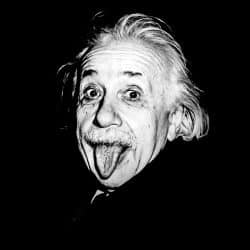




 The Adventures of Superman radio show revealed the ‘secret’ codes and rituals of the KKK, making it a laughingstock and drying up Klan membership within weeks.