web analytics

Blog

  • Cropsey, Wyeth, and the American Landscape Tradition

    Cropsey, Wyeth, and the American Landscape Tradition

    Cropsey, Wyeth, and the American Landscape Tradition

    Open Wednesday–Monday. Closed Tuesdays except for special events.

    October 4, 2025 – May 31, 2026

    Brandywine Museum of Art — Chadds Ford, PA

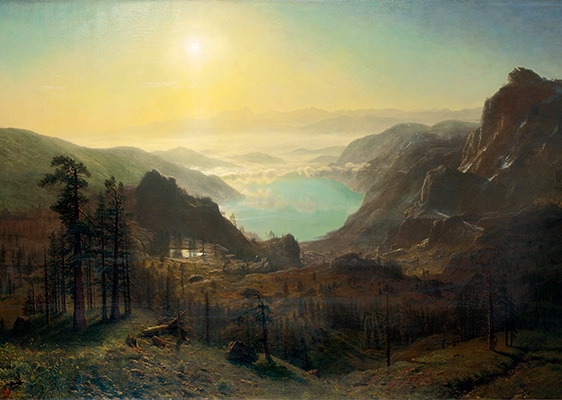
    The Brandywine Museum of Art presents Cropsey, Wyeth, and the American Landscape Tradition, a landmark exhibition centered on the first-ever museum display of a monumental rediscovered masterwork by Hudson River School painter Jasper Francis Cropsey (1823–1900).

    At the heart of the exhibition is Autumn in the Ramapo Valley, Erie Railway (1873), an extraordinary canvas measuring nearly 7 feet long. Commissioned in 1873 by Irish-American railroad magnate James McHenry, the painting celebrates both the grandeur of the American landscape and the rise of American industry. The train cutting through the valley references the Erie Railroad, in which McHenry had recently secured a controlling stake — a subtle but powerful statement about progress, expansion, and national identity.

    Shortly after its completion, the painting was shipped to England and remained in private British collections for more than 150 years. In 2025, it was acquired by The J. Jeffrey and Ann Marie Fox Foundation for American Art, marking its long-awaited return to public view. This exhibition offers the first opportunity for audiences to see the work since 1873.

    The Hudson River School and Industry

    Beyond Cropsey’s masterwork, the exhibition surveys the 19th-century explosion of American landscape painting and its relationship to industrial expansion. Featured artists include:

    • Alfred Thompson Bricher
    • Albert Bierstadt
    • William Trost Richards
    • John Frederick Kensett
    • Mary Blood Mellen
    • Martin Johnson Heade

    These painters helped define a distinctly American vision of nature — dramatic, expansive, and often infused with national optimism. Yet their works also reveal the tension between untouched wilderness and advancing railroads, commerce, and settlement.

    From Cropsey to the Wyeths

    The exhibition continues beyond the Hudson River School, tracing a line of artistic inheritance into the 20th century. Through key works in the Brandywine Museum and Wyeth Foundation collections, the show explores how American landscape painting evolved through:

    • Winslow Homer
    • George Bellows
    • N.C. Wyeth
    • and ultimately Andrew Wyeth (1917–2009)

    Archival material from the Wyeth family library reveals a deeper engagement with Hudson River School artists than previously recognized. Andrew Wyeth studied their composition, allegorical themes, and even their treatment of industry within landscape. Selected watercolors and tempera works — including some never before exhibited — demonstrate how that legacy carried forward in subtle but meaningful ways.

    The result is not just a historical survey, but a reconsideration of how American landscape painting evolved across generations.

    Exhibition Dates

    October 4, 2025 – May 31, 2026

    For deeper context on the rediscovered Cropsey painting, visitors can explore the exhibition microsite:

    https://brandywineathome.org/cropsey/

  • John Sloan’s Street Theater

    John Sloan’s Street Theater

    John Sloan’s Street Theater

    Open Wednesday–Monday. Closed Tuesdays except for special events.

    January 31, 2026 – May 17, 2026

    Strawbridge Family Gallery

    Curated by Amanda C. Burdan, Ph.D.

    The Brandywine Museum of Art presents John Sloan’s Street Theater, an exhibition exploring the graphic work of John Sloan (1871–1951), a central figure of the Ashcan School. Emerging in the early twentieth century, Sloan and his contemporaries rejected idealized subjects in favor of the realities of modern urban life, particularly in New York City.

    Best known for his paintings and etchings of everyday city scenes, Sloan captured sidewalks, rooftops, tenements, shop windows, and neighborhood theaters with both humor and social awareness. While his oil paintings employed loose, modern brushwork, his prints reveal a more intricate approach, using etching to record fleeting gestures, crowd interactions, and private moments glimpsed through open windows.

    This exhibition draws from a collection of more than 500 prints donated to the museum by the late Paul Preston Davis, presenting over 50 works that highlight Sloan’s mastery of the medium. The selection underscores his deep interest in human behavior — from children playing in the streets to the rhythms of working-class neighborhoods.

    Sloan’s art offers insight into a transformative period in American life. During his lifetime, the city shifted from horse-drawn transportation to automobiles; women’s public roles expanded dramatically; and social norms were reshaped through movements such as suffrage and Prohibition. Through his prints, urban life becomes both stage and subject — a “street theater” unfolding in real time.

  • Living Indigenous

    Living Indigenous

    Living Indigenous – Delaware Art Museum (Wilmington, DE)

    The Delaware Art Museum is closed on Monday and Tuesday

    Dates: February 28 – August 23, 2026

    Price: Free with museum admission

    Location: Delaware Art Museum, Gallery 9, 2301 Kentmere Parkway, Wilmington, Delaware

    Explore contemporary Indigenous creativity at Living Indigenous, an exhibition at the Delaware Art Museum that celebrates the work of Indigenous artists living in or connected to the Delaware community. Developed in partnership with the Nanticoke Indian Museum, the exhibition highlights artistic voices that reflect cultural heritage, identity, and community connections.

    The exhibition brings together intergenerational artists, offering perspectives that link history, cultural traditions, and modern Indigenous experiences. By centering these voices during the United States’ 250th anniversary era, the exhibition emphasizes broader stories of the inhabitants of Turtle Island, connecting past knowledge with present-day artistic expression.

    Visitors will encounter a diverse range of artwork—from painting and mixed media to contemporary interpretations of Indigenous identity. Additional works and ephemera by Indigenous artists are installed throughout the museum’s permanent galleries, expanding the narrative beyond a single exhibition space.

    Exhibition Highlights

    • Artwork by Indigenous artists connected to the Delaware region
    • Collaboration with the Nanticoke Indian Museum
    • Intergenerational perspectives linking tradition and contemporary life
    • Additional Indigenous works are displayed across the museum galleries

    Venue: The Delaware Art Museum in Wilmington connects visitors with American art, illustration, and contemporary exhibitions through rotating shows, educational programs, and cultural events.

  • Abundance/Excess: A Contemporary Eye on Still Life

    Abundance/Excess: A Contemporary Eye on Still Life

    Abundance/Excess: A Contemporary Eye on Still Life

    March 15, 2026 – June 7, 2026

    Open Wednesday–Monday. Closed Tuesdays except for special events.

    Curator: Kerry Bickford

    Abundance/Excess: A Contemporary Eye on Still Life brings together ten contemporary artists who engage with the long tradition of still life while reframing it for the twenty-first century. Historically a genre associated with technical skill and symbolic meaning, still life has also served as a space for experimentation — a place where artists explore texture, composition, and coded messages about wealth, mortality, and desire.

    The exhibition is organized into two thematic sections:

    Abundance

    This section examines how still life imagery has historically symbolized prosperity and status. The featured contemporary works interrogate systems of wealth, commerce, and exchange — asking how objects signal value and how consumer culture shapes perception. Fruit, fish, flowers, and meat become markers not only of bounty, but of economic power.

    Excess

    The second section focuses on the environmental and social consequences of overconsumption. Many works incorporate discarded or repurposed materials — bath towels, reclaimed toys, grocery flyers, and other found objects — reflecting on industrial production and waste. These reinterpretations of still life question what remains after abundance tips into excess.

    The Brandywine Museum of Art presents John Sloan’s Street Theater, an exhibition exploring the graphic work of John Sloan (1871–1951), a central figure of the Ashcan School. Emerging in the early twentieth century, Sloan and his contemporaries rejected idealized subjects in favor of the realities of modern urban life, particularly in New York City.

    Best known for his paintings and etchings of everyday city scenes, Sloan captured sidewalks, rooftops, tenements, shop windows, and neighborhood theaters with both humor and social awareness. While his oil paintings employed loose, modern brushwork, his prints reveal a more intricate approach, using etching to record fleeting gestures, crowd interactions, and private moments glimpsed through open windows.

    This exhibition draws from a collection of more than 500 prints donated to the museum by the late Paul Preston Davis, presenting over 50 works that highlight Sloan’s mastery of the medium. The selection underscores his deep interest in human behavior — from children playing in the streets to the rhythms of working-class neighborhoods.

    Sloan’s art offers insight into a transformative period in American life. During his lifetime, the city shifted from horse-drawn transportation to automobiles; women’s public roles expanded dramatically; and social norms were reshaped through movements such as suffrage and Prohibition. Through his prints, urban life becomes both stage and subject — a “street theater” unfolding in real time.

    Together, the exhibition expands still life beyond decorative tradition, connecting it to urgent contemporary concerns about sustainability, consumption, and economic imbalance. The familiar language of fruit and flowers becomes a lens for examining extraction, production, and responsibility in modern society.

  • Spring Blooms At Longwood Gardens

    Spring Blooms At Longwood Gardens

    Get Ready for Spring at Longwood Gardens

    Open Wednesday–Monday. Closed Tuesdays except for special events.

    Spring wasn’t just a change on the calendar—it felt different. The Gardens began to wake, color returned in waves, and every pathway seemed to carry the quiet promise of renewal. This season invites you to slow down, look closer, and let the world surprise you again.

    As you explore, you’ll find drifts of tulips glowing in the sun, quiet corners perfect for reflection, and wide-open vistas that feel like a breath of fresh air you didn’t know you needed. Spring at Longwood means fresh blooms, fresh joy, and endless possibilities waiting around every turn.Planning Your Spring Visit

    Spring is one of our most popular seasons. During Spring Blooms, all Members require timed reservations daily from open to close.

    Gardens Premium Members and Innovators may visit without reservations.

    Tulip Tuesdays

    April 21, April 28, May 5

    10:00 am–6:00 pm

    If you’re looking for even more spring color, join us for three special Tulip Tuesdays. Enjoy extended Tuesday hours, peak tulip beauty, and the kind of vibrant, once-a-year scenery that makes spring at Longwood unforgettable.

    Let the season unfold around you—one bloom, one breeze, one perfect moment at a time.

  • The City on Paper

    The City on Paper

    The City on Paper – Delaware Art Museum

    The Delaware Art Museum is closed on Monday and Tuesday

    Dates: March 28 – August 16, 2026

    Price: Free with museum admission

    Location: Galleries 11 & 12, Delaware Art Museum, 2301 Kentmere Pkwy, Wilmington, Delaware

    Explore urban life through the lens of printmaking in The City on Paper, an exhibition at the Delaware Art Museum featuring 47 drawings and prints that capture city scenes from 1875 to 2007. The exhibition highlights how artists have documented the energy and architecture of cities such as New York, Paris, and Wilmington, portraying grand boulevards, quiet alleyways, towering skyscrapers, and the people who animate these spaces.

    Printmaking plays a central role in the exhibition, with works created through techniques including etching, woodcut, lithography, monotype, and screen printing. Drawn entirely from the museum’s own collection, the exhibition includes new acquisitions alongside rarely displayed works, offering visitors a chance to see pieces that are not often on view.

    The exhibition features works by 45 artists, including notable figures such as Peggy Bacon, Stuart Davis, John Marin, Martin Lewis, John Sloan, Wayne Thiebaud, and James McNeill Whistler. Together, these artists present a rich visual narrative of city life across more than a century of artistic interpretation.

    Exhibition Highlights

    • 47 works on paper exploring city life and architecture

    • Printmaking techniques including etching, lithography, and screen printing

    • Artwork spanning more than 130 years of urban imagery

    • Works by 45 artists from the Delaware Art Museum collection

    Venue: The Delaware Art Museum in Wilmington presents American art, illustration, and contemporary exhibitions while offering educational programs and community events throughout the year.

  • The American Landscape Tradition: Cropsey and Wyeth

    The American Landscape Tradition: Cropsey and Wyeth

    Cropsey, Wyeth, and the American Landscape Tradition

    Open Wednesday–Monday. Closed Tuesdays except for special events.

    October 4, 2025 – May 31, 2026

    Brandywine Museum of Art — Chadds Ford, PA

    The Brandywine Museum of Art presents Cropsey, Wyeth, and the American Landscape Tradition, a landmark exhibition centered on the first-ever museum display of a monumental rediscovered masterwork by Hudson River School painter Jasper Francis Cropsey (1823–1900).

    At the heart of the exhibition is Autumn in the Ramapo Valley, Erie Railway (1873), an extraordinary canvas measuring nearly seven feet in length. Commissioned in 1873 by Irish-American railroad magnate James McHenry, the painting celebrates both the grandeur of the American landscape and the rise of American industry. The train cutting through the valley references the Erie Railroad, in which McHenry had recently secured a controlling stake — a subtle but powerful statement about progress, expansion, and national identity.

    Shortly after its completion, the painting was shipped to England and remained in private British collections for more than 150 years. In 2025, it was acquired by The J. Jeffrey and Ann Marie Fox Foundation for American Art, marking its long-awaited return to public view. This exhibition offers the first opportunity for audiences to see the work since 1873.

    The Hudson River School and Industry

    Beyond Cropsey’s masterwork, the exhibition surveys the 19th-century explosion of American landscape painting and its relationship to industrial expansion. Featured artists include:

    • Alfred Thompson Bricher
    • Albert Bierstadt
    • William Trost Richards
    • John Frederick Kensett
    • Mary Blood Mellen
    • Martin Johnson Heade

    These painters helped define a distinctly American vision of nature — dramatic, expansive, and often infused with national optimism. Yet their works also reveal the tension between untouched wilderness and advancing railroads, commerce, and settlement.

    From Cropsey to the Wyeths

    The exhibition continues beyond the Hudson River School, tracing a line of artistic inheritance into the 20th century. Through key works in the Brandywine Museum and Wyeth Foundation collections, the show explores how American landscape painting evolved through:

    • Winslow Homer
    • George Bellows
    • N.C. Wyeth
    • and ultimately Andrew Wyeth (1917–2009)

    Archival material from the Wyeth family library reveals a deeper engagement with Hudson River School artists than previously recognized. Andrew Wyeth studied their composition, allegorical themes, and even their treatment of industry within landscape. Selected watercolors and tempera works — including some never before exhibited — demonstrate how that legacy carried forward in subtle but meaningful ways.

    The result is not just a historical survey, but a reconsideration of how American landscape painting evolved across generations.

    Exhibition Dates

    October 4, 2025 – May 31, 2026

    For deeper context on the rediscovered Cropsey painting, visitors can explore the exhibition microsite:

    https://brandywineathome.org/cropsey/

  • Citizen Artist

    Citizen Artist

    Citizen Artist – Delaware Art Museum (Wilmington, DE)

    The Delaware Art Museum is closed on Monday and Tuesday

    Dates: April 11 – July 19, 2026

    Price: Free with museum admission

    Location: Fusco Gallery, Delaware Art Museum, 2301 Kentmere Pkwy, Wilmington, Delaware

    Explore the role of artists as community builders in Citizen Artist, an exhibition at the Delaware Art Museum that reflects on the relationship between art, public service, and civic identity. Timed with the United States Semiquincentennial in 2026, the exhibition highlights artists who worked through major federal arts programs designed to support creative workers and strengthen communities.

    Beginning with the New Deal arts initiatives of the 1930s, the exhibition examines programs such as the Public Works of Art Project, the Works Progress Administration, the Farm Security Administration, and the Treasury Section on Fine Arts. These programs employed artists who created murals, photographs, performances, and educational programs that connected art to everyday American life.

    The exhibition also explores the Comprehensive Employment and Training Act (CETA) of the 1970s, which funded job programs that many communities adapted to employ professional artists. In Delaware, these efforts helped expand community arts programs and contributed to the development of institutions such as the Delaware Art Museum and The Delaware Contemporary.

    Through historical works and contemporary commissions, Citizen Artist highlights how artists have served their communities while shaping cultural life across generations. The exhibition also connects with the statewide Citizen Photographer initiative, inviting Delaware residents to contribute photographs that reflect identity, place, and civic life during the nation’s 250th anniversary.

    Exhibition Highlights

    • Artwork connected to New Deal and CETA artist employment programs

    • Contemporary commissions exploring the role of artists in civic life

    • Community participation through the Citizen Photographer initiative

    • Part of Delaware’s cultural programming for the U.S. Semiquincentennial in 2026


  • Fort Delaware Open to the Public at Fort Delaware

    Fort Delaware Open to the Public at Fort Delaware

    Come out and visit the greatest Civil War site in Delaware! We have several programs going on daily, including artillery demonstrations, tours, and interactive activities. You can also explore the fort, and interact with the various activities in each room. Fort Delaware is a great experience for visitors of all ages!

  • Pea Patch Island Heron Tour at Fort Delaware

    Pea Patch Island Heron Tour at Fort Delaware

    Join Declan O’Neil from the Delaware Ornithological Society, for a birding hike at Pea Patch Island. Enjoy the hernory overlook, and marvel at the nesting wading birds on this wetland island. NOTE: Attendees will need to have a ticket for the 10 AM ferry to participate.

  • Live Reptile and Amphibian Show at Killens Pond

    Live Reptile and Amphibian Show at Killens Pond

    They are scaly, slimy and alive! Meet some of our native reptiles and amphibians for family-fun and learning. Program meets at the nature center. Pre-registration required. Online registration ends 22 hours prior to the program. After that, please call 302-284-4299 or email DNREC_KPSPnaturecenter@delaware.gov to register. $6/person.

  • Pontoon Tour (Reserved Seat) at Alapocas Run

    Pontoon Tour (Reserved Seat) at Alapocas Run

    Immerse yourself in the sights and sounds of the cypress swamp during this 1-hour guided tour aboard our 28-foot pontoon boat. These tickets are for individual seats on the pontoon boat. Online registration ends 48 hours prior to the pontoon tour. To make a reservation for your family/household group, please call the Baldcypress Nature Center directly at 302-875-5163. Adults $8, Children (Age 12 and under) $4.

  • Nature Babies Session 1 at White Clay Creek

    Nature Babies Session 1 at White Clay Creek

    For ages birth to 2. Bring your little ones out for their first nature programs at the park! Cost includes one parent /guardian with child.

  • Homeschool Day on the Green at First State Heritage Park

    Homeschool Day on the Green at First State Heritage Park

    Come learn with us on the Dover Green from 10AM to 1PM on April 27th and discover what amazing historic, cultural, and natural resources Delaware has to offer. Stop by at any time to traverse the multiple tables/programs from various Delaware State Parks and other partnering organizations.

  • Nature Nuggets Session 1 at White Clay Creek

    Nature Nuggets Session 1 at White Clay Creek

    For ages 2-4, we’ll spend about 45 minutes with the preschoolers and their adults investigating a variety of nature topics.

  • Spring Bird Walk at Cape Henlopen

    Spring Bird Walk at Cape Henlopen

    Search the park for birds on their spring migration. Each walk will target current birding hot spots. For beginning and intermediate birders. Bring your binoculars or borrow a pair of ours. For ages 10+ with an adult. Pre-register by calling (302) 645-6852.