
web analytics

Tag: 1893

  • Death of Russian composer Pyotr Ilyich Tchaikovsky

    Death of Russian composer Pyotr Ilyich Tchaikovsky

    Death of Russian composer Pyotr Ilyich Tchaikovsky

    Pyotr Ilyich Tchaikovsky, a renowned Russian composer of the Romantic era, left a lasting legacy in classical music. Known for his ballets, symphonies, operas, and chamber music, Tchaikovsky’s life and untimely death have been the subject of much speculation and intrigue.

    • Dates: Tchaikovsky was born on May 7, 1840, and died on November 6, 1893.
    • Details: Tchaikovsky’s death has been the subject of numerous theories and speculation. The official cause of his death was reported as cholera, contracted after drinking a glass of unboiled water during an epidemic in St. Petersburg. However, some scholars have suggested that his death may have resulted from suicide, possibly due to personal or professional pressures, or even as the outcome of a “court of honor” held by his former classmates to protect the reputation of the Russian nobility.
    • Trivial Facts: Tchaikovsky’s last work was Symphony No. 6, the “Pathétique.” This symphony was premiered just nine days before his death, and some have interpreted the piece as a musical reflection on the composer’s own life and impending death. There is also a rumor that Tchaikovsky’s last words were, “Ah, music, what a beautiful art! But what a wretched profession!”
    • Effects on Pop Culture: Tchaikovsky’s death sparked an outpouring of grief and tributes in Russia and internationally. His music continues to be celebrated and performed around the world, with pieces such as “The Nutcracker,” “Swan Lake,” and “1812 Overture” remaining popular and influential in the world of classical music and beyond. Tchaikovsky’s life and death have also inspired various films, novels, and plays that explore his complex personal life and the mystery surrounding his demise.
    • Prominent People: Tchaikovsky was part of a circle of influential Russian composers and musicians, including Modest Mussorgsky, Nikolai Rimsky-Korsakov, and Alexander Borodin, who were collectively known as “The Five” or “The Mighty Handful.” Tchaikovsky’s patroness, Nadezhda von Meck, played a significant role in his life, providing him with financial support and encouragement while maintaining an exclusively epistolary relationship.
    • Countries Involved: Tchaikovsky was a prominent figure in Russian culture, but his music and influence extended well beyond his homeland, gaining widespread recognition and appreciation in Europe, the United States, and other parts of the world.

    Pyotr Ilyich Tchaikovsky, born in 1840, was a prominent Russian composer whose sudden death in 1893 has been a subject of speculation. Although officially attributed to cholera, alternative theories suggest suicide or forced death due to societal pressures. Tchaikovsky’s music has had a lasting impact on classical music and popular culture, with his works continuing to be performed and celebrated around the world.
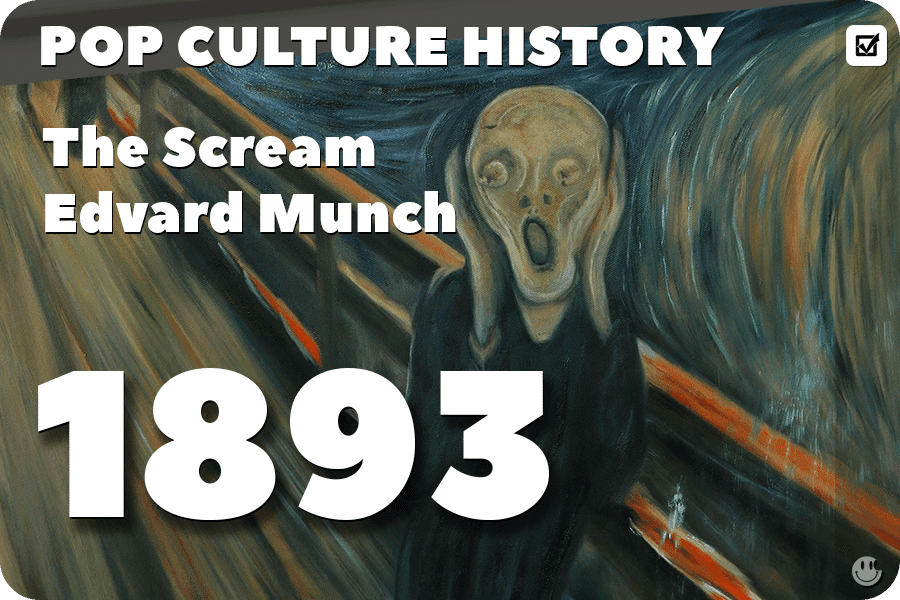
  • The Scream by Edvard Munch

    The Scream by Edvard Munch

    The Scream” by Edvard Munch

    One evening I was walking along a path, the city was on one side and the fjord below. I felt tired and ill. I stopped and looked out over the fjord – the sun was setting, and the clouds turning blood red. I sensed a scream passing through nature; it seemed to me that I heard the scream. I painted this picture, painted the clouds as actual blood. The color shrieked. This became The Scream.


    I was walking along the road with two friends – the sun was setting – suddenly the sky turned blood red – I paused, feeling exhausted, and leaned on the fence – there was blood and tongues of fire above the blue-black fjord and the city – my friends walked on, and I stood there trembling with anxiety – and I sensed an infinite scream passing through nature

    The Scream” is an iconic painting by the Norwegian artist Edvard Munch, known for its expressive style and emotional intensity. This famous work has had a lasting impact on both the art world and popular culture.

    • Dates: Munch created four versions of “The Scream” between 1893 and 1910. The first and most famous version was painted in 1893 using tempera and crayon on cardboard.
    • Details: “The Scream” depicts a figure with a distorted face and an open mouth, standing on a bridge with a red, swirling sky in the background. Munch described the painting as a “soul painting,” representing the “infinite scream of nature.” The painting is often associated with feelings of anxiety, despair, and existential dread.
    • Trivial Facts: One of the lesser-known facts about “The Scream” is that it was originally titled “Der Schrei der Natur” (The Scream of Nature) by Munch. Another interesting fact is that the background of the painting was likely inspired by the intense red sunsets caused by the 1883 eruption of the Krakatoa volcano.
    • Effects on Pop Culture: “The Scream” has had a significant impact on popular culture, with its image frequently appearing in various forms of media, such as movies, television, and advertisements. The painting has been parodied in cartoons like The Simpsons and has inspired various Halloween costumes and masks, including the mask featured in the “Scream” movie franchise. The artwork’s influence is also seen in the work of other artists, including expressionists and pop artists.
    • Prominent People: Edvard Munch, the painter of “The Scream,” is regarded as a pioneer of the Expressionist movement, which emerged in the early 20th century. Munch’s work has influenced many artists who came after him, such as Max Beckmann, Ernst Ludwig Kirchner, and other German Expressionists.
    • Countries Involved: The primary country associated with “The Scream” is Norway, where Edvard Munch was born and raised. However, the painting has gained international recognition and is housed in the National Gallery of Norway, making it an important cultural symbol in the global art community.

    “The Scream” by Edvard Munch is a highly influential artwork that has left an indelible mark on the art world and popular culture. Created between 1893 and 1910, the painting’s intense emotional resonance led to its image becoming a symbol of anxiety and existential dread. Its presence in various forms of media and its influence on later artists are testaments to the lasting impact of this iconic painting.