Tag: 1903
-
Early 1900s: The 100 Most Popular Songs
1. I’m a Yankee Doodle Dandy – 1904 (by George M Cohen)2. America the Beautiful – 19103. Danny Boy – 19134. Take Me Out To The Ball Game – 1908 (by Jack Norworth & Albert Von Tilzer )5. Pomp and Circumstance – 1902 (by Elgar)6. The Grand Old Rag (aka “You’re a Grand Old Flag”) – 1906 (by George M. Cohan)7. When Irish Eyes Are Smiling – 1912 (by Chauncey Olcott & George Graff Jr, . Ernest R. Ball)8. Daddy’s Little Girl – 1905 (by Edward Madden & Theodore F. Morse)9. The Bells Of St Mary’s – 1917 (by Douglas Furber & A. Emmett Adams)10. Give My Regards to Broadway – 1904 (by George M. Cohan )11. Swanee – 191912. Too-Ra-Loo-Ra-Loo-Ral (That’s An Irish Lullaby) – 1913 (by James R. Shannon )13. I Ain’t Got Nobody – 1916 (by Roger Graham, Dave Peyton & Spencer Williams)14. I Want To Be In Dixie (I’m Going Back To Dixie) – 1911 (by Irving Berlin & Ted Snyder)15. The Entertainer – 1902 (by Scott Joplin)16. Strike Up the Band (Here Comes a Sailor) – 190017. Anchors Aweigh – 1906 (by Alfred Hart Miles & R. Lovell and Charles A. Zimmerman)18. The Beer That Made Milwaukee Famous – 1903 (by Dan McAvoy)19. Colonel Bogey March – 1914 (by Kenneth J. Alford)20. Melody Of Love – 1903 (by Tom Glazer & H. Engelmann)21. Flight of the Bumble Bee – 1900 – (by N. Rimsky-Korsakov)22. Rite of Spring – 1913 (by Stravinsky)23. Over There – 1917 (by George M. Cohan)24. Yale Boola! (March and Two-Step) – 190125. Hinky Dinky Parlay Voo – 1919 (by Edward Rowland)26. March of the Toys – 1903 (by Victor Herbert, heard in Babes In Toyland)27. Frankie and Johnny – 191228. Dardanella – 1919 (by Fred Fisher & Felix Bernard, Johnny S. Black)29. You Belong To Me – 1916 (by Harry B. Smith & Victor Herbert)30. Alexander’s Ragtime Band – 1911(?)31. Hail! Hail! The Gang’s All Here – 1917 (by D. A. Esrom, Theodore F. Morse & Arthur Sullivan)32. Fascination – 1915 (by Harold Atteridge & Sigmund Romberg)33. McNamara’s Band – 1917 (by John J. Stamford & Shamus O’Connor)34. Peg O’ My Heart – 1913 (by Alfred Bryan & Fred Fisher)35. Saint Louis Blues – 1914 (by W. C. Handy)36. The Glow-Worm – 1902 (by Lilla Cayley Robinson, Heinz Bolten-Backers, Paul Lincke)37. Scott Joplin’s New Rag – 1912 (by Scott Joplin)38. Hail Hail the Gang’s All Here – 191739. Put On Your Old Grey Bonnet – 1909 (by Stanley Murphy & Percy Wenrich)40. Bye, Bye My Honey – Billy Golden (1911)41. Joe Turner Blues – 1915 (by Walter Hirsch & W. C. Handy)42. It’s a Long, Long Way to Tipperary – 191243. Ragtime Cowboy Joe – 1912 (by Grant Clarke, Lewis F. Muir & Maurice Abrahams)44. Oh! How I Hate to Get Up in the Morning – 1918 (by Irving Berlin)45. The Whiffenpoof Song – 1909 (by Meade Minnigerode & George S. Pomeroy, Tod B. Galloway)46. Alabama Jubilee – 1915 (by Jack Yellen & George L. Cobb)47. The Darktown Strutters’ Ball – 1916 (by Shelton Brooks)48. Harrigan – 1907 (by George M. Cohan)49. Bill Bailey, Won’t You Please Come Home – 190250. Let Me Call You Sweetheart – 191051. Keep On The Sunny Side – 1906 (by Jack Drislane & Theodore F. Morse)52. Because – 190253. Hiawatha (His Song to Minnehaha) – 190354. Ida! Sweet as Apple Cider – 1903 (by Eddie Leonard & Eddie Munson)55. The Aba Daba Honeymoon – 1914 (by Arthur Fields & Walter Donovan)56. Play a Simple Melody – 1914 (by Irving Berlin)57. Ah! Sweet Mystery Of Life – 1910 (by Rida Johnson Young & Victor Herbert)58. Ballin’ The Jack – 1913 (by James Henry Burris & Chris Smith)59. The Memphis Blues – 191260. American Patrol – 1901(?)61. On a Sunday Afternoon – 190262. The Saint Louis Blues – 191463. The Rose Of Tralee – 1912 (by C. Mordaunt Spencer m. Charles W. Glover)64. K-K-K-Katy – 1918 (by Geoffrey O’Hara)65. There’s A Broken Heart For Every Light On Broadway – 1915 (by Howard Johnson & Fred Fisher)66. Syncopated Walk – 1914 (by Irving Berlin)67. My Melancholy Baby – 1912 (by George A. Norton & Ernie Burnett)68. Meet Me in St. Louis, Louis – 190469. Give Us Just Another Lincoln – 190070. I Wonder Who’s Kissing Her Now – 1909 (by Will M. Hough & Frank R. Adams, Joseph E. Howard & Harold Orlob)71. In the Good Old Summer Time – 190272. Twelfth Street Rag – 1914 (by Euday L. Bowman)73. A Little Bit of Heaven – 191574. Casey Jones – 1909 (by T. Lawrence Seibert & Eddie Newton)75. Blame It on the Blues – 191476. By the Light of the Silvery Moon – 1909 (by Edward Madden & Gus Edwards)77. Waltz Around Again Willie – 1906 (‘Round, ‘Round, ‘Round)78. Alcoholic Blues – 1919 (by Edward Laska & Albert Von Tilzer)79. I Didn’t Raise My Boy to Be a Soldier – 1915 (by Alfred Bryan & Al Piantadosi )80. Shine On Harvest Moon – 1907 (by Nora Bayes & Jack Norworth)81. I Can’t Tell Why I Love You But I Do – 190082. Hungarian Rag – 1913 (by Julius Lenzberg)83. In My Merry Oldsmobile -1905 (by Vincent P. Bryan & Gus Edwards)84. And Then – 1913 (by Alfred Bryan & Herman Paley)85. Good Morning, Mr. Zip-Zip-Zip! – 191886. Goodbye, Good Luck, God Bless You – 1916 (by J. Keirn Brennan & Ernest R. Ball)87. Mary’s a Grand Old Name – 1905 (from the musical play Forty-Five Minutes from Broadway)88. Un Bel Di Madame Butterfly – 1904 (by Puccini)89. My Gal Sal – 190590. Concerto for Piano #2 – 1901 (by Rachmaninoff)91. Topsy Song – 191092. I’m Always Chasing Rainbows – 1918 (from the Musical Comedy Oh Look!)93. On The Road To Mandalay – 1907 (by Rudyard Kipling & Oley Speaks)94. Missouri Waltz (Hush-a-Bye, Ma Baby) – 191495. In the Shade of the Old Apple Tree – 190596. Beans! Beans!! Beans!!! – 1912 (by Elmer Bowman & Chris Smith)97. Tell Me Pretty Maiden (English Girls and Clerks) – 1900 (featured in Florodora)98. A Good Man Is Hard To Find – 1919(?)99. The Caissons Go Rolling Along – 1906 (by Edmund L. Gruber)100. Uncle Josh in Society – 1909 -
1903 History, Facts and Trivia
Top Ten Baby Names of 1903
Mary, Helen, Anna, Margaret, Ruth, John, William, James, George, Charles
US Life Expectancy
(1903) Males: 49.1 years, Females: 52.0 years
Firsts, Inventions and Wonders
The Great Train Robbery is considered the first American Action/Western film. The first stuntman was ex-US cavalryman, Frank Hanaway, in this Edwin S. Porter film, for his ability to fall off a horse without injuring himself.
Mary Anderson from Alabama patented (#743,801) windshield wipers in 1903.
Joseph Pulitzer donated $1 million to Columbia University, founding the Pulitzer Prize.
The Tour de France bicycle race was organized.
Victor Herbert’s Babes in Toyland premiered in the Chicago Grand Opera, and later in New York. You have probably heard March of the Toys at Christmastime.
On April 22, the American Power Boat Association was formed.
The first box of Crayola crayons sold for 5 cents. It contained eight colors: brown, red, orange, yellow, green, blue, violet and black.
The Ford Motor Company, under Henry Ford, was incorporated.
Enrico Caruso, the operatic tenor voice of his era, made his US debut at the Metropolitan Opera House, NY, in Rigoletto.
New York’s original Lyric Theater opened at 213 W 42nd St., with Richard Mansfield’s production of Old Heidelberg.
Lyceum Theater (New Lyceum) at 149 W 45th St, NYC, and New Amsterdam Theater at 214 W 42nd St, NYC, also opened.
“Baked by Electricity” Triscuit Crackers were introduced.
The Oxnard strike of 1903 was the first time in US history that a labor union was formed from members of different racial groups (Japanese and Mexican workers).
The Most Popular Singers and Artists of 1903 include
George Alexander, Joe Belmont, John Bieling, Henry Burr, Arthur Collins, The Columbia Orchestra, Byron G. Harlan, The Hayden Quartet, Mina Hickman, J. Aldrich Libbey, Harry Macdonough, J.W. Meyers, Billy Murray, Dan Quinn, Bob Roberts, John Philip Sousa’s Band, Len Spencer, Cal Stewart, William H. Thompson
Pop Culture Facts & History
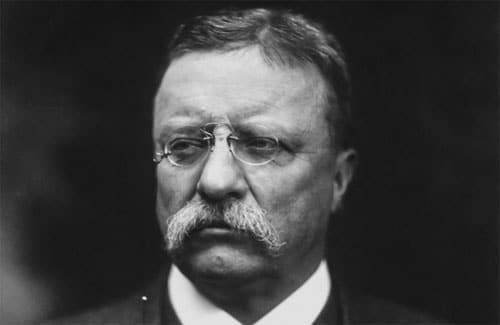
President Teddy Roosevelt and wilderness advocate John Muir visited Yosemite Valley in 1903, inspiring the US National Park System.
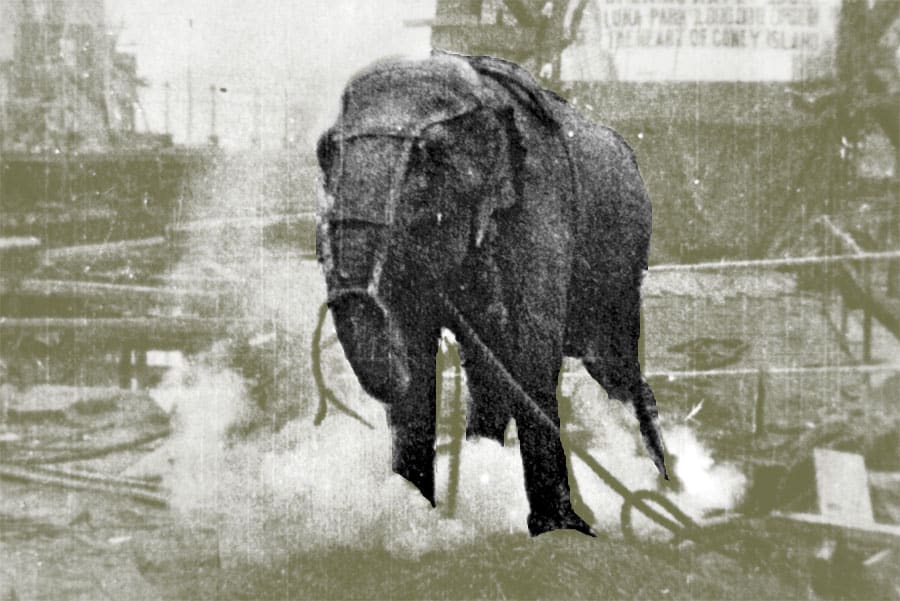
Topsy, her owners electrocuted the elephant at Luna Park, Coney Island, and filmed by Edison Manufacturing movie company in Edison’s effort to show the safety of Direct Current vs Alternating Current.
Monopoly was created to expose the unfairness of a social system where a small minority takes advantage of the majority of tenants, in The Landlord’s Game.
John Pemberton included coca leaves as an ingredient in his 1886 soft drink, Coca-Cola, but removed the cocaine from the soft drink in 1903.
1903’s Alice in Wonderland was an early film adaptation of the book.
The Wizard of Oz, the first musical version of The Wonderful Wizard of Oz book, was produced by L. Frank Baum and W.W. Denslow (music by Paul Tietjens) in Chicago in 1902 and moved to New York in 1903.
Guantanamo Bay is leased by the US against Cuba’s wishes, based on the Cuban-American Treaty, signed in 1903. A $4,085 is sent annually to a position that has not existed since 1959 and was only cashed once in 1959 by mistake. The treaty allows Guantanamo Bay to be leased to the United States “in perpetuity.”
Horatio Nelson Jackson, with driving partner Sewall K. Crocker, were the first to drive cross country (San Francisco to New York City) in an automobile.
The New York Times predicted that building a flying machine would be possible in 1-10 Million years.
Traian Vuia, a Romanian Engineer, presented his flying machine plan to the Académie des Sciences in Paris, but was rejected with the comment: “The problem of flight with a machine which weighs more than air can not be solved, and it is only a dream.”
The first flight of the Wright Flyer I took place on December 17, 1903. Orville Wright piloted, and Wilbur ran (safety) at the wingtip.
A barge, The Harold, tipped somewhere off the coast of Staten Island, sending most of its 7,700 silver-and-lead bars to the bottom. Most bars were recovered immediately, but about 1,400 bars were never recovered.
The Horrible
Wreck of the Old 97- involved the Southern Railway Fast Mail train en route from Monroe, Virginia, to Spencer, North Carolina, on September 27, 1903. Eleven people were killed and seven injured. It is also the basis for one of the first Dirge Pop Songs. You probably know the melody.
The Iroquois Theatre fire in Chicago killed over 600 people.
Nobel Prize Winners
Physics – Antoine Henri Becquerel, Pierre Curie, and Marie Curie
Chemistry – Svante August Arrhenius
Medicine – Niels Ryberg Finsen
Literature – Bjørnstjerne Bjørnson
Peace – William Randal CremerPopular and Best-selling Books From 1903
Fiction Bestsellers
1. Lady Rose’s Daughter by Mary Augusta Ward
2. Gordon Keith by Thomas Nelson Page
3. The Pit by Frank Norris
4. Lovey Mary by Alice Hegan Rice
5. The Virginian by Owen Wister
6. Mrs. Wiggs of the Cabbage Patch by Alice Hegan Rice
7. The Mettle of the Pasture by James Lane Allen
8. Letters of a Self-Made Merchant to His Son by George Horace Lorimer
9. The One Woman by Thomas Dixon Jr
10. The Little Shepherd of Kingdom Come by John Fox JrOther Books of Note
The Souls of Black Folk by W.E.B. Du Bois
Studies in Logical Theory by John Dewey
Call of the Wild by Jack London
Mental Traits of Sex by Helen Thompson Wooley
Principles of Mathematics by Bertrand Russell
Principia Ethica by G.E. Moore
The Way of All Flesh by Samuel Butler
The Ambassadors by Henry James
The Story of My Life by Helen KellerSports
American League Baseball Champions: Boston Americans
National League Baseball Champions: Pittsburg Pirates
Challenge Cup Champs: Montreal/Ottawa Hockey Clubs
U.S. Open Golf: Willie Anderson
U.S. Tennis (Men/Ladies): Laurence Doherty/Elisabeth Moore
Wimbledon (Men/Women): Laurence Doherty/Dorothea Douglass
NCAA Football Champions: Princeton & Michigan
Kentucky Derby Winner: Judge Himes
Boston Marathon Winner: John Lorden Time: 2:41:2More 1903 Facts & History Resources:
Most Popular Baby Names (BabyCenter.com)
Popular and Notable Books (popculture.us)
Broadway Shows that opened in 1903
1903 Calendar, courtesy of Time and Date.com
Fact Monster
1903 in Movies (according to IMDB)
Wikipedia 1903 -
Opening of the Williamsburg Bridge
Williamsburg Bridge
The Williamsburg Bridge is a suspension bridge in New York City, spanning the East River between Manhattan and Brooklyn. Its opening marked a significant moment in the city’s history, facilitating transportation, commerce, and residential expansion.
Dates and Details:
- Construction of the Williamsburg Bridge began in 1896.
- Henry Hornbostel and Leffert L. Buck designed the bridge.
- It was officially opened on December 19, 1903, after seven years of construction.
Williamsburg Bridge Facts:
- At the time of its completion, the Williamsburg Bridge was the largest suspension bridge globally, with a main span of 1,600 feet (487 meters).
- The bridge was the first all-steel suspension bridge constructed in the United States.
- The bridge’s total length, including approaches, is approximately 7,308 feet (2,227 meters).
- The bridge’s construction cost was about $24 million, equivalent to roughly $700 million today.
- The bridge features two levels, with the upper level accommodating eight lanes of roadway and the lower level providing two subway tracks.
- The Williamsburg Bridge was the first suspension bridge to carry automobile and subway traffic.
- The bridge was initially painted in “Williamsburg Bridge Blue,” a unique shade maintained in subsequent paint jobs.
- The bridge underwent a major renovation from 1988 to 2002, addressing structural issues and modernizing its appearance.
Effects on Pop Culture:
- The Williamsburg Bridge has been featured in numerous films, television shows, and photographs, becoming an iconic symbol of New York City.
- The bridge played a role in the growth and development of the surrounding neighborhoods, particularly Williamsburg, Brooklyn, which has transformed into a vibrant cultural hub.
- The bridge has inspired artists, musicians, and writers who have used it as a backdrop or metaphor in their works.
Prominent People and Countries:
- Henry Hornbostel and Leffert L. Buck, the designers of the Williamsburg Bridge, were prominent architects and engineers of their time.
- The United States, specifically New York City, was directly involved in the construction and ongoing maintenance of the bridge.
- The bridge has had a lasting impact on the lives of New Yorkers and the millions of tourists who visit the city each year, serving as a vital transportation link and a symbol of the city’s architectural achievements.
-
The Wright Brothers’ Successful Flight at Kitty Hawk, North Carolina
The Wright Brothers’ successful flight at Kitty Hawk, North Carolina, on December 17, 1903, marked a turning point in human history as the first powered, controlled, and sustained heavier-than-air human flight. This event laid the foundation for modern aviation and transformed global transportation and warfare.
Dates: Wilbur and Orville Wright began experimenting with gliders in the late 1890s. The historic first powered flight occurred on December 17, 1903.
Details: The Wright Brothers’ aircraft, named the Wright Flyer, was a biplane with a wingspan of 40 feet and 4 inches (12.3 meters).
Powered by a 12-horsepower engine, the aircraft used a system of pulleys and cables to control the wings’ shape and maintain balance during flight.
On that fateful day, Orville piloted the first flight, which lasted 12 seconds and covered 120 feet (36.5 meters).
The brothers made four flights that day, with the longest lasting 59 seconds and covering 852 feet (260 meters).
The Wright Brothers owned a bicycle shop in Dayton, Ohio, which funded their aviation experiments.T
hey chose Kitty Hawk, North Carolina, for their flight experiments because of its consistent winds, soft sand for landings, and isolation to protect their ideas.
The Wright Flyer only flew once, as it was damaged after the fourth flight on December 17, 1903.
Effects on Pop Culture: The Wright Brothers’ success at Kitty Hawk inspired generations of aviators, engineers, and dreamers. Their achievement captured the public’s imagination, leading to widespread interest in flight and eventually transforming aviation into a major industry. The invention of airplanes also revolutionized warfare, as military forces around the world quickly adopted aircraft for reconnaissance and combat. In popular culture, the Wright Brothers became symbols of innovation and human achievement.
Prominent People and Countries Involved: The Wright Brothers, Orville (1871-1948) and Wilbur (1867-1912), were American inventors and aviation pioneers. Their work and accomplishments laid the foundation for the United States to become a global aviation technology and innovation leader.
The Wright Brothers’ successful flight at Kitty Hawk, North Carolina, in 1903 marked the beginning of a new era in human history. Their invention revolutionized transportation, warfare, and popular culture, inspiring countless innovations and shaping the world we live in today.
-
Women’s Social and Political Union (WSPU)
Women’s Social and Political Union
The Women’s Social and Political Union (WSPU) was a prominent and influential women’s suffrage organization in the United Kingdom, founded in 1903 by Emmeline Pankhurst and her daughters. The WSPU played a significant role in the women’s suffrage movement, advocating for women’s right to vote using militant and direct action tactics.
Dates and Details:
- The WSPU was founded on October 10, 1903, in Manchester, England, by Emmeline Pankhurst, her daughters Christabel and Sylvia, and a group of like-minded women.
- The organization’s motto was “Deeds, not words,” reflecting its militant approach to achieving its goals.
- The WSPU’s primary focus was securing women’s voting rights in the UK, and it targeted the ruling Liberal Party, which it viewed as the main obstacle to women’s suffrage.
WSPU Facts:
- The WSPU’s members were known as “suffragettes,” a term coined by the Daily Mail newspaper to distinguish them from the more moderate “suffragists.”
- The WSPU used militant tactics, including window smashing, arson, and hunger strikes, to draw attention to their cause and pressure the government.
- In 1908, the WSPU organized “Women’s Sunday,” a large-scale demonstration in London that attracted 300,000 to 500,000 people.
- The WSPU’s official colors were purple, white, and green, symbolizing dignity, purity, and hope, respectively.
- The organization had its own newspaper, “The Suffragette,” initially called “Votes for Women.”
- The Cat and Mouse Act of 1913 was specifically introduced to counter the WSPU’s hunger strike tactics by temporarily releasing hunger-striking prisoners and re-arresting them once they had recovered.
Effects on Pop Culture:
- The WSPU and the suffragette movement inspired various works of art, literature, and film, such as the 2015 film “Suffragette,” which portrayed the lives of WSPU members.
- The term “suffragette” became synonymous with the fight for women’s voting rights and is still used today to describe women who fought for this cause.
- The suffragettes’ use of militant tactics sparked public debate about the role of women in society and the methods used to achieve social and political change.
Prominent People:
- Emmeline Pankhurst, the founder of the WSPU, was a key figure in the women’s suffrage movement and is still celebrated as a feminist icon.
- Christabel and Sylvia Pankhurst, Emmeline’s daughters, played significant roles in the WSPU and the broader suffrage movement.
- A WSPU member, Emily Davison gained notoriety when she died after being struck by King George V’s horse during the 1913 Epsom Derby in a protest for women’s suffrage.
Countries Involved:
- The WSPU was active primarily in the United Kingdom, although its influence extended to other countries with women’s suffrage movements, such as the United States and Australia.
-
First World Series of Baseball between the Boston Red Sox and the Pittsburgh Pirates
The First World Series
The first World Series of Baseball took place in 1903, marking the beginning of a long-standing tradition in American sports. It was a best-of-nine series between the champions of the American League, the Boston Red Sox (then known as the Boston Americans), and the National League, the Pittsburgh Pirates.
Dates and Details:
- The first World Series occurred from October 1 to October 13, 1903.
- The games were held at the Huntington Avenue Grounds in Boston and Exposition Park in Pittsburgh.
- The Boston Red Sox won the series, defeating the Pittsburgh Pirates 5 games to 3.
The First World Series Facts:
- The first World Series was not initially called the “World Series” but was known as “The Championship of the United States.”
- The idea for the series emerged from a challenge issued by the owner of the Pittsburgh Pirates, Barney Dreyfuss, to the owner of the Boston Red Sox, Henry Killilea.
- The first World Series game was won by the Boston Red Sox, with a final score of 7-3.
- Deacon Phillippe, a pitcher for the Pittsburgh Pirates, won three of the games in the series, setting a record for the most victories by a pitcher in a single World Series.
- Cy Young, the legendary pitcher for the Boston Red Sox, won two games in the series.
- No World Series was held in 1904 due to a disagreement between the American and National Leagues, making the 1903 series unique as the only one played before 1905.
- The total attendance for the 1903 World Series was 99,037, with an average attendance of 12,377 per game.
Effects on Pop Culture:
- The World Series has become a cornerstone of American sports culture, with millions of fans tuning in each year to watch the championship games.
- The event has inspired countless books, movies, and documentaries about baseball, its history, and the legendary players participating in the series.
- The first World Series solidified baseball as a national pastime in the United States and set the stage for the sport’s continued growth and popularity.
Prominent People and Countries:
- Key figures in the first World Series included Boston Red Sox players Cy Young, Jimmy Collins, Buck Freeman, and Pittsburgh Pirates players Deacon Phillippe, Honus Wagner, and Fred Clarke.
- The event took place in the United States, specifically in Boston and Pittsburgh.
-
Harley-Davidson Motor Company Founded
Harley-Davidson Motor Company
The Harley-Davidson Motor Company, founded in 1903, is an iconic American motorcycle manufacturer known for its heavyweight motorcycles and distinctive design. The company has played a significant role in shaping the motorcycle culture and industry over the years.
Dates and Details:
- Harley-Davidson was founded in Milwaukee, Wisconsin, on August 28, 1903, by William S. Harley, Arthur Davidson, Walter Davidson, and William A. Davidson.
- The first Harley-Davidson prototype was built in a small wooden shed, with “Harley-Davidson Motor Company” crudely written on the door.
- The company’s first production motorcycle was completed in 1904, and by 1905, Harley-Davidson began selling motorcycles through dealers.
Harley-Davidson Facts:
- The oldest known surviving Harley-Davidson motorcycle is the Serial Number One, housed at the Harley-Davidson Museum in Milwaukee, Wisconsin.
- Harley-Davidson produced motorcycles for the U.S. military during World War I and II, with over 20,000 motorcycles provided during WWI and 90,000 during WWII.
- The famous Harley-Davidson bar and shield logo was first used in 1910 and has remained largely unchanged.
- In 1920, Harley-Davidson became the largest motorcycle manufacturer in the world, with dealers in 67 countries.
- The term “HOG” is often used to refer to Harley-Davidson motorcycles. This nickname originated from the Harley Owners Group (H.O.G.) founded in 1983 as a way to connect Harley-Davidson riders and promote the company’s brand.
- The Harley-Davidson Museum opened in 2008, showcases the company’s history, motorcycles, and memorabilia.
Effects on Pop Culture:
- Harley-Davidson has become synonymous with motorcycle culture, particularly in the United States, and has been featured in numerous movies, TV shows, and songs.
- Though most riders are law-abiding citizens, the company’s motorcycles have been associated with various subcultures, such as outlaw motorcycle gangs.
- Harley-Davidson has fostered a loyal following and a strong sense of community among its riders, leading to numerous events and rallies worldwide, such as the annual Sturgis Motorcycle Rally.
Prominent People and Countries:
- Key figures in the Harley-Davidson Motor Company include its founders, William S. Harley, Arthur Davidson, Walter Davidson, and William A. Davidson.
- The United States has been the primary market for Harley-Davidson motorcycles, with the company also having a significant presence in other countries, including Canada, Europe, and Asia.
- Famous Harley-Davidson riders include Elvis Presley, Steve McQueen, and Peter Fonda, who rode a custom Harley-Davidson chopper in the 1969 film “Easy Rider.”
-
Strength and Decency by Theodore Roosevelt
“Strength and Decency”
by Theodore Roosevelt, on August 16, 1903, in Oyster Bay, New York
His Address at the quarterly meeting of the Society of the Holy Name of Brooklyn and Long Island
I am particularly glad to see such a society as this flourishing as your society has flourished, because the future welfare of our nation depends upon the way in which we can combine in our men – in our young men – decency and strength. Just this morning when attending service on the great battleship Kearsarge I listened to a sermon addressed to the officers and enlisted men of the navy, in which the central thought was that each American must be a good man or he could not be a good citizen. And one of the things dwelt upon in that sermon was the fact that a man must be clean of mouth as well as clean of life – must show by his words as well as by his actions his fealty to the Almighty if he was to be what we have a right to expect from men wearing the national uniform. We have good Scriptural authority for the statement that it is not what comes into a man’s mouth but what goes out of it that counts. I am not addressing weaklings, or I should not take the trouble to come here.I am addressing strong, vigorous men, who are engaged in the active hard work of life; and life to be worth living must be a life of activity and hard work. I am speaking to men engaged in the hard, active work of life, and therefore to men who will count for good or for evil.
It is peculiarly incumbent upon you who have strength to set a right example to others. I ask you to remember that you cannot retain your self-respect if you are loose and foul of tongue, that a man who is to lead a clean and honorable life must inevitably suffer if his speech likewise is not clean and honorable. Every man here knows the temptations that beset all of us in this world. At times any man will slip. I do not expect perfection, but I do expect genuine and sincere effort toward being decent and cleanly in thought, in word, and in deed.
As I said at the outset, I hail the work of this society as typifying one of those forces which tend to the betterment and uplifting of our social system. Our whole effort should be toward securing a combination of the strong qualities with those qualities which we term virtues. I expect you to be strong. I would not respect you if you were not. I do not want to see Christianity professed only by weaklings; I want to see it a moving spirit among men of strength. I do not expect you to lose one particle of your strength or courage by being decent. On the contrary, I should hope to see each man who is a member of this society, from his membership in it become all the fitter to do the rough work of the world; all the fitter to work in time of peace; and if, which may Heaven forfend, war should come, all the fitter to fight in time of war. I desire to see in this country the decent men strong and the strong men decent, and until we get that combination in pretty good shape we are not going to be by any means as successful as we should be.
There is always a tendency among very young men and among boys who are not quite young men as yet to think that to be wicked is rather smart; to think it shows that they are men. Oh, how often you see some young fellow who boasts that he is going to “see life,” meaning by that that he is going to see that part of life which it is a thousandfold better should remain unseen! I ask that every man here constitute himself his brother’s keeper by setting an example to that younger brother which will prevent him from getting such a false estimate of life. Example is the most potent of all things. If any one of you in the presence of younger boys, and especially the younger people of our own family, misbehave yourself, if you use coarse and blasphemous language before them, you can be sure that these younger people will follow your example and not your precept. It is no use to preach to them if you do not act decently yourself. You must feel that the most effective way in which you can preach is by your practice.
As I was driving up here a friend who was with us said that in his experience the boy who went out into life with a foul tongue was apt so to go because his kinsfolk, at least his intimate associates, themselves had foul tongues. The father, the elder brothers, the friends, can do much toward seeing that the boys as they become men become clean and honorable men.
I have told you that I wanted you not only to be decent, but to be strong. These boys will not admire virtue of a merely anaemic type. They believe in courage, in manliness. They admire those who have the quality of being brave, the quality of facing life as life should be faced, the quality that must stand at the root of good citizenship in peace or in war. If you are to be effective as good Christians you must possess strength and courage, or your example will count for little with the young, who admire strength and courage. I want to see you, the men of the Holy Name Society, you who embody the qualities which the younger people admire, by your example give those young people the tendency, the trend, in the right direction; and remember that this example counts in many other ways besides cleanliness of speech. I want to see every man able to hold his own with the strong, and also ashamed to oppress the weak. I want to see each young fellow able to do a man’s work in the world, and of a type which will not permit imposition to be practised upon him. I want to see him too strong of spirit to submit to wrong, and, on the other hand, ashamed to do wrong to others.
I want to see each man able to hold his own in the rough work of actual life outside, and also, when he is at home, a good man, unselfish in dealing with wife, or mother, or children. Remember that the preaching does not count if it is not backed up by practice. There is no good in your preaching to your boys to be brave if you run away. There is no good in your preaching to them to tell the truth if you do not. There is no good in your preaching to them to be unselfish if they see you selfish with your wife, disregardful of others. We have a right to expect that you will come together in meetings like this; that you will march in processions; that you will join in building up such a great and useful association as this; and, even more, we have a right to expect that in your own homes and among your own associates you will prove by your deeds that yours is not a lip-loyalty merely; that you show in actual practice the faith that is in you.
-
Ilinden–Preobrazhenie Uprising
The Ilinden–Preobrazhenie Uprising was an organized revolt against the Ottoman Empire in the early 20th century. It was led by the Internal Macedonian-Adrianople Revolutionary Organization (IMARO) and was an effort to establish an autonomous region within the Macedonian and Adrianople (now Edirne) territories.
Dates and Details:
- The uprising began on August 2, 1903 (Ilinden, or St. Elijah’s Day, in the Orthodox calendar) and lasted until August 19, 1903 (Preobrazhenie, or the Transfiguration of Christ, in the Orthodox calendar).
- The initial success of the uprising was demonstrated by the capture of the town of Krushevo, where the rebels declared the Krushevo Republic.
- However, the Ottoman forces quickly suppressed the uprising, leading to significant loss of life and displacement of people in the affected regions.
Ilinden–Preobrazhenie Uprising Facts:
- The Ilinden–Preobrazhenie Uprising was the largest and most significant anti-Ottoman revolt in the Macedonian and Adrianople regions during the early 20th century.
- The IMARO was a secret revolutionary organization that sought to liberate the territories of Macedonia and Adrianople from Ottoman rule and establish an autonomous region.
- The uprising was timed to coincide with two significant religious holidays in the Orthodox Christian calendar, which helped to rally support for the cause.
- The Krushevo Republic, established during the uprising, was one of the first modern attempts to create a self-governing, democratic state in the Balkans.
- The brutal suppression of the uprising by the Ottoman forces led to international condemnation and increased scrutiny of the Ottoman Empire’s treatment of its non-Turkish subjects.
- The failure of the uprising contributed to the decline of IMARO and its eventual split into factions along ethnic lines.
- The Ilinden–Preobrazhenie Uprising is considered a pivotal moment in the national awakening of both Bulgaria and North Macedonia, and it still holds significance in their contemporary history and identity.
Effects on Pop Culture:
- The Ilinden–Preobrazhenie Uprising has been depicted in various forms of art, literature, and film, particularly in Bulgaria and North Macedonia, where it symbolizes national struggle and resistance.
Prominent People and Countries:
- Key figures in the Ilinden–Preobrazhenie Uprising included leaders of the IMARO, such as Gotse Delchev, Dame Gruev, and Yane Sandanski.
- The uprising took place in the territories of Macedonia and Adrianople, which were part of the Ottoman Empire at the time. Today, these regions are part of North Macedonia, Greece, Bulgaria, and Turkey.
- The uprising had a significant impact on the international relations of the Ottoman Empire, particularly with European powers who were critical of the empire’s handling of the situation and treatment of its non-Turkish subjects.
-
“The Call of the Wild” by Jack London
“The Call of the Wild” by Jack London“The Call of the Wild” is a classic American novel written by Jack London, published in 1903. Set in the Yukon during the 1890s Klondike Gold Rush, the story follows a domesticated dog named Buck, who is stolen from his home in California and sold into the brutal life of an Alaskan sled dog. The novel explores themes of survival, primitive instincts, and the struggle between civilization and nature.
Dates:
- “The Call of the Wild” was first published in serialized form in the Saturday Evening Post from June 20 to July 18, 1903.
- Macmillan published The novel in book form on July 24, 1903, and it quickly became a bestseller.
Details:
- Jack London drew inspiration for “The Call of the Wild” from his own experiences in the Yukon during the Klondike Gold Rush in the late 1890s.
- The novel was London’s first big success as a writer, and he was paid $750 for the serialization rights to the story.
- The original manuscript for “The Call of the Wild” was 32,000 words long, but London edited it down to around 25,000 words to fit the serialized format.
- “The Call of the Wild” has been translated into over 100 languages.
- The novel has been adapted into numerous films, plays, and other media, with the most recent film adaptation released in 2020, starring Harrison Ford.
- “The Call of the Wild” is considered a classic of American literature and is often studied in schools as part of the curriculum.
- The success of the novel led to a sequel, “White Fang,” published in 1906, which is often seen as a companion piece to “The Call of the Wild.”
Effects on Pop Culture:
- “The Call of the Wild” has influenced countless works of literature, film, and television that explore the relationship between humans and nature and the theme of survival in the wilderness.
- The novel has also contributed to the enduring popularity of stories set during the Klondike Gold Rush.
- The character of Buck has become a symbol of the power of nature and the struggle to adapt and survive in harsh environments.
Prominent People and Countries:
- Jack London, the American author of “The Call of the Wild,” was a prolific writer and considered one of the first American authors to achieve worldwide fame and financial success.
- The novel is set in the Yukon Territory, Canada, during the Klondike Gold Rush, which attracted thousands of prospectors from the United States and other countries in the late 1890s.
- Famous adaptations of “The Call of the Wild” have starred prominent actors, including Clark Gable, Charlton Heston, and Harrison Ford.
-
First Tour de France Cycling Race
The first Tour de France occurred from July 1 to July 19, 1903. It was a 19-day bicycle race covering approximately 2,428 kilometers (1,509 miles) across France. The race was organized by Henri Desgrange, a French sports journalist and editor of the newspaper L’Auto, as a way to boost the publication’s circulation.
- Date: July 1 – July 19, 1903
- The race consisted of six stages, with each stage taking place over multiple days.
- The first winner of the Tour de France was Maurice Garin, an Italian-born French cyclist. He completed the race in 94 hours, 33 minutes, and 14 seconds.
- Trivial Facts: Only 60 cyclists participated in the inaugural event, and only 21 finished the race. Cyclists were not allowed to receive any assistance during the race, including from mechanics. They had to carry their own spare parts and repair their own bicycles. The yellow jersey, which signifies the overall race leader, was not introduced until 1919. In the race’s first edition, the leader wore a green armband.
The race’s popularity helped to increase bicycle sales and usage across Europe and the world. The Tour de France has since become one of the most prestigious and iconic annual sporting events, attracting millions of fans and spectators yearly.
- Effects on Pop Culture: The event has inspired the creation of other major cycling races, such as the Giro d’Italia and the Vuelta a España, forming the prestigious “Grand Tours.” Numerous movies, documentaries, and books have been made about the race, further cementing its place in popular culture.
- Prominent People and Countries Involved: Henri Desgrange (France) organized and founded the race. Maurice Garin (Italy/France) was the first winner of the Tour de France. As the host country, France has always played a significant role in the race’s history and development. Other countries have also become prominent in the race over the years, with cyclists from Belgium, Italy, Spain, and the United States, among others, achieving considerable success.
-
Founding of the Ford Motor Company
The founding of the Ford Motor Company on June 16, 1903, marked a significant milestone in the automotive industry, with its innovative approach to mass production and affordability. The company would go on to revolutionize transportation and significantly impact global industry and popular culture.
Dates: The Ford Motor Company was founded on June 16, 1903.
- Henry Ford, an American engineer and entrepreneur, founded the company. Initially, the company produced only a few cars per day. However, with the introduction of the Model T in 1908 and the implementation of the moving assembly line in 1913, Ford revolutionized the production process, making cars more affordable and accessible to the general public.
Henry Ford’s first automobile was the Quadricycle, built in 1896, which was essentially a horseless carriage powered by a gasoline engine.
Ford’s first production car was the Model A, introduced in 1903.
The company’s logo, the iconic blue oval with the Ford script, was introduced in 1907.
Effects on Pop Culture: The Ford Motor Company significantly impacted popular culture in various ways. The Model T, also known as the “Tin Lizzie,” became a symbol of the automobile’s transformative power, changing how people lived, worked, and traveled. Ford’s mass production techniques allowed more people to own cars, leading to the development of suburbs, new roads, and various industries. The company’s innovations also inspired other manufacturers to adopt similar techniques, contributing to the growth of the global automotive industry.
Prominent People and Countries Involved: Henry Ford (1863-1947), the founder of the Ford Motor Company, was an American industrialist and inventor who played a critical role in shaping the automotive industry. His vision and innovations influenced the United States, the global economy, and the growth of the automobile industry worldwide.
In summary, the founding of the Ford Motor Company in 1903 was a pivotal moment in the history of the automotive industry. The company’s innovative approach to production and its affordable vehicles transformed transportation and impacted global industry, infrastructure, and popular culture.
-
Assassination of the Serbian King Alexander I and Queen Draga
The Assassination of the Serbian King Alexander I and Queen Draga
The assassination of Serbian King Alexander I and Queen Draga occurred on June 11, 1903, in what is known as the May Coup. It was a conspiracy led by a group of military officers who sought to remove the unpopular royal couple and establish a more constitutional monarchy in Serbia.
Dates and Details:
- The assassination occurred on June 11, 1903, in the royal palace in Belgrade, Serbia.
- The conspirators, a group of military officers led by Captain Dragutin Dimitrijević (also known as Apis), infiltrated the palace with the help of guards.
- The royal couple was discovered hiding in a secret room and were brutally murdered. Their bodies were then thrown from a palace window.
Details:
- King Alexander I and Queen Draga were unpopular due to their perceived autocratic rule, the king’s alleged cruelty, and the queen’s controversial past.
- Queen Draga was a former lady-in-waiting and had been married before, which caused scandal and disapproval among the Serbian public and nobility.
- Captain Dragutin Dimitrijević, who led the assassination plot, was a founding member of the secret nationalist organization Black Hand, which was later implicated in the assassination of Archduke Franz Ferdinand of Austria.
- The assassination of King Alexander I and Queen Draga marked the end of the Obrenović dynasty, which had ruled Serbia intermittently since 1815.
- The May Coup paved the way for the ascension of the rival Karađorđević dynasty to the Serbian throne, with Peter I becoming the new king.
- The assassination was condemned by many European powers, leading to a temporary diplomatic isolation of Serbia.
- The May Coup is considered a turning point in modern Serbian history, as it marked the beginning of a more stable constitutional monarchy and the country’s eventual involvement in the Balkan Wars and World War I.
Effects on Pop Culture:
- The assassination of King Alexander I and Queen Draga has been the subject of various novels, plays, and films in Serbia, often focusing on the turbulent reign of the royal couple and the political intrigue that led to their downfall.
Prominent People and Countries:
- Key figures in the assassination included King Alexander I and Queen Draga of Serbia and the conspirators led by Captain Dragutin Dimitrijević (Apis).
- The event occurred in Serbia, an independent kingdom at the time.
- European powers, such as Russia, Austria-Hungary, and France, were involved in the diplomatic fallout from the assassination as they sought to maintain stability in the Balkans and protect their own interests in the region.
-
Crayola Crayon Factory Opens in Easton, Pennsylvania
Crayola Crayons
The Crayola Crayon Factory, now known as the Crayola Experience, is a major tourist attraction in Easton, Pennsylvania, celebrating the history and creativity of Crayola crayons. Initially established by Binney & Smith, the company behind Crayola crayons, the factory has played a significant role in art supplies and has been a cherished part of childhood for generations.
Dates and Details:
- The Crayola brand was created by Binney & Smith on June 10th, 1903, initially producing industrial pigments and dustless chalk in the 1800s.
- The first box of Crayola crayons, containing eight colors, was introduced in 1903 and sold for five cents.
- The Crayola Factory in Easton, Pennsylvania, was officially opened as a visitor attraction on July 16, 1996, to mark the company’s 100th anniversary.
Crayon Facts:
- Crayola has produced more than 200 different crayon colors since its inception.
- The name “Crayola” comes from the French word “craie,” meaning “chalk,” and “ola,” an abbreviation of “oleaginous,” which refers to the oily paraffin wax used in crayons.
- Crayola crayons were initially available in only eight colors: red, yellow, blue, green, orange, brown, violet, and black.
- Crayola produces around 3 billion crayons per year, with an average of 12 million crayons made daily.
- The world’s largest crayon, made by Crayola, is a 15-foot-long, 1,500-pound crayon in color, “Blue Ribbon,” and was unveiled in 2003 to celebrate the company’s 100th anniversary.
- The Crayola Experience, in addition to the factory in Easton, has three other locations across the United States: Orlando, Florida; Plano, Texas; and Chandler, Arizona.
- The Crayola Experience offers more than 25 hands-on attractions for visitors, including creating custom crayon colors and labels and a live demonstration of crayon making.
Effects on Pop Culture:
- Crayola crayons have become synonymous with childhood creativity, inspiring generations of young artists.
- Crayola’s recognizable green and yellow packaging is a nostalgic symbol for many people, evoking memories of school and playtime.
- The Crayola brand has expanded beyond crayons, producing a wide range of art supplies such as markers, colored pencils, and paint.
Prominent People and Countries:
- The founders of Binney & Smith, cousins Edwin Binney and C. Harold Smith, were instrumental in creating the Crayola brand.
- Crayola crayons have been used by children and artists worldwide, making the brand a global symbol of creativity.
- The Crayola Experience in Easton, Pennsylvania, and its other locations, continue to draw tourists from across the United States and beyond, providing an interactive and educational experience that celebrates the history and legacy of the Crayola brand.
-
Crooner Bing Crosby
Bing Crosby
Bing Crosby was an American singer, actor, and radio personality who became one of the best-selling recording artists of the 20th century. Born Harry Lillis Crosby Jr. on May 3, 1903, in Tacoma, Washington, he grew up in a musical family and began singing early on. With his distinctive warm baritone voice, Crosby became one of the most influential and successful crooners of his time.- Bing Crosby’s career spanned over 50 years, from the 1920s to the 1970s.
- He was named ” Bing ” by a comic strip character named Bingo.
- Crosby began his music career as a member of the Rhythm Boys, a jazz vocal trio.
- Bing Crosby’s first solo hit was “Out of Nowhere” in 1931.
- He had over 40 number-one hits, including “White Christmas,” which remains one of the best-selling singles of all time.
- Crosby was an early advocate of recording techniques and was one of the first singers to use a microphone to enhance his voice.
- Bing Crosby was the first artist to pre-record his radio shows, which allowed for better sound quality and editing.
- He acted in numerous films, winning an Academy Award for Best Actor for his role in the 1944 film “Going My Way.”
- Crosby was known for his philanthropic work, raising millions of dollars for various charities throughout his career.
- He performed with many famous musicians, including Louis Armstrong, Frank Sinatra, and Bob Hope.
- Crosby introduced many popular songs that became standards, including “Pennies from Heaven,” “Swinging on a Star,” and “I’ll Be Seeing You.”
- He helped popularize Hawaiian music in the 1930s and 1940s by recording several songs with a Hawaiian theme.
- Bing Crosby was one of the first artists to embrace television and appeared in many TV specials and series.
- Bing was an avid golfer and co-founded the Bing Crosby National Pro-Am Golf Tournament, now known as the AT&T Pebble Beach Pro-Am.
- Crosby’s radio show, “Kraft Music Hall,” was one of the most popular radio programs of its time.
- Bing had a longtime partnership with fellow entertainer Bob Hope, with whom he starred in seven “Road to…” comedy films.
- In 1963, Crosby became the first recipient of the Grammy Lifetime Achievement Award.
- His family life was turbulent, with two of his four sons from his first marriage later dying by suicide.
- Bing Crosby passed away on October 14, 1977, after suffering a heart attack following a round of golf in Spain.
- His influence on popular music and entertainment can still be felt today, with many artists citing him as a significant inspiration.
-
Pelican Island
Pelican Island
Pelican Island, located in Florida, is the first designated National Wildlife Refuge in the United States. It protected birds, particularly pelicans and other waterbirds, from hunting and habitat destruction.
Dates and Details:
- Pelican Island was established as a National Wildlife Refuge on March 14, 1903.
- The island was originally designated as a wildlife sanctuary by President Theodore Roosevelt.
- It is located within the Indian River Lagoon near Sebastian, Florida.
Pelican Island Facts:
- Today, the refuge has grown from the original 5.5-acre (2.2-hectare) island to over 5,400 acres (2,185 hectares).
- Pelican Island is an important nesting site for brown pelicans, which were once nearly extinct due to habitat destruction and pesticide contamination.
- The refuge also provides habitat for over 30 other bird species, including the endangered wood stork and the threatened red knot.
- The island is home to several other threatened and endangered species, such as the Atlantic salt marsh snake, Eastern indigo snake, and West Indian manatee.
- Pelican Island is only accessible by boat, and public access is limited to protect sensitive habitats and nesting birds.
- The refuge was designated as a National Historic Landmark in 1963.
- Pelican Island inspired the creation of the National Wildlife Refuge System, which now includes over 560 refuges throughout the United States.
Effects on Pop Culture:
- Pelican Island’s designation as the first National Wildlife Refuge sparked a broader conservation movement in the United States, promoting the protection of wildlife and natural habitats.
- The establishment of Pelican Island has inspired other wildlife refuges and conservation efforts around the world.
Prominent People and Countries:
- President Theodore Roosevelt played a critical role in designating Pelican Island as a National Wildlife Refuge, using his executive authority to protect the area and its inhabitants.
- Paul Kroegel, a German immigrant and local resident, served as the first warden of Pelican Island and was instrumental in advocating for its protection.
- The United States, through the U.S. Fish and Wildlife Service, manages and maintains Pelican Island and the broader National Wildlife Refuge System.
- Conservationists, birdwatchers, and nature enthusiasts worldwide have been influenced by the establishment of Pelican Island and its ongoing conservation efforts.
-
The Teddy Bear
The Teddy Bear, Inspired by President Theodore Roosevelt
The Teddy Bear, a beloved stuffed toy and a childhood staple, has a fascinating history rooted in American politics. Inspired by President Theodore Roosevelt, the Teddy Bear became an enduring symbol of kindness and compassion.
In November 1902, President Theodore Roosevelt went on a bear-hunting trip in Mississippi. After an unsuccessful hunt, his assistants captured and tied a black bear to a tree, urging the President to shoot it. Roosevelt refused, deeming it unsportsmanlike.
The incident was widely reported, and political cartoonist Clifford Berryman drew a cartoon titled “Drawing the Line in Mississippi,” published in The Washington Post on November 16, 1902. The cartoon featured Roosevelt and the spared bear cub, capturing the public’s imagination.
Inspired by the cartoon, Brooklyn-based candy shop owner Morris Michtom and his wife Rose created a plush toy named “Teddy’s Bear.” Michtom sent one to Roosevelt and received permission to use his name. The Teddy Bear was born.
At the same time, German toy manufacturer Steiff independently designed a bear toy. It debuted at the 1903 Leipzig Toy Fair, where it caught the attention of an American buyer who placed a large order, helping to popularize the toy in the United States.
Teddy Bears quickly became a cultural phenomenon, with songs, books, and cartoons featuring the cuddly toys. The 1907 song “Teddy Bears’ Picnic,” composed by John Walter Bratton with lyrics by Jimmy Kennedy, remains a well-known children’s tune.
Trivial facts:
- Teddy Bears are now produced in various sizes, materials, and colors, with some being collector’s items and fetching high prices at auctions.
- The world’s first Teddy Bear museum was established in Petersfield, Hampshire, England 1984.
- Every year on September 9, the United States celebrates National Teddy Bear Day.
- The largest Teddy Bear was 65 feet tall and weighed nearly 4 tons.
- The term “Teddy Bear” has been used to describe gentle, nurturing people, like pediatricians or caregivers.
The Teddy Bear’s origin story, with its connection to President Theodore Roosevelt, highlights the importance of compassion and sportsmanship. Over the years, the toy has evolved into a symbol of comfort and companionship, making it a cherished part of popular culture worldwide.
-
Alaska Boundary Dispute
Alaska Boundary Dispute Between the United States and Canada
The Alaska Boundary Dispute was a territorial disagreement between the United States and Canada (then a British Dominion) regarding the border between Alaska and Canada. The dispute was primarily driven by the discovery of gold in the Klondike region of the Yukon Territory, which led to the Klondike Gold Rush and increased tensions over access to natural resources.
Dates and Details:
- The dispute began with the signing of the Treaty of St. Petersburg between Russia and Britain in 1825, establishing a vague boundary between Russian America (later Alaska) and British North America (later Canada).
- The Alaska Purchase in 1867, where the United States acquired Alaska from Russia, further complicated the boundary dispute.
- The Klondike Gold Rush in 1896 heightened tensions between the United States and Canada, as both countries sought control over gold-rich areas and access to ports along the coast.
- The Alaska Boundary Tribunal was convened in 1903 to resolve the dispute with representatives from the United States, Canada, and Britain.
- The Convention between His Majesty and the United States of America for adjusting the Boundary between the Dominion of Canada and the Territory of Alaska was signed in Washington on January 24, 1903.
Alaska Boundary Dispute Facts:
- The United States and Canada presented over 200 maps during the Tribunal to support their respective claims.
- The boundary dispute was a significant test of Canadian sovereignty and its relationship with Britain, as many Canadians felt that British diplomats favored the United States in the negotiations.
- The Tribunal ultimately ruled in favor of the United States, establishing the current boundary between Alaska and Canada.
- The decision of the Tribunal was not well received in Canada, sparking a wave of nationalism and furthering the desire for greater autonomy from Britain.
- The dispute and subsequent Tribunal played a role in creating the Permanent Court of Arbitration in 1899, an international body that still exists today to resolve disputes between countries.
- The dispute influenced the construction of the White Pass and Yukon Route railway, providing an alternative route to the goldfields that did not pass through the contested territory.
- The Alaska Boundary Dispute is sometimes called the “Bering Strait Controversy” or the “Great Boundary Debate.”
Effects on Pop Culture:
- The Alaska Boundary Dispute and the Klondike Gold Rush have been featured in various novels, films, and television programs, highlighting the adventurous and competitive spirit of the era.
Prominent People and Countries:
- President Theodore Roosevelt played a significant role in the negotiations for the United States, supporting American claims and pushing for a favorable resolution.
- During the dispute, Sir Wilfrid Laurier, the Prime Minister of Canada, faced criticism for his handling of the negotiations and the perceived capitulation to British and American interests.
- The United States, Canada, and Britain were the primary countries involved in the dispute, with the latter two nations experiencing strained relations due to the disagreement and subsequent Tribunal decision.
-
Topsy The Elephant Publicly Executed
Topsy The Elephant Publicly Executed in New York City
Topsy was born in Southeast Asia, had a difficult career as a circus elephant, and was imported to the US for the spectacle. She performed at the Forepaugh Circus, which competed with Baileys Circus by PT Barnum. The circus animal spectacle was grueling work for the stars of the show, and the working conditions were disastrous.
Furious, Topsy threw the man to the ground, then crushed him with her enormous weight and then snapped as onlookers, known for their drunken antics, burned the top of her trunk with a lit cigarette. It felt as a result of abuse, but stories of abuse that seem extraordinary today but were somehow acceptable a century ago abound.
After Topsy’s drunken trainer was sacked for kidnapping after he accidentally stabbed her with a pitchfork and tried to break into the local police station with the elephant, Luna Park decided there was no place for her. Caught between the desire for an elephant and the constant search for the next spectacle, the owners of Luna Park announced the imminent execution of the elephant. She had been sold as a liability to the circus to a private park in New York, where she was used to hauling tree trunks and pulling rides, but then no one wanted her anymore.
After a few false starts, the date for the execution of Topsy the Elephant in Luna Park in New York City was set at January 4, 1903.
On the day of his death, hundreds of spectators and members of the press gathered to witness the event. Topsy refused to leave, forcing the owners to park a set of them where they stood. His death was to occur at the end of a carrot laced with cyanide, the electricity of which was transmitted at 6,000 volts from a nearby power plant, just to be sure.
At 2:45 pm, a signal was given to start the electrocution and within minutes he was dead. A short film released by the Edison Manufacturing Company, “Elektrocuted Elephant,” shows 74 seconds of Topsy’s electrical career. There was some confusion about the nature of Tesla’s so-called war currents, but Edison actually did electrical cleaning and disappeared from the film that bore his name. The fact that the electricity company Edison Electric Power Company (EPC), which supplies the power, later added to the confusion over the incident suggested that Edison had killed Topsy to prove to the public that Tesla’s “alternating currents” were deadly dangerous.
On the day Topsy was executed, a film crew from the Edison Film Company, led by director and co-producer William H. Dyer, was also in the press. The film, made after his death, is 74 seconds long and shows only the electric shock.
It was one of many recent short films made by the Edison Manufacturing Company in Coney Island starting in 1897, showing animals, diving horses and footage of the slides in Luna Park. Edison filed the film with the Library of Congress on copyright grounds, but it was never published, although it is still in the New York Public Library’s “Topsy the Elephant Electrocuted” collection.
Although this myth has been repeated, there seems to be no evidence that Edison had anything directly to do with Topsy’s death. A small memorial was erected in his honor in New York City in the early 1990s to mark the centenary of his death, and since then a smaller memorial has been erected in his honor.
-
Russian Social Democratic Labour Party (RSDLP)
The Russian Social Democratic Labour Party (RSDLP) was a revolutionary socialist political party in the Russian Empire active in the early 20th century. The party played a significant role in the Russian Revolution and eventually split into two factions: the Bolsheviks and the Mensheviks. The Bolshevik faction, led by Vladimir Lenin, went on to form the Communist Party of the Soviet Union.
Dates and Details:
- The RSDLP was founded in Minsk, Belarus, in 1898 during a secret congress of Russian social democrats.
- In 1903, the party split into two factions at its Second Congress held in London, England: the Bolsheviks (meaning “majority”) led by Vladimir Lenin, and the Mensheviks (meaning “minority”), led by Julius Martov.
RSDLP Facts:
- The RSDLP sought to overthrow the Tsarist autocracy and establish a democratic socialist state in Russia.
- The party’s program was heavily influenced by the theories of Karl Marx and Friedrich Engels, particularly the idea of class struggle and the dictatorship of the proletariat.
- Lenin’s faction, the Bolsheviks, believed in a small, disciplined party of professional revolutionaries, while the Mensheviks advocated for a larger, more democratic party with mass membership.
- The RSDLP was initially clandestine, operating underground due to the repressive political environment in the Russian Empire.
- During the Russian Revolution of 1905, the RSDLP played a key role in organizing strikes, protests, and uprisings against the Tsarist regime.
- In 1912, the RSDLP formally split into two separate parties: the Russian Social Democratic Labour Party (Bolsheviks) and the Russian Social Democratic Labour Party (Mensheviks).
- The Bolshevik faction of the RSDLP eventually became the Communist Party of the Soviet Union, which ruled the Soviet Union until its collapse in 1991.
Effects on Pop Culture:
- The RSDLP and its factions, particularly the Bolsheviks, have been portrayed in various movies, novels, and plays depicting the Russian Revolution and the rise of the Soviet Union.
- The party’s history has also inspired numerous academic studies, biographies, and documentaries.
Prominent People and Countries:
- Key figures in the RSDLP included Vladimir Lenin, Julius Martov, Leon Trotsky, and Joseph Stalin.
- The RSDLP had a significant impact on Russia and the Russian Empire, as the Bolshevik faction ultimately led to the creation of the Soviet Union, which was a major global power throughout the 20th century.
- The party and its split into Bolsheviks and Mensheviks have been the subject of much debate and analysis among historians, political scientists, and other scholars.