web analytics

Tag: 1905

  • Early 1900s: The 100 Most Popular Songs

    Early 1900s: The 100 Most Popular Songs

    The 1900s: 1900-1919 Pop Song Hits

    1. I’m a Yankee Doodle Dandy – 1904 (by George M Cohen)
    2. America the Beautiful – 1910
    3. Danny Boy – 1913
    4. Take Me Out To The Ball Game – 1908 (by Jack Norworth & Albert Von Tilzer )
    5. Pomp and Circumstance – 1902 (by Elgar)
    6. The Grand Old Rag (aka “You’re a Grand Old Flag”) – 1906 (by George M. Cohan)
    7. When Irish Eyes Are Smiling – 1912 (by Chauncey Olcott & George Graff Jr, . Ernest R. Ball)
    8. Daddy’s Little Girl – 1905 (by Edward Madden & Theodore F. Morse)
    9. The Bells Of St Mary’s – 1917 (by Douglas Furber & A. Emmett Adams)
    10. Give My Regards to Broadway – 1904 (by George M. Cohan )
    11. Swanee – 1919
    12. Too-Ra-Loo-Ra-Loo-Ral (That’s An Irish Lullaby) – 1913 (by James R. Shannon )
    13. I Ain’t Got Nobody – 1916 (by Roger Graham, Dave Peyton & Spencer Williams)
    14. I Want To Be In Dixie (I’m Going Back To Dixie) – 1911 (by Irving Berlin & Ted Snyder)
    15. The Entertainer – 1902 (by Scott Joplin)
    16. Strike Up the Band (Here Comes a Sailor) – 1900
    17. Anchors Aweigh – 1906 (by Alfred Hart Miles & R. Lovell and Charles A. Zimmerman)
    18. The Beer That Made Milwaukee Famous – 1903 (by Dan McAvoy)
    19. Colonel Bogey March – 1914 (by Kenneth J. Alford)
    20. Melody Of Love – 1903 (by Tom Glazer & H. Engelmann)
    21. Flight of the Bumble Bee – 1900 – (by N. Rimsky-Korsakov)
    22. Rite of Spring – 1913 (by Stravinsky)
    23. Over There – 1917 (by George M. Cohan)
    24. Yale Boola! (March and Two-Step) – 1901
    25. Hinky Dinky Parlay Voo – 1919 (by Edward Rowland)
    26. March of the Toys – 1903 (by Victor Herbert, heard in Babes In Toyland)
    27. Frankie and Johnny – 1912
    28. Dardanella – 1919 (by Fred Fisher & Felix Bernard, Johnny S. Black)
    29. You Belong To Me – 1916 (by Harry B. Smith & Victor Herbert)
    30. Alexander’s Ragtime Band – 1911(?)
    31. Hail! Hail! The Gang’s All Here – 1917 (by D. A. Esrom, Theodore F. Morse & Arthur Sullivan)
    32. Fascination – 1915 (by Harold Atteridge & Sigmund Romberg)
    33. McNamara’s Band – 1917 (by John J. Stamford & Shamus O’Connor)
    34. Peg O’ My Heart – 1913 (by Alfred Bryan & Fred Fisher)
    35. Saint Louis Blues – 1914 (by W. C. Handy)
    36. The Glow-Worm – 1902 (by Lilla Cayley Robinson, Heinz Bolten-Backers, Paul Lincke)
    37. Scott Joplin’s New Rag – 1912 (by Scott Joplin)
    38. Hail Hail the Gang’s All Here – 1917
    39. Put On Your Old Grey Bonnet – 1909 (by Stanley Murphy & Percy Wenrich)
    40. Bye, Bye My Honey – Billy Golden (1911)
    41. Joe Turner Blues – 1915 (by Walter Hirsch & W. C. Handy)
    42. It’s a Long, Long Way to Tipperary – 1912
    43. Ragtime Cowboy Joe – 1912 (by Grant Clarke, Lewis F. Muir & Maurice Abrahams)
    44. Oh! How I Hate to Get Up in the Morning – 1918 (by Irving Berlin)
    45. The Whiffenpoof Song – 1909 (by Meade Minnigerode & George S. Pomeroy, Tod B. Galloway)
    46. Alabama Jubilee – 1915 (by Jack Yellen & George L. Cobb)
    47. The Darktown Strutters’ Ball – 1916 (by Shelton Brooks)
    48. Harrigan – 1907 (by George M. Cohan)
    49. Bill Bailey, Won’t You Please Come Home – 1902
    50. Let Me Call You Sweetheart – 1910
    51. Keep On The Sunny Side – 1906 (by Jack Drislane & Theodore F. Morse)
    52. Because – 1902
    53. Hiawatha (His Song to Minnehaha) – 1903
    54. Ida! Sweet as Apple Cider – 1903 (by Eddie Leonard & Eddie Munson)
    55. The Aba Daba Honeymoon – 1914 (by Arthur Fields & Walter Donovan)
    56. Play a Simple Melody – 1914 (by Irving Berlin)
    57. Ah! Sweet Mystery Of Life – 1910 (by Rida Johnson Young & Victor Herbert)
    58. Ballin’ The Jack – 1913 (by James Henry Burris & Chris Smith)
    59. The Memphis Blues – 1912
    60. American Patrol – 1901(?)
    61. On a Sunday Afternoon – 1902
    62. The Saint Louis Blues – 1914
    63. The Rose Of Tralee – 1912 (by C. Mordaunt Spencer m. Charles W. Glover)
    64. K-K-K-Katy – 1918 (by Geoffrey O’Hara)
    65. There’s A Broken Heart For Every Light On Broadway – 1915 (by Howard Johnson & Fred Fisher)
    66. Syncopated Walk – 1914 (by Irving Berlin)
    67. My Melancholy Baby – 1912 (by George A. Norton & Ernie Burnett)
    68. Meet Me in St. Louis, Louis – 1904
    69. Give Us Just Another Lincoln – 1900
    70. I Wonder Who’s Kissing Her Now – 1909 (by Will M. Hough & Frank R. Adams, Joseph E. Howard & Harold Orlob)
    71. In the Good Old Summer Time – 1902
    72. Twelfth Street Rag – 1914 (by Euday L. Bowman)
    73. A Little Bit of Heaven – 1915
    74. Casey Jones – 1909 (by T. Lawrence Seibert & Eddie Newton)
    75. Blame It on the Blues – 1914
    76. By the Light of the Silvery Moon – 1909 (by Edward Madden & Gus Edwards)
    77. Waltz Around Again Willie – 1906 (‘Round, ‘Round, ‘Round)
    78. Alcoholic Blues – 1919 (by Edward Laska & Albert Von Tilzer)
    79. I Didn’t Raise My Boy to Be a Soldier – 1915 (by Alfred Bryan & Al Piantadosi )
    80. Shine On Harvest Moon – 1907 (by Nora Bayes & Jack Norworth)
    81. I Can’t Tell Why I Love You But I Do – 1900
    82. Hungarian Rag – 1913 (by Julius Lenzberg)
    83. In My Merry Oldsmobile -1905 (by Vincent P. Bryan & Gus Edwards)
    84. And Then – 1913 (by Alfred Bryan & Herman Paley)
    85. Good Morning, Mr. Zip-Zip-Zip! – 1918
    86. Goodbye, Good Luck, God Bless You – 1916 (by J. Keirn Brennan & Ernest R. Ball)
    87. Mary’s a Grand Old Name – 1905 (from the musical play Forty-Five Minutes from Broadway)
    88. Un Bel Di Madame Butterfly – 1904 (by Puccini)
    89. My Gal Sal – 1905
    90. Concerto for Piano #2 – 1901 (by Rachmaninoff)
    91. Topsy Song – 1910
    92. I’m Always Chasing Rainbows – 1918 (from the Musical Comedy Oh Look!)
    93. On The Road To Mandalay – 1907 (by Rudyard Kipling & Oley Speaks)
    94. Missouri Waltz (Hush-a-Bye, Ma Baby) – 1914
    95. In the Shade of the Old Apple Tree – 1905
    96. Beans! Beans!! Beans!!! – 1912 (by Elmer Bowman & Chris Smith)
    97. Tell Me Pretty Maiden (English Girls and Clerks) – 1900 (featured in Florodora)
    98. A Good Man Is Hard To Find – 1919(?)
    99. The Caissons Go Rolling Along – 1906 (by Edmund L. Gruber)
    100. Uncle Josh in Society – 1909

  • 1905 History, Facts and Trivia

    1905 History, Facts and Trivia

    1905 History, Facts and Trivia

    Top Ten Baby Names of 1905

    Mary, Helen, Margaret, Anna, Ruth, John, William, James, George, Charles

    US Life Expectancy

    (1905) Males: 47.3 years, Females: 50.2 years

    Firsts, Inventions and Wonders

    The Welsh rugby union team started the tradition of national anthems before sporting events, who sang “Hen Wlad Fy Nhadau” in response to New Zealand’s haka before the inaugural 1905 match between the two teams.

    Rotary International opened in Chicago.

    The United States Forest Service (USFS) was formed.

    Variety Magazine began publishing in New York City.

    The National Audubon Society (Audubon) was founded.

    Popsicle ice pops were initially known as Epsicles, invented in 1905 by 11-year-old Frank Epperson. Epperson shared the frozen treat with his kids many years later, at which point they became known as “Pop’s Sickles,” leading up to a patent on the frozen treat in 1923.

    America’s first theater devoted exclusively to moving pictures appeared in Pittsburgh in 1905. Its founders called the place Nickelodeon, from the price of admission (a nickel) and “Odeon,” the ancient Greek word for theatre.

    First running of the Shelsley Walsh Speed Hill Climb, in Shelsley Walsh, Worcestershire, England.

    Alfred Einhorn patented novocaine (procaine) in Germany.

    The Niagara Movement was founded and later became The National Association for the Advancement of Colored People (NAACP).

    The Trans-Siberian Railway officially opened after its completion on July 21, 1904.

    America’s first pizzeria opened in 1905 and is still open today. Lombardi’s is a pizzeria located at 32 Spring Street on the corner of Mott Street in the Nolita neighborhood in the borough of Manhattan, New York City.

    The Most Popular Singers and Artists of 1905 include

    Harry Anthony, Albert Campbell, Enrico Caruso, Arthur Collins, Lew Dockstader, S.H. Dudley, Byron G. Harlan, James F. Harrison, The Hayden Quartet, Ada Jones, Richard Jose, Harry Macdonough, Corinne Morgan, Billy Murray, Vess Ossman, The Peerless Quartet, Arthur Pryor’s Band, Bob Roberts, John Philip Sousa’s Band, Len Spencer, Frank Stanley, Cal Stewart

    US Politics

    March 4, 1905 (Saturday): Second inauguration of Theodore Roosevelt

    Pop Culture Facts & History

    The illiteracy in the US was 106.6 per 1,000 people.

    Montenegro and Japan were at war from 1904 to 2006. Montenegro assisted Russia in the Russo-Japanese War but was not present at the peace treaty signing in 1905. Both countries signed the treaty in 2006 when Montenegro became independent.

    After moving to Paris in 1903, Mata Hari became an exotic dancer in 1905.

    The Ford Model F car was produced.

    When Prince Carl of Denmark was offered the throne of newly independent Norway in 1905, he refused to take it unless the Norwegian people agreed that they wanted a monarchy rather than a republic. He won the referendum with 79% and became King Haakon VII.

    Las Vegas was founded.

    The Cullinan Diamond, the largest gem-quality rough diamond ever found, weighing 3,106.75 carats (621.35 g), was discovered at the Premier No. 2 mine in Cullinan, modern-day South Africa.

    The New York Hippodrome (1905-1939) opened.

    The Grover Shoe Factory disaster was a boiler explosion, building collapse, and fire that killed 58 people and injured 150 when it leveled the R.B. Grover shoe factory in Brockton, Massachusetts.

    Teddy Roosevelt helped save American Football by urging rules changes to make the game safer, by allowing the Forward pass, after over a dozen players died during the 1905 season.

    In 1905, at age 26, Einstein authored four papers dubbed the “Annus Mirabilis (extraordinary year) Papers,” which included his Special Theory of Relativity. They were about the Photoelectric Effect, Brownian Motion, Special Relativity, and Mass-Energy Equivalence. These papers are considered the foundation of modern physics.

    Nobel Prize Winners

    Physics – Philipp Eduard Anton von Lenard
    Chemistry – Johann Friedrich Wilhelm Adolf von Baeyer
    Medicine – Robert Koch
    Literature – Henryk Sienkiewicz
    Peace – Bertha von Suttner

    Popular and Best-selling Books From 1905

    Fiction Bestsellers

    1. The Marriage of William Ashe by Mary Augusta Ward
    2. Sandy by Alice Hegan Rice
    3. The Garden of Allah by Robert Hichens
    4. The Clansman by Thomas Dixon Jr
    5. Nedra by George Barr McCutcheon
    6. The Gambler by Katherine Cecil Thurston
    7. The Masquerader by Katherine Cecil Thurston
    8. The House of Mirth by Edith Wharton
    9. The Princess Passes by C.N. and A.M. Williamson
    10. Rose o’ the River Critically Acclaimed and Historically Significant by Kate Douglas Wiggin

    Other Books of Note

    Shame of the Cities by Lincoln Steffens
    The Clansman by Thomas Dixon, Jr
    The House of Mirth by Edith Wharton
    Diary from Dixie by Mary Chesnut

    Sports

    World Series Champions: New York Giants
    Challenge Cup Champs: Ottawa Hockey Club
    U.S. Open Golf: Willie Anderson
    U.S. Tennis (Men/Ladies): Beals Wright/Elisabeth Moore
    Wimbledon (Men/Women): Laurence Doherty/May Sutton
    NCAA Football Champions: Chicago
    Kentucky Derby Winner: Agile
    Boston Marathon Winner: Frederick Lorz Time: 2:38:25

    More 1905 Facts & History Resources:

    Most Popular Baby Names (BabyCenter.com)
    Popular and Notable Books (popculture.us) 
    Broadway Shows that Opened in 1905
    1905 Calendar, courtesy of Time and Date.com 
    Fact Monster 
    1905 in Movies (according to IMDB) 
    Wikipedia 1905

  • A Letter to Mark Twain Regarding Tom Sawyer and Huck Finn

    A Letter to Mark Twain Regarding Tom Sawyer and Huck Finn

    Asa Don Dickinson’s Letter to Mark Twain regarding taking the Tom Sawyer and Huck Finn books out of a children’s library
    November 19, 1905

    DEAR SIR:

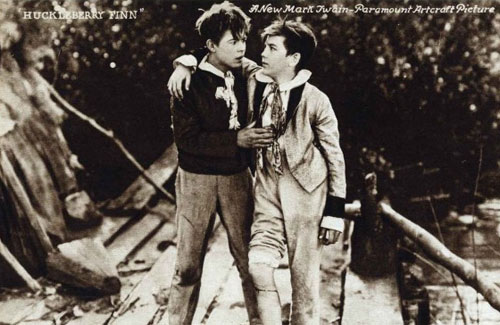
    I happened to be present the other day at a meeting of the children’s librarians of the Brooklyn Public Library. In the course of the meeting it was stated that copies of “Tom Sawyer” and “Huckleberry Finn” were to be found in some of the children’s rooms of the system. The Sup’t of the Children’s Dep’t- a conscientious and enthusiastic young woman- was greatly shocked to hear this, and at once ordered that they be transferred to the adults’ department. Upon this I shamefacedly confessed to having read “Huckleberry Finn” aloud to my defenseless blind people, without regard to their age, color, or previous condition of servitude. I also reminded them of Brander Matthews’s opinion of the book, and stated the fact that I knew it almost at heart, having got more pleasure from it than from any book I have ever read, and reading is the greatest pleasure I have in life. My warm defense elicited some further discussion and criticism, from which I gathered that the prevailing opinion of Huck was that he was a deceitful boy who said “sweat” when he should have said “perspiration.” The upshot of the matter was that there is to be further consideration of these books at a meeting early in January which I am especially invited to attend. Seeing you the other night at the performance of “Peter Pan” the thought came to me that you (who know Huck as well as I- you can’t know him better or love him more—) might be willing to give me a word or two to say in witness of his good character though he “warn’t no more quality than a mud cat.”

    I would ask as a favor that you regard this communication as confidential, whether you find time to reply to it or not; for I am loath for obvious reasons to bring the institution from which I draw my salary into ridicule, contempt or reproach.

    Yours very respectfully,

    Asa Don Dickinson.

    (In charge Department for the Blind and Sheepshead Bay Branch, Brooklyn Public Library.)
    _______________________

    Mark Twain’s Reply…

    November 21, 1905

    DEAR SIR:

    I am greatly troubled by what you say. I wrote Tom Sawyer and Huck Finn for adults exclusively, and it always distresses me when I find that boys and girls have been allowed access to them. The mind that becomes soiled in youth can never again be washed clean; I know this by my own experience, and to this day I cherish an unappeasable bitterness against the unfaithful guardians of my young life, who not only permitted but compelled me to read an unexpurgated Bible through before I was 15 years old. None can do that and ever draw a clean sweet breath again this side of the grave. Ask that young lady- she will tell you so.

    Most honestly do I wish I could say a softening word or two in defence of Huck’s character, since you wish it, but really in my opinion it is no better than those of Solomon, David, Satan, and the rest of the sacred brotherhood.

    If there is an unexpurgated Bible in the Children’s Department, won’t you please help that young woman remove Huck and Tom from that questionable companionship?

    Sincerely yours,

    Signed, S. L. Clemens

    I shall not show your letter to anyone- it is safe with me.

  • Bandleader Tommy Dorsey

    Bandleader Tommy Dorsey

    Tommy Dorsey

    Tommy Dorsey (November 19, 1905 –November 26, 1956) was an American jazz trombonist, composer, conductor, and bandleader who led one of the most popular big bands during the Swing Era. Known as the “Sentimental Gentleman of Swing,” Tommy Dorsey and his orchestra created a smooth and danceable sound that captivated audiences in the 1930s and 1940s.
    • Tommy Dorsey was born in Shenandoah, Pennsylvania.
    • He learned to play the trombone at a young age, receiving lessons from his father.
    • Before forming his orchestra, Tommy Dorsey performed with various bands, including the California Ramblers and the Paul Whiteman Orchestra.
    • In 1927, Tommy and his brother, Jimmy Dorsey, formed the Dorsey Brothers Orchestra.
    • Tommy left the Dorsey Brothers Orchestra in 1935 to form his own band, the Tommy Dorsey Orchestra.
    • One of the orchestra’s first hits was “I’m Getting Sentimental Over You,” which became the band’s theme song.
    • The Tommy Dorsey Orchestra was known for its smooth, melodic sound and precise, polished arrangements.
    • A warm, smooth tone and exceptional technical skill characterized Dorsey’s trombone playing.
    • The orchestra’s repertoire included jazz standards, ballads, and popular songs of the era.
    • Frank Sinatra was a vocalist for the Tommy Dorsey Orchestra from 1940 to 1942, which helped launch his successful solo career.
      Other notable vocalists who performed with the orchestra include Jo Stafford, Dick Haymes, and Connie Haines.
    • The orchestra’s success led to appearances in several Hollywood films, including “Las Vegas Nights,” “Ship Ahoy,” and “The Fabulous Dorseys.”
    • Tommy Dorsey and His Orchestra recorded over 900 songs during their career.
    • Some of the orchestra’s biggest hits include “Marie,” “Song of India,” “Boogie Woogie,” and “Opus One.”
    • Tommy Dorsey was an influential bandleader who helped launch the careers of several prominent musicians, such as Buddy Rich, Gene Krupa, and Nelson Riddle.
    • The orchestra appeared on several radio programs, including the “RCA Victor Show” and the “Chesterfield Supper Club.”
    • In the 1940s, the Tommy Dorsey Orchestra collaborated with African American bandleader Sy Oliver, which led to a more rhythmically complex and energetic sound.
    • Tommy Dorsey disbanded the orchestra in 1946 but later reformed it in 1948.
    • Dorsey passed away in 1956 at 51, but his music and legacy continue to influence jazz and big band musicians.
    • After Tommy Dorsey’s death, his brother Jimmy Dorsey led the orchestra briefly before his own passing.
    • The Tommy Dorsey Orchestra continues to perform today under the direction of Terry Myers.
  • George Bernard Shaw’s Review of a Woman at a Don Giovanni Performance

    George Bernard Shaw’s Review of a Woman at a Don Giovanni Performance

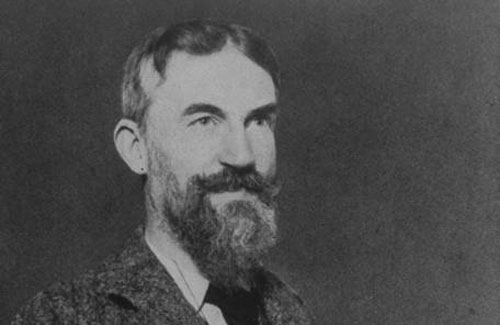
    George Bernard Shaw’s Review of a woman at a Don Giovanni performance to the London Times

    July 3, 1905

    Sir,

    The Opera management of Covent Garden regulates the dress of its male patrons. When is it going to do the same to the women?

    On Saturday night I went to the Opera. I wore the costume imposed on me by the regulations of the house. I fully recognize the advantage of those regulations. Evening dress is cheap, simple, durable, prevents rivalry and extravagance on the part of male leaders of fashion, annihilates class distinctions and gives men who are poor and doubtful of their social position (that is, the great majority of men) a sense of security and satisfaction that no clothes of their own choosing could confer, besides saving a whole sex the trouble of considering what they should wear on state occasions. The objections to it are as dust in the balance in the eyes of the ordinary Briton. These objections are that it is colourless; that it involves a whitening process that makes the shirt troublesome, slightly uncomfortable, and seriously unclean; that it acts as a passport for undesirable persons; that it fails to guarantee sobriety, cleanliness, and order on the part of the wearer; and that it reduces to a formula a very vital human habit which should be the subject of constant experiment and active private enterprise. All such objections are thoroughly un-English. They appeal only to an eccentric few, and may be left out of account with the fantastic objections of men like Ruskin, Tennyson, Carlyle, and Morris to tall hats.

    But I submit that what is sauce for the gander is sauce for the goose. Every argument that applies to the regulation of the man’s dress applies equally to the regulation of the woman’s. Now let me describe what actually happened to me at the Opera. Not only was I in evening dress by compulsion, but I voluntarily added many graces of conduct as to which the management made no stipulation whatever. I was in my seat in time for the first chord of the overture. I did not chatter during the music nor raise my voice when the Opera was too loud for normal conversation. I did not get up and go out when the statue music began. My language was fairly moderate considering the number and nature of the improvements on Mozart volunteered by Signor Caruso, and the respectful ignorance of dramatic points of the score exhibited by the conductor and stage manager- if there is such a functionary at Covent Garden. In short, my behavior was exemplary.

    At 9 o’clock (the Opera began at 8) a lady came in and sat down very conspicuously in my line of sight. She remained there until the beginning of the last act. I do not complain of her coming late and going early; on the contrary, I wish she had come later and gone earlier. For this lady, who had very black hair, had stuck over her right ear the pitiable corpse of a large white bird, which looked exactly if someone had killed it by stamping on the beast, and then nailed it to the lady’s temple, which was presumably of sufficient solidity to bear the operation. I am not, I hope, a morbidly squeamish person; but the spectacle sickened me. I presume that if I had presented myself at the doors with a dead snake round my neck, a collection of black beetles pinned to my shirtfront, and a grouse in my hair, I should have been refused admission. Why, then is a woman to be allowed to commit such a public outrage? Had the lady been refused admission, as she should have been, she would have soundly rated the tradesman who imposed the disgusting headdress on her under the false pretence that ‘the best people’ wear such things, and withdrawn her custom from him; and thus the root of the evil would be struck at; for your fashionable woman generally allows herself to be dressed according to the taste of a person who she would not let sit down in her presence. I once, in Drury Lane Theatre, sat behind a matinee hat decorated with the two wings of a seagull, artificially reddened at the joints so as to produce the illusion of being freshly plucked from a live bird. But even that lady stopped short of a whole seagull. Both ladies were evidently regarded by their neighbors as ridiculous and vulgar; but that is hardly enough when the offence is one which produces a sensation of physical sickness in persons of normal human sensibility.

    I suggest to the Covent Garden authorities that, if they feel bound to protect their subscribers against the dangers of my shocking them with a blue tie, they are at least equally bound to protect me against the danger of a woman shocking me with a dead bird.

    Yours truly,

    G. Bernard Shaw

  • Jack London’s letter of Advice for a Fan

    Jack London’s letter of Advice for a Fan

    Jack London’s letter of Advice for a Fan
    ~1905

    Dear Sir:

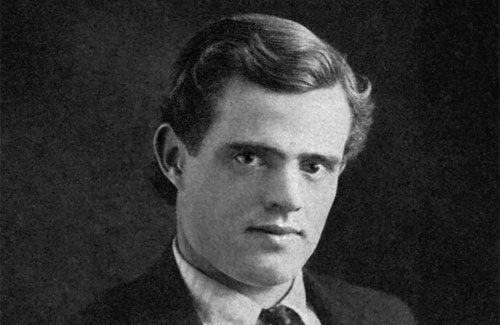
    Every time a writer tells the truth about a manuscript (or book), to a friend-author, he loses that friend, or sees that friendship dim and fade away to a ghost of what it was formerly.

    Every time a writer tells the truth about a manuscript (or book), to a stranger-author, he makes an enemy.

    If the writer loves his friend and fears to lose him, he lies to his friend.

    But what’s the good of straining himself to lie to strangers?

    And, with like insistence, what’s the good of making enemies anyway?

    Furthermore, a known writer is overwhelmed by requests from strangers to read their work and pass judgment upon it. This is properly the work of a literary bureau. A writer is not a literary bureau. If he is foolish enough to become a literary bureau, he will cease to be a writer. He won’t have time to write.

    Also, as a charitable literary bureau, he will receive no pay. Wherefore he will soon go bankrupt and himself live upon the charity of friends (if he has not already made them all his enemies by telling them the truth), while he will behold his wife and children went their melancholy way to the poorhouse.

    Sympathy for the struggling unknown is all very well. It is beautiful—but there are so many struggling unknowns, something like several millions of them. And sympathy can be worked too hard. Sympathy begins at home. The writer would far rather allow the multitudinous unknowns to remain unknown than to allow his near and dear ones to occupy pauper pallets and potter’s fields.

    Sincerely yours,

    Jack London