Mary, Helen, Margaret, Anna, Ruth, John, William, James, George, Robert
US Life Expectancy
(1906) Males: 46.9 years, Females: 50.8 years
Firsts, Inventions and Wonders
The first Victor Victrola phonographic record player was manufactured.
Willis Carrier received his US patent (#808,897) for the world’s first air conditioner (“apparatus for treating air,”).
The first animated cartoon, Humorous Phases of Funny Faces, was copyrighted.
Filed three years earlier, the US Patent (#821,393) was granted on May 22, 1906, to Wilbur and Orville Wright for “new and useful improvement in Flying Machines.”
Finland was the first country in the world to give women the right to vote and run for office. One year later, the world’s first female MPs were elected.
Federated Boys’ Club (Boys’ Club of America) was organized among 53 independent organizations.
Alpha Phi Alpha, 1st Black Greek Letter Fraternity, was formed at Cornell. Initial members were Henry Arthur Callis, Charles Henry Chapman, Eugene Kinckle Jones, George Biddle Kelley, Nathaniel Allison Murray, Robert Harold Ogle, and Vertner Woodson Tandy.
The Devil’s Tower in Crook County, Wyoming, was the first declared United States National Monument, established on September 24, 1906.
The first French Grand Prix occurred on a 64-mile circuit at Le Mans.
Pure Food and Drug Act and Meat Inspection Act adopted by the US Congress.
The Story of the Kelly Gang was released.
Will Keith Kellogg and Charles D. Bolin founded the Battle Creek Toasted Corn Flake Company, now known as Kellogg’s.
On January 12, 1, the Dow Jones closed above 100 (100.26) for the first time.
The British Labour Party organized.
Sweden adopted their (yellow cross on a blue background) flag.
After two years of digging the Hudson River Tunnel (now one of the North River Tunnels), workers for the Pennsylvania Railroad Company connected Manhattan’s West Side with Weehawken, NJ. They met in the middle of the Hudson, completing the tunnel, and the two ends were only off by 1/16 of an inch.
The Most Popular Singers and Artists of 1906 include
Henry Burr, Albert Campbell, Enrico Caruso, Arthur Collins, Byron G. Harlan, The Hayden Quartet, DeWolf Hopper, Ada Jones, Richard Jose, Harry Macdonough, James McCool, Corrine Morgan, Billy Murray, Voss Ossman, Arthur Pryor’s Band, Antonio Scotty, John Philip Sousa’s Band, Len Spencer, Frank Stanley, Harry Tally, Bert Williams
Pop Culture Facts & History
When Dr. Alois Alzheimer presented his groundbreaking research on the disease, later known as Alzheimer’s Disease, the audience asked zero questions. It made zero comments because they wanted to hear the following lecture (about compulsive pleasure seeking). Auguste Deter was the first person diagnosed with Alzheimer’s Disease.
Jack London’s novel White Fang began serialization in the magazine Outing.
Written by journalist Upton Sinclair, The Jungle was published.
Mary Astor planned the release of 10,000 imported Brazilian butterflies at her Debutante Ball, housed in nets lining the ceiling. They didn’t consider the lights’ heat, and her party ended with 10,000 dead insects showering her guests.
An underground fire sparked a massive explosion that spread through a series of mines, killing over 1,000 men in Courrieres, France.
Umpires were placed in charge of all Baseball Games.
1906 World Series: Chicago White Sox (A.L.) won 4-2 over across-town rivals Chicago Cubs (N.L.)
Rolls-Royce rolled out the Silver Ghost. It is considered the most valuable car in the world.
The Ford Model N was released, replacing Models A, C, and F.
Mount Vesuvius Erupted: Vesuvius erupted from April 4th through the 21st, devastating Naples and killing over 100 people.
The scattered population of black squirrels on the East Coast are all thought to have descended from 8 Canadian squirrels acquired through a great squirrel exchange between Canada’s Rondeau Provincial Park and the National Zoo in Washington, DC. They were subsequently released from the zoo in 1906.
The “Census of the British Empire” showed England ruled 1/5 of the world in 1906.
SOS (. . . ___ ___ ___ . . .) became the international distress signal, announced by The International Radiotelegraph Conference in Berlin.
The San Francisco Earthquake, measuring 7.8 on the Richter scale, shook the town of San Francisco, California, and thirty thousand homes were either partially or wholly destroyed. An estimated 3,000 people were reported killed. In response to the rioting and looting that followed the San Francisco 1906 earthquake, Mayor Eugene Schmitz authorized federal troops and local officers to “kill any persons found engaging in Looting or the Commission of Any Other Crime.”
Roald Amundsen discovered the Magnetic South Pole.
Nobel Prize Winners
Physics – J.J. Thomson
Chemistry – Henri Moissan
Medicine – Camillo Golgi and Santiago Ramón y Cajal
Literature – Giosuè Carducci
Peace – Theodore Roosevelt
Popular and Best-selling Books From 1906
Fiction Bestsellers
1. Coniston by Winston Churchill
2. Lady Baltimore by Owen Wister
3. The Fighting Chance by Robert W. Chambers
4. The House of a Thousand Candles by Meredith Nicholson
5. Jane Cable by George Barr McCutcheon
6. The Jungle by Upton Sinclair
7. The Awakening of Helena Ritchie by Margaret Deland
8. The Spoilers by Rex Beach
9. The House of Mirth, by Edith Wharton
10. The Wheel of Life by Ellen Glasgow
Sports
World Series Champions: Chicago White Sox
Challenge Cup Champs: Ottawa Hockey Club/Montreal Wanderers
U.S. Open Golf: Alex Smith
U.S. Tennis (Men/Ladies): William Clothier/Helen Homans
Wimbledon (Men/Women): Laurence Doherty/Dorothea Douglass
NCAA Football Champions: Princeton
Kentucky Derby Winner: Sir Huon
Boston Marathon Winner: Tim Ford Time: 2:45:45
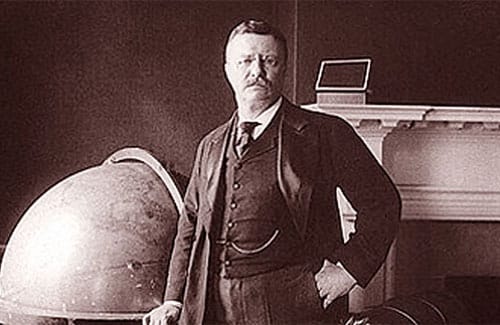
“The Man with the Muck-rake”
by President Theodore Roosevelt, on April 14, 1906, in Washington, D.C.
*Given as President Roosevelt laid the cornerstone of the office of the House of Representatives
[1] Over a century ago Washington laid the corner stone of the Capitol in what was then little more than a tract of wooded wilderness here beside the Potomac. We now find it necessary to provide by great additional buildings for the business of the Government. This growth in the need for the housing of the Government is but a proof and example of the way in which the nation has grown and the sphere of action of the National Government has grown. We now administer the affairs of a nation in which the extraordinary growth of population has been outstripped by the growth of wealth and the growth in complex interests. The material problems that face us to-day are not such as they were in Washington’s time, but the underlying facts of human nature are the same now as they were then. Under altered external form we war with the same tendencies toward evil that were evident in Washington’s time, and are helped by the same tendencies for good. It is about some of these that I wish to say a word to-day.
[2] In Bunyan’s Pilgrim’s Progress you may recall the description of the Man with the Muck-rake, the man who could look no way but downward, with the muck-rake in his hand; who was offered a celestial crown for his muck-rake, but who would neither look up nor regard the crown he was offered, but continued to rake to himself the filth of the floor.
[3] In Pilgrim’s Progress the Man with the Muck-rake is set forth as the example of him whose vision is fixed on carnal instead of on spiritual things. Yet he also typifies the man who in this life consistently refuses to see aught that is lofty, and fixes his eyes with solemn intentness only on that which is vile and debasing. Now, it is very necessary that we should not flinch from seeing what is vile and debasing. There is filth on the floor, and it must be scraped up with the muck-rake; and there are times and places where this service is the most needed of all the services that can be performed. But the man who never does anything else, who never thinks or speaks or writes, save of his feats with the muck-rake, speedily becomes, not a help to society, not an incitement to good, but one of the most potent forces for evil.
[4] There are, in the body politic, economic and social, many and grave evils, and there is urgent necessity for the sternest war upon them. There should be relentless exposure of and attack upon every evil man whether politician or business man, every evil practice, whether in politics, in business, or in social life. I hail as a benefactor every writer or speaker, every man who, on the platform, or in book, magazine, or newspaper, with merciless severity makes such attack, provided always that he in his turn remembers that the attack is of use only if it is absolutely truthful. The liar is no whit better than the thief, and if his mendacity takes the form of slander, he may be worse than most thieves. It puts a premium upon knavery untruthfully to attack an honest man, or even with hysterical exaggeration to assail a bad man with untruth. An epidemic of indiscriminate assault upon character does not good, but very great harm. The soul of every scoundrel is gladdened whenever an honest man is assailed, or even when a scoundrel is untruthfully assailed.
[5] Now, it is easy to twist out of shape what I have just said, easy to affect to misunderstand it, and, if it is slurred over in repetition, not difficult really to misunderstand it. Some persons are sincerely incapable of understanding that to denounce mud slinging does not mean the endorsement of whitewashing; and both the interested individuals who need whitewashing, and those others who practice mud slinging, like to encourage such confusion of ideas. One of the chief counts against those who make indiscriminate assault upon men in business or men in public life, is that they invite a reaction which is sure to tell powerfully in favor of the unscrupulous scoundrel who really ought to be attacked, who ought to be exposed, who ought, if possible, to be put in the penitentiary. If Aristides is praised overmuch as just, people get tired of hearing it; and overcensure of the unjust finally and from similar reasons results in their favor.
[6] Any excess is almost sure to invite a reaction; and, unfortunately, the reaction, instead of taking the form of punishment of those guilty of the excess, is very apt to take the form either of punishment of the unoffending or of giving immunity, and even strength, to offenders. The effort to make financial or political profit out of the destruction of character can only result in public calamity. Gross and reckless assaults on character, whether on the stump or in newspaper, magazine, or book, create a morbid and vicious public sentiment, and at the same time act as a profound deterrent to able men of normal sensitiveness and tend to prevent them from entering the public service at any price. As an instance in point, I may mention that one serious difficulty encountered in getting the right type of men to dig the Panama Canal is the certainty that they will be exposed, both without, and, I am sorry to say, sometimes within, Congress, to utterly reckless assaults on their character and capacity.
[7] At the risk of repetition let me say again that my plea is, not for immunity to but for the most unsparing exposure of the politician who betrays his trust, of the big business man who makes or spends his fortune in illegitimate or corrupt ways. There should be a resolute effort to hunt every such man out of the position he has disgraced. Expose the crime, and hunt down the criminal; but remember that even in the case of crime, if it is attacked in sensational, lurid, and untruthful fashion, the attack may do more damage to the public mind than the crime itself. It is because I feel that there should be no rest in the endless war against the forces of evil that I ask that the war be conducted with sanity as well as with resolution. The men with the muck-rakes are often indispensable to the well-being of society; but only if they know when to stop raking the muck, and to look upward to the celestial crown above them, to the crown of worthy endeavor. There are beautiful things above and round about them; and if they gradually grow to feel that the whole world is nothing but muck, their power of usefulness is gone.
If the whole picture is painted black there remains no hue whereby to single out the rascals for distinction from their fellows. Such painting finally induces a kind of moral color-blindness; and people affected by it come to the conclusion that no man is really black, and no man really white, but they are all gray. In other words, they neither believe in the truth of the attack, nor in the honesty of the man who is attacked; they grow as suspicious of the accusation as of the offense; it becomes well-nigh hopeless to stir them either to wrath against wrongdoing or to enthusiasm for what is right; and such a mental attitude in the public gives hope to every knave, and is the despair of honest men.
[8] To assail the great and admitted evils of our political and industrial life with such crude and sweeping generalizations as to include decent men in the general condemnation means the searing of the public conscience. There results a general attitude either of cynical belief in and indifference to public corruption or else of a distrustful inability to discriminate between the good and the bad. Either attitude is fraught with untold damage to the country as a whole. The fool who has not sense to discriminate between what is good and what is bad is well-nigh as dangerous as the man who does discriminate and yet chooses the bad. There is nothing more distressing to every good patriot, to every good American, than the hard, scoffing spirit which treats the allegation of dishonesty in a public man as a cause for laughter. Such laughter is worse than the crackling of thorns under a pot, for it denotes not merely the vacant mind, but the heart in which high emotions have been choked before they could grow to fruition.
[9] There is any amount of good in the world, and there never was a time when loftier and more disinterested work for the betterment of mankind was being done than now. The forces that tend for evil are great and terrible, but the forces of truth and love and courage and honesty and generosity and sympathy are also stronger than ever before. It is a foolish and timid, no less than a wicked thing, to blink the fact that the forces of evil are strong, but it is even worse to fail to take into account the strength of the forces that tell for good. Hysterical sensationalism is the very poorest weapon wherewith to fight for lasting righteousness. The men who with stern sobriety and truth assail the many evils of our time, whether in the public press or in magazines, or in books, are the leaders and allies of all engaged in the work for social and political betterment. But if they give good reason for distrust of what they say, if they chill the ardor of those who demand truth as a primary virtue, they thereby betray the good cause, and play into the hands of the very men against whom they are nominally at war.
[10] In his “Ecclesiastical Polity” that fine old Elizabethan divine, Bishop Hooker, wrote:
[11] “He that goeth about to persuade a multitude that they are not so well governed as they ought to be, shall never want attentive and favorable hearers; because they know the manifold defects whereunto every kind of regimen is subject, but the secret lets and difficulties, which in public proceedings are innumerable and inevitable, they have not ordinarily the judgment to consider.”
[12] This truth should be kept constantly in mind by every free people desiring to preserve the sanity and poise indispensable to the permanent success of self-government. Yet, on the other hand, it is vital not to permit this spirit to sanity and self-command to degenerate into mere mental stagnation. Bad though a state of hysterical excitement is, and evil though the results are which come from the violent oscillations such excitement invariably produces, yet a sodden acquiescence in evil is even worse. At this moment we are passing through a period of great unrest- social, political, and industrial unrest.
It is of the utmost importance for our future that this should prove to be not the unrest of mere rebelliousness against life, of mere dissatisfaction with the inevitable inequality of conditions, but the unrest of a resolute and eager ambition to secure the betterment of the individual and the nation. So far as this movement of agitation throughout the country takes the form of a fierce discontent with evil, of a determination to punish the authors of evil, whether in industry or politics, the feeling is to be heartily welcomed as a sign of healthy life.
[13] If, on the other hand, it turns into a mere crusade of appetite against appetite, of a contest between the brutal greed of the “have-nots” and the brutal greed of the “haves,” then it has no significance for good, but only for evil. If it seeks to establish a line of cleavage, not along the line which divides good men from bad, but along that other line, running at right angles thereto, which divides those who are well off from those who are less well off, then it will be fraught with immeasurable harm to the body politic.
[14] We can no more and no less afford to condone evil in the man of capital than evil in the man of no capital. The wealthy man who exults because there is a failure of justice in the effort to bring some trust magnate to an account for his misdeeds is as bad as, and no worse than, the so-called labor leader who clamorously strives to excite a foul class feeling on behalf of some other labor leader who is implicated in murder. One attitude is as bad as the other, and no worse; in each case the accused is entitled to exact justice; and in neither case is there need of action by others which can be construed into an expression of sympathy for crime.
[15] It is a prime necessity that if the present unrest is to result in permanent good the emotion shall be translated into action, and that the action shall be marked by honesty, sanity, and self-restraint. There is mighty little good in a mere spasm of reform. The reform that counts is that which comes through steady, continuous growth; violent emotionalism leads to exhaustion.
[16] It is important to this people to grapple with the problems connected with the amassing of enormous fortunes, and the use of those fortunes, both corporate and individual, in business. We should discriminate in the sharpest way between fortunes well-won and fortunes ill-won; between those gained as an incident to performing great services to the community as a whole, and those gained in evil fashion by keeping just within the limits of mere law-honesty. Of course no amount of charity in spending such fortunes in any way compensates for misconduct in making them.
As a matter of personal conviction, and without pretending to discuss the details or formulate the system, I feel that we shall ultimately have to consider the adoption of some such scheme as that of a progressive tax on all fortunes, beyond a certain amount either given in life or devised or bequeathed upon death to any individual- a tax so framed as to put it out of the power of the owner of one of these enormous fortunes to hand on more than a certain amount to any one individual; the tax, of course, to be imposed by the National and not the State government. Such taxation should, of course, be aimed merely at the inheritance or transmission in their entirety of those fortunes swollen beyond all healthy limits.
[17] Again, the National Government must in some form exercise supervision over corporations engaged in interstate business- and all large corporations are engaged in interstate business- whether by license or otherwise, so as to permit us to deal with the far-reaching evils of overcapitalization. This year we are making a beginning in the direction of serious effort to settle some of these economic problems by the railway-rate legislation. Such legislation, if so framed, as I am sure it will be, as to secure definite and tangible results, will amount to something of itself; and it will amount to a great deal more in so far as it is taken as a first step in the direction of a policy of superintendence and control over corporate wealth engaged in interstate commerce, this superintendence and control not to be exercised in a spirit of malevolence toward the men who have created the wealth, but with the firm purpose both to do justice to them and to see that they in their turn do justice to the public at large.
[18] The first requisite in the public servants who are to deal in this shape with corporations, whether as legislators or as executives, is honesty. This honesty can be no respecter of persons. There can be no such thing as unilateral honesty. The danger is not really from corrupt corporations; it springs from the corruption itself, whether exercised for or against corporations.
[19] The eighth commandment reads, “Thou shalt not steal.” It does not read, “Thou shalt not steal from the rich man.” It does not read, “Thou shalt not steal from the poor man.” It reads simply and plainly, “Thou shalt not steal.” No good whatever will come from that warped and mock morality which denounces the misdeeds of men of wealth and forgets the misdeeds practiced at their expense; which denounces bribery, but blinds itself to blackmail; which foams with rage if a corporation secures favors by improper methods, and merely leers with hideous mirth if the corporation is itself wronged. The only public servant who can be trusted honestly to protect the rights of the public against the misdeed of a corporation is that public man who will just as surely protect the corporation itself from wrongful aggression. If a public man is willing to yield to popular clamor and do wrong to the men of wealth or to rich corporations, it may be set down as certain that if the opportunity comes he will secretly and furtively do wrong to the public in the interest of a corporation.
[20] But, in addition to honesty, we need sanity. No honesty will make public man useful if that man is timid or foolish, if he is a hot-headed zealot or an impracticable visionary. As we strive for reform we find that it is not at all merely the case of a long uphill pull. On the contrary, there is almost as much of breeching work as of collar work; to depend only on traces means that there will soon be a runaway and an upset. The men of wealth who to-day are trying to prevent the regulation and control of their business in the interest of the public by the proper Government authorities will not succeed, in my judgment, in checking the progress of the movement. But if they did succeed they would find that they had sown the wind and would surely reap the whirlwind, for they would ultimately provoke the violent excesses which accompany a reform coming by convulsion instead of by steady and natural growth.
[21] On the other hand, the wild preachers of unrest and discontent, the wild agitators against the entire existing order, the men who act crookedly, whether because of sinister design or from mere puzzle-headedness, the men who preach destruction without proposing any substitute for what they intend to destroy, or who propose a substitute which would be far worse than the existing evils- all these men are the most dangerous opponents of real reform. If they get their way they will lead the people into a deeper pit than any into which they could fall under the present system. If they fail to get their way they will still do incalculable harm by provoking the kind of reaction which, in its revolt against the senseless evil of their teaching, would enthrone more securely than ever the very evils which their misguided followers believe they are attacking.
[22] More important than aught else is the development of the broadest sympathy of man for man. The welfare of the wage-worker, the welfare of the tiller of the soil, upon these depend the welfare of the entire country; their good is not to be sought in pulling down others; but their good must be the prime object of all our statesmanship.
[23] Materially we must strive to secure a broader economic opportunity for all men, so that each shall have a better chance to show the stuff of which he is made. Spiritually and ethically we must strive to bring about clean living and right thinking. We appreciate that the things of the body are important; but we appreciate also that the things of the soul are immeasurably more important. The foundation stone of national life is, and ever must be, the high individual character of the average citizen.
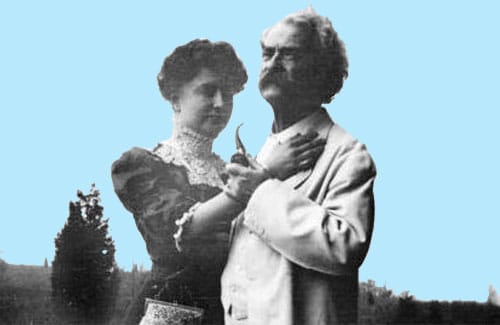
It is a great disappointment to me not to be with you and the other friends who have joined their strength to uplift the blind. The meeting in New York will be the greatest occasion in the movement which has so long engaged my heart: and I regret keenly not to be present and feel the inspiration of living contact with such an assembly of wit, wisdom and philanthropy. I shall be happy if I could have spelled into my hand the words as they fall from your lips, and receive, even as it is uttered, the eloquence of our Newest Ambassador to the blind. We have not had such advocates before. My disappointment is softened by the thought that never at any meeting was the right word so sure to be spoken. But, superfluous as all other appeals must seem after you and Mr. Choate have spoken, nevertheless, as I am a woman, I cannot be silent, and I ask you to read this letter, knowing that it will be lifted to eloquence by your kindly voice.
To know what the blind man needs, you who can see must imagine what it would be not to see, and you can imagine it more vividly if you remember that before your journey’s end you may have to go the dark way yourself. Try to realize what blindness means to those whose joyous activity is stricken to inaction.
It is to live long, long days, and life is made up of days. It is to live immured, baffled, impotent, all God’s world shut out. It is to sit helpless, defrauded, while your spirit strains and tugs at its fetters, and your shoulders ache for the burden they are denied, the rightful burden of labor.
The seeing man goes about his business confident and self-dependent. He does his share of the work of the world in mine, in quarry, in factory, in counting room, asking of others no boon, save the opportunity to do a man’s part and to receive the laborer’s guerdon. In an instant accident blinds him. The day is blotted out. Night envelops all the visible world. The feet which once bore him to his task with firm and confident stride stumble and halt and fear the forward step. He is forced to a new habit of idleness, which like a canker consumes the mind and destroys its beautiful faculties. Memory confronts him with his lighted past. Amid the tangible ruins of his life as it promised to be he gropes his pitiful way. You have met him on your busy thoroughfares with faltering feet and outstretched hands, patiently “dredging” the universal dark, holding out for sale his petty wares, or his cap for your pennies; and this was a man with ambitions and capabilities.
It is because we know that these ambitions and capabilities can be fulfilled that we are working to improve the condition of the adult blind. You cannot bring back the light of the vacant eyes; but you can give a helping hand to the sightless along their dark pilgrimage. You can teach them new skill. For work they once did with the aid of their eyes you can substitute work that they can do with their hands. They ask only opportunity, and opportunity is a torch in the darkness. They crave no charity, no pension, but the satisfaction that comes from lucrative toil, and this satisfaction is the right of every human being.
At your meeting New York will speak its word for the blind, and when New York speaks, the world listens. The true message of New York is not the commercial ticking of busy telegraphs, but the mightier utterances of such gatherings as yours. Of late our periodicals have been filled with depressing revelations of great social evils. Querulous critics have pointed to every flaw in our civic structure. We have listened long enough to the pessimists. You once told me you were a pessimist, Mr. Clemens, but great men are usually mistaken about themselves. You are an optimist. If you were not, you would not preside at the meeting. For it is an answer to pessimism. It proclaims that the heart and the wisdom of a great city are devoted to the good of mankind, that in this, busiest city in the world, no cry of distress goes up but receives a compassionate and generous answer. Rejoice that the cause of the blind has been heard in New York, for the day after it shall be heard around the world.