Tag: 1912
-

Early 1900s: The 100 Most Popular Songs
1. I’m a Yankee Doodle Dandy – 1904 (by George M Cohen)2. America the Beautiful – 19103. Danny Boy – 19134. Take Me Out To The Ball Game – 1908 (by Jack Norworth & Albert Von Tilzer )5. Pomp and Circumstance – 1902 (by Elgar)6. The Grand Old Rag (aka “You’re a Grand Old Flag”) – 1906 (by George M. Cohan)7. When Irish Eyes Are Smiling – 1912 (by Chauncey Olcott & George Graff Jr, . Ernest R. Ball)8. Daddy’s Little Girl – 1905 (by Edward Madden & Theodore F. Morse)9. The Bells Of St Mary’s – 1917 (by Douglas Furber & A. Emmett Adams)10. Give My Regards to Broadway – 1904 (by George M. Cohan )11. Swanee – 191912. Too-Ra-Loo-Ra-Loo-Ral (That’s An Irish Lullaby) – 1913 (by James R. Shannon )13. I Ain’t Got Nobody – 1916 (by Roger Graham, Dave Peyton & Spencer Williams)14. I Want To Be In Dixie (I’m Going Back To Dixie) – 1911 (by Irving Berlin & Ted Snyder)15. The Entertainer – 1902 (by Scott Joplin)16. Strike Up the Band (Here Comes a Sailor) – 190017. Anchors Aweigh – 1906 (by Alfred Hart Miles & R. Lovell and Charles A. Zimmerman)18. The Beer That Made Milwaukee Famous – 1903 (by Dan McAvoy)19. Colonel Bogey March – 1914 (by Kenneth J. Alford)20. Melody Of Love – 1903 (by Tom Glazer & H. Engelmann)21. Flight of the Bumble Bee – 1900 – (by N. Rimsky-Korsakov)22. Rite of Spring – 1913 (by Stravinsky)23. Over There – 1917 (by George M. Cohan)24. Yale Boola! (March and Two-Step) – 190125. Hinky Dinky Parlay Voo – 1919 (by Edward Rowland)26. March of the Toys – 1903 (by Victor Herbert, heard in Babes In Toyland)27. Frankie and Johnny – 191228. Dardanella – 1919 (by Fred Fisher & Felix Bernard, Johnny S. Black)29. You Belong To Me – 1916 (by Harry B. Smith & Victor Herbert)30. Alexander’s Ragtime Band – 1911(?)31. Hail! Hail! The Gang’s All Here – 1917 (by D. A. Esrom, Theodore F. Morse & Arthur Sullivan)32. Fascination – 1915 (by Harold Atteridge & Sigmund Romberg)33. McNamara’s Band – 1917 (by John J. Stamford & Shamus O’Connor)34. Peg O’ My Heart – 1913 (by Alfred Bryan & Fred Fisher)35. Saint Louis Blues – 1914 (by W. C. Handy)36. The Glow-Worm – 1902 (by Lilla Cayley Robinson, Heinz Bolten-Backers, Paul Lincke)37. Scott Joplin’s New Rag – 1912 (by Scott Joplin)38. Hail Hail the Gang’s All Here – 191739. Put On Your Old Grey Bonnet – 1909 (by Stanley Murphy & Percy Wenrich)40. Bye, Bye My Honey – Billy Golden (1911)41. Joe Turner Blues – 1915 (by Walter Hirsch & W. C. Handy)42. It’s a Long, Long Way to Tipperary – 191243. Ragtime Cowboy Joe – 1912 (by Grant Clarke, Lewis F. Muir & Maurice Abrahams)44. Oh! How I Hate to Get Up in the Morning – 1918 (by Irving Berlin)45. The Whiffenpoof Song – 1909 (by Meade Minnigerode & George S. Pomeroy, Tod B. Galloway)46. Alabama Jubilee – 1915 (by Jack Yellen & George L. Cobb)47. The Darktown Strutters’ Ball – 1916 (by Shelton Brooks)48. Harrigan – 1907 (by George M. Cohan)49. Bill Bailey, Won’t You Please Come Home – 190250. Let Me Call You Sweetheart – 191051. Keep On The Sunny Side – 1906 (by Jack Drislane & Theodore F. Morse)52. Because – 190253. Hiawatha (His Song to Minnehaha) – 190354. Ida! Sweet as Apple Cider – 1903 (by Eddie Leonard & Eddie Munson)55. The Aba Daba Honeymoon – 1914 (by Arthur Fields & Walter Donovan)56. Play a Simple Melody – 1914 (by Irving Berlin)57. Ah! Sweet Mystery Of Life – 1910 (by Rida Johnson Young & Victor Herbert)58. Ballin’ The Jack – 1913 (by James Henry Burris & Chris Smith)59. The Memphis Blues – 191260. American Patrol – 1901(?)61. On a Sunday Afternoon – 190262. The Saint Louis Blues – 191463. The Rose Of Tralee – 1912 (by C. Mordaunt Spencer m. Charles W. Glover)64. K-K-K-Katy – 1918 (by Geoffrey O’Hara)65. There’s A Broken Heart For Every Light On Broadway – 1915 (by Howard Johnson & Fred Fisher)66. Syncopated Walk – 1914 (by Irving Berlin)67. My Melancholy Baby – 1912 (by George A. Norton & Ernie Burnett)68. Meet Me in St. Louis, Louis – 190469. Give Us Just Another Lincoln – 190070. I Wonder Who’s Kissing Her Now – 1909 (by Will M. Hough & Frank R. Adams, Joseph E. Howard & Harold Orlob)71. In the Good Old Summer Time – 190272. Twelfth Street Rag – 1914 (by Euday L. Bowman)73. A Little Bit of Heaven – 191574. Casey Jones – 1909 (by T. Lawrence Seibert & Eddie Newton)75. Blame It on the Blues – 191476. By the Light of the Silvery Moon – 1909 (by Edward Madden & Gus Edwards)77. Waltz Around Again Willie – 1906 (‘Round, ‘Round, ‘Round)78. Alcoholic Blues – 1919 (by Edward Laska & Albert Von Tilzer)79. I Didn’t Raise My Boy to Be a Soldier – 1915 (by Alfred Bryan & Al Piantadosi )80. Shine On Harvest Moon – 1907 (by Nora Bayes & Jack Norworth)81. I Can’t Tell Why I Love You But I Do – 190082. Hungarian Rag – 1913 (by Julius Lenzberg)83. In My Merry Oldsmobile -1905 (by Vincent P. Bryan & Gus Edwards)84. And Then – 1913 (by Alfred Bryan & Herman Paley)85. Good Morning, Mr. Zip-Zip-Zip! – 191886. Goodbye, Good Luck, God Bless You – 1916 (by J. Keirn Brennan & Ernest R. Ball)87. Mary’s a Grand Old Name – 1905 (from the musical play Forty-Five Minutes from Broadway)88. Un Bel Di Madame Butterfly – 1904 (by Puccini)89. My Gal Sal – 190590. Concerto for Piano #2 – 1901 (by Rachmaninoff)91. Topsy Song – 191092. I’m Always Chasing Rainbows – 1918 (from the Musical Comedy Oh Look!)93. On The Road To Mandalay – 1907 (by Rudyard Kipling & Oley Speaks)94. Missouri Waltz (Hush-a-Bye, Ma Baby) – 191495. In the Shade of the Old Apple Tree – 190596. Beans! Beans!! Beans!!! – 1912 (by Elmer Bowman & Chris Smith)97. Tell Me Pretty Maiden (English Girls and Clerks) – 1900 (featured in Florodora)98. A Good Man Is Hard To Find – 1919(?)99. The Caissons Go Rolling Along – 1906 (by Edmund L. Gruber)100. Uncle Josh in Society – 1909 -
1912 History, Facts and Trivia
Top Ten Baby Names of 1912
Mary, Helen, Dorothy, Margaret, Ruth, John, William, James, Robert, Joseph
US Life Expectancy
(1912) Males: 51.5 years, Females: 55.9 years
Firsts, Inventions, and Wonders
Paramount Pictures (the Famous Players Film Company) was founded in 1912, 23 days after the sinking of the Titanic. The first film was about the Titanic.
Sunshine made Hydrox Cookies in 1908, and Oreo copied them in 1912.
Juliette Gordon Low founded Girl Scouts of the United States of America (GSUSA).
Mrs. Luther Halsey Gulick officially founded the Camp Fire Girls organization. It was informally started in 1910.
Arthur Rose Eldred, a 17-year-old member of Troop 1 of Rockville Centre, Long Island, became the first Eagle Scout.
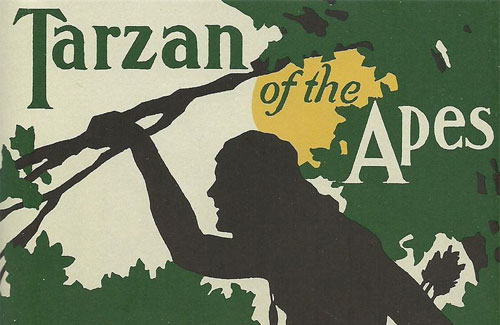
Tarzan of the Apes by Edgar Rice Burroughs was published.
Fenway Park opened in Boston.
The Beverly Hills Hotel opened.
Wilbur Scoville created the Scoville Organoleptic Test which has become standardized today as the Scoville Scale, which we use to measure the spiciness in chili peppers.
Roald Amundsen announced his discovery of the South Pole.
Memphis Blues, by W.C. Handy, was published. It is usually recognized as one of the first blues songs.
The Helen Hayes Theater opened at 240 West 44th Street, New York, NY.
Frederick Rodman Law was paid to Jump off the Brooklyn Bridge for A Leap of Love, starring Ethel Wright, becoming the first movie stuntman in 1912.
The 1912 Olympics was the last time that gold medals were solid gold. Since then, they’ve been silver with gold plating.
‘Discovered’ by Charles Dawson in 1912, The Piltdown Man became the most famous paleoanthropological hoax ever.
The Most Popular Singers and Artists of 1912 include
The American Quartet, Elsie Baker, Henry Burr, Albert Campbell, Enrico Caruso, Arthur Collins, The Columbia Stellar Quartet, Dolly Connolly, Alma Gluck, Byron G. Harlon, The Heidelberg Quartet, Louise Homer, Al Jolson, Ada Jones, Harry Lauder, Christie MacDonald, Harry Macdonough, Lucy Isabelle Marsh, John McCormack, Reed Miller, Billy Murray, Will Oakland, The Peerless Quartet, Prince’s Orchestra, Bob Roberts, William H. Thompson, Alan Turner, Walter Van Brunt, Victor Light Opera Company
Pop Culture Facts & History
J.P. Morgan of JPMorgan Chase Co. Banking and Milton Hershey of Hershey’s Chocolate were both in Europe and planned to travel back to the US on Titanic’s Maiden Voyage but made other plans.
The empire with the most extended longevity in history was the Chinese Empire. It began in 221 BC and ended in 1912 AD, 2133 years of existence over nine major family dynasties.
The Musketeers of Pig Alley is credited as the first gangster film.Violet Jessop (October 2, 1887 – May 5, 1971) was a stewardess/nurse aboard the Oceanliner Olympic when it collided with a warship in 1911. She was aboard Titanic (1912) and the Britannic (1916) when they sank. She survived all three events.
The North Korean calendar is based on Kim Il-Sung’s birth year, 1912.
Alaska (Seward’s Folly) was bought from Russia in 1867 for $7.2 million. It became the organized Territory of Alaska in 1912. Before that, it was the District of Alaska. It became the 49th state in 1959.
In 1912’s Broadway play, Snow White and the Seven Dwarfs, they were Blick, Flick, Glick, Plick, Quee, Snick, and Whick.
The empire with the longest longevity in history was the Chinese Empire, beginning in 221 BC and ending in 1912 AD, 2133 years of existence. #9dynasties
Created in 1894, the Michelin Man’s real name is Bibendum, and the reason he’s white is because he was created before carbon was added as a preservative and a strengthener to the basic rubber material. Before 1912, tires were a gray-white or light and translucent-beige color.
The US Postal Service regularly delivered mail on Sundays until 1912.
A criminologist named Arthur MacDonald suggested making it a misdemeanor to call assassins publicly, stating, “This would lessen the hope for glory, renown or notoriety, which is a great incentive to such crimes.”
A 400+ pound meteor exploded over Holbrook, Arizona.
Under the provisions of the 1912 Scottish Protection of Animals Act, the Loch Ness monster is a protected species.
Franz Reichelt tried to demonstrate his parachute design by jumping off the first level (about 187 feet) of the Eiffel Tower. Police and friends tried to convince him to use a dummy instead, but he insisted on testing it himself. His prototype failed, and he fell to his death.
How would you do with an Eighth-Grade 1912 Kentucky School test?
The Pink Cherry Blossoms in Washington, DC, were a gift from Japan. In 1912, Japan sent more than 3,000 seeds to be planted near the Potomac River as a symbol of friendship between the two nations.
In the US Election of 1912, there were four candidates for President: William Taft (Republican), Theodore Roosevelt (Bull Moose Party), Eugene V. Debs (Socialist), and Woodrow Wilson (Democrat). Wilson won with 41.8% of the vote.
The first dramatic film of the Titanic sinking was released 29 days after the event in 1912. It was written by and stars Dorothy Gibson, an actual survivor.
1912 Olympics News
Today’s Olympic Gold Medals are made of Silver. The last time the Olympic medals were made of solid gold was the 1912 Olympic Games in Stockholm, Sweden. Today’s gold medals are 92.5% silver.
Shizo Kanaguri, an Olympic marathon runner, quit, went home to Japan without telling officials, and was considered a missing person in Sweden for 50 years. In 1966, he was invited to complete the marathon. His net time: 54 years, eight months, six days, 5 hours, 32 minutes, and 20.379 seconds.
The oldest Olympic gold medallist, Oscar Swahn, was 64 and 258 days old when he won gold for Shooting in 1912.
When Native American athlete Jim Thorpe was awarded his two Olympic Gold Medals in 1912, the King of Sweden said, “You, sir, are the greatest athlete in the world,” to which Thorpe replied, “Thanks, King”. Jim was stripped of the medals won in the 1912 Olympics for receiving money for playing semi-pro baseball two years earlier. They were reinstated in 1983, 30 years after his death.
Nobel Prize Winners
Physics – Nils Gustaf Dalén
Chemistry – Victor Grignard, Paul Sabatier
Medicine – Alexis Carrel
Literature – Gerhart Johann Robert Hauptmann
Peace – Elihu RootPopular and Best-selling Books From 1912
Fiction Bestsellers
1. The Harvester by Gene Stratton Porter
2. The Street Called Straight by Basil King
3. Their Yesterdays by Harold Bell Wright
4. The Melting of Molly by Maria Thompson Daviess
5. A Hoosier Chronicle by Meredith Nicholson
6. The Winning of Barbara Worth by Harold Bell Wright
7. The Just and the Unjust by Vaughan Kester
8. The Net by Rex Beach
9. Tante by Anne Douglas Sedgwick
10. Fran by J. Breckenridge EllisNonfiction Bestsellers
1. The Promised Land by Mary Antin
2. The Montessori Method by Maria Montessori
3. South America by James Bryce
4. A New Conscience and an Ancient Evil by Jane Addams
5. Three Plays by Eugene Brieux
6. Your United States by Arnold Bennett
7. Creative Evolution by Henri Bergson
8. How to Live on Twenty-Four Hours a Day by Arnold Bennett
9. Woman and Labor by Olive Schreiner
10. Mark Twain by Albert Bigelow PaineOther Books of Note
The New History by James Harvey Robinson
The Montessori Method by Maria Montessori
The Promised Land by Mary Antin,
Ripostes by Ezra Pound\
Tarzan of the Apes by Edgar Rice Burroughs
Autobiography of an Ex-Colored Man by James Weldon Johnson
Elementary Forms of Religious Life by Emile DurkheimSports
World Series Champions: Boston Red Sox
Challenge Cup Champs: Quebec Bulldogs
U.S. Open Golf: John McDermott
U.S. Tennis (Men/Ladies): Maurice McLoughlin/Mary Browne
Wimbledon (Men/Women): Laurence Doherty/Ethel Larcombe
NCAA Football Champions: Harvard & Penn State
Kentucky Derby Winner: Worth
Boston Marathon Winner: Michael J. Ryan Time: 2:21:18More 1912 Facts & History Resources:
Most Popular Baby Names (BabyCenter.com)
Popular and Notable Books (popculture.us)
Broadway Shows that Opened in 1912
1912 Calendar, courtesy of Time and Date.com
Fact Monster
1912 in Movies (according to IMDB)
Wikipedia 1910 -
Tarzan’s Love Letter to Jane
1912I am Tarzan of the Apes. I want you. I am yours. You are mine. We live here together always in my house. I will bring you the best of fruits, the tenderest deer, the finest meats that roam the jungle. I will hunt for you. I am the greatest of the jungle fighters. I will fight for you. I am the mightiest of the jungle fighters. You are Jane Porter, I saw it in your letter. When you see this you will know that it is for you and that Tarzan of the Apes loves you.
-
The 24-hour Clock by the International Time Bureau
24-hour Clock by the International Time Bureau
The 24-hour clock, also known as military time, is a timekeeping convention where the day is divided into 24 hours, running from midnight to midnight. It was popularized in the early 20th century by the International Time Bureau, and its adoption was driven by a need for standardized and unambiguous timekeeping in various fields, such as transportation, military, and scientific purposes.
- Date: The International Time Bureau was established in 1912, and the 24-hour clock system gained popularity during World War I (1914-1918) and afterward.
- Background: Before adopting the 24-hour clock, the 12-hour clock system was widely used. However, it led to confusion and ambiguity, especially in international communication, military operations, and railway timetables.
- The International Time Bureau was an organization responsible for coordinating global timekeeping and promoting the adoption of universal time standards, including the 24-hour clock.
- Key players: The International Time Bureau worked with international organizations, governments, and scientific communities to promote the adoption of the 24-hour clock.
- Adoption: The 24-hour clock system was adopted by various countries and organizations, including the military, railroads, and airlines, to avoid confusion and improve communication.
- Trivial fact: The 24-hour clock does not use “a.m.” and “p.m.” Instead, the hours are numbered from 00 to 23, and the minutes and seconds are from 00 to 59.
- Effects on pop culture: The 24-hour clock has been portrayed in movies and television series, especially in military and espionage-related genres, where precise time communication is essential.
- Widespread use: The 24-hour clock is commonly used worldwide in various contexts, including digital devices, aviation, public transportation, and scientific research.
The 24-hour clock is a timekeeping system that gained popularity in the early 20th century through the efforts of the International Time Bureau. It was adopted to avoid confusion and ambiguity in communication, particularly in the military, transportation, and scientific contexts. The 24-hour clock has impacted pop culture, often portrayed in movies and television series related to military and espionage themes, and is now widely used worldwide.