Tag: 1914
-

Early 1900s: The 100 Most Popular Songs
1. I’m a Yankee Doodle Dandy – 1904 (by George M Cohen)2. America the Beautiful – 19103. Danny Boy – 19134. Take Me Out To The Ball Game – 1908 (by Jack Norworth & Albert Von Tilzer )5. Pomp and Circumstance – 1902 (by Elgar)6. The Grand Old Rag (aka “You’re a Grand Old Flag”) – 1906 (by George M. Cohan)7. When Irish Eyes Are Smiling – 1912 (by Chauncey Olcott & George Graff Jr, . Ernest R. Ball)8. Daddy’s Little Girl – 1905 (by Edward Madden & Theodore F. Morse)9. The Bells Of St Mary’s – 1917 (by Douglas Furber & A. Emmett Adams)10. Give My Regards to Broadway – 1904 (by George M. Cohan )11. Swanee – 191912. Too-Ra-Loo-Ra-Loo-Ral (That’s An Irish Lullaby) – 1913 (by James R. Shannon )13. I Ain’t Got Nobody – 1916 (by Roger Graham, Dave Peyton & Spencer Williams)14. I Want To Be In Dixie (I’m Going Back To Dixie) – 1911 (by Irving Berlin & Ted Snyder)15. The Entertainer – 1902 (by Scott Joplin)16. Strike Up the Band (Here Comes a Sailor) – 190017. Anchors Aweigh – 1906 (by Alfred Hart Miles & R. Lovell and Charles A. Zimmerman)18. The Beer That Made Milwaukee Famous – 1903 (by Dan McAvoy)19. Colonel Bogey March – 1914 (by Kenneth J. Alford)20. Melody Of Love – 1903 (by Tom Glazer & H. Engelmann)21. Flight of the Bumble Bee – 1900 – (by N. Rimsky-Korsakov)22. Rite of Spring – 1913 (by Stravinsky)23. Over There – 1917 (by George M. Cohan)24. Yale Boola! (March and Two-Step) – 190125. Hinky Dinky Parlay Voo – 1919 (by Edward Rowland)26. March of the Toys – 1903 (by Victor Herbert, heard in Babes In Toyland)27. Frankie and Johnny – 191228. Dardanella – 1919 (by Fred Fisher & Felix Bernard, Johnny S. Black)29. You Belong To Me – 1916 (by Harry B. Smith & Victor Herbert)30. Alexander’s Ragtime Band – 1911(?)31. Hail! Hail! The Gang’s All Here – 1917 (by D. A. Esrom, Theodore F. Morse & Arthur Sullivan)32. Fascination – 1915 (by Harold Atteridge & Sigmund Romberg)33. McNamara’s Band – 1917 (by John J. Stamford & Shamus O’Connor)34. Peg O’ My Heart – 1913 (by Alfred Bryan & Fred Fisher)35. Saint Louis Blues – 1914 (by W. C. Handy)36. The Glow-Worm – 1902 (by Lilla Cayley Robinson, Heinz Bolten-Backers, Paul Lincke)37. Scott Joplin’s New Rag – 1912 (by Scott Joplin)38. Hail Hail the Gang’s All Here – 191739. Put On Your Old Grey Bonnet – 1909 (by Stanley Murphy & Percy Wenrich)40. Bye, Bye My Honey – Billy Golden (1911)41. Joe Turner Blues – 1915 (by Walter Hirsch & W. C. Handy)42. It’s a Long, Long Way to Tipperary – 191243. Ragtime Cowboy Joe – 1912 (by Grant Clarke, Lewis F. Muir & Maurice Abrahams)44. Oh! How I Hate to Get Up in the Morning – 1918 (by Irving Berlin)45. The Whiffenpoof Song – 1909 (by Meade Minnigerode & George S. Pomeroy, Tod B. Galloway)46. Alabama Jubilee – 1915 (by Jack Yellen & George L. Cobb)47. The Darktown Strutters’ Ball – 1916 (by Shelton Brooks)48. Harrigan – 1907 (by George M. Cohan)49. Bill Bailey, Won’t You Please Come Home – 190250. Let Me Call You Sweetheart – 191051. Keep On The Sunny Side – 1906 (by Jack Drislane & Theodore F. Morse)52. Because – 190253. Hiawatha (His Song to Minnehaha) – 190354. Ida! Sweet as Apple Cider – 1903 (by Eddie Leonard & Eddie Munson)55. The Aba Daba Honeymoon – 1914 (by Arthur Fields & Walter Donovan)56. Play a Simple Melody – 1914 (by Irving Berlin)57. Ah! Sweet Mystery Of Life – 1910 (by Rida Johnson Young & Victor Herbert)58. Ballin’ The Jack – 1913 (by James Henry Burris & Chris Smith)59. The Memphis Blues – 191260. American Patrol – 1901(?)61. On a Sunday Afternoon – 190262. The Saint Louis Blues – 191463. The Rose Of Tralee – 1912 (by C. Mordaunt Spencer m. Charles W. Glover)64. K-K-K-Katy – 1918 (by Geoffrey O’Hara)65. There’s A Broken Heart For Every Light On Broadway – 1915 (by Howard Johnson & Fred Fisher)66. Syncopated Walk – 1914 (by Irving Berlin)67. My Melancholy Baby – 1912 (by George A. Norton & Ernie Burnett)68. Meet Me in St. Louis, Louis – 190469. Give Us Just Another Lincoln – 190070. I Wonder Who’s Kissing Her Now – 1909 (by Will M. Hough & Frank R. Adams, Joseph E. Howard & Harold Orlob)71. In the Good Old Summer Time – 190272. Twelfth Street Rag – 1914 (by Euday L. Bowman)73. A Little Bit of Heaven – 191574. Casey Jones – 1909 (by T. Lawrence Seibert & Eddie Newton)75. Blame It on the Blues – 191476. By the Light of the Silvery Moon – 1909 (by Edward Madden & Gus Edwards)77. Waltz Around Again Willie – 1906 (‘Round, ‘Round, ‘Round)78. Alcoholic Blues – 1919 (by Edward Laska & Albert Von Tilzer)79. I Didn’t Raise My Boy to Be a Soldier – 1915 (by Alfred Bryan & Al Piantadosi )80. Shine On Harvest Moon – 1907 (by Nora Bayes & Jack Norworth)81. I Can’t Tell Why I Love You But I Do – 190082. Hungarian Rag – 1913 (by Julius Lenzberg)83. In My Merry Oldsmobile -1905 (by Vincent P. Bryan & Gus Edwards)84. And Then – 1913 (by Alfred Bryan & Herman Paley)85. Good Morning, Mr. Zip-Zip-Zip! – 191886. Goodbye, Good Luck, God Bless You – 1916 (by J. Keirn Brennan & Ernest R. Ball)87. Mary’s a Grand Old Name – 1905 (from the musical play Forty-Five Minutes from Broadway)88. Un Bel Di Madame Butterfly – 1904 (by Puccini)89. My Gal Sal – 190590. Concerto for Piano #2 – 1901 (by Rachmaninoff)91. Topsy Song – 191092. I’m Always Chasing Rainbows – 1918 (from the Musical Comedy Oh Look!)93. On The Road To Mandalay – 1907 (by Rudyard Kipling & Oley Speaks)94. Missouri Waltz (Hush-a-Bye, Ma Baby) – 191495. In the Shade of the Old Apple Tree – 190596. Beans! Beans!! Beans!!! – 1912 (by Elmer Bowman & Chris Smith)97. Tell Me Pretty Maiden (English Girls and Clerks) – 1900 (featured in Florodora)98. A Good Man Is Hard To Find – 1919(?)99. The Caissons Go Rolling Along – 1906 (by Edmund L. Gruber)100. Uncle Josh in Society – 1909 -
1914 History, Facts and Trivia
1914 History Rundown:
- January 5 – Ford Motor Company Introduced $5 Workday: Henry Ford announced an eight-hour workday and a minimum wage of $5, doubling the average wage and setting new labor standards.
- January 12 – Sakurajima Volcano Erupted in Japan: The eruption caused significant damage and made the island connect to the Ōsumi Peninsula.
- February 12 – First Feature-Length Film Shot in Hollywood Released: The Squaw Man, directed by Cecil B. DeMille and Oscar Apfel, premiered in the U.S., marking Hollywood’s emergence as a film production center.
- March 1 – Republic of China Joined the Universal Postal Union: China became a member of the international postal body, enhancing its global communication links.
- March 9 – Panama Canal Completed: The construction of the Panama Canal was finished, significantly reducing maritime travel time between the Atlantic and Pacific Oceans.
- April 9 – Tampico Affair: A misunderstanding involving U.S. Navy sailors and Mexican troops in Tampico escalated tensions between the United States and Mexico.
- April 20 – Ludlow Massacre in Colorado: The Colorado National Guard attacked a tent colony of striking coal miners, resulting in numerous deaths and highlighting labor disputes in the U.S.
- May 7 – The British House of Lords Passed the Irish Home Rule Bill: The bill granted limited self-government to Ireland, though its implementation was delayed due to World War I.
- May 15 – Henri Rabaud’s Opera ‘Marouf’ Premiered in Paris: The opera Marouf, savetier du Caire debuted, becoming one of Rabaud’s most celebrated works.
- June 28 – Assassination of Archduke Franz Ferdinand: Heir to the Austro-Hungarian throne, Archduke Franz Ferdinand, and his wife Sophie were assassinated in Sarajevo by Gavrilo Princip, a Bosnian Serb nationalist.
- July 5 – Kaiser Wilhelm II Promised Support to Austria-Hungary: Germany assured Austria-Hungary of its backing in any conflict against Serbia, influencing the escalation toward World War I.
- July 23 – Austria-Hungary Issued Ultimatum to Serbia: Following the assassination, Austria-Hungary presented demands to Serbia, increasing tensions.
- July 28 – Austria-Hungary Declared War on Serbia: Marking the beginning of World War I, Austria-Hungary initiated hostilities against Serbia.
- August 1 – Germany Declared War on Russia: Following Russia’s mobilization, Germany declared war, further expanding the conflict.
- August 3 – Germany Declared War on France: Germany expanded the war by declaring war on France, implementing the Schlieffen Plan.
- August 4 – Germany Invaded Belgium; Britain Entered the War: Germany’s invasion of neutral Belgium prompted the United Kingdom to declare war on Germany.
- August 23 – Battle of Mons: The British Expeditionary Force engaged German forces in Belgium, marking the first major British action of World War I.
History - September 5–12 – First Battle of the Marne: Allied forces halted the German advance into France, leading to trench warfare on the Western Front.
History - October 19–November 22 – First Battle of Ypres: Allied and German forces clashed in Belgium, resulting in heavy casualties and a stalemate.
History - November 1 – Battle of Coronel: A naval engagement off the coast of Chile where the German East Asia Squadron defeated a British squadron.
- December 8 – Battle of the Falkland Islands: The British Royal Navy defeated the German East Asia Squadron, reasserting naval dominance.
- December 16 – German Navy Bombarded English Coastal Towns: Scarborough, Hartlepool, and Whitby were shelled, causing civilian casualties and outrage in Britain.
- December 24–25 – Christmas Truce: An unofficial ceasefire occurred along parts of the Western Front, with soldiers from opposing sides fraternizing and exchanging greetings.
- Panama Canal Opened to Traffic: The canal began operations, facilitating maritime trade by connecting the Atlantic and Pacific Oceans.
- Establishment of Federal Trade Commission (FTC) in the U.S.: The FTC was created to prevent unfair business practices and promote consumer protection.
Top Ten Baby Names of 1914
Mary, Helen, Dorothy, Margaret, Ruth, John, William, James, Robert, Joseph
US Life Expectancy
(1914) Males: 52.0 years, Females: 56.8 years
Firsts, Inventions, and Wonders
The world’s first electric traffic signal was placed on the corner of Euclid Avenue and East 105th Street in Cleveland, Ohio, on August 5, 1914.
The first Commercial Airline was the St. Petersburg–Tampa Airboat Line; the first commercial flight was on January 1, 1914.
The American Society of Composers, Authors & Publishers (ASCAP) was formed in New York, NY.
The Perils of Pauline, a movie serial, debuted.
Harry Fox introduced The Foxtrot at the New Amsterdam Roof Garden in NYC.
The Panama Canal opened.
The term “Cup of Joe” was invented to mock US Secretary of Navy Josephus Daniels, who banned alcohol consumption in 1914, replacing it with coffee.
On May 8, 1914, the US Congress passed a law designating the second Sunday in May as Mother’s Day. It is still celebrated today.
H.G. Wells coined the term “Atomic Bomb” in his book The World Set Free.
The Most Popular Singers and Artists of 1914 include
The American Quartet, Nora Bayes, Henry Burr, Albert Campbell, Helen Clark, Arthur Collins, Marguerite Dunlap, Byron G. Harlan, Charles Harrison, Joe Hayman, The Heidelberg Quartet, Irving Kaufman, Grace Kerns, George MacFarlane, John McCormack, Billy Murray, Will Oakland, The Peerless Quartet, Prince’s Orchestra, Manual Romain, Maggie Teyte, Walter Van Brunt, The Victor Military Band
Pop Culture Facts & History
Gertie the Dinosaur by Winsor was one of the earliest animated films and the first to use keyframes, animation loops, tracing paper, and feature a dinosaur. The 12-minute film consists of over 10,000 individually traced frames and took several years to complete.
The Ford Model T wasn’t just available in black. From 1908-1913, it was available in gray, green, blue, and red. Only in 1914 was the “any color as long as it’s black” policy introduced.
Ford Motor Co wages went from $2.40/9-hr day to $5.00/8-hr day.
When Thomas Edison’s factory burned to the ground, destroying one-of-a-kind prototypes and causing millions in damage, he said: “Thank goodness all our mistakes were burned up. Now we can start fresh again.”
Charlie Chaplin’s first appearance as The Tramp was in Kid Auto Races at Venice
The RMS Empress of Ireland had a cat named Emmy. She never missed a voyage until May 28, 1914, when she refused to go aboard. The ship left without her and sank the next day.
Seattle’s Smith Tower was the tallest building on the Westcoast 1914 until the Space Needle opened in 1962
Speedo swimwear originated in 1914 under the brand name ‘Fortitude’. It didn’t become known by its current brand name until 1928.
The actor credited for performing in the most movies for a long time was Oliver Hardy, of Laurel and Hardy fame, with a record 417 movies between 1914 and 1951. Recently, others have gotten more screen credits than he, including Frank Welker, Eric Roberts, and many voice actors.
Passenger Pigeons were once the most abundant bird in the world. John James Audubon once saw a flock that took three days to pass. Alexander Wilson reckoned that a flock he saw contained 2,230,272,000 individuals. On September 1, 1914, Martha, the world’s last passenger pigeon, died alone in 1914 at the Cincinnati, Ohio Zoo.
The Coca-Cola Company was flooded with look-alike competitors. The bottlers requested design proposals for their product: a “bottle so distinct that you would recognize if by feel in the dark or lying broken on the ground,” and the initial Classic Coke green bottle was released in 1916.
The most outstanding high school football team of all time was in Massachusetts. The 1914 Everett Crimson Tide, went 13-0, won the national title, and outscored their opponents 600-0 throughout the season.
The famous “Uncle Sam Wants You,” and Smokey Bear’s “Only You Can Prevent Forest Fires” posters are both imitations of a British Army recruitment poster from 1914 – “Lord Kitchener Wants You.”
WWI in History
Franz Ferdinand, Archduke of Austria, and his wife Sophie were assassinated in Sarajevo by Serb nationalist Gavrilo Princip.
British WWI soldier Thomas Hughes tossed a beer bottle with a letter to his wife into the English Channel. He was killed two days later. In 1999, a fisherman dredged up the bottle in the River Thames. Although Hughes’ wife had died in 1979, it was delivered to his 86-year-old daughter.The Christmas Truce
On Christmas in 1914, German and Allied Troops had a truce and sang songs together, gave presents to each other, and even played soccer. The Germans won 3-2.
The Horrible
The Influenza Pandemic of 1913-1914, also known as ‘The Spanish Flu,’ killed more people than WWI. Casualties were around 30 million. (not to be confused with the Pandemic of 1918-1920, which killed over 50,000,000 people.
The Ludlow Massacre
On April 20, 1914, the Colorado National Guard fired on a camp of striking miners and their families, killing at least 19, including 11 children.
The Extinction
The final Passenger Pigeon in the wild was shot in 1901. The last, Martha, died in the Cincinnati Zoo on September 1, 1914.
Nobel Prize Winners
Physics – Max von Laue
Chemistry – Theodore William Richards
Medicine – Róbert Bárány
Literature – not awarded
Peace – not awarded
The Nobel Peace Prize was not awarded for WWI (1914-1916) and WWII (1939-1943). The International Committee of the Red Cross was the first winner after each war.Popular and Best-selling Books From 1914
Fiction Bestsellers
1. The Eyes of the World by Harold Bell Wright
2. Pollyanna by Eleanor H. Porter
3. The Inside of the Cup by Winston Churchill
4. The Salamander by Owen Johnson
5. The Fortunate Youth by William J. Locke
6. T. Tembarom by Frances Hodgson Burnett
7. Penrod by Booth Tarkington
8. Diane of the Green Van by Leona Dalrymple
9. The Devil’s Garden by W.B. Maxwell
10. The Prince of Graustark by George Barr McCutcheonOther Books of Note
Tender Buttons by Gertrude Stein
Other People’s Money by Louis Brandeis
Pygmalion by George Bernard Shaw
Drift and Mastery by Walter Lippmann
Behaviorism by John D. WatsonSports
World Series Champions: Boston Braves
Stanley Cup Champs: Toronto Hockey Club
U.S. Open Golf: Walter Hagen
U.S. Tennis (Men/Ladies): Richard Norris Williams/Mary Browne
Wimbledon (Men/Women): Norman Brookes/Dorothea Lambert Chambers
NCAA Football Champions: Army
Kentucky Derby Winner: Old Rosebud
Boston Marathon Winner: James Duffy Time: 2:25:14More 1914 Facts & History Resources:
Most Popular Baby Names (BabyCenter.com)
Popular and Notable Books (popculture.us)
Broadway Shows that Opened in 1914
1914 Calendar, courtesy of Time and Date.com
Fact Monster
1914 in Movies (according to IMDB)
Wikipedia 1914 -
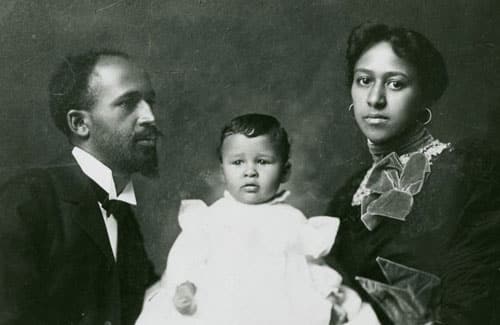
W.E.B. Du Bois’ Letter to his 14 year old Daughter, Yolande
W.E.B. Du Bois’ letter to his 14 year old daughter, Yolande, as she went off to England for school
October 29, 1914Dear Little Daughter:
I have waited for you to get well settled before writing. By this time I hope some of the strangeness has worn off and that my little girl is working hard and regularly.
Of course, everything is new and unusual. You miss the newness and smartness of America. Gradually, however, you are going to sense the beauty of the old world: its calm and eternity and you will grow to love it.
Above all remember, dear, that you have a great opportunity. You are in one of the world’s best schools, in one of the world’s greatest modern empires. Millions of boys and girls all over this world would give almost anything they possess to be where you are. You are there by no desert or merit of yours, but only by lucky chance.
Deserve it, then. Study, do your work. Be honest, frank and fearless and get some grasp of the real values of life. You will meet, of course, curious little annoyances. People will wonder at your dear brown and the sweet crinkley hair. But that simply is of no importance and will soon be forgotten. Remember that most folk laugh at anything unusual, whether it is beautiful, fine or not. You, however, must not laugh at yourself. You must know that brown is as pretty as white or prettier and crinkley hair as straight even though it is harder to comb. The main thing is the YOU beneath the clothes and skin—the ability to do, the will to conquer, the determination to understand and know this great, wonderful, curious world. Don’t shrink from new experiences and custom. Take the cold bath bravely. Enter into the spirit of your big bed-room. Enjoy what is and not pine for what is not. Read some good, heavy, serious books just for discipline: Take yourself in hand and master yourself. Make yourself do unpleasant things, so as to gain the upper hand of your soul.
Above all remember: your father loves you and believes in you and expects you to be a wonderful woman.
I shall write each week and expect a weekly letter from you.
Lovingly yours,
Papa
-
Opening of the Panama Canal
The Panama Canal, an engineering marvel connecting the Atlantic and Pacific Oceans, forever changed global trade and travel. Its construction was immense, involving multiple countries, tens of thousands of workers, and overcoming numerous engineering challenges. Today, the canal remains a vital artery for international commerce.
- Initial Attempts: Interest in constructing a canal across Central America dates back to the early 16th century. In the late 19th century, French engineer Ferdinand de Lesseps, who was responsible for the Suez Canal, attempted to build a canal through Panama. His project began in 1881 but was plagued by disease, engineering challenges, and financial problems. The French ultimately abandoned the project in 1889.
- U.S. Involvement: In 1903, the United States took an interest in constructing the canal. That year, Panama declared its independence from Colombia with U.S. support, and the newly formed Republic of Panama granted the U.S. rights to build and control the canal in the Hay–Bunau-Varilla Treaty.
- Construction: The U.S. began construction in 1904 under the leadership of President Theodore Roosevelt. Various chief engineers, including John F. Stevens and George W. Goethals, oversaw the project. The canal’s construction required significant labor, with approximately 56,000 workers at its peak.
- Challenges: Workers faced numerous challenges, including tropical diseases like malaria and yellow fever. Chief sanitation officer Dr. William C. Gorgas was instrumental in implementing measures to control the spread of disease, dramatically improving working conditions.
- Completion and Inauguration: The Panama Canal was completed in 1914, taking ten years to build at approximately $375 million. On August 15, 1914, the SS Ancon became the first ship to officially transit the canal.
- Trivial Facts: The canal is approximately 50 miles long and takes ships about 8-10 hours to traverse. Over 14,000 vessels pass through the canal each year, transporting more than 200 million tons of cargo.
- Effects on Pop Culture: The Panama Canal has been featured in movies, television shows, and books, often as a backdrop for adventure and intrigue. It has also inspired songs like the 1913 hit “The Panama Canal Rag.”
- Prominent People: Key figures in the canal’s history include Ferdinand de Lesseps, Theodore Roosevelt, John F. Stevens, George W. Goethals, and Dr. William C. Gorgas.
- Countries Involved: The U.S. played a significant role in the canal’s construction and controlled the Panama Canal Zone until December 31, 1999, when it was transferred to Panama.
In summary, the opening of the Panama Canal in 1914 revolutionized global trade and travel, connecting the Atlantic and Pacific Oceans. The project was a massive engineering feat involving multiple countries, overcoming numerous challenges, and ultimately changing the face of international commerce. The canal’s construction and its impact on global trade have left an indelible mark on popular culture and the world.