web analytics

Tag: 1931

  • Pop Culture Trivia Quiz: What Happened In 1931?

    Pop Culture Trivia Quiz: What Happened In 1931?

    Pop Culture Trivia Quiz: What Happened In 1931?

    31 Trivia Questions for 1931 History

    (answers)

    1. Based on a 1927 play by Peggy Webling based on an 1818 novel, what classic horror film was released on November 21, 1931

    2. This 1931 silent romantic comedy film written, produced, directed by, and starring the same guy is considered by many people as one the greatest films of all time…

    3. In 1931, what was the average life expectancy in the United States?

    4. What 98-foot tall statue, 92 feet wide, overlooking the city of Rio de Janeiro, was dedicated in 1931?

    5. What was the highest-grossing film of 1931

    6. The earliest confirmed use of THIS word in Disney’s Mary Poppins appeared in the Syracuse Daily Orange. What word?

    7. What was the Biggest Number One Song of 1931

    8. How much did a Loaf of Bread cost in 1931?

    9. What was the first state in the United States to have legalized casino gambling as of March 19, 1931?

    10. Signed in 1929, what document entered into force relative to the treatment of prisoners of war?

    11. What major power in World War II did NOT ratify The Geneva Convention?

    12. Who won the Stanley Cup in 1931?

    13. How many people lived in the United States in 1931?

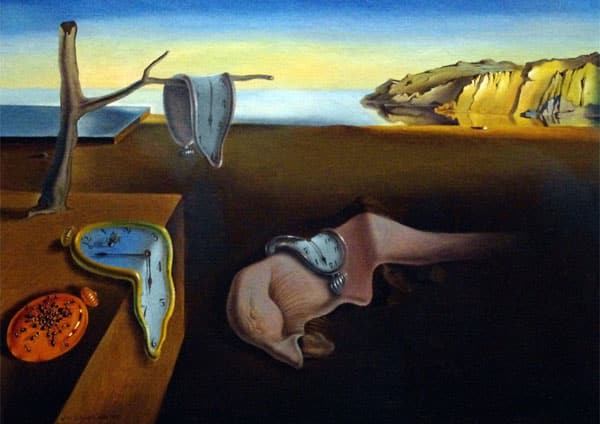
    14. First shown in Paris at the Galerie Pierre Colle, The Persistence of Memory is the work of what surrealist artist?

    15. Early proponents of this musical invention included Les Paul and Sister Rosetta Tharpe. What invention?

    16. What New York Skyscraper opened on May 1, 1931?

    17. What is the name of the effervescent antacid and pain reliever first sold in 1931

    18. Who was the President of the United States in 1931?

    19. What was the average household income in 1931?

    20. What was the Bestselling Fiction Book in 1931?

    21. What was the Biggest Hit for Cab Calloway and His Orchestra

    22. Who won the 1931 World Series?

    23. On October 17, 1931, what well-known criminal was convicted on three counts of income tax evasion and sentenced to 11 years in federal prison?

    24. Who was the Time Magazine Man of the Year in 1931?

    25. What 1931 gangster film made James Cagney a bonafide movie star?

    26. How much did an average Ford Model A cost in 1931?

    27. How much did a gallon of gas cost in 1931?

    28. What river flooded in Chain, killing about 3.7 million people in total, the worst natural disaster of the 20th century.

    29. What did The Star-Spangled Banner become in 1931?

    30. Who was the star of 1931’s Dracula?

    31. Which celebrity was NOT born in 1931: James Dean, Alfred Hitchcock, James Earl Jones, or Mikhail Gorbachev?

    Trivia Team Bonus Questions:

    1. What comic strip detective character made his debut appearance in the Detroit Mirror newspaper?

    2. Who was the American Vice-President in 1931?

    3. What high-performance sports car company was founded in Stuttgart, Germany?

    4. What tire and rubber brand was founded in Kurume, Kyushu Island, Japan?

    5. On October 21, 1931, the United States went dark for one minute to honor what American?

    6. What Horse won the Kentucky Derby in 1931?

    7. What did Seventeen-year-old female baseball pitcher Jackie Mitchell do in succession during an exhibition baseball game

    8. Formerly known as The Watchtower Society, what religious group changed its name in 1931?

    9. Who was the Pope in 1931?

    10. What was the full title of Mary Shelley’s Frankenstein novel?

    The Answers:

    31 Trivia Answers for 1931 History

    1. Based on a 1927 play by Peggy Webling based on an 1818 novel, what classic horror film was released on November 21, 1931?
    Frankenstein

    2. This 1931 silent romantic comedy film written, produced, directed by, and starring the same guy is considered by many people as one the greatest films of all time…
    City Lights by Charlie Chaplin

    3. In 1931, what was the average life expectancy in the United States?
    Men – 59.4 years, Women – 63.1 years.

    4. What 98-foot tall statue, 92 feet wide, overlooking the city of Rio de Janeiro, was dedicated in 1931?
    Christ the Redeemer

    5. What was the highest-grossing film of 1931?
    Frankenstein

    6. The earliest confirmed use of THIS word in Disney’s Mary Poppins appeared in the Syracuse Daily Orange. What word?
    “supercalifragilisticexpialidocious”

    7. What was the Biggest Number One Song of 1931?
    Good Night, Sweetheart by Wayne King OR The Peanut Vendor by Don Azpiazu

    8. How much did a Loaf of Bread cost in 1931?
    8 cents

    9. What was the first state in the United States to have legalized casino gambling as of March 19, 1931?
    Nevada

    10. Signed in 1929, what document entered into force relative to the treatment of prisoners of war?
    The Geneva Convention

    11. What major power in World War II did NOT ratify The Geneva Convention?
    Japan

    12. Who won the Stanley Cup in 1931?
    In 1931, The Montreal Canadiens won over the Chicago Black Hawks (3 games to 2)

    13. How many people lived in the United States in 1931?
    The population was an estimated 124,039,648 people.

    14. First shown in Paris at the Galerie Pierre Colle, The Persistence of Memory is the work of what surrealist artist?
    Salvador Dali

    15. Early proponents of this musical invention included Les Paul and Sister Rosetta Tharpe. What invention?
    The Electric Guitar

    16. What New York Skyscraper opened on May 1, 1931?
    The Empire State Building

    17. What is the name of the effervescent antacid and pain reliever first sold in 1931
    Alka-Seltzer

    18. Who was the President of the United States in 1931?
    Herbert Hoover (March 4, 1929 – March 4, 1933)

    19. What was the average household income in 1931?
    $4,217.40

    20. What was the Bestselling Fiction Book in 1931?
    The Good Earth by Pearl S. Buck

    21. What was the Biggest Hit for Cab Calloway and His Orchestra?
    Minnie the Moocher

    22. Who won the 1931 World Series?
    In 1931, The St. Louis Cardinals won, beating the Philadelphia Athletics (4 games to 3)

    23. On October 17, 1931, what well-known criminal was convicted on three counts of income tax evasion and sentenced to 11 years in federal prison?
    Al Capone

    24. Who was the Time Magazine Man of the Year in 1931?
    Pierre Laval

    25. What 1931 gangster film made James Cagney a bonafide movie star?
    The Public Enemy

    26. How much did an average Ford Model A cost in 1931?
    $495 (Town Car $1400)

    27. How much did a gallon of gas cost in 1931?
    $0.17 per gallon

    28. What river flooded in Chain, killing about 3.7 million people in total, the worst natural disaster of the 20th century.
    The Yangtze River

    29. What did The Star-Spangled Banner become in 1931?
    The official National anthem of the United States.

    30. Who was the star of 1931’s Dracula?
    Bela Lugosi

    31. Which celebrity was NOT born in 1931: James Dean, Alfred Hitchcock, James Earl Jones, or Mikhail Gorbachev?
    Alfred Hitchcock

    Trivia Team Bonus Questions:

    1. What comic strip detective character made his debut appearance in the Detroit Mirror newspaper?
    Dick Tracy, created by cartoonist Chester Gould

    2. Who was the American Vice-President in 1931?
    Charles Curtis (March 4, 1929 – March 4, 1933)

    3. What high-performance sports car company was founded in Stuttgart, Germany?
    Porsche

    4. What tire and rubber brand was founded in Kurume, Kyushu Island, Japan?
    Bridgestone

    5. On October 21, 1931, the United States went dark for one minute to honor what American?
    For Thomas Alva Edison’s funeral (February 11, 1847 – October 18, 1931)

    6. What Horse won the Kentucky Derby in 1931?
    Twenty Grand

    7. What did Seventeen-year-old female baseball pitcher Jackie Mitchell do in succession during an exhibition baseball game?
    She struck out Babe Ruth and Lou Gehrig.

    8. Formerly known as The Watchtower Society, what religious group changed its name in 1931?
    Jehovah’s Witnesses

    9. Who was the Pope in 1931?
    Pope Pius XI, February 6, 1922 – February 10, 1939

    10. What was the full title of Mary Shelley’s Frankenstein novel?
    Frankenstein; or The Modern Prometheus.
     

  • 1931 History, Facts and Trivia

    1931 History, Facts and Trivia

    1931 History, Facts and Trivia

    Quick Facts from 1931

    • Amazing Event: It took only 13 months to complete the Empire State Building, the tallest structure in the world for most of the 20th century.
    • Influential Songs include Minnie the Moocher by Cab Calloway and Pop Standards As Time Goes By and Dancing in the Dark.
    • The Movies to Watch include I’m No Angel, M, City Lights, Frankenstein, The Public Enemy, Monkey Business, Little Caesar, Night Nurse, and The 3 Penny Opera.
    • The Most Famous Person in America was probably Nikola Tesla.
    • Notable books include The Good Earth by Pearl S. Buck and Grand Hotel by Vicki Baum.
    • Warner Brothers released the first Merrie Melodies cartoon, Lady, Play Your Mandolin.
    • Price of a man’s tuxedo in 1931: $25.00
    • The Funny Observational Humorist was Will Rogers
    • The hottest new movie star was: Jean Harlow
    • A 17-year-old female baseball pitcher, Jackie Mitchell, struck out both Babe Ruth and Lou Gehrig in the same exhibition game.
    • The Conversation: The Star-Spangled Banner officially became the US national anthem. Many thought (and still think) it should be America the Beautiful or God Bless America.

    Top Ten Baby Names of 1931

    Mary, Betty, Dorothy, Barbara, Joan, Robert, James, John, William, Richard

    US Life Expectancy

    (1931) Males: 59.4 years, Females: 63.1 years

    The Stars

    Josephine Baker, Joan Blondell, Claudette Colbert, Greta Garbo, Louise Brooks, Joan Crawford, Marion Davies, Dolores Del Rio, Marlene Dietrich, Kay Francis, Jean Harlow, Myrna Loy, Barbara Stanwyck, Thelma Todd

    Entertainment History: The Oscars

    The 4th Academy Awards were held on November 10, 1931, at the Biltmore Hotel in Los Angeles, California. Conrad Nagel returned as host for the ceremony. This time, the film eligibility period was August 1, 1930, to July 31, 1931. Cimarron won the Best Picture award, becoming the first Western to win. This year was also significant for Marie Dressler, who won Best Actress for her role in Min and Bill, becoming the oldest woman to win the award—a record that stood for decades. The ceremony was also noted for the absence of a Best Director nomination for Cimarron, even though the film won Best Picture. A small piece of trivia: this was the first time the awards were broadcast on the radio, allowing fans to participate in the event from their homes.

    Miss America

    none

    Time Magazine’s Man of the Year

    Pierre Laval

    Firsts, Inventions, and Wonders

    1931’s Golden Bat, created in Japan, is considered by many to be the world’s first true comic superhero. Golden Bat predates Superman (debut 1938) and Batman (debut 1939).

    The Joy of Cooking was self-published in 1931, by Irma Rombauer.

    The first time term, American Dream, was coined in James Truslow Adams’ Epic of America: “that dream of a land in which life should be better and richer and fuller for everyone, with opportunity for each according to ability or achievement. … It is not a dream of motor cars and high wages merely, but a dream of social order in which each man and each woman shall be able to attain to the fullest stature of which they are innately capable, … regardless of the fortuitous circumstances of birth or position.”

    Alka Seltzer was introduced.

    The Empire State Building was completed. It was nicknamed the “Empty State Building” by New Yorkers and didn’t become profitable until 1950.

    The first Christmas Tree at Rockefeller Center was erected by construction workers in 1931 during the Depression. Workers pooled their money to buy the tree and decorated it with tin cans and garlands made by their families.

    Dick Tracy, the comic strip detective character, by cartoonist Chester Gould, debuted in the Detroit Mirror newspaper.

    The “never date anyone under half your age plus seven” rule of thumb appeared in 1931, said Maurice Chevalier, a French actor, singer, and entertainer.

    Times New Roman typeface was commissioned by The Times of London in 1931.

    Nevada legalized gambling on March 19, 1931.

    Coaxial Cable (#1,835,031) was patented, basically running a wire wrapped around another wire.

    DeVry University was established in 1931, by Herman A. DeVry.

    The iconic film images of Dracula, starring Bela Lugosi, and Frankenstein’s Monster (Boris Karloff) were released within just months of each other in 1931, both by Universal Pictures.

    Salvador Dalí’s The Persistence of Memory was displayed in Paris at the Galerie Pierre Colle for the first time.

    The Biggest Pop Artists of 1931 include

    Gus Arnheim & His Orchestra, Ben Bernie & His Orchestra, The Boswell Sisters, Cab Calloway, Russ Columbo, Bing Crosby, Duke Ellington, Ruth Etting, Libby Holman, Hal Kemp, and His Orchestra, Wayne King and His Orchestra, Ted Lewis and His Band, Guy Lombardo and His Royal Canadians, Bert Lown & His Orchestra, Clyde McCoy & His Orchestra, The Mills Brothers, Ray Noble, and His Orchestra, Kate Smith, Rudy Vallée & His Connecticut Yankees, Fred Waring’s Pennsylvanians

    Pop Culture Facts & History

    Considered his finest film by many, Charlie Chaplin’s City Lights was released. Charlie believed that ‘talking’ was a lesser form of performing in movies, so he didn’t talk, but he did include a soundtrack and sound effects.

    Airstream trailers were introduced to the public, invented by Wally Meryle Byam. They say that 2/3 of every one of these vehicles ever produced is still in use.

    Hail Columbia was considered (among other songs) as the unofficial national anthem of the United States until 1931, when The Star-Spangled Banner was officially designated.

    17-year-old female baseball pitcher Jackie Mitchell struck out both Babe Ruth and Lou Gehrig in the same exhibition game.

    Betty Robinson, an Olympic runner, was involved in a plane crash in 1931 and was wrongly pronounced dead upon first being discovered. She spent seven months in a coma and it took her two years to learn to walk normally again. In 1936, she returned to the US Olympic team and won gold in the relay.

    Alka-Seltzer was made available in 1931. The original ingredients included 325 milligrams of aspirin, 1,000 milligrams of citric acid, and 1,916 milligrams of sodium bicarbonate.

    CBS went on the air.

    Alice in Wonderland was banned in the Hunan province of China, because the Governor, Ho Chien, felt that: “animals should not use human language”, and that it was “disastrous to put animals and human beings on the same level.”

    Karl Freund, cinematographer on Metropolis (1927), and Dracula (1931), also shot most of the I Love Lucy episodes.

    In Frankenstein, the line “Now I know what it feels like to be God!” following “It’s alive! It’s alive!” was censored by audio of a clap of thunder because it was considered blasphemous and was restored decades later. Most props used in Mel Brook’s Young Frankenstein were from the original 1931 Frankenstein film. The “bolts” in the Monster’s neck in Frankenstein, are electrodes. One is positive and the other, negative.

    RIP

    New Zealand’s Mount Victoria Tunnel is also known as “The tooting tunnel,” and when you start tooting in there, people start tooting with you. Tooting in there is a way to pay tribute to pregnant murdered teenager Phillis Symons in 1931.

    Ninety-six workers died while constructing the Hoover Dam from 1931-1935.

    An 11-year-old boy, Wilbur Brink, was killed during the 1931 Indy 500 race when a tire from a race wreck flew out of the Speedway, across the street, and over his house, landing on his head as he played in his backyard.

    When Thomas Edison died in 1931, Nikola Tesla was the only one to submit an unfavorable opinion of him to the NY Times:
    “He had no hobby, cared for no sort of amusement of any kind, and lived in utter disregard of the most elementary rules of hygiene … His method was inefficient in the extreme, for an immense ground had to be covered to get anything at all unless blind chance intervened and, at first, I was almost a sorry witness of his doings, knowing that just a little theory and calculation would have saved him 90 percent of the labor. But he had a veritable contempt for book learning and mathematical knowledge, trusting himself entirely to his inventor’s instinct and practical American sense.”

    Do Not Stand At My Grave and Weep

    Mary Elizabeth Frye was an American housewife and florist who scribbled a poem (‘Do not stand at my grave and weep’) on a paper bag. She circulated the poem privately, but never published or copyrighted it.

    Do not stand at my grave and weep
    I am not there. I do not sleep.
    I am a thousand winds that blow.
    I am the diamond glints on snow.
    I am the sunlight on ripened grain.
    I am the gentle autumn rain.
    When you awaken in the morning’s hush
    I am the swift uplifting rush
    Of quiet birds in circled flight.
    I am the soft stars that shine at night.
    Do not stand at my grave and cry;
    I am not there. I did not die.

    Nobel Prize Winners

    Physics – not awarded
    Chemistry – Carl Bosch, Friedrich Bergius
    Physiology or Medicine – Otto Heinrich Warburg
    Literature – Erik Axel Karlfeldt
    Peace – Jane Addams, Nicholas Murray Butler

    Jane Addams was nominated 91 times for the Nobel Peace Prize before becoming the first American woman to receive the award in 1931. She was the first American Woman to win the Nobel Peace Prize.

    Popular and Best-selling Books From 1931

    A White Bird Flying by Bess Streeter Aldrich
    Back Street by Fannie Hurst
    The Bridge of Desire by Warwick Deeping
    Finch’s Fortune by Mazo de la Roche
    The Good Earth by Pearl S. Buck
    Grand Hotel by Vicki Baum
    Maid in Waiting by John Galsworthy
    The Road Back by Erich Maria Remarque
    Shadows on the Rock by Willa Cather
    Years of Grace by Margaret Ayer Barnes

    Sports

    World Series Champions: St. Louis Cardinals
    Stanley Cup Champs: Montreal Canadiens
    U.S. Open Golf: Billy Burke
    U.S. Tennis (Men/Ladies): H. Ellsworth Vines/Helen Wills Moody
    Wimbledon (Men/Women): Sidney Wood/Cilly Aussem
    NCAA Football Champions: USC
    Kentucky Derby Winner: Twenty Grand
    Boston Marathon Winner: James Henigan Time: 2:46:45

    More 1931 Facts & History Resources:

    Most Popular Baby Names (BabyCenter.com)
    Popular and Notable Books (popculture.us)
    Broadway Shows that Opened in 1931
    1931 Calendar, courtesy of Time and Date.com
    Fact Monster
    The Great Depression Hoover Library
    1930s, Infoplease.com World History
    1931 in Movies (according to IMDB)
    Retrowaste Vintage Culture
    1930s Slang
    Wikipedia 1931
    WW II Timeline


  • 1931 Music: Popular Music, Songs and Artists

    1931 Music: Popular Music, Songs and Artists

    1931 Popular Music, Songs and Artists

    Bing Crosby
    Dancing in the Dark
    The music for this song was by Arthur Schwartz and lyrics by Howard Dietz and was originally performed by John Barker in the 1931 revue The Band Wagon. Besides Bing Crosby, the song was recorded by Fred Astaire, Frank Sinatra and Tony Bennet. The song was also used as a ballet sequence danced by Fred Astaire and Cyd Charisse in the 1953 MGM film version of The Band Wagon.

    Cab Calloway and his Cotton Club Orchestra
    Minnie the Moocher
    This song would be song recorded and re-recorded by Cab Calloway. The song would be known for its skat lyrics which would have Callaway sing a phrase and then the audience would repeat the phrase. Calloway would make the phrases more and more complicated until the audience could no longer follow him. Max Fleischer would animate the song using Betty Boop as its main character.

    The song would be used in many TV shows such as That Girl and Family Guy. In movies the song would be used in The Blues Brothers, Calloway would sing the song himself in the film. Cab Calloway would have a long and successful career. He would even star with Pearl Bailey in an all-black version of Jerry Herman’s Hello Dolly.

    Ethel Waters
    I Got Rhythm
    This song would span the decades. Written by The Gershwin brothers, the song was originally sung by the great Ethel Merman in the show Girl Crazy. It would be used in An American in Paris starring Gene Kelly and made it to # 3 on the charts in 1967 when sung by The Happenings. Barbra Streisand and Brian Wilson also recorded the song and Merman would record a disco version in the 1970s.

    Guy Lombardo
    Goodnight Sweet Heart
    The song was written by the British songwriting team of Ray Noble, Jimmy Campbell and Reg Connelly, and performed by such artists as Rudy Vallée, Bing Crosby, and Dean Martin, among others. The song appeared in two different films Stage Door Canteen and Holiday in Mexico.

    Jacques Renard and his Orchestra
    As Time Goes By
    As Time Goes By was written by Herman Hupfeld and performed as hit by Jacques Renard and his Orchestra as well as Rudy Vallee that year. The song was performed first in the Broadway musical Everybody’s Welcome. This song would come into its full popularity in 1942 when it was sung in the film Casablanca. This song would appear on AFI’s 100 years 100 songs at #2.

    Libby Holman
    Love For sale
    This was written in 1930 for the Broadway musical The New Yorkers. although it became popular it was considered scandalous at the time as it was sung by a prostitute describing her profession. The song was banned by radio stations at the time, but it would go on to be recorded many times in subsequent years.

    Louis Armstrong
    Lazy River
    This song was written by Hoagy Carmichael and Sidney Arodin and published in 1930. The song began making it’s mark in 1931 when it was recorded by Louis Armstrong. The song would be recorded over and over by such artists as The Mills Brothers and Harry Connick Jr. The song was sung as a duet by Lucille Ball and Carol Burnett in an episode of The Lucy Show.

    Paul Whiteman
    Cuban Love Song
    This song was the title for a 1931 film that told the story of a U.S. soldier who returns to Cuba to seek his illegitimate child. Directed by W.S. Van Dyke, and produced at MGM in 1931, the film starred Lawrence Tibbett, Lupe Velez, Jimmy Durante.

    Ray Noble
    Lady Of Spain
    This song was written in 1931 by Robert Hargreaves, Tolchard Evans, Stanley J. Damerell, and Henry Tilsley. It would continue to be recorded and gain in popularity over the next decade and more. Artists like Bing Cosby, Eddie Fisher. The song was a sort of signature song for Lawrence Welk’s Accordionist Myron Floren.

    Top Artists and Songs of 1931

    Ben Selvin
    Smile Darn Ya Smile
    Bing Crosby
    At Your Command
    Dancing in the Dark
    Just a Gigilo
    Just One More Chance
    Out of Nowhere
    Cab Calloway and his Cotton Club Orchestra
    Betwen the Devil and the Deep Blue SeaDoin’ The Rhumba
    Kickin The Gong Around
    Minnie The Moocher
    Nobody’s Sweetheart
    Six or Seven Times
    St. James Infirmary
    Tickeration
    Clyde McCoy and his Orchestra
    Sugar Blues
    Duke Ellington
    Blue Again
    Creole Rhapsody (parts 1 & 2)
    Limehouse Blues
    Mood Indigo
    Rockin’ In Rhthym
    Ethel Waters
    I Got Rhthym
    Fred Waring’s Pennsylvanians
    Dancing in the Dark
    I Found A Million Dollar Baby (In A Five and Dime Store)
    Gene Autry and Jimmy Long
    That Silver haired Daddy of Mine
    Gus Arnheim and his Orchestra
    I Surrender Dear
    Sweet and Lovely
    Guy Lombardo
    By The River St. Marie
    Good Night, Sweetheart
    (There Ought To Be A) Moonlight Savings Time
    Isham Jones
    Stardust
    Jacques Renard and his Orchestra
    As Time Goes By
    Cuban Love Song Kate Smith
    When the Moon Comes Over the Mountain
    Layton and Johnstone
    Oh Donna Clara
    Libby Holman
    Love For Sale
    Louis Armstrong
    (I’ll Be Glad When You’re Dead) You Rascal You
    Lazy River
    Stardust
    The Peanut Vendor
    Mills Brothers
    Tiger Rag
    Paul Whiteman
    Cuban Love Song
    Ray Noble
    Lady of Spain
    Red Nichols
    I Got Rhthym
    Rudy Vallee
    As Time Goes By
    Russ Columbo
    Goodnight Sweetheart
    Ruth Etting
    Goodnight Sweetheart
    Ruth Willis
    Experience Blues
    Smith Ballew
    Time on my Hands (You in My Arms)
    Ted Lewis and his Orchestra
    Just A Gigilo
    Somebody Loves You
    The Carter Family
    Lonesome Valley
    Wayne King
    Dream A Little Dream of Me
    Good Night, Sweetheart
    Wabash Moon
  • 1930 Oscars 3rd Academy Awards

    1930 Oscars 3rd Academy Awards


    1930 Oscars II 3rd Academy Awards

    • The 3rd Academy Awards were held on November 5, 1930.
    • The venue for the ceremony was the Fiesta Room at the Ambassador Hotel.
    • Conrad Nagel, a popular actor of the time, served as the host.
    • Films released between August 1, 1929, and July 31, 1930, were eligible for awards.

    Noteworthy Moments:

    • All Quiet on the Western Front won Best Picture and Best Director, a film based on the novel by Erich Maria Remarque.
    • Norma Shearer won Best Actress for her role in The Divorcee, a pre-Code drama.
    • Lewis Milestone, who directed All Quiet on the Western Front, was the first to win the Directing Award twice.
    • The Love Parade earned six nominations but didn’t win any awards.
    • Greta Garbo was eventually nominated four times but never received the Academy Award.

    Trivia:

    1. There were two ceremonies in 1930; the 2nd Academy Awards took place earlier in the same year.
    2. This was the first ceremony where the awards were officially dubbed “Oscars.”
    3. All Quiet on the Western Front was one of the first films to win both Best Picture and Best Director.
    4. Conrad Nagel was also one of the 36 Academy of Motion Picture Arts and Sciences co-founders.
    5. This was the last ceremony to include two-year spans in the eligibility period for nominations.
    6. Take our 1930 Quiz!
    https://www.youtube.com/watch?v=fHuNQER_8rI

    1931 Oscar Nominees and Winners

    Outstanding Production:
    All Quiet on the Western Front – Carl Laemmle Jr., for Universal Studios (WINNER)
    The Big House – Irving Thalberg for Metro-Goldwyn-Mayer
    Disraeli – Jack L. Warner and Darryl F. Zanuck for Warner Bros.
    The Divorcee – Robert Z. Leonard for Metro-Goldwyn-Mayer
    The Love Parade – Ernst Lubitsch for Paramount Pictures
    Best Director:
    Lewis Milestone – All Quiet on the Western Front (WINNER)
    Clarence Brown – Anna Christie
    Robert Z. Leonard – The Divorcee
    King Vidor – Hallelujah
    Ernst Lubitsch – The Love Parade
    Clarence Brown – Romance
    Best Actor:
    George Arliss – Disraeli as Benjamin Disraeli (WINNER)
    George Arliss – The Green Goddess
    Wallace Beery – The Big House
    Maurice Chevalier – The Big Pond and The Love Parade
    Ronald Colman – Bulldog Drummond and Condemned
    Lawrence Tibbett – The Rogue Song
    Best Actress:
    Norma Shearer – The Divorcee as Jerry Martin (WINNER)
    Nancy Carroll – The Devil’s Holiday
    Ruth Chatterton – Sarah and Son
    Greta Garbo – Anna Christie and Romance
    Norma Shearer – Their Own Desire
    Gloria Swanson – The Trespasser
    Best Writing:
    The Big House – Frances Marion (WINNER)
    All Quiet on the Western Front – George Abbott, Maxwell Anderson, and Del Andrews, based on the novel by Erich Maria Remarque
    Disraeli – Julien Josephson, based on the play by Louis N. Parker
    The Divorcee – John Meehan, based on the novel Ex-Wife by Ursula Parrott
    Street of Chance – Howard Estabrook, based on a story by Oliver H. P. Garrett
    Best Sound Recording:
    The Big House – Douglas Shearer (WINNER)
    The Case of Sergeant Grischa – John E. Tribby
    The Love Parade – Franklin Hansen
    Raffles – Oscar Lagerstrom
    Song of the Flame – George Groves
    Best Art Direction:
    King of Jazz – Herman Rosse (WINNER)
    Bulldog Drummond – William Cameron Menzies
    The Love Parade – Hans Dreier
    Sally – Jack Okey
    The Vagabond King – Hans Dreier
    Best Cinematography:
    With Byrd at the South Pole – Joseph T. Rucker and Willard Van der Veer (WINNER)
    All Quiet on the Western Front – Arthur Edeson
    Anna Christie – William Daniels
    Hell’s Angels – Tony Gaudio and Harry Perry
    The Love Parade – Victor Milner
    Oscar® and Academy Awards® and Oscar® design mark are the trademarks and service marks and the Oscar© statuette the copyrighted property, of the Academy of Motion Picture Arts and Sciences. Pop Culture Madness is neither endorsed by nor affiliated with the Academy of Motion Picture Arts and Sciences.