3. When it opened on May 27, 1937, it was the world’s longest and tallest suspension bridge. Name that bridge.
4. In 1937, what was the average life expectancy in the United States?
5. In 1937, her divorce was finalized so she could marry the former British king Edward, Duke of Windsor. Who was she?
6. This cartoon character first appeared in the Looney Tunes animated short Porky’s Duck Hunt. Who was he?
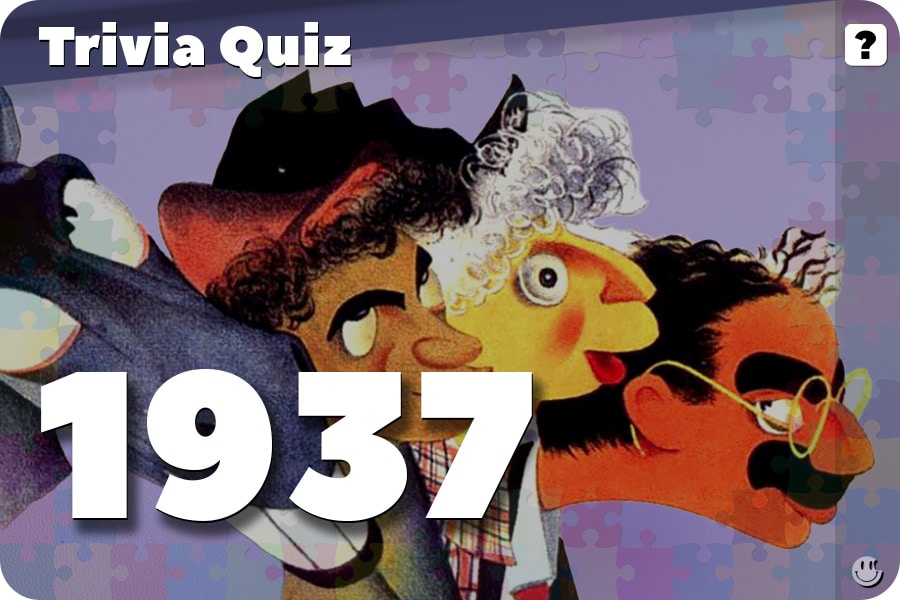
7. This 1936 Marx Brothers film featured Groucho Marx as Dr. Hugo Z. Hackenbush.
8. How many people lived in the United States in 1937?
9. Who was the high-profile American who visited Nazi Germany with his wife and did some spying while he was there?
10. What was the Bestselling Fiction Book in 1937?
11. Which celebrity was NOT born in 1937: Vanessa Redgrave, Roberta Flack, Yoko Ono, Jack Nicholson or Saddam Hussein?
12. How much did a Loaf of Bread cost in 1937?
13. The basic ingredients include ham and pork, and the Hormel Corporation introduced this canned product in 1937. What is it?
14. This 1937 book started an empire that included books, adaptations, and Oscar-winning movies. Name the book and author.
15. Who was the President of the United States in 1937?
16. Which president’s head was dedicated at Mount Rushmore on September 17, 1937? HINT: He was the third head to be completed.
17. What was the name of Ernest Hemingway’s novel about Harry Morgan, a fishing boat captain out of Key West, Florida?
18. Nicknamed the “Blonde Bombshell” and the “Platinum Blonde,” this sex symbol died too soon at the age of 26…
19. Who won the Stanley Cup in 1937?
20. What soap opera began on NBC radio in 1937, switched to television in 1952, and was finally canceled in 2009?
21. In this air disaster, 13 passengers and 22 crew died, along with someone on the ground. What was this terrible event?
22. Over 20,000,000 Americans began participating in this government program. Name that government entitlement.
23. What was the title of John Steinbeck’s novella of the Great Depression?
24. This man set a new record for a nonstop transcontinental flight from Los Angeles to New York: 7 hours, 28 minutes, and 25 seconds. He beat his 1936 record by nearly 2 hours.
25. This 1937 film starring Janet Gaynor and Fredric March has been remade thrice – in 1954, 1976, and 2018.
26. This magazine debuted to compete with Life Magazine. It focuses on pictures and is also in a large format.
27. At 11 feet tall and over 25 feet wide, this gray, black-and-white painting by Pablo Picasso is his largest and probably most well-known painting. What did he call it?
28. Debuting with its first issue in March 1937, it became the longest-running comic book title in history. Name that comic book.
29. What is the name of Dr. Seuss’s first children’s book?
30. Who was the Time Magazine Man & Wife of the Year in 1937?
31. Guarded 24 hours per day by soldiers of the US Army, what is the monument’s name in Arlington, Virginia?
32. On June 14, 1937, what was the first state to make Flag Day an official state holiday?
33. Who won the 1937 World Series?
34. What is the name of the roadway between Weehawken, New Jersey, and Midtown Manhattan, New York City?
35. How much did a gallon of gas cost in 1937?
36. What was the musical stage comedy that gave us several hit songs, including My Funny Valentine and The Lady is a Tramp?
37. Nicknamed the “Brown Bomber,” who became the heavyweight boxing champion?
Trivia Team Bonus Questions:
1. Who did Joe Louis defeat to become the world heavyweight boxing champion on June 22, 1937?
2. Who was the Pope in 1937?
3. Who were the 1937 NFL Champions?
4. On July 2, 1937, Amelia Earhart and navigator Fred Noonan disappeared after taking off from New Guinea. Amelia was married. What was her full married name?
5. Who was the American Vice-President in 1937?
6. Where did the NFL Washington Redskins play before they moved to Washington?
7. What was the name of the 1937 National Football League team in Cleveland?
8. What Horse won the Kentucky Derby in 1937?
9. Who was the highest-paid adult star in Hollywood in 1937?
10. Who won the US Triple Crown of Thoroughbred Racing in 1937?
The Answers:
37 Trivia Answers for 1937 History
1. What was the highest-grossing film of 1937? Snow White and the Seven Dwarfs
2. What was the Biggest Number One Song of 1937? Sweet Leilani by Bing Crosby
3. When it opened on May 27, 1937, it was the world’s longest and tallest suspension bridge. Name that bridge.
San Francisco’s Golden Gate Bridge
4. In 1937, what was the average life expectancy in the United States?
Men – 58 years, Women – 62.4 years.
5. In 1937, her divorce was finalized so she could marry the former British king Edward, Duke of Windsor. Who was she?
Wallis Simpson. They were married in June at the Château de Candé in Monts, France.
6. This cartoon character first appeared in the Looney Tunes animated short Porky’s Duck Hunt. Who was he?
Daffy Duck
7. This 1936 Marx Brothers film featured Groucho Marx as Dr. Hugo Z. Hackenbush. A Day At The Races
8. How many people lived in the United States in 1937?
The population was an estimated 128,824,829 people.
9. Who was the high-profile American who visited Nazi Germany with his wife and did some spying while he was there?
Charles Lindbergh (with his wife, Anne)
10. What was the Bestselling Fiction Book in 1937? Gone with the Wind by Margaret Mitchell
11. Which celebrity was NOT born in 1937: Vanessa Redgrave, Roberta Flack, Yoko Ono, Jack Nicholson or Saddam Hussein?
Yoko Ono (born February 18, 1933)
12. How much did a Loaf of Bread cost in 1937?
9 cents
13. The basic ingredients include ham and pork, and the Hormel Corporation introduced this canned product in 1937. What is it?
Spam
14. This 1937 book started an empire that included books, adaptations, and Oscar-winning movies. Name the book and author. The Hobbit by J.R.R. Tolkien
15. Who was the President of the United States in 1937?
Franklin D. Roosevelt (March 4, 1933 – April 12, 1945)
16. Which president’s head was dedicated at Mount Rushmore on September 17, 1937? HINT: He was the third head to be completed.
Abraham Lincoln
17. What was the name of Ernest Hemingway’s novel about Harry Morgan, a fishing boat captain out of Key West, Florida? To Have and Have Not.
18. Nicknamed the “Blonde Bombshell” and the “Platinum Blonde,” this sex symbol died too soon at the age of 26…
Jean Harlow
19. Who won the Stanley Cup in 1937?
In 1937, The Detroit Red Wings won over the New York Rangers (3 games to 2)
20. What soap opera began on NBC radio in 1937, switched to television in 1952, and was finally canceled in 2009? Guiding Light
21. In this air disaster, 13 passengers and 22 crew died, along with someone on the ground. What was this terrible event?
The Hindenburg Disaster
22. Over 20,000,000 Americans began participating in this government program. Name that government entitlement.
Social Security
23. What was the title of John Steinbeck’s novella of the Great Depression? Of Mice and Men
24. This man set a new record for a nonstop transcontinental flight from Los Angeles to New York: 7 hours, 28 minutes, and 25 seconds. He beat his 1936 record by nearly 2 hours.
Howard Hughes
25. This 1937 film starring Janet Gaynor and Fredric March has been remade thrice – in 1954, 1976, and 2018. A Star is Born
26. This magazine debuted to compete with Life Magazine. It focuses on pictures and is also in a large format.
Look Magazine. The final issue was on October 19, 1971.
27. At 11 feet tall and over 25 feet wide, this gray, black-and-white painting by Pablo Picasso is his largest and probably most well-known painting. What did he call it?
Guernica. It can be seen in the Museo Reina Sofia in Madrid, Spain.
28. Debuting with its first issue in March 1937, it became the longest-running comic book title in history. Name that comic book.
Detective Comics. Batman debuted in the 27th issue.
29. What is the name of Dr. Seuss’s first children’s book? And to Think That I Saw It on Mulberry Street
30. Who was the Time Magazine Man & Wife of the Year in 1937?
Chiang Kai-shek and Soong Mei-ling
31. Guarded 24 hours per day by soldiers of the US Army, what is the monument’s name in Arlington, Virginia?
The Tomb of the Unknown Soldier
32. On June 14, 1937, what was the first state to make Flag Day an official state holiday?
Pennsylvania
33. Who won the 1937 World Series?
In 1937, The New York Yankees won, beating the New York Giants (4 games to 1)
34. What is the name of the roadway between Weehawken, New Jersey, and Midtown Manhattan, New York City?
The Lincoln Tunnel
35. How much did a gallon of gas cost in 1937?
$0.20 per gallon
36. What was the musical stage comedy that gave us several hit songs, including My Funny Valentine and The Lady is a Tramp? Babes in Arms by Richard Rodgers and Lorenz Hart.
37. Nicknamed the “Brown Bomber,” who became the heavyweight boxing champion?
Joe Louis was champion from June 22, 1937, to March 1, 1949.
Trivia Team Bonus Questions:
1. Who did Joe Louis defeat to become the world heavyweight boxing champion on June 22, 1937?
James J. Braddock
2. Who was the Pope in 1937?
Pope Pius XI, February 6, 1922 – February 10, 1939
3. Who were the 1937 NFL Champions?
Washington Redskins
4. On July 2, 1937, Amelia Earhart and navigator Fred Noonan disappeared after taking off from New Guinea. Amelia was married. What was her full married name?
Amelia Earhart Putnam
5. Who was the American Vice-President in 1937?
John Garner (March 4, 1933 – January 20, 1941)
6. Where did the NFL Washington Redskins play before they moved to Washington?
Boston (Boston Redskins)
7. What was the name of the 1937 National Football League team in Cleveland?
Cleveland Rams.
8. What Horse won the Kentucky Derby in 1937?
War Admiral
9. Who was the highest-paid adult star in Hollywood in 1937?
Gary Cooper -$370,214. #2 was Mae West -$323.333.
10. Who won the US Triple Crown of Thoroughbred Racing in 1937?
War Admiral
World-Changing Event: Television publicly debuted in America at the New York World’s Fair.
Pop Standards include: They Can’t Take That Away From Me, I’ve Got My Love To Keep Me Warm, Harbor Lights and Once in a While
The Movies to Watch include Snow White and the Seven Dwarfs, A Day at the Races, Captains Courageous, Lost Horizon, Angel, The Awful Truth, and a Girl, Stage Door, and Shall We Dance.
The Most Famous Person in America was probably Shirley Temple
Notable books include The Hobbit by J.R.R. Tolkien and Think and Grow Rich by Napoleon Hill
Price of Metropolitan Opera La Traviata tickets in 1937: $2 to 5.00
Chester F. Carlson invented the photocopier.
The Funny Guy was Jack Benny
The Mystery: Amelia Earhart and navigator Fred Noonan disappeared after taking off from New Guinea during Earhart’s attempt to become the first woman to fly around the world.
Top Ten Baby Names of 1937
Mary, Barbara, Patricia, Shirley, Betty, Robert, James, John, William, Richard
US Life Expectancy
(1937) Males: 58.0 years, Females: 62.4 years
The Stars
Josephine Baker, Joan Blondell, Claudette Colbert, Olivia de Havilland, Betty Grable, Hedy Lamarr, Myrna Loy, Ginger Rogers, Barbara Stanwyck, Lana Turner
Entertainment History The Oscars
The 9th Academy Awards unfolded on March 4, 1937, at the Biltmore Hotel in Los Angeles with George Jessel as the host. The Great Ziegfeld won Best Picture, and Luise Rainer clinched Best Actress for her role in the film. This ceremony marked the first time supporting actors were honored with actual Oscar statues instead of plaques. The Best Original Song category debuted in the music arena, and the first-ever winner was The Way You Look Tonight from Swing Time. Luise Rainer became the first actor to secure back-to-back Oscars, as she had won Best Actress the previous year for The Good Earth. The Oscars for this year covered works released between January 1, 1936, and December 31, 1936.
Miss America
Bette Cooper (Bertrand Island, NJ)
Time Magazine’s Men of the Year
Chiang Kai-shek and Soong May-ling
Firsts, Inventions, and Wonders
From the family home recipe of Giovanni and Assunta Cantisano, Ragu Spaghetti Sauce hit the store shelves.
Porky’s Duck Hunt, directed by Tex Avery, for the Looney Tunes series, featured the debut of Daffy Duck.
Look Magazine debuted.
The Prince Valiant comic strip, by Hal Foster, debuted.
The first issue of Detective Comics was published. Issue #27 featured the first appearance of Batman.
The Lincoln Tunnel opened to traffic in New York City.
The world’s first shopping cart was used at Humpty Dumpty supermarket, in Oklahoma City.
San Francisco’s Golden Gate Bridge opened.
The Hormel company introduced spam.
The world’s first emergency call telephone service was launched in London, using the number 999.
Bras with four cup sizes (A, B, C, and D) were introduced. Before long, these cup sizes got nicknames: egg cup, teacup, coffee cup, and challenge cup.
John Steinbeck’s novella, Of Mice and Men, was published.
J.R.R. Tolkien’s The Hobbit was published
To Have and Have Not, by Ernest Hemingway, was published.
The Hindenburg Disaster
On May 6th, 1937, the Hindenburg disaster occurred. The LZ 129 Hindenburg airship caught fire and exploded while attempting to dock at Naval Air Station Lakehurst in Manchester Township, New Jersey. This tragedy claimed the lives of 35 people, including 13 passengers and 22 crewmen on board this voyage. An additional person died as a result of the explosion on the ground.
One notable thing about this disaster was that it occurred because highly flammable hydrogen gas had been used to keep the airship afloat instead of helium, which is not flammable and, therefore safer for passengers. To help prevent situations like these from happening again, the Federal Aviation Administration (FAA) was created in 1958. This agency is responsible for regulating and overseeing all aspects of aviation in the United States. They work to ensure that all passengers are safe when flying and set safety standards for aircraft, pilots, and air traffic controllers. The Hindenburg disaster serves as a reminder that even though new technologies can seem exciting and promising, they must be tested for safety before use. The FAA helps us learn from past mistakes so that tragedies like this don’t happen again.
The Biggest Pop Artists of 1937 include
Gus Arnheim & His Orchestra, Fred Astaire, Mildred Bailey, Connee Boswell, Larry Clinton and His Orchestra, Bing Crosby, Bob Crosby and His Orchestra, Dolly Dawn & Her Dawn Patrol, Tommy Dorsey and His Orchestra, Duke Ellington, Shep Fields and His Rippling Rhythm, Jan Garber and His Orchestra, Benny Goodman and His Orchestra, Mal Hallett & His Orchestra, Horace Heidt and His Orchestra, Billie Holiday, Sammy Kaye, Hal Kemp and His Orchestra, Wayne King and His Orchestra, Andy Kirk and His 12 Clouds of Joy, Guy Lombardo and His Royal Canadians, Jimmie Lunceford and His Orchestra, Abe Lyman and His California Orchestra, Russ Morgan, Ozzie Nelson and His Orchestra, Rudy Vallée & His Connecticut Yankees, Teddy Wilson & His Orchestra, Fats Waller
US Politics:
January 20, 1937 (Wednesday): Second inauguration of Franklin D. Roosevelt
Pop Culture Facts & History
After four years, on May 28, 1937, San Francisco’s Golden Gate Bridge opened. Pedestrians were allowed a day earlier, on May 27th.
Hewlett-Packard was founded. The first big job for the young company was Disney, for Fantasia. Although initially a manufacturer of measurement instruments, they entered the computer industry in the 1960s.
Hector Boiardi started canning his excellent pasta sauce in 1937.
You probably know him better as Chef Boyardee.
The original film A Star Is Born was released in 1937, and there have been three remakes since in 1954, 1976, and 2018. The original film plot was not centered around singers/musicians like the successors.
Ray-Ban sunglasses were made for U.S. Air Force pilots in 1936, and were such a hit that they began to be sold to the public in 1937. The brand has been featured in many films.
They say that Picasso’s most significant work was Guernica, which he painted in 1937. It was over 11 feet high and 25 feet wide.
The 1937 Best Supporting Actress Oscar went to Alice Brady for her role in In Old Chicago, but she couldn’t attend the ceremony, so a man walked up and accepted the award on her behalf. After the show, he and the stolen Oscar were never seen again.
The 1937 Fox vault fire destroyed the silent film archives of Fox Film Corporation.
The Tomb of the Unknowns has been continuously guarded without interruption since 1937.
Lou Thesz beat Everett Marshall in St Louis, to win National Wrestling Association (NWA) World heavyweight title.
Snow Whites and the Seven Dwarfs
Disney’s Snow White became the biggest film ever (at least until Gone With The Wind Came out in 1939.) The previous holder for that title was the controversial Birth of a Nation (1915).
Snow White and the Seven Dwarfs premiered December 21, 1937, just 2 months after The Hobbit by J.R. R. Tolkien (which prominently features 13 dwarves) was published. #dwarfs or #dwarves
Adriana Caselotti was only paid $970 ($15,913 today) to voice Snow White.
Snow White was the highest-grossing animated film until Aladdin came out in 1992.
Adriana Caselotti and Harry Stockwell, the voices of Snow White and Prince Charming, were not invited to the premiere of the 1937 film, so they snuck into the theater to watch it.
Walt Disney won an honorary Oscar with seven little Oscars for Snow White and the 7 Dwarfs.
Tragedies
The worst school disaster in American history in terms of lives lost was the New London School in New London, Texas; there was a catastrophic natural gas explosion, killing more than 295 students and teachers.
The German airship Hindenburg burst into flame when mooring to a mast in Lakehurst, New Jersey. Of the 36 passengers and 61 crew on board, 13 and 22 crew died, as well as one ground crew member.
Broadway Show
Pins and Needles (Review) Opened on November 27, 1937, and closed on June 22, 1940
Nobel Prize Winners
Physics – Clinton Joseph Davisson, George Paget Thomson
Chemistry – Walter Haworth, Paul Karrer
Physiology or Medicine – Albert von Szent-Györgyi Nagyrapolt
Literature – Roger Martin du Gard
Peace – Robert Cecil
Popular and Best-selling Books From 1937
And So-Victoria by Vaughan Wilkins The Citadel by A. J. Cronin Death on the Nile by Agatha Christie Drums Along the Mohawk by Walter D. Edmonds Gone with the Wind by Margaret Mitchell The Hobbit or There and Back Again by J.R.R. Tolkien Northwest Passage by Kenneth Roberts Of Mice and Men by John Steinbeck The Story of Babar by Jean de Brunhoff The Rains Came by Louis Bromfield Theatre by W. Somerset Maugham Their Eyes Were Watching God by Zora Neale Hurston Think and Grow Rich by Napolean Hill We Are Not Alone by James Hilton The Years by Virginia Woolf
Sports
World Series Champions: New York Yankees
NFL Champs: Washington Redskins
Stanley Cup Champs: Detroit Red Wings
U.S. Open Golf: Ralph Guldahl
U.S. Tennis (Men/Ladies): J. Donald Budge/Anita Lizana
Wimbledon (Men/Women): Don Budge/Dorothy Round
NCAA Football Champions: Pittsburg
Kentucky Derby Winner: War Admiral
Boston Marathon Winner: Walter Young Time: 2:33:20
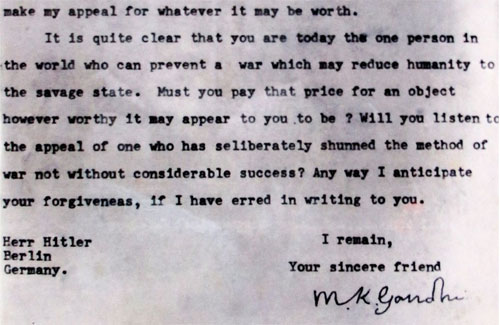
Mohandas Gandhi’s Letter to Adolf Hitler July 23, 1937
Dear friend,
Friends have been urging me to write to you for the sake of humanity. But I have resisted their request, because of the feeling that any letter from me would be an impertinence. Something tells me that I must not calculate and that I must make my appeal for whatever it may be worth.
It is quite clear that you are today the one person in the world who can prevent a war which may reduce humanity to a savage state. Must you pay that price for an object however worthy it may appear to you to be? Will you listen to the appeal of one who has deliberately shunned the method of war not without considerable success? Any way I anticipate your forgiveness, if I have erred in writing to you.
Judy Garland (Dear Mr. Gable) You Made Me Love You The song was originally written by James Monaco with lyrics by Joseph McCarthy, and simply title You Made Me Love You. According to Hollywood legend, this song was written or adapted for Judy Garland to sing to Clark Gable on the occasion of the star’s birthday. It was so well received that the song made it into the film Broadway Melody of 1938. The legend is more than likely true as Louis B Mayer, the head of MGM treated his contracted “stars” as his own family. He gave lavish parties on a regular basis. Many of these parties would be filmed and shown as extras before or after an MGM movie. The original song would be recorded over and over by artists such as Debbie Reynolds Al Jolson and Harry James.
Eddie Duchin De-Lovely
Another hit from the Cole Porter musical Anything Goes, this song would reappear over and over again as the Musical is revived on a regular basis. The song is sung by the hero of the musical Billy Crocket who is a stowaway on the ship where the musical takes place. Though song by the male lead in the show the song would go on to become more associated with Ethel merman as she would record it several times. In the video presented here the song is sung by Torchwood’s John Barrowman. The song would become the title of the movie musical biography of Cole Porter’s life.
Fred Astaire They Can’t Take That Away From Me
The song is another standard first performed by Fred Astaire. Written by George and Ira Gershwin the song would make an appearance in the musical Shall We Dance. But go on to recorded many times by such stars as Frank Sinatra, Rod Stewart and Harry Connick Jr. They Can’t Take That Away From Me was also used in Kenneth Branagh’s 2000 film adaptation of William Shakespeare’s Loves Labors Lost.
Ray Noble I’ve Got My Love To Keep Me Warm Written by Irving Berlin and first introduced in the film On The Avenue with Dick Powell and Alice Faye, two major film stars of the time, the song would go on to be interpreted by different artists in different ways. First, the song was recorded as a love song, but then also recorded as a Christmas song. The same thing would happen to songs like Baby It’s Cold Outside and Winter Wonderland. Not necessarily a specific Christmas song but somehow associated with the holiday. Jackie Gleason would record the song as well as Bing Crosby and Bette Midler. The song would come to life when it was used as the Finale for the Broadway Musical Irving Berlin’s White Christmas.
Frances Langford Harbor Lights
The song was originally written and performed in Polish by Hugh Williams (pseudonym for Will Grosz) with lyrics by Henryk Szpilman and translated by Jimmy Kennedy. The song was finally officially published in 1950 13 years after its initial recording. Notable artists who recorded the song would include, Bing Crosby Elvis Presley and The Platters.
Sophie Tucker The Lady is a Tramp
This song was originally written for the Broadway Show Babes in Arms by Rodgers and Hart. The Broadway show was about a group of young people rebelling against certain forms of etiquette, but when the show was turned into a film starring Judy Garland and Mickey Rooney the story revolved around a group of kids trying to break into show business. This would be one of the musicals where the kids get together and do a show in a barn. This was a theme for more than a few film musicals of the time. Though recorded most notably by Frank Sinatra, the song would come again into the film arena when sung as a duet by the characters of Puck and Mercedes in GLEE.
Hal Kemp Where or When
This song is also from the Broadway musical Babes in Arms, Written by Richard Rodgers and Larry Hart. The song is a love song that has been recorded and re-recorded many times. The song may also be the first to have the experience of Déjà-Vu as it’s a central theme the song is sung by a lover who believes he or she is experiencing again the time spent with his her beloved, even though it couldn’t have happened. The music is haunting and the lyrics are beautiful. The song has been recorded by over 100 different artists. Some notable recordings are Julie Andrews, Judy Collins, The Beach Boys, Barbra Streisand, Mandy Patinkin and George Michael.
Jeannette McDonald and Nelson Eddie Indian Love Call
Some would question that this song should be included in a list of the most popular songs or in songs most remembered, but the song was hugely popular in its time and would go on to be a song used in comedy shows and sketches. The song has it’s origins in a 1924 musical operetta called Rose-Marie. The music was written by Rudolf Friml and Herbert Stothart, and book and lyrics by Otto Harbach and Oscar Hammerstein II, The show would go on to have four film versions made.
The Most popular of these versions would be the one made by Jeannette McDonald and Nelson Eddie. McDonald and Eddy would become one of America’s favorite couples and along with Gable and Lombard, Tracy and Hepburn and Judy Garland and Mickey Rooney.
Top Artists and Songs of 1937
Benny Goodman
Goodnight, My Love
Sing, Sing, Sing (With A Swing)
This Year’s Kisses
Billie Holiday
Carelessly
I’ve Got My Love To Keep Me Warm
Bing Crosby and Connee Boswell
Bob Hite (Whatcha Gonna Swing Tonight?)
Bing Crosby and Jimmy Dorsey
Never in a Million Years
Too Marvelous for Words
Bing Crosby
Blue Hawaii
Remember Me
Sweet Leilani
The Moon Got In My Eyes
Bob Crosby and his Orchestra
Whispers in the Dark
Bob Wills and his Texas Playboys
Steel Guitar Stomp
Bunny Berigan
The First Time I Saw You
Claude Thornhill and his Orchestra
Harbour Lights
Count Basie
One O’Clock Jump
Duke Ellington
Caravan
Crescendo in Blue
Eddie Duchin
It’s De-Lovely
Moonlight and Shadows
Ella Fitzgerald
Goodnight, My Love
Fats Waller
Smarty
Frances Langford
Harbour Lights
Once in a While
Fred Astaire and Ginger Rogers
Let’s Call the Whole Thing Off
Shall We Dance?
They All Laughed
Fred Astaire
Nice Work If You Can Get It
They Can’t Take That Away From Me
Glen Gray
I’ve Got My Love To Keep Me Warm
Gus Arnheim
So Are
Guy Lombardo
A Sailboat in the Moonlight
Boo Hoo
It Looks Like Rain In Cherry Blossom Time
September in the Rain
So Rare
Hal Kemp
This Year’s Kiss
Where or When
Henry Busse and his Orchestra
With Plenty of Money and You
Horace Heidt
Gone With the Wind
Jeanette MacDonald and Nelson Eddie
Indian Love Call
Jimmy Lunsford
For Dancers Only
Judy Garland
(Dear Mr. Gable) You Made Me Love You
Larry Clinton
True Confession
Margaret McCrae
This Year’s Kisses
Mildred Bailey
Rockin’ Chair
Where Are You
Ray Noble
I’ve Got My Love To Keep Me Warm
Robert Johnson
From Four Till Late
Hellhound on My Trail
Rudy Vallee and his Connecticut Yankees
Vieni Vieni
Russ Morgan
The Merry-Go-Round Broke Down
Sammy Kaye
Rosalie
Shep Fields and His Rippling Rhythm Orchestra
Thanks For The Memory
The Merry-Go-Round Broke Down
Sophie Tucker
The Lady Is A Tramp
Teddy Wilson and his Orchestra
You Can’t Stop Me From Dreaming
Tommy Dorsey
Big Apple
Marie
Once In A While
Satan Takes A Holiday
Song of India
The Dipsy Doodle
The Lady is a Tramp
Chronological Outline of the Evolution of Shopping Carts and Supermarkets
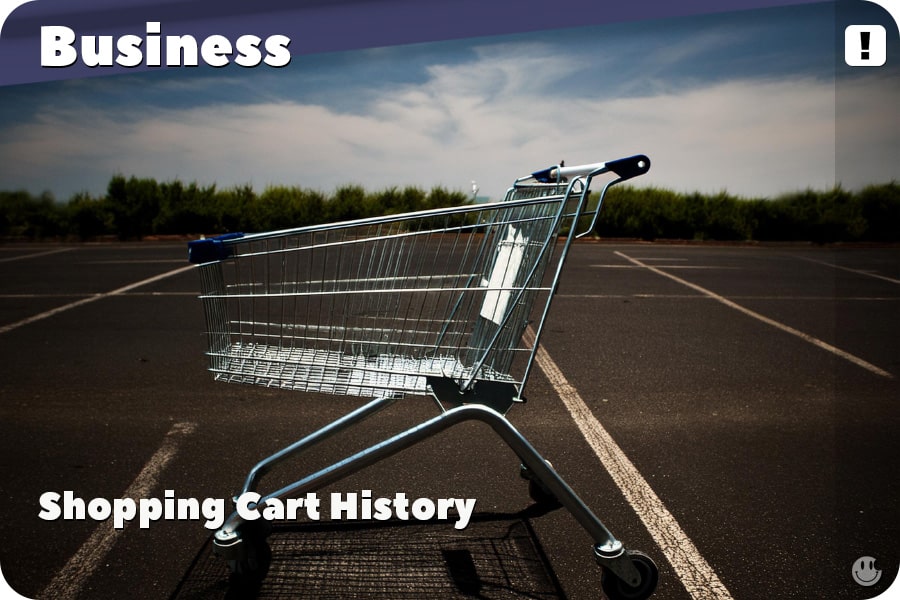
On June 4, 1937, Sylvan Goldman revolutionized the shopping experience with an innovation that seems almost mundane today but was transformative at the time—the shopping cart. Goldman, who owned the Humpty Dumpty supermarket chain in Oklahoma City, observed that customers often struggled to carry their purchases as they shopped, limiting the amount they could buy in one visit. His solution was ingeniously simple: modify folding chairs to hold baskets, creating a wheeled cart that shoppers could easily push around the store. Introduced in 1939, this invention initially met with skepticism from shoppers unfamiliar with the idea, but it soon proved to be a game-changer in the retail industry.
The impact of Goldman’s shopping cart was profound and multifaceted, catalyzing a shift in consumer behavior and store operations. The cart encouraged larger purchases by enabling customers to handle more goods effortlessly, effectively increasing sales per visit. Retail environments were transformed as stores reconfigured layouts to accommodate the new carts, widening aisles and designing spaces that could handle increased foot traffic and more dynamic shopping patterns. This innovation made shopping more convenient for consumers. It helped cement the supermarket as a cornerstone of everyday life in America, setting the stage for the modern retail experience we recognize today.
Early 20th Century: Rise of Convenience Stores
Early 1900s As the Industrial Revolution peaked, cities across America experienced rapid growth and demographic shifts. This era marked significant advancements in manufacturing and transportation, fostering a demand for more accessible consumer goods. The response was the rise of small convenience stores.
Location and Function Strategically located within urban neighborhoods and along busy city streets, these stores capitalized on the influx of a bustling workforce and new city dwellers. They were often positioned close to public transport stops or in areas with high foot traffic, making them easily accessible to the urban populace.
Impact Convenience stores played a pivotal role in urban living by offering extended hours, faster service, and a variety of products tailored to the needs of city residents with limited time. These stores were crucial in providing everyday essentials such as bread, milk, and household items, allowing customers to quickly purchase goods without requiring lengthy trips to larger, more distant supermarkets.
Adaptations for Consumer Needs To cater to a diverse urban clientele, convenience stores adapted their product offerings to include a range of items from groceries to snacks and beverages, all aimed at facilitating quick and easy shopping experiences. This adaptation was a response to the accelerated pace of urban life and a precursor to the more comprehensive grocery stores that would emerge later in the century.
Mid-20th Century: Emergence of Grocery Stores
1940s-1950s This period marked a significant transition from smaller, more localized convenience stores to larger, more comprehensive grocery stores. The transformation was driven by post-war prosperity, technological advancements in food production and preservation, and a shift in consumer lifestyles, particularly in suburban areas.
Economies of Scale As businesses grew, they began to benefit from economies of scale, which reduced the cost per unit of goods sold. This was achieved through larger procurement volumes, streamlined supply chains, and more efficient distribution methods, all of which were supported by advancements in transportation and logistics.
Increased Food Production Technological innovations in agriculture and food processing, such as the introduction of commercial fertilizers, pesticides, and mechanized farming equipment, significantly increased food production. This surge made food more plentiful and affordable, changing the scale and scope of grocery inventory.
Consumer Demand The post-war economic boom increased disposable income and higher consumer spending. The growing suburban population, driven by a desire for more spacious living away from urban centers, favored one-stop shopping solutions that larger grocery stores provided. This demand influenced the variety and volume of products that stores offered, catering to a lifestyle that valued convenience and variety.
Marketing Simplification The rise of mass media, including television and radio, allowed grocery stores to reach a broader audience by advertising and promoting the stores and the vast array of products they offered. This helped standardize shopping patterns and reduced the complexity of marketing and selling food products.
Naming as Supermarkets These larger stores began to be referred to as “supermarkets” due to their expanded product selections, which included food and other consumer goods such as household items and health and beauty products. The term “supermarket” meant more than just scale; it indicated a comprehensive shopping experience under one roof.
Cultural and Social Impact In mid-20th-century America, supermarkets became a cultural symbol of abundance and prosperity. They were not only places to shop but also spaces where new products were introduced, and the conveniences of modern life were prominently displayed.
Baby Boom and the Supermarket Expansion
1950s The post-World War II era, characterized by the Baby Boom—a significant increase in birth rates—substantially impacted various sectors, including the retail market. The surge in population during this period, coupled with rising family incomes and the expansion of suburban neighborhoods, directly fueled the rapid growth of supermarkets across the United States.
Collier’s Magazine Insight In 1951, Collier’s magazine highlighted the explosive growth of the supermarket industry by reporting that more than three new supermarkets were opening daily. This expansion was not just a quantitative increase but also reflected a qualitative change in the shopping habits of the American public.
Sales Growth The economic prosperity of the 1950s played a crucial role in this expansion. By 1950, supermarkets accounted for 35% of all food sales in the U.S., dramatically increasing to 70% by 1960. The rise in supermarket popularity can be attributed to their ability to offer various products at lower prices than smaller, local stores.
Factors Driving Expansion
Suburbanization As more Americans moved to suburban areas, the demand for convenient, one-stop shopping experiences increased. Supermarkets catered to this need by providing diverse products under one roof, reducing the need for multiple shopping trips.
Automobile Ownership Increased automobile ownership allowed families to travel farther to shop, making larger stores outside city centers accessible. Supermarkets typically featured ample parking, which appealed to the car-owning public.
Consumer Preferences There was a shift in consumer preferences towards packaged and processed foods, which supermarkets were well-equipped to supply. These preferences were driven by the appeal of convenience and longer shelf life, which catered to busier lifestyles and larger families typical of the Baby Boom generation.
Marketing and Layout Innovations During this period, supermarkets also began employing new marketing techniques and store layouts to enhance the shopping experience. They introduced features like self-service formats, shopping carts, and more attractive displays, which allowed customers to browse and select products at their leisure, contributing to higher sales volumes.
Cultural Impact Supermarkets became gathering places for communities, reflecting the prosperity and abundance of the era. They were often seen as symbols of modernity and efficiency, reshaping the cultural landscape around shopping and domestic life.
Challenges and Innovations in Grocery Shopping
1937: Initial Designs and Challenges
1937 marked early attempts by grocery retailers to enhance customer convenience by introducing wheeled shopping carriers. The initial design involved placing two baskets on a wheeled frame. While this innovation aimed to facilitate easier and more efficient shopping experiences, it proved bulky and impractical in practice. Shoppers found these early models cumbersome to maneuver around store aisles and difficult to store when not in use, leading to limited adoption.
1939: The Invention of the Modern Shopping Cart
Recognizing the need for a more practical solution, Sylvan N. Goldman, the enterprising owner of the Humpty Dumpty grocery chain in Oklahoma City, embarked on a project to reinvent the shopping carrier. Goldman’s stroke of insight came from observing everyday objects—specifically folding chairs.
He envisioned a modified version of the folding chair that could support two baskets: one raised several inches above the lower to provide ample space for groceries without the items being crushed. This setup maintained the folding chair’s portability while significantly enhancing its utility as a shopping device.
Goldman added wheels to the legs of the chair and a handle at the back, transforming it into a mobile cart that could easily navigate through store aisles. This design also allowed the carts to be folded up when not in use, solving the storage issue posed by the earlier models.
The newly designed folding shopping cart was introduced to the public in 1939. Despite its innovative approach to solving a typical shopper’s dilemma, the reception was lukewarm. The shopping cart’s initial flop was largely due to societal resistance. Men felt that using a cart emasculated them, as it implied a need for help carrying groceries, traditionally seen as a woman’s task. Women, on the other hand, compared it to pushing a baby carriage, feeling it relegated them to stereotypical roles.
Addressing Societal Resistance
Sylvan Goldman did not give up on his invention despite the initial setback. He cleverly addressed the societal resistance by hiring both men and women models to use the carts while shopping in his stores. This marketing strategy helped normalize the carts, showing shoppers the ease and efficiency they offered. As more people saw others using the carts, the social stigma began to wane, and the carts gradually gained acceptance.
Impact and Legacy
The successful adoption of Goldman’s shopping carts marked a significant turning point in the retail shopping experience. It set a new standard for customer convenience, paving the way for the modern shopping environments we are accustomed to today. The innovation of the shopping cart enhanced the efficiency of shopping and influenced the layout and design of stores, which could now accommodate wider aisles and larger volumes of customers.
Further Innovations by Orla E. Watson
1946: Telescoping Shopping Cart Design
In the mid-1940s, a significant innovation arrived from Orla E. Watson of Kansas City, who redefined the shopping cart’s design and functionality. Watson, originally a draftsman turned inventor, observed the bulky nature of existing shopping carts and their inefficiency in storage and management.
He developed the telescoping shopping cart design, which allowed carts to be nested within each other horizontally. This simple yet revolutionary design involved a hinged rear gate that could swing upwards, allowing one cart to slide into the cart in front of it partially. This innovation dramatically reduced the space needed to store carts when not in use.
Impact on Supermarkets
Watson’s telescoping design was a logistical improvement and a financial boon for supermarkets. By maximizing floor space that could otherwise be used for product displays or additional aisles, stores could enhance their customer shopping experience and potentially increase sales.
The ability to nest carts together also streamlined the process of collecting and managing carts for store employees, reducing labor costs and increasing efficiency in handling customer flow.
Patent and Adoption
Recognizing the potential of his invention, Watson quickly patented the telescoping shopping cart in 1947. The patent protected his design and paved the way for widespread adoption across the retail industry.
Major grocery chains and retailers quickly saw the benefits of Watson’s design, leading to its rapid adoption across the United States and eventually worldwide. This new standard in shopping cart design soon became an integral part of the retail shopping experience.
Cultural and Commercial Impact
The telescoping shopping cart exemplified how a practical solution could profoundly impact the retail environment. It addressed the physical limitations of storage and maneuverability and catered to the evolving needs of post-war consumer culture, which valued convenience and efficiency.
Watson’s invention is a testament to how innovations in even the most mundane aspects of daily life can transform user experiences and business operations. The widespread adoption of his telescoping shopping cart design marked a significant advancement in retail logistics, influencing store layouts and the overall shopping experience for decades.
Cultural and Commercial Impact of the Shopping Cart
1955: Iconic Status
1955 marked a pivotal moment for the shopping cart when it was featured on the cover of Life Magazine. This recognition was not just about the object itself but symbolized the booming consumer culture in post-war America. The cover story placed the shopping cart at the center of a narrative about convenience, consumerism, and the modern American way of life, highlighting its role in the everyday lives of millions of people.
Symbol of Consumer Culture and Innovation
Over the decades, the basic design of the shopping cart has remained largely unchanged, a testament to the effectiveness of its original engineering. However, its role has expanded beyond mere functionality. The shopping cart has come to symbolize broader themes in consumer culture, including the rise of self-service in retail and the consumer’s autonomy in choosing products.
As supermarkets and large retail stores became staples in urban and suburban landscapes, the shopping cart became a fixture in American households’ routines, emblematic of accessibility and convenience in shopping.
Evolution in Design and Technology
Despite the simplicity of its original design, the shopping cart has seen adaptations that incorporate modern technology and respond to evolving consumer needs. Innovations such as ergonomic handles, child seating options, and even electronic systems for checkout and inventory control reflect ongoing changes in how retailers enhance customer experience.
Modern iterations include smart carts equipped with GPS trackers, electronic payment systems, and screens that offer targeted advertisements and shopping suggestions, merging traditional shopping methods with digital enhancements.
Cultural Representations
The shopping cart has also been portrayed in various media as a symbol of consumerism. Artists and filmmakers have used it in works to critique or comment on societal issues, reflecting on themes of consumption, abandonment, and urban sprawl.
In popular culture, the shopping cart occasionally appears in unconventional settings, such as urban explorations or makeshift shelters, in narratives addressing homelessness, further highlighting its ubiquity and adaptability.
Commercial Impact and Retail Strategies
Beyond its cultural symbolism, the shopping cart has had a substantial commercial impact. It facilitates larger purchases than would be convenient without it, directly influencing sales volumes. Retailers strategically design store layouts to accommodate the path of the shopping cart, optimizing the placement of high-demand or high-margin items to maximize impulse purchases.
The design and placement of shopping carts at store entrances serve as subtle cues, encouraging customers to consider buying more items, leveraging the psychological effect of filling up space within the cart.
Modern Innovations and the Digital Era
Early 21st Century: Introduction of Technology in Shopping Carts
As we entered the 21st century, the retail landscape continued to evolve with technological advancements, leading to significant innovations in the functionality of shopping carts. Companies like Veeve and Caper have been at the forefront, integrating Artificial Intelligence and other digital technologies into traditional shopping carts.
Features of AI-Powered Shopping Carts
These modern shopping carts have features such as barcode scanning and automatic checkout systems. This technology enables carts to automatically register products as they are placed inside, calculating the total cost in real time and allowing for a seamless checkout experience. Such features streamline the shopping process and reduce the time customers spend in checkout lines.
Additionally, these carts often include touchscreens that provide product information, navigational assistance within stores, and personalized shopping recommendations based on consumer behavior and preferences.
Enhancing the Shopping Experience
The integration of these technologies into shopping carts has transformed them from mere carriers of goods to interactive shopping assistants. Shoppers can now enjoy an enhanced and personalized shopping experience that offers convenience, efficiency, and tailored information at their fingertips.
For instance, some smart carts are designed to help shoppers find items on their shopping list by guiding them through the store with the most efficient route, highlighting promotions and deals along the way, and even suggesting recipes based on the items in the cart.
Integration with Store Operations
These technological advancements benefit consumers and retailers. Smart carts can help manage inventory by tracking which products are being picked up and which are being put back, providing valuable data that can be used to optimize stock levels and store layouts.
Retailers can also use the data gathered from these carts to understand shopping patterns, manage peak times more efficiently, and enhance customer service by reallocating staff to more critical areas of the store.
Future Prospects
The potential for further innovation is vast. Future developments might include even more advanced features, such as augmented reality, which shows nutritional information and product comparisons directly in the viewer’s field of vision, or integration with mobile apps, which allows for remote shopping and scheduling of pickup or delivery.
As e-commerce continues to grow, the role of smart shopping carts could expand to bridge the gap between online and in-store shopping experiences, offering a hybrid model where customers can enjoy the benefits of both.
Cultural Significance and Artistic Inspirations
Artistic Representation
The shopping cart has transcended its utilitarian role to become a potent symbol in contemporary art, often used to comment on and critique aspects of consumer culture and societal norms. Iconic street artist Banksy, for example, has employed the image of a shopping cart in his artworks to reflect on consumerism’s excesses and the alienation it can produce. His work often juxtaposes everyday objects with unexpected elements to provoke thought about the mundane activities of modern life and their broader implications.
Similarly, Australian artist Matt McVeigh explores the shopping cart’s aesthetic and symbolic potential through large-scale installations. By configuring carts in visually striking arrangements, McVeigh invites viewers to reconsider these ordinary objects as part of a larger commentary on consumption, waste, and the repetitive cycles of consumer behavior. His work highlights how commonplace items can be reimagined in ways that challenge our perceptions and provoke dialogue about our spaces and lifestyles.
Accessibility Initiatives
Beyond their cultural portrayal, shopping carts have also been a focus of innovation regarding accessibility. A notable advancement is Caroline’s Cart, explicitly designed for families with special needs. This cart features a built-in seat that accommodates older children and adults with disabilities, enabling them to participate more fully in the shopping experience with their families. This innovation not only enhances accessibility but also underscores the shopping cart’s role in fostering inclusivity in public spaces.
Caroline’s Cart reflects a broader movement towards designing for inclusivity in everyday objects. Adapting a standard shopping cart to meet diverse needs highlights the importance of considering all users in design processes and challenges businesses to think about how they can make everyday activities more accessible to everyone.
Impact on Retail Environments and Policies
These artistic and accessibility-driven innovations have influenced retail environments and policies by raising awareness about the needs of diverse populations and the impact of consumer culture on social and environmental contexts. Retailers and designers increasingly recognize the importance of inclusive design and are motivated to implement solutions catering to a broader range of needs.
Furthermore, the artistic use of shopping carts in public installations and exhibitions encourages reevaluating the consumer spaces we frequent and the objects we often overlook. It serves as a reminder of the potential for art to transform public understanding and inspire change in attitudes and behaviors.
The Golden Gate Bridge, an iconic landmark and engineering marvel, connects San Francisco and Marin County in California. Its opening in 1937 marked a significant moment in American history and infrastructure.
Designed by engineer Joseph Strauss, architect Irving Morrow, and engineer Charles Ellis
Spanning 1.7 miles (8,981 feet) and standing 746 feet tall, it was the world’s longest and tallest suspension bridge at the time of completion
The bridge’s construction began on January 5, 1933, and took a little over four years to complete
Costing around $35 million (equivalent to about $530 million today), the project was financed through bonds during the Great Depression
11 workers lost their lives during the construction process, while 19 others were saved by a safety net installed beneath the bridge
On May 27, 1937, the bridge was opened to pedestrians, and about 200,000 people crossed the bridge on foot and roller skates
The following day, May 28, the bridge officially opened to vehicular traffic with a ceremony led by President Franklin D. Roosevelt, who pressed a telegraph key in the White House to signal the start of the event
The Golden Gate Bridge has become a symbol of American progress and a popular tourist attraction, as well as the subject of numerous films, television shows, and photographs
The bridge’s distinctive “International Orange” color was chosen for both visibility and aesthetic purposes; it contrasts with the surrounding landscape and makes the bridge more visible in foggy conditions
The opening of the Golden Gate Bridge in 1937 was a significant event in American history, marking a major achievement in engineering and creating an iconic landmark. The bridge connected San Francisco and Marin County and became a symbol of progress and a popular subject in pop culture.
The 9th Academy Awards unfolded on March 4, 1937, at the Biltmore Hotel in Los Angeles, California.
The host for the evening was George Jessel, an actor, singer, and comedian known for his work on stage and screen.
Films released in the calendar year of 1936 were eligible for awards.
Noteworthy Moments:
The Great Ziegfeld won Best Picture, making it the first musical film to ever win this category.
Luise Rainer bagged the Best Actress Oscar for her role in The Great Ziegfeld, marking her first win; she’d win again the following year.
Anthony Adverse, Dogsworth and The Great Ziegfeld each received 7 nominations.
The “Academy Award of Merit” is what the Oscar statue is officially called.
The standard length of a 35 mm film reel is 1,000 feet (305 m), which runs approximately 11 minutes for sound film (24 frames per second) and about 15 minutes for silent film at the speed of 16 frames per second.
My Man Godfrey was the first film to receive nominations in all four acting categories
This ceremony marked the first time when the categories of Best Supporting Actor and Best Supporting Actress were included in the awards list.
This was the first year that the Academy recognized Supporting Acting performances with official nominations, as opposed to the previous year where a write-in vote determined winners.
Trivia:
Paul Muni lost the Best Actor award to himself. Confused? Muni was nominated twice for Best Actor, once as a write-in and once as an official nominee, both for his role in The Story of Louis Pasteur. He won.
Luise Rainer’s win started her on a path that would make her the first actor to win back-to-back Oscars, a feat she achieved for The Good Earth the following year.
This was the first year the Best Supporting Actor and Actress awards were given as official categories, but the miniature “Oscar” statuettes for supporting categories weren’t introduced until 1943.
The Best Dance Direction category made its debut and was awarded to Seymour Felix for his work on The Great Ziegfeld.
This year’s ceremony saw the Oscars grow in scale, reflecting the industry’s evolution and the increasing significance of film in American culture.
1937 Oscar Nominees and Winners
Outstanding Production:
The Great Ziegfeld – Hunt Stromberg for Metro-Goldwyn-Mayer (WINNER)
Anthony Adverse – Henry Blanke for Warner Bros.
Dodsworth – Samuel Goldwyn and Merritt Hulbert for Samuel Goldwyn Prod. and United Artists
Libeled Lady – Lawrence Weingarten for Metro-Goldwyn-Mayer
Mr. Deeds Goes to Town – Frank Capra for Columbia
Romeo and Juliet – Irving Thalberg for Metro-Goldwyn-Mayer
San Francisco – John Emerson and Bernard H. Hyman for Metro-Goldwyn-Mayer
The Story of Louis Pasteur – Henry Blanke for Warner Bros.
A Tale of Two Cities – David O. Selznick for Metro-Goldwyn-Mayer
Three Smart Girls – Joe Pasternak and Charles R. Rogers for Universal
Best Director:
Frank Capra – Mr. Deeds Goes to Town (WINNER)
William Wyler – Dodsworth
Robert Z. Leonard – The Great Ziegfeld
Gregory La Cava – My Man Godfrey
W. S. Van Dyke – San Francisco
Best Actor:
Paul Muni – The Story of Louis Pasteur as Louis Pasteur (WINNER)
Gary Cooper – Mr. Deeds Goes to Town as Longfellow Deeds
Walter Huston – Dodsworth as Sam Dodsworth
William Powell – My Man Godfrey as Godfrey
Spencer Tracy – San Francisco as Father Tim Mullin
Best Actress:
Luise Rainer – The Great Ziegfeld as Anna Held (WINNER)
Irene Dunne – Theodora Goes Wild as Theodora Lynn/”Caroline Adams”
Gladys George – Valiant Is the Word for Carrie as Carrie Snyder
Carole Lombard – My Man Godfrey as Irene Bullock
Norma Shearer – Romeo and Juliet as Juliet
Best Supporting Actor:
Walter Brennan – Come and Get It as Swan Bostrom (WINNER)
Mischa Auer – My Man Godfrey as Carlo
Stuart Erwin – Pigskin Parade as Amos
Basil Rathbone – Romeo and Juliet as Tybalt
Akim Tamiroff – The General Died at Dawn as General Yang
Best Supporting Actress:
Gale Sondergaard – Anthony Adverse as Faith Paleologus (WINNER)
Beulah Bondi – The Gorgeous Hussy as Rachel Jackson
Alice Brady – My Man Godfrey as Angelica Bullock
Bonita Granville – These Three as Mary Tilford
Maria Ouspenskaya – Dodsworth as Baroness Von Obersdorf
Best Original Story:
The Story of Louis Pasteur – Pierre Collings and Sheridan Gibney (WINNER)
Fury – Norman Krasna
The Great Ziegfeld – William Anthony McGuire
San Francisco – Robert Hopkins
Three Smart Girls – Adele Comandini
Best Adaptation:
The Story of Louis Pasteur – Pierre Collings and Sheridan Gibney (WINNER)
After the Thin Man – Frances Goodrich and Albert Hackett, based on a story by Dashiell Hammett
Dodsworth – Sidney Howard, based on the play by Howard and the novel by Sinclair Lewis
Mr. Deeds Goes to Town – Robert Riskin, based on the story “Opera Hat” by Clarence Budington Kelland
My Man Godfrey – Eric Hatch and Morris Ryskind, based on the story “1101 Park Avenue” by Hatch
Best Live Action Short Subject, One-Reel:
Bored of Education – Hal Roach and MGM (WINNER)
Moscow Moods – Paramount
Wanted – A Master – Pete Smith and MGM
Best Live Action Short Subject, Two-Reel:
The Public Pays – MGM (WINNER)
Double or Nothing – Warner Bros.
Dummy Ache – RKO Radio
Best Live Action Short Subject, Color:
Give Me Liberty – Warner Bros. (WINNER)
La Fiesta de Santa Barbara – Louis Lewyn and MGM
Popular Science J-6-2 – Paramount
Best Short Subject, Cartoon:
The Country Cousin – Walt Disney Productions and United Artists (WINNER)
The Old Mill Pond – Harman-Ising and MGM
Popeye the Sailor Meets Sindbad the Sailor – Paramount
Best Scoring:
Anthony Adverse – Warner Bros. Studio Music Department (WINNER)
The Charge of the Light Brigade – Warner Bros. Studio Music Department
The Garden of Allah – Selznick International Pictures Music Department
The General Died at Dawn – Paramount Studio Music Department
Winterset – RKO Radio Studio Music Department
Best Song:
“The Way You Look Tonight” from Swing Time – Music by Jerome Kern; Lyrics by Dorothy Fields (WINNER)
“Did I Remember” from Suzy – Music by Walter Donaldson; Lyrics by Harold Adamson
“I’ve Got You Under My Skin” from Born to Dance – Music and Lyrics by Cole Porter
“A Melody From the Sky” from Trail of the Lonesome Pine – Music by Louis Alter; Lyrics by Sidney Mitchell
“Pennies from Heaven” from Pennies from Heaven – Music by Arthur Johnston; Lyrics by Johnny Burke
“When Did You Leave Heaven” from Sing, Baby, Sing – Music by Richard A. Whiting; Lyrics by Walter Bullock
Best Sound Recording:
San Francisco – Douglas Shearer (WINNER)
Banjo on My Knee – Edmund H. Hansen
The Charge of the Light Brigade – Nathan Levinson
Dodsworth – Thomas T. Moulton
General Spanky – Elmer A. Raguse
Mr. Deeds Goes to Town – John P. Livadary
The Texas Rangers – Franklin Hansen
That Girl from Paris – John Aalberg
Three Smart Girls – Homer G. Tasker
Best Art Direction:
Dodsworth – Richard Day (WINNER)
Anthony Adverse – Anton Grot
The Great Ziegfeld – Cedric Gibbons, Eddie Imazu, and Edwin B. Willis
Lloyds of London – William S. Darling
Magnificent Brute – Albert S. D’Agostino and Jack Otterson
Romeo and Juliet – Cedric Gibbons, Fredric Hope, and Edwin B. Willis
Winterset – Perry Ferguson
Best Cinematography:
Anthony Adverse – Tony Gaudio (WINNER)
The General Died at Dawn – Victor Milner
The Gorgeous Hussy – George J. Folsey
Best Film Editing:
Anthony Adverse – Ralph Dawson (WINNER)
Come and Get It – Edward Curtiss
The Great Ziegfeld – William S. Gray
Lloyds of London – Barbara McLean
A Tale of Two Cities – Conrad A. Nervig
Theodora Goes Wild – Otto Meyer
Best Dance Direction:
The Great Ziegfeld – Seymour Felix (WINNER)
Born to Dance – Dave Gould
Cain and Mabel – Bobby Connolly
Dancing Pirate – Russell Lewis
Gold Deggirs of 1937 – Busby Berkeley
One in a Million – Jack Haskell
Swing Time – Hermes Pan
Best Assistant Director:
The Charge of the Light Brigade – Jack Sullivan (WINNER)
Anthony Adverse – William Cannon
Garden of Allah – Eric G. Stacey
The Last of the Mohicans – Clem Beauchamp
San Francisco – Joseph M. Newman
Academy Honorary Awards
W. Howard Greene and Harold Rosson “for the color cinematography of the Selznick International Production, The Garden of Allah.”
The March of Time “for its significance to motion pictures and for having revolutionized one of the most important branches of the industry – the newsreel.”