1. What was Muhammed Ali’s name when he was born in Louisville, Kentucky, on January 17, 1942?
2. How many people lived in the United States in 1942?
3. This 1942 film was based on an unproduced stage play, Everybody Comes to Rick’s. Name that film
4. Who won the Stanley Cup in 1942?
5. What was the Biggest Number One Song of 1942?
6. What was the Biggest Song of 1942 that was NOT White Christmas?
7. Over 1,400 AA shells are fired at an unidentified object, or objects, in the skies over Los Angeles overnight on February 25, 1942. It may have been nothing at all. What was this event (or non-event) called?
8. Who was the President of the United States in 1942?
9. What was the average movie theater ticket price in 1942 to the nearest dime?
10. 1942 Catchphrase: Who said, “Here’s looking at you, kid”?
11. What was the highest-grossing film of 1942
12. The sports-drama film The Pride of the Yankees, starring Gary Cooper, was about what baseball legend?
13. Born in 1942, this singer/songwriter co-wrote hits like Touch of Grey, Alabama Getaway, and Uncle John’s Band. Name that rock star.
14. What was the Bestselling Fiction Book in 1942?
15. How much did a Loaf of Bread cost in 1942?
16. How much did a Gallon of Milk cost in 1942?
17. The comic character Archie Andrews first appeared in Pep Comics, and he had a very old car (a jalopy). What type of car did Archie drive in 1942?
18. This “Road to…” movie, starring Bing Crosby, Bob Hope, and Dorothy Lamour, involved going into the African continent. What is the name of this 1942 film?
19. This hydroelectric power dam began operating in Washington state in 1942…
20. In 1942, what was the average life expectancy in the United States?
21. This 1942 film introduced the classic song White Christmas.
22. Based on a 1923 book by Austrian author and hunter Felix Salten, the adaptation was a big hit for Disney Studios. Name that film.
23. After an Allied victory, who said, “Now this is not the end. It is not even the beginning of the end. But it is, perhaps, the end of the beginning.”?
24. The Little Golden Books book series includes the best-selling hardcover book for children of all time, with over 15 million copies sold. Name that children’s book.
25. Launched in Philadelphia, this was the only US battleship that provided gunfire support during the Vietnam War.
26. Founded in 1942, what was the women’s branch of the United States Navy Reserve better known as? It is an acronym.
27. How old was movie star Clark Gable, who entered an Army recruiting station in Los Angeles and enlisted as a private?
28. How much did a gallon of gas cost in 1942?
29. This comic book villain was once an upstanding District Attorney, Harvey Dent. He became an enemy of Batman in Detective Comics number 66. Who is this coin-flipping bad guy?
30. Although later a long-running comic strip by Walt Kelly, this character debuted in Animal Comics issue #1
31. Who won the 1942 World Series?
32. Yankee Doodle Dandy is an American biographical musical film about who? He is known as “The Man Who Owned Broadway”
33. Born in 1942, this Rolling Stone member was also a member of the ’27 Club’ – who was he?
34. We knew him as Mighty Mouse when he was there to save the day in 1944. But what was his name when he first appeared in 1942’s Mouse of Tomorrow?
35. On her 13th birthday, June 12, 1942. This young woman began writing in her diary. Who was she?
36. The German A-4 rocket was better known as what?
37. Who was the Time Magazine Man of the Year in 1942?
38. Which celebrity was NOT born in 1942: Peter Tork, Aretha Franklin, Roger Daltrey, Leon Russel, or Stephen Hawking?
39. How much did a dozen eggs cost in 1942?
40. What was the name of the research and development undertaken during World War II that produced the first nuclear weapons for the United States?
41. This Hollywood star was granted a US patent (#2,292,387) for a frequency-hopping system for radio-controlled torpedoes. It’s also the basis for Wi-Fi. Name that actress.
42. This American broadcast has been going on since 1942. Some people consider it American propaganda. What is it?
Trivia Team Bonus Questions:
1. In what language was the first Voice of America broadcast?
2. What was the magazine’s name produced exclusively for members serving in the US military through World War II?
3. What Horse won the Kentucky Derby in 1942?
4. This author wrote a book released in 1942 about a series of letters to a nephew named Wormwood. Name the author and book.
5. In Boston, Massachusettes, this was the deadliest nightclub fire in history, claiming a total of 492 lives. What was the name of that fire?
6. Who was the Pope in 1942?
7. The United States Coast Guard Women’s Reserve is known as the SPARS. S.P.A.R.S. What does that acronym stand for?
8. This Hollywood star died in a plane crash while returning from a war bond tour. She was Clark Gable’s wife. Who was she?
9. Who was the American Vice-President in 1942?
10. Who were the 1942 NFL Champions?
The Answers:
42 Trivia Answers for 1942 History
1. What was Muhammed Ali’s name when he was born in Louisville, Kentucky, on January 17, 1942?
Cassius Clay (Cassius Marcellus Clay Jr., died June 3, 2016)
2. How many people lived in the United States in 1942?
The population was an estimated 134,859,553 people.
3. This 1942 film was based on an unproduced stage play, Everybody Comes to Rick’s. Name that film. Casablanca
4. Who won the Stanley Cup in 1942?
In 1942, The Toronto Maple Leafs won over the Detroit Red Wings (4 games to 3)
5. What was the Biggest Number One Song of 1942? White Christmas by Bing Crosby
6. What was the Biggest Song of 1942 that was NOT White Christmas? Moonlight Cocktail by Glenn Miller
7. Over 1,400 AA shells are fired at an unidentified object, or objects, in the skies over Los Angeles overnight on February 25, 1942. It may have been nothing at all. What was this event (or non-event) called?
The Battle of Los Angeles.
8. Who was the President of the United States in 1942?
Franklin D. Roosevelt (March 4, 1933 – April 12, 1945)
9. What was the average movie theater ticket price in 1942 to the nearest dime?
30 cents
10. 1942 Catchphrase: Who said, “Here’s looking at you, kid”?
Rick Blaine on Casablanca
11. What was the highest-grossing film of 1942? Mrs. Miniver
12. The sports-drama film The Pride of the Yankees, starring Gary Cooper, was about what baseball legend?
Lou Gehrig
13. Born in 1942, this singer/songwriter co-wrote hits like Touch of Grey, Alabama Getaway, and Uncle John’s Band. Name that rock star.
Jerry Garcia (August 1, 1942 – August 9, 1995)
14. What was the Bestselling Fiction Book in 1942? The Song of Bernadette by Franz Werfel
15. How much did a Loaf of Bread cost in 1942?
8 cents
16. How much did a Gallon of Milk cost in 1942?
60 cents
17. The comic character Archie Andrews first appeared in Pep Comics, and he had a very old car (a jalopy). What type of car did Archie drive in 1942?
He owned a 1916 Ford Model T jalopy called “Betsy.” Some later comics said it was a Ford Model A.
18. This “Road to…” movie, starring Bing Crosby, Bob Hope, and Dorothy Lamour, involved going into the African continent. What is the name of this 1942 film? Road to Morocco
19. This hydroelectric power dam began operating in Washington state in 1942…
The Grand Coulee Dam
20. In 1942, what was the average life expectancy in the United States?
Men – 64.7 years, Women – 67.9 years.
21. This 1942 film introduced the classic song White Christmas.
Holiday Inn, starring Bing Crosby and Fred Astaire.
22. Based on a 1923 book by Austrian author and hunter Felix Salten, the adaptation was a big hit for Disney Studios. Name that film. Bambi
23. After an Allied victory, who said, “Now this is not the end. It is not even the beginning of the end. But it is, perhaps, the end of the beginning.”?
Winston Churchill
24. The Little Golden Books book series includes the best-selling hardcover book for children of all time, with over 15 million copies sold. Name that children’s book. The Poky Little Puppy, written by Janette Sebring Lowrey and illustrated by Gustaf Tenggren.
25. Launched in Philadelphia, this was the only US battleship that provided gunfire support during the Vietnam War.
The USS New Jersey (BB-62)
26. Founded in 1942, what was the women’s branch of the United States Navy Reserve better known as? It is an acronym.
WAVES (Women Accepted for Volunteer Emergency Service)
27. How old was movie star Clark Gable, who entered an Army recruiting station in Los Angeles and enlisted as a private?
41 years old. During World War II, he spent two years as an aerial cameraman and bomber gunner in Europe.
28. How much did a gallon of gas cost in 1942?
$0.20 per gallon
29. This comic book villain was once an upstanding District Attorney, Harvey Dent. He became an enemy of Batman in Detective Comics number 66. Who is this coin-flipping bad guy?
Two-Face
30. Although later a long-running comic strip by Walt Kelly, this character debuted in Animal Comics issue #1
Pogo the Possum
31. Who won the 1942 World Series?
In 1942, The St. Louis Cardinals won, beating the New York Yankees (4 games to 1)
32. Yankee Doodle Dandy is an American biographical musical film about who? He is known as “The Man Who Owned Broadway” George M. Cohen
33. Born in 1942, this Rolling Stone member was also a member of the ’27 Club’ – who was he?
Brian Jones ( February 28, 1942 – July 3, 1969). The 27 Club is any celebrity who died at the age of 27.
34. We knew him as Mighty Mouse when he was there to save the day in 1944. But what was his name when he first appeared in 1942’s Mouse of Tomorrow?
Super Mouse
35. On her 13th birthday, June 12, 1942. This young woman began writing in her diary. Who was she?
Anne Frank
36. The German A-4 rocket was better known as what?
The V-2
37. Who was the Time Magazine Man of the Year in 1942?
Joseph Stalin
38. Which celebrity was NOT born in 1942: Peter Tork, Aretha Franklin, Roger Daltrey, Leon Russel, or Stephen Hawking?
Roger Daltrey (born March 1, 1944)
39. How much did a dozen eggs cost in 1942?
48 cents
40. What was the name of the research and development undertaken during World War II that produced the first nuclear weapons for the United States?
The Manhattan Project
41. This Hollywood star was granted a US patent (#2,292,387) for a frequency-hopping system for radio-controlled torpedoes. It’s also the basis for Wi-Fi. Name that actress.
Hedy Lamarr
42. This American broadcast has been going on since 1942. Some people consider it American propaganda. What is it?
Voice of America (VOA)
Trivia Team Bonus Questions:
1. In what language was the first Voice of America broadcast?
German
2. What was the magazine’s name produced exclusively for members serving in the US military through World War II? Yank, the Army Weekly
3. What Horse won the Kentucky Derby in 1942?
Shut Out
4. This author wrote a book released in 1942 about a series of letters to a nephew named Wormwood. Name the author and book.
The Screwtape Letters by C.S. Lewis
5. In Boston, Massachusettes, this was the deadliest nightclub fire in history, claiming a total of 492 lives. What was the name of that fire?
The Cocoanut Grove Fire
6. Who was the Pope in 1942?
Pope Pius XII, March 2, 1939 – October 9, 1958
7. The United States Coast Guard Women’s Reserve is known as the SPARS. S.P.A.R.S. What does that acronym stand for?
“Semper Paratus, Always Ready!”
8. This Hollywood star died in a plane crash while returning from a war bond tour. She was Clark Gable’s wife. Who was she?
Carol Lombard (October 6, 1908 – January 16, 1942)
9. Who was the American Vice-President in 1942?
Henry A. Wallace (January 20, 1941 – January 20, 1945)
10. Who were the 1942 NFL Champions?
Washington Redskins
World Changing Event: The Manhattan Project began secret work on the atomic bomb, and Enrico Fermi triggered the first atomic chain reaction.
Influential Songs include: Deep In The Heart of Texas by Alvino Rey or Bing Crosby or Horace Heidt or Merry Macs, and Blues In The Night (My Mama Done Told Me) by Dinah Shore or, Woody Herman or, Jimmie Lunceford or Cab Calloway or, Artie Shaw.
The Movies to Watch include Bambi, Casablanca, Woman of the Year, Mrs. Miniver, Random Harvest, For Me and My Gal, Holiday Inn, Road to Morocco, and Yankee Doodle Dandy.
The Most Famous Person in America was probably Gary Cooper.
Douglas Albert Munro (October 11, 1919 – September 27, 1942) was the only US Coast Guard to receive the Medal of Honor. While covering ground troops with his boat, Munro was fatally wounded. His last words were, “Did they get off?” referring to the soldiers he’d saved. He was 22 years old.
Notable books include The Screwtape Letters by C.S. Lewis and The Poky Little Puppy by Janette Sebring Lowrey.
US Life Expectancy: Males: 64.7 years, Females: 67.9 years
Silly Putty was created.
Price of 12 oz. Pepsi in 1942: 5 cents
The Funny Trio was Bob Hope, Bing Crosby, and Dorothy Lamour
Here are some significant WW2 events that occurred in 1942
January: Japanese forces invaded Burma and captured Rangoon.
February: President Franklin D. Roosevelt signed an executive order authorizing the internment of Japanese Americans.
May: The Battle of the Coral Sea occurred, marking the first time two opposing aircraft carriers engaged each other.
June: The Battle of Midway took place, resulting in a decisive victory for the United States over Japan.
November: The Allies launched Operation Torch landings in French North Africa.
December: The Battle of Stalingrad began, marking the start of a turning point in the European Theater of World War II.
1942 was a significant year for World War II, with several major military engagements. It was also a time of great social upheaval, with the internment of Japanese Americans and other controversial events occurring in the United States.
Top Ten Baby Names of 1942
Mary, Barbara, Patricia, Linda, Carol, James, Robert, John, William, Richard
US Life Expectancy
1942 Males: 64.7 years, Females: 67.9 years
The Stars
Ingrid Bergman, Betty Grable, Rita Hayworth, Katharine Hepburn, Lena Horne, Veronica Lake, Hedy Lamarr, Carole Landis, Brenda Marshall, Alexis Smith, Gene Tierney, Lana Turner
Entertainment History: The Oscars
The 14th Academy Awards were held on February 26, 1942, at the Biltmore Hotel in Los Angeles. The master of ceremonies for the evening was none other than Bob Hope. The big winner was How Green Was My Valley, which walked away with Best Picture, beating out other esteemed films like Citizen Kane and The Maltese Falcon. John Ford received the Best Director award for the film, which also snagged Best Supporting Actor for Donald Crisp. Gary Cooper won Best Actor for his role in Sergeant York, and Joan Fontaine took home Best Actress for her performance in Suspicion. The eligibility year for the awards spanned from October 1940 to December 1941.
Miss America
Jo-Carroll Dennison (Tyler, TX)
Time Magazine’s Man of the Year
Joseph Stalin
Firsts, Inventions, and Wonders
Train Kept A-Rollin was recorded by Freddie Slack in 1942, Tiny Bradshaw in 1951, Johnny Burnette in 1956, the Yardbirds in 1965, Led Zeppelin in 1968, and Aerosmith in 1974.
The Voice of America began broadcasting.
C.S. Lewis’s The Screwtape Letters was first published in book format in England.
World War II News
Produced in 1942 and released on January 1, 1943, the only Donald Duck film to win an Oscar was a Disney propaganda called Der Fuehrer’s Face.
In the spring of 1942, German U-boats patrolled the east coast of the United States, sinking fuel tankers and cargo ships, often within sight of shore, and in less than seven months, destroyed 22 percent of the tanker fleet and sank 233 ships, killing 5,000 people, mostly civilians.
Nazi U-boat U-166 was sunk 100 miles off the coast of Louisiana the day after attacking a US Naval Patrol in the Gulf of Mexico. Between 1942 and 1943, more than 20 German U-boats operated in the Gulf of Mexico. They attacked tankers transporting oil from ports in Texas and Louisiana and successfully sank 56 vessels.
Invented in 1942 by Julius Fieser, a Harvard organic chemist, napalm was the ideal incendiary weapon: cheap, stable, and sticky—a burning gel that stuck to roofs, furniture, and skin. It killed more Japanese than both Atomic Bombs combined.
Between 1941 and 1945, the USA built almost 6,000 ships. The average time to build a ship went from 240 days in early 1942 to only 56 days at the end of the year.
Hawaii had its own money during WW2 with a “Hawaii stamp” on it, so if the Japanese took over the island, America could say that the money was no good.
In January 1942, Lytle S. Adams, a dentist, proposed strapping tiny incendiary bombs to bats, to bomb Japanese cities to the White House. “Think of thousands of fires breaking out simultaneously over a circle of forty miles in diameter for every bomb dropped. Japan could have been devastated, yet with a small loss of life.”
From May 1942 to August 1945, the US had a nationwide speed limit of 35 miles per hour called The “Victory Speed Limit”.
Stop That Tank! is a 22-minute 1942 instructional film created during World War II by Walt Disney Productions to demonstrate the proper use and handling of the Mk.1 Boys Anti-Tank Rifle.
The last time Congress declared war was in 1942 (against Bulgaria, Hungary, and Romania). The Executive branch declared the Korean War.
The 1942 Battle Of The Coral Sea was the first naval battle in history in which the opposing ships never saw each other, the engagement being entirely one of opposing airstrikes from carrier-borne aircraft.
Calvin Graham was 12 years old and enlisted in the Navy in 1942. During WW2, he was awarded The Bronze Star, Purple Heart, and other medals. They were taken away because he was underage. President Jimmy Carter Approved all the medals except his Purple Heart to be reinstated. His Purple Heart was reinstated in 1994.
During World War II, penicillin was scarce, so it was expected to collect urine from patients to recycle penicillin.
In 1942, Japanese troops landed and occupied the Aleutian Islands of Attu and Kiska. They were driven out entirely a year later, between May and August 1943, by American and Canadian forces. This was American soil’s first significant foreign occupation since the War of 1812.
In 1942, a Finnish sound engineer secretly recorded 11 minutes of a candid conversation between Adolf Hitler and Finnish Defence Chief Gustaf Mannerheim before being caught by the SS. It is the only known recording of Hitler’s normal speaking voice. (11 min, English translation)
Dr. Harry Coover accidentally invented Super Glue during World War II. In 1942, he searched for materials for making clear plastic gun sights to be used by Allied soldiers in the war against the Axis.
Lyudmila Pavlichenko, a female Soviet sniper with 309 credited kills, toured the US in 1942 to gain support for a second front in Nazi-occupied Europe. Of course, the press was more interested in her appearance and if she wore make-up on the front lines.
“If Day” was a simulated Nazi German invasion and occupation of the Canadian city of Winnipeg, Manitoba, and surrounding areas on February 19, 1942.
Tea was so crucial for morale in the British army that 1942, the UK bought the entire world’s crop of tea.
The Savoia Cavalleria Charge at Izbushensky, many consider history’s last significant cavalry charge. It took place on August 24, 1942. 700 Italian cavalrymen took on and drove back over 2,500 soviet foot soldiers armed with machine guns and mortars.
Twelve-year-old Calvin Leon Graham (April 3, 1930 – November 6, 1992) was the youngest U.S. serviceman to serve and fight during World War II. After the attack on Pearl Harbor, he enlisted in the United States NAVY at the age of 12 on August 15, 1942.
The original painting of “Washington Crossing the Delaware” was destroyed by a British bombing raid in 1942. It was in Breman, Germany at the time.
The deadliest battle in history was the Battle of Stalingrad from 1942-1943. Lasting several months, the clash between Russian and German forces ended 1,971,000 lives, making it 23 times deadlier than the next deadliest, the Battle of Leipzig in 1813.
In 1942, ihe Japanese, led by General Imamura, fed 200 American POWs to the sharks off Java Island in what became known as the “Pig Basket Atrocities”.
The “The Death Match” was a 1942 soccer match between Nazi soldiers and Ukrainian prisoners of war. It was the inspiration behind the movie The Longest Yard.
Pop Culture Facts & History
The idea that the federal government can regulate almost any business was established in a 1942 Supreme Court case, Wickard v. Filburn. Since a farmer could theoretically sell products over state lines, the US government had the authority to control what he could grow.
On Mexico’s Mother’s Day in 1942, the government announced that all Mexican women could reclaim their pawned sewing machines from the National Pawnshop at no cost.
The US government made a short film in 1942 called “Hemp for Victory,” which discussed the many virtues of hemp and its products.
The Marines rejected actor Audie Murphy for being too short and the Navy for being too skinny. The Army accepted him but did not want to send him into combat because he looked so young. He received every military award for valor available from the Army.
Hollywood actress Carole Lombard visited her hometown (Indiana) in 1942 and, in one night, raised $2 million in war bonds (about $35 million today). She died in a plane crash on her return home due in part to a lack of airport lighting turned off to conceal American airstrips from the Japanese.
Camp David was converted to a presidential retreat by Franklin D. Roosevelt and renamed “Shangri-La” (for the fictional Himalayan paradise). Camp David received its present name from Dwight D. Eisenhower, in honor of his father and grandson, both named David.
DDT was first used as a pesticide.
The University of Chicago produced the first nuclear chain reaction using uranium isotope U-235.
Before the 20th century, people mainly reported dreaming in color. But in 1942, 70% of college sophomores “rarely/never” had color dreams. By 2001, that rate had dropped to 17%. The change is thought to be because of the influence of black and white media in the mid-1900s.
Due to wartime blackouts, there was no lit New Year’s Eve Ball at One Times Square in 1942 and 1943.
President Gerald Ford worked as a male model in his late 20s and was featured on the cover of Cosmopolitan in 1942 wearing his Navy Uniform.
On March 18, Franklin D. Roosevelt signed Executive Order 9102, creating the War Relocation Authority (WRA), which caused the internment of Americans of Japanese and, to a lesser extent, German and Italian descent, many of them legal citizens.
Pinball machines were banned in NYC from 1942 to 1976 as lawmakers considered them luck-based, similar to gambling, and were ‘stealing’ money from kids.
Bing Crosby’s recording of White Christmas was so popular that he had to re-record it in 1947 using the same musicians and backup singers in the 1942 original master because it had become damaged due to its frequent use. There was no digital recording in the 1940s.
The Battle of Los Angeles: In February 1942, unknown objects were reportedly seen over Los Angeles. A nearby artillery brigade fired over 1400 rounds into the skies over the city in response.
On August 16, 1942, a military blimp left San Francisco Bay on a routine submarine-spotting mission. A few hours later, the airship wandered back over land and crashed with nobody aboard. Life rafts and other gear had not been touched. To this day, the two-man crew has never been found.
Hoagy Carmichael’s 1942 song I’m a Cranky Old Yank in a Clanky Old Tank on the Streets of Yokohama with My Honolulu Mama Doin’ Those Beat-o, Beat-o Flat-On-My-Seat-o, Hirohito Blues arguably holds the world record for the longest song title.
Bambi and Bambi II hold the record for the longest gap between movie sequels, the first being released in 1942 and the second being released 64 years later in 2006.
On June 12, 1942, Anne Frank received an autograph book from her father for her 13th birthday. That book became her diary.
Dr. Alf Alving, working for the US Army’s Office of Scientific Research and Development, tested some 441 convicts from Statesville Penitentiary with Malaria drugs without their knowledge.
Poon Kim holds the record for surviving adrift in a life raft at 133 days in 1942-43. When told no one had ever survived longer on a raft at sea, he replied, “I hope no one will ever have to break that record.”
Jack Kerouac, the author of the book On the Road, enlisted in the US Navy in 1942 but served only eight days of active duty before being dismissed after doctors diagnosed him with dementia and a schizoid personality.
Stephen Hawking was born on January 8, 1942, exactly 300 years after the death of Galileo on January 8, 1642.
Three Musketeers Bars originally had three smaller chocolate bars. Chocolate, strawberry, and vanilla variety. In 1942, the strawberry and vanilla flavors were cut due to increased production costs due to sugar rationing.
The 1942 Rose Bowl was played in Durham, NC, due to fears of the Japanese attack on the west coast of the US.
The Disasters
The Cocoanut Grove Fire on November 28, 1942, killed nearly 500 people in a mad panic to escape the fire people when they were crushed against the inward opening doors and could not pull them open. It changed the fire, door, and safety laws in the United States forever. In 1942, over 300 skeletons were found around Roopkund, an obscure high-altitude lake in India. The skeletons were the remains of a 9th-century AD party killed by a freak hail storm.
When USS Juneau was sunk in November 1942, all five brothers of the Sullivan family from Waterloo, Iowa, were killed. Soon after, the U.S. War Department adopted the Sole Survivor Policy.
The Biggest Films of 1942
1. Bambi (Pop Culture Classic)
2. Casablanca (Pop Culture Classic)
3. Yankee Doodle Dandy (Pop Culture Classic)
4. Mrs. Miniver
5. Woman of the Year (Pop Culture Classic)
6. Once Upon a Honeymoon
7. Tales of Manhattan
8. For Me and My Gal
9. Holiday Inn
10. Road to Morocco (Pop Culture Classic)
11. Cat People
12. My Favorite Blonde
13. Jungle Book
14. Pride of the Yankees (Pop Culture Classic)
15. The Magnificent Ambersons
16. Saboteur
17. I Married A Witch
18. The Talk of the Town
19. To Be or Not to Be
20. Rio Rita
21. Gentleman Jim
22. Arabian Nights
23. Reap The Wild Wind
24. The Young Mr. Pitt
25. Sons of the Pioneers
*Movies beyond the Top Ten are based on (a somewhat subjective) ranking based on how much they had a long-lasting effect on Pop Culture.
Popular Quotes
“Here’s looking at you, kid.”
“Of all the gin joints in the world, she had to walk into mine.”
“Louis, I think this is the beginning of a beautiful friendship.”
“We’ll always have Paris.”
– Humphrey Bogart in Casablanca
“Play it, Sam. Play ‘As Time Goes By.’”
-Ingrid Bergman, in Casablanca
“Round up the usual suspects.”
– Claude Rains, in Casablanca
Nobel Prizes
Physics – not awarded
Chemistry – not awarded
Medicine – not awarded
Literature – not awarded
Peace – not awarded
*No Nobel prizes were awarded from 1940-1942, due to World War II. When Norway was occupied, the members of the Nobel Committee fled into exile.
The Number One Hits Of 1942
December 27, 1941 – January 6, 1942
Glenn Miller and His Orchestra with Tex Beneke and the Four Modernaires –Chattanooga Choo Choo
February 7, 1942 – February 13, 1942
Glenn Miller and His Orchestra – A String of Pearls
February 14, 1942 – February 20, 1942
Woody Herman and His Orchestra with Woody Herman – Blues in the Night (My Mama Done Tol’ Me)
February 21, 1942 – February 27, 1942
Glenn Miller and His Orchestra – A String of Pearls
February 28, 1942 – May 8, 1942
Glenn Miller and His Orchestra with Ray Eberle and the Modernaires – Moonlight Cocktail
May 9, 1942 – June 19, 1942
Jimmy Dorsey and His Orchestra with Bob Eberly and Helen O’Connell – Tangerine
June 20, 1942 – July 17, 1942
Harry James and His Orchestra – Sleepy Lagoon
July 18, 1942 – September 11, 1942
Kay Kyser and His Orchestra with Harry Babbitt, Julie Conway, and the Group – Jingle Jangle Jingle
September 12, 1942 – October 30, 1942
Glenn Miller and His Orchestra with Tex Beneke, Marion Hutton, and the Modernaires – (I’ve Got a Gal In) Kalamazoo
October 31, 1942 – January 15, 1943 Bing Crosby with the Ken Darby Singers and John Scott Trotter and His Orchestra – White Christmas
Popular and Best-selling Books From 1942
And Now Tomorrow by Rachel Field Dragon Seed by Pearl S. Buck Drivin’ Woman by Elizabeth Pickett Frenchman’s Creek by Daphne du Maurier The Keys of the Kingdom by A. J. Cronin Kings Row by Henry Bellamann The Moon Is Down by John Steinbeck The Poky Little Puppy by Janette Sebring Lowrey The Robe by Lloyd C. Douglas The Screwtape Letters by C.S. Lewis The Song of Bernadette by Franz Werfel The Stranger by Albert Camus The Sun Is My Undoing by Marguerite Steen Windswept by Mary Ellen Chase
Sports
World Series Champions: St. Louis Cardinals
NFL Champs: Washington Redskins
Stanley Cup Champs: Toronto Maple Leafs
U.S. Open Golf: Not played due to WWII
U.S. Tennis (Men/Ladies): Fredrick Schroeder, Jr./Pauline Betz
Wimbledon (Men/Women): not held
NCAA Football Champions: Ohio State
NCAA Basketball Champions: Stanford
Kentucky Derby Winner: Shut Out
FIFA World Cup (Soccer): not held
Boston Marathon Winner: Joe Smith Time: 2:26:51
The Battle of Stalingrad was a major confrontation between Nazi Germany and its allies against the Soviet Union during World War II. Stalingrad, now called Volgograd, was a strategically important city on the banks of the Volga River. The battle was one of the largest and deadliest in history, with millions of soldiers and civilians involved. It is often regarded as a turning point in the war, as the Red Army’s victory marked the beginning of a series of Soviet offensives against the German invaders.
The battle began with German air raids and a ground offensive led by the German Sixth Army under General Friedrich Paulus, which pushed into the city. The Soviet defenders, commanded by General Vasily Chuikov, fiercely resisted the German advance, leading to brutal urban warfare with both sides suffering heavy casualties.
As winter set in, the Soviet Union launched Operation Uranus, a counteroffensive that encircled and trapped the German Sixth Army within Stalingrad. The German forces, facing severe supply shortages and extreme cold, eventually surrendered on February 2, 1943.
Effects on Pop Culture:
The Battle of Stalingrad has been featured in numerous films, books, and documentaries, reflecting its significance in World War II history. Some notable examples include the films “Enemy at the Gates” (2001), “Stalingrad” (1993), and “Stalingrad” (2013).
The battle has also inspired various novels, such as “Life and Fate” by Vasily Grossman, “Stalingrad” by Theodor Plievier, and “War of the Rats” by David L. Robbins.
Prominent People and Countries Involved:
Nazi Germany: Under Adolf Hitler’s leadership, the German Sixth Army, led by General Friedrich Paulus, attempted to capture Stalingrad but was ultimately defeated and captured by the Soviet forces.
Soviet Union: Defending their territory, the Soviet Red Army, commanded by General Vasily Chuikov, successfully resisted the German invasion and emerged victorious, marking a turning point in the Eastern Front.
Other Axis countries: Germany’s allies, such as Italy, Romania, and Hungary, were also involved in the battle, providing support and troops for the German forces.
The Battle of Stalingrad was a critical confrontation during World War II between Nazi Germany and the Soviet Union that lasted from August 23, 1942, to February 2, 1943. The battle resulted in a significant victory for the Soviet Union, marking a turning point in the war. The events of the Battle of Stalingrad have been depicted in numerous films, books, and documentaries, serving as a reminder of the intense and brutal nature of the conflict.
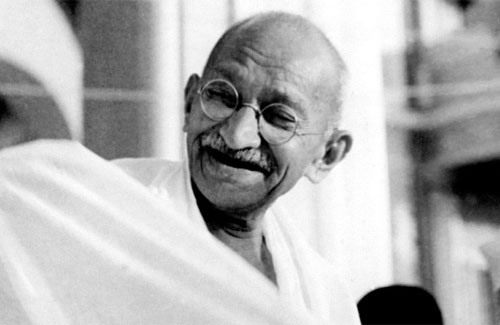
“Quit India”
by Mahatma Gandhi, on August 8, 1942; India
Before you discuss the resolution, let me place before you one or two things, I want you to understand two things very clearly and to consider them from the same point of view from which I am placing them before you. I ask you to consider it from my point of view, because if you approve of it, you will be enjoined to carry out all I say. It will be a great responsibility. There are people who ask me whether I am the same man that I was in 1920, or whether there has been any change in me. You are right in asking that question.
Let me, however, hasten to assure that I am the same Gandhi as I was in 1920. I have not changed in any fundamental respect. I attach the same importance to nonviolence that I did then. If at all, my emphasis on it has grown stronger. There is no real contradiction between the present resolution and my previous writings and utterances.
Occasions like the present do not occur in everybody’s and but rarely in anybody’s life. I want you to know and feel that there is nothing but purest Ahimsa in all that I am saying and doing today. The draft resolution of the Working Committee is based on Ahimsa, the contemplated struggle similarly has its roots in Ahimsa. If, therefore, there is any among you who has lost faith in Ahimsa or is wearied of it, let him not vote for this resolution.
Let me explain my position clearly. God has vouchsafed to me a priceless gift in the weapon of Ahimsa. I and my Ahimsa are on our trail today. If in the present crisis, when the earth is being scorched by the flames of Hims2 and crying for deliverance, I failed to make use of the God given talent, God will not forgive me and I shall be judged unwrongly of the great gift. I must act now. I may not hesitate and merely look on, when Russia and China are threatened.
Ours is not a drive for power, but purely a nonviolent fight for India’s independence. In a violent struggle, a successful general has been often known to effect a military coup and to set up a dictatorship. But under the Congress scheme of things, essentially nonviolent as it is, there can be no room for dictatorship. A non-violent soldier of freedom will covet nothing for himself, he fights only for the freedom of his country. The Congress is unconcerned as to who will rule, when freedom is attained. The power, when it comes, will belong to the people of India, and it will be for them to decide to whom it placed in the entrusted. May be that the reins will be placed in the hands of the Parsis, for instance-as I would love to see happen-or they may be handed to some others whose names are not heard in the Congress today. It will not be for you then to object saying, “This community is microscopic. That party did not play its due part in the freedom’s struggle; why should it have all the power?”
Ever since its inception the Congress has kept itself meticulously free of the communal taint. It has thought always in terms of the whole nation and has acted accordingly… I know how imperfect our Ahimsa is and how far away we are still from the ideal, but in Ahimsa there is no final failure or defeat. I have faith, therefore, that if, in spite of our shortcomings, the big thing does happen, it will be because God wanted to help us by crowning with success our silent, unremitting Sadhana1 for the last twenty-two years.
I believe that in the history of the world, there has not been a more genuinely democratic struggle for freedom than ours. I read Carlyle’s French Resolution while I was in prison, and Pandit Jawaharlal has told me something about the Russian revolution. But it is my conviction that inasmuch as these struggles were fought with the weapon of violence they failed to realize the democratic ideal. In the democracy which I have envisaged, a democracy established by nonviolence, there will be equal freedom for all. Everybody will be his own master. It is to join a struggle for such democracy that I invite you today. Once you realize this you will forget the differences between the Hindus and Muslims, and think of yourselves as Indians only, engaged in the common struggle for independence.
Then, there is the question of your attitude towards the British. I have noticed that there is hatred towards the British among the people. The people say they are disgusted with their behaviour. The people make no distinction between British imperialism and the British people. To them, the two are one This hatred would even make them welcome the Japanese. It is most dangerous. It means that they will exchange one slavery for another. We must get rid of this feeling. Our quarrel is not with the British people, we fight their imperialism. The proposal for the withdrawal of British power did not come out of anger. It came to enable India to play its due part at the present critical juncture It is not a happy position for a big country like India to be merely helping with money and material obtained willy-nilly from her while the United Nations are conducting the war. We cannot evoke the true spirit of sacrifice and velour, so long as we are not free.
I know the British Government will not be able to withhold freedom from us, when we have made enough self-sacrifice. We must, therefore, purge ourselves of hatred. Speaking for myself, I can say that I have never felt any hatred. As a matter of fact, I feel myself to be a greater friend of the British now than ever before. One reason is that they are today in distress. My very friendship, therefore, demands that I should try to save them from their mistakes. As I view the situation, they are on the brink of an abyss. It, therefore, becomes my duty to warn them of their danger even though it may, for the time being, anger them to the point of cutting off the friendly hand that is stretched out to help them. People may laugh, nevertheless that is my claim. At a time when I may have to launch the biggest struggle of my life, I may not harbour hatred against anybody.
——
I congratulate you on the resolution that you have just passed. I also congratulate the three comrades on the courage they have shown in pressing their amendments to a division, even though they knew that there was an overwhelming majority in favour of the resolution, and I congratulate the thirteen friends who voted against the resolution. In doing so, they had nothing to be ashamed of. For the last twenty years we have tried to learn not to lose courage even when we are in a hopeless minority and are laughed at. We have learned to hold on to our beliefs in the confidence that we are in the right. It behaves us to cultivate this courage of conviction, for it ennobles man and raises his moral stature.
I was, therefore, glad to see that these friends had imbibed the principle which I have tried to follow for the last fifty years and more.
Having congratulated them on their courage, let me say that what they asked this Committee to accept through their amendments was not the correct representation of the situation. These friends ought to have pondered over the appeal made to them by the Maulana to withdraw their amendments; they should have carefully followed the explanations given by Jawaharlal. Had they done so, it would have been clear to them that the right which they now want the Congress to concede has already been conceded by the Congress.
Time was when every Mussalman claimed the whole of India as his motherland. During the years that the Ali brothers were with me, the assumption underlying all their talks and discussions was that India belonged as much to the Mussalmans as to the Hindus. I can testify to the fact that this was their innermost conviction and nor a mask; I lived with them for years. I spent days and nights in their company. And I make bold to say that their utterances were the honest expression of their beliefs. I know there are some who say that I take things too readily at their face value, that I am gullible. I do not think I am such a simpleton, nor am I so gullible as these friends take me to be. But their criticism does not hurt me. I should prefer to be considered gullible rather deceitful.
What these Communist friends proposed through their amendments is nothing new. It has been repeated from thousands of platforms. Thousands of Mussalmans have told me, that if Hindu-Muslim question was to be solved satisfactorily, it must be done in my lifetime. I should feel flattered at this; but how can I agree to proposal which does not appeal to my reason? Hindu-Muslim unity is not a new thing. Millions of Hindus and Mussalmans have sought after it. I consciously strove for its achievement from my boyhood. While at school, I made it a point to cultivate the friendship of Muslims and Parsi co-students.
I believed even at that tender age that the Hindus in India, if they wished to live in peace and amity with the other communities, should assiduously cultivate the virtue of neighbourliness. It did not matter, I felt, if I made no special effort to cultivate the friendship with Hindus, but I must make friends with at least a few Mussalmans. It was as counsel for a Mussalmans merchant that I went to South Africa. I made friends with other Mussalmans there, even with the opponents of my client, and gained a reputation for integrity and good faith. I had among my friends and co-workers Muslims as well as Parsis. I captured their hearts and when I left finally for India, I left them sad and shedding tears of grief at the separation.
In India too I continued my efforts and left no stone unturned to achieve that unity. It was my life-long aspiration for it that made me offer my fullest co-operation to the Mussalmans in the Khilafat movement. Muslims throughout the country accepted me as their true friend.
How then is it that I have now come to be regarded as so evil and detestable? Had I any axe to grind in supporting the Khilafat movement? True, I did in my heart of hearts cherish a hope that it might enable me to save the cow. I am a worshipper of the cow. I believe the cow and myself to be the creation of the same God, and I am prepared to sacrifice my life in order to save the cow. But, whatever my philosophy of life and my ultimate hopes, I joined the movement in no spirit of bargain. I co-operated in the struggle for the Khilafat solely on order to discharge my obligation to my neighbour who, I saw, was in distress. The Ali brothers, had they been alive today, would have testified to the truth of this assertion. And so would many others bear me out in that it was not a bargain on my part for saving the cow. The cow like the Khilafat. Stood on her own merits. As an honest man, a true neighbour and a faithful friend, it was incumbent on me to stand by the Mussalmans in the hour of their trial.
In those days, I shocked the Hindus by dinning time they have now got used to it. Maulana Bari told me, however, that through he would not allow me dine with him, lest some day he should be accused of a sinister motive. And so, whenever I had occasion to stay with him, he called a Brahmana cook and made social arrangements for separate cooking. Firangi ,Mahal, his residence, was an old-styled structure with limited accommodation; yet he cheerfully bore all hardships and carried out his resolve from which I could not dislodge him. It was the spirit of courtesy, dignity and nobility that inspired us in those days. They respected one another’s religious feelings, and considered it a privilege to do so.
Not a trace of suspicion lurked in anybody’s heart. Where has all that dignity, that nobility of spirit, disappeared now? I should ask all Mussalmans, including Quaid-I-Azam Jinnah, to recall those glorious days and to find out what has brought us to the present impasse. Quaid-i-Azam Jinnah himself was at one time a Congressman. If today the Congress has incurred his wrath, it is because the canker of suspicion has entered his heart. May God bless him with long life, but when I am gone, he will realize and admit that I had no designs on Mussalmans and that I had never betrayed their interests. Where is the escape for me, if I injure their cause or betray their interests? My life is entirely at their disposal. They are free to put an end to it, whenever they wish to do so. Assaults have been made on my life in the past, but God has spared me till now, and the assailants have repented for their action. But if someone were to shoot me in the belief that he was getting rid of a rascal, he would kill not the real Gandhi, but the one that appeared to him a rascal.
To those who have been indulging in a campaign of a abuse and vilification I would say, “Islam enjoins you not to revile even an enemy. The Prophet treated even enemies with kindness and tried to win them over by his fairness and generosity. Are you followers of that Islam or of any other? If you are followers of the true Islam, does it behave you to distrust the words of one who makes a public declaration of his faith? You may take it from me that one day you will regret the fact that you distrusted and killed one who was a true and devoted friend of yours.” It cuts me to the quick to see that the more I appeal and the more the Maulana importunes, the more intense does the campaign of vilification grow. To me, these abuses are like bullets. They can kill me, even as a bullet can put an end to my life. You may kill me. That will not hurt me. But what of those who indulge in abusing? They bring discredit to Islam. For the fair name of Islam, I appeal to you to resist this unceasing campaign of abuse and vilification.
Maulana Saheb is being made a target for the filthiest abuse. Why? Because he refuses to exert on me the pressure of his friendship. He realizes that it is a misuse of friendship to seek up to compel a friend to accept as truth what he knows is an untruth.
To the Quaid-Azam I would say: Whatever is true and valid in the claim for Pakistan is already in your hands. What is wrong and untenable is in nobody’s gift, so that it can be made over to you. Even if someone were to succeed in imposing an untruth on others, he would not be able to enjoy for long the fruits of such a coercion. God dislikes pride and keeps away from it. God would not tolerate a forcible imposition of an untruth.
The Quaid-Azam says that he is compelled to say bitter things but that he cannot help giving expression to his thoughts and his feelings. Similarly I would say : “I consider myself a friend of Mussalmans. Why should I then not give expression to the things nearest to my heart, even at the cost of displeasing them? How can I conceal my innermost thoughts from them? I should congratulate the Quaid-i-Azam on his frankness in giving expression to his thoughts and feelings, even if they sound bitter to his hearers.
But even so why should the Mussalmans sitting here be reviled, if they do not see eye to eye with him? If millions of Mussalmans are with you can you not afford to ignore the handful of Mussalmans who may appear to you to be misguided? Why should one with the following of several millions be afraid of a majority community, or of the minority being swamped by the majority? How did the Prophet work among the Arabs and the Mussalmans? How did he propagate Islam? Did he say he would propagate Islam only when he commanded a majority? I appeal to you for the sake of Islam to ponder over what I say. There is neither fair play nor justice in saying that the Congress must accept a thing, even if it does not believe in it and even if it goes counter to principles it holds dear.
Rajaji said:“I do not believe in Pakistan. But Mussalmans ask for it, Mr. Jinnah asks for it, and it has become an obsession with them. Why not then say, “yes” to them just now? The same Mr. Jinnah will later on realize the disadvantages of Pakistan and will forgo the demand.” I said : “It is not fair to accept as true a thing which I hold to be untrue, and ask others to do say in the belief that the demand will not be pressed when the time comes for settling in finally. If I hold the demand to be just, I should concede it this very day. I should not agree to it merely in order to placate Jinnah Saheb. Many friends have come and asked me to agree to it for the time being to placate Mr. Jinnah, disarm his suspicious and to see how he reacts to it. But I cannot be party to a course of action with a false promise. At any rate, it is not my method.”
The Congress as no sanction but the moral one for enforcing its decisions. It believes that true democracy can only be the outcome of non-violence. The structure of a world federation can be raised only on a foundation of non-violence, and violence will have to be totally abjured from world affairs. If this is true, the solution of Hindu-Muslim question, too, cannot be achieved by a resort to violence. If the Hindus tyrannize over the Mussalmans, with what face will they talk of a world federation? It is for the same reason that I do not believe in the possibility of establishing world peace through violence as the English and American statesmen propose to do. The Congress has agreed to submitting all the differences to an impartial international tribunal and to abide by its decisions.
If even this fairest of proposals is unacceptable, the only course that remains open is that of the sword, of violence. How can I persuade myself to agree to an impossibility? To demand the vivisection of a living organism is to ask for its very life. It is a call to war. The Congress cannot be party to such a fratricidal war. Those Hindus who, like Dr. Moonje and Shri Savarkar, believe in the doctrine of the sword may seek to keep the Mussalmans under Hindus domination. I do not represent that section. I represent the Congress. You want to kill the Congress which is the goose that lays golden eggs. If you distrust the Congress, you may rest assured that there is to be perpetual war between the Hindus and the Mussalmans, and the country will be doomed to continue warfare and bloodshed. If such warfare is to be our lot, I shall not live to witness it.
It is for that reason that I say to Jinnah Saheb, “You may take it from me that whatever in your demand for Pakistan accords with considerations of justice and equity is lying in your pocket; whatever in the demand is contrary to justice and equity you can take only by the sword and in no other manner.”
There is much in my heart that I would like to pour out before this assembly. One thing which was uppermost in my heart I have already dealt with. You may take it from me that it is with me a matter of life and death. If we Hindus and Mussalmans mean to achieve a heart unity, without the slightest mental reservation on the part of either, we must first unite in the effort to be free from the shackles of this empire. If Pakistan after all is to be a portion of India, what objection can there be for Mussalmans against joining this struggle for India’s freedom? The Hindus and Mussalmans must, therefore, unite in the first instance on the issue of fighting for freedom. Jinnah Saheb thinks the war will last long. I do not agree with him. If the war goes on for six months more, how shall we able to save China?
I, therefore, want freedom immediately, this very night, before dawn, if it can be had. Freedom cannot now wait for the realization of communal unity. If that unity is not achieved, sacrifices necessary for it will have to be much greater than would have otherwise sufficed. But the Congress must win freedom or be wiped out in the effort. And forget not that the freedom which the Congress is struggling to achieve will not be for the Congressmen alone but for all the forty cores of the Indian people. Congressmen must for ever remain humble servants of the people.
The Quaid-i-Azam has said that the Muslim League is prepared to take over the rule from the Britishers if they are prepared to hand it over to the Muslim League, for the British took over the empire from the hands of the Muslims. This, however, will be Muslim Raj. The offer made by Maulana Saheb and by me does not imply establishment of Muslim Raj or Muslim domination. The Congress does not believe in the domination of any group or any community. It believes in democracy which includes in its orpit Muslims, Hindus, Christians, Parsis, Jews-every one of the communities inhabiting this vast country. If Muslim Raj is invetable, then let it be; but how can we give it the stamp of our assent? How can we agree to the domination of one community over the others?
Millions of Mussalmans in this country come from Hindu stock. How can their homeland be any other than India? My eldest son embraced Islam some years back. What would his homeland be-Porbandar or the Punjab? I ask the Mussalmans: “If India is not your homeland, what other country do you belong to? In what separate homeland would you put my son who embraced Islam?” His mother wrote him a letter after his conversion, asking him if he had on embracing Islam given up drinking which Islam forbids to its follower.
To those who gloated over the conversion, she wrote to say: “I do not mind his becoming a Mussalmans, so much as his drinking. Will you, as pious Mussalmans, tolerate his drinking even after his conversion? He has reduced himself to the state of a rake by drinking. If you are going to make a man of him again, his conversion will have been turned to good account. You will, therefore, please see that he as a Mussalman abjures wine and woman. If that change does not come about, his conversion goes in vain and our non-co-operation with him will have to continue.”
India is without doubt the homeland of all the Mussalmans inhabiting this country. Every Mussalman should therefore co-operate in the fight for India’s freedom. The Congress does not belong to any one class or community; it belongs to the whole nation. It is open to Mussalmans to take possession of the Congress. They can, if they like, swamp the Congress by their numbers, and can steer it along the course which appeals to them. The Congress is fighting not on behalf of the Hindu but on behalf of the whole nation, including the minorities. It would hurt me to hear of a single instance of a Mussalman being killed by a Congressman. In the coming revolution, Congressmen will sacrifice their lives in order to protect the Mussalman against a Hindu’s attack and vice versa.
It is a part of their creed, and is one of the essentials of non-violence. You will be excepted on occasions like these not to lose your heads. Every Congressman, whether a Hindu or a Mussalman, owes this duty to the organization to which will render a service to Islam. Mutual trust is essential for success in the final nation-wide struggle that is to come.
I have said that much greater sacrifice will have to be made this time in the wake of our struggle because of the opposition from the Muslim League and from Englishmen. You have seen the secret circular issued by Sir Frederick Puckle. It is a suicidal course that he has taken. It contains an open incitement to organizations which crop up like mushrooms to combine to fight the Congress. We have thus to deal with an empire whose ways are crooked. Ours is a straight path which we can tread even with our eyes closed. That is the beauty of Satyagraha.
In Satyagraha, there is no place for fraud or falsehood, or any kind of untruth. Fraud and untruth today are stalking the world. I cannot be a helpless witness to such a situation. I have traveled all over India as perhaps nobody in the present age has. The voiceless millions of the land saw in me their friend and representative, and I identified myself with them to an extent it was possible for a human being to do. I saw trust in their eyes, which I now want to turn to good account in fighting this empire upheld on untruth and violence. However gigantic the preparations that the empire has made, we must get out of its clutches. How can I remain silent at this supreme hour and hide my light under the bushel? Shall I ask the Japanese to tarry awhile? If today I sit quite and inactive, God will take me to task for not using up the treasure He had given me, in the midst of the conflagration that is enveloping the whole world. Had the condition been different, I should have asked you to wait yet awhile. But the situation now has become intolerable, and the Congress has no other course left for it.
Nevertheless, the actual struggle does not commence this moment. You have only placed all your powers in my hands. I will now wait upon the Viceroy and plead with him for the acceptance of the Congress demand. That process is likely to take two or three weeks. What would you do in the meanwhile? What is the programme, for the interval, in which all can participate? As you know, the spinning wheel is the first thing that occurs to me. I made the same answer to the Maulana. He would have none of it, though he understood its import later. The fourteen fold constructive programme is, of course, there for you to carry out. What more should you do? I will tell you. Every one of you should, from this moment onwards, consider yourself a free man or woman, and acts as if you are free and are no longer under the heel of this imperialism.
It is not a make-believe that I am suggesting to you. It is the very essence of freedom. The bond of the slave is snapped the moment he consider himself to be a free being. He will plainly tell the master: “I was your bond slave till this moment, but I am a slave no longer. You may kill me if you like, but if you keep me alive, I wish to tell you that if you release me from the bondage, of your own accord, I will ask for nothing more from you. You used to feed and cloth me, though I could have provided food and clothing for myself by my labour. I hitherto depended on you instead of on God, for food and raiment. But God has now inspired me with an urge for freedom and I am to day a free man, and will no longer depend on you.”
You may take it from me that I am not going to strike a bargain with the Viceroy for ministries and the like. I am not going to be satisfied with anything short of complete freedom. May be, he will propose the abolition of salt tax, the drink evil, etc. But I will say, “Nothing less than freedom.”
Here is a mantra, a short one, that I give you. You may imprint it on your hearts and let every breath of yours give expression to it. The mantra is : ‘Do or Die’. We shall either free India or die in the attempt; we shall not live to see the perpetuation of our slavery. Every true Congressman or woman will join the struggle with an inflexible determination not to remain alive to see the country in bondage and slavery. Let that be your pledge. Keep jails out of your consideration. If the Government keep me free, I will not put on the Government the strain of maintaining a large number of prisoners at a time, when it is in trouble.
Let every man and woman live every moment of his or her life hereafter in the consciousness that he or she eats or lives for achieving freedom and will die, if need be, to attain that goal. Take a pledge, with God and your own conscience as witness, that you will no longer rest till freedom is achieved and will be prepared to lay down your lives in the attempt to achieve it. He who loses his life will gain it; he who will seek to save it shall lose it.
Freedom is not for the coward or the faint-hearted.
A word to the journalists. I congratulate you on the support you have hitherto given to the national demand. I know the restrictions and handicaps under which you have to labour. But I would now ask you to snap the chains that bind you. It should be the proud privilege of the newspapers to lead and set an example in laying down one’s life for freedom.
You have the pen which the Government can’t suppress. I know you have large properties in the form of printing presses, etc., and you would be afraid lest the Government should attach them. I do not ask you to invite an attachment of the printing-press voluntarily.
For myself, I would not suppress my pen, even if the press was to be attached. As you know my press was attached in the past and returned later on. But I do not ask from you that final sacrifice. I suggest a middle way. You should now wind up your standing committee, and you may declare that you will give up the pen only when India has won her freedom. You may tell Sir Frederick Puckle that he can’t except from you a command performance, that his press notes are full of untruth, and that you will refuse to publish them. You will openly declare that you are wholeheartedly with the Congress. If you do this, you will have changed the atmosphere before the fight actually begins.
From the Princes I ask with all respect due to them a very small thing. I am a well-wisher of the Princes. I was born in a State. My grandfather refused to salute with his right hand any Prince other than his own. But he did not say to the Prince, as I fell he ought to have said, that even his own master could not compel him, his minister, to act against his conscience. I have eaten the Prince’s salt and I would not be false to it.
As a faithful servant, it is my duty to warn the Princes that if they will act while I am still alive, the Princes may come to occupy an honourable place in free India. In Jawaharlal’s scheme of free India, no privileges or the privileged classes have a place. Jawaharlal considers all property to be State-owned. He wants planned economy. He wants to reconstruct India according to plan. He likes to fly; I do not. I have kept a place for the Princes and the Zamindars1 in India that I envisage. I would ask the Princes in all humility to enjoy through renunciation. The Princes may renounce ownership over their properties and become their trustees in the true sense of the term.
I visualize God in the assemblage of people. The Princes may say to their people : “You are the owners and masters of the State and we are your servants.” I would ask the Princes to become servants of the people and render to them an account of their own services. The empire too bestows power on the Princes, but they should prefer to derive power from their own people; and if they want to indulge in some innocent pleasures, they may seek to do so as servants of the people. I do not want the Princes to live as paupers. But I would ask them : “Do you want to remain slaves for all time? Why should you, instead of paying homage to a foreign power, not accept the sovereignty of your own people?” You may write to the Political Department : “The people are now awake. How are we to withstand an avalanche before which even the Large empire are crumbling? We, therefore, shall belong to the people from today onwards. We shall sink or swim with them.”
Believe me, there is nothing unconstitutional in the course I am suggesting. There are, so far as I know, no treaties enabling the empire to coerce the Princes. The people of the States will also declare that though they are the Princes’ subjects, they arepart of the Indian nation and that they will accept the leadership of the Princes, if the latter cast their lot with the people, the latter will meet death bravely and unflinchingly, but will not go back on their word.
Nothing, however, should be done secretly. This is an open rebellion. In this struggle secrecy is a sin. A free man would not engage in a secret movement. It is likely that when you gain freedom you will have a C.I.D. of your own, in spite of my advice to the contrary. But in the present struggle, we have to work openly and to receive bullets on our chest, without taking to heels.
I have a word to say to Government servants also. They may not, if they like, resign their posts yet. The late Justice Ranade did not resign his post, but he openly declared that he belonged to the Congress. He said to the Government that though he was a judge, he was a Congressman and would openly attend the sessions of the Congress, but that at the same time he would not let his political views warp his impartiality on the bench. He held Social Reform Conference in the very Pandal1 of the Congress. I would ask all the Government servants to follow in the footsteps of Ranade and to declare their allegiance to the Congress as an answer to the secret circular issued by Sir Frederick Puckle.
This is all that I ask of you just now. I will now write to the Viceroy. You will be able to read the correspondence not just now but when I publish it with the Viceroy’s consent. But you are free to aver that you support the demand to be put forth in my letter. A judge came to me and said : “We get secret circulars from high quarters. What are we to do?” I replied, “If I were in your place, I would ignore the circulars. You may openly say to the Government : ‘I have received your secret circular. I am, however, with the Congress. Though I serve the Government for my livelihood, I am not going to obey these secret circulars or to employ underhand methods,’”
Soldiers too are covered by the present programme. I do not ask them just now to resign their posts and to leave the army.
The soldiers come to me, Jawaharlal and the Maulana and say :
“We are wholly with you. We are tired of the Governmental tyranny.” To these soldiers I would say : You may say to the Government, “Our hearts are with the Congress. We are not going to leave our posts. We will serve you so long as we receive your salaries. We will obey your just orders, but will refuse to fire on our own people.”
To those who lack the courage to do this much I have nothing to say. They will go their own way. But if you can do this much, you may take it from me that the whole atmosphere will be electrified. Let the Government then shower bombs, if they like. But no power on earth will then be able to keep you in bondage any longer.
If the students want to join the struggle only to go back to their studies after a while, I would not invite them to it. For the present, however, till the time that I frame a programme for the struggle, I would ask the students to say to their professors : “We belong to the Congress. Do you belong to the Congress, or to the Government? If you belong to the Congress, you need not vacate your posts. You will remain at your posts but teach us and lead us unto freedom.” In all fights for freedom, the world over, the students have made very large contributions.
If in the interval that is left to us before the actual fight begins, you do even the little I have suggested to you, you will have changed the atmosphere and will have prepared the ground for the next step.
There is much I should et like to say. But my heart is heavy. I have already taken up much of your time. I have yet to say a few words in English also. I thank you for the patience and attention with which you have listened to me even at this late hour. It is just what true soldiers would do. For the last twenty-two years, I have controlled my speech and pen and have stored up my energy. He is a true Brahmacharri1 who does not fritter away his energy. He will, therefore, always control his speech. That has been my conscious effort all these years. But today the occasion has come when I had to unburden my heart before you. I have done so, even though it meant putting a strain on your patience; and I do not regret having done it. I have given you my message and through you I have delivered it to the whole of India.
——
I have taken such an inordinately long time over pouring out, what was agitating my soul, to those whom I had just now the privilege of serving. I have been called their leader or, in the military language, their commander. But I do not look at my position in that light. I have no weapon but love to wield my authority over any one. I do sport a stick which you can break into bits without the slightest exertion. It is simply my staff with the help of which I walk. Such a cripple is not elated, when he has been called upon to bear the greatest burden. You can share that burden only when I appear before you not as your commander but as a humble servant. And he who serves best is the chief among equals.
Therefore, I was bound to share with you such thoughts as were welling up in my breast and tell you, in as summary a manner as I can, what I except you to do as the first step.
Let me tell you at the outset that the real struggle does not commence today. I have yet to go through much ceremonial as I always do. The burden, I confess, would be almost unbearable. I have to continue to reason in those circles with whom I have lost my credit and who have no trust left in me. I know that in the course of the last few weeks I have forfeited my credit with a large number of friends, so much so, that they have begun to doubt not only my wisdom but even my honesty. Now I hold my wisdom is not such a treasure which I cannot afford to lose; but my honesty is a precious treasure to me and I can ill-afford to lose it. I seem however to have lost it for the time being.
Friend of the Empire
Such occasions arise in the life of the man who is a pure seeker after truth and who would seek to serve the humanity and his country to the best of his lights without fear or hypocrisy. For the last fifty years I have known no other way. I have been a humble servant of humanity and have rendered on more than one occasion such services as I could to the Empire, and here let me say without fear of challenge that throughout my career never have I asked for any personal favour. I have enjoyed the privilege of friendship as I enjoy it today with Lord Linlithgow. It is a friendship which has outgrown official relationship. Whether Lord Linlithgow will bear me out, I do not know, but there is a personal bond between him and myself.
He once introduced me to his daughter. His son-in law, the A.D.C. was drawn towards me. he fell in love with Mahadev more than with me and Lady Anna and he came to me. She is an obedient and favourite daughter. I take interest in their welfare. I take the liberty to give out these personal and sacred tit-bits only to give you an earnest of the personal bond will never interfere with the stubborn struggle on which, if it falls to my lot, I may have to launch against Lord Linlithgow, as the representative of the Empire.
I will have to resist the might of that Empire with the might of the dumb millions with no limit but of nonviolence as policy confined to this struggle. It is a terrible job to have to offer resistance to a Viceroy with whom I enjoy such relations. He has more than once trusted my word, often about my people. I would love to repeat that experiment, as it stands to his credit. I mention this with great pride and pleasure. I mention it as an earnest of my desire to be true to the Empire when that Empire forfeited my trust and the Englishman who was its Viceroy came to know it.
Charlie Andrews
Then there is the sacred memory of Charlie Andrews which wells up within me. At this moment the spirit of Andrews hovers about me. For me he sums up the brightest traditions of English culture. I enjoyed closer relations with him than with most Indians. I enjoyed his confidence. There were no secrets between us. We exchanged our hearts every day. Whatever was in his heart, he would blurt out without the slightest hesitation or reservation. It is true he was a friend of Gurudev1 but he looked upon Gurudev with awe. He had that peculiar humility. But with me he became the closest friend. Years ago he came to me with a note of introduction from Gokhale. Pearson and he were the first-rank specimens of Englishmen. I know that his spirit is listening to me.
Then I have got a warm letter of congratulations from the Metropolitan of Calcutta. I hold him to be a man of God. Today he is opposed to me.
Voice of Conscience
With all this background, I want to declare to the world, although I may have forfeited the regard of many friends in the West and I must bow my head low; but even for their friendship or love I must not suppress the voice of conscience – promoting of my inner basic nature today. There is something within me impelling me to cry out my agony. I have known humanity. I have studied something of psychology. Such a man knows exactly what it is. I do not mind how you describe it. That voice within tells me, “You have to stand against the whole world although you may have to stand alone. You have to stare in the face the whole world although the world may look at you with bloodshot eyes. Do not fear. Trust the little voice residing within your heart.” It says : “Forsake friends, wife and all; but testify to that for which you have lived and for which you have to die. I want to live my full span of life. And for me I put my span of life at 120 years. By that time India will be free, the world will be free.
Real Freedom
Let me tell you that I do not regard England or for that matter America as free countries. They are free after their own fashion, free to hold in bondage coloured races of the earth. Are England and America fighting for the liberty of these races today? If not, do not ask me to wait until after the war. You shall not limit my concept of freedom. The English and American teachers, their history, their magnificent poetry have not said that you shall not broaden the interpretation of freedom. And according to my interpretation of that freedom I am constrained to say they are strangers to that freedom which their teachers and poets have described. If they will know the real freedom they should come to India. They have to come not with pride or arrogances but in the spite of real earnest seekers of truth. It is a fundamental truth which India has been experimenting with for 22 years.
Congress and Non-violence
Unconsciously from its very foundations long ago the Congress has been building on non-violence known as constitutional methods. Dadabhai and Pherozeshah who had held the Congress India in the palm of their hands became rebels. They were lovers of the Congress. They were its masters. But above all they were real servants. They never countenanced murder, secrecy and the like. I confess there are many black sheep amongst us Congressmen. But I trust the whole of India today to launch upon a non-violent struggle. I trust because of my nature to rely upon the innate goodness of human nature which perceives the truth and prevails during the crisis as if by instinct.
But even if I am deceived in this I shall not swerve. I shall not flinch. From its very inception the Congress based its policy on peaceful methods, included Swaraj and the subsequent generations added non-violence. When Dadabhai entered the British Parliament, Salisbury dubbed him as a black man; but the English people defeated Salisbury and Dadabhai went to the Parliament by their vote. India was delirious with joy. These things however India has outgrown.
I will go Ahead
It is, however, with all these things as the background that I want Englishmen, Europeans and all the United Nations to examine in their hearts what crime had India committed in demanding Independence. I ask, is it right for you to distrust such an organization with all its background, tradition and record of over half a century and misrepresent its endeavours before all the world by every means at your command? Is it right that by hook or by crook, aided by the foreign press, aided by the President of the U.S.A., or even by the Generalissimo of China who has yet to win his laurels, you should present India’s struggle in shocking caricature? I have met the Generalissimo. I have known him through Madame Shek who was my interpreter; and though he seemed inscrutable to me, not so Madame Shek; and he allowed me to read his mind through her. There is a chorus of disapproval and righteous protest all over the world against us.
They say we are erring, the move is inopportune. I had great regard for British diplomacy which has enabled them to hold the Empire so long. Now it stinks in my nostrils, and others have studied that diplomacy and are putting it into practice. They may succeed in getting, through these methods, world opinion on their side for a time; but India will speak against that world opinion. She will raise her voice against all the organized propaganda. I will speak against it. Even if all the United Nations opposed me, even if the whole of India forsakes me, I will say, “You are wrong. India will wrench with non-violence her liberty from unwilling hands.” I will go ahead not for India’s sake alone, but for the sake of the world. Even if my eyes close before there is freedom, non-violence will not end. They will be dealing a mortal blow to China and to Russia if they oppose the freedom of non-violent India which is pleading with bended knees for the fulfillment of debt along overdue.
Does a creditor ever go to debtor like that? And even when, India is met with such angry opposition, she says, “We won’t hit below the belt, we have learnt sufficient gentlemanliness. We are pledged to non-violence.” I have been the author of non-embarrassment policy of the Congress and yet today you find me talking this strong language. I say it is consistent with our honour. If a man holds me by the neck and wants to drawn me, may I not struggle to free myself directly? There is no inconsistency in our position today.
Appeal to United nations
There are representatives of the foreign press assembled here today. Through them I wish to say to the world that the United Powers who somehow or other say that they have need for India, have the opportunity now to declare India free and prove their bona fides. If they miss it, they will be missing the opportunity of their lifetime, and history will record that they did not discharge their obligations to India in time, and lost the battle. I want the blessings of the whole world so that I may succeed with them.
I do not want the United Powers to go beyond their obvious limitations. I do not want them to accept non-violence and disarm today. There is a fundamental difference between fascism and this imperialism which I am fighting. Do the British get from India which they hold in bondage. Think what difference it would make if India was to participate as a free ally. That freedom, if it is to come, must come today.
It will have no taste left in it today you who have the power to help cannot exercise it. If you can exercise it, under the glow of freedom what seems impossible, today, will become possible tomorrow. If India feels that freedom, she will command that freedom for China. The road for running to Russia’s help will be open. The Englishmen did not die in Malaya or on Burma soil. What shall enable us to retrieve the situation? Where shall I go, and where shall I take the forty crores of India? How is this vast mass of humanity to be aglow in the cause of world deliverance, unless and until it has touched and felt freedom. Today they have no touch of life left. It has been crushed out of them. It lustre is to be put into their eyes, freedom has to come not tomorrow, but today.
Do or Die
I have pledged the Congress and the Congress will do or die.
The Messerschmitt Me 262, the Schwalbe (Swallow), was the world’s first operational jet-powered fighter aircraft. Developed by the German Luftwaffe during World War II, the Me 262 was a significant technological advancement in aviation, representing a new era of jet propulsion.
Details:
The first flight was on April 18, 1941 (with a piston engine), and on July 18, 1942 (with jet engines)
The Messerschmitt Me 262 was the first Jet-powered Aircraft
The development of the Me 262 began in 1938 when the Reich Air Ministry requested a new fighter aircraft design with jet propulsion. The first prototype, the Me 262 V1, made its maiden flight with a piston engine on April 18, 1941, and later with jet engines on July 18, 1942.
The Me 262 had a top speed of around 540 mph (870 km/h), significantly faster than any piston-engined aircraft. Its armament included four 30mm MK 108 cannons and, in some versions, air-to-air missiles. Despite its advanced design, the Me 262 was introduced late in the war, and its impact on the overall outcome was limited.
The Me 262 became operational in April 1944, but production and logistical problems and the deteriorating war situation delayed its widespread deployment. The aircraft saw limited action, but when it did, it proved an effective interceptor and fighter bomber.
After the war, the Me 262 and its technology influenced the development of jet aircraft in other countries, including the United States and the Soviet Union, which captured and studied German jet aircraft technology.
Effects on Pop Culture:
The Me 262 has been featured in various films, documentaries, and television series related to World War II, including “Battle of Britain” (1969) and “The War” (2007).
The aircraft has also appeared in numerous books, such as “Messerschmitt Me 262: Arrow to the Future” by Walter J. Boyne, and in aviation magazines.
The Me 262 remains a popular subject for scale model aircraft builders and aviation enthusiasts.
Prominent People and Countries Involved:
Germany: The Me 262 was developed and produced by the German Luftwaffe during World War II, representing the cutting-edge of aviation technology at the time.
Willy Messerschmitt: German aircraft designer and manufacturer who played a key role in developing the Me 262.
United States and Soviet Union: Both countries captured and studied Me 262 aircraft after the war, using the technology to advance their own jet aircraft development.
In summary, the Messerschmitt Me 262 was the world’s first operational jet-powered fighter aircraft developed by Germany during World War II. It had a limited impact on the war due to production and logistical issues but influenced post-war jet aircraft development in other countries. The Me 262 has been featured in films, documentaries, and books, and remains a popular subject for aviation enthusiasts.
Bing Crosby Be careful It’s My Heart This song, written by Irving Berlin, was originally performed by Bing Crosby in the film Holiday Inn. The film told the story of a performer who gets fed up with life as a stage performer and buys a farm. When he realizes farming is not for him, he turns the farm into an Inn only opened on Holidays so he could be off the rest of the year. This song was written for Valentine’s Day. Three other songs would also come out of this motion picture The title song Holiday Inn also known as Happy Holidays, Easter Parade, and arguably the most popular of all Christmas songs, White Christmas.
Glenn Miller Don’t Sit Under The Apple Tree With Anyone Else But Me The history of Don’t Sit Under The Apple Tree is long and varied. Its origins begin in an eighteenth Century English folk song entitled Long Long Ago. Long Long Ago was then transformed into a song entitled Anywhere the Bluebird Goes. Sam H. Stept wrote the song with the lyrics by Lew Brown and Charles Tobias. At the outbreak of World War II, the lyricists came back together to create the song we now know. Glenn Miller made the original recording but several artists would record the song. Though not the original vocalists, The Andrews Sisters would team with Glenn Miller and make the song their own.
Frank Sinatra Night and Day
Written by Cole Porter for a 1932 musical called the Gay Divorce, the song was first performed by Fred Astaire, and would be performed by him again in the 1934 film version of the show. One of Porter’s claims is that it was the Islamic call to worship that inspired the song, but there are other stories as well. Night and Day would become the title of Cole Porter’s first motion picture Biography.
Kay Kyser There’ll Be Blue Birds Over The White Cliffs of Dover
This song was written by Walter Kent and Nat Burton in 1941. The song was written during the period of WW II when the Nazi’s and Allies were fighting over Dover during The Battle of Britain and looked forward to the time when there would be peace again. The song was written and first performed before The United States entered the war.
Merry Macs Praise The Lord And Pass The Ammunition
This song was written in direct response to the Japanese attack on Pearl Harbor. There were many stories that surround the writing of the lyrics. The music was written by Frank Loesser. One of the stories is as follows: An officer in charge of an ammunition line on the USS New Orleans during the attack on Pearl Harbor said that “I heard a voice behind me saying, ‘Praise the Lord and pass the ammunition.’ I turned and saw Chaplain Forgy walking toward me, along the line of men. He was patting them on the back and making that remark to cheer and keep them going. I know it helped me a lot, too.” (Wikipedia)
Mills Brothers Paper Doll
The song was written by Johnny S Black in 1915 but was not published until 1930. It took another 12 years until the song would become a hit. Unfortunately for Mr. Black, he would die 6 years before his song became the hit he had dreamed of.
Peggy Lee Somebody Else Is Taking My Place
Ross Morgan is listed as one of the writers of this song, but its real significance is it’s putting Miss Peggy Lee on the charts. With Benny Goodman’s Orchestra and Miss Lee’s vocals the song would stay on the charts at number one for three weeks during 1942. In 1948 when the song was released it became a top thirty song all over again.
Spike Jones The Fuhrer’s Face
Spike Jones released his song in the early part of 1942 and it became very popular that same year the Walt Disney Studio released a cartoon by the same name that has a version of the song and starred Donald Duck. The cartoon was war propaganda for the selling of war bonds and won The Academy Award for best animated short that year.
Jimmy Dorsey Tangerine
The song was published in 1941 and written by Victor Schertzinger with lyrics by Johnny Mercer but it was introduced in the 1942 film The Fleets In, which starred Dorothy Lamour and William Holden. Jimmy Dorsey’s version of the song would be the one to make it the charts and it would peak at number one.
Woody Herman Blues in the Night
Written by Harold Arlen and Johnny Mercer, Blues in the Night was written as the title song for a film by the same name. The song was written very quickly and was played at a dinner party hosted by Margaret Whiting whose guests included, Judy Garland Mickey Rooney Mel Torme and Martha Raye. The song was a hit with everyone at the party and would quickly take its place in American Music history.
Top 25 Songs FRom 1942
1.
Deep In The Heart of Texas – Alvino Rey or Bing Crosby or Horace Heidt or Merry Macs
2.
Travelin Light – Paul Whiteman
3.
Moonlight Cocktail – Glenn Miller
4.
Tangerine – Jimmy Dorsey or Vaughn Monroe
5.
A String of Pearls – Glenn Miler
6.
See See Rider Blues – Bea Booze
7.
Sleepy Lagoon – Harry James or Dinah Shore
8.
Blues In The Night (My Mama Done Told Me) – Dinah Shore or Woody Herman or Jimmie Lunceford or Cab Calloway or Artie Shaw
9.
Jersey Bounce – Benny Goodman or Jimmy Dorsey
10.
Mr. Five By Five – Harry James or Freddie Slack and His Orchestra or The Andrews Sisters
11.
I Don’t Want To Walk Without You – Harry James with Helen Forrest or Bing Crosby or Dinah shore
12.
Jingle Jangle Jingle – Kay Kyser or Merry Macs or Gene Autry or Freddy Martin
13.
When The Lights Go On Again (All Over The World) – Vaughn Monroe or Lucky Millinder and His Orchestra
14.
There’ll Be Bluebirds Over (The White Cliffs of Dover) – Glenn Miller or Kay Kyser or Kate Smith or Jimmy Dorsey or Sammy Kaye
15.
Stormy Monday Blues – Earl Hines
16.
Somebody Else Is Taking My Place – Russ Morgan or Benny Goodman (with Peggy Lee)
17.
Don’t Sit Under The Apple Tree (With Anyone Else But Me) – Glenn Miller
18.
Take It and Git – Andy Kirk and His Clouds of Joy
19.
I Said No – Alvino Rey (with Yvonne King) or Jimmy Dorsey
20.
Who Wouldn’t Love You – Kay Kyser or Charlie Spivak
21.
Der Fuehrer’s Face – Spike Jones
22.
I Left My Heart At The Stage Door Canteen – Sammy Kaye
23.
American Patrol – Glenn Miller
24.
Strip Polka – Kay Kyser or The Andrews Sisters or Johnny Mercer or Alvino Rey
25.
Praise The Lord And Pass The Ammunition – Kay Kyser or Merry Macs
Top Artists and Songs of 1942
Alvino Rey
Deep In The Heart of Texas, I Said No
Andrews Sisters
Three Little Sisters, Pennsylvania Polka, Strip Polka
Benny Goodman
Jersey Bounce, Somebody Else Is Taking My Place, Idaho, Solo Flight
Billie Holiday
Travellin’ Light
Bing Crosby
I Don’t Want To Walk Without You, Moonlight Becomes You, Be Careful Its My Heart, Let’s Start the New Year Right, Deep In The Heart of Texas
Charlie Spivak
My Devotion
Dinah Shore
Blues In The Night
Earl Hines
Stormy Monday Blues
Frank Sinatra
Night and Day
Freddy Martin
Rose O’Day (The Filla-Da-Gusha Song), Tonight We Love
Freddy Slack
Cow Cow Boogie, Mr. Five By Five
Glenn Miller
At Last, (I’ve Got a Gal In) Kalamazoo, Moonlight Cocktail, Don’t Sit Under the Apple Tree (With Anyone Else But Me), A String of Pearls, Happy In Love, (There’ll Be Bluebirds Over) the White Cliffs of Dover, American Patrol, Perfida (Tonight), Serenade In Blue, Moonlight Becomes You, Jukebox Saturday Night, Dearly Beloved, Skylark, Everything I Love, Sweet Eloise
Harry Roy
Chattanooga Choo Choo
Harry James
Easter Parade, Sleepy Lagoon, I Don’t Want To Walk Without You, One Dozen Roses, I Cried For You
Horace Heidt
Pennsylvania Polka
Ink Spots
Every Night About This Time
Jimmy Dorsey
Tangerine, Brazil, My Devotion, Just As Though You Were Here, Always In My Heart
Jimmy Lunceford
Blues In The Night
Johnny Mercer
Strip Polka
Kay Kyser
Strip Polka, Who Wouldn’t You Love?, Jingle, Jangle, Jingle, (There’ll Be Bluebirds Over) The White Cliffs of Dover, Praise The Lord and Pass the Ammunition. He Wears a Pair of Silver Wings, Johnny Doughboy Found A Rose In Ireland
Lionel Hampton
Flying Home
Merry Macs
Praise The Lord And Pass The Ammunition
Mills Brothers
Paper Doll
Paul Whiteman and Billie Holiday
Travellin’ Light
Paul Whiteman
Trav’lin Light
Peggy Lee
Somebody Else is Taking My Place
Roy Acuff
Wabash Cannonball
Sammy Kaye
I Left My Heart At The Stagedoor Canteen, Remember Pearl Harbor
Spike Jones
Der Fuhrer’s Face
Tommy Dorsey and Frank Sinatra
Take me
Vaughn Monroe
My Devotion
Vera Lynn
(There’ll Be Bluebirds Over) the White Cliffs of Dover
Woody Herman
Blues In The Night, I’ll Remember April
The Manhattan Project: The Race to Create An Atomic Bomb
The Manhattan Project was a top-secret research and development program initiated by the United States during World War II. The project aimed to develop the first atomic bomb, a weapon of unprecedented power, in response to the possibility that Nazi Germany was pursuing similar technology. The project involved collaboration between the United States, the United Kingdom, and Canada, with scientists, engineers, and military personnel working together at various sites across the countries.
The Manhattan Project began in earnest in May 1942 under the direction of physicist J. Robert Oppenheimer and U.S. Army General Leslie Groves. Key research facilities were established at Los Alamos, New Mexico; Oak Ridge, Tennessee; and Hanford, Washington. The project successfully developed two types of atomic bombs: one using uranium-235 (the “Little Boy” bomb) and the other using plutonium-239 (the “Fat Man” bomb). It was disbanded on August 15, 1947.
The first atomic bomb was tested at the Trinity Site in New Mexico on July 16, 1945. Following the successful test, two atomic bombs were dropped on the Japanese cities of Hiroshima on August 6, 1945, and Nagasaki on August 9, 1945, leading to Japan’s surrender and the end of World War II.
Effects on Pop Culture:
The Manhattan Project and the subsequent bombings of Hiroshima and Nagasaki have been the subject of numerous films, books, and documentaries examining the moral and ethical implications of using such a devastating weapon.
The atomic bomb and its immense destructive power have become symbols of the potential horrors of war and have been referenced in various forms of media, often as a metaphor for the dangers of unchecked technological advancements.
The atomic age, ushered in by the Manhattan Project, has influenced popular culture, with atomic-themed design, art, and architecture emerging in the post-war era.
The events surrounding the Manhattan Project have been explored in several stage productions, such as the play “Copenhagen” by Michael Frayn and the opera “Doctor Atomic” by John Adams and Peter Sellars.
Prominent People and Countries Involved:
United States: The country primarily responsible for initiating and leading the Manhattan Project.
The United Kingdom and Canada: Key allies collaborating with the United States on the project.
J. Robert Oppenheimer: The physicist who served as the director of the Los Alamos laboratory and oversaw the development of the atomic bombs.
General Leslie Groves: The U.S. Army officer who led the overall management of the Manhattan Project.
The Manhattan Project was a top-secret program undertaken by the United States, with the collaboration of the United Kingdom and Canada, to develop the first atomic bomb during World War II. The successful development of these bombs led to their use against the Japanese cities of Hiroshima and Nagasaki, contributing to the war’s end. The Manhattan Project has had a significant impact on popular culture, with numerous films, books, and documentaries exploring the moral and ethical implications of using such a devastating weapon and the atomic age influencing various aspects of design, art, and architecture.
Winners Announced: February 26, 1942
Held at: Biltmore Bowl, Biltmore Hotel, Los Angeles, California
Host: Bob Hope
Eligibility Year: 1941
The 14th Academy Awards unfolded on February 26, 1942, gracing the Biltmore Bowl in the Biltmore Hotel, Los Angeles, California.
Bob Hope returned as the evening’s host.
Films from the eligibility year of 1941 were spotlighted.
Major Highlights:
The war drama Sergeant York was among the most nominated films, but How Green Was My Valley walked away with the Best Picture award.
Gary Cooper snagged the Best Actor award for his role in Sergeant York.
John Ford clinched another Best Director trophy, this time for How Green Was My Valley.
The Little Foxes had nine nominations, but won zero Oscars.
Sergeant York was nominated for 11 Oscars, and won 2.
Joan Fontaine was the only actress/actor to win for a role in a Hitchcock film.
The first Oscar for a documentary was awarded in 1942 to Churchill’s Island.
Trivia Tidbits:
This was the first Oscars ceremony broadcast widely via radio, allowing more people to tune in.
Citizen Kane, often considered one of the greatest films of all time, won only for Best Original Screenplay.
The Best Animated Short Film went to Disney’s Lend a Paw, featuring Pluto, Mickey Mouse’s pet.
1942 Oscar Nominees & Winners
Outstanding Motion Picture:
How Green Was My Valley – Darryl F. Zanuck for 20th Century Fox (WINNER)
Blossoms in the Dust – Irving Asher for Metro-Goldwyn-Mayer
Citizen Kane – Orson Welles for RKO Radio
Here Comes Mr. Jordan – Everett Riskin for Columbia
Hold Back the Dawn – Arthur Hornblow Jr. for Paramount
The Little Foxes – Samuel Goldwyn for RKO Radio
The Maltese Falcon – Hal B. Wallis for Warner Bros.
One Foot in Heaven – Hal B. Wallis for Warner Bros.
Sergeant York – Hal B. Wallis and Jesse L. Lasky for Warner Bros.
Suspicion – Alfred Hitchcock for RKO Radio
Best Director:
John Ford – How Green Was My Valley (WINNER)
Orson Welles – Citizen Kane
Alexander Hall – Here Comes Mr. Jordan
William Wyler – The Little Foxes
Howard Hawks – Sergeant York
Best Actor:
Gary Cooper – Sergeant York as Alvin C. York (WINNER)
Cary Grant – Penny Serenade as Roger Adams
Walter Huston – All That Money Can Buy as Mr Scratch
Robert Montgomery – Here Comes Mr. Jordan as Joe Pendleton
Orson Welles – Citizen Kane as Charles Foster Kane
Best Actress:
Joan Fontaine – Suspicion as Lina McLaidlaw Aysgarth (WINNER)
Bette Davis – The Little Foxes as Regina Hubbard Giddens
Olivia de Havilland – Hold Back the Dawn as Emmy Brown
Greer Garson – Blossoms in the Dust as Edna Kahly Gladney
Barbara Stanwyck – Ball of Fire as Katherine “Sugarpuss” O’Shea
Best Supporting Actor:
Donald Crisp – How Green Was My Valley as Gwilym Morgan (WINNER)
Walter Brennan – Sergeant York as Pastor Rosier Pile
Charles Coburn – The Devil and Miss Jones as John P Merrick
James Gleason – Here Comes Mr. Jordan as Max “Pop” Corkle
Sydney Greenstreet – The Maltese Falcon as Kasper Gutman
Best Supporting Actress:
Mary Astor – The Great Lie as Sandra Kovak (WINNER)
Sara Allgood – How Green Was My Valley as Mrs Beth Morgan
Patricia Collinge – The Little Foxes as Birdie Hubbard
Teresa Wright – The Little Foxes as Alexandra Giddens
Margaret Wycherly – Sergeant York as Mary Brooks York
Best Original Screenplay:
Citizen Kane – Herman J. Mankiewicz and Orson Welles (WINNER)
The Devil and Miss Jones – Norman Krasna
Sergeant York – John Huston, Howard Koch, Abem Finkel, and Harry Chandlee
Tall, Dark and Handsome – Karl Tunberg and Darrell Ware
Tom, Dick and Harry – Paul Jarrico
Best Screenplay:
Here Comes Mr. Jordan – Sidney Buchman and Seton I. Miller, based on the play Heaven Can Wait by Harry Segall (WINNER)
Hold Back the Dawn – Charles Brackett and Billy Wilder, based on “Memo to a Movie Producer” by Ketti Frings
How Green Was My Valley – Philip Dunne, based on the novel by Richard Llewellyn
The Little Foxes – Lillian Hellman, based on the play by Lillian Hellman
The Maltese Falcon – John Huston, based on the novel by Dashiell Hammett
Best Original Story:
Here Comes Mr. Jordan – Harry Segall (WINNER)
Ball of Fire – Billy Wilder and Thomas Monroe
The Lady Eve – Monckton Hoffe
Meet John Doe – Richard Connell and Robert Presnell Sr.
Night Train to Munich – Gordon Wellesley
Best Documentary:
Churchill’s Island – National Film Board of Canada and United Artists (WINNER)
Adventure in the Bronx – Film Associates
Bomber: A Defense Report on Film – U.S. Office for Emergency Management Film Unit and Motion Picture Committee Cooperating for National Defense
Christmas Under Fire – British Ministry of Information and Warner Bros.
A Letter from Home – British Ministry of Information and United Artists
Life of a Thoroughbred – Truman Talley and 20th Century Fox
Norway in Revolt – The March of Time and RKO Radio
A Place to Live – Philadelphia Housing Authority and Philadelphia Housing Association
Russian Soil – Amkino
Soldiers of the Sky – Truman Talley and 20th Century Fox
War Clouds in the Pacific – National Film Board of Canada and MGM
Best Live Action Short Subject, One-Reel:
Of Pups and Puzzles – MGM (WINNER)
Army Champions – Pete Smith and MGM
Beauty and the Beach – Paramount
Down on the Farm – Paramount
Forty Boys and a Song – Warner Bros.
Kings of the Turf – Warner Bros.
Sagebrush and Silver – 20th Century Fox
Best Live Action Short Subject, Two-Reel:
Main Street on the March! – Metro-Goldwyn-Mayer (WINNER)
Alive in the Deep – Woodard Productions, Inc.
Forbidden Passage – Metro-Goldwyn-Mayer
The Gay Parisian – Warner Bros.
The Tanks Are Coming – U.S. Army and Warner Bros.
Best Short Subjects – Cartoons:
Lend a Paw – Walt Disney Productions and RKO Radio (WINNER)
Boogie Woogie Bugle Boy of Company B – Walter Lantz Productions and Universal
Hiawatha’s Rabbit Hunt – Leon Schlesinger and Warner Bros.
How War Came – Columbia
The Night Before Christmas – MGM
Rhapsody in Rivets – Leon Schlesinger and Warner Bros.
Rhythm in the Ranks – George Pal Productions and Paramount
The Rookie Bear – MGM
Superman – Fleischer Studios and Paramount
Truant Officer Donald – Walt Disney Productions and RKO Radio
Best Scoring of a Dramatic Picture:
All That Money Can Buy – Bernard Herrmann (WINNER)
Back Street – Frank Skinner
Ball of Fire – Alfred Newman
Cheers for Miss Bishop – Edward Ward
Citizen Kane – Bernard Herrmann
Dr. Jekyll and Mr. Hyde – Franz Waxman
Hold Back the Dawn – Victor Young
How Green Was My Valley – Alfred Newman
King of the Zombies – Edward J. Kay
Ladies in Retirement – Morris Stoloff and Ernst Toch
The Little Foxes – Meredith Willson
Lydia – Miklós Rózsa
Mercy Island – Cy Feuer and Walter Scharf
Sergeant York – Max Steiner
So Ends Our Night – Louis Gruenberg
Sundown – Miklós Rózsa
Suspicion – Franz Waxman
Tanks a Million – Edward Ward
That Uncertain Feeling – Werner R. Heymann
This Woman is Mine – Richard Hageman
Best Scoring of a Musical Picture:
Dumbo – Frank Churchill and Oliver Wallace (WINNER)
All-American Co-Ed – Edward Ward
Birth of the Blues – Robert Emmett Dolan
Buck Privates – Charles Previn
The Chocolate Soldier – Herbert Stothart and Bronislaw Kaper
Ice-Capades – Cy Feuer
The Strawberry Blonde – Heinz Roemheld
Sun Valley Serenade – Emil Newman
Sunny – Anthony Collins
You’ll Never Get Rich – Morris Stoloff
Best Original Song:
“The Last Time I Saw Paris” from Lady Be Good – Music by Jerome Kern; Lyrics by Oscar Hammerstein II (WINNER)
“Baby Mine” from Dumbo – Music by Frank Churchill; Lyrics by Ned Washington
“Be Honest With Me” from Ridin’ on a Rainbow – Music and Lyrics by Gene Autry and Fred Rose
“Blues in the Night” from Blues in the Night – Music by Harold Arlen; Lyrics by Johnny Mercer
“Boogie Woogie Bugle Boy of Company B” from Buck Privates – Music by Hugh Prince; Lyrics by Don Raye
“Chattanooga Choo Choo” from Sun Valley Serenade – Music by Harry Warren; Lyrics by Mack Gordon
“Dolores” from Las Vegas Nights – Music by Louis Alter; Lyrics by Frank Loesser
“Out of the Silence” from All-American Co-ed – Music and Lyrics by Lloyd B. Norlin
“Since I Kissed My Baby Goodbye” from You’ll Never Get Rich – Music and Lyrics by Cole Porter
Best Sound Recording:
That Hamilton Woman – Jack Whitney (WINNER)
Appointment for Love – Bernard B. Brown
Ball of Fire – Thomas T. Moulton
The Chocolate Soldier – Douglas Shearer
Citizen Kane – John O. Aalberg
The Devil Pays Off – Charles L. Lootens
How Green Was My Valley – E. H. Hansen
The Men in Her Life – John P. Livadary
Sergeant York – Nathan Levinson
Skylark – Loren L. Ryder
Topper Returns – Elmer Raguse
Best Art Direction – Interior Decoration, Black-and-White:
How Green Was My Valley – Art Direction: Richard Day and Nathan H. Juran; Interior Decoration: Thomas Little (WINNER)
Citizen Kane – Art Direction: Perry Ferguson and Van Nest Polglase; Interior Decoration: Al Fields and Darrell Silvera
The Flame of New Orleans – Art Direction: Martin Obzina and Jack Otterson; Interior Decoration: Russell A. Gausman
Hold Back the Dawn – Art Direction: Hans Dreier and Robert Usher; Interior Decoration: Samuel M. Comer
Ladies in Retirement – Art Direction: Lionel Banks; Interior Decoration: George Montgomery
The Little Foxes – Art Direction: Stephen Goosson; Interior Decoration: Howard Bristol
Sergeant York – Art Direction: John Hughes; Interior Decoration: Fred M. MacLean
The Son of Monte Cristo – Art Direction: John DuCasse Schulze; Interior Decoration: Edward G. Boyle
Sundown – Art Direction: Alexander Golitzen; Interior Decoration: Richard Irvine
That Hamilton Woman – Art Direction: Vincent Korda; Interior Decoration: Julia Heron
When Ladies Meet – Art Direction: Cedric Gibbons and Randall Duell; Interior Decoration: Edwin B. Willis
Sis Hopkins – N/A (Nomination withdrawn)
Best Art Direction – Interior Decoration, Color: Blossoms in the Dust – Art Direction: Cedric Gibbons and Urie McCleary; Interior Decoration: Edwin B. Willis (WINNER)
Blood and Sand – Art Direction: Richard Day and Joseph C. Wright; Interior Decoration: Thomas Little
Louisiana Purchase – Art Direction: Raoul Pene Du Bois; Interior Decoration: Stephen Seymour
Best Cinematography, Black-and-White:
How Green Was My Valley – Arthur Miller (WINNER)
The Chocolate Soldier – Karl Freund
Citizen Kane – Gregg Toland
Dr. Jekyll and Mr. Hyde – Joseph Ruttenberg
Here Comes Mr. Jordan – Joseph Walker
Hold Back the Dawn – Leo Tover
Sergeant York – Sol Polito
Sun Valley Serenade – Edward Cronjager
Sundown – Charles Lang
That Hamilton Woman – Rudolph Maté
Best Cinematography, Color:
Blood and Sand – Ernest Palmer and Ray Rennahan (WINNER)
Aloma of the South Seas – Wilfred M. Cline, Karl Struss, and William Snyder
Billy the Kid – William V. Skall and Leonard Smith
Blossoms in the Dust – Karl Freund and W. Howard Greene
Dive Bomber – Bert Glennon
Louisiana Purchase – Harry Hallenberger and Ray Rennahan
Best Film Editing:
Sergeant York – William Holmes (WINNER)
Citizen Kane – Robert Wise
Dr. Jekyll and Mr. Hyde – Harold F. Kress
How Green Was My Valley – James B. Clark
The Little Foxes – Daniel Mandell
Best Special Effects:
I Wanted Wings – Photographic Effects Farciot Edouart and Gordon Jennings; Sound Effects: Louis Mesenkop (WINNER)
Aloma of the South Seas – Photographic Effects: Farciot Edouart and Gordon Jennings; Sound Effects: Louis Mesenkop
Flight Command – Photographic Effects: A. Arnold Gillespie; Sound Effects: Douglas Shearer
The Invisible Woman – Photographic Effects: John P. Fulton; Sound Effects: John D. Hall
The Sea Wolf – Photographic Effects: Byron Haskin; Sound Effects: Nathan Levinson
That Hamilton Woman – Photographic Effects: Lawrence W. Butler; Sound Effects: William H. Wilmarth
Topper Returns – Photographic Effects: Roy Seawright; Sound Effects: Elmer Raguse
A Yank in the R.A.F. – Photographic Effects: Fred Sersen; Sound Effects: Edmund H. Hansen
Dive Bomber – Photographic Effects: Byron Haskin; Sound Effects: Nathan Levinson (disqualified)
Academy Honorary Awards:
Rey Scott for Kukan
The British Ministry of Information for Target for Tonight
Leopold Stokowski for Fantasia
Walt Disney, William Garity, John N. A. Hawkins, and the RCA Manufacturing Company for Fantasia