web analytics

Tag: 1952

  • Pop Culture Trivia Quiz: What Happened In 1952?

    Pop Culture Trivia Quiz: What Happened In 1952?

    Pop Culture Trivia Quiz: What Happened In 1952?

    52 Trivia Questions for 1952 History

    (answers)

    1. This 1952 toy was later famously voiced by Don Rickles.

    2. What was the Biggest Number One Song of 1952?

    3. In 1952, what was the average life expectancy in the United States?

    4. The book by Norman Vincent Peale went on to sell over 20 million copies since 1953.

    5. California Senator Richard Nixon gave a speech, now referred to by his dog’s name. Tell us the name of that prose.

    6. 1952 Catchphrase: What TV show used the phrase “Look! Up in the sky! It’s a bird! It’s a plane! It’s ….”?

    7. This daily NBC show debuted on January 14, 1952, with host and anchor Dave Garroway.

    8. Who won the Stanley Cup in 1952?

    9. How many people lived in the United States in 1952?

    10. How many people lived in the World in 1952?

    11. Name the murder mystery play by Agatha Christie that ran continuously from October 6, 1952, through 2020. It was the longest-running initial run of any play in history.

    12. Who was the President of the United States in 1952?

    13. This American strategic weapon has been used since April 15, 1952. Name it.

    14. In 1952, an American virologist and medical researcher developed one of the first successful polio vaccines, which was widely available in 1995. Who was he?

    15. Founded in Memphis, Tennessee, as a motel chain, it is now one of the largest hotel chains in the world.

    16. This well-known theoretical physicist turned down the presidency of Israel in 1952.

    17. What was the Bestselling Fiction Book in 1952?

    18. What was the highest-grossing film of 1952?

    19. How much did a Loaf of Bread cost in 1952?

    20. How much did a Round Steak (one pound) cost in 1952?

    21. Originally sold in Dutch in 1947, this book was released in English in 1952, becoming one of the most well-known books of the 20th century.

    22. Codenamed Mike, this weapon exploded for the first time on the island of Elugelab in Enewetak Atoll as a part of Operation Ivy. Name that device.

    23. To the nearest quarter, what was the average movie theater ticket price in 1952?

    24. What word was used to describe an anti-conformist young adult?

    25. What company used the slogan: “They’re gr-r-great!”?

    26. Who defeated ‘Jersey Joe’ Walcott to win the world heavyweight boxing championship on September 23, 1952?

    27. This Ernest Hemingway short novel was later awarded the Pulitzer Prize for Fiction. Name that short novel.

    28. This magazine started as a comic book and continued publication for nearly 70 years.

    29. How much did a car cost in 1952?

    30. How much did a gallon of gas cost in 1952?

    31. Chris Cockerell said, “The navy said it was a plane, not a boat; the air force said it was a boat, not a plane; and the army was ‘plain not interested.’”. They did not want his invention. What was his invention?

    32. Before this 1952 invention, many people tied plastic bags.

    33. Invented in 1952, this automobile safety device became mandatory in 1989 vehicles.

    34. Name the 13-year-old boy, and his Billboard number-one hit from the winter of 1952.

    35. Who was the Time Magazine Woman of the Year in 1952?

    36. Which wrestler was NOT born in Randy Savage, Hulk Hogan, Junkyard Dog, or Hillbilly Jim?

    37. Who was the recipient of the first successful sexual reassignment operation?

    38. What was the Top-Rated TV Show in the 1951/1952 season?

    39. What was the stand-out feature of composer John Cage’s composition 4’33 (four minutes thirty-three seconds)?

    40. What teen-oriented music show debuted in Philadelphia on October 7, 1952?

    41. Name the computer that successfully predicted Republican General Dwight D. Eisenhower defeating Democratic Governor of Illinois Adlai Stevenson.

    42. This Argentine First Lady died of cancer at age 33 and became legendary in pop culture, in plays, musicals, and films. Name that icon.

    43. Where were the 1952 Winter Olympics held?

    44. Where were the 1952 Summer Olympics held?

    45. Comedian Red Skelton said in an interview with the Salisbury Times: “Don’t worry about television. It’s the greatest thing since sliced bread.” When did sliced bread first become popular?

    46. What nation became the third nuclear power (nuclear weapon) in 1952?

    47. Who passed away before Elizabeth II was proclaimed Queen of the United Kingdom at St James’s Palace, London, England.

    48. What company used the slogan: “Finger-Lickin’ Good”?

    49. What life-saving device was designed by a team that included Willem Johan Kolff and Robert Jarvik?

    50. What was the first television show to be seen in 10,000,000 homes?

    51. Who won the 1952 World Series?

    52. Name the British-born movie star banned from re-entering the United States in 1952, after a trip to England.

    Trivia Team Bonus Questions:

    1. Name the actor who received the longest-ever standing ovation at the Academy Awards.

    2. Who were the 1952 NFL Champions?

    3. Who was the Pope in 1952?

    4. Who was the host of American Bandstand before Dick Clark?

    5. Who was the American Vice-President in 1952?

    6. What early sitcom, debuting in 1952, featured a son who later had two #1 Billboard Hot Charts hit songs?

    7. Who were the 1952 NBA Champions?

    8. Held in Helsinki, Finland, how many medals did the US win in the 1952 Summer Olympics?

    9. The 1952 Winter Olympics were held in Oslo, Norway. How many medals did the US win?

    10. What Horse won the Kentucky Derby in 1952?

    The Answers:

    52 Trivia Answers for 1952 History

    1. This 1952 toy was later famously voiced by Don Rickles.
    Mr. Potato Head

    2. What was the Biggest Number One Song of 1952?
    You Belong To Me by Jo Stafford

    3. In 1952, what was the average life expectancy in the United States?
    Men – 65.8 years, Women – 71.6 years.

    4. The book by Norman Vincent Peale went on to sell over 20 million copies since 1953.
    The Power of Positive Thinking

    5. California Senator Richard Nixon gave a speech, now referred to by his dog’s name. Tell us the name of that prose.
    Checkers Speech

    6. 1952 Catchphrase: What TV show used the phrase “Look! Up in the sky! It’s a bird! It’s a plane! It’s ….”?
     The Adventures of Superman

    7. This daily NBC show debuted on January 14, 1952, with host and anchor Dave Garroway.
    The Today Show

    8. Who won the Stanley Cup in 1952?
    In 1952, The Detroit Red Wings won over the Montreal Canadiens (4 games to 0)

    9. How many people lived in the United States in 1952?
    The population was an estimated 157,552,740 people.

    10. How many people lived in the World in 1952?
    The estimated world population in 1952 was 2,619,292,068 people.

    11. Name the murder mystery play by Agatha Christie that ran continuously from October 6, 1952, through 2020. It was the longest-running initial run of any play in history.
    The Mouse Trap

    12. Who was the President of the United States in 1952?
    Harry S. Truman (April 12, 1945 – January 20, 1953)

    13. This American strategic weapon has been used since April 15, 1952. Name it.
    B-52 (Boeing B-52 Stratofortress)

    14. An American virologist and medical researcher developed one of the first successful polio vaccines in 1952, which was widely available in 1995. Who was he?
    Jonas Salk

    15. Founded in Memphis, Tennessee, as a motel chain, it is now one of the largest hotel chains in the world.
    Holiday Inn

    16. This well-known theoretical physicist turned down the presidency of Israel in 1952.
    Albert Einstein

    17. What was the Bestselling Fiction Book in 1952?
    The Silver Chalice by Thomas B. Costain

    18. What was the highest-grossing film of 1952?
    The Greatest Show on Earth

    19. How much did a Loaf of Bread cost in 1952?
    16 cents

    20. How much did a Round Steak (one pound) cost in 1952?
    $1.11

    21. Originally sold in Dutch in 1947, this book was released in English in 1952, becoming one of the most well-known books of the 20th century.
    Anne Frank’s The Diary of a Young Girl

    22. Codenamed Mike, this weapon exploded for the first time on the island of Elugelab in Enewetak Atoll as a part of Operation Ivy. Name that device.
    Hydrogen Bomb (2nd generation nuclear weapon, about 1,000 times more potent than the earliest atomic bombs)

    23. To the nearest quarter, what was the average movie theater ticket price in 1952?
    50 cents

    24. What word was used to describe an anti-conformist young adult?
    Beatnik

    25. What company used the slogan: “They’re gr-r-great!”?
    Frosted Flakes

    26. Who defeated ‘Jersey Joe’ Walcott to win the world heavyweight boxing championship on September 23, 1952?
    Rocky Marciano

    27. This Ernest Hemingway short novel was later awarded the Pulitzer Prize for Fiction. Name that short novel.
    The Old Man and the Sea

    28. This magazine started as a comic book and continued publication for nearly 70 years.
    Mad Magazine

    29. How much did a car cost in 1952?
    The average new car sold for $1750.

    30. How much did a gallon of gas cost in 1952?
    $0.27 per gallon

    31. Chris Cockerell said, “The navy said it was a plane, not a boat; the air force said it was a boat, not a plane; and the army was ‘plain not interested.’”. They did not want his invention. What was his invention?
    The Hovercraft.

    32. Before this 1952 invention, many people tied plastic bags.
    Bread clip (aka bread tags, bread tabs, bread ties, bread crimps, or bread-bag clips)

    33. Invented in 1952, this automobile safety device became mandatory in 1989 vehicles.
    Airbags

    34. Name the 13-year-old boy and his Billboard number-one hit from the winter of 1952.
    Jimmy Boyd sang I Saw Mommy Kissing Santa Claus

    35. Who was the Time Magazine Woman of the Year in 1952?
    Queen Elizabeth II

    36. Which wrestler was NOT born in Randy Savage, Hulk Hogan, Junkyard Dog, or Hillbilly Jim?
    Hulk Hogan (born August 11, 1953)

    37. Who was the recipient of the first successful sexual reassignment operation?
    Christine Jorgenson

    38. What was the Top-Rated TV Show in the 1951/1952 season?
    Arthur Godfrey’s Talent Scouts (CBS)

    39. What was the stand-out feature of composer John Cage’s composition 4’33 (four minutes thirty-three seconds)?
    No instruments were played. (also known as four minutes thirty-three seconds of silence)

    40. What teen-oriented music show debuted in Philadelphia on October 7, 1952?
    American Bandstand (Dick Clark began hosting in 1956)

    41. Name the computer that successfully predicted Republican General Dwight D. Eisenhower defeating Democratic Governor of Illinois Adlai Stevenson.
    UNIVAC

    42. This Argentine First Lady died of cancer at age 33 and became legendary in pop culture, in plays, musicals, and films. Name that icon.
    Eva Peron

    43. Where were the 1952 Winter Olympics held?
    Oslo, Norway

    44. Where were the 1952 Summer Olympics held?
    Helsinki, Finland

    45. Comedian Red Skelton said in an interview with the Salisbury Times: “Don’t worry about television. It’s the greatest thing since sliced bread.” When did sliced bread first become popular?
    1928

    46. What nation became the third nuclear power (nuclear weapon) in 1952?
    The United Kingdom

    47. Who passed away before Elizabeth II was proclaimed Queen of the United Kingdom at St James’s Palace, London, England.
    King George VI

    48. What company used the slogan: “Finger-Lickin’ Good”?
    KFC

    49. What life-saving device was designed by a team that included Willem Johan Kolff and Robert Jarvik?
    The Jarvik-t artificial heart

    50. What was the first television show to be seen in 10,000,000 homes?
    I Love Lucy (episode ‘The Marriage License’)

    51. Who won the 1952 World Series?
    In 1952, The New York Yankees won, beating the Brooklyn Dodgers (4 games to 3)

    52. Name the British-born movie star banned from re-entering the United States in 1952, after a trip to England.
    Charlie Chaplin. He didn’t return until 1972.

    Trivia Team Bonus Questions:

    1. Name the actor who received the longest-ever standing ovation at the Academy Awards.
    Charlie Chaplin

    2. Who were the 1952 NFL Champions?
    Detroit Lions

    3. Who was the Pope in 1952?
    Pope Pius XII, March 2, 1939 – October 9, 1958

    4. Who was the host of American Bandstand before Dick Clark?
    Bob Horn

    5. Who was the American Vice-President in 1952?
    Alben W. Barkley (January 20, 1949 – January 20, 1953)

    6. What early sitcom, debuting in 1952, featured a son who later had two #1 Billboard Hot Charts hit songs?
    The Adventures of Ozzie and Harriet (son Ricky hit # 1 with Poor Little Fool and Travelin’ Man)

    7. Who were the 1952 NBA Champions?
    For the 1951-52 Season, Champion Minneapolis Lakers won 4 games to 3 over the New York Knicks

    8. Held in Helsinki, Finland, how many medals did the US win in the 1952 Summer Olympics?
    76.
    40 Gold, 19 Silver, 17 Bronze.

    9. Held in Oslo, Norway, how many medals did the US win in the 1952 Winter Olympics?
    11.
    4 Gold, 6 Silver, 1 Bronze.

    10. What Horse won the Kentucky Derby in 1952?
    Hill Gail

  • The Number One Hits Of 1952

    The Number One Hits Of 1952

    The Number One Hits Of 1952:

    December 29, 1951 – March 14, 1952:
    Johnnie Ray and The Four Lads – Cry
    March 15, 1952 – May 16, 1952:
    Kay Starr – Wheel Of Fortune
    May 17, 1952 – June 20, 1952:
    Leroy Anderson – Blue Tango
    June 21, 1952 – July 4, 1952:
    Al Martino – Here In My Heart
    July 5, 1952 – July 11, 1952:
    Percy Faith – Delicado
    July 12, 1952 – September 12, 1952:
    Vera Lynn – Auf Wiederseh’n Sweetheart
    September 13, 1952 – October 17, 1952:
    Jo Stafford – You Belong To Me
    October 18, 1952 – November 21, 1952:
    Patti Page – I Went To Your Wedding
    November 22, 1952 – November 28, 1952:
    Johnny Standley – It’s In The Book (parts 1 & 2)
    November 29, 1952 – December 26, 1952:
    Joni James – Why Don’t You Believe Me
    December 27, 1952 – January 9, 1953:
    Jimmy Boyd – I Saw Mommy Kissing Santa Claus

    (Data is compiled from various charts including Billboard’s “Pop,” “Airplay,” “R&B” and “Singles” Charts. “Hot 100” is the primary chart used starting October, 1958)

  • 1952 History, Facts and Trivia

    1952 History, Facts and Trivia

    1952 History, Facts and Trivia

    Quick Facts from 1952

    • World Changing Event: The first patent for bar code was issued to inventors Joseph Woodland and Bernard Silver.
    • The Bigger World-Changing Event: The United States passed its first-ever hydrogen bomb explosion test, Ivy Mike,  on November 1, 1952, on Enewetak Atoll in the Pacific Ocean.
    • Influential Songs include Your Cheatin’ Heart by Hank Williams, Heart and Soul by The Four Aces, and High Noon (Do Not Forsake Me) by Frankie Laine.
    • The Movies to Watch include The Greatest Show on Earth, Hans Christian Andersen, The Quiet Man, High Noon, Moulin Rouge, The Big Sky, and Singin’ in the Rain.
    • The Most Famous Person in America was probably Gary Cooper.
    • Notable books include Charlotte’s Web by E.B. White, The Old Man and the Sea by Ernest Hemingway, and The Power of Positive Thinking by Norman Vincent Peale.
    • Price of Jaguar XK 120 hardtop in 1952: $5,065.00
    • US Life Expectancy: Males: 65.8 years, Females: 71.6 years
    • The Funny Comedy Duo were: Dean Martin and Jerry Lewis
      The Funniest TV Duo: Sid Caesar and Imogene Coca
      The Funny Guy was Milton Berle
      The Funny TV Lady: Lucille Ball
    • The Logo: Adidas purchased its famous 3-stripe logo from Karhu Sports in 1952 for two bottles of whiskey and less than $2,000.

    Top Ten Baby Names of 1952

    Linda, Mary, Patricia, Deborah, Susan, James, Robert, John, Michael, David

    Fashion Icons and Sex Symbols

    Lauren Bacall, Martine Carol, Dorothy Dandridge, Doris Day, Diana Dors, Ava Gardner, Rita Hayworth, Grace Kelly, Eartha Kitt, Marilyn Monroe, Bettie Page, Jane Russell, Elizabeth Taylor, Lana Turner

    Sex Symbols and Hollywood Hunks

    Montgomery Clift

    Oscars: 24th Academy Awards

    In 1952, the 24th Academy Awards ceremony unfolded on March 20 at the RKO Pantages Theatre in Hollywood, California. Danny Kaye served as the show’s host. An American in Paris waltzed away with Best Picture, surprising some who thought A Streetcar Named Desire would win. Vivien Leigh won Best Actress for her role in Streetcar, while Humphrey Bogart snagged Best Actor for his performance in The African Queen. A tidbit of trivia: the Best Animated Short Film category had only two nominees that year, the lowest in the Academy’s history.

    Emmy Awards: 4th Primetime Emmy Awards

    Over on the television side, the 4th Primetime Emmy Awards were held on February 18, 1952, at the Ambassador Hotel in Los Angeles. Lucille Ball captured the Best Comedian award, forever immortalizing her iconic role in I Love Lucy. Her show also won Best Situation Comedy, solidifying its place in TV history. Red Skelton, the host for the evening, was awarded Best Comedy Show for The Red Skelton Show.

    The eligibility period for the Oscars was from January 1, 1951, to December 31, 1951. The Emmy Awards were still working out their framework and mainly recognized shows produced in and around Los Angeles. Both events offer a fascinating snapshot into the entertainment landscape of the early 1950s.

    “The Quotes:”

    “Lucy, I’m home!”
    – Ricky Ricardo, played by Dezi Arnez

    “They’re gr-r-r-eat! ”
    Tony The Tiger, voiced by Thurl Ravenscroft

    “Finger-lickin’ good!”
    – Kentucky Fried Chicken

    Time Magazine’s Woman of the Year

    Queen Elizabeth II

    Miss America

    Colleen Hutchins (Salt Lake City, UT)

    Miss USA

    Jackie Loughery (New York)

    The Scandal

    Area 51, if it existed at 37°14’20 N 115°48’58 W  (37.239, -115.816) in southern Nevada, would have been started this year.

    Pop Culture Facts & History

    Boardgame Scrabble was created in 1938 but did not become popular until 1952 when the president of Macy’s played it while on vacation. Surprised that Macy’s did not carry it, he placed a large order, and within two years, four million games were sold.

    French writer Alfred Sauvy invented the term “Third World” to describe the vast stretches of Africa, Asia, and Latin America whose citizens lived in dire poverty.

    The “London Fog” was yellow smog so thick you couldn’t see the ground. These “pea-soupers” often carried toxic chemicals and killed 4,000 people in five days. Due to the Clean Air Act, the last London Fog was in 1962.

    Wernher von Braun wrote a book called Project Mars, which imagined that human colonists on Mars would be led by someone named “Elon.”

    The Immigration and Nationality Act of 1952 allows the President to “suspend the entry of all aliens or any class of aliens” who “would be detrimental to the interests of the United States.”

    Joseph Woodland and Bernard Silver received the first patents for optical bar codes on October 7.

    The British Hypnotism Act of 1952 prevents the broadcasting of hypnosis procedures due to the risk that people watching the broadcast are hypnotized and cannot be brought back.

    ‘Invasion of Washington’ was a 1952 Washington, DC, mass UFO incident that several institutions and many people witnessed. The Air Force dismissed it as a combination of weather phenomena and the night sky, a claim which was disputed by all many people.

    Les Paul started selling his classic electric guitar.

    The 20th Century Fox media empire, now owned by Disney, is the namesake of William Fox ((born as Vilmos Fried, January 1, 1879 – May 8, 1952)) who was born as Vilmos Fried, lost control of the company in 1930, went bankrupt after the stock market crash went to jail for perjury, and died more or less unnoticed.

    Season Two of  I Love Lucy included the most popular and remembered skit from the show – Lucy selling (and drinking) Vitameatavegamin. It had the expected ingredients – vitamins, meat, veggies, and minerals. It also had a high (23%) alcohol content.

    1952, Tony the Tiger started telling people that Kellogg’s Frosted Flakes were “Gr-r-reat!” Thurl Ravenscroft is best known for supplying the voice of Tony. Thurl also sang You’re a Mean One, Mr. Grinch, in the original How the Grinch Stole Christmas TV special(1966), although many people mistakenly think it was narrator Boris Karloff.

    The saying “Those who cannot remember the past are condemned to repeat it” was first said by philosopher, essayist, poet, and novelist George Santayana (December 16, 1863 – September 26, 1952). He was mentioned in Billy Joel’s song We Didn’t Start the Fire, which referred to Santayana’s death.

    Albert Einstein was offered the Presidency of the State of Israel. He declined, saying that as a scientist trained to deal with objective facts, he lacked the aptitude and experience to deal with people.

    The B-52 bomber, prototyped in 1952, is planned to remain in service until at least 2040.

    The first rock and roll concert, the Moondog Coronation Ball of 1952 at the Cleveland Arena in Cleveland, Ohio, was also the first rock and roll concert to be shut down by the local authorities.

    A volcano emerged in a cornfield 1943 named Paricutín in Michoacán, Mexico. By the time it went dormant in 1952, three people had lost their lives, and hundreds relocated, while two towns were buried by lava and three others were heavily affected. The volcano is still quiet today and is now a tourist attraction.

    George Stephen designed and sold the first Weber Grill in 1952.

    Albert Gunton was a London city double-decker bus driver who found himself driving his route crossing Tower Bridge when the bridge began to rise to allow a ship to pass. He accelerated, jumped the gap, and was awarded £10 for his bravery. Sadly, no smartphones existed at the time to record the event.

    American Bandstand, originally called Bandstand, premiered on a Philadelphia TV Station on October 7, 1952, with DJ Bob Horn as host.

    A man wrote to The Philadelphia Inquirer to tell them they had spelled his name wrong in a recent column; it was “Wolfeschlegelsteinhausenbergerdorff,” not “Wolfeschlegelsteinhasenbergerdorff.”

    On May 2, the first commercial passenger jet flew from London to Johannesburg, inaugurating the age of jet travel. The trip carried 32 passengers and stopped five times en route.

    Kent sold cigarettes with an asbestos filter, claiming it was healthier than regular smoking. #itwasnt

    Over 200 passengers were trapped for days on a train at Donner Pass above Lake Tahoe in a massive blizzard in the California Sierra when their train hit a snowbank. Two rescuers died trying to reach them. All the passengers survived.

    The United Kingdom successfully conducted a nuclear test to become the world’s third nuclear power on October 3, 1952.

    The US Supreme Court passed a decision in 1915 establishing that free speech did not extend to motion pictures because they were not a form of art but a business. It was overturned in 1952

    1st Appearances & 1952’s Most Popular Christmas Gifts, toys, and Presents

    Mr. Potato Head (Mr. PH was the first toy advertised on American TV), Slinky Dog, PEZ candy dispensers*
    *originally released in Europe starting in 1927, and the only ‘real’ human heads (For Regular Public Consumption) were Paul Revere, Daniel Boone, Santa Clause, and Betsy Ross

    Nobel Prize Winners

    Physics – Felix Bloch, Edward Mills Purcell
    Chemistry – Archer John Porter Martin, Richard Laurence Millington Synge
    Medicine – Selman Abraham Waksman
    Literature – François Mauriac
    Peace – Albert Schweitzer

    Best Film Oscar Winner

    An American in Paris (presented in 1952)

    The Biggest Films of 1952

    1. The Greatest Show on Earth
    2. The Snows of Kilimanjaro
    3. Hans Christian Anderson
    4. Ivanhoe
    5. Sailor Beware
    6. Moulin Rouge
    7. Jumping Jacks
    8. The Quiet Man (Pop Culture Classic)
    9. Singin’ in the Rain (Pop Culture Classic)
    10. High Noon (Pop Culture Classic)
    11. Come Back, Little Sheba
    12. Against All Flags
    13. Road to Bali
    14. The Big Sky
    15. Limelight
    16. The Miracle of Our Lady of Fatima
    17. Son of Paleface
    18. Million Dollar Mermaid
    19. The World in His Arms
    20. Jack and the Beanstalk
    21. Hiawatha
    22. Red Planet Mars
    23. The Stooge
    24. Stars and Stripes Forever
    25. The Pride of St. Louis
    26. Clash By Night
    27. Meet Danny Wilson
    28. The Crimson Pirate
    29. Monkey Business
    30. Invasion, U.S.A.
    *Movies beyond the Top Ten are based on (a somewhat subjective) ranking based on how much they had a long-lasting effect on Pop Culture.

    Broadway Show

    The Seven Year Itch (Play) Opened on November 20, 1952, and closed on August 13, 1955

    Popular and Best-selling Books From 1952

    The Caine Mutiny by Herman Wouk
    The Catcher in the Rye by J.D. Salinger
    Charlotte’s Web by E.B. White
    The Chronicles of Narnia: The Voyage of the Dawn Treader by C.S. Lewis
    East of Eden by John Steinbeck
    Giant by Edna Ferber
    The Gown of Glory by Agnes Sligh Turnbull
    The Houses in Between by Howard Spring
    Invisible Man by Ralph Ellison
    Kon-Tiki: Across the Pacific in a Raft by Thor Heyerdahl
    My Cousin Rachel by Daphne du Maurier
    The Old Man and the Sea by Ernest Hemingway
    The Power of Positive Thinking by Norman Vincent Peale
    The Saracen Blade by Frank Yerby
    The Silver Chalice by Thomas B. Costain
    Steamboat Gothic by Frances Parkinson Keyes

    1952 Most Popular TV Shows

    1. I Love Lucy (CBS)
    2. Arthur Godfrey’s Talent Scouts (CBS)
    3. Arthur Godfrey and his Friends (CBS)
    4. Dragnet (NBC)
    5. Texaco Star Theatre (NBC)
    6. The Buick Circus Hour (NBC)
    7. The Colgate Comedy Hour (NBC)
    8. Gangbusters (NBC)
    9. You Bet Your Life (NBC)
    10. Fireside Theatre (NBC)

    1952 Billboard Number One Songs

    December 29, 1951 – March 14, 1952:
    Cry – Johnny Ray

    March 15 – May 16:
    Wheel of Fortune – Kay Starr

    May 17 – June 20:
    Blue Tango – Leroy Anderson

    June 21 – July 4:
    Here in My Heart – Al Martino

    July 5 – July 11:
    Delicado – Percy Faith & his Orchestra

    July 12 – September 12:
    Auf Wiedersehen Sweetheart – Vera Lynn

    September 13 – October 17:
    You Belong to Me – Jo Stafford

    October 18 – November 21:
    I Went To Your Wedding – Patti Page

    November 22 – November 28:
    It’s In The Book – Johnny Standley

    November 29 – December 26:
    Why Don’t You Believe Me – Joni James

    December 27, 1952 – January 9, 1953:
    I Saw Mommy Kissing Santa Claus – Jimmy Boyd

    Sports

    World Series Champions: New York Yankees
    NFL Champions: Detroit Lions
    NBA Champions: Minneapolis Lakers
    Stanley Cup Champs: Detroit Red Wings
    U.S. Open Golf Julius Boros
    U.S. Tennis: (Men/Ladies) Frank Sedgman/Maureen Connolly
    Wimbledon (Men/Women): Frank Sedgman/Maureen Connolly
    NCAA Football Champions: Georgia Tech & Michigan State
    NCAA Basketball Champions: Kansas
    Kentucky Derby: Hill Gail

    More 1952 Facts & History Resources:

    BabyBoomers.com (1952)
    Most Popular Baby Names (BabyCenter.com)
    Popular and Notable Books (popculture.us)
    Broadway Shows that Opened in 1952X
    1952 Calendar, courtesy of Time and Date.com
    Fact Monster
    Fifties Web (1952)
    1950s, Infoplease.com World History
    1952 in Movies (according to IMDB)
    Retrowaste Vintage Culture
    1952 Television
    1950s Slang
    Wikipedia 1952


  • The London Smog Disaster

    The London Smog Disaster

    The London Smog Disaster

    The London Smog Disaster, also known as the Great Smog of London, was a severe air pollution event that occurred in December 1952. The disaster was caused by a combination of factors, including a temperature inversion, calm weather, and the widespread use of coal for heating during a cold winter. The thick smog that enveloped the city resulted in thousands of deaths and caused widespread respiratory problems, prompting significant changes in air pollution regulation in the UK.

    Details:

    •  The Great Smog began on December 5, 1952, when a high-pressure system settled over London, trapping cold air beneath a layer of warmer air. The temperature inversion and still weather conditions caused the smoke from coal fires used to heat homes to mix with emissions from factories and other pollutants. The result was a thick, yellow-black smog that covered the city, reducing visibility to just a few meters and causing major disruptions to transportation and daily life.
    • During the smog, London’s famous double-decker buses could not operate due to poor visibility, and many other forms of transportation were significantly affected.
    • The smog was so dense that it even seeped indoors, affecting indoor air quality and leaving a layer of soot on surfaces.
    • The term “smog” was coined in the early 20th century as a combination of the words “smoke” and “fog” to describe the type of air pollution that was becoming increasingly common in industrialized cities like London.

    Effects on Pop Culture: While the London Smog Disaster itself was a tragic event, its aftermath had several significant effects on popular culture, including:

    • The disaster inspired numerous books, films, and television episodes, such as the British television series “The Crown,” depicting the smog and its impact on the city and the government.
    • The event heightened awareness of air pollution and its potential dangers, leading to greater public interest in environmental issues and the development of the modern environmental movement.
    • The London Smog Disaster has been referenced in various works of fiction as a backdrop for stories set in the mid-20th century, highlighting the challenges faced by those living in heavily polluted urban environments.

    Prominent People and Countries Involved:

    • United Kingdom: The London Smog Disaster took place in the UK’s capital city and profoundly impacted the country’s approach to air pollution regulation.
    • Sir Winston Churchill: As the British Prime Minister at the time, Churchill initially downplayed the severity of the smog. However, the disaster ultimately led to his government’s introduction of the Clean Air Act in 1956, which aimed to reduce air pollution by regulating coal burning and promoting cleaner alternatives.

    In summary, the London Smog Disaster of 1952 was a tragic event highlighting the dangers of air pollution in urban environments. The disaster led to significant changes in air pollution regulation in the UK. It raised public awareness of environmental issues, influencing popular culture through various works of fiction and contributing to the development of the modern environmental movement.

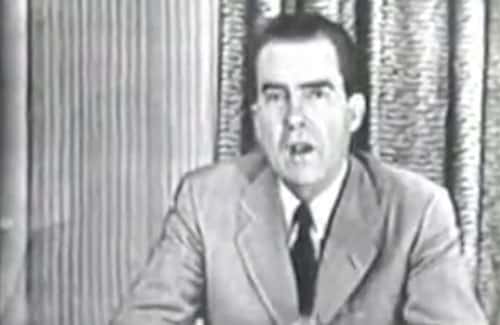
  • Checkers Speech by Richard M. Nixon

    Checkers Speech by Richard M. Nixon

    Checkers Speech
    by Richard M. Nixon, given on September 23, 1952


    My Fellow Americans,

    I come before you tonight as a candidate for the Vice-presidency and as a man whose honesty and integrity has been questioned.

    Now, the usual political thing to do when charges are made against you is to either ignore them or to deny them without giving details. I believe we have had enough of that in the United States, particularly with the present administration in Washington D.C.

    To me, the office of the Vice-presidency of the United States is a great office, and I feel that the people have got to have confidence in the integrity of the men who run for that office and who might attain them.

    I have a theory, too, that the best and only answer to a smear or an honest misunderstanding of the facts is to tell the truth. And that is why I am here tonight. I want to tell you my side of the case.

    I am sure that you have read the charges, and you have heard it, that I, Senator Nixon, took $18,000 from a group of my supporters.

    Now, was that wrong? And let me say that it was wrong. I am saying it, incidentally, that it was wrong, just not illegal, because it isn’t a question of whether it was legal or illegal, that isn’t enough. The question is, was it morally wrong? I say that it was morally wrong if any of that $18,000 went to Senator Nixon, for my personal use. I say that it was morally wrong if it was secretly given and secretly handled.

    And I say that it was morally wrong if any of the contributors got special favors for the contributions that they made.

    And to answer those questions let me say this–not a cent of the $18,000 or any other money of that type ever went to me for my personal use. Every penny of it was used to pay for political expenses that I did not think should be charged to the taxpayers of the United States.

    It was not a secret fund. As a matter of fact, when I was on “Meet the Press”–some of you may have seen it last Sunday–Peter Edson came up to me after the program, and he said, “Dick, what about this fund we hear about?” And I said, “Well, there is no secret about it. Go out and see Dana Smith who was the administrator of the fund,” and I gave him his address. And I said you will find that the purpose of the fund simply was to defray political expenses that I did not feel should be charged to the government.

    And third, let me point out, and I want to make this particularly clear, that no contributor to this fund, no contributor to any of my campaigns, has ever received any consideration that he would not have received as an ordinary constituent.

    I just don’t believe in that, and I can say that never, while I have been in the Senate of the United States, as far as the people that contributed to this fund are concerned, have I made a telephone call to an agency, nor have I gone down to an agency on their behalf.

    And the records will show that–the records which are in the hands of the administration.

    Well, then, some of you will say, and rightly, “Well, what did you use the fund for, Senator? Why did you have to have it?”

    Let me tell you in just a word how a Senate office operates. First of all, the Senator gets $15,000 a year in salary. He gets enough money to pay for one trip a year, a round trip, that is, for himself, and his family between his home and Washington D.C. And then he gets an allowance to handle the people that work in his office to handle his mail.

    And the allowance for my State of California, is enough to hire 13 people. And let me say, incidentally, that this allowance is not paid to the Senator.

    It is paid directly to the individuals, that the Senator puts on his payroll, but all of these people and all of these allowances are for strictly official business–business, for example, when a constituent writes in and wants you to go down to the Veteran’s Administration and get some information about his GI policy–items of that type for example. But there are other expenses that are not covered by the government. And I think I can best discuss those expenses by asking you some questions.

    Do you think that when I or any other Senator makes a political speech, has it printed, should charge the printing of that speech and the mailing of that speech to the taxpayers?

    Do you think, for example, when I or any other Senator makes a trip to his home state to make a purely political speech that the cost of that trip should be charged to the taxpayers?

    Do you think when a Senator makes political broadcasts or political television broadcasts, radio or television, that the expense of those broadcasts should be charged to the taxpayers?

    I know what your answer is. It is the same answer that audiences give me whenever I discuss this particular problem.

    The answer is no. The taxpayers should not be required to finance items which are not official business but which are primarily political business.

    Well, then the question arises, you say, “Well, how do you pay for these and how can you do it legally?” And there are several ways, that it can be done, incidentally, and it is done legally in the United States Senate and in the Congress.

    The first way is to be a rich man. So I couldn’t use that.

    Another way that is used is to put your wife on the payroll. Let me say, incidentally, that my opponent, my opposite number for the Vice-presidency on the Democratic ticket, does have his wife on the payroll and has had her on his payroll for the past ten years. Now let me just say this–That is his business, and I am not critical of him for doing that. You will have to pass judgment on that particular point, but I have never done that for this reason:

    I have found that there are so many deserving stenographers and secretaries in Washington that needed the work that I just didn’t feel it was right to put my wife on the payroll–My wife sitting over there.

    She is a wonderful stenographer. She used to teach stenography and she used to teach shorthand in high school. That was when I met her. And I can tell you folks that she has worked many hours on Saturdays and Sundays in my office, and she has done a fine job, and I am proud to say tonight that in the six years I have been in the Senate of the United States, Pat Nixon has never been on the government payroll.

    What are the other ways that these finances can be taken care of? Some who are lawyers, and I happen to be a lawyer, continue to practice law, but I haven’t been able to do that.

    I am so far away from California and I have been so busy with my senatorial work that I have not engaged in any legal practice, and, also, as far as law practice is concerned, it seemed to me that the relationship between an attorney and the client was so personal that you couldn’t possibly represent a man as an attorney and then have an unbiased view when he presented his case to you in the event that he had one before government.

    And so I felt that the best way to handle these necessary political expenses of getting my message to the American people and the speeches I made–the speeches I had printed for the most part concerned this one message of exposing this administration, the Communism in it, the corruption in it–the only way I could do that was to accept the aid which people in my home state of California, who contributed to my campaign and who continued to make these contributions after I was elected, were glad to make.

    And let me say that I am proud of the fact that not one of them has ever asked me for a special favor. I am proud of the fact that not one of them has ever asked me to vote on a bill other than my own conscience would dictate. And I am proud of the fact that the taxpayers by subterfuge or otherwise have never paid one dime for expenses which I thought were political and should not be charged to the taxpayers.

    Let me say, incidentally, that some of you may say, “Well, that is all right, Senator, that is your explanation, but have you got any proof?” And I would like to tell you this evening that just an hour ago we received an independent audit of this entire fund. I suggested to Governor Sherman Adams, who is the chief of staff of the Eisenhower campaign, that an independent audit and legal report be obtained, and I have that audit in my hand.

    It is an audit made by Price Waterhouse & Co. firm, and the legal opinion by Gibson, Dunn, & Crutcher, lawyers in Los Angeles, the biggest law firm, and incidentally, one of the best ones in Los Angeles.

    I am proud to report to you tonight that this audit and legal opinion is being forwarded to General Eisenhower and I would like to read to you the opinion that was prepared by Gibson, Dunn, & Crutcher, based on all the pertinent laws, and statutes, together with the audit report prepared by the certified public accountants.

    It is our conclusion that Senator Nixon did not obtain any financial gain from the collection and disbursement of the funds by Dana Smith; that Senator Nixon did not violate any federal or state law by reason of the operation of the fund; and that neither the portion of the fund paid by Dana Smith directly to third persons, nor the portion paid to Senator Nixon, to reimburse him for office expenses, constituted income in a sense which was either reportable or taxable as income under income tax laws.

    Signed–Gibson, Dunn, & Crutcher, by Elmo Conley

    That is not Nixon speaking, but it is an independent audit which was requested because I want the American people to know all the facts and I am not afraid of having independent people go in and check the facts, and that is exactly what they did.

    But then I realized that there are still some who may say, and rightly so–and let me say that I recognize that some will continue to smear regardless of what the truth may be–but that there has been understandably, some honest misunderstanding on this matter, and there are some that will say, “Well, maybe you were able, Senator, to fake the thing. How can we believe what you say–after all, is there a possibility that maybe you got some sums in cash? Is there a possibility that you might have feathered your own nest?” And so now, what I am going to do–and incidentally this is unprecedented in the history of American politics–I am going at this time to give to this television and radio audience, a complete financial history, everything I have earned, everything I have spent and everything I own, and I want you to know the facts.

    I will have to start early, I was born in 1913. Our family was one of modest circumstances, and most of my early life was spent in a store out in East Whittier. It was a grocery store, one of those family enterprises.

    The only reason we were able to make it go was because my mother and dad had five boys, and we all worked in the store. I worked my way through college, and, to a great extent, through law school. And then in 1940, probably the best thing that ever happened to me happened. I married Pat who is sitting over here.

    We had a rather difficult time after we were married, like so many of the young couples who might be listening to us. I practiced law. She continued to teach school.

    Then, in 1942, I went into the service. Let me say that my service record was not a particularly unusual one. I went to the South Pacific. I guess I’m entitled to a couple of battle stars. I got a couple of letters of commendation. But I was just there when the bombs were falling. And then I returned. I returned to the United States, and in 1946, I ran for Congress. When we came out of the war–Pat and I–Pat during the war had worked as a stenographer, and in a bank, and as an economist for a government agency–and when we came out, the total of our savings, from both my law practice, her teaching and all the time I was in the war, the total for that entire period was just less than $10,000–every cent of that, incidentally, was in government bonds–well, that’s where we start, when I go into politics.

    Now, whatever I earned since I went into politics–well, here it is. I jotted it down. Let me read the notes.

    First of all, I have had my salary as a Congressman and as a Senator.

    Second, I have received a total in this past six years of $1,600 from estates which were in my law firm at the time that I severed my connection with it. And, incidentally, as I said before, I have not engaged in any legal practice, and have not accepted any fees from business that came into the firm after I went into politics.

    I have made an average of approximately $1,500 a year from nonpolitical speaking engagements and lectures.

    And then, unfortunately, we have inherited little money. Pat sold her interest in her father’s estate for $3,000, and I inherited $1,500 from my grandfather. We lived rather modestly.

    For four years we lived in an apartment in Parkfairfax, Alexandria Virginia. The rent was $80 a month. And we saved for a time when we could buy a house. Now that was what we took in.

    What did we do with this money? What do we have today to show for it? This will surprise you because it is so little. I suppose as standards generally go of people in public life.

    First of all, we’ve got a house in Washington, which cost $41,000 and on which we owe $20,000. We have a house in Whittier, California which cost $13,000 and on which we owe $3,000. My folks are living there at the present time.

    I have just $4,000 in life insurance, plus my GI policy which I have never been able to convert, and which will run out in two years.

    I have no life insurance whatever on Pat. I have no life insurance on our two youngsters, Patricia and Julie.

    I own a 1950 Oldsmobile car. We have our furniture. We have no stocks and bonds of any type. We have no interest, direct or indirect, in any business. Now that is what we have. What do we owe?

    Well, in addition to the mortgages, the $20,000 mortgage on the house in Washington and the $10,000 mortgage on the house in Whittier, I owe $4,000 to the Riggs Bank in Washington D.C. with an interest at 4 percent.

    I owe $3,500 to my parents, and the interest on that loan, which I pay regularly, because it is a part of the savings they made through the years they were working so hard–I pay regularly 4 percent interest. And then I have a $500 loan, which I have on my life insurance. Well, that’s about it. That’s what we have. And that’s what we owe. It isn’t very much.

    But Pat and I have the satisfaction that every dime that we have got is honestly ours.

    I should say this, that Pat doesn’t have a mink coat. But she does have a respectable Republican cloth coat, and I always tell her she would look good in anything.

    One other thing I probably should tell you, because if I don’t they will probably be saying this about me, too. We did get something, a gift, after the election.

    A man down in Texas heard Pat on the radio mention the fact that our two youngsters would like to have a dog, and, believe it or not, the day before we left on this campaign trip we got a message from Union Station in Baltimore, saying they had a package for us. We went down to get it. You know what it was?

    It was a little cocker spaniel dog, in a crate that he had sent all the way from Texas, black and white, spotted, and our little girl Tricia, the six year old, named it Checkers.

    And you know, the kids, like all kids, loved the dog, and I just want to say this, right now, that regardless of what they say about it, we are going to keep it.

    It isn’t easy to come before a nation-wide audience and bare your life, as I have done. But I want to say some things before I conclude, that I think most of you will agree on.

    Mr. Mitchell, the Chairman of the Democratic National Committee, made this statement that if a man couldn’t afford to be in the United States Senate, he shouldn’t run for senate. And I just want to make my position clear.

    I don’t agree with Mr. Mitchell when he says that only a rich man should serve his government in the United States Senate or Congress. I don’t believe that represents the thinking of the Democratic Party, and I know it doesn’t represent the thinking of the Republican Party.

    I believe that it’s fine that a man like Governor Stevenson, who inherited a fortune from his father, can run for President. But I also feel that it is essential in this country of ours that a man of modest means can also run for President, because, you know–remember Abraham Lincoln–you remember what he said–“God must have loved the common people, he made so many of them.”

    And now I’m going to suggest some courses of conduct.

    First of all, you have read in the papers about other funds, now, Mr. Stevenson apparently had a couple. One of them in which a group of business people paid and helped to supplement the salaries of state employees. Here is where the money went directly into their pockets, and I think that what Mr. Stevenson should do should be to come before the American people, as I have, give the names of the people that contributed to that fund, give the names of the people who put this money into their pockets, at the same time that they were receiving money from their state government and see what favors, if any, they gave out for that.

    I don’t condemn Mr. Stevenson for what he did, but until the facts are in, there is a doubt that would be raised. And as far as Mr. Sparkman is concerned, I would suggest the same thing. He’s had his wife on the payroll. I don’t condemn him for that, but I think that he should come before the American people and indicate what outside sources of income he has had. I would suggest that under the circumstances both Mr. Sparkman and Mr. Stevenson should come before the American people, as I have, and make a complete financial statement as to their financial history, and if they don’t, it will be an admission that they have something to hide.

    And I think you will agree with me–because, folks, remember, a man that’s to be President of the United States, a man that is to be Vice President of the United States, must have the confidence of all the people. And that’s why I’m doing what I’m doing. And that is why I suggest that Mr. Stevenson and Mr. Sparkman, if they are under attack, that should be what they are doing.

    Now let me say this: I know this is not the last of the smears. In spite of my explanation tonight, other smears will be made. Others have been made in the past. And the purpose of the smears, I know, is this, to silence me, to make me let up.

    Well, they just don’t know who they are dealing with. I’m going to tell you this: I remember in the dark days of the Hiss trial some of the same columnists, some of the same radio commentators who are attacking me now and misrepresenting my position, were violently opposing me at the time I was after Alger Hiss. But I continued to fight because I knew I was right, and I can say to this great television and radio audience that I have no apologies to the American people for my part in putting Alger Hiss where he is today. And as far as this is concerned, I intend to continue to fight.

    Why do I feel so deeply? Why do I feel that in spite of the smears, the misunderstanding, the necessity for a man to come up here and bare his soul? And I want to tell you why.

    Because, you see, I love my country. And I think my country is in danger. And I think the only man that can save America at this time is the man that’s running for President, on my ticket, Dwight Eisenhower.

    You say, why do I think it is in danger? And I say look at the record. Seven years of the Truman-Acheson administration, and what’s happened? Six hundred million people lost to Communists.

    And a war in Korea in which we have lost 117,000 American casualties, and I say that those in the State Department that made the mistakes which caused that war and which resulted in those losses should be kicked out of the State Department just as fast as we can get them out of there.

    And let me say that I know Mr. Stevenson won’t do that because he defends the Truman policy, and I know that Dwight Eisenhower will do that, and he will give America the leadership that it needs.

    Take the problem of corruption. You have read about the mess in Washington. Mr. Stevenson can’t clean it up because he was picked by the man, Truman, under whose Administration the mess was made.

    You wouldn’t trust the man who made the mess to clean it up. That is Truman. And by the same token you can’t trust the man who was picked by the man who made the mess to clean it up and that’s Stevenson. And so I say, Eisenhower who owes nothing to Truman, nothing to the big city bosses–he is the man who can clean up the mess in Washington.

    Take Communism. I say as far as that subject is concerned the danger is greater to America. In the Hiss case they got the secrets which enabled them to break the American secret State Department code.

    They got secrets in the atomic bomb case which enabled them to get the secret of the atomic bomb five years before they would have gotten it by their own devices. And I say that any man who called the Alger Hiss case a red herring isn’t fit to be President of the United States.

    I say that a man who, like Mr. Stevenson, has pooh-poohed and ridiculed the Communist threat in the United States–he has accused us, that they have attempted to expose the Communists, of looking for Communists in the Bureau of Fisheries and Wildlife. I say that a man who says that isn’t qualified to be President of the United States.

    And I say that the only man who can lead us into this fight to rid the government of both those who are Communists and those who have corrupted this government is Eisenhower, because General Eisenhower, you can be sure, recognizes the problem, and knows how to handle it.

    Let me say this, finally. This evening I want to read to you just briefly excerpts from a letter that I received, a letter, which after all this is over, no one can take away from us. It reads as follows:

    Dear Senator Nixon,

    Since I am only 19 years of age, I can’t vote in this presidential election, but believe me if I could, you and General Eisenhower would certainly get my vote. My husband is in the Fleet Marines in Korea. He is in the front lines. And we have a two month old son he has never seen. And I feel confident that with great Americans like you and General Eisenhower in the White House, lonely Americans like myself will be united with their loved ones now in Korea. I only pray to God that you won’t be too late. Enclosed is a small check to help you with your campaign. Living on $85 a month it is all I can do.

    Folks, it is a check for $10, and it is one that I shall never cash. And let me just say this: We hear a lot about prosperity these days, but I say why can’t we have prosperity built on peace, rather than prosperity built on war? Why can’t we have prosperity and an honest government in Washington D.C. at the same time?

    Believe me, we can. And Eisenhower is the man that can lead the crusade to bring us that kind of prosperity.

    And now, finally, I know that you wonder whether or not I am going to stay on the Republican ticket or resign. Let me say this: I don’t believe that I ought to quit, because I am not a quitter. And, incidentally, Pat is not a quitter. After all, her name is Patricia Ryan and she was born on St. Patrick’s day, and you know the Irish never quit.

    But the decision, my friends, is not mine. I would do nothing that would harm the possibilities of Dwight Eisenhower to become President of the United States. And for that reason I am submitting to the Republican National Committee tonight through this television broadcast the decision which it is theirs to make. Let them decide whether my position on the ticket will help or hurt. And I am going to ask you to help them decide. Wire and write the Republican National Committee whether you think I should stay on or whether I should get off. And whatever their decision, I will abide by it.

    But let me just say this last word. Regardless of what happens, I am going to continue this fight. I am going to campaign up and down America until we drive the crooks and the Communists and those that defend them out of Washington, and remember folks, Eisenhower is a great man. Folks, he is a great man, and a vote for Eisenhower is a vote for what is good for America.

    Richard M. Nixon – September 23, 1952

  • “East of Eden” by John Steinbeck Published

    “East of Eden” by John Steinbeck Published

    “East of Eden” by John Steinbeck Published

    “East of Eden” is a novel written by American author John Steinbeck. Published on September 19, 1952, the book is an epic family saga set in the Salinas Valley in California. The story spans several generations and focuses on two families, the Trasks and the Hamiltons. “East of Eden” explores themes of identity, familial relationships, and moral choice, drawing parallels with the biblical stories of Cain and Abel and the Garden of Eden.

    Details: 

    • Steinbeck began writing “East of Eden” in 1951, describing it as “the big one” and considering it his most ambitious work. The novel is semi-autobiographical, with Steinbeck using his own family history and the landscape of his native Salinas Valley as a backdrop for the story. The novel is divided into three parts, following the lives of the Trask and Hamilton families from the 19th century to the early 20th century.
    • John Steinbeck wrote “East of Eden” as a gift for his two young sons, Thom and John IV, to help them understand their family history and the complex moral issues explored in the novel.
    • The title “East of Eden” references the biblical story of Cain and Abel. After Cain kills his brother, Abel, he is banished “east of Eden,” symbolizing humanity’s exile from paradise and the struggle with moral choices.
    • “East of Eden” was initially met with mixed critical reviews, but it became a commercial success and was the best-selling book in the United States in 1952.

    Effects on Pop Culture: “East of Eden” has left a lasting impact on popular culture in various ways, including:

    • The novel was adapted into a successful film in 1955, directed by Elia Kazan and starring James Dean in his first major role. Dean’s performance as Cal Trask has become iconic and contributed to his status as a Hollywood legend.
    • “East of Eden” has been referenced in various forms of media, such as music, television, and other novels. It has influenced generations of writers and storytellers drawn to its themes of family, morality, and personal redemption.
    • The novel has been the subject of numerous stage adaptations and has been studied in high schools and universities worldwide for its literary merit and exploration of complex themes.

    Prominent People Involved:

    • John Steinbeck: The author of “East of Eden,” Steinbeck is considered one of the most important American writers of the 20th century. His other notable works include “The Grapes of Wrath,” “Of Mice and Men,” and “Cannery Row.”
    • Elia Kazan: The acclaimed director who adapted “East of Eden” into a successful film in 1955, helping to solidify the novel’s place in popular culture.
    • James Dean: The actor who portrayed Cal Trask in the 1955 film adaptation, delivering a powerful performance contributing to his status as a Hollywood icon.

    In summary, the publication of John Steinbeck’s “East of Eden” in 1952 marked the arrival of a powerful and ambitious novel that has captivated readers for decades. With its epic scope, richly drawn characters, and exploration of complex moral themes, “East of Eden” has left an indelible mark on popular culture, inspiring numerous adaptations and earning a place among the most respected works of American literature.

  • 1952 Music: Popular Music, Songs and Artists

    1952 Music: Popular Music, Songs and Artists

    1952 Popular Music, Songs and Artists

    Bill Haley and the Saddlemen

    Rock the Joint
    Before Bill Haley became known as Bill Haley and the Comets, he performed with his group, Bill Haley and the Saddlemen. In 1952, they recorded Rock the Joint, a song previously recorded by Jimmie Preston. Although Haley’s version didn’t chart on Billboard, it became foundational in his rock and roll transition.

    Don Howard

    Oh Happy Day
    This is not the Oh Happy Day familiar to churchgoers. Written and performed by Don Howard, the song debuted at a high school dance where enthusiastic students requested it be performed 13 times in one night. Recorded at a local studio, the track became a regional hit before climbing to No. 4 on the Billboard charts nationally. Time magazine dubbed it the “Mystery Hit,” describing it as “the rarest kind of hit—unplanned and unplugged.”

    Frank Sinatra

    I Get a Kick Out of You
    This song, with its iconic line “I get no kick from cocaine,” is considered one of the earliest to reference drug use critically. Written by Cole Porter for the 1934 Broadway musical Anything Goes, the song was originally sung by Ethel Merman. It became one of three standout hits from the show, alongside You’re the Top and Anything Goes. Frank Sinatra’s 1953 rendition cemented the song as a jazz and pop standard.

    Gene Kelly

    Singin’ in the Rain
    The song Singin’ in the Rain originated in the early days of sound cinema, appearing in the 1929 MGM musical The Hollywood Revue of 1929. Judy Garland and others recorded it over the years, but its iconic status was secured in the 1952 film Singin’ in the Rain. Starring Gene Kelly, Debbie Reynolds, and Donald O’Connor, the movie is considered one of the greatest musicals ever made. Gene Kelly’s unforgettable performance of the title song, complete with a joyous dance in the rain, remains one of cinema’s most celebrated moments.

    The Four Aces

    Heart and Soul
    Published in 1938 with music by Hoagy Carmichael and lyrics by Frank Loesser, Heart and Soul is often one of the first songs taught to beginner pianists. The Four Aces recorded it in 1952, and their version peaked at No. 11 on the Billboard charts.

    Hank Williams

    Jambalaya (On the Bayou)
    A tribute to the famous Cajun dish, Jambalaya (On the Bayou) was written and released by Hank Williams in 1952. The song topped the country music charts and crossed over into pop, inspiring countless covers. The Carpenters included a version on their Now and Then album, which reached No. 12 in the UK.

    Karen Chandler

    Hold Me, Thrill Me, Kiss Me
    Written by Harry Noble in 1952, Hold Me, Thrill Me, Kiss Me is considered an early pop-rock era hit. Karen Chandler’s recording reached No. 7 on the charts, making it her only charting single and a memorable part of early 1950s pop music.

    The Mills Brothers

    Glow Worm
    Originally titled Das Glühwürmchen, this song was part of Paul Lincke’s 1902 operetta Lysistrata. When translated into English, it became Glow Worm. Johnny Mercer later expanded the lyrics, and the Mills Brothers recorded it in 1952, turning it into a chart-topping hit.

    Johnny Ray

    Walkin’ My Baby Back Home
    Written in 1930 by Roy Turk (lyrics) and Fred E. Ahlert (music), Walkin’ My Baby Back Home charted in 1931. Nat King Cole popularized it with a hit version in 1951, and Johnny Ray followed with another successful rendition in 1952. In 1953, the song became the title of a movie starring Donald O’Connor.

    Top Artists and Songs of 1952

    Al Martino
    Here In My Heart, Now, Take My Heart
    Arthur Godfrey
    Slow Poke
    Bell Sisters
    Wheel of Fortune, Bermuda
    Bill Haley and His Comets (the Saddlemen)
    Rock The Joint
    Bing Crosby and Jane Wyman
    Zing a Little Zong
    Bing Crosby
    Isle of Innisfree
    Bobby Wayne
    Wheel of Fortune
    Buddy Morrow
    Night Train
    Dean Martin
    You Belong To Me
    Don Howard
    Oh Happy day
    Don Cornell
    I’ll Walk Alone, I Am Yours
    Doris Day and Frankie Laine
    Sugarbush
    Doris Day
    A Guy Is A Guy, My Love and Devotion
    Eddie Fisher
    I Wish You Were Here, Lady of Spain, Anytime, Outside of Heaven, Tell Me Why, Everything I Have Is Yours
    Eddie Howard
    Auf Wiederseh’n Sweetheart
    Four Aces
    Heart and Soul
    Frank Sinatra
    I Get A Kick Out Of You
    Frankie Laine
    High Noon (Do Not Forsake Me)
    Gene Kelly
    Singing In The Rain
    Georgia Gibbs
    Ring of Fire
    Guy Mitchell
    Pittsburgh, Pennsylvania
    Hank Williams
    Jambalaya (On The Bayou)
    Helen O’Connell
    Slow Poke
    Hugo Winterhalter
    Blue Tango
    Jimmy Forrest
    Night Train
    Jo Stafford
    You Belong To Me, Jambalaya (On The Bayou), A-Round the Corner, Keep It a Secret
    Johnny Ray
    Please Mister Sun, Walkin’ My Baby Back Home
    Johnny Standley
    It’s In The Book
    Joni James
    Why Don’t You Believe In Me?
    Karen Chandler
    Hold Me, Thrill Me, Kiss Me
    Kay Starr
    Wheel of Fortune, Comes A-Long a-Love
    Leroy Anderson
    Blue Tango
    Les Paul and Mary Ford
    Tiger Rag
    Little Walter
    Juke
    Lloyd Price
    Lawdy Miss Clawdy
    Louis Armstrong
    It Takes two To tango
    Mario Lanza
    Because You’re Mine
Mills Brothers
The Glow Worm
Nat ‘King’ Cole
Unforgettable, Walkin’ My Baby Back Home, Somewhere Along The Way, Because You’re Mine, Faith Can Move Mountains
Patti Page
I Went To Your Wedding, Why Don’t You Believe Me?, You Belong To Me
Pearl Bailey
It Takes Two To Tango
Pee Wee King
Slow Poke
Peggy Lee
Lover
Percy Faith
Delicado
Perry Como
Please Mr. Sun, Maybe
Ray Anthony
Bunny Hop, At last
Red Foley
Don’t Let The Stars Get In Your Eyes
Rosemary Clooney
Half As Much, Blues In The Night, otch-A-Me (Ba-Ba-Baciami Piccina)
Ruth Brown
5-10-15 Hours
Slim Whitman
Indian Love Call
Tex Ritter
High Noon (Do Not Forsake Me)
The Dominoes
Have Mercy Baby
The Gaylords
Tell Me Your Mine
The Hilltoppers
Trying
The Weavers
Around The Corner
Tony Bennett
Here In My Heart
Tony Martin
Kiss of Fire
Vera Lynn
Auf Wiederdseh’n Sweetheart, Homing Waltz, Forget Me Not
  • 1952 Oscars 24th Academy Awards

    1952 Oscars 24th Academy Awards

    1952 Oscars 24th Academy Awards

    • Winners Announced: March 20, 1952
    • Venue: RKO Pantages Theatre, Hollywood, California
    • Host: Danny Kaye
    • Eligibility Year: Films released in 1951

    Major Wins:

    • Best Picture was swept by An American in Paris, shocking some as A Streetcar Named Desire was a strong contender.
    • Humphrey Bogart grabbed the Best Actor award for The African Queen.
    • Vivien Leigh took home Best Actress for her role in A Streetcar Named Desire.

    Directing & Screenplay:

    • George Stevens won Best Director for A Place in the Sun.
    • Best Adapted Screenplay went to A Place in the Sun as well.

    Additional Info:

    • Karl Malden won Best Supporting Actor for A Streetcar Named Desire.
    • Kim Hunter got the Best Supporting Actress nod for the same film.

    Trivia:

    • An American in Paris won six Oscars but did not receive any acting nominations, a rarity for Best Picture winners.
    • A Streetcar Named Desire became the first film to win three acting Oscars. Marlon Brando, as Stanley Kowalski, did not win.
    • This was Danny Kaye’s first and only time hosting the Oscars. His sense of humor and lightness added a different flair to the evening.
    • A Place in the Sun earned nine nominations, winning 6.

    1952 Oscar Nominees and Winners

    Best Motion Picture:
    An American in Paris – Arthur Freed for Metro-Goldwyn-Mayer (WINNER)
    Decision Before Dawn – Anatole Litvak and Frank McCarthy for 20th Century Fox
    A Place in the Sun – George Stevens for Paramount Pictures
    Quo Vadis – Sam Zimbalist for Metro-Goldwyn-Mayer
    A Streetcar Named Desire – Charles K. Feldman for Warner Bros.
    Best Director:
    George Stevens – A Place in the Sun (WINNER)
    John Huston – The African Queen
    Vincente Minnelli – An American in Paris
    William Wyler – Detective Story
    Elia Kazan – A Streetcar Named Desire
    Best Actor:
    Humphrey Bogart – The African Queen as Charlie Allnut (WINNER)
    Marlon Brando – A Streetcar Named Desire as Stanley Kowalski
    Montgomery Clift – A Place in the Sun as George Eastman
    Arthur Kennedy – Bright Victory as Larry Nevins
    Fredric March – Death of a Salesman as Willy Loman
    Best Actress:
    Vivien Leigh – A Streetcar Named Desire as Blanche Dubois (WINNER)
    Katharine Hepburn – The African Queen as Rose Sayer
    Eleanor Parker – Detective Story as Mary McLeod
    Shelley Winters – A Place in the Sun as Alice Tripp
    Jane Wyman – The Blue Veil as LouLou Mason
    Best Supporting Actor:
    Karl Malden – A Streetcar Named Desire as Harold “Mitch” Mitchell (WINNER)
    Leo Genn – Quo Vadis as Petronius
    Kevin McCarthy – Death of a Salesman as Biff Loman
    Peter Ustinov – Quo Vadis as Nero
    Gig Young – Come Fill the Cup as Boyd Copeland
    Best Supporting Actress:
    Kim Hunter – A Streetcar Named Desire as Stella Kowalski (WINNER)
    Joan Blondell – The Blue Veil as Annie Rawlins
    Mildred Dunnock – Death of a Salesman as Linda Loman
    Lee Grant – Detective Story as Shoplifter
    Thelma Ritter – The Mating Season as Ellen McNulty
    Best Story and Screenplay:
    An American in Paris – Alan Jay Lerner (WINNER)
    Ace in the Hole – Billy Wilder, Lesser Samuels and Walter Newman
    David and Bathsheba – Philip Dunne
    Go for Broke! – Robert Pirosh
    The Well – Clarence Greene and Russell Rouse
    Best Screenplay:
    A Place in the Sun – Michael Wilson and Harry Brown from An American Tragedy by Theodore Dreiser (WINNER)
    The African Queen – James Agee and John Huston from The African Queen by C. S. Forester
    Detective Story – Philip Yordan and Robert Wyler from Detective Story by Sidney Kingsley
    La Ronde – Jacques Natanson and Max Ophüls from Reigen by Arthur Schnitzler
    A Streetcar Named Desire – Tennessee Williams from A Streetcar Named Desire by Tennessee Williams
    Best Story:
    Seven Days to Noon – Paul Dehn and James Bernard (WINNER)
    Bullfighter and the Lady – Budd Boetticher and Ray Nazarro
    The Frogmen – Oscar Millard
    Here Comes the Groom – Robert Riskin and Liam O’Brien
    Teresa – Alfred Hayes and Stewart Stern
    Best Short Subject – Cartoons:
    The Two Mouseketeers (WINNER)
    Lambert the Sheepish Lion
    Rooty Toot Toot
    Best Documentary Feature:
    Kon-Tiki (WINNER)
    I Was a Communist for the FBI
    Best Documentary Short Subject:
    Benjy (WINNER)
    One Who Came Back
    The Seeing Eye
    Best Live Action Short Subject, One-Reel:
    World of Kids (WINNER)
    Ridin’ the Rails
    The Story of Time
    Nature’s Half Acre (WINNER)
    Balzac
    Danger Under the Sea
    Best Scoring of a Dramatic or Comedy Picture:
    A Place in the Sun – Franz Waxman (WINNER)
    A Streetcar Named Desire – Alex North
    David and Bathsheba – Alfred Newman
    Death of a Salesman – Alex North
    Quo Vadis – Miklós Rózsa
    Best Scoring of a Musical Picture:
    An American in Paris – Johnny Green and Saul Chaplin (WINNER)
    Alice in Wonderland – Oliver Wallace
    On the Riviera – Alfred Newman
    The Great Caruso – Peter Herman Adler and Johnny Green
    Show Boat – Adolph Deutsch and Conrad Salinger
    Best Song:
    “In the Cool, Cool, Cool of the Evening” from Here Comes the Groom – Music by Hoagy Carmichael; Lyrics by Johnny Mercer (WINNER)
    “A Kiss to Build a Dream On” from The Strip – Music and Lyrics by Bert Kalmar (posthumous nomination), Harry Ruby and Oscar Hammerstein II
    “Never” from Golden Girl – Music by Lionel Newman; Lyrics by Eliot Daniel
    “Too Late Now” from Royal Wedding – Music by Burton Lane; Lyrics by Alan Jay Lerner
    “Wonder Why” from Rich, Young and Pretty – Music by Nicholas Brodszky; Lyrics by Sammy Cahn
    Best Sound Recording:
    The Great Caruso – Douglas Shearer (WINNER)
    Bright Victory – Leslie I. Carey
    I Want You – Gordon E. Sawyer
    A Streetcar Named Desire – Nathan Levinson
    Two Tickets to Broadway – John O. Aalberg
    Best Art Direction, Black-and-White:
    A Streetcar Named Desire – Art Direction: Richard Day; Set Decoration: George James Hopkins (WINNER)
    Fourteen Hours – Art Direction: Lyle R. Wheeler and Leland Fuller; Set Decoration: Thomas Little and Fred J. Rode
    The House on Telegraph Hill – Art Direction: Lyle R. Wheeler and John DeCuir; Set Decoration: Thomas Little and Paul S. Fox
    La Ronde – Art Direction and Set Decoration: D’Eaubonne
    Too Young to Kiss – Art Direction: Cedric Gibbons and Paul Groesse; Set Decoration: Edwin B. Willis and Jack D. Moore
    Best Art Direction, Color:
    An American in Paris – Art Direction: Cedric Gibbons and E. Preston Ames; Set Decoration: Edwin B. Willis and F. Keogh Gleason (WINNER)
    David and Bathsheba – Art Direction: Lyle R. Wheeler and George Davis; Set Decoration: Thomas Little and Paul S. Fox
    On the Riviera – Art Direction: Lyle R. Wheeler and Leland Fuller; Set Decoration: Thomas Little and Walter M. Scott; Musical Settings: Joseph C. Wright
    Quo Vadis – Art Direction: William A. Horning, Cedric Gibbons and Edward Carfagno; Set Decoration: Hugh Hunt
    Tales of Hoffmann – Art Direction and Set Decoration: Hein Heckroth
    Best Cinematography, Black-and-White:
    A Place in the Sun – William C. Mellor (WINNER)
    Death of a Salesman – Franz Planer
    The Frogmen – Norbert Brodine
    Strangers on a Train – Robert Burks
    A Streetcar Named Desire – Harry Stradling
    Best Cinematography, Color:
    An American in Paris – Alfred Gilks; Ballet Photography by John Alton (WINNER)
    David and Bathsheba – Leon Shamroy
    Quo Vadis – Robert Surtees and William V. Skall
    Show Boat – Charles Rosher
    When Worlds Collide – John F. Seitz and W. Howard Greene
    Best Costume Design, Black-and-White:
    A Place in the Sun – Edith Head (WINNER)
    Kind Lady – Walter Plunkett and Gile Steele (posthumous nomination)
    The Model and the Marriage Broker – Charles LeMaire and Renié
    The Mudlark – Edward Stevenson and Margaret Furse
    A Streetcar Named Desire – Lucinda Ballard
    Best Costume Design, Color:
    An American in Paris – Orry-Kelly, Walter Plunkett and Irene Sharaff (WINNER)
    David and Bathsheba – Charles LeMaire and Edward Stevenson
    The Great Caruso – Helen Rose and Gile Steele (posthumous nomination)
    Quo Vadis – Herschel McCoy
    Tales of Hoffmann – Hein Heckroth
    Best Film Editing:
    A Place in the Sun – William Hornbeck (WINNER)
    An American in Paris – Adrienne Fazan
    Decision Before Dawn – Dorothy Spencer
    Quo Vadis – Ralph E. Winters
    The Well – Chester Schaeffer
    Academy Honorary Award:
    Gene Kelly for “his versatility as an actor, singer, director and dancer, and specifically for his brilliant achievements in the art of choreography on film” for An American in Paris.

    When Worlds Collide for Best Special Effects

    Best Foreign Language Film:
    Rashomon (Japan)
    Irving G. Thalberg Memorial Award:
    Arthur Freed
    Oscar® and Academy Awards® and Oscar® design mark are the trademarks and service marks and the Oscar© statuette the copyrighted property, of the Academy of Motion Picture Arts and Sciences. Pop Culture Madness is neither endorsed by nor affiliated with the Academy of Motion Picture Arts and Sciences.