Autumn Leaves was a huge song in 1955. It was released by Roger Williams (#1 on Billboard Charts), Steve Allen, Mitch Miller, Jackie Gleason, Victor Young, and The Ray Charles Singers. Based on the 1945 French song “Les feuilles mortes” (literally “The Dead Leaves”) it had a pretty good run, considering it was competing with that new Rock and Roll music!
New Artists in the Pop Charts Included: Pat Boone, Chuck Berry, Fats Domino, Lena Horne, Al Hibbler, and Jaye P. Morgan, who later judged on the 70’s game show, “The Gong Show.”
1955’s Retro Top 10 Hits
1. Moments To Remember – The Four Lads
2. Love Me or Leave Me – Lena Horne
3. Ain’t That A Shame – Pat Boone
4. Love is a Many-Splendored Thing – Four Aces
5. Sincerely – The Moonglows
6. Autumn Leaves – Roger Williams
7. Unchained Melody – Al Hibbler
8. The Ballad of Davy Crockett – Bill Hayes
9. Alabama Jubilee – Ferko Stringband
10. The Melody of Love – Billy Vaughn
1955’s ‘One Hit Wonders’
1. Earth Angel (Will You Be Mine) – The Penguins
2. Let Me Go Lover – Joan Weber
3. Pledging My Love – Johnny Ace
4. Bo Diddley – Bo Diddley
5. Cry Me A River – Julie London
6. Smokey Joe’s Cafe – The Robins
7. You Tickle Me Baby – Royal Jokers
8. Band of Gold – Kit Carson
9. The Breeze and I – Caterina Valente
10. Autumn Leave – Jackie Gleason
1955’s Dance Top 10 Hit List
1. Rock Around The Clock – Bill Haley and His Comets
2. Ain’t That A Shame – Fats Domino
3. Maybelline – Chuck Berry
4. Dance With Me Henry – Georgia Gibbs
5. Tweedlee Dee – LaVern Baker
6. Hearts of Stone – The Fontane Sisters
7. Smokey Joe’s Cafe – The Robins
8. Seventeen – Boyd Bennett
9. Sincerely – The Maguire Sisters
10. Honey Babe – Art Mooney
1955’s Doo-Wop Song Top 10 Hit List
1. When You Dance – The Turbans
2. Only You – The Platters
3. Speedoo – Cadillacs
4. Smokey Joe’s Cafe – The Robins
5. Close Your Eyes – The Five Keys
6. You Baby You – Cleftones
7. Come Back My Love – Wrens
8. Lily Maebelle – Valentines
9. I’ll Be Forever Loving You – El Dorados
10. WPLJ – Four Deuces
PCM’s 1955 Top 10 Hit List
1. Rock Around The Clock – Bill Haley and the Comets
2. Love and Marriage – Frank Sinatra
3. Earth Angel – The Penguins
4. Only You (And You Alone) – The Platters
5. Ain’t That A Shame – Fats Domino
6. Maybellene – Chuck Berry
7. Cherry Pink and Apple Blossom White – Perez Prado
2. This actor, who died in 1955, was the first to receive a posthumous Academy Award nomination for Best Actor. Who was he?
3. In 1955, what was the average life expectancy in the United States?
4. Ray Kroc’s first restaurant opened in Des Plaines, Illinois, on April 15, 1955. What do we call his fast-food restaurant chain today?
5. West Germany was admitted into NATO on May 9, 1955. In response, the Soviet Union countered with the formation of what other organizations?
6. Who was Elvis Presley’s manager?
7. What was the Biggest Number One Song of 1955?
8. How much did a Loaf of Bread cost in 1955?
9. 1955 Catchphrase: Who said, “Baby, you’re the greatest”?
10. Considered one of the brightest minds of modern times, this man died in 1955. Who was he?
11. What did a pound of Chuck Roast cost in 1955?
50 cents
12. Who won the Stanley Cup in 1955?
In 1955, The Detroit Red Wings won over the Montreal Canadiens (4 games to 3)
13. How many people lived in the United States in 1955?
The population was an estimated 165,931,202 people.
14. How many people lived in the World in 1955?
The estimated world population in 1955 was 2,761,650,981 people.
15. The Broadway musical version of what show was presented on television for the first time on NBC-TV, with its original cast? Peter Pan
16. Who won the 1955 World Series?
In 1955, The Brooklyn Dodgers won, beating the New York Yankees (4 games to 3)
17. Released in 1955, name the 15th animated Disney film. Lady and the Tramp
18. Who was the President of the United States in 1955?
Dwight D. Eisenhower (January 20, 1953 – January 20, 1961)
19. What was the average household income in 1955?
$4,400
20. What was the Bestselling Fiction Book in 1955? Marjorie Morningstar by Herman Wouk
21. The long-running Western television series debuted in 1955 on CBS. Name that show Gunsmoke (1955–1975)
22. This children’s show aired intermittently on ABC, syndication, and cable, from 1955 to 1996, featuring teen performers. The Mickey Mouse Club
23. This actress started as an original Mouseketeer but became a star in various “Beach Party” movies from 1963 through 1967. Name her.
Annette Funicello (October 22, 1942 – April 8, 2013)
24. This 1955 James Bond novel by Ian Fleming was the third in the book series and the eleventh film. Name that novel and film title. Moonraker
25. Jim Henson introduced the first version of what muppet in the premiere of his puppet show Sam and Friends on WRC-TV in Washington, DC?
Kermit (a lizard, later a frog)
26. This automobile was created to compete with the Chevrolet Corvette and a personal luxury car. Over 4.4 million were produced. Name that car.
Ford Thunderbird (T-Bird)
27. How much did a gallon of gas cost in 1955?
$0.29 per gallon
28. What was the Top-Rated TV Show in the 1954/1955 season? I Love Lucy (CBS)
29. Name the 1955 film in which Marilyn Monroe stands on a New York City Subway grating as her white dress is blown above her knees. The Seven Year Itch
30. Opened in July 1955, name the most popular amusement park in Anaheim, California, and possibly the world.
Disneyland
31. A Hollywood couple nicknamed “America’s Sweethearts” were married on September 26, 1955. Carrie Fisher was their daughter. Name that couple.
Eddie Fisher and Debbie Reynolds
32. This 1955 American musical film was based on the 1943 musical of the same name by Richard Rodgers and Oscar Hammerstein II. Name that show! Oklahoma!
33. This pitcher has held or holds MLB records for the most career wins, with 511, and most career innings pitched, games started, and complete games. He passed away at age 88. They named an award after him in 1956.
“Cy” Young (March 29, 1867 – November 4, 1955)
34. The AFL-CIO resulted from the merger of what labor organizations?
The American Federation of Labor and the Congress of Industrial Organizations
35. Name the celebrity psychologist who won the “$64000 question” on boxing.
Joyce Brothers (later Doctor Joyce Brothers)
36. This cartoon hero came to save the day every Saturday on CBS from 1955 through 1967.
Mighty Mouse (in Mighty Mouse Playhouse)
37. Mighty Mouse debuted as The Mouse of Tomorrow in a cartoon short on October 16, 1942, as a parody of Superman. What was Mighty Mouse called in his first animated appearance?
Super Mouse
38. Who was the Time Magazine Man of the Year in 1955?
Harlow Curtice
39. They were initially called “Froffles,” but in 1955, they changed their name to what we still call them today. Name that breakfast food.
Eggos
40. This invention (patent #2,717,437) was inspired by burrs that stuck to George de Mestral’s dog’s fur.
Velcro
41. Which of these actors never lived with the others?: Robert Duvall, Clint Eastwood, Gene Hackman, and Dustin Hoffman.
Clint Eastwood never roomed any with the other three.
42. To the nearest quarter, what was the average movie theater ticket price in 1955?
50 cents
43. In April 1955, who resigned as Prime Minister of the United Kingdom due to ill-health at 80?
Sir Winston Churchill (November 30, 1874 – January 24, 1965). He was replaced the next day by Anthony Eden.
44. What British government declared the British city as Wales’s capital on December 20, 1955?
Cardiff
45. Which performer or science guy was NOT born in Rowan Atkinson, Mr. T, Billy Idol, or Bill Nye?
Mr. T (Lawrence Tureaud, born May 21, 1952)
46. What was Mr. T’s catchphrase?
“I pity the fool!”
47. This popular American TV game show was broadcast from 1955 to 1958 but became embroiled in the 1950s quiz show scandals. Name that program. The $64,000 Question (although much of the scandal focused on Twenty-One, 1956-1958)
48. They call it the best-selling copyrighted book of all time, and the first English-language edition came out in 1955. Name that book. The Guinness Book of (World) Records
49. Injuring over 100 people and killing 83 spectators and driver Pierre Levegh, it was the most catastrophic crash in motorsport history. At what racing event did it happen?
The 1955 Le Mans disaster occurred during the 24 Hours of Le Mans motor race at Circuit de la Sarthe in Le Mans, France.
50. Name the movie based on Evan Hunter’s 1954 book of the same name, which featured Bill Haley’s Rock Around The Clock.
The Blackboard Jungle
51. What type of car was James Dean driving when he was killed?
His Porche 550 Spyder crashed near Paso Robles, California.
52. What long-running television western debuted on (CBS) on September 10, 1955? Gunsmoke
53. Name the first nuclear-powered submarine, first put to sea from Groton, Connecticut. The USS Nautilus
54. 1955 Catchphrase: Who said: “Bang, zoom, straight to the moon”?
Ralph Kramden on The Honeymooners
55. What popular (CBS) children’s show debuted on October 3, 1955? Captain Kangaroo
Trivia Team Bonus Questions:
1. Who were the 1955 NBA Champions?
For the 1954-55 Season, Champion Syracuse Nationals won 4 games to 3 over the Fort Wayne Pistons
2. Held in Cortina d’Ampezzo, Italy, how many medals did the US win in the 1956 Winter Olympics?
7.
2 Gold, 3 Silver, 2 Bronze.
3. Held in Melbourne/Stockholm (Australia/ Sweden), how many medals did the US win in the 1956 Summer Olympics?
74.
32 Gold, 25 Silver, 17 Bronze.
4. What Horse won the Kentucky Derby in 1955?
Swaps
5. Who was the first African-American singer to perform at the Metropolitan Opera in New York City?
Marian Anderson
6. Who were the 1955 NFL Champions?
Cleveland Browns
7. Who was the Pope in 1955?
Pope Pius XII, March 2, 1939 – October 9, 1958
8. Can you name the program that Elvis Presley made his debut on, carried by KSLA-TV Shreveport in the United States?
“Louisiana Hayride”
9. Who was the American Vice-President in 1955?
Richard Nixon (January 20, 1953 – January 20, 1961)
10. The New York publication is the country’s first alternative newsweekly paper.
The Village Voice
The Answers:
55 Trivia Answers for 1955 History
1. What was the highest-grossing film of 1955? Cinerama Holiday
2. This actor, who died in 1955, was the first to receive a posthumous Academy Award nomination for Best Actor. Who was he?
James Dean (February 8, 1931 – September 30, 1955)
3. In 1955, what was the average life expectancy in the United States?
Men – 66.7 years, Women – 72.8 years.
4. Ray Kroc’s first restaurant opened in Des Plaines, Illinois, on April 15, 1955. What do we call his fast-food restaurant chain today?
McDonald’s
5. West Germany was admitted into NATO on May 9, 1955. In response, the Soviet Union countered with the formation of what other organizations?
The Warsaw Pact, WO (aka Warsaw Treaty Organization, WTO, dissolved in 1991)
6. Who was Elvis Presley’s manager?
Colonel Tom Parker
7. What was the Biggest Number One Song of 1955? Cherry Pink and Apple Blossom White by Perez Prado
8. How much did a Loaf of Bread cost in 1955?
61 cents
9. 1955 Catchphrase: Who said, “Baby, you’re the greatest”?
Ralph Kramden on The Honeymooners
10. Considered one of the brightest minds of modern times, this man died in 1955. Who was he?
Albert Einstein (March 14, 1879 – April 1955)
11. What did a pound of Chuck Roast cost in 1955?
50 cents
12. Who won the Stanley Cup in 1955?
In 1955, The Detroit Red Wings won over the Montreal Canadiens (4 games to 3)
13. How many people lived in the United States in 1955?
The population was an estimated 165,931,202 people.
14. How many people lived in the World in 1955?
The estimated world population in 1955 was 2,761,650,981 people.
15. The Broadway musical version of what show was presented on television for the first time on NBC-TV, with its original cast? Peter Pan
16. Who won the 1955 World Series?
In 1955, The Brooklyn Dodgers won, beating the New York Yankees (4 games to 3)
17. Released in 1955, name the 15th animated Disney film. Lady and the Tramp
18. Who was the President of the United States in 1955?
Dwight D. Eisenhower (January 20, 1953 – January 20, 1961)
19. What was the average household income in 1955?
$4,400
20. What was the Bestselling Fiction Book in 1955? Marjorie Morningstar by Herman Wouk
21. The long-running Western television series debuted in 1955 on CBS. Name that show Gunsmoke (1955–1975)
22. This children’s show aired intermittently on ABC, syndication, and cable, from 1955 to 1996, featuring teen performers. The Mickey Mouse Club
23. This actress started as an original Mouseketeer but became a star in various “Beach Party” movies from 1963 through 1967. Name her.
Annette Funicello (October 22, 1942 – April 8, 2013)
24. This 1955 James Bond novel by Ian Fleming was the third in the book series and the eleventh film. Name that novel and film title. Moonraker
25. Jim Henson introduced the first version of what muppet in the premiere of his puppet show Sam and Friends on WRC-TV in Washington, DC?
Kermit (a lizard, later a frog)
26. This automobile was created to compete with the Chevrolet Corvette and a personal luxury car. Over 4.4 million were produced. Name that car.
Ford Thunderbird (T-Bird)
27. How much did a gallon of gas cost in 1955?
$0.29 per gallon
28. What was the Top-Rated TV Show in the 1954/1955 season? I Love Lucy (CBS)
29. Name the 1955 film in which Marilyn Monroe stands on a New York City Subway grating as her white dress is blown above her knees. The Seven Year Itch
30. Opened in July 1955, name the most popular amusement park in Anaheim, California, and possibly the world.
Disneyland
31. A Hollywood couple nicknamed “America’s Sweethearts” were married on September 26, 1955. Carrie Fisher was their daughter. Name that couple.
Eddie Fisher and Debbie Reynolds
32. This 1955 American musical film was based on the 1943 musical of the same name by Richard Rodgers and Oscar Hammerstein II. Name that show! Oklahoma!
33. This pitcher has held or holds MLB records for the most career wins, with 511, and most career innings pitched, games started, and complete games. He passed away at age 88. They named an award after him in 1956.
“Cy” Young (March 29, 1867 – November 4, 1955)
34. The AFL-CIO resulted from the merger of what labor organizations?
The American Federation of Labor and the Congress of Industrial Organizations
35. Name the celebrity psychologist who won the “$64000 question” on boxing.
Joyce Brothers (later Doctor Joyce Brothers)
36. This cartoon hero came to save the day every Saturday on CBS from 1955 through 1967.
Mighty Mouse (in Mighty Mouse Playhouse)
37. Mighty Mouse debuted as The Mouse of Tomorrow in a cartoon short on October 16, 1942, as a parody of Superman. What was Mighty Mouse called in his first animated appearance?
Super Mouse
38. Who was the Time Magazine Man of the Year in 1955?
Harlow Curtice
39. They were initially called “Froffles,” but in 1955, they changed their name to what we still call them today. Name that breakfast food.
Eggos
40. This invention (patent #2,717,437) was inspired by burrs that stuck to George de Mestral’s dog’s fur.
Velcro
41. Which of these actors never lived with the others?: Robert Duvall, Clint Eastwood, Gene Hackman, and Dustin Hoffman.
Clint Eastwood never roomed any with the other three.
42. To the nearest quarter, what was the average movie theater ticket price in 1955?
50 cents
43. In April 1955, who resigned as Prime Minister of the United Kingdom due to ill-health at 80?
Sir Winston Churchill (November 30, 1874 – January 24, 1965). He was replaced the next day by Anthony Eden.
44. What British government declared the British city as Wales’s capital on December 20, 1955?
Cardiff
45. Which performer or science guy was NOT born in Rowan Atkinson, Mr. T, Billy Idol, or Bill Nye?
Mr. T (Lawrence Tureaud, born May 21, 1952)
46. What was Mr. T’s catchphrase?
“I pity the fool!”
47. This popular American TV game show was broadcast from 1955 to 1958 but became embroiled in the 1950s quiz show scandals. Name that program. The $64,000 Question (although much of the scandal focused on Twenty-One, 1956-1958)
48. They call it the best-selling copyrighted book of all time, and the first English-language edition came out in 1955. Name that book. The Guinness Book of (World) Records
49. Injuring over 100 people and killing 83 spectators and driver Pierre Levegh, it was the most catastrophic crash in motorsport history. At what racing event did it happen?
The 1955 Le Mans disaster occurred during the 24 Hours of Le Mans motor race at Circuit de la Sarthe in Le Mans, France.
50. Name the movie based on Evan Hunter’s 1954 book of the same name, which featured Bill Haley’s Rock Around The Clock.
The Blackboard Jungle
51. What type of car was James Dean driving when he was killed?
His Porche 550 Spyder crashed near Paso Robles, California.
52. What long-running television western debuted on (CBS) on September 10, 1955? Gunsmoke
53. Name the first nuclear-powered submarine, first put to sea from Groton, Connecticut. The USS Nautilus
54. 1955 Catchphrase: Who said: “Bang, zoom, straight to the moon”?
Ralph Kramden on The Honeymooners
55. What popular (CBS) children’s show debuted on October 3, 1955? Captain Kangaroo
Trivia Team Bonus Questions:
1. Who were the 1955 NBA Champions?
For the 1954-55 Season, Champion Syracuse Nationals won 4 games to 3 over the Fort Wayne Pistons
2. Held in Cortina d’Ampezzo, Italy, how many medals did the US win in the 1956 Winter Olympics?
7.
2 Gold, 3 Silver, 2 Bronze.
3. Held in Melbourne/Stockholm (Australia/ Sweden), how many medals did the US win in the 1956 Summer Olympics?
74.
32 Gold, 25 Silver, 17 Bronze.
4. What Horse won the Kentucky Derby in 1955?
Swaps
5. Who was the first African-American singer to perform at the Metropolitan Opera in New York City?
Marian Anderson
6. Who were the 1955 NFL Champions?
Cleveland Browns
7. Who was the Pope in 1955?
Pope Pius XII, March 2, 1939 – October 9, 1958
8. Can you name the program that Elvis Presley made his debut on, carried by KSLA-TV Shreveport in the United States?
“Louisiana Hayride”
9. Who was the American Vice-President in 1955?
Richard Nixon (January 20, 1953 – January 20, 1961)
10. The New York publication is the country’s first alternative newsweekly paper.
The Village Voice
Like all Pop Culture Madness music charts, this list is a reflection of the most requested songs in our network of disc-jockeys and YOUR e-mailed suggestions.
This list is of songs that were popular before the Beatles, and some songs after that continued in that old school 50’s style. There was a time when Chuck Berry, Lee Andrews, Bill Haley, and even Elvis Presley topped this list. Although primarily rockers, a few songs from the contemporary pop standards era have cracked this list.
REMEMBER – we update the oldies charts every year – it’s not a list of the “greatest” music – it’s a list of the most requested music of all time.
1. Love Me Tender – Elvis Presley
2. In The Still Of The Night – Five Satins
3. Earth Angel – The Penguins
4. Tear Drops – Lee Andrews and the Hearts
5. (We’re Gonna) Rock and The Clock – Bill Haley & His Comets
6. Hound Dog – Elvis Presley
7. Jailhouse Rock – Elvis Presley
8. You Send Me – Sam Cooke
9. That’ll Be The Day – Buddy Holly and the Crickets
10. All Shook Up – Elvis Presley
11. I Do – Marvellows
12. Banana Boat (Day-O) – Harry Belafonte
13. At The Hop – Danny and the Juniors
14. Why Do Fools Fall In Love – Frankie Lymon and the Teenagers
15. Little Bitty Pretty One – Thurston Harris
16. Only You (And You Alone) – The Platters
17. Rockin’ Robin – Bobby Day
18. Chances Are – Johnny Mathis
19. Roll Over Beethoven – Chuck Berry
20. It’s All In The Game – Tommy Edwards
21. Wake Up Little Susie – The Everly Brothers
22. The Great Pretender – The Platters
23. Long Lonely Nights – Lee Andrews and The Hearts
24. Don’t Be Cruel – Elvis Presley
25. Let The Good Times Roll – Shirley and Lee
26. My Prayer – The Platters
27. Great Balls of Fire – Jerry Lee Lewis
28. Rock-in Robin – Bobby Day
29. The 81 – Candy and the Kisses
30. Come On, Let’s Go – Ritchie Valens
31. Sweet Little Sixteen – Chuck Berry
32. Johnny B. Goode – Chuck Berry
33. My Blue Heaven – Fats Domino
34. I Wonder Why – Dion and the Belmonts
35. Tears On My Pillow – Little Anthony and the Imperials
36. Moments To Remember – The Four Lads
37. Peggy Sue – Buddy Holly and the Crickets
38. Mr. Lee – Bobbettes
39. Tequila – The Champs
40. Be-Bop-A-Lula – Gene Vincent
41. Rock and Roll Is Here To Stay – Danny and the Juniors
42. Silhouettes – The Rays
43. Splish Splash – Bobby Darin
44. Little Darlin’ – The Diamonds
45. See You Later, Alligator – Bill Haley And His Comets
46. Rock and Roll Music – Chuck Berry
47. Chantilly Lace – Big Bopper
48. Queen of the Hop – Bobby Darin
49. Memories Are Made Of This – Dean Martin
50. (You’ve Got) The Magic Touch – The Platters
51. Tutti Frutti – Little Richard
52. Blueberry Hill – Fats Domino
53. Get A Job – The Silhouettes
54. You Are My Destiny – Paul Anka
55. Maybellene – Chuck Berry
56. Breathless – Jerry Lee Lewis
57. Goody Goody – Frankie Lymon & the Teenagers
58. Long Tall Sally – Little Richard
59. Yakety Yak – The Coasters
60. I’m Walkin’ – Fats Domino
61. No One KNows – Dion & the Belmonts
62. That Old Black Magic – Sammy Davis, Jr.
63. Wonderful! Wonderful! – Johnny Mathis
64. The Stroll – The Diamonds
65. The ABC’s Of Love – Frankie Lymon and The Teenagers
66. Little Star – The Elegants
67. Be-Bop Baby – Ricky Nelson
68. Love Is Strange – Mickey & Sylvia
69. My Special Angel – Bobby Helms
70. Blue Suede Shoes – Carl Perkins
71. Shake Rattle and Rool – Bill Haley and His Comets (1954)
72. It’s Not For Me To Say – Johnny Mathis
73. Fever – Peggy Lee
74. Maybe Baby – The Crickets
75. Whatever Will Be, Will Be (Que Sera, Sera) – Doris Day
76. I Walk The Line – Johnny Cash
77. The Twelfth of Never – Johnny Mathis
78. Tutti Frutti – Pat Boone
79. All I Have To Do Is Dream – The Everly Brothers
80. Come Go With Me – The Dell-Vikings
81. Unchained Melody – Al Hibbler
82. One Night – Elvis Presley
83. Tonite, Tonite – Mello-Kings
84. Don’t You Just Know It – Huey Smith and the Clowns
85. Bye Bye Love – The Everly Brothers
86. Diana – Paul Anka
87. Rebel Rouser – Duane Eddy
88. Young Blood – The Coasters
89. Rumble – Link Wray
90. Mack The Knife – Louis Armstrong
91. Who’s Sorry Now – Connie Francis
92. A Wonderful Time Up There – Pat Boone
93. Rocking Pneumonia And The Boogie Woogie Flu – Huey Smith and the Clowns
December 4, 1954 – January 21, 1955:
The Chordettes – Mr. Sandman
January 22, 1955 – February 4, 1955:
Joan Weber – Let Me Go, Lover!
February 5, 1955 – February 11, 1955:
The Fontane Sisters – Hearts Of Stone
February 12, 1955 – March 25, 1955:
The McGuire Sisters – Sincerely
March 26, 1955 – April 29, 1955:
Bill Hayes – The Ballad Of Davy Crockett
April 30, 1955 – July 8, 1955:
Pérez Prado – Cherry Pink And Apple Blossom White
July 9, 1955 – September 2, 1955:
Bill Haley & His Comets – (We’re Gonna) Rock Around The Clock
September 3, 1955 – October 14, 1955:
Mitch Miller – The Yellow Rose of Texas
October 15, 1955 – October 28, 1955:
The Four Aces – Love Is A Many Splendored Thing
October 29, 1955 – November 25, 1955:
Roger Williams – Autumn Leaves
November 26, 1955 – January 13, 1956:
Tennessee Ernie – Sixteen Tons
(Data is compiled from various charts including Billboard’s “Pop,” “Airplay,” “R&B” and “Singles” Charts. “Hot 100” is the primary chart used starting October, 1958)
The World-Changing Event: Dr. Jonas Salk started inoculating children against polio.
The Other World-Changing Event: In Montgomery, Alabama, a bus boycott began after Rosa Parks refused to give up her seat to a white person.
The Top Song was Cherry Pink and Apple Blossom White by Perez Prado.
Influential Song: Autumn Leaves by… #1 Roger Williams, #35. Steve Allen, #41 Mitch Miller, #50 Jackie Gleason, #52. Victor Young, #55. Ray Charles Singers.
Tennessee Williams’s Cat on a Hot Tin Roof won the Pulitzer Prize.
Disneyland opened on July 17, 1955.
The Movies to Watch include To Catch A Thief, Mister Roberts, East of Eden, Galapagos, Lady and the Tramp, Rebel without a Cause, Marty, Oklahoma! and Blackboard Jungle.
The Most Famous Person in America was probably James Dean.
Notable books include Lolita by Vladimir Nabokov and The Ginger Man by J. P. Donleavy.
AFL and CIO become one organization, the AFL-CIO.
The price of a German Shepard puppy, AKC registered in 1955: $50.00.
1 ounce of gold value: $35.15.
The Funny Comedy Duo was Dean Martin and Jerry Lewis.
The Funny Late Show Host: Steve Allen
The Funny Guy was Milton Berle
The Funny TV Lady: Lucille Ball
The Hot New Game: Scrabble
Top Ten Baby Names of 1955
Mary, Deborah, Linda, Debra, Susan, Michael, David, James, Robert, John
Fashion Icons and Sex Symbols
Martine Carol, Dorothy Dandridge, Doris Day, Diana Dors, Anita Ekberg, Ava Gardner, Audrey Hepburn, Grace Kelly, Gina Lollobrigida, Sophia Loren, Jayne Mansfield, Marilyn Monroe, Julie Newmar, Kim Novak, Bettie Page, Elizabeth Taylor, Mamie Van Doren
Sex Symbols and Hollywood Hunks
James Dean, Montgomery Clift
Oscars: 27th Academy Awards
The 27th Academy Awards occurred on March 30, 1955, hosted at the RKO Pantages Theatre in Hollywood. Bob Hope served as the master of ceremonies for the event. On the Waterfront stole the spotlight, winning eight awards, including Best Picture and Best Actor for Marlon Brando. Grace Kelly received Best Actress for The Country Girl, making headlines and further cementing her status as a Hollywood icon.
Emmy Awards: 7th Primetime Emmy Awards
As for the small screen, the 7th Primetime Emmy Awards took place on March 7, 1955, at the “Moulin Rouge Nightclub” in Hollywood. Steve Allen was the host. The ceremony marked a pivotal year for the TV industry, with Disneyland winning Best Variety Series. At the same time, Danny Thomas and Loretta Young took home the Best Actor and Best Actress awards for Make Room for Daddy and Letter to Loretta, respectively.
The Oscars had an eligibility period spanning from January 1, 1954, to December 31, 1954. The Emmy Awards, on the other hand, targeted shows produced within the United States, though the specific eligibility window was less strictly defined at this point.
“The Quote:
“Now it’s time to say goodbye to all our company, / M-I-C…
Jimmie: See you real soon.
Mouseketeers: K-E-Y…
Jimmie: Why? Because we like you!
Mouseketeers: M-O-U-S-E!” – Mickey Mouse Club
Time Magazine’s Man of the Year
Harlow Curtice
Miss America
Lee Meriwether (San Francisco, CA)
Miss USA
Carlene King Johnson (Vermont)
The Scandals
Rosa Parks refused to give her bus seat to a white man in Montgomery, Alabama on December 1, 1955. This event of peaceful protest was a catalyst for the civil rights movement in the United States.
The producers of The 64,000 Question disliked Dr. Joyce Brothers, and her opponent was coached. They purposely asked her a boxing question, figuring a girl wouldn’t get the answer. She did.
John Wayne, Susan Hayward, Lee Van Cleef, Agnes Moorehead, and Dick Powell all died of cancer, probably from filming The Conquerer near a Nevada nuclear testing site in 1955.
The Horrible
Switzerland banned nearly all forms of motor racing after the tragic 1955 Le Mans disaster, which took place in France, where fragments of a crashed car flew in the stands, injuring 180 and killing 84 spectators, the most deadly accident in motorsports history. The ban is still in place to this day.
Emmett Till, a 14-year-old black teenager, was killed for allegedly flirting with a white female. The murderers were acquitted in a trial by an all-white jury.
1955 Pop Culture Facts & History
TV remote ‘clicker’ control became public.
Maurice K. Goddard, director of the Department of Parks and Forests in Pennsylvania, set the goal of having a state park within 25 miles of every citizen.
The Microwave Oven was invented.
The first Moonwalk ever recorded was performed by tap dancer Bill Bailey in 1955…
Retail giant Sears published a phone number that kids could use to “call Santa”. However, due to a misprint, the number Sears printed redirected to CORAD (now NORAD)’s top-secret emergency line. Rather than having the ad pulled, NORAD decided to “track” Santa’s progress, which they continue to do to this day.
The Guinness Brewing Company published the first edition of the Guinness Book of Records following a debate in a pub (tavern) over the fastest species of European game bird.
In case you need to know, it is the Wood Pigeon.
The fastest bird of prey would be the Peregrine Falcon.
Journalist Edward R. Murrow asked Jonas Salk who ‘owned’ the patent to the polio vaccine, and his response was, “Well, the people, I would say… There is no patent. Could you patent the sun?” Jonas made it available for no charge.
Hollywood bombshell Jayne Mansfield was ‘discovered’ during a press junket for the 1955 film Underwater that starred another buxom actress, Jane Russell. Mansfield dived into a pool given the assembled journalists and “had the genius to permit her bathing suit to split open.”
The phrase ‘In God We Trust’ wasn’t put on all US currency until 1955.
When Tomorrowland originally opened in Disneyland, it represented an anticipated city of 1986.
You’ve been there. Everybody has visited a McDonald’s since it first opened in 1955.
When Albert Einstein died on April 18, 1955, in Princeton Hospital, the nurse assigned to him did not speak German, and his last words were not understood.
Quaker Oats promoted their cereal by giving away 1 square inch of land in Canada in each box sold. In the end, it totaled up to 19 acres.
The musical film Oklahoma! was predominately filmed in Arizona.
Onions are no longer classified as a commodity due to the cornering of the onion market in 1955 (Onion Futures Act).
Boeing’s development of the B-52 began in 1946. They have been in active service with the USAF since 1955, and the last operational ones will not be replaced until 2045.
In 1955/56, Chrysler sold the Dodge La Femme, a car marketed exclusively to women. It included a designer purse with accessories, an umbrella, and an upholstery pattern of pink rosebuds for the interior.
Two labor unions, the AFL and the CIO, united to become the AFL-CIO.
Marlboro used to market its cigarettes as “premium ladies’ cigarettes.” Their slogan was “Mild as May”. In 1955, they changed their ads to Cowboys and “Marlboro Country” images. Their sales reputedly increased over 3,000 percent in 1 year.
Vladimir Nabokov’s Lolita was published. US publishers were initially reluctant to associate themselves with such a controversial work.
1st Appearances & 1955’s Most Popular Christmas Gifts, Toys and Presents
Tonka Trucks, Play-Doh (off-white), Bild Lilli dolls (predecessor to Barbie), Pluto Platter Flying Saucer (a frisbee type item)
Best Film Oscar Winner
On The Waterfront (presented in 1955)
Nobel Prize Winners
Physics – Willis Eugene Lamb and Polykarp Kusch
Chemistry – Vincent du Vigneaud
Physiology or Medicine – Axel Hugo Theodor Theorell
Literature – Halldór Kiljan Laxness
Peace – not awarded
Popular and Best-selling Books From 1955
Andersonville by MacKinlay Kantor Auntie Mame by Patrick Dennis Bonjour Tristesse by Françoise Sagan The Chronicles of Narnia: The Magician’s Nephew by C.S. Lewis Kay Thompson’s Eloise by Kay Thompson and Hilary Knight The Ginger Man by J.P. Donleavy Harold and the Purple Crayon by Crockett Johnson Howl by Allen Ginsberg The Lord of the Rings: The Return of the King by J.R.R. Tolkien The Man in the Gray Flannel Suit by Sloan Wilson Marjorie Morningstar by Herman Wouk Moonraker by Ian Fleming No Time for Sergeants by Mac Hyman Not as a Stranger by Morton Thompson Ten North Frederick by John O’Hara The Tontine by Thomas B. Costain Scuffy the Tugboat by Gertrude Crampton Sincerely, Willis Wayde by John P. Marquand Something of Value by Robert Ruark The View from Pompey’s Head by Hamilton Basso
1955 Most Popular TV Shows
1. The $64,000 Question (CBS)
2. I Love Lucy (CBS)
3. The Ed Sullivan Show (CBS)
4. Disneyland (ABC)
5. The Jack Benny Show (CBS)
6. December Bride (CBS)
7. You Bet Your Life (NBC)
8. Dragnet (NBC)
9. The Millionaire (CBS)
10. I’ve Got A Secret (CBS)
1955 Billboard Number One Songs
December 4, 1954 – January 21, 1955: Mr. Sandman – The Chordettes
January 22 – February 4: Let Me Go, Lover – Joan Weber
February 5 – February 11: Hearts of Stone – Fontane Sisters
February 12 – March 25: Sincerely – McGuire Sisters
March 26 – April 29: The Ballad Of Davy Crockett – Bill Hayes
April 30 – July 8: Unchained Melody – Les Baxter
July 9 – September 2: Rock Around The Clock – Bill Haley & his Comets
September 3 – October 7: Yellow Rose Of Texas – Mitch Miller
October 8 – October 14: Love Is a Many – Splendored Thing – The Four Aces
October 15 – October 21: Yellow Rose Of Texas – Mitch Miller
October 22 – October 28: Love Is a Many – Splendored Thing – The Four Aces
October 29 – November 4: Autumn Leaves – Roger Williams
November 5 – November 25: Love Is a Many – Splendored Thing – The Four Aces
November 26, 1955 – January 13, 1956: Sixteen Tons – Tennessee Ernie Ford
Sports
World Series Champions: Brooklyn Dodgers
NFL Champions: Cleveland Browns
NBA Champions: Syracuse Nationals
Stanley Cup Champs: Detroit Red Wings
U.S. Open Golf Jack Fleck
U.S. Tennis: (Men/Ladies) Tony Trabert/Doris Hart
Wimbledon (Men/Women): Tony Trabert/Louis Brough
NCAA Football Champions: Oklahoma
NCAA Basketball Champions: San Francisco
Kentucky Derby: Swaps
The United States’ involvement in Vietnam spanned several decades, beginning with the aftermath of World War II and culminating in the fall of Saigon in 1975. A complex and controversial conflict, the Vietnam War saw the United States attempt to prevent the spread of communism in Southeast Asia. The war profoundly affected American society and pop culture, fueling anti-war protests, social movements, and a shift in the nation’s perception of its role in global affairs.
In the years following World War II, the United States, concerned about the spread of communism, began providing military and economic aid to the French colonial government in Vietnam, which was fighting against the communist-led Viet Minh forces led by Ho Chi Minh. The French ultimately withdrew from Vietnam following their defeat at the Battle of Dien Bien Phu in 1954, leading to the signing of the Geneva Accords, which divided Vietnam into North and South along the 17th parallel.
The United States continued its involvement in Vietnam, supporting the anti-communist government in the South, led by President Ngo Dinh Diem. In August 1964, after the Gulf of Tonkin incident, President Lyndon B. Johnson secured congressional approval for the Gulf of Tonkin Resolution, which authorized the use of military force in Southeast Asia without a formal declaration of war. This marked a significant escalation of US involvement in Vietnam, dramatically increasing American troop numbers.
In the late 1960s and early 1970s, under the leadership of President Richard Nixon, the United States pursued a “Vietnamization” policy, transferring responsibility for the war to South Vietnamese forces while gradually withdrawing US troops. This period also saw the controversial secret bombing campaign in neighboring Cambodia. However, despite these efforts, the conflict continued, and the United States ultimately withdrew its remaining forces in 1973, following the signing of the Paris Peace Accords. South Vietnam fell to the communist North in 1975, marking the war’s end.
The United States faced mounting opposition at home throughout the conflict, with anti-war protests becoming increasingly prevalent. The war also significantly impacted American popular culture, inspiring a range of films, music, literature, and art that reflected the nation’s changing attitudes toward the conflict.
Vietnam War Details:
More than 2.7 million American men and women served in Vietnam.
The Vietnam War is the longest in US history, lasting over 19 years.
The average age of US soldiers in Vietnam was 22 years old, making it the youngest fighting force in American history.
Over 58,000 Americans were killed during the conflict, with more than 300,000 wounded.
The war cost the United States an estimated $168 billion, or approximately $1 trillion in today’s dollars, when adjusted for inflation.
Most historians believe the duration of the war was November 1, 1955, through April 30, 1975.
Effects on Pop Culture:
Numerous films, such as “Apocalypse Now,” “Platoon,” “Full Metal Jacket,” and “The Deer Hunter,” were inspired by the Vietnam War and portrayed its brutal realities.
Music artists like Creedence Clearwater Revival, Buffalo Springfield, and Bob Dylan created songs that reflected the anti-war sentiment and the counterculture movement of the time.
The war inspired famous works of literature, such as Tim O’Brien’s “The Things They Carried” and Michael Herr’s “Dispatches.”
The Vietnam Veterans Memorial in Washington, D.C., designed by Maya Lin, was established in 1982 to honor those who served and died in the war.
Prominent People and Countries Involved:
Presidents Dwight D. Eisenhower, John F. Kennedy, Lyndon B. Johnson, and Richard Nixon all played significant roles in shaping US policy in Vietnam.
Key military figures, such as General William Westmoreland and General Creighton Abrams, led US forces in Vietnam.
3. Prominent anti-war activists, including Dr. Martin Luther King Jr., Jane Fonda, and Tom Hayden, raised public awareness and opposition to the conflict.
Vietnam War correspondents, such as Walter Cronkite and Morley Safer, played a critical role in shaping public opinion by reporting on the war’s realities.
North Vietnamese leaders, including Ho Chi Minh and General Vo Nguyen Giap, were instrumental in the communist forces’ struggle against the United States and its South Vietnamese allies.
The US involvement in Vietnam had far-reaching consequences for American society and politics. The war’s unpopularity and the perceived failure of US policy led to a decline in trust in government institutions and a reevaluation of the country’s role in international affairs. Furthermore, the Vietnam War contributed to significant social and cultural changes in the United States, as the anti-war and counterculture movements challenged traditional norms and values.
In the years since the war, Vietnam has become a powerful symbol of the complexities and controversies of modern warfare. The conflict’s legacy continues to shape American foreign policy, military strategy, and popular culture, serving as a cautionary tale about the costs and consequences of military intervention in distant lands.
Still recalling my very first visit back to our family home in Gore Springs, Mississippi. At least the first trip that I was old enough to remember. It was way, way back in 1955, shortly after the lynching of Emmett Till in the little town of Money, Mississippi. Money is only around 41 miles from Gore Springs. I had seen the articles in Jet Magazine that showed the explicit uncensored photos of young Till’s mutilated body. It was quite disturbing for a ten year old. My friends in Detroit and I talked about it often. Growing up in a city where we kids pretty much went anywhere in the city we wanted and had always been met with kindness by the Whites we met on our explorations, it was hard to imagine that anyone could have that much hate against another human being. Of course, we watched all the old war movies, but that was war and the villains were always foreigners.
Time to leave the safety of Detroit city life, my mom dressed me in my best Sunday suit and packed a bag of fried chicken for us to eat on the way. A friend drove us to the train terminal and we boarded our train. Back in the day, there were redcaps all over that helped with your baggage and directed you to the correct train. We kids always admired redcaps because they traveled all over and always seemed to be cheerful. Being a redcap must have been one of the greatest jobs in the world next to being a submarine sailor, I thought.
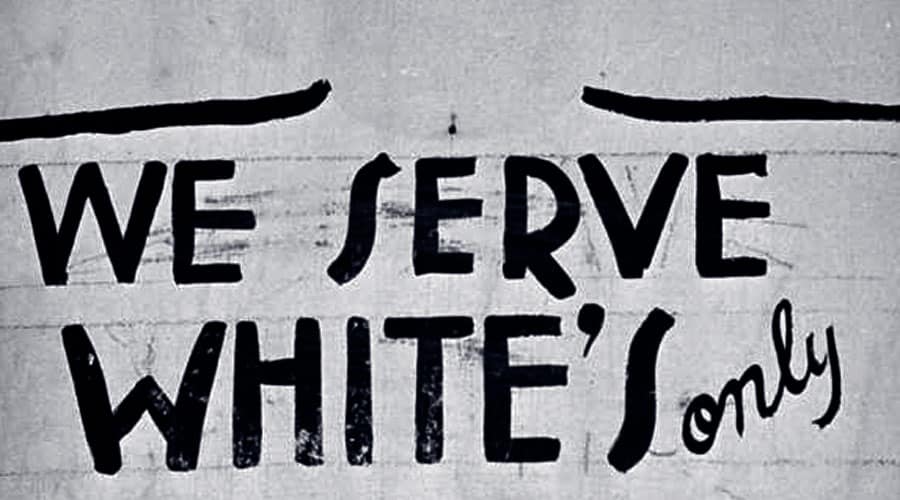
The train car we were ushered to was kind of luxurious and we were given directions to the dining car. However, when we arrived in Cincinnati, Ohio, we were told that we would have to change trains at the Cincinnati terminal. That was a lie. We were simply ushered to a less equipped car and told that we would not be allowed to eat in the dining car since that was for Whites only. However, being a naive young kid from the city, I just assumed it was for rich people who happen to be White.
The rest of the trip went without incident and soon, we were pulling into the terminal in Grenada, Mississippi. We were not allowed to leave the train until the folks in the other car had left. They were all White. Debarking the train with my mom tightly grasping my hand, we walked to the terminal entrance and being somewhat thirsty, I started toward the nearest drinking fountain, not realizing that it was for Whites only. “No, you have to use the fountain over there”, my mom said. Sure enough, there was a sign that said “for coloreds”, but it wasn’t a drinking fountain, it was a dirty old pipe with a simple valve on it. I was sue glad my uncle Havis was there to pick us up.
On the eleven mile drive from Grenada to Gore Springs, we passed by a couple of gas stations. Most were just simple stations with a four foot square building and a pump outside. But when we came to a nicer station with several pumps and a real store, I told mom I had to use the restroom. Leaving the car, I ran to the first door I saw that said “restroom” over the door, not paying attention to the other sign that said “Whites Only”. Needless to say, my uncle properly corrected me and after some hurried explaining to an old White man standing outside, we walked into the store.
Inside the store, the atmosphere was decidedly different as my uncle Havis exchanged greetings with the store owner. We were in Gore Springs now and everyone in Gore Springs knew the Conley family. The store owner said I could have a soda pop if I was thirsty, being a city fella from up north and not used to the “Sippi heat”. My first act of kindness since leaving Detroit.
Not far from our family property, there was a small general store owned by an old White man. He was always nice and I enjoyed the long walk in the hot summer afternoons to go to his store for a soda just to sink my hand in the icy cold water of his cooler to grab a cold soft drink. Mississippi was a contradiction of itself. On the one hand, I saw the respect that people in Gore Springs had for my grandparents, and how friendly they were towards the family despite the racism Mississippi was known for. Taking our cotton to the gin mill in Calhoun City, the White farmers and mill employees would call my grandfather “Mr. Conley”. One man even called him by his first name, James. They had been good friends for several years.
The movie theater was in Grenada and required the eleven mile drive to get there, so it was a big deal to go to the movies. The movie theater was also segregated. Blacks had their own entrance in the rear of the building and had to sit in the balcony seats. That didn’t make sense to my since I knew about gravity and that popcorn and even soft drinks could always accidentally fall down.
One evening after spending a day in the field, the family gathered on Big Momma’s front porch for our usual evening of telling stories and gossip. The Conley houses sat in a sort of cul de sac at the end of the county road, so it was easy to see anyone coming down the unpaved country road. People didn’t accidentally come down that road. There were two old pickup trucks with White men in the cab and several White men in the beds. Some of the men were bold enough to wear their KKK hoodie things. They were also yelling a few words that weren’t proper for a ten year old to hear.
My grandfather ushered us all into the house, grabbed his shotgun, and stepped back onto the porch. The women were all saying stuff like “Oh Lord”, but we kids all gathered at the open window. There was some discussion between my grandfather and the gang of White men, they were evidently looking for one of my distant relatives who had eloped with a White girl. They ere long gone. My grandfather told the guys to get off of his property. Silence. Then there was “Yes sir, Mr. Conley” as they piled back into their trucks, turned around the old sassafras tree in the front yard and drove off, leaving a cloud of dust down the road.
I had a lot of respect for my grandfather before, but now I knew that he had a temper and not only was he a good farmer and an excellent hunter, but he could and would protect the family at any cost.
Opening of the First McDonald’s Franchise by Ray Kroc
The opening of the first McDonald’s franchise by Ray Kroc in Des Plaines, Illinois, marked the beginning of a new era in the fast-food industry. McDonald’s, originally a small drive-in restaurant founded by Richard and Maurice McDonald in San Bernardino, California, in 1940, gained nationwide and eventually global recognition due to Ray Kroc’s vision and franchising strategy.
Details:
Ray Kroc, a Multimixer milkshake machine salesperson, discovered the McDonald brothers’ successful and efficient fast-food operation in 1954. Impressed by their “Speedee Service System,” Kroc proposed to the McDonald brothers that they expand their business model across the United States through franchising. The brothers agreed, and Kroc opened the first McDonald’s franchise in Des Plaines, Illinois, on April 15, 1955.
The first day’s revenue at the Des Plaines location totaled $366.12.
Ray Kroc’s first McDonald’s franchise (Store #1) was demolished in 1984, and a replica was built on the original site, which later became a museum.
Ray Kroc eventually bought out the McDonald brothers for $2.7 million in 1961.
The original McDonald’s mascot was not Ronald McDonald but rather a chef named “Speedee,” symbolizing the fast service at the restaurant.
Effects on Pop Culture: The McDonald’s franchise has had an enormous impact on popular culture, influencing various aspects of society, including food, film, and advertising. Some examples include:
McDonald’s has become synonymous with fast food, shaping food culture worldwide and popularizing items such as the Big Mac and Happy Meal.
The company’s advertising campaigns, featuring memorable slogans and characters like Ronald McDonald, have left an indelible mark on popular culture.
The McDonald’s Monopoly game promotion has been a recurring event since 1987, attracting millions of customers and becoming a pop culture phenomenon.
Films such as “Super Size Me” (2004) and “The Founder” (2016) have explored different aspects of McDonald’s impact on society, from public health concerns to the story of Ray Kroc and the McDonald brothers.
Prominent People Involved:
Ray Kroc: The driving force behind McDonald’s expansion and success, Kroc turned a small California-based operation into a global fast-food empire.
Richard and Maurice McDonald: The founders of the original McDonald’s drive-in, their innovative “Speedee Service System” laid the groundwork for modern fast-food service.
The opening of the first McDonald’s franchise by Ray Kroc in 1955 signaled the start of a fast-food revolution that has left a lasting impact on popular culture and food habits worldwide. McDonald’s rapid growth and success have influenced various aspects of society, from advertising and film to daily life, making it an iconic brand globally recognized.
Venues: RKO Pantages Theatre, Hollywood, California and NBC Century Theatre, New York City, New York
Hosts: Bob Hope (Hollywood) and Thelma Ritter (New York City)
Eligibility Year: 1954
Major Wins:
On the Waterfront clinched the Best Picture Award.
Marlon Brando won Best Actor for his unforgettable role in On the Waterfront.
Grace Kelly took home the Best Actress statuette for The Country Girl.
Directing & Screenplay:
Elia Kazan received the Best Director award for On the Waterfront.
On the Waterfront also won for Best Story and Screenplay.
Additional Info:
Edmond O’Brien received Best Supporting Actor for The Barefoot Contessa.
Eva Marie Saint got the Best Supporting Actress nod for On the Waterfront.
On The Waterfront had twelve Oscar nominations and eight wins.
“This is one night I wish I smoked and drank.” – Grace Kelly, Best Actress, The Country Girl
Dorothy Dandridge was the first African-American actress to receive a nomination for Best Actress.
Trivia:
This ceremony saw the first-ever awards for Best Animated Short Subject.
The category of Best Original Song had a major shakeup: Three songs from Seven Brides for Seven Brothers were nominated, but all lost to Three Coins in the Fountain.
The Best Documentary Feature was awarded to Walt Disney for The Vanishing Prairie.
1955 Oscar Nominees and Winners
Best Motion Picture:
On the Waterfront – Sam Spiegel for Columbia Pictures (WINNER)
The Caine Mutiny – Stanley Kramer for Columbia Pictures
The Country Girl – William Perlberg for Paramount Pictures
Seven Brides for Seven Brothers – Jack Cummings for Metro-Goldwyn-Mayer
Three Coins in the Fountain – Sol C. Siegel for 20th Century Fox
Best Director:
Elia Kazan – On the Waterfront (WINNER)
George Seaton – The Country Girl
William A. Wellman – The High and the Mighty
Alfred Hitchcock – Rear Window
Billy Wilder – Sabrina
Best Actor:
Marlon Brando – On the Waterfront as Terry Malloy (WINNER)
Humphrey Bogart – The Caine Mutiny as Lieutenant Commander Philip Francis Queeg
Bing Crosby – The Country Girl as Frank Elgin
James Mason – A Star Is Born as Norman Maine
Dan O’Herlihy – Robinson Crusoe as Robinson Crusoe
Best Actress:
Grace Kelly – The Country Girl as Georgie Elgin (WINNER)
Dorothy Dandridge – Carmen Jones as Carmen Jones
Judy Garland – A Star Is Born as Esther Blodgett
Audrey Hepburn – Sabrina as Sabrina Fairchild
Jane Wyman – Magnificent Obsession as Helen Phillips
Best Supporting Actor:
Edmond O’Brien – The Barefoot Contessa as Oscar Muldoon (WINNER)
Lee J. Cobb – On the Waterfront as Michael J. Skelly aka “Johnny Friendly”
Karl Malden – On the Waterfront as Father Barry
Rod Steiger – On the Waterfront as Charley “the Gent” Malloy
Tom Tully – The Caine Mutiny as Lieutenant Commander William H. De Vriess
Best Supporting Actress:
Eva Marie Saint – On the Waterfront as Edie Doyle (WINNER)
Nina Foch – Executive Suite as Erica Martin
Katy Jurado – Broken Lance as Señora Devereaux
Jan Sterling – The High and the Mighty as Sally McKee
Claire Trevor – The High and the Mighty as May Holst
Best Screenplay:
The Country Girl – George Seaton based on the play by Clifford Odets (WINNER)
The Caine Mutiny – Stanley Roberts based on the novel by Herman Wouk
Rear Window – John Michael Hayes based on the story “It Had To Be Murder” by Cornell Woolrich
Sabrina – Billy Wilder, Samuel A. Taylor, and Ernest Lehman based on the novel by Samuel Taylor
Seven Brides for Seven Brothers – Albert Hackett, Frances Goodrich, and Dorothy Kingsley based on the story “The Sobbin’ Women” by Stephen Vincent Benét
Best Story and Screenplay:
On the Waterfront – Budd Schulberg (WINNER)
The Barefoot Contessa – Joseph L. Mankiewicz
Genevieve – William Rose
The Glenn Miller Story – Valentine Davies and Oscar Brodney
Knock on Wood – Norman Panama and Melvin Frank
Best Story:
Broken Lance – Philip Yordan (WINNER)
Bread, Love and Dreams – Ettore Maria Margadonna
Forbidden Games – Francois Boyer
Night People – Jed Harris and Tom Reed
There’s No Business Like Show Business – Lamar Trotti (posthumous nomination)
Best Short Subject – Cartoons:
When Magoo Flew (WINNER)
Crazy Mixed Up Pup
Pigs Is Pigs
Sandy Claws
Touché, Pussy Cat!
Best Documentary Feature:
The Vanishing Prairie – Walt Disney (WINNER)
The Stratford Adventure – Guy Glover
Best Documentary Short Subject:
Thursday’s Children (WINNER)
Jet Carrier
Rembrandt: A Self-Portrait
Best Live Action Short Subject, One-Reel:
This Mechanical Age – Robert Youngson (WINNER)
The First Piano Quartette – Otto Lang
The Strauss Fantasy – Johnny Green
Best Live Action Short Subject, Two-Reel:
A Time Out of War – Denis Sanders and Terry Sanders (WINNER)
Beauty and the Bull – Cedric Francis
Jet Carrier – Otto Lang
Siam – Walt Disney Productions
Best Music Score of a Dramatic or Comedy Picture:
The High and the Mighty – Dimitri Tiomkin (WINNER)
The Caine Mutiny – Max Steiner
Genevieve – Larry Adler
On the Waterfront – Leonard Bernstein
The Silver Chalice – Franz Waxman
Best Scoring of a Musical Picture:
Seven Brides for Seven Brothers – Adolph Deutsch and Saul Chaplin (WINNER)
Carmen Jones – Herschel Burke Gilbert
The Glenn Miller Story – Joseph Gershenson and Henry Mancini
A Star Is Born – Ray Heindorf
There’s No Business Like Show Business – Alfred Newman and Lionel Newman
Best Song:
“Three Coins in the Fountain” from Three Coins in the Fountain – Music by Jule Styne; Lyrics by Sammy Cahn (WINNER)
“Count Your Blessings Instead of Sheep” from White Christmas – Music and Lyrics by Irving Berlin
“The High and the Mighty” from The High and the Mighty – Music by Dimitri Tiomkin; Lyrics by Ned Washington
“Hold My Hand” from Susan Slept Here – Music and Lyrics by Jack Lawrence and Richard Myers
“The Man That Got Away” from A Star Is Born – Music by Harold Arlen; Lyrics by Ira Gershwin
Best Sound Recording:
The Glenn Miller Story – Leslie I. Carey (WINNER)
Brigadoon – Wesley C. Miller
The Caine Mutiny – John P. Livadary
Rear Window – Loren L. Ryder
Susan Slept Here – John O. Aalberg
Best Art Direction, Black-and-White:
On the Waterfront – Art Direction and Set Decoration: Richard Day (WINNER)
The Country Girl – Art Direction: Hal Pereira and Roland Anderson; Set Decoration: Samuel M. Comer and Grace Gregory
Executive Suite – Art Direction: Cedric Gibbons and Edward Carfagno; Set Decoration: Edwin B. Willis and Emile Kuri
Le Plaisir – Art Direction and Set Decoration: Max Ophüls
Sabrina – Art Direction: Hal Pereira and Walter Tyler; Set Decoration: Samuel M. Comer and Ray Moyer
Best Art Direction, Color:
20,000 Leagues Under the Sea – Art Direction: John Meehan; Set Decoration: Emile Kuri (WINNER)
A Star Is Born – Art Direction: Malcolm Bert, Gene Allen and Irene Sharaff; Set Decoration: George James Hopkins
Brigadoon – Art Direction: Cedric Gibbons and E. Preston Ames; Set Decoration: Edwin B. Willis and Keogh Gleason
Désirée – Art Direction: Lyle R. Wheeler and Leland Fuller; Set Decoration: Walter M. Scott and Paul S. Fox
Red Garters – Art Direction: Hal Pereira and Roland Anderson; Set Decoration: Samuel M. Comer and Ray Moyer
Best Cinematography, Black-and-White:
On the Waterfront – Boris Kaufman (WINNER)
The Country Girl – John F. Warren
Executive Suite – George Folsey
Rogue Cop – John Seitz
Sabrina – Charles Lang
Best Cinematography, Color:
Three Coins in the Fountain – Milton Krasner (WINNER)
The Egyptian – Leon Shamroy
Rear Window – Robert Burks
Seven Brides for Seven Brothers – George Folsey
The Silver Chalice – William V. Skall
Best Costume Design, Black-and-White:
Sabrina – Edith Head (WINNER)
The Earrings of Madame de… – Georges Annenkov and Rosine Delamare
Executive Suite – Helen Rose
Indiscretion of an American Wife – Christian Dior
It Should Happen to You – Jean Louis
Best Costume Design, Color:
Gate of Hell – Sanzo Wada (WINNER)
Brigadoon – Irene Sharaff
Désirée – Charles LeMaire and René Hubert
A Star Is Born – Jean Louis, Mary Ann Nyberg and Irene Sharaff
There’s No Business Like Show Business – Charles LeMaire, Travilla and Miles White
Best Film Editing:
On the Waterfront – Gene Milford (WINNER)
20,000 Leagues Under the Sea – Elmo Williams
The Caine Mutiny – William A. Lyon and Henry Batista
The High and the Mighty – Ralph Dawson
Seven Brides for Seven Brothers – Ralph E. Winters
Best Special Effects:
20,000 Leagues Under the Sea (WINNER)
Hell and High Water
Them!
Academy Honorary Awards:
Bausch and Lomb Optical “for their contributions to the advancement of the motion picture industry.”
Kemp R. Niver “for the development of the Renovare Process which has made possible the restoration of the Library of Congress Paper Film Collection.”
Greta Garbo “for her unforgettable screen performances.”
Danny Kaye “for his unique talents, his service to the Academy, the motion picture industry, and the American people.”
Jon Whiteley “for his outstanding juvenile performance in The Little Kidnappers
Vincent Winter “for his outstanding juvenile performance in The Little Kidnappers
Best Foreign Language Film:
Jigokumon (Gate of Hell) (Japan)