1. Name the first #1 hit on Billboard’s Hot 100 Chart.
2. How many people lived in the United States in 1958?
3. How many people lived in the World in 1958?
4. Who won the Stanley Cup in 1958?
5. What was the Biggest Number One Song of 1958?
6. Who was the President of the United States in 1958?
7. What company used the slogan: “Look, Ma, no cavities!”?
8. Name the Soviet leader who became the Premier of the Soviet Union in March 1958.
9. what was the average movie theater ticket price in 1958 to the nearest quarter?
10. This popular symbol was designed and created by Gerald Holtom and commissioned by the Campaign for Nuclear Disarmament. Name it.
11. What was the highest-grossing film of 1958?
12. Dan and Frank Carney opened their pizza restaurant in Wichita, Kansas. Name that pizza place.
13. Who received the first Gold record from the RIAA (Recording Industry Association of America)?
14. What was the Bestselling Fiction Book in 1958?
15. How much did a Loaf of Bread cost in 1958?
16. How much did a Gallon of Milk cost in 1958?
17. How much did a Round Steak (one pound) cost in 1958?
18. Although the idea had been around for centuries, Arthur K. “Spud” Melin and Richard Knerr made them out of plastic. It was inducted into the National Toy Hall of Fame in 1999. Name that toy.
19. Which celebrity was NOT born in 1958? Jane Lynch, Megan Mullally, Jamie Lee Curtis, or Tanya Tucker?
20. In 1958, what was the average life expectancy in the United States?
21. This book, published in the US and banned in the USSR, won author Boris Pasternak the Nobel Prize.
22. In 1958, the price of a US Postage stamp increased for the first time in 26 years. What was the cost of a First-Class Stamp effective August 1958?
23. Which company did not start processing credit cards in 1958: American Express, Diner’s Club, or Visa?
24. What was the name of the first dry cat food sold nationwide?
25. Who was the American Vice-President in 1958?
26. Harry Winston, Inc. donated what 45.52-carat famous jewel to the Smithsonian Institution?
27. This 1958 musical-romance film, called the last of the great MGM musicals, was a critical and box office success. Name that film.
28. How much did a gallon of gas cost in 1958?
29. Who was the Time Magazine Man of the Year in 1958?
30. What company introduced the first diet cola?
31. In 1958, an adhesive product called “Eastman #910” went on sale. What do we call this sticky product today?
32. Kellogg’s Cornflakes’ mascot is a rooster. What is his name?
33. The tallest tsunami, 1720 feet high, struck on July 9, 1958. Where did it crash?
34. Phil Spector wrote and recorded his first song in 1958, and it spent three weeks at number one. What was the name of that song?
35. This type of advertising has been banned in the UK, America, and Australia since 1958. What type of advertising?
36. This symbol was designed in 1958 by Robert Heft as a junior high history project; he got a B- for it. Later, it was one of the most displayed objects of all time. What did he design?
37. What improvement made the Crayola ’64’ crayons more fun for kids?
38. This East Coast disc jockey invented the term “Rock and Roll” but got in trouble over “payola,” taking money to play new records. Name that DJ.
39. How much did a dozen eggs cost in 1958?
40. This peanut butter has been among the most popular since it hit store shelves in 1958. How quickly can you name that peanut butter brand?
41. Launched in 1958, what is the oldest man-made satellite still orbiting the Earth?
42. First produced in 1949, the modern design was patented in 1958. This toy is associated with theme parks, movies, and traveling displays. Name this very popular toy.
43. What was the name of the first vessel to cross the North Pole underwater?
44. This word was created in 1958 by Spacecraft and Aeroplanes to consider conquering Earth’s atmosphere and outer space as a single entity. What word?
45. This character, introduced in 1958, was played by character actor House Peters Jr. in the earliest commercials. Today, he is animated and still sells his Procter & Gamble product. Name him.
46. A major film company founded this major music label on March 19, 1958.
47. Who won the 1958 World Series?
48. This 1958 creation helps hold items together, primarily electrical cables or wires.
49. Californians Bill and Mark Richards are credited with inventing what mode of transportation in 1958?
50. This American anti-communist, anti-big government group was founded by Robert W. Welch Jr in Indiana.
51. Who was the Pope in 1958?
52. Now known as LG Electronics, this company was founded in South Korea with another name. What was LG called before renaming itself in 1995?
53. Broadcast on NBC and winning nine Emmy awards, it was the first major television show to be recorded on color videotape. It starred one of the most famous and influential dancers on film. Who was the star of this television special?
54. Jack Kilby invented what electronic device while working at Texas Instruments?
55. What was the Top-Rated TV Show in the 1957/1958 season?
56. Before they were The Beatles, that group had another name. What was that other name?
57. This satellite was the first successfully launched by the United States and part of the US participation in the International Geophysical Year.
58. Created by cartoonist Johnny Hart, this daily comic strip features cavemen. Name that long-running comic.
Trivia Team Bonus Questions:
1. The National Aeronautics and Space Administration (NASA) was created in 1958. What federal agency did NASA replace?
2. Who were the 1958 NBA Champions?
3. When US President Dwight D. Eisenhower signed the Federal Aviation Act, what governmental agency did he form?
4. What Horse won the Kentucky Derby in 1958?
5. Where was the first Major League Baseball regular-season game ever played in California?
6. What team won the FIFA World Cup in 1958?
7. Pope Pius XII declared someone the patron saint of television. Name that saint.
8. Mad Magazine has a drawn mascot named Alfred E. Newman. Cracked Magazine, a Mad rival, also had a mascot. Can you name him?
9. Who were the 1958 NFL Champions?
10. Who won the United States Chess Championship at age 14, the youngest player ever?
The Answers:
58 Trivia Answers for 1958 History
1. Name the first #1 hit on Billboard’s Hot 100 Chart. Poor Little Fool by Ricky Nelson
2. How many people lived in the United States in 1958?
The population was an estimated 174,881,904 people.
3. How many people lived in the World in 1958?
The estimated world population in 1958 was 2,916,030,167 people.
4. Who won the Stanley Cup in 1958?
In 1958, The Montreal Canadiens won over the Boston Bruins (4 games to 2)
5. What was the Biggest Number One Song of 1958? At The Hop by Danny and The Juniors
6. Who was the President of the United States in 1958?
Dwight D. Eisenhower (January 20, 1953 – January 20, 1961)
7. What company used the slogan: “Look, Ma, no cavities!”?
Crest toothpaste
8. Name the Soviet leader who became the Premier of the Soviet Union in March 1958.
Nikita Khrushchev
9. what was the average movie theater ticket price in 1958 to the nearest quarter?
75 cents
10. This popular symbol was designed and created by Gerald Holtom and commissioned by the Campaign for Nuclear Disarmament. Name it.
The Peace Symbol
11. What was the highest-grossing film of 1958? South Pacific
12. Dan and Frank Carney opened their pizza restaurant in Wichita, Kansas. Name that pizza place.
Pizza Hut
13. Who received the first Gold record from the RIAA (Recording Industry Association of America)?
Perry Como for his hit single, Catch A Falling Star
14. What was the Bestselling Fiction Book in 1958? Doctor Zhivago by Boris Pasternak
15. How much did a Loaf of Bread cost in 1958?
19 cents
16. How much did a Gallon of Milk cost in 1958?
$1.01
17. How much did a Round Steak (one pound) cost in 1958?
$1.04
18. Although the idea had been around for centuries, Arthur K. “Spud” Melin and Richard Knerr made them out of plastic. It was inducted into the National Toy Hall of Fame in 1999. Name that toy.
Hula Hoop
19. Which celebrity was NOT born in 1958? Jane Lynch, Megan Mullally, Jamie Lee Curtis, or Tanya Tucker?
Jane Lynch (born July 14, 1960)
20. In 1958, what was the average life expectancy in the United States?
Men – 66.6 years, Women – 72.9 years.
21. This book, published in the US and banned in the USSR, won author Boris Pasternak the Nobel Prize. Dr. Zhivago
22. In 1958, the price of a US Postage stamp increased for the first time in 26 years. What was the cost of a First-Class Stamp effective August 1958?
4 cents
23. Which company did not start processing credit cards in 1958: American Express, Diner’s Club, or Visa?
The Diner’s Club card launched in 1950
24. What was the name of the first dry cat food sold nationwide?
Friskies (Little Friskies for Cats)
25. Who was the American Vice-President in 1958?
Richard Nixon (January 20, 1953 – January 20, 1961)
26. Harry Winston, Inc. donated what 45.52-carat famous jewel to the Smithsonian Institution?
The Hope Diamond
27. This 1958 musical-romance film, called the last of the great MGM musicals, was a critical and box office success. Name that film. Gigi
28. How much did a gallon of gas cost in 1958?
$0.30 per gallon
29. Who was the Time Magazine Man of the Year in 1958?
Charles de Gaulle
30. What company introduced the first diet cola?
Royal Crown introduced “Diet Rite”
31. In 1958, an adhesive product called “Eastman #910” went on sale. What do we call this sticky product today?
Super Glue
32. Kellogg’s Cornflakes’ mascot is a rooster. What is his name?
Cornelius “Corny” Rooster
33. The tallest tsunami, 1720 feet high, struck on July 9, 1958. Where did it crash?
Alaska (Lituya Bay)
34. Phil Spector wrote and recorded his first song in 1958, and it spent 3 weeks at number one. What was the name of that song? To Know Him Is to Love Him by The Teddy Bears
35. This type of advertising has been banned in the UK, America, and Australia since 1958. What type of advertising?
Subliminal advertising
36. This symbol was designed in 1958 by Robert Heft as a junior high history project; he got a B- for it. Later, it was one of the most displayed objects of all time. What did he design?
The 50-star American Flag.
37. What improvement made the Crayola ’64’ crayons more fun for kids?
It included a built-in sharpener on the back.
38. This East Coast disc jockey invented the term “Rock and Roll” but got in trouble over “payola,” taking money to play new records. Name that DJ.
Alan Freed
39. How much did a dozen eggs cost in 1958?
60 cents
40. This peanut butter has been among the most popular since it hit store shelves in 1958. How quickly can you name that peanut butter brand?
Jif
41. Launched in 1958, what is the oldest man-made satellite still orbiting the Earth?
Vanguard 1
42. First produced in 1949, the modern design was patented in 1958. This toy is associated with theme parks, movies, and traveling displays. Name this very popular toy.
Lego
43. What was the name of the first vessel to cross the North Pole underwater?
USS Nautilus
44. This word was created in 1958 by Spacecraft and Aeroplanes to consider conquering Earth’s atmosphere and outer space as a single entity. What word?
Aerospace
45. This character, introduced in 1958, was played by character actor House Peters Jr. in the earliest commercials. Today he is animated and still sells his Procter & Gamble product. Name him.
Mr. Clean
46. A major film company founded this major music label on March 19, 1958.
Warner Records. Tab Hunter’s Jealous Heart, which only made #62 on the charts, was the only chart record Warner Brothers had during its first year.
47. Who won the 1958 World Series?
In 1958, The New York Yankees won, beating the Milwaukee Braves (4 games to 3)
48. This 1958 creation helps hold items together, primarily electrical cables or wires.
A cable tie (or hose tie, zip tie, or Ty-Rap)
49. Californians Bill and Mark Richards are credited with inventing what mode of transportation in 1958?
Skateboards
50. This American anti-communist, anti-big government group was founded by Robert W. Welch Jr in Indiana.
John Birch Society
51. Who was the Pope in 1958?
Pope Pius XII, from March 2, 1939 – October 9, 1958, and Pope John XXIII, October 28, 1958 – June 3, 1963
52. Now known as LG Electronics, this company was founded in South Korea with another name. What was LG called before renaming itself in 1995?
GoldStar
53. Broadcast on NBC and winning nine Emmy awards, it was the first major television show to be recorded on color videotape. It starred one of the most famous and influential dancers on film. Who was the star of this television special?
Fred Astaire (on An Evening with Fred Astaire)
54. Jack Kilby invented what electronic device while working at Texas Instruments?
The first integrated circuit
55. What was the Top-Rated TV Show in the 1957/1958 season?
Gunsmoke (CBS)
56. Before they were The Beatles, that group had another name. What was that other name?
The Quarrymen
57. This satellite was the first successfully launched by the United States and part of the US participation in the International Geophysical Year.
Explorer I
58. Created by cartoonist Johnny Hart, this daily comic strip features cavemen. Name that long-running comic.
B.C.
Trivia Team Bonus Questions:
1. The National Aeronautics and Space Administration (NASA) was created in 1958. What federal agency did NASA replace?
National Advisory Committee for Aeronautics (NACA, formed in 1915)
2. Who were the 1958 NBA Champions?
For the 1957-58 Season, Champion St. Louis Hawks won 4 games to 2 over the Boston Celtics
3. When US President Dwight D. Eisenhower signed the Federal Aviation Act, what governmental agency did he form?
Federal Aviation Agency (FAA, aka Federal Aviation Administration).
4. What Horse won the Kentucky Derby in 1958?
Tim Tam
5. Where was the first Major League Baseball regular-season game ever played in California?
On April 15, The San Francisco Giants beat the Los Angeles Dodgers 8–0 at San Francisco’s Seals Stadium
6. What team won the FIFA World Cup in 1958?
Brazil
7. Pope Pius XII declared someone the patron saint of television. Name that saint.
Saint Clare (of Assisi)
8. Mad Magazine has a drawn mascot named Alfred E. Newman. Cracked Magazine, a Mad rival, also had a mascot. Can you name him?
Sylvester P. Smythe
9. Who were the 1958 NFL Champions?
Baltimore Colts
10. Who won the United States Chess Championship at age 14, the youngest player ever?
Bobby Fischer
New Artists in the Pop Charts Included: Little Anthony and the Imperials, The Big Bopper, Johnny Otis Show, Link Wray, Dion and the Belmonts, Ritchie Valens
“Tom and Jerry” had a top 50 Billboard hit with Hey, Schoolgirl. They did much better for themselves when they used their real names, Paul Simon and Art Garfunkle later in the 1960s.
‘Novelty Pop’ also came into the pop music culture – David Seville’s Witch Doctor and The Chipmonk Song, Sheb Wooley’s Purple People Eater, The Five Blobs’ The Blob and Beep Beep by The Playmates hit the Billboard Charts, as did Bird Dog (The Everly Brothers), Yakety Yak (The Coasters), Short Shorts (The Royal Teens) and Splish Splash by Bobby Darin.
1958 also brought us some of the memorable pop/rock instrumentals of all time – Miserlou by Dick Dale, Tequila by the Champs, Rumble by Link Wray, March From the River Kwai and Colonel Bogey by Mitch Miller and Rebel Rouser by Duane Eddy.
1958’s Retro Top 10 Hits
1. Tequila – Champs
2. All I Have To Do Is Dream – The Everly Brothers
3. Summertime, Summertime – The Jamies
4. Fever – Peggy Lee
5. For Your Precious Love – Jerry Butler
6. Born Too Late – Poni-Tails
7. Witch Doctor – David Seville
8. One Summer Night – The Danleers
9. Willie and the Hand Jive – Johnny Otis Show
10. Rumble – Link Wray
1958’s ‘One Hit Wonders’
1. Miserlou – Dick Dale (Released again in 1963)
2. Get A Job – The Silhouettes
3. You – The Aquatones
4. To Know Him Is To Love Him – The Teddybears
5. He’s Got The Whole World In His Hands – Mahila Jackson OR Laurie London
6. Walkin’ With Mr. Lee – Lee Allen and His Band
7. Come Prima – Polly Bergan
8. The Blob – The Five Blobs
9. She’s Neat – Dale Wright
10. The Green Mosquito – The Tune Rockers
1958’s Dance Top 10 Hit List
1. La Bamba – Ritchie Valens
2. Book of Love – The Monotones
3. Great Balls of Fire – Jerry Lee Lewis
4. Little Star – The Elegants
5. Rockin’ Robin – Bobby Day
6. The Stroll – The Diamonds
7. Splish Splash – Bobby Darin
8. Short Shorts – Royal Teens
9. Do You Want To Dance – Bobby Freeman
10. Come On, Let’s Go – Ritchie Valens
1958’s Doo-Wop Song Top 10 Hit List
1. Little Star – Elegants
2. 16 Candles – The Crests
3. Book Of Love – Monotones
4. I Wonder Why – Dion & the Belmonts
5. Twilight Time – The Platters
6. Get A Job – The Silhouettes
7. Trickle, Trickle – Videos
8. Lollipop – The Chordettes
9. Yakety Yak – Coasters
10. Rama Lama Ding Dong – Edsels
More Doo-Wop Song Hits:
Stormy Weather – Spaniels
So Fine – Fiestas
Oh Gee Oh Gosh – Kodaks
All Night Long – Du Mauriers
I Remember – Five Discs
Zing Went The Strings Of My Heart – Coasters
Drip Drop – Drifters
Oh Baby – The Jesters
False Alarm – Revels
Peppermint Stick – El Chords
Zoom Zoom Zoom – Collegians
Everyday Of The Week – Students
PCM’s 1958 Top 10 Hit List
1. Tequila – Champs
2. Johnny B Goode – Chuck Berry
3. At The Hop – Danny and the Juniors
4. Get A Job – Silhouettes
5. Twilight Time – The Platters
6. It’s All In The Game – Tommy Edwards
7. Do You Want To Dance – Bobby Freeman
8. Sweet Little Sixteen – Chuck Berry
9. Rockin’ Robin – Bobby Day
10. Tears on My Pillow – Little Anthony and the Imperials
Like all Pop Culture Madness music charts, this list is a reflection of the most requested songs in our network of disc-jockeys and YOUR e-mailed suggestions.
This list is of songs that were popular before the Beatles, and some songs after that continued in that old school 50’s style. There was a time when Chuck Berry, Lee Andrews, Bill Haley, and even Elvis Presley topped this list. Although primarily rockers, a few songs from the contemporary pop standards era have cracked this list.
REMEMBER – we update the oldies charts every year – it’s not a list of the “greatest” music – it’s a list of the most requested music of all time.
1. Love Me Tender – Elvis Presley
2. In The Still Of The Night – Five Satins
3. Earth Angel – The Penguins
4. Tear Drops – Lee Andrews and the Hearts
5. (We’re Gonna) Rock and The Clock – Bill Haley & His Comets
6. Hound Dog – Elvis Presley
7. Jailhouse Rock – Elvis Presley
8. You Send Me – Sam Cooke
9. That’ll Be The Day – Buddy Holly and the Crickets
10. All Shook Up – Elvis Presley
11. I Do – Marvellows
12. Banana Boat (Day-O) – Harry Belafonte
13. At The Hop – Danny and the Juniors
14. Why Do Fools Fall In Love – Frankie Lymon and the Teenagers
15. Little Bitty Pretty One – Thurston Harris
16. Only You (And You Alone) – The Platters
17. Rockin’ Robin – Bobby Day
18. Chances Are – Johnny Mathis
19. Roll Over Beethoven – Chuck Berry
20. It’s All In The Game – Tommy Edwards
21. Wake Up Little Susie – The Everly Brothers
22. The Great Pretender – The Platters
23. Long Lonely Nights – Lee Andrews and The Hearts
24. Don’t Be Cruel – Elvis Presley
25. Let The Good Times Roll – Shirley and Lee
26. My Prayer – The Platters
27. Great Balls of Fire – Jerry Lee Lewis
28. Rock-in Robin – Bobby Day
29. The 81 – Candy and the Kisses
30. Come On, Let’s Go – Ritchie Valens
31. Sweet Little Sixteen – Chuck Berry
32. Johnny B. Goode – Chuck Berry
33. My Blue Heaven – Fats Domino
34. I Wonder Why – Dion and the Belmonts
35. Tears On My Pillow – Little Anthony and the Imperials
36. Moments To Remember – The Four Lads
37. Peggy Sue – Buddy Holly and the Crickets
38. Mr. Lee – Bobbettes
39. Tequila – The Champs
40. Be-Bop-A-Lula – Gene Vincent
41. Rock and Roll Is Here To Stay – Danny and the Juniors
42. Silhouettes – The Rays
43. Splish Splash – Bobby Darin
44. Little Darlin’ – The Diamonds
45. See You Later, Alligator – Bill Haley And His Comets
46. Rock and Roll Music – Chuck Berry
47. Chantilly Lace – Big Bopper
48. Queen of the Hop – Bobby Darin
49. Memories Are Made Of This – Dean Martin
50. (You’ve Got) The Magic Touch – The Platters
51. Tutti Frutti – Little Richard
52. Blueberry Hill – Fats Domino
53. Get A Job – The Silhouettes
54. You Are My Destiny – Paul Anka
55. Maybellene – Chuck Berry
56. Breathless – Jerry Lee Lewis
57. Goody Goody – Frankie Lymon & the Teenagers
58. Long Tall Sally – Little Richard
59. Yakety Yak – The Coasters
60. I’m Walkin’ – Fats Domino
61. No One KNows – Dion & the Belmonts
62. That Old Black Magic – Sammy Davis, Jr.
63. Wonderful! Wonderful! – Johnny Mathis
64. The Stroll – The Diamonds
65. The ABC’s Of Love – Frankie Lymon and The Teenagers
66. Little Star – The Elegants
67. Be-Bop Baby – Ricky Nelson
68. Love Is Strange – Mickey & Sylvia
69. My Special Angel – Bobby Helms
70. Blue Suede Shoes – Carl Perkins
71. Shake Rattle and Rool – Bill Haley and His Comets (1954)
72. It’s Not For Me To Say – Johnny Mathis
73. Fever – Peggy Lee
74. Maybe Baby – The Crickets
75. Whatever Will Be, Will Be (Que Sera, Sera) – Doris Day
76. I Walk The Line – Johnny Cash
77. The Twelfth of Never – Johnny Mathis
78. Tutti Frutti – Pat Boone
79. All I Have To Do Is Dream – The Everly Brothers
80. Come Go With Me – The Dell-Vikings
81. Unchained Melody – Al Hibbler
82. One Night – Elvis Presley
83. Tonite, Tonite – Mello-Kings
84. Don’t You Just Know It – Huey Smith and the Clowns
85. Bye Bye Love – The Everly Brothers
86. Diana – Paul Anka
87. Rebel Rouser – Duane Eddy
88. Young Blood – The Coasters
89. Rumble – Link Wray
90. Mack The Knife – Louis Armstrong
91. Who’s Sorry Now – Connie Francis
92. A Wonderful Time Up There – Pat Boone
93. Rocking Pneumonia And The Boogie Woogie Flu – Huey Smith and the Clowns
December 28, 1957 – January 10, 1958:
Pat Boone – April Love
January 11, 1958 – February 14, 1958:
Danny & the Juniors – At The Hop
February 15, 1958 – March 21, 1958:
Elvis Presley – Don’t / I Beg Of You
March 22, 1958 – April 25, 1958:
The Champs – Tequila
April 26, 1958 – May 2, 1958:
The Platters – Twilight Time
May 3, 1958 – May 16, 1958:
David Seville – Witch Doctor
May 17, 1958 – June 13, 1958:
The Everly Brothers – All I Have To Do Is Dream
June 14, 1958 – July 25, 1958:
Sheb Wooley – The Purple People Eater
July 26, 1958 – August 3, 1958:
Elvis Presley – Hard Headed Woman
August 4, 1958 – August 17, 1958:
Ricky Nelson – Poor Little Fool
August 18, 1958 – August 24, 1958:
Domenico Modugno – Volare (Nel Blu Dipinto Di Blu)
August 25, 1958 – September 28, 1958:
The Elegants – Little Star
September 29, 1958 – November 9, 1958:
Tommy Edwards – It’s All in the Game
November 10, 1958 – November 16, 1958:
Conway Twitty – It’s Only Make Believe
November 17, 1958 – November 30, 1958:
The Kingston Trio – Tom Dooley
December 1, 1958 – December 21, 1958:
The Teddy Bears – To Know Him Is to Love Him
December 22, 1958 – January 18, 1959:
The Chipmunks with David Seville – The Chipmunk Song
(Data is compiled from various charts including Billboard’s “Pop,” “Airplay,” “R&B” and “Singles” Charts. “Hot 100” is the primary chart used starting October, 1958)
World-Changing Event: President Dwight Eisenhower signed the National Aeronautics and Space Act, creating NASA.
The Top Song was At The Hop by Danny & The Juniors.
Influential Songs include Tequila by The Champs, Tom Dooley by The Kingston Trio, and Rebel Rouser by Duane Eddy.
The Movies to Watch include South Pacific, High School Confidential, St. Louis Blues, Attack of the 50-Foot Woman, Cat on a Hot Tin Roof, The Defiant Ones, The Fly, Auntie Mame, The Blob and Vertigo.
The Most Famous Person in America was probably Elizabeth Taylor.
Notable books include Things Fall Apart by Chinua Achebe and Doctor Zhivago by Boris Pasternak.
Bank of America launched the first credit card with extended credit in September 1958.
Price of a postage stamp in 1958: 4 cents
Price of a used ’57 Ford Fairlane: $1,995.00
The Bald Guy was Yul Brynner
The Story Behind the Song: Bruce Springsteen’s Nebraska is the story of 20-year-old Charles Starkweather and his 13-year-old girlfriend Caril Ann Fugate, who murdered 11 people over eight days in 1958.
Top Ten Baby Names of 1958
Mary, Susan, Linda, Karen, Patricia, Michael, David, James, Robert, John
Fashion Icons and Sex Symbols
Carroll Baker, Brigitte Bardot, Claudia Cardinale, Doris Day, Diana Dors, Anita Ekberg, Annette Funicello, Ava Gardner, Audrey Hepburn, Gina Lollobrigida, Sophia Loren, Jayne Mansfield, Marilyn Monroe, Julie Newmar, Kim Novak, Elizabeth Taylor, Mamie Van Doren
Sex Symbols and Hollywood Hunks
Paul Newman, Elvis Presley
Oscars: 30th Academy Awards
The Oscars unfurled their red carpet at the RKO Pantages Theatre in Hollywood on March 26, 1958. Rosalind Russell and Bob Hope hosted the ceremony. The Bridge on the River Kwai had a night to remember, scoring seven awards, including Best Picture. Alec Guinness captured Best Actor for the same film. The Best Actress honor went to Joanne Woodward for The Three Faces of Eve.
Emmy Awards: 10th Primetime Emmy Awards
Hosted by Danny Thomas, the Emmy Awards on April 15, 1958, took place at the Coconut Grove Ambassador Hotel, Los Angeles. Gunsmoke received the accolade for Best Dramatic Series, while The Phil Silvers Show claimed Best Comedy Series. Robert Young snagged Best Actor for Father Knows Best, and Jane Wyatt received Best Actress for the same show, proving that father—and mother—did know best that year.
“The Quotes”
“What counts is not necessarily the size of the dog in the fight – it’s the size of the fight in the dog. ”
– President Dwight D Eisenhower
“Look, Ma, no cavities!”
– Crest toothpaste ad
“Life is a banquet, and most poor suckers are starving to death!”
– Rosalind Russell, in ‘Auntie Mame’
Time Magazine’s Man of the Year
Charles de Gaulle
Miss America
Marilyn Van Derbur (Denver, CO)
Miss USA
Eurlyne Howell (Louisiana)
The Scandals
DJ Alan Freed, the inventor of the term ‘Rock and Roll’, was accused of being paid to promote specific songs on his popular radio and live shows. His career ended, along with his street cred, in the PAYOLA scandal.
Jerry Lee Lewis married his 13-year-old 2nd cousin.
Disney murdered scores of Lemmings for the ‘suicide scene’ in the 1958 movie White Wilderness. Producers pushed and threw them off a cliff while shooting footage of the cruelty, then framed it as a natural occurrence for the audience.
Lana Turner’s daughter, Cheryl, saw her mother being beaten by her boyfriend, Johnny Stompanato, and killed him with a kitchen knife. Some people think that Lana did the self-defensive killing.
1958 Pop Culture Facts & History
The Adventures of Superpup never passed the ‘unaired pilot’ stage.
The Modern plastic Hula Hoop was invented in 1958 by Arthur K. Melin and Richard Knerr. In the 1930s, the first marketed Hula Hoops were made of bamboo and sold as exercise equipment, but they have been used for at least a few hundred years; even in Europe, they used metal tubes. But When they started marketing them in the Summer of 1958, Wham-O sold 25 Million of them. By 1960, 200 Million of them were sold.
Two pilots, Robert Timm and John Cook, took off from McCarran Airfield in Las Vegas, Nevada. They flew a Cessna 172 for 64 days, 22 hours, 19 minutes, and 5 seconds without landing (December 4, 1958- February 4, 1959), refueling by matching speed with a fuel truck driving down a road.
The Ford Motor Company had conceived a nuclear-powered car called the “Nucleon,” with its own contained reactor.
The gesture of celebrating victory by lifting the trophy above the head came in 1958 when photographers asked Hilderaldo Bellini, captain of the Brazilian team at the time, to lift the World Cup trophy after beating Sweden so that they could get a better view of it.
Bobby Fischer (14 years old) won the United States Chess Championship.
As a test, Bank of America mailed 60,000 residents of Fresno, California, a small plastic card with a $500 credit line. The experiment was successful, and the program became Visa.
Music producer Phil Spector’s high-school band (The Teddy Bears) made their first record, To Know Him Is to Love Him. It became number one on the pop charts.
Led by the retired Boston candy manufacturer Robert H.W. Welch Jr., a group of anti-communist activists founded an organization called the John Birch Society that was dedicated to finding and destroying all traces of communism in the United States. The group got their name from John Birch, an intelligence officer killed in China during the Cold War.
The US 50 Star Flag was designed in 1958 by Robert Heft as a junior high history project and got a B-. The grade was later changed to an A after Heft’s design was accepted and adopted by the United States Congress in 1959. Robert and his teacher agreed after the initial B minus grade was given but before the US Congress accepted it.
Crayola’s Prussian Blue crayon was renamed Midnight Blue in 1958.
First Class Postage Stamps increased to 4 cents on August 1, 1958.
The only gas station ever designed by Frank Lloyd Wright was built in 1958 and still operates at 202 Cloquet Avenue, Cloquet, Minnesota.
The LEGO was patented (#3005282A) in 1958.
The world’s tallest ever recorded tsunami was in Alaska in 1958, caused by a landslide after an earthquake in the Fairweather Fault in the Alaska Panhandle. The 100-foot wave reached 1720 feet above sea level.
The Bossa Nova music genre was created in Rio de Janeiro with João Gilberto’s recording of Chega de Saudade.
Bruce Lee was the 1958 Hong Kong Cha Cha Dance Championship winner.
Elvis Presley was inducted into the US Army, Private #53310761.
Dick Dale invented Surf Guitar Music with Let’s Go Trippin’
Vanguard 1, launched in 1958, is the oldest man-made satellite in orbit. Communication with it stopped working in 1964.
Sir Edmund Hillary reached the South Pole.
The 1958 National Football League Championship Game was the 26th NFL championship game, played on December 28th at Yankee Stadium in New York City. It was the first NFL playoff game to go into sudden-death overtime, and the final score was Baltimore Colts 23, New York Giants 17. The game has since become known as “The Greatest Game Ever Played.”
Lawrence Welk was the first TV show to air in stereo before stereo TV had been invented. ABC simulcast one audio channel on its radio network and the other via TV so that listening to both would give you a stereo effect.
Nuclear Oops
The US Air Force lost a 7,600-pound (3,400 kg) Mark 15 nuclear bomb in an F-86/B-47 collision in the Atlantic Ocean off Tybee Island, near Savannah, Georgia, and it has still not been found.
A 26-kiloton Mark 6 mistakenly fell out of a B-47 jet, dropping 15,000 feet into the backyard of Walter Gregg in Mars Bluff, South Carolina. The non-nuclear part of the bomb blew up and left a crater. It’s on private property, so don’t visit without permission.
Project A119
The US Air Force made plans to detonate a nuclear bomb on the moon and wanted it to visible to the naked eye on Earth. They hoped it would boost American morale to counter the USSR’s advances in the space race. #coldwar
Civil Rights
Garth Williams, the illustrator of Stuart Little, wrote a kids’ book in 1958 called The Rabbits’ Wedding. An Alabama State Senator claimed the book was “propaganda for integration and intermarriage,” as the book featured a bunny with white fur and another with black.
Clennon Washington King Jr. applied to the (then) all-white University of Mississippi, and he was committed to Mississippi State Hospital in Whitfield for trying to attend it. In 1960, King ran for President as the candidate of the Independent Afro-American Party, with Reginald Carter as his running mate.
Tragedy
One of the worst school bus accidents in American history occurred in Prestonburg, Kentucky. 26 children and the bus driver were killed. Twenty-two children escaped.
World War I Update
Andorra declared war on Germany during WWI but didn’t send any soldiers because they didn’t have an army. At the Treaty of Versailles, Andorra was forgotten and technically remained at war with Germany until the two countries declared peace in 1958.
World War II Update
During a visit to Germany in 1958, Comedic Actor Groucho Marx climbed a pile of rubble that marked the site of Adolf Hitler’s bunker, the believed site of Hitler’s death, and performed a two-minute Charleston Dance.
Nobel Prize Winners
Physics – Pavel Alekseyevich Cherenkov, Ilya Mikhailovich Frank, and Igor Yevgenyevich Tamm
Chemistry – Frederick Sanger
Physiology or Medicine – George Wells Beadle, Edward Lawrie Tatum, and Joshua Lederberg
Literature – Boris Leonidovich Pasternak
Peace – Georges Pire
1st Appearances & 1958’s Most Popular Christmas Gifts, Toys and Presents
LEGOs, Skateboards, Beat the Clock Game, Crayola Crayons ’64 box’ with built-in sharpener*, Concentration TV Game home version, Hula Hoop (U.S.)
*Crayola crayons first came out in 1903
The Habit
Reading Doctor Zhivago by Boris Pasternak
More 1958 Firsts
The American Express card was introduced in 1958.
The term “meritocracy” was coined by Michael Young in his 1958 dystopian essay The Rise of the Meritocracy.
The modern hula hoop was invented in 1958 by Arthur K. “Spud” Melin and Richard Knerr and distributed for sale by their company, Wham-O!
An Evening with Fred Astaire, the first television show recorded on color videotape, was broadcast on NBC.
Chicken Ramen, the first instant noodles, went on sale in Japan.
Clifton Hillegass in Lincoln, Nebraska, started cliffsNotes.
Dracula was released, starring Christopher Lee. It was the first horror movie from Hammer Films.
The Jim Henson Company (Muppets Inc.) was founded.
The internationally recognized peace symbol was designed in 1958 by Gerald Holtom as the logo for the Campaign for Nuclear Disarmament.
Pizza Hut was founded in Wichita, Kansas, by Dan and Frank Carney.
The first video game, “Tennis for Two,” invented by William Higinbotham, was introduced at the Brookhaven National Laboratory Visitors’ Day Exhibit in the United States.
Jack Kilby invented the first integrated circuit while working at Texas Instruments.
Kitchens were smelling a lot cleaner thanks to the introduction of Mr. Clean in 1958. In 1998, People Magazine called Mr. Clean “one of the sexiest men alive.”
Commercial, domestic jet airline service opened between New York and Miami.
Best Film Oscar Winner
The Bridge Over River Kwai (presented in 1958)
Popular and Best-selling Books From 1958
A Fly Went By by Mike McClintock and Fritz Siebel Anatomy of a Murder by Robert Traver Around the World with Auntie Mame by Patrick Dennis By Love Possessed by James Gould Cozzens The Cat in the Hat Comes Back by Dr. Seuss Dr. No by Ian Fleming Doctor Zhivago by Boris Pasternak Eloise at Christmastime by Kay Thompson The Enemy Camp by Jerome Weidman From the Terrace by John O’Hara Ice Palace by Edna Ferber Lolita by Vladimir Nabokov Night by Elie Wiesel Things Fall Apart by Chinua Achebe Victorine by Frances Parkinson Keyes The Winthrop Woman by Anya Seton Yertle the Turtle and Other Stories by Dr. Seuss
1958 Most Popular TV Shows
1. Gunsmoke (CBS)
2. Wagon Train (NBC)
3. Have Gun Will Travel (CBS)
4. The Rifleman (ABC)
5. The Danny Thomas Show (CBS)
6. Maverick (ABC)
7. Tales of Wells Fargo (NBC)
8. The Real McCoys (ABC)
9. I’ve Got a Secret (CBS)
10. The Life and Legend of Wyatt Earp (ABC)
1958 Billboard Number One Songs
December 30, 1957 – January 10, 1958: April Love – Pat Boone
January 11 – February 14: At The Hop – Danny and the Juniors
February 15 – March 21: Don’t (I Beg of You) – Elvis Presley
March 22 – April 25: Tequila – The Champs
April 26 – May 2: Twilight Time – The Platters
May 3 – May 16: Witch Doctor – David Seville
May 17 – June 13: All I Have To Do Is Dream – The Everly Brothers
June 14 – July 25: Purple People Eater – Sheb Wooley
July 26 – August 8: Hard Headed Woman – Elvis Presley
August 9 – August 22: Poor Little Fool – Ricky Nelson
August 23 – August 29: Volare – Domenico Modugno
August 30 – September 5: Little Star – The Elegants
September 6 – October 3: Volare – Domenico Modugno
October 4 – November 14: It’s All In The Game – Tommy Edwards
November 15 – November 21: It’s Only Make Believe – Conway Twitty
November 22 – November 28: Tom Dooley – Kingston Trio
November 29 – December 5: It’s Only Make Believe – Conway Twitty
December 6 – December 26: To Know Him is To Love Him – Teddy Bears
December 27, 1958 – January 18, 1959: Chipmunk Song – David Seville & The Chipmunks
Sports
World Series Champions: New York Yankees
NFL Champions: Baltimore Colts
NBA Champions: St. Louis Hawks
Stanley Cup Champs: Montreal Canadiens
U.S. Open Golf Tommy Bolt
U.S. Tennis: (Men/Ladies) Ashley J. Cooper/Althea Gibson
Wimbledon (Men/Women): Ashley Cooper/Althea Gibson
NCAA Football Champions: Iowa & LSU
NCAA Basketball Champions: Kentucky
Kentucky Derby: Tim Tam
World Cup (Soccer): Brazil
National Aeronautics and Space Administration (NASA)
The National Aeronautics and Space Administration (NASA) is a United States government agency responsible for the nation’s civilian space program and for aeronautics and aerospace research. NASA has played a significant role in advancing space exploration, technology, and scientific research. Its establishment marked the beginning of a new era of space exploration. It contributed to the United States’ achievements in the space race against the Soviet Union during the Cold War.
Dates and Details:
On October 1, 1958, NASA officially began operations, taking over the responsibilities of its predecessor, the National Advisory Committee for Aeronautics (NACA).
NASA’s establishment directly responded to the launch of the Soviet satellite Sputnik 1 on October 4, 1957, which marked the beginning of the space race between the United States and the Soviet Union.
The National Aeronautics and Space Act, signed by President Dwight D. Eisenhower on July 29, 1958, created NASA and outlined its mission, which included exploring outer space for peaceful purposes and advancing aeronautical and space-related research.
NASA Facts:
NASA’s first administrator was T. Keith Glennan, who served from 1958 to 1961, overseeing the agency’s initial programs, including developing the Mercury and Gemini manned spaceflight programs.
NASA’s Jet Propulsion Laboratory (JPL) in Pasadena, California, was originally part of the California Institute of Technology and was transferred to NASA in 1958.
The first American satellite launched by NASA was Explorer 1 on January 31, 1958, which discovered the Van Allen radiation belts surrounding Earth.
The Apollo program, which ultimately led to the first human landing on the Moon in 1969, was announced by President John F. Kennedy in 1961 as a response to Soviet cosmonaut Yuri Gagarin becoming the first human in space.
NASA’s Space Shuttle program, which began in 1981 and ended in 2011, was responsible for launching numerous satellites, constructing the International Space Station (ISS), and conducting various scientific research missions.
Effects on Pop Culture:
NASA has significantly influenced popular culture, inspiring generations of people with its achievements in space exploration.
The Apollo 11 Moon landing in 1969 was a major cultural event, watched by millions worldwide on television and celebrated as a symbol of human progress and achievement.
NASA’s space missions have been the subject of countless movies, television shows, books, and other forms of popular media, such as “2001: A Space Odyssey,” “Apollo 13,” “The Right Stuff,” and “Hidden Figures.”
The iconic blue NASA “meatball” logo and the stylized red “worm” logo have become symbols of space exploration and American ingenuity, appearing on merchandise, clothing, and various forms of media.
NASA has also played a role in popularizing science and technology careers, inspiring generations of students to pursue engineering, physics, and astronomy careers.
Prominent People and Countries Involved:
President Dwight D. Eisenhower was instrumental in establishing NASA, signing the National Aeronautics and Space Act into law and appointing its first administrator, T. Keith Glennan.
John F. Kennedy, the 35th President of the United States, was a strong advocate for space exploration, famously challenging the nation to land a man on the Moon by the end of the 1960s.
Wernher von Braun, a German-American rocket scientist, played a crucial role in developing NASA’s early rocket technology, including the Saturn V rocket that powered the Apollo missions to the Moon.
James E. Webb, who served as NASA’s second administrator from 1961 to 1968, was a key figure in the development and management of the Apollo program, guiding the agency through its most ambitious and successful era.
Katherine Johnson, Dorothy Vaughan, and Mary Jackson were African American mathematicians who worked at NASA during the space program’s early years. Their contributions to the Mercury and Apollo missions were highlighted in the book and film “Hidden Figures.”
Alan Shepard became the first American in space on May 5, 1961, during the Mercury-Redstone 3 mission, while John Glenn became the first American to orbit the Earth on February 20, 1962, during the Mercury-Atlas 6 mission.
Neil Armstrong, Buzz Aldrin, and Michael Collins were the astronauts of the historic Apollo 11 mission, with Armstrong and Aldrin becoming the first humans to set foot on the Moon on July 20, 1969.
Countries Involved:
The United States and the Soviet Union were the primary competitors in the space race, with each nation striving to demonstrate its technological prowess and superiority in space exploration.
The international community, particularly Western European nations, closely followed the progress of the United States and the Soviet Union in space, with many countries eventually developing their own space programs or collaborating with NASA on various missions and projects.
The International Space Station (ISS), a joint project between NASA and the space agencies of Russia, Europe, Japan, and Canada, represents an era of international cooperation in space exploration that followed the end of the space race and the Cold War.
The founding of the National Aeronautics and Space Administration (NASA) in 1958 marked a turning point in the history of space exploration and human achievement. Born out of the competitive atmosphere of the Cold War and the space race with the Soviet Union, NASA has since become a symbol of human ingenuity and progress, inspiring generations of people around the world with its feats of exploration and discovery. The agency’s accomplishments, from the first American in space to the Moon landings and beyond, have impacted popular culture and continue to shape our understanding of the universe and our place in it.
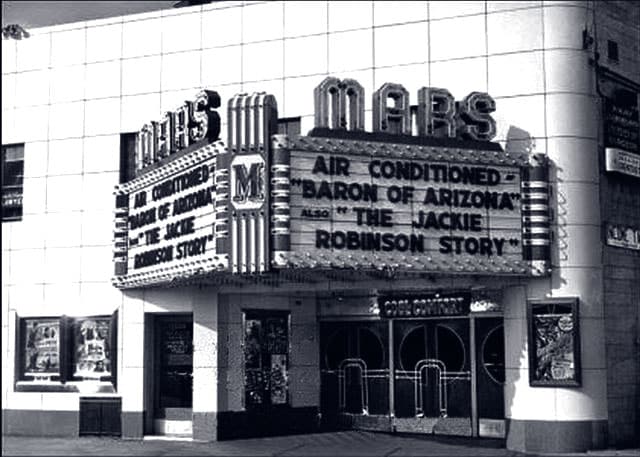
The Mars Theater on Conant Street, Detroit, opened in 1947 and closed in 1958. The Mars was the closest neighborhood theater throughout the 50’s. The seats in the Mars theater were luxurious and covered in equally luxurious cranberry velvet. You could sleep very comfortably in those seats.
Cartoon Saturdays were a noisy affair that attracted all the neighborhood kids. I fondly remember walking to the Mars theater with my buddies to see the movie, “The Blob”, starring Steve McQueen. I used to go there each Saturday, in the fifties and see two features and a bunch of cartoons and a newsreel for about 15 cents.
Yes, for fifteen cents, you got all that plus you could stay in the theater as long as you liked. It was common that if you walked in in the middle of the movie, you stayed to watch what you had missed.
This was the fare on Saturdays. It was a great venue for us who lived in the ghetto on Minnesota street and in the neighboring Conant Gardens. The beauty of it was that we kids could walk the three quarter mile trip by ourselves, stay in the theater watching the same movie twice, and then walk the same three quarter mile trip home in the dark of night. Street lights on Conant Street were sparse and many properties were still undeveloped. There were a lot of empty lots. So, after watching a particularly scary movie, we’d leap frog from one street light to another, going on an all out run through areas of total darkness. I was sure that I could outrun any demon leaping from the shadows. Years later, I’d make my mark doing 100 yard and 200 yard dashes in high school.
Serials like Tarzan, Commander Cody, Superman, The Blackhawks, and Captain Marvel were always the best followed by science fiction horror films like “It Came From Outer Space”, “The Thing from Another World”, and “Invasion of the Body Snatchers” were the scariest. Although films like “The Undead” and “The Brain Eaters”, could cause nightmares.
The Mars also showed older comedy movies like “Abbot and Costello”, “Laurel and Hardy”, “The Three Stooges”, the “Little Rascals”, and “Our Gang” comedies.
“It Came from Outer Space” was the first 3D movie I saw at the Mars. They handed us the little paper glasses with a red lens on one side and a green on the other. The 3D effect was enough for us to duck under our seats when there was an explosion causing rocks to seemingly fly from the screen, or when the monster stuck his hand out to grab you.
Our favorite cartoons were “Mr. Magoo”, “Mighty Mouse”, “Heckle and Jeckle”, Tom and Jerry, the Roadrunner and Coyote, “Sylvester and Tweety”, and Foghorn Leghorn and Henery Hawk. It should be noted that several of these have been banned by the politically correct, humorless, imbecilic crowd for one insane reason or another.
In the early days, patriotism was still in the air and the Mars continued to show newsreels about the war in Europe and the Pacific, sometimes alternation with Victory at Sea segments.
Popcorn at the Mars came in a good size box for around ten cents, extra butter was always optional, and candy bars were only a nickel. So I could get a full day of entertainment from the one dollar my mom would give as my weekly allowance. There were ushers at the Mars, usually some pimply face high school kid that would use his flashlight to guide you in the dark if the movie was already showing and highlight you with that same flashlight if you got too noisy. Then, one day, a kid choked on a popcorn husk and died. At least that’s what our parents told us. Probably just a fib to cut down on our popcorn money.
Wednesdays were usually the free gift nights where housewives could pick up a dinner plate or such with each admission. The ploy was to keep them coming back to finally get an entire service for eight or something. It was always high quality stuff, much better than many in our neighborhood could afford.
It was also common for one or two of the guys to pay the admission and grab seats near the theater emergency exits to let the rest of the gang in during the intermissions. As we got older, our interests weren’t so much on watching movies as it was about getting together with other kids you never saw except in school. But too many kids under one roof and bored with the movies often evolved into prankish behaviors. One prankish behavior was when we discovered how loud a common glass marble sounded hitting the back of a movie seat. We’d all sit there like perfect little angels when the usher came down the aisle with his flashlight.
The neighborhood changed however and so did the Mars theater. We were told to not go to the restroom alone and sometimes on those wonderful Saturday afternoons, there’d be more adult men in the theater than kids.
When I was ready to enter high school, my mom got the idea in her head that I had to go to Cass Tech. Cass Technical High School was the best school in the city, but my grades were borderline.
The school required an admissions exam and you had to have a B average to get in. Now Southeastern High School was the eastside ghetto school and Northwestern High School was the west side ghetto school. Northwestern was where the folks at Cass would send you if your grades fell below a C. For me, going to either ghetto school meant giving up my lunch money every day, possibly getting my butt kicked after school everyday and not learning anything useful unless I joined one of the gangs.
So, there was Cass. Of the more than 50,000 students graduated from it, some of the more distinguished students were comedians Lily Tomlin and David Alan Greer, auto executive John DeLorean, violinist Regina Carter, jazz musician Donald Byrd, and of course Diana Ross. Aviator Charles Lindbergh’s mother, Evangeline Lindbergh, taught chemistry at Cass from 1922 until 1942.
It was essentially a college-prep high school where the top scholar was more honored than the star quarterback of the football team. Cass served kids from all over Detroit. Some kids would have a ninety minute bus ride just to get there.
There were stories about Cass students who went away to college and found college easier than what they had in high school.
Cass Tech was connected to the High School of Commerce by the Victory Memorial Arch, a second-floor Gothic-style bridge that crossed Vernor Highway. Therefore, the combined capacity of both schools was around four thousand eight-hundred and twenty pupils. However, both schools shared Cass Tech’s cafeteria. Some Cass teachers also taught classes at Commerce.
The first floor of Cass was home to a gymnasium with an indoor track along a mezzanine, the teacher’s lounge (complete with fireplace) and a three-thousand-seat auditorium that was said to be near acoustically perfect and was complete with a balcony. The ground level also had pharmacy and physics laboratories; the second floor had a machine shop and chemistry and bacteriology labs; the third floor held the library; the fourth floor was home to cooking and mechanical drawing classrooms and art classes; the fifth floor had sewing labs and other shops; the sixth floor was the home of the music and textile programs; and the seventh floor had a foundry, baking and kitchen classrooms and the school’s original lunchroom, which could feed up to 1,000 students at a time.
Well, I got into Cass by the skin on my neck. But the bus ride from our old neighborhood was complicated and long, so my mom decided to move to a better neighborhood on the west side. Moving to the brownstone on Carter Street, right off of Dexter Boulevard, meant I could take a single bus to and from school. The Dexter bus also went down West Grand Boulevard for a while and right past the Motown or Hitsville, USA recording studios.
By this time, I had become a full blown beatnik. Jack Kerouac’s book “The Dharma Bums” was like my bible and Kerouac’s “On The Road” was my inspiration. I dabbled in Zen buddhism, took to wearing a black beret, dark sunglasses, and used my mom’s mascara to darken my mustache.
Before school started each morning, a lot of us students would gather in the auditorium to do the homework we should have done the night before, but it was also a gathering of disciplines. The performing arts students would be going through their dance routines on the stage, the music students would be practicing their instruments, and we beatniks would be reading our poetry.
Cass Tech had a strict dress code. Boys were required to wear slacks and shirts had to be tucked in, but not me. Art students at Cass were allowed to wear jeans because we worked with paints and stuff. There were several of us “cool cats” that formed our own little group, although the other guys were music students.
We didn’t eat lunch in the lunchroom like the normal kids, instead we spread our mats just outside of the main room where we played our flutes and bongo drums, read poetry and drank green tea. Needless to say, we really stood out, but because the so called “beat generation” was so cool at that time, I think the other kids either admired us or just ignored us. Remember Dobie Gillis and Maynard G. Krebbs? Peter Gunn?
Down the street from Cass was a burger, soda fountain joint called “Buddies”. Buddies was a hangout for the Cass Tech elite, meaning that freshmen almost never went to Buddies.
So, during my first year of high school, I had begun noticing how pretty the girls looked and how differently they acted from my junior high school days, but I was still pretty naïve when it came to the opposite sex. When my classmate Louise caught me in between classes in an empty class room, threw me over a desk and shoved her tongue down my throat, I was confused, but pleasantly surprised.
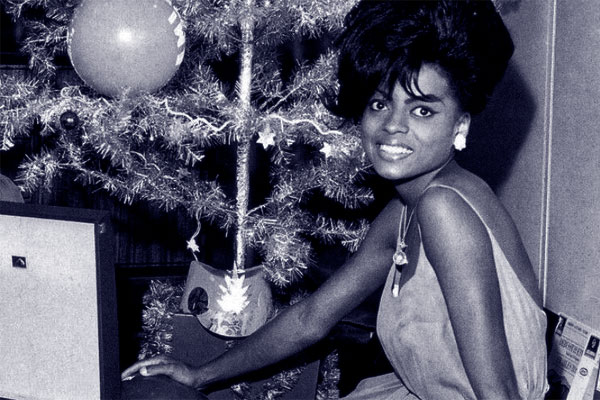
Just as surprised when this skinny little girl with big eyes came up to me on the school elevator and introduced herself. Yes, Cass Tech had student elevators. She said her name was Diana and we talked a bit before going to our separate classes. A few days later, we ran into each other in the lunchroom and she invited me to go with her for a burger at Buddies. Freshmen didn’t go to Buddies, I thought, what an honor, and my head began to swell. Now, I wasn’t that well heeled to be taking a girl to lunch, but I did have a few bills my mom gave me for art supplies and bus fare, so maybe this skinny little chick won’t go crazy with the menu. It would be a long walk home.
Anyways, we get to Buddies and the typical crowd of loudmouth sophomores and seniors. I was in unfamiliar territory. We grabbed an empty table and placed our order for two burgers and cokes. Not much conversation since I’m also a quiet kind of guy, and not experienced enough with women to even know where to start. She was a year ahead of me, so talking school stuff was definitely out, she wasn’t interested in art or jazz. I did manage to find out that her full name was Diana Ross.
When the waitress delivered our burgers, Diana picked up her plate and moved to a table with much older kids. I was crushed. But later, I was told that Diana made a habit of teasing freshmen and coercing burgers out of them. I left and went back to school. The next time I saw Miss Ross was in study hall when she walked over to my table and handed me one of those little fifty cent photo booth photos and apologized. Diana liked to date the older guys and she hung out with some of the thugs from Northwestern High School.
We never developed a lasting relationship since we hardly saw each other in school. I was an art student and my classes were mostly on the fourth floor. The last time I saw her was on a trip home from school. My buddies and I would get off the bus in front of the Hitsville studio and peek into the basement windows to see who was recording. We caught Mary Wells and Smokey Robinson a few times, but this day, I saw Miss Ross going into the building.
I held on to that photograph she gave me for several years until losing it when I joined the navy.
Fredric Durrette served one tour in Vietnam, retired as E8 in the navy submarine service after 23 years. Major hobbies are collecting old stuff from the 20s and restoring old racing bicycles. Worked as a commercial photographer at JL Hudsons in Detroit and continue photography as a hobby. Love Sade, sixties soul, seventies rock, and all jazz. Attended Woodstock in 69! http://snakesafe.jalbum.net/
Venue: RKO Pantages Theatre, Hollywood, California
Hosts: Bob Hope, Rosalind Russell, David Niven, James Stewart, Jack Lemmon, Donald Duck (voice of Clarence Nash, via animation)
Eligibility Year: 1957
Major Wins:
Best Picture went to The Bridge on the River Kwai.
Joanne Woodward won Best Actress for The Three Faces of Eve.
Alec Guinness snagged Best Actor for The Bridge on the River Kwai.
Directing & Screenplay:
David Lean took home the Best Director award for The Bridge on the River Kwai.
Best Original Screenplay went to Designing Woman.
Additional Info:
Miyoshi Umeki became the first Asian actress to win an Oscar, for Best Supporting Actress in Sayonara.
Red Buttons also received Best Supporting Actor for the same film.
Trivia:
This year’s ceremony featured one of the most eclectic group of hosts, including animated character Donald Duck, whose voice was provided by Clarence Nash.
The ceremony was the last one to feature multiple hosts until 1976.
The Bridge on the River Kwai won seven Oscars in total, including Best Picture, Best Director, and Best Actor.
This was the first time all five Best Picture nominations were nominated for Best Director
Peyton Place tied the record for the most nominations without a win (9) set by The Little Foxes (1941), until 1977.
1958 Oscar Nominees and Winners
Best Motion Picture:
The Bridge on the River Kwai – Sam Spiegel, producer (WINNER)
12 Angry Men – Henry Fonda and Reginald Rose, producers
Peyton Place – Jerry Wald, producer
Sayonara – William Goetz, producer
Witness for the Prosecution – Arthur Hornblow Jr., producer
Best Director:
David Lean – The Bridge on the River Kwai (WINNER)
Sidney Lumet – 12 Angry Men
Mark Robson – Peyton Place
Joshua Logan – Sayonara
Billy Wilder – Witness for the Prosecution
Best Actor:
Alec Guinness – The Bridge on the River Kwai as Lieutenant Colonel Nicholson (WINNER)
Marlon Brando – Sayonara as Major Lloyd “Ace” Gruver
Anthony Franciosa – A Hatful of Rain as Polo Pope
Charles Laughton – Witness for the Prosecution as Sir Wilfrid Robarts Q.C.
Anthony Quinn – Wild Is the Wind as Gino
Best Actress:
Joanne Woodward – The Three Faces of Eve as Eve White/Eve Black/Jane (WINNER)
Deborah Kerr – Heaven Knows, Mr. Allison as Sister Angela
Anna Magnani – Wild Is the Wind as Gioia
Elizabeth Taylor – Raintree County as Susanna Drake
Lana Turner – Peyton Place as Constance MacKenzie
Best Supporting Actor:
Red Buttons – Sayonara as Airman Joe Kelly (WINNER)
Vittorio De Sica – A Farewell to Arms as Major Alessandro Rinaldi
Sessue Hayakawa – The Bridge on the River Kwai as Colonel Saito
Arthur Kennedy – Peyton Place as Lucas Cross
Russ Tamblyn – Peyton Place as Norman Page
Best Supporting Actress:
Miyoshi Umeki – Sayonara as Katsumi Kelly (WINNER)
Carolyn Jones – The Bachelor Party as The Girl
Elsa Lanchester – Witness for the Prosecution as Miss Plimsoll
Hope Lange – Peyton Place as Selena Cross
Diane Varsi – Peyton Place as Allison MacKenzie
Best Story and Screenplay Written Directly for the Screen:
Designing Woman – George Wells (WINNER)
Funny Face – Leonard Gershe
I Vitelloni – Federico Fellini, Tullio Pinelli and Ennio Flaiano
Man of a Thousand Faces – Ralph Wheelwright, R. Wright Campbell, Ivan Goff and Ben Roberts
The Tin Star – Barney Slater, Joel Kane and Dudley Nichols
Best Screenplay Based on Material from Another Medium:
The Bridge on the River Kwai – Michael Wilson, Carl Foreman and Pierre Boulle based on the novel by Pierre Boulle (WINNER)
12 Angry Men – Reginald Rose based on his teleplay
Heaven Knows, Mr. Allison – John Lee Mahin and John Huston from the novel by Charles Shaw
Peyton Place – John Michael Hayes based on the novel by Grace Metalious
Sayonara – Paul Osborn based on the novel by James Michener
Best Foreign Language Film:
Nights of Cabiria (Italy) (WINNER)
The Devil Strikes at Night (Germany)
Gates of Paris (France)
Mother India (India)
Nine Lives (Norway)
Best Documentary Feature:
Albert Schweitzer (WINNER)
On the Bowery
Torero!
Best Live Action Short Subject:
The Wetback Hound (WINNER)
A Chairy Tale
City of Gold
Foothold on Antarctica
Portugal
Best Short Subject – Cartoons:
Birds Anonymous (WINNER)
One Droopy Knight
Tabasco Road
Trees and Jamaica Daddy
The Truth About Mother Goose
Best Scoring:
The Bridge on the River Kwai – Malcolm Arnold (WINNER)
An Affair to Remember – Hugo Friedhofer
Boy on a Dolphin – Hugo Friedhofer
Perri – Paul J. Smith
Raintree County – Johnny Green
Best Song:
“All the Way” from The Joker Is Wild – Music by Jimmy Van Heusen; Lyrics by Sammy Cahn (WINNER)
“An Affair to Remember” from An Affair to Remember – Music by Harry Warren; Lyrics by Leo McCarey and Harold Adamson
“April Love” from April Love – Music by Sammy Fain; Lyrics by Paul Francis Webster
“Tammy” from Tammy and the Bachelor – Music and Lyrics by Ray Evans and Johnny Livingston
“Wild Is the Wind” from Wild Is the Wind – Music by Dimitri Tiomkin; Lyrics by Ned Washington
Best Sound Recording:
Sayonara – George Groves (WINNER)
Gunfight at the O.K. Corral – George Dutton
Les Girls – Wesley C. Miller
Pal Joey – John P. Livadary
Witness for the Prosecution – Gordon E. Sawyer
Best Costume Design:
Les Girls – Orry-Kelly (WINNER)
An Affair to Remember – Charles LeMaire
Funny Face – Edith Head and Hubert de Givenchy
Pal Joey – Jean Louis
Raintree County – Walter Plunkett
Best Art Direction:
Sayonara – Art Direction: Ted Haworth; Set Decoration: Robert Priestley (WINNER)
Funny Face – Art Direction: Hal Pereira and George W. Davis; Set Decoration: Samuel M. Comer and Ray Moyer
Les Girls – Art Direction: William A. Horning and Gene Allen; Set Decoration: Edwin B. Willis and Richard Pefferle
Pal Joey – Art Direction: Walter Holscher; Set Decoration: William Kiernan and Louis Diage
Raintree County – Art Direction: William A. Horning and Urie McCleary; Set Decoration: Edwin B. Willis and Hugh Hunt
Best Cinematography:
The Bridge on the River Kwai – Jack Hildyard (WINNER)
An Affair to Remember – Milton Krasner
Funny Face – Ray June
Peyton Place – William C. Mellor
Sayonara – Ellsworth Fredericks
Best Film Editing:
The Bridge on the River Kwai – Peter Taylor (WINNER)
Gunfight at the O.K. Corral – Warren Low
Pal Joey – Viola Lawrence and Jerome Thoms
Sayonara – Arthur P. Schmidt and Philip W. Anderson
Witness for the Prosecution – Daniel Mandell
Best Special Effects:
The Enemy Below – Walter Rossi (WINNER)
The Spirit of St. Louis – Louis Lichtenfield
Academy Honorary Awards:
Charles Brackett “for outstanding service to the Academy.”
B. B. Kahane “for distinguished service to the motion picture industry.”
Gilbert M. “Broncho Billy” Anderson “motion picture pioneer, for his contributions to the development of motion pictures as entertainment.”
the Society of Motion Picture and Television Engineers “for their contributions to the advancement of the motion picture industry.”