web analytics

Tag: 1959

  • Pop Culture Trivia Quiz: What Happened In 1959?

    Pop Culture Trivia Quiz: What Happened In 1959?

    Pop Culture Trivia Quiz: What Happened In 1959?

    59 Trivia Questions for 1959 History

    (answers)

    1. 375 people sang The Battle Hymn of the Republic and reached number 13 on the Billboard pop charts. Name that group.

    2. what was the average movie theater ticket price in 1959 to the nearest quarter?

    3. Released in January 1959, what was the name of Disney’s 16th animated film?

    4. In 1959, what was the average life expectancy in the United States?

    5. Who was the President of the United States in 1959?

    6. Her full name is Barbara Millicent Roberts, but what do we usually call her?

    7. Who won the first Daytona 500 at Daytona International Speedway?

    8. Where is the first daily operating monorail system in the Western Hemisphere located?

    9. Can you name the first spacecraft that landed (actually crashed) on the Moon?

    10. This football team was named New England Patriots in 1971. What were they called in 1959, when it was founded?

    11. What was the Bestselling Fiction Book in 1959?

    12. This stovetop treat first appeared in supermarkets in 1959.

    13. What was the slogan for Jiffy Pop?

    14. What was the highest-grossing film of 1959?

    15. How many people lived in the United States in 1959?

    16. How many people lived in the World in 1959?

    17. When introduced to America in 1959, the slogan was “writes first time, every time.” Name that product.

    18. What did the Cincinnati Reds’ MLB team call themselves from 1953 until 1959?

    19. What was on the back of the US Penney before the Lincoln Memorial was introduced in 1959?

    20. Who won the Stanley Cup in 1959?

    21. Erected in 1959, it is one of the most recognized signs in the world. What sign?
    HINT: It is definitely the most famous in Nevada.

    22. What was the Biggest Number One Song of 1959?

    23. In May 1959, Action Comics #252 introduced Superman’s cousin. Name that Superhero.

    24. Built in 1959, who designed the Solomon R. Guggenheim Museum?

    25. What did performer Eddie Fisher do later in the day after his divorce from Debbie Reynolds was finalized?

    26. How much did a gallon of gas cost in 1959?

    27. The first weather satellite was launched on February 17, 1959

    28. Charlie Brown’s little sister first appeared in the comic strip in 1959. What is her name?

    29. Which celebrity was NOT born in 1959: Val Kilmer, Tracey Ullman, Billy Ray Cyrus, or “Weird Al” Yankovic?

    30. This cartoon horse and his sidekick, Baba Looey, debuted in 1959. Name that Western-themed cartoon character.

    31. How much were a Dozen Eggs in 1959?

    32. How much did a Loaf of Bread cost in 1959?

    33. How much was a pound of bacon in 1959?

    34. Who were the “Russian” antagonists against Rocky and Bulwinkle?

    35. Canadian Mountie Dudley Do-Right appeared on the Rocky and Bullwinkle Show. He had a girlfriend. Name her.

    36. The Ford Motor Company lost $100,000,000 in this car model, which was last produced in 1959. Name that car.

    37. What company used the slogan: “Good to the Last Drop”?

    38. What was the 49th State to join the United States?

    39. What was the 50th State to join the United States?

    40. Did the United States ever make an official 49-star flag?

    41. This Broadway musical was based on Maria von Trapp’s 1949 memoir, The Story of the Trapp Family Singers.

    42. What was the Top-Rated TV Show in the 1958/1959 season?

    43. The popular family film was broadcast on CBS for the second time. The ratings were so good that it became an annual event. Name that film.

    44. In 1959, some popular television quiz shows, like Twenty-One and The $64,000 Challenge, were in legal trouble. Why?

    45. This 1959 film was the first to win 11 Academy Awards. Name that Hollywood epic.

    46. What company used the slogan: “Double Your Pleasure, Double Your Fun”?

    47. This new fabric was introduced, lighter and more durable than conventional elastic, making it ideal for swimsuits. Name that fabric.

    48. Created and presented by Rod Serling and originally on air between 1959 and 1964, this anthology television series is still seen in reruns today. Name that show.

    49. Who won the 1959 World Series?

    50. The first successful plain paper copying machine, the Xerox 914, was introduced in 1959. Why did they use the number 914?

    51. This close-fitting legwear, covering the wearer’s body from the waist to the toes, first went on sale in 1959. Name that undergarment.

    52. Although unsuccessfully tried for a decade, Sir Christopher Cockerell demonstrated a working model of this transportation device in 1959. What device?

    53. Who was the Time Magazine Man of the Year in 1959?

    54. Phonebooth stuffing was a fad until the late 1950s. How many people fit in a phone booth to set a world record?

    55. This 1928 novel, written by English author D. H. Lawrence, was banned in the United States until 1959. Name that novel.

    56. Premiering on September 12, 1959, this show is considered the first regularly scheduled TV program presented in color. Name that show.

    57. Bad weather caused pilot Roger Peterson to crash near Clear Lake, Iowa, killing all four people on board. Can you name his three passengers?

    58. What company used the slogan: “It’s Not Nice to Fool Mother Nature”?

    59. What was the name of the record company founded by Berry Gordy, Jr. in January 1960?

    Trivia Team Bonus Questions:

    1. Before renaming it to Motown, what was the previous name for Berry Gordy’s record company?

    2. What Horse won the Kentucky Derby in 1959?

    3. The first Grammy Awards were awarded on May 4, 1959. Where does the word “Grammy” come from?

    4. Who was the Pope in 1959?

    5. On May 28, 1959, a Jupiter AM-18 rocket launched two primates into space from Cape Canaveral. They were the first animals to return to Earth alive from a trip to space. What were their names?

    6. Who was the American Vice-President in 1959?

    7. It is a system of locks, canals, and channels in Canada and the United States connecting the Great Lakes to the Atlantic Ocean, and it opened in 1959. What is it called?

    8. Who were the 1959 NBA Champions?

    9. Mike Ilitch and his wife, Marian Ilitch, opened a Pizza Chain in Michigan. Name that pizza place!!

    10. Who were the 1959 NFL Champions?

    The Answers:

    59 Trivia Answers for 1959 History

    1. 375 people sang The Battle Hymn of the Republic and reached number 13 on the Billboard pop charts. Name that group.
    The Mormon Tabernacle Choir

    2. what was the average movie theater ticket price in 1959 to the nearest quarter?
    75 cents

    3. Released in January 1959, what was the name of Disney’s 16th animated film?
    Sleeping Beauty

    4. In 1959, what was the average life expectancy in the United States?
    Men – 66.8 years, Women – 73.2 years.

    5. Who was the President of the United States in 1959?
    Dwight D. Eisenhower (January 20, 1953 – January 20, 1961)

    6. Her full name is Barbara Millicent Roberts, but what do we usually call her?
    Barbie

    7. Who won the first Daytona 500 at Daytona International Speedway?
    Lee Petty (on February 22, 1959)

    8. Where is the first daily operating monorail system in the Western Hemisphere located?
    Disneyland, in Anaheim, California. (opened June 14, 1959)

    9. Can you name the first spacecraft that landed (actually crashed) on the Moon?
    Luna 2 (launched by the Soviet Union)

    10. This football team was named New England Patriots in 1971. What were they called in 1959, when it was founded?
    The Boston Patriots

    11. What was the Bestselling Fiction Book in 1959?
    Exodus by Leon Uris

    12. This stovetop treat first appeared in supermarkets in 1959.
    Jiffy Pop popcorn

    13. What was the slogan for Jiffy Pop?
    “As much fun to make as it is to eat”

    14. What was the highest-grossing film of 1959?
    Ben-Hur

    15. How many people lived in the United States in 1959?
    The population was an estimated 177,829,628 people.

    16. How many people lived in the World in 1959?
    The estimated world population in 1959 was 2,970,395,814 people.

    17. When introduced to America in 1959, the slogan was “writes first time, every time.” Name that product.
    BIC Pen (Bic Cristal)

    18. What did the Cincinnati Reds’ MLB team call themselves from 1953 until 1959?
    The Cincinnati Redlegs (to avoid a perceived connection with communism; “reds”)

    19. What was on the back of the US Penney before the Lincoln Memorial was introduced in 1959?
    Two stalks of wheat (“wheat pennies” were struck 1909–1958)

    20. Who won the Stanley Cup in 1959?
    In 1959, The Montreal Canadiens won over the Toronto Maple Leafs (4 games to 1)

    21. Erected in 1959, it is one of the most recognized signs in the world. What sign?
    Welcome to Fabulous Las Vegas Sign

    22. What was the Biggest Number One Song of 1959?
    Mack The Knife by Bobby Darin

    23. In May 1959, Action Comics #252 introduced Superman’s cousin. Name that Superhero.
    Supergirl (aka Kara Zor-El, aka Linda Danvers)

    24. Built in 1959, who designed the Solomon R. Guggenheim Museum?
    Frank Lloyd Wright

    25. What did performer Eddie Fisher do later in the day after his divorce from Debbie Reynolds was finalized?
    He married Elizabeth Taylor.

    26. How much did a gallon of gas cost in 1959?
    $0.30 per gallon

    27. The first weather satellite was launched on February 17, 1959
    Vanguard 2. It is still in orbit but not operating. (TIROS-1, launched by NASA on April 1, 1960, was the second)

    28. Charlie Brown’s little sister first appeared in the comic strip in 1959. What is her name?
    Sally Brown

    29. Which celebrity was NOT born in 1959: Val Kilmer, Tracey Ullman, Billy Ray Cyrus, or “Weird Al” Yankovic?
    Billy Ray Cyrus (born August 25, 1961)

    30. This cartoon horse and his sidekick, Baba Looey, debuted in 1959. Name that Western-themed cartoon character.
    Quick Draw McGraw

    31. How much were a Dozen Eggs in 1959?
    53 cents

    32. How much did a Loaf of Bread cost in 1959?
    20 cents

    33. How much was a pound of bacon in 1959?
    67 cents

    34. Who were the “Russian” antagonists against Rocky and Bulwinkle?
    Boris and Natasha (Boris Badenov and Natasha Fatale)

    35. Canadian Mountie Dudley Do-Right appeared on the Rocky and Bullwinkle Show. He had a girlfriend. Name her.
    Nell (Fenwick)

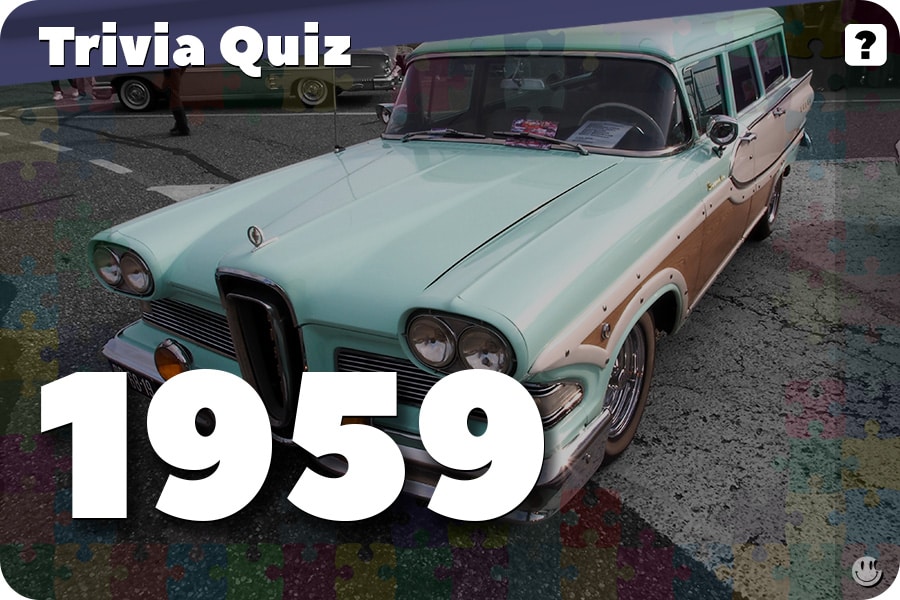
    36. The Ford Motor Company lost $100,000,000 in this car model, which was last produced in 1959. Name that car.
    The Edsel

    37. What company used the slogan: “Good to the Last Drop”?
    Maxwell House

    38. What was the 49th State to join the United States?
    Alaska (January 3, 1959)

    39. What was the 50th State to join the United States?
    Hawaii (joined August 21, 1959)

    40. Did the United States make ever make an official 49-star flag?
    Yes (July 4, 1959 – July 3, 1960)

    41. This Broadway musical was based on Maria von Trapp’s 1949 memoir, The Story of the Trapp Family Singers.
    The Sound of Music

    42. What was the Top-Rated TV Show in the 1958/1959 season?
    Gunsmoke (CBS)

    43. The popular family film was broadcast on CBS for the second time. The ratings were so good that it became an annual event. Name that film.
    The Wizard of Oz

    44. In 1959, some popular television quiz shows, like Twenty-One and The $64,000 Challenge, were in legal trouble. Why?
    Some contestants were given answers ahead of time. (quiz show scandals)

    45. This 1959 film was the first to win 11 Academy Awards. Name that Hollywood epic.
    Ben-Hur

    46. What company used the slogan: “Double Your Pleasure, Double Your Fun”?
    Wrigley’s Doublemint Gum

    47. This new fabric was introduced, lighter and more durable than conventional elastic, making it ideal for swimsuits. Name that fabric.
    Spandex (aka Lycra)

    48. Created and presented by Rod Serling and originally on air between 1959 and 1964, this anthology television series is still seen in reruns today. Name that show.
    The Twilight Zone

    49. Who won the 1959 World Series?
    In 1959, The Los Angeles Dodgers won, beating the Chicago White Sox (4 games to 2)

    50. The first successful plain paper copying machine, the Xerox 914, was introduced in 1959. Why did they use the number 914?
    It fits 9×14 inch “Legal paper”

    51. This close-fitting legwear, covering the wearer’s body from the waist to the toes, first went on sale in 1959. Name that undergarment.
    Pantyhose

    52. Although unsuccessfully tried for a decade, Sir Christopher Cockerell demonstrated a working model of this transportation device in 1959. What device?
    Hovercraft

    53. Who was the Time Magazine Man of the Year in 1959?
    Dwight D. Eisenhower

    54. Phonebooth stuffing was a fad until the late 1950s. How many people fit in a phone booth to set a world record?
    On March 20, 1959, 25 Durban, South Africa YMCA students set a world record.

    55. This 1928 novel, written by English author D. H. Lawrence, was banned in the United States until 1959. Name that novel.
    Lady Chatterley’s Lover

    56. Premiering on September 12, 1959, this show is considered the first regularly scheduled TV program presented in color. Name that show.
    Bonanza

    57. Bad weather caused pilot Roger Peterson to crash near Clear Lake, Iowa, killing all four people on board. Can you name his three passengers?
    Buddy Holly, Ritchie Valens, and The Big Bopper

    58. What company used the slogan: “It’s Not Nice to Fool Mother Nature”?
    Chiffon Margarine

    59. What was the name of the record company founded by Berry Gordy, Jr. in January 1960?
    Motown Records

    Trivia Team Bonus Questions:

    1. Before renaming it to Motown, what was the previous name for Berry Gordy’s record company?
    Tamla Records

    2. What Horse won the Kentucky Derby in 1959?
    Tomy Lee

    3. The first Grammy Awards were awarded on May 4, 1959. Where does the word “Grammy” come from?
    “Grammy” is an abridgment of the Gramophone Award.

    4. Who was the Pope in 1959?
    Pope John XXIII, from October 28, 1958 – June 3, 1963

    5. On May 28, 1959, a Jupiter AM-18 rocket launched two primates, into space from Cape Canaveral. They were the first animals to return to Earth alive from a trip to space. What were their names?
    Miss Baker and Miss Able

    6. Who was the American Vice-President in 1959?
    Richard Nixon (January 20, 1953 – January 20, 1961)

    7. It is a system of locks, canals, and channels in Canada and the United States connecting the Great Lakes to the Atlantic Ocean, and it opened in 1959. What is it called?
    The Saint Lawrence Seaway

    8. Who were the 1959 NBA Champions?
    For the 1958-59 Season, Champion Boston Celtics won 4 games to 0 over the Minneapolis Lakers

    9. Mike Ilitch and his wife, Marian Ilitch, opened a Pizza Chain in Michigan. Name that pizza place!!
    Little Caesar’s (Little Caesar’s Pizza Treat)

    10. Who were the 1959 NFL Champions?
    Baltimore Colts
     

  • 1959 Top Ten Music Charts

    1959 Top Ten Music Charts

    1959’s Biggest Artists and Songs

    Bobby Darin (1st Best New Artist Grammy Winner, for 1958, awarded in 1959) Bobby’s career started with a songwriting partnership with Don Kirshner. His first hit was written after a bet that he could not write a song that started out with the words, “Splish Splash, I was takin’ a bath.” Splish Splash, his first hit, sold over a million copies.
    Henry Mancini (1st Grammy for Album of the Year) Henry made a name for himself getting the Grammy for the Peter Gunn Theme. He later went on to be nominated for more Grammys and Oscars. Grammy wins included Breakfast At Tiffany’s, Days of Wine and Roses, and The Pink Panther Theme. Oscar wins included  Breakfast At Tiffany’s, Days of Wine and Roses, Victor Victoria.
    Domenico Modugno (Grammy for Record of the Year & Song of the Year) Nel Blu Dipinto di Blu (Volare) was the top song, and Domenico co-wrote it, so he didn’t mind when young singer Bobby Rydell recorded it in 1960, hitting number 4 on Billboard. Bobby’s version is the one most remembered today.
    On February 3, 1959, a small-plane crash near Clear Lake, Iowa, killed three American rock and roll pioneers – Buddy Holly, Ritchie Valens, and J. P. “The Big Bopper” Richardson, as well as the pilot, Roger Peterson. This was “The Day The Music Died” in Don McLean’s American Pie.
    New Artists in the Pop Charts Included:
    Fabian, Chubby Checker, Bobby Vee, The Miracles, The Isley Brothers and Cliff Richard.

    1959’s Retro Top 10 Hits

    1. Donna – Ritchie Valens
    2. Sleep Walk – Santo and Johnny
    3. The Happy Organ – Dave ‘Baby’ Cortez
    4. Poison Ivy – The Coasters
    5. Smoke Gets In Your Eyes – The Platters
    6. Waterloo – Stonewall Jackson
    7. Dream Lover – Bobby Darin
    8. Sea of Love – Phil Phillips with The Twilights
    9. Lavender Blue – Sammy Turner
    10. There Goes My Baby – The Drifters

    1959’s ‘One Hit Wonders’

    1. Sea of Love – Phil Phillips
    2. Battle Hymn of the Republic – Mormon Tabernacle Choir
    3. Sorry (I Ran All the Way Home) – The Impalas
    4. Woo-Hoo – Rock-A-Teens
    5. Tell Him No – Travis & Bob
    6. Red River Rock – Johnny and the Hurricanes
    7. Enchanted Sea – The Islanders
    8. Makin’ Love – Floyd Robinson
    9. High School USA – Tommy Facenda
    10. Petite Fleur (Little Flower) – Chris Barber

    1959’s Dance Top 10 Hit List

    1. Shout – The Isley Brothers
    2. Mack The Knife – Bobby Darin
    3. Lonely Teardrops – Jackie Wilson
    4. What’d I Say – Ray Charles
    5. Kansas City – Wilburt Harrison
    6. Stagger Lee – Lloyd Price
    7. La Bamba – Ritchie Valens
    8. (Til) I Kissed You – The Everly Brothers
    9. Kissin’ Time – Bobby Rydell
    10. Teen Beat – Sandy Nelson

    1959’s Doo-Wop Song Top 10 Hit List

    1. I Only Have Eyes For You – The Flamingos
    2. A Teenager In Love – Dion & the Belmonts
    3. Love Potion No. 9 – Clovers
    4. Sorry (I Ran All The Way Home) – Impalas

    5. You’re So Fine – Falcons

    6. Come Softly To Me – The Fleetwoods
    7. Charlie Brown – Coasters
    8. Hushabye – Mystics
    9. The Angels Listened In – Crests
    10. Since I Don’t Have You – Skyliners

    More Doo-Wop Song Hits:

    Oh Rosemarie – Fascinators
    Island of Love – The Sheppards
    Who’s That Knocking – Genies
    Traveling Stranger – Little Anthony & the Imperials
    Shimmy Shimmy Koko Bop – Little Anthony and the Imperials

    PCM’s 1959 Top 10 Hit List

    1. Mack The Knife – Bobby Darin
    2. Kansas City – Wilbur Harrison
    3. What’d I Say – Ray Charles
    4. 16 Candles – The Crests
    5. A Teenager In Love – Dion and the Belmonts
    6. I Only Have Eyes For You – The Flamingos
    7. Sleep Walk – Santo and Johnny
    8. It’s Just A Matter of Time – Brook Benton
    9. There Goes My Baby – The Drifters
    10. Come Softly To Me – The Fleetwoods
  • Top 100+ Oldies 1959-1963

    Top 100+ Oldies 1959-1963

    Top Oldies – 1959-1963/1964

    Oldies: Pre-Beatles The post-50s-pre-Beatles brought an amazing and often under-estimated, even forgotten, selection of quality popular music. This Era of Pop Music brought us the Girl Groups, Phil Spectre, and the post-do-wop sound of rock and roll. After this era, the Beatles changed music again.

    The Top Instrumentals 1959-1963/4

    1. Yakety Sax – Boots Randolph
    2. Miserlou – Dick Dale
    3. The Stripper – Davis Rose
    4. Take Five – Dave Brubeck Quartet
    5. Wipe Out – The Surfaris
    6. Green Onions – Booker T and the MG’s
    7. Desafinado – Stan Getz and Charlie Byrd
    8. Raw-Hide – Link Wray
    9. Bunny Hop – The Applejacks
    10. Alley Cat – Bent Fabric and His Piano

    The Top Oldies With Words 1959-1963/4

    1. Mack The Knife – Bobby Darin
    2. At Last – Etta James
    3. The Twist – Chubby Checker
    4. Crazy – Patsy Cline
    5. Stand By Me – Ben E. King
    6. The Lion Sleeps Tonight – The Tokens
    7. Under The Boardwalk – The Drifters
    8. Runaround Sue – Dion
    9. Surfin’ USA – Beach Boys
    10. What’d I Say – Ray Charles
    11. Breaking Up Is Hard To Do – Neil Sedaka
    12. It’s Just A Matter Of Time – Brooke Benton
    13. Heat Wave – Martha Reeves and the Vandellas
    14. Happy Birthday Sweet Sixteen – Neil Sedaka
    15. Sleep Walk – Santo and Johnny
    16. Surfin’ Safari – Beach Boys
    17. La Bamba – Ritchie Valens
    18. Big Girls Don’t Cry – The 4 Seasons
    19. Chapel Of Love – Dixie Cups
    20. Pretty Little Angel Eyes – Curtis Lee
    21. Louie Louie – The Kingsmen
    22. Volare – Bobby Rydell
    23. Beyond The Sea – Bobby Darin
    24. Bristol Stomp – The Dovells
    25. I Only Have Eyes For You – The Flamingos
    26. Do You Love Me – The Contours
    27. Wild One – Bobby Rydell
    28. Be My Baby – The Ronettes
    29. Lonely Teardrops – Jackie Wilson
    30. Daddy’s Home – Sheb and the Limelites
    31. A Teenager In Love – Dion & the Belmonts
    32. South Street – The Orlons
    33. The Loco-Motion – Little Eva
    34. My Boyfriend’s Back – The Angels
    35. Save The Last Dance For Me – The Drifters
    36. Sherry – The 4 Seasons
    37. Harbor Lights – The Platters
    38. Hey! Baby – Bruce Channel
    39. Leader of the Pack – Shangri-Las
    40. Kansas City – Wilbert Harrison
    41. Up On The Roof – The Drifters
    42. Some Kind of Wonderful – The Drifters
    43. I Fall To Pieces – Patsy Cline
    44. Back In The U.S.A. – Chuck Berry
    45. Mickey’s Monkey – The Miracles
    46. Only Sixteen – Sam Cooke
    47. You Can’t Sit Down – Dovells
    48. There’s a Moon Out Tonight – The Capris
    49. Our Day Will Come – Ruby and the Romantics
    50. Come Softly Yo Me – Fleetwoods
    51. Misty – Johnny Mathis
    52. Johnny Angel – Shelly Fabres
    53. Sealed With A Kiss – Brian Hyland
    54. Let’s Twist Again – Chubby Checker
    55. Pride and Joy – Marvin Gaye
    56. Party Lights – Claudine Clark
    57. Put Your Head On My Shoulder – Paul Anka
    58. Monkey Time – Major Vance
    59. The Wah Watusi – The Orlons
    60. Denise – Randy and the Rainbows
    61. Georgia On My Mind – Ray Charles
    62. On Broadway – The Drifters
    63. Wonderful World – Sam Cooke
    64. Hey Paula – Paul and Paula
    65. Dedicated To The One I Love – The Shirelles
    66. I Adore Him – The Angels
    67. Lovers Who Wander – Dion
    68. Surfer Girl – Beach Boys
    69. (Night Time Is) The Right Time – Ray Charles
    70. Then He Kissed Me – The Crystals
    71. Hello Mary Lou – Ricky Nelson
    72. Wildwood Days – Bobby Rydell
    73. When Will I Be Loved – The Every Brothers
    74. One Fine Day – The Chiffons
    75. This Magic Moment – The Drifters
    76. Remember (Walkin’ In The Sand) – The Shangri-Las
    77. Are You Lonesome To-Night? – Elvis Presley
    78. Don’t Hang Up – The Orlons
    79. Personality – Lloyd Price
    80. Having A Party – Sam Cooke
    81. He’s A Rebel – The Crystals
    82. (The Best Part Of) Breakin’ Up – The Ronettes
    83. Hushabye – The Mystics
    84. 409 – Beach Boys
    85. Will You Love Me Tomorrow – The Shirelles
    86. Dream Baby – Roy Orbison
    87. It Doesn’t Matter Anymore – Buddy Holly
    88. Baby Its You – The Shirelles
    89. Tossin’ and Turnin’ – Bobby Lewis
    90. The End of the World – Skeeter Davis
    91. Hit The Road Jack – Ray Charles
    92. Last Kiss – J. Frank Wilson and the Cavaliers
    93. Who Put The Bomp – Barry Mann
    94. Busted – Ray Charles
    95. There Goes My Baby – The Drifters
    96. Surfin – The Beach Boys
    97. Swingin’ School – Bobby Rydell
    98. 1-2-3 – Len Barry
    99. Charlie Brown – The Coasters
    100. Shout! Shout! Knock Yourself Out – Ernie Mareska
    101. Spanish Harlem – Ben E. King
    102. Baby It’s Cold Outside – Ray Charles and Betty Carter
    103. Runaway – Del Shannon
    104. Let’s Stomp – Bbby Comstock
    105. Sweet Nothins – Brenda Lee
    106. Dead Man’s Curve – Jan & Dean
    107. Sea Cruise – Frankie Ford
    108. Be True To Your School – Beach Boys
    109. Where Or When – Dion and the Belmonts
    110. Chains – The Cookies
    111. Money – Barrett Strong
    112. Bongo Stomp – Little Joey and the Flips
    113. Shimmy Shimmy Ko-Ko-Bop – Little Anthony and the Imperials
    114. Palisades Park – Fredie Cannon
    115. Bongo Rock – Preston Epps
    116. Beechwood 4-5789 – The Marvelettes
    117. Baby, I Love You – Ronettes
    118. Town Without Pity – Gene Pitney
    119. Cupid – Sam Cooke
    120. (Down At) Papa Joes – The Dixiebelles
    121. Everybody Loves To Cha Cha Cha – Sam Cooke
    122. Papa-Oom-Mow-Mow – The Rivingtons
    123. Poison Ivy – The Coasters
    124. Remember Then – The Earls
    125. Along Came Jones – The Coasters
    Take our 1959 Quiz!
    Take our 1960 Quiz!
    Take our 1961 Quiz!
    Take our 1962 Quiz!
    Take our 1963 Quiz!
    Take our 1964 Quiz!
  • The Number One Hits Of 1959

    The Number One Hits Of 1959

    The Number One Hits Of 1959:

    December 22, 1958 – January 18, 1959:
    The Chipmunks with David Seville – The Chipmunk Song
    January 19, 1959 – February 8, 1959:
    The Platters – Smoke Gets in Your Eyes
    February 9, 1959 – March 8, 1959:
    Lloyd Price – Stagger Lee
    March 9, 1959 – April 12, 1959:
    Frankie Avalon – Venus
    April 13, 1959 – May 10, 1959:
    The Fleetwoods – Come Softly to Me
    May 11, 1959 – May 17, 1959:
    Dave “Baby” Cortez – The Happy Organ
    May 18, 1959 – May 31, 1959:
    Wilbert Harrison – Kansas City
    June 1, 1959 – July 12, 1959:
    Johnny Horton – The Battle of New Orleans
    July 13, 1959 – August 9, 1959:
    Paul Anka – Lonely Boy
    August 10, 1959 – August 23, 1959:
    Elvis Presley – A Big Hunk o’ Love
    August 24, 1959 – September 20, 1959:
    The Browns – The Three Bells
    September 21, 1959 – October 4, 1959:
    Santo & Johnny – Sleep Walk
    October 5, 1959 – November 15, 1959:
    Bobby Darin – Mack the Knife
    November 16, 1959 – December 13, 1959:
    The Fleetwoods – Mr. Blue
    December 14, 1959 – December 27, 1959:
    Guy Mitchell – Heartaches by the Number
    December 28, 1959 – January 3, 1960:
    Frankie Avalon – Why

    (Data is compiled from various charts including Billboard’s “Pop,” “Airplay,” “R&B” and “Singles” Charts. “Hot 100” is the primary chart used starting October, 1958)

  • 1959 History, Facts and Trivia

    Quick Facts from 1959

    • World Changing Event: Antarctic Treaty: 12 countries, including the United States and the Soviet Union, signed a treaty that set aside Antarctica as a scientific preserve and banned military activity on the continent.
    • The Top Song was Mack The Knife by Bobby Darin.
    • Influential Songs include Sea of Love by Phil Phillips, Teen Beat by Sandy Nelson, Peter Gunn by Ray Anthony, and La Bamba by Ritchie Valens.
    • The Movies to Watch include On The Beach, Porgy and Bess, Rio Bravo, North by Northwest, The Beat Generation, Compulsion, Gidget, Li’l Abner, Plan 9 From Outer Space, and Ben-Hur.
    • The Most Famous Person in America was probably Elvis Presley.
    • Notable books include Hawaii by James A. Michener and Lady Chatterley’s Lover by D. H. Lawrence.
    • The first house with a built-in bomb shelter was shown in Pleasant Hills, Pennsylvania.
    • Price of Kellogg’s Variety Cereal 10 pack in 1959: 49 cents.
    • The Fad: Phonebooth Stuffing.
    • The Disneyland Monorail System opened to the public in Anaheim, California.
    • Berry Gordy Jr. founded Motown as Tamla Records.
    • Rodgers & Barer’s musical Once Upon a Mattress premiered in NYC.
    • The Funny Duo were Mike Nichols and Elaine May
      The Funny Satirist: Tom Lehrer
    • The Day The Music Died: On February 3, 1959, rock and roll musicians Buddy Holly, Ritchie Valens and J.P. (The Big Bopper) Richardson were killed in a plane crash near Clear Lake, Iowa, along with the pilot, Roger Peterson.

    Top Ten Baby Names of 1959

    Mary, Susan, Linda, Karen, Donna, Michael, David, James, John, Robert

    Fashion Icons and Sex Symbols

    Carroll Baker, Brigitte Bardot, Claudia Cardinale, Doris Day, Angie Dickinson, Anita Ekberg, Annette Funicello, Ava Gardner, Audrey Hepburn, Anna Karina, Gina Lollobrigida, Sophia Loren, Marilyn Monroe, Julie Newmar, Kim Novak, Leslie Parrish, Stella Stevens, Elizabeth Taylor, Mamie Van Doren

    Sex Symbols and Hollywood Hunks

    Warren Beatty, Harry Belafonte, Elvis Presley

    Oscars: 31st Academy Awards (1959)

    The 31st Academy Awards ceremony was held on April 6, 1959, at the Pantages Theatre in Hollywood. Multiple hosts, including Bob Hope and David Niven, led the event. Gigi stole the show, winning nine awards, including Best Picture. David Niven won Best Actor for Separate Tables, and Susan Hayward was awarded Best Actress for her role in I Want to Live!.

    Grammy Awards: 1st Annual Grammy Awards (1959)

    The 1959 Grammys ceremony took place on May 4, 1959. Two ceremonies co-occurred—one at the Beverly Hilton in Beverly Hills and another at the Park Sheraton Hotel in New York City. Perry Como and Ella Fitzgerald won the Best Vocal Performance awards for “Catch a Falling Star” and “Ella Fitzgerald Sings the Irving Berlin Song Book,” respectively.

    Emmy Awards: 11th Primetime Emmy Awards (1959)

    The 11th Primetime Emmy Awards took place on May 6, 1959, at the Moulin Rouge Nightclub in Hollywood. Raymond Burr took home the Best Actor award for Perry Mason, while Jane Wyatt won Best Actress for Father Knows Best. Alcoa-Goodyear Theatre received the Best Dramatic Series accolade, and The Jack Benny Program won Best Comedy Series.

    “The Quotes”

    “There is a fifth dimension beyond that which is known to man. It is a dimension as vast as space and as timeless as infinity. It is the middle ground between light and shadow, between science and superstition, and it lies between the pit of man’s fears and the summit of his knowledge. This is the dimension of imagination. It is an area which we call ‘The Twilight Zone.’”
    – Rod Serling, narrating The Twilight Zone

    “Well, nobody’s perfect.”
    – Joe E. Brown, in Some Like It Hot

    After filming Some Like it Hot in 1959 Billy Wilder said about filming another movie with Marilyn Monroe, “I have discussed this with my doctor and my psychiatrist and they tell me I’m too old and too rich to go through this again.”

    Time Magazine’s Man of the Year

    Dwight D. Eisenhower

    Miss America

    Mary Ann Mobley (Brandon, MS)

    Miss USA

    Terry Huntingdon (California)

    The Scandals & Tragedies

    Airplane Celebrity Death: (February 3rd) Buddy Holly, Ritchie Valens, Big Bopper. This was the day the Music Died.

    Mysterious TV Star Violent Death: George Reeves (gunshot wound – murder or suicide?)

    In testimony before Congress, gameshow contestant Charles Van Doren admitted he had been coached before appearing on NBC’s 21 game show in 1956.

    1928’s scandalous Lady Chatterley’s Lover by D.H. Lawrence was officially published in the United States.
    D.H. had been dead since 1930.

    The Guggenheim Museum

    The Guggenheim Museum opened in Manhattan, New York City, on October 15, 1959, ushering in a new era of architecture for museum spaces. The Guggenheim Museum in New York City has been a landmark for the arts. The museum is famous for its unique spiral design by architect Frank Lloyd Wright, which has become iconic in modern architecture around the world.

    The museum was founded by Solomon R. Guggenheim and his wife, Peggy, as a place to house their art collection. The building’s construction was partly funded by the proceeds from selling paintings by Wassily Kandinsky, one of the museum’s earliest acquisitions. The building’s design was nearly complete when Frank Lloyd Wright died in 1959, but the project had already been so closely associated with Wright that it is often referred to as a “Frank Lloyd Wright creation.” His vision for this iconic building has stood the test of time and inspired many other museums worldwide.

    1959 Pop Culture Facts & History

    During screenings of the 1959 film The Tingler – a film about a creature that gets inside a person’s spine, causing them to feel a tingling that can only be stopped by screaming – buzzers were placed in random seats that caused the audience to feel tingling during the film.

    The Surf Ballroom in Clear Lake, Iowa, is the historic venue where Buddy Holly, Ritchie Valens, and The Big Bopper performed on February 2, 1959.

    A 1959 earthquake in Montana caused an 80 million ton landslide that created Quake Lake by blocking the Madison River in the Gallatin National Forest. 28 people were killed.

    Kiwi fruit is named after Kiwi birds, and before 1959, were known as Chinese Gooseberries. They originated in China and came to Australia in the early 1900s.

    The British Alpine Hannibal Expedition, led by John Hoyte, found the path used by Hannibal’s army to cross the Alps and invade Roman Italy successfully traversed the Alps from France to Italy with an 11-year-old former circus elephant named Jumbo.

    In 1959, Westerns were the most popular television shows. There were 26 running that year.

    In 1959, the FDA proposed a standard for peanut butter that was not finalized until a decision by the U.S. District Court of Appeals in 1970. The final standard required a 90% peanut content.

    Bob Timm and John Wayne Cook broke the World Record for the longest manned, refueled flight in 1959 by traveling 150,000 miles over 64 days without landing.

    25 South African students climbed into a telephone booth, setting a world record for the ‘event’ they had just created. For visitors born before 1990, a ‘phone booth’ contained a large ‘cellphone’ connected via wires to other telephones. They initially cost a nickel (5 cents) for a three-minute call.

    Ben Hur won 11 Oscars.

    The Rat Pack first appeared, including Frank Sinatra, Dean Martin, Sammy Davis Jr., Peter Lawford, and Joey Bishop.

    Russia’s ‘Luna-2’ landed on the moon, the first successful landing by an unmanned craft.

    The Conair hair dryer changed the way hair was styled in the American household.

    Neil Sedaka’s first Top Ten Hit Oh! Carol referred to his high school girlfriend Carol Klein. She is better known as songwriter/singer Carole King.

    Scientists discovered the Y chromosome was needed to create males.

    The opening scene of Raiders of the Lost Ark was inspired by a comic book story from 1959 – The Prize of Pizarro, in Uncle Scrooge #26, where Donald Duck, his nephews, and Uncle Scrooge must evade a succession of booby traps.

    A Cement Truck crashed near Winganon, Oklahoma in 1959, It was too heavy to move, so locals painted and decorated it like a spaceship.

    MLB player Stan Musial demanded his paycheck be cut by $20,000 after he had a subpar year in 1959.

    Ermal Fraze devised a can-opening method in 1959 (patent #3439833) that would come to dominate the canned beverage market. His invention was the “pull-tab”.

    The United States built a plane, the North American X-15, capable of going 4,520 MPH.

    Disneyland Monorail System, the first daily operating monorail system in The Americas, opened to the public in Anaheim, California.

    In 1959, the “inch” was adjusted by two-millionths of an inch to make it equal precisely 25.4 millimeters.

    The USA has been sending checks annually for $4,085 to Cuba for the lease of Guantanamo Bay. Since 1959, only one check has been cashed by accident. The 1903 Lease for Guantanamo has no fixed expiration date.

    The television cartoon Futurama is named after a 1939 World’s Fair exhibit that showed what they thought the world would be like in 1959.

    January 3rd: Alaska became state # 49.

    August 21st: Hawaii became the 50th state.

    Civil Rights

    Nancy Drew books were revised in 1959 to eliminate racist stereotypes.

    The Day the Music Died

    The plane crash (in foggy conditions near Clear Lake, Iowa) that killed Buddy Holly, The Big Bopper, Ritchie Valens, and pilot Roger Peterson wasn’t described as such until Don McLean’s 1971 song American Pie.

    The Odd

    At the first Grammy Awards, held in 1959, Frank Sinatra won a single award, and Alvin and The Chipmunks won three.

    The Mystery

    Dyatlov Pass Incident: Nine students went hiking in the Ural Mountains in 1959 and were inexplicably killed by an “unknown compelling force” that stumped investigators.

    The Winner

    Australian racer Sir Jack Brabham finished the 1959 Formula One race on foot when his car ran out of fuel with 500 yards to go. He pushed the car the rest of the way to clinch the title.

    The Survivor

    Colonel William Rankin became the only known person to survive a fall through a cumulonimbus thunderstorm cloud. He suffered from frostbite, welts, bruises, and severe decompression as a result of the 40-minute fall over North Carolina.

    The Habit

    Everybody watched the biblical epic Ben-Hur in their local theaters.

    Nobel Prize Winners

    Physics – Emilio Gino Segrè, Owen Chamberlain
    Chemistry – Jaroslav Heyrovský
    Physiology or Medicine – Severo Ochoa, Arthur Kornberg
    Literature – Salvatore Quasimodo
    Peace – Philip Noel-Baker

    1959 Firsts

    The BIC Crystal ballpoint pen was sold in the US in 1959 for $0.19. It is still sold for about $0.19.

    Mattel’s Barbie doll and board game RISK debuted.

    Volvo invented the seatbelt in 1959 and left the patent open so other car manufacturers could use its design.

    In 1959, Entemanns created the see-through cake box.

    Guggenheim Museum, designed by Frank Lloyd Wright, 1071 Fifth Avenue, Manhattan, New York, opened.

    Berry Gordy, Jr founded Motown Records (then called Tamla Records).

    Bonanza premiered on NBC. It was the first regularly scheduled TV program presented in color.

    The Twilight Zone premiered on CBS.

    Troll Dolls were created in 1959 by Danish fisherman and woodcutter Thomas Dam.

    The Boeing 707 airliner began service.

    The first appearance of Groot from Guardians of the Galaxy was in a 1959 comic book called Tales to Astonish, issue #13.

    Best Film Oscar Winner

    Gigi (presented in 1959)

    Broadway Show

    The Sound of Music (Musical) Opened on November 16, 1959, and closed on June 15, 1963

    Popular and Best-selling Books From 1959

    A Separate Peace by John Knowles
    Advise and Consent by Allen Drury
    Dear and Glorious Physician by Taylor Caldwell
    Doctor Zhivago by Boris Pasternak
    Exodus by Leon Uris
    Happy Birthday to You! by Dr. Seuss
    Hawaii by James A. Michener
    Goldfinger by Ian Fleming
    Lady Chatterley’s Lover by D. H. Lawrence
    Lolita by Vladimir Nabokov
    Mrs. ‘Arris Goes to Paris by Paul Gallico
    Poor No More by Robert Ruark
    The Ugly American by Eugene L. Burdick

    1959 Most Popular TV Shows

    1. Gunsmoke (CBS)
    2. Wagon Train (NBC)
    3. Have Gun Will Travel (CBS)
    4. The Danny Thomas Show (CBS)
    5. The Red Skelton Show (CBS)
    6. Father Knows Best (CBS)
    7. 77 Sunset Strip (ABC)
    8. Wanted: Dead or Alive (CBS)
    9. Perry Mason (CBS)
    10. The Real McCoys (ABC)

    1959 Billboard Number One Songs

    December 27, 1958 – January 18, 1959:
    Chipmunk Song – David Seville & The Chipmunks

    January 19 – February 8:
    Smoke Gets In Your Eyes – The Platters

    February 9 – March 8:
    Stagger Lee – Lloyd Price

    March 9 – April 12:
    Venus – Frankie Avalon

    April 13 – May 10:
    Come Softly To Me – The Fleetwoods

    May 11 – May 17:
    The Happy Organ Dave Baby – Cortez

    May 18 – May 31:
    Kansas City – Wilbert Harrison

    June 1 – June 12:
    The Battle Of New Orleans – Johnny Horton

    July 13 – August 9:
    Lonely Boy – Paul Anka

    August 10 – August 23:
    A Big Hunk O’ Love – Elvis Presley

    August 24 – September 20:
    The Three Bells – The Browns

    September 21 – October 4:
    Sleep Walk – Santo & Johnny

    October 5 – November 15:
    Mack The Knife – Bobby Darin

    November 16 – December 13:
    Mr. Blue – The Fleetwoods

    December 14 – December 27:
    Heartaches – The Number Guy Mitchell

    December 28, 1958 – January 3, 1960:
    Why – Frankie Avalon

    Sports

    World Series Champions: Los Angeles Dodgers
    NFL Champions: Baltimore Colts
    NBA Champions: Boston Celtics
    Stanley Cup Champs: Montreal Canadians
    U.S. Open Golf Billy Casper
    U.S. Tennis: (Men/Ladies) Neale Fraser/Maria Bueno
    Wimbledon (Men/Women): Alex Olmedo/Maria Bueno
    NCAA Football Champions: Syracuse
    NCAA Basketball Champions: California
    Kentucky Derby: Tommy Lee

    More 1959 Facts & History Resources:

    BabyBoomers.com (1959)
    Most Popular Baby Names (BabyCenter.com)
    Popular and Notable Books (popculture.us)
    Broadway Shows that Opened in 1959X
    1959 Calendar, courtesy of Time and Date.com
    Fact Monster
    Fifties Web (1959)
    1950s, Infoplease.com World History
    1959 in Movies (according to IMDB)
    Retrowaste Vintage Culture
    1959 Television
    1950s Slang
    Wikipedia 1959

  • 1959 Music: The 100 Most Popular Songs

    1959 Music: The 100 Most Popular Songs

    1959 Top 100 Music Hits Chart

    1. Mack The Knife – Bobby Darin
    2. Kansas City – Wilbur Harrison
    3. 16 Candles – The Crests
    4. I Only Have Eyes For You – The Flamingos
    5. A Teenager In Love – Dion and the Belmonts
    6. What’d I Say – Ray Charles
    7. Sleep Walk – Santo & Johnny
    8. There Goes My Baby – Drifters
    9. It’s Just A Matter Of Time – Brook Benton
    10. Come Softly To Me – The Fleetwoods
    11. Sea Of Love – Phil Phillips
    12. La Bamba – Ritchie Valens
    13. (‘Til) I Kissed You – Everly Brothers
    14. Put Your Head On My Shoulder – Paul Anka
    15. Only Sixteen – Sam Cooke
    16. Donna – Ritchie Valens
    17. A Big Hunk O’ Love – Elvis Presley
    18. Mr. Blue – The Fleetwoods
    19. Sea Cruise – Frankie Ford
    20. (Sorry) I Ran All The Way Home – The Impalas
    21. Red River Rock – Johnny and the Hurricanes
    22. Heartaches By The Number – Guy Mitchell
    23. Poison Ivy – Coasters
    24. Misty – Johnny Mathis
    25. Peter Gunn – Ray Anthony
    26. Dream Lover – Bobby Darin
    27. Back In The U.S.A. – Chuck Berry
    28. Stagger Lee – Lloyd Price
    29. High Hopes – Frank Sinatra
    30. Lonely Teardrops – Jackie Wilson
    31. Personality – Lloyd Price
    32. Turn Around – Harry Belafonte
    33. My Happiness – Connie Francis
    34. Hushabye – the Mystics
    35. Love Potion No. 9 – Clovers
    36. Battle Of New Orleans – Johnny Horton
    37. The Hawaiian Wedding Song – Andy Williams
    38. Woo-Hoo – Rocka-Teens
    39. The Happy Organ – Dave “Baby” Cortez
    40. Bongo Rock – Preston Epps
    41. Angelina/Zooma Zooma (Medley) – Louis Prima
    42. Teen Beat – Sandy Nelson
    43. Raw-hide – Link Wray
    44. It Doesn’t Matter Anymore- Buddy Holly
    45. Everybody Likes To Cha Cha Cha – Sam Cooke
    46. Lavender Blue – Sammy Turner
    47. Charlie Brown – Coasters
    48. (Night Time Is) The Right Time – Ray Charles
    49. Along Came Jones – Coasters
    50. M.T.A. – Kingson Trio
    51. Since I Don’t Have You – The Skyliners
    52. Venus – Frankie Avalon
    53. Battle Hymn of the Republic – The Morman Tabernacle Choir
    54. The Three Bells – The Browns
    55. Why – Frankie Avalon
    56. Oh! carol – Neil Sedaka
    57. Don’t You Know – Della Reese
    58. Lipstick On Your Collar – Connie Francis
    59. The All American Boy – Bill Parsons
    60. (All of A Sudden) My Heart Sings – Paul Anka
    61. My Heart Is A Open Book – Carl Dobkins Jr
    62. What A Diff’rence a Day Makes – Dinah Washington
    63. Pink Shoe Laces – Dodie Stevens
    64. Primrose Lane – Jerry Wallace
    65. Reveille Rock – Johnny and the Hurricanes
    66. Only You – Frank Pourcel
    67. Waterloo – Stonewall Jackson
    68. Manhattan Spiritual – Reg Owen
    69. Quiet Village – Martin Denny
    70. Danny Boy – Conway Twitty
    71. Gotta Travel On – Billy Grammer
    72. May You Always – The McGuire Sisters
    73. The Big Hurt – Miss Toni Fisher
    74. (Seven Little Girls) Sitting In The Back Seat – Paul Evans
    75. Tragedy – Thomas Wayne
    76. So Fine – The Fiestas
    77. Guitar Boogie Shuffle – The Virtues
    78. Kissin Time – Bobby Rydell
    79. Lonely Street – Andy Williams
    80. It Was I – Skip & Flip
    81. Never Be Anyone Else But You – Ricky Nelson
    82. Morgan – Ivo Robic
    83. We Got Love – Bobby Rydell
    84. You’re So Fine – The Falcons
    85. So Many Ways – Brook Benton
    86. Makin’ Love – Floyd Robinson
    87. I’ve Had It – The Bell Notes
    88. You Were Mine – Fireflies
    89. A Cried a Tear – LaVern Baker
    90. Nobody But You – Dee Clark
    91. A Lover’s Question – Clyde McPhatter
    92. The Angels Listened In – The Crests
    93. Deck of Cards – Wink Martindale
    94. Robbin’ The Cradle – Tony Bellus
    95. Broken-Hearted Melody – Sarah Vaughan
    96. Mona Lisa – Carl Mann
    97. Just Ask Your Heart – Frankie Avalon
    98. Mary Lou – Ronnie Hawkins
    99. In The Mood – Ernie Fields
    100. There’s Something On Your Mind – Big Jay McNeely
  • 25 Biggest Songs of the Late 1950s

    25 Biggest Songs of the Late 1950s

    Top 25 Songs 1955 – 1959

    1. Don’t Be Cruel/ Hound Dog – Elvis Presley
    2. Singing The Blues – Guy Mitchell
    3. Mack The Knife – Bobby Darin
    4. All Shock Up – Elvis Presley
    5. Rock Around The Clock – Bill Haley & His Comets
    6. The Wayward Wind – Gogi Grant
    7. Sixteen Tons – “Tennesse” Ernie Ford
    8. Heartbreak Hotel – Elvis Presley
    9. Love Letters In The Sand – Pat Boone
    10. Jailhouse Rock – Elvis Presley
    11. (Let Me Be Your) Teddy Bear – Elvis Presley
    12. At The Hop – Danny & The Juniors
    13. Love Is A Many – Splendored Thing – Four Aces
    14. Rock And Roll Waltz – Kay Starr
    15. The Poor People of Paris- Les Baxter
    16. The Yellow Rose Of Texas – Mitch Miller
    17. Memories Are Made Of This – Dean Martin
    18. April Love – Pat Boone
    19. The Battle of New Orleans – Johnny Horton
    20. Young Love – Tab Hunter
    21. It’s All In The Game – Tommy Edwards
    22. The Purple People Eater – Sheb Wooley
    23. Tammy – Debbie Reynolds
    24. Love Me Tender – Elvis Presley
  • #25. My Prayer- The Platters
    Take our 1955 Quiz!
    Take our 1956 Quiz!
    Take our 1957 Quiz!
    Take our 1958 Quiz!
    Take our 1959 Quiz!
  • TV’s # 1 Beatnik – Maynard G. Krebs

    TV’s # 1 Beatnik – Maynard G. Krebs

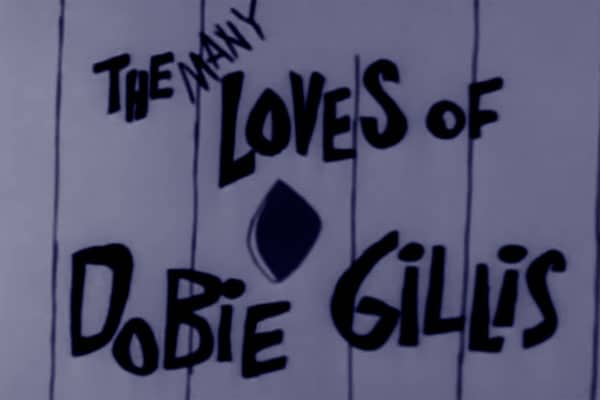
    Funny you never realize the generation gap until you mention something from your past to a teenager. At fifteen, I wanted to be a “beatnik”. My idol was a chacter named Maynard G. Krebs from the 1959 TV show “The Many Loves of Dobie Gillis”. Maynard was played by Bob Denver. Maynard was American television’s first beatnik. An enthusiastic fan of jazz music (with a strong distaste for the music of Lawrence Welk), Maynard plays the bongos, collects tinfoil and petrified frogs, and steers clear of romance, authority figures, and work (yelping “Work?!” every time he hears the word).

    Always speaking with the vernacular and slang of the beatniks and jazz musicians he admired, Maynard punctuated his sentences with the word “like” and had a tendency towards malapropisms.

    I also read the writings of Jack Kerouac and dabbled in Zen Bhuddism, brewed green tea on the school cafeteria floor, plated bongo drums and in practiced the flute in the school auditorium. We all used words like “cool”, “dig”, and “man”, and applauded by snapping our fingers. We got high off of listening to Charlie Byrd and Greenwich Village was our Mecca.

    Fredric Durrette served one tour in Vietnam, retired as E8 in the navy submarine service after 23 years. Major hobbies are collecting old stuff from the 20s and restoring old racing bicycles. Worked as a commercial photographer at JL Hudsons in Detroit and continue photography as a hobby. Love Sade, sixties soul, seventies rock, and all jazz. Attended Woodstock in 69!
    http://snakesafe.jalbum.net/

  • “Kitchen Debate” Between Richard Nixon and Nikita Khrushchev

    “Kitchen Debate” Between Richard Nixon and Nikita Khrushchev

    “Kitchen Debate” Between Richard Nixon and Nikita Khrushchev

    The “Kitchen Debate” was a series of impromptu exchanges between then-U.S. Vice President Richard Nixon and Soviet Premier Nikita Khrushchev on July 24, 1959. The discussions occurred during the American National Exhibition at Sokolniki Park in Moscow, showcasing American consumer goods and modern conveniences. The debate was an important moment in Cold War history, highlighting the differences in ideologies and economic systems between the United States and the Soviet Union.

    Dates and Details:

    • On July 24, 1959, Nixon and Khrushchev attended the opening of the American National Exhibition in Moscow, organized to promote cultural exchange and understanding between the two nations.
    • The debate took place at the exhibition in a model American home, known as the “typical American house,” featuring modern conveniences such as a dishwasher, refrigerator, and washing machine.
    • The debate was not a formal event but a series of impromptu discussions between Nixon and Khrushchev, touching on various topics, including economic systems, technology, and living standards in the U.S. and the Soviet Union.

    Kitchen Debate Facts:

    1. The “Kitchen Debate” was not initially planned; it occurred spontaneously as Nixon and Khrushchev toured the exhibition.
    2. The term “Kitchen Debate” was coined by the media, who reported on the event and provided extensive coverage.
    3. Nixon and Khrushchev communicated through interpreters, as neither spoke the other’s language.
    4. Although no official transcript exists, the debate was captured on color videotape and audio recordings, which were later released to the public.
    5. The “typical American house” featured in the debate was a prefabricated, ranch-style home designed by All-State Properties, Inc., and cost approximately $14,000 at the time.
    6. The kitchen in the model home was stocked with Pepsi-Cola, as Pepsi was the first American consumer product allowed to be sold in the Soviet Union.
    7. During the debate, Khrushchev famously said, “In Russia, all you have to do to get a house is be born in the Soviet Union,” emphasizing the difference between the Soviet housing system and American homeownership.
    8. As part of the cultural exchange, the Soviet Union held an exhibition in New York City just a few weeks before the American National Exhibition in Moscow.

    Effects on Pop Culture:

    • The Kitchen Debate garnered significant media attention in both the United States and the Soviet Union, highlighting the ongoing ideological battle between the two superpowers during the Cold War.
    • The debate humanized both Nixon and Khrushchev in the eyes of the public and led to increased interest in their respective political careers.
    • The event inspired a 2009 play titled “A Walk in the Woods” by Lee Blessing, which explores the relationship between American and Soviet negotiators during arms control talks.
    • The Kitchen Debate continues to be studied and discussed in history courses, political science classes, and popular culture as an important moment in Cold War history.

    Prominent People and Countries Involved:

    • Richard Nixon, the then-Vice President of the United States, who later became the 37th President of the United States (1969-1974).
    • Nikita Khrushchev, the Soviet Premier and First Secretary of the Communist Party of the Soviet Union (1953-1964).
    • The United States and the Soviet Union, the two superpowers engaged in the Cold War, which was marked by ideological, political, and economic competition.

    The Kitchen Debate between Richard Nixon and Nikita Khrushchev on July 24, 1959, was pivotal in Cold War history. As the two leaders engaged in a spirited discussion about their respective nations’ economic systems, technological advancements, and living standards, the event underscored the deep ideological differences between the United States and the Soviet Union. The Kitchen Debate captured the world’s attention and symbolized the ongoing struggle between the two superpowers during the Cold War.

    The debate’s legacy can be seen in the continued exploration of the event in academic studies, popular culture, and political discussions. It serves as a reminder of the intense competition between the U.S. and the Soviet Union during that time. It offers insights into the mindsets of the two leaders who played crucial roles in shaping world history during the latter half of the 20th century. The Kitchen Debate remains an iconic moment in the annals of Cold War history and a fascinating look into ideological struggles.

  • 1959 Grammy Award Winners

    1959 Grammy Award Winners

    1959 Grammy Award Winners

    • Winners Announced: May 4, 1959
    • Venues: Beverly Hilton Hotel, Los Angeles & New York
    • Host/Emcee: Mort Sahl
    • Eligibility Year: January 1, 1958 – December 31, 1958

    Major Wins:

    • Henry Mancini picked up Album of the Year for “The Music from Peter Gunn.”
    • Domenico Modugno’s “Nel Blu Dipinto Di Blu (Volare)” won both Record of the Year and Song of the Year.
    • Ella Fitzgerald became the Best Female Pop Vocalist for her album “Ella Fitzgerald Sings the Irving Berlin Song Book.”

    Additional Info:

    • Count Basie won Best Jazz Performance, Group for “Basie.”
    • The Champs got Best Rhythm & Blues Performance for “Tequila.”

    Trivia:

    • This was the first-ever Grammy Awards ceremony.
    • Mort Sahl, known primarily for his satirical comedy, was the first emcee of the Grammy Awards.
    • Henry Mancini’s Album of the Year win was significant because it was a television soundtrack, a unique event at the time.
    1959 Grammy Award Winners
    Winners Announced: May 4, 1959
    Held at: Beverly Hilton Hotel, Los Angeles & New York
    Host/Emcee: Mort Sahl
    Eligibility Year: January 1, 1958 – December 31, 1958
    1959 Grammy Winners
    Record of the Year:
    Nel Blu Dipinto di Blu (Volare), Domenico Modugno
    Album of the Year:
    The Music From Peter Gunn, Henry Mancini (RCA)
    Song of the Year:
    Nel Blu Dipinto di Blu, Domenico Modugno, songwriter
    Best Vocal Performance, Male:
    Catch a Falling Star, Perry Como
    Best Vocal Performance, Female:
    Ella Fitzgerald Sings the Irving Berlin Song Book, Ella Fitzgerald
    Best Performance By a Vocal Group or Chorus:
    That Old Black Magic, Louis Prima and Keely Smith
    Best Rhythm and Blues Performance:
    Tequila, Champs
    Best Jazz Performance, Individual:
    Ella Fitzgerald Sings the Duke Ellington Song Book, Ella Fitzgerald
    Best Jazz Performance, Group:
    Basie, Count Basie
    Best Performance By a Dance Band:
    Basie, Count Basie
    Best Country and Western Performance:
    Tom Dooley, Kingston Trio
    Best Performance By an Orchestra:
    Billy May’s Big Fat Brass, Billy May
    Best Arrangement:
    The Music From Peter Gunn, Henry Mancini, arranger
    Best Musical Composition First Recorded and Released in 1958 (More Than Five Minutes):
    Cross Country Suite, Nelson Riddle, composer
    Best Original Cast Album, Broadway or Television:
    The Music Man, Meredith Willson (Capitol)
    Best Soundtrack Album, Dramatic Picture Score or Original Cast:
    Gigi, André Previn (MGM)
    Best Classical Performance, Orchestra:
    Gaîté Parisienne, Felix Slatkin conducting Hollywood Bowl Symphony Orchestra
    Best Classical Performance, Chamber Music (Including Chamber Orchestra):
    Beethoven, Quartet 130, Hollywood String Quartet
    Best Classical Performance, Instrumental (With Concerto Scale Accompaniment):
    Tchaikovsky, Concerto No. 1 in B-Flat Minor, Op. 23, Van Cliburn, pianist; Kiril Kondrashin Symphony Orchestra
    Best Classical Performance, Instrumental (Other Than Concerto Scale):
    Segovia Golden Jubilee, Andrés Segovia
    Best Classical Performance, Operatic or Choral:
    Virtuoso, Roger Wagner Chorale
    Best Classical Performance, Vocal Soloist (With or Without Orchestra):
    Operatic Recital, Renata Tebaldi
    Best Comedy Performance:
    The Chipmunk Song, David Seville
    Best Performance, Documentary or Spoken Word:
    The Best of the Stan Freberg Shows, Stan Freberg
    Best Recording for Children:
    The Chipmunk Song, David Seville (Liberty)
    Best Album Cover:
    Only the Lonely, Frank Sinatra (Capitol)
  • 1959 Oscars 31st Academy Awards

    1959 Oscars 31st Academy Awards


    1959 Oscars 31st Academy Awards

    • Winners Announced: April 6, 1959
    • Venue: Pantages Theatre, Hollywood, California
    • Hosts: Jerry Lewis, Mort Sahl, Tony Randall, Bob Hope, David Niven, Laurence Olivier
    • Eligibility Year: 1958

    Major Wins:

    • Gigi swept the board with 9 Oscars, including Best Picture.
    • Susan Hayward took home Best Actress for I Want to Live!.
    • David Niven claimed Best Actor for Separate Tables.

    Directing & Screenplay:

    • Vincente Minnelli won Best Director for Gigi.
    • Best Original Screenplay went to The Defiant Ones.

    Additional Info:

    • Burl Ives won Best Supporting Actor for The Big Country.
    • Wendy Hiller was awarded Best Supporting Actress for Separate Tables.

    Trivia:

    • This ceremony had a host ensemble that was as illustrious as it was diverse, from comedian Jerry Lewis to the legendary Laurence Olivier.
    • The film Gigi set a new record at the time, winning all 9 of its nominated categories.
    • Susan Hayward’s portrayal in I Want to Live! was based on the true story of Barbara Graham, a woman executed in the gas chamber.
    • Gigi earned nine nominations, winning all nine.
    • Cuts were made to make the ceremony shorter, which ended up 20 minutes too short.
    • Jerry Lewis ad-libbed for most of the end of the show.

    1959 Oscar Nominees and Winners

    Best Motion Picture:
    Gigi – Arthur Freed, producer (WINNER)
    Auntie Mame – Jack L. Warner, producer
    Cat on a Hot Tin Roof – Lawrence Weingarten, producer
    The Defiant Ones – Stanley Kramer, producer
    Separate Tables – Harold Hecht, producer
    Best Director:
    Vincente Minnelli – Gigi (WINNER)
    Richard Brooks – Cat on a Hot Tin Roof
    Stanley Kramer – The Defiant Ones
    Robert Wise – I Want to Live!
    Mark Robson – The Inn of the Sixth Happiness
    Best Actor:
    David Niven – Separate Tables as Major David Angus Pollock (WINNER)
    Tony Curtis – The Defiant Ones as John “Joker” Jackson
    Paul Newman – Cat on a Hot Tin Roof as Brick Pollitt
    Sidney Poitier – The Defiant Ones as Noah Cullen
    Spencer Tracy – The Old Man and the Sea as The Old Man
    Best Actress:
    Susan Hayward – I Want to Live! as Barbara Graham (WINNER)
    Deborah Kerr – Separate Tables as Sibyl Railton-Bell
    Shirley MacLaine – Some Came Running as Ginny Moorehead
    Rosalind Russell – Auntie Mame as Mame Dennis
    Elizabeth Taylor – Cat on a Hot Tin Roof as Margaret “Maggie the Cat” Pollitt
    Best Supporting Actor:
    Burl Ives – The Big Country as Rufus Hannassey (WINNER)
    Theodore Bikel – The Defiant Ones as Sheriff Max Muller
    Lee J. Cobb – The Brothers Karamazov as Fyodor Karamazov
    Arthur Kennedy – Some Came Running as Frank Hirsh
    Gig Young – Teacher’s Pet as Dr. Hugo Pine
    Best Supporting Actress:
    Wendy Hiller – Separate Tables as Pat Cooper (WINNER)
    Peggy Cass – Auntie Mame as Agnes Gooch
    Martha Hyer – Some Came Running as Gwen French
    Maureen Stapleton – Lonelyhearts as Fay Doyle
    Cara Williams – The Defiant Ones as Billy’s mother
    Best Story and Screenplay Written Directly for the Screen:
    The Defiant Ones – Nedrick Young and Harold Jacob Smith (WINNER)
    The Goddess – Paddy Chayefsky
    Houseboat – Melville Shavelson and Jack Rose
    The Sheepman – William Bowers and James Edward Grant
    Teacher’s Pet – Fay Kanin and Michael Kanin
    Best Screenplay Based on Material from Another Medium:
    Gigi – Alan Jay Lerner from Gigi by Colette (WINNER)
    Cat on a Hot Tin Roof – Richard Brooks and James Poe from Cat on a Hot Tin Roof by Tennessee Williams
    The Horse’s Mouth – Alec Guinness from The Horse’s Mouth by Joyce Cary
    I Want to Live! – Don Mankiewicz and Nelson Gidding from writings by Ed Montgomery and Barbara Graham
    Separate Tables – John Gay and Terence Rattigan from Separate Tables by Terence Rattigan
    Best Foreign Language Film:
    My Uncle (France) (WINNER)
    Arms and the Man (Germany)
    Big Deal on Madonna Street (Italy)
    The Road a Year Long (Yugoslavia)
    La venganza (Spain)
    Best Documentary Feature:
    White Wilderness – Ben Sharpsteen (WINNER)
    Antarctic Crossing
    The Hidden World
    Psychiatric Nursing
    Best Documentary Short Subject:
    Ama Girls – Ben Sharpsteen (WINNER)
    Employees Only
    Journey into Spring
    The Living Stone
    Overture
    Best Live Action Short Subject:
    Grand Canyon – Walt Disney (WINNER)
    Journey into Spring – Ian Ferguson
    The Kiss – John Hayes
    Snows of Aorangi – New Zealand Screen Board
    T Is for Tumbleweed – James A. Lebenthal
    Best Short Subject – Cartoons:
    Knighty Knight Bugs – John W. Burton (WINNER)
    Paul Bunyan – Walt Disney
    Sidney’s Family Tree – William M. Weiss
    Best Scoring of a Dramatic or Comedy Picture:
    The Old Man and the Sea – Dimitri Tiomkin (WINNER)
    The Big Country – Jerome Moross
    Separate Tables – David Raksin
    White Wilderness – Oliver Wallace
    The Young Lions – Hugo Friedhofer
    Best Scoring of a Musical Picture:
    Gigi – André Previn (WINNER)
    The Bolshoi Ballet – Yuri Faier and G. Rozhdestvensky
    Damn Yankees! – Ray Heindorf
    Mardi Gras – Lionel Newman
    South Pacific – Alfred Newman and Ken Darby
    Best Song:
    “Gigi” from Gigi – Music by Frederick Loewe; Lyrics by Alan Jay Lerner (WINNER)
    “Almost In Your Arms (Love Song from Houseboat)” from Houseboat – Music and Lyrics by Jay Livingston and Ray Evans
    “A Certain Smile” from A Certain Smile – Music by Sammy Fain; Lyrics by Paul Francis Webster
    “To Love and Be Loved” from Some Came Running – Music by Jimmy Van Heusen; Lyrics by Sammy Cahn
    “A Very Precious Love” from Marjorie Morningstar – Music by Sammy Fain; Lyrics by Paul Francis Webster
    Best Sound:
    South Pacific – Fred Hynes (WINNER)
    I Want to Live! – Gordon E. Sawyer
    A Time to Love and a Time to Die – Leslie I. Carey
    Vertigo – George Dutton
    The Young Lions – Carlton W. Faulkner
    Best Art Direction:
    Gigi – Art Direction: William A. Horning (posthumous award) and E. Preston Ames; Set Decoration: Henry Grace and F. Keogh Gleason (WINNER)
    Auntie Mame – Art Direction: Malcolm Bert; Set Decoration: George James Hopkins
    Bell, Book and Candle – Art Direction: Cary Odell; Set Decoration: Louis Diage
    A Certain Smile – Art Direction: Lyle R. Wheeler and John DeCuir; Set Decoration: Walter M. Scott and Paul S. Fox
    Vertigo – Art Direction: Hal Pereira and Henry Bumstead; Set Decoration: Samuel M. Comer and Frank R. McKelvy
    Best Costume Design:
    Gigi – Cecil Beaton (WINNER)
    Bell, Book and Candle – Jean Louis
    The Buccaneer – Ralph Jester, Edith Head and John Jensen
    A Certain Smile – Charles LeMaire and Mary Wills
    Some Came Running – Walter Plunkett
    Best Cinematography, Black-and-White:
    The Defiant Ones – Sam Leavitt (WINNER)
    Desire Under the Elms – Daniel L. Fapp
    I Want to Live! – Lionel Lindon
    Separate Tables – Charles Lang
    The Young Lions – Joseph MacDonald
    Best Cinematography, Color:
    Gigi – Joseph Ruttenberg (WINNER)
    Auntie Mame – Harry Stradling, Sr.
    Cat on a Hot Tin Roof – William Daniels
    The Old Man and the Sea – James Wong Howe
    South Pacific – Leon Shamroy
    Best Film Editing:
    Gigi – Adrienne Fazan (WINNER)
    Auntie Mame – William Ziegler
    Cowboy – William Lyon and Al Clark
    The Defiant Ones – Frederic Knudtson
    I Want to Live! – William Hornbeck
    Best Special Effects:
    tom thumb – Tom Howard (WINNER)
    Torpedo Run – Visual Effects: A. Arnold Gillespie; Audible Effects: Harold Humbrock
    Academy Honorary Award:
    Maurice Chevalier “for his contributions to the world of entertainment for more than half a century.”
    Irving G. Thalberg Memorial Award:
    Jack L. Warner
    Oscar® and Academy Awards® and Oscar® design mark are the trademarks and service marks and the Oscar© statuette the copyrighted property, of the Academy of Motion Picture Arts and Sciences. Pop Culture Madness is neither endorsed by nor affiliated with the Academy of Motion Picture Arts and Sciences.


  • The Cuban Revolution: Fidel Castro

    The Cuban Revolution: Fidel Castro

    Fidel Castro and the Cuban Revolution

    The Cuban Revolution was a significant event in 20th-century history that transformed the island nation of Cuba, ultimately leading to the establishment of a socialist state under the leadership of Fidel Castro. The revolution occurred between 1953 and 1959, overthrowing the U.S.-backed dictatorship of Fulgencio Batista and replacing it with a new government led by Castro and his fellow revolutionaries.

    Fidel Castro was born on August 13, 1926, in Birán, a small town in eastern Cuba. He was educated at Jesuit schools before studying law at the University of Havana. As a student, he became politically active, opposing the authoritarian government of President Ramón Grau and later Batista’s military coup in 1952.

    The Cuban Revolution began on July 26, 1953, when Castro, his brother Raúl, and approximately 160 other rebels attacked the Moncada Barracks in Santiago de Cuba. The attack was a failure, and many of the revolutionaries were killed or captured. Fidel and Raúl were arrested and sentenced to 15 years in prison. However, due to public pressure, Batista released the Castro brothers in 1955 under a general amnesty.

    After their release, the Castros went into exile in Mexico, where they met Argentine revolutionary Ernesto “Che” Guevara. The three men formed a close bond and began planning another attempt to overthrow the Batista regime. In December 1956, they returned to Cuba aboard a small yacht called Granma and 79 other revolutionaries.

    Upon arriving in Cuba, the group faced many challenges, including losing most of their forces during initial skirmishes with Batista’s troops. However, the remaining rebels, led by Fidel, Raúl, and Che, managed to regroup in the Sierra Maestra mountains, where they gained the support of local peasants and began a guerrilla war against the Batista government.

    Over the next two years, the revolutionaries gradually gained momentum, winning a series of battles and attracting new recruits. They also benefited from widespread public dissatisfaction with Batista’s corrupt and repressive regime and support from international figures such as Soviet Premier Nikita Khrushchev.

    On January 1, 1959, Batista fled the country, and Castro’s forces took control of Havana. The revolution was complete, and a new era in Cuban history began.

    Here are 10 Facts about the Cuban Revolution and Fidel Castro:

    1. Fidel Castro survived numerous assassination attempts, reportedly more than 600, orchestrated by the U.S. Central Intelligence Agency (CIA).

    2. During the revolution, the rebels operated a pirate radio station called “Radio Rebelde” that broadcast news and propaganda from the Sierra Maestra mountains.

    3. Fidel Castro and Che Guevara both had a love for literature. Castro was an avid reader, and Guevara wrote a book about his experiences during the revolution, “La Guerra de Guerrillas.”

    4. The Cuban Revolution inspired numerous leftist movements in Latin America and beyond, including the Sandinista Revolution in Nicaragua and the Farabundo Martí National Liberation Front in El Salvador.

    5. In 1961, the U.S. government implemented a trade embargo against Cuba that remains in place today, although restrictions have been eased in recent years.

    6. The Cuban Revolution led to significant improvements in education and healthcare, with Cuba boasting one of the highest literacy rates and life expectancies in the region.

    7. Fidel Castro held power in Cuba for nearly five decades, making him one of the longest-serving leaders in modern history. He stepped down in 2008, and his brother Raúl Castro became president. In 2021, Raúl stepped down from his leadership role in the Communist Party, marking the end of the Castro era in Cuban politics.

    8. The Cuban Revolution significantly impacted American popular culture, with figures such as Ernest Hemingway and Hollywood stars like Errol Flynn visiting the island. The revolution also inspired numerous films, such as the two-part biopic “Che” (2008), starring Benicio Del Toro as Che Guevara, and “The Godfather Part II” (1974), which includes scenes set in pre-revolutionary Havana.
    9. In 1962, the Cuban Missile Crisis brought the world to the brink of nuclear war when the Soviet Union placed nuclear missiles on Cuban soil in response to the U.S. placing missiles in Turkey. The crisis was resolved after tense negotiations between U.S. President John F. Kennedy and Soviet Premier Nikita Khrushchev, resulting in the removal of missiles from both Cuba and Turkey.

    10. Fidel Castro was known for his long speeches, which sometimes lasted for hours. His longest speech, delivered at the United Nations General Assembly in 1960, lasted for 4 hours and 29 minutes.

    The Cuban Revolution, led by Fidel Castro and his fellow revolutionaries, changed the course of Cuban history and had a lasting impact on global politics and culture. The revolution’s legacy continues to shape the relations between Cuba and the United States and serves as a symbol of resistance and independence for many people around the world.


    Regenerate response