web analytics

Tag: 1960

  • 1960 Top Ten Music Charts

    1960 Top Ten Music Charts

    1960’s Biggest Artists and Songs

    Frank Sinatra (1959 Grammy for Album of the Year & Best Male Vocal Performance, presented in 1960) Come Dance With Me was Mr. Sinatra’s best-selling album of his career and stayed on Billboard’s Pop album chart for 140 weeks, peaking at #2.
    Mack The Knife – Bobby Darin (1959 Grammy for Record of the Year, presented at the 2nd Grammy Awards, in 1960) Mack the Knife was the biggest hit of 1959 and of Bobby’s career.
    New Artists in the Pop Charts Included:
    The Chiffons, Ben E. King, Charlie Rich, Harold Melvin and The Blue Notes, Ferrante & Teicher, Ike and Tina Turner, Etta James and Bob Crewe.
    Take our 1960 Quiz!

    1960’s Retro Top 10 Hits

    1. Harbor Lights – The Platters
    2. Georgia On My Mind – Ray Charles
    3. Tell Laura I Love Her – Ray Peterson
    4. Cathy’s Clown – The Everly Brothers
    5. Walk, Don’t Run – The Ventures
    6. Last Date – Floyd Cramer
    7. Peter Gunn Theme – Duane Eddy
    8. Running Bear – Johnny Preston
    9. Itsy Bitsy Teenie Weenie Yellow Polkadot Bikini – Brian Hyland
    10. Nice ‘N’ Easy – Frank Sinatra

    1960’s ‘One Hit Wonders’

    1. Money (That’s What I Want) – Barret Strong
    2. There’s A Moon Out Tonight – The Capris
    3. Stay – Maurice Williams and the Zodiacs
    4. Teen Angel – Mark Dining
    5. Hot Rod Lincoln – Johnny Bond
    6. A Thousand Stars – Kathy Young and the Innocents
    7. Alley-Oop – Hollywood Argyles
    8. Diamonds and Pearls – The Paradons
    9. The Madison – Al Brown
    10. He’ll Have To Stay – Jeanne Black

    1960’s Dance Top 10 Hit List

    1. The Twist – Chubby Checker
    2. Beyond The Sea – Bobby Rydell
    3. Stuck On You – Elvis Presley
    4. Volare – Bobby Rydell
    5. Wild One – Bobby Rydell
    6. When Will I Be Loved – The Everly Brothers
    7. Poetry In Motion – Johnny Tillotson
    8. Swingin’ School – Bobby Rydell
    9. This Magic Moment – The Drifters
    10. Finger Poppin’ Time – Hank Ballard

    1960’s Doo-Wop Song Top 10 Hit List

    1. Stay – Maurice Williams and the Zodiacs
    2. Tonight’s The Night – Shirelles
    3. Shimmy, Shimmy, Ko-Ko-Bop – Little Anthony & the Imperials
    4. Diamonds and Pearls – The Paradons
    5. Where or When – Dion and the Belmonts
    6. I Only Want You – Passions
    7. Once In A While – The Chimes
    8. Dance By The Light Of The Moon – Olympics
    9. Babalu’s Wedding Day – Eternals
    10. Step By Step – Crests

    PCM’s 1960 Top 10 Hit List

    1. The Twist – Chubby Checker
    2. Beyond The Sea – Bobby Darin
    3. Are You Lonesome Tonight? – Elvis Presley
    4. Wild One – Bobby Rydell
    5. Volare – Bobby Rydell
    6. I’m Sorry – Peggy Lee
    7. Money (That’s What I Want) – Barrett Strong
    8. This Magic Moment – The Drifters
    9. It’s Now Or Never – Elvis Presley
    10. Wonderful World – Sam Cooke

    Take Our 1960 Quiz!
  • 1961 Top Ten Music Charts

    1961 Top Ten Music Charts

    1961’s Biggest Artists and Songs

    Theme From ‘A Summer Place’ – Percy Faith (Grammy for 1960’s Record of the Year, presented in 1961)
    New Artists in the Pop Charts Included:
    Mary Wells, Aretha Franklin, Tony Orlando, The Marvelettes, Glen Campbell, Gene Pitney, Johnny Maestro, Dave Brubeck Quartet
    Take our 1961 Quiz!

    1961’s Retro Top 10 Hits

    1. Runaway – Del Shannon
    2. Mother-In-Law – Ernie K Doe
    3. Raindrops – Dee Clark
    4. Daddy’s Home – Shep and the Limelights
    5. Hurt – Timi Yuri
    6. Yellow Bird – Arthur Lyman Group
    7. I Love How You Love Me – The Paris Sisters
    8. Let There Be Drums – Sandy Nelson
    9. Norman – Sue Thompson
    10. My True Story – The Jive Five

    1961’s ‘One Hit Wonders’

    1. The Lion Sleeps Tonight – The Tokens
    2. Heart and Soul – The Cleftones
    3. Please Love Me Forever – Cathy Jean and the Roommates
    4. Who Put The Bomp (In The Bomp, Bomp, Bomp) – Barry Mann
    5. (Ghost) Riders I The Sky – The Ramrods
    6. Those Oldies But Goodies (Remind Me of You) – Little Caesar and the Romans
    7. A Little Bit of Soap – The Jarmels
    8. Foot Stompin’ – The Flares
    9. Does Your Chewing Gum Lose Its Flavor (On The Bedpost Over Night) -Lonnie Donegan
    10. When Will We Get Married – The Dreamlovers

    1961’s Dance Top 10 Hit List

    1. Tossin’ and Turnin’ – Bobby Lewis
    2. Pretty Little Angel Eyes – Curtis Lee
    3. The Bristol Stomp – The Dovells
    4. Blue Moon – The Marcels
    5. Runaround Sue – Dion
    6. Rama Lama Ding Dong – The Edsels
    7. Hushable – The Mystics
    8. I Like It Like That – Chris Kenner
    9. Take Good Care of My Baby – Bobby Vee
    10. Runaway – Del Shannon

    1961’s Doo-Wop Song Top 10 Hit List

    1. Blue Moon – Marcels
    2. The Lion Sleeps Tonight – The Tokens
    3. There’s a Moon Out Tonight – The Capris
    4. Daddy’s Home – Shep and the Limelights
    5. Heart And Soul – Cleftones
    6. Pretty Little Angel Eyes – Curtis Lee
    7. Tell Me Why – Dion and the Belmonts
    8. Barbara Ann – Regents
    9. My True Story – The Jive Five
    10. I’m So Young – The Students

    More Doo-Wop Song Hits:

    When We Get Married – The Dreamlovers
    In My Heart – Timetones
    Lover’s Island – The Blue Jays
    Tonight (Could Be The Night) – Velvets
    I Really Love You – Stereos
    Smoky Places – Corsairs
    Rip Van Winkle – Devotions
    To Be Loved (Forever) – The Paragons

    PCM’s 1961 Top 10 Hit List

    1. At Last – Etta James
    2. Crazy – Patsy Cline
    3. Let’s Twist Again – Chubby Checker
    4. Bristol Stomp – The Dovells
    5. Please Mr. Postman – The Marvelettes
    6. Hit The Road Jack – Ray Charles
    7. Stand By Me – Ben E. King
    8. Runaround Sue – Dion
    9. The Lion Sleeps Tonight – The Tokens
    10. Tossin and Turnin’ – Bobby Lewis
  • Pop Culture Trivia Quiz: What Happened In 1960?

    Pop Culture Trivia Quiz: What Happened In 1960?

    Pop Culture Trivia Quiz: What Happened In 1960?

    1960 Pop Culture, History, and Unforgettable Moments

    The year 1960 was a cultural turning point, marking the dawn of a new decade that would shape music, movies, politics, and social movements for generations. Known for its blend of optimism and turbulence, the 1960s saw the rise of fresh voices in entertainment, historic political milestones, and innovations that forever changed how we live. Whether you’re revisiting the era for trivia or exploring its legacy, 1960 remains a treasure trove of fascinating stories and timeless trends.

    In 1960, John F. Kennedy was elected the youngest president in U.S. history, signaling a shift toward a more youthful and dynamic image of leadership. Sitcoms like The Flintstones debuted on television, becoming the first prime-time animated series. Meanwhile, Alfred Hitchcock’s Psycho terrified audiences and changed the landscape of horror films, breaking new ground in suspense and storytelling.

    Outside of what’s widely known, 1960 brought the launch of Etch A Sketch, sparking creativity in children around the world. The first-ever U.S. weather satellite, TIROS-1, was launched into orbit, giving scientists new tools to predict and study storms. The first American Football League (AFL) championship game was held in sports, paving the way for what would later become the Super Bowl.

    Music in 1960 reflected a mix of crooning legends and emerging trends. Elvis Presley continued to dominate the charts, while the rise of Motown Records began to reshape American music with soulful harmonies and enduring hits. Beyond the stage and screen, significant medical advances, like the first use of an implanted pacemaker, also made headlines.

    1960 offers endless possibilities for trivia fans, from exploring iconic inventions to uncovering the year’s Oscar winners and sports champions. Delve into the events and achievements of this pivotal year to see how the seeds of the 1960s counterculture began to take root.

    60 Trivia Questions for 1960 History

    (answers)
    1. Established in 1960, this area spreads along 15 blocks of Hollywood Boulevard and three blocks of Vine Street in Hollywood, California. What is it called?

    2. What was the Biggest Number One Song of 1960?

    3. In 1960, what was the average life expectancy in the United States?

    4. Dr. Seuss released two books in 1960. Name one of them.

    5. Name the two Presidential candidates who participated in the first televised debate.

    6. Name the American Western based on a 1954 Japanese film, Seven Samurai.

    7. 1960 Catchphrase: Who said, “Yabba dabba doo!”?

    8. Who won the Stanley Cup in 1960?

    9. How many people lived in the United States in 1960?

    10. How many people lived in the World in 1960?

    11. This comic strip started in 1960 and features the children Billy, Dolly, Jeffy, and P.J. Name the comic strip.

    12. Who was the President of the United States in 1960?

    13. This musical was the first to bring Rock and Roll to Broadway. Name that show.

    14. What was the name of the music label founded by Berry Gordy Jr.?

    15. Name the book by Harper Lee that won the Pulitzer Prize for the best American novel of 1960.

    16. Can you name the first movie, a musical comedy, that Elvis Presley starred in after he was honorably discharged from the US Army?

    17. What was the Bestselling Fiction Book in 1960?

    18. What did the Twenty-third Amendment to the United States Constitution do?

    19. How much did a Loaf of Bread cost in 1960?

    20. How much was a Gallon of Milk in 1960?

    21. How much was a Pound of Chuck Roast in 1960?

    22. What was the first television program to show a toilet onscreen?

    23. Name the first American film to show a toilet on screen and flushed.

    24. What was the highest-grossing film of 1960?

    25. Who directed Spartacus?

    26. This television show was based on a comic strip by Hal Ketcham.

    27. What became the official symbol of the United States on July 4, 1960?

    28. How many red and hoe many white stripes are on the American Flag?

    29. How much did a Volkswagon cost in 1960?

    30. How much did a gallon of gas cost in 1960?

    31. Iran, Iraq, Kuwait, Saudi Arabia, and Venezuela formed OPEC in 1960. What do those initials stand for?

    32. Name the American base that is part of the island of Cuba.

    33. Starring Clark Gable and Marilyn Monroe, name the last film for both actors.

    34. What car company used the slogan: “Think small”?

    35. Which celebrity was NOT born in 1960: Daryl Hannah, Amy Grant, RuPaul or Hugh Laurie

    36. Who won the 1960 World Series?

    37. According to the US Census Bureau, what was America’s richest per capita city in 1960?

    38. The Mattel toy company initially manufactured this pull-string “talking” doll from 1959 to 1965.

    39. Name the board game that simulates a person’s travels through his or her life, from college to retirement, with jobs, marriage, and possible children along the way.

    40. Named after a professional golfer, what is the mix of iced tea and lemonade called?

    41. Who was the Time Magazine Men of the Year in 1960?

    42. This Broadway musical was a fictionalized account of the life of Margaret Brown, who survived the sinking of the RMS Titanic in 1912.

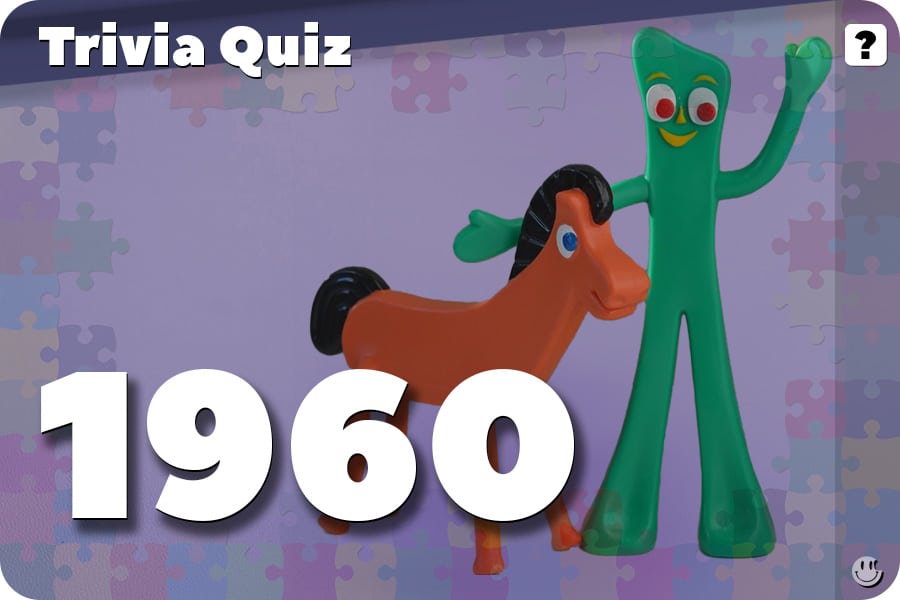
    43. Before he got his series, Gumby appeared on what 1950’s children’s television show

    44. Before Ronald Reagan in 1981, who was America’s oldest president?

    45. What was the Top-Rated TV Show in the 1959/1960 season?

    46. It was the first atomic-powered aircraft carrier and the largest ship ever built. It was launched at Newport News, Virginia. What was the name of the ship?

    47. What was the (whistling) theme song for the Andy Griffith Show titled?

    48. What did the Ohio Art Company produce the most successful toy?

    49. Who set an NBA record that still stands for “Most points in a rookie’s game, “with 58 points for the Philadelphia Warriors against the Detroit Pistons

    50. This stadium was home to the San Francisco Giants and the San Francisco 49ers. The last event there was a concert featuring Paul McCartney in 2014. Name that park.

    51. Who was the Pope in XXX?

    52. Scent of Mystery debuted at Chicago’s Cinestage Theater and had a unique, special sensory effect for audiences. What was it?

    53. This 1960 Roger Corman film was made into a musical in 1986. Name that film.

    54. The science fiction film was based on the 1895 novella of the same name. It has been

    55. To the nearest quarter, what was the average movie theater ticket price in 1960?

    56. This band, who would world famous in just a few years, a 48-night residency at the Indra Club in Hamburg, West Germany. Name the band.

    57. This movie, a suspense thriller released in 1960, was rated R by the MPAA in 1984. Name that film.

    58. What was the cartoon character Mr. Magoo’s impairment?

    59. Who nationalized all American and foreign-owned property in Cuba?

    60. Name the two 1960 NFL expansion teams…

    Trivia Team Bonus Questions:

    1. Who were the 1960 NFL Champions?

    2. At the 1960 Summer Olympic Games, who won the gold medal in light-heavyweight boxing.

    3. Who was the American Vice-President in 1960?

    4. Name the fourth nation to build a nuclear weapon.

    5. Name the submarine that completed the first underwater circumnavigation of the Earth on May 10, 1960.

    6. Who were the 1960 NBA Champions?

    7. Held in Squaw Valley, CA, United States, how many medals did the US win in the 1960 Winter Olympics?

    8. Held in Rome, Italy, how many medals did the US win in the 1960 Summer Olympics?

    9. What Horse won the Kentucky Derby in 1960?

    10. Jacques Piccard and Don Walsh descended WHERE, in the bathyscaphe Trieste, reaching a depth of 35,797 feet.

    The Answers:

    60 Trivia Answers for 1960 History

    1. Established in 1960, this area spreads along 15 blocks of Hollywood Boulevard and three blocks of Vine Street in Hollywood, California. What is it called?
    The Hollywood Walk of Fame

    2. What was the Biggest Number One Song of 1960?
    The Theme From “A Summer Place” by Percy Faith

    3. In 1960, what was the average life expectancy in the United States?
    Men – 66.6 years, Women – 73.1 years.

    4. Dr. Seuss released 2 books in 1960. Name one of them.
    One Fish Two Fish Red Fish Blue Fish and Green Eggs and Ham

    5. Name the two Presidential candidates who participated in the first televised debate.
    John F. Kennedy and Richard M. Nixon

    6. Name the American Western based on a 1954 Japanese film, Seven Samurai.
    The Magnificent Seven

    7. 1960 Catchphrase: Who said, “Yabba dabba doo!”?
    Fred Flintstone on The Flintstones

    8. Who won the Stanley Cup in 1960?
    In 1960, The Montreal Canadiens won over the Toronto Maple Leafs (4 games to 0)

    9. How many people lived in the United States in 1960?
    The population was an estimated 180,671,158 people.

    10. How many people lived in the World in 1960?
    The estimated world population in 1960 was 3,026,002,942 people.

    11. This comic strip started in 1960 and features the children Billy, Dolly, Jeffy, and P.J. Name the comic strip.
    The Family Circus (aka The Family Circle) by Bil Keane

    12. Who was the President of the United States in 1960?
    Dwight D. Eisenhower (January 20, 1953 – January 20, 1961)

    13. This musical was the first to bring Rock and Roll to Broadway. Name that show.
    Bye Bye Birdie

    14. What was the name of the music label founded by Berry Gordy Jr.?
    Motown (Motown Record Corporation)

    15. Name the book by Harper Lee that won the Pulitzer Prize for the best American novel of 1960.
    To Kill A Mockingbird

    16. Can you name the first movie, a musical comedy, that Elvis Presley starred in after he was honorably discharged from the US Army?
    G.I. Blues

    17. What was the Bestselling Fiction Book in 1960?
    Advise and Consent by Allen Drury

    18. What did the Twenty-third Amendment to the United States Constitution do?
    It extended the right to vote in presidential elections to citizens residing in the District of Columbia.

    19. How much did a Loaf of Bread cost in 1960?
    20 cents

    20. How much was a Gallon of Milk in 1960?
    $1.04

    21. How much was a Pound of Chuck Roast in 1960?
    61 cents

    22. What was the first television program to show a toilet onscreen?
    Leave It to Beaver (1957–1963)

    23. Name the first American film to show a toilet on screen and flushed.
    Psycho

    24. What was the highest-grossing film of 1960?
    Spartacus

    25. Who directed Spartacus?
    Stanley Kubrick

    26. This television show was based on a comic strip by Hal Ketcham.
    Dennis The Menace (1959-1963)

    27. What became the official symbol of the United States on July 4, 1960?
    The 50-star American Flag.

    28. How many red and how many white stripes are on the American Flag?
    Seven red, six white

    29. How much did a Volkswagon cost in 1960?
    A Deluxe Sedan was $1565, a Sunroof Sedan was $1665, and a Cabriolet $2055

    30. How much did a gallon of gas cost in 1960?
    $0.31 per gallon

    31. Iran, Iraq, Kuwait, Saudi Arabia, and Venezuela formed OPEC in 1960. What do those initials stand for?
    Organization of the Petroleum Exporting Countries

    32. Name the American base that is part of the island of Cuba.
    Guantanamo Naval Base (Gitmo)

    33. Starring Clark Gable and Marilyn Monroe, name the last film for both actors.
    The Misfits

    34. What car company used the slogan: “Think small”?
    Volkswagon

    35. Which celebrity was NOT born in 1960: Daryl Hannah, Amy Grant, RuPaul or Hugh Laurie
    Hugh Laurie (June 11, 1959)

    36. Who won the 1960 World Series?
    In 1960, The Pittsburgh Pirates won, beating the New York Yankees (4 games to 3)

    37. According to the US Census Bureau, what was America’s richest per capita city in 1960?
    Detroit, Michigan

    38. The Mattel toy company initially manufactured this pull-string “talking” doll from 1959 to 1965.
    Chatty Cathy

    39. Name the board game that simulates a person’s travels through his or her life, from college to retirement, with jobs, marriage, and possible children along the way.
    The Game of Life

    40. Named after a professional golfer, what is the mix of iced tea and lemonade called?
    An Arnold Palmer

    41. Who was the Time Magazine Men of the Year in 1960?
    “United States Scientists”

    42. This Broadway musical was a fictionalized account of the life of Margaret Brown, who survived the sinking of the RMS Titanic in 1912.
    The Unsinkable Molly Brown

    43. Before he got his series, Gumby appeared on what 1950’s children’s television show?
    The Howdy Doody Show

    44. Before Ronald Reagan in 1981, who was America’s oldest president?
    Dwight D. Eisenhower

    45. What was the Top-Rated TV Show in the 1959/1960 season?
    Gunsmoke (CBS)

    46. It was the first atomic-powered aircraft carrier and the largest ship ever built. It was launched in Newport News, Virginia. What was the name of the ship?
    USS Enterprise

    47. What was the (whistling) theme song for the Andy Griffith Show titled?
    The Fishin’ Hole

    48. What did the Ohio Art Company produce the most successful toy?
    Etch-A-Sketch

    49. Who set an NBA record that still stands for “Most points in a rookie’s game, “with 58 points for the Philadelphia Warriors against the Detroit Pistons
    Wilt Chamberlain

    50. This stadium was home to the San Francisco Giants and the San Francisco 49ers. The last event there was a concert featuring Paul McCartney in 2014. Name that park.
    Candlestick Park

    51. Who was the Pope in XXX?
    Pope John XXIII, from October 28, 1958 – June 3, 1963

    52. Scent of Mystery debuted at Chicago’s Cinestage Theater and had a unique, special sensory effect for audiences. What was it?
    “Smell-O-Vision” – the film had 30 different odors.

    53. This 1960 Roger Corman film was made into a musical in 1986. Name that film.
    The Little Shop of Horrors

    54. The science fiction film was based on the 1895 novella of the same name. It has been
    The Time Machine

    55. To the nearest quarter, what was the average movie theater ticket price in 1960?
    75 cents

    56. This band, who would world famous in just a few years, a 48-night residency at the Indra Club in Hamburg, West Germany. Name the band.
    The Beatles

    57. This movie, a suspense thriller released in 1960, was rated R by the MPAA in 1984. Name that film.
    Psycho

    58. What was the cartoon character Mr. Magoo’s impairment?
    He was nearsighted (myopia)

    59. Who nationalized all American and foreign-owned property in Cuba?
    Fidel Castro

    60. Name the two 1960 NFL expansion teams…
    Dallas Cowboys and Minnesota Vikings

    Trivia Team Bonus Questions:

    1. Who were the 1960 NFL Champions?
    Philadelphia Eagles

    2. At the 1960 Summer Olympic Games, who won the gold medal in light-heavyweight boxing.
    Muhammad Ali (Cassius Clay)

    3. Who was the American Vice-President in 1960?
    Richard Nixon (January 20, 1953 – January 20, 1961)

    4. Name the fourth nation to build a nuclear weapon.
    France

    5. Name the submarine that completed the first underwater circumnavigation of the Earth on May 10, 1960.
    USS Triton

    6. Who were the 1960 NBA Champions?
    For the 1959-60 Season, Champion Boston Celtics won 4 games to 3 over the St. Louis Hawks

    7. Held in Squaw Valley, CA, United States, how many medals did the US win in the 1960 Winter Olympics?
    10.
    3 Gold, 4 Silver, 3 Bronze.

    8. Held in Rome, Italy, how many medals did the US win in the 1960 Summer Olympics?
    71.
    34 Gold, 21 Silver, 16 Bronze.

    9. What Horse won the Kentucky Derby in 1960?
    Venetian Way

    10. Jacques Piccard and Don Walsh descended WHERE in the bathyscaphe Trieste, reaching a depth of 35,797 feet.
    The Mariana Trench

     
  • 25 Biggest Songs of the 1960s

    25 Biggest Songs of the 1960s

    Top 25 Songs of the 1960s

    The Twist by Chubby Checker is in a class by itself
    1. Hey Jude – The Beatles
    2. The Theme From ” A Summer Place” – Percy Faith
    3. Tossin’ and Turnin’ – Bobby Lewis
    4. I Want To Hold Your Hand – The Beatles
    5. I’m A Believer – The Monkees
    6. I Heard It Through The Grapevine – Marvin Gaye
    7. Aquarius/ Let The Sunshine In – The 5th Dimension
    8. Are You Lonesome To-night? – Elvis Presley
    9. In The Year 2525 – Zager & Evans
    10. It’s Now or Never – Elvis Presley
    11. I Can’t Stop Loving You – Ray Charles
    12. Love Is Blue – Paul Mauriat
    13. Big Girls Don’t Cry – The 4 Seasons
    14. Big Bad John – Jimmy Dean
    15. Sugar Shack – Jimmy Gilmer & The Fireballs
    16. Honey – Bobby Goldsboro
    17. To Sir With Love – Lulu
    18. Cathy’s Clown – The Everly Brothers
    19. People Got To Be Free – The Rascals
    20. Get Back – The Beatles
    21. The Ballad Of The Green Berets – SSgt. Barry Sadler
    22. Sherry – The 4 Seasons
    23. Can’t Buy Me Love – The Beatles
    24. Sugar, Sugar – The Archies
    25. (Sittin’ On) The Dock Of The Bay – Otis Redding
    Take our 1960 Quiz!
    Take our 1961 Quiz!
    Take our 1962 Quiz!
    Take our 1963 Quiz!
    Take our 1964 Quiz!
    Take our 1965 Quiz!
    Take our 1966 Quiz!
    Take our 1967 Quiz!
    Take our 1968 Quiz!
    Take our 1969 Quiz!
  • Top 100+ Oldies 1959-1963

    Top 100+ Oldies 1959-1963

    Top Oldies – 1959-1963/1964

    Oldies: Pre-Beatles The post-50s-pre-Beatles brought an amazing and often under-estimated, even forgotten, selection of quality popular music. This Era of Pop Music brought us the Girl Groups, Phil Spectre, and the post-do-wop sound of rock and roll. After this era, the Beatles changed music again.

    The Top Instrumentals 1959-1963/4

    1. Yakety Sax – Boots Randolph
    2. Miserlou – Dick Dale
    3. The Stripper – Davis Rose
    4. Take Five – Dave Brubeck Quartet
    5. Wipe Out – The Surfaris
    6. Green Onions – Booker T and the MG’s
    7. Desafinado – Stan Getz and Charlie Byrd
    8. Raw-Hide – Link Wray
    9. Bunny Hop – The Applejacks
    10. Alley Cat – Bent Fabric and His Piano

    The Top Oldies With Words 1959-1963/4

    1. Mack The Knife – Bobby Darin
    2. At Last – Etta James
    3. The Twist – Chubby Checker
    4. Crazy – Patsy Cline
    5. Stand By Me – Ben E. King
    6. The Lion Sleeps Tonight – The Tokens
    7. Under The Boardwalk – The Drifters
    8. Runaround Sue – Dion
    9. Surfin’ USA – Beach Boys
    10. What’d I Say – Ray Charles
    11. Breaking Up Is Hard To Do – Neil Sedaka
    12. It’s Just A Matter Of Time – Brooke Benton
    13. Heat Wave – Martha Reeves and the Vandellas
    14. Happy Birthday Sweet Sixteen – Neil Sedaka
    15. Sleep Walk – Santo and Johnny
    16. Surfin’ Safari – Beach Boys
    17. La Bamba – Ritchie Valens
    18. Big Girls Don’t Cry – The 4 Seasons
    19. Chapel Of Love – Dixie Cups
    20. Pretty Little Angel Eyes – Curtis Lee
    21. Louie Louie – The Kingsmen
    22. Volare – Bobby Rydell
    23. Beyond The Sea – Bobby Darin
    24. Bristol Stomp – The Dovells
    25. I Only Have Eyes For You – The Flamingos
    26. Do You Love Me – The Contours
    27. Wild One – Bobby Rydell
    28. Be My Baby – The Ronettes
    29. Lonely Teardrops – Jackie Wilson
    30. Daddy’s Home – Sheb and the Limelites
    31. A Teenager In Love – Dion & the Belmonts
    32. South Street – The Orlons
    33. The Loco-Motion – Little Eva
    34. My Boyfriend’s Back – The Angels
    35. Save The Last Dance For Me – The Drifters
    36. Sherry – The 4 Seasons
    37. Harbor Lights – The Platters
    38. Hey! Baby – Bruce Channel
    39. Leader of the Pack – Shangri-Las
    40. Kansas City – Wilbert Harrison
    41. Up On The Roof – The Drifters
    42. Some Kind of Wonderful – The Drifters
    43. I Fall To Pieces – Patsy Cline
    44. Back In The U.S.A. – Chuck Berry
    45. Mickey’s Monkey – The Miracles
    46. Only Sixteen – Sam Cooke
    47. You Can’t Sit Down – Dovells
    48. There’s a Moon Out Tonight – The Capris
    49. Our Day Will Come – Ruby and the Romantics
    50. Come Softly Yo Me – Fleetwoods
    51. Misty – Johnny Mathis
    52. Johnny Angel – Shelly Fabres
    53. Sealed With A Kiss – Brian Hyland
    54. Let’s Twist Again – Chubby Checker
    55. Pride and Joy – Marvin Gaye
    56. Party Lights – Claudine Clark
    57. Put Your Head On My Shoulder – Paul Anka
    58. Monkey Time – Major Vance
    59. The Wah Watusi – The Orlons
    60. Denise – Randy and the Rainbows
    61. Georgia On My Mind – Ray Charles
    62. On Broadway – The Drifters
    63. Wonderful World – Sam Cooke
    64. Hey Paula – Paul and Paula
    65. Dedicated To The One I Love – The Shirelles
    66. I Adore Him – The Angels
    67. Lovers Who Wander – Dion
    68. Surfer Girl – Beach Boys
    69. (Night Time Is) The Right Time – Ray Charles
    70. Then He Kissed Me – The Crystals
    71. Hello Mary Lou – Ricky Nelson
    72. Wildwood Days – Bobby Rydell
    73. When Will I Be Loved – The Every Brothers
    74. One Fine Day – The Chiffons
    75. This Magic Moment – The Drifters
    76. Remember (Walkin’ In The Sand) – The Shangri-Las
    77. Are You Lonesome To-Night? – Elvis Presley
    78. Don’t Hang Up – The Orlons
    79. Personality – Lloyd Price
    80. Having A Party – Sam Cooke
    81. He’s A Rebel – The Crystals
    82. (The Best Part Of) Breakin’ Up – The Ronettes
    83. Hushabye – The Mystics
    84. 409 – Beach Boys
    85. Will You Love Me Tomorrow – The Shirelles
    86. Dream Baby – Roy Orbison
    87. It Doesn’t Matter Anymore – Buddy Holly
    88. Baby Its You – The Shirelles
    89. Tossin’ and Turnin’ – Bobby Lewis
    90. The End of the World – Skeeter Davis
    91. Hit The Road Jack – Ray Charles
    92. Last Kiss – J. Frank Wilson and the Cavaliers
    93. Who Put The Bomp – Barry Mann
    94. Busted – Ray Charles
    95. There Goes My Baby – The Drifters
    96. Surfin – The Beach Boys
    97. Swingin’ School – Bobby Rydell
    98. 1-2-3 – Len Barry
    99. Charlie Brown – The Coasters
    100. Shout! Shout! Knock Yourself Out – Ernie Mareska
    101. Spanish Harlem – Ben E. King
    102. Baby It’s Cold Outside – Ray Charles and Betty Carter
    103. Runaway – Del Shannon
    104. Let’s Stomp – Bbby Comstock
    105. Sweet Nothins – Brenda Lee
    106. Dead Man’s Curve – Jan & Dean
    107. Sea Cruise – Frankie Ford
    108. Be True To Your School – Beach Boys
    109. Where Or When – Dion and the Belmonts
    110. Chains – The Cookies
    111. Money – Barrett Strong
    112. Bongo Stomp – Little Joey and the Flips
    113. Shimmy Shimmy Ko-Ko-Bop – Little Anthony and the Imperials
    114. Palisades Park – Fredie Cannon
    115. Bongo Rock – Preston Epps
    116. Beechwood 4-5789 – The Marvelettes
    117. Baby, I Love You – Ronettes
    118. Town Without Pity – Gene Pitney
    119. Cupid – Sam Cooke
    120. (Down At) Papa Joes – The Dixiebelles
    121. Everybody Loves To Cha Cha Cha – Sam Cooke
    122. Papa-Oom-Mow-Mow – The Rivingtons
    123. Poison Ivy – The Coasters
    124. Remember Then – The Earls
    125. Along Came Jones – The Coasters
    Take our 1959 Quiz!
    Take our 1960 Quiz!
    Take our 1961 Quiz!
    Take our 1962 Quiz!
    Take our 1963 Quiz!
    Take our 1964 Quiz!
  • Trial and Execution of Adolf Eichmann

    Trial and Execution of Adolf Eichmann

    Trial and Execution of Adolf Eichmann

    Adolf Eichmann, one of the key architects of the Holocaust, was captured, tried, and executed in a series of events that captured international attention and impacted public perceptions of the Holocaust, war crimes trials, and the State of Israel. His trial, which began on April 11, 1961, in Jerusalem, was the first trial to be televised and marked a turning point in the global understanding of the Holocaust and its perpetrators.

    Adolf Eichmann was a high-ranking SS officer and a key figure in implementing the “Final Solution,” the Nazi plan to exterminate Europe’s Jews. During World War II, Eichmann organized the deportation and mass murder of millions of Jews in extermination camps across occupied Europe. After the war, Eichmann escaped capture, eventually fleeing to Argentina in 1950, where he lived under a false identity.

    His capture by Israeli intelligence agents in Buenos Aires on May 11, 1960, was a dramatic and highly secretive operation. The Israeli government had been tipped off about Eichmann’s whereabouts by Holocaust survivors and conducted a covert operation to confirm and capture his identity. Once in Israeli custody, Eichmann was secretly flown to Israel, where his arrest was announced on May 23, 1960.

    The trial of Adolf Eichmann was held in a converted theater in Jerusalem and was presided over by three Israeli judges. The lead prosecutor was Gideon Hausner, Israel’s Attorney General, while German lawyer Dr. Robert Servatius defended Eichmann. The charges against Eichmann included crimes against humanity, war crimes, and crimes against the Jewish people.

    The trial had several significant aspects:

    1. It was the first trial to be televised, with journalists worldwide covering the proceedings. This allowed millions of people to follow the trial and learn about the Holocaust and Eichmann’s role in it.

    2. The trial featured testimony from over 100 Holocaust survivors, which was crucial in establishing the scale and nature of the atrocities committed. Their accounts had a profound impact on the public’s understanding of the Holocaust and helped to dispel myths and misconceptions about the genocide.

    3. The trial raised questions about the concept of “following orders” as a defense for war crimes. Eichmann claimed that he was simply following orders and was not personally responsible for the mass murder of Jews. The court ultimately rejected this argument, but it sparked debates about individual responsibility and the nature of evil.

    4. The trial was significant for the State of Israel, which had only been established in 1948. It demonstrated the country’s commitment to bringing Holocaust perpetrators to justice and served as a powerful symbol of the resilience of the Jewish people.

    5. The Eichmann trial contributed to a renewed interest in Holocaust education and research, which had been neglected immediately following the war. The trial helped to refocus attention on the importance of documenting and preserving the memory of the Holocaust.

    Some interesting and lesser-known facts about the trial and its aftermath include:

    1. Eichmann’s capture was so secretive that even his Argentina family was unaware of his true identity until his arrest was announced.

    2. Eichmann was housed in a bulletproof glass booth during the trial for his own protection.

    3. The trial led to the coining of the term “banality of evil” by philosopher and political theorist Hannah Arendt, who covered the trial for The New Yorker magazine.

    4. Eichmann’s trial was the first time the term “genocide” was used in a legal context.

    5. Eichmann’s memoirs, written while he was in prison awaiting execution, were later published in “The Eichmann Diaries,” offering a chilling insight into his mindset and actions during the Holocaust.

    6. The trial sparked controversy over the jurisdiction of Israeli courts to try Eichmann, as he was a German citizen and the crimes were committed outside of Israel. However, the Israeli government argued that they had the right to prosecute him on behalf of the Jewish people.

    7. The trial inspired other countries to pursue Nazi war criminals who had escaped justice after World War II, leading to a wave of arrests and prosecutions in the following years.

    8. The Israeli government received criticism for the death penalty imposed on Eichmann, as it was the only time in the country’s history that capital punishment was carried out. However, many viewed the execution as a necessary act of justice for the millions of lives lost during the Holocaust.

    9. Eichmann’s execution took place on May 31, 1962, by hanging. His body was cremated, and his ashes were scattered in the Mediterranean Sea, outside of Israeli territorial waters, to ensure that no grave or memorial could be established for him.

    10. The Eichmann trial had a profound effect on pop culture, with numerous films, documentaries, and books being produced about the trial and Eichmann’s role in the Holocaust. The trial’s impact on global awareness of the Holocaust and the importance of confronting and understanding this dark chapter of history cannot be overstated.

    The trial and execution of Adolf Eichmann marked a pivotal moment in the global understanding and remembrance of the Holocaust. The televised proceedings brought the horrors of the genocide to the forefront of public consciousness, and the trial served as a powerful reminder of the need for justice and accountability for the crimes committed during World War II. The impact of the Eichmann trial on pop culture, legal proceedings, and the world’s understanding of the Holocaust continues to be felt today, ensuring that the memory of the millions of lives lost will never be forgotten.

  • The Number One Hits Of 1960

    The Number One Hits Of 1960

    The Number One Hits Of 1960:

    December 28, 1959 – January 3, 1960:
    Frankie Avalon – Why
    January 4, 1960 – January 17, 1960:
    Marty Robbins – El Paso
    January 18, 1960 – February 7, 1960:
    Johnny Preston – Running Bear
    February 8, 1960 – February 21, 1960:
    Mark Dinning – Teen Angel
    February 22, 1960 – April 24, 1960:
    Percy Faith – Theme from ‘A Summer Place’
    April 25, 1960 – May 22, 1960:
    Elvis Presley – Stuck on You
    May 23, 1960 – June 26, 1960:
    The Everly Brothers – Cathy’s Clown
    June 27, 1960 – July 10, 1960:
    Connie Francis – Everybody’s Somebody’s Fool
    July 11, 1960 – July 17, 1960:
    Hollywood Argyles – Alley-Oop
    July 18, 1960 – August 7, 1960:
    Brenda Lee – I’m Sorry
    August 8, 1960 – August 14, 1960:
    Brian Hyland – Itsy Bitsy Teenie Weenie Yellow Polka Dot Bikini
    August 15, 1960 – September 18, 1960:
    Elvis Presley – It’s Now or Never
    September 19, 1960 – September 25, 1960:
    Chubby Checker – The Twist
    September 26, 1960 – October 9, 1960:
    Connie Francis – My Heart Has a Mind of Its Own
    October 10, 1960 – October 16, 1960:
    Larry Verne – Mr. Custer
    October 17, 1960 – October 23, 1960:
    The Drifters – Save the Last Dance for Me
    October 24, 1960 – November 13, 1960:
    Brenda Lee – I Want to Be Wanted
    November 14, 1960 – November 20, 1960:
    Ray Charles – Georgia on My Mind
    November 21, 1960 – November 27, 1960:
    Maurice Williams and the Zodiacs – Stay
    November 28, 1960 – January 8, 1961:
    Elvis Presley – Are You Lonesome Tonight?

    (Data is compiled from various charts including Billboard’s “Pop,” “Airplay,” “R&B” and “Singles” Charts. “Hot 100” is the primary chart used starting October, 1958)

    Take our 1960 Quiz!
  • 1960 Trivia, History and Fun Facts

    1960 Trivia, History and Fun Facts

    1960 Trivia, History, and Fun Facts

    Quick Facts from 1960

    • World-Changing Event: The Birth Control Pill was approved on May 9, 1960.
    • The Top Song was The Theme From “A Summer Place” by Percy Faith
    • The Movies to Watch included Spartacus, Oceans’ Eleven, Please Don’t Eat The Daisies, Psycho, Exodus and Swiss Family Robinson
    • The Most Famous Person in America was probably Doris Day
    • Notable books include To Kill a Mockingbird by Harper Lee and Are You My Mother? by P.D. Eastman
    • Price of a loaf of bread in 1960: 21 cents
      8 oz Kraft Cheez Whiz: 35 cents
    • US Life Expectancy: Males: 66.6 years, Females: 73.1 years
    • The Funny Duo were: Mike Nichols and Elaine May
    • The Funny Guys were Bob Newhart and Jonathan Winters
    • The Bossa Nova was the ‘new’ dance for the early 1960s.
    • The Conversation: Who won the Kennedy/Nixon Debates?
      Radio listeners said Nixon did… TV viewers gave the win to Kennedy.
    • Take our 1960 Quiz!

    1960 History Rundown:

    • January 1 – Cameroon Achieved Independence: Cameroon gained independence from France and the United Kingdom, becoming a sovereign nation.
    • February 1Greensboro Sit-ins Began: Four African American students initiated sit-ins at a segregated Woolworth’s lunch counter in Greensboro, North Carolina, sparking a nationwide civil rights movement.
    • February 13 – France Conducted First Nuclear Test: France became the fourth nuclear power by detonating its first atomic bomb, “Gerboise Bleue,” in the Algerian Sahara desert.
    • March 21 – Sharpeville Massacre Occurred: In Sharpeville, South Africa, police opened fire on a crowd protesting apartheid pass laws, killing 69 people and injuring 180.
    • April 21 – Brasília Inaugurated as Brazil’s Capital: Brazil officially inaugurated Brasília as its new capital, relocating the government from Rio de Janeiro to promote inland development.
    • May 1 U-2 Incident Heightened Cold War Tensions: An American U-2 spy plane piloted by Francis Gary Powers was shot down over the Soviet Union, leading to a diplomatic crisis.
    • May 9 – U.S. Approved Birth Control Pill: The U.S. Food and Drug Administration approved the first oral contraceptive pill, revolutionizing family planning.
    • May 16 – First Laser Operated Successfully: Physicist Theodore Maiman operated the first functional laser at Hughes Research Laboratories in California, marking a significant technological advancement.
    • May 22Great Chilean Earthquake Devastated Region: The most powerful earthquake ever recorded, with a magnitude of 9.5, struck Valdivia, Chile, causing widespread destruction and triggering tsunamis.
    • June 23First Contraceptive Pill Available for Purchase: The first contraceptive pill was made available for purchase in the United States, providing women with more control over reproduction.
    • July 1 – Somalia Gained Independence: British and Italian Somaliland territories united to form the independent Republic of Somalia.
    • August 1 – Dahomey (Benin) Achieved Independence: Dahomey, now known as Benin, gained independence from France, becoming a sovereign nation.
    • August 16Cyprus Became Independent: Cyprus gained independence from the United Kingdom, establishing itself as the Republic of Cyprus.
    • September 14 – OPEC Established: Iran, Iraq, Kuwait, Saudi Arabia, and Venezuela formed the Organization of the Petroleum Exporting Countries to coordinate oil policies.
    • September 26First Televised U.S. Presidential Debate Held: John F. Kennedy and Richard Nixon participated in the first televised presidential debate, influencing public perception through visual media.
    • October 12 – Inejiro Asanuma Assassinated on Live Television: Japanese socialist politician Inejiro Asanuma was fatally stabbed during a televised debate, shocking the nation.
    • November 8 – John F. Kennedy Elected U.S. President: John F. Kennedy defeated Richard Nixon in a closely contested election, becoming the 35th President of the United States.
    • December 9First Episode of Coronation Street Aired: The British television soap opera Coronation Street premiered, becoming the world’s longest-running TV soap opera.
    • “Year of Africa” Saw Multiple Nations Gain Independence: Seventeen African countries gained independence from colonial powers, marking a significant shift in the continent’s political landscape.
    • Sino-Soviet Split Began: Ideological differences between China and the Soviet Union led to a gradual estrangement, impacting global communist movements.

    US Statistics

    US GDP (1998 dollars): $526.6 billion
    Federal spending: $92.19 billion
    Federal debt $290.5 billion
    Unemployment: 5.5%
    Gallon of Gas: 25 cents
    Cost of a first-class stamp: $0.04

    Top Ten Baby Names of 1960

    Mary, Susan, Linda, Karen, Donna,  Lisa, Patricia, Debra, Cynthia, Deborah
    David, Michael, James, John, Robert, Mark, William, Richard, Thomas, Steven

    Fashion Icons and Sex Symbols

    Carroll Baker, Brigitte Bardot, Claudia Cardinale, Doris Day, Angie Dickinson, Anita Ekberg, Annette Funicello, Audrey Hepburn, Gina Lollobrigida, Sophia Loren, Marilyn Monroe, Julie Newmar, Kim Novak, Leslie Parrish, Stella Stevens, Elizabeth Taylor, Tina Turner, Mamie Van Doren

    Sex Symbols and Hollywood Hunks

    Paul Newman, Robert Goulet, Elvis Presley

    Oscars: 32nd Academy Awards (1960)

    The Oscars on April 4, 1960, were hosted by Bob Hope at the RKO Pantages Theatre. The night belonged to Ben-Hur, which swept 11 Oscars, a record that stood until 1997. Charlton Heston received the Best Actor award for his role in the film, while Simone Signoret won Best Actress for Room at the Top.

    Grammy Awards: 2nd Annual Grammy Awards (1960)

    The 2nd Annual Grammy Awards were held on November 29, 1960. Bobby Darin made a splash by winning Record of the Year and Best New Artist for his hit “Mack the Knife.” The event saw the introduction of the Best Jazz Performance and Best Comedy Performance categories, adding more diversity to the awards.

    Emmy Awards: 12th Primetime Emmy Awards (1960)

    Hosted at the NBC Studios in Burbank on June 20, 1960, the Emmy Awards had Robert Stack winning Best Actor for The Untouchables and Jane Wyatt snagging Best Actress for Father Knows Best. Playhouse 90 secured the Best Dramatic Series with a continuing story, while Art Carney Special received the Best Comedy award.

    “The Quotes”

    “Smile! You’re on Candid Camera!”
    – Candid Camera

    “A boy’s best friend is his mother.”
    – Anthony Perkins, as Norman Bates in Psycho

    Time Magazine’s Men of the Year

    United States Scientists, Represented by George Beadle, Charles Draper, John Enders, Donald A. Glaser, Joshua Lederberg, Willard Libby, Linus Pauling, Edward Purcell, Isidor Rabi, Emilio Segrè, William Shockley, Edward Teller, Charles Townes, James Van Allen, and Robert Woodward

    Miss America

    Lynda Mead (Natchez, MS)

    Miss USA

    Linda Bement (Utah)

    The Scandals

    Chuck Berry (age 34) got in legal trouble when he took a 14-year-old girl from Arizona to Missouri to work at his Bandstand club.

    Comedic actress and producer Lucille Ball filed for divorce from her husband, Desi Arnaz, after 19 years of marriage.

    JFK was elected President of the United States reportedly with much help from the votes of dead Americans in Cook County, Illinois, and in Texas.

    The Space Mystery

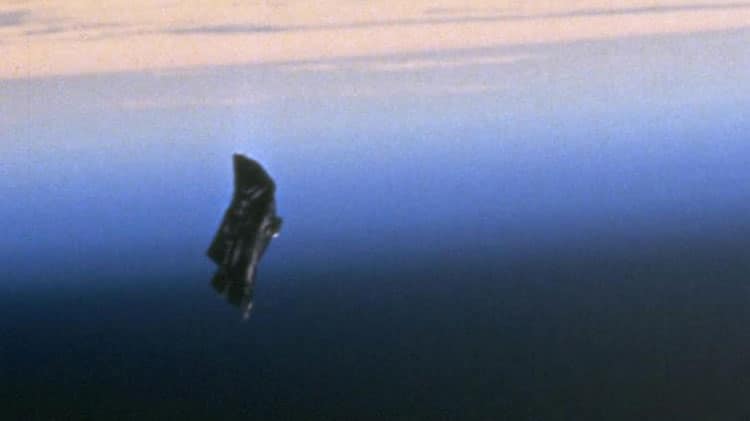
    Russian and American Air Defense units saw the mysterious BLACK KNIGHT Satellite. At 15 tons, it was bigger than any country could have sent then. It ‘disappeared’ after about three weeks but has been spottily reported for decades; it is possible that Nikola Tesla heard radio broadcasts from it as early as 1899.

    Some internet sources say it has been orbiting for around 13,000 years. NASA and other space agencies have been silent about the craft, although they do allow the occasional picture.
    Take our 1960 Quiz!

    1960 Pop Culture Facts & History

    August 1, 1960 – The Twist by Chubby Checker was released. On August 6, Chubby Checker (Ernest Evans) performed his version of The Twist, written by Hank Ballard, on The Dick Clark Show. It reached number one on The Billboard chart for the first time on September 19, 1960.

    USAF Captain Joseph Kittinger set three records on August 16th – the highest parachute jump (102,800 feet), the longest parachute free-fall (4 minutes 36 seconds), and the first person to exceed the speed of sound without an aircraft or space vehicle (714 mph during free fall).

    Morely Cigarettes are a fake brand of cigarettes used across mass media since April 5, 1961, first used on an episode of The Naked City.

    The largest polar bear on record, reportedly weighing 2,209 pounds, was a male shot at Kotzebue Sound in northwestern Alaska in 1960. When mounted, he stood 11 feet, 1 inch tall on its hind legs.

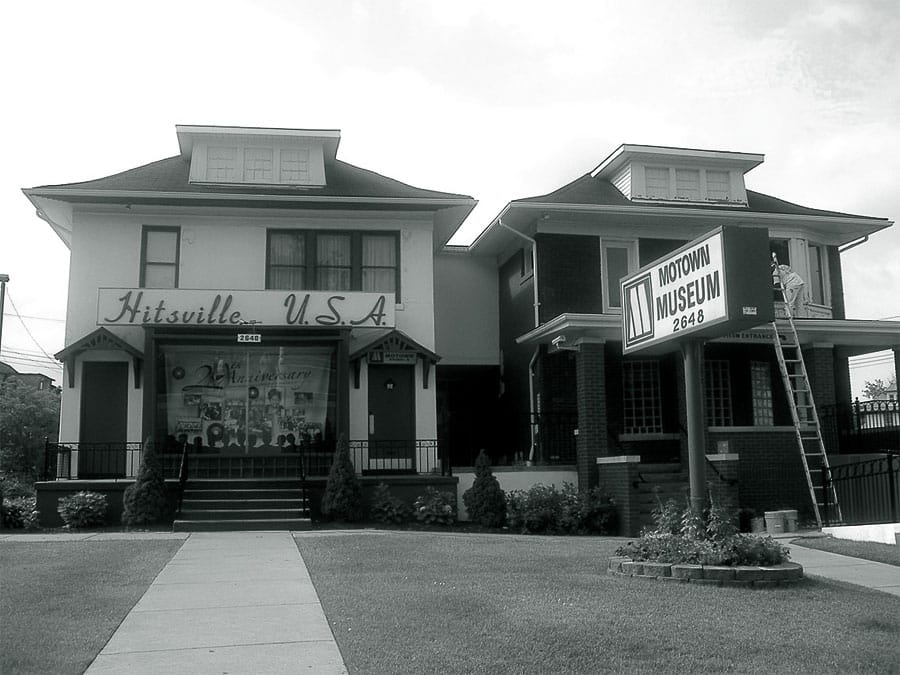
    Motown, founded by Berry Gordy Jr., was incorporated as Motown Record Corporation.

    On July 20, 1960, The world’s first-ever female head of government in the modern era was elected in Ceylon (now Sri Lanka), Sirimavo Bandaranaike as Prime Minister.

    The first CERN particle accelerator became operational in Geneva, Switzerland.

    The PLATO computer system, introduced at the University of Illinois in 1960, invented forums, message boards, chat rooms, instant messaging, remote screen sharing, and multiplayer video games years before the internet existed.

    Standard showtimes for films were not expected until 1960. Previously, most films would just play on a loop, and people could enter anytime. Thriller Psycho was one of the first films set to viewing times.

    On September 30, 1960,  The Flintstones premiered at 8:30 PM on ABC.

    Joanne Woodward received one of the first stars on the Hollywood Walk of Fame.

    The AFL began placing players’ names on the back of their jerseys. Major League Baseball’s Chicago White Sox started the practice earlier that year. NOB – Names On Back. The New York Yankees have traditionally never worn the names.

    KISS is an acronym for “Keep it simple, stupid,” as a design principle noted by the US Navy in 1960.

    When Eisenhower planned to visit Japan in 1960, the government called on Yakuza bosses to lend an army of their men as security guards. The visit was later canceled.

    Amos ‘n’ Andy, an American radio sitcom set in Harlem with black characters, ran from 1928 through 1960, was created, written, and voiced by two white actors.

    February and Late August through September, CBS broadcast the 1960 Winter Olympics and Summer Olympics exclusively for $60,000.

    The record for the fastest propeller passenger aircraft (541.45 MPH) was set on 24 March 1960 by the Russian Tupolev Tu-114.

    The X-15 jet has held the record for the world’s fastest plane since 1960 (2,196 MPH), 1961 (4,093 MPH), 19612 (4,104 MPH), and 1967 (4,534 MPH).

    Mariana Trench: Only three people ever went into The Mariana Trench. Don Walsh and Jacques Piccard, two scientists aboard the Trieste on January 4, 1960, and film director James Cameron in 2012.

    Starting on February 24, the first submerged circumnavigation of Earth was completed by USS submarine Triton on April 25th (Operation Sandblast, 60 days, 21 hours).

    December 31, 1960: The last day on which the farthing, a coin first minted in England in the 13th century, was legal tender in the United Kingdom. The value at that point was less than a penny.

    Paleoanthropologist Louis Leakey discovered 1.4 million-year-old Homo erectus (Olduvai Hominid 9) in Olduvai Gorge, Tanzania.

    There are three dots on every Domino’s Pizza box because when founder Tom Monaghan started his chain, he planned on adding a dot with each new store. Looking back, 8,000+ stores later, stopping with the three dots was a good idea, forming a simple domino.

    The term paparazzi originated with Italian director Federico Fellini’s La Dolce Vita. One of the minor characters in the film is a photographer named Paparazzo. Fellini took Paparazzo’s name from the Italian word for a noisy mosquito.

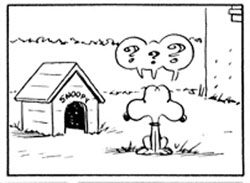
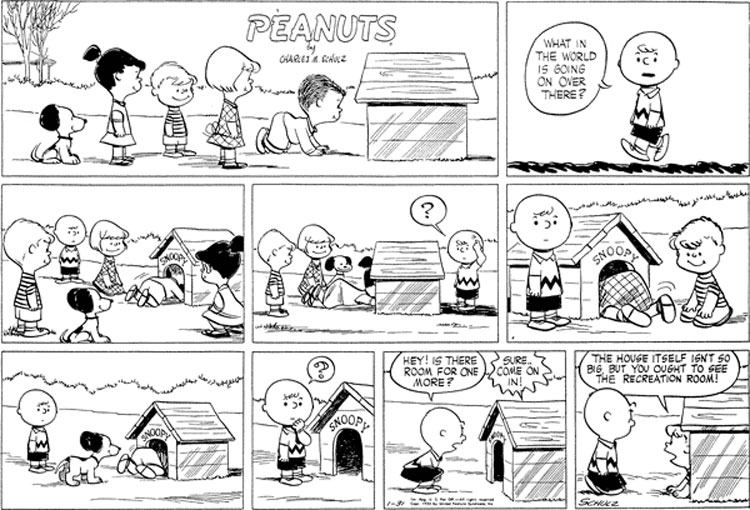
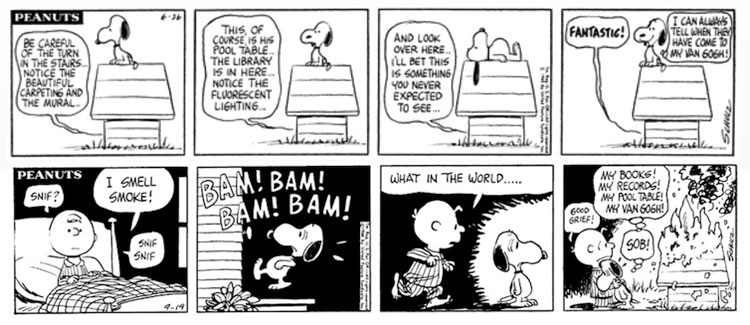
    Snoopy’s Doghouse

    Snoopy’s doghouse is always shown from the side so as never to reveal the interior, leaving what’s inside to the reader’s imagination. On May 8, 1960, the inside of the doghouse can be seen, but it seems empty.  It is apparently not empty.

    Civil Rights

    February 1, 1960 – In Greensboro, North Carolina, four black students from North Carolina Agricultural and Technical State University began a sit-in at a segregated Woolworth’s lunch counter. Although they were refused service, they were allowed to stay at the counter.

    July 25, 1960 – The same Woolworth Company’s lunch counter in Greensboro, North Carolina, served a meal to its first black customer.

    May 6 – United States President Dwight D. Eisenhower signed the Civil Rights Act of 1960 into law.

    In 1960, Republican Frank R. Beckwith was the first African American to run as a candidate for President of the United States in a major-party primary

    Cold War

    In 1960, the President of France told the President of the United States, John F. Kennedy, “I do not know what Khrushchev is going to do, nor what is going to happen, but whatever he does… I want you to know that I am with you to the end.”

    May 1 – Several Soviet surface-to-air missiles shot down an American Lockheed U-2 spy plane. Its pilot, Francis Gary Powers of the Central Intelligence Agency, is captured.

    July 1 – A Soviet Air Force MiG-19 fighter plane flying north of Murmansk, Russia, over the Barents Sea, shot down a six-man RB-47 Stratojet US Air Force reconnaissance plane. Four of the Air Force officers were killed, and the two survivors were held prisoner in the Soviet Union.

    October 12 – Soviet Premier Nikita Khrushchev pounds his shoe on a table at a meeting of the United Nations General Assembly, protesting the discussion of the Soviet Union’s policies toward Eastern Europe.

    Doomsday Clock

    Seven minutes to midnight, according to the Bulletin of Atomic Scientists.
    1960: “Political actions belie the tough talk of “massive retaliation.” For the first time, the United States and Soviet Union appear eager to avoid direct confrontation in regional conflicts such as the 1956 Egyptian-Israeli dispute. Joint projects that build trust and constructive dialogue between third parties also quell diplomatic hostilities. Scientists initiate many of these measures, helping establish the International Geophysical Year, a series of coordinated, worldwide scientific observations, and the Pugwash Conferences, which allow Soviet and American scientists to interact.”

    The Habit

    Reading To Kill a Mockingbird by Harper Lee.
    OR watching Alfred Hitchcock’s Psycho in theaters.

    1st Appearances & 1960’s Most Popular Christmas Gifts, Toys and Presents

    Green Eggs and Ham, by Dr. Seuss, Game of Life*, Etch-A-Sketch, Barbie, Chatty Cathy, Mattel’s Lie Detector Game, Mr. Machine, Play-Doh Fun Factory

    Best Film Oscar Winner

    Ben-Hur (presented in 1960)

    Popular and Best-selling Books From 1960

    Dr. Seuss’s ABC by Dr. Seuss
    Advise and Consent by Allen Drury
    Are You My Mother? by P.D. Eastman
    The Chapman Report by Irving Wallace
    The Constant Image by Marcia Davenport
    For Your Eyes Only by Ian Fleming
    Green Eggs and Ham by Dr. Seuss
    Hawaii by James A. Michener
    To Kill a Mockingbird by Harper Lee
    The Leopard by Giuseppe Tomasi di Lampedusa
    The Listener by Taylor Caldwell
    Love Is a Special Way of Feeling by Joan Walsh Anglund
    The Lovely Ambition by Mary Ellen Chase
    One Fish, Two Fish, Red Fish, Blue Fish by Dr. Seuss
    Ourselves to Know by John O’Hara
    Put Me in the Zoo by Robert Lopshire
    Sermons and Soda-Water by John O’Hara
    The Sneetches and Other Stories by Dr. Seuss
    Trustee from the Toolroom by Nevil Shute

    1960 Most Popular TV Shows

    1. Gunsmoke (CBS)
    2. Wagon Train (NBC)
    3. Have Gun Will Travel (CBS)
    4. The Andy Griffith Show (CBS)
    5. The Real McCoys (ABC)
    6. Rawhide (CBS)
    7. Candid Camera (CBS)
    8. The Untouchables (ABC)
    9. The Jack Benny Show (CBS)
    10. Dennis The Menace (CBS)

    1960 Billboard Number One Songs

    December 28, 1959 – January 3, 1960:
    Why – Frankie Avalon

    January 4, 1960 – January 17:
    El Paso – Marty Robbins

    January 18 – February 7:
    Running Bear – Johnny Preston

    February 8 – February 21:
    Teen Angel – Mark Dinning

    February 22 – April 24:
    The Theme From A Summer Place – Percy Faith & his Orchestra

    April 25 – May 22:
    Stuck On You – Elvis Presley

    May 23June 26:
    Cathy’s Clown – The Everly Brothers

    June 27June 10:
    Everybody’s Somebody’s Fool – Connie Francis

    July 11 – July 17:
    Alley-Oop – Hollywood Argyles

    July 18 – August 7:
    I’m Sorry – Brenda Lee

    August 8 – August 17:
    Itsy Bitsy Teenie Weenie Yellow Polkadot Bikini – Brian Hyland

    August 15 – September 18:
    It’s Now Or Never – Elvis Presley

    September 19 – September 25:
    The Twist – Chubby Checker

    September 26 – October 9:
    My Heart Has A Mind Of Its Own – Connie Francis

    October 10 – October 16:
    Mr. Custer – Larry Verne

    October 17 – October 23:
    Save The Last Dance For Me – The Drifters

    October 24 – November 13:
    I Want To Be Wanted – Brenda Lee

    November 14 – November 20:
    Georgia On My Mind – Ray Charles

    November 21 – November 27:
    Stay – Maurice Williams & The Zodiacs

    November 28, 1960 – January 8, 1961:
    Are You Lonesome Tonight? – Elvis Presley

    1960 United States Census

    Total US Population: 179,323,175
    1. New York, New York – 7,781,984
    2. Chicago, Illinois – 3,550,404
    3. Los Angeles, California – 2,479,015
    4. Philadelphia, Pennsylvania – 2,002,512
    5. Detroit, Michigan – 1,670,144
    6. Baltimore, Maryland – 939,024
    7. Houston, Texas – 938,219
    8. Cleveland, Ohio – 876,050
    9. Washington, District of Columbia – 783,956
    10. St. Louis, Missouri – 750,026

    Sports Highlights

    Wilt Chamberlain scored 58 points, the most ever by an NBA rookie, as Philadelphia Warriors beat Detroit Pistons, 127-117 in Bethlehem, PA.

    In 1960, the National Basketball Association player Wilt Chamberlain got 55 rebounds in a game versus the Boston Celtics.

    Wilma Rudolph (June 23, 1940 – November 12, 1994) had polio as an infant and was unable to walk properly until she was 11. For several years, her family had to massage her legs four times a day, and she had to wear a metal brace. In 1960, she became the first American woman to win three gold medals in an Olympic event.

    October 29 – In Louisville, Kentucky, Cassius Clay (Muhammad Ali) won his first professional boxing match over Tunney Hunsaker.

    On September 9, 1960,  The first regular-season game in the American Football League took place at Boston’s Nickerson Field. The Denver Broncos defeated the Boston Patriots, 13–10.

    On September 10, 1960, during the Summer Olympics in Rome, Ethiopian runner Abele Bikila became the first Sub-Saharan African to win a gold medal. He ran barefoot.

    Sports

    World Series Champions: Pittsburgh Pirates
    NFL Champions: Philadelphia Eagles
    AFL Champions: Houston Oilers
    NBA Champions: Boston Celtics
    Stanley Cup Champs: Montreal Canadians
    U.S. Open Golf Arnold Palmer
    U.S. Tennis: (Men/Ladies) Neale Fraser/Darlene R. Hard
    Wimbledon (Men/Women): Neale Fraser/Maria Bueno
    NCAA Football Champions: Minnesota & Mississippi
    NCAA Basketball Champions: Ohio State
    Kentucky Derby: Venetian Way

    More 1960 Facts & History Resources:

    BabyBoomers.com (1960)
    Most Popular Baby Names (BabyCenter.com)
    Popular and Notable Books (popculture.us)
    Broadway Shows that Opened in 1960X
    1960 Calendar, courtesy of Time and Date.com
    Fact Monster
    1960s, Infoplease.com World History
    1960 in Movies (according to IMDB)
    Retrowaste Vintage Culture
    1960 Television
    1960s Slang
    1960s Timeline: PBS
    1960 US Census Fast Facts
    Wikipedia 1960


  • 1960 Music: The 100 Most Popular Songs

    1960 Music: The 100 Most Popular Songs

    1960 Top 100 Music Hits Chart

    1. The Twist – Chubby Checker
    2. Beyond The Sea – Bobby Darin
    3. Are You Lonesome Tonight? – Elvis Presley
    4. Wild One – Bobby Rydell
    5. Volare – Bobby Rydell
    6. I’m Sorry – Brenda Lee
    7. Money (That’s What I Want) – Barrett Strong
    8. This Magic Moment – The Drifters
    9. It’s Now Or Never – Elvis Presley
    10. Wonderful World – Sam Cooke
    11. You’re Sixteen – Johnny Burnette
    12. Cathy’s Clown – The Everly Brothers
    13. Georgia On My Mind – Ray Charles
    14. Only The Lonely – Roy Orbison
    15. Hot Rod Lincoln – Johnny Bond
    16. Tell Laura I Love Her – Ray Peterson
    17. Harbor Lights – The Platters
    18. Shimmy Shimmy Ko-Ko-Bop – Little Anthony & the Imperials
    19. Chain Gang – Sam Cooke
    20. Save The Last Dance For Me – The Drifters
    21. Stuck On You – Elvis Presley
    22. Where Or When – Dion & The Belmonts
    23. Teen Angel – Mark Dinning
    24. Devil Or Angel – Bobby Vee
    25. Stay – Maurice Williams and the Zodiaks
    26. Swingin’ School – Bobby Rydell
    27. New Orleans – Gary US Bonds
    28. Peter Gunn – Duane Eddy
    29. Finger Poppin Time – Hank Ballard
    30. Sweet Nothin’s – Brenda Lee
    31. Theme From The Apartment – Ferrante & Teicher
    32. Itsy Bitsy Teenie Weenie Yellow Polkadot Bikini – Brian Hylan
    33. Lonely Teenager – Dion
    34. Poetry In Motion – Johnny Tillotson
    35. Doggin’ Around – Jackie Wilson
    36. Last Date – Floyd Cramer
    37. Josephine – Bill Blacks’ Combo
    38. Baby (You’ve Got What It Takes) – Dinah Washington & Brook Benton
    39. Mack The Knife – Ella Fitzgerald
    40. Let’s Go, Let’s Go, Let’s Go – Hank Ballard & The Midnighters
    41. Waltzing Matilda – Jimmy Rogers
    42. Puppy Love – Paul Anka
    43. Caravan – Santo and Johnny
    44. When Will I Be Loved? – The Everly Brothers
    45. Harlem Nocturne – The Viscounts
    46. Walk, Don’t Run – The Ventures
    47. Nice N Easy – Frank Sinatra
    48. Mama – Connie Francis
    49. Everybody’s Somebody’s Fool – Connie Francis
    50. Theme From “A Summer Place” – Percy Faith
    51. Running Bear – Johnny Preston
    52. I Want To Be Wanted – Brenda Lee
    53. Greenfields – The Brothers Four
    54. Alley-Oop – Hollywood Argyles
    55. He’ll Have to Go – Jim Reeves
    56. My Heart Has A Mind Of It’s Own – Connie Francis
    57. Good Timin’ – Jimmy Jones
    58. El Paso – Marty Robbins
    59. Burning Bridges – Jack Scott
    60. Let The Little Girl Dance – Billy Bland
    61. Sixteen Reasons – Connie Stevens
    62. Handy Man – Jimmy Jones
    63. Sink The Bismark – Johnny Horton
    64. Way Down Yonder In New Orleans – Freddie Cannon
    65. Night – Jackie Wilson
    66. A Thousand Stars – Kathy Young and the Innocents
    67. North To Alaska – Johnny Horton
    68. Stairway To Heaven – Neil Sedaka
    69. Paper Roses – Anita Bryant
    70. Mission Bell – Donnie Brooks
    71. Sailor (Your Home Is The Sea) – Lolita
    72. Walking To New Orleans – Fats Domino
    73. Image of a Girl – Safaris
    74. Mr. Custer – Bobby Verne
    75. Let It Be Be – The Everly Brothers
    76. Brontosaurus Stomp – The Piltdown Men
    77. Love You So – Ron Holden
    78. My Girl Josephine – Fats Domino
    79. Please Help Me, I’m Falling – Hank Locklin
    80. Am I That Easy To Forget – Debbie Reynolds
    81. Pretty Blue Eyes – Steve Lawrence
    82. Lucky Devil – Carl Dobkins Jr
    83. Blue Angel – Roy Orbison
    84. A Fool In Love – Ike & Tuna Turner
    85. You Got What it Takes – Marv Johnson
    86. The Twist – Hank Ballard
    87. Dreamin’ – Johnny Burnette
    88. Ooh Poo Pah Doo part II – Jessie Hill
    89. Down By The Station – The Four Preps
    90. Anymore – Teresa Brewer
    91. Sleep – Little Willie John
    92. Hot Rod Lincoln – Charlie Ryan
    93. Never On Sunday – Don Costa
    94. Lonely Weekends – Charlie Rich
    95. Rockin Little Angel – Ray Smith
    96. You talk Too Much – Joe Jones
    97. (There Was A) Tall Oak Tree – Dorsey Burnette
    98. He’ll Have To Stay – Jeanne Black
    99. This Bitter Earth – Dinah Washington
    100. Because They’re Young – Duane Eddy
    Take our 1960 Quiz!
  • John F. Kennedy’s Election as the 35th President of the United States

    John F. Kennedy’s Election as the 35th President of the United States

    John F. Kennedy’s Election

    The 1960 United States presidential election marked the beginning of a new era in American politics, as John F. Kennedy, a young and charismatic senator from Massachusetts, won the election to become the 35th President of the United States. His election campaign and subsequent victory significantly impacted American society and pop culture.

    • Date: November 8, 1960
    • Opponent: Vice President Richard Nixon
    • Political Parties: John F. Kennedy was a Democrat, while Richard Nixon was a Republican.

    In the midst of the Cold War, Kennedy’s election campaign focused on addressing the perceived “missile gap” with the Soviet Union and promoting civil rights. His youthful energy and charisma, along with his eloquent speeches, captured the American public’s attention. Kennedy’s victory in the election was close, with a narrow popular vote margin of just 0.17%.

    JFK Details:

    1. John F. Kennedy was the first Roman Catholic president in U.S. history.
    2. At 43, Kennedy was the youngest person ever elected to the presidency.
    3. The 1960 presidential debates between Kennedy and Nixon were the first televised debates in U.S. history.
    4. Kennedy’s wife, Jacqueline Kennedy, became a fashion icon during his presidency.
    5. The famous slogan “A Time for Greatness” was used in Kennedy’s campaign.
    6. Kennedy’s campaign was also the first to use television advertising effectively.
    7. Kennedy’s father, Joseph P. Kennedy, played a crucial role in financing and supporting his son’s campaign.
    8. Kennedy’s inaugural address, with the famous line “Ask not what your country can do for you; ask what you can do for your country,” is considered one of the most memorable speeches in American history.
    9. Kennedy’s presidency inspired the term “Camelot” to describe his administration, based on the popular musical about King Arthur’s court.
    10. Kennedy’s election marked a shift in American politics, as his administration was more focused on social issues, civil rights, and foreign policy than previous administrations.

    The election of John F. Kennedy as the 35th President of the United States marked a turning point in American history and profoundly impacted popular culture. His youthful image, charismatic personality, and idealistic vision for America captivated the nation and influenced subsequent generations of politicians and leaders.

  • Organization of Petroleum Exporting Countries (OPEC)

    Organization of Petroleum Exporting Countries (OPEC)

    Organization of Petroleum Exporting Countries

    The Organization of Petroleum Exporting Countries (OPEC) is an influential international organization founded on September 14, 1960, in Baghdad, Iraq. It was established to coordinate and unify petroleum policies among member countries to secure stable oil prices and steady supply to oil-consuming nations.

    • The founding members of OPEC were Iran, Iraq, Kuwait, Saudi Arabia, and Venezuela. These five countries possessed substantial oil reserves and aimed to gain more control over the oil market and pricing.
    • As of 2021, OPEC has 13 member countries, including Algeria, Angola, Congo, Equatorial Guinea, Gabon, Iran, Iraq, Kuwait, Libya, Nigeria, Saudi Arabia, the United Arab Emirates, and Venezuela.
    • OPEC’s headquarters were initially in Geneva, Switzerland, but were relocated to Vienna, Austria, in 1965.
    • OPEC was crucial in the 1973 oil crisis, also known as the first “oil shock.” The organization’s Arab members imposed an oil embargo on the United States and other Western countries in response to their support for Israel during the Yom Kippur War. This led to a sharp increase in oil prices and widespread economic turmoil.
    • The organization’s influence on global oil prices led to the term “OPEC price” being used as a reference for crude oil prices in the global market.
    • OPEC member countries control approximately 80% of the world’s proven oil reserves, accounting for around 44% of global oil production.
    • OPEC decisions and policies often significantly affect global politics and economies, as the price and availability of oil can have wide-ranging implications.
    • In 2016, OPEC and non-OPEC oil-producing countries (led by Russia) agreed to cut oil production to stabilize prices. This marked the first agreement of its kind since 2001.
    • OPEC’s influence on pop culture can be seen in various movies, TV shows, and books that address or mention the organization and its impact on global politics and the economy.
    • OPEC has faced criticism for its perceived monopolistic practices and manipulation of oil prices. Some argue that the organization’s policies have led to economic and environmental issues.

    OPEC has significantly shaped global energy policies and the oil market for over six decades. As a powerful organization composed of major oil-producing nations, OPEC’s actions and decisions continue to have a considerable impact on the global economy, international relations, and popular culture.

  • 1960 Rome Olympics

    1960 Rome Olympics

    1960 Rome Olympics

    The 1960 Summer Olympics, officially known as the Games of the XVII Olympiad, were held in Rome, Italy, from August 25 to September 11, 1960. This historic event marked the first time that the Summer Olympics were held in Rome and showcased numerous athletic achievements, political and social developments, and the rise of several prominent sports figures.

    Dates and Details:

    • Rome was awarded the hosting rights for the 1960 Summer Olympics in 1955, defeating cities such as Lausanne, Detroit, Budapest, and Brussels.
    • The Games featured 150 events in 17 sports, with 5,338 athletes from 83 countries participating.
    • The official motto of the 1960 Rome Olympics was “Citius, Altius, Fortius,” which means “Faster, Higher, Stronger” in Latin.
    • Rome’s ancient landmarks, such as the Basilica of Maxentius and the Arch of Constantine, provided a stunning backdrop for various Olympic events.

    1960 Rome Olympics Facts:

    1. The 1960 Rome Olympics were the first Games to be covered by television on a large scale, with an estimated 30 million viewers tuning in worldwide.
    2. These Olympics marked the first time that doping control tests were carried out, albeit on a limited scale and focused on narcotics only.
    3. The 1960 Games featured the debut of the Paralympics, a competition for athletes with disabilities, held in Rome immediately after the main event.
    4. South Africa competed in the 1960 Olympics for the last time before being banned due to the country’s apartheid policies. They would not return until the 1992 Barcelona Games.
    5. Danish sailor Paul Elvstrøm won his fourth consecutive gold medal in the same event, a record that still stands today.
    6. Ethiopia’s Abebe Bikila became the first African athlete to win a gold medal in the marathon, running the race barefoot and setting a new world record.
    7. Soviet Union’s Larisa Latynina won six medals in gymnastics, bringing her total Olympic medal count to 18, a record that stood until 2012 when it was broken by American swimmer Michael Phelps.

    Effects on Pop Culture:

    • The 1960 Rome Olympics introduced several iconic sports figures who went on to have a lasting impact on popular culture. The most notable among them was Cassius Clay, later known as Muhammad Ali, who won the gold medal in light heavyweight boxing at the age of 18. Ali’s charisma, showmanship, and outspokenness made him a global icon both in and out of the ring.
    • The Games also featured the legendary sprinter Wilma Rudolph, who overcame polio and went on to win three gold medals in track and field, becoming a symbol of resilience and determination for millions of people.
    • The 1960 Rome Olympics helped to cement the tradition of the Olympic Torch Relay, which captured the imagination of people around the world and has since become an integral part of the Olympic experience.

    Prominent People and Countries Involved:

    • Italy, as the host nation, played a significant role in organizing and executing the Games. Rome’s historic architecture and cultural legacy provided a unique setting that captured the attention of audiences worldwide.
    • The United States and the Soviet Union were locked in a heated competition for dominance in the medal count, reflecting the larger political tensions of the Cold War era. The Soviet Union ultimately topped the medal table with 43 gold medals, while the United States came in second with 34 gold medals.
    • Abebe Bikila of Ethiopia became a symbol of African excellence in sports, paving the way for future African athletes to achieve success on the world stage.
    • The 1960 Rome Olympics also featured notable athletes such as Australian swimmer Dawn Fraser and Russian gymnast Boris Shakhlin, who each achieved remarkable success in their respective disciplines.
    • Dawn Fraser, an Australian swimmer, won gold medals in both the 100-meter freestyle and the 4×100-meter freestyle relay, setting world records in both events. Fraser became the first woman to win the 100-meter freestyle in consecutive Olympics and would go on to win the event for the third time in the 1964 Tokyo Olympics.
    • Boris Shakhlin, a Soviet gymnast, won a total of seven medals in Rome, including four gold medals, two silver medals, and one bronze medal. Shakhlin’s performance at the 1960 Games contributed to the Soviet Union’s dominance in gymnastics during that period.

    The 1960 Rome Olympics had a lasting impact on the world of sports, popular culture, and the Olympic movement itself. The Games showcased the power of athletic competition to unite people from diverse backgrounds and inspired generations of athletes to pursue excellence in their respective disciplines. The historic backdrop of Rome and the introduction of television coverage on a large scale helped to captivate audiences worldwide, further cementing the Olympics as a global event.

    The rise of iconic sports figures like Muhammad Ali, Wilma Rudolph, and Abebe Bikila not only provided memorable moments during the Games but also had lasting effects on popular culture. These athletes became symbols of determination, resilience, and excellence, transcending the boundaries of sports and serving as inspiration for millions of people around the world.

    Additionally, the 1960 Rome Olympics marked significant advancements in the Olympic movement, including the introduction of doping control tests and the debut of the Paralympics, which expanded the reach and inclusivity of the Games.

    Take our 1960 Quiz!
  • Harper Lee’s “To Kill a Mockingbird”

    Harper Lee’s “To Kill a Mockingbird”

    Harper Lee’s “To Kill a Mockingbird”

    “To Kill a Mockingbird” is a classic American novel by Harper Lee, published on July 11, 1960. Set in the fictional town of Maycomb, Alabama, during the Great Depression, the story revolves around the young girl Scout Finch, her brother Jem, and their father, the lawyer Atticus Finch. The novel tackles themes such as racial inequality, moral growth, and social justice, and its characters and storyline continue to resonate with readers worldwide.

    Dates and Details:

    • Harper Lee began writing “To Kill a Mockingbird” in the mid-1950s. It took her about two and a half years to complete the manuscript.
    • The novel was immediately successful in its publication in 1960, winning the Pulitzer Prize for Fiction in 1961.
    • “To Kill a Mockingbird” was Harper Lee’s first and only published novel until “Go Set a Watchman” was published in 2015, a sequel to the original book, featuring the same characters.

    Mockingbird Facts:

    1. The character of Atticus Finch was inspired by Harper Lee’s own father, Amasa Coleman Lee, who was also a lawyer and defended two black men accused of murder in 1919.
    2. Harper Lee was friends with fellow author Truman Capote, and she even helped him research his book “In Cold Blood.” The character of Dill in “To Kill a Mockingbird” was inspired by Capote.
    3. The novel’s original title was “Atticus,” but Lee’s editor suggested a change to better reflect the story’s broader themes.
    4. Harper Lee received an honorary degree from the University of Alabama in 1990, despite not having graduated from college herself.
    5. 2007 President George W. Bush awarded Harper Lee the Presidential Medal of Freedom for her contribution to literature.

    Effects on Pop Culture:

    • “To Kill a Mockingbird” has been widely studied in American high schools and colleges due to its themes of racial injustice, morality, and empathy.
    • The novel was adapted into a successful and critically acclaimed film in 1962, starring Gregory Peck as Atticus Finch. Peck won an Academy Award for his portrayal of the iconic character.
    • The book’s popularity has led to numerous stage adaptations, including a 1990 version by Christopher Sergel and a 2018 adaptation by Aaron Sorkin, which premiered on Broadway.
    • The novel has inspired various songs, such as “Atticus” by The Noisettes and “Harper Lee” by Little Green Cars.
    • The character of Atticus Finch has become a symbol of moral integrity and has influenced the legal profession, with many lawyers citing him as an inspiration.

    Prominent People and Countries Involved:

    • Harper Lee, the American author who wrote: “To Kill a Mockingbird.”
    • Gregory Peck, the actor who portrayed Atticus Finch in the 1962 film adaptation.
    • Aaron Sorkin, the playwright who adapted the novel for the 2018 Broadway production.
    • The United States, where the novel is set and where it has significantly impacted discussions of race and morality.

    In conclusion, Harper Lee’s “To Kill a Mockingbird” is a seminal work of American literature that has captivated readers since its publication in 1960. The novel’s exploration of racial injustice, moral growth, and empathy has resonated with generations of readers and has impacted pop culture through film, theater, and music. The story of Scout, Jem, and Atticus Finch continues to inspire and challenge readers to confront the complexities of human nature and society.

  • The Congo Crisis

    The Congo Crisis

    The Congo Crisis

    The Congo Crisis was a tumultuous period in the history of the Democratic Republic of the Congo (DRC), then known as the Republic of the Congo. This complex political and social upheaval lasted from 1960 to 1965, and involved various factions, foreign interventions, and power struggles.

    Dates and Details:

    • On June 30, 1960, the Congo gained independence from Belgium, with Patrice Lumumba becoming the first Prime Minister and Joseph Kasa-Vubu as President.
    • In July 1960, the Congolese army mutinied against their remaining Belgian officers, leading to violence against European civilians and widespread chaos.
    • On July 11, 1960, the resource-rich province of Katanga, led by Moise Tshombe, seceded from the Congo, backed by Belgian forces and European mercenaries.
    • UN peacekeeping forces were deployed to Congo in July 1960 in response to the crisis (ONUC – United Nations Operation in the Congo).

    History Facts:

    1. The Congo Crisis is considered one of the most significant events in the Cold War in Africa, as both the United States and the Soviet Union attempted to gain influence over the newly independent nation.
    2. In September 1960, Kasa-Vubu dismissed Lumumba as Prime Minister, causing a power struggle that led to Lumumba’s arrest and eventual assassination on January 17, 1961.
    3. Lumumba’s assassination was allegedly carried out with the complicity of the US and Belgian governments, fearing his potential alignment with the Soviet Union.
    4. In August 1961, UN forces launched Operation Rumpunch, arresting foreign mercenaries and removing them from Katanga.
    5. In 1964, an anti-government rebellion called the Simba Rebellion erupted in eastern Congo, adding to the instability.
    6. In November 1964, a joint operation between Belgian paratroopers and the US Air Force rescued over 1,800 hostages held by the Simba rebels in Stanleyville (now Kisangani).

    Effects on Pop Culture:

    • The Congo Crisis inspired various works of literature, film, and television, such as the 2000 film “Lumumba,” which portrays the life and assassination of Patrice Lumumba.
    • The crisis has been the subject of numerous documentaries and historical analyses, shedding light on the complexities of post-colonial African politics and the Cold War’s impact on the continent.

    Prominent People and Countries:

    • Patrice Lumumba (Congo): The first Prime Minister of the independent Congo, whose assassination remains a controversial and emblematic event in African history.
    • Joseph Kasa-Vubu (Congo): The first President of the Congo, who dismissed Lumumba as Prime Minister.
    • Moise Tshombe (Congo): Leader of the secessionist Katanga province and later Prime Minister of the Congo.
    • Belgium: The former colonial power, which intervened in the Congo Crisis, supporting the secession of Katanga.
    • United States and Soviet Union: Both superpowers were involved in the crisis, seeking influence in the Congo amid Cold War tensions.

    The Congo Crisis had long-lasting effects on the country and the African continent. The instability and violence that characterized this period continue to influence the DRC’s politics and society, and the crisis remains a crucial case study for understanding post-colonial African history and the wider impact of the Cold War.

  • Election of Patrice Lumumba as the First Prime Minister of Congo

    Election of Patrice Lumumba as the First Prime Minister of Congo

    Election of Patrice Lumumba as the First Prime Minister of Congo

    The story of Patrice Lumumba’s election as the first Prime Minister of Congo is a fascinating tale of political intrigue, Cold War tensions, and the struggle for African independence. Lumumba, a charismatic and influential leader, played a pivotal role in Congo’s transition from a Belgian colony to an independent nation. However, his election would prove to be a turning point in Congolese history, ultimately leading to his tragic assassination.

    Dates and Details:

    1. Belgian Congo: Before gaining independence, Congo was a Belgian colony known as the Belgian Congo. The colonial period was marked by widespread exploitation of the Congolese people and their resources.

    2. Independence Movement: In the 1950s, a strong independence movement emerged in the Belgian Congo, led by Lumumba and other nationalists. The movement gained significant momentum, and in January 1960, Belgium agreed to grant Congo independence.

    3. Elections: In May 1960, the first general elections were held in Congo. Lumumba’s party, the Mouvement National Congolais (MNC), won the largest number of seats in the parliament. Consequently, on June 23, 1960, Patrice Lumumba was appointed as the first Prime Minister of the newly independent Congo.

    The Facts:

    1. Lumumba was a self-taught man who spoke several languages, including French, Lingala, Swahili, and Tshiluba.
    2. He worked as a postal clerk and a traveling beer salesman before becoming involved in politics.
    3. Lumumba was influenced by the pan-Africanist ideas of Ghanaian leader Kwame Nkrumah and aimed to unite the diverse ethnic groups in Congo.
    4. He was imprisoned by Belgian authorities in 1959 for inciting riots but was released in time for the independence negotiations in Brussels.
    5. Lumumba was known for his fiery speeches and was often seen as radical by both his opponents and foreign powers.

    Effects on Pop Culture:

    1. Lumumba’s life and assassination have been the subject of numerous books, documentaries, and films, such as the 2000 film “Lumumba,” directed by Raoul Peck.
    2. His name has become synonymous with the struggle for African independence and the fight against neo-colonialism.
    3. Lumumba’s story has been referenced in various songs, including “Patrice Lumumba” by Miriam Makeba and “Lumumba” by Alpha Blondy.

    Prominent People and Countries Involved:

    1. Patrice Lumumba: As the first Prime Minister of Congo, Lumumba played a crucial role in shaping the country’s political landscape during its early years of independence.
    2. Joseph Kasa-Vubu: Elected as the first President of Congo, Kasa-Vubu had a contentious relationship with Lumumba, ultimately dismissing him from office.
    3. Belgium: As the former colonial power, Belgium had a vested interest in the political developments in Congo. Some believe that Belgian officials were involved in Lumumba’s assassination.
    4. The United States and the Soviet Union: The Cold War superpowers were keenly interested in Congo’s vast mineral wealth and strategic location. Both the U.S. and the Soviet Union sought to influence the political situation in Congo, with some reports suggesting that the CIA may have played a role in Lumumba’s assassination.

    The election of Patrice Lumumba as the first Prime Minister of Congo was a watershed moment in African history, symbolizing the struggle for independence and self-determination. His leadership, however, was cut short by his tragic assassination, which has left a lasting legacy on Congolese politics and the fight for social justice around the world.

  • Alfred Hitchcock’s film “Psycho”

    Alfred Hitchcock’s film “Psycho”

    Alfred Hitchcock’s film Psycho

    “Psycho” is a groundbreaking horror film directed by Alfred Hitchcock and released in 1960. It is based on the 1959 novel of the same name by Robert Bloch. The film, starring Anthony Perkins, Janet Leigh, Vera Miles, and John Gavin, has become a classic, significantly influencing the horror genre and popular culture.

    Dates and Details:

    • “Psycho” was released on June 16, 1960.
    • The film was produced on a low budget of approximately $800,000 but grossed over $50 million worldwide.
    • Alfred Hitchcock chose to shoot the film in black and white to save costs and to make the violent scenes less graphic.
    • The famous shower scene took seven days to shoot, with 77 different camera angles and over 50 cuts.

    Psycho Facts:

    1. Hitchcock purchased the rights to Robert Bloch’s novel for $9,500 and reportedly bought as many copies of the book as possible to keep the ending a secret.
    2. The Bates Motel and house were constructed on the backlot of Universal Studios, where they still stand as a tourist attraction.
    3. The film’s score, composed by Bernard Herrmann, consists primarily of string instruments, creating the movie’s iconic, eerie sound.
    4. “Psycho” was the first American film to show a toilet flushing on-screen.
    5. Chocolate syrup was used for blood in the shower scene due to its appearance in black and white.
    6. Hitchcock made a cameo in the film, as he did in many of his movies. In “Psycho,” he can be seen wearing a cowboy hat through a window.
    7. Anthony Perkins, who played Norman Bates, did not receive an Oscar nomination for his performance, despite the acclaim he received.
    8. “Psycho” was initially met with mixed reviews but went on to receive four Academy Award nominations, including Best Director for Hitchcock.

    Effects on Pop Culture:

    • “Psycho” has had a lasting impact on the horror genre, inspiring numerous films, including the slasher subgenre.
    • The film has been referenced and parodied in various forms of media, such as television shows, movies, and music.
    • The shower scene has become one of cinema’s most famous and studied scenes.
    • The character Norman Bates has become a cultural icon, with the name “Bates” being synonymous with homicidal, disturbed individuals.

    Prominent People and Countries:

    • Alfred Hitchcock (United Kingdom): Director of the film, one of the most influential filmmakers of all time.
    • Anthony Perkins (United States): Actor who portrayed Norman Bates, garnering widespread praise for his performance.
    • Janet Leigh (United States): Actress who played Marion Crane, earning a Golden Globe and an Academy Award nomination for her role.
    • Bernard Herrmann (United States): Composer of the film’s iconic score, which has become a classic in its own right.

    “Psycho” remains a significant milestone in cinema’s history, illustrating Alfred Hitchcock’s genius and innovative storytelling power. Its influence can still be felt in contemporary horror films, and the film’s characters, scenes, and music continue to resonate with audiences worldwide.

  • Hitsville U.S.A.

    Hitsville U.S.A.

    The streets have all changed from when I was a kid growing up in Detroit. We lived on West Philadelphia Street and I went to Cass Tech High School so I had to catch the Dexter Avenue bus to go to and come from school. On the way home, the bus would go past a little white two story building amongst the brownstones on West Grand Boulevard with a sign that read “Hitsville, USA”.

    My friends and I got off the bus one day after rumors went around that it was a recording studio. We were teenage do-whoppers at the time, so the chance to see a real recording studio was compelling. We couldn’t get in, but walking to the side of the building, we could look into the basement windows. Lo and behold, there was my heart throb, Mary Wells on the mike.

    That one stop on the way home from school got to be a regular occurrence in the summer as we watched several others in their recording sessions. There was Smokey Robinson and the Miracles, The Temptations, and then one day, we saw one of our very own schoolmates, Diana Ross. Diana was in the class ahead of me, so we really didn’t associate much except to pass greeting in the lunch room. She seemed to like the older thug like guys that went to Northeastern High School. Northeastern was where the Cass school counselors would threaten to send us if we let our overall grades drop to a “C”.

    Years later, while going to college and working as a professional photographer, I had the opportunity to be hired to photograph the Temptations for their album “All Directions”. Motown never paid me for the job or my photos, but memories are priceless…

  • The Great Chilean Earthquake

    The Great Chilean Earthquake

    The Great Chilean Earthquake

    The Great Chilean Earthquake, also known as the Valdivia Earthquake, was the most powerful earthquake ever recorded in human history. Occurring on May 22, 1960, near the city of Valdivia in southern Chile, it registered a staggering 9.5 on the moment magnitude scale. The earthquake, its aftershocks, and the resulting tsunamis caused widespread devastation and loss of life in Chile and across the Pacific Ocean.

    Dates and Details:

    • The main earthquake struck at 3:11 pm local time on May 22, 1960.
    • It lasted approximately 10 minutes, with several powerful aftershocks following.
    • The earthquake caused tsunamis that reached as far as Japan, Hawaii, the Philippines, and New Zealand.

    Facts:

    1. The earthquake released almost 25% of the total global seismic energy between 1906 and 1986.
    2. The epicenter of the quake was roughly 100 miles (160 kilometers) off the coast of Chile.
    3. The rupture zone of the earthquake extended for about 620 miles (1,000 kilometers) along the Nazca and South American tectonic plates.
    4. The maximum vertical displacement during the earthquake was 65 feet (20 meters) near the city of Valdivia.
    5. The earthquake treggired a volcanic eruption of Cordón Caulle in the Andean mountain range, which began on May 24, 1960, and lasted several weeks.

    Effects on Pop Culture:

    • The Great Chilean Earthquake increased global awareness of the devastating potential of natural disasters, particularly earthquakes, and tsunamis.
    • The event has been featured in various documentaries, television programs, and books about earthquakes and natural disasters.
    • The earthquake led to significant advancements in seismology and the study of plate tectonics.

    Prominent People and Countries Involved:

    • Chile was the country most directly affected by the earthquake, with widespread damage, thousands of casualties, and millions left homeless.
    • The Chilean government, led by President Jorge Alessandri, coordinated national and international relief efforts in the aftermath of the disaster.
    • The United States, the Soviet Union, and numerous other countries provided humanitarian aid and assistance to Chile.
    • The international scientific community, including seismologists and geologists, studied the earthquake to better understand the processes underlying such catastrophic events.

    The Great Chilean Earthquake remains a stark reminder of the destructive power of nature and the importance of ongoing research and preparedness to minimize the impact of future disasters.

  • FDA Approval of the Birth Control Pill

    FDA Approval of the Birth Control Pill

    FDA Approval of the Birth Control Pill

    The approval of the birth control pill by the United States Food and Drug Administration (FDA) in 1960 was a milestone event in the history of reproductive rights and women’s health. The development and subsequent approval of the pill would have far-reaching social, cultural, and political implications that continue to shape conversations around contraception and women’s rights today.

    The birth control pill, also known as the oral contraceptive pill or simply “the pill,” was first developed in the 1950s by a team of researchers led by biologist Dr. Gregory Pincus and gynecologist Dr. John Rock. Margaret Sanger, a prominent birth control advocate, and heiress Katharine McCormick funded the team’s work. Their goal was to create a safe, effective, and discreet method of contraception that would allow women greater control over their reproductive choices.

    On May 9, 1960, the FDA approved the first oral contraceptive pill, Enovid, manufactured by G.D. Searle and Company. The pill’s approval marked a turning point in the history of contraception and women’s reproductive rights, offering women a new level of control over their fertility.

    Details:

    • The FDA approved the first birth control pill, Enovid, on May 9, 1960.
    • Key figures involved in the development of the pill include Dr. Gregory Pincus, Dr. John Rock, Margaret Sanger, and Katharine McCormick.
    • The pill’s approval had far-reaching effects on popular culture, sexual norms, and the feminist movement.
    • The pill contributed to the sexual revolution of the 1960s and 1970s. It sparked reproductive rights debates, leading to landmark legal cases such as Griswold v. Connecticut and Eisenstadt v. Baird.
    • The global spread of the pill helped address population growth and promoted women’s health and empowerment worldwide.
    • The active ingredients in the first birth control pill, Enovid, were synthetic hormones, progesterone, and estrogen, which work to prevent ovulation and make the uterus inhospitable to a fertilized egg.
    • Margaret Sanger, one of the key figures behind the development of the pill, was a controversial figure in her time due to her advocacy for birth control and her involvement in the eugenics movement.
    • The first clinical trials for the pill were conducted in Puerto Rico in the late 1950s, where access to contraception was limited, and the birth rate was high.
    • Due to the social and political climate surrounding birth control, G.D. Searle and Company, the manufacturer of Enovid, initially marketed the pill as a treatment for menstrual disorders rather than as a contraceptive.
    • The Comstock Laws, which were in effect in the United States until the 1960s, made it illegal to distribute information about contraception or to mail contraceptives across state lines.

    The pill’s approval profoundly impacted popular culture and society in the United States and beyond. The pill gave women unprecedented control over their reproductive choices, allowing them to delay or prevent pregnancy to pursue education, careers, and other opportunities. As a result, the pill became closely associated with the feminist movement and the broader struggle for women’s rights.

    The widespread availability of the pill also contributed to shifting sexual norms and attitudes. With a reliable method of contraception, women and couples could engage in premarital and extramarital sexual relationships with less fear of unintended pregnancy. This change in sexual behavior contributed to the sexual revolution of the 1960s and 1970s, which challenged traditional societal expectations surrounding sex and relationships.

    In addition to its effects on popular culture and sexual norms, the approval of the birth control pill also had significant political implications. The pill’s introduction sparked debates about reproductive rights, the role of the state in regulating contraception, and the moral implications of birth control. These debates would eventually lead to landmark legal cases such as Griswold v. Connecticut (1965) and Eisenstadt v. Baird (1972), which recognized the constitutional right to privacy and expanded contraception access for married and unmarried individuals.

    Prominent people involved in developing and promoting the birth control pill include Dr. Gregory Pincus, Dr. John Rock, Margaret Sanger, and Katharine McCormick. These individuals played crucial roles in advancing the science of contraception and advocating for women’s reproductive rights.

    The approval of the birth control pill had global implications as well. As the pill became more widely available in the United States and other developed countries, it played a significant role in helping to address population growth and related social issues. International organizations, such as the World Health Organization and the United Nations, began to support family planning programs and the distribution of contraceptives, including the pill, in developing countries. This global push for family planning and reproductive rights has impacted women’s health and empowerment worldwide.

    The history of the birth control pill is a testament to the power of scientific innovation and social change to transform society. It is important to recognize the contributions of the researchers, advocates, and activists who were instrumental in developing and promoting the pill and the broader cultural, political, and social forces that shaped its reception and impact. 

    Despite its relatively recent introduction, the birth control pill has had an immense impact on society in the United States and worldwide. Its legacy is intertwined with the ongoing struggle for reproductive rights and women’s empowerment, and its effects continue to be felt today.

  • Civil Rights Act of 1960

    Civil Rights Act of 1960

    Civil Rights Act of 1960

    The Civil Rights Act of 1960 was a landmark piece of legislation in the United States that sought to address racial discrimination, particularly in voting rights and desegregation. Building on the Civil Rights Act of 1957, the 1960 Act provided additional mechanisms to enforce voting rights and combat racial segregation in schools and public spaces. The Act was signed into law by President Dwight D. Eisenhower on May 6, 1960. It marked a significant step forward in the ongoing struggle for racial equality and civil rights in the United States.

    Dates and Details:

    • The Civil Rights Act of 1960 was signed into law by President Dwight D. Eisenhower on May 6, 1960.
    • The Act addressed racial discrimination in voting rights by providing federal referees to assist in voter registration and ensuring that voting records were preserved for inspection.
    • The Act also contained provisions to combat racial segregation in schools and public spaces, requiring federal funds be withheld from projects or programs that practiced discrimination.

    History Facts:

    1. The Civil Rights Act of 1960 was the second major civil rights legislation in the 20th century, following the Civil Rights Act of 1957.
    2. The United States Congress passed the Act with bipartisan support, though some Southern Democrats opposed the legislation.
    3. The 1960 Act laid the groundwork for the more comprehensive Civil Rights Act of 1964, which would go on to outlaw many forms of racial discrimination.
    4. The Act empowered the U.S. Attorney General to file lawsuits to desegregate public schools, though enforcement of this provision was limited at the time.
    5. President Eisenhower signed the Act into law on the same day that a federal court ordered the University of Georgia to admit its first two African American students, reflecting the ongoing struggle for desegregation in the United States.

    Effects on Pop Culture:

    • The Civil Rights Act of 1960 and the era’s broader civil rights movement profoundly impacted American popular culture.
    • The struggle for civil rights inspired numerous books, films, songs, and works of art that sought to capture the experiences of African Americans and promote racial equality.
    • The Act and the civil rights movement served as a catalyst for the emergence of a distinct African American artistic and cultural identity in the United States.
    • The Civil Rights Act of 1960 has been referenced in various movies, documentaries, and television series dealing with the history of civil rights in America.

    Prominent People and Countries Involved:

    • President Dwight D. Eisenhower played a key role in the passage of the Civil Rights Act of 1960, signing the legislation into law and advocating for its enforcement.
    • Attorney General William P. Rogers, who served under Eisenhower, strongly supported the Act and pushed for its provisions to be enforced by the federal government.
    • Civil rights leaders like Martin Luther King Jr., Roy Wilkins, and A. Philip Randolph were instrumental in raising awareness about the need for federal action to address racial discrimination and promote civil rights.
    • Members of the United States Congress, both Democrats and Republicans, worked together to draft and pass the Civil Rights Act of 1960, overcoming opposition from some Southern lawmakers who sought to maintain the status quo.

    The Civil Rights Act of 1960 was a critical milestone in the ongoing struggle for racial equality in the United States. While the Act was limited in its scope and enforcement, it helped pave the way for future civil rights legislation and increased federal involvement in addressing racial discrimination. The Act’s passage and the broader civil rights movement had a lasting impact on American society and popular culture, inspiring countless individuals to join the fight for equality and justice.

    Take our 1960 Quiz!

  • European Free Trade Association (EFTA)

    European Free Trade Association (EFTA)

    European Free Trade Association (EFTA)

    The European Free Trade Association (EFTA) was established on May 3, 1960, as an alternative to the European Economic Community (EEC), which later became the European Union (EU). The EFTA was a response to the increasing economic integration in Europe. It aimed to promote free trade and economic cooperation among its members while allowing them to maintain their individual trade policies. The founding member countries were Austria, Denmark, Norway, Portugal, Sweden, Switzerland, and the United Kingdom. Over the years, the EFTA evolved and underwent numerous changes, with some members leaving to join the EU and others joining EFTA.

    Dates and Details:

    • January 4, 1960: The EFTA was formally established with the signing of the Stockholm Convention.
    • May 3, 1960: The EFTA came into effect, marking the beginning of its operations.
    • 1973: The United Kingdom and Denmark left the EFTA to join the European Economic Community (EEC), now known as the European Union (EU).
    • 1986: Portugal left the EFTA to join the EEC.
    • 1991: Finland joined the EFTA, becoming its eighth member.
    • 1995: Austria, Finland, and Sweden left the EFTA to join the EU. Liechtenstein became a full EFTA member.
    • Today, the EFTA has four member countries: Iceland, Liechtenstein, Norway, and Switzerland.

    EFTA Facts:

    1. EFTA was created to serve as an alternative to the EEC, providing a free trade area for non-EEC countries in Europe.
    2. EFTA countries do not share a common external tariff, which means they have individual trade agreements with non-EFTA countries.
    3. EFTA countries are not part of the EU’s customs union, which allows them to have their own trade policies.
    4. The EFTA Secretariat is located in Geneva, Switzerland, while its Surveillance Authority is in Brussels, Belgium, and its Court is in Luxembourg.
    5. EFTA countries, except for Switzerland, are part of the European Economic Area (EEA), which allows them to participate in the EU’s single market without being full EU members.
    6. The EFTA is not to be confused with the European Free Trade Area, a proposed free trade area consisting of all EU and EFTA countries.
    7. In 2001, EFTA countries signed a Free Trade Agreement with the countries of the Southern African Customs Union (SACU), marking the first time EFTA engaged in free trade negotiations with a group of developing countries.

    Effects on Pop Culture:

    • The establishment of the EFTA demonstrated the increasing importance of international economic cooperation and integration in the post-World War II era, influencing the development of similar free trade agreements around the world.
    • The EFTA played a role in shaping the European economic landscape, as it provided an alternative to the EU, offering countries the opportunity to participate in free trade without being part of the EU’s political structures.
    • The EFTA has contributed to the development of European economic policy, as its successes and challenges have influenced the thinking of EU policymakers.

    Prominent People and Countries:

    • Founding members: Austria, Denmark, Norway, Portugal, Sweden, Switzerland, and the United Kingdom were the founding members of the EFTA.
    • Finland, Liechtenstein, and Iceland: These countries joined the EFTA later, with Finland joining in 1991, Liechtenstein in 1995, and Iceland in 1970.
    • United Kingdom: The UK played a crucial role in establishing the EFTA, as it sought to create an alternative to the EEC. The UK eventually left the EFTA to join the EEC in 1973.
    • Harold Macmillan, the British Prime Minister from 1957 to 1963, formed the EFTA. His government saw EFTA as a way to maintain British influence in Europe while staying outside of the EEC.
    •  
    • Paul-Henri Spaak: A Belgian statesman and one of the founding fathers of the European Union, Paul-Henri Spaak also played a key role in establishing the EFTA. He served as its first president from 1959 to 1961.

    • Oskar R. Lange: An influential Polish economist and diplomat, Lange served as the EFTA Secretary-General from 1961 to 1965. He contributed to shaping the organization’s policies and overseeing its operations.

    • Jan Tore Sanner: As the current EFTA Council Chair, Jan Tore Sanner, the Norwegian Minister of Finance, plays a vital role in steering the organization’s activities and ensuring its continued relevance in today’s global economic landscape.

    As an economic organization, the EFTA has not had a significant direct impact on popular culture. However, its existence and the economic policies it promotes have indirectly influenced the cultural exchanges between member countries and their trading partners. The EFTA has helped create an environment conducive to sharing ideas, products, and cultural expressions across borders by fostering economic cooperation and integration.

    In summary, the European Free Trade Association was established in 1960 as an alternative to the European Economic Community. It aimed to promote free trade and economic cooperation among its members while allowing them to maintain their individual trade policies. Over the years, the EFTA has seen changes in its membership, with some countries leaving to join the EU and others joining EFTA. Today, the EFTA has four member countries: Iceland, Liechtenstein, Norway, and Switzerland. Although the EFTA has not directly impacted popular culture, its role in fostering economic cooperation and integration has indirectly influenced cultural exchanges between its members and their trading partners.

  • The U-2 Incident: American Spy Plane Shot Down Over the Soviet Union

    The U-2 Incident: American Spy Plane Shot Down Over the Soviet Union

    The U-2 Incident

    The U-2 incident, which occurred on May 1, 1960, refers to when an American U-2 spy plane, piloted by Francis Gary Powers, was shot down over the Soviet Union during the height of the Cold War. The aircraft, on a high-altitude reconnaissance mission, was taken down by a Soviet surface-to-air missile near Sverdlovsk (now Yekaterinburg) in the Ural Mountains region. The event significantly heightened tensions between the United States and the Soviet Union and had long-lasting effects on pop culture and international relations.

    • The U.S. initially claimed that the plane was on a weather research mission, but later admitted it was on a covert intelligence-gathering mission.
    • The pilot, Francis Gary Powers, was captured by the Soviets and put on trial for espionage, sentenced to ten years in prison, but was released after 21 months in exchange for Soviet spy Rudolf Abel in 1962 during a famous spy swap on the Glienicke Bridge in Berlin.
    • The U-2 aircraft was specifically designed for high-altitude reconnaissance and could fly at heights of up to 70,000 feet.
    • The U-2 was nicknamed “Dragon Lady” due to its unique design and difficulty flying it.
    • Powers was awarded the Intelligence Star by the CIA in 1963 after his return to the United States.
    • During his imprisonment, Powers learned some Russian and taught his fellow prisoners English.
    • The U-2 incident and the subsequent spy swap have been the subject of various books, movies, and documentaries, contributing to the cultural narrative of the Cold War.
    • The high-profile nature of the event further fueled the public’s fascination with espionage and spy stories.
    • The incident played a significant role in the worsening of U.S.-Soviet relations, leading to the collapse of the Paris Summit in 1960.

    Prominent people and countries involved in the U-2 incident include U.S. President Dwight D. Eisenhower, the CIA, pilot Francis Gary Powers, Soviet Premier Nikita Khrushchev, Soviet Armed Forces, and the Soviet legal system.

  • Sabin Oral Polio Vaccine Distribution

    Sabin Oral Polio Vaccine Distribution

    Oral Polio Vaccine

    The distribution of the Sabin oral polio vaccine had a transformative impact on global public health, significantly reducing the incidence of polio and the debilitating effects associated with the disease. The first large-scale use in the United States was April 24, 1960, on “Sabin Sunday”, when thousands of residents of Greater Cincinnati received Sabin’s polio vaccine on cubes of sugar.

    In the early 1960s, Dr. Albert Sabin, an American medical researcher, developed an oral polio vaccine (OPV) that used a weakened, live form of the poliovirus. This was a significant advancement over the existing injectable polio vaccine developed by Dr. Jonas Salk, which used a killed virus. The oral vaccine offered several advantages, including ease of administration, lower cost, and the ability to provide longer-lasting immunity.

    The Sabin oral polio vaccine was first distributed in the United States in 1961, and its use rapidly expanded to other countries. By the mid-1960s, mass vaccination campaigns were underway in many parts of the world, including the Soviet Union, which played a significant role in testing and promoting the vaccine. The vaccine’s success was evident as the number of polio cases began to decline dramatically in countries where it was introduced.

    The widespread use of the Sabin oral polio vaccine profoundly affected pop culture and public perception of disease prevention. Polio, which had once been a terrifying and crippling disease, was now seen as a preventable condition. The vaccine’s success helped to build public trust in the power of immunization and the importance of science in addressing public health challenges.

    Furthermore, the development and distribution of the Sabin oral polio vaccine inspired global cooperation and collaboration in the fight against infectious diseases. In 1988, the World Health Organization (WHO), UNICEF, and Rotary International launched the Global Polio Eradication Initiative (GPEI) to eradicate polio worldwide. As a result of these efforts, polio cases have decreased by more than 99% globally, and the disease remains endemic in only two countries, Afghanistan and Pakistan.

    In summary, the distribution of the Sabin oral polio vaccine played a pivotal role in reducing the incidence of polio worldwide, altered public perception of disease prevention, and set the stage for global collaboration in combating infectious diseases.

  • 1960 Oscars 32nd Academy Awards

    1960 Oscars 32nd Academy Awards

    1960 Oscars 32nd Academy Awards

    1960 Oscars 32nd Academy Awards: An Unforgettable Night of Cinema

    Winners Announced: April 4, 1960
    Held at: RKO Pantages Theatre, Hollywood, California
    Host: Bob Hope
    Eligibility Year: 1959

    Highlights and Achievements:

    • Ben-Hur Dominates: The historical epic didn’t just win; it swept the floor with 11 Oscars, including Best Picture and Best Director for William Wyler. This set a record that stood alone for decades until Titanic in 1997 and The Lord of the Rings: The Return of the King in 2003 matched it.

    • Simone Signoret Makes History: Winning Best Actress for her role in Room at the Top, Simone Signoret became the first French actress to capture an Academy Award. A remarkable feat that added a touch of international flair to the ceremony.

    • Animated Excellence: UPA’s Moonbird claimed the Best Animated Short Film award. This win highlighted UPA’s unique approach to animation, which often utilized innovative storytelling techniques.

    Trivia:

    • Bob Hope’s Legacy: This was Bob Hope’s ninth time hosting the Academy Awards. He’s the all-time champ, having hosted a record 19 times over the years.

    • Charlton Heston’s Dedication: To fully embody his role in Ben-Hur, Charlton Heston trained rigorously to become proficient in chariot driving. Heston’s dedication to authenticity shone through while a stunt double was used for some scenes.

    Take our 1960 Quiz!

    1960 Oscar Nominees and Winners

    Best Motion Picture:
    Ben-Hur – Sam Zimbalist, producer (posthumous award) (WINNER)
    Anatomy of a Murder – Otto Preminger, producer
    The Diary of Anne Frank – George Stevens, producer
    The Nun’s Story – Henry Blanke, producer
    Room at the Top – John Woolf and James Woolf, producers
    Best Director:
    William Wyler – Ben-Hur (WINNER)
    George Stevens – The Diary of Anne Frank
    Fred Zinnemann – The Nun’s Story
    Jack Clayton – Room at the Top
    Billy Wilder – Some Like It Hot
    Best Actor:
    Charlton Heston – Ben-Hur as Judah Ben-Hur (WINNER)
    Laurence Harvey – Room at the Top as Joe Lampton
    Jack Lemmon – Some Like It Hot as Jerry/”Daphne”
    Paul Muni – The Last Angry Man as Dr. Sam Abelman
    James Stewart – Anatomy of a Murder as Paul Biegler
    Best Actress:
    Simone Signoret – Room at the Top as Alice Aisgill (WINNER)
    Doris Day – Pillow Talk as Jan Morrow
    Audrey Hepburn – The Nun’s Story as Sister Luke
    Katharine Hepburn – Suddenly, Last Summer as Violet Venable
    Elizabeth Taylor – Suddenly, Last Summer as Catherine Holly
    Best Supporting Actor:
    Hugh Griffith – Ben-Hur as Sheik Ilderim (WINNER)
    Arthur O’Connell – Anatomy of a Murder as Parnell McCarthy
    George C. Scott – Anatomy of a Murder as Claude Dancer
    Robert Vaughn – The Young Philadelphians as Chester A. “Chet” Gwynn
    Ed Wynn – The Diary of Anne Frank as Albert Dussell
    Best Supporting Actress:
    Shelley Winters – The Diary of Anne Frank as Petronella van Daan (WINNER)
    Hermione Baddeley – Room at the Top as Elspeth
    Susan Kohner – Imitation of Life as Sarah Jane
    Juanita Moore – Imitation of Life as Annie Johnson
    Thelma Ritter – Pillow Talk as Alma
    Best Story and Screenplay Written Directly for the Screen:
    Pillow Talk – Story by Russell Rouse and Clarence Greene; Screenplay by Stanley Shapiro and Maurice Richlin (WINNER)
    The 400 Blows – François Truffaut and Marcel Moussy
    North by Northwest – Ernest Lehman
    Operation Petticoat – Story by Paul King, Joseph J. Stone; Screenplay by Stanley Shapiro and Maurice Richlin
    Wild Strawberries – Ingmar Bergman (Refused Nomination)
    Best Screenplay Based on Material from Another Medium:
    Room at the Top – Neil Paterson based on the novel by John Braine (WINNER)
    Anatomy of a Murder – Wendell Mayes based on the novel by Robert Traver
    Ben-Hur – Karl Tunberg based on the novel by Lew Wallace
    The Nun’s Story – Robert Anderson based on the novel by Kathryn Hulme
    Some Like It Hot – Billy Wilder and I. A. L. Diamond based on a story by Robert Thoeren and M. Logan
    Best Foreign Language Film:
    Black Orpheus (France) (WINNER)
    The Bridge (Germany)
    The Great War (Italy)
    Paw (Denmark)
    The Village on the River (Netherlands)
    Best Documentary Feature:
    Serengeti Shall Not Die (WINNER)
    The Race for Space
    Best Documentary Short Subject:
    Glass (WINNER)
    Donald in Mathmagic Land
    From Generation to Generation
    Best Live Action Short Subject:
    The Golden Fish – Jacques Cousteau (WINNER)
    Between the Tides – Ian Ferguson
    Mysteries of the Deep – Walt Disney
    The Running Jumping & Standing Still Film – Peter Sellers
    Skyscraper – Shirley Clarke and Willard Van Dyke
    Best Short Subjects – Cartoons:
    Moonbird (WINNER)
    Mexicali Shmoes
    Noah’s Ark
    The Violinist
    Best Scoring of a Dramatic or Comedy Picture:
    Ben-Hur – Miklós Rózsa (WINNER)
    The Diary of Anne Frank – Alfred Newman
    The Nun’s Story – Franz Waxman
    On the Beach – Ernest Gold
    Pillow Talk – Frank De Vol
    Best Scoring of a Musical Picture:
    Porgy and Bess – André Previn and Ken Darby (WINNER)
    The Five Pennies – Leith Stevens
    Li’l Abner – Nelson Riddle and Joseph J. Lilley
    Say One for Me – Lionel Newman
    Sleeping Beauty – George Bruns
    Best Song:
    “High Hopes” from A Hole in the Head – Music by Jimmy Van Heusen; Lyrics by Sammy Cahn (WINNER)
    “The Best of Everything” from The Best of Everything – Music by Alfred Newman; Lyrics by Sammy Cahn
    “The Five Pennies” from The Five Pennies – Music and Lyrics by Sylvia Fine
    “The Hanging Tree” from The Hanging Tree – Music by Jerry Livingston; Lyrics by Mack David
    “Strange Are The Ways of Love” from The Young Land – Music by Dimitri Tiomkin; Lyrics by Ned Washington
    Best Sound:
    Ben-Hur – Franklin Milton (WINNER)
    Journey to the Center of the Earth – Carlton W. Faulkner
    Libel – A. W. Watkins
    The Nun’s Story – George Groves
    Porgy and Bess – Gordon E. Sawyer and Fred Hynes
    Best Art Direction, Black-and-White:
    The Diary of Anne Frank – Art Direction: Lyle R. Wheeler and George W. Davis; Set Decoration: Walter M. Scott and Stuart A. Reiss (WINNER)
    Career – Art Direction: Hal Pereira and Walter Tyler; Set Decoration: Samuel M. Comer and Arthur Krams
    The Last Angry Man – Art Direction: Carl Anderson; Set Decoration: William Kiernan
    Some Like It Hot – Art Direction: Ted Haworth; Set Decoration: Edward G. Boyle
    Suddenly, Last Summer – Art Direction: Oliver Messel and William Kellner; Set Decoration: Scott Slimon
    Best Art Direction, Color:
    Ben-Hur – Art Direction: William A. Horning (posthumous award) and Edward Carfagno; Set Decoration: Hugh Hunt (WINNER)
    The Big Fisherman – Art Direction: John DeCuir; Set Decoration: Julia Heron
    Journey to the Center of the Earth – Art Direction: Lyle R. Wheeler, Franz Bachelin and Herman A. Blumenthal; Set Decoration: Walter M. Scott and Joseph Kish
    North by Northwest – Art Direction: William A. Horning (posthumous nomination), Robert F. Boyle, and Merrill Pye; Set Decoration: Henry Grace and Frank R. McKelvy
    Pillow Talk – Art Direction: Richard H. Riedel (posthumous nomination); Set Decoration: Russell A. Gausman and Ruby R. Levitt
    Best Cinematography, Black-and-White:
    The Diary of Anne Frank – William C. Mellor (WINNER)
    Anatomy of a Murder – Sam Leavitt
    Career – Joseph LaShelle
    Some Like It Hot – Charles Lang
    The Young Philadelphians – Harry Stradling, Sr.
    Best Cinematography, Color:
    Ben-Hur – Robert Surtees (WINNER)
    The Big Fisherman – Lee Garmes
    The Five Pennies – Daniel L. Fapp
    The Nun’s Story – Franz Planer
    Porgy and Bess – Leon Shamroy
    Best Costume Design, Black-and-White:
    Some Like It Hot – Orry-Kelly (WINNER)
    Career – Edith Head
    The Diary of Anne Frank – Charles LeMaire and Mary Wills
    The Gazebo – Helen Rose
    The Young Philadelphians – Howard Shoup
    Best Costume Design, Color:
    Ben-Hur – Elizabeth Haffenden (WINNER)
    The Best of Everything – Adele Palmer
    The Big Fisherman – Renié
    The Five Pennies – Edith Head
    Porgy and Bess – Irene Sharaff
    Best Film Editing:
    Ben-Hur – Ralph E. Winters and John D. Dunning (WINNER)
    Anatomy of a Murder – Louis R. Loeffler
    North by Northwest – George Tomasini
    The Nun’s Story – Walter Thompson
    On the Beach – Frederic Knudtson
    Best Special Effects:
    Ben-Hur – Visual Effects by A. Arnold Gillespie and Robert MacDonald; Audible Effects by Milo B. Lory (WINNER)
    Journey to the Center of the Earth – Visual Effects by L. B. Abbott and James B. Gordon; Audible Effects by Carl Faulkner
    Academy Honorary Awards:
    Buster Keaton “for his unique talents which brought immortal comedies to the screen.” (Statuette)

    Lee De Forest “for his pioneering inventions which brought sound to the motion picture.” (Statuette)

    Jean Hersholt Humanitarian Award:
    Bob Hope
    Oscar® and Academy Awards® and Oscar® design mark are the trademarks and service marks and the Oscar© statuette the copyrighted property, of the Academy of Motion Picture Arts and Sciences. Pop Culture Madness is neither endorsed by nor affiliated with the Academy of Motion Picture Arts and Sciences.
  • TIROS-1: The First Weather Satellite

    TIROS-1: The First Weather Satellite

    TIROS-1: The First Weather Satellite

    TIROS-1, or Television Infrared Observation Satellite-1, marked a significant milestone in the history of meteorology and satellite technology. Launched on April 1, 1960, it was the first successful weather satellite, providing valuable data on weather patterns and revolutionizing weather forecasting.

    Dates and Details:

    • April 1, 1960: TIROS-1 was launched from Cape Canaveral, Florida, by the United States.
    • April 2, 1960: The satellite transmitted its first weather images back to Earth.
    • June 15, 1960: After 78 days of operation, TIROS-1 was deactivated.

    TIROS-1 Facts:

    1. TIROS-1 was designed and constructed by the Radio Corporation of America (RCA) and the US Army Signal Research and Development Laboratory.
    2. The satellite was equipped with two television cameras that took images of Earth’s cloud cover and transmitted them back to tracking stations on the ground.
    3. TIROS-1 was placed in a polar orbit at approximately 400 miles (640 km) and had an orbital period of 98.8 minutes.
    4. The satellite was shaped like a drum, with a diameter of 42 inches (107 cm) and a height of 22 inches (56 cm).
    5. TIROS-1 was stabilized by spinning around its long axis, similar to a gyroscope.
    6. During its operational period, TIROS-1 transmitted over 22,000 images of Earth’s cloud cover, providing valuable information for weather forecasting.
    7. The success of TIROS-1 led to the development of more advanced weather satellites and the establishment of the National Oceanic and Atmospheric Administration (NOAA) in the United States.
    8. TIROS-1’s polar orbit allowed it to observe nearly the entire Earth’s surface within a 24-hour period.
    9. The satellite’s primary mission was to test the feasibility of using satellites for global weather observation and forecasting.

    Effects on Pop Culture:

    • The launch and success of TIROS-1 captured the public’s imagination, further fueling interest in the Space Race and satellite technology.
    • The success of TIROS-1 and subsequent weather satellites changed how weather forecasting was conducted and reported, with satellite images becoming a common feature in weather reports and news broadcasts.
    • TIROS-1’s achievements contributed to a better understanding of Earth’s atmosphere and the importance of satellite technology in studying climate change and environmental issues.

    Prominent People and Countries:

    • United States: The US government and its agencies, including NASA and the US Army Signal Research and Development Laboratory, played a critical role in developing and launching TIROS-1.
    • RCA (Radio Corporation of America): RCA was responsible for designing and constructing the satellite, collaborating closely with the US government.

    TIROS-1 set the stage for developing advanced weather satellites and revolutionized how weather forecasting was conducted. Its success demonstrated the potential of satellite technology in various fields, including meteorology, communication, and Earth observation, paving the way for future innovations and research.

  • The Sharpeville Massacre

    The Sharpeville Massacre

    The Sharpeville Massacre

    The Sharpeville Massacre is a tragic and pivotal event in South African history on March 21, 1960. It marked a turning point in the struggle against apartheid, the South African government’s brutal system of racial segregation and discrimination.

    • The massacre occurred in Sharpeville, a black township about 40 miles south of Johannesburg, South Africa.
    • The event was a response to a non-violent protest organized by the Pan Africanist Congress (PAC) against the pass laws, which required black South Africans to carry passbooks (also known as “dompas”) to control their movements in white-designated areas.
    • An estimated 5,000 to 7,000 protesters gathered outside the Sharpeville police station to hand in their passbooks in a symbolic act of defiance.
    • The police, vastly outnumbered by the crowd, panicked when someone in the crowd threw a stone at the police station, and they began firing into the crowd.
    • In the ensuing chaos, 69 people were killed, and around 180 were injured, most of them shot in the back while attempting to flee the scene.
    • The Sharpeville Massacre garnered international attention and outrage, which contributed to the isolation of the apartheid regime.
    • The South African government declared a state of emergency on March 30, 1960, and arrested thousands of protesters in the following weeks, including many PAC and African National Congress (ANC) leaders.
    • The South African government banned both the PAC and the ANC in the aftermath of the massacre.
    • The massacre led to a radicalization of anti-apartheid movements, with the ANC and other organizations eventually embracing armed resistance against the apartheid regime.
    • The United Nations General Assembly condemned the massacre and the apartheid system in Resolution 134, passed on April 1, 1960, marking the first time the UN officially addressed apartheid.
    • The Sharpeville Massacre is now commemorated annually in South Africa as Human Rights Day, a public holiday established in 1996 after the end of apartheid.

    The Sharpeville Massacre affected the struggle against apartheid and the global perception of South Africa. It brought the brutal realities of apartheid to the forefront of the international community’s consciousness and highlighted the need for change in the country. Many prominent individuals and organizations within South Africa and internationally became more actively involved in the fight against apartheid following the massacre, ultimately leading to the system’s dismantling in the early 1990s.

  • Greensboro Sit-ins in North Carolina

    Greensboro Sit-ins in North Carolina

    Greensboro Sit-ins

    The Greensboro sit-ins were a pivotal moment in the American civil rights movement, as they marked the beginning of a new era of nonviolent protests against racial segregation in the United States. The sit-ins took place in Greensboro, North Carolina, from February 1, 1960, to July 25, 1960, and led to the eventual desegregation of lunch counters in Woolworths and other department stores nationwide. This significant event involved a group of young African American students who bravely challenged the status quo and helped to inspire a new generation of activists in the fight for racial equality.

    On February 1, 1960, four young African American students from North Carolina Agricultural and Technical State University (NC A&T) – Ezell Blair Jr. (later known as Jibreel Khazan), Franklin McCain, Joseph McNeil, and David Richmond – took their seats at the “whites-only” lunch counter in the F.W. Woolworth store in Greensboro. This act of defiance directly responded to racial segregation in the South, where African Americans were denied equal access to public facilities, including restaurants and lunch counters. The student’s decision to sit at the lunch counter and request service was a deliberate act of civil disobedience that aimed to challenge the system of segregation and draw attention to the injustice faced by African Americans daily.

    When the store manager refused to serve the four students, they remained seated and refused to leave. This initial protest attracted national attention; the following day, over 20 more students joined the sit-in. As news of the protest spread, more students from other colleges and universities in the area, both black and white, joined the sit-ins. By the third day, over 60 protesters were occupying the lunch counter. On the fifth day, more than 300 people had joined the sit-ins, making it impossible for the store to continue operating as usual.

    The sit-ins were not without their challenges. The protesters faced verbal and physical abuse from white counter-protesters, but they remained committed to the principles of nonviolence and passive resistance. They were often arrested on various charges, including trespassing, but their actions inspired other sit-ins across the South, and the movement quickly gained momentum. By the end of February, sit-ins had spread to over 30 cities in seven states.

    The Greensboro sit-ins received extensive media coverage, both nationally and internationally, highlighting the struggle for civil rights in the United States. The protesters’ bravery and commitment to nonviolence attracted widespread support, and many people across the country began questioning segregation’s morality. The sit-ins were crucial in raising awareness about the civil rights movement and galvanizing support for the cause.

    Sit-in Facts:

    1. The original four students who initiated the sit-in, Blair, McCain, McNeil, and Richmond, became known as the “Greensboro Four.”
    2. During the sit-ins, protesters often studied or read books while sitting at the lunch counter, demonstrating their commitment to education and their peaceful intentions.
    3. The American Jewish Congress and other civil rights organizations, including the National Association for the Advancement of Colored People (NAACP), offered legal and financial support to the Greensboro protesters.
    4. The iconic Woolworth’s lunch counter where the sit-ins took place is now preserved at the International Civil Rights Center & Museum in Greensboro.
    5. The Greensboro sit-ins inspired other forms of nonviolent protests, such as the “Freedom Rides,” in which activists rode buses throughout the South to challenge segregated interstate transportation.

    Prominent People and Organizations Involved:

    1. Martin Luther King Jr.: The renowned civil rights leader publicly supported the Greensboro sit-ins and praised the courage of the protesters. He met with the Greensboro Four and other student leaders, offering guidance and encouragement for their nonviolent resistance efforts.

    2. Ella Baker: A key civil rights activist, Ella Baker played a significant role in organizing and supporting the sit-in movement. She helped to establish the Student Nonviolent Coordinating Committee (SNCC) in April 1960, which brought together student activists from across the country and provided a platform for further civil rights actions.

    3. James Farmer: As the national director of the Congress of Racial Equality (CORE), Farmer was influential in the civil rights movement. He supported the Greensboro sit-ins and later organized the Freedom Rides, inspired by the sit-in movement.

    4. The Student Nonviolent Coordinating Committee (SNCC): The SNCC played a pivotal role in organizing and coordinating sit-ins and other nonviolent protests throughout the South. It provided support, resources, and training to local activists and helped to sustain the momentum of the civil rights movement.

    5. National Association for the Advancement of Colored People (NAACP): The NAACP was a prominent civil rights organization that supported the Greensboro sit-ins and other protest actions. It provided legal and financial assistance to arrested protesters and helped build public support for the desegregation movement.

    Effects on Pop Culture:

    1. Music: The civil rights movement, including the sit-ins, inspired various songs that reflected the struggle for racial equality. Popular artists like Sam Cooke (“A Change is Gonna Come”), Bob Dylan (“The Times They Are a-Changin’”), and Nina Simone (“Mississippi Goddam”) addressed the movement in their music.

    2. Literature: The sit-ins and the broader civil rights movement profoundly impacted literature, with many authors addressing themes of racial inequality and social justice in their works. Examples include James Baldwin’s “The Fire Next Time” and Harper Lee’s “To Kill a Mockingbird.”

    3. Film and Television: The sit-ins and the civil rights movement were portrayed in various films and television programs during the 1960s and later years. Some notable examples include the 2014 film “Selma,” which depicts the 1965 Selma to Montgomery marches, and the 2013 film “The Butler,” which portrays the life of a White House butler who witnessed the civil rights movement firsthand.

    4. Art: The sit-ins and the civil rights movement inspired numerous artists to create works that reflected the struggle for racial equality. African American artists like Elizabeth Catlett, Romare Bearden, and Jacob Lawrence created powerful visual narratives that captured the spirit and challenges of the movement.

    5. Fashion: The civil rights movement also influenced fashion, as activists often wore clothing that symbolized their commitment to the cause. For example, members of the Black Panther Party wore black leather jackets and berets, while college students participating in sit-ins often dressed in their Sunday best to convey a sense of dignity and respectability.

    The Greensboro sit-ins were a transformative moment in American history, demonstrating the power of nonviolent protest and the resilience of the civil rights movement. The actions of the Greensboro Four and the countless others who joined them helped to dismantle racial segregation in public spaces and contributed to the passage of the Civil Rights Act of 1964. The sit-ins remain a powerful symbol of courage and resistance, inspiring future generations in their fight for social justice.

  • Construction of the Aswan High Dam

    Construction of the Aswan High Dam

    Construction of the Aswan High Dam

    The construction of the Aswan High Dam in Egypt was a massive engineering project that aimed to harness the power of the Nile River for economic development and improve water management in the region. Its construction took place between 1960 and 1970, and the dam has had lasting effects on Egypt’s economy, ecology, and culture.

    Dates:

    • In 1952, the Egyptian Revolution led by Gamal Abdel Nasser overthrew the monarchy, and he became president in 1956. Nasser had ambitious plans for Egypt’s development, and the construction of the Aswan High Dam was central to these plans.
    • In 1954, Nasser signed a contract with the Soviet Union to design and construct the dam. The agreement included financial and technical support from the Soviets.
    • Construction began on January 9, 1960, involving over 30,000 workers.
    • The dam was completed in 1970, after a decade of construction. It stands 111 meters tall and stretches 3,830 meters across the Nile River.

    Details:

    1. The British initially proposed the project in the early 20th century but abandoned the idea due to the massive costs and potential risks.
    2. The dam was initially intended to be financed by the United States and the United Kingdom, but they withdrew their support in 1956. This led Nasser to nationalize the Suez Canal, sparking the Suez Crisis.
    3. The dam’s construction displaced over 100,000 Nubian people, who had to be resettled in other parts of Egypt and Sudan.
    4. The dam led to the creation of Lake Nasser, one of the largest artificial lakes in the world, which covers an area of 5,250 square kilometers.
    5. The dam’s construction required the relocation of 22 ancient monuments, including the temples of Abu Simbel and Philae, to prevent them from being submerged by the rising waters of Lake Nasser.

    Effects on Pop Culture:

    • The construction of the Aswan High Dam captured the world’s imagination as a symbol of modernity and progress.
    • Several documentaries and news reports covered the construction process and the challenges involved in relocating the ancient monuments.
    • The dam has been featured in novels and films, often as a backdrop for stories set in Egypt.

    Prominent People and Countries Involved:

    • Gamal Abdel Nasser, Egypt’s President, championed the project and secured funding from the Soviet Union.
    • Nikita Khrushchev, the leader of the Soviet Union, provided financial and technical assistance for the dam’s construction.
    • UNESCO, coordinated the international effort to save and relocate the ancient monuments threatened by the rising waters of Lake Nasser.

    The construction of the Aswan High Dam was a monumental engineering project that transformed Egypt’s economy and infrastructure. It provided a reliable water source for agriculture, generating hydroelectric power, and enabled better control of the Nile’s floods. However, the dam’s construction also had significant social and environmental consequences, including the displacement of the Nubian people and the inundation of important cultural heritage sites. The dam remains a symbol of Egypt’s progress and development but also serves as a reminder of the challenges and trade-offs of large-scale infrastructure projects.

  • Independence of 17 African Countries – Year of Africa

    Independence of 17 African Countries – Year of Africa

    1960: Year of Africa

    The year 1960 marked a significant turning point in the history of Africa, as 17 nations gained independence from their European colonial rulers. This wave of decolonization, often called the “Year of Africa,” marked the beginning of a new era of self-determination and nation-building on the continent. 

    1. Cameroon (January 1, 1960) – After decades of French rule, Cameroon became independent under President Ahmadou Ahidjo. Tensions between French and British colonial authorities and internal divisions between Anglophone and Francophone Cameroonians marked the country’s struggle for independence.

    2. Senegal (April 4, 1960) – Senegal gained independence from France, with Léopold Sédar Senghor becoming the first president. A renowned poet, Senghor was a key figure in the Negritude movement, which sought to celebrate African culture and challenge European colonialism.

    3. Togo (April 27, 1960) – Togo, a small West African nation, gained independence from France. Sylvanus Olympio, a prominent nationalist leader, became the country’s first president but was later assassinated in a military coup.

    4. Madagascar (June 26, 1960) – The island nation of Madagascar achieved independence from France, with Philibert Tsiranana as its first president. Madagascar’s struggle for independence was marked by a violent uprising in 1947 that was brutally suppressed by French forces.

    5. Congo-Kinshasa (June 30, 1960) – Present-day Democratic Republic of Congo, then known as Congo-Kinshasa or Congo-Leopoldville, gained independence from Belgium. The country’s first prime minister, Patrice Lumumba, was a key figure in the independence movement but was later assassinated in a political crisis that plunged the nation into decades of conflict.

    6. Somalia (July 1, 1960) – The former British and Italian colonies of Somaliland and Somalia united to form the independent Somali Republic. Aden Abdullah Osman Daar became the country’s first president.

    7. Congo-Brazzaville (August 15, 1960) – Present-day Republic of Congo, then known as Congo-Brazzaville, gained independence from France. Fulbert Youlou, a former Roman Catholic priest, served as the first president.

    8. Gabon (August 16, 1960) – This Central African nation gained independence from France under the leadership of Léon M’ba, who became the country’s first president.

    9. Nigeria (October 1, 1960) – Nigeria, the most populous country in Africa, gained independence from British rule. Sir Abubakar Tafawa Balewa became the first prime minister, while Nnamdi Azikiwe served as the first president.

    10. Mauritania (November 28, 1960) – Mauritania, a vast desert nation in West Africa, gained independence from France. Moktar Ould Daddah became the country’s first president.

    1. Mali (September 22, 1960) – Mali, a landlocked nation in West Africa, gained its independence from France. Modibo Keïta, a key leader in the struggle for independence, became the country’s first president. Keïta pursued socialist policies and established close ties with the Soviet Union and other socialist countries during his time in office.

    2. Niger (August 3, 1960) – Niger, another landlocked West African country, achieved independence from France. Hamani Diori, a prominent nationalist leader, became the first president of the newly independent nation. Niger faced numerous challenges in its early years, including political instability, economic hardship, and periodic droughts.

    3. Burkina Faso (August 5, 1960) – Known as Upper Volta until 1984, Burkina Faso gained independence from France. Maurice Yaméogo, a key figure in the independence movement, became the country’s first president. However, his rule was marked by corruption and repression, leading to a series of military coups in the following decades.

    4. Côte d’Ivoire (August 7, 1960) – Côte d’Ivoire, also known as Ivory Coast, achieved independence from France. Félix Houphouët-Boigny, a key figure in the country’s nationalist movement, served as the first president. Under his leadership, Côte d’Ivoire pursued a policy of close cooperation with France and experienced significant economic growth, earning it the nickname “African Miracle.”

    5. Chad (August 11, 1960) – Chad, a landlocked nation in Central Africa, gained independence from France. François Tombalbaye, a trade union leader and prominent nationalist, became the country’s first president. However, his rule was marked by ethnic tensions and a brutal civil war that lasted for decades.

    6. Central African Republic (August 13, 1960) – The Central African Republic, located in the heart of Africa, achieved independence from France. David Dacko, a key figure in the country’s nationalist movement, became the first president. However, political instability and military coups have plagued the nation since its independence.

    7. Senegal (April 4, 1960) – Senegal gained independence from France. However, it initially formed a short-lived federation with Mali, called the Mali Federation, before becoming a fully independent nation on August 20, 1960. Léopold Sédar Senghor, a poet and key figure in the Negritude movement, became Senegal’s first president and was instrumental in building strong political and cultural ties with France.

    These 17 newly-independent nations faced various challenges during their transition to self-rule, including political instability, economic hardship, and the need to forge a national identity. Nevertheless, the “Year of Africa” marked a significant step forward in the continent’s struggle for self-determination and freedom from colonial rule.

  • 1960 Grammy Award Winners

    1960 Grammy Award Winners

    1960 Grammy Award Winners

    Winners Announced: November 29, 1959
    Held in: Los Angeles and New York
    Host: Meredith Wilson
    Eligibility Year: January 1, 1959 – August 31, 1959

    Highlights and Achievements:

    • Bobby Darin’s Triumph: Darin’s “Mack the Knife” didn’t just win Record of the Year and Best Vocal Performance, Male; it became an iconic song that transcended the Grammy stage.
    • Henry Mancini’s Swag: Henry Mancini’s “Peter Gunn” was an album based on the TV show of the same name. Winning Album of the Year, it elevated Mancini to a household name in the world of music composition.
    • First for Bossa Nova: The Best Jazz Performance, Solo or Small Group category was claimed by “I Get a Kick Out of You” by the Coleman Hawkins Quartet. It was an early introduction of Bossa Nova elements into the American mainstream.

    Trivia:

    • Shorter Eligibility Window: Unlike the previous year, the eligibility period for this event was truncated to just eight months, making the competition even steeper for that year’s hopefuls.
    • Bi-Coastal Ceremony: This was one of the years where the ceremony was held in both Los Angeles and New York, showcasing the importance of both cities in the American music scene.
    • Meredith Wilson as Host: Known for composing “The Music Man,” Wilson was an intriguing choice for hosting duties, especially considering he wasn’t a recording artist in the traditional sense.
    Take our 1960 Quiz!
    1960 Grammy Winners
    Record of the Year:
    Mack the Knife, Bobby Darin
    Album of the Year:
    Come Dance With Me, Frank Sinatra (Capitol)
    Song of the Year:
    The Battle of New Orleans, Jimmy Driftwood, songwriter
    Best Artist of 1959:
    Bobby Darin
    Best Performance By a Top 40 Artist:
    Midnight Flyer, Nat King Cole
    Best Vocal Performance, Male:
    Come Dance With Me, Frank Sinatra
    Best Vocal Performance, Female:
    But Not for Me, Ella Fitzgerald
    Best Performance By a Chorus:
    Battle Hymn of the Republic, Mormon Tabernacle Choir
    Best Rhythm and Blues Performance:
    What a Diff’rence a Day Makes, Dinah Washington
    Best Jazz Performance, Soloist:
    Ella Swings Lightly, Ella Fitzgerald
    Best Jazz Performance, Group:
    I Dig Chicks, Jonah Jones
    Best Performance By a Dance Band:
    Anatomy of a Murder, Duke Ellington
    Best Country and Western Performance:
    The Battle of New Orleans, Johnny Horton
    Best Performance, Folk:
    The Kingston Trio at Large, Kingston Trio
    Best Performance By an Orchestra:
    Like Young, David Rose and His Orchestra With André Previn
    Best Arrangement:
    Come Dance With Me, Billy May, arranger
    Best Musical Composition First Recorded and Released in 1959 (More Than Five Minutes):
    Anatomy of a Murder, Duke Ellington, composer
    Best Broadway Show Album (tie):
    Gypsy, Ethel Merman (Columbia)
    Redhead, Gwen Verdon (RCA)
    Best Soundtrack Album, Original Cast, Motion Picture or Television:
    Porgy and Bess, André Previn and Ken Darby (Columbia)
    Best Soundtrack Album, Background Score From Motion Picture or Television:
    Anatomy of a Murder, Duke Ellington (Columbia)
    Best Classical Performance, Orchestra:
    Debussy, Images for Orchestra, Charles Munch conducting Boston Symphony Orchestra
    Best Classical Performance, Chamber Music (Including Chamber Orchestra):
    Beethoven, Sonata No. 21 in C, Op. 53; Waldstein Sonata No. 18 in E-Flat, Op. 31, No. 3, Artur Rubinstein, pianist
    Best Classical Performance, Concerto or Instrumental Soloist (Full Orchestra):
    Rachmaninoff, Piano Concerto No. 3, Van Cliburn, pianist; Kiril Kondrashin conducting Symphony of the Air
     Best Classical Performance, Instrumental Soloist (Other Than Full Orchestral Accompaniment):
    Beethoven, Sonata No. 21 in C, Op. 53; Waldstein Sonata No. 18 in E-Flat, Op. 31, No. 3, Artur Rubinstein, pianist
     Best Classical Performance, Opera Cast or Choral:
    Mozart, The Marriage of Figaro, Erich Leinsdorf conducting Vienna Philharmonic Orchestra
     Best Classical Performance, Vocal Soloist (With or Without Orchestra):
    Björling in Opera, Jussi Björling
     Best Comedy Performance, Spoken Word:
    Inside Shelley Berman, Shelley Berman
    Best Comedy Performance, Musical:
    The Battle of Kookamonga, Homer and Jethro
    Best Performance, Documentary or Spoken Word (Other Than Comedy):
    A Lincoln Portrait, Carl Sandburg
    Best Recording for Children:
    Peter and the Wolf, Peter Ustinov, narrating; Herbert von Karajan conducting Philharmonia Orchestra (Angel)
    Best Album Cover:
    Shostakovich, Symphony No. 5, Robert M. Jones, art director (RCA)