web analytics

Tag: 1963

  • 1963 Top Ten Music Charts

    1963 Top Ten Music Charts

    1963’s Biggest Artists and Songs

    Robert Goulet (1962’s Best New Artist Grammy Winner, awarded in 1963)
    The Broadway star was the first to open the “Grammy New Artist” Curse. He did end up having My Love, Forgive Me crack Billboard’s Top 20 in 1965, and had a successful stage and acting career, but he never really became a popular music star. He earned the New Artist Grammy for his Signature Sing, What Kind of Fool Am I.
    Vaughn Meader (Grammy for Album of the Year) Vaughn’s best-selling album, The First Family, spoofed life in the Camelot Whitehouse, but after JFK’s assassination, sales plummeted, and his impression of the late President was no longer in demand. Although a pioneer in the celebrity impersonation field, his career struggled until his death in 2004.
    I Left My Heart In San Francisco – Tony Bennett (Grammy for Record of the Year) Tony also won a Grammy three decades later, in 1995 for MTV Unplugged.
    New Artists in the Pop Charts Included:
    Martha and the Vandellas, Stevie Wonder, The Righteous Brothers, The Ronettes, Johnny Taylor, Darlene Love, Roy Clark, Wilson Pickett and Joan Baez
    Take our 1963 Quiz!

    1963’s Retro Top 10 Hits

    1. Louie Louie – The Kingsmen
    2. Our Day Will Come – Ruby & The Romantics
    3. Walk The Dog – Rufus Thomas
    4. Sukiyaki – Kyu Sakamoto
    5. Hello Stranger – Barbara Lewis
    6. Talk To Me – Sunny and the Sunglows
    7. If You Wanna Be Happy – Jimmy Soul
    8. Puff the Magic Dragon – Peter Paul and Mary
    9. Martian Hop – The Ran-Dells
    10. Hey Paula – Paul and Paula

    1963’s ‘One Hit Wonders’

    1. Yakety Sax – Boots Randolph
    2. The Rhythm of the Rain – The Cascades
    3. On Top of Spaghetti – Tom Glazer
    4. Memphis – Lonnie Mack
    5. Just One Look – Doris Troy
    6. Sally Go ‘Round The Roses – The Jaynetts
    7. Tell Him – The Exciters
    8. You Don’t Have To Be A Baby To Cry – The Caravelles
    9. Hot Pastrami – The Dartells
    10. Pipeline – Chantay’s

    1963’s Dance Top 10 Hit List

    1. Mickey’s Monkey – Miracles
    2. Monkey Time – Major Lance
    3. Let’s Stomp – Bobby Comstock
    4. Wipe Out – Surfaris
    5. Shake A Tail Feather – The Five Du-Tones
    6. Mockingbird – Inez Foxx with Charlie Foxx
    7. Remember Then – The Earls
    8. Wildwood Days – Bobby Rydell
    9. South Street – The Orlons
    10. It’s My Party – Leslie Gore

    1963’s Doo-Wop Song Top 10 Hit List

    1. Denise – Randy and the Rainbows
    2. Walk Like A Man – Four Seasons
    3. So Much In Love – The Tymes
    4. Remember Then – Earls
    5. Have You Heard – The Duprees
    6. Til Then – The Classics
    7. I Believe – The Earls
    8. Play Those Oldies, Mr. DeeJay – Anthony and the Sophomores
    9. Candy Girl – Four Seasons
    10. Unchained Melody – Vito & the Salutations

    1963’s R&B/Soul Top 10 Hit List

    1. The Monkey Time – Major Lance
    2. Heatwave – Martha and the Vandellas
    3. Can I Get A Witness – Marvin Gaye
    4. Baby Workout – Jackie Wilson
    5. It’s All Right – The Impressions
    6. Two Lovers – Mary Wells
    7. Pride and Joy – Marvin Gaye
    8. Busted – Ray Charles
    9. Talk to Me – Sunny & The Sunglows
    10. Part-Time Love – Little Johnny Taylor

    1963’s Girl Groups Top 10 Hit List

    1. Heatwave – Martha and the Vandellas
    2. Da Doo Ron Ron – The Crystals
    3. My Boyfriends Back The Angels
    4. Be My Baby – The Ronettes
    5. South Street – The Orlons
    6. Then He Kissed Me – The Crystals
    7. One Fine Day – The Chiffons
    8. Tell Him – The Exciters
    9. I Adore Him – The Angels
    10. Baby, I Love You – The Ronettes

    More Girl Groups Song Hits:

    Popsicles And Icicles – Murmaids
    I Have A Boyfriend – The Chiffons
    Don’t Say Goodnight And Mean Goodbye – The Shirelles
    Don’t Say Nothin’ Bad About My Baby – The Cookies
    Sally, Go Round The Roses – Jaynettes
    Ain’t Gonna Kiss Ya – The Ribbons
    He’s Got The Power – The Exciters
    Down The Aisle – Patti Labelle And The Bluebelles
    Come And Get These Memories – Martha and the Vandellas
    You Don’t Have To Be A Baby To Cry – The Caravelles
    (Down At) Papa Joe’s – Dixie Belles
    What a Guy – TheRaindrops

    PCM’s 1963 Top 10 Hit List

    1. Yakety Sax – Boots Randolph
    2. Louie Louie – The Kingsmen
    3. Up On The Roof – The Drifters
    4. It’s My Party – Leslie Gore
    5. South Street – The Orlons
    6. The End of the World – Skeeter Davis
    7. Pride and Joy – Marvin Gaye
    8. Surfin U.S.A. – Beach Boys
    9. Heat Wave – Martha and the Vandellas
    10. Walk Like a Man – The Four Seasons
  • Pop Culture Trivia Quiz: What Happened In 1963?

    Pop Culture Trivia Quiz: What Happened In 1963?

    Pop Culture Trivia Quiz: What Happened In 1963?

    63 Trivia Questions for 1963 History

    (answers)

    1. What was the Biggest Number One Song of 1963?

    2. Disney’s Son of Flubber was a sequel to what 1961 film?

    3. This crime drama television show, based on the real-life story of Sam Sheppard, ran from September 1963 through August 1967.

    4. What was the Bestselling Fiction Book in 1963?

    5. In 1963, what was the average life expectancy in the United States?

    6. What was the highest-grossing film of 1963?

    7. Cleopatra was the most expensive film ever made up to that point and almost bankrupted what film studio?

    8. Who was the Time Magazine Man of the Year in 1963?

    9. Who was the President of the United States in 1963?

    10. 1963 Catchphrase: Who said, “And that’s the way it is.”?

    11. Who won the Stanley Cup in 1963?

    12. How much was a 5-pound bag of flour in 1963?

    13. How much did a Loaf of Bread cost in 1963?

    14. How many people lived in the United States in 1963?

    15. How many people lived in the World in 1963?

    16. what was the average movie theater ticket price in 1963 to the nearest quarter?

    17. Name the 13-year-old boy and his song who reached the number one spot on Billboard’s Top 100 singles chart.

    18. Name the 15-year-old girl and her song who reached the number one spot on Billboard’s Top 100 singles chart.

    19. This famous piece of art was on display at the National Gallery of Art in Washington, DC, and then at New York’s Metropolitan Museum of Art for a month before returning home to Europe. Name it.

    20. On March 5, 1963, a plane crash near Camden, Tennessee, killed performers Hawkshaw Hawkins, Cowboy Copas, and what Country/Pop singing star?

    21. This famous prison, the subject of many books and films, closed on March 21, 1963. Name that prison.

    22. Coca-Cola Company introduced its first diet drink in 1963. What was it called?

    23. This now 118,000-square-foot location opened in Canton, Ohio, with 17 charter members. Name that place of honor.

    24. This 1963 cartoon is often credited for creating the aesthetic that became known worldwide as anime. Name the character.

    25. This popular children’s book by Maurice Sendak was first published on April 9, 1963. What book?

    26. What was the title of singer-songwriter Bob Dylan’s second studio album, which opened with the song Blowin’ in the Wind?

    27. Where did US President Kennedy deliver his famous “Ich bin ein Berliner” speech?

    28. Within 10,000, how many official Major League Baseball games had been played by September 1963?

    29. Can you name all five The Jetsons’ cartoon family members, including their dog?

    30. These two iconic rock bands performed on the same bill, only once together, at a concert at the Royal Albert Hall in London in September 1963. Name the bands.

    31. Leave It to Beaver (1957–1963) ran on ABC for every season except the first. What network did Leave It to Beaver debut on?

    32. This actress started as an original Mouseketeer but went on to star in various “Beach Party” movies from 1963 through 1967. Name that actress.
    Annette Funicello (October 22, 1942 – April 8, 2013)

    33. Who won the 1963 World Series?

    34. Name the television show where the lead actress played Patty and Cathy Lane.

    35. This lake began to form inside Arizona’s Glen Canyon due to the construction of the Glen Canyon Dam off the Colorado River.

    36. Can you name the cartoon character Huckleberry Hound’s favorite song?

    37. Name the two countries making up the Caribbean island of Hispaniola.

    38. Name the first Major League Baseball team to play a regular-season game with a team composed entirely of rookies, including Jor Morgan.

    39. How much did a gallon of gas cost in 1963?

    40. What was the Top-Rated TV Show in the 1962/1963 season?

    41. Mary Kay Ash founded her MLM (Multi-Level Marketing) company in 1963. What was it called?

    42. Born in 1963, this American NBA basketball player was nicknamed “The Mailman.” Name him.

    43. This syndicated comic strip, by Scottish cartoonist Alex Graham, featured a dog, whose name was also the comic’s title. Name that dog.

    44. This handy computer device was first made of wood in 1963, and we still use it today. What is it?

    45. “Towser the Mouser” was a Scottish cat who earned a spot in the Guinness Book of World Records for doing what?

    46. Today, it is the MetLife Building at 200 Park Avenue at East 45th Street in Midtown Manhattan, but what was it called when it was built in 1963?

    47. Name two original five members in the first Marvel Avengers comic book.

    48. On December 25, 1963, Walt Disney released its 18th feature-length animated motion picture, based on T.H. White’s novel of the same name. What was it called?

    49. Who was the American Vice-President in 1963?

    50. Which famous writer did NOT pass away on November 22, 1963: Aldous Huxley (Brave New World), William Faulkner (The Sound and the Fury), or C.S. Lewis (The Chronicles of Narnia)?

    51. Where did Dr. Martin Luther King Jr. deliver his “I Have a Dream” speech?

    52. In what country did the Great Train Robbery take place? Yes, they were still robbing trains in 1963.

    53. What did the Abington School District v. Schempp US Supreme Court case do?

    54. Name the well-known Hollywood trio that appeared (uncredited) as firemen in It’s a Mad Mad Mad Mad World.

    55. When they opened in 1963, they called themselves Consumer Value Stores. They officially changed their name in 1996. Name that retailer.

    56. Only a handful of people received an Honorary Citizenship of the United States; the first was in 1963. Name that recipient.

    57. When the show debuted in 1963, who was the host for Let’s Make A Deal?

    58. This book by Betty Friedan is credited with launching the Modern Women’s Movement in the United States. Name that book.

    59. The ABC series, which ran from 1963 through 1965, is often compared to The Twilight Zone, but with a greater emphasis on science fiction stories. Name that show.

    60. Name the film or actress who set the (then) Guinness World Record for “Most Costume Changes in a Film” in 1963.

    61. Which celebrity was NOT born in 1963: Michael Jordan, Larry the Cable Guy, Charles Barkley, or Brooke Shields?

    62. What animal education show, initially hosted by Marlin Perkins, debuted on (NBC) (later in syndication) in 1963?

    63. In Bye, Bye, Birdie, who was the rock star based on?

    Trivia Team Bonus Questions:

    1. In Bye, Bye, Birdie, the rock star character’s name, “Conrad Birdie” – who was the real-life music star that his name is based on?

    2. What Horse won the Kentucky Derby in 1963?

    3. Tennessee has a best friend in the cartoon Tennessee Tuxedo and His Tales. Who and what was he?

    4. Who were the 1963 NFL Champions?

    5. Who was the Pope in 1963?

    6. TV’s Astro Boy was set in the not-too-distant future from 1963. In what year was it originally set?

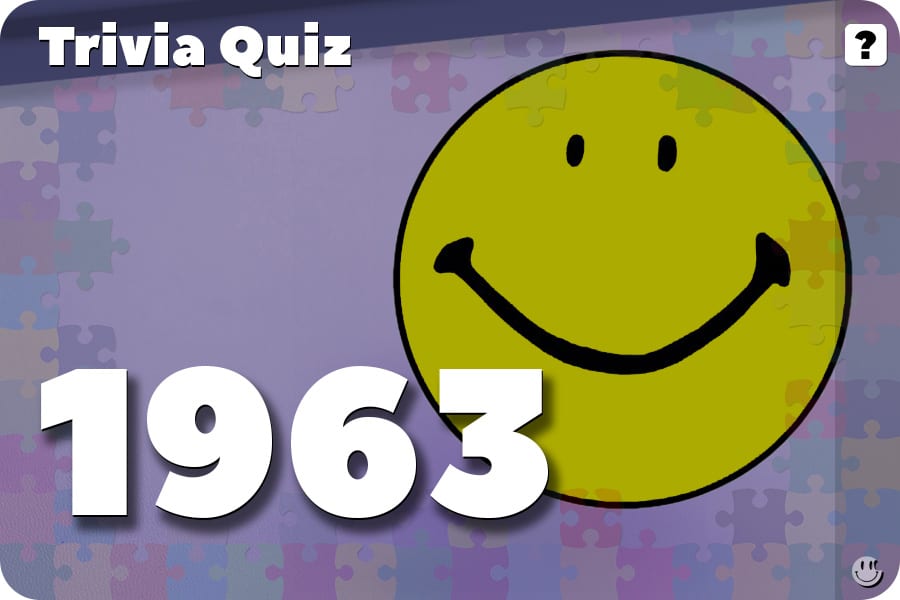
    7. American artist Harvey Ball created what famous pop culture icon in 1963? Hint: It is usually yellow.

    8. Which actors did NOT appear in Cleopatra: Rex Harrison, John Derek, Roddy McDowall, or Martin Landau?

    9. Who were the 1963 NBA Champions?

    10. On The Dick Van Dyke Show, name the town that Rob, Laura, and his son Ritchie Petrie lived in.

    The Answers:

    63 Trivia Answers for 1963 History

    1. What was the Biggest Number One Song of 1963?
    Sugar Shack by Jimmy Gilmer and The Fireballs

    2. Disney’s Son of Flubber was a sequel to what 1961 film?
    The Absent-Minded Professor

    3. This crime drama television show, based on the real-life story of Sam Sheppard, ran from September 1963 through August 1967.
    The Fugitive

    4. What was the Bestselling Fiction Book in 1963?
    The Shoes of the Fisherman by Morris L. West

    5. In 1963, what was the average life expectancy in the United States?
    Men – 66.6 years, Women – 73.4 years.

    6. What was the highest-grossing film of 1963?
    Cleopatra (2nd place: From Russia With Love) 3rd place: It’s a Mad, Mad, Mad, Mad World)

    7. Cleopatra was the most expensive film ever made up to that point and almost bankrupted what film studio?
    20th Century Fox

    8. Who was the Time Magazine Man of the Year in 1963?
    Martin Luthor King Jr

    9. Who was the President of the United States in 1963?
    John F. Kennedy (January 20, 1961 – November 22, 1963) and Lyndon B. Johnson (November 22, 1963 – January 20, 1969)

    10. 1963 Catchphrase: Who said, “And that’s the way it is.”?
    Walter Cronkite on (CBS) Evening News

    11. Who won the Stanley Cup in 1963?
    In 1963, The Toronto Maple Leafs won over the Detroit Red Wings (4 games to 1)

    12. How much was a 5-pound bag of flour in 1963?
    57 cents

    13. How much did a Loaf of Bread cost in 1963?
    22 cents

    14. How many people lived in the United States in 1963?
    The population was an estimated 189,241,798 people.

    15. How many people lived in the World in 1963?
    The estimated world population in 1963 was 3,201,178,277 people.

    16. what was the average movie theater ticket price in 1963 to the nearest quarter?
    75 cents

    17. Name the 13-year-old boy and his song who reached the number one spot on Billboard’s Top 100 singles chart.
    ‘Little’ Stevie Wonder, Fingertips.

    18. Name the 15-year-old girl and her song who reached the number one spot on Billboard’s Top 100 singles chart.
    Little Peggy March, I Will Follow Him

    19. This famous piece of art was on display at the National Gallery of Art in Washington, DC, and then for a month at New York’s Metropolitan Museum of Art before returning home to Europe. Name it.
    Mona Lisa by Leonardo da Vinci

    20. On March 5, 1963, a plane crash near Camden, Tennessee, killed performers Hawkshaw Hawkins, Cowboy Copas, and what Country/Pop singing star?
    Patsy Cline (September 8, 1932 – March 5, 1963)

    21. This famous prison, the subject of many books and films, closed on March 21, 1963. Name that prison.
    Alcatraz Federal Penitentiary. Today, Alcatraz is a public museum and one of San Francisco’s major tourist attractions, attracting over a million visitors annually.

    22. Coca-Cola Company introduced its first diet drink in 1963. What was it called?
    Tab

    23. This now 118,000-square-foot location opened in Canton, Ohio, with 17 charter members. Name that place of honor.
    Pro Football Hall of Fame

    24. This 1963 cartoon is often credited for creating the aesthetic that became known worldwide as anime. Name the character.
    Astro Boy

    25. This popular children’s book by Maurice Sendak was first published on April 9, 1963. What book?
    Where The Wild Things Are

    26. What was the title of singer-songwriter Bob Dylan’s second studio album, which opened with the song Blowin’ in the Wind?
    The Freewheelin’ Bob Dylan

    27. Where did US President Kennedy deliver his famous “Ich bin ein Berliner” speech?
    In front of the Berlin Wall in West Berlin, West Germany.

    28. Within 10,000, how many official Major League Baseball games had been played by September 1963?
    100,000 as of September 6, 1963.

    29. Can you name all five The Jetsons’ cartoon family members, including their dog?
    George Jetson, his boy Elroy, daughter Judy, and Jane, his wife. Astro was the dog.

    30. These two iconic rock bands performed on the same bill, only once together, at a concert at the Royal Albert Hall in London in September 1963. Name the bands.
    The Beatles and The Rolling Stones.

    31. Leave It to Beaver (1957–1963) ran on ABC for every season except the first. What network did Leave It to Beaver debut on?
    CBS

    32. This actress started as an original Mouseketeer but went on to star in various “Beach Party” movies from 1963 through 1967. Name that actress.
    Annette Funicello (October 22, 1942 – April 8, 2013)

    33. Who won the 1963 World Series?
    In 1963, The Los Angeles Dodgers won, beating the New York Yankees (4 games to 0)

    34. Name the television show where the lead actress played Patty and Cathy Lane.
    The Patty Duke Show

    35. This lake began to form inside Arizona’s Glen Canyon due to the construction of the Glen Canyon Dam off the Colorado River.
    Lake Powell

    36. Can you name the cartoon character Huckleberry Hound’s favorite song?
    My Darling, Clementine

    37. Name the two countries making up the Caribbean island of Hispaniola.
    Haiti and the Dominican Republic

    38. Name the first Major League Baseball team to play a regular-season game with a team composed entirely of rookies, including Jor Morgan.
    The Houston Colt .45s (Houston Oilers)

    39. How much did a gallon of gas cost in 1963?
    $0.30 per gallon

    40. What was the Top-Rated TV Show in the 1962/1963 season?
    The Beverly Hillbillies (CBS)

    41. Mary Kay Ash founded her MLM (Multi-Level Marketing) company in 1963. What was it called?
    Mary Kay Cosmetics

    42. Born in 1963, this American NBA basketball player was nicknamed “The Mailman.” Name him.
    Karl Malone

    43. This syndicated comic strip, by Scottish cartoonist Alex Graham, featured a dog, whose name was also the comic’s title. Name that dog.
    Fred Bassett

    44. This handy computer device was first made of wood in 1963, and we still use it today. What is it?
    Computer Mouse.

    45. “Towser the Mouser” was a Scottish cat who earned a spot in the Guinness Book of World Records for doing what?
    For catching 28,899 mice over more than 23 years (Born in 1963, she died in 1987)

    46. Today, it is the MetLife Building at 200 Park Avenue at East 45th Street in Midtown Manhattan, but what was it called when it was built in 1963?
    The Pan Am Building, (then) headquarters of Pan American World Airways.

    47. Name two original five members in the first Marvel Avengers comic book.
    Iron Man, the Wasp, the Hulk, Thor, and Ant-Man. Captain America joined in issue #4.

    48. On December 25, 1963, Walt Disney released its 18th feature-length animated motion picture, based on T.H. White’s novel of the same name. What was it called?
    The Sword in the Stone

    49. Who was the American Vice-President in 1963?
    Lyndon B. Johnson (January 20, 1961 – November 22, 1963)
    The office of vice president was vacant from November 22, 1963 – January 20, 1965

    50. Which famous writer did NOT pass away on November 22, 1963: Aldous Huxley (Brave New World), William Faulkner (The Sound and the Fury), or C.S. Lewis (The Chronicles of Narnia)?
    William Faulkner (September 25, 1897 – July 6, 1962)

    51. Where did Dr. Martin Luther King Jr. deliver his “I Have a Dream” speech?
    On the steps of the Lincoln Memorial in Washington, DC.

    52. In what country did the Great Train Robbery take place? Yes, they were still robbing trains in 1963.
    England (at Bridego Railway Bridge, Ledburn, near Mentmore in Buckinghamshire) £2.6 million (about 46 million in 2020) was stolen.

    53. What did the Abington School District v. Schempp US Supreme Court case do?
    The Supreme Court ruled that state-mandated Bible reading in public schools is unconstitutional.

    54. Name the well-known Hollywood trio that appeared (uncredited) as firemen in It’s a Mad Mad Mad Mad World.
    The Three Stooges (Moe Howard, Larry Fine, and Joe DeRita)

    55. When they opened in 1963, they called themselves Consumer Value Stores. They officially changed their name in 1996. Name that retailer.
    Now CVS and “Convenience, Value, and Service”

    56. Only a handful of people received an Honorary Citizenship of the United States; the first was in 1963. Name that recipient.
    Sir Winston Churchill (November 30, 1874 – January 24, 1965)

    57. When the show debuted in 1963, who was the host for Let’s Make A Deal?
    Monty Hall

    58. This book by Betty Friedan is credited with launching the Modern Women’s Movement in the United States. Name that book.
    The Feminine Mystique

    59. The ABC series, which ran from 1963 through 1965, is often compared to The Twilight Zone, but with a greater emphasis on science fiction stories. Name that show.
    The Outer Limits

    60. Name the film or actress who set the (then) Guinness World Record for “Most Costume Changes in a Film” in 1963.
    Elizabeth Taylor in Cleopatra, with 65 costume changes.

    61. Which celebrity was NOT born in 1963: Michael Jordan, Larry the Cable Guy, Charles Barkley, or Brooke Shields?
    Brooke Shields (born May 31, 1965)

    62. What animal education show, initially hosted by Marlin Perkins, debuted on (NBC) (later in syndication) in 1963?
    Mutual of Omaha’s Wild Kingdom

    63. In Bye, Bye, Birdie, who was the rock star based on?
    Elvis Presley (January 8, 1935 – August 16, 1977)

    Trivia Team Bonus Questions:

    1. In Bye, Bye, Birdie, the rock star character’s name, “Conrad Birdie” – who was the real-life music star that his name is based on?
    Conway Twitty (September 1, 1933 – June 5, 1993)

    2. What Horse won the Kentucky Derby in 1963?
    Chateaugay

    3. Tennessee has a best friend in the cartoon Tennessee Tuxedo and His Tales. Who and what was he?
    Chumley, a walrus.

    4. Who were the 1963 NFL Champions?
    Chicago Bears

    5. Who was the Pope in 1963?
    Pope John XXIII, from October 28, 1958 – June 3, 1963, and Pope Paul VI, from June 21, 1963 – August 6, 1978

    6. TV’s Astro Boy was set in the not-too-distant future from 1963. In what year was it originally set?
    2000

    7. American artist Harvey Ball created what famous pop culture icon in 1963? Hint: It is usually yellow.
    The Smiley Face. He never applied for a trademark for the smiley image.

    8. Which actors did NOT appear in Cleopatra: Rex Harrison, John Derek, Roddy McDowall, or Martin Landau?
    John Derek

    9. Who were the 1963 NBA Champions?
    For the 1962-63 Season, Champion Boston Celtics won 4 games to 2 over the Los Angeles Lakers

    10. On The Dick Van Dyke Show, name the town that Rob, Laura, and his son Ritchie Petrie lived in.
    New Rochelle, New York.


  • FLQ (Front de Libération du Québec): Quebec Separatist Movement

    FLQ (Front de Libération du Québec): Quebec Separatist Movement

    Quebec Separatist Movement (FLQ)

    The Front de Libération du Québec (FLQ) was a Quebec separatist movement that aimed to establish an independent and socialist Quebec. Active primarily from 1963 to 1970, the FLQ engaged in bombings, kidnappings, and other acts of terrorism in pursuit of their goals, culminating in the 1970 October Crisis.

    Founded in 1963 by Raymond Villeneuve, Gabriel Hudon, and Georges Schoeters, the FLQ was inspired by anti-colonial and socialist movements worldwide. The group sought to achieve its objectives through violent means, including bombings of English-speaking establishments, banks, and federal buildings in Quebec. Over the course of their activities, the FLQ was responsible for over 160 violent incidents, resulting in several deaths and injuries.

    The FLQ gained significant media attention and notoriety during the October Crisis of 1970. On October 5, the group kidnapped British Trade Commissioner James Cross, demanding the release of FLQ prisoners and the broadcast of their manifesto. Five days later, another FLQ cell kidnapped and murdered Quebec’s Minister of Labour and Immigration, Pierre Laporte. In response to these events, Canadian Prime Minister Pierre Trudeau invoked the War Measures Act, which resulted in the suspension of civil liberties, the deployment of the military in Quebec, and the arrest of nearly 500 individuals suspected of FLQ involvement.

    The October Crisis marked the peak of FLQ activities, and the group gradually faded in the following years. However, the actions of the FLQ contributed to an increased awareness of Quebec’s distinct culture and identity, as well as the debate surrounding Quebec’s political future. The separatist movement continued to evolve in a more moderate direction, with the formation of the Parti Québécois in 1968, which sought to achieve independence through political means rather than violence.

    Regarding pop culture, the FLQ and the October Crisis significantly impacted Canadian society, sparking debates on Quebec’s autonomy and identity. The crisis also inspired numerous works of literature, film, and television, including the 1974 film “Orderers” (Les Ordres) directed by Michel Brault, which depicted the War Measures Act’s impact on ordinary Quebec citizens’ lives.

    In summary, the FLQ was a radical separatist group that shaped the political landscape of Quebec and Canada through its violent actions and controversial tactics. While the group’s methods were ultimately rejected, the issues it raised remain relevant to Quebec’s ongoing political and cultural debates.

  • 25 Biggest Songs of the 1960s

    25 Biggest Songs of the 1960s

    Top 25 Songs of the 1960s

    The Twist by Chubby Checker is in a class by itself
    1. Hey Jude – The Beatles
    2. The Theme From ” A Summer Place” – Percy Faith
    3. Tossin’ and Turnin’ – Bobby Lewis
    4. I Want To Hold Your Hand – The Beatles
    5. I’m A Believer – The Monkees
    6. I Heard It Through The Grapevine – Marvin Gaye
    7. Aquarius/ Let The Sunshine In – The 5th Dimension
    8. Are You Lonesome To-night? – Elvis Presley
    9. In The Year 2525 – Zager & Evans
    10. It’s Now or Never – Elvis Presley
    11. I Can’t Stop Loving You – Ray Charles
    12. Love Is Blue – Paul Mauriat
    13. Big Girls Don’t Cry – The 4 Seasons
    14. Big Bad John – Jimmy Dean
    15. Sugar Shack – Jimmy Gilmer & The Fireballs
    16. Honey – Bobby Goldsboro
    17. To Sir With Love – Lulu
    18. Cathy’s Clown – The Everly Brothers
    19. People Got To Be Free – The Rascals
    20. Get Back – The Beatles
    21. The Ballad Of The Green Berets – SSgt. Barry Sadler
    22. Sherry – The 4 Seasons
    23. Can’t Buy Me Love – The Beatles
    24. Sugar, Sugar – The Archies
    25. (Sittin’ On) The Dock Of The Bay – Otis Redding
    Take our 1960 Quiz!
    Take our 1961 Quiz!
    Take our 1962 Quiz!
    Take our 1963 Quiz!
    Take our 1964 Quiz!
    Take our 1965 Quiz!
    Take our 1966 Quiz!
    Take our 1967 Quiz!
    Take our 1968 Quiz!
    Take our 1969 Quiz!
  • The Number One Hits Of 1963

    The Number One Hits Of 1963

    The Number One Hits Of 1963:

    December 22, 1962 – January 11, 1963:
    The Tornados – Telstar
    January 12, 1963 – January 25, 1963:
    Steve Lawrence – Go Away Little Girl
    January 26, 1963 – February 8, 1963:
    The Rooftop Singers – Walk Right In
    February 9, 1963 – March 1, 1963:
    Paul & Paula – Hey Paula
    March 2, 1963 – March 22, 1963:
    The Four Seasons – Walk Like A Man
    March 23, 1963 – March 29, 1963:
    Ruby & the Romantics – Our Day Will Come
    March 30, 1963 – April 26, 1963:
    The Chiffons – He’s So Fine
    April 27, 1963 – May 17, 1963:
    Little Peggy March – I Will Follow Him
    May 18, 1963 – May 31, 1963:
    Jimmy Soul – If You Wanna Be Happy
    June 1, 1963 – June 14, 1963:
    Lesley Gore – It’s My Party
    June 15, 1963 – July 5, 1963:
    Kyu Sakamoto – Sukiyaki
    July 6, 1963 – July 19, 1963:
    The Essex – Easier Said Than Done
    July 20, 1963 – August 2, 1963:
    Jan and Dean – Surf City
    August 3, 1963 – August 9, 1963:
    The Tymes – So Much in Love
    August 10, 1963 – August 30, 1963:
    Little Stevie Wonder – Fingertips (pt. II)
    August 31, 1963 – September 20, 1963:
    The Angels – My Boyfriend’s Back
    September 21, 1963 – October 11, 1963:
    Bobby Vinton – Blue Velvet
    October 12, 1963 – November 15, 1963:
    Jimmy Gilmer and the Fireballs – Sugar Shack
    November 16, 1963 – November 22, 1963:
    Nino Tempo and April Stevens – Deep Purple
    November 23, 1963 – December 6, 1963:
    Dale & Grace – I’m Leaving It Up to You
    December 7, 1963 – January 3, 1964:
    The Singing Nun – Dominique

    (Data is compiled from various charts including Billboard’s “Pop,” “Airplay,” “R&B” and “Singles” Charts. “Hot 100” is the primary chart used starting October, 1958)

    Take our 1963 Quiz!
  • 1963 Trivia, History Take and Fun Facts

    1963 Trivia, History Take and Fun Facts

    1963 History, Facts and Trivia

    Quick Facts from 1963

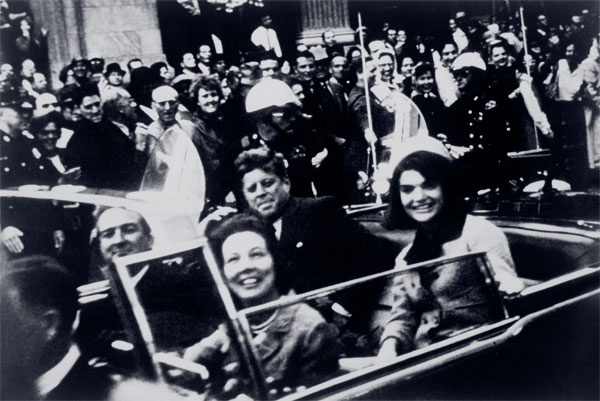
    • World Changing Event: President John F. Kennedy was assassinated in Dallas, Texas, on Nov. 22, 1963.
    • Another World-Changing Event: Thich Quang Duc’s self-immolation caused many Americans to question why we were in Vietnam.
    • The Top Song was Sugar Shack by Jimmy Gilmore and the Fireballs.
    • The Movies to Watch include Cleopatra and Dr. No.
    • The Most Famous Person in America was probably Doris Day.
    • Notable books include Where the Wild Things Are by Maurice Sendak and The Feminine Mystique by Betty Friedan
    • Soviet cosmonaut Valentina Tereshkova became the first woman to travel into space, giving them bonus points in The Space Race.
    • Price of a postage stamp in 1963: 5 cents
      Turtle kit (bowl, food, ornament & gravel): 44 cents
      Turtle: 21-49 cents each
    • The Funny Late Show Host: Steve Allen
      The Funny Lady was: Moms Mabley
    • The Crazy Conspiracy: Bob Dylan stole Blowin’ in the Wind from New Jersey high-school student Lorre Wyatt.
    • The Feminine Revolution: Betty Friedan’s The Feminine Mystique inaugurated the modern women’s rights movement.
    • Take our 1963 Quiz!

    Here are some significant events that took place in 1963

    • The United States, the United Kingdom, and the Soviet Union signed the Nuclear Test Ban Treaty, which prohibited nuclear weapons tests in the atmosphere, outer space, and underwater
    • The Civil Rights Act of 1964 was introduced in the United States Congress. The act, eventually passed in 1964, prohibited discrimination based on race, color, religion, sex, or national origin in public places and employment.
    • The Beatles released their first album, Please Please Me, in the United Kingdom. The album was later released in the United States as Introducing… The Beatles.
    • The assassination of President John F. Kennedy occurred on November 22, 1963, in Dallas, Texas.
    • The first broadcast of Doctor Who, a British science fiction television program, aired on the BBC.

    Top Ten Baby Names of 1963

    Lisa, Mary, Susan, Karen, Linda, Michael, John, David, James, Robert

    The Hotties, Sex Symbols and Fashion Icons

    Ursula Andress, Brigitte Bardot, Carroll Baker, Honor Blackman, Claudia Cardinale, Doris Day, Angie Dickinson, Annette Funicello, Audrey Hepburn, Sophia Loren, Jayne Mansfield, Ann-Margret, Julie Newmar, Kim Novak, Leslie Parrish, Elke Sommer, Stella Stevens, Elizabeth Taylor, Veruschka

    Sex Symbols and Hollywood Hunks

    Paul McCartney, John Lennon, Ringo Starr, George Harrison, Sean Connery, Elvis Presley, Gregory Peck

    Oscars: 34th Academy Awards (1962)

    The 34th Academy Awards in 1962 celebrated cinematic mastery at the Santa Monica Civic Auditorium. Bob Hope served as the evening’s host. Lawrence of Arabia walked away as the night’s big winner, bagging seven Oscars, including Best Director for David Lean and Best Picture.

    Grammys: 4th Annual Grammy Awards (1962 Grammys)

    When it came to the 1962 Grammys, hosted on May 29, the ceremony celebrated some iconic pieces of music. Henry Mancini’s Breakfast at Tiffany’s soundtrack won Album of the Year, and Tony Bennett’s “I Left My Heart in San Francisco” took home Record of the Year.

    Emmy Awards: 14th Primetime Emmy Awards (1962)

    The 14th Primetime Emmy Awards, held on May 22, 1962, were a night to remember. Bob Newhart was the host for the evening. The Bob Newhart Show was named Outstanding Program Achievement in the Field of Humor. At the same time, the legal drama The Defenders secured the award for Outstanding Program Achievement in the Field of Drama.

    “The Quotes”

    “From Dallas, Texas, the flash, apparently official… President Kennedy died at 1 p.m. Central Standard Time, 2:00 Eastern Standard Time, some 38 minutes ago.”
    – Walter Cronkite

    In 1963, Hall of Fame pitcher Gaylord Perry remarked, “They’ll put a man on the moon before I hit a home run.” On July 20, 1969, a few hours after Neil Armstrong set foot on the moon, Perry hit his first and only home run.

    “Oh, I wish I were an Oscar Meyer wiener. That is what I truly want to be.”
    – Oscar Meyer Hot Dog Commercial

    Time Magazine’s Man of the Year

    Martin Luther King, Jr

    Miss America

    Jacquelyn Mayer (Sandusky, OH)

    Miss USA

    Marite Ozers (Illinois)

    The Tragedies

    Airplane Celebrity Death: Patsy Cline

    The Vajont Dam Disaster: after reporting numerous warning signs about the risks of a landslide, some journalists were sued by the Italian government for “undermining the social order.” A landslide eventually occurred, causing an overflow and killing between 1,900 and 2,500 people

    Presidential Assassination

    John F Kennedy & Magic Bullet Theory
    The JFK assassination is the mother of all modern conspiracy theories.

    US Politics

    January 20, 1965 (Wednesday): Second inauguration of Lyndon B. Johnson

    Pop Culture Facts & History

    Harvey Ross Ball invented the yellow Smiley Face in 1963. It was intended to be morale-boosting for insurance companies. He was paid $45 for 10 minutes of work.

    June 17 – The Supreme Court ruled that laws requiring reciting The Lord’s Prayer or Bible verses in public schools were unconstitutional.

    In 1963, the Bronx Zoo exhibited “The Most Dangerous Animal in the World.”
    It was a mirror.

    Sukiyaki by Kyu Sakamoto topped the Billboard Hot 100 chart in 1963, one of the few non-English songs to have done so and the first in a non-European language. It was the only single by an Asian artist to top the Hot 100 until the 2020 release of Dynamite by BTS.

    The first American Artist to cover a Beatles song was Del Shannon’s 1963 cover of From Me to You. Del Shannon’s cover also became the first Lennon–McCartney composition to make the American charts when it entered the Billboard Hot 100 on June 29, 1963.

    The homecoming parade in the film Animal House was scripted as occurring on November 21, 1963, the day before JFK’s assassination. Producers considered the film’s setting “the last innocent year of America.”

    Charade spans three genres: suspense, thriller, romance, and comedy. Because Universal Pictures published the movie with an invalid copyright notice, the film entered the public domain in the United States immediately upon its release.

    Rowlf was the first known Muppet “star” as a recurring character on The Jimmy Dean Show, first appearing in a telecast on September 26, 1963.
    Nope, it wasn’t Kermit!

    Valentia Tereshkova was the first woman in space on the Vostok 6. She orbited Earth 48 times.

    In 1963, the first message sent on the Moscow–Washington hotline was the test phrase “THE QUICK BROWN FOX JUMPED OVER THE LAZY DOG’S BACK 1234567890”. Later, the confused Russian translators responded, “What does it mean when your people say ‘The quick brown fox jumped over the lazy dog’?”

    C.S. Lewis and Aldous Huxley both died on November 22, 1963. Their deaths weren’t as prominent in the news because of a more noteworthy death that occurred on that day: the assassination of John F. Kennedy.

    JFK watched From Russia With Love at the White House on November 20, 1963, making it his last film.

    Psychic The Amazing Criswell predicted that Kennedy would not run in the 1964 election because of something happening in November 1963.

    When Stephen Hawking was diagnosed with Amyotrophic Lateral Sclerosis (ALS) in 1963, doctors predicted he had about two and a half years to live. Fortunately, the disease progressed much slower than the doctors expected, and Hawking lived up to 76 years before dying on March 14, 2018.

    Nebraska’s USPS abbreviation was originally “NB” but was changed to “NE” at the request of Canada to avoid confusion with New Brunswick in 1969. It is the only time a state/territory has changed its USPS abbreviation since the introduction of the system in 1963.

    Kodak introduced the Instamatic camera.

    Tab soda, Coca-Cola’s first brand of diet soda, was launched in 1963 and was discontinued in 2020.

    ‘Ma’ Bell Telephone introduced the push-button telephone.

    7/11 was named after 7 a.m.-11 p.m. hours, unprecedented in 1946, and they didn’t experiment with 24-hour stores until 1963.

    Boxer Sonny Liston was the first to win a million dollars in a single bout when he beat Floyd Patterson in Chicago on September 25th.

    In 1963, San Francisco Giants Manager Alvin Dark joked, “They’ll put a man on the moon before [Giants pitcher] Gaylord Perry hits a home run.” On July 20, 1969, less than an hour after Neil Armstrong’s historic moonwalk, Perry hit his first career homer.

    Elizabeth Taylor was the first actress to earn $1,000,000 for a single film, Cleopatra.

    Vietnamese Buddhist monk Thich Quang Duc publicly immolated himself on the street in Saigon to protest the anti-Buddhist policies of President Ngo Dinh Diem.

    The ancient Egyptians developed the first recorded early pregnancy test, whereby a woman would urinate on a bag of wheat or barley and if the bag started sprouting, it indicated a pregnancy. In 1963, researchers measured the test as being 70% accurate.

    Donald Currey cut down a tree to retrieve his drill bit after it got stuck when he tried to core it to study climate effects. After studying the tree’s core, he found that he’d just cut down the oldest known tree at that time (at least 4862 years old).

    On October 18, 1963, French scientists launched a rocket into space containing a cat named Felicette. She orbited nearly 100 miles above the Earth, then descended safely to the ground via a specially designed parachute.

    Mississippi physician James D. Hardy performed the first successful lung transplant.

    On April 10, 1963, the USS Thresher submarine sank about 220 miles east of Boston, Massachusetts, during deep-diving tests, killing all 129 crew and shipyard personnel aboard. It is the second-deadliest submarine incident on record.

    Doomsday Clock

    Twelve minutes to midnight, according to the Bulletin of Atomic Scientists.
    1963: “After a decade of almost non-stop nuclear tests, the United States and the Soviet Union sign the Partial Test Ban Treaty, which ends all atmospheric nuclear testing. While it does not outlaw underground testing, the treaty represents progress in at least slowing the arms race. It also signals awareness among the Soviets and the United States that they need to work together to prevent nuclear annihilation.”

    The Habits

    Troll Dolls were everywhere.
    Reading Betty Friedan’s The Feminine Mystique helped establish the Feminist Movement.

    1st Appearances & 1963’s Most Popular Christmas Gifts, Toys and Presents

    Mouse Trap, Allan Sherwood (Barbie and Ken’s friend), Easy-Bake Oven, Big Loo.
    ‘Dam Things’ trolls were the original Troll Dolls, first created in the 1950s. They got much cuter and were produced by several companies by the early 1960s.

    Best Film Oscar Winner

    Lawrence of Arabia (presented in 1963)

    The Biggest Films of 1963

    1. Cleopatra (Pop Culture Classic)
    2. How the West Was Won
    3. It’s a Mad Mad Mad Mad World (Pop Culture Classic)
    4. Tom Jones
    5. Irma La Douce
    6. Son of Flubber
    7. The V.I.P.s
    8. McLintock!
    9. Charade
    10. Bye Bye Birdie (Pop Culture Classic)
    11. The Birds (Pop Culture Classic)
    12. Beach Party (Pop Culture Classic)
    13. Jason and the Argonauts
    14. The Damned (Pop Culture Classic)
    15. The Great Escape
    16. The Sword in the Stone
    17. Black Sabbath
    18. The Pink Panther (Pop Culture Classic)
    19. From Russia with Love
    20. Hud
    21. The Nutty Professor (Pop Culture Classic)
    22. The Raven
    23. It Happened at the World’s Fair (Elvis, Pop Culture Classic)
    24. Lord of the Flies
    25. PT 109
    26. Come Blow Your Horn
    27. The Cardinal
    28. The Thrill of it All
    29. Dementia 13
    30. 55 Days at Peking
    31. Move Over, Darling
    32. Donovan’s Reef
    33. Who’s Been Sleeping in My Bed?
    34. Blood Feast
    35. Toys in the Attic
    36. Fun in Acapulco
    37. Lilies of the Field (Pop Culture Classic)
    38. My Life to Live
    39. PromisesQ Promises!
    40. The Man with the X-Ray Eyes
    *Movies beyond the Top Ten are based on (a somewhat subjective) ranking based on how much they had a long-lasting effect on Pop Culture.

    Broadway Show

    Barefoot in the Park (Play) Opened on October 23, 1963 and closed on June 25, 1967

    Popular and Best-selling Books From 1963

    Babies So Tall Board Book by Gyo Fujikawa
    The Battle of the Villa Fiorita by Rumer Godden
    The Bell Jar by Sylvia Plath
    Richard Scarry’s Best Word Book by Richard Scarry
    Caravans by James A. Michener
    Cat’s Cradle – Kurt Vonnegut
    City of Night by John Rechy
    Elizabeth Appleton by John O’Hara
    The Feminine Mystique – Betty Friedan
    The Fire Next Time by James Baldwin
    The Glass-Blowers by Daphne du Maurier
    Grandmother and the Priests by Taylor Caldwell
    The Group by Mary McCarthy
    Hop on Pop by Dr. Seuss
    I Am a Bunny by Ole Risom and Richard Scarry
    On Her Majesty’s Secret Service by Ian Fleming
    Raise High the Roof Beam, Carpenters, and Seymour-An Introduction by J.D. Salinger
    The Sand Pebbles by Richard McKenna
    Seven Days in May by Fletcher Knebel
    The Shoes of the Fisherman by Morris West
    Where The Wild Things Are by Maurice Sendak

    1963 Most Popular TV Shows

    1. Beverly Hillbillies (CBS)
    2. Bonanza (NBC)
    3. The Dick Van Dyke Show (CBS)
    4. Petticoat Junction (CBS)
    5. The Andy Griffith Show (CBS)
    6. The Lucy Show (CBS)
    7. Candid Camera (CBS)
    8. The Ed Sullivan Show (CBS)
    9. The Danny Thomas Show (CBS)
    10. My Favorite Martian (CBS)

    1963 Billboard Number One Songs

    December 22, 1962 – January 11, 1963:
    Telstar – The Tornadoes

    January 12 – January 25:
    Go Away Little Girl – Steve Lawrence

    January 26 – February 8:
    Walk Right In – The Rooftop Singers

    February 9 – March 1:
    Hey Paula – Paul & Paula

    March 2 – March 22:
    Walk Like A Man – The Four Seasons

    March 23 – March 29:
    Our Day Will Come – Ruby & The Romantics

    March 30 – April 26:
    He’s So Fine – The Chiffons

    April 27 – May 17:
    I Will Follow Him – Little Peggy March

    May 18 – May 30:
    If You Wanna Be Happy – Jimmy Soul

    June 1 – June 14:
    It’s My Party – Lesley Gore

    June 15 – July 5:
    Sukiyaki – Kyu Sakamoto

    July 6 – July 19:
    Easier Said Than Done – The Essex

    July 20 – August 2:
    Surf City – Jan & Dean

    August 3 – August 9:
    So Much In Love – The Tymes

    August 10 – August 30:
    Fingertips – Pt 2 – Little Stevie Wonder

    August 31 – September 20:
    My Boyfriend’s Back – The Angels

    September 21October 11:
    Blue Velvet – Bobby Vinton

    October 12November 15:
    Sugar Shack – Jimmy Gilmer & The Fireballs

    November 16 – November 22:
    Deep Purple – Nino Tempo & April Stevens

    November 23 – December 6:
    I’m Leaving It Up To You – Dale & Grace

    December 7, 1963 – January 3, 1964:
    Dominique – The Singing Nun

    Sports

    World Series Champions: Los Angeles Dodgers
    NFL Champions: Chicago Bears
    AFL Champions: San Diego Chargers
    NBA Champions: Boston Celtics
    Stanley Cup Champs: Toronto Maple Leafs
    U.S. Open Golf Julius Boros
    U.S. Tennis: (Men/Ladies) Rafael Osuna/Maria Bueno
    Wimbledon (Men/Women): Chuck McKinley/Margaret Smith
    NCAA Football Champions: Texas
    NCAA Basketball Champions: Loyola
    Kentucky Derby: Chateaugay


  • 1963 Music – The 100 Most Popular Songs

    1963 Music – The 100 Most Popular Songs

    1963 Top 100 Music Hits Chart

    1. Yakety Sax – Boots Randolf
    2. Louie Louie – The Kingsmen
    3. Up On The Roof – The Drifters
    4. It’s My Party – Leslie Gore
    5. South Street – Orlons
    6. The End Of The World – Skeeter Davis
    7. Pride and Joy – Marvin Gaye
    8. Surfin U.S.A. – Beach Boys
    9. Heat Wave – Martha and the Vandellas
    10. Walk Like A Man – Four Seasons
    11. Wipe Out – The Surfaris
    12. My Boyfriend’s Back – The Angels
    13. Mickey’s Monkey – the Miracles
    14. Remember Then – Earls
    15. Little Duece Coupe – Beach Boys
    16. Wildwood Days – Bobby Rydell
    17. Another Saturday Night – Sam Cooke
    18. Da Doo Ron Ron (When He Walked Me Home) – Crystals
    19. If You Wanna Be Happy – Jimmy Soul
    20. Surfer Girl – Beach Boys
    21. On Broadway – The Drifters
    22. Denise – Randy and the Rainbows
    23. You Can’t Sit Down – The Dovells
    24. Busted – Ray Charles
    25. Be True To Your School – Beach Boys
    26. So Much In Love – The Tymes
    27. Surf City – Jan and Dean
    28. Tell Him – The Exciters
    29. Our Day Will Come – Ruby & the Romantics
    30. Walking The Dog – Rufus Thomas
    31. Be My Baby – Ronettes
    32. Monkey Time – Major Lance
    33. Then He Kissed Me – Crystals
    34. Hey Paula – Paul and Paula
    35. Sukiyaki – Kyu Sakamoto
    36. He’s So Fine – Chiffons
    37. You’ve Really Got A Hold On Me – The Miracles
    38. I Will Follow Him – Little Peggy March
    39. Those Lazy-Hazy-Crazy Days of Summer – Nat “King” Cole
    40. Ring Of Fire – Johnny Cash
    41. Tie Me Kangaroo Down, Sport – Rolf Harris
    42. Let’s Stomp – Bobby Comstock
    43. Blue Bayou – Roy Orbison
    44. Sugar Shack – Jimmy Gilmor & The Fireballs
    45. In My Room – Beach Boys
    46. (Down At) Papa Joe’s – The Dixiebelles
    47. The Good Life – Tony Bennett
    48. Two Lovers – Mary Wells
    49. Mockingbird – Charles and Inez Foxx
    50. One Fine Day – The Chiffons
    51. I Adore Him – The Angels
    52. We Shall Overcome – Joan Baez
    53. Have You Heard – The Duprees
    54. Baby Workout – Jackie Wilson
    55. Can I Get A Witness? – Marvin Gaye
    56. Mr. Bass Man – Johnny Cymbol
    57. (You’re The) Devil In Disguise – Elvis Presley
    58. Just One Look – Doris Troy
    59. Fingertips part 2 – Little Stevie Wonder
    60. Shut Down – Beach Boys
    61. The Bird Is The Word – The Rivingtons
    62. Memphis – Lonnie Mack
    63. Rhythm of the Rain – The Cascades
    64. Bossa Nova Baby – Elvis Presley
    65. Pipeline – Chantay’s
    66. Don’t Say Goodnight and Mean Goodbye – The Shirelles
    67. I Love You Because – Al Martino
    68. Hello Mudduh Hello Fadduh (A Letter FRrom Camp) – Alan Sherman
    69. Marlene – The Four Seasons
    70. She’s A Fool – Leslie Gore
    71. Judy’s Turn To Cry – Leslie Gore
    72. Two Faces Have I – Lou Christie
    73. Hot Pastromi – The Dartells
    74. Blue Velvet – Bobby Vinton
    75. Boss Guitar – Duane Eddy
    76. I’m Leaving It Up To You – Dale & Grace
    77. Make The World Go Away – Timi Yuro
    78. Walk Right In – The Rooftop Singers
    79. Shake A Tail Feather – The Five Du-Tines
    80. Go Away Little Girl – Steve Lawrence
    81. Danke Shoen – Wayne Newton
    82. Dominique – The Singning Nun
    83. Days of Wine and Roses – Andy Williams
    84. Still – Bill Anderson
    85. More – Vic Dana
    86. Part Time Love – Little Johnny Taylor
    87. I (Who Have Nothing) – Ben E. King
    88. Ruby Baby – Dion
    89. Workout – Little Stevie Wonder
    90. Cast Your Fate To The Wind – Vince Guaraldi Trio
    91. Martian Hop – Ran-Dells
    92. Strange I Knwo – The Marvelettes
    93. Come and Get These Memories – Martha and the Vandellas
    94. Days of Wine and Roses – Henry Mancini
    95. Surfer Joe – The Surfaris
    96. On Top Of Spaghetti – Tom Glazer
    97. (Today I Met) The Boy I’m Gonna Marry – Darlene Love
    98. Call Me Irresponsible – Frank Sinatra
    99. Little Latin Lupe Lu – The Righteous Brothers
    100. Unchained Melody – Vito and the Salutations
    Take our 1963 Quiz!
  • Debut of TV Series “Doctor Who”

    Debut of TV Series “Doctor Who”

    Debut of TV Series “Doctor Who”

    “Doctor Who,” a British science fiction television series, first premiered on November 23, 1963, and has since become a significant part of popular culture, attracting millions of fans worldwide and inspiring numerous spin-offs, merchandise, and adaptations.

    Created by Sydney Newman, the show was initially produced by the British Broadcasting Corporation (BBC) and aimed to cater to a family audience. The central character, known as the Doctor, is a Time Lord from the planet Gallifrey who travels through time and space in the TARDIS, a time machine resembling a British police box. The Doctor, who has the ability to regenerate when near death, has been played by various actors over the years, allowing the show to evolve and continue across multiple generations.

    “Doctor Who” has been lauded for its creativity, storytelling, and unique blend of drama, humor, and adventure. The series has introduced a number of memorable characters and villains, such as the Daleks, Cybermen, and the Master, which have become iconic in their own right.

    Throughout its history, the show has experienced periods of hiatus, cancellation, and revival. After its initial run from 1963 to 1989, “Doctor Who” was briefly brought back as a television film in 1996. The series was then successfully relaunched in 2005 by Russell T. Davies, with subsequent showrunners including Steven Moffat and Chris Chibnall.

    “Doctor Who” has had a significant impact on popular culture, with references appearing in various forms of media, including movies, music, and literature. The show has also inspired spin-off series such as “Torchwood,” “The Sarah Jane Adventures,” and “Class.” Additionally, the series has been celebrated for its progressive representation of gender and diversity, particularly with the introduction of Jodie Whittaker as the first female Doctor in 2017.

    The longevity and success of “Doctor Who” can be attributed to its ability to continually reinvent itself, captivating generations of fans with its imaginative storytelling and memorable characters.

    List of “The Doctor” With Debut Dates:

    1. William Hartnell: First Doctor – November 23, 1963
    2. Patrick Troughton: Second Doctor – October 29, 1966
    3. Jon Pertwee: Third Doctor – January 3, 1970
    4. Tom Baker: Fourth Doctor – June 8, 1974
    5. Peter Davison: Fifth Doctor – January 4, 1982
    6. Colin Baker: Sixth Doctor – March 22, 1984
    7. Sylvester McCoy: Seventh Doctor – September 7, 1987
    8. Paul McGann: Eighth Doctor – May 12, 1996 (in the TV movie “Doctor Who”)
      (unnumbered) The War Doctor  – May 18, 2013
    9. Christopher Eccleston: Ninth Doctor – March 26, 2005
    10. David Tennant: Tenth Doctor – June 18, 2005 (brief appearance); December 25, 2005 (full episode)
    11. Matt Smith: Eleventh Doctor – January 1, 2010
    12. Peter Capaldi: Twelfth Doctor – December 25, 2013 (brief appearance); August 23, 2014 (full episode)
    13. Jodie Whittaker: Thirteenth Doctor – December 25, 2017
    14. David Tennent: The Fourteenth Doctor – November 2023
    15. Ncuti Gatwa: The Fifteenth Doctor – December 2023
  • John F. Kennedy Is Dead

    John F. Kennedy Is Dead

    The President Is Dead

    Way back in 1963, while stationed on board the USS Piper, we pulled into the port of Djibouti, Africa as one of our scheduled Med cruise port calls. Djibouti, is a country located in the Horn of Africa in East Africa. It is bordered by Somalia in the south, Ethiopia in the south and west, Eritrea in the north, and the Red Sea and the Gulf of Aden in the east. Due to it’s history of French colonization, the country still had a big racial divide between the very poor Black population and the rich White Europeans. For example, Blacks were not allowed into the better hotels unless hey worked there as servants. As a result, the only place for a Black U. S. Navy sailor to party was in one of the interracial bars in the native section of the city. White tourists were afraid to go there.

    Standing topside watch while moored along side the pier usually drew a crowd of native dock workers who were amused to see a Black man carrying a rifle, a side arm, and a baton, seemingly just strutting around while White guys did all the physical labor. and I did play this up somewhat , being the only Black in my crew, by harassing our all White deck crew doing the usual paint chipping and painting we did during every port call. Once or twice during my rounds, I’d walk over and tap one of my shipmates on the head with my baton which would draw a big round of applause from my audience.

    My mentor, Beetle Bailey, the senior first class engineman, was a huge person with the temperament of a lamb. Beetle took me under his wing from the moment I reported on board and taught me all I needed to qualify as a diesel engine throttleman. Beetle also took to calling me his little “spear chukker”, to which I would just call him a stupid honky. We often exchanged racial slurs. I had decided early on that I would not go through life with a chip on my shoulder and as long as the jokes were meant to be humorous and not derogatory, I would simply respond in kind. However, I did let it be known that there was a thin line that shouldn’t be crossed and in fact did go after one of my shipmates with a jacking wrench when he crossed that line.

    But in response to Beetle’s calling me his little spear chukker, I found a souvenir shop in town and purchased a twelve foot native spear, although a reproduction and not authentic. Since our only mode of transport around town was either taxi or motor scooter, I rented a Lumbretta scooter to get back to the boat. I guess the European tourist were pretty amazed to see a navy sailor in uniform, a Black navy sailor, riding a moped and carrying a twelve foot spear. I hung that spear in the forward engine room over the number one main engine where it hung long after I had transferred and up until the day Piper was decommissioned.

    One day, we had to move the boat so a U. S Navy destroyer, the USS Bigelow could moor alongside the dock. We had to move since the Bigelow was the senior ship as as the senior ship could moor directly to the pier. While we were moored in Djibouti, we needed to refuel. Now the old diesel submarines used fuel ballast tanks to maintain a stable ballast. As the fuel in the tanks was used, it would be replaced with sea water. When fueling, we take on diesel fuel into the tank that would in turn push the sea water out through an overboard pipe that had a sight glass. The sight glass going black meant that the fuel tank was full to the brim and would soon be going overboard into the harbor which would be a no no. So, as we fueled, someone would have to sit topside watching the sight glass to notify the men below to stop transferring fuel.

    This night, as we sat alongside the Bigelow, performing our fueling operations, the night was peaceful and quiet until alarms started going on all over the Bigelow. Some sailor in a drunken stupor had climbed the Bigelow’s radar mast and got instantly fried. We were all wondering what the heck had happened. The Bigelow had lit up all of a sudden and we watched men scrambling all over her decks, some crying “Oh my God”. One of our crew came rushing back to the boat and said “The president’s dead. The president’s dead… Somebody killed JFK”.

    This sent shock waves through the Piper also as some guys went through the boat turning on the lights and waking people up. We were all in shock. Were we going to war? Our radioman was in town getting drunk like all radiomen did in those days, there was no internet, email, cell phones, and diesel submarines didn’t carry televisions. The only info we received until our radioman got back was all second hand from the guys on the destroyer who didn’t know much more than we did. That was November 22, 1963.

  • Lamborghini Founded

    Lamborghini Founded

    Lamborghini Founded: Italian Luxury Sports Cars

    Lamborghini, an Italian luxury sports car manufacturer, was founded on October 30, 1963, by Ferruccio Lamborghini, a successful tractor manufacturer passionate about fast cars. The company was established in Sant’Agata Bolognese, Italy, and was born out of Lamborghini’s desire to build a better, more sophisticated sports car than his rival, Enzo Ferrari.

    Ferruccio Lamborghini’s vision was to create high-performance cars incorporating cutting-edge technology, innovative design, and luxurious features. In 1964, the company unveiled its first production car, the Lamborghini 350 GT, which featured a 3.5-liter V12 engine capable of producing 280 horsepower. The 350 GT gained acclaim for its performance, design, and build quality, putting Lamborghini on the map as a formidable competitor in the world of sports cars.

    Throughout the years, Lamborghini continued to innovate and produce iconic models, such as the Miura (1966), which is often considered the world’s first supercar, and the Countach (1974), which became a symbol of the 1980s with its revolutionary wedge-shaped design and upward-opening scissor doors. These models and others cemented Lamborghini’s reputation for bold design, power, and luxury, making them highly coveted by car enthusiasts and collectors.

    Lamborghini’s cars have significantly impacted popular culture, appearing in movies, television shows, music videos, and video games, often symbolizing wealth, power, and speed. They have become synonymous with Italian design and engineering excellence, and the brand itself has become an emblem of luxury and exclusivity.

    Prominent figures from various industries, such as celebrities, athletes, and business magnates, have been known to own Lamborghinis, further enhancing the brand’s allure and influence on popular culture.

    In conclusion, Lamborghini was founded in 1963 by Ferruccio Lamborghini with a vision to create high-performance luxury sports cars. The company’s iconic models, such as the Miura and Countach, have profoundly impacted popular culture, symbolizing wealth, power, and speed. Lamborghini continues to be an influential player in luxury sports cars, showcasing the best of Italian design and engineering.

  • Opening of the Pro Football Hall of Fame

    Opening of the Pro Football Hall of Fame

    Opening of the Pro Football Hall of Fame

    The story of the opening of the Pro Football Hall of Fame begins with a simple sentence: The Pro Football Hall of Fame, established in 1963, is a museum dedicated to celebrating and honoring the history of professional American football, primarily the National Football League (NFL).

    • The Pro Football Hall of Fame was officially opened on September 7, 1963, in Canton, Ohio.
    • Canton was chosen because the American Professional Football Association, which later became the NFL, was founded there in 1920.
    • The initial class of inductees included 17 players, coaches, and contributors who played an essential role in shaping professional football.
    • The Pro Football Hall of Fame has become an essential part of the football world, attracting fans from across the country and around the globe.
    • The annual induction ceremony has evolved into a major event, drawing significant media attention and bringing football enthusiasts together to celebrate the game’s history and its most prominent figures.
    • The Hall of Fame Game, an annual preseason NFL game held in Canton, serves as the unofficial kickoff to the NFL season, further elevating the significance of the Hall of Fame in football culture.
    • The United States is the primary country involved, as the Pro Football Hall of Fame focuses on the history of American professional football, with the NFL being the most prominent league.
    • Some of the most notable inductees include legendary players like Jim Brown, Johnny Unitas, and Vince Lombardi, who have significantly contributed to the sport both on and off the field.
    • The Hall of Fame’s selection committee, consisting of sports journalists and representatives from each NFL team, is crucial in determining the inductees each year.

    The Initial Class of Hall of Fame Inductees:

    1. Sammy Baugh – Quarterback
    2. Bert Bell – NFL Commissioner and team owner
    3. Joseph Carr – NFL President
    4. Dutch Clark – Quarterback
    5. Red Grange – Halfback
    6. George Halas – Player, coach, and team owner
    7. Mel Hein – Center
    8. Pete Henry – Tackle
    9. Cal Hubbard – Tackle
    10. Don Hutson – End
    11. Earl “Curly” Lambeau – Player, coach, and team founder
    12. Tim Mara – Team owner
    13. George Preston Marshall – Team owner
    14. John “Blood” McNally – Halfback
    15. Bronko Nagurski – Fullback
    16. Ernie Nevers – Fullback
    17. Jim Thorpe – Halfback
  • Introduction of Cassette Tape by Philips

    Introduction of Cassette Tape by Philips

    Cassette Tape by Philips

    The introduction of the cassette tape by Philips revolutionized the way people listened to and recorded audio, making it more portable and accessible than ever before. Philips released the invention to Europe at the Berlin Radio Show on August 30, 1963, and released it in the United States in November of 1964.

    1962 Dutch electronics company Philips introduced the compact cassette tape at the Berlin Radio Show. The cassette tape significantly improved over previous audio recording technologies, such as the large and bulky reel-to-reel tape recorders. Cassette tapes were small, lightweight, and easy to use, making them an instant hit among consumers.

    The cassette tape’s popularity grew rapidly, and by the late 1960s and early 1970s, it had become a staple in households worldwide. People could now easily record their favorite songs from the radio, create mixtapes for friends, and listen to pre-recorded albums from their favorite artists. The cassette tape also played a crucial role in the rise of the Sony Walkman, the iconic portable music player introduced in 1979. The Walkman allowed people to take their music with them wherever they went, leading to a new era of personal audio consumption.

    Throughout the 1980s, the cassette tape continued to dominate the music market, outselling vinyl records and becoming the preferred format for music releases. However, by the early 1990s, the rise of digital audio formats, particularly the compact disc (CD), led to the gradual decline of cassette tapes.

    The introduction of the cassette tape by Philips had a significant impact on popular culture, shaping the way people consumed and shared music for decades. It enabled the growth of various music genres and subcultures and facilitated the exchange of ideas and creativity among music enthusiasts.

  • The March on Washington for Jobs and Freedom

    The March on Washington for Jobs and Freedom

    The March on Washington for Jobs and Freedom: Civil Rights Demonstration

    The March on Washington for Jobs and Freedom, held on August 28, 1963, was a seminal event in the American Civil Rights Movement, as thousands gathered in Washington, D.C., to demand equal rights and economic opportunities for African Americans. The demonstration aimed to emphasize the need for civil rights legislation and the end of racial segregation in public schools.

    Organized by a coalition of civil rights organizations, including the Southern Christian Leadership Conference (SCLC), the National Association for the Advancement of Colored People (NAACP), the Congress of Racial Equality (CORE), and the Student Nonviolent Coordinating Committee (SNCC), the March on Washington drew an estimated 250,000 participants.

    Prominent civil rights leaders, including Martin Luther King Jr., John Lewis, and A. Philip Randolph, delivered powerful speeches at the event. King’s iconic “I Have a Dream” speech, in which he envisioned a future of racial harmony and equality, became a defining moment of the Civil Rights Movement and one of the most famous speeches in American history.

    The March on Washington significantly impacted popular culture and inspired various works of art, music, and literature. The media widely covered the event, and images of the march became symbols of the struggle for civil rights. The demonstration also influenced subsequent protests and events, such as the 1965 Selma to Montgomery marches and the 1968 Poor People’s Campaign.

    The March on Washington played a pivotal role in the passage of the Civil Rights Act of 1964 and the Voting Rights Act of 1965. These legislative achievements marked major victories for the Civil Rights Movement and helped dismantle the system of racial segregation in the United States.

    In summary, the March on Washington for Jobs and Freedom was a historic civil rights demonstration that brought together a diverse group of activists to demand equal rights and opportunities for African Americans. The event, marked by Martin Luther King Jr.’s “I Have a Dream” speech, influenced popular culture and played a critical role in the passage of landmark civil rights legislation.

  • Martin Luther King Jr.’s “I Have a Dream” Speech

    Martin Luther King Jr.’s “I Have a Dream” Speech

    Martin Luther King Jr.’s “I Have a Dream” Speech

    Martin Luther King Jr.’s “I Have a Dream” speech was a defining moment in the American civil rights movement, delivered on August 28, 1963, during the March on Washington for Jobs and Freedom.

    The March on Washington was a massive gathering of civil rights activists, labor union members, and supporters from across the United States, with an estimated 250,000 people in attendance. The event aimed to promote racial equality and economic opportunities for African Americans and took place at the Lincoln Memorial in Washington, D.C.

    Martin Luther King Jr., a Baptist minister and one of the most influential leaders of the civil rights movement, was among the key speakers at the event. His speech, now known as the “I Have a Dream” speech, has become one of the most famous and influential speeches in American history.

    In his speech, King shared his vision of a future where people would be judged not by the color of their skin but by the content of their character. He called for an end to racism and segregation in the United States and urged Americans to come together in the pursuit of freedom, justice, and equality for all.

    The “I Have a Dream” speech garnered widespread media coverage and helped to galvanize the civil rights movement, leading to significant advancements in civil rights legislation, such as the Civil Rights Act of 1964 and the Voting Rights Act of 1965. The speech continues to be celebrated as a powerful symbol of the fight for racial equality and social justice in the United States and around the world.

  • The Great Train Robbery (UK)

    The Great Train Robbery (UK)

    The UK’s The Great Train Robbery

    The Great Train Robbery of 1963 was a notorious heist in which a gang of thieves stole £2.6 million (equivalent to over £50 million today) from a Royal Mail train in the United Kingdom.

    On the night of August 8, 1963, a 15-member gang led by Bruce Reynolds targeted a Royal Mail train traveling from Glasgow to London. The train was carrying large quantities of cash, mainly in small denominations, intended for banks and post offices in the south of England. The robbery took place near Bridego Railway Bridge in Ledburn, Buckinghamshire, England.

    The gang tampered with the railway signals, causing the train to stop. They then attacked the train’s driver, Jack Mills, and uncoupled the locomotive and the first two carriages from the rest of the train. The thieves loaded the stolen money into their vehicles and fled to a nearby farmhouse, which they used as a hideout.

    The investigation that followed the robbery was one of the largest in British history. Several of the robbers were soon arrested, and by the end of 1963, 12 of the 15 gang members had been convicted and sentenced to long prison terms. However, two key figures, Ronnie Biggs and Charles Wilson, managed to escape from prison and went on the run for many years. Biggs, in particular, gained notoriety for his life on the run and was eventually arrested in Brazil in 1974. He later voluntarily returned to the UK in 2001 and was imprisoned until he was released on compassionate grounds in 2009.

    The Great Train Robbery captivated the public’s imagination and inspired numerous books, films, and television programs, making it one of the most infamous heists in British history.

  • Partial Nuclear Test Ban Treaty

    Partial Nuclear Test Ban Treaty

    1963 Partial Nuclear Test Ban Treaty

    The 1963 Partial Nuclear Test Ban Treaty was an agreement signed by the United States, the Soviet Union, and the United Kingdom, prohibiting nuclear weapon tests in the atmosphere, outer space, and underwater.

    The treaty, officially known as the Treaty Banning Nuclear Weapon Tests in the Atmosphere, in Outer Space, and Under Water, was signed in Moscow on August 5, 1963, by representatives of the US, USSR, and UK. It came into effect on October 10, 1963. The treaty was a result of increasing concerns about the harmful effects of radioactive fallout from nuclear tests, as well as escalating tensions during the Cold War.

    During the late 1950s and early 1960s, nuclear testing by the US and the USSR led to a growing awareness of the dangers of radioactive fallout for the environment and human health. This increased public pressure for a test ban treaty. The Cuban Missile Crisis in October 1962 further highlighted the urgent need to reduce tensions and curb the arms race between the two superpowers.

    Prominent figures involved in the negotiations included US President John F. Kennedy, Soviet Premier Nikita Khrushchev, and British Prime Minister Harold Macmillan. The treaty negotiations faced several obstacles, including disagreements over inspection and verification measures and opposition from France and China, who continued to conduct atmospheric tests after the treaty’s signing.

    The 1963 Partial Nuclear Test Ban Treaty marked a significant step towards nuclear disarmament, as it encouraged further negotiations and agreements to reduce the nuclear threat. However, it did not ban underground nuclear tests, which continued for several decades. The Comprehensive Nuclear-Test-Ban Treaty (CTBT), signed in 1996, aimed to ban all nuclear explosions, including those conducted underground. Still, it has not yet entered into force due to the non-ratification by some key countries.

  • Skopje Earthquake in North Macedonia

    Skopje Earthquake in North Macedonia

    Skopje Earthquake in North Macedonia

    The Skopje earthquake, a devastating disaster in North Macedonia, occurred on July 26, 1963, leaving more than 1,000 people dead, thousands injured, and a large portion of the city destroyed.

    Skopje, then part of the Socialist Federal Republic of Yugoslavia, experienced a massive 6.1 magnitude earthquake that struck at 5:17 a.m. local time. The tremor lasted for about 20 seconds, causing widespread devastation and rendering over 200,000 people homeless.

    The catastrophe left approximately 75% of the city’s buildings in ruins, including many vital infrastructures such as hospitals, schools, and government institutions. As a result, the entire city needed to be rebuilt, and the reconstruction efforts spanned several decades.

    In response to the disaster, countries worldwide offered their assistance. 78 nations provided financial aid, technical support, and other resources to help Skopje recover from the earthquake. The city’s motto, “The City of International Solidarity, ” recognized international solidarity.”

    The Skopje earthquake had a significant impact on popular culture. The disaster inspired Yugoslav filmmaker Veljko Bulajić’s 1964 film “Skopje ’63,” which documented the aftermath of the earthquake and the ensuing reconstruction efforts. Additionally, several books and articles were published about the disaster, further raising awareness about the importance of earthquake preparedness and urban planning.

    The earthquake also influenced the city’s architectural development, as renowned Japanese architect Kenzo Tange was invited to design the new city center. His modernist urban plan for Skopje became an iconic symbol of the city’s rebirth and resilience. Today, Skopje is a thriving capital city with a rich cultural heritage and a mix of architectural styles, serving as a testament to its tragic past and subsequent recovery.

  • Introduction of the ZIP Code System

    Introduction of the ZIP Code System

    US ZIP Code System

    The introduction of the ZIP Code system revolutionized mail delivery in the United States by streamlining the sorting and distribution process.

    The Zone Improvement Plan (ZIP) Code system was introduced by the United States Postal Service (USPS) on July 1, 1963. This system was implemented by Postmaster General J. Edward Day, who recognized the need for a more efficient method of sorting and delivering the growing volume of mail in the country.

    The ZIP Code system is a five-digit code that identifies a specific geographic area within the United States. The first three digits represent a Sectional Center Facility (SCF), a central mail processing facility serving a particular region. The next two digits represent a specific region’s post office or delivery area.

    An extended ZIP+4 Code was introduced in 1983 to improve the system’s efficiency further. The additional four digits help identify a more precise location, such as a particular building or group of apartments.

    Introducing the ZIP Code system greatly improved the speed and accuracy of mail delivery in the United States. It allowed for the automation of mail sorting and enabled the USPS to handle the ever-increasing volume of mail more effectively. Today, the ZIP Code system remains an essential part of the postal service infrastructure in the United States, and it is widely used for various purposes beyond mail delivery, including demographic analysis and marketing.

  • The “Hotline” Agreement Between The U.S. and USSR

    The “Hotline” Agreement Between The U.S. and USSR

    The “Hotline” Agreement: U.S. and USSR Direct Communication

    The “Hotline” Agreement, established on June 20, 1963, between the United States and the Soviet Union, created a direct communication line between the two superpowers to facilitate dialogue and prevent potential misunderstandings that could escalate into conflict. This agreement was a response to the Cuban Missile Crisis of 1962, nearly leading to a nuclear war.

    The Hotline, formally known as the Washington-Moscow Direct Communications Link, was designed to allow swift communication between the two nations’ leaders. The initial setup included teletype terminals, with messages exchanged in written form to avoid misinterpretations due to language barriers or poor audio quality. The Hotline was later upgraded to include voice communication, fax machines, and email.

    Prominent figures in the Hotline Agreement included President John F. Kennedy of the United States and Premier Nikita Khrushchev of the Soviet Union. The Hotline was first used in 1963 during the Cuban Missile Crisis when President Kennedy and Premier Khrushchev exchanged messages to de-escalate the tense situation.

    The Hotline Agreement significantly impacted pop culture, as it became a symbol of diplomacy and communication between rival nations during the Cold War era. The concept of a direct line between the leaders of the U.S. and the USSR was popularized in movies, television, and literature, most notably in the 1964 film “Dr. Strangelove or: How I Learned to Stop Worrying and Love the Bomb,” directed by Stanley Kubrick. The film satirizes the Cold War and highlights the importance of communication to prevent disastrous conflicts.

    The Hotline Agreement between the U.S. and the USSR established a direct communication link between the two superpowers to prevent misunderstandings and potential conflicts. The Hotline became an iconic symbol of diplomacy and communication during the Cold War era, inspiring various works in popular culture and emphasizing the significance of dialogue in international relations.

  • Valentina Tereshkova First Woman in Space: Vostok 6 Mission

    Valentina Tereshkova First Woman in Space: Vostok 6 Mission

    Valentina Tereshkova First Woman in Space: Vostok 6 Mission

    Valentina Tereshkova, a Soviet cosmonaut, became the first woman in space on June 16, 1963, during the Vostok 6 mission, marking a significant milestone in the history of space exploration and the ongoing space race between the United States and the Soviet Union.

    Born on March 6, 1937, in the village of Maslennikovo, Russia, Tereshkova was an amateur skydiver before joining the Soviet space program. She was selected to become a cosmonaut in 1962, along with four other female candidates, out of more than 400 applicants. Tereshkova was eventually chosen to pilot the Vostok 6 mission due to her exceptional training performance and working-class background, which aligned with the Soviet Union’s ideological principles.

    On June 16, 1963, Vostok 6 launched from the Baikonur Cosmodrome in Kazakhstan, with Tereshkova aboard. She orbited the Earth 48 times during her three-day mission, spending approximately 71 hours in space. The international media closely followed Tereshkova’s historic flight, and she became a symbol of Soviet space achievements and women’s capabilities in traditionally male-dominated fields.

    Tereshkova’s mission significantly impacted pop culture, as it inspired and empowered women worldwide to pursue careers in science, technology, engineering, and mathematics (STEM). Her accomplishment also led to the production of various films, books, and documentaries highlighting her life and achievements, such as the 2013 Russian film “Gagarin: First in Space,” which portrayed Tereshkova’s role in the Soviet space program.

    Valentina Tereshkova’s historic flight as the first woman in space during the Vostok 6 mission served as a major milestone in space exploration and a turning point in the perception of women’s roles in STEM fields. Her accomplishments inspired generations of women to break boundaries and continue pushing the limits of human achievement.

  • Medgar Evers Assassination

    Medgar Evers Assassination

    Medgar Evers Assassination

    Medgar Evers, a prominent African American civil rights activist and field secretary for the NAACP (National Association for the Advancement of Colored People), was assassinated by white supremacist Byron De La Beckwith on June 12, 1963, in Jackson, Mississippi.

    Born on July 2, 1925, in Decatur, Mississippi, Medgar Evers dedicated his life to fighting racial segregation and advocating for equal rights for African Americans. After serving in World War II, Evers returned to the United States and became involved in the civil rights movement. He attended Alcorn State University and later became the first field secretary for the NAACP in Mississippi, where he organized voter registration drives, boycotts, and civil rights protests.

    On the night of June 12, 1963, Medgar Evers was shot in the back in the driveway of his home. He was taken to a local hospital, where he was pronounced dead. The assassination made national headlines and deeply affected the civil rights movement and American society.

    Byron De La Beckwith, a White Citizens’ Council member, and the Ku Klux Klan, was arrested and charged with Evers’ murder. However, two all-white juries failed to reach a verdict in his trials, and he was set free. It wasn’t until 1994, more than 30 years after Evers’ assassination, that Beckwith was convicted of murder and sentenced to life in prison. He died in 2001 while serving his sentence.

    The assassination of Medgar Evers significantly impacted the civil rights movement and American popular culture. The event inspired various songs, poems, and books, including works by Bob Dylan, Nina Simone, and Eudora Welty. In 1996, the film “Ghosts of Mississippi” was released, chronicling the story of Evers’ assassination and the eventual conviction of his murderer.

    Medgar Evers’ life and tragic death continue to inspire those fighting for racial equality and justice. His assassination further galvanized the civil rights movement, leading to the passage of the Civil Rights Act of 1964 and the Voting Rights Act of 1965.

  • Release of the Film “Cleopatra”

    Release of the Film “Cleopatra”

    Release of the Film “Cleopatra”

    The release of the film “Cleopatra” in 1963 was a major event in cinema history, known for its lavish production, record-breaking budget, and the infamous love affair between its two stars, Elizabeth Taylor and Richard Burton.

    “Cleopatra” was a historical epic directed by Joseph L. Mankiewicz, based on the life of the famous Egyptian queen, Cleopatra VII. The film starred Elizabeth Taylor in the title role, with Richard Burton as Mark Antony and Rex Harrison as Julius Caesar. Production began in 1960, with the film initially set to be directed by Rouben Mamoulian.

    The production of “Cleopatra” was plagued with difficulties from the start, including multiple script rewrites, director changes, and illness. Elizabeth Taylor suffered from severe pneumonia during the shooting, which led to a tracheotomy and halted production for months. These delays, coupled with the extravagant sets, costumes, and visual effects, caused the film’s budget to skyrocket. At the time, “Cleopatra” became the most expensive movie ever made, with a final cost of over $44 million (equivalent to over $350 million today).

    While the film was in production, Elizabeth Taylor and Richard Burton began a highly publicized extramarital affair. The scandal generated intense media coverage and added to the film’s notoriety.

    “Cleopatra” premiered in New York City on June 12, 1963. Despite mixed critical reviews, the film was a box-office success, grossing over $57 million in its initial release. However, due to its astronomical production costs, it took several years for the film to break even.

    In terms of pop culture relevance, “Cleopatra” is remembered not only for its lavish production and extravagant budget but also for the off-screen romance between Taylor and Burton, which captivated the public’s attention. Their love affair and subsequent marriages and divorces became one of the most famous Hollywood romances of all time. The film also influenced fashion trends, with women emulating Elizabeth Taylor’s Cleopatra-inspired eye makeup and hairstyles. Today, “Cleopatra” is considered a classic of Hollywood’s golden age and a landmark in the history of epic filmmaking.

  • Organization of African Unity (OAU)

    Organization of African Unity (OAU)

    Organization of African Unity (OAU)

    The Organization of African Unity (OAU) was established in 1963 to promote African states’ unity and solidarity and work towards the continent’s decolonization.

    On May 25, 1963, 32 African countries met in Addis Ababa, Ethiopia, to create the Organization of African Unity (OAU). Emperor Haile Selassie of Ethiopia played a significant role in the formation of the OAU, and the organization’s headquarters were based in Addis Ababa. The founding countries aimed to foster cooperation, unity, and development among African nations and to eliminate colonialism and apartheid from the continent.

    The OAU was instrumental in supporting the liberation of African countries still under colonial rule and provided a platform for member states to coordinate their efforts to fight against apartheid in South Africa. The organization also focused on mediating conflicts among member states and promoting economic development and social progress across the continent.

    Over time, the OAU faced criticism for its inability to effectively address conflicts and human rights issues within member states. In response to these challenges, the OAU transformed, and on July 9, 2002, it was replaced by the African Union (AU). The AU retained many of the OAU’s objectives but was designed to be a more effective and robust organization, better equipped to address the complex political, social, and economic challenges facing African nations in the 21st century.

  • 1963 Grammy Award Winners

    1963 Grammy Award Winners

    1963 Grammy Award Winners

    Winners Announced: May 15, 1963
    Televised: December 8, 1963
    Held at: Chicago, Los Angeles and New York
    Host: Frank Sinatra
    Eligibility Year: December 1, 1961 – November 30, 1962

    Musical Highlights and Achievements

    • Vaughn Meader Stuns: A relatively unknown comic, Vaughn Meader took home the Album of the Year for The First Family, a comedy album parodying President Kennedy.
    • Tony Bennett’s Big Night: Tony Bennett won Record of the Year for I Left My Heart in San Francisco, which became one of his signature songs.
    • Pioneering Female Award: The first Best Female Pop Vocal Performance went to Ella Fitzgerald for Ella Swings Brightly with Nelson.
    • Classical Milestone: Leonard Bernstein won multiple awards for his conducting, solidifying his place in classical music history.

    Trivia

    • Sinatra Double-Duty: Sinatra hosted both the Grammys and the Oscars in 1963, proving his versatility as an entertainer.
    • Posthumous Honors: Country legend Patsy Cline, who had passed away earlier that year, was nominated posthumously.
    • Mancini’s Continual Success: Henry Mancini, fresh off an Oscar win for “Moon River,” won a Grammy for Hatari!.
    • Televised Delay: Although winners were announced in May, the ceremony wasn’t televised until December as “Best on Record.”
    • Take our 1963 Quiz!
    Record of the Year:
    I Left My Heart in San Francisco, Tony Bennett
    Album of the Year:
    The First Family, Vaughn Meader (Cadence)
    Song of the Year:
    What Kind of Fool Am I, Leslie Bricusse and Anthony Newley, songwriters
    Best New Artist of 1962:
    Robert Goulet
    Best Solo Vocal Performance, Male:
    I Left My Heart in San Francisco, Tony Bennett
    Best Solo Vocal Performance, Female:
    Ella Swings Brightly With Nelson Riddle, Ella Fitzgerald
    Best Performance By a Vocal Group:
    If I Had a Hammer, Peter, Paul and Mary
    Best Performance By a Chorus:
    Presenting the New Christy Minstrels, New Christy Minstrels
    Best Rock and Roll Recording:
    Alley Cat, Bent Fabric (Atco)
    Best Rhythm and Blues Recording:
    I Can’t Stop Loving You, Ray Charles (ABC)
    Best Jazz Performance, Soloist or Small Group (Instrumental):
    Desafinado, Stan Getz
    Best Jazz Performance, Large Group (Instrumental):
    Adventures in Jazz, Stan Kenton
    Best Original Jazz Composition:
    Cast Your Fate to the Winds, Vince Guaraldi, composer
    Best Country and Western Recording:
    Funny Way of Laughin’, Burl Ives (Decca)
    Best Gospel or Other Religious Recording:
    Great Songs of Love and Faith, Mahalia Jackson (Columbia)
    Best Folk Recording:
    If I Had a Hammer, Peter, Paul and Mary (Warner Bros.)
    Best Performance By an Orchestra for Dancing:
    Fly Me to the Moon Bossa Nova, Joe Harnell
    Best Performance By an Orchestra or Instrumentalist With Orchestra, Not for Jazz or Dancing:
    The Colorful Peter Nero, Peter Nero
    Best Instrumental Arrangement:
    Baby Elephant Walk, Henry Mancini, arranger
    Best Background Arrangement:
    I Left My Heart in San Francisco, Marty Manning, arranger
    Best Instrumental Theme:
    A Taste of Honey, Bobby Scott and Ric Marlow, composers
    Best Original Cast Show Album:
    No Strings, Richard Rodgers, composer (Capitol)
    Album of the Year, Classical:
    Columbia Records Presents Vladimir Horowitz, Vladimir Horowitz (Columbia)
    Best Classical Performance, Orchestra:
    Stravinsky, The Firebird Ballet, Igor Stravinsky conducting Columbia Symphony
    Best Classical Performance, Chamber Music:
    The Heifetz-Piatigorsky Concerts With Primrose, Pennario and Guests, Jascha Heifetz, Gregor Piatigorsky and William Primrose
    Best Classical Performance, Instrumental Soloist(s) (With Orchestra):
    Stravinsky, Concerto in D for Violin, Isaac Stern; Igor Stravinsky conducting Columbia Symphony
    Best Classical Performance, Instrumental Soloist or Duo (Without Orchestra):
    Columbia Records Presents Vladimir Horowitz, Vladimir Horowitz
    Best Opera Recording:
    Verdi, Aïda, Georg Solti conducting Rome Opera House Orchestra and Chorus; solos: Price, Vickers, Gorr, Merrill and Tozzi (RCA)
    Best Classical Performance, Choral:
    Bach, St. Matthew Passion, Philharmonia Choir, Wilhelm Pitz, choral director; Otto Klemperer conducting Philharmonic Orchestra
    Best Classical Performance, Vocal Soloist (With or Without Orchestra):
    Wagner, Götterdämerung Brunnhilde’s Immolation Scene; Wesendonck, Songs, Eileen Farrell; Leonard Bernstein conducting New York Philharmonic
    Best Classical Composition By Contemporary Composer:
    The Flood, Igor Stravinsky, composer
    Best Comedy Performance:
    The First Family, Vaughn Meader
    Best Documentary or Spoken Word Recording (Other Than Comedy):
    The Story-Teller: A Session With Charles Laughton, Charles Laughton (Capitol)
    Best Recording for Children:
    Saint-Saëns, Carnival of the Animals; Britten, Young Person’s Guide to the Orchestra, Leonard Bernstein (Columbia)
    Best Album Cover:
    Lena… Lovely and Alive, Robert Jones, art director (RCA)
    Best Album Cover, Classical:
    The Intimate Bach, Marvin Schwartz, art director (Capitol)
  • Buddhist Crisis: South Vietnam Religious Tensions

    Buddhist Crisis: South Vietnam Religious Tensions

    Buddhist Crisis: South Vietnam Religious Tensions

    The Buddhist Crisis was a series of protests and civil unrest in South Vietnam, fueled by religious tensions between the majority Buddhist population and the Catholic-led government, culminating in a military coup in 1963.

    The crisis began in May 1963, when the South Vietnamese government, led by President Ngo Dinh Diem, a devout Catholic, prohibited the flying of Buddhist flags during the celebration of Vesak, the birthday of Gautama Buddha. This decision sparked widespread outrage among the country’s Buddhist majority, as the government had allowed the display of Catholic flags just a few days earlier.

    Protests erupted in the city of Hue on May 8, 1963, leading to a violent confrontation between demonstrators and government forces. Nine people were killed when the police opened fire on the protesters, further escalating tensions.

    In response to the violence, prominent Buddhist monk Thich Quang Duc self-immolated on a busy street in Saigon on June 11, 1963, to protest the government’s religious discrimination. His shocking act of protest garnered international attention and increased pressure on the Diem regime to address the grievances of the Buddhist community.

    Over the following months, protests continued to escalate, and the government’s brutal crackdown on dissent further alienated the domestic and international communities. The United States, supporting South Vietnam in its fight against communist North Vietnam, began to distance itself from Diem’s government.

    On November 1, 1963, a group of South Vietnamese generals, led by General Duong Van Minh, staged a coup against Diem’s government. Diem and his brother, Ngo Dinh Nhu, were arrested and executed the following day.

    The Buddhist Crisis marked a turning point in the Vietnam War, as it exposed deep religious and political divisions within South Vietnam and strained the relationship between the United States and its South Vietnamese ally. The instability and frequent changes in government following the coup further weakened South Vietnam’s ability to resist the communist forces from the North.

  • Maurice Sendak’s “Where the Wild Things Are” Published

    Maurice Sendak’s “Where the Wild Things Are” Published

    Maurice Sendak’s “Where the Wild Things Are” Published

    “Where the Wild Things Are,” a children’s book written and illustrated by Maurice Sendak, was published on April 9, 1963, and quickly became a classic in children’s literature, impacting popular culture and inspiring generations of readers, artists, and writers.

    The book tells the story of Max, a young boy who, after being sent to his room for misbehaving, goes on a wild imaginary adventure to an island inhabited by fierce creatures called “Wild Things.” After taming the Wild Things and becoming their king, Max ultimately decides to return home, where he finds his warm dinner waiting for him.

    Upon its release, “Where the Wild Things Are” received mixed reviews. Some critics praised its innovative storytelling and striking artwork, while others found the content too dark and frightening for young readers. Despite the initial controversy, the book went on to win the Caldecott Medal in 1964, a prestigious award given to the most distinguished American picture book for children.

    “Where the Wild Things Are” has had a lasting impact on popular culture. The book has been adapted into various forms of media, including an animated short film in 1973 and a live-action feature film directed by Spike Jonze in 2009. The story has also inspired plays, operas, and countless references in music, television, and movies.

    Maurice Sendak’s work in “Where the Wild Things Are” has influenced many contemporary children’s book authors and illustrators. The book has been translated into numerous languages and has sold millions of copies worldwide. Its enduring popularity can be attributed to its powerful exploration of the themes of imagination, childhood, and the complexity of emotions, which still resonate with readers of all ages.

  • 1963 Oscars 35th Academy Awards

    1963 Oscars 35th Academy Awards

    1963 Oscars 35th Academy Awards

    Winners Announced: April 8, 1963
    Held at: Santa Monica Civic Auditorium, Santa Monica, California
    Host: Frank Sinatra
    Eligibility Year: 1962

    Cinematic Highlights and Achievements

    • Lawrence of Arabia Sweeps: The epic Lawrence of Arabia was the night’s big winner, capturing seven Oscars, including Best Picture and Best Director for David Lean.
    • Gregory Peck’s Moment: Peck won Best Actor for his iconic role as Atticus Finch in To Kill a Mockingbird, a career-defining win.
    • Patty Duke’s Youthful Win: At just 16, Patty Duke won Best Supporting Actress for The Miracle Worker, becoming one of the youngest Oscar winners ever.
    • Animated Achievements: The Hole, a short film by John Hubley and Faith Hubley, nabbed Best Animated Short, an early nod to the potential of animation to tackle serious themes.

    Trivia

    • Marilyn Monroe Snub: Many were surprised that Marilyn Monroe wasn’t nominated for her role in Some Like It Hot.
    • Sinatra as Host: Sinatra was not just a Grammy host that year; he also brought his Rat Pack charm to the Oscars.
    • French Sophistication: Sundays and Cybele took home the Oscar for Best Foreign Language Film, marking France’s third win.
    • Bob Hope’s Absence: Notably absent was Bob Hope, who had hosted the Oscars multiple times before; Sinatra stepping in was seen as a change of pace.
    • Take our 1963 Quiz!

    1963 Oscar Nominees and Winners

    https://www.youtube.com/watch?v=nLXoZ69ce-I
    Best Picture:
    Lawrence of Arabia – Sam Spiegel (WINNER)
    The Longest Day – Darryl F. Zanuck
    The Music Man[3] – Morton DaCosta
    Mutiny on the Bounty – Aaron Rosenberg
    To Kill a Mockingbird – Alan J. Pakula
    Best Director:
    David Lean – Lawrence of Arabia (WINNER)
    Frank Perry – David and Lisa
    Pietro Germi – Divorce Italian Style
    Arthur Penn – The Miracle Worker
    Robert Mulligan – To Kill a Mockingbird
    Best Actor:
    Gregory Peck – To Kill a Mockingbird (WINNER)
    Burt Lancaster – Birdman of Alcatraz
    Jack Lemmon – Days of Wine and Roses
    Marcello Mastroianni – Divorce Italian Style
    Peter O’Toole – Lawrence of Arabia
    Best Actress:
    Anne Bancroft – The Miracle Worker (WINNER)
    Bette Davis – What Ever Happened to Baby Jane?
    Katharine Hepburn – Long Day’s Journey into Night
    Geraldine Page – Sweet Bird of Youth
    Lee Remick – Days of Wine and Roses
    Best Supporting Actor:
    Ed Begley – Sweet Bird of Youth (WINNER)
    Victor Buono – What Ever Happened to Baby Jane?
    Telly Savalas – Birdman of Alcatraz
    Omar Sharif – Lawrence of Arabia
    Terence Stamp – Billy Budd
    Best Supporting Actress:
    Patty Duke – The Miracle Worker (WINNER)
    Mary Badham – To Kill a Mockingbird
    Shirley Knight – Sweet Bird of Youth
    Angela Lansbury – The Manchurian Candidate
    Thelma Ritter – Birdman of Alcatraz
    Best Story and Screenplay Written Directly for the Screen:
    Divorce Italian Style – Ennio de Concini, Alfredo Giannetti and Pietro Germi (WINNER)
    Freud: The Secret Passion – Story by Charles Kaufman; Screenplay by Charles Kaufman and Wolfgang Reinhardt
    Last Year at Marienbad – Alain Robbe-Grillet
    That Touch of Mink – Stanley Shapiro and Nate Monaster
    Through a Glass Darkly – Ingmar Bergman
    Best Screenplay Based on Material from Another Medium:
    To Kill a Mockingbird – Horton Foote (WINNER)
    David and Lisa – Eleanor Perry
    Lawrence of Arabia – Robert Bolt and Michael Wilson
    Lolita – Vladimir Nabokov
    The Miracle Worker – William Gibson
    Best Foreign Language Film:
    Sundays and Cybele (France) (WINNER)
    Electra (Greece)
    The Four Days of Naples (Italy)
    Keeper of Promises (The Given Word) (Brazil)
    Tlayucan (Mexico)
    Best Documentary Feature:
    Black Fox (WINNER)
    Alvorada
    Best Documentary Short:
    Dylan Thomas (WINNER)
    The John Glenn Story
    The Road to the Wall
    Best Live Action Short Subject:
    Heureux Anniversaire (WINNER)
    Big City Blues
    The Cadillac
    The Cliff Dwellers
    Pan
    Best Short Subjects – Cartoons:
    The Hole (WINNER)
    Icarus Montgolfier Wright
    Now Hear This
    Self Defense … for Cowards
    A Symposium on Popular Songs
    Best Music Score – Substantially Original:
    Lawrence of Arabia – Maurice Jarre (WINNER)
    Freud – Jerry Goldsmith
    Mutiny on the Bounty – Bronislaw Kaper
    Taras Bulba – Franz Waxman
    To Kill a Mockingbird – Elmer Bernstein
    Best Scoring of Music – Adaptation or Treatment:
    Meredith Willson’s The Music Man – Ray Heindorf (WINNER)
    Billy Rose’s Jumbo – Georgie Stoll
    Gigot – Michel Magne
    Gypsy – Frank Perkins
    The Wonderful World of the Brothers Grimm – Leigh Harline
    Best Song:
    “Days of Wine and Roses” from Days of Wine and Roses – Music by Henry Mancini; Lyric by Johnny Mercer (WINNER)
    “Love Song From Mutiny on the Bounty (Follow Me)” from Mutiny on the Bounty – Music by Bronislaw Kaper; Lyric by Paul Francis Webster
    “Song From Two for the Seesaw (Second Chance)” from Two for the Seesaw – Music by André Previn; Lyric by Dory Langdon
    “Tender Is the Night” from Tender Is the Night – Music by Sammy Fain; Lyric by Paul Francis Webster
    “Walk on the Wild Side” from Walk on the Wild Side – Music by Elmer Bernstein; Lyric by Mack David
    Best Sound:
    Lawrence of Arabia – John Cox (WINNER)
    Bon Voyage! – Robert O. Cook
    Meredith Willson’s The Music Man – George R. Groves
    That Touch of Mink – Waldon O. Watson
    What Ever Happened to Baby Jane? – Joseph D. Kelly
    Best Art Direction, Black-and-White:
    To Kill a Mockingbird – Art Direction: Alexander Golitzen and Henry Bumstead; Set Decoration: Oliver Emert (WINNER)
    Days of Wine and Roses – Art Direction: Joseph C. Wright; Set Decoration: George James Hopkins
    The Longest Day – Art Direction: Ted Haworth, Léon Barsacq and Vincent Korda; Set Decoration: Gabriel Béchir
    Period of Adjustment – Art Direction: George Davis and Edward Carfagno; Set Decoration: Henry Grace and Richard Pefferle
    The Pigeon That Took Rome – Art Direction: Hal Pereira and Roland Anderson; Set Decoration: Samuel M. Comer and Frank R. McKelvy
    Best Art Direction, Color:
    Lawrence of Arabia – Art Direction: John Box and John Stoll; Set Decoration: Dario Simoni (WINNER)
    Meredith Willson’s The Music Man – Art Direction: Paul Groesse; Set Decoration: George James Hopkins
    Mutiny on the Bounty – Art Direction: George Davis and Joseph McMillan Johnson; Set Decoration: Henry Grace and Hugh Hunt
    That Touch of Mink – Art Direction: Alexander Golitzen and Robert Clatworthy; Set Decoration: George Milo
    The Wonderful World of the Brothers Grimm – Art Direction: George Davis and Edward Carfagno; Set Decoration: Henry Grace and Richard
    Best Cinematography, Black-and-White:
    Pefferle (WINNER)
    The Longest Day – Jean Bourgoin and Walter Wottitz
    Birdman of Alcatraz – Burnett Guffey
    To Kill a Mockingbird – Russell Harlan
    Two for the Seesaw – Ted D. McCord
    What Ever Happened to Baby Jane? – Ernest Haller
    Best Cinematography, Color:
    Lawrence of Arabia – Freddie Young (WINNER)
    Gypsy – Harry Stradling
    Hatari! – Russell Harlan
    Mutiny on the Bounty – Robert Surtees
    The Wonderful World of the Brothers Grimm – Paul C. Vogel
    Best Costume Design, Black-and-White:
    What Ever Happened to Baby Jane? – Norma Koch (WINNER)
    Days of Wine and Roses – Don Feld
    The Man Who Shot Liberty Valance – Edith Head
    The Miracle Worker – Ruth Morley
    Phaedra – Denny Vachlioti
    Best Costume Design, Color:
    The Wonderful World of the Brothers Grimm – Mary Wills (WINNER)
    Bon Voyage! – Bill Thomas
    Gypsy – Orry-Kelly
    Meredith Willson’s The Music Man – Dorothy Jeakins
    My Geisha – Edith Head
    Best Film Editing:
    Lawrence of Arabia – Anne V. Coates (WINNER)
    The Longest Day – Samuel E. Beetley
    The Manchurian Candidate – Ferris Webster
    Meredith Willson’s The Music Man – William H. Ziegler
    Mutiny on the Bounty – John McSweeney Jr.
    Best Special Effects:
    The Longest Day – Visual Effects by Robert MacDonald; Audible Effects by Jacques Maumont (WINNER)
    Mutiny on the Bounty – Visual Effects by A. Arnold Gillespie; Audible Effects by Milo B. Lory
    Honorary Academy Awards:
    Jean Hersholt Humanitarian Award
    Steve Broidy
    Oscar® and Academy Awards® and Oscar® design mark are the trademarks and service marks and the Oscar© statuette the copyrighted property, of the Academy of Motion Picture Arts and Sciences. Pop Culture Madness is neither endorsed by nor affiliated with the Academy of Motion Picture Arts and Sciences.


  • The Beatles’ First Album: “Please Please Me” Released

    The Beatles’ First Album: “Please Please Me” Released

    The Beatles’ First Album: “Please Please Me”

    The Beatles’ first album, “Please Please Me,” marked the beginning of their unprecedented musical success and influence, and it was released in the United Kingdom on March 22, 1963.

    The Beatles, consisting of John Lennon, Paul McCartney, George Harrison, and Ringo Starr, formed in Liverpool, England, in 1960. Under Brian Epstein’s management and with producer George Martin’s guidance, the band signed a recording contract with EMI’s Parlophone label in 1962. Their first single, “Love Me Do,” was released in October 1962 and reached number 17 on the UK charts.

    In early 1963, the Beatles recorded their debut album, “Please Please Me,” at EMI’s Abbey Road Studios in London. The recording process was remarkably quick, with the majority of the album’s 14 tracks recorded in a single day on February 11, 1963. The album featured eight original compositions by Lennon and McCartney, along with six cover songs. The title track, “Please Me, ” was released as a single in January 1963 and became their first top 10 hit in the UK.

    “Please Please Me” received positive reviews and commercial success after its release. The album topped the UK Albums Chart, staying at number one for 30 consecutive weeks before being replaced by the Beatles’ second album, “With the Beatles.” The success of “Please Please Me” marked the beginning of the Beatles’ meteoric rise to fame and their profound impact on popular music and culture worldwide.

  • Alcatraz Federal Penitentiary Closed

    Alcatraz Federal Penitentiary Closed

    Alcatraz Federal Penitentiary Closed

    Alcatraz Federal Penitentiary, a maximum-security prison on Alcatraz Island in San Francisco Bay, closed on March 21, 1963, after 29 years of operation, due to high operating costs and deteriorating facilities.

    Alcatraz was a military prison before becoming a federal penitentiary in 1934. The isolated island location and the frigid waters surrounding it made escape nearly impossible. The prison housed some of the most notorious criminals in U.S. history, including Al Capone, George “Machine Gun” Kelly, and Robert Stroud, known as the “Birdman of Alcatraz.”

    Despite the prison’s reputation for being escape-proof, there were several attempts, the most famous being the 1962 escape by Frank Morris and the Anglin brothers. Their daring breakout inspired numerous books, movies, and television shows, making the story an enduring part of popular culture.

    Due to the high cost of maintaining the facility, the poor state of the infrastructure, and concerns about the environmental impact on San Francisco Bay, U.S. Attorney General Robert F. Kennedy decided to close the prison in 1963. After its closure, the island was occupied by a group of Native American activists from 1969 to 1971, asserting their right to unused federal land under a 19th-century treaty.

    The closure of Alcatraz Federal Penitentiary had a lasting impact on pop culture. The prison’s mystique and the stories of the inmates served there have been the subject of numerous books, films, and television shows. Among the most famous is the 1979 film “Escape from Alcatraz,” starring Clint Eastwood as Frank Morris.

    Today, Alcatraz Island is managed by the National Park Service and is a popular tourist destination. The former prison offers guided tours, allowing visitors to learn about its history and the lives of the inmates once held there.

  • The Profumo Affair (UK)

    The Profumo Affair (UK)

    The Profumo Affair

    The Profumo Affair was a political scandal in the United Kingdom that occurred in 1963, involving the Secretary of State for War, John Profumo, and his extramarital affair with a young woman named Christine Keeler.

    In 1961, John Profumo, a member of the British Conservative Party and an influential politician, began an affair with Christine Keeler, a 19-year-old model and dancer. Unbeknownst to Profumo, Keeler was also involved with Yevgeny Ivanov, a Soviet naval attaché and alleged spy. This connection raised concerns about the potential risk to national security, as it was feared that Keeler could be passing sensitive information to the Soviet Union through her relationship with Ivanov.

    The affair became public knowledge in March 1963 when it was revealed in the press. Profumo initially denied the allegations in a statement to the House of Commons, claiming that there had been “no impropriety” in his relationship with Keeler. However, as more details emerged, the pressure mounted, and Profumo ultimately confessed to the affair in June 1963. He resigned from his position as Secretary of State for War and from his parliamentary seat.

    The scandal severely damaged the reputation of Prime Minister Harold Macmillan’s government, contributing to the Conservatives’ defeat in the general election held in October 1964. The Profumo Affair remains one of the most notorious political scandals in British history and has been the subject of various books, films, and television series, including the 1989 film “Scandal.”