web analytics

Tag: 1972

  • 1972 Top Ten Music Charts

    1972 Top Ten Music Charts


    1972’s Biggest Artists and Songs

     
    Carly Simon (1971 Best New Artist Grammy Winner, presented in 1972)
    Carole King (Grammy for Album of the Year)
    It’s Too Late -Carole King (Grammy for Record of the Year)
     
    New Artists in the Pop Charts Included:
    America, Jackson Browne, Styx, Doobie Brothers, Jim Croce, Steely Dan, Bette Midler, Gary Glitter, The Eagles, Millie Jackson, Rick Springfield, The Trammps, David BowieTanya Tucker, Raspberries and Slade.
     
    Try our 1972 Quiz!
     

    1972’s Retro Top 10 Hits

    1. Listen To The Music – The Doobie Brothers
    2. Brandy – Looking Glass
    3. Coconut – Nilsson
    4. Alone Again (Naturally) – Gilbert O’Sullivan
    5. Nice To Be With You – Gallery
    6. Summer Breeze – Seals and Crofts
    7. Go All The Way – The Raspberries
    8. Baby Don’t Get Hooked On Me – Mac Davis
    9. Everybody Plays the Fool – That Main Ingredient
    10. Me and Mrs. Jones – Billy Paul
     

    1972’s ‘One Hit Wonders’

    1. Precious and Few – Climax
    2. Layla (long version) – Derek and The Dominos
    3. Dancing In The Moonlight – King Harvest
    4. Bang A Gong (Get It On) – T. Rex
    5. Hold Your Head Up – Argent
    6. Sunshine – Jonathon Edwards
    7. All The Young Dudes – Mott The Hoople
    8. Popcorn – Hot Butter
    9. I Don’t Need No Doctor – New Riders of the Purple Sage
    10. Hot Rod Lincoln – Commander Cody and His Lost Planet Airmen
     

    1972’s Bubblegum Top 10 Hit List

    1. I’d Like To Teach The World To Sing (In Perfect Harmony) – The New Seekers
    2. Puppy Love – Donny Osmond
    3. Nice To Be With You – Gallery
    4. The Candy Man – Sammy Davis Junior
    5. Clair – Gilbert O’Sullivan
    6. How Can I Be Sure – David Cassidy
    7. My Ding-A-Ling – Chuck Berry
    8. I Believe In Music – Gallery
    9. Daddy Don’t You Walk So Fast – Wayne Newton
    10. Morning Has Broken – Cat Stevens
     

    1972’s Soul/Motown Top 10 Hit List

    1. Let’s Stay Together – Al Green
    2. Get on the Good Foot – James Brown
    3. I’ll Be Around – The Spinners
    4. Do Your Thing – Isaac Hayes
    5. Get Up And Get Down – The Dramatics
    6. If You Don’t Know Me By Now – Harold Melvin and the Bluenotes
    7. Freddie’s Dead – Curtis Mayfield
    8. I’m Stone in Love With You – The Stylistics
    9. Too Late To Turn Back Now – Cornelius Brothers and Sister Rose
    10. Oh Girl – The Chi-Lites
     

    1972’s Pop Dance Top 10 Hit List

    1. Jackie Wilson Said (I’m In Heaven When You Smile) – Van Morrison
    2. Burning Love – Elvis Presley
    3. Rockin’ Robin – Michael Jackson
    4. Backstabbers – The O’Jays
    5. I’ll Take You There – Staple Singers
    6. Honky Cat – Elton John
    7. Lean on Me – Bill Withers
    8. Saturday In The Park – Chicago
    9. Brandy – The Looking Glass
    10. I Gotcha – Joe Tex
     

    1972’s Pop Rock Top 10 Hit List

    1. Go All The Way – The Raspberries
    2. Long Cool Woman (In A Black Dress) – The Hollies
    3. Changes – David Bowie
    4. Rock and Roll – Led Zeppelin
    5. Tumbling Dice – The Rolling Stones
    6. Heart of Gold – Neil Young
    7. Black and White – Three Dog Night
    8. Easy Livin’ – Uriah Heap
    9. Sunshine (Go Away Today) – Jonathon Edwards
    10. Conquistador – Procol Harum
     

    1972’s FM Album Rock Top 10 Hit List

    1. Nights In White Satin – The Moody Blues
    2. Iron Man – Black Sabbath
    3. Black Dog – Led Zeppelin
    4. Hold Your Head Up – Argent
    5. Roundabout – Yes
    6. Down On Me – Janis Joplin
    7. Walk Away – James Gang
    8. The City of New Orleans – Arlo Guthrie
    9. Tupelo Honey – Van Morrison
    10. Taxi – Harry Chapin
     

    More FM Album Rock Song Hits:

    All The Young Dudes – Mott The Hoople
    You Wear It Well – Rod Stewart
    From The Beginning – Emerson Lake and Palmer
    I Just Want To Make Love To You – Foghat

    PCM’s 1972 Top 10 Hit List

    1. Rock and Roll part II – Gary Glitter
    2. American Pie – Don McLean
    3. Lean On Me – Bill Withers
    4. Rock and Roll – Led Zeppelin
    5. I’ll Take You There – Staple Singers
    6. Precious and Few – Climax
    7. Let’s Stay Together – Al Green
    8. Coconut – Nilsson
    9. School’s Out – Alice Cooper
    10. Me and Mrs. Jones – Billy Paul
     
  • Pop Culture Trivia Quiz: What Happened In 1972?

    Pop Culture Trivia Quiz: What Happened In 1972?

    Pop Culture Trivia Quiz: What Happened In 1972?

    1972 Trivia: Test Your Knowledge of This Culturally Defining Year!

    Step into 1972, a year that brought groundbreaking films, memorable music, and historic moments that still resonate today. This trivia page is packed with questions designed to challenge even the most seasoned pop culture enthusiasts. Think you’ve mastered the ’70s? It’s time to find out!

    Can you name the Best Picture winner at the Academy Awards that year? Which television program made history by introducing a bold, controversial episode? What iconic song became an anthem of the time? And which fast-food chain made its memorable debut in 1972? These are just a few of the intriguing questions that will put your knowledge to the test.

    But wait—here’s a little bonus trivia to whet your appetite:

    • In 1972, the video game “Pong” debuted, marking a new era for home entertainment.
    • MAS*H, the groundbreaking TV comedy-drama, premiered, blending humor and heartbreak in the backdrop of the Korean War.
    • Elvis Presley wowed fans with his “Elvis: Aloha from Hawaii” concert special, one of the first to be broadcast globally via satellite.
    • On the big screen, The Godfather changed the cinema landscape and became one of the most influential films ever made.

    From blockbuster movies to unforgettable music, 1972 was a year. Whether you’re here to prep for trivia night or relive a little pop culture nostalgia, this page has everything you need to dive into the year’s most iconic moments.

    Test your memory, uncover new facts, and discover why 1972 remains a cornerstone of pop culture history! Will you ace the trivia or find yourself stumped? There’s only one way to find out—start exploring now!

    72 Trivia Questions for 1972 History

    (answers)

    1. Can you name the first US President to visit China?

    2. What was the Biggest Number One Song of 1971?

    3. Name the television star who popularized the phrase “What you see is what you get!”

    4. This Children’s television show featured a segment called “Spidey Super Stories.” Name that show.

    5. This children’s show was hosted by humans Doug and Emmy Jo (real-life spouses Douglas Momary and Emily Josephine Peden) and costumed characters like Henrietta Hippo and Charlie the Owl. Name that syndicated program…

    6. What was the highest-grossing film of 1972?

    7. Who wrote the screenplay for The Godfather?

    8. Can you name the quotable phrase from The Godfather?

    9. The success of this film, The Homecoming: A Christmas Story, broadcast on December 19, 1971, led to a long-running show on CBS. Name that program.

    10. In 1987, Club Nouveau hit the number one spot on the Billboard Charts with a #1 song from 1967 by Will Withers. Name that tune.

    11. In 1972, what was the average life expectancy in the United States?

    12. Based on a 1969 novel, this film featured five Oscar winners. Name it.

    13. The Poseidon Adventure was nominated for eight Academy Awards. How many did it win?

    14. The Poseidon Adventure’s Best Original Song also hit #1 on the Billboard Charts. Name that tune.

    15. This 1972 biographical dram starred Billy Dee Williams, Richard Pryor, James T. Callahan, and Scatman Crothers. Name the film.

    16. Who was nominated for Best Actress in Lady Sings The Blues?

    17. Who was Lady Sings The Blues about?

    18. This candy’s design was based on part of a popular soft drink…

    19. Which sports star was NOT born in 1972: The Big Show, Mia Hamm, Grant Hill, or Picabo Street?

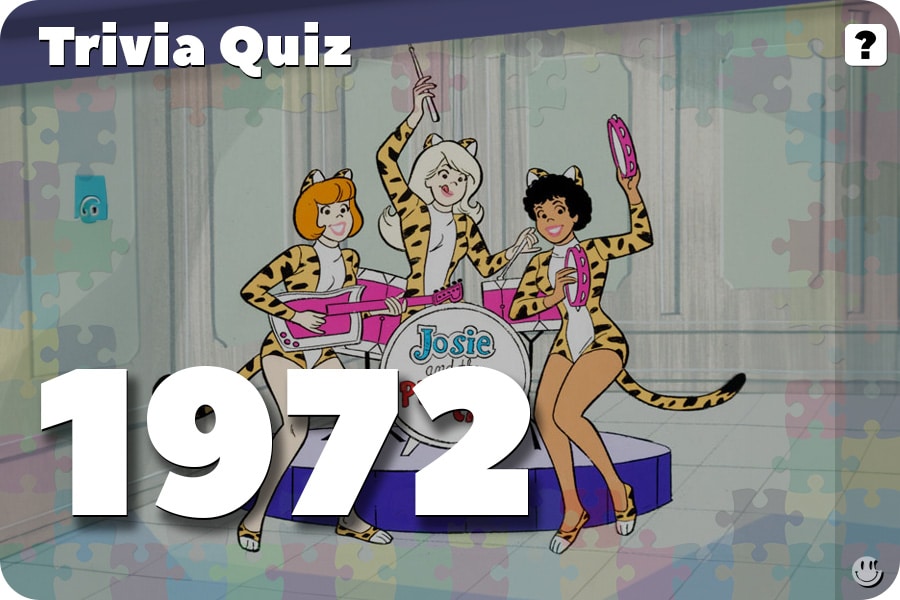
    20. Josie and the Pussycats included Josie, Melody, and Valerie. Valerie was a “first” for Saturday Morning cartoons. First what?

    21. What was the longest number-one song on the Billboard Charts from 1972 until 2021?

    22. What was the longest Billboard number-one hit before American Pie?

    23. How many people lived in the World in 1972?

    24. How many people lived in the United States in 1972?

    25. Name the highest-grossing film of 1972…

    26. Who directed The Godfather?

    27. Released in 1972, can you name the first commercially successful two-player video game?

    28. Name the brand of children’s clothing created by Seymour Lichtenstein in 1972 for Garan Incorporated.

    29. DJ Kool Herc, DJ Disco Wiz, Grandmaster Flash, and Afrika Bambaataa have all been credited with starting what musical genre?

    30. Can you name the two members of TV’s Partridge Family who sang on the show?

    31. In “Sammy’s Visit,” singer/dancer/actor Sammy Davis Jr. appeared on what CBS TV program?

    32. Who was the President of the United States in 1972?

    33. Who was the Vice-President of the United States in 1972?

    34. Who won the Stanley Cup in 1972?

    35. This television show, a dramedy based on a film, starred Alan Alda and Wayne Rogers. Name that show.

    36. Who were the characters Alan Alda and Wayne Rogers played in M*A*S*H?

    37. What did M*A*S*H stand for?

    38. With 16 lettered dice, this game was invented by Allan Tardiff.
    HINT: You shake it.

    39. Which commercial phrase is correct: “Nobody does it like Sara Lee.” OR “Nobody doesn’t like Sara Lee.”

    40. What was the Top-Rated TV Show in the 1971/1972 season?

    41. Only three television shows have ranked number one in Nielson ratings. Can you name the television show from the 1970s that achieved that goal?

    42. Who won the SuperBowl VI?

    43. True or False? Many, if not most, public toilets in the US were “Pay Toilets” until 1980.

    44. What was the Bestselling Fiction Book in 1972?

    45. This pop culture convention, for fans of a long-canceled television show, ran from January 21 to January 23, 1972, at the Statler Hilton in New York City. Name the show that inspired the con.

    46. The phrase “Hey, Mikey! He likes it!” appeared in a commercial for what food product?

    47. Who won the 1972 World Series?

    48. Can you name the series that follows the adventures of Kwai Chang Caine, a Shaolin monk who traveled through the American Old West?

    49. Who played the role of Kwai Chang Caine in Kung Fu?

    50. In flashbacks, in Kung Fu, what was the endearing term Master Po used to refer to young Caine?

    51. The Mary Tyler Moore Show had three spin-offs. One point for each you can name.

    52. General Mills offered three “monster” themed cereals in the early 1970s. You get one point for each you can name.

    53. Airing from 1972 to 1978, this show was the first spin-off of All in the Family. Name that CBS program.

    54. What was the name of the Maude TV Theme?

    55. 1972 Time Magazine had two “Men of the Year”. Name those guys.

    56. Name the journalists who uncovered the Watergate Scandal.

    57. SALT United States President Richard Nixon and Soviet Premier Leonid Brezhnev signed me. What did SALT stand for?

    58. Nacho Cheeze was added to this snack in 1972. Name that snack.

    59. Which celebrity was NOT born in 1972: Jude Law, Alyssa Milano, Heather Graham, or Jenny McCarthy?

    60. Directed by Bob Fosse, this musical drama starred Liza Minelli, Michael York, and Joel Grey…

    61. How many Oscars did Cabaret win?

    62. Jerry Lewis wrote, directed, and starred in a movie about a Jewish man who dresses as a clown to lead children into gas chambers in the Holocaust. It was not released in theaters. Name that film.

    63. The section of Highway 51 South that runs through Memphis, Tennessee, was renamed to what?

    64. In 1972, Nolan Bushnell founded this company with an investment of $250 and an additional $250 from Ted Dabney.

    65. This NBC comedy starred Redd Foxx and Demond Wilson. Name it.

    66. What was the catchphrase Fred Sanford said when he was upset?

    67. Former teen idol Ricky Nelson was booed off stage at a rock ‘n roll reunion concert at Madison Square Garden in 1971. He wrote a song about it that cracked Billboard’s Top Ten in 1972. Name that song.

    68. Inspired by G.I. Joe, Mattel released a line of action figures from 1972 to the mid-80s. Can you name that character?

    69. Can you name the most popular soft drink company founded in NYC in 1972?

    70. Name the fast food invented in 1972 by Herb Peterson to resemble eggs benedict.

    71. This product was introduced in 1972 as a “healthy substitute” for whole eggs. Name it.

    72. The kids who starred in this children’s show, which ran from 1972 to 1978, were not allowed to make any television appearances or do commercials for three years after they left the show. Name that show.

    Team Trivia Bonus Questions

    1. The Zoom cast (Zoomers) also spoke in their language. Name that language.

    2. Although the company was founded in 1972, when did Snapple start producing tea products?

    3. Can you name the children’s Saturday Morning show, including Horatio J. HooDoo, Big Cheif Sitting Duck, Mother Wheels, and Bad Hats?

    4. UNESCO designates these locations for having cultural, historical, scientific or other forms of significance. What are they called?

    5. Who was the Pope in 1972?

    6. What Horse won the Kentucky Derby in 1972?

    7. We’re talking flowers; which rose cultivar was NOT developed in 1972—Rosa ‘Compassion’, Rosa ‘Alexander’, or Rosa ‘Eden’?

    8. This time measurement was introduced in 1972, but at the 27th General Conference on Weights and Measures, it was decided to abandon them by or before 2035.

    9. “A mind is a terrible thing to waste” by the United Negro College Fund is only part of the phrase. Complete that phrase.

    10. Can you name either 1972 berry-flavored cereal focused around “Red Baron” Manfred Albrecht Freiherr von Richthofen and his nemesis?

    The Answers:

    72 Trivia Answers for 1972 History

    1. Can you name the first US President to visit China?
    Richard Nixon

    2. What was the Biggest Number One Song of 1971?
    The First Time Ever I Saw Your Face by Roberta Flack

    3. Name the television star who popularized the phrase “What you see is what you get!”
    Flip Wilson as Geraldine Jones

    4. This Children’s television show featured a segment called “Spidey Super Stories.” Name that show.
    The Electric Company

    5. This children’s show was hosted by humans Doug and Emmy Jo (real-life spouses Douglas Momary and Emily Josephine Peden) and costumed characters like Henrietta Hippo and Charlie the Owl. Name that syndicated program…
    New Zoo Review

    6. What was the highest-grossing film of 1972?
    The Godfather

    7. Who wrote the screenplay for The Godfather?
    Mario Puzo and Francis Ford Coppola

    8. Can you name the quotable phrase from The Godfather?
    Don Vito Corleone’s line, “I’m gonna make him an offer he can’t refuse.”

    9. The success of this film, The Homecoming: A Christmas Story, broadcast on December 19, 1971, led to a long-running show on CBS. Name that program.
    The Waltons aired from 1972 to 1982.

    10. In 1987, Club Nouveau hit the number one spot on the Billboard Charts with a #1 song from 1967 by Will Withers. Name that tune.
    Lean On Me

    11. In 1972, what was the average life expectancy in the United States?
    Men – 67.4 years, Women – 75.2 years

    12. Based on a 1969 novel, this film featured five Oscar winners. Name it.
    The Poseiden Adventure

    13. The Poseidon Adventure was nominated for eight Academy Awards. How many did it win?
    Two: Music (Song-Original for the Picture) and Special Achievement Award (Visual Effects)

    14. The Poseidon Adventure’s Best Original Song also hit #1 on the Billboard Charts. Name that tune.
    The Morning After by Maureen McGovern.

    15. This 1972 biographical dram starred Billy Dee Williams, Richard Pryor, James T. Callahan, and Scatman Crothers. Name the film.
    Lady Sings The Blues

    16. Who was nominated for Best Actress in Lady Sings The Blues?
    Diana Ross

    17. Who was Lady Sings The Blues about?
    Billie Holiday

    18. This candy’s design was based on part of a popular soft drink…
    Bottle Caps

    19. Which sports star was NOT born in 1972: The Big Show, Mia Hamm, Grant Hill, or Picabo Street?
    Picabo Street was born on April 3, 1971.

    20. Josie and the Pussycats included Josie, Melody, and Valerie. Valerie was a “first” for Saturday Morning cartoons. First what?
    Valerie is the first female African-American character to appear regularly in a Saturday morning cartoon show.

    21. What was the longest number-one song on the Billboard Charts from 1972 until 2021?
    American Pie by Don McLean (8:37)
    Taylor Swift’s All Too Well peaked at number, with a time of 10 minutes, 13 seconds in 2021.

    22. What was the longest Billboard number-one hit before American Pie?
    1968’s Hey Jude by The Beatles (7:11)

    23. How many people lived in the World in 1972?
    3,844,800,885

    24. How many people lived in the United States in 1972?
    209,896,021

    25. Name the highest-grossing film of 1972…
    The Godfather

    26. Who directed The Godfather?
    Francis Ford Coppola

    27. Released in 1972, can you name the first commercially successful two-player video game?
    Pong

    28. Name the brand of children’s clothing created by Seymour Lichtenstein in 1972 for Garan Incorporated.
    Geranimals

    29. DJ Kool Herc, DJ Disco Wiz, Grandmaster Flash, and Afrika Bambaataa have all been credited with starting what musical genre?
    Hip-Hop

    30. Can you name the two members of TV’s Partridge Family who sang on the show?
    Shirley Partridge (Shirley Jones) and Keith Partridge (David Cassidy)

    31. In “Sammy’s Visit,” singer/dancer/actor Sammy Davis Jr. appeared on what CBS TV program?
    All in the Family

    32. Who was the President of the United States in 1972?
    Richard Nixon (January 20, 1969 – August 9, 1974)

    33. Who was the Vice-President of the United States in 1972?
    Spiro Agnew (January 20, 1969 – October 10, 1973)

    34. Who won the Stanley Cup in 1972?
    Boston Bruins

    35. This television show, a dramedy based on a film, starred Alan Alda and Wayne Rogers. Name that show.
    M*A*S*H

    36. Who were the characters Alan Alda and Wayne Rogers played in M*A*S*H?
    Benjamin “Hawkeye” Pierce and “Trapper” John McIntyre

    37. What did M*A*S*H stand for?
    United States Army Mobile Army Surgical Hospital

    38. With 16 lettered dice, this game was invented by Allan Tardiff.
    HINT: You shake it.
    Boggle

    39. Which commercial phrase is correct: “Nobody does it like Sara Lee.” OR “Nobody doesn’t like Sara Lee.”
    “Nobody doesn’t like Sara Lee.”

    40. What was the Top-Rated TV Show in the 1971/1972 season?
    All in the Family

    41. Only three television shows have ranked number one in Nielson ratings. Can you name the television show from the 1970s that achieved that goal?
    All in the Family (71/72 to 75/76)

    42. Who won the SuperBowl VI?
    Dallas Cowboys

    43. True or False? Many, if not most, public toilets in the US were “Pay Toilets” until 1980.
    True

    44. What was the Bestselling Fiction Book in 1972?
    Jonathan Livingston Seagull by Richard Bach

    45. This pop culture convention, for fans of a long-canceled television show, ran from January 21 to January 23, 1972, at the Statler Hilton in New York City. Name the show that inspired the con.
    Star Trek

    46. The phrase “Hey, Mikey! He likes it!” appeared in a commercial for what food product?
    Life Cereal

    47. Who won the 1972 World Series?
    Oakland Athletics

    48. Can you name the series that follows the adventures of Kwai Chang Caine, a Shaolin monk who traveled through the American Old West?
    Kung Fu

    49. Who played the role of Kwai Chang Caine in Kung Fu?
    David Carradine

    50. In flashbacks, in Kung Fu, what was the endearing term Master Po used to refer to young Caine?
    Grasshopper

    51. The Mary Tyler Moore Show had three spin-offs. One point for each you can name.
    Rhoda, Phyllis, and Lou Grant.

    52. General Mills offered three “monster” themed cereals in the early 1970s. You get one point for each you can name.
    Count Chocula, Franken Berry, and Boo Berry.

    53. Airing from 1972 to 1978, this show was the first spin-off of All in the Family. Name that CBS program.
    Maude

    54. What was the name of the Maude TV Theme?
    And Then There’s Maude

    55. 1972 Time Magazine had two “Men of the Year”. Name those guys.
    Richard Nixon and Henry Kissinger

    56. Name the journalists who uncovered the Watergate Scandal.
    Bob Woodward and Carl Bernstein

    57. SALT United States President Richard Nixon and Soviet Premier Leonid Brezhnev signed me. What did SALT stand for?
    Strategic Arms Limitation Talks (SALT)

    58. Nacho Cheeze was added to this snack in 1972. Name that snack.
    Doritos (introduced in 1964 as plain tortilla chips. Taco flavor was introduced in 1967, and Nacho Cheese in 1972.)

    59. Which celebrity was NOT born in 1972: Jude Law, Alyssa Milano, Heather Graham, or Jenny McCarthy?
    Heather Graham was born on January 29, 1970.

    60. Directed by Bob Fosse, this musical drama starred Liza Minelli, Michael York, and Joel Grey…
    Cabaret

    61. How many Oscars did Cabaret win?
    Eight! Best Director (Fosse), Academy Award for Best Actress (Minnelli), Best Supporting Actor (Grey), Best Cinematography, Best Film Editing, Best Original Song Score and Adaptation, Best Art Direction, and Best Sound.

    62. Jerry Lewis wrote, directed, and starred in a movie about a Jewish man who dresses as a clown to lead children into gas chambers in the Holocaust. It was not released in theaters. Name that film.
    The Day The Clown Cried

    63. The section of Highway 51 South that runs through Memphis, Tennessee, was renamed to what?
    Elvis Presley Boulevard

    64. In 1972, Nolan Bushnell founded this company with an investment of $250 and an additional $250 from Ted Dabney.
    Atari

    65. This NBC comedy starred Redd Foxx and Demond Wilson. Name it.
    Sanford and Son

    66. What was the catchphrase Fred Sanford said when he was upset?
    “This is the big one, Elizabeth! I’m coming to join ya, honey!”

    67. Former teen idol Ricky Nelson was booed off stage at a rock ‘n roll reunion concert at Madison Square Garden in 1971. He wrote a song about it that cracked Billboard’s Top Ten in 1972. Name that song.
    Garden Party

    68. Inspired by G.I. Joe, Mattel released a line of action figures from 1972 to the mid-80s. Can you name that character?
    Big Jim (along with Mark Strong, Big Jack, and others)

    69. Can you name the most popular soft drink company founded in NYC in 1972?
    Snapple

    70. Name the fast food invented in 1972 by Herb Peterson to resemble eggs benedict.
    McMuffin

    71. This product was introduced in 1972 as a “healthy substitute” for whole eggs. Name it.
    Egg Beaters

    72. The kids who starred in this children’s show, which ran from 1972 to 1978, were not allowed to make any television appearances or do commercials for three years after they left the show. Name that show.
    Zoom

    Team Trivia Bonus Questions

    1. The Zoom cast (Zoomers) also spoke in their language. Name that language.
    Ubbi-Dubbi

    2. Although the company was founded in 1972, when did Snapple start producing tea products?
    1987

    3. Can you name the children’s Saturday Morning show, including Horatio J. HooDoo, Big Cheif Sitting Duck, Mother Wheels, and Bad Hats?
    Lidsville

    4. UNESCO designates these locations for having cultural, historical, scientific or other forms of significance. What are they called?
    World Heritage Sites

    5. Who was the Pope in 1972?
    Paul VI (June 21, 1963 – August 6, 1978)

    6. What Horse won the Kentucky Derby in 1972?
    Riva Ridge

    7. We’re talking flowers; which rose cultivar was NOT developed in 1972—Rosa ‘Compassion’, Rosa ‘Alexander’, or Rosa ‘Eden’?
    Rosa ‘Eden’ was created in 1985.

    8. This time measurement was introduced in 1972, but at the 27th General Conference on Weights and Measures, it was decided to abandon them by or before 2035.
    Leap second.

    9. “A mind is a terrible thing to waste” by the United Negro College Fund is only part of the phrase. Complete that phrase.
    “A mind is a terrible thing to waste but a wonderful thing to invest in.”

    10. Can you name either 1972 berry-flavored cereal focused around “Red Baron” Manfred Albrecht Freiherr von Richthofen and his nemesis?
    Baron von Redberry and Sir Grapefellow. Redberry would proclaim, “Baron Von Redberry is der berry best!” and Grapefellow would counter, “Sir Grapefellow is the most grape!”

  • 25 Biggest Songs of the 1970s

    25 Biggest Songs of the 1970s

    Top 25 Songs of 1970-1979

    1. You Light Up My Life- Debby Boone
    2. Night Fever – Bee Gees
    3. Tonight’s The Night (Gonna Be Alright) – Rod Stewart
    4. Shadow Dancing – Andy Gibb
    5. Le Freak – Chic
    6. My Sharona – The Knack
    7. The First Time Ever I Saw Your Face – Roberta Flack
    8. Alone Again (Naturally) – Gilbert O’ Sullivan
    9. Joy To The World – Three Dog Night
    10. Bridge Over Troubled Water – Simon & Garfunkel
    11. Best Of My Love – Emotions
    12. I’ll Be There – The Jackson 5
    13. Silly Love Songs – Paul McCartney & Wings
    14. Maggie May – Rod Stewart
    15. Bad Girls – Donna Summer
    16. It’s Too Late – Donna Summer
    17. Killing Me Softly With His Song – Roberta Flack
    18. One Bad Apple – The Osmonds
    19. I Just Want To Be Your Everything- Andy Gibb
    20. Stayin ‘ Alive – Bee Gees
    21. Raindrops Keep Falling On My Head – B.J. Thomas
    22. Da Ya Think I’m Sexy Rod Stewart
    23. Kiss You All Over – Exile
    24. Tie A Yellow Ribbon Round The Ole Oak Tree – Tony Orlando & Dawn
    25. American Pie (Parts I & II) – Don McLean
  • 1972 Number One Hits

    1972 Number One Hits

    1972 Billboard Number One Hits:

    December 25, 1971 – January 14, 1972:
    Brand New Key – Melanie
    January 15 – February 11:
    American Pie – Don McLean
    February 12 – February 18:
    Let’s Stay Together – Al Green
    February 19 – March 17:
    Without You – Nilsson
    March 18 – March 24:
    Heart of Gold – Neil Young
    March 25 – April 14:
    A Horse With No Name – America
    April 15 – May 26:
    The First Time I Ever Saw Your Face – Roberta Flack
    May 27 – June 2:
    Oh Girl – Chi-Lites
    June 3 – June 9:
    I’ll Take You There – The Staple Singers
    June 10 – June 30:
    The Candy Man – Sammy Davis, Jr.
    July 1 – July 7:
    Song Sung Blue – Neil Diamond
    July 8 – July 30:
    Lean on Me – Bill Withers
    July 29 – August 25:
    Alone Again (Naturally) – Gilbert O’ Sullivan
    August 26 – September 1:
    Brandy (You’re A Fine Girl) – Looking Glass
    September 2 – September 15:
    Alone Again (Naturally) – Gilbert O’Sullivan
    September 16 – September 22:
    Black and White – Three Dog Night
    September 23 – October 13:
    Baby, Don’t Get Hooked On Me – Mac Davis
    October 14 – October 20:
    Ben – Michael Jackson
    October 21 – November 3:
    My Ding-A-Ling – Chuck Berry
    November 4 – December 1:
    I Can See Clearly Now – Johnny Nash
    December 2 – December 8:
    Papa Was a Rollin’ Stone – The Temptations
    December 9 – December 15:
    I Am Woman – Helen Reddy
    December 16, 1972 – January 5, 1973:
    Me and Mrs. Jones – Billy Paul

    (Data is compiled from various charts including Billboard’s “Pop,” “Adult Contemporary,” “Airplay,” “R&B” and “Singles” Charts. “Hot 100” is the primary chart used starting October, 1958)

    Try our 1972 Quiz!
  • 1972 History, Facts and Trivia

    1972 History, Facts and Trivia

    1972 History, Facts and Trivia

    Quick Facts from 1972

    • World Changing Event: Intel invented the single-chip microprocessor.
    • The Top Song was The First Time Ever I Saw Your Face by Roberta Flack
    • The Movies to Watch include The Godfather, The Getaway, What’s Up Doc, and The Poseidon Adventure.
    • The Most Famous Person in America was probably President Richard Nixon.
    • Notable books include Jonathan Livingston Seagull by Richard Bach and Watership Down by Richard Adams.
    • Price of Peter Max sneakers in 1972: $4.44
      Q-Tips: 87 cents/125
    • US Life Expectancy: Males: 67.4 years, Females: 75.1 years
    • The Funny Guy was Martin Mull
      The Other Funny Guy was Don Rickles
      The Funny Girl was Lily Tomlin
      The other Other Funny Guy was George Carlin
    • Bloody Sunday: On January 30, British troops shot unarmed protesters in Northern Ireland, killing 13 civilians. Rock band U2’s Sunday Bloody Sunday memorialized the event.
    • Try our 1972 Quiz!

    Top Ten Baby Names of 1972

    Jennifer, Michelle, Lisa, Kimberly, Amy, Michael, Chris, Topher, James, David, John

    The Hotties, Sex Symbols, and Fashion Icons

    Adrienne Barbeau, Dyan Cannon, Veronica Carlson, Lynda Carter, Pam Grier, Peggy Lipton, Caroline Munro, Ingrid Pitt, Maria Schneider, Barbra Streisand, Shelia Roscoe, Diana Ross

    Sex Symbols, Hollywood Hunks, and Leading Men

    Richard Roundtree, Burt Reynolds, Marlon Brando, Elvis Presley

    “The Quotes”

    “Hey, Mikey! He likes it!”
    – Life cereal ad

    “A mind is a terrible thing to waste.”
    -United Negro College Fund

    ” It takes a tough man to make a tender chicken.”
    – Frank Perdue

    “I’m going to make him an offer he can’t refuse.”
    – Marlon Brando, in The Godfather

    “Nothing runs like a Deere.”
    – John Deere

    “Nobody doesn’t like Sara Lee.”
    – Sara Lee

    “In the fall of 1972, President Nixon announced that the rate of increase of inflation was decreasing. This was the first time a sitting president used the third derivative to advance his case for re-election.
    – Hugo Rossi (said in 1996)

    Time Magazine’s Men of the Year

    Richard Nixon and Henry Kissinger

    Miss America

    Laura Lea Schaefer (Bexley, OH)

    Miss USA

    Tanya Wilson (Hawaii)

    Wow

    Vesna Vulović holds the world record for surviving the highest fall without a parachute: 10,160 m (33,330 ft; 6.31 mi). She was the sole survivor after a briefcase bomb tore through the baggage compartment of JAT Flight 367 on January 26, 1972. 

    In 1972, Ted Bundy was appointed to the Seattle Crime Prevention Advisory Committee.

    The Deaths and Scandals

    The Iranian blizzard of 1972 was the deadliest in history. It dropped up to 26 feet of snow and killed over 4,000 people. Those who survived the minus 13 degrees Fahrenheit temperatures were trapped without water, food, heat, and medical aid for days. George Carlin was arrested in Milwaukee in 1972 for violating obscenity laws. His crime was delivering his “Seven Dirty Words” bit in public.

    On June 17, agents of the Richard Nixon (Republican) White House and the Nixon reelection campaign were arrested while breaking into the office of the Democratic National Committee (DNC), which at the time was located in Washington D.C.’s Watergate Complex.

    Jane Fonda visited North Vietnam, supporting the communist side of the war, earning the nickname “Hanoi Jane”.

    Scottish Musician Les Harvey of the band Stone the Crows was electrocuted in front of a live audience in 1972 when he touched an un-grounded microphone cable and his guitar at the same time.

    Bloody Sunday in Derry, Northern Ireland, 14 unarmed protestors and civilians were shot by British paratroopers. U2’s ‘Sunday Bloody Sunday’ was based on this event.

    The Watergate Break-in

    In June 1972, five men were arrested for breaking into Democratic National Committee (DNC) headquarters at the Watergate Complex in Washington D.C., an event seen as a catalyst for the eventual downfall of President Richard Nixon.

    The break-in happened during an election year and led to an investigation by journalists Bob Woodward and Carl Bernstein, who uncovered multiple cases of abuse of power by the Nixon administration, including a connection to the White House’s secret taping system, which was used to spy on political opponents.

    In 1974, President Richard Nixon became the first US president to resign from office and faced criminal charges for his role in Watergate. While the full extent of Nixon’s involvement is still debated today, it is clear that the Watergate Scandal marked one of the biggest presidential scandals in American history.

    SALT I – Anti-Ballistic Missile Treaty

    On May 27, 1972, United States President Richard Nixon signed the Anti-Ballistic Missile Treaty and Soviet Premier Leonid Brezhnev. The Anti-Ballistic Missile Treaty limited the US and USSR to 2 anti-ballistic missile complexes with 100 missiles each, and the number of intercontinental ballistic missiles and submarine-launched ballistic missiles was frozen at the then-existing levels. It was negotiated during Strategic Arms Limitation Talks (SALT) I in May of that same year. This treaty came about after both countries realized they could not win a nuclear war against one another due to their equivalent number of nuclear weapons. The treaty also served as a foundation for future arms control agreements. The Anti-Ballistic Missile Treaty was the first time a US president visited the Soviet Union since World War II. It marked an essential step in improving relations between the two countries.

    The Anti-Ballistic Missile Treaty is still in effect today despite being over 50 years old. Anti-ballistic missiles can be launched to intercept and destroy incoming ballistic missiles. Anti-ballistic missile systems have been developed by both the US and Russia to protect their countries from nuclear attacks. Still, they also make it possible for a country to launch an attack on another without fear of retaliation. Anti-ballistic missile systems such as the US’s Terminal High Altitude Area Defense (THAAD) and Russia’s A-235, also known as Nudol, have been developed, but there has not been a need to use them. Anti-ballistic missiles are deployed around major cities to protect them from incoming nuclear weapons and other ballistic missiles.

    The Anti-Ballistic Missile Treaty is an integral part of arms control and nuclear disarmament. It has prevented both the US and Russia from deploying more anti-ballistic missiles. The treaty also serves as a foundation for future arms control agreements. Anti-ballistic missile systems are becoming increasingly important as more countries develop ballistic missiles.

    Now You Know

    Walt Disney wasn’t cryogenically frozen. He was cremated, and his ashes were interred at the Forest Lawn Memorial Park in Glendale, California. The rumor that he wanted to be frozen was started in 1972 by the president of the California Cryogenics Society and has since been denied by Disney’s family.

    Pop Culture Facts & History

    Former teen idol Ricky Nelson was booed off stage at a rock ‘n roll reunion concert at Madison Square Garden in 1971. He took that horrible experience and wrote a song called Garden Party. It reached #6 on the US Top 100 in 1972.

    The word ‘spam’ used about e-communications (commonly emails) comes from a 1972 Monty Python sketch in which two customers are lowered into a restaurant, and everything on the menu contains spam. The connection is that you can’t escape unwanted spam no matter what you want.
    Doritos were introduced in 1964 as plain tortilla chips. Taco flavor was introduced in 1967, and nacho cheese in 1972.

    The ‘Battle of the Sexes’ was over once and for all when Billie Jean King beat Bobby Riggs in three straight tennis sets.

    Jerry Lewis wrote, directed, and starred in a movie (The Day The Clown Cried) about a Jewish man who dresses as a clown to lead children into gas chambers in the Holocaust; upon screening, Lewis had the film locked in a vault so nobody would see it, but he donated a copy to the Library of Congress, and it could be released in June 2024.

    The Great Daylight Fireball (US19720810) was an Earth-grazing fireball that passed within 35 miles of Earth’s surface on August 10, 1972. It entered Earth’s atmosphere at a speed of 9.3s per second in daylight over Utah, United States, and passed northwards, leaving the atmosphere over Alberta, Canada.

    On August 4, 1972, dozens of sea mines randomly exploded off the coast of Hon La, Vietnam for no apparent reason. In 2018, it was discovered that a huge Solar Storm had been the culprit, triggering magnetic sensors on the sea mines, which led to explosions.

    The famous baseball mascot “The San Diego Chicken” has been played by the same dude in all official appearances (aside from a short replacement period during a lawsuit) since its debut in 1972.

    DC Comics has owned the rights to the original Captain Marvel since 1972. However, trademark conflicts with Marvel have resulted in DC marketing the hero under the name “Shazam!”

    Ray Tomlinson invented internet-based email.

    The Mecha genre of science fiction was founded in Japan. The first depiction of Mecha Super Robots piloted by a user from within a cockpit was introduced in the manga and anime series Mazinger Z by Go Nagai in 1972.

    In 1972, Nolan Bushnell founded Atari with an investment of $250.

    The first commercial home video game console was the Magnavox Odyssey. It was released in 1972 and cost $100 (equivalent to about $611 in 2019)—an individual game price of $5.49.

    Time Warner launched HBO (Home Box Office).

    Chrysler brought electronic ignition to automobiles.

    A Canadian radio station, CBC, held a poll to find a national simile (like ‘As American as apple pie’). The winning response was “As Canadian as possible under the circumstances.”

    Fashion designer Diane von Furstenberg introduced her knit jersey dress style.

    Clothes had a lot less static cling in 1972, thanks to the introduction of Bounce dryer sheets.

    1972 was when Carnival Cruise Lines began sailing.

    In 1972, there were only 12 paramedic units in North America. The TV show Emergency! Starring Randolph Mantooth as Johnny Gage introduced people to pre-hospital care and CPR.

    While initial planning started in the 1920s, household dish cleaner ‘Dawn’ was released in 1972.

    In 1972, Agnetha Fältskog, Björn Ulvaeus, Benny Andersson, and Anni-Frid Lyngstad formed a pop music group in Sweden. They used their first initials to name their band… ABBA.

    Singer and guitarist Chuck Berry’s only number-one single was a live recording of a raunchy New Orleans tune called My Ding-a-Ling.

    The U.S. Men’s Basketball team was 63-0 in Olympic History going into the finals of the 1972 Munich Olympic finals. The loss, by one point to the Soviet team in one of the most controversial events in Olympic history. The U.S. team never accepted their silver medals in protest.

    Mark Spitz, a nine-time Olympic champion, jokingly told the Russian swim team coach in 1972 that his mustache increased his speed in the water, deflecting water away from his mouth. The following year, every Russian swimmer was sporting one.

    The Dallas Cowboys hired the NFL’s first professional cheerleading squad in 1972.

    Cost of a Super Bowl ad in 1972: $86,000

    The Biggest Films of 1972

    1. The Godfather (Pop Culture Classic)
    2. The Poseidon Adventure
    3. What’s Up, Doc?
    4. Deliverance
    5. Jeremiah Johnson
    6. Cabaret
    7. The Getaway
    8. Last Tango in Paris
    9. Lady Sings the Blues
    10. Everything You Always Wanted to Know About Sex
    11. The Valachi Papers
    12. Sounder
    13. The Life and Times of Judge Roy Bean
    14. Pete ‘n’ Tillie
    15. Frenzy
    16. The Candidate
    17. Shaft’s Big Score! (Blaxploitation)
    18. Conquest of the Planet of the Apes
    19. Butterflies Are Free (Pop Culture Classic)
    20. Frenzy
    21. Silent Running (Pop Culture Classic)
    22. Play It Again, Sam
    23. Solaris (Pop Culture Classic)
    24. Ben (Pop Culture Classic)
    25. The Magnificent Seven Ride
    26. The Concert for Bangladesh
    27. And Now For Something Completely Different
    28. The Heartbreak Kid
    29. Man of La Mancha
    30. Slaughterhouse-Five
    31. Snoopy, Come Home (animated)
    32. Fritz the Cat (adult cartoon)
    33. Sleuth
    34. Dracula A.D. 1972 (Pop Culture Classic)
    35. Blackula (Blaxploitation)
    36. The Last House on the Left
    37. 1776 (Musical)
    38. The Mechanic
    39. Panch Villa
    40. Sounder
    41. Dumbo (reissue from 1941)
    42. Joe Kidd
    43. Bluebeard
    44. The Cowboys
    45. Now You See Him, Now You Don’t (Disney)
    46. Across 110th Street
    47. Cool Breeze (Blaxploitation)
    48. Fuzz
    49. The Ruling Class
    50. Pink Flamingoes
    *Movies beyond the Top Ten are based on (a somewhat subjective) ranking based on how much they had a long-lasting effect on Pop Culture.

    Doomsday Clock

    Twelve minutes to midnight, according to the Bulletin of Atomic Scientists.
    1972: “The United States and Soviet Union attempt to curb the race for nuclear superiority by signing the Strategic Arms Limitation Treaty (SALT) and the Anti-Ballistic Missile (ABM) Treaty. The two treaties force a nuclear parity of sorts. SALT limits the number of ballistic missile launchers either country can possess, and the ABM Treaty stops an arms race in defensive weaponry from developing.”

    The Habits

    Pong (arcade), Hacky Sacks.
    Watching The Godfather in theaters.

    1st Appearances & 1972’s Most Popular Christmas Gifts, Toys and Presents

    Pong, Dawn dolls, Hacky Sack, Seance Game, Nerf Football

    Best Film Oscar Winner

    The French Connection (presented in 1972)
    Charlie Chaplin was given a 12-minute standing ovation at the Academy Awards gala in 1972, the longest in the Academy’s history.

    Popular and Best-selling Books From 1972

    August 1914 by Aleksandr Solzhenitsyn
    Captains and the Kings by Taylor Caldwell
    The Day of the Jackal by Frederick Forsyth
    Deathwatch by Robb White
    Invisible Cities by Italo Calvino
    Jonathan Livingston Seagull by Richard Bach
    The Joy of Sex by Alex Comfort
    My Name is Asher Lev by Chaim Potok
    The Odessa File by Frederick Forsyth
    Semi-Tough by Dan Jenkins
    Shane by Jack Schaeffer
    Two from Galilee by Marjorie Holmes
    Watership Down by Richard Adams
    Wheels by Arthur Hailey
    The Winds of War by Herman Wouk
    The Word by Irving Wallace

    East End Show:

    Jesus Christ Superstar (Musical) Opened on August 9, 1972, and closed on August 23, 1980

    Broadway Shows

    Grease (Musical) Opened on February 14, 1972, and closed on April 13, 1980
    Pippin (Musical) Opened on October 23, 1972, and closed on June 12, 1977

    1972 Most Popular TV Shows

    1. All in the Family (CBS)
    2. Sanford and Son (NBC)
    3. Hawaii Five-O (CBS)
    4. Maude (CBS)
    5. Bridget Loves Bernie (CBS)
    6. The Mary Tyler Moore Show (CBS)
    7. Gunsmoke (CBS)
    8. The Wonderful World of Disney (NBC)
    9. Ironside (NBC)
    10. Adam 12 (NBC)

    1972 Billboard Number One Songs

    December 25, 1971 – January 14, 1972:
    Brand New Key – Melanie

    January 15 – February 11:
    American Pie – Don McLean

    February 12 – February 18:
    Let’s Stay Together – Al Green

    February 19 – March 17:
    Without You – Nilsson

    March 18 – March 24:
    Heart of Gold – Neil Young

    March 25 – April 14:
    A Horse With No Name – America

    April 15 – May 26:
    The First Time I Ever Saw Your Face – Roberta Flack

    May 27 – June 2:
    Oh Girl – Chi-Lites

    June 3 – June 9:
    I’ll Take You There – The Staple Singers

    June 10 – June 30:
    The Candy Man – Sammy Davis, Jr.

    July 1 – July 7:
    Song Sung Blue – Neil Diamond

    July 8 – July 30:
    Lean on Me – Bill Withers

    July 29 – August 25:
    Alone Again (Naturally) – Gilbert O’ Sullivan

    August 26 – September 1:
    Brandy (You’re A Fine Girl) – Looking Glass

    September 2 – September 15:
    Alone Again (Naturally) – Gilbert O’Sullivan

    September 16 – September 22:
    Black and White – Three Dog Night

    September 23 – October 13:
    Baby, Don’t Get Hooked On Me – Mac Davis

    October 14 – October 20:
    Ben – Michael Jackson

    October 21 – November 3:
    My Ding-A-Ling – Chuck Berry

    November 4 – December 1:
    I Can See Clearly Now – Johnny Nash

    December 2 – December 8:
    Papa Was a Rollin’ Stone – The Temptations

    December 9 – December 15:
    I Am Woman – Helen Reddy

    December 16, 1972 – January 5, 1973:
    Me and Mrs. Jones – Billy Paul

    Sports

    World Series Champions: Oakland Athletics
    Super Bowl VI Champions: Dallas Cowboys
    NBA Champions: Los Angeles Lakers
    Stanley Cup Champs: Boston Bruins
    U.S. Open Golf Jack Nicklaus
    U.S. Tennis: (Men/Ladies) Ilie Nastase/Billie Jean King
    Wimbledon (Men/Women): Stan Smith/Billie Jean King
    NCAA Football Champions: USC
    NCAA Basketball Champions: UCLA
    Kentucky Derby: Riva Ridge

    Sports Highlight

    Sandy Koufax was inducted into the Baseball Hall of Fame, the youngest player ever elected, at age 36.

    More 1972 Facts & History Resources:

    Most Popular Baby Names (BabyCenter.com)
    Born in 1972 (OverTheHill.com)
    Popular and Notable Books (popculture.us)
    Broadway Shows that Opened in 1972X
    1972 Calendar, courtesy of Time and Date.com
    Fact Monster
    Facts.net 1972
    10 Facts And Historical Events
    1970s, Infoplease.com World History
    1972 in Movies (according to IMDB)
    Massacre at the 1972 Olympic Games
    Remembering 1972 (HuffPo)
    Retrowaste Vintage Culture
    1970s Slang
    Wikipedia 1972

  • 1972 Music – The 100 Most Popular Songs

    1972 Music – The 100 Most Popular Songs

    1972 Top 100 Popular Music Chart

    1. Rock and Roll part II – Gary Glitter
    2. American Pie – Don McLean
    3. Lean On Me – Bill Withers
    4. Rock and Roll – Led Zeppelin
    5. I’ll Take You There – Staple Singers
    6. Precious and Few – Climax
    7. Let’s Stay Together – Al Green
    8. Coconut – Nilsson
    9. School’s Out – Alice Cooper
    10. Me and Mrs. Jones – Billy Paul
    11. Layla – Derek and the Dominoes
    12. Goodbye To Love – Carpenters
    13. Burning Love – Elvis Presley
    14. The Candy Man – Sammy Davis, Jr.
    15. Operator – Jim Croce
    16. Horse With No Name – America
    17. Nights In White Satin – Moody Blues
    18. Anticipation – Carly Simon
    19. Saturday In The Park – Chicago
    20. Get On The Good Foot – James Brown
    21. Summer Breeze – Seals and Crofts
    22. Rockin’ Robin – Michael Jackson
    23. Listen To The Music – Doobie Brothers
    24. Take It Easy – Eagles
    25. Brandy – Looking Glass
    26. Diamonds Are Forever – Shirley Bassey
    27. My Ding-A-Ling – Chuck Berry
    28. I’ll Be Around – Spinners
    29. The First Time Ever I Saw Your Face – Roberta Flack
    30. Morning Has Broken – Cat Stevens
    31. Everybody Plays The Fool – The Main Ingredient
    32. Iron Man – Black Sabbath
    33. Alone Again (Naturally) – Gilbert O’Sullivan
    34. Baby Don’t Get Hooked On Me – Mac Davis
    35. Jackie Wilson Said – Van Morrison
    36. Tupelo Honey – Van Morrison
    37. If You Don’t Know Me By Now – Harold Melvin and the Bluenotes
    38. You Wear It Well – Rod Stewart
    39. I Am Woman – Helen Reddy
    40. I Can See Clearly Now – Johnny Nash
    41. Papa Was A Rolling Stone – Temptations
    42. Changes – David Bowie
    43. From The Beginning – Emerson, Lake and Palmer
    44. Immigration Man – Graham Nash & David Crosby
    45. Tiny Dancer – Elton John
    46. Melissa – Allman Brothers Band
    47. Honky Cat – Elton John
    48. Black Dog – Led Zeppelin
    49. Heart Of Gold – Neil Young
    50. Taxi – Harry Chapin
    51. Feeling Alright – Joe Cocker
    52. Down On Me – Janis Joplin
    53. Popcorn – Hot Butter
    54. City Of New Orleans – Arlo Guthrie
    55. Long Cool Woman (In A Black Dress) – Hollies
    56. Roundabout – Yes
    57. Bang A Gong (Get It On) – T. Rex
    58. Hold Your Head Up – Argent
    59. America – Yes
    60. Black and White – Three Dog Night
    61. Rock Me On The Water – Jackson Browne
    62. Looking For A Love – J. Geils Band
    63. You Don’t Mess Around With Jim – Jim Croce
    64. The Jean Genie – David Bowie
    65. Starman – David Bowie
    66. Easy Livin – Uriah Heap
    67. Rocket Man – Elton John
    68. Little Bitty Pretty One – Jackson Five
    69. I Just Want To Make Love To You – Foghat
    70. Hot ‘N’ Nasty – Humble Pie
    71. It Never Rains In Southern California – Albert Hammond
    72. I Saw The Light – Todd Rundgren
    73. Handbags and Gladrags – Rod Stewart
    74. Witchy Woman – Eagles
    75. Freddie’s Dead (Theme from Superfly) – Curtis Mayfield
    76. Rock and Roll Stew – Traffic
    77. Delta Dawn – Tanya Tucker
    78. America – Simon and Garfunkle
    79. I Don’t Need No Doctor – New Riders Of The Purple Sage
    80. Ben – Michael Jackson
    81. All The Young Dudes – Mott The Hoople
    82. I’d Like To Teach The World To Sing (In Perfect Harmony) – The
    New Seekers
    83. I’m Stone In Love With You – Stylistics
    84. Join Together – The Who
    85. The Guitar man – Bread
    86. Me and Julio Down By The Schoolyard – Paul Simon
    87. Honky Tonk part 1 – James Brown
    88. Without You – Nilsson
    89. Footstompin’ Music – Grand Funk Railroad
    90. Go All The Way – Raspberries
    91. Let It Rain – Eric Clapton
    92. Tumbling Dice – Rolling Stones
    93. Diary – Bread
    94. Girl – Davy Jones
    95. Crazy Mama – J.J. Cale
    96. Old Man – Neil Young
    97. For Emily, Whenever I May Find Her – Simon and Garfunkle
    98. Levon – Elton John
    99. Francene – ZZ Top
    100. Jesus Was A Capricorn – Kris Kristofferson
    Try our 1972 Quiz!
  • The Kitty Hawk Mutiny

    The Kitty Hawk Mutiny

    Kitty Hawk Mutiny

    The USS Kitty Hawk riot was the first mass mutiny in the history of the U. S. Navy and were it not for military law, the incident might be passed off as a demonstration.

    Following the civil rights demonstrations of the 60s, White people went over board in trying to erase any perceived appearance of racism. When I finished basic training and Engineman A school in 1962 and arrived at the submarine base in New London, Connecticut, I had not yet taken my naval career seriously and started hanging out with a group of young Black sailors who weren’t in the submarine program. It was a time when a Black sailor could get away with anything because everyone was so afraid of the race issue. Go AWOL?, no problem, just start jiving the supervisor. Didn’t finish your assigned tasks?, no problem, just say f—it!

    This was also the time when we started protesting to make the Afro haircut a legal regulation style for Black sailors. The navy eagerly capitulated.

    Senior White petty officers were sometimes complicit in that they were often afraid to discipline Black sailors for fear of being labeled as “racist”. This eventually led to a disintegration of military order and resentment from White sailors who were often punished for the same infractions. There would be groups of young Black sailors taking over the base recreation centers, barracks lounges, and enlisted clubs where they wouldn’t allow anything other than soul music to be played. Moreover, these young Blacks were mostly stuck in the service ratings because of their poor education and poor scoring on the enlistment exams. Their job performance left them little chance for advancement.

    After almost flunking out of submarine school, I gave up hanging out as I could see no benefit to it. These guys were stuck in the same ghetto mindset that I had seen back in the hood in Detroit. I didn’t have to be “cool” to be cool. When I reported to my first submarine duty station, I had made up my mind that I wouldn’t approach my career with that racial chip on my shoulder.

    White appeasement fueled by White guilt continued following the assassination of Martin Luther King in 1968 and well into the 1970s.

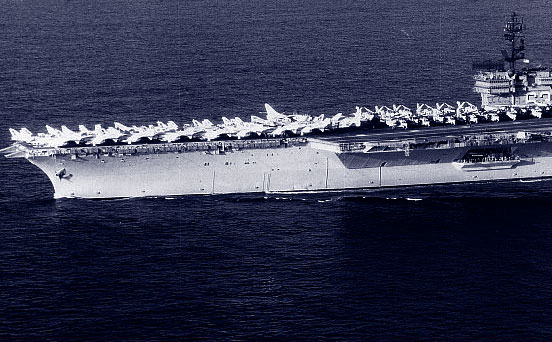
    In 1972, the navy was rocked by a race riot on board the aircraft carrier USS Kitty Hawk.

    This incident caused both ripples and over reaction by the navy. The navy created it’s own affirmative action program and ordered every sailor to attend classes on race. The only problem though, was that these classes were often facilitated by angry Black petty officers who were, in my opinion, racist themselves. The first several programs I attended, the facilitator would greet each attendee as they entered the class room with the Black power sign for Blacks and then telling each White sailor that they were “racists”.

    Since racism was not a serious problem on submarines, we would bewilder the facilitators with our cavalier attitudes and eventually labeled the classes as “Watermelon U” or “Watermelon Universities”. The programs weren’t helping race relations, they were hurting it. I had a young fellow crew mate who was in tears because the facilitator had called him a racist.

    Not only that, but the navy program ignored the other races and ethnic groups that were in the service. Hispanics, Asians, Muslims, etc.

    I am starting to see the same old crap resurface again. No matter the inequities, you cannot pander to one group of people without causing a backlash in another. When you tell a White college applicant that he can’t get into college because of a “quota” system, it creates resentment. When a White police officer is afraid to arrest a Black felon because he’s afraid he’ll be videotaped, it creates resentment.

    Even the demands for reparations are starting to resurface as well as meaningless laws being proposed. Why do we need a “hate crime” law if it’s only exercised in some cases, but not in others? Why do we need an “anti lynching law”, that also will only be used in certain circumstances and can only be applied once the action is done. An elderly White store owner is dragged out onto the street by a gang of Black thugs and beaten to death with baseball bats. But that’s not “lynching”.

    After 300 years, we haven’t learned that you can’t eliminate racism with laws and legislation. Only good people meeting on a common ground can do that.

    Oh well, I’ve been here before and it will all pass. There will still be those who blame their poor life decisions on race, there’ll still be those who preach hate and division, and there’ll still be politicians who use the subject of race for their own benefit and do nothing once they’re elected. We once thought the election of a Black man who promised to “heal” America would be the answer. Some even thought he could walk on water. What we found was that he was just another politician with his own agenda and goals.

  • 1972 Summer Olympics Massacre

    1972 Summer Olympics Massacre

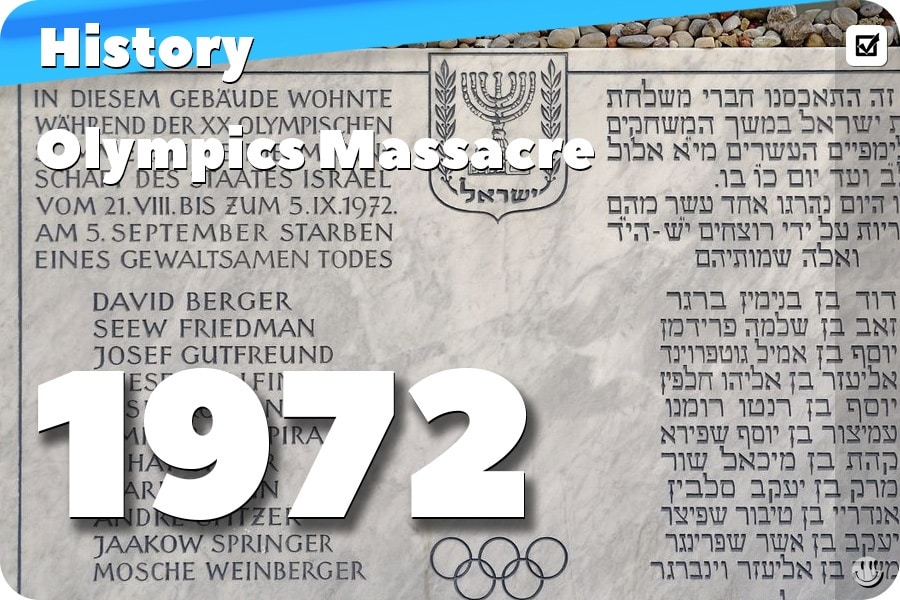
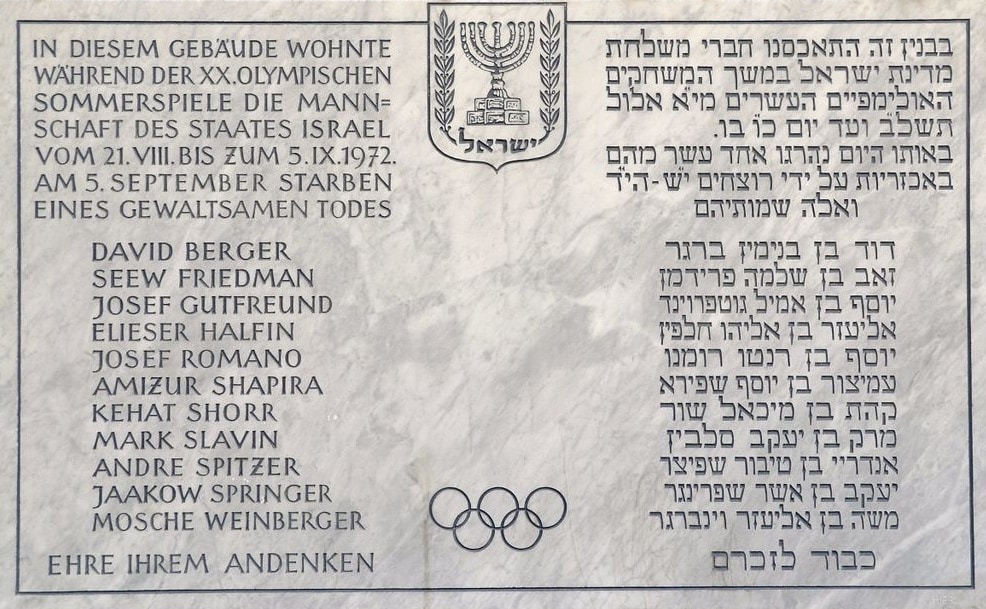
    On September 5, 1972, Summer Olympics at Munich became an unforgettable day, but for all the wrong reasons. Israeli athletes participating in the event became victims of an attack by a mob of Palestinian origins. The attackers stormed the Olympic village apartment where the Israeli athletes were being accommodated, killing two and taking nine as hostages.

    As per some historians, the attackers belonged to a group called “Black September.” It was primarily created to avenge the holding of Palestinians as hostages. However, in return for the release of Israeli athletes, the attackers demanded the release of over 200 prisoners in Israeli jails.

    Unfortunately, the events took a turn for the worst when the nine Israeli hostages were shot at the Munich airport shootout. The tragedy also subjected a German policeman to the shootings who eventually lost his battle with life the same day. Witnessing how the events unfolded, the organizing committee decided to suspend the competition for 24 hours and held a memorial service for those who lost their lives.

    With over 7000 athletes representing more than a hundred countries, the Munich Olympics are listed in history as one of the most gruesome events to take place. Due to the failed negotiations between the attackers and Israeli authorities, the hostages were taken to the Munich airport, where the German police opened fire and attempted to kill the attackers.

    However, as a result, a policeman and two attackers were killed. There is no clarity on how the additional nine Israeli hostages were killed. Some speculate that a grenade may have been thrown inside the helicopter where they were bound.

    Shortly after holding the memorial service, the president of the International Olympic Committee passed an order to continue the games. This was done in an attempt to prove that despite everything, the Olympians and the public weren’t scared to carry on.

    Another reason this event holds a special place in history is that the Israeli government took the services of Mossad agents to track the attackers down and kill them. After over three decades, these events inspired Stephen Spielberg’s movie, “Munich.”

    Even though the event is not remembered in a positive light, it did garner some memorable achievements too. One of them was Mark Spitz’s (American swimmer) seven gold medals and also a young Russian gymnast’s two gold medals.

    Today, decades since the historical tragedy, many people hold vigils to commemorate the events that unfolded. While there are different theories to explain why and how the events occurred, some information is still unknown, especially regarding the attackers and how they had known about the accommodation of all Olympians.

  • Watergate Scandal: Nixon’s Involvement and Cover-up

    Watergate Scandal: Nixon’s Involvement and Cover-up

    The Watergate Scandal

    The Watergate scandal was a major political scandal in the United States involving the administration of President Richard Nixon, who was implicated in a cover-up of a break-in at the Democratic National Committee (DNC) headquarters and subsequent abuse of power, ultimately leading to his resignation.

    The scandal began on June 17, 1972, when five men were arrested for breaking into the DNC headquarters at the Watergate office complex in Washington, D.C. The burglars were found to have connections to the Nixon administration and the Committee to Re-elect the President (CRP), also known as CREEP. As the investigation unfolded, it was revealed that the break-in had been part of a larger campaign of political espionage and sabotage orchestrated by members of the Nixon administration.

    The role of the Washington Post, particularly reporters Bob Woodward and Carl Bernstein, was instrumental in uncovering the extent of the scandal. Their investigation, aided by an anonymous source known as “Deep Throat” (later revealed to be FBI Associate Director Mark Felt), exposed a vast network of illegal activities, including wiretapping, burglary, and the use of “dirty tricks” against political opponents.

    Nixon’s involvement in the scandal came to light through a series of secret tape recordings in the Oval Office, revealing that the president had attempted to cover up the break-in and obstruct the investigation. The tapes were disclosed due to a subpoena issued by the special prosecutor, Archibald Cox, and a subsequent ruling by the U.S. Supreme Court in the case United States v. Nixon.

    As a result of the mounting evidence against him, Nixon faced impeachment proceedings initiated by the House Judiciary Committee in July 1974. On August 8, 1974, facing almost certain impeachment and removal from office, Nixon announced his resignation, becoming the first U.S. president to do so. Vice President Gerald Ford assumed the presidency and later issued a controversial pardon for Nixon, shielding him from criminal prosecution.

    The Watergate scandal had far-reaching consequences for American politics, leading to increased scrutiny of political leaders, decreased public trust in government institutions, and a series of reforms aimed at promoting greater transparency and accountability.

  • Racial Pandering in the 1970s

    Racial Pandering in the 1970s

    Racial Pandering in the 1970s

    Any Black person who grew up in the 1970s probably remember it as the era of racial pandering. It was common to be invited to a White friend’s party or social gathering just so they could show off their Black friend. I was often invited to parties by people who loved the way Black people danced. I was not a good dancer. Likewise, I seemed to get picked for all the ship’s basketball games because everyone knew that Blacks were good at basketball. I was lousy at basketball.

    But this was also the era of tokenism. Every television show had to have at least one Black person in the cast. Sadly, that one Black was usually cast as a drug dealer or pimp. I hope we’re not going to see a repeat of these same misguided human reactions again. I still can’t dance and I’m still lousy at basketball, just a few years older.

    My younger foster brother, Van, embarrassed my older foster brother and me at school when the school counselor asked him what he wanted to be after he graduated. “A pimp”, he said. The counselor got a strange look on his face and asked, “what?”. “A pimp”, Van replied. The counselor closed his notebook, stood up and walked out of the room.

  • The SALT I Treaty: Strategic Arms Limitation Talks Between the US and USSR

    The SALT I Treaty: Strategic Arms Limitation Talks Between the US and USSR

    The SALT I Treaty

    The Strategic Arms Limitation Talks (SALT I) Treaty was a series of negotiations between the United States and the Soviet Union that took place from 1969 to 1972, culminating in the signing of the Anti-Ballistic Missile (ABM) Treaty and the Interim Agreement on Offensive Arms, which aimed to limit the proliferation of strategic nuclear weapons and ease Cold War tensions.

    The SALT I negotiations were initiated under the administration of U.S. President Richard Nixon and Soviet leader Leonid Brezhnev, marking the first significant effort by the two superpowers to curb the arms race and establish a framework for arms control. The talks began in November 1969 in Helsinki, Finland, and continued over the course of several years, with various rounds of negotiations taking place in Vienna, Austria, and Geneva, Switzerland.

    The negotiations resulted in two major agreements. The first was the Anti-Ballistic Missile Treaty, signed on May 26, 1972, which limited each country to two ABM sites, one to protect the national capital and the other to protect an intercontinental ballistic missile (ICBM) field. This agreement aimed to prevent the deployment of nationwide missile defense systems, which could potentially give one side a strategic advantage and escalate the arms race.

    The second agreement was the Interim Agreement on Offensive Arms, also known as the SALT I Treaty, which was signed on the same day as the ABM Treaty. This agreement temporarily limited the number of ICBMs and submarine-launched ballistic missiles (SLBMs) each side could possess. The U.S. was allowed to maintain 1,054 ICBMs and 656 SLBMs, while the Soviet Union was allowed to have 1,618 ICBMs and 740 SLBMs.

    The SALT I Treaty marked an important milestone in U.S.-Soviet relations and laid the groundwork for further arms control negotiations, such as the SALT II talks and the subsequent Strategic Arms Reduction Treaties (START). While the agreements did not lead to a significant reduction in the number of nuclear weapons, they did help to establish a cooperative framework for arms control. They played a role in easing Cold War tensions between the two superpowers.

  • 1972 Oscar Nominees and Winners

    1972 Oscar Nominees and Winners

    1972 Oscars 44th Academy Awards

    • Winners Announced: April 10, 1972
    • Held at: Dorothy Chandler Pavilion, Los Angeles, California
    • Hosts: Helen Hayes, Alan King, Sammy Davis, Jr., Jack Lemmon
    • Eligibility Year: 1971

    Cinematic Highlights and Achievements

    • The French Connection Cleans Up: This crime thriller won, snagging five Oscars, including Best Picture and Best Actor for Gene Hackman.
    • Jane Fonda’s Breakthrough: Fonda won Best Actress for her role in “Klute,” which also secured an Oscar for Best Supporting Actor for Donald Sutherland.
    • Disney’s Resurgence: “Bedknobs and Broomsticks” took home the award for Best Visual Effects, showcasing Disney’s persistent prowess in the category.

    Noteworthy Trivia

    • Unusual Host Quartet: This year saw a unique hosting scenario with four hosts: Helen Hayes, Alan King, Sammy Davis, Jr., and Jack Lemmon, who kept the audience engaged throughout the ceremony.
    • Film Editing Triumph: “The French Connection” nabbed the Best Picture and took home the trophy for Best Film Editing, cementing its place as a technical masterpiece.
    • Costume Drama: A British period drama, “Nicholas and Alexandra,” won for Best Costume Design, emphasizing the genre’s significance in this particular category.
    • Try our 1972 Quiz!

    1972 Oscar Nominees and Winners

    Best Picture:
    The French Connection – Philip D’Antoni, producer (WINNER)
    A Clockwork Orange – Stanley Kubrick, producer
    Fiddler on the Roof – Norman Jewison, producer
    The Last Picture Show – Stephen J. Friedman, producer
    Nicholas and Alexandra – Sam Spiegel, producer
    Best Director:
    William Friedkin – The French Connection (WINNER)
    Stanley Kubrick – A Clockwork Orange
    Norman Jewison – Fiddler on the Roof
    Peter Bogdanovich – The Last Picture Show
    John Schlesinger – Sunday Bloody Sunday
    Best Actor:
    Gene Hackman – The French Connection as Det. Jimmy “Popeye” Doyle (WINNER)
    Peter Finch – Sunday Bloody Sunday as Dr. Daniel Hirsch
    Walter Matthau – Kotch as Joseph P. Kotcher
    George C. Scott – The Hospital as Dr. Herbert “Herb” Bock
    Chaim Topol – Fiddler on the Roof as Tevye
    Best Actress:
    Jane Fonda – Klute as Bree Daniels (WINNER)
    Julie Christie – McCabe & Mrs. Miller as Constance Miller
    Glenda Jackson – Sunday Bloody Sunday as Alex Greville
    Vanessa Redgrave – Mary, Queen of Scots as Mary, Queen of Scots
    Janet Suzman – Nicholas and Alexandra as Empress Alexandra
    Best Supporting Actor:
    Ben Johnson – The Last Picture Show as Sam the Lion (WINNER)
    Jeff Bridges – The Last Picture Show as Duane Jackson
    Leonard Frey – Fiddler on the Roof as Motel Kamzoil
    Richard Jaeckel – Sometimes a Great Notion as Joe Ben Stamper
    Roy Scheider – The French Connection as Det. Buddy ‘Cloudy’ Russo
    Best Supporting Actress:
    Cloris Leachman – The Last Picture Show as Ruth Popper (WINNER)
    Ann-Margret – Carnal Knowledge as Bobbie
    Ellen Burstyn – The Last Picture Show as Lois Farrow
    Barbara Harris – Who Is Harry Kellerman and Why Is He Saying Those Terrible Things About Me? as Allison Densmore
    Margaret Leighton – The Go-Between as Mrs. Maudsley
    Best Story and Screenplay Based on Factual Material or Material Not Previously Produced or Published:
    The Hospital – Paddy Chayefsky (WINNER)
    Investigation of a Citizen Above Suspicion – Elio Petri and Ugo Pirro
    Klute – Andy Lewis and Dave Lewis
    Summer of ’42 – Herman Raucher
    Sunday Bloody Sunday – Penelope Gilliatt
    Best Screenplay Based on Material from Another Medium:
    The French Connection – Ernest Tidyman based on the book by Robin Moore (WINNER)
    A Clockwork Orange – Stanley Kubrick based on the novel by Anthony Burgess
    The Conformist – Bernardo Bertolucci based on the novel Il Conformista by Alberto Moravia
    The Garden of the Finzi-Continis – Vittorio Bonicelli and Ugo Pirro based on the novel by Giorgio Bassani
    The Last Picture Show – Peter Bogdanovich and Larry McMurtry based on the novel by Larry McMurtry
    Best Foreign Language Film:
    The Garden of the Finzi-Continis (Italy) in Italian – Vittorio De Sica (WINNER)
    Dodes’ka-den (Japan) in Japanese – Akira Kurosawa
    The Emigrants (Sweden) in Swedish – Jan Troell
    The Policeman (Israel) in Hebrew – Ephraim Kishon
    Tchaikovsky (USSR) in Russian – Igor Talankin
    Best Costume Design:
    Nicholas and Alexandra – Yvonne Blake and Antonio Castillo (WINNER)
    Bedknobs and Broomsticks – Bill Thomas
    Death in Venice – Piero Tosi
    Mary, Queen of Scots – Margaret Furse
    What’s the Matter with Helen? – Morton Haack
    Best Documentary Feature:
    The Hellstrom Chronicle – Walon Green (WINNER)
    Alaska Wilderness Lake – Alan Landsburg
    On Any Sunday – Bruce Brown
    Ra – Lennart Ehrenborg and Thor Heyerdahl
    The Sorrow and the Pity – Marcel Ophüls
    Best Documentary Short Subject:
    Sentinels of Silence – Robert Amram and Manuel Arango (WINNER)
    Adventures in Perception – Han van Gelder
    Art Is… – Julian Krainin and DeWitt L. Sage, Jr.
    The Numbers Start with the River – Donald Wrye
    Somebody Waiting – Sherwood Omens, Hal Riney and Dick Snider
    Best Live Action Short Subject:
    Sentinels of Silence – Robert Amram and Manuel Arango (WINNER)
    Good Morning – Denny Evans and Ken Greenwald
    The Rehearsal – Stephen F. Verona
    Best Animated Short Subject:
    The Crunch Bird – Ted Petok (WINNER)
    Evolution – Michael Mills
    The Selfish Giant – Peter Sander and Murray Shostak
    Best Original Dramatic Score:
    Summer of ’42 – Michel Legrand (WINNER)
    Mary, Queen of Scots – John Barry
    Nicholas and Alexandra – Richard Rodney Bennett
    Shaft – Isaac Hayes
    Straw Dogs – Jerry Fielding
    Best Scoring: Adaptation and Original Song Score:
    Fiddler on the Roof – Adapted by John Williams (WINNER)
    Bedknobs and Broomsticks – Adapted by Irwin Kostal; Song Score by The Sherman Brothers: Robert B. and Richard M.
    The Boy Friend – Adapted by Peter Maxwell Davies and Peter Greenwell
    Tchaikovsky – Adapted by Dimitri Tiomkin
    Willy Wonka & the Chocolate Factory – Adapted by Walter Scharf; Song Score by Leslie Bricusse and Anthony Newley
    Best Song Original for the Picture:
    “Theme from Shaft” from Shaft – Music and Lyrics by Isaac Hayes (WINNER)
    “The Age of Not Believing” from Bedknobs and Broomsticks – Music and Lyrics by Robert Sherman and Richard Sherman
    “All His Children” from Sometimes a Great Notion – Music by Henry Mancini; Lyrics by Alan and Marilyn Bergman
    “Bless the Beasts and Children” from Bless the Beasts and Children – Music and Lyrics by Perry Botkin Jr. and Barry De Vorzon
    “Life Is What You Make It” from Kotch – Music by Marvin Hamlisch; Lyrics by Johnny Mercer
    Best Sound:
    Fiddler on the Roof – David Hildyard and Gordon K. McCallum (WINNER)
    Diamonds Are Forever – Gordon K. McCallum, John W. Mitchell and Alfred J. Overton
    The French Connection – Christopher Newman and Theodore Soderberg
    Kotch – Richard Portman and Jack Solomon
    Mary, Queen of Scots – John Aldred and Bob Jones
    Best Art Direction:
    Nicholas and Alexandra – Art Direction: Ernest Archer, John Box, Jack Maxsted and Gil Parrondo; Set Decoration: Vernon Dixon (WINNER)
    The Andromeda Strain – Art Direction: Boris Leven and William H. Tuntke; Set Decoration: Ruby R. Levitt
    Bedknobs and Broomsticks – Art Direction: Peter Ellenshaw and John B. Mansbridge; Set Decoration: Hal Gausman and Emile Kuri
    Fiddler on the Roof – Art Direction: Robert F. Boyle and Michael Stringer; Set Decoration: Peter Lamont
    Mary, Queen of Scots – Art Direction: Terence Marsh and Robert Cartwright; Set Decoration: Peter Howitt
    Best Cinematography:
    Fiddler on the Roof – Oswald Morris (WINNER)
    The French Connection – Owen Roizman
    The Last Picture Show – Robert Surtees
    Nicholas and Alexandra – Freddie Young
    Summer of ’42 – Robert Surtees
    Best Film Editing:
    The French Connection – Gerald B. Greenberg (WINNER)
    The Andromeda Strain – Stuart Gilmore (posthumous nomination) and John W. Holmes
    A Clockwork Orange – Bill Butler
    Kotch – Ralph E. Winters
    Summer of ’42 – Folmar Blangsted
    Best Special Visual Effects:
    Bedknobs and Broomsticks – Danny Lee, Eustace Lycett and Alan Maley (WINNER)
    When Dinosaurs Ruled the Earth – Jim Danforth and Roger Dicken
    Honorary Academy Award:
    Charlie Chaplin received an honorary award at this ceremony, for “the incalculable effect he has had in making motion pictures the art form of this century”.
    Oscar® and Academy Awards® and Oscar® design mark are the trademarks and service marks and the Oscar© statuette the copyrighted property, of the Academy of Motion Picture Arts and Sciences. Pop Culture Madness is neither endorsed by nor affiliated with the Academy of Motion Picture Arts and Sciences.


  • 1972 Grammy Award Winners

    1972 Grammy Award Winners

    1972 Grammy Award Winners

    • Winners Announced: March 14, 1972
    • Location: Felt Forum, New York City
    • Host: Andy Williams
    • Eligibility Year: October 16, 1970 – October 15, 1971

    Quick Hits

    • Carole King’s Sweep: Carole King won multiple awards for her album “Tapestry,” including Album of the Year and Song of the Year for “You’ve Got a Friend.”
    • Funky Train Ride: Isaac Hayes took home the Best Original Score Written for a Motion Picture or a Television Special for “Shaft.”
    • Up-and-Comers: The Carpenters won Best Pop Vocal Performance by a Duo, Group, or Chorus for their hit “Carpenters.”

    Noteworthy Tidbits

    • Jazz Milestone: Bill Evans’ “The Bill Evans Album” nabbed the Grammy for Best Jazz Instrumental Album, Soloist.
    • Country Roots: Jerry Reed’s “When You’re Hot, You’re Hot” clinched the Best Country Vocal Performance, Male.
    • Harmony in R&B: Aretha Franklin continued her reign as the Queen of Soul by winning Best R&B Vocal Performance, Female for “Bridge over Troubled Water.”
    • Try our 1972 Quiz!

    1972 Grammy Winners

    Record of the Year:
    It’s Too Late – Carole King
    Album of the Year:
    Tapestry, Carole King (Ode)
    Song of the Year:
    You’ve Got a Friend – Carole King, songwriter
    Best New Artist of the Year:
    Carly Simon
    Best Pop Vocal Performance, Male:
    You’ve Got a Friend – James Taylor
    Best Pop Vocal Performance, Female:
    Tapestry, Carole King
    Best Pop Vocal Performance By a Group:
    Carpenters, Carpenters
    Best Pop Instrumental Performance:
    Smackwater Jack, Quincy Jones
    Best Rhythm and Blues Song:
    Ain’t No Sunshine – Bill Withers, songwriter
    Best Rhythm and Blues Vocal Performance, Male:
    A Natural Man – Lou Rawls
    Best Rhythm and Blues Vocal Performance, Female:
    Bridge Over Troubled Water – Aretha Franklin
    Best Rhythm and Blues Vocal Performance By a Group:
    Proud Mary – Ike and Tina Turner
    Best Jazz Performance By a Soloist:
    The Bill Evans Album, Bill Evans
    Best Jazz Performance By a Group:
    The Bill Evans Album, Bill Evans Trio
    Best Jazz Performance By a Big Band:
    New Orleans Suite – Duke Ellington
    Best Country Song:
    Help Me Make It Through the Night – Kris Kristofferson, songwriter
    Best Country Vocal Performance, Male:
    When You’re Hot, You’re Hot – Jerry Reed
    Best Country Vocal Performance, Female:
    Help Me Make It Through the Night – Sammi Smith
    Best Country Vocal Performance By a Group:
    After the Fire Is Gone – Conway Twitty and Loretta Lynn
    Best Country Instrumental Performance:
    Snowbird – Chet Atkins
    Best Gospel Performance (Other Than Soul Gospel):
    Let Me Live – Charley Pride
    Best Soul Gospel Performance:
    Put Your Hand in the Hand of the Man From Galilee, Shirley Caesar
    Best Sacred Performance:
    Did You Think to Pray, Charley Pride
    Best Ethnic or Traditional Recording:
    They Call Me Muddy Waters, Muddy Waters (Chess)
    Best Instrumental Arrangement:
    Theme From Shaft – Isaac Hayes and Johnny Allen, arrangers
    Best Arrangement Accompanying Vocalist(s):
    Uncle Albert/Admiral Halsey – Paul McCartney, arranger
    Best Instrumental Composition:
    Theme From Summer of ’42 – Michel Legrand, composer
    Best Score From an Original Cast Show Album:
    Godspell, Stephen Schwartz, composer and producer (Bell)
    Best Original Score Written for a Motion Picture or Television Special:
    Shaft, Isaac Hayes, composer
    Album of the Year, Classical:
    Horowitz Plays Rachmaninoff, Vladimir Horowitz (Columbia)
    Best Classical Performance, Orchestra:
    Mahler, Symphony No. 1 in D Major, Carlo Maria Giulini conducting Chicago Symphony Orchestra
    Best Chamber Music Performance:
    Debussy, Quartet in G Minor, Ravel, Quartet in F Major, Juilliard Quartet
    Best Classical Performance, Instrumental Soloist(s) (With Orchestra):
    Villa-Lobos, Concerto for Guitar, Julian Bream; André Previn conducting London Symphony
    Best Classical Performance, Instrumental Soloist(s) (Without Orchestra):
    Horowitz Plays Rachmaninoff, Vladimir Horowitz
    Best Opera Recording:
    Verdi, Aïda, Erich Leinsdorf conducting London Symphony Orchestra; solos: Price, Domingo, Milnes, Bumbry and Raimondi (RCA)
    Best Choral Performance, Classical (Other Than Opera):
    Berlioz, Requiem, Colin Davis conducting London Symphony Orchestra; Russell Burgess conducting Wandsworth School Boys Choir; Arthur Oldham conducting London Symphony Chorus
    Best Classical Vocal Soloist Performance:
    Leontyne Price Sings Robert Schumann, Leontyne Price
    Best Comedy Recording:
    This Is a Recording, Lily Tomlin (Polydor)
    Best Spoken Word Recording:
    Desiderata, Les Crane (Warner Bros.)
    Best Recording for Children:
    Bill Cosby Talks to Kids About Drugs, Bill Cosby (Uni)
    Best Album Cover:
    Pollution, Dean O. Torrance, album design; Gene Brownell, art director (Prophesy)
    Best Album Notes:
    Sam, Hard and Heavy, Sam Samudio, annotator (Atlantic)