web analytics

Tag: 1974

  • 1974 Top Ten Music Charts

    1974 Top Ten Music Charts

    Top Events in January 1974 Pop Culture History

    New Artists in the Pop Charts Included:
    Dave Loggins, Bad Company, Rufus, Lynyrd Skynyrd, Billy Joel, Shirley Brown, Gino Vanelli, Herbie Hancock, Jimmy Buffett, Atlanta Rhythm Section, Dolly Parton, Parliament, NRBQ, Kiss, Ashford and Simpson, Abba and Barry Manilow

    Some notable music highlights from 1974 include:

    1. Stevie Wonders’ Fulfillingness’ First Finale won 3 Grammy Awards.
    2. The first annual Rock and Roll Hall of Fame induction ceremony occurred in New York City, with Chuck Berry, James Brown, Ray Charles, Fats Domino, the Everly Brothers, Buddy Holly, Jerry Lee Lewis, and Elvis Presley being inducted as the first group of honorees.
    3. The Who released their sixth studio album, Quadrophenia, which became one of their most successful and critically acclaimed releases.
    4. The Rolling Stones released their ninth studio album, It’s Only Rock ‘n Roll, which spawned the hit single It’s Only Rock ‘n Roll (But I Like It).
    5. Elton John released his fifth studio album, Goodbye Yellow Brick Road, which became one of his most successful and enduring releases.
    6. The Eagles released their fourth album, On the Border, which spawned the hit single Best of My Love.
    7. The Grateful Dead released their ninth studio album, From the Mars Hotel, which spawned the hit single Uncle John’s Band.
    8. Led Zeppelin released their sixth studio album, Physical Graffiti, which became one of their most successful releases and spawned the hit single Kashmir.

    1974’s Retro Top 10 Hits

    1. Kung Fu Fighting – Carl Douglas
    2. The Entertainer – Marvin Hamlisch
    3. I Can Help – Billy Swan
    4. Rock The Boat – Hues Corporation
    5. Seasons In The Sun – Terry Jacks
    6. Keep On Smilin’ – Wet Willie
    7. I Honestly Love You – Olivia Newton-John
    8. Looking For A Love – Bobby Womack
    9. Midnight At The Oasis – Maria Muldaur
    10. What Is Hip? – Tower of Power

    1974’s ‘One Hit Wonders’

    1. Tubular Bells – Mike Oldfield
    2. The Entertainer – Marvin Hamlisch
    3. Rock and Roll Hoochie Koo – Rick Derringer
    4. Life Is A Rock (But The Radio Rolled Me) – Reunion
    5. Rock On – David Essex
    6. Painted Ladies – Ian Thomas
    7. Eres Tu (Touch The Wind) – Mocedades
    8. The Lord’s Prayer – Sister Janet Mead
    9. Hang In There Baby – Johnny Bristol
    10. Stomp – NRBQ

    1974’s R&B/Motown/Soul Top 10 Hit List

    1. Can’t Get Enough Of Your Love Babe – Barry White
    2. Tell Me Something Good – Rufus featuring Chaka Kahn
    3. Jungle Boogie – Kool and the Gang
    4. The Payback – James Brown
    5. Hollywood Swinging – Kool and the Gang
    6. T.S.O.P. (The Sound Of Philadelphia) – MFSB & Three Degrees
    7. Show And Tell – Al Wilson
    8. Everlasting Love – Carl Carlton
    9. Do It (‘Til You’re Satisfied) – B.T. Express
    10. Rock Your Baby – George McCrae

    More R&B/Soul Hits:

    Love’s Theme – Love Unlimited Orchestra
    Love Is The Message MFSB & Three Degrees
    Sexy Mama – The Moments
    Boogie Down – Eddie Kendricks

    1974’s Pop Dance Top 10 Hit List

    1. Takin Care of Business – Bachman Turner Overdrive
    2. The Loco-Motion – Grand Funk Railroad
    3. Dancing Machine – Jackson Five
    4. Bennie and the Jets – Elton John
    5. Nothing From Nothing – Billy Preston
    6. It’s Only Rock and Roll (But I Like It) – Rolling Stones
    7. Mockingbird – Carly Simon and James Taylor
    8. Come and Get Your Love – Redbone
    9. Ain’t Too Proud To Beg – Rolling Stones
    10. Clap For The Wolfman – Guess Who

    1974’s Pop Rock Top 10 Hit List

    1. Smokin In The Boys Room – Brownsville Station
    2. The Joker – Steve Miller Band
    3. Rock and Roll Hootchie Koo – Rick Derringer
    4. Rebel Rebel – David Bowie
    5. I Shot The Sherrif – Eric Clapton
    6. Come Monday – Jimmy Buffett
    7. Living In The USA – Steve Miller Band
    8. Bitch Is Back – Elton John
    9. Let It Ride – Bachman Turner Overdrive
    10. Rock And Roll Heaven – Righteous Brothers

    1974’s Album FM Rock Top 10 Hit List

    1. Sweet Home Alabama – Lynryd Skynyrd
    2. Piano Man – Billy Joel
    3. Radar Love – Golden Earring
    4. Midnight Rider – Gregg Allman
    5. Rikki Don’t Lose That Number – Steely Dan
    6. Doo Doo Doo Doo Doo (Heartbreaker) – Rolling Stones
    7. Can’t Get Enough – Bad Company
    8. La Grange – ZZ Top
    9. Whatever Gets You Through The Night – John Lennon
    10. The Real Me – The Who

    More 1974 FM Album Rock Hits:

    Jessica – The Allman Brothers Band
    Don’t Eat The Yellow Snow – Frank Zappa

    1974’s Bubblegum Top 10 Hit List

    1. Hooked On a Feeling – Blue Suede
    2. Rock Me Gently – Andy Kim
    3. Beach Baby – First Class
    4. Spiders and Snakes – Jim Stafford
    5. If You Love Me (Let Me Know) – Olivia Newton-John
    6. Sunshine On My Shoulders – John Denver
    7. Life Is A Rock (But The Radio Rolled Me) – Reunion
    8. Seasons In The Sun – Terry Jacks
    9. Oh My My – Ringo Starr
    10. Steppin’ Out (I’m Gonna Boogie Tonight) – Tony Orlando and Dawn

    PCM’s 1974 Top 10 Hit List

    1. Sweet Homa Alabama – Lynyrd Skynrd
    2. Tubular Bells – Mike Oldfield
    3. Taking Care of Business – Bachman Turner Overdrive
    4. The Loco-Motion – Grand Funk Railroad
    5. Piano Man – Billy Joel
    6. Can’t Get Enough Of Your Love Babe – Barry White
    7. Hooked On A Feeling – Blue Sude (late 1990’s “the dancing baby song”)
    8. The Way We Were – Barbara Streisand
    9. Kung Fu Fighting – Carl Douglas
    10. Jungle Boogie – Kool and the Gang
  • Pop Culture Quiz: What Happened In 1974?

    Pop Culture Quiz: What Happened In 1974?

    Pop Culture Quiz: What Happened In 1974?

    74 Trivia Questions For 1974 History

    (answers)

    1. What was the Biggest Number One Song of 1974?

    2. Who won the 1974 FIFA World Cup?

    3. This 1974 film was the first sequel to win an Oscar for Best Picture. Name that sequel.

    4. This 1974 disaster film featured Gloria Swanson in her last starring role. Name that film.

    5. These multicolored fruit-flavored lentil-shaped candies were introduced in the UK in 1974 but didn’t appear in the US until a few years later…

    6. This cat food comes in wet and dry varieties and was introduced in 1974.
    HINT 1: It has a catchy advertising jingle.
    HINT 2: “It’s the only brand cats ask for by name.”

    7. This giant robot was originally created as a weapon of destruction by the Black Hole Planet 3.

    8. This famous mascot debuted in San Diego, San Francisco 1974. Name him.

    9. This character, first appearing in The Incredible Hulk #180 and 181, is probably the most popular of the X-Men. Name him.

    10. Under the codename “Smiling Buddha,” this country became the 6th nation to join the Nuclear Weapons Club. What country?

    11. Can you name the heiress to the Hearst Newspaper group kidnapped by the Symbionese Liberation Army, later joining the group in a bank heist?

    12. What was the first product with a bar code on the packaging?

    13. The US national speed limit was lowered to 55 MPH in 1974. What was the speed limit before that?

    14. Muhammad Ali vs. Joe Frazier had a Super Fight II rematch. Who won the bout?

    15. In 1974, what was the average life expectancy in the United States?

    16. This actor appeared in only five films over seven years, all of which were nominated for the Academy Award for Best Picture: The Godfather (1972), The Conversation (1974), The Godfather Part II (1974), Dog Day Afternoon (1975), and The Deer Hunter (1978). Name that actor.

    17. In 1974, this comet appeared in the sky, barely visible to the naked eye. Name that comet.

    18. Can you name the highest-grossing director of 1974?
    HINT: He had two films in the Top 3.

    19. You get one point for either of Mel Brooks’s 1974 hit films…

    20. What was the highest-grossing film of 1974?

    21. Herbie Rides Again was the sequel to the 1968 film The Love Bug. What number was on Herbie’s hood and sides?

    22. This Children’s television show featured a segment called “Spidey Super Stories.” Name that show.

    23. This Caribbean island became independent After 210 years as a British colony. Name that island.

    24. This popular science television program has been produced by WGBH in Boston, Massachusetts, since 1974.
    HINT: It’s a four-letter word.

    25. On August 9, 1974, one of US History’s most iconic political events occurred. What happened?

    26. What did Richard Nixon say after he resigned?

    27. Who won the 1974 Eurovision Song Contest in Brighton, England?

    28. Name the NHL team nick-named “the Broad Street Bullies.”

    29. Nine baseball fans out of 25,134 attendees were arrested on June 4, 1974, at a game that featured a “Ten Cent Beer Night” promotion. Name the US stadium.

    30. How many people lived in the World in 1974?

    31. How many people lived in the United States in 1974?

    32. NBC television drama Little House on the Prairie was based on the works of what American author?

    33. This CBS science fiction series, which lasted 14 episodes, was based on a 1968 film based on a 1963 novel. Name that TV show.

    34. On October 30, 1974, George Foreman and Muhammad Ali participated in a heavyweight championship boxing match in Africa. What was the match called?

    35. The Towering Inferno was nominated for eight Oscars. How many did it win?

    36. The International Exposition on the Environment, Spokane 1974,[3] was a world’s fair held from May 4, 1974, to November 3, 1974, in Spokane, Washington. What was it billed as?

    37. Name the English actor who played the fourth incarnation of The Doctor in the science fiction television series Doctor Who from 1974 to 1981.

    38. The American President can, by law, make declarations to hasten the sending of federal money to disaster-stricken areas in the United States and its territories. What law?

    39. The SAS of 1974, a federal law, required that nearly all prescription medicines from pharmacies be distributed in bottles with what safety device?

    40. Discovered in 1974, his mausoleum section includes 8,000 soldiers, 130 chariots with 520 horses, and 150 cavalry horses, and is over 2200 years old. What do we call it?

    41. This German car model was released in 1974 to replace the long-selling Beetle. Name the manufacturer and car.

    42. On April 8, 1974, when he broke a longstanding MLB record, what did Hank Aaron specifically do?

    43. Who was the youngest actress to ever win an Oscar?

    44. Which sports star was NOT born in 1974: Shaquille O’Neal, Rey Mysterio, Jerry Stackhouse, or Dale Earnhardt Jr.?

    45. Stephen King’s first novel was released in 1974. Name that scary book.

    46. The first issue of People magazine, cover dated March 4, 1974, was released. Can you name the actress who appeared on the cover?

    47. Spoiler Alert: This science fantasy film, starring Sean Connery, features a post-apocalyptic world where people worship a son idol named Zardoz. How did Zardoz get his name?

    48. What is the IATA airport code for Dallas Fort Worth International Airport?

    49. Robert Opal appeared on stage at the 1974 Oscars, although he was not involved in any films that year. What did he do onstage?

    50. Name the CBS television show that featured the phrase “Goodnight, John-Boy.”

    51. Name the highest-grossing film of 1974…

    52. After Mr. Rogers took his jacket off at the start of each episode, what did he do?

    53. Who was the President of the United States in 1974?

    54. Who was the Vice-President of the United States in 1974?

    55. True or false? The US Congress considered changing pennies from copper-zinc to aluminum cents.

    56. Created by Roy Thomas and Gil Kane, this character first appeared in Marvel Premiere #15.
    HINT: He had his own series on Netflix in 2017/2018.

    57. This fictional dog character, created by Joe Camp, had a series of films in the 70s, 80s, and 2000s. Name that pup!
    HINT: He was a mixed-breed dog.

    58. Name the black and white comedy that starred Teri Garr, Cloris Leachman, Marty Feldman, Madeline Kahn, Kenneth Mars, Richard Haydn, and Gene Hackman…

    59. Who was the male lead in Young Frankenstein?

    60. Who won the Stanley Cup in 1974?

    61. DJ Kool Herc, DJ Disco Wiz, Grandmaster Flash, and Afrika Bambaataa have all been credited with starting what musical genre?

    62. Name the toys that may “wobble, but they don’t fall down.”

    63. Who were the characters Alan Alda and Wayne Rogers played in M*A*S*H?

    64. What was the Top-Rated TV Show in the 1973/1974 season?

    65. Can you name the family member who joined the Brady Bunch during the final season in 1974?

    66. Which celebrity was NOT born in 1974: Kate Moss, Christian Bale, Mary J. Blige, or Eva Mendes?

    67. In 1974, A skeleton from the hominid species Australopithecus afarensis was discovered and named what?

    68. Who won the SuperBowl VIII?

    69. True or False? Many, if not most, public toilets in the US were “Pay Toilets” until 1980.

    70. Who was the General Secretary of the Communist Party of the Soviet Union from 1964 until he died in 1982?

    71. What was the Bestselling Fiction Book in 1974?

    72. Who won the 1974 World Series?

    73. This LAPD detective first appeared in the 1968 TV movie Prescription Murder. Name that detective or the actor who played him.

    Trivia Team Bonus Questions:

    1. What type of car did Lieutenant Columbo drive?

    2. Who was the Pop in 1974?

    3. What Horse won the Kentucky Derby in 1974?

    4. Blazing Saddles starred Cleavon Little and Gene Wilder. One point for the name(s) of either character they played.

    5. This 1974 film was inspired by the San Fernando earthquake of February 1971. Name that disaster movie.

    6. This fictional psychiatric hospital/prison first appeared in Batman #258. Name it.

    7. Amazingly, this popular font didn’t appear until 1974.
    HINTS: You’ve seen it in the logos for TV shows The Office and Clifford’s The Big Red Dog book titles.

    8. Name the antagonist from the The Texas Chainsaw Massacre series.

    9. Many of the props used in Young Frankenstein were also used in an earlier film. Name that older film.

    10. This United Nations agency was founded to promote travel between countries. Name that agency.

    The Answers:

    74 Trivia Answers For 1974 History

    1. What was the Biggest Number One Song of 1974?
    The Way We Were by Barbra Streisand

    2. Who won the 1974 FIFA World Cup?
    West Germany

    3. This 1974 film was the first sequel to win an Oscar for Best Picture. Name that sequel.
    The Godfather Part II

    4. This 1974 disaster film featured Gloria Swanson in her last starring role. Name that film.
    Airport ’75

    5. These multicolored fruit-flavored lentil-shaped candies were introduced in the UK in 1974 but didn’t appear in the US until a few years later…
    Skittles

    6. This cat food comes in wet and dry varieties and was introduced in 1974.
    HINT 1: It has a catchy advertising jingle.
    HINT 2: “It’s the only brand cats ask for by name.”
    Meow Mix

    7. This giant robot was originally created as a weapon of destruction by the Black Hole Planet 3.
    Mechagodzilla

    8. This famous mascot debuted in San Diego, San Francisco 1974. Name him.
    The San Diego Chicken

    9. This character, first appearing in The Incredible Hulk #180 and 181, is probably the most popular of the X-Men. Name him.
    Wolverine

    10. Under the codename “Smiling Buddha,” this country became the 6th nation to join the Nuclear Weapons Club. What country?
    India

    11. Can you name the heiress to the Hearst Newspaper group kidnapped by the Symbionese Liberation Army, later joining the group in a bank heist?
    Patty Hearst

    12. What was the first product with a bar code on the packaging?
    Wrigley’s Gum

    13. The US national speed limit was lowered to 55 MPH in 1974. What was the speed limit before that?
    70 Miles Per Hour

    14. Muhammad Ali vs. Joe Frazier had a Super Fight II rematch. Who won the bout?
    Ali won by unanimous decision after 12 rounds.

    15. In 1974, what was the average life expectancy in the United States?
    Men – 68.3 years, Women – 76 years

    16. This actor appeared in only five films over seven years, all of which were nominated for the Academy Award for Best Picture: The Godfather (1972), The Conversation (1974), The Godfather Part II (1974), Dog Day Afternoon (1975), and The Deer Hunter (1978). Name that actor.
    John Cazale

    17. In 1974, this comet appeared in the sky, barely visible to the naked eye. Name that comet.
    Comet Kohoutek

    18. Can you name the highest-grossing director of 1974?
    HINT: He had two films in the Top 3.
    Mel Brooks

    19. You get one point for either of Mel Brooks’s 1974 hit films…
    Blazing Saddles and Young Frankenstein

    20. What was the highest-grossing film of 1974?
    The Towering Inferno

    21. Herbie Rides Again was the sequel to the 1968 film The Love Bug. What number was on Herbie’s hood and sides?
    53

    22. This Children’s television show featured a segment called “Spidey Super Stories.” Name that show.
    The Electric Company

    23. This Caribbean island became independent After 210 years as a British colony. Name that island.
    Grenada

    24. This popular science television program has been produced by WGBH in Boston, Massachusetts, since 1974.
    HINT: It’s a four-letter word.
    Nova

    25. On August 9, 1974, one of US History’s most iconic political events occurred. What happened?
    Richard Nixon resigned, and Gerald Ford became the 38th US President.

    26. What did Richard Nixon say after he resigned?
    “You won’t have Dick Nixon to kick around anymore.”

    27. Who won the 1974 Eurovision Song Contest in Brighton, England?
    ABBA, for Waterloo

    28. Name the NHL team nick-named “the Broad Street Bullies.”
    The Philadelphia Flyers

    29. Nine baseball fans out of 25,134 attendees were arrested on June 4, 1974, at a game that featured a “Ten Cent Beer Night” promotion. Name the US stadium.
    Cleveland Stadium. The forfeit was credited to the Rangers, with a 9 to 0 win under MLB rules.

    30. How many people lived in the World in 1974?
    3,995,517,077

    31. How many people lived in the United States in 1974?
    213,853,928

    32. NBC television drama Little House on the Prairie was based on the works of what American author?
    Laura Ingalls Wilder

    33. This CBS science fiction series, which lasted 14 episodes, was based on a 1968 film based on a 1963 novel. Name that TV show.
    Planet of the Apes

    34. On October 30, 1974, George Foreman and Muhammad Ali participated in a heavyweight championship boxing match in Africa. What was the match called?
    The Rumble in the Jungle

    35. The Towering Inferno was nominated for eight Oscars. How many did it win?
    3- Best Song, Best Cinematography and Best Editing.

    36. The International Exposition on the Environment, Spokane 1974,[3] was a world’s fair held from May 4, 1974, to November 3, 1974, in Spokane, Washington. What was it billed as?
    Expo ’74

    37. Name the English actor who played the fourth incarnation of The Doctor in the science fiction television series Doctor Who from 1974 to 1981.
    Tom Baker

    38. The American President can, by law, make declarations to hasten the sending of federal money to disaster-stricken areas in the United States and its territories. What law?
    The Disaster Relief Act of 1974

    39. The SAS of 1974, a federal law, required that nearly all prescription medicines from pharmacies be distributed in bottles with what safety device?
    “Child Proof” caps

    40. Discovered in 1974, his mausoleum section includes 8,000 soldiers, 130 chariots with 520 horses, and 150 cavalry horses, and is over 2200 years old. What do we call it?
    The Terracotta Army (a collection of terracotta sculptures depicting the armies of Qin Shi Huang, the first emperor of China.)

    41. This German car model was released in 1974 to replace the long-selling Beetle. Name the manufacturer and car.
    The Volkswagon Golf

    42. On April 8, 1974, when he broke a longstanding MLB record, what did Hank Aaron specifically do?
    Hank Aaron of the Atlanta Braves hit his 715th career home run in a 7 to 4 win over the Los Angeles Dodgers.
    *He also beat Willie Mays’s National League record of 2,062 runs scored in a career.

    43. Who was the youngest actress to ever win an Oscar?
    10-year-old Tatum O’Neal for Best Supporting Actress Oscar for her role in Paper Moon.

    44. Which sports star was NOT born in 1974: Shaquille O’Neal, Rey Mysterio, Jerry Stackhouse, or Dale Earnhardt Jr.?
    Shaquille Rashaun O’Neal (born March 6, 1972)

    45. Stephen King’s first novel was released in 1974. Name that scary book.
    Carrie

    46. The first issue of People magazine, cover dated March 4, 1974, was released. Can you name the actress who appeared on the cover?
    Mia Farrow

    47. Spoiler Alert: This science fantasy film, starring Sean Connery, features a post-apocalyptic world where people worship a son idol named Zardoz. How did Zardoz get his name?
    From a book – The Wonderful Wizard of Oz.

    48. What is the IATA airport code for Dallas Fort Worth International Airport?
    DFW

    49. Robert Opal appeared on stage at the 1974 Oscars, although he was not involved in any films that year. What did he do onstage?
    He streaked. He ran naked past David Niven, flashing a peace sign.

    50. Name the CBS television show that featured the phrase “Goodnight, John-Boy.”
    The Waltons

    51. Name the highest-grossing film of 1974…
    The Towering Inferno

    52. After Mr. Rogers took his jacket off at the start of each episode, what did he do?
    He put a cardigan zipper sweater on, then replaced his shoes with sneakers.

    53. Who was the President of the United States in 1974?
    Richard Nixon (January 20, 1969 – August 9, 1974)
    Gerald Ford (August 9, 1974 – January 20, 1977)

    54. Who was the Vice-President of the United States in 1974?
    Gerald Ford (December 6, 1973 – August 9, 1974)
    The office of vice president was vacant from August 9 to December 19, 1974
    Nelson Rockefeller (December 19, 1974 – January 20, 1977)

    55. True or false? The US Congress considered changing pennies from copper-zinc to aluminum cents.
    True

    56. Created by Roy Thomas and Gil Kane, this character first appeared in Marvel Premiere #15.
    HINT: He had his own series on Netflix in 2017/2018.
    Iron Fist

    57. This fictional dog character, created by Joe Camp, had a series of films in the 70s, 80s, and 2000s. Name that pup!
    HINT: He was a mixed-breed dog.
    Benji

    58. Name the black and white comedy that starred Teri Garr, Cloris Leachman, Marty Feldman, Madeline Kahn, Kenneth Mars, Richard Haydn, and Gene Hackman…
    Young Frankenstein

    59. Who was the male lead in Young Frankenstein?
    Gene Wilder

    60. Who won the Stanley Cup in 1974?
    Philadelphia Flyers

    61. DJ Kool Herc, DJ Disco Wiz, Grandmaster Flash, and Afrika Bambaataa have all been credited with starting what musical genre?
    Hip-Hop

    62. Name the toys that may “wobble, but they don’t fall down.”
    Weebles

    63. Who were the characters Alan Alda and Wayne Rogers played in M*A*S*H?
    Benjamin “Hawkeye” Pierce and “Trapper” John McIntyre

    64. What was the Top-Rated TV Show in the 1973/1974 season?
    All in the Family

    65. Can you name the family member who joined the Brady Bunch during the final season in 1974?
    Cousin Oliver

    66. Which celebrity was NOT born in 1974: Kate Moss, Christian Bale, Mary J. Blige, or Eva Mendes?
    Mary Jane Blige (born January 11, 1971)

    67. In 1974, A skeleton from the hominid species Australopithecus afarensis was discovered and named what?
    Lucy, estimated to be over 3 million years old, was the earliest example of an ancestor of homo sapiens.

    68. Who won the SuperBowl VIII?
    Miami Dolphins

    69. True or False? Many, if not most, public toilets in the US were “Pay Toilets” until 1980.
    True

    70. Who was the General Secretary of the Communist Party of the Soviet Union from 1964 until he died in 1982?
    Leonid Brezhnev

    71. What was the Bestselling Fiction Book in 1974?
    Centennial by James A. Michener

    72. Who won the 1974 World Series?
    Oakland Athletics

    73. This LAPD detective first appeared in the 1968 TV movie Prescription Murder. Name that detective or the actor who played him.
    Peter Falk played the role of Lieutenant Columbo.

    Trivia Team Bonus Questions:

    1. What type of car did Lieutenant Columbo drive?
    Peugeot 403 ca

    2. Who was the Pop in 1974?
    Paul VI (June 21, 1963 – August 6, 1978)

    3. What Horse won the Kentucky Derby in 1974?
    Cannonade

    4. Blazing Saddles starred Cleavon Little and Gene Wilder. One point for the name(s) of either character they played.
    Bart and The Waco Kid

    5. This 1974 film was inspired by the San Fernando earthquake of February 1971. Name that disaster movie.
    Earthquake

    6. This fictional psychiatric hospital/prison first appeared in Batman #258. Name it.
    Arkham Asylum

    7. Amazingly, this popular font didn’t appear until 1974.
    HINTS: You’ve seen it in the logos for TV shows The Office and Clifford’s The Big Red Dog book titles.
    American Typewriter

    8. Name the antagonist from the The Texas Chainsaw Massacre series.
    Leatherface

    9. Many of the props used in Young Frankenstein were also used in an earlier film. Name that older film.
    1931’s Frankenstein

    10. This United Nations agency was founded to promote travel between countries. Name that agency.
    United Nations World Tourism Organization (now UN Tourism, UNWTO until 2023)

  • 1974 Number One Hits

    1974 Number One Hits

    1974 Billboard Number One Hits:

    December 29, 1973 – January 13, 1974:
    Time In A Bottle – Jim Croce
    January 12 – January 18:
    The Joker – Steve Miller Band
    January 19 – January 25:
    Show And Tell – Al Wilson
    January 26 – February 1:
    You’re Sixteen – Ringo Starr
    February 2 – February 8:
    The Way We Were – Barbra Streisand
    February 9 – March 1:
    Love’s Theme – Love Unlimited Orchestra
    March 2 – March 22:
    Seasons in the Sun – Terry Jacks
    March 23 – March 29:
    Dark Lady – Cher
    March 30 – April 5:
    Sunshine On My Shoulders – John Denver
    April 6 – April 12:
    Hooked On A Feeling – Blue Swede
    April 13 – April 19:
    Bennie And The Jets – Elton John
    April 20 – May 3:
    TSOP (The Sound of Philadelphia) – MFSB featuring The Three Degrees
    May 4 – May 17:
    The Loco-Motion – Grand Funk
    May 18 – June 7:
    The Streak – Ray Stevens
    June 8 – June 14:
    Band On The Run – Paul McCartney & Wings
    June 15 – June 28:
    Billy, Don’t Be A Hero – Paper Lace
    June 29 – July 5:
    Sundown – Gordon Lightfoot
    July 6 – July 12:
    Rock The Boat – The Hues Corporation
    July 13 – July 26:
    Rock Your Baby – George McCrae
    July 27 – August 9:
    Annie’s Song – John Denver
    August 10 – August 16:
    Feel Like Makin’ Love – Roberta Flack
    August 17 – August 23:
    The Night Chicago Died – Paper Lace
    August 24 – September 13:
    (You’re) Having My Baby – Paul Anka & Odia Coates
    September 14 – September 20:
    I Shot The Sheriff – Eric Clapton
    September 21 – September 27:
    Can’t Get Enough Of Your Love, Babe – Barry White
    September 28 – October 4:
    Rock Me Gently – Andy Kim
    October 5 – October 18:
    I Honestly Love You – Olivia Newton-John
    October 19 – October 25:
    Nothing From Nothing – Billy Preston
    October 26 – November 1:
    Then Came You – Dionne Warwick & The Spinner
    November 2 – November 8:
    You Haven’t Done Nothin – Stevie Wonder
    November 9 – November 15:
    You Ain’t Seen Nothing Yet – Bachman-Turner Overdrive
    November 16 – November 22:
    Whatever Gets You Thru The Night – John Lennon/Plastic Ono Band
    November 23 – December 6:
    I Can Help – Billy Swan
    December 7 – December 20:
    Kung Fu Fighting – Carl Douglas
    December 21 – December 27:
    Cat’s In The Cradle – Harry Chapin
    December 28, 1974 – January 3, 1975:
    Angie Baby – Helen Reddy

    (Data is compiled from various charts including Billboard’s “Pop,” “Adult Contemporary,” “Airplay,” “R&B” and “Singles” Charts. “Hot 100” is the primary chart used starting October, 1958)

  • 1974 Fun Facts, History and Trivia

    1974 Fun Facts, History and Trivia

    1974 Fun Facts, History and Trivia

    Quick Facts from 1974

    • The Odd Movie Premiere: The world premiere of Blazing Saddles took place at the Pickwick Drive-In theater in Burbank, CA, where 200 guests watched the film on horseback.
    • The Top Song was The Way We Were by Barbra Streisand
    • Influential Songs include Rebel Rebel by David Bowie, Cat’s In The Cradle by Harry Chapin, Seasons In The Sun by Terry Jacks, Tubular Bells by Mike Oldfield, and Piano Man by Billy Joel.
    • Political Pop Hit Recording: The Americans (A Canadian’s Opinion) by Gordon Sinclaire.
    • The Movies to Watch include The Godfather Part II, Benji, The Life and Times of Grizzly Adams, Blazing Saddles, Young Frankenstein, Godzilla vs. Mechagodzilla, and Earthquake.
    • The Most Famous Person in America was probably Billie Jean King.
    • Notable books include The Bermuda Triangle by Charles Berlitz, Jaws by Peter Benchley, and Carrie by Stephen King.
    • In 1974, Mr. Rosendo Cruz had his nearly-new Ferrari Dino 246 GTS stolen. After that, it was buried by the thieves in a Los Angeles backyard. In 1978, the supercar was found by kids digging in the garden and then dug up by the LAPD. The car was restored afterward.
    • Pepsi Cola six pack of 12 oz cans: 88 cents
      Minimum Wage in 1974: $2.00 per hour
    • New York Telephone Company’s Dial-a-Joke Guy: Henny Youngman
    • The Funny Late Night Host: Johnny Carson
      The Funny Lady was Carol Burnett
    • Hello Kitty was introduced in Japan (1976 in the US).
    • The Conversation: 1974’s The Unsuccessful Self-treatment of a Case of Writer’s Block by Dennis Upper is the shortest academic article ever. It has no words.
    • Take our 1974 Quiz!

    Top Ten Baby Names of 1974

    Jennifer, Amy, Michelle, Heather, Angela, Michael, Jason, Chris, Topher, David, James

    The Sex Symbols, Hotties and Fashion Icons

    Adrienne Barbeau, Barbi Benton, Dyan Cannon, Veronica Carlson, Angie Dickinson, Britt Ekland, Pam Grier, Beverly Johnson, Caroline Munro, Diana Ross, Ann Simonton, Jane Seymour, Mary Woronov

    Hollywood Hunks, Leading Men and Sex Symbols

    Robert Redford, Burt Reynolds

    “The Quotes”

    “You won’t have Dick Nixon to kick around anymore.”
    – resigning President Richard Nixon

    “And now for something completely different.”
    – Monty Python’s Flying Circus (1969 in the U.K., imported to the US via Public Television in 1974)

    ” Tastes great, less filling.”
    – Miller Lite

    “Dy-No-Mite”
    J.J. Walker on Good Times

    “Keep your friends close, but your enemies closer.”
    – Al Pacino, in ‘The Godfather Part II”

    “Forget it, Jake, it’s Chinatown.”
    – Joe Mantell, in ‘Chinatown’

    Time Magazine’s Man of the Year

    King Faisal

    Miss America

    Rebecca King (Denver, CO)

    Miss USA

    Karen Morrison (Illinois)

    The Scandals & Sad News

    Rock Star Death: Mama Cass (obesity-related heart attack)

    Patty Hearst, heiress to the Hearst Newspaper group, was kidnapped by the Symbionese Liberation Army, later joining the group in a bank heist.

    While David Niven was at the Oscars podium, live on national television, a streaker (Robert Opal) ran by. David quipped, “Isn’t it fascinating to think that the only laugh that man will ever get is for stripping and showing his shortcomings?”

    Mikhail Baryshnikov defected to the USA, leaving the Soviet Union’s Bolshoi Ballet behind him.

    US Politics

    August 9, 1974 (Friday): Inauguration of Gerald Ford

    1974 Pop Culture Facts & History

    Arthur Fry invented the Post-it note. It became widely used and available in 1980.

    21-year-old Michael Kittredge opened his Yankee Candle factory.

    The first intentional interstellar radio message was sent from the Arecibo telescope towards M41, a cluster of stars some 25,000 light years away

    Liposuction was invented by Giorgio Fischer in Rome, Italy.

    After several decades of deciding how to do it, in June, the first U.P.C. scanner was installed at a Marsh’s supermarket in Troy, Ohio. The first product to have a bar code included was a packet of Wrigley’s Gum.

    The national speed limit was lowered to 55 miles per hour.

    Cost of a Super Bowl ad in 1974: $103,000

    Doomsday Clock

    Nine minutes to midnight, according to the Bulletin of Atomic Scientists.
    1974: “South Asia gets the Bomb, as India tests its first nuclear device. And any gains in previous arms control agreements seem like a mirage. The United States and Soviet Union appear to be modernizing their nuclear forces, not reducing them. Thanks to the deployment of multiple independently targetable reentry vehicles (MIRV), both countries can now load their intercontinental ballistic missiles with more nuclear warheads than before.”

    The Habits

    CB Radio, Kung Fu Fighting, watching All In The Family on CBS, reading Erica Jong’s Fear of Flying
    1st Appearances & 1974’s Most Popular Christmas Gifts, Toys and Presents: Connect Four, G.I. Joe with KUNG FU GRIP, Magna Doodle

    Best Film Oscar Winner

    The Sting (presented in 1974)

    Popular and Best-selling Books From 1974

    All the President’s Men by Carl Bernstein and Bob Woodward
    The Bermuda Triangle by Charles Berlitz
    Burr by Gore Vidal
    Carrie by Stephen King
    Centennial by James A. Michener
    The Dispossessed by Ursula K. Le Guin
    The Dogs of War by Frederick Forsyth
    The Fan Club by Irving Wallace
    Jaws by Peter Benchley
    I Heard the Owl Call My Name by Margaret Craven
    The Pirate by Harold Robbins
    The Seven-Per-Cent Solution by Nicholas Meyer
    Something Happened by Joseph Heller
    There’s a Wocket in My Pocket! by Dr. Seuss
    Tinker, Tailor, Soldier, Spy by John le Carré
    Watership Down by Richard Adams
    Where the Sidewalk Ends by Shel Silverstein

    Broadway Shows

    The Magic Show (Musical) Opened on May 28, 1974 and closed on December 31, 1978
     Equus (Play) Opened on October 24, 1974 and closed on October 2, 1977

    1974 Most Popular TV Shows

    1. All in the Family (CBS)
    2. Sanford and Son (NBC)
    3. Chico and the Man (NBC)
    4. The Jeffersons (CBS)
    5. M*A*S*H (CBS)
    6. Rhoda (CBS)
    7. Good Times (CBS)
    8. The Waltons (CBS)
    9. Maude (CBS)
    10. Hawaii Five-O (CBS)

    1974 Billboard Number One Songs

    December 29, 1972 – January 11, 1974:
    Time In A Bottle – Jim Croce

    January 12 – January 18:
    The Joker – Steve Miller Band

    January 19 – January 25:
    Show And Tell – Al Wilson

    January 26 – February 1:
    You’re Sixteen – Ringo Starr

    February 2 – February 8:
    The Way We Were – Barbra Streisand

    February 9 – March 1:
    Love’s Theme – Love Unlimited Orchestra

    March 2 – March 22:
    Seasons in the Sun – Terry Jacks

    March 23 – March 29:
    Dark Lady – Cher

    March 30 – April 5:
    Sunshine On My Shoulders – John Denver

    April 6 – April 12:
    Hooked On A Feeling – Blue Swede

    April 13 – April 19:
    Bennie And The Jets – Elton John

    April 20 – May 3:
    TSOP (The Sound of Philadelphia) – MFSB featuring The Three Degrees

    May 4 – May 17:
    The Loco-Motion – Grand Funk

    May 18 – June 7:
    The Streak – Ray Stevens

    June 8 – June 14:
    Band On The Run – Paul McCartney & Wings

    June 15 – June 28:
    Billy, Don’t Be A Hero – Paper Lace

    June 29 – July 5:
    Sundown – Gordon Lightfoot

    July 6 – July 12:
    Rock The Boat – The Hues Corporation

    July 13 – July 26:
    Rock Your Baby – George McCrae

    July 27 – August 9:
    Annie’s Song – John Denver

    August 10 – August 16:
    Feel Like Makin’ Love – Roberta Flack

    August 17 – August 23:
    The Night Chicago Died – Paper Lace

    August 24 – September 13:
    (You’re) Having My Baby – Paul Anka & Odia Coates

    September 14 – September 20:
    I Shot The Sheriff – Eric Clapton

    September 21 – September 27:
    Can’t Get Enough Of Your Love, Babe – Barry White

    September 28 – October 4:
    Rock Me Gently – Andy Kim

    October 5 – October 18:
    I Honestly Love You – Olivia Newton-John

    October 19 – October 25:
    Nothing From Nothing – Billy Preston

    October 26 – November 1:
    Then Came You – Dionne Warwick & The Spinners

    November 2 – November 15:
    You Ain’t Seen Nothing Yet – Bachman-Turner Overdrive

    November 16 – November 22:
    Whatever Gets You Through the Night – John Lennon/Plastic Ono Band

    November 23 – December 6:
    I Can Help – Billy Swan

    December 7 – December 20:
    Kung Fu Fighting – Carl Douglas

    December 21 – December 27:
    Cat’s In The Cradle – Harry Chapin

    December 28, 1974 – January 3, 1975:
    Angie Baby – Helen Reddy

    Sports

    World Series Champions: Oakland Athletics
    Super Bowl VIII Champions: Miami Dolphins
    NBA Champions: Boston Celtics
    Stanley Cup Champs: Philadelphia Flyers
    U.S. Open Golf Hale Irwin
    U.S. Tennis: (Men/Ladies) Jimmy Connors/Billie Jean King
    Wimbledon (Men/Women): Jimmy Connors/Chris Evert
    NCAA Football Champions: Oklahoma & USC
    NCAA Basketball Champions: North Carolina State
    Kentucky Derby: Cannonade
    World Cup (Soccer): West Germany

    More 1974 Facts & History Resources:

    Most Popular Baby Names (BabyCenter.com)
    Popular and Notable Books (popculture.us)
    Broadway Shows that Opened in 1974X
    1974 Calendar, courtesy of Time and Date.com
    Fact Monster
    10 Fascinating Facts About Watergate
    1970s, Infoplease.com World History
    1974 in Movies (according to IMDB)
    Retrowaste Vintage Culture
    Richard Nixon (Whitehouse.gov)
    1970s Slang
    Wikipedia 1974

  • 1974 Music – The 100 Most Popular Songs

    1974 Music – The 100 Most Popular Songs

    1974 Music Hits Chart

    1. Sweet Home Alabama – Lynyrd Skynrd
    From their second album, ironically titled, Second Helping, this Southern rock band made history with this milestone song. Bassist/Guitarist for the band, Ed King, said the notes for the song came to him in a dream, which he introduced to the band the next day. Sweet Home Alabama was also written as a response to Neil Young’s Southern Man and Alabama, which addresses racism. References to the song can be found in movies, ad campaigns, and even license plates.
    We’re dealing with Oldfield here. It’s fair to say the man who brought a record label (Virgin Records) to life and a new age of music to the listener set the bar pretty high. “Tubular Bells” included 20 different instruments, which he all played, layered over each other for the ultimate recording. The original song, from The Exorcist, also includes 3 sequels that have been recorded over time.
    2. Tubular Bells – Mike Oldfield
    As epic as the song is, the chain of events that led up to creation is equally significant. Originally inspired by a recording technician, Randy Bachman’s song was shut down for fear of the Beatle’s suing BTO for a similar guitar riff. At a live show, the lead singer’s voice gave out, forcing Randy to take over and premiere “Takin Care of Business”, a catchphrase he heard over the radio earlier that same day.
    3. Takin Care Of Business – Bachman Turner Overdrive (BTO)
    Guitarist Mark Farner unintentionally provoked The Loco-Motion when he was caught whistling the tune in the studio. This song particular is done in numerous renditions and by many different performers, including Kylie Minogue, Sylvie Vartan, Carole King, and La Toya Jackson. Little Eva made The Loco-Motion a number 1 hit in 1962. It has reached the Top 10 singles charts 20 in different countries.
    4. The Loco-motion – Grand Funk
    Dubbed Billy’s “signature song”, this story shares his personal battle with failure and “hiding” away from his first album disappointment. As a piano-lounge singer reflects on different characters he met at the Executive Lounge in LA, where he worked under the name Bill Martin.
    5. Piano Man – Billy Joel
    6. Can’t Get Enough Of Your Love Babe – Barry White
    7. Hooked On A Feeling – Blue Sude (late 1990’s “the dancing baby song”)
    8. The Way We Were – Barbara Streisand
    9. Kung Fu Fighting – Carl Douglas
    10. Jungle Boogie – Kool and the Gang
    11. For The Love Of Money – O Jays
    12. Tell Me Something Good – Rufus
    13. Come Monday – Jimmy Buffet
    14. Love Is The Message – MFSB/Three Degrees
    15. Come and Get Your Love – Redbone
    16. Mockingbird – James Taylor and Carly Simon
    17. Don’t You Worry ‘Bout a Thing – Stevie Wonder
    18. When Will I See You Again – The Three Degrees
    19. Seasons In The Sun – Terry Jacks
    20. Dancing Machine – Jackson Five
    21. Wishing You Were Here – Chicago
    22. Sunshine On My Shoulder – John Denver
    23. Waterloo – Abba
    24. TSOP (The Sound of Philadelphia) – MFSB
    25. Hollywood Swinging – Kool and the Gang
    26. Bennie and the Jets – Elton John
    27. Beach Baby – First Class
    28. Don’t Let The Sun Go Down On Me – Elton John
    29. Jazzman – Carole King
    30. I Shot The Sheriff – Eric Clapton
    31. Living For The City – Stevie Wonder
    32. The Air That I Breathe – The Hollies
    33. The Joker – Steve Miller Band
    34. You’re Sixteen – Ringo Starr
    35. It’s Only Rock and Roll – Rolling Stones
    36. (You’re) Having My Baby – Paul Anka with Odia Oates
    37. Radar Love – Golden Earring
    38. I’ll Have To Say I Love You In A Song – Jim Croce
    39. Let It Ride – Bachman Turner Overdrive (BTO)
    40. I Won’t Last A Day Without You – The Carpenters
    41. Smokin In The Boys Room – Brownsville Station
    42. The Payback – James Brown
    43. Midnight Rider – Greg Allman
    44. Rebel Rebel – David Bowie
    45. Living in the USA – Steve Miller Band
    46. Annie’s Song – John Denver
    47. Another Saturday Night – Cat Stevens
    48. Midnight At The Oasis – Maria Muldaur
    49. You Ain’t Seen Nothing Yet – Bachman-Turner Overdrive
    50. Oh Very Young – Cat Stevens 51. Free Man In Paris – Joni Mitchell
    52. You And Me Against the World – Helen Reddy
    53. Rock And Roll, Hoochie Koo – Rick Derringer
    54. Whatever Gets You Through The Night – John Lennon
    55. Doo Doo Doo Doo Doo (Heartbreaker) – Roling Stones
    56. Billy Don’t Be A Hero – Bo Donaldson and the Heywoods
    57. I’ve Got The Music In Me – Kiki Dee
    58. Then Came You – Dionne Warwick and the Spinners
    59. The Bitch Is Back – Elton John
    60. Cat’s In The Cradle – Harry Chapin
    61. Ain’t Too Proud To Beg – Rolling Stones
    62. La Grange – ZZ Top
    63. One Hell Of A Woman – Mac Davis
    64. Showdown – Electric Light Orchestra
    65. Jessica – Allman Brothers Band
    66. My Melody Of Love – Bobby Vinton
    67. Travelin’ Prayer – Billy Joel
    68. Already Gone – Eagles
    69. Don’t Eat The Yellow Snow – Frank Zappa
    70. What Is Hip? – Tower Of Power
    71. James Dean – The Eagles
    72. The Real Me – The Who
    73. Rikki Don’t Lose That Number – Steely Dan
    74. Clap For The Wolfman – Guess Who
    75. Workin’ At The Car Wash Blues – Jim Croce
    76. Rock The Boat – the Hues Corporation
    77. You Make Me Feel Brand New – Stylistics
    78. Love’s Theme – Love Unlimited Orchestra
    79. Best Thing That Ever Happened To Me – Gladys Knight and the Pips
    80. Can’t Get Enough – Bad Company
    81. Life Is A Rock (But The Radio Rolled Me) – Reunion
    82. Rock On – David Essex
    83. The Night Chicago Died – Paper Lace
    84. Do It (Til You’re Satisfied) – B.T. Express
    85. Band O The Run – Paul McCartney and Wings
    86. American Tune – Paul Simon
    87. Tin Man – America
    88. Haven’t Got Time For The pain – Carly Simon
    89. I Honestly Love You – Olivia Newton-Jon
    90. Sure As I’m Sittin’ Here – Three Dog Night
    91. Eres Tu (Touch The Wind) – Mocedades
    92. The Americans (A Canadian’s Opinion) – Gordon Sinclaire
    93. Painted Ladies – Ian Thomas
    94. WOLD – Harry Chapin
    95. Chameleon – Herbie Hancock
    96. In The Mood – Bette Midler
    97. Jolene – Dolly Parton
    98. Pretzel Logic – Steely Dan
    99. Kissin’ Time – Kiss
    100. Bad, Bad Leroy Brown – Frank Sinatra
  • Top 25 News Stories of 1974

    Top 25 News Stories of 1974

    Top 25 News Events of 1974

    1. President Richard Nixon Resigns (August 8, 1974): The resignation of President Richard Nixon was a landmark moment in American history. Facing almost certain impeachment due to the Watergate scandal, Nixon’s departure underscored the constitutional checks and balances and profoundly influenced the nation’s political climate.

    2. Patricia Hearst Kidnapped (February 4, 1974): The kidnapping of Patricia Hearst by the Symbionese Liberation Army (SLA) captured national attention. Her subsequent indoctrination and criminal involvement with the group spurred widespread media coverage and public debate on coercion and radical politics.

    3. “Rumble in the Jungle” – Ali vs. Foreman (October 30, 1974): The boxing match between Muhammad Ali and George Foreman in Zaire, known as “The Rumble in the Jungle,” became one of the most historic events in sports. Ali’s victory was a significant moment in his career and impacted the sporting world.

    4. Turkish Invasion of Cyprus (July 20, 1974): The Turkish invasion of Cyprus following a Greek-supported coup led to a prolonged conflict and division of the island, highlighting the complexities of regional politics and ethnic divisions.

    5. Global Energy Crisis Intensifies (1974): The ongoing energy crisis reached new heights as oil prices skyrocketed due to OPEC’s embargo and production cuts. Time Magazine’s crisis coverage emphasized its global impact and the necessity for energy reform and innovation.

    6. India’s First Nuclear Test (May 18, 1974): India conducted its first successful nuclear test, codenamed “Smiling Buddha,” joining the exclusive group of nuclear-armed nations and altering the geopolitical landscape of South Asia.

    7. Watergate Scandal Trials (1974): The Watergate scandal continued to unravel with the conviction and sentencing of several of President Nixon’s aides. The trials and ongoing investigations exposed the extent of corruption and cover-ups within the administration.

    8. Famine in Bangladesh (1974): Bangladesh faced a catastrophic famine, exacerbated by political instability and economic mismanagement. The crisis led to an estimated death toll in the hundreds of thousands and highlighted the urgent need for international humanitarian assistance and sustainable development strategies.

    9. Lord Lucan Disappears (November 7, 1974): The disappearance of British peer Lord Lucan following the murder of his family’s nanny became one of the most enduring mysteries in the UK, sparking decades of intrigue and speculation.

    10. Hank Aaron Breaks Home Run Record (April 8, 1974): Hank Aaron of the Atlanta Braves broke Babe Ruth’s longstanding MLB home run record, a milestone achievement in sports history that faced significant racial backlash and highlighted the ongoing struggle for equality in America.

    11. Carnation Revolution in Portugal (April 25, 1974): The Carnation Revolution led to the overthrow of Portugal’s Estado Novo dictatorship, ending decades of authoritarian rule and initiating significant democratic and social reforms.

    12. Discovery of Lucy (November 24, 1974): The discovery of the ancient hominid remains known as Lucy in Ethiopia offered groundbreaking insights into human evolution, capturing the public’s imagination and significantly advancing the field of paleoanthropology.

    13. Helmut Schmidt Becomes West German Chancellor (May 16, 1974): Following the resignation of Willy Brandt, Helmut Schmidt took office as Chancellor of West Germany, marking a new era in German politics during a critical period of the Cold War.

    14. Impeachment Proceedings Against President Nixon Begin (May 9, 1974): The Judiciary Committee of the House of Representatives initiated formal impeachment proceedings against President Nixon. This process intensified the Watergate scandal’s political fallout.

    15. Stephen King Publishes Carrie (April 5, 1974): The publication of Stephen King’s first novel, Carrie, marked the emergence of a new voice in horror literature, setting the stage for King’s prolific and influential career.

    16. Mikhail Baryshnikov Defects from the Soviet Union (June 29, 1974): Renowned ballet dancer Mikhail Baryshnikov defected to the West, a high-profile departure that underscored the cultural and ideological rifts of the Cold War.

    17. Isabel Perón Becomes President of Argentina (July 1, 1974): Following the death of her husband, Juan Perón, Isabel Perón assumed the presidency, becoming the first female president in the Western Hemisphere amid Argentina’s turbulent political landscape.

    18. Expo ’74 World’s Fair in Spokane (May 4, 1974): Expo ’74, the environmentally themed World’s Fair held in Spokane, Washington, reflected growing global concern for environmental issues and promoted the concept of sustainable development.

    19. Altair 8800 Ushers in Personal Computing Era (December 1974): The release of the Altair 8800, considered one of the first personal computers, marked the beginning of the personal computing revolution, changing technology and society forever.

    20. Symbionese Liberation Army Shootout (May 17, 1974): A violent confrontation between the SLA and Los Angeles Police resulted in the deaths of six SLA members, including leader Donald DeFreeze, ending the notorious group’s criminal spree.

    21. “Happy Days” TV Show Debuts (January 15, 1974): The premiere of Happy Days introduced audiences to the Cunningham family and the iconic Arthur “Fonzie” Fonzarelli, offering a nostalgic look at American life in the 1950s and became a staple of American television.

    22. Evel Knievel’s Snake River Canyon Jump (September 8, 1974): Evel Knievel’s attempt to jump Idaho’s Snake River Canyon in a rocket-powered cycle was a highly publicized stunt that ended in failure but epitomized the era’s fascination with daredevils and extreme entertainment.

    23. Chinatown Released (June 20, 1974): The release of the film Chinatown, directed by Roman Polanski and starring Jack Nicholson, offered a dark, complex narrative that became a classic of American cinema and a critical study of power, corruption, and moral ambiguity.

    24. The Godfather Part II Released (December 12, 1974): Francis Ford Coppola’s The Godfather Part II expanded on the epic tale of the Corleone family, exploring themes of power, loyalty, and the immigrant experience in America, further cementing the series’ legacy in film history.

    25. Philippe Petit’s High-Wire Walk (August 7, 1974): Philippe Petit’s unauthorized high-wire walk between the Twin Towers of the World Trade Center was a daring artistic feat that captured the world’s attention, symbolizing the triumph of audacity and imagination in the face of physical and legal boundaries.

    Take our 1974 Quiz!

  • Top 50 Sports Headlines and Records of 1974

    Top 50 Sports Headlines and Records of 1974

    Top 50 Sports Headlines and Records of 1974

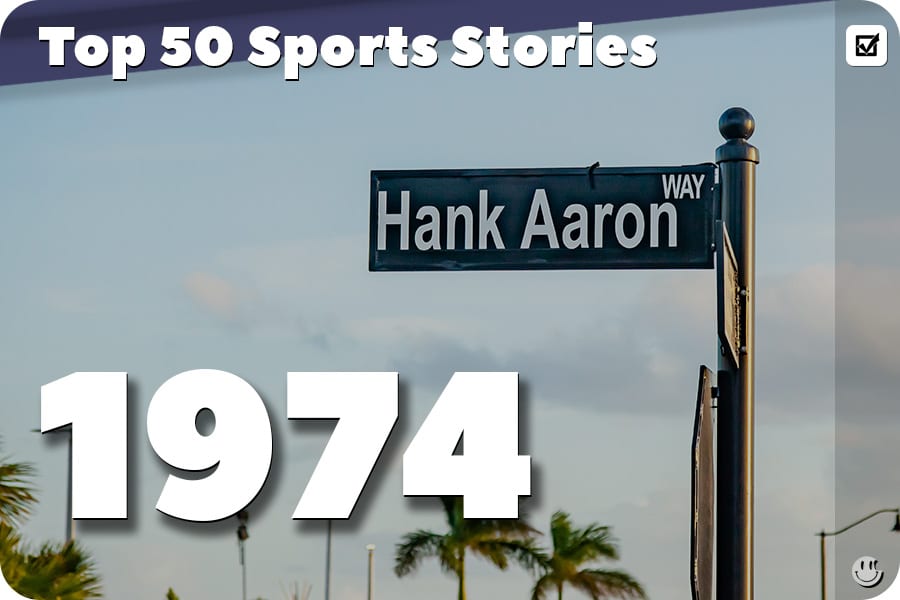
    1. Hank Aaron Breaks Babe Ruth’s Home Run Record (April 8, 1974): Hank Aaron of the Atlanta Braves hit his 715th career home run, breaking Babe Ruth’s longstanding record, a monumental moment in Major League Baseball and civil rights history.

    2. Muhammad Ali Regains World Heavyweight Title (October 30, 1974): In a historic boxing match known as “The Rumble in the Jungle,” Muhammad Ali reclaimed the world heavyweight title from George Foreman in Kinshasa, Zaire, using his famous “rope-a-dope” technique.

    3. Miami Dolphins Win Super Bowl VIII (January 13, 1974): The Miami Dolphins defeated the Minnesota Vikings 24-7 in Super Bowl VIII, securing their second consecutive Super Bowl victory and solidifying their legacy in NFL history.

    4. UCLA Wins NCAA Basketball Championship (March 25, 1974): Under Coach John Wooden, the UCLA Bruins won their seventh consecutive NCAA men’s basketball championship, beating the North Carolina State Wolfpack.

    5. Pittsburgh Steelers Win Super Bowl IX (January 12, 1975, covering the 1974 season): The Pittsburgh Steelers claimed their first Super Bowl title, defeating the Minnesota Vikings 16-6 and marking the beginning of a dynasty in the NFL.

    6. A.J. Foyt Wins Indianapolis 500 (May 26, 1974): American racing legend A.J. Foyt won his third Indianapolis 500, tying the record for most wins in the prestigious event at that time.

    7. Bobby Orr Wins Art Ross Trophy (1974 season): Bobby Orr of the Boston Bruins became the first defenseman in NHL history to win the Art Ross Trophy as the league’s top scorer, revolutionizing the role of defensemen in hockey.

    8. Connecticut High Schooler Sets Girls’ High School Basketball Scoring Record (March 1974): Ann Meyers set a new national high school girls’ basketball scoring record, highlighting the growing significance of women’s sports post-Title IX.

    9. Phil Esposito Leads NHL in Points (1974 season): Phil Esposito of the Boston Bruins led the NHL in points for the sixth consecutive season, showcasing his dominance in professional hockey.

    10. Nadia Comaneci Begins Her International Gymnastics Career (November 1974): At the age of 13, Nadia Comaneci made her international debut at the World Championships, signaling the start of her journey as one of the greatest gymnasts of all time.

    11. Ken Stabler Leads Oakland Raiders to AFC Championship (1974 season): Ken Stabler, the quarterback of the Oakland Raiders, led his team to the AFC Championship, showcasing his skill and earning the NFL’s MVP award.

    12. Catfish Hunter Throws Perfect Game (May 8, 1974): Pitcher Catfish Hunter of the Oakland Athletics threw the first perfect game in the American League since 1922, solidifying his place in baseball history.

    13. Billie Jean King Wins Wimbledon (July 6, 1974): Billie Jean King triumphed at Wimbledon, winning her sixth singles title at the prestigious tournament and promoting gender equality in sports.

    14. Renée Richards Challenges Tennis’ Gender Policies (1974): Renée Richards, a transgender woman, began competing in professional tennis, challenging the sport’s gender verification policies and advocating for transgender rights.

    15. Richard Petty Wins Daytona 500 (February 17, 1974): Richard Petty, known as “The King” of NASCAR, won the Daytona 500 for the fifth time in his career.

    16. New York Knicks Win NBA Championship (May 10, 1974): The New York Knicks captured their second NBA championship, defeating the Los Angeles Lakers in a hard-fought series.

    17. Frank Robinson Becomes MLB’s First Black Manager (October 1974): Frank Robinson was named manager of the Cleveland Indians, breaking baseball’s color barrier for managers.

    18. Johnny Miller Wins U.S. Open in Golf (June 16, 1974): Johnny Miller claimed victory at the U.S. Open, one of golf’s four major championships, showcasing his talent and precision.

    19. Chris Evert Wins French Open (June 9, 1974): Chris Evert claimed her first French Open title, beginning her dominance on clay courts and her illustrious tennis career.

    20. Gary Player Wins Masters Tournament (April 11, 1974): South African golfer Gary Player won the Masters Tournament, securing his second green jacket and third major championship.

    21. “Miracle on Ice” Preview:  USSR vs. USA Exhibition Game (Before the 1980 Olympics, but in 1974, the USSR and USA had significant encounters setting the stage for the legendary game): The intense hockey rivalry between the United States and the Soviet Union grew as they faced each other in various international competitions, laying the groundwork for the historic 1980 Winter Olympics matchup.

    22. Lasse Virén Wins 5,000 and 10,000 Meters at European Championships (September 1974): Finnish long-distance runner Lasse Virén continued his dominance by winning both the 5,000 and 10,000 meters at the European Athletics Championships, reinforcing his status as a premier athlete following his 1972 Olympic success.

    23. Pele Retires from International Football (July 18, 1974): Brazilian football legend Pelé retired from international play after an illustrious career, leaving a legacy as one of the greatest footballers of all time.

    24. Mike Marshall Wins Cy Young Award (November 13, 1974): Mike Marshall of the Los Angeles Dodgers won the Cy Young Award, becoming the first relief pitcher to win the honor, highlighting the evolving role of relievers in baseball.

    25. Jimmy Connors Wins US Open (September 8, 1974): Jimmy Connors won the US Open, cementing his status as one of the world’s top tennis players and marking a dominant year where he won three of the four Grand Slam events.

    26. Karen Magnussen Wins World Figure Skating Championships (March 1974): Canadian figure skater Karen Magnussen won the World Championships, showcasing her talent and contributing to Canada’s prominence in the sport.

    27. Steve Prefontaine Sets American Record (June 20, 1974): American long-distance runner Steve Prefontaine set a new U.S. record in the 5,000 meters, underscoring his influence on the sport and his iconic status among runners.

    28. Oakland Athletics Win Third Consecutive World Series (October 1974): The Oakland Athletics secured their third straight World Series title, showcasing their dominance in Major League Baseball during the early 1970s.

    29. Shinnik Yaroslavl Wins the Soviet Cup in Football (August 1974): Shinnik Yaroslavl, a relatively obscure team, won the Soviet Cup, highlighting the unpredictable nature of football and the growth of the sport in the Soviet Union.

    30. Evel Knievel’s Failed Snake River Canyon Jump (September 8, 1974): Daredevil Evel Knievel attempted to jump Idaho’s Snake River Canyon in a rocket-powered cycle. Despite the stunt’s failure, Knievel’s attempt became a defining moment of the 1970s’ fascination with extreme sports and spectacle.

    31. Tug McGraw Coined “You Gotta Believe” (1974 Season): Philadelphia Phillies relief pitcher Tug McGraw coined the phrase “You Gotta Believe” during the 1974 season, igniting a rally cry that transcended baseball and became emblematic of hope and perseverance in sports and beyond.

    32. Jack Nicklaus Wins PGA Championship (August 11, 1974): Golfing legend Jack Nicklaus won the PGA Championship, further solidifying his status as one of the greatest golfers in history.

    33. George Foreman Loses to Muhammad Ali (October 30, 1974): The loss of George Foreman to Muhammad Ali in “The Rumble in the Jungle” was a pivotal moment in boxing history, reshaping Foreman’s career and contributing to his personal and professional transformation.

    34. Tom Seaver Wins Cy Young Award (November 13, 1974): Tom Seaver of the New York Mets won the National League Cy Young Award, recognizing him as one of the premier pitchers in baseball.

    35. “The Longest Yard” Released (August 30, 1974): While primarily a film event, the release of The Longest Yard, starring Burt Reynolds, resonated with sports fans for its gritty and comedic portrayal of a prison football match, blending sports cinema and pop culture.

    36. Isabel Perón Appointed President of Argentina (July 1974): While not a sports event, the appointment of Isabel Perón as the first female president in the Western Hemisphere reflected the changing dynamics of gender and power globally, paralleling similar shifts in the sports world, especially in women’s athletics.

    37. Lee Trevino Wins Greater New Orleans Open (April 28, 1974): Lee Trevino’s victory in the Greater New Orleans Open underscored his resilience and charisma, contributing to his popularity and the growing diversity in golf.

    38. Reggie Jackson Named World Series MVP (October 1974): Reggie Jackson of the Oakland Athletics was named the World Series MVP, highlighting his crucial role in the team’s championship victory and his emergence as a major baseball star.

    39. Martina Navratilova Wins First Singles Title (February 10, 1974): Though earlier in the year, Martina Navratilova’s first professional singles title win marked the beginning of one of the most illustrious careers in tennis history, symbolizing her fight for recognition and equality.

    40. “Brian’s Song” Re-aired (1974): The re-airing of Brian’s Song, the emotional film based on the real-life friendship between Brian Piccolo and Gale Sayers, touched audiences and highlighted the intersection of sports, friendship, and tragedy.

    41. Al Kaline Hits 300th Home Run (September 24, 1974): Detroit Tigers’ right fielder Al Kaline hit his 300th home run, a milestone that capped an illustrious career and solidified his place in baseball history.

    42. Lou Brock Sets Stolen Base Record (September 10, 1974): Lou Brock of the St. Louis Cardinals broke Maury Wills’ single-season stolen base record, illustrating the dynamic nature of baseball and Brock’s incredible speed and base-running intelligence.

    43. Johnny Rutherford Wins Indianapolis 500 (May 26, 1974): Johnny Rutherford’s victory at the Indianapolis 500 highlighted his skill and the growing popularity of motorsport in the United States.

    44. Gordie Howe Retires from NHL (After 1974 season): Hockey legend Gordie Howe retired from the NHL, ending a remarkable career that spanned five decades and setting a new standard for longevity and excellence in the sport.

    45. New England Patriots Change Name from Boston Patriots (March 1974): The Boston Patriots became the New England Patriots, reflecting a broader strategy to regionalize the team’s appeal and identity, a significant moment in NFL marketing and team branding.

    46. Dave Cowens Named NBA MVP (1974): Dave Cowens of the Boston Celtics was named the NBA’s Most Valuable Player, reflecting his all-around skills and the dominance of the Celtics in the era.

    47. Rollie Fingers Dominates in Relief (1974 World Series): Rollie Fingers’ performance in the 1974 World Series for the Oakland Athletics revolutionized the role of the relief pitcher in baseball and contributed significantly to the Athletics’ championship win.

    48. Arthur Ashe Leads African Boycott of Davis Cup (1974): Arthur Ashe’s leadership in the African boycott of the Davis Cup highlighted the intersection of sports and politics, underlining sport’s role in global racial and political movements.

    49. Karen Magnussen Wins Canadian Figure Skating Title (1974): Karen Magnussen’s win at the Canadian Figure Skating Championships underscored her talent and contributed to the growing popularity of figure skating in Canada and globally.

    50. “Six Million Dollar Man” Premieres (January 18, 1974): Although a television event, the premiere of The Six Million Dollar Man influenced sports pop culture by introducing the concept of bionics and superhuman strength, tapping into fantasies of enhanced athletic abilities and futuristic sports technology.

    Take our 1974 Quiz!

  • 1974 Pop Culture Headlines

    1974 Pop Culture Headlines

    Pop Culture Headlines: 1974

    Top Events in January 1974 Pop Culture History

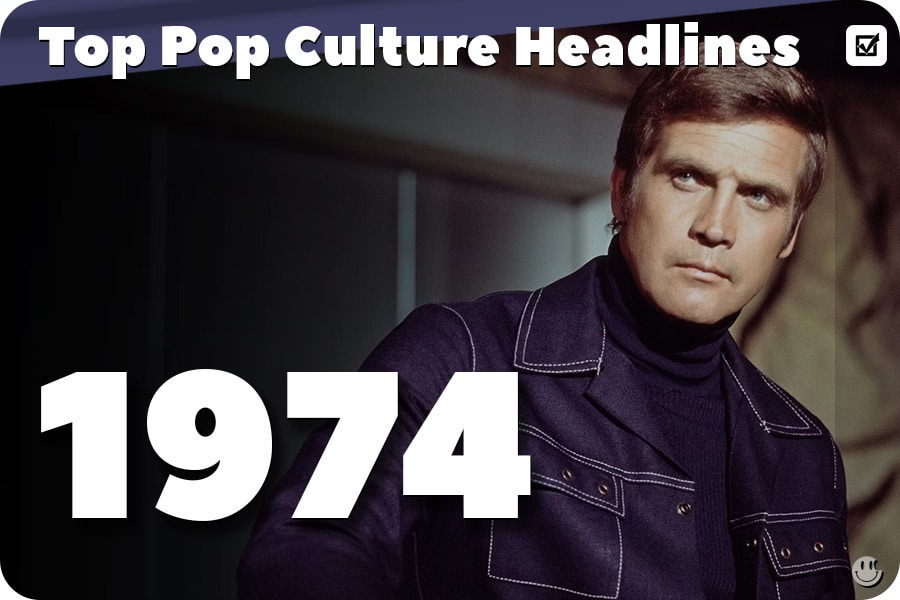
    1. Premiere of The Six Million Dollar Man (January 18, 1974): The debut of The Six Million Dollar Man on ABC was a defining moment in television history. The series, starring Lee Majors as Steve Austin, a former astronaut with bionic implants, captivated audiences with its blend of science fiction and action. It wasn’t just the advanced prosthetics or the notion of human enhancement that captured the public’s imagination but also the underlying themes of resilience, humanity, and innovation. The show’s famous tagline, “We have the technology, we can rebuild him,” symbolized the era’s fascination with technology and the future.

    2. Joker by Steve Miller Band Hits No. 1 (January 12, 1974): When Steve Miller Band’s “Joker” reached the pinnacle of the Billboard Hot 100, it didn’t just signify the peak of the band’s career; it encapsulated the laid-back, blues-infused rock sound that was becoming synonymous with American music in the mid-70s. The song, known for its catchy guitar riff and Miller’s smooth vocals, became an anthem of sorts, reflecting the zeitgeist of a generation looking for both escape and identity in the aftermath of the tumultuous 60s.

    3. American Graffiti Goes Nationwide (January 1974): While technically released in August 1973, it was in January 1974 that American Graffiti saw its nationwide release, bringing George Lucas’s nostalgic look back at early 60s teen culture to a broader audience. The film, with its ensemble cast and innovative use of soundtrack, not only launched the careers of several young actors but also set the stage for the nostalgia wave that would dominate the decade. Its success highlighted youth culture’s growing influence and nostalgia’s power in shaping the entertainment landscape.

    4. Barbara Streisand’s The Way We Were Tops Charts (January 26, 1974): The title track from the film The Way We Were, performed by Barbra Streisand, hit number one on the Billboard Hot 100 in late January. The song, with its melancholic melody and reflective lyrics, struck a chord with listeners, becoming one of Streisand’s signature songs. Its success underscored the growing trend of film soundtracks becoming integral to a movie’s commercial and cultural impact.

    5. Launch of Happy Days (January 15, 1974): The premiere of Happy Days on ABC marked a significant moment in television, introducing viewers to the Cunningham family and the iconic character Arthur “Fonzie” Fonzarelli. The show’s portrayal of 1950s American life, with its idealized version of teen culture, family values, and innocence, offered an escapist retreat for an audience facing the complexities of the 70s. Happy Days would go on to become one of the most beloved sitcoms in American TV history, influencing fashion, language, and attitudes toward the nostalgic ideal of the American past.

    6. Band on the Run by Paul McCartney and Wings Dominates Airwaves (January 1974): By January 1974, “Band on the Run,” the title track from Paul McCartney and Wings’ third album, had solidified its place at the top of the international charts. The song, celebrated for its narrative depth and musical progression, signified McCartney’s post-Beatles ascendancy to the pinnacle of rock music. It exemplified the growing sophistication of pop and rock music, showcasing the ability of artists to blend genres and craft songs with complex structures and themes.

    7. Death of Samuel Goldwyn (January 31, 1974): The death of Samuel Goldwyn, one of the pioneering moguls of American cinema, marked the end of an era in Hollywood. Goldwyn, whose career spanned the silent and sound eras of film, was instrumental in shaping the industry’s foundations. His contributions to cinema, from fostering talent to producing films that became cultural landmarks, underscored the transformation of film from entertainment to art form, influencing generations of filmmakers and audiences.

    8. KISS Begins First National Tour (January 1974): In January 1974, the rock band KISS embarked on its first national tour, signaling the rise of a new force in rock music. Known for their elaborate makeup, costumes, and theatrical live performances, KISS represented the evolving nature of rock concerts, from musical events to comprehensive sensory experiences. Their ascent marked the growing importance of image and spectacle in the music industry, setting the stage for the rise of glam rock and arena rock.

    9. Time Magazine Features the Energy Crisis (January 7, 1974): The cover story of Time Magazine in early January, focusing on the ongoing energy crisis, captured a pivotal moment in global and American consciousness. The crisis, characterized by fuel shortages and rising oil prices, highlighted the vulnerability of modern society to resource limitations and shifted public and political discourse towards energy conservation, environmentalism, and the search for alternative energy sources.

    10. Release of The Exorcist in International Markets (January 1974): While The Exorcist premiered in the U.S. in December 1973, its international release in January 1974 broadened its impact, sparking worldwide discussions about horror cinema, spirituality, and the supernatural. The film’s unsettling themes and groundbreaking special effects challenged conventional norms and taboos, pushing the boundaries of the horror genre and solidifying its place in cinematic history as one of the most terrifying films ever made.

    Top Events in February 1974 Pop Culture History

    1. The Debut of Good Times (February 8, 1974): On February 8, Good Times aired its first episode on CBS, marking a significant moment in television history. This groundbreaking sitcom, a spin-off of Maude (itself a spin-off of All in the Family), was notable for being one of the first to feature an African American family living in an inner-city housing project. Created by Eric Monte and Mike Evans and developed by Norman Lear, the show tackled social issues with humor and grace, offering a mix of comedy and drama that resonated with audiences across the United States. Good Times challenged stereotypes and paved the way for future African-American-led television shows.

    2. Release of Rebel Rebel by David Bowie (February 15, 1974): David Bowie released “Rebel Rebel” in the UK, a track that would become one of his signature songs. The single, from his album Diamond Dogs, was a glam rock anthem that encapsulated the era’s spirit with its catchy guitar riff and androgynous appeal. Bowie’s creation was not just a song but a cultural statement, blurring the lines of gender and fashion and cementing his status as a pop icon and a pioneer of the glam rock movement.

    3. Blazing Saddles Premiere (February 7, 1974): Directed by Mel Brooks, Blazing Saddles premiered and immediately shook the foundations of traditional American comedy. The film, known for its satirical take on the Western genre and bold commentary on racism, became a cultural phenomenon. Brooks’ fearless humor and the cast’s stellar performances turned Blazing Saddles into a critical and commercial success, pushing the boundaries of comedy and addressing social issues unprecedentedly.

    4. Barbra Streisand’s The Way We Were Hits No. 1 (February 2, 1974): Barbra Streisand’s song “The Way We Were,” from the movie of the same name, reached number one on the Billboard Hot 100 chart. The ballad, reflecting on nostalgia and lost love, struck a chord with audiences worldwide, becoming one of Streisand’s most beloved and enduring hits. Its success underscored Streisand’s status as a musical powerhouse and contributed to the film’s impact, highlighting the interplay between cinema and music in shaping pop culture narratives.

    5. Planet of the Apes TV Series Premiere (February 13, 1974): The Planet of the Apes television series premiered on CBS, expanding the popular film series into a new medium. Although the show lasted only one season, its attempt to translate the complex themes of the film saga—such as race, class, and the human condition—onto the small screen resonated with audiences and demonstrated the enduring appeal of the Planet of the Apes franchise.

    6. Patty Hearst Kidnapping (February 4, 1974): The kidnapping of Patty Hearst by the Symbionese Liberation Army (SLA) became one of the most sensationalized media events of the 1970s. The event transcended mere news, evolving into a cultural phenomenon that sparked debates about brainwashing, terrorism, and celebrity. Hearst’s subsequent actions and trial would captivate the public for years, reflecting the era’s complex social and political climate.

    7. Bob Marley’s Natty Dread Album Release (February 6, 1974): Bob Marley’s Natty Dread was released, marking the first album credited to Bob Marley and the Wailers and signaling Marley’s emergence as an international music icon. The album, featuring tracks like “No Woman, No Cry,” showcased Marley’s unique blend of reggae, rock, and R&B and carried powerful messages of love, resistance, and social justice, contributing significantly to the global spread of reggae music and Rastafarian culture.

    8. Premiere of The Secret Storm (February 1, 1974): In the world of daytime television, The Secret Storm aired its final episode on CBS after a 20-year run. The show’s conclusion marked the end of an era for soap operas, reflecting television audiences’ changing tastes and dynamics. While not as celebrated in retrospectives as prime-time shows, the ending of such a long-standing series underscored the shifting landscape of daytime TV and its role in American entertainment.

    9. Kiss Released Debut Album (February 18, 1974): Kiss released its self-titled debut album, introducing the world to their unique brand of theatrical hard rock. The album laid the groundwork for a legendary live act, with elaborate makeup, costumes, and pyrotechnics. Kiss’s debut marked the beginning of their journey to become one of the most iconic and enduring acts in rock history, redefining concert performance and fan engagement.

    10. The Exorcist Wins Two Academy Awards (February 1974): Although the Oscars ceremony occurred in April, the nominations announced in February 1974 confirmed The Exorcist‘s impact on the film industry and its cultural significance. The movie, directed by William Friedkin, was recognized for its technical and narrative achievements, eventually winning two Oscars. The film’s success at the Academy Awards underscored horror films’ growing acceptance and appreciation within mainstream cinema, highlighting their potential to explore deeper human fears and societal issues.

    Top Events in March 1974 Pop Culture History

    1. The Godfather Part II Begins Filming (March 1, 1974): On March 1, production commenced on The Godfather Part II, a film that would become one of cinema’s greatest sequels. The movie, directed by Francis Ford Coppola and featuring a stellar cast including Al Pacino, Robert De Niro, and Diane Keaton, expanded on the original’s epic narrative of family, power, and corruption. Its innovative narrative structure, combining prequel and sequel, set new standards for storytelling in film, while its exploration of the American Dream resonated deeply with audiences and critics alike.

    2. Queen’s First North American Tour (March 1, 1974): Queen embarked on their first North American tour, introducing their unique blend of rock opera, glam, and virtuosity to audiences across the United States and Canada. This tour marked a significant moment in the band’s career, showcasing their theatrical performances and musical skills, which would soon catapult them to global stardom. The tour laid the groundwork for one of rock history’s most iconic live acts.

    3. Joni Mitchell’s Court and Spark Peaks at No. 2 (March 2, 1974): Joni Mitchell’s sixth studio album, Court and Spark, reached number two on the Billboard charts, solidifying her status as one of the era’s most influential singer-songwriters. The album, featuring hits like “Help Me” and “Free Man in Paris,” represented a shift in Mitchell’s sound, blending folk with jazz and pop elements, and spoke to the complexities of love, fame, and individuality.

    4. The Terracotta Army Discovered (March 29, 1974): In one of the 20th century’s most significant archaeological finds, the Terracotta Army was discovered in Xi’an, China. This collection of thousands of life-sized statues, created to accompany the first Emperor of China into the afterlife, captured the world’s imagination. The discovery provided invaluable insights into ancient Chinese culture and art and underscored the universal quest for immortality and the power of legacy.

    5. Dark Side of the Moon Hits No. 1 (March 17, 1974): Pink Floyd’s album The Dark Side of the Moon reached number one on the US Billboard charts, beginning a record-breaking chart run. The album’s themes of conflict, greed, time, and mental illness, coupled with its pioneering use of sound effects and studio innovation, made it one of the most influential works in the history of recorded music. Its success marked a watershed moment for progressive rock, transforming Pink Floyd from cult favorites into global superstars.

    6. Muhammad Ali Regains Heavyweight Title (March 8, 1974): Muhammad Ali regained the heavyweight boxing title by defeating George Foreman in the “Rumble in the Jungle,” held in Kinshasa, Zaire. This historic bout was more than a sports event; it was a global spectacle transcending boxing, symbolizing the power of resilience, the fight against injustice, and the unifying spirit of sports. Ali’s victory reinforced his status as “The Greatest” and became a defining moment in sports history.

    7. Happy Days Hits Prime Time (March 5, 1974): The television show Happy Days premiered on ABC, capturing the hearts of American viewers with its nostalgic portrayal of middle-class life in the 1950s and 1960s. Centered around the Cunningham family and the iconic Arthur “Fonzie” Fonzarelli, the show’s blend of humor, warmth, and relatable characters made it a staple of American television and a cultural touchstone for generations.

    8. ABBA Wins Eurovision with Waterloo (March 30, 1974): ABBA, a relatively unknown Swedish group at the time, won the Eurovision Song Contest with their hit “Waterloo.” The victory launched ABBA into international stardom, changing the landscape of pop music with its catchy tunes, distinctive harmonies, and glamorous image. “Waterloo” not only solidified ABBA’s place in music history but also demonstrated the power of Eurovision as a platform for launching careers.

    9. Patty Hearst Joins the Symbionese Liberation Army (March 1974): In a shocking turn of events, Patty Hearst, kidnapped heiress to the Hearst publishing fortune, declared her allegiance to her captors, the Symbionese Liberation Army (SLA), in a recorded message. The saga of Hearst’s kidnapping, radicalization, and subsequent criminal activities fascinated and horrified the American public, raising complex questions about identity, coercion, and media influence.

    10.  Chinatown Filming Concludes (March 1974): Filming concluded on Chinatown, directed by Roman Polanski and starring Jack Nicholson and Faye Dunaway. The film, a neo-noir mystery that delves into the corruption and moral ambiguity of 1930s Los Angeles, would become one of the most critically acclaimed movies of the decade. Its intricate plot, atmospheric setting, and standout performances contributed to its status as a cinematic classic, influencing the genre for years to come.

    Top Events in April 1974 Pop Culture History

    1. Hank Aaron Breaks Babe Ruth’s Home Run Record (April 8, 1974): On April 8, Hank Aaron, playing for the Atlanta Braves, hit his 715th home run, breaking Babe Ruth’s long-standing record. At this moment, he transcended sports, becoming a symbol of racial progress and perseverance in the face of adversity. Aaron’s achievement under intense pressure and amidst racial hostility highlighted the ongoing struggles and successes of African Americans in the quest for equality and recognition. His historic home run stands as one of the most iconic moments in baseball history, representing not just a sporting milestone but a significant cultural event.

    2. ABBA Wins Eurovision Song Contest with Waterloo (April 6, 1974): ABBA, a Swedish pop group, won the 19th Eurovision Song Contest with their hit “Waterloo.” This victory in Brighton, England, catapulted ABBA to international fame, setting the stage for their subsequent global success. “Waterloo” was not just a pop song; it was a defining moment for Eurovision, transforming it into a launchpad for future music stars. ABBA’s win, with its catchy tune and memorable performance, marked a turning point in the contest’s history and reshaped the landscape of international pop music.

    3. Release of The Great Gatsby Film (April 1, 1974): The Great Gatsby, directed by Jack Clayton and starring Robert Redford and Mia Farrow, premiered in New York City. This adaptation of F. Scott Fitzgerald’s classic novel was notable for its lavish production and costume design, capturing the opulence and despair of the Jazz Age. While receiving mixed reviews, the film’s visual style and the performances of its leads left a lasting impact on the portrayal of the 1920s in cinema, influencing subsequent adaptations and discussions of American literature and culture.

    4. Stephen King Publishes Carrie (April 5, 1974): Stephen King’s debut novel, Carrie, was published, marking the arrival of a new voice in horror literature. The novel’s exploration of adolescence, power, and outsider status and its supernatural elements resonated with readers and critics alike. King’s portrayal of Carrie White, a bullied teenage girl who exacts revenge on her tormentors, tapped into broader themes of isolation and vengeance, establishing him as a significant figure in contemporary American fiction.

    5. All in the Family Episode Addressed Rape (April 20, 1974): In a groundbreaking episode titled “Edith’s Problem,” the television show All in the Family tackled the issue of rape, with the character Edith Bunker surviving an attempted assault. This episode was significant for handling a sensitive and controversial subject, challenging social taboos and television norms. The portrayal of Edith’s ordeal and its aftermath was a pivotal moment in TV history, prompting discussions about sexual violence, victim support, and the role of television in addressing societal issues.

    6. Brian May Collapses from Hepatitis (April 1974): In a dramatic turn of events, Brian May, the guitarist for Queen, collapsed from hepatitis during the band’s first American tour, leading to the cancellation of several dates. This incident underscored the physical and emotional toll of touring on musicians, highlighting the band’s burgeoning popularity and the intense demands of their growing fame. Despite this setback, Queen’s resilience and dedication to their music would propel them to greater heights.

    7. Benji Premiered (April 17, 1974): The film Benji, directed by Joe Camp, premiered, introducing audiences to one of the most beloved canine characters in cinema history. The story of a lovable stray dog who becomes a hero captured viewers’ hearts worldwide, leading to a successful franchise and solidifying Benji’s place in pop culture. The film’s success demonstrated the enduring appeal of animal stories and their ability to convey loyalty, bravery, and love themes.

    8. Marvin Gaye’s Let’s Get It On Tour Ends (April 1974): Marvin Gaye concluded his tour for the album Let’s Get It On, capping off a series of performances that highlighted his evolution from Motown star to a powerful voice in soul and R&B. The tour and the album it supported represented a significant moment in Gaye’s career, showcasing his move towards more personal and socially conscious music. The themes of love, sexuality, and vulnerability expressed in his performances resonated with audiences, contributing to Gaye’s legacy as one of the most influential musicians of his time.

    9. Monty Python’s Flying Circus Final Episode Airs (April 11, 1974): The final episode of Monty Python’s Flying Circus, the British sketch comedy show, aired, marking the end of its original run on the BBC. Known for its surreal, absurdist humor, the show pushed the boundaries of comedy, influencing generations of comedians and entertainers. The end of Monty Python’s Flying Circus did not signify the end of the troupe’s cultural impact; instead, it transitioned their anarchic spirit from television to films, live shows, and beyond.

    10. Patty Hearst Participates in a Bank Robbery (April 15, 1974): Patty Hearst, heiress, and kidnap victim was caught on camera participating in a bank robbery with the Symbionese Liberation Army, the group that had abducted her. This event shocked the public and fueled an ongoing media frenzy, raising questions about coercion, identity, and media ethics. The image of Hearst wielding a gun during the robbery became one of the most iconic and controversial images of the 1970s, symbolizing the era’s tumult and the blurred lines between victim and perpetrator.

    Top Events in May 1974 Pop Culture History

    1. Release of The Conversation (May 7, 1974): Francis Ford Coppola’s The Conversation was released, showcasing a deep dive into themes of privacy, obsession, and guilt. Starring Gene Hackman as a surveillance expert, this psychological thriller reflected the growing societal concerns over privacy and technology, amplified by the Watergate scandal’s unfolding. The film’s critical acclaim and its enduring relevance highlight the paranoia of the era and Coppola’s mastery in storytelling, reinforcing his position as one of the leading directors of the 1970s.

    2. Premiere of Little House on the Prairie TV Movie (May 30, 1974): Before becoming a beloved series, Little House on the Prairie debuted as a TV movie, laying the groundwork for the successful adaptation of Laura Ingalls Wilder’s autobiographical books. Directed by Michael Landon, who also starred as Charles Ingalls, the film and subsequent series offered viewers an idealized glimpse into 19th-century frontier life, addressing family, community, and resilience themes. Its premiere marked the beginning of a cultural phenomenon that would endear itself to audiences for decades.

    3. Marvin Hamlisch Wins Three Academy Awards (May 1974): At the 46th Academy Awards, composer Marvin Hamlisch made history by winning three Oscars in one night for his work on The Way We Were and The Sting. His achievements underscored the significance of music in film and its power to evoke emotion and memory. Hamlisch’s success highlighted the blending of pop and classical elements in cinema scores, influencing the soundtrack industry and solidifying his legacy as a musical genius.

    4. Launch of the Rubik’s Cube (May 1974): The Rubik’s Cube, invented by Ernő Rubik, was first introduced in Hungary. Although it would not become a global phenomenon until the end of the decade, its creation marked a significant moment in the history of puzzles and pop culture. The cube became synonymous with problem-solving, ingenuity, and the universal appeal of a simple yet challenging game, impacting generations of enthusiasts and becoming a cultural icon.

    5. Band on the Run by Paul McCartney and Wings Tops US Charts (May 1974): Paul McCartney’s post-Beatles band, Wings, achieved their first US number-one album with Band on the Run. The title track and singles like “Jet” showcased McCartney’s knack for crafting enduring melodies and his successful adaptation to the evolving music scene. The album’s success represented Wings’s critical and commercial peak and solidified McCartney’s career as a versatile and prolific songwriter post-Beatles.

    6. Barbra Streisand’s First Concert Tour Begins (May 1, 1974): Barbra Streisand embarked on her first concert tour, captivating audiences with her powerful voice and emotional depth. The tour was significant for its musical quality and Streisand’s status as a multifaceted entertainer, blending pop, Broadway, and film work. Her performances set new standards for live vocal and concert production, reinforcing her position as one of the era’s most influential and talented artists.

    7. Stephen King’s Carrie Published (May 1974): Carrie, Stephen King’s debut novel, was published, introducing the world to his blend of horror, the supernatural, and the everyday. The story of a tormented teenage girl with telekinetic powers struck a chord with readers, exploring themes of bullying, maternal relationships, and social isolation. King’s foray into the horror genre reshaped its landscape and began his prolific career as one of the most significant modern American authors.

    8. Phillis Wheatley’s Memorial Statue Unveiled (May 1974): In Boston, a memorial statue honoring Phillis Wheatley, the first published African American female poet, was unveiled. The event was a significant acknowledgment of Wheatley’s contributions to American literature and a recognition of African American history and culture. Her pioneering work and the memorial’s dedication were essential reminders of the power of voice and the enduring legacy of black literary heritage in America.

    9. Maus by Art Spiegelman Begins Serialization (May 1974): Although not yet in its finalized book form, Art Spiegelman’s Maus began serialization in May 1974. This groundbreaking work, later recognized as a seminal piece of graphic literature, used the medium of comics to explore the complexities of Holocaust survival and memory. Spiegelman’s innovative approach to depicting his father’s experiences during World War II transformed the perception of comics and graphic novels, highlighting their potential for serious literary and historical exploration.

    10. Eurovision Song Contest Held in Brighton, UK (May 6, 1974): The Eurovision Song Contest, held in Brighton, saw the participation of various countries showcasing their musical talent. While ABBA’s victory with “Waterloo” in April 1974 is often more remembered, the May contest highlighted the continued importance of Eurovision in bringing diverse European cultures together through music. The event underscored the unifying power of pop music and its ability to transcend national boundaries, laying the groundwork for future international musical phenomena.

    Top Events in June 1974 Pop Culture History

    1. Cleveland Indians’ “Ten Cent Beer Night” (June 4, 1974): This infamous promotion by the Cleveland Indians baseball team turned chaotic as excessive beer consumption led to a riotous crowd, causing the game against the Texas Rangers to be forfeited. The event has since become emblematic of the era’s sometimes reckless promotional tactics and stands as a stark reminder of the dangers of underestimating crowd control and alcohol consumption. The incident impacted sports marketing strategies and became a cultural reference point for discussions on fan behavior and event management.

    2. Release of Chinatown (June 20, 1974): Directed by Roman Polanski and starring Jack Nicholson and Faye Dunaway, Chinatown is considered one of the greatest films ever made. This neo-noir mystery, set against the backdrop of 1930s Los Angeles, delved into themes of power, corruption, and family secrets. The film’s intricate plot, exceptional performances, and atmospheric direction redefined the noir genre for a new era and provided a critical commentary on the manipulation of natural resources and the moral complexities of the American dream.

    3. The Founding of the Universal Life Church Monastery (June 1974): While not a traditional pop culture event, the establishment of the Universal Life Church Monastery by Kirby J. Hensley offered a unique perspective on the evolving landscape of religion and personal belief systems in America. It highlighted the growing trend of individualized spirituality and questioning traditional religious structures, reflecting broader cultural shifts towards personal freedom and self-definition.

    4. Gordon Lightfoot’s Sundown Hits No. 1 (June 29, 1974): Gordon Lightfoot’s album Sundown reached the top of the Billboard charts, propelled by the haunting title track. Lightfoot’s folk-infused sound and his introspective lyricism captured the essence of 1970s singer-songwriter culture, emphasizing storytelling and emotional authenticity. The success of Sundown underscored the shift in musical tastes towards more personal and reflective content, marking a significant moment in the decade’s musical evolution.

    5. Launch of People Magazine (June 1974): The first issue of People magazine hit newsstands, introducing a new format focused on celebrity and human-interest stories. The magazine’s launch reflected the growing public fascination with celebrity culture and the personal lives of public figures, signaling a shift in journalism towards entertainment and lifestyle content. People Magazine’s success would influence the media landscape significantly, paving the way for numerous other publications and programs dedicated to celebrity news.

    6. The Rumble in the Jungle Announcement (June 26, 1974): The announcement of the heavyweight boxing match between Muhammad Ali and George Foreman, known as “The Rumble in the Jungle,” set the stage for one of the most legendary bouts in boxing history. Scheduled to take place in Zaire (now the Democratic Republic of the Congo), the event was more than a sporting contest; it was a global spectacle highlighting the intersection of sports, politics, and culture, drawing attention to African identity and international solidarity.

    7. Release of Harry and Tonto (June 12, 1974): Art Carney delivered a career-defining performance in Harry and Tonto, a film that explored themes of aging, companionship, and the search for meaning. Directed by Paul Mazursky, the movie broke away from conventional portrayals of the elderly, offering a nuanced and hopeful narrative that resonated with audiences and critics alike, reflecting the broader societal shifts in attitudes towards aging and intergenerational relationships.

    8. Dolly Parton’s I Will Always Love You Peaks at No. 1 (June 8, 1974): Dolly Parton’s iconic song I Will Always Love You reached number one on the country music charts. Though later famously covered by Whitney Houston, Parton’s original rendition spoke to the complexities of farewell and enduring affection with its heartfelt lyrics and simple, poignant melody. The song’s success highlighted Parton’s exceptional songwriting and vocal talent, cementing her status as a country music legend.

    9. Gary Trudeau’s Pulitzer Prize for Doonesbury (June 1974): Cartoonist Garry Trudeau was awarded the Pulitzer Prize for Editorial Cartooning for his work on Doonesbury, marking the first time the award was given to a comic strip. Doonesbury’s satirical commentary on political and social issues represented the growing influence of pop culture in shaping public discourse. It highlighted the comic strip’s role as a social and political critique platform.

    10. Montreal Jazz Festival Inaugural Event (June 19, 1974): The first Montreal Jazz Festival began what would become one of the world’s largest and most prestigious jazz festivals. The event underscored the universal appeal of jazz music and its capacity to bring together artists and audiences from diverse backgrounds, celebrating innovation, collaboration, and the enduring spirit of the genre.

    Top Events in July 1974 Pop Culture History

    1. Release of Death Wish (July 24, 1974): The release of the film Death Wish, starring Charles Bronson, marked a pivotal moment in cinema history. This controversial movie, directed by Michael Winner, ignited discussions around vigilantism, crime, and justice in urban America. Its portrayal of a man taking the law into his own hands resonated with audiences and sparked debates about the boundaries of self-defense and the failures of the legal system. The film’s impact was profound, influencing the action genre and reflecting societal anxieties of the time.

    2. Bob Marley and The Wailers Release Natty Dread (July 1974): In July, Bob Marley and The Wailers released their album Natty Dread. This powerful and influential record brought the Rastafarian message and reggae music to a global audience. Songs like “No Woman, No Cry” and “Rebel Music (3 O’Clock Roadblock)” highlighted Marley’s exceptional songwriting and the band’s musical prowess. This album marked a significant point in Marley’s career and the broader acceptance of reggae music worldwide, impacting social and political movements across the globe.

    3. Barbra Streisand’s The Way We Were Tops Billboard Charts (July 6, 1974): Barbra Streisand’s iconic song The Way We Were reached number one on the Billboard Hot 100 chart. The song, from the movie of the same name, became one of the defining ballads of the decade, capturing the nostalgic and reflective mood of the era. Streisand’s dynamic performance and the song’s poignant lyrics resonated with audiences worldwide, solidifying its place in music history. The success of The Way We Were highlighted Streisand’s vocal talent and underscored the growing influence of film soundtracks on the music industry and popular culture. The song’s enduring popularity is a testament to its impact, as it continues to be celebrated and covered by artists across various genres.

    4. Maus by Art Spiegelman Begins Serialization (July 1974): Art Spiegelman’s Maus, a groundbreaking graphic novel, began serialization in July 1974. While it would not be published as a complete volume until the 1980s, the initial serialization marked the start of a profound narrative exploring the Holocaust through the lens of a son interviewing his father about his experiences. Maus challenged the boundaries of storytelling and the comic book format, addressing trauma, memory, and survival themes.

    5. Cass Elliot’s Final Performance (July 29, 1974): Cass Elliot, also known as Mama Cass from The Mamas & the Papas, tragically passed away at 32. Known for her powerful voice and charismatic presence, Elliot significantly impacted the music scene of the 1960s and early 1970s. Her death marked the end of an era for the counterculture music scene and left a lasting void in the industry. Elliot’s contributions to music, including hits like California Dreamin’ and Dream a Little Dream of Me, continue to resonate with fans and artists alike, cementing her legacy as one of the era’s most beloved voices. Her untimely passing prompted an outpouring of grief and tribute from the music community and fans around the world.

    6. Establishment of the Universal Product Code (UPC) (July 1974): The introduction of the Universal Product Code, commonly known as the UPC or barcode, in July 1974 revolutionized retail and commerce. Though not a traditional pop culture event, the adoption of this technology marked a significant shift in consumer culture and the business landscape, affecting everyday life and operations in various industries.

    7. Premiere of That’s Entertainment! (July 18, 1974): The film That’s Entertainment! premiere, a retrospective celebrating 50 years of MGM musicals, provided audiences with a nostalgic look at some of cinema’s most beloved moments. Featuring classic scenes and commentary by legendary stars, the film was both a tribute to the golden age of Hollywood and a reminder of the enduring appeal of musical film.

    8. “Rock Me Gently” by Andy Kim Climbs the Charts (July 1974): Andy Kim’s “Rock Me Gently” began its ascent up the music charts in July 1974, ultimately reaching the top spot. The song’s success underscored the continued popularity of soft rock and the singer-songwriter genre during the decade, highlighting themes of love and tenderness that contrasted with the era’s heavier rock sounds.

    9. Introduction of Hello Kitty (July 1974): The character Hello Kitty, created by Yuko Shimizu for the Japanese company Sanrio, was introduced to the public. Although initially appearing on a vinyl coin purse, Hello Kitty would become a global phenomenon, symbolizing the power of cute culture and the expanding influence of Japanese pop culture worldwide.

    10. First Issue of National Lampoon Released (July 1974): The first issue of National Lampoon magazine hit the stands in July 1974, offering an irreverent, satirical take on politics, culture, and society. The publication would become an influential voice in American comedy, launching the careers of many writers and actors and contributing to a new wave of humor that pushed the boundaries of taste and convention.

    Top Events in August 1974 Pop Culture History

    1. Richard Nixon’s Resignation (August 8, 1974): The resignation of President Richard Nixon was more than a political scandal; it became a cultural watershed that deeply influenced American trust in government and the media’s role in shaping public perception. In the wake of the Watergate scandal, Nixon’s departure from office was a moment of unprecedented drama and uncertainty, permeating all levels of society and entertainment. This event signaled a shift in American culture, leading to a new era of skepticism and cynicism in politics, reflected in films, music, and literature of the subsequent years.

    2. Release of The Towering Inferno (August 9, 1974): The premiere of The Towering Inferno marked a high point in the disaster film genre, a staple of 1970s cinema. Featuring an ensemble cast of Paul Newman, Steve McQueen, Faye Dunaway, and others, the film combined suspense, tragedy, and heroic action, captivating audiences worldwide. Its success underscored the public’s fascination with survival against insurmountable odds and reflected the era’s anxieties about urban living and technological failure.

    3. Jeff Gordon’s Birth (August 4, 1974): While not immediately impactful in 1974, the birth of Jeff Gordon would have significant implications for the world of sports, particularly NASCAR racing. Gordon’s career, marked by numerous victories and championships, brought auto racing into the mainstream American consciousness and influenced the marketing and commercialization of the sport. His legacy extends beyond the track, impacting sports culture and media representation of racing.

    4. Peter Wolf Marries Faye Dunaway (August 7, 1974): The marriage of J. Geils Band frontman Peter Wolf and actress Faye Dunaway was a convergence of rock and roll and Hollywood, highlighting the increasing crossover between music and film celebrities. Their high-profile relationship underscored the glamor and allure of celebrity culture during the 1970s, contributing to the era’s fascination with stars’ personal lives.

    5. Death of Charles Lindbergh (August 26, 1974): The passing of Charles Lindbergh, an iconic American aviator, marked the end of an era. Lindbergh’s transatlantic flight in 1927 had made him an international hero, embodying the spirit of adventure and innovation. His death prompted reflections on the achievements of the early 20th century and their impact on contemporary society, underscoring the ongoing fascination with pioneers and explorers.

    6. Roberta Flack’s Feel Like Makin’ Love Reaches No. 1 (August 10, 1974): Roberta Flack’s song Feel Like Makin’ Love topped the Billboard Hot 100, showcasing her smooth vocals and soulful expression. The song’s success highlighted the evolving landscape of R&B and soul music, reflecting the genre’s increasing influence on mainstream pop culture and its ability to articulate the complexities of love and intimacy.

    7. Happy Days Second Season Premiere (August 1974): The second season of Happy Days premiered, solidifying its place as one of America’s most beloved sitcoms. Set in the 1950s and 1960s, the show offered an idealized vision of American life, providing comfort and nostalgia during social and political upheaval. Happy Days has influenced fashion, language, and attitudes toward the American past, becoming a cultural phenomenon and launching the careers of actors such as Henry Winkler and Ron Howard.

    8. Eric Clapton’s 461 Ocean Boulevard Album Release (August 1974): Eric Clapton’s 461 Ocean Boulevard was released, marking a significant comeback for the guitarist after a battle with drug addiction. The album, which includes the hit cover “I Shot the Sheriff,” demonstrated Clapton’s versatility and resilience, influencing the rock and blues genres. The record’s success reinforced Clapton’s status as a guitar legend and contributed to the era’s soundtrack, blending rock, blues, and reggae influences.

    9. Tobe Hooper’s The Texas Chain Saw Massacre Premiere (August 15, 1974): The release of Tobe Hooper’s The Texas Chain Saw Massacre redefined the horror genre, introducing audiences to a new level of terror and suspense. The film’s gritty realism, disturbing themes, and innovative cinematography left an indelible mark on cinema, influencing countless directors and establishing itself as a cult classic. Its commentary on American society, violence, and family dynamics made it a subject of intense discussion and analysis.

    10. Philippe Petit’s High-Wire Walk (August 7, 1974): Although occurring in the same month as Nixon’s resignation, Philippe Petit’s high-wire walk between the Twin Towers of the World Trade Center stands out as a moment of awe and inspiration. Petit’s daring feat was a triumph of courage and skill and an act of artistic expression that challenged the limits of possibility. The walk was a metaphor for human aspiration and creativity, capturing the world’s imagination and serving as an enduring symbol of New York City’s resilience and ambition.

    Top Events in September 1974 Pop Culture History

    Top Events in October 1974 Pop Culture History

    Top Events in November 1974 Pop Culture History

    Top Events in December 1974 Pop Culture History

    1. Release of Young Frankenstein (December 15, 1974): Mel Brooks’s Young Frankenstein premiered, offering a unique comedic take on the classic horror genre. The film, a parody of the traditional Frankenstein movies, showcased Brooks’ genius and the comedic prowess of Gene Wilder, Marty Feldman, and Peter Boyle. Beyond mere parody, Young Frankenstein was a loving homage to the black-and-white horror films of the 1930s, utilizing actual props and sets from the original Frankenstein films. Its release contributed significantly to the resurgence of parody films and solidified Mel Brooks’ status as a comedy master.

    2. Birth of Hip Hop Culture (December 1974): While not tied to a specific date, December 1974 is often cited by cultural historians as the period when hip hop culture began to form in the Bronx, New York City. DJ Kool Herc and others were laying the groundwork for a global movement. The parties thrown in community centers and the outdoor jams were incubators for the four pillars of hip hop: MCing, DJing, breakdancing, and graffiti art. This cultural emergence would fundamentally alter the music and art landscape in the following decades.

    3. “Lucy” Fossil Discovery Announced (December 24, 1974): The discovery of the Australopithecus afarensis skeleton, later nicknamed “Lucy,” was announced. While the discovery occurred in November, the announcement made waves in December, providing invaluable insights into human evolution. The finding, heralded as one of the most significant paleoanthropological discoveries of the 20th century, captivated the public and scientific community alike, challenging previous assumptions about human ancestry and our understanding of the past.

    4. Television Debut of “The Godfather” (December 16, 1974): The Godfather was broadcast on network television for the first time, bringing Francis Ford Coppola’s masterpiece to a wider audience. Edited for content and length, the televised version brought the Corleone family saga into American living rooms, reaffirming the film’s status as a cultural phenomenon and influencing perceptions of Italian-American culture and the criminal underworld.

    5. Final Episode of “Monty Python’s Flying Circus” (December 5, 1974): The British sketch comedy series Monty Python’s Flying Circus aired its final episode, marking the end of a television era. The series, known for its surreal, irreverent humor, profoundly impacted comedy, pushing the boundaries of what was acceptable and expected in television humor. The influence of Monty Python would endure, shaping comedy on both sides of the Atlantic.

    6. Queen’s “Sheer Heart Attack” Album Peaks in Charts (December 1974): Queen’s third studio album, Sheer Heart Attack, reached its peak position in the charts, solidifying the band’s rise to rock stardom. The album, featuring tracks like “Killer Queen” and “Stone Cold Crazy,” showcased Queen’s musical versatility and Freddie Mercury’s dynamic vocal range. The success of Sheer Heart Attack marked a turning point for the band, establishing them as prominent figures in the international music scene.

    7. Release of Bob Dylan’s “Blood on the Tracks” Test Pressing (December 1974): While the official release date of Blood on the Tracks was in January 1975, the test pressing of the album was completed in December 1974. This album, regarded as one of Dylan’s finest works, marked a return to form for the singer-songwriter and was intensely personal, reflecting the turmoil in his private life. The initial pressing, which contained different versions of several tracks, became a sought-after collector’s item and added to the mystique surrounding the album.

    8. First Episode of “Barney Miller” (December 17, 1974): The first episode of Barney Miller aired, introducing viewers to the 12th Precinct of the New York City Police Department. The show, notable for its realistic portrayal of the lives of everyday police officers and their interactions with the community, provided a mixture of humor and pathos and was a departure from the typical cop dramas of the time. Barney Miller would become one of the most beloved sitcoms of the 1970s and 1980s.

    9. John Lennon Joins Elton John On Stage (December 28, 1974): In John Lennon’s last concert appearance, he joined Elton John on stage at Madison Square Garden in New York City. This performance, resulting from a bet between the two musicians over the success of Whatever Gets You thru the Night, was a historic moment in rock history, symbolizing the collaborative spirit of the era’s music scene.

    10. Hank Aaron’s Home Run Record Controversy (December 1974): Hank Aaron, having broken Babe Ruth’s home run record earlier in the year, continued to face a barrage of media and public attention. In December, the controversy and discussions surrounding Aaron’s achievement and the racial issues it highlighted were prominent in the media. Aaron’s graceful handling of the pressure and prejudice he faced underscored his status as a baseball legend and a key figure in the civil rights movement.

  • President Gerald R. Ford – Nixon Pardon

    President Gerald R. Ford – Nixon Pardon

    President Gerald R. Ford – Nixon Pardon September 8, 1974
    Ford
    Ladies and Gentlemen:

    I have come to a decision which I felt I should tell you and all of my fellow American citizens, as soon as I was certain in my own mind and in my own conscience that it is the right thing to do.

    I have learned already in this office that the difficult decisions always come to this desk. I must admit that many of them do not look at all the same as the hypothetical questions that I have answered freely and perhaps too fast on previous occasions.

    My customary policy is to try and get all the facts and to consider the opinions of my countrymen and to take counsel with my most valued friends. But these seldom agree, and in the end, the decision is mine. To procrastinate, to agonize, and to wait for a more favorable turn of events that may never come or more compelling external pressures that may as well be wrong as right, is itself a decision of sorts and a weak and potentially dangerous course for a President to follow.

    I have promised to uphold the Constitution, to do what is right as God gives me to see the right, and to do the very best that I can for America.

    I have asked your help and your prayers, not only when I became President but many times since. The Constitution is the supreme law of our land and it governs our actions as citizens. Only the laws of God, which govern our consciences, are superior to it.

    As we are a nation under God, so I am sworn to uphold our laws with the help of God. And I have sought such guidance and searched my own conscience with special diligence to determine the right thing for me to do with respect to my predecessor in this place, Richard Nixon, and his loyal wife and family.

    Theirs is an American tragedy in which we all have played a part. It could go on and on and on, or someone must write the end to it. I have concluded that only I can do that, and if I can, I must.

    There are no historic or legal precedents to which I can turn in this matter, none that precisely fit the circumstances of a private citizen who has resigned the Presidency of the United States. But it is common knowledge that serious allegations and accusations hang like a sword over our former President’s head, threatening his health as he tries to reshape his life, a great part of which was spent in the service of this country and by the mandate of its people.

    After years of bitter controversy and divisive national debate, I have been advised, and I am compelled to conclude that many months and perhaps more years will have to pass before Richard Nixon could obtain a fair trial by jury in any jurisdiction of the United States under governing decisions of the Supreme Court.

    I deeply believe in equal justice for all Americans, whatever their station or former station. The law, whether human or divine, is no respecter of persons; but the law is a respecter of reality.

    The facts, as I see them, are that a former President of the United States, instead of enjoying equal treatment with any other citizen accused of violating the law, would be cruelly and excessively penalized either in preserving the presumption of his innocence or in obtaining a speedy determination of his guilt in order to repay a legal debt to society.

    During this long period of delay and potential litigation, ugly passions would again be aroused. And our people would again be polarized in their opinions. And the credibility of our free institutions of government would again be challenged at home and abroad.

    In the end, the courts might well hold that Richard Nixon had been denied due process, and the verdict of history would even be more inconclusive with respect to those charges arising out of the period of his Presidency, of which I am presently aware.

    But it is not the ultimate fate of Richard Nixon that most concerns me, though surely it deeply troubles every decent and every compassionate person. My concern is the immediate future of this great country.

    In this, I dare not depend upon my personal sympathy as a longtime friend of the former President, nor my professional judgment as a lawyer, and I do not.

    As President, my primary concern must always be the greatest good of all the people of the United States whose servant I am. As a man, my first consideration is to be true to my own convictions and my own conscience.

    My conscience tells me clearly and certainly that I cannot prolong the bad dreams that continue to reopen a chapter that is closed. My conscience tells me that only I, as President, have the constitutional power to firmly shut and seal this book. My conscience tells me it is my duty, not merely to proclaim domestic tranquility but to use every means that I have to insure it. I do believe that the buck stops here, that I cannot rely upon public opinion polls to tell me what is right. I do believe that right makes might and that if I am wrong, ten angels swearing I was right would make no difference. I do believe, with all my heart and mind and spirit, that I, not as President but as a humble servant of God, will receive justice without mercy if I fail to show mercy.

    Finally, I feel that Richard Nixon and his loved ones have suffered enough and will continue to suffer, no matter what I do, no matter what we, as a great and good nation, can do together to make his goal of peace come true.

    Now, therefore, I, Gerald R. Ford, President of the United States, pursuant to the pardon power conferred upon me by Article II, Section 2, of the Constitution, have granted and by these presents do grant a full, free, and absolute pardon unto Richard Nixon for all offenses against the United States which he, Richard Nixon, has committed or may have committed or taken part in during the period from July (January) 20, 1969, through August 9, 1974.

    In witness whereof, I have hereunto set my hand this eighth day of September, in the year of our Lord nineteen hundred and seventy-four, and of the Independence of the United States of America the one hundred and ninety-ninth.

  • 1974 Oscars 46th Academy Awards

    1974 Oscars 46th Academy Awards

    1974 Oscars 46th Academy Awards

    • Winners Announced: April 2, 1974
    • Held at: Dorothy Chandler Pavilion, Los Angeles, California
    • Hosts: John Huston, Diana Ross, Burt Reynolds, David Niven
    • Eligibility Year: 1973

    Trivia and Details

    • The host list was a star-studded ensemble featuring John Huston, Diana Ross, Burt Reynolds, and David Niven. This combination brought an interesting mix of Hollywood’s old guard and rising stars.
    • George Roy Hill’s The Sting became the night’s big winner, taking home seven Oscars including Best Picture.
    • The event had its share of humor and spontaneity when a streaker (Robert Opel) dashed across the stage, famously prompting host David Niven to remark, “The only laugh that man will ever get in his life is by stripping and showing his shortcomings.”
    • Jack Lemmon earned his fourth Oscar nomination for his role in Save the Tiger but it was his first win for Best Actor.
    • Glenda Jackson took home Best Actress for A Touch of Class, a romantic comedy that starkly contrasts the heavier, more dramatic films that often won in this category.
    • The Exorcist didn’t win Best Picture but did manage to secure two Oscars for Best Sound and Best Adapted Screenplay. The horror genre was rarely recognized at the Oscars, making this a noteworthy exception.
    • The ceremony occurred during a period of great social change, marked by the Watergate scandal and the ending of the Vietnam War, adding a layer of gravitas to the evening’s more light-hearted moments.
    • Tatum O’Neal, age 10, was the youngest person ever to win an Oscar.
    • “In recent years, especially, there has been a great deal of criticism about this award. And probably, a great deal of that criticism is very justified; I would just like to say that, whether it is justified or not, I think it is one hell of a honor and I am thrilled, and I thank you all, very, very much.” – Jack Lemmon, after winning his second Oscar.
    • Julia Phillips became the first female producer to win for Best Picture.
    • Take the PCM Hollywood Sign Quiz!

    1974 Oscar Nominees and Winners

    Best Picture:
    The Sting – Tony Bill, Julia Phillips and Michael Phillips, producers (WINNER)
    American Graffiti – Francis Ford Coppola, producer; Gary Kurtz, co-producer
    Cries and Whispers – Ingmar Bergman, producer
    The Exorcist – William Peter Blatty, producer
    A Touch of Class – Melvin Frank, producer
    Best Director:
    George Roy Hill – The Sting (WINNER)
    George Lucas – American Graffiti
    Ingmar Bergman – Cries and Whispers
    William Friedkin – The Exorcist
    Bernardo Bertolucci – Last Tango in Paris
    Best Actor:
    Jack Lemmon – Save the Tiger as Harry Stoner (WINNER)
    Marlon Brando – Last Tango in Paris as Paul
    Jack Nicholson – The Last Detail as Billy “Badass” Buddusky
    Al Pacino – Serpico as Frank Serpico
    Robert Redford – The Sting as Johnny Hooker
    Best Actress:
    Glenda Jackson – A Touch of Class as Vicki Allessio (WINNER)
    Ellen Burstyn – The Exorcist as Chris MacNeil
    Marsha Mason – Cinderella Liberty as Maggie Paul
    Barbra Streisand – The Way We Were as Katie Morosky
    Joanne Woodward – Summer Wishes, Winter Dreams as Rita Pritchett-Walden
    Best Supporting Actor:
    John Houseman – The Paper Chase as Professor Charles W. Kingsfield, Jr. (WINNER)
    Vincent Gardenia – Bang the Drum Slowly as Dutch
    Jack Gilford – Save the Tiger as Phil
    Jason Miller – The Exorcist as Damien Karras
    Randy Quaid – The Last Detail as Larry Meadows
    Best Supporting Actress:
    Tatum O’Neal – Paper Moon as Addie Loggins (WINNER)
    Linda Blair – The Exorcist as Regan MacNeil
    Candy Clark – American Graffiti as Debbie Dunham
    Madeline Kahn – Paper Moon as Trixie Delight
    Sylvia Sidney – Summer Wishes, Winter Dreams as Mrs. Pritchett
    Best Story and Screenplay Based on Factual Material or Material Not Previously Produced or Published:
    The Sting – David S. Ward (WINNER)
    American Graffiti – George Lucas, Gloria Katz and Willard Huyck
    Cries and Whispers – Ingmar Bergman
    Save the Tiger – Steve Shagan
    A Touch of Class – Melvin Frank and Jack Rose
    Best Screenplay Based on Material from Another Medium:
    The Exorcist – William Peter Blatty based on his novel (WINNER)
    The Last Detail – Robert Towne based on the novel by Darryl Ponicsan
    The Paper Chase – James Bridges based on the novel by John Jay Osborn, Jr.
    Paper Moon – Alvin Sargent based on the novel Addie Pray by Joe David Brown
    Serpico – Waldo Salt and Norman Wexler based on the book by Peter Maas
    Best Documentary Feature:
    The Great American Cowboy – Kieth Merrill (WINNER)
    Always a New Beginning – John D. Goodell
    Battle of Berlin (Schlacht um Berlin) – Franz Baake and Jost von Morr
    Journey to the Outer Limits – Alexander Grasshoff
    Walls of Fire – Herbert Kline and Edmund Penney
    Best Documentary Short Subject:
    Princeton: A Search for Answers – Julian Krainin and DeWitt L. Sage Jr. (WINNER)
    Background
    Christo’s Valley Curtain
    Four Stones for Kanemitsu
    Paisti ag obair
    Best Live Action Short Subject:
    The Bolero – Allan Miller and William Fertik (WINNER)
    Clockmaker – Richard Gayer
    Life Times Nine – Pen Densham and John Watson
    Best Animated Short Subject:
    Frank Film – Frank Mouris (WINNER)
    The Legend of John Henry – Nick Bosustow and David Adams
    Pulcinella – Emanuele Luzzati and Guilo Gianini
    Best Original Dramatic Score:
    The Way We Were – Marvin Hamlisch (WINNER)
    Cinderella Liberty – John Williams
    The Day of the Dolphin – Georges Delerue
    Papillon – Jerry Goldsmith
    A Touch of Class – John Cameron
    Best Scoring: Original Song Score and Adaptation or Scoring: Adaptation:
    The Sting – Adaptated by Marvin Hamlisch (WINNER)
    Jesus Christ Superstar – Adapted by André Previn, Herbert W. Spencer and Andrew Lloyd Webber
    Tom Sawyer – Song Score by Richard M. Sherman and Robert B. Sherman; Adapted by John Williams
    Best Song:
    “The Way We Were” – The Way We Were • Music by Marvin Hamlisch • Lyrics by Alan and Marilyn Bergman (WINNER)
    “All That Love Went to Waste” – A Touch of Class • Music by George Barrie • Lyrics by Sammy Cahn
    “Live and Let Die” – Live and Let Die • Music and Lyrics by Paul McCartney and Linda McCartney
    “Love” – Robin Hood • Music by George Bruns • Lyrics by Floyd Huddleston
    “(You’re So) Nice to Be Around” – Cinderella Liberty • Music by John Williams • Lyrics by Paul Williams
    Best Sound:
    The Exorcist – Robert Knudson and Chris Newman (WINNER)
    The Day of the Dolphin – Richard Portman and Larry Jost
    The Paper Chase – Donald O. Mitchell and Larry Jost
    Paper Moon – Richard Portman and Les Fresholtz
    The Sting – Ronald Pierce and Robert R. Bertrand
    Best Foreign Language Film:
    Day for Night – France (WINNER)
    The House on Chelouche Street – Israel
    L’Invitation – Switzerland
    The Pedestrian – Germany (West)
    Turkish Delight – Netherlands
    Best Costume Design:
    The Sting – Edith Head (WINNER)
    Cries and Whispers – Marik Vos
    Ludwig – Piero Tosi
    Tom Sawyer – Donfeld
    The Way We Were – Dorothy Jeakins and Moss Mabry
    Best Art Direction:
    The Sting – Art Direction: Henry Bumstead; Set Decoration: James W. Payne (WINNER)
    Brother Sun, Sister Moon – Art Direction: Lorenzo Mongiardino and Gianni Quaranta; Set Decoration: Carmelo Patrono
    The Exorcist – Art Direction: Bill Malley; Set Decoration: Jerry Wunderlich
    Tom Sawyer – Art Direction: Philip Jefferies; Set Decoration: Robert De Vestel
    The Way We Were – Art Direction: Stephen B. Grimes; Set Decoration: William Kiernan (posthumous nomination)
    Best Cinematography:
    Cries and Whispers – Sven Nykvist (WINNER)
    The Exorcist – Owen Roizman
    Jonathan Livingston Seagull – Jack Couffer
    The Sting – Robert Surtees
    The Way We Were – Harry Stradling Jr.
    Best Film Editing:
    The Sting – William H. Reynolds (WINNER)
    American Graffiti – Verna Fields and Marcia Lucas
    The Day of the Jackal – Ralph Kemplen
    The Exorcist – Jordan Leondopoulos, Bud S. Smith, Evan Lottman and Norman Gay
    Jonathan Livingston Seagull – Frank P. Keller and James Galloway
    Oscar® and Academy Awards® and Oscar® design mark are the trademarks and service marks and the Oscar© statuette the copyrighted property, of the Academy of Motion Picture Arts and Sciences. Pop Culture Madness is neither endorsed by nor affiliated with the Academy of Motion Picture Arts and Sciences.
  • David Niven Interrupted by Streaker at the 1974 Oscars

    David Niven Interrupted by Streaker at the 1974 Oscars

    David Niven was Interrupted by Streaker at the 1974 Oscars

    Robert Opel dashed naked from across from backstage during the 46th Academy Awards ceremony and flashed a peace sign with his fingers as he jogged offstage. David Niven was in the middle of an introduction for Elizabeth Taylor as this, the first televised streak occurred, on April 2, 1974, at the Dorothy Chandler Pavilion, Los Angeles.

    Streaking was an epidemic in 1973/1974. However, there had been multiple situations where ‘non-crazy’ people ran off into the public without clothes, usually to make a point or win a bet. Often, drinking was involved.

    Robert, a part-time photographer for The Advocate, an LGBT publication, became a minor celebrity after the incident. Rumors persist that the event was planned, with Oscar producer Jack Haley, Jr. in on the plot.

    “Well, ladies and gentlemen, that was almost bound to happen… But isn’t it fascinating to think that the only laugh that man will ever get in his life is by stripping off and showing his shortcomings?”

    The Sting, starring Paul Newman and Robert Redford, was the other big winner that night, earning seven Oscars, including best picture.

    Take our 1974 Quiz!

  • 1974 Grammy Award Winners

    1974 Grammy Award Winners

    1974 Grammy Award Winners

    • Winners Announced: March 2, 1974
    • Held at: Hollywood Palladium, Los Angeles, California
    • Host: Andy Williams
    • Eligibility Year: October 16, 1972 – October 15, 1973

    Trivia and Details

    • The album Innervisions by Stevie Wonder was one of the stars of the night, snagging Album of the Year, among other accolades.
    • The evening’s host, Andy Williams, was no stranger to the Grammys. He had been nominated multiple times, although he never won a Grammy during his career.
    • This year, it marked the second consecutive hosting gig for Andy Williams at the Grammys, making him one of the recurring faces of the ceremony during this period.
    • The hit single Killing Me Softly with His Song, performed by Roberta Flack, won Song of the Year and Record of the Year, making it one of the most celebrated songs of the ceremony.
    • Charlie Rich’s Behind Closed Doors won Best Country Vocal Performance, Male, and also won the Best Country Song award. Rich himself would go on to host the next year’s ceremony.
    • Bette Midler, known for her multi-faceted talents, won the Best New Artist award.
    • Millie Jackson, primarily an R&B singer, was nominated for Best Female R&B Vocal Performance but lost to Aretha Franklin. This was one of several Grammy nods Jackson received throughout her career, although she never won.
    • Take our 1974 Quiz!

    1974 Grammy Winners

    Record of the Year:
    Killing Me Softly With His Song – Roberta Flack
    Album of the Year:
    Innervisions, Stevie Wonder (Tamla/Motown)
    Song of the Year:
    Killing Me Softly With His Song – Norman Gimbel and Charles Fox, songwriters
    Best New Artist of the Year:
    Bette Midler
    Best Pop Vocal Performance, Male:
    You Are the Sunshine of My Life – Stevie Wonder
    Best Pop Vocal Performance, Female:
    Killing Me Softly With His Song – Roberta Flack
    Best Pop Vocal Performance By a Duo, Group or Chorus:
    Neither One of Us (Wants to Be the First to Say Goodbye), Gladys Knight and the Pips
    Best Pop Instrumental Performance:
    Also Sprach Zarathustra (2001) – Eumir Deodato
    Best Rhythm and Blues Song:
    Superstition – Stevie Wonder, songwriter
    Best Rhythm and Blues Vocal Performance, Male:
    Superstition – Stevie Wonder
    Best Rhythm and Blues Vocal Performance, Female:
    Master of Eyes – Aretha Franklin
    Best Rhythm and Blues Vocal Performance By a Duo, Group or Chorus:
    Midnight Train to Georgia – Gladys Knight and the Pips
    Best Rhythm and Blues Instrumental Performance:
    Hang on Sloopy – Ramsey Lewis
    Best Jazz Performance By a Soloist:
    God Is in the House, Art Tatum
    Best Jazz Performance By a Group:
    Supersax Plays Bird, Supersax
    Best Jazz Performance By a Big Band:
    Giant Steps, Woody Herman
    Best Country Song:
    Behind Closed Doors – Kenny O’Dell, songwriter
    Best Country Vocal Performance, Male:
    Behind Closed Doors – Charlie Rich
    Best Country Vocal Performance, Female:
    Let Me Be There – Olivia Newton-John
    Best Country Vocal Performance By a Duo or Group:
    From the Bottle to the Bottom – Kris Kristofferson and Rita Coolidge
    Best Country Instrumental Performance:
    Dueling Banjos – Eric Weissberg and Steve Mandell
    Best Gospel Performance:
    Release Me (From My Sin), Blackwood Brothers
    Best Soul Gospel Performance:
    Loves Me Like a Rock – Dixie Hummingbirds
    Best Inspirational Performance:
    Let’s Just Praise the Lord, Bill Gaither Trio
    Best Ethnic or Traditional Recording:
    Then and Now, Doc Watson (United Artists)
    Best Instrumental Arrangement:
    Summer in the City – Quincy Jones, arranger
    Best Arrangement Accompanying Vocalist:
    Live and Let Die – George Martin, arranger
    Best Instrumental Composition:
    Last Tango in Paris – Gato Barbiera, composer
    Best Score From an Original Cast Show Album:
    A Little Night Music, Stephen Sondheim, composer
    Best Original Score Written for a Motion Picture or a Television Special:
    Jonathan Livingston Seagull, Neil Diamond, composer
    Album of the Year, Classical:
    Bartók, Concerto for Orchestra, Pierre Boulez conducting New York Philharmonic Orchestra (Columbia)
    Best Classical Performance, Orchestra:
    Bartók, Concerto for Orchestra, Pierre Boulez conducting New York Philharmonic Orchestra
    Best Chamber Music Performance:
    Joplin, The Red Back Book, Gunther Schuller and the New England Conservatory Ragtime Ensemble
    Best Classical Performance, Instrumental Soloist (With Orchestra):
    Beethoven, Concerti (5) for Piano and Orchestra, Vladimir Ashkenazy; Sir Georg Solti conducting Chicago Symphony
    Best Classical Performance, Instrumental Soloist (Without Orchestra):
    Scriabin, Horowitz Plays Scriabin, Vladimir Horowitz
    Best Opera Recording:
    Bizet, Carmen, Leonard Bernstein conducting The Metropolitan Opera Orchestra and Manhattan Opera Chorus; solos: Horne, McCracken, Maliponte and Krause (Deutsche Grammophon/Polydor)
    Best Choral Performance, Classical:
    Walton, Belshazzar’s Feast, André Previn conducting London Symphony Orchestra; Arthur Oldham conducting London Symphony Orchestra Chorus
    Best Classical Vocal Soloist Performance:
    Puccini, Heroines (La Bohème, Tosca, Manon Lescaut), Leontyne Price; Downes conducting New Philharmonia
    Best Comedy Recording:
    Los Cochinos, Cheech and Chong (Ode)
    Best Spoken Word Recording:
    Jonathan Livingston Seagull, Richard Harris (Columbia)
    Best Recording for Children:
    Sesame Street Live, Sesame Street cast (Columbia)
    Best Album Package:
    Tommy, Wilkes and Braun, Inc., art director (Ode)
    Best Album Notes:
    God Is in the House, Dan Morgenstern, annotator (Onyx)
    Best Album Notes, Classical:
    Hindemith, Sonatas for Piano (Complete), Glenn Gould, annotator (Columbia)