
1934 Popular Music, Songs and Artists
Ben Selvin
I Only Have Eyes For You
Composed by Harry Warren with lyrics by Al Dubin, the song written in 1934 for the film Dames where Dick Powell and Ruby Keeler sang it. The song would continue to be recorded throughout the century by such artists as Frank Sinatra the Temptations and in 1959 by The Flamingos. This recording would make it to #11 on Bill Boards Top 100. The song was used in such movies as American Graffiti, The Right Stuff and Warner Brothers Merrie Melody Cartoons.
Don Bestor
42nd Street
42nd St. is the title and the title song of a 1933 movie musical Starring Ruby Keeler. The song would go on to be popular the movie would end up as two major Broadway productions and many songs from the show would become standard.
Ethel Merman
You’re The Top
The song comes from the 1934 musical Anything Goes whose score was written by the great Cole Porter and told the story of a ship’s stowaway that falls in love with an heiress on the ship. The song was hit at the time especially when sung by its original performer Ethel Merman. This would be the first time Miss Merman would be on the charts but her popularity on Broadway would make her a star not soon to be forgotten.
You’re The Top would be used in many other shows and be recorded by many artists such as Barbara Streisand and John Barrowman The show would be revived many times and continues to be performed in the 21st century. Recently the song was sung by Rachel Berry’s two dads in GLEE.
Fats Waller
Honey Suckle Rose
The song was originally composed in 1928 by Fats Waller, with lyrics by Andy Razaf. Waller finally recorded it in 1934, and this recording was inducted into the Grammy Hall of Fame in 1999. Lena Horne and Louis Armstrong recorded it and featured it in an MGM Musical.
Jimmy Durante
Inka Dinka Doo
Inka Dinka Doo was written by Ben Ryan, with music composed by James Francis “Jimmy” Durante. The song debuted in the 1934 movie Palooka. Durante’s song would become a hit for him but it also would become his signature song. He would begin and end his radio program with it. One of the truly interesting facts about the song is one of the other top songs of the year, You’re The Top, would mention Durante’s name in the lyrics.
Leo Reisman
The Continental
The song was written by Con Conrad with lyrics by Herb Magidson and introduced by Ginger Rogers in the 1934 film The Gay Divorcee, Co-starring Fred Astaire.”The Continental” was the first song to win the Academy Award for Best Original Song. It was also used in an episode of I Love Lucy.
Ruth Etting
Smoke Gets In Your Eyes
This song was written by composer Jerome Kern and lyricist Otto Harbach for the 1933 musical Roberta. It was performed in the show by Tamara Drasin. In 1935, Irene Dunne would perform the song for the film adaptation of the Broadway hit. The film co-starred Fred Astaire and Ginger Rogers. The song would continue to be performed throughout the 20th century by such artists as Nat King Cole, Jody Garland and Eartha Kitt (TVs Catwoman). The song would reach number three on the R&B Charts in 1959 when recorded by The Platters
Sons of the Pioneers
Tumbling Tumbleweed
The song was composed by Bob Nolan and is probably one of the most popular “cowboy” songs ever written. The interesting point of this song is that it was composed by Nolan while working as a caddy in Los Angeles. The was originally titled “Tumbling Tumble Leaves but the song was reworked and re-named. The song would gain even more success when Gene Autry sang it in his movie of the same name.
Rudy Vallee And His Connecticut Yankees
You Oughta Be In Pictures
Written by Dana Seuss and Richard Heyman, the song would be first performed in The Ziegfeld Follies of 1934 by Rudy Vallee and His Connecticut Yankees who would also record the song. In the same year, Looney Toons would use the title in a song starring Porky Pig and Daffy Duck.
Take our 1934 Quiz!
Top Artists and Songs of 1934
I Only Have Eyes For You
Moon Glow
Gimme A Pigfoot and a Bottle of Beer
Love In Bloom, June In January, Two Cigarettes In The Dark, Little Dutch Mill, Love Is Just Around The Corner, Straight From The Shoulder
(Hep-Hep!) The Jumpin Jive, Chinese Rhythm
Na Batucada da Vida
I Can’t Dance (I Got Ants In My Pants), What a Shuffle, Stompin’ At The Savoy
Forty-Second Street
Cocktails For Two, Solitude, Delta Serenade, The Saddest Tale
Let’s Fall In Love, I Only Have Eyes For You
Old Spinning Wheel
The Carioca
You’re The Top
Honeysuckle Rose
Flying Down To Rio
April In Paris, I Saw Stars
Champagne Waltz
One Night of Love
Stars Fell on Alabama
The Carioca
April In Paris
Hot Lips
For All We Know
All I Do Is Dream Of You
I Only Have Eyes For You
Stratosphere
Inka Dinka Dpp
Stay As Sweet as You Are, The Object of my Affection
The Continental (You Kiss While You’re Dancing)
Hands Across The Table
Agora & Cinza
I Get A Kick Out Of You, You’re The Top, Smoke Gets In Your Eyes, Wagon Wheels
The Very Thought Of You, Old Spinning Wheel
You Outta Be In Pictures
Smoke Gets In Your eyes
I Only Have Eyes For You
Tumbling Tumbleweeds
My Little Grass Shack in Kealakekua Hawaii, I’ll String Along With You
1934 Oscars 6th Academy Awards
1934 Oscars 6th Academy Awards
- The 6th Academy Awards occurred on March 16, 1934, and broke with tradition by being held at The Ambassador Hotel in Los Angeles, California.
- Will Rogers, the American stage and film actor, took on the role of host for the evening.
- The eligibility period stretched from August 1, 1932, to December 31, 1933.
Noteworthy Moments:
- Katharine Hepburn won her first Oscar for Best Actress in Morning Glory, beginning a legendary Academy Awards career.
- Cavalcade, a drama based on a Noel Coward play, won Best Picture.
- The ceremony was the first to be held in March, breaking away from the early ceremonies which were usually held in November or April.
- Cavalcade, A Farewell to Arms, and Lady for a Day each earned 6 nominations.
- First Oscar “oops!”: Will Rogers presented the Academy Award for Best Director, and when he opened the envelope, he announced, “Come up and get it, Frank!”
Frank Capra, certain he was the winner, ran to the podium to collect the Oscar, only to discover Rogers had meant Frank Lloyd, who won for Cavalcade, instead. Will then called the third nominee, George Cukor, to join the two Franks on stage. #oops
Trivia:
- This year marked the first time that the Academy standardized its “calendar year” eligibility period.
- Frank Lloyd won Best Director for Cavalcade but was not nominated for Best Picture.
- This was the first ceremony where child actors were acknowledged; Jackie Cooper was 14 years old when he was nominated for Best Actor.
- A new category was introduced for Best Film Editing.
- This ceremony was the first to divide short subjects into two categories: comedy and Novelty, providing more opportunities for recognition.
- Take the PCM Hollywood Sign Quiz!
1934 Academy Award Nominees and Winners
Cavalcade – Winfield Sheehan for Fox Film Co. (WINNER)
42nd Street – Darryl F. Zanuck for Warner Bros.
A Farewell to Arms – Adolph Zukor for Paramount Publix
I Am a Fugitive from a Chain Gang – Hal B. Wallis for Warner Bros.
Lady for a Day – Frank Capra for Columbia
Little Women – Merian C. Cooper and Kenneth Macgowan for RKO Pictures
The Private Life of Henry VIII – Alexander Korda for London Films
She Done Him Wrong – William LeBaron for Paramount Publix
Smilin’ Through – Irving Thalberg for Metro-Goldwyn-Mayer
State Fair – Winfield Sheehan for Fox Film Co.
Frank Lloyd – Cavalcade (WINNER)
Frank Capra – Lady for a Day
George Cukor – Little Women
Charles Laughton – The Private Life of Henry VIII as Henry VIII (WINNER)
Leslie Howard – Berkeley Square as Peter Standish
Paul Muni – I Am a Fugitive from a Chain Gang as James Allen
Katharine Hepburn – Morning Glory as Eva Lovelace (WINNER)
May Robson – Lady for a Day as Apple Annie
Diana Wynyard – Cavalcade as Jane Marryot
One Way Passage – Robert Lord (WINNER)
The Prizefighter and the Lady – Frances Marion
Rasputin and the Empress – Charles MacArthur
Little Women – Victor Heerman and Sarah Y. Mason, based on the novel by Louisa May Alcott (WINNER)
Lady for a Day – Robert Riskin, based on the story “Madame la Gimp” by Damon Runyon
State Fair – Paul Green and Sonya Levien, based on the novel by Phil Strong
Cavalcade – William S. Darling
A Farewell to Arms – Hans Dreier and Roland Anderson
When Ladies Meet – Cedric Gibbons
A Farewell to Arms – Charles Lang (WINNER)
Reunion in Vienna – George J. Folsey
Sign of the Cross – Karl Struss
So This Is Harris! –Louis Brock and RKO Pictures (WINNER)
Mister Mugg – Warren Doane and Universal Studios
A Preferred List – Louis Brock and RKO Pictures
Krakatoa – Joe Rock and Educational Pictures (WINNER)
Menu – Pete Smith and MGM
The Sea – Educational Pictures
The Three Little Pigs – Walt Disney and United Artists (WINNER)
Building a Building – Walt Disney and United Artists
The Merry Old Soul – Walter Lantz and Universal Studios
A Farewell to Arms – Franklin Hansen (WINNER)
42nd Street – Nathan Levinson
Gold Deggirs of 1933 – Nathan Levinson
I Am a Fugitive from a Chain Gang – Nathan Levinson
Charles Barton – Paramount (WINNER)
Scott Beal – Universal (WINNER)
Charles Dorian – MGM (WINNER)
Fred Fox – United Artists (WINNER)
Gordon Hollingshead – Warner Bros. (WINNER)
Dewey Starkey – RKO (WINNER)
William Tummel – 20th Century Fox (WINNER)
Al Alleborn – Warner Bros.
Sid Brod – Paramount
Orville O. Dull – MGM
Percy Ikerd – 20th Century Fox
Arthur Jacobson – Paramount
Edward Killy – RKO
Joseph A. McDonough – Universal
William J. Reiter – Universal
Frank Shaw – Warner Bros.
Ben Silvey – United Artists
John S. Waters – MGM
1933 Pop Culture History, Facts and Trivia
1933 History, Facts and Trivia
Quick Facts from 1933:
- World Changing Event: Adolf Hitler’s rise as Germany’s leader.
- Influential Songs include The Gold Diggers Song (We’re In The Money), Who’s Afraid of the Big Bad Wolf? and Stormy Weather by Ethel Waters.
- The Movies to Watch include Duck Soup, King Kong, The Invisible Man, 42nd Street, Sons of the Desert, Gold Deggirs of 1933, Son of King, and Mystery of the Wax Museum.
- Pop Culture Changing Moment: US President Franklin Delano Roosevelt gave his first ‘Fireside Chat.’
- Notable books include: God’s Little Acre by Erskine Caldwell and
- Price of a lightbulb in 1933: 18 cents
- Percy Shaw invented the ‘Cat’s Eye’ red light reflector in Yorkshire, England.
- The Funny Duo was: Laurel and Hardy
The Funny Risque Lady was: Mae West
The Funny Guy was W.C. Fields - The Yacht: From 1933 until 1977, there was a Presidential Yacht, but Jimmy Carter sold it off; it is reportedly deteriorating in a Virginia boatyard.
Top Ten Baby Names of 1933
Mary, Betty, Barbara, Dorothy, Joan, Robert, James, John, William
US Life Expectancy
(1933) Males: 61.7 years, Females: 65.1 years
The Stars
Josephine Baker, Joan Blondell, Claudette Colbert, Greta Garbo, Joan Crawford, Marion Davies, Dolores Del Rio, Marlene Dietrich, Kay Francis, Jean Harlow, Katharine Hepburn, Hedy Lamarr, Myrna Loy, Ginger Rogers, Barbara Stanwyck, Thelma Todd, Raquel Torres, Mae West, Fay Wray
Miss America
Marian Bergeron (West Haven, Connecticut)
Time Magazine’s Man of the Year
Hugh Samuel Johnson
The Biggest Films of 1933
Firsts, Inventions, and Wonders
The Gallo (Ernest & Julio) Winery opened.
Richard Hollingshead opened the first movie, Drive-In, in Camden, NJ.
Krispy Kreme opened in Nashville, Tennessee.
The US Federal Deposit Insurance Corporation (FDIC) was created.
The first singing telegram was delivered to actor Rudy Vallee, in New York.
The Lone Ranger debuted on Detroit’s WXYZ radio.
Chevrolet has produced the Chevy Suburban uninterrupted since 1933.
Newsweek Magazine began publication.
Esquire Magazine began publication.
Two young nerds from Cleveland, Jerome Siegel and Joseph Shuster, had a little self-published science fiction fanzine called Science Fiction. In issue #3, had a story about a super-powered telepath who attempted to take over the world. A few years later, they evolved the Super-Man idea and brought it to National Allied Publications, which later became DC Comics. The character named Superman became the most famous fictional character of all time.
The Biggest Pop Artists of 1933 include
Don Bestor and his Orchestra, Bing Crosby, Eddy Duchin and His Orchestra, Duke Ellington, Jan Garber and His Orchestra, Glen Gray and the Casa Loma Orchestra, Hal Kemp and His Orchestra, Wayne King and His Orchestra, Ted Lewis and His Band, Guy Lombardo and His Royal Canadians, Freddy Martin and His Orchestra, Clyde McCoy & His Orchestra, George Olsen and His Orchestra, Ray Noble and His Orchestra, Don Redman & His Orchestra, Leo Reisman and His Orchestra, Rudy Vallée & His Connecticut Yankees, Ethel Waters, Paul Whiteman & His Orchestra, Victor Young & His Orchestra
US Politics
March 4, 1933 (Saturday) First inauguration of Franklin D. Roosevelt
The Strange
Gloomy Sunday, also known as the Hungarian Suicide Song, was composed by Rezso Seress and published in 1933. The song is said to have led to the suicide of 19 people. #urbanlegend

William Anstruther-Gray, a member of the British Parliament, asked his Government in 1933 for an “investigation to be made into the existence of a monster in Loch Ness”. The Government concluded there was “no reason to suspect the presence of any baneful monster.”
United States Representative Wesley Lloyd proposed a constitutional amendment limiting personal wealth to $1,000,000.
Richard Hollinghead opened the first drive-in theater in Camden, New Jersey.
Ten million acres of growing cotton were plowed up, bountiful crops were left to rot, and six million piglets were killed and discarded in the US to raise prices for commodities and income for farmers through ‘artificial scarcity’.
Allan Blair, a University of Alabama professor, voluntarily allowed a black widow spider to bite him as scientists recorded him suffering for several days. Before this, some skeptics believed black widows were not dangerous to humans. He recovered.
The decision of RKO Pictures to finance King Kong may have been influenced by a 1930 hoax documentary called Ingagi, about sex between human women and gorillas.
In Syria, it was once a commonly held belief that using Yo-Yos would bring drought. So, they were banned country-wide in 1933.
During Prohibition in the US, the government denatured forms of industrial alcohol with the deadly poison methanol to prevent people from drinking illicitly. By the end of Prohibition in 1933, it is estimated that over 10,000 had died from denatured alcohol poisoning. #rip
In n 1933, actress Marlene Dietrich was threatened with arrest in Paris for wearing pants, and it was officially illegal for women to wear trousers there until 2013.
America’s most senior, and most decorated Marine, General Smedley Butler, told the House of Representatives that wealthy businessmen tried to recruit him to overthrow President Roosevelt in a coup, The Business Plot, and install a fascist government. The New York Times called it a “gigantic hoax”.
Kansas City blatantly ignored Prohibition for all 13 years (1920 to 1933).
Pop Culture Facts & History
King Kong was the first over-the-top Sci-Fi Blockbuster Movie.
The Eighteenth Amendment to the United States Constitution was repealed, allowing the sale and consumption of alcoholic drinks, and ending Prohibition. The 18th Amendment was the first (and only) constitutional amendment withheld a right from American citizens – the Constitution has traditionally protected individual rights.
During prohibition in the US, an exemption was made for whiskey prescribed by a doctor and sold through a pharmacy. The Walgreens pharmacy chain grew from 20 retail stores to almost 500 during this period, from 1920 to 1933
The ‘Gold Standard’ was dropped by the United States, which opted for a ‘modified gold bullion standard.’
Frankford Yellowjackets were sold and renamed The Philadelphia Eagles
The first Major League Baseball All-Star Game was played at Comiskey Park in Chicago.
The first “Aunt Jemima” was Nancy Green, a former slave. She died in a car accident in 1923 and wasn’t replaced for ten years until Anna Robinson (Anna Short Harrington) was discovered at the Chicago World Fair in 1933.
Mount Rushmore National Memorial was dedicated. It was completed in 1939.
The first ‘Nude Scene’ in a mainstream movie is often credited to Hedy Lamarr in Extase (Ecstasy).
When MLB’s spitball was banned from baseball in 1920, 17 pitchers were grandfathered in, and the last legal spitball was thrown in 1933 by Burleigh Grimes.
Wiley Post became the first person to fly solo around the world, landing at Floyd Bennett Field in Brooklyn, New York, after traveling east about 15,596 miles, in 7 days, 18 hours, 45 minutes.
On March 15, The Dow Jones Industrial Average rose from 53.84 to 62.10. The day’s gain of 15.34%, achieved during the depths of the Great Depression, is the most significant 1-day percentage gain for the index.
President Roosevelt named Frances Perkins Secretary of Labor, the first US female cabinet member.
The first Boeing 247 took flight.
Minnie D. Craig became the Speaker of the North Dakota House of Representatives, the first female to hold a Speaker position anywhere in the United States.
The Thomas E. Wilson Company (later called Wilson Sporting Goods) introduced the R-90 sand wedge golf club.
1933 was the first time you could buy a ‘Betty Crocker’ cookbook.
Broadway Show
Tobacco Road (Play) Opened on December 4, 1933, and closed on May 31, 1941
Nobel Prize Winners
Physics – Erwin Schrödinger, and Paul Adrien Maurice Dirac
Chemistry – not awarded
Physiology or Medicine – Thomas Hunt Morgan
Literature – Ivan Alekseyevich Bunin
Peace – Sir Norman Angell (Ralph Lane)
*Paul Dirac wanted to refuse the Nobel Prize in 1933 to avoid publicity. He accepted it only when advised that, as the first person to refuse a Nobel Prize, the publicity would be even greater.
Popular and Best-selling Books From 1933
Ann Vickers by Sinclair Lewis
Anthony Adverse by Hervey Allen
As the Earth Turns by Gladys Hasty Carroll
The Farm by Louis Bromfield
Forgive Us Our Trespassers by Lloyd C. Douglas
God’s Little Acre by Erskine Caldwell
Little Man, What Now? by Hans Fallada
Magnificent Obsession by Lloyd C. Douglas
The Master of Jalna by Mazo de la Roche
Miss Bishop by Bess Streeter Aldrich
One More River by John Galsworthy
Sports
World Series Champions: New York Giants
Stanley Cup Champs: Chicago Bears
U.S. Open Golf: Johnny Goodman
U.S. Tennis (Men/Ladies): Fred Perry/ Helen H. Jacobs
Wimbledon (Men/Women): Jack Crawford/Helen Moody
NCAA Football Champions: Michigan
Kentucky Derby Winner: Brokers Tip
Boston Marathon Winner: Leslie S. Pawson Time: 2:31:01
More 1933 Facts & History Resources:
Most Popular Baby Names (BabyCenter.com)
Popular and Notable Books (popculture.us)
Broadway Shows that Opened in 1933
1933 Calendar, courtesy of Time and Date.com
Fact Monster
The Great Depression FDR Library
1930s, Infoplease.com World History
1933 in Movies (according to IMDB)
Retrowaste Vintage Culture
1930s Slang
Wikipedia 1933
Timeline of the Holocaust

1933 Music: Popular Music, Songs and Artists
1933 Popular Music, Songs and Artists
You’re Getting To Be A Habit With Me
Young And Healthy
The Gold Diggers Song (We’re In The Money)
Shuffle Off To Buffalo
These four songs originated in the film 42nd Street. The movie musical was made by Warner Brothers Studios and starred Ruby Keeler. The musical also starred Ginger Rodgers and Dick Powell, who would go on to star in The Thin Man movie series. This movie was a milestone for the film industry. It was the first film choreographed by Busby Berkeley. Berkeley would move onto to MGM where he would be a major contributor to the films starring Mickey Rooney and Judy Garland.
42nd Street told the story of an unknown that goes to her first audition and is hired but then ends up as the star when the lead hurts herself. The movie would be popular for years, but in 1980 the movie would go to Broadway starring Jerry Orbach and Tammy Grimes. 42nd Street would the Tony Award for best musical in 1981. A major revival would be launched in 2001.
Don Bestor and his Orchestra
Who’s Afraid of the Big Bad Wolf
This song was originally written for The Disney short, The Three Little Pigs. The song was written by Frank Churchill with additional lyrics by Ann Ronell. The song would become incredibly popular and would become a classic children’s song. It would last long after 1933 and be recorded by many different artists including Barbra Streisand. Significantly this song would be the first song from a Disney film to appear on the charts, there would be many more to follow.
Ethel Waters
Stormy Weather
This song was written in 1933 by Harold Arlen and Ted Koehler. Ethel Waters first sang it at The Cotton Club night club in Harlem in 1933 and then recorded it later that year. Stormy Weather would become even more popular when recorded by Lena Horne in 1942. She would record the song again for a film that used the song as its title.
Duke Ellington
Sophisticated Lady
Was originally composed as an instrumental in 1932 by Duke Ellington and Irving Mills, Words were added by Mitchell Paris and Ellington liked them, but they didn’t go with his original conception of the song. Still the following year the song would become a hit. Linda Ronstadt and the band Chicago would also record the song.
Henry King and his Orchestra
April in Paris
This song composed by Vernon Duke with lyrics by E. Y. Harburg in 1932 for the Broadway musical, Walk A Little Faster. The musical itself would be forgotten but the song would move and be recorded by Glenn Miller Doris Day and Tommy Dorsey.
Leo Reisman and Clifton Webb
Easter Parade
Written by Irving Berlin in 1933 for the musical As Thousands Cheer, Easter Parade would go on to be sung by Bing Crosby in the movie Holiday Inn which would introduce the song White Christmas and then would be sung by Fred Astaire and Judy Garland in a film named after the song. Easter Parade is a song celebrating the tradition of The Easter Parade which goes on all over America on Easter Sunday.
Wayne King
Blue Danube
Was written by Johann Strauss II in 1865 and would be performed for the first time in 1866. The piece would make its American debut in 1867. The piece would have words added by poet Joseph Wey and Strauss would later write additional music for the piece. The song was not immediately popular but in the end, would be one of Strauss’s best compositions. The song would become popular again when it was used in the Stanley Kubrick film 2001: A Space Odyssey.
Top Artists and Songs of 1933
Let’s All Sing Like The Birdies Sing
Just An Echo In The Valley, You’re Getting To Be A Habit With Me, I’ve Got To Sing A Torch Song, Shadow Waltz, Thanks, Temptation, Thanks, The Day You Came Along, Did You Ever See A Dream Walking?, We’ll Make Hay While The Sun Shines, The Last Round-Up, Young and Healthy
Alo Alo
Gold Deggir’s Song (We’re In The Money)
Who’s Afraid of the Big Bad Wolf?, Shuffle Off To Buffalo, The Last Round-Up
Sophisticated Lady, Drop Me Off At Harlem, I’m satisfied, In The Shade of the Old Apple Tree
Hold Me, Did You Ever See A Dream Walking?, Night and Day
Stormy Weather
The Last Round-Up
The Last Round-Up
Lover (Rogers and Hart)
The Last Round Up, Lover (Rogers and Hart), Stormy Wather (Keeps Rainin’ All The Time)
Shuffle Off To Buffalo
Aoril In Paris
Jazz Me Blues
Easter Parade
Yesterdays, Stormy Weather
Hobo You can’t Ride This Train, That’s My Home, I Gotta Right To Sing The Blues
I Like a Guy What Takes His time
Lover (Rogers and Hart), a Faewell to Arms, It’s Only A Paper Moon, You’re An Old Smoothie, Rise N Shine, Eadie Was a Lady
Love Is The Sweetest Thing
How Come You Do Me Like You Do
Hold Me
Gold Deggir’s Song (We’re In The Money)
Lazybones
The Last Round-Up
Blue Danube

1932 History, Facts and Trivia
1932 History, Facts and Trivia
Quick Facts from 1932:
- The Crime of the Century: Charles Lindbergh Jr., the infant son of Charles and Anne Morrow Lindbergh, was kidnapped from the family home near Hopewell, New Jersey.
- Influential Songs include Brother Can You Spare a Dime by Bing Crosby, and Night and Day by Cole Porter.
- The Movies to Watch include Grand Hotel, Emma, Freaks, Scarface, The Mummy, Blonde Venus, White Zombie, Island of Lost Souls, and Tarzan the Ape Man.
- The Most Infamous Person in America was probably Al Capone
- Notable books include Brave New World by Aldous Huxley
- Price of 1 12 oz Perrier Water in 1932: 25 cents
- The Funny Duo was: Laurel and Hardy
The Funny Guy was W.C. Fields - The Revenue Act of 1932 created the first gas tax in the United States at 1 cent per gallon.
Top Ten Baby Names of 1932
Mary, Betty, Barbara, Dorothy, Joan, Robert, James, John, William
US Life Expectancy
(1932) Males: 61.0 years, Females: 63.5 years
The Stars
Josephine Baker, Joan Blondell, Claudette Colbert, Greta Garbo, Louise Brooks, Joan Crawford, Marion Davies, Dolores Del Rio, Marlene Dietrich, Kay Francis, Jean Harlow, Katharine Hepburn, Myrna Loy, Barbara Stanwyck, Thelma Todd, Mae West
Entertainment History: The Oscars
The 5th Academy Awards unfolded on November 18, 1932, at the Fiesta Room of the Ambassador Hotel in Los Angeles. Lionel Barrymore served as the host. The movie eligibility period was August 1, 1931, to July 31, 1932. Grand Hotel won Best Picture but, interestingly, didn’t receive any other nominations, a feat unmatched in Oscar history. Walt Disney scored big with Flowers and Trees, the first-ever color cartoon, grabbing the first Academy Award for Animated Short Subject. Fredric March and Wallace Beery both won Best Actor, marking the only time in Oscar history that the category had co-winners. The ceremony also celebrated a milestone in technical advancements with the introduction of the Academy Award for Best Sound Recording.
Miss America
none
Time Magazine’s Man of the Year
Franklin D. Roosevelt
Firsts, Inventions, and Wonders
The 1932 Indian movie Indrasabha contained 72 songs, a record for most songs in a movie that still stands today. 2016’s Sing features 64 songs.
The word “gunk” is a genericized trademark name for a “degreasing solvent” dating from 1932.
The text “This is a work of fiction. Any similarity to actual persons, living or dead, is purely coincidental” is at the end of film came about because the Russian prince who killed Rasputin sued MGM for not accurately depicting Rasputin’s murder in their 1932 film Rasputin and the Empress.
The University of Southern California (USC) was the first to print “property of” on their t-shirts in 1932.
When the BBC World Service started broadcasting in 1932, it announced five times, “The programs will neither be very interesting nor very good.”
The Staple Remover was invented.
The first science fiction program on radio, Buck Rogers in the 25th Century, debuted.
Goofy’s original name was “Dippy Dawg” when he debuted in 1932’s Mickey’s Review.
Nielsen company founder, Arthur C. Nielsen invented “market share” in 1932, becoming the first to offer market research that now covers most TV ratings and radio charts.
1932’s White Zombie (Directed by Victor Halperin and starring Bela Lugosi) is considered the first feature-length zombie film.
Radio City Music Hall opened in New York City.
Walt Disney’s Flowers and Trees, the first animated cartoon to be presented in full Technicolor, premiered in Los Angeles.
Eddie Eagan is the only athlete to have won gold in different events, at both the Summer and Winter Olympics, winning his first while boxing in 1920, and his second while on the 4-man bobsled in 1932.
The Betty Boop short Minnie the Moocher features the earliest known film of Cab Calloway performing. You can watch him Moonwalk during the opening credits.
The Quote
Grand Hotel directed by Edmund Goulding and starring Greta Garbo and John Barrymore, premiered in New York.
“I want to be alone” – Great Garbo, as Grusinskaya.
The Biggest Pop Artists of 1932 include
Louis Armstrong, Ted Black & His Orchestra, Bing Crosby, Jack Denny & His Orchestra, Duke Ellington, Jimmie Grier & His Orchestra, Jack Hylton and His Orchestra, Art Kassel and His Kassels-in-the-Air, Wayne King and His Orchestra, Ted Lewis and His Band, Guy Lombardo and His Royal Canadians, The Mills Brothers, Ruby Newman & His Orchestra, Ray Noble and His Orchestra, George Olsen and His Orchestra, Leo Reisman and His Orchestra, Peter van Steeden & His Orchestra, Rudy Vallée & His Connecticut Yankees, Paul Whiteman, and His Orchestra
The Strange
US Navy Apprentice Seaman Charles M. “Bud” Cowart was trying to land the military airship USS Akron in New Jersey and failed to let go of the rope and had to hold on for two hours as it rose to 2000 feet over the sea until he was hoisted up. Two other men fell to their deaths.
Despite losing 2 to 9 to Japan and 1 to 24 to India, the United States still won bronze in the field hockey competition of the 1932 Olympics in Los Angeles because only three teams participated.
Before 1932, Macy’s Parade balloons were intentionally released into the air after the event until one wrapped itself around an airplane wing, causing a tailspin and a near-fatal crash.
On January 15, 1932, Pasadena Junior College students left their classes and began a snowball fight that escalated into a riot that took over thirty policemen and teargas to disperse.
The Australian Military fought against the Emu birds in 1932 in an attempt to cull the population in The Great Emu War. It was said that “The Emu command had ordered guerrilla tactics.” Not even the Royal Artillery helped. TLDR: The Emus beat the Australian Military.
Welsh actress Peg Entwistle committed suicide by jumping from the Hollywood Sign. She jumped from the letter “H.”
Lilly Lindeström was found murdered in her small apartment in Stockholm, Sweden. Her body had been drained of some, if not all, of her blood. Police suspected the perpetrator used the implement to drink Lilly’s blood. The case remains unsolved.
The Ivory-Billed Woodpecker was believed to be extinct since the early 1900s. In 1932, however, to refute these claims, Mason Spencer, a Louisiana state legislator, shot and killed one of the last birds and brought the remains to their local wildlife office. The bird has been spotted as recently as 2004.
Pop Culture Facts & History
The text “This is a work of fiction. Any similarity to actual persons, living or dead, is purely coincidental” at the end of the film credits came about because the Russian prince who killed Rasputin sued MGM for not accurately depicting Rasputin’s murder in their 1932 film, Rasputin and the Empress. (also, Princess Irina Yusupova sued MGM for implying that Rasputin had seduced her).
The cost of tuition for one year at Yale was $1,056 for a year.
Carl Magee invented the first parking meter used in Oklahoma City in 1935.
Ed McGivern could fire five shots at five yards into a silver dollar in 45/100ths of a second, shoot six hand-thrown clays, shoot a dime on the fly, and hold The Guinness World Record for “The greatest rapid-fire feat.”
Shemp was an original member of The Three Stooges- before Curly. Curly took Shemp’s place in 1932, and Shemp returned to the role in 1946 when Curly left.
James Chadwick discovered the neutron.
Carl David Anderson discovered the positron.
The demand for cash was so low during the Great Depression, the US Mint stopped the production of nickels between 1932-33.
Babe Ruth made his famous “called shot” in the fifth inning of game 3 of the 1932 World Series.
Eddie Eagan is the only athlete to have won gold for different events at the Summer and Winter Olympics, winning his first while boxing in 1920, and his second while on the 4-man bobsled in 1932.
In 1932, the cost of tuition for one year at Yale was $1,056 for a year.
5 NFL Games have ended with a 2-0 score:
- November 29, 1923: Akron Pros 2, Buffalo All-Americans 0
- November 21, 1926: Kansas City Cowboys 2, Buffalo Rangers 0
- November 29, 1928: Frankford Yellow Jackets 2, Green Bay Packers 0
- October 16, 1932: Green Bay Packers 2, Chicago Bears 0
- September 18, 1938: Chicago Bears 2, Green Bay Packers 0
Ethan Allen Interiors opened in Beecher Falls, Vermont.
Radio City Music Hall opened on December 27, 1932. The first show featured Ray Bolger (vaudeville song-and-dance man, Wizard of Oz‘s Scarecrow) and dancing great Martha Graham.
The Gift
Neils Bohr was gifted a house with free beer for life on winning the Nobel Prize. A beer pipeline was connected to this house from the Carlsberg brewery next door. Bohr stayed there from 1932 until he died in 1962.
Nobel Prize Winners
Physics – Werner Karl Heisenberg
Chemistry – Irving Langmuir
Physiology or Medicine – Sir Charles Scott Sherrington, Edgar Douglas Adrian
Literature – John Galsworthy
Peace – not awarded
Popular and Best-selling Books From 1932
Brave New World by Aldous Huxley
The Fountain by Charles Langbridge Morgan
The Good Earth by Pearl S. Buck
Inheritance by Phyllis Bentley
Magnificent Obsession by Lloyd C. Douglas
Magnolia Street by Louis Golding
Mary’s Neck by Booth Tarkington
Old Wine and New by Warwick Deeping
The Sheltered Life by Ellen Glasgow
Sons by Pearl S. Buck
Three Loves by A. J. Cronin
Sports
World Series Champions: New York Yankees
Stanley Cup Champs: Toronto Maple Leafs
U.S. Open Golf: Gene Sarazan
U.S. Tennis (Men/Ladies): H. Ellsworth Vines/Helen H. Jacobs
Wimbledon (Men/Women): Ellsworth Vines/Helen Moody
NCAA Football Champions: Michigan & USC
Kentucky Derby Winner: Burgoo King
Boston Marathon Winner: Paul de Bruyn 2:33:36
More 1932 Facts & History Resources:
Most Popular Baby Names (BabyCenter.com)
Popular and Notable Books (popculture.us)
Broadway Shows that Opened in 1932
1932 Calendar, courtesy of Time and Date.com
Fact Monster
The Great Depression Investopedia
1930s, Infoplease.com World History
1932 in Movies (according to IMDB)
Retrowaste Vintage Culture
1930s Slang
Wikipedia 1932
WW II Timeline
1933 Oscars 5th Academy Awards
1933 Oscars 5th Academy Awards
- The 5th Academy Awards ceremony took place on November 18, 1932.
- Host Conrad Nagel returned to MC the event, which was located in the Fiesta Room at the Ambassador Hotel.
- Films released between August 1, 1931, and July 31, 1932, were eligible for awards.
Noteworthy Moments:
- Walt Disney won his first ever Oscar for the animated short Flowers and Trees, under a new category called Best Animated Short Film.
- Grand Hotel won Best Picture without winning any other Oscars, a feat unmatched to this day.
- Helen Hayes won Best Actress for her role in The Sin of Madelon Claudet, a film that was initially a commercial failure.
- Flowers and Trees was the first color Academy Award winner and first animated short winner.
- Arrowsmith and The Champ each earned 4 nominations.
- Grand Hotel was the only Best Picture winner to be nominated for Best Picture and nothing else.
Trivia:
- This was the first ceremony where the winners were kept a secret until the event.
- This is the only year that the Academy did not award a Best Director.
- The Best Actor category included three nominees who were non-American: Alfred Lunt, Lawrence Tibbett, and Wallace Beery.
- This was the last year that write-in votes were allowed, enabling Hal Mohr to win Best Cinematography for A Midsummer Night’s Dream in a later ceremony.
- The ceremony was broadcast by Los Angeles radio station KNX.
5th Academy Awards Oscar Nominees and Winners
Grand Hotel – Irving Thalberg for Metro-Goldwyn-Mayer (WINNER)
Arrowsmith – Samuel Goldwyn for Samuel Goldwyn Prod.
Bad Girl – Winfield Sheehan for Fox Film Corp.
The Champ – King Vidor for Metro-Goldwyn-Mayer
Five Star Final – Hal B. Wallis for First National
One Hour with You – Ernst Lubitsch for Paramount Publix
Shanghai Express – Adolph Zukor for Paramount Publix
The Smiling Lieutenant – Ernst Lubitsch for Paramount Publix
Frank Borzage – Bad Girl (WINNER)
King Vidor – The Champ
Josef von Sternberg – Shanghai Express
Fredric March – Dr. Jekyll and Mr. Hyde as Dr. Henry Jekyll/Mr Edward Hyde (WINNER)
Wallace Beery – The Champ as Champ (WINNER)
Alfred Lunt – The Guardsman as The Actor
Helen Hayes – The Sin of Madelon Claudet as Madelon Claudet (WINNER)
Marie Dressler – Emma as Emma Thatcher Smith
Lynn Fontanne – The Guardsman as The Actress
The Champ – Frances Marion (WINNER)
Lady and Gent – Grover Jones and William Slavens McNutt
The Star Witness – Lucien Hubbard
What Price Hollywood? – Adela Rogers St. Johns and Jane Murfin
Bad Girl – Edwin J. Burke, based on the novel and play by Viña Delmar (WINNER)
Arrowsmith – Sidney Howard, based on the novel by Sinclair Lewis
Dr. Jekyll and Mr. Hyde – Percy Heath and Samuel Hoffenstein, based on Strange Case of Dr. Jekyll and Mr. Hyde by Robert Louis Stevenson
Transatlantic – Gordon Wiles (WINNER)
À Nous la Liberté – Lazare Meerson
Arrowsmith – Richard Day
Shanghai Express – Lee Garmes (WINNER)
Arrowsmith – Ray June
Dr. Jekyll and Mr. Hyde – Karl Struss
Paramount Publix Studio Sound Department (WINNER)
MGM Studio Sound Department
RKO Radio Studio Sound Department
Walt Disney Productions
Warner Bros. First National Studio Sound Department
Flowers and Trees – Walt Disney, Walt Disney Productions, United Artists (WINNER)
It’s Got Me Again! – Leon Schlesinger, Leon Schlesinger Productions, Warner Bros.
Mickey’s Orphans – Walt Disney, Walt Disney Productions, Columbia Pictures
The Music Box – Hal Roach (WINNER)
The Loud Mouth – Mack Sennett
Scratch-As-Catch-Can – RKO Radio
Wrestling Swordfish – Mack Sennett (WINNER)
Screen Souvenirs – Paramount Publix
Swing High – Metro-Goldwyn-Mayer
Walt Disney, for the creation of Mickey Mouse

1932 Music: Popular Music, Songs and Artists
1932 Popular Music, Songs and Artists
Bing Crosby
Brother Can You Spare A Dime
This song could be considered the theme song of the entire decade of the 1930s. The ’30s was the era of the Great Depression where millions of Americans were out of work and some incredibly successful people found themselves in bread lines. The lyrics to this song and the very sad music reflect the desperation of the times. Written in 1931 by lyricist E. Y. “Yip” Harburg and composer Jay Gorney, “Brother, Can You Spare a Dime?” was introduced in the 1932 musical New Americana. The song would go on to be recorded by such artists as Rudy Vallee and Bing Crosby. It would continue to be recorded throughout the century. George Michael would record the song for his 1999 album Songs from the Last Century. The song was used in a poignant moment in the television comedy The Golden Girls.
Cab Calloway
I’ve Got The World on a String
The song was written in 1932 and composed by Harold Arlen, with lyrics written by Ted Koehler. The song was introduced by Cab Calloway and Bing Crosby and would continue to be recorded throughout the decade by many popular songsters including Frank Sinatra, Barry Manilow and Michael Buble.
Fred Astaire and Leo Reisman
Night and Day
This song was written by Cole Porter and performed in the musical The Gay Divorcee. Fred Astaire recorded the song and it made it to the # 1 spot. He would again perform the song in the film version of the show. This song is considered to be one of Cole Porter’s finest songs. This song was so connected to Cole Porter that the biopic made in the 1940s about the composer was titled Night and Day. The song would go on to be recorded by celebrities as diverse as Frank Sinatra and Ringo Starr. The song would be recorded and song again in a second biography film of Cole Porter called Devovely. This time the song was sung by John Barrowman, TVs Captain Jack Harkness, and Keven Kline
Paul Whiteman
Willow Weep For Me
The song was written by Ann Ronell. Willow Weep For ME would be considered a jazz standard but would be recorded again in 1964 by Chad and Jeremy and would make it into the top 40s that year.
How Deep Is The Ocean is a love song by Irving Berlin. This is one of the few Berlin songs that was introduced directly by the radio and not part of a Broadway show. The song is a series of questions that describe love by comparison. “The first line sets the tone for the song, “How much do I love you, I’ll tell you no lie, how deep is the Ocean, how high is the sky?” The song would be recorded by such great 20th century artists as Frank Sinatra, Julie Andrews and Eric Clapton. Recently the song was added to the Broadway show Irving Berlins White Christmas. So the song made it to Broadway seventy years later.
Tommy Dorsey
Take My Hand Precious Lord
The music for this song was adapted from a song written in the 1800s called Maitland by George N. Allen. The Lyrics are by Tommy Dorsey and were in response to the death of his wife while giving birth to a child, the child would ultimately die as well. The song would be embraced by Christians and would be recorded by many artists such as Anne Murray and Elvis Presley. The song would follow a tradition in Christian Music which started as far back as Martin Luther. The originator of the Reformation would take popular music of the day and give the tune Christian lyrics. The Hymn “A Mighty Fortress Is Our God” is a good example of this.
Top Artists and Songs of 1932
Hallelujah, I’m A Bum
The Clouds Will Soon Roll By
Dinah
Brother, Can You Spare a Dime?
Love Me Tonight, Please
Where The Blue Of The Night (Meets The Gold of the Day)
I’ve Got The World On A String
Lovely To Look At
Smoke Gets In Your Eyes
Blue Ramble
Moon Over Dixie
Rose Room (In Sunny Roseland),
Night and Day
Say It Isn’t So, Lullaby of the Leaves
How Deep Is The Ocean?
Paradise
Too Many Tears
We Just Couldn’t Say Goodbye
Underneath the Harlem Moon
River, Stay ‘Way From My Door
River, Stay ‘Way My Door, Too late
Paradise
All of Me
Between The Devil and the Deep Blue Sea
Body and Soul
China My Chinatown
Home
Keeping Out of Mischief Now
Kickin’ The Gong Around
Lawd, You Made the Night Too Long
Love You Funny Thing
Shine
Sweethearts on Parade
You Can Depend On Me
MiMi
Goopy Geer
All of Me
How Deep Is The Ocean?
I’ll Follow You
I’ll Never Be The Same
Let’s Put Out The Lights
Three On a Match
We Just Couldn’t Say Goodbye
Willow Weep For Me
Try A Little Tenderness
Brother, Can You Spare a Dime?
It WAs So Beautiful
Willow Weep For Me
In a Shanty In a shanty Old Town
Take My Hand, Precious Lord
1931 History, Facts and Trivia
1931 History, Facts and Trivia
Quick Facts from 1931
- Amazing Event: It took only 13 months to complete the Empire State Building, the tallest structure in the world for most of the 20th century.
- Influential Songs include Minnie the Moocher by Cab Calloway and Pop Standards As Time Goes By and Dancing in the Dark.
- The Movies to Watch include I’m No Angel, M, City Lights, Frankenstein, The Public Enemy, Monkey Business, Little Caesar, Night Nurse, and The 3 Penny Opera.
- The Most Famous Person in America was probably Nikola Tesla.
- Notable books include The Good Earth by Pearl S. Buck and Grand Hotel by Vicki Baum.
- Warner Brothers released the first Merrie Melodies cartoon, Lady, Play Your Mandolin.
- Price of a man’s tuxedo in 1931: $25.00
- The Funny Observational Humorist was Will Rogers
- The hottest new movie star was: Jean Harlow
- A 17-year-old female baseball pitcher, Jackie Mitchell, struck out both Babe Ruth and Lou Gehrig in the same exhibition game.
- The Conversation: The Star-Spangled Banner officially became the US national anthem. Many thought (and still think) it should be America the Beautiful or God Bless America.
Top Ten Baby Names of 1931
Mary, Betty, Dorothy, Barbara, Joan, Robert, James, John, William, Richard
US Life Expectancy
(1931) Males: 59.4 years, Females: 63.1 years
The Stars
Josephine Baker, Joan Blondell, Claudette Colbert, Greta Garbo, Louise Brooks, Joan Crawford, Marion Davies, Dolores Del Rio, Marlene Dietrich, Kay Francis, Jean Harlow, Myrna Loy, Barbara Stanwyck, Thelma Todd
Entertainment History: The Oscars
The 4th Academy Awards were held on November 10, 1931, at the Biltmore Hotel in Los Angeles, California. Conrad Nagel returned as host for the ceremony. This time, the film eligibility period was August 1, 1930, to July 31, 1931. Cimarron won the Best Picture award, becoming the first Western to win. This year was also significant for Marie Dressler, who won Best Actress for her role in Min and Bill, becoming the oldest woman to win the award—a record that stood for decades. The ceremony was also noted for the absence of a Best Director nomination for Cimarron, even though the film won Best Picture. A small piece of trivia: this was the first time the awards were broadcast on the radio, allowing fans to participate in the event from their homes.
Miss America
none
Time Magazine’s Man of the Year
Pierre Laval
Firsts, Inventions, and Wonders
1931’s Golden Bat, created in Japan, is considered by many to be the world’s first true comic superhero. Golden Bat predates Superman (debut 1938) and Batman (debut 1939).
The Joy of Cooking was self-published in 1931, by Irma Rombauer.
The first time term, American Dream, was coined in James Truslow Adams’ Epic of America: “that dream of a land in which life should be better and richer and fuller for everyone, with opportunity for each according to ability or achievement. … It is not a dream of motor cars and high wages merely, but a dream of social order in which each man and each woman shall be able to attain to the fullest stature of which they are innately capable, … regardless of the fortuitous circumstances of birth or position.”
Alka Seltzer was introduced.
The Empire State Building was completed. It was nicknamed the “Empty State Building” by New Yorkers and didn’t become profitable until 1950.
The first Christmas Tree at Rockefeller Center was erected by construction workers in 1931 during the Depression. Workers pooled their money to buy the tree and decorated it with tin cans and garlands made by their families.
Dick Tracy, the comic strip detective character, by cartoonist Chester Gould, debuted in the Detroit Mirror newspaper.
The “never date anyone under half your age plus seven” rule of thumb appeared in 1931, said Maurice Chevalier, a French actor, singer, and entertainer.
Times New Roman typeface was commissioned by The Times of London in 1931.
Nevada legalized gambling on March 19, 1931.
Coaxial Cable (#1,835,031) was patented, basically running a wire wrapped around another wire.
DeVry University was established in 1931, by Herman A. DeVry.
The iconic film images of Dracula, starring Bela Lugosi, and Frankenstein’s Monster (Boris Karloff) were released within just months of each other in 1931, both by Universal Pictures.
Salvador Dalí’s The Persistence of Memory was displayed in Paris at the Galerie Pierre Colle for the first time.
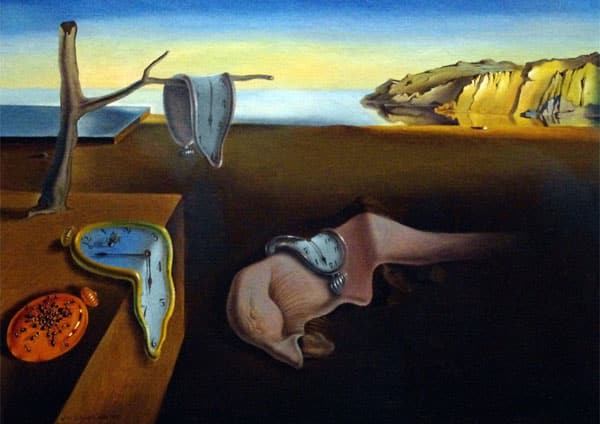
The Biggest Pop Artists of 1931 include
Gus Arnheim & His Orchestra, Ben Bernie & His Orchestra, The Boswell Sisters, Cab Calloway, Russ Columbo, Bing Crosby, Duke Ellington, Ruth Etting, Libby Holman, Hal Kemp, and His Orchestra, Wayne King and His Orchestra, Ted Lewis and His Band, Guy Lombardo and His Royal Canadians, Bert Lown & His Orchestra, Clyde McCoy & His Orchestra, The Mills Brothers, Ray Noble, and His Orchestra, Kate Smith, Rudy Vallée & His Connecticut Yankees, Fred Waring’s Pennsylvanians
Pop Culture Facts & History
Considered his finest film by many, Charlie Chaplin’s City Lights was released. Charlie believed that ‘talking’ was a lesser form of performing in movies, so he didn’t talk, but he did include a soundtrack and sound effects.
Airstream trailers were introduced to the public, invented by Wally Meryle Byam. They say that 2/3 of every one of these vehicles ever produced is still in use.
Hail Columbia was considered (among other songs) as the unofficial national anthem of the United States until 1931, when The Star-Spangled Banner was officially designated.
17-year-old female baseball pitcher Jackie Mitchell struck out both Babe Ruth and Lou Gehrig in the same exhibition game.
Betty Robinson, an Olympic runner, was involved in a plane crash in 1931 and was wrongly pronounced dead upon first being discovered. She spent seven months in a coma and it took her two years to learn to walk normally again. In 1936, she returned to the US Olympic team and won gold in the relay.
Alka-Seltzer was made available in 1931. The original ingredients included 325 milligrams of aspirin, 1,000 milligrams of citric acid, and 1,916 milligrams of sodium bicarbonate.
CBS went on the air.
Alice in Wonderland was banned in the Hunan province of China, because the Governor, Ho Chien, felt that: “animals should not use human language”, and that it was “disastrous to put animals and human beings on the same level.”
Karl Freund, cinematographer on Metropolis (1927), and Dracula (1931), also shot most of the I Love Lucy episodes.
In Frankenstein, the line “Now I know what it feels like to be God!” following “It’s alive! It’s alive!” was censored by audio of a clap of thunder because it was considered blasphemous and was restored decades later. Most props used in Mel Brook’s Young Frankenstein were from the original 1931 Frankenstein film. The “bolts” in the Monster’s neck in Frankenstein, are electrodes. One is positive and the other, negative.
RIP
New Zealand’s Mount Victoria Tunnel is also known as “The tooting tunnel,” and when you start tooting in there, people start tooting with you. Tooting in there is a way to pay tribute to pregnant murdered teenager Phillis Symons in 1931.
Ninety-six workers died while constructing the Hoover Dam from 1931-1935.
An 11-year-old boy, Wilbur Brink, was killed during the 1931 Indy 500 race when a tire from a race wreck flew out of the Speedway, across the street, and over his house, landing on his head as he played in his backyard.
When Thomas Edison died in 1931, Nikola Tesla was the only one to submit an unfavorable opinion of him to the NY Times:
“He had no hobby, cared for no sort of amusement of any kind, and lived in utter disregard of the most elementary rules of hygiene … His method was inefficient in the extreme, for an immense ground had to be covered to get anything at all unless blind chance intervened and, at first, I was almost a sorry witness of his doings, knowing that just a little theory and calculation would have saved him 90 percent of the labor. But he had a veritable contempt for book learning and mathematical knowledge, trusting himself entirely to his inventor’s instinct and practical American sense.”
Do Not Stand At My Grave and Weep
Mary Elizabeth Frye was an American housewife and florist who scribbled a poem (‘Do not stand at my grave and weep’) on a paper bag. She circulated the poem privately, but never published or copyrighted it.
Do not stand at my grave and weep
I am not there. I do not sleep.
I am a thousand winds that blow.
I am the diamond glints on snow.
I am the sunlight on ripened grain.
I am the gentle autumn rain.
When you awaken in the morning’s hush
I am the swift uplifting rush
Of quiet birds in circled flight.
I am the soft stars that shine at night.
Do not stand at my grave and cry;
I am not there. I did not die.
Nobel Prize Winners
Physics – not awarded
Chemistry – Carl Bosch, Friedrich Bergius
Physiology or Medicine – Otto Heinrich Warburg
Literature – Erik Axel Karlfeldt
Peace – Jane Addams, Nicholas Murray Butler
Jane Addams was nominated 91 times for the Nobel Peace Prize before becoming the first American woman to receive the award in 1931. She was the first American Woman to win the Nobel Peace Prize.
Popular and Best-selling Books From 1931
A White Bird Flying by Bess Streeter Aldrich
Back Street by Fannie Hurst
The Bridge of Desire by Warwick Deeping
Finch’s Fortune by Mazo de la Roche
The Good Earth by Pearl S. Buck
Grand Hotel by Vicki Baum
Maid in Waiting by John Galsworthy
The Road Back by Erich Maria Remarque
Shadows on the Rock by Willa Cather
Years of Grace by Margaret Ayer Barnes
Sports
World Series Champions: St. Louis Cardinals
Stanley Cup Champs: Montreal Canadiens
U.S. Open Golf: Billy Burke
U.S. Tennis (Men/Ladies): H. Ellsworth Vines/Helen Wills Moody
Wimbledon (Men/Women): Sidney Wood/Cilly Aussem
NCAA Football Champions: USC
Kentucky Derby Winner: Twenty Grand
Boston Marathon Winner: James Henigan Time: 2:46:45
More 1931 Facts & History Resources:
Most Popular Baby Names (BabyCenter.com)
Popular and Notable Books (popculture.us)
Broadway Shows that Opened in 1931
1931 Calendar, courtesy of Time and Date.com
Fact Monster
The Great Depression Hoover Library
1930s, Infoplease.com World History
1931 in Movies (according to IMDB)
Retrowaste Vintage Culture
1930s Slang
Wikipedia 1931
WW II Timeline
1932 Oscars 4th Academy Awards
1932 Oscars 4th Academy Awards
- The 4th Academy Awards took place on November 10, 1931.
- The ceremony was hosted in the Sala D’Oro at the Biltmore Hotel.
- Lawrence Grant, a British character actor, took on hosting duties.
- Eligibility for awards was for films released between August 1, 1930, and July 31, 1931.
Noteworthy Moments:
- Cimarron became the first Western to win Best Picture.
- Marie Dressler won Best Actress for her role in Min and Bill, making her the oldest actress to win this category.
- Wesley Ruggles won Best Director for Cimarron.
- Cimarron earned 7 nominations, winning 3. It was the first Western to win Best Picture. The second was Dances With Wolves in 1990.
- Charlie Chaplin’s City Lights received no nominations.
- Also Snubbed: Dracula, Frankenstein, Little Caesar, Public Enemy, Applause
Trivia:
- This was the first year where the awards started acknowledging sound in a separate category: Best Sound Recording.
- The film The Front Page was nominated for three major awards but won none. It would later be remade as His Girl Friday in 1940.
- Skippy, based on a comic strip, is the earliest film to receive a Best Director nomination that is still copyrighted.
- This year was the first and only time the Academy handed out an award for Best Assistant Director.
- This ceremony was among the shortest, lasting only about an hour.
4th Academy Awards Oscar Nominees and Winners
Cimarron – William LeBaron for RKO Pictures (WINNER)
East Lynne – Winfield Sheehan for Fox Film Corporation
The Front Page – Howard Hughes for United Artists
Skippy – Adolph Zukor for Paramount Pictures
Trader Horn – Irving Thalberg for Metro-Goldwyn-Mayer
Norman Taurog – Skippy (WINNER)
Wesley Ruggles – Cimarron
Clarence Brown – A Free Soul
Lewis Milestone – The Front Page
Josef von Sternberg – Morocco
Lionel Barrymore – A Free Soul as Stephen Ashe (WINNER)
Jackie Cooper – Skippy as Skippy Skinner
Richard Dix – Cimarron as Yancey Cravat
Fredric March – The Royal Family of Broadway as Tony Cavendish
Adolphe Menjou – The Front Page as Walter Burns
Marie Dressler – Min and Bill as Min Divot (WINNER)
Marlene Dietrich – Morocco as Amy Jolly
Irene Dunne – Cimarron as Sabra
Ann Harding – Holiday as Linda Seton
Norma Shearer – A Free Soul as Jan Ashe
The Dawn Patrol – John Monk Saunders (WINNER)
The Doorway to Hell – Rowland Brown
Laughter – Harry d’Abbadie d’Arrast, Douglas Doty, and Donald Ogden Stewart
The Public Enemy – John Bright and Kubec Glasmon
Smart Money – Lucien Hubbard and Joseph Jackson
Cimarron – Howard Estabrook, based on the novel by Edna Ferber (WINNER)
The Criminal Code – Seton I. Miller and Fred Niblo Jr., based on the play by Martin Flavin
Holiday – Horace Jackson, based on the play by Philip Barry
Little Caesar – Francis Edward Faragoh and Robert N. Lee, based on the novel by William R. Burnett
Skippy – Joseph L. Mankiewicz and Sam Mintz, based on the comic strip by Percy Crosby
Paramount Publix Studio Sound Department (WINNER)
MGM Studio Sound Department
RKO Radio Studio Sound Department
Samuel Goldwyn-United Artists Studio Sound Department
Cimarron – Max Rée (WINNER)
Just Imagine – Stephen Goosson and Ralph Hammeras
Morocco – Hans Dreier
Svengali – Anton Grot
Whoopee! – Richard Day
Tabu – Floyd Crosby (WINNER)
Cimarron – Edward Cronjager
Morocco – Lee Garmes
The Right to Love – Charles Lang
Svengali – Barney McGill

1931 Music: Popular Music, Songs and Artists
1931 Popular Music, Songs and Artists
Dancing in the Dark
The music for this song was by Arthur Schwartz and lyrics by Howard Dietz and was originally performed by John Barker in the 1931 revue The Band Wagon. Besides Bing Crosby, the song was recorded by Fred Astaire, Frank Sinatra and Tony Bennet. The song was also used as a ballet sequence danced by Fred Astaire and Cyd Charisse in the 1953 MGM film version of The Band Wagon.
Cab Calloway and his Cotton Club Orchestra
Minnie the Moocher
This song would be song recorded and re-recorded by Cab Calloway. The song would be known for its skat lyrics which would have Callaway sing a phrase and then the audience would repeat the phrase. Calloway would make the phrases more and more complicated until the audience could no longer follow him. Max Fleischer would animate the song using Betty Boop as its main character.
The song would be used in many TV shows such as That Girl and Family Guy. In movies the song would be used in The Blues Brothers, Calloway would sing the song himself in the film. Cab Calloway would have a long and successful career. He would even star with Pearl Bailey in an all-black version of Jerry Herman’s Hello Dolly.
Ethel Waters
I Got Rhythm
This song would span the decades. Written by The Gershwin brothers, the song was originally sung by the great Ethel Merman in the show Girl Crazy. It would be used in An American in Paris starring Gene Kelly and made it to # 3 on the charts in 1967 when sung by The Happenings. Barbra Streisand and Brian Wilson also recorded the song and Merman would record a disco version in the 1970s.
Guy Lombardo
Goodnight Sweet Heart
The song was written by the British songwriting team of Ray Noble, Jimmy Campbell and Reg Connelly, and performed by such artists as Rudy Vallée, Bing Crosby, and Dean Martin, among others. The song appeared in two different films Stage Door Canteen and Holiday in Mexico.
Jacques Renard and his Orchestra
As Time Goes By
As Time Goes By was written by Herman Hupfeld and performed as hit by Jacques Renard and his Orchestra as well as Rudy Vallee that year. The song was performed first in the Broadway musical Everybody’s Welcome. This song would come into its full popularity in 1942 when it was sung in the film Casablanca. This song would appear on AFI’s 100 years 100 songs at #2.
Libby Holman
Love For sale
This was written in 1930 for the Broadway musical The New Yorkers. although it became popular it was considered scandalous at the time as it was sung by a prostitute describing her profession. The song was banned by radio stations at the time, but it would go on to be recorded many times in subsequent years.
Louis Armstrong
Lazy River
This song was written by Hoagy Carmichael and Sidney Arodin and published in 1930. The song began making it’s mark in 1931 when it was recorded by Louis Armstrong. The song would be recorded over and over by such artists as The Mills Brothers and Harry Connick Jr. The song was sung as a duet by Lucille Ball and Carol Burnett in an episode of The Lucy Show.
Paul Whiteman
Cuban Love Song
This song was the title for a 1931 film that told the story of a U.S. soldier who returns to Cuba to seek his illegitimate child. Directed by W.S. Van Dyke, and produced at MGM in 1931, the film starred Lawrence Tibbett, Lupe Velez, Jimmy Durante.
Ray Noble
Lady Of Spain
This song was written in 1931 by Robert Hargreaves, Tolchard Evans, Stanley J. Damerell, and Henry Tilsley. It would continue to be recorded and gain in popularity over the next decade and more. Artists like Bing Cosby, Eddie Fisher. The song was a sort of signature song for Lawrence Welk’s Accordionist Myron Floren.
Top Artists and Songs of 1931
Smile Darn Ya Smile
At Your Command
Dancing in the Dark
Just a Gigilo
Just One More Chance
Out of Nowhere
Betwen the Devil and the Deep Blue SeaDoin’ The Rhumba
Kickin The Gong Around
Minnie The Moocher
Nobody’s Sweetheart
Six or Seven Times
St. James Infirmary
Tickeration
Sugar Blues
Blue Again
Creole Rhapsody (parts 1 & 2)
Limehouse Blues
Mood Indigo
Rockin’ In Rhthym
I Got Rhthym
Dancing in the Dark
I Found A Million Dollar Baby (In A Five and Dime Store)
That Silver haired Daddy of Mine
I Surrender Dear
Sweet and Lovely
By The River St. Marie
Good Night, Sweetheart
(There Ought To Be A) Moonlight Savings Time
Stardust
As Time Goes By
Cuban Love Song Kate Smith
When the Moon Comes Over the Mountain
Oh Donna Clara
Love For Sale
(I’ll Be Glad When You’re Dead) You Rascal You
Lazy River
Stardust
The Peanut Vendor
Tiger Rag
Cuban Love Song
Lady of Spain
I Got Rhthym
As Time Goes By
Goodnight Sweetheart
Goodnight Sweetheart
Experience Blues
Time on my Hands (You in My Arms)
Just A Gigilo
Somebody Loves You
Lonesome Valley
Dream A Little Dream of Me
Good Night, Sweetheart
Wabash Moon

1930 History, Fun Facts and Trivia
1930 History, Facts and Trivia
Quick Facts from 1930
- World-Changing Event: Ruth Wakefield of the Toll House Inn in Whitman, Massachusetts, invented the chocolate chip cookie.
- Influential Songs include Happy Days Are Here Again by Benny Menoff and his Orchestra—also Puttin’ on the Ritz.
- The Movies to Watch include Whoopee!, Animal Crackers, All Quiet on the Western Front, Feet First, The King of Jazz, and The Shame of Mary Boyle.
- The Most Famous Person in America was probably Henry Ford
- Notable books include The Little Engine That Could by Watty Piper
- Price of Women’s silk stockings in 1930: 89 cents
- The Biggest Movie Star was Clara Bow
- The Conversation: On April 18, 1930, the BBC announced, “There is no news today,” and played piano music instead.
- Take our 1930 Quiz!
1930 History Highlight:
- January 26 – Indian National Congress Declared Independence: The Indian National Congress proclaimed January 26 as Independence Day, resolving for Purna Swaraj (complete independence) from British rule.
- February 18 – Discovery of Pluto: Astronomer Clyde Tombaugh discovered Pluto at the Lowell Observatory in Flagstaff, Arizona, expanding our understanding of the solar system.
- March 12 – Gandhi’s Salt March Began: Mahatma Gandhi commenced the 241-mile Salt March to Dandi, protesting the British monopoly on salt in India, a pivotal event in the Indian independence movement.
- April 22 – London Naval Treaty Signed: The United Kingdom, Japan, and the United States signed the London Naval Treaty, aiming to regulate submarine warfare and limit naval shipbuilding.
- May 6 – Salmas Earthquake in Iran: A 7.1 magnitude earthquake struck northwestern Iran and southeastern Turkey, resulting in significant casualties and destruction.
- May 15 – First Female Flight Attendant Took to the Skies: Ellen Church became the world’s first female flight attendant, working on a Boeing Air Transport flight, marking a milestone in aviation history.
- May 24 – Amy Johnson’s Solo Flight to Australia: British aviator Amy Johnson landed in Darwin, becoming the first woman to fly solo from England to Australia, covering approximately 11,000 miles.
- June 17 – Smoot-Hawley Tariff Act Enacted: President Herbert Hoover signed the Smoot-Hawley Tariff Act into law, raising U.S. tariffs on imported goods, which many believe exacerbated the Great Depression.
- July 7 – Construction of Hoover Dam Began: Work commenced on the Hoover Dam (initially known as Boulder Dam) on the Colorado River, a significant engineering project aimed at flood control and electricity generation.
- July 13 – Inaugural FIFA World Cup Kicked Off: The first FIFA World Cup tournament began in Montevideo, Uruguay, marking the start of the world’s premier international football competition.
- July 30 – Uruguay Won First FIFA World Cup: Uruguay defeated Argentina 4-2 in the final match, becoming the first nation to win the FIFA World Cup.
- August 7 – R. B. Bennett Became Canadian Prime Minister: Richard Bedford Bennett took office as the 11th Prime Minister of Canada, leading the country during the early years of the Great Depression.
- September 6 – Argentine Coup d’État: A military coup in Argentina overthrew President Hipólito Yrigoyen, leading to a period of military rule under José Félix Uriburu.
- September 14 – Nazi Party Gained Seats in German Reichstag: In federal elections, the National Socialist German Workers’ Party (Nazi Party) increased its representation, becoming the second-largest party in the Reichstag.
- October 5 – British Airship R101 Crashed: The world’s largest airship at the time, R101, crashed in France during its maiden overseas voyage, resulting in 48 fatalities.
- November 2 – Haile Selassie Crowned Emperor of Ethiopia: Ras Tafari Makonnen was crowned Emperor Haile Selassie I, initiating a reign that would last until 1974.
- November 25 – Izu Peninsula Earthquake in Japan: A significant earthquake struck the Izu Peninsula, causing extensive damage and over 200 deaths.
- December 2 – Great Depression Public Works Program Proposed: President Herbert Hoover addressed Congress, requesting a $150 million public works program to stimulate the economy during the Great Depression.
- December 19 – Mount Merapi Erupted in Indonesia: The eruption of Mount Merapi in central Java led to the destruction of numerous villages and the loss of approximately 1,300 lives.
- December 24 – First Demonstration of Cloud Projection: Inventor Harry Grindell Matthews showcased a device in London capable of projecting images onto clouds, an early exploration into large-scale image projection.
- December 29 – Allama Iqbal Proposed the Idea of Pakistan: In his presidential address at the Allahabad conference, poet and philosopher Allama Iqbal outlined the vision for a separate Muslim state, later becoming Pakistan.
- Great Depression Deepened Globally: The global economic downturn intensified, leading to widespread unemployment, poverty, and political instability in numerous countries.
- Rise of Totalitarian Movements: Fascism, Nazism, and other authoritarian ideologies gained momentum across Europe, with leaders like Adolf Hitler and Benito Mussolini consolidating power.
- Technicolor Film Technology Advanced: Films such as King of Jazz showcased the growing use of Technicolor, revolutionizing the motion picture industry with vivid color imagery.
- Advances in Aviation: Charles Lindbergh and other aviation pioneers broke records for speed and distance, symbolizing progress in air travel and technology.
Top Ten Baby Names of 1930
Mary, Betty, Dorothy, Helen, Margaret, Barbara, Patricia, Joan, Doris, Ruth
Robert, James, John, William, Richard, Charles, Donald, George, Joseph, Edward
US Life Expectancy
(1930) Males: 58.1 years, Females: 61.6 years
The Stars
Josephine Baker, Joan Blondell, Clara Bow, Louise Brooks, Joan Crawford, Marion Davies, Dolores Del Rio, Marlene Dietrich, Greta Garbo, Jean Harlow, Myrna Loy, Barbara Stanwyck, Thelma Todd
Miss America
none
Time Magazine’s Man of the Year
Mohandas Karamchand Gandhi
Entertainment History: The Academy Awards
The 2nd Academy Awards occurred on April 3, 1930, at an extravagant dinner at the Cocoanut Grove of the Ambassador Hotel in Los Angeles, California. William C. DeMille, older brother of the famed director Cecil B. DeMille, acted as the evening’s host. This event marked the first time the eligibility period was extended to more than one year, covering films released between August 1, 1928, and July 31, 1929. Interestingly, the ceremony was private, attended mostly by industry insiders, and not broadcast on radio or television. The Best Picture winner was The Broadway Melody, and it also was the first sound film to win the top honor. One trivia nugget—there was no Best Actor or Best Actress category; instead, winners received an “Academy Award for Best Acting.”
The 3rd Academy Awards were held on November 5, 1930, at the iconic Fiesta Room of the Ambassador Hotel in Los Angeles, California. Conrad Nagel, a prominent actor of that era, hosted the ceremony. The eligibility year for the films was from August 1, 1929, to July 31, 1930, which was a departure from the previous year’s extended eligibility period. This year featured the first-ever awards for Best Sound Recording and Best Art Direction, adding some new categories. All Quiet on the Western Front took home the Best Picture award and was also notable for its anti-war narrative. Another fascinating piece of trivia: The awards ceremony was the shortest in history, lasting just 15 minutes. There were no acceptance speeches, and winners were announced in advance, stripping the event of some of its modern-day suspense.
Firsts, Inventions, and Wonders
Cartoon hottie Betty Boop first appeared in 1930, in Dizzy Dishes, although she was more like a poodle. She became more human-like in 1932.
The first appearance of comic strip Blondie by Chic Young.
January 13 – The first Mickey Mouse comic strip was published.
The radio mystery program The Shadow aired for the first time.
Scotch cellophane tape was invented in 1930 by 3M engineer Richard Drew. The ‘3M’ is the original company name – Minnesota Mining and Manufacturing Company.
Twinkies, a “Golden Sponge Cake with Creamy Filling,” was invented.
MGM’s first color (Technicolor) sound cartoon, Fiddlesticks, was made by Ub Iwerks.
KFC, also known as Kentucky Fried Chicken, was founded by Colonel Harland David Sanders. He was not a military colonel.
Clarence Birdseye was granted a US Patent (#1773079A) for his method of quick freezing food.
Clyde Tombaugh was photographing the sky and comparing the pictures. He noticed a faint dot that had moved. The young man from Kansas discovered Pluto, named by 11-year-old Venetia Burney. Percival Lowell thought something was up between Neptune and Uranus and had been looking for the planet since 1905.
The Irish Free State Hospitals’ Sweepstakes (Irish Sweepstakes) was founded.
Paul and Joseph Galvin and William Lear created the first car radio called a “motorized victrola,” which they shortened to Motorola.
In 1924, Kleenex was invented and advertised as a cold cream remover. It was rebranded in 1930 after many customers reported using the product primarily for blowing their noses.
DuPont invented Neoprene (a versatile rubber).
Spaulding developed the Kro-Flight golf ball, the first wound ball with a liquid center. The ball increased distance and control for golfers.
The Biggest Pop Artists of 1930 include
Arden-Ohman Orchestra, Earl Burtnett & His Los Angeles Biltmore Hotel Orchestra, Duke Ellington, Libby Holman, Isham Jones and His Orchestra, Wayne King and His Orchestra, Ted Lewis and His Band, Guy Lombardo and His Royal Canadians, Red Nichols & His Five Pennies, Regent Club Orchestra, Harry Richman, Leo Reisman Orchestra, Jacques Renard and His Orchestra, Nat Shilkret & the Victor Orchestra, Rudy Vallée & His Connecticut Yankees, Ted Wallace & His Campus Boys, Fred Waring’s Pennsylvanians, Ted Weems and His Orchestra, Paul Whiteman & His Orchestra
Charts based on Billboard music charts.
Strange News
On April 18, 1930, the BBC announced, “There is no news today,” and played piano music instead.
A mysterious man visited Edgar Allen Poe’s grave every year from 1930-1998 and offered a toast with a glass of Cognac.
Elm Farm Ollie was the first cow to fly in a fixed-wing aircraft and the first cow to be milked in an airplane.
War Plan Red was a hypothetical plan for the U.S. invasion of Canada approved in 1930 by the American Secretary of War.
George Stathakis died after going over Niagara Falls in a barrel, suffocating after becoming trapped behind a water curtain upon impact. His 150-year-old turtle, which came with him, survived.
The Four identical Genain Quadruplet sisters born in 1930 all developed schizophrenia, suggesting a vital genetic component to schizophrenia.
Pop Culture Facts & History
In 1930, Babe Ruth made more than the President ($80,000 vs $75,000); when asked about it, he responded, “I know, but I had a better year.”
The first commercially released “Looney Tunes” cartoon was 1930’s Sinkin’ in the Bathtub. Looney Tunes was created to promote WB’s music catalog in 1930. That’s why it’s “Tunes” and not “Toons.”
The Motion Pictures Production “Hayes Code” was instituted, imposing guidelines on treating sex, crime, religion, and violence in films. It was in place until 1968.
Agatha Christie, G. K. Chesterton, and other British mystery writers formed the Detection Club. Members swore to not use “Divine Revelation, Feminine Intuition, Mumbo Jumbo, Jeggiry-Pokery, Coincidence, or Act of God” in stories. Founded in 1930, the club still exists.
Sir Frank Whittle (RAF) invented the modern jet engine, using a gas turbine to provide forward thrust.
In 1919, Michael Keogh stopped an angry mob of men from killing two right-wing political agents they were beating up. In 1930, at a Nuremberg rally, Keogh recognized one of the agents he had saved. It was Adolf Hitler.
The world’s “longest-running laboratory experiment” demonstrates the fluidity and high viscosity of pitch, a derivative of tar once used for waterproofing boats.” In 1930, pitch was left in a glass funnel to drip out and has only dropped nine times: about once every ten years.
In 1930, there were only 14 Shih Tzu’s left in the world due to restrictions in dog breeding. All modern-day Shih Tzu’s are direct descendants of those 14 dogs.
In North America and most other places, Hamsters are descended from one pregnant female, captured in Syria in 1930.
The Bank of Italy (founded in San Francisco, California, in 1904) was renamed Bank of America.
The Hotel Pennsylvania was built by the Pennsylvania Railroad and operated by Ellsworth Statler. It opened on January 25, 1919, and has used the Phone Number Pennsylvania 6-5000 (212-736-5000) since ~1930. It was also the title of a hit song for Glenn Miller.
Nobel Prize Winners
Physics – Sir Chandrasekhara Venkata Raman
Chemistry – Hans Fischer
Physiology or Medicine – Karl Landsteiner
Literature – Sinclair Lewis
Peace – Nathan Söderblom
The Number One Hits of 1930
December 26, 1929 – January 10, 1930
Paul Whiteman – Great Day
January 11, 1930 – January 31, 1930
Roy Ingraham – Chant Of The Jungle
February 1, 1930 – February 7, 1930
Ted Weems – The Man From The South
February 8, 1930 – February 28, 1930
Benny Meroff – Happy Days Are Here Again
March 1, 1930 – March 7, 1930
Harry Richman – Puttin’ On The Ritz
March 8, 1930 – March 21, 1930
Ben Selvin – Happy Days Are Here Again
March 22, 1930 – May 30, 1930
Rudy Vallee – Stein Song (University of Maine)
May 31, 1930 – June 13, 1930
Hilo Hawaiian Orchestra – When It’s Springtime In The Rockies
June 14, 1930 – July 4, 1930
Ben Selvin – When It’s Springtime In The Rockies
July 5, 1930 – August 22, 1930
Nat Shilkret – Dancing With Tears In My Eyes
August 23, 1930 – September 19, 1930
Fred Waring’s Pennsylvanians – Little White Lies
September 20, 1930 – October 17, 1930
McKinney’s Cotton Pickers – If I Could Be With You One Hour Tonight
October 18, 1930 – November 28, 1930
Paul Whiteman – Body And Soul
November 29, 1930 – December 19, 1930
Duke Ellington – Three Little Words
December 30, 1930 – January 16, 1931
Guy Lombardo – You’re Driving Me Crazy (What Did I Do?)
Popular and Best-selling Books From 1930
Angel Pavement by J. B. Priestley
Chances by A. Hamilton Gibbs
Cimarron by Edna Ferber
The Door by Mary Roberts Rinehart
Exile by Warwick Deeping
The Hidden Staircase (Nancy Drew #2) by Carolyn Keene
The Little Engine That Could by Watty Piper
Rogue Herries by Hugh Walpole
The Secret of the Old Clock (Nancy Drew #1) by Carolyn Keene
Twenty-Four Hours by Louis Bromfield
The Woman of Andros by Thornton Wilder
Years of Grace by Margaret Ayer Barnes
Young Man of Manhattan by Katharine Brush
FIFA World Cup (Soccer)
Uruguay
This was the first ‘World Cup.’ It was started because the United States, the 1932 Olympic Host, would not feature the game in the 1932 Olympiad.
1930 United States Census
Total US Population: 123,202,624
1. New York, New York – 6,930,446
2. Chicago, Illinois – 3,376,438
3. Philadelphia, Pennsylvania – 1,950,961
4. Detroit, Michigan – 1,568,662
5. Los Angeles, California – 1,238,048
6. Cleveland, Ohio – 900,429
7. St. Louis, Missouri – 821,960
8. Baltimore, Maryland – 804,874
9. Boston, Massachusetts – 781,188
10. Pittsburgh, Pennsylvania – 669,817
Sports
World Series Champions: Philadelphia Athletics
Stanley Cup Champs: Montreal Canadiens
U.S. Open Golf: Bobby Jones
U.S. Tennis (Men/Ladies): John H. Doeg/Betty Nuthall
Wimbledon (Men/Women): Bill Tilden/Helen Moody
NCAA Football Champions: Alabama & Notre Dame
Kentucky Derby Winner: Gallant Fox
Boston Marathon Winner: Clarence DeMar Time: 2:34:48
More 1930 Facts & History Resources:
Most Popular Baby Names (BabyCenter.com)
Popular and Notable Books (popculture.us)
Broadway Shows that Opened in 1930
1930 Calendar, courtesy of Time and Date.com
The Great Depression LIB
Fact Monster
1930s, Infoplease.com World History
1930 in Movies (according to IMDB)
Retrowaste Vintage Culture
1920s Slang
1930 US Census Fast Facts
Wikipedia 1930

1930 Oscars 3rd Academy Awards
1930 Oscars II 3rd Academy Awards
- The 3rd Academy Awards were held on November 5, 1930.
- The venue for the ceremony was the Fiesta Room at the Ambassador Hotel.
- Conrad Nagel, a popular actor of the time, served as the host.
- Films released between August 1, 1929, and July 31, 1930, were eligible for awards.
Noteworthy Moments:
- All Quiet on the Western Front won Best Picture and Best Director, a film based on the novel by Erich Maria Remarque.
- Norma Shearer won Best Actress for her role in The Divorcee, a pre-Code drama.
- Lewis Milestone, who directed All Quiet on the Western Front, was the first to win the Directing Award twice.
- The Love Parade earned six nominations but didn’t win any awards.
- Greta Garbo was eventually nominated four times but never received the Academy Award.
Trivia:
- There were two ceremonies in 1930; the 2nd Academy Awards took place earlier in the same year.
- This was the first ceremony where the awards were officially dubbed “Oscars.”
- All Quiet on the Western Front was one of the first films to win both Best Picture and Best Director.
- Conrad Nagel was also one of the 36 Academy of Motion Picture Arts and Sciences co-founders.
- This was the last ceremony to include two-year spans in the eligibility period for nominations.
- Take our 1930 Quiz!
1931 Oscar Nominees and Winners
All Quiet on the Western Front – Carl Laemmle Jr., for Universal Studios (WINNER)
The Big House – Irving Thalberg for Metro-Goldwyn-Mayer
Disraeli – Jack L. Warner and Darryl F. Zanuck for Warner Bros.
The Divorcee – Robert Z. Leonard for Metro-Goldwyn-Mayer
The Love Parade – Ernst Lubitsch for Paramount Pictures
Lewis Milestone – All Quiet on the Western Front (WINNER)
Clarence Brown – Anna Christie
Robert Z. Leonard – The Divorcee
King Vidor – Hallelujah
Ernst Lubitsch – The Love Parade
Clarence Brown – Romance
George Arliss – Disraeli as Benjamin Disraeli (WINNER)
George Arliss – The Green Goddess
Wallace Beery – The Big House
Maurice Chevalier – The Big Pond and The Love Parade
Ronald Colman – Bulldog Drummond and Condemned
Lawrence Tibbett – The Rogue Song
Norma Shearer – The Divorcee as Jerry Martin (WINNER)
Nancy Carroll – The Devil’s Holiday
Ruth Chatterton – Sarah and Son
Greta Garbo – Anna Christie and Romance
Norma Shearer – Their Own Desire
Gloria Swanson – The Trespasser
The Big House – Frances Marion (WINNER)
All Quiet on the Western Front – George Abbott, Maxwell Anderson, and Del Andrews, based on the novel by Erich Maria Remarque
Disraeli – Julien Josephson, based on the play by Louis N. Parker
The Divorcee – John Meehan, based on the novel Ex-Wife by Ursula Parrott
Street of Chance – Howard Estabrook, based on a story by Oliver H. P. Garrett
The Big House – Douglas Shearer (WINNER)
The Case of Sergeant Grischa – John E. Tribby
The Love Parade – Franklin Hansen
Raffles – Oscar Lagerstrom
Song of the Flame – George Groves
King of Jazz – Herman Rosse (WINNER)
Bulldog Drummond – William Cameron Menzies
The Love Parade – Hans Dreier
Sally – Jack Okey
The Vagabond King – Hans Dreier
With Byrd at the South Pole – Joseph T. Rucker and Willard Van der Veer (WINNER)
All Quiet on the Western Front – Arthur Edeson
Anna Christie – William Daniels
Hell’s Angels – Tony Gaudio and Harry Perry
The Love Parade – Victor Milner

1930 Music: Popular Music, Songs and Artists
Top Artists and Songs of 1930Al Jolson | Let Me Sing and I’m Happy To My Mammy Ben Selvin | Happy Days Are Here Again When It’s Springtime In The Rockies Benny Meroff and his Orchestra | Happy Days Are Here Again Beverly Hill Billies | When The Bloom Is On The Sage Big Bill Broonzy | Somebody’s Been Using That Thing Cab Calloway and his Cotton Club Orchestra | St Louis Blues Carmen Miranda | Pra Voce Gostar De Min (Tahi) Don Aziazu and His Havana Casino Orchestra | The Peanut Vendor Duke Ellington | Ring Dem Bells Three Little Words Earl Burtnett & His Los Angeles Biltmore Hotel Orchestra | Puttin On The Ritz So Beats My Heart For You Fred Astaire | Crazy Feet Fred Waring’s Pennsylvanians | Little White Lies Guy Lombardo | Confessin’ That I Love You You’re Driving Me Crazy! (What Did I Do?) Harry Richman | Puttin’ On The Ritz Hilo Hawaiian Orchestra | When It’s Springtime In The Rockies Isham Jones | Trees What’s The Use Jack Payne and his Orchestra | My Baby Just cares For Me Jimmy Rogers | Anniversary Blue Yodel Leo Reisman | What Is This Thing Called Love? Leslie Sarony | Bunky-Doodle-I-Doh Louis Armstrong | If I Could Be With You One Hour Tonight Memories of You McKinney’s Cotton Pickers | If I Could Be With You One Hour Tonight Mississippi Sheiks | Sitting on Top of the World Nat Shilkret | Dancing With Tears In My Eyes Get Happy
| Paul Whiteman Red Nichols | Embraceable You Regent Club Orchestra | Dancing With Tears In My Eyes Roy Ingraham | Chant of the Jungle Rudy Vallee and his Connecticut Yankees | Betty Co-ed Stein Song (University of Maine) Ruth Etting | Ten Cents a Dance Son House | Preachin Blues Ted Lewis and his Orchestra | On the Sunny Side of the Street Three O’Clock in the Morning Ted Weems | My Baby Just Cares For Me Van Phillips | I’m In The Market For You 1930 Oscars 2nd Academy Awards
1930 Oscars 2nd Academy Awards
Noteworthy Moments:
Trivia:
Observation: I wonder if people got susshhh’d in the cinema when only silent movies were around?
1930 Oscar Nominees and WinnersOutstanding Picture:
The Broadway Melody – Irving Thalberg and Lawrence Weingarten for Metro-Goldwyn-Mayer (WINNER) Alibi – Roland West for United Artists The Hollywood Revue of 1929 – Irving Thalberg and Harry Rapf for Metro-Goldwyn-Mayer In Old Arizona – Winfield Sheehan for Fox Film Corporation The Patriot – Ernst Lubitsch for Paramount Pictures Best Director:
Frank Lloyd – The Divine Lady (WINNER) Harry Beaumont – The Broadway Melody Frank Lloyd – Drag Irving Cummings – In Old Arizona Lionel Barrymore – Madame X Ernst Lubitsch – The Patriot Frank Lloyd – Weary River Best Actor:
Warner Baxter – In Old Arizona as The Cisco Kid (WINNER) George Bancroft – Thunderbolt as Thunderbolt Jim Lang Chester Morris – Alibi as Chick Williams Paul Muni – The Valiant as James Dyke Lewis Stone – The Patriot as Count Pahlen Best Actress:
Mary Pickford – Coquette as Norma Besant (WINNER) Ruth Chatterton – Madame X as Jacqueline Floriot Betty Compson – The Barker as Carrie Jeanne Eagels (posthumous nomination) – The Letter as Leslie Crosbie Corinne Griffith – The Divine Lady as Emma Hart Bessie Love – The Broadway Melody as Harriet “Hank” Mahoney Best Writing:
The Patriot – Hanns Kräly, based on Ashley Dukes’ translation of the play Der Patriot by Alfred Neumann, and the story “Paul I” by Dmitry Merezhkovsky (WINNER) The Cop – Elliot Clawson In Old Arizona – Tom Barry, based on the story “The Caballero’s Way” by O. Henry The Last of Mrs. Cheyney – Hanns Kräly, based on the play by Frederick Lonsdale The Leatherneck – Elliot Clawson Our Dancing Daughters – Josephine Lovett Sal of Singapore – Elliot Clawson, based on the story “The Sentimentalists” by Dale Collins Skyscraper – Elliot Clawson, based on a story by Dudley Murphy The Valiant – Tom Barry, based on the play by Halworthy Hall and Robert Middlemass A Woman of Affairs – Bess Meredyth, based on the novel The Green Hat by Michael Arlen Wonder of Women – Bess Meredyth, based on the novel Die Frau des Steffen Thromholt by Hermann Sudermann Best Art Direction:
The Bridge of San Luis Rey – Cedric Gibbons (WINNER) Alibi – William Cameron Menzies The Awakening – William Cameron Menzies Dynamite – Mitchell Leisen The Patriot – Hans Dreier Street Angel – Harry Oliver Best Cinematography:
White Shadows in the South Seas – Clyde De Vinna (WINNER) 4 Devils – Ernest Palmer The Divine Lady – John F. Seitz In Old Arizona – Arthur Edeson Our Dancing Daughters – George Barnes Street Angel – Ernest Palmer Oscar® and Academy Awards® and Oscar® design mark are the trademarks and service marks and the Oscar© statuette the copyrighted property, of the Academy of Motion Picture Arts and Sciences. Pop Culture Madness is neither endorsed by nor affiliated with the Academy of Motion Picture Arts and Sciences.
 Bandleader Glenn Miller
Glenn MillerGlenn Miller was an American big band musician, trombonist, arranger, and composer who achieved great success in the swing era of the 1930s and 1940s. Born on March 1, 1904, in Clarinda, Iowa, Miller became one of the best-selling recording artists of his time, known for his unique style and sound. He led one of the most famous big bands in history, the Glenn Miller Orchestra, and recorded numerous hit records before his tragic disappearance in 1944 during World War II.
 Crooner Bing Crosby
Bing CrosbyBing Crosby was an American singer, actor, and radio personality who became one of the best-selling recording artists of the 20th century. Born Harry Lillis Crosby Jr. on May 3, 1903, in Tacoma, Washington, he grew up in a musical family and began singing early on. With his distinctive warm baritone voice, Crosby became one of the most influential and successful crooners of his time.
 Bandleader Guy LombardoGuy LombardoGuy Lombardo (born June 19, 1902 – died November 5, 1977) was a Canadian-American bandleader, violinist, and composer who became a popular music icon. His orchestra, Guy Lombardo and His Royal Canadians, was known for its “sweet” dance music style and was a fixture of American New Year’s Eve celebrations for decades.
 Bandleader Paul WhitemanPaul WhitemanPaul Whiteman was a prominent American bandleader, composer, and orchestral director who played a significant role in popularizing jazz music during the 1920s and 1930s. Born on March 28, 1890, in Denver, Colorado, Whiteman grew up in a musical family. His father, Wilberforce J. Whiteman, was a music teacher and music supervisor for the Denver Public Schools. Whiteman began studying the violin early on and eventually took up the viola. He played in the Denver Symphony Orchestra and later joined the San Francisco Symphony Orchestra. In 1918, Whiteman formed his dance band, which soon gained popularity for its unique fusion of classical music and jazz.
|