web analytics

Tag: Business

  • Pascal’s Wager: The Pragmatic Bet on Belief in God

    Pascal’s Wager: The Pragmatic Bet on Belief in God

    Pascal’s Wager: The Pragmatic Bet on Belief in God

    In the 17th century, French mathematician and philosopher Blaise Pascal proposed a curious argument: Even if you can’t prove that God exists, you should still live as if He does—because the potential upside is infinite, and the downside is negligible.

    This idea became known as Pascal’s Wager. While it’s not a traditional proof of God’s existence, it remains one of the most famous and debated arguments in the philosophy of religion.

    Pascal didn’t claim to know God existed. Instead, he framed belief as a rational bet—a wager with eternal consequences.

    The Argument

    Here’s the logic in its simplest form:

    • If you believe in God and God exists → you gain eternal happiness (heaven).

    • If you believe in God and God does not exist → you lose very little.

    • If you do not believe and God exists → you suffer eternal loss (hell).

    • If you do not believe and God does not exist → you gain very little.

    So, Pascal asks, why not bet on belief? Given the asymmetry of outcomes, belief is the safer option.

    The Payoff Matrix

    Let’s put it into a basic grid:

      God Exists God Doesn’t Exist
    Believe Infinite gain Minor loss (e.g., time, discipline)
    Don’t Believe Infinite loss Minor gain (e.g., freedom, comfort)

    In game theory terms, this is a decision under uncertainty with infinite stakes. Pascal argues that reason alone can’t determine the truth—but reason can still tell us how to bet wisely.

    Belief as a Rational Choice

    Pascal wasn’t trying to prove God exists. He admitted that faith requires more than logic. But he also understood human psychology and offered this wager as a practical guide for the uncertain.

    His approach echoes expected value theory—a concept now central in economics and risk analysis. If the expected value of belief (even with low probability) is infinite, then it outweighs any finite cost.

    In short: When the potential reward is infinite, any finite investment is worth it.

    Common Critiques of Pascal’s Wager

    While clever, the argument has attracted a wide range of criticisms:

    1. Can Belief Be a Choice?

    Can you simply decide to believe something because it’s advantageous? Critics argue that genuine belief requires conviction—not calculation.

    Pascal anticipated this and suggested that habit and practice could lead to sincere belief over time. Go to church, pray, engage with faith—and belief might follow.

    Still, this raises ethical concerns: Is belief valid if it starts from self-interest?

    2. Which God Are We Betting On?

    Pascal’s Wager assumes a specific religious framework (Christianity), but what if another religion is correct? If you bet on the wrong god, could you still lose?

    This is sometimes called the Many Gods Objection. It challenges the idea that belief in any god leads to the same infinite reward—or that the “right” god can be known in advance.

    3. What If the Cost Is Higher Than He Thinks?

    Pascal suggests that the cost of belief is small. But for some, religious belief might involve:

    • Repression of personal identity

    • Sacrifice of intellectual freedom

    • Emotional or cultural tension

    The wager’s appeal depends on how you value what belief might cost in your specific life.

    Modern Interpretations

    Pascal’s Wager has aged surprisingly well. Its logic has been adapted to other fields:

    Decision Theory

    Pascal’s logic resembles risk management. When consequences are extreme (like death or disaster), even a small chance justifies big precautions. This is why we buy insurance.

    Existential Risk

    Some philosophers now use a version of Pascal’s Wager to argue for climate action, AI safety, and nuclear disarmament. If the risk of global catastrophe is small but the impact is enormous, shouldn’t we act just in case?

    AI and Superintelligence

    A twist on the wager has emerged in debates about AI ethics. If future superintelligent AIs might punish non-believers in simulation scenarios (a bizarre hypothetical known as Roko’s Basilisk), does that change how we act now?

    Most philosophers reject these fringe versions—but they show how Pascal’s logic still resonates in new domains.

    Why the Wager Still Matters

    Pascal’s Wager isn’t about proof. It’s about pragmatism. It challenges us to ask:

    • What do I risk by believing?

    • What might I gain?

    • What assumptions shape my decisions?

    It also forces us to confront our uncertainty. Most people don’t have perfect knowledge of the divine. Pascal accepts this ambiguity and builds an argument about how to live without knowing for sure.

    That humility is part of the wager’s power.

    The Man Behind the Bet

    Blaise Pascal (1623–1662) was a mathematician, physicist, inventor, and Christian thinker. He helped develop probability theory, made early breakthroughs in fluid mechanics, and even designed one of the first mechanical calculators.

    In his later years, Pascal turned to theology and philosophy. He never finished his masterwork Pensées (“Thoughts”), but the fragments remain deeply influential. The Wager appears in one of these notes.

    Pascal’s personal struggles with illness, suffering, and spiritual doubt gave his arguments a personal weight. He wasn’t bluffing. He was betting everything.

    Related Thought Experiments

    • Pascal’s Mugging: A twist where someone asks for $5 and promises infinite reward—but gives no reason to believe them. Should you pay up? It explores how the possibility of infinite reward can be abused.

    • The Experience Machine: Challenges whether pleasure alone is enough to justify life—echoing Pascal’s deeper question about meaning vs. happiness.

    • The Veil of Ignorance: Like Pascal’s Wager, it guides decision-making under uncertainty—but for social justice, not spirituality.

    Glossary of Terms

    • Expected Value: A weighted average of all possible outcomes, factoring in probability.

    • Decision Theory: A field of study about how people make choices under uncertainty.

    • Pragmatism: A philosophical approach that evaluates ideas based on their practical consequences.

    • Faith: Belief that goes beyond (or sometimes against) reason or empirical evidence.

    Discussion Questions

    1. Can belief be a rational strategy, even without evidence?

    2. What are the ethical implications of believing just to avoid punishment or gain reward?

    3. How does Pascal’s Wager compare to modern risk-based decision-making?

    References and Further Reading

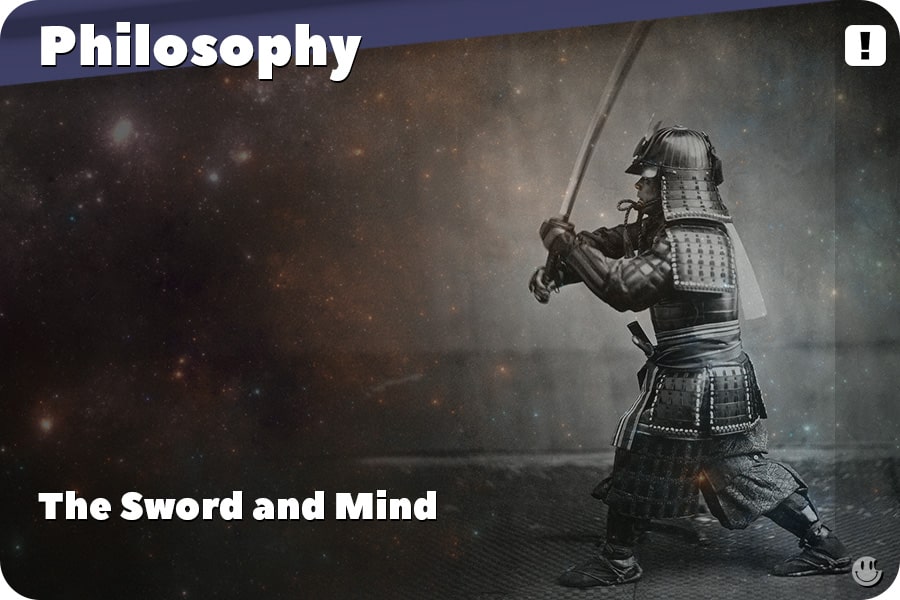
  • The Sword & Mind

    The Sword & Mind

    The Sword & Mind: Harmony in Martial Arts and Philosophy

    Two warriors, two philosophies, one unshakable principle: true mastery lies in the unity of thought and action.

    The Sword & Mind isn’t a single work—it’s the pairing of two influential Japanese texts: The Sword (Heihō Kadensho) by Yagyū Munenori, a legendary samurai and martial strategist, and The Mind (Fudōchi Shinmyōroku) by Takuan Sōhō, a Zen monk who wielded no blade, but trained the minds of those who did. Together, their teachings explore how the battlefield of combat is inseparable from the battlefield of the mind.

    Their union offers more than martial advice—it’s a practical philosophy of leadership, awareness, and balance, equally relevant in boardrooms and daily life.


    The Sword: Yagyū Munenori and the Path of Strategy

    Yagyū Munenori (1571–1646) wasn’t just a skilled swordsman—he founded the Yagyū Shinkage-ryū school and sword instructor to the Tokugawa shogunate. His work, Heihō Kadensho (“The Book of Family Traditions on the Art of War”), fuses martial tactics with moral and mental preparation.

    The Life-Giving Sword (Katsujin-ken)

    This central concept turns the Western image of the sword on its head. Munenori argues that the highest expression of swordsmanship is not to kill but to preserve life. When wielded with clarity and restraint, the sword is a tool of peace. Only the undisciplined use violence as a last resort.

    In modern terms, this echoes the idea of de-escalation in leadership—winning by preventing conflict rather than initiating it.

    The No-Sword (Muto)

    At the highest level, the sword master does not need for it. Muto, or “no-sword,” refers not to disarmament but to transcending dependence on the weapon itself. The true warrior’s presence, perception, and calm resolve are their greatest defense.

    This mirrors concepts in business and strategy where the most influential leaders succeed not by force but through insight, presence, and anticipation.

    The Three Modes of Conflict (Sansatsu-no-hō)

    Munenori outlines three strategic approaches:

    • Killing Sword (Satsujin-ken): defeating by force.

    • Life-Giving Sword (Katsujin-ken): neutralizing conflict without bloodshed.

    • No-Sword (Muto): resolving without engagement—winning without fighting.

    Each mode is suited to its time and context. The disciplined mind chooses the right mode based not on ego, but clarity.


    The Mind: Takuan Sōhō and Zen in Action

    Takuan Sōhō (1573–1645) was no swordsman, yet his insights into mental discipline shaped generations of warriors. A Rinzai Zen monk, he advised Munenori and Miyamoto Musashi, the famed duelist and author of The Book of Five Rings.

    His treatise, Fudōchi Shinmyōroku (“The Mysterious Record of Immovable Wisdom”), explores the inner dimension of combat: how perception, emotion, and intention affect every action.

    Immovable Mind (Fudōshin)

    The warrior’s mind must remain still—calm in the chaos. This doesn’t mean apathy but a mind that is present yet undisturbed by fear, distraction, or anticipation. Still water reflects clearly; so too must the mind remain undistorted.

    Takuan warns that hesitation, overthinking, or clinging to form can lead to death in combat and any decisive moment.

    No-Mind (Mushin)

    This is the heart of Zen combat philosophy. Mushin means acting without conscious thought—responding fluidly and instantly, without ego or calculation. It’s not instinct; it’s trained intuition released from attachment.

    As Takuan puts it: “When the mind stops with any one thing, it misses a hundred others.” No mind allows the warrior to move freely and without fear.

    Unity of Mind and Body

    Takuan insists that mental clarity and physical action are inseparable. A sluggish mind delays the sword. A distracted mind misreads danger. True mastery unites the two into one seamless, fluid expression.

    Today, this unity shows up in athletes’ flow states, in musicians’ improvisation, in a CEO’s split-second decision-making. The principle holds across time.


    Why the Sword Needs the Mind (and Vice Versa)

    Individually, Munenori and Takuan offer rich frameworks for action and awareness. Together, they form a complete path:

    • Munenori teaches how to respond to external forces—opponents, conflict, and decision points.

    • Takuan reveals how to tame internal forces, such as emotion, doubt, and distraction.

    One without the other is dangerous. Technique without awareness leads to recklessness. Awareness without discipline leads to paralysis. But together? That’s heihō—the art of strategy, in its highest form.


    The Business of Battle: Modern Relevance

    You don’t need a katana to apply The Sword & Mind.

    • In leadership, Katsujin-ken involves knowing when to shield your team, when to challenge, and when to stand down.

    • In negotiations, No-Sword reminds us that the greatest power is influence without threat.

    • In entrepreneurship, Mushin fosters agility, allowing quick pivots without emotional whiplash.

    • In creative work, Fudōshin teaches us how to hold focus amid chaos and distraction.

    This is why The Sword & Mind resonates beyond martial arts. It’s a philosophy of mastery, clarity, and compassion—whether facing a rival, a business crisis, or your own self-doubt.


    Fun Fact: Takuan’s Radish Legacy

    Takuan Sōhō is also the namesake of takuan-zuke—the bright yellow pickled daikon radish popular in Japanese cuisine. The same monk who wrote about immovable wisdom also revolutionized food preservation. Enlightenment pairs well with a bento box.


    Glossary of Terms

    • Heihō – Strategy or martial art; literally “soldier method.”

    • Katsujin-ken – The “life-giving sword,” which protects life rather than ends it.

    • Muto – “No-sword”; transcending dependence on physical weapons.

    • Fudōshin – “Immovable mind”; unshakable presence under pressure.

    • Mushin – “No-mind”; freedom from attachment or hesitation.

    • Rinzai Zen – A school of Zen Buddhism emphasizing sudden insight and koan practice.


    Discussion Questions

    1. In your life or work, how do you recognize when to act decisively versus when to hold still?

    2. Can you recall a moment where no-mind (Mushin) helped you act more effectively than overthinking would have?

    3. How can leaders balance compassion with assertiveness—wielding the life-giving sword?


    References & Suggested Reading

    • Yagyū Munenori, The Life-Giving Sword, trans. William Scott Wilson, Kodansha International

    • Takuan Sōhō, The Unfettered Mind, trans. William Scott Wilson

    • Thomas Cleary, Soul of the Samurai

    • Hurst, G. Cameron III, “The Martial Arts and Ways of Japan: An Historical Survey,” Japanese Journal of Religious Studies

    • Stanford Encyclopedia of Philosophy – Zen


  • Fun On Purpose Podcast by the fun dept.

    Fun On Purpose Podcast by the fun dept.


    Fun On Purpose Podcast

    Hosts Christopher Bruce and Nick Gianoulis, Godfather of Fun, lead thoughtful conversations with industry experts and thought leaders, helping us all become happier, healthier, and more connected.

    Welcome to the fun dept. podcast, where workplace culture meets innovation, and fun becomes the driving force behind engagement, training, and development. Whether you’re a leader, manager, or team member, this podcast is your go-to resource for learning how to create a work environment where people are empowered, connected, and motivated to thrive.

    Each episode dives deep into proven strategies, expert insights, and real-world success stories that show how fun can transform how we work and how we grow as teams and individuals. From actionable tips on building stronger communication to creative ways to keep training exciting, we’re here to help you spark energy and inspiration in your workplace.

    Get ready to explore how engagement doesn’t have to be complicated—and why making development enjoyable is the secret to a happier, more productive team. Tune in and discover how to turn fun into a powerful tool for growth. Subscribe now and start your journey toward a workplace that’s not just functional but truly exceptional!

    #FunOnPurpose #EmployeeEngagement #TrainingAndDevelopment #WorkplaceCulture

    Fun is a choice…so let’s have FUN ON PURPOSE!

    The Fun on Purpose Podcast, powered by the fun dept. explores the many facets of Fun, how to quantify it, and the countless ways listeners can use it to improve their quality of work and life. Nick and Chris engage in energetic discussion in each segment as they explore how their guests use fun, humor, play, and more in their lives and businesses.

    About the fun dept. and Nick Gianoulis

    Founded by Nick Gianoulis, the fun dept. is a leader in transforming workplace culture through the power of fun. With over 20 years of experience, Nick and his team have developed a proven methodology that uses fun as a strategic tool to enhance engagement, training, and development. Their interactive workshops and activities are designed to improve collaboration, communication, and employee satisfaction, fostering a happier, healthier, and more productive workplace. Nick’s passion for making work enjoyable has made him a sought-after speaker and expert on employee engagement and culture-building.

    About King Creative and Christopher Bruce

    Christopher Bruce, the creative force behind King Creative, brings a dynamic blend of innovation and storytelling to businesses and organizations. Specializing in video production, branding, and live event support, King Creative helps clients connect with their audiences in meaningful and memorable ways. Christopher’s commitment to collaboration and creativity ensures every project is visually stunning and strategically impactful. His ability to bring stories to life through multimedia makes King Creative a trusted partner for businesses looking to elevate their brand and engage their audiences.

    Together, the fun dept. and King Creative represents the perfect partnership of fun and creativity, helping companies enhance their cultures and tell their stories in impactful ways.

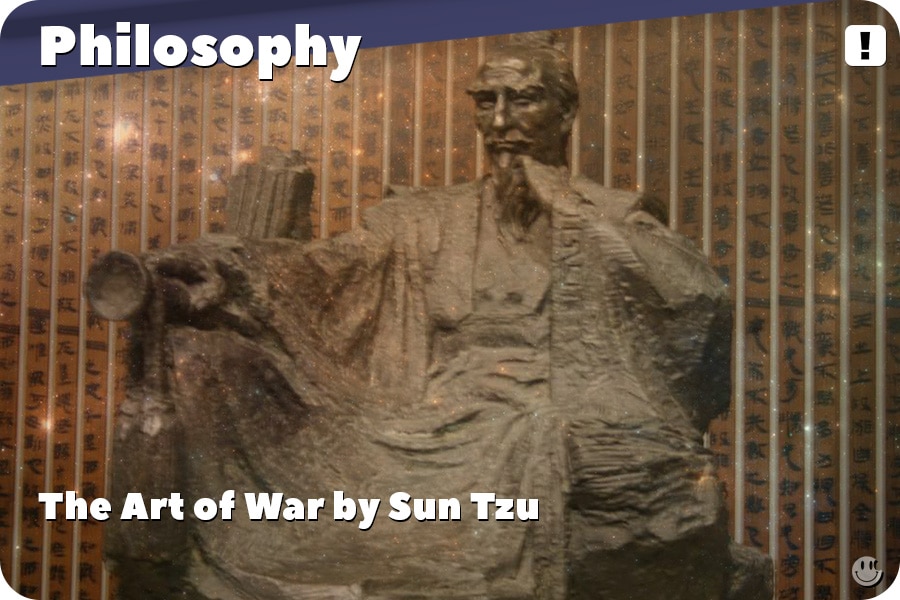
  • The Art of War by Sun Tsu

    The Art of War by Sun Tsu

    The Art of War: Timeless Strategies for Success

    “To win without fighting is best.” — Sun Tzu

    More than 2,500 years ago, a Chinese general named Sun Tzu wrote a short military treatise that would outlive empires. The Art of War is concise, poetic, and startlingly modern. Though written for warfare, its lessons have shaped business, politics, sports, and personal growth. Why? Because at its core, it’s not about war—it’s about winning with wisdom.

    Who Was Sun Tzu?

    Sun Tzu is believed to have lived during China’s Spring and Autumn Period (roughly 544–496 BCE), a time of near-constant warfare between rival states. He served as a general and strategist for King Helü of Wu, where his guidance reportedly led to several military victories.

    His book, The Art of War, consists of 13 short chapters, each outlining a principle of strategy and leadership. It’s part philosophy, part field manual, and all insight.

    The 13 Chapters at a Glance

    Each chapter is like a slice of strategy pie—tactical, psychological, and deeply practical.

    1. Laying Plans

    Success begins with deep understanding and careful planning. Know the terrain, the enemy, and yourself.

    “If you know the enemy and know yourself, you need not fear the result of a hundred battles.”

    2. Waging War

    War is costly. Prolonged conflict drains resources, morale, and time. Be decisive, but never careless.

    “There is no instance of a country having benefited from prolonged warfare.”

    3. Attack by Stratagem

    The best victories are won without fighting. Use diplomacy, deception, and influence to resolve conflict before blood is shed.

    “The supreme art of war is to subdue the enemy without fighting.”

    4. Tactical Dispositions

    Victory goes to those who are prepared. Set the conditions for success before engaging.

    “Victorious warriors win first and then go to war.”

    5. Use of Energy

    Harness collective energy and momentum. Strike like a stone rolling downhill. Efficiency beats brute force.

    “Energy may be likened to the bending of a crossbow; decision, to the releasing of the trigger.”

    6. Weak Points and Strong

    Identify and exploit vulnerabilities in your opponent’s defenses. At the same time, conceal your own.

    “Appear at points which the enemy must hasten to defend; march swiftly to places where you are not expected.”

    7. Maneuvering

    Master the movement of forces, both literal and figurative. Timing and positioning often matter more than strength.

    “Let your plans be dark and impenetrable as night, and when you move, fall like a thunderbolt.”

    8. Variation in Tactics

    Avoid predictability. Adapt strategies to match new challenges. The wise leader is never rigid.

    “He who can modify his tactics in relation to the enemy and thereby succeed in winning, may be called a heaven-born captain.”

    9. The Army on the March

    Read the signs. From dusty roads to campfires, every detail can reveal your enemy’s strength, mood, and next move.

    “When the enemy is close at hand and remains quiet, he is relying on the natural strength of his position.”

    10. Terrain

    Master the landscape, both literal and metaphorical. Know when to stand firm and when to retreat. Geography is destiny.

    “He who occupies the field of battle first and awaits his enemy is at ease.”

    11. The Nine Situations

    Different situations call for different responses. Learn to recognize nine distinct kinds of battlegrounds, each requiring a unique approach.

    “In difficult ground, keep steadily on the march. On hemmed-in ground, resort to stratagem. On desperate ground, fight.”

    12. Attack by Fire

    Use the elements, including psychological warfare. Fire represents destruction—but also surprise and speed.

    “The enlightened ruler lays his plans well ahead; the good general cultivates his resources.”

    13. Use of Spies

    Information wins wars. Knowing your enemy’s intentions is worth more than armies. Espionage is a sign of intelligence, not deception.

    “Foreknowledge cannot be gotten from ghosts and spirits… it must be obtained from people who know the conditions of the enemy.”

    Why It Still Matters

    Sun Tzu’s insights resonate across centuries because they’re about human behavior, not just armies. Whether you’re running a company, coaching a team, or navigating office politics, The Art of War teaches you how to:

    • Plan ahead

    • Avoid unnecessary conflict

    • Stay flexible

    • Understand your opponent

    • Strike only when the time is right

    In short: Be smarter than your struggle.

    Business and Leadership

    Sun Tzu has long been a favorite among executives and entrepreneurs. His principles map cleanly onto:

    • Market competition: Outmaneuver rivals with better timing and insight.

    • Negotiation: Appear strong when weak, and weak when strong.

    • Team management: Discipline must be balanced with morale.

    Harvard Business Review even called him the “original agile thinker.”

    Sports and Coaching

    Many top coaches—from football to martial arts—cite The Art of War as a core text. It teaches mental preparation, deception, and how to train a team to react with fluid strategy, not rigid playbooks.

    “He will win who has military capacity and is not interfered with by the sovereign.”

    (Modern version: A good team needs a coach who lets them do their job.)

    Personal Development

    Even outside work, The Art of War offers sharp life advice:

    • Don’t fight every battle. Choose your moment.

    • Preparation and patience beat aggression.

    • The greatest victories are quiet and internal.

    Sun Tzu never said “grind harder.” He said “fight smarter—or not at all.”

    The Taoist Connection

    While The Art of War is not a religious text, it’s steeped in Taoist philosophy, which favors flow over force and subtlety over struggle. Sun Tzu’s ideal general resembles a Taoist sage: adaptable, observant, and minimalist.

    Victory comes not from brute domination but from being in harmony with the situation.

    Fun Fact

    In one famous story, Sun Tzu was asked to demonstrate his methods by training the king’s concubines as soldiers. When they giggled during drills, he executed the two favorites—to prove discipline must apply to all. Grim? Yes. But effective. The rest followed orders perfectly.

    Glossary of Terms

    • Tao – The underlying principle of natural order and flow in Chinese philosophy.

    • Deception – Not lying, but manipulating perception to gain advantage.

    • Terrain – Both literal geography and situational context.

    • Stratagem – A clever plan or trick for achieving an objective.

    • Morale – The spirit and confidence of a group are crucial for success.

    Discussion Questions

    1. Have you ever “won a battle” by avoiding the fight altogether?

    2. Which of Sun Tzu’s 13 principles resonates most with your own life or work?

    3. Can too much strategy be a trap? When is it better to act than analyze?

    References and Further Reading

  • The Osborne Effect

    The Osborne Effect

    The Osborne Effect: When Announcing Too Soon Sinks the Ship

    In the early 1980s, the Osborne Computer Corporation was riding high. Its flagship product, the Osborne 1, was one of the first truly portable computers—a luggable briefcase of computing power that had business users excited and competitors scrambling. But in 1983, the company made a fateful move: it announced its next-generation model, the Osborne Executive, well before it was available.

    The result? Sales of the current Osborne 1 plummeted. Why buy today if something better was right around the corner?

    That single decision contributed to a rapid sales collapse, a warehouse full of unsold inventory, and the company’s bankruptcy shortly afterward. Thus was born The Osborne Effect—a cautionary tale about how premature announcements can destroy current revenue.

    What Is the Osborne Effect?

    At its core, the Osborne Effect is an economic and marketing dilemma: when a company reveals a future product too early, customers may delay or cancel purchases of existing offerings. The irony is sharp—a company may unintentionally sabotage what’s selling now by trying to build hype for what’s next.

    Real-World Implications

    The Osborne Effect isn’t just a quirky piece of tech lore. Variations of it happen all the time, especially in industries driven by innovation cycles like:

    • Technology – Smartphone makers must carefully time product announcements so current models continue to sell.

    • Gaming – Teasing a new console too far in advance can hurt current-gen game and hardware sales.

    • Automotive – Announcing a dramatic redesign or shift to electric models too early can cause loyal customers to hold out.

    Even nonprofits and institutions can fall victim. A new initiative that renders the current program outdated—without proper transition planning—can drain engagement and support before the new solution is ready.

    Strategic Ethics: Promise vs. Performance

    The Osborne Effect brings up a deeper ethical question in both business and communication: How transparent should a company be about future plans?

    • Transparency builds trust, but…

    • Overpromising risks trust, especially if the new product is delayed or underwhelming.

    • Withholding too much feels deceptive, but saying too much can damage sustainability.

    It’s a balancing act between honesty and strategic restraint.

    The Role of Consumer Behavior

    This phenomenon is powered by psychology just as much as economics. Consumers are driven by perceived value, fear of missing out (FOMO), and status anxiety. When a better version is on the horizon, even if only in rumor, it can instantly make today’s product feel obsolete.

    We’ve all felt it: the regret of buying too early, the joy of waiting for the “next big thing,” or the agony of realizing your expensive phone just dropped in price because the new model launched this morning.

    Is the Osborne Effect Always Bad?

    Not always. In some cases, companies intend to use the Osborne Effect to phase out old products, especially when:

    • New tech is significantly better

    • Inventory is low or intentionally limited

    • They’re trying to shift public perception or rebrand

    Apple, for instance, is a master of managing this effect. Its product leaks and announcements are tightly controlled, creating excitement without immediately cratering sales.

    Modern Lessons from a Vintage Collapse

    The Osborne Effect is a reminder of how interconnected strategy, psychology, and ethics really are. Whether you’re running a business, launching a project, or simply communicating a change, timing matters.

    • Don’t fix what people still want to buy.

    • Be honest, but don’t shoot yourself in the foot.

    • Anticipate how people react—not just what they know.

    Glossary of Terms

    • Osborne Effect – A drop in current product sales due to the premature announcement of a future product.

    • Planned Obsolescence – The strategy of designing products to become outdated or nonfunctional after a certain period.

    • Hype Cycle – The pattern of excitement and disillusionment that follows emerging technologies.

    • Transparency – Openness in business strategy or communication, often weighed against competitive or timing risks.

    Discussion Questions

    1. Should companies always be transparent about their future plans?

    2. Have you ever waited to buy something because of a future product announcement?

    3. How can organizations balance honesty with sustainability?

    References

    Pull Quotes

    “Announcing the future too soon might leave you with nothing to sell today.”

    “The Osborne Effect is what happens when anticipation becomes your enemy.”

    “Transparency is good—unless it empties your inventory.”

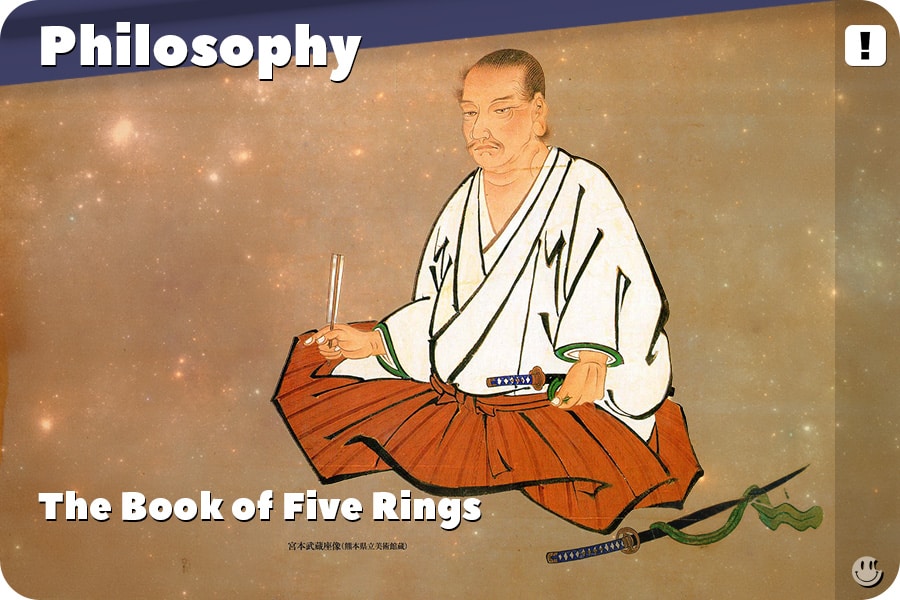
  • Miyamoto Musashi’s A Book of Five Rings

    Miyamoto Musashi’s A Book of Five Rings

    A Book of Five Rings: Mastering Strategy and Life

    More than 350 years ago, a legendary swordsman named Miyamoto Musashi sat down to write his life’s philosophy—not just on combat, but on thinking strategically. The result was A Book of Five Rings (Go Rin no Sho), a compact but profound guide to discipline, focus, and victory.

    Originally written for warriors, this book has since become essential reading in business, martial arts, and leadership. Musashi’s work endures not because it teaches sword fighting—but because it reveals how to master oneself in conflict, competition, and life.

    Who Was Miyamoto Musashi?

    Musashi (c. 1584–1645) was a samurai, artist, philosopher, and undefeated duelist. According to legend, he fought—and won—more than 60 duels, often against the most skilled swordsmen in Japan.

    His most famous duel was against Sasaki Kojiro in 1612. Musashi arrived late, used a wooden sword carved from an oar, and still emerged victorious.

    Later in life, he retired to a cave and wrote A Book of Five Rings, distilling his teachings for future generations. His method, Niten Ichi-ryū (“Two Heavens, One Style”), focused on using both long and short swords simultaneously—an innovation that required balance, awareness, and adaptability.

    Musashi was not just a fighter. He was a painter, calligrapher, and student of Zen. He believed that true mastery came from training both the body and the mind.

    The Five Rings Explained

    The book is divided into five chapters, or “rings,” each named after one of the classical elements. Together, they form a holistic strategy for conflict and life.

    1. The Ground Book (Chi no Maki) – Foundations and Discipline

    This opening chapter lays the groundwork for Musashi’s philosophy. He emphasizes the importance of learning the basics deeply before advancing to complex techniques.

    “Know the smallest things and the biggest things, the shallowest things and the deepest things.” — Musashi

    In this ring, Musashi defines strategy as a discipline. Whether wielding a sword or making decisions, success begins with a strong foundation: observation, timing, and the study of many crafts—not just one.

    In modern terms, Master your fundamentals before chasing flash.

    2. The Water Book (Mizu no Maki) – Adaptability and Flow

    Water adapts to its environment. So must the strategist.

    This ring teaches that one must be formless and fluid, adjusting to the opponent and the terrain. Musashi urges practitioners to observe without bias, move without hesitation, and remain flexible in every situation.

    “In strategy, it is important to see distant things as if they were close and to take a distanced view of close things.”

    The message is clear in business, negotiation, or sports: Adapt or be outmaneuvered.

    3. The Fire Book (Hi no Maki) – Aggression and Timing

    Fire is intensity. This chapter focuses on momentum, energy, and seizing the initiative. Musashi outlines combat tactics, but his lessons apply far beyond swordplay.

    “Perceive that which cannot be seen with the eye.”

    Timing is everything. You must strike not only effectively, but at exactly the right moment. He emphasizes understanding your opponent’s rhythm—and disrupting it.

    Fire teaches that sometimes, the best defense is bold, decisive action.

    4. The Wind Book (Fū no Maki) – Understanding Others

    “Wind” means “style.” This ring discusses other martial arts schools, not to praise or dismiss them, but to learn from them.

    Musashi believed that studying the methods of others could help one anticipate their moves and better understand one’s own path.

    He critiques styles that rely too heavily on form or showmanship. Real strategy, he insists, must work in real conditions.

    In today’s terms: Know your competition. But don’t mimic—analyze and surpass.

    5. The Book of the Void (Kū no Maki) – Emptiness and Mastery

    The shortest and most abstract chapter, the Void represents enlightenment.

    “By knowing things that exist, you can know that which does not exist.”

    Here, Musashi touches on Zen philosophy. The void is not nothingness but limitless potential. The clarity comes when one is free of fear, doubt, and attachment.

    True mastery lies beyond technique—it is an instinctive understanding, a state where action arises without thought.

    You don’t just fight. You become the strategy.

    Why It Still Resonates Today

    Musashi’s rings are more than metaphors. They form a roadmap for strategic thinking that applies across time and culture:

    • In business: Know your market (ground), adapt to changes (water), act decisively (fire), analyze competitors (wind), and think beyond rules (void).

    • In leadership: Balance preparation and spontaneity. Lead with discipline, but be flexible.

    • In personal development, Musashi believed that strategy could be found in anything—painting, carpentry, martial arts—if studied deeply and sincerely.

    His message: Master one thing deeply, and you can understand all things.

    Musashi’s Broader Life Philosophy

    Musashi’s final years were marked by introspection. Besides Five Rings, he wrote a short guide to life called Dokkōdō (“The Path of Aloneness”), with 21 precepts including:

    • “Do not seek pleasure for its own sake.”

    • “Respect Buddha and the gods without counting on their help.”

    • “Never stray from the Way.”

    His life was one of discipline without dogma—a blend of pragmatism, artistry, and existential independence.

    Fun Fact

    Musashi often used unorthodox tactics. In his duel with Sasaki Kojiro, he arrived late to throw his opponent off balance—and fought with a wooden sword he carved from a boat oar during the journey.

    This wasn’t disrespect. It was psychological warfare—Musashi’s form of void strategy.

    Glossary of Terms

    • Kenjutsu: The art of Japanese swordsmanship.

    • Niten Ichi-ryū: Musashi’s two-sword style.

    • Zen: A branch of Mahayana Buddhism emphasizing meditation, intuition, and self-discipline.

    • Void (Kū): In Buddhist and samurai philosophy, the space of pure potential and clarity beyond form.

    • Rhythm: Musashi’s term for timing and flow in both combat and life.

    Discussion Questions

    1. Which of Musashi’s five elements do you find most relevant to your own work or life?

    2. How can you apply “void” thinking—acting without overthinking—in high-pressure situations?

    3. What does it mean to be strategic today, and how do you balance planning with improvisation?

    References and Further Reading

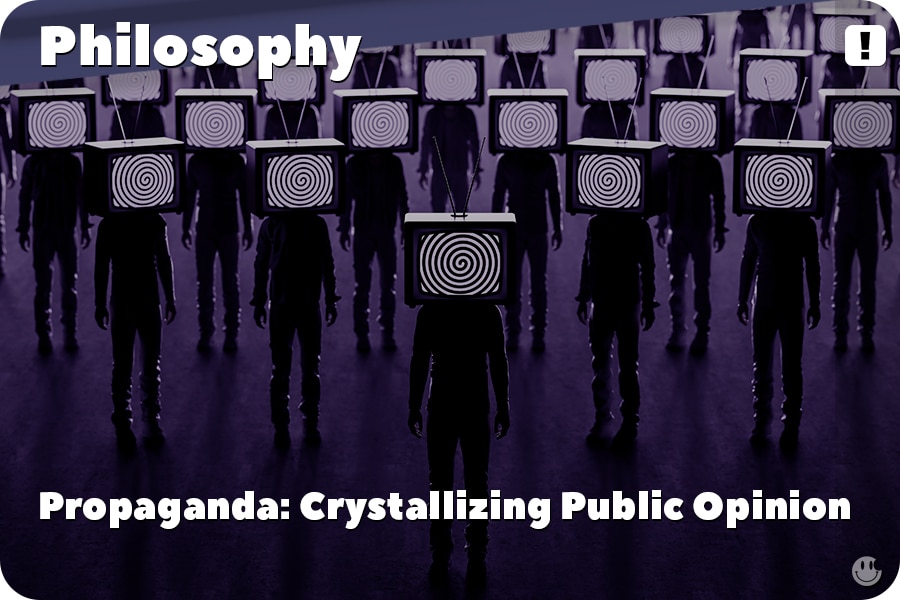
  • Propaganda: Crystallizing Public Opinion

    Propaganda: Crystallizing Public Opinion

    Crystallizing Public Opinion: Shaping Modern Public Relations

    In 1923, Edward Bernays published Crystallizing Public Opinion, a book that would forever alter the way organizations, governments, and individuals interact with the public. It wasn’t just a guide to publicity—it was a philosophical and psychological blueprint for engineering consent in a democratic society.

    Bernays, often called the “father of public relations,” believed that shaping public opinion wasn’t manipulation—it was a necessary part of modern life. But the tools he developed to do that—media campaigns, expert endorsements, and emotional framing—still spark debate today.

    Who Was Edward Bernays?

    Born in 1891, Edward Bernays was the nephew of Sigmund Freud, and he brought his uncle’s psychoanalytic theories into the world of business and politics. Trained in journalism and propaganda during World War I, Bernays believed that mass communication could be used to guide public behavior in productive ways—but he also acknowledged that this power could be used unethically.

    Bernays combined Freud’s ideas about subconscious desire with modern advertising techniques to create a new profession: public relations counseling. He saw PR not as mere publicity, but as strategic, research-driven persuasion.

    “We are governed, our minds molded, our tastes formed, our ideas suggested, largely by men we have never heard of.”

    — Edward Bernays, Propaganda (1928)

    What Is “Crystallizing Public Opinion”?

    The phrase refers to the process of shaping and solidifying diffuse public attitudes into clear, directed viewpoints. According to Bernays, people often lack strong opinions until someone presents them with a compelling frame, message, or emotional hook.

    His goal was to help clients take advantage of this by:

    • Identifying public sentiments

    • Crafting messages that resonated emotionally

    • Using media and social influence to amplify them

    Bernays argued that doing so was not only possible, but essential in a mass society where the public is overwhelmed with information.

    Key Concepts in the Book

    1. The Public Relations Counselor

    Bernays elevated the PR professional from press agent to strategic advisor. A PR counselor helps organizations understand public attitudes and shape policies accordingly.

    “The counsel on public relations not only knows what news value is, but knowing it, he is in a position to make news happen.”

    He likened the PR counselor to a lawyer—someone who represents their client in the court of public opinion.

    2. The Engineering of Consent

    This is perhaps Bernays’ most famous and controversial idea. He argued that public consent could—and should—be engineered through the scientific application of psychology and communication.

    This wasn’t deception, he insisted—it was guidance.

    Of course, critics see it differently: Where’s the line between persuasion and manipulation?

    3. Emotion Over Logic

    Bernays believed the public made decisions based more on emotions, symbols, and associations than on rational arguments. He drew on Freud’s theories to suggest that effective messaging must tap into subconscious desires.

    For example, instead of telling people a product was affordable or efficient, he’d ask: What feeling does this product inspire? What aspiration does it fulfill?

    4. The Use of Experts and Third Parties

    People trust authorities. Bernays frequently employed credible third parties—doctors, professors, civic leaders—to promote his clients’ messages.

    He understood that trusted figures were more likely to influence people than direct advertising.

    5. Creating News

    Rather than simply pitching stories to journalists, Bernays believed in making events that generate news. This could mean stunts, symbolic acts, or partnerships timed to resonate with current events.

    This practice became central to modern PR—and it’s still how most press events work today.

    Case Study: The “Torches of Freedom”

    One of Bernays’ most famous (and ethically murky) campaigns came in 1929 when he worked for the American Tobacco Company. At the time, it was taboo for women to smoke in public.

    To break the stigma—and open a new market—Bernays organized a stunt: he hired women to march in the Easter Sunday Parade in New York City, each lighting a cigarette at a coordinated moment. He dubbed the cigarettes “torches of freedom” and made sure the press was there to capture the moment.

    The campaign worked. Smoking became a symbol of independence, and sales surged.

    The stunt wasn’t about tobacco—it was about framing. And it remains one of the most cited examples of emotional rebranding in PR history.

    Here are six other specific campaigns and strategies he orchestrated, each revealing how he applied psychology, symbolism, and media savvy to shape public opinion:

    1. Bacon and Eggs as the “All-American Breakfast” (1920s)

    Bernays was hired by the Beech-Nut Packing Company, which sold bacon. To boost sales, he asked a physician whether a heavier breakfast might be healthier than the lighter fare many Americans ate. The doctor agreed—and Bernays then surveyed 5,000 other doctors, most of whom echoed this view.

    He publicized the survey results, framing bacon and eggs as the “hearty, doctor-recommended breakfast.” Newspapers ran the story, and public habits began to shift. The result: a permanent association between bacon, eggs, and American identity—entirely manufactured through PR.

    2. Calvin Coolidge’s Image Makeover (1927)

    Coolidge, seen as stiff and unsociable, wasn’t winning hearts. Bernays organized a White House breakfast with celebrities, including Al Jolson and other Broadway stars, to project a warmer, more human side of the president.

    Media coverage highlighted the event’s charm and celebrity flair. It was one of the first deliberate attempts at political rebranding through entertainment, something we now take for granted in campaigns.

    3. Ivory Soap Sculpting Contests for Procter & Gamble (1920s)

    To promote Ivory Soap, Bernays created soap sculpting competitions for schoolchildren. He framed it not just as marketing, but as educational enrichment and creativity.

    Teachers, schools, and newspapers were brought on board, and the program ran for decades. This turned a bar of soap into a symbol of childhood development and civic participation, while embedding the brand in public consciousness.

    4. The United Fruit Company and the “Banana Republic” Narrative (1950s)

    Perhaps his most controversial work came on behalf of United Fruit Company (now Chiquita). When the Guatemalan government under President Jacobo Árbenz began land reforms threatening United Fruit’s holdings, Bernays helped frame the leader as a communist threat.

    He fed carefully crafted stories to American journalists, lobbied Washington, and even influenced the CIA’s decision to support a coup in 1954. This campaign helped spark the Cold War notion of “banana republics” and is often cited as an early example of PR shaping U.S. foreign policy.

    5. Promoting Fluoride in Drinking Water (1940s–1950s)

    Bernays was enlisted to promote water fluoridation, a practice initially met with public skepticism. He framed fluoridation as a public health measure backed by science, enlisting endorsements from dentists and medical professionals.

    His efforts helped normalize fluoridation in American cities, emphasizing third-party credibility and medical authority—techniques still used in health communication today.

    6. Making Green the Fashionable Color for Lucky Strike Cigarettes (1934)

    The green and gold packaging of Lucky Strike cigarettes clashed with women’s fashion trends, leading to lower sales among female consumers. Instead of changing the packaging, Bernays changed public taste.

    He launched a campaign to make “green” the fashionable color of the season—convincing designers, department stores, and even socialites to embrace green in clothing and decor. The result: sales surged, and Bernays once again shifted culture to suit product needs.

    Bernays’ Influence on Business and Politics

    Bernays helped shape dozens of industries and campaigns:

    • Promoted bacon and eggs as the “All-American Breakfast”

    • Helped Calvin Coolidge soften his image

    • Advised Procter & Gamble on soap competitions for children

    • Supported United Fruit Company (later Chiquita) in shaping U.S. policy toward Latin America

    Some of his techniques were subtle; others, controversial. But all were rooted in his belief that public opinion could be guided through strategic storytelling.

    Criticism and Controversy

    Not everyone was impressed. Bernays’ work raised critical questions:

    • Is it ethical to shape public opinion without full transparency?

    • Can a democracy function if opinion is “engineered”?

    • Where is the line between persuasion and propaganda?

    His own work acknowledges the tension. In his later book Propaganda, Bernays defends mass persuasion but warns it can be dangerous if used by those with selfish or authoritarian aims.

    And history shows he was right to worry.

    Legacy: Why It Still Matters

    In the 21st century, Bernays’ playbook is everywhere:

    • Influencer marketing

    • Political campaigning

    • Brand storytelling

    • Crisis communication

    • Social media virality

    Modern public relations, advertising, and even journalism often rely on the principles Bernays outlined in 1923. His influence is baked into how we process news, advertising, and cultural signals.

    And in a world of information overload, engineered simplicity often wins.

    Related Thought Experiments and Connections

    • Plato’s Allegory of the Cave: Who controls the shadows on the wall?

    • The Experience Machine: Would you choose a comforting illusion over truth?

    • The Veil of Ignorance: How would public opinion change if people didn’t know their position in society?

    All of these echo Bernays’ central question: How do we shape the reality people see—and how do they know what’s real?

    Glossary of Terms

    • Public Relations (PR): Managing communication between an organization and its public.

    • Engineering of Consent: Bernays’ term for shaping public opinion through media and psychology.

    • Third-Party Validation: Using respected figures to support a message indirectly.

    • Framing: Structuring how an issue or product is perceived by highlighting certain aspects.

    • Mass Persuasion: Influencing large groups through targeted messages and emotional cues.

    Discussion Questions

    1. Is “engineering consent” compatible with democratic values?

    2. What responsibilities do PR professionals have in shaping truth vs. perception?

    3. How much of your own opinion is shaped by media—and how would you know?

    References and Further Reading


  • History of the Shopping Cart

    History of the Shopping Cart

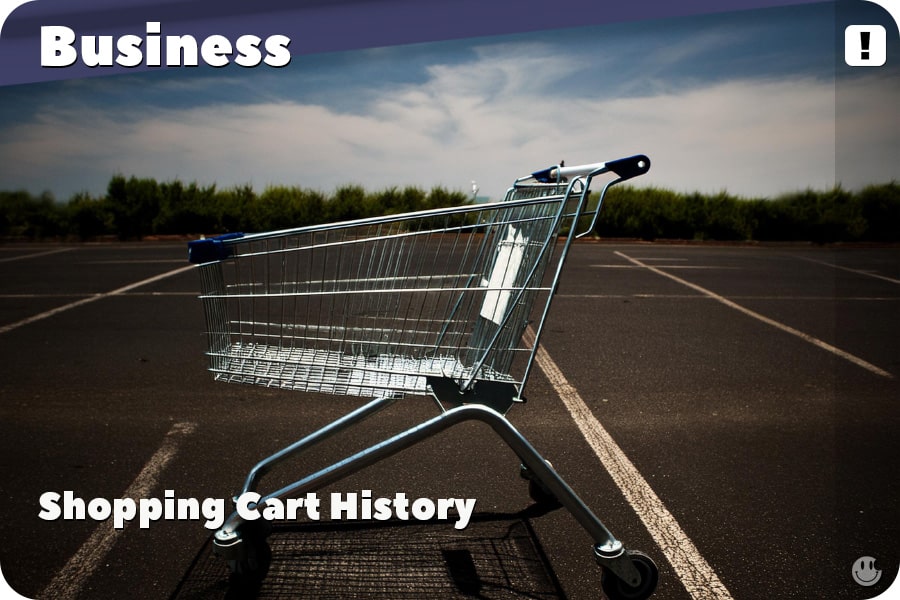
    Historical image of a shopping cart

    Chronological Outline of the Evolution of Shopping Carts and Supermarkets

    On June 4, 1937, Sylvan Goldman revolutionized the shopping experience with an innovation that seems almost mundane today but was transformative at the time—the shopping cart. Goldman, who owned the Humpty Dumpty supermarket chain in Oklahoma City, observed that customers often struggled to carry their purchases as they shopped, limiting the amount they could buy in one visit. His solution was ingeniously simple: modify folding chairs to hold baskets, creating a wheeled cart that shoppers could easily push around the store. Introduced in 1939, this invention initially met with skepticism from shoppers unfamiliar with the idea, but it soon proved to be a game-changer in the retail industry.

    The impact of Goldman’s shopping cart was profound and multifaceted, catalyzing a shift in consumer behavior and store operations. The cart encouraged larger purchases by enabling customers to handle more goods effortlessly, effectively increasing sales per visit. Retail environments were transformed as stores reconfigured layouts to accommodate the new carts, widening aisles and designing spaces that could handle increased foot traffic and more dynamic shopping patterns. This innovation made shopping more convenient for consumers. It helped cement the supermarket as a cornerstone of everyday life in America, setting the stage for the modern retail experience we recognize today.

    Early 20th Century: Rise of Convenience Stores

    Early 1900s As the Industrial Revolution peaked, cities across America experienced rapid growth and demographic shifts. This era marked significant advancements in manufacturing and transportation, fostering a demand for more accessible consumer goods. The response was the rise of small convenience stores.

    Location and Function Strategically located within urban neighborhoods and along busy city streets, these stores capitalized on the influx of a bustling workforce and new city dwellers. They were often positioned close to public transport stops or in areas with high foot traffic, making them easily accessible to the urban populace.

    Impact Convenience stores played a pivotal role in urban living by offering extended hours, faster service, and a variety of products tailored to the needs of city residents with limited time. These stores were crucial in providing everyday essentials such as bread, milk, and household items, allowing customers to quickly purchase goods without requiring lengthy trips to larger, more distant supermarkets.

    Adaptations for Consumer Needs To cater to a diverse urban clientele, convenience stores adapted their product offerings to include a range of items from groceries to snacks and beverages, all aimed at facilitating quick and easy shopping experiences. This adaptation was a response to the accelerated pace of urban life and a precursor to the more comprehensive grocery stores that would emerge later in the century.

    Mid-20th Century: Emergence of Grocery Stores

    1940s-1950s This period marked a significant transition from smaller, more localized convenience stores to larger, more comprehensive grocery stores. The transformation was driven by post-war prosperity, technological advancements in food production and preservation, and a shift in consumer lifestyles, particularly in suburban areas.

    Economies of Scale As businesses grew, they began to benefit from economies of scale, which reduced the cost per unit of goods sold. This was achieved through larger procurement volumes, streamlined supply chains, and more efficient distribution methods, all of which were supported by advancements in transportation and logistics.

    Increased Food Production Technological innovations in agriculture and food processing, such as the introduction of commercial fertilizers, pesticides, and mechanized farming equipment, significantly increased food production. This surge made food more plentiful and affordable, changing the scale and scope of grocery inventory.

    Consumer Demand The post-war economic boom increased disposable income and higher consumer spending. The growing suburban population, driven by a desire for more spacious living away from urban centers, favored one-stop shopping solutions that larger grocery stores provided. This demand influenced the variety and volume of products that stores offered, catering to a lifestyle that valued convenience and variety.

    Marketing Simplification The rise of mass media, including television and radio, allowed grocery stores to reach a broader audience by advertising and promoting the stores and the vast array of products they offered. This helped standardize shopping patterns and reduced the complexity of marketing and selling food products.

    Naming as Supermarkets These larger stores began to be referred to as “supermarkets” due to their expanded product selections, which included food and other consumer goods such as household items and health and beauty products. The term “supermarket” meant more than just scale; it indicated a comprehensive shopping experience under one roof.

    Cultural and Social Impact In mid-20th-century America, supermarkets became a cultural symbol of abundance and prosperity. They were not only places to shop but also spaces where new products were introduced, and the conveniences of modern life were prominently displayed.

    Baby Boom and the Supermarket Expansion

    1950s The post-World War II era, characterized by the Baby Boom—a significant increase in birth rates—substantially impacted various sectors, including the retail market. The surge in population during this period, coupled with rising family incomes and the expansion of suburban neighborhoods, directly fueled the rapid growth of supermarkets across the United States.

    Collier’s Magazine Insight In 1951, Collier’s magazine highlighted the explosive growth of the supermarket industry by reporting that more than three new supermarkets were opening daily. This expansion was not just a quantitative increase but also reflected a qualitative change in the shopping habits of the American public.

    Sales Growth The economic prosperity of the 1950s played a crucial role in this expansion. By 1950, supermarkets accounted for 35% of all food sales in the U.S., dramatically increasing to 70% by 1960. The rise in supermarket popularity can be attributed to their ability to offer various products at lower prices than smaller, local stores.

    Factors Driving Expansion

    • Suburbanization As more Americans moved to suburban areas, the demand for convenient, one-stop shopping experiences increased. Supermarkets catered to this need by providing diverse products under one roof, reducing the need for multiple shopping trips.
    • Automobile Ownership Increased automobile ownership allowed families to travel farther to shop, making larger stores outside city centers accessible. Supermarkets typically featured ample parking, which appealed to the car-owning public.
    • Consumer Preferences There was a shift in consumer preferences towards packaged and processed foods, which supermarkets were well-equipped to supply. These preferences were driven by the appeal of convenience and longer shelf life, which catered to busier lifestyles and larger families typical of the Baby Boom generation.

    Marketing and Layout Innovations During this period, supermarkets also began employing new marketing techniques and store layouts to enhance the shopping experience. They introduced features like self-service formats, shopping carts, and more attractive displays, which allowed customers to browse and select products at their leisure, contributing to higher sales volumes.

    Cultural Impact Supermarkets became gathering places for communities, reflecting the prosperity and abundance of the era. They were often seen as symbols of modernity and efficiency, reshaping the cultural landscape around shopping and domestic life.

    Challenges and Innovations in Grocery Shopping

    1937: Initial Designs and Challenges

    • 1937 marked early attempts by grocery retailers to enhance customer convenience by introducing wheeled shopping carriers. The initial design involved placing two baskets on a wheeled frame. While this innovation aimed to facilitate easier and more efficient shopping experiences, it proved bulky and impractical in practice. Shoppers found these early models cumbersome to maneuver around store aisles and difficult to store when not in use, leading to limited adoption.

    1939: The Invention of the Modern Shopping Cart

    • Recognizing the need for a more practical solution, Sylvan N. Goldman, the enterprising owner of the Humpty Dumpty grocery chain in Oklahoma City, embarked on a project to reinvent the shopping carrier. Goldman’s stroke of insight came from observing everyday objects—specifically folding chairs.
    • He envisioned a modified version of the folding chair that could support two baskets: one raised several inches above the lower to provide ample space for groceries without the items being crushed. This setup maintained the folding chair’s portability while significantly enhancing its utility as a shopping device.
    • Goldman added wheels to the legs of the chair and a handle at the back, transforming it into a mobile cart that could easily navigate through store aisles. This design also allowed the carts to be folded up when not in use, solving the storage issue posed by the earlier models.
    • The newly designed folding shopping cart was introduced to the public in 1939. Despite its innovative approach to solving a typical shopper’s dilemma, the reception was lukewarm. The shopping cart’s initial flop was largely due to societal resistance. Men felt that using a cart emasculated them, as it implied a need for help carrying groceries, traditionally seen as a woman’s task. Women, on the other hand, compared it to pushing a baby carriage, feeling it relegated them to stereotypical roles.

    Addressing Societal Resistance

    • Sylvan Goldman did not give up on his invention despite the initial setback. He cleverly addressed the societal resistance by hiring both men and women models to use the carts while shopping in his stores. This marketing strategy helped normalize the carts, showing shoppers the ease and efficiency they offered. As more people saw others using the carts, the social stigma began to wane, and the carts gradually gained acceptance.

    Impact and Legacy

    • The successful adoption of Goldman’s shopping carts marked a significant turning point in the retail shopping experience. It set a new standard for customer convenience, paving the way for the modern shopping environments we are accustomed to today. The innovation of the shopping cart enhanced the efficiency of shopping and influenced the layout and design of stores, which could now accommodate wider aisles and larger volumes of customers.

    Further Innovations by Orla E. Watson

    1946: Telescoping Shopping Cart Design

    • In the mid-1940s, a significant innovation arrived from Orla E. Watson of Kansas City, who redefined the shopping cart’s design and functionality. Watson, originally a draftsman turned inventor, observed the bulky nature of existing shopping carts and their inefficiency in storage and management.
    • He developed the telescoping shopping cart design, which allowed carts to be nested within each other horizontally. This simple yet revolutionary design involved a hinged rear gate that could swing upwards, allowing one cart to slide into the cart in front of it partially. This innovation dramatically reduced the space needed to store carts when not in use.

    Impact on Supermarkets

    • Watson’s telescoping design was a logistical improvement and a financial boon for supermarkets. By maximizing floor space that could otherwise be used for product displays or additional aisles, stores could enhance their customer shopping experience and potentially increase sales.
    • The ability to nest carts together also streamlined the process of collecting and managing carts for store employees, reducing labor costs and increasing efficiency in handling customer flow.

    Patent and Adoption

    • Recognizing the potential of his invention, Watson quickly patented the telescoping shopping cart in 1947. The patent protected his design and paved the way for widespread adoption across the retail industry.
    • Major grocery chains and retailers quickly saw the benefits of Watson’s design, leading to its rapid adoption across the United States and eventually worldwide. This new standard in shopping cart design soon became an integral part of the retail shopping experience.

    Cultural and Commercial Impact

    • The telescoping shopping cart exemplified how a practical solution could profoundly impact the retail environment. It addressed the physical limitations of storage and maneuverability and catered to the evolving needs of post-war consumer culture, which valued convenience and efficiency.
    • Watson’s invention is a testament to how innovations in even the most mundane aspects of daily life can transform user experiences and business operations. The widespread adoption of his telescoping shopping cart design marked a significant advancement in retail logistics, influencing store layouts and the overall shopping experience for decades.

    Cultural and Commercial Impact of the Shopping Cart

    1955: Iconic Status

    • 1955 marked a pivotal moment for the shopping cart when it was featured on the cover of Life Magazine. This recognition was not just about the object itself but symbolized the booming consumer culture in post-war America. The cover story placed the shopping cart at the center of a narrative about convenience, consumerism, and the modern American way of life, highlighting its role in the everyday lives of millions of people.

    Symbol of Consumer Culture and Innovation

    • Over the decades, the basic design of the shopping cart has remained largely unchanged, a testament to the effectiveness of its original engineering. However, its role has expanded beyond mere functionality. The shopping cart has come to symbolize broader themes in consumer culture, including the rise of self-service in retail and the consumer’s autonomy in choosing products.
    • As supermarkets and large retail stores became staples in urban and suburban landscapes, the shopping cart became a fixture in American households’ routines, emblematic of accessibility and convenience in shopping.

    Evolution in Design and Technology

    • Despite the simplicity of its original design, the shopping cart has seen adaptations that incorporate modern technology and respond to evolving consumer needs. Innovations such as ergonomic handles, child seating options, and even electronic systems for checkout and inventory control reflect ongoing changes in how retailers enhance customer experience.
    • Modern iterations include smart carts equipped with GPS trackers, electronic payment systems, and screens that offer targeted advertisements and shopping suggestions, merging traditional shopping methods with digital enhancements.

    Cultural Representations

    • The shopping cart has also been portrayed in various media as a symbol of consumerism. Artists and filmmakers have used it in works to critique or comment on societal issues, reflecting on themes of consumption, abandonment, and urban sprawl.
    • In popular culture, the shopping cart occasionally appears in unconventional settings, such as urban explorations or makeshift shelters, in narratives addressing homelessness, further highlighting its ubiquity and adaptability.

    Commercial Impact and Retail Strategies

    • Beyond its cultural symbolism, the shopping cart has had a substantial commercial impact. It facilitates larger purchases than would be convenient without it, directly influencing sales volumes. Retailers strategically design store layouts to accommodate the path of the shopping cart, optimizing the placement of high-demand or high-margin items to maximize impulse purchases.
    • The design and placement of shopping carts at store entrances serve as subtle cues, encouraging customers to consider buying more items, leveraging the psychological effect of filling up space within the cart.

    Modern Innovations and the Digital Era

    Early 21st Century: Introduction of Technology in Shopping Carts

    • As we entered the 21st century, the retail landscape continued to evolve with technological advancements, leading to significant innovations in the functionality of shopping carts. Companies like Veeve and Caper have been at the forefront, integrating Artificial Intelligence and other digital technologies into traditional shopping carts.

    Features of AI-Powered Shopping Carts

    • These modern shopping carts have features such as barcode scanning and automatic checkout systems. This technology enables carts to automatically register products as they are placed inside, calculating the total cost in real time and allowing for a seamless checkout experience. Such features streamline the shopping process and reduce the time customers spend in checkout lines.
    • Additionally, these carts often include touchscreens that provide product information, navigational assistance within stores, and personalized shopping recommendations based on consumer behavior and preferences.

    Enhancing the Shopping Experience

    • The integration of these technologies into shopping carts has transformed them from mere carriers of goods to interactive shopping assistants. Shoppers can now enjoy an enhanced and personalized shopping experience that offers convenience, efficiency, and tailored information at their fingertips.
    • For instance, some smart carts are designed to help shoppers find items on their shopping list by guiding them through the store with the most efficient route, highlighting promotions and deals along the way, and even suggesting recipes based on the items in the cart.

    Integration with Store Operations

    • These technological advancements benefit consumers and retailers. Smart carts can help manage inventory by tracking which products are being picked up and which are being put back, providing valuable data that can be used to optimize stock levels and store layouts.
    • Retailers can also use the data gathered from these carts to understand shopping patterns, manage peak times more efficiently, and enhance customer service by reallocating staff to more critical areas of the store.

    Future Prospects

    • The potential for further innovation is vast. Future developments might include even more advanced features, such as augmented reality, which shows nutritional information and product comparisons directly in the viewer’s field of vision, or integration with mobile apps, which allows for remote shopping and scheduling of pickup or delivery.
    • As e-commerce continues to grow, the role of smart shopping carts could expand to bridge the gap between online and in-store shopping experiences, offering a hybrid model where customers can enjoy the benefits of both.

    Cultural Significance and Artistic Inspirations

    Artistic Representation

    • The shopping cart has transcended its utilitarian role to become a potent symbol in contemporary art, often used to comment on and critique aspects of consumer culture and societal norms. Iconic street artist Banksy, for example, has employed the image of a shopping cart in his artworks to reflect on consumerism’s excesses and the alienation it can produce. His work often juxtaposes everyday objects with unexpected elements to provoke thought about the mundane activities of modern life and their broader implications.
    • Similarly, Australian artist Matt McVeigh explores the shopping cart’s aesthetic and symbolic potential through large-scale installations. By configuring carts in visually striking arrangements, McVeigh invites viewers to reconsider these ordinary objects as part of a larger commentary on consumption, waste, and the repetitive cycles of consumer behavior. His work highlights how commonplace items can be reimagined in ways that challenge our perceptions and provoke dialogue about our spaces and lifestyles.

    Accessibility Initiatives

    • Beyond their cultural portrayal, shopping carts have also been a focus of innovation regarding accessibility. A notable advancement is Caroline’s Cart, explicitly designed for families with special needs. This cart features a built-in seat that accommodates older children and adults with disabilities, enabling them to participate more fully in the shopping experience with their families. This innovation not only enhances accessibility but also underscores the shopping cart’s role in fostering inclusivity in public spaces.
    • Caroline’s Cart reflects a broader movement towards designing for inclusivity in everyday objects. Adapting a standard shopping cart to meet diverse needs highlights the importance of considering all users in design processes and challenges businesses to think about how they can make everyday activities more accessible to everyone.

    Impact on Retail Environments and Policies

    • These artistic and accessibility-driven innovations have influenced retail environments and policies by raising awareness about the needs of diverse populations and the impact of consumer culture on social and environmental contexts. Retailers and designers increasingly recognize the importance of inclusive design and are motivated to implement solutions catering to a broader range of needs.
    • Furthermore, the artistic use of shopping carts in public installations and exhibitions encourages reevaluating the consumer spaces we frequent and the objects we often overlook. It serves as a reminder of the potential for art to transform public understanding and inspire change in attitudes and behaviors.