web analytics

Tag: Civil Rights

  • 1968 History, Facts and Trivia

    1968 History, Facts and Trivia

    1968 History, Facts and Trivia

    Quick Facts from 1968

    • World Changing Events: Martin Luther King Jr. was assassinated in Memphis during the garbage workers’ strike, and Robert Kennedy was assassinated in Los Angeles during his presidential campaign.
    • The Top Song was Hey Jude by The Beatles
    • Influential Songs include Born to be Wild and Magic Carpet Ride by Steppenwolf, You Keep Me Hangin’ On by Vanilla Fudge, and Tuesday Afternoon (Forever Afternoon) by The Moody Blues.
    • The Movies to Watch include Funny Girl, 2001: A Space Odyssey, Bandolero!, Night of the Living Dead, Planet of the Apes, Chitty Chitty Bang Bang, The Odd Couple, The Love Bug, and Yours Mine and Ours.
    • The Most Famous Person in America was probably Paul Newman.
    • Notable books include: The Naked Ape by Desmond Morris and Do Androids Dream of Electric Sheep? by Philip K. Dick and Chariots of the Gods? Unsolved Mysteries of the Past by Erich von Daniken.
    • Price of a postage stamp in 1968: 6 cents
      Chevrolet Impala sport coupe: $3,468.00
      Panasonic Tape Recorder: $29.95
    • The Funny Guy was: Woody Allen
    • The Other Funny Guy was Bill Cosby
      The Funny Lady was Carol Burnett
    • The Conversation: Saigon police chief Nguyen Ngoc Loan executes Viet Cong officer Nguyen Van Lém with a pistol shot to the head. The execution was captured by photographer Eddie Adams and helped many people question the Vietnam War.
    • Take our 1968 Quiz!

    Top Ten Baby Names of 1968

    Lisa, Michelle, Kimberly, Jennifer, Melissa, Michael, David, John, James, Robert

    Fashion Icons and Sex Symbols

    Ewa Aulin, Honor Blackman, Veronica Carlson, Julie Christie, Yvonne Craig, Catherine Deneuve, Barbara Eden, Barbara Feldon, Jane Fonda, Goldie Hawn, Peggy Lipton, Virna Lisi, Ann-Margret, Elizabeth Montgomery, Caroline Munro, Turia Mau, Julie Newmar, Ingrid Pitt, Diana Rigg, Elke Sommer, Stella Stevens, Sharmila Tagore, Twiggy, Raquel Welch, Barbara Windsor

    Sex Symbols, Hollywood Hunks and Leading Men

    Warren Beatty, Clint Eastwood, Peter Fonda, Marvin Gaye, Robert Goulet, Jimi Hendrix, Englebert Humperdink, Mick Jagger, Tom Jones, John Lennon, Paul McCartney, Steve McQueen, Roger Moore, Jim Morrison, Joe Namath, Paul Newman, Leonard Nimoy, Robert Redford, Omar Sharif, William Shatner

    “The Quotes”

    “Book ’em, Dano”
    – Jack Lord in Hawaii 5-0

    “You’ve come a long way, baby.”
    – Virginia Slims Cigarettes

    “I became operational at the H.A.L. plant in Urbana, Illinois, on the 12th of January 1992. My instructor was Mr. Langley, and he taught me to sing a song. If you’d like to hear it I can sing it for you.”
    -Hal 5000, in 2001: A Space Odyssey

    “Open the pod bay doors, HAL.”
    – Keir Dullea, in 2001: A Space Odyssey

    “Ring around the collar”
    – Wisk Laundry Detergent

    “They’re coming to get you, Barbara.”
    – Johnny, in Night Of The Living Dead

    “Hello, gorgeous.”
    – Barbra Streisand as Fanny Brice, in Funny Girl

    “Get your stinking paws off me, you damned dirty ape!”
    – Charlton Heston, in Planet of the Apes

    “Daisy, Daisy, give me your answer do
    I’m half crazy, all for the love of you
    It won’t be a stylish marriage
    I can’t afford the carriage
    But you look sweet upon the street
    On a bicycle built for two.”
    – Hal 9000

    The Quote for the 21st Century

    Philip K. Dick, the author of the science fiction novel Do Androids Dream of Electric Sheep?, said, “There will come a time when it isn’t ‘They’re spying on me through my phone’ anymore. Eventually, it will be, ‘My phone is spying on me.’”

    Time Magazine’s Man of the Year

    Apollo 8 Astronauts (William Anders, Frank Borman, and Jim Lovell)

    Miss America

    Debra Barnes (Pittsburgh, KS)

    Miss USA

    Dorothy Anstett (Washington)

    The Assassinations

    April 4 – James Earl Ray assassinated Reverend Martin Luther King.
    June 5 – Sirhan Bishara Sirhan assassinated Senator Robert F. Kennedy (D, NY).

    The Scandals

    The Heidi Game AFL Championship Game: With the Jets leading 32-29 with only 65 seconds left, the Raiders quickly scored 14 points to win, 43-32. Meanwhile, millions of American television viewers could not see Oakland’s comeback. The NBC television network cut off the live broadcast for a pre-scheduled airing of Heidi, a new made-for-TV version of the classic children’s story.

    Since there were no real Movie Ratings set up in October 1968, Night of the Living Dead was released at a Saturday Matinee.

    Philadelphia Eagles Fans booed Santa Claus and threw snowballs at him. The real Santa could not attend, so Eagles management approached a fan to do the job…

    Lin Zhao’s parents learned their daughter was executed in 1968 only after a Chinese Communist Party official asked them to pay the five-cent fee for the bullet used to kill her.

    The Doors’ Jim Morrison, at a Miami concert, drunkenly screeched, “There are no rules!” and exposed his privates.

    Pop Culture Facts & History:
    The Harlem Globetrotters were from Chicago, IL. Founded in 1926, it wasn’t until 1968 that they played in Harlem, NY.

    Best known for developing microprocessors today, Intel was founded.

    A college football game between Harvard and Yale ended in a 29-29 tie, but the next day, the Harvard Crimson ran the headline “Harvard Beats Yale 29-29”. Since Yale had been so heavily favored, Harvard viewed the tie as a de facto victory.

    Aretha Franklin won the first ‘Best Female R&B Vocal Performance’ Grammy Award in 1968 and won the same Grammy Award for the following seven consecutive years (1968-1975).

    21-year-old Chemical Bank employee Francine Gottfried was called “Wallstreet’s Sweater Girl” and was known for catching people’s eye (mostly men) on her walk to work each morning for a few weeks in September 1968.

    The film Grand Budapest Hotel was shot at 1.37, 1.85, and 2.35:1 ratio, matching the film ratio of the referred time, to inform the viewer where he is in the timeline, which alternates between the 1930s, 1968, and 1985.

    The Candy Desk, a tradition of the US Senate since 1968, whereby a senator who sits at a desk near a busy entrance keeps a drawer full of candy for members of the body.

    Singer Presents… Elvis (aka The ’68 Comeback Special) aired on NBC.

    Snoopy is NASA’s official safety mascot. Every astronaut since 1968 has been given a silver Snoopy pin to bring into space. After returning, the astronauts present the pin as a special recognition to a civilian team member who helped keep them safe.

    John Lennon, after taking a large amount of LSD, called an emergency meeting of The Beatles to inform them that he was Jesus Christ reincarnated.

    Some people were upset that Memorial Day was changed in 1968 to be the last Monday of May rather than the 30th, saying: “Changing the date merely to create three-day weekends has undermined the very meaning of the day.”

    Andy Warhol was fortunate to survive an assassination attempt by Valerie Solanas in 1968. He had been declared dead in the emergency room and had nine damaged organs, and he never fully recovered- he had trouble eating and swallowing for the rest of his life and wore a girdle to hold in his bowels.

    Robert P. McCulloch bought the (New) London Bridge for $2.5 million, had it dismantled in England, and shipped it to Lake Havasu, AZ, as a tourist attraction for his new retirement real estate development.

    Voter turnout for US Presidential Elections has been below 60% since 1968, until 2020. The highest voter turnout for a US presidential election was in 1876, with 81.8% of males over 21 voting. Republican Governor Rutherford B. Hayes of Ohio won despite Democratic Governor Samuel J. Tilden of New York earning most of the popular vote.

    In what was the most-watched television broadcast at the time, the crew of Apollo 8 read in turn from the Book of Genesis as they orbited the moon. The founder of American Atheists responded by suing the United States government, alleging violations of the First Amendment.

    Cost of a Super Bowl ad in 1968: $54,000

    The Sequel:
    1988 Christmas (?), Film Die Hard is a sequel to Frank Sinatra’s 1968 movie The Detective.

    Civil Rights

    Harriet Glickman wrote to Charles Shulz, creator of Peanuts, about the racial strife gripping the United States following the assassination of Martin Luther King Jr. Their correspondence convinced him to create the character of Franklin.

    In 1968, Major League Baseball delayed its opening day for three days to honor the assassination of Martin Luther King, Jr.

    Shirley Chisholm became the first black woman elected to the United States Congress when she was chosen to represent New York’s 12th district. When Chisholm became the first black candidate to seek her party’s nomination for President of the United States in 1972, her campaign slogan was “Unbought and Unbossed.”

    Tommie Smith and John Carlos, the two African-American athletes who gave the Black Power salute at the 1968 Olympics, were also shoeless (socks only) during the protest. This was to represent black poverty. Peter Norman, the third man in the iconic black power salute photo from the 1968 Olympics, was treated as an outcast when he returned to Australia. He wasn’t given a formal apology until six years after his death. Both Smith and Carlos were pallbearers at Norman’s funeral.

    The last 3rd Party Candidate to win a state in the US presidential election was George Wallace (August 25, 1919 – September 13, 1998), who ran on a pro-segregation platform in 1968.

    Hundreds of anti-lynching bills were introduced from 1882 to 1968. The Senate would not pass them. In 2005, the Senate formally apologized for stopping these bills.

    In addition to profanity and depictions of sex in film, the Hays Code of 1930 to 1968 also forbade depictions of interracial relationships.

    The Censored Eleven Cartoons

    11 Looney Tunes and Merrie Melodies cartoons were deemed too politically incorrect to air, and United Artists withheld them from syndication. They have not been seen on regular television since Hittin’ the Trail for Hallelujah Land (1931), Sunday Go to Meetin’ Time (1936), Clean Pastures (1937), Uncle Tom’s Bungalow (1937), Jungle Jitters (1938), The Isle of Pingo Pongo (1938), All This and Rabbit Stew (1941), Coal Black and de Sebben Dwarfs (1943), Tin Pan Alley Cats (1943), Angel Puss (1944), Goldilocks and the Jivin’ Bears (1944).

    Vietnam War

    On April 23, 1968, students protesting the Vietnam War took over Columbia Univ. in NYC, occupying buildings for a week.

    African-American Dan Bullock altered his birth certificate so that he could join the Marines in 1968. Six months later he became the youngest service member to die in combat in Vietnam. He was 15.

    My Lai Massacre: a company of American soldiers killed over 500 civilians of My Lai on March 16, 1968. The incident was covered up for over a year and only one man was convicted, William Calley, of the 14 charged. Given a life sentence of house arrest in 1971, he was paroled in 1974.

    Vietcong AP Photojournalist Eddie Adams took a photograph of an officer shooting a handcuffed prisoner in the head at point-blank range and earned a Pulitzer Prize in 1969. Although it changed the viewpoint of the war in many American’s eyes, the victim was, in fact, a Vietcong ‘revenge squad’ leader, having killed dozens of (unarmed) civilians that very same day.

    Cold War

    The United States lost an H-Bomb (serial number 78252) in a crash off the Thule, Greenland US Airbase.

    The USS Pueblo (AGER-2), an American vessel was captured by North Korea. The crew was abused, and to show the world, they gave the middle finger in propaganda photographs, claiming it was a “Hawaiian good luck sign”.

    The USS Scorpion (SSN-589), a nuclear submarine that sank in deep water in 1968 is still resting at the bottom of the sea a few hundred miles southwest of the Azores, Portugal. Its nuclear reactor and nuclear weapons have never been recovered.

    Sea Mystery

    There were four mysterious submarine disappearances. The USS Scorpion, the Israeli submarine INS Dakar, the French submarine Minerve, and the Soviet submarine K-129 all went down.

    The Champion

    In the 1968 Olympics, Kenyan Kipchoge Hezekiah Keino was late for the 1500m final because he was stuck in traffic. He ran 2 miles to make it to the event on time and still won the gold. He was also suffering from Gallstones.

    The Mother Of All Demos

    The computer mouse, video conferencing, teleconferencing, hypertext, word processing, hypermedia, object addressing and dynamic file linking, bootstrapping, and a collaborative real-time editor were all demonstrated for the first time.

    Doomsday Clock

    Seven minutes to midnight, according to the Bulletin of Atomic Scientists.
    1968: Regional wars rage. U.S. involvement in Vietnam intensified, India and Pakistan battle in 1965, and Israel and its Arab neighbors renew hostilities in 1967. Worse yet, France and China develop nuclear weapons to assert themselves as global players. “There is little reason to feel sanguine about the future of our society on the world scale,” the Bulletin laments. “There is a mass revulsion against war, yes; but no sign of conscious intellectual leadership in a rebellion against the deadly heritage of international anarchy.”

    Nobel Prize Winners

    Physics – Luis Walter Alvarez
    Chemistry – Lars Onsager
    Physiology or Medicine – Robert W. Holley, Har Gobind Khorana, Marshall W. Nirenberg
    Literature – Yasunari Kawabata
    Peace – René Cassin

    1st Appearances & 1968’s Most Popular Christmas Gifts, Toys and Presents

    Don’t Break The Ice, Hot Wheels, Battling Tops, Silly Putty*, Whirlee Twirlee
    * Silly Putty originally came out in 1950 but gained new popularity when it was announced that the Apollo astronauts brought some to the moon (stress relief, they said).

    More Firsts

    Nikolai Konstantinov made the first computer animation. “Kitty” was created with BESM-4. It’s a silhouette of a cat.

    The earliest computer animation was started in 1967 by Charles Csuri of a hummingbird.

    Hot Wheels were introduced in 1968.

    Roy Jacuzzi invented the first self-contained, fully integrated whirlpool bath and named it the Jacuzzi®.

    Mister Rogers’ Neighborhood debuted on NET (now PBS)

    The Gateway Arch in St. Louis, Missouri, was dedicated.

    Semiconductor company Intel was founded.

    On February 16, 1968, Alabama Senator Rankin Fite made the first 911 call in the United States in Haleyville, Alabama. It was a test, not a real emergency.

    Best Film Oscar Winner

    In the Heat of the Night (presented in 1968)

    Broadway Shows

    Plaza Suite (Play) Opened on February 14, 1968, and closed on October 3, 1970
    Hair (Musical) Opened on April 29, 1968, and closed on July 1, 1972
    Promises, Promises (Musical) Opened on December 1, 1968, and closed on January 1, 1972

    Popular and Best-selling Books From 1968

    A Small Town in Germany by John le Carre
    Airport by Arthur Hailey
    Richard Scarry’s Best Storybook Ever by Richard Scarry
    Richard Scarry’s Cars and Trucks and Things That Go by Richard Scarry
    Chariots of the Gods? Unsolved Mysteries of the Past by Erich von Daniken
    Christy by Catherine Marshall
    The Confessions of Nat Turner by William Styron
    Couples by John Updike
    Do Androids Dream of Electric Sheep? by Philip K. Dick
    The Double Helix by James D. Watson
    The First Circle by Aleksandr Solzhenitsyn
    MASH: A Novel About Three Army Doctors by Richard Hooker
    Myra Breckinridge by Gore Vidal
    The Naked Ape by Desmond Morris
    The Pigman by Paul Zindel
    Preserve and Protect by Allen Drury
    The Salzburg Connection by Helen MacInnes
    Slouching Towards Bethlehem by Joan Didion
    Linda Goodman’s Sun Signs by Linda Goodman
    Testimony of Two Men by Taylor Caldwell
    The Tower of Babel by Morris L. West
    Vanished by Fletcher Knebel

    1968 Most Popular TV Shows

    1. Rowan and Martin’s Laugh-In (NBC)
    2. Gomer Pyle U.S.M.C. (CBS)
    3. Bonanza (NBC)
    4. Mayberry R.F.D. (CBS)
    5. Family Affair (CBS)
    6. Gunsmoke (CBS)
    7. Julia (NBC)
    8. The Dean Martin Show (NBC)
    9. Here’s Lucy (CBS)
    10. The Beverly Hillbillies (CBS)

    1968 Billboard Number One Songs

    December 30, 1967 – January 19, 1968:
    Hello Goodbye – The Beatles

    January 20 – February 2:
    Judy In Disguise (With Glasses) – John Fred & His Playboy Band

    February 3 – February 9:
    Green Tambourine – The Lemon Pipers

    February 10 – March 15:
    Love Is Blue – Paul Mauriat

    March 16 – April 12:
    (Sittin’ On) the Dock of the Bay – Otis Redding

    April 13 – May 17:
    Honey – Bobby Goldsboro

    May 18 – May 31:
    Tighten Up – Archie Bell & the Drells

    June 1 – June 21:
    Mrs. Robinson – Simon & Garfunkel

    June 22 – July 19:
    This Guy’s In Love With You – Herb Alpert

    July 20 – August 2:
    Grazing In The Grass – Hugh Masekela

    August 3 – August 16:
    Hello, I Love You – The Doors

    August 17 – September 20:
    People Got To Be Free – The Rascals

    September 21 – September 27:
    Harper Valley P.T.A – Jeannie C. Riley

    September 28 – November 29:
    Hey Jude – The Beatles

    November 30 – December 13:
    Love Child – Diana Ross & The Supremes

    December 14, 1968 – January 31, 1969:
    I Heard It Through The Grapevine – Marvin Gaye

    Sports

    World Series Champions: Detroit Tigers
    Super Bowl II Champions: Green Bay Packers
    NBA Champions: Boston Celtics
    Stanley Cup Champs: Montreal Canadiens
    U.S. Open Golf Lee Trevino
    U.S. Tennis: (Men/Ladies) Arthur Ashe/Virginia Wade
    Wimbledon (Men/Women): Rod Laver/Billie Jean King
    NCAA Football Champions: Ohio State
    NCAA Basketball Champions: UCLA
    Kentucky Derby: Forward pass

    More 1968 Facts & History Resources:

    Most Popular Baby Names (BabyCenter.com)
    Popular and Notable Books (popculture.us)
    Broadway Shows that Opened in 1968X
    1968 Calendar, courtesy of Time and Date.com
    Fact Monster
    1968 Flu Pandemic
    History.com: 1968
    1960s, Infoplease.com World History
    1968 in Movies (according to IMDB)
    Retrowaste Vintage Culture
    1968 Television
    1960s Slang
    Wikipedia 1968
    YourDictionary.com 1968
  • The March on Washington for Jobs and Freedom

    The March on Washington for Jobs and Freedom

    The March on Washington for Jobs and Freedom: Civil Rights Demonstration

    The March on Washington for Jobs and Freedom, held on August 28, 1963, was a seminal event in the American Civil Rights Movement, as thousands gathered in Washington, D.C., to demand equal rights and economic opportunities for African Americans. The demonstration aimed to emphasize the need for civil rights legislation and the end of racial segregation in public schools.

    Organized by a coalition of civil rights organizations, including the Southern Christian Leadership Conference (SCLC), the National Association for the Advancement of Colored People (NAACP), the Congress of Racial Equality (CORE), and the Student Nonviolent Coordinating Committee (SNCC), the March on Washington drew an estimated 250,000 participants.

    Prominent civil rights leaders, including Martin Luther King Jr., John Lewis, and A. Philip Randolph, delivered powerful speeches at the event. King’s iconic “I Have a Dream” speech, in which he envisioned a future of racial harmony and equality, became a defining moment of the Civil Rights Movement and one of the most famous speeches in American history.

    The March on Washington significantly impacted popular culture and inspired various works of art, music, and literature. The media widely covered the event, and images of the march became symbols of the struggle for civil rights. The demonstration also influenced subsequent protests and events, such as the 1965 Selma to Montgomery marches and the 1968 Poor People’s Campaign.

    The March on Washington played a pivotal role in the passage of the Civil Rights Act of 1964 and the Voting Rights Act of 1965. These legislative achievements marked major victories for the Civil Rights Movement and helped dismantle the system of racial segregation in the United States.

    In summary, the March on Washington for Jobs and Freedom was a historic civil rights demonstration that brought together a diverse group of activists to demand equal rights and opportunities for African Americans. The event, marked by Martin Luther King Jr.’s “I Have a Dream” speech, influenced popular culture and played a critical role in the passage of landmark civil rights legislation.

  • 1960 Trivia, History and Fun Facts

    1960 Trivia, History and Fun Facts

    1960 Trivia, History, and Fun Facts

    Quick Facts from 1960

    • World-Changing Event: The Birth Control Pill was approved on May 9, 1960.
    • The Top Song was The Theme From “A Summer Place” by Percy Faith
    • The Movies to Watch included Spartacus, Oceans’ Eleven, Please Don’t Eat The Daisies, Psycho, Exodus and Swiss Family Robinson
    • The Most Famous Person in America was probably Doris Day
    • Notable books include To Kill a Mockingbird by Harper Lee and Are You My Mother? by P.D. Eastman
    • Price of a loaf of bread in 1960: 21 cents
      8 oz Kraft Cheez Whiz: 35 cents
    • US Life Expectancy: Males: 66.6 years, Females: 73.1 years
    • The Funny Duo were: Mike Nichols and Elaine May
    • The Funny Guys were Bob Newhart and Jonathan Winters
    • The Bossa Nova was the ‘new’ dance for the early 1960s.
    • The Conversation: Who won the Kennedy/Nixon Debates?
      Radio listeners said Nixon did… TV viewers gave the win to Kennedy.
    • Take our 1960 Quiz!

    1960 History Rundown:

    • January 1 – Cameroon Achieved Independence: Cameroon gained independence from France and the United Kingdom, becoming a sovereign nation.
    • February 1 – Greensboro Sit-ins Began: Four African American students initiated sit-ins at a segregated Woolworth’s lunch counter in Greensboro, North Carolina, sparking a nationwide civil rights movement.
    • February 13 – France Conducted First Nuclear Test: France became the fourth nuclear power by detonating its first atomic bomb, “Gerboise Bleue,” in the Algerian Sahara desert.
    • March 21 – Sharpeville Massacre Occurred: In Sharpeville, South Africa, police opened fire on a crowd protesting apartheid pass laws, killing 69 people and injuring 180.
    • April 21 – Brasília Inaugurated as Brazil’s Capital: Brazil officially inaugurated Brasília as its new capital, relocating the government from Rio de Janeiro to promote inland development.
    • May 1 – U-2 Incident Heightened Cold War Tensions: An American U-2 spy plane piloted by Francis Gary Powers was shot down over the Soviet Union, leading to a diplomatic crisis.
    • May 9 – U.S. Approved Birth Control Pill: The U.S. Food and Drug Administration approved the first oral contraceptive pill, revolutionizing family planning.
    • May 16 – First Laser Operated Successfully: Physicist Theodore Maiman operated the first functional laser at Hughes Research Laboratories in California, marking a significant technological advancement.
    • May 22 – Great Chilean Earthquake Devastated Region: The most powerful earthquake ever recorded, with a magnitude of 9.5, struck Valdivia, Chile, causing widespread destruction and triggering tsunamis.
    • June 23 – First Contraceptive Pill Available for Purchase: The first contraceptive pill was made available for purchase in the United States, providing women with more control over reproduction.
    • July 1 – Somalia Gained Independence: British and Italian Somaliland territories united to form the independent Republic of Somalia.
    • August 1 – Dahomey (Benin) Achieved Independence: Dahomey, now known as Benin, gained independence from France, becoming a sovereign nation.
    • August 16 – Cyprus Became Independent: Cyprus gained independence from the United Kingdom, establishing itself as the Republic of Cyprus.
    • September 14 – OPEC Established: Iran, Iraq, Kuwait, Saudi Arabia, and Venezuela formed the Organization of the Petroleum Exporting Countries to coordinate oil policies.
    • September 26 – First Televised U.S. Presidential Debate Held: John F. Kennedy and Richard Nixon participated in the first televised presidential debate, influencing public perception through visual media.
    • October 12 – Inejiro Asanuma Assassinated on Live Television: Japanese socialist politician Inejiro Asanuma was fatally stabbed during a televised debate, shocking the nation.
    • November 8 – John F. Kennedy Elected U.S. President: John F. Kennedy defeated Richard Nixon in a closely contested election, becoming the 35th President of the United States.
    • December 9 – First Episode of Coronation Street Aired: The British television soap opera Coronation Street premiered, becoming the world’s longest-running TV soap opera.
    • “Year of Africa” Saw Multiple Nations Gain Independence: Seventeen African countries gained independence from colonial powers, marking a significant shift in the continent’s political landscape.
    • Sino-Soviet Split Began: Ideological differences between China and the Soviet Union led to a gradual estrangement, impacting global communist movements.

    US Statistics

    US GDP (1998 dollars): $526.6 billion
    Federal spending: $92.19 billion
    Federal debt $290.5 billion
    Unemployment: 5.5%
    Gallon of Gas: 25 cents
    Cost of a first-class stamp: $0.04

    Top Ten Baby Names of 1960

    Mary, Susan, Linda, Karen, Donna,  Lisa, Patricia, Debra, Cynthia, Deborah
    David, Michael, James, John, Robert, Mark, William, Richard, Thomas, Steven

    Fashion Icons and Sex Symbols

    Carroll Baker, Brigitte Bardot, Claudia Cardinale, Doris Day, Angie Dickinson, Anita Ekberg, Annette Funicello, Audrey Hepburn, Gina Lollobrigida, Sophia Loren, Marilyn Monroe, Julie Newmar, Kim Novak, Leslie Parrish, Stella Stevens, Elizabeth Taylor, Tina Turner, Mamie Van Doren

    Sex Symbols and Hollywood Hunks

    Paul Newman, Robert Goulet, Elvis Presley

    Oscars: 32nd Academy Awards (1960)

    The Oscars on April 4, 1960, were hosted by Bob Hope at the RKO Pantages Theatre. The night belonged to Ben-Hur, which swept 11 Oscars, a record that stood until 1997. Charlton Heston received the Best Actor award for his role in the film, while Simone Signoret won Best Actress for Room at the Top.

    Grammy Awards: 2nd Annual Grammy Awards (1960)

    The 2nd Annual Grammy Awards were held on November 29, 1960. Bobby Darin made a splash by winning Record of the Year and Best New Artist for his hit “Mack the Knife.” The event saw the introduction of the Best Jazz Performance and Best Comedy Performance categories, adding more diversity to the awards.

    Emmy Awards: 12th Primetime Emmy Awards (1960)

    Hosted at the NBC Studios in Burbank on June 20, 1960, the Emmy Awards had Robert Stack winning Best Actor for The Untouchables and Jane Wyatt snagging Best Actress for Father Knows Best. Playhouse 90 secured the Best Dramatic Series with a continuing story, while Art Carney Special received the Best Comedy award.

    “The Quotes”

    “Smile! You’re on Candid Camera!”
    – Candid Camera

    “A boy’s best friend is his mother.”
    – Anthony Perkins, as Norman Bates in Psycho

    Time Magazine’s Men of the Year

    United States Scientists, Represented by George Beadle, Charles Draper, John Enders, Donald A. Glaser, Joshua Lederberg, Willard Libby, Linus Pauling, Edward Purcell, Isidor Rabi, Emilio Segrè, William Shockley, Edward Teller, Charles Townes, James Van Allen, and Robert Woodward

    Miss America

    Lynda Mead (Natchez, MS)

    Miss USA

    Linda Bement (Utah)

    The Scandals

    Chuck Berry (age 34) got in legal trouble when he took a 14-year-old girl from Arizona to Missouri to work at his Bandstand club.

    Comedic actress and producer Lucille Ball filed for divorce from her husband, Desi Arnaz, after 19 years of marriage.

    JFK was elected President of the United States reportedly with much help from the votes of dead Americans in Cook County, Illinois, and in Texas.

    The Space Mystery

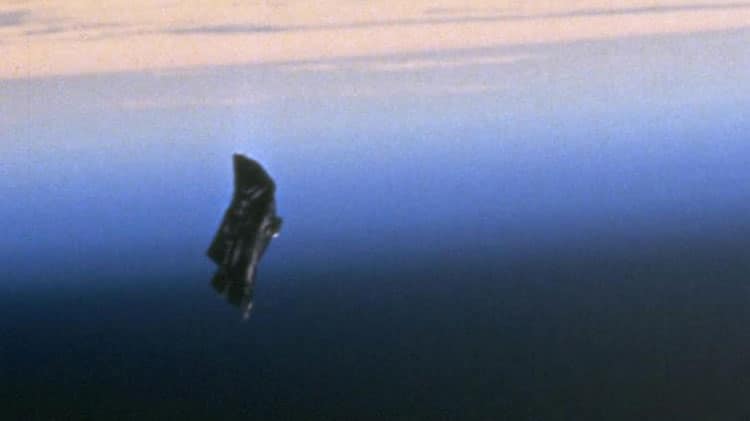
    Russian and American Air Defense units saw the mysterious BLACK KNIGHT Satellite. At 15 tons, it was bigger than any country could have sent then. It ‘disappeared’ after about three weeks but has been spottily reported for decades; it is possible that Nikola Tesla heard radio broadcasts from it as early as 1899.

    Some internet sources say it has been orbiting for around 13,000 years. NASA and other space agencies have been silent about the craft, although they do allow the occasional picture.
    Take our 1960 Quiz!

    1960 Pop Culture Facts & History

    August 1, 1960 – The Twist by Chubby Checker was released. On August 6, Chubby Checker (Ernest Evans) performed his version of The Twist, written by Hank Ballard, on The Dick Clark Show. It reached number one on The Billboard chart for the first time on September 19, 1960.

    USAF Captain Joseph Kittinger set three records on August 16th – the highest parachute jump (102,800 feet), the longest parachute free-fall (4 minutes 36 seconds), and the first person to exceed the speed of sound without an aircraft or space vehicle (714 mph during free fall).

    Morely Cigarettes are a fake brand of cigarettes used across mass media since April 5, 1961, first used on an episode of The Naked City.

    The largest polar bear on record, reportedly weighing 2,209 pounds, was a male shot at Kotzebue Sound in northwestern Alaska in 1960. When mounted, he stood 11 feet, 1 inch tall on its hind legs.

    Motown, founded by Berry Gordy Jr., was incorporated as Motown Record Corporation.

    On July 20, 1960, The world’s first-ever female head of government in the modern era was elected in Ceylon (now Sri Lanka), Sirimavo Bandaranaike as Prime Minister.

    The first CERN particle accelerator became operational in Geneva, Switzerland.

    The PLATO computer system, introduced at the University of Illinois in 1960, invented forums, message boards, chat rooms, instant messaging, remote screen sharing, and multiplayer video games years before the internet existed.

    Standard showtimes for films were not expected until 1960. Previously, most films would just play on a loop, and people could enter anytime. Thriller Psycho was one of the first films set to viewing times.

    On September 30, 1960,  The Flintstones premiered at 8:30 PM on ABC.

    Joanne Woodward received one of the first stars on the Hollywood Walk of Fame.

    The AFL began placing players’ names on the back of their jerseys. Major League Baseball’s Chicago White Sox started the practice earlier that year. NOB – Names On Back. The New York Yankees have traditionally never worn the names.

    KISS is an acronym for “Keep it simple, stupid,” as a design principle noted by the US Navy in 1960.

    When Eisenhower planned to visit Japan in 1960, the government called on Yakuza bosses to lend an army of their men as security guards. The visit was later canceled.

    Amos ‘n’ Andy, an American radio sitcom set in Harlem with black characters, ran from 1928 through 1960, was created, written, and voiced by two white actors.

    February and Late August through September, CBS broadcast the 1960 Winter Olympics and Summer Olympics exclusively for $60,000.

    The record for the fastest propeller passenger aircraft (541.45 MPH) was set on 24 March 1960 by the Russian Tupolev Tu-114.

    The X-15 jet has held the record for the world’s fastest plane since 1960 (2,196 MPH), 1961 (4,093 MPH), 19612 (4,104 MPH), and 1967 (4,534 MPH).

    Mariana Trench: Only three people ever went into The Mariana Trench. Don Walsh and Jacques Piccard, two scientists aboard the Trieste on January 4, 1960, and film director James Cameron in 2012.

    Starting on February 24, the first submerged circumnavigation of Earth was completed by USS submarine Triton on April 25th (Operation Sandblast, 60 days, 21 hours).

    December 31, 1960: The last day on which the farthing, a coin first minted in England in the 13th century, was legal tender in the United Kingdom. The value at that point was less than a penny.

    Paleoanthropologist Louis Leakey discovered 1.4 million-year-old Homo erectus (Olduvai Hominid 9) in Olduvai Gorge, Tanzania.

    There are three dots on every Domino’s Pizza box because when founder Tom Monaghan started his chain, he planned on adding a dot with each new store. Looking back, 8,000+ stores later, stopping with the three dots was a good idea, forming a simple domino.

    The term paparazzi originated with Italian director Federico Fellini’s La Dolce Vita. One of the minor characters in the film is a photographer named Paparazzo. Fellini took Paparazzo’s name from the Italian word for a noisy mosquito.

    Snoopy’s Doghouse

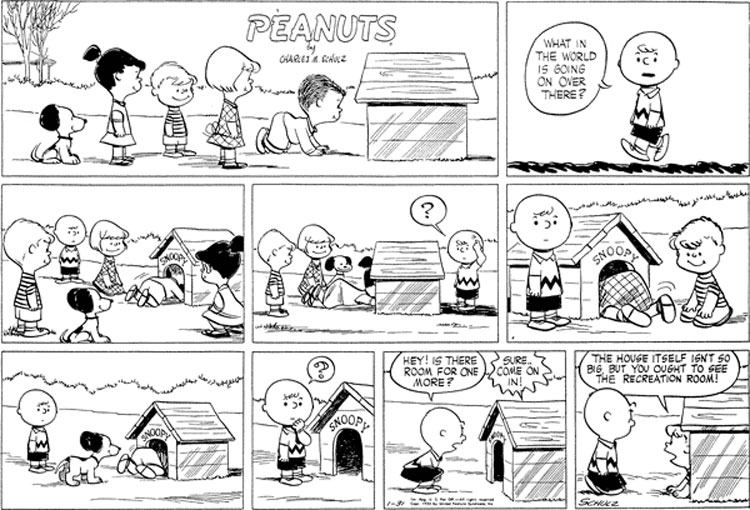
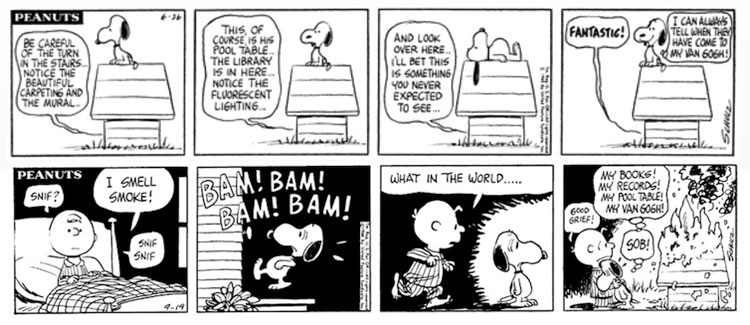
    Snoopy’s doghouse is always shown from the side so as never to reveal the interior, leaving what’s inside to the reader’s imagination. On May 8, 1960, the inside of the doghouse can be seen, but it seems empty.  It is apparently not empty.

    Civil Rights

    February 1, 1960 – In Greensboro, North Carolina, four black students from North Carolina Agricultural and Technical State University began a sit-in at a segregated Woolworth’s lunch counter. Although they were refused service, they were allowed to stay at the counter.

    July 25, 1960 – The same Woolworth Company’s lunch counter in Greensboro, North Carolina, served a meal to its first black customer.

    May 6 – United States President Dwight D. Eisenhower signed the Civil Rights Act of 1960 into law.

    In 1960, Republican Frank R. Beckwith was the first African American to run as a candidate for President of the United States in a major-party primary

    Cold War

    In 1960, the President of France told the President of the United States, John F. Kennedy, “I do not know what Khrushchev is going to do, nor what is going to happen, but whatever he does… I want you to know that I am with you to the end.”

    May 1 – Several Soviet surface-to-air missiles shot down an American Lockheed U-2 spy plane. Its pilot, Francis Gary Powers of the Central Intelligence Agency, is captured.

    July 1 – A Soviet Air Force MiG-19 fighter plane flying north of Murmansk, Russia, over the Barents Sea, shot down a six-man RB-47 Stratojet US Air Force reconnaissance plane. Four of the Air Force officers were killed, and the two survivors were held prisoner in the Soviet Union.

    October 12 – Soviet Premier Nikita Khrushchev pounds his shoe on a table at a meeting of the United Nations General Assembly, protesting the discussion of the Soviet Union’s policies toward Eastern Europe.

    Doomsday Clock

    Seven minutes to midnight, according to the Bulletin of Atomic Scientists.
    1960: “Political actions belie the tough talk of “massive retaliation.” For the first time, the United States and Soviet Union appear eager to avoid direct confrontation in regional conflicts such as the 1956 Egyptian-Israeli dispute. Joint projects that build trust and constructive dialogue between third parties also quell diplomatic hostilities. Scientists initiate many of these measures, helping establish the International Geophysical Year, a series of coordinated, worldwide scientific observations, and the Pugwash Conferences, which allow Soviet and American scientists to interact.”

    The Habit

    Reading To Kill a Mockingbird by Harper Lee.
    OR watching Alfred Hitchcock’s Psycho in theaters.

    1st Appearances & 1960’s Most Popular Christmas Gifts, Toys and Presents

    Green Eggs and Ham, by Dr. Seuss, Game of Life*, Etch-A-Sketch, Barbie, Chatty Cathy, Mattel’s Lie Detector Game, Mr. Machine, Play-Doh Fun Factory

    Best Film Oscar Winner

    Ben-Hur (presented in 1960)

    Popular and Best-selling Books From 1960

    Dr. Seuss’s ABC by Dr. Seuss
    Advise and Consent by Allen Drury
    Are You My Mother? by P.D. Eastman
    The Chapman Report by Irving Wallace
    The Constant Image by Marcia Davenport
    For Your Eyes Only by Ian Fleming
    Green Eggs and Ham by Dr. Seuss
    Hawaii by James A. Michener
    To Kill a Mockingbird by Harper Lee
    The Leopard by Giuseppe Tomasi di Lampedusa
    The Listener by Taylor Caldwell
    Love Is a Special Way of Feeling by Joan Walsh Anglund
    The Lovely Ambition by Mary Ellen Chase
    One Fish, Two Fish, Red Fish, Blue Fish by Dr. Seuss
    Ourselves to Know by John O’Hara
    Put Me in the Zoo by Robert Lopshire
    Sermons and Soda-Water by John O’Hara
    The Sneetches and Other Stories by Dr. Seuss
    Trustee from the Toolroom by Nevil Shute

    1960 Most Popular TV Shows

    1. Gunsmoke (CBS)
    2. Wagon Train (NBC)
    3. Have Gun Will Travel (CBS)
    4. The Andy Griffith Show (CBS)
    5. The Real McCoys (ABC)
    6. Rawhide (CBS)
    7. Candid Camera (CBS)
    8. The Untouchables (ABC)
    9. The Jack Benny Show (CBS)
    10. Dennis The Menace (CBS)

    1960 Billboard Number One Songs

    December 28, 1959 – January 3, 1960:
    Why – Frankie Avalon

    January 4, 1960 – January 17:
    El Paso – Marty Robbins

    January 18 – February 7:
    Running Bear – Johnny Preston

    February 8 – February 21:
    Teen Angel – Mark Dinning

    February 22 – April 24:
    The Theme From A Summer Place – Percy Faith & his Orchestra

    April 25 – May 22:
    Stuck On You – Elvis Presley

    May 23 – June 26:
    Cathy’s Clown – The Everly Brothers

    June 27 – June 10:
    Everybody’s Somebody’s Fool – Connie Francis

    July 11 – July 17:
    Alley-Oop – Hollywood Argyles

    July 18 – August 7:
    I’m Sorry – Brenda Lee

    August 8 – August 17:
    Itsy Bitsy Teenie Weenie Yellow Polkadot Bikini – Brian Hyland

    August 15 – September 18:
    It’s Now Or Never – Elvis Presley

    September 19 – September 25:
    The Twist – Chubby Checker

    September 26 – October 9:
    My Heart Has A Mind Of Its Own – Connie Francis

    October 10 – October 16:
    Mr. Custer – Larry Verne

    October 17 – October 23:
    Save The Last Dance For Me – The Drifters

    October 24 – November 13:
    I Want To Be Wanted – Brenda Lee

    November 14 – November 20:
    Georgia On My Mind – Ray Charles

    November 21 – November 27:
    Stay – Maurice Williams & The Zodiacs

    November 28, 1960 – January 8, 1961:
    Are You Lonesome Tonight? – Elvis Presley

    1960 United States Census

    Total US Population: 179,323,175
    1. New York, New York – 7,781,984
    2. Chicago, Illinois – 3,550,404
    3. Los Angeles, California – 2,479,015
    4. Philadelphia, Pennsylvania – 2,002,512
    5. Detroit, Michigan – 1,670,144
    6. Baltimore, Maryland – 939,024
    7. Houston, Texas – 938,219
    8. Cleveland, Ohio – 876,050
    9. Washington, District of Columbia – 783,956
    10. St. Louis, Missouri – 750,026

    Sports Highlights

    Wilt Chamberlain scored 58 points, the most ever by an NBA rookie, as Philadelphia Warriors beat Detroit Pistons, 127-117 in Bethlehem, PA.

    In 1960, the National Basketball Association player Wilt Chamberlain got 55 rebounds in a game versus the Boston Celtics.

    Wilma Rudolph (June 23, 1940 – November 12, 1994) had polio as an infant and was unable to walk properly until she was 11. For several years, her family had to massage her legs four times a day, and she had to wear a metal brace. In 1960, she became the first American woman to win three gold medals in an Olympic event.

    October 29 – In Louisville, Kentucky, Cassius Clay (Muhammad Ali) won his first professional boxing match over Tunney Hunsaker.

    On September 9, 1960,  The first regular-season game in the American Football League took place at Boston’s Nickerson Field. The Denver Broncos defeated the Boston Patriots, 13–10.

    On September 10, 1960, during the Summer Olympics in Rome, Ethiopian runner Abele Bikila became the first Sub-Saharan African to win a gold medal. He ran barefoot.

    Sports

    World Series Champions: Pittsburgh Pirates
    NFL Champions: Philadelphia Eagles
    AFL Champions: Houston Oilers
    NBA Champions: Boston Celtics
    Stanley Cup Champs: Montreal Canadians
    U.S. Open Golf Arnold Palmer
    U.S. Tennis: (Men/Ladies) Neale Fraser/Darlene R. Hard
    Wimbledon (Men/Women): Neale Fraser/Maria Bueno
    NCAA Football Champions: Minnesota & Mississippi
    NCAA Basketball Champions: Ohio State
    Kentucky Derby: Venetian Way

    More 1960 Facts & History Resources:

    BabyBoomers.com (1960)
    Most Popular Baby Names (BabyCenter.com)
    Popular and Notable Books (popculture.us)
    Broadway Shows that Opened in 1960X
    1960 Calendar, courtesy of Time and Date.com
    Fact Monster
    1960s, Infoplease.com World History
    1960 in Movies (according to IMDB)
    Retrowaste Vintage Culture
    1960 Television
    1960s Slang
    1960s Timeline: PBS
    1960 US Census Fast Facts
    Wikipedia 1960


  • Civil Rights Act of 1960

    Civil Rights Act of 1960

    Civil Rights Act of 1960

    The Civil Rights Act of 1960 was a landmark piece of legislation in the United States that sought to address racial discrimination, particularly in voting rights and desegregation. Building on the Civil Rights Act of 1957, the 1960 Act provided additional mechanisms to enforce voting rights and combat racial segregation in schools and public spaces. The Act was signed into law by President Dwight D. Eisenhower on May 6, 1960. It marked a significant step forward in the ongoing struggle for racial equality and civil rights in the United States.

    Dates and Details:

    • The Civil Rights Act of 1960 was signed into law by President Dwight D. Eisenhower on May 6, 1960.
    • The Act addressed racial discrimination in voting rights by providing federal referees to assist in voter registration and ensuring that voting records were preserved for inspection.
    • The Act also contained provisions to combat racial segregation in schools and public spaces, requiring federal funds be withheld from projects or programs that practiced discrimination.

    History Facts:

    1. The Civil Rights Act of 1960 was the second major civil rights legislation in the 20th century, following the Civil Rights Act of 1957.
    2. The United States Congress passed the Act with bipartisan support, though some Southern Democrats opposed the legislation.
    3. The 1960 Act laid the groundwork for the more comprehensive Civil Rights Act of 1964, which would go on to outlaw many forms of racial discrimination.
    4. The Act empowered the U.S. Attorney General to file lawsuits to desegregate public schools, though enforcement of this provision was limited at the time.
    5. President Eisenhower signed the Act into law on the same day that a federal court ordered the University of Georgia to admit its first two African American students, reflecting the ongoing struggle for desegregation in the United States.

    Effects on Pop Culture:

    • The Civil Rights Act of 1960 and the era’s broader civil rights movement profoundly impacted American popular culture.
    • The struggle for civil rights inspired numerous books, films, songs, and works of art that sought to capture the experiences of African Americans and promote racial equality.
    • The Act and the civil rights movement served as a catalyst for the emergence of a distinct African American artistic and cultural identity in the United States.
    • The Civil Rights Act of 1960 has been referenced in various movies, documentaries, and television series dealing with the history of civil rights in America.

    Prominent People and Countries Involved:

    • President Dwight D. Eisenhower played a key role in the passage of the Civil Rights Act of 1960, signing the legislation into law and advocating for its enforcement.
    • Attorney General William P. Rogers, who served under Eisenhower, strongly supported the Act and pushed for its provisions to be enforced by the federal government.
    • Civil rights leaders like Martin Luther King Jr., Roy Wilkins, and A. Philip Randolph were instrumental in raising awareness about the need for federal action to address racial discrimination and promote civil rights.
    • Members of the United States Congress, both Democrats and Republicans, worked together to draft and pass the Civil Rights Act of 1960, overcoming opposition from some Southern lawmakers who sought to maintain the status quo.

    The Civil Rights Act of 1960 was a critical milestone in the ongoing struggle for racial equality in the United States. While the Act was limited in its scope and enforcement, it helped pave the way for future civil rights legislation and increased federal involvement in addressing racial discrimination. The Act’s passage and the broader civil rights movement had a lasting impact on American society and popular culture, inspiring countless individuals to join the fight for equality and justice.

    Take our 1960 Quiz!

  • Greensboro Sit-ins in North Carolina

    Greensboro Sit-ins in North Carolina

    Greensboro Sit-ins

    The Greensboro sit-ins were a pivotal moment in the American civil rights movement, as they marked the beginning of a new era of nonviolent protests against racial segregation in the United States. The sit-ins took place in Greensboro, North Carolina, from February 1, 1960, to July 25, 1960, and led to the eventual desegregation of lunch counters in Woolworths and other department stores nationwide. This significant event involved a group of young African American students who bravely challenged the status quo and helped to inspire a new generation of activists in the fight for racial equality.

    On February 1, 1960, four young African American students from North Carolina Agricultural and Technical State University (NC A&T) – Ezell Blair Jr. (later known as Jibreel Khazan), Franklin McCain, Joseph McNeil, and David Richmond – took their seats at the “whites-only” lunch counter in the F.W. Woolworth store in Greensboro. This act of defiance directly responded to racial segregation in the South, where African Americans were denied equal access to public facilities, including restaurants and lunch counters. The student’s decision to sit at the lunch counter and request service was a deliberate act of civil disobedience that aimed to challenge the system of segregation and draw attention to the injustice faced by African Americans daily.

    When the store manager refused to serve the four students, they remained seated and refused to leave. This initial protest attracted national attention; the following day, over 20 more students joined the sit-in. As news of the protest spread, more students from other colleges and universities in the area, both black and white, joined the sit-ins. By the third day, over 60 protesters were occupying the lunch counter. On the fifth day, more than 300 people had joined the sit-ins, making it impossible for the store to continue operating as usual.

    The sit-ins were not without their challenges. The protesters faced verbal and physical abuse from white counter-protesters, but they remained committed to the principles of nonviolence and passive resistance. They were often arrested on various charges, including trespassing, but their actions inspired other sit-ins across the South, and the movement quickly gained momentum. By the end of February, sit-ins had spread to over 30 cities in seven states.

    The Greensboro sit-ins received extensive media coverage, both nationally and internationally, highlighting the struggle for civil rights in the United States. The protesters’ bravery and commitment to nonviolence attracted widespread support, and many people across the country began questioning segregation’s morality. The sit-ins were crucial in raising awareness about the civil rights movement and galvanizing support for the cause.

    Sit-in Facts:

    1. The original four students who initiated the sit-in, Blair, McCain, McNeil, and Richmond, became known as the “Greensboro Four.”
    2. During the sit-ins, protesters often studied or read books while sitting at the lunch counter, demonstrating their commitment to education and their peaceful intentions.
    3. The American Jewish Congress and other civil rights organizations, including the National Association for the Advancement of Colored People (NAACP), offered legal and financial support to the Greensboro protesters.
    4. The iconic Woolworth’s lunch counter where the sit-ins took place is now preserved at the International Civil Rights Center & Museum in Greensboro.
    5. The Greensboro sit-ins inspired other forms of nonviolent protests, such as the “Freedom Rides,” in which activists rode buses throughout the South to challenge segregated interstate transportation.

    Prominent People and Organizations Involved:

    1. Martin Luther King Jr.: The renowned civil rights leader publicly supported the Greensboro sit-ins and praised the courage of the protesters. He met with the Greensboro Four and other student leaders, offering guidance and encouragement for their nonviolent resistance efforts.

    2. Ella Baker: A key civil rights activist, Ella Baker played a significant role in organizing and supporting the sit-in movement. She helped to establish the Student Nonviolent Coordinating Committee (SNCC) in April 1960, which brought together student activists from across the country and provided a platform for further civil rights actions.

    3. James Farmer: As the national director of the Congress of Racial Equality (CORE), Farmer was influential in the civil rights movement. He supported the Greensboro sit-ins and later organized the Freedom Rides, inspired by the sit-in movement.

    4. The Student Nonviolent Coordinating Committee (SNCC): The SNCC played a pivotal role in organizing and coordinating sit-ins and other nonviolent protests throughout the South. It provided support, resources, and training to local activists and helped to sustain the momentum of the civil rights movement.

    5. National Association for the Advancement of Colored People (NAACP): The NAACP was a prominent civil rights organization that supported the Greensboro sit-ins and other protest actions. It provided legal and financial assistance to arrested protesters and helped build public support for the desegregation movement.

    Effects on Pop Culture:

    1. Music: The civil rights movement, including the sit-ins, inspired various songs that reflected the struggle for racial equality. Popular artists like Sam Cooke (“A Change is Gonna Come”), Bob Dylan (“The Times They Are a-Changin’”), and Nina Simone (“Mississippi Goddam”) addressed the movement in their music.

    2. Literature: The sit-ins and the broader civil rights movement profoundly impacted literature, with many authors addressing themes of racial inequality and social justice in their works. Examples include James Baldwin’s “The Fire Next Time” and Harper Lee’s “To Kill a Mockingbird.”

    3. Film and Television: The sit-ins and the civil rights movement were portrayed in various films and television programs during the 1960s and later years. Some notable examples include the 2014 film “Selma,” which depicts the 1965 Selma to Montgomery marches, and the 2013 film “The Butler,” which portrays the life of a White House butler who witnessed the civil rights movement firsthand.

    4. Art: The sit-ins and the civil rights movement inspired numerous artists to create works that reflected the struggle for racial equality. African American artists like Elizabeth Catlett, Romare Bearden, and Jacob Lawrence created powerful visual narratives that captured the spirit and challenges of the movement.

    5. Fashion: The civil rights movement also influenced fashion, as activists often wore clothing that symbolized their commitment to the cause. For example, members of the Black Panther Party wore black leather jackets and berets, while college students participating in sit-ins often dressed in their Sunday best to convey a sense of dignity and respectability.

    The Greensboro sit-ins were a transformative moment in American history, demonstrating the power of nonviolent protest and the resilience of the civil rights movement. The actions of the Greensboro Four and the countless others who joined them helped to dismantle racial segregation in public spaces and contributed to the passage of the Civil Rights Act of 1964. The sit-ins remain a powerful symbol of courage and resistance, inspiring future generations in their fight for social justice.

  • 1958 History, Facts and Trivia

    1958 History, Facts and Trivia

    1958 History, Facts and Trivia

    Quick Facts from 1958

    • World-Changing Event: President Dwight Eisenhower signed the National Aeronautics and Space Act, creating NASA.
    • The Top Song was At The Hop by Danny & The Juniors.
    • Influential Songs include Tequila by The Champs, Tom Dooley by The Kingston Trio, and Rebel Rouser by Duane Eddy.
    • The Movies to Watch include South Pacific, High School Confidential, St. Louis Blues, Attack of the 50-Foot Woman, Cat on a Hot Tin Roof, The Defiant Ones, The Fly, Auntie Mame, The Blob and Vertigo.
    • The Most Famous Person in America was probably Elizabeth Taylor.
    • Notable books include Things Fall Apart by Chinua Achebe and Doctor Zhivago by Boris Pasternak.
    • Bank of America launched the first credit card with extended credit in September 1958.
    • Price of a postage stamp in 1958: 4 cents
      Price of a used ’57 Ford Fairlane: $1,995.00
    • The Bald Guy was Yul Brynner
    • The Story Behind the Song: Bruce Springsteen’s Nebraska is the story of 20-year-old Charles Starkweather and his 13-year-old girlfriend Caril Ann Fugate, who murdered 11 people over eight days in 1958.

    Top Ten Baby Names of 1958

    Mary, Susan, Linda, Karen, Patricia, Michael, David, James, Robert, John

    Fashion Icons and Sex Symbols

    Carroll Baker, Brigitte Bardot, Claudia Cardinale, Doris Day, Diana Dors, Anita Ekberg, Annette Funicello, Ava Gardner, Audrey Hepburn, Gina Lollobrigida, Sophia Loren, Jayne Mansfield, Marilyn Monroe, Julie Newmar, Kim Novak, Elizabeth Taylor, Mamie Van Doren

    Sex Symbols and Hollywood Hunks

    Paul Newman, Elvis Presley

    Oscars: 30th Academy Awards

    The Oscars unfurled their red carpet at the RKO Pantages Theatre in Hollywood on March 26, 1958. Rosalind Russell and Bob Hope hosted the ceremony. The Bridge on the River Kwai had a night to remember, scoring seven awards, including Best Picture. Alec Guinness captured Best Actor for the same film. The Best Actress honor went to Joanne Woodward for The Three Faces of Eve.

    Emmy Awards: 10th Primetime Emmy Awards

    Hosted by Danny Thomas, the Emmy Awards on April 15, 1958, took place at the Coconut Grove Ambassador Hotel, Los Angeles. Gunsmoke received the accolade for Best Dramatic Series, while The Phil Silvers Show claimed Best Comedy Series. Robert Young snagged Best Actor for Father Knows Best, and Jane Wyatt received Best Actress for the same show, proving that father—and mother—did know best that year.

    “The Quotes”

    “What counts is not necessarily the size of the dog in the fight – it’s the size of the fight in the dog. ”
    – President Dwight D Eisenhower

    “Look, Ma, no cavities!”
    – Crest toothpaste ad

    “Life is a banquet, and most poor suckers are starving to death!”
    – Rosalind Russell, in ‘Auntie Mame’

    Time Magazine’s Man of the Year

    Charles de Gaulle

    Miss America

    Marilyn Van Derbur (Denver, CO)

    Miss USA

    Eurlyne Howell (Louisiana)

    The Scandals

    DJ Alan Freed, the inventor of the term ‘Rock and Roll’, was accused of being paid to promote specific songs on his popular radio and live shows. His career ended, along with his street cred, in the PAYOLA scandal.

    Jerry Lee Lewis married his 13-year-old 2nd cousin.

    Disney murdered scores of Lemmings for the ‘suicide scene’ in the 1958 movie White Wilderness. Producers pushed and threw them off a cliff while shooting footage of the cruelty, then framed it as a natural occurrence for the audience.

    Lana Turner’s daughter, Cheryl, saw her mother being beaten by her boyfriend, Johnny Stompanato, and killed him with a kitchen knife. Some people think that Lana did the self-defensive killing.

    1958 Pop Culture Facts & History

    The Adventures of Superpup never passed the ‘unaired pilot’ stage.

    The Modern plastic Hula Hoop was invented in 1958 by Arthur K. Melin and Richard Knerr. In the 1930s, the first marketed Hula Hoops were made of bamboo and sold as exercise equipment, but they have been used for at least a few hundred years; even in Europe, they used metal tubes. But When they started marketing them in the Summer of 1958, Wham-O sold 25 Million of them. By 1960, 200 Million of them were sold.

    Two pilots, Robert Timm and John Cook, took off from McCarran Airfield in Las Vegas, Nevada. They flew a Cessna 172 for 64 days, 22 hours, 19 minutes, and 5 seconds without landing (December 4, 1958- February 4, 1959), refueling by matching speed with a fuel truck driving down a road.

    The Ford Motor Company had conceived a nuclear-powered car called the “Nucleon,” with its own contained reactor.

    The gesture of celebrating victory by lifting the trophy above the head came in 1958 when photographers asked Hilderaldo Bellini, captain of the Brazilian team at the time, to lift the World Cup trophy after beating Sweden so that they could get a better view of it.

    Bobby Fischer (14 years old) won the United States Chess Championship.

    As a test, Bank of America mailed 60,000 residents of Fresno, California, a small plastic card with a $500 credit line. The experiment was successful, and the program became Visa.

    Music producer Phil Spector’s high-school band (The Teddy Bears) made their first record, To Know Him Is to Love Him. It became number one on the pop charts.

    Led by the retired Boston candy manufacturer Robert H.W. Welch Jr., a group of anti-communist activists founded an organization called the John Birch Society that was dedicated to finding and destroying all traces of communism in the United States. The group got their name from John Birch, an intelligence officer killed in China during the Cold War.

    The US 50 Star Flag was designed in 1958 by Robert Heft as a junior high history project and got a B-. The grade was later changed to an A after Heft’s design was accepted and adopted by the United States Congress in 1959. Robert and his teacher agreed after the initial B minus grade was given but before the US Congress accepted it.

    Crayola’s Prussian Blue crayon was renamed Midnight Blue in 1958.

    First Class Postage Stamps increased to 4 cents on August 1, 1958.

    The only gas station ever designed by Frank Lloyd Wright was built in 1958 and still operates at 202 Cloquet Avenue, Cloquet, Minnesota.

    The LEGO was patented (#3005282A) in 1958.

    The world’s tallest ever recorded tsunami was in Alaska in 1958, caused by a landslide after an earthquake in the Fairweather Fault in the Alaska Panhandle. The 100-foot wave reached 1720 feet above sea level.

    The Bossa Nova music genre was created in Rio de Janeiro with João Gilberto’s recording of Chega de Saudade.

    Bruce Lee was the 1958 Hong Kong Cha Cha Dance Championship winner.

    Elvis Presley was inducted into the US Army, Private #53310761.

    Dick Dale invented Surf Guitar Music with Let’s Go Trippin’

    Vanguard 1, launched in 1958, is the oldest man-made satellite in orbit. Communication with it stopped working in 1964.

    Sir Edmund Hillary reached the South Pole.

    The 1958 National Football League Championship Game was the 26th NFL championship game, played on December 28th at Yankee Stadium in New York City. It was the first NFL playoff game to go into sudden-death overtime, and the final score was Baltimore Colts 23, New York Giants 17. The game has since become known as “The Greatest Game Ever Played.”

    Lawrence Welk was the first TV show to air in stereo before stereo TV had been invented. ABC simulcast one audio channel on its radio network and the other via TV so that listening to both would give you a stereo effect.

    Nuclear Oops

    The US Air Force lost a 7,600-pound (3,400 kg) Mark 15 nuclear bomb in an F-86/B-47 collision in the Atlantic Ocean off Tybee Island, near Savannah, Georgia, and it has still not been found.

    A 26-kiloton Mark 6 mistakenly fell out of a B-47 jet, dropping 15,000 feet into the backyard of Walter Gregg in Mars Bluff, South Carolina. The non-nuclear part of the bomb blew up and left a crater. It’s on private property, so don’t visit without permission.

    Project A119

    The US Air Force made plans to detonate a nuclear bomb on the moon and wanted it to visible to the naked eye on Earth. They hoped it would boost American morale to counter the USSR’s advances in the space race. #coldwar

    Civil Rights

    Garth Williams, the illustrator of Stuart Little, wrote a kids’ book in 1958 called The Rabbits’ Wedding. An Alabama State Senator claimed the book was “propaganda for integration and intermarriage,” as the book featured a bunny with white fur and another with black.

    Clennon Washington King Jr. applied to the (then) all-white University of Mississippi, and he was committed to Mississippi State Hospital in Whitfield for trying to attend it. In 1960, King ran for President as the candidate of the Independent Afro-American Party, with Reginald Carter as his running mate.

    Tragedy

    One of the worst school bus accidents in American history occurred in Prestonburg, Kentucky. 26 children and the bus driver were killed. Twenty-two children escaped.

    World War I Update

    Andorra declared war on Germany during WWI but didn’t send any soldiers because they didn’t have an army. At the Treaty of Versailles, Andorra was forgotten and technically remained at war with Germany until the two countries declared peace in 1958.

    World War II Update

    During a visit to Germany in 1958, Comedic Actor Groucho Marx climbed a pile of rubble that marked the site of Adolf Hitler’s bunker, the believed site of Hitler’s death, and performed a two-minute Charleston Dance.

    Nobel Prize Winners

    Physics – Pavel Alekseyevich Cherenkov, Ilya Mikhailovich Frank, and Igor Yevgenyevich Tamm
    Chemistry – Frederick Sanger
    Physiology or Medicine – George Wells Beadle, Edward Lawrie Tatum, and Joshua Lederberg
    Literature – Boris Leonidovich Pasternak
    Peace – Georges Pire

    1st Appearances & 1958’s Most Popular Christmas Gifts, Toys and Presents

    LEGOs, Skateboards, Beat the Clock Game, Crayola Crayons ’64 box’ with built-in sharpener*, Concentration TV Game home version, Hula Hoop (U.S.)
    *Crayola crayons first came out in 1903

    The Habit

    Reading Doctor Zhivago by Boris Pasternak

    More 1958 Firsts

    The American Express card was introduced in 1958.

    The term “meritocracy” was coined by Michael Young in his 1958 dystopian essay The Rise of the Meritocracy.

    The modern hula hoop was invented in 1958 by Arthur K. “Spud” Melin and Richard Knerr and distributed for sale by their company, Wham-O!

    An Evening with Fred Astaire, the first television show recorded on color videotape, was broadcast on NBC.

    Chicken Ramen, the first instant noodles, went on sale in Japan.

    Clifton Hillegass in Lincoln, Nebraska, started cliffsNotes.

    Dracula was released, starring Christopher Lee. It was the first horror movie from Hammer Films.

    The Jim Henson Company (Muppets Inc.) was founded.

    The internationally recognized peace symbol was designed in 1958 by Gerald Holtom as the logo for the Campaign for Nuclear Disarmament.

    Pizza Hut was founded in Wichita, Kansas, by Dan and Frank Carney.

    The first video game, “Tennis for Two,” invented by William Higinbotham, was introduced at the Brookhaven National Laboratory Visitors’ Day Exhibit in the United States.

    Jack Kilby invented the first integrated circuit while working at Texas Instruments.

    Kitchens were smelling a lot cleaner thanks to the introduction of Mr. Clean in 1958. In 1998, People Magazine called Mr. Clean “one of the sexiest men alive.”

    Commercial, domestic jet airline service opened between New York and Miami.

    Best Film Oscar Winner

    The Bridge Over River Kwai (presented in 1958)

    Popular and Best-selling Books From 1958

    A Fly Went By by Mike McClintock and Fritz Siebel
    Anatomy of a Murder by Robert Traver
    Around the World with Auntie Mame by Patrick Dennis
    By Love Possessed by James Gould Cozzens
    The Cat in the Hat Comes Back by Dr. Seuss
    Dr. No by Ian Fleming
    Doctor Zhivago by Boris Pasternak
    Eloise at Christmastime by Kay Thompson
    The Enemy Camp by Jerome Weidman
    From the Terrace by John O’Hara
    Ice Palace by Edna Ferber
    Lolita by Vladimir Nabokov
    Night by Elie Wiesel
    Things Fall Apart by Chinua Achebe
    Victorine by Frances Parkinson Keyes
    The Winthrop Woman by Anya Seton
    Yertle the Turtle and Other Stories by Dr. Seuss

    1958 Most Popular TV Shows

    1. Gunsmoke (CBS)
    2. Wagon Train (NBC)
    3. Have Gun Will Travel (CBS)
    4. The Rifleman (ABC)
    5. The Danny Thomas Show (CBS)
    6. Maverick (ABC)
    7. Tales of Wells Fargo (NBC)
    8. The Real McCoys (ABC)
    9. I’ve Got a Secret (CBS)
    10. The Life and Legend of Wyatt Earp (ABC)

    1958 Billboard Number One Songs

    December 30, 1957 – January 10, 1958:
    April Love – Pat Boone

    January 11 – February 14:
    At The Hop – Danny and the Juniors

    February 15 – March 21:
    Don’t (I Beg of You) – Elvis Presley

    March 22 – April 25:
    Tequila – The Champs

    April 26 – May 2:
    Twilight Time – The Platters

    May 3 – May 16:
    Witch Doctor – David Seville

    May 17 – June 13:
    All I Have To Do Is Dream – The Everly Brothers

    June 14 – July 25:
    Purple People Eater – Sheb Wooley

    July 26 – August 8:
    Hard Headed Woman – Elvis Presley

    August 9 – August 22:
    Poor Little Fool – Ricky Nelson

    August 23 – August 29:
    Volare – Domenico Modugno

    August 30 – September 5:
    Little Star – The Elegants

    September 6 – October 3:
    Volare – Domenico Modugno

    October 4 – November 14:
    It’s All In The Game – Tommy Edwards

    November 15 – November 21:
    It’s Only Make Believe – Conway Twitty

    November 22 – November 28:
    Tom Dooley – Kingston Trio

    November 29 – December 5:
    It’s Only Make Believe – Conway Twitty

    December 6 – December 26:
    To Know Him is To Love Him – Teddy Bears

    December 27, 1958 – January 18, 1959:
    Chipmunk Song – David Seville & The Chipmunks

    Sports

    World Series Champions: New York Yankees
    NFL Champions: Baltimore Colts
    NBA Champions: St. Louis Hawks
    Stanley Cup Champs: Montreal Canadiens
    U.S. Open Golf Tommy Bolt
    U.S. Tennis: (Men/Ladies) Ashley J. Cooper/Althea Gibson
    Wimbledon (Men/Women): Ashley Cooper/Althea Gibson
    NCAA Football Champions: Iowa & LSU
    NCAA Basketball Champions: Kentucky
    Kentucky Derby: Tim Tam
    World Cup (Soccer): Brazil

    More 1958 Facts & History Resources:

    BabyBoomers.com (1958)
    Most Popular Baby Names (BabyCenter.com)
    Popular and Notable Books (popculture.us)
    Broadway Shows that Opened in 1958X
    1958 Calendar, courtesy of Time and Date.com
    Fact Monster
    Fifties Web (1958)
    1950s, Infoplease.com World History
    1958 in Movies (according to IMDB)
    Retrowaste Vintage Culture
    1958 Television
    1950s Slang
    Wikipedia 1958


  • 1957 History, Facts and Trivia

    1957 History, Facts and Trivia

    1957 History, Facts and Trivia

    Quick Facts from 1957

    • World Changing Event: The Soviet Union launched Sputnik, the first space satellite, starting the Space Race.
    • The Top Song was All Shook Up by Elvis Presley.
    • Influential Songs include The Banana Boat Song (Day-o) by Harry Belafonte and Wake Up Little Suzie by The Everly Brothers.
    • The Movies to Watch include An Affair to Remember, Jailhouse Rock, Gunfight at the O.K. Corral, 12 Angry Men, A Face in the Crowd, The Incredible Shrinking Man, Pal Joey, The Spirit of St. Louis, Old Yeller, and The Bridge on the River Kwai.
    • The Most Famous Person in America was probably Rock Hudson.
    • Notable books include Atlas Shrugged by Ayn Rand and The Cat in the Hat by Dr. Seuss.
    • Price of 45 RPM single record in 1957: 79 cents
      Burger King Whopper: 37 cents
    • US Life Expectancy: Males: 66.4 years, Females: 72.7 years.
    • Wham-O Company produced the 1st Frisbee, the “Pluto Platter,” 1958.
    • Volvo’s Nils Bohlin invented the Three-Point Seatbelt. Volvo lets other car companies use the patent at no charge.
    • The Funny TV Lady: Lucille Ball
      The Funny Late Show Host: Steve Allen
    • The Baseball Hit(s): Richie Ashburn hit Alice Roth with a foul ball, breaking her nose, then hit her again while she was on the stretcher.

    Top Ten Baby Names of 1957

    Mary, Susan, Linda, Debra, Karen, Michael, James, David, Robert, John

    Fashion Icons and Sex Symbols

    Carroll Baker, Brigitte Bardot, Claudia Cardinale, Doris Day, Diana Dors, Anita Ekberg, Annette Funicello, Ava Gardner, Audrey Hepburn, Gina Lollobrigida, Sophia Loren, Jayne Mansfield, Marilyn Monroe, Julie Newmar, Kim Novak, Bettie Page, Elizabeth Taylor, Mamie Van Doren

    Leading Men and Sex Symbols

    Elvis Presley, Harry Belafonte

    Oscars: 29th Academy Awards

    On March 27, 1957, the Oscars ceremony was held at the RKO Pantages Theatre in Hollywood, with Jerry Lewis and Celeste Holm sharing the hosting duties. The film Around the World in 80 Days was the big winner of the night, bagging five awards, including Best Picture. Yul Brynner won Best Actor for his role in The King and I, while Ingrid Bergman was awarded Best Actress for Anastasia.

    Emmy Awards: 9th Primetime Emmy Awards

    The Emmy Awards took place on March 16, 1957, at the NBC Studios in Burbank, California. Art Linkletter reprised his hosting role. The Best Drama Series award went to Playhouse 90, and The Phil Silvers Show won Best Comedy Series. Robert Young snagged the Best Actor for Father Knows Best, and Loretta Young took home the Best Actress for Letter to Loretta for the second time.

    In film and television, the Oscars and Emmys continued to be the pinnacles of achievement. The Oscars focused on recognizing the cinematic achievements of 1956, while the Emmys followed suit with productions aired in 1956. These award shows often provided a glimpse into the social and cultural trends of the era, and 1957 was no exception.

    Time Magazine’s Man of the Year

    Nikita Khrushchev

    Miss America

    Marian McKnight (Manning, SC)

    Miss USA

    Mary Leona Gage (Maryland)/ Charlotte Sheffield (Utah)

    The Scandals

    On March 25, 1957, US Customs agents seized over 500 copies of the Allen Ginsberg book Howl and Other Poems on obscenity charges. It was later decided in the US court that the material was not obscene.

    James Vicary announced that he invented subliminal advertising at a Fort Lee, New Jersey, movie theater. He flashed the words: “Hungry? Eat Popcorn” and “Thirsty? Drink Coke” very fast between film frames. Food and beverage sales increased significantly, he claimed. In 1962, he said he made the whole thing up.

    US Politics

    January 21, 1957 (Monday): Second inauguration of Dwight D. Eisenhower

    1957 Pop Culture Facts & History

    When US President Harry S. Truman visited Disneyland in 1957, he refused to come aboard the popular Dumbo attraction. Truman, a Democrat, didn’t want to be seen riding in the symbol of the Republican

    The comedy film Airplane (1980) is a parody of Zero Hour (1957)

    The price of Coca-Cola was 5 cents (a nickel) from 1886 to m1959. Coca-Cola contacted the US Treasury Department, asking them to mint a 7.5 cent coin in 1953, to minimize a needed price increase for soda vending machines.

    On April 10, 12 Angry Men, directed by Sidney Lumet, starring Martin Balsam as Juror 1, John Fiedler as Juror 2, Lee J. Cobb as Juror 3, E. G. Marshall as Juror 4, Jack Klugman as Juror 5, Edward Binns as Juror 6, Jack Warden as Juror 7, Henry Fonda as Davis, Juror 8, Joseph Sweeney as McCardle, Juror 9, Ed Begley as Juror 10, George Voskovec as Juror 11 and Robert Webber as Juror 12, was released.

    Philadelphia’s American Bandstand, with Dick Clark, became a national television show.

    Elvis asked his audience at a Seattle concert to please rise for the national anthem. He picked up his guitar and sang Hound Dog. A 15-year-old Jimmy Hendrix was there, a part of the enthusiastic audience.

    Elvis Presley bought Graceland on 3734 Bellevue Boulevard in Memphis, Tennessee, for $100,000.

    In 1957, 1 out of 7 US workers’ income was earned in the textile or apparel industries.

    On Saturday, April 13, 1957, there was no mail delivery due to a budget crunch at the US Post Office. Additional funds insured Saturday mail continued by the following week.

    Stan Laurel (of the legendary comedy duo Laurel and Hardy) refused to ever perform publicly again after the death of his friend and partner Oliver Hardy in 1957.

    Fortran, an early computer language, was created.

    1948 Swiss engineer George de Mestral took his dog on a hike. When he got home, he noticed many burrs on the dog. He examined one under the microscope. He noticed the burrs had small hooks that enabled them to cling to the soft fur. De Mestral got the US patent (#3,009,235) for Velcro in 1955, an upgrade from his earlier 1955 patent (#2,717,437)

    Laika, a Russian dog, was the first living creature to be sent into space in Sputnik 2. Sadly, she did not make it back alive.

    January 16 – January 1- Three B-52 Bombers set a record for around-the-world flight, 45 hours and  19 minutes.

    The Mayflower II from Plymouth, England, sailed to Plymouth, Massachusetts.

    The longest-ever speech delivered by the United Nations was eight hours long. Vengalil Krishnan Krishna Menon delivered it from India on January 23, 1957.

    The US Supreme Court decided, in a 6-3 vote, that Major League Baseball is the only antitrust-exempt professional US sport.

    Unlikely Heroes

    Northeast Airlines Flight 823 crashed onto Rikers Island shortly after take-off from LaGuardia Airport, killing 20 and injuring 78 out of a total of 95 passengers and six crew. Fifty-seven inmates ran to help the survivors. Most prisoners who helped were either set free or received reduced sentences.

    1957 Mysteries:

    The Boy in the Box is a still-unsolved murder of a ~5-year-old boy whose naked and battered body was found in a cardboard box in a wooded area of Philadelphia in 1957. Found to be Joseph Augustus Zarelli in 2022.

    William Laing, Michael Crowley, and Ray Baker described a ‘Timeslip‘ journey into the medieval version of the Suffolk village of Kersey.

    An explosion occurred at a plutonium plant in the USSR, resulting in the world’s third-worst nuclear accident. The government kept it secret for 19 years. An estimated 6,000-8,000 people died in the event.

    Oops!

    Killer ‘Africanized’ bees are a hybrid species (with European Bees) that exist because they accidentally escaped quarantine in 1957.

    During a 1957 Phillies game, Richie Ashburn hit a fan, Alice Roth, with a foul ball, breaking her nose. When play resumed, he hit her again with another foul ball as she was being taken out on a stretcher. They later became friends.

    The United States Air Force accidentally dropped a 10 Megaton hydrogen bomb on uninhabited land owned by the University of New Mexico in Albuquerque. It did not go off, but a cow was reputedly killed.

    Fake News

    The BBC aired a segment about a Swiss family harvesting their “spaghetti tree” as an April Fool’s Day Prank on Panorama.

    Civil Rights

    The Little Rock Nine were a group of nine African American students who were escorted by 101st Airborne Division soldiers into Little Rock Central High School in 1957 after initially being blocked by the Arkansas National Guard and racial segregationists.

    A 24-hour and 18-minute speech by Sen. Storm Thurmond to stall the passing of the Civil Rights Act of 1957 was the longest Filibuster in US history. He read the Declaration of Independence, talked about Jury Trials, and answered questions from other Senators. He successfully spoke from 8:54 p.m. to 9:12 p.m. the next day, but the bill was passed anyway.

    World War II Aftermath

    Anne Frank Foundation was formed in Amsterdam.

    Unorthodox Medicine

    Actor Cary Grant was diagnosed with “prolonged emotional detachment” and began medical LSD therapy. He had more than 100 acid trips over 2 years and believed it helped him cope with the pain from his childhood.

    The Habits

    Everybody was flying those discs invented by Frederick Morrison, called ‘Pluto Platters,’ later renamed the ‘Frisbee.’
    ‘Frisbee’ was a pie company in Connecticut. The locals used to toss the empty pie plates, hence the name.
    Wham-O bought the rights to the product from Frederick.

    The cool kids were watching Dick Clark’s American Bandstand.

    1st Appearances & 1957’s Most Popular Christmas Gifts, Toys and Presents

    Dream Pets, Careers Game, Sea-Monkeys

    More Firsts

    Alfred Fielding and Marc Chavannes accidentally invented bubble wrap while trying to create plastic wallpaper.

    Standard & Poor’s S&P 500 opened on March 4, 1957, replacing the S&P 90.

    The phrase “In God We Trust” first appeared on US coins in 1864 but did not appear on U.S. paper currency until 1957.

    Nobel Prize Winners

    Physics – Chen-Ning Yang, Tsung-Dao Lee
    Chemistry – Lord Alexander R. Todd
    Physiology or Medicine – Daniel Bovet
    Literature – Albert Camus
    Peace – Lester Bowles Pearson

    Best Film Oscar Winner

    Around the World in 80 Days (presented in 1957)

    Broadway Show

    The Music Man (Musical) Opened on December 19, 1957, and Closed April 15, 1961

    Popular and Best-selling Books From 1957

    Atlas Shrugged by Ayn Rand
    Below the Salt by Thomas B. Costain
    Blue Camellia by Frances Parkinson Keyes
    By Love Possessed by James Gould Cozzens
    The Cat in the Hat by Dr. Seuss
    Compulsion by Meyer Levin
    Eloise in Paris by Kay Thompson
    From Russia, with Love by Ian Fleming
    On the Beach by Nevil Shute
    On the Road by Jack Kerouac
    Peyton Place by Grace Metalious
    Rally ‘Round the Flag, Boys! by Max Shulman
    The Scapegoat by Daphne du Maurier
    Syntactic Structures by Noam Chomsky

    1957 Most Popular TV Shows

    1. Gunsmoke (CBS)
    2. The Danny Thomas Show (CBS)
    3. Tales of Wells Fargo (NBC)
    4. Have Gun Will Travel (CBS)
    5. I’ve Got A Secret (CBS)
    6. The Life and Legend of Wyatt Earp (ABC)
    7. General Electric Theatre (CBS)
    8. The Restless Gun (NBC)
    9. December Bride (CBS)
    10. You Bet Your Life (NBC)

    1957 Billboard Number One Songs

    December 29, 1956 – February 8, 1957:
    Singing The Blues – Guy Mitchell

    February 9 – February 15:
    Don’t Forbid Me – Pat Boone

    February 16 – March 29:
    Young Love – Tab Hunter

    March 30 – April 19:
    Butterfly – Andy Williams

    April 20 – June 2:
    All Shook Up – Elvis Presley

    June 3 – July 14:
    Love Letters In The Sand – Pat Boone

    July 15 – September 1:
    Teddy Bear – Elvis Presley

    September 2 – October 6:
    Tammy – Debbie Reynolds

    October 7 – October 20:
    Honeycomb – Jimmie Rodgers

    October 21 – November 3:
    Wake Up Little Susie – The Everly Brothers

    November 4 – December 8:
    Jailhouse Rock – Elvis Presley

    December 9 – December 29:
    You Send Me – Sam Cooke

    December 30, 1957 – January 3, 1958:
    April Love – Pat Boone

    Sports

    World Series Champions: Milwaukee Braves
    NFL Champions: Detroit Lions
    NBA Champions: Boston Celtics
    Stanley Cup Champs: Montreal Canadians
    U.S. Open Golf: Dick Mayer
    U.S. Tennis (Men/Ladies): Malcolm Anderson/Althea Gibson
    Wimbledon (Men/Women): Lew Hoad/Althea Gibson
    NCAA Football Champions: Auburn & Ohio State
    NCAA Basketball Champions: North Carolina
    Kentucky Derby: Iron Liege

    More 1957 Facts & History Resources:

    BabyBoomers.com (1957)
    Most Popular Baby Names (BabyCenter.com)
    Popular and Notable Books (popculture.us)
    Broadway Shows that Opened in 1957X
    1957 Calendar, courtesy of Time and Date.com
    Fact Monster
    Fifties Web (1957)
    1950s, Infoplease.com World History
    1957 in Movies (according to IMDB)
    Retrowaste Vintage Culture
    1957 Television
    1950s Slang
    Wikipedia 1957


  • The Detroit Race Riot

    The Detroit Race Riot

    The Detroit Race Riots

    The Detroit Race Riots occurred during World War II, fueled by racial tensions and social inequalities in Detroit, Michigan. The riot was one of the most violent and destructive race riots in the United States, resulting in 34 deaths, hundreds of injuries, and significant property damage. The event highlighted the need for addressing racial disparities and promoting social justice in the United States.

    Details: 

    • The Detroit Race Riots on June 20-22, 1943, after a fight broke out between Black and white individuals at Belle Isle Park, a popular recreational area in Detroit. The conflict quickly escalated, and rumors spread throughout the city, leading to widespread violence between Black and white residents. Over the course of three days, the rioting resulted in the deaths of 25 African Americans and nine white individuals, as well as around 700 injuries and the destruction of numerous buildings and properties.
    • The riot occurred during a significant population growth in Detroit due to the migration of African Americans from the South seeking job opportunities in the city’s booming automobile industry.
    • The federal government intervened to quell the violence, deploying 6,000 federal troops to restore order in the city.
    • The Detroit Race Riot was one of several race riots in the United States in the summer of 1943, known as the “Race Riot Year.”

    Effects on Pop Culture: While the Detroit Race Riot did not have an immediate impact on pop culture, it has since been referenced in various forms of media, including:

    • The 2017 film “Detroit,” directed by Kathryn Bigelow, which depicts the 1967 Detroit riots, also references the 1943 race riot to provide historical context and emphasize the recurring nature of racial tensions in the city.
    • The riot has been the subject of numerous books, articles, and documentaries examining the historical context and consequences of the event.

    Prominent People and Countries Involved:

    • United States: As the country where the Detroit Race Riot occurred, the United States has had to grapple with the legacy of racial tensions and social inequalities that contributed to the violence.
    • Franklin D. Roosevelt: As the President of the United States at the time, Roosevelt authorized the deployment of federal troops to restore order in Detroit following the outbreak of the riot.

    The Detroit Race Riot of 1943 was a violent and destructive event highlighting the racial tensions and social inequalities in the United States during World War II. The event has since been referenced in various forms of media, serving as a reminder of the need for continued efforts to address racial disparities and promote social justice.