web analytics

Tag: Detroit

  • Fred’s Fabulous 60s & 70s

    Fred’s Fabulous 60s & 70s

    Fred’s Fabulous 60s and 70s
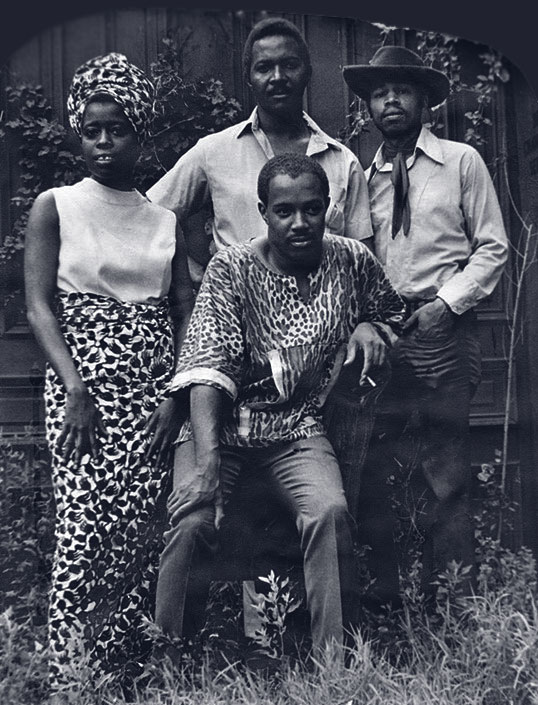
    It may be hard for anyone living in the rich commercialism of today to understand the climate of the late sixties and early seventies. You could make a good amount of cash in freelance photography. Poster art was big and companies were looking for new poster art material as well as music companies looking for record album cover material. And you had to have a basic knowledge of photography to use a film camera.

    Music concerts were relatively cheap and security at music concerts was pretty basic. So basic that once I even used my counterfeiting skills to produce a fake New York Times press badge, complete with the New York Times seal trademark. I used that badge to get me into a couple of Rolling Stones concerts, a James Brown concert, and several other venues. Even if the concert was affordable, the press pass allowed me backstage access. Then one day I ran into a real New York Times reporter who had just retired and was living in Detroit. The press badge was retired.

    Veterans from the war in Vietnam were returning at a record rate and government money was flowing like maple syrup over buttermilk pancakes. Not only in the area of education under the GI bill, but also in grants and small business loans. A White Vietnam vet could get one amount to start a small business, but that amount would quadruple if he partnered with a Black Vietnam veteran.

    That’s one reason I was in such demand. I was a veteran, I was Black, I spoke good English and was fairly well educated as well as being congenial. I had already established myself as being a decent photographer when I was hired by the J. L. Hudson company as their first Black photographer in heir hundred year history. But besides that, I was a pretty good artist also who picked up a few jobs doing pastel portraits at the state fair. I would get proposals that only wanted use of my name, but I saw that as being unethical and maybe illegal. That’s when I met Jimmy Samuels.

    Jimmy got the idea to open up a little storefront art gallery on Woodward Avenue, and my friend Bill Riser and I jumped right in and we started the “Gallery of Imo”. This was called an opportunity for Blacks in the neighborhood to see real Black artists at work and to purchase good artwork and paintings done by Black artists. The gallery was made possible with a single government grant. Jimmy was a sweet talker and a con artist who should have been an used car salesman. Barrack Obama reminded me of old Jimmy. Jimmy even brought his girlfriend into the gallery as our book keeper, but she spent more time partying with Jimmy than keeping our books. I sold several paintings while at the gallery and I sometimes wonder where they are now.

    In my personal life, I was going to college under the G. I. Bill and receiving a extra stipend for housing since I had a dependent (my daughter Angela), but I lived at home with my mom and didn’t need to pay rent. That, with the paycheck from Hudson’s was more than adequate to provide for a pretty decent lifestyle, even the purchase of a bright red 1965 Chevrolet Corvair Monza and a Hasselblad camera.

    F. Lee Bailey, the famous lawyer and attorney had created his program of “New Detroit”, part of which was to take the fine arts into the inner city neighborhoods through a program he financed called “Metro Arts”. The idea being to gather promising young Black artists, musicians, and dancers, train them and have them give performances at the very popular Cobo Hall Arena.

    Built in 1960, Cobo became a must-stop venue for the biggest and wildest rock-and-roll bands of the ’60s and ’70s; not to mention the temporary home for the Detroit Pistons. Black Sabbath, Jimi Hendrix, the Rolling Stones and Bruce Springsteen all played shows at the arena. Thin Lizzy and Queen performed in 1977 for $7.50 a seat. Cobo Arena was the setting for one of The Doors’ best complete concert performance recording on May 8, 1970. KISS played Cobo numerous times in the 1970s, including a sold-out three-night stand in 1976.

    As part of his New Detroit program, Jimmy Samuels, Bill Riser and I were successful in obtaining a grant from Mr. Bailey to purchase a defunct and abandoned motel off of Woodward for the purpose of setting up an artist commune. Bailey cut the check for two hundred and fifty thousand dollars and the money was deposited into a three party bank account. That would require all three signatures to withdraw any funds from that account.

    But that’s when things began to go sour. The director of the Metro Arts program who was hired because she lived in the inner city, moved into the prestigious apartments of Lafayette Towers and bought a brand new Cadillac. The music director she had hired with six figure salary who was supposed to be so great, turned out to not have a degree in music or any degree at all. Metro Arts was in trouble. Then, our friend Jimmy Samuels figured out he could transfer money from our account without needing the other signatures. The check to pay for the motel bounced and Jimmy was nowhere to be found. The gallery, even though successful, was abandoned soon after.

    It was under those circumstances that I met Bill Hanson, another veteran and photographer, who with several other veterans had set up a small studio over an abandoned auto repair shop they called “Cinema 76″. The seventy six was in reference to the American revolution. Bill and his cohorts were more into cinematography and thought I could be useful in taking their still shots, plus being Black, I could get them more federal grant money.

    Cinema 76 was successful in getting a grant, not from the U. S. Government, but from the Canadian Arts Council. The Canadian Arts Council was even more liberal in their grants than our government. Our first big professional movie would be exploring the deforestation of the Canadian forests. To narrate the movie, it was decided to use an old actor by the name of “Iron Eyes Cody”. Now Cody wasn’t a real Native American, he was really Italian, but he had played so many Indian parts in the movies that he thought he was. Cody was perfect in comparing the Native stewardship of the environment with that of the White man with scenes of the lumber industry destruction and deforestation ecological ruin. The closing scenes in the movie were of Cody walking out of the forest and standing by a river with trash and debris floating by. There would be a close up as a tear rolled down his cheek.

    The movie was a success and actually aired on Canadian television. Around this time, an American group had formed that called themselves “Keep America Beautiful”. They saw our film and offered to purchase it. I wasn’t privy to whatever deal resulted and I won’t attempt to even speculate. The got the film and Cinema 76 ceased to exist. When the Keep America Beautiful folks aired their public service commercial a few months later, our film had been cut and altered to a thirty second infomercial called the “Crying Indian”.

    I never saw the other fellows after that, but Chuck and I remained friends for quite a while. Dinners at Chuck’s house were always interesting. He lived in an all White neighborhood, so my visits to his house usually brought out the bevy of curious neighbors, probably afraid that I was moving in. Chuck had the honor of being the only person I know whose cat was deemed a neighborhood terror. He was all black and evidently possessed by some demonic spirit. Chuck would warn, “don’t pet the cat” on every visit. The cat would jump up on the dinner table while we were dining and Chuck would say “don’t pet the cat”. His cat had a nasty habit of lurking in the bushes and attacking whoever happened to be passing by. One swipe of his paw on anyone’s bare leg and he would scurry away before any attempt to catch him. Neighborhood kids were hi favorite targets. Chuck’s cat was s notorious that he had been cited because of it and the local newspaper had even written an article.

    Chuck ultimately received a grant to document the lives of a wolf pack that required him and his wife to actually live with an isolated pack of wolves on a Michigan Island. I don’t think Chuck and his ever became as famous as the Jim and Jamie Dutcher, he wasn’t financed by National Geographic, but he was definitely a pioneer.
  • Hitsville U.S.A.

    Hitsville U.S.A.

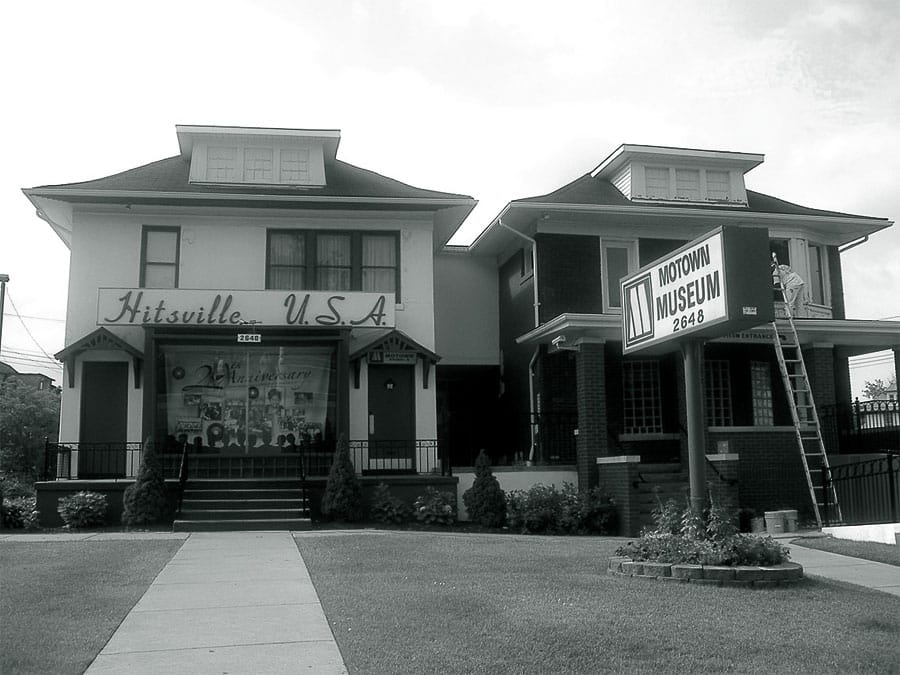
    The streets have all changed from when I was a kid growing up in Detroit. We lived on West Philadelphia Street and I went to Cass Tech High School so I had to catch the Dexter Avenue bus to go to and come from school. On the way home, the bus would go past a little white two story building amongst the brownstones on West Grand Boulevard with a sign that read “Hitsville, USA”.

    My friends and I got off the bus one day after rumors went around that it was a recording studio. We were teenage do-whoppers at the time, so the chance to see a real recording studio was compelling. We couldn’t get in, but walking to the side of the building, we could look into the basement windows. Lo and behold, there was my heart throb, Mary Wells on the mike.

    That one stop on the way home from school got to be a regular occurrence in the summer as we watched several others in their recording sessions. There was Smokey Robinson and the Miracles, The Temptations, and then one day, we saw one of our very own schoolmates, Diana Ross. Diana was in the class ahead of me, so we really didn’t associate much except to pass greeting in the lunch room. She seemed to like the older thug like guys that went to Northeastern High School. Northeastern was where the Cass school counselors would threaten to send us if we let our overall grades drop to a “C”.

    Years later, while going to college and working as a professional photographer, I had the opportunity to be hired to photograph the Temptations for their album “All Directions”. Motown never paid me for the job or my photos, but memories are priceless…

  • The Mars Theater on Conant Street, Detroit

    The Mars Theater on Conant Street, Detroit

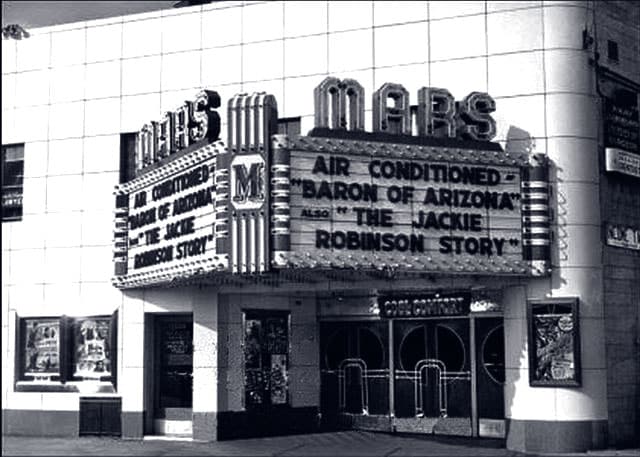
    The Mars Theater on Conant Street, Detroit, opened in 1947 and closed in 1958. The Mars was the closest neighborhood theater throughout the 50’s. The seats in the Mars theater were luxurious and covered in equally luxurious cranberry velvet. You could sleep very comfortably in those seats.

    Cartoon Saturdays were a noisy affair that attracted all the neighborhood kids. I fondly remember walking to the Mars theater with my buddies to see the movie, “The Blob”, starring Steve McQueen. I used to go there each Saturday, in the fifties and see two features and a bunch of cartoons and a newsreel for about 15 cents.

    Yes, for fifteen cents, you got all that plus you could stay in the theater as long as you liked. It was common that if you walked in in the middle of the movie, you stayed to watch what you had missed.

    This was the fare on Saturdays. It was a great venue for us who lived in the ghetto on Minnesota street and in the neighboring Conant Gardens. The beauty of it was that we kids could walk the three quarter mile trip by ourselves, stay in the theater watching the same movie twice, and then walk the same three quarter mile trip home in the dark of night. Street lights on Conant Street were sparse and many properties were still undeveloped. There were a lot of empty lots. So, after watching a particularly scary movie, we’d leap frog from one street light to another, going on an all out run through areas of total darkness. I was sure that I could outrun any demon leaping from the shadows. Years later, I’d make my mark doing 100 yard and 200 yard dashes in high school.

    Serials like Tarzan, Commander Cody, Superman, The Blackhawks, and Captain Marvel were always the best followed by science fiction horror films like “It Came From Outer Space”, “The Thing from Another World”, and “Invasion of the Body Snatchers” were the scariest. Although films like “The Undead” and “The Brain Eaters”, could cause nightmares.

    The Mars also showed older comedy movies like “Abbot and Costello”, “Laurel and Hardy”, “The Three Stooges”, the “Little Rascals”, and “Our Gang” comedies.

    “It Came from Outer Space” was the first 3D movie I saw at the Mars. They handed us the little paper glasses with a red lens on one side and a green on the other. The 3D effect was enough for us to duck under our seats when there was an explosion causing rocks to seemingly fly from the screen, or when the monster stuck his hand out to grab you.

    Our favorite cartoons were “Mr. Magoo”, “Mighty Mouse”, “Heckle and Jeckle”, Tom and Jerry, the Roadrunner and Coyote, “Sylvester and Tweety”, and Foghorn Leghorn and Henery Hawk. It should be noted that several of these have been banned by the politically correct, humorless, imbecilic crowd for one insane reason or another.

    In the early days, patriotism was still in the air and the Mars continued to show newsreels about the war in Europe and the Pacific, sometimes alternation with Victory at Sea segments.

    Popcorn at the Mars came in a good size box for around ten cents, extra butter was always optional, and candy bars were only a nickel. So I could get a full day of entertainment from the one dollar my mom would give as my weekly allowance. There were ushers at the Mars, usually some pimply face high school kid that would use his flashlight to guide you in the dark if the movie was already showing and highlight you with that same flashlight if you got too noisy. Then, one day, a kid choked on a popcorn husk and died. At least that’s what our parents told us. Probably just a fib to cut down on our popcorn money.

    Wednesdays were usually the free gift nights where housewives could pick up a dinner plate or such with each admission. The ploy was to keep them coming back to finally get an entire service for eight or something. It was always high quality stuff, much better than many in our neighborhood could afford.

    It was also common for one or two of the guys to pay the admission and grab seats near the theater emergency exits to let the rest of the gang in during the intermissions. As we got older, our interests weren’t so much on watching movies as it was about getting together with other kids you never saw except in school. But too many kids under one roof and bored with the movies often evolved into prankish behaviors. One prankish behavior was when we discovered how loud a common glass marble sounded hitting the back of a movie seat. We’d all sit there like perfect little angels when the usher came down the aisle with his flashlight.

    The neighborhood changed however and so did the Mars theater. We were told to not go to the restroom alone and sometimes on those wonderful Saturday afternoons, there’d be more adult men in the theater than kids.

  • Fred the Hunter

    Fred the Hunter

    Fred the Hunter

    During my stay in juvenile, my social worker was impressed with my art work and pulled enough strings to get me into a foster home run by the Wilcox family. They had two sons of their own, one younger than me and one older. Staying at their home had it’s drawbacks and it’s benefits. Their house was in the outlying area of Detroit. That meant taking two buses to get to school at Cass Tech in Detroit, one Great Lakes Transit bus and then transferring to a regular Detroit city bus. Cass didn’t care where you lived as long as you maintained a B average and could get to school on time. In fact, I had done the same thing when my mom sent me to live with my aunt Bernice first, then my uncle Shanky, and finally my aunt Jim, all in Pontiac, Michigan. That was the drawback.

    The benefit, however, was that we were far enough outside of the city limits that I could hunt. Pop Wilcox let me have an old single shot 410 shotgun with a missing firing pin. Being very good at jury rigging even before I knew what that old navy term meant, I substituted a carpet tack where the firing pin should have been. The only problem was that the carpet tack actually punched a hole in the shell primer causing enough of a blowback that I couldn’t place the gun too close to my face when firing.

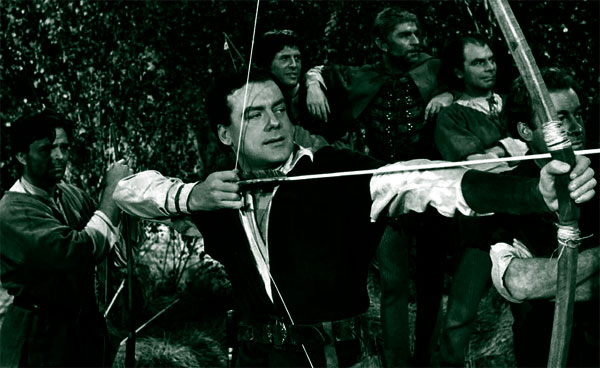
    As a young kid, I had watched all the Robin Hood TV shows and fell in love with archery. Actually I got pretty good at it as evidenced by my placing an arrow in my uncle Wilford’s leg when he returned home from the Korean War. Also, we kids played a game of “chicken arrow”, where we’d stand back to back, point our bows upward with our eyes closed and shoot our arrows into the sky, counting to ten before opening our eyes again and dodging the falling arrows.

    Another test of our skill was shooting water filled balloons from the hands of any kid we could talk into holding them. To be new to the neighbor meant holding the balloons. Not one neighborhood kid was ever injured, but we all became very skillful with our bows.

    So, while at the foster home, I managed to score a used Bear Kodiak recurve bow with several arrows and found I could replace the target tips on the arrows with broadheads or blunt tips for bird and rabbit hunting.

    We hunted mostly pheasant in that area, sometimes quail if pop Wilcox let us use his good shotgun. I liked using the bow. Shooting pheasant with a shotgun isn’t easy and shooting them with a bow is harder yet. First, you need a good birding dog and we just happened to have one. A mature German shepherd named Butch. Butch was fantastic in finding and getting the birds to take flight. Pheasant are very heavy birds and they stay on the ground as long as possible, making them hard to get a good shot. A good dog, however, will flush them out. Now, being such a heavy bird, it takes them a while to get up to flying speed during which time they’re also going up at an angle to gain altitude. At one point, they kind of level off and that’s when you have to take your shot. Wait too long and the bird is going too fast and even a shotgun will fail.

    The best time to go hunting, although illegal, was any day before the season legally opened. It was suicide to go out into the woods during the season. Many times we had to dodge bullets from the weekend hunters, the guys who had desk jobs in the city and thought anything moving in the woods was a deer.
    One day, I managed to bag eight pheasant and prayed that the game wardens were eating lunch as I carried my prizes home.

    Lakes and creeks in Michigan are clear enough to bowfish and I would often nail a few trout or carp in a nearby stream. Now a lot of people don’t eat carp, but they’ve never had to worry about putting food on the table. You eat a lot of different things when you’re poor. Plus an adult carp can feed a family of four pretty good if cooked properly. I’ve also lost arrows shooting carp with a bow. Carp are hard headed fish and I’ve had arrows simply just bounce off their fishy little skulls and they go on their way.

    Flash forward to my first submarine duty on the USS Piper…

    When I finished submarine school and got my first assignment to the USS Piper, it was kind of a let down. We were only doing sub school operations. That meant taking a bunch of sub school students out and spending a whole day diving and surfacing, diving and surfacing and trying to teach them what submarines were like. I did it when I was in school. The only good thing was that you became more proficient and went home every night.

    Then, one day, we received orders to participate in what was called “Springboard”. Springboard was an annual exercise that meant transiting to Puerto Rico and most likely the Bahamas and the Virgin Islands to operate with surface ships. Having seen photos of the fish in those areas, I knew I had to take my bow with me and even bought a real fancy bowfishing rig just for the trip.

    Now, the old diesel submarines usually strung sets of lights along the hull when moored in foreign ports. We called them med mooring lights and the purpose was to enable the sentry to be able to spot any swimmers in the water that might be trying to get on board. The lights also attract lots of zooplankton, small fish to feed on the zooplankton, and big fish that fed on the small fish.

    I was standing topside by the engine room hatch and looking over the side when I saw a flash of silver in the water. “Wow, that’s a big fish”, I thought as I started going below to get my bow. A little while later, I returned to the same spot fully armed. I saw that silver thing flash in the mooring lights several times and made my calculations for the next time it would happen. I was ready and excited.

    Sure enough, there was the flash of silver and I fired my arrow where I had calculated my target would be. Nailed it. The line from my arrow to the reel on my bow started paying out. However, I couldn’t reel it back in. Whatever I had hit was too darn big, so I just let the line pay out trying to figure what to do next. That wasn’t my decision to make. As soon as the line reached it’s limit, there was a big jolt that almost pulled me over the side. I was just gaining my composure when the second jolt occurred, this time I had to make a choice between going over or simply letting go of my bow. I let the darn bow go.

    Two days later, some guys on one of the tugboats were talking about the big tarpoon someone had pulled out of the water with a fishing arrow stuck in it’s side. My arrow! But no bow was ever found.

  • Tales From my Childhood

    Tales From my Childhood

    Tales from my Childhood

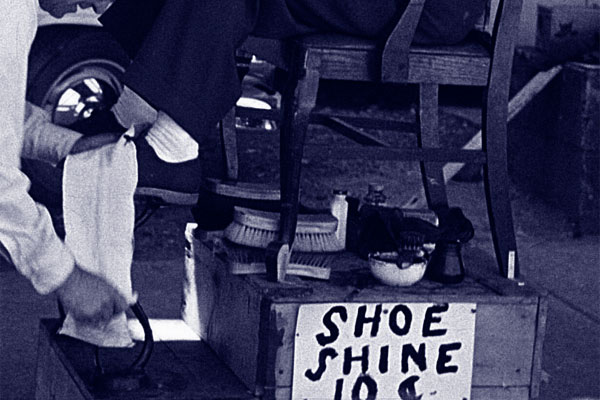
    As a poor kid in Detroit, there were several ways to earn a little pocket change. If you had a bicycle, you could try to get a paper route. Another was to shine shoes. My local barber shop had a chair set up where you could shine the shoes of the customers after they got their hair cut. Then there was the Greyhound bus station and the Michigan Central railroad train terminal. Competition was high at these two sites, however, it was first come, first served, or who was the tougher to get a spot on the sidewalk just outside of the terminal. Sometimes, we’d pack our boxes and just set up on a corner of a busy street near the local bar.

    In those days, adult men were very conscious of how they looked in public. Trousers had to have razor sharp creases, and shoes had to be polished. Men were extremely proud of their shoes that were genuine leather and probably Italian or brands like Florsheims.

    Over time, however, adults started getting into the shoeshine business and prices increased. As the price increased, more adult men suddenly got into the shoe shining business. Men working the railroad terminal became unionized and wouldn’t even allow us to set up outside of the terminal. I can remember when the unionized shoe shiners even began wearing their own style of uniforms. Whereas before, the shoe shine stand was a place to extend friendly conversation about world affairs or sports, it was now just a place to get a quick shine. Many adults started using special shine fluids that ruined your shoes when they got wet. Then, someone invented Corfam.

    When Santa finally answered my requests and delivered a brand new J. C. Higgins bicycle one Christmas, I chucked my shoe shine box and signed up to deliver newspapers.

    Joining the navy many years later, I was able to put my shoe shining skills to use, always having the best shined shoes in my recruit company.

    Fredric Durrette served one tour in Vietnam, retired as E8 in the navy submarine service after 23 years. Major hobbies are collecting old stuff from the 20s and restoring old racing bicycles. Worked as a commercial photographer at JL Hudsons in Detroit and continue photography as a hobby. Love Sade, sixties soul, seventies rock, and all jazz. Attended Woodstock in 69!
    http://snakesafe.jalbum.net/