Hosts Christopher Bruce and Nick Gianoulis, Godfather of Fun, lead thoughtful conversations with industry experts and thought leaders, helping us all become happier, healthier, and more connected.
Welcome to the fun dept. podcast, where workplace culture meets innovation, and fun becomes the driving force behind engagement, training, and development. Whether you’re a leader, manager, or team member, this podcast is your go-to resource for learning how to create a work environment where people are empowered, connected, and motivated to thrive.
Each episode dives deep into proven strategies, expert insights, and real-world success stories that show how fun can transform how we work and how we grow as teams and individuals. From actionable tips on building stronger communication to creative ways to keep training exciting, we’re here to help you spark energy and inspiration in your workplace.
Get ready to explore how engagement doesn’t have to be complicated—and why making development enjoyable is the secret to a happier, more productive team. Tune in and discover how to turn fun into a powerful tool for growth. Subscribe now and start your journey toward a workplace that’s not just functional but truly exceptional!
The Fun on Purpose Podcast, powered by the fun dept. explores the many facets of Fun, how to quantify it, and the countless ways listeners can use it to improve their quality of work and life. Nick and Chris engage in energetic discussion in each segment as they explore how their guests use fun, humor, play, and more in their lives and businesses.
About the fun dept. and Nick Gianoulis
Founded by Nick Gianoulis, the fun dept. is a leader in transforming workplace culture through the power of fun. With over 20 years of experience, Nick and his team have developed a proven methodology that uses fun as a strategic tool to enhance engagement, training, and development. Their interactive workshops and activities are designed to improve collaboration, communication, and employee satisfaction, fostering a happier, healthier, and more productive workplace. Nick’s passion for making work enjoyable has made him a sought-after speaker and expert on employee engagement and culture-building.
About King Creative and Christopher Bruce
Christopher Bruce, the creative force behind King Creative, brings a dynamic blend of innovation and storytelling to businesses and organizations. Specializing in video production, branding, and live event support, King Creative helps clients connect with their audiences in meaningful and memorable ways. Christopher’s commitment to collaboration and creativity ensures every project is visually stunning and strategically impactful. His ability to bring stories to life through multimedia makes King Creative a trusted partner for businesses looking to elevate their brand and engage their audiences.
Together, the fun dept. and King Creative represents the perfect partnership of fun and creativity, helping companies enhance their cultures and tell their stories in impactful ways.
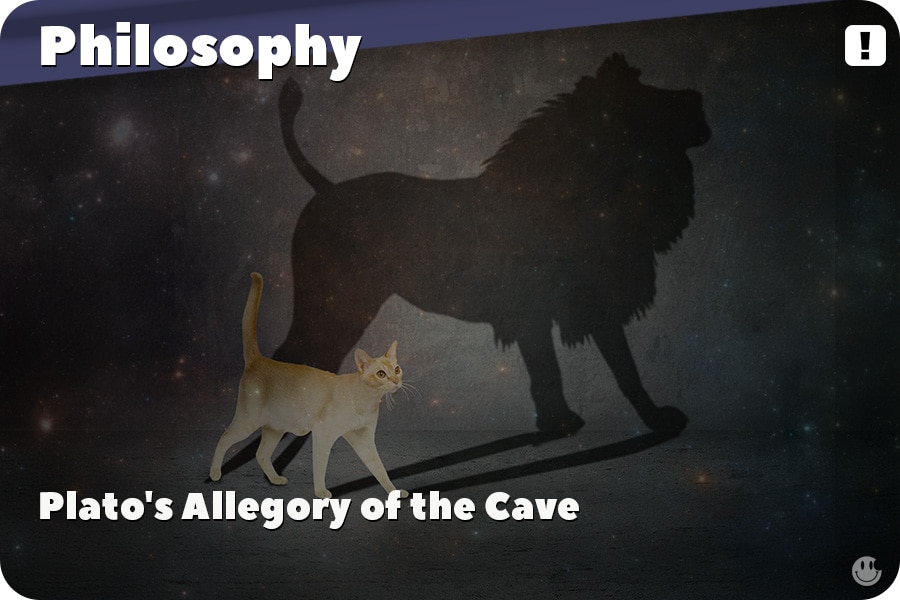
Plato’s Allegory of the Cave: Unveiling Reality and Enlightenment
Imagine being chained in a cave since birth, your gaze fixed only on the wall in front of you. Behind you burns a fire, and between you and the fire, objects are carried by unseen people—casting flickering shadows on the wall. To you, those shadows are reality. They’re all you’ve ever known.
This is Plato’s Allegory of the Cave, a story told in Book VII of The Republic, written around 380 BCE. It’s one of the most powerful metaphors in philosophy, used to explore themes of perception, knowledge, education, and the nature of truth.
The Setup: Life in the Cave
In Plato’s fictional dialogue, Socrates describes a group of prisoners shackled in a dark cave. Their heads are locked in place, allowing them to see only what’s directly in front of them—the shadow play on the wall. They’ve been this way all their lives.
Unbeknownst to them, the shadows are cast by objects behind them, carried along a walkway in front of a fire. The prisoners name, categorize, and discuss these shadows as if they’re the real things.
To them, the shadows are the world.
This represents how people often mistake appearances for reality, believing what they see and hear without questioning its source or accuracy.
The Escape: The Journey to Truth
Socrates then describes what happens if a prisoner is freed. At first, he’s overwhelmed. The fire hurts his eyes. He resists the idea that the shadows aren’t real.
Dragged out of the cave into the sunlight, the prisoner is blinded. But gradually, his eyes adjust. He begins to see reflections in water, then real objects—trees, animals, stars, and finally, the sun itself.
The sun represents the Form of the Good, Plato’s ultimate source of truth and reality. The light allows the mind to perceive, just as the sun allows the eyes to see.
This difficult journey from darkness to light symbolizes the philosopher’s path: education is not the transmission of facts but a painful reorientation of the soul toward truth.
Returning to the Cave
Now comes the twist. The freed prisoner returns to the cave to liberate the others. But in the darkness, he stumbles. The other prisoners laugh at him. They believe the journey has damaged his vision. Worse, if he tries to free them, they might kill him.
Why?
Because people often resist enlightenment. It’s easier—and more comfortable—to stay in familiar darkness than to confront a world that contradicts everything you thought you knew.
Philosophical Meaning
1. Epistemology (Theory of Knowledge)
The allegory shows that knowledge gained through the senses is imperfect and incomplete. True knowledge, for Plato, comes from intellectual reasoning—what he calls the Forms. The shadows are mere imitations; the real truth lies beyond what we can see or touch.
In modern terms, Reality isn’t always what’s trending, glowing, or right in front of your face. Sometimes, it’s what you have to work hard to uncover.
2. Education and Enlightenment
Plato believed that the role of education is not to “fill” people with facts but to transform their souls. The goal is to help them perceive reality, not just memorize information.
This is why Plato founded The Academy, one of the first institutions of higher learning. He saw philosophy as a way of liberating people from ignorance, not just instructing them.
3. Social Commentary and Leadership
The allegory also speaks to the difficulty of wisely governing an ignorant society. Those who have seen the truth may be mocked, discredited, or attacked.
Plato argued that philosopher-kings who have emerged from the cave and seen the light should lead society. But convincing people to follow them is often an uphill battle.
Real-World Echoes
Though the allegory is ancient, its themes are strikingly modern.
Media and Perception
In the age of screens, many of us live in digital caves—scrolling social media, binging shows, consuming curated content. Algorithms act like Plato’s fire, showing us selective shadows that reinforce our biases.
We mistake popularity for truth and visibility for value. What’s trending isn’t necessarily what’s real.
Education Systems
Classrooms that prioritize memorization over critical thinking risk keeping students in the cave. Real education should challenge assumptions, expand perspectives, and encourage intellectual discomfort—just like the journey out of the cave.
Conspiracy Thinking and Misinformation
Sometimes, individuals believe they’ve escaped the cave, but in reality, they’ve just walked into another set of shadows. Misinformation can feel like enlightenment if it confirms one’s suspicion of the mainstream.
This raises deeper questions: How do we know when we’ve left the cave? And who do we trust to show us the way out?
Psychological Dimensions
Plato’s allegory aligns with modern psychology, especially cognitive dissonance—the discomfort we feel when confronted with information that contradicts our beliefs.
Just like the prisoner who’s blinded by the fire and sun, we often resist new truths, even when they’re right in front of us.
It also connects with confirmation bias—our tendency to seek information that supports our beliefs. This keeps us staring at familiar shadows.
Related Philosophical Ideas
Descartes’ Evil Demon – What if everything we perceive is an illusion?
Kant’s Noumena vs. Phenomena – We can only know the world as it appears to us, not as it is in itself.
The Matrix – A modern take on Plato’s cave, where humans mistake a computer simulation for the real world.
A Modern Parable?
Imagine Plato’s cave today as a room full of people staring at their phones, believing every tweet and TikTok represents reality.
Then, one person steps outside, reads a book, talks to a stranger, travels, or studies history—and realizes there’s a whole world they never noticed.
They return to the group and try to explain. But they’re dismissed, downvoted, or banned for sounding “weird.”
The cave isn’t just ancient. It’s now.
Glossary of Terms
Plato – Greek philosopher and student of Socrates; teacher of Aristotle.
Forms (Ideas) – In Plato’s philosophy, perfect and eternal concepts that underlie physical reality.
Epistemology – The branch of philosophy concerned with knowledge and belief.
Cognitive Dissonance – The mental discomfort experienced when new information conflicts with existing beliefs.
Confirmation Bias – The tendency to seek out and interpret information that confirms our preexisting views.
Discussion Questions
What shadows might you be mistaking for reality in your own life?
Can we ever fully “escape the cave,” or is every viewpoint another version of the wall?
What responsibilities do those with greater understanding have toward those still in the dark?
My mom was always on a fanatical crusade to see that I got the very best education, long before she enrolled me into Cass Tech High School. My first memory of my elementary school days was when she enrolled me into Courville Elementary while we still lived on Minnesota Street.
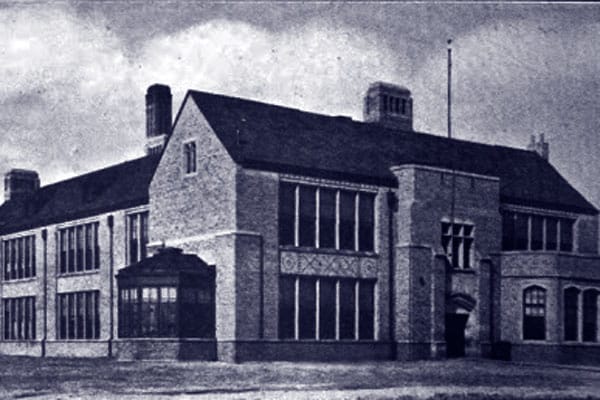
Now Courville was at the limit of Detroit’s education expansion program and was situated in what was then a predominantly upper middle class White neighborhood built for White auto factory workers. The neighborhood itself was segregated and was White only. However, there were Black families living nearby and there were a few Black kids at Courville, and I mean just a few and those were from upper middle class Colored families. Yes, “Colored”, that’s what we called ourselves back in the 1950s.
Getting me enrolled in Courville was quite a stretch since we really didn’t live in their district. There were other schools closer to us, but they weren’t the best. Going to Courville meant that my mom would have to get up earlier, get me dressed and take me to school. It also meant that standing out in the cold during the winter waiting for the first bus and in the cold again waiting for the second bus. This ritual would be repeated when she picked me up after school. All this while she was working as a housekeeper for the Fishers. The Fishers loved my mom so much that they often gave her some flexibility. Old man Fisher actually risked his life personally bringing my mom home during the riots in 1967.
I can remember those cold winter mornings after one of those vintage Detroit snowfalls, anxiously waiting to see the bus headlights piercing the bleak darkness. Detroit bus stops in the 50s were not protected. There was only a sign that identified it as a bus stop. Riding the bus meant that you not only had to stand, but you were subjected to inclement weather and occasional splashes of ice cold water and slush if a car came too close. My mom endured all these hardships while holding my mittened hand.
When I say “vintage” Detroit snowfalls, I mean it doesn’t seem to snow in Detroit like it did in the 50s. Sometimes we had snow so deep that I could tunnel to the house next door and not even surface. Every house on the block would have a snowman or a snow fort in it’s front yard. We wore galoshes over our dress shoes, which really offered very little protection from wet feet. As much as I hated them, the old galoshes molded in one piece glossy rubber with flannel linings and four or five metal snap closures were the best. They were also heavy and hard to get off.
Even though there were few “Colored” kids at Courville, no one seemed overly fixated on race. At the start of school, we gathered in a circle, said a short prayer, then the Pledge of Allegiance, with our hands over our hearts. Many of the auto workers were European immigrants, still scarred by the previous war, proud to have become American citizens, and were instilling those values into their children. We kids never even wondered why we were all different, hell, we were just children. I seriously believe that the prayers and saying the pledge kind of brought us all together under one big umbrella as one people despite any outward differences.
I don’t know what happened while I was at Courville. Either it was discovered that we didn’t live in their district or the daily trips became too much for even my mom, but I was pulled out and enrolled in Atkinson Elementary which was closer to our home.
Atkinson wasn’t a bad school and being closer and me being older, I could now walk to school on my own.
It was at Atkinson that I saw my first male teacher and my first Black male teacher, Mr. Phillips.
Mr. Phillips wasn’t “Colored”, he was Black. In Detroit in the 50s, dark skin African Americans were subjects of racial bias from lighter skin African Americans. The perception was that Blacks with dark complexions were considered to be lower class field hands while a light complexion meant education, a better life, and a greater chance of acceptance from the White community. There were magazines like “Colored”, “Hue”, and Ebony. But Ebony never used photos of dark skin people and their ads were all about hair straighteners and skin lighteners.
So, poor Mr. Phillips. Sorry to say that we gave him a hard time. A really hard time. There was a saying on the street that we kids used whenever we had an altercation with a darker playmate. “Black boy, Black boy, you can shine, I’ll get a White boy to kick yo behind”.
Mr. Phillips spent as much time disciplining us little urchins as he did actually teaching. This went on for most of the school year until I gradually started feeling sorry for him. On a hunch one day, I skipped lunch and got into a conversation with him and found out that he was really a likeable guy and also very smart. After that, my mission was to encourage my classmates to give him more consideration and by the end of the school year, Mr. Phllips had become one of the go to guys if you had a problem at school or even at home.
Another thing I remember about my time at Atkinson was the school lunches and I was grateful that we were poor enough for my mom to make my lunch. The fried balogna and tomato sandwiches, sometimes Spam, were a heck of a lot better than government cafeteria food. And they always served tapioca for dessert. Sometimes my mom would pack an apple or an orange into the brown paper bag that served as my lunch box and give me a dime for the little half pint of milk.
There’s a scene in the movie “Christmas Story” where one of the kids gets his tongue stuck on the school flag pole. Well, this didn’t happen at Atkinson, but we did have a similar incident one extremely cold winter when a kid got his tongue stuck to the big brass doorknob of the school’s front door. This brought a rapid response from the local fire station and that kid became an instant celebrity. It must have been a very painful way to prove how brave or how stupid you were.
It was at Atkinson when I had my first seizure. I was running down the hall and about to descend a flight of stairs when everything went black. In losing consciousness from the seizure, I had also run into the wall and tumbled down the stairs.
That resulted in my transfer to yet another elementary school, White elementary. White elementary was one of the schools were the staff were trained to take care of special needs kids. They had cots in some class rooms and we were encouraged to take naps after our playground breaks. White was where I learned square dancing of all things. Good school, but my neighborhood buddies weren’t there. Besides, being a young Black kid, living in the ghetto, and going to a school with “White” in it’s name and learning square dancing didn’t give me any prestige back in the hood.
Fredric Durrette served one tour in Vietnam, retired as E8 in the navy submarine service after 23 years. Major hobbies are collecting old stuff from the 20s and restoring old racing bicycles. Worked as a commercial photographer at JL Hudsons in Detroit and continue photography as a hobby. Love Sade, sixties soul, seventies rock, and all jazz. Attended Woodstock in 69! http://snakesafe.jalbum.net/
There wasn’t a graduation ceremony, but by the time I had grown old enough to start junior high school, my mom had moved us from the projects to a nicer second floor apartment in a two family home on Lemay street. This was a big change both in the level of education and also meant making new friends.
Foch Junior High, now it’s Foch Intermediate, was an excellent school with a great mixture of several ethnic groups, but mostly Blacks and Poles. Many of the kids were still from poor neighborhoods. It was here that I met a White kid named Bob McGreevy. Bob was a great cartoonist and since I had started drawing, we made a great pair. We’d draw entire comic strips in English class and even more when we were sent to study hall. Bob would eventually end up to become a comic book artist for the Sgt. Rock comic books. I had two other good friends, Hardy Shaw and Phillip Smith, but they lived in a nicer neighborhood and their parents were definitely upper middle class.
I remember our phys ed instructor, Mr. Lee. The name sticks because a group called the “Bobettes” had just released a song called “Mr. Lee”. It was about a teacher, but not our Mr. Lee. The song, however, became Mr. Lee’s theme song and we’d sing it as we entered the gym.
Aside from phys ed, Mr. Lee was also the main disciplinary applicator in the school. When someone became too much for their regular teacher, they’d send them down to the gym to talk to Mr. Lee, who had two forms of punishment. Either you got the “board of education” or you did twenty laps around the gym. Most guys opted for the twenty lapse. We all respected Mr. Lee. He did, in fact, break up many fights, both in school and out on the campus.
Foch had an excellent library and I found several great reference books on zooplankton and other aquatic pond life. In fact, this spurred me on to get a better microscope than the one I had.
The only problem with Foch was tat it was right next door to Southeastern High School. Now because Southeastern served a larger area, it was filled with mostly Black kids from several low income neighborhoods and as they say, the inmates ran the asylum. There were fights almost every day. Fights that spilled out from the school campus onto the street. There were fights between guys, fights between girls, and once in a while someone would attack a teacher. And if there was a fight, it would attract a crowd, which created sub fights.
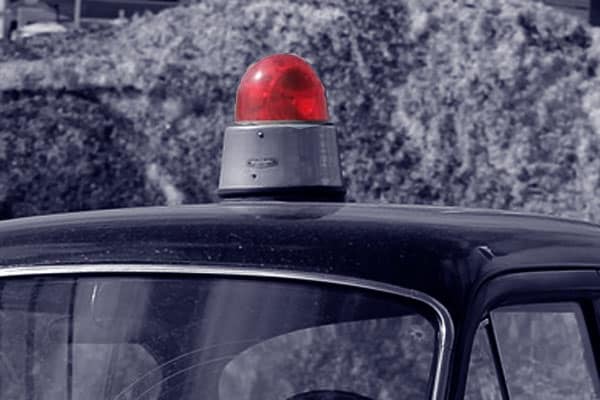
But the city had an answer for that. Aside from the regular police patrol cars, there were two special response units. One was the “Grey Ghost” and the other was the “Big Four”. The Grey Ghost was an all grey, unmarked cruiser and usually had two officers skilled in the use of night sticks. Heck, some of the high school kids were big enough to take on most adults. But, we’d come out from the relative safety of our school to walk by some thug sitting in the back of the cruiser.
The Big Four was another matter. They were the ones who responded if the Grey Ghost came under siege. The Big Four was an all black, unmarked police car that contained four of the biggest guys brutish White guys in the police department. Most of the White cops were Polish. They only knew one way to make an arrest and that was with brute force, especially when it came to dealing with minorities. This was in the 1950s, civil rights and the Miranda Rights were still several years away. Plus they carried full riot gear in the trunk. No matter what fight or how big a crowd it had drawn, every one scrambled when the Big Four rolled up. If you suffered a few bruises between being picked up and being booked, no one cared or saw anything.
The regular street cops and even the black and whites that occasionally cruised through our neighborhood were an entirely different story. Most of them were really nice guys and the first ones to go to if you were lost or needed help. But the very last thing you wanted to see were the Big Four or the Grey Ghost. That was the state of policing in the Black neighborhoods in 1950s Detroit.
Fredric Durrette served one tour in Viet Nam, retired as E8 in the navy submarine service after 23 years. Major hobbies are collecting old stuff from the 20s and restoring old racing bicycles. Worked as a commercial photographer at JL Hudsons in Detroit and continue photography as a hobby. Love Sade, sixties soul, seventies rock, and all jazz. Attended Woodstock in 69! http://snakesafe.jalbum.net/