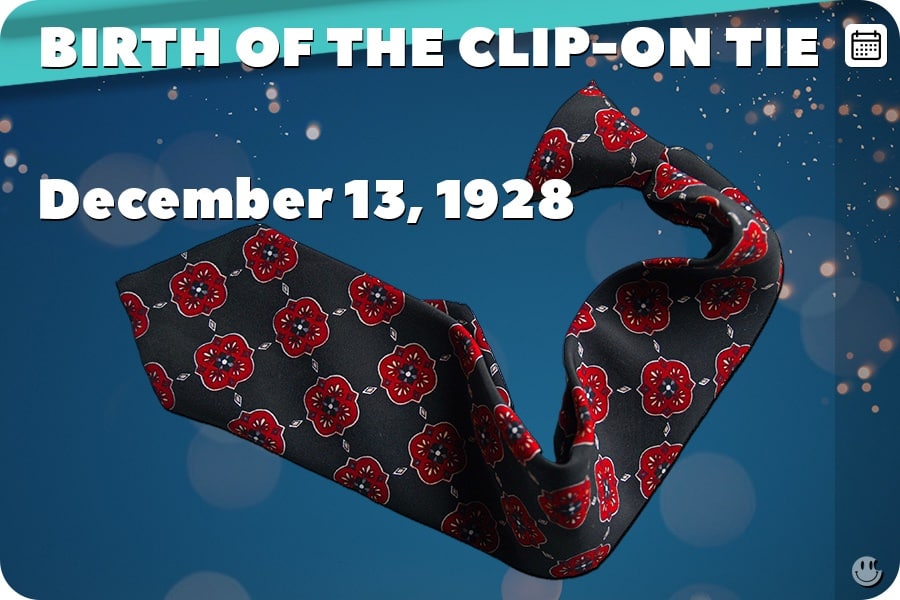
This week marks the anniversary of the invention of the clip-on tie. Invented on December 13th, 1928 by an unknown inventor, the clip-on tie was then further developed by Eastern Creatives Industries INC into the product that we know today.
The clip-on tie serves as a convenient option for those who find difficulty in properly adjusting a traditional tie. While learning how to tie a tie is a rite of passage for some, the clip-on tie exists for those who aim for a dapper look while barely lifting a finger.
The clip-on tie is simply a tie that is permanently knotted with a metal clasp on the back that clips onto dress shirts and other clothing. While viewed as cheap and tacky to some, the clip-on tie can be a last-minute lifesaver when traveling to a business meeting, job interview or other events that require you to look sharp.
The origins of the clip-on tie can be traced back to Iowa in 1928. However, the person behind the classic invention is still unknown to this day. Eastern Creative Industries INC expanded on this idea in the 1970s, developing an easier clasp that is widely recognizable by the public today.
Besides the aforementioned tackiness, some people complain about the clip-on ties removal process which has been said is much harder than putting it on. Many who’ve owned clip-on ties say that removing them often breaks that clasp and even gets stuck to their clothing.
Others say that in more hands-on work settings, the clip-on tie is easier to fall off thus revealing the wearer’s less renowned choice in attire. Still, the clip-on tie gave many opportunities to those who refrained from wearing a regular necktie because of the complicated knotting process. The clip-on tie gave a chance to those who no longer wished to avoid wearing ties altogether.
The clip-on tie comes in all varieties of lengths and styles just as regular ties do. From patterned to solid color, clip-on ties never falter in providing style for their wearers. Most of the time, people can’t even tell the difference from a regularly tied necktie.
Since the 1920’s when it was first conceptualized, the necktie both clip-on and regular has seen a decrease in modern work settings with many choosing to work from home in today’s socio-economic climate, and due to the pandemic. The clip-on tie’s popularity has also decreased since it’s major use in the 70s and 80s.
Still, the clip-on tie has had a major impact on fashion, primarily men’s fashion and is still used by workers in office spaces and other business settings today. The clip-on tie may have a diluted history and questions on why it needs to exist, but no doubt it has helped people around the world feel fashionable with ease.
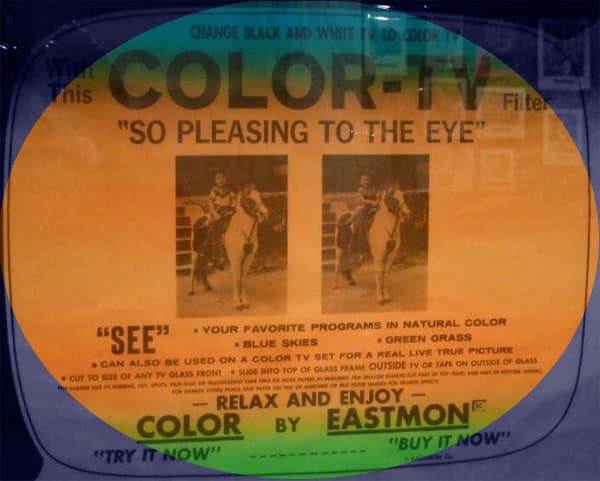
Who remembers putting color screens on their black-and-white TV sets?
It was the dream for many middle class American families in the 1950s and 1960s: colored TV. Although the technology was available since 1953, the high prices of colored television sets meant most families couldn’t afford the exciting advancement.
Back when color television sets were luxury items, there was a cheap and easy alternative to get our favorite programs in color. Does anyone remember their families putting plastic screens on their TV?
The screens were thin, transparent pieces of plastic that stuck to the TV screen. The top portion of the screen was blue for the sky, the middle had a reddish tint, and the bottom was green for grass.
Of course, the screens looked nothing like real color TV, but they did add a little bit of excitement to the gray scale that was dominant during the early years of television. Because the screens sold for only a couple dollars, they were much more affordable than buying new color sets, which went for hundreds of dollars.
So before color TV became affordable in the late ’60s, who remembers their family using this device in the hopes of magically transforming black-and-white shows into color? With all the recent advancements of TV, it’s hard to imagine a time we used to do this.
Fredric Durrette served one tour in Vietnam, retired as E8 in the navy submarine service after 23 years. Major hobbies are collecting old stuff from the 20s and restoring old racing bicycles. Worked as a commercial photographer at JL Hudsons in Detroit and continue photography as a hobby. Love Sade, sixties soul, seventies rock, and all jazz. Attended Woodstock in 69! http://snakesafe.jalbum.net/
Chronological Outline of the Evolution of Shopping Carts and Supermarkets
On June 4, 1937, Sylvan Goldman revolutionized the shopping experience with an innovation that seems almost mundane today but was transformative at the time—the shopping cart. Goldman, who owned the Humpty Dumpty supermarket chain in Oklahoma City, observed that customers often struggled to carry their purchases as they shopped, limiting the amount they could buy in one visit. His solution was ingeniously simple: modify folding chairs to hold baskets, creating a wheeled cart that shoppers could easily push around the store. Introduced in 1939, this invention initially met with skepticism from shoppers unfamiliar with the idea, but it soon proved to be a game-changer in the retail industry.
The impact of Goldman’s shopping cart was profound and multifaceted, catalyzing a shift in consumer behavior and store operations. The cart encouraged larger purchases by enabling customers to handle more goods effortlessly, effectively increasing sales per visit. Retail environments were transformed as stores reconfigured layouts to accommodate the new carts, widening aisles and designing spaces that could handle increased foot traffic and more dynamic shopping patterns. This innovation made shopping more convenient for consumers. It helped cement the supermarket as a cornerstone of everyday life in America, setting the stage for the modern retail experience we recognize today.
Early 20th Century: Rise of Convenience Stores
Early 1900s As the Industrial Revolution peaked, cities across America experienced rapid growth and demographic shifts. This era marked significant advancements in manufacturing and transportation, fostering a demand for more accessible consumer goods. The response was the rise of small convenience stores.
Location and Function Strategically located within urban neighborhoods and along busy city streets, these stores capitalized on the influx of a bustling workforce and new city dwellers. They were often positioned close to public transport stops or in areas with high foot traffic, making them easily accessible to the urban populace.
Impact Convenience stores played a pivotal role in urban living by offering extended hours, faster service, and a variety of products tailored to the needs of city residents with limited time. These stores were crucial in providing everyday essentials such as bread, milk, and household items, allowing customers to quickly purchase goods without requiring lengthy trips to larger, more distant supermarkets.
Adaptations for Consumer Needs To cater to a diverse urban clientele, convenience stores adapted their product offerings to include a range of items from groceries to snacks and beverages, all aimed at facilitating quick and easy shopping experiences. This adaptation was a response to the accelerated pace of urban life and a precursor to the more comprehensive grocery stores that would emerge later in the century.
Mid-20th Century: Emergence of Grocery Stores
1940s-1950s This period marked a significant transition from smaller, more localized convenience stores to larger, more comprehensive grocery stores. The transformation was driven by post-war prosperity, technological advancements in food production and preservation, and a shift in consumer lifestyles, particularly in suburban areas.
Economies of Scale As businesses grew, they began to benefit from economies of scale, which reduced the cost per unit of goods sold. This was achieved through larger procurement volumes, streamlined supply chains, and more efficient distribution methods, all of which were supported by advancements in transportation and logistics.
Increased Food Production Technological innovations in agriculture and food processing, such as the introduction of commercial fertilizers, pesticides, and mechanized farming equipment, significantly increased food production. This surge made food more plentiful and affordable, changing the scale and scope of grocery inventory.
Consumer Demand The post-war economic boom increased disposable income and higher consumer spending. The growing suburban population, driven by a desire for more spacious living away from urban centers, favored one-stop shopping solutions that larger grocery stores provided. This demand influenced the variety and volume of products that stores offered, catering to a lifestyle that valued convenience and variety.
Marketing Simplification The rise of mass media, including television and radio, allowed grocery stores to reach a broader audience by advertising and promoting the stores and the vast array of products they offered. This helped standardize shopping patterns and reduced the complexity of marketing and selling food products.
Naming as Supermarkets These larger stores began to be referred to as “supermarkets” due to their expanded product selections, which included food and other consumer goods such as household items and health and beauty products. The term “supermarket” meant more than just scale; it indicated a comprehensive shopping experience under one roof.
Cultural and Social Impact In mid-20th-century America, supermarkets became a cultural symbol of abundance and prosperity. They were not only places to shop but also spaces where new products were introduced, and the conveniences of modern life were prominently displayed.
Baby Boom and the Supermarket Expansion
1950s The post-World War II era, characterized by the Baby Boom—a significant increase in birth rates—substantially impacted various sectors, including the retail market. The surge in population during this period, coupled with rising family incomes and the expansion of suburban neighborhoods, directly fueled the rapid growth of supermarkets across the United States.
Collier’s Magazine Insight In 1951, Collier’s magazine highlighted the explosive growth of the supermarket industry by reporting that more than three new supermarkets were opening daily. This expansion was not just a quantitative increase but also reflected a qualitative change in the shopping habits of the American public.
Sales Growth The economic prosperity of the 1950s played a crucial role in this expansion. By 1950, supermarkets accounted for 35% of all food sales in the U.S., dramatically increasing to 70% by 1960. The rise in supermarket popularity can be attributed to their ability to offer various products at lower prices than smaller, local stores.
Factors Driving Expansion
Suburbanization As more Americans moved to suburban areas, the demand for convenient, one-stop shopping experiences increased. Supermarkets catered to this need by providing diverse products under one roof, reducing the need for multiple shopping trips.
Automobile Ownership Increased automobile ownership allowed families to travel farther to shop, making larger stores outside city centers accessible. Supermarkets typically featured ample parking, which appealed to the car-owning public.
Consumer Preferences There was a shift in consumer preferences towards packaged and processed foods, which supermarkets were well-equipped to supply. These preferences were driven by the appeal of convenience and longer shelf life, which catered to busier lifestyles and larger families typical of the Baby Boom generation.
Marketing and Layout Innovations During this period, supermarkets also began employing new marketing techniques and store layouts to enhance the shopping experience. They introduced features like self-service formats, shopping carts, and more attractive displays, which allowed customers to browse and select products at their leisure, contributing to higher sales volumes.
Cultural Impact Supermarkets became gathering places for communities, reflecting the prosperity and abundance of the era. They were often seen as symbols of modernity and efficiency, reshaping the cultural landscape around shopping and domestic life.
Challenges and Innovations in Grocery Shopping
1937: Initial Designs and Challenges
1937 marked early attempts by grocery retailers to enhance customer convenience by introducing wheeled shopping carriers. The initial design involved placing two baskets on a wheeled frame. While this innovation aimed to facilitate easier and more efficient shopping experiences, it proved bulky and impractical in practice. Shoppers found these early models cumbersome to maneuver around store aisles and difficult to store when not in use, leading to limited adoption.
1939: The Invention of the Modern Shopping Cart
Recognizing the need for a more practical solution, Sylvan N. Goldman, the enterprising owner of the Humpty Dumpty grocery chain in Oklahoma City, embarked on a project to reinvent the shopping carrier. Goldman’s stroke of insight came from observing everyday objects—specifically folding chairs.
He envisioned a modified version of the folding chair that could support two baskets: one raised several inches above the lower to provide ample space for groceries without the items being crushed. This setup maintained the folding chair’s portability while significantly enhancing its utility as a shopping device.
Goldman added wheels to the legs of the chair and a handle at the back, transforming it into a mobile cart that could easily navigate through store aisles. This design also allowed the carts to be folded up when not in use, solving the storage issue posed by the earlier models.
The newly designed folding shopping cart was introduced to the public in 1939. Despite its innovative approach to solving a typical shopper’s dilemma, the reception was lukewarm. The shopping cart’s initial flop was largely due to societal resistance. Men felt that using a cart emasculated them, as it implied a need for help carrying groceries, traditionally seen as a woman’s task. Women, on the other hand, compared it to pushing a baby carriage, feeling it relegated them to stereotypical roles.
Addressing Societal Resistance
Sylvan Goldman did not give up on his invention despite the initial setback. He cleverly addressed the societal resistance by hiring both men and women models to use the carts while shopping in his stores. This marketing strategy helped normalize the carts, showing shoppers the ease and efficiency they offered. As more people saw others using the carts, the social stigma began to wane, and the carts gradually gained acceptance.
Impact and Legacy
The successful adoption of Goldman’s shopping carts marked a significant turning point in the retail shopping experience. It set a new standard for customer convenience, paving the way for the modern shopping environments we are accustomed to today. The innovation of the shopping cart enhanced the efficiency of shopping and influenced the layout and design of stores, which could now accommodate wider aisles and larger volumes of customers.
Further Innovations by Orla E. Watson
1946: Telescoping Shopping Cart Design
In the mid-1940s, a significant innovation arrived from Orla E. Watson of Kansas City, who redefined the shopping cart’s design and functionality. Watson, originally a draftsman turned inventor, observed the bulky nature of existing shopping carts and their inefficiency in storage and management.
He developed the telescoping shopping cart design, which allowed carts to be nested within each other horizontally. This simple yet revolutionary design involved a hinged rear gate that could swing upwards, allowing one cart to slide into the cart in front of it partially. This innovation dramatically reduced the space needed to store carts when not in use.
Impact on Supermarkets
Watson’s telescoping design was a logistical improvement and a financial boon for supermarkets. By maximizing floor space that could otherwise be used for product displays or additional aisles, stores could enhance their customer shopping experience and potentially increase sales.
The ability to nest carts together also streamlined the process of collecting and managing carts for store employees, reducing labor costs and increasing efficiency in handling customer flow.
Patent and Adoption
Recognizing the potential of his invention, Watson quickly patented the telescoping shopping cart in 1947. The patent protected his design and paved the way for widespread adoption across the retail industry.
Major grocery chains and retailers quickly saw the benefits of Watson’s design, leading to its rapid adoption across the United States and eventually worldwide. This new standard in shopping cart design soon became an integral part of the retail shopping experience.
Cultural and Commercial Impact
The telescoping shopping cart exemplified how a practical solution could profoundly impact the retail environment. It addressed the physical limitations of storage and maneuverability and catered to the evolving needs of post-war consumer culture, which valued convenience and efficiency.
Watson’s invention is a testament to how innovations in even the most mundane aspects of daily life can transform user experiences and business operations. The widespread adoption of his telescoping shopping cart design marked a significant advancement in retail logistics, influencing store layouts and the overall shopping experience for decades.
Cultural and Commercial Impact of the Shopping Cart
1955: Iconic Status
1955 marked a pivotal moment for the shopping cart when it was featured on the cover of Life Magazine. This recognition was not just about the object itself but symbolized the booming consumer culture in post-war America. The cover story placed the shopping cart at the center of a narrative about convenience, consumerism, and the modern American way of life, highlighting its role in the everyday lives of millions of people.
Symbol of Consumer Culture and Innovation
Over the decades, the basic design of the shopping cart has remained largely unchanged, a testament to the effectiveness of its original engineering. However, its role has expanded beyond mere functionality. The shopping cart has come to symbolize broader themes in consumer culture, including the rise of self-service in retail and the consumer’s autonomy in choosing products.
As supermarkets and large retail stores became staples in urban and suburban landscapes, the shopping cart became a fixture in American households’ routines, emblematic of accessibility and convenience in shopping.
Evolution in Design and Technology
Despite the simplicity of its original design, the shopping cart has seen adaptations that incorporate modern technology and respond to evolving consumer needs. Innovations such as ergonomic handles, child seating options, and even electronic systems for checkout and inventory control reflect ongoing changes in how retailers enhance customer experience.
Modern iterations include smart carts equipped with GPS trackers, electronic payment systems, and screens that offer targeted advertisements and shopping suggestions, merging traditional shopping methods with digital enhancements.
Cultural Representations
The shopping cart has also been portrayed in various media as a symbol of consumerism. Artists and filmmakers have used it in works to critique or comment on societal issues, reflecting on themes of consumption, abandonment, and urban sprawl.
In popular culture, the shopping cart occasionally appears in unconventional settings, such as urban explorations or makeshift shelters, in narratives addressing homelessness, further highlighting its ubiquity and adaptability.
Commercial Impact and Retail Strategies
Beyond its cultural symbolism, the shopping cart has had a substantial commercial impact. It facilitates larger purchases than would be convenient without it, directly influencing sales volumes. Retailers strategically design store layouts to accommodate the path of the shopping cart, optimizing the placement of high-demand or high-margin items to maximize impulse purchases.
The design and placement of shopping carts at store entrances serve as subtle cues, encouraging customers to consider buying more items, leveraging the psychological effect of filling up space within the cart.
Modern Innovations and the Digital Era
Early 21st Century: Introduction of Technology in Shopping Carts
As we entered the 21st century, the retail landscape continued to evolve with technological advancements, leading to significant innovations in the functionality of shopping carts. Companies like Veeve and Caper have been at the forefront, integrating Artificial Intelligence and other digital technologies into traditional shopping carts.
Features of AI-Powered Shopping Carts
These modern shopping carts have features such as barcode scanning and automatic checkout systems. This technology enables carts to automatically register products as they are placed inside, calculating the total cost in real time and allowing for a seamless checkout experience. Such features streamline the shopping process and reduce the time customers spend in checkout lines.
Additionally, these carts often include touchscreens that provide product information, navigational assistance within stores, and personalized shopping recommendations based on consumer behavior and preferences.
Enhancing the Shopping Experience
The integration of these technologies into shopping carts has transformed them from mere carriers of goods to interactive shopping assistants. Shoppers can now enjoy an enhanced and personalized shopping experience that offers convenience, efficiency, and tailored information at their fingertips.
For instance, some smart carts are designed to help shoppers find items on their shopping list by guiding them through the store with the most efficient route, highlighting promotions and deals along the way, and even suggesting recipes based on the items in the cart.
Integration with Store Operations
These technological advancements benefit consumers and retailers. Smart carts can help manage inventory by tracking which products are being picked up and which are being put back, providing valuable data that can be used to optimize stock levels and store layouts.
Retailers can also use the data gathered from these carts to understand shopping patterns, manage peak times more efficiently, and enhance customer service by reallocating staff to more critical areas of the store.
Future Prospects
The potential for further innovation is vast. Future developments might include even more advanced features, such as augmented reality, which shows nutritional information and product comparisons directly in the viewer’s field of vision, or integration with mobile apps, which allows for remote shopping and scheduling of pickup or delivery.
As e-commerce continues to grow, the role of smart shopping carts could expand to bridge the gap between online and in-store shopping experiences, offering a hybrid model where customers can enjoy the benefits of both.
Cultural Significance and Artistic Inspirations
Artistic Representation
The shopping cart has transcended its utilitarian role to become a potent symbol in contemporary art, often used to comment on and critique aspects of consumer culture and societal norms. Iconic street artist Banksy, for example, has employed the image of a shopping cart in his artworks to reflect on consumerism’s excesses and the alienation it can produce. His work often juxtaposes everyday objects with unexpected elements to provoke thought about the mundane activities of modern life and their broader implications.
Similarly, Australian artist Matt McVeigh explores the shopping cart’s aesthetic and symbolic potential through large-scale installations. By configuring carts in visually striking arrangements, McVeigh invites viewers to reconsider these ordinary objects as part of a larger commentary on consumption, waste, and the repetitive cycles of consumer behavior. His work highlights how commonplace items can be reimagined in ways that challenge our perceptions and provoke dialogue about our spaces and lifestyles.
Accessibility Initiatives
Beyond their cultural portrayal, shopping carts have also been a focus of innovation regarding accessibility. A notable advancement is Caroline’s Cart, explicitly designed for families with special needs. This cart features a built-in seat that accommodates older children and adults with disabilities, enabling them to participate more fully in the shopping experience with their families. This innovation not only enhances accessibility but also underscores the shopping cart’s role in fostering inclusivity in public spaces.
Caroline’s Cart reflects a broader movement towards designing for inclusivity in everyday objects. Adapting a standard shopping cart to meet diverse needs highlights the importance of considering all users in design processes and challenges businesses to think about how they can make everyday activities more accessible to everyone.
Impact on Retail Environments and Policies
These artistic and accessibility-driven innovations have influenced retail environments and policies by raising awareness about the needs of diverse populations and the impact of consumer culture on social and environmental contexts. Retailers and designers increasingly recognize the importance of inclusive design and are motivated to implement solutions catering to a broader range of needs.
Furthermore, the artistic use of shopping carts in public installations and exhibitions encourages reevaluating the consumer spaces we frequent and the objects we often overlook. It serves as a reminder of the potential for art to transform public understanding and inspire change in attitudes and behaviors.