web analytics

Tag: Mascots

  • Mascot Hall of Fame 2025 Inductees

    Mascot Hall of Fame 2025 Inductees

    Mascots Take Center Stage: Inside the Mascot Hall of Fame and Its 2025 Inductees

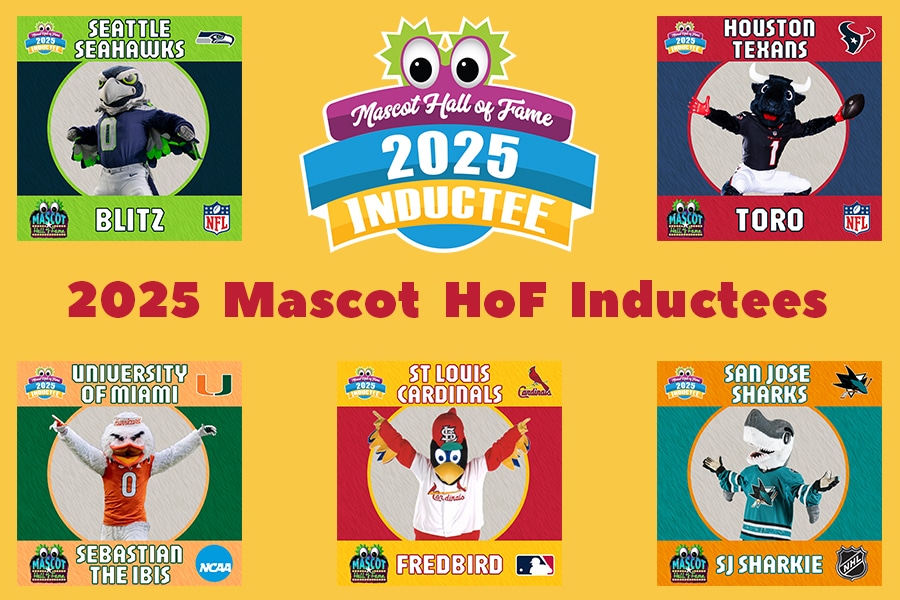
    The Mascot Hall of Fame has just revealed its Class of 2025. If you missed the announcement on Good Morning America on June 17, 2025, you might’ve also missed the confetti cannons, crowd-surfing shark fins, and GMA’s own Ray celebrating the event.

    This year’s inductees—nominated by fans, vetted by a committee, and voted in with over 125,000 ballots—represent the wild, wonderful spectrum of American mascotdom. And their journey from sideline silliness to cultural superstardom runs right through Whiting, Indiana—the official home of the Mascot Hall of Fame (MHOF).

    ???? Meet the Class of 2025

    • Blitz – Seattle Seahawks (NFL)

    • Fredbird – St. Louis Cardinals (MLB)

    • S.J. Sharkie – San Jose Sharks (NHL)

    • Sebastian the Ibis – University of Miami (NCAA)

    • TORO – Houston Texans (NFL)

    Each of these mascots has mastered the fine art of fan engagement—equal parts athleticism, slapstick, and hometown heroics. From Blitz’s airborne entrances to Sebastian’s beak-powered swagger, these characters embody the very spirit of their franchises.

    ????️ What Is the Mascot Hall of Fame?

    Founded in 2005 by David Raymond, the original performer behind the Philly Phanatic, the Mascot Hall of Fame is Online (and looking for a home). 

    Its mission? To recognize mascots who demonstrate excellence in character performance, fan interaction, community outreach, and, yes, pure fun.

    “They bring joy, energy, and creativity to their communities,” says founder David Raymond. “They are more than just sideline entertainers—they are ambassadors of spirit and goodwill.”

    ???? The Evolution of the Mascot

    Mascots have evolved significantly from their origins as live animals and symbols of good luck. What began as superstition has grown into a cornerstone of modern sports branding and entertainment. Today’s top-tier mascots are full-time performers, content creators, and brand reps—appearing at schools, hospitals, parades, and social media feeds around the clock.

    The Hall recognizes this transformation, and its annual ballot reflects the wide range of characters across collegiate and pro sports.

    • Fredbird has been flapping around Busch Stadium since 1979, tossing t-shirts and tugging hats.

    • TORO, the Texans’ horned hero, is known for his flips, energy, and school appearances across Houston.

    • S.J. Sharkie entered the NHL scene in 1991 and quickly became one of the league’s most recognizable (and mischievous) mascots.

    • Blitz has thrilled Seahawks fans in Seattle since 1998 with aerial acrobatics and signature swagger.

    • And Sebastian the Ibis—a Miami original—has represented the Hurricanes since the 1950s, bringing beak-first pride to every sideline.

    ????️ The Voting Process

    The Mascot Hall of Fame doesn’t pick inductees behind closed doors. After the MHOF Executive Committee narrows down the nominees (this year’s ballot included 28 mascots), the power shifts to the people. Fans cast votes during two weeks in May, turning the competition into a full-blown popularity contest—complete with memes, highlight reels, and mascot-led campaign videos.

    The 2025 Nominees:
    Albert – University of Florida (NCAA)
    Bernie Brewer – Milwaukee Brewers (MLB)
    Big Al – University of Alabama (NCAA)
    Blitz – Seattle Seahawks (NFL)
    Boomer – University of Oklahoma (NCAA)
    Cocky – University of South Carolina (NCAA)
    Cosmo the Cougar – Brigham Young University (NCAA)
    Fredbird – St. Louis Cardinals (MLB)
    Goldy Gopher – University of Minnesota (NCAA)
    Harvey the Hound – Calgary Flames – (NHL)
    Homer the Dragon – Charlotte Knights (MiLB)
    Hornsby – Tulsa Drillers (MiLB)
    Hugo the Hornet – Charlotte Hornets (NBA)
    Loco – Altoona Curve (MiLB)
    MeLVin – Lehigh Valley Phantoms (AHL)
    Mrs. Met – New York Mets (MLB)
    S.J. Sharkie – San Jose Sharks (NHL)
    Sebastian the Ibis – University of Miami (NCAA)
    Sparty – Michigan State University (NCAA)
    Stuff the Magic Dragon – Orlando Magic (NBA)
    The Cincy Bearcat University of Cincinnati (NCAA)
    The Leprechaun – University of Notre Dame (NCAA)
    The Oregon Duck – University of Oregon (NCAA)
    The Pirate Parrot – Pittsburgh Pirates (MLB)
    The Stanford Tree – Stanford University (NCAA)
    TORO – Houston Texans
    Wally the Green Monster – Boston Red Sox (MLB)
    Wool E. Bull – Durham Bulls (MiLB)

    This year’s voter turnout broke previous records, further proof that mascots may be silly, but they’re taken seriously.

    ???? What Happens Next?

    While many Halls of Fame host a single induction weekend, the MHOF likes to keep things local. Each new member of the Class of 2025 will receive a ceremony in their home market. That means confetti in Houston, mascot parades in Seattle, and feathers flying in Miami.

    Dates and details will be announced soon on mascothalloffame.com, along with exclusive merchandise, behind-the-scenes content, and chances for fans to join the party.


    ???? Why Mascots Matter

    You could argue that mascots are just distractions between plays. But that misses the point.

    Mascots are emotional connectors—a bridge between teams and their communities. They’re there for the first pitch, the 4th quarter comeback, the rain delays, the playoff heartbreaks. They’re part of the shared language of fandom. And for kids, they’re often the most memorable part of the game.

    So when we honor them, we’re celebrating something more profound: the joy, the loyalty, and the occasional hot dog cannon that make sports unforgettable.
  • The History of the Philly Phanatic

    The History of the Philly Phanatic

    The Philly Phanatic: A Deep Dive into the Mascot Hall of Fame’s Crown Jewel

    ???? Who Is the Philly Phanatic?

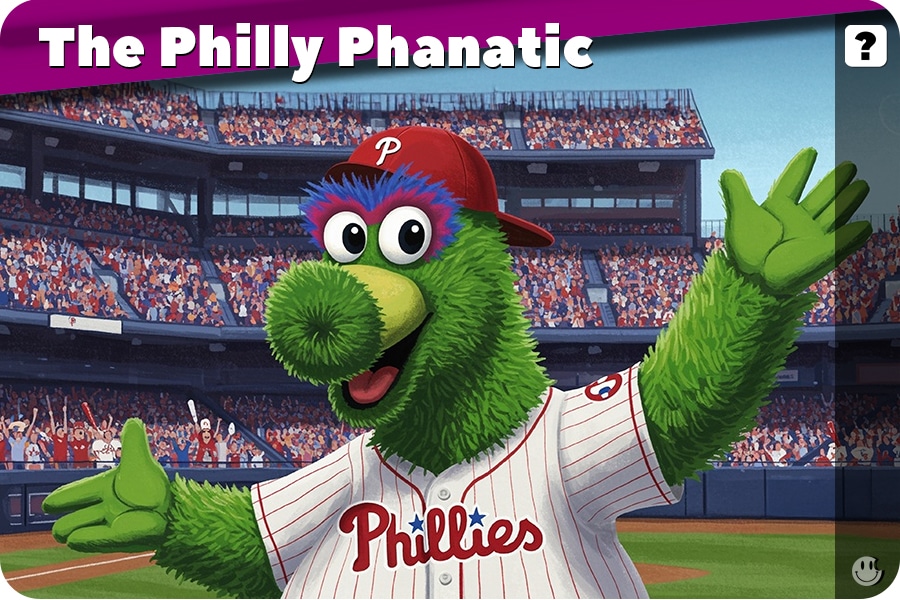
    The Philly Phanatic is the official mascot of the Philadelphia Phillies baseball team. Covered in fuzzy green fur, with a snout-like beak, wild eyes, and a pear-shaped body, he’s a species all his own—a “flightless bird from the Galápagos Islands” according to his fictional backstory.

    But behind the goofy exterior lies one of the most recognized and beloved characters in sports history.


    ????️ When Did He Debut?

    • Debut Date: April 25, 1978

    • Debut Game: Phillies vs. Chicago Cubs at Veterans Stadium

    • Created to enhance the family-friendly experience at the ballpark, the Phanatic quickly stole the show—outshining even the players at times.


    ???? Who Created the Phanatic?

    • The character was designed by Bonnie Erickson and Wayde Harrison of Harrison/Erickson, the same company behind many Muppets for Jim Henson.

    • David Raymond, a 22-year-old intern with the Phillies front office, was the original performer (1978–1993).

    • Raymond brought improvisational humor, athleticism, and a unique rebellious charm to the role, establishing the Phanatic’s personality.

    ????️ “He wasn’t just goofy. He was defiant. A little punk rock in a baseball jersey.” – David Raymond


    ???? Why Is the Phanatic So Popular?

    1. Unique Design

    He’s intentionally weird. Unlike traditional mascots modeled after animals or team logos, the Phanatic is absurdist, anarchic, and unforgettable. That uniqueness makes him instantly recognizable.

    2. Physical Comedy Masterclass

    He rides an ATV, shoots hot dogs into the crowd, mocks umpires, and breakdances. His non-verbal antics tap into universal humor, appealing to kids and adults alike.

    3. Breaking the “Mascot Mold”

    The Phanatic redefined what a sports mascot could be. He wasn’t just a cheerleader—he was a character with attitude, often pushing the line with playful taunts and satirical gestures.

    4. Legacy & Influence

    He inspired a new era of mascots: the NBA’s Benny the Bull, the San Diego Chicken, and countless college and minor league characters drew from his playbook.


    ???? Recognition & Honors

    • Mascot Hall of Fame Inductee – Class of 2005 (inaugural class)

    • The Smithsonian Institution houses the costume

    • Named “#1 Mascot in Sports” by Forbes, Sports Illustrated, and ESPN multiple times

    • Lawsuit-worthy Fame: The Phillies had to legally defend their rights to the character in a 2019 lawsuit over copyright and licensing—a testament to his commercial value


    ???? The Phillie Phanatic Lawsuit: Mascot vs. Muppet Creator

    ????️ Background: From Costume to Copyright

    • The Phanatic debuted in 1978, created by Bonnie Erickson and Wayde Harrison (H/E), the same duo behind several Muppet characters.

    • In 1984, the Phillies paid $250,000 to purchase the copyright fully—believing they’d secured lifelong rights.


    ⚠️ The Legal Twist: Copyright Termination Rights

    1. U.S. law allows creators to terminate copyright assignments after 35 years, without the original employer’s permission..

    2. In June 2018, H/E used this right and informed the Phillies they intended to reclaim rights to the Phanatic costume copyright 


    ???? Phillies Strike Back: 2019 Lawsuit in New York

    • In August 2019, the Phillies filed a declaratory judgment lawsuit in the Southern District of New York to:

      • Argue the Phanatic costume was a joint creation (so they retained rights),

      • Claim the costume was an “artistic sculpture” and not eligible for termination.

      • Maintain ownership of the character and costumes developed as of 2020 inta.org.


    ???? Revised “Phanatic 2.0”

    • To remain compliant, the Phillies deployed a redesigned mascot during Spring Training 2020—featuring new eyes, nose, tail, shoes, and body details—believed to fall under the derivative works exception 


    ⚖️ 2021 Magistrate Ruling: Derivative Work Exception

    • In August 2021, Magistrate Judge Netburn ruled:

      1. H/E had validly reclaimed rights to the original Phanatic costume design;

      2. The 2020 variant was sufficiently different to be considered a derivative work, so the Phillies could still use it 

      3. Summary judgment on key claims favored both sides on specific points .


    ???? Settlement & Return of the Original

    • In December 2021, both parties reached a confidential settlement. The Phillies paid an undisclosed amount and regained rights to the original Phanatic costume, set to return in 2022.

    • Phillies EVP David Buck confirmed:

      “We welcome the original Phillie Phanatic back with open arms… our goal was to come to an amicable solution that guaranteed the Phanatic could continue to entertain future generations.” 


    ???? Why It Matters in Mascot Culture

    • It showcased how copyright assignments—even large payoffs—can be undone after decades.

    • Emphasized the importance of using work-for-hire agreements or permanent licenses when creating a mascot.

    • Magistrate Netburn’s ruling offered a critical legal precedent—Derivative works made before a termination remain usable 


    ???? Key Takeaways

    Lesson Insight
    Terminated rights Creators can reclaim rights after 35 years, even with a paid assignment
    Derivative exception Revising a mascot can preserve usage rights through legal loopholes
    Legal templates for brands A cautionary tale—draft permanent IP assignments from the start

    ???? Cultural Impact

    • TV appearances: The Simpsons, It’s Always Sunny in Philadelphia, Saturday Night Live

    • Political visits: Appeared at the White House

    • Public icon: Frequently used in regional tourism and civic events

    • Merchandise sales: Among the highest for any mascot in the world


    ???? Why Does He Work So Well?

    Because the Phanatic combines performance art, physical comedy, improvisation, and heart. He doesn’t speak—but you always know what he’s thinking. He’s silly and sarcastic, but also loyal to Philly’s gritty charm.

    In a city known for throwing snowballs at Santa, the Phanatic stands out as both a jester and a hometown hero.


    ???? 

    The Philly Phanatic didn’t just raise the bar—he set it on fire, danced on it, and shot hot dogs off it into the upper deck. He’s not just a mascot; he’s a cultural institution.

    And for many, he’s the GOAT of the mascot world.

  • The Colorful History of Mascots

    The Colorful History of Mascots

    The Colorful History of Mascots:

    From Good Luck Charms to Cultural Icons

    Mascots didn’t start with giant foam heads or T-shirt cannons. They began as simple good luck charms—quirky tokens carried into battlefields and ballparks alike. But over the decades, mascots evolved into something far more powerful: high-energy entertainers, brand ambassadors, cultural icons, and occasionally, courtroom defendants.

    Today, they do more than dance on dugouts—they drive fan engagement, headline marketing campaigns, and sometimes outshine the teams they represent. From the goofy to the glorious, mascots have taken center stage in stadiums, on cereal boxes, and across social media feeds.

    Here’s how a bunch of fuzzy weirdos went from superstition to superstardom.

    Origins: Luck, Superstition, and Symbolism

    The word “mascot” comes from the French mascotte, meaning lucky charm or talisman. The term first entered the English language around 1881, though the tradition of mascots dates back much further. Civil War units, for example, often adopted animals as symbols of luck or morale. In sports, the concept caught on as teams sought rallying figures to boost fan spirit and unity.

    One of the first American sports mascots was Yale University’s Handsome Dan, a live bulldog who debuted in 1892. Other colleges followed suit, adopting live animals—some intimidating, some adorable—as living symbols of their athletic programs.

    Enter the Costume Era

    The 1960s and ’70s witnessed a significant shift with the introduction of costumed mascots, largely due to the rise of television, puppetry (a big danke to the Muppets), and visual media. These larger-than-life characters brought energy, personality, and a touch of absurdity to the field.

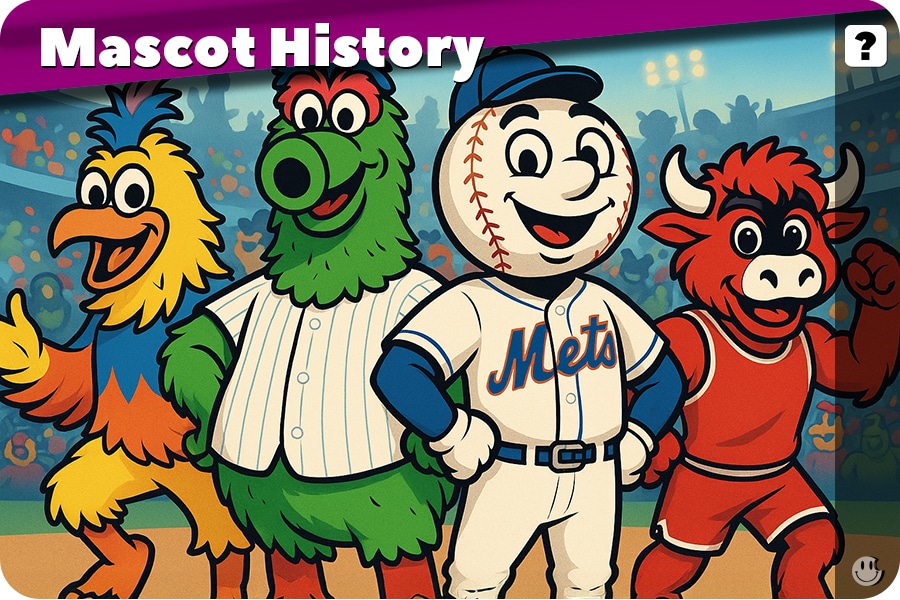
    Among the earliest was Mr. Met, who debuted in 1963 for the New York Mets. With his oversized baseball head and unwavering grin, he quickly won over fans and helped set the stage for a new era of mascot marketing.

    Then came a game-changer: the Phillie Phanatic. Created in 1978 by Bonnie Erickson, a former designer for Jim Henson’s Muppets, the Phanatic was a weird, wild, and wildly popular mascot. His slapstick humor and outrageous antics transformed what a mascot could be.

    The San Diego Chicken Crashes the Party

    No mascot history is complete without mentioning The Famous San Diego Chicken, widely considered the first breakout mascot personality. Hatched initially as a radio station promotion in 1974, the Chicken (played by Ted Giannoulas) became a sensation at San Diego Padres games.

    Unlike team-created mascots, the Chicken was independent, free-roaming, and pioneering in nature. He performed elaborate gags, interacted with fans and players, and helped pave the way for modern mascot culture. His success proved that a mascot could be more than a sideline cheerleader—it could be a full-blown entertainer.

    Expansion: NHL, NBA, and More

    By the 1980s and 1990s, mascots had become a standard feature across professional leagues. The NBA’s Benny the Bull, who debuted in 1969, evolved into one of the league’s most dynamic performers. Forbes even named him the top mascot in sports in 2013.

    The NHL followed with Harvey the Hound, the first official hockey mascot, introduced by the Calgary Flames in 1983. Known for his oversized tongue and ability to heckle opponents, Harvey was as much a character as any player.

    Olympic Games also joined the mascot movement, starting in 1968 with Grenoble’s Schuss. Since then, each Games has featured a mascot that represents the host country’s culture—sometimes to universal praise, sometimes to confused head-tilts.

    Mascots in the Marketplace

    Outside sports, mascots have become vital parts of marketing strategies. Think: Mr. Peanut (Planters, 1916), Michelin Man (1894), and Ronald McDonald (1963). These characters blurred the line between branding and entertainment, becoming nearly as iconic as the products they represent.

    The Mascot Hall of Fame and Cultural Recognition

    In 2005, mascots got their temple of recognition: the online Mascot Hall of Fame. It honors professional and collegiate mascots who demonstrate excellence in performance, character, and community impact. Notable inductees include the Phillie Phanatic, the San Diego Chicken, Mr. Met, and many more.

    Not Without Controversy

    Mascots have also faced scrutiny. Teams using Native American imagery have been criticized for perpetuating harmful stereotypes, prompting name changes and mascot retirements. This ongoing conversation has forced sports organizations to reconsider how their symbols reflect broader societal values.

    Why Mascots Matter

    Today’s mascots are more than just costumed characters. They’re storytellers, comedians, hype machines, and community liaisons. They appear at schools, hospitals, parades, and even weddings. They tweet, go viral, and launch fan bases of their own.

    From Yale’s bulldog to the Chicken’s dance floor, mascots reflect the communities and cultures they represent, with a lot more fur, feathers, and foam. In short: they’re here to stay, and they’re having the time of their lives.


    Want to meet the legends in fur and feathers? Visit the Mascot Hall of Fame to learn more about sports mascots.

    ???? Top 25 Merchandise Mascots & Their Brands

    Mascot Brand / Represents First Appearance
    Tony the Tiger Kellogg’s Frosted Flakes 1952
    Mr. Peanut Planters Peanuts 1916
    Snap, Crackle & Pop Kellogg’s Rice Krispies 1933
    Mickey Mouse The Walt Disney Company 1928
    Charlie the Tuna StarKist 1961
    Duracell Bunny Duracell Batteries 1973
    Campbell’s Kids Campbell Soup Company 1904
    Michelin Man (Bibendum) Michelin Tires 1894
    Aflac Duck Aflac Insurance (Walk of Fame mention)
    McGruff the Crime Dog National Crime Prevention Council (Walk of Fame)
    Oscar Mayer Wienermobile Oscar Mayer (Walk of Fame)
    Ronald McDonald McDonald’s 1963
    Hamburglar McDonald’s 1971
    The Burger King Burger King 1955 (creepy redesign 2003)
    Peppy the Polar Bear Fox’s Glacier Mints 1922
    Green Giant Green Giant Vegetables 1925
    Smash Martian Smash Instant Mash 1973
    Amik the Beaver Montreal Olympics 1976
    Sam the Eagle 1984 Los Angeles Olympics 1984
    Coco the Monkey Coco Pops (UK) 1963
    Chef Boyardee Chef Boyardee Pasta Brand started 1928
    Quaker Oats Man Quaker Oats Trademark registered in 1877
    Rastus the Cook Cream of Wheat c. 1890
    Crows Candy Mascot Crows Candies 1910s
    Dr. Jerry (Crazy Eddie) Crazy Eddie electronics 1972
  • The San Diego Chicken

    The San Diego Chicken

    ???? The San Diego Chicken: The Mascot That Hatched a Movement

    Before the Phillie Phanatic, before Gritty and Benny the Bull, there was a chicken- a chaotic, rubbery, feather-flinging chicken who rewrote the rules of sports entertainment. This is the story of how a goofy radio promotion became the most influential mascot act in history.


    ???? Born in a Chicken Suit: 1974

    The Chicken made his debut in March 1974, not in a ballpark, but at the San Diego Zoo, wearing a suit for a KGB-FM radio promotion. The man inside the feathers? Ted Giannoulas, a 20-year-old college student studying journalism at San Diego State University.

    Soon after, Giannoulas asked if he could appear at San Diego Padres games, and his in-stands antics—dancing, laying plastic eggs, and heckling umpires—quickly made him a crowd favorite.


    ???? From Sideshow to Center Stage

    Over the next five years, the Chicken became a San Diego institution, appearing at 520 consecutive Padres games. But he wasn’t limited to baseball. He soon began:

    • Performing at Chargers and Clippers games

    • Appearing in national McDonald’s and Coca-Cola commercials

    • Guesting on sitcoms, game shows, and even The Baseball Bunch with Johnny Bench

    • Touring the U.S. with minor league and major league teams, performing more than 17,000 live shows

    He was more than a mascot—he was the show before the show, the intermission act, and the thing fans talked about more than the box score.


    ⚖️ The Great Chicken Lawsuit (1979)

    In 1979, KGB-FM fired Giannoulas, hoping to replace him with someone else in the same suit. Giannoulas sued for the rights to the character. A judge sided with him: he couldn’t use the old costume, but the performance and character were his.

    So Giannoulas returned with a new suit and a new name: The Famous Chicken. He literally hatched from a giant egg at a Padres game in front of 47,000 fans. That event, on June 29, 1979, is now referred to by fans as The Grand Hatching.


    ???? The Chicken on TV, in Court, and in Pop Culture

    Throughout the ’80s and ’90s, the Chicken went from mascot to mainstream celebrity:

    • Starred in The Baseball Bunch, a kids’ show that won Emmys

    • Popped up in episodes of Simon & Simon, Ferris Bueller, and even Malcolm in the Middle

    • Appeared at WrestleMania XV and again at WrestleMania 2000

    • Was featured in Kellogg’s Corn Flakes ads and even inspired plush dolls

    He also found himself in legal battles, including one where he parodied Barney the Dinosaur and was sued. Once again, he won. The court ruled that satire was protected speech.


    ???? The Chicken’s Lasting Legacy

    The San Diego Chicken didn’t just crack people up—he cracked open the entire mascot entertainment industry.

    • He pioneered the full-time mascot performer model

    • Showed that mascots could tour, draw press, and headline shows

    • Influenced the design, humor, and presence of nearly every mascot that followed, from minor leagues to the NBA

    Giannoulas eventually slowed his touring in the 2000s, but The Famous Chicken never truly retired. His influence is still felt every time a mascot belly-flops, breakdances, or shimmies through the stands to a standing ovation.


    ????️ Hall of Fame Status

    • Mascot Hall of Fame Inductee (Inaugural Class, 2005)

    • The costume is displayed in the Baseball Hall of Fame in Cooperstown

    • Recognized by ESPN, Sports Illustrated, and even the U.S. Presidents (yes, he’s met several)

    • Honored as a trailblazer in performance art and sports comedy


    ???? From Chicken Suit to Cultural Icon

    The San Diego Chicken wasn’t just the first of his kind—he was one of a kind. What began as a radio stunt in 1974 became one of the most beloved and legally victorious mascots in American history.

    He didn’t just lay eggs—he laid the groundwork for every mascot that’s followed.


    ???? San Diego Chicken Trivia Bites

    ???? Debut Date:

    March 1974 at the San Diego Zoo (as part of a KGB-FM Easter promotion)

    ???? Real Name:

    Ted Giannoulas (still the only person to ever officially perform as the Chicken)

    ???? Longest Gig:

    Appeared at 520 consecutive Padres home games from 1974–1981

    ???? Legendary Rebirth:

    “The Grand Hatching” took place on June 29, 1979—he emerged from a giant egg at a Padres game after winning his lawsuit

    ???? TV Fame:

    Co-starred with Johnny Bench in The Baseball Bunch, a syndicated kids’ show that won an Emmy

    ⚖️ Famous Legal Battles:

    • Sued KGB-FM for mascot rights (and won)

    • Sued by Barney the Dinosaur creators for parody (and won again)

    ???? Touring Chicken:

    Performed in all 50 U.S. states, plus Japan, Mexico, and Canada, totaling over 17,000 live appearances

    ???? Hall of Fame Inductee:

    Entered the Mascot Hall of Fame in 2005, its inaugural class

    ???? MLB Honors:

    His costume was enshrined in the National Baseball Hall of Fame in Cooperstown

    ???? Sponsor Deal:

    Starred in a Kellogg’s Corn Flakes campaign in the 1980s (because, of course, he did)

    ???? Merchandising Firsts:

    First mascot to sell plush toys, foam fingers, and his own VHS tapes (yep, The Chicken Goes to School was real)

    ???? Cameo at WrestleMania:

    Appeared at WrestleMania XV and WrestleMania 2000—possibly the only mascot to take a body slam on live TV