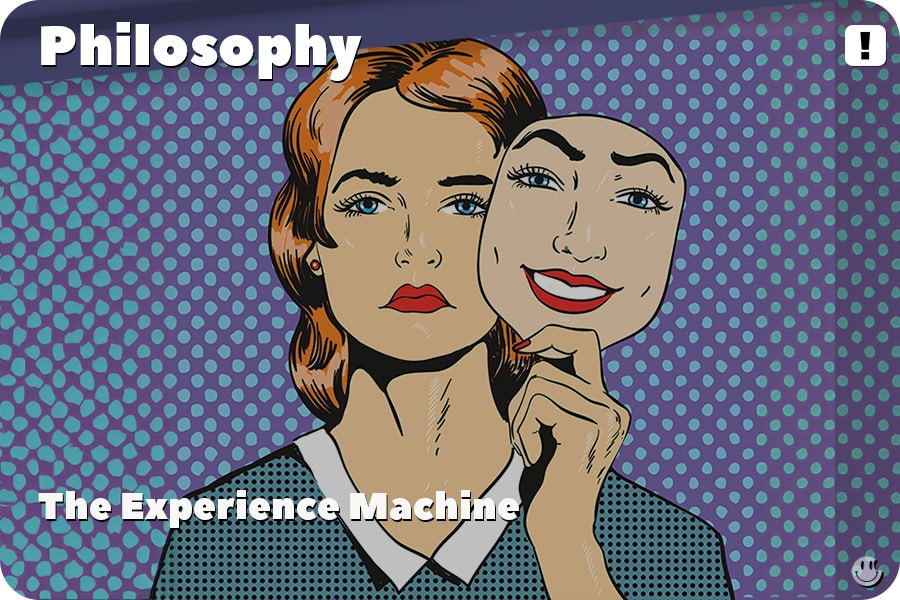
The Experience Machine: Exploring the Depths of Synthetic Happiness
Would you plug into a machine that could give you everything you’ve ever wanted—every joy, every success, every pleasure—without ever leaving a chair?
That’s the question posed by philosopher Robert Nozick in 1974 when he introduced the Experience Machine. At first glance, the offer seems irresistible: a lifetime of perfect happiness customized just for you. But once you understand the terms, the decision becomes far more complicated.
This thought experiment isn’t just about fantasy or technology. It’s about what we value in life and whether happiness alone makes a life worth living.
The Scenario
Imagine a neuroscientist develops a machine that can simulate any experience you desire. Once plugged in, you’ll believe everything is real. You’ll climb Everest, win a Nobel Prize, fall in love, become a rock star—whatever your ideal life includes.
Meanwhile, your real body lies in a tank, unconscious but safely fed and maintained. You won’t remember that you ever chose to plug in. The machine provides perfect experiential satisfaction. You’ll never know the difference.
So, would you do it?
Nozick’s Challenge
In Anarchy, State, and Utopia (1974), Nozick uses the Experience Machine to argue against hedonism—the belief that pleasure or happiness is the highest good.
If hedonism were true, plugging into the machine should be easy. After all, it guarantees a lifetime of bliss. But Nozick believed that most people wouldn’t choose the machine—and that our hesitation reveals something deeper about human nature.
He writes:
“We want to do certain things, and not just have the experience of doing them… we want to be a certain way, to be a certain sort of person.”
The Experience Machine reveals that pleasure alone isn’t enough. People also crave authenticity, meaning, connection, and reality—even if those come with struggle, pain, or disappointment.
Three Core Reasons to Reject the Machine
Nozick identifies three main reasons why many people would choose not to plug in:
1. We Want to Do, Not Just Experience
It matters to us that we’ve actually accomplished things, not just felt as if we did. A simulated triumph feels hollow if we know (or suspect) it isn’t real.
In real life, earning a degree, building a company, or creating art requires effort and sacrifice. That struggle is part of the value. The machine skips the process and hands you the reward, but many people find that unsatisfying.
2. We Want to Be a Certain Kind of Person
Identity isn’t just about what we feel—it’s about who we are. Plugging into the machine makes us passive receivers, not active participants.
You might feel brave in a virtual war zone, or loving in a simulated relationship, but none of it reflects your real character. In the tank, you’re not courageous, kind, or wise. You’re just experiencing those things.
3. We Want Contact with Reality
Perhaps most importantly, Nozick argues, we want to live in touch with reality—even when it’s imperfect. There’s something intrinsically valuable about knowing the world is accurate, and our experiences are genuine.
The machine severs that connection. It offers a beautiful lie—and many of us would rather live in an imperfect truth.
The Hedonist’s Response
Defenders of hedonism and utilitarianism may respond with a simple challenge: Why does it matter if it’s not real, if it makes you happy?
If you don’t know you’re in the machine, and if the feelings are real to you, then what’s the problem? Isn’t happiness still happiness?
This raises the broader question: Is happiness a sufficient condition for the good life—or is it just one part of the picture?
Some philosophers, such as Jeremy Bentham, believed all that matters is pleasure and the absence of pain. Others, like Aristotle, argued for eudaimonia—a flourishing life that includes virtue, purpose, and fulfilling one’s potential.
Contemporary Parallels
The Experience Machine may sound like science fiction, but its themes are increasingly relevant in the real world.
Virtual Reality
With the rise of VR, immersive gaming, and digital environments like the metaverse, we’re already starting to blur the line between real and simulated experiences. As these technologies become more realistic, the ethical and psychological questions intensify.
Would you spend most of your time in a virtual paradise if it felt just as good as real life?
Social Media
Social platforms allow users to curate their identities and seek constant validation—creating “highlight reels” that may bear little resemblance to reality. The pleasure may be real, but the authenticity is questionable.
Are we already half-plugged into experience machines of our own making?
Pharmaceutical Enhancement
Drugs that enhance mood, productivity, or perception can offer artificial boosts to well-being. But do they bring genuine happiness—or just a chemical facsimile?
Variations and Add-Ons
Some philosophers have introduced twists to the original scenario:
-
You can unplug at any time. Does this change your answer? What if you’re allowed to re-enter after a trial period?
-
The machine creates real impact. Suppose your simulated actions have effects in the real world. Would this make the experience more meaningful?
-
Everyone is in the machine. What if society collectively chooses to live in artificial bliss? Is that utopia or dystopia?
These variations highlight the tension between personal well-being and collective truth.
Philosophical Questions Raised
-
What do we value more—authenticity or happiness?
-
Is pleasure enough to justify a life, or do we need meaning and achievement too?
-
Can an experience be good if it isn’t real?
The Experience Machine remains a cornerstone in debates about hedonism, well-being, virtual reality, and personal identity.
It’s a mental test of how far we’re willing to go for joy—and what we’re willing to give up for meaning.
Related Thought Experiments
If you liked the Experience Machine, you may also find these relevant:
-
The Matrix (popularized in the 1999 film): Would you take the red pill and face the harsh truth—or stay in blissful ignorance?
-
The Brain in a Vat: A modern twist on Descartes’ skepticism. How do we know anything is real?
-
The Utility Monster (Nozick): A being whose happiness is so intense that it outweighs everyone else’s suffering.
Each challenges our intuitions about value, reality, and identity.
Glossary of Terms
-
Hedonism: The ethical theory that pleasure is the highest good.
-
Eudaimonia: Aristotle’s concept of human flourishing through virtue and purpose.
-
Synthetic Happiness: Pleasure derived from artificial or manipulated experiences.
-
Authenticity: Living in alignment with truth and reality.
-
Simulation Hypothesis: The idea that our perceived reality may itself be a simulation.
Discussion Questions
-
Would you plug into the Experience Machine? Why or why not?
-
Is happiness still meaningful if it comes from a false experience?
-
What makes a life “real”—our feelings, actions, or connection to truth?
References and Further Reading
-
Nozick, Robert. Anarchy, State, and Utopia, Basic Books, 1974.
-
Stanford Encyclopedia of Philosophy – Hedonism
-
BBC Ethics Guide – What Makes a Good Life?
-
“Experience Machine.” 1000-Word Philosophy – Summary of the Thought Experiment
-
Aristotle, Nicomachean Ethics