The Colorful History of Mascots:
From Good Luck Charms to Cultural Icons
Mascots didn’t start with giant foam heads or T-shirt cannons. They began as simple good luck charms—quirky tokens carried into battlefields and ballparks alike. But over the decades, mascots evolved into something far more powerful: high-energy entertainers, brand ambassadors, cultural icons, and occasionally, courtroom defendants.
Today, they do more than dance on dugouts—they drive fan engagement, headline marketing campaigns, and sometimes outshine the teams they represent. From the goofy to the glorious, mascots have taken center stage in stadiums, on cereal boxes, and across social media feeds.
Here’s how a bunch of fuzzy weirdos went from superstition to superstardom.
Origins: Luck, Superstition, and Symbolism
The word “mascot” comes from the French mascotte, meaning lucky charm or talisman. The term first entered the English language around 1881, though the tradition of mascots dates back much further. Civil War units, for example, often adopted animals as symbols of luck or morale. In sports, the concept caught on as teams sought rallying figures to boost fan spirit and unity.
One of the first American sports mascots was Yale University’s Handsome Dan, a live bulldog who debuted in 1892. Other colleges followed suit, adopting live animals—some intimidating, some adorable—as living symbols of their athletic programs.
Enter the Costume Era
The 1960s and ’70s witnessed a significant shift with the introduction of costumed mascots, largely due to the rise of television, puppetry (a big danke to the Muppets), and visual media. These larger-than-life characters brought energy, personality, and a touch of absurdity to the field.
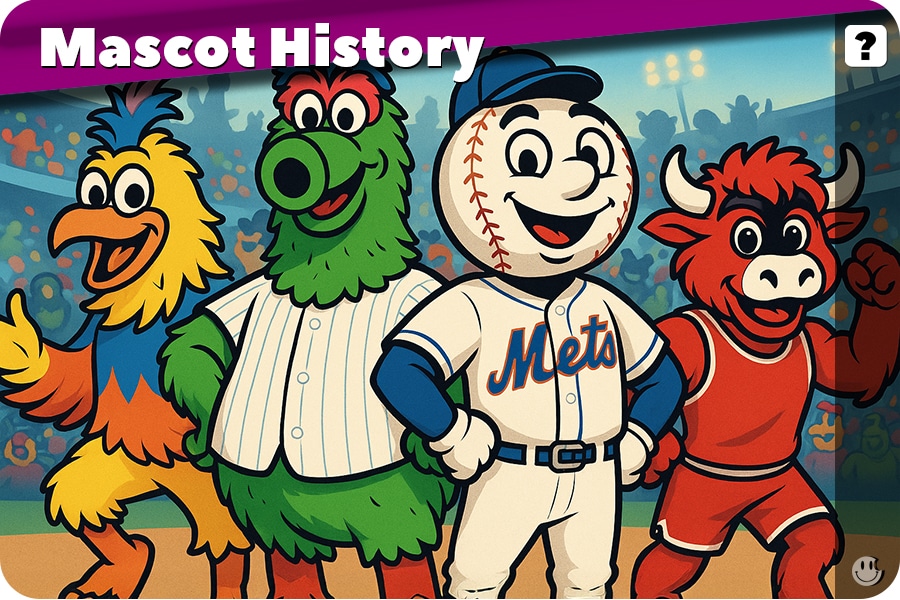
Among the earliest was Mr. Met, who debuted in 1963 for the New York Mets. With his oversized baseball head and unwavering grin, he quickly won over fans and helped set the stage for a new era of mascot marketing.
Then came a game-changer: the Phillie Phanatic. Created in 1978 by Bonnie Erickson, a former designer for Jim Henson’s Muppets, the Phanatic was a weird, wild, and wildly popular mascot. His slapstick humor and outrageous antics transformed what a mascot could be.
The San Diego Chicken Crashes the Party
No mascot history is complete without mentioning The Famous San Diego Chicken, widely considered the first breakout mascot personality. Hatched initially as a radio station promotion in 1974, the Chicken (played by Ted Giannoulas) became a sensation at San Diego Padres games.
Unlike team-created mascots, the Chicken was independent, free-roaming, and pioneering in nature. He performed elaborate gags, interacted with fans and players, and helped pave the way for modern mascot culture. His success proved that a mascot could be more than a sideline cheerleader—it could be a full-blown entertainer.
Expansion: NHL, NBA, and More
By the 1980s and 1990s, mascots had become a standard feature across professional leagues. The NBA’s Benny the Bull, who debuted in 1969, evolved into one of the league’s most dynamic performers. Forbes even named him the top mascot in sports in 2013.
The NHL followed with Harvey the Hound, the first official hockey mascot, introduced by the Calgary Flames in 1983. Known for his oversized tongue and ability to heckle opponents, Harvey was as much a character as any player.
Olympic Games also joined the mascot movement, starting in 1968 with Grenoble’s Schuss. Since then, each Games has featured a mascot that represents the host country’s culture—sometimes to universal praise, sometimes to confused head-tilts.
Mascots in the Marketplace
Outside sports, mascots have become vital parts of marketing strategies. Think: Mr. Peanut (Planters, 1916), Michelin Man (1894), and Ronald McDonald (1963). These characters blurred the line between branding and entertainment, becoming nearly as iconic as the products they represent.
The Mascot Hall of Fame and Cultural Recognition
In 2005, mascots got their temple of recognition: the online Mascot Hall of Fame. It honors professional and collegiate mascots who demonstrate excellence in performance, character, and community impact. Notable inductees include the Phillie Phanatic, the San Diego Chicken, Mr. Met, and many more.
Not Without Controversy
Mascots have also faced scrutiny. Teams using Native American imagery have been criticized for perpetuating harmful stereotypes, prompting name changes and mascot retirements. This ongoing conversation has forced sports organizations to reconsider how their symbols reflect broader societal values.
Why Mascots Matter
Today’s mascots are more than just costumed characters. They’re storytellers, comedians, hype machines, and community liaisons. They appear at schools, hospitals, parades, and even weddings. They tweet, go viral, and launch fan bases of their own.
From Yale’s bulldog to the Chicken’s dance floor, mascots reflect the communities and cultures they represent, with a lot more fur, feathers, and foam. In short: they’re here to stay, and they’re having the time of their lives.
Want to meet the legends in fur and feathers? Visit the Mascot Hall of Fame to learn more about sports mascots.
???? Top 25 Merchandise Mascots & Their Brands
| Mascot | Brand / Represents | First Appearance |
|---|---|---|
| Tony the Tiger | Kellogg’s Frosted Flakes | 1952 |
| Mr. Peanut | Planters Peanuts | 1916 |
| Snap, Crackle & Pop | Kellogg’s Rice Krispies | 1933 |
| Mickey Mouse | The Walt Disney Company | 1928 |
| Charlie the Tuna | StarKist | 1961 |
| Duracell Bunny | Duracell Batteries | 1973 |
| Campbell’s Kids | Campbell Soup Company | 1904 |
| Michelin Man (Bibendum) | Michelin Tires | 1894 |
| Aflac Duck | Aflac Insurance | (Walk of Fame mention) |
| McGruff the Crime Dog | National Crime Prevention Council | (Walk of Fame) |
| Oscar Mayer Wienermobile | Oscar Mayer | (Walk of Fame) |
| Ronald McDonald | McDonald’s | 1963 |
| Hamburglar | McDonald’s | 1971 |
| The Burger King | Burger King | 1955 (creepy redesign 2003) |
| Peppy the Polar Bear | Fox’s Glacier Mints | 1922 |
| Green Giant | Green Giant Vegetables | 1925 |
| Smash Martian | Smash Instant Mash | 1973 |
| Amik the Beaver | Montreal Olympics | 1976 |
| Sam the Eagle | 1984 Los Angeles Olympics | 1984 |
| Coco the Monkey | Coco Pops (UK) | 1963 |
| Chef Boyardee | Chef Boyardee Pasta | Brand started 1928 |
| Quaker Oats Man | Quaker Oats | Trademark registered in 1877 |
| Rastus the Cook | Cream of Wheat | c. 1890 |
| Crows Candy Mascot | Crows Candies | 1910s |
| Dr. Jerry (Crazy Eddie) | Crazy Eddie electronics | 1972 |
