web analytics

Tag: Strategy

  • The Sword & Mind

    The Sword & Mind

    The Sword & Mind: Harmony in Martial Arts and Philosophy

    Two warriors, two philosophies, one unshakable principle: true mastery lies in the unity of thought and action.

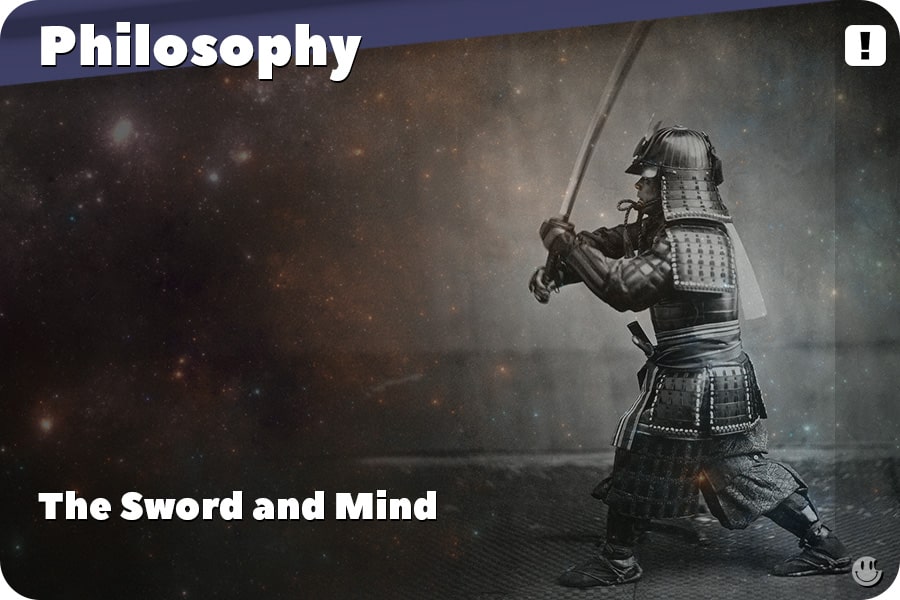
    The Sword & Mind isn’t a single work—it’s the pairing of two influential Japanese texts: The Sword (Heihō Kadensho) by Yagyū Munenori, a legendary samurai and martial strategist, and The Mind (Fudōchi Shinmyōroku) by Takuan Sōhō, a Zen monk who wielded no blade, but trained the minds of those who did. Together, their teachings explore how the battlefield of combat is inseparable from the battlefield of the mind.

    Their union offers more than martial advice—it’s a practical philosophy of leadership, awareness, and balance, equally relevant in boardrooms and daily life.


    The Sword: Yagyū Munenori and the Path of Strategy

    Yagyū Munenori (1571–1646) wasn’t just a skilled swordsman—he founded the Yagyū Shinkage-ryū school and sword instructor to the Tokugawa shogunate. His work, Heihō Kadensho (“The Book of Family Traditions on the Art of War”), fuses martial tactics with moral and mental preparation.

    The Life-Giving Sword (Katsujin-ken)

    This central concept turns the Western image of the sword on its head. Munenori argues that the highest expression of swordsmanship is not to kill but to preserve life. When wielded with clarity and restraint, the sword is a tool of peace. Only the undisciplined use violence as a last resort.

    In modern terms, this echoes the idea of de-escalation in leadership—winning by preventing conflict rather than initiating it.

    The No-Sword (Muto)

    At the highest level, the sword master does not need for it. Muto, or “no-sword,” refers not to disarmament but to transcending dependence on the weapon itself. The true warrior’s presence, perception, and calm resolve are their greatest defense.

    This mirrors concepts in business and strategy where the most influential leaders succeed not by force but through insight, presence, and anticipation.

    The Three Modes of Conflict (Sansatsu-no-hō)

    Munenori outlines three strategic approaches:

    • Killing Sword (Satsujin-ken): defeating by force.

    • Life-Giving Sword (Katsujin-ken): neutralizing conflict without bloodshed.

    • No-Sword (Muto): resolving without engagement—winning without fighting.

    Each mode is suited to its time and context. The disciplined mind chooses the right mode based not on ego, but clarity.


    The Mind: Takuan Sōhō and Zen in Action

    Takuan Sōhō (1573–1645) was no swordsman, yet his insights into mental discipline shaped generations of warriors. A Rinzai Zen monk, he advised Munenori and Miyamoto Musashi, the famed duelist and author of The Book of Five Rings.

    His treatise, Fudōchi Shinmyōroku (“The Mysterious Record of Immovable Wisdom”), explores the inner dimension of combat: how perception, emotion, and intention affect every action.

    Immovable Mind (Fudōshin)

    The warrior’s mind must remain still—calm in the chaos. This doesn’t mean apathy but a mind that is present yet undisturbed by fear, distraction, or anticipation. Still water reflects clearly; so too must the mind remain undistorted.

    Takuan warns that hesitation, overthinking, or clinging to form can lead to death in combat and any decisive moment.

    No-Mind (Mushin)

    This is the heart of Zen combat philosophy. Mushin means acting without conscious thought—responding fluidly and instantly, without ego or calculation. It’s not instinct; it’s trained intuition released from attachment.

    As Takuan puts it: “When the mind stops with any one thing, it misses a hundred others.” No mind allows the warrior to move freely and without fear.

    Unity of Mind and Body

    Takuan insists that mental clarity and physical action are inseparable. A sluggish mind delays the sword. A distracted mind misreads danger. True mastery unites the two into one seamless, fluid expression.

    Today, this unity shows up in athletes’ flow states, in musicians’ improvisation, in a CEO’s split-second decision-making. The principle holds across time.


    Why the Sword Needs the Mind (and Vice Versa)

    Individually, Munenori and Takuan offer rich frameworks for action and awareness. Together, they form a complete path:

    • Munenori teaches how to respond to external forces—opponents, conflict, and decision points.

    • Takuan reveals how to tame internal forces, such as emotion, doubt, and distraction.

    One without the other is dangerous. Technique without awareness leads to recklessness. Awareness without discipline leads to paralysis. But together? That’s heihō—the art of strategy, in its highest form.


    The Business of Battle: Modern Relevance

    You don’t need a katana to apply The Sword & Mind.

    • In leadership, Katsujin-ken involves knowing when to shield your team, when to challenge, and when to stand down.

    • In negotiations, No-Sword reminds us that the greatest power is influence without threat.

    • In entrepreneurship, Mushin fosters agility, allowing quick pivots without emotional whiplash.

    • In creative work, Fudōshin teaches us how to hold focus amid chaos and distraction.

    This is why The Sword & Mind resonates beyond martial arts. It’s a philosophy of mastery, clarity, and compassion—whether facing a rival, a business crisis, or your own self-doubt.


    Fun Fact: Takuan’s Radish Legacy

    Takuan Sōhō is also the namesake of takuan-zuke—the bright yellow pickled daikon radish popular in Japanese cuisine. The same monk who wrote about immovable wisdom also revolutionized food preservation. Enlightenment pairs well with a bento box.


    Glossary of Terms

    • Heihō – Strategy or martial art; literally “soldier method.”

    • Katsujin-ken – The “life-giving sword,” which protects life rather than ends it.

    • Muto – “No-sword”; transcending dependence on physical weapons.

    • Fudōshin – “Immovable mind”; unshakable presence under pressure.

    • Mushin – “No-mind”; freedom from attachment or hesitation.

    • Rinzai Zen – A school of Zen Buddhism emphasizing sudden insight and koan practice.


    Discussion Questions

    1. In your life or work, how do you recognize when to act decisively versus when to hold still?

    2. Can you recall a moment where no-mind (Mushin) helped you act more effectively than overthinking would have?

    3. How can leaders balance compassion with assertiveness—wielding the life-giving sword?


    References & Suggested Reading

    • Yagyū Munenori, The Life-Giving Sword, trans. William Scott Wilson, Kodansha International

    • Takuan Sōhō, The Unfettered Mind, trans. William Scott Wilson

    • Thomas Cleary, Soul of the Samurai

    • Hurst, G. Cameron III, “The Martial Arts and Ways of Japan: An Historical Survey,” Japanese Journal of Religious Studies

    • Stanford Encyclopedia of Philosophy – Zen


  • The Prisoner’s Dilemma

    The Prisoner’s Dilemma

    The Prisoner’s Dilemma: A Classic in Game Theory

    Imagine you’re arrested with a partner in crime. You’re both taken into separate rooms and offered the same deal:

    • If you betray your partner and they stay silent, you go free, and they serve a full sentence.

    • If you both betray each other, you both get moderate sentences.

    • If you both stay silent, you both get light sentences for a lesser charge.

    You can’t talk to your partner. You don’t know what they’ll choose. What do you do?

    Welcome to the Prisoner’s Dilemma, one of the most studied problems in game theory, economics, and moral psychology. It illustrates how two rational individuals, acting in their own self-interest, can end up with worse outcomes than if they had cooperated.

    The Scenario

    Let’s lay it out clearly:

    • Cooperate = Stay Silent

    • Defect = Betray your partner

    Your Choice Partner Cooperates Partner Defects
    Cooperate 1 year each You get 5 years
    Defect You go free 3 years each

    On paper, defecting seems safer. If you can’t trust the other person, betrayal protects you. But if both of you think that way, you both get three years—worse than if you’d cooperated.

    This is the central insight: Rational self-interest can lead to irrational group outcomes.

    Origins and Legacy

    The Prisoner’s Dilemma was developed in 1950 by Merrill Flood and Melvin Dresher at RAND Corporation and formalized by mathematician Albert W. Tucker. It has been applied to everything from international politics to biology, from business competition to climate policy.

    Why does it endure? Because it’s a simple setup that exposes deep truths about trust, conflict, and cooperation.

    Key Concepts

    Dominant Strategy

    In a one-shot game, defection is a dominant strategy. No matter what the other person does, defecting leads to a better or equal outcome for you.

    But if both players defect, they both lose more than if they had cooperated.

    Nash Equilibrium

    Named after John Nash (of A Beautiful Mind fame), a Nash Equilibrium occurs when neither player can improve their outcome by unilaterally changing their choice.

    In the Prisoner’s Dilemma, mutual defection is the Nash Equilibrium—not because it’s ideal, but because it’s stable. Once you’re there, neither side has an incentive to change.

    Pareto Optimality

    An outcome is Pareto optimal if no one can be made better off without making someone else worse off. Mutual cooperation is Pareto optimal here—but unstable without trust or enforcement.

    Real-World Examples

    This isn’t just theory. The Prisoner’s Dilemma shows up in real life all the time:

    1. Business Competition

    Two rival companies can:

    • Cooperate: Keep prices fair and avoid a price war.

    • Defect: Undercut each other for short-term gains.

    If both defect, profits drop for everyone. Sound familiar?

    2. Climate Change

    Countries face a dilemma:

    • Cooperate: Cut emissions together.

    • Defect: Keep polluting while others cut back.

    If all cooperate, the planet benefits. If too many defect, everyone suffers.

    3. Arms Races

    Nations often engage in mutual weapon buildups. Even when peace is desired, distrust drives both sides to defect, leading to escalation and potential disaster.

    4. Cheating in School or Sports

    If no one cheats, everyone is evaluated fairly. But if you suspect others might cheat, you’re tempted to cheat too—creating a spiral where dishonesty becomes the norm.

    The Iterated Prisoner’s Dilemma

    What happens when the game is played multiple times?

    Enter the Iterated Prisoner’s Dilemma, where players remember past choices and can adapt.

    Now, strategies like Tit for Tat emerge:

    • Start by cooperating.

    • Then do whatever the other player did last round.

    This fosters cooperation, punishes betrayal, and rewards trust.

    In tournaments simulating this dilemma, Tit for Tat often wins. It shows that long-term relationships can transform conflict into cooperation—if both sides are willing to play fair.

    Applications in Evolutionary Biology

    The dilemma also appears in nature. Animals that groom each other share food, or form alliances face versions of the problem:

    • Help another, and they might help you back.

    • But if they cheat, you’ve wasted energy.

    Natural selection favors strategies that punish cheaters and reward cooperation, much like Tit for Tat.

    This adds a powerful insight: morality and cooperation may have evolved not from ideals but strategy.

    Philosophical Implications

    The Prisoner’s Dilemma raises deep ethical questions:

    • Should you always act in your own interest?

    • Is trust ever rational when betrayal is possible?

    • How do we build systems where cooperation is rewarded and betrayal discouraged?

    These questions apply not just to politics or business—but to friendships, partnerships, and social life.

    Limitations and Critiques

    Like all models, the Prisoner’s Dilemma has limits:

    • It assumes players are rational and self-interested.

    • It simplifies relationships to binary choices.

    • It doesn’t account for morality, empathy, or communication.

    Real life includes nuance: people forgive, negotiate, and value reputation. But the dilemma still reveals structural pressures toward mistrust—and why cooperation requires effort.

    Connections to Other Thought Experiments

    • The Tragedy of the Commons: A group-level version where individuals overuse a shared resource, harming everyone.

    • The Veil of Ignorance: Encourages fairness by removing personal bias—unlike the dilemma, which assumes self-interest.

    • The Trolley Problem: Explores sacrifice and consequences—but from a moral, not strategic, angle.

    Together, these tools help us map the complex terrain of ethics and decision-making.

    Pop Culture and The Dilemma

    You’ll see versions of this game everywhere:

    • In TV shows like The Good Place, Survivor, or Game of Thrones

    • In films like A Beautiful Mind or The Dark Knight

    • Even in board games like Diplomacy or Risk

    At their core, these stories explore the same tension: Can you trust someone who has the incentive not to trust you?

    Glossary of Terms

    • Game Theory: The study of strategic interactions where the outcome depends on choices made by others.

    • Dominant Strategy: The best move regardless of what the other player does.

    • Nash Equilibrium: A stable outcome where no player benefits from changing their choice unilaterally.

    • Pareto Optimality: A situation where no one can be made better without making someone worse off.

    • Tit for Tat: A strategy of cooperation and retaliation in repeated games.

    Discussion Questions

    1. In a one-shot dilemma, is it ever truly rational to cooperate?

    2. How does trust develop in repeated interactions?

    3. What systems (rules, norms, penalties) encourage cooperation in society?

    References and Further Reading

    • Tucker, Albert. “A Two-Person Dilemma” (1950, unpublished paper)

    • Axelrod, Robert. The Evolution of Cooperation, Basic Books, 1984

    • Stanford Encyclopedia of Philosophy – Game Theory

    • Investopedia – Prisoner’s Dilemma in Business and Economics

    • Nature Magazine – “Cooperation in the Prisoner’s Dilemma: Tit-for-Tat Strategy”

  • Miyamoto Musashi’s A Book of Five Rings

    Miyamoto Musashi’s A Book of Five Rings

    A Book of Five Rings: Mastering Strategy and Life

    More than 350 years ago, a legendary swordsman named Miyamoto Musashi sat down to write his life’s philosophy—not just on combat, but on thinking strategically. The result was A Book of Five Rings (Go Rin no Sho), a compact but profound guide to discipline, focus, and victory.

    Originally written for warriors, this book has since become essential reading in business, martial arts, and leadership. Musashi’s work endures not because it teaches sword fighting—but because it reveals how to master oneself in conflict, competition, and life.

    Who Was Miyamoto Musashi?

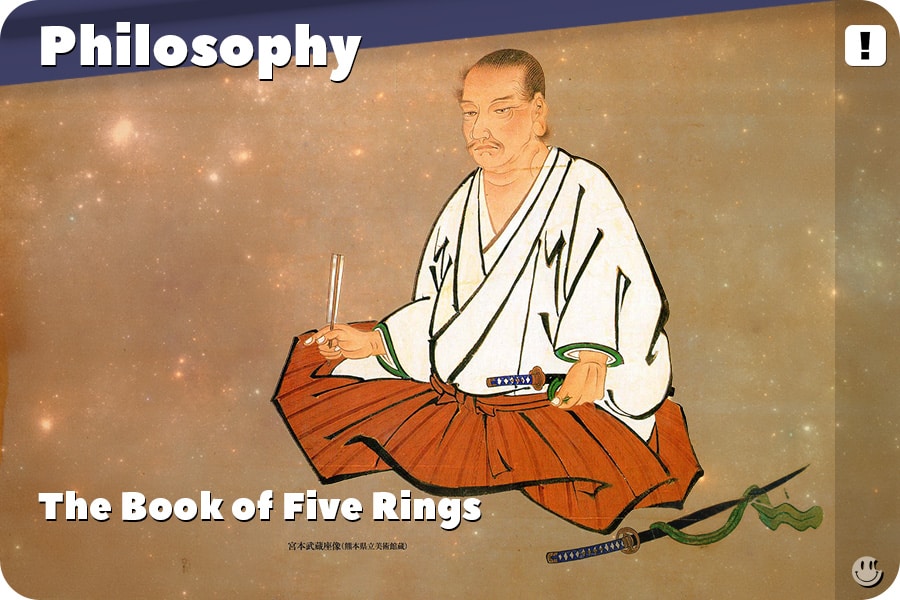
    Musashi (c. 1584–1645) was a samurai, artist, philosopher, and undefeated duelist. According to legend, he fought—and won—more than 60 duels, often against the most skilled swordsmen in Japan.

    His most famous duel was against Sasaki Kojiro in 1612. Musashi arrived late, used a wooden sword carved from an oar, and still emerged victorious.

    Later in life, he retired to a cave and wrote A Book of Five Rings, distilling his teachings for future generations. His method, Niten Ichi-ryū (“Two Heavens, One Style”), focused on using both long and short swords simultaneously—an innovation that required balance, awareness, and adaptability.

    Musashi was not just a fighter. He was a painter, calligrapher, and student of Zen. He believed that true mastery came from training both the body and the mind.

    The Five Rings Explained

    The book is divided into five chapters, or “rings,” each named after one of the classical elements. Together, they form a holistic strategy for conflict and life.

    1. The Ground Book (Chi no Maki) – Foundations and Discipline

    This opening chapter lays the groundwork for Musashi’s philosophy. He emphasizes the importance of learning the basics deeply before advancing to complex techniques.

    “Know the smallest things and the biggest things, the shallowest things and the deepest things.” — Musashi

    In this ring, Musashi defines strategy as a discipline. Whether wielding a sword or making decisions, success begins with a strong foundation: observation, timing, and the study of many crafts—not just one.

    In modern terms, Master your fundamentals before chasing flash.

    2. The Water Book (Mizu no Maki) – Adaptability and Flow

    Water adapts to its environment. So must the strategist.

    This ring teaches that one must be formless and fluid, adjusting to the opponent and the terrain. Musashi urges practitioners to observe without bias, move without hesitation, and remain flexible in every situation.

    “In strategy, it is important to see distant things as if they were close and to take a distanced view of close things.”

    The message is clear in business, negotiation, or sports: Adapt or be outmaneuvered.

    3. The Fire Book (Hi no Maki) – Aggression and Timing

    Fire is intensity. This chapter focuses on momentum, energy, and seizing the initiative. Musashi outlines combat tactics, but his lessons apply far beyond swordplay.

    “Perceive that which cannot be seen with the eye.”

    Timing is everything. You must strike not only effectively, but at exactly the right moment. He emphasizes understanding your opponent’s rhythm—and disrupting it.

    Fire teaches that sometimes, the best defense is bold, decisive action.

    4. The Wind Book (Fū no Maki) – Understanding Others

    “Wind” means “style.” This ring discusses other martial arts schools, not to praise or dismiss them, but to learn from them.

    Musashi believed that studying the methods of others could help one anticipate their moves and better understand one’s own path.

    He critiques styles that rely too heavily on form or showmanship. Real strategy, he insists, must work in real conditions.

    In today’s terms: Know your competition. But don’t mimic—analyze and surpass.

    5. The Book of the Void (Kū no Maki) – Emptiness and Mastery

    The shortest and most abstract chapter, the Void represents enlightenment.

    “By knowing things that exist, you can know that which does not exist.”

    Here, Musashi touches on Zen philosophy. The void is not nothingness but limitless potential. The clarity comes when one is free of fear, doubt, and attachment.

    True mastery lies beyond technique—it is an instinctive understanding, a state where action arises without thought.

    You don’t just fight. You become the strategy.

    Why It Still Resonates Today

    Musashi’s rings are more than metaphors. They form a roadmap for strategic thinking that applies across time and culture:

    • In business: Know your market (ground), adapt to changes (water), act decisively (fire), analyze competitors (wind), and think beyond rules (void).

    • In leadership: Balance preparation and spontaneity. Lead with discipline, but be flexible.

    • In personal development, Musashi believed that strategy could be found in anything—painting, carpentry, martial arts—if studied deeply and sincerely.

    His message: Master one thing deeply, and you can understand all things.

    Musashi’s Broader Life Philosophy

    Musashi’s final years were marked by introspection. Besides Five Rings, he wrote a short guide to life called Dokkōdō (“The Path of Aloneness”), with 21 precepts including:

    • “Do not seek pleasure for its own sake.”

    • “Respect Buddha and the gods without counting on their help.”

    • “Never stray from the Way.”

    His life was one of discipline without dogma—a blend of pragmatism, artistry, and existential independence.

    Fun Fact

    Musashi often used unorthodox tactics. In his duel with Sasaki Kojiro, he arrived late to throw his opponent off balance—and fought with a wooden sword he carved from a boat oar during the journey.

    This wasn’t disrespect. It was psychological warfare—Musashi’s form of void strategy.

    Glossary of Terms

    • Kenjutsu: The art of Japanese swordsmanship.

    • Niten Ichi-ryū: Musashi’s two-sword style.

    • Zen: A branch of Mahayana Buddhism emphasizing meditation, intuition, and self-discipline.

    • Void (Kū): In Buddhist and samurai philosophy, the space of pure potential and clarity beyond form.

    • Rhythm: Musashi’s term for timing and flow in both combat and life.

    Discussion Questions

    1. Which of Musashi’s five elements do you find most relevant to your own work or life?

    2. How can you apply “void” thinking—acting without overthinking—in high-pressure situations?

    3. What does it mean to be strategic today, and how do you balance planning with improvisation?

    References and Further Reading