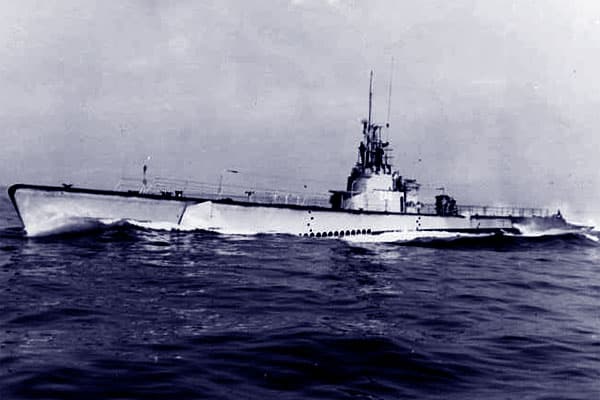
Just a little illustration of how the navy had changed during my life. I was attached to the USS James Monroe SSBN-622, a ballistic missile submarine in 1985. We had just returned from our three month deployment from Holy Loch, Scotland, to transit to Charleston, South Carolina. I was looking forward to the next three months off, back in the states. When I returned home, however, I received a call from my detailer (the person who arranges our transfers) that I was to report to the USS Nathan Hale (SSBN-623) back in Holy Loch, Scotland in one week. The reason being that the Auxiliary gang chief had just been busted for homosexual activities and was being discharged from the navy. That was terrible news, not simply because I had just returned from patrol, but because the Monroe would be operating out of Charleston. So, I would report on board the Hale under questionable circumstances and have to adjust to an entirely new crew of guys. In turn, those same guys would have to put their trust into an entirely new supervisor.
Luckily, I was married to a wonderful woman then who understood what military commitment meant. She gave me the emotional support I needed to face another patrol so soon. What we “boomers” called back to back patrols. In a six month period, I had one week at home.
Being a Black CPO probably threw more doubts into the mix, but we quickly gelled into an efficient, capable, working unit.
When I reported to the Clay, they were having problems with one of the periscopes and no one could figure out the problem in the hydraulic system. I had had a similar problem on the Monroe and gave directions on how to fix it. Everyone was doubtful, including me. If it didn’t work, my reputation as a knowledgeable leader would be crap. The fix worked and suddenly I went from being a questionable replacement into a hero. Everything worked out very well from that time on.
I learned each man’s strengths and weaknesses and used both to manage the fifteen men team. When other CPOs were micro managing their men, I let my team go, just stayed accessible enough in case they had a problem. Instead of direct supervision, I gave each a chance to excel or fail, they all excelled and because of our teamwork, we actually accomplished many repairs in record time.
I made 31 FBM patrols in my career, at one time next to the most for an individual. There was one person ahead of me and as long as he stayed in the navy, I could never exceed his record. The last edition of the “Fractured Funnies”, my underground newspaper, was completed on the Nathan Hale.
This picture is the James Monroe flying her homecoming pennant, meaning that she has made her last overseas refit period and would be operating out of the United States.
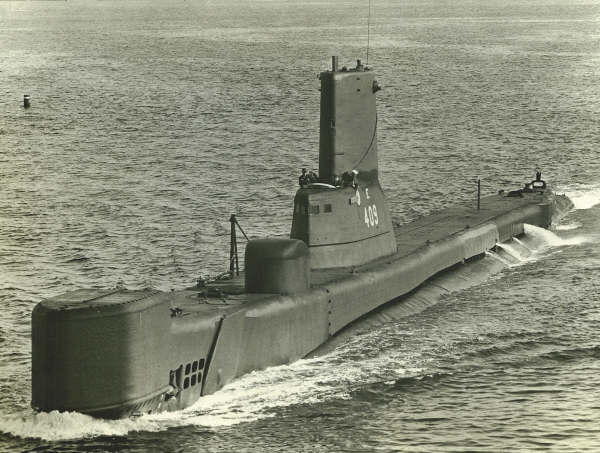
So much of our diesel submarine history will soon be edited down to data, numbers, and brief descriptions on Wikipedia. But the old converted World War Two fleet submarines were much more than that. Obsolete by todays standards, they were the first line of defense in the beginning of the cold war. Almost all were converted to GUPPY ONE (Greater Underwater Propulsion Power Program) class and several were converted to GUPPY TWO and GUPPY THREE class. The main external differences were in the sail and bow configurations. Guppy submarines served as the test vehicles for a wide array of sonar equipment development and stealth technology. Almost all of the old fleet boats had a colorful war time history.
Life on the old boats was spartan. We had two showers, one for the officers and one for the crew. However, the showers were normally filled with provisions like eggs and fresh vegetables when going out to sea. and we carried a limited amount of fresh water for showers or laundry. Yes, even the one washing machine was used to store provisions. Limited water for showers was one of the reasons deodorants like Right Guard were almost a necessity. You went to sea with a case of it. If you were a landlubber, civilian, or surface sailor, you could recognize a submariner by his scruffy beard, lack of a haircut and the odor of diesel fuel that never seem to go away. Our capacity to make fresh water at sea was limited by the two 500 gallon per day distilling units when they were working. In port stateside, single men slept in the barracks.
My captains both on the USS Piper and the USS Croaker usually stocked one of the after torpedo tubes with cases of beer that we were allowed to drink when our operational commitments were done. There was also a barbecue grill for swim calls in the Caribbean. Operating in the North Atlantic, we would be given brandy for standing lookout watches topside.
Back then, the submarine captain and the Chief of the Boat were the sole authorities for disciplinary action other than murder. You went to captain’s mast for minor infractions and if you were an integral part of the crew’s cohesion, you usually got of with a few days restrictions. Other problems were handled by the COB who would take you back to the after torpedo room for a little private reboot and counseling. The COB was also your big brother, who would guide you through the hard times and life crisis that plagued all young sailors.
The old fleet submarines were not true submarines in that the had limited submerged endurance. They were limited by oxygen and batteries. So, most of the time were rode on the surface or snorkeled. This limitation made us vulnerable to storms and rough seas.
One of the benefits of not being a nuclear powered sub was that we could open the ship up to general visitation when in port, even in foreign countries. One visit I’ll always remember was when the Piper hosted Princess Grace of Monaco who in turn reciprocated by inviting several of our crew to Christmas dinner at the palace.
I have many fond memories of being a diesel engine throttleman. From start up to shutting them down on an emergency dive or starting them up for snorkeling. The entire procedure was like a ballet, everything, every step in the procedure had to be done just right. Snorkeling start up was risky. If you missed one step, you could flood the engines with sea water and spend the next six or seven days in repairs.
Sleep for us enginemen was always a luxury. I once spent six days straight without sleep conducting an emergency repair on a main engine because I was the only one small enough to fit in the small space outboard the engine. When the job was complete, I couldn’t fall asleep without being medicated by our corpsman.
Submarine History
Way before nuclear submarines, the old World War Two diesel submarines had been converted to Guppy (Greater Underwater Propulsion Power Program) class boats and operated with our NATO forces in several overseas exercises. They didn’t make patrols back then, but deployed on several cruises, one being what we called “Springboard”, a two month excursion to the Caribbean that took us to Puerto Rico, Jamaica, and the Virgin Islands. The other cruise was a more lengthy four month run to the Mediterranean. What was always significant were the number of port calls we would make. The old diesel subs wouldn’t stay at sea for more than a week due to fuel and provision, so we’d make plenty of port calls.
After a six day transit, for example, we would pull into Rota, Spain for refueling, then head up to ports such as Barcelona, Lisbon, Naples, Nice, Cannes, and even Sweden.
The old fleet diesel boats that I served on were the USS Piper (SS 409), USS Croaker (SS 246), USS Clamagore (SS 343) and USS Tiru (SS 416).
Back in those days, navy vessels had their own array of groupies, or girls that would be waiting for the boats to pull in. Most of the girls were regulars in that they had a long history with the boat and it’s crew. No, these were not garden variety prostitutes, but more like entertainers. They’d offer distraction from being at sea, companionship and conversation in a foreign port and saw that we spent our money in one of their local bars. They might sometimes act as tour guides for us new, younger guys. At the end of the day, they would go home alone, but would be on the pier to wave us off as we left port. Despite secrecy, they always seem to know our operating schedules. Some of the girls had known a sailor on our boat for several years. It was kind of amazing how loyal they were to their particular sailor.
In my youth, BG (before Gwen). I struck up a relationship with a young lady in Lisbon and we actually corresponded for about five years, until I transferred to a nuclear sub and would never get back to Portugal.
Springboard gave us the chance to enjoy life in a different manner. Plenty of bars and beaches. Two events do stick out i my memory though. The navy provided a bus to pick us up in New San Juan and transport us back to the base. One night, the bus was attacked by Puerto Rican terrorist and several sailors were killed i the gunfire.
The other incident was the test of the submarine rescue bell. I had just qualified as a diesel throttleman. On the old boats, each engine room had a throttleman and an oiler. The throttleman ran the main engines, the oiler was like an apprentice, but did odd jobs like cleaning the space, make coffee runs and work on qualifications. He also kept the throttleman awake.
We had a hard run to our dive point, meaning we ran four main engines at full RPMs. We were supposed to submerge, sit on the bottom, and wait for the submarine rescue vessel to power the bell that was supposed to lock on to one of our hatches at which time crew members would enter the bell and be lifted to safety. Great theory. We sat on the bottom and endured seven attempts and 38 hours of them trying to get the bell in place. The additional problem for us was that four main engines running at full RPMs generate a lot of heat. With no outside ventilation and no air conditioning, there was no where for the heat to go. Temperatures in the boat reached 115 degrees. After 20 hours, the CO2 level peaked. At 36 hours, it was unbearable, and at that point, you couldn’t even get a cigarette to stay lit. Most of the crew stripped down to their underwear, we in the engine room stripped even further. This little episode gave me a real appreciation of what submariners went through during the war.
When we finally got the word that the exercise had ended and we could surface, the captain ordered the torpedo men to break out four or five cases of beer that he had stored in one of the after torpedo tubes and the two cases we had in the refrigerated stores storage locker. We surfaced, broke out our barbecue pit, cooked steaks, drank beer and had swim call somewhere off the coast of San Juan.
Fredric Durrette served one tour in Vietnam, retired as E8 in the navy submarine service after 23 years. Major hobbies are collecting old stuff from the 20s and restoring old racing bicycles. Worked as a commercial photographer at JL Hudsons in Detroit and continue photography as a hobby. Love Sade, sixties soul, seventies rock, and all jazz. Attended Woodstock in 69! http://snakesafe.jalbum.net/
Once on the USS Piper back in 1962, we were operating with a group of navy SEALS. The SEALS had just been formed as a special forces group a year earlier from the navy Underwater Demolition Team or UDT. Usually the UDT teams were culled from the navy seabees or construction battalions. Now, they were in the process of honing their skills in covert insertions using submarines. Our mission was to secure their raft to our periscope fairing and then submerge and transit into a coastal shore line as close as we could under cover of darkness. When we reached the insertion point, the seals were supposed to exit the boat through our forward escape hatch, swim to the surface, get in their raft and paddle to the shore. All went according to plan except when the SEALS detached their raft, and got into it, it started to sink. There was no communication with the team once they left the boat, so we had no idea what was going on. Because the raft was sinking, they did not detach it from the scope.
Since our part of the mission was seemingly over, at least until we were supposed to rendezvous to retrieve the team, we started heading back out to sea. Just by accident, our quartermaster wanted to see the shoreline before we got too far out and snuck a quick look out the scope before lowering it. Had it not been for a curious shipmate, we probably would have dragged the SEAL team back out into the deeper ocean waters where we would have gone a lot deeper than periscope depth.
Then on the USS Croaker two years later, while transiting the Atlantic ocean for our four month Mediterranean cruise, we received a message that one of our planes had gone down and we were ordered to search for the pilot who had successfully bailed out. You never realize how vast the Atlantic is until you have to look for one lone human being.
So, we stayed on the surface and searched and searched well into the night with no success. At around midnight, I got up and made it back to the after engine room to start my six hour watch.
Even with both diesel engines running as well as the two in the forward engine room, I never wore hearing protection. That’s probably why I could enjoy the music at Woodstock. Well, about an hour into my watch, I thought I heard the faint sound of something tapping on the hull, but instantly dismissed it. A few minutes later the tapping was back, so I reported it to the chief of the watch in control, but no one seemed to believe me. Being rather peeved, the next time I called the chief, I used some rather profane language (something I rarely did). The chief notified the lookouts on the bridge to look aft towards the engine rooms. However, old diesel boat engines exhausted sea water coolant and exhaust smoke (we called it “efficiency haze” from the sides of the boat, making it hard to see anything further back from there.
Just by luck, as we were making a maneuver, one of the lookouts noticed something white behind the boat. Several crew members were dispatched topside to investigate. Now all this is happening in total darkness, in the North Atlantic is lightly rough seas.
When the crew walked back to the engine room hatch, they found the airman clinging onto the superstructure yelling his lungs out and frantically banging on the hull. The old diesel submarines were equipped with screw guards and it seems that our screw guard had snagged this poor guy’s parachute and we had actually been dragging him around for over an hour until he could pull himself up close enough to grab part of the superstructure and pull himself close to the engine room where I heard him banging on the hull with his sidearm. Once inside the boat, he was given some medicinal brandy, steak and fresh lobster for a meal.
Fredric Durrette served one tour in Vietnam, retired as E8 in the navy submarine service after 23 years. Major hobbies are collecting old stuff from the 20s and restoring old racing bicycles. Worked as a commercial photographer at JL Hudsons in Detroit and continue photography as a hobby. Love Sade, sixties soul, seventies rock, and all jazz. Attended Woodstock in 69! http://snakesafe.jalbum.net/