web analytics

Tag: WWI

  • 1918 History, Fun Facts and Trivia

    1918 History, Fun Facts and Trivia

    1918 History, Facts and Trivia

    1918 History Rundown:

    • January 8 – President Wilson’s Fourteen Points Speech: U.S. President Woodrow Wilson outlined his vision for post-war peace, presenting the Fourteen Points to Congress as a basis for ending World War I.
    • March 3 – Treaty of Brest-Litovsk Signed: Soviet Russia and the Central Powers signed this treaty, marking Russia’s exit from World War I and ceding significant territories to Germany.
    • March 21 – German Spring Offensive Launched: Germany initiated a series of attacks along the Western Front to defeat the Allies before American forces could fully arrive.
    • April 21 – Death of the Red Baron: Manfred von Richthofen, the famed German fighter pilot known as the Red Baron, was shot down and killed over France.
    • May 16 – U.S. House Passes Women’s Suffrage Amendment: The House of Representatives approved the 19th Amendment, granting women the right to vote; it would be ratified in 1920.
    • June 4 – Battle of Belleau Wood Begins: U.S. Marines engaged German forces in France, marking a significant American contribution to the war and bolstering Allied morale.
    • July 17 – Execution of the Romanov Family: Tsar Nicholas II and his family were executed by the Bolsheviks in Yekaterinburg, effectively ending the Russian monarchy.
    • July 18 – Second Battle of the Marne: Allied forces launched a successful counteroffensive against Germany, marking a turning point on the Western Front.
    • August 8 – Battle of Amiens Commences: Allied forces began an offensive that led to a series of victories, contributing to the eventual end of World War I.
    • September 26 – Meuse-Argonne Offensive Starts: The largest operation of the American Expeditionary Forces aimed to breach German defenses, leading to significant Allied advances.
    • October 12 – Cloquet Fire in Minnesota: A massive forest fire in Cloquet, Minnesota, resulted in the deaths of approximately 453 people and extensive property damage.
    • October 30 – Ottoman Empire Signs Armistice of Mudros: The Ottoman Empire agreed to cease hostilities, effectively exiting World War I.
    • November 3 – Austria-Hungary Signs Armistice: Austria-Hungary agreed to an armistice with the Allies, leading to the empire’s dissolution.
    • November 9 – Kaiser Wilhelm II Abdicates: Facing revolution at home, the German Emperor abdicated, leading to the proclamation of the Weimar Republic.
    • November 11 – Armistice Day: World War I ended with the Armistice signing between the Allies and Germany, ceasing hostilities on the Western Front.
    • November 11 – Poland Regains Independence: After 123 years of partitions, Poland re-emerged as an independent nation following the end of World War I.
    • November 28 – Estonia Declares Independence: Estonia proclaimed independence from Russia, establishing the Estonian Provisional Government.
    • December 1 – Formation of the Kingdom of Serbs, Croats, and Slovenes: The new state, later known as Yugoslavia, was established, uniting South Slavic peoples.
    • December 4 – President Wilson Sails for Paris Peace Conference: Woodrow Wilson became the first sitting U.S. president to travel to Europe, aiming to shape the post-war peace process.
    • December 14 – British General Election Held: The United Kingdom held its first general election after World War I, resulting in a coalition victory led by David Lloyd George.
    • Spanish Flu Pandemic: A deadly influenza pandemic spread globally, ultimately killing an estimated 50 million people worldwide.
    • Russian Civil War Intensifies: The conflict between the Red (Bolshevik) and White (anti-Bolshevik) armies escalated, shaping the future Soviet Union.
    • Women’s Suffrage Movement Gains Momentum: Several countries, including the United Kingdom and Canada, granted women the right to vote, marking significant progress in women’s rights.
    • Advancements in Aviation: World War I spurred significant technological advancements in aircraft design and aerial combat tactics.
    • Cultural Shifts Post-War: The end of World War I led to significant changes in art, literature, and society, setting the stage for the Roaring Twenties.

    Top Ten Baby Names of 1918

    Mary, Helen, Dorothy, Margaret, Ruth, John, William, James, Robert, Charles

    US Life Expectancy

    (1918) Males: 36.6 years, Females: 42.2 years
    *The life expectancy at birth in 1918 in the US dropped by almost 12 years because of the Spanish Flu.

    Firsts, Inventions, and Wonders

    The Timberland Shoe Company was founded.

    Irving Berlin wrote God Bless America.

    Stars & Stripes, the weekly US armed forces newspaper, restarted publication. It was also published during the Civil War.

    Opha Mae Johnson became the first woman allowed to join the US Marine Corps.

    The Most Popular Singers and Artists of 1918 include:

    Norah Bayes, Henry Burr, Enrico Caruso, Arthur Collins, Albert Campbell, The Farber Sisters, Arthur Fields, Byron G. Harlan, Marion Harris, Charles Harrison, Charles Hart, Lewis James, Al Jolson, Irving Kaufman, Olive Kline, John McCormack, Lambert Murphy, Billy Murray, The Original Dixieland Band, The Peerless Quartet, Oscar Seagle, The Shannon Four, Joseph C. Smith’s Orchestra, John Philip Sousa’s Band, Elizabeth Spencer, The Sterling Trio, Van & Schenck, The Victor Light Opera Company

    Pop Culture Facts & History

    Executed labor leader and songwriter Joe Hill had his ashes seized by the US federal government on Oct 8, 1917. The ashes were held for 71 years as they were seen as subversive. Before he died, Hill asked to be cremated and specified that his ashes be scattered in every state except Utah.

    The 1918 World Series marked the first time The Star-Spangled Banner was performed at a major league game. During the seventh-inning stretch of Game 1, the band began playing the song because the country was involved in World War I.

    A 1918 calendar is also suitable for 2013, 2019, 2002, 1991, 1985, 1974, 1963, 1957, 1946, 1935 and 1929

    The Sinking of the Lusitania was a cartoon short (longest at the time) by Windsor McCay…

    Enrico Caruso, the legendary opera singer, was paid $100,000, the equivalent of $1.75 Million today, to star in My Cousin, a silent movie.

    The United States Congress officially established time zones and approved the March 19, 1918 Standard Time Act.

    The Geographic Center of the United States was determined by balancing a cardboard cutout shape of the US on a point, near Lebanon, Kansas. It was accurate to within 20 miles.

    In 1918, pink was for boys because it was a stronger color, and the more delicate blue was reserved for girls.

    Ossip Bernstein, a famous chess grandmaster, was sentenced to death by the Bolsheviks in 1918. While he was facing the firing squad, a Russian officer who heard his name offered him the chance to prove his identity in a game of chess. He beat the officer and was released.

    Six hundred fifty-four sheep were killed by forked lightning when it struck a mountain in Wasatch National Park, Utah, on July 18, 1918.

    Over 100 waiters were arrested for poisoning bad tippers in Chicago. The Mickey Finn is most likely named after Michael “Mickey” Finn, the Lone Star Saloon and Palm Garden Restaurant manager, which operated from 1896 to 1903 in the Chicago Loop neighborhood on South State Street of Chicago. “Slipping someone a ‘Mickey’ was named after this assault.

    In Russia, the day after January 31st was February 14th, not February 1st – that’s the day Russia transitioned from the Julian to the Gregorian calendar.

    The Re-Gift:
    In 1915, Cecil Chubb bought Stonehenge as a gift for his wife. She didn’t like it, so he donated it to the nation in 1918.

    H1N1 – Spanish Flu

    The Spanish Flu: This was during World War I (also called The Great War), and many countries had limits on what the press could write about, except Spain, which was neutral. Thus, more reports came out about the flu from Spain, causing people to think it was primarily happening there.

    The 1918 Spanish Flu killed so many people in the US that it caused the average life expectancy in males to drop from 48.4 to 36.6 and 54.0 to 42.2 in females between 1917 and 1918.

    Some Scientists Have Never Seen A Movie Dept

    An unextinction is scientifically possible. Several viruses have been brought back, including the 1918 flu pandemic.

    WWI News

    When Manfred von Richthofen (the Red Baron) was shot down and killed in 1918, the British Army gave him a full military funeral, complete with clergy, a gun salute, and a wreath inscribed with, “To Our Gallant and Worthy Foe.”

    A carrier pigeon named Cher Ami saved 194 American soldiers by delivering a message to nearby support despite being blinded in one eye, shot through the breast, covered in blood, and with a leg hanging on by a tendon.

    The phrase “The First World War” was used as early as 1918, by Niall Ferguson, who felt it would not be the last.

    There is only a single known audio recording from WWI. It involves British troops firing gas shells at German positions during their advance on Lille, France, on October 9, 1918.

    A monument honors the almost one million Allied horses who died during the First World War in Ascot, near Windsor Castle, UK. Of one million drafted horses, only 62,000 returned in 1918.

    The USS Cyclops disappeared along with 306 crew and passengers in The Bermuda Triangle. No trace has ever been found, and it remains the single largest non-combat loss of life in US Naval history.

    Private John Parr was the first British soldier to die in World War 1. Almost a million more Brits died, and the last was Private George Edwin Ellison, just before the Armistice ending the war was signed in 1918. In an unplanned coincidence, the graves face each other just 15 feet apart at the same cemetery.

    Veterans Day originated as Armistice Day, marking the end of WW1 hostilities in 1918 in the 11th month, on the 11th day, at the 11th hour.

    After the Treaty of Versailles (end of WW I), the French Commander-in-chief said, “This is not a Peace. It is an Armistice for 20 years”. Twenty years and 65 days later, WW II began.

    The Disasters

    On February 26, 1918, one of the worst sports-related disasters occurred when the “Happy Valley Racecourse” grandstands in Happy Valley, Hong Kong, caught fire. Over 600 spectators were burned alive and 300 more were injured.

    The steamer Princess Sophia sank on Vanderbilt Reef near Juneau, Alaska, and 353 people died.

    The Great Train Wreck of 1918: in Nashville, Tennessee, an inbound local train collided with an outbound express, killing 101 people.

    The Mystery

    The USS Cyclops, which went missing in 1918 during WWI, remains the single most significant loss of life in U.S. Naval history not directly involving combat, and the ship’s fate is still unknown.

    Broadway Show

    Lightnin’ (Play) Opened on August 26, 1918, and closed on August 27, 1921

    Nobel Prize Winners

    Physics – Max Karl Ernst Ludwig Planck
    Chemistry – Fritz Haber
    Medicine – not awarded
    Literature – not awarded
    Peace – not awarded

    Popular and Best-selling Books From 1918

    Fiction Bestsellers

    1. The U.P. Trail by Zane Grey
    2. The Tree of Heaven by May Sinclair
    3. The Amazing Interlude by Mary Roberts Rinehart
    4. Dere Mable by Edward Streeter
    5. Oh, Money! Money! by Eleanor H. Porter
    6. Greatheart by Ethel M. Dell
    7. The Major by Ralph Connor
    8. The Pawns Count by E. Phillips Oppenheim
    9. A Daughter of the Land by Gene Stratton Porter
    10. Sonia by Stephen McKenna

    General Nonfiction Bestsellers

    1. Rhymes of a Red Cross Man by Robert W. Service
    2. Treasury of War Poetry by G.H. Clark
    3. With the Colors by Everard J. Appleton
    4. Recollections by Viscount Morley
    5. Laugh and Live by Douglas Fairbanks
    6. Mark Twain’s Letters edited by Albert Bigelow Paine
    7. Adventures and Letters of Richard Harding Davis by Richard Harding Davis
    8. Over Here by Edgar Guest
    9. Diplomatic Days by Edith O’Shaughnessy
    10. Poems of Alan Seeger by Alan Seeger

    War Nonfiction Bestsellers

    1. My Four Years in Germany by James W. Gerard
    2. The Glory of the Trenches by Coningsby Dawson
    3. Over the Top by Arthur Guy Empey
    4. A Minstrel In France by Harry Lauder
    5. Private Peat by Harold R. Peat
    6. Outwitting the Hun by Lieut. Pat O’Brien
    7. Face to Face with Kaiserism by James W. Gerard
    8. Carry On by Coningsby Dawson
    9. Out to Win by Coningsby Dawson
    10. Under Fire by Henri Barbusse

    Other Books of Note

    The Magnificent Ambersons by Booth Tarkington
    The Decline of the West, vol. 1 by Oswald Spengler
    The Elements of Style by William Strunk and E.B. White
    Eminent Victorians by Lytton Strachey
    My Antonia by Willa Cather
    The Polish Peasant in Europe and America by W.I. Thomas and Florian Znaniecki

    Sports

    World Series Champions: Boston Red Sox
    Stanley Cup Champs: Toronto Arenas
    U.S. Open Golf: not held (WWI)
    U.S. Tennis (Men/Ladies): Robert Lindley Murray/Molla Bjurstedt
    Wimbledon (Men/Women): not held (WWI)
    NCAA Football Champions: Pitt & Michigan
    Kentucky Derby Winner: Exterminator
    Boston Marathon Winner: Camp Devens relay team Time: 2:29:53

    More 1918 History Resources

    Most Popular Baby Names (BabyCenter.com)
    Popular and Notable Books (popculture.us) 
    Broadway Shows that Opened in 1918
    1918 Calendar, courtesy of Time and Date.com 
    Fact Monster
    1918 in Movies (according to IMDB) 
    Wikipedia 1918
  • 1917 History, Fun Facts and Trivia

    1917 History, Fun Facts and Trivia

    1917 History, Facts and Trivia

    Top Ten Baby Names of 1917

    Mary, Helen, Dorothy, Margaret, Ruth, John, William, James, Robert, Joseph

    US Life Expectancy

    (1917) Males: 48.4 years, Females: 54.0 years

    Firsts, Inventions, and Wonders

    Kiwanis International was founded in Detroit, Michigan

    The term “breakfast is the most important meal of the day” was popularized by cereal companies’ marketing campaigns after appearing in Good Health Magazine.

    At Piggly Wiggly grocery stores, the modern concept of a grocery store, where you get items off the shelf yourself, wasn’t invented until 1917.

    The Converse All-Star “Chuck Taylor” Basketball Shoe was first produced in 1917.

    The first use of OMG was in Lord Fisher’s September 9, 1917, letter to Winston Churchill.

    Melvin Jones founded Lions Clubs International.

    The Most Popular Singers and Artists of 1917 include

    The American Quartet, Elsie Baker, Bora Bayes, Henry Burr, Albert Campbell, Byron G. Harlan, Marion Harris, Charles Harrison, Al Jolson, Ada Jones, Lucy Isabelle Marsh, John McCormack, Billy Murray, The Original Dixieland Jazz Band, The Peerless Quartet, Prince’s Orchestra, Joseph C. Smith’s Orchestra, John Philip Sousa’s Band, The Sterling Trio, Van & Schenck, The Victor Military Band, Weber & Fields, Reinald Werrenrath, Anna Wheaton

    US Politics

    March 5, 1917 (Monday): Second inauguration of Woodrow Wilson

    Pop Culture Facts & History

    Jeannette Rankin, the first Congresswoman, served just two non-consecutive terms, starting in 1917 and 1941 and was the only person to vote against the declaration of war in both WWI and WWII.

    A bank in Utah was built using 80,000 bricks mailed via USPS in 50-pound packages to save on freight costs. The post office changed parcel post rules after that.

    Cape Canaveral is part of the Diocese of Orlando, making its Bishop technically Bishop of the Moon, according to the 1917 Code of Canon Law (“any newly discovered territory was placed under the jurisdiction of the diocese from which the expedition which discovered that territory left”).

    The Miracle of the Sun occurred in Fatima, Portugal, in 1917 and was accepted as a miracle by the Catholic Church in 1930. At least 30,000 people gathered to see a multicolored sun dancing in the sky.

    The United States purchased the Danish West Indies for $25,000,000 and renamed them the Virgin Islands.

    The Royal Family officially adopted ‘Windsor’ as their surname in 1917.

    WWI News:

    The model for Uncle Sam on the famous 1917 post I Want You is the face of the painter, James Montgomery Flagg. For effect, he aged his portrait and added the goatee beard. Flagg used his picture to avoid the need to find a model. It was partially inspired by a British recruitment poster showing Lord Kitchener in a similar pose.

    US troops in Paris stopped at the grave (composed of soil from the United States) of French Revolutionary War Hero, Marquis de Lafayette, and proclaimed, “Lafayette, we are here!”

    The Trading with the Enemy Act of 1917 enabled the U.S. government to seize private assets worth millions of dollars, including Bayer’s trademark on Aspirin.

    The Disaster

    The Halifax Explosion was a maritime disaster in Halifax, Nova Scotia, Canada, that killed 2000 people and injured 9,000.

    Fake News

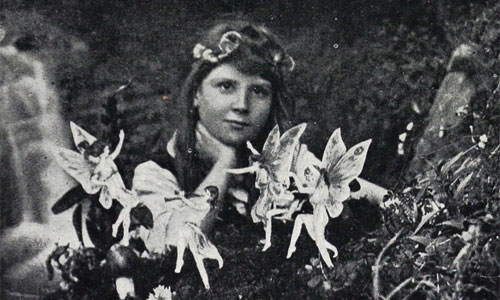
    The Cottingley Fairies appeared in a series of five photographs taken by cousins Elsie Wright (1901–88) and Frances Griffiths (1907–86)

    Emily Grant Hutchings tried to release a “Mark Twain” novel called Jap Herron after his death, claiming the dead author dictated the book using an Ouija board.

    Journalist H.L. Mencken published a hoax news article stating bathtubs were popularized in the US by President Millard Fillmore after he had one installed in the White House. Thirty years later, even after he admitted it was false, it was still being reprinted as fact.

    Spanish Flu

    The 1918 Spanish Flu killed so many people in the US that it caused the average life expectancy in males to drop from 48.4 to 36.6 and 54.0 to 42.2 in females between 1917 and 1918.

    Nobel Prize Winners

    Physics – Charles Glover Barkla
    Chemistry – not awarded
    Medicine – not awarded
    Literature – Karl Adolph Gjellerup, Henrik Pontoppidan
    Peace – International Committee of the Red Cross

    Popular and Best-selling Books From 1917

    Fiction Bestsellers

    1. Mr. Britling Sees It Through, by H.G. Wells
    2. The Light in the Clearing, by Irving Bacheller
    3. The Red Planet by William J. Locke
    4. The Road to Understanding by Eleanor H. Porter
    5. Wildfire by Zane Grey
    6. Christine by Alice Cholmondeley
    7. In the Wilderness by Robert S. Hichens
    8. His Family by Ernest Poole
    9. The Definite Object by Jeffrey Farnol
    10. The Hundredth Chance by Ethel M. Dell

    General Nonfiction Bestsellers

    1. Rhymes of a Red Cross Man by Robert W. Service
    2. The Plattsburg Manual by O.O. Ellis and E.B. Garey
    3. Raymond by Sir Oliver Lodge,
    4. Poems of Alan Seeger by Alan Seeger
    5. God the Invisible King by H.G. Wells
    6. Laugh and Live by Douglas Fairbanks
    7. Better Meals for Less Money by Mary Green

    War Nonfiction Bestsellers

    1. The First Hundred Thousand by Ian Hay
    2. My Home in the Field of Honor by Frances W. Huard
    3. A Student in Arms by Donald Hankey
    4. Over the Top by Arthur Guy Empey
    5. Carry On by Coningsby Dawson
    6. Getting Together by Ian Hay
    7. My Second Year of the War by Frederick Palmer
    8. The Land of Deepening Shadow by D. Thomas Curtin
    9. Italy, France and Britain at War by H.G. Wells
    10. The Worn Doorstep by Margaret Sherwood

    Other Books of Note

    On Growth and Form by D’Arcy Wentworth Thomas
    A Theology for the Social Gospel by Walter Rauschenbusch
    A Book of Prefaces by H.L. Mencken
    Social Rule by Elsie Clewes Parsons
    Prufrock by T.S. Eliot

    Sports

    World Series Champions: Chicago White Sox
    Stanley Cup Champs: Seattle Metropolitans
    U.S. Open Golf: not held (WWI)
    U.S. Tennis (Men/Ladies): Robert Lindley Murray/Molla Bjurstedt
    Wimbledon (Men/Women): not held (WWI)
    NCAA Football Champions: Georgia Tech
    Kentucky Derby Winner: Omar Khayyam
    Boston Marathon Winner: Bill Kennedy Time: 2:28:37

    More 1917 Facts & History Resources:

    Most Popular Baby Names (BabyCenter.com)
    Popular and Notable Books (popculture.us) 
    Broadway Shows that Opened in 1917
    1917 Calendar, courtesy of Time and Date.com 
    Fact Monster 
    1917 in Movies (according to IMDB) 
    Wikipedia 1917

  • 1916 History, Facts and Trivia

    1916 History, Facts and Trivia

    1916 History, Facts and Trivia

    Top Ten Baby Names of 1916

    Mary, Helen, Dorothy, Margaret, Ruth, John, William, James, Robert, Joseph

    US Life Expectancy

    (1916) Males: 49.6 years, Females: 54.3 years

    Firsts, Inventions, and Wonders

    Piggly Wiggly revolutionized grocery shopping by allowing customers to select their items, “To have no store clerks gab and smirk while folks are standing around ten deep to get waited on.”

    The Professional Golfers Association of America (PGA) was founded in New York City.

    Fall of a Nation, the 1916 sequel to D.W. Griffith’s Birth of a Nation, is considered the first sequel in film history, but no copies exist.

    The US Department of Interior formed the National Park Service.

    Mr. Peanut from Planters’ brand peanuts was created by 13-year-old Antonio Gentile, for a contest in 1916. He won $5. Mr. Peanut appeared in the Saturday Evening Post on February 23, 1918.

    Oxycodone, a narcotic painkiller closely related to codeine, was synthesized in Germany.

    Norman Rockwell’s’ first cover (Mother’s Day Off) for the Saturday Evening Post was published on May 20.

    Tristan Tzara is often credited for founding the Dadaism art movement.

    The Chicago Cubs played their first game at Weeghman Park (now Wrigley Field), defeating the Cincinnati Reds 7–6 in 11 innings.

    In 1916, John D. Rockefeller became the world’s first confirmed U.S. billionaire.

    The phrase “Founding Fathers” – usually referring to John Adams, Benjamin Franklin, Alexander Hamilton, John Jay, Thomas Jefferson, James Madison, and George Washington – was coined by Warren G Harding in 1916.

    The Most Popular Singers and Artists of 1916 include

    The American Quartet, Sam Ash, Elsie Baker, Elizabeth Brice, Henry Burr, Albert Campbell, Enrico Caruso, Arthur Collins, Marguerite Dunlap, Marguerite Farrell, Arthur Fields, Byron G. Harlan, Charles Harrison, Al Jolson, Charles King, Olive Kline, Harry Macdonough, John McCormack, Lambert Murphy, Billy Murray, Geoffrey O’Hara, The Orpheus Quartet, The Peerless Quartet, Prince’s Orchestra, The Taylor Trio, The Victor Military Band, Walter Van Brunt, Elizabeth Wheeler

    Pop Culture Facts & History

    On October 7, 1916, the Georgia Tech Engineers defeated the Cumberland College Bulldogs 222–0. Georgia Tech’s coach was John Heisman; later, the Heisman Trophy was named after him in 1935.

    The Star-Spangled Banner, when written in 1814 as a poem by Francis Scott Key, was initially titled The Defence of Fort McHenry and kept its original title until the poem was paired with music and people nicknamed it Star-Spangled Banner in 1916. The melody is from an older English tune, To Anacreon in Heaven.

    An Arctic cold front slammed through Browning, Montana, dropping the temperature overnight, January 23, from 44°F to -56°F in 24 hours. The most dramatic 24-hour drop in temperature ever recorded in the US.

    White-Tailed Sea Eagles went extinct in Scotland in 1916 due to hunting and egg collecting. In 1975, a breeding pair from Norway was re-introduced, and by 2006, the 200th Sea Eagle egg hatched on the Isle of Skye.

    From 1860 through 1016, the British army required soldiers to have a mustache. That was revoked in October 1916, because the recruits were so young that some could not rustle up more than a thin, mousey streak.

    The Statue of Liberty’s torch has been closed to the public since July 30, 1916, when it sustained structural damage from the Black Tom explosion – an act of German sabotage.

    America’s last stagecoach robbery took place on December 5, 1916. A wagon headed for Jarbidge, NV, was hit. Fred Searcy, the driver, was killed, and $4,000 vanished. A drifter, Ben Kuhl, was tied to the crime by a bloody palm print. This marked the first time palm print evidence was used in a U.S. court. The $4,000 was never found.

    Frank Grigware was serving a life sentence at Leavenworth Prison when he escaped in 1910 and fled to Canada. By 1916, he was elected mayor of Spirit River, Alberta, Canada.

    A “blue discharge” was a form of administrative military discharge issued by the U.S. from 1916-1947. Neither honorable nor dishonorable, the blue discharge became the discharge of choice for commanders seeking to remove homosexual service members from the ranks.

    Jeanette Rankin was elected to the US House of Representatives in 1916, four years before women won the right to vote nationwide.

    The Movie Stars

    The term ‘movie star’ originated from Paramount Pictures. In 1916, the studio contracted 22 actors and honored each with a star on the logo.
    Based on Famous Players-Lasky (precursor to Paramount) members, they were Valentine Grant, Wallace Reed, Owen Moore, Donald Brian, Fanny Ward, Pauline Frederick, Theodore Roberts, Ann Pennington, Mary Pickford, Marguerite Clark, Mae Murray, Marie Doro, Louise Huff, Geraldine Farrer, Blanche Sweet, Anita King, Hazel dawn, Lou Tellegen, Cleo Ridgely, Victor Moore, Sessue Hayakawa, and Thomas Meighan.

    WWI News

    A miscalculation of Montana’s population led to 40,000 men being drafted into the 1st World War…10% of the state’s population.

    Due to the outbreak of World War I, the 1916 Summer Olympics in Berlin, Germany, was canceled.

    The Tragedy

    In 1916, 2,223 Americans died in mining accidents.

    Nobel Prize Winners

    Physics – not awarded
    Chemistry – not awarded
    Medicine – not awarded
    Literature – Carl Gustaf Verner von Heidenstam
    Peace – not awarded

    Popular and Best-selling Books From 1916

    Fiction Bestsellers:

    1. Seventeen by Booth Tarkington
    2. When a Man’s a Man by Harold Bell Wright
    3. Just David by Eleanor H. Porter
    4. Mr. Britling Sees It Through by H.G. Wells
    5. Life and Gabriella by Ellen Glasgow
    6. The Real Adventure by Henry Kitchell Webster
    7. Bars of Iron by Ethel M. Dell
    8. Nan of Music Mountain by Frank H. Spearman
    9. Dear Enemy by Jean Webster
    10. The Heart of Rachael by Kathleen Norris

    Other Books of Note

    Portrait of the Artist as a Young Man by James Joyce
    A Course in General Linguistics by Ferdinand de Saussure
    Imperialism: The Highest Stage of Capitalism by Vladimir Lenin
    Democracy and Education by John Dewey
    Psychology of the Unconscious by C.  Jung (English translation by Beatrice M. Hinkle)
    The Passing of the Great Race by Madison Grant

    Sports

    World Series Champions: Boston Red Sox
    Stanley Cup Champs: Montreal Canadians
    U.S. Open Golf: Chick Evans
    U.S. Tennis (Men/Ladies): Richard Norris Williams/Molla Bjurstedt
    Wimbledon (Men/Women): not held (WWI)
    NCAA Football Champions: Pitt
    Kentucky Derby Winner: George Smith
    Boston Marathon Winner: Arthur Roth Time: 2:27:16

    More 1916 Facts & History Resources:

    Most Popular Baby Names (BabyCenter.com)
    Popular and Notable Books (popculture.us) 
    Broadway Shows that Opened in 1916
    1916 Calendar, courtesy of Time and Date.com 
    Fact Monster
    1916 in Movies (according to IMDB) 
    Wikipedia 1916

  • 1914 History, Facts and Trivia

    1914 History, Facts and Trivia

     1914 History, Facts and Trivia

    1914 History Rundown:

    • January 5 – Ford Motor Company Introduced $5 Workday: Henry Ford announced an eight-hour workday and a minimum wage of $5, doubling the average wage and setting new labor standards.
    • January 12 – Sakurajima Volcano Erupted in Japan: The eruption caused significant damage and made the island connect to the Ōsumi Peninsula.
    • February 12 – First Feature-Length Film Shot in Hollywood Released: The Squaw Man, directed by Cecil B. DeMille and Oscar Apfel, premiered in the U.S., marking Hollywood’s emergence as a film production center.
    • March 1 – Republic of China Joined the Universal Postal Union: China became a member of the international postal body, enhancing its global communication links.
    • March 9 – Panama Canal Completed: The construction of the Panama Canal was finished, significantly reducing maritime travel time between the Atlantic and Pacific Oceans.
    • April 9 – Tampico Affair: A misunderstanding involving U.S. Navy sailors and Mexican troops in Tampico escalated tensions between the United States and Mexico.
    • April 20 – Ludlow Massacre in Colorado: The Colorado National Guard attacked a tent colony of striking coal miners, resulting in numerous deaths and highlighting labor disputes in the U.S.
    • May 7 – The British House of Lords Passed the Irish Home Rule Bill: The bill granted limited self-government to Ireland, though its implementation was delayed due to World War I.
    • May 15 – Henri Rabaud’s Opera ‘Marouf’ Premiered in Paris: The opera Marouf, savetier du Caire debuted, becoming one of Rabaud’s most celebrated works.
    • June 28 – Assassination of Archduke Franz Ferdinand: Heir to the Austro-Hungarian throne, Archduke Franz Ferdinand, and his wife Sophie were assassinated in Sarajevo by Gavrilo Princip, a Bosnian Serb nationalist.
    • July 5 – Kaiser Wilhelm II Promised Support to Austria-Hungary: Germany assured Austria-Hungary of its backing in any conflict against Serbia, influencing the escalation toward World War I.
    • July 23 – Austria-Hungary Issued Ultimatum to Serbia: Following the assassination, Austria-Hungary presented demands to Serbia, increasing tensions.
    • July 28 – Austria-Hungary Declared War on Serbia: Marking the beginning of World War I, Austria-Hungary initiated hostilities against Serbia.
    • August 1 – Germany Declared War on Russia: Following Russia’s mobilization, Germany declared war, further expanding the conflict.
    • August 3 – Germany Declared War on France: Germany expanded the war by declaring war on France, implementing the Schlieffen Plan.
    • August 4 – Germany Invaded Belgium; Britain Entered the War: Germany’s invasion of neutral Belgium prompted the United Kingdom to declare war on Germany.
    • August 23 – Battle of Mons: The British Expeditionary Force engaged German forces in Belgium, marking the first major British action of World War I.
      History
    • September 5–12 – First Battle of the Marne: Allied forces halted the German advance into France, leading to trench warfare on the Western Front.
      History
    • October 19–November 22 – First Battle of Ypres: Allied and German forces clashed in Belgium, resulting in heavy casualties and a stalemate.
      History
    • November 1 – Battle of Coronel: A naval engagement off the coast of Chile where the German East Asia Squadron defeated a British squadron.
    • December 8 – Battle of the Falkland Islands: The British Royal Navy defeated the German East Asia Squadron, reasserting naval dominance.
    • December 16 – German Navy Bombarded English Coastal Towns: Scarborough, Hartlepool, and Whitby were shelled, causing civilian casualties and outrage in Britain.
    • December 24–25 – Christmas Truce: An unofficial ceasefire occurred along parts of the Western Front, with soldiers from opposing sides fraternizing and exchanging greetings.
    • Panama Canal Opened to Traffic: The canal began operations, facilitating maritime trade by connecting the Atlantic and Pacific Oceans.
    • Establishment of Federal Trade Commission (FTC) in the U.S.: The FTC was created to prevent unfair business practices and promote consumer protection.

    Top Ten Baby Names of 1914

    Mary, Helen, Dorothy, Margaret, Ruth, John, William, James, Robert, Joseph

    US Life Expectancy

    (1914) Males: 52.0 years, Females: 56.8 years

    Firsts, Inventions, and Wonders

    The world’s first electric traffic signal was placed on the corner of Euclid Avenue and East 105th Street in Cleveland, Ohio, on August 5, 1914.

    The first Commercial Airline was the St. Petersburg–Tampa Airboat Line; the first commercial flight was on January 1, 1914.

    The American Society of Composers, Authors & Publishers (ASCAP) was formed in New York, NY.

    The Perils of Pauline, a movie serial, debuted.

    Harry Fox introduced The Foxtrot at the New Amsterdam Roof Garden in NYC.

    The Panama Canal opened.

    The term “Cup of Joe” was invented to mock US Secretary of Navy Josephus Daniels, who banned alcohol consumption in 1914, replacing it with coffee.

    On May 8, 1914, the US Congress passed a law designating the second Sunday in May as Mother’s Day. It is still celebrated today.

    H.G. Wells coined the term “Atomic Bomb” in his book The World Set Free.

    The Most Popular Singers and Artists of 1914 include

    The American Quartet, Nora Bayes, Henry Burr, Albert Campbell, Helen Clark, Arthur Collins, Marguerite Dunlap, Byron G. Harlan, Charles Harrison, Joe Hayman, The Heidelberg Quartet, Irving Kaufman, Grace Kerns, George MacFarlane, John McCormack, Billy Murray, Will Oakland, The Peerless Quartet, Prince’s Orchestra, Manual Romain, Maggie Teyte, Walter Van Brunt, The Victor Military Band

    Pop Culture Facts & History

    Gertie the Dinosaur by Winsor was one of the earliest animated films and the first to use keyframes, animation loops, tracing paper, and feature a dinosaur. The 12-minute film consists of over 10,000 individually traced frames and took several years to complete.

    The Ford Model T wasn’t just available in black. From 1908-1913, it was available in gray, green, blue, and red. Only in 1914 was the “any color as long as it’s black” policy introduced.

    Ford Motor Co wages went from $2.40/9-hr day to $5.00/8-hr day.

    When Thomas Edison’s factory burned to the ground, destroying one-of-a-kind prototypes and causing millions in damage, he said: “Thank goodness all our mistakes were burned up. Now we can start fresh again.”

    Charlie Chaplin’s first appearance as The Tramp was in Kid Auto Races at Venice

    The RMS Empress of Ireland had a cat named Emmy. She never missed a voyage until May 28, 1914, when she refused to go aboard. The ship left without her and sank the next day.

    Seattle’s Smith Tower was the tallest building on the Westcoast 1914 until the Space Needle opened in 1962

    Speedo swimwear originated in 1914 under the brand name ‘Fortitude’. It didn’t become known by its current brand name until 1928.

    The actor credited for performing in the most movies for a long time was Oliver Hardy, of Laurel and Hardy fame, with a record 417 movies between 1914 and 1951. Recently, others have gotten more screen credits than he, including Frank Welker, Eric Roberts, and many voice actors.

    Passenger Pigeons were once the most abundant bird in the world. John James Audubon once saw a flock that took three days to pass. Alexander Wilson reckoned that a flock he saw contained 2,230,272,000 individuals. On September 1, 1914, Martha, the world’s last passenger pigeon, died alone in 1914 at the Cincinnati, Ohio Zoo.

    The Coca-Cola Company was flooded with look-alike competitors. The bottlers requested design proposals for their product: a “bottle so distinct that you would recognize if by feel in the dark or lying broken on the ground,” and the initial Classic Coke green bottle was released in 1916.

    The most outstanding high school football team of all time was in Massachusetts. The 1914 Everett Crimson Tide, went 13-0, won the national title, and outscored their opponents 600-0 throughout the season.

    The famous “Uncle Sam Wants You,” and Smokey Bear’s “Only You Can Prevent Forest Fires” posters are both imitations of a British Army recruitment poster from 1914 – “Lord Kitchener Wants You.”

    WWI in History

    Franz Ferdinand, Archduke of Austria, and his wife Sophie were assassinated in Sarajevo by Serb nationalist Gavrilo Princip.
    British WWI soldier Thomas Hughes tossed a beer bottle with a letter to his wife into the English Channel. He was killed two days later. In 1999, a fisherman dredged up the bottle in the River Thames. Although Hughes’ wife had died in 1979, it was delivered to his 86-year-old daughter.

    The Christmas Truce

    On Christmas in 1914, German and Allied Troops had a truce and sang songs together, gave presents to each other, and even played soccer. The Germans won 3-2.

    The Horrible

    The Influenza Pandemic of 1913-1914, also known as ‘The Spanish Flu,’ killed more people than WWI. Casualties were around 30 million. (not to be confused with the Pandemic of 1918-1920, which killed over 50,000,000 people.

    The Ludlow Massacre

    On April 20, 1914, the Colorado National Guard fired on a camp of striking miners and their families, killing at least 19, including 11 children.

    The Extinction

    The final Passenger Pigeon in the wild was shot in 1901. The last, Martha, died in the Cincinnati Zoo on September 1, 1914.

    Nobel Prize Winners

    Physics – Max von Laue
    Chemistry – Theodore William Richards
    Medicine – Róbert Bárány
    Literature – not awarded
    Peace – not awarded
    The Nobel Peace Prize was not awarded for WWI (1914-1916) and WWII (1939-1943). The International Committee of the Red Cross was the first winner after each war.

    Popular and Best-selling Books From 1914

    Fiction Bestsellers

    1. The Eyes of the World by Harold Bell Wright
    2. Pollyanna by Eleanor H. Porter
    3. The Inside of the Cup by Winston Churchill
    4. The Salamander by Owen Johnson
    5. The Fortunate Youth by William J. Locke
    6. T. Tembarom by Frances Hodgson Burnett
    7. Penrod by Booth Tarkington
    8. Diane of the Green Van by Leona Dalrymple
    9. The Devil’s Garden by W.B. Maxwell
    10. The Prince of Graustark by George Barr McCutcheon

    Other Books of Note

    Tender Buttons by Gertrude Stein
    Other People’s Money by Louis Brandeis
    Pygmalion by George Bernard Shaw
    Drift and Mastery by Walter Lippmann
    Behaviorism by John D. Watson

    Sports

    World Series Champions: Boston Braves
    Stanley Cup Champs: Toronto Hockey Club
    U.S. Open Golf: Walter Hagen
    U.S. Tennis (Men/Ladies): Richard Norris Williams/Mary Browne
    Wimbledon (Men/Women): Norman Brookes/Dorothea Lambert Chambers
    NCAA Football Champions: Army
    Kentucky Derby Winner: Old Rosebud
    Boston Marathon Winner: James Duffy Time: 2:25:14

    More 1914 Facts & History Resources:

    Most Popular Baby Names (BabyCenter.com)
    Popular and Notable Books (popculture.us) 
    Broadway Shows that Opened in 1914
    1914 Calendar, courtesy of Time and Date.com 
    Fact Monster
    1914 in Movies (according to IMDB) 
    Wikipedia 1914