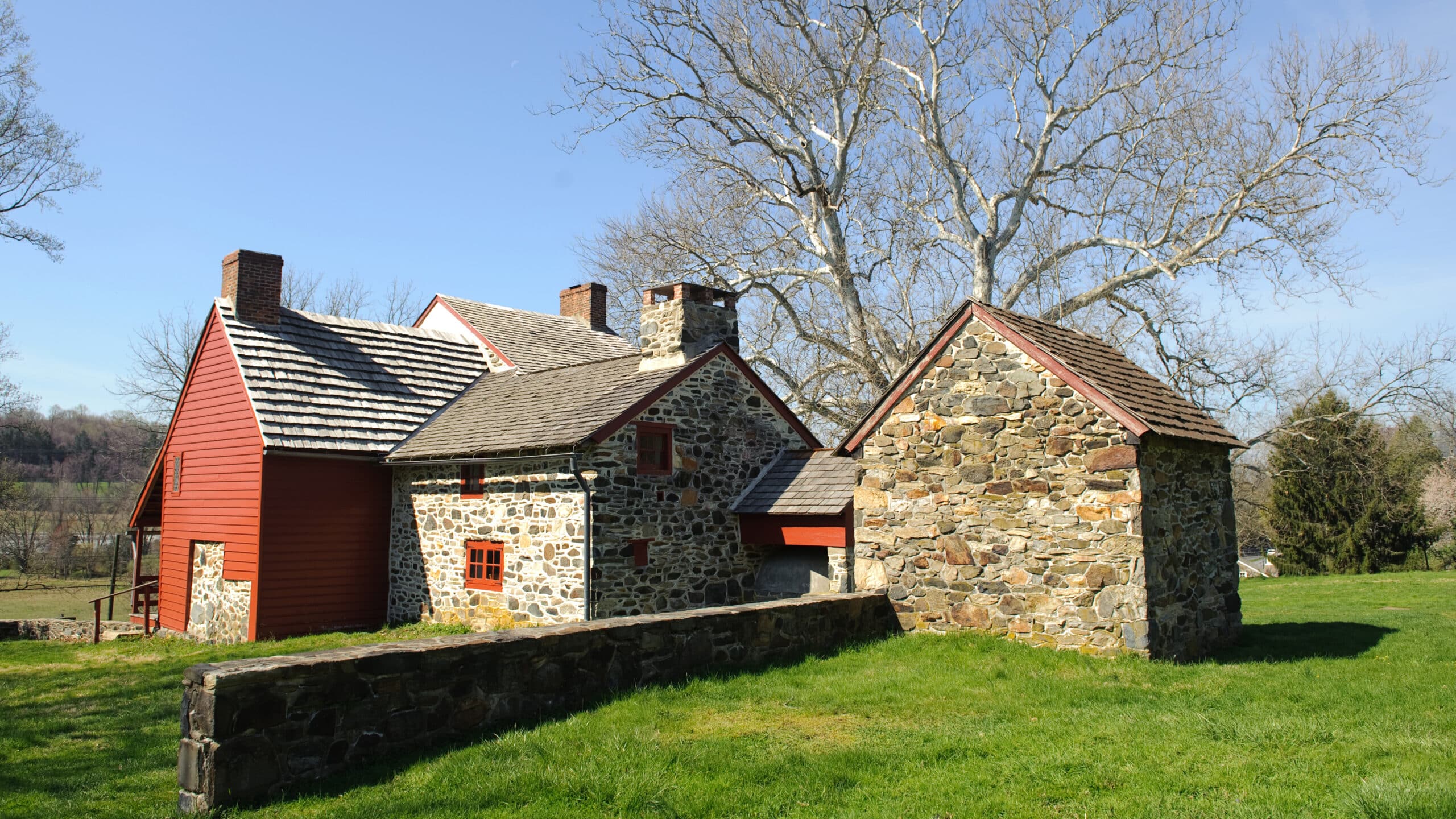
Brandywine Battlefield Park
Brandywine Battlefield Park commemorates one of the most pivotal encounters of the American Revolution: the Battle of Brandywine, fought on September 11, 1777. This engagement was the largest single-day battle of the war, with nearly 30,000 soldiers on the field. George Washington’s Continental Army tried to block British forces under General Sir William Howe as they advanced toward Philadelphia, the American seat of government at the time. Despite a determined defense, Washington’s troops were outmaneuvered and forced to retreat, allowing the British to occupy Philadelphia shortly afterward — a major strategic event in the Revolution.
Though the full battlefield once stretched over roughly 35,000 acres across Chester and Delaware counties, today’s preserved portion is about 50–52 acres near Chadds Ford. It includes lands central to Washington’s Continental encampment in the days leading up to the battle.
Historic buildings on the site include:
- The Benjamin Ring House — used as Washington’s headquarters prior to and during the battle.
- Gideon Gilpin House — another preserved structure associated with the battle period.
Because much of the broader battlefield has been lost to development, the park’s preserved acreage and interpretive efforts provide vital insight into the Revolutionary era and battlefield life.
Visitor Experience
Brandywine Battlefield Park is located at 1491 Baltimore Pike, Chadds Ford, PA 19317, about 30 minutes southwest of Philadelphia.
Visitors can enjoy a range of attractions and activities:
- Visitor Center & Museum: Exhibits tell the story of the 1777 battle, colonial life, and military strategy. Orientation films offer context for the day’s events.
- Historic House Tours: Tours (when available) of the Ring House and Gilpin House immerse guests in the period’s living spaces.
- Self-Guided Grounds Exploration: The park’s open landscape and marked trails allow visitors to walk through the fields where troops once camped and fought.
- Programs & Events: Educational programming, guided tours, living history demonstrations, and seasonal events like summer history camps engage visitors of all ages.
Most of the battlefield grounds are open for free exploration, while admission is typically charged for indoor exhibits, films, and house tours.