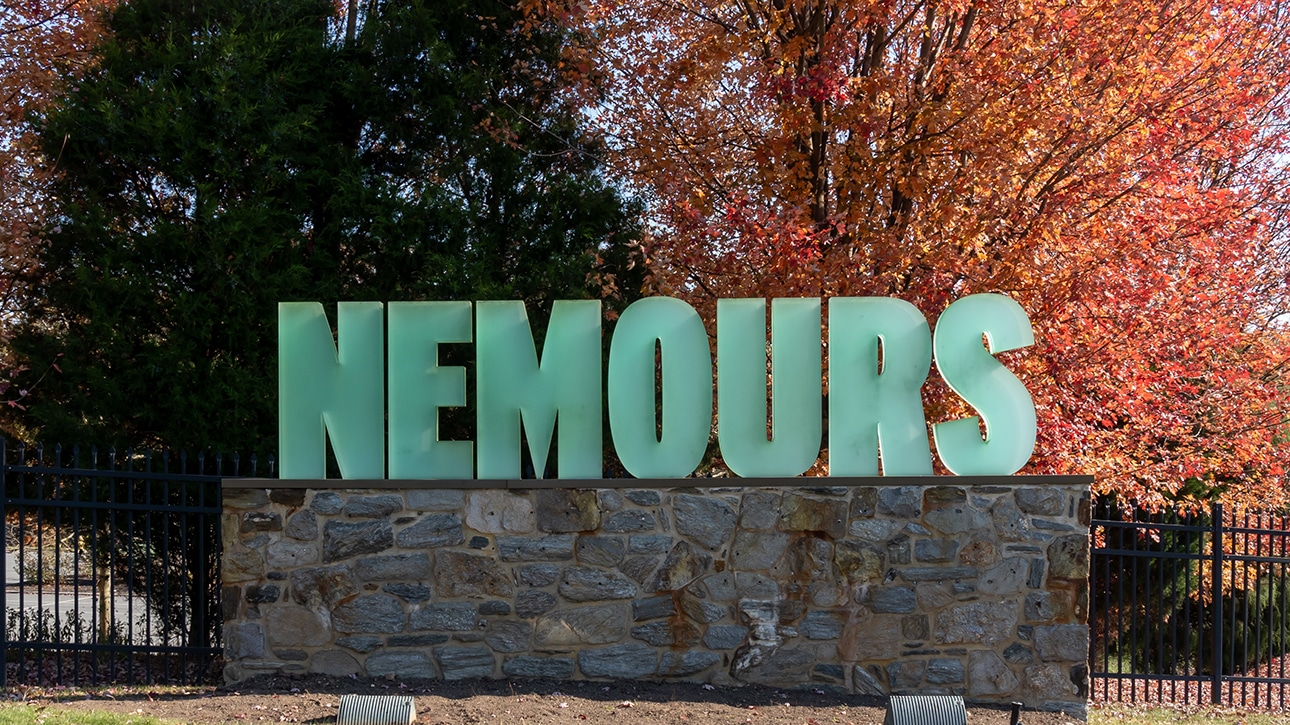
Nemours Estate
Nemours Estate is one of the grandest examples of French-inspired architecture and formal gardens in the United States — and one of Wilmington’s most striking historic landmarks. Built between 1909 and 1910, the estate was created by Alfred I. du Pont, a prominent member of the du Pont family.
He didn’t build it as a public attraction. He built it as a deeply personal gift.
Why It’s Called “Nemours”
The name “Nemours” comes from Nemours, France, the ancestral homeland of the du Pont family. The family originally took the name “du Pont de Nemours,” meaning “from the bridge at Nemours.”
The American industrial dynasty kept that French connection alive through names, architecture, and cultural influence. Naming the estate “Nemours” reinforced both heritage and status — it was a statement of identity.
And yes, that makes Nemours Estate a French echo planted in Delaware soil.
A Gift Built in Stone and Marble
Alfred I. du Pont constructed Nemours as a wedding gift for his second wife, Alicia. The 105-room mansion was loosely modeled after 18th-century French châteaux, particularly those near Versailles.
The design featured:
- Formal axial symmetry
- Limestone façade
- Imported European furnishings
- Ornate decorative interiors
- Sweeping French gardens
It was completed around 1910 and sits adjacent to what later became Nemours Children’s Hospital.
The Gardens: The Real Showstopper
Many visitors are surprised to learn that Nemours Estate’s formal gardens are among the largest French-style gardens in North America.
The landscape design includes:
- 157 acres total property
- Nearly 300 acres originally part of the estate
- Reflecting pools
- Colonnades
- Sculptures
- A Temple of Love pavilion
- Formal parterres
The layout draws inspiration from the gardens at Versailles, emphasizing long sightlines, symmetry, and grand perspective.
If Hagley whispers industry, Nemours announces aristocracy.
After Alfred I. du Pont
Alfred died in 1935. His estate became the foundation for the Nemours Foundation, which today operates Nemours Children’s Health facilities.
The estate itself eventually opened to the public in 2008 following extensive restoration. It is now managed in partnership with the Nemours Estate and the Nemours Foundation.
Architectural Highlights
Inside the mansion, you’ll find:
- Rococo and Louis XV–inspired interiors
- Imported French boiserie paneling
- Gilded mirrors
- Hand-painted ceilings
- Grand staircase
- Elaborate conservatory
Alfred I. du Pont reportedly spared no expense. It was designed to rival elite European estates.
For Wilmington, that meant a chateau-level flex.
Why Nemours Matters Locally
Nemours represents:
- The du Pont family’s wealth during the early 20th century
- The blending of American industrial success with European refinement
- A rare intact French formal estate in the U.S.
- The philanthropic legacy that helped fund children’s healthcare
In contrast to nearby Hagley — rooted in gunpowder and early American industry — Nemours reflects the next generation: wealth turned toward elegance, design, and philanthropy.
A Few Lesser-Known Facts
• The mansion contains more than 70 rooms regularly shown to the public
• The estate includes the largest collection of Louis XVI–style furniture in the United States
• The gardens were restored using early 20th-century photographs
• The Temple of Love is modeled after one at Versailles