Boris Yeltsin’s Eye-Opening Visit To a Texas Supermarket in 1989
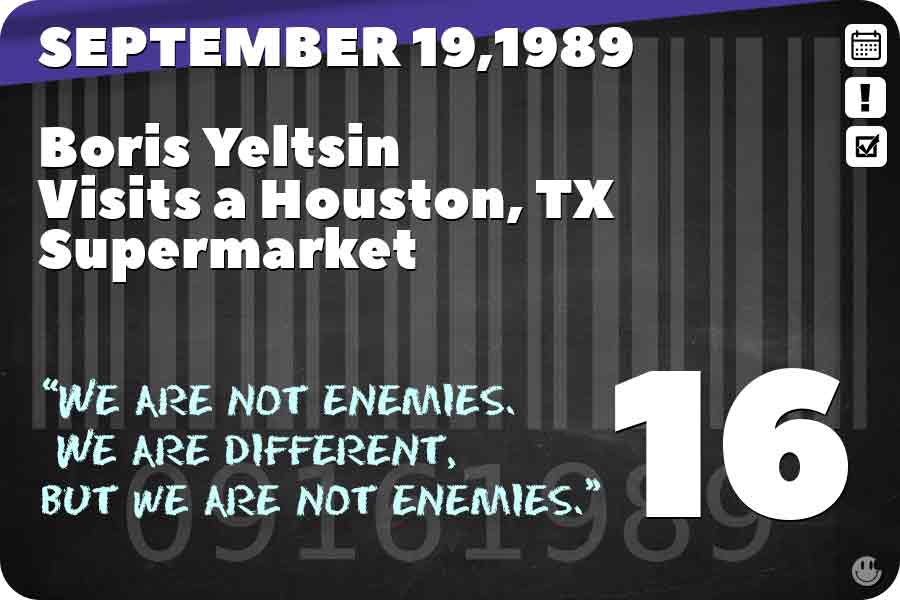
Boris Yeltsin, during his visit to the United States in 1989 as the Chairman of the Presidium of the Supreme Soviet of the Russian SFSR. On September 16, 1989, visited a supermarket in Houston, Texas.
The main reason for this visit was to see firsthand the abundance and variety of consumer goods available in the United States and to learn about American-style retailing and distribution methods, as he was trying to implement market reform in Russia.
The visit was considered a symbol of the new openness and democracy in the Soviet Union and Yeltsin’s desire to modernize the Soviet economy and improve the standard of living of the Russian people. This visit is also considered as a turning point in the history of US-Russia relations as it shows the willingness of the Soviet leader to learn from the West and to reform the Soviet economy.
Economic “Eye-Opener”
He reportedly said that the visit was “an eye-opener” for him, and that the abundance and variety of consumer goods available in the United States struck him. He also said that the supermarket’s efficient system of stocking and selling goods, and its use of barcode scanners and computerized inventory systems, was something the Soviet Union could learn from.
In particular, Yeltsin said that the visit made him realize that the Soviet Union needed to change the way it approached economic issues and that a market-oriented approach was necessary to improve the standard of living of the Soviet people.
“I saw with my own eyes that the people in the United States are living better than we are. They have more goods, more food, more everything. We must change that.”
Yeltsin also spoke about the importance of the visit in terms of US-Russia relations: “I want to tell the American people that I saw with my own eyes the kind of life they have, and I want to say that we are not enemies. We are not enemies. We are different, but we are not enemies.”
These statements were widely reported in the Soviet media and helped to raise public awareness and support for the economic reforms that Yeltsin was proposing. His visit to the supermarket was seen as a turning point in the history of the Soviet Union, as it marked the beginning of a new era of openness and engagement with the West, helping bring an end to The Cold War (March 12, 1947 – December 26, 1991)
After his visit to the supermarket in Houston, Texas, Boris Yeltsin returned to the Soviet Union and continued to push for market reform and economic modernization. He advocated for introducing market-oriented policies and creating a market economy in the Soviet Union, which was in stark contrast to the central planning and state control that had characterized the Soviet economy for decades.
Yeltsin’s visit to the United States, specifically the supermarket, symbolized the changes he was trying to implement in the Soviet Union. The abundance of consumer goods and the efficiency of the American-style retail system was in stark contrast to the shortages and inefficiencies of the Soviet economy. His visit was widely covered in the Soviet media and helped to raise public awareness and support for the economic reforms he was proposing.
Yeltsin’s efforts to implement market reform were met with resistance from the Soviet establishment, and the economic reform process was slow and difficult. However, Yeltsin’s visit to the United States was seen as a turning point in the history of the Soviet Union, as it marked the beginning of a new era of openness and engagement with the West.
In 1991, Yeltsin became the first president of the Russian Federation, and his government continued to implement market-oriented economic policies, which led to a significant transformation of the Russian economy. However, the transition to a market economy was challenging, and it took several years for the Russian economy to stabilize.
Just a little illustration of how the navy had changed during my life. I was attached to the USS James Monroe SSBN-622, a ballistic missile submarine in 1985. We had just returned from our three month deployment from Holy Loch, Scotland, to transit to Charleston, South Carolina. I was looking forward to the next three months off, back in the states. When I returned home, however, I received a call from my detailer (the person who arranges our transfers) that I was to report to the USS Nathan Hale (SSBN-623) back in Holy Loch, Scotland in one week. The reason being that the Auxiliary gang chief had just been busted for homosexual activities and was being discharged from the navy. That was terrible news, not simply because I had just returned from patrol, but because the Monroe would be operating out of Charleston. So, I would report on board the Hale under questionable circumstances and have to adjust to an entirely new crew of guys. In turn, those same guys would have to put their trust into an entirely new supervisor.
Luckily, I was married to a wonderful woman then who understood what military commitment meant. She gave me the emotional support I needed to face another patrol so soon. What we “boomers” called back to back patrols. In a six month period, I had one week at home.
Being a Black CPO probably threw more doubts into the mix, but we quickly gelled into an efficient, capable, working unit.
When I reported to the Clay, they were having problems with one of the periscopes and no one could figure out the problem in the hydraulic system. I had had a similar problem on the Monroe and gave directions on how to fix it. Everyone was doubtful, including me. If it didn’t work, my reputation as a knowledgeable leader would be crap. The fix worked and suddenly I went from being a questionable replacement into a hero. Everything worked out very well from that time on.
I learned each man’s strengths and weaknesses and used both to manage the fifteen men team. When other CPOs were micro managing their men, I let my team go, just stayed accessible enough in case they had a problem. Instead of direct supervision, I gave each a chance to excel or fail, they all excelled and because of our teamwork, we actually accomplished many repairs in record time.
I made 31 FBM patrols in my career, at one time next to the most for an individual. There was one person ahead of me and as long as he stayed in the navy, I could never exceed his record. The last edition of the “Fractured Funnies”, my underground newspaper, was completed on the Nathan Hale.
This picture is the James Monroe flying her homecoming pennant, meaning that she has made her last overseas refit period and would be operating out of the United States.
Back in 1977, I was a single young E6 in the navy, stationed on board the USS Von Steuben, a ballistic missile submarine home ported in Charleston, South Carolina. At the time, I was probably the oldest and most senior guy living in the enlisted barracks, but also probably the wealthiest, drawing my regular base pay along with submarine pay, sea pay and Basic Allowance for Quarters. My financial resources allowed me to live a lifestyle that many hardworking guys would probably envy. I bought a new car every two years, even traded a car in because it had two flat tires. My clothing budget was more than some sailors entire paychecks. And life was good.
There were trips home during the off crew periods, even a trip to Paradise Island in the Bahamas and a week at the Playboy club in Jamaica. Needless to say, I was one happy go lucky bubblehead.
Well, life was almost good.. Living in the barracks had benefits and drawbacks. One major benefit was that it was rent free. One major drawback was having to pack up all your personal effects in boxes and store them in the barracks storeroom for the three months that you were deployed. Other than that, when you didn’t want the hassle of explaining to a mad female why you hadn’t called her in a week, you simply didn’t answer the one public phone and you knew she couldn’t get into the barracks to confront you.
I had a rare edition of the Ford Mustang. Rare because I ordered it with every possible option during a trip back to Detroit. When I took it into the local Ford dealership here in Charleston, the salespeople all went goo goo eyes over it.
I was in the barracks one weekend when I got a phone call from a young lady I had cut off relations with. “How do you like what I did to your car?”, she said. “”What?”, I replied. “Well, I hope you like your new paint job”. That didn’t make sense since I knew my car was safely parked in the barracks parking lot right here on the base. Turned out, there was a car almost similar to mine that she had seen parked in front of another girl’s house and she thought she’d get revenge.
I got cursed out in the base exchange in front of several navy wives and their kids by another girl I had dated, a young Filipino sailor. Most of the women, or girls, I was dating then were real losers, some had psychological problems, some were just unemployed, but I was still having a great time, partying with my buddies and patronizing the local night spots. I was having such a great time that the wives of some of my married friends commenced a covert campaign to find me a “suitable” mate. Well, most of them were real losers too. Either unemployed or uninteresting.
Then, one day, one of my shipmates, we called him John John, invited me over to his house for dinner and I got to meet his wife Mary. Mary was a nurse at the old Charleston County hospital and had a friend that she wanted to introduce me to. “Sure”, I said, from her description, I thought well, she don’t sound too bad, why not just give it a shot.
The Von Steuben was having a family picnic in the base picnic area that weekend with the obligatory baseball game in the plan and we agreed that I could meet her there.
On the day of the picnic, I arrived kind of early to pick a spot that would provide for a stealthy escape should the blind date not look especially appealing. I did that quite often with my cousin who was stationed on another submarine, often leaving him with someone I had just dumped.. After completing my second strike out to the jeers of my shipmates, I looked over and saw someone had parked their car almost directly behind mine. There would be no “stealthy” escape and that’s when Mary introduced me to Gwen. Unknowingly, She had parked her little Honda right behind my Mustang.
She was about the size I preferred. and really very pretty, but the first two things I noticed about her was one, she had a terrific smile. And, two, she wasn’t wearing a bra. Despite being a gentleman, the lecherous old submarine sailor in my head always noticed things like that.
After the picnic disbanded, we agreed to meet up at John John’s house where we had a few drinks, did a little bit of slow dancing, and had several more drinks. Looking back, I could see that this was all part of a plan.
I was getting used to this little girl as we seemed to be a fairly good match and she was intelligent, much unlike the girls I had been dating. She was also a registered nurse and worked in the old Charleston County Hospital emergency room. So, not only being a professional working person, she was also used to making those quick, life saving decisions like we submariners are trained to make. At least that’s what Big Me was thinking. Little Me, however was still focused on her breasts. As sweet as she was, Gwen was also into the liberated woman thing, which I guessed kind of explained her decision to go braless. With my mind still focused in that direction and holding her close to me as we danced, it wasn’t long before my uncouth submarine character suddenly engaged my mouth before I could think properly. Looking down at her breasts, I said “nice t*ts” and regretted it as soon as the words left my mouth. Her reply was “well, you just keep your f—ing hands off of them”. That was it. I was hooked.
I designed the engagement ring and had it made by a local jeweler, so it would be one of a kind, although I don’t remember when I actually made the proposal. And thus started a relationship that evolved into a marriage that would last forty one years, through twenty six deterrent patrols and one out of state transfer.
Fredric Durrette served one tour in Viet Nam, retired as E8 in the navy submarine service after 23 years. Major hobbies are collecting old stuff from the 20s and restoring old racing bicycles. Worked as a commercial photographer at JL Hudsons in Detroit and continue photography as a hobby. Love Sade, sixties soul, seventies rock, and all jazz. Attended Woodstock in 69! http://snakesafe.jalbum.net/
It may be hard for anyone living in the rich commercialism of today to understand the climate of the late sixties and early seventies. You could make a good amount of cash in freelance photography. Poster art was big and companies were looking for new poster art material as well as music companies looking for record album cover material. And you had to have a basic knowledge of photography to use a film camera.
Music concerts were relatively cheap and security at music concerts was pretty basic. So basic that once I even used my counterfeiting skills to produce a fake New York Times press badge, complete with the New York Times seal trademark. I used that badge to get me into a couple of Rolling Stones concerts, a James Brown concert, and several other venues. Even if the concert was affordable, the press pass allowed me backstage access. Then one day I ran into a real New York Times reporter who had just retired and was living in Detroit. The press badge was retired.
Veterans from the war in Vietnam were returning at a record rate and government money was flowing like maple syrup over buttermilk pancakes. Not only in the area of education under the GI bill, but also in grants and small business loans. A White Vietnam vet could get one amount to start a small business, but that amount would quadruple if he partnered with a Black Vietnam veteran.
That’s one reason I was in such demand. I was a veteran, I was Black, I spoke good English and was fairly well educated as well as being congenial. I had already established myself as being a decent photographer when I was hired by the J. L. Hudson company as their first Black photographer in heir hundred year history. But besides that, I was a pretty good artist also who picked up a few jobs doing pastel portraits at the state fair. I would get proposals that only wanted use of my name, but I saw that as being unethical and maybe illegal. That’s when I met Jimmy Samuels.
Jimmy got the idea to open up a little storefront art gallery on Woodward Avenue, and my friend Bill Riser and I jumped right in and we started the “Gallery of Imo”. This was called an opportunity for Blacks in the neighborhood to see real Black artists at work and to purchase good artwork and paintings done by Black artists. The gallery was made possible with a single government grant. Jimmy was a sweet talker and a con artist who should have been an used car salesman. Barrack Obama reminded me of old Jimmy. Jimmy even brought his girlfriend into the gallery as our book keeper, but she spent more time partying with Jimmy than keeping our books. I sold several paintings while at the gallery and I sometimes wonder where they are now.
In my personal life, I was going to college under the G. I. Bill and receiving a extra stipend for housing since I had a dependent (my daughter Angela), but I lived at home with my mom and didn’t need to pay rent. That, with the paycheck from Hudson’s was more than adequate to provide for a pretty decent lifestyle, even the purchase of a bright red 1965 Chevrolet Corvair Monza and a Hasselblad camera.
F. Lee Bailey, the famous lawyer and attorney had created his program of “New Detroit”, part of which was to take the fine arts into the inner city neighborhoods through a program he financed called “Metro Arts”. The idea being to gather promising young Black artists, musicians, and dancers, train them and have them give performances at the very popular Cobo Hall Arena.
Built in 1960, Cobo became a must-stop venue for the biggest and wildest rock-and-roll bands of the ’60s and ’70s; not to mention the temporary home for the Detroit Pistons. Black Sabbath, Jimi Hendrix, the Rolling Stones and Bruce Springsteen all played shows at the arena. Thin Lizzy and Queen performed in 1977 for $7.50 a seat. Cobo Arena was the setting for one of The Doors’ best complete concert performance recording on May 8, 1970. KISS played Cobo numerous times in the 1970s, including a sold-out three-night stand in 1976.
As part of his New Detroit program, Jimmy Samuels, Bill Riser and I were successful in obtaining a grant from Mr. Bailey to purchase a defunct and abandoned motel off of Woodward for the purpose of setting up an artist commune. Bailey cut the check for two hundred and fifty thousand dollars and the money was deposited into a three party bank account. That would require all three signatures to withdraw any funds from that account.
But that’s when things began to go sour. The director of the Metro Arts program who was hired because she lived in the inner city, moved into the prestigious apartments of Lafayette Towers and bought a brand new Cadillac. The music director she had hired with six figure salary who was supposed to be so great, turned out to not have a degree in music or any degree at all. Metro Arts was in trouble. Then, our friend Jimmy Samuels figured out he could transfer money from our account without needing the other signatures. The check to pay for the motel bounced and Jimmy was nowhere to be found. The gallery, even though successful, was abandoned soon after.
It was under those circumstances that I met Bill Hanson, another veteran and photographer, who with several other veterans had set up a small studio over an abandoned auto repair shop they called “Cinema 76″. The seventy six was in reference to the American revolution. Bill and his cohorts were more into cinematography and thought I could be useful in taking their still shots, plus being Black, I could get them more federal grant money.
Cinema 76 was successful in getting a grant, not from the U. S. Government, but from the Canadian Arts Council. The Canadian Arts Council was even more liberal in their grants than our government. Our first big professional movie would be exploring the deforestation of the Canadian forests. To narrate the movie, it was decided to use an old actor by the name of “Iron Eyes Cody”. Now Cody wasn’t a real Native American, he was really Italian, but he had played so many Indian parts in the movies that he thought he was. Cody was perfect in comparing the Native stewardship of the environment with that of the White man with scenes of the lumber industry destruction and deforestation ecological ruin. The closing scenes in the movie were of Cody walking out of the forest and standing by a river with trash and debris floating by. There would be a close up as a tear rolled down his cheek.
The movie was a success and actually aired on Canadian television. Around this time, an American group had formed that called themselves “Keep America Beautiful”. They saw our film and offered to purchase it. I wasn’t privy to whatever deal resulted and I won’t attempt to even speculate. The got the film and Cinema 76 ceased to exist. When the Keep America Beautiful folks aired their public service commercial a few months later, our film had been cut and altered to a thirty second infomercial called the “Crying Indian”.
I never saw the other fellows after that, but Chuck and I remained friends for quite a while. Dinners at Chuck’s house were always interesting. He lived in an all White neighborhood, so my visits to his house usually brought out the bevy of curious neighbors, probably afraid that I was moving in. Chuck had the honor of being the only person I know whose cat was deemed a neighborhood terror. He was all black and evidently possessed by some demonic spirit. Chuck would warn, “don’t pet the cat” on every visit. The cat would jump up on the dinner table while we were dining and Chuck would say “don’t pet the cat”. His cat had a nasty habit of lurking in the bushes and attacking whoever happened to be passing by. One swipe of his paw on anyone’s bare leg and he would scurry away before any attempt to catch him. Neighborhood kids were hi favorite targets. Chuck’s cat was s notorious that he had been cited because of it and the local newspaper had even written an article.
Chuck ultimately received a grant to document the lives of a wolf pack that required him and his wife to actually live with an isolated pack of wolves on a Michigan Island. I don’t think Chuck and his ever became as famous as the Jim and Jamie Dutcher, he wasn’t financed by National Geographic, but he was definitely a pioneer.
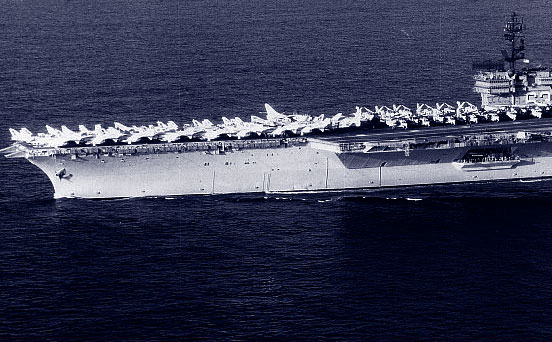
The USS Kitty Hawk riot was the first mass mutiny in the history of the U. S. Navy and were it not for military law, the incident might be passed off as a demonstration.
Following the civil rights demonstrations of the 60s, White people went over board in trying to erase any perceived appearance of racism. When I finished basic training and Engineman A school in 1962 and arrived at the submarine base in New London, Connecticut, I had not yet taken my naval career seriously and started hanging out with a group of young Black sailors who weren’t in the submarine program. It was a time when a Black sailor could get away with anything because everyone was so afraid of the race issue. Go AWOL?, no problem, just start jiving the supervisor. Didn’t finish your assigned tasks?, no problem, just say f—it!
This was also the time when we started protesting to make the Afro haircut a legal regulation style for Black sailors. The navy eagerly capitulated.
Senior White petty officers were sometimes complicit in that they were often afraid to discipline Black sailors for fear of being labeled as “racist”. This eventually led to a disintegration of military order and resentment from White sailors who were often punished for the same infractions. There would be groups of young Black sailors taking over the base recreation centers, barracks lounges, and enlisted clubs where they wouldn’t allow anything other than soul music to be played. Moreover, these young Blacks were mostly stuck in the service ratings because of their poor education and poor scoring on the enlistment exams. Their job performance left them little chance for advancement.
After almost flunking out of submarine school, I gave up hanging out as I could see no benefit to it. These guys were stuck in the same ghetto mindset that I had seen back in the hood in Detroit. I didn’t have to be “cool” to be cool. When I reported to my first submarine duty station, I had made up my mind that I wouldn’t approach my career with that racial chip on my shoulder.
White appeasement fueled by White guilt continued following the assassination of Martin Luther King in 1968 and well into the 1970s.
In 1972, the navy was rocked by a race riot on board the aircraft carrier USS Kitty Hawk.
This incident caused both ripples and over reaction by the navy. The navy created it’s own affirmative action program and ordered every sailor to attend classes on race. The only problem though, was that these classes were often facilitated by angry Black petty officers who were, in my opinion, racist themselves. The first several programs I attended, the facilitator would greet each attendee as they entered the class room with the Black power sign for Blacks and then telling each White sailor that they were “racists”.
Since racism was not a serious problem on submarines, we would bewilder the facilitators with our cavalier attitudes and eventually labeled the classes as “Watermelon U” or “Watermelon Universities”. The programs weren’t helping race relations, they were hurting it. I had a young fellow crew mate who was in tears because the facilitator had called him a racist.
Not only that, but the navy program ignored the other races and ethnic groups that were in the service. Hispanics, Asians, Muslims, etc.
I am starting to see the same old crap resurface again. No matter the inequities, you cannot pander to one group of people without causing a backlash in another. When you tell a White college applicant that he can’t get into college because of a “quota” system, it creates resentment. When a White police officer is afraid to arrest a Black felon because he’s afraid he’ll be videotaped, it creates resentment.
Even the demands for reparations are starting to resurface as well as meaningless laws being proposed. Why do we need a “hate crime” law if it’s only exercised in some cases, but not in others? Why do we need an “anti lynching law”, that also will only be used in certain circumstances and can only be applied once the action is done. An elderly White store owner is dragged out onto the street by a gang of Black thugs and beaten to death with baseball bats. But that’s not “lynching”.
After 300 years, we haven’t learned that you can’t eliminate racism with laws and legislation. Only good people meeting on a common ground can do that.
Oh well, I’ve been here before and it will all pass. There will still be those who blame their poor life decisions on race, there’ll still be those who preach hate and division, and there’ll still be politicians who use the subject of race for their own benefit and do nothing once they’re elected. We once thought the election of a Black man who promised to “heal” America would be the answer. Some even thought he could walk on water. What we found was that he was just another politician with his own agenda and goals.
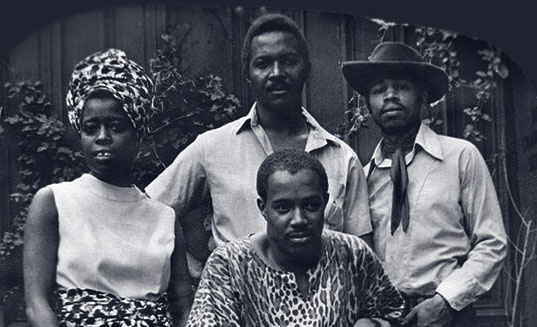
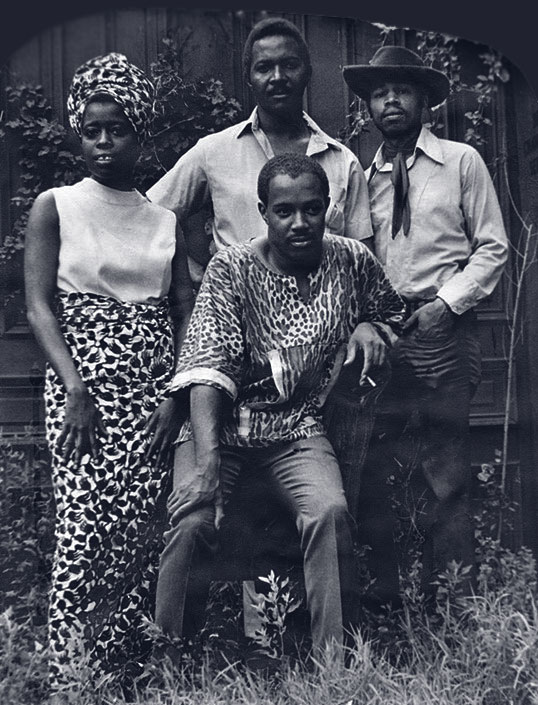
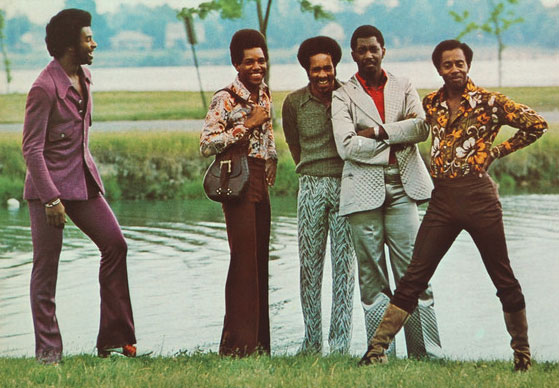
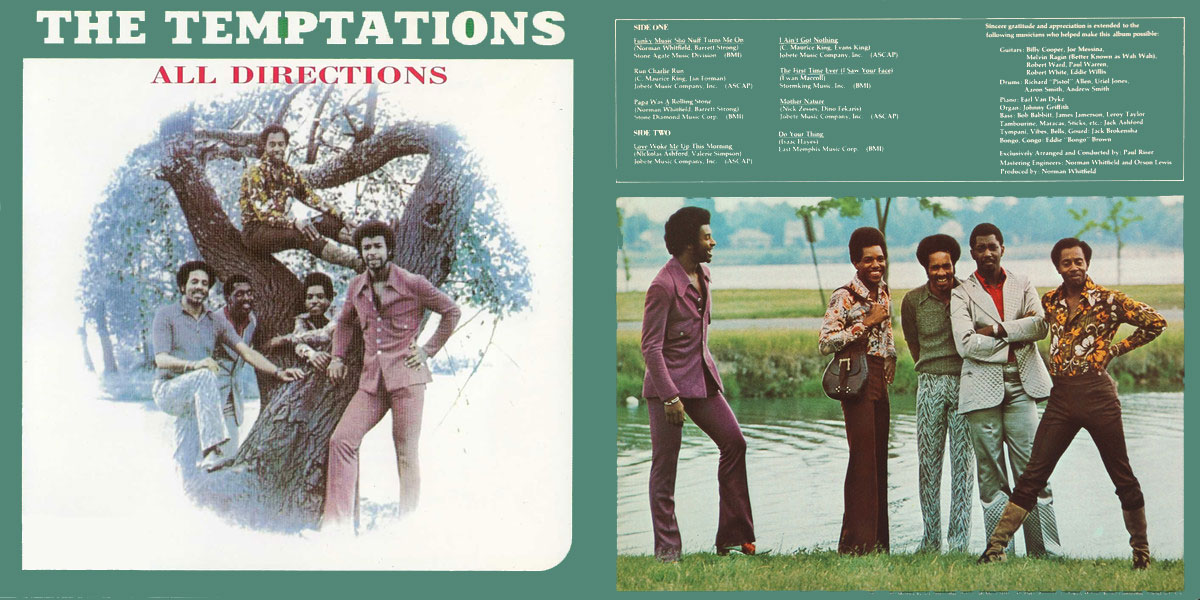
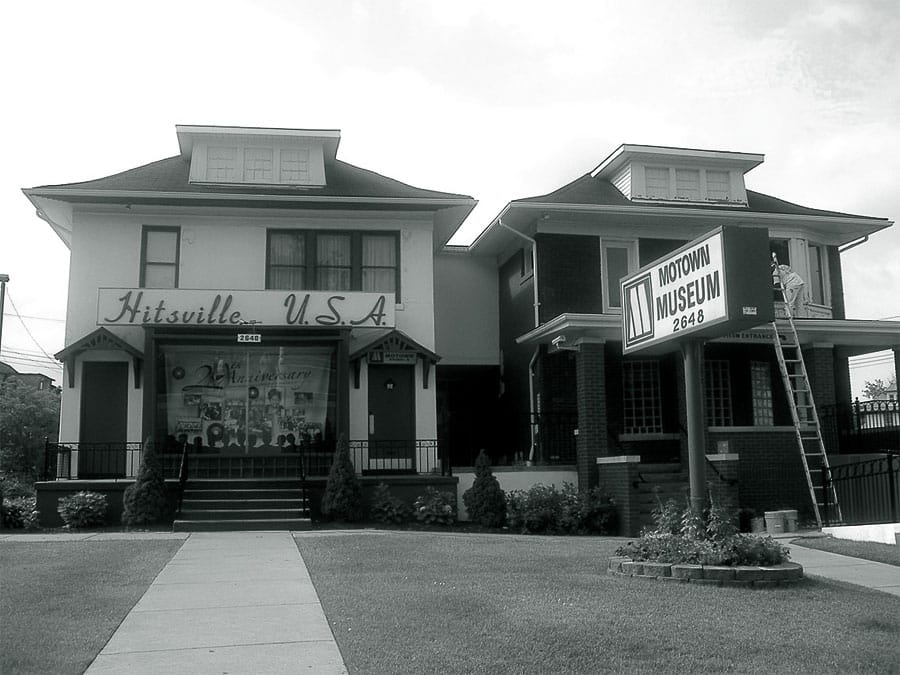
I was working as a photographer at the J. L. Hudson’s department store in Detroit back in the 70s. One day, I get a call from Motown saying that they have a new album scheduled to be released and would like for me to take the cover photos. I was already good friends with Bill Riser whose brother Paul did some arrangements for Motown and had even been to a party at Berry Gordy’s house. “Fine”, I said. “I’ll do it.”
Back then, getting exposure was sometimes more important that getting paid. I offered to do the job for $250, figured it would take about an hour or more to do it. Actually, the entire shoot lasted about a half hour.
The album was the Temptations’ “All Directions”. They said that they didn’t want a studio shot, so I recommended Belle Isle, figuring there would barely be just enough light when I got off from work.
So, we met at the park and in a rush due to the fading light, I took one full roll of 35mm color shots. Out of all the photos, two were selected for the album.
After about a month, I hadn’t received a check, so I called the Motown office. “Oh, it’s in accounting”, I was told. Another month went by and they said, “what, you haven’t been paid? We’ll look in to it”. Another month went by and still no check. I called again, getting a busy signal this time. After a week of busy signals, I find out that Motown had closed all of it’s Detroit recording studios and had moved to California.
So, to this day, I have not been paid by Motown for my work, but hey, it was worth the exposure…
When I applied for the job at Charleston County Park and Recreation, I was initially hired as the mechanic because of my diesel engine training and experience in the navy. The emphasis is on “diesel”. I knew almost nothing about gasoline engines. But, because of that, it was assumed that I knew how to drive a stick shift or manual transmission. I didn’t.
Then, one day, I was directed to drive over to the headquarters building to pick up some mail and drop a package off at the post office. I started walking over to my car since the only company vehicle was a beat up old Chevy pick up we called the “grey goose”. The grey goose was so old that the gear diagrams had long since disappeared. But there’s a point especially with males that the ego takes over and your mouth just won’t form the sentence “I don’t know how”.
I did know a little about clutches from having driven my grand father’s old farm tractor though, so maybe I can just fake it. Luckily the gears in the old grey goose were quite forgiving and I made the trip from our maintenance compound to the headquarters office quite easily. After leaving headquarters, I made it to the James Island post office parking lot also very easily, even managing an intersection stop sign.
The real crisis began leaving the post office. There was an intersection with a stop light and a slight incline. Now it was getting critical, trying to shift gears to move ahead and at the exact moment the light turned green, a car pulls up right behind me. Every time I pressed the clutch, shifted gears and tried to move forward, the truck would move backwards. Finally, the guy behind me decided it was safer to just pull around me. I turned the ignition off, put on my blinkers as though the truck had simply broken down. Then two guys passing by helped me push the truck back into the parking lot.
After several minutes sitting in the parking lot, I just said to heck with it, cranked up the old goose and successfully navigated through Folly Road traffic back to the maintenance compound.
I was so proud of my success, that I even started driving my wife’s little manual trans Honda Civic.
It was like that when I joined the navy. I had jumped off the piers into the Detroit River with my buddies as a kid, but I couldn’t swim a lick. However, I always made sure I was close enough to the pier to be able to grad a hand hold, so I thought and worst case scenario, one of my buddies would come to my rescue. The Detroit River is well known for it’s current.
People ask, if you can’t swim, why join the navy? Well, I wanted to ride submarines and how often would you need to swim if you’re underwater? So, I went through boot camp, taking the mandatory swim classes and after several exhausted efforts of being thrown into the deep part of the pool, I managed to grab the trainer’s rescue pole enough times that I passed the swim requirement.
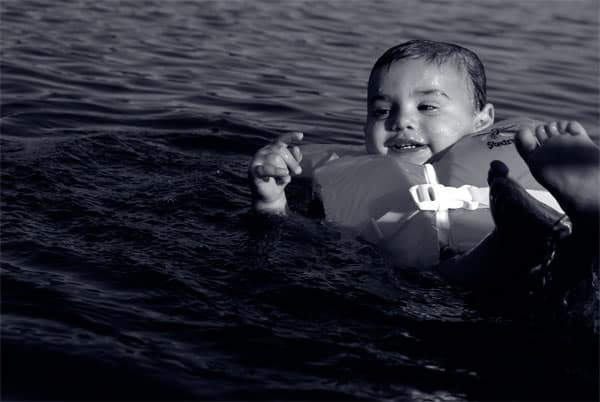
It would be several years later on a gunboat in Vietnam that I finally really learned to swim. It was a tradition back in the day was that when you made rank or rate as we called it, you got thrown over the side. I was advanced from E4 to E5. When the guys gathered for the traditional toss, I gave them quite a chase until they finally got me cornered and even then, I put up a fight. Telling them I couldn’t swim seemed to make them even more eager to give Durrette the ceremonial toss. After begging and pleading, I got the bright idea that if they let me have a life jacket, I could go through with it willingly.
One of the guys goes down into the cabin and comes out with a life jacket. Only at that time, the navy was still using the inflatable life jackets to conserve space. Each jacket was equipped with a CO2 cartridge and a lanyard you pulled to inflate the jacket. It also had an inflation tube so you could manually blow it up with your lungs if the CO2 didn’t work.
So, feeling confident that this wasn’t my day to die, I offered little resistance and it was one, two, three and off I went. As soon a I hit the water, I grabbed the lanyard and gave it a jerk… nothing.
Then as my head started going under, I grabbed the manual inflation tube and started blowing as hard as I could. Sinking for the second time, I could see the bubbles coming from the jacket. Calling on my boot camp swim training, I managed to get back to the boat and the guys pulled me back up on deck, laughing their butts off. OE Wells had removed the CO2 cartridge and punched holes in the jacket. I became a fairly decent swimmer after that
WABX Free Concerts on Sundays on the WSU Campus Tartar Field
After my first enlistment expired, I moved back to Detroit and enrolled in college at the Wayne State University. After first trying to get into the medical school, I decided to major in fine art, but later realizing where the money was, switched to commercial photography. Under the GI bill, I actually made money going to school since I lived with my mom and didn’t have to pay for housing.
Wayne State University (WSU) is an American public research university and the third largest university in the state of Michigan. The WSU main campus comprises 195 acres linking more than 100 education and research buildings. All in the center of the city. In fact, it wasn’t unusual to see the Woodward Avenue street hookers being chased across our campus by the police.
This was the 1970s, a year after Woodstock, during the Vietnam war, and only three years after the street riots. Being a veteran, there was some resentment from my classmates at first, but that disappeared when they realized that I wasn’t the typical “gung ho” military guy. I participated in anti war protests, supported the Black Panther Party, and listened to “rock” music. In fact, I could probably be heard blocks away from the campus with Jethro Tull’s Aqualung blaring from the four big speakers in my 1965 red Corvair Monza convertible. I had an Afro, wore bell bottom hip hugging trousers, and the latest Carnaby Street fashions from England. I didn’t take drugs or even smoke grass, but I knew all about it. Having rolled cigarettes as a kid, I could roll a mean joint.
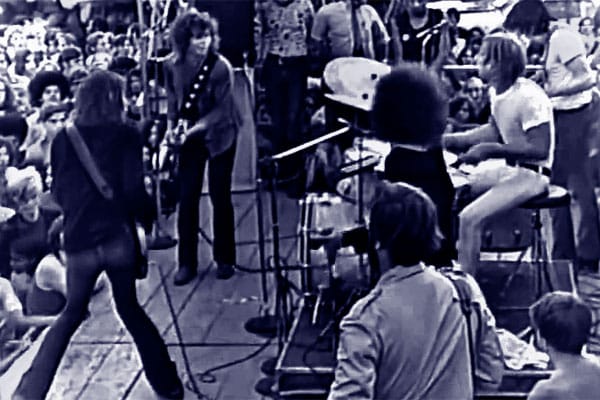
One thing that stood out while attending college were the “free” Sunday concerts on the WSU campus Tartar Field by WABX in the late 1960s and early 1970s featuring musicians like Chuck & Joni Mitchell, Alice Cooper, MC5, The Stooges, Savage Grace, Ted Nugent, Grand Funk Railroad, SRC, Stoney and Meatloaf, Rare Earth, Frigid Pink, and many others. There would be hundreds, maybe thousands of youngsters gathered on the grass, mostly students, but also some neighborhood folk. It wasn’t unusual for a girl to ask you over to her place for the night, or the guy sitting next to you to offer you a joint. No arguing, no fighting, no shootings. If you had transportation, you got burdened with taking people home or being invited to parties.
On one such night, I ended up in the all White neighborhood of GrosseIle, about 25 miles from Detroit and spent the night there with a friend. He told me later that his neighbors were “shocked” to see a Black person in their neighborhood.
During one Rare Earth concert, for example, a guy asked me to save his spot in the grass and left. He returned a few minutes later with two cases of wine that he simply passed out to the audience. He owned a liquor store just down the street.
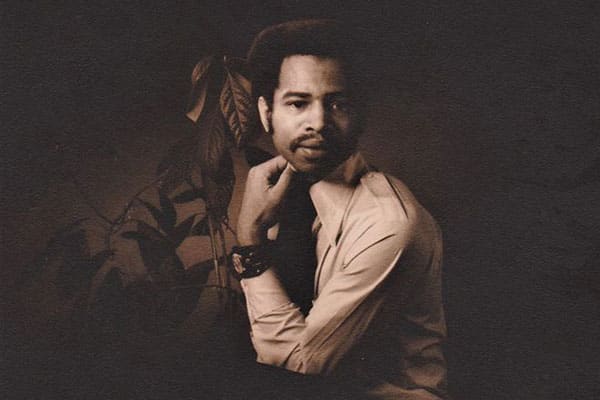
Fredric Durrette served one tour in Vietnam, retired as E8 in the navy submarine service after 23 years. Major hobbies are collecting old stuff from the 20s and restoring old racing bicycles. Worked as a commercial photographer at JL Hudsons in Detroit and continue photography as a hobby. Love Sade, sixties soul, seventies rock, and all jazz. Attended Woodstock in 69! http://snakesafe.jalbum.net/
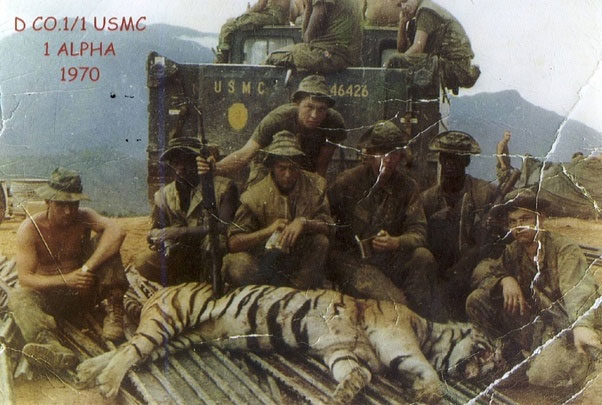
I was in Vietnam for only a year during the war and riding a river patrol boat, never saw a real tiger, but I did pick up tiger stories from some of the marine units we worked with. The NVA and Viet Cong were bad enough, but these poor jarheads also had to contend with man eating tigers.
While we all know that Vietnam was a very unusual war, I doubt that many people would believe that Vietnam’s tiger population was a beneficiary. But during the Vietnam wars, it was claimed that tiger populations and tiger attacks increased dramatically due to the many unburied bodies. After all, tigers are known scavengers that feed at old kills, whether their own or not. There were also many tiger sightings by U.S. troops.
One of the most unusual tiger stories to arise was the case of the 3rd Recon Battalion Marine who survived a tiger attack while on patrol in Quang Tri Province in 1968, near where a Marine had allegedly been killed by a tiger in November 1967. The 400 pound man-eating tiger attacked swiftly and silently, and the first warning the six-man patrol had was screaming from one of the four sleeping Marines. Startled while feeding on the man by the other Marines, the tiger started dragging its prey away before it was killed. The lucky victim was medevaced suffering lacerations and bites on the neck.
In another incident in 1969, a Marine in an ambush position in dense bush felt a tug on his leg and saw a large shape in the black night. After radioing in movement around them and despite being 100% alert, the tiger stealthily returned and grabbed another patrol member before being blown away by five excited Marines. Their buddy was released just slightly the worse for wear. According to SOP, they relocated their ambush, taking the dead 400 pound tiger with them so that they could extract it the next day. Alas, the monsoon meant that choppers couldn’t get up that day, so their focus shifted to preserving the corpse before it started rotting. Fortunately, one of the fellows in the rear radioed that tannic acid, used for curing hides, was contained in urine. The next day, a very smelly carcass made it back to base still in shape for photographs.
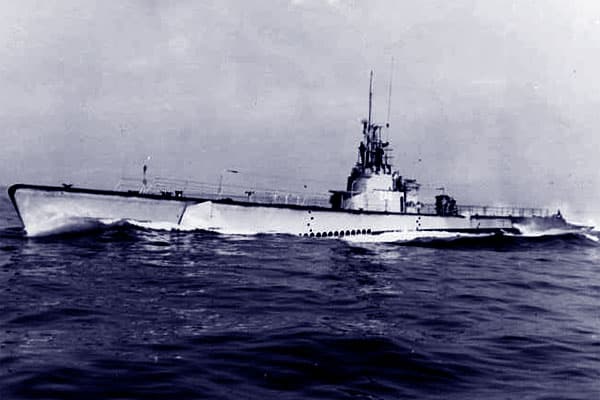
So much of our diesel submarine history will soon be edited down to data, numbers, and brief descriptions on Wikipedia. But the old converted World War Two fleet submarines were much more than that. Obsolete by todays standards, they were the first line of defense in the beginning of the cold war. Almost all were converted to GUPPY ONE (Greater Underwater Propulsion Power Program) class and several were converted to GUPPY TWO and GUPPY THREE class. The main external differences were in the sail and bow configurations. Guppy submarines served as the test vehicles for a wide array of sonar equipment development and stealth technology. Almost all of the old fleet boats had a colorful war time history.
Life on the old boats was spartan. We had two showers, one for the officers and one for the crew. However, the showers were normally filled with provisions like eggs and fresh vegetables when going out to sea. and we carried a limited amount of fresh water for showers or laundry. Yes, even the one washing machine was used to store provisions. Limited water for showers was one of the reasons deodorants like Right Guard were almost a necessity. You went to sea with a case of it. If you were a landlubber, civilian, or surface sailor, you could recognize a submariner by his scruffy beard, lack of a haircut and the odor of diesel fuel that never seem to go away. Our capacity to make fresh water at sea was limited by the two 500 gallon per day distilling units when they were working. In port stateside, single men slept in the barracks.
My captains both on the USS Piper and the USS Croaker usually stocked one of the after torpedo tubes with cases of beer that we were allowed to drink when our operational commitments were done. There was also a barbecue grill for swim calls in the Caribbean. Operating in the North Atlantic, we would be given brandy for standing lookout watches topside.
Back then, the submarine captain and the Chief of the Boat were the sole authorities for disciplinary action other than murder. You went to captain’s mast for minor infractions and if you were an integral part of the crew’s cohesion, you usually got of with a few days restrictions. Other problems were handled by the COB who would take you back to the after torpedo room for a little private reboot and counseling. The COB was also your big brother, who would guide you through the hard times and life crisis that plagued all young sailors.
The old fleet submarines were not true submarines in that the had limited submerged endurance. They were limited by oxygen and batteries. So, most of the time were rode on the surface or snorkeled. This limitation made us vulnerable to storms and rough seas.
One of the benefits of not being a nuclear powered sub was that we could open the ship up to general visitation when in port, even in foreign countries. One visit I’ll always remember was when the Piper hosted Princess Grace of Monaco who in turn reciprocated by inviting several of our crew to Christmas dinner at the palace.
I have many fond memories of being a diesel engine throttleman. From start up to shutting them down on an emergency dive or starting them up for snorkeling. The entire procedure was like a ballet, everything, every step in the procedure had to be done just right. Snorkeling start up was risky. If you missed one step, you could flood the engines with sea water and spend the next six or seven days in repairs.
Sleep for us enginemen was always a luxury. I once spent six days straight without sleep conducting an emergency repair on a main engine because I was the only one small enough to fit in the small space outboard the engine. When the job was complete, I couldn’t fall asleep without being medicated by our corpsman.
Submarine History
Way before nuclear submarines, the old World War Two diesel submarines had been converted to Guppy (Greater Underwater Propulsion Power Program) class boats and operated with our NATO forces in several overseas exercises. They didn’t make patrols back then, but deployed on several cruises, one being what we called “Springboard”, a two month excursion to the Caribbean that took us to Puerto Rico, Jamaica, and the Virgin Islands. The other cruise was a more lengthy four month run to the Mediterranean. What was always significant were the number of port calls we would make. The old diesel subs wouldn’t stay at sea for more than a week due to fuel and provision, so we’d make plenty of port calls.
After a six day transit, for example, we would pull into Rota, Spain for refueling, then head up to ports such as Barcelona, Lisbon, Naples, Nice, Cannes, and even Sweden.
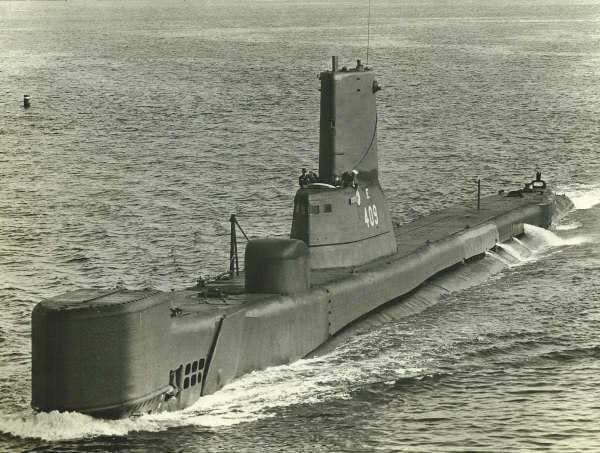
The old fleet diesel boats that I served on were the USS Piper (SS 409), USS Croaker (SS 246), USS Clamagore (SS 343) and USS Tiru (SS 416).
Back in those days, navy vessels had their own array of groupies, or girls that would be waiting for the boats to pull in. Most of the girls were regulars in that they had a long history with the boat and it’s crew. No, these were not garden variety prostitutes, but more like entertainers. They’d offer distraction from being at sea, companionship and conversation in a foreign port and saw that we spent our money in one of their local bars. They might sometimes act as tour guides for us new, younger guys. At the end of the day, they would go home alone, but would be on the pier to wave us off as we left port. Despite secrecy, they always seem to know our operating schedules. Some of the girls had known a sailor on our boat for several years. It was kind of amazing how loyal they were to their particular sailor.
In my youth, BG (before Gwen). I struck up a relationship with a young lady in Lisbon and we actually corresponded for about five years, until I transferred to a nuclear sub and would never get back to Portugal.
Springboard gave us the chance to enjoy life in a different manner. Plenty of bars and beaches. Two events do stick out i my memory though. The navy provided a bus to pick us up in New San Juan and transport us back to the base. One night, the bus was attacked by Puerto Rican terrorist and several sailors were killed i the gunfire.
The other incident was the test of the submarine rescue bell. I had just qualified as a diesel throttleman. On the old boats, each engine room had a throttleman and an oiler. The throttleman ran the main engines, the oiler was like an apprentice, but did odd jobs like cleaning the space, make coffee runs and work on qualifications. He also kept the throttleman awake.
We had a hard run to our dive point, meaning we ran four main engines at full RPMs. We were supposed to submerge, sit on the bottom, and wait for the submarine rescue vessel to power the bell that was supposed to lock on to one of our hatches at which time crew members would enter the bell and be lifted to safety. Great theory. We sat on the bottom and endured seven attempts and 38 hours of them trying to get the bell in place. The additional problem for us was that four main engines running at full RPMs generate a lot of heat. With no outside ventilation and no air conditioning, there was no where for the heat to go. Temperatures in the boat reached 115 degrees. After 20 hours, the CO2 level peaked. At 36 hours, it was unbearable, and at that point, you couldn’t even get a cigarette to stay lit. Most of the crew stripped down to their underwear, we in the engine room stripped even further. This little episode gave me a real appreciation of what submariners went through during the war.
When we finally got the word that the exercise had ended and we could surface, the captain ordered the torpedo men to break out four or five cases of beer that he had stored in one of the after torpedo tubes and the two cases we had in the refrigerated stores storage locker. We surfaced, broke out our barbecue pit, cooked steaks, drank beer and had swim call somewhere off the coast of San Juan.
Fredric Durrette served one tour in Vietnam, retired as E8 in the navy submarine service after 23 years. Major hobbies are collecting old stuff from the 20s and restoring old racing bicycles. Worked as a commercial photographer at JL Hudsons in Detroit and continue photography as a hobby. Love Sade, sixties soul, seventies rock, and all jazz. Attended Woodstock in 69! http://snakesafe.jalbum.net/
When I returned from Vietnam in 1969, I made three decisions. One was going to Woodstock instead of the “New York City Soul Festival”, another was getting out of the navy when my enlistment expired, and yet another was moving back to Detroit.
Upon arriving in Detroit, there were other decisions to make, enrolling in college and enlisting in the naval reserves to keep my pay grade and time in service just in case I decided to re-enlist regular navy again. I actually prepared for and thought seriously about enrolling in medical school, but was talked out of it. All good, I probably would have made a poor doctor anyway. So, being interested in art, I enrolled in the Arts and Crafts Art School and later transferred to Wayne State University under the GI Bill.
I enrolled initially for a BA in fine arts and with a couple of friends, opened a small storefront art gallery on Woodward Avenue, called “The Gallery of IMO” and became the only artist selling his paintings out of the three members. Bill Riser, one of the other artists, introduced me to his brother Paul, who did musical arrangements for Motown.
The early seventies were a unique period in time. One was because of the Black renaissance and the other because of the fantastic opportunities offered to freelance photographers back then. Photographic posters had become the new craze, and record companies were constantly looking for new talent. Professional commercial photographers seldom worked weekend, leaving great money-making opportunities for us nonprofessionals. I made five hundred dollars for a two hour job photographing the Detroit Fourth of July fireworks for the Detroit Free Press newspaper. I made a thousand dollars photographing Mercedes cars for the auto show display. And about two thousand dollars over time on poster contracts. It was then that I decided to switch my major to commercial photography. Bought my first Hasselblad camera and two lenses.
I was doing very well freelancing and selling artwork on the GI bill and living with my mom, but I also needed a car and without a steady source of income, that would be impossible.
During this time, I had printed and triple-matted several of my best photographs put them in my portfolio and commenced the job search, not really knowing much about the procedure other than showing my work. My portfolio must have weighed in at about forty pounds and wasn’t the best thing to handles on crowded public transportation like the Detroit DSR buses.
After a week or two of lugging my portfolio from one business to another without much success, a friend recommended the J. L. Hudson department store that had it’s own photography studio as part of it’s advertising department.
The Hudson store opened in 1891 and was eventually moved to Gratiot Avenue and Farmer Street, and encompassed an entire block, filling the space between Woodward Avenue and Farmer, Gratiot and Grand River Avenue. The store was a 25-story structure that was the world’s tallest department store until 1961. At one point, Hudson’s claimed it was also the second-largest store in the country in terms of square feet (two million), after Macy’s Herald Square in New York City. Hudson’s had it’s own cafeteria and even an infirmary. The Hudson’s photographic studio was located on the 19th floor.
So, without even making an appointment, I walked into the store, took the employee elevator up to the 19th floor (customer elevators only went to the 14th floor) and luckily caught the manager, Mr. Syzdek during his lunch break. It was obviously an uneasy first meeting, but Mr. Syzdek was so impressed with my photographs and the way they were matted that he hired me on the spot.
So, I became the FIRST Black photographer in the history of the J. L. Hudson’s department store history. A fact that even garnered a mention in the newspapers and didn’t escape the notice of the NAACP.
Being single, my coworkers thought I’d be a good match for another Hudson employee. Portia was one of the young African American elevator operators. She was tall, thin and very pretty. So we started dating regularly right away. Portia wanted to be a model and we were a pretty good match… but Portia had one big problem. She liked to smoke marijuana, a lot of marijuana.
This presented me with two problems. Besides weed being illegal in Detroit, it was also illegal in the military. Also, I never smoked the stuff myself. However, having perfected the art of rolling homemade cigarettes, I became pretty good at rolling joints. So good, that my talent was often requested at the parties we attended. At a Tina Turner “after-hours party”, I spent all night rolling joints. There was so much weed at that party that I was getting a buzz just from the secondhand smoke and all the time praying that the reserve unit wouldn’t schedule a urine test.
People who say smoking weed isn’t harmful should meet a person like Portia. Her brain was almost toast. It was a good thing she operated the employee elevators and tot the customer ones. One day I got on the elevator and expected she’d take me up to the nineteenth floor where I worked. The doors shut and the elevator started moving upward very slowly, then very fast and eventually came to an abrupt stop. The doors opened and posted on a pole just to the left was a sign that read “21st Floor, Executive Offices”.
When Hudson’s wanted to run an ad for African American newly weds, they use Portia and I as the models. The full page ad ran in the Sunday paper and on Monday, my phone rang off the hook with friends congratulating me.
We went out to dinner one night at a local steak house. After getting our seats, I excused myself for a restroom break. As I exited the bathroom, I saw a guy sitting at our table having what seemed to be a romantic conversation with my Portia. Not wanting to cause a scene, I hesitated long enough for the guy to get up and leave. When I got to the table, Portia broke out in hysterical laughter. “What’s up?”, I said, trying to control my anger. “That guy just told me he was Fred Durrette, a photographer, and wanted me to pose for him in his apartment studio”.
Portia and I eventually dissolved our relationship as it just wasn’t enjoyable. I was always concerned about being arrested with the nickel bag of grass I was taking to her house or even being busted by some undercover narc when trying to purchase it. Either way, it would end my military career.
Fredric Durrette served one tour in Vietnam, retired as E8 in the navy submarine service after 23 years. Major hobbies are collecting old stuff from the 20s and restoring old racing bicycles. Worked as a commercial photographer at JL Hudsons in Detroit and continue photography as a hobby. Love Sade, sixties soul, seventies rock, and all jazz. Attended Woodstock in 69!
How a submarine sailor ended up on a patrol boat in Vietnam
During my tour on the USS Piper, the war in Vietnam escalated and became evening news. My next duty station was the USS Croaker, another GUPPY conversion. GUPPY stands for Greater Underwater Propulsion Power Program and was initiated by the United States Navy after World War II to improve the submerged speed, maneuverability, and endurance of its submarines. (The “Y” in the acronym was added for easier pronunciation. Slightly different than the Piper, the Croaker had three General Motors diesel engine generator compared to the four sixteen cylinder Fairbanks engines on the Piper. The Fairbanks were opposed-piston engines. They ran forever but were hell to work on. The sixteen cylinder General Motors diesels were built like an automobile V8 engine. They constantly leaked oil from the valve covers but were a lot easier to work on. If you had to replace a piston, you only needed to pull one instead of two like on the Fairbanks.
But the GM engines presented other problem too. Half of the sixteen pistons were inboard and easy to get to. The other half were outboard and hard to get to. At my 160 pounds and slim build, I was the only one able to work comfortably on the outboard pistons.
So, by this time, I was a seasoned qualified sub sailor and engine throttleman. I took a lot of pride in how quickly I could go from cold iron to fully running engines. Also, how quickly I could shut them down when we submerged or fire them up for snorkeling.
During one cruise across the Atlantic we blew four pistons, one inboard and three outboard. This repair caused me to work six days and nights without sleep. Pure adrenaline kept me going. When the engine was successfully up and running, my adrenaline level was still so high, the corpsman had to give me a shot to put me to sleep.
Diesel submarines, unlike nuclear-powered boats, had a very low underwater capability. They were basically surface craft with the ability to submerge. We were submerged for over 36 hours one-time conducting submarine rescue operations and the air had gotten so bad, you couldn’t even keep a cigarette going. The heat was so unbearable that we stripped down to our underwear.
With my first marriage going south, I volunteered for Vietnam. Being young and stupid, I fantasized about the action going on over there. Remember, I grew up watching John Wayne movies like “Back to Bataan”. My request was denied because they weren’t yet taking married volunteers.
Finishing my tour on the Croaker, I was transferred to the USS Sam Houston, my first nuclear submarine, and one of the fleet ballistic missile boats. That was my first disappointment since although the Houston had an auxiliary diesel engine, it was operated only by the nuclear-trained personnel as a backup generator for the reactor. With all my diesel engine experience, I wasn’t allowed to touch it. However, during one refit, the nukes were having problems getting the engine to run. They had gone through all the procedures in the engineering manual, cranked her up and she would run for a minute or two and then shut down. Finally with our underway deadline approaching, they “unofficially” asked for my advice. I had the engine up and running steadily in about ten minutes.
My marriage was going even further south, so I volunteered for Vietnam again. Then I was told that they wouldn’t send submarine sailors into combat zones. I understood that. I had a top-secret clearance and could have information valuable to our enemies, especially the Russians.
When my tour on the Houston came to an end in 1968, I waited eagerly for orders to my next submarine although I had only a year left on my enlistment. Then, one day the yeoman told me my orders had come in. Yay!
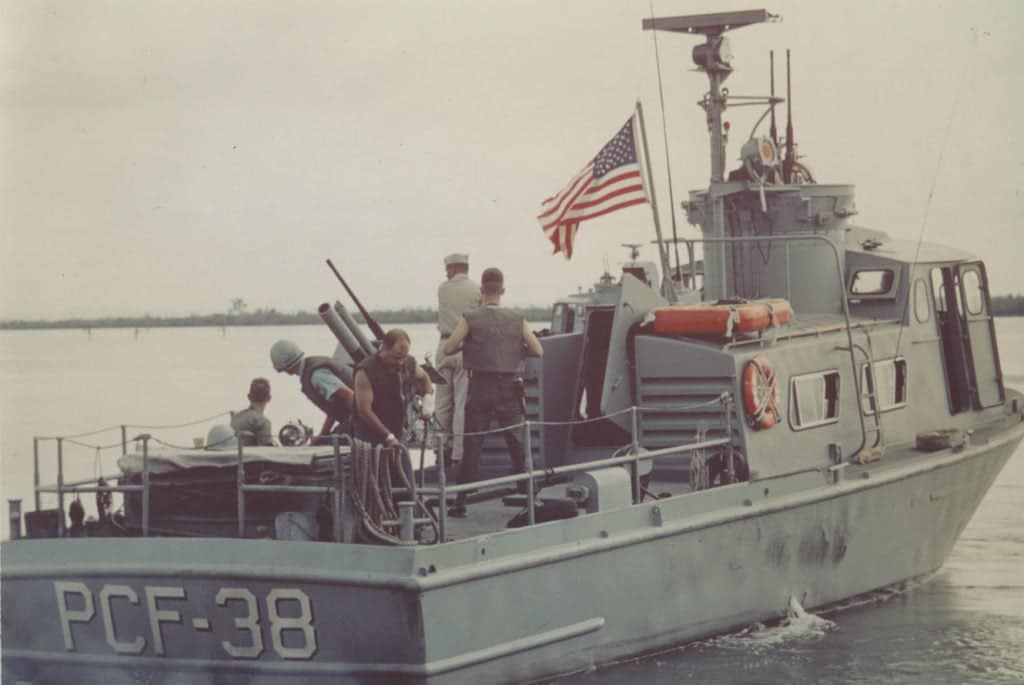
Only my orders were to PCF 38. I immediately called my detailer. The navy detailer is the nut in Washington that decides where to send navy sailors. He said it’s a patrol boat. “What?” “Where the heck is this patrol boat?” he replies “well, it’s kinda at the base in Cat Lo”. “And where the f—k is this Cat Lo?” “Well, it’s kinda in Vietnam”.
Well, I had been closely following the war on the nightly news ever since I had volunteered the second time. Things were heating u very quickly and it was beginning to look like a place I really wanted to avoid. The news started showing pictures of dead marines every night and posting body counts.
Just why am I getting orders to Vietnam when I have only a little more than a year left on my enlistment? I asked my detailer. “Well haven’t you volunteered before? And besides, they need trained enginemen on those boats”. I won’t repeat the profanity I used before our phone conversation ended.
That’s how I ended up riding a patrol boat on the Mekong Delta, South Vietnam. I must have been the only submarine qualified jerk on a river that had no submarines. I don’t regret it though. Luckily, we didn’t see any bad action ourselves. We did lose a boat from our squadron to an RPG attack. A young sailor fell overboard and drowned, a few 7.63 rounds buzzed close enough past my head to make me realize my mortality. Early on, we patrolled the main rivers where we had room to maneuver. Then Zumwalt, or whoever, got the bright idea to have us patrol the inner river canals and we lost that one great advantage. The VC or NVA would watch us go up river, mostly in patrols of two craft, then they’d set up their ambush for our return trip attacking the lead boat to hopefully block us from getting out. What the NVA didn’t know was that we usually operated with helicopter gunships that were only a radio call away.
I think I maintained a certain bravado during that short tour. Facing gunfire and seeing the dead, caused me to grow up quite a bit. But, even facing death, you never think that you’re going to be the next one. You just do your job to protect those you serve with. Although my primary function was as the engineman, we were also trained on other duties. My secondary duty was on the aft over and under .50 caliber machine gun – 81 mm mortar combo. I returned fire many times, so yes, I must have killed people. The VC would sometimes line up innocent civilians in the brush near the river bank. I don’t like to talk about that part or even much more about my time in Vietnam.
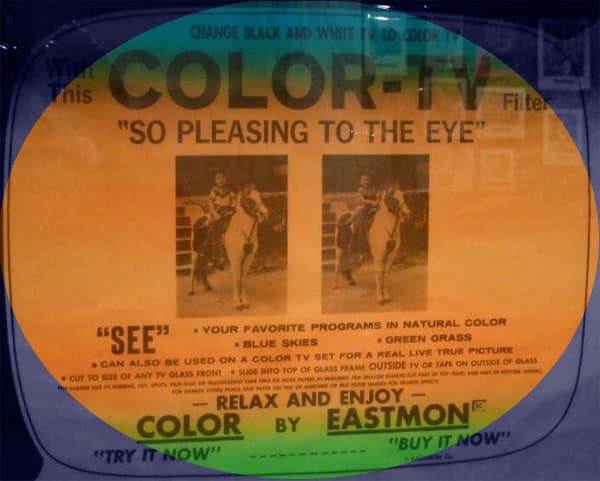
Who remembers putting color screens on their black-and-white TV sets?
It was the dream for many middle class American families in the 1950s and 1960s: colored TV. Although the technology was available since 1953, the high prices of colored television sets meant most families couldn’t afford the exciting advancement.
Back when color television sets were luxury items, there was a cheap and easy alternative to get our favorite programs in color. Does anyone remember their families putting plastic screens on their TV?
The screens were thin, transparent pieces of plastic that stuck to the TV screen. The top portion of the screen was blue for the sky, the middle had a reddish tint, and the bottom was green for grass.
Of course, the screens looked nothing like real color TV, but they did add a little bit of excitement to the gray scale that was dominant during the early years of television. Because the screens sold for only a couple dollars, they were much more affordable than buying new color sets, which went for hundreds of dollars.
So before color TV became affordable in the late ’60s, who remembers their family using this device in the hopes of magically transforming black-and-white shows into color? With all the recent advancements of TV, it’s hard to imagine a time we used to do this.
Fredric Durrette served one tour in Vietnam, retired as E8 in the navy submarine service after 23 years. Major hobbies are collecting old stuff from the 20s and restoring old racing bicycles. Worked as a commercial photographer at JL Hudsons in Detroit and continue photography as a hobby. Love Sade, sixties soul, seventies rock, and all jazz. Attended Woodstock in 69! http://snakesafe.jalbum.net/
It’s no secret to us old salts that our survival kits usually included a pack of Lucky Strike or Camel cigarettes. Sometimes the packs were so old, the paper would have turned a dark yellow.
In 1965, first during the U.S. Army’s Basic Training Course & later in Pre-Airborne Infantry Training, while being allowed a break from P.T., or during a long march, it was commonplace for a Drill Sergeant to say “smoke ’em if you got ’em, do pushups if you don’t”. Non-smoking soldiers would quickly “bum” a cigarette from a friend & they too would soon be smokers. Despite mounting evidence in the 1950s of the adverse health effects of smoking and tobacco use, the military continued to include cigarettes in rations until 1975.
I had been a smoker since age nine and continued to smoke throughout my navy career. When I reported to my first submarine and prepared for deployment, we could purchase “sea store” cigarettes. Sea store cigarettes were tax free and cheaper than what we could purchase at the base exchange or “PX” if you’re army. We would order them by the case for a lengthy deployment, but the glitch was that they wouldn’t be handed out until we were well at sea, hence the name “sea store”.
Sea store cigarettes at the time were going for ten cents a pack or a dollar a carton. Some bright entrepreneurs and even non smokers realized the value of cigarettes both on board or overseas as some heavy smokers would underestimate their order and would run out during the deployment. Then a pack of cigarettes could go for as much as a dollar. The real profits were, however, in foreign ports. In some ports, a pack of American cigarettes was all a hooker would ask for. Give her a carton and you could move in with her. Give her a pair of your denim dungaree trousers with that carton of cigarettes and she would offer to let her sister join the both of you.
In Italy, back in the 1960s, a pack of filtered American cigarettes could be sold for ten dollars or a hundred dollars a carton. This was illegal, however, and the penalty if you were caught selling cigarettes was arrest and imprisonment in an Italian jail. But usually when our boat pulled into port, like Naples, Italy for example, we would be rushed by dozens of shady looking Italian guys in what we called “bum boats”. They’d come alongside us flashing big rolls of U. S. Currency. They wanted navy dungarees or cigarettes, but mostly cigarettes. It was common to see someone from the boat toss over a carton of cigarettes and the guy in the bum boat toss back a wad of American currency.
The illegal selling of cigarettes was further complicated by police corruption. No problem if you conducted the transactions from the safety of the ship as the police didn’t have any jurisdiction on an American military vessel. But naive first timers would sometimes take a carton or two when the left the boat and went into town. The big mistake was when they succumbed to the easy money and sold a carton in one of Naple’s back alleys. The buyer would then report the transaction to the police and the newbie would be subsequently arrested, taken off to jail and his cigarettes confiscated. The confiscated cigarettes would be returned to the buyer and the cash divided between him and the authorities. So now the buyer has the cigarettes which he could sell and half of his cash back. The police furthered profited when the military had to pay the fine for getting the young sailor released.
Another ploy that suckered in many un-streetwise kids was the marijuana scam. Some squirrely looking guy would hang out at the head of the pier looking for some fresh face kid in uniform. He would offer to sell the mark some “real” hashish. Hash is made from the resin of a marijuana plant and is almost times more potent than marijuana. What would happen though, even if the hash wasn’t real, the seller would have a police officer standing nearby who would immediately initiated an arrest.
But, that was Naples in the 1960s. Sitting in port with all the required work and preventative maintenance or PMs done, we amused ourselves by sitting topside and watching the tide come in. A beautiful sunrise would be made even more dramatic by the tremendous amount of garbage that the tide brought back with it. Sometimes, the garbage was so thick that you could almost walk across the harbor and not even get your feet wet. Naples was a very dirty city where gutters were used as garbage disposals and public restrooms. There was a big cholera outbreak in the city shortly after we left.
Transferring to ballistic missile submarines made calculating how many cartons of sea store cigarettes you bought even more critical. Nuclear subs on deterrent patrols or deployments seldom made port calls, so you had to be prepared to have enough for the next 60 days once you left port. A lot of guys didn’t and usually around the half way point, cigarettes would become a valuable commodity. Sometimes a smart non smoker would have bought a few cartons or the ship’s store would have some for sale. But I’ve seen guys raid ashtrays for a good sized butt. For some, deployment was a good opportunity to quit the habit as I did several times, picking it up again as soon as we arrived home.
With the scientific data about the health risks of smoking and information about the effect of smoking on troop readiness, in 1975, the United States Department of Defense discontinued the inclusion of cigarettes in K-rations and C-rations. By 1978, the Department of Defense had implemented basic smoking regulations, including the designation of smoking and nonsmoking areas. In 1985, the Department of Defense conducted a study that revealed that smoking rates of military personnel were significantly higher than that of US civilians and concluded that smoking had a negative effect on troop readiness. The report also recommended potential methods to curb smoking in the military, including the elimination of tobacco products from stores, raising tobacco prices to civilian levels, and the implementation of an educational program to discourage smoking.
So, the new navy ain’t my navy anymore. Although I did give up cigarettes eventually, I still recall how good that cup of strong black coffee and inhaling the smoke from a Kool menthol was after pulling an all-nighter repairing a piece of equipment.
It may be hard for anyone living in the rich commercialism of today to understand the climate of the late sixties and early seventies. You could make a good amount of cash in freelance photography. Poster art was big and companies were looking for new poster art material as well as music companies looking for record album cover material. And you had to have a basic knowledge of photography to use a film camera.
Music concerts were relatively cheap and security at music concerts was pretty basic. So basic that once I even used my counterfeiting skills to produce a fake New York Times press badge, complete with the New York Times seal trademark. I used that badge to get me into a couple of Rolling Stones concerts, a James Brown concert, and several other venues. Even if the concert was affordable, the press pass allowed me backstage access. Then one day I ran into a real New York Times reporter who had just retired and was living in Detroit. The press badge was retired.
Veterans from the war in Vietnam were returning at a record rate and government money was flowing like maple syrup over buttermilk pancakes. Not only in the area of education under the GI bill, but also in grants and small business loans. A White Vietnam vet could get one amount to start a small business, but that amount would quadruple if he partnered with a Black Vietnam veteran. That’s one reason I was in such demand. I was a veteran, I was Black, I spoke good English and was fairly well educated as well as being congenial. I had already established myself as being a decent photographer when I was hired by the J. L. Hudson company as their first Black photographer in heir hundred year history. But besides that, I was a pretty good artist also who picked up a few jobs doing pastel portraits at the state fair. I would get proposals that only wanted use of my name, but I saw that as being unethical and maybe illegal. That’s when I met Jimmy Samuels.
Jimmy got the idea to open up a little storefront art gallery on Woodward Avenue, and my friend Bill Riser and I jumped right in and we started the “Gallery of Imo”. This was called an opportunity for Blacks in the neighborhood to see real Black artists at work and to purchase good artwork and paintings done by Black artists. The gallery was made possible with a single government grant. Jimmy was a sweet talker and a con artist who should have been an used car salesman. Barack Obama reminded me of old Jimmy. Jimmy even brought his girlfriend into the gallery as our book keeper, but she spent more time partying with Jimmy than keeping our books. I sold several paintings while at the gallery and I sometimes wonder where they are now.
In my personal life, I was going to college under the G. I. Bill and receiving a extra stipend for housing since I had a dependent (my daughter Angela), but I lived at home with my mom and didn’t need to pay rent. That, with the paycheck from Hudson’s was more than adequate to provide for a pretty decent lifestyle, even the purchase of a bright red 1965 Chevrolet Corvair Monza and a Hasselblad camera.
F. Lee Bailey, the famous lawyer and attorney had created his program of “New Detroit”, part of which was to take the fine arts into the inner city neighborhoods through a program he financed called “Metro Arts”. The idea being to gather promising young Black artists, musicians, and dancers, train them and have them give performances at the very popular Cobo Hall Arena.
Built in 1960, Cobo became a must-stop venue for the biggest and wildest rock-and-roll bands of the ’60s and ’70s; not to mention the temporary home for the Detroit Pistons. Black Sabbath, Jimi Hendrix, the Rolling Stones and Bruce Springsteen all played shows at the arena. Thin Lizzy and Queen performed in 1977 for $7.50 a seat. Cobo Arena was the setting for one of The Doors’ best complete concert performance recording on May 8, 1970. KISS played Cobo numerous times in the 1970s, including a sold-out three-night stand in 1976.
As part of his New Detroit program, Jimmy Samuels, Bill Riser and I were successful in obtaining a grant from Mr. Bailey to purchase a defunct and abandoned motel off of Woodward for the purpose of setting up an artist commune. Bailey cut the check for two hundred and fifty thousand dollars and the money was deposited into a three party bank account. That would require all three signatures to withdraw any funds from that account.
But that’s when things began to go sour. The director of the Metro Arts program who was hired because she lived in the inner city, moved into the prestigious apartments of Lafayette Towers and bought a brand new Cadillac. The music director she had hired with six figure salary who was supposed to be so great, turned out to not have a degree in music or any degree at all. Metro Arts was in trouble. Then, our friend Jimmy Samuels figured out he could transfer money from our account without needing the other signatures. The check to pay for the motel bounced and Jimmy was nowhere to be found. The gallery, even though successful, was abandoned soon after.
It was under those circumstances that I met Bill Hanson, another veteran and photographer, who with several other veterans had set up a small studio over an abandoned auto repair shop they called “Cinema 76″. The seventy six was in reference to the American revolution. Bill and his cohorts were more into cinematography and thought I could be useful in taking their still shots, plus being Black, I could get them more federal grant money.
Cinema 76 was successful in getting a grant, not from the U. S. Government, but from the Canadian Arts Council. The Canadian Arts Council was even more liberal in their grants than our government. Our first big professional movie would be exploring the deforestation of the Canadian forests. To narrate the movie, it was decided to use an old actor by the name of “Iron Eyes Cody”. Now Cody wasn’t a real Native American, he was really Italian, but he had played so many Indian parts in the movies that he thought he was. Cody was perfect in comparing the Native stewardship of the environment with that of the White man with scenes of the lumber industry destruction and deforestation ecological ruin. The closing scenes in the movie were of Cody walking out of the forest and standing by a river with trash and debris floating by. There would be a close up as a tear rolled down his cheek.
The movie was a success and actually aired on Canadian television. Around this time, an American group had formed that called themselves “Keep America Beautiful”. They saw our film and offered to purchase it. I wasn’t privy to whatever deal resulted and I won’t attempt to even speculate. The got the film and Cinema 76 ceased to exist. When the Keep America Beautiful folks aired their public service commercial a few months later, our film had been cut and altered to a thirty second infomercial called the “Crying Indian”.
I never saw the other fellows after that, but Chuck and I remained friends for quite a while. Dinners at Chuck’s house were always interesting. He lived in an all White neighborhood, so my visits to his house usually brought out the bevy of curious neighbors, probably afraid that I was moving in. Chuck had the honor of being the only person I know whose cat was deemed a neighborhood terror. He was all black and evidently possessed by some demonic spirit. Chuck would warn, “don’t pet the cat” on every visit. The cat would jump up on the dinner table while we were dining and Chuck would say “don’t pet the cat”. His cat had a nasty habit of lurking in the bushes and attacking whoever happened to be passing by. One swipe of his paw on anyone’s bare leg and he would scurry away before any attempt to catch him. Neighborhood kids were hi favorite targets. Chuck’s cat was s notorious that he had been cited because of it and the local newspaper had even written an article.
Chuck ultimately received a grant to document the lives of a wolf pack that required him and his wife to actually live with an isolated pack of wolves on a Michigan Island. I don’t think Chuck and his ever became as famous as the Jim and Jamie Dutcher, he wasn’t financed by National Geographic, but he was definitely a pioneer.
Fredric Durrette served one tour in Vietnam, retired as E8 in the navy submarine service after 23 years. Major hobbies are collecting old stuff from the 20s and restoring old racing bicycles. Worked as a commercial photographer at JL Hudsons in Detroit and continue photography as a hobby. Love Sade, sixties soul, seventies rock, and all jazz. Attended Woodstock in 69! http://snakesafe.jalbum.net/
Pulling the race card (or How I got to meet Princess Grace)
Princess Grace, Grace Patricia Kelly, was an American film actress who became Princess of Monaco by marrying Prince Rainier III in April 1956.
While making a med cruise on board the USS Piper back in 1964, we received permission to pull into the port of Monaco for Christmas. This was a special port call because we were the first American warships to pull in there since World War Two. Because of this, the principality went all out to make sure that we enjoyed the port visit first by allowing some crew members to stay at the luxurious Monte Carlo hotel for free, a dance put on by the USO with some of the best looking women on the Riviera, and a free account at the famous Monte Carlo casino.
For the Christmas day observance, seven crew members were invited to eat dinner at the castle with Princess Grace and the royal family. Seven crew members were chosen, but no one from the engineering department. Enginemen were considered to be uncouth and smelled of diesel oil even after showering. That’s when I got an idea. One, being a newbie on board, they really couldn’t say that I was totally uncouth, I had not yet been sullied by my apprenticeship with my mentor, Beetle Bailey. Two, being the only Black person on board, it was only appropriate that a “token” be sent as representing part of the crew. How “American” would that be?
After a long debate and an hour or two of my engineering chief pleading my case, the captain capitulated and agreed. What followed was a crash course in formal etiquette, what fork to eat with, how to chew politely, how to address the princess, etc. The only point of disappointment, however, was that I would be sent as the official photographer. So, naval history is devoid of any photographic evidence of one Fred Durrette formally meeting Princess Grace. However, if you ever get to the submarine museum in Groton, Connecticut, ask to see the original photograph and on the back, you’ll see my signature as the official navy photographer.
The Princess was everything that you’d expect a princess to be. She was beautiful, graceful, and still retained her American down home charm.
Way back in 1963, while stationed on board the USS Piper, we pulled into the port of Djibouti, Africa as one of our scheduled Med cruise port calls. Djibouti, is a country located in the Horn of Africa in East Africa. It is bordered by Somalia in the south, Ethiopia in the south and west, Eritrea in the north, and the Red Sea and the Gulf of Aden in the east. Due to it’s history of French colonization, the country still had a big racial divide between the very poor Black population and the rich White Europeans. For example, Blacks were not allowed into the better hotels unless hey worked there as servants. As a result, the only place for a Black U. S. Navy sailor to party was in one of the interracial bars in the native section of the city. White tourists were afraid to go there.
Standing topside watch while moored along side the pier usually drew a crowd of native dock workers who were amused to see a Black man carrying a rifle, a side arm, and a baton, seemingly just strutting around while White guys did all the physical labor. and I did play this up somewhat , being the only Black in my crew, by harassing our all White deck crew doing the usual paint chipping and painting we did during every port call. Once or twice during my rounds, I’d walk over and tap one of my shipmates on the head with my baton which would draw a big round of applause from my audience.
My mentor, Beetle Bailey, the senior first class engineman, was a huge person with the temperament of a lamb. Beetle took me under his wing from the moment I reported on board and taught me all I needed to qualify as a diesel engine throttleman. Beetle also took to calling me his little “spear chukker”, to which I would just call him a stupid honky. We often exchanged racial slurs. I had decided early on that I would not go through life with a chip on my shoulder and as long as the jokes were meant to be humorous and not derogatory, I would simply respond in kind. However, I did let it be known that there was a thin line that shouldn’t be crossed and in fact did go after one of my shipmates with a jacking wrench when he crossed that line.
But in response to Beetle’s calling me his little spear chukker, I found a souvenir shop in town and purchased a twelve foot native spear, although a reproduction and not authentic. Since our only mode of transport around town was either taxi or motor scooter, I rented a Lumbretta scooter to get back to the boat. I guess the European tourist were pretty amazed to see a navy sailor in uniform, a Black navy sailor, riding a moped and carrying a twelve foot spear. I hung that spear in the forward engine room over the number one main engine where it hung long after I had transferred and up until the day Piper was decommissioned.
One day, we had to move the boat so a U. S Navy destroyer, the USS Bigelow could moor alongside the dock. We had to move since the Bigelow was the senior ship as as the senior ship could moor directly to the pier. While we were moored in Djibouti, we needed to refuel. Now the old diesel submarines used fuel ballast tanks to maintain a stable ballast. As the fuel in the tanks was used, it would be replaced with sea water. When fueling, we take on diesel fuel into the tank that would in turn push the sea water out through an overboard pipe that had a sight glass. The sight glass going black meant that the fuel tank was full to the brim and would soon be going overboard into the harbor which would be a no no. So, as we fueled, someone would have to sit topside watching the sight glass to notify the men below to stop transferring fuel.
This night, as we sat alongside the Bigelow, performing our fueling operations, the night was peaceful and quiet until alarms started going on all over the Bigelow. Some sailor in a drunken stupor had climbed the Bigelow’s radar mast and got instantly fried. We were all wondering what the heck had happened. The Bigelow had lit up all of a sudden and we watched men scrambling all over her decks, some crying “Oh my God”. One of our crew came rushing back to the boat and said “The president’s dead. The president’s dead… Somebody killed JFK”.
This sent shock waves through the Piper also as some guys went through the boat turning on the lights and waking people up. We were all in shock. Were we going to war? Our radioman was in town getting drunk like all radiomen did in those days, there was no internet, email, cell phones, and diesel submarines didn’t carry televisions. The only info we received until our radioman got back was all second hand from the guys on the destroyer who didn’t know much more than we did. That was November 22, 1963.
President Pitzer, Mr. Vice President, Governor, Congressman Thomas, Senator Wiley, and Congressman Miller, Mr. Webb, Mr. Bell, scientists, distinguished guests, and ladies and gentlemen:
I appreciate your president having made me an honorary visiting professor, and I will assure you that my first lecture will be very brief.
I am delighted to be here, and I’m particularly delighted to be here on this occasion.
We meet at a college noted for knowledge, in a city noted for progress, in a State noted for strength, and we stand in need of all three, for we meet in an hour of change and challenge, in a decade of hope and fear, in an age of both knowledge and ignorance. The greater our knowledge increases, the greater our ignorance unfolds.
Despite the striking fact that most of the scientists that the world has ever known are alive and working today, despite the fact that this Nation¹s own scientific manpower is doubling every 12 years in a rate of growth more than three times that of our population as a whole, despite that, the vast stretches of the unknown and the unanswered and the unfinished still far outstrip our collective comprehension.
No man can fully grasp how far and how fast we have come, but condense, if you will, the 50,000 years of man¹s recorded history in a time span of but a half-century. Stated in these terms, we know very little about the first 40 years, except at the end of them advanced man had learned to use the skins of animals to cover them. Then about 10 years ago, under this standard, man emerged from his caves to construct other kinds of shelter. Only five years ago man learned to write and use a cart with wheels. Christianity began less than two years ago. The printing press came this year, and then less than two months ago, during this whole 50-year span of human history, the steam engine provided a new source of power.
Newton explored the meaning of gravity. Last month electric lights and telephones and automobiles and airplanes became available. Only last week did we develop penicillin and television and nuclear power, and now if America’s new spacecraft succeeds in reaching Venus, we will have literally reached the stars before midnight tonight.
This is a breathtaking pace, and such a pace cannot help but create new ills as it dispels old, new ignorance, new problems, new dangers. Surely the opening vistas of space promise high costs and hardships, as well as high reward.
So it is not surprising that some would have us stay where we are a little longer to rest, to wait. But this city of Houston, this State of Texas, this country of the United States was not built by those who waited and rested and wished to look behind them. This country was conquered by those who moved forward–and so will space.
William Bradford, speaking in 1630 of the founding of the Plymouth Bay Colony, said that all great and honorable actions are accompanied with great difficulties, and both must be enterprised and overcome with answerable courage.
If this capsule history of our progress teaches us anything, it is that man, in his quest for knowledge and progress, is determined and cannot be deterred. The exploration of space will go ahead, whether we join in it or not, and it is one of the great adventures of all time, and no nation which expects to be the leader of other nations can expect to stay behind in the race for space.
Those who came before us made certain that this country rode the first waves of the industrial revolutions, the first waves of modern invention, and the first wave of nuclear power, and this generation does not intend to founder in the backwash of the coming age of space. We mean to be a part of it–we mean to lead it. For the eyes of the world now look into space, to the moon and to the planets beyond, and we have vowed that we shall not see it governed by a hostile flag of conquest, but by a banner of freedom and peace. We have vowed that we shall not see space filled with weapons of mass destruction, but with instruments of knowledge and understanding.
Yet the vows of this Nation can only be fulfilled if we in this Nation are first, and, therefore, we intend to be first. In short, our leadership in science and in industry, our hopes for peace and security, our obligations to ourselves as well as others, all require us to make this effort, to solve these mysteries, to solve them for the good of all men, and to become the world’s leading space-faring nation.
We set sail on this new sea because there is new knowledge to be gained, and new rights to be won, and they must be won and used for the progress of all people. For space science, like nuclear science and all technology, has no conscience of its own. Whether it will become a force for good or ill depends on man, and only if the United States occupies a position of pre-eminence can we help decide whether this new ocean will be a sea of peace or a new terrifying theater of war. I do not say the we should or will go unprotected against the hostile misuse of space any more than we go unprotected against the hostile use of land or sea, but I do say that space can be explored and mastered without feeding the fires of war, without repeating the mistakes that man has made in extending his writ around this globe of ours.
There is no strife, no prejudice, no national conflict in outer space as yet. Its hazards are hostile to us all. Its conquest deserves the best of all mankind, and its opportunity for peaceful cooperation many never come again. But why, some say, the moon? Why choose this as our goal? And they may well ask why climb the highest mountain? Why, 35 years ago, fly the Atlantic? Why does Rice play Texas?
We choose to go to the moon. We choose to go to the moon in this decade and do the other things, not because they are easy, but because they are hard, because that goal will serve to organize and measure the best of our energies and skills, because that challenge is one that we are willing to accept, one we are unwilling to postpone, and one which we intend to win, and the others, too.
It is for these reasons that I regard the decision last year to shift our efforts in space from low to high gear as among the most important decisions that will be made during my incumbency in the office of the Presidency.
In the last 24 hours we have seen facilities now being created for the greatest and most complex exploration in man’s history. We have felt the ground shake and the air shattered by the testing of a Saturn C-1 booster rocket, many times as powerful as the Atlas which launched John Glenn, generating power equivalent to 10,000 automobiles with their accelerators on the floor. We have seen the site where the F-1 rocket engines, each one as powerful as all eight engines of the Saturn combined, will be clustered together to make the advanced Saturn missile, assembled in a new building to be built at Cape Canaveral as tall as a 48 story structure, as wide as a city block, and as long as two lengths of this field.
Within these last 19 months at least 45 satellites have circled the earth. Some 40 of them were “made in the United States of America” and they were far more sophisticated and supplied far more knowledge to the people of the world than those of the Soviet Union.
The Mariner spacecraft now on its way to Venus is the most intricate instrument in the history of space science. The accuracy of that shot is comparable to firing a missile from Cape Canaveral and dropping it in this stadium between the the 40-yard lines.
Transit satellites are helping our ships at sea to steer a safer course. Tiros satellites have given us unprecedented warnings of hurricanes and storms, and will do the same for forest fires and icebergs.
We have had our failures, but so have others, even if they do not admit them. And they may be less public.
To be sure, we are behind, and will be behind for some time in manned flight. But we do not intend to stay behind, and in this decade, we shall make up and move ahead.
The growth of our science and education will be enriched by new knowledge of our universe and environment, by new techniques of learning and mapping and observation, by new tools and computers for industry, medicine, the home as well as the school. Technical institutions, such as Rice, will reap the harvest of these gains.
And finally, the space effort itself, while still in its infancy, has already created a great number of new companies, and tens of thousands of new jobs. Space and related industries are generating new demands in investment and skilled personnel, and this city and this State, and this region, will share greatly in this growth. What was once the furthest outpost on the old frontier of the West will be the furthest outpost on the new frontier of science and space. Houston, your City of Houston, with its Manned Spacecraft Center, will become the heart of a large scientific and engineering community. During the next 5 years the National Aeronautics and Space Administration expects to double the number of scientists and engineers in this area, to increase its outlays for salaries and expenses to $60 million a year; to invest some $200 million in plant and laboratory facilities; and to direct or contract for new space efforts over $1 billion from this Center in this City.
To be sure, all this costs us all a good deal of money. This year¹s space budget is three times what it was in January 1961, and it is greater than the space budget of the previous eight years combined. That budget now stands at $5,400 million a year–a staggering sum, though somewhat less than we pay for cigarettes and cigars every year. Space expenditures will soon rise some more, from 40 cents per person per week to more than 50 cents a week for every man, woman and child in the United Stated, for we have given this program a high national priority–even though I realize that this is in some measure an act of faith and vision, for we do not now know what benefits await us.
But if I were to say, my fellow citizens, that we shall send to the moon, 240,000 miles away from the control station in Houston, a giant rocket more than 300 feet tall, the length of this football field, made of new metal alloys, some of which have not yet been invented, capable of standing heat and stresses several times more than have ever been experienced, fitted together with a precision better than the finest watch, carrying all the equipment needed for propulsion, guidance, control, communications, food and survival, on an untried mission, to an unknown celestial body, and then return it safely to earth, re-entering the atmosphere at speeds of over 25,000 miles per hour, causing heat about half that of the temperature of the sun–almost as hot as it is here today–and do all this, and do it right, and do it first before this decade is out–then we must be bold.
I’m the one who is doing all the work, so we just want you to stay cool for a minute. [laughter]
However, I think we’re going to do it, and I think that we must pay what needs to be paid. I don’t think we ought to waste any money, but I think we ought to do the job. And this will be done in the decade of the sixties. It may be done while some of you are still here at school at this college and university. It will be done during the term of office of some of the people who sit here on this platform. But it will be done. And it will be done before the end of this decade.
I am delighted that this university is playing a part in putting a man on the moon as part of a great national effort of the United States of America.
Many years ago the great British explorer George Mallory, who was to die on Mount Everest, was asked why did he want to climb it. He said, “Because it is there.”
Well, space is there, and we’re going to climb it, and the moon and the planets are there, and new hopes for knowledge and peace are there. And, therefore, as we set sail we ask God’s blessing on the most hazardous and dangerous and greatest adventure on which man has ever embarked.
Once on the USS Piper back in 1962, we were operating with a group of navy SEALS. The SEALS had just been formed as a special forces group a year earlier from the navy Underwater Demolition Team or UDT. Usually the UDT teams were culled from the navy seabees or construction battalions. Now, they were in the process of honing their skills in covert insertions using submarines. Our mission was to secure their raft to our periscope fairing and then submerge and transit into a coastal shore line as close as we could under cover of darkness. When we reached the insertion point, the seals were supposed to exit the boat through our forward escape hatch, swim to the surface, get in their raft and paddle to the shore. All went according to plan except when the SEALS detached their raft, and got into it, it started to sink. There was no communication with the team once they left the boat, so we had no idea what was going on. Because the raft was sinking, they did not detach it from the scope.
Since our part of the mission was seemingly over, at least until we were supposed to rendezvous to retrieve the team, we started heading back out to sea. Just by accident, our quartermaster wanted to see the shoreline before we got too far out and snuck a quick look out the scope before lowering it. Had it not been for a curious shipmate, we probably would have dragged the SEAL team back out into the deeper ocean waters where we would have gone a lot deeper than periscope depth.
Then on the USS Croaker two years later, while transiting the Atlantic ocean for our four month Mediterranean cruise, we received a message that one of our planes had gone down and we were ordered to search for the pilot who had successfully bailed out. You never realize how vast the Atlantic is until you have to look for one lone human being.
So, we stayed on the surface and searched and searched well into the night with no success. At around midnight, I got up and made it back to the after engine room to start my six hour watch.
Even with both diesel engines running as well as the two in the forward engine room, I never wore hearing protection. That’s probably why I could enjoy the music at Woodstock. Well, about an hour into my watch, I thought I heard the faint sound of something tapping on the hull, but instantly dismissed it. A few minutes later the tapping was back, so I reported it to the chief of the watch in control, but no one seemed to believe me. Being rather peeved, the next time I called the chief, I used some rather profane language (something I rarely did). The chief notified the lookouts on the bridge to look aft towards the engine rooms. However, old diesel boat engines exhausted sea water coolant and exhaust smoke (we called it “efficiency haze” from the sides of the boat, making it hard to see anything further back from there.
Just by luck, as we were making a maneuver, one of the lookouts noticed something white behind the boat. Several crew members were dispatched topside to investigate. Now all this is happening in total darkness, in the North Atlantic is lightly rough seas.
When the crew walked back to the engine room hatch, they found the airman clinging onto the superstructure yelling his lungs out and frantically banging on the hull. The old diesel submarines were equipped with screw guards and it seems that our screw guard had snagged this poor guy’s parachute and we had actually been dragging him around for over an hour until he could pull himself up close enough to grab part of the superstructure and pull himself close to the engine room where I heard him banging on the hull with his sidearm. Once inside the boat, he was given some medicinal brandy, steak and fresh lobster for a meal.
Fredric Durrette served one tour in Vietnam, retired as E8 in the navy submarine service after 23 years. Major hobbies are collecting old stuff from the 20s and restoring old racing bicycles. Worked as a commercial photographer at JL Hudsons in Detroit and continue photography as a hobby. Love Sade, sixties soul, seventies rock, and all jazz. Attended Woodstock in 69! http://snakesafe.jalbum.net/
The streets have all changed from when I was a kid growing up in Detroit. We lived on West Philadelphia Street and I went to Cass Tech High School so I had to catch the Dexter Avenue bus to go to and come from school. On the way home, the bus would go past a little white two story building amongst the brownstones on West Grand Boulevard with a sign that read “Hitsville, USA”.
My friends and I got off the bus one day after rumors went around that it was a recording studio. We were teenage do-whoppers at the time, so the chance to see a real recording studio was compelling. We couldn’t get in, but walking to the side of the building, we could look into the basement windows. Lo and behold, there was my heart throb, Mary Wells on the mike.
That one stop on the way home from school got to be a regular occurrence in the summer as we watched several others in their recording sessions. There was Smokey Robinson and the Miracles, The Temptations, and then one day, we saw one of our very own schoolmates, Diana Ross. Diana was in the class ahead of me, so we really didn’t associate much except to pass greeting in the lunch room. She seemed to like the older thug like guys that went to Northeastern High School. Northeastern was where the Cass school counselors would threaten to send us if we let our overall grades drop to a “C”.
Years later, while going to college and working as a professional photographer, I had the opportunity to be hired to photograph the Temptations for their album “All Directions”. Motown never paid me for the job or my photos, but memories are priceless…
Funny you never realize the generation gap until you mention something from your past to a teenager. At fifteen, I wanted to be a “beatnik”. My idol was a chacter named Maynard G. Krebs from the 1959 TV show “The Many Loves of Dobie Gillis”. Maynard was played by Bob Denver. Maynard was American television’s first beatnik. An enthusiastic fan of jazz music (with a strong distaste for the music of Lawrence Welk), Maynard plays the bongos, collects tinfoil and petrified frogs, and steers clear of romance, authority figures, and work (yelping “Work?!” every time he hears the word).
Always speaking with the vernacular and slang of the beatniks and jazz musicians he admired, Maynard punctuated his sentences with the word “like” and had a tendency towards malapropisms.
I also read the writings of Jack Kerouac and dabbled in Zen Bhuddism, brewed green tea on the school cafeteria floor, plated bongo drums and in practiced the flute in the school auditorium. We all used words like “cool”, “dig”, and “man”, and applauded by snapping our fingers. We got high off of listening to Charlie Byrd and Greenwich Village was our Mecca.
Fredric Durrette served one tour in Vietnam, retired as E8 in the navy submarine service after 23 years. Major hobbies are collecting old stuff from the 20s and restoring old racing bicycles. Worked as a commercial photographer at JL Hudsons in Detroit and continue photography as a hobby. Love Sade, sixties soul, seventies rock, and all jazz. Attended Woodstock in 69! http://snakesafe.jalbum.net/
The Mars Theater on Conant Street, Detroit, opened in 1947 and closed in 1958. The Mars was the closest neighborhood theater throughout the 50’s. The seats in the Mars theater were luxurious and covered in equally luxurious cranberry velvet. You could sleep very comfortably in those seats.
Cartoon Saturdays were a noisy affair that attracted all the neighborhood kids. I fondly remember walking to the Mars theater with my buddies to see the movie, “The Blob”, starring Steve McQueen. I used to go there each Saturday, in the fifties and see two features and a bunch of cartoons and a newsreel for about 15 cents.
Yes, for fifteen cents, you got all that plus you could stay in the theater as long as you liked. It was common that if you walked in in the middle of the movie, you stayed to watch what you had missed.
This was the fare on Saturdays. It was a great venue for us who lived in the ghetto on Minnesota street and in the neighboring Conant Gardens. The beauty of it was that we kids could walk the three quarter mile trip by ourselves, stay in the theater watching the same movie twice, and then walk the same three quarter mile trip home in the dark of night. Street lights on Conant Street were sparse and many properties were still undeveloped. There were a lot of empty lots. So, after watching a particularly scary movie, we’d leap frog from one street light to another, going on an all out run through areas of total darkness. I was sure that I could outrun any demon leaping from the shadows. Years later, I’d make my mark doing 100 yard and 200 yard dashes in high school.
Serials like Tarzan, Commander Cody, Superman, The Blackhawks, and Captain Marvel were always the best followed by science fiction horror films like “It Came From Outer Space”, “The Thing from Another World”, and “Invasion of the Body Snatchers” were the scariest. Although films like “The Undead” and “The Brain Eaters”, could cause nightmares.
The Mars also showed older comedy movies like “Abbot and Costello”, “Laurel and Hardy”, “The Three Stooges”, the “Little Rascals”, and “Our Gang” comedies.
“It Came from Outer Space” was the first 3D movie I saw at the Mars. They handed us the little paper glasses with a red lens on one side and a green on the other. The 3D effect was enough for us to duck under our seats when there was an explosion causing rocks to seemingly fly from the screen, or when the monster stuck his hand out to grab you.
Our favorite cartoons were “Mr. Magoo”, “Mighty Mouse”, “Heckle and Jeckle”, Tom and Jerry, the Roadrunner and Coyote, “Sylvester and Tweety”, and Foghorn Leghorn and Henery Hawk. It should be noted that several of these have been banned by the politically correct, humorless, imbecilic crowd for one insane reason or another.
In the early days, patriotism was still in the air and the Mars continued to show newsreels about the war in Europe and the Pacific, sometimes alternation with Victory at Sea segments.
Popcorn at the Mars came in a good size box for around ten cents, extra butter was always optional, and candy bars were only a nickel. So I could get a full day of entertainment from the one dollar my mom would give as my weekly allowance. There were ushers at the Mars, usually some pimply face high school kid that would use his flashlight to guide you in the dark if the movie was already showing and highlight you with that same flashlight if you got too noisy. Then, one day, a kid choked on a popcorn husk and died. At least that’s what our parents told us. Probably just a fib to cut down on our popcorn money.
Wednesdays were usually the free gift nights where housewives could pick up a dinner plate or such with each admission. The ploy was to keep them coming back to finally get an entire service for eight or something. It was always high quality stuff, much better than many in our neighborhood could afford.
It was also common for one or two of the guys to pay the admission and grab seats near the theater emergency exits to let the rest of the gang in during the intermissions. As we got older, our interests weren’t so much on watching movies as it was about getting together with other kids you never saw except in school. But too many kids under one roof and bored with the movies often evolved into prankish behaviors. One prankish behavior was when we discovered how loud a common glass marble sounded hitting the back of a movie seat. We’d all sit there like perfect little angels when the usher came down the aisle with his flashlight.
The neighborhood changed however and so did the Mars theater. We were told to not go to the restroom alone and sometimes on those wonderful Saturday afternoons, there’d be more adult men in the theater than kids.
During my stay in juvenile, my social worker was impressed with my art work and pulled enough strings to get me into a foster home run by the Wilcox family. They had two sons of their own, one younger than me and one older. Staying at their home had it’s drawbacks and it’s benefits. Their house was in the outlying area of Detroit. That meant taking two buses to get to school at Cass Tech in Detroit, one Great Lakes Transit bus and then transferring to a regular Detroit city bus. Cass didn’t care where you lived as long as you maintained a B average and could get to school on time. In fact, I had done the same thing when my mom sent me to live with my aunt Bernice first, then my uncle Shanky, and finally my aunt Jim, all in Pontiac, Michigan. That was the drawback.
The benefit, however, was that we were far enough outside of the city limits that I could hunt. Pop Wilcox let me have an old single shot 410 shotgun with a missing firing pin. Being very good at jury rigging even before I knew what that old navy term meant, I substituted a carpet tack where the firing pin should have been. The only problem was that the carpet tack actually punched a hole in the shell primer causing enough of a blowback that I couldn’t place the gun too close to my face when firing.
As a young kid, I had watched all the Robin Hood TV shows and fell in love with archery. Actually I got pretty good at it as evidenced by my placing an arrow in my uncle Wilford’s leg when he returned home from the Korean War. Also, we kids played a game of “chicken arrow”, where we’d stand back to back, point our bows upward with our eyes closed and shoot our arrows into the sky, counting to ten before opening our eyes again and dodging the falling arrows.
Another test of our skill was shooting water filled balloons from the hands of any kid we could talk into holding them. To be new to the neighbor meant holding the balloons. Not one neighborhood kid was ever injured, but we all became very skillful with our bows.
So, while at the foster home, I managed to score a used Bear Kodiak recurve bow with several arrows and found I could replace the target tips on the arrows with broadheads or blunt tips for bird and rabbit hunting.
We hunted mostly pheasant in that area, sometimes quail if pop Wilcox let us use his good shotgun. I liked using the bow. Shooting pheasant with a shotgun isn’t easy and shooting them with a bow is harder yet. First, you need a good birding dog and we just happened to have one. A mature German shepherd named Butch. Butch was fantastic in finding and getting the birds to take flight. Pheasant are very heavy birds and they stay on the ground as long as possible, making them hard to get a good shot. A good dog, however, will flush them out. Now, being such a heavy bird, it takes them a while to get up to flying speed during which time they’re also going up at an angle to gain altitude. At one point, they kind of level off and that’s when you have to take your shot. Wait too long and the bird is going too fast and even a shotgun will fail.
The best time to go hunting, although illegal, was any day before the season legally opened. It was suicide to go out into the woods during the season. Many times we had to dodge bullets from the weekend hunters, the guys who had desk jobs in the city and thought anything moving in the woods was a deer.
One day, I managed to bag eight pheasant and prayed that the game wardens were eating lunch as I carried my prizes home.
Lakes and creeks in Michigan are clear enough to bowfish and I would often nail a few trout or carp in a nearby stream. Now a lot of people don’t eat carp, but they’ve never had to worry about putting food on the table. You eat a lot of different things when you’re poor. Plus an adult carp can feed a family of four pretty good if cooked properly. I’ve also lost arrows shooting carp with a bow. Carp are hard headed fish and I’ve had arrows simply just bounce off their fishy little skulls and they go on their way.
Flash forward to my first submarine duty on the USS Piper…
When I finished submarine school and got my first assignment to the USS Piper, it was kind of a let down. We were only doing sub school operations. That meant taking a bunch of sub school students out and spending a whole day diving and surfacing, diving and surfacing and trying to teach them what submarines were like. I did it when I was in school. The only good thing was that you became more proficient and went home every night.
Then, one day, we received orders to participate in what was called “Springboard”. Springboard was an annual exercise that meant transiting to Puerto Rico and most likely the Bahamas and the Virgin Islands to operate with surface ships. Having seen photos of the fish in those areas, I knew I had to take my bow with me and even bought a real fancy bowfishing rig just for the trip.
Now, the old diesel submarines usually strung sets of lights along the hull when moored in foreign ports. We called them med mooring lights and the purpose was to enable the sentry to be able to spot any swimmers in the water that might be trying to get on board. The lights also attract lots of zooplankton, small fish to feed on the zooplankton, and big fish that fed on the small fish.
I was standing topside by the engine room hatch and looking over the side when I saw a flash of silver in the water. “Wow, that’s a big fish”, I thought as I started going below to get my bow. A little while later, I returned to the same spot fully armed. I saw that silver thing flash in the mooring lights several times and made my calculations for the next time it would happen. I was ready and excited.
Sure enough, there was the flash of silver and I fired my arrow where I had calculated my target would be. Nailed it. The line from my arrow to the reel on my bow started paying out. However, I couldn’t reel it back in. Whatever I had hit was too darn big, so I just let the line pay out trying to figure what to do next. That wasn’t my decision to make. As soon as the line reached it’s limit, there was a big jolt that almost pulled me over the side. I was just gaining my composure when the second jolt occurred, this time I had to make a choice between going over or simply letting go of my bow. I let the darn bow go.
Two days later, some guys on one of the tugboats were talking about the big tarpoon someone had pulled out of the water with a fishing arrow stuck in it’s side. My arrow! But no bow was ever found.
When I was ready to enter high school, my mom got the idea in her head that I had to go to Cass Tech. Cass Technical High School was the best school in the city, but my grades were borderline.
The school required an admissions exam and you had to have a B average to get in. Now Southeastern High School was the eastside ghetto school and Northwestern High School was the west side ghetto school. Northwestern was where the folks at Cass would send you if your grades fell below a C. For me, going to either ghetto school meant giving up my lunch money every day, possibly getting my butt kicked after school everyday and not learning anything useful unless I joined one of the gangs.
So, there was Cass. Of the more than 50,000 students graduated from it, some of the more distinguished students were comedians Lily Tomlin and David Alan Greer, auto executive John DeLorean, violinist Regina Carter, jazz musician Donald Byrd, and of course Diana Ross. Aviator Charles Lindbergh’s mother, Evangeline Lindbergh, taught chemistry at Cass from 1922 until 1942.
It was essentially a college-prep high school where the top scholar was more honored than the star quarterback of the football team. Cass served kids from all over Detroit. Some kids would have a ninety minute bus ride just to get there.
There were stories about Cass students who went away to college and found college easier than what they had in high school.
Cass Tech was connected to the High School of Commerce by the Victory Memorial Arch, a second-floor Gothic-style bridge that crossed Vernor Highway. Therefore, the combined capacity of both schools was around four thousand eight-hundred and twenty pupils. However, both schools shared Cass Tech’s cafeteria. Some Cass teachers also taught classes at Commerce.
The first floor of Cass was home to a gymnasium with an indoor track along a mezzanine, the teacher’s lounge (complete with fireplace) and a three-thousand-seat auditorium that was said to be near acoustically perfect and was complete with a balcony. The ground level also had pharmacy and physics laboratories; the second floor had a machine shop and chemistry and bacteriology labs; the third floor held the library; the fourth floor was home to cooking and mechanical drawing classrooms and art classes; the fifth floor had sewing labs and other shops; the sixth floor was the home of the music and textile programs; and the seventh floor had a foundry, baking and kitchen classrooms and the school’s original lunchroom, which could feed up to 1,000 students at a time.
Well, I got into Cass by the skin on my neck. But the bus ride from our old neighborhood was complicated and long, so my mom decided to move to a better neighborhood on the west side. Moving to the brownstone on Carter Street, right off of Dexter Boulevard, meant I could take a single bus to and from school. The Dexter bus also went down West Grand Boulevard for a while and right past the Motown or Hitsville, USA recording studios.
By this time, I had become a full blown beatnik. Jack Kerouac’s book “The Dharma Bums” was like my bible and Kerouac’s “On The Road” was my inspiration. I dabbled in Zen buddhism, took to wearing a black beret, dark sunglasses, and used my mom’s mascara to darken my mustache.
Before school started each morning, a lot of us students would gather in the auditorium to do the homework we should have done the night before, but it was also a gathering of disciplines. The performing arts students would be going through their dance routines on the stage, the music students would be practicing their instruments, and we beatniks would be reading our poetry.
Cass Tech had a strict dress code. Boys were required to wear slacks and shirts had to be tucked in, but not me. Art students at Cass were allowed to wear jeans because we worked with paints and stuff. There were several of us “cool cats” that formed our own little group, although the other guys were music students.
We didn’t eat lunch in the lunchroom like the normal kids, instead we spread our mats just outside of the main room where we played our flutes and bongo drums, read poetry and drank green tea. Needless to say, we really stood out, but because the so called “beat generation” was so cool at that time, I think the other kids either admired us or just ignored us. Remember Dobie Gillis and Maynard G. Krebbs? Peter Gunn?
Down the street from Cass was a burger, soda fountain joint called “Buddies”. Buddies was a hangout for the Cass Tech elite, meaning that freshmen almost never went to Buddies.
So, during my first year of high school, I had begun noticing how pretty the girls looked and how differently they acted from my junior high school days, but I was still pretty naïve when it came to the opposite sex. When my classmate Louise caught me in between classes in an empty class room, threw me over a desk and shoved her tongue down my throat, I was confused, but pleasantly surprised.
Just as surprised when this skinny little girl with big eyes came up to me on the school elevator and introduced herself. Yes, Cass Tech had student elevators. She said her name was Diana and we talked a bit before going to our separate classes. A few days later, we ran into each other in the lunchroom and she invited me to go with her for a burger at Buddies. Freshmen didn’t go to Buddies, I thought, what an honor, and my head began to swell. Now, I wasn’t that well heeled to be taking a girl to lunch, but I did have a few bills my mom gave me for art supplies and bus fare, so maybe this skinny little chick won’t go crazy with the menu. It would be a long walk home.
Anyways, we get to Buddies and the typical crowd of loudmouth sophomores and seniors. I was in unfamiliar territory. We grabbed an empty table and placed our order for two burgers and cokes. Not much conversation since I’m also a quiet kind of guy, and not experienced enough with women to even know where to start. She was a year ahead of me, so talking school stuff was definitely out, she wasn’t interested in art or jazz. I did manage to find out that her full name was Diana Ross.
When the waitress delivered our burgers, Diana picked up her plate and moved to a table with much older kids. I was crushed. But later, I was told that Diana made a habit of teasing freshmen and coercing burgers out of them. I left and went back to school. The next time I saw Miss Ross was in study hall when she walked over to my table and handed me one of those little fifty cent photo booth photos and apologized. Diana liked to date the older guys and she hung out with some of the thugs from Northwestern High School.
We never developed a lasting relationship since we hardly saw each other in school. I was an art student and my classes were mostly on the fourth floor. The last time I saw her was on a trip home from school. My buddies and I would get off the bus in front of the Hitsville studio and peek into the basement windows to see who was recording. We caught Mary Wells and Smokey Robinson a few times, but this day, I saw Miss Ross going into the building.
I held on to that photograph she gave me for several years until losing it when I joined the navy.
Fredric Durrette served one tour in Vietnam, retired as E8 in the navy submarine service after 23 years. Major hobbies are collecting old stuff from the 20s and restoring old racing bicycles. Worked as a commercial photographer at JL Hudsons in Detroit and continue photography as a hobby. Love Sade, sixties soul, seventies rock, and all jazz. Attended Woodstock in 69! http://snakesafe.jalbum.net/
My mom was always on a fanatical crusade to see that I got the very best education, long before she enrolled me into Cass Tech High School. My first memory of my elementary school days was when she enrolled me into Courville Elementary while we still lived on Minnesota Street.
Now Courville was at the limit of Detroit’s education expansion program and was situated in what was then a predominantly upper middle class White neighborhood built for White auto factory workers. The neighborhood itself was segregated and was White only. However, there were Black families living nearby and there were a few Black kids at Courville, and I mean just a few and those were from upper middle class Colored families. Yes, “Colored”, that’s what we called ourselves back in the 1950s.
Getting me enrolled in Courville was quite a stretch since we really didn’t live in their district. There were other schools closer to us, but they weren’t the best. Going to Courville meant that my mom would have to get up earlier, get me dressed and take me to school. It also meant that standing out in the cold during the winter waiting for the first bus and in the cold again waiting for the second bus. This ritual would be repeated when she picked me up after school. All this while she was working as a housekeeper for the Fishers. The Fishers loved my mom so much that they often gave her some flexibility. Old man Fisher actually risked his life personally bringing my mom home during the riots in 1967.
I can remember those cold winter mornings after one of those vintage Detroit snowfalls, anxiously waiting to see the bus headlights piercing the bleak darkness. Detroit bus stops in the 50s were not protected. There was only a sign that identified it as a bus stop. Riding the bus meant that you not only had to stand, but you were subjected to inclement weather and occasional splashes of ice cold water and slush if a car came too close. My mom endured all these hardships while holding my mittened hand.
When I say “vintage” Detroit snowfalls, I mean it doesn’t seem to snow in Detroit like it did in the 50s. Sometimes we had snow so deep that I could tunnel to the house next door and not even surface. Every house on the block would have a snowman or a snow fort in it’s front yard. We wore galoshes over our dress shoes, which really offered very little protection from wet feet. As much as I hated them, the old galoshes molded in one piece glossy rubber with flannel linings and four or five metal snap closures were the best. They were also heavy and hard to get off.
Even though there were few “Colored” kids at Courville, no one seemed overly fixated on race. At the start of school, we gathered in a circle, said a short prayer, then the Pledge of Allegiance, with our hands over our hearts. Many of the auto workers were European immigrants, still scarred by the previous war, proud to have become American citizens, and were instilling those values into their children. We kids never even wondered why we were all different, hell, we were just children. I seriously believe that the prayers and saying the pledge kind of brought us all together under one big umbrella as one people despite any outward differences.
I don’t know what happened while I was at Courville. Either it was discovered that we didn’t live in their district or the daily trips became too much for even my mom, but I was pulled out and enrolled in Atkinson Elementary which was closer to our home.
Atkinson wasn’t a bad school and being closer and me being older, I could now walk to school on my own.
It was at Atkinson that I saw my first male teacher and my first Black male teacher, Mr. Phillips.
Mr. Phillips wasn’t “Colored”, he was Black. In Detroit in the 50s, dark skin African Americans were subjects of racial bias from lighter skin African Americans. The perception was that Blacks with dark complexions were considered to be lower class field hands while a light complexion meant education, a better life, and a greater chance of acceptance from the White community. There were magazines like “Colored”, “Hue”, and Ebony. But Ebony never used photos of dark skin people and their ads were all about hair straighteners and skin lighteners.
So, poor Mr. Phillips. Sorry to say that we gave him a hard time. A really hard time. There was a saying on the street that we kids used whenever we had an altercation with a darker playmate. “Black boy, Black boy, you can shine, I’ll get a White boy to kick yo behind”.
Mr. Phillips spent as much time disciplining us little urchins as he did actually teaching. This went on for most of the school year until I gradually started feeling sorry for him. On a hunch one day, I skipped lunch and got into a conversation with him and found out that he was really a likeable guy and also very smart. After that, my mission was to encourage my classmates to give him more consideration and by the end of the school year, Mr. Phllips had become one of the go to guys if you had a problem at school or even at home.
Another thing I remember about my time at Atkinson was the school lunches and I was grateful that we were poor enough for my mom to make my lunch. The fried balogna and tomato sandwiches, sometimes Spam, were a heck of a lot better than government cafeteria food. And they always served tapioca for dessert. Sometimes my mom would pack an apple or an orange into the brown paper bag that served as my lunch box and give me a dime for the little half pint of milk.
There’s a scene in the movie “Christmas Story” where one of the kids gets his tongue stuck on the school flag pole. Well, this didn’t happen at Atkinson, but we did have a similar incident one extremely cold winter when a kid got his tongue stuck to the big brass doorknob of the school’s front door. This brought a rapid response from the local fire station and that kid became an instant celebrity. It must have been a very painful way to prove how brave or how stupid you were.
It was at Atkinson when I had my first seizure. I was running down the hall and about to descend a flight of stairs when everything went black. In losing consciousness from the seizure, I had also run into the wall and tumbled down the stairs.
That resulted in my transfer to yet another elementary school, White elementary. White elementary was one of the schools were the staff were trained to take care of special needs kids. They had cots in some class rooms and we were encouraged to take naps after our playground breaks. White was where I learned square dancing of all things. Good school, but my neighborhood buddies weren’t there. Besides, being a young Black kid, living in the ghetto, and going to a school with “White” in it’s name and learning square dancing didn’t give me any prestige back in the hood.
Fredric Durrette served one tour in Vietnam, retired as E8 in the navy submarine service after 23 years. Major hobbies are collecting old stuff from the 20s and restoring old racing bicycles. Worked as a commercial photographer at JL Hudsons in Detroit and continue photography as a hobby. Love Sade, sixties soul, seventies rock, and all jazz. Attended Woodstock in 69! http://snakesafe.jalbum.net/
There wasn’t a graduation ceremony, but by the time I had grown old enough to start junior high school, my mom had moved us from the projects to a nicer second floor apartment in a two family home on Lemay street. This was a big change both in the level of education and also meant making new friends.
Foch Junior High, now it’s Foch Intermediate, was an excellent school with a great mixture of several ethnic groups, but mostly Blacks and Poles. Many of the kids were still from poor neighborhoods. It was here that I met a White kid named Bob McGreevy. Bob was a great cartoonist and since I had started drawing, we made a great pair. We’d draw entire comic strips in English class and even more when we were sent to study hall. Bob would eventually end up to become a comic book artist for the Sgt. Rock comic books. I had two other good friends, Hardy Shaw and Phillip Smith, but they lived in a nicer neighborhood and their parents were definitely upper middle class.
I remember our phys ed instructor, Mr. Lee. The name sticks because a group called the “Bobettes” had just released a song called “Mr. Lee”. It was about a teacher, but not our Mr. Lee. The song, however, became Mr. Lee’s theme song and we’d sing it as we entered the gym.
Aside from phys ed, Mr. Lee was also the main disciplinary applicator in the school. When someone became too much for their regular teacher, they’d send them down to the gym to talk to Mr. Lee, who had two forms of punishment. Either you got the “board of education” or you did twenty laps around the gym. Most guys opted for the twenty lapse. We all respected Mr. Lee. He did, in fact, break up many fights, both in school and out on the campus.
Foch had an excellent library and I found several great reference books on zooplankton and other aquatic pond life. In fact, this spurred me on to get a better microscope than the one I had.
The only problem with Foch was tat it was right next door to Southeastern High School. Now because Southeastern served a larger area, it was filled with mostly Black kids from several low income neighborhoods and as they say, the inmates ran the asylum. There were fights almost every day. Fights that spilled out from the school campus onto the street. There were fights between guys, fights between girls, and once in a while someone would attack a teacher. And if there was a fight, it would attract a crowd, which created sub fights.
But the city had an answer for that. Aside from the regular police patrol cars, there were two special response units. One was the “Grey Ghost” and the other was the “Big Four”. The Grey Ghost was an all grey, unmarked cruiser and usually had two officers skilled in the use of night sticks. Heck, some of the high school kids were big enough to take on most adults. But, we’d come out from the relative safety of our school to walk by some thug sitting in the back of the cruiser.
The Big Four was another matter. They were the ones who responded if the Grey Ghost came under siege. The Big Four was an all black, unmarked police car that contained four of the biggest guys brutish White guys in the police department. Most of the White cops were Polish. They only knew one way to make an arrest and that was with brute force, especially when it came to dealing with minorities. This was in the 1950s, civil rights and the Miranda Rights were still several years away. Plus they carried full riot gear in the trunk. No matter what fight or how big a crowd it had drawn, every one scrambled when the Big Four rolled up. If you suffered a few bruises between being picked up and being booked, no one cared or saw anything.
The regular street cops and even the black and whites that occasionally cruised through our neighborhood were an entirely different story. Most of them were really nice guys and the first ones to go to if you were lost or needed help. But the very last thing you wanted to see were the Big Four or the Grey Ghost. That was the state of policing in the Black neighborhoods in 1950s Detroit.
Fredric Durrette served one tour in Viet Nam, retired as E8 in the navy submarine service after 23 years. Major hobbies are collecting old stuff from the 20s and restoring old racing bicycles. Worked as a commercial photographer at JL Hudsons in Detroit and continue photography as a hobby. Love Sade, sixties soul, seventies rock, and all jazz. Attended Woodstock in 69! http://snakesafe.jalbum.net/
Still recalling my very first visit back to our family home in Gore Springs, Mississippi. At least the first trip that I was old enough to remember. It was way, way back in 1955, shortly after the lynching of Emmett Till in the little town of Money, Mississippi. Money is only around 41 miles from Gore Springs. I had seen the articles in Jet Magazine that showed the explicit uncensored photos of young Till’s mutilated body. It was quite disturbing for a ten year old. My friends in Detroit and I talked about it often. Growing up in a city where we kids pretty much went anywhere in the city we wanted and had always been met with kindness by the Whites we met on our explorations, it was hard to imagine that anyone could have that much hate against another human being. Of course, we watched all the old war movies, but that was war and the villains were always foreigners.
Time to leave the safety of Detroit city life, my mom dressed me in my best Sunday suit and packed a bag of fried chicken for us to eat on the way. A friend drove us to the train terminal and we boarded our train. Back in the day, there were redcaps all over that helped with your baggage and directed you to the correct train. We kids always admired redcaps because they traveled all over and always seemed to be cheerful. Being a redcap must have been one of the greatest jobs in the world next to being a submarine sailor, I thought.
The train car we were ushered to was kind of luxurious and we were given directions to the dining car. However, when we arrived in Cincinnati, Ohio, we were told that we would have to change trains at the Cincinnati terminal. That was a lie. We were simply ushered to a less equipped car and told that we would not be allowed to eat in the dining car since that was for Whites only. However, being a naive young kid from the city, I just assumed it was for rich people who happen to be White.
The rest of the trip went without incident and soon, we were pulling into the terminal in Grenada, Mississippi. We were not allowed to leave the train until the folks in the other car had left. They were all White. Debarking the train with my mom tightly grasping my hand, we walked to the terminal entrance and being somewhat thirsty, I started toward the nearest drinking fountain, not realizing that it was for Whites only. “No, you have to use the fountain over there”, my mom said. Sure enough, there was a sign that said “for coloreds”, but it wasn’t a drinking fountain, it was a dirty old pipe with a simple valve on it. I was sue glad my uncle Havis was there to pick us up.
On the eleven mile drive from Grenada to Gore Springs, we passed by a couple of gas stations. Most were just simple stations with a four foot square building and a pump outside. But when we came to a nicer station with several pumps and a real store, I told mom I had to use the restroom. Leaving the car, I ran to the first door I saw that said “restroom” over the door, not paying attention to the other sign that said “Whites Only”. Needless to say, my uncle properly corrected me and after some hurried explaining to an old White man standing outside, we walked into the store.
Inside the store, the atmosphere was decidedly different as my uncle Havis exchanged greetings with the store owner. We were in Gore Springs now and everyone in Gore Springs knew the Conley family. The store owner said I could have a soda pop if I was thirsty, being a city fella from up north and not used to the “Sippi heat”. My first act of kindness since leaving Detroit.
Not far from our family property, there was a small general store owned by an old White man. He was always nice and I enjoyed the long walk in the hot summer afternoons to go to his store for a soda just to sink my hand in the icy cold water of his cooler to grab a cold soft drink. Mississippi was a contradiction of itself. On the one hand, I saw the respect that people in Gore Springs had for my grandparents, and how friendly they were towards the family despite the racism Mississippi was known for. Taking our cotton to the gin mill in Calhoun City, the White farmers and mill employees would call my grandfather “Mr. Conley”. One man even called him by his first name, James. They had been good friends for several years.
The movie theater was in Grenada and required the eleven mile drive to get there, so it was a big deal to go to the movies. The movie theater was also segregated. Blacks had their own entrance in the rear of the building and had to sit in the balcony seats. That didn’t make sense to my since I knew about gravity and that popcorn and even soft drinks could always accidentally fall down.
One evening after spending a day in the field, the family gathered on Big Momma’s front porch for our usual evening of telling stories and gossip. The Conley houses sat in a sort of cul de sac at the end of the county road, so it was easy to see anyone coming down the unpaved country road. People didn’t accidentally come down that road. There were two old pickup trucks with White men in the cab and several White men in the beds. Some of the men were bold enough to wear their KKK hoodie things. They were also yelling a few words that weren’t proper for a ten year old to hear.
My grandfather ushered us all into the house, grabbed his shotgun, and stepped back onto the porch. The women were all saying stuff like “Oh Lord”, but we kids all gathered at the open window. There was some discussion between my grandfather and the gang of White men, they were evidently looking for one of my distant relatives who had eloped with a White girl. They ere long gone. My grandfather told the guys to get off of his property. Silence. Then there was “Yes sir, Mr. Conley” as they piled back into their trucks, turned around the old sassafras tree in the front yard and drove off, leaving a cloud of dust down the road.
I had a lot of respect for my grandfather before, but now I knew that he had a temper and not only was he a good farmer and an excellent hunter, but he could and would protect the family at any cost.
Back in the 1950s Detroit, before Walmart Super Stores, big chain supermarkets and packaged meat, you got your meat from a butcher shop. The butcher would actually cut the meat exactly how you wanted and weigh it right in front of you. If you wanted your porkchops thin, that’s how you got them. Want a special cut of beef, just ask the butcher.
Because the butcher shop was usually a neighborhood store, they knew the neighborhood families and would often be generous with weighing the scales, sometimes even letting poorer families get meat on a pay when you can basis. The butcher shop was also a gathering place for the ladies to exchange recipes and gossip.
Our particular neighborhood butcher was on Conant Avenue, a few blocks from our home, and was owned and operated by a kindly old Polish gentleman who had migrated here to escape the war in Europe. He knew his customers by name and even us kids when we shopped for our parents. His English was fair, but the European accent gave it a foreign flair. I also remember that he kept a candy dish near the register for us kids when we were sent by our parents to pick up an order.
Now, my mom fell on hard times while she was between housekeeping jobs and it was getting hard to put meat on the table. So, mom started buying beef liver and kidneys to serve with our homegrown vegetables. Well, the old butcher thought we were getting the kidneys to feed our cat, so he practically gave them to us without charging. This went on for several months until, my mom began asking only for the kidneys.
Then, one day during a conversation, my mom let out that the kidneys weren’t for the cat and that we were actually eating them ourselves. The old guy was shocked. But then he realized that we were probably one of his poorest customers. After that, he would always throw a couple of pork chops or steaks into the package with the free kidneys.
Fredric Durrette served one tour in Vietnam, retired as E8 in the navy submarine service after 23 years. Major hobbies are collecting old stuff from the 20s and restoring old racing bicycles. Worked as a commercial photographer at JL Hudsons in Detroit and continue photography as a hobby. Love Sade, sixties soul, seventies rock, and all jazz. Attended Woodstock in 69! http://snakesafe.jalbum.net/
As a poor kid in Detroit, there were several ways to earn a little pocket change. If you had a bicycle, you could try to get a paper route. Another was to shine shoes. My local barber shop had a chair set up where you could shine the shoes of the customers after they got their hair cut. Then there was the Greyhound bus station and the Michigan Central railroad train terminal. Competition was high at these two sites, however, it was first come, first served, or who was the tougher to get a spot on the sidewalk just outside of the terminal. Sometimes, we’d pack our boxes and just set up on a corner of a busy street near the local bar.
In those days, adult men were very conscious of how they looked in public. Trousers had to have razor sharp creases, and shoes had to be polished. Men were extremely proud of their shoes that were genuine leather and probably Italian or brands like Florsheims.
Over time, however, adults started getting into the shoeshine business and prices increased. As the price increased, more adult men suddenly got into the shoe shining business. Men working the railroad terminal became unionized and wouldn’t even allow us to set up outside of the terminal. I can remember when the unionized shoe shiners even began wearing their own style of uniforms. Whereas before, the shoe shine stand was a place to extend friendly conversation about world affairs or sports, it was now just a place to get a quick shine. Many adults started using special shine fluids that ruined your shoes when they got wet. Then, someone invented Corfam.
When Santa finally answered my requests and delivered a brand new J. C. Higgins bicycle one Christmas, I chucked my shoe shine box and signed up to deliver newspapers.
Joining the navy many years later, I was able to put my shoe shining skills to use, always having the best shined shoes in my recruit company.
Fredric Durrette served one tour in Vietnam, retired as E8 in the navy submarine service after 23 years. Major hobbies are collecting old stuff from the 20s and restoring old racing bicycles. Worked as a commercial photographer at JL Hudsons in Detroit and continue photography as a hobby. Love Sade, sixties soul, seventies rock, and all jazz. Attended Woodstock in 69! http://snakesafe.jalbum.net/
I was only three years old when my mother and father separated and divorced, so I never knew very much about my dad except that he was a strong person with a short temper. He came to visit us a few times as I was growing up until the last time I saw him he was in the VA hospital. I knew he had been a sergeant in the army and had fought in World War Two. Given the state of photography back in the 50s, we didn’t take many pictures, so I don’t have a photograph of him.
As I grew older and realized that life wasn’t easy for Black men in the fifties, especially those who had been in combat. They may have been gallant warriors over in Europe, but back home, they were just ordinary Negroes.
Over the years, my mom never said a bad word about him., he was just gone from our lives. My mom never remarried.
One day, browsing the internet, I goggled his name only to find his obituary. Having been in combat, and much older, I realized that there was a lot that I didn’t know about him, but wanted to know. I knew that he wasn’t a bad person, but had been changed by what he had experienced. Combat changes people. He was one of those forgotten Black soldiers that landed on Normandy on D-Day and served all the way from France and into Germany.
So, one day, I gathered all the information I could find and contacted the Army.
A few weeks later, I received a package with all the medals he had earned. during the war. Needless to say, even though I never really knew him, I am extremely proud to be his son. He was a true American hero.