web analytics

Category: American Diary

  • Growning Up in Detroit in the 1950s

    Growning Up in Detroit in the 1950s

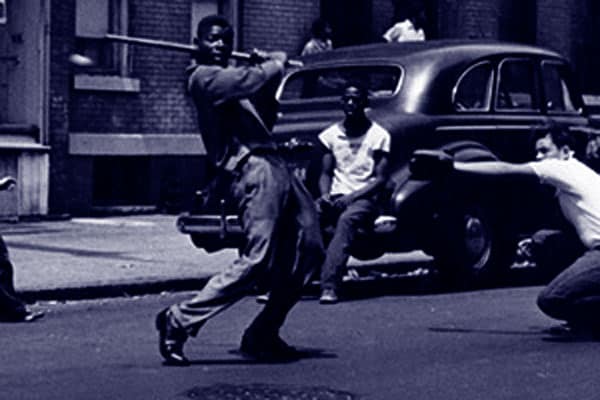
    Growing up in a poor neighborhood in Detroit in the early fifties, our neighborhood gang was composed of Black kids as well as the kids of European immigrants and there was even the girl next door that hung out with us for a while.

    We did fun things like exploring empty lots, laying in the grass making animals out of passing clouds, catching insects, playing cowboys and Indians, building rocket ships, making rubber band guns from clothes pins, and prowling allies for discarded “hidden treasures”.

    We never stole anything, but a neighbors cherry or peach tree was open season. Pity the unfortunate neighbor who had planted watermelons.

    We also had a “code of ethics”. You never cursed or used profanity on Sundays, you shared your candy with your friends even if it meant only getting a tiny piece of the Babe Ruth bar you just bought. If a friend was at your house at dinner time, you always invited them to dinner. We played the dozens with each other, a game where you’d talk down your buddy. However, if he disgraced your mother, it meant a fight. “Yo momma” was a call to action. However, even fighting had it’s own code. You never used a weapon, that was cowardly. If you knocked your opponent down, you reached out your hand to help him back up. And you NEVER kicked someone when they were down. Usually, when the fight was over, it meant a trip to the candy store together or just sharing another candy bar.

    We played in the streets until dark when the street lights came on, then, we could play around the house until bed time. Our parents always seemed to know what we were doing without even looking. Neighbors watched out for us and if ole lady Byers down the street caught me doing something improper, she’d grab me by the ear and drag me home where my mom would make me get my own switch.

    We also respected the police. Kids would crowd around a patrol car when it came into the neighborhood. Black cops were hero figures.

    We went to the movies in groups, sometimes with as many as seven or eight, it made the scary movies more fun and you had someone to walk home with when it got dark.

    In the winter, mom made ice cream from the snow and we played outside until our fingers were numb. We built snowmen in the yard and had snowball fights. You felt like you were growing up when you got your first pair of real gloves to replace the awful mittens your mom would make you wear.


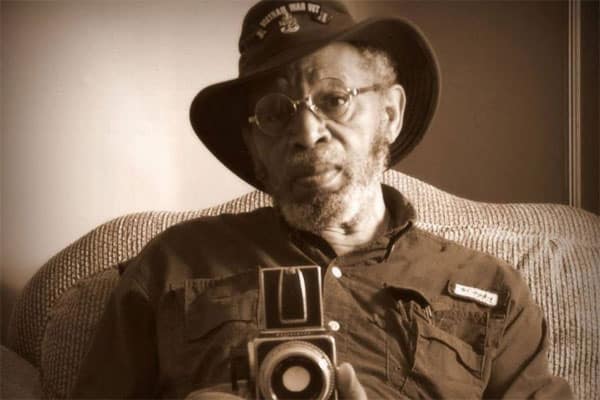
    Fredric Durrette served one tour in Vietnam, retired as E8 in the navy submarine service after 23 years. Major hobbies are collecting old stuff from the 20s and restoring old racing bicycles. Worked as a commercial photographer at JL Hudsons in Detroit and continue photography as a hobby. Love Sade, sixties soul, seventies rock, and all jazz. Attended Woodstock in 69!
    http://snakesafe.jalbum.net/
  • Grocery Shopping in the 1950s

    Grocery Shopping in the 1950s

    While my mom and I were poor and lived in a poor area of Detroit, we enjoyed life by making do with bare necessities. In Detroit in the 1950s, you were not alone. Neighbors shared whatever they could and contributed to the well being of their neighbors. As kids, we learned to make stuff out of other people’s trash.

    There were no big chain grocery stores then, maybe one big supermarket nearby, but we had mostly mom and pop stores scattered throughout the neighborhoods were you could purchase groceries, candy, cigarettes, beer, or toilet paper.

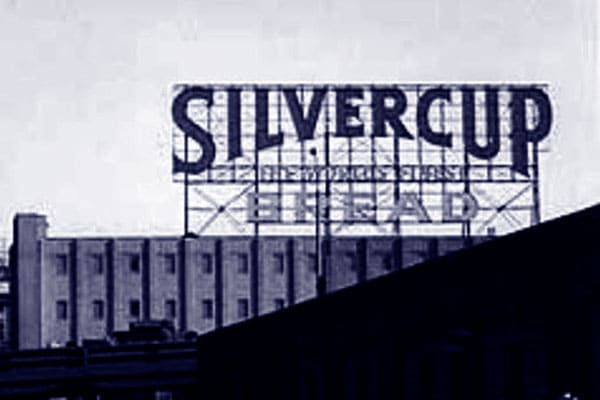
    There were two big bakeries in Detroit back then that produced the majority of the bread we ate. One was the Wonderbread bakery and the other was the Silvercup bread company. While Wonderbread was the larger, Silvercup was the last of the “grocery store” bakers and Silvercup bread still had those irregular holes that proved it was REAL bread. My favorite bread when I was growing up was Silvercup. Each loaf of SilverCup was made with one pint of milk. Or so it was claimed. The epitome of gluttonous, was to come home from the Saturday Matinee at the Mars Theater and find the 5 cent piece mom had placed on the kitchen table. That mobilized me to run across the street to Maggie’s Grocery store and buy 6 skinny slices of Bologna. The only dilemma was,, do I make two sandwiches with three slices of bologna or do I make three sandwiches with two slices. Mustard? Catchup? Forget it. We seldom could afford those frills.

    As adventurous kids, my little gang of neighborhood hoodlums would spend Sunday afternoons patrolling the alleys looking for neat stuff or supplies to make our go carts or rubber band guns. Or maybe a shipping container big enough to build a fort.

    On one such Sunday, and getting hungry, we found ourselves at the rear of the Silvercup bread factory, attracted by the smell of freshly baked bread. Scattered around the dumpster were several loaves of bread. Poking our heads into the dumpster, we struck gold. There were loaves and loaves of Silvercup bread still in unopened packaged loaves. After loading up and taking our booty home, we learned that it was day old bread that the bakery couldn’t or wouldn’t sell since their image was “freshly baked”. Their loss, our gain.

    We were all poor back then, so “free” bread was a gift. Hitting the dumpster behind the bakery became a weekly event. We started providing bread for the entire neighborhood, or at least for every home on Minnesota Street.

    Silvercup even had their “Silvercup rocket” that would tour the city and be exhibited at the state fair.

    Then one weekend, we discovered the Farmcrest Bakery on the corner of Medbury and Russell. Farmcrest produced those little pies that you used to see in the grocery stores. They usually sold for around twenty five cents back then. Needless to say, we had a successful raid on the dumpster behind the Farmcrest factory also. There were cherry pies, peach pies, apple pies, and even some Twinkie knockoffs. We only took stuff that was still packaged and unspoiled.

    So, even in poverty, we didn’t sit around complaining about being poor. In fact, I didn’t realize that we were poor until I became an adult. A few years later, some enterprising soul opened up a “day old bakery goods store” and sold the same stuff that we had gotten free.

    Fredric Durrette served one tour in Vietnam, retired as E8 in the navy submarine service after 23 years. Major hobbies are collecting old stuff from the 20s and restoring old racing bicycles. Worked as a commercial photographer at JL Hudsons in Detroit and continue photography as a hobby. Love Sade, sixties soul, seventies rock, and all jazz. Attended Woodstock in 69!
    http://snakesafe.jalbum.net/

    Take our 1954 Quiz!
  • Gilbert U-238 Atomic Energy Laboratory

    Gilbert U-238 Atomic Energy Laboratory

    Dangerous Toys: The Atomic Energy Lab

    The Atomic Energy Lab was released by the A.C. Gilbert Company in 1950. The kit’s intention was to allow children to create and watch nuclear and chemical reactions using radioactive material.

    The lab contained a cloud chamber that allowed the viewer to watch alpha particles traveling at 12,000 miles per second (19,000,000 m/s), a spinthariscope that showed the results of radioactive disintegration on a fluorescent screen, and an electroscope that measured the radioactivity of different substances that were in the set.

    This toy has been called “the world’s most dangerous toy” because of the radioactive material included in the set. Gilbert claimed that none of the materials could conceivably prove dangerous. However, the instructions cautioned that “users should not take ore samples out of their jars, for they tend to flake and crumble and you would run the risk of having radioactive ore spread out in your laboratory. This would raise the level of your background count.”

    Product Description:

    “Produces awe-inspiring sights! Enables you to actually SEE the paths of electrons and alpha particles traveling at speeds of more than 10,000 miles per SECOND! Electrons racing at fantastic velocities produce delicate, intricate paths of electrical condensation – beautiful to watch. Viewing Cloud Chamber action is closest man has come to watching the Atom! Assembly kit (Chamber can be put together in a few minutes) includes Dri-Electric Power Pack, Deionizer, Compression Bulb, Glass Viewing Chamber, Tubings, Power Leads, Stand, and Legs.”
    – Gilbert U-238 Atomic Energy Laboratory

    Fredric Durrette served one tour in Vietnam, retired as E8 in the navy submarine service after 23 years. Major hobbies are collecting old stuff from the 20s and restoring old racing bicycles. Worked as a commercial photographer at JL Hudsons in Detroit and continue photography as a hobby. Love Sade, sixties soul, seventies rock, and all jazz. Attended Woodstock in 69!
    http://snakesafe.jalbum.net/

  • Bandleader Glenn Miller Disappeared On December 15, 1944

    Bandleader Glenn Miller Disappeared On December 15, 1944

    Bandleader Glenn Miller Disappeared Over The English Channel

    American Army bandleader Glenn Miller (March 1, 1904 – December 15, 1944) was known not only for his conducting skills but also for a peculiar disappearance around Christmas Time.

    The 40-year-old was on a flight on December 15th, 1944, from England to France. He never arrived and instead is speculated to have crashed somewhere over the English Channel due to inclement weather. Initially, Miller was supposed to fly to France on an authorized Army aircraft but instead flew with a friend of his on a small plane. Army officials did not realize this until it was too late and are often blamed for Miller’s disappearance. 

    A missing-aircrew report was filed on December 16th but the news didn’t break until Christmas Eve that America’s beloved bandleader who’s show tunes entered the hearts of audiences throughout the war, was missing. 

    The news shocked many but gave little time for reaction since the Battle of The Bulge on Christmas Eve in Belgium and France. 

    Miller’s band members knew something had happened to their leader when he didn’t show up in Paris to conduct. His band members, labeled the best of their time, were devastated and furious with those who hadn’t kept track of his flight activity. 

    Also on the plane was Lieutenant Colonel Francis Norman Baessell, as well as the pilot, John R.S. Morgan. As mentioned, Miller wasn’t authorized initially to travel on that plane but wanted a quicker trip to Paris. Miller’s whereabouts are still unknown as his body, as well as the bodies of the accompanying passengers, were never found. He would be 117 today. 

    Still, Miller’s story is known as one of the great American mysteries. Many still honor his legacy around the holidays by playing his classic tunes including In The Mood, Moonlight Serenade, A String of Pearls, and many more. 

    His disappearance is associated with those the deaths of Buddy Holly, John Lennon, and later Michael Jackson. Miller is gone but not forgotten. His music comforted and brought hope to many during the war and still serves as a jazz classic today, soothing audiences around the world.

    Take our 1944 Quiz!
  • About Me: Fredric Durrette

    About Me: Fredric Durrette

    I am an American.
    I’ve been called Colored, Negro, Black, African American, high yellow, and even uncle Tom by some. I’ve also been called bubblehead, Super Fly, senior chief by others. But first and foremost I am an American. I will always be an American even though America isn’t a perfect country.

    I once swore an oath to defend America from it’s enemies, both domestic and foreign. That oath still stands. Further, I will not be pandered to nor will I accept the pandering from anyone because of my race or ethnicity. And I will not accept special consideration because of my race or ethnicity. Likewise, I will not not accept being harassed, mistreated, or denied because of my race or ethnicity. I am a man and can stand on my own through success or failure.

    I have faith and I trust my life to God. We are all brothers on this planet whether we like it or not and often what’s good for one is good for the other. I also walk to the beat of my own drum, so don’t expect me to be what you think I should be.

    I love my fellow man, so I try not to use harsh or vulgar language towards those I don’t agree with. I’ve seen war, death, and injustices throughout the years of my life, yet I still shed a tear when I see my country being torn apart. I’ve also seen kindness, good will, friendship, and the positive things that happen when people come together. That is the real strength of America and it makes me even more proud.

    Those are the things that I am. I neither hate nor condone hate, so if you disagree with me or even dislike me, it doesn’t matter. I am who I am, given my strength by my grandparents, my family, and my mother and guided by someone far greater than most of you know.

    If anyone wonders why I often post on racial issues, it’s because I believe that if we know our history, we can appreciate how far we’ve come. I’ve lived through the segregated bathrooms, the threat of KKK raids, the civil rights struggles, the riots in Detroit and a lot more. But, the one thing I have seen in my 75 years is the greatness of America and the civility of her people. Since “racism” and “racist” seem to have been entranced into the rhetoric of the left, it’s more important now than ever to put out the truth, without color or bias. Also, you can’t hold present or future generations responsible for what happened 200 years ago. The country was different then and the world was certainly less civilized. Holding grudges is the last resort of the ignorant.

    However, we also need to keep in mind that no matter how oppressive America was in the past, it allowed people of all ethnicities to gain an education, become doctors, lawyers, and scientists. African Americans who were the sons of ex slaves became millionaires. “Poverty”? Americans of all ethnicities have suffered poverty at some point of their history, as well as some form of discrimination..

    America has a constitution and a bill of rights. There are also volumes of state and city laws that have been passed to protect the rights of everyone. But, passing laws doesn’t change the minds of people. Only people can do that. You also have to realize that a law only gives you legal rights. You don’t eliminate racism by calling everything racist and you don’t end discrimination by burning flags or tearing down monuments. Burning the confederate flag didn’t eliminate racism, it only strengthened the position of real racists and alienated others to identify with extreme groups..

    The first time I went to the movies in Grenada, Mississippi back in 1955, we had to sit in the balcony. I didn’t quite understand this as the balcony seats were probably the best seats in the house. We weren’t allowed to buy concessions in the main lobby, so the adults would carry in some sodas and bags of fried chicken for us to snack on.

    I wish our politicians and world leaders would concentrate more on bringing us together that tearing us apart. We are all of one family and share the same needs and wants. Even those we call “enemies” have families, wives, sisters and brothers. The world is full of richness if we stop, look, and think… Hate, anger, avarice, and prejudice doesn’t benefit anyone. But most of all, think of what kind of world do you want your children to inherit. Each of us should strive to make the world a better place than what we were born into and it can be done by one person or with one gesture at a time.

    Fredric Durrette served one tour in Vietnam, retired as E8 in the navy submarine service after 23 years. Major hobbies are collecting old stuff from the 20s and restoring old racing bicycles. Worked as a commercial photographer at JL Hudsons in Detroit and continue photography as a hobby. Love Sade, sixties soul, seventies rock, and all jazz. Attended Woodstock in 69!
    http://snakesafe.jalbum.net/
  • The U.S. Army ‘Buffalo Soldiers’ Took a 1,900-mile Trek to St. Louis

    The U.S. Army ‘Buffalo Soldiers’ Took a 1,900-mile Trek to St. Louis

    The U.S. Army ‘Buffalo Soldiers’ Took a 1,900-mile Bicycle Trek to St. Louis

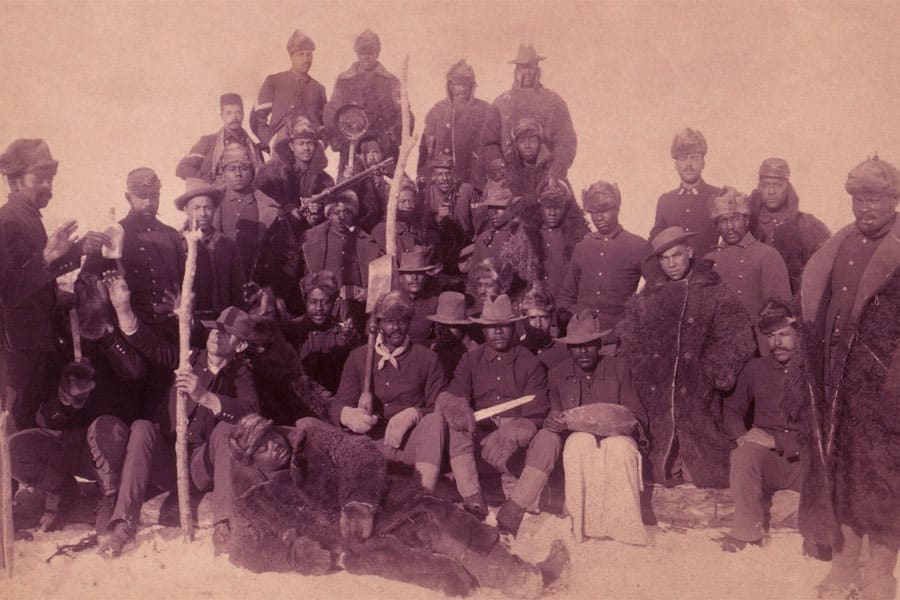
    The Buffalo Soldiers were originally the 10th Cavalry Regiment of the US Army, founded in 1864 in Buffalo, New York, USA, in response to the Civil War. While several African American regiments were part of the Union Army during the Civil War, including the 1st, 2nd, 3rd, 4th, 5th and 6th Colored Cavalry, the Buffalo Soldier was created by Congress in 1865.

    Native American tribes who fought in the Indian Wars were nicknamed the Black Cavalry by the Indians of the American Indian Reservation, who had participated in a number of battles against the US Army during the Civil War, such as the Battle of Buffalo.

    On June 14, 1897, Lt. James Moss led his bicycle corps from Fort Missoula, Montana, through a wagon trail and Indian path, arriving in St. Louis on July 16, 1897.

    The  25th Infantry US Army soldiers cycled 1,900 miles from St. Louis to the Indian Reservation in the western United States in 1864, the year after the Battle of Buffalo. The 20 soldiers who took part in the trip were part of a racially segregated group known as the Buffalo Soldiers. The term referred to black soldiers serving west of Mississippi in regiments established by that regiment between 1866 and the end of the Civil War.

    The trip was followed in newspapers across the country, and in 1897 there was a story about it in the summer. I was embedded as a newspaperman and visited all five states and followed the journey with newspapers from all over the country.

    American soldiers reportedly had difficulty using their bikes during the war. They took the trek to test the use of bicycles before the practice became more common in the United States during World War I and the Civil War.

    Lieutenant James Moss demonstrated the potential of bicycles by taking eight soldiers on a three-day training trip from Buffalo to Lake Erie and back. The training consisted of a 40-mile ride through an obstacle course, which included a nine-foot fence that the men had to overcome by leaning the bike against the fence, standing on its seat, climbing over it, and then moving it up and down. Moss began his first bike ride in the US Army at the age of 18.

    Success encouraged him and he ventured out on his own in March 2009 on his first bike ride in the US Army.

    Some local farmers gave wrong directions.  had to scrape the mud he called “Black Gumbo” from tires with a butter knife. 

    Runaway, uncontrolled, unstoppable acceleration was the order of the day, and the bicycle convoy passed through farms and small towns at regular intervals. Men pushed their bikes through snow, rocks, and ruts, blocked streams, crossed mountain ranges, suffered from heat, cold, hunger and lack of sleep. They suffered the worst effects of drinking alkaline water and soon realized that the spoon brake on their bicycles could not cope with the eastern slopes of Helena, Montana. They experienced searing heat and a ride along the railway tracks that numbed their hands.

    Occasionally, farmers would let the men stay on their land, give them something fresh to eat, or simply ask questions. When a civilian asked a man: “Where are you going today? “And he said,” I’m on my way home.

    Although the trip was a success, the soldiers had to deal with harsh conditions in their five-country travels. In June, a snowstorm in the Rocky Mountains brought 11 inches of snow to riders. On the other side of the ice, soldiers from Nebraska hit a sweltering 110 degrees. An ice storm hampered progress, and some soldiers’ hands froze on the handlebars and ice stuck to chains.

    Although the trip was considered a success, it was slowed down by the Spanish-American War, which began a year after her trip.


  • Rufus Buck Gang

    Rufus Buck Gang

    Rufus Buck Gang

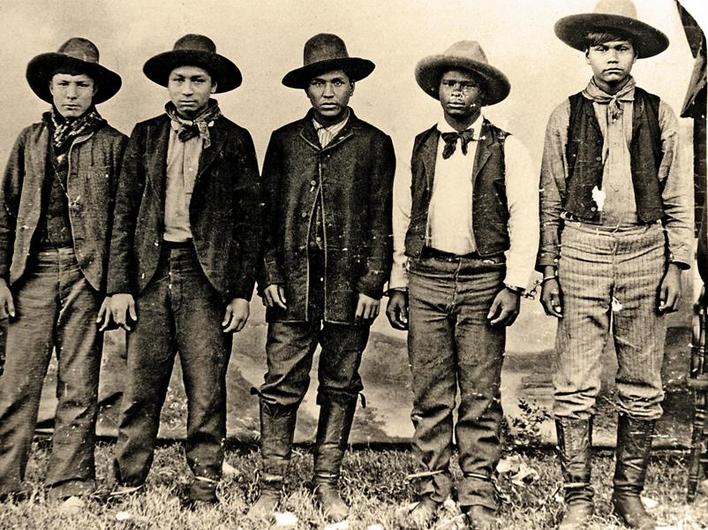
    July 6th is the anniversary of the hanging of the Rufus Buck Gang- four black and Indian teens who tried to singlehandedly, violently halt the expansion of the burgeoning United States. You’ve never heard of them, but they stand among the most notorious and politically significant outlaws of the Old West.

    The famous “Hanging Judge” Isaac Parker oversaw the Buck Gang’s capture and condemned them to death. They were associated with the infamous half-black, half-Cherokee outlaw Cherokee Bill. Their crimes were motivated by the U.S. annexation of “Indian Territory” (today’s Oklahoma). The socio-politics surrounding the Buck Gang rampage clearly heralded the emergence of the 20th century United States.

    The Rufus Buck Gang weren’t gunslingers like Billy the Kid, or thieves like the James-Younger gang. They wanted justice, and they sought it with the same violence that had marked their histories as blacks and Indians in America.

    The Indian Territory of the late 20th century was a racial melting pot. It contained more whites than Indians as well as a significant population of black Freemen. Judge Parker’s principal deputy was a black man named Bass Reeves. Whites had come to usurp the promised Indian lands, bit by bit. But in Washington, laws were being passed to allow the wholesale submersion of Indian Territories into the United States. Native people would lose their last chance at a homeland. This enraged Buck.

    By 1895 “Hanging Judge” Isaac Parker had been the sole law in Indian Territory for decades. His last major duty was to capture the Rufus Buck Gang, who embarked on a 13-day rampage in the vain hope of inciting the Territory’s blacks and Indians to violent rebellion against the encroaching United States.

    Fredric Durrette served one tour in Vietnam, retired as E8 in the navy submarine service after 23 years. Major hobbies are collecting old stuff from the 20s and restoring old racing bicycles. Worked as a commercial photographer at JL Hudsons in Detroit and continue photography as a hobby. Love Sade, sixties soul, seventies rock, and all jazz. Attended Woodstock in 69!
    http://snakesafe.jalbum.net/