web analytics

Category: Debatable

  • The Universe 25 Experiment

    The Universe 25 Experiment


    Universe 25

    The Universe 25 experiment, conducted by American ethologist John B. Calhoun in the late 1950s and early 1970s, remains a significant study in behavioral science. This experiment was designed to test the effects of a perfect environment on mice’s behavior, with a particular focus on population density and social behavior.

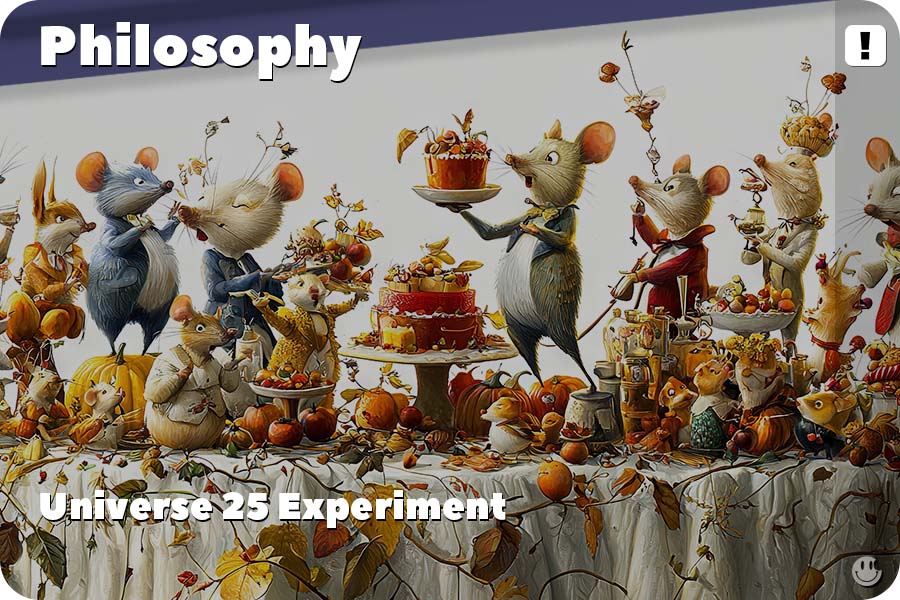
    Calhoun created what he termed a “Mouse Utopia,” a specially designed habitat at the National Institute of Mental Health that provided unlimited food, water, nesting material, and no threat of predators. Four breeding pairs of mice were introduced into this environment to observe how the population would grow and behave under ideal living conditions.

    Initially, the mouse population flourished, doubling in size approximately every 55 days. However, as the population grew, it began to experience social breakdowns. By the time the population reached 620, the growth rate slowed significantly, and the societal structure of the mice began to collapse. The breakdown included mice failing to perform their expected societal roles, increased violence, and abnormal sexual behaviors. Calhoun referred to this breakdown as the “behavioral sink.”​

    The societal breakdown led to several peculiar behaviors. For instance, isolated groups of mice, which Calhoun called “the beautiful ones,” entirely withdrew from normal social behaviors and spent their time grooming themselves. Reproductive behaviors declined, maternal care decreased, and the infant mortality rate increased dramatically. Eventually, the population growth ceased, and the existing mice aged without replacement, leading to the extinction of the colony.​

    Calhoun’s findings were interpreted as a dark metaphor for human societies’ potential fate. He proposed that, like the mice, human societies could face similar fates under overpopulation and excessive abundance. The experiment has been cited in discussions about urban decay, social isolation, and the impact of ideal living conditions devoid of usual survival challenges.​

    The Universe 25 experiment highlighted the importance of social roles and activities in maintaining a balanced society. It sparked debates on the ethics of population control and the design of living spaces to mitigate the negative social impacts of overcrowding. The study remains a profound reminder of the complex interplay between environment and social behavior, relevant not only in scientific circles but also in urban planning and social policy discussions.​

    The Universe 25 experiment conducted by John Calhoun has been widely discussed and analyzed from various perspectives, both scientifically and philosophically. Here are some of the key viewpoints and analyses regarding the experiment and its broader implications:

    Scientific Insights

    1. Behavioral Sink: Calhoin’s “behavioral sink” concept is central to the experiment’s findings. This term describes the collapse of normal behaviors as a result of overcrowding. Mice exhibited increased aggression, abandonment of the young, and withdrawal from society, which led to the population’s eventual collapse. This phenomenon raised questions about the impact of high density on mental health and social structures.
    2. Social Withdrawal and the “Beautiful Ones”: Some of the mice, referred to as “the beautiful ones,” completely withdrew from social interactions, focusing solely on self-grooming and showing no interest in sexual activities or fighting, which are natural mouse behaviors. This withdrawal highlighted potential concerns about the effects of societal breakdown on individual psychology and social roles​.

    Philosophical and Societal Reflections

    1. Human Societal Analogies: Calhoun himself drew parallels between his mouse utopia and potential human societies. The experiment has been used as a metaphor for human urban environments, where overcrowding and social isolation could lead to similar breakdowns. Critics argue whether these analogies are valid, considering the significant differences between humans and mice in social complexity and adaptability​.
    2. Criticism of Utopian Pursuits: The experiment critiques the quest for a utopian society, suggesting that a seemingly perfect environment that satisfies all physical needs might still lead to psychological and social turmoil. This viewpoint challenges the notion that fulfilling all material needs leads to a harmonized society​mind-treats.com.

    Ethical Considerations

    1. Ethical Implications: The ethical implications of Calhoun’s work, particularly concerning the treatment of animals in research settings, have been a topic of debate. Additionally, applying his findings to justify population control measures or social interventions raises ethical concerns about the potential to misuse scientific research in social policy.

    Broader Impact on Public Policy and Urban Planning

    1. Influence on Urban and Social Planning: The experiment’s insights have influenced ideas about urban planning and housing. Some suggest that understanding the effects of density on social interaction could inform better designs for housing and public spaces, potentially preventing social issues related to overcrowding.

    These viewpoints contribute to a multifaceted understanding of the Universe 25 experiment, highlighting the complex interplay between environment, behavior, and society. The ongoing interest in Calhoun’s work demonstrates its lasting impact on discussions about environmental design, public policy, and the ethical treatment of animals in scientific research.
     

  • 25 Ethical Questions

    25 Ethical Questions

    25 Ethics Questions To Ponder

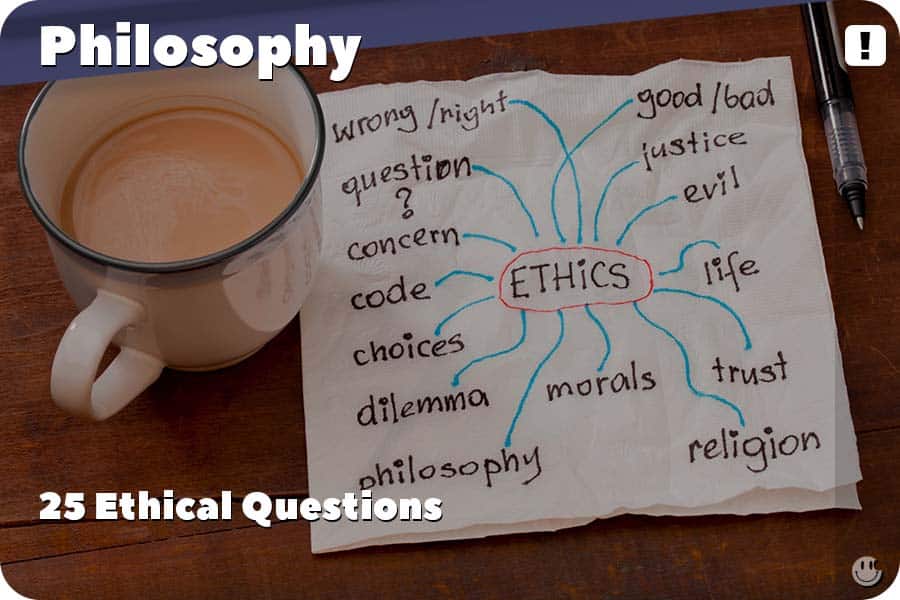
    Here’s a list of 25 modern ethical and philosophical questions along with some potential positive, negative, and neutral connotations or answers:

    1. Is genetic engineering of humans ethical?

      • Positive: Can prevent genetic diseases, improve human capability.

      • Negative: May lead to eugenics, inequality.

      • Neutral: Requires careful regulation and public discourse.

    2. Should autonomous vehicles prioritize passenger or pedestrian safety?

      • Positive: Saves lives through reduced human error.

      • Negative: Difficult ethical decisions programmed by humans.

      • Neutral: Reflects complex societal values and safety concerns.

    3. Is it ethical to colonize Mars?

      • Positive: Ensures human survival, new resources.

      • Negative: Risk of harming potential Martian ecosystems.

      • Neutral: Depends on execution and respect for potential life.

    4. Should animals have the same rights as humans?

      • Positive: Acknowledges sentience and suffering.

      • Negative: Could impact necessary medical research, food resources.

      • Neutral: Rights should be appropriate to the species’ needs.

    5. Is digital privacy a fundamental right?

      • Positive: Protects personal freedoms and autonomy.

      • Negative: Can conflict with security and law enforcement needs.

      • Neutral: Balances between privacy and security are necessary.

    6. Is it morally acceptable to use drones in warfare?

      • Positive: Reduces risk to military personnel.

      • Negative: May increase casual attitudes towards conflict.

      • Neutral: Use should be regulated by strict ethical guidelines.

    7. Should we implement a universal basic income?

      • Positive: Reduces poverty and inequality.

      • Negative: Potentially unsustainable economically.

      • Neutral: Effectiveness depends on the economic context.

    8. Is artificial intelligence a threat or a benefit to society?

      • Positive: Enhances efficiency and capabilities in various sectors.

      • Negative: Potential job displacement, ethical concerns.

      • Neutral: AI development should be carefully managed.

    9. Should euthanasia be legalized?

      • Positive: Allows dignity in death, relieves suffering.

      • Negative: Potential for abuse and moral conflicts.

      • Neutral: Should come with strict safeguards and consent processes.

    10. Is it ethical to clone extinct animals?

      • Positive: Could restore lost species and ecosystems.

      • Negative: Diverts attention from conserving existing species.

      • Neutral: Ethical considerations depend on reasons and methods.

    11. Should voting be mandatory?

      • Positive: Increases democratic participation.

      • Negative: May violate personal freedom of choice.

      • Neutral: Could be one element of broader civic engagement reforms.

    12. Is it ethical to keep animals in zoos?

      • Positive: Helps with conservation and education.

      • Negative: Can cause suffering and unnatural living conditions.

      • Neutral: Depends on the zoo’s quality and ethical standards.

    13. Should we allow surveillance for national security?

      • Positive: Helps prevent terrorism and crime.

      • Negative: Infringes on individual privacy rights.

      • Neutral: Needs strict oversight and legal frameworks.

    14. Is it ethical to consume meat?

      • Positive: Part of natural human diet and tradition.

      • Negative: Ethical concerns about animal welfare and environmental impact.

      • Neutral: Personal choice informed by ethical and environmental considerations.

    15. Should parents be allowed to choose their baby’s traits?

      • Positive: Reduces genetic diseases, enhances life opportunities.

      • Negative: Raises issues of inequality and ‘designer babies’.

      • Neutral: Needs ethical oversight and societal consensus.

    16. Is the death penalty justifiable?

      • Positive: Deters crime, provides justice for victims.

      • Negative: Risk of wrongful execution, inhumane.

      • Neutral: Should be debated and decided democratically.

    17. Should we prioritize environmental policy over economic growth?

      • Positive: Ensures sustainable living conditions for future generations.

      • Negative: Could hinder economic development and job creation.

      • Neutral: Policies should aim to balance environmental and economic factors.

    18. Is it ethical to enhance humans physically and mentally through technology?

      • Positive: Improves quality of life and human capabilities.

      • Negative: Could exacerbate social inequalities.

      • Neutral: Should be regulated to ensure fair access and ethical use.

    19. Should social media companies regulate content on their platforms?

      • Positive: Reduces misinformation and harmful content.

      • Negative: Threatens free speech and expression.

      • Neutral: Requires transparent policies that respect user rights.

    20. Is it ethical to use placebo treatments?

    • Positive: Can be beneficial in clinical research and treatment.

      • Negative: Deceptive and may undermine trust in medical practice.

      • Neutral: Ethically acceptable if patient welfare is improved and no better treatment is available.

    1. Is social media responsible for increasing loneliness?

      • Positive: Provides a platform for connection, especially for those isolated by geography or disability.

      • Negative: Encourages superficial interactions and a focus on quantity of connections over quality.

      • Neutral: The impact varies widely depending on how individuals use and interact with social media.

    2. Should all drugs be legalized?

      • Positive: Reduces the criminal activities associated with drug trafficking.

      • Negative: Could lead to increased health problems and societal issues.

      • Neutral: Regulation and education might mitigate risks and provide health benefits.

    3. Is it ethical for companies to track their employees’ online activities?

      • Positive: Can enhance security and productivity.

      • Negative: Invades privacy and can create a distrustful work environment.

      • Neutral: Acceptable if transparent and limited to work-related activities.

    4. Is censorship ever justified in a free society?

      • Positive: Necessary to protect individuals from harm and misinformation.

      • Negative: Can be used to suppress dissent and control public opinion.

      • Neutral: Justifiable when it protects the vulnerable without stifling essential freedom.

    5. Should we prioritize the exploration of space over solving Earth’s current problems?

      • Positive: Can lead to technological advancements and long-term survival of humanity.

      • Negative: Diverts resources and attention from pressing environmental and social issues.

      • **A neutral stance might consider the benefits of technology and knowledge gained from space exploration that could potentially address Earth’s challenges.

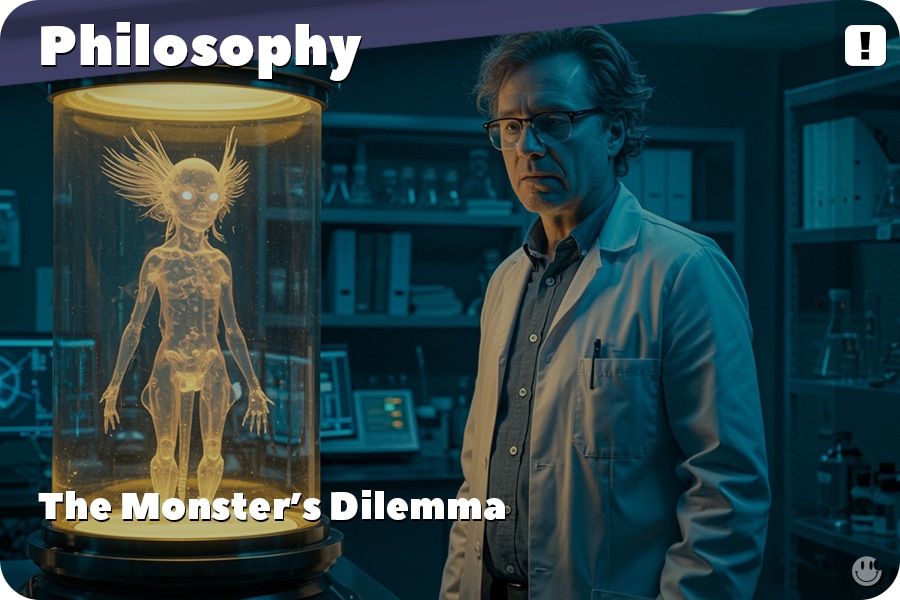
  • The Monster’s Dilemma

    The Monster’s Dilemma

    The Monster’s Dilemma: Should We Create What Might Suffer or Harm?

    Imagine a brilliant scientist on the verge of a breakthrough: they’ve designed a sentient creature—highly intelligent, potentially powerful, and capable of immense good. But there’s a catch.

    The creature might suffer.

    It might suffer a lot.

    It might also hurt others.

    Should the scientist flip the switch and bring it to life?

    This is The Monster’s Dilemma, a thought experiment rooted in Frankenstein, infused with bioethics, and increasingly relevant in debates about artificial intelligence, synthetic biology, and genetic engineering. It challenges us to confront the ethics of creation: just because we can make something—should we?

    The Origins of the Thought Experiment

    While there’s no single philosopher credited with the Monster’s Dilemma as a formal concept, its essence has existed for centuries:

    • In Mary Shelley’s Frankenstein (1818), Victor Frankenstein creates life—only to recoil from what he’s made. The creature, shunned and tormented, becomes violent. Victor must ask himself: Who is responsible for the monster’s pain?

    • In modern AI ethics, researchers ask: Should we create machines that can suffer or cause suffering?

    • In bioethics, we question whether it’s right to engineer life forms that may endure pain or whose existence might carry unintended consequences.

    At the heart of the Monster’s Dilemma is a twofold risk:

    1. Creating a being that suffers.

    2. Creating a being that causes suffering.

    Is Creation Itself a Moral Act?

    The dilemma raises profound ethical questions about responsibility and intention:

    Deontological Ethics

    From a deontological perspective, some acts are inherently wrong—regardless of outcome.

    • Creating life that suffers may violate a duty not to cause unnecessary harm.

    • Even if the creature is never harmful, the act of creating something destined to suffer may be wrong in itself.

    The question becomes: Is it ever ethical to bring pain into existence knowingly?

    Utilitarian Ethics

    A utilitarian might weigh total happiness vs. total suffering. The creation might be justified if the creature can live a meaningful, mostly positive life—or benefit others.

    But the risks are real:

    • The act is unethical if the creature suffers more than it brings joy.

    • If it harms others, its creation might lower total well-being.

    Utilitarianism asks: Can we predict and responsibly manage the outcomes?

    Virtue Ethics

    A virtue ethicist might ask about the creator’s character:

    • Is the scientist acting out of hubris or genuine curiosity?

    • Is there compassion in how the creature will be treated?

    • Does the creator take moral responsibility, or just seek achievement?

    Being a “good person” may mean pausing before playing god.

    Real-World Parallels

    Though Frankenstein’s monster is fictional, the moral issues are real—and growing more relevant.

    1. Artificial Intelligence

    Creating machines that mimic or exceed human intelligence raises major concerns:

    • What if AI develops consciousness or sentience?

    • Would turning off such an AI be murder?

    • What if it turns against us, like HAL 9000 or Skynet?

    Experts like Nick Bostrom warn about unintended consequences from AI systems that optimize goals in harmful ways. (See: Superintelligence, 2014)

    2. Animal Engineering

    Genetic modification of animals for food, research, or aesthetics raises questions:

    • Are we creating creatures with built-in suffering?

    • Does the utility (food, medical progress) outweigh the moral cost?

    Some bioethicists advocate for a “no unnecessary suffering” rule, especially for sentient beings.

    3. Synthetic Life

    Scientists have begun creating synthetic organisms—new life forms built from DNA.

    • Should we create organisms that we cannot fully understand or control?

    • What are our obligations if a synthetic being becomes sentient or gains agency?

    Existence without consent is a troubling theme. After all, no one asks to be born—least of all a lab-grown monster.

    4. AI Companions and Emotional Robots

    Designing robots that mimic love, pain, or attachment can emotionally manipulate users and raise questions about the machines’ emotional lives.

    If a robot feels heartbreak when turned off, have we done something cruel?

    Moral Risk vs. Moral Reward

    Sometimes, the Monster’s Dilemma becomes a question of moral risk tolerance.

    • Do the benefits of creation outweigh the ethical uncertainties?

    • Is it worse to never try—and never know what good might have come?

    But there’s also a slippery slope: where do we stop once we justify one risky creation?

    This concern has echoes in nuclear research, bioweapons, and dual-use technologies. Every tool of great power carries the shadow of potential misuse.

    Lessons from Frankenstein

    Shelley’s Frankenstein remains the definitive allegory of the Monster’s Dilemma. It’s not just about science—it’s about responsibility:

    • Victor’s real failure isn’t making the creature.

    • It’s abandoning it.

    • It’s ignoring the moral obligations that come after creation.

    This warning remains strikingly modern: inventors, developers, and technologists are often eager to push boundaries—but who stays to raise the monster?

    Counterarguments: Isn’t All Life Risky?

    Some argue that:

    • Human life is full of suffering, yet we continue to reproduce.

    • We cannot know how a being’s life will turn out—so long as there’s a chance for joy, why not create it?

    This view values potential and autonomy, suggesting that a being deserves the chance to exist and find meaning, even at risk.

    But critics respond: accepting life’s risks for ourselves is one thing. It’s another to create a life we know could suffer—without consent.

    Glossary of Terms

    • Bioethics – The study of ethical issues in biology and medicine.

    • Sentience – The capacity to feel, perceive, or experience subjectively.

    • Utilitarianism – An ethical theory focused on maximizing happiness and minimizing suffering.

    • Deontology – Ethics based on duty, rules, or inherent right and wrong.

    • Existential Risk – A risk that threatens the entire future of humanity or intelligent life.

    Discussion Questions

    1. Is it ever ethical to create something that might suffer or harm others?

    2. Do creators have moral responsibility for the outcomes of what they make?

    3. Where should we draw the line between curiosity, invention, and caution?

    References and Further Reading


  • The Ring of Gyges

    The Ring of Gyges

    The Ring of Gyges: Exploring Morality and Invisibility

    What would you do if you could never be caught?

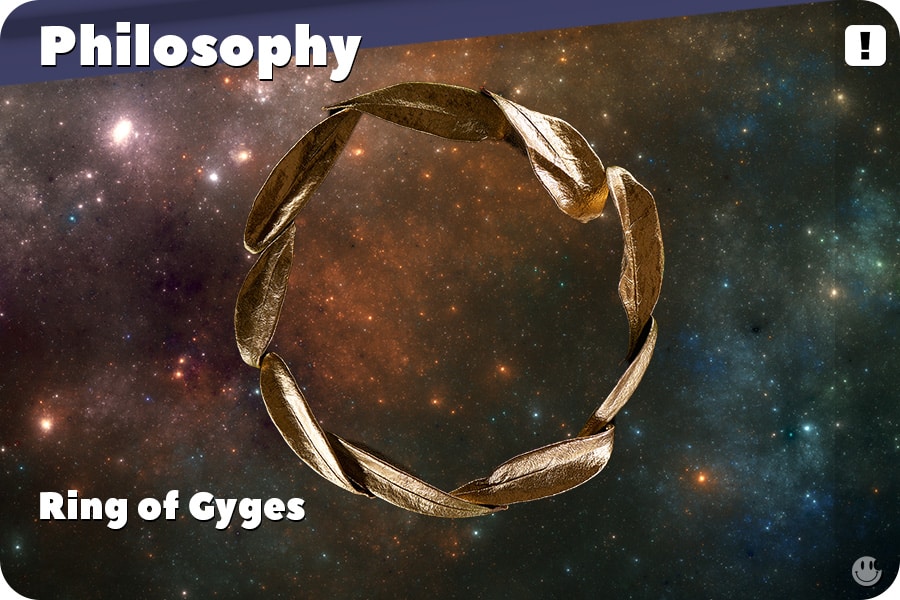
    That’s the challenge posed by The Ring of Gyges, a thought experiment introduced by Plato in The Republic (Book II). It’s not just a magic story. It’s a deep dive into the nature of morality, justice, and human character—a tale that’s as relevant today as it was in ancient Greece.

    The scenario is simple but unsettling: Would you still act morally if no one could see your actions? And if not, what does that say about the real source of our ethics?

    The Story

    Plato tells the story through Glaucon, who challenges Socrates by recounting the myth of Gyges, a shepherd in the service of the king of Lydia.

    One day, after an earthquake, Gyges discovers a cave containing a bronze horse with a dead giant inside. On the corpse’s finger is a mysterious ring. Gyges takes it and soon discovers that he becomes invisible when he turns the ring inward.

    With his newfound power, Gyges seduces the queen, murders the king, and seizes the throne.

    No one holds him accountable. No one knows what he’s done. And that’s the point.

    According to Glaucon, anyone—no matter how just—would act the same if they had such power.

    Glaucon’s Challenge

    Glaucon uses the story to argue that people are only just because of social consequences. We don’t want to be punished. We want approval. But take away those consequences—through a ring of invisibility—and our true selfish nature will emerge.

    He says that justice is a social contract, a mutual agreement among people who fear the consequences of wrongdoing. Strip away that fear, and morality collapses.

    Or does it?

    This is the question Socrates—and Plato—aim to explore throughout the rest of The Republic.

    The Real Ethical Dilemma

    The Ring of Gyges isn’t about fantasy. It’s about temptation. Plato’s challenge is timeless:

    • If you could act without consequences…

    • If you could steal, lie, or cheat with impunity…

    • If you could harm without being caught…

    …would you still choose to be good?

    And if the answer is no, does that mean justice is just a performance?

    Socrates’ Rebuttal

    Socrates doesn’t deny that the ring could corrupt. But he argues that injustice damages the soul of the one who commits it. Even if a person gains power or pleasure through wrongdoing, they suffer internally—through disordered desires, anxiety, or spiritual disharmony.

    In Plato’s vision, justice is not just about external rules. It’s about inner harmony. A just person is aligned with reason, controls their impulses, and lives with peace of mind.

    In this view, morality is its own reward—even if no one is watching.

    Modern Parallels

    The Ring of Gyges has found echoes in countless modern scenarios:

    1. Online Anonymity

    On the internet, many people behave worse under the mask of anonymity—trolling, doxxing, or spreading misinformation. Without accountability, the ring goes digital.

    2. Whistleblowers vs. Corrupt Officials

    When people think they’re untouchable—politicians, executives, even religious leaders—they sometimes act as if the rules don’t apply. Invisibility comes in many forms: legal power, social privilege, or institutional cover.

    3. Surveillance and Ethics

    Debates about government surveillance often raise this question in reverse: If people behave better when they know they’re being watched, is mass surveillance justified?

    Would you prefer a society where people do the right thing because it’s right, or because they’re afraid of being seen?

    The Psychology of Hidden Actions

    Research in psychology supports Plato’s concern. Studies show that **people are more likely to cheat or lie when:

    • They feel anonymous

    • They perceive low risk of detection

    • They think “everyone else is doing it”

    Conversely, people are more ethical when:

    • They reflect on their values

    • They feel watched or accountable

    • They see others acting ethically

    In short, character and context both matter. The ring doesn’t create evil but reveals what’s already there.

    Related Thought Experiments

    • The Trolley Problem: Focuses on moral decision-making with visible consequences. The Ring of Gyges flips that script—what happens when no consequences exist?

    • The Experience Machine: Explores whether pleasure is enough, or if authenticity matters too.

    • Plato’s Allegory of the Cave: Also in The Republic, it contrasts illusion and enlightenment—another journey from shadow to truth.

    These stories all test what it means to live a good life.

    Pop Culture References

    The Ring of Gyges has inspired many fictional works:

    • The One Ring in Tolkien’s Lord of the Rings: Grants invisibility—and slowly corrupts the bearer.

    • H.G. Wells’ The Invisible Man: A scientist turns invisible and descends into madness and crime.

    • Harry Potter’s Invisibility Cloak: Used for both noble and mischievous ends.

    The trope of “power without consequence” is a storytelling staple—and a moral test.

    What Would You Do?

    Here’s the twist: Most people believe they would still act morally. But when tested, the line between who we are and what we do when no one’s watching often blurs.

    The Ring of Gyges forces us to ask:

    • Is morality real, or is it performance?

    • Do we act justly out of principle or out of fear?

    • Who are we when no one is looking?

    It’s easy to say, “I would never,”—but the point is to ask, “What would keep me from doing wrong?”

    Glossary of Terms

    • Justice: Fairness or moral rightness; in Plato’s philosophy, inner harmony between reason, spirit, and desire.

    • Ethics: The study of right and wrong behavior.

    • Social Contract: The idea that society is based on mutual agreements for the common good.

    • Anonymity: The condition of being unknown or unidentifiable—often linked to moral disengagement.

    • Moral Character: The traits or habits that reflect how a person consistently chooses right from wrong.

    Discussion Questions

    1. Would you act differently if you knew no one would ever find out?

    2. What keeps you from doing something wrong: consequences, conscience, or community?

    3. Is morality still meaningful when no one else is affected or aware?

    References and Further Reading

  • The Paradox of Hedonism

    The Paradox of Hedonism

    The Paradox of Hedonism: Why Chasing Happiness Can Leave You Empty

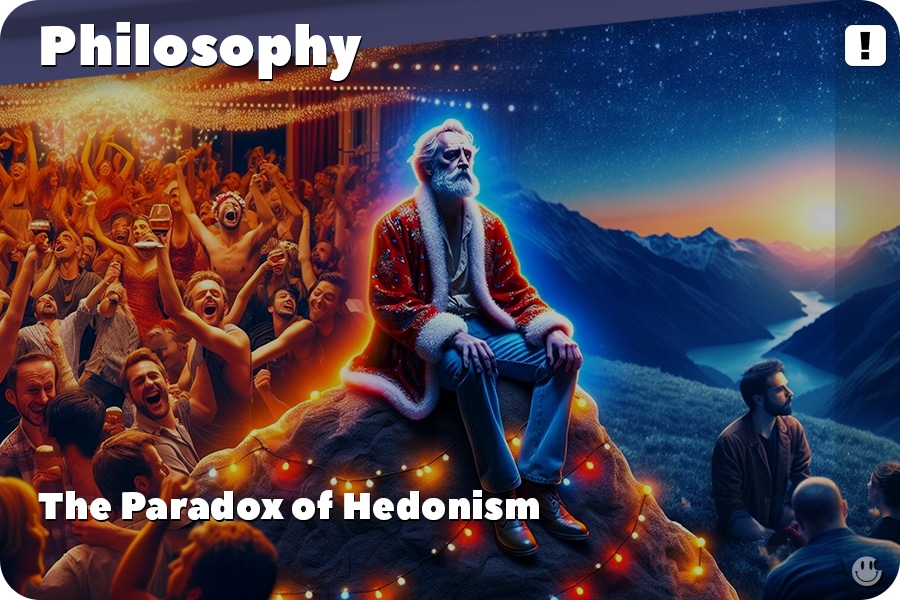
    Happiness. It’s the one thing nearly everyone wants—and yet, the harder we chase it, the more elusive it seems. This odd reality is captured in a philosophical idea known as the paradox of hedonism, which suggests that pursuing pleasure directly often leads to disappointment, not satisfaction.

    It sounds counterintuitive: If you want to be happy, shouldn’t you pursue what feels good? But countless thinkers, from Greek philosophers to modern psychologists, have argued the opposite—that happiness is best achieved as a byproduct, not a goal.

    Let’s unwrap this paradox and explore why joy doesn’t like to be hunted.

    What Is the Paradox of Hedonism?

    Also known as the pleasure paradox, this idea suggests that:

    The more intensely you pursue pleasure or happiness for its own sake, the less likely you are to achieve it.

    Coined by British philosopher Henry Sidgwick in the 19th century and popularized by John Stuart Mill, the concept isn’t just theoretical. It has practical roots in how people live, work, love, and struggle.

    Mill himself put it succinctly:

    “Those only are happy who have their minds fixed on some object other than their own happiness.”

    Ancient Roots: The Greeks Were Onto Something

    The paradox isn’t new. Epicurus, the ancient Greek philosopher often (mis)labeled a hedonist, believed that true pleasure comes from simplicity, moderation, and avoiding pain—not from indulgence.

    • He warned against luxury for its own sake.

    • He taught that peace of mind (ataraxia) was more valuable than bursts of sensory pleasure.

    In short: Don’t chase the high. Cultivate the calm.

    Modern Psychology Agrees

    Today’s psychologists echo these ideas with evidence-based studies:

    1. Happiness as a Side Effect

    Research shows that people who focus too much on being happy often feel worse in the long run. Why?

    • It sets unrealistic expectations.

    • It leads to constant self-monitoring.

    • It increases disappointment when feelings don’t match the goal.

    2. Flow Theory

    Psychologist Mihaly Csikszentmihalyi introduced the concept of flow—a state of intense engagement where time fades and effort feels effortless.

    Ironically, people in flow aren’t thinking about happiness. They’re immersed in something meaningful—and happiness follows.

    3. Self-Determination Theory

    According to this model, intrinsic goals (like connection, mastery, and autonomy) lead to deeper well-being than extrinsic goals (like fame, wealth, or constant pleasure).

    Pursuing meaning leads to satisfaction. Pursuing pleasure alone often does not.

    Real-Life Examples

    You don’t have to be a philosopher to experience this paradox.

    • Romance: The person desperate to find love may come across as clingy or anxious—and sabotage relationships.

    • Leisure: Obsessing over having the perfect vacation can make you miserable when things don’t go exactly as planned.

    • Social Media: Chasing likes, follows, and digital approval might feel rewarding in the moment, but studies show it often undermines long-term well-being.

    The harder you try to feel good, the more you notice when you don’t.

    So What Does Work?

    If direct pursuit is flawed, how do we find happiness? Philosophers and psychologists offer a few detours that work surprisingly well.

    1. Focus on Others

    Volunteering, acts of kindness, and social connection consistently rank high in happiness studies. People who give their time and attention to others often report more personal satisfaction than those who focus solely on themselves.

    2. Engage in Purposeful Work

    Finding “your thing”—a skill, job, or calling that matters—creates structure and pride. Even difficult tasks can yield satisfaction if they’re meaningful.

    3. Cultivate Gratitude

    Regularly reflecting on what’s already good in your life shifts the focus away from what’s missing. This reorientation helps combat the “hedonic treadmill,” where you quickly adapt to new pleasures and want more.

    4. Let Go a Little

    Sometimes, the best path is simply not trying so hard. Mindfulness practices like meditation teach people to accept the moment, not force it to be joyful. Happiness often shows up when you stop demanding it.

    Ethical Dimensions

    The paradox also raises moral questions. Is it selfish to chase personal pleasure above all else? Can a life devoted solely to hedonism be fulfilling—or even moral?

    1. Utilitarianism vs. Egoism

    Utilitarians like Mill believed that seeking the good of others often enhances your own well-being. Egoists, in contrast, prioritize personal gain. The paradox suggests egoism might be self-defeating: chasing happiness alone can make you unhappy.

    2. Virtue Ethics

    From this angle, a good life isn’t one filled with pleasure—it’s one lived with courage, wisdom, and compassion. Happiness is the shadow cast by living well, not the object in the spotlight.

    3. Existentialism

    Philosophers like Viktor Frankl and Albert Camus emphasized meaning over pleasure. Frankl, a Holocaust survivor, famously wrote:

    “Happiness cannot be pursued; it must ensue.”

    In extreme suffering, happiness may be out of reach—but meaning never has to be.

    Cultural Influences

    Western cultures often emphasize personal happiness as a life goal. But other traditions view it differently:

    • Buddhism teaches that desire is the root of suffering—and that clinging to pleasure leads to pain.

    • Confucianism values harmony, duty, and social order above personal gratification.

    • Stoicism advocates cultivating inner resilience rather than chasing external comfort.

    In short: The world’s oldest wisdom traditions don’t glorify pleasure—they guide people beyond it.

    Glossary of Terms

    • Hedonism – The pursuit of pleasure as the highest good.

    • Flow – A psychological state of deep engagement and focus.

    • Ataraxia – A state of serene calmness, especially in Epicurean philosophy.

    • Hedonic Treadmill – The tendency to return to a stable level of happiness despite positive or negative events.

    • Self-Determination Theory – A psychological framework highlighting the importance of autonomy, competence, and relatedness.

    Discussion Questions

    1. Have you ever experienced the paradox of hedonism in your own life?

    2. Should happiness be a goal, or a side effect of something else?

    3. How might our culture’s emphasis on pleasure impact our moral development?

    References and Further Reading

    • Sidgwick, Henry. The Methods of Ethics, 1874.

    • Mill, John Stuart. Utilitarianism, 1863.

    • Csikszentmihalyi, Mihaly. Flow: The Psychology of Optimal Experience.

    • Frankl, Viktor. Man’s Search for Meaning, 1946.

    • Psychology Today – “Why Chasing Happiness Doesn’t Work”