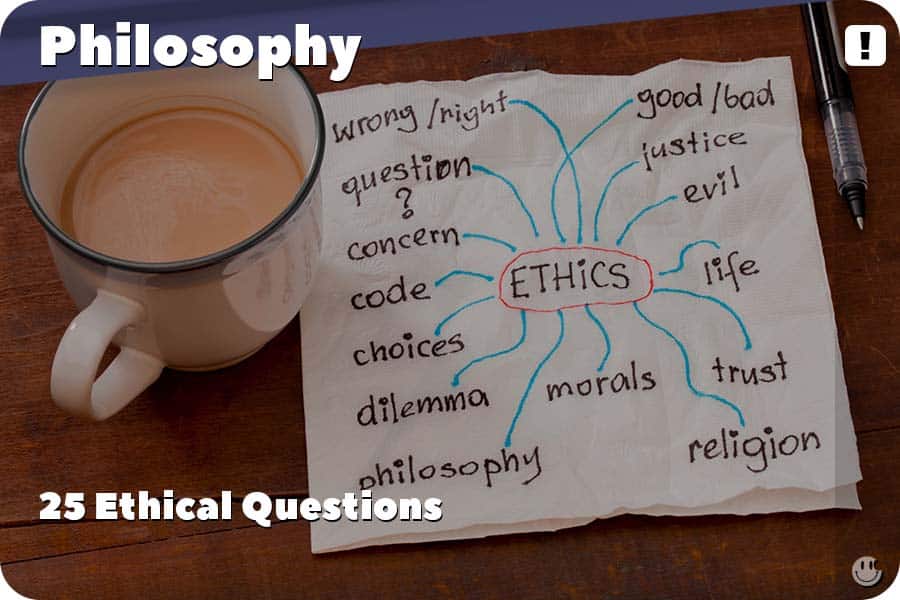
25 Ethics Questions To Ponder
Here’s a list of 25 modern ethical and philosophical questions along with some potential positive, negative, and neutral connotations or answers:
-
Is genetic engineering of humans ethical?
-
Positive: Can prevent genetic diseases, improve human capability.
-
Negative: May lead to eugenics, inequality.
-
Neutral: Requires careful regulation and public discourse.
-
-
Should autonomous vehicles prioritize passenger or pedestrian safety?
-
Positive: Saves lives through reduced human error.
-
Negative: Difficult ethical decisions programmed by humans.
-
Neutral: Reflects complex societal values and safety concerns.
-
-
Is it ethical to colonize Mars?
-
Positive: Ensures human survival, new resources.
-
Negative: Risk of harming potential Martian ecosystems.
-
Neutral: Depends on execution and respect for potential life.
-
-
Should animals have the same rights as humans?
-
Positive: Acknowledges sentience and suffering.
-
Negative: Could impact necessary medical research, food resources.
-
Neutral: Rights should be appropriate to the species’ needs.
-
-
Is digital privacy a fundamental right?
-
Positive: Protects personal freedoms and autonomy.
-
Negative: Can conflict with security and law enforcement needs.
-
Neutral: Balances between privacy and security are necessary.
-
-
Is it morally acceptable to use drones in warfare?
-
Positive: Reduces risk to military personnel.
-
Negative: May increase casual attitudes towards conflict.
-
Neutral: Use should be regulated by strict ethical guidelines.
-
-
Should we implement a universal basic income?
-
Positive: Reduces poverty and inequality.
-
Negative: Potentially unsustainable economically.
-
Neutral: Effectiveness depends on the economic context.
-
-
Is artificial intelligence a threat or a benefit to society?
-
Positive: Enhances efficiency and capabilities in various sectors.
-
Negative: Potential job displacement, ethical concerns.
-
Neutral: AI development should be carefully managed.
-
-
Should euthanasia be legalized?
-
Positive: Allows dignity in death, relieves suffering.
-
Negative: Potential for abuse and moral conflicts.
-
Neutral: Should come with strict safeguards and consent processes.
-
-
Is it ethical to clone extinct animals?
-
Positive: Could restore lost species and ecosystems.
-
Negative: Diverts attention from conserving existing species.
-
Neutral: Ethical considerations depend on reasons and methods.
-
-
Should voting be mandatory?
-
Positive: Increases democratic participation.
-
Negative: May violate personal freedom of choice.
-
Neutral: Could be one element of broader civic engagement reforms.
-
-
Is it ethical to keep animals in zoos?
-
Positive: Helps with conservation and education.
-
Negative: Can cause suffering and unnatural living conditions.
-
Neutral: Depends on the zoo’s quality and ethical standards.
-
-
Should we allow surveillance for national security?
-
Positive: Helps prevent terrorism and crime.
-
Negative: Infringes on individual privacy rights.
-
Neutral: Needs strict oversight and legal frameworks.
-
-
Is it ethical to consume meat?
-
Positive: Part of natural human diet and tradition.
-
Negative: Ethical concerns about animal welfare and environmental impact.
-
Neutral: Personal choice informed by ethical and environmental considerations.
-
-
Should parents be allowed to choose their baby’s traits?
-
Positive: Reduces genetic diseases, enhances life opportunities.
-
Negative: Raises issues of inequality and ‘designer babies’.
-
Neutral: Needs ethical oversight and societal consensus.
-
-
Is the death penalty justifiable?
-
Positive: Deters crime, provides justice for victims.
-
Negative: Risk of wrongful execution, inhumane.
-
Neutral: Should be debated and decided democratically.
-
-
Should we prioritize environmental policy over economic growth?
-
Positive: Ensures sustainable living conditions for future generations.
-
Negative: Could hinder economic development and job creation.
-
Neutral: Policies should aim to balance environmental and economic factors.
-
-
Is it ethical to enhance humans physically and mentally through technology?
-
Positive: Improves quality of life and human capabilities.
-
Negative: Could exacerbate social inequalities.
-
Neutral: Should be regulated to ensure fair access and ethical use.
-
-
Should social media companies regulate content on their platforms?
-
Positive: Reduces misinformation and harmful content.
-
Negative: Threatens free speech and expression.
-
Neutral: Requires transparent policies that respect user rights.
-
-
Is it ethical to use placebo treatments?
-
Positive: Can be beneficial in clinical research and treatment.
-
Negative: Deceptive and may undermine trust in medical practice.
-
Neutral: Ethically acceptable if patient welfare is improved and no better treatment is available.
-
-
Is social media responsible for increasing loneliness?
-
Positive: Provides a platform for connection, especially for those isolated by geography or disability.
-
Negative: Encourages superficial interactions and a focus on quantity of connections over quality.
-
Neutral: The impact varies widely depending on how individuals use and interact with social media.
-
-
Should all drugs be legalized?
-
Positive: Reduces the criminal activities associated with drug trafficking.
-
Negative: Could lead to increased health problems and societal issues.
-
Neutral: Regulation and education might mitigate risks and provide health benefits.
-
-
Is it ethical for companies to track their employees’ online activities?
-
Positive: Can enhance security and productivity.
-
Negative: Invades privacy and can create a distrustful work environment.
-
Neutral: Acceptable if transparent and limited to work-related activities.
-
-
Is censorship ever justified in a free society?
-
Positive: Necessary to protect individuals from harm and misinformation.
-
Negative: Can be used to suppress dissent and control public opinion.
-
Neutral: Justifiable when it protects the vulnerable without stifling essential freedom.
-
-
Should we prioritize the exploration of space over solving Earth’s current problems?
-
Positive: Can lead to technological advancements and long-term survival of humanity.
-
Negative: Diverts resources and attention from pressing environmental and social issues.
-
**A neutral stance might consider the benefits of technology and knowledge gained from space exploration that could potentially address Earth’s challenges.
-