web analytics

Category: People

  • Blake Lively vs Justin Baldoni PR War

    Blake Lively vs Justin Baldoni PR War

    The Blake Lively and Justin Baldoni PR War

    Blake Lively and Justin Baldoni have found themselves embroiled in a controversy surrounding allegations of workplace harassment tied to their upcoming film It Ends with Us, an adaptation of Colleen Hoover’s bestselling novel. The allegations, raised by individuals involved in the production, claim an environment of inappropriate behavior that has sparked widespread attention. Amid the unfolding drama, Lively and Baldoni’s PR teams have mounted swift and strategic responses to safeguard their reputations.

    Lively’s representatives have emphasized her unwavering commitment to women’s rights and safe workplaces, leveraging her history of advocacy to portray her as an ally for accountability and change. Statements from her team reiterated her dedication to fostering equality, highlighting her previous initiatives to create safer spaces for women in various industries. This narrative reframed her involvement, positioning her as a force for positive change rather than a figure implicated in the controversy.

    Baldoni’s dual role as a producer and actor on the project has placed him under scrutiny, so the PR strategy has leaned heavily on his track record of promoting healthy masculinity and inclusivity. His team pointed to his past efforts, including his acclaimed TED Talk and work on dismantling toxic gender norms, as evidence of his commitment to fostering respectful and inclusive environments. By emphasizing these accomplishments, Baldoni’s representatives sought to reinforce his brand as a champion of progressive values.

    The controversy gained further complexity when Amber Heard, herself no stranger to public scandals following her high-profile legal battle with ex-husband Johnny Depp, weighed in on the situation. Heard’s comments highlighted women’s pervasive challenges in the entertainment industry, drawing parallels to her own experiences of being scrutinized in the public eye. She called for accountability and systemic change, emphasizing the importance of due process and thorough investigations. Heard’s involvement brought additional media attention to the It Ends with Us controversy, further amplifying the stakes for everyone involved.

    The film’s production team and other cast members have also been drawn into the discussion, amplifying the stakes for everyone involved. Both stars’ PR teams have worked diligently to control the narrative while internal investigations are reportedly underway, highlighting the role of skilled crisis management in shaping public perception during such high-profile incidents.

    Blake Lively’s handling of the recent controversy surrounding It Ends with Us showcases a masterclass in PR strategy. As reports surfaced of her legal action in response to allegations and her co-star Justin Baldoni facing professional repercussions, Lively’s team has emphasized her proactive stance on workplace safety and women’s advocacy. This calculated approach deflects negative attention and positions her as a champion of accountability. According to The Hollywood Reporter, her decisive legal actions and public relations strategy are shifting the narrative, allowing her to potentially emerge victorious in the court of public opinion.

    How Crisis PR and Reputation Management Shape Public Perception

    When news about public figures or brands surfaces, skilled public relations (PR) teams often carefully curate the stories we read. The recent article from Variety discussing Blake Lively and Justin Baldoni underscores the intricate ways PR firms navigate scandals and challenges, showing both the effectiveness and subtlety of these strategies.

    The Anatomy of Crisis PR

    Effective crisis PR operates on two fronts: proactive preparation and reactive response. Proactive strategies involve anticipating potential reputational risks, crafting contingency plans, and establishing a strong public image long before any issue arises. Reactive responses kick in when unforeseen crises emerge, requiring swift, calculated action to mitigate damage.

    The Variety article’s harassment accusations illustrate how PR teams advise clients to issue statements that address public concerns while carefully avoiding legal pitfalls. Framing the story first—before media outlets or social platforms amplify damaging narratives—is a core tactic. By taking control early, PR teams ensure the story is told on their terms.

    Example: When companies face product recalls, the speed and tone of their response—an apology, an explanation, or an offer of reparations—can shape how consumers perceive the brand’s integrity.

    Tactics That Define Sneaky PR

    PR professionals have a toolkit of tactics to shape public perception, some of which are subtle—even sneaky:

    • Media Leak Control: Trusted journalists may receive exclusive, favorable information to divert attention from negative press.

    • Selective Transparency involves sharing enough details to appear genuine without disclosing everything. This was evident in the Variety story, where the framing of statements was carefully tailored to resonate with the audience while avoiding inflammatory language.

    • Reframing the Narrative: A PR strategy might sometimes involve pivoting the conversation entirely. For instance, highlighting unrelated charitable work or projects can shift attention away from a controversy.

    Historically, examples like Tiger Woods’ scandal recovery or the BP oil spill demonstrate how PR teams can redirect public attention with varying degrees of success.

    Reputation Management in the Digital Era

    In today’s world, where digital impressions often outweigh traditional media coverage, reputation management heavily relies on SEO and online monitoring. SEO techniques have become indispensable for burying unfavorable press and boosting positive narratives.

    1. SEO for Crisis Control:

      • Create blog posts and articles highlighting positive achievements or initiatives.

      • Optimize keywords related to the brand to ensure search engines prioritize favorable content over negative stories.

      • Use link-building strategies to amplify positive mentions from high-authority domains.

    2. Social Media Management:

      • PR teams carefully craft viral posts or responses that appear authentic and relatable.

      • Influencers and brand ambassadors may be enlisted to defend or praise the client subtly.

    When scandals like those involving Lively or Baldoni emerge, PR professionals often shift their focus online to ensure the top search results paint a favorable picture. Public perception, after all, is often shaped by the first page of Google results.

    The Ethics of Crisis Management

    The line between effective PR and manipulation can be thin. At its best, crisis PR helps rebuild trust and clarify misunderstandings. At its worst, it can deceive the public by obfuscating facts or shifting blame.

    In cases involving harassment, such as the Variety example, ethical concerns come to the forefront. Statements crafted by PR teams must address the seriousness of allegations without trivializing them, all while protecting the client’s legal interests. In an era of cancel culture, the public increasingly demands transparency—but PR firms must balance this with the client’s reputation and livelihood.

    How Companies and Individuals Can Protect Their Reputations

    Crisis PR isn’t just for celebrities and big brands. Businesses and individuals can adopt strategies to safeguard their reputations:

    1. Build Trust in Advance:

      • Regularly share positive news, testimonials, and success stories.

      • Cultivate goodwill through community engagement and philanthropy.

    2. Monitor and Adapt:

      • Use tools like Google Alerts and social listening platforms to identify potential threats early.

      • Analyze sentiment in real-time to tailor responses accordingly.

    3. SEO for Damage Control:

      • Post detailed press releases optimized for search engines.

      • Ensure positive content is consistently updated to remain competitive in search rankings.

    4. Plan Ahead:

      • Develop a crisis response team and strategy before issues arise.

      • Conduct regular risk assessments to identify vulnerabilities.

    PR and reputation management, particularly in high-stakes scenarios, combine psychology, strategy, and technology to shape how the public perceives events and individuals. Whether crafting statements for celebrities or optimizing a company’s online presence, PR professionals play a pivotal role in managing crises effectively. Understanding these strategies offers valuable insight into the narratives shaping our news and social feeds.
  • The Generations Guide: From Boomers to Gen Z

    The Generations Guide: From Boomers to Gen Z

    The Generations Guide: From Boomers to Gen Z (and 2.0 and Beyond)

    When discussing pop culture, trends, politics, or shopping habits, we often find ourselves referring to generations. Whether it’s Millennials being blamed for the death of napkins or Gen Z creating the next viral dance on TikTok, generational labels shape how we think about people—and how people think about themselves.

    But what defines these generations? Where do the lines get drawn? And is Gen Z 2.0 a thing?

    Here’s your plainspoken, slightly cheeky, but fully fact-checked guide to understanding generations, not just as marketing categories, but as cultural snapshots.

    Take Our Spage Age Quiz!


    ????️ The Greatest Generation (Born ~1901–1927)

    Also known as the G.I. Generation, these are the individuals who lived through the Great Depression and fought in or supported World War II. They’re called “great” because of their resilience, patriotism, and collective sacrifice.

    • Came of age: 1920s–40s

    • Defining events: The Great Depression, World War II

    • Tech era: Radio and newspapers

    • Pop culture: Swing music, Casablanca, radio dramas

    Traits: Stoic, frugal, loyal, big on community and responsibility.


    ???? The Silent Generation (Born ~1928–1945)

    They grew up in a time of war, rationing, and recovery. They’re called “silent” not because they didn’t speak up, but because they were sandwiched between two louder groups (the Greatest Generation and Boomers).

    • Came of age: 1950s–60s

    • Defining events: Korean War, McCarthyism, early civil rights

    • Tech era: Black-and-white TV, party-line phones

    • Pop culture: Elvis Presley, James Dean, Leave It to Beaver

    Traits: Conservative, cautious, hardworking, respect for authority.


    ???? Baby Boomers (Born ~1946–1964)

    Named for the population boom after WWII, Boomers are one of the most studied (and roasted) generations. They fueled consumerism, protested in the 1960s, and are now mostly retired, yet still run half of everything.

    • Came of age: 1960s–80s

    • Defining events: Vietnam War, moon landing, Civil Rights Movement

    • Tech era: Color TV, rotary phones

    • Pop culture: The Beatles, Star Trek, Woodstock

    Traits: Competitive, optimistic, identity-driven, proud homeowners.

    Common complaint: “Boomers don’t want to retire—they want to consult for 15 years.”


    ????️ Generation X (Born ~1965–1980)

    Ah, Gen X—the so-called “forgotten” generation. Raised with a front-row seat to divorce, economic change, and the dawn of personal technology, Gen Xers are low-key rebels, famous for side-eyes and flannel.

    • Came of age: 1980s–90s

    • Defining events: Cold War, MTV, fall of the Berlin Wall

    • Tech era: VHS tapes, cassette Walkmans, early computers

    • Pop culture: Nirvana, The Breakfast Club, The X-Files

    Traits: Independent, skeptical, self-reliant, ironic.

    Mascot: A teenager slouched in front of a tube TV, remote in hand.


    ???? Millennials / Gen Y (Born ~1981–1996)

    The most researched generation until Gen Z showed up. Millennials are digital pioneers—old enough to remember life before the internet but young enough to be fluent in memes, gifs, and side hustles.

    • Came of age: 2000s–2010s

    • Defining events: 9/11, Great Recession, rise of social media

    • Tech era: iPods, flip phones, Facebook

    • Pop culture: Harry Potter, emo bands, early YouTube

    Traits: Purpose-driven, anxious, tech-savvy, value experiences over things.

    Why Boomers roll their eyes: “They killed the diamond industry and want to work from anywhere.”


    ???? Generation Z (Born ~1997–2012)

    Gen Z is the first fully digital-native generation—many of them had smartphones before entering middle school. They came of age in an era of climate anxiety, political polarization, and TikTok tutorials.

    • Came of age: 2010s–2020s

    • Defining events: COVID-19 pandemic, Black Lives Matter, Trump era

    • Tech era: Snapchat, TikTok, iPhones from day one

    • Pop culture: Stranger Things, Billie Eilish, memes-as-language

    Traits: Inclusive, socially aware, pragmatic, visually fluent.

    Catchphrase: “OK Boomer.”


    ???? Gen Z 2.0 / Generation Alpha (Born ~2013–present)

    Technically called Generation Alpha, but many refer to the youngest kids as Gen Z 2.0 due to their similarities and continuity. This is the first generation born entirely in the 21st century and raised on screens from day one.

    • Still coming of age

    • Defining events: Post-COVID world, AI in classrooms, virtual reality in everyday life

    • Tech era: Smart toys, voice assistants, YouTube Kids

    • Pop culture: MrBeast, Bluey, Minecraft streamers

    Traits: TBD—but early signs point to hyper-adaptability, early digital literacy, and AI fluency.


    ???? But… Are These Labels Real?

    Kind of. The U.S. Census Bureau doesn’t define generations—these terms are cultural constructs. But they help study trends in:

    • Spending

    • Voting

    • Parenting

    • Media preferences

    And they make great headlines: “Millennials can’t afford homes.” “Gen Z doesn’t use email.” “Boomers love chain restaurants.”

    Are they always accurate? No. But they often reflect generational experiences, which shape values more than age alone.


    ???? Generational Clashes and Clichés

    • Boomers think Millennials are entitled.

    • Millennials think Gen Z is chaotic.

    • Gen Z thinks everyone else is cringe.

    But what’s happening is this: each generation reacts to what the one before them emphasized or ignored.

    Boomers chased the American Dream → Gen X got cynical → Millennials sought purpose → Gen Z wants transparency and accountability.

    It’s not rebellion—it’s evolution.


    ???? Why Generational Marketing Matters

    Marketers and sociologists use these distinctions to track:

    • Tech adoption

    • Financial habits

    • Brand loyalty

    • Entertainment formats

    For example:

    • Gen X still likes emails.

    • Millennials prefer apps and DMs.

    • Gen Z? They’ll Google something—but on TikTok.

    If you’re building a business, political campaign, or content strategy, knowing your generational audience helps you speak their language.


    ???? Final Thoughts: More than Dates, It’s Identity

    Generational labels aren’t destiny—they’re just shorthand for shared experiences. A Gen Z teen in New York may have more in common with a Millennial in Seoul than with a Boomer in their neighborhood.

    But they do give us a way to connect, reflect, and poke fun at ourselves.

    And hey, if you ever want to understand someone? Don’t just ask their birth year—ask them what song was playing when they got their first phone.

    Take Our Space Age Quiz!

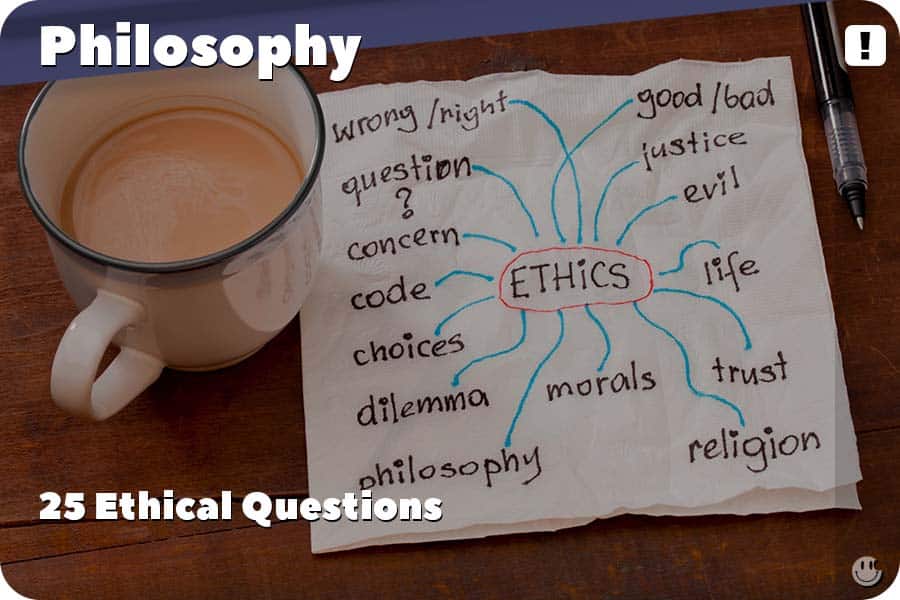
  • 25 Ethical Questions

    25 Ethical Questions

    25 Ethics Questions To Ponder

    Here’s a list of 25 modern ethical and philosophical questions along with some potential positive, negative, and neutral connotations or answers:

    1. Is genetic engineering of humans ethical?

      • Positive: Can prevent genetic diseases, improve human capability.

      • Negative: May lead to eugenics, inequality.

      • Neutral: Requires careful regulation and public discourse.

    2. Should autonomous vehicles prioritize passenger or pedestrian safety?

      • Positive: Saves lives through reduced human error.

      • Negative: Difficult ethical decisions programmed by humans.

      • Neutral: Reflects complex societal values and safety concerns.

    3. Is it ethical to colonize Mars?

      • Positive: Ensures human survival, new resources.

      • Negative: Risk of harming potential Martian ecosystems.

      • Neutral: Depends on execution and respect for potential life.

    4. Should animals have the same rights as humans?

      • Positive: Acknowledges sentience and suffering.

      • Negative: Could impact necessary medical research, food resources.

      • Neutral: Rights should be appropriate to the species’ needs.

    5. Is digital privacy a fundamental right?

      • Positive: Protects personal freedoms and autonomy.

      • Negative: Can conflict with security and law enforcement needs.

      • Neutral: Balances between privacy and security are necessary.

    6. Is it morally acceptable to use drones in warfare?

      • Positive: Reduces risk to military personnel.

      • Negative: May increase casual attitudes towards conflict.

      • Neutral: Use should be regulated by strict ethical guidelines.

    7. Should we implement a universal basic income?

      • Positive: Reduces poverty and inequality.

      • Negative: Potentially unsustainable economically.

      • Neutral: Effectiveness depends on the economic context.

    8. Is artificial intelligence a threat or a benefit to society?

      • Positive: Enhances efficiency and capabilities in various sectors.

      • Negative: Potential job displacement, ethical concerns.

      • Neutral: AI development should be carefully managed.

    9. Should euthanasia be legalized?

      • Positive: Allows dignity in death, relieves suffering.

      • Negative: Potential for abuse and moral conflicts.

      • Neutral: Should come with strict safeguards and consent processes.

    10. Is it ethical to clone extinct animals?

      • Positive: Could restore lost species and ecosystems.

      • Negative: Diverts attention from conserving existing species.

      • Neutral: Ethical considerations depend on reasons and methods.

    11. Should voting be mandatory?

      • Positive: Increases democratic participation.

      • Negative: May violate personal freedom of choice.

      • Neutral: Could be one element of broader civic engagement reforms.

    12. Is it ethical to keep animals in zoos?

      • Positive: Helps with conservation and education.

      • Negative: Can cause suffering and unnatural living conditions.

      • Neutral: Depends on the zoo’s quality and ethical standards.

    13. Should we allow surveillance for national security?

      • Positive: Helps prevent terrorism and crime.

      • Negative: Infringes on individual privacy rights.

      • Neutral: Needs strict oversight and legal frameworks.

    14. Is it ethical to consume meat?

      • Positive: Part of natural human diet and tradition.

      • Negative: Ethical concerns about animal welfare and environmental impact.

      • Neutral: Personal choice informed by ethical and environmental considerations.

    15. Should parents be allowed to choose their baby’s traits?

      • Positive: Reduces genetic diseases, enhances life opportunities.

      • Negative: Raises issues of inequality and ‘designer babies’.

      • Neutral: Needs ethical oversight and societal consensus.

    16. Is the death penalty justifiable?

      • Positive: Deters crime, provides justice for victims.

      • Negative: Risk of wrongful execution, inhumane.

      • Neutral: Should be debated and decided democratically.

    17. Should we prioritize environmental policy over economic growth?

      • Positive: Ensures sustainable living conditions for future generations.

      • Negative: Could hinder economic development and job creation.

      • Neutral: Policies should aim to balance environmental and economic factors.

    18. Is it ethical to enhance humans physically and mentally through technology?

      • Positive: Improves quality of life and human capabilities.

      • Negative: Could exacerbate social inequalities.

      • Neutral: Should be regulated to ensure fair access and ethical use.

    19. Should social media companies regulate content on their platforms?

      • Positive: Reduces misinformation and harmful content.

      • Negative: Threatens free speech and expression.

      • Neutral: Requires transparent policies that respect user rights.

    20. Is it ethical to use placebo treatments?

    • Positive: Can be beneficial in clinical research and treatment.

      • Negative: Deceptive and may undermine trust in medical practice.

      • Neutral: Ethically acceptable if patient welfare is improved and no better treatment is available.

    1. Is social media responsible for increasing loneliness?

      • Positive: Provides a platform for connection, especially for those isolated by geography or disability.

      • Negative: Encourages superficial interactions and a focus on quantity of connections over quality.

      • Neutral: The impact varies widely depending on how individuals use and interact with social media.

    2. Should all drugs be legalized?

      • Positive: Reduces the criminal activities associated with drug trafficking.

      • Negative: Could lead to increased health problems and societal issues.

      • Neutral: Regulation and education might mitigate risks and provide health benefits.

    3. Is it ethical for companies to track their employees’ online activities?

      • Positive: Can enhance security and productivity.

      • Negative: Invades privacy and can create a distrustful work environment.

      • Neutral: Acceptable if transparent and limited to work-related activities.

    4. Is censorship ever justified in a free society?

      • Positive: Necessary to protect individuals from harm and misinformation.

      • Negative: Can be used to suppress dissent and control public opinion.

      • Neutral: Justifiable when it protects the vulnerable without stifling essential freedom.

    5. Should we prioritize the exploration of space over solving Earth’s current problems?

      • Positive: Can lead to technological advancements and long-term survival of humanity.

      • Negative: Diverts resources and attention from pressing environmental and social issues.

      • **A neutral stance might consider the benefits of technology and knowledge gained from space exploration that could potentially address Earth’s challenges.

  • Bandleader Harry James

    Bandleader Harry James

    Harry James

    Harry James (born March 15, 1916 – died July 5, 1983) was an American trumpeter, bandleader, and film actor who led one of the most popular big bands during the Swing Era. Known for his exceptional trumpet playing and powerful sound, Harry James and His Orchestra produced numerous hits and showcased the talents of many vocalists, including Helen Forrest.
    • Harry James was born in Albany, Georgia, and grew up in a musical family.
    • He started playing trumpet at the age of eight, taught by his father, who was a bandleader.
    • James first gained national attention as a member of the Benny Goodman Orchestra in the late 1930s.
    • In 1939, Harry James formed his own orchestra, quickly becoming popular due to his distinctive trumpet playing and energetic sound.
    • Helen Forrest, born Helen Fogel, was an American singer who joined the Harry James Orchestra in 1941.
    • Forrest was known for her warm, expressive voice and ability to interpret various musical styles.
    • Harry James and Helen Forrest recorded several hits together, including “I Don’t Want to Walk Without You,” “I’ve Heard That Song Before,” and “I Had the Craziest Dream.”
    • Their collaboration helped establish Helen Forrest as one of the top female vocalists of the Swing Era.
    • The Harry James Orchestra was known for its strong brass section, which featured James’ virtuosic trumpet playing.
    • The orchestra’s repertoire included a mix of jazz standards, ballads, and popular songs of the time.
    • Harry James and His Orchestra appeared in several Hollywood films, such as “Springtime in the Rockies” and “Private Buckaroo.”
    • In addition to Helen Forrest, the orchestra also featured other notable vocalists like Frank Sinatra, Kitty Kallen, and Dick Haymes.
    • Some of the orchestra’s biggest hits include “You Made Me Love You,” “Two O’Clock Jump,” and “Ciribiribin.”
    • Harry James significantly influenced many trumpeters, including Miles Davis and Doc Severinsen.
    • Throughout the 1940s, the Harry James Orchestra was consistently ranked as one of the top big bands in the United States.
    • Helen Forrest left the orchestra in 1943 to pursue a solo career and work with other bandleaders like Benny Goodman and Artie Shaw.
    • Harry James and His Orchestra continued to perform and record through the 1950s, even as the popularity of big bands began to decline.
    • In the 1960s and 1970s, James focused on smaller ensembles and played in Las Vegas showrooms.
    • Harry James passed away in 1983, but his music and influence on jazz and big band music remain relevant today.
    • Helen Forrest continued to perform until she died in 1999, and she is remembered as one of the greatest vocalists of her era.
  • Bandleader Tommy Dorsey

    Bandleader Tommy Dorsey

    Tommy Dorsey

    Tommy Dorsey (November 19, 1905 –November 26, 1956) was an American jazz trombonist, composer, conductor, and bandleader who led one of the most popular big bands during the Swing Era. Known as the “Sentimental Gentleman of Swing,” Tommy Dorsey and his orchestra created a smooth and danceable sound that captivated audiences in the 1930s and 1940s.
    • Tommy Dorsey was born in Shenandoah, Pennsylvania.
    • He learned to play the trombone at a young age, receiving lessons from his father.
    • Before forming his orchestra, Tommy Dorsey performed with various bands, including the California Ramblers and the Paul Whiteman Orchestra.
    • In 1927, Tommy and his brother, Jimmy Dorsey, formed the Dorsey Brothers Orchestra.
    • Tommy left the Dorsey Brothers Orchestra in 1935 to form his own band, the Tommy Dorsey Orchestra.
    • One of the orchestra’s first hits was “I’m Getting Sentimental Over You,” which became the band’s theme song.
    • The Tommy Dorsey Orchestra was known for its smooth, melodic sound and precise, polished arrangements.
    • A warm, smooth tone and exceptional technical skill characterized Dorsey’s trombone playing.
    • The orchestra’s repertoire included jazz standards, ballads, and popular songs of the era.
    • Frank Sinatra was a vocalist for the Tommy Dorsey Orchestra from 1940 to 1942, which helped launch his successful solo career.
      Other notable vocalists who performed with the orchestra include Jo Stafford, Dick Haymes, and Connie Haines.
    • The orchestra’s success led to appearances in several Hollywood films, including “Las Vegas Nights,” “Ship Ahoy,” and “The Fabulous Dorseys.”
    • Tommy Dorsey and His Orchestra recorded over 900 songs during their career.
    • Some of the orchestra’s biggest hits include “Marie,” “Song of India,” “Boogie Woogie,” and “Opus One.”
    • Tommy Dorsey was an influential bandleader who helped launch the careers of several prominent musicians, such as Buddy Rich, Gene Krupa, and Nelson Riddle.
    • The orchestra appeared on several radio programs, including the “RCA Victor Show” and the “Chesterfield Supper Club.”
    • In the 1940s, the Tommy Dorsey Orchestra collaborated with African American bandleader Sy Oliver, which led to a more rhythmically complex and energetic sound.
    • Tommy Dorsey disbanded the orchestra in 1946 but later reformed it in 1948.
    • Dorsey passed away in 1956 at 51, but his music and legacy continue to influence jazz and big band musicians.
    • After Tommy Dorsey’s death, his brother Jimmy Dorsey led the orchestra briefly before his own passing.
    • The Tommy Dorsey Orchestra continues to perform today under the direction of Terry Myers.
  • Bandleader Glenn Miller

    Bandleader Glenn Miller


    Glenn Miller

    Glenn Miller was an American big band musician, trombonist, arranger, and composer who achieved great success in the swing era of the 1930s and 1940s. Born on March 1, 1904, in Clarinda, Iowa, Miller became one of the best-selling recording artists of his time, known for his unique style and sound. He led one of the most famous big bands in history, the Glenn Miller Orchestra, and recorded numerous hit records before his tragic disappearance in 1944 during World War II.
    • Miller began his musical career playing the trombone in various bands and orchestras, including the Ben Pollack Orchestra and the Dorsey Brothers Orchestra.
    • 1938 he formed the Glenn Miller Orchestra, quickly gaining fame with its distinctive sound and tight arrangements.
    • The Glenn Miller Orchestra featured a clarinet-led saxophone section, one of the defining elements of Miller’s sound.
    • Miller’s first big hit was “Moonlight Serenade,” which he composed in 1939.
    • His recording of “In the Mood” (1939) became one of the swing era’s most famous and enduring hits.
    • Other popular Glenn Miller songs include “Tuxedo Junction” (1940), “Chattanooga Choo Choo” (1941), and “A String of Pearls” (1942).
    • Miller’s orchestra appeared in two Hollywood films, “Sun Valley Serenade” (1941) and “Orchestra Wives” (1942).
    • In 1942, at the height of his fame, Miller enlisted in the U.S. Army to support the war effort.
    • He was appointed captain and formed the Army Air Force Band to entertain troops and boost morale.
    • Miller’s military band played over 800 performances, including live concerts, radio broadcasts, and recordings.
    • On December 15, 1944, Glenn Miller disappeared while flying from England to France to perform for troops. His plane was lost over the English Channel and declared missing in action.
    • Miller’s tragic disappearance added to his mystique and further solidified his place in music history.
    • Despite his untimely death, Miller’s music continued to be popular after World War II, with the Glenn Miller Orchestra re-formed under the leadership of Tex Beneke.
    • The 1953 biographical film “The Glenn Miller Story,” starring James Stewart as Miller, introduced his music to a new generation of fans.
    • In the years since his death, the Glenn Miller Orchestra has continued to perform and record, keeping Miller’s music and legacy alive.
    • Miller was awarded a posthumous Grammy Lifetime Achievement Award in 1984.
    • Glenn Miller was inducted into the Big Band and Jazz Hall of Fame in 1978.
    • Many of his songs have become jazz standards, played and recorded by countless artists.
    • Miller’s music has been featured in various films and TV shows, including “The Simpsons” and “The Shawshank Redemption.”
    • Glenn Miller’s influence on big band and swing music is still felt today, with many contemporary artists citing him as an inspiration for their work.
  • Bandleader Jimmy Dorsey

    Bandleader Jimmy Dorsey

    Jimmy Dorsey

    Jimmy Dorsey (born February 29, 1904 – died June 12, 1957) was an American jazz clarinetist, saxophonist, and bandleader who, along with his brother Tommy, led one of the most popular big bands during the Swing Era. Known for his exceptional musicianship and innovative arrangements, Jimmy Dorsey and His Orchestra produced numerous hits and entertained audiences across the United States.
    • Jimmy Dorsey was born in Shenandoah, Pennsylvania, and grew up in a musical family.
    • He played the trumpet at a young age before switching to clarinet and saxophone.
    • Jimmy and his younger brother Tommy formed the Dorsey Brothers Orchestra in 1934, but they split in 1935 due to personal and professional disagreements.
      After the split, Jimmy formed his own orchestra, which quickly gained popularity.
    • The Jimmy Dorsey Orchestra was known for its innovative arrangements, blending jazz and popular music.
    • Some of the orchestra’s biggest hits include “Amapola,” “Tangerine,” “Green Eyes,” and “Maria Elena.”
    • The orchestra’s repertoire included a mix of jazz standards, ballads, and popular songs of the time.
    • The Jimmy Dorsey Orchestra appeared in several Hollywood films, such as “The Fleet’s In” and “Four Jills in a Jeep.”
    • Jimmy Dorsey was known for his virtuosic playing on both the clarinet and alto saxophone.
    • He significantly influenced many jazz musicians, including Woody Herman and Buddy DeFranco.
    • The orchestra featured several notable vocalists, such as Bob Eberly, Helen O’Connell, and Kitty Kallen.
    • In 1945, Jimmy and Tommy Dorsey reunited to form the Dorsey Brothers Orchestra once again, which they co-led until Tommy died in 1956.
    • Throughout the 1940s and early 1950s, the Jimmy Dorsey Orchestra was consistently ranked as one of the top big bands in the United States.
    • The orchestra frequently performed on radio broadcasts and toured extensively across the country.
    • Jimmy Dorsey was known for his ability to adapt to changing musical styles and remained successful even as the popularity of big bands began to decline.
    • In addition to leading his own orchestra, Jimmy Dorsey worked as a session musician and recorded with artists such as Bing Crosby and Billie Holiday.
    • Jimmy Dorsey continued to perform and record with the Dorsey Brothers Orchestra until he died in 1957.
    • After Jimmy’s death, the orchestra continued under the leadership of various musicians, including Lee Castle and Warren Covington.
    • The music of Jimmy Dorsey and His Orchestra remains popular today and is often featured on compilations and tributes to the Swing Era.
    • Many of the orchestra’s recordings have been preserved and are considered essential examples of big band music from the 1930s and 1940s.
  • Crooner Bing Crosby

    Crooner Bing Crosby


    Bing Crosby

    Bing Crosby was an American singer, actor, and radio personality who became one of the best-selling recording artists of the 20th century. Born Harry Lillis Crosby Jr. on May 3, 1903, in Tacoma, Washington, he grew up in a musical family and began singing early on. With his distinctive warm baritone voice, Crosby became one of the most influential and successful crooners of his time.
    • Bing Crosby’s career spanned over 50 years, from the 1920s to the 1970s.
    • He was named ” Bing ” by a comic strip character named Bingo.
    • Crosby began his music career as a member of the Rhythm Boys, a jazz vocal trio.
    • Bing Crosby’s first solo hit was “Out of Nowhere” in 1931.
    • He had over 40 number-one hits, including “White Christmas,” which remains one of the best-selling singles of all time.
    • Crosby was an early advocate of recording techniques and was one of the first singers to use a microphone to enhance his voice.
    • Bing Crosby was the first artist to pre-record his radio shows, which allowed for better sound quality and editing.
    • He acted in numerous films, winning an Academy Award for Best Actor for his role in the 1944 film “Going My Way.”
    • Crosby was known for his philanthropic work, raising millions of dollars for various charities throughout his career.
    • He performed with many famous musicians, including Louis Armstrong, Frank Sinatra, and Bob Hope.
    • Crosby introduced many popular songs that became standards, including “Pennies from Heaven,” “Swinging on a Star,” and “I’ll Be Seeing You.”
    • He helped popularize Hawaiian music in the 1930s and 1940s by recording several songs with a Hawaiian theme.
    • Bing Crosby was one of the first artists to embrace television and appeared in many TV specials and series.
    • Bing was an avid golfer and co-founded the Bing Crosby National Pro-Am Golf Tournament, now known as the AT&T Pebble Beach Pro-Am.
    • Crosby’s radio show, “Kraft Music Hall,” was one of the most popular radio programs of its time.
    • Bing had a longtime partnership with fellow entertainer Bob Hope, with whom he starred in seven “Road to…” comedy films.
    • In 1963, Crosby became the first recipient of the Grammy Lifetime Achievement Award.
    • His family life was turbulent, with two of his four sons from his first marriage later dying by suicide.
    • Bing Crosby passed away on October 14, 1977, after suffering a heart attack following a round of golf in Spain.
    • His influence on popular music and entertainment can still be felt today, with many artists citing him as a significant inspiration.
  • Bandleader Guy Lombardo

    Bandleader Guy Lombardo

    Guy Lombardo

    Guy Lombardo (born June 19, 1902 – died November 5, 1977) was a Canadian-American bandleader, violinist, and composer who became a popular music icon. His orchestra, Guy Lombardo and His Royal Canadians, was known for its “sweet” dance music style and was a fixture of American New Year’s Eve celebrations for decades.
    • Guy Lombardo was born to Italian-Canadian parents in London, Ontario, Canada.
    • He was the eldest of five siblings, who eventually joined his orchestra.
    • Lombardo began his music career as a violinist and formed his first band with his brothers in 1924.
    • He and his orchestra relocated to Cleveland, Ohio, in 1927 and later to New York City.
    • Guy Lombardo and His Royal Canadians gained nationwide fame through radio broadcasts and recordings.
    • The orchestra’s signature sound was characterized by a smooth, sweet, and melodious style that appealed to a wide audience.
    • Lombardo’s orchestra was known as “The Sweetest Music This Side of Heaven.”
    • They recorded more than 500 songs, including hits like “Auld Lang Syne,” “Boo Hoo,” and “Seems Like Old Times.”
    • Guy Lombardo and His Royal Canadians were the resident orchestra at the Roosevelt Hotel in New York City for 33 years.
    • Lombardo became synonymous with New Year’s Eve celebrations, performing live on radio and television broadcasts from 1929 until he died in 1977.
    • Millions across the United States and Canada watched his annual New Year’s Eve broadcasts.
    • Lombardo was also an accomplished speedboat racer, winning several championships during his lifetime.
    • In addition to being a bandleader, Lombardo appeared as a guest conductor for symphony orchestras and worked as a composer and arranger.
    • Lombardo’s orchestra featured notable vocalists such as Carmen Lombardo (his brother), Kenny Gardner, and Tony Craig.
    • Guy Lombardo and His Royal Canadians appeared in several films, including “Many Happy Returns” and “Stage Door Canteen.”
    • Lombardo received a star on the Hollywood Walk of Fame for his contributions to the music industry.
    • His band’s version of “Auld Lang Syne” remains a traditional choice for New Year’s Eve celebrations in North America.
    • Lombardo’s orchestra continued to perform after his death, led by his brother Victor and later by other musicians.
    • Guy Lombardo’s music has been featured in numerous films, television shows, and commercials, often as a nostalgic representation of a bygone era.
    • His contributions to popular music and enduring legacy as “Mr. New Year’s Eve” have made Guy Lombardo a cherished figure in the history of American entertainment.
  • Bandleader Paul Whiteman

    Bandleader Paul Whiteman

    Paul Whiteman

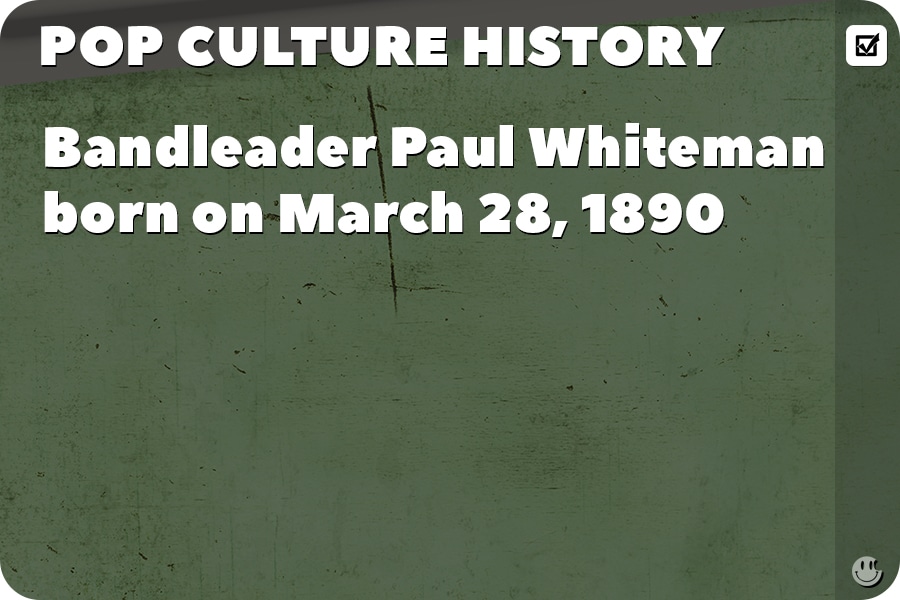
    Paul Whiteman was a prominent American bandleader, composer, and orchestral director who played a significant role in popularizing jazz music during the 1920s and 1930s. Born on March 28, 1890, in Denver, Colorado, Whiteman grew up in a musical family. His father, Wilberforce J. Whiteman, was a music teacher and music supervisor for the Denver Public Schools.

    Whiteman began studying the violin early on and eventually took up the viola. He played in the Denver Symphony Orchestra and later joined the San Francisco Symphony Orchestra. In 1918, Whiteman formed his dance band, which soon gained popularity for its unique fusion of classical music and jazz.

    • Whiteman’s big band became known as the “Paul Whiteman Orchestra” and was one of the most popular dance bands of the 1920s.
    • He earned the nickname “The King of Jazz” for popularizing jazz music.
    • Whiteman’s orchestra featured many talented musicians, including Bix Beiderbecke, Frankie Trumbauer, and Joe Venuti.
    • He is credited with helping to launch the careers of famous singers like Bing Crosby and Mildred Bailey.
    • Whiteman commissioned George Gershwin’s “Rhapsody in Blue,” a groundbreaking piece that blended jazz and classical music, and premiered it in 1924.
    • He co-wrote the popular song “Whispering,” which became a hit in 1920.
    • Whiteman was known for his innovative arrangements and orchestrations, often using symphonic instruments like violins and cellos alongside traditional jazz instruments.
    • He appeared in several films during the 1920s and 1930s, including “The King of Jazz” (1930) and “Strike Up the Band” (1940).
    • Whiteman hosted several radio shows throughout his career, including “The Paul Whiteman Hour” and “The Kraft Music Hall.”
    • His orchestra recorded more than 800 songs during its existence.
    • Whiteman was an early advocate for racial integration in music, working with African-American musicians like Louis Armstrong and James P. Johnson.
    • He was known for his large frame and imposing stage presence, standing at 6’2″ and weighing over 300 pounds.
    • Whiteman was married five times and had four children.
    • He authored an autobiography, “Music for the Millions,” in 1948.
    • Whiteman was an avid art collector and amassed an impressive collection of modern art.
    • His orchestra’s signature theme song was “My Blue Heaven.”
    • Whiteman’s career slowed down during the 1940s and 1950s, but he continued performing and recording music.
    • In 1959, Whiteman appeared on the television show “This Is Your Life,” which celebrated his life and accomplishments.
    • Paul Whiteman died on December 29, 1967, in Doylestown, Pennsylvania.
    • Whiteman’s impact on American music has been widely recognized, and he was posthumously inducted into the Big Band and Jazz Hall of Fame in 1993.
  • Al Jolson

    Al Jolson

    Entertainer Al Jolson

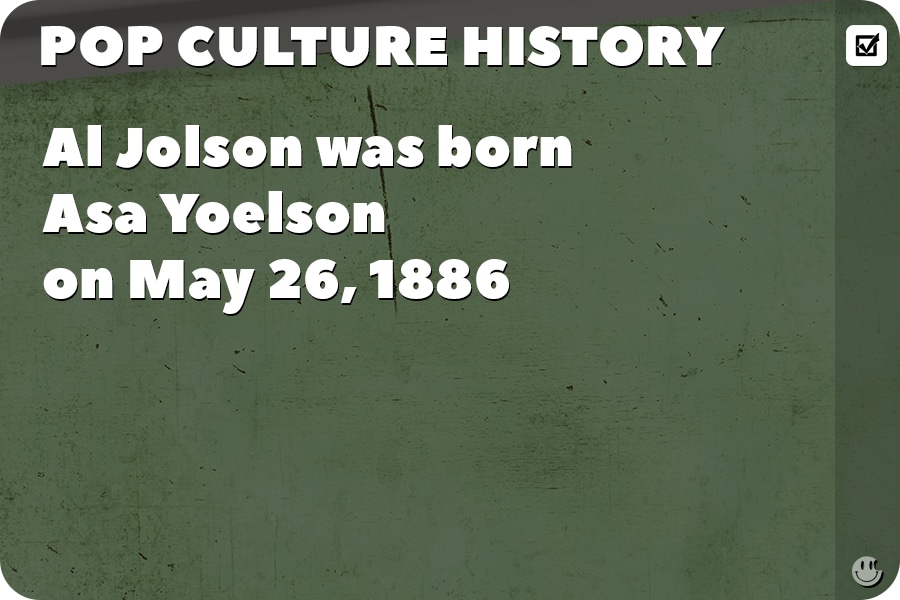
    Al Jolson, born Asa Yoelson on May 26, 1886, in Srednik, Lithuania, was a famous American singer, comedian, and actor. Known as “The World’s Greatest Entertainer,” Jolson’s dynamic stage presence and powerful singing voice made him one of the most popular performers of his time. While Al Jolson was an iconic figure in the entertainment industry, it is essential to remember and acknowledge the racially insensitive aspects of his career, specifically his use of blackface, when discussing his contributions to American music and culture.
    • Jolson immigrated to the United States with his family as a young child, eventually settling in Washington, D.C.
    • He began his career in vaudeville and burlesque, performing in blackface as a minstrel show entertainer.
    • Jolson’s first Broadway appearance came in 1911 in the musical “La Belle Paree.”
    • He gained fame for his signature song, “Mammy,” which he first performed in the 1921 Broadway musical “Bombo.”
    • Jolson is best known for starring in the first-ever talking motion picture, “The Jazz Singer” (1927).
    • “The Jazz Singer” was a groundbreaking film that marked the transition from silent movies to sound films.
    • Jolson was the first to win the Best Actor award at the first-ever Academy Awards ceremony in 1929 for his role in “The Jazz Singer.”
    • His other popular songs include “Swanee,” “April Showers,” “Toot, Toot, Tootsie,” and “Rock-a-Bye Your Baby With a Dixie Melody.”
    • Jolson’s vocal style, characterized by its emotional intensity and conversational delivery, influenced future generations of singers, including Frank Sinatra and Judy Garland.
    • He was known for his energetic and charismatic stage performances, often running up and down the stage and interacting with the audience.
    • Jolson was the first performer to entertain American troops overseas during World War II.
    • He recorded over 200 songs throughout his career.
    • Jolson was married four times, most notably to actress Ruby Keeler.
    • His career experienced a resurgence in the late 1940s with the release of the biographical film “The Jolson Story” (1946).
    • Jolson’s life story was further depicted in the sequel, “Jolson Sings Again” (1949).
    • Jolson was among the first inductees into the Hollywood Walk of Fame in 1960.
    • Despite his success and popularity, Jolson’s legacy has been tainted by his use of blackface, a racist practice widely criticized in modern times.
    • In 2000, Jolson was posthumously awarded a Grammy Lifetime Achievement Award for his contributions to the music industry.
    • His life and career have been the subject of numerous books and documentaries.
    • Al Jolson passed away on October 23, 1950, at the age of 64