web analytics

Category: Fixed It For You

  • Halloween History, Facts and Trivia

    Halloween History, Facts and Trivia

    Halloween Trivia and Fun Facts

    • Orange and black are Halloween colors because orange represents the hall harvest and black the coming colder winter darkness – and death.
    • In the 21st century, there are six full-moon Halloweens: 2001, 2020, 2039, 2058, 2077, and 2096.
    • Halloween is the second-biggest commercial holiday in the United States, second only to Christmas.
    • Less than 25% of American parents admit they eat their children’s candy.
    • Pumpkins are a… Fruit!
    • Pumpkin Spice is a seasonal favorite – most pumpkins are produced in Illinois, although Waimanalo Country Farms in Hawaii also offers them for the state.
    • Valentine’s Day is the third biggest Candy Holiday. Easter and Halloween are close, and either one can be the biggest in any given year.
    • Halloween’s scarecrows are leftover from farming and the harvesting season.

    Halloween History

    Halloween is probably the longest-running holiday with a set day or time period. The earliest celebration of the day was Samhain, a celebration of the harvest. The harvest was held with thought to the upcoming winter, which undoubtedly would bring death to many due to the coming cold season. So winter became a time of acknowledging death for the pagan Celtics.
    Officially, the holiday is spelled Hallowe’en

    Since they knew death was coming, they figured why not celebrate the inevitable with the Festival of the Dead. Some Celtic cults dressed as evil entities to either scare the real evil spirits away or to hide among them. This started about 2,000 years ago, in the (now) the United Kingdom/Northern France region of the world.

    All Martyrs Day had been a celebration held on May 13, since 609 AD, when the Church moved the holiday to November first about a hundred years later. By the year 1000 AD, the Church had expanded rather successfully to the Celtic area, which we now call Ireland and Scotland, and much of the British Isles, and renamed the day “All Souls Day,” moving it to November 2nd.

    What is a “Hallow”?
    – A Hallow is a saint (holy person)

    A key reason for the move was to replace the Celtic Festival of the Dead in the area. It became known as All Saints Day, said as ‘Alholomesse’ in Middle English, becoming ‘All-hallows’ or ‘All-hallowmas’ to the locals. The name eventually evolved to “Halloween,” replacing the traditional Celtic Samhain holiday, part of the Festival of the Dead Celebration. With the rise of the Protestant Church, which allowed for no saints, All-hallows Day disappeared with non-Catholic Christian denominations.

    The carved and lit veggies we now call Jack’O’Lanterns may have been started with an Irish legend. Jack, a conman and drunk, convinced the devil, we’re told, to change himself into a coin so he could pay for a drink. Jack instead put the coin in his pocket next to a silver cross, which trapped the devil, preventing him from changing himself back. Jack agreed to free the devil on the condition that the devil would not bother Jack for a year.

    Turnips were the first jack-o-lanterns, probably in Ireland. North America introduced the mach-beggir pumpkin lanterns.

    In part two of Jack’s game with the devil, Jack tricks the devil into climbing a tree to fetch a piece of fruit. While the devil was up in the tree, Jack carved a cross into the trunk, trapping the devil in the tree. In order to get out of the tree, the devil promised Jack that he would no longer seek his soul. When Jack eventually died, he was not allowed into heaven because of his drunken and wicked ways, but he was not allowed into hell either, because the devil kept his word.

    The devil gave Jack an ember to light his way in the dark, in respect to the man who bested him twice. The fire was kept in a hollowed-out turnip for Jack to carry on his endless journey, trapped in the mortal world.

    In America, the Puritans and Pilgrims were a very religious bunch, and they didn’t believe much in any types of celebrations, let alone any based on pagan rituals, but a little further south, in Maryland and the more southern colonies, the American version of Halloween began, including ‘bobbing for apples,’ which was a tradition started virtually in the First Century with Roman’s holiday honoring Pomona, the goddess of fruits and trees, got mixed in with the Samhain celebrations. Her symbol was an apple.

    In the 1600s, Halloween was still very connected to the fall harvest – Thanksgiving was far from a regular holiday at that point in time. The celebration became an event when people would talk about the harvest, and with All-Souls/Saints day just ahead, remember the dead, as they did in Ireland and Scotland. In the old world, they carved turnips or gourds open and used them as small lanterns to help. In Maryland, by 1835 or so, they were carving pumpkins, creating much beggir lanterns, and making it a celebratory ‘play party.’

    The concept of ‘trick or treating’ also had its beginnings with Samhain, as evil fairies would seek gifts and food before the winter cold – doing mischief to those who would not donate. This was probably the foundation for ‘mischief night’ or ‘devil’s night,’ in which people started participating in on the night Guy Fawkes was caught attempting to blow up England’s parliament.

    An average of two pieces of candy are given to children in North America on Hallweeen Night

    In modern America, this ‘devil’s night’ would often be the night before Halloween, when young people would throw eggs at houses, write with soap on cars, or ‘toilet paper’ neighborhoods. The practice was slowed in recent years as the ‘mischief’ escalated to fires, broken windows, and other personal property damage.

    Today trick or treaters are almost always given a treat by households with a light on, or a ghoul or vampire waiting by the door with a bag of candies or treats. In the interest of safety, edible gifts are almost always prepackaged, as are the costumes.

    “Perhaps the most famous icon of the holiday is the jack-o-lantern. Various authorities attribute it to either Scottish or Irish origin. However, it seems clear that it was used as a lantern by people who traveled the road this night, the scary face to frighten away spirits or faeries who might otherwise lead one astray.

    Set on porches and in windows, they cast the same spell of protection over the household. (The American pumpkin seems to have superseded the European gourd as the jack-o-lantern of choice.)

    “Bobbing for apples may well represent the remnants of a Pagan ‘baptism’ rite called a ‘seining’, according to some writers. The water-filled tub is a latter-day Cauldron of Regeneration, into which the novice’s head is immersed. The fact that the participant in this folk game was usually blindfolded with hands tied behind the back also puts one in mind of a traditional Craft initiation ceremony.”
    – Mike Nichols
  • Monster Safety Tips

    Monster Safety Tips

    Monster Safety Tips

    Through fairy tales, books, and movies, Pop Culture has introduced us to frightening creatures of the night. Even though they can be scary, Pop Culture has also offered us cures for those things that scare us. I should start with a disclaimer, these tips are for actual monsters, not regular people in costumes – AND Most of the advice I’m giving is from television, movies, books, and Wikipedia, so take that into account.
    Ghosts
    Many people have claimed to see them, but nobody has ever taken a really good picture of a ghost, so don’t even try for the photo. Most Ghosts are what they call residual ghosts – they are usually just doing a routine, like walking down the hallway, or sweeping a broom, forever.

    The other type of ghost is the “unfinished business” type of ghost, usually involving an injustice in their lives or a feeling of guilt over an action they took while alive. Sometimes a little understanding or help finish or filling that gap in their (previous) life can resolve the issue and send them into the light.

    Ghost Fun Facts: If the ghost seems aggressive, turn on a light. Also, they seem to hate crowds, so bring a friend or two.

    Monsters (Under Your Bed)
    Believe it or not, just covering yourself up with a blanket or sheet works. That’s what I do. If you’re afraid of your feet sticking out, wear socks. Sometimes simple works best. They are typically just children’s stories.

    The monster under the bed story:
    A little boy says “Daddy, there’s a monster under my bed.”
    The father smiles to himself and checks under the bed for his son.
    He sees his son again, on the floor under the bed, who says “Daddy, there’s a monster on my bed.”

    Mummy
    Most mummies are actually slaves or drones to an actual leader/mummy, who can be a resurrected or cursed individual. Often, they need an additional sacrifice to bring back a loved one, and that sacrifice, more often than not, is you, or someone you care for. Often, a mummy’s appearance is made possible by disturbing a secured burial ground or performing ancient reanimation rituals.

    Mummies are very stealthy and often in a position to kill the living before victims have a chance to defend themselves. Unlike most undead creatures, loping off their head will not kill them; they could become more dangerous.

    The best bet for killing a mummy: burning them to ash.
    The best bet for avoiding an animated mummy: do not disturb their crypt.

    Night Monsters
    Also called “camp monsters,” these are usually undead killing machines and can be nearly unstoppable berserkers or calculating killers. Your best bet is to get out of the situation. See a car with keys in the ignition? – get in it and drive away. If you stay at the location, whether a berserker or planner, the killer(s) will find where you are hiding. If you survive until daylight, leave the area and never speak of it again (or at least until the next generation of kids needs your help and advice).Night

    Monster Fun Fact: Most survivors of night monster onslaughts are virgins.

    Sea Monsters
    A creature like a Kraken has a huge home-field advantage in the ocean, but the seeming safety of a beach is not much better. Sea creatures have limited intelligence, but they can be amazing hunters, sensing either your fear or your pheromones.

    They are often called forth for revenge or attack but don’t care about you if you are not a target; collateral damage is the norm with water creatures. If you are lucky enough to find the source of the creature’s conjurer’s issue and resolve it, you might (I stress might) might be granted clemency.

    Sea Monster Fun Fact: Once the task they have been summoned for is completed or forgiven, they will once again go into the sea with little or no additional carnage.

    Werewolves
    Werewolves, also known as lycanthropes, can give vampires a run for their money. Your regular weapons will make them madder; you need silver, in an arrow, or a bullet. You need to do it from far away because up close, in hand-to-hand combat, they have a big advantage. If you can trap one, burning at the stake will work- but a silver projectile is your best bet. Like Zombies, lopping off the head works too. If you are bitten or scratched by a werewolf, you will become one with the next full moon.When engaging a werewolf, remember that silver can kill a werewolf, and silver-tipped arrows from a crossbow have been known to work best.

    Werewolf Fun Fact: Some werewolves can still be loyal to the human race despite their current species’ circumstances.

    Vampires
    Lord Byron and his friends have suggested the sophisticated, even romantic vampire idea. They’re not. Vampyres are just bloodthirsty ghouls. There are a lot of ways to defend yourself though. They hate holy water, old mirrors, and garlic. Sunlight, reflected from anything but the moon will scare them off, and the wooden stake through the heart is something you can do while they are asleep. Again, lopping off the head works for vampires too.

    1. Any symbol of your true Faith can keep a Vampire away; a Bible, a Cross or Star of David, will work.
    2. A pile of salt, sand, or even rice. Vampires have a natural compulsion to count things, and that can give you more time to escape.
    3. Vampires cannot enter a residence uninvited, and even a subtle nod or welcoming motion is enough to give them access. Be very clear to any suspected vampires that they are NOT welcome inside.

    Vampire Fun Fact: Old mirrors were based on silver for the reflection. Modern mirrors often do not, so don’t rely on mirrors to see if your new friend is a vampire – they can see themselves in most modern mirrors, which is why so many vampires have perfect hair. Tricking them with garlic is your best bet.

    Witches
    Generally, they keep to themselves and won’t bother you unless provoked, or at the bidding of an evil creature or higher power. Do not approach a witch, especially in their home. Your safest location is any consecrated (blessed) building or cemetery.
    Zombies
    The zombie is actually a newer monster. You’d think they have been around forever, but Zombies have only been around since the late 1920s. Remember – Anyone bit by zombies will turn into a zombie, so avoid that. They don’t like fire; lopping off their heads can kill them.

    Zombie Fun Fact – Zombies created from magic by necromancers usually seem slow-moving but are only a few steps behind you if you are trying to run to safety. Zombies created by science are very fast, probably faster than you.

    Top 10 General Monster Safety Tips:
    1. There are no rules when monsters attack; every situation requires planning ahead and preparing as best you can.
    2. Always assume the baddie can hear or knows what you are planning or saying.
    3. If you think that ghoul or monster is dead? Think again. Be prepared for a twist, even after the authorities arrive.
    4. Never separate from your companions. #never
    5. If you have a car, ensure it is running well, and the gas tank is full.
    6. A regular household radio can give timely, helpful advice for your situation.
    7. If the lights don’t work, don’t explore that room, especially the basement or attic.
    8. Never, under any circumstances, show a photograph of, or let it be known that you have a loved one off the premises.
    9. The monster is right behind you.
    10. Bad: attics, barns, basements, bathroom mirrors, bathtubs, camps, clowns, cornfields, good-looking strangers, laughing invisible children, old books, old games, old people, teenagers, twins

    Standard monster safety kit items include salt (enough to make a circle around you and your friends), sharp wooden stakes, spare cellphones, matches, an old mirror (silver-based), garlic, silver bullets, and sage. If you are adept, a sword or axe for decapitating your fiend can be a lifesaver. Wear comfortable running shoes. You can’t run away from a monster in flip-flops.

    For giant monsters (kaiju) and aliens, your best bet is to hide in as safe a position as you can and hope/pray for your military’s victory. If things get intense, decapitation works for most aliens, if you can determine were their head or brain is, as well as giant monsters, if circumstances allow.

    Aliens Fun Facts: Often an irritating sound can hurt aliens, possibly even kill them. If you can add a battery-powered multi-spectrum sound amplification system to your monster safety kit, it would probably be more helpful than that old spare tire in your car’s trunk.

  • Zombie Origins, History and Tradition

    Zombie Origins, History and Tradition

    Zombie History

    All About The Zombies

    There are three types of Zombies, all named after Zombi, the voodoo snake god, or possibly the West African word zumbi meaning “fetish”. All three enjoy what is commonly called cannibalism, although that would be technically incorrect since they are no longer human. They do, according to legend, like to eat brains, which is based on the earliest stories of losing free will.

    The earliest English use of the word zombie was around 1810 when historian Robert Southey mentioned it in his book History of Brazil, but that was in reference to a West African deity. African words like nzambi and ndzumbi have similar meanings in tradition. The modern term “zombie” only came into general first world use in 1929, with the publication of William B. Seabrook’s book, The Magic Island.

    The first two types of zombies usually come from black magic practiced in the Caribbean, typically in Haiti. Zombies created by magic (voodoo bokor and black magic) are often controlled by the bokor or voodoo sorcerers who call the bodies forth from graves. They seem to have no sense of self-awareness. We’d like to point out that it has been illegal to make zombies in Haiti since 1835. The earliest references to being an undead zombie are actually based on stories from the horrible treatment of slaves beginning in the 1600s and the loss of free will.

    Zombies are also rumored to be created from living people by using a combination of tetrodotoxin, found in Japanese pufferfish, and an unknown hallucinogen. Each is powdered and put into the living person’s bloodstream. We’re not sure how Haitians get their hands on the Japanese pufferfish. 

    It is worth pointing out that zombies produced through magical or simple chemical means are slow-moving, and often smell from decay. Although it should be noted that the apparent slow movement is sufficient speed to keep the zombie no more than a few yards away from even a running Olympic caliber athlete.

    It is also important to note that zombies are universally fearful of bright lights and fire, are unusually strong (even the slow ones), and can only be killed by a severe head/brain injury or decapitation.

    Are mummies zombies?
    It depends. There is a debate in the pseudo-scientific about whether a mummy is a zombie, but the consensus is that they are both undead, but some mummies can be leaders (with a goal) as opposed to other undead mummy creatures who serve a master, with no free will of their own.

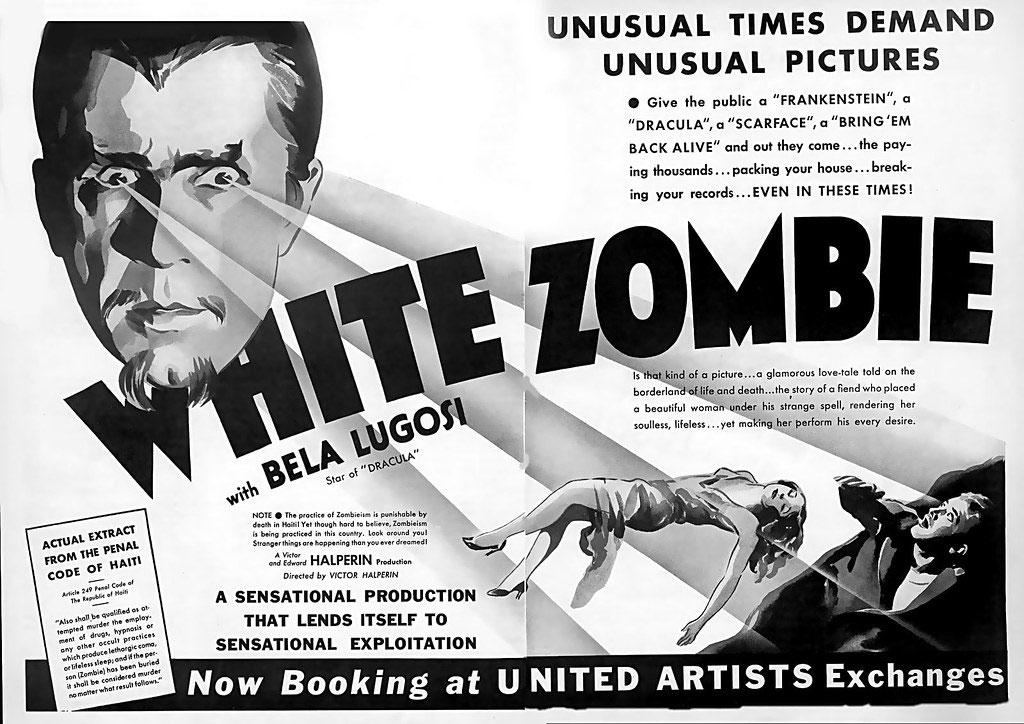
    On film, primarily conceived in George Romero’s 1968 classic, Night of the Living Dead, zombies came forth because “the was no more room in hell”. Other films, including Night of the Comet, The Last Man on Earth, and The Omega Man indicate that through comet droppings, scientific means, or even a type of vampire. Plan 9 From Outer Space indicated a possible UFO or Alien connection. Most would agree that the second ‘zombie’ on film, The Mummy (1932, featuring Boris Karloff), was a creature brought back for simple revenge. To save on answering 500 zombie trivia e-mails, the first zombies on film were feared in 1932’s White Zombie, starring Bela Lugosi.

    Much more dangerous is the scientifically developed zombie. These creatures seem to have boundless energy, superhuman strength, enhanced speed, and sometimes moderate intelligence. These first appeared once CGI (computer graphic imaging) made a super-fast zombie movement visually possible. Films like the Resident Evil series, 28 Days Later and the Dawn of the Dead remake showcased this new enhanced zombie behavior. 2004’s Shaun of the Dead went with the classic slow-moving zombies.

    Trapped in a world of Zombies?

    Here is a Zombie Primer:
    1. Stay calm. If zombie movies have taught us anything, screaming like a little girl, whether you are a man, woman or a little girl will get you killed for sure.
    2. If you find yourself surrounded by zombies, an unproven but possibly effective method of escape could very well by entering their midst and acting like one of them. This worked for Shaun and his friends.
    3. Avoid population centers, and only go to markets and malls during daylight hours.
    4. It goes without saying that you should barricade yourself, but we’re telling you to anyway.
    5. If you are not religious, you may want to start if you find yourself surrounded by zombies.

  • How Strong Is My 4-Digit Pin?

    How Strong Is My 4-Digit Pin?

    The Importance of PIN Security: Is Your 4-Digit Code Safe?

    [pin_checker]

    *We do not share or keep this information*

    Your 4-digit PIN might be the only thing between your data and cybercriminals. Yet, too many people choose weak, predictable PINs that are easy to guess. If you’re using something like “1234” or “0000,” you might as well be handing over your phone or bank account to a hacker. Let’s break down why PIN security matters and how you can ensure yours is strong enough to withstand brute-force attacks.

    Most people don’t realize that hackers don’t randomly guess PINs—they use well-known lists of commonly used codes. Studies have shown that nearly 10% of all PINs are either “1234” or “0000,” making them straightforward targets. Cybercriminals use algorithms that can run through the top 100 most common PINs in seconds, giving them access to everything from your smartphone to your bank account. This is why using a unique and unpredictable PIN is essential for protecting your personal information.

    Beyond just standard numbers, hackers exploit patterns and psychology when trying to crack PINs. Many people base their codes on significant dates, such as birthdays or anniversaries, making them easier to guess. Others use mirrored or sequential numbers, assuming they’re clever or hard to crack—when, in reality, they’re some of the first numbers tested in brute-force attacks. If your PIN follows an obvious pattern, it’s time to rethink your security and opt for something random and difficult to predict.

    How to Test Your PIN Security

    Want to know if your PIN is safe? Try our PIN Security Checker. This free tool instantly evaluates your PIN’s strength and assigns it a security grade (A–F).

    ✅ No data is stored – your privacy is our priority.

    ✅ Instant results – see your PIN’s rating in real-time.

    ✅ Encourages stronger security – adjust your PIN until you get an “A” rating!

    Why Are Some PINs Weaker Than Others?

    Hackers don’t guess PINs at random—they follow patterns. Weak PINs tend to fall into a few categories:

    1. Common Sequences – “1234,” “4321,” and “5678” are some of the worst choices.
    2. Repeated Digits – PINs like “1111” or “7777” are easily guessed.
    3. Birthdays & Dates – If your PIN is “1990” or “0714” (July 14th), it’s at risk.
    4. Keypad Patterns – Numbers that form straight lines on a keypad (like “2580”) are common and weak.
    5. Mirrored Numbers – Codes like “1221” or “3663” might seem clever but are frequently used.
    6. Bank Default PINs – Some PINs (e.g., “5683,” which spells “LOVE” on a keypad) are default options.

    What Makes a Strong PIN?

    A secure PIN is random and unpredictable. Here are some best practices:

    ✔ Avoid obvious numbers – Skip birthdays, anniversaries, and repeated digits.

    ✔ Use a truly random combination – Something like “8063” or “4927” is much harder to guess.

    ✔ Change it periodically – If a service allows PIN updates, switch it up every few months.

    ✔ Don’t reuse PINs – Never use the same PIN for multiple accounts.

    Secure Your Accounts Today

    Weak PINs are one of the easiest ways hackers can break into your accounts. Please take a moment to check your PIN now and upgrade your security before it’s too late.

    ???? Test Your PIN Now: Use our PIN Security Checker to ensure you use a safe, hacker-proof code!

    Frequently Asked Questions (FAQ)

    Why is PIN security important?

    A weak PIN can be easily guessed by hackers using brute-force methods, leading to unauthorized access to your accounts. Using a strong, random PIN significantly reduces this risk.

    What are the most common weak PINs?

    The weakest PINs include “1234,” “0000,” “1111,” “5678,” and any birth years (e.g., “1990”). These are commonly used and frequently targeted in cyber attacks.

    How can I check if my PIN is strong?

    Use our PIN Security Checker to evaluate the strength of your 4-digit PIN instantly. The tool assigns a security grade (A-F) and provides recommendations for improvement, and we do not store or share the data.

    Is it safe to enter my PIN into this tool?

    Yes! We do not store or track any PIN data. The tool evaluates the entered PIN in real-time and provides a security rating.

    What’s the best way to create a secure PIN?

    Avoid common patterns, repeated numbers, and birth dates. Use a randomized PIN that does not follow an obvious sequence, such as “8063” or “4927.”

    Should I change my PIN regularly?

    Yes! If a service allows PIN changes, updating it periodically adds an extra layer of security against potential leaks or breaches.

    Can I use the same PIN for multiple accounts?

    No. Using the same PIN across different accounts increases your risk—if one account is compromised, hackers can attempt to reuse it elsewhere.

  • Our Email Leak Detector For Both Individuals and Businesses

    Our Email Leak Detector For Both Individuals and Businesses

    Check If Your Email Has Been Leaked

    Email Leak Detector

    Check if your email (or company domain) has been found in public data breaches.

    *We do not collect, save, or trade your data with this service*

    Instantly & Securely

    Data breaches happen every day, affecting millions of individuals and businesses worldwide. Whether it’s a major corporate hack or a small-scale data leak, exposed email credentials can lead to serious security risks. Many people don’t realize that their email addresses, passwords, and even financial details may already be circulating on the dark web. Cybercriminals use this stolen information to commit identity theft, access personal and business accounts, and launch phishing scams to trick users into revealing even more sensitive data.

    The consequences of an email breach can be far-reaching. If hackers gain access to one account, they often attempt to reuse the same credentials across multiple platforms, a tactic known as credential stuffing. A single leaked email-password combination could put an entire digital identity at risk. From banking and social media accounts to work emails and cloud storage, compromised credentials can lead to devastating consequences if not addressed promptly.

    That’s why we’ve built the Email Leak Detector, a simple yet powerful tool that allows you to check if your email has appeared in a public data breach. This tool scans large-scale data dumps from past breaches to identify whether your email has been exposed, helping you take immediate action to secure your accounts before it’s too late. With a focus on ease of use and effectiveness, the Email Leak Detector is designed for anyone who values their online security, from individuals safeguarding their data to businesses protecting sensitive company information.

    This tool is powered by Have I Been Pwned (HIBP), one of the most trusted and comprehensive data breach repositories. Created by cybersecurity expert Troy Hunt, HIBP aggregates billions of leaked credentials from hacked websites, underground hacker forums, and public data leaks. This extensive database lets users quickly determine whether their email has been compromised and take steps to mitigate further damage. Unlike many other services, HIBP provides real-time updates, ensuring users receive the most current and relevant breach information.

    Most importantly, our Email Leak Detector is entirely private and secure. When you check your email, it is never stored, logged, or shared—all queries happen in real-time with no data retention. This ensures that you get access to critical security insights without compromising your privacy. Whether you’ve been using the same email for years or want to verify a new account, our tool allows you to stay one step ahead of cyber threats without exposing yourself to additional risks.

    How the Email Leak Detector Works

    ???? Enter Your Email – Type your email into the secure checker.

    ???? Instant Scan – The tool queries the HIBP database to check if your email has been found in known breaches.

    ???? Detailed Report – If your email appears in a breach, you’ll receive a list of affected services and security recommendations.

    ???? No Data Stored – Your email is never saved, logged, or shared—all checks happen in real-time with complete privacy.

    What is Have I Been Pwned (HIBP)?

    HIBP is a well-respected online service created by cybersecurity expert Troy Hunt. It aggregates data from billions of leaked credentials gathered from hacked websites, dark web marketplaces, and security researchers, making it one of the most comprehensive breach-checking tools. Many large organizations, including tech giants and government agencies, rely on HIBP to monitor and respond to data leaks. Companies like Microsoft and government cybersecurity teams use HIBP to track and mitigate potential security threats before they escalate into full-blown breaches.

    One of the reasons HIBP is so effective is its vast and frequently updated database. It doesn’t just store email breaches but also logs breaches that involve password leaks, personal identifiers, and other sensitive data. This lets users get a full picture of their security exposure and take necessary precautions. Unlike static breach reports, the database is continuously updated as new breaches emerge, ensuring the most current threat information is available to users.

    By partnering with Have I Been Pwned, our Email Leak Detector securely queries the database in real-time, instantly checking whether your email has been exposed. Unlike other services, we do not store, log, or retain any user data, ensuring complete privacy and security. This means you can get critical security insights without risking your email being misused or tracked. The connection to HIBP allows for an instant, risk-free way to check your exposure, without requiring users to sign up, provide additional details, or compromise their privacy.

    Additionally, Troy Hunt and HIBP prioritize transparency when disclosing data breaches. Instead of fearmongering or using alarmist tactics, the platform provides clear insights into how a breach occurred, what kind of data was exposed, and what users should do next. This user-friendly approach helps individuals and businesses make informed decisions about their online security without unnecessary panic.

    Why Should You Check Your Email?

    If your email has been compromised, hackers could: ✔️ Attempt to log in to your accounts using old passwords ✔️ Send phishing emails pretending to be you ✔️ Sell your credentials on hacking forums ✔️ Use your data to launch targeted attacks

    Knowing whether your email is part of a breach allows you to take action immediately, such as changing passwords, enabling two-factor authentication (2FA), and securing your online accounts.

    Your Privacy is Our Priority

    We understand the importance of data privacy, and that’s why our tool: ✅ Does NOT store, log, or share any email addresses ✅ Only checks against trusted breach data via HIBP ✅ Provides security recommendations without collecting personal information

    Take Action Now

    ???? Check your email now using our secure Email Leak Detector and ensure your accounts are protected.

    If your email has been found in a breach, don’t panic—just follow the security tips provided to keep your information safe.

    Email Leak Detector

    Check if your email (or company domain) has been found in public data breaches.


    *We do not collect, save, or trade your data with this service*

  • When TV Shows Jump The Shark

    When TV Shows Jump The Shark

    When TV Shows Jump The Shark

    Jumping The Shark

    Some shows last just long enough to end on a high note, and others try stunts that, at best, take away the magic the show once had, and at worst, change the show entirely, and that moment is when they Jump The Shark…
     
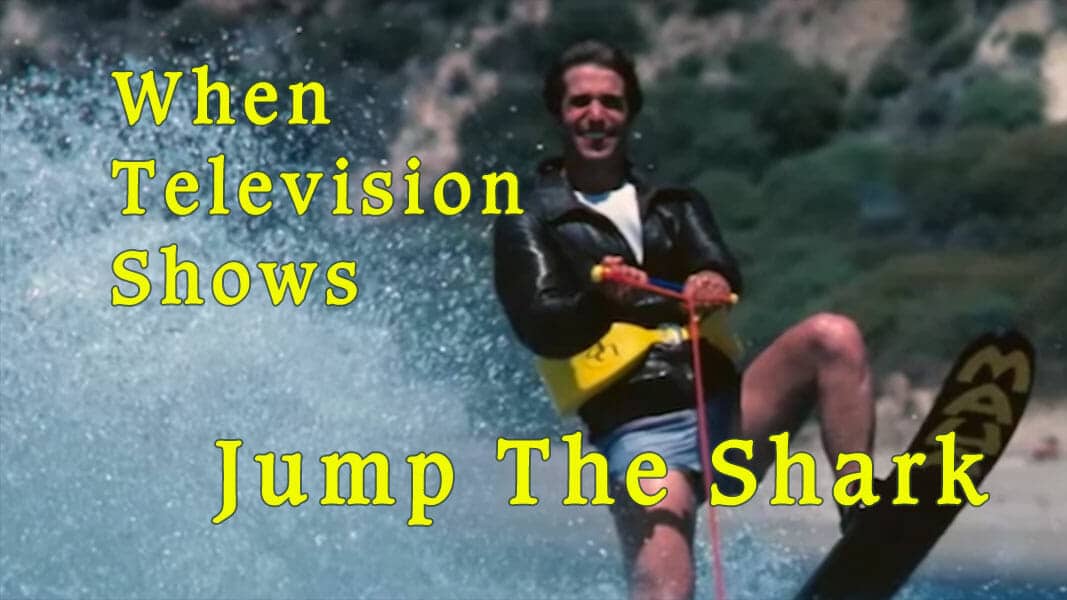
    The phrase ‘jump the shark’ is based on a scene in the 5th Season Premiere of Happy Days When Fonzie actually jumped a shark on water skis on the show. It aired on September 20, 1977. It changed the nostalgic tone of the show. There was a website called JUMPTHESHARK.com that popularized the term; site creator Jon Hein is credited with inventing the phrase. TV Guide bought Jump The Shark website in 2006 and just let it disappear.


    Buffy The Vampire Slayer

    Buffy died at the end of Season Five. Her friends brought her back from the dead with Season six, but she changed, and so did the show. Sure, she died before, lots of times, but most of the fun stopped with this particular resurrection. The show had introduced us to the seasonal “Big Bad” villain, and we can always be grateful for that. Season Six did give us “Once More, with Feeling” and “Tabula Rasa” – both amazing and clever episodes, but it also gave us a very out-of-proportionally powerful “big bad” – the trio of Warren, Jonathan, and Andrew. The magic was gone. The final season, seven gave us “The First” vampire menace, but went overboard in making a world-threatening event, with dozens of mini-slayers.  Season 3’s Mayor Richard Wilkins was a beggir, more believable menace and a lot more fun to watch.

    I Dream of Jeannie

    I Dream of Jeannie (Season 5 Episode 11) Tony married Jeannie in “The Wedding,”. I think that was the first “will they or won’t they” on television. Also, Jeannie did warn Tony (and us) repeatedly that if she ever married she would lose her powers.

    Roseanne

    Roseanne was the number one show in America, and in its first five years, it never left the top five. Some people called it when  Sarah Chalke joined the cast as the “second Becky” after Lecy Goranson left to go attend Vassar College. A lot of people liked the semi-subtle acknowledgment of a different person playing the character. But Roseanne jumped the shark in its final season. The Connors won the state lottery and suddenly became worth over $100 million, then it was later revealed that the whole Roseanne series itself was a story written by Roseanne Conner about her life. Dan had died at the end of season 8. It took a dark and unnecessary turn, for the worst.

    The Office

    Although the idea of a show being a little bit “self-aware” can and did work for many shows, including The Office, an inside joke or outside reason made it plausible. In the case of the staff at the Dunder Mifflin Paper Company, they simply had a camera crew that followed them around, often beyond the working day. The edge between being self-aware and becoming a caricature of itself took place in Season 6, Episode 4 – Niagra – the wedding of Jim and Pam. Spoofing the JK (Jill and Kevin) Wedding Entrance Dance video, dancing to Chris Brown’s Forever, from 2009.
    Sure we loved to watch Pam and Jim’s nuptials at the time, but we all cringe a little bit when we look back. We expected to cry happy tears and something strange to happen but watching the series regulars dance up the aisle told us that they knew it’d be funny and maybe over the top, but it was also when the show crossed the line and became a spoof of itself. You don’t have to take my word for it. Jill and Kevin’s original video have had over 100 million views on youtube. The Office version is hovering around 4 million.

    How I Met Your Mother

    Season nine was designed to place in the (56) weekend hours leading up to Barney and Robin’s wedding. Ambitious, but the final episode left a lot of fans disappointed, they kept some long-standing aspects and hints about the show intact, but left out others. The one-hour series finale turned out to feel rushed and not thought-out. Cosmopolitan said, “Honestly, this is one of those finales that actually ruins the entire rest of the series.“
    That pretty much sums it up. On the plus side, there were 206 otherwise fun and clever episodes. You really didn’t want to know how the show ended anyway, so just don’t watch the finale. Life is supposed to be about the journey.

    Friends

    This was too easy. Friends – The One With Ross’s Wedding  (Season 4 Episode 24) Ross saying Rachel’s name during his wedding vows with Emily in London. Maybe it was Rachel & Ross’s actual wedding and divorce. Or, maybe when Rachel and Joey started dating (Season 8/9). Monica and Chandler’s wedding? (Season 7). some would call it Episode 7, The One with the Blackout, designed to crossover with other NBC shows that night like Mad About You and Madman of the People. Seinfeld wisely chose to not participate that evening. Then again, any time you bring an animal into the show, you are probably pushing the envelope too far. Episode 10 The One with the Blackout might have been the sharking point. Maybe it’s not so easy to decide when Friends jumped the shark.
     
    The Friends producers described the show as “It’s about sex, love, relationships, careers, a time in your life when everything’s possible. And it’s about friendship because when you’re single and in the city, your friends are your family.” I think it was more about a bunch of hot twenty-somethings acting like barely responsible teenagers. I still ask myself, whatever happened to Ben, Ross’ son?

    X-Files

    Like The Office, this show often walked the line between believability and becoming self-aware. Being tied to the zeitgeist, X-Files had their own episode titled Jump The Shark in Season 9, featuring the deaths of The Lone Gunmen: Melvin Frohike, John Fitzgerald Byers, and Richard Langly. Some say the show itself jumped the shark when Mulder (David Duchovny) was abducted by aliens at the end of season 7 (Episode 22), which may have had something to do with contract negotiations between David Duchovny and the show. I have to disagree, I think the show just aged a bit ungracefully- perhaps a fitting end to a mystery show that really wasn’t in a position to give any answers.

    Dallas

    Dallas was one the most-watched primetime dramas of all time AND had one of the best cliffhangers of all time with the whole “who shot JR?” mystery in Season 3. Just over seven years later, the writers must have believed that could do no wrong, so in Season 10, Episode 1 they showed that the entire Season 9 was just Pam Ewings’ DREAM. Not only a shark-jumping moment but a huge insult to the fans who had invested in the prior season. The writers were wrong… the fans were not happy. The show did end with an annual cliffhanger.

    The Brady Bunch

    The Brady Bunch survived an Arizona Ghost Town and a Hawaiian Tiki Curse, but when Cousin Oliver arrived, he jinxed the show for good. 10 people in the house were one too many.

    Doctor Who

    The 2005 Revival has given us five Doctors so far, each presenting fans with fears to complain about, and (usually) ultimately bringing exciting and interesting one-shot adventures and a “Bag Bad” storyline running through each season. The Thirteenth Doctor, played by Jodie Whitaker was no exception to the potential controversies and pitfalls. Although a known possibly since the 1980s, new showrunner Chris Chibnall announced that the new Doctor would, in fact, be a woman. 
     
    Concerns about overt preachiness about sexism were as strong as the cheers for a female doctor. Chris promised “an in-demand, funny, inspiring, super-smart force of nature” and said that she “will bring loads of wit, strength, and warmth to the role.” He did that with his choice of Ms. Whitaker but failed in the lame episode-to-episode storytelling. 

    Moonlighting

    Moonlighting Will They or Won’t They? They DID in Season 3 Episode 15. There were 28 more episodes, but personal problems between Cybil Shepard and Bruce Willis, and other acting gigs that messed with the schedule made the show almost unwatchable.

    Scooby-Doo

    Scrappy-doo. Although designed to help avoid cancellation, Scrappy’s introduction in 1979, with catchphrases like “Scrappy Dappy Doo”, “Lemme at ’em!” and “Puppy Power!” have made him one of the least-liked cartoon characters of all time.

    More Jump The Shark Resources


  • History of Happy Birthdays

    History of Happy Birthdays

    On August 6, 2013, Curiosity played “Happy Birthday to You” to itself in honor of the one year – One Earth Year, since it landed on Mars. That was the first time a song was played on another planet. It was also the first time music was transmitted between two planets.

    The Earliest Noted Birthdays

    The idea of birthdays started right after we started keeping track of time, with calendars. The oldest reference we know of was from around 3000 BC (Genesis 40:20-23) and it was a Pharaoh’s Birthday, but in his case, it was his birth when he was crowned as pharaoh – which they viewed as ascending to godhood.

    This is related to the tradition of Christian Saints, who are remembered with their feast days; they’re are traditionally set on the anniversary of their “birth” into heaven: which would be the day they died. Early Christians considered celebrating birthdays a pagan tradition. The birth of Jesus was mentioned in the Bible, but no actual date was mentioned. The other Biblical reference to a birthday was for King Herod (Matthew 14:6-12), who celebrated by executing John the Baptist.

    Although the births of Mary, mother of Jesus, and John the Baptist were noted in early Christianity, they were not celebrated by common believers. The first known birthday party invitations were sent by Claudia Severa, the wife of a Roman commander named Aelius Brocchus in 100 AD. Paper wasn’t in use yet, so the Birthday Invitations were sent on wooden slabs, they survived, and that’s how we know the date (3 days before the Ides of September).

    Birthdays were sometimes noted by successful politicians and soldiers in ancient times as well. Egypt’s Alexandria, it has been said, was designed in a location where the morning sun aligned with Alexander The Great’s birthday.

    The Birthday Candle

    The first candles were placed on cakes honoring the gods in ancient Greece. Germans started the modern Birthday Party with Kinderfeste, in the late 18th century. This party was held for German kids, or “kinder,” and featured a birthday cake adorned with candles.

    Kids were given one candle on top of the cake for each year they had been alive, plus one for the hope of living for at least one more year – we’d call it FOR LUCK. Blowing out these candles while making a wish was part of the party. Christian and Jewish communities both started celebrating birthdays about this time.

    The Happy Birthday Song.

    Two sisters, Patty and Mildred J. Hill, who happened to be school teachers, wrote a song called “Good Morning To All” in 1893 that was published in a book for other school teachers. The original intent of this song was to be sung in a class by students before starting the day.

    Robert Coleman published a songbook in 1924 that featured the song with new lyrics, and that became The Happy Birthday song we all know. In 1933, this new version was used in an Irving Berlin musical. The Hill Sisters sued on the grounds that they held the copyright to the tune, and they won the case.

    The Copyright of ‘Happy Birthday’

    Warner Bros ended up owning the lyrics, and they split the copyright money with the estate of the Hills, who owned the melody. The royalties for the song were the reason so many restaurants make up their own birthday songs, it was seldom heard in film and television. The song became Public Domain in 2016 and anybody can sing it now. 
    At the time the copyright ended, it was making around $2 million a year.

    What else should we know about Birthdays?

    • October 5 is generally regarded as the most popular Birthday in the US- Nine months before October 5 is New Year’s Eve, which makes sense.
    • May 22 is considered to be the least common birthday in America- they would be generally Babies conceived on Labor Day.
    • Born November 7th? Your parents probably had a very romantic Valentine’s Cay.
    •  If you were born on August 6th, You were likely conceived the week of… November 13th (the prior year)
    • The biggest Birthday party of All Time was the Sultan of Brunei’s 50th, in 1996. He spent $27 million, $16 million of that went toward Michael Jackson performing there.
  • 50 Random Pop Culture Facts

    50 Random Pop Culture Facts

    50 Random Bits of Pop Culture Trivia

    Selfie Trivia:
    A lot of trivia books and quizzes say that the first selfie, in a movie, was ‘Thelma & Louise’ (Geena Davis and Susan Sarandon) in 1991. NOT TRUE- We have to Credit Madonna, as Susan, In Desperately Seeking Susan.  Her opening scene is taking a picture of herself with a polaroid, that was in 1985 #madonnaselfie
    Quotes: “It ain’t over ’til it’s over” wasn’t a phrase until Yogi Berra coined it in 1973.
    Litterbug – the earliest we could find was “Please do not be a ‘litterbug”, printed in the Victoria (BC) Daily Times on March 29, 1939. In 1953, Keep America Beautiful looked at other campaigns to find a catchy phrase. One of these early campaigns in Pennsylvania (PENNDOT), some attribute to having coined the term ‘litterbug’, and so did the New York Transit Authority (N.Y.T.A.). In addition, Paul B. Gioni, a copywriter in New York City, used it for The American Ad Council in 1947.
    Conversation Starter: Teflon is the only known solid material to which geckos cannot stick on.
    Theft
    The BIC company makes the 2 most stolen and lost items, lighters and ink pens The most shoplifted food item in the U.S. is candy. In Europe, it’s cheese. In Latin America, it’s meat. Worldwide, it’s cheese.

    Food, Drinks and Snacks

    As of 2020, 47 of the 50 world’s best competitive eaters are US citizens.
    Where Do Baby Carrots Come From?
    Ugly carrots. When a California farmer realized he was throwing out literally tons of carrots a day because they were misshapen-, he shaved them down to baby carrot – perfect for snacks.
    Today, baby carrots are a $1 billion business…
    The top 10% of drinkers account for more than half of all alcohol consumed in the US, which equates to them consuming an average 73.85 drinks per week.
    The oldest bar in the world is in Ireland. Archeological records have found that the walls of Sean’s Bar have been around, and serving, since 900 AD. Further, there are records of every owner of the pub back to its 10th-century founding. It opened over 1100 years ago.
    Tic Tacs are actually 95% sugar but they state that they are 0% sugar because their serving size is less than 0.5g according to FDA labeling rules.
    Hershey’s Kisses chocolates were individually hand-wrapped until 1921.
    King Frederick II of Prussia used reverse psychology on his peasants who refused to eat potatoes in the late 1700s because people just didn’t like them. To stop the food famine he sent his guards to guard fields of potatoes and the peasants started stealing them and growing their own.
    German chocolate cake isn’t German. It’s named for Sam German, an American baker who invented it in 1852. June 11 is National German Chocolate Cake Day, just in America.
    Oreos are the Top Selling cookie in the world, over 2 Billion in annual sales, but they are a knock-off of Hydrox cookies, which came out four years earlier (in 1908). Hydrox cookies were discontinued in 1999.
    Two things about Hydrox – they were less sweet, and the cookie is harder, so didn’t soften up as much in milk and a company called Greenleaf bought the brand – they use real sugar, no high fructose corn syrup, and no GMOs. They’re also Kosher, so if you can find them, give Hydrox a try.

    Music Trivia

    Every Breath You Take was written by Sting at the same desk at which Ian Fleming wrote his James Bond novels. Sting was staying at Fleming’s property GoldenEye in Jamaica following the breakdown of his first marriage. In 2019 BMI declared the song the most played in radio history.
    Peaking at #3 on the US Billboard Chart in 1970, Norman Greenbaum wrote Spirit in The Sky in only 15 minutes and has been living solely on the royalties since then.
    When Foolish Beat by Debbie Gibson went #1 in 1988 she became the youngest artist (at 17) ever to have written, produced, and performed a Billboard number-one single, as entered in the 1988 Guinness Book of World Records. The youngest person ever to top the US charts is Stevie Wonder, who was 13 when he hit Number One with Fingertips Pt 2 in 1963.

    Science

    Marie Curie changed the world not once but twice. She founded the new science of radioactivity – even the word was invented by her – and her discoveries launched effective cures for cancer. She is the 1st woman to win a Nobel Prize, and 1st person to win a second Nobel prize.
    Pluto is not the only dwarf planet in our solar system. Ceres, Haumea, Makemake, and Eris are officially recognized as dwarf planets, bringing the current total to 5.
    Vampires in today’s world would see themselves in modern mirrors, as they are backed with aluminum. Older mirrors were backed with silver, a “pure” metal, which is why they couldn’t see their reflections.
    The Hum is a name often given to widespread reports of a persistent and invasive low-frequency humming, rumbling, or droning noise not audible to all people. Hums have been widely reported by national media in the UK and the United States, and sometimes named according to the locality where the problem has been particularly publicized, such as the “Taos (New Mexico) Hum” and the “Windsor (Ontario)Hum.” It could be a form of tinnitus or another biological auditory effect.

    TV & Movie Trivia

    August 5, 1957 – American Bandstand debuted on the ABC television network, with host Dick Clark.  The show began locally on channel 6 in Philly and went national in 1957.  Almost every major singer and group appeared in the 50s through 70s appeared on the show.
    Another thing that became popular in the 1950s were Blue Jeans…
    James Dean wore them in Rebel Without a Cause. They made them extra blue for the movie. BTW The little orange thread on Levi Strauss jeans is trademarked. It helps make the brand recognizable and also matches the copper rivets.
    Movies feature skylines, and different cities have landscapes of artistic buildings… but we don’t see them in overhead views of Los Angeles… For a long time, All skyscrapers, or any building over 13 stories tall in Los Angeles. The only exception was Los Angeles City Hall, which was built in 1928. In 1974, a law was passed so that “Each building shall have a rooftop emergency helicopter landing facility in a location approved by the Fire Chief.” They changed that law in 2014, partly for the additional office and apartment space, but also the reality that they only used it once for a fire.
    During the filming of The Rocky Horror Picture Show, the crew held an easter egg hunt on set. Some of the eggs that weren’t found can actually be seen in the film. This is probably the origin of the term in a pop-culture sense.
    The Deer Hunter in 1978 was the first film to use Oscars as a marketing tool. Being too depressing for the box office, it did screenings for film critics and Academy members. It gained nine nominations and won Best Picture, and then that was used to make it a commercial success.

    Medicine

    On October 28, 1956, Elvis Presley got a polio vaccine on TV.

    Internet Trivia

    The @ symbol was chosen for the first electronic mail because the developer, Ray Tomlinson, “was mostly looking for a symbol that wasn’t used much.”
    Strange people have been collecting strange things forever – The First thing sold eBay was a Laser Pointer, that was broken. Pierre Omidyar, one of the owners of eBay set it up for auction to test out the system.  He told the guy who bought it, because it was broken, that he’d take it back. The buyer wanted to keep it. He told Pierre that he collected broken laser pointers. That was in 1995.

    Literature

    Beauty and the Beast and Rumpelstiltskin are about 4,000 years old; the oldest fairy tale, The Smith and the Devil, is estimated to be 6,000 years old

    Cartoons

    Yogi Bear was one of several Hanna-Barbera characters to have a collar. This allowed animators to keep his body static, redrawing only his head in each frame when he spoke—a method that reduced the number of drawings needed for a seven-minute cartoon from around 14,000 to around 2,000.

    American Trivia

    The official language of the United States isn’t English. It has no official language because the Founding Fathers deemed it unnecessary to designate one.
    1936 had one of the coldest winters and one of the hottest summers in the United States. North Dakota saw extremes of -60 F and 121 F that year.
    Atomic tests were a tourist draw in 1950s Las Vegas. They advertised detonation times and best viewing spots to see the massive flash and mushroom cloud from the bomb test site, about 65 miles away. Casinos flaunted their north-facing vistas, offering special atomic cocktail” drinks and “Dawn Bomb Parties.” They went in until 1963 when the Limited Test Ban Treaty ended above-ground nuclear trials.
    The dumpster was patented in 1935 by the Dempster Brothers. The first front-loading garbage truck that made use of dumpsters was called the Dempster Dumpmaster.
    The first public High Five was between Dusty Baker and Glenn Burke of the Los Angeles Dodgers on October 2, 1977.

    Advertising

    The “tradition” of spending several months’ salary on an engagement ring was a marketing campaign created by De Beers in 1938. Philadelphia ad agency N.W. Ayer set out to “create a situation where almost every person pledging marriage feels compelled to acquire a diamond engagement ring.” Before WWII, only 10% of engagement rings contained diamonds. By the end of the 20th Century, 80% did.
    They tell you that you get an “unlimited minutes per month” phone plan, but you only get up to 44,640 minutes per month

    World Trivia

    Spiral Staircases- are typically designed to go counter-clockwise so that soldiers and knights had a right-handed advantage when protecting their castles.
    Only five babies were born in the London subway. One of them is talk show host, Jerry Springer.
    Germany has the only tree in the world with its own mailing address. It’s known as the Bridegroom Oak, and it receives about 1000 letters per year from singles looking for love. Anyone can take letters from the tree and respond. They estimate that it’s responsible for over 100 marriages.
    Pencils are yellow because, in the 19th century, the best graphite came from China. Because yellow was a royal color in China, pencil companies began to color their pencils yellow to show both high quality and an association with China.
    “Fart” is one of the oldest words in the English language, and can be traced back to its Proto-Indo-European roots through its cognates in other European languages and Sanskrit (3-4000 years ago). The word is considered merely a common profanity with an often humorous connotation.
    The painting of The Last Supper by Leonardo da Vinci is actually 15 feet by 29 feet in size.

    Sports

    In 1980, with less than 5 seconds on the clock and a tied score, college basketball player Les Henson made a full-court field goal, setting a record of 89 feet, 3 inches. Virginia Tech beat Florida State 79-77.
  • Shark Trivia

    Shark Trivia

    Shark Trivia!

    Mothers only get a day but sharks get a whole week!

    There are over 370 species of sharks in the world.

    Sharks have upper and lower eyelids but do not blink.

    Shark Week is one of television’s biggest annual events, on The Discovery Channel each August.

    Female sharks can become pregnant without any contact from a male!

    Why so many “bites”? – Sharks like to ‘taste’ what they are eating, and aren’t in a rush to eat something they don’t care for. They prefer sea turtles to humans. About 90% of people bitten by sharks aren’t eaten, they actually survive… as long as prompt medical care is given for the bite, most people survive.

    Florida averages the greatest number of shark attacks annually.

    A shark may grow and use over 20,000 teeth in its lifetime.

    Since keeping track, from 1588, there have been about 1000 shark-related incidents in the United States. Australia comes in second place with about 1/2 that number.

    Sharks can travel up to 40 miles per hour.

    Baby sharks are called pups.

    Some sharks swim a figure eight when frightened.

    On average, about one person per year is killed by sharks. Over 3,300 Americans die from drowning over that same 365 day period.

    Sharks have been around for about 400 million years.

    Eating Shark flesh is forbidden in both the Solomon and Fiji Islands.

    In 2003 Bethany Hamilton was on her surfboard, with her left hand dangling in the water, when a shark bit her arm, off at her shoulder. The 13-year old recovered and still competes as a pro surfer. Her story was made into a film, Soul Surfer.

    Unlike most animals’ jaws, both the sharks’ upper and lower jaws move.

    Sharks can have from 1 to 100 babies at a time, depending on the type of shark.

    Sharks can detect one part of blood per ten billion parts of water – that means they could detect one drop of blood in an area the size of an Olympic swimming pool!

    About 75 shark species are in danger of becoming extinct.

    Sharks are covered in sharp, tooth-like scales called denticles.

    The dwarf lantern shark (Etmopterus perryi) is the smallest shark and grows to only about 15cm.

    The biggest shark is the whale shark (Rhincodon or Rhincodon typus), which can be up to 50 feet (15 m) long.

    You are 1,000 times more likely to drown in the sea than you are to be bitten by a shark.

    A shark can hear a fish in the water from more than a mile away.

    On some islands, villagers believed that sharks were spirits of their ancestors.

    Some sharks are scared away by bubbles produced by scuba divers.
    Shark oil is used in costly skin creams that are meant to prevent wrinkles and signs of aging.

    Sharks kept in captivity have been known to grow 10 times their usual rate in the wild.

    Apart from people, a shark’s greatest enemy is another shark. Most sharks will happily eat any of their relatives, including members of their own species.

    Nurse sharks in captivity have been trained to push buttons with their snouts.

    Up to 100 million sharks are killed by people every year.

    In 17th century France, the shark brain was eaten to ease the pain of childbirth. Today, the capacity of the dried shark brain to relieve pain is widely recognized.

    A shark’s skeleton is made of rubbery cartilage, like the tip of our noses.

    Sharks do not chew their food, they swallow it whole. If it’s too big, they tear it into chunks.

    Baby sharks are born with sharp teeth and the ability to hunt right from the start.

    Sharks can see almost as well behind them as they can in front.

    No one has ever seen a Great White Shark give birth in the wild.

    Unlike many other creatures, a shark does not have a layer of fat below its skin.

    Shark mothers do not feed their babies. They must survive on their own.

    Most other fish have flaps over their gills. Sharks do not.

    Most other fish have just one-gill slit- an organ for breathing-on each side of the body. A shark has five, six, or even seven-gill slits on each side.

    Most other fish have skeletons made of bone. A shark’s skeleton is made of cartilage, a type of strong but flexible tissue.

    Sharks do not sleep the same way as humans do. They might seem as if they are sleeping but they are really just resting.

    Sharks have the most powerful jaws on the planet. Unlike most animals’ jaws, both the sharks’ upper and lower jaws move.

    Each type of shark has a different shaped tooth depending on their diet.

    The ChumBuddy is a sleeping bag and stuff shark toy made to teach people about sharks. It is 7 feet tall and contains about 30 lbs of poly-fill.

  • Movie Comedy Duos

    Movie Comedy Duos

    Comedy Duos

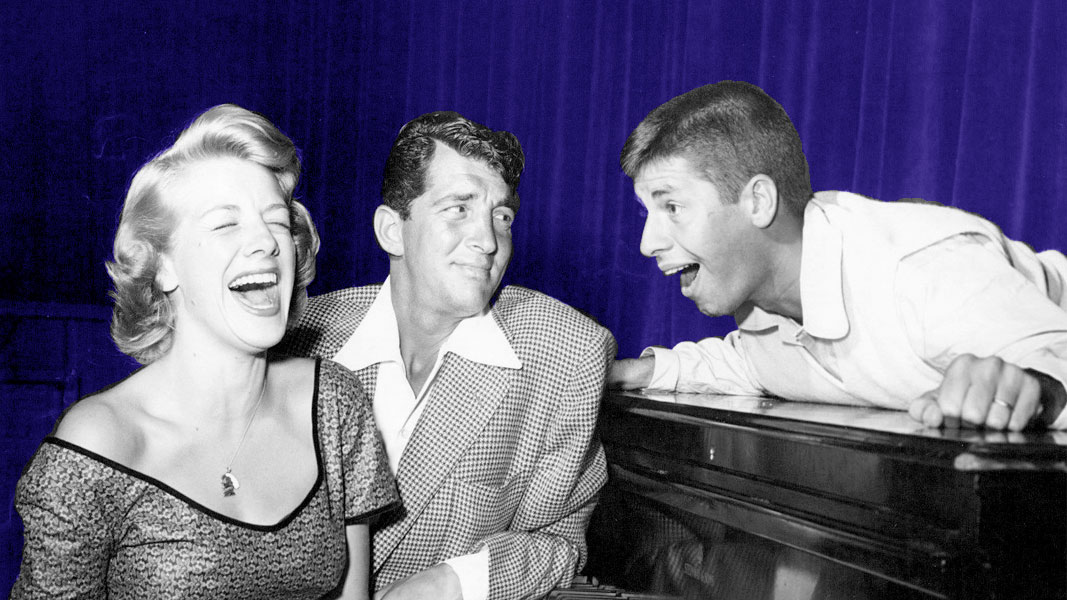
    One of the most popular comedy teams of all time was Dean Martin and Jerry Lewis. They worked together for 10 years and 17 movies. The partnership (and friendship) ended in July 1956.

    They met in 1945 and debuted at Atlantic City’s 500 Club on July 25, 1946; the team lasted ten years to the day. Before they teamed up, Martin was a nightclub singer, while Lewis performed a comedy act lip-synching to records. They met at Atlantic City’s 500 Club and pretty much ad-libbed their show, rough at first, bet the chemistry soon jelled. They appeared on the first episode of Ed Sullivan’s show, Toast of the Town, in June 1948, and became inseparable for nearly a decade.

    Initially, they performed as “Martin and Lewis” but the rebranding to use both of their full names came in handy after the break-up, they were each well known. For reasons that have never really been explained, the pair stopped working together. They seldom spoke either.

    On Sept 6, 1976 – Dean Martin appeared on Jerry Lewis’ 11th Muscular Dystrophy telethon. Frank Sinatra brought Dean up to Jerry’s stage. The reunion was a happy one, and they did keep in touch again, Lewis said “every day”. In 1989, at their last meeting, Jerry joked “Why we broke up, I’ll never know.”

    What Really Caused The Jerry and Dean Breakup?

    Mostly a little jealousy. Jerry and Dean both had their talents, but Jerry was getting more attention and Magazine covers. After the breakup, they both had beggir careers. The Telethon Reunion was one of the most iconic moments in Television History and could be called the last shining moment from The Golden Age of Television.

    What Makes a Comedy Duo Work?

    Typically this kind of comedy act had two people, 
    1. The Comic, usually the silly guy who got the laughs, and.. 
    2. THE STRAIGHT MAN, who set up the jokes.

    The earliest well-known Comedy duos were Laurel and Hardy. They were both established actors who first appeared as a team together in 1927, they were tight friends, and Stan Laurel never performed again after his friend Oliver Hardy died in 1957.

    George Burns and Gracie Allen
    Another famous duo from the early days was the Husband and Wife Team of George Burns and Gracie Allen. Their comedy act was one that was hard for anybody to duplicate. They were married in real life, and the routine started with George being the FUNNY guy and GRACIE the naive FOIL, but that turned around when GRACIEs naivety made her the funny one.

    Abbott and Costello
    They were best known for their ‘WHO’s ON FIRST’ routine and made 40 movies together.

    Bob Hope & Bing Crosby
    Hope and Crosby made 8 “Road” movies together: Road to Singapore (1940), Road to Zanzibar (1941), Road to Morocco (1942), Road to Utopia (1946), Road to Rio (1947), Road to Bali (1952) and The Road to Hong Kong (1962)
    Jack Lemmon & Walter Matthau
    Appeared in 11 movies together, including Grumpy Old Men and The Odd Couple and their sequels.
    Dan Aykroyd & John Belushi
    Appeared in The Blues Brothers (1980), Neighbors (1981), in 1941, they barely acknowledge each other, for comedic effect.
    Gene Wilder and Richard Pryor
    Silver Streak (1976), Stir Crazy (1980), See No Evil, Hear No Evil (1989),  Another You (1991)
    Cheech and Chong
    Appeared together in Cheech & Chong’s Animated Movie, Cheech and Chong’s Next Movie, Cheech & Chong’s The Corsican Brothers, Nice Dreams, Still Smokin, Things Are Tough All Over, and Up in Smoke. They have never really been close friends.
    Chris Farley & David Spade
    Appeared together on Saturday Night Live and two films; Tommy Boy (1995) and Black Sheep (1996)
    Ben Stiller and Owen Wilson
    Over 20 years, there were 12 films the did together: The Cable Guy (1996), Permanent Midnight (1998), Meet the Parents (2000), The Royal Tenenbaums (2001), Zoolander (2001), Starsky & Hutch (2004), Meet the Fockers (2004), Night at the Museum (2006), Night at the Museum: Battle of the Smithsonian (2009), Little Fockers (2010), Night at the Museum: Secret of the Tomb (2014), Zoolander 2 (2016)
    Jay and his “hetero life partner” Silent Bob (Jason Mewes and Kevin Smith)
    Their real-life friendship fuzzies the line between real life and their “view askew” universe.

    Seth Rogen and James Franco
    Their big-screen collaborations started in 2008 with Pineapple Express but met while they both worked on Television’s Freaks and Geeks.

    Other people who make magic when appearing together include Will Ferrell & John C. Reilly, Simon Pegg & Nick Frost, and Tina Fey & Amy Poehler. Penn and Teller have been performing together since 1975.

    In the 1970s and 80s, we had Cheech and Chong following the straight man/comic foil formula. Nickelodeon had Kenan and Kell playing off each other too. On the cartoon front, we have frenemies Bugs Bunny and Daffy Duck, usually BUGS pressing Daffy’s Buttons.

  • Idioms and Word Origins in Pop Culture


    Bombshell
    Before 1933, the term was used strictly a wartime exclusive. Jean Harlow was in a 1931 film, Platinum Blonde, where she picked up the nickname Bombshell, then starred in a movie actually called Bombshell in 1933. Jean Harlow was the first Bombshell sex symbol.
    Bucket List
    Bucket List actually originated with the 2007 movie, Bucket List. Two terminally ill strangers meet to fulfill each other list of things they want to do before they “Kick The Bucket”. The Phrase Bucket List is newer than the iPhone!
    Cowabunga
    The Teenage Mutant Ninja Turtles started using the term, in their comics, then in their 1980s cartoon. Bart Simpson copied them in the 90s, but Chief Thunderthud, a character on the 1950s kids show, Howdy Doody, used it as a FAKE Native American language. #first
    Cromulent
    Cromulent is perfectly acceptable to use as a descriptor.
    See ‘Embiggens’ below
    Dependability
    An advertising guy named Theodore MacManus started working for Dodge Cars in 1914.
    Cars were new, lots of things often went wrong with new technology, but he read positive letters that came from Dodge Owners, and they used the ‘dependable a lot.
    Based on that, he invented the word ‘Dependability’.
    Drinkability
    People had been drinking beer since Mesopotamia, 6-8000 years ago. In the 1960s, there was a lot of beer competition in America, and Budweiser fine-tuned the word and marketed the ‘drinkability’ of Budweiser.
    Die Hard
    Lieutenant-Colonel William Inglis of the 57th (West Middlesex) Regiment of Foot during the 1811 Peninsular War in Spain. In a forward attack, he said “Stand your ground and die hard… make the enemy pay dear for each of us!” His men lost 75% of their regiment, but earned the nickname – “The Die Hards”.
    Don’t Put All of Your Eggs in One Basket
    Was first used in print in “It is the part of a wise man to keep himself today for tomorrow, and not venture all his eggs in one basket”. The phrase was first used in Don Quixote by Miguel de Cervantes, in 1612. A now-common and helpful proverb about not depending on one single item for your success.
    Embiggens
    The Simpsons; Jebediah Springfield said that “A noble spirit embiggens the smallest man”.
    The word embiggens is self-descriptive – we know what it means, even though we never heard it before.
    As the second grade teacher, Ms. Hoover says, it’s a perfectly cromulent word.
    Fetch
    Gretchen, played by Lacey Chabert in Mean Girls tried to make FETCH a happening word, ‘fetch’ meant cool or awesome, but lead mean girl Regina George, would not let it happen. Fetch is probably the best movie word that almost made it into the mainstream lexicon
    Frenemy
    The first use of the word word ‘Frenemy” was in the 1953 article titled Howz about calling the Russians our Frienemies? by gossip columnist Walter Winchell in the Nevada State Journal. In social and business circles anyone who can both help you, or hinder your success can be a Frenemy.
    Gaslighting
    Gaslighting is the act of manipulating someone into questioning their own sanity. It’s used a lot today, it comes from a 1938 play called Gas Light, and a few movie adaptations. A woman’s husband made the house’s lights, powered by gas flicker, and claimed they weren’t flickering to drive her crazy. #gas lighting
    Geronimo!
    People yell Geronimo! when jumping from things because of a US Army private, Private Aubrey Eberhardt, who, in 1940, while testing parachutes, said he wasn’t scared. Parachutes were a fairly new and unreliable apparatus at the time. He yelled the name when he jumped to prove this. The rest of the platoon did not want to be shown up so they yelled it too, and it quickly caught on. The original Geronimo (June 16, 1829 – February 17, 1909) was an Apache chief and medicine man.
    Let’s Get Ready To Rumble 
    “Let’s Get Ready To Rumble” is all Michael Buffer. He started using the phrase in the 1980s but got the Trademark in 1992. He’s made Hundreds of Million Dollars on this phrase, he has the perfect for making the pronouncement. He owns the phrase and has sued over 100 times for copyright violations, and says he’s won every one of them. I’m a little afraid to say the phrase out loud.
    Listerine
    Listerine was invented in the nineteenth century as a strong surgical antiseptic. It was sold in distilled form, as a floor cleaner. In the 1920s, a lot of people had bad breath. The marketing boys twisted an old Latin word into HALITOSIS to describe that bad breath. Developed in 1879 by Joseph Lawrence, it was actually named after Joseph Lister, an early antiseptic surgeon.
    Oldies But Goodies
    Art Laboe is a radio and DJ icon, he was one of the first Disc Jockeys to play Rock and Roll on the West Coast – I don’t personally know him; I’m an East Coast Guy, and there’s that whole EAST Coast WEST Coast Music Rivalry. But Art coined and trademarked the phrase OLDIES BUT GOODIES for his record compilations. The way trademarks work, you can gather NON-MUSIC collections and call them OLDIES BUT GOODIES (hats, for example), his trademark is strictly for music.
    One Hit Wonder
    Was first used in the Winnipeg Free Press, in July 1977, in an article about Abba: It stated “Instead of becoming what everyone expected- after winning the Eurovision Song Contest with Waterloo – a one-hit-wonder, they soon had a string of hits behind them.” I’m surprised I could not find an earlier mention of the term. If it was ever used earlier, it was probably about an under-achieving baseball player.
    Paint The Town Red
    Although typically an American expression, the phrase has its roots in Melton Mowbray, England. The drinking of adult beverages was probably involved. In 1837, ‘The Mad’ Marquis of Waterford and his friends are said to have created some turbulence in the Leicestershire town, painting the town’s toll-bar and several buildings red. The thing is, it was never reported as such. The first recording of ‘painting the town red’ was in an 1884 edition of The Boston Journal. Chances are, some 50 years after Melton Mowbray event, a young, educated, partier referred to the old story of the Mad Marquis.
    Rest on One’s Laurels
    In ancient Greece, the laurel was a plant that was sacred to the god Apollo, thus appropriate for winners of the Pythian Games, much like the ancient Olympics. The Romans ‘borrowed’ the tradition of granting laurels to give respect. Initially, for the first 2000 years or so, it was referred to as in a ‘retirement’ sense. In 1825, it was first referred to as a sign of laziness and coasting on an older achievement as a backhanded compliment to writer Maria Edgeworth in The Literary Chronicle.
    Retsyn
    Certs Breath Mints have been around since 1956. When they first came out, they marketed themselves as both a candy and a breath mint. Candies are subject to certain tariffs, and they went back and forth in the courts finally deciding they were breath mints.
    Those breath mints contain ‘retsyn’, which sounds good, but it’s basically just homogenized vegetable oil. It sounds scientific though.
    Ribbit (frog sound)
    Ribbit came from a 1965 episode of Gilligan’s Island. Mel Blanc provided the voice of the frog, I’d have to call him the inventor. Before that, frogs were usually referred to by their croaking sound.

    Riot Act
    The first ‘Riot Act’ was called by King George I on August 1, 1715. The long-phrase title was “An Act for preventing tumults and riotous assemblies, and for the more speedy and effectual punishing the rioters”. The earliest use of the phrase in Pop Culture, published in an American soldier’s letter, (William Bradford)  “She has just run out to read the riot act in the Nursery”, in December 1819.
    We usually still use it for kids today.

    It was formally repealed in the Criminal Law Act of 1967, along with the Profane Oaths Act of 1945 (for cursing) and the Blasphemy Act 1697 (for educated Christians denying The Trinity or One God).

    Running Amok
    Amok, or running amok, is derived from the Malay word ‘mengamok’, which means to make a furious and desperate charge. Captain Cook is credited with making the first recorded ‘amok’ reference regarding the Malay tribesmen in 1770 while in the Malaysian/Indonesian area. In his 1772 book, he described it as “To run amock is to get drunk with opium… to sally forth from the house, kill the person or persons supposed to have injured the Amock, and any other person that attempts to impede his passage… indiscriminately killing and maiming villagers and animals in a frenzied attack.” Locals said it was evil spirits.
    Thagomizer
    We’ve all seen those Dinosaur Tails with the Four or Eight Spikes; they’re officially called a Thagomizer, thanks to a 1982 strip Far Side. RIP caveman Thag Simmons.
    Third Degree
    There are 4 likely first uses of the term: 
    1. Severe burns on a victim (1900s) 
    2. Richard H. Sylvester, the Chief of Police for Washington, DC. He divided police procedures into the arrest as the first degree, transportation to jail as the second degree, and interrogation as the third degree (the early 1900s), and probably coined the term.
    3. The third degree of Freemasonry and difficulties to advance to that level (1900).
    Toast
    Bill Murray gave TOAST the meaning of YOU’RE DEAD in Ghostbusters. Bang. You’re Toast. The best part is, he made it up on the spot.
    White Elephant
    A seemly great, but an ultimately useless gift. The phrase started from the historic practice of the King of Siam (now Thailand) giving rare albino elephants to lessor patrons and frenemies who had displeased him so that they might be financially ruined by the animals’ upkeep costs.
    But wait! There’s more! 
    “But wait! There’s more” and “This is a limited-time offer, so call now!” and “Now how much would you pay?” were all coined in a Ginsu knife commercial, by Ed Valenti. With his partners, James J. Cooney and Barry Becher he pretty much invented the infomercial.
  • The Generations Guide: From Boomers to Gen Z

    The Generations Guide: From Boomers to Gen Z

    The Generations Guide: From Boomers to Gen Z (and 2.0 and Beyond)

    When discussing pop culture, trends, politics, or shopping habits, we often find ourselves referring to generations. Whether it’s Millennials being blamed for the death of napkins or Gen Z creating the next viral dance on TikTok, generational labels shape how we think about people—and how people think about themselves.

    But what defines these generations? Where do the lines get drawn? And is Gen Z 2.0 a thing?

    Here’s your plainspoken, slightly cheeky, but fully fact-checked guide to understanding generations, not just as marketing categories, but as cultural snapshots.

    Take Our Spage Age Quiz!


    ????️ The Greatest Generation (Born ~1901–1927)

    Also known as the G.I. Generation, these are the individuals who lived through the Great Depression and fought in or supported World War II. They’re called “great” because of their resilience, patriotism, and collective sacrifice.

    • Came of age: 1920s–40s

    • Defining events: The Great Depression, World War II

    • Tech era: Radio and newspapers

    • Pop culture: Swing music, Casablanca, radio dramas

    Traits: Stoic, frugal, loyal, big on community and responsibility.


    ???? The Silent Generation (Born ~1928–1945)

    They grew up in a time of war, rationing, and recovery. They’re called “silent” not because they didn’t speak up, but because they were sandwiched between two louder groups (the Greatest Generation and Boomers).

    • Came of age: 1950s–60s

    • Defining events: Korean War, McCarthyism, early civil rights

    • Tech era: Black-and-white TV, party-line phones

    • Pop culture: Elvis Presley, James Dean, Leave It to Beaver

    Traits: Conservative, cautious, hardworking, respect for authority.


    ???? Baby Boomers (Born ~1946–1964)

    Named for the population boom after WWII, Boomers are one of the most studied (and roasted) generations. They fueled consumerism, protested in the 1960s, and are now mostly retired, yet still run half of everything.

    • Came of age: 1960s–80s

    • Defining events: Vietnam War, moon landing, Civil Rights Movement

    • Tech era: Color TV, rotary phones

    • Pop culture: The Beatles, Star Trek, Woodstock

    Traits: Competitive, optimistic, identity-driven, proud homeowners.

    Common complaint: “Boomers don’t want to retire—they want to consult for 15 years.”


    ????️ Generation X (Born ~1965–1980)

    Ah, Gen X—the so-called “forgotten” generation. Raised with a front-row seat to divorce, economic change, and the dawn of personal technology, Gen Xers are low-key rebels, famous for side-eyes and flannel.

    • Came of age: 1980s–90s

    • Defining events: Cold War, MTV, fall of the Berlin Wall

    • Tech era: VHS tapes, cassette Walkmans, early computers

    • Pop culture: Nirvana, The Breakfast Club, The X-Files

    Traits: Independent, skeptical, self-reliant, ironic.

    Mascot: A teenager slouched in front of a tube TV, remote in hand.


    ???? Millennials / Gen Y (Born ~1981–1996)

    The most researched generation until Gen Z showed up. Millennials are digital pioneers—old enough to remember life before the internet but young enough to be fluent in memes, gifs, and side hustles.

    • Came of age: 2000s–2010s

    • Defining events: 9/11, Great Recession, rise of social media

    • Tech era: iPods, flip phones, Facebook

    • Pop culture: Harry Potter, emo bands, early YouTube

    Traits: Purpose-driven, anxious, tech-savvy, value experiences over things.

    Why Boomers roll their eyes: “They killed the diamond industry and want to work from anywhere.”


    ???? Generation Z (Born ~1997–2012)

    Gen Z is the first fully digital-native generation—many of them had smartphones before entering middle school. They came of age in an era of climate anxiety, political polarization, and TikTok tutorials.

    • Came of age: 2010s–2020s

    • Defining events: COVID-19 pandemic, Black Lives Matter, Trump era

    • Tech era: Snapchat, TikTok, iPhones from day one

    • Pop culture: Stranger Things, Billie Eilish, memes-as-language

    Traits: Inclusive, socially aware, pragmatic, visually fluent.

    Catchphrase: “OK Boomer.”


    ???? Gen Z 2.0 / Generation Alpha (Born ~2013–present)

    Technically called Generation Alpha, but many refer to the youngest kids as Gen Z 2.0 due to their similarities and continuity. This is the first generation born entirely in the 21st century and raised on screens from day one.

    • Still coming of age

    • Defining events: Post-COVID world, AI in classrooms, virtual reality in everyday life

    • Tech era: Smart toys, voice assistants, YouTube Kids

    • Pop culture: MrBeast, Bluey, Minecraft streamers

    Traits: TBD—but early signs point to hyper-adaptability, early digital literacy, and AI fluency.


    ???? But… Are These Labels Real?

    Kind of. The U.S. Census Bureau doesn’t define generations—these terms are cultural constructs. But they help study trends in:

    • Spending

    • Voting

    • Parenting

    • Media preferences

    And they make great headlines: “Millennials can’t afford homes.” “Gen Z doesn’t use email.” “Boomers love chain restaurants.”

    Are they always accurate? No. But they often reflect generational experiences, which shape values more than age alone.


    ???? Generational Clashes and Clichés

    • Boomers think Millennials are entitled.

    • Millennials think Gen Z is chaotic.

    • Gen Z thinks everyone else is cringe.

    But what’s happening is this: each generation reacts to what the one before them emphasized or ignored.

    Boomers chased the American Dream → Gen X got cynical → Millennials sought purpose → Gen Z wants transparency and accountability.

    It’s not rebellion—it’s evolution.


    ???? Why Generational Marketing Matters

    Marketers and sociologists use these distinctions to track:

    • Tech adoption

    • Financial habits

    • Brand loyalty

    • Entertainment formats

    For example:

    • Gen X still likes emails.

    • Millennials prefer apps and DMs.

    • Gen Z? They’ll Google something—but on TikTok.

    If you’re building a business, political campaign, or content strategy, knowing your generational audience helps you speak their language.


    ???? Final Thoughts: More than Dates, It’s Identity

    Generational labels aren’t destiny—they’re just shorthand for shared experiences. A Gen Z teen in New York may have more in common with a Millennial in Seoul than with a Boomer in their neighborhood.

    But they do give us a way to connect, reflect, and poke fun at ourselves.

    And hey, if you ever want to understand someone? Don’t just ask their birth year—ask them what song was playing when they got their first phone.

    Take Our Space Age Quiz!

  • Summer Sounds: Ice Cream Trucks

    Summer Sounds: Ice Cream Trucks

    Music and Ice Cream Trucks

    Officially, in North America, the summer season does not begin until June 20th or 21st which is the date of the summer solstice and the longest day of the year. However, if you are a resident of the United States, then we all know by popular vote the “unofficial” start of summer actually begins at the end of the working day on the last Friday in the month of May, known as Memorial Day and is celebrated for the whole weekend.

    The Memorial Day holiday is dedicated to honoring and remembering the men and women who died while serving in the United States Armed Forces.

    The Memorial Day holiday weekend is celebrated publicly in many ways including parades, trips to the beaches, sweating it out with a trip to the hot inner city, or visiting a local farm or rural area most likely with a lake or pond. People use this time to bbq with family and friends, sunbathe, swim/float around swimming pools, the ocean, or the lake/pond. While we always seem to recall the sights and smells of the season, you certainly can not forget the sounds as well!

    Music and popular songs come and go, but one sound has been consistent since 1929 – the music and sound of the ice cream truck. The first was a local ice cream vendor who put a speaker on top of his truck and played a Polish folk song called The Farm Pump. Today, we have music boxes designed for the trucks that can play a selection of songs, mostly in the public domain, or even original music.

    They are usually set to loop at around 40 seconds – designed to be recognizable (earworm), loud (getting attention), and exciting (it’s ice cream!) all at once. The music may drive you crazy but think of the poor driver/ ice cream salesman hearing that annoying 40-second loop for 12 hours a day.

    In 1960, Mister Softee, the largest mobile cream franchisor with over 600 trucks, introduced the Mister Softee Theme (Jingle and Chimes), based on The Whistler and His Dog by Lester Morton “Les” Waas. Most other trucks use ‘public domain’ music, which has the advantage of not having to pay a royalty fee. The downside is, some of that music has, for lack of a better description, a racist past.

    Top Ten Ice Cream Truck Themes

    10. Turkey in the Straw – Originally based on an Irish folk song called The Old Rose Tree, it was adapted into minstrel music shows in the 1820s, even though the 1910’s. Minstrel music shows were generally disparaging to African Americans, to say the least. Barney the Dinosaur, from the children’s television show sang a very sanitized version of the song.

    9. Camptown Races (1850) and Oh! Suzanna (1848) were written by America’s first professional songwriter, Stephen Foster. Several of his songs were used in Mistral shows, including these, and were written before the Civil War. Many of his songs had no racial context.

    8. Dixie (1861) Dixie was about Antebellum (the wealthy southern lifestyle) prior to the civil war, much of it due to the work of slave labor.

    7. Jimmy Crack Corn (1840s) was a song about a slave’s lament after his master’s death. Then again, a closer look at the lyrics indicated he may have been happy about the death. Barney also sanitized this song for children.

    6. La Cucaracha (1800s Mexican folk song) not racist at all, and probably the most popular song about a cockroach who cannot walk, to entice children to eat ice cream.

    5. Pop Goes The Weasel (1852) began as a social dance in England. The ambiguous phrase has been used in many pop culture mediums – books, film and television. In the 1930s, it became the tune for Jack-in-the-Box windup toys. Barney covered it too.

    4. I’m a Little Teapot (1939) “I’m a little teapot, Short and stout, Here is my handle Here is my spout When I get all steamed up, Hear me shout, Tip me over and pour me out!” Probably the last Nursery Rhyme to be a radio hit.

    3. Twinkle, Twinkle Little Star – the lyrics were written by Jane Taylor in 1806 (England), and the melody came from Ah! vous dirai-je, maman, (1761, France).

    2. It’s a Small World, written by brothers Robert B. Sherman and Richard M. Sherman in 1962, and inspired by the Cuban Missile Crisis. It is probably the only popular ice cream truck music that needs a royalty payment. Why? Because it may be the second most well-known song in the Western World, behind Happy Birthday. As mentioned above, it’s annoying, attention-getting, and children run to it, especially when they hear the tune coming from a monotone ice cream truck.

    1. The Entertainer (1902) written by Scott Joplin, is one of the most famous instrumentals of the recorded sound era. It was the biggest ragtime hit, and brings the perfect ‘nostalgia’ feeling for both children and adults when it comes to ice cream.

    A Brief History of Ice Cream:

    • Ice cream really started as water ice almost 2000 years ago with the ROMANS bringing ICE down from the ALPS.
    • Ice cream as we know it was made in homes Italy and France by the 1700s.
    • By the LATE 1700s, we had ice cream in AMERICA.
    • In the 1830s, immigrants brought the old country recipes via horse-drawn carriages with glass bowls, that were rinsed out and reused by the venders to the buying public, who licked the ice cream out of the bowls. (Sanitation wasn’t something they paid a lot of attention to back then.)
    • By 1900 or so, the ICE CREAM SANDWICH helped with that, prepackaged, and nobody else’s tongue in your bowl.
    • The Ice Cream was introduced at THE 1904 ST LOUIS WORLD’S FAIR, which also introduced us to the Hot Dog Roll.

    In 1920, a guy named Harry Burnt invented the twin-handled Good Humor Bar. He started with a dozen Good Humor trucks later that year. Good Humor had thousands of trucks going by the 1950s when Mister Softee started in Philadelphia. By 1960, the Mister Softee Theme (Jingle and Chimes) was playing from trucks on a drum-and-spindle machine – it sounds mechanical because it originally was.

    Jack and Jill, another Philadelphia company, started in 1929. They are still in the ice cream delivery business, but primarily to businesses for retail. Both Good Humor and Jack and Jill no longer use trucks, but you can find them in most supermarkets. There are a lot of independent Gourmet Ice Cream Trucks around… so keep an ear open for street delivery of your favorite ice cream!

  • Mother’s Day and Songs for Mama

    Mother’s Day and Songs for Mama

    Music About Your Mom: Mother Songs

    Mother’s Day

    The modern holiday of Mother’s Day was first celebrated in 1908 when Anna Jarvis held a memorial for her mother in West Virginia.  There were Ancient versions of Mother’s Days, but they were more about fertility and birth. Anna’s idea to make Mother’s Day a real holiday in the United States began in 1905, the year her own mother, Ann Jarvis, died.

    Anna wanted to honor her mother by continuing the work she started and to set aside a day to honor all mothers because she believed a mother is “the person who has done more for you than anyone in the world”.

    In 1868, Anna’s mother was Ann Jarvis, and she wanted to reunite families that had been divided during the Civil War – so she created The “Mother’s Friendship Day” Committee. During the war, she organized what she called “Mother’s Day Work Clubs” to improve sanitation and health for both Union and Confederate soldiers for a typhoid outbreak, which was a big problem. 

    Young Anna saw how her mom used other mothers, to help everyone on both sides and maybe healed a bit after the Civil War, so she really recognized the importance of mothers, through her own mother’s actions, and she campaigned – a lot, and by 1911 every U.S. states observed the holiday one way or another, both formally and informally.

    In 1914, Woodrow Wilson signed a proclamation designating Mother’s Day, held on the second Sunday in May, as a national holiday to honor mothers. She was particular about the spelling – APOSTROPHE – S, to “be a singular possessive, for each family to honor its own mother, not a plural possessive commemorating all mothers in the world.”

    Anna never had any children herself- Her intention was to have a truly personal holiday for individual mothers, but it didn’t turn out that way. People call it a “hallmark Holiday’ after the greeting card company, and Anna was resentful of the commercialization of the holiday.

    By the early 1920s, companies started selling Mother’s Day cards. (Hallmark didn’t sell Mother’s day Cards until the late 1920s) People gave their mothers candy and carnations, but Anna thought that the companies and people in general, misinterpreted and exploited the idea of Mother’s Day and that the emphasis of the holiday was supposed to be a sentiment, not profit. She was probably right – a phone call or visit is more personal than a card, so take mom out, or invite her in for dinner.

    Mother’s Day is the #3 Day for Cards. Quality Time is probably the best gift for a mother.

    Songs For Moms

    1. I’ll Always Love My Mama – Intruders
    2. Wind Beneath My Wings – Bette Midler
    3. A Song For Mama – Boyz II Men
    4. Mother – Kacey Musgraves
    5. Mother and Child Reunion – Paul Simon
    6. The Sweetest Gift – Linda Ronstadt and Emmylou Harris
    7. The Best Day – Taylor Swift
    8. My Mammy – Al Jolson
    9. Mamma Mia – Abba
    10. Mama Said – The Shirelles
    11. Julia – The Beatles
    12. (God Must Have Spent) A Little More Time on You – *NSYNC
    13. Mama Don’t Forget To Pray For Me
    14. Mom – Meghan Trainor
    15. Mama – Il Divo
    16. Mama Used To Say – Junior
    17. Sadie – The Spinners
    18. Look What You’ve Done – Drake
    19. Mother – Ashanti
    20. Mama’s Pearl – The Jackson 5
    21. The Baby – Blake Shelton
    22. The Mother – Brandi Carlile
    23. The Hand That Rocks The Cradle – Glen Campbell and Steve Wariner
    24. Like My Mother Does – Lauren Alaina
    25. Where You Lead – Carole King
    26. Ma – Rare Earth
    27. The Wish – Bruce Springsteen
    28. Mama – Genesis
    29. Mama’s Song – Carrie Underwood
    30. Mother’s Little Helper – Rolling Stones
    31. Somebody’s Hero – Jamie O’Neal
    32. One Heartbeat At A Time – Steven Curtis Chapman
    33. My Daughter’s Eyes – Martina McBride
    34. Turn To You – Justin Bieber
    35. Mama Can’t Buy You Love – Elton John
    36. I Got It From My Mama – will.i.am
    37. Mother – Ray Charles
    38. Mother-In-Law – Ernie K Doe
    39. Mother – John Lennon
    40. Thank You, Mom – Good Charlotte
    41. My Yiddesha Mama – Willow Howard
    42. Sweetest Devotion – Adele
    43. Mama, We’re All Crazy Now – Quiet Riot (or Slade)
    44. Oh Mother – Christina Aguilera
    45. Dear Mama – Tupac Shakur
    46. Mama, He’s Crazy – The Judds
    47. Your Mama Don’t Dance – Loggins and Messina
    48. Mama, Said Knock You Out – L.L. Cool J
    49. Mother – Danzig
    50. The Perfect Fan – Backstreet Boys
    51. Mama Didn’t Lie – Jan Bradley
    52. Coat of Many Colors – Dolly Parton
    53. My Mama Told Me – Barbara Lewis
    54. Mama Liked The Roses – Elvis Presley
    55. Mama – The Spice Girls
    56. Mama Told Me Not To Come – Three Dog Night
    57. Hey Mama – Kanye West
    58. Mother of Mine – The Band Perry
    59. Mama, I’m Coming Home – Ozzy Osbourne
    60. Mother – Sugarland
    61. Mamma – Connie Francis
    62. Mama Tried – Meryl Haggard
    63. Mama Said – Metallica
    64. Mother – Pink Floyd
    65. M-O-T-H-E-R ( A Name That Means The World To Me) – Henry Burr
    66. Your Mother Should Know – The Beatles
    67. Mama’s and Papa’s – The Classics IV
    68. Ma, He’s Making Eyes At Me – Eddie Cantor
    69. Sylvia’s Mother – Dr. Hook
    70. Mama Kin – Aerosmith
    71. Mama, He Treats Your Daughter Mean – Ruth Brown
    72. Roses for Mama – CW McCall
    73. Motorcycle Mama – Sailcat
    74. Throw Mama From The Train – Patti Page
    75. Stacy’s Mom – Fountains of Wayne
  • 25 Ethical Questions

    25 Ethical Questions

    25 Ethics Questions To Ponder

    Here’s a list of 25 modern ethical and philosophical questions along with some potential positive, negative, and neutral connotations or answers:

    1. Is genetic engineering of humans ethical?

      • Positive: Can prevent genetic diseases, improve human capability.

      • Negative: May lead to eugenics, inequality.

      • Neutral: Requires careful regulation and public discourse.

    2. Should autonomous vehicles prioritize passenger or pedestrian safety?

      • Positive: Saves lives through reduced human error.

      • Negative: Difficult ethical decisions programmed by humans.

      • Neutral: Reflects complex societal values and safety concerns.

    3. Is it ethical to colonize Mars?

      • Positive: Ensures human survival, new resources.

      • Negative: Risk of harming potential Martian ecosystems.

      • Neutral: Depends on execution and respect for potential life.

    4. Should animals have the same rights as humans?

      • Positive: Acknowledges sentience and suffering.

      • Negative: Could impact necessary medical research, food resources.

      • Neutral: Rights should be appropriate to the species’ needs.

    5. Is digital privacy a fundamental right?

      • Positive: Protects personal freedoms and autonomy.

      • Negative: Can conflict with security and law enforcement needs.

      • Neutral: Balances between privacy and security are necessary.

    6. Is it morally acceptable to use drones in warfare?

      • Positive: Reduces risk to military personnel.

      • Negative: May increase casual attitudes towards conflict.

      • Neutral: Use should be regulated by strict ethical guidelines.

    7. Should we implement a universal basic income?

      • Positive: Reduces poverty and inequality.

      • Negative: Potentially unsustainable economically.

      • Neutral: Effectiveness depends on the economic context.

    8. Is artificial intelligence a threat or a benefit to society?

      • Positive: Enhances efficiency and capabilities in various sectors.

      • Negative: Potential job displacement, ethical concerns.

      • Neutral: AI development should be carefully managed.

    9. Should euthanasia be legalized?

      • Positive: Allows dignity in death, relieves suffering.

      • Negative: Potential for abuse and moral conflicts.

      • Neutral: Should come with strict safeguards and consent processes.

    10. Is it ethical to clone extinct animals?

      • Positive: Could restore lost species and ecosystems.

      • Negative: Diverts attention from conserving existing species.

      • Neutral: Ethical considerations depend on reasons and methods.

    11. Should voting be mandatory?

      • Positive: Increases democratic participation.

      • Negative: May violate personal freedom of choice.

      • Neutral: Could be one element of broader civic engagement reforms.

    12. Is it ethical to keep animals in zoos?

      • Positive: Helps with conservation and education.

      • Negative: Can cause suffering and unnatural living conditions.

      • Neutral: Depends on the zoo’s quality and ethical standards.

    13. Should we allow surveillance for national security?

      • Positive: Helps prevent terrorism and crime.

      • Negative: Infringes on individual privacy rights.

      • Neutral: Needs strict oversight and legal frameworks.

    14. Is it ethical to consume meat?

      • Positive: Part of natural human diet and tradition.

      • Negative: Ethical concerns about animal welfare and environmental impact.

      • Neutral: Personal choice informed by ethical and environmental considerations.

    15. Should parents be allowed to choose their baby’s traits?

      • Positive: Reduces genetic diseases, enhances life opportunities.

      • Negative: Raises issues of inequality and ‘designer babies’.

      • Neutral: Needs ethical oversight and societal consensus.

    16. Is the death penalty justifiable?

      • Positive: Deters crime, provides justice for victims.

      • Negative: Risk of wrongful execution, inhumane.

      • Neutral: Should be debated and decided democratically.

    17. Should we prioritize environmental policy over economic growth?

      • Positive: Ensures sustainable living conditions for future generations.

      • Negative: Could hinder economic development and job creation.

      • Neutral: Policies should aim to balance environmental and economic factors.

    18. Is it ethical to enhance humans physically and mentally through technology?

      • Positive: Improves quality of life and human capabilities.

      • Negative: Could exacerbate social inequalities.

      • Neutral: Should be regulated to ensure fair access and ethical use.

    19. Should social media companies regulate content on their platforms?

      • Positive: Reduces misinformation and harmful content.

      • Negative: Threatens free speech and expression.

      • Neutral: Requires transparent policies that respect user rights.

    20. Is it ethical to use placebo treatments?

    • Positive: Can be beneficial in clinical research and treatment.

      • Negative: Deceptive and may undermine trust in medical practice.

      • Neutral: Ethically acceptable if patient welfare is improved and no better treatment is available.

    1. Is social media responsible for increasing loneliness?

      • Positive: Provides a platform for connection, especially for those isolated by geography or disability.

      • Negative: Encourages superficial interactions and a focus on quantity of connections over quality.

      • Neutral: The impact varies widely depending on how individuals use and interact with social media.

    2. Should all drugs be legalized?

      • Positive: Reduces the criminal activities associated with drug trafficking.

      • Negative: Could lead to increased health problems and societal issues.

      • Neutral: Regulation and education might mitigate risks and provide health benefits.

    3. Is it ethical for companies to track their employees’ online activities?

      • Positive: Can enhance security and productivity.

      • Negative: Invades privacy and can create a distrustful work environment.

      • Neutral: Acceptable if transparent and limited to work-related activities.

    4. Is censorship ever justified in a free society?

      • Positive: Necessary to protect individuals from harm and misinformation.

      • Negative: Can be used to suppress dissent and control public opinion.

      • Neutral: Justifiable when it protects the vulnerable without stifling essential freedom.

    5. Should we prioritize the exploration of space over solving Earth’s current problems?

      • Positive: Can lead to technological advancements and long-term survival of humanity.

      • Negative: Diverts resources and attention from pressing environmental and social issues.

      • **A neutral stance might consider the benefits of technology and knowledge gained from space exploration that could potentially address Earth’s challenges.

  • The History of the Philly Phanatic

    The History of the Philly Phanatic

    The Philly Phanatic: A Deep Dive into the Mascot Hall of Fame’s Crown Jewel

    ???? Who Is the Philly Phanatic?

    The Philly Phanatic is the official mascot of the Philadelphia Phillies baseball team. Covered in fuzzy green fur, with a snout-like beak, wild eyes, and a pear-shaped body, he’s a species all his own—a “flightless bird from the Galápagos Islands” according to his fictional backstory.

    But behind the goofy exterior lies one of the most recognized and beloved characters in sports history.


    ????️ When Did He Debut?

    • Debut Date: April 25, 1978

    • Debut Game: Phillies vs. Chicago Cubs at Veterans Stadium

    • Created to enhance the family-friendly experience at the ballpark, the Phanatic quickly stole the show—outshining even the players at times.


    ???? Who Created the Phanatic?

    • The character was designed by Bonnie Erickson and Wayde Harrison of Harrison/Erickson, the same company behind many Muppets for Jim Henson.

    • David Raymond, a 22-year-old intern with the Phillies front office, was the original performer (1978–1993).

    • Raymond brought improvisational humor, athleticism, and a unique rebellious charm to the role, establishing the Phanatic’s personality.

    ????️ “He wasn’t just goofy. He was defiant. A little punk rock in a baseball jersey.” – David Raymond


    ???? Why Is the Phanatic So Popular?

    1. Unique Design

    He’s intentionally weird. Unlike traditional mascots modeled after animals or team logos, the Phanatic is absurdist, anarchic, and unforgettable. That uniqueness makes him instantly recognizable.

    2. Physical Comedy Masterclass

    He rides an ATV, shoots hot dogs into the crowd, mocks umpires, and breakdances. His non-verbal antics tap into universal humor, appealing to kids and adults alike.

    3. Breaking the “Mascot Mold”

    The Phanatic redefined what a sports mascot could be. He wasn’t just a cheerleader—he was a character with attitude, often pushing the line with playful taunts and satirical gestures.

    4. Legacy & Influence

    He inspired a new era of mascots: the NBA’s Benny the Bull, the San Diego Chicken, and countless college and minor league characters drew from his playbook.


    ???? Recognition & Honors

    • Mascot Hall of Fame Inductee – Class of 2005 (inaugural class)

    • The Smithsonian Institution houses the costume

    • Named “#1 Mascot in Sports” by Forbes, Sports Illustrated, and ESPN multiple times

    • Lawsuit-worthy Fame: The Phillies had to legally defend their rights to the character in a 2019 lawsuit over copyright and licensing—a testament to his commercial value


    ???? The Phillie Phanatic Lawsuit: Mascot vs. Muppet Creator

    ????️ Background: From Costume to Copyright

    • The Phanatic debuted in 1978, created by Bonnie Erickson and Wayde Harrison (H/E), the same duo behind several Muppet characters.

    • In 1984, the Phillies paid $250,000 to purchase the copyright fully—believing they’d secured lifelong rights.


    ⚠️ The Legal Twist: Copyright Termination Rights

    1. U.S. law allows creators to terminate copyright assignments after 35 years, without the original employer’s permission..

    2. In June 2018, H/E used this right and informed the Phillies they intended to reclaim rights to the Phanatic costume copyright 


    ???? Phillies Strike Back: 2019 Lawsuit in New York

    • In August 2019, the Phillies filed a declaratory judgment lawsuit in the Southern District of New York to:

      • Argue the Phanatic costume was a joint creation (so they retained rights),

      • Claim the costume was an “artistic sculpture” and not eligible for termination.

      • Maintain ownership of the character and costumes developed as of 2020 inta.org.


    ???? Revised “Phanatic 2.0”

    • To remain compliant, the Phillies deployed a redesigned mascot during Spring Training 2020—featuring new eyes, nose, tail, shoes, and body details—believed to fall under the derivative works exception 


    ⚖️ 2021 Magistrate Ruling: Derivative Work Exception

    • In August 2021, Magistrate Judge Netburn ruled:

      1. H/E had validly reclaimed rights to the original Phanatic costume design;

      2. The 2020 variant was sufficiently different to be considered a derivative work, so the Phillies could still use it 

      3. Summary judgment on key claims favored both sides on specific points .


    ???? Settlement & Return of the Original

    • In December 2021, both parties reached a confidential settlement. The Phillies paid an undisclosed amount and regained rights to the original Phanatic costume, set to return in 2022.

    • Phillies EVP David Buck confirmed:

      “We welcome the original Phillie Phanatic back with open arms… our goal was to come to an amicable solution that guaranteed the Phanatic could continue to entertain future generations.” 


    ???? Why It Matters in Mascot Culture

    • It showcased how copyright assignments—even large payoffs—can be undone after decades.

    • Emphasized the importance of using work-for-hire agreements or permanent licenses when creating a mascot.

    • Magistrate Netburn’s ruling offered a critical legal precedent—Derivative works made before a termination remain usable 


    ???? Key Takeaways

  • Lesson Insight
    Terminated rights Creators can reclaim rights after 35 years, even with a paid assignment
    Derivative exception Revising a mascot can preserve usage rights through legal loopholes
    Legal templates for brands A cautionary tale—draft permanent IP assignments from the start

    ???? Cultural Impact

    • TV appearances: The Simpsons, It’s Always Sunny in Philadelphia, Saturday Night Live

    • Political visits: Appeared at the White House

    • Public icon: Frequently used in regional tourism and civic events

    • Merchandise sales: Among the highest for any mascot in the world


    ???? Why Does He Work So Well?

    Because the Phanatic combines performance art, physical comedy, improvisation, and heart. He doesn’t speak—but you always know what he’s thinking. He’s silly and sarcastic, but also loyal to Philly’s gritty charm.

    In a city known for throwing snowballs at Santa, the Phanatic stands out as both a jester and a hometown hero.


    ???? 

    The Philly Phanatic didn’t just raise the bar—he set it on fire, danced on it, and shot hot dogs off it into the upper deck. He’s not just a mascot; he’s a cultural institution.

    And for many, he’s the GOAT of the mascot world.

  • Strange and Unusual Candies

    Strange and Unusual Candies

    From Yum To Yuck, A Look At Some Of The Oddest Candy!

    For many of us when we think of the word candy, our mouths begin to water and we begin to acknowledge that oh so familiar feeling of needing to satisfy our sweet tooth, as that’s what candy is supposed to be …sweet! While the majority of candies, even the sour stuff, are still crafted with sugar, some candy that has been launched on the market over the years is anything but sweet. Some are downright disgusting and others are just plain odd. Who needs Peeps flavors like Hot Tamale, Pancakes with Syrup, or Candy Corn? Below you can find a list of some of the more strange candy we have discovered over the years.

    Candy Cigarettes 

    Candy cigarettes are still currently being made to this day, despite the fact that the United States has twice attempted to ban the sale of them back in 1970 and 1991. It was thought that the candy cigarettes which are crafted to look like actual cigarettes would encourage young children to smoke. They actually taste similar to chalk dust and many people feel they are the world’s worst tasting candy, even taking the title away from candy corn, which is another candy that people either hate or adore.

    Pop Rocks

    This odd candy consists of tiny sugar pieces that explode when put in your mouth. To create the effect, pressurized carbon dioxide bubbles are embedded in each piece of candy, which is what creates the popping sensation when they mix with the saliva inside your mouth. Pop Rocks are a fun candy, but certainly a bit on the odd side. 

    Candy Canes

    While candy canes themselves are not so odd, as a traditional candy cane is generally a red and white, peppermint flavored sugar stick. It is the new flavor twists over the years that raise some eyebrows. Those newer flavors include bacon, pickle, Oreo, coffee, and most recently Mac & Cheese! EWW!

    PEZ

    What is odd about PEZ candy is that the dispensers in which the candies are housed are more sought after than the candy itself. Over 3 billion PEZ candy are consumed each year and the dispensers which feature various cartoon and pop culture figures have become major collector items. There are over 550 different dispensers and one original from the 1950’s sold for over $11,000 on eBay in 2000. They hold PEZ conventions and the fan base even has their own name: PEZHeads.

    Gummies

    Lightning Bug, Maggot, and Body Part Gummies- We have to group the odd assortment of various gummy candies that exist into one group because we could easily write an entire article just based on the odd array of gummy candy available on the market today.

    There is everything from lightning bug gummies that “light up” when you pick them up using a set of tweezers with a light that shines through the gummy (sound like a lot of work to us) to gummies that resemble maggots (yuck!). There are also gummies made to look like various body parts such as brains, kidneys, heart as well as gummy bacon, gummy alien butts, boogers, and gummy worms. What is wrong with just sticking to those cute little bears?

    Razzles

    Are the candy or gum? To be honest no one really knows! Kids love them as they do come in delicious fruit flavors, but after chewing them up for a bit they turn into a rather lame piece of flavorless chewing gum. They might even be worse than Fruit Stripe gum, which loses its flavor in mere seconds. Razzles will forever remain a mystery but still have a dedicated fan base.

    Bonkers

    If there was ever a candy we could bring back this would be the one! Why, oh, why did it have to disappear? There have even been online petitions to bring back this oddly addictive candy that featured a two flavor combination which was fruity on the outside and a flavored fruity filling on the inside. Their commercials during the 1980s were especially memorable and the thought of them immediately sparks up nostalgia. Nabisco originally made the candy, but currently, other manufacturers are trying to replicate the original, but so far have had no luck!

    Wax Bottle Candy

    This candy is a bottle-shaped form of wax that contains a so-called fruit-flavored liquid that you are supposed to suck out of the bottle by biting off the tip. These are not only messy but once the minuscule amount of flavored liquid is gone you are left with nothing but a sticky waxy bottle to chew on, which you are not supposed to eat! This candy literally makes no sense.

    Atomic Fireballs and Lemonheads

    Why would you want to put yourself through the torture of these candies? One is so hot with a cinnamon flavor your mouth becomes an inferno and the other is so sour your lips may stay puckered for hours! These are not treats! They are odd little torture devices.

    Wasabi Kit-Kats

    Japan is well-known for having some rather odd flavors of Kit-Kat (which are normally chocolate wafer candies here in the U.S.) such as Baked Potato, Soy Sauce, Cherry Blossom, Blueberry Cheesecake, Soybean and Brandy and Orange. We think that Wasabi definitely takes the cake on the oddest flavor. As spicy as Wasabi can be, this cannot possibly taste good in candy form.

    Sour Flush Toilet Lollipops

    These lollipops come in a toilet shaped dispenser and are crafted to look like a plunger sticking up from the bowl. Enough said, no further explanation needed!

    Bertie Botts Every Flavor Beans (and some flavors of Jelly Belly Jelly Beans)

    Love them or hate them Jelly Beans have been around for quite some time and show no signs of going anywhere anytime soon. Now, in addition to your typical fruit flavors Bertie Botts, inspired by Harry Potter, features jelly beans in disgusting flavors such as soap, grass, dirt, black pepper, earwax, vomit, and even rotten egg. Taste at your own risk! The additional odd Jelly Belly flavors include draft beer, buttered popcorn, pancakes and maple syrup, habanero pepper, chili mango, barbeque banana, and Tabasco to name only a few.

  • The Birth of The Clip-On Tie

    The Birth of The Clip-On Tie

    The Clip-On Tie Presented

    This week marks the anniversary of the invention of the clip-on tie. Invented on December 13th, 1928 by an unknown inventor, the clip-on tie was then further developed by Eastern Creatives Industries INC into the product that we know today. 

    The clip-on tie serves as a convenient option for those who find difficulty in properly adjusting a traditional tie. While learning how to tie a tie is a rite of passage for some, the clip-on tie exists for those who aim for a dapper look while barely lifting a finger. 

    The clip-on tie is simply a tie that is permanently knotted with a metal clasp on the back that clips onto dress shirts and other clothing. While viewed as cheap and tacky to some, the clip-on tie can be a last-minute lifesaver when traveling to a business meeting, job interview or other events that require you to look sharp. 

    The origins of the clip-on tie can be traced back to Iowa in 1928. However, the person behind the classic invention is still unknown to this day. Eastern Creative Industries INC expanded on this idea in the 1970s, developing an easier clasp that is widely recognizable by the public today. 

    Besides the aforementioned tackiness, some people complain about the clip-on ties removal process which has been said is much harder than putting it on. Many who’ve owned clip-on ties say that removing them often breaks that clasp and even gets stuck to their clothing.

    Others say that in more hands-on work settings, the clip-on tie is easier to fall off thus revealing the wearer’s less renowned choice in attire. Still, the clip-on tie gave many opportunities to those who refrained from wearing a regular necktie because of the complicated knotting process. The clip-on tie gave a chance to those who no longer wished to avoid wearing ties altogether. 

    The clip-on tie comes in all varieties of lengths and styles just as regular ties do. From patterned to solid color, clip-on ties never falter in providing style for their wearers. Most of the time, people can’t even tell the difference from a regularly tied necktie. 

    Since the 1920’s when it was first conceptualized, the necktie both clip-on and regular has seen a decrease in modern work settings with many choosing to work from home in today’s socio-economic climate, and due to the pandemic. The clip-on tie’s popularity has also decreased since it’s major use in the 70s and 80s. 

    Still, the clip-on tie has had a major impact on fashion, primarily men’s fashion and is still used by workers in office spaces and other business settings today. The clip-on tie may have a diluted history and questions on why it needs to exist, but no doubt it has helped people around the world feel fashionable with ease. 

  • Songs Based on Real Events

    Songs Based on Real Events

    How Various Actual Events, Sometimes Catastrophic Ones, Led to the Creation of Some of Music’s Biggest Hits
    Musicians are artists and their canvas is the melody and lyrics that put together their songs. Talk to any musician and they will tell you that they pull their inspirations from a wide variety of emotions including love, heartbreak, pain, rebellion, hope, imagination and so much more. Some musicians even prefer that their songs be interpreted by the listener themselves so they can take their own individual messages away from the lyrical content.

    But there are actually quite a few hit songs out there that were inspired by actual real-life events that took place throughout history, some good and some bad, but all the same, these events had a great influence on the artists and helped created some incredibly memorable songs. We have taken a look at a few hit songs that were inspired by actual events and the impact those events had on the artists, as they felt the need to immortalize them in song. Some of the songs on this list may surprise you, but it certainly provides great insight into the mind of the artist and their reactions to various life events.

    Smoke On The Water from Deep Purple – On December 4, 1971, Deep Purple was in Monteux, Switzerland recording their new album at the Casino Complex. It so happened that Frank Zappa was playing a show at the same Casino Complex when a fan set off a flare gun during the show that ended up starting a fire that burned down the entire Casino Complex. Thankfully there were no major injuries during the incident, but it led to the creation of what was to become Deep Purple’s biggest hit song.
    Ballroom Blitz from The Sweet – This song was inspired by an incident that took place in 1973 where the band was performing live and they were driven offstage by a barrage of bottles being thrown at them. The song hit the top five in 1975 and we are guessing at that point in time no more bottles were being thrown!
    The Streak from Ray Stevens – It seems that everyone was getting naked at public events in the year 1974 and this was Ray Steven’s commentary. The song was number one for roughly three weeks.
    We Didn’t Start The Fire from Billy Joel– Billy Joel is the master of crafting a song about events, he didn’t just choose a single event. Joel’s song covers nearly every world event that took place from his childhood in 1949 till the time he was forty years in 1989 when the song was released. To be exact, he mentions 117 events that changed the world, or if you want to be precise, 118 as he mentions Richard Nixon twice! The song covers a lot of ground and just try to sing it all from memory …we’ll wait!
    Castle On The Hill from Ed Sheeran– Following Billy Joel’s playbook singer/songwriter Ed Sheeran crafted this 2017 song speaking about a variety of personal events that took place for him during the trajectory of his career starting from his childhood at age six to the time in which he began his rise to superstardom.
    American Pie from Don McLean – This deeply sad song was penned by McLean after the tragic deaths of Buddy Holly, The Big Bopper, and Ritchie Valens due to a plane crash that occurred in 1959. McLean also wrote a tribute to the life and death of artist Vincent Van Gogh with the beautiful song Vincent.
    The Night Chicago Died from Paper Lace – This catchy pop tune was actually inspired by gangster Al Capone and the St. Valentine’s Day Massacre.
    When The Levee Breaks from Led Zeppelin – This song is actually is a cover song that was written during a great Mississippi River flood that occurred in 1929. Led Zeppelin without a doubt made it their own and secured the tragedy in everyone’s memory, as it will not be forgotten.
    Winds Of Change from The Scorpions – This song was inspired by the fall of the Berlin Wall and the end of the Cold War. If you truly listen to the lyrics you can definitely pick up the theme.
    Fortunate Son from Creedence Clearwater Revival – Many looked at this song as being patriotic, however, John Fogerty was actually commenting on just the opposite. It was about Fogerty’s discharge from the army during the Vietnam War and how upset he was becoming with soldiers being forced into combat.
    The Little Things You Give Away from Linkin Park – This song was penned after Hurricane Katrina devastated the South and is a call for action to correct the unjust practices that the U.S. government was taking in helping the storm victims.
    Uprising from Muse – This track was inspired by the G20 riots that took place in London in 2009 against the dishonesty of various global corporations around the world. It was Muse’s way to express their anger and commentary about the situation.
    Darkness from Eminem – This deeply haunting song off of Eminem’s recent album Music To Be Murdered By was inspired by the horrific 2017 shooting deaths of over fifty people who were attending a concert festival in Las Vegas. The song is told from the perspective of the shooter and is both deeply disturbing and thought-provoking at the same time.
    A Day In The Life from The Beatles – This song was inspired by the tragic death of one of the band’s acquaintances named Tara Browne. Browne had died in a car crash a few months prior to The Beatles entering the studio to record. The lyric “he blew his mind out in a car” is the reference as Lennon is searching through a newspaper to find the story.
    The Ballad Of The Beaconsfield Miners from the Foo Fighters – The beautiful interlude was created by The Foo Fighters frontman Dave Grohl after learning that during a coal mine collapse in Beaconsfield, Australia where two miners were trapped for two days, one of the trapped miners only requested water and an iPod containing the new Foo Fighters album. Grohl penned the track in tribute to the man’s bravery and the loyalty of their fan base. He even offered to have a beer with the man the next time the band was in town.
    Candle In The Wind from Elton John – This song is actually a twofer for Elton John as the song was originally written as a tribute to the late Marilyn Monroe, as the beginning lyric uses her real name “Goodbye Norma Jean”. The song later had a huge resurgence when Princess Diana tragically died in a car accident in 1997. Elton and Princess Di were very dear friends and the opening lyrics were changed to “Goodbye England’s Rose”.
    Alice’s Restaurant from Arlo Guthrie – This 18-minute long satire song is based on 1960’s counter culture, but is inspired on a real event that took place. It is also a Thanksgiving staple, at least on Philadelphia, PA radio, as 93.3 WMMR plays it twice on that day as a tradition.
  • Find The Right Song Title

    “Apple Bottom Jeans” by Flo Rida ft. T-Pain ( Low)
    “A-whoo” by Shakira ( She-Wolf)
    “Bananas” by Gwen Stefani ( Hollaback Girl)
    “Beautiful Girls” by B.o.B feat. Bruno Mars ( Nothin’ On You)
    “Bill I Love You So… I Wanna Marry You Bill” by The 5th Dimension ( Wedding Bell Blues)
    “Blinded By The Light” by The Weeknd ( Blinding Lights)
    “Bright Eyes” by Bonnie Tyler (Total Eclipse Of The Heart)
    “Call on Me” by Steve Winwood ( Valerie)
    “Can’t Live by Mariah Carey ( Without You)
    “Carlton Dance” by Sugarhill Gang ( Apache)
    “Celebrate” (80s song) by Madonna ( Holiday)
    “Chestnuts Roasting on an Open Fire” by Nat King Cole (The Christmas Song (Merry Christmas to You))
    “Clouds” by Judy Collins ( Both Sides Now)
    “Clowns To the Left of Me, Jokers To The Right” by Stealer’s Wheel ( Stuck In The Middle With You)
    “Despite All My Rage, I Am Still Just A Rat In A Cage!” by Smashing Pumpkins ( Bullet with Butterfly Wings)
    “Don’t Call My Name” by Lady Gaga ( Alejandro)
    “Don’t Tell Me You’re Sorry” by Rihanna ( Take A Bow)
    “Don’t Worry About A Thing. Every Little Thing Gonna Be Alright” by Bob Marley ( Three Little Birds)
    “Douchebags” by Kanye West ( Runaway)
    “Eye of the Tiger” by Katy Perry ( Roar)
    “Evergreen” by Ed Sheeran ( Perfect)
    “Everybody Must Get Stoned” by Bob Dylan ( Rainy Day Woman #12 & 35)
    “Fallin Fallin (Fall out Fall out)” by Phoenix ( 1901)
    “Fifteen” by Five For Fighting ( 100 Years)
    “Freak Out” by Chic ( Le Freak)
    “Gato Gato” by Farrukp ( Papas)
    “Get The Cool Shoeshine” by Gorillaz ( 19-2000)
    “The song from Ghost” by The Righteous Brothers ( Unchained Melody)
    “Good Night” by Black Eyed Peas ( I Gotta Feeling)
    “Ground Control to Major Tom” by David Bowie ( Space Oddity)
    “Half The Man I Used To Be” by Nirvana ( Creep)
    “Here We Are Now, Entertain Us” by Nirvana ( Smells Like Teen Spirit)
    “Hey Song” by Gary Glitter ( Rock and Roll, Part Two)
    “Highway Run” by Journey ( Faithfully)
    “I Can Dance” by Leo Sayer ( Long Tall Glasses)
    “I Get Knocked Down” by Chumbawumba ( Tubthumping)
    “I Get Up Again” by Chumbawumba ( Tubthumping)
    “I Hope You Have The Time Of Your Life” by Green Day ( Good Riddance (Time of Your Life)
    “I Like Big Butts” by Sir Mix-A-Lot ( Baby Got Back)
    “I Need Your Love” by The Righteous Brothers ( Unchained Melody)
    “I Want To Stand With You On a Mountain” by Savage Garden ( Truly Madly Deeply)
    “I Want To Bathe With You In The Sea” ” by Savage Garden ( Truly Madly Deeply)
    “I Would Walk 500 Miles” by The Proclaimers ( I’m Gonna Be (500 Miles))
    “I’m in Heaven, with My Boyfriend” by The Tom Tom Club ( Genious of Love)
    “I’m Not Sick But I’m Not Well” by Harvey Danger ( Flagpole Sitta)
    “If You Wanna Be My Lover” by The Spice Girls ( Wannabe)
    “In the Middle of the Night” by Billy Joel ( River of Dreams)
    “It’s Britney Bitch” by Britney Spears ( Gimme More)
    “Jeremiah Was A Bullfrog” by Blood, Sweat, and Tears ( Joy To The World)
    “Jump On It” by Sugarhill Gang ( Apache)
    “Keep Bleeding” by Leona Lewis ( Bleeding Love)
    “Like A Disease (with yodeling) by James ( Laid)
    “Love After Love” by Cher ( Believe)
    “Major Tom” by David Bowie (Space Oddity)
    “Memories” by Barbra Streisand ( The Way We Were)
    “Moon and New York City” by Christopher Cross ( Arthur’s Theme)
    “Never Met A Girl Like You Before” by Edwyn Collins ( A Girl Like You)
    “New York” by Alicia Keys ( Empire State of Mind)
    “Numa Numa” Song by O-Zone ( Dragostea Din Tei)
    “Nine To Five” by Sheena Easton ( Morning Train)
    “Ooh Baby Baby” by Britney Spears (Baby One More Time)
    “Parsley, Sage, Rosemary, and Thyme” by Simon and Garfunkle ( Scarborough Fair)
    “The ‘Pina Colada Song” by Rupert Holmes ( Escape)
    “Put Up A Parking Lot” by Joni Mitchell ( Big Yellow Taxi)
    “Riding the Gravy Train” by Pink Floyd ( Have A Cigar)
    “Rockstar” by Pink/ P!nk ( So What)
    “Rollin’ on the River” by Credence Clearwater Revival ( Proud Mary)
    “Rollin’ on the River” by Tina Turner ( Proud Mary)
    “Sending Out an SOS” by The Police ( Message In A Bottle)
    “Somewhere Over the Rainbow” by Judy Garland ( Over the Rainbow)
    “So This Is Christmas” by John Lennon ( Happy Xmas)
    “Soul Sister” by Lil’ Kim, Mýa, Christina Aguilera & Pink/ P!nk ( Lady Marmalade)
    “Stand By Me” by The Clash ( Train In Vain)
    “Sugar Pie Honey Bun” by The Four Tops ( I Can’t Help Myself)
    “Take a Look at My Girlfriend” by Supertramp ( Breakfast in America)
    “Take Me to the Place I Love” by The Red Hot Chili Peppers (Under The Bridge)
    “Teenage Wasteland” by The Who ( Baba O’Riley)
    “To The Left” by Beyonce ( Irreplaceable)
    “The song from The Sandlot” by Booker T. and the M.G.s ( Green Onions)
    “Tonight’s Gonna Be A Good Night” by The Black Eyed Peas ( I Gotta Feeling)
    “Thunder Only Happens When It’s Raining” by Fleetwood Mac ( Dreams)
    “Turn Around, Bright Eyes” by Bonnie Tyler (Total Eclipse Of The Heart)
    “Voulez-vous coucher avec moi (ce soir)?” by Labelle ( Lady Marmalade)
    “We Don’t Need No Education” by Pink Floyd ( Another Brick In The Wall, Part 2)
    “What’s Going On?” by 4 Non-Blondes ( What’s Up)
    “What’s That Sound” by Buffalo Springfield ( For What It’s Worth)
    “When the Bullet Hits the Bone” by Golden Earring ( Twilight Zone)
    “When Will I Hold You Again” by Barry Manilow ( Weekend In New England)
    “When Will Our Eyes Meet” ( Weekend In New England)
    “Whoah oh oh oh oh, oh, Whoah oh oh oh oh oh oh oh, Whoah oh, ah oh” by Zombie Nation (Kernkraft 400)
    “Wish Right Now” by B.o.B. ((Airplanes)
    “Without Love” by The Doobie Brothers ( Long Train Running)
    “Woo Hoo” or “Way-hoo!” by Blur ( Song 2)
    “The World is a Vampire” by Smashing Pumpkins ( Rat In a Cage)
    “You’ll Be Sorry When I’m Gone” blink-182 ( Adam’s Song)
    “You Fill Up My Senses” by John Denver ( Annie’s Song)
    “You’re Amazing” by Bruno Mars (Just The Way You Are)
  • The Colorful History of Mascots

    The Colorful History of Mascots

    The Colorful History of Mascots:

    From Good Luck Charms to Cultural Icons

    Mascots didn’t start with giant foam heads or T-shirt cannons. They began as simple good luck charms—quirky tokens carried into battlefields and ballparks alike. But over the decades, mascots evolved into something far more powerful: high-energy entertainers, brand ambassadors, cultural icons, and occasionally, courtroom defendants.

    Today, they do more than dance on dugouts—they drive fan engagement, headline marketing campaigns, and sometimes outshine the teams they represent. From the goofy to the glorious, mascots have taken center stage in stadiums, on cereal boxes, and across social media feeds.

    Here’s how a bunch of fuzzy weirdos went from superstition to superstardom.

    Origins: Luck, Superstition, and Symbolism

    The word “mascot” comes from the French mascotte, meaning lucky charm or talisman. The term first entered the English language around 1881, though the tradition of mascots dates back much further. Civil War units, for example, often adopted animals as symbols of luck or morale. In sports, the concept caught on as teams sought rallying figures to boost fan spirit and unity.

    One of the first American sports mascots was Yale University’s Handsome Dan, a live bulldog who debuted in 1892. Other colleges followed suit, adopting live animals—some intimidating, some adorable—as living symbols of their athletic programs.

    Enter the Costume Era

    The 1960s and ’70s witnessed a significant shift with the introduction of costumed mascots, largely due to the rise of television, puppetry (a big danke to the Muppets), and visual media. These larger-than-life characters brought energy, personality, and a touch of absurdity to the field.

    Among the earliest was Mr. Met, who debuted in 1963 for the New York Mets. With his oversized baseball head and unwavering grin, he quickly won over fans and helped set the stage for a new era of mascot marketing.

    Then came a game-changer: the Phillie Phanatic. Created in 1978 by Bonnie Erickson, a former designer for Jim Henson’s Muppets, the Phanatic was a weird, wild, and wildly popular mascot. His slapstick humor and outrageous antics transformed what a mascot could be.

    The San Diego Chicken Crashes the Party

    No mascot history is complete without mentioning The Famous San Diego Chicken, widely considered the first breakout mascot personality. Hatched initially as a radio station promotion in 1974, the Chicken (played by Ted Giannoulas) became a sensation at San Diego Padres games.

    Unlike team-created mascots, the Chicken was independent, free-roaming, and pioneering in nature. He performed elaborate gags, interacted with fans and players, and helped pave the way for modern mascot culture. His success proved that a mascot could be more than a sideline cheerleader—it could be a full-blown entertainer.

    Expansion: NHL, NBA, and More

    By the 1980s and 1990s, mascots had become a standard feature across professional leagues. The NBA’s Benny the Bull, who debuted in 1969, evolved into one of the league’s most dynamic performers. Forbes even named him the top mascot in sports in 2013.

    The NHL followed with Harvey the Hound, the first official hockey mascot, introduced by the Calgary Flames in 1983. Known for his oversized tongue and ability to heckle opponents, Harvey was as much a character as any player.

    Olympic Games also joined the mascot movement, starting in 1968 with Grenoble’s Schuss. Since then, each Games has featured a mascot that represents the host country’s culture—sometimes to universal praise, sometimes to confused head-tilts.

    Mascots in the Marketplace

    Outside sports, mascots have become vital parts of marketing strategies. Think: Mr. Peanut (Planters, 1916), Michelin Man (1894), and Ronald McDonald (1963). These characters blurred the line between branding and entertainment, becoming nearly as iconic as the products they represent.

    The Mascot Hall of Fame and Cultural Recognition

    In 2005, mascots got their temple of recognition: the online Mascot Hall of Fame. It honors professional and collegiate mascots who demonstrate excellence in performance, character, and community impact. Notable inductees include the Phillie Phanatic, the San Diego Chicken, Mr. Met, and many more.

    Not Without Controversy

    Mascots have also faced scrutiny. Teams using Native American imagery have been criticized for perpetuating harmful stereotypes, prompting name changes and mascot retirements. This ongoing conversation has forced sports organizations to reconsider how their symbols reflect broader societal values.

    Why Mascots Matter

    Today’s mascots are more than just costumed characters. They’re storytellers, comedians, hype machines, and community liaisons. They appear at schools, hospitals, parades, and even weddings. They tweet, go viral, and launch fan bases of their own.

    From Yale’s bulldog to the Chicken’s dance floor, mascots reflect the communities and cultures they represent, with a lot more fur, feathers, and foam. In short: they’re here to stay, and they’re having the time of their lives.


    Want to meet the legends in fur and feathers? Visit the Mascot Hall of Fame to learn more about sports mascots.

    ???? Top 25 Merchandise Mascots & Their Brands

  • Mascot Brand / Represents First Appearance
    Tony the Tiger Kellogg’s Frosted Flakes 1952
    Mr. Peanut Planters Peanuts 1916
    Snap, Crackle & Pop Kellogg’s Rice Krispies 1933
    Mickey Mouse The Walt Disney Company 1928
    Charlie the Tuna StarKist 1961
    Duracell Bunny Duracell Batteries 1973
    Campbell’s Kids Campbell Soup Company 1904
    Michelin Man (Bibendum) Michelin Tires 1894
    Aflac Duck Aflac Insurance (Walk of Fame mention)
    McGruff the Crime Dog National Crime Prevention Council (Walk of Fame)
    Oscar Mayer Wienermobile Oscar Mayer (Walk of Fame)
    Ronald McDonald McDonald’s 1963
    Hamburglar McDonald’s 1971
    The Burger King Burger King 1955 (creepy redesign 2003)
    Peppy the Polar Bear Fox’s Glacier Mints 1922
    Green Giant Green Giant Vegetables 1925
    Smash Martian Smash Instant Mash 1973
    Amik the Beaver Montreal Olympics 1976
    Sam the Eagle 1984 Los Angeles Olympics 1984
    Coco the Monkey Coco Pops (UK) 1963
    Chef Boyardee Chef Boyardee Pasta Brand started 1928
    Quaker Oats Man Quaker Oats Trademark registered in 1877
    Rastus the Cook Cream of Wheat c. 1890
    Crows Candy Mascot Crows Candies 1910s
    Dr. Jerry (Crazy Eddie) Crazy Eddie electronics 1972
  • The San Diego Chicken

    The San Diego Chicken

    ???? The San Diego Chicken: The Mascot That Hatched a Movement

    Before the Phillie Phanatic, before Gritty and Benny the Bull, there was a chicken- a chaotic, rubbery, feather-flinging chicken who rewrote the rules of sports entertainment. This is the story of how a goofy radio promotion became the most influential mascot act in history.


    ???? Born in a Chicken Suit: 1974

    The Chicken made his debut in March 1974, not in a ballpark, but at the San Diego Zoo, wearing a suit for a KGB-FM radio promotion. The man inside the feathers? Ted Giannoulas, a 20-year-old college student studying journalism at San Diego State University.

    Soon after, Giannoulas asked if he could appear at San Diego Padres games, and his in-stands antics—dancing, laying plastic eggs, and heckling umpires—quickly made him a crowd favorite.


    ???? From Sideshow to Center Stage

    Over the next five years, the Chicken became a San Diego institution, appearing at 520 consecutive Padres games. But he wasn’t limited to baseball. He soon began:

    • Performing at Chargers and Clippers games

    • Appearing in national McDonald’s and Coca-Cola commercials

    • Guesting on sitcoms, game shows, and even The Baseball Bunch with Johnny Bench

    • Touring the U.S. with minor league and major league teams, performing more than 17,000 live shows

    He was more than a mascot—he was the show before the show, the intermission act, and the thing fans talked about more than the box score.


    ⚖️ The Great Chicken Lawsuit (1979)

    In 1979, KGB-FM fired Giannoulas, hoping to replace him with someone else in the same suit. Giannoulas sued for the rights to the character. A judge sided with him: he couldn’t use the old costume, but the performance and character were his.

    So Giannoulas returned with a new suit and a new name: The Famous Chicken. He literally hatched from a giant egg at a Padres game in front of 47,000 fans. That event, on June 29, 1979, is now referred to by fans as The Grand Hatching.


    ???? The Chicken on TV, in Court, and in Pop Culture

    Throughout the ’80s and ’90s, the Chicken went from mascot to mainstream celebrity:

    • Starred in The Baseball Bunch, a kids’ show that won Emmys

    • Popped up in episodes of Simon & Simon, Ferris Bueller, and even Malcolm in the Middle

    • Appeared at WrestleMania XV and again at WrestleMania 2000

    • Was featured in Kellogg’s Corn Flakes ads and even inspired plush dolls

    He also found himself in legal battles, including one where he parodied Barney the Dinosaur and was sued. Once again, he won. The court ruled that satire was protected speech.


    ???? The Chicken’s Lasting Legacy

    The San Diego Chicken didn’t just crack people up—he cracked open the entire mascot entertainment industry.

    • He pioneered the full-time mascot performer model

    • Showed that mascots could tour, draw press, and headline shows

    • Influenced the design, humor, and presence of nearly every mascot that followed, from minor leagues to the NBA

    Giannoulas eventually slowed his touring in the 2000s, but The Famous Chicken never truly retired. His influence is still felt every time a mascot belly-flops, breakdances, or shimmies through the stands to a standing ovation.


    ????️ Hall of Fame Status

    • Mascot Hall of Fame Inductee (Inaugural Class, 2005)

    • The costume is displayed in the Baseball Hall of Fame in Cooperstown

    • Recognized by ESPN, Sports Illustrated, and even the U.S. Presidents (yes, he’s met several)

    • Honored as a trailblazer in performance art and sports comedy


    ???? From Chicken Suit to Cultural Icon

    The San Diego Chicken wasn’t just the first of his kind—he was one of a kind. What began as a radio stunt in 1974 became one of the most beloved and legally victorious mascots in American history.

    He didn’t just lay eggs—he laid the groundwork for every mascot that’s followed.


    ???? San Diego Chicken Trivia Bites

    ???? Debut Date:

    March 1974 at the San Diego Zoo (as part of a KGB-FM Easter promotion)

    ???? Real Name:

    Ted Giannoulas (still the only person to ever officially perform as the Chicken)

    ???? Longest Gig:

    Appeared at 520 consecutive Padres home games from 1974–1981

    ???? Legendary Rebirth:

    “The Grand Hatching” took place on June 29, 1979—he emerged from a giant egg at a Padres game after winning his lawsuit

    ???? TV Fame:

    Co-starred with Johnny Bench in The Baseball Bunch, a syndicated kids’ show that won an Emmy

    ⚖️ Famous Legal Battles:

    • Sued KGB-FM for mascot rights (and won)

    • Sued by Barney the Dinosaur creators for parody (and won again)

    ???? Touring Chicken:

    Performed in all 50 U.S. states, plus Japan, Mexico, and Canada, totaling over 17,000 live appearances

    ???? Hall of Fame Inductee:

    Entered the Mascot Hall of Fame in 2005, its inaugural class

    ???? MLB Honors:

    His costume was enshrined in the National Baseball Hall of Fame in Cooperstown

    ???? Sponsor Deal:

    Starred in a Kellogg’s Corn Flakes campaign in the 1980s (because, of course, he did)

    ???? Merchandising Firsts:

    First mascot to sell plush toys, foam fingers, and his own VHS tapes (yep, The Chicken Goes to School was real)

    ???? Cameo at WrestleMania:

    Appeared at WrestleMania XV and WrestleMania 2000—possibly the only mascot to take a body slam on live TV

  • 1960s Phrases

    1960s Phrases

    1960s Phrases

    Some phrases from the 1960s that no one uses anymore…..

    A Gas: A Lot of Fun
    Ankle Biter: A Baby or Small Child
    Ape: Gone Wild
    Bad: Awesome
    Bag: To Steal
    Ball: To party. Later meaning Intercourse
    Beat Feat: Leave in a hurry
    Blast: A great time
    Blitzed: Drunk
    Bogart: To hog something
    Book: Leave the area
    Bread: Money
    Bummed Out: Depressed
    Cat: A guy
    Choice: Something that is really cool
    Chop: To cut down verbally
    Cool Head: Nice Guy
    Copacetic: Everything is alright
    Crash: Go to bed
    Decked Out: Dressed up
    Dig: Do you understand?
    Dip Stick/Dork: What an idiot
    Dude: A geek
    Fab: Far out
    Flake: Useless person
    Fox: An outstanding looking girl/woman
    Fuzz/Pig: Police
    Gimme Some Skin: Shake hands
    Groovy/Gone: Really cool
    Hacked: Angry or disgusted
    Hairy: Out of control
    Jam: To leave the area
    Jazzed: Excited or elated
    Jesus Boots: Sandals
    Later: Goodbye
    Lay It On Me: Speak your peace
    Loaded: Intoxicated
    Make Out: Kissing session
    Moon: Drop your pants
    Neat/Nifty: Cool or nice
    Old Lady: Your mother
    Outta Sight: Fantastic
    Panty Waist: A mama’s boy
    Primo: First class
    Pin: To look hard at someone
    Primo: First class
    Rags: Clothes
    Rap: Talk
    Right On: I agree
    Scarf: Eat very fast
    Scratch: Money
    Skag: Ugly girl
    Sosh: Someone who is snobby
    Stuck Up: Conceited
    Teach: A Teacher
    The Most: Something that is amazing
    Thongs: Something you wore on your feet like sandals
    Twitchin: A word you used instead of Bitchin around your parents
    Wet Willie: When someone puts their wet finger in your ear
    Wicked: Term for admiration
    Zits: Pimples or acne

    Fredric Durrette served one tour in Vietnam, retired as E8 in the navy submarine service after 23 years. Major hobbies are collecting old stuff from the 20s and restoring old racing bicycles. Worked as a commercial photographer at JL Hudsons in Detroit and continue photography as a hobby. Love Sade, sixties soul, seventies rock, and all jazz. Attended Woodstock in 69!
    http://snakesafe.jalbum.net/

  • Gilbert U-238 Atomic Energy Laboratory

    Gilbert U-238 Atomic Energy Laboratory

    Dangerous Toys: The Atomic Energy Lab

    The Atomic Energy Lab was released by the A.C. Gilbert Company in 1950. The kit’s intention was to allow children to create and watch nuclear and chemical reactions using radioactive material.

    The lab contained a cloud chamber that allowed the viewer to watch alpha particles traveling at 12,000 miles per second (19,000,000 m/s), a spinthariscope that showed the results of radioactive disintegration on a fluorescent screen, and an electroscope that measured the radioactivity of different substances that were in the set.

    This toy has been called “the world’s most dangerous toy” because of the radioactive material included in the set. Gilbert claimed that none of the materials could conceivably prove dangerous. However, the instructions cautioned that “users should not take ore samples out of their jars, for they tend to flake and crumble and you would run the risk of having radioactive ore spread out in your laboratory. This would raise the level of your background count.”

    Product Description:

    “Produces awe-inspiring sights! Enables you to actually SEE the paths of electrons and alpha particles traveling at speeds of more than 10,000 miles per SECOND! Electrons racing at fantastic velocities produce delicate, intricate paths of electrical condensation – beautiful to watch. Viewing Cloud Chamber action is closest man has come to watching the Atom! Assembly kit (Chamber can be put together in a few minutes) includes Dri-Electric Power Pack, Deionizer, Compression Bulb, Glass Viewing Chamber, Tubings, Power Leads, Stand, and Legs.”
    – Gilbert U-238 Atomic Energy Laboratory

    Fredric Durrette served one tour in Vietnam, retired as E8 in the navy submarine service after 23 years. Major hobbies are collecting old stuff from the 20s and restoring old racing bicycles. Worked as a commercial photographer at JL Hudsons in Detroit and continue photography as a hobby. Love Sade, sixties soul, seventies rock, and all jazz. Attended Woodstock in 69!
    http://snakesafe.jalbum.net/

  • History of the Shopping Cart

    History of the Shopping Cart

    Historical image of a shopping cart

    Chronological Outline of the Evolution of Shopping Carts and Supermarkets

    On June 4, 1937, Sylvan Goldman revolutionized the shopping experience with an innovation that seems almost mundane today but was transformative at the time—the shopping cart. Goldman, who owned the Humpty Dumpty supermarket chain in Oklahoma City, observed that customers often struggled to carry their purchases as they shopped, limiting the amount they could buy in one visit. His solution was ingeniously simple: modify folding chairs to hold baskets, creating a wheeled cart that shoppers could easily push around the store. Introduced in 1939, this invention initially met with skepticism from shoppers unfamiliar with the idea, but it soon proved to be a game-changer in the retail industry.

    The impact of Goldman’s shopping cart was profound and multifaceted, catalyzing a shift in consumer behavior and store operations. The cart encouraged larger purchases by enabling customers to handle more goods effortlessly, effectively increasing sales per visit. Retail environments were transformed as stores reconfigured layouts to accommodate the new carts, widening aisles and designing spaces that could handle increased foot traffic and more dynamic shopping patterns. This innovation made shopping more convenient for consumers. It helped cement the supermarket as a cornerstone of everyday life in America, setting the stage for the modern retail experience we recognize today.

    Early 20th Century: Rise of Convenience Stores

    Early 1900s As the Industrial Revolution peaked, cities across America experienced rapid growth and demographic shifts. This era marked significant advancements in manufacturing and transportation, fostering a demand for more accessible consumer goods. The response was the rise of small convenience stores.

    Location and Function Strategically located within urban neighborhoods and along busy city streets, these stores capitalized on the influx of a bustling workforce and new city dwellers. They were often positioned close to public transport stops or in areas with high foot traffic, making them easily accessible to the urban populace.

    Impact Convenience stores played a pivotal role in urban living by offering extended hours, faster service, and a variety of products tailored to the needs of city residents with limited time. These stores were crucial in providing everyday essentials such as bread, milk, and household items, allowing customers to quickly purchase goods without requiring lengthy trips to larger, more distant supermarkets.

    Adaptations for Consumer Needs To cater to a diverse urban clientele, convenience stores adapted their product offerings to include a range of items from groceries to snacks and beverages, all aimed at facilitating quick and easy shopping experiences. This adaptation was a response to the accelerated pace of urban life and a precursor to the more comprehensive grocery stores that would emerge later in the century.

    Mid-20th Century: Emergence of Grocery Stores

    1940s-1950s This period marked a significant transition from smaller, more localized convenience stores to larger, more comprehensive grocery stores. The transformation was driven by post-war prosperity, technological advancements in food production and preservation, and a shift in consumer lifestyles, particularly in suburban areas.

    Economies of Scale As businesses grew, they began to benefit from economies of scale, which reduced the cost per unit of goods sold. This was achieved through larger procurement volumes, streamlined supply chains, and more efficient distribution methods, all of which were supported by advancements in transportation and logistics.

    Increased Food Production Technological innovations in agriculture and food processing, such as the introduction of commercial fertilizers, pesticides, and mechanized farming equipment, significantly increased food production. This surge made food more plentiful and affordable, changing the scale and scope of grocery inventory.

    Consumer Demand The post-war economic boom increased disposable income and higher consumer spending. The growing suburban population, driven by a desire for more spacious living away from urban centers, favored one-stop shopping solutions that larger grocery stores provided. This demand influenced the variety and volume of products that stores offered, catering to a lifestyle that valued convenience and variety.

    Marketing Simplification The rise of mass media, including television and radio, allowed grocery stores to reach a broader audience by advertising and promoting the stores and the vast array of products they offered. This helped standardize shopping patterns and reduced the complexity of marketing and selling food products.

    Naming as Supermarkets These larger stores began to be referred to as “supermarkets” due to their expanded product selections, which included food and other consumer goods such as household items and health and beauty products. The term “supermarket” meant more than just scale; it indicated a comprehensive shopping experience under one roof.

    Cultural and Social Impact In mid-20th-century America, supermarkets became a cultural symbol of abundance and prosperity. They were not only places to shop but also spaces where new products were introduced, and the conveniences of modern life were prominently displayed.

    Baby Boom and the Supermarket Expansion

    1950s The post-World War II era, characterized by the Baby Boom—a significant increase in birth rates—substantially impacted various sectors, including the retail market. The surge in population during this period, coupled with rising family incomes and the expansion of suburban neighborhoods, directly fueled the rapid growth of supermarkets across the United States.

    Collier’s Magazine Insight In 1951, Collier’s magazine highlighted the explosive growth of the supermarket industry by reporting that more than three new supermarkets were opening daily. This expansion was not just a quantitative increase but also reflected a qualitative change in the shopping habits of the American public.

    Sales Growth The economic prosperity of the 1950s played a crucial role in this expansion. By 1950, supermarkets accounted for 35% of all food sales in the U.S., dramatically increasing to 70% by 1960. The rise in supermarket popularity can be attributed to their ability to offer various products at lower prices than smaller, local stores.

    Factors Driving Expansion

    • Suburbanization As more Americans moved to suburban areas, the demand for convenient, one-stop shopping experiences increased. Supermarkets catered to this need by providing diverse products under one roof, reducing the need for multiple shopping trips.
    • Automobile Ownership Increased automobile ownership allowed families to travel farther to shop, making larger stores outside city centers accessible. Supermarkets typically featured ample parking, which appealed to the car-owning public.
    • Consumer Preferences There was a shift in consumer preferences towards packaged and processed foods, which supermarkets were well-equipped to supply. These preferences were driven by the appeal of convenience and longer shelf life, which catered to busier lifestyles and larger families typical of the Baby Boom generation.

    Marketing and Layout Innovations During this period, supermarkets also began employing new marketing techniques and store layouts to enhance the shopping experience. They introduced features like self-service formats, shopping carts, and more attractive displays, which allowed customers to browse and select products at their leisure, contributing to higher sales volumes.

    Cultural Impact Supermarkets became gathering places for communities, reflecting the prosperity and abundance of the era. They were often seen as symbols of modernity and efficiency, reshaping the cultural landscape around shopping and domestic life.

    Challenges and Innovations in Grocery Shopping

    1937: Initial Designs and Challenges

    • 1937 marked early attempts by grocery retailers to enhance customer convenience by introducing wheeled shopping carriers. The initial design involved placing two baskets on a wheeled frame. While this innovation aimed to facilitate easier and more efficient shopping experiences, it proved bulky and impractical in practice. Shoppers found these early models cumbersome to maneuver around store aisles and difficult to store when not in use, leading to limited adoption.

    1939: The Invention of the Modern Shopping Cart

    • Recognizing the need for a more practical solution, Sylvan N. Goldman, the enterprising owner of the Humpty Dumpty grocery chain in Oklahoma City, embarked on a project to reinvent the shopping carrier. Goldman’s stroke of insight came from observing everyday objects—specifically folding chairs.
    • He envisioned a modified version of the folding chair that could support two baskets: one raised several inches above the lower to provide ample space for groceries without the items being crushed. This setup maintained the folding chair’s portability while significantly enhancing its utility as a shopping device.
    • Goldman added wheels to the legs of the chair and a handle at the back, transforming it into a mobile cart that could easily navigate through store aisles. This design also allowed the carts to be folded up when not in use, solving the storage issue posed by the earlier models.
    • The newly designed folding shopping cart was introduced to the public in 1939. Despite its innovative approach to solving a typical shopper’s dilemma, the reception was lukewarm. The shopping cart’s initial flop was largely due to societal resistance. Men felt that using a cart emasculated them, as it implied a need for help carrying groceries, traditionally seen as a woman’s task. Women, on the other hand, compared it to pushing a baby carriage, feeling it relegated them to stereotypical roles.

    Addressing Societal Resistance

    • Sylvan Goldman did not give up on his invention despite the initial setback. He cleverly addressed the societal resistance by hiring both men and women models to use the carts while shopping in his stores. This marketing strategy helped normalize the carts, showing shoppers the ease and efficiency they offered. As more people saw others using the carts, the social stigma began to wane, and the carts gradually gained acceptance.

    Impact and Legacy

    • The successful adoption of Goldman’s shopping carts marked a significant turning point in the retail shopping experience. It set a new standard for customer convenience, paving the way for the modern shopping environments we are accustomed to today. The innovation of the shopping cart enhanced the efficiency of shopping and influenced the layout and design of stores, which could now accommodate wider aisles and larger volumes of customers.

    Further Innovations by Orla E. Watson

    1946: Telescoping Shopping Cart Design

    • In the mid-1940s, a significant innovation arrived from Orla E. Watson of Kansas City, who redefined the shopping cart’s design and functionality. Watson, originally a draftsman turned inventor, observed the bulky nature of existing shopping carts and their inefficiency in storage and management.
    • He developed the telescoping shopping cart design, which allowed carts to be nested within each other horizontally. This simple yet revolutionary design involved a hinged rear gate that could swing upwards, allowing one cart to slide into the cart in front of it partially. This innovation dramatically reduced the space needed to store carts when not in use.

    Impact on Supermarkets

    • Watson’s telescoping design was a logistical improvement and a financial boon for supermarkets. By maximizing floor space that could otherwise be used for product displays or additional aisles, stores could enhance their customer shopping experience and potentially increase sales.
    • The ability to nest carts together also streamlined the process of collecting and managing carts for store employees, reducing labor costs and increasing efficiency in handling customer flow.

    Patent and Adoption

    • Recognizing the potential of his invention, Watson quickly patented the telescoping shopping cart in 1947. The patent protected his design and paved the way for widespread adoption across the retail industry.
    • Major grocery chains and retailers quickly saw the benefits of Watson’s design, leading to its rapid adoption across the United States and eventually worldwide. This new standard in shopping cart design soon became an integral part of the retail shopping experience.

    Cultural and Commercial Impact

    • The telescoping shopping cart exemplified how a practical solution could profoundly impact the retail environment. It addressed the physical limitations of storage and maneuverability and catered to the evolving needs of post-war consumer culture, which valued convenience and efficiency.
    • Watson’s invention is a testament to how innovations in even the most mundane aspects of daily life can transform user experiences and business operations. The widespread adoption of his telescoping shopping cart design marked a significant advancement in retail logistics, influencing store layouts and the overall shopping experience for decades.

    Cultural and Commercial Impact of the Shopping Cart

    1955: Iconic Status

    • 1955 marked a pivotal moment for the shopping cart when it was featured on the cover of Life Magazine. This recognition was not just about the object itself but symbolized the booming consumer culture in post-war America. The cover story placed the shopping cart at the center of a narrative about convenience, consumerism, and the modern American way of life, highlighting its role in the everyday lives of millions of people.

    Symbol of Consumer Culture and Innovation

    • Over the decades, the basic design of the shopping cart has remained largely unchanged, a testament to the effectiveness of its original engineering. However, its role has expanded beyond mere functionality. The shopping cart has come to symbolize broader themes in consumer culture, including the rise of self-service in retail and the consumer’s autonomy in choosing products.
    • As supermarkets and large retail stores became staples in urban and suburban landscapes, the shopping cart became a fixture in American households’ routines, emblematic of accessibility and convenience in shopping.

    Evolution in Design and Technology

    • Despite the simplicity of its original design, the shopping cart has seen adaptations that incorporate modern technology and respond to evolving consumer needs. Innovations such as ergonomic handles, child seating options, and even electronic systems for checkout and inventory control reflect ongoing changes in how retailers enhance customer experience.
    • Modern iterations include smart carts equipped with GPS trackers, electronic payment systems, and screens that offer targeted advertisements and shopping suggestions, merging traditional shopping methods with digital enhancements.

    Cultural Representations

    • The shopping cart has also been portrayed in various media as a symbol of consumerism. Artists and filmmakers have used it in works to critique or comment on societal issues, reflecting on themes of consumption, abandonment, and urban sprawl.
    • In popular culture, the shopping cart occasionally appears in unconventional settings, such as urban explorations or makeshift shelters, in narratives addressing homelessness, further highlighting its ubiquity and adaptability.

    Commercial Impact and Retail Strategies

    • Beyond its cultural symbolism, the shopping cart has had a substantial commercial impact. It facilitates larger purchases than would be convenient without it, directly influencing sales volumes. Retailers strategically design store layouts to accommodate the path of the shopping cart, optimizing the placement of high-demand or high-margin items to maximize impulse purchases.
    • The design and placement of shopping carts at store entrances serve as subtle cues, encouraging customers to consider buying more items, leveraging the psychological effect of filling up space within the cart.

    Modern Innovations and the Digital Era

    Early 21st Century: Introduction of Technology in Shopping Carts

    • As we entered the 21st century, the retail landscape continued to evolve with technological advancements, leading to significant innovations in the functionality of shopping carts. Companies like Veeve and Caper have been at the forefront, integrating Artificial Intelligence and other digital technologies into traditional shopping carts.

    Features of AI-Powered Shopping Carts

    • These modern shopping carts have features such as barcode scanning and automatic checkout systems. This technology enables carts to automatically register products as they are placed inside, calculating the total cost in real time and allowing for a seamless checkout experience. Such features streamline the shopping process and reduce the time customers spend in checkout lines.
    • Additionally, these carts often include touchscreens that provide product information, navigational assistance within stores, and personalized shopping recommendations based on consumer behavior and preferences.

    Enhancing the Shopping Experience

    • The integration of these technologies into shopping carts has transformed them from mere carriers of goods to interactive shopping assistants. Shoppers can now enjoy an enhanced and personalized shopping experience that offers convenience, efficiency, and tailored information at their fingertips.
    • For instance, some smart carts are designed to help shoppers find items on their shopping list by guiding them through the store with the most efficient route, highlighting promotions and deals along the way, and even suggesting recipes based on the items in the cart.

    Integration with Store Operations

    • These technological advancements benefit consumers and retailers. Smart carts can help manage inventory by tracking which products are being picked up and which are being put back, providing valuable data that can be used to optimize stock levels and store layouts.
    • Retailers can also use the data gathered from these carts to understand shopping patterns, manage peak times more efficiently, and enhance customer service by reallocating staff to more critical areas of the store.

    Future Prospects

    • The potential for further innovation is vast. Future developments might include even more advanced features, such as augmented reality, which shows nutritional information and product comparisons directly in the viewer’s field of vision, or integration with mobile apps, which allows for remote shopping and scheduling of pickup or delivery.
    • As e-commerce continues to grow, the role of smart shopping carts could expand to bridge the gap between online and in-store shopping experiences, offering a hybrid model where customers can enjoy the benefits of both.

    Cultural Significance and Artistic Inspirations

    Artistic Representation

    • The shopping cart has transcended its utilitarian role to become a potent symbol in contemporary art, often used to comment on and critique aspects of consumer culture and societal norms. Iconic street artist Banksy, for example, has employed the image of a shopping cart in his artworks to reflect on consumerism’s excesses and the alienation it can produce. His work often juxtaposes everyday objects with unexpected elements to provoke thought about the mundane activities of modern life and their broader implications.
    • Similarly, Australian artist Matt McVeigh explores the shopping cart’s aesthetic and symbolic potential through large-scale installations. By configuring carts in visually striking arrangements, McVeigh invites viewers to reconsider these ordinary objects as part of a larger commentary on consumption, waste, and the repetitive cycles of consumer behavior. His work highlights how commonplace items can be reimagined in ways that challenge our perceptions and provoke dialogue about our spaces and lifestyles.

    Accessibility Initiatives

    • Beyond their cultural portrayal, shopping carts have also been a focus of innovation regarding accessibility. A notable advancement is Caroline’s Cart, explicitly designed for families with special needs. This cart features a built-in seat that accommodates older children and adults with disabilities, enabling them to participate more fully in the shopping experience with their families. This innovation not only enhances accessibility but also underscores the shopping cart’s role in fostering inclusivity in public spaces.
    • Caroline’s Cart reflects a broader movement towards designing for inclusivity in everyday objects. Adapting a standard shopping cart to meet diverse needs highlights the importance of considering all users in design processes and challenges businesses to think about how they can make everyday activities more accessible to everyone.

    Impact on Retail Environments and Policies

    • These artistic and accessibility-driven innovations have influenced retail environments and policies by raising awareness about the needs of diverse populations and the impact of consumer culture on social and environmental contexts. Retailers and designers increasingly recognize the importance of inclusive design and are motivated to implement solutions catering to a broader range of needs.
    • Furthermore, the artistic use of shopping carts in public installations and exhibitions encourages reevaluating the consumer spaces we frequent and the objects we often overlook. It serves as a reminder of the potential for art to transform public understanding and inspire change in attitudes and behaviors.