December 28, 1957 – January 10, 1958:
Pat Boone – April Love
January 11, 1958 – February 14, 1958:
Danny & the Juniors – At The Hop
February 15, 1958 – March 21, 1958:
Elvis Presley – Don’t / I Beg Of You
March 22, 1958 – April 25, 1958:
The Champs – Tequila
April 26, 1958 – May 2, 1958:
The Platters – Twilight Time
May 3, 1958 – May 16, 1958:
David Seville – Witch Doctor
May 17, 1958 – June 13, 1958:
The Everly Brothers – All I Have To Do Is Dream
June 14, 1958 – July 25, 1958:
Sheb Wooley – The Purple People Eater
July 26, 1958 – August 3, 1958:
Elvis Presley – Hard Headed Woman
August 4, 1958 – August 17, 1958:
Ricky Nelson – Poor Little Fool
August 18, 1958 – August 24, 1958:
Domenico Modugno – Volare (Nel Blu Dipinto Di Blu)
August 25, 1958 – September 28, 1958:
The Elegants – Little Star
September 29, 1958 – November 9, 1958:
Tommy Edwards – It’s All in the Game
November 10, 1958 – November 16, 1958:
Conway Twitty – It’s Only Make Believe
November 17, 1958 – November 30, 1958:
The Kingston Trio – Tom Dooley
December 1, 1958 – December 21, 1958:
The Teddy Bears – To Know Him Is to Love Him
December 22, 1958 – January 18, 1959:
The Chipmunks with David Seville – The Chipmunk Song
(Data is compiled from various charts including Billboard’s “Pop,” “Airplay,” “R&B” and “Singles” Charts. “Hot 100” is the primary chart used starting October, 1958)
When I was ready to enter high school, my mom got the idea in her head that I had to go to Cass Tech. Cass Technical High School was the best school in the city, but my grades were borderline.
The school required an admissions exam and you had to have a B average to get in. Now Southeastern High School was the eastside ghetto school and Northwestern High School was the west side ghetto school. Northwestern was where the folks at Cass would send you if your grades fell below a C. For me, going to either ghetto school meant giving up my lunch money every day, possibly getting my butt kicked after school everyday and not learning anything useful unless I joined one of the gangs.
So, there was Cass. Of the more than 50,000 students graduated from it, some of the more distinguished students were comedians Lily Tomlin and David Alan Greer, auto executive John DeLorean, violinist Regina Carter, jazz musician Donald Byrd, and of course Diana Ross. Aviator Charles Lindbergh’s mother, Evangeline Lindbergh, taught chemistry at Cass from 1922 until 1942.
It was essentially a college-prep high school where the top scholar was more honored than the star quarterback of the football team. Cass served kids from all over Detroit. Some kids would have a ninety minute bus ride just to get there.
There were stories about Cass students who went away to college and found college easier than what they had in high school.
Cass Tech was connected to the High School of Commerce by the Victory Memorial Arch, a second-floor Gothic-style bridge that crossed Vernor Highway. Therefore, the combined capacity of both schools was around four thousand eight-hundred and twenty pupils. However, both schools shared Cass Tech’s cafeteria. Some Cass teachers also taught classes at Commerce.
The first floor of Cass was home to a gymnasium with an indoor track along a mezzanine, the teacher’s lounge (complete with fireplace) and a three-thousand-seat auditorium that was said to be near acoustically perfect and was complete with a balcony. The ground level also had pharmacy and physics laboratories; the second floor had a machine shop and chemistry and bacteriology labs; the third floor held the library; the fourth floor was home to cooking and mechanical drawing classrooms and art classes; the fifth floor had sewing labs and other shops; the sixth floor was the home of the music and textile programs; and the seventh floor had a foundry, baking and kitchen classrooms and the school’s original lunchroom, which could feed up to 1,000 students at a time.
Well, I got into Cass by the skin on my neck. But the bus ride from our old neighborhood was complicated and long, so my mom decided to move to a better neighborhood on the west side. Moving to the brownstone on Carter Street, right off of Dexter Boulevard, meant I could take a single bus to and from school. The Dexter bus also went down West Grand Boulevard for a while and right past the Motown or Hitsville, USA recording studios.
By this time, I had become a full blown beatnik. Jack Kerouac’s book “The Dharma Bums” was like my bible and Kerouac’s “On The Road” was my inspiration. I dabbled in Zen buddhism, took to wearing a black beret, dark sunglasses, and used my mom’s mascara to darken my mustache.
Before school started each morning, a lot of us students would gather in the auditorium to do the homework we should have done the night before, but it was also a gathering of disciplines. The performing arts students would be going through their dance routines on the stage, the music students would be practicing their instruments, and we beatniks would be reading our poetry.
Cass Tech had a strict dress code. Boys were required to wear slacks and shirts had to be tucked in, but not me. Art students at Cass were allowed to wear jeans because we worked with paints and stuff. There were several of us “cool cats” that formed our own little group, although the other guys were music students.
We didn’t eat lunch in the lunchroom like the normal kids, instead we spread our mats just outside of the main room where we played our flutes and bongo drums, read poetry and drank green tea. Needless to say, we really stood out, but because the so called “beat generation” was so cool at that time, I think the other kids either admired us or just ignored us. Remember Dobie Gillis and Maynard G. Krebbs? Peter Gunn?
Down the street from Cass was a burger, soda fountain joint called “Buddies”. Buddies was a hangout for the Cass Tech elite, meaning that freshmen almost never went to Buddies.
So, during my first year of high school, I had begun noticing how pretty the girls looked and how differently they acted from my junior high school days, but I was still pretty naïve when it came to the opposite sex. When my classmate Louise caught me in between classes in an empty class room, threw me over a desk and shoved her tongue down my throat, I was confused, but pleasantly surprised.
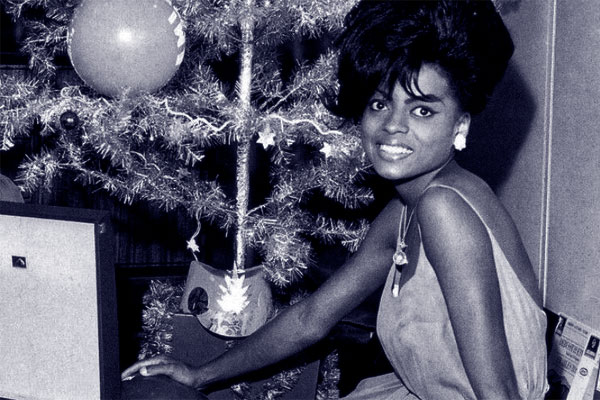
Just as surprised when this skinny little girl with big eyes came up to me on the school elevator and introduced herself. Yes, Cass Tech had student elevators. She said her name was Diana and we talked a bit before going to our separate classes. A few days later, we ran into each other in the lunchroom and she invited me to go with her for a burger at Buddies. Freshmen didn’t go to Buddies, I thought, what an honor, and my head began to swell. Now, I wasn’t that well heeled to be taking a girl to lunch, but I did have a few bills my mom gave me for art supplies and bus fare, so maybe this skinny little chick won’t go crazy with the menu. It would be a long walk home.
Anyways, we get to Buddies and the typical crowd of loudmouth sophomores and seniors. I was in unfamiliar territory. We grabbed an empty table and placed our order for two burgers and cokes. Not much conversation since I’m also a quiet kind of guy, and not experienced enough with women to even know where to start. She was a year ahead of me, so talking school stuff was definitely out, she wasn’t interested in art or jazz. I did manage to find out that her full name was Diana Ross.
When the waitress delivered our burgers, Diana picked up her plate and moved to a table with much older kids. I was crushed. But later, I was told that Diana made a habit of teasing freshmen and coercing burgers out of them. I left and went back to school. The next time I saw Miss Ross was in study hall when she walked over to my table and handed me one of those little fifty cent photo booth photos and apologized. Diana liked to date the older guys and she hung out with some of the thugs from Northwestern High School.
We never developed a lasting relationship since we hardly saw each other in school. I was an art student and my classes were mostly on the fourth floor. The last time I saw her was on a trip home from school. My buddies and I would get off the bus in front of the Hitsville studio and peek into the basement windows to see who was recording. We caught Mary Wells and Smokey Robinson a few times, but this day, I saw Miss Ross going into the building.
I held on to that photograph she gave me for several years until losing it when I joined the navy.
Fredric Durrette served one tour in Vietnam, retired as E8 in the navy submarine service after 23 years. Major hobbies are collecting old stuff from the 20s and restoring old racing bicycles. Worked as a commercial photographer at JL Hudsons in Detroit and continue photography as a hobby. Love Sade, sixties soul, seventies rock, and all jazz. Attended Woodstock in 69! http://snakesafe.jalbum.net/
December 8, 1956 – February 8, 1957:
Guy Mitchell – Singing The Blues
February 9, 1957 – March 1, 1957:
Elvis Presley – Too Much
March 2, 1957 – March 29, 1957:
Tab Hunter – Young Love
March 30, 1957 – April 5, 1957:
Buddy Knox – Party Doll
April 6, 1957 – April 12, 1957:
Perry Como – Round And Round
April 13, 1957 – June 7, 1957:
Elvis Presley – All Shook Up
June 8, 1957 – July 12, 1957:
Pat Boone – Love Letters In The Sand
July 13, 1957 – August 30, 1957:
Elvis Presley – (Let Me Be Your) Teddy Bear
August 31, 1957 – September 13, 1957:
Debbie Reynolds – Tammy
September 14, 1957 – September 27, 1957:
Paul Anka – Diana
September 28, 1957 – October 4, 1957:
The Crickets – That’ll Be The Day
October 5, 1957 – October 18, 1957:
Jimmie Rodgers – Honeycomb
October 19, 1957 – October 25, 1957:
The Everly Brothers – Wake Up Little Susie
October 26, 1957 – December 6, 1957:
Elvis Presley – Jailhouse Rock / Treat Me Nice
December 7, 1957 – December 27, 1957:
Sam Cooke – You Send Me
December 28, 1957 – January 10, 1958:
Pat Boone – April Love
(Data is compiled from various charts including Billboard’s “Pop,” “Airplay,” “R&B” and “Singles” Charts. “Hot 100” is the primary chart used starting October, 1958)
November 26, 1955 – January 13, 1956:
Tennessee Ernie – Sixteen Tons
January 14, 1956 – February 17, 1956:
Dean Martin – Memories Are Made Of This
February 18, 1956 – February 24, 1956:
Kay Starr – Rock And Roll Waltz
February 25, 1956 – March 23, 1956:
Nelson Riddle – Lisbon Antigua
March 24, 1956 – April 20, 1956:
Les Baxter – Poor People Of Paris
April 21, 1956 – June 15, 1956:
Elvis Presley – Heartbreak Hotel
June 16, 1956 – July 27, 1956:
Gogi Grant – The Wayward Wind
July 28, 1956 – August 3, 1956:
Elvis Presley – I Want You, I Need You, I Love You
August 4, 1956 – August 17, 1956:
The Platters – My Prayer
August 18, 1956 – November 2, 1956:
Elvis Presley – Don’t Be Cruel / Hound Dog
November 3, 1956 – December 7, 1956:
Elvis Presley – Love Me Tender
December 8, 1956 – February 8, 1957:
Guy Mitchell – Singing The Blues
(Data is compiled from various charts including Billboard’s “Pop,” “Airplay,” “R&B” and “Singles” Charts. “Hot 100” is the primary chart used starting October, 1958)
December 4, 1954 – January 21, 1955:
The Chordettes – Mr. Sandman
January 22, 1955 – February 4, 1955:
Joan Weber – Let Me Go, Lover!
February 5, 1955 – February 11, 1955:
The Fontane Sisters – Hearts Of Stone
February 12, 1955 – March 25, 1955:
The McGuire Sisters – Sincerely
March 26, 1955 – April 29, 1955:
Bill Hayes – The Ballad Of Davy Crockett
April 30, 1955 – July 8, 1955:
Pérez Prado – Cherry Pink And Apple Blossom White
July 9, 1955 – September 2, 1955:
Bill Haley & His Comets – (We’re Gonna) Rock Around The Clock
September 3, 1955 – October 14, 1955:
Mitch Miller – The Yellow Rose of Texas
October 15, 1955 – October 28, 1955:
The Four Aces – Love Is A Many Splendored Thing
October 29, 1955 – November 25, 1955:
Roger Williams – Autumn Leaves
November 26, 1955 – January 13, 1956:
Tennessee Ernie – Sixteen Tons
(Data is compiled from various charts including Billboard’s “Pop,” “Airplay,” “R&B” and “Singles” Charts. “Hot 100” is the primary chart used starting October, 1958)
November 21, 1953 – January 1, 1954:
Tony Bennett – Rags To Riches
January 2, 1954 – February 26, 1954:
Eddie Fisher – Oh! My Pa-pa (O Mein Papa)
February 27, 1954 – March 12, 1954:
Doris Day – Secret Love
March 13, 1954 – April 9, 1954:
Jo Stafford – Make Love To Me!
April 10, 1954 – June 4, 1954:
Perry Como – Wanted
June 5, 1954 – August 6, 1954:
Kitty Kallen – Little Things Mean A Lot
August 7, 1954 – September 24, 1954:
The Crew-Cuts – Sh-Boom
September 25, 1954 – November 5, 1954:
Rosemary Clooney – Hey There
November 6, 1954 – November 12, 1954:
Rosemary Clooney – This Ole House
November 13, 1954 – December 3, 1954:
Eddie Fisher – I Need You Now
December 4, 1954 – January 21, 1955:
The Chordettes – Mr. Sandman
(Data is compiled from various charts including Billboard’s “Pop,” “Airplay,” “R&B” and “Singles” Charts. “Hot 100” is the primary chart used starting October, 1958)
December 27, 1952 – January 9, 1953:
Jimmy Boyd – I Saw Mommy Kissing Santa Claus
January 10, 1953 – February 13, 1953:
Perry Como – Don’t Let the Stars Get in Your Eyes
February 14, 1953 – March 20, 1953:
Teresa Brewer – Till I Waltz Again With You
March 21, 1953 – May 15, 1953:
Patti Page – The Doggie In The Window
May 16, 1953 – July 24, 1953:
Percy Faith – The Song From Moulin Rouge (Where Is Your Heart)
July 25, 1953 – August 7, 1953:
Eddie Fisher – I’m Walking Behind You
August 8, 1953 – October 9, 1953:
Les Paul and Mary Ford – Vaya Con Dios (May God Be With You)
October 10, 1953 – November 20, 1953:
Stan Freberg – St. George And The Dragonet
November 21, 1953 – January 1, 1954:
Tony Bennett – Rags To Riches
(Data is compiled from various charts including Billboard’s “Pop,” “Airplay,” “R&B” and “Singles” Charts. “Hot 100” is the primary chart used starting October, 1958)
That’s Amore
This song is widely associated with Dean Martin and is often considered his signature tune. Written in 1953 by Harry Warren and Jack Brooks, it debuted as part of the soundtrack for the Jerry Lewis and Dean Martin comedy film The Caddy. It was nominated for an Academy Award for Best Original Song in 1953 but lost to Doris Day’s Secret Love. The song experienced a resurgence in popularity when it was featured in the 1987 film Moonstruck, starring Cher and Nicolas Cage.
Eddie Fisher
Oh! My Pa-Pa
The original version of this song, O Mein Papa, was composed for the Swiss musical Der Schwarze Hecht in 1939, not a German musical. It gained popularity in the UK as an instrumental before being translated into English. Eddie Fisher’s emotional rendition became a hit, reaching No. 1 on the Billboard charts in 1954.
Frank Sinatra
I’ve Got the World on a String
This song, written by Harold Arlen and Ted Koehler in 1932, was introduced at The Cotton Club Parade. While initially performed by Bing Crosby and Cab Calloway, Frank Sinatra’s 1953 recording brought the song renewed attention, peaking at No. 14 on the Billboard charts. It has since become a Sinatra classic, showcasing his charismatic phrasing and vocal style.
Joni James
Your Cheatin’ Heart
Written and recorded by Hank Williams in 1952, this country classic was not released until after his death in January 1953. Joni James’s pop rendition introduced the song to a broader audience, cementing its place as one of the greatest country songs of all time.
Kay Starr
Side by Side
Originally written by Harry M. Woods and Gus Kahn in 1927, this song became a standard of American music. Kay Starr’s 1953 recording helped propel the song into the mainstream, solidifying its enduring legacy.
Patti Page
(How Much Is) That Doggie in the Window?
Composed by Bob Merrill and Ingrid Reuterskiöld in 1952, this whimsical tune became a chart-topping hit in 1953 with Patti Page’s playful rendition. The song reached No. 1 on the Billboard charts and is noted as the first No. 1 hit with a question in the title.
Tony Bennett
Stranger in Paradise
This song, part of the 1953 Broadway musical Kismet, was written by Robert Wright and George Forrest, with its melody based on Alexander Borodin’s Gliding Dance of the Maidens from the Polovtsian Dances. While Vic Damone and Ann Blyth performed the song in the 1955 film adaptation of Kismet, Tony Bennett’s version became a definitive hit, popularizing the song outside the context of the musical.
Rags to Riches
Written by Richard Adler and Jerry Ross, Rags to Riches reached No. 1 on the Billboard charts in 1953. The song later gained comedic fame as Carmine Ragusa’s serenade in Laverne & Shirley. Elvis Presley performed the song impromptu during his 1976 Pittsburgh concert, showing its enduring appeal.
Frankie Laine
I Believe
This inspirational song, written by Ervin Drake, Irvin Graham, Jimmy Shirl, and Al Stillman in 1953, was commissioned by Jane Froman for her television show to inspire hope during challenging times. Frankie Laine’s recording became a massive hit and holds the UK record for the longest stay at No. 1—18 weeks. The song has since been covered by numerous artists, including The Lettermen, and is often regarded as a hymn for its uplifting message.
Top Artists and Songs of 1953
Ames Brothers
You You You, The Man With The Banjo
Art Lund
Crying In The Chapel
Bill Haley and his Comets
Crazy Man Crazy
Darrell Glenn
Crying In The Chapel
Dean Martin
That’s Amore
Don Cornell
Heart of My Heart
Doris Day
Mister Tap Toe
Drifters
Money Honey
Eddie Calvert
Oh Mein Papa
Eddie Fisher
Downhearted
Ella Fitzgerald
Crying In The Chapel
Fats Domino
Roe Mary
Faye Adams
Shake a Hand
Four Aces
The gang that Sang ‘Heart of My Heart’
Frank Chacksfield Orchestra
Limelight
Frank Sinatra
I’ve Got The World On a String, South of the Border, From Here To Eternity
Frankie Laine
I Believe, Where The Winds Blow, Answer Me Lord Above, Blowing Wind
Guy Mitchell
She Wears Red Feathers
Hank Williams
Your Cheatin’ Heart, Kaw-Liga
Jimmy Boyd and Frankie Laine
Tell Me A Story
Johnny Ace
The Clock
Johnny Ray
Somebody Stole My gal
Joni James
Your Cheatin’ Heart, Have You Heard?
June Valli
Crying In The Chapel
Kay Starr
Side By Side, Changing Partners
Lawrence Welk
Oh Happy Day
Les Baxter
Ruby, Gigi/I Love Paris, April in Portugal
Les Paul and Mary Ford
Bye Bye Blues, Vaya Con Dios, Johnny (Is The Boy For Me)
Mantovani
Where Is Your Heart (From Moulin Rouge), Swedish Rhapsody
Nat ‘King’ Cole
Pretend, Blue Gardenia, can’t I
Patti Page
Changing Partners, Doggie In The Window
Percy Faith
Song From Moulin Rouge (Where Is Your Heart)
Perry Como
Don’t Let The Stars Get In Your Eyes, You Alone, No Other Love, Say Your Mine Again
Ray Anthony & His Orchestra
Dragnet
Red Buttons
The Ho Ho Song
Rex Allen
Crying In The Chapel
Richard Hayman
Ruby
Ruth Brown
(Mama) He Treats Your Daughter Mean
Stan Freberg
St. George and the Dragonette
Teresa Brewer Richochet (Rick-O-Shay), Till I Waltz Again With You
December 29, 1951 – March 14, 1952:
Johnnie Ray and The Four Lads – Cry
March 15, 1952 – May 16, 1952:
Kay Starr – Wheel Of Fortune
May 17, 1952 – June 20, 1952:
Leroy Anderson – Blue Tango
June 21, 1952 – July 4, 1952:
Al Martino – Here In My Heart
July 5, 1952 – July 11, 1952:
Percy Faith – Delicado
July 12, 1952 – September 12, 1952:
Vera Lynn – Auf Wiederseh’n Sweetheart
September 13, 1952 – October 17, 1952:
Jo Stafford – You Belong To Me
October 18, 1952 – November 21, 1952:
Patti Page – I Went To Your Wedding
November 22, 1952 – November 28, 1952:
Johnny Standley – It’s In The Book (parts 1 & 2)
November 29, 1952 – December 26, 1952:
Joni James – Why Don’t You Believe Me
December 27, 1952 – January 9, 1953:
Jimmy Boyd – I Saw Mommy Kissing Santa Claus
(Data is compiled from various charts including Billboard’s “Pop,” “Airplay,” “R&B” and “Singles” Charts. “Hot 100” is the primary chart used starting October, 1958)
Rock the Joint
Before Bill Haley became known as Bill Haley and the Comets, he performed with his group, Bill Haley and the Saddlemen. In 1952, they recorded Rock the Joint, a song previously recorded by Jimmie Preston. Although Haley’s version didn’t chart on Billboard, it became foundational in his rock and roll transition.
Don Howard
Oh Happy Day
This is not the Oh Happy Day familiar to churchgoers. Written and performed by Don Howard, the song debuted at a high school dance where enthusiastic students requested it be performed 13 times in one night. Recorded at a local studio, the track became a regional hit before climbing to No. 4 on the Billboard charts nationally. Time magazine dubbed it the “Mystery Hit,” describing it as “the rarest kind of hit—unplanned and unplugged.”
Frank Sinatra
I Get a Kick Out of You
This song, with its iconic line “I get no kick from cocaine,” is considered one of the earliest to reference drug use critically. Written by Cole Porter for the 1934 Broadway musical Anything Goes, the song was originally sung by Ethel Merman. It became one of three standout hits from the show, alongside You’re the Top and Anything Goes. Frank Sinatra’s 1953 rendition cemented the song as a jazz and pop standard.
Gene Kelly
Singin’ in the Rain
The song Singin’ in the Rain originated in the early days of sound cinema, appearing in the 1929 MGM musical The Hollywood Revue of 1929. Judy Garland and others recorded it over the years, but its iconic status was secured in the 1952 film Singin’ in the Rain. Starring Gene Kelly, Debbie Reynolds, and Donald O’Connor, the movie is considered one of the greatest musicals ever made. Gene Kelly’s unforgettable performance of the title song, complete with a joyous dance in the rain, remains one of cinema’s most celebrated moments.
The Four Aces
Heart and Soul
Published in 1938 with music by Hoagy Carmichael and lyrics by Frank Loesser, Heart and Soul is often one of the first songs taught to beginner pianists. The Four Aces recorded it in 1952, and their version peaked at No. 11 on the Billboard charts.
Hank Williams
Jambalaya (On the Bayou)
A tribute to the famous Cajun dish, Jambalaya (On the Bayou) was written and released by Hank Williams in 1952. The song topped the country music charts and crossed over into pop, inspiring countless covers. The Carpenters included a version on their Now and Then album, which reached No. 12 in the UK.
Karen Chandler
Hold Me, Thrill Me, Kiss Me
Written by Harry Noble in 1952, Hold Me, Thrill Me, Kiss Me is considered an early pop-rock era hit. Karen Chandler’s recording reached No. 7 on the charts, making it her only charting single and a memorable part of early 1950s pop music.
The Mills Brothers
Glow Worm
Originally titled Das Glühwürmchen, this song was part of Paul Lincke’s 1902 operetta Lysistrata. When translated into English, it became Glow Worm. Johnny Mercer later expanded the lyrics, and the Mills Brothers recorded it in 1952, turning it into a chart-topping hit.
Johnny Ray
Walkin’ My Baby Back Home
Written in 1930 by Roy Turk (lyrics) and Fred E. Ahlert (music), Walkin’ My Baby Back Home charted in 1931. Nat King Cole popularized it with a hit version in 1951, and Johnny Ray followed with another successful rendition in 1952. In 1953, the song became the title of a movie starring Donald O’Connor.
Top Artists and Songs of 1952
Al Martino
Here In My Heart, Now, Take My Heart
Arthur Godfrey
Slow Poke
Bell Sisters
Wheel of Fortune, Bermuda
Bill Haley and His Comets (the Saddlemen)
Rock The Joint
Bing Crosby and Jane Wyman
Zing a Little Zong
Bing Crosby
Isle of Innisfree
Bobby Wayne
Wheel of Fortune
Buddy Morrow
Night Train
Dean Martin
You Belong To Me
Don Howard
Oh Happy day
Don Cornell
I’ll Walk Alone, I Am Yours
Doris Day and Frankie Laine
Sugarbush
Doris Day
A Guy Is A Guy, My Love and Devotion
Eddie Fisher
I Wish You Were Here, Lady of Spain, Anytime, Outside of Heaven, Tell Me Why, Everything I Have Is Yours
Eddie Howard
Auf Wiederseh’n Sweetheart
Four Aces
Heart and Soul
Frank Sinatra
I Get A Kick Out Of You
Frankie Laine
High Noon (Do Not Forsake Me)
Gene Kelly
Singing In The Rain
Georgia Gibbs
Ring of Fire
Guy Mitchell
Pittsburgh, Pennsylvania
Hank Williams
Jambalaya (On The Bayou)
Helen O’Connell
Slow Poke
Hugo Winterhalter
Blue Tango
Jimmy Forrest
Night Train
Jo Stafford
You Belong To Me, Jambalaya (On The Bayou), A-Round the Corner, Keep It a Secret
Johnny Ray
Please Mister Sun, Walkin’ My Baby Back Home
Johnny Standley
It’s In The Book
Joni James
Why Don’t You Believe In Me?
Karen Chandler
Hold Me, Thrill Me, Kiss Me
Kay Starr
Wheel of Fortune, Comes A-Long a-Love
Leroy Anderson
Blue Tango
Les Paul and Mary Ford
Tiger Rag
Little Walter
Juke
Lloyd Price
Lawdy Miss Clawdy
Louis Armstrong
It Takes two To tango
Mario Lanza
Because You’re Mine
Mills Brothers
The Glow Worm
Nat ‘King’ Cole
Unforgettable, Walkin’ My Baby Back Home, Somewhere Along The Way, Because You’re Mine, Faith Can Move Mountains
Patti Page
I Went To Your Wedding, Why Don’t You Believe Me?, You Belong To Me
Pearl Bailey
It Takes Two To Tango
Pee Wee King
Slow Poke
Peggy Lee
Lover
Percy Faith
Delicado
Perry Como
Please Mr. Sun, Maybe
Ray Anthony
Bunny Hop, At last
Red Foley
Don’t Let The Stars Get In Your Eyes
Rosemary Clooney
Half As Much, Blues In The Night, otch-A-Me (Ba-Ba-Baciami Piccina)
Ruth Brown
5-10-15 Hours
Slim Whitman
Indian Love Call
Tex Ritter
High Noon (Do Not Forsake Me)
The Dominoes Have Mercy Baby
The Gaylords
Tell Me Your Mine
The Hilltoppers
Trying
The Weavers
Around The Corner
Tony Bennett
Here In My Heart
Tony Martin
Kiss of Fire
Vera Lynn
Auf Wiederdseh’n Sweetheart, Homing Waltz, Forget Me Not
December 30, 1950 – March 2, 1951:
Patti Page – The Tennessee Waltz
March 3, 1951 – March 9, 1951:
Perry Como – If
March 10, 1951 – April 20, 1951:
Mario Lanza – Be My Love
April 21, 1951 – June 22, 1951:
Les Paul and Mary Ford – How High The Moon
June 23, 1951 – July 27, 1951:
Nat King Cole – Too Young
July 28, 1951 – September 7, 1951:
Rosemary Clooney – Come On-a My House
September 8, 1951 – November 2, 1951:
Tony Bennett – Because Of You
November 3, 1951 – December 14, 1951:
Tony Bennett – Cold, Cold Heart
December 15, 1951 – December 28, 1951:
Eddy Howard – Sin
December 29, 1951 – March 14, 1952:
Johnnie Ray and The Four Lads – Cry
(Data is compiled from various charts including Billboard’s “Pop,” “Airplay,” “R&B” and “Singles” Charts. “Hot 100” is the primary chart used starting October, 1958)
The Glory of Love
Written by Billy Hill and first recorded by Benny Goodman in 1936, The Glory of Love was reimagined as an R&B hit by The 5 Keys in 1951. Their rendition topped the Billboard R&B charts for four non-consecutive weeks. Despite selling over a million copies, the original 1951 pressing is considered rare and highly collectible.
Rosemary Clooney
Come On-a My House
This song was written in 1939 by Ross Bagdasarian and his cousin, William Saroyan, both of Armenian descent. While initially unsuccessful, Come On-a My House became a hit when Rosemary Clooney recorded it in 1951. The song reflects the Armenian tradition of offering guests food, and Clooney’s sultry delivery suggests more than just the candy mentioned in the lyrics.
Tony Bennett
Blue Velvet
Written by Bernie Wayne and Lee Morris in 1951, Blue Velvet became a hit for Tony Bennett before achieving greater fame when Bobby Vinton’s 1963 rendition topped the charts. Bennett’s version laid the groundwork for the song’s legacy as a pop standard.
Perry Como
Hello, Young Lovers
This song, from Rodgers and Hammerstein’s musical The King and I (1951), was based on the book Anna and the King of Siam by Margaret Landon. The book had previously been adapted into a non-musical film in 1946 starring Rex Harrison. In the musical, Hello, Young Lovers is sung by Anna, reflecting on her late husband and the young love she sees around her. Perry Como’s recording became one of the most notable renditions of this beloved classic.
Nat King Cole
Unforgettable
Written by Irving Gordon in 1951, this song was originally titled Incomparable before the publisher suggested Unforgettable. Nat King Cole’s smooth delivery made it one of his most famous recordings. He re-recorded the song in 1961, but its 1991 duet version, featuring his daughter Natalie Cole, revived its popularity. This posthumous collaboration won three Grammy Awards: Song of the Year, Record of the Year, and Best Traditional Pop Vocal Performance. Unforgettable was inducted into the Grammy Hall of Fame in 2000.
Mario Lanza
Be My Love
Written by Sammy Cahn (lyrics) and Nicholas Brodszky (music) in 1950, Be My Love was introduced in the film The Toast of New Orleans by Kathryn Grayson and Mario Lanza. It became a million-seller and reached No. 1 on the Billboard charts. Mario Lanza, born Alfredo Arnold Cocozza, was discovered by MGM’s Louis B. Mayer and became a major star despite his tumultuous career. He passed away in 1959 at the age of 38 from a pulmonary embolism, leaving behind a legacy as one of the era’s most powerful voices.
Louis Armstrong
A Kiss to Build a Dream On
Composed by Bert Kalmar, Harry Ruby, and Oscar Hammerstein II in 1935, this song gained fame in the 1951 film The Strip. In the movie, it was performed by Louis Armstrong, Mickey Rooney, and others. Armstrong’s recording became the definitive version, cementing its place in American music history.
Debbie Reynolds and Carleton Carpenter
Aba Dabba Honeymoon
Written by Arthur Fields and Walter Donovan in 1914, Aba Dabba Honeymoon was revived in the 1950 movie Two Weeks with Love. The song reached No. 3 on the Billboard charts in 1951. It reappeared in the 1959 Three Stooges film Have Rocket, Will Travel and was later used in the 1970s TV show Laverne & Shirley in the episode “The Shotz Talent Show.”
Top Artists and Songs of 1951
Anita O’Day
Tennessee Waltz
Arthur Smith
Mandolin Boogie
Billy Eckstine
I Apologize
Billy Ward and his Dominoes
Sixty Minute Man
Bing Crosby
Domino
Bud Powell
Un Poco Loco
Champ Butler
Down Yonder
Charles Brown
Black Night
Debbie Reynolds and Carleton Carpenter
Aba Daba Honeymoon
Don Cherry
Vanity
Doris Day
Shanghai
Eddie Howard
Sin (Its No Sin)
Ella Fitzgerald
Smooth Sailing
Elmore James
Dust My Broom
Four Aces
Tell Me Why
Frankie Laine and Jo Stafford
In The Cool, Cool, Cool of the Evening
Frankie Laine
Girl In The Wood
Jealousy (Jalousie)
Jezebel
Rose, Rose I Love You
Gordon Jenkins
So Long (It’s Been Good To Know Ya)
Guy Mitchell
My Truly Truly Fair
There’s Always Room At Our House
Hank Williams
Cold, Cold Heart
Hey Good Lookin’
Hoagy Carmichael
My Resistance Is Low
Jackie Brentson and his Delta Cats
Rocket 88
Jimmy Wakely
My Heart Cries For You
Jo Stafford
If (They Made Me a king)
Joe ‘Fingers’ Carr
Down Yonder
John Lee Hooker
I’m In The Mood
Johnny Ray
Cry
The Little White Cloud That Cried
Kay Starr
Come On-a My House
Leroy Anderson
Blue Tango
The Syncopated Clock
Les Baxter and his Orchestra
Because of You
Les Brown and The Ames Brothers
Sentimental Journey
Les Paul and Mary Ford
How High The Moon
Mockin’ Bird Hill
The World Is Waiting For The Surprise
Walkin’ & Whistlin’ Blues
Les Paul
Whispering
Louis Armstrong
A Kiss To Build A Dream On
(When We Are Dancing) I Get Ideas
Mantovani
Charmaine
Mario Lanza
Be My Love
The Loveliest Night of the Year
Nat ‘King’ Cole
Jet
Too Young
Unforgettable
Patti Page
And So To Sleep Again
Detour
Mister & Mississippi
Mockingbird Hill
Perry Como
If (they Made Me a King)
Hello Young Lovers
Rosemary Clooney
Beautiful Brown Eyes
Come On-a My House
Stan Freberg
That’s My Boy
Tennessee Ernie Ford
The Shotgun Boogie
Teresa Brewer
Longing For You
The Ames Brothers
Undecided
The Clovers
Fool, Fool, Fool
The Five Keys
The Glory of Love
Tommy Edwards
The Morning Side of the Mountain
Tony Bennett
Because of You
Blue Velvet
Cold, Cold Heart
I Won’t Cry Anymore
Tony Martin
I Get Ideas
Vaughn Monroe
Sound Off (The Duckworth Chant)
Vic Damone
My Truly Truly Fair
Weavers
Kisses Sweeter Than Wine
On Top of Old Smokey
November 26, 1949 – January 6, 1950:
Frankie Laine – Mule Train
January 7, 1950 – January 13, 1950:
Gene Autry – Rudolph, The Red-nosed Reindeer
January 14, 1950 – February 10, 1950:
The Andrews Sisters – I Can Dream, Can’t I
February 11, 1950 – February 17, 1950:
Ames Brothers – Rag Mop
February 18, 1950 – March 17, 1950:
Red Foley – Chattanoogie Shoe Shine Boy
March 18, 1950 – April 14, 1950:
Teresa Brewer – Music! Music! Music!
April 15, 1950 – April 28, 1950:
Eileen Barton – If I Knew You Were Comin’ I’d’ve Baked a Cake
April 29, 1950 – July 14, 1950:
Anton Karas – The Third Man Theme
July 15, 1950 – August 18, 1950:
Nat King Cole – Mona Lisa (Nat King Cole song)
August 19, 1950 – November 17, 1950:
Gordon Jenkins and The Weavers – Goodnight Irene
November 18, 1950 – December 1, 1950:
Sammy Kaye – Harbor Lights
December 2, 1950 – December 29, 1950:
Phil Harris – The Thing
December 30, 1950 – March 2, 1951:
Patti Page – The Tennessee Waltz
(Data is compiled from various charts including Billboard’s “Pop,” “Airplay,” “R&B” and “Singles” Charts. “Hot 100” is the primary chart used starting October, 1958)
Play a Simple Melody
Written by Irving Berlin, Play a Simple Melody was featured in the movie There’s No Business Like Show Business. The song is actually two melodies in one: a simple, old-fashioned tune juxtaposed with a more complex jazz melody. Initially sung separately, the two melodies eventually overlap, creating a harmonious blend. Gary Crosby, who performed the song with his father Bing Crosby, was one of Bing’s four sons.
Doris Day
Bewitched, Bothered, and Bewildered
This classic originated in the 1940 Rodgers and Hart musical Pal Joey, which launched Gene Kelly’s Broadway career. Thanks to its enduring appeal, the song charted a decade later in 1950. Over the years, it has been recorded by many legendary artists, including Frank Sinatra, Ella Fitzgerald, and Barbra Streisand.
The Mills Brothers
Daddy’s Little Girl Daddy’s Little Girl is a timeless tearjerker often used for the father-daughter dance at weddings. Bobby Burke and Horace Gerlach wrote the song and became a sentimental favorite in the mid-20th century, evoking emotions across generations.
Nat King Cole
Mona Lisa
Composed by Ray Evans and Jay Livingston, Mona Lisa was featured in the 1950 film Captain Carey, U.S.A. and won the Academy Award for Best Original Song. Nat King Cole’s smooth, heartfelt rendition made the song a classic, comparing a woman’s enigmatic nature to the famous painting by Leonardo da Vinci, which resides in the Louvre Museum in Paris.
Perry Como
A Bushel and a Peck
This cheerful tune originates from the Broadway musical Guys and Dolls (1950), based on stories by Damon Runyon. In the musical, the song is performed by Miss Adelaide as part of her nightclub act. Perry Como’s recording brought the playful number to a wider audience, cementing its popularity.
Gene Autry
Here Comes Peter Cottontail
After his success with Rudolph the Red-Nosed Reindeer, Gene Autry released Here Comes Peter Cottontail in 1950, written by Steve Nelson and Jack Rollins. The song, celebrating Easter traditions, peaked at No. 5 on the Billboard charts. It later inspired the 1971 Easter television special Here Comes Peter Cottontail, which tells how Peter became the Easter Bunny.
Eileen Barton
If I Knew You Were Coming, I’d Have Baked a Cake
Written by Al Hoffman, Bob Merrill, and Clem Watts, this novelty hit was recorded by Eileen Barton in January 1950. Its popularity overwhelmed its initial record label, National Records, which partnered with Mercury Records to meet demand. The song was also recorded as a duet by Bing Crosby and Bob Hope, as well as by Ethel Merman and Ray Bolger.
Teresa Brewer
Music! Music! Music!
Written by Stephen Weiss and Bernie Baum, Music! Music! Music! became a million-seller for Teresa Brewer in 1949. Petula Clark also recorded the song that year, achieving popularity in Australia. In the 1970s, Melanie Safka revived the tune as The Nickel Song, adding a modern twist.
Anton Karas
The Third Man Theme
Composed by Anton Karas in 1949 for the film The Third Man, this instrumental piece topped the Billboard charts for 11 weeks. Its distinctive use of the zither, a rarely heard instrument, contributed to its unique sound and enduring popularity.