Winners Announced: November 29, 1959 Held in: Los Angeles and New York Host: Meredith Wilson Eligibility Year: January 1, 1959 – August 31, 1959
Highlights and Achievements:
Bobby Darin’s Triumph: Darin’s “Mack the Knife” didn’t just win Record of the Year and Best Vocal Performance, Male; it became an iconic song that transcended the Grammy stage.
Henry Mancini’s Swag: Henry Mancini’s “Peter Gunn” was an album based on the TV show of the same name. Winning Album of the Year, it elevated Mancini to a household name in the world of music composition.
First for Bossa Nova: The Best Jazz Performance, Solo or Small Group category was claimed by “I Get a Kick Out of You” by the Coleman Hawkins Quartet. It was an early introduction of Bossa Nova elements into the American mainstream.
Trivia:
Shorter Eligibility Window: Unlike the previous year, the eligibility period for this event was truncated to just eight months, making the competition even steeper for that year’s hopefuls.
Bi-Coastal Ceremony: This was one of the years where the ceremony was held in both Los Angeles and New York, showcasing the importance of both cities in the American music scene.
Meredith Wilson as Host: Known for composing “The Music Man,” Wilson was an intriguing choice for hosting duties, especially considering he wasn’t a recording artist in the traditional sense.
1960 Grammy Winners Record of the Year: Mack the Knife, Bobby Darin Album of the Year: Come Dance With Me, Frank Sinatra (Capitol)
Song of the Year: The Battle of New Orleans, Jimmy Driftwood, songwriter
Best Artist of 1959: Bobby Darin
Best Performance By a Top 40 Artist: Midnight Flyer, Nat King Cole
Best Vocal Performance, Male: Come Dance With Me, Frank Sinatra
Best Vocal Performance, Female: But Not for Me, Ella Fitzgerald
Best Performance By a Chorus: Battle Hymn of the Republic, Mormon Tabernacle Choir
Best Rhythm and Blues Performance: What a Diff’rence a Day Makes, Dinah Washington
Best Jazz Performance, Soloist: Ella Swings Lightly, Ella Fitzgerald
Best Jazz Performance, Group: I Dig Chicks, Jonah Jones
Best Performance By a Dance Band: Anatomy of a Murder, Duke Ellington
Best Country and Western Performance: The Battle of New Orleans, Johnny Horton
Best Performance, Folk: The Kingston Trio at Large, Kingston Trio
Best Performance By an Orchestra: Like Young, David Rose and His Orchestra With André Previn
Best Arrangement: Come Dance With Me, Billy May, arranger
Best Musical Composition First Recorded and Released in 1959 (More Than Five Minutes): Anatomy of a Murder, Duke Ellington, composer
Best Broadway Show Album (tie): Gypsy, Ethel Merman (Columbia) Redhead, Gwen Verdon (RCA)
Best Soundtrack Album, Original Cast, Motion Picture or Television: Porgy and Bess, André Previn and Ken Darby (Columbia)
Best Soundtrack Album, Background Score From Motion Picture or Television: Anatomy of a Murder, Duke Ellington (Columbia)
Best Classical Performance, Orchestra: Debussy, Images for Orchestra, Charles Munch conducting Boston Symphony Orchestra
Best Classical Performance, Chamber Music (Including Chamber Orchestra): Beethoven, Sonata No. 21 in C, Op. 53; Waldstein Sonata No. 18 in E-Flat, Op. 31, No. 3, Artur Rubinstein, pianist
Best Classical Performance, Concerto or Instrumental Soloist (Full Orchestra): Rachmaninoff, Piano Concerto No. 3, Van Cliburn, pianist; Kiril Kondrashin conducting Symphony of the Air
Best Classical Performance, Instrumental Soloist (Other Than Full Orchestral Accompaniment): Beethoven, Sonata No. 21 in C, Op. 53; Waldstein Sonata No. 18 in E-Flat, Op. 31, No. 3, Artur Rubinstein, pianist
Best Classical Performance, Opera Cast or Choral: Mozart, The Marriage of Figaro, Erich Leinsdorf conducting Vienna Philharmonic Orchestra
Best Classical Performance, Vocal Soloist (With or Without Orchestra): Björling in Opera, Jussi Björling
Best Comedy Performance, Spoken Word: Inside Shelley Berman, Shelley Berman
Best Comedy Performance, Musical: The Battle of Kookamonga, Homer and Jethro
Best Performance, Documentary or Spoken Word (Other Than Comedy): A Lincoln Portrait, Carl Sandburg
Best Recording for Children: Peter and the Wolf, Peter Ustinov, narrating; Herbert von Karajan conducting Philharmonia Orchestra (Angel)
Best Album Cover: Shostakovich, Symphony No. 5, Robert M. Jones, art director (RCA)
Funny you never realize the generation gap until you mention something from your past to a teenager. At fifteen, I wanted to be a “beatnik”. My idol was a chacter named Maynard G. Krebs from the 1959 TV show “The Many Loves of Dobie Gillis”. Maynard was played by Bob Denver. Maynard was American television’s first beatnik. An enthusiastic fan of jazz music (with a strong distaste for the music of Lawrence Welk), Maynard plays the bongos, collects tinfoil and petrified frogs, and steers clear of romance, authority figures, and work (yelping “Work?!” every time he hears the word).
Always speaking with the vernacular and slang of the beatniks and jazz musicians he admired, Maynard punctuated his sentences with the word “like” and had a tendency towards malapropisms.
I also read the writings of Jack Kerouac and dabbled in Zen Bhuddism, brewed green tea on the school cafeteria floor, plated bongo drums and in practiced the flute in the school auditorium. We all used words like “cool”, “dig”, and “man”, and applauded by snapping our fingers. We got high off of listening to Charlie Byrd and Greenwich Village was our Mecca.
Fredric Durrette served one tour in Vietnam, retired as E8 in the navy submarine service after 23 years. Major hobbies are collecting old stuff from the 20s and restoring old racing bicycles. Worked as a commercial photographer at JL Hudsons in Detroit and continue photography as a hobby. Love Sade, sixties soul, seventies rock, and all jazz. Attended Woodstock in 69! http://snakesafe.jalbum.net/
Venues: Beverly Hilton Hotel, Los Angeles & New York
Host/Emcee: Mort Sahl
Eligibility Year: January 1, 1958 – December 31, 1958
Major Wins:
Henry Mancini picked up Album of the Year for “The Music from Peter Gunn.”
Domenico Modugno’s “Nel Blu Dipinto Di Blu (Volare)” won both Record of the Year and Song of the Year.
Ella Fitzgerald became the Best Female Pop Vocalist for her album “Ella Fitzgerald Sings the Irving Berlin Song Book.”
Additional Info:
Count Basie won Best Jazz Performance, Group for “Basie.”
The Champs got Best Rhythm & Blues Performance for “Tequila.”
Trivia:
This was the first-ever Grammy Awards ceremony.
Mort Sahl, known primarily for his satirical comedy, was the first emcee of the Grammy Awards.
Henry Mancini’s Album of the Year win was significant because it was a television soundtrack, a unique event at the time.
1959 Grammy Award Winners Winners Announced: May 4, 1959 Held at: Beverly Hilton Hotel, Los Angeles & New York Host/Emcee: Mort Sahl Eligibility Year: January 1, 1958 – December 31, 1958
1959 Grammy Winners Record of the Year: Nel Blu Dipinto di Blu (Volare), Domenico Modugno Album of the Year: The Music From Peter Gunn, Henry Mancini (RCA)
Song of the Year: Nel Blu Dipinto di Blu, Domenico Modugno, songwriter
Best Vocal Performance, Male: Catch a Falling Star, Perry Como
Best Vocal Performance, Female: Ella Fitzgerald Sings the Irving Berlin Song Book, Ella Fitzgerald
Best Performance By a Vocal Group or Chorus: That Old Black Magic, Louis Prima and Keely Smith
Best Rhythm and Blues Performance: Tequila, Champs
Best Jazz Performance, Individual: Ella Fitzgerald Sings the Duke Ellington Song Book, Ella Fitzgerald
Best Jazz Performance, Group: Basie, Count Basie
Best Performance By a Dance Band: Basie, Count Basie
Best Country and Western Performance: Tom Dooley, Kingston Trio
Best Performance By an Orchestra: Billy May’s Big Fat Brass, Billy May
Best Arrangement: The Music From Peter Gunn, Henry Mancini, arranger
Best Musical Composition First Recorded and Released in 1958 (More Than Five Minutes): Cross Country Suite, Nelson Riddle, composer
Best Original Cast Album, Broadway or Television: The Music Man, Meredith Willson (Capitol)
Best Soundtrack Album, Dramatic Picture Score or Original Cast: Gigi, André Previn (MGM)
Best Classical Performance, Orchestra: Gaîté Parisienne, Felix Slatkin conducting Hollywood Bowl Symphony Orchestra
Best Classical Performance, Chamber Music (Including Chamber Orchestra): Beethoven, Quartet 130, Hollywood String Quartet
Best Classical Performance, Instrumental (With Concerto Scale Accompaniment): Tchaikovsky, Concerto No. 1 in B-Flat Minor, Op. 23, Van Cliburn, pianist; Kiril Kondrashin Symphony Orchestra
Best Classical Performance, Instrumental (Other Than Concerto Scale): Segovia Golden Jubilee, Andrés Segovia
Best Classical Performance, Operatic or Choral: Virtuoso, Roger Wagner Chorale
Best Classical Performance, Vocal Soloist (With or Without Orchestra): Operatic Recital, Renata Tebaldi
Best Comedy Performance: The Chipmunk Song, David Seville
Best Performance, Documentary or Spoken Word: The Best of the Stan Freberg Shows, Stan Freberg
Best Recording for Children: The Chipmunk Song, David Seville (Liberty)
Best Album Cover: Only the Lonely, Frank Sinatra (Capitol)
Hosts: Jerry Lewis, Mort Sahl, Tony Randall, Bob Hope, David Niven, Laurence Olivier
Eligibility Year: 1958
Major Wins:
Gigi swept the board with 9 Oscars, including Best Picture.
Susan Hayward took home Best Actress for I Want to Live!.
David Niven claimed Best Actor for Separate Tables.
Directing & Screenplay:
Vincente Minnelli won Best Director for Gigi.
Best Original Screenplay went to The Defiant Ones.
Additional Info:
Burl Ives won Best Supporting Actor for The Big Country.
Wendy Hiller was awarded Best Supporting Actress for Separate Tables.
Trivia:
This ceremony had a host ensemble that was as illustrious as it was diverse, from comedian Jerry Lewis to the legendary Laurence Olivier.
The film Gigi set a new record at the time, winning all 9 of its nominated categories.
Susan Hayward’s portrayal in I Want to Live! was based on the true story of Barbara Graham, a woman executed in the gas chamber.
Gigi earned nine nominations, winning all nine.
Cuts were made to make the ceremony shorter, which ended up 20 minutes too short.
Jerry Lewis ad-libbed for most of the end of the show.
1959 Oscar Nominees and Winners
Best Motion Picture: Gigi – Arthur Freed, producer (WINNER) Auntie Mame – Jack L. Warner, producer Cat on a Hot Tin Roof – Lawrence Weingarten, producer The Defiant Ones – Stanley Kramer, producer Separate Tables – Harold Hecht, producer
Best Director: Vincente Minnelli – Gigi (WINNER) Richard Brooks – Cat on a Hot Tin Roof Stanley Kramer – The Defiant Ones Robert Wise – I Want to Live! Mark Robson – The Inn of the Sixth Happiness
Best Actor: David Niven – Separate Tables as Major David Angus Pollock (WINNER) Tony Curtis – The Defiant Ones as John “Joker” Jackson Paul Newman – Cat on a Hot Tin Roof as Brick Pollitt Sidney Poitier – The Defiant Ones as Noah Cullen Spencer Tracy – The Old Man and the Sea as The Old Man
Best Actress: Susan Hayward – I Want to Live! as Barbara Graham (WINNER) Deborah Kerr – Separate Tables as Sibyl Railton-Bell Shirley MacLaine – Some Came Running as Ginny Moorehead Rosalind Russell – Auntie Mame as Mame Dennis Elizabeth Taylor – Cat on a Hot Tin Roof as Margaret “Maggie the Cat” Pollitt
Best Supporting Actor: Burl Ives – The Big Country as Rufus Hannassey (WINNER) Theodore Bikel – The Defiant Ones as Sheriff Max Muller Lee J. Cobb – The Brothers Karamazov as Fyodor Karamazov Arthur Kennedy – Some Came Running as Frank Hirsh Gig Young – Teacher’s Pet as Dr. Hugo Pine
Best Supporting Actress: Wendy Hiller – Separate Tables as Pat Cooper (WINNER) Peggy Cass – Auntie Mame as Agnes Gooch Martha Hyer – Some Came Running as Gwen French Maureen Stapleton – Lonelyhearts as Fay Doyle Cara Williams – The Defiant Ones as Billy’s mother
Best Story and Screenplay Written Directly for the Screen: The Defiant Ones – Nedrick Young and Harold Jacob Smith (WINNER) The Goddess – Paddy Chayefsky Houseboat – Melville Shavelson and Jack Rose The Sheepman – William Bowers and James Edward Grant Teacher’s Pet – Fay Kanin and Michael Kanin
Best Screenplay Based on Material from Another Medium: Gigi – Alan Jay Lerner from Gigi by Colette (WINNER) Cat on a Hot Tin Roof – Richard Brooks and James Poe from Cat on a Hot Tin Roof by Tennessee Williams The Horse’s Mouth – Alec Guinness from The Horse’s Mouth by Joyce Cary I Want to Live! – Don Mankiewicz and Nelson Gidding from writings by Ed Montgomery and Barbara Graham Separate Tables – John Gay and Terence Rattigan from Separate Tables by Terence Rattigan
Best Foreign Language Film: My Uncle (France) (WINNER) Arms and the Man (Germany) Big Deal on Madonna Street (Italy) The Road a Year Long (Yugoslavia) La venganza (Spain)
Best Documentary Feature: White Wilderness – Ben Sharpsteen (WINNER) Antarctic Crossing The Hidden World Psychiatric Nursing
Best Documentary Short Subject: Ama Girls – Ben Sharpsteen (WINNER) Employees Only Journey into Spring The Living Stone Overture
Best Live Action Short Subject: Grand Canyon – Walt Disney (WINNER) Journey into Spring – Ian Ferguson The Kiss – John Hayes Snows of Aorangi – New Zealand Screen Board T Is for Tumbleweed – James A. Lebenthal
Best Short Subject – Cartoons: Knighty Knight Bugs – John W. Burton (WINNER) Paul Bunyan – Walt Disney Sidney’s Family Tree – William M. Weiss
Best Scoring of a Dramatic or Comedy Picture: The Old Man and the Sea – Dimitri Tiomkin (WINNER) The Big Country – Jerome Moross Separate Tables – David Raksin White Wilderness – Oliver Wallace The Young Lions – Hugo Friedhofer
Best Scoring of a Musical Picture: Gigi – André Previn (WINNER) The Bolshoi Ballet – Yuri Faier and G. Rozhdestvensky Damn Yankees! – Ray Heindorf Mardi Gras – Lionel Newman South Pacific – Alfred Newman and Ken Darby
Best Song: “Gigi” from Gigi – Music by Frederick Loewe; Lyrics by Alan Jay Lerner (WINNER) “Almost In Your Arms (Love Song from Houseboat)” from Houseboat – Music and Lyrics by Jay Livingston and Ray Evans “A Certain Smile” from A Certain Smile – Music by Sammy Fain; Lyrics by Paul Francis Webster “To Love and Be Loved” from Some Came Running – Music by Jimmy Van Heusen; Lyrics by Sammy Cahn “A Very Precious Love” from Marjorie Morningstar – Music by Sammy Fain; Lyrics by Paul Francis Webster
Best Sound: South Pacific – Fred Hynes (WINNER) I Want to Live! – Gordon E. Sawyer A Time to Love and a Time to Die – Leslie I. Carey Vertigo – George Dutton The Young Lions – Carlton W. Faulkner
Best Art Direction: Gigi – Art Direction: William A. Horning (posthumous award) and E. Preston Ames; Set Decoration: Henry Grace and F. Keogh Gleason (WINNER) Auntie Mame – Art Direction: Malcolm Bert; Set Decoration: George James Hopkins Bell, Book and Candle – Art Direction: Cary Odell; Set Decoration: Louis Diage A Certain Smile – Art Direction: Lyle R. Wheeler and John DeCuir; Set Decoration: Walter M. Scott and Paul S. Fox Vertigo – Art Direction: Hal Pereira and Henry Bumstead; Set Decoration: Samuel M. Comer and Frank R. McKelvy
Best Costume Design: Gigi – Cecil Beaton (WINNER) Bell, Book and Candle – Jean Louis The Buccaneer – Ralph Jester, Edith Head and John Jensen A Certain Smile – Charles LeMaire and Mary Wills Some Came Running – Walter Plunkett
Best Cinematography, Black-and-White: The Defiant Ones – Sam Leavitt (WINNER) Desire Under the Elms – Daniel L. Fapp I Want to Live! – Lionel Lindon Separate Tables – Charles Lang The Young Lions – Joseph MacDonald
Best Cinematography, Color: Gigi – Joseph Ruttenberg (WINNER) Auntie Mame – Harry Stradling, Sr. Cat on a Hot Tin Roof – William Daniels The Old Man and the Sea – James Wong Howe South Pacific – Leon Shamroy
Best Film Editing: Gigi – Adrienne Fazan (WINNER) Auntie Mame – William Ziegler Cowboy – William Lyon and Al Clark The Defiant Ones – Frederic Knudtson I Want to Live! – William Hornbeck
Best Special Effects: tom thumb – Tom Howard (WINNER) Torpedo Run – Visual Effects: A. Arnold Gillespie; Audible Effects: Harold Humbrock
Academy Honorary Award: Maurice Chevalier “for his contributions to the world of entertainment for more than half a century.”
When I was just a little girl I asked my mother What will I be? Will I be pretty? Will I be rich? Here’s what she said to me… – Doris Day, Que Sera Sera
Advice may be given… advice may be taken. Your advice can be someone else’s experience. Advice may even be pointing a little blame.
The problem with advice is that we often don’t take it, especially if it means doing or admitting something that we’d rather not. Sometimes advice brings up an option you didn’t think of before or gives you another question without an answer.
ADVICE Definition: an opinion or recommendation offered as a guide to action, conduct. Advice, reflective thought and a pause in instinctive reactions can help people make the right decisions.
Giving and accepting advice is one part of life that helps us through the trials and tribulations we are faced with.
Many a tear has to fall but it’s all in the game -Tommy Edwards, It’s All In The Game
1950s (and Older) Advice Songs Chart
1. Que Sera, Sera (Whatever Will Be Will Be) – Doris Day
2. Who’s Sorry Now – Connie Francis
3. Too Young – Nat ‘King’ Cole
4. Wear My Ring Around Your Neck – Elvis Presley
5. Whistle While You Work – the Seven Dwarfs
6. Makin Whoopie – Eddie Cantor
7. Blues In The Night – Dinah Shore or Frank Sinatra
8. Sixteen Tons – Ernie “Tennessee” Ford
9. Ain’t That A Shame – Fats Domino
10. Don’t Take Your Guns To Town – Johnny Cash
11. Sit Down (You’re Rocking The Boast) – Billy Murray
12. It’s Just A Matter Of Time – Brook Benton
13. Soliloquy – Billy Bigelow, a character in the musical Carousel
14. High Hopes – Frank Sinatra
15. All I Have To Do Is Dream – The Everly Brothers
16. It Don’t Mean A Thing (If It Ain’t Got That Swing) – Duke Ellington
17. Save The Last Dance For Me – The Drifters
18. Lady Sings The Blues – Billie Holiday
19. Put Your Head On My Shoulder – Paul Anka
20. It’s Not For Me To Say – Johnny Mathis
21. Get A Job – The Silhouettes
22. It’s All In The Game – Tommy Edwards
23. I’ll Forgive You, But I Can’t Forget – Roy Acuff
24. Don’t Fence Me In – Cole Porter
25. Let’s Misbehave – Ben Bernie
26. Chances Are – Johnny Mathis
27. A Lover’s Question – Clyde Mcphatter
28. Eenie Meenie Miney Mo – Benny Goodman
29. My Heart Is A Broken Book – Carl Dobkins, Jr
30. Time Waits For Noone – Helen Forrest
31. If I Only Had A Brain – Scarecrow (Wizard of Oz)
32. I Walk The Line – Johnny Cash
33. Fools Rush In (Where Angels Fear To Tread) – Glenn Miller
34. A Worried Man – The Kingston Trio
35. Cigarettes, Whiskey, And Wild, Wild Women – Red Engle
36. Learnin’ The Blues – Frank Sinatra
37. You Always Hurt The One You Love – Mills Brothers
38. It Ain’t Necessarily So – Bing Crosby or Leo Reisman
39. When You’re Smiling – Louis Armstrong or Seger Ellis
40. Little Things Mean a Lot – Kitty Kallen
41. Ramblin On My Mind – Robert Johnson
42. How Could You Believe Me When I Said I Loved You When You Know I’ve Been A Liar My Whole Life? – Fred Astaire
43. Show Me The Way To Go Home – Vincent Lopez
44. If You Were In My Place (What Would You Do?) – Duke Ellington
45. Undecided – Ella Fitzgerald with Chick Webb
46. Wake The Town and Tell The People – Les Baxter
47. Come On-A My House – Rosemary Clooney
48. After You Get What You Want, You Don’t Want It Back – Van & Schenck
49. I’m Wasting My Tears On You – Tex Ritter
50. They Can’t Take That Away From Me – Fred Astaire or Ozzie Nelson
51. Back in the Saddle Again – Gene Autry
52. Absence Makes The Heart Grow Fonder – George J. Gaskin
53. I Love My Wife, But Oh You Kid! – Arthur Collins or Bob Roberts or Edward M. Favor
54. They’re Either Too Young Or Too Old – Jimmy Dorsey
55. Am I Blue? – Ethel Waters
56. What Do I Have to Do (To Make You Love Me) – Vaughn Monroe
57. Let’s Call The Whole Thing Off – Fred Astaire
58. Don’t Sit Under The Apple Tree (With Anyone Else But Me) – Glenn Miller or The Andrews Sisters
59. I Ain’t Gonna Play No Second Fiddle – Bessie Smith
60. Take The ‘A’ Train – Duke Ellington
61. Don’t Telephone, Don’t Telegraph, Tell A Woman – Tex Williams
62. Best Things In Life Are Free – George Olson
63. Keep On The Sunny Side – Billy Murray or Byron G. Harlan
64. ‘Tain’t Nobody’s Business If I Do – Bessie Smith
65. Alcoholic Blues – Billy Murray
66. Faith Can Move Mountains – Nat ‘King’ Cole
67. Smile and the World Smiles With You – Lewis James & The Peerless Quartet
68. It’s The Little Things That Count – Bunny Berigan
69. Laughing On The Outside (Crying on the Inside) – Dinah Shore or Sammy Kaye (or Teddy Walters or Andy Russell)
70. Smoke! Smoke! Smoke! (That Cigarette) – Tex Williams
71. I’m Putting All My Eggs In One Basket – Fred Astaire
72. Easy Come, Easy Go – Eddy Duchin
73. Tell Me Why – Four Aces or Eddie Fisher
74. It’s Easier Said Than Done – Guy Lombardo
75. Just Another Day Wasted Away (Waiting For You) – Fred Waring’s Pennsylvanians
76. For Every Boy Who’s Lonely, There’s a Lonely Girl – Lyric Quartet
77. If You Knew Susie (Like I Know Susie) – Eddie Cantor or Cliff Edwards
78. Can Anyone Explain? (No! No! No!) – Ames Brothers
79. Ain’t Nobody’s Business But My Own – Kay Starr
80. Count Your Blessings (Instead of Sheep) – Bing Crosby or Rosemary Clooney (or Eddie Fisher)
81. You’re Driving Mr. Crazy (What Did I Do?) – Guy Lombardo
82. Good Man Is Hard To Find – Marion Harris
83. Dreams Are A Dime a Dozen – Vaughn Monroe
84. Oh Dear! What Can The Matter Be? – Ella Logan
85. Everything’s Been Done Before – Freddy Martin or Guy Lombardo
86. Nice Work If You Can Get It – Fred Astaire
87. If We Can’t Be The Same Old Sweethearts, We’ll Just Be The Same Old Friends – Irving Kaufman
88. Forever Is A Long, Long Time – Charles Hart
89. There’s a Lot Of Things You Never Learn In School – Dan Quinn
90. Life Begins When You’re In Love – Isham Jones
91. Enjoy Yourself (It’s Later Than You Think) – Guy Lombardo or Doris Day
92. I Don’t Know Where I’m Going, But I’m On My Way – Peerless Quartet
93. Pack Up Your Troubles In Your Old Kit Bag (And Smile, Smile, Smile) – Knickerbocker Quartet
94. Blame It On My Youth – Jan Garber
95. It’s Always June When You’re In Love – Reed Miller
96. Regretful Blues – Nora Bayes
97. Fancy You Fancying Me – Lewis James
98. Ev’ry Little Bit Helps – Len Spencer & Ada Jones
99. Feather Your Nest – Henry Burr & Albert Campbell
100. Every Day’s A Holiday – Cab Calloway or Glenn Miller
December 28, 1957 – January 10, 1958: Pat Boone – April Love January 11, 1958 – February 14, 1958: Danny & the Juniors – At The Hop February 15, 1958 – March 21, 1958: Elvis Presley – Don’t / I Beg Of You March 22, 1958 – April 25, 1958: The Champs – Tequila April 26, 1958 – May 2, 1958: The Platters – Twilight Time May 3, 1958 – May 16, 1958: David Seville – Witch Doctor May 17, 1958 – June 13, 1958: The Everly Brothers – All I Have To Do Is Dream June 14, 1958 – July 25, 1958: Sheb Wooley – The Purple People Eater July 26, 1958 – August 3, 1958: Elvis Presley – Hard Headed Woman August 4, 1958 – August 17, 1958: Ricky Nelson – Poor Little Fool August 18, 1958 – August 24, 1958: Domenico Modugno – Volare (Nel Blu Dipinto Di Blu) August 25, 1958 – September 28, 1958: The Elegants – Little Star September 29, 1958 – November 9, 1958: Tommy Edwards – It’s All in the Game November 10, 1958 – November 16, 1958: Conway Twitty – It’s Only Make Believe November 17, 1958 – November 30, 1958: The Kingston Trio – Tom Dooley December 1, 1958 – December 21, 1958: The Teddy Bears – To Know Him Is to Love Him December 22, 1958 – January 18, 1959: The Chipmunks with David Seville – The Chipmunk Song
(Data is compiled from various charts including Billboard’s “Pop,” “Airplay,” “R&B” and “Singles” Charts. “Hot 100” is the primary chart used starting October, 1958)
World-Changing Event: President Dwight Eisenhower signed the National Aeronautics and Space Act, creating NASA.
The Top Song was At The Hop by Danny & The Juniors.
Influential Songs include Tequila by The Champs, Tom Dooley by The Kingston Trio, and Rebel Rouser by Duane Eddy.
The Movies to Watch include South Pacific, High School Confidential, St. Louis Blues, Attack of the 50-Foot Woman, Cat on a Hot Tin Roof, The Defiant Ones, The Fly, Auntie Mame, The Blob and Vertigo.
The Most Famous Person in America was probably Elizabeth Taylor.
Notable books include Things Fall Apart by Chinua Achebe and Doctor Zhivago by Boris Pasternak.
Bank of America launched the first credit card with extended credit in September 1958.
Price of a postage stamp in 1958: 4 cents Price of a used ’57 Ford Fairlane: $1,995.00
The Bald Guy was Yul Brynner
The Story Behind the Song: Bruce Springsteen’s Nebraska is the story of 20-year-old Charles Starkweather and his 13-year-old girlfriend Caril Ann Fugate, who murdered 11 people over eight days in 1958.
Top Ten Baby Names of 1958
Mary, Susan, Linda, Karen, Patricia, Michael, David, James, Robert, John
Fashion Icons and Sex Symbols
Carroll Baker, Brigitte Bardot, Claudia Cardinale, Doris Day, Diana Dors, Anita Ekberg, Annette Funicello, Ava Gardner, Audrey Hepburn, Gina Lollobrigida, Sophia Loren, Jayne Mansfield, Marilyn Monroe, Julie Newmar, Kim Novak, Elizabeth Taylor, Mamie Van Doren
Sex Symbols and Hollywood Hunks
Paul Newman, Elvis Presley
Oscars: 30th Academy Awards
The Oscars unfurled their red carpet at the RKO Pantages Theatre in Hollywood on March 26, 1958. Rosalind Russell and Bob Hope hosted the ceremony. The Bridge on the River Kwai had a night to remember, scoring seven awards, including Best Picture. Alec Guinness captured Best Actor for the same film. The Best Actress honor went to Joanne Woodward for The Three Faces of Eve.
Emmy Awards: 10th Primetime Emmy Awards
Hosted by Danny Thomas, the Emmy Awards on April 15, 1958, took place at the Coconut Grove Ambassador Hotel, Los Angeles. Gunsmoke received the accolade for Best Dramatic Series, while The Phil Silvers Show claimed Best Comedy Series. Robert Young snagged Best Actor for Father Knows Best, and Jane Wyatt received Best Actress for the same show, proving that father—and mother—did know best that year.
“The Quotes”
“What counts is not necessarily the size of the dog in the fight – it’s the size of the fight in the dog. ” – President Dwight D Eisenhower
“Look, Ma, no cavities!” – Crest toothpaste ad
“Life is a banquet, and most poor suckers are starving to death!” – Rosalind Russell, in ‘Auntie Mame’
Time Magazine’s Man of the Year
Charles de Gaulle
Miss America
Marilyn Van Derbur (Denver, CO)
Miss USA
Eurlyne Howell (Louisiana)
The Scandals
DJ Alan Freed, the inventor of the term ‘Rock and Roll’, was accused of being paid to promote specific songs on his popular radio and live shows. His career ended, along with his street cred, in the PAYOLA scandal.
Jerry Lee Lewis married his 13-year-old 2nd cousin.
Disney murdered scores of Lemmings for the ‘suicide scene’ in the 1958 movie White Wilderness. Producers pushed and threw them off a cliff while shooting footage of the cruelty, then framed it as a natural occurrence for the audience.
Lana Turner’s daughter, Cheryl, saw her mother being beaten by her boyfriend, Johnny Stompanato, and killed him with a kitchen knife. Some people think that Lana did the self-defensive killing.
1958 Pop Culture Facts & History
The Adventures of Superpup never passed the ‘unaired pilot’ stage.
The Modern plastic Hula Hoop was invented in 1958 by Arthur K. Melin and Richard Knerr. In the 1930s, the first marketed Hula Hoops were made of bamboo and sold as exercise equipment, but they have been used for at least a few hundred years; even in Europe, they used metal tubes. But When they started marketing them in the Summer of 1958, Wham-O sold 25 Million of them. By 1960, 200 Million of them were sold.
Two pilots, Robert Timm and John Cook, took off from McCarran Airfield in Las Vegas, Nevada. They flew a Cessna 172 for 64 days, 22 hours, 19 minutes, and 5 seconds without landing (December 4, 1958- February 4, 1959), refueling by matching speed with a fuel truck driving down a road.
The Ford Motor Company had conceived a nuclear-powered car called the “Nucleon,” with its own contained reactor.
The gesture of celebrating victory by lifting the trophy above the head came in 1958 when photographers asked Hilderaldo Bellini, captain of the Brazilian team at the time, to lift the World Cup trophy after beating Sweden so that they could get a better view of it.
Bobby Fischer (14 years old) won the United States Chess Championship.
As a test, Bank of America mailed 60,000 residents of Fresno, California, a small plastic card with a $500 credit line. The experiment was successful, and the program became Visa.
Music producer Phil Spector’s high-school band (The Teddy Bears) made their first record, To Know Him Is to Love Him. It became number one on the pop charts.
Led by the retired Boston candy manufacturer Robert H.W. Welch Jr., a group of anti-communist activists founded an organization called the John Birch Society that was dedicated to finding and destroying all traces of communism in the United States. The group got their name from John Birch, an intelligence officer killed in China during the Cold War.
The US 50 Star Flag was designed in 1958 by Robert Heft as a junior high history project and got a B-. The grade was later changed to an A after Heft’s design was accepted and adopted by the United States Congress in 1959. Robert and his teacher agreed after the initial B minus grade was given but before the US Congress accepted it.
Crayola’s Prussian Blue crayon was renamed Midnight Blue in 1958.
First Class Postage Stamps increased to 4 cents on August 1, 1958.
The only gas station ever designed by Frank Lloyd Wright was built in 1958 and still operates at 202 Cloquet Avenue, Cloquet, Minnesota.
The LEGO was patented (#3005282A) in 1958.
The world’s tallest ever recorded tsunami was in Alaska in 1958, caused by a landslide after an earthquake in the Fairweather Fault in the Alaska Panhandle. The 100-foot wave reached 1720 feet above sea level.
The Bossa Nova music genre was created in Rio de Janeiro with João Gilberto’s recording of Chega de Saudade.
Bruce Lee was the 1958 Hong Kong Cha Cha Dance Championship winner.
Elvis Presley was inducted into the US Army, Private #53310761.
Dick Dale invented Surf Guitar Music with Let’s Go Trippin’
Vanguard 1, launched in 1958, is the oldest man-made satellite in orbit. Communication with it stopped working in 1964.
Sir Edmund Hillary reached the South Pole.
The 1958 National Football League Championship Game was the 26th NFL championship game, played on December 28th at Yankee Stadium in New York City. It was the first NFL playoff game to go into sudden-death overtime, and the final score was Baltimore Colts 23, New York Giants 17. The game has since become known as “The Greatest Game Ever Played.”
Lawrence Welk was the first TV show to air in stereo before stereo TV had been invented. ABC simulcast one audio channel on its radio network and the other via TV so that listening to both would give you a stereo effect.
Nuclear Oops
The US Air Force lost a 7,600-pound (3,400 kg) Mark 15 nuclear bomb in an F-86/B-47 collision in the Atlantic Ocean off Tybee Island, near Savannah, Georgia, and it has still not been found.
A 26-kiloton Mark 6 mistakenly fell out of a B-47 jet, dropping 15,000 feet into the backyard of Walter Gregg in Mars Bluff, South Carolina. The non-nuclear part of the bomb blew up and left a crater. It’s on private property, so don’t visit without permission.
Project A119
The US Air Force made plans to detonate a nuclear bomb on the moon and wanted it to visible to the naked eye on Earth. They hoped it would boost American morale to counter the USSR’s advances in the space race. #coldwar
Civil Rights
Garth Williams, the illustrator of Stuart Little, wrote a kids’ book in 1958 called The Rabbits’ Wedding. An Alabama State Senator claimed the book was “propaganda for integration and intermarriage,” as the book featured a bunny with white fur and another with black.
Clennon Washington King Jr. applied to the (then) all-white University of Mississippi, and he was committed to Mississippi State Hospital in Whitfield for trying to attend it. In 1960, King ran for President as the candidate of the Independent Afro-American Party, with Reginald Carter as his running mate.
Tragedy
One of the worst school bus accidents in American history occurred in Prestonburg, Kentucky. 26 children and the bus driver were killed. Twenty-two children escaped.
World War I Update
Andorra declared war on Germany during WWI but didn’t send any soldiers because they didn’t have an army. At the Treaty of Versailles, Andorra was forgotten and technically remained at war with Germany until the two countries declared peace in 1958.
World War II Update
During a visit to Germany in 1958, Comedic Actor Groucho Marx climbed a pile of rubble that marked the site of Adolf Hitler’s bunker, the believed site of Hitler’s death, and performed a two-minute Charleston Dance.
Nobel Prize Winners
Physics – Pavel Alekseyevich Cherenkov, Ilya Mikhailovich Frank, and Igor Yevgenyevich Tamm Chemistry – Frederick Sanger Physiology or Medicine – George Wells Beadle, Edward Lawrie Tatum, and Joshua Lederberg Literature – Boris Leonidovich Pasternak Peace – Georges Pire
1st Appearances & 1958’s Most Popular Christmas Gifts, Toys and Presents
LEGOs, Skateboards, Beat the Clock Game, Crayola Crayons ’64 box’ with built-in sharpener*, Concentration TV Game home version, Hula Hoop (U.S.) *Crayola crayons first came out in 1903
The Habit
Reading Doctor Zhivago by Boris Pasternak
More 1958 Firsts
The American Express card was introduced in 1958.
The term “meritocracy” was coined by Michael Young in his 1958 dystopian essay The Rise of the Meritocracy.
The modern hula hoop was invented in 1958 by Arthur K. “Spud” Melin and Richard Knerr and distributed for sale by their company, Wham-O!
An Evening with Fred Astaire, the first television show recorded on color videotape, was broadcast on NBC.
Chicken Ramen, the first instant noodles, went on sale in Japan.
Clifton Hillegass in Lincoln, Nebraska, started cliffsNotes.
Dracula was released, starring Christopher Lee. It was the first horror movie from Hammer Films.
The Jim Henson Company (Muppets Inc.) was founded.
The internationally recognized peace symbol was designed in 1958 by Gerald Holtom as the logo for the Campaign for Nuclear Disarmament.
Pizza Hut was founded in Wichita, Kansas, by Dan and Frank Carney.
The first video game, “Tennis for Two,” invented by William Higinbotham, was introduced at the Brookhaven National Laboratory Visitors’ Day Exhibit in the United States.
Jack Kilby invented the first integrated circuit while working at Texas Instruments.
Kitchens were smelling a lot cleaner thanks to the introduction of Mr. Clean in 1958. In 1998, People Magazine called Mr. Clean “one of the sexiest men alive.”
Commercial, domestic jet airline service opened between New York and Miami.
Best Film Oscar Winner
The Bridge Over River Kwai (presented in 1958)
Popular and Best-selling Books From 1958
A Fly Went By by Mike McClintock and Fritz Siebel Anatomy of a Murder by Robert Traver Around the World with Auntie Mame by Patrick Dennis By Love Possessed by James Gould Cozzens The Cat in the Hat Comes Back by Dr. Seuss Dr. No by Ian Fleming Doctor Zhivago by Boris Pasternak Eloise at Christmastime by Kay Thompson The Enemy Camp by Jerome Weidman From the Terrace by John O’Hara Ice Palace by Edna Ferber Lolita by Vladimir Nabokov Night by Elie Wiesel Things Fall Apart by Chinua Achebe Victorine by Frances Parkinson Keyes The Winthrop Woman by Anya Seton Yertle the Turtle and Other Stories by Dr. Seuss
1958 Most Popular TV Shows
1. Gunsmoke (CBS) 2. Wagon Train (NBC) 3. Have Gun Will Travel (CBS) 4. The Rifleman (ABC) 5. The Danny Thomas Show (CBS) 6. Maverick (ABC) 7. Tales of Wells Fargo (NBC) 8. The Real McCoys (ABC) 9. I’ve Got a Secret (CBS) 10. The Life and Legend of Wyatt Earp (ABC)
1958 Billboard Number One Songs
December 30, 1957 – January 10, 1958: April Love – Pat Boone
January 11 – February 14: At The Hop – Danny and the Juniors
February 15 – March 21: Don’t (I Beg of You) – Elvis Presley
September 6 – October 3: Volare – Domenico Modugno
October 4 – November 14: It’s All In The Game – Tommy Edwards
November 15 – November 21: It’s Only Make Believe – Conway Twitty
November 22 – November 28: Tom Dooley – Kingston Trio
November 29 – December 5: It’s Only Make Believe – Conway Twitty
December 6 – December 26: To Know Him is To Love Him – Teddy Bears
December 27, 1958 – January 18, 1959: Chipmunk Song – David Seville & The Chipmunks
Sports
World Series Champions: New York Yankees NFL Champions: Baltimore Colts NBA Champions: St. Louis Hawks Stanley Cup Champs: Montreal Canadiens U.S. Open Golf Tommy Bolt U.S. Tennis: (Men/Ladies) Ashley J. Cooper/Althea Gibson Wimbledon (Men/Women): Ashley Cooper/Althea Gibson NCAA Football Champions: Iowa & LSU NCAA Basketball Champions: Kentucky Kentucky Derby: Tim Tam World Cup (Soccer): Brazil
During my stay in juvenile, my social worker was impressed with my art work and pulled enough strings to get me into a foster home run by the Wilcox family. They had two sons of their own, one younger than me and one older. Staying at their home had it’s drawbacks and it’s benefits. Their house was in the outlying area of Detroit. That meant taking two buses to get to school at Cass Tech in Detroit, one Great Lakes Transit bus and then transferring to a regular Detroit city bus. Cass didn’t care where you lived as long as you maintained a B average and could get to school on time. In fact, I had done the same thing when my mom sent me to live with my aunt Bernice first, then my uncle Shanky, and finally my aunt Jim, all in Pontiac, Michigan. That was the drawback.
The benefit, however, was that we were far enough outside of the city limits that I could hunt. Pop Wilcox let me have an old single shot 410 shotgun with a missing firing pin. Being very good at jury rigging even before I knew what that old navy term meant, I substituted a carpet tack where the firing pin should have been. The only problem was that the carpet tack actually punched a hole in the shell primer causing enough of a blowback that I couldn’t place the gun too close to my face when firing.
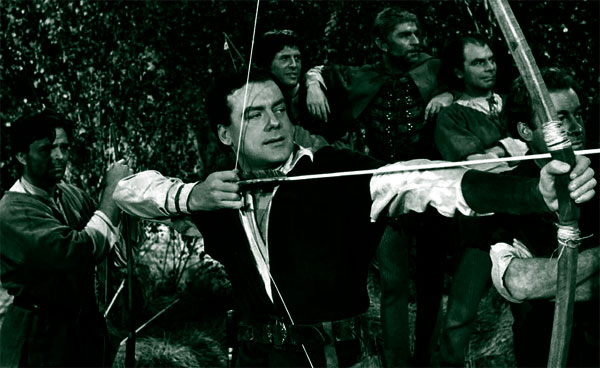
As a young kid, I had watched all the Robin Hood TV shows and fell in love with archery. Actually I got pretty good at it as evidenced by my placing an arrow in my uncle Wilford’s leg when he returned home from the Korean War. Also, we kids played a game of “chicken arrow”, where we’d stand back to back, point our bows upward with our eyes closed and shoot our arrows into the sky, counting to ten before opening our eyes again and dodging the falling arrows.
Another test of our skill was shooting water filled balloons from the hands of any kid we could talk into holding them. To be new to the neighbor meant holding the balloons. Not one neighborhood kid was ever injured, but we all became very skillful with our bows.
So, while at the foster home, I managed to score a used Bear Kodiak recurve bow with several arrows and found I could replace the target tips on the arrows with broadheads or blunt tips for bird and rabbit hunting.
We hunted mostly pheasant in that area, sometimes quail if pop Wilcox let us use his good shotgun. I liked using the bow. Shooting pheasant with a shotgun isn’t easy and shooting them with a bow is harder yet. First, you need a good birding dog and we just happened to have one. A mature German shepherd named Butch. Butch was fantastic in finding and getting the birds to take flight. Pheasant are very heavy birds and they stay on the ground as long as possible, making them hard to get a good shot. A good dog, however, will flush them out. Now, being such a heavy bird, it takes them a while to get up to flying speed during which time they’re also going up at an angle to gain altitude. At one point, they kind of level off and that’s when you have to take your shot. Wait too long and the bird is going too fast and even a shotgun will fail.
The best time to go hunting, although illegal, was any day before the season legally opened. It was suicide to go out into the woods during the season. Many times we had to dodge bullets from the weekend hunters, the guys who had desk jobs in the city and thought anything moving in the woods was a deer. One day, I managed to bag eight pheasant and prayed that the game wardens were eating lunch as I carried my prizes home.
Lakes and creeks in Michigan are clear enough to bowfish and I would often nail a few trout or carp in a nearby stream. Now a lot of people don’t eat carp, but they’ve never had to worry about putting food on the table. You eat a lot of different things when you’re poor. Plus an adult carp can feed a family of four pretty good if cooked properly. I’ve also lost arrows shooting carp with a bow. Carp are hard headed fish and I’ve had arrows simply just bounce off their fishy little skulls and they go on their way.
Flash forward to my first submarine duty on the USS Piper…
When I finished submarine school and got my first assignment to the USS Piper, it was kind of a let down. We were only doing sub school operations. That meant taking a bunch of sub school students out and spending a whole day diving and surfacing, diving and surfacing and trying to teach them what submarines were like. I did it when I was in school. The only good thing was that you became more proficient and went home every night.
Then, one day, we received orders to participate in what was called “Springboard”. Springboard was an annual exercise that meant transiting to Puerto Rico and most likely the Bahamas and the Virgin Islands to operate with surface ships. Having seen photos of the fish in those areas, I knew I had to take my bow with me and even bought a real fancy bowfishing rig just for the trip.
Now, the old diesel submarines usually strung sets of lights along the hull when moored in foreign ports. We called them med mooring lights and the purpose was to enable the sentry to be able to spot any swimmers in the water that might be trying to get on board. The lights also attract lots of zooplankton, small fish to feed on the zooplankton, and big fish that fed on the small fish.
I was standing topside by the engine room hatch and looking over the side when I saw a flash of silver in the water. “Wow, that’s a big fish”, I thought as I started going below to get my bow. A little while later, I returned to the same spot fully armed. I saw that silver thing flash in the mooring lights several times and made my calculations for the next time it would happen. I was ready and excited.
Sure enough, there was the flash of silver and I fired my arrow where I had calculated my target would be. Nailed it. The line from my arrow to the reel on my bow started paying out. However, I couldn’t reel it back in. Whatever I had hit was too darn big, so I just let the line pay out trying to figure what to do next. That wasn’t my decision to make. As soon as the line reached it’s limit, there was a big jolt that almost pulled me over the side. I was just gaining my composure when the second jolt occurred, this time I had to make a choice between going over or simply letting go of my bow. I let the darn bow go.
Two days later, some guys on one of the tugboats were talking about the big tarpoon someone had pulled out of the water with a fishing arrow stuck in it’s side. My arrow! But no bow was ever found.
When I was ready to enter high school, my mom got the idea in her head that I had to go to Cass Tech. Cass Technical High School was the best school in the city, but my grades were borderline.
The school required an admissions exam and you had to have a B average to get in. Now Southeastern High School was the eastside ghetto school and Northwestern High School was the west side ghetto school. Northwestern was where the folks at Cass would send you if your grades fell below a C. For me, going to either ghetto school meant giving up my lunch money every day, possibly getting my butt kicked after school everyday and not learning anything useful unless I joined one of the gangs.
So, there was Cass. Of the more than 50,000 students graduated from it, some of the more distinguished students were comedians Lily Tomlin and David Alan Greer, auto executive John DeLorean, violinist Regina Carter, jazz musician Donald Byrd, and of course Diana Ross. Aviator Charles Lindbergh’s mother, Evangeline Lindbergh, taught chemistry at Cass from 1922 until 1942.
It was essentially a college-prep high school where the top scholar was more honored than the star quarterback of the football team. Cass served kids from all over Detroit. Some kids would have a ninety minute bus ride just to get there.
There were stories about Cass students who went away to college and found college easier than what they had in high school.
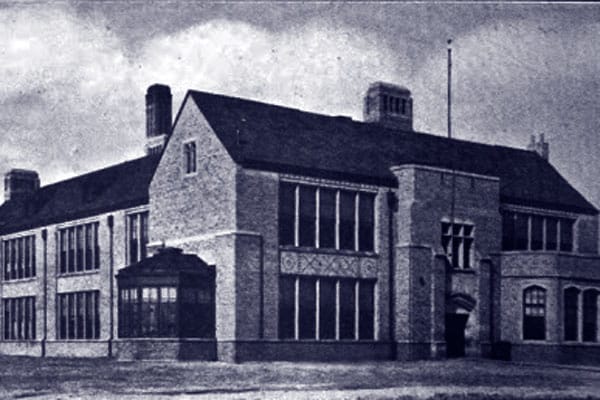
Cass Tech was connected to the High School of Commerce by the Victory Memorial Arch, a second-floor Gothic-style bridge that crossed Vernor Highway. Therefore, the combined capacity of both schools was around four thousand eight-hundred and twenty pupils. However, both schools shared Cass Tech’s cafeteria. Some Cass teachers also taught classes at Commerce.
The first floor of Cass was home to a gymnasium with an indoor track along a mezzanine, the teacher’s lounge (complete with fireplace) and a three-thousand-seat auditorium that was said to be near acoustically perfect and was complete with a balcony. The ground level also had pharmacy and physics laboratories; the second floor had a machine shop and chemistry and bacteriology labs; the third floor held the library; the fourth floor was home to cooking and mechanical drawing classrooms and art classes; the fifth floor had sewing labs and other shops; the sixth floor was the home of the music and textile programs; and the seventh floor had a foundry, baking and kitchen classrooms and the school’s original lunchroom, which could feed up to 1,000 students at a time.
Well, I got into Cass by the skin on my neck. But the bus ride from our old neighborhood was complicated and long, so my mom decided to move to a better neighborhood on the west side. Moving to the brownstone on Carter Street, right off of Dexter Boulevard, meant I could take a single bus to and from school. The Dexter bus also went down West Grand Boulevard for a while and right past the Motown or Hitsville, USA recording studios.
By this time, I had become a full blown beatnik. Jack Kerouac’s book “The Dharma Bums” was like my bible and Kerouac’s “On The Road” was my inspiration. I dabbled in Zen buddhism, took to wearing a black beret, dark sunglasses, and used my mom’s mascara to darken my mustache.
Before school started each morning, a lot of us students would gather in the auditorium to do the homework we should have done the night before, but it was also a gathering of disciplines. The performing arts students would be going through their dance routines on the stage, the music students would be practicing their instruments, and we beatniks would be reading our poetry.
Cass Tech had a strict dress code. Boys were required to wear slacks and shirts had to be tucked in, but not me. Art students at Cass were allowed to wear jeans because we worked with paints and stuff. There were several of us “cool cats” that formed our own little group, although the other guys were music students.
We didn’t eat lunch in the lunchroom like the normal kids, instead we spread our mats just outside of the main room where we played our flutes and bongo drums, read poetry and drank green tea. Needless to say, we really stood out, but because the so called “beat generation” was so cool at that time, I think the other kids either admired us or just ignored us. Remember Dobie Gillis and Maynard G. Krebbs? Peter Gunn?
Down the street from Cass was a burger, soda fountain joint called “Buddies”. Buddies was a hangout for the Cass Tech elite, meaning that freshmen almost never went to Buddies.
So, during my first year of high school, I had begun noticing how pretty the girls looked and how differently they acted from my junior high school days, but I was still pretty naïve when it came to the opposite sex. When my classmate Louise caught me in between classes in an empty class room, threw me over a desk and shoved her tongue down my throat, I was confused, but pleasantly surprised.
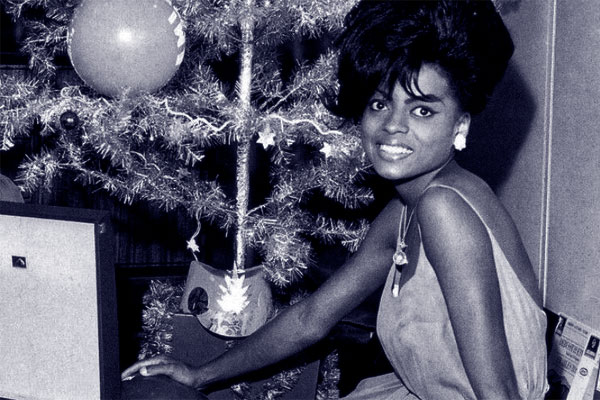
Just as surprised when this skinny little girl with big eyes came up to me on the school elevator and introduced herself. Yes, Cass Tech had student elevators. She said her name was Diana and we talked a bit before going to our separate classes. A few days later, we ran into each other in the lunchroom and she invited me to go with her for a burger at Buddies. Freshmen didn’t go to Buddies, I thought, what an honor, and my head began to swell. Now, I wasn’t that well heeled to be taking a girl to lunch, but I did have a few bills my mom gave me for art supplies and bus fare, so maybe this skinny little chick won’t go crazy with the menu. It would be a long walk home.
Anyways, we get to Buddies and the typical crowd of loudmouth sophomores and seniors. I was in unfamiliar territory. We grabbed an empty table and placed our order for two burgers and cokes. Not much conversation since I’m also a quiet kind of guy, and not experienced enough with women to even know where to start. She was a year ahead of me, so talking school stuff was definitely out, she wasn’t interested in art or jazz. I did manage to find out that her full name was Diana Ross.
When the waitress delivered our burgers, Diana picked up her plate and moved to a table with much older kids. I was crushed. But later, I was told that Diana made a habit of teasing freshmen and coercing burgers out of them. I left and went back to school. The next time I saw Miss Ross was in study hall when she walked over to my table and handed me one of those little fifty cent photo booth photos and apologized. Diana liked to date the older guys and she hung out with some of the thugs from Northwestern High School.
We never developed a lasting relationship since we hardly saw each other in school. I was an art student and my classes were mostly on the fourth floor. The last time I saw her was on a trip home from school. My buddies and I would get off the bus in front of the Hitsville studio and peek into the basement windows to see who was recording. We caught Mary Wells and Smokey Robinson a few times, but this day, I saw Miss Ross going into the building.
I held on to that photograph she gave me for several years until losing it when I joined the navy.
Fredric Durrette served one tour in Vietnam, retired as E8 in the navy submarine service after 23 years. Major hobbies are collecting old stuff from the 20s and restoring old racing bicycles. Worked as a commercial photographer at JL Hudsons in Detroit and continue photography as a hobby. Love Sade, sixties soul, seventies rock, and all jazz. Attended Woodstock in 69! http://snakesafe.jalbum.net/
Venue: RKO Pantages Theatre, Hollywood, California
Hosts: Bob Hope, Rosalind Russell, David Niven, James Stewart, Jack Lemmon, Donald Duck (voice of Clarence Nash, via animation)
Eligibility Year: 1957
Major Wins:
Best Picture went to The Bridge on the River Kwai.
Joanne Woodward won Best Actress for The Three Faces of Eve.
Alec Guinness snagged Best Actor for The Bridge on the River Kwai.
Directing & Screenplay:
David Lean took home the Best Director award for The Bridge on the River Kwai.
Best Original Screenplay went to Designing Woman.
Additional Info:
Miyoshi Umeki became the first Asian actress to win an Oscar, for Best Supporting Actress in Sayonara.
Red Buttons also received Best Supporting Actor for the same film.
Trivia:
This year’s ceremony featured one of the most eclectic group of hosts, including animated character Donald Duck, whose voice was provided by Clarence Nash.
The ceremony was the last one to feature multiple hosts until 1976.
The Bridge on the River Kwai won seven Oscars in total, including Best Picture, Best Director, and Best Actor.
This was the first time all five Best Picture nominations were nominated for Best Director
Peyton Place tied the record for the most nominations without a win (9) set by The Little Foxes (1941), until 1977.
1958 Oscar Nominees and Winners
Best Motion Picture: The Bridge on the River Kwai – Sam Spiegel, producer (WINNER) 12 Angry Men – Henry Fonda and Reginald Rose, producers Peyton Place – Jerry Wald, producer Sayonara – William Goetz, producer Witness for the Prosecution – Arthur Hornblow Jr., producer
Best Director: David Lean – The Bridge on the River Kwai (WINNER) Sidney Lumet – 12 Angry Men Mark Robson – Peyton Place Joshua Logan – Sayonara Billy Wilder – Witness for the Prosecution
Best Actor: Alec Guinness – The Bridge on the River Kwai as Lieutenant Colonel Nicholson (WINNER) Marlon Brando – Sayonara as Major Lloyd “Ace” Gruver Anthony Franciosa – A Hatful of Rain as Polo Pope Charles Laughton – Witness for the Prosecution as Sir Wilfrid Robarts Q.C. Anthony Quinn – Wild Is the Wind as Gino
Best Actress: Joanne Woodward – The Three Faces of Eve as Eve White/Eve Black/Jane (WINNER) Deborah Kerr – Heaven Knows, Mr. Allison as Sister Angela Anna Magnani – Wild Is the Wind as Gioia Elizabeth Taylor – Raintree County as Susanna Drake Lana Turner – Peyton Place as Constance MacKenzie
Best Supporting Actor: Red Buttons – Sayonara as Airman Joe Kelly (WINNER) Vittorio De Sica – A Farewell to Arms as Major Alessandro Rinaldi Sessue Hayakawa – The Bridge on the River Kwai as Colonel Saito Arthur Kennedy – Peyton Place as Lucas Cross Russ Tamblyn – Peyton Place as Norman Page
Best Supporting Actress: Miyoshi Umeki – Sayonara as Katsumi Kelly (WINNER) Carolyn Jones – The Bachelor Party as The Girl Elsa Lanchester – Witness for the Prosecution as Miss Plimsoll Hope Lange – Peyton Place as Selena Cross Diane Varsi – Peyton Place as Allison MacKenzie
Best Story and Screenplay Written Directly for the Screen: Designing Woman – George Wells (WINNER) Funny Face – Leonard Gershe I Vitelloni – Federico Fellini, Tullio Pinelli and Ennio Flaiano Man of a Thousand Faces – Ralph Wheelwright, R. Wright Campbell, Ivan Goff and Ben Roberts The Tin Star – Barney Slater, Joel Kane and Dudley Nichols
Best Screenplay Based on Material from Another Medium: The Bridge on the River Kwai – Michael Wilson, Carl Foreman and Pierre Boulle based on the novel by Pierre Boulle (WINNER) 12 Angry Men – Reginald Rose based on his teleplay Heaven Knows, Mr. Allison – John Lee Mahin and John Huston from the novel by Charles Shaw Peyton Place – John Michael Hayes based on the novel by Grace Metalious Sayonara – Paul Osborn based on the novel by James Michener
Best Foreign Language Film: Nights of Cabiria (Italy) (WINNER) The Devil Strikes at Night (Germany) Gates of Paris (France) Mother India (India) Nine Lives (Norway)
Best Documentary Feature: Albert Schweitzer (WINNER) On the Bowery Torero!
Best Live Action Short Subject: The Wetback Hound (WINNER) A Chairy Tale City of Gold Foothold on Antarctica Portugal
Best Short Subject – Cartoons: Birds Anonymous (WINNER) One Droopy Knight Tabasco Road Trees and Jamaica Daddy The Truth About Mother Goose
Best Scoring: The Bridge on the River Kwai – Malcolm Arnold (WINNER) An Affair to Remember – Hugo Friedhofer Boy on a Dolphin – Hugo Friedhofer Perri – Paul J. Smith Raintree County – Johnny Green
Best Song: “All the Way” from The Joker Is Wild – Music by Jimmy Van Heusen; Lyrics by Sammy Cahn (WINNER) “An Affair to Remember” from An Affair to Remember – Music by Harry Warren; Lyrics by Leo McCarey and Harold Adamson “April Love” from April Love – Music by Sammy Fain; Lyrics by Paul Francis Webster “Tammy” from Tammy and the Bachelor – Music and Lyrics by Ray Evans and Johnny Livingston “Wild Is the Wind” from Wild Is the Wind – Music by Dimitri Tiomkin; Lyrics by Ned Washington
Best Sound Recording: Sayonara – George Groves (WINNER) Gunfight at the O.K. Corral – George Dutton Les Girls – Wesley C. Miller Pal Joey – John P. Livadary Witness for the Prosecution – Gordon E. Sawyer
Best Costume Design: Les Girls – Orry-Kelly (WINNER) An Affair to Remember – Charles LeMaire Funny Face – Edith Head and Hubert de Givenchy Pal Joey – Jean Louis Raintree County – Walter Plunkett
Best Art Direction: Sayonara – Art Direction: Ted Haworth; Set Decoration: Robert Priestley (WINNER) Funny Face – Art Direction: Hal Pereira and George W. Davis; Set Decoration: Samuel M. Comer and Ray Moyer Les Girls – Art Direction: William A. Horning and Gene Allen; Set Decoration: Edwin B. Willis and Richard Pefferle Pal Joey – Art Direction: Walter Holscher; Set Decoration: William Kiernan and Louis Diage Raintree County – Art Direction: William A. Horning and Urie McCleary; Set Decoration: Edwin B. Willis and Hugh Hunt
Best Cinematography: The Bridge on the River Kwai – Jack Hildyard (WINNER) An Affair to Remember – Milton Krasner Funny Face – Ray June Peyton Place – William C. Mellor Sayonara – Ellsworth Fredericks
Best Film Editing: The Bridge on the River Kwai – Peter Taylor (WINNER) Gunfight at the O.K. Corral – Warren Low Pal Joey – Viola Lawrence and Jerome Thoms Sayonara – Arthur P. Schmidt and Philip W. Anderson Witness for the Prosecution – Daniel Mandell
Best Special Effects: The Enemy Below – Walter Rossi (WINNER) The Spirit of St. Louis – Louis Lichtenfield
Academy Honorary Awards: Charles Brackett “for outstanding service to the Academy.”
B. B. Kahane “for distinguished service to the motion picture industry.”
Gilbert M. “Broncho Billy” Anderson “motion picture pioneer, for his contributions to the development of motion pictures as entertainment.” the Society of Motion Picture and Television Engineers “for their contributions to the advancement of the motion picture industry.”
December 8, 1956 – February 8, 1957: Guy Mitchell – Singing The Blues February 9, 1957 – March 1, 1957: Elvis Presley – Too Much March 2, 1957 – March 29, 1957: Tab Hunter – Young Love March 30, 1957 – April 5, 1957: Buddy Knox – Party Doll April 6, 1957 – April 12, 1957: Perry Como – Round And Round April 13, 1957 – June 7, 1957: Elvis Presley – All Shook Up June 8, 1957 – July 12, 1957: Pat Boone – Love Letters In The Sand July 13, 1957 – August 30, 1957: Elvis Presley – (Let Me Be Your) Teddy Bear August 31, 1957 – September 13, 1957: Debbie Reynolds – Tammy September 14, 1957 – September 27, 1957: Paul Anka – Diana September 28, 1957 – October 4, 1957: The Crickets – That’ll Be The Day October 5, 1957 – October 18, 1957: Jimmie Rodgers – Honeycomb October 19, 1957 – October 25, 1957: The Everly Brothers – Wake Up Little Susie October 26, 1957 – December 6, 1957: Elvis Presley – Jailhouse Rock / Treat Me Nice December 7, 1957 – December 27, 1957: Sam Cooke – You Send Me December 28, 1957 – January 10, 1958: Pat Boone – April Love
(Data is compiled from various charts including Billboard’s “Pop,” “Airplay,” “R&B” and “Singles” Charts. “Hot 100” is the primary chart used starting October, 1958)
World Changing Event: The Soviet Union launched Sputnik, the first space satellite, starting the Space Race.
The Top Song was All Shook Up by Elvis Presley.
Influential Songs include The Banana Boat Song (Day-o) by Harry Belafonte and Wake Up Little Suzie by The Everly Brothers.
The Movies to Watch include An Affair to Remember, Jailhouse Rock, Gunfight at the O.K. Corral, 12 Angry Men, A Face in the Crowd, The Incredible Shrinking Man, Pal Joey, The Spirit of St. Louis, Old Yeller, and The Bridge on the River Kwai.
The Most Famous Person in America was probably Rock Hudson.
Notable books include Atlas Shrugged by Ayn Rand and The Cat in the Hat by Dr. Seuss.
Price of 45 RPM single record in 1957: 79 cents Burger King Whopper: 37 cents
US Life Expectancy: Males: 66.4 years, Females: 72.7 years.
Wham-O Company produced the 1st Frisbee, the “Pluto Platter,” 1958.
Volvo’s Nils Bohlin invented the Three-Point Seatbelt. Volvo lets other car companies use the patent at no charge.
The Funny TV Lady: Lucille Ball The Funny Late Show Host: Steve Allen
The Baseball Hit(s): Richie Ashburn hit Alice Roth with a foul ball, breaking her nose, then hit her again while she was on the stretcher.
Top Ten Baby Names of 1957
Mary, Susan, Linda, Debra, Karen, Michael, James, David, Robert, John
Fashion Icons and Sex Symbols
Carroll Baker, Brigitte Bardot, Claudia Cardinale, Doris Day, Diana Dors, Anita Ekberg, Annette Funicello, Ava Gardner, Audrey Hepburn, Gina Lollobrigida, Sophia Loren, Jayne Mansfield, Marilyn Monroe, Julie Newmar, Kim Novak, Bettie Page, Elizabeth Taylor, Mamie Van Doren
Leading Men and Sex Symbols
Elvis Presley, Harry Belafonte
Oscars: 29th Academy Awards
On March 27, 1957, the Oscars ceremony was held at the RKO Pantages Theatre in Hollywood, with Jerry Lewis and Celeste Holm sharing the hosting duties. The film Around the World in 80 Days was the big winner of the night, bagging five awards, including Best Picture. Yul Brynner won Best Actor for his role in The King and I, while Ingrid Bergman was awarded Best Actress for Anastasia.
Emmy Awards: 9th Primetime Emmy Awards
The Emmy Awards took place on March 16, 1957, at the NBC Studios in Burbank, California. Art Linkletter reprised his hosting role. The Best Drama Series award went to Playhouse 90, and The Phil Silvers Show won Best Comedy Series. Robert Young snagged the Best Actor for Father Knows Best, and Loretta Young took home the Best Actress for Letter to Loretta for the second time.
In film and television, the Oscars and Emmys continued to be the pinnacles of achievement. The Oscars focused on recognizing the cinematic achievements of 1956, while the Emmys followed suit with productions aired in 1956. These award shows often provided a glimpse into the social and cultural trends of the era, and 1957 was no exception.
Time Magazine’s Man of the Year
Nikita Khrushchev
Miss America
Marian McKnight (Manning, SC)
Miss USA
Mary Leona Gage (Maryland)/ Charlotte Sheffield (Utah)
The Scandals
On March 25, 1957, US Customs agents seized over 500 copies of the Allen Ginsberg book Howl and Other Poems on obscenity charges. It was later decided in the US court that the material was not obscene.
James Vicary announced that he invented subliminal advertising at a Fort Lee, New Jersey, movie theater. He flashed the words: “Hungry? Eat Popcorn” and “Thirsty? Drink Coke” very fast between film frames. Food and beverage sales increased significantly, he claimed. In 1962, he said he made the whole thing up.
US Politics
January 21, 1957 (Monday): Second inauguration of Dwight D. Eisenhower
1957 Pop Culture Facts & History
When US President Harry S. Truman visited Disneyland in 1957, he refused to come aboard the popular Dumbo attraction. Truman, a Democrat, didn’t want to be seen riding in the symbol of the Republican
The comedy film Airplane (1980) is a parody of Zero Hour (1957)
The price of Coca-Cola was 5 cents (a nickel) from 1886 to m1959. Coca-Cola contacted the US Treasury Department, asking them to mint a 7.5 cent coin in 1953, to minimize a needed price increase for soda vending machines.
On April 10, 12 Angry Men, directed by Sidney Lumet, starring Martin Balsam as Juror 1, John Fiedler as Juror 2, Lee J. Cobb as Juror 3, E. G. Marshall as Juror 4, Jack Klugman as Juror 5, Edward Binns as Juror 6, Jack Warden as Juror 7, Henry Fonda as Davis, Juror 8, Joseph Sweeney as McCardle, Juror 9, Ed Begley as Juror 10, George Voskovec as Juror 11 and Robert Webber as Juror 12, was released.
Philadelphia’s American Bandstand, with Dick Clark, became a national television show.
Elvis asked his audience at a Seattle concert to please rise for the national anthem. He picked up his guitar and sang Hound Dog. A 15-year-old Jimmy Hendrix was there, a part of the enthusiastic audience.
Elvis Presley bought Graceland on 3734 Bellevue Boulevard in Memphis, Tennessee, for $100,000.
In 1957, 1 out of 7 US workers’ income was earned in the textile or apparel industries.
On Saturday, April 13, 1957, there was no mail delivery due to a budget crunch at the US Post Office. Additional funds insured Saturday mail continued by the following week.
Stan Laurel (of the legendary comedy duo Laurel and Hardy) refused to ever perform publicly again after the death of his friend and partner Oliver Hardy in 1957.
Fortran, an early computer language, was created.
1948 Swiss engineer George de Mestral took his dog on a hike. When he got home, he noticed many burrs on the dog. He examined one under the microscope. He noticed the burrs had small hooks that enabled them to cling to the soft fur. De Mestral got the US patent (#3,009,235) for Velcro in 1955, an upgrade from his earlier 1955 patent (#2,717,437)
Laika, a Russian dog, was the first living creature to be sent into space in Sputnik 2. Sadly, she did not make it back alive.
January 16 – January 1- Three B-52 Bombers set a record for around-the-world flight, 45 hours and 19 minutes.
The Mayflower II from Plymouth, England, sailed to Plymouth, Massachusetts.
The longest-ever speech delivered by the United Nations was eight hours long. Vengalil Krishnan Krishna Menon delivered it from India on January 23, 1957.
The US Supreme Court decided, in a 6-3 vote, that Major League Baseball is the only antitrust-exempt professional US sport.
Unlikely Heroes
Northeast Airlines Flight 823 crashed onto Rikers Island shortly after take-off from LaGuardia Airport, killing 20 and injuring 78 out of a total of 95 passengers and six crew. Fifty-seven inmates ran to help the survivors. Most prisoners who helped were either set free or received reduced sentences.
1957 Mysteries:
The Boy in the Box is a still-unsolved murder of a ~5-year-old boy whose naked and battered body was found in a cardboard box in a wooded area of Philadelphia in 1957. Found to be Joseph Augustus Zarelli in 2022.
William Laing, Michael Crowley, and Ray Baker described a ‘Timeslip‘ journey into the medieval version of the Suffolk village of Kersey.
An explosion occurred at a plutonium plant in the USSR, resulting in the world’s third-worst nuclear accident. The government kept it secret for 19 years. An estimated 6,000-8,000 people died in the event.
Oops!
Killer ‘Africanized’ bees are a hybrid species (with European Bees) that exist because they accidentally escaped quarantine in 1957.
During a 1957 Phillies game, Richie Ashburn hit a fan, Alice Roth, with a foul ball, breaking her nose. When play resumed, he hit her again with another foul ball as she was being taken out on a stretcher. They later became friends.
The United States Air Force accidentally dropped a 10 Megaton hydrogen bomb on uninhabited land owned by the University of New Mexico in Albuquerque. It did not go off, but a cow was reputedly killed.
Fake News
The BBC aired a segment about a Swiss family harvesting their “spaghetti tree” as an April Fool’s Day Prank on Panorama.
Civil Rights
The Little Rock Nine were a group of nine African American students who were escorted by 101st Airborne Division soldiers into Little Rock Central High School in 1957 after initially being blocked by the Arkansas National Guard and racial segregationists.
A 24-hour and 18-minute speech by Sen. Storm Thurmond to stall the passing of the Civil Rights Act of 1957 was the longest Filibuster in US history. He read the Declaration of Independence, talked about Jury Trials, and answered questions from other Senators. He successfully spoke from 8:54 p.m. to 9:12 p.m. the next day, but the bill was passed anyway.
World War II Aftermath
Anne Frank Foundation was formed in Amsterdam.
Unorthodox Medicine
Actor Cary Grant was diagnosed with “prolonged emotional detachment” and began medical LSD therapy. He had more than 100 acid trips over 2 years and believed it helped him cope with the pain from his childhood.
The Habits
Everybody was flying those discs invented by Frederick Morrison, called ‘Pluto Platters,’ later renamed the ‘Frisbee.’ ‘Frisbee’ was a pie company in Connecticut. The locals used to toss the empty pie plates, hence the name. Wham-O bought the rights to the product from Frederick.
The cool kids were watching Dick Clark’s American Bandstand.
1st Appearances & 1957’s Most Popular Christmas Gifts, Toys and Presents
Dream Pets, Careers Game, Sea-Monkeys
More Firsts
Alfred Fielding and Marc Chavannes accidentally invented bubble wrap while trying to create plastic wallpaper.
Standard & Poor’s S&P 500 opened on March 4, 1957, replacing the S&P 90.
The phrase “In God We Trust” first appeared on US coins in 1864 but did not appear on U.S. paper currency until 1957.
Nobel Prize Winners
Physics – Chen-Ning Yang, Tsung-Dao Lee Chemistry – Lord Alexander R. Todd Physiology or Medicine – Daniel Bovet Literature – Albert Camus Peace – Lester Bowles Pearson
Best Film Oscar Winner
Around the World in 80 Days (presented in 1957)
Broadway Show
The Music Man (Musical) Opened on December 19, 1957, and Closed April 15, 1961
Popular and Best-selling Books From 1957
Atlas Shrugged by Ayn Rand Below the Salt by Thomas B. Costain Blue Camellia by Frances Parkinson Keyes By Love Possessed by James Gould Cozzens The Cat in the Hat by Dr. Seuss Compulsion by Meyer Levin Eloise in Paris by Kay Thompson From Russia, with Love by Ian Fleming On the Beach by Nevil Shute On the Road by Jack Kerouac Peyton Place by Grace Metalious Rally ‘Round the Flag, Boys! by Max Shulman The Scapegoat by Daphne du Maurier Syntactic Structures by Noam Chomsky
1957 Most Popular TV Shows
1. Gunsmoke (CBS) 2. The Danny Thomas Show (CBS) 3. Tales of Wells Fargo (NBC) 4. Have Gun Will Travel (CBS) 5. I’ve Got A Secret (CBS) 6. The Life and Legend of Wyatt Earp (ABC) 7. General Electric Theatre (CBS) 8. The Restless Gun (NBC) 9. December Bride (CBS) 10. You Bet Your Life (NBC)
1957 Billboard Number One Songs
December 29, 1956 – February 8, 1957: Singing The Blues – Guy Mitchell
February 9 – February 15: Don’t Forbid Me – Pat Boone
December 30, 1957 – January 3, 1958: April Love – Pat Boone
Sports
World Series Champions: Milwaukee Braves NFL Champions: Detroit Lions NBA Champions: Boston Celtics Stanley Cup Champs: Montreal Canadians U.S. Open Golf: Dick Mayer U.S. Tennis (Men/Ladies): Malcolm Anderson/Althea Gibson Wimbledon (Men/Women): Lew Hoad/Althea Gibson NCAA Football Champions: Auburn & Ohio State NCAA Basketball Champions: North Carolina Kentucky Derby: Iron Liege
My mom was always on a fanatical crusade to see that I got the very best education, long before she enrolled me into Cass Tech High School. My first memory of my elementary school days was when she enrolled me into Courville Elementary while we still lived on Minnesota Street.
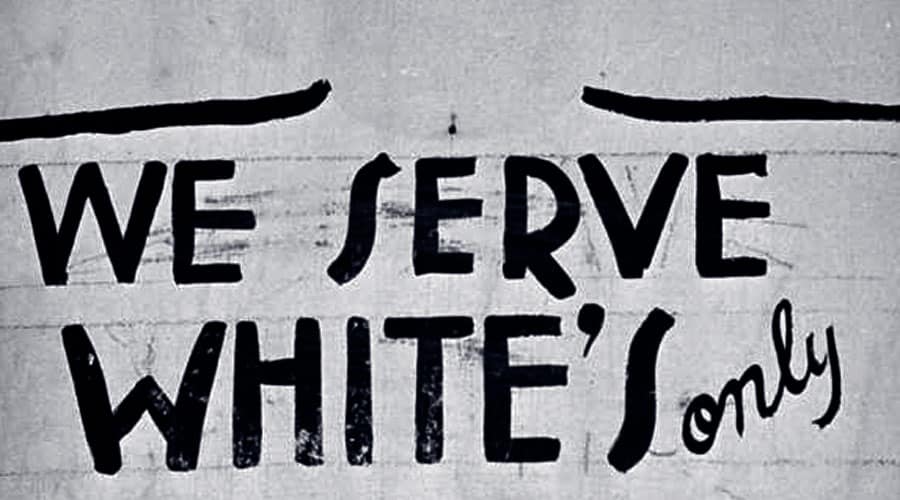
Now Courville was at the limit of Detroit’s education expansion program and was situated in what was then a predominantly upper middle class White neighborhood built for White auto factory workers. The neighborhood itself was segregated and was White only. However, there were Black families living nearby and there were a few Black kids at Courville, and I mean just a few and those were from upper middle class Colored families. Yes, “Colored”, that’s what we called ourselves back in the 1950s.
Getting me enrolled in Courville was quite a stretch since we really didn’t live in their district. There were other schools closer to us, but they weren’t the best. Going to Courville meant that my mom would have to get up earlier, get me dressed and take me to school. It also meant that standing out in the cold during the winter waiting for the first bus and in the cold again waiting for the second bus. This ritual would be repeated when she picked me up after school. All this while she was working as a housekeeper for the Fishers. The Fishers loved my mom so much that they often gave her some flexibility. Old man Fisher actually risked his life personally bringing my mom home during the riots in 1967.
I can remember those cold winter mornings after one of those vintage Detroit snowfalls, anxiously waiting to see the bus headlights piercing the bleak darkness. Detroit bus stops in the 50s were not protected. There was only a sign that identified it as a bus stop. Riding the bus meant that you not only had to stand, but you were subjected to inclement weather and occasional splashes of ice cold water and slush if a car came too close. My mom endured all these hardships while holding my mittened hand.
When I say “vintage” Detroit snowfalls, I mean it doesn’t seem to snow in Detroit like it did in the 50s. Sometimes we had snow so deep that I could tunnel to the house next door and not even surface. Every house on the block would have a snowman or a snow fort in it’s front yard. We wore galoshes over our dress shoes, which really offered very little protection from wet feet. As much as I hated them, the old galoshes molded in one piece glossy rubber with flannel linings and four or five metal snap closures were the best. They were also heavy and hard to get off.
Even though there were few “Colored” kids at Courville, no one seemed overly fixated on race. At the start of school, we gathered in a circle, said a short prayer, then the Pledge of Allegiance, with our hands over our hearts. Many of the auto workers were European immigrants, still scarred by the previous war, proud to have become American citizens, and were instilling those values into their children. We kids never even wondered why we were all different, hell, we were just children. I seriously believe that the prayers and saying the pledge kind of brought us all together under one big umbrella as one people despite any outward differences.
I don’t know what happened while I was at Courville. Either it was discovered that we didn’t live in their district or the daily trips became too much for even my mom, but I was pulled out and enrolled in Atkinson Elementary which was closer to our home.
Atkinson wasn’t a bad school and being closer and me being older, I could now walk to school on my own.
It was at Atkinson that I saw my first male teacher and my first Black male teacher, Mr. Phillips.
Mr. Phillips wasn’t “Colored”, he was Black. In Detroit in the 50s, dark skin African Americans were subjects of racial bias from lighter skin African Americans. The perception was that Blacks with dark complexions were considered to be lower class field hands while a light complexion meant education, a better life, and a greater chance of acceptance from the White community. There were magazines like “Colored”, “Hue”, and Ebony. But Ebony never used photos of dark skin people and their ads were all about hair straighteners and skin lighteners.
So, poor Mr. Phillips. Sorry to say that we gave him a hard time. A really hard time. There was a saying on the street that we kids used whenever we had an altercation with a darker playmate. “Black boy, Black boy, you can shine, I’ll get a White boy to kick yo behind”.
Mr. Phillips spent as much time disciplining us little urchins as he did actually teaching. This went on for most of the school year until I gradually started feeling sorry for him. On a hunch one day, I skipped lunch and got into a conversation with him and found out that he was really a likeable guy and also very smart. After that, my mission was to encourage my classmates to give him more consideration and by the end of the school year, Mr. Phllips had become one of the go to guys if you had a problem at school or even at home.
Another thing I remember about my time at Atkinson was the school lunches and I was grateful that we were poor enough for my mom to make my lunch. The fried balogna and tomato sandwiches, sometimes Spam, were a heck of a lot better than government cafeteria food. And they always served tapioca for dessert. Sometimes my mom would pack an apple or an orange into the brown paper bag that served as my lunch box and give me a dime for the little half pint of milk.
There’s a scene in the movie “Christmas Story” where one of the kids gets his tongue stuck on the school flag pole. Well, this didn’t happen at Atkinson, but we did have a similar incident one extremely cold winter when a kid got his tongue stuck to the big brass doorknob of the school’s front door. This brought a rapid response from the local fire station and that kid became an instant celebrity. It must have been a very painful way to prove how brave or how stupid you were.
It was at Atkinson when I had my first seizure. I was running down the hall and about to descend a flight of stairs when everything went black. In losing consciousness from the seizure, I had also run into the wall and tumbled down the stairs.
That resulted in my transfer to yet another elementary school, White elementary. White elementary was one of the schools were the staff were trained to take care of special needs kids. They had cots in some class rooms and we were encouraged to take naps after our playground breaks. White was where I learned square dancing of all things. Good school, but my neighborhood buddies weren’t there. Besides, being a young Black kid, living in the ghetto, and going to a school with “White” in it’s name and learning square dancing didn’t give me any prestige back in the hood.
Fredric Durrette served one tour in Vietnam, retired as E8 in the navy submarine service after 23 years. Major hobbies are collecting old stuff from the 20s and restoring old racing bicycles. Worked as a commercial photographer at JL Hudsons in Detroit and continue photography as a hobby. Love Sade, sixties soul, seventies rock, and all jazz. Attended Woodstock in 69! http://snakesafe.jalbum.net/
Venues: RKO Pantages Theatre, Hollywood, California & NBC Century Theatre, New York City, New York
Hosts: Jerry Lewis and Celeste Holm
Eligibility Year: 1956
Major Wins:
Around the World in 80 Days scored the Best Picture win.
Ingrid Bergman won Best Actress for her role in Anastasia.
Yul Brynner took home Best Actor for The King and I.
Directing & Screenplay:
George Stevens received the Best Director award for Giant.
Albert Lamorisse’s The Red Balloon won for Best Original Screenplay.
Additional Info:
Dorothy Malone clinched Best Supporting Actress for Written on the Wind.
Anthony Quinn was Best Supporting Actor for Lust for Life.
Trivia:
This was the first year all five Best Picture nominees were nominated for Best Director.
Director John Ford’s classic western The Searchers failed to receive a single nomination.
This was the first year all five Best Picture nominees were in color.
The “Academy Award of Merit” is what the Oscar statue is officially called.
Giant had ten nominations and won a single Oscar.
The Red Balloon is the only short film to win a screenplay award.
Around the World in 80 Days also bagged Best Cinematography and Best Art Direction, among others.
1957 Oscar Nominees and Winners
Best Motion Picture: Around the World in 80 Days – Mike Todd, producer (WINNER) Friendly Persuasion – Robert Wyler and William Wyler, producers Giant – George Stevens and Henry Ginsberg, producers The King and I – Charles Brackett, producer The Ten Commandments – Cecil B. DeMille, producer
Best Director: George Stevens – Giant (WINNER) Michael Anderson – Around the World in 80 Days William Wyler – Friendly Persuasion Walter Lang – The King and I King Vidor – War and Peace
Best Actor: Yul Brynner – The King and I as King Mongkut of Siam (WINNER) James Dean (posthumous nomination) – Giant as Jett Rink Kirk Douglas – Lust for Life as Vincent van Gogh Rock Hudson – Giant as Jordan “Bick” Benedict Jr. Laurence Olivier – Richard III as Richard
Best Actress: Ingrid Bergman – Anastasia as Anna Koreff (WINNER) Carroll Baker – Baby Doll as Baby Doll Meighan Katharine Hepburn – The Rainmaker as Lizzie Curry Nancy Kelly – The Bad Seed as Christine Penmark Deborah Kerr – The King and I as Anna Leonowens
Best Supporting Actor: Anthony Quinn – Lust for Life as Paul Gauguin (WINNER) Don Murray – Bus Stop as Beauregard Decker Anthony Perkins – Friendly Persuasion as Josh Birdwell Mickey Rooney – The Bold and the Brave as Dooley Robert Stack – Written on the Wind as Kyle Hadley
Best Supporting Actress: Dorothy Malone – Written on the Wind as Marylee Hadley (WINNER) Mildred Dunnock – Baby Doll as Aunt Rose Comfort Eileen Heckart – The Bad Seed as Hortense Daigle Mercedes McCambridge – Giant as Luz Benedict Patty McCormack – The Bad Seed as Rhoda Penmark
Best Screenplay – Original: The Red Balloon – Albert Lamorisse (WINNER) The Bold and the Brave – Robert Lewin Julie – Andrew L. Stone La Strada – Federico Fellini and Tullio Pinelli The Ladykillers – William Rose
Best Screenplay – Adapted: Around the World in 80 Days – James Poe, John Farrow and S. J. Perelman based on the novel by Jules Verne (WINNER) Baby Doll – Tennessee Williams based on his short plays Twenty-seven Wagons Full of Cotton and The Unsatisfactory Supper Friendly Persuasion – Michael Wilson based on the novel by Jessamyn West Giant – Ivan Moffat and Fred Guiol based on the novel by Edna Ferber Lust for Life – Norman Corwin based on the novel by Irving Stone
Best Story: The Brave One – Dalton Trumbo (WINNER) The Eddy Duchin Story – Leo Katcher High Society – Edward Bernds and Elwood Ullman The Proud and the Beautiful – Jean-Paul Sartre Umberto D. – Cesare Zavattini
Best Foreign Language Film: La Strada (Italy) (WINNER) The Burmese Harp (Japan) The Captain from Köpenick (Germany) Gervaise (France) Qivitoq (Denmark)
Best Documentary Feature: The Silent World (WINNER) The Naked Eye Where Mountains Float
Best Documentary Short Subject: The True Story of the Civil War (WINNER) A City Decides The Dark Wave The House Without a Name Man in Space
Best Live Action Short Subject, One-Reel: Crashing the Water Barrier (WINNER) I Never Forget a Face Time Stood Still
Best Live Action Short Subject, Two-Reel: The Bespoke Overcoat (WINNER) Cow Dog The Dark Wave Samoa
Best Short Subject – Cartoons: ‘Magoo’s Puddle Jumper (WINNER) Gerald McBoing-Boing on Planet Moo The Jay Walker
Best Music Score of a Dramatic or Comedy Picture: Around the World in 80 Days – Victor Young (posthumous award) (WINNER) Anastasia – Alfred Newman Between Heaven and Hell – Hugo Friedhofer Giant – Dimitri Tiomkin The Rainmaker – Alex North
Best Scoring of a Musical Picture: The King and I – Alfred Newman and Ken Darby (WINNER) The Best Things in Life Are Free – Lionel Newman The Eddy Duchin Story – Morris Stoloff and George Duning High Society – Johnny Green and Saul Chaplin Meet Me in Las Vegas – Georgie Stoll and Johnny Green
Best Song: “Que Sera, Sera (Whatever Will Be, Will Be)” from The Man Who Knew Too Much – Music and Lyrics by Jay Livingston and Ray Evans (WINNER) “Friendly Persuasion (Thee I Love)” from Friendly Persuasion – Music by Dimitri Tiomkin; Lyrics by Paul Francis Webster “Julie” from Julie – Music by Leith Stevens; Lyrics by Tom Adair “True Love” from High Society – Music and Lyrics by Cole Porter “Written on the Wind” from Written on the Wind – Music by Victor Young (posthumous nomination); Lyrics by Sammy Cahn
Best Sound Recording: The King and I – Carlton W. Faulkner (WINNER) The Brave One – Buddy Myers The Eddy Duchin Story – John P. Livadary Friendly Persuasion – Gordon R. Glennan and Gordon E. Sawyer The Ten Commandments – Loren L. Ryder
Best Art Direction, Black-and-White: Somebody Up There Likes Me – Art Direction: Cedric Gibbons and Malcolm Brown; Set Decoration: Edwin B. Willis and F. Keogh Gleason (WINNER) The Proud and Profane – Art Direction: Hal Pereira and A. Earl Hedrick; Set Decoration: Samuel M. Comer and Frank R. McKelvy Seven Samurai – Art Direction and Set Decoration: So Matsuyama The Solid Gold Cadillac – Art Direction: Ross Bellah; Set Decoration: William Kiernan and Louis Diage Teenage Rebel – Art Direction: Lyle R. Wheeler and Jack Martin Smith; Set Decoration: Walter M. Scott and Stuart A. Reiss
Best Art Direction, Color: The King and I – Art Direction: Lyle R. Wheeler and John DeCuir; Set Decoration: Walter M. Scott and Paul S. Fox (WINNER) Around the World in 80 Days – Art Direction: James W. Sullivan and Ken Adam; Set Decoration: Ross Dowd Giant – Art Direction: Boris Leven; Set Decoration: Ralph S. Hurst Lust for Life – Art Direction: Cedric Gibbons, Hans Peters and E. Preston Ames; Set Decoration: Edwin B. Willis and F. Keogh Gleason The Ten Commandments – Art Direction: Hal Pereira, Walter H. Tyler and Albert Nozaki; Set Decoration: Samuel M. Comer and Ray Moyer
Best Cinematography, Black-and-White: Somebody Up There Likes Me – Joseph Ruttenberg (WINNER) Baby Doll – Boris Kaufman The Bad Seed – Harold Rosson The Harder They Fall – Burnett Guffey Stagecoach to Fury – Walter Strenge
Best Cinematography, Color: Around the World in 80 Days – Lionel Lindon (WINNER) The Eddy Duchin Story – Harry Stradling The King and I – Leon Shamroy The Ten Commandments – Loyal Griggs War and Peace – Jack Cardiff
Best Costume Design, Black-and-White: The Solid Gold Cadillac – Jean Louis (WINNER) The Power and the Prize – Helen Rose The Proud and Profane – Edith Head Seven Samurai – Kohei Ezaki Teenage Rebel – Charles LeMaire and Mary Wills
Best Costume Design, Color: The King and I – Irene Sharaff (WINNER) Around the World in 80 Days – Miles White Giant – Moss Mabry and Marjorie Best The Ten Commandments – Edith Head, Ralph Jester, John Jensen, Dorothy Jeakins and Arnold Friberg War and Peace – Maria De Matteis
Best Film Editing: Around the World in 80 Days – Gene Ruggiero and Paul Weatherwax (WINNER) The Brave One – Merrill G. White Giant – William Hornbeck, Philip W. Anderson and Fred Bohanan Somebody Up There Likes Me – Albert Akst The Ten Commandments – Anne Bauchens
Best Special Effects: The Ten Commandments – John P. Fulton (WINNER) Forbidden Planet – A. Arnold Gillespie, Irving G. Ries and Wesley C. Miller
Academy Honorary Award: Eddie Cantor “for distinguished service to the film industry.”
Irving G. Thalberg Memorial Award: Buddy Adler
Jean Hersholt Humanitarian Award: Y. Frank Freeman
The formation of the European Economic Community (EEC) was a significant step towards European integration, aiming to promote economic cooperation and free trade among its member countries, which the Treaty of Rome established on March 25, 1957.
The EEC, also known as the Common Market, was founded by six European countries: Belgium, France, Italy, Luxembourg, the Netherlands, and West Germany. The idea of creating a unified European market stemmed from the desire to foster economic growth, rebuild after the devastation of World War II, and prevent future conflicts among European nations.
The Treaty of Rome, which laid the foundation for the EEC, was signed by the six founding members on March 25, 1957, and came into force on January 1, 1958. The treaty created a customs union, eliminating tariffs and trade barriers among member states, and established common policies in areas such as agriculture, transport, and competition. The EEC also aimed to harmonize economic and social policies, promote the free movement of goods, services, capital, and labor, and create a single market.
Over the years, the EEC expanded both in terms of membership and the scope of its policies. The United Kingdom, Denmark, and Ireland joined in 1973, followed by Greece in 1981, and Spain and Portugal in 1986. The EEC played a crucial role in fostering economic growth, development, and interdependence among its member countries, while also serving as a model for other regional integration efforts worldwide.
The EEC evolved into the European Union (EU) with the signing of the Maastricht Treaty in 1992, which came into force on November 1, 1993. The EU expanded the scope of cooperation among its members, adding political integration, foreign and security policy, and the creation of a single currency, the euro. Today, the European Union remains one of the most significant examples of regional integration, encompassing 27 member states and playing a vital role in shaping economic, political, and social policies across the continent.
November 26, 1955 – January 13, 1956: Tennessee Ernie – Sixteen Tons January 14, 1956 – February 17, 1956: Dean Martin – Memories Are Made Of This February 18, 1956 – February 24, 1956: Kay Starr – Rock And Roll Waltz February 25, 1956 – March 23, 1956: Nelson Riddle – Lisbon Antigua March 24, 1956 – April 20, 1956: Les Baxter – Poor People Of Paris April 21, 1956 – June 15, 1956: Elvis Presley – Heartbreak Hotel June 16, 1956 – July 27, 1956: Gogi Grant – The Wayward Wind July 28, 1956 – August 3, 1956: Elvis Presley – I Want You, I Need You, I Love You August 4, 1956 – August 17, 1956: The Platters – My Prayer August 18, 1956 – November 2, 1956: Elvis Presley – Don’t Be Cruel / Hound Dog November 3, 1956 – December 7, 1956: Elvis Presley – Love Me Tender December 8, 1956 – February 8, 1957: Guy Mitchell – Singing The Blues
(Data is compiled from various charts including Billboard’s “Pop,” “Airplay,” “R&B” and “Singles” Charts. “Hot 100” is the primary chart used starting October, 1958)
World-Changing Event: Elvis Presley appeared on The Ed Sullivan Sullivan Show on September 9. 82.6% of American households watched.
The Top Song was Don’t Be Cruel/ Hound Dog by Elvis Presley.
Influential Songs include Tutti Frutti by Little Richard and Don’t Be Cruel/ Hound Dog by Elvis Presley.
The Happy Earworm: The Happy Whistler by Don Robertson.
The Movies to Watch include The Ten Commandments, Giant, Invasion of the Body Snatchers, Love Me Tender, Carousel, Bus Stop, Forbidden Planet, High Society, Seven Wonders of the World, and The King and I.
The Most Famous Person in America was probably William Holden.
Soap Operas As the World Turns and Edge of Night premiered on TV.
Notable books include Peyton Place by Grace Metalious and Eloise by Kay Thompson.
Price of 6 oz Nestles Chocolate Chip Morsels in 1956: 19 cents. Basketball, official size: $2.89 Hockey Stick: 79 cents Hockey Puck: 25 cents
The Funny TV Guy was: Ernie Kovacs The Funny Late Show Host: Steve Allen The Funny TV Lady: Lucille Ball
The Bald Guy was Yul Brynner
Tween and Teen Dancing: ‘Sock Hops’- 50s school dances, were named after you had to remove your shoes to protect the varnished cafeteria and gymnasium floors.
The Conversation: Was Elvis Presley dancing with too much sex appeal on TV?
Top Ten Baby Names of 1956
Mary, Debra, Linda, Deborah, Susan, Michael, James, Robert, David, John
Fashion Icons and Sex Symbols
Carroll Baker, Doris Day, Diana Dors, Anita Ekberg, Annette Funicello, Ava Gardner, Audrey Hepburn, Gina Lollobrigida, Sophia Loren, Jayne Mansfield, Marilyn Monroe, Julie Newmar, Kim Novak, Bettie Page, Elizabeth Taylor, Mamie Van Doren
Sex Symbols and Hollywood Hunks
James Dean, Harry Belafonte, Elvis Presley, Gregory Peck
Oscars: 28th Academy Awards
The 28th Academy Awards took place on March 21, 1956, at the RKO Pantages Theatre in Hollywood. Comedy legend Jerry Lewis hosted the ceremony. This year, Marty was the standout film, claiming Best Picture, Best Director, and Best Actor for Ernest Borgnine. Anna Magnani won Best Actress for her role in The Rose Tattoo.
Emmy Awards: 8th Primetime Emmy Awards
The Emmy Awards for this year were held on March 17, 1956, at the Pan Pacific Auditorium in Los Angeles. Art Linkletter served as the host. The Phil Silvers Show grabbed the Best Comedy Series award, while Producers’ Showcase bagged Best Dramatic Series. The Best Actor and Actress honors went to Phil Silvers for The Phil Silvers Show and Loretta Young for Letter to Loretta, respectively.
For the Oscars, the eligibility spanned the entire calendar year of 1955. The Emmy Awards also adhered to a 1955 production year for eligibility but had less formal rules than the Oscars.
“The Quotes of 1956”
“That’ll be the day.” – John Wayne, in The Searchers
“You’re in good hands with Allstate.” -Allstate
“We will bury you.” – Nikita Khrushchev
“Live fast, die young, leave a good-looking corpse.” – James Dean
“Takes a licking and keeps on ticking.” -Times (watches)
“Away go troubles down the drain.” – Roto-Rooter
Time Magazine’s Men of the Year
Hungarian Freedom Fighter
Miss America
Sharon Ritchie (Denver, CO)
Miss USA
Carol Morris (Iowa)
The Scandals
Charles Van Doren and Herb Stempel, the leading competitors on TV’s quiz show Twenty-One, admitted to being coached by the show’s producers.
At the 1956 Olympics, Barry Larkin, a veterinary science student at Sydney University’s St. Johns College, successfully impersonated an Olympic torchbearer, handing the mayor of Sydney a painted chair leg topped with a pair of burning underwear in front of a crowd of thousands.
Dick Clark took over hosting duties on Bob Horn’s Bandstand after Bob allegedly twiddled with female teenage dancers who appeared on his show. They changed the name to American Bandstand.
Fallout
Nearly half the cast and crew (91 of ~220 people) of the 1956 film The Conqueror developed cancer after filming the movie downwind of a nuclear weapons testing site and later shipping dirt from the filming location to the studio for reshoots.
1956 Firsts
Dodge produced the first car marketed explicitly to women. The La Femme had a pink exterior with a pink umbrella and a lipstick holder.
On July 9, 1956, Dick Clark began hosting American Bandstand.
The first backup camera in a car was in the 1956 Buick Centurion concept car.
The first shipping container was invented and patented (Patent #2853968A) in 1956 by Malcolm Mc Lean, which reduced his shipping cost from $5.86 to .16 cents, paving the way for globalization and mass intercontinental shipping.
As the World Turns was first broadcast on CBS.
NBC introduced its multicolored peacock logo in 1956 to entice people to buy color TVs manufactured by RCA, which owned the network.
Neutrinos were discovered. #science
Abigail Van Buren’s (aka Pauline Phillips) “Dear Abby” advice column first appeared in newspapers.
Jimmy Woo, Federal Agent in Antman and The Wasp and S.H.I.E.L.D. Agent in comics books first appeared in 1956’s Yellow Claw #1 from Atlas Comics (later Marvel Comics).
Batwoman (aka Kathy Kane) first appeared in Detective Comics #233 (July 1956).
“In God We Trust” wasn’t the official U.S. motto until 1956.
Tater Tots went on sale.
1st Appearances & 1956’s Most Popular Christmas Gifts, Toys and Presents
Yahtzee, Ticklebee Game, Play-Doh (color, actual white came out in 1958), Ant Farm
1956 Pop Culture Facts & History
Monkee Mike Nesmith’s mother, Bette Nesmith Graham invented “Mistake Out,” later renamed Liquid Paper.
On October 8, Game 5 of the World Series, NY Yankee right-hander Don Larson pitched a ‘perfect game.’
Soviet gymnast Larissa Latynina holds the record for the most Olympic medals ever won by a female. Competing in three Olympics between 1956 and 1964, she won 18 medals.
Christopher Cockerell invented the hovercraft.
Completed in 1954, the Capitol Records Building in Los Angeles has a light on top that spells out the word ‘Hollywood’ in Morse code. It started blinking Hollywood in 1956 and has only stopped to celebrate Capitol Records’ 50th Anniversary, where it flashed “Capitol 50”.
On CBS, The Wizard of Oz became the first major Hollywood film running over ninety minutes to be televised uncut in one evening.
In 1956, the US passed the Refrigerator Safety Act, which required all fridges to be magnetically sealed.
The world record for “Greatest One-Minute Rainfall” is 31.2 mm (1.23 inches) in Unionville, Maryland on July 4, 1956
Twenty-five people were hospitalized after a melee at a Bill Haley concert in Asbury Park, New Jersey.
Killer bees (Africanized bees) were created in Brazil in 1956 by crossbreeding African and Brazilian honeybees to increase honey production.
In 1956, the IBM 350 hard disk drive had 3.75 MB of storage and weighed over 2000 lbs.
The phrase “I cried all the way to the bank” reputedly came from Liberace in 1956 after a newspaper crudely accused him of homosexuality, and he sued and won. A. The phrase was used before he said it. B. He was a (closeted) homosexual.
Alfred Hitchcock remade his movie 1934’s The Man Who Knew Too Much as The Man Who Knew Too Much in 1956.
Thomas W. Attridge Jr, a test pilot, shot the Grumman F-11 Tiger plane he was flying by catching up to the fired 20 mm bullets that caused his crash landing.
RIP
Alcohol-Related Artist Death: Jackson Pollock died in a car accident. His 1948 work, No. 5, was sold to David Geffen for $140,000,000.
Albert Woolson (February 11, 1850 – August 2, 1956), the last Civil War veteran and Union Soldier, died in 1956.
The DuMont Television Network was a fourth network on American broadcast television in the 1940s and 1950s. The network folded in 1956, and today it has been all but forgotten because most of its archives were destroyed.
Not RIP: Indian illusionist P.C. Sorcar, a magician, was performing the “cut a person in half” trick using his assistant for a performance on BBC’s Panorama. Immediately after she was divided, the show ended. There is some controversy as to whether it was a coincidence or Sorcar planned it for publicity. The assistant was fine.
Nobel Prize Winners
Physics – William Shockley, John Bardeen, Walter Houser Brattain Chemistry – Sir Cyril Norman Hinshelwood, Nikolay Semyonov Physiology or Medicine – André Frédéric Cournand, Werner Forssmann, Dickinson W. Richards Literature – Juan Ramón Jiménez Peace – Not Awarded
The Habit
Reading Profiles in Courage by John F. Kennedy
Best Film Oscar Winner
Marty (presented in 1956)
Popular and Best-selling Books From 1956
A Certain Smile by Francoise Sagan Andersonville by MacKinlay Kantor Auntie Mame by Patrick Dennis Boon Island by Kenneth Roberts The Chronicles of Narnia: The Last Battle by C.S. Lewis Diamonds Are Forever by Ian Fleming Don’t Go Near the Water by William Brinkley Eloise by Kay Thompson The Last Hurrah by Edwin O’Connor The Mandarins by Simone de Beauvoir Peyton Place by Grace Metalious The Tribe That Lost Its Head by Nicholas Monsarrat
Broadway Show
My Fair Lady (Musical) Opened on March 15, 1956, and closed on September 29, 1962
1956 Most Popular TV Shows
1. I Love Lucy (CBS) 2. The Ed Sullivan Show (CBS) 3. General Electric Theatre (CBS) 4. The $64,000 Question (CBS) 5. December Bride (CBS) 6. Alfred Hitchcock Presents (CBS) 7. I’ve Got A Secret (CBS) 8. Gunsmoke (CBS) 9. The Perry Como Show (NBC) 10. The Jack Benny Show (CBS)
1956 Billboard Number One Songs
November 26, 1955 – January 13, 1956: Sixteen Tons – Tennessee Ernie Ford
January 14 – February 17: Memories Are Made Of This – Dean Martin
February 18 – March 2: Great Pretender – The Platters
March 3 – March 23: Rock And Roll Waltz – Kay Starr
March 24 – May 2: Poor People Of Paris – Les Baxter
November 17 – December 7: Love Me Tender – Elvis Presley
December 8 – December 21: Singing The Blues – Guy Mitchell
December 22 – December 28: Love Me Tender – Elvis Presley
December 29, 1956 – February 8, 1957: Singing The Blues – Guy Mitchell
Sports
World Series Champions: New York Yankees NFL Champions: New York Giants NBA Champions: Philadelphia Warriors Stanley Cup Champs: Montreal Canadians U.S. Open Golf Cary Middlecoff U.S. Tennis: (Men/Ladies) Ken Rosewall/Shirley J. Fry Wimbledon (Men/Women): Lew Hoad/Shirley Fry NCAA Football Champions: Oklahoma NCAA Basketball Champions: San Francisco Kentucky Derby: Needles
There wasn’t a graduation ceremony, but by the time I had grown old enough to start junior high school, my mom had moved us from the projects to a nicer second floor apartment in a two family home on Lemay street. This was a big change both in the level of education and also meant making new friends.
Foch Junior High, now it’s Foch Intermediate, was an excellent school with a great mixture of several ethnic groups, but mostly Blacks and Poles. Many of the kids were still from poor neighborhoods. It was here that I met a White kid named Bob McGreevy. Bob was a great cartoonist and since I had started drawing, we made a great pair. We’d draw entire comic strips in English class and even more when we were sent to study hall. Bob would eventually end up to become a comic book artist for the Sgt. Rock comic books. I had two other good friends, Hardy Shaw and Phillip Smith, but they lived in a nicer neighborhood and their parents were definitely upper middle class.
I remember our phys ed instructor, Mr. Lee. The name sticks because a group called the “Bobettes” had just released a song called “Mr. Lee”. It was about a teacher, but not our Mr. Lee. The song, however, became Mr. Lee’s theme song and we’d sing it as we entered the gym.
Aside from phys ed, Mr. Lee was also the main disciplinary applicator in the school. When someone became too much for their regular teacher, they’d send them down to the gym to talk to Mr. Lee, who had two forms of punishment. Either you got the “board of education” or you did twenty laps around the gym. Most guys opted for the twenty lapse. We all respected Mr. Lee. He did, in fact, break up many fights, both in school and out on the campus.
Foch had an excellent library and I found several great reference books on zooplankton and other aquatic pond life. In fact, this spurred me on to get a better microscope than the one I had.
The only problem with Foch was tat it was right next door to Southeastern High School. Now because Southeastern served a larger area, it was filled with mostly Black kids from several low income neighborhoods and as they say, the inmates ran the asylum. There were fights almost every day. Fights that spilled out from the school campus onto the street. There were fights between guys, fights between girls, and once in a while someone would attack a teacher. And if there was a fight, it would attract a crowd, which created sub fights.
But the city had an answer for that. Aside from the regular police patrol cars, there were two special response units. One was the “Grey Ghost” and the other was the “Big Four”. The Grey Ghost was an all grey, unmarked cruiser and usually had two officers skilled in the use of night sticks. Heck, some of the high school kids were big enough to take on most adults. But, we’d come out from the relative safety of our school to walk by some thug sitting in the back of the cruiser.
The Big Four was another matter. They were the ones who responded if the Grey Ghost came under siege. The Big Four was an all black, unmarked police car that contained four of the biggest guys brutish White guys in the police department. Most of the White cops were Polish. They only knew one way to make an arrest and that was with brute force, especially when it came to dealing with minorities. This was in the 1950s, civil rights and the Miranda Rights were still several years away. Plus they carried full riot gear in the trunk. No matter what fight or how big a crowd it had drawn, every one scrambled when the Big Four rolled up. If you suffered a few bruises between being picked up and being booked, no one cared or saw anything.
The regular street cops and even the black and whites that occasionally cruised through our neighborhood were an entirely different story. Most of them were really nice guys and the first ones to go to if you were lost or needed help. But the very last thing you wanted to see were the Big Four or the Grey Ghost. That was the state of policing in the Black neighborhoods in 1950s Detroit.
Fredric Durrette served one tour in Viet Nam, retired as E8 in the navy submarine service after 23 years. Major hobbies are collecting old stuff from the 20s and restoring old racing bicycles. Worked as a commercial photographer at JL Hudsons in Detroit and continue photography as a hobby. Love Sade, sixties soul, seventies rock, and all jazz. Attended Woodstock in 69! http://snakesafe.jalbum.net/
Venues: RKO Pantages Theatre, Hollywood, California & NBC Century Theatre, New York City, New York
Hosts: Jerry Lewis (Los Angeles), Claudette Colbert & Joseph L. Mankiewicz (New York)
Eligibility Year: 1955
Major Wins:
Marty swept the major awards, clinching Best Picture.
Ernest Borgnine claimed Best Actor for Marty.
Anna Magnani won Best Actress for The Rose Tattoo.
Directing & Screenplay:
Delbert Mann earned the Best Director accolade for Marty.
Marty also won Best Adapted Screenplay.
Additional Info:
Jack Lemmon was honored as Best Supporting Actor for Mister Roberts.
Jo Van Fleet secured Best Supporting Actress for East of Eden.
Love Is a Many-Splendored Thing, Marty, and The Rose Tattoo each earned eight nominations. Love Is a Many-Splendored Thing, and The Rose Tattoo each won 3 Oscars. Marty won 4.
Marty was 90 minutes long, the shortest to win for Best Picture.
Trivia:
Love Is a Many-Splendored Thing won Best Costume Design, Color, a category that only existed from 1957 to 1966.
Oklahoma! was the first film to be shot in the Todd-AO 70mm widescreen process and won two Oscars.
The Best Animated Short Subject went to Speedy Gonzales, featuring the titular Mexican mouse from Looney Tunes.
1956 Oscar Nominees and Winners
Best Motion Picture: Marty – Harold Hecht for United Artists (WINNER) Love Is a Many-Splendored Thing – Buddy Adler for 20th Century Fox Mister Roberts – Leland Hayward for Warner Bros. Picnic – Fred Kohlmar for Columbia Pictures The Rose Tattoo – Hal B. Wallis for Paramount Pictures
Best Director: Delbert Mann – Marty (WINNER) John Sturges – Bad Day at Black Rock Elia Kazan – East of Eden Joshua Logan – Picnic David Lean – Summertime
Best Actor: Ernest Borgnine – Marty as Marty Piletti (WINNER) James Cagney – Love Me or Leave Me as Martin Snyder James Dean (posthumous nomination) – East of Eden as Caleb Trask Frank Sinatra – The Man with the Golden Arm as Frankie “Dealer” Machine Spencer Tracy – Bad Day at Black Rock as John J. Macreedy
Best Actress: Anna Magnani – The Rose Tattoo as Serafina Delle Rose (WINNER) Susan Hayward – I’ll Cry Tomorrow as Lillian Roth Katharine Hepburn – Summertime as Jane Hudson Jennifer Jones – Love Is a Many-Splendored Thing as Dr. Han Suyin Eleanor Parker – Interrupted Melody as Marjorie Lawrence
Best Supporting Actor: Jack Lemmon – Mister Roberts as Ensign Frank Thurlowe Pulver (WINNER) Arthur Kennedy – Trial as Bernard Castle Joe Mantell – Marty as Angie Sal Mineo – Rebel Without a Cause as John “Plato” Crawford Arthur O’Connell – Picnic as Howard Bevans
Best Supporting Actress: Jo Van Fleet – East of Eden as Cathy Ames/Kate Trask (WINNER) Betsy Blair – Marty as Clara Peggy Lee – Pete Kelly’s Blues as Rose Hopkins Marisa Pavan – The Rose Tattoo as Rosa Delle Rose Natalie Wood – Rebel Without a Cause as Judy
Best Screenplay: Marty – Paddy Chayefsky from Marty by Paddy Chayefsky (WINNER) Bad Day at Black Rock – Millard Kaufman from “Bad Time at Honda” by Howard Breslin Blackboard Jungle – Richard Brooks from Blackboard Jungle by Evan Hunter East of Eden – Paul Osborn from East of Eden by John Steinbeck Love Me or Leave Me – Daniel Fuchs and Isobel Lennart
Best Story and Screenplay: Interrupted Melody – William Ludwig and Sonya Levien (WINNER) The Court-Martial of Billy Mitchell – Milton Sperling and Emmet Lavery It’s Always Fair Weather – Betty Comden and Adolph Green Mr. Hulot’s Holiday – Jacques Tati and Henri Marquet The Seven Little Foys – Melville Shavelson and Jack Rose
Best Motion Picture Story: Love Me or Leave Me – Daniel Fuchs (WINNER) The Private War of Major Benson – Joe Connelly and Bob Mosher Rebel Without a Cause – Nicholas Ray The Sheep Has Five Legs – Jean Marsan, Henri Troyat, Jacques Perret, Henri Verneuil, and Raoul Ploquin Strategic Air Command – Beirne Lay Jr.
Best Short Subject – Cartoons: Speedy Gonzales (WINNER) Good Will to Men The Legend of Rockabye Point No Hunting
Best Documentary Feature: Helen Keller in Her Story (WINNER) Heartbreak Ridge
Best Documentary Short Subject: Men Against the Arctic – Walt Disney (WINNER) The Battle of Gettysburg The Face of Lincoln
Best Live Action Short Subject, One-Reel: Survival City – Edmund Reek (WINNER) 3rd Ave. El – Carson Davidson Gadgets Galore – Robert Youngson Three Kisses – Justin Herman
Best Live Action Short Subject, Two-Reel: The Face of Lincoln (WINNER) 24-Hour Alert The Battle of Gettysburg On The Twelfth Day Switzerland
Best Scoring of a Dramatic or Comedy Picture: Love Is a Many-Splendored Thing – Alfred Newman (WINNER) Battle Cry – Max Steiner The Man with the Golden Arm – Elmer Bernstein Picnic – George Duning The Rose Tattoo – Alex North
Best Scoring of a Musical Picture: Oklahoma! – Robert Russell Bennett, Jay Blackton and Adolph Deutsch (WINNER) Daddy Long Legs – Alfred Newman Guys and Dolls – Jay Blackton and Cyril J. Mockridge It’s Always Fair Weather – André Previn Love Me or Leave Me – Percy Faith and Georgie Stoll
Best Song: “Love Is a Many-Splendored Thing” from Love Is a Many-Splendored Thing – Music by Sammy Fain; Lyrics by Paul Francis Webster (WINNER) “I’ll Never Stop Loving You” from Love Me or Leave Me – Music by Nicholas Brodszky; Lyrics by Sammy Cahn “Something’s Gotta Give” from Daddy Long Legs – Music and Lyrics by Johnny Mercer “The Tender Trap” from The Tender Trap – Music by Jimmy Van Heusen; Lyrics by Sammy Cahn “Unchained Melody” from Unchained – Music by Alex North; Lyrics by Hy Zaret
Best Sound Recording: Oklahoma! – Fred Hynes (WINNER) Love Is a Many-Splendored Thing – Carlton W. Faulkner Love Me or Leave Me – Wesley C. Miller Mister Roberts – William A. Mueller Not as a Stranger – Watson Jones
Best Art Direction, Black-and-White: The Rose Tattoo – Art Direction: Hal Pereira and Tambi Larsen; Set Decoration: Samuel M. Comer and Arthur Krams (WINNER) Blackboard Jungle – Art Direction: Cedric Gibbons and Randall Duell; Set Decoration: Edwin B. Willis and Henry Grace I’ll Cry Tomorrow – Art Direction: Cedric Gibbons and Malcolm Brown; Set Decoration: Edwin B. Willis and Hugh Hunt The Man with the Golden Arm – Art Direction: Joseph C. Wright; Set Decoration: Darrell Silvera Marty – Art Direction: Ted Haworth and Walter M. Simonds; Set Decoration: Robert Priestley
Best Art Direction, Color: Picnic – Art Direction: William Flannery and Jo Mielziner; Set Decoration: Robert Priestley (WINNER) Daddy Long Legs – Art Direction: Lyle R. Wheeler and John DeCuir; Set Decoration: Walter M. Scott and Paul S. Fox Guys and Dolls – Art Direction: Oliver Smith and Joseph C. Wright; Set Decoration: Howard Bristol Love Is a Many-Splendored Thing – Art Direction: Lyle R. Wheeler and George Davis; Set Decoration: Walter M. Scott and Jack Stubbs To Catch a Thief – Art Direction: Hal Pereira and Joseph McMillan Johnson; Set Decoration: Samuel M. Comer and Arthur Krams
Best Cinematography, Black-and-White: The Rose Tattoo – James Wong Howe (WINNER) Blackboard Jungle – Russell Harlan I’ll Cry Tomorrow – Arthur Arling Marty – Joseph LaShelle Queen Bee – Charles Lang
Best Cinematography, Color: To Catch a Thief – Robert Burks (WINNER) Guys and Dolls – Harry Stradling Love Is a Many-Splendored Thing – Leon Shamroy A Man Called Peter – Harold Lipstein Oklahoma! – Robert Surtees
Best Costume Design, Black-and-White: I’ll Cry Tomorrow – Helen Rose (WINNER) The Pickwick Papers – Beatrice Dawson Queen Bee – Jean Louis The Rose Tattoo – Edith Head Ugetsu – Tadaoto Kainosho
Best Costume Design, Color: Love Is a Many-Splendored Thing – Charles LeMaire (WINNER) Guys and Dolls – Irene Sharaff Interrupted Melody – Helen Rose To Catch a Thief – Edith Head The Virgin Queen – Charles LeMaire and Mary Wills
Best Film Editing: Picnic – Charles Nelson and William Lyon (WINNER) Blackboard Jungle – Ferris Webster The Bridges at Toko-Ri – Alma Macrorie Oklahoma! – Gene Ruggiero and George Boemler The Rose Tattoo – Warren Low
Best Special Effects: The Bridges at Toko-Ri (WINNER) The Dam Busters The Rains of Ranchipur
Best Foreign Language Film: Samurai, The Legend of Musashi (Japan)
December 4, 1954 – January 21, 1955: The Chordettes – Mr. Sandman January 22, 1955 – February 4, 1955: Joan Weber – Let Me Go, Lover! February 5, 1955 – February 11, 1955: The Fontane Sisters – Hearts Of Stone February 12, 1955 – March 25, 1955: The McGuire Sisters – Sincerely March 26, 1955 – April 29, 1955: Bill Hayes – The Ballad Of Davy Crockett April 30, 1955 – July 8, 1955: Pérez Prado – Cherry Pink And Apple Blossom White July 9, 1955 – September 2, 1955: Bill Haley & His Comets – (We’re Gonna) Rock Around The Clock September 3, 1955 – October 14, 1955: Mitch Miller – The Yellow Rose of Texas October 15, 1955 – October 28, 1955: The Four Aces – Love Is A Many Splendored Thing October 29, 1955 – November 25, 1955: Roger Williams – Autumn Leaves November 26, 1955 – January 13, 1956: Tennessee Ernie – Sixteen Tons
(Data is compiled from various charts including Billboard’s “Pop,” “Airplay,” “R&B” and “Singles” Charts. “Hot 100” is the primary chart used starting October, 1958)
The World-Changing Event: Dr. Jonas Salk started inoculating children against polio.
The Other World-Changing Event: In Montgomery, Alabama, a bus boycott began after Rosa Parks refused to give up her seat to a white person.
The Top Song was Cherry Pink and Apple Blossom White by Perez Prado.
Influential Song: Autumn Leaves by… #1 Roger Williams, #35. Steve Allen, #41 Mitch Miller, #50 Jackie Gleason, #52. Victor Young, #55. Ray Charles Singers.
Tennessee Williams’s Cat on a Hot Tin Roof won the Pulitzer Prize.
Disneyland opened on July 17, 1955.
The Movies to Watch include To Catch A Thief, Mister Roberts, East of Eden, Galapagos, Lady and the Tramp, Rebel without a Cause, Marty, Oklahoma! and Blackboard Jungle.
The Most Famous Person in America was probably James Dean.
Notable books include Lolita by Vladimir Nabokov and The Ginger Man by J. P. Donleavy.
AFL and CIO become one organization, the AFL-CIO.
The price of a German Shepard puppy, AKC registered in 1955: $50.00.
1 ounce of gold value: $35.15.
The Funny Comedy Duo was Dean Martin and Jerry Lewis. The Funny Late Show Host: Steve Allen The Funny Guy was Milton Berle The Funny TV Lady: Lucille Ball
The Hot New Game: Scrabble
Top Ten Baby Names of 1955
Mary, Deborah, Linda, Debra, Susan, Michael, David, James, Robert, John
Fashion Icons and Sex Symbols
Martine Carol, Dorothy Dandridge, Doris Day, Diana Dors, Anita Ekberg, Ava Gardner, Audrey Hepburn, Grace Kelly, Gina Lollobrigida, Sophia Loren, Jayne Mansfield, Marilyn Monroe, Julie Newmar, Kim Novak, Bettie Page, Elizabeth Taylor, Mamie Van Doren
Sex Symbols and Hollywood Hunks
James Dean, Montgomery Clift
Oscars: 27th Academy Awards
The 27th Academy Awards occurred on March 30, 1955, hosted at the RKO Pantages Theatre in Hollywood. Bob Hope served as the master of ceremonies for the event. On the Waterfront stole the spotlight, winning eight awards, including Best Picture and Best Actor for Marlon Brando. Grace Kelly received Best Actress for The Country Girl, making headlines and further cementing her status as a Hollywood icon.
Emmy Awards: 7th Primetime Emmy Awards
As for the small screen, the 7th Primetime Emmy Awards took place on March 7, 1955, at the “Moulin Rouge Nightclub” in Hollywood. Steve Allen was the host. The ceremony marked a pivotal year for the TV industry, with Disneyland winning Best Variety Series. At the same time, Danny Thomas and Loretta Young took home the Best Actor and Best Actress awards for Make Room for Daddy and Letter to Loretta, respectively.
The Oscars had an eligibility period spanning from January 1, 1954, to December 31, 1954. The Emmy Awards, on the other hand, targeted shows produced within the United States, though the specific eligibility window was less strictly defined at this point.
“The Quote:
“Now it’s time to say goodbye to all our company, / M-I-C… Jimmie: See you real soon. Mouseketeers: K-E-Y… Jimmie: Why? Because we like you! Mouseketeers: M-O-U-S-E!” – Mickey Mouse Club
Time Magazine’s Man of the Year
Harlow Curtice
Miss America
Lee Meriwether (San Francisco, CA)
Miss USA
Carlene King Johnson (Vermont)
The Scandals
Rosa Parks refused to give her bus seat to a white man in Montgomery, Alabama on December 1, 1955. This event of peaceful protest was a catalyst for the civil rights movement in the United States.
The producers of The 64,000 Question disliked Dr. Joyce Brothers, and her opponent was coached. They purposely asked her a boxing question, figuring a girl wouldn’t get the answer. She did.
John Wayne, Susan Hayward, Lee Van Cleef, Agnes Moorehead, and Dick Powell all died of cancer, probably from filming The Conquerer near a Nevada nuclear testing site in 1955.
The Horrible
Switzerland banned nearly all forms of motor racing after the tragic 1955 Le Mans disaster, which took place in France, where fragments of a crashed car flew in the stands, injuring 180 and killing 84 spectators, the most deadly accident in motorsports history. The ban is still in place to this day.
Emmett Till, a 14-year-old black teenager, was killed for allegedly flirting with a white female. The murderers were acquitted in a trial by an all-white jury.
1955 Pop Culture Facts & History
TV remote ‘clicker’ control became public.
Maurice K. Goddard, director of the Department of Parks and Forests in Pennsylvania, set the goal of having a state park within 25 miles of every citizen.
The Microwave Oven was invented.
The first Moonwalk ever recorded was performed by tap dancer Bill Bailey in 1955…
Retail giant Sears published a phone number that kids could use to “call Santa”. However, due to a misprint, the number Sears printed redirected to CORAD (now NORAD)’s top-secret emergency line. Rather than having the ad pulled, NORAD decided to “track” Santa’s progress, which they continue to do to this day.
The Guinness Brewing Company published the first edition of the Guinness Book of Records following a debate in a pub (tavern) over the fastest species of European game bird. In case you need to know, it is the Wood Pigeon. The fastest bird of prey would be the Peregrine Falcon.
Journalist Edward R. Murrow asked Jonas Salk who ‘owned’ the patent to the polio vaccine, and his response was, “Well, the people, I would say… There is no patent. Could you patent the sun?” Jonas made it available for no charge.
Hollywood bombshell Jayne Mansfield was ‘discovered’ during a press junket for the 1955 film Underwater that starred another buxom actress, Jane Russell. Mansfield dived into a pool given the assembled journalists and “had the genius to permit her bathing suit to split open.”
The phrase ‘In God We Trust’ wasn’t put on all US currency until 1955.
When Tomorrowland originally opened in Disneyland, it represented an anticipated city of 1986.
You’ve been there. Everybody has visited a McDonald’s since it first opened in 1955.
When Albert Einstein died on April 18, 1955, in Princeton Hospital, the nurse assigned to him did not speak German, and his last words were not understood.
Quaker Oats promoted their cereal by giving away 1 square inch of land in Canada in each box sold. In the end, it totaled up to 19 acres.
The musical film Oklahoma! was predominately filmed in Arizona.
Onions are no longer classified as a commodity due to the cornering of the onion market in 1955 (Onion Futures Act).
Boeing’s development of the B-52 began in 1946. They have been in active service with the USAF since 1955, and the last operational ones will not be replaced until 2045.
In 1955/56, Chrysler sold the Dodge La Femme, a car marketed exclusively to women. It included a designer purse with accessories, an umbrella, and an upholstery pattern of pink rosebuds for the interior.
Two labor unions, the AFL and the CIO, united to become the AFL-CIO.
Marlboro used to market its cigarettes as “premium ladies’ cigarettes.” Their slogan was “Mild as May”. In 1955, they changed their ads to Cowboys and “Marlboro Country” images. Their sales reputedly increased over 3,000 percent in 1 year.
Vladimir Nabokov’s Lolita was published. US publishers were initially reluctant to associate themselves with such a controversial work.
1st Appearances & 1955’s Most Popular Christmas Gifts, Toys and Presents
Tonka Trucks, Play-Doh (off-white), Bild Lilli dolls (predecessor to Barbie), Pluto Platter Flying Saucer (a frisbee type item)
Best Film Oscar Winner
On The Waterfront (presented in 1955)
Nobel Prize Winners
Physics – Willis Eugene Lamb and Polykarp Kusch Chemistry – Vincent du Vigneaud Physiology or Medicine – Axel Hugo Theodor Theorell Literature – Halldór Kiljan Laxness Peace – not awarded
Popular and Best-selling Books From 1955
Andersonville by MacKinlay Kantor Auntie Mame by Patrick Dennis Bonjour Tristesse by Françoise Sagan The Chronicles of Narnia: The Magician’s Nephew by C.S. Lewis Kay Thompson’s Eloise by Kay Thompson and Hilary Knight The Ginger Man by J.P. Donleavy Harold and the Purple Crayon by Crockett Johnson Howl by Allen Ginsberg The Lord of the Rings: The Return of the King by J.R.R. Tolkien The Man in the Gray Flannel Suit by Sloan Wilson Marjorie Morningstar by Herman Wouk Moonraker by Ian Fleming No Time for Sergeants by Mac Hyman Not as a Stranger by Morton Thompson Ten North Frederick by John O’Hara The Tontine by Thomas B. Costain Scuffy the Tugboat by Gertrude Crampton Sincerely, Willis Wayde by John P. Marquand Something of Value by Robert Ruark The View from Pompey’s Head by Hamilton Basso
1955 Most Popular TV Shows
1. The $64,000 Question (CBS) 2. I Love Lucy (CBS) 3. The Ed Sullivan Show (CBS) 4. Disneyland (ABC) 5. The Jack Benny Show (CBS) 6. December Bride (CBS) 7. You Bet Your Life (NBC) 8. Dragnet (NBC) 9. The Millionaire (CBS) 10. I’ve Got A Secret (CBS)
1955 Billboard Number One Songs
December 4, 1954 – January 21, 1955: Mr. Sandman – The Chordettes
January 22 – February 4: Let Me Go, Lover – Joan Weber
February 5 – February 11: Hearts of Stone – Fontane Sisters
February 12 – March 25: Sincerely – McGuire Sisters
March 26 – April 29: The Ballad Of Davy Crockett – Bill Hayes
April 30 – July 8: Unchained Melody – Les Baxter
July 9 – September 2: Rock Around The Clock – Bill Haley & his Comets
September 3 – October 7: Yellow Rose Of Texas – Mitch Miller
October 8 – October 14: Love Is a Many – Splendored Thing – The Four Aces
October 15 – October 21: Yellow Rose Of Texas – Mitch Miller
October 22 – October 28: Love Is a Many – Splendored Thing – The Four Aces
October 29 – November 4: Autumn Leaves – Roger Williams
November 5 – November 25: Love Is a Many – Splendored Thing – The Four Aces
November 26, 1955 – January 13, 1956: Sixteen Tons – Tennessee Ernie Ford
Sports
World Series Champions: Brooklyn Dodgers NFL Champions: Cleveland Browns NBA Champions: Syracuse Nationals Stanley Cup Champs: Detroit Red Wings U.S. Open Golf Jack Fleck U.S. Tennis: (Men/Ladies) Tony Trabert/Doris Hart Wimbledon (Men/Women): Tony Trabert/Louis Brough NCAA Football Champions: Oklahoma NCAA Basketball Champions: San Francisco Kentucky Derby: Swaps
Still recalling my very first visit back to our family home in Gore Springs, Mississippi. At least the first trip that I was old enough to remember. It was way, way back in 1955, shortly after the lynching of Emmett Till in the little town of Money, Mississippi. Money is only around 41 miles from Gore Springs. I had seen the articles in Jet Magazine that showed the explicit uncensored photos of young Till’s mutilated body. It was quite disturbing for a ten year old. My friends in Detroit and I talked about it often. Growing up in a city where we kids pretty much went anywhere in the city we wanted and had always been met with kindness by the Whites we met on our explorations, it was hard to imagine that anyone could have that much hate against another human being. Of course, we watched all the old war movies, but that was war and the villains were always foreigners.
Time to leave the safety of Detroit city life, my mom dressed me in my best Sunday suit and packed a bag of fried chicken for us to eat on the way. A friend drove us to the train terminal and we boarded our train. Back in the day, there were redcaps all over that helped with your baggage and directed you to the correct train. We kids always admired redcaps because they traveled all over and always seemed to be cheerful. Being a redcap must have been one of the greatest jobs in the world next to being a submarine sailor, I thought.
The train car we were ushered to was kind of luxurious and we were given directions to the dining car. However, when we arrived in Cincinnati, Ohio, we were told that we would have to change trains at the Cincinnati terminal. That was a lie. We were simply ushered to a less equipped car and told that we would not be allowed to eat in the dining car since that was for Whites only. However, being a naive young kid from the city, I just assumed it was for rich people who happen to be White.
The rest of the trip went without incident and soon, we were pulling into the terminal in Grenada, Mississippi. We were not allowed to leave the train until the folks in the other car had left. They were all White. Debarking the train with my mom tightly grasping my hand, we walked to the terminal entrance and being somewhat thirsty, I started toward the nearest drinking fountain, not realizing that it was for Whites only. “No, you have to use the fountain over there”, my mom said. Sure enough, there was a sign that said “for coloreds”, but it wasn’t a drinking fountain, it was a dirty old pipe with a simple valve on it. I was sue glad my uncle Havis was there to pick us up.
On the eleven mile drive from Grenada to Gore Springs, we passed by a couple of gas stations. Most were just simple stations with a four foot square building and a pump outside. But when we came to a nicer station with several pumps and a real store, I told mom I had to use the restroom. Leaving the car, I ran to the first door I saw that said “restroom” over the door, not paying attention to the other sign that said “Whites Only”. Needless to say, my uncle properly corrected me and after some hurried explaining to an old White man standing outside, we walked into the store.
Inside the store, the atmosphere was decidedly different as my uncle Havis exchanged greetings with the store owner. We were in Gore Springs now and everyone in Gore Springs knew the Conley family. The store owner said I could have a soda pop if I was thirsty, being a city fella from up north and not used to the “Sippi heat”. My first act of kindness since leaving Detroit.
Not far from our family property, there was a small general store owned by an old White man. He was always nice and I enjoyed the long walk in the hot summer afternoons to go to his store for a soda just to sink my hand in the icy cold water of his cooler to grab a cold soft drink. Mississippi was a contradiction of itself. On the one hand, I saw the respect that people in Gore Springs had for my grandparents, and how friendly they were towards the family despite the racism Mississippi was known for. Taking our cotton to the gin mill in Calhoun City, the White farmers and mill employees would call my grandfather “Mr. Conley”. One man even called him by his first name, James. They had been good friends for several years.
The movie theater was in Grenada and required the eleven mile drive to get there, so it was a big deal to go to the movies. The movie theater was also segregated. Blacks had their own entrance in the rear of the building and had to sit in the balcony seats. That didn’t make sense to my since I knew about gravity and that popcorn and even soft drinks could always accidentally fall down.
One evening after spending a day in the field, the family gathered on Big Momma’s front porch for our usual evening of telling stories and gossip. The Conley houses sat in a sort of cul de sac at the end of the county road, so it was easy to see anyone coming down the unpaved country road. People didn’t accidentally come down that road. There were two old pickup trucks with White men in the cab and several White men in the beds. Some of the men were bold enough to wear their KKK hoodie things. They were also yelling a few words that weren’t proper for a ten year old to hear.
My grandfather ushered us all into the house, grabbed his shotgun, and stepped back onto the porch. The women were all saying stuff like “Oh Lord”, but we kids all gathered at the open window. There was some discussion between my grandfather and the gang of White men, they were evidently looking for one of my distant relatives who had eloped with a White girl. They ere long gone. My grandfather told the guys to get off of his property. Silence. Then there was “Yes sir, Mr. Conley” as they piled back into their trucks, turned around the old sassafras tree in the front yard and drove off, leaving a cloud of dust down the road.
I had a lot of respect for my grandfather before, but now I knew that he had a temper and not only was he a good farmer and an excellent hunter, but he could and would protect the family at any cost.
Back in the 1950s Detroit, before Walmart Super Stores, big chain supermarkets and packaged meat, you got your meat from a butcher shop. The butcher would actually cut the meat exactly how you wanted and weigh it right in front of you. If you wanted your porkchops thin, that’s how you got them. Want a special cut of beef, just ask the butcher.
Because the butcher shop was usually a neighborhood store, they knew the neighborhood families and would often be generous with weighing the scales, sometimes even letting poorer families get meat on a pay when you can basis. The butcher shop was also a gathering place for the ladies to exchange recipes and gossip.
Our particular neighborhood butcher was on Conant Avenue, a few blocks from our home, and was owned and operated by a kindly old Polish gentleman who had migrated here to escape the war in Europe. He knew his customers by name and even us kids when we shopped for our parents. His English was fair, but the European accent gave it a foreign flair. I also remember that he kept a candy dish near the register for us kids when we were sent by our parents to pick up an order.
Now, my mom fell on hard times while she was between housekeeping jobs and it was getting hard to put meat on the table. So, mom started buying beef liver and kidneys to serve with our homegrown vegetables. Well, the old butcher thought we were getting the kidneys to feed our cat, so he practically gave them to us without charging. This went on for several months until, my mom began asking only for the kidneys.
Then, one day during a conversation, my mom let out that the kidneys weren’t for the cat and that we were actually eating them ourselves. The old guy was shocked. But then he realized that we were probably one of his poorest customers. After that, he would always throw a couple of pork chops or steaks into the package with the free kidneys.
Fredric Durrette served one tour in Vietnam, retired as E8 in the navy submarine service after 23 years. Major hobbies are collecting old stuff from the 20s and restoring old racing bicycles. Worked as a commercial photographer at JL Hudsons in Detroit and continue photography as a hobby. Love Sade, sixties soul, seventies rock, and all jazz. Attended Woodstock in 69! http://snakesafe.jalbum.net/
Venues: RKO Pantages Theatre, Hollywood, California and NBC Century Theatre, New York City, New York
Hosts: Bob Hope (Hollywood) and Thelma Ritter (New York City)
Eligibility Year: 1954
Major Wins:
On the Waterfront clinched the Best Picture Award.
Marlon Brando won Best Actor for his unforgettable role in On the Waterfront.
Grace Kelly took home the Best Actress statuette for The Country Girl.
Directing & Screenplay:
Elia Kazan received the Best Director award for On the Waterfront.
On the Waterfront also won for Best Story and Screenplay.
Additional Info:
Edmond O’Brien received Best Supporting Actor for The Barefoot Contessa.
Eva Marie Saint got the Best Supporting Actress nod for On the Waterfront.
On The Waterfront had twelve Oscar nominations and eight wins.
“This is one night I wish I smoked and drank.” – Grace Kelly, Best Actress, The Country Girl
Dorothy Dandridge was the first African-American actress to receive a nomination for Best Actress.
Trivia:
This ceremony saw the first-ever awards for Best Animated Short Subject.
The category of Best Original Song had a major shakeup: Three songs from Seven Brides for Seven Brothers were nominated, but all lost to Three Coins in the Fountain.
The Best Documentary Feature was awarded to Walt Disney for The Vanishing Prairie.
1955 Oscar Nominees and Winners
Best Motion Picture: On the Waterfront – Sam Spiegel for Columbia Pictures (WINNER) The Caine Mutiny – Stanley Kramer for Columbia Pictures The Country Girl – William Perlberg for Paramount Pictures Seven Brides for Seven Brothers – Jack Cummings for Metro-Goldwyn-Mayer Three Coins in the Fountain – Sol C. Siegel for 20th Century Fox
Best Director: Elia Kazan – On the Waterfront (WINNER) George Seaton – The Country Girl William A. Wellman – The High and the Mighty Alfred Hitchcock – Rear Window Billy Wilder – Sabrina
Best Actor: Marlon Brando – On the Waterfront as Terry Malloy (WINNER) Humphrey Bogart – The Caine Mutiny as Lieutenant Commander Philip Francis Queeg Bing Crosby – The Country Girl as Frank Elgin James Mason – A Star Is Born as Norman Maine Dan O’Herlihy – Robinson Crusoe as Robinson Crusoe
Best Actress: Grace Kelly – The Country Girl as Georgie Elgin (WINNER) Dorothy Dandridge – Carmen Jones as Carmen Jones Judy Garland – A Star Is Born as Esther Blodgett Audrey Hepburn – Sabrina as Sabrina Fairchild Jane Wyman – Magnificent Obsession as Helen Phillips
Best Supporting Actor: Edmond O’Brien – The Barefoot Contessa as Oscar Muldoon (WINNER) Lee J. Cobb – On the Waterfront as Michael J. Skelly aka “Johnny Friendly” Karl Malden – On the Waterfront as Father Barry Rod Steiger – On the Waterfront as Charley “the Gent” Malloy Tom Tully – The Caine Mutiny as Lieutenant Commander William H. De Vriess
Best Supporting Actress: Eva Marie Saint – On the Waterfront as Edie Doyle (WINNER) Nina Foch – Executive Suite as Erica Martin Katy Jurado – Broken Lance as Señora Devereaux Jan Sterling – The High and the Mighty as Sally McKee Claire Trevor – The High and the Mighty as May Holst
Best Screenplay: The Country Girl – George Seaton based on the play by Clifford Odets (WINNER) The Caine Mutiny – Stanley Roberts based on the novel by Herman Wouk Rear Window – John Michael Hayes based on the story “It Had To Be Murder” by Cornell Woolrich Sabrina – Billy Wilder, Samuel A. Taylor, and Ernest Lehman based on the novel by Samuel Taylor Seven Brides for Seven Brothers – Albert Hackett, Frances Goodrich, and Dorothy Kingsley based on the story “The Sobbin’ Women” by Stephen Vincent Benét
Best Story and Screenplay: On the Waterfront – Budd Schulberg (WINNER) The Barefoot Contessa – Joseph L. Mankiewicz Genevieve – William Rose The Glenn Miller Story – Valentine Davies and Oscar Brodney Knock on Wood – Norman Panama and Melvin Frank
Best Story: Broken Lance – Philip Yordan (WINNER) Bread, Love and Dreams – Ettore Maria Margadonna Forbidden Games – Francois Boyer Night People – Jed Harris and Tom Reed There’s No Business Like Show Business – Lamar Trotti (posthumous nomination)
Best Short Subject – Cartoons: When Magoo Flew (WINNER) Crazy Mixed Up Pup Pigs Is Pigs Sandy Claws Touché, Pussy Cat!
Best Documentary Feature: The Vanishing Prairie – Walt Disney (WINNER) The Stratford Adventure – Guy Glover
Best Documentary Short Subject: Thursday’s Children (WINNER) Jet Carrier Rembrandt: A Self-Portrait
Best Live Action Short Subject, One-Reel: This Mechanical Age – Robert Youngson (WINNER) The First Piano Quartette – Otto Lang The Strauss Fantasy – Johnny Green
Best Live Action Short Subject, Two-Reel: A Time Out of War – Denis Sanders and Terry Sanders (WINNER) Beauty and the Bull – Cedric Francis Jet Carrier – Otto Lang Siam – Walt Disney Productions
Best Music Score of a Dramatic or Comedy Picture: The High and the Mighty – Dimitri Tiomkin (WINNER) The Caine Mutiny – Max Steiner Genevieve – Larry Adler On the Waterfront – Leonard Bernstein The Silver Chalice – Franz Waxman
Best Scoring of a Musical Picture: Seven Brides for Seven Brothers – Adolph Deutsch and Saul Chaplin (WINNER) Carmen Jones – Herschel Burke Gilbert The Glenn Miller Story – Joseph Gershenson and Henry Mancini A Star Is Born – Ray Heindorf There’s No Business Like Show Business – Alfred Newman and Lionel Newman
Best Song: “Three Coins in the Fountain” from Three Coins in the Fountain – Music by Jule Styne; Lyrics by Sammy Cahn (WINNER) “Count Your Blessings Instead of Sheep” from White Christmas – Music and Lyrics by Irving Berlin “The High and the Mighty” from The High and the Mighty – Music by Dimitri Tiomkin; Lyrics by Ned Washington “Hold My Hand” from Susan Slept Here – Music and Lyrics by Jack Lawrence and Richard Myers “The Man That Got Away” from A Star Is Born – Music by Harold Arlen; Lyrics by Ira Gershwin
Best Sound Recording: The Glenn Miller Story – Leslie I. Carey (WINNER) Brigadoon – Wesley C. Miller The Caine Mutiny – John P. Livadary Rear Window – Loren L. Ryder Susan Slept Here – John O. Aalberg
Best Art Direction, Black-and-White: On the Waterfront – Art Direction and Set Decoration: Richard Day (WINNER) The Country Girl – Art Direction: Hal Pereira and Roland Anderson; Set Decoration: Samuel M. Comer and Grace Gregory Executive Suite – Art Direction: Cedric Gibbons and Edward Carfagno; Set Decoration: Edwin B. Willis and Emile Kuri Le Plaisir – Art Direction and Set Decoration: Max Ophüls Sabrina – Art Direction: Hal Pereira and Walter Tyler; Set Decoration: Samuel M. Comer and Ray Moyer
Best Art Direction, Color: 20,000 Leagues Under the Sea – Art Direction: John Meehan; Set Decoration: Emile Kuri (WINNER) A Star Is Born – Art Direction: Malcolm Bert, Gene Allen and Irene Sharaff; Set Decoration: George James Hopkins Brigadoon – Art Direction: Cedric Gibbons and E. Preston Ames; Set Decoration: Edwin B. Willis and Keogh Gleason Désirée – Art Direction: Lyle R. Wheeler and Leland Fuller; Set Decoration: Walter M. Scott and Paul S. Fox Red Garters – Art Direction: Hal Pereira and Roland Anderson; Set Decoration: Samuel M. Comer and Ray Moyer
Best Cinematography, Black-and-White: On the Waterfront – Boris Kaufman (WINNER) The Country Girl – John F. Warren Executive Suite – George Folsey Rogue Cop – John Seitz Sabrina – Charles Lang
Best Cinematography, Color: Three Coins in the Fountain – Milton Krasner (WINNER) The Egyptian – Leon Shamroy Rear Window – Robert Burks Seven Brides for Seven Brothers – George Folsey The Silver Chalice – William V. Skall
Best Costume Design, Black-and-White: Sabrina – Edith Head (WINNER) The Earrings of Madame de… – Georges Annenkov and Rosine Delamare Executive Suite – Helen Rose Indiscretion of an American Wife – Christian Dior It Should Happen to You – Jean Louis
Best Costume Design, Color: Gate of Hell – Sanzo Wada (WINNER) Brigadoon – Irene Sharaff Désirée – Charles LeMaire and René Hubert A Star Is Born – Jean Louis, Mary Ann Nyberg and Irene Sharaff There’s No Business Like Show Business – Charles LeMaire, Travilla and Miles White
Best Film Editing: On the Waterfront – Gene Milford (WINNER) 20,000 Leagues Under the Sea – Elmo Williams The Caine Mutiny – William A. Lyon and Henry Batista The High and the Mighty – Ralph Dawson Seven Brides for Seven Brothers – Ralph E. Winters
Best Special Effects: 20,000 Leagues Under the Sea (WINNER) Hell and High Water Them!
Academy Honorary Awards: Bausch and Lomb Optical “for their contributions to the advancement of the motion picture industry.”
Kemp R. Niver “for the development of the Renovare Process which has made possible the restoration of the Library of Congress Paper Film Collection.”
Greta Garbo “for her unforgettable screen performances.”
Danny Kaye “for his unique talents, his service to the Academy, the motion picture industry, and the American people.”
Jon Whiteley “for his outstanding juvenile performance in The Little Kidnappers
Vincent Winter “for his outstanding juvenile performance in The Little Kidnappers
Best Foreign Language Film: Jigokumon (Gate of Hell) (Japan)
November 21, 1953 – January 1, 1954: Tony Bennett – Rags To Riches January 2, 1954 – February 26, 1954: Eddie Fisher – Oh! My Pa-pa (O Mein Papa) February 27, 1954 – March 12, 1954: Doris Day – Secret Love March 13, 1954 – April 9, 1954: Jo Stafford – Make Love To Me! April 10, 1954 – June 4, 1954: Perry Como – Wanted June 5, 1954 – August 6, 1954: Kitty Kallen – Little Things Mean A Lot August 7, 1954 – September 24, 1954: The Crew-Cuts – Sh-Boom September 25, 1954 – November 5, 1954: Rosemary Clooney – Hey There November 6, 1954 – November 12, 1954: Rosemary Clooney – This Ole House November 13, 1954 – December 3, 1954: Eddie Fisher – I Need You Now December 4, 1954 – January 21, 1955: The Chordettes – Mr. Sandman
(Data is compiled from various charts including Billboard’s “Pop,” “Airplay,” “R&B” and “Singles” Charts. “Hot 100” is the primary chart used starting October, 1958)