World Changing Event: RCA produced the first color televisions for public use
Biggest Songs include Three Coins In The Fountain by Four Aces featuring Al Alberts, Secret Love by Doris Day and Goodnight, Sweetheart, Goodnight by The Spaniels.
Influential Songs include Mr. Sandman by The Chordettes, Gee by The Crows, Shake, Rattle and Roll by Joe Turner and His Blues Kings, Earth Angel by The Penguins.
The Movies to Watch include Godzilla, Rear Window, Animal Farm, Creature From the Black Lagoon, Sabrina, Demetrius and the Gladiators, Seven Brides for Seven Brothers, On the Waterfront, and Dial M for Murder.
The Most Famous Person in America was probably John Wayne.
Notable books include The Lord of the Rings by J.R.R. Tolkien and Lord of the Flies by William Golding.
Price of Redwood Picnic table set in 1954: $22.00 RCA Victor Color TV: $1000.00
US Life Expectancy: Males: 66.7 years, Females: 72.8 years
The Funny Comedy Duo were: Dean Martin and Jerry Lewis The Funniest TV Duo: Sid Caesar and Imogene Coca The Funny Late Show Host: Steve Allen The Funny Guy was Milton Berle The Funny Girl was Jean Carroll The Funny TV Lady: Lucille Ball
The Look: Maurice Tillet, a wrestler (The French Angel) suffering from acromegaly who died in 1954, was the physical inspiration for the character Shrek.
Top Ten Baby Names of 1954: Mary, Linda, Deborah, Patricia, Susan, Michael, Robert, James, John, David
Fashion Icons and Sex Symbols: Martine Carol, Dorothy Dandridge, Doris Day, Diana Dors, Anita Ekberg, Ava Gardner, Audrey Hepburn, Grace Kelly, Gina Lollobrigida, Sophia Loren, Jayne Mansfield, Marilyn Monroe, Julie Newmar, Kim Novak, Bettie Page, Jane Russell, Elizabeth Taylor, Mamie Van Doren
Sex Symbols and Hollywood Hunks: Marlon Brando, Harry Belafonte, Humphrey Bogart, Montgomery Clift
Oscars: 26th Academy Awards
The 26th Academy Awards took place on March 25, 1954, at the RKO Pantages Theatre in Hollywood and the NBC Century Theatre in New York City. The night was hosted by Donald O’Connor in Hollywood and Fredric March in New York, and from Here to Eternity dominated the ceremony, bagging eight Oscars, including Best Picture. Audrey Hepburn charmed her way to the Best Actress title for her role in Roman Holiday, and William Holden clinched Best Actor for Stalag 17.
Emmy Awards: 6th Primetime Emmy Awards
Meanwhile, the 6th Primetime Emmy Awards unfolded on February 11, 1954, at the Hollywood Palladium in Los Angeles, with hosts Lucille Ball and Desi Arnaz. I Love Lucy again secured its spot as a fan and critic favorite, winning Best Situation Comedy. Danny Thomas was celebrated with a Best Actor trophy for his performance in Make Room for Daddy, and Eve Arden was named Best Actress for Our Miss Brooks.
Eligibility for the Oscars stretched from January 1, 1953, to December 31, 1953. As for the Emmys, the focus was mainly on shows produced within the United States.
“The Quotes:”
“Hey Kids, What time is it?” – It’s Howdy Doody time!
“Melts in your mouth, not in your hands.” – M&Ms
“You don’t understand! I coulda had class. I coulda been a contender. I could’ve been somebody instead of a bum, which is what I am.” – Marlon Brando, in On The Waterfront
“Winston tastes good like a cigarette should.” – Winston Cigarettes
Time Magazine’s Man of the Year
John Foster Dulles
Miss America
Evelyn Ay (Ephrata, PA)
Miss USA
Miriam Stevenson (South Carolina)
The Scandals
Rock and Roll Death: Rhythm-and-blues singer Johnny Ace died after jokingly pointing a gun toward himself and accidentally shooting himself with it. His last words were, “It’s okay! Gun’s not loaded… see?”
Fringe psychologist Fredric Wertham’s book Seduction of the Innocent claimed that most juvenile delinquents read comic books. It also asserted that Batman and Robin were gay lovers and that Wonder Woman was a lesbian, causing an outcry that led to the establishment of the Comics Code Authority. The new rules by the Comics Code Authority included: In every instance, good shall triumph over evil, no comics magazine shall use the word horror or terror in its title, and all characters shall be depicted in dress reasonably acceptable to society.
The CIA financed and re-wrote the animated film version of Animal Farm.
Bombay, India, had such a bad rat problem that they began accepting dead rats instead of taxes. This led to the mass breeding and killing of rats to use them for payment.
Actor Paul Newman took an ad out in Variety Magazine apologizing for his performance in The Silver Chalice.
1954 Pop Culture Facts & History
Roger Bannister was the first human to run a mile in less than four minutes (3:59) on May 6th. Mr. Bannister stopped running shortly after that and became a neurologist. He was knighted (for his neurologist work) in 1975.
Godzilla is the world’s longest continuously-running movie franchise, in on-going production since 1954.
The Fast and the Furious movie series is “loosely” based on an original film from 1954 – “The Fast and the Furious”
Philly-born pool player Willie Mosconi sunk 526 pool balls without missing in Springfield, Ohio. No one has come close to breaking that record.
In late 1954 and early 1955, Edgar Hetteen and David Johnson started making and selling their Polaris snowmobiles.
Jimmy the Raven, a trained crow, appeared in over 1,000 feature films between 1934 and 1954.
The term “mondegreen,” which is the term for misunderstood lyrics, was coined by writer Sylvia Green in 1954 while writing about how, as a girl, she had misheard the lyric “…and laid him on the green” in a Scottish ballad as “…and Lady Mondegreen”.
April 11, 1954, was the most boring day in history, according to a computer program tracking news. The most noteworthy events of that day included a general election in Belgium and the birth of a Turkish academic.
NBC-TV (the network), the studios of New York affiliate WPIX, with a young Marjorie Hellen as its ‘human test pattern’ regarding color tones. She sat for hours on a stool in front of color cameras while engineers adjusted the tints and the lighting and worked with costumes in different tints. Marjorie changed her name to Leslie Parrish in 1959.
Although it started as a fruit-packing business in 1947, Tropicana owner Anthony Rossi developed a ‘flash pasteurization’ process that made OJ more easily transported fresh across the country.
Until the introduction of The Marlboro Man in 1954, Marlboro cigarettes were considered feminine and marketed to women with the slogan “Mild as May.”
Before 1954, Thanksgiving turkeys were supplied by the local farmer or butcher, but Frank Swift’s well-bred, larger-than-typical Butterball turkeys changed all that.
Ann Hodges is the only verified person in history who was hit by a meteorite and survived. The Sylacauga meteorite fell on November 30, 1954.
The words ‘under God’ were added to the Pledge of Allegiance in response to the Communist threat of the times.
The call sign “Air Force One” was created to avoid confusion after an incident where a commercial flight and President Dwight D. Eisenhower’s plane carried the same number in the same airspace.
The US Senate used the same gavel for 165 years until (then vice-president) Richard Nixon cracked it on November 17, 1954. India gifted them with a new one. #oops
American surgeon Joseph Murray completed the first successful organ transplant when he moved a living kidney from one identical twin to the other. The operation took about 4 hours.
1st Appearances & 1954’s Most Popular Christmas Gifts, Toys, and Presents
The Piña Colada was invented in Puerto Rico in 1954 at the Caribe Hilton. Matchbox Cars, Yahtzee, Lincoln Logs*, Scrabble**, and thin wooden Wiffle bats were invented to go with 1953’s Wiffleball *Lincoln Logs originally came out in 1916 **Released in 1948, this was Scrabble’s biggest sales unit year
Nobel Prize Winners
Physics – Max Born, Walther Bothe Chemistry – Linus Pauling Medicine – John Franklin Enders, Thomas Huckle Weller, Frederick Chapman Robbins Literature – Ernest Hemingway Peace – The Office of the United Nations High Commissioner for Refugees.
Best Film Oscar Winner
From Here to Eternity (presented in 1954)
Broadway Show
The Pajama Game (Musical) Opened on May 13, 1954, and Closed November 24, 1956
Popular and Best-selling Books From 1954
The Chronicles of Narnia: The Horse and His Boy by C.S. Lewis Benton’s Row by Frank Yerby The Egyptian by Mika Waltari Live and Let Die by Ian Fleming Lord of the Flies by William Golding The Lord of the Rings: The Fellowship of the Ring by J.R.R. Tolkien The Lord of the Rings: The Two Towers by J.R.R. Tolkien (1954) Love Is Eternal by Irving Stone Mary Anne by Daphne du Maurier Never Victorious, Never Defeated by Taylor Caldwell No Time for Sergeants by Mac Hyman Not as a Stranger by Morton Thompson The Royal Box by Frances Parkinson Keyes Seduction of the Innocent by Fredric Wertham Sweet Thursday by John Steinbeck The View from Pompey’s Head by Hamilton Basso
1954 Most Popular TV Shows
1. I Love Lucy (CBS) 2. The Jackie Gleason Show ((CBS) 3. Dragnet (NBC) 4. You Bet Your Life (NBC) 5. The Toast of the Town (CBS) 6. Disneyland (ABC) 7. The Jack Benny Show (CBS) 8. The George Gobel Show (NBC) 9. Ford Theatre (NBC) 10. December Bride (CBS)
1954 Billboard Number One Songs
November 21, 1953 – January 1, 1954: Rags To Riches – Tony Bennett
January 2 – February 26: Oh My Papa – Eddie Fisher
February 27 – March 12: Secret Love – Doris Day
March 13 – March 19: Make Love To Me – Jo Stafford
May 29 – August 6: Little Things Mean A Lot – Kitty Kallen
August 7 – September 24: Sh-Boom – Crew – Cuts
September 25 – November 5: Hey There – Rosemary Clooney
November 6 – November 12: This Ole House – Rosemary Clooney
November 13 – December 3: I Need You Now – Eddie Fisher
December 4, 1954 – January 21, 1955: Mr. Sandman – The Chordettes
Sports
World Series Champions: New York Giants NFL Champions: Cleveland Browns NBA Champions: Minneapolis Lakers Stanley Cup Champs: Detroit Red Wings U.S. Open Golf Ed Furgol U.S. Tennis: (Men/Ladies) E. Victor Seixas, Jr./Doris Hart Wimbledon (Men/Women): Jaroslav Drobny/Maureen Connolly NCAA Football Champions: Ohio State & UCLA NCAA Basketball Champions: La Salle Kentucky Derby: Determine World Cup (Soccer): West Germany
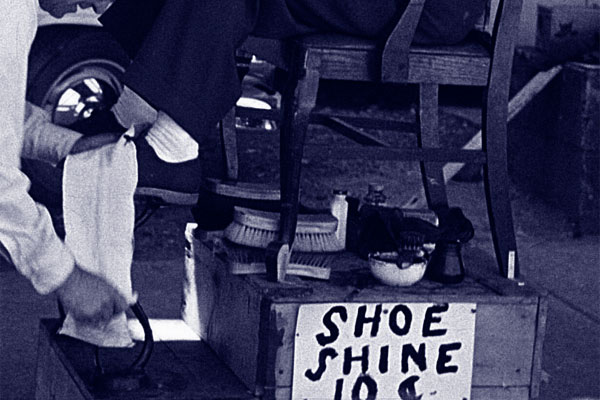
As a poor kid in Detroit, there were several ways to earn a little pocket change. If you had a bicycle, you could try to get a paper route. Another was to shine shoes. My local barber shop had a chair set up where you could shine the shoes of the customers after they got their hair cut. Then there was the Greyhound bus station and the Michigan Central railroad train terminal. Competition was high at these two sites, however, it was first come, first served, or who was the tougher to get a spot on the sidewalk just outside of the terminal. Sometimes, we’d pack our boxes and just set up on a corner of a busy street near the local bar.
In those days, adult men were very conscious of how they looked in public. Trousers had to have razor sharp creases, and shoes had to be polished. Men were extremely proud of their shoes that were genuine leather and probably Italian or brands like Florsheims.
Over time, however, adults started getting into the shoeshine business and prices increased. As the price increased, more adult men suddenly got into the shoe shining business. Men working the railroad terminal became unionized and wouldn’t even allow us to set up outside of the terminal. I can remember when the unionized shoe shiners even began wearing their own style of uniforms. Whereas before, the shoe shine stand was a place to extend friendly conversation about world affairs or sports, it was now just a place to get a quick shine. Many adults started using special shine fluids that ruined your shoes when they got wet. Then, someone invented Corfam.
When Santa finally answered my requests and delivered a brand new J. C. Higgins bicycle one Christmas, I chucked my shoe shine box and signed up to deliver newspapers.
Joining the navy many years later, I was able to put my shoe shining skills to use, always having the best shined shoes in my recruit company.
Fredric Durrette served one tour in Vietnam, retired as E8 in the navy submarine service after 23 years. Major hobbies are collecting old stuff from the 20s and restoring old racing bicycles. Worked as a commercial photographer at JL Hudsons in Detroit and continue photography as a hobby. Love Sade, sixties soul, seventies rock, and all jazz. Attended Woodstock in 69! http://snakesafe.jalbum.net/
Venues: RKO Pantages Theatre, Hollywood, California and NBC Century Theatre, New York City, New York
Hosts: Donald O’Connor (Los Angeles) and Fredric March (New York City)
Eligibility Year: 1953
Major Wins:
From Here to Eternity reigned supreme, taking home the Best Picture award.
William Holden secured the Best Actor trophy for his role in Stalag 17.
Audrey Hepburn was the night’s darling, winning Best Actress for Roman Holiday.
Directing & Screenplay:
Fred Zinnemann scored Best Director for From Here to Eternity.
Titanic won for its screenplay, though not the one you’re probably thinking of—this was the 1953 version.
Additional Info:
Frank Sinatra, the ultimate triple threat, won Best Supporting Actor for From Here to Eternity.
Donna Reed snagged Best Supporting Actress for the same film.
Trivia:
This Oscars ceremony was a night to remember for From Here to Eternity, which won eight Oscars.
Audrey Hepburn’s win for Roman Holiday was her first nomination and first win.
Walt Disney won four Academy Awards this year, including for Best Documentary Feature (The Living Desert) and another for Best Documentary Short Subject (The Alaskan Eskimo).
Best Motion Picture: From Here to Eternity – Buddy Adler for Columbia Pictures (WINNER) Julius Caesar – John Houseman for Metro-Goldwyn-Mayer The Robe – Frank Ross for 20th Century Fox Roman Holiday – William Wyler for Paramount Pictures Shane – George Stevens for Paramount Pictures
Best Director: Fred Zinnemann – From Here to Eternity (WINNER) Charles Walters – Lili William Wyler – Roman Holiday George Stevens – Shane Billy Wilder – Stalag 17
Best Actor: William Holden – Stalag 17 as J. J. Sefton (WINNER) Marlon Brando – Julius Caesar as Mark Antony Richard Burton – The Robe as Marcellus Gallio Montgomery Clift – From Here to Eternity as Private Robert E. Lee “Prew” Prewitt Burt Lancaster – From Here to Eternity as First Sergeant Milton Warden
Best Actress: Audrey Hepburn – Roman Holiday as Princess Ann (WINNER) Leslie Caron – Lili as Lili Daurier Ava Gardner – Mogambo as Eloise Kelly Deborah Kerr – From Here to Eternity as Karen Holmes Maggie McNamara – The Moon Is Blue as Patty O’Neill
Best Supporting Actor: Frank Sinatra – From Here to Eternity as Private Angelo Maggio (WINNER) Eddie Albert – Roman Holiday as Irving Radovich Brandon deWilde – Shane as Joey Starrett Jack Palance – Shane as Jack Wilson Robert Strauss – Stalag 17 as Stanislas “Animal” Kuzawa
Best Supporting Actress: Donna Reed – From Here to Eternity as Alma Burke/Lorene (WINNER) Grace Kelly – Mogambo as Linda Nordley Geraldine Page – Hondo as Angie Lowe Marjorie Rambeau – Torch Song as Mrs. Stewart Thelma Ritter – Pickup on South Street as Moe
Best Screenplay: From Here to Eternity – Daniel Taradash from From Here to Eternity by James Jones (WINNER) The Cruel Sea – Eric Ambler from The Cruel Sea by Nicholas Monsarrat Lili – Helen Deutsch from “Love of Seven Dolls” by Paul Gallico Roman Holiday – Ian McLellan Hunter and John Dighton from a story by Dalton Trumbo Shane – A. B. Guthrie Jr. from Shane by Jack Schaefer
Best Story and Screenplay: Titanic – Charles Brackett, Walter Reisch and Richard L. Breen (WINNER) The Band Wagon – Betty Comden and Adolph Green The Desert Rats – Richard Murphy The Naked Spur – Sam Rolfe and Harold Jack Bloom Take the High Ground! – Millard Kaufman
Best Story: Roman Holiday – Dalton Trumbo (WINNER) (awarded posthumously as Trumbo was on the Hollywood blacklist) Above and Beyond – Beirne Lay Jr. The Captain’s Paradise – Alec Coppel Hondo – Louis L’Amour (disqualified) Little Fugitive – Ray Ashley, Morris Engel, and Ruth Orkin
Best Short Subject – Cartoons: Toot, Whistle, Plunk and Boom – Walt Disney (WINNER) Christopher Crumpet From A to Z-Z-Z-Z Rugged Bear The Tell Tale Heart
Best Documentary Feature: The Living Desert – Walt Disney (WINNER) The Conquest of Everest A Queen Is Crowned
Best Documentary Short Subject: The Alaskan Eskimo – Walt Disney (WINNER) The Living City Operation Blue Jay They Planted a Stone The Word
Best Live Action Short Subject, One-Reel: Overture to The Merry Wives of Windsor – Johnny Green (WINNER) Christ Among the Primitives Herring Hunt Joy of Living Wee Water Wonders
Best Live Action Short Subject, Two-Reel: Bear Country – Walt Disney (WINNER) Ben and Me Return to Glennascaul Vesuvius Express Winter Paradise
Best Music Score of a Dramatic or Comedy Picture: Lili – Bronislaw Kaper (WINNER) Above and Beyond – Hugo Friedhofer From Here to Eternity – Morris Stoloff and George Duning Julius Caesar – Miklós Rózsa This Is Cinerama – Louis Forbes
Best Scoring of a Musical Picture: Call Me Madam – Alfred Newman (WINNER) The 5,000 Fingers of Dr. T. – Frederick Hollander and Morris Stoloff The Band Wagon – Adolph Deutsch Calamity Jane – Ray Heindorf Kiss Me Kate – André Previn and Saul Chaplin
Best Song: “Secret Love” from Calamity Jane – Music by Sammy Fain; Lyrics by Paul Francis Webster (WINNER) “The Moon Is Blue” from The Moon Is Blue – Music by Herschel Burke Gilbert; Lyrics by Sylvia Fine “My Flaming Heart” from Small Town Girl – Music by Nicholas Brodszky; Lyrics by Leo Robin “Sadie Thompson’s Song” from Miss Sadie Thompson – Music by Lester Lee; Lyrics by Ned Washington “That’s Amore” from The Caddy – Music by Harry Warren; Lyrics by Jack Brooks
Best Sound Recording: From Here to Eternity – John P. Livadary (WINNER) Calamity Jane – William A. Mueller Knights of the Round Table – A. W. Watkins The Mississippi Gambler – Leslie I. Carey The War of the Worlds – Loren L. Ryder
Best Art Direction, Black-and-White: Julius Caesar – Art Direction: Cedric Gibbons and Edward Carfagno; Set Decoration: Edwin B. Willis and Hugh Hunt (WINNER) Martin Luther – Art Direction and Set Decoration: Fritz Maurischat and Paul Markwitz The President’s Lady – Art Direction: Lyle R. Wheeler and Leland Fuller; Set Decoration: Paul S. Fox Roman Holiday – Art Direction and Set Decoration: Hal Pereira and Walter Tyler Titanic – Art Direction: Lyle R. Wheeler and Maurice Ransford; Set Decoration: Stuart A. Reiss
Best Art Direction, Color: The Robe – Art Direction: Lyle R. Wheeler and George Davis; Set Decoration: Walter M. Scott and Paul S. Fox (WINNER) Knights of the Round Table – Art Direction: Alfred Junge and Hans Peters; Set Decoration: John Jarvis Lili – Art Direction: Cedric Gibbons and Paul Groesse; Set Decoration: Edwin B. Willis and Arthur Krams The Story of Three Loves – Art Direction: Cedric Gibbons, E. Preston Ames, Edward Carfagno and Gabriel Scognamillo; Set Decoration: Edwin B. Willis, F. Keogh Gleason, Arthur Krams and Jack D. Moore Young Bess – Art Direction: Cedric Gibbons and Urie McCleary; Set Decoration: Edwin B. Willis and Jack D. Moore
Best Cinematography, Black-and-White: From Here to Eternity – Burnett Guffey (WINNER) The Four Poster – Hal Mohr Julius Caesar – Joseph Ruttenberg Martin Luther – Joseph C. Brun Roman Holiday – Franz Planer and Henri Alekan
Best Cinematography, Color: Shane – Loyal Griggs (WINNER) All the Brothers Were Valiant – George Folsey Beneath the 12-Mile Reef – Edward Cronjager Lili – Robert Planck The Robe – Leon Shamroy
Best Costume Design, Black-and-White: Roman Holiday – Edith Head (WINNER) The Actress – Walter Plunkett Dream Wife – Helen Rose and Herschel McCoy From Here to Eternity – Jean Louis The President’s Lady – Charles LeMaire and Renié
Best Costume Design, Color: The Robe – Charles LeMaire and Emile Santiago (WINNER) The Band Wagon – Mary Ann Nyberg Call Me Madam – Irene Sharaff How to Marry a Millionaire – Charles LeMaire and William Travilla Young Bess – Walter Plunkett
Best Film Editing: From Here to Eternity – William Lyon (WINNER) Crazylegs – Irvine (Cotton) Warburton The Moon Is Blue – Otto Ludwig Roman Holiday – Robert Swink The War of the Worlds – Everett Douglas
Academy Honorary Awards: Pete Smith – “For his witty and pungent observations on the American scene in his series of “Pete Smith Specialties”.”
Twentieth Century-Fox Film Corporation – “In recognition of their imagination, showmanship and foresight in introducing the revolutionary process known as CinemaScope.”
Joseph I. Breen – “For his conscientious, open-minded and dignified management of the Motion Picture Production Code.”
Bell and Howell Company – “For their pioneering and basic achievements in the advancement of the motion picture industry.”
December 27, 1952 – January 9, 1953: Jimmy Boyd – I Saw Mommy Kissing Santa Claus January 10, 1953 – February 13, 1953: Perry Como – Don’t Let the Stars Get in Your Eyes February 14, 1953 – March 20, 1953: Teresa Brewer – Till I Waltz Again With You March 21, 1953 – May 15, 1953: Patti Page – The Doggie In The Window May 16, 1953 – July 24, 1953: Percy Faith – The Song From Moulin Rouge (Where Is Your Heart) July 25, 1953 – August 7, 1953: Eddie Fisher – I’m Walking Behind You August 8, 1953 – October 9, 1953: Les Paul and Mary Ford – Vaya Con Dios (May God Be With You) October 10, 1953 – November 20, 1953: Stan Freberg – St. George And The Dragonet November 21, 1953 – January 1, 1954: Tony Bennett – Rags To Riches
(Data is compiled from various charts including Billboard’s “Pop,” “Airplay,” “R&B” and “Singles” Charts. “Hot 100” is the primary chart used starting October, 1958)
World-Changing Event: The structure of DNA was discovered at the Cavendish Laboratory at the University of Cambridge.
The First Big Bubblegum Pop Song? (How Much is That) Doggie in the Window by Patti Page
The Movies to Watch include From Here to Eternity, Houdini, The Robe, Stalag 17, The Caddy, House of Wax, The Wild One, It Came from Outer Space, and War of the Worlds.
The Most Famous Person in America was probably Gary Cooper.
Notable books include Fahrenheit 451by Ray Bradbury, From Here to Eternity by James Jones, and Casino Royale by Ian Fleming.
Price of Packard Clipper automobile in 1953: $2,679.00
Arthur Miller’s play The Crucible premiered.
The Funny Comedy Team were: Dean Martin and Jerry Lewis The Funniest TV Duo: Sid Caesar and Imogene Coca The Funny Late Show Host: Steve Allen The Funny Guy was Milton Berle The Funny TV Lady: Lucille Ball
Atomic Espionage: Julius and Ethel Rosenberg were both found guilty of secret information about the atomic bomb to the Soviet Union and executed in 1953, becoming the first civilians to be executed for espionage in the United States.
MKUltra: The super-secret CIA program reputedly began in 1953 and ended in 1967.
Ray Bradbury wrote the first draft of Fahrenheit 451 on a coin-operated typewriter in the basement of the UCLA library. It charged 10¢ for 30 minutes, and he spent $9.80 on the machine.
Here are some significant events that took place in 1953
Queen Elizabeth II was coronated in Westminster Abbey on June 2, 1953.
The Korean War ended with the signing of the Korean Armistice Agreement on July 27, 1953.
Julius and Ethel Rosenberg were executed on June 19, 1953, after being found guilty of conspiracy to commit espionage for the Soviet Union.
The first issue of Playboy magazine was published in December 1953, featuring Marilyn Monroe as the cover model.
DNA structure was first described by James Watson and Francis Crick, who published their findings in the scientific journal Nature in April 1953. This discovery was later recognized as one of the most important scientific discoveries of the 20th century.
Top Ten Baby Names of 1953
Mary, Linda, Deborah, Patricia, Susan, Robert, James, Michael, John, David
Fashion Icons and Sex Symbols
Marilyn Monroe, Ava Gardner, Rita Hayworth, Audrey Hepburn, Doris Day, Lana Turner
Sex Symbols and Hollywood Hunks
Marlon Brando, Montgomery Clift
Oscars: 25th Academy Awards
The silver anniversary of the Oscars, also known as the 25th Academy Awards, was a spectacle held on March 19, 1953, at the RKO Pantages Theatre in Hollywood and the NBC International Theatre in New York City. This year was significant for being the first Oscars telecast, which was broadcast in black and white. Bob Hope served as host in Hollywood, while Conrad Nagel took on the role in New York. The Greatest Show on Earth secured Best Picture in a controversial win that still fuels debate among film aficionados. Gary Cooper took home Best Actor for his role in High Noon, and Shirley Booth was awarded Best Actress for her performance in Come Back, Little Sheba.
Emmy Awards: 5th Primetime Emmy Awards
For TV enthusiasts, the 5th Primetime Emmy Awards were celebrated on February 5, 1953, at the Statler Hotel in Los Angeles. Art Linkletter was the evening’s host. I Love Lucy still rode high, bagging the Best Situation Comedy award. A young and not-yet-famous James Dean was nominated for Best Actor, although the trophy ultimately went to Thomas Mitchell for The Doctor. The Best Actress accolade went to Helen Hayes for Schlitz Playhouse of Stars.
The Oscars had an eligibility period that ran from January 1, 1952, to December 31, 1952. The Emmy Awards, still in their infancy, were focused primarily on programming from the Los Angeles area.
“The Quotes:”
“The physician can bury his mistakes, but the architect can only advise his client to plant vines – so they should go as far as possible from home to build their first buildings.” – Frank Lloyd Wright
“You’ll wonder where the yellow went when you brush your teeth with Pepsodent.” Pepsodent toothpaste
“Shane. Shane. Come back!” – Brandon De Wilde, in Shane
“Sometimes you feel like a nut, sometimes you don’t.” – Peter Paul Mounds/Almond Joy
Time Magazine’s Man of the Year
Konrad Adenauer
Miss America
Neva Langley (Macon, GA)
Miss USA
Myrna Hansen (Illinois)
The Scandals
Piltdown Man, an archaeological find from 1912, was exposed as a forgery, consisting of the lower jawbone of an orangutan combined with the skull of a fully developed, modern man. The theory of Evolution took several steps back with this scandal.
Country Pop Star Death
Hank Williams (drugs and alcohol poisoning)
US Politics
January 20, 1953 (Tuesday): First inauguration of Dwight D. Eisenhower
1953 Pop Culture Facts & History
The first modern use of the word word ‘Frenemy” was first used in the 1953 article titled Howz about calling the Russians Your Frienemies? by gossip columnist Walter Winchell in the Nevada State Journal.
The Coppertone Girl was introduced to the American public. It is probably the most popular ‘butt crack’ of all time.
RCA invented the first musical synthesizer.
Officially, Ohio is listed as the 17th state in the US, but it is technically number 47. Congress forgot to vote on the formal resolution to admit Ohio to the Union but finally did on August 7, 1953.
Kenneth H. Rowe (born No Kum-Sok), a North Korean fighter pilot, defected to South Korea with his MiG-15 and was rewarded $100,000 from the United States.
Swanson had 260 tons of leftover turkey from Thanksgiving and didn’t know how to get rid of it. They asked their workers for ideas, and one man thought they should package it in individual trays with sides and freeze it. Thus, the TV Dinner was born.
Colgate-Palmolive-Peet became Colgate-Palmolive. We are not sure why, but we think that the Peet brothers suffered the same fate as Alvah Curtis Roebuck, of Sears and Roebuck fame.
Playwright and Nobel laureate Eugene O’Neill was born on October 16, 1888, in a hotel at Times Square; he also died on November 27, 1953, in another hotel in Boston. His last words were, “I knew it. I knew it. Born in a hotel room and died in a hotel room.”
The Cincinnati Reds baseball team was renamed the “Redlegs” this year through 1958 to avoid being associated with The Red Scare and communism.
Radios manufactured in the US between 1953 and 1963 had a white triangle on the dial at 640 AM to indicate where Civil Defense information would be broadcast.
Rolling Stone Keith Richards was a choirboy at the Queen’s 1953 Coronation.
Coca-Cola attempted to persuade the US Treasury to mint a 7.5-cent coin; a can of Coke had been a nickel since 1886 and needed to be raised due to inflation, but they felt a dime was too much.
Ore-Ida offered ‘Tater Tots’ in grocery stores. There were just pressed leftovers from their french fry line.
A Pennsylvania town named Mauch Chunk managed to get the remains of an early 20th-century athlete and bought the rights to his name. They renamed the town ‘Jim Thorpe,’ a tourist attraction in PA.
The first issue of Playboy, published in December 1953, featured Marilyn Monroe from her 1949 nude calendar shoot and sold over 50,000 copies.
Isaac Asimov wrote a short story, Sally, that claimed the first self-driving cars would be released around 2015.
In 1951, Ray Bradbury wrote a short story about a giant, fire-breathing lizard, which was made into the 1953 film The Beast from 20,000 Fathoms. This film inspired Ishirō Honda, a Japanese producer, to make Godzilla in 1954.
Biologists James D. Watson and Francis Crick published “Molecular Structure of Nucleic Acids: A Structure for Deoxyribose Nucleic Acid.” With little more than a drawing and some accompanying text, Watson and Crick discovered the structure of DNA.
Arthur Holly Compton (the Nobel Prize-winning chancellor of Washington University) was irritated by how fast people drove through the campus. To combat this, he designed the modern speed bump.
Doomsday Clock
Two minutes to midnight, according to the Bulletin of Atomic Scientists. 1953: After much debate, the United States decides to pursue the hydrogen bomb, a weapon far more powerful than any atomic bomb. In October 1952, the United States tests its first thermonuclear device, obliterating a Pacific Ocean islet in the process; nine months later, the Soviets test an H-bomb of their own. “The hands of the Clock of Doom have moved again,” the Bulletin announces. “Only a few more swings of the pendulum, and, from Moscow to Chicago, atomic explosions will strike midnight for Western civilization.”
1st Appearances & 1953’s Most Popular Christmas gifts, toys, and presents: Scrabble, Mrs. Potato Head, Wiffle Ball invented, Matchbox (U.K.)
Nobel Prize Winners
Physics – Frits (Frederik) Zernike Chemistry – Hermann Staudinger Medicine – Hans Adolf Krebs, Fritz Albert Lipmann Literature – Sir Winston Leonard Spencer Churchill Peace – George Catlett Marshall
Best Film Oscar Winner
1952’s The Greatest Show On Earth
The Biggest Films of 1953
1. Peter Pan (Disney)
2. The Robe (Pop Culture Classic)
3. From Here to Eternity (Pop Culture Classic)
4. How to Marry a Millionaire
5. Shane
6. Gentlemen Prefer Blondes
7. Hondo
8. House of Wax (Pop Culture Classic)
9. The War of the Worlds (Pop Culture Classic)
10. The Beast from 20,000. Fathoms
11. Niagara
12. Abbott and Costello Meet Dr. Jekyll and Mr. Hyde
*Movies beyond the Top Five are based on (a somewhat subjective) ranking based on how much they had a long-lasting effect on Pop Culture.
Broadway Show
The Teahouse of the August Moon (Play) Opened on October 15, 1953, and Closed on March 24, 1956
Popular and Best-selling Books From 1953
Battle Cry by Leon M. Uris Beyond This Place by A. J. Cronin Casino Royale by Ian Fleming The Chronicles of Narnia: The Silver Chair by C.S. Lewis The Crucible by Arthur Miller. Desirée by Annemarie Selinko Fahrenheit 451 by Ray Bradbury, From Here to Eternity by James Jones The High and the Mighty by Ernest K. Gann Lord Vanity by Samuel Shellabarger The Robe by Lloyd C. Douglas The Silver Chalice by Thomas B. Costain Time and Time Again by James Hilton The Unconquered by Ben Ames Williams
1953 Most Popular TV Shows
1. I Love Lucy (CBS) 2. Dragnet (NBC) 3. Arthur Godfrey’s Talent Scouts (CBS) 4. You Bet Your Life (NBC) 5. The Milton Berle Show (NBC) 6. Arthur Godfrey and his Friends (CBS) 7. Ford Theatre (NBC) 8. The Jackie Gleason Show (CBS) 9. Fireside Theatre (NBC) 10. The Colgate Comedy Hour (NBC)
1953 Billboard Number One Songs
December 27, 1952 – January 9, 1953: I Saw Mommy Kissing Santa Claus – Jimmy Boyd
January 10 – February 13: Don’t Let The Stars Get In Your Eyes – Perry Como
February 14 – March 20: Till I Waltz Again With You – Teresa Brewer
March 21 – May 15: The Doggie In The Window – Patti Page
May 16 – July 24: Song From Moulin Rouge – Percy Faith & his Orchestra
July 25 – August 7: I’m Walking Behind You – Eddie Fisher
August 8 – October 9: Vaya Con Dios – Les Paul & Mary Ford
October 10 – November 6: St. George And The Dragonet – Stan Freberg
November 21, 1953 – January 1, 1954: Rags To Riches – Tony Bennett
Sports
World Series Champions: New York Yankees NFL Champions: Detroit Lions NBA Champions: Minneapolis Lakers Stanley Cup Champs: Montreal Canadiens U.S. Open Golf Dick Mayer U.S. Tennis: (Men/Ladies) Tony Trabert/Maureen Connolly Wimbledon (Men/Women): Vic Seixas/Maureen Connolly NCAA Football Champions: Maryland NCAA Basketball Champions: Indiana Kentucky Derby: Dark Star
That’s Amore
This song is widely associated with Dean Martin and is often considered his signature tune. Written in 1953 by Harry Warren and Jack Brooks, it debuted as part of the soundtrack for the Jerry Lewis and Dean Martin comedy film The Caddy. It was nominated for an Academy Award for Best Original Song in 1953 but lost to Doris Day’s Secret Love. The song experienced a resurgence in popularity when it was featured in the 1987 film Moonstruck, starring Cher and Nicolas Cage.
Eddie Fisher
Oh! My Pa-Pa
The original version of this song, O Mein Papa, was composed for the Swiss musical Der Schwarze Hecht in 1939, not a German musical. It gained popularity in the UK as an instrumental before being translated into English. Eddie Fisher’s emotional rendition became a hit, reaching No. 1 on the Billboard charts in 1954.
Frank Sinatra
I’ve Got the World on a String
This song, written by Harold Arlen and Ted Koehler in 1932, was introduced at The Cotton Club Parade. While initially performed by Bing Crosby and Cab Calloway, Frank Sinatra’s 1953 recording brought the song renewed attention, peaking at No. 14 on the Billboard charts. It has since become a Sinatra classic, showcasing his charismatic phrasing and vocal style.
Joni James
Your Cheatin’ Heart
Written and recorded by Hank Williams in 1952, this country classic was not released until after his death in January 1953. Joni James’s pop rendition introduced the song to a broader audience, cementing its place as one of the greatest country songs of all time.
Kay Starr
Side by Side
Originally written by Harry M. Woods and Gus Kahn in 1927, this song became a standard of American music. Kay Starr’s 1953 recording helped propel the song into the mainstream, solidifying its enduring legacy.
Patti Page
(How Much Is) That Doggie in the Window?
Composed by Bob Merrill and Ingrid Reuterskiöld in 1952, this whimsical tune became a chart-topping hit in 1953 with Patti Page’s playful rendition. The song reached No. 1 on the Billboard charts and is noted as the first No. 1 hit with a question in the title.
Tony Bennett
Stranger in Paradise
This song, part of the 1953 Broadway musical Kismet, was written by Robert Wright and George Forrest, with its melody based on Alexander Borodin’s Gliding Dance of the Maidens from the Polovtsian Dances. While Vic Damone and Ann Blyth performed the song in the 1955 film adaptation of Kismet, Tony Bennett’s version became a definitive hit, popularizing the song outside the context of the musical.
Rags to Riches
Written by Richard Adler and Jerry Ross, Rags to Riches reached No. 1 on the Billboard charts in 1953. The song later gained comedic fame as Carmine Ragusa’s serenade in Laverne & Shirley. Elvis Presley performed the song impromptu during his 1976 Pittsburgh concert, showing its enduring appeal.
Frankie Laine
I Believe
This inspirational song, written by Ervin Drake, Irvin Graham, Jimmy Shirl, and Al Stillman in 1953, was commissioned by Jane Froman for her television show to inspire hope during challenging times. Frankie Laine’s recording became a massive hit and holds the UK record for the longest stay at No. 1—18 weeks. The song has since been covered by numerous artists, including The Lettermen, and is often regarded as a hymn for its uplifting message.
Top Artists and Songs of 1953
Ames Brothers
You You You, The Man With The Banjo
Art Lund
Crying In The Chapel
Bill Haley and his Comets
Crazy Man Crazy
Darrell Glenn
Crying In The Chapel
Dean Martin
That’s Amore
Don Cornell
Heart of My Heart
Doris Day
Mister Tap Toe
Drifters
Money Honey
Eddie Calvert
Oh Mein Papa
Eddie Fisher
Downhearted
Ella Fitzgerald
Crying In The Chapel
Fats Domino
Roe Mary
Faye Adams
Shake a Hand
Four Aces
The gang that Sang ‘Heart of My Heart’
Frank Chacksfield Orchestra
Limelight
Frank Sinatra
I’ve Got The World On a String, South of the Border, From Here To Eternity
Frankie Laine
I Believe, Where The Winds Blow, Answer Me Lord Above, Blowing Wind
Guy Mitchell
She Wears Red Feathers
Hank Williams
Your Cheatin’ Heart, Kaw-Liga
Jimmy Boyd and Frankie Laine
Tell Me A Story
Johnny Ace
The Clock
Johnny Ray
Somebody Stole My gal
Joni James
Your Cheatin’ Heart, Have You Heard?
June Valli
Crying In The Chapel
Kay Starr
Side By Side, Changing Partners
Lawrence Welk
Oh Happy Day
Les Baxter
Ruby, Gigi/I Love Paris, April in Portugal
Les Paul and Mary Ford
Bye Bye Blues, Vaya Con Dios, Johnny (Is The Boy For Me)
Mantovani
Where Is Your Heart (From Moulin Rouge), Swedish Rhapsody
Nat ‘King’ Cole
Pretend, Blue Gardenia, can’t I
Patti Page
Changing Partners, Doggie In The Window
Percy Faith
Song From Moulin Rouge (Where Is Your Heart)
Perry Como
Don’t Let The Stars Get In Your Eyes, You Alone, No Other Love, Say Your Mine Again
Ray Anthony & His Orchestra
Dragnet
Red Buttons
The Ho Ho Song
Rex Allen
Crying In The Chapel
Richard Hayman
Ruby
Ruth Brown
(Mama) He Treats Your Daughter Mean
Stan Freberg
St. George and the Dragonette
Teresa Brewer Richochet (Rick-O-Shay), Till I Waltz Again With You
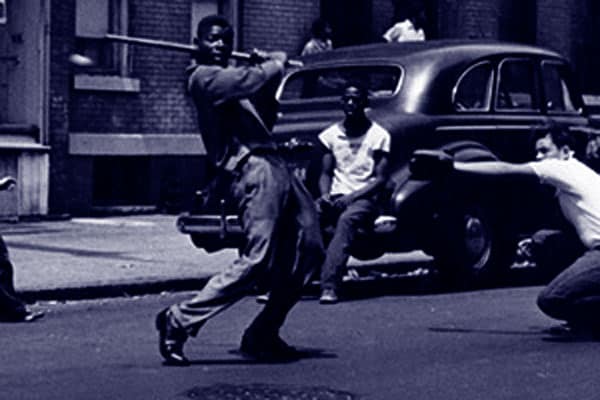
Growing up in a poor neighborhood in Detroit in the early fifties, our neighborhood gang was composed of Black kids as well as the kids of European immigrants and there was even the girl next door that hung out with us for a while.
We did fun things like exploring empty lots, laying in the grass making animals out of passing clouds, catching insects, playing cowboys and Indians, building rocket ships, making rubber band guns from clothes pins, and prowling allies for discarded “hidden treasures”.
We never stole anything, but a neighbors cherry or peach tree was open season. Pity the unfortunate neighbor who had planted watermelons.
We also had a “code of ethics”. You never cursed or used profanity on Sundays, you shared your candy with your friends even if it meant only getting a tiny piece of the Babe Ruth bar you just bought. If a friend was at your house at dinner time, you always invited them to dinner. We played the dozens with each other, a game where you’d talk down your buddy. However, if he disgraced your mother, it meant a fight. “Yo momma” was a call to action. However, even fighting had it’s own code. You never used a weapon, that was cowardly. If you knocked your opponent down, you reached out your hand to help him back up. And you NEVER kicked someone when they were down. Usually, when the fight was over, it meant a trip to the candy store together or just sharing another candy bar.
We played in the streets until dark when the street lights came on, then, we could play around the house until bed time. Our parents always seemed to know what we were doing without even looking. Neighbors watched out for us and if ole lady Byers down the street caught me doing something improper, she’d grab me by the ear and drag me home where my mom would make me get my own switch.
We also respected the police. Kids would crowd around a patrol car when it came into the neighborhood. Black cops were hero figures.
We went to the movies in groups, sometimes with as many as seven or eight, it made the scary movies more fun and you had someone to walk home with when it got dark.
In the winter, mom made ice cream from the snow and we played outside until our fingers were numb. We built snowmen in the yard and had snowball fights. You felt like you were growing up when you got your first pair of real gloves to replace the awful mittens your mom would make you wear.
Fredric Durrette served one tour in Vietnam, retired as E8 in the navy submarine service after 23 years. Major hobbies are collecting old stuff from the 20s and restoring old racing bicycles. Worked as a commercial photographer at JL Hudsons in Detroit and continue photography as a hobby. Love Sade, sixties soul, seventies rock, and all jazz. Attended Woodstock in 69! http://snakesafe.jalbum.net/
While my mom and I were poor and lived in a poor area of Detroit, we enjoyed life by making do with bare necessities. In Detroit in the 1950s, you were not alone. Neighbors shared whatever they could and contributed to the well being of their neighbors. As kids, we learned to make stuff out of other people’s trash.
There were no big chain grocery stores then, maybe one big supermarket nearby, but we had mostly mom and pop stores scattered throughout the neighborhoods were you could purchase groceries, candy, cigarettes, beer, or toilet paper.
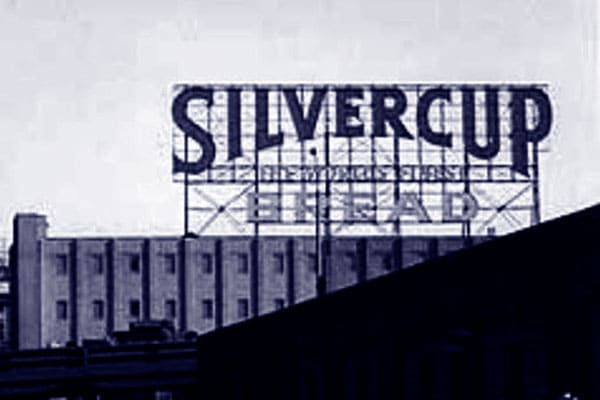
There were two big bakeries in Detroit back then that produced the majority of the bread we ate. One was the Wonderbread bakery and the other was the Silvercup bread company. While Wonderbread was the larger, Silvercup was the last of the “grocery store” bakers and Silvercup bread still had those irregular holes that proved it was REAL bread. My favorite bread when I was growing up was Silvercup. Each loaf of SilverCup was made with one pint of milk. Or so it was claimed. The epitome of gluttonous, was to come home from the Saturday Matinee at the Mars Theater and find the 5 cent piece mom had placed on the kitchen table. That mobilized me to run across the street to Maggie’s Grocery store and buy 6 skinny slices of Bologna. The only dilemma was,, do I make two sandwiches with three slices of bologna or do I make three sandwiches with two slices. Mustard? Catchup? Forget it. We seldom could afford those frills.
As adventurous kids, my little gang of neighborhood hoodlums would spend Sunday afternoons patrolling the alleys looking for neat stuff or supplies to make our go carts or rubber band guns. Or maybe a shipping container big enough to build a fort.
On one such Sunday, and getting hungry, we found ourselves at the rear of the Silvercup bread factory, attracted by the smell of freshly baked bread. Scattered around the dumpster were several loaves of bread. Poking our heads into the dumpster, we struck gold. There were loaves and loaves of Silvercup bread still in unopened packaged loaves. After loading up and taking our booty home, we learned that it was day old bread that the bakery couldn’t or wouldn’t sell since their image was “freshly baked”. Their loss, our gain.
We were all poor back then, so “free” bread was a gift. Hitting the dumpster behind the bakery became a weekly event. We started providing bread for the entire neighborhood, or at least for every home on Minnesota Street.
Silvercup even had their “Silvercup rocket” that would tour the city and be exhibited at the state fair.
Then one weekend, we discovered the Farmcrest Bakery on the corner of Medbury and Russell. Farmcrest produced those little pies that you used to see in the grocery stores. They usually sold for around twenty five cents back then. Needless to say, we had a successful raid on the dumpster behind the Farmcrest factory also. There were cherry pies, peach pies, apple pies, and even some Twinkie knockoffs. We only took stuff that was still packaged and unspoiled.
So, even in poverty, we didn’t sit around complaining about being poor. In fact, I didn’t realize that we were poor until I became an adult. A few years later, some enterprising soul opened up a “day old bakery goods store” and sold the same stuff that we had gotten free.
Fredric Durrette served one tour in Vietnam, retired as E8 in the navy submarine service after 23 years. Major hobbies are collecting old stuff from the 20s and restoring old racing bicycles. Worked as a commercial photographer at JL Hudsons in Detroit and continue photography as a hobby. Love Sade, sixties soul, seventies rock, and all jazz. Attended Woodstock in 69! http://snakesafe.jalbum.net/
The Greatest Show on Earth is considered one of the weakest Best Picture winners, according to critics.
High Noon won four Academy Awards but missed out on Best Picture and Best Director.
1953 Oscar Nominees and Winners
Best Motion Picture: The Greatest Show on Earth – Cecil B. DeMille for Paramount Pictures (WINNER) High Noon – Stanley Kramer for United Artists Ivanhoe – Pandro S. Berman for Metro-Goldwyn-Mayer Moulin Rouge – John Huston for United Artists The Quiet Man – John Ford and Merian C. Cooper for Republic Pictures
Best Director: John Ford – The Quiet Man (WINNER) Joseph L. Mankiewicz – Five Fingers Cecil B. DeMille – The Greatest Show on Earth Fred Zinnemann – High Noon John Huston – Moulin Rouge
Best Actor: Gary Cooper – High Noon as Marshall Will Kane (WINNER) Marlon Brando – Viva Zapata! as Emiliano Zapata Kirk Douglas – The Bad and the Beautiful as Jonathan Shields José Ferrer – Moulin Rouge as Henri de Toulouse-Lautrec/Comte Alphonse de Toulouse-Lautrec Alec Guinness – The Lavender Hill Mob as Henry “Dutch” Holland
Best Actress: Shirley Booth – Come Back, Little Sheba as Lola Delaney (WINNER) Joan Crawford – Sudden Fear as Myra Hudson Bette Davis – The Star as Margaret “Maggie” Elliot Julie Harris – The Member of the Wedding as Frankie Addams Susan Hayward – With a Song in My Heart as Jane Froman
Best Supporting Actor: Anthony Quinn – Viva Zapata! as Eufemio Zapata (WINNER) Richard Burton – My Cousin Rachel as Philip Ashley Arthur Hunnicutt – The Big Sky as Zeb Calloway Victor McLaglen – The Quiet Man as Squire “Red” Will Danaher Jack Palance – Sudden Fear as Lester Blaine
Best Supporting Actress: Gloria Grahame – The Bad and the Beautiful as Rosemary Bartlow (WINNER) Jean Hagen – Singin’ in the Rain as Lina Lamont Colette Marchand – Moulin Rouge as Marie Charlet Terry Moore – Come Back, Little Sheba as Marie Burkholder Thelma Ritter – With a Song in My Heart as Clancy
Best Story and Screenplay: The Bad and the Beautiful – Charles Schnee from “Tribute to a Badman” by George Bradshaw (WINNER) Five Fingers – Michael Wilson from Operation Cicero by Ludwig Carl Moyzisch High Noon – Carl Foreman from “The Tin Star” by John W. Cunningham The Man in the White Suit – Roger MacDougall, John Dighton and Alexander Mackendrick from The Man in the White Suit by Roger MacDougall The Quiet Man – Frank S. Nugent from “Green Rushes” by Maurice Walsh
Best Screenplay: The Lavender Hill Mob – T. E. B. Clarke (WINNER) The Atomic City – Sydney Boehm Breaking the Sound Barrier – Terence Rattigan Pat and Mike – Ruth Gordon and Garson Kanin Viva Zapata! – John Steinbeck
Best Story: The Greatest Show on Earth – Fredric M. Frank, Theodore St. John and Frank Cavett (WINNER) My Son John – Leo McCarey The Narrow Margin – Martin Goldsmith and Jack Leonard The Pride of St. Louis – Guy Trosper The Sniper – Edna Anhalt and Edward Anhalt
Best Short Subject – Cartoons: Johann Mouse (WINNER) Little Johnny Jet Madeline Pink and Blue Blues The Romance of Transportation in Canada
Best Documentary Feature: The Sea Around Us (WINNER) The Hoaxters Navajo
Best Documentary Short Subject: Neighbours (WINNER) Devil Take Us The Garden Spider Man Alive!
Best Live Action Short Subject, One-Reel: Light in the Window (WINNER) Athletes of the Saddle Desert Killer Neighbours Royal Scotland
Best Live Action Short Subject, Two-Reel: Water Birds (WINNER) Bridge of Time Devil Take Us Thar She Blows!
Best Scoring of a Dramatic or Comedy Picture: High Noon – Dimitri Tiomkin (WINNER) Ivanhoe – Miklós Rózsa The Miracle of Our Lady of Fatima – Max Steiner The Thief – Herschel Burke Gilbert Viva Zapata! – Alex North
Best Scoring of a Musical Picture: With a Song in My Heart – Alfred Newman (WINNER) Hans Christian Andersen – Walter Scharf The Jazz Singer – Ray Heindorf and Max Steiner The Medium – Gian Carlo Menotti Singin’ in the Rain – Lennie Hayton
Best Song: “The Ballad of High Noon (“Do Not Forsake Me, O My Darlin’”)” from High Noon – Music by Dimitri Tiomkin; Lyrics by Ned Washington (WINNER) “Am I in Love?” from Son of Paleface – Music and Lyrics by Jack Brooks “Because You’re Mine” from Because You’re Mine – Music by Nicholas Brodszky; Lyrics by Sammy Cahn “Thumbelina” from Hans Christian Andersen – Music and Lyrics by Frank Loesser “Zing a Little Zong” from Just for You – Music by Harry Warren; Lyrics by Leo Robin
Best Sound Recording: Breaking the Sound Barrier – London Films Sound Department (WINNER) The Card – Pinewood Studios Sound Department Hans Christian Andersen – Gordon E. Sawyer The Quiet Man – Daniel J. Bloomberg With a Song in My Heart – Thomas T. Moulton
Best Art Direction, Black-and-White: The Bad and the Beautiful – Art Direction: Cedric Gibbons and Edward Carfagno; Set Decoration: Edwin B. Willis and F. Keogh Gleason (WINNER) Carrie – Art Direction: Hal Pereira and Roland Anderson; Set Decoration: Emile Kuri My Cousin Rachel – Art Direction: Lyle R. Wheeler and John DeCuir; Set Decoration: Walter M. Scott Rashomon – Art Direction: So Matsuyama; Set Decoration: H. Matsumoto Viva Zapata! – Art Direction: Lyle R. Wheeler and Leland Fuller; Set Decoration: Thomas Little and Claude Carpenter
Best Art Direction, Color: Moulin Rouge – Art Direction: Paul Sheriff; Set Decoration: Marcel Vertès (WINNER) Hans Christian Andersen – Art Direction: Richard Day and Antoni Clavé; Set Decoration: Howard Bristol The Merry Widow – Art Direction: Cedric Gibbons and Paul Groesse; Set Decoration: Edwin B. Willis and Arthur Krams The Quiet Man – Art Direction: Frank Hotaling; Set Decoration: John McCarthy Jr. and Charles Thompson The Snows of Kilimanjaro – Art Direction: Lyle R. Wheeler and John DeCuir; Set Decoration: Thomas Little and Paul S. Fox
Best Cinematography, Black-and-White: The Bad and the Beautiful – Robert Surtees (WINNER) The Big Sky – Russell Harlan My Cousin Rachel – Joseph LaShelle Navajo – Virgil Miller Sudden Fear – Charles Lang
Best Cinematography, Color: The Quiet Man – Winton C. Hoch and Archie Stout (WINNER) Hans Christian Andersen – Harry Stradling Ivanhoe – F. A. Young Million Dollar Mermaid – George Folsey The Snows of Kilimanjaro – Leon Shamroy
Best Costume Design, Black-and-White: The Bad and the Beautiful – Helen Rose (WINNER) Affair in Trinidad – Jean Louis Carrie – Edith Head My Cousin Rachel – Charles LeMaire and Dorothy Jeakins Sudden Fear – Sheila O’Brien
Best Costume Design, Color: Moulin Rouge – Marcel Vertès (WINNER) The Greatest Show on Earth – Edith Head, Dorothy Jeakins and Miles White Hans Christian Andersen – Antoni Clavé, Mary Wills and Barbara Karinska The Merry Widow – Helen Rose and Gile Steele (posthumous nomination) With a Song in My Heart – Charles LeMaire
Best Film Editing: High Noon – Elmo Williams and Harry W. Gerstad (WINNER) Come Back, Little Sheba – Warren Low Flat Top – William Austin The Greatest Show on Earth – Anne Bauchens Moulin Rouge – Ralph Kemplen
Academy Honorary Awards: George Alfred Mitchell “for the design and development of the camera which bears his name and for his continued and dominant presence in the field of cinematography.”
Joseph M. Schenck “for long and distinguished service to the motion picture industry.”
Merian C. Cooper “for his many innovations and contributions to the art of motion pictures.”
Harold Lloyd “master comedian and good citizen.”
Bob Hope “for his contribution to the laughter of the world, his service to the motion picture industry, and his devotion to the American premise.”
Plymouth Adventure for Best Special Effects.
Best Foreign Language Film: Forbidden Games (France)
Irving G. Thalberg Memorial Award: Cecil B. DeMille
December 29, 1951 – March 14, 1952: Johnnie Ray and The Four Lads – Cry March 15, 1952 – May 16, 1952: Kay Starr – Wheel Of Fortune May 17, 1952 – June 20, 1952: Leroy Anderson – Blue Tango June 21, 1952 – July 4, 1952: Al Martino – Here In My Heart July 5, 1952 – July 11, 1952: Percy Faith – Delicado July 12, 1952 – September 12, 1952: Vera Lynn – Auf Wiederseh’n Sweetheart September 13, 1952 – October 17, 1952: Jo Stafford – You Belong To Me October 18, 1952 – November 21, 1952: Patti Page – I Went To Your Wedding November 22, 1952 – November 28, 1952: Johnny Standley – It’s In The Book (parts 1 & 2) November 29, 1952 – December 26, 1952: Joni James – Why Don’t You Believe Me December 27, 1952 – January 9, 1953: Jimmy Boyd – I Saw Mommy Kissing Santa Claus
(Data is compiled from various charts including Billboard’s “Pop,” “Airplay,” “R&B” and “Singles” Charts. “Hot 100” is the primary chart used starting October, 1958)
World Changing Event: The first patent for bar code was issued to inventors Joseph Woodland and Bernard Silver.
The Bigger World-Changing Event: The United States passed its first-ever hydrogen bomb explosion test, Ivy Mike, on November 1, 1952, on Enewetak Atoll in the Pacific Ocean.
Influential Songs include Your Cheatin’ Heart by Hank Williams, Heart and Soul by The Four Aces, and High Noon (Do Not Forsake Me) by Frankie Laine.
The Movies to Watch include The Greatest Show on Earth, Hans Christian Andersen, The Quiet Man, High Noon, Moulin Rouge, The Big Sky, and Singin’ in the Rain.
The Most Famous Person in America was probably Gary Cooper.
Notable books include Charlotte’s Web by E.B. White, The Old Man and the Sea by Ernest Hemingway, and The Power of Positive Thinking by Norman Vincent Peale.
Price of Jaguar XK 120 hardtop in 1952: $5,065.00
US Life Expectancy: Males: 65.8 years, Females: 71.6 years
The Funny Comedy Duo were: Dean Martin and Jerry Lewis The Funniest TV Duo: Sid Caesar and Imogene Coca The Funny Guy was Milton Berle The Funny TV Lady: Lucille Ball
The Logo: Adidas purchased its famous 3-stripe logo from Karhu Sports in 1952 for two bottles of whiskey and less than $2,000.
Top Ten Baby Names of 1952
Linda, Mary, Patricia, Deborah, Susan, James, Robert, John, Michael, David
Fashion Icons and Sex Symbols
Lauren Bacall, Martine Carol, Dorothy Dandridge, Doris Day, Diana Dors, Ava Gardner, Rita Hayworth, Grace Kelly, Eartha Kitt, Marilyn Monroe, Bettie Page, Jane Russell, Elizabeth Taylor, Lana Turner
Sex Symbols and Hollywood Hunks
Montgomery Clift
Oscars: 24th Academy Awards
In 1952, the 24th Academy Awards ceremony unfolded on March 20 at the RKO Pantages Theatre in Hollywood, California. Danny Kaye served as the show’s host. An American in Paris waltzed away with Best Picture, surprising some who thought A Streetcar Named Desire would win. Vivien Leigh won Best Actress for her role in Streetcar, while Humphrey Bogart snagged Best Actor for his performance in The African Queen. A tidbit of trivia: the Best Animated Short Film category had only two nominees that year, the lowest in the Academy’s history.
Emmy Awards: 4th Primetime Emmy Awards
Over on the television side, the 4th Primetime Emmy Awards were held on February 18, 1952, at the Ambassador Hotel in Los Angeles. Lucille Ball captured the Best Comedian award, forever immortalizing her iconic role in I Love Lucy. Her show also won Best Situation Comedy, solidifying its place in TV history. Red Skelton, the host for the evening, was awarded Best Comedy Show for The Red Skelton Show.
The eligibility period for the Oscars was from January 1, 1951, to December 31, 1951. The Emmy Awards were still working out their framework and mainly recognized shows produced in and around Los Angeles. Both events offer a fascinating snapshot into the entertainment landscape of the early 1950s.
“The Quotes:”
“Lucy, I’m home!” – Ricky Ricardo, played by Dezi Arnez
“They’re gr-r-r-eat! ” Tony The Tiger, voiced by Thurl Ravenscroft
“Finger-lickin’ good!” – Kentucky Fried Chicken
Time Magazine’s Woman of the Year
Queen Elizabeth II
Miss America
Colleen Hutchins (Salt Lake City, UT)
Miss USA
Jackie Loughery (New York)
The Scandal
Area 51, if it existed at 37°14’20 N 115°48’58 W (37.239, -115.816) in southern Nevada, would have been started this year.
Pop Culture Facts & History
Boardgame Scrabble was created in 1938 but did not become popular until 1952 when the president of Macy’s played it while on vacation. Surprised that Macy’s did not carry it, he placed a large order, and within two years, four million games were sold.
French writer Alfred Sauvy invented the term “Third World” to describe the vast stretches of Africa, Asia, and Latin America whose citizens lived in dire poverty.
The “London Fog” was yellow smog so thick you couldn’t see the ground. These “pea-soupers” often carried toxic chemicals and killed 4,000 people in five days. Due to the Clean Air Act, the last London Fog was in 1962.
Wernher von Braun wrote a book called Project Mars, which imagined that human colonists on Mars would be led by someone named “Elon.”
The Immigration and Nationality Act of 1952 allows the President to “suspend the entry of all aliens or any class of aliens” who “would be detrimental to the interests of the United States.”
Joseph Woodland and Bernard Silver received the first patents for optical bar codes on October 7.
The British Hypnotism Act of 1952 prevents the broadcasting of hypnosis procedures due to the risk that people watching the broadcast are hypnotized and cannot be brought back.
‘Invasion of Washington’ was a 1952 Washington, DC, mass UFO incident that several institutions and many people witnessed. The Air Force dismissed it as a combination of weather phenomena and the night sky, a claim which was disputed by all many people.
Les Paul started selling his classic electric guitar.
The 20th Century Fox media empire, now owned by Disney, is the namesake of William Fox ((born as Vilmos Fried, January 1, 1879 – May 8, 1952)) who was born as Vilmos Fried, lost control of the company in 1930, went bankrupt after the stock market crash went to jail for perjury, and died more or less unnoticed.
Season Two of I Love Lucy included the most popular and remembered skit from the show – Lucy selling (and drinking) Vitameatavegamin. It had the expected ingredients – vitamins, meat, veggies, and minerals. It also had a high (23%) alcohol content.
1952, Tony the Tiger started telling people that Kellogg’s Frosted Flakes were “Gr-r-reat!” Thurl Ravenscroft is best known for supplying the voice of Tony. Thurl also sang You’re a Mean One, Mr. Grinch, in the original How the Grinch Stole Christmas TV special(1966), although many people mistakenly think it was narrator Boris Karloff.
The saying “Those who cannot remember the past are condemned to repeat it” was first said by philosopher, essayist, poet, and novelist George Santayana (December 16, 1863 – September 26, 1952). He was mentioned in Billy Joel’s song We Didn’t Start the Fire, whichreferred to Santayana’s death.
Albert Einstein was offered the Presidency of the State of Israel. He declined, saying that as a scientist trained to deal with objective facts, he lacked the aptitude and experience to deal with people.
The B-52 bomber, prototyped in 1952, is planned to remain in service until at least 2040.
The first rock and roll concert, the Moondog Coronation Ball of 1952 at the Cleveland Arena in Cleveland, Ohio, was also the first rock and roll concert to be shut down by the local authorities.
A volcano emerged in a cornfield 1943 named Paricutín in Michoacán, Mexico. By the time it went dormant in 1952, three people had lost their lives, and hundreds relocated, while two towns were buried by lava and three others were heavily affected. The volcano is still quiet today and is now a tourist attraction.
George Stephen designed and sold the first Weber Grill in 1952.
Albert Gunton was a London city double-decker bus driver who found himself driving his route crossing Tower Bridge when the bridge began to rise to allow a ship to pass. He accelerated, jumped the gap, and was awarded £10 for his bravery. Sadly, no smartphones existed at the time to record the event.
American Bandstand, originally called Bandstand, premiered on a Philadelphia TV Station on October 7, 1952, with DJ Bob Horn as host.
A man wrote to The Philadelphia Inquirer to tell them they had spelled his name wrong in a recent column; it was “Wolfeschlegelsteinhausenbergerdorff,” not “Wolfeschlegelsteinhasenbergerdorff.”
On May 2, the first commercial passenger jet flew from London to Johannesburg, inaugurating the age of jet travel. The trip carried 32 passengers and stopped five times en route.
Kent sold cigarettes with an asbestos filter, claiming it was healthier than regular smoking. #itwasnt
Over 200 passengers were trapped for days on a train at Donner Pass above Lake Tahoe in a massive blizzard in the California Sierra when their train hit a snowbank. Two rescuers died trying to reach them. All the passengers survived.
The United Kingdom successfully conducted a nuclear test to become the world’s third nuclear power on October 3, 1952.
The US Supreme Court passed a decision in 1915 establishing that free speech did not extend to motion pictures because they were not a form of art but a business. It was overturned in 1952
1st Appearances & 1952’s Most Popular Christmas Gifts, toys, and Presents
Mr. Potato Head (Mr. PH was the first toy advertised on American TV), Slinky Dog, PEZ candy dispensers* *originally released in Europe starting in 1927, and the only ‘real’ human heads (For Regular Public Consumption) were Paul Revere, Daniel Boone, Santa Clause, and Betsy Ross
Nobel Prize Winners
Physics – Felix Bloch, Edward Mills Purcell Chemistry – Archer John Porter Martin, Richard Laurence Millington Synge Medicine – Selman Abraham Waksman Literature – François Mauriac Peace – Albert Schweitzer
Best Film Oscar Winner
An American in Paris (presented in 1952)
The Biggest Films of 1952
1. The Greatest Show on Earth
2. The Snows of Kilimanjaro
3. Hans Christian Anderson
4. Ivanhoe
5. Sailor Beware
6. Moulin Rouge
7. Jumping Jacks
8. The Quiet Man (Pop Culture Classic)
9. Singin’ in the Rain (Pop Culture Classic)
10. High Noon (Pop Culture Classic)
11. Come Back, Little Sheba
12. Against All Flags
13. Road to Bali
14. The Big Sky
15. Limelight
16. The Miracle of Our Lady of Fatima
17. Son of Paleface
18. Million Dollar Mermaid
19. The World in His Arms
20. Jack and the Beanstalk
21. Hiawatha
22. Red Planet Mars
23. The Stooge
24. Stars and Stripes Forever
25. The Pride of St. Louis
26. Clash By Night
27. Meet Danny Wilson
28. The Crimson Pirate
29. Monkey Business
30. Invasion, U.S.A.
*Movies beyond the Top Ten are based on (a somewhat subjective) ranking based on how much they had a long-lasting effect on Pop Culture.
Broadway Show
The Seven Year Itch (Play) Opened on November 20, 1952, and closed on August 13, 1955
Popular and Best-selling Books From 1952
The Caine Mutiny by Herman Wouk The Catcher in the Rye by J.D. Salinger Charlotte’s Web by E.B. White The Chronicles of Narnia: The Voyage of the Dawn Treader by C.S. Lewis East of Edenby John Steinbeck Giant by Edna Ferber The Gown of Glory by Agnes Sligh Turnbull The Houses in Between by Howard Spring Invisible Man by Ralph Ellison Kon-Tiki: Across the Pacific in a Raft by Thor Heyerdahl My Cousin Rachel by Daphne du Maurier The Old Man and the Sea by Ernest Hemingway The Power of Positive Thinking by Norman Vincent Peale The Saracen Blade by Frank Yerby The Silver Chalice by Thomas B. Costain Steamboat Gothic by Frances Parkinson Keyes
1952 Most Popular TV Shows
1. I Love Lucy (CBS) 2. Arthur Godfrey’s Talent Scouts (CBS) 3. Arthur Godfrey and his Friends (CBS) 4. Dragnet (NBC) 5. Texaco Star Theatre (NBC) 6. The Buick Circus Hour (NBC) 7. The Colgate Comedy Hour (NBC) 8. Gangbusters (NBC) 9. You Bet Your Life (NBC) 10. Fireside Theatre (NBC)
1952 Billboard Number One Songs
December 29, 1951 – March 14, 1952: Cry – Johnny Ray
September 13 – October 17: You Belong to Me – Jo Stafford
October 18 – November 21: I Went To Your Wedding – Patti Page
November 22 – November 28: It’s In The Book – Johnny Standley
November 29 – December 26: Why Don’t You Believe Me – Joni James
December 27, 1952 – January 9, 1953: I Saw Mommy Kissing Santa Claus – Jimmy Boyd
Sports
World Series Champions: New York Yankees NFL Champions: Detroit Lions NBA Champions: Minneapolis Lakers Stanley Cup Champs: Detroit Red Wings U.S. Open Golf Julius Boros U.S. Tennis: (Men/Ladies) Frank Sedgman/Maureen Connolly Wimbledon (Men/Women): Frank Sedgman/Maureen Connolly NCAA Football Champions: Georgia Tech & Michigan State NCAA Basketball Champions: Kansas Kentucky Derby: Hill Gail
Rock the Joint
Before Bill Haley became known as Bill Haley and the Comets, he performed with his group, Bill Haley and the Saddlemen. In 1952, they recorded Rock the Joint, a song previously recorded by Jimmie Preston. Although Haley’s version didn’t chart on Billboard, it became foundational in his rock and roll transition.
Don Howard
Oh Happy Day
This is not the Oh Happy Day familiar to churchgoers. Written and performed by Don Howard, the song debuted at a high school dance where enthusiastic students requested it be performed 13 times in one night. Recorded at a local studio, the track became a regional hit before climbing to No. 4 on the Billboard charts nationally. Time magazine dubbed it the “Mystery Hit,” describing it as “the rarest kind of hit—unplanned and unplugged.”
Frank Sinatra
I Get a Kick Out of You
This song, with its iconic line “I get no kick from cocaine,” is considered one of the earliest to reference drug use critically. Written by Cole Porter for the 1934 Broadway musical Anything Goes, the song was originally sung by Ethel Merman. It became one of three standout hits from the show, alongside You’re the Top and Anything Goes. Frank Sinatra’s 1953 rendition cemented the song as a jazz and pop standard.
Gene Kelly
Singin’ in the Rain
The song Singin’ in the Rain originated in the early days of sound cinema, appearing in the 1929 MGM musical The Hollywood Revue of 1929. Judy Garland and others recorded it over the years, but its iconic status was secured in the 1952 film Singin’ in the Rain. Starring Gene Kelly, Debbie Reynolds, and Donald O’Connor, the movie is considered one of the greatest musicals ever made. Gene Kelly’s unforgettable performance of the title song, complete with a joyous dance in the rain, remains one of cinema’s most celebrated moments.
The Four Aces
Heart and Soul
Published in 1938 with music by Hoagy Carmichael and lyrics by Frank Loesser, Heart and Soul is often one of the first songs taught to beginner pianists. The Four Aces recorded it in 1952, and their version peaked at No. 11 on the Billboard charts.
Hank Williams
Jambalaya (On the Bayou)
A tribute to the famous Cajun dish, Jambalaya (On the Bayou) was written and released by Hank Williams in 1952. The song topped the country music charts and crossed over into pop, inspiring countless covers. The Carpenters included a version on their Now and Then album, which reached No. 12 in the UK.
Karen Chandler
Hold Me, Thrill Me, Kiss Me
Written by Harry Noble in 1952, Hold Me, Thrill Me, Kiss Me is considered an early pop-rock era hit. Karen Chandler’s recording reached No. 7 on the charts, making it her only charting single and a memorable part of early 1950s pop music.
The Mills Brothers
Glow Worm
Originally titled Das Glühwürmchen, this song was part of Paul Lincke’s 1902 operetta Lysistrata. When translated into English, it became Glow Worm. Johnny Mercer later expanded the lyrics, and the Mills Brothers recorded it in 1952, turning it into a chart-topping hit.
Johnny Ray
Walkin’ My Baby Back Home
Written in 1930 by Roy Turk (lyrics) and Fred E. Ahlert (music), Walkin’ My Baby Back Home charted in 1931. Nat King Cole popularized it with a hit version in 1951, and Johnny Ray followed with another successful rendition in 1952. In 1953, the song became the title of a movie starring Donald O’Connor.
Top Artists and Songs of 1952
Al Martino
Here In My Heart, Now, Take My Heart
Arthur Godfrey
Slow Poke
Bell Sisters
Wheel of Fortune, Bermuda
Bill Haley and His Comets (the Saddlemen)
Rock The Joint
Bing Crosby and Jane Wyman
Zing a Little Zong
Bing Crosby
Isle of Innisfree
Bobby Wayne
Wheel of Fortune
Buddy Morrow
Night Train
Dean Martin
You Belong To Me
Don Howard
Oh Happy day
Don Cornell
I’ll Walk Alone, I Am Yours
Doris Day and Frankie Laine
Sugarbush
Doris Day
A Guy Is A Guy, My Love and Devotion
Eddie Fisher
I Wish You Were Here, Lady of Spain, Anytime, Outside of Heaven, Tell Me Why, Everything I Have Is Yours
Eddie Howard
Auf Wiederseh’n Sweetheart
Four Aces
Heart and Soul
Frank Sinatra
I Get A Kick Out Of You
Frankie Laine
High Noon (Do Not Forsake Me)
Gene Kelly
Singing In The Rain
Georgia Gibbs
Ring of Fire
Guy Mitchell
Pittsburgh, Pennsylvania
Hank Williams
Jambalaya (On The Bayou)
Helen O’Connell
Slow Poke
Hugo Winterhalter
Blue Tango
Jimmy Forrest
Night Train
Jo Stafford
You Belong To Me, Jambalaya (On The Bayou), A-Round the Corner, Keep It a Secret
Johnny Ray
Please Mister Sun, Walkin’ My Baby Back Home
Johnny Standley
It’s In The Book
Joni James
Why Don’t You Believe In Me?
Karen Chandler
Hold Me, Thrill Me, Kiss Me
Kay Starr
Wheel of Fortune, Comes A-Long a-Love
Leroy Anderson
Blue Tango
Les Paul and Mary Ford
Tiger Rag
Little Walter
Juke
Lloyd Price
Lawdy Miss Clawdy
Louis Armstrong
It Takes two To tango
Mario Lanza
Because You’re Mine
Mills Brothers
The Glow Worm
Nat ‘King’ Cole
Unforgettable, Walkin’ My Baby Back Home, Somewhere Along The Way, Because You’re Mine, Faith Can Move Mountains
Patti Page
I Went To Your Wedding, Why Don’t You Believe Me?, You Belong To Me
Pearl Bailey
It Takes Two To Tango
Pee Wee King
Slow Poke
Peggy Lee
Lover
Percy Faith
Delicado
Perry Como
Please Mr. Sun, Maybe
Ray Anthony
Bunny Hop, At last
Red Foley
Don’t Let The Stars Get In Your Eyes
Rosemary Clooney
Half As Much, Blues In The Night, otch-A-Me (Ba-Ba-Baciami Piccina)
Ruth Brown
5-10-15 Hours
Slim Whitman
Indian Love Call
Tex Ritter
High Noon (Do Not Forsake Me)
The Dominoes Have Mercy Baby
The Gaylords
Tell Me Your Mine
The Hilltoppers
Trying
The Weavers
Around The Corner
Tony Bennett
Here In My Heart
Tony Martin
Kiss of Fire
Vera Lynn
Auf Wiederdseh’n Sweetheart, Homing Waltz, Forget Me Not
Venue: RKO Pantages Theatre, Hollywood, California
Host: Danny Kaye
Eligibility Year: Films released in 1951
Major Wins:
Best Picture was swept by An American in Paris, shocking some as A Streetcar Named Desire was a strong contender.
Humphrey Bogart grabbed the Best Actor award for The African Queen.
Vivien Leigh took home Best Actress for her role in A Streetcar Named Desire.
Directing & Screenplay:
George Stevens won Best Director for A Place in the Sun.
Best Adapted Screenplay went to A Place in the Sun as well.
Additional Info:
Karl Malden won Best Supporting Actor for A Streetcar Named Desire.
Kim Hunter got the Best Supporting Actress nod for the same film.
Trivia:
An American in Paris won six Oscars but did not receive any acting nominations, a rarity for Best Picture winners.
A Streetcar Named Desire became the first film to win three acting Oscars. Marlon Brando, as Stanley Kowalski, did not win.
This was Danny Kaye’s first and only time hosting the Oscars. His sense of humor and lightness added a different flair to the evening.
A Place in the Sun earned nine nominations, winning 6.
1952 Oscar Nominees and Winners
Best Motion Picture: An American in Paris – Arthur Freed for Metro-Goldwyn-Mayer (WINNER) Decision Before Dawn – Anatole Litvak and Frank McCarthy for 20th Century Fox A Place in the Sun – George Stevens for Paramount Pictures Quo Vadis – Sam Zimbalist for Metro-Goldwyn-Mayer A Streetcar Named Desire – Charles K. Feldman for Warner Bros.
Best Director: George Stevens – A Place in the Sun (WINNER) John Huston – The African Queen Vincente Minnelli – An American in Paris William Wyler – Detective Story Elia Kazan – A Streetcar Named Desire
Best Actor: Humphrey Bogart – The African Queen as Charlie Allnut (WINNER) Marlon Brando – A Streetcar Named Desire as Stanley Kowalski Montgomery Clift – A Place in the Sun as George Eastman Arthur Kennedy – Bright Victory as Larry Nevins Fredric March – Death of a Salesman as Willy Loman
Best Actress: Vivien Leigh – A Streetcar Named Desire as Blanche Dubois (WINNER) Katharine Hepburn – The African Queen as Rose Sayer Eleanor Parker – Detective Story as Mary McLeod Shelley Winters – A Place in the Sun as Alice Tripp Jane Wyman – The Blue Veil as LouLou Mason
Best Supporting Actor: Karl Malden – A Streetcar Named Desire as Harold “Mitch” Mitchell (WINNER) Leo Genn – Quo Vadis as Petronius Kevin McCarthy – Death of a Salesman as Biff Loman Peter Ustinov – Quo Vadis as Nero Gig Young – Come Fill the Cup as Boyd Copeland
Best Supporting Actress: Kim Hunter – A Streetcar Named Desire as Stella Kowalski (WINNER) Joan Blondell – The Blue Veil as Annie Rawlins Mildred Dunnock – Death of a Salesman as Linda Loman Lee Grant – Detective Story as Shoplifter Thelma Ritter – The Mating Season as Ellen McNulty
Best Story and Screenplay: An American in Paris – Alan Jay Lerner (WINNER) Ace in the Hole – Billy Wilder, Lesser Samuels and Walter Newman David and Bathsheba – Philip Dunne Go for Broke! – Robert Pirosh The Well – Clarence Greene and Russell Rouse
Best Screenplay: A Place in the Sun – Michael Wilson and Harry Brown from An American Tragedy by Theodore Dreiser (WINNER) The African Queen – James Agee and John Huston from The African Queen by C. S. Forester Detective Story – Philip Yordan and Robert Wyler from Detective Story by Sidney Kingsley La Ronde – Jacques Natanson and Max Ophüls from Reigen by Arthur Schnitzler A Streetcar Named Desire – Tennessee Williams from A Streetcar Named Desire by Tennessee Williams
Best Story: Seven Days to Noon – Paul Dehn and James Bernard (WINNER) Bullfighter and the Lady – Budd Boetticher and Ray Nazarro The Frogmen – Oscar Millard Here Comes the Groom – Robert Riskin and Liam O’Brien Teresa – Alfred Hayes and Stewart Stern
Best Short Subject – Cartoons: The Two Mouseketeers (WINNER) Lambert the Sheepish Lion Rooty Toot Toot
Best Documentary Feature: Kon-Tiki (WINNER) I Was a Communist for the FBI
Best Documentary Short Subject: Benjy (WINNER) One Who Came Back The Seeing Eye
Best Live Action Short Subject, One-Reel: World of Kids (WINNER) Ridin’ the Rails The Story of Time Nature’s Half Acre (WINNER) Balzac Danger Under the Sea
Best Scoring of a Dramatic or Comedy Picture: A Place in the Sun – Franz Waxman (WINNER) A Streetcar Named Desire – Alex North David and Bathsheba – Alfred Newman Death of a Salesman – Alex North Quo Vadis – Miklós Rózsa
Best Scoring of a Musical Picture: An American in Paris – Johnny Green and Saul Chaplin (WINNER) Alice in Wonderland – Oliver Wallace On the Riviera – Alfred Newman The Great Caruso – Peter Herman Adler and Johnny Green Show Boat – Adolph Deutsch and Conrad Salinger
Best Song: “In the Cool, Cool, Cool of the Evening” from Here Comes the Groom – Music by Hoagy Carmichael; Lyrics by Johnny Mercer (WINNER) “A Kiss to Build a Dream On” from The Strip – Music and Lyrics by Bert Kalmar (posthumous nomination), Harry Ruby and Oscar Hammerstein II “Never” from Golden Girl – Music by Lionel Newman; Lyrics by Eliot Daniel “Too Late Now” from Royal Wedding – Music by Burton Lane; Lyrics by Alan Jay Lerner “Wonder Why” from Rich, Young and Pretty – Music by Nicholas Brodszky; Lyrics by Sammy Cahn
Best Sound Recording: The Great Caruso – Douglas Shearer (WINNER) Bright Victory – Leslie I. Carey I Want You – Gordon E. Sawyer A Streetcar Named Desire – Nathan Levinson Two Tickets to Broadway – John O. Aalberg
Best Art Direction, Black-and-White: A Streetcar Named Desire – Art Direction: Richard Day; Set Decoration: George James Hopkins (WINNER) Fourteen Hours – Art Direction: Lyle R. Wheeler and Leland Fuller; Set Decoration: Thomas Little and Fred J. Rode The House on Telegraph Hill – Art Direction: Lyle R. Wheeler and John DeCuir; Set Decoration: Thomas Little and Paul S. Fox La Ronde – Art Direction and Set Decoration: D’Eaubonne Too Young to Kiss – Art Direction: Cedric Gibbons and Paul Groesse; Set Decoration: Edwin B. Willis and Jack D. Moore
Best Art Direction, Color: An American in Paris – Art Direction: Cedric Gibbons and E. Preston Ames; Set Decoration: Edwin B. Willis and F. Keogh Gleason (WINNER) David and Bathsheba – Art Direction: Lyle R. Wheeler and George Davis; Set Decoration: Thomas Little and Paul S. Fox On the Riviera – Art Direction: Lyle R. Wheeler and Leland Fuller; Set Decoration: Thomas Little and Walter M. Scott; Musical Settings: Joseph C. Wright Quo Vadis – Art Direction: William A. Horning, Cedric Gibbons and Edward Carfagno; Set Decoration: Hugh Hunt Tales of Hoffmann – Art Direction and Set Decoration: Hein Heckroth
Best Cinematography, Black-and-White: A Place in the Sun – William C. Mellor (WINNER) Death of a Salesman – Franz Planer The Frogmen – Norbert Brodine Strangers on a Train – Robert Burks A Streetcar Named Desire – Harry Stradling
Best Cinematography, Color: An American in Paris – Alfred Gilks; Ballet Photography by John Alton (WINNER) David and Bathsheba – Leon Shamroy Quo Vadis – Robert Surtees and William V. Skall Show Boat – Charles Rosher When Worlds Collide – John F. Seitz and W. Howard Greene
Best Costume Design, Black-and-White: A Place in the Sun – Edith Head (WINNER) Kind Lady – Walter Plunkett and Gile Steele (posthumous nomination) The Model and the Marriage Broker – Charles LeMaire and Renié The Mudlark – Edward Stevenson and Margaret Furse A Streetcar Named Desire – Lucinda Ballard
Best Costume Design, Color: An American in Paris – Orry-Kelly, Walter Plunkett and Irene Sharaff (WINNER) David and Bathsheba – Charles LeMaire and Edward Stevenson The Great Caruso – Helen Rose and Gile Steele (posthumous nomination) Quo Vadis – Herschel McCoy Tales of Hoffmann – Hein Heckroth
Best Film Editing: A Place in the Sun – William Hornbeck (WINNER) An American in Paris – Adrienne Fazan Decision Before Dawn – Dorothy Spencer Quo Vadis – Ralph E. Winters The Well – Chester Schaeffer
Academy Honorary Award: Gene Kelly for “his versatility as an actor, singer, director and dancer, and specifically for his brilliant achievements in the art of choreography on film” for An American in Paris.
December 30, 1950 – March 2, 1951: Patti Page – The Tennessee Waltz March 3, 1951 – March 9, 1951: Perry Como – If March 10, 1951 – April 20, 1951: Mario Lanza – Be My Love April 21, 1951 – June 22, 1951: Les Paul and Mary Ford – How High The Moon June 23, 1951 – July 27, 1951: Nat King Cole – Too Young July 28, 1951 – September 7, 1951: Rosemary Clooney – Come On-a My House September 8, 1951 – November 2, 1951: Tony Bennett – Because Of You November 3, 1951 – December 14, 1951: Tony Bennett – Cold, Cold Heart December 15, 1951 – December 28, 1951: Eddy Howard – Sin December 29, 1951 – March 14, 1952: Johnnie Ray and The Four Lads – Cry
(Data is compiled from various charts including Billboard’s “Pop,” “Airplay,” “R&B” and “Singles” Charts. “Hot 100” is the primary chart used starting October, 1958)
TV Ratings: In 1951, the first year Nielsen released television ratings, the most-watched series was Texaco Star Theater, with a 61.6 rating. The 2017 winner (Sunday Night Football) scored only 12.2.
Influential Songs include Be My Love by Mario Lanza and Cry by Johnnie Ray.
The Movies to Watch include The African Queen, Scrooge (A Christmas Carol), The Day The Earth Stood Still, Kon Tiki, A Streetcar Named Desire, and Show Boat.
The Most Famous Person in America was probably John Wayne.
Notable books include The Catcher in the Rye by J.D. Salinger and The Revolt of Mamie Stover by William Bradford Huie.
Price of children’s pair of ‘Howdy Doody’ slippers in 1951: $1.99
US Life Expectancy: Males: 65.6 years, Females: 71.4 years
The Funny Guy was Milton Berle The Funny TV Lady: Lucille Ball The Funniest TV Duo: Sid Caesar and Imogene Coca
The Crazy Conspiracy: J.D. Salinger did not write Catcher in the Rye; the CIA did as a brainwashing instrument. Noted celebrity killers Mark David Chapman (John Lennon), John Hinckley (Ronald Reagan, survived), Robert Bardo (Rebecca Schaeffer), as Lee Harvey Oswald all supposedly recently read or had the book with them while committing their evil actions.
Top Ten Baby Names of 1951
Linda, Mary, Patricia, Deborah, Barbara, James, Robert, John, Michael, David
Fashion Icons and Sex Symbols
Lauren Bacall, Martine Carol, Dorothy Dandridge, Doris Day, Diana Dors, Ava Gardner, Rita Hayworth, Grace Kelly, Eartha Kitt, Marilyn Monroe, Jane Russell, Elizabeth Taylor, Lana Turner
Sex Symbols and Hollywood Hunks
Marlon Brando, Humphrey Bogart, Montgomery Clift
Oscars: 23rd Academy Awards
The 23rd edition of the Academy Awards happened on March 29, 1951, at the RKO Pantages Theatre in Hollywood. Fred Astaire charmed as the host of the event. The night it belonged to All About Eve, which tied the record for the most nominations (14) and won six awards, including Best Picture. Jose Ferrer won Best Actor for Cyrano de Bergerac, becoming the first Hispanic actor to win an Academy Award. The Best Actress award went to Judy Holliday for Born Yesterday.
Emmy Awards: 3rd Primetime Emmy Awards
Fast forward to the 3rd Primetime Emmy Awards, which occurred on February 15, 1951, at the Ambassador Hotel in Los Angeles. Walter O’Keefe was the host. One notable winner was The Alan Young Show, bagging the Best Variety Show trophy. Robert Montgomery was awarded Most Outstanding Kinescoped Personality, a title that makes you appreciate how far television technology has come.
Both ceremonies were a testament to the ever-expanding scope of motion picture and television artistry. The Oscars had an eligibility period from January 1, 1950, to December 31, 1950. Meanwhile, the Emmy Awards, still in their infancy, didn’t yet have a standardized eligibility period and were still primarily recognizing shows produced in the Los Angeles area.
“The Quotes:”
“Gort! Klaatu barada nikto!” – Patricia Neal in The Day the Earth Stood Still
“I have always depended on the kindness of strangers” – Vivien Leigh, in A Streetcar Named Desire
“Stella! Hey, Stella!” – Marlon Brando, in A Streetcar Named Desire
Time Magazine’s Man of the Year
Mohammed Mossadegh
Miss America
Yolande Betbeze (Mobile, AL)
1951 Pop Culture Facts & History
MLB’s Joe DiMaggio had a 56-game hitting streak.
In 1951, MGM owed the dog who played Lassie $40,000 in back pay. Not planning any more Lassie movies, MGM gave the rights to the Lassie trademark to the dog’s trainer, who spun it off into a TV show that ran for 19 seasons.
Clarence Karcher and Eugene McDermott renamed their ‘Geophysical Service Inc” to Texas Instruments.
Ike Turner, the ex-husband of Tina Turner, recorded what is considered by many to be the first rock and roll song, Rocket 88 (credited to Jackie Brenston and his Delta Cats, who were Ike Turner’s Kings of Rhythm).
1951 introduced the world to Tupperware parties, although the products were first available in 1946. 1947 saw the development of the soft-burping Tupperware seal.
UPI photographer Arthur Sasse asked Albert Einstein to smile, but instead, he stuck his tongue out, creating the famous photo. Leo Strauss coined the term ‘Reductio ad Hitlerum’ to describe the fallacy of trying to refute an opponent’s argument by comparing it to a view that Hitler or the Nazis would hold.
Eddie Gaedel, a dwarf, became the shortest person in MLB history when he went up to bat a single time. His jersey number was 1/8. He was released from the team the following day.
Joe Gold opened the first ‘Gold’s Gym’ in New Orleans. Things didn’t work out, but he started again in Venice, California, in 1965. The second time was the charm.
The first production car with power steering was the 1951 Chrysler Imperial.
The standard set for Compact Discs to hold 74 minutes of audio was made so that one disc could have Wilhelm Furtwangler’s recording of Beethoven’s Symphony No. 9 from the 1951 Bayreuth Festival.
The actor credited for performing in the most movies for a long time was Oliver Hardy, of Laurel and Hardy fame, with a record 417 movies between 1914 and 1951.
The first sex-change operation was performed in Denmark. George William Jorgensen, Jr. was transformed into Christine Jorgensen.
“The World’s First Porn Star” was 16-year-old Candy Barr (Juanita Slusher) starring in a silent porn film called Smart Alec. “Only when my hunger was gone could I think straight. But I was still too young to understand what I had done fully,” Barr told Playboy Magazine. “I’m still sick with shame over what I did, but when you’re (young) and all alone and your insides are crying for food, you can’t always figure out right from wrong.”
Eric Morley organized a bikini contest as part of the Festival of Britain, and it was intended as a promotion for the recently introduced bikini, which was widely regarded as immodest. It then became an annual event called the Miss World Competition.
The movie Distant Drums contains the first known instance of “The Wilhelm Scream” (a sound effect of a man screaming, since used in hundreds of other films and television shows).
Le Bal Oriental was a costume ball held in Venice and was considered the “party of the century.” Hosted by Count “Charlie” Beistegui, a thousand guests attended, including Salvador Dali, Christian Dior, & Orson Wells.
Hallmark’s Hall of Fame is the longest prime-time running TV show in history. It has been on several networks but has continued without interruption and has won over 80 Emmys.
It was this year, 1951, that Lillian Vernon started mailing her catalogs.
Most of the cast and crew of the film classic The African Queen suffered from dysentery while shooting on location in Uganda. Only Humphrey Bogart remained healthy because he drank more whiskey than water.
The school board of Logan, Utah, forced 7th graders to get tattoos of their blood type in case they were injured during a nuclear war. #ouch
The 1951 Boston Marathon was the first post-World War II athletic competition to invite Japanese athletes. Shigeki Tanaka, a Japanese citizen, won it.
Alfred “Teen” Blackburn (April 26, 1842 – March 8, 1951) was the last Confederate Civil War veteran and former slave.
Two different comic strips appeared, called “Dennis The Menace,” on March 12; Dennis UK became Dennis and Gnasher. Neither author was aware of the other’s existence. They were created by Hank Ketcham in America and David Law in Britain.
The Explorers Club in NYC hosted a dinner featuring meat from a woolly mammoth.
J.D. Salinger’s cultural phenomenon, The Catcher in the Rye, was published.
The Habit
Reading J.D. Salinger’s The Catcher in the Rye
1st Appearances & 1951’s Most Popular Christmas Gifts, toys, and Presents
Muffin the Mule pull-toy, View-Master* with Disney reels, Scrabble** *View-Master originally came out in 1939 ** Scrabble was released in 1948 but didn’t become a hit until 1951/52
Nobel Prize Winners
Physics – John Cockcroft and Ernest Walton Chemistry – Edwin McMillan and Glenn T. Seaborg Physiology or Medicine – Max Theiler Literature – Pär Lagerkvist Peace – Léon Jouhaux
Popular and Best-selling Books From 1951
A Woman Called Fancy by Frank Yerby The Caine Mutiny by Herman Wouk The Cardinal by Henry Morton Robinson The Catcher in the Rye by J.D. Salinger The Chronicles of Narnia: Prince Caspian by C.S. Lewis The Cruel Sea by Nicholas Monsarrat The Foundling by Cardinal Spellman From Here to Eternity by James Jones Joy Street by Frances Parkinson Keyes Melville Goodwin, U.S.A. by John P. Marquand Moses by Sholem Asch Return to Paradise by James A. Michener The Revolt of Mamie Stover by William Bradford Huie The Wanderer by Mika Waltari
Broadway Show
The King and I (Musical) Opened on March 29, 1951, and closed: on March 20, 1954
Oscar Best Picture
All About Eve (presented in 1951)
1951 Most Popular TV Shows
1. Texaco Star Theatre (NBC) 2. Arthur Godfrey’s Talent Scouts (CBS) 3. I Love Lucy (CBS) 4. The Red Skelton Show (NBC) 5. The Colgate Comedy Hour (NBC) 6. Arthur Godfrey and his Friends (CBS) 7. Fireside Theatre (NBC) 8. Your Show of Shows (NBC) 9. The Jack Benny Show (CBS) 10. You Bet Your Life (NBC)
1951 Billboard Number One Songs
December 16, 1950 – March 2, 1951: The Tennessee Waltz – Patti Page
March 3 – March 9: If – Perry Como
March 10 – April 20: Be My Love – Mario Lanza
April 21 – June 22: How High The Moon – Les Paul & Mary Ford
December 29, 1951 – March 14, 1952: Cry – Johnny Ray
Sports
World Series Champions: New York Yankees NFL Champions: Los Angeles Rams NBA Champions: Rochester Royals Stanley Cup Champs: Toronto Maple Leafs U.S. Open Golf Ben Hogan U.S. Tennis: (Men/Ladies) Frank Sedgman/Maureen Connolly Wimbledon (Men/Women): Dick Savitt/Doris Hart NCAA Football Champions: Tennessee NCAA Basketball Champions: Kentucky Kentucky Derby: Count Turf
The Glory of Love
Written by Billy Hill and first recorded by Benny Goodman in 1936, The Glory of Love was reimagined as an R&B hit by The 5 Keys in 1951. Their rendition topped the Billboard R&B charts for four non-consecutive weeks. Despite selling over a million copies, the original 1951 pressing is considered rare and highly collectible.
Rosemary Clooney
Come On-a My House
This song was written in 1939 by Ross Bagdasarian and his cousin, William Saroyan, both of Armenian descent. While initially unsuccessful, Come On-a My House became a hit when Rosemary Clooney recorded it in 1951. The song reflects the Armenian tradition of offering guests food, and Clooney’s sultry delivery suggests more than just the candy mentioned in the lyrics.
Tony Bennett
Blue Velvet
Written by Bernie Wayne and Lee Morris in 1951, Blue Velvet became a hit for Tony Bennett before achieving greater fame when Bobby Vinton’s 1963 rendition topped the charts. Bennett’s version laid the groundwork for the song’s legacy as a pop standard.
Perry Como
Hello, Young Lovers
This song, from Rodgers and Hammerstein’s musical The King and I (1951), was based on the book Anna and the King of Siam by Margaret Landon. The book had previously been adapted into a non-musical film in 1946 starring Rex Harrison. In the musical, Hello, Young Lovers is sung by Anna, reflecting on her late husband and the young love she sees around her. Perry Como’s recording became one of the most notable renditions of this beloved classic.
Nat King Cole
Unforgettable
Written by Irving Gordon in 1951, this song was originally titled Incomparable before the publisher suggested Unforgettable. Nat King Cole’s smooth delivery made it one of his most famous recordings. He re-recorded the song in 1961, but its 1991 duet version, featuring his daughter Natalie Cole, revived its popularity. This posthumous collaboration won three Grammy Awards: Song of the Year, Record of the Year, and Best Traditional Pop Vocal Performance. Unforgettable was inducted into the Grammy Hall of Fame in 2000.
Mario Lanza
Be My Love
Written by Sammy Cahn (lyrics) and Nicholas Brodszky (music) in 1950, Be My Love was introduced in the film The Toast of New Orleans by Kathryn Grayson and Mario Lanza. It became a million-seller and reached No. 1 on the Billboard charts. Mario Lanza, born Alfredo Arnold Cocozza, was discovered by MGM’s Louis B. Mayer and became a major star despite his tumultuous career. He passed away in 1959 at the age of 38 from a pulmonary embolism, leaving behind a legacy as one of the era’s most powerful voices.
Louis Armstrong
A Kiss to Build a Dream On
Composed by Bert Kalmar, Harry Ruby, and Oscar Hammerstein II in 1935, this song gained fame in the 1951 film The Strip. In the movie, it was performed by Louis Armstrong, Mickey Rooney, and others. Armstrong’s recording became the definitive version, cementing its place in American music history.
Debbie Reynolds and Carleton Carpenter
Aba Dabba Honeymoon
Written by Arthur Fields and Walter Donovan in 1914, Aba Dabba Honeymoon was revived in the 1950 movie Two Weeks with Love. The song reached No. 3 on the Billboard charts in 1951. It reappeared in the 1959 Three Stooges film Have Rocket, Will Travel and was later used in the 1970s TV show Laverne & Shirley in the episode “The Shotz Talent Show.”
Top Artists and Songs of 1951
Anita O’Day
Tennessee Waltz
Arthur Smith
Mandolin Boogie
Billy Eckstine
I Apologize
Billy Ward and his Dominoes
Sixty Minute Man
Bing Crosby
Domino
Bud Powell
Un Poco Loco
Champ Butler
Down Yonder
Charles Brown
Black Night
Debbie Reynolds and Carleton Carpenter
Aba Daba Honeymoon
Don Cherry
Vanity
Doris Day
Shanghai
Eddie Howard
Sin (Its No Sin)
Ella Fitzgerald
Smooth Sailing
Elmore James
Dust My Broom
Four Aces
Tell Me Why
Frankie Laine and Jo Stafford
In The Cool, Cool, Cool of the Evening
Frankie Laine
Girl In The Wood
Jealousy (Jalousie)
Jezebel
Rose, Rose I Love You
Gordon Jenkins
So Long (It’s Been Good To Know Ya)
Guy Mitchell
My Truly Truly Fair
There’s Always Room At Our House
Hank Williams
Cold, Cold Heart
Hey Good Lookin’
Hoagy Carmichael
My Resistance Is Low
Jackie Brentson and his Delta Cats
Rocket 88
Jimmy Wakely
My Heart Cries For You
Jo Stafford
If (They Made Me a king)
Joe ‘Fingers’ Carr
Down Yonder
John Lee Hooker
I’m In The Mood
Johnny Ray
Cry
The Little White Cloud That Cried
Kay Starr
Come On-a My House
Leroy Anderson
Blue Tango
The Syncopated Clock
Les Baxter and his Orchestra
Because of You
Les Brown and The Ames Brothers
Sentimental Journey
Les Paul and Mary Ford
How High The Moon
Mockin’ Bird Hill
The World Is Waiting For The Surprise
Walkin’ & Whistlin’ Blues
Les Paul
Whispering
Louis Armstrong
A Kiss To Build A Dream On
(When We Are Dancing) I Get Ideas
Mantovani
Charmaine
Mario Lanza
Be My Love
The Loveliest Night of the Year
Nat ‘King’ Cole
Jet
Too Young
Unforgettable
Patti Page
And So To Sleep Again
Detour
Mister & Mississippi
Mockingbird Hill
Perry Como
If (they Made Me a King)
Hello Young Lovers
Rosemary Clooney
Beautiful Brown Eyes
Come On-a My House
Stan Freberg
That’s My Boy
Tennessee Ernie Ford
The Shotgun Boogie
Teresa Brewer
Longing For You
The Ames Brothers
Undecided
The Clovers
Fool, Fool, Fool
The Five Keys
The Glory of Love
Tommy Edwards
The Morning Side of the Mountain
Tony Bennett
Because of You
Blue Velvet
Cold, Cold Heart
I Won’t Cry Anymore
Tony Martin
I Get Ideas
Vaughn Monroe
Sound Off (The Duckworth Chant)
Vic Damone
My Truly Truly Fair
Weavers
Kisses Sweeter Than Wine
On Top of Old Smokey
Venue: RKO Pantages Theatre, Hollywood, California
Host: Fred Astaire
Eligibility Year: Films released in 1950
Major Wins:
All About Eve triumphed with the Best Picture award.
José Ferrer nabbed Best Actor for his role in Cyrano de Bergerac.
Judy Holliday surprised many by winning Best Actress for her performance in Born Yesterday.
Directing & Screenplay:
Joseph L. Mankiewicz took home the Best Director award for All About Eve.
The Best Adapted Screenplay also went to All About Eve.
Additional Info:
George Sanders won Best Supporting Actor for All About Eve.
Josephine Hull received Best Supporting Actress for Harvey.
Trivia:
All About Eve received 14 nominations, a record that stood until tied by Titanic in 1997 and La La Land in 2016.
This was the only time a film (Sunset Boulevard) received nominations for Best Actor, Actress, Supporting Actor, and Supporting Actress but didn’t win in any of these categories.
The event marked Fred Astaire’s only time hosting the Oscars, bringing a touch of dance magic to the ceremony.
Fred Astaire graced the Oscars stage, adding a sprinkle of dance and elegance to the proceedings.
All About Eve was clearly the darling of the 23rd Academy Awards, a fact underlined by its astounding 14 nominations and numerous wins.
1951 Oscar Nominees and Winners
Best Motion Picture: All About Eve – Darryl F. Zanuck for 20th Century Fox (WINNER) Born Yesterday – S. Sylvan Simon for Columbia Pictures Father of the Bride – Pandro S. Berman for Metro-Goldwyn-Mayer King Solomon’s Mines – Sam Zimbalist for Metro-Goldwyn-Mayer Sunset Boulevard – Charles Brackett for Paramount Pictures
Best Director: Joseph L. Mankiewicz – All About Eve (WINNER) John Huston – The Asphalt Jungle George Cukor – Born Yesterday Billy Wilder – Sunset Boulevard Carol Reed – The Third Man
Best Actor: José Ferrer – Cyrano de Bergerac as Cyrano de Bergerac (WINNER) Louis Calhern – The Magnificent Yankee as Oliver Wendell Holmes Jr. William Holden – Sunset Boulevard as Joe Gillis James Stewart – Harvey as Elwood P. Dowd Spencer Tracy – Father of the Bride as Stanley T. Banks
Best Actress: Judy Holliday – Born Yesterday as Emma “Billie” Dawn (WINNER) Anne Baxter – All About Eve as Eve Harrington Bette Davis – All About Eve as Margo Channing Eleanor Parker – Caged as Marie Allen Gloria Swanson – Sunset Boulevard as Norma Desmond
Best Supporting Actor: George Sanders – All About Eve as Addison DeWitt (WINNER) Jeff Chandler – Broken Arrow as Cochise Edmund Gwenn – Mister 880 as “Skipper” Miller Sam Jaffe – The Asphalt Jungle as “Doc” Erwin Riedenschneider Erich von Stroheim – Sunset Boulevard as Max von Mayerling
Best Supporting Actress: Josephine Hull – Harvey as Veta Louise Simmons (WINNER) Hope Emerson – Caged as Evelyn Harper Celeste Holm – All About Eve as Karen Richards Nancy Olson – Sunset Boulevard as Betty Schaefer Thelma Ritter – All About Eve as Birdie
Best Screenplay: All About Eve – Joseph L. Mankiewicz from “The Wisdom of Eve” by Mary Orr (WINNER) The Asphalt Jungle – Ben Maddow and John Huston from The Asphalt Jungle by W. R. Burnett Born Yesterday – Albert Mannheimer from Born Yesterday by Garson Kanin Broken Arrow – Albert Maltz from Blood Brother by Elliott Arnold Father of the Bride – Frances Goodrich and Albert Hackett from Father of the Bride by Edward Streeter
Best Story and Screenplay: Sunset Boulevard – Charles Brackett, Billy Wilder, and D. M. Marshman Jr. (WINNER) Adam’s Rib – Ruth Gordon and Garson Kanin Caged – Virginia Kellogg and Bernard C. Schoenfeld The Men – Carl Foreman No Way Out – Joseph L. Mankiewicz and Lesser Samuels
Best Motion Picture Story: Panic in the Streets – Edna Anhalt and Edward Anhalt (WINNER) Bitter Rice – Giuseppe De Santis and Carlo Lizzani The Gunfighter – William Bowers and André de Toth Mystery Street – Leonard Spigelgass When Willie Comes Marching Home – Sy Gomberg
Best Short Subject – Cartoons: Gerald McBoing-Boing (WINNER) Jerry’s Cousin Trouble Indemnity
Best Documentary Feature: The Titan: Story of Michelangelo (WINNER) With These Hands
Best Documentary Short Subject: Why Korea? (WINNER) The Fight: Science Against Cancer The Stairs
Best Live Action Short Subject, One-Reel: Grandad of Races – Gordon Hollingshead (WINNER) Blaze Busters – Robert Youngson Wrong Way Butch – Pete Smith
Best Live Action Short Subject, Two-Reel: In Beaver Valley (WINNER) Grandma Moses My Country ‘Tis of Thee
Best Scoring of a Dramatic or Comedy Picture: Sunset Boulevard – Franz Waxman (WINNER) All About Eve – Alfred Newman The Flame and the Arrow – Max Steiner No Sad Songs for Me – George Duning Samson and Delilah – Victor Young
Best Scoring of a Musical Picture: Annie Get Your Gun – Adolph Deutsch and Roger Edens (WINNER) Cinderella – Oliver Wallace and Paul J. Smith I’ll Get By – Lionel Newman Three Little Words – André Previn The West Point Story – Ray Heindorf
Best Original Song: “Mona Lisa” from Captain Carey, U.S.A. – Music and Lyrics by Ray Evans and Jay Livingston (WINNER) “Be My Love” from The Toast of New Orleans – Music by Nicholas Brodszky; Lyrics by Sammy Cahn “Bibbidi-Bobbidi-Boo” from Cinderella – Music and Lyrics by Mack David, Al Hoffman, and Jerry Livingston “Mule Train” from Singing Guns – Music and Lyrics by Fred Glickman, Hy Heath, and Johnny Lange “Wilhelmina” from Wabash Avenue – Music by Josef Myrow; Lyrics by Mack Gordon
Best Sound Recording: All About Eve – Thomas T. Moulton (WINNER) Cinderella – C. O. Slyfield Louisa – Leslie I. Carey Our Very Own – Gordon E. Sawyer Trio – Cyril Crowhurst
Best Art Direction – Set Decoration, Black-and-White: Sunset Boulevard – Art Direction: Hans Dreier and John Meehan; Set Decoration: Samuel M. Comer and Ray Moyer (WINNER) All About Eve – Art Direction: Lyle R. Wheeler and George Davis; Set Decoration: Thomas Little and Walter M. Scott The Red Danube – Art Direction: Cedric Gibbons and Hans Peters; Set Decoration: Edwin B. Willis and Hugh Hunt
Best Art Direction – Set Decoration, Color: Samson and Delilah – Art Direction: Hans Dreier and Walter Tyler; Set Decoration: Samuel M. Comer and Ray Moyer (WINNER) Annie Get Your Gun – Art Direction: Cedric Gibbons and Paul Groesse; Set Decoration: Edwin B. Willis and Richard A. Pefferle Destination Moon – Art Direction: Ernst Fegté; Set Decoration: George Sawley
Best Cinematography, Black-and-White: The Third Man – Robert Krasker (WINNER) All About Eve – Milton Krasner The Asphalt Jungle – Harold Rosson The Furies – Victor Milner Sunset Boulevard – John F. Seitz
Best Cinematography, Color: King Solomon’s Mines – Robert Surtees (WINNER) Annie Get Your Gun – Charles Rosher Broken Arrow – Ernest Palmer The Flame and the Arrow – Ernest Haller Samson and Delilah – George Barnes
Best Costume Design, Black-and-White: All About Eve – Edith Head and Charles LeMaire (WINNER) Born Yesterday – Jean Louis The Magnificent Yankee – Walter Plunkett
Best Costume Design, Color: Samson and Delilah – Edith Head, Dorothy Jeakins, Elois Jenssen, Gile Steele, and Gwen Wakeling (WINNER) The Black Rose – Michael Whittaker That Forsyte Woman – Walter Plunkett and Valles
Best Film Editing: King Solomon’s Mines – Ralph E. Winters and Conrad A. Nervig (WINNER) All About Eve – Barbara McLean Annie Get Your Gun – James E. Newcom Sunset Boulevard – Arthur P. Schmidt and Doane Harrison The Third Man – Oswald Hafenrichter
Best Special Effects: Destination Moon – George Pal Productions and Eagle Lion Classics (WINNER) Samson and Delilah – Cecil B. DeMille Productions and Paramount Academy Honorary Awards George Murphy “for his services in interpreting the film industry to the country at large.” Louis B. Mayer “for distinguished service to the motion picture industry.”
Best Foreign Language Film: The Walls of Malapaga (France/Italy) Irving G. Thalberg Memorial Award Darryl F. Zanuck
Academy Honorary Awards: George Murphy “for his services in interpreting the film industry to the country at large.”
Louis B. Mayer “for distinguished service to the motion picture industry.”
Best Foreign Language Film: The Walls of Malapaga (France/Italy)
Irving G. Thalberg Memorial Award: Darryl F. Zanuck
November 26, 1949 – January 6, 1950: Frankie Laine – Mule Train January 7, 1950 – January 13, 1950: Gene Autry – Rudolph, The Red-nosed Reindeer January 14, 1950 – February 10, 1950: The Andrews Sisters – I Can Dream, Can’t I February 11, 1950 – February 17, 1950: Ames Brothers – Rag Mop February 18, 1950 – March 17, 1950: Red Foley – Chattanoogie Shoe Shine Boy March 18, 1950 – April 14, 1950: Teresa Brewer – Music! Music! Music! April 15, 1950 – April 28, 1950: Eileen Barton – If I Knew You Were Comin’ I’d’ve Baked a Cake April 29, 1950 – July 14, 1950: Anton Karas – The Third Man Theme July 15, 1950 – August 18, 1950: Nat King Cole – Mona Lisa (Nat King Cole song) August 19, 1950 – November 17, 1950: Gordon Jenkins and The Weavers – Goodnight Irene November 18, 1950 – December 1, 1950: Sammy Kaye – Harbor Lights December 2, 1950 – December 29, 1950: Phil Harris – The Thing December 30, 1950 – March 2, 1951: Patti Page – The Tennessee Waltz
(Data is compiled from various charts including Billboard’s “Pop,” “Airplay,” “R&B” and “Singles” Charts. “Hot 100” is the primary chart used starting October, 1958)
World Changing Event: Pope Pius XII confirmed there was no conflict between Christianity and the theory of evolution, and the Church officially supported the idea of theistic evolution.
The immortal cancer cells collected from patient Henrietta Lacks months before her 1950 death are still alive and being used today for research.
Influential Songs include Goodnight, Irene by The Weavers with Gordon Jenkins, Daddy’s Little Girl by The Mills Brothers, and Here Comes Peter Cottontail by Gene Autry.
The Movies to Watch include Father of the Bride, Harvey, All About Eve, Sunset Boulevard, Rio Grande, The Asphalt Jungle, and Cinderella.
The Most Famous Person in America was probably John Wayne.
Notable books include The Lion, the Witch and the Wardrobe by C.S. Lewis and Kon-Tiki: Across the Pacific in a Raft by Thor Heyerdahl.
Minimum Wage in 1950: 75 cents per hour Stromberg-Carlson TV: $279.95
Did You Know? Since 1950, acceptance of an Academy Award statuette requires that neither winners nor their heirs may sell the statuettes without first offering to sell them back to the Academy for $1. The Academy keeps the statuette if a winner refuses to agree to this stipulation.
The Funny Guy was Milton Berle The Funniest TV Duo: Sid Caesar and Imogene Coca
FBI’s “10 Most Wanted Fugitives” program began.
The US Army rank of 5 Star General is still considered an active rank, although no one has attained that rank since 1950 when Omar Bradley held it.
January 21 – Alger Hiss Convicted of Perjury: Alger Hiss, a former U.S. State Department official, was convicted of perjury for denying his involvement in a Soviet spy ring.
January 31 – Truman Orders Hydrogen Bomb Development: President Harry S. Truman directed the U.S. to develop a hydrogen bomb in response to the Soviet Union’s atomic capabilities.
February 9 – McCarthy Alleges Communist Infiltration: Senator Joseph McCarthy claimed that the U.S. State Department was harboring Communists, marking the start of the Red Scare.
February 14 – Sino-Soviet Treaty Signed: China and the Soviet Union signed a mutual defense treaty, strengthening their alliance during the Cold War.
March 1 – Klaus Fuchs Convicted of Espionage: Physicist Klaus Fuchs was convicted in London for passing atomic secrets to the Soviet Union.
March 8 – Volkswagen Type 2 Production Began: The first Volkswagen Type 2, known as the Microbus, rolled off the assembly line in Germany, becoming an iconic vehicle.
April 27 – South Africa Passes Group Areas Act: The apartheid-era law was enacted, segregating communities by race and restricting land ownership.
June 25 – Korean War Begins: North Korean forces invaded South Korea, initiating a conflict that drew in international forces.
June 27 – U.S. Commits Troops to Korea: President Truman ordered U.S. military forces to assist South Korea in repelling the North Korean invasion.
July 16 – Uruguay Wins FIFA World Cup: Uruguay defeated Brazil 2-1 in the World Cup final, held in Rio de Janeiro’s Maracanã Stadium.
August 5 – Florence Chadwick Swims English Channel: American swimmer Florence Chadwick became the second woman to swim the English Channel, completing the crossing in 13 hours and 20 minutes.
September 4 – Beetle Bailey Comic Strip Debuts: The comic strip “Beetle Bailey,” created by Mort Walker, was first published, introducing readers to the antics of a lazy U.S. Army private.
September 15 – Battle of Inchon: UN forces, led by General Douglas MacArthur, launched a successful amphibious assault at Inchon, turning the tide in the Korean War.
October 2 – Peanuts Comic Strip Launched: Charles M. Schulz’s “Peanuts” comic strip debuted, introducing the world to characters like Charlie Brown and Snoopy.
October 19 – China Enters Korean War: Chinese forces crossed the Yalu River into Korea, joining the conflict in support of North Korea.
November 1 – Assassination Attempt on President Truman: Puerto Rican nationalists attempted to assassinate President Truman at Blair House in Washington, D.C.; Truman was unharmed.
November 24 – Guys and Dolls Premiered on Broadway: The musical “Guys and Dolls” opened on Broadway, becoming a major hit and winning multiple Tony Awards.
December 2 – Battle of Chosin Reservoir: A brutal 17-day battle in freezing temperatures during the Korean War, where UN forces faced a massive Chinese offensive.
December 11 – Hungnam Evacuation Begins: UN forces began a massive evacuation of troops and civilians from Hungnam, North Korea, during the Korean War.
December 31 – First 12 Hours of Sebring Race Held: The inaugural 12 Hours of Sebring endurance race took place in Florida, becoming a premier event in motorsport.
US Life Expectancy: (1950) Males, 65.6 Females, 71.1
Federal spending: $42.56 billion
Federal debt $256.9 billion
Consumer Price Index: $24.1
Unemployment: 5.9% A Gallon of Gas: 18 cents
Cost of a first-class stamp: $0.03
Fashion Icons and Sex Symbols
Lauren Bacall, Martine Carol, Doris Day, Ava Gardner, Rita Hayworth, Eartha Kitt, Marilyn Monroe, Jane Russell, Elizabeth Taylor, Lana Turner
Sex Symbols and Hollywood Hunks
Humphrey Bogart, Montgomery Clift, Gregory Peck
Oscars: 22nd Academy Awards
The 22nd Academy Awards took place on March 23, 1950, at the RKO Pantages Theatre in Hollywood. Paul Douglas served as the host for the evening. The film All the King’s Men dominated the ceremony, winning Best Picture, Best Actor for Broderick Crawford, and Best Supporting Actress for Mercedes McCambridge. Olivia de Havilland took home the Best Actress award for The Heiress. An interesting trivia nugget is that this was the first year that all five Best Picture nominees were in color. Also, this was the final year that the Best Sound category was open to original musicals only.
Emmy Awards: 2nd Primetime Emmy Awards
The second Primetime Emmy Awards were held on January 27, 1950, at the Ambassador Hotel in Los Angeles. Bill Welsh served as host. The ceremony broadened its scope by recognizing achievements in various genres, such as drama and comedy, but still primarily focused on local Los Angeles programming. One of the significant winners was The Life of Riley, starring Jackie Gleason, which won for Best New Program. Alan Young won the Most Outstanding Personality category, making him the first actor to receive a Primetime Emmy for acting.
For the Oscars, the eligibility period was January 1, 1949, to December 31, 1949. The Emmys still centered mainly around Los Angeles area programming without a strict eligibility window.
“The Quotes:”
“Most human beings have an almost infinite capacity for taking things for granted.” – Aldous Huxley
“Fasten your seat belts. It’s going to be a bumpy night.” – Betty Davis, in All About Eve
“All right, Mr. DeMille, I’m ready for my close-up.” “I am big! It’s the pictures that got small.” – Gloria Swanson, in Sunset Boulevard
Willie Sutton robbed Manufacturers Bank of $64,000 in NYC. Urban legend says that when asked why he robbed banks, he said “Because that’s where the money is.”
Time Magazine’s Man of the Year
The American Fighting-Man (Korean War Troops)
Miss America
none
Firsts
James Dean made his first appearance in a Pepsi commercial. #pepsibounce
Minute Rice appeared on the shelves for the first time.
A payment was first made by the prototype Diners Club Card at Majors Cabin Grill restaurant in New York City (the first use of a charge card). Cards became available for others on May 13, 1950.
The First TV remote control, Lazy Bones by Zenith, was sold.
Marion Donovan invented disposable diapers.
Darlington Raceway in South Carolina was the site of the inaugural Southern 500, the first 500-mile NASCAR race.
The first metal lunchbox featuring Hopalong Cassidy was produced by Aladdin (the company, NOT the 1001 Arabian Nights hero).
Corn Pops debuted in 1950 as ‘Corn Pops’. The name changed twice in 1951 to ‘Sugar Corn Pops’ then ‘Sugar Pops’. In 1978, it changed back to ‘Sugar Corn Pops’, then finally back to the original ‘Corn Pops’ in 1984. In 2006, it became ‘Pops’ and then back to ‘Corn Pops’ a few months later.
Green plastic garbage bags, made from polyethylene, were invented by Harry Wasylyk.
Bell Laboratories created a Telephone Answering Machine.
John Hopps invented the world’s first cardiac pacemaker. It was larger than life and had to be used outside the body of the first recipient.
Mort Walker created the comic strip Beetle Bailey.
Racing pioneer C.J. Hart was credited with creating the first commercial drag racing strip on the runway of the Orange County Airport in Santa Ana, California on June 19.
If I Ran the Zoo by Dr. Seuss, published in 1950, is the first recorded instance of the word “nerd.”
1950 Pop Culture Facts & History
The transistor was patented (#US 2,524,035) by William Shockley for Bell Labs.
Kathryn Johnston became the first girl to play Little League baseball in 1950 when she tucked her hair under her hat, renamed herself “Tubby”, and joined the Kings Dairy team, posing as a boy. When she told her coach she was a girl, he said “That’s O.K., you’re a darned good player.”
Earl Lloyd became the first African-American to play a game in the NBA.
The Barrier played at the Broadhurst Theatre (Nov 02, 1950 – Nov 04, 1950) for 4 performances. It is a race-based drama about a single day in the 1950s in rural Georgia.
7UP originally contained lithium citrate, a mood-stabilizing drug, until 1950.
An articulate man (and snazzy dresser), Mr. Sutton later said he never said it, although the statement was true. “Why did I rob banks? Because I enjoyed it. I loved it. I was more alive inside a bank, robbing it, than at any other time. I enjoyed everything about it so much that one or two weeks later, I’d be out looking for the next job. But to me, the money was the chips, that’s all.”
An estimated 50% of all American films made before 1950 and over 90% of films made before 1929 are lost forever.
Mother Teresa founded Missionaries of Charity in Calcutta, India.
Smokey Bear was a real bear who was rescued from a forest fire and later became a living mascot for wildfire prevention.
Groundbreaking Your Show of Shows with Sid Caesar & Imogene Coca premiered on NBC.
Radio’s Grand Ole Opry was broadcast on TV for 1st time
Peter Pan opened at the Imperial Theater NYC for 320 performances.
Your Hit Parade premiered on NBC (later CBS).
Arthur Murray Party premiered on ABC TV (later DuMont, CBS, then NBC)
Crusader Rabbit, the first animated TV series, debuted.
The first printing of C.S. Lewis’ The Lion, the Witch, and the Wardrobe was released in London.
I Robot, a collection of sci-fi short stories by Isaac Asimov, was published.
Ranch Dressing originated from The Hidden Valley Dude Ranch in 1950 in Santa Barbara, California.
The Myxoma Virus (a type of poxvirus) was deliberately released into the rabbit population in Australia as a means of population control, causing the death of over 500 million rabbits.
The US Navy sprayed San Francisco with “harmless” bacteria to simulate a biological attack. The not-so-harmless bacteria caused a spike in a rare UTI, killing one man. There were many unusually high reports of increased pneumonia and urinary tract infections. A lawsuit against the government was rejected because the government-held legal immunity.
The Tollund Man, a mummified body from the 4th Century, was found in Denmark.
The modern-day “pirate accent” we know comes from Robert Newton’s portrayal of Long John Silver in the 1950 Disney adaptation of Treasure Island. Before that, there was no universal “pirate accent.” #arrrrh
The Great Brink’s Robbery: Eleven thieves stole over $2 million from the Brink’s armored car company headquarters in Boston, Massachusetts. The thieves were all caught, and Only $58,000 was recovered.
After the Empire State Building opened in New York City in 1931, much of its office space went unrented. It was nicknamed the “Empty State Building” by New Yorkers and didn’t become profitable until 1950.
The first Volkswagen Type 2 (aka the Microbus) rolls off the assembly line in Wolfsburg, Germany.
The 1950 toy lab set “Gilbert U-238 Atomic Energy Laboratory” contained uranium ore, polonium, a Geiger counter, and a cloud chamber.
L. Ron Hubbard published Dianetics: The Modern Science of Mental Health.
In South Africa, the Group Areas Act was passed, formally segregating races.
The United Nations Relief and Works Agency for Palestine Refugees in the Near East (UNRWA) began operations.
Cold War
January 12 – American Secretary of State Dean Acheson delivered his ‘Perimeter Speech,’ outlining the boundary of US security guarantees.
January 21 – Communist spy Alger Hiss was convicted on two counts of perjury.
January 30, 1950 – President Harry S. Truman ordered the development of the hydrogen bomb in response to the detonation of the Soviet Union’s first atomic bomb
February 8, 1950 -The Stasi was founded in East Germany and acted as secret police until 1990.
February 9 – In his speech to the Republican Women’s Club at the McClure Hotel in Wheeling, West Virginia, Senator Joseph McCarthy accused the United States Department of State of being filled with 205 Communists.
February 14 – The Soviet Union and the People’s Republic of China signed a mutual defense treaty.
March 1 – Klaus Fuchs was convicted in London of spying against both Britain and the United States for the Soviet Union by giving to the latter top-secret atomic bomb data.
June 17, 1950 – Julius Rosenberg was arrested on suspicion of espionage, based on David Greenglass’s confession. On August 11, 1950, Ethel Rosenberg was arrested.
July 4, 1950 – The first broadcast by Radio Free Europe.
September 8 – The Defense Production Act was enacted into law in the United States.
Korean & Vietnam Wars: January 1 Ho Chi Minh started the offensive against French troops in Indo-China.
On KoKoMay 21, Vietnamese troops of Ho Chi-Minh attacked Cambodia.
June 25, 1950 – The Korean War began its three-year conflict when troops of North Korea, backed with Soviet weaponry, invaded South Korea. The United States sent support to South Korea 2 days later.
June 27, 1950 – Thirty-five military advisors were sent to South Vietnam to give military and economic aid to the anti-Communist government.
Jun 28 – The North Koreans captured Seoul.
Private Kenneth Shadrick was the first U.S. casualty of the Korean War on July 5, 1950.
July 7 – The UN Security Council established the United Nations Command to combat North Korean forces
July 8, 1950 -General Douglas MacArthur was named commander-in-chief of UN forces in Korea
November 26, 1950 – United Nations forces retreated south toward the 38th parallel when Chinese Communist forces opened a counteroffensive in the Korean War.
December 19 – Tibet’s Dalai Lama fled the Chinese invasion.
Crime
March 9: Willie Sutton robbed Manufacturers Bank of $64,000 in NYC. Urban legend says that when asked why he robbed banks, he said, “Because that’s where the money is.” (not really, but the quote is often attributed to him)
1950 FBI’s “10 Most Wanted Fugitives”: #1. Thomas James Holden #2. Morley Vernon Kong #3. William Nesbit #4. Henry Randolph Mitchell #5. Omar August Pinson #6. Lee Emory Downs #7. Orba Elmer Jackson #8. Glen Roy Wright #9. Henry Harland Shelton #10. Morris Guralnick Willie Sutton was number 11.
Statistics
The average worker in the US today would only have to work 11 hours per week to be as productive as the 40 Hours per week worker in 1950.
The Habit
Watching ‘Your Show of Shows’ on television.
1st Appearances & 1950’s Most Popular Christmas Gifts, toys, and presents
Little People and the Safety School Bus, Wooly Willy, official Magic-8 Ball, Silly Putty
Silly Putty was introduced as a toy on March 6, 1950, by Peter Hodgson. But it was invented in 1943 by James Wright, who was working for General Electric while trying to make synthetic rubber for the War Effort – it was in the middle of World War II. Earl Warrick also claimed to have invented it at about the same time.
Silly Putty sold pretty quickly. Kids found uses for it. Mostly making things, then squishing them. Plus, you could copy your favorite comics. In the early 1960s, they started selling internationally, and they even took one into Space in Apollo 8. In 1977, Silly Putty became part of ‘Big Crayon’ when Crayola bought it. Silly Putty entered The National Toy Hall of Fame’s Third class in 2001, along with Tonka Trucks. Silly Putty is still a popular stocking stuffer today.
Nobel Prize Winners
Physics – Cecil Frank Powell Chemistry – Otto Paul Hermann Diels, Kurt Alder Medicine – Edward Calvin Kendall, Tadeusz Reichstein, Philip Showalter Hench Literature – Earl (Bertrand Arthur William) Russell Peace – Ralph Bunche
Popular and Best-selling Books From 1950
Across the River and Into the Trees by Ernest Hemingway The Adventurer by Mika Waltari The Cardinal by Henry Morton Robinson The Chronicles of Narnia: The Lion, the Witch and the Wardrobe by C.S. Lewis The Disenchanted by Budd Schulberg The Egyptian – Mika Waltari Floodtide by Frank Yerby Joy Street by Frances Parkinson Keyes Jubilee Trail by Gwen Bristow The Parasites by Daphne du Maurier Star Money by Kathleen Winsor The Wall by John Hersey
Best Picture Oscar
All The King’s Men (presented in 1950)
Broadway Show
Guys and Dolls (Musical) Opened on November 24, 1950, and closed: on November 28, 1953
1950 Most Popular TV Shows
1. Texaco Star Theatre (NBC) 2. Fireside Theatre (NBC) 3. Philco TV Playhouse (NBC) 4. Your Show of Shows (NBC) 5. The Colgate Comedy Hour (NBC) 6. Gillette Cavalcade of Sports (NBC) 7. The Lone Ranger (ABC) 8. Arthur Godfrey’s Talent Scouts (CBS) 9. Hopalong Cassidy (NBC) 10. Mama (NBC)
1950 United States Census
Total US Population: 151,325,798 1. New York, New York – 7,891,957 2. Chicago, Illinois – 3,620,962 3. Philadelphia, Pennsylvania – 2,071,605 4. Los Angeles, California – 1,970,358 5. Detroit, Michigan – 1,849,568 6. Baltimore, Maryland – 949,708 7. Cleveland, Ohio – 914,808 8. St. Louis, Missouri – 856,796 9. Washington, District of Columbia – 802,178 10. Boston, Massachusetts – 801,444
Sports
World Series Champions: New York Yankees NFL Champions: Cleveland Browns NBA Champions: Minneapolis Lakers Stanley Cup Champs: Detroit Red Wings U.S. Open Golf Ben Hogan U.S. Tennis: (Men/Ladies) Arthur Larsen/Margaret Osborne DuPont Wimbledon (Men/Women): Budge Patty/Louis Brough NCAA Football Champions: Oklahoma NCAA Basketball Champions: CCNY Kentucky Derby: Middleground
Play a Simple Melody
Written by Irving Berlin, Play a Simple Melody was featured in the movie There’s No Business Like Show Business. The song is actually two melodies in one: a simple, old-fashioned tune juxtaposed with a more complex jazz melody. Initially sung separately, the two melodies eventually overlap, creating a harmonious blend. Gary Crosby, who performed the song with his father Bing Crosby, was one of Bing’s four sons.
Doris Day
Bewitched, Bothered, and Bewildered
This classic originated in the 1940 Rodgers and Hart musical Pal Joey, which launched Gene Kelly’s Broadway career. Thanks to its enduring appeal, the song charted a decade later in 1950. Over the years, it has been recorded by many legendary artists, including Frank Sinatra, Ella Fitzgerald, and Barbra Streisand.
The Mills Brothers
Daddy’s Little Girl Daddy’s Little Girl is a timeless tearjerker often used for the father-daughter dance at weddings. Bobby Burke and Horace Gerlach wrote the song and became a sentimental favorite in the mid-20th century, evoking emotions across generations.
Nat King Cole
Mona Lisa
Composed by Ray Evans and Jay Livingston, Mona Lisa was featured in the 1950 film Captain Carey, U.S.A. and won the Academy Award for Best Original Song. Nat King Cole’s smooth, heartfelt rendition made the song a classic, comparing a woman’s enigmatic nature to the famous painting by Leonardo da Vinci, which resides in the Louvre Museum in Paris.
Perry Como
A Bushel and a Peck
This cheerful tune originates from the Broadway musical Guys and Dolls (1950), based on stories by Damon Runyon. In the musical, the song is performed by Miss Adelaide as part of her nightclub act. Perry Como’s recording brought the playful number to a wider audience, cementing its popularity.
Gene Autry
Here Comes Peter Cottontail
After his success with Rudolph the Red-Nosed Reindeer, Gene Autry released Here Comes Peter Cottontail in 1950, written by Steve Nelson and Jack Rollins. The song, celebrating Easter traditions, peaked at No. 5 on the Billboard charts. It later inspired the 1971 Easter television special Here Comes Peter Cottontail, which tells how Peter became the Easter Bunny.
Eileen Barton
If I Knew You Were Coming, I’d Have Baked a Cake
Written by Al Hoffman, Bob Merrill, and Clem Watts, this novelty hit was recorded by Eileen Barton in January 1950. Its popularity overwhelmed its initial record label, National Records, which partnered with Mercury Records to meet demand. The song was also recorded as a duet by Bing Crosby and Bob Hope, as well as by Ethel Merman and Ray Bolger.
Teresa Brewer
Music! Music! Music!
Written by Stephen Weiss and Bernie Baum, Music! Music! Music! became a million-seller for Teresa Brewer in 1949. Petula Clark also recorded the song that year, achieving popularity in Australia. In the 1970s, Melanie Safka revived the tune as The Nickel Song, adding a modern twist.
Anton Karas
The Third Man Theme
Composed by Anton Karas in 1949 for the film The Third Man, this instrumental piece topped the Billboard charts for 11 weeks. Its distinctive use of the zither, a rarely heard instrument, contributed to its unique sound and enduring popularity.