Winners Announced: April 5, 1965 Held at: Santa Monica Civic Auditorium, Santa Monica, California Host: Bob Hope Eligibility Year: 1964
Cinematic Highlights and Achievements
My Fair Lady Triumphs: The film adaptation of the Broadway musical was the star of the night, winning eight Oscars, including Best Picture and Best Director for George Cukor.
Rex Harrison’s Iconic Role: Harrison snagged the Best Actor award for his portrayal of Professor Henry Higgins in My Fair Lady.
Historic Firsts: Sidney Poitier presented the Best Actress award, marking the first time an African American had presented in a major Oscar category.
Disney’s Double: Mary Poppins and The Jungle Book were both in the limelight, with the former landing five wins and the latter earning massive box office success.
Trivia
“Chim Chim Cher-ee” Magic: The song from Mary Poppins won Best Original Song, a victory for the Sherman Brothers who composed it.
Political Undertones: Dr. Strangelove or: How I Learned to Stop Worrying and Love the Bomb was a notable dark comedy that satirized Cold War tensions, but only won for Best Adapted Screenplay.
Bob Hope’s Record Hosting: With the 37th Academy Awards, Bob Hope continued to extend his hosting record, having hosted or co-hosted the event for the 13th time.
Foreign Flair: Yesterday, Today and Tomorrow from Italy took home the Best Foreign Language Film, adding some international flair to the ceremony.
Mary Poppins earned 13 nominations, winning 5 Oscars.
My Fair Lady and Becket each earned 12 nominations, My Fair Lady won 8 Oscars. Becket won 1 Award.
Audrey Hepburn played Eliza Dolittle in My Fair Lady, and Marni Nixon snag her songs in the film.
This was the only year in Oscar history where three different films got twelve or more nominations: Becket and My Fair Lady each received twelve, while Mary Poppins received thirteen.
Best Picture: My Fair Lady – Jack L. Warner (WINNER) Becket – Hal B. Wallis Dr. Strangelove – Stanley Kubrick Mary Poppins – Walt Disney and Bill Walsh s Zorba the Greek – Michael Cacoyannis
Best Director: George Cukor – My Fair Lady (WINNER) Peter Glenville – Becket Stanley Kubrick – Dr. Strangelove Robert Stevenson – Mary Poppins Michael Cacoyannis – Zorba the Greek
Best Actor: Rex Harrison – My Fair Lady as Professor Henry Higgins (WINNER) Richard Burton – Becket as Thomas Becket Peter O’Toole – Becket as King Henry II of England Anthony Quinn – Zorba the Greek as Alexis Zorba Peter Sellers – Dr. Strangelove as Group Captain Lionel Mandrake/President Merkin Muffley/Dr. Strangelove
Best Actress: Julie Andrews – Mary Poppins as Mary Poppins (WINNER) Anne Bancroft – The Pumpkin Eater as Jo Armitage Sophia Loren – Marriage Italian Style as Filumena Marturano Debbie Reynolds – The Unsinkable Molly Brown as Molly Brown Kim Stanley – Séance on a Wet Afternoon as Myra Savage
Best Supporting Actor: Peter Ustinov – Topkapi as Arthur Simon Simpson (WINNER) John Gielgud – Becket as King Louis VII of France Stanley Holloway – My Fair Lady as Alfred P. Doolittle Edmond O’Brien – Seven Days in May as Senator Ray Clark Lee Tracy – The Best Man as Art Hockstader
Best Supporting Actress: Lila Kedrova – Zorba the Greek as Madame Hortense (WINNER) Gladys Cooper – My Fair Lady as Mrs. Higgins Edith Evans – The Chalk Garden as Mrs. St. Maugham Grayson Hall – The Night of the Iguana as Judith Fellowes Agnes Moorehead – Hush…Hush, Sweet Charlotte as Velma Cruther
Best Story and Screenplay Written Directly for the Screen: Father Goose – S. H. Barnett, Peter Stone and Frank Tarloff (WINNER) A Hard Day’s Night – Alun Owen One Potato, Two Potato – Orville H. Hampton and Raphael Hayes The Organizer – Agenore Incrocci, Furio Scarpelli and Mario Monicelli That Man from Rio – Jean-Paul Rappeneau, Ariane Mnouchkine, Daniel Boulanger and Philippe de Broca
Best Screenplay Based on Material from Another Medium: Becket – Edward Anhalt from Becket by Jean Anouilh (WINNER) Dr. Strangelove – Stanley Kubrick, Terry Southern and Peter George from Red Alert by Peter George Mary Poppins – Bill Walsh and Don DaGradi from Mary Poppins by P. L. Travers My Fair Lady – Alan Jay Lerner from My Fair Lady by Alan Jay Lerner and Pygmalion by George Bernard Shaw Zorba the Greek – Michael Cacoyannis from The Life of Alexis Zorba by Nikos Kazantzakis
Best Foreign Language Film: Yesterday, Today and Tomorrow (Italy) (WINNER) Raven’s End (Sweden) Sallah Shabati (Israel) The Umbrellas of Cherbourg (France) Woman in the Dunes (Japan)
Best Song: “Chim Chim Cher-ee” from Mary Poppins – Music and Lyrics by Richard M. Sherman and Robert B. Sherman (WINNER) “Dear Heart” from Dear Heart – Music by Henry Mancini; Lyrics by Jay Livingston and Ray Evans “Hush, Hush, Sweet Charlotte” from Hush…Hush, Sweet Charlotte – Music by Frank De Vol; Lyrics by Mack David “My Kind of Town” from Robin and the 7 Hoods – Music by Jimmy Van Heusen; Lyrics by Sammy Cahn “Where Love Has Gone” from Where Love Has Gone – Music by Jimmy Van Heusen; Lyrics by Sammy Cahn
Best Documentary Feature: Jacques-Yves Cousteau’s World Without Sun (WINNER) 14-18 The Finest Hours Four Days in November The Human Dutch
Best Documentary Short Subject: Nine from Little Rock (WINNER) 140 Days Under the World Breaking the Habit Children Without Eskimo Artist: Kenojuak
Best Live Action Short Subject: Casals Conducts: 1964 (WINNER) Help! My Snowman’s Burning Down The Legend of Jimmy Blue Eyes
Best Short Subject – Cartoons: The Pink Phink (WINNER) Christmas Cracker How to Avoid Friendship Nudnik #2
Best Music Score – Substantially Original: Mary Poppins – Richard M. Sherman and Robert B. Sherman (WINNER) Becket – Laurence Rosenthal The Fall of the Roman Empire – Dimitri Tiomkin Hush…Hush, Sweet Charlotte – Frank De Vol The Pink Panther – Henry Mancini
Best Scoring of Music – Adaptation or Treatment: My Fair Lady – André Previn (WINNER) A Hard Day’s Night – George Martin Mary Poppins – Irwin Kostal Robin and the 7 Hoods – Nelson Riddle The Unsinkable Molly Brown – Robert Armbruster, Leo Arnaud, Jack Elliott, Jack Hayes, Calvin Jackson and Leo Shuken
Best Sound Effects: Goldfinger – Norman Wanstall (WINNER) The Lively Set – Robert Bratton
Best Sound: My Fair Lady – George Groves (WINNER) Becket – John Cox Father Goose – Waldon O. Watson Mary Poppins – Robert O. Cook The Unsinkable Molly Brown – Franklin Milton
Best Art Direction, Black-and-White: Zorba the Greek – Art Direction and Set Decoration: Vassilis Photopoulos (WINNER) The Americanization of Emily – Art Direction: George Davis, Hans Peters and Elliot Scott; Set Decoration: Henry Grace and Robert R. Benton Hush…Hush, Sweet Charlotte – Art Direction: William Glasgow; Set Decoration: Raphaël Bretton The Night of the Iguana – Art Direction and Set Decoration: Stephen B. Grimes Seven Days in May – Art Direction: Cary Odell; Set Decoration: Edward G. Boyle
Best Art Direction, Color: My Fair Lady – Art Direction: Gene Allen and Cecil Beaton; Set Decoration: George James Hopkins (WINNER) Becket – Art Direction: John Bryan and Maurice Carter; Set Decoration: Patrick McLoughlin and Robert Cartwright Mary Poppins – Art Direction: Carroll Clark and William H. Tuntke; Set Decoration: Emile Kuri and Hal Gausman The Unsinkable Molly Brown – Art Direction: George Davis and E. Preston Ames; Set Decoration: Henry Grace and Hugh Hunt What a Way to Go! – Art Direction: Jack Martin Smith and Ted Haworth; Set Decoration: Walter M. Scott and Stuart A. Reiss
Best Cinematography, Black-and-White: Zorba the Greek – Walter Lassally (WINNER) The Americanization of Emily – Philip H. Lathrop Fate Is the Hunter – Milton Krasner Hush…Hush, Sweet Charlotte – Joseph Biroc The Night of the Iguana – Gabriel Figueroa
Best Cinematography, Color: My Fair Lady – Harry Stradling (WINNER) Becket – Geoffrey Unsworth Cheyenne Autumn – William H. Clothier Mary Poppins – Edward Colman The Unsinkable Molly Brown – Daniel L. Fapp
Best Costume Design, Black-and-White: The Night of the Iguana – Dorothy Jeakins (WINNER) A House Is Not a Home – Edith Head Hush…Hush, Sweet Charlotte – Norma Koch Kisses for My President – Howard Shoup The Visit – René Hubert
Best Costume Design, Color: My Fair Lady – Cecil Beaton (WINNER) Becket – Margaret Furse Mary Poppins – Tony Walton The Unsinkable Molly Brown – Morton Haack What a Way to Go! – Edith Head and Moss Mabry
Best Film Editing: Mary Poppins – Cotton Warburton (WINNER) Becket – Anne V. Coates Father Goose – Ted J. Kent Hush…Hush, Sweet Charlotte – Michael Luciano My Fair Lady – William H. Ziegler
Best Special Visual Effects: Mary Poppins – Peter Ellenshaw, Eustace Lycett and Hamilton Luske (WINNER) 7 Faces of Dr. Lao – Jim Danforth
Academy Honorary Award: William Tuttle “for his outstanding make-up achievement for 7 Faces of Dr. Lao.”
December 7, 1963 – January 3, 1964: The Singing Nun – Dominique January 4, 1964 – January 31, 1964: Bobby Vinton – There! I’ve Said It Again February 1, 1964 – March 20, 1964: The Beatles – I Want to Hold Your Hand March 21, 1964 – April 3, 1964: The Beatles – She Loves You April 4, 1964 – May 8, 1964: The Beatles – Can’t Buy Me Love May 9, 1964 – May 15, 1964: Louis Armstrong – Hello, Dolly! May 16, 1964 – May 29, 1964: Mary Wells – My Guy May 30, 1964 – June 5, 1964: The Beatles – Love Me Do June 6, 1964 – June 26, 1964: The Dixie Cups – Chapel of Love June 27, 1964 – July 3, 1964: Peter and Gordon – A World Without Love July 4, 1964 – July 17, 1964: The Beach Boys – I Get Around July 18, 1964 – July 31, 1964: The Four Seasons – Rag Doll August 1, 1964 – August 14, 1964: The Beatles – A Hard Day’s Night August 15, 1964 – August 21, 1964: Dean Martin – Everybody Loves Somebody August 22, 1964 – September 4, 1964: The Supremes – Where Did Our Love Go September 5, 1964 – September 25, 1964: The Animals – The House of the Rising Sun September 26, 1964 – October 16, 1964: Roy Orbison – Oh, Pretty Woman October 17, 1964 – October 30, 1964: Manfred Mann – Do Wah Diddy Diddy October 31, 1964 – November 27, 1964: The Supremes – Baby Love November 28, 1964 – December 4, 1964: The Shangri-Las – Leader of the Pack December 5, 1964 – December 11, 1964: Lorne Greene – Ringo December 12, 1964 – December 18, 1964: Bobby Vinton – Mr. Lonely December 19, 1964 – December 25, 1964: The Supremes – Come See About Me December 26, 1964 – January 22, 1965: The Beatles – I Feel Fine
(Data is compiled from various charts including Billboard’s “Pop,” “Airplay,” “R&B” and “Singles” Charts. “Hot 100” is the primary chart used starting October, 1958)
World Changing Event: The Civil Rights Act was signed by President Lyndon Johnson, outlawing discrimination based on race, color, religion, sex, or national origin.
The Top Song was I Want To Hold Your Hand by The Beatles
The Movies to Watch include Mary Poppins, My Fair Lady, and Goldfinger.
The Most Famous Person in America was probably Martin Luther King.
The Most Famous People in the World were probably The Beatles.
Notable books include Charlie and the Chocolate Factory by Roald Dahl and The Giving Tree by Shel Silverstein.
The price of 1/2 gallon Holland Dutch Treat ice cream in 1964 was 59 cents. Bulova Hi-Fi Record Player: $59.00
The Creepy Crawlers activity toy (die-cast hot plate) was introduced.
The Fab Four were John Lennon, Paul McCartney, George Harrison, and Ringo Starr- The Beatles
The Funny Late Show Host: Steve Allen The Funny Lady was: Moms Mabley
The Conversation: The US Surgeon General warned about smoking-related health hazards. Were cigarettes really bad for us?
January 8 – President Johnson Declares War on Poverty: In his State of the Union address, President Lyndon B. Johnson announced initiatives to eliminate poverty in the United States.
January 9 – Panama Canal Zone Riots: Clashes between U.S. troops and Panamanian civilians in the Panama Canal Zone resulted in 21 Panamanian and 4 U.S. deaths, escalating tensions between the two nations.
January 11 – Surgeon General’s Smoking Report: The U.S. Surgeon General Luther Terry released a landmark report stating that smoking may be hazardous to health, the first such acknowledgment by the government.
February 9 – The Beatles’ First Appearance on “The Ed Sullivan Show”: The Beatles performed live from New York, drawing an estimated 73.7 million television viewers and igniting Beatlemania in the U.S.
March 6 – Cassius Clay Becomes Muhammad Ali: Boxing legend Cassius Clay announced his conversion to Islam and changed his name to Muhammad Ali, calling his former title a “slave name.”
March 27 – Great Alaska Earthquake: A magnitude 9.2 earthquake struck Alaska, causing 139 deaths and significant damage, marking the largest U.S. earthquake and the second most recorded.
April 13 – 36th Academy Awards: Tom Jones won Best Film, Patricia Neal (for Hud) and Sidney Poitier (for Lilies of the Field) received acting honors; Poitier became the first Black actor in a leading role to win a competitive Oscar.
June 21 – Murders of Civil Rights Workers in Mississippi: Three civil rights workers—James Chaney, Andrew Goodman, and Michael Schwerner—disappeared in Philadelphia, Mississippi; their bodies were later found buried in an earthen dam, highlighting racial violence in the South.
July 2 – Civil Rights Act Signed into Law: President Johnson signed the Civil Rights Act of 1964, abolishing racial segregation in public schools, accommodations, and voting registration.
August 4 – Gulf of Tonkin Incident: Reports of attacks on U.S. naval vessels by North Vietnamese forces in the Gulf of Tonkin led to increased U.S. involvement in Vietnam.
August 7 – Gulf of Tonkin Resolution Passed: The U.S. Congress passed the resolution, authorizing President Johnson to take all necessary measures to repel armed attacks against U.S. forces, effectively escalating the Vietnam War.
October 14 – Nobel Peace Prize Awarded to Martin Luther King Jr.: Civil rights leader Martin Luther King Jr. was awarded the Nobel Peace Prize for his nonviolent struggle against racial inequality.
October 16 – China’s First Nuclear Test: The People’s Republic of China successfully detonated its first atomic bomb, becoming the world’s fifth nuclear power.
November 3 – Lyndon B. Johnson Re-Elected as U.S. President: President Johnson won a landslide victory over Republican candidate Barry Goldwater, securing his first full term in office.
December 10 – Dr. Martin Luther King Jr. Receives Nobel Peace Prize: King was honored in Oslo, Norway, becoming the youngest person to receive the Nobel Peace Prize.
December 14 – Heart of Atlanta Motel v. United States: The U.S. Supreme Court upheld the Civil Rights Act of 1964, ruling that Congress could use its power to regulate interstate commerce to prohibit racial discrimination in public accommodations.
Freedom Summer in Mississippi: A campaign to register African-American voters in Mississippi faced violent resistance, including the murders of civil rights workers, but brought national attention to the civil rights movement.
British Invasion of Music in the U.S.: British bands like The Beatles and The Rolling Stones dominated American music charts, significantly influencing the global music scene. Economic Opportunity Act Enacted: As part of the War on Poverty, the act provided federal funds for vocational training, established Job Corps, and aimed to eliminate poverty and expand educational opportunities.
Race Riots in U.S. Cities: Incidents of racial violence and protests erupted in cities like Harlem and Philadelphia, highlighting ongoing racial tensions and the struggle for civil rights. Introduction of the Ford Mustang: Ford Motor Company introduced the Mustang, creating a new class of automobiles known as the “pony car” and achieving significant commercial success.
Tokyo Hosted Summer Olympics: The 1964 Summer Olympics were held in Tokyo, Japan, marking the first time the Olympics took place in Asia and showcasing Japan’s post-war recovery and technological advancements. Introduction of Pop-Tarts: Kellogg’s launched Pop-Tarts, an iconic toaster pastry that quickly became a breakfast favorite in American households.
Berkeley Free Speech Movement: Students at the University of California, Berkeley, initiated protests demanding academic freedom and free speech, influencing future student movements. Publication of Roald Dahl’s Charlie and the Chocolate Factory*: Roald Dahl’s classic children’s book was published, introducing the magical world of Willy Wonka and his chocolate factory.
Top Ten Baby Names of 1964
Lisa, Mary, Susan, Karen, Patricia, Michael, John, David, James, Robert
The Sex Symbols, Hotties and Fashion Icons
Ursula Andress, Brigitte Bardot, Carroll Baker, Honor Blackman, Claudia Cardinale, Doris Day, Catherine Deneuve, Angie Dickinson, Shirley Eaton, Annette Funicello, Sophia Loren, Tina Louise, Babette March, Ann-Margret, Julie Newmar, Kim Novak, Elke Sommer, Elizabeth Taylor, Veruschka
Sex Symbols and Hollywood Hunks
Sean Connery, Elvis Presley, George Harrison, Ringo Starr, John Lennon, Paul McCartney
“The Quotes”
“Skipper!” – Gilligan
“Does she or doesn’t she?” -Clairol
“Gentlemen, you can’t fight in here! This is the War Room!” – Peter Sellers, in ‘Dr. Strangelove’
“Come alive! You’re in the Pepsi generation.” – Pepsi
“A martini. Shaken, not stirred.” – Sean Connery, as James Bond, in ‘Goldfinger’
“Please don’t squeeze the Charmin.” – Dick Wilson, as Mr. George Whipple
“Let your fingers do the walking” -Yellow Pages
“Put a tiger in your tank.” – Esso (later Exxon)
Time Magazine’s Man of the Year
Lyndon B. Johnson
Miss America
Donna Axum (El Dorado, AR)
Miss USA
Bobbie Johnson (District of Colombia)
The Scandals
Audrey Hepburn did not get an Oscar nomination for her performance in My Fair Lady. Marni Nixon did the singing, so the Academy figured it was “half a performance.”
Pop Star Death: Sam Cooke (murder, he was drinking and there was a misunderstanding)
The FBI sent a letter to Martin Luther King Jr., and it suggested that he commit suicide.
Kitty Genovese was murdered in 1964, and up to ~37 witnesses nearby did not act. The incident helped create the 911 emergency phone call system.
“Daisy” Attack Ad from the 1964 Presidential Election against Barry Goldwater only ran once.
Fashion designers Andre Courreges and Mary Quant introduced the miniskirt, scandalizing society.
U.S. paper currency is made Legal Tender for all Debts, Public and Private. According to the U.S. Constitution, it must be backed by gold. It isn’t anymore.
The Scary
In 1964, Three young Ph.D. grads were paid to develop a nuclear weapon design with public information in The Nth Country Experiment. They did so in less than three years. The report was classified.
Earthquake: The Great Alaskan Earthquake of 1964 was a magnitude 9.2 megathrust earthquake, lasting 4 minutes and 39 seconds. It was the most powerful earthquake recorded in North American history, and 139 people died.
Hope
The Hiroshima Flame of Peace was lit on August 1, 1964, in the hope of a world without nuclear weapons, and it will continue to burn until nuclear weapons are abolished worldwide. #peace
1964 Pop Culture Facts
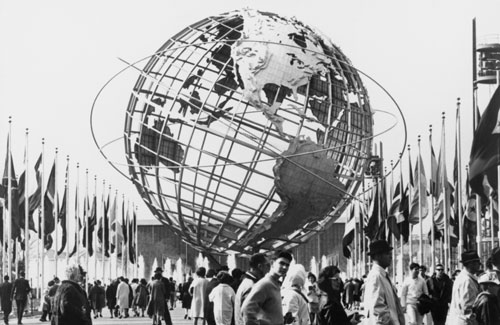
The three rings around the Unisphere, the Queens, NY centerpiece for the 1964 World’s Fair, represented the orbital flights of Yuri Garagrin, the first man in space, John Glenn, the first American in space, and Telestar, the first active communications satellite.
Mr. Potato Head kits came without a body from 1952 until 1964. Real #potatoes were used until then.
The FBI spent four months investigating the song Louie Louie by The Kingsmen after receiving complaints about obscene lyrics. The investigation ended without persecution.
The Beatles are the only artists to hold all top 5 spots on the Billboard Hot 100 on the same week, April 4, 1964. #1. Can’t Buy Me Love, #2. Twist and Shout, #3. She Loves You, #4. I Want to Hold Your Hand, #5. Please, Please Me. In 1964, the best-selling Beatles merchandise was the “I Love Ringo” lapel pins.
The Beatles had 7 ‘Platinum’ Albums in 1964 – Introducing… The Beatles, Meet the Beatles!, The Beatles’ Second Album, A Hard Day’s Night, Something New, Beatles for Sale, and Beatles ’65 sold over one million copies.
Feb 9 – The Beatles appeared on the Ed Sullivan Show.
President Lyndon Johnson declared a “War on Poverty” in his first State of the Union Address.
The film The Battle of the Bulge was so historically inaccurate that President Dwight D Eisenhower came out of retirement and held a press conference just to denounce the film.
The US had no Vice President for all of 1964. Lyndon Johnson never named a replacement. Hubert Humphrey became VP when he was inaugurated in 1965.
Jack White’s iconic guitar originally came from Montgomery Ward and was sold for $99 in 1964,
Soviet gymnast Larissa Latynina holds the record for the most Olympic medals ever won by a female. Competing in three Olympics between 1956 and 1964, she won 18 medals.
Jazz artist Dizzy Gillespie ran for president, promising to rename the White House “the Blues House” and appoint Ray Charles, librarian of Congress, Miles Davis, head of the CIA, and Malcolm X, attorney general.
You’ve Lost That Lovin’ Feelin’, co-written by Phil Spector, was first performed by the Righteous Brothers. The song has received more airplay on radio and television than any other song in the 1900s.
The Ford Mustang was introduced.
The Sharpie marker was introduced. The Extra Fine Point came out in 1979, and the Ultra Fine Point was released in 1989.
The BASIC (Beginner’s All-Purpose Symbolic Instruction Code) computer language was created.
Hello, Dolly! opened in New York’s St. James Theatre.
Roald Dahl’s Charlie and the Chocolate Factory was published.
Merv Griffin’s game show Jeopardy! debuted on NBC. Art Fleming was the first host.
David Bowie’s first TV appearance was in 1964; he was interviewed on the BBC’s Tonight as the founder of ‘The Society of the Prevention of Cruelty to Long-Haired Men’.
Robert Moog developed his first electronic music synthesizer. RCA created the first music synthesizer in 1953
The Updated Hippocratic Oath, rewritten in 1964 by Louis Lasagna
I swear to fulfill, to the best of my ability and judgment, this covenant: I will respect the hard-won scientific gains of those physicians in whose steps I walk, and gladly share such knowledge as is mine with those who are to follow. I will apply, for the benefit of the sick, all measures [that] are required, avoiding those twin traps of overtreatment and therapeutic nihilism. I will remember that there is art to medicine as well as science, and that warmth, sympathy, and understanding may outweigh the surgeon’s knife or the chemist’s drug. I will not be ashamed to say “I know not,” nor will I fail to call in my colleagues when the skills of another are needed for a patient’s recovery. I will respect the privacy of my patients, for their problems are not disclosed to me that the world may know. Most especially must I tread with care in matters of life and death. If it is given me to save a life, all thanks. But it may also be within my power to take a life; this awesome responsibility must be faced with great humbleness and awareness of my own frailty. Above all, I must not play at God. I will remember that I do not treat a fever chart, a cancerous growth, but a sick human being, whose illness may affect the person’s family and economic stability. My responsibility includes these related problems if I am to care adequately for the sick. I will prevent disease whenever I can, for prevention is preferable to cure. I will remember that I remain a member of society, with special obligations to all my fellow human beings, those sound of mind and body as well as the infirm. If I do not violate this oath, may I enjoy life and art, respected while I live and remembered with affection thereafter. May I always act so as to preserve the finest traditions of my calling and may I long experience the joy of healing those who seek my help.
Nobel Prize Winners
Physics – Charles Hard Townes, Nicolay Gennadiyevich Basov, Aleksandr Prokhorov Chemistry – Dorothy Crowfoot Hodgkin Physiology or Medicine – Konrad Bloch, Feodor Lynen Literature – Jean-Paul Sartre Peace – Martin Luther King Jr. *Jean-Paul Sartre declined his prize, saying “A writer should not allow himself to be turned into an institution”.
The Habits
Troll Dolls (Year 2) Watching the cool kids drive their Ford Mustangs Reading The Giving Tree by Shel Silverstein.
1st Appearances & 1964’s Most Popular Christmas Gifts, Toys and Presents
Easy Bake Oven, G.I. Joe, Rat Fink Collectible Hot Rod Figures, Password Game, Mighty Tonka Dump Truck (continued to be made popular in the 1970s due to the elephant stepping on it during a commercial), PLASTIC Mr. Potato Head, Wham-O Professional Frisbees, Monster Magnet, Rube Goldberg’s Animated Hobby Kit, Hand’s Down (with Slam-O-Matic)
Best Film Oscar Winner
Tom Jones (presented in 1964)
Broadway Shows
Hello, Dolly! (Musical) Opened on January 16, 1964, and closed on December 27, 1970 Funny Girl (Musical) Opened on March 26, 1964 and closed on July 1, 1967 Fiddler on the Roof (Musical) Opened on September 22, 1964, and closed on July 2, 1972
Popular and Best-selling Books From 1964
A Moveable Feast by Ernest Hemingway Armageddon by Leon Uris Richard Scarry’s Best Mother Goose Ever by Richard Scarry Candy by Terry Southern and Mason Hoffenberg Charlie and the Chocolate Factory by Roald Dahl Chitty-Chitty-Bang-Bang by Ian Fleming Convention by Fletcher Knebel and Charles W. Bailey II Come Back, Dr. Caligari by Donald Barthelme The Giving Tree – Shel Silverstein The Group – Mary McCarthy Herzog by Saul Bellow How the Grinch Stole Christmas by Dr. Seuss It’s Like This, Cat by Emily Cheney Neville Last Exit To Brooklyn by Hubert Selby Jr. The Man by Irving Wallace The Martyred by Richard E. Kim The Rector of Justin by Louis Auchincloss This Rough Magic by Mary Stewart The Spy Who Came in from the Cold by John le Carré The Virtue of Selfishness by Ayn Rand You Only Live Twice by Ian Fleming
1964 Most Popular TV Shows
1. Bonanza (NBC) 2. Bewitched (ABC) 3. Gomer Pyle U.S.M.C. (CBS) 4. The Andy Griffith Show (CBS) 5. The Fugitive (ABC) 6. The Red Skelton Show (CBS) 7. The Dick Van Dyke Show (CBS) 8. The Lucy Show (CBS) 9. Peyton Place II (ABC) 10. Combat (ABC)
1964 Billboard Number One Songs
December 7, 1963 – January 3, 1964: Dominique – The Singing Nun
January 4 – January 31: There! I’ve Said It Again – Bobby Vinton
February 1 – March 20: I Want To Hold Your Hand – The Beatles
June 27 – July 3: A World Without Love – Peter & Gordon
July 4 – July 17: I Get Around – The Beach Boys
July 18 – July 31: Rag Doll – The Four Seasons
August 1 – August 14: A Hard Day’s Night – The Beatles
August 15 – August 21: Everybody Loves Somebody – Dean Martin
August 22 – September 14: Where Did Our Love Go – The Supremes
September 5 – September 25: The House Of The Rising Sun – The Animals
September 26 – October 16: Oh, Pretty Woman – Roy Orbison
October 17 – October 30: Do Wah Diddy Diddy – Manfred Mann
October 31 – November 27: Baby Love – The Supremes
November 28 – December 4: Leader Of The Pack – The Shangri-Las
December 5 – December 11: Ringo – Lorne Greene
December 12 – December 18: Mr. Lonely – Bobby Vinton
December 19 – December 25: Come See About Me – The Supremes
December 26, 1964 – January 15, 1965: I Feel Fine – The Beatles
Sports
World Series Champions: St. Louis Cardinals NFL Champions: Cleveland Browns AFL Champions: Buffalo Bills NBA Champions: Boston Celtics Stanley Cup Champs: Toronto Maple Leafs U.S. Open Golf Ken Venturi U.S. Tennis: (Men/Ladies) Roy Emerson/Maria Bueno Wimbledon (Men/Women): Roy Emerson/Maria Bueno NCAA Football Champions: Alabama & Arkansas & Notre Dame NCAA Basketball Champions: UCLA Kentucky Derby: Northern Dancer
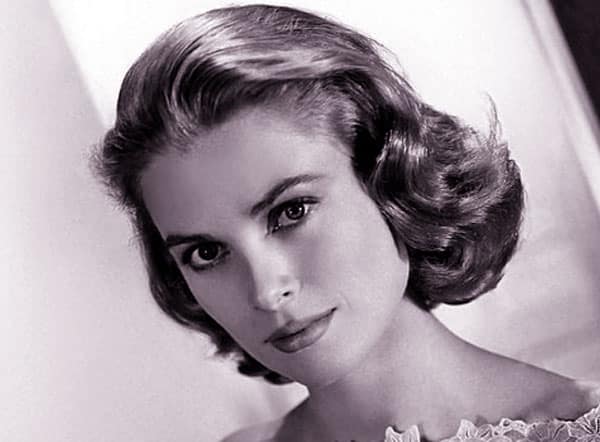
Pulling the race card (or How I got to meet Princess Grace)
Princess Grace, Grace Patricia Kelly, was an American film actress who became Princess of Monaco by marrying Prince Rainier III in April 1956.
While making a med cruise on board the USS Piper back in 1964, we received permission to pull into the port of Monaco for Christmas. This was a special port call because we were the first American warships to pull in there since World War Two. Because of this, the principality went all out to make sure that we enjoyed the port visit first by allowing some crew members to stay at the luxurious Monte Carlo hotel for free, a dance put on by the USO with some of the best looking women on the Riviera, and a free account at the famous Monte Carlo casino.
For the Christmas day observance, seven crew members were invited to eat dinner at the castle with Princess Grace and the royal family. Seven crew members were chosen, but no one from the engineering department. Enginemen were considered to be uncouth and smelled of diesel oil even after showering. That’s when I got an idea. One, being a newbie on board, they really couldn’t say that I was totally uncouth, I had not yet been sullied by my apprenticeship with my mentor, Beetle Bailey. Two, being the only Black person on board, it was only appropriate that a “token” be sent as representing part of the crew. How “American” would that be?
After a long debate and an hour or two of my engineering chief pleading my case, the captain capitulated and agreed. What followed was a crash course in formal etiquette, what fork to eat with, how to chew politely, how to address the princess, etc. The only point of disappointment, however, was that I would be sent as the official photographer. So, naval history is devoid of any photographic evidence of one Fred Durrette formally meeting Princess Grace. However, if you ever get to the submarine museum in Groton, Connecticut, ask to see the original photograph and on the back, you’ll see my signature as the official navy photographer.
The Princess was everything that you’d expect a princess to be. She was beautiful, graceful, and still retained her American down home charm.
Winners Announced: May 12, 1964 Held at: Chicago, Los Angeles and New York Host: Dean Martin Eligibility Year: December 1, 1962 – November 30, 1963
Musical Highlights and Achievements
Barbra’s Big Night: Barbra Streisand dazzled the Grammys with her debut album, taking home two awards, including Album of the Year for The Barbra Streisand Album.
“Days of Wine and Roses” Domination: Henry Mancini’s Days of Wine and Roses won the Song of the Year award and became an instant classic.
Jazz Takes the Stage: Jazz great Stan Getz and João Gilberto’s bossa nova record Getz/Gilberto was a critical success, winning the Best Jazz Instrumental Album.
Legendary Ladies: Streisand and Ella Fitzgerald were among the women who shone that night, highlighting the influence of female artists in a largely male-dominated industry.
Trivia
Frank Sinatra’s Absence: Despite his influence and the release of The Concert Sinatra, the legend was notably absent from the winners’ list.
British Invasion Lags Behind: Even though The Beatles had ignited a global frenzy, their work didn’t capture Grammy gold until later years.
Dean Martin, the Rat Pack Charmer: The host, known for his smooth voice and comedic timing, was a key member of the legendary Rat Pack, enhancing the evening’s glamorous vibe.
Streisand’s Swift Rise: At just 21, Barbra Streisand became one of the youngest Album of the Year winners at the time.
Record of the Year: The Days of Wine and Roses – Henry Mancini
Album of the Year: The Barbra Streisand AlbumThe Barbra Streisand Album – Barbra Streisand (Columbia)
Song of the Year: The Days of Wine and Roses – Henry Mancini and Johnny Mercer, composers
Best Vocal Performance, Male: Wives and Lovers – Jack Jones
Best Vocal Performance, Female: The Barbra Streisand Album – Barbra Streisand
Best Performance By a Vocal Group: Blowin’ in the Wind – Peter, Paul and Mary
Best Performance By a Chorus: Bach’s Greatest Hits – Swingle Singers
Best Rock and Roll Recording: Deep Purple – Nino Tempo and April Stevens (Atco):
Best Rhythm and Blues Recording: Busted – Ray Charles (ABC/Paramount):
Best Instrumental Jazz Performance, Soloist or Small Group: Conversations With Myself – Bill Evans
Best Instrumental Jazz Performance, Large Group: Encore: Woody Herman, 1963 – Woody Herman Band
Best Original Jazz Composition: Gravy Waltz – Steve Allen and Ray Brown, composers
Best Country and Western Recording: Detroit City – Bobby Bare (RCA)
Best Gospel or Other Religious Recording (Musical): Dominique – Soeur Sourire (The Singing Nun) (Philips)
Best Folk Recording: Blowin’ in the Wind – Peter, Paul and Mary (Warner Brothers):
Best Performance By an Orchestra for Dancing: This Time by Basie! Hits of the ’50s and ’60s – Count Basie
Best Performance By an Orchestra or Instrumentalist With Orchestra, Not for Jazz or Dancing: Java – Al Hirt
Best Instrumental Arrangement: I Can’t Stop Loving You – Quincy Jones, arranger
Best Background Arrangement: The Days of Wine and Roses – Henry Mancini, arranger
Best Instrumental Theme: More (Theme From Mondo Cane) – Norman NewellNorman Newell, Nino Oliviero and Riz Ortolani, composers
Best Original Score From a Motion Picture or Television Show: Tom Jones – John Addison, Composer
Best Score From an Original Cast Show Album: She Loves Me – Jerry Bock and Sheldon Harnick, composers (MGM)
Album of the Year, Classical: Britten, War Requiem – Benjamin Britten conducting London Symphony Orchestra and Chorus (London)
Most Promising New Classical Recording Artist: André WattsAndré Watts, pianist
Best Classical Performance, Orchestra: BartókBartók, Concerto for Orchestra – Erich Leinsdorf conducting Boston Symphony Orchestra
Best Classical Performance, Chamber Music: Evening of Elizabethan MusicElizabethan Music – Julian Bream Consort
Best Classical Performance, Instrumental Soloist(s) (With Orchestra): Tchaikovsky, Concerto No. 1 in B-Flat Minor for Piano and Orchestra – Artur Rubinstein; Erich Leinsdorf conducting Boston Symphony Orchestra
Best Classical Performance, Instrumental Soloist or Duo (Without Orchestra): The Sound of Horowitz, Vladimir Horowitz
Best Opera Recording: Puccini, Madama Butterfly – Erich Leinsdorf conducting RCA ItalianaRCA Italiana Opera Orchestra and Chorus; solos: Price, Tucker and Elias (RCA)
Best Classical Performance, Choral: Britten, War Requiem – David WillcocksDavid Willcocks directing Bach Choir; Edward Chapman, directing Highgate School; Benjamin Britten conducting London Symphony Orchestra and Chorus
Best Classical Performance, Vocal Soloist (With or Without Orchestra): Great Scenes From Gershwin’s Porgy and BessGershwin’s Porgy and Bess – Leontyne Price
Best Classical Composition By Contemporary Composer: War Requiem – Benjamin Britten, Composer
Best Comedy Performance: Hello Mudduh, Hello Faddah – Allan Sherman
Best Documentary, Spoken Word or Drama Recording (Other Than Comedy): Who’s Afraid of Virginia Woolf? – Edward Albee (Warner Brothers):
Best Recording for Children: Bernstein Conducts for Young People – Leonard Bernstein conducting New York Philharmonic (Columbia)
Best Album Cover, Other Than Classical: The Barbra Streisand Album – John BergJohn Berg, art director (Columbia)
Best Album Cover, Classical: Puccini, Madama Butterfly – Robert Jones, art director (RCA)
Best Album Notes: The Ellington Era – Stanley DanceStanley Dance and Leonard Feather, annotators (Columbia)
Winners Announced: April 13, 1964 Held at: Santa Monica Civic Auditorium, Santa Monica, California Host: Jack Lemmon Eligibility Year: 1963
Cinematic Highlights and Achievements
Tom Jones Galore: The British comedy Tom Jones snagged four Oscars, including Best Picture, and was nominated in six other categories.
First Best Actress Win for a Child Actor: At age 16, Patty Duke won Best Supporting Actress for her role in The Miracle Worker.
British Invasion: A British actor, Sidney Poitier, won Best Actor for Lilies of the Field, becoming the first Black man to win the award.
Disney’s Double Win: The Sword in the Stone gave Disney its sixth Best Animated Feature win, while Mary Poppins took home Best Original Song for “Chim Chim Cher-ee.”
Trivia
Beatles Connection: Despite the British Invasion in the music scene, led by the Beatles, the Oscars that year were more traditionally American in their award selections.
Shortest Acceptance Speech: Patty Duke set a record for the shortest Oscar acceptance speech ever: a simple “Thank you.”
The Great Escape: Despite its commercial success and ensemble cast, The Great Escape didn’t receive a single nomination.
Poitier’s Milestone: Sidney Poitier’s win was more than an Oscar; it was a powerful moment in the civil rights movement.
Best Picture winner Tom Jones was the only film in history to garner three Best Supporting Actress nominations.
Cleopatra (9 nominations) and Tom Jones (10 nominations) each won 4 Oscars.
Sidney Poitier was the first Black actor to win Best Actor.
Best Picture: Tom Jones – Tony Richardson (WINNER) America America – Elia Kazan Cleopatra – Walter Wanger How the West Was Won – Bernard Smith Lilies of the Field – Ralph Nelson
Best Director: Tony Richardson – Tom Jones (WINNER) Federico Fellini – 8½ Elia Kazan – America America Otto Preminger – The Cardinal Martin Ritt – Hud
Best Actor: Sidney Poitier – Lilies of the Field (WINNER) Albert Finney – Tom Jones Richard Harris – This Sporting Life Rex Harrison – Cleopatra Paul Newman – Hud
Best Actress: Patricia Neal – Hud (WINNER) Leslie Caron – The L-Shaped Room Shirley MacLaine – Irma la Douce Rachel Roberts – This Sporting Life Natalie Wood – Love with the Proper Stranger
Best Supporting Actor: Melvyn Douglas – Hud (WINNER) Nick Adams – Twilight of Honor Bobby Darin – Captain Newman, M.D. Hugh Griffith – Tom Jones John Huston – The Cardinal
Best Supporting Actress: Margaret Rutherford – The V.I.P.s (WINNER) Diane Cilento – Tom Jones Edith Evans – Tom Jones Joyce Redman – Tom Jones Lilia Skala – Lilies of the Field
Best Story and Screenplay Written Directly for the Screen: How the West Was Won – James R. Webb (WINNER) 8½ – Federico Fellini, Ennio Flaiano, Tullio Pinelli and Brunello Rondi America America – Elia Kazan The Four Days of Naples – Screenplay by Carlo Bernari, Pasquale Festa Campanile, Massimo Franciosa and Nanni Loy; Story by Pasquale Festa Campanile, Massimo Franciosa, Nanni Loy and Vasco Pratolini Love with the Proper Stranger – Arnold Schulman
Best Screenplay Based on Material from Another Medium: Tom Jones – John Osborne based on the novel The History of Tom Jones, a Foundling by Henry Fielding (WINNER) Captain Newman, M.D. – Richard L. Breen, Phoebe Ephron and Henry Ephron based on the novel by Leo Rosten Hud – Irving Ravetch and Harriet Frank Jr. based on the novel Horseman, Pass By by Larry McMurtry Lilies of the Field – James Poe based on the novel by William E. Barrett Sundays and Cybele – Antoine Tudal and Serge Bourguignon based on the novel Les Dimanches de Ville d’Avray by Bernard Eschassériaux
Best Foreign Language Film: 8½ (Italy) (WINNER) Knife in the Water (Poland) The Red Lanterns (Greece) Los Tarantos (Spain) Twin Sisters of Kyoto (Japan)
Best Song: “Call Me Irresponsible” from Papa’s Delicate Condition – Music by Jimmy Van Heusen; Lyrics by Sammy Cahn (WINNER) “Charade” from Charade – Music by Henry Mancini; Lyrics by Johnny Mercer “It’s a Mad Mad Mad Mad World” from It’s a Mad, Mad, Mad, Mad World – Music by Ernest Gold; Lyrics by Mack David “More” from Mondo Cane – Music by Riz Ortolani and Nino Oliviero; Lyrics by Norman Newell “So Little Time” from 55 Days at Peking – Music by Dimitri Tiomkin; Lyrics by Paul Francis Webster
Best Documentary Feature: Robert Frost: A Lover’s Quarrel with the World (WINNER) Le Maillon et la Chaine The Yanks Are Coming Terminus (nomination revoked)
Best Documentary Short Subject: Chagall (WINNER) The Five Cities of June The Spirit of America Thirty Million Letters To Live Again
Best Live Action Short Subject: An Occurrence at Owl Creek Bridge (WINNER) The Concert Home-Made Car Six-Sided Triangle That’s Me
Best Short Subject – Cartoons: The Critic (WINNER) Automania 2000 The Game My Financial Career Pianissimo
Best Music Score – Substantially Original: Tom Jones – John Addison (WINNER) 55 Days at Peking – Dimitri Tiomkin Cleopatra – Alex North How the West Was Won – Alfred Newman and Ken Darby It’s a Mad, Mad, Mad, Mad World – Ernest Gold
Best Scoring of Music – Adaptation or Treatment: Irma la Douce – André Previn (WINNER) Bye Bye Birdie – Johnny Green A New Kind of Love – Leith Stevens Sundays and Cybele – Maurice Jarre The Sword in the Stone – George Bruns
Best Sound Effects: It’s a Mad, Mad, Mad, Mad World – Walter Elliott (WINNER) A Gathering of Eagles – Robert Bratton
Best Sound: How the West Was Won – Franklin Milton (WINNER) Bye Bye Birdie – Charles Rice Captain Newman, M.D. – Waldon O. Watson Cleopatra – James Corcoran and Fred Hynes It’s a Mad, Mad, Mad, Mad World – Gordon E. Sawyer
Best Art Direction, Black-and-White: America America – Art Direction and Set Decoration: Gene Callahan (WINNER) 8½ – Art Direction and Set Decoration: Piero Gherardi Hud – Art Direction: Hal Pereira and Tambi Larsen; Set Decoration: Samuel M. Comer and Robert R. Benton Love with the Proper Stranger – Art Direction: Hal Pereira and Roland Anderson; Set Decoration: Samuel M. Comer and Grace Gregory Twilight of Honor – Art Direction: George Davis and Paul Groesse; Set Decoration: Henry Grace and Hugh Hunt
Best Art Direction, Color: Cleopatra – Art Direction: John DeCuir, Jack Martin Smith, Hilyard M. Brown, Herman A. Blumenthal, Elven Webb, Maurice Pelling and Boris Juraga; Set Decoration: Walter M. Scott, Paul S. Fox and Ray Moyer (WINNER) The Cardinal – Art Direction: Lyle R. Wheeler; Set Decoration: Gene Callahan Come Blow Your Horn – Art Direction: Hal Pereira and Roland Anderson; Set Decoration: Samuel M. Comer and James W. Payne How the West Was Won – Art Direction: George Davis, William Ferrari (posthumous nomination) and Addison Hehr; Set Decoration: Henry Grace, Don Greenwood Jr. and Jack Mills Tom Jones – Art Direction: Ralph W. Brinton, Ted Marshall and Jocelyn Herbert; Set Decoration: Josie MacAvin
Best Cinematography, Black-and-White: Hud – James Wong Howe (WINNER) The Balcony – George J. Folsey The Caretakers – Lucien Ballard Lilies of the Field – Ernest Haller Love with the Proper Stranger – Milton Krasner
Best Cinematography, Color: Cleopatra – Leon Shamroy (WINNER) The Cardinal – Leon Shamroy How the West Was Won – William Daniels, Milton Krasner, Charles Lang and Joseph LaShelle Irma la Douce – Joseph LaShelle It’s a Mad, Mad, Mad, Mad World – Ernest Laszlo
Best Costume Design, Black-and-White: 8½ – Piero Gherardi (WINNER) Love with the Proper Stranger – Edith Head The Stripper – Travilla Toys in the Attic – Bill Thomas Wives and Lovers – Edith Head
Best Costume Design, Color: Cleopatra – Irene Sharaff, Vittorio Nino Novarese and Renié (WINNER) The Cardinal – Donald Brooks How the West Was Won – Walter Plunkett The Leopard – Piero Tosi A New Kind of Love – Edith Head
Best Film Editing: How the West Was Won – Harold F. Kress (WINNER) Cleopatra – Dorothy Spencer The Cardinal – Louis R. Loeffler The Great Escape – Ferris Webster It’s a Mad, Mad, Mad, Mad World – Frederic Knudtson (posthumous nomination), Robert C. Jones and Gene Fowler Jr.
Best Special Effects: Cleopatra – Emil Kosa Jr. (WINNER) The Birds – Ub Iwerks
About Doo-Wop Songs: The PCM Doo Wop list is based first and foremost, on the most well-known and recognized “oldies” Doo Wop songs, the songs that had the biggest influence on the genre, and songs that best represented Doo-Wop of the era. Take our 1960 Quiz!
Doo Wop Song List
1. Up On The Roof – The Drifters
2. In The Still Of The Nite – Five Satins
3. Earth Angel – The Penguins
4. I Only Have Eyes For You – The Flamingos
5. Blue Moon – Marcels
6. The Lion Sleeps Tonight – The Tokens
7. At The Hop – Danny and the Juniors
8. Little Darlin’ – Diamonds
9. The Great Pretender – The Platters
10. Little Star – Elegants
11. Goodnight Sweetheart Goodnight – The Spaniels
12. Stay – Maurice Williams and the Zodiacs
13. There’s a Moon Out Tonight – The Capris
14. When You Dance – The Turbans
15. Morse Code of Love – The Capris
16. You Belong To Me – The Capris
17. Daddy’s Home – Shep and the Limelights
18. Heart And Soul – Cleftones
19. Gee – The Crows
20. Big Girls Don’t Cry – Four Seasons
21. Denise – Randy and the Rainbows
22. Only You – The Platters
23. Papa Oom-Mow-Mow – Rivingtons
24. Come Go With Me – Del-Vikings
25. 16 Candles – The Crests
26. Book Of Love – Monotones
27. Speedoo – Cadillacs
28. Tonite Tonite – The Mello-Kings
29. The ABC’s Of Love – Frankie Lymon & the Teenagers
30. Walk Like A Man – Four Seasons
31. Pretty Little Angel Eyes – Curtis Lee
32. Tonight’s The Night – Shirelles
33. Little Girl Of Mine – Cleftones
34. Sh-Boom – The Chords
35. Silhouettes – The Rays
36. Why Do Fools Fall In Love – Frankie Lymon & the Teenagers
37. I Wonder Why – Dion & the Belmonts
38. Twilight Time – The Platters
39. A Teenager In Love – Dion & the Belmonts
40. Love Potion No. 9 – Clovers
41. Story Untold – The Nutmegs
42. Duke Of Earl – Gene Chandler
43. So Much In Love – The Tymes
44. Oh What A Night – The Dells
45. Smokey Joe’s Cafe – The Robins
46. Shimmy, Shimmy, Ko-Ko-Bop – Little Anthony & the Imperials
47. Sunday Kind of Love – The Harptones
48. Remember Then – Earls
49. My Prayer – The Platters
50. Get A Job – The Silhouettes
51. Sorry (I Ran All The Way Home) – Impalas
52. Diamonds and Pearls – The Paradons
53. Where or When – Dion and the Belmonts
54. You’re So Fine – Falcons
55. Close Your Eyes – The Five Keys
56. Deserie – The Charts
57. Have You Heard – The Duprees
58. Sherry – Four Seasons
59. Trickle, Trickle – Videos
60. You Baby You – Cleftones
61. Mr. Lee – Bobbettes
62. Ruby Baby – Drifters
63. Come Softly To Me – The Fleetwoods
64. Tell Me Why – Dion and the Belmonts
65. Whispering Bells – Del-Vikings
66. Come Back My Love – Wrens
67. Lollipop – The Chordettes
68. Walking Along – Solitaires
69. Til Then – The Classics
70. I Only Want You – Passions
71. Yakety Yak – Coasters
72. Charlie Brown – Coasters
73. Lily Maebelle – Valentines
74. I Want You To Be My Girl – Frankie Lymon & the Teenagers
75. Hushabye – Mystics
76. I Believe – The Earls
77. I’ll Be Forever Loving You – El Dorados
78. Rama Lama Ding Dong – Edsels
79. The Angels Listened In – Crests
80. Since I Don’t Have You – Skyliners
81. Play Those Oldies, Mr. DeeJay – Anthony and the Sophomores
82. Once In A While – The Chimes
83. What Time Is It? – The Volumes
84. Barbara Ann – Regents
85. Candy Girl – Four Seasons
86. Church Bells May Ring – The Willows OR The Diamonds
December 22, 1962 – January 11, 1963: The Tornados – Telstar January 12, 1963 – January 25, 1963: Steve Lawrence – Go Away Little Girl January 26, 1963 – February 8, 1963: The Rooftop Singers – Walk Right In February 9, 1963 – March 1, 1963: Paul & Paula – Hey Paula March 2, 1963 – March 22, 1963: The Four Seasons – Walk Like A Man March 23, 1963 – March 29, 1963: Ruby & the Romantics – Our Day Will Come March 30, 1963 – April 26, 1963: The Chiffons – He’s So Fine April 27, 1963 – May 17, 1963: Little Peggy March – I Will Follow Him May 18, 1963 – May 31, 1963: Jimmy Soul – If You Wanna Be Happy June 1, 1963 – June 14, 1963: Lesley Gore – It’s My Party June 15, 1963 – July 5, 1963: Kyu Sakamoto – Sukiyaki July 6, 1963 – July 19, 1963: The Essex – Easier Said Than Done July 20, 1963 – August 2, 1963: Jan and Dean – Surf City August 3, 1963 – August 9, 1963: The Tymes – So Much in Love August 10, 1963 – August 30, 1963: Little Stevie Wonder – Fingertips (pt. II) August 31, 1963 – September 20, 1963: The Angels – My Boyfriend’s Back September 21, 1963 – October 11, 1963: Bobby Vinton – Blue Velvet October 12, 1963 – November 15, 1963: Jimmy Gilmer and the Fireballs – Sugar Shack November 16, 1963 – November 22, 1963: Nino Tempo and April Stevens – Deep Purple November 23, 1963 – December 6, 1963: Dale & Grace – I’m Leaving It Up to You December 7, 1963 – January 3, 1964: The Singing Nun – Dominique
(Data is compiled from various charts including Billboard’s “Pop,” “Airplay,” “R&B” and “Singles” Charts. “Hot 100” is the primary chart used starting October, 1958)
Here are some significant events that took place in 1963
The United States, the United Kingdom, and the Soviet Union signed the Nuclear Test Ban Treaty, which prohibited nuclear weapons tests in the atmosphere, outer space, and underwater
The Civil Rights Act of 1964 was introduced in the United States Congress. The act, eventually passed in 1964, prohibited discrimination based on race, color, religion, sex, or national origin in public places and employment.
The Beatles released their first album, Please Please Me, in the United Kingdom. The album was later released in the United States as Introducing… The Beatles.
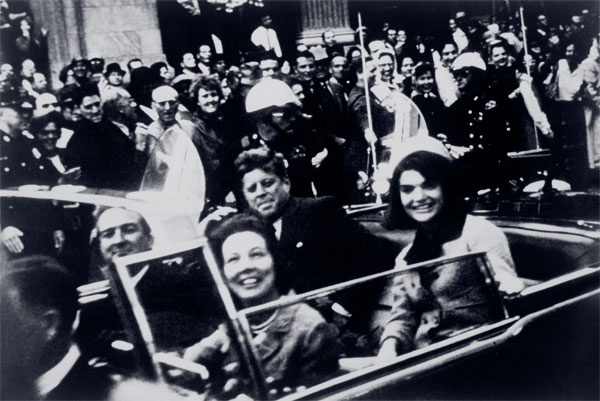
The assassination of President John F. Kennedy occurred on November 22, 1963, in Dallas, Texas.
The first broadcast of Doctor Who, a British science fiction television program, aired on the BBC.
Top Ten Baby Names of 1963
Lisa, Mary, Susan, Karen, Linda, Michael, John, David, James, Robert
Paul McCartney, John Lennon, Ringo Starr, George Harrison, Sean Connery, Elvis Presley, Gregory Peck
Oscars: 34th Academy Awards (1962)
The 34th Academy Awards in 1962 celebrated cinematic mastery at the Santa Monica Civic Auditorium. Bob Hope served as the evening’s host. Lawrence of Arabia walked away as the night’s big winner, bagging seven Oscars, including Best Director for David Lean and Best Picture.
Grammys: 4th Annual Grammy Awards (1962 Grammys)
When it came to the 1962 Grammys, hosted on May 29, the ceremony celebrated some iconic pieces of music. Henry Mancini’s Breakfast at Tiffany’s soundtrack won Album of the Year, and Tony Bennett’s “I Left My Heart in San Francisco” took home Record of the Year.
Emmy Awards: 14th Primetime Emmy Awards (1962)
The 14th Primetime Emmy Awards, held on May 22, 1962, were a night to remember. Bob Newhart was the host for the evening. The Bob Newhart Show was named Outstanding Program Achievement in the Field of Humor. At the same time, the legal drama The Defenders secured the award for Outstanding Program Achievement in the Field of Drama.
“The Quotes”
“From Dallas, Texas, the flash, apparently official… President Kennedy died at 1 p.m. Central Standard Time, 2:00 Eastern Standard Time, some 38 minutes ago.” – Walter Cronkite
In 1963, Hall of Fame pitcher Gaylord Perry remarked, “They’ll put a man on the moon before I hit a home run.” On July 20, 1969, a few hours after Neil Armstrong set foot on the moon, Perry hit his first and only home run.
“Oh, I wish I were an Oscar Meyer wiener. That is what I truly want to be.” – Oscar Meyer Hot Dog Commercial
Time Magazine’s Man of the Year
Martin Luther King, Jr
Miss America
Jacquelyn Mayer (Sandusky, OH)
Miss USA
Marite Ozers (Illinois)
The Tragedies
Airplane Celebrity Death: Patsy Cline
The Vajont Dam Disaster: after reporting numerous warning signs about the risks of a landslide, some journalists were sued by the Italian government for “undermining the social order.” A landslide eventually occurred, causing an overflow and killing between 1,900 and 2,500 people
Presidential Assassination
John F Kennedy & Magic Bullet Theory The JFK assassination is the mother of all modern conspiracy theories.
US Politics
January 20, 1965 (Wednesday): Second inauguration of Lyndon B. Johnson
Pop Culture Facts & History
Harvey Ross Ball invented the yellow Smiley Face in 1963. It was intended to be morale-boosting for insurance companies. He was paid $45 for 10 minutes of work.
June 17 – The Supreme Court ruled that laws requiring reciting The Lord’s Prayer or Bible verses in public schools were unconstitutional.
In 1963, the Bronx Zoo exhibited “The Most Dangerous Animal in the World.” It was a mirror.
Sukiyaki by Kyu Sakamoto topped the Billboard Hot 100 chart in 1963, one of the few non-English songs to have done so and the first in a non-European language. It was the only single by an Asian artist to top the Hot 100 until the 2020 release of Dynamite by BTS.
The first American Artist to cover a Beatles song was Del Shannon’s 1963 cover of From Me to You. Del Shannon’s cover also became the first Lennon–McCartney composition to make the American charts when it entered the Billboard Hot 100 on June 29, 1963.
The homecoming parade in the film Animal House was scripted as occurring on November 21, 1963, the day before JFK’s assassination. Producers considered the film’s setting “the last innocent year of America.”
Charade spans three genres: suspense, thriller, romance, and comedy. Because Universal Pictures published the movie with an invalid copyright notice, the film entered the public domain in the United States immediately upon its release.
Rowlf was the first known Muppet “star” as a recurring character on The Jimmy Dean Show, first appearing in a telecast on September 26, 1963. Nope, it wasn’t Kermit!
Valentia Tereshkova was the first woman in space on the Vostok 6. She orbited Earth 48 times.
In 1963, the first message sent on the Moscow–Washington hotline was the test phrase “THE QUICK BROWN FOX JUMPED OVER THE LAZY DOG’S BACK 1234567890”. Later, the confused Russian translators responded, “What does it mean when your people say ‘The quick brown fox jumped over the lazy dog’?”
C.S. Lewis and Aldous Huxley both died on November 22, 1963. Their deaths weren’t as prominent in the news because of a more noteworthy death that occurred on that day: the assassination of John F. Kennedy.
JFK watched From Russia With Love at the White House on November 20, 1963, making it his last film.
Psychic The Amazing Criswell predicted that Kennedy would not run in the 1964 election because of something happening in November 1963.
When Stephen Hawking was diagnosed with Amyotrophic Lateral Sclerosis (ALS) in 1963, doctors predicted he had about two and a half years to live. Fortunately, the disease progressed much slower than the doctors expected, and Hawking lived up to 76 years before dying on March 14, 2018.
Nebraska’s USPS abbreviation was originally “NB” but was changed to “NE” at the request of Canada to avoid confusion with New Brunswick in 1969. It is the only time a state/territory has changed its USPS abbreviation since the introduction of the system in 1963.
Kodak introduced the Instamatic camera.
Tab soda, Coca-Cola’s first brand of diet soda, was launched in 1963 and was discontinued in 2020.
‘Ma’ Bell Telephone introduced the push-button telephone.
7/11 was named after 7 a.m.-11 p.m. hours, unprecedented in 1946, and they didn’t experiment with 24-hour stores until 1963.
Boxer Sonny Liston was the first to win a million dollars in a single bout when he beat Floyd Patterson in Chicago on September 25th.
In 1963, San Francisco Giants Manager Alvin Dark joked, “They’ll put a man on the moon before [Giants pitcher] Gaylord Perry hits a home run.” On July 20, 1969, less than an hour after Neil Armstrong’s historic moonwalk, Perry hit his first career homer.
Elizabeth Taylor was the first actress to earn $1,000,000 for a single film, Cleopatra.
Vietnamese Buddhist monk Thich Quang Duc publicly immolated himself on the street in Saigon to protest the anti-Buddhist policies of President Ngo Dinh Diem.
The ancient Egyptians developed the first recorded early pregnancy test, whereby a woman would urinate on a bag of wheat or barley and if the bag started sprouting, it indicated a pregnancy. In 1963, researchers measured the test as being 70% accurate.
Donald Currey cut down a tree to retrieve his drill bit after it got stuck when he tried to core it to study climate effects. After studying the tree’s core, he found that he’d just cut down the oldest known tree at that time (at least 4862 years old).
On October 18, 1963, French scientists launched a rocket into space containing a cat named Felicette. She orbited nearly 100 miles above the Earth, then descended safely to the ground via a specially designed parachute.
Mississippi physician James D. Hardy performed the first successful lung transplant.
On April 10, 1963, the USS Thresher submarine sank about 220 miles east of Boston, Massachusetts, during deep-diving tests, killing all 129 crew and shipyard personnel aboard. It is the second-deadliest submarine incident on record.
Doomsday Clock
Twelve minutes to midnight, according to the Bulletin of Atomic Scientists. 1963: “After a decade of almost non-stop nuclear tests, the United States and the Soviet Union sign the Partial Test Ban Treaty, which ends all atmospheric nuclear testing. While it does not outlaw underground testing, the treaty represents progress in at least slowing the arms race. It also signals awareness among the Soviets and the United States that they need to work together to prevent nuclear annihilation.”
The Habits
Troll Dolls were everywhere. Reading Betty Friedan’s The Feminine Mystique helped establish the Feminist Movement.
1st Appearances & 1963’s Most Popular Christmas Gifts, Toys and Presents
Mouse Trap, Allan Sherwood (Barbie and Ken’s friend), Easy-Bake Oven, Big Loo. ‘Dam Things’ trolls were the original Troll Dolls, first created in the 1950s. They got much cuter and were produced by several companies by the early 1960s.
Best Film Oscar Winner
Lawrence of Arabia (presented in 1963)
The Biggest Films of 1963
1. Cleopatra (Pop Culture Classic)
2. How the West Was Won
3. It’s a Mad Mad Mad Mad World (Pop Culture Classic)
4. Tom Jones
5. Irma La Douce
6. Son of Flubber
7. The V.I.P.s
8. McLintock!
9. Charade
10. Bye Bye Birdie (Pop Culture Classic)
11. The Birds (Pop Culture Classic)
12. Beach Party (Pop Culture Classic)
13. Jason and the Argonauts
14. The Damned (Pop Culture Classic)
15. The Great Escape
16. The Sword in the Stone
17. Black Sabbath
18. The Pink Panther (Pop Culture Classic)
19. From Russia with Love
20. Hud
21. The Nutty Professor (Pop Culture Classic)
22. The Raven
23. It Happened at the World’s Fair (Elvis, Pop Culture Classic)
24. Lord of the Flies
25. PT 109
26. Come Blow Your Horn
27. The Cardinal
28. The Thrill of it All
29. Dementia 13
30. 55 Days at Peking
31. Move Over, Darling
32. Donovan’s Reef
33. Who’s Been Sleeping in My Bed?
34. Blood Feast
35. Toys in the Attic
36. Fun in Acapulco
37. Lilies of the Field (Pop Culture Classic)
38. My Life to Live
39. PromisesQ Promises!
40. The Man with the X-Ray Eyes
*Movies beyond the Top Ten are based on (a somewhat subjective) ranking based on how much they had a long-lasting effect on Pop Culture.
Broadway Show
Barefoot in the Park (Play) Opened on October 23, 1963 and closed on June 25, 1967
Popular and Best-selling Books From 1963
Babies So Tall Board Book by Gyo Fujikawa The Battle of the Villa Fiorita by Rumer Godden The Bell Jar by Sylvia Plath Richard Scarry’s Best Word Book by Richard Scarry Caravans by James A. Michener Cat’s Cradle – Kurt Vonnegut City of Night by John Rechy Elizabeth Appleton by John O’Hara The Feminine Mystique – Betty Friedan The Fire Next Time by James Baldwin The Glass-Blowers by Daphne du Maurier Grandmother and the Priests by Taylor Caldwell The Group by Mary McCarthy Hop on Pop by Dr. Seuss I Am a Bunny by Ole Risom and Richard Scarry On Her Majesty’s Secret Service by Ian Fleming Raise High the Roof Beam, Carpenters, and Seymour-An Introduction by J.D. Salinger The Sand Pebbles by Richard McKenna Seven Days in May by Fletcher Knebel The Shoes of the Fisherman by Morris West Where The Wild Things Are by Maurice Sendak
1963 Most Popular TV Shows
1. Beverly Hillbillies (CBS) 2. Bonanza (NBC) 3. The Dick Van Dyke Show (CBS) 4. Petticoat Junction (CBS) 5. The Andy Griffith Show (CBS) 6. The Lucy Show (CBS) 7. Candid Camera (CBS) 8. The Ed Sullivan Show (CBS) 9. The Danny Thomas Show (CBS) 10. My Favorite Martian (CBS)
1963 Billboard Number One Songs
December 22, 1962 – January 11, 1963: Telstar – The Tornadoes
January 12 – January 25: Go Away Little Girl – Steve Lawrence
January 26 – February 8: Walk Right In – The Rooftop Singers
February 9 – March 1: Hey Paula – Paul & Paula
March 2 – March 22: Walk Like A Man – The Four Seasons
March 23 – March 29: Our Day Will Come – Ruby & The Romantics
November 16 – November 22: Deep Purple – Nino Tempo & April Stevens
November 23 – December 6: I’m Leaving It Up To You – Dale & Grace
December 7, 1963 – January 3, 1964: Dominique – The Singing Nun
Sports
World Series Champions: Los Angeles Dodgers NFL Champions: Chicago Bears AFL Champions: San Diego Chargers NBA Champions: Boston Celtics Stanley Cup Champs: Toronto Maple Leafs U.S. Open Golf Julius Boros U.S. Tennis: (Men/Ladies) Rafael Osuna/Maria Bueno Wimbledon (Men/Women): Chuck McKinley/Margaret Smith NCAA Football Champions: Texas NCAA Basketball Champions: Loyola Kentucky Derby: Chateaugay
Way back in 1963, while stationed on board the USS Piper, we pulled into the port of Djibouti, Africa as one of our scheduled Med cruise port calls. Djibouti, is a country located in the Horn of Africa in East Africa. It is bordered by Somalia in the south, Ethiopia in the south and west, Eritrea in the north, and the Red Sea and the Gulf of Aden in the east. Due to it’s history of French colonization, the country still had a big racial divide between the very poor Black population and the rich White Europeans. For example, Blacks were not allowed into the better hotels unless hey worked there as servants. As a result, the only place for a Black U. S. Navy sailor to party was in one of the interracial bars in the native section of the city. White tourists were afraid to go there.
Standing topside watch while moored along side the pier usually drew a crowd of native dock workers who were amused to see a Black man carrying a rifle, a side arm, and a baton, seemingly just strutting around while White guys did all the physical labor. and I did play this up somewhat , being the only Black in my crew, by harassing our all White deck crew doing the usual paint chipping and painting we did during every port call. Once or twice during my rounds, I’d walk over and tap one of my shipmates on the head with my baton which would draw a big round of applause from my audience.
My mentor, Beetle Bailey, the senior first class engineman, was a huge person with the temperament of a lamb. Beetle took me under his wing from the moment I reported on board and taught me all I needed to qualify as a diesel engine throttleman. Beetle also took to calling me his little “spear chukker”, to which I would just call him a stupid honky. We often exchanged racial slurs. I had decided early on that I would not go through life with a chip on my shoulder and as long as the jokes were meant to be humorous and not derogatory, I would simply respond in kind. However, I did let it be known that there was a thin line that shouldn’t be crossed and in fact did go after one of my shipmates with a jacking wrench when he crossed that line.
But in response to Beetle’s calling me his little spear chukker, I found a souvenir shop in town and purchased a twelve foot native spear, although a reproduction and not authentic. Since our only mode of transport around town was either taxi or motor scooter, I rented a Lumbretta scooter to get back to the boat. I guess the European tourist were pretty amazed to see a navy sailor in uniform, a Black navy sailor, riding a moped and carrying a twelve foot spear. I hung that spear in the forward engine room over the number one main engine where it hung long after I had transferred and up until the day Piper was decommissioned.
One day, we had to move the boat so a U. S Navy destroyer, the USS Bigelow could moor alongside the dock. We had to move since the Bigelow was the senior ship as as the senior ship could moor directly to the pier. While we were moored in Djibouti, we needed to refuel. Now the old diesel submarines used fuel ballast tanks to maintain a stable ballast. As the fuel in the tanks was used, it would be replaced with sea water. When fueling, we take on diesel fuel into the tank that would in turn push the sea water out through an overboard pipe that had a sight glass. The sight glass going black meant that the fuel tank was full to the brim and would soon be going overboard into the harbor which would be a no no. So, as we fueled, someone would have to sit topside watching the sight glass to notify the men below to stop transferring fuel.
This night, as we sat alongside the Bigelow, performing our fueling operations, the night was peaceful and quiet until alarms started going on all over the Bigelow. Some sailor in a drunken stupor had climbed the Bigelow’s radar mast and got instantly fried. We were all wondering what the heck had happened. The Bigelow had lit up all of a sudden and we watched men scrambling all over her decks, some crying “Oh my God”. One of our crew came rushing back to the boat and said “The president’s dead. The president’s dead… Somebody killed JFK”.
This sent shock waves through the Piper also as some guys went through the boat turning on the lights and waking people up. We were all in shock. Were we going to war? Our radioman was in town getting drunk like all radiomen did in those days, there was no internet, email, cell phones, and diesel submarines didn’t carry televisions. The only info we received until our radioman got back was all second hand from the guys on the destroyer who didn’t know much more than we did. That was November 22, 1963.
Winners Announced: May 15, 1963 Televised: December 8, 1963 Held at: Chicago, Los Angeles and New York Host: Frank Sinatra Eligibility Year: December 1, 1961 – November 30, 1962
Musical Highlights and Achievements
Vaughn Meader Stuns: A relatively unknown comic, Vaughn Meader took home the Album of the Year for The First Family, a comedy album parodying President Kennedy.
Tony Bennett’s Big Night: Tony Bennett won Record of the Year for I Left My Heart in San Francisco, which became one of his signature songs.
Pioneering Female Award: The first Best Female Pop Vocal Performance went to Ella Fitzgerald for Ella Swings Brightly with Nelson.
Classical Milestone: Leonard Bernstein won multiple awards for his conducting, solidifying his place in classical music history.
Trivia
Sinatra Double-Duty: Sinatra hosted both the Grammys and the Oscars in 1963, proving his versatility as an entertainer.
Posthumous Honors: Country legend Patsy Cline, who had passed away earlier that year, was nominated posthumously.
Mancini’s Continual Success: Henry Mancini, fresh off an Oscar win for “Moon River,” won a Grammy for Hatari!.
Televised Delay: Although winners were announced in May, the ceremony wasn’t televised until December as “Best on Record.”
Record of the Year: I Left My Heart in San Francisco, Tony Bennett
Album of the Year: The First Family, Vaughn Meader (Cadence)
Song of the Year: What Kind of Fool Am I, Leslie Bricusse and Anthony Newley, songwriters
Best New Artist of 1962: Robert Goulet
Best Solo Vocal Performance, Male: I Left My Heart in San Francisco, Tony Bennett
Best Solo Vocal Performance, Female: Ella Swings Brightly With Nelson Riddle, Ella Fitzgerald
Best Performance By a Vocal Group: If I Had a Hammer, Peter, Paul and Mary
Best Performance By a Chorus: Presenting the New Christy Minstrels, New Christy Minstrels
Best Rock and Roll Recording: Alley Cat, Bent Fabric (Atco)
Best Rhythm and Blues Recording: I Can’t Stop Loving You, Ray Charles (ABC)
Best Jazz Performance, Soloist or Small Group (Instrumental): Desafinado, Stan Getz
Best Jazz Performance, Large Group (Instrumental): Adventures in Jazz, Stan Kenton
Best Original Jazz Composition: Cast Your Fate to the Winds, Vince Guaraldi, composer
Best Country and Western Recording: Funny Way of Laughin’, Burl Ives (Decca)
Best Gospel or Other Religious Recording: Great Songs of Love and Faith, Mahalia Jackson (Columbia)
Best Folk Recording: If I Had a Hammer, Peter, Paul and Mary (Warner Bros.)
Best Performance By an Orchestra for Dancing: Fly Me to the Moon Bossa Nova, Joe Harnell
Best Performance By an Orchestra or Instrumentalist With Orchestra, Not for Jazz or Dancing: The Colorful Peter Nero, Peter Nero
Best Instrumental Arrangement: Baby Elephant Walk, Henry Mancini, arranger
Best Background Arrangement: I Left My Heart in San Francisco, Marty Manning, arranger
Best Instrumental Theme: A Taste of Honey, Bobby Scott and Ric Marlow, composers
Best Original Cast Show Album: No Strings, Richard Rodgers, composer (Capitol)
Album of the Year, Classical: Columbia Records Presents Vladimir Horowitz, Vladimir Horowitz (Columbia)
Best Classical Performance, Orchestra: Stravinsky, The Firebird Ballet, Igor Stravinsky conducting Columbia Symphony
Best Classical Performance, Chamber Music: The Heifetz-Piatigorsky Concerts With Primrose, Pennario and Guests, Jascha Heifetz, Gregor Piatigorsky and William Primrose
Best Classical Performance, Instrumental Soloist(s) (With Orchestra): Stravinsky, Concerto in D for Violin, Isaac Stern; Igor Stravinsky conducting Columbia Symphony
Best Classical Performance, Instrumental Soloist or Duo (Without Orchestra): Columbia Records Presents Vladimir Horowitz, Vladimir Horowitz
Best Opera Recording: Verdi, Aïda, Georg Solti conducting Rome Opera House Orchestra and Chorus; solos: Price, Vickers, Gorr, Merrill and Tozzi (RCA)
Best Classical Performance, Choral: Bach, St. Matthew Passion, Philharmonia Choir, Wilhelm Pitz, choral director; Otto Klemperer conducting Philharmonic Orchestra
Best Classical Performance, Vocal Soloist (With or Without Orchestra): Wagner, Götterdämerung Brunnhilde’s Immolation Scene; Wesendonck, Songs, Eileen Farrell; Leonard Bernstein conducting New York Philharmonic
Best Classical Composition By Contemporary Composer: The Flood, Igor Stravinsky, composer
Best Comedy Performance: The First Family, Vaughn Meader
Best Documentary or Spoken Word Recording (Other Than Comedy): The Story-Teller: A Session With Charles Laughton, Charles Laughton (Capitol)
Best Recording for Children: Saint-Saëns, Carnival of the Animals; Britten, Young Person’s Guide to the Orchestra, Leonard Bernstein (Columbia)
Best Album Cover: Lena… Lovely and Alive, Robert Jones, art director (RCA)
Best Album Cover, Classical: The Intimate Bach, Marvin Schwartz, art director (Capitol)
Winners Announced: April 8, 1963 Held at: Santa Monica Civic Auditorium, Santa Monica, California Host: Frank Sinatra Eligibility Year: 1962
Cinematic Highlights and Achievements
Lawrence of Arabia Sweeps: The epic Lawrence of Arabia was the night’s big winner, capturing seven Oscars, including Best Picture and Best Director for David Lean.
Gregory Peck’s Moment: Peck won Best Actor for his iconic role as Atticus Finch in To Kill a Mockingbird, a career-defining win.
Patty Duke’s Youthful Win: At just 16, Patty Duke won Best Supporting Actress for The Miracle Worker, becoming one of the youngest Oscar winners ever.
Animated Achievements: The Hole, a short film by John Hubley and Faith Hubley, nabbed Best Animated Short, an early nod to the potential of animation to tackle serious themes.
Trivia
Marilyn Monroe Snub: Many were surprised that Marilyn Monroe wasn’t nominated for her role in Some Like It Hot.
Sinatra as Host: Sinatra was not just a Grammy host that year; he also brought his Rat Pack charm to the Oscars.
French Sophistication: Sundays and Cybele took home the Oscar for Best Foreign Language Film, marking France’s third win.
Bob Hope’s Absence: Notably absent was Bob Hope, who had hosted the Oscars multiple times before; Sinatra stepping in was seen as a change of pace.
Best Picture: Lawrence of Arabia – Sam Spiegel (WINNER) The Longest Day – Darryl F. Zanuck The Music Man[3] – Morton DaCosta Mutiny on the Bounty – Aaron Rosenberg To Kill a Mockingbird – Alan J. Pakula
Best Director: David Lean – Lawrence of Arabia (WINNER) Frank Perry – David and Lisa Pietro Germi – Divorce Italian Style Arthur Penn – The Miracle Worker Robert Mulligan – To Kill a Mockingbird
Best Actor: Gregory Peck – To Kill a Mockingbird (WINNER) Burt Lancaster – Birdman of Alcatraz Jack Lemmon – Days of Wine and Roses Marcello Mastroianni – Divorce Italian Style Peter O’Toole – Lawrence of Arabia
Best Actress: Anne Bancroft – The Miracle Worker (WINNER) Bette Davis – What Ever Happened to Baby Jane? Katharine Hepburn – Long Day’s Journey into Night Geraldine Page – Sweet Bird of Youth Lee Remick – Days of Wine and Roses
Best Supporting Actor: Ed Begley – Sweet Bird of Youth (WINNER) Victor Buono – What Ever Happened to Baby Jane? Telly Savalas – Birdman of Alcatraz Omar Sharif – Lawrence of Arabia Terence Stamp – Billy Budd
Best Supporting Actress: Patty Duke – The Miracle Worker (WINNER) Mary Badham – To Kill a Mockingbird Shirley Knight – Sweet Bird of Youth Angela Lansbury – The Manchurian Candidate Thelma Ritter – Birdman of Alcatraz
Best Story and Screenplay Written Directly for the Screen: Divorce Italian Style – Ennio de Concini, Alfredo Giannetti and Pietro Germi (WINNER) Freud: The Secret Passion – Story by Charles Kaufman; Screenplay by Charles Kaufman and Wolfgang Reinhardt Last Year at Marienbad – Alain Robbe-Grillet That Touch of Mink – Stanley Shapiro and Nate Monaster Through a Glass Darkly – Ingmar Bergman
Best Screenplay Based on Material from Another Medium: To Kill a Mockingbird – Horton Foote (WINNER) David and Lisa – Eleanor Perry Lawrence of Arabia – Robert Bolt and Michael Wilson Lolita – Vladimir Nabokov The Miracle Worker – William Gibson
Best Foreign Language Film: Sundays and Cybele (France) (WINNER) Electra (Greece) The Four Days of Naples (Italy) Keeper of Promises (The Given Word) (Brazil) Tlayucan (Mexico)
Best Documentary Feature: Black Fox (WINNER) Alvorada
Best Documentary Short: Dylan Thomas (WINNER) The John Glenn Story The Road to the Wall
Best Live Action Short Subject: Heureux Anniversaire (WINNER) Big City Blues The Cadillac The Cliff Dwellers Pan
Best Short Subjects – Cartoons: The Hole (WINNER) Icarus Montgolfier Wright Now Hear This Self Defense … for Cowards A Symposium on Popular Songs
Best Music Score – Substantially Original: Lawrence of Arabia – Maurice Jarre (WINNER) Freud – Jerry Goldsmith Mutiny on the Bounty – Bronislaw Kaper Taras Bulba – Franz Waxman To Kill a Mockingbird – Elmer Bernstein
Best Scoring of Music – Adaptation or Treatment: Meredith Willson’s The Music Man – Ray Heindorf (WINNER) Billy Rose’s Jumbo – Georgie Stoll Gigot – Michel Magne Gypsy – Frank Perkins The Wonderful World of the Brothers Grimm – Leigh Harline
Best Song: “Days of Wine and Roses” from Days of Wine and Roses – Music by Henry Mancini; Lyric by Johnny Mercer (WINNER) “Love Song From Mutiny on the Bounty (Follow Me)” from Mutiny on the Bounty – Music by Bronislaw Kaper; Lyric by Paul Francis Webster “Song From Two for the Seesaw (Second Chance)” from Two for the Seesaw – Music by André Previn; Lyric by Dory Langdon “Tender Is the Night” from Tender Is the Night – Music by Sammy Fain; Lyric by Paul Francis Webster “Walk on the Wild Side” from Walk on the Wild Side – Music by Elmer Bernstein; Lyric by Mack David
Best Sound: Lawrence of Arabia – John Cox (WINNER) Bon Voyage! – Robert O. Cook Meredith Willson’s The Music Man – George R. Groves That Touch of Mink – Waldon O. Watson What Ever Happened to Baby Jane? – Joseph D. Kelly
Best Art Direction, Black-and-White: To Kill a Mockingbird – Art Direction: Alexander Golitzen and Henry Bumstead; Set Decoration: Oliver Emert (WINNER) Days of Wine and Roses – Art Direction: Joseph C. Wright; Set Decoration: George James Hopkins The Longest Day – Art Direction: Ted Haworth, Léon Barsacq and Vincent Korda; Set Decoration: Gabriel Béchir Period of Adjustment – Art Direction: George Davis and Edward Carfagno; Set Decoration: Henry Grace and Richard Pefferle The Pigeon That Took Rome – Art Direction: Hal Pereira and Roland Anderson; Set Decoration: Samuel M. Comer and Frank R. McKelvy
Best Art Direction, Color: Lawrence of Arabia – Art Direction: John Box and John Stoll; Set Decoration: Dario Simoni (WINNER) Meredith Willson’s The Music Man – Art Direction: Paul Groesse; Set Decoration: George James Hopkins Mutiny on the Bounty – Art Direction: George Davis and Joseph McMillan Johnson; Set Decoration: Henry Grace and Hugh Hunt That Touch of Mink – Art Direction: Alexander Golitzen and Robert Clatworthy; Set Decoration: George Milo The Wonderful World of the Brothers Grimm – Art Direction: George Davis and Edward Carfagno; Set Decoration: Henry Grace and Richard
Best Cinematography, Black-and-White: Pefferle (WINNER) The Longest Day – Jean Bourgoin and Walter Wottitz Birdman of Alcatraz – Burnett Guffey To Kill a Mockingbird – Russell Harlan Two for the Seesaw – Ted D. McCord What Ever Happened to Baby Jane? – Ernest Haller
Best Cinematography, Color: Lawrence of Arabia – Freddie Young (WINNER) Gypsy – Harry Stradling Hatari! – Russell Harlan Mutiny on the Bounty – Robert Surtees The Wonderful World of the Brothers Grimm – Paul C. Vogel
Best Costume Design, Black-and-White: What Ever Happened to Baby Jane? – Norma Koch (WINNER) Days of Wine and Roses – Don Feld The Man Who Shot Liberty Valance – Edith Head The Miracle Worker – Ruth Morley Phaedra – Denny Vachlioti
Best Costume Design, Color: The Wonderful World of the Brothers Grimm – Mary Wills (WINNER) Bon Voyage! – Bill Thomas Gypsy – Orry-Kelly Meredith Willson’s The Music Man – Dorothy Jeakins My Geisha – Edith Head
Best Film Editing: Lawrence of Arabia – Anne V. Coates (WINNER) The Longest Day – Samuel E. Beetley The Manchurian Candidate – Ferris Webster Meredith Willson’s The Music Man – William H. Ziegler Mutiny on the Bounty – John McSweeney Jr.
Best Special Effects: The Longest Day – Visual Effects by Robert MacDonald; Audible Effects by Jacques Maumont (WINNER) Mutiny on the Bounty – Visual Effects by A. Arnold Gillespie; Audible Effects by Milo B. Lory
Honorary Academy Awards: Jean Hersholt Humanitarian Award Steve Broidy
Oldies: Pre-Beatles The post-50s-pre-Beatles brought an amazing and often under-estimated, even forgotten, selection of quality popular music. This Era of Pop Music brought us the Girl Groups, Phil Spectre, and the post-do-wop sound of rock and roll. After this era, the Beatles changed music again.
The Top Instrumentals 1959-1963/4
1. Yakety Sax – Boots Randolph
2. Miserlou – Dick Dale
3. The Stripper – Davis Rose
4. Take Five – Dave Brubeck Quartet
5. Wipe Out – The Surfaris
6. Green Onions – Booker T and the MG’s
7. Desafinado – Stan Getz and Charlie Byrd
8. Raw-Hide – Link Wray
9. Bunny Hop – The Applejacks
10. Alley Cat – Bent Fabric and His Piano
The Top Oldies With Words 1959-1963/4
1. Mack The Knife – Bobby Darin
2. At Last – Etta James
3. The Twist – Chubby Checker
4. Crazy – Patsy Cline
5. Stand By Me – Ben E. King
6. The Lion Sleeps Tonight – The Tokens
7. Under The Boardwalk – The Drifters
8. Runaround Sue – Dion
9. Surfin’ USA – Beach Boys
10. What’d I Say – Ray Charles
11. Breaking Up Is Hard To Do – Neil Sedaka
12. It’s Just A Matter Of Time – Brooke Benton
13. Heat Wave – Martha Reeves and the Vandellas
14. Happy Birthday Sweet Sixteen – Neil Sedaka
15. Sleep Walk – Santo and Johnny
16. Surfin’ Safari – Beach Boys
17. La Bamba – Ritchie Valens
18. Big Girls Don’t Cry – The 4 Seasons
19. Chapel Of Love – Dixie Cups
20. Pretty Little Angel Eyes – Curtis Lee
21. Louie Louie – The Kingsmen
22. Volare – Bobby Rydell
23. Beyond The Sea – Bobby Darin
24. Bristol Stomp – The Dovells
25. I Only Have Eyes For You – The Flamingos
26. Do You Love Me – The Contours
27. Wild One – Bobby Rydell
28. Be My Baby – The Ronettes
29. Lonely Teardrops – Jackie Wilson
30. Daddy’s Home – Sheb and the Limelites
31. A Teenager In Love – Dion & the Belmonts
32. South Street – The Orlons
33. The Loco-Motion – Little Eva
34. My Boyfriend’s Back – The Angels
35. Save The Last Dance For Me – The Drifters
36. Sherry – The 4 Seasons
37. Harbor Lights – The Platters
38. Hey! Baby – Bruce Channel
39. Leader of the Pack – Shangri-Las
40. Kansas City – Wilbert Harrison
41. Up On The Roof – The Drifters
42. Some Kind of Wonderful – The Drifters
43. I Fall To Pieces – Patsy Cline
44. Back In The U.S.A. – Chuck Berry
45. Mickey’s Monkey – The Miracles
46. Only Sixteen – Sam Cooke
47. You Can’t Sit Down – Dovells
48. There’s a Moon Out Tonight – The Capris
49. Our Day Will Come – Ruby and the Romantics
50. Come Softly Yo Me – Fleetwoods
51. Misty – Johnny Mathis
52. Johnny Angel – Shelly Fabres
53. Sealed With A Kiss – Brian Hyland
54. Let’s Twist Again – Chubby Checker
55. Pride and Joy – Marvin Gaye
56. Party Lights – Claudine Clark
57. Put Your Head On My Shoulder – Paul Anka
58. Monkey Time – Major Vance
59. The Wah Watusi – The Orlons
60. Denise – Randy and the Rainbows
61. Georgia On My Mind – Ray Charles
62. On Broadway – The Drifters
63. Wonderful World – Sam Cooke
64. Hey Paula – Paul and Paula
65. Dedicated To The One I Love – The Shirelles
66. I Adore Him – The Angels
67. Lovers Who Wander – Dion
68. Surfer Girl – Beach Boys
69. (Night Time Is) The Right Time – Ray Charles
70. Then He Kissed Me – The Crystals
71. Hello Mary Lou – Ricky Nelson
72. Wildwood Days – Bobby Rydell
73. When Will I Be Loved – The Every Brothers
74. One Fine Day – The Chiffons
75. This Magic Moment – The Drifters
76. Remember (Walkin’ In The Sand) – The Shangri-Las
77. Are You Lonesome To-Night? – Elvis Presley
78. Don’t Hang Up – The Orlons
79. Personality – Lloyd Price
80. Having A Party – Sam Cooke
81. He’s A Rebel – The Crystals
82. (The Best Part Of) Breakin’ Up – The Ronettes
83. Hushabye – The Mystics
84. 409 – Beach Boys
85. Will You Love Me Tomorrow – The Shirelles
86. Dream Baby – Roy Orbison
87. It Doesn’t Matter Anymore – Buddy Holly
88. Baby Its You – The Shirelles
89. Tossin’ and Turnin’ – Bobby Lewis
90. The End of the World – Skeeter Davis
91. Hit The Road Jack – Ray Charles
92. Last Kiss – J. Frank Wilson and the Cavaliers
93. Who Put The Bomp – Barry Mann
94. Busted – Ray Charles
95. There Goes My Baby – The Drifters
96. Surfin – The Beach Boys
97. Swingin’ School – Bobby Rydell
98. 1-2-3 – Len Barry
99. Charlie Brown – The Coasters
100. Shout! Shout! Knock Yourself Out – Ernie Mareska
101. Spanish Harlem – Ben E. King
102. Baby It’s Cold Outside – Ray Charles and Betty Carter
103. Runaway – Del Shannon
104. Let’s Stomp – Bbby Comstock
105. Sweet Nothins – Brenda Lee
106. Dead Man’s Curve – Jan & Dean
107. Sea Cruise – Frankie Ford
108. Be True To Your School – Beach Boys
109. Where Or When – Dion and the Belmonts
110. Chains – The Cookies
111. Money – Barrett Strong
112. Bongo Stomp – Little Joey and the Flips
113. Shimmy Shimmy Ko-Ko-Bop – Little Anthony and the Imperials
December 18, 1961 – January 12, 1962: The Tokens – The Lion Sleeps Tonight January 13, 1962 – January 26, 1962: Chubby Checker – The Twist January 27, 1962 – February 16, 1962: Joey Dee and the Starliters – Peppermint Twist – Part 1 February 17, 1962 – March 9, 1962: Gene Chandler – Duke of Earl March 10, 1962 – March 30, 1962: Bruce Channel – Hey! Baby March 31, 1962 – April 6, 1962: Connie Francis – Don’t Break the Heart That Loves You April 7, 1962 – April 20, 1962: Shelley Fabares – Johnny Angel April 21, 1962 – May 4, 1962: Elvis Presley – Good Luck Charm May 5, 1962 – May 25, 1962: The Shirelles – Soldier Boy May 26, 1962 – June 1, 1962: Mr. Acker Bilk – Stranger on the Shore June 2, 1962 – July 6, 1962: Ray Charles – I Can’t Stop Loving You July 7, 1962 – July 13, 1962: David Rose – The Stripper July 14, 1962 – August 10, 1962: Bobby Vinton – Roses Are Red (My Love) August 11, 1962 – August 24, 1962: Neil Sedaka – Breaking Up Is Hard to Do August 25, 1962 – August 31, 1962: Little Eva – The Loco-Motion September 1, 1962 – September 14, 1962: Tommy Roe – Sheila September 15, 1962 – October 19, 1962: The Four Seasons – Sherry October 20, 1962 – November 2, 1962: Bobby “Boris” Pickett and the Crypt-Kickers – Monster Mash November 3, 1962 – November 16, 1962: The Crystals – He’s a Rebel November 17, 1962 – December 21, 1962: The Four Seasons – Big Girls Don’t Cry December 22, 1962 – January 11, 1963: The Tornados – Telstar
(Data is compiled from various charts including Billboard’s “Pop,” “Airplay,” “R&B” and “Singles” Charts. “Hot 100” is the primary chart used starting October, 1958)
World Changing Event: The Cuban Missile Crisis between The United States, The USSR, and Cuba between Oct 16, 1962, and Oct 28, 1962.
Space Race: John Glenn became the first American to orbit the earth, keeping the Space Race with the USSR about even.
The Top Song was I Can’t Stop Loving You by Ray Charles
The Movies to Watch include Lawrence of Arabia, The Manchurian Candidate, and Girls! Girls! Girls!
The Most Famous Person in America was probably Elvis Presley
Notable books include A Wrinkle in Time by Madeleine L’Engle and Silent Spring by Rachel Carson
Price of a Men’s 100% Wool Suit in 1962: $45.00 Price of a movie ticket: 70 cents
The Funny Guys were The Smothers Brothers The Funny Guy was Ernie Kovacs The Funny Lady was Moms Mabley The Funny Late Night Host Johnny Carson The Other Funny Late Show Host Steve Allen The Guy Who Had One Successful Funny Album (The First Family): Vaughn Meader
The Superstores: Walton opened Wal-Mart Discount City in Rogers, Arkansas. Woolco, Target, and Kmart also opened.
The Crazy Conspiracy: Marilyn Monroe was found dead in her home on August 5, 1962. Did she take her own life as the news reports said? Was it the CIA? The Kennedys? The Mob?
Sean Connery, Robert Goulet, Elvis Presley, Gregory Peck
Oscars: 34th Academy Awards (1962)
Held on April 9, 1962, at the Santa Monica Civic Auditorium, the 34th Academy Awards showcased the power of historical epics. Bob Hope was the emcee of the evening. Lawrence of Arabia dominated the ceremony, winning seven awards, including Best Picture and Best Director for David Lean.
Grammy Awards: 1962 Grammys (4th Annual Grammy Awards)
In the music realm, the 4th Annual Grammy Awards, better known as the 1962 Grammys, took place on May 29. The big winners were Henry Mancini’s Breakfast at Tiffany’s soundtrack for Album of the Year and Tony Bennett for Record of the Year with “I Left My Heart in San Francisco.”
Emmy Awards: 14th Primetime Emmy Awards (1962)
Bob Newhart hosted the 14th Primetime Emmy Awards on May 22, 1962. The Bob Newhart Show secured the award for Outstanding Program Achievement in the Field of Humor, which was the equivalent of today’s Outstanding Comedy Series. The Defenders, a legal drama, received the Emmy for Outstanding Program Achievement in the Field of Drama.
“The Quotes”
“Heeere’s Johnnny!” – Ed McMahon on the Tonight Show
“With a name like Smucker’s, it has to be good.” -Smucker’s Jelly
“We Try Harder” -Avis
“Think small” – Volkswagen
“Bond. James Bond.” – Sean Connery, in Dr. No
Time Magazine’s Man of the Year
Pope John XXIII
Miss America
Maria Fletcher (Asheville, NC)
Miss USA
Macel Leilani (Hawaii)
The Scandals
An overdose of sleeping pills caused Marilyn Monroe’s death. Conspiracy theories involve the mob, President John F. Kennedy, and his brother Robert Kennedy. Ex-husband and baseball great Joe DiMaggio took care of all funeral arrangements, although the couple divorced in 1954.
October 22-28 was probably the closest we ever came to nuclear war – The Cuban Missile Crisis was officially over on November 2.
Rock and Roll Death: ex-Beatle Stuart Sutcliff (brain hemorrhage)
1962 Firsts
Telstar was launched as the first working communications satellite.
The light-emitting diode (LED) was invented by Nick Holonyak while working for General Electric.
Glenn Bell’s first Taco Bell opened in Downey, California.
The first computer video game, Spacewar, was invented.
The first Vail Ski Resort opened in 1962.
The first Target (Tar-zhay) store opened in Roseville, Minnesota.
The Philips Company of the Netherlands invented and released the first audio cassette
The Biggest Films of 1962
1. The Longest Day
2. Lawrence of Arabia (Pop Culture Classic)
3. In Search of Castaways
4. That Touch of Mink
5. The Music Man
6. Mutiny on The Bounty (Pop Culture Classic)
7. To Kill A Mockingbird (Pop Culture Classic)
8. Hatari!
9. Gypsy
10. Lolita
11. The Interns
12. Bon Voyage!
13. The Wonderful World of the Brothers Grimm
14. Whatever Happened to Baby Jane?
15. The Man Who Shot Liberty Valance (Pop Culture Classic)
16. The Manchurian Candidate (Pop Culture Classic)
17. Days of Wine and Roses
18. State Fair (Pop Culture Classic)
19. Taras Bulba
20. Girls! Girls! Girls!
21. The Premature Burial
22. King Kong vs. Godzilla
23. The Day of the Triffids (Pop Culture Classic)
24. How the West was Won (Pop Culture Classic)
25. The Miracle Worker
26. Hell is for Heroes
27. Dr. No
28. The Tower of London
29. Kid Gahahad (Elvis Presley)
30. Cape Fear
31. Jack The Giant Killer
32. Kid Galahad
33. Carnival of Souls (Pop Culture Classic)
34. Gigot
35. Tales of Terror
36. Pressure POint
37. Something’s Got To Give
38. Requiem for a Heavyweight
39. The Road to Hong Kong
40. Birdman of Alcatraz
Movies beyond the Top Ten are based on (a somewhat subjective) ranking based on how much they had a long-lasting effect on Pop Culture.
Uh-oh
From 1962 to 1977, the US Nuclear Launch code was 00000000. This was due to an effort to allow the weapons to be armed and ready to launch as soon as possible.
A small town called Centralia, PA, is completely abandoned because of a coal-seam fire at depths of up to 300 feet and a stretch of 3,700 acres ignited on May 27, 1962, and is only speculated to be extinguished in the year 2256.
Starfish Prime was the largest nuclear test conducted in outer space. The electromagnetic pulse knocked out streetlights and alarms in Waikiki. The explosion was visible around Hawaii.
The CIA’s concern over soccer fields along the coast of Cuba led to the Cuban Missile Crisis. In September 1962, a CIA analyst noticed the fields and became concerned because, as he put it, “Cubans play baseball, Russians play soccer.”
World News
The US signed the independence treaty for the Philippines on the 4th of July, giving them both the same “Independence Day” until 1962.
Seattle’s Space Needle, Pacific Science Center, Monorail, Seattle Center, and many other buildings were built for the 1962 World Fair.
James Dresnok was an American soldier who defected to North Korea in 1962 and lived there until he died in 2016.
Interesting Politics
US President John F Kennedy got 1200 Cuban cigars for himself in the hours before he banned their import.
The Heroes
Frances Oldham Kelsey received the US President’s Award for Distinguished Federal Civilian Service in 1962 for not giving FDA approval to Thalidomide. This German medication caused over 10,000 severe birth defects in Europe, Canada, and South America.
On October 27, 1962, Vasili Arkhipov, a senior officer on the Soviet B-59 submarine, refused permission to launch its nuclear torpedo during the Cuban Missile Crisis, avoiding World War III.
The Outliers
Sam Panopoulos, a Greek Canadian restaurateur who owned the Satellite Restaurant in Chatham, Ontario, decided to put ham and pineapple on a pizza, aiming for something sweet and savory. He called it the Hawaiian pizza.
The Tanganyika, Tanzania, laughter epidemic affected 14 schools and over 1000 people. #masshysteria
The White House Correspondent’s Dinner was men-only until 1962 when JFK refused to attend unless women did.
Elephant bones were discovered under the Vatican. Decades later, it was found that they were the bones of Pope Leo X’s pet elephant, Hanno, who died in 1516.
Constance Smith went to jail for stabbing her boyfriend in 1962. She stabbed him again in 1968 and was charged with attempted murder. They married in 1974.
1962 Pop Culture Facts & History
Episode 122 of The Twilight Zone, An Occurrence at Owl Creek Bridge, was a French film short that won the Cannes Film Festival in 1962 and an Oscar for Live Action Short Film in 1963. Producers paid $25,000 for rights that limited them to airing the story no more than two times.
The Jetsons’ original run consisted of only 24 episodes that first aired on ABC from September 1962 to March 1963. Reruns of those same 24 episodes were broadcast on Saturday mornings on ABC (1963-64), CBS (1964–65 and 1969–71), and NBC (1965–67, 1971–76, 1979–81 and 1982–83).
Do you remember, before 1962, when you could not get Goldfish Crackers at your local store? Pepperidge Farm remembers.
You could buy a fall-out shelter for as little as $100, feeding your family radiation-free for up to two weeks. Models were priced at $5000 and even higher as well.
Decca Records A&R executive Dick Rowe turned down the Beatles for a record deal and reportedly told their manager, “Guitar groups are on the way out.” He made up for the mistake by signing the Rolling Stones the following year.
James Earl Jones Was in the First Production of NYC’s Shakespeare in the Park in 1962.
Marlon Brando was the first actor to command a $1 million salary for his starring role in 1962’s Mutiny on the Bounty.
The shortest Oscar Speech ever was given by Patty Duke in 1962; at age 16, the youngest person to accept an Oscar in a competitive category, said “Thank You” and walked off the stage.
Decca Records turned down a band auditioning with them by saying, “Guitar groups are on the way out.” The band they turned down: the Beatles.
A question mark superimposed onto an exclamation mark, often seen as ?!, is called an Interrobang. Martin K. Speckter is credited with inventing the mark in 1962, making it the first new punctuation mark to be introduced in 300 years. It hasn’t caught on (yet).
McDonald’s Filet-O-Fish was created in 1962 for Catholics abstaining from meat on Fridays during Lent.
The Sedan Crater in Nevada, created in August 1962 using a 104-kiloton nuclear blast, was used by Apollo astronauts in February 1965 to train on geological formations similar to those they might encounter on the moon’s surface.
The first modem was invented in 1962 with a speed of 300 bits per second.
The 1996 movie Mars Attacks was based on a set of controversial trading cards from Topps.
The record for most interceptions in a season is 42, in 1962, by Houston Oiler George Blanda.
The Habit
Spacewar!, a 1962 scientist-only lab game, became the Galaxy game, the first coin-operated video game.
Limbo! Reading Rachel Carson’s book, ‘Silent Spring’, which started the environmentalist movement.
1st Appearances & 1962’s Most Popular Christmas Gifts, Toys and Presents
Tammy fashion doll, Mille Bornes Card Game, King Zor, LEGO Model Sets (with wheels), Boob Tube, Slinky*, Password TV Game home version, smooth & plastic Wiffle bat is introduced, Limbo Party Kit *Slinky was originally mass-released in 1945. This comeback was due to the catchy “Slinky” Commercial jingle
Best Film Oscar Winner
West Side Story (presented in 1962)
Broadway Show
Never Too Late (Play) Opened on November 27, 1962, and closed on April 24, 1965
Popular and Best-selling Books From 1962
A Shade of Difference by Allen Drury A Wrinkle in Time by Madeleine L’Engle The Agony and the Ecstasy by Irving Stone Capitalism and Freedom by Milton Friedman Dearly Beloved by Anne Morrow Lindbergh Fail-Safe by Eugene Burdick and Harvey Wheeler Franny and Zooey by J.D. Salinger The Man in the High Castle by Philip K. Dick Man’s Search for Meaning by Victor Frankl The Prize by Irving Wallace The Reivers by William Faulkner Dr. Seuss’s Sleep Book by Dr. Seuss Seven Days in May by Fletcher Knebel Ship of Fools by Katherine Anne Porter Silent Spring – Rachel Carson The Snowy Day by Ezra Jack Keats The Spy Who Loved Me by Ian Fleming The Structure of Scientific Revolutions by Thomas Kuhn Youngblood Hawke by Herman Wouk
1962 Most Popular TV Shows
1. Beverly Hillbillies (CBS) 2. Candid Camera (CBS) 3. The Red Skelton Show (CBS) 4. Bonanza (NBC) 5. The Lucy Show (CBS) 6. The Andy Griffith Show (CBS) 7. Ben Casey (ABC) 8. The Danny Thomas Show (CBS) 9. The Dick Van Dyke Show (CBS) 10. Gunsmoke (CBS)
1962 Billboard Number One Songs
December 18, 1961 – January 12, 1962: The Lion Sleeps Tonight – The Tokens
January 13 – January 26: The Twist – Chubby Checker
August 11 – August 24: Breaking Up Is Hard To Do – Neil Sedaka
August 25 – August 31: The Loco-Motion – Little Eva
September 1 – September 14: Sheila – Tommy Roe
September 15 – October 19: Sherry – The Four Seasons
October 20 – November 2: Monster Mash – Bobby ‘Boris’ Pickett & The Crypt-Kickers
November 3 – November 16: He’s A Rebel – The Crystals
November 17 – December 21: Big Girls Don’t Cry – The Four Seasons
December 22, 1962 – January 11, 1963: Telstar – The Tornadoes
Sports
World Series Champions: New York Yankees NFL Champions: Green Bay Packers AFL Champions: Dallas Texans NBA Champions: Boston Celtics Stanley Cup Champs: Toronto Maple Leafs U.S. Open Golf Jack Nicklaus U.S. Tennis: (Men/Ladies) Rodney Laver/Margaret Smith Wimbledon (Men/Women): Rod Laver/Karen Susman NCAA Football Champions: USC NCAA Basketball Champions: Cincinnati Kentucky Derby: Decidedly World Cup (Soccer): Brazil
Winners Announced: May 29, 1962 Held at: Chicago, Los Angeles and New York Host: Frank Sinatra Eligibility Year: December 1, 1960 – November 30, 1961
Music Highlights and Achievements
Sinatra’s Hosting Charm: The Rat Pack’s very own Frank Sinatra took on the hosting duties, adding a layer of elegance and swagger to the ceremony.
Henry Mancini’s Night: Composer Henry Mancini dominated with his Breakfast at Tiffany’s soundtrack, including the iconic song “Moon River.”
Judy Garland’s Comeback: Judy Garland won Album of the Year for her live recording Judy at Carnegie Hall, marking a powerful comeback in her career.
Ernest Gold’s Exodus: The song “Exodus” by Ernest Gold from the movie of the same name grabbed Song of the Year, showing that film music could also steal the Grammy spotlight.
Trivia
Multiple City Hosting: This was one of the early Grammy ceremonies to be held in multiple cities: Chicago, Los Angeles, and New York.
Peter Nero’s Break: Pianist Peter Nero won Best New Artist, a huge boost to his budding career.
Mancini’s Run: Henry Mancini’s “Moon River” also won at the Oscars, a rare feat of capturing both film and music industry accolades.
Sinatra’s Debut: This was Frank Sinatra’s first time hosting the Grammys, making the event particularly special for Ol’ Blue Eyes fans.
Album of the Year: Judy at Carnegie Hall, Judy Garland (Capitol)
Song of the Year: Moon River, Henry Mancini and Johnny Mercer, songwriters
Best New Artist of 1961: Peter Nero
Best Solo Vocal Performance, Male: Lollipops and Roses, Jack Jones
Best Solo Vocal Performance, Female: Judy at Carnegie Hall, Judy Garland
Best Performance By a Vocal Group: High Flying, Lambert, Hendricks and Ross
Best Performance By a Chorus: Great Band With Great Voices, Johnny Mann Singers and Si Zentner Orchestra
Best Rock and Roll Recording: Let’s Twist Again, Chubby Checker (Parkway)
Best Rhythm and Blues Recording: Hit the Road Jack, Ray Charles (ABC/Paramount)
Best Jazz Performance, Soloist or Small Group (Instrumental): André Previn Plays Harold Arlen, André Previn
Best Jazz Performance, Large Group: West Side Story, Stan Kenton
Best Original Jazz Composition: African Waltz, Galt MacDermott, composer
Best Country and Western Recording: Big Bad John, Jimmy Dean (Columbia)
Best Gospel or Other Religious Recording: Everytime I Feel the Spirit, Mahalia Jackson (Columbia)
Best Folk Recording: Belafonte Folk Singers at Home and Abroad, Belafonte Folk Singers (RCA)
Best Performance By an Orchestra for Dancing: Up a Lazy River, Si Zentner
Best Performance By an Orchestra for Other Than Dancing: Breakfast at Tiffany’s, Henry Mancini
Best Arrangement: Moon River, Henry Mancini, arranger
Best Instrumental Theme or Instrumental Version of a Song: African Waltz, Galt MacDermott, composer
Best Original Cast Show Album: How to Succeed in Business Without Really Trying, Frank Loesser, composer (RCA)
Best Soundtrack Album or Recording of Score From a Motion Picture or Television: Breakfast at Tiffany’s, Henry Mancini (RCA)
Best Soundtrack Album or Recording of Original Cast From a Motion Picture or Television: West Side Story, Johnny Green, Saul Chaplin, Sid Ramin and Irwin Kostal (Columbia)
Album of the Year, Classical: Stravinsky Conducts, 1960: Le Sacre du Printemps; Petrouchka, lgor Stravinsky conducting Columbia Symphony (Columbia)
Best Classical Performance, Orchestra: Ravel, Daphnis et Chloe, Charles Munch conducting Boston Symphony Orchestra
Best Classical Performance, Chamber Music: Beethoven, Serenade, Op. 8; Kodaly, Duo for Violin and Cello, Op. 7, Jascha Heifetz, Gregor Piatigorsky and William Primrose
Best Classical Performance, Instrumental Soloist (With Orchestra): Bartók, Concerto No. 1 for Violin and Orchestra, Isaac Stern; Eugene Ormandy conducting Philharmonic Orchestra
Best Classical Performance, Instrumental Soloist or Duo (Without Orchestra): Reverie for Spanish Guitars, Laurindo Almeida
Best Opera Recording: Puccini, Madame Butterfly, Gabriele Santini conducting Rome Opera Chorus and Orchestra (Capitol)
Best Classical Performance, Choral: Bach, B Minor Mass, Robert Shaw conducting Robert Shaw Chorale
Best Classical Performance, Vocal Soloist: The Art of the Prima Donna, Joan Sutherland; Francesco Molinari-Pradelli conducting Royal Opera House Orchestra
Best Contemporary Classical Composition (tie): Discantus, Laurindo Almeida, composer Movements for Piano and Orchestra, Igor Stravinsky, composer
Best Comedy Performance: An Evening With Mike Nichols and Elaine May, Mike Nichols and Elaine May
Best Documentary or Spoken Word Recording (Other Than Comedy): Humor in Music, Leonard Bernstein conducting New York Philharmonic Symphony (Columbia)
Best Recording for Children: Prokofiev, Peter and the Wolf, Leonard Bernstein conducting New York Philharmonic Orchestra (Columbia)
Best Album Cover: Judy at Carnegie Hall, Jim Silke, art director (Capitol)
Best Album Cover, Classical: Puccini, Madame Butterfly, Marvin Schwartz, art director (Angel)
Winners Announced: April 9, 1962 Held at: Santa Monica Civic Auditorium, Santa Monica, California Host: Bob Hope Eligibility Year: 1961
Cinematic Highlights and Achievements
West Side Story Sweeps: The musical adaptation of Shakespeare’s Romeo and Juliet took home 10 Academy Awards including Best Picture, Best Director for Robert Wise and Jerome Robbins, and Best Supporting Actress for Rita Moreno.
First Black Actor to Win: Sidney Poitier made history by becoming the first Black actor to win an Academy Award for Best Actor for his role in Lilies of the Field.
Gregory Peck’s Moral High Ground: Peck won Best Actor for his iconic role as Atticus Finch in To Kill a Mockingbird, which also won Best Adapted Screenplay.
Through a Glass Darkly Shines: Ingmar Bergman’s drama won Best Foreign Language Film.
Little-Known Trivia
Musical Firsts: Jerome Robbins became the first director to receive an Oscar specifically for directing a musical, sharing the honor with Robert Wise for West Side Story.
Youngest Supporting Actress: At 16, Patty Duke became the youngest actress to win in a supporting role for The Miracle Worker.
The First Televised Oscars: This was the first Oscars ceremony to be televised live via satellite.
Four-Hour Marathon: The ceremony lasted over four hours, one of the longest in the Academy’s history.
Sophia Loren became the first actress to win an acting Oscar for a non-English-speaking role.
West Side Story and Judgment at Nuremberg each earned 11 nominations. West Side Story won 10 Oscars. Judgment at Nuremberg won 2 Oscars.
Best Motion Picture: West Side Story – Robert Wise, producer (WINNER) Fanny – Joshua Logan, producer The Guns of Navarone – Carl Foreman, producer The Hustler – Robert Rossen, producer Judgment at Nuremberg – Stanley Kramer, producer
Best Director: Robert Wise and Jerome Robbins – West Side Story (WINNER) Federico Fellini – La Dolce Vita J. Lee Thompson – The Guns of Navarone Robert Rossen – The Hustler Stanley Kramer – Judgment at Nuremberg
Best Actor: Maximilian Schell – Judgment at Nuremberg (WINNER) Charles Boyer – Fanny Paul Newman – The Hustler Spencer Tracy – Judgment at Nuremberg Stuart Whitman – The Mark
Best Actress: Sophia Loren – Two Women (WINNER) Audrey Hepburn – Breakfast at Tiffany’s Piper Laurie – The Hustler Geraldine Page – Summer and Smoke Natalie Wood – Splendor in the Grass
Best Supporting Actor: George Chakiris – West Side Story (WINNER) Montgomery Clift – Judgment at Nuremberg Peter Falk – Pocketful of Miracles Jackie Gleason – The Hustler George C. Scott – The Hustler
Best Supporting Actress: Rita Moreno – West Side Story (WINNER) Fay Bainter – The Children’s Hour Judy Garland – Judgment at Nuremberg Lotte Lenya – The Roman Spring of Mrs. Stone Una Merkel – Summer and Smoke
Best Story and Screenplay Written Directly for the Screen: Splendor in the Grass – William Inge (WINNER) Ballad of a Soldier – Valentin Ezhov and Grigori Chukhrai La Dolce Vita – Federico Fellini, Tullio Pinelli, Ennio Flaiano and Brunello Rondi General Della Rovere – Sergio Amidei, Diego Fabbri and Indro Montanelli Lover Come Back – Stanley Shapiro and Paul Henning
Best Screenplay Based on Material from Another Medium: Judgment at Nuremberg – Abby Mann (WINNER) Breakfast at Tiffany’s – George Axelrod The Guns of Navarone – Carl Foreman The Hustler – Robert Rossen and Sidney Carroll West Side Story – Ernest Lehman
Best Foreign Language Film: Through a Glass Darkly (Sweden) (WINNER) Harry and the Butler (Denmark) Immortal Love (Japan) The Important Man (Mexico) Plácido (Spain)
Best Documentary Feature: Sky Above and Mud Beneath (WINNER) The Grand Olympics
Best Documentary Short Subject: Project Hope (WINNER) Breaking the Language Barrier Cradle of Genius Kahl The Man in Gray
Best Live Action Short Subject: Seawards the Great Ships (WINNER) The Face of Jesus Play Ball! Rooftops of New York Very Nice, Very Nice
Best Short Subject – Cartoons: Surogat (WINNER) Aquamania Beep Prepared Nelly’s Folly The Pied Piper of Guadalupe
Best Music Score of a Dramatic or Comedy Picture: Breakfast at Tiffany’s – Henry Mancini (WINNER) El Cid – Miklós Rózsa Fanny – Morris Stoloff and Harry Sukman The Guns of Navarone – Dimitri Tiomkin Summer and Smoke – Elmer Bernstein
Best Scoring of a Musical Picture: West Side Story – Saul Chaplin, Johnny Green, Sid Ramin and Irwin Kostal (WINNER) Babes in Toyland – George Bruns Flower Drum Song – Alfred Newman and Ken Darby Khovanshchina – Dmitri Shostakovich Paris Blues – Duke Ellington
Best Song: “Moon River” from Breakfast at Tiffany’s – Music by Henry Mancini; Lyric by Johnny Mercer (WINNER) “Bachelor in Paradise” from Bachelor in Paradise – Music by Henry Mancini; Lyric by Mack David “Love Theme from El Cid (The Falcon and the Dove)” from El Cid – Music by Miklós Rózsa; Lyric by Paul Francis Webster “Pocketful of Miracles” from Pocketful of Miracles – Music by Jimmy Van Heusen; Lyric by Sammy Cahn “Town Without Pity” from Town Without Pity – Music by Dimitri Tiomkin; Lyric by Ned Washington
Best Sound: West Side Story – Gordon E. Sawyer and Fred Hynes (WINNERS) The Children’s Hour – Gordon E. Sawyer Flower Drum Song – Waldon O. Watson The Guns of Navarone – John Cox The Parent Trap – Robert O. Cook
Best Art Direction, Black-and-White: The Hustler – Art Direction: Harry Horner; Set Decoration: Gene Callahan (WINNERS) The Absent-Minded Professor – Art Direction: Carroll Clark; Set Decoration: Emile Kuri and Hal Gausman The Children’s Hour – Art Direction: Fernando Carrere; Set Decoration: Edward G. Boyle La Dolce Vita – Art Direction and Set Decoration: Piero Gherardi Judgment at Nuremberg – Art Direction: Rudolph Sternad; Set Decoration: George Milo
Best Art Direction, Color: West Side Story – Art Direction: Boris Leven; Set Decoration: Victor A. Gangelin (WINNER) Breakfast at Tiffany’s – Art Direction: Hal Pereira and Roland Anderson; Set Decoration: Samuel M. Comer and Ray Moyer El Cid – Art Direction and Set Decoration: Veniero Colasanti and John Moore Flower Drum Song – Art Direction: Alexander Golitzen and Joseph C. Wright; Set Decoration: Howard Bristol Summer and Smoke – Art Direction: Hal Pereira and Walter H. Tyler; Set Decoration: Samuel M. Comer and Arthur Krams
Best Cinematography, Black-and-White: The Hustler – Eugen Schüfftan (WINNER) The Absent-Minded Professor – Edward Colman The Children’s Hour – Franz Planer Judgment at Nuremberg – Ernest Laszlo One, Two, Three – Daniel L. Fapp
Best Cinematography, Color: West Side Story – Daniel L. Fapp (WINNER) Fanny – Jack Cardiff Flower Drum Song – Russell Metty A Majority of One – Harry Stradling One-Eyed Jacks – Charles Lang
Best Costume Design, Black-and-White: La Dolce Vita – Piero Gherardi (WINNER) The Children’s Hour – Dorothy Jeakins Claudelle Inglish – Howard Shoup Judgment at Nuremberg – Jean Louis Yojimbo – Yoshiro Muraki
Best Costume Design, Color: West Side Story – Irene Sharaff (WINNER) Babes in Toyland – Bill Thomas Back Street – Jean Louis Flower Drum Song – Irene Sharaff Pocketful of Miracles – Edith Head and Walter Plunkett
Best Film Editing: West Side Story – Thomas Stanford (WINNER) Fanny – William H. Reynolds The Guns of Navarone – Alan Osbiston Judgment at Nuremberg – Frederic Knudtson The Parent Trap – Philip W. Anderson
Best Special Effects: The Guns of Navarone – Visual Effects by Bill Warrington; Audible Effects by Vivian C. Greenham (WINNER) The Absent-Minded Professor – Visual Effects by Robert A. Mattey and Eustace Lycett
Academy Honorary Awards: William L. Hendricks “for his outstanding patriotic service in the conception, writing and production of the Marine Corps film, A Force in Readiness, which has brought honor to the Academy and the motion picture industry.
Fred L. Metzler “for his dedication and outstanding service to the Academy of Motion Picture Arts and Sciences.”
Jerome Robbins “for his brilliant achievements in the art of choreography on film.”
November 28, 1960 – January 8, 1961: Elvis Presley – Are You Lonesome Tonight? January 9, 1961 – January 29, 1961: Bert Kaempfert – Wonderland by Night January 30, 1961 – February 12, 1961: The Shirelles – Will You Love Me Tomorrow February 13, 1961 – February 26, 1961: Lawrence Welk – Calcutta February 27, 1961 – March 19, 1961: Chubby Checker – Pony Time March 20, 1961 – April 2, 1961: Elvis Presley – Surrender April 3, 1961 – April 23, 1961: The Marcels – Blue Moon April 24, 1961 – May 21, 1961: Del Shannon – Runaway May 22, 1961 – May 28, 1961: Ernie K-Doe – Mother-in-Law May 29, 1961 – June 4, 1961: Ricky Nelson – Travelin’ Man June 5, 1961 – June 18, 1961: Roy Orbison – Running Scared June 19, 1961 – June 25, 1961: Pat Boone – Moody River June 26, 1961 – July 9, 1961: Gary U.S. Bonds – Quarter to Three July 10, 1961 – August 27, 1961: Bobby Lewis – Tossin’ and Turnin’ August 28, 1961 – September 3, 1961: Joe Dowell – Wooden Heart (Muss I Denn) September 4, 1961 – September 17, 1961: The Highwaymen – Michael September 18, 1961 – October 8, 1961: Bobby Vee – Take Good Care of My Baby October 9, 1961 – October 22, 1961: Ray Charles – Hit the Road Jack October 23, 1961 – November 5, 1961: Dion – Runaround Sue November 6, 1961 – December 10, 1961: Jimmy Dean – Big Bad John December 11, 1961 – December 17, 1961: The Marvelettes – Please Mr. Postman December 18, 1961 – January 12, 1962: The Tokens – The Lion Sleeps Tonight
(Data is compiled from various charts including Billboard’s “Pop,” “Airplay,” “R&B” and “Singles” Charts. “Hot 100” is the primary chart used starting October, 1958)
Mary, Lisa, Susan, Linda, Karen, Michael, David, John, James, Robert
Fashion Icons and Sex Symbols
Carroll Baker, Brigitte Bardot, Claudia Cardinale, Doris Day, Angie Dickinson, Annette Funicello, Audrey Hepburn, Jayne Mansfield, Gina Lollobrigida, Sophia Loren, Marilyn Monroe, Julie Newmar, Kim Novak, Leslie Parrish, Stella Stevens, Elizabeth Taylor, Tina Turner, Mamie Van Doren, Natalie Wood
Sex Symbols and Hollywood Hunks
Elvis Presley, Gregory Peck
Oscars: 33rd Academy Awards (1961)
The 33rd Academy Awards took place on April 17, 1961, at the Santa Monica Civic Auditorium, with Bob Hope serving as host. West Side Story emerged as the big winner, collecting 10 Oscars, including Best Picture and Best Director for Robert Wise and Jerome Robbins. Intriguingly, this ceremony marked the first time a directing award was shared between two individuals.
Grammy Awards: 1961 Grammys (3rd Annual Grammy Awards)
The 3rd Annual Grammy Awards, also referred to as the 1961 Grammys, unfolded on April 12. Henry Mancini had a night to remember, winning both Album of the Year for The Music from Peter Gunn and Song of the Year for “Moon River.” Meanwhile, Bob Newhart clinched the Best New Artist award, a category that had been introduced only a year earlier.
Emmy Awards: 13th Primetime Emmy Awards (1961)
The Emmy Awards held its 13th Primetime ceremony on May 16, 1961. Hosted by Dick Powell, The Jack Benny Show snagged the Emmy for Outstanding Comedy Series. Rod Serling, the mind behind The Twilight Zone, received an Emmy for Outstanding Writing Achievement in Drama.
“The Quotes”
“Sorry, Charlie. Starkist wants tuna that tastes good, not tuna with good taste” – Starkist tuna
“Yabba Dabba Do” – Fred Flintstone
“Ask not what your country can do for you – ask what you can do for your country. – President John F. Kennedy
“For those who think young” – Pepsi
“Hertz puts you in the driver’s seat” – Hertz
“In the councils of government, we must guard against the acquisition of unwarranted influence, whether sought or unsought, by the military-industrial complex. The potential for the disastrous rise of misplaced power exists and will persist. ” – From Dwight Eisenhower’s Farewell Address to the Nation
“Today, the solitary inventor, tinkering in his shop, has been overshadowed by task forces of scientists in laboratories and testing fields. In the same fashion, the free university, historically the fountainhead of free ideas and scientific discovery, has experienced a revolution in the conduct of research. Partly because of the huge costs involved, a government contract becomes virtually a substitute for intellectual curiosity…
The prospect of domination of the nation’s scholars by Federal employment, project allocations, and the power of money is ever-present – and is gravely to be regarded.
Yet, in holding scientific research and discovery in respect, as we should, we must also be alert to the equal and opposite danger that public policy could itself become the captive of a scientific-technological elite” – Also from Dwight Eisenhower’s Farewell Address to the Nation
Time Magazine’s Man of the Year
John F. Kennedy
Miss America
Nancy Fleming (Montague, MI)
Miss USA
Sharon Brown (Louisiana)
US Politics
January 20, 1961 (Friday) Inauguration of John F. Kennedy
Doctor In The House
When Rogozov developed acute appendicitis on a remote expedition in the middle of Antarctica in 1961, he was the only doctor on site. He had to perform his appendectomy. The surgery did not go as planned. As he started to move his intestines to get to his appendix, he accidentally sliced open his lower intestine, which he then had to suture. From the opening incision to the removal of the appendix and final suture, the surgery took nearly two hours. Rogozov never lost consciousness. Leonid Rogozov not only survived, but he also returned to his normal duties as a team member two weeks later.
Oops: America accidentally dropped a nuke on South Carolina in 1958 and two Hydrogen bombs on North Carolina in 1961. The traditional explosives on the nuke exploded, while only a low-voltage trigger kept one of the H-bombs from detonating.
The largest nuclear bomb ever detonated by humans was the Tsar Bomba in 1961. The Russians tested the bomb in Novaya Zemlya, an island in the Russian Arctic Sea. It had the equivalent explosive power of 3,800 Hiroshima bombs.
World News
The Antarctic Treaty of 1961, which recognizes no sovereign claim of Antarctica, prohibits mining, prohibits military activity & only allows scientific activity on the continent. Article V specifically prohibits any nuclear explosions in Antarctica and the disposal of any radioactive waste material there.
The Terra Nova Islands were seen/discovered in 1961 by an Australian research expedition, but when geologists went to map them in 1989, they found no islands because they don’t exist.
1961 Pop Culture Facts & History
Elvis Presley’s Can’t Help Falling in Love peaked at #2 on the Billboard Hot 100. In 1993, the UB40 version spent seven weeks in the #1 spot.
The first song a computer sang was Daisy Bell (1892) by an IBM 704 in 1961. Hal 9000 also sang the song in 2001: A Space Odyssey.
The earliest use of the found footage genre in the film is the 1961 feature The Connection, which states on its title card that the film is an assemblage of found footage. This predates Cannibal Holocaust by nearly two decades, which is often claimed to be the first example of found footage in the movie.
The 1961 film Homicidal featured a ‘fright break’ before the climax. The break allowed the audience to leave and get a refund before it got too scary. People who left got their pictures taken and added to ‘Coward’s Corner,’ which was used to advertise how scary the film was.
Jackie Gleason once was an actual pool shark. He made all his trick shots in 1961’s The Hustler.
Washington D.C. residents were officially allowed to vote in Presidential Elections, thanks to the 23rd amendment, but they still don’t have actual representatives in Congress.
The first Six Flags amusement park opened near Dallas, Texas. Named “Six Flags Over Dallas,” it was named after the six different flags Texas has over the past few hundred years.
Human rights organization Amnesty International was founded in London.
Le Bateau (“The Boat”) by Henri Matisse caused a minor stir when the Museum of Modern Art, New York, which housed it, hung the work upside-down for 47 days in 1961 until Genevieve Habert, a stockbroker, noticed the mistake and notified a guard.
Black Friday was coined in 1952, made famous in 1961, and became the busiest shopping day in 2005.
Black and Decker introduced the first cordless power drill powered by nickel-cadmium.
Pampers disposable diapers were available for the first time.
Ibuprofen was introduced to the public, and it became available as an over-the-counter drug in 1984.
Denny’s was previously named Danny’s Donuts. Following separation in ownership and to avoid confusion with another LA restaurant, owner Harold Butler changed the name to Denny’s Coffee Shop in 1959; Then and most recognizably shortened to just Denny’s in 1961.
Chase’s octagon-shaped logo, designed in 1961, is a stylized representation of the water pipes laid by its predecessor, the Manhattan Company, which Aaron Burr had formed as a water company in 1799.
In the ’40s and ’50s, Coca-Cola ads gave Santa Claus a sidekick named Sprite Boy – named such because he was a sprite, not because of the drink Sprite, which would not be introduced under that name until 1961.
The NFL doesn’t play on Friday and Saturday because the 1961 Sports Broadcasting Act prohibits them from doing so to protect fans of college and high school football.
The Habit
Reading Rachel Carson’s Silent Spring.
Nobel Prizes
Physics – Robert Hofstadter, Rudolf Mössbauer Chemistry – Melvin Calvin Physiology or Medicine – Georg von Békésy Literature – Ivo Andrić Peace – Dag Hammarskjöld (posthumously)
C.S. Lewis nominated J.R.R. Tolkien for the 1961 Nobel Prize for Literature. He was rejected because his writing “has not in any way measured up to storytelling of the highest quality.”
The Scandal
Writer Death by Suicide: Ernest Hemingway
1st Appearances & 1961’s Most Popular Christmas Gifts, Toys and Presents
LEGO Building Sets, Stratego, Ken Carson (Barbie’s boyfriend), Slip ‘n Slide water slide, Trolls
Best Film Oscar Winner
The Apartment (presented in 1961)
Broadway Show
Mary, Mary (Play) Opened on March 8, 1961, and Closed on December 12, 1964 How to Succeed in Business Without Really Trying (Musical) Opened on October 14, 1961, and closed on March 6, 1965
Popular and Best-selling Books From 1961
The Agony and the Ecstasy by Irving Stone The Carpetbaggers by Harold Robbins Catch-22 by Joseph Heller Daughter of Silence by Morris West The Edge of Sadness by Edwin O’Connor For the New Intellectual by Ayn Rand Franny and Zooey by J.D. Salinger Go, Dog, Go! by P.D. Eastman The Last of the Just by Andre Schwarz-Bart Mila 18 by Leon Uris Eloise Wilkin’s Mother Goose by Eloise Wilkin Stranger in a Strange Land by Robert A. Heinlein Ten Apples Up On Top! by Theo. LeSieg and Roy McKie Thunderball by Ian Fleming The Touch Me Book by Pat and Eve Witte Tropic of Cancer by Henry Miller Winnie Ille Pu by Alexander Lenard (translation of Winnie the Pooh by A. A. Milne) The Winter of Our Discontent by John Steinbeck
1961 Most Popular TV Shows
1. Wagon Train (NBC) 2. Bonanza (NBC) 3. Gunsmoke (CBS) 4. Hazel (NBC) 5. Perry Mason (CBS) 6. The Red Skelton Show (CBS) 7. The Andy Griffith Show (CBS) 8. The Danny Thomas Show (CBS) 9. Dr. Kildare (NBC) 10. Candid Camera (CBS)
1961 Billboard Number One Songs
November 28, 1960 – January 8, 1961: Are You Lonesome Tonight? – Elvis Presley
January 9 – January 29: Wonderland By Night – Bert Kaempfert
January 30 – February 12: Will You Love Me Tomorrow – The Shirelles
February 13 – February 26: Calcutta – Lawrence Welk
February 27 – March 19: Pony Time – Chubby Checker
September 18 – October 8: Take Good Care Of My Baby – Bobby Vee
October 9 – October 22: Hit The Road Jack – Ray Charles
October 23 – November 5: Runaround – Sue Dion
November 6 – December 10: Big Bad John – Jimmy Dean
December 11 – December 17: Please Mr. Postman – The Marvelettes
December 18, 1961 – January 12, 1962: The Lion Sleeps Tonight – The Tokens
Sports
World Series Champions: New York Yankees NFL Champions: Green Bay Packers AFL Champions: Houston Oilers NBA Champions: Boston Celtics Stanley Cup Champs: Chicago Blackhawks U.S. Open Golf Gene Littler U.S. Tennis: (Men/Ladies) Roy Emerson/Darlene R. Hard Wimbledon (Men/Women): Rod Laver/Angela Mortimer NCAA Football Champions: Alabama & Ohio State NCAA Basketball Champions: Cincinnati Kentucky Derby: Carry Back
Winners Announced: April 17, 1961 Held at: Santa Monica Civic Auditorium, Santa Monica, California Host: Bob Hope Eligibility Year: 1960
Cinematic Highlights and Achievements
The Apartment Dominates: Billy Wilder’s The Apartment swept the Oscars with five wins, including Best Picture and Best Director. The wins extended to its stars, Jack Lemmon for Best Actor and Shirley MacLaine for Best Actress.
Elizabeth Taylor’s Emotional Win: Elizabeth Taylor took home Best Actress for her role in Butterfield 8, just after recovering from a near-fatal illness.
Historic Score: Breakfast at Tiffany’s left its mark with “Moon River” by Henry Mancini and Johnny Mercer winning Best Original Song.
Breakthrough in Art Direction: Spartacus clinched Best Art Direction for a color film, showcasing the technical mastery of the historical drama genre.
Trivia
Gary Cooper’s Farewell: James Stewart accepted an honorary Oscar for Cooper’s lifetime contributions to film.
Bob Hope, the Perennial Host: This year marked Bob Hope’s 11th time as the Oscars host, adding another milestone to his record.
Foreign Film Milestone: Ingmar Bergman’s The Virgin Spring won Best Foreign Language Film, Sweden’s third win in the category.
First Live Broadcast in Color: The Oscars ceremony was broadcast live in full color, a first for the ceremony.
Red Carpet Debut: 1961 the red carpet was introduced, becoming a lasting tradition.
The Apartment was the last black-and-white film to win Best Picture until Schindler’s List in 1993.
Best Motion Picture: The Apartment – Billy Wilder, producer (WINNER) The Alamo – John Wayne, producer Elmer Gantry – Bernard Smith, producer Sons and Lovers – Jerry Wald, producer The Sundowners – Fred Zinnemann, producer
Best Director: Billy Wilder – The Apartment (WINNER) Jules Dassin – Never on Sunday Alfred Hitchcock – Psycho Jack Cardiff – Sons and Lovers Fred Zinnemann – The Sundowners
Best Actor: Burt Lancaster – Elmer Gantry as Elmer Gantry (WINNER) Trevor Howard – Sons and Lovers as Walter Morel Jack Lemmon – The Apartment as Calvin Clifford “Bud” Baxter Laurence Olivier – The Entertainer as Archie Rice Spencer Tracy – Inherit The Wind as Henry Drummond
Best Actress: Elizabeth Taylor – Butterfield 8 as Gloria Wandrous (WINNER) Greer Garson – Sunrise at Campobello as Eleanor Roosevelt Deborah Kerr – The Sundowners as Ida Carmody Shirley MacLaine – The Apartment as Fran Kubelik Melina Mercouri – Never on Sunday as Ilya
Best Supporting Actor: Peter Ustinov – Spartacus as Batiatus (WINNER) Peter Falk – Murder, Inc. as Abe “Kid Twist” Reles Jack Kruschen – The Apartment as Dr. Dreyfuss Sal Mineo – Exodus as Dov Landau Chill Wills – The Alamo as Beekeeper
Best Supporting Actress: Shirley Jones – Elmer Gantry as Lulu Bains (WINNER) Glynis Johns – The Sundowners as Mrs. Firth Shirley Knight – The Dark at the Top of the Stairs as Reenie Flood Janet Leigh – Psycho as Marion Crane Mary Ure – Sons and Lovers as Clara Dawes
Best Story and Screenplay Written Directly for the Screen: The Apartment – Billy Wilder and I. A. L. Diamond (WINNER) The Angry Silence – Richard Gregson, Michael Craig and Bryan Forbes The Facts of Life – Melvin Frank and Norman Panama Hiroshima, My Love – Marguerite Duras Never on Sunday – Jules Dassin
Best Screenplay Based on Material from Another Medium: Elmer Gantry – Richard Brooks based on the novel by Sinclair Lewis (WINNER) Inherit the Wind – Nedrick Young and Harold Jacob Smith based on the play by Jerome Lawrence and Robert E. Lee Sons and Lovers – Gavin Lambert and T. E. B. Clarke based on the novel by D. H. Lawrence The Sundowners – Isobel Lennart based on the novel by Jon Cleary Tunes of Glory – James Kennaway based on his novel
Best Foreign Language Film: The Virgin Spring (Sweden) (WINNER) Kapo (Italy) Macario (Mexico) The Ninth Circle (Yugoslavia) La Vérité (France)
Best Documentary Feature: The Horse with the Flying Tail (WINNER) Rebel in Paradise
Best Documentary Short Subject: Giuseppina (WINNER) Beyond Silence A City Called Copenhagen George Grosz’ Interregnum Universe
Best Live Action Short Subject: Day of the Painter (WINNER) The Creation of Woman Islands of the Sea A Sport Is Born
Best Short Subjects – Cartoons: Munro (WINNER) Goliath II High Note Mouse and Garden A Place in the Sun
Best Music Score of a Dramatic or Comedy Picture: Exodus – Ernest Gold (WINNER) The Alamo – Dimitri Tiomkin Elmer Gantry – André Previn The Magnificent Seven – Elmer Bernstein Spartacus – Alex North
Best Scoring of a Musical Picture: Song Without End – Morris Stoloff and Harry Sukman (WINNER) Bells Are Ringing – André Previn Can-Can – Nelson Riddle Let’s Make Love – Lionel Newman and Earle H. Hagen Pepe – Johnny Green
Best Song: “Never on Sunday” from Never on Sunday – Music and Lyrics by Manos Hatzidakis (WINNER) “The Second Time Around” from High Time – Music by Jimmy Van Heusen and Lyrics by Sammy Cahn “Faraway Part of Town” from Pepe – Music by André Previn; Lyrics by Dory Previn “The Green Leaves of Summer” from The Alamo – Music by Dimitri Tiomkin; Lyrics by Paul Francis Webster “The Facts of Life” from The Facts of Life – Music and Lyrics by Johnny Mercer
Best Sound: The Alamo – Gordon E. Sawyer and Fred Hynes (WINNER) The Apartment – Gordon E. Sawyer Cimarron – Franklin Milton Pepe – Charles Rice Sunrise at Campobello – George Groves
Best Art Direction, Black-and-White: The Apartment – Art Direction: Alexandre Trauner; Set Decoration: Edward G. Boyle (WINNER) The Facts of Life – Art Direction: Joseph McMillan Johnson and Kenneth A. Reid; Set Decoration: Ross Dowd Psycho – Art Direction: Joseph Hurley and Robert Clatworthy; Set Decoration: George Milo Sons and Lovers – Art Direction: Thomas N. Morahan; Set Decoration: Lionel Couch Visit to a Small Planet – Art Direction: Hal Pereira and Walter Tyler; Set Decoration: Samuel M. Comer and Arthur Krams
Best Art Direction, Color: Spartacus – Art Direction: Alexander Golitzen and Eric Orbom (posthumous award); Set Decoration: Russell A. Gausman and Julia Heron (WINNER) Cimarron – Art Direction: George Davis and Addison Hehr; Set Decoration: Henry Grace, Hugh Hunt and Otto Siegel It Started in Naples – Art Direction: Hal Pereira and Roland Anderson; Set Decoration: Samuel M. Comer and Arrigo Breschi Pepe – Art Direction: Ted Haworth; Set Decoration: William Kiernan Sunrise at Campobello – Art Direction: Edward Carrere; Set Decoration: George James Hopkins
Best Cinematography, Black-and-White: Sons and Lovers – Freddie Francis (WINNER) The Apartment – Joseph LaShelle The Facts of Life – Charles Lang Inherit the Wind – Ernest Laszlo Psycho – John L. Russell
Best Cinematography, Color: Spartacus – Russell Metty (WINNER) The Alamo – William H. Clothier BUtterfield 8 – Joseph Ruttenberg and Charles Harten Exodus – Sam Leavitt Pepe – Joseph MacDonald
Best Costume Design, Black-and-White: The Facts of Life – Edith Head and Edward Stevenson (WINNER) Never on Sunday – Deni Vachlioti The Rise and Fall of Legs Diamond – Howard Shoup Seven Thieves – Bill Thomas The Virgin Spring – Marik Vos
Best Costume Design, Color: Spartacus – Bill Thomas and Valles (WINNER) Can-Can – Irene Sharaff Midnight Lace – Irene Lentz Pepe – Edith Head Sunrise at Campobello – Marjorie Best
Best Film Editing: The Apartment – Daniel Mandell (WINNER) The Alamo – Stuart Gilmore Inherit the Wind – Frederic Knudtson Pepe – Viola Lawrence and Al Clark Spartacus – Robert Lawrence
Best Special Effects: The Time Machine – Gene Warren and Tim Baar (WINNER) The Last Voyage – Augie Lohman
Academy Honorary Awards: Gary Cooper “for his many memorable screen performances and the international recognition he, as an individual, has gained for the motion picture industry.”
Stan Laurel “for his creative pioneering in the field of cinema comedy.”
Winners Announced: April 12, 1961 Held in: Los Angeles and New York Host/Emcee: Mort Sahl Eligibility Year: September 1, 1959 – November 30, 1960
Highlights and Achievements
Ray Charles Makes Waves: The man behind hits like What’d I Say won two awards, including Best Vocal Performance Single Record or Track, Male for Georgia On My Mind.
First Female Winner in Country: The groundbreaking artist Marty Robbins won the Grammy for Best Country & Western Performance for El Paso. Did you know it was also the first year a woman won in a country category? The Carter Sisters won for their song He Will Set Your Fields on Fire.
Little-Known Trivia
First Grammy Telecast: This 1961 event was the first-ever Grammy Awards to be telecast. A closed-circuit television feed linked the Los Angeles and New York ceremonies.
Record of the Year: Theme From A Summer Place, Percy Faith
Album of the Year: Button Down Mind, Bob Newhart (Warner Bros.)
Song of the Year: Theme From Exodus, Ernest Gold, songwriter
Best New Artist of 1960: Bob Newhart
Best Performance By a Pop Single Artist: Georgia on My Mind, Ray Charles
Best Vocal Performance Single Record or Track, Male: Georgia on My Mind, Ray Charles (ABC)
Best Vocal Performance Single Record or Track, Female: Mack the Knife, Ella Fitzgerald (Verve)
Best Vocal Performance, Album, Male: Genius of Ray Charles, Ray Charles (Atlantic)
Best Vocal Performance, Album, Female: Mack the Knife?Ella in Berlin, Ella Fitzgerald (Verve)
Best Performance By a Vocal Group: We Got Us, Eydie Gormé and Steve Lawrence
Best Performance By a Chorus: Songs of the Cowboy, Norman Luboff Choir
Best Rhythm and Blues Performance: Let the Good Times Roll, Ray Charles
Best Jazz Performance, Solo or Small Group: West Side Story, André Previn
Best Jazz Performance, Large Group: Blues and the Beat, Henry Mancini
Best Jazz Composition of More Than Five Minutes: Sketches of Spain, Miles Davis and Gil Evans, composers
Best Performance By a Band for Dancing: Dance With Basie, Count Basie
Best Country and Western Performance: El Paso, Marty Robbins
Best Performance, Folk: Swing Dat Hammer, Harry Belafonte
Best Performance By an Orchestra: Mr. Lucky, Henry Mancini
Best Arrangement: Mr. Lucky, Henry Mancini, arranger
Best Show Album (Original Cast): The Sound of Music, Richard Rodgers and Oscar Hammerstein, composers (Columbia)
Best Soundtrack Album or Recording of Music Score From Motion Picture or Television: Exodus, Ernest Gold, composer (RCA)
Best Soundtrack Album or Recording of Original Cast From Motion Picture or Television: Can-Can, Cole Porter, composer (Capital)
Best Classical Performance, Orchestra: Bartók, Music for Strings, Percussion and Celeste, Fritz Reiner conducting Chicago Symphony
Best Classical Performance, Vocal or Instrumental: Chamber Music Conversations With the Guitar, Laurindo Almeida
Best Classical Performance, Concerto or Instrumental Soloist: Brahms, Piano Concerto No. 2 in B-Flat, Sviatoslav Richter; Erich Leinsdorf conducting Chicago Symphony
Best Classical Performance, Instrumental Soloist or Duo (Other Than Orchestral): The Spanish Guitars of Laurindo Almeida, Laurindo Almeida
Best Classical Opera Production: Puccini, Turandot, Erich Leinsdorf conducting Rome Opera House Chorus and Orchestra; solos: Tebaldi, Nilsson, Björling and Tozzi
Best Classical Performance, Choral (Including Oratorio): Handel, The Messiah, Sir Thomas Beecham conducting Royal Philharmonic Orchestra and Chorus
Best Classical Performance, Vocal Soloist: A Program of Song, Leontyne Price
Best Contemporary Classical Composition: Orchestral Suite From Tender Land Suite, Aaron Copland, composer
Best Comedy Performance (Spoken Word): Button Down Mind Strikes Back, Bob Newhart
Best Comedy Performance (Musical): Jonathan and Darlene Edwards in Paris, Jo Stafford and Paul Weston
Best Performance, Documentary or Spoken Word (Other Than Comedy): F.D.R. Speaks, Robert Bialek
Best Album Created for Children: Let’s All Sing With the Chipmunks, David Seville (Liberty)
Best Album Cover: Latin a la Lee, Marvin Schwartz, art director (Capitol)
December 28, 1959 – January 3, 1960: Frankie Avalon – Why January 4, 1960 – January 17, 1960: Marty Robbins – El Paso January 18, 1960 – February 7, 1960: Johnny Preston – Running Bear February 8, 1960 – February 21, 1960: Mark Dinning – Teen Angel February 22, 1960 – April 24, 1960: Percy Faith – Theme from ‘A Summer Place’ April 25, 1960 – May 22, 1960: Elvis Presley – Stuck on You May 23, 1960 – June 26, 1960: The Everly Brothers – Cathy’s Clown June 27, 1960 – July 10, 1960: Connie Francis – Everybody’s Somebody’s Fool July 11, 1960 – July 17, 1960: Hollywood Argyles – Alley-Oop July 18, 1960 – August 7, 1960: Brenda Lee – I’m Sorry August 8, 1960 – August 14, 1960: Brian Hyland – Itsy Bitsy Teenie Weenie Yellow Polka Dot Bikini August 15, 1960 – September 18, 1960: Elvis Presley – It’s Now or Never September 19, 1960 – September 25, 1960: Chubby Checker – The Twist September 26, 1960 – October 9, 1960: Connie Francis – My Heart Has a Mind of Its Own October 10, 1960 – October 16, 1960: Larry Verne – Mr. Custer October 17, 1960 – October 23, 1960: The Drifters – Save the Last Dance for Me October 24, 1960 – November 13, 1960: Brenda Lee – I Want to Be Wanted November 14, 1960 – November 20, 1960: Ray Charles – Georgia on My Mind November 21, 1960 – November 27, 1960: Maurice Williams and the Zodiacs – Stay November 28, 1960 – January 8, 1961: Elvis Presley – Are You Lonesome Tonight?
(Data is compiled from various charts including Billboard’s “Pop,” “Airplay,” “R&B” and “Singles” Charts. “Hot 100” is the primary chart used starting October, 1958)
January 1 – Cameroon Achieved Independence: Cameroon gained independence from France and the United Kingdom, becoming a sovereign nation.
February 1 – Greensboro Sit-ins Began: Four African American students initiated sit-ins at a segregated Woolworth’s lunch counter in Greensboro, North Carolina, sparking a nationwide civil rights movement.
February 13 – France Conducted First Nuclear Test: France became the fourth nuclear power by detonating its first atomic bomb, “Gerboise Bleue,” in the Algerian Sahara desert.
March 21 – Sharpeville Massacre Occurred: In Sharpeville, South Africa, police opened fire on a crowd protesting apartheid pass laws, killing 69 people and injuring 180.
April 21 – Brasília Inaugurated as Brazil’s Capital: Brazil officially inaugurated Brasília as its new capital, relocating the government from Rio de Janeiro to promote inland development.
May 1 – U-2 Incident Heightened Cold War Tensions: An American U-2 spy plane piloted by Francis Gary Powers was shot down over the Soviet Union, leading to a diplomatic crisis.
May 9 – U.S. Approved Birth Control Pill: The U.S. Food and Drug Administration approved the first oral contraceptive pill, revolutionizing family planning.
May 16 – First Laser Operated Successfully: Physicist Theodore Maiman operated the first functional laser at Hughes Research Laboratories in California, marking a significant technological advancement.
May 22 – Great Chilean Earthquake Devastated Region: The most powerful earthquake ever recorded, with a magnitude of 9.5, struck Valdivia, Chile, causing widespread destruction and triggering tsunamis.
June 23 – First Contraceptive Pill Available for Purchase: The first contraceptive pill was made available for purchase in the United States, providing women with more control over reproduction.
July 1 – Somalia Gained Independence: British and Italian Somaliland territories united to form the independent Republic of Somalia.
August 1 – Dahomey (Benin) Achieved Independence: Dahomey, now known as Benin, gained independence from France, becoming a sovereign nation.
August 16 – Cyprus Became Independent: Cyprus gained independence from the United Kingdom, establishing itself as the Republic of Cyprus.
September 14 – OPEC Established: Iran, Iraq, Kuwait, Saudi Arabia, and Venezuela formed the Organization of the Petroleum Exporting Countries to coordinate oil policies.
September 26 – First Televised U.S. Presidential Debate Held: John F. Kennedy and Richard Nixon participated in the first televised presidential debate, influencing public perception through visual media.
October 12 – Inejiro Asanuma Assassinated on Live Television: Japanese socialist politician Inejiro Asanuma was fatally stabbed during a televised debate, shocking the nation.
November 8 – John F. Kennedy Elected U.S. President: John F. Kennedy defeated Richard Nixon in a closely contested election, becoming the 35th President of the United States.
December 9 – First Episode of Coronation Street Aired: The British television soap opera Coronation Street premiered, becoming the world’s longest-running TV soap opera.
“Year of Africa” Saw Multiple Nations Gain Independence: Seventeen African countries gained independence from colonial powers, marking a significant shift in the continent’s political landscape.
Sino-Soviet Split Began: Ideological differences between China and the Soviet Union led to a gradual estrangement, impacting global communist movements.
Carroll Baker, Brigitte Bardot, Claudia Cardinale, Doris Day, Angie Dickinson, Anita Ekberg, Annette Funicello, Audrey Hepburn, Gina Lollobrigida, Sophia Loren, Marilyn Monroe, Julie Newmar, Kim Novak, Leslie Parrish, Stella Stevens, Elizabeth Taylor, Tina Turner, Mamie Van Doren
Sex Symbols and Hollywood Hunks
Paul Newman, Robert Goulet, Elvis Presley
Oscars: 32nd Academy Awards (1960)
The Oscars on April 4, 1960, were hosted by Bob Hope at the RKO Pantages Theatre. The night belonged to Ben-Hur, which swept 11 Oscars, a record that stood until 1997. Charlton Heston received the Best Actor award for his role in the film, while Simone Signoret won Best Actress for Room at the Top.
Grammy Awards: 2nd Annual Grammy Awards (1960)
The 2nd Annual Grammy Awards were held on November 29, 1960. Bobby Darin made a splash by winning Record of the Year and Best New Artist for his hit “Mack the Knife.” The event saw the introduction of the Best Jazz Performance and Best Comedy Performance categories, adding more diversity to the awards.
Emmy Awards: 12th Primetime Emmy Awards (1960)
Hosted at the NBC Studios in Burbank on June 20, 1960, the Emmy Awards had Robert Stack winning Best Actor for The Untouchables and Jane Wyatt snagging Best Actress for Father Knows Best. Playhouse 90 secured the Best Dramatic Series with a continuing story, while Art Carney Special received the Best Comedy award.
“The Quotes”
“Smile! You’re on Candid Camera!” – Candid Camera
“A boy’s best friend is his mother.” – Anthony Perkins, as Norman Bates in Psycho
Time Magazine’s Men of the Year
United States Scientists, Represented by George Beadle, Charles Draper, John Enders, Donald A. Glaser, Joshua Lederberg, Willard Libby, Linus Pauling, Edward Purcell, Isidor Rabi, Emilio Segrè, William Shockley, Edward Teller, Charles Townes, James Van Allen, and Robert Woodward
Miss America
Lynda Mead (Natchez, MS)
Miss USA
Linda Bement (Utah)
The Scandals
Chuck Berry (age 34) got in legal trouble when he took a 14-year-old girl from Arizona to Missouri to work at his Bandstand club.
Comedic actress and producer Lucille Ball filed for divorce from her husband, Desi Arnaz, after 19 years of marriage.
JFK was elected President of the United States reportedly with much help from the votes of dead Americans in Cook County, Illinois, and in Texas.
The Space Mystery
Russian and American Air Defense units saw the mysterious BLACK KNIGHT Satellite. At 15 tons, it was bigger than any country could have sent then. It ‘disappeared’ after about three weeks but has been spottily reported for decades; it is possible that Nikola Tesla heard radio broadcasts from it as early as 1899.
Some internet sources say it has been orbiting for around 13,000 years. NASA and other space agencies have been silent about the craft, although they do allow the occasional picture.
August 1, 1960 – The Twist by Chubby Checker was released. On August 6, Chubby Checker (Ernest Evans) performed his version of The Twist, written by Hank Ballard, on The Dick Clark Show. It reached number one on The Billboard chart for the first time on September 19, 1960.
USAF Captain Joseph Kittinger set three records on August 16th – the highest parachute jump (102,800 feet), the longest parachute free-fall (4 minutes 36 seconds), and the first person to exceed the speed of sound without an aircraft or space vehicle (714 mph during free fall).
Morely Cigarettes are a fake brand of cigarettes used across mass media since April 5, 1961, first used on an episode of The Naked City.
The largest polar bear on record, reportedly weighing 2,209 pounds, was a male shot at Kotzebue Sound in northwestern Alaska in 1960. When mounted, he stood 11 feet, 1 inch tall on its hind legs.
Motown, founded by Berry Gordy Jr., was incorporated as Motown Record Corporation.
On July 20, 1960, The world’s first-ever female head of government in the modern era was elected in Ceylon (now Sri Lanka), Sirimavo Bandaranaike as Prime Minister.
The first CERN particle accelerator became operational in Geneva, Switzerland.
The PLATO computer system, introduced at the University of Illinois in 1960, invented forums, message boards, chat rooms, instant messaging, remote screen sharing, and multiplayer video games years before the internet existed.
Standard showtimes for films were not expected until 1960. Previously, most films would just play on a loop, and people could enter anytime. Thriller Psycho was one of the first films set to viewing times.
On September 30, 1960, The Flintstones premiered at 8:30 PM on ABC.
Joanne Woodward received one of the first stars on the Hollywood Walk of Fame.
The AFL began placing players’ names on the back of their jerseys. Major League Baseball’s Chicago White Sox started the practice earlier that year. NOB – Names On Back. The New York Yankees have traditionally never worn the names.
KISS is an acronym for “Keep it simple, stupid,” as a design principle noted by the US Navy in 1960.
When Eisenhower planned to visit Japan in 1960, the government called on Yakuza bosses to lend an army of their men as security guards. The visit was later canceled.
Amos ‘n’ Andy, an American radio sitcom set in Harlem with black characters, ran from 1928 through 1960, was created, written, and voiced by two white actors.
February and Late August through September, CBS broadcast the 1960 Winter Olympics and Summer Olympics exclusively for $60,000.
The record for the fastest propeller passenger aircraft (541.45 MPH) was set on 24 March 1960 by the Russian Tupolev Tu-114.
The X-15 jet has held the record for the world’s fastest plane since 1960 (2,196 MPH), 1961 (4,093 MPH), 19612 (4,104 MPH), and 1967 (4,534 MPH).
Mariana Trench: Only three people ever went into The Mariana Trench. Don Walsh and Jacques Piccard, two scientists aboard the Trieste on January 4, 1960, and film director James Cameron in 2012.
Starting on February 24, the first submerged circumnavigation of Earth was completed by USS submarine Triton on April 25th (Operation Sandblast, 60 days, 21 hours).
December 31, 1960: The last day on which the farthing, a coin first minted in England in the 13th century, was legal tender in the United Kingdom. The value at that point was less than a penny.
Paleoanthropologist Louis Leakey discovered 1.4 million-year-old Homo erectus (Olduvai Hominid 9) in Olduvai Gorge, Tanzania.
There are three dots on every Domino’s Pizza box because when founder Tom Monaghan started his chain, he planned on adding a dot with each new store. Looking back, 8,000+ stores later, stopping with the three dots was a good idea, forming a simple domino.
The term paparazzi originated with Italian director Federico Fellini’s La Dolce Vita. One of the minor characters in the film is a photographer named Paparazzo. Fellini took Paparazzo’s name from the Italian word for a noisy mosquito.
Snoopy’s Doghouse
Snoopy’s doghouse is always shown from the side so as never to reveal the interior, leaving what’s inside to the reader’s imagination. On May 8, 1960, the inside of the doghouse can be seen, but it seems empty. It is apparently not empty.
Civil Rights
February 1, 1960 – In Greensboro, North Carolina, four black students from North Carolina Agricultural and Technical State University began a sit-in at a segregated Woolworth’s lunch counter. Although they were refused service, they were allowed to stay at the counter.
July 25, 1960 – The same Woolworth Company’s lunch counter in Greensboro, North Carolina, served a meal to its first black customer.
May 6 – United States President Dwight D. Eisenhower signed the Civil Rights Act of 1960 into law.
In 1960, Republican Frank R. Beckwith was the first African American to run as a candidate for President of the United States in a major-party primary
Cold War
In 1960, the President of France told the President of the United States, John F. Kennedy, “I do not know what Khrushchev is going to do, nor what is going to happen, but whatever he does… I want you to know that I am with you to the end.”
May 1 – Several Soviet surface-to-air missiles shot down an American Lockheed U-2 spy plane. Its pilot, Francis Gary Powers of the Central Intelligence Agency, is captured.
July 1 – A Soviet Air Force MiG-19 fighter plane flying north of Murmansk, Russia, over the Barents Sea, shot down a six-man RB-47 Stratojet US Air Force reconnaissance plane. Four of the Air Force officers were killed, and the two survivors were held prisoner in the Soviet Union.
October 12 – Soviet Premier Nikita Khrushchev pounds his shoe on a table at a meeting of the United Nations General Assembly, protesting the discussion of the Soviet Union’s policies toward Eastern Europe.
Doomsday Clock
Seven minutes to midnight, according to the Bulletin of Atomic Scientists. 1960: “Political actions belie the tough talk of “massive retaliation.” For the first time, the United States and Soviet Union appear eager to avoid direct confrontation in regional conflicts such as the 1956 Egyptian-Israeli dispute. Joint projects that build trust and constructive dialogue between third parties also quell diplomatic hostilities. Scientists initiate many of these measures, helping establish the International Geophysical Year, a series of coordinated, worldwide scientific observations, and the Pugwash Conferences, which allow Soviet and American scientists to interact.”
The Habit
Reading To Kill a Mockingbird by Harper Lee. OR watching Alfred Hitchcock’s Psycho in theaters.
1st Appearances & 1960’s Most Popular Christmas Gifts, Toys and Presents
Green Eggs and Ham, by Dr. Seuss, Game of Life*, Etch-A-Sketch, Barbie, Chatty Cathy, Mattel’s Lie Detector Game, Mr. Machine, Play-Doh Fun Factory
Best Film Oscar Winner
Ben-Hur (presented in 1960)
Popular and Best-selling Books From 1960
Dr. Seuss’s ABC by Dr. Seuss Advise and Consent by Allen Drury Are You My Mother? by P.D. Eastman The Chapman Report by Irving Wallace The Constant Image by Marcia Davenport For Your Eyes Only by Ian Fleming Green Eggs and Ham by Dr. Seuss Hawaii by James A. Michener To Kill a Mockingbird by Harper Lee The Leopard by Giuseppe Tomasi di Lampedusa The Listener by Taylor Caldwell Love Is a Special Way of Feeling by Joan Walsh Anglund The Lovely Ambition by Mary Ellen Chase One Fish, Two Fish, Red Fish, Blue Fish by Dr. Seuss Ourselves to Know by John O’Hara Put Me in the Zoo by Robert Lopshire Sermons and Soda-Water by John O’Hara The Sneetches and Other Stories by Dr. Seuss Trustee from the Toolroom by Nevil Shute
1960 Most Popular TV Shows
1. Gunsmoke (CBS) 2. Wagon Train (NBC) 3. Have Gun Will Travel (CBS) 4. The Andy Griffith Show (CBS) 5. The Real McCoys (ABC) 6. Rawhide (CBS) 7. Candid Camera (CBS) 8. The Untouchables (ABC) 9. The Jack Benny Show (CBS) 10. Dennis The Menace (CBS)
1960 Billboard Number One Songs
December 28, 1959 – January 3, 1960: Why – Frankie Avalon
January 4, 1960 – January 17: El Paso – Marty Robbins
January 18 – February 7: Running Bear – Johnny Preston
February 8 – February 21: Teen Angel – Mark Dinning
February 22 – April 24: The Theme From A Summer Place – Percy Faith & his Orchestra
April 25 – May 22: Stuck On You – Elvis Presley
May 23 – June 26: Cathy’s Clown – The Everly Brothers
June 27 – June 10: Everybody’s Somebody’s Fool – Connie Francis
July 11 – July 17: Alley-Oop – Hollywood Argyles
July 18 – August 7: I’m Sorry – Brenda Lee
August 8 – August 17: Itsy Bitsy Teenie Weenie Yellow Polkadot Bikini – Brian Hyland
August 15 – September 18: It’s Now Or Never – Elvis Presley
September 19 – September 25: The Twist – Chubby Checker
September 26 – October 9: My Heart Has A Mind Of Its Own – Connie Francis
October 10 – October 16: Mr. Custer – Larry Verne
October 17 – October 23: Save The Last Dance For Me – The Drifters
October 24 – November 13: I Want To Be Wanted – Brenda Lee
November 14 – November 20: Georgia On My Mind – Ray Charles
November 21 – November 27: Stay – Maurice Williams & The Zodiacs
November 28, 1960 – January 8, 1961: Are You Lonesome Tonight? – Elvis Presley
1960 United States Census
Total US Population: 179,323,175 1. New York, New York – 7,781,984 2. Chicago, Illinois – 3,550,404 3. Los Angeles, California – 2,479,015 4. Philadelphia, Pennsylvania – 2,002,512 5. Detroit, Michigan – 1,670,144 6. Baltimore, Maryland – 939,024 7. Houston, Texas – 938,219 8. Cleveland, Ohio – 876,050 9. Washington, District of Columbia – 783,956 10. St. Louis, Missouri – 750,026
Sports Highlights
Wilt Chamberlain scored 58 points, the most ever by an NBA rookie, as Philadelphia Warriors beat Detroit Pistons, 127-117 in Bethlehem, PA.
In 1960, the National Basketball Association player Wilt Chamberlain got 55 rebounds in a game versus the Boston Celtics.
Wilma Rudolph (June 23, 1940 – November 12, 1994) had polio as an infant and was unable to walk properly until she was 11. For several years, her family had to massage her legs four times a day, and she had to wear a metal brace. In 1960, she became the first American woman to win three gold medals in an Olympic event.
October 29 – In Louisville, Kentucky, Cassius Clay (Muhammad Ali) won his first professional boxing match over Tunney Hunsaker.
On September 9, 1960, The first regular-season game in the American Football League took place at Boston’s Nickerson Field. The Denver Broncos defeated the Boston Patriots, 13–10.
On September 10, 1960, during the Summer Olympics in Rome, Ethiopian runner Abele Bikila became the first Sub-Saharan African to win a gold medal. He ran barefoot.
Sports
World Series Champions: Pittsburgh Pirates NFL Champions: Philadelphia Eagles AFL Champions: Houston Oilers NBA Champions: Boston Celtics Stanley Cup Champs: Montreal Canadians U.S. Open Golf Arnold Palmer U.S. Tennis: (Men/Ladies) Neale Fraser/Darlene R. Hard Wimbledon (Men/Women): Neale Fraser/Maria Bueno NCAA Football Champions: Minnesota & Mississippi NCAA Basketball Champions: Ohio State Kentucky Derby: Venetian Way
The streets have all changed from when I was a kid growing up in Detroit. We lived on West Philadelphia Street and I went to Cass Tech High School so I had to catch the Dexter Avenue bus to go to and come from school. On the way home, the bus would go past a little white two story building amongst the brownstones on West Grand Boulevard with a sign that read “Hitsville, USA”.
My friends and I got off the bus one day after rumors went around that it was a recording studio. We were teenage do-whoppers at the time, so the chance to see a real recording studio was compelling. We couldn’t get in, but walking to the side of the building, we could look into the basement windows. Lo and behold, there was my heart throb, Mary Wells on the mike.
That one stop on the way home from school got to be a regular occurrence in the summer as we watched several others in their recording sessions. There was Smokey Robinson and the Miracles, The Temptations, and then one day, we saw one of our very own schoolmates, Diana Ross. Diana was in the class ahead of me, so we really didn’t associate much except to pass greeting in the lunch room. She seemed to like the older thug like guys that went to Northeastern High School. Northeastern was where the Cass school counselors would threaten to send us if we let our overall grades drop to a “C”.
Years later, while going to college and working as a professional photographer, I had the opportunity to be hired to photograph the Temptations for their album “All Directions”. Motown never paid me for the job or my photos, but memories are priceless…
1960 Oscars 32nd Academy Awards: An Unforgettable Night of Cinema
Winners Announced: April 4, 1960 Held at: RKO Pantages Theatre, Hollywood, California Host: Bob Hope Eligibility Year: 1959
Highlights and Achievements:
Ben-Hur Dominates: The historical epic didn’t just win; it swept the floor with 11 Oscars, including Best Picture and Best Director for William Wyler. This set a record that stood alone for decades until Titanic in 1997 and The Lord of the Rings: The Return of the King in 2003 matched it.
Simone Signoret Makes History: Winning Best Actress for her role in Room at the Top, Simone Signoret became the first French actress to capture an Academy Award. A remarkable feat that added a touch of international flair to the ceremony.
Animated Excellence: UPA’s Moonbird claimed the Best Animated Short Film award. This win highlighted UPA’s unique approach to animation, which often utilized innovative storytelling techniques.
Trivia:
Bob Hope’s Legacy: This was Bob Hope’s ninth time hosting the Academy Awards. He’s the all-time champ, having hosted a record 19 times over the years.
Charlton Heston’s Dedication: To fully embody his role in Ben-Hur, Charlton Heston trained rigorously to become proficient in chariot driving. Heston’s dedication to authenticity shone through while a stunt double was used for some scenes.
Best Motion Picture: Ben-Hur – Sam Zimbalist, producer (posthumous award) (WINNER) Anatomy of a Murder – Otto Preminger, producer The Diary of Anne Frank – George Stevens, producer The Nun’s Story – Henry Blanke, producer Room at the Top – John Woolf and James Woolf, producers
Best Director: William Wyler – Ben-Hur (WINNER) George Stevens – The Diary of Anne Frank Fred Zinnemann – The Nun’s Story Jack Clayton – Room at the Top Billy Wilder – Some Like It Hot
Best Actor: Charlton Heston – Ben-Hur as Judah Ben-Hur (WINNER) Laurence Harvey – Room at the Top as Joe Lampton Jack Lemmon – Some Like It Hot as Jerry/”Daphne” Paul Muni – The Last Angry Man as Dr. Sam Abelman James Stewart – Anatomy of a Murder as Paul Biegler
Best Actress: Simone Signoret – Room at the Top as Alice Aisgill (WINNER) Doris Day – Pillow Talk as Jan Morrow Audrey Hepburn – The Nun’s Story as Sister Luke Katharine Hepburn – Suddenly, Last Summer as Violet Venable Elizabeth Taylor – Suddenly, Last Summer as Catherine Holly
Best Supporting Actor: Hugh Griffith – Ben-Hur as Sheik Ilderim (WINNER) Arthur O’Connell – Anatomy of a Murder as Parnell McCarthy George C. Scott – Anatomy of a Murder as Claude Dancer Robert Vaughn – The Young Philadelphians as Chester A. “Chet” Gwynn Ed Wynn – The Diary of Anne Frank as Albert Dussell
Best Supporting Actress: Shelley Winters – The Diary of Anne Frank as Petronella van Daan (WINNER) Hermione Baddeley – Room at the Top as Elspeth Susan Kohner – Imitation of Life as Sarah Jane Juanita Moore – Imitation of Life as Annie Johnson Thelma Ritter – Pillow Talk as Alma
Best Story and Screenplay Written Directly for the Screen: Pillow Talk – Story by Russell Rouse and Clarence Greene; Screenplay by Stanley Shapiro and Maurice Richlin (WINNER) The 400 Blows – François Truffaut and Marcel Moussy North by Northwest – Ernest Lehman Operation Petticoat – Story by Paul King, Joseph J. Stone; Screenplay by Stanley Shapiro and Maurice Richlin Wild Strawberries – Ingmar Bergman (Refused Nomination)
Best Screenplay Based on Material from Another Medium: Room at the Top – Neil Paterson based on the novel by John Braine (WINNER) Anatomy of a Murder – Wendell Mayes based on the novel by Robert Traver Ben-Hur – Karl Tunberg based on the novel by Lew Wallace The Nun’s Story – Robert Anderson based on the novel by Kathryn Hulme Some Like It Hot – Billy Wilder and I. A. L. Diamond based on a story by Robert Thoeren and M. Logan
Best Foreign Language Film: Black Orpheus (France) (WINNER) The Bridge (Germany) The Great War (Italy) Paw (Denmark) The Village on the River (Netherlands)
Best Documentary Feature: Serengeti Shall Not Die (WINNER) The Race for Space
Best Documentary Short Subject: Glass (WINNER) Donald in Mathmagic Land From Generation to Generation
Best Live Action Short Subject: The Golden Fish – Jacques Cousteau (WINNER) Between the Tides – Ian Ferguson Mysteries of the Deep – Walt Disney The Running Jumping & Standing Still Film – Peter Sellers Skyscraper – Shirley Clarke and Willard Van Dyke
Best Short Subjects – Cartoons: Moonbird (WINNER) Mexicali Shmoes Noah’s Ark The Violinist
Best Scoring of a Dramatic or Comedy Picture: Ben-Hur – Miklós Rózsa (WINNER) The Diary of Anne Frank – Alfred Newman The Nun’s Story – Franz Waxman On the Beach – Ernest Gold Pillow Talk – Frank De Vol
Best Scoring of a Musical Picture: Porgy and Bess – André Previn and Ken Darby (WINNER) The Five Pennies – Leith Stevens Li’l Abner – Nelson Riddle and Joseph J. Lilley Say One for Me – Lionel Newman Sleeping Beauty – George Bruns
Best Song: “High Hopes” from A Hole in the Head – Music by Jimmy Van Heusen; Lyrics by Sammy Cahn (WINNER) “The Best of Everything” from The Best of Everything – Music by Alfred Newman; Lyrics by Sammy Cahn “The Five Pennies” from The Five Pennies – Music and Lyrics by Sylvia Fine “The Hanging Tree” from The Hanging Tree – Music by Jerry Livingston; Lyrics by Mack David “Strange Are The Ways of Love” from The Young Land – Music by Dimitri Tiomkin; Lyrics by Ned Washington
Best Sound: Ben-Hur – Franklin Milton (WINNER) Journey to the Center of the Earth – Carlton W. Faulkner Libel – A. W. Watkins The Nun’s Story – George Groves Porgy and Bess – Gordon E. Sawyer and Fred Hynes
Best Art Direction, Black-and-White: The Diary of Anne Frank – Art Direction: Lyle R. Wheeler and George W. Davis; Set Decoration: Walter M. Scott and Stuart A. Reiss (WINNER) Career – Art Direction: Hal Pereira and Walter Tyler; Set Decoration: Samuel M. Comer and Arthur Krams The Last Angry Man – Art Direction: Carl Anderson; Set Decoration: William Kiernan Some Like It Hot – Art Direction: Ted Haworth; Set Decoration: Edward G. Boyle Suddenly, Last Summer – Art Direction: Oliver Messel and William Kellner; Set Decoration: Scott Slimon
Best Art Direction, Color: Ben-Hur – Art Direction: William A. Horning (posthumous award) and Edward Carfagno; Set Decoration: Hugh Hunt (WINNER) The Big Fisherman – Art Direction: John DeCuir; Set Decoration: Julia Heron Journey to the Center of the Earth – Art Direction: Lyle R. Wheeler, Franz Bachelin and Herman A. Blumenthal; Set Decoration: Walter M. Scott and Joseph Kish North by Northwest – Art Direction: William A. Horning (posthumous nomination), Robert F. Boyle, and Merrill Pye; Set Decoration: Henry Grace and Frank R. McKelvy Pillow Talk – Art Direction: Richard H. Riedel (posthumous nomination); Set Decoration: Russell A. Gausman and Ruby R. Levitt
Best Cinematography, Black-and-White: The Diary of Anne Frank – William C. Mellor (WINNER) Anatomy of a Murder – Sam Leavitt Career – Joseph LaShelle Some Like It Hot – Charles Lang The Young Philadelphians – Harry Stradling, Sr.
Best Cinematography, Color: Ben-Hur – Robert Surtees (WINNER) The Big Fisherman – Lee Garmes The Five Pennies – Daniel L. Fapp The Nun’s Story – Franz Planer Porgy and Bess – Leon Shamroy
Best Costume Design, Black-and-White: Some Like It Hot – Orry-Kelly (WINNER) Career – Edith Head The Diary of Anne Frank – Charles LeMaire and Mary Wills The Gazebo – Helen Rose The Young Philadelphians – Howard Shoup
Best Costume Design, Color: Ben-Hur – Elizabeth Haffenden (WINNER) The Best of Everything – Adele Palmer The Big Fisherman – Renié The Five Pennies – Edith Head Porgy and Bess – Irene Sharaff
Best Film Editing: Ben-Hur – Ralph E. Winters and John D. Dunning (WINNER) Anatomy of a Murder – Louis R. Loeffler North by Northwest – George Tomasini The Nun’s Story – Walter Thompson On the Beach – Frederic Knudtson
Best Special Effects: Ben-Hur – Visual Effects by A. Arnold Gillespie and Robert MacDonald; Audible Effects by Milo B. Lory (WINNER) Journey to the Center of the Earth – Visual Effects by L. B. Abbott and James B. Gordon; Audible Effects by Carl Faulkner
Academy Honorary Awards: Buster Keaton “for his unique talents which brought immortal comedies to the screen.” (Statuette)
Lee De Forest “for his pioneering inventions which brought sound to the motion picture.” (Statuette)