Winners Announced: November 29, 1959 Held in: Los Angeles and New York Host: Meredith Wilson Eligibility Year: January 1, 1959 – August 31, 1959
Highlights and Achievements:
Bobby Darin’s Triumph: Darin’s “Mack the Knife” didn’t just win Record of the Year and Best Vocal Performance, Male; it became an iconic song that transcended the Grammy stage.
Henry Mancini’s Swag: Henry Mancini’s “Peter Gunn” was an album based on the TV show of the same name. Winning Album of the Year, it elevated Mancini to a household name in the world of music composition.
First for Bossa Nova: The Best Jazz Performance, Solo or Small Group category was claimed by “I Get a Kick Out of You” by the Coleman Hawkins Quartet. It was an early introduction of Bossa Nova elements into the American mainstream.
Trivia:
Shorter Eligibility Window: Unlike the previous year, the eligibility period for this event was truncated to just eight months, making the competition even steeper for that year’s hopefuls.
Bi-Coastal Ceremony: This was one of the years where the ceremony was held in both Los Angeles and New York, showcasing the importance of both cities in the American music scene.
Meredith Wilson as Host: Known for composing “The Music Man,” Wilson was an intriguing choice for hosting duties, especially considering he wasn’t a recording artist in the traditional sense.
1960 Grammy Winners Record of the Year: Mack the Knife, Bobby Darin Album of the Year: Come Dance With Me, Frank Sinatra (Capitol)
Song of the Year: The Battle of New Orleans, Jimmy Driftwood, songwriter
Best Artist of 1959: Bobby Darin
Best Performance By a Top 40 Artist: Midnight Flyer, Nat King Cole
Best Vocal Performance, Male: Come Dance With Me, Frank Sinatra
Best Vocal Performance, Female: But Not for Me, Ella Fitzgerald
Best Performance By a Chorus: Battle Hymn of the Republic, Mormon Tabernacle Choir
Best Rhythm and Blues Performance: What a Diff’rence a Day Makes, Dinah Washington
Best Jazz Performance, Soloist: Ella Swings Lightly, Ella Fitzgerald
Best Jazz Performance, Group: I Dig Chicks, Jonah Jones
Best Performance By a Dance Band: Anatomy of a Murder, Duke Ellington
Best Country and Western Performance: The Battle of New Orleans, Johnny Horton
Best Performance, Folk: The Kingston Trio at Large, Kingston Trio
Best Performance By an Orchestra: Like Young, David Rose and His Orchestra With André Previn
Best Arrangement: Come Dance With Me, Billy May, arranger
Best Musical Composition First Recorded and Released in 1959 (More Than Five Minutes): Anatomy of a Murder, Duke Ellington, composer
Best Broadway Show Album (tie): Gypsy, Ethel Merman (Columbia) Redhead, Gwen Verdon (RCA)
Best Soundtrack Album, Original Cast, Motion Picture or Television: Porgy and Bess, André Previn and Ken Darby (Columbia)
Best Soundtrack Album, Background Score From Motion Picture or Television: Anatomy of a Murder, Duke Ellington (Columbia)
Best Classical Performance, Orchestra: Debussy, Images for Orchestra, Charles Munch conducting Boston Symphony Orchestra
Best Classical Performance, Chamber Music (Including Chamber Orchestra): Beethoven, Sonata No. 21 in C, Op. 53; Waldstein Sonata No. 18 in E-Flat, Op. 31, No. 3, Artur Rubinstein, pianist
Best Classical Performance, Concerto or Instrumental Soloist (Full Orchestra): Rachmaninoff, Piano Concerto No. 3, Van Cliburn, pianist; Kiril Kondrashin conducting Symphony of the Air
Best Classical Performance, Instrumental Soloist (Other Than Full Orchestral Accompaniment): Beethoven, Sonata No. 21 in C, Op. 53; Waldstein Sonata No. 18 in E-Flat, Op. 31, No. 3, Artur Rubinstein, pianist
Best Classical Performance, Opera Cast or Choral: Mozart, The Marriage of Figaro, Erich Leinsdorf conducting Vienna Philharmonic Orchestra
Best Classical Performance, Vocal Soloist (With or Without Orchestra): Björling in Opera, Jussi Björling
Best Comedy Performance, Spoken Word: Inside Shelley Berman, Shelley Berman
Best Comedy Performance, Musical: The Battle of Kookamonga, Homer and Jethro
Best Performance, Documentary or Spoken Word (Other Than Comedy): A Lincoln Portrait, Carl Sandburg
Best Recording for Children: Peter and the Wolf, Peter Ustinov, narrating; Herbert von Karajan conducting Philharmonia Orchestra (Angel)
Best Album Cover: Shostakovich, Symphony No. 5, Robert M. Jones, art director (RCA)
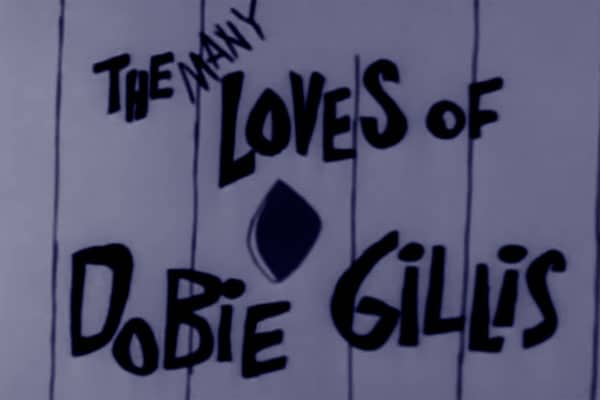
Funny you never realize the generation gap until you mention something from your past to a teenager. At fifteen, I wanted to be a “beatnik”. My idol was a chacter named Maynard G. Krebs from the 1959 TV show “The Many Loves of Dobie Gillis”. Maynard was played by Bob Denver. Maynard was American television’s first beatnik. An enthusiastic fan of jazz music (with a strong distaste for the music of Lawrence Welk), Maynard plays the bongos, collects tinfoil and petrified frogs, and steers clear of romance, authority figures, and work (yelping “Work?!” every time he hears the word).
Always speaking with the vernacular and slang of the beatniks and jazz musicians he admired, Maynard punctuated his sentences with the word “like” and had a tendency towards malapropisms.
I also read the writings of Jack Kerouac and dabbled in Zen Bhuddism, brewed green tea on the school cafeteria floor, plated bongo drums and in practiced the flute in the school auditorium. We all used words like “cool”, “dig”, and “man”, and applauded by snapping our fingers. We got high off of listening to Charlie Byrd and Greenwich Village was our Mecca.
Fredric Durrette served one tour in Vietnam, retired as E8 in the navy submarine service after 23 years. Major hobbies are collecting old stuff from the 20s and restoring old racing bicycles. Worked as a commercial photographer at JL Hudsons in Detroit and continue photography as a hobby. Love Sade, sixties soul, seventies rock, and all jazz. Attended Woodstock in 69! http://snakesafe.jalbum.net/
During my stay in juvenile, my social worker was impressed with my art work and pulled enough strings to get me into a foster home run by the Wilcox family. They had two sons of their own, one younger than me and one older. Staying at their home had it’s drawbacks and it’s benefits. Their house was in the outlying area of Detroit. That meant taking two buses to get to school at Cass Tech in Detroit, one Great Lakes Transit bus and then transferring to a regular Detroit city bus. Cass didn’t care where you lived as long as you maintained a B average and could get to school on time. In fact, I had done the same thing when my mom sent me to live with my aunt Bernice first, then my uncle Shanky, and finally my aunt Jim, all in Pontiac, Michigan. That was the drawback.
The benefit, however, was that we were far enough outside of the city limits that I could hunt. Pop Wilcox let me have an old single shot 410 shotgun with a missing firing pin. Being very good at jury rigging even before I knew what that old navy term meant, I substituted a carpet tack where the firing pin should have been. The only problem was that the carpet tack actually punched a hole in the shell primer causing enough of a blowback that I couldn’t place the gun too close to my face when firing.
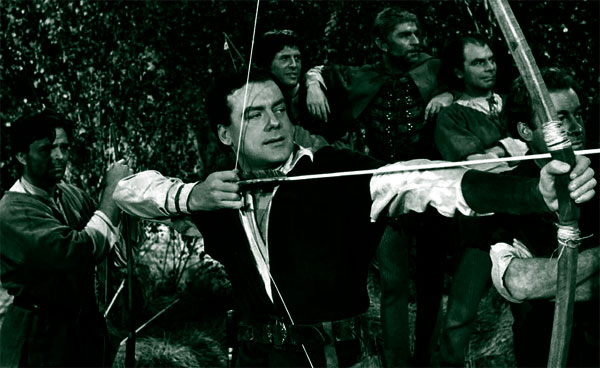
As a young kid, I had watched all the Robin Hood TV shows and fell in love with archery. Actually I got pretty good at it as evidenced by my placing an arrow in my uncle Wilford’s leg when he returned home from the Korean War. Also, we kids played a game of “chicken arrow”, where we’d stand back to back, point our bows upward with our eyes closed and shoot our arrows into the sky, counting to ten before opening our eyes again and dodging the falling arrows.
Another test of our skill was shooting water filled balloons from the hands of any kid we could talk into holding them. To be new to the neighbor meant holding the balloons. Not one neighborhood kid was ever injured, but we all became very skillful with our bows.
So, while at the foster home, I managed to score a used Bear Kodiak recurve bow with several arrows and found I could replace the target tips on the arrows with broadheads or blunt tips for bird and rabbit hunting.
We hunted mostly pheasant in that area, sometimes quail if pop Wilcox let us use his good shotgun. I liked using the bow. Shooting pheasant with a shotgun isn’t easy and shooting them with a bow is harder yet. First, you need a good birding dog and we just happened to have one. A mature German shepherd named Butch. Butch was fantastic in finding and getting the birds to take flight. Pheasant are very heavy birds and they stay on the ground as long as possible, making them hard to get a good shot. A good dog, however, will flush them out. Now, being such a heavy bird, it takes them a while to get up to flying speed during which time they’re also going up at an angle to gain altitude. At one point, they kind of level off and that’s when you have to take your shot. Wait too long and the bird is going too fast and even a shotgun will fail.
The best time to go hunting, although illegal, was any day before the season legally opened. It was suicide to go out into the woods during the season. Many times we had to dodge bullets from the weekend hunters, the guys who had desk jobs in the city and thought anything moving in the woods was a deer. One day, I managed to bag eight pheasant and prayed that the game wardens were eating lunch as I carried my prizes home.
Lakes and creeks in Michigan are clear enough to bowfish and I would often nail a few trout or carp in a nearby stream. Now a lot of people don’t eat carp, but they’ve never had to worry about putting food on the table. You eat a lot of different things when you’re poor. Plus an adult carp can feed a family of four pretty good if cooked properly. I’ve also lost arrows shooting carp with a bow. Carp are hard headed fish and I’ve had arrows simply just bounce off their fishy little skulls and they go on their way.
Flash forward to my first submarine duty on the USS Piper…
When I finished submarine school and got my first assignment to the USS Piper, it was kind of a let down. We were only doing sub school operations. That meant taking a bunch of sub school students out and spending a whole day diving and surfacing, diving and surfacing and trying to teach them what submarines were like. I did it when I was in school. The only good thing was that you became more proficient and went home every night.
Then, one day, we received orders to participate in what was called “Springboard”. Springboard was an annual exercise that meant transiting to Puerto Rico and most likely the Bahamas and the Virgin Islands to operate with surface ships. Having seen photos of the fish in those areas, I knew I had to take my bow with me and even bought a real fancy bowfishing rig just for the trip.
Now, the old diesel submarines usually strung sets of lights along the hull when moored in foreign ports. We called them med mooring lights and the purpose was to enable the sentry to be able to spot any swimmers in the water that might be trying to get on board. The lights also attract lots of zooplankton, small fish to feed on the zooplankton, and big fish that fed on the small fish.
I was standing topside by the engine room hatch and looking over the side when I saw a flash of silver in the water. “Wow, that’s a big fish”, I thought as I started going below to get my bow. A little while later, I returned to the same spot fully armed. I saw that silver thing flash in the mooring lights several times and made my calculations for the next time it would happen. I was ready and excited.
Sure enough, there was the flash of silver and I fired my arrow where I had calculated my target would be. Nailed it. The line from my arrow to the reel on my bow started paying out. However, I couldn’t reel it back in. Whatever I had hit was too darn big, so I just let the line pay out trying to figure what to do next. That wasn’t my decision to make. As soon as the line reached it’s limit, there was a big jolt that almost pulled me over the side. I was just gaining my composure when the second jolt occurred, this time I had to make a choice between going over or simply letting go of my bow. I let the darn bow go.
Two days later, some guys on one of the tugboats were talking about the big tarpoon someone had pulled out of the water with a fishing arrow stuck in it’s side. My arrow! But no bow was ever found.
The Atomic Energy Lab was released by the A.C. Gilbert Company in 1950. The kit’s intention was to allow children to create and watch nuclear and chemical reactions using radioactive material.
The lab contained a cloud chamber that allowed the viewer to watch alpha particles traveling at 12,000 miles per second (19,000,000 m/s), a spinthariscope that showed the results of radioactive disintegration on a fluorescent screen, and an electroscope that measured the radioactivity of different substances that were in the set.
This toy has been called “the world’s most dangerous toy” because of the radioactive material included in the set. Gilbert claimed that none of the materials could conceivably prove dangerous. However, the instructions cautioned that “users should not take ore samples out of their jars, for they tend to flake and crumble and you would run the risk of having radioactive ore spread out in your laboratory. This would raise the level of your background count.”
Product Description:
“Produces awe-inspiring sights! Enables you to actually SEE the paths of electrons and alpha particles traveling at speeds of more than 10,000 miles per SECOND! Electrons racing at fantastic velocities produce delicate, intricate paths of electrical condensation – beautiful to watch. Viewing Cloud Chamber action is closest man has come to watching the Atom! Assembly kit (Chamber can be put together in a few minutes) includes Dri-Electric Power Pack, Deionizer, Compression Bulb, Glass Viewing Chamber, Tubings, Power Leads, Stand, and Legs.”
– Gilbert U-238 Atomic Energy Laboratory
Fredric Durrette served one tour in Vietnam, retired as E8 in the navy submarine service after 23 years. Major hobbies are collecting old stuff from the 20s and restoring old racing bicycles. Worked as a commercial photographer at JL Hudsons in Detroit and continue photography as a hobby. Love Sade, sixties soul, seventies rock, and all jazz. Attended Woodstock in 69! http://snakesafe.jalbum.net/
I am an American.
I’ve been called Colored, Negro, Black, African American, high yellow, and even uncle Tom by some. I’ve also been called bubblehead, Super Fly, senior chief by others. But first and foremost I am an American. I will always be an American even though America isn’t a perfect country.
I once swore an oath to defend America from it’s enemies, both domestic and foreign. That oath still stands. Further, I will not be pandered to nor will I accept the pandering from anyone because of my race or ethnicity. And I will not accept special consideration because of my race or ethnicity. Likewise, I will not not accept being harassed, mistreated, or denied because of my race or ethnicity. I am a man and can stand on my own through success or failure.
I have faith and I trust my life to God. We are all brothers on this planet whether we like it or not and often what’s good for one is good for the other. I also walk to the beat of my own drum, so don’t expect me to be what you think I should be.
I love my fellow man, so I try not to use harsh or vulgar language towards those I don’t agree with. I’ve seen war, death, and injustices throughout the years of my life, yet I still shed a tear when I see my country being torn apart. I’ve also seen kindness, good will, friendship, and the positive things that happen when people come together. That is the real strength of America and it makes me even more proud.
Those are the things that I am. I neither hate nor condone hate, so if you disagree with me or even dislike me, it doesn’t matter. I am who I am, given my strength by my grandparents, my family, and my mother and guided by someone far greater than most of you know.
If anyone wonders why I often post on racial issues, it’s because I believe that if we know our history, we can appreciate how far we’ve come. I’ve lived through the segregated bathrooms, the threat of KKK raids, the civil rights struggles, the riots in Detroit and a lot more. But, the one thing I have seen in my 75 years is the greatness of America and the civility of her people. Since “racism” and “racist” seem to have been entranced into the rhetoric of the left, it’s more important now than ever to put out the truth, without color or bias. Also, you can’t hold present or future generations responsible for what happened 200 years ago. The country was different then and the world was certainly less civilized. Holding grudges is the last resort of the ignorant.
However, we also need to keep in mind that no matter how oppressive America was in the past, it allowed people of all ethnicities to gain an education, become doctors, lawyers, and scientists. African Americans who were the sons of ex slaves became millionaires. “Poverty”? Americans of all ethnicities have suffered poverty at some point of their history, as well as some form of discrimination..
America has a constitution and a bill of rights. There are also volumes of state and city laws that have been passed to protect the rights of everyone. But, passing laws doesn’t change the minds of people. Only people can do that. You also have to realize that a law only gives you legal rights. You don’t eliminate racism by calling everything racist and you don’t end discrimination by burning flags or tearing down monuments. Burning the confederate flag didn’t eliminate racism, it only strengthened the position of real racists and alienated others to identify with extreme groups..
The first time I went to the movies in Grenada, Mississippi back in 1955, we had to sit in the balcony. I didn’t quite understand this as the balcony seats were probably the best seats in the house. We weren’t allowed to buy concessions in the main lobby, so the adults would carry in some sodas and bags of fried chicken for us to snack on.
I wish our politicians and world leaders would concentrate more on bringing us together that tearing us apart. We are all of one family and share the same needs and wants. Even those we call “enemies” have families, wives, sisters and brothers. The world is full of richness if we stop, look, and think… Hate, anger, avarice, and prejudice doesn’t benefit anyone. But most of all, think of what kind of world do you want your children to inherit. Each of us should strive to make the world a better place than what we were born into and it can be done by one person or with one gesture at a time.
Fredric Durrette served one tour in Vietnam, retired as E8 in the navy submarine service after 23 years. Major hobbies are collecting old stuff from the 20s and restoring old racing bicycles. Worked as a commercial photographer at JL Hudsons in Detroit and continue photography as a hobby. Love Sade, sixties soul, seventies rock, and all jazz. Attended Woodstock in 69! http://snakesafe.jalbum.net/
{% if featuredImage and featuredImage != "" %}
{% endif %}
{% if excerpt %}