web analytics

Tag: Movies

  • 1971 Oscars 43rd Academy Awards

    1971 Oscars 43rd Academy Awards

    1971 Oscars 43rd Academy Awards

    971 Oscars 43rd Academy Awards: A Night of Cinematic Marvels

    Winners Announced: April 15, 1971
    Held at: Dorothy Chandler Pavilion, Los Angeles, California
    Host: no one (34 presenters)
    Eligibility Year: 1970

    The Night’s Big Winners and Memorable Moments

    • Patton Sweeps the Night: The biographical war film about General George S. Patton captured seven Oscars, including Best Picture and Best Director for Franklin J. Schaffner.
    • George C. Scott’s No-Show: The leading man for Patton, George C. Scott, won Best Actor but famously refused the award, citing disdain for the competitive nature of acting awards.
    • First Solo Female Director Nominee: Barbara Loden was the first woman nominated for Best Director for her groundbreaking film Wanda.

    Movie Trivia You Didn’t Know You Needed

    • 34 Presenters But No Host: This year, the Oscars went without a host, instead opting for many presenters. This became an interesting format experiment, although not a frequently repeated one.
    • Cicely Tyson’s Historic Nomination: Actress Cicely Tyson was nominated for her role in Sounder, becoming only the second African American woman to be nominated for Best Actress.
    • First Televised Nomination Announcements: This was the year the Oscar nominations were televised for the first time, adding yet another layer of suspense and public interest to the proceedings.
    • Helen Hayes was the first performer in lead and supporting categories to win Oscars.
    • The documentary film Woodstock garnered three Oscar nominations, making it the most nominated documentary film in Oscar history.
    • Take our 1971 Quiz!

    1971 Oscar Nominees and Winners

    Best Picture:
    Patton – Frank McCarthy, producer (WINNER)
    Airport – Ross Hunter, producer
    Five Easy Pieces – Bob Rafelson and Richard Wechsler, producers
    Love Story – Howard G. Minsky, producer
    M*A*S*H – Ingo Preminger, producer
    Best Director:
    Franklin J. Schaffner – Patton (WINNER)
    Federico Fellini – Fellini Satyricon
    Arthur Hiller – Love Story
    Robert Altman – M*A*S*H
    Ken Russell – Women in Love
    Best Actor:
    George C. Scott – Patton as General George S. Patton (declined) (WINNER)
    Melvyn Douglas – I Never Sang for My Father as Tom Garrison
    James Earl Jones – The Great White Hope as Jack Jefferson
    Jack Nicholson – Five Easy Pieces as Robert Eroica Dupea
    Ryan O’Neal – Love Story as Oliver Barrett IV
    Best Actress:
    Glenda Jackson – Women in Love as Gundrun Brangwen (WINNER)
    Jane Alexander – The Great White Hope as Eleanor Backman
    Ali MacGraw – Love Story as Jennifer “Jenny” Cavalleri
    Sarah Miles – Ryan’s Daughter as Rosy Ryan
    Carrie Snodgress – Diary of a Mad Housewife as Bettina “Tina” Balser
    Best Supporting Actor:
    John Mills – Ryan’s Daughter as Michael (WINNER)
    Richard S. Castellano – Lovers and Other Strangers as Frank Vecchio
    Chief Dan George – Little Big Man as Old Lodge Skins
    Gene Hackman – I Never Sang for My Father as Gene Garrison
    John Marley – Love Story as Phil Cavalleri
    Best Supporting Actress:
    Helen Hayes – Airport as Ada Quonsett (WINNER)
    Karen Black – Five Easy Pieces as Rayette Dipesto
    Lee Grant – The Landlord as Joyce Enders
    Sally Kellerman – M*A*S*H as Margaret “Hot Lips” Houlihan
    Maureen Stapleton – Airport as Inez Guerrero
    Best Story and Screenplay Based on Factual Material or Material Not Previously Published or Produced:
    Patton – Francis Ford Coppola and Edmund H. North (WINNER)
    Five Easy Pieces – Screenplay by Adrien Joyce; Story by Bob Rafelson and Adrien Joyce
    Joe – Norman Wexler
    Love Story – Erich Segal
    My Night at Maud’s – Éric Rohmer
    Best Screenplay Based on Material from Another Medium:
    M*A*S*H – Ring Lardner Jr. based on the novel by Richard Hooker (WINNER)
    Airport – George Seaton based on the novel by Arthur Hailey
    I Never Sang for My Father – Robert Woodruff Anderson based on his play
    Lovers and Other Strangers – Renée Taylor, Joseph Bologna and David Zelag Goodman based on the play by Joseph Bologna and Renée Taylor
    Women in Love – Larry Kramer based on the novel by D. H. Lawrence
    Best Documentary Feature:
    Woodstock – Michael Wadleigh (WINNER)
    Erinnerungen an die Zukunft – Harald Reinl (Released in English language version under title “Chariots of the Gods?”)
    Jack Johnson – Jimmy Jacobs
    King: A Filmed Record… Montgomery to Memphis – Ely Landau
    Say Goodbye – David H. Vowell
    Best Documentary Short Subject:
    Interviews with My Lai Veterans – Joseph Strick (WINNER)
    The Gifts
    A Long Way from Nowhere
    Oisin
    Time Is Running Out
    Best Live Action Short Subject:
    The Resurrection of Broncho Billy – John Longenecker (WINNER)
    Shut Up…I’m Crying – Robert Siegler
    Sticky My Fingers…Fleet My Feet – John D. Hancock
    Best Short Subject – Cartoons:
    Is It Always Right to Be Right? – Nick Bosustow (WINNER)
    The Further Adventures of Uncle Sam: Part Two – Robert Mitchell and Dale Case
    The Shepherd – Cameron Guess
    Best Original Score:
    Love Story – Francis Lai (WINNER)
    Airport – Alfred Newman (posthumous nomination)
    Cromwell – Frank Cordell
    Patton – Jerry Goldsmith
    I Girasoli – Henry Mancini
    Best Original Song Score:
    Let It Be – Music and Lyrics by The Beatles: John Lennon, Paul McCartney, George Harrison, and Ringo Starr (WINNER)
    The Baby Maker – Music by Fred Karlin; Lyrics by Tylwyth Kymry
    A Boy Named Charlie Brown – Music by Rod McKuen and John Scott Trotter; Lyrics by Rod McKuen, Bill Melendez, and Al Shean; Adapted by Vince Guaraldi
    Darling Lili – Music by Henry Mancini; Lyrics by Johnny Mercer
    Scrooge – Music and Lyrics by Leslie Bricusse; Adapted by Ian Fraser and Herbert W. Spencer
    Best Song Original for the Picture:
    “For All We Know” – Lovers and Other Strangers • Music by Fred Karlin • Lyrics by Robb Royer (Robb Wilson) and Jimmy Griffin (Arthur James) (WINNER)
    “Whistling Away the Dark” – Darling Lili • Music by Henry Mancini • Lyrics by Johnny Mercer
    “Till Love Touches Your Life” – Madron • Music by Riz Ortolani • Lyrics by Arthur Hamilton
    “Pieces of Dreams” – Pieces of Dreams • Music by Michel Legrand • Lyrics by Alan Bergman and Marilyn Bergman
    “Thank You Very Much” – Scrooge • Music and Lyrics by Leslie Bricusse
    Best Sound:
    Patton – Douglas Williams and Don Bassman (WINNER)
    Airport – Ronald Pierce and David H. Moriarty
    Ryan’s Daughter – Gordon McCallum and John Bramall
    Tora! Tora! Tora! – Murray Spivack and Herman Lewis
    Woodstock – Dan Wallin and L. A. Johnson
    Best Foreign Language Film:
    Investigation of a Citizen Above Suspicion (Italy) (WINNER)
    First Love (Switzerland)
    Hoa-Binh (France)
    Paix sur les champs (Belgium)
    Tristana (Spain)
    Best Costume Design:
    Cromwell – Vittorio Nino Novarese (WINNER)
    Airport – Edith Head
    Darling Lili – Donald Brooks and Jack Bear
    The Hawaiians – Bill Thomas
    Scrooge – Margaret Furse
    Best Art Direction:
    Patton – Art Direction: Urie McCleary and Gil Parrondo; Set Decoration: Antonio Mateos and Pierre-Louis Thévenet (WINNER)
    Airport – Art Direction: Alexander Golitzen and E. Preston Ames; Set Decoration: Jack D. Moore and Mickey S. Michaels
    The Molly Maguires – Art Direction: Tambi Larsen; Set Decoration: Darrell Silvera
    Scrooge – Art Direction: Terence Marsh and Bob Cartwright; Set Decoration: Pamela Cornell
    Tora! Tora! Tora! – Art Direction: Jack Martin Smith, Yoshiro Muraki, Richard Day, and Taizoh Kawashima; Set Decoration: Walter M. Scott, Norman Rockett and Carl Biddiscombe
    Best Cinematography:
    Ryan’s Daughter – Freddie Young (WINNER)
    Airport – Ernest Laszlo
    Patton – Fred J. Koenekamp
    Tora! Tora! Tora! – Charles F. Wheeler, Osami Furuya, Masamichi Satoh, and Sinsaku Himeda
    Women in Love – Billy Williams
    Best Film Editing:
    Patton – Hugh S. Fowler (WINNER)
    Airport – Stuart Gilmore
    M*A*S*H – Danford B. Greene
    Tora! Tora! Tora! – James E. Newcom, Pembroke J. Herring, and Inoue Chikaya
    Woodstock – Thelma Schoonmaker
    Best Special Visual Effects:
    Tora! Tora! Tora! – A. D. Flowers and L. B. Abbott (WINNER)
    Patton – Alex Weldon
    Oscar® and Academy Awards® and Oscar® design mark are the trademarks and service marks and the Oscar© statuette the copyrighted property, of the Academy of Motion Picture Arts and Sciences. Pop Culture Madness is neither endorsed by nor affiliated with the Academy of Motion Picture Arts and Sciences.
  • 1970 Oscars 42nd Academy Awards

    1970 Oscars 42nd Academy Awards

    1970 Oscars 42nd Academy Awards

    Winners Announced: April 7, 1970
    Held at: Dorothy Chandler Pavilion, Los Angeles, California
    Host: no one
    Presenters: Bob Hope, John Wayne, Barbra Streisand, Fred Astaire, Jon Voight, Myrna Loy, Clint Eastwood, Raquel Welch, Candice Bergen, James Earl Jones, Katharine Ross, Cliff Robertson, Ali MacGraw, Barbara McNair, Elliott Gould, Claudia Cardinale, and Elizabeth Taylor.
    Eligibility Year: 1969

    Cinematic Highlights and Achievements

    • Midnight Cowboy Makes History: It remains the only X-rated film to win Best Picture.
    • A Double for Hepburn: Katharine Hepburn won her third Best Actress award for her role in The Lion in Winter, tying her with the previous record.
    • Roaring Musical Score: Burt Bacharach’s Raindrops Keep Fallin’ on My Head from Butch Cassidy and the Sundance Kid won Best Original Song and became an instant classic.

    Trivia and Fascinating Facts

    • Who Needs a Host?: This was the first Oscars to go on without a host, relying on various presenters for segments.
    • Streisand and Ross: Barbra Streisand and Katharine Ross were not only presenters but also prior Best Actress nominees, giving a nod to the Oscars’ storied past.
    • A Galaxy of Stars: The night featured an eclectic mix of presenters, from the ever-graceful Fred Astaire to the commanding voice of James Earl Jones, capturing the wide array of Hollywood talent.
    • They Shoot Horses, Don’t They? earned nine nominations but not one for Best Picture.
    • According to Nielsen ratings, this was the highest rated of the televised Academy Awards ceremonies. Since then, the Super Bowl has had higher ratings.
    • Midnight Cowboy was the only Oscar-winning film rated X. It would barely rank an R by modern standards.
    • Take our 1970 Quiz!

    1970 Oscar Nominees and Winners

    Best Picture:
    Midnight Cowboy – Jerome Hellman, producer (WINNER)
    Anne of the Thousand Days – Hal B. Wallis, producer
    Butch Cassidy and the Sundance Kid – John Foreman, producer
    Hello, Dolly! – Ernest Lehman, producer
    Z – Jacques Perrin and Ahmed Rachedi, producers
    Best Director:
    John Schlesinger – Midnight Cowboy (WINNER)
    Arthur Penn – Alice’s Restaurant
    George Roy Hill – Butch Cassidy and the Sundance Kid
    Sydney Pollack – They Shoot Horses, Don’t They?
    Costa-Gavras – Z
    Best Actor:
    John Wayne – True Grit as Rooster Cogburn (WINNER)
    Richard Burton – Anne of the Thousand Days as King Henry VIII of England
    Dustin Hoffman – Midnight Cowboy as Enrico “Ratso” Rizzo
    Peter O’Toole – Goodbye, Mr. Chips as Arthur Chipping
    Jon Voight – Midnight Cowboy as Joe Buck
    Best Actress:
    Maggie Smith – The Prime of Miss Jean Brodie as Jean Brodie (WINNER)
    Geneviève Bujold – Anne of the Thousand Days as Anne Boleyn
    Jane Fonda – They Shoot Horses, Don’t They? as Gloria Beatty
    Liza Minnelli – The Sterile Cuckoo as Mary Ann “Pookie” Adams
    Jean Simmons – The Happy Ending as Mary Wilson
    Best Supporting Actor:
    Gig Young – They Shoot Horses, Don’t They? as Rocky (WINNER)
    Rupert Crosse – The Reivers as Ned
    Elliott Gould – Bob & Carol & Ted & Alice as Ted
    Jack Nicholson – Easy Rider as George Hanson
    Anthony Quayle – Anne of the Thousand Days as Thomas Wolsey
    Best Supporting Actress:
    Goldie Hawn – Cactus Flower as Toni Simmons (WINNER)
    Catherine Burns – Last Summer as Rhoda
    Dyan Cannon – Bob & Carol & Ted & Alice as Alice Henderson
    Sylvia Miles – Midnight Cowboy as Cass
    Susannah York – They Shoot Horses, Don’t They? as Alice LeBlanc
    Best Story and Screenplay Based on Material Not Previously Published or Produced:
    Butch Cassidy and the Sundance Kid – William Goldman (WINNER)
    Bob & Carol & Ted & Alice – Paul Mazursky and Larry Tucker
    The Damned – Story by Nicola Badalucco; Screenplay by Nicola Badalucco, Enrico Medioli, and Luchino Visconti
    Easy Rider – Peter Fonda, Dennis Hopper and Terry Southern
    The Wild Bunch – Story by Walon Green and Roy N. Sickner; Screenplay by Walon Green and Sam Peckinpah
    Best Screenplay Based on Material from Another Medium:
    Midnight Cowboy – Waldo Salt based on the novel by James Leo Herlihy (WINNER)
    Anne of the Thousand Days – Screenplay by John Hale and Bridget Boland; Adaptation by Richard Sokolove based on the play by Maxwell Anderson
    Goodbye, Columbus – Arnold Schulman based on the novel by Philip Roth
    They Shoot Horses, Don’t They? – James Poe and Robert E. Thompson based on the novel by Horace McCoy
    Z – Jorge Semprun and Costa-Gavras based on the novel by Vassilis Vassilikos
    Best Documentary Feature:
    Arthur Rubinstein – The Love of Life (WINNER)
    Before the Mountain Was Moved
    In the Year of the Pig
    Olimpiada en México
    The Wolf Men
    Best Documentary Short Subject:
    Czechoslovakia 1968 – Denis Sanders and Robert M. Fresco (WINNER)
    An Impression of John Steinbeck: Writer
    Jenny Is a Good Thing
    Leo Beuerman
    The Magic Machines
    Best Live Action Short Subject:
    The Magic Machines – Joan Keller Stern (WINNER)
    Blake – Doug Jackson
    People Soup – Marc Merson
    Best Short Subject – Cartoons:
    It’s Tough to Be a Bird – Ward Kimball (WINNER)
    Of Men and Demons – John Hubley and Faith Hubley
    Walking – Ryan Larkin
    Best Original Score for a Motion Picture (Not a Musical):
    Butch Cassidy and the Sundance Kid – Burt Bacharach (WINNER)
    Anne of the Thousand Days – Georges Delerue
    The Reivers – John Williams
    The Secret of Santa Vittoria – Ernest Gold
    The Wild Bunch – Jerry Fielding
    Best Score of a Musical Picture – Original or Adaptation:
    Hello, Dolly! – Adaptation score by Lennie Hayton and Lionel Newman (WINNER)
    Goodbye, Mr. Chips – Music and Lyrics by Leslie Bricusse; Adaptation score by John Williams
    Paint Your Wagon – Adaptation score by Nelson Riddle
    Sweet Charity – Adaptation score by Cy Coleman
    They Shoot Horses, Don’t They? – Adaptation score by Johnny Green and Albert Woodbury
    Best Song Original for the Picture:
    Butch Cassidy and the Sundance Kid – Burt Bacharach and Hal David for “Raindrops Keep Fallin’ on My Head” (WINNER)
    “Come Saturday Morning” – The Sterile Cuckoo • Music by Fred Karlin • Lyrics by Dory Previn
    “Jean” – The Prime of Miss Jean Brodie • Music and Lyrics by Rod McKuen
    “True Grit” – True Grit • Music by Elmer Bernstein • Lyrics by Don Black
    “What Are You Doing the Rest of Your Life?” – The Happy Ending • Music by Michel Legrand • Lyrics by Alan and Marilyn Bergman
    Best Sound:
    Hello, Dolly! – Jack Solomon and Murray Spivack (WINNER)
    Anne of the Thousand Days – John Aldred
    Butch Cassidy and the Sundance Kid – William Edmondson and David Dockendorf
    Gaily, Gaily – Robert Martin and Clem Portman
    Marooned – Les Fresholtz and Arthur Piantadosi
    Best Foreign Language Film:
    Z (Algeria) (WINNER)
    Ådalen 31 (Sweden)
    Battle of Neretva (Yugoslavia)
    The Brothers Karamazov (Soviet Union)
    My Night at Maud’s (France)
    Best Costume Design:
    Anne of the Thousand Days – Margaret Furse (WINNER)
    Gaily, Gaily – Ray Aghayan
    Hello, Dolly! – Irene Sharaff
    Sweet Charity – Edith Head
    They Shoot Horses, Don’t They? – Donfeld
    Best Art Direction:
    Hello, Dolly! – Art Direction: John DeCuir, Jack Martin Smith, and Herman A. Blumenthal; Set Decoration: Walter M. Scott, George James Hopkins, and Raphaël Bretton (WINNER)
    Anne of the Thousand Days – Art Direction: Maurice Carter and Lionel Couch; Set Decoration: Patrick McLoughlin
    Gaily, Gaily – Art Direction: Robert F. Boyle and George B. Chan; Set Decoration: Edward G. Boyle and Carl Biddiscombe
    Sweet Charity – Art Direction: Alexander Golitzen and George C. Webb; Set Decoration: Jack D. Moore
    They Shoot Horses, Don’t They? – Art Direction: Harry Horner; Set Decoration: Frank R. McKelvy
    Best Cinematography:
    Butch Cassidy and the Sundance Kid – Conrad Hall (WINNER)
    Anne of the Thousand Days – Arthur Ibbetson
    Bob & Carol & Ted & Alice – Charles Lang
    Hello, Dolly! – Harry Stradling (posthumous nomination)
    Marooned – Daniel L. Fapp
    Best Film Editing:
    Z – Françoise Bonnot (WINNER)
    Hello, Dolly! – William H. Reynolds
    Midnight Cowboy – Hugh A. Robertson
    The Secret of Santa Vittoria – William Lyon and Earle Herdan
    They Shoot Horses, Don’t They? – Fredric Steinkamp
    Best Special Visual Effects:
    Marooned – Robbie Robertson (WINNER)
    Krakatoa, East of Java – Eugène Lourié and Alex Weldon
    Oscar® and Academy Awards® and Oscar® design mark are the trademarks and service marks and the Oscar© statuette the copyrighted property, of the Academy of Motion Picture Arts and Sciences. Pop Culture Madness is neither endorsed by nor affiliated with the Academy of Motion Picture Arts and Sciences.
  • 1969 Oscars 41st Academy Awards

    1969 Oscars 41st Academy Awards

    1969 Oscars 41st Academy Awards

    Winners Announced: April 14, 1969
    Held at: Dorothy Chandler Pavilion, Los Angeles, California
    Host: no one
    Eligibility Year: 1968

    Cinematic Highlights and Achievements

    • Oliver! Steals the Show: This musical adaptation of Charles Dickens’ novel surprised many by bagging six awards, including Best Picture.
    • Oliver! had 11 nominations, winning five awards.
    • Oliver! was the only G-rated film to win Best Picture.
    • Heat for Cool Hand Luke: Strother Martin coined the memorable line “What we’ve got here is failure to communicate” in this film. Although not a winner, the movie received nominations and became iconic.
    • Katharine Hepburn’s Double Act: Hepburn won Best Actress for her role in The Lion in Winter, sharing the honor with Barbra Streisand for Funny Girl—an Oscars first!

    Trivia and Noteworthy Moments

    • Host-less Night: For the first time in its history, the Academy Awards had no host, creating a more streamlined (but less comedic) atmosphere.
    • Political Activism: When Marlon Brando won Best Actor for The Godfather, he sent Native American activist Sacheen Littlefeather to decline the award as a protest against Hollywood’s portrayal of Native Americans in film.
    • Foreign Influence: The Best Director award went to Carol Reed for Oliver!, marking a triumph for British cinema in Hollywood.
    • Take our 1969 Quiz!

    1969 Oscar Nominees and Winners

    Best Picture:
    Oliver! – John Woolf, producer (WINNER)
    Funny Girl – Ray Stark, producer
    The Lion In Winter – Martin Poll, producer
    Rachel, Rachel – Paul Newman, producer
    Romeo and Juliet – John Brabourne and Anthony Havelock-Allan, producers
    Best Director:
    Carol Reed – Oliver! (WINNER)
    Stanley Kubrick – 2001: A Space Odyssey
    Gillo Pontecorvo – The Battle of Algiers
    Anthony Harvey – The Lion In Winter
    Franco Zeffirelli – Romeo and Juliet
    Best Actor:
    Cliff Robertson – Charly as Charlie Gordon (WINNER)
    Alan Arkin – The Heart Is a Lonely Hunter as John Singer
    Alan Bates – The Fixer as Yakov Bok
    Ron Moody – Oliver! as Fagin
    Peter O’Toole – The Lion In Winter as King Henry II of England
    Best Actress (tie):
    Katharine Hepburn – The Lion In Winter as Eleanor of Aquitaine (WINNER)
    Barbra Streisand – Funny Girl as Fanny Brice (WINNER)
    Patricia Neal – The Subject Was Roses as Nettie Cleary
    Vanessa Redgrave – Isadora as Isadora Duncan
    Joanne Woodward – Rachel, Rachel as Rachel Cameron
    Best Supporting Actor:
    Jack Albertson – The Subject Was Roses as John Cleary (WINNER)
    Seymour Cassel – Faces as Chet
    Daniel Massey – Star! as Noël Coward
    Jack Wild – Oliver! as Jack Dawkins (“The Artful Dodger”)
    Gene Wilder – The Producers as Leo Bloom
    Best Supporting Actress:
    Ruth Gordon – Rosemary’s Baby as Minnie Castevet (WINNER)
    Lynn Carlin – Faces as Maria Frost
    Sondra Locke – The Heart Is a Lonely Hunter as Mick Kelly
    Kay Medford – Funny Girl as Rose Stern Borach
    Estelle Parsons – Rachel, Rachel as Calla Mackie
    Best Story and Screenplay Written Directly for the Screen:
    The Producers – Mel Brooks (WINNER)
    2001: A Space Odyssey – Stanley Kubrick and Arthur C. Clarke
    The Battle of Algiers – Franco Solinas and Gillo Pontecorvo
    Faces – John Cassavetes
    Hot Millions – Ira Wallach and Peter Ustinov
    Best Screenplay Based on Material from Another Medium:
    The Lion in Winter – James Goldman based on his play (WINNER)
    The Odd Couple – Neil Simon based on his play
    Oliver! – Vernon Harris based on the play by Lionel Bart and Oliver Twist by Charles Dickens
    Rachel, Rachel – Stewart Stern based on the novel A Jest of God by Margaret Laurence
    Rosemary’s Baby – Roman Polanski based on the novel by Ira Levin
    Best Documentary Feature:
    Journey into Self – Bill McGaw (WINNER)
    A Few Notes on Our Food Problem – U.S. Information Agency
    The Legendary Champions – William Cayton
    Other Voices – David H. Sawyer
    Young Americans – Robert Cohn and Alex Grasshoff
    Best Documentary Short Subject:
    Why Man Creates – Saul Bass (WINNER)
    The House That Ananda Built – Films Division, Government of India
    The Revolving Door – Vision Associates Production for the American Foundation Institute of Corrections
    A Space to Grow – Office of Economic Opportunity for Project Upward Bound
    A Way Out of the Wilderness – Dan E. Weisburd
    Best Live Action Short Subject:
    Robert Kennedy Remembered – Guggenheim Productions (WINNER)
    The Dove – Coe-Davis Ltd.
    Duo – National Film Board of Canada
    Prelude – Prelude Co.
    Best Short Subject – Cartoons:
    Winnie the Pooh and the Blustery Day – Walt Disney (posthumous award) (WINNER)
    The House That Jack Built – National Film Board of Canada
    The Magic Pear Tree – Murakami-Wolf Films
    Windy Day – Hubley Studios
    Best Original Score for a Motion Picture (Not a Musical):
    The Lion in Winter – John Barry (WINNER)
    The Fox – Lalo Schifrin
    Planet of the Apes – Jerry Goldsmith
    The Shoes of the Fisherman – Alex North
    The Thomas Crown Affair – Michel Legrand
    Best Score of a Musical Picture – Original or Adaptation:
    Oliver! – Johnny Green (WINNER)
    Finian’s Rainbow – Ray Heindorf
    Funny Girl – Walter Scharf
    Star! – Lennie Hayton
    The Young Girls of Rochefort – Adaptation: Michel Legrand; Song Score: Michel Legrand and Jacques Demy
    Best Song Original for the Picture:
    “The Windmills of Your Mind” from The Thomas Crown Affair – Music by Michel Legrand; Lyrics by Alan and Marilyn Bergman (WINNER)
    “Chitty Chitty Bang Bang” from Chitty Chitty Bang Bang – Music and Lyrics by The Sherman Brothers: Richard M. Sherman and Robert B. Sherman
    “For Love of Ivy” from For Love of Ivy – Music by Quincy Jones; Lyrics by Bob Russell
    “Funny Girl” from Funny Girl – Music by Jule Styne; Lyrics by Bob Merrill
    “Star!” from Star! – Music by Jimmy Van Heusen; Lyrics by Sammy Cahn
    Best Sound:
    Oliver! – Shepperton Studio Sound Dept. (WINNER)
    Bullitt – Warner Bros.-Seven Arts Studio Sound Dept.
    Finian’s Rainbow – Warner Bros.-Seven Arts Studio Sound Dept.
    Funny Girl – Columbia Studio Sound Dept.
    Star! – Twentieth Century-Fox Studio Sound Dept.
    Best Foreign Language Film:
    War and Peace – U.S.S.R. (WINNER)
    The Boys of Paul Street – Hungary
    The Firemen’s Ball – Czechoslovakia
    The Girl with the Pistol – Italy
    Stolen Kisses – France
    Best Costume Design:
    Romeo and Juliet – Danilo Donati (WINNER)
    The Lion in Winter – Margaret Furse
    Oliver! – Phyllis Dalton
    Planet of the Apes – Morton Haack
    Star! – Donald Brooks
    Best Art Direction:
    Oliver! – Art Direction: John Box and Terence Marsh; Set Decoration: Vernon Dixon and Ken Muggleston (WINNER)
    2001: A Space Odyssey – Art Direction and Set Decoration: Anthony Masters, Harry Lange and Ernest Archer
    The Shoes of the Fisherman – Art Direction and Set Decoration: George W. Davis and Edward Carfagno
    Star! – Art Direction: Boris Leven; Set Decoration: Walter M. Scott and Howard Bristol
    War and Peace – Art Direction: Mikhail Bogdanov and Gennady Myasnikov; Set Decoration: G. Koshelev and V. Uvarov
    Best Cinematography:
    Romeo and Juliet – Pasqualino De Santis (WINNER)
    Funny Girl – Harry Stradling
    Ice Station Zebra – Daniel L. Fapp
    Oliver! – Oswald Morris
    Star! – Ernest Laszlo
    Best Film Editing:
    Bullitt – Frank P. Keller (WINNER)
    Funny Girl – Robert Swink, Maury Winetrobe and William Sands
    The Odd Couple – Frank Bracht
    Oliver! – Ralph Kemplen
    Wild in the Streets – Fred R. Feitshans Jr. and Eve Newman
    Best Special Visual Effects:
    2001: A Space Odyssey – Stanley Kubrick (WINNER)
    Ice Station Zebra – Hal Millar and Joseph McMillan Johnson
    Jean Hersholt Humanitarian Award:
    Martha Raye
    Honorary Awards:
    Walter Matthau presented John Chambers his award for outstanding makeup achievement for Planet of the Apes
    Diahann Carroll presented Onna White her award for outstanding choreography achievement for Oliver!
    Oscar® and Academy Awards® and Oscar® design mark are the trademarks and service marks and the Oscar© statuette the copyrighted property, of the Academy of Motion Picture Arts and Sciences. Pop Culture Madness is neither endorsed by nor affiliated with the Academy of Motion Picture Arts and Sciences.
  • 1968 Oscars 40th Academy Awards

    1968 Oscars 40th Academy Awards

    1968 Oscars 40th Academy Awards

    Winners Announced: April 10, 1968
    Held at: Santa Monica Civic Auditorium, Santa Monica, California
    Host: Bob Hope
    Eligibility Year: 1967

    Cinematic Highlights and Achievements

    • In the Heat of the Night Stands Out: The film grabbed five Oscars, including Best Picture. Sidney Poitier’s performance was highly praised, though he didn’t win an award that evening.
    • Katharine Hepburn’s Historic Win: The legendary actress snagged her second Best Actress award for Guess Who’s Coming to Dinner but didn’t attend the ceremony.
    • Cool Hand Luke’s Iconic Score: The film took home the Best Original Score, adding to its cult classic status.
    • The Graduate Gets Noticed: While it didn’t win Best Picture, Mike Nichols did receive Best Director, and the film has since become a cultural landmark.

    Trivia

    • Delayed but Not Deterred: The ceremony was originally scheduled for April 8 but was postponed for two days due to Martin Luther King Jr.’s assassination.
    • Bob Hope’s Streak: This year marked yet another hosting gig for Bob Hope, who had become synonymous with the Oscars by this point.
    • First Oscar for a Canadian: Walter Matthau won the Best Supporting Actor award for The Fortune Cookie, becoming the first Canadian actor to win an Oscar.
    • The Graduate was the last film to win Best Director and nothing else.
    • Bonnie and Clyde and Guess Who’s Coming to Dinner earned ten nominations, each winning 2.
    • Alfred Hitchcock’s acceptance speech is one of the shortest in Academy Awards history: “Thank you very much indeed”.
    • John Williams received his first nomination for scoring Valley of the Dolls.
    • This was the first ceremony since the 1948 awards show to feature film clips from the Best Picture nominated films.
    • Take our 1968 Quiz!

    1968 Oscar Nominees and Winners

    Best Picture:
    In the Heat of the Night – Walter Mirisch (WINNER)
    Bonnie and Clyde – Warren Beatty
    Doctor Dolittle – Arthur P. Jacobs
    The Graduate – Lawrence Turman
    Guess Who’s Coming to Dinner – Stanley Kramer
    Best Director:
    Mike Nichols – The Graduate (WINNER)
    Arthur Penn – Bonnie and Clyde
    Stanley Kramer – Guess Who’s Coming to Dinner
    Richard Brooks – In Cold Blood
    Norman Jewison – In the Heat of the Night
    Best Actor:
    Rod Steiger – In the Heat of the Night as Police Chief Bill Gillespie (WINNER)
    Warren Beatty – Bonnie and Clyde as Clyde Barrow
    Dustin Hoffman – The Graduate as Benjamin Braddock
    Paul Newman – Cool Hand Luke as Lucas “Cool Hand Luke” Jackson
    Spencer Tracy (posthumous nomination) – Guess Who’s Coming to Dinner as Matt Drayton
    Best Actress:
    Katharine Hepburn – Guess Who’s Coming to Dinner as Christina Drayton (WINNER)
    Anne Bancroft – The Graduate as Mrs. Robinson
    Faye Dunaway – Bonnie and Clyde as Bonnie Parker
    Edith Evans – The Whisperers as Mrs. Ross
    Audrey Hepburn – Wait Until Dark as Susy Hendrix
    Best Supporting Actor:
    George Kennedy – Cool Hand Luke as Dragline (WINNER)
    John Cassavetes – The Dirty Dozen as V.R. Franko
    Gene Hackman – Bonnie and Clyde as Buck Barrow
    Cecil Kellaway – Guess Who’s Coming to Dinner as Monsignor Ryan
    Michael J. Pollard – Bonnie and Clyde as C.W. Moss
    Best Supporting Actress:
    Estelle Parsons – Bonnie and Clyde as Blanche Barrow (WINNER)
    Carol Channing – Thoroughly Modern Millie as Muzzy
    Mildred Natwick – Barefoot in the Park as Ethel Banks
    Beah Richards – Guess Who’s Coming to Dinner as Mrs. Mary Prentice
    Katharine Ross – The Graduate as Elaine Robinson
    Best Story and Screenplay Written Directly for the Screen:
    Guess Who’s Coming to Dinner – William Rose (WINNER)
    Bonnie and Clyde – David Newman and Robert Benton
    Divorce American Style – Screenplay by Norman Lear; Story by Robert Kaufman
    Two for the Road – Frederic Raphael
    The War Is Over – Jorge Semprún
    Best Screenplay Based on Material from Another Medium:
    In the Heat of the Night – Stirling Silliphant based on the novel by John Ball (WINNER)
    Cool Hand Luke – Donn Pearce and Frank Pierson based on the novel by Donn Pearce
    The Graduate – Buck Henry and Calder Willingham based on the novel by Charles Webb
    In Cold Blood – Richard Brooks based on the novel by Truman Capote
    Ulysses – Joseph Strick and Fred Haines based on the novel by James Joyce
    Best Foreign Language Film:
    Closely Watched Trains (Czechoslovakia) (WINNER)
    El amor brujo (Spain)
    I Even Met Happy Gypsies (Yugoslavia)
    Live for Life (France)
    Portrait of Chieko (Japan)
    Best Documentary Feature:
    The Anderson Platoon (WINNER)
    Festival
    Harvest
    A King’s Story
    A Time for Burning
    Best Documentary Short Subject:
    The Redwoods – Mark Harris and Trevor Greenwood (WINNER)
    Monument to the Dream
    A Place to Stand
    See You at the Pillar
    While I Run This Race
    Best Live Action Short Subject:
    A Place to Stand – Christopher Chapman and Cam McWhirt (WINNER)
    Paddle to the Sea – Julian Biggs
    Sky over Holland – John Ferno
    Stop Look and Listen – Len Janson and Chuck Menville
    Best Short Subject – Cartoons:
    The Box (WINNER)
    Hypothese Beta
    What on Earth!
    Best Original Music Score:
    Thoroughly Modern Millie – Elmer Bernstein (WINNER)
    Cool Hand Luke – Lalo Schifrin
    Doctor Dolittle – Leslie Bricusse
    Far from the Madding Crowd – Richard Rodney Bennett
    In Cold Blood – Quincy Jones
    Best Original Song Score or Adaptation Score:
    Camelot – Alfred Newman and Ken Darby (WINNER)
    Doctor Dolittle – Lionel Newman and Alexander Courage
    Guess Who’s Coming to Dinner – Frank De Vol
    Thoroughly Modern Millie – André Previn and Joseph Gershenson
    Valley of the Dolls – John Williams
    Best Song:
    “Talk to the Animals” from Doctor Dolittle – Music and Lyrics by Leslie Bricusse (WINNER)
    “The Bare Necessities” from The Jungle Book – Music and Lyrics by Terry Gilkyson
    “The Eyes of Love” from Banning – Music by Quincy Jones; Lyrics by Bob Russell
    “The Look of Love” from Casino Royale – Music by Burt Bacharach; Lyrics by Hal David
    “Thoroughly Modern Millie” from Thoroughly Modern Millie – Music by Jimmy Van Heusen; Lyrics by Sammy Cahn
    Best Costume Design:
    Camelot – John Truscott (WINNER)
    Bonnie and Clyde – Theadora Van Runkle
    The Happiest Millionaire – Bill Thomas
    The Taming of the Shrew – Danilo Donati and Irene Sharaff
    Thoroughly Modern Millie – Jean Louis
    Best Art Direction:
    Camelot – Art Direction: John Truscott and Edward Carrere; Set Decoration: John W. Brown (WINNER)
    Doctor Dolittle – Art Direction: Mario Chiari, Jack Martin Smith and Ed Graves; Set Decoration: Walter M. Scott and Stuart A. Reiss
    Guess Who’s Coming to Dinner – Art Direction: Robert Clatworthy; Set Decoration: Frank Tuttle
    The Taming of the Shrew – Art Direction: Renzo Mongiardino, John DeCuir, Elven Webb and Giuseppe Mariani; Set Decoration: Dario Simoni and Luigi Gervasi
    Thoroughly Modern Millie – Art Direction: Alexander Golitzen and George C. Webb; Set Decoration: Howard Bristol
    Best Cinematography:
    Bonnie and Clyde – Burnett Guffey (WINNER)
    Camelot – Richard H. Kline
    Doctor Dolittle – Robert L. Surtees
    The Graduate – Robert L. Surtees
    In Cold Blood – Conrad L. Hall
    Best Sound:
    In the Heat of the Night – Samuel Goldwyn Studio Sound Department (WINNER)
    Camelot – Warner Bros.-Seven Arts Studio Sound Department
    The Dirty Dozen – Metro-Goldwyn-Mayer Studio Sound Department
    Doctor Dolittle – 20th Century-Fox Studio Sound Department
    Thoroughly Modern Millie – Universal City Studio Sound Department
    Best Sound Effects:
    The Dirty Dozen – John Poyner (WINNER)
    In the Heat of the Night – James Richard
    Best Film Editing:
    In the Heat of the Night – Hal Ashby (WINNER)
    Beach Red – Frank P. Keller
    The Dirty Dozen – Michael Luciano
    Doctor Dolittle – Samuel E. Beetley and Marjorie Fowler
    Guess Who’s Coming to Dinner – Robert C. Jones
    Best Special Visual Effects:
    Doctor Dolittle – L. B. Abbott (WINNER)
    Tobruk – Howard A. Anderson and Albert Whitlock
    Jean Hersholt Humanitarian Award
    Gregory Peck
    Irving G. Thalberg Memorial Award:
    Alfred Hitchcock
    Honorary Oscar:
    Arthur Freed was presented for distinguished service to the Academy and the production of six top-rated Awards telecasts.
    Oscar® and Academy Awards® and Oscar® design mark are the trademarks and service marks and the Oscar© statuette the copyrighted property, of the Academy of Motion Picture Arts and Sciences. Pop Culture Madness is neither endorsed by nor affiliated with the Academy of Motion Picture Arts and Sciences.

     

  • 1967 Oscars 39th Academy Awards

    1967 Oscars 39th Academy Awards

    1967 Oscars 39th Academy Awards

    Winners Announced: April 10, 1967
    Held at: Santa Monica Civic Auditorium, Santa Monica, California
    Host: Bob Hope
    Eligibility Year: 1966

    Cinematic Highlights and Achievements

    • A Man for All Seasons Stands Tall: This historical drama won the night’s big winner, securing six Oscars, including Best Picture and Best Director for Fred Zinnemann.
    • New Kid on the Block: Actor Paul Scofield won Best Actor for his role in A Man for All Seasons, making his Oscar debut memorable.
    • Captivating Costumes: Who’s Afraid of Virginia Woolf? scored big in the Best Costume Design category, underlining the film’s meticulous attention to detail.
    • Born Free Roars: The movie won two awards for Best Original Song and Best Original Score, making it a melodic night success.

    Trivia

    • Bob Hope Strikes Again: Bob Hope hosted for the 14th time, setting a host record that would last for decades.
    • Walter Matthau’s Snub: Despite the film The Fortune Cookie earning him a nomination, Matthau failed to grab an Oscar, causing some eyebrows to rise.
    • The Fortune Cookie Firsts: This film was the first to pair Jack Lemmon and Walter Matthau, sparking an on-screen partnership for years.
    • The “Academy Award of Merit” is what the Oscar statue is officially called.
    • Take our 1967 Quiz!

    1967 Oscar Nominees and Winners

    Best Picture:
    A Man for All Seasons – Fred Zinnemann (WINNER)
    Alfie – Lewis Gilbert
    The Russians Are Coming, the Russians Are Coming – Norman Jewison
    The Sand Pebbles – Robert Wise
    Who’s Afraid of Virginia Woolf? – Ernest Lehman
    Best Director:
    Fred Zinnemann – A Man for All Seasons (WINNER)
    Michelangelo Antonioni – Blowup
    Claude Lelouch – A Man and a Woman
    Richard Brooks – The Professionals
    Mike Nichols – Who’s Afraid of Virginia Woolf?
    Best Actor:
    Paul Scofield – A Man for All Seasons as Sir Thomas More (WINNER)
    Alan Arkin – The Russians Are Coming, the Russians Are Coming as Lt. Yuri Rozanov
    Richard Burton – Who’s Afraid of Virginia Woolf? as George
    Michael Caine – Alfie as Alfie Elkins
    Steve McQueen – The Sand Pebbles as Jake Holman
    Best Actress:
    Elizabeth Taylor – Who’s Afraid of Virginia Woolf? as Martha (WINNER)
    Anouk Aimée – A Man and a Woman as Anne Gauthier
    Ida Kaminska – The Shop on Main Street as Rozália Lautmannová
    Lynn Redgrave – Georgy Girl as Georgina “Georgy” Parkin
    Vanessa Redgrave – Morgan! as Leonie Delt
    Best Supporting Actor:
    Walter Matthau – The Fortune Cookie as “Whiplash Willie” Gingrich (WINNER)
    Mako – The Sand Pebbles as Po-han
    James Mason – Georgy Girl as James Leamington
    George Segal – Who’s Afraid of Virginia Woolf? as Nick
    Robert Shaw – A Man for All Seasons as King Henry VIII
    Best Supporting Actress:
    Sandy Dennis – Who’s Afraid of Virginia Woolf? as Honey (WINNER)
    Wendy Hiller – A Man for All Seasons as Alice More
    Jocelyne LaGarde – Hawaii as Queen Malama Kanakoa
    Vivien Merchant – Alfie as Lily
    Geraldine Page – You’re a Big Boy Now as Margery Chanticleer
    Best Story and Screenplay Written Directly for the Screen:
    A Man and a Woman – Screenplay by Claude Lelouch and Pierre Uytterhoeven; Story by Claude Lelouch (WINNER)
    Blowup – Screenplay by Michelangelo Antonioni, Edward Bond and Tonino Guerra; Story by Michelangelo Antonioni
    The Fortune Cookie – Billy Wilder and I. A. L. Diamond
    Khartoum – Robert Ardrey
    The Naked Prey – Clint Johnston and Don Peters
    Best Screenplay Based on Material from Another Medium:
    A Man for All Seasons – Robert Bolt based on his play (WINNER)
    Alfie – Bill Naughton based on his play
    The Professionals – Richard Brooks based on the novel A Mule for the Marquesa by Frank O’Rourke
    The Russians Are Coming, the Russians Are Coming – William Rose based on the novel Off-Islanders by Nathaniel Benchley
    Who’s Afraid of Virginia Woolf? – Ernest Lehman based on the play by Edward Albee
    Best Foreign Language Film:
    A Man and a Woman (France) (WINNER)
    The Battle of Algiers (Italy)
    Loves of a Blonde (Czechoslovakia)
    Pharaoh (Poland)
    Three (Yugoslavia)
    Best Song:
    “Born Free” from Born Free – Music by John Barry; Lyrics by Don Black (WINNER)
    “Alfie” from Alfie – Music by Burt Bacharach; Lyrics by Hal David
    “Georgy Girl” from Georgy Girl – Music by Tom Springfield; Lyrics by Jim Dale
    “My Wishing Doll” from Hawaii – Music by Elmer Bernstein; Lyrics by Mack David
    “A Time for Love” from An American Dream – Music by Johnny Mandel; Lyrics by Paul Francis Webster
    Best Documentary Feature:
    The War Game (WINNER)
    The Face of a Genius
    Helicopter Canada
    The Really Big Family
    Le Volcan interdit
    Best Documentary Short Subject:
    A Year Toward Tomorrow – Edmond A. Levy (WINNER)
    Adolescence
    Cowboy
    The Odds Against
    Részletek J.S. Bach Máté passiójából
    Best Short Subject, Live Action:
    Wild Wings – Edgar Anstey (WINNER)
    Turkey the Bridge – Derek Williams
    The Winning Strain – Leslie Winik
    Best Short Subject, Cartoons:
    A Herb Alpert and the Tijuana Brass Double Feature – John Hubley and Faith Hubley (WINNER)
    The Drag – Carlos Marchiori
    The Pink Blueprint – David H. DePatie and Friz Freleng
    Best Original Music Score:
    Born Free – John Barry (WINNER)
    Who’s Afraid of Virginia Woolf? – Alex North
    The Bible: In the Beginning… – Toshiro Mayuzumi
    Hawaii – Elmer Bernstein
    The Sand Pebbles – Jerry Goldsmith
    Best Scoring of Music – Adaptation or Treatment:
    A Funny Thing Happened on the Way to the Forum – Ken Thorne (WINNER)
    The Gospel According to St. Matthew – Luis Bacalov
    Return of the Seven – Elmer Bernstein
    The Singing Nun – Harry Sukman
    Stop the World – I Want to Get Off – Al Ham
    Best Sound Effects:
    Grand Prix – Gordon Daniel (WINNER)
    Fantastic Voyage – Walter Rossi
    Best Sound:
    Grand Prix – Franklin Milton (WINNER)
    Gambit – Waldon O. Watson
    Hawaii – Gordon E. Sawyer
    The Sand Pebbles – James Corcoran
    Who’s Afraid of Virginia Woolf? – George Groves
    Best Art Direction, Black-and-White:
    Who’s Afraid of Virginia Woolf? – Art Direction: Richard Sylbert; Set Decoration: George James Hopkins (WINNER)
    The Fortune Cookie – Art Direction: Robert Luthardt; Set Decoration: Edward G. Boyle
    The Gospel According to St. Matthew – Art Direction and Set Decoration: Luigi Scaccianoce
    Is Paris Burning? – Art Direction: Willy Holt; Set Decoration: Marc Frédérix and Pierre Guffroy
    Mister Buddwing – Art Direction: George Davis and Paul Groesse; Set Decoration: Henry Grace and Hugh Hunt
    Best Art Direction, Color:
    Fantastic Voyage – Art Direction: Jack Martin Smith and Dale Hennesy; Set Decoration: Walter M. Scott and Stuart A. Reiss (WINNER)
    Gambit – Art Direction: Alexander Golitzen and George C. Webb; Set Decoration: John P. Austin and John McCarthy Jr.
    Juliet of the Spirits – Art Direction and Set Decoration: Piero Gherardi
    The Oscar – Art Direction: Hal Pereira and Arthur Lonergan; Set Decoration: Robert R. Benton and James W. Payne
    The Sand Pebbles – Art Direction: Boris Leven; Set Decoration: Walter M. Scott, John Sturtevant and William Kiernan
    Best Cinematography, Black-and-White:
    Who’s Afraid of Virginia Woolf? – Haskell Wexler (WINNER)
    The Fortune Cookie – Joseph LaShelle
    Georgy Girl – Kenneth Higgins
    Is Paris Burning? – Marcel Grignon
    Seconds – James Wong Howe
    Best Cinematography, Color:
    A Man for All Seasons – Ted Moore (WINNER)
    Fantastic Voyage – Ernest Laszlo
    Hawaii – Russell Harlan
    The Professionals – Conrad Hall
    The Sand Pebbles – Joseph MacDonald
    Best Costume Design, Black-and-White:
    Who’s Afraid of Virginia Woolf? – Irene Sharaff (WINNER)
    The Gospel According to St. Matthew – Danilo Donati
    Mandragola – Danilo Donati
    Mister Buddwing – Helen Rose
    Morgan! – Jocelyn Rickards
    Best Costume Design, Color:
    A Man for All Seasons – Joan Bridge and Elizabeth Haffenden (WINNER)
    Gambit – Jean Louis
    Hawaii – Dorothy Jeakins
    Juliet of the Spirits – Piero Gherardi
    The Oscar – Edith Head
    Best Film Editing:
    Grand Prix – Fredric Steinkamp, Henry Berman, Stewart Linder and Frank Santillo (WINNER)
    Fantastic Voyage – William B. Murphy
    The Russians Are Coming, the Russians Are Coming – Hal Ashby and J. Terry Williams
    The Sand Pebbles – William H. Reynolds
    Who’s Afraid of Virginia Woolf? – Sam O’Steen
    Best Special Visual Effects:
    Fantastic Voyage – Art Cruickshank (WINNER)
    Hawaii – Linwood G. Dunn
    Honorary Awards:
    Yakima Canutt “for achievements as a stunt man and for developing safety devices to protect stunt men everywhere.”
    Y. Frank Freeman “for unusual and outstanding service to the Academy during his thirty years in Hollywood.”
    Irving G. Thalberg Memorial Award:
    Robert Wise
    Jean Hersholt Humanitarian Award:
    George Bagnall
    Oscar® and Academy Awards® and Oscar® design mark are the trademarks and service marks and the Oscar© statuette the copyrighted property, of the Academy of Motion Picture Arts and Sciences. Pop Culture Madness is neither endorsed by nor affiliated with the Academy of Motion Picture Arts and Sciences.
  • 1966 Oscars 38th Academy Awards

    1966 Oscars 38th Academy Awards

    1966 Oscars 38th Academy Awards

    Winners Announced: April 18, 1966
    Held at: Santa Monica Civic Auditorium, Santa Monica, California
    Host: Bob Hope
    Eligibility Year: 1965

    Oscar Highlights and Achievements

    • The Sound of Music Sweeps: This iconic musical directed by Robert Wise dominated the night, bagging five Oscars including Best Picture and Best Director.
    • Best Actress Julie Christie: For her role in Darling, Julie Christie took home the Best Actress award, making her an instant Hollywood sensation.
    • Lee Marvin’s Double Role: For his dual roles in Cat Ballou, Lee Marvin won Best Actor, a role that showcased his versatility.
    • Shelley Winters’ Win: She clinched the Best Supporting Actress for her role in A Patch of Blue, making it her second Oscar win.
    • The Sound of Music and Doctor Zhivago were the two most nominated films, each with ten nominations and five wins.
    • Maria Von Trapp, whose memoir inspired The Sound of Music and made a cameo appearance in the film, was not invited to the premiere.
      Von Trapp later inquired why, and producers told her no seats were left.
    • Although nominated for 5 Academy Awards, George Stevens’ production of The Greatest Story Ever Told is generally considered a flop.

    Trivia

    • Bob Hope’s Hosting Legacy: This was the 14th time Bob Hope hosted the Academy Awards, a record that still stands for most times hosting.
    • First Televised Oscars: This was the first Oscars ceremony to be broadcast simultaneously in color on both coasts, a major tech milestone for the event.
    • First Win for Animated Short: The Dot and the Line became the first abstract and non-narrative film to win in the Best Animated Short category.
    • Youngest Composer to Win: At 29, John Barry became the youngest composer to win for Best Original Score, thanks to his work on Born Free.
    • Take our 1966 Quiz!

    1966 Oscar Nominees and Winners

    Best Picture:
    The Sound of Music – Robert Wise (WINNER)
    Darling – Joseph Janni
    Doctor Zhivago – Carlo Ponti
    Ship of Fools – Stanley Kramer
    A Thousand Clowns – Fred Coe
    Best Director:
    Robert Wise – The Sound of Music (WINNER)
    William Wyler – The Collector
    John Schlesinger – Darling
    David Lean – Doctor Zhivago
    Hiroshi Teshigahara – Woman in the Dunes
    Best Actor:
    Lee Marvin – Cat Ballou as Kid Shelleen / Tim Strawn (WINNER)
    Richard Burton – The Spy Who Came in from the Cold as Alec Leamas
    Laurence Olivier – Othello as Othello
    Rod Steiger – The Pawnbroker as Sol Nazerman
    Oskar Werner – Ship of Fools as Dr. Wilhelm “Willi” Schumann
    Best Actress:
    Julie Christie – Darling as Diana Scott (WINNER)
    Julie Andrews – The Sound of Music as Maria von Trapp
    Samantha Eggar – The Collector as Miranda Grey
    Elizabeth Hartman – A Patch of Blue as Selina D’Arcey
    Simone Signoret – Ship of Fools as La Condesa
    Best Supporting Actor:
    Martin Balsam – A Thousand Clowns as Arnold Burns (WINNER)
    Ian Bannen – The Flight of the Phoenix as “Ratbags” Crow
    Tom Courtenay – Doctor Zhivago as Pavel “Pasha” Antipov
    Michael Dunn – Ship of Fools as Carl Glocken
    Frank Finlay – Othello as Iago
    Best Supporting Actress:
    Shelley Winters – A Patch of Blue as Rose-Ann D’Arcey (WINNER)
    Ruth Gordon – Inside Daisy Clover as Lucile Clover
    Joyce Redman – Othello as Emilia
    Maggie Smith – Othello as Desdemona
    Peggy Wood – The Sound of Music as the Mother Abbess
    Best Story and Screenplay Written Directly for the Screen:
    Darling – Frederic Raphael (WINNER)
    Casanova 70 – Agenore Incrocci, Furio Scarpelli, Mario Monicelli, Tonino Guerra, Giorgio Salvioni and Suso Cecchi d’Amico
    Those Magnificent Men in their Flying Machines – Jack Davies and Ken Annakin
    The Train – Franklin Coen and Frank Davis
    The Umbrellas of Cherbourg – Jacques Demy
    Best Screenplay Based on Material from Another Medium:
    Doctor Zhivago – Robert Bolt from Doctor Zhivago by Boris Pasternak (WINNER)
    Cat Ballou – Walter Newman and Frank Pierson from The Ballad of Cat Ballou by Roy Chanslor
    The Collector – Stanley Mann and John Kohn from The Collector by John Fowles
    Ship of Fools – Abby Mann from Ship of Fools by Katherine Anne Porter
    A Thousand Clowns – Herb Gardner from A Thousand Crowns by Herb Gardner
    Best Foreign Language:
    The Shop on Main Street (Czechoslovakia) (WINNER)
    Blood on the Land (Greece)
    Dear John (Sweden)
    Kwaidan (Japan)
    Marriage Italian Style (Italy)
    Film Best Song:
    “The Shadow of Your Smile” from The Sandpiper – Music by Johnny Mandel; Lyrics by Paul Francis Webster (WINNER)
    “The Ballad of Cat Ballou” from Cat Ballou – Music by Jerry Livingston; Lyrics by Mack David
    “I Will Wait for You” from The Umbrellas of Cherbourg – Music by Michel Legrand; Lyrics by Jacques Demy
    “The Sweetheart Tree” from The Great Race – Music by Henry Mancini; Lyrics by Johnny Mercer
    “What’s New Pussycat?” from What’s New Pussycat? – Music by Burt Bacharach; Lyrics by Hal David
    Best Documentary Feature:
    The Eleanor Roosevelt Story (WINNER)
    The Battle of the Bulge… The Brave Rifles
    The Forth Road Bridge
    Let My People Go: The Story of Israel
    To Die in Madrid
    Best Documentary Short Subject:
    To Be Alive! (WINNER)
    Mural on Our Street
    Nyitany
    Point of View
    Yeats Country
    Best Short Subject, Live Action:
    The Chicken – Claude Berri (WINNER)
    Fortress of Peace – Lothar Wolff
    Skaterdater
    Snow
    Time Piece – Jim Henson
    Best Short Subject, Cartoons:
    The Dot and the Line (WINNER)
    Clay or the Origin of Species
    The Thieving Magpie
    Best Music Score – Substantially Original:
    Doctor Zhivago – Maurice Jarre (WINNER)
    The Agony and the Ecstasy – Alex North
    The Greatest Story Ever Told – Alfred Newman
    A Patch of Blue – Jerry Goldsmith
    The Umbrellas of Cherbourg – Michel Legrand and Jacques Demy
    Best Scoring of Music – Adaptation or Treatment:
    The Sound of Music – Irwin Kostal (WINNER)
    Cat Ballou – Frank De Vol
    The Pleasure Seekers – Lionel Newman and Alexander Courage
    A Thousand Clowns – Don Walker
    The Umbrellas of Cherbourg – Michel Legrand
    Best Sound Effects:
    The Great Race – Treg Brown (WINNER)
    Von Ryan’s Express – Walter Rossi
    Best Sound:
    The Sound of Music – James Corcoran and Fred Hynes (WINNER)
    The Agony and the Ecstasy – James Corcoran
    Doctor Zhivago – A. W. Watkins and Franklin Milton
    The Great Race – George Groves
    Shenandoah – Waldon O. Watson
    Best Art Direction, Black-and-White:
    Ship of Fools – Art Direction: Robert Clatworthy; Set Decoration: Joseph Kish (WINNER)
    King Rat – Art Direction: Robert Emmet Smith; Set Decoration: Frank Tuttle
    A Patch of Blue – Art Direction: George Davis and Urie McCleary; Set Decoration: Henry Grace and Charles S. Thompson
    The Slender Thread – Art Direction: Hal Pereira and Jack Poplin; Set Decoration: Robert R. Benton and Joseph Kish
    The Spy Who Came in from the Cold – Art Direction: Hal Pereira, Tambi Larsen and Ted Marshall; Set Decoration: Josie MacAvin
    Best Art Direction, Color:
    Doctor Zhivago – Art Direction: John Box and Terence Marsh; Set Decoration: Dario Simoni (WINNER)
    The Agony and the Ecstasy – Art Direction: John DeCuir and Jack Martin Smith; Set Decoration: Dario Simoni
    The Greatest Story Ever Told – Art Direction: Richard Day, William J. Creber and David S. Hall (posthumous nomination); Set Decoration: Ray Moyer, Fred M. MacLean and Norman Rockett
    Inside Daisy Clover – Art Direction: Robert Clatworthy; Set Decoration: George James Hopkins
    The Sound of Music – Art Direciton: Boris Leven; Set Decoration: Walter M. Scott and Ruby Levitt
    Best Cinematography, Black-and-White:
    Ship of Fools – Ernest Laszlo (WINNER)
    In Harm’s Way – Loyal Griggs
    King Rat – Burnett Guffey
    Morituri – Conrad Hall
    A Patch of Blue – Robert Burks
    Best Cinematography, Color:
    Doctor Zhivago – Freddie Young (WINNER)
    The Agony and the Ecstasy – Leon Shamroy
    The Great Race – Russell Harlan
    The Greatest Story Ever Told – William C. Mellor (posthumous nomination) and Loyal Griggs
    The Sound of Music – Ted D. McCord
    Best Costume Design, Black-and-White:
    Darling – Julie Harris (WINNER)
    Morituri – Moss Mabry
    A Rage to Live – Howard Shoup
    Ship of Fools – Jean Louis and Bill Thomas
    The Slender Thread – Edith Head
    Best Costume Design, Color:
    Doctor Zhivago – Phyllis Dalton (WINNER)
    The Agony and the Ecstasy – Vittorio Nino Novarese
    The Greatest Story Ever Told – Marjorie Best and Vittorio Nino Novarese
    Inside Daisy Clover – Edith Head and Bill Thomas
    The Sound of Music – Dorothy Jeakins
    Best Film Editing:
    The Sound of Music – William H. Reynolds (WINNER)
    Cat Ballou – Charles Nelson
    Doctor Zhivago – Norman Savage
    The Flight of the Phoenix – Michael Luciano
    The Great Race – Ralph E. Winters
    Best Special Visual Effects:
    Thunderball – John Stears (WINNER)
    The Greatest Story Ever Told – J. McMillan Johnson
    Honorary Award:
    Bob Hope “for unique and distinguished service to our industry and the Academy.”
    Irving G. Thalberg Memorial Award:
    William Wyler
    Jean Hersholt Humanitarian Award:
    Edmond L. DePatie
    Oscar® and Academy Awards® and Oscar® design mark are the trademarks and service marks and the Oscar© statuette the copyrighted property, of the Academy of Motion Picture Arts and Sciences. Pop Culture Madness is neither endorsed by nor affiliated with the Academy of Motion Picture Arts and Sciences.
     

  • 1965 Oscars 37th Academy Awards

    1965 Oscars 37th Academy Awards

    1965 Oscars 37th Academy Awards

    Winners Announced: April 5, 1965
    Held at: Santa Monica Civic Auditorium, Santa Monica, California
    Host: Bob Hope
    Eligibility Year: 1964

    Cinematic Highlights and Achievements

    • My Fair Lady Triumphs: The film adaptation of the Broadway musical was the star of the night, winning eight Oscars, including Best Picture and Best Director for George Cukor.
    • Rex Harrison’s Iconic Role: Harrison snagged the Best Actor award for his portrayal of Professor Henry Higgins in My Fair Lady.
    • Historic Firsts: Sidney Poitier presented the Best Actress award, marking the first time an African American had presented in a major Oscar category.
    • Disney’s Double: Mary Poppins and The Jungle Book were both in the limelight, with the former landing five wins and the latter earning massive box office success.

    Trivia

    • “Chim Chim Cher-ee” Magic: The song from Mary Poppins won Best Original Song, a victory for the Sherman Brothers who composed it.
    • Political Undertones: Dr. Strangelove or: How I Learned to Stop Worrying and Love the Bomb was a notable dark comedy that satirized Cold War tensions, but only won for Best Adapted Screenplay.
    • Bob Hope’s Record Hosting: With the 37th Academy Awards, Bob Hope continued to extend his hosting record, having hosted or co-hosted the event for the 13th time.
    • Foreign Flair: Yesterday, Today and Tomorrow from Italy took home the Best Foreign Language Film, adding some international flair to the ceremony.
    • Mary Poppins earned 13 nominations, winning 5 Oscars.
    • My Fair Lady and Becket each earned 12 nominations, My Fair Lady won 8 Oscars. Becket won 1 Award.
    • Audrey Hepburn played Eliza Dolittle in My Fair Lady, and Marni Nixon snag her songs in the film.
    • This was the only year in Oscar history where three different films got twelve or more nominations: Becket and My Fair Lady each received twelve, while Mary Poppins received thirteen.
    • Take our 1965 Quiz!

    1965 Oscar Nominees and Winners

    Best Picture:
    My Fair Lady – Jack L. Warner (WINNER)
    Becket – Hal B. Wallis
    Dr. Strangelove – Stanley Kubrick
    Mary Poppins – Walt Disney and Bill Walsh s
    Zorba the Greek – Michael Cacoyannis
    Best Director:
    George Cukor – My Fair Lady (WINNER)
    Peter Glenville – Becket
    Stanley Kubrick – Dr. Strangelove
    Robert Stevenson – Mary Poppins
    Michael Cacoyannis – Zorba the Greek
    Best Actor:
    Rex Harrison – My Fair Lady as Professor Henry Higgins (WINNER)
    Richard Burton – Becket as Thomas Becket
    Peter O’Toole – Becket as King Henry II of England
    Anthony Quinn – Zorba the Greek as Alexis Zorba
    Peter Sellers – Dr. Strangelove as Group Captain Lionel Mandrake/President Merkin Muffley/Dr. Strangelove
    Best Actress:
    Julie Andrews – Mary Poppins as Mary Poppins (WINNER)
    Anne Bancroft – The Pumpkin Eater as Jo Armitage
    Sophia Loren – Marriage Italian Style as Filumena Marturano
    Debbie Reynolds – The Unsinkable Molly Brown as Molly Brown
    Kim Stanley – Séance on a Wet Afternoon as Myra Savage
    Best Supporting Actor:
    Peter Ustinov – Topkapi as Arthur Simon Simpson (WINNER)
    John Gielgud – Becket as King Louis VII of France
    Stanley Holloway – My Fair Lady as Alfred P. Doolittle
    Edmond O’Brien – Seven Days in May as Senator Ray Clark
    Lee Tracy – The Best Man as Art Hockstader
    Best Supporting Actress:
    Lila Kedrova – Zorba the Greek as Madame Hortense (WINNER)
    Gladys Cooper – My Fair Lady as Mrs. Higgins
    Edith Evans – The Chalk Garden as Mrs. St. Maugham
    Grayson Hall – The Night of the Iguana as Judith Fellowes
    Agnes Moorehead – Hush…Hush, Sweet Charlotte as Velma Cruther
    Best Story and Screenplay Written Directly for the Screen:
    Father Goose – S. H. Barnett, Peter Stone and Frank Tarloff (WINNER)
    A Hard Day’s Night – Alun Owen
    One Potato, Two Potato – Orville H. Hampton and Raphael Hayes
    The Organizer – Agenore Incrocci, Furio Scarpelli and Mario Monicelli
    That Man from Rio – Jean-Paul Rappeneau, Ariane Mnouchkine, Daniel Boulanger and Philippe de Broca
    Best Screenplay Based on Material from Another Medium:
    Becket – Edward Anhalt from Becket by Jean Anouilh (WINNER)
    Dr. Strangelove – Stanley Kubrick, Terry Southern and Peter George from Red Alert by Peter George
    Mary Poppins – Bill Walsh and Don DaGradi from Mary Poppins by P. L. Travers
    My Fair Lady – Alan Jay Lerner from My Fair Lady by Alan Jay Lerner and Pygmalion by George Bernard Shaw
    Zorba the Greek – Michael Cacoyannis from The Life of Alexis Zorba by Nikos Kazantzakis
    Best Foreign Language Film:
    Yesterday, Today and Tomorrow (Italy) (WINNER)
    Raven’s End (Sweden)
    Sallah Shabati (Israel)
    The Umbrellas of Cherbourg (France)
    Woman in the Dunes (Japan)
    Best Song:
    “Chim Chim Cher-ee” from Mary Poppins – Music and Lyrics by Richard M. Sherman and Robert B. Sherman (WINNER)
    “Dear Heart” from Dear Heart – Music by Henry Mancini; Lyrics by Jay Livingston and Ray Evans
    “Hush, Hush, Sweet Charlotte” from Hush…Hush, Sweet Charlotte – Music by Frank De Vol; Lyrics by Mack David
    “My Kind of Town” from Robin and the 7 Hoods – Music by Jimmy Van Heusen; Lyrics by Sammy Cahn
    “Where Love Has Gone” from Where Love Has Gone – Music by Jimmy Van Heusen; Lyrics by Sammy Cahn
    Best Documentary Feature:
    Jacques-Yves Cousteau’s World Without Sun (WINNER)
    14-18
    The Finest Hours
    Four Days in November
    The Human Dutch
    Best Documentary Short Subject:
    Nine from Little Rock (WINNER)
    140 Days Under the World
    Breaking the Habit
    Children Without
    Eskimo Artist: Kenojuak
    Best Live Action Short Subject:
    Casals Conducts: 1964 (WINNER)
    Help! My Snowman’s Burning Down
    The Legend of Jimmy Blue Eyes
    Best Short Subject – Cartoons:
    The Pink Phink (WINNER)
    Christmas Cracker
    How to Avoid Friendship
    Nudnik #2
    Best Music Score – Substantially Original:
    Mary Poppins – Richard M. Sherman and Robert B. Sherman (WINNER)
    Becket – Laurence Rosenthal
    The Fall of the Roman Empire – Dimitri Tiomkin
    Hush…Hush, Sweet Charlotte – Frank De Vol
    The Pink Panther – Henry Mancini
    Best Scoring of Music – Adaptation or Treatment:
    My Fair Lady – André Previn (WINNER)
    A Hard Day’s Night – George Martin
    Mary Poppins – Irwin Kostal
    Robin and the 7 Hoods – Nelson Riddle
    The Unsinkable Molly Brown – Robert Armbruster, Leo Arnaud, Jack Elliott, Jack Hayes, Calvin Jackson and Leo Shuken
    Best Sound Effects:
    Goldfinger – Norman Wanstall (WINNER)
    The Lively Set – Robert Bratton
    Best Sound:
    My Fair Lady – George Groves (WINNER)
    Becket – John Cox
    Father Goose – Waldon O. Watson
    Mary Poppins – Robert O. Cook
    The Unsinkable Molly Brown – Franklin Milton
    Best Art Direction, Black-and-White:
    Zorba the Greek – Art Direction and Set Decoration: Vassilis Photopoulos (WINNER)
    The Americanization of Emily – Art Direction: George Davis, Hans Peters and Elliot Scott; Set Decoration: Henry Grace and Robert R. Benton
    Hush…Hush, Sweet Charlotte – Art Direction: William Glasgow; Set Decoration: Raphaël Bretton
    The Night of the Iguana – Art Direction and Set Decoration: Stephen B. Grimes
    Seven Days in May – Art Direction: Cary Odell; Set Decoration: Edward G. Boyle
    Best Art Direction, Color:
    My Fair Lady – Art Direction: Gene Allen and Cecil Beaton; Set Decoration: George James Hopkins (WINNER)
    Becket – Art Direction: John Bryan and Maurice Carter; Set Decoration: Patrick McLoughlin and Robert Cartwright
    Mary Poppins – Art Direction: Carroll Clark and William H. Tuntke; Set Decoration: Emile Kuri and Hal Gausman
    The Unsinkable Molly Brown – Art Direction: George Davis and E. Preston Ames; Set Decoration: Henry Grace and Hugh Hunt
    What a Way to Go! – Art Direction: Jack Martin Smith and Ted Haworth; Set Decoration: Walter M. Scott and Stuart A. Reiss
    Best Cinematography, Black-and-White:
    Zorba the Greek – Walter Lassally (WINNER)
    The Americanization of Emily – Philip H. Lathrop
    Fate Is the Hunter – Milton Krasner
    Hush…Hush, Sweet Charlotte – Joseph Biroc
    The Night of the Iguana – Gabriel Figueroa
    Best Cinematography, Color:
    My Fair Lady – Harry Stradling (WINNER)
    Becket – Geoffrey Unsworth
    Cheyenne Autumn – William H. Clothier
    Mary Poppins – Edward Colman
    The Unsinkable Molly Brown – Daniel L. Fapp
    Best Costume Design, Black-and-White:
    The Night of the Iguana – Dorothy Jeakins (WINNER)
    A House Is Not a Home – Edith Head
    Hush…Hush, Sweet Charlotte – Norma Koch
    Kisses for My President – Howard Shoup
    The Visit – René Hubert
    Best Costume Design, Color:
    My Fair Lady – Cecil Beaton (WINNER)
    Becket – Margaret Furse
    Mary Poppins – Tony Walton
    The Unsinkable Molly Brown – Morton Haack
    What a Way to Go! – Edith Head and Moss Mabry
    Best Film Editing:
    Mary Poppins – Cotton Warburton (WINNER)
    Becket – Anne V. Coates
    Father Goose – Ted J. Kent
    Hush…Hush, Sweet Charlotte – Michael Luciano
    My Fair Lady – William H. Ziegler
    Best Special Visual Effects:
    Mary Poppins – Peter Ellenshaw, Eustace Lycett and Hamilton Luske (WINNER)
    7 Faces of Dr. Lao – Jim Danforth
    Academy Honorary Award:
    William Tuttle “for his outstanding make-up achievement for 7 Faces of Dr. Lao.”
    Oscar® and Academy Awards® and Oscar® design mark are the trademarks and service marks and the Oscar© statuette the copyrighted property, of the Academy of Motion Picture Arts and Sciences. Pop Culture Madness is neither endorsed by nor affiliated with the Academy of Motion Picture Arts and Sciences.
  • 1964 Oscars 36th Academy Awards

    1964 Oscars 36th Academy Awards

    1964 Oscars 36th Academy Awards

    Winners Announced: April 13, 1964
    Held at: Santa Monica Civic Auditorium, Santa Monica, California
    Host: Jack Lemmon
    Eligibility Year: 1963

    Cinematic Highlights and Achievements

    • Tom Jones Galore: The British comedy Tom Jones snagged four Oscars, including Best Picture, and was nominated in six other categories.
    • First Best Actress Win for a Child Actor: At age 16, Patty Duke won Best Supporting Actress for her role in The Miracle Worker.
    • British Invasion: A British actor, Sidney Poitier, won Best Actor for Lilies of the Field, becoming the first Black man to win the award.
    • Disney’s Double Win: The Sword in the Stone gave Disney its sixth Best Animated Feature win, while Mary Poppins took home Best Original Song for “Chim Chim Cher-ee.”

    Trivia

    • Beatles Connection: Despite the British Invasion in the music scene, led by the Beatles, the Oscars that year were more traditionally American in their award selections.
    • Shortest Acceptance Speech: Patty Duke set a record for the shortest Oscar acceptance speech ever: a simple “Thank you.”
    • The Great Escape: Despite its commercial success and ensemble cast, The Great Escape didn’t receive a single nomination.
    • Poitier’s Milestone: Sidney Poitier’s win was more than an Oscar; it was a powerful moment in the civil rights movement.
    • Best Picture winner Tom Jones was the only film in history to garner three Best Supporting Actress nominations.
    • Cleopatra (9 nominations) and Tom Jones (10 nominations) each won 4 Oscars.
    • Sidney Poitier was the first Black actor to win Best Actor.
    • Take the PCM Hollywood Sign Quiz!

    1964 Oscar Nominees and Winners

    Best Picture:
    Tom Jones – Tony Richardson (WINNER)
    America America – Elia Kazan
    Cleopatra – Walter Wanger
    How the West Was Won – Bernard Smith
    Lilies of the Field – Ralph Nelson
    Best Director:
    Tony Richardson – Tom Jones (WINNER)
    Federico Fellini – 8½
    Elia Kazan – America America
    Otto Preminger – The Cardinal
    Martin Ritt – Hud
    Best Actor:
    Sidney Poitier – Lilies of the Field (WINNER)
    Albert Finney – Tom Jones
    Richard Harris – This Sporting Life
    Rex Harrison – Cleopatra
    Paul Newman – Hud
    Best Actress:
    Patricia Neal – Hud (WINNER)
    Leslie Caron – The L-Shaped Room
    Shirley MacLaine – Irma la Douce
    Rachel Roberts – This Sporting Life
    Natalie Wood – Love with the Proper Stranger
    Best Supporting Actor:
    Melvyn Douglas – Hud (WINNER)
    Nick Adams – Twilight of Honor
    Bobby Darin – Captain Newman, M.D.
    Hugh Griffith – Tom Jones
    John Huston – The Cardinal
    Best Supporting Actress:
    Margaret Rutherford – The V.I.P.s (WINNER)
    Diane Cilento – Tom Jones
    Edith Evans – Tom Jones
    Joyce Redman – Tom Jones
    Lilia Skala – Lilies of the Field
    Best Story and Screenplay Written Directly for the Screen:
    How the West Was Won – James R. Webb (WINNER)
    8½ – Federico Fellini, Ennio Flaiano, Tullio Pinelli and Brunello Rondi
    America America – Elia Kazan
    The Four Days of Naples – Screenplay by Carlo Bernari, Pasquale Festa Campanile, Massimo Franciosa and Nanni Loy; Story by Pasquale Festa Campanile, Massimo Franciosa, Nanni Loy and Vasco Pratolini
    Love with the Proper Stranger – Arnold Schulman
    Best Screenplay Based on Material from Another Medium:
    Tom Jones – John Osborne based on the novel The History of Tom Jones, a Foundling by Henry Fielding (WINNER)
    Captain Newman, M.D. – Richard L. Breen, Phoebe Ephron and Henry Ephron based on the novel by Leo Rosten
    Hud – Irving Ravetch and Harriet Frank Jr. based on the novel Horseman, Pass By by Larry McMurtry
    Lilies of the Field – James Poe based on the novel by William E. Barrett
    Sundays and Cybele – Antoine Tudal and Serge Bourguignon based on the novel Les Dimanches de Ville d’Avray by Bernard Eschassériaux
    Best Foreign Language Film:
    8½ (Italy) (WINNER)
    Knife in the Water (Poland)
    The Red Lanterns (Greece)
    Los Tarantos (Spain)
    Twin Sisters of Kyoto (Japan)
    Best Song:
    “Call Me Irresponsible” from Papa’s Delicate Condition – Music by Jimmy Van Heusen; Lyrics by Sammy Cahn (WINNER)
    “Charade” from Charade – Music by Henry Mancini; Lyrics by Johnny Mercer
    “It’s a Mad Mad Mad Mad World” from It’s a Mad, Mad, Mad, Mad World – Music by Ernest Gold; Lyrics by Mack David
    “More” from Mondo Cane – Music by Riz Ortolani and Nino Oliviero; Lyrics by Norman Newell
    “So Little Time” from 55 Days at Peking – Music by Dimitri Tiomkin; Lyrics by Paul Francis Webster
    Best Documentary Feature:
    Robert Frost: A Lover’s Quarrel with the World (WINNER)
    Le Maillon et la Chaine
    The Yanks Are Coming
    Terminus (nomination revoked)
    Best Documentary Short Subject:
    Chagall (WINNER)
    The Five Cities of June
    The Spirit of America
    Thirty Million Letters
    To Live Again
    Best Live Action Short Subject:
    An Occurrence at Owl Creek Bridge (WINNER)
    The Concert
    Home-Made Car
    Six-Sided Triangle
    That’s Me
    Best Short Subject – Cartoons:
    The Critic (WINNER)
    Automania 2000
    The Game
    My Financial Career
    Pianissimo
    Best Music Score – Substantially Original:
    Tom Jones – John Addison (WINNER)
    55 Days at Peking – Dimitri Tiomkin
    Cleopatra – Alex North
    How the West Was Won – Alfred Newman and Ken Darby
    It’s a Mad, Mad, Mad, Mad World – Ernest Gold
    Best Scoring of Music – Adaptation or Treatment:
    Irma la Douce – André Previn (WINNER)
    Bye Bye Birdie – Johnny Green
    A New Kind of Love – Leith Stevens
    Sundays and Cybele – Maurice Jarre
    The Sword in the Stone – George Bruns
    Best Sound Effects:
    It’s a Mad, Mad, Mad, Mad World – Walter Elliott (WINNER)
    A Gathering of Eagles – Robert Bratton
    Best Sound:
    How the West Was Won – Franklin Milton (WINNER)
    Bye Bye Birdie – Charles Rice
    Captain Newman, M.D. – Waldon O. Watson
    Cleopatra – James Corcoran and Fred Hynes
    It’s a Mad, Mad, Mad, Mad World – Gordon E. Sawyer
    Best Art Direction, Black-and-White:
    America America – Art Direction and Set Decoration: Gene Callahan (WINNER)
    8½ – Art Direction and Set Decoration: Piero Gherardi
    Hud – Art Direction: Hal Pereira and Tambi Larsen; Set Decoration: Samuel M. Comer and Robert R. Benton
    Love with the Proper Stranger – Art Direction: Hal Pereira and Roland Anderson; Set Decoration: Samuel M. Comer and Grace Gregory
    Twilight of Honor – Art Direction: George Davis and Paul Groesse; Set Decoration: Henry Grace and Hugh Hunt
    Best Art Direction, Color:
    Cleopatra – Art Direction: John DeCuir, Jack Martin Smith, Hilyard M. Brown, Herman A. Blumenthal, Elven Webb, Maurice Pelling and Boris Juraga; Set Decoration: Walter M. Scott, Paul S. Fox and Ray Moyer (WINNER)
    The Cardinal – Art Direction: Lyle R. Wheeler; Set Decoration: Gene Callahan
    Come Blow Your Horn – Art Direction: Hal Pereira and Roland Anderson; Set Decoration: Samuel M. Comer and James W. Payne
    How the West Was Won – Art Direction: George Davis, William Ferrari (posthumous nomination) and Addison Hehr; Set Decoration: Henry Grace, Don Greenwood Jr. and Jack Mills
    Tom Jones – Art Direction: Ralph W. Brinton, Ted Marshall and Jocelyn Herbert; Set Decoration: Josie MacAvin
    Best Cinematography, Black-and-White:
    Hud – James Wong Howe (WINNER)
    The Balcony – George J. Folsey
    The Caretakers – Lucien Ballard
    Lilies of the Field – Ernest Haller
    Love with the Proper Stranger – Milton Krasner
    Best Cinematography, Color:
    Cleopatra – Leon Shamroy (WINNER)
    The Cardinal – Leon Shamroy
    How the West Was Won – William Daniels, Milton Krasner, Charles Lang and Joseph LaShelle
    Irma la Douce – Joseph LaShelle
    It’s a Mad, Mad, Mad, Mad World – Ernest Laszlo
    Best Costume Design, Black-and-White:
    8½ – Piero Gherardi (WINNER)
    Love with the Proper Stranger – Edith Head
    The Stripper – Travilla
    Toys in the Attic – Bill Thomas
    Wives and Lovers – Edith Head
    Best Costume Design, Color:
    Cleopatra – Irene Sharaff, Vittorio Nino Novarese and Renié (WINNER)
    The Cardinal – Donald Brooks
    How the West Was Won – Walter Plunkett
    The Leopard – Piero Tosi
    A New Kind of Love – Edith Head
    Best Film Editing:
    How the West Was Won – Harold F. Kress (WINNER)
    Cleopatra – Dorothy Spencer
    The Cardinal – Louis R. Loeffler
    The Great Escape – Ferris Webster
    It’s a Mad, Mad, Mad, Mad World – Frederic Knudtson (posthumous nomination), Robert C. Jones and Gene Fowler Jr.
    Best Special Effects:
    Cleopatra – Emil Kosa Jr. (WINNER)
    The Birds – Ub Iwerks
    Irving G. Thalberg Memorial Award:
    Sam Spiegel
    Oscar® and Academy Awards® and Oscar® design mark are the trademarks and service marks and the Oscar© statuette the copyrighted property, of the Academy of Motion Picture Arts and Sciences. Pop Culture Madness is neither endorsed by nor affiliated with the Academy of Motion Picture Arts and Sciences.
  • 1963 Oscars 35th Academy Awards

    1963 Oscars 35th Academy Awards

    1963 Oscars 35th Academy Awards

    Winners Announced: April 8, 1963
    Held at: Santa Monica Civic Auditorium, Santa Monica, California
    Host: Frank Sinatra
    Eligibility Year: 1962

    Cinematic Highlights and Achievements

    • Lawrence of Arabia Sweeps: The epic Lawrence of Arabia was the night’s big winner, capturing seven Oscars, including Best Picture and Best Director for David Lean.
    • Gregory Peck’s Moment: Peck won Best Actor for his iconic role as Atticus Finch in To Kill a Mockingbird, a career-defining win.
    • Patty Duke’s Youthful Win: At just 16, Patty Duke won Best Supporting Actress for The Miracle Worker, becoming one of the youngest Oscar winners ever.
    • Animated Achievements: The Hole, a short film by John Hubley and Faith Hubley, nabbed Best Animated Short, an early nod to the potential of animation to tackle serious themes.

    Trivia

    • Marilyn Monroe Snub: Many were surprised that Marilyn Monroe wasn’t nominated for her role in Some Like It Hot.
    • Sinatra as Host: Sinatra was not just a Grammy host that year; he also brought his Rat Pack charm to the Oscars.
    • French Sophistication: Sundays and Cybele took home the Oscar for Best Foreign Language Film, marking France’s third win.
    • Bob Hope’s Absence: Notably absent was Bob Hope, who had hosted the Oscars multiple times before; Sinatra stepping in was seen as a change of pace.
    • Take our 1963 Quiz!

    1963 Oscar Nominees and Winners

    https://www.youtube.com/watch?v=nLXoZ69ce-I
    Best Picture:
    Lawrence of Arabia – Sam Spiegel (WINNER)
    The Longest Day – Darryl F. Zanuck
    The Music Man[3] – Morton DaCosta
    Mutiny on the Bounty – Aaron Rosenberg
    To Kill a Mockingbird – Alan J. Pakula
    Best Director:
    David Lean – Lawrence of Arabia (WINNER)
    Frank Perry – David and Lisa
    Pietro Germi – Divorce Italian Style
    Arthur Penn – The Miracle Worker
    Robert Mulligan – To Kill a Mockingbird
    Best Actor:
    Gregory Peck – To Kill a Mockingbird (WINNER)
    Burt Lancaster – Birdman of Alcatraz
    Jack Lemmon – Days of Wine and Roses
    Marcello Mastroianni – Divorce Italian Style
    Peter O’Toole – Lawrence of Arabia
    Best Actress:
    Anne Bancroft – The Miracle Worker (WINNER)
    Bette Davis – What Ever Happened to Baby Jane?
    Katharine Hepburn – Long Day’s Journey into Night
    Geraldine Page – Sweet Bird of Youth
    Lee Remick – Days of Wine and Roses
    Best Supporting Actor:
    Ed Begley – Sweet Bird of Youth (WINNER)
    Victor Buono – What Ever Happened to Baby Jane?
    Telly Savalas – Birdman of Alcatraz
    Omar Sharif – Lawrence of Arabia
    Terence Stamp – Billy Budd
    Best Supporting Actress:
    Patty Duke – The Miracle Worker (WINNER)
    Mary Badham – To Kill a Mockingbird
    Shirley Knight – Sweet Bird of Youth
    Angela Lansbury – The Manchurian Candidate
    Thelma Ritter – Birdman of Alcatraz
    Best Story and Screenplay Written Directly for the Screen:
    Divorce Italian Style – Ennio de Concini, Alfredo Giannetti and Pietro Germi (WINNER)
    Freud: The Secret Passion – Story by Charles Kaufman; Screenplay by Charles Kaufman and Wolfgang Reinhardt
    Last Year at Marienbad – Alain Robbe-Grillet
    That Touch of Mink – Stanley Shapiro and Nate Monaster
    Through a Glass Darkly – Ingmar Bergman
    Best Screenplay Based on Material from Another Medium:
    To Kill a Mockingbird – Horton Foote (WINNER)
    David and Lisa – Eleanor Perry
    Lawrence of Arabia – Robert Bolt and Michael Wilson
    Lolita – Vladimir Nabokov
    The Miracle Worker – William Gibson
    Best Foreign Language Film:
    Sundays and Cybele (France) (WINNER)
    Electra (Greece)
    The Four Days of Naples (Italy)
    Keeper of Promises (The Given Word) (Brazil)
    Tlayucan (Mexico)
    Best Documentary Feature:
    Black Fox (WINNER)
    Alvorada
    Best Documentary Short:
    Dylan Thomas (WINNER)
    The John Glenn Story
    The Road to the Wall
    Best Live Action Short Subject:
    Heureux Anniversaire (WINNER)
    Big City Blues
    The Cadillac
    The Cliff Dwellers
    Pan
    Best Short Subjects – Cartoons:
    The Hole (WINNER)
    Icarus Montgolfier Wright
    Now Hear This
    Self Defense … for Cowards
    A Symposium on Popular Songs
    Best Music Score – Substantially Original:
    Lawrence of Arabia – Maurice Jarre (WINNER)
    Freud – Jerry Goldsmith
    Mutiny on the Bounty – Bronislaw Kaper
    Taras Bulba – Franz Waxman
    To Kill a Mockingbird – Elmer Bernstein
    Best Scoring of Music – Adaptation or Treatment:
    Meredith Willson’s The Music Man – Ray Heindorf (WINNER)
    Billy Rose’s Jumbo – Georgie Stoll
    Gigot – Michel Magne
    Gypsy – Frank Perkins
    The Wonderful World of the Brothers Grimm – Leigh Harline
    Best Song:
    “Days of Wine and Roses” from Days of Wine and Roses – Music by Henry Mancini; Lyric by Johnny Mercer (WINNER)
    “Love Song From Mutiny on the Bounty (Follow Me)” from Mutiny on the Bounty – Music by Bronislaw Kaper; Lyric by Paul Francis Webster
    “Song From Two for the Seesaw (Second Chance)” from Two for the Seesaw – Music by André Previn; Lyric by Dory Langdon
    “Tender Is the Night” from Tender Is the Night – Music by Sammy Fain; Lyric by Paul Francis Webster
    “Walk on the Wild Side” from Walk on the Wild Side – Music by Elmer Bernstein; Lyric by Mack David
    Best Sound:
    Lawrence of Arabia – John Cox (WINNER)
    Bon Voyage! – Robert O. Cook
    Meredith Willson’s The Music Man – George R. Groves
    That Touch of Mink – Waldon O. Watson
    What Ever Happened to Baby Jane? – Joseph D. Kelly
    Best Art Direction, Black-and-White:
    To Kill a Mockingbird – Art Direction: Alexander Golitzen and Henry Bumstead; Set Decoration: Oliver Emert (WINNER)
    Days of Wine and Roses – Art Direction: Joseph C. Wright; Set Decoration: George James Hopkins
    The Longest Day – Art Direction: Ted Haworth, Léon Barsacq and Vincent Korda; Set Decoration: Gabriel Béchir
    Period of Adjustment – Art Direction: George Davis and Edward Carfagno; Set Decoration: Henry Grace and Richard Pefferle
    The Pigeon That Took Rome – Art Direction: Hal Pereira and Roland Anderson; Set Decoration: Samuel M. Comer and Frank R. McKelvy
    Best Art Direction, Color:
    Lawrence of Arabia – Art Direction: John Box and John Stoll; Set Decoration: Dario Simoni (WINNER)
    Meredith Willson’s The Music Man – Art Direction: Paul Groesse; Set Decoration: George James Hopkins
    Mutiny on the Bounty – Art Direction: George Davis and Joseph McMillan Johnson; Set Decoration: Henry Grace and Hugh Hunt
    That Touch of Mink – Art Direction: Alexander Golitzen and Robert Clatworthy; Set Decoration: George Milo
    The Wonderful World of the Brothers Grimm – Art Direction: George Davis and Edward Carfagno; Set Decoration: Henry Grace and Richard
    Best Cinematography, Black-and-White:
    Pefferle (WINNER)
    The Longest Day – Jean Bourgoin and Walter Wottitz
    Birdman of Alcatraz – Burnett Guffey
    To Kill a Mockingbird – Russell Harlan
    Two for the Seesaw – Ted D. McCord
    What Ever Happened to Baby Jane? – Ernest Haller
    Best Cinematography, Color:
    Lawrence of Arabia – Freddie Young (WINNER)
    Gypsy – Harry Stradling
    Hatari! – Russell Harlan
    Mutiny on the Bounty – Robert Surtees
    The Wonderful World of the Brothers Grimm – Paul C. Vogel
    Best Costume Design, Black-and-White:
    What Ever Happened to Baby Jane? – Norma Koch (WINNER)
    Days of Wine and Roses – Don Feld
    The Man Who Shot Liberty Valance – Edith Head
    The Miracle Worker – Ruth Morley
    Phaedra – Denny Vachlioti
    Best Costume Design, Color:
    The Wonderful World of the Brothers Grimm – Mary Wills (WINNER)
    Bon Voyage! – Bill Thomas
    Gypsy – Orry-Kelly
    Meredith Willson’s The Music Man – Dorothy Jeakins
    My Geisha – Edith Head
    Best Film Editing:
    Lawrence of Arabia – Anne V. Coates (WINNER)
    The Longest Day – Samuel E. Beetley
    The Manchurian Candidate – Ferris Webster
    Meredith Willson’s The Music Man – William H. Ziegler
    Mutiny on the Bounty – John McSweeney Jr.
    Best Special Effects:
    The Longest Day – Visual Effects by Robert MacDonald; Audible Effects by Jacques Maumont (WINNER)
    Mutiny on the Bounty – Visual Effects by A. Arnold Gillespie; Audible Effects by Milo B. Lory
    Honorary Academy Awards:
    Jean Hersholt Humanitarian Award
    Steve Broidy
    Oscar® and Academy Awards® and Oscar® design mark are the trademarks and service marks and the Oscar© statuette the copyrighted property, of the Academy of Motion Picture Arts and Sciences. Pop Culture Madness is neither endorsed by nor affiliated with the Academy of Motion Picture Arts and Sciences.


  • 1962 Oscars 34th Academy Awards

    1962 Oscars 34th Academy Awards

    1962 Oscars 34th Academy Awards

    Winners Announced: April 9, 1962
    Held at: Santa Monica Civic Auditorium, Santa Monica, California
    Host: Bob Hope
    Eligibility Year: 1961

    Cinematic Highlights and Achievements

    • West Side Story Sweeps: The musical adaptation of Shakespeare’s Romeo and Juliet took home 10 Academy Awards including Best Picture, Best Director for Robert Wise and Jerome Robbins, and Best Supporting Actress for Rita Moreno.
    • First Black Actor to Win: Sidney Poitier made history by becoming the first Black actor to win an Academy Award for Best Actor for his role in Lilies of the Field.
    • Gregory Peck’s Moral High Ground: Peck won Best Actor for his iconic role as Atticus Finch in To Kill a Mockingbird, which also won Best Adapted Screenplay.
    • Through a Glass Darkly Shines: Ingmar Bergman’s drama won Best Foreign Language Film.

    Little-Known Trivia

    • Musical Firsts: Jerome Robbins became the first director to receive an Oscar specifically for directing a musical, sharing the honor with Robert Wise for West Side Story.
    • Youngest Supporting Actress: At 16, Patty Duke became the youngest actress to win in a supporting role for The Miracle Worker.
    • The First Televised Oscars: This was the first Oscars ceremony to be televised live via satellite.
    • Four-Hour Marathon: The ceremony lasted over four hours, one of the longest in the Academy’s history.
    • Sophia Loren became the first actress to win an acting Oscar for a non-English-speaking role.
    • West Side Story and Judgment at Nuremberg each earned 11 nominations. West Side Story won 10 Oscars. Judgment at Nuremberg won 2 Oscars.
    • Take our 1962 Quiz!

    1962 Oscar Nominees and Winners

    Best Motion Picture:
    West Side Story – Robert Wise, producer (WINNER)
    Fanny – Joshua Logan, producer
    The Guns of Navarone – Carl Foreman, producer
    The Hustler – Robert Rossen, producer
    Judgment at Nuremberg – Stanley Kramer, producer
    Best Director:
    Robert Wise and Jerome Robbins – West Side Story (WINNER)
    Federico Fellini – La Dolce Vita
    J. Lee Thompson – The Guns of Navarone
    Robert Rossen – The Hustler
    Stanley Kramer – Judgment at Nuremberg
    Best Actor:
    Maximilian Schell – Judgment at Nuremberg (WINNER)
    Charles Boyer – Fanny
    Paul Newman – The Hustler
    Spencer Tracy – Judgment at Nuremberg
    Stuart Whitman – The Mark
    Best Actress:
    Sophia Loren – Two Women (WINNER)
    Audrey Hepburn – Breakfast at Tiffany’s
    Piper Laurie – The Hustler
    Geraldine Page – Summer and Smoke
    Natalie Wood – Splendor in the Grass
    Best Supporting Actor:
    George Chakiris – West Side Story (WINNER)
    Montgomery Clift – Judgment at Nuremberg
    Peter Falk – Pocketful of Miracles
    Jackie Gleason – The Hustler
    George C. Scott – The Hustler
    Best Supporting Actress:
    Rita Moreno – West Side Story (WINNER)
    Fay Bainter – The Children’s Hour
    Judy Garland – Judgment at Nuremberg
    Lotte Lenya – The Roman Spring of Mrs. Stone
    Una Merkel – Summer and Smoke
    Best Story and Screenplay Written Directly for the Screen:
    Splendor in the Grass – William Inge (WINNER)
    Ballad of a Soldier – Valentin Ezhov and Grigori Chukhrai
    La Dolce Vita – Federico Fellini, Tullio Pinelli, Ennio Flaiano and Brunello Rondi
    General Della Rovere – Sergio Amidei, Diego Fabbri and Indro Montanelli
    Lover Come Back – Stanley Shapiro and Paul Henning
    Best Screenplay Based on Material from Another Medium:
    Judgment at Nuremberg – Abby Mann (WINNER)
    Breakfast at Tiffany’s – George Axelrod
    The Guns of Navarone – Carl Foreman
    The Hustler – Robert Rossen and Sidney Carroll
    West Side Story – Ernest Lehman
    Best Foreign Language Film:
    Through a Glass Darkly (Sweden) (WINNER)
    Harry and the Butler (Denmark)
    Immortal Love (Japan)
    The Important Man (Mexico)
    Plácido (Spain)
    Best Documentary Feature:
    Sky Above and Mud Beneath (WINNER)
    The Grand Olympics
    Best Documentary Short Subject:
    Project Hope (WINNER)
    Breaking the Language Barrier
    Cradle of Genius
    Kahl
    The Man in Gray
    Best Live Action Short Subject:
    Seawards the Great Ships (WINNER)
    The Face of Jesus
    Play Ball!
    Rooftops of New York
    Very Nice, Very Nice
    Best Short Subject – Cartoons:
    Surogat (WINNER)
    Aquamania
    Beep Prepared
    Nelly’s Folly
    The Pied Piper of Guadalupe
    Best Music Score of a Dramatic or Comedy Picture:
    Breakfast at Tiffany’s – Henry Mancini (WINNER)
    El Cid – Miklós Rózsa
    Fanny – Morris Stoloff and Harry Sukman
    The Guns of Navarone – Dimitri Tiomkin
    Summer and Smoke – Elmer Bernstein
    Best Scoring of a Musical Picture:
    West Side Story – Saul Chaplin, Johnny Green, Sid Ramin and Irwin Kostal (WINNER)
    Babes in Toyland – George Bruns
    Flower Drum Song – Alfred Newman and Ken Darby
    Khovanshchina – Dmitri Shostakovich
    Paris Blues – Duke Ellington
    Best Song:
    “Moon River” from Breakfast at Tiffany’s – Music by Henry Mancini; Lyric by Johnny Mercer (WINNER)
    “Bachelor in Paradise” from Bachelor in Paradise – Music by Henry Mancini; Lyric by Mack David
    “Love Theme from El Cid (The Falcon and the Dove)” from El Cid – Music by Miklós Rózsa; Lyric by Paul Francis Webster
    “Pocketful of Miracles” from Pocketful of Miracles – Music by Jimmy Van Heusen; Lyric by Sammy Cahn
    “Town Without Pity” from Town Without Pity – Music by Dimitri Tiomkin; Lyric by Ned Washington
    Best Sound:
    West Side Story – Gordon E. Sawyer and Fred Hynes (WINNERS)
    The Children’s Hour – Gordon E. Sawyer
    Flower Drum Song – Waldon O. Watson
    The Guns of Navarone – John Cox
    The Parent Trap – Robert O. Cook
    Best Art Direction, Black-and-White:
    The Hustler – Art Direction: Harry Horner; Set Decoration: Gene Callahan (WINNERS)
    The Absent-Minded Professor – Art Direction: Carroll Clark; Set Decoration: Emile Kuri and Hal Gausman
    The Children’s Hour – Art Direction: Fernando Carrere; Set Decoration: Edward G. Boyle
    La Dolce Vita – Art Direction and Set Decoration: Piero Gherardi
    Judgment at Nuremberg – Art Direction: Rudolph Sternad; Set Decoration: George Milo
    Best Art Direction, Color:
    West Side Story – Art Direction: Boris Leven; Set Decoration: Victor A. Gangelin (WINNER)
    Breakfast at Tiffany’s – Art Direction: Hal Pereira and Roland Anderson; Set Decoration: Samuel M. Comer and Ray Moyer
    El Cid – Art Direction and Set Decoration: Veniero Colasanti and John Moore
    Flower Drum Song – Art Direction: Alexander Golitzen and Joseph C. Wright; Set Decoration: Howard Bristol
    Summer and Smoke – Art Direction: Hal Pereira and Walter H. Tyler; Set Decoration: Samuel M. Comer and Arthur Krams
    Best Cinematography, Black-and-White:
    The Hustler – Eugen Schüfftan (WINNER)
    The Absent-Minded Professor – Edward Colman
    The Children’s Hour – Franz Planer
    Judgment at Nuremberg – Ernest Laszlo
    One, Two, Three – Daniel L. Fapp
    Best Cinematography, Color:
    West Side Story – Daniel L. Fapp (WINNER)
    Fanny – Jack Cardiff
    Flower Drum Song – Russell Metty
    A Majority of One – Harry Stradling
    One-Eyed Jacks – Charles Lang
    Best Costume Design, Black-and-White:
    La Dolce Vita – Piero Gherardi (WINNER)
    The Children’s Hour – Dorothy Jeakins
    Claudelle Inglish – Howard Shoup
    Judgment at Nuremberg – Jean Louis
    Yojimbo – Yoshiro Muraki
    Best Costume Design, Color:
    West Side Story – Irene Sharaff (WINNER)
    Babes in Toyland – Bill Thomas
    Back Street – Jean Louis
    Flower Drum Song – Irene Sharaff
    Pocketful of Miracles – Edith Head and Walter Plunkett
    Best Film Editing:
    West Side Story – Thomas Stanford (WINNER)
    Fanny – William H. Reynolds
    The Guns of Navarone – Alan Osbiston
    Judgment at Nuremberg – Frederic Knudtson
    The Parent Trap – Philip W. Anderson
    Best Special Effects:
    The Guns of Navarone – Visual Effects by Bill Warrington; Audible Effects by Vivian C. Greenham (WINNER)
    The Absent-Minded Professor – Visual Effects by Robert A. Mattey and Eustace Lycett
    Academy Honorary Awards:
    William L. Hendricks “for his outstanding patriotic service in the conception, writing and production of the Marine Corps film, A Force in Readiness, which has brought honor to the Academy and the motion picture industry.

    Fred L. Metzler “for his dedication and outstanding service to the Academy of Motion Picture Arts and Sciences.”

    Jerome Robbins “for his brilliant achievements in the art of choreography on film.”

    Irving G. Thalberg Memorial Award:
    Stanley Kramer
    Jean Hersholt Humanitarian Award:
    George Seaton
    Oscar® and Academy Awards® and Oscar® design mark are the trademarks and service marks and the Oscar© statuette the copyrighted property, of the Academy of Motion Picture Arts and Sciences. Pop Culture Madness is neither endorsed by nor affiliated with the Academy of Motion Picture Arts and Sciences.
     

  • 1961 Oscars 33rd Academy Awards

    1961 Oscars 33rd Academy Awards

    1961 Oscars 33rd Academy Awards

    Winners Announced: April 17, 1961
    Held at: Santa Monica Civic Auditorium, Santa Monica, California
    Host: Bob Hope
    Eligibility Year: 1960

    Cinematic Highlights and Achievements

    • The Apartment Dominates: Billy Wilder’s The Apartment swept the Oscars with five wins, including Best Picture and Best Director. The wins extended to its stars, Jack Lemmon for Best Actor and Shirley MacLaine for Best Actress.
    • Elizabeth Taylor’s Emotional Win: Elizabeth Taylor took home Best Actress for her role in Butterfield 8, just after recovering from a near-fatal illness.
    • Historic Score: Breakfast at Tiffany’s left its mark with “Moon River” by Henry Mancini and Johnny Mercer winning Best Original Song.
    • Breakthrough in Art Direction: Spartacus clinched Best Art Direction for a color film, showcasing the technical mastery of the historical drama genre.

    Trivia

    • Gary Cooper’s Farewell: James Stewart accepted an honorary Oscar for Cooper’s lifetime contributions to film.
    • Bob Hope, the Perennial Host: This year marked Bob Hope’s 11th time as the Oscars host, adding another milestone to his record.
    • Foreign Film Milestone: Ingmar Bergman’s The Virgin Spring won Best Foreign Language Film, Sweden’s third win in the category.
    • First Live Broadcast in Color: The Oscars ceremony was broadcast live in full color, a first for the ceremony.
    • Red Carpet Debut: 1961 the red carpet was introduced, becoming a lasting tradition.
    • The Apartment was the last black-and-white film to win Best Picture until Schindler’s List in 1993.
    • Take our 1961 Quiz!

    1961 Oscar Nominees and Winners

    Best Motion Picture:
    The Apartment – Billy Wilder, producer (WINNER)
    The Alamo – John Wayne, producer
    Elmer Gantry – Bernard Smith, producer
    Sons and Lovers – Jerry Wald, producer
    The Sundowners – Fred Zinnemann, producer
    Best Director:
    Billy Wilder – The Apartment (WINNER)
    Jules Dassin – Never on Sunday
    Alfred Hitchcock – Psycho
    Jack Cardiff – Sons and Lovers
    Fred Zinnemann – The Sundowners
    Best Actor:
    Burt Lancaster – Elmer Gantry as Elmer Gantry (WINNER)
    Trevor Howard – Sons and Lovers as Walter Morel
    Jack Lemmon – The Apartment as Calvin Clifford “Bud” Baxter
    Laurence Olivier – The Entertainer as Archie Rice
    Spencer Tracy – Inherit The Wind as Henry Drummond
    Best Actress:
    Elizabeth Taylor – Butterfield 8 as Gloria Wandrous (WINNER)
    Greer Garson – Sunrise at Campobello as Eleanor Roosevelt
    Deborah Kerr – The Sundowners as Ida Carmody
    Shirley MacLaine – The Apartment as Fran Kubelik
    Melina Mercouri – Never on Sunday as Ilya
    Best Supporting Actor:
    Peter Ustinov – Spartacus as Batiatus (WINNER)
    Peter Falk – Murder, Inc. as Abe “Kid Twist” Reles
    Jack Kruschen – The Apartment as Dr. Dreyfuss
    Sal Mineo – Exodus as Dov Landau
    Chill Wills – The Alamo as Beekeeper
    Best Supporting Actress:
    Shirley Jones – Elmer Gantry as Lulu Bains (WINNER)
    Glynis Johns – The Sundowners as Mrs. Firth
    Shirley Knight – The Dark at the Top of the Stairs as Reenie Flood
    Janet Leigh – Psycho as Marion Crane
    Mary Ure – Sons and Lovers as Clara Dawes
    Best Story and Screenplay Written Directly for the Screen:
    The Apartment – Billy Wilder and I. A. L. Diamond (WINNER)
    The Angry Silence – Richard Gregson, Michael Craig and Bryan Forbes
    The Facts of Life – Melvin Frank and Norman Panama
    Hiroshima, My Love – Marguerite Duras
    Never on Sunday – Jules Dassin
    Best Screenplay Based on Material from Another Medium:
    Elmer Gantry – Richard Brooks based on the novel by Sinclair Lewis (WINNER)
    Inherit the Wind – Nedrick Young and Harold Jacob Smith based on the play by Jerome Lawrence and Robert E. Lee
    Sons and Lovers – Gavin Lambert and T. E. B. Clarke based on the novel by D. H. Lawrence
    The Sundowners – Isobel Lennart based on the novel by Jon Cleary
    Tunes of Glory – James Kennaway based on his novel
    Best Foreign Language Film:
    The Virgin Spring (Sweden) (WINNER)
    Kapo (Italy)
    Macario (Mexico)
    The Ninth Circle (Yugoslavia)
    La Vérité (France)
    Best Documentary Feature:
    The Horse with the Flying Tail (WINNER)
    Rebel in Paradise
    Best Documentary Short Subject:
    Giuseppina (WINNER)
    Beyond Silence
    A City Called Copenhagen
    George Grosz’ Interregnum
    Universe
    Best Live Action Short Subject:
    Day of the Painter (WINNER)
    The Creation of Woman
    Islands of the Sea
    A Sport Is Born
    Best Short Subjects – Cartoons:
    Munro (WINNER)
    Goliath II
    High Note
    Mouse and Garden
    A Place in the Sun
    Best Music Score of a Dramatic or Comedy Picture:
    Exodus – Ernest Gold (WINNER)
    The Alamo – Dimitri Tiomkin
    Elmer Gantry – André Previn
    The Magnificent Seven – Elmer Bernstein
    Spartacus – Alex North
    Best Scoring of a Musical Picture:
    Song Without End – Morris Stoloff and Harry Sukman (WINNER)
    Bells Are Ringing – André Previn
    Can-Can – Nelson Riddle
    Let’s Make Love – Lionel Newman and Earle H. Hagen
    Pepe – Johnny Green
    Best Song:
    “Never on Sunday” from Never on Sunday – Music and Lyrics by Manos Hatzidakis (WINNER)
    “The Second Time Around” from High Time – Music by Jimmy Van Heusen and Lyrics by Sammy Cahn
    “Faraway Part of Town” from Pepe – Music by André Previn; Lyrics by Dory Previn
    “The Green Leaves of Summer” from The Alamo – Music by Dimitri Tiomkin; Lyrics by Paul Francis Webster
    “The Facts of Life” from The Facts of Life – Music and Lyrics by Johnny Mercer
    Best Sound:
    The Alamo – Gordon E. Sawyer and Fred Hynes (WINNER)
    The Apartment – Gordon E. Sawyer
    Cimarron – Franklin Milton
    Pepe – Charles Rice
    Sunrise at Campobello – George Groves
    Best Art Direction, Black-and-White:
    The Apartment – Art Direction: Alexandre Trauner; Set Decoration: Edward G. Boyle (WINNER)
    The Facts of Life – Art Direction: Joseph McMillan Johnson and Kenneth A. Reid; Set Decoration: Ross Dowd
    Psycho – Art Direction: Joseph Hurley and Robert Clatworthy; Set Decoration: George Milo
    Sons and Lovers – Art Direction: Thomas N. Morahan; Set Decoration: Lionel Couch
    Visit to a Small Planet – Art Direction: Hal Pereira and Walter Tyler; Set Decoration: Samuel M. Comer and Arthur Krams
    Best Art Direction, Color:
    Spartacus – Art Direction: Alexander Golitzen and Eric Orbom (posthumous award); Set Decoration: Russell A. Gausman and Julia Heron (WINNER)
    Cimarron – Art Direction: George Davis and Addison Hehr; Set Decoration: Henry Grace, Hugh Hunt and Otto Siegel
    It Started in Naples – Art Direction: Hal Pereira and Roland Anderson; Set Decoration: Samuel M. Comer and Arrigo Breschi
    Pepe – Art Direction: Ted Haworth; Set Decoration: William Kiernan
    Sunrise at Campobello – Art Direction: Edward Carrere; Set Decoration: George James Hopkins
    Best Cinematography, Black-and-White:
    Sons and Lovers – Freddie Francis (WINNER)
    The Apartment – Joseph LaShelle
    The Facts of Life – Charles Lang
    Inherit the Wind – Ernest Laszlo
    Psycho – John L. Russell
    Best Cinematography, Color:
    Spartacus – Russell Metty (WINNER)
    The Alamo – William H. Clothier
    BUtterfield 8 – Joseph Ruttenberg and Charles Harten
    Exodus – Sam Leavitt
    Pepe – Joseph MacDonald
    Best Costume Design, Black-and-White:
    The Facts of Life – Edith Head and Edward Stevenson (WINNER)
    Never on Sunday – Deni Vachlioti
    The Rise and Fall of Legs Diamond – Howard Shoup
    Seven Thieves – Bill Thomas
    The Virgin Spring – Marik Vos
    Best Costume Design, Color:
    Spartacus – Bill Thomas and Valles (WINNER)
    Can-Can – Irene Sharaff
    Midnight Lace – Irene Lentz
    Pepe – Edith Head
    Sunrise at Campobello – Marjorie Best
    Best Film Editing:
    The Apartment – Daniel Mandell (WINNER)
    The Alamo – Stuart Gilmore
    Inherit the Wind – Frederic Knudtson
    Pepe – Viola Lawrence and Al Clark
    Spartacus – Robert Lawrence
    Best Special Effects:
    The Time Machine – Gene Warren and Tim Baar (WINNER)
    The Last Voyage – Augie Lohman
    Academy Honorary Awards:
    Gary Cooper “for his many memorable screen performances and the international recognition he, as an individual, has gained for the motion picture industry.”

    Stan Laurel “for his creative pioneering in the field of cinema comedy.”

    Academy Juvenile Award:
    Hayley Mills
    Jean Hersholt Humanitarian Award:
    Sol Lesser
    Oscar® and Academy Awards® and Oscar® design mark are the trademarks and service marks and the Oscar© statuette the copyrighted property, of the Academy of Motion Picture Arts and Sciences. Pop Culture Madness is neither endorsed by nor affiliated with the Academy of Motion Picture Arts and Sciences.
     

  • 1960 Oscars 32nd Academy Awards

    1960 Oscars 32nd Academy Awards

    1960 Oscars 32nd Academy Awards

    1960 Oscars 32nd Academy Awards: An Unforgettable Night of Cinema

    Winners Announced: April 4, 1960
    Held at: RKO Pantages Theatre, Hollywood, California
    Host: Bob Hope
    Eligibility Year: 1959

    Highlights and Achievements:

    • Ben-Hur Dominates: The historical epic didn’t just win; it swept the floor with 11 Oscars, including Best Picture and Best Director for William Wyler. This set a record that stood alone for decades until Titanic in 1997 and The Lord of the Rings: The Return of the King in 2003 matched it.

    • Simone Signoret Makes History: Winning Best Actress for her role in Room at the Top, Simone Signoret became the first French actress to capture an Academy Award. A remarkable feat that added a touch of international flair to the ceremony.

    • Animated Excellence: UPA’s Moonbird claimed the Best Animated Short Film award. This win highlighted UPA’s unique approach to animation, which often utilized innovative storytelling techniques.

    Trivia:

    • Bob Hope’s Legacy: This was Bob Hope’s ninth time hosting the Academy Awards. He’s the all-time champ, having hosted a record 19 times over the years.

    • Charlton Heston’s Dedication: To fully embody his role in Ben-Hur, Charlton Heston trained rigorously to become proficient in chariot driving. Heston’s dedication to authenticity shone through while a stunt double was used for some scenes.

    Take our 1960 Quiz!

    1960 Oscar Nominees and Winners

    Best Motion Picture:
    Ben-Hur – Sam Zimbalist, producer (posthumous award) (WINNER)
    Anatomy of a Murder – Otto Preminger, producer
    The Diary of Anne Frank – George Stevens, producer
    The Nun’s Story – Henry Blanke, producer
    Room at the Top – John Woolf and James Woolf, producers
    Best Director:
    William Wyler – Ben-Hur (WINNER)
    George Stevens – The Diary of Anne Frank
    Fred Zinnemann – The Nun’s Story
    Jack Clayton – Room at the Top
    Billy Wilder – Some Like It Hot
    Best Actor:
    Charlton Heston – Ben-Hur as Judah Ben-Hur (WINNER)
    Laurence Harvey – Room at the Top as Joe Lampton
    Jack Lemmon – Some Like It Hot as Jerry/”Daphne”
    Paul Muni – The Last Angry Man as Dr. Sam Abelman
    James Stewart – Anatomy of a Murder as Paul Biegler
    Best Actress:
    Simone Signoret – Room at the Top as Alice Aisgill (WINNER)
    Doris Day – Pillow Talk as Jan Morrow
    Audrey Hepburn – The Nun’s Story as Sister Luke
    Katharine Hepburn – Suddenly, Last Summer as Violet Venable
    Elizabeth Taylor – Suddenly, Last Summer as Catherine Holly
    Best Supporting Actor:
    Hugh Griffith – Ben-Hur as Sheik Ilderim (WINNER)
    Arthur O’Connell – Anatomy of a Murder as Parnell McCarthy
    George C. Scott – Anatomy of a Murder as Claude Dancer
    Robert Vaughn – The Young Philadelphians as Chester A. “Chet” Gwynn
    Ed Wynn – The Diary of Anne Frank as Albert Dussell
    Best Supporting Actress:
    Shelley Winters – The Diary of Anne Frank as Petronella van Daan (WINNER)
    Hermione Baddeley – Room at the Top as Elspeth
    Susan Kohner – Imitation of Life as Sarah Jane
    Juanita Moore – Imitation of Life as Annie Johnson
    Thelma Ritter – Pillow Talk as Alma
    Best Story and Screenplay Written Directly for the Screen:
    Pillow Talk – Story by Russell Rouse and Clarence Greene; Screenplay by Stanley Shapiro and Maurice Richlin (WINNER)
    The 400 Blows – François Truffaut and Marcel Moussy
    North by Northwest – Ernest Lehman
    Operation Petticoat – Story by Paul King, Joseph J. Stone; Screenplay by Stanley Shapiro and Maurice Richlin
    Wild Strawberries – Ingmar Bergman (Refused Nomination)
    Best Screenplay Based on Material from Another Medium:
    Room at the Top – Neil Paterson based on the novel by John Braine (WINNER)
    Anatomy of a Murder – Wendell Mayes based on the novel by Robert Traver
    Ben-Hur – Karl Tunberg based on the novel by Lew Wallace
    The Nun’s Story – Robert Anderson based on the novel by Kathryn Hulme
    Some Like It Hot – Billy Wilder and I. A. L. Diamond based on a story by Robert Thoeren and M. Logan
    Best Foreign Language Film:
    Black Orpheus (France) (WINNER)
    The Bridge (Germany)
    The Great War (Italy)
    Paw (Denmark)
    The Village on the River (Netherlands)
    Best Documentary Feature:
    Serengeti Shall Not Die (WINNER)
    The Race for Space
    Best Documentary Short Subject:
    Glass (WINNER)
    Donald in Mathmagic Land
    From Generation to Generation
    Best Live Action Short Subject:
    The Golden Fish – Jacques Cousteau (WINNER)
    Between the Tides – Ian Ferguson
    Mysteries of the Deep – Walt Disney
    The Running Jumping & Standing Still Film – Peter Sellers
    Skyscraper – Shirley Clarke and Willard Van Dyke
    Best Short Subjects – Cartoons:
    Moonbird (WINNER)
    Mexicali Shmoes
    Noah’s Ark
    The Violinist
    Best Scoring of a Dramatic or Comedy Picture:
    Ben-Hur – Miklós Rózsa (WINNER)
    The Diary of Anne Frank – Alfred Newman
    The Nun’s Story – Franz Waxman
    On the Beach – Ernest Gold
    Pillow Talk – Frank De Vol
    Best Scoring of a Musical Picture:
    Porgy and Bess – André Previn and Ken Darby (WINNER)
    The Five Pennies – Leith Stevens
    Li’l Abner – Nelson Riddle and Joseph J. Lilley
    Say One for Me – Lionel Newman
    Sleeping Beauty – George Bruns
    Best Song:
    “High Hopes” from A Hole in the Head – Music by Jimmy Van Heusen; Lyrics by Sammy Cahn (WINNER)
    “The Best of Everything” from The Best of Everything – Music by Alfred Newman; Lyrics by Sammy Cahn
    “The Five Pennies” from The Five Pennies – Music and Lyrics by Sylvia Fine
    “The Hanging Tree” from The Hanging Tree – Music by Jerry Livingston; Lyrics by Mack David
    “Strange Are The Ways of Love” from The Young Land – Music by Dimitri Tiomkin; Lyrics by Ned Washington
    Best Sound:
    Ben-Hur – Franklin Milton (WINNER)
    Journey to the Center of the Earth – Carlton W. Faulkner
    Libel – A. W. Watkins
    The Nun’s Story – George Groves
    Porgy and Bess – Gordon E. Sawyer and Fred Hynes
    Best Art Direction, Black-and-White:
    The Diary of Anne Frank – Art Direction: Lyle R. Wheeler and George W. Davis; Set Decoration: Walter M. Scott and Stuart A. Reiss (WINNER)
    Career – Art Direction: Hal Pereira and Walter Tyler; Set Decoration: Samuel M. Comer and Arthur Krams
    The Last Angry Man – Art Direction: Carl Anderson; Set Decoration: William Kiernan
    Some Like It Hot – Art Direction: Ted Haworth; Set Decoration: Edward G. Boyle
    Suddenly, Last Summer – Art Direction: Oliver Messel and William Kellner; Set Decoration: Scott Slimon
    Best Art Direction, Color:
    Ben-Hur – Art Direction: William A. Horning (posthumous award) and Edward Carfagno; Set Decoration: Hugh Hunt (WINNER)
    The Big Fisherman – Art Direction: John DeCuir; Set Decoration: Julia Heron
    Journey to the Center of the Earth – Art Direction: Lyle R. Wheeler, Franz Bachelin and Herman A. Blumenthal; Set Decoration: Walter M. Scott and Joseph Kish
    North by Northwest – Art Direction: William A. Horning (posthumous nomination), Robert F. Boyle, and Merrill Pye; Set Decoration: Henry Grace and Frank R. McKelvy
    Pillow Talk – Art Direction: Richard H. Riedel (posthumous nomination); Set Decoration: Russell A. Gausman and Ruby R. Levitt
    Best Cinematography, Black-and-White:
    The Diary of Anne Frank – William C. Mellor (WINNER)
    Anatomy of a Murder – Sam Leavitt
    Career – Joseph LaShelle
    Some Like It Hot – Charles Lang
    The Young Philadelphians – Harry Stradling, Sr.
    Best Cinematography, Color:
    Ben-Hur – Robert Surtees (WINNER)
    The Big Fisherman – Lee Garmes
    The Five Pennies – Daniel L. Fapp
    The Nun’s Story – Franz Planer
    Porgy and Bess – Leon Shamroy
    Best Costume Design, Black-and-White:
    Some Like It Hot – Orry-Kelly (WINNER)
    Career – Edith Head
    The Diary of Anne Frank – Charles LeMaire and Mary Wills
    The Gazebo – Helen Rose
    The Young Philadelphians – Howard Shoup
    Best Costume Design, Color:
    Ben-Hur – Elizabeth Haffenden (WINNER)
    The Best of Everything – Adele Palmer
    The Big Fisherman – Renié
    The Five Pennies – Edith Head
    Porgy and Bess – Irene Sharaff
    Best Film Editing:
    Ben-Hur – Ralph E. Winters and John D. Dunning (WINNER)
    Anatomy of a Murder – Louis R. Loeffler
    North by Northwest – George Tomasini
    The Nun’s Story – Walter Thompson
    On the Beach – Frederic Knudtson
    Best Special Effects:
    Ben-Hur – Visual Effects by A. Arnold Gillespie and Robert MacDonald; Audible Effects by Milo B. Lory (WINNER)
    Journey to the Center of the Earth – Visual Effects by L. B. Abbott and James B. Gordon; Audible Effects by Carl Faulkner
    Academy Honorary Awards:
    Buster Keaton “for his unique talents which brought immortal comedies to the screen.” (Statuette)

    Lee De Forest “for his pioneering inventions which brought sound to the motion picture.” (Statuette)

    Jean Hersholt Humanitarian Award:
    Bob Hope
    Oscar® and Academy Awards® and Oscar® design mark are the trademarks and service marks and the Oscar© statuette the copyrighted property, of the Academy of Motion Picture Arts and Sciences. Pop Culture Madness is neither endorsed by nor affiliated with the Academy of Motion Picture Arts and Sciences.
  • 1959 Oscars 31st Academy Awards

    1959 Oscars 31st Academy Awards


    1959 Oscars 31st Academy Awards

    • Winners Announced: April 6, 1959
    • Venue: Pantages Theatre, Hollywood, California
    • Hosts: Jerry Lewis, Mort Sahl, Tony Randall, Bob Hope, David Niven, Laurence Olivier
    • Eligibility Year: 1958

    Major Wins:

    • Gigi swept the board with 9 Oscars, including Best Picture.
    • Susan Hayward took home Best Actress for I Want to Live!.
    • David Niven claimed Best Actor for Separate Tables.

    Directing & Screenplay:

    • Vincente Minnelli won Best Director for Gigi.
    • Best Original Screenplay went to The Defiant Ones.

    Additional Info:

    • Burl Ives won Best Supporting Actor for The Big Country.
    • Wendy Hiller was awarded Best Supporting Actress for Separate Tables.

    Trivia:

    • This ceremony had a host ensemble that was as illustrious as it was diverse, from comedian Jerry Lewis to the legendary Laurence Olivier.
    • The film Gigi set a new record at the time, winning all 9 of its nominated categories.
    • Susan Hayward’s portrayal in I Want to Live! was based on the true story of Barbara Graham, a woman executed in the gas chamber.
    • Gigi earned nine nominations, winning all nine.
    • Cuts were made to make the ceremony shorter, which ended up 20 minutes too short.
    • Jerry Lewis ad-libbed for most of the end of the show.

    1959 Oscar Nominees and Winners

    Best Motion Picture:
    Gigi – Arthur Freed, producer (WINNER)
    Auntie Mame – Jack L. Warner, producer
    Cat on a Hot Tin Roof – Lawrence Weingarten, producer
    The Defiant Ones – Stanley Kramer, producer
    Separate Tables – Harold Hecht, producer
    Best Director:
    Vincente Minnelli – Gigi (WINNER)
    Richard Brooks – Cat on a Hot Tin Roof
    Stanley Kramer – The Defiant Ones
    Robert Wise – I Want to Live!
    Mark Robson – The Inn of the Sixth Happiness
    Best Actor:
    David Niven – Separate Tables as Major David Angus Pollock (WINNER)
    Tony Curtis – The Defiant Ones as John “Joker” Jackson
    Paul Newman – Cat on a Hot Tin Roof as Brick Pollitt
    Sidney Poitier – The Defiant Ones as Noah Cullen
    Spencer Tracy – The Old Man and the Sea as The Old Man
    Best Actress:
    Susan Hayward – I Want to Live! as Barbara Graham (WINNER)
    Deborah Kerr – Separate Tables as Sibyl Railton-Bell
    Shirley MacLaine – Some Came Running as Ginny Moorehead
    Rosalind Russell – Auntie Mame as Mame Dennis
    Elizabeth Taylor – Cat on a Hot Tin Roof as Margaret “Maggie the Cat” Pollitt
    Best Supporting Actor:
    Burl Ives – The Big Country as Rufus Hannassey (WINNER)
    Theodore Bikel – The Defiant Ones as Sheriff Max Muller
    Lee J. Cobb – The Brothers Karamazov as Fyodor Karamazov
    Arthur Kennedy – Some Came Running as Frank Hirsh
    Gig Young – Teacher’s Pet as Dr. Hugo Pine
    Best Supporting Actress:
    Wendy Hiller – Separate Tables as Pat Cooper (WINNER)
    Peggy Cass – Auntie Mame as Agnes Gooch
    Martha Hyer – Some Came Running as Gwen French
    Maureen Stapleton – Lonelyhearts as Fay Doyle
    Cara Williams – The Defiant Ones as Billy’s mother
    Best Story and Screenplay Written Directly for the Screen:
    The Defiant Ones – Nedrick Young and Harold Jacob Smith (WINNER)
    The Goddess – Paddy Chayefsky
    Houseboat – Melville Shavelson and Jack Rose
    The Sheepman – William Bowers and James Edward Grant
    Teacher’s Pet – Fay Kanin and Michael Kanin
    Best Screenplay Based on Material from Another Medium:
    Gigi – Alan Jay Lerner from Gigi by Colette (WINNER)
    Cat on a Hot Tin Roof – Richard Brooks and James Poe from Cat on a Hot Tin Roof by Tennessee Williams
    The Horse’s Mouth – Alec Guinness from The Horse’s Mouth by Joyce Cary
    I Want to Live! – Don Mankiewicz and Nelson Gidding from writings by Ed Montgomery and Barbara Graham
    Separate Tables – John Gay and Terence Rattigan from Separate Tables by Terence Rattigan
    Best Foreign Language Film:
    My Uncle (France) (WINNER)
    Arms and the Man (Germany)
    Big Deal on Madonna Street (Italy)
    The Road a Year Long (Yugoslavia)
    La venganza (Spain)
    Best Documentary Feature:
    White Wilderness – Ben Sharpsteen (WINNER)
    Antarctic Crossing
    The Hidden World
    Psychiatric Nursing
    Best Documentary Short Subject:
    Ama Girls – Ben Sharpsteen (WINNER)
    Employees Only
    Journey into Spring
    The Living Stone
    Overture
    Best Live Action Short Subject:
    Grand Canyon – Walt Disney (WINNER)
    Journey into Spring – Ian Ferguson
    The Kiss – John Hayes
    Snows of Aorangi – New Zealand Screen Board
    T Is for Tumbleweed – James A. Lebenthal
    Best Short Subject – Cartoons:
    Knighty Knight Bugs – John W. Burton (WINNER)
    Paul Bunyan – Walt Disney
    Sidney’s Family Tree – William M. Weiss
    Best Scoring of a Dramatic or Comedy Picture:
    The Old Man and the Sea – Dimitri Tiomkin (WINNER)
    The Big Country – Jerome Moross
    Separate Tables – David Raksin
    White Wilderness – Oliver Wallace
    The Young Lions – Hugo Friedhofer
    Best Scoring of a Musical Picture:
    Gigi – André Previn (WINNER)
    The Bolshoi Ballet – Yuri Faier and G. Rozhdestvensky
    Damn Yankees! – Ray Heindorf
    Mardi Gras – Lionel Newman
    South Pacific – Alfred Newman and Ken Darby
    Best Song:
    “Gigi” from Gigi – Music by Frederick Loewe; Lyrics by Alan Jay Lerner (WINNER)
    “Almost In Your Arms (Love Song from Houseboat)” from Houseboat – Music and Lyrics by Jay Livingston and Ray Evans
    “A Certain Smile” from A Certain Smile – Music by Sammy Fain; Lyrics by Paul Francis Webster
    “To Love and Be Loved” from Some Came Running – Music by Jimmy Van Heusen; Lyrics by Sammy Cahn
    “A Very Precious Love” from Marjorie Morningstar – Music by Sammy Fain; Lyrics by Paul Francis Webster
    Best Sound:
    South Pacific – Fred Hynes (WINNER)
    I Want to Live! – Gordon E. Sawyer
    A Time to Love and a Time to Die – Leslie I. Carey
    Vertigo – George Dutton
    The Young Lions – Carlton W. Faulkner
    Best Art Direction:
    Gigi – Art Direction: William A. Horning (posthumous award) and E. Preston Ames; Set Decoration: Henry Grace and F. Keogh Gleason (WINNER)
    Auntie Mame – Art Direction: Malcolm Bert; Set Decoration: George James Hopkins
    Bell, Book and Candle – Art Direction: Cary Odell; Set Decoration: Louis Diage
    A Certain Smile – Art Direction: Lyle R. Wheeler and John DeCuir; Set Decoration: Walter M. Scott and Paul S. Fox
    Vertigo – Art Direction: Hal Pereira and Henry Bumstead; Set Decoration: Samuel M. Comer and Frank R. McKelvy
    Best Costume Design:
    Gigi – Cecil Beaton (WINNER)
    Bell, Book and Candle – Jean Louis
    The Buccaneer – Ralph Jester, Edith Head and John Jensen
    A Certain Smile – Charles LeMaire and Mary Wills
    Some Came Running – Walter Plunkett
    Best Cinematography, Black-and-White:
    The Defiant Ones – Sam Leavitt (WINNER)
    Desire Under the Elms – Daniel L. Fapp
    I Want to Live! – Lionel Lindon
    Separate Tables – Charles Lang
    The Young Lions – Joseph MacDonald
    Best Cinematography, Color:
    Gigi – Joseph Ruttenberg (WINNER)
    Auntie Mame – Harry Stradling, Sr.
    Cat on a Hot Tin Roof – William Daniels
    The Old Man and the Sea – James Wong Howe
    South Pacific – Leon Shamroy
    Best Film Editing:
    Gigi – Adrienne Fazan (WINNER)
    Auntie Mame – William Ziegler
    Cowboy – William Lyon and Al Clark
    The Defiant Ones – Frederic Knudtson
    I Want to Live! – William Hornbeck
    Best Special Effects:
    tom thumb – Tom Howard (WINNER)
    Torpedo Run – Visual Effects: A. Arnold Gillespie; Audible Effects: Harold Humbrock
    Academy Honorary Award:
    Maurice Chevalier “for his contributions to the world of entertainment for more than half a century.”
    Irving G. Thalberg Memorial Award:
    Jack L. Warner
    Oscar® and Academy Awards® and Oscar® design mark are the trademarks and service marks and the Oscar© statuette the copyrighted property, of the Academy of Motion Picture Arts and Sciences. Pop Culture Madness is neither endorsed by nor affiliated with the Academy of Motion Picture Arts and Sciences.
     

  • The Mars Theater on Conant Street, Detroit

    The Mars Theater on Conant Street, Detroit

    The Mars Theater on Conant Street, Detroit, opened in 1947 and closed in 1958. The Mars was the closest neighborhood theater throughout the 50’s. The seats in the Mars theater were luxurious and covered in equally luxurious cranberry velvet. You could sleep very comfortably in those seats.

    Cartoon Saturdays were a noisy affair that attracted all the neighborhood kids. I fondly remember walking to the Mars theater with my buddies to see the movie, “The Blob”, starring Steve McQueen. I used to go there each Saturday, in the fifties and see two features and a bunch of cartoons and a newsreel for about 15 cents.

    Yes, for fifteen cents, you got all that plus you could stay in the theater as long as you liked. It was common that if you walked in in the middle of the movie, you stayed to watch what you had missed.

    This was the fare on Saturdays. It was a great venue for us who lived in the ghetto on Minnesota street and in the neighboring Conant Gardens. The beauty of it was that we kids could walk the three quarter mile trip by ourselves, stay in the theater watching the same movie twice, and then walk the same three quarter mile trip home in the dark of night. Street lights on Conant Street were sparse and many properties were still undeveloped. There were a lot of empty lots. So, after watching a particularly scary movie, we’d leap frog from one street light to another, going on an all out run through areas of total darkness. I was sure that I could outrun any demon leaping from the shadows. Years later, I’d make my mark doing 100 yard and 200 yard dashes in high school.

    Serials like Tarzan, Commander Cody, Superman, The Blackhawks, and Captain Marvel were always the best followed by science fiction horror films like “It Came From Outer Space”, “The Thing from Another World”, and “Invasion of the Body Snatchers” were the scariest. Although films like “The Undead” and “The Brain Eaters”, could cause nightmares.

    The Mars also showed older comedy movies like “Abbot and Costello”, “Laurel and Hardy”, “The Three Stooges”, the “Little Rascals”, and “Our Gang” comedies.

    “It Came from Outer Space” was the first 3D movie I saw at the Mars. They handed us the little paper glasses with a red lens on one side and a green on the other. The 3D effect was enough for us to duck under our seats when there was an explosion causing rocks to seemingly fly from the screen, or when the monster stuck his hand out to grab you.

    Our favorite cartoons were “Mr. Magoo”, “Mighty Mouse”, “Heckle and Jeckle”, Tom and Jerry, the Roadrunner and Coyote, “Sylvester and Tweety”, and Foghorn Leghorn and Henery Hawk. It should be noted that several of these have been banned by the politically correct, humorless, imbecilic crowd for one insane reason or another.

    In the early days, patriotism was still in the air and the Mars continued to show newsreels about the war in Europe and the Pacific, sometimes alternation with Victory at Sea segments.

    Popcorn at the Mars came in a good size box for around ten cents, extra butter was always optional, and candy bars were only a nickel. So I could get a full day of entertainment from the one dollar my mom would give as my weekly allowance. There were ushers at the Mars, usually some pimply face high school kid that would use his flashlight to guide you in the dark if the movie was already showing and highlight you with that same flashlight if you got too noisy. Then, one day, a kid choked on a popcorn husk and died. At least that’s what our parents told us. Probably just a fib to cut down on our popcorn money.

    Wednesdays were usually the free gift nights where housewives could pick up a dinner plate or such with each admission. The ploy was to keep them coming back to finally get an entire service for eight or something. It was always high quality stuff, much better than many in our neighborhood could afford.

    It was also common for one or two of the guys to pay the admission and grab seats near the theater emergency exits to let the rest of the gang in during the intermissions. As we got older, our interests weren’t so much on watching movies as it was about getting together with other kids you never saw except in school. But too many kids under one roof and bored with the movies often evolved into prankish behaviors. One prankish behavior was when we discovered how loud a common glass marble sounded hitting the back of a movie seat. We’d all sit there like perfect little angels when the usher came down the aisle with his flashlight.

    The neighborhood changed however and so did the Mars theater. We were told to not go to the restroom alone and sometimes on those wonderful Saturday afternoons, there’d be more adult men in the theater than kids.

  • 1958 Oscars 30th Academy Awards

    1958 Oscars 30th Academy Awards

    1958 Oscars 30th Academy Awards

    • Winners Announced: March 26, 1958
    • Venue: RKO Pantages Theatre, Hollywood, California
    • Hosts: Bob Hope, Rosalind Russell, David Niven, James Stewart, Jack Lemmon, Donald Duck (voice of Clarence Nash, via animation)
    • Eligibility Year: 1957

    Major Wins:

    • Best Picture went to The Bridge on the River Kwai.
    • Joanne Woodward won Best Actress for The Three Faces of Eve.
    • Alec Guinness snagged Best Actor for The Bridge on the River Kwai.

    Directing & Screenplay:

    • David Lean took home the Best Director award for The Bridge on the River Kwai.
    • Best Original Screenplay went to Designing Woman.

    Additional Info:

    • Miyoshi Umeki became the first Asian actress to win an Oscar, for Best Supporting Actress in Sayonara.
    • Red Buttons also received Best Supporting Actor for the same film.

    Trivia:

    • This year’s ceremony featured one of the most eclectic group of hosts, including animated character Donald Duck, whose voice was provided by Clarence Nash.
    • The ceremony was the last one to feature multiple hosts until 1976.
    • The Bridge on the River Kwai won seven Oscars in total, including Best Picture, Best Director, and Best Actor.
    • This was the first time all five Best Picture nominations were nominated for Best Director
    • Peyton Place tied the record for the most nominations without a win (9) set by The Little Foxes (1941), until 1977.

    1958 Oscar Nominees and Winners

    Best Motion Picture:
    The Bridge on the River Kwai – Sam Spiegel, producer (WINNER)
    12 Angry Men – Henry Fonda and Reginald Rose, producers
    Peyton Place – Jerry Wald, producer
    Sayonara – William Goetz, producer
    Witness for the Prosecution – Arthur Hornblow Jr., producer
    Best Director:
    David Lean – The Bridge on the River Kwai (WINNER)
    Sidney Lumet – 12 Angry Men
    Mark Robson – Peyton Place
    Joshua Logan – Sayonara
    Billy Wilder – Witness for the Prosecution
    Best Actor:
    Alec Guinness – The Bridge on the River Kwai as Lieutenant Colonel Nicholson (WINNER)
    Marlon Brando – Sayonara as Major Lloyd “Ace” Gruver
    Anthony Franciosa – A Hatful of Rain as Polo Pope
    Charles Laughton – Witness for the Prosecution as Sir Wilfrid Robarts Q.C.
    Anthony Quinn – Wild Is the Wind as Gino
    Best Actress:
    Joanne Woodward – The Three Faces of Eve as Eve White/Eve Black/Jane (WINNER)
    Deborah Kerr – Heaven Knows, Mr. Allison as Sister Angela
    Anna Magnani – Wild Is the Wind as Gioia
    Elizabeth Taylor – Raintree County as Susanna Drake
    Lana Turner – Peyton Place as Constance MacKenzie
    Best Supporting Actor:
    Red Buttons – Sayonara as Airman Joe Kelly (WINNER)
    Vittorio De Sica – A Farewell to Arms as Major Alessandro Rinaldi
    Sessue Hayakawa – The Bridge on the River Kwai as Colonel Saito
    Arthur Kennedy – Peyton Place as Lucas Cross
    Russ Tamblyn – Peyton Place as Norman Page
    Best Supporting Actress:
    Miyoshi Umeki – Sayonara as Katsumi Kelly (WINNER)
    Carolyn Jones – The Bachelor Party as The Girl
    Elsa Lanchester – Witness for the Prosecution as Miss Plimsoll
    Hope Lange – Peyton Place as Selena Cross
    Diane Varsi – Peyton Place as Allison MacKenzie
    Best Story and Screenplay Written Directly for the Screen:
    Designing Woman – George Wells (WINNER)
    Funny Face – Leonard Gershe
    I Vitelloni – Federico Fellini, Tullio Pinelli and Ennio Flaiano
    Man of a Thousand Faces – Ralph Wheelwright, R. Wright Campbell, Ivan Goff and Ben Roberts
    The Tin Star – Barney Slater, Joel Kane and Dudley Nichols
    Best Screenplay Based on Material from Another Medium:
    The Bridge on the River Kwai – Michael Wilson, Carl Foreman and Pierre Boulle based on the novel by Pierre Boulle (WINNER)
    12 Angry Men – Reginald Rose based on his teleplay
    Heaven Knows, Mr. Allison – John Lee Mahin and John Huston from the novel by Charles Shaw
    Peyton Place – John Michael Hayes based on the novel by Grace Metalious
    Sayonara – Paul Osborn based on the novel by James Michener
    Best Foreign Language Film:
    Nights of Cabiria (Italy) (WINNER)
    The Devil Strikes at Night (Germany)
    Gates of Paris (France)
    Mother India (India)
    Nine Lives (Norway)
    Best Documentary Feature:
    Albert Schweitzer (WINNER)
    On the Bowery
    Torero!
    Best Live Action Short Subject:
    The Wetback Hound (WINNER)
    A Chairy Tale
    City of Gold
    Foothold on Antarctica
    Portugal
    Best Short Subject – Cartoons:
    Birds Anonymous (WINNER)
    One Droopy Knight
    Tabasco Road
    Trees and Jamaica Daddy
    The Truth About Mother Goose
    Best Scoring:
    The Bridge on the River Kwai – Malcolm Arnold (WINNER)
    An Affair to Remember – Hugo Friedhofer
    Boy on a Dolphin – Hugo Friedhofer
    Perri – Paul J. Smith
    Raintree County – Johnny Green
    Best Song:
    “All the Way” from The Joker Is Wild – Music by Jimmy Van Heusen; Lyrics by Sammy Cahn (WINNER)
    “An Affair to Remember” from An Affair to Remember – Music by Harry Warren; Lyrics by Leo McCarey and Harold Adamson
    “April Love” from April Love – Music by Sammy Fain; Lyrics by Paul Francis Webster
    “Tammy” from Tammy and the Bachelor – Music and Lyrics by Ray Evans and Johnny Livingston
    “Wild Is the Wind” from Wild Is the Wind – Music by Dimitri Tiomkin; Lyrics by Ned Washington
    Best Sound Recording:
    Sayonara – George Groves (WINNER)
    Gunfight at the O.K. Corral – George Dutton
    Les Girls – Wesley C. Miller
    Pal Joey – John P. Livadary
    Witness for the Prosecution – Gordon E. Sawyer
    Best Costume Design:
    Les Girls – Orry-Kelly (WINNER)
    An Affair to Remember – Charles LeMaire
    Funny Face – Edith Head and Hubert de Givenchy
    Pal Joey – Jean Louis
    Raintree County – Walter Plunkett
    Best Art Direction:
    Sayonara – Art Direction: Ted Haworth; Set Decoration: Robert Priestley (WINNER)
    Funny Face – Art Direction: Hal Pereira and George W. Davis; Set Decoration: Samuel M. Comer and Ray Moyer
    Les Girls – Art Direction: William A. Horning and Gene Allen; Set Decoration: Edwin B. Willis and Richard Pefferle
    Pal Joey – Art Direction: Walter Holscher; Set Decoration: William Kiernan and Louis Diage
    Raintree County – Art Direction: William A. Horning and Urie McCleary; Set Decoration: Edwin B. Willis and Hugh Hunt
    Best Cinematography:
    The Bridge on the River Kwai – Jack Hildyard (WINNER)
    An Affair to Remember – Milton Krasner
    Funny Face – Ray June
    Peyton Place – William C. Mellor
    Sayonara – Ellsworth Fredericks
    Best Film Editing:
    The Bridge on the River Kwai – Peter Taylor (WINNER)
    Gunfight at the O.K. Corral – Warren Low
    Pal Joey – Viola Lawrence and Jerome Thoms
    Sayonara – Arthur P. Schmidt and Philip W. Anderson
    Witness for the Prosecution – Daniel Mandell
    Best Special Effects:
    The Enemy Below – Walter Rossi (WINNER)
    The Spirit of St. Louis – Louis Lichtenfield
    Academy Honorary Awards:
    Charles Brackett “for outstanding service to the Academy.”

    B. B. Kahane “for distinguished service to the motion picture industry.”

    Gilbert M. “Broncho Billy” Anderson “motion picture pioneer, for his contributions to the development of motion pictures as entertainment.”
    the Society of Motion Picture and Television Engineers “for their contributions to the advancement of the motion picture industry.”

    Jean Hersholt Humanitarian Award:
    Samuel Goldwyn
    Oscar® and Academy Awards® and Oscar® design mark are the trademarks and service marks and the Oscar© statuette the copyrighted property, of the Academy of Motion Picture Arts and Sciences. Pop Culture Madness is neither endorsed by nor affiliated with the Academy of Motion Picture Arts and Sciences.


  • 1957 Oscars 29th Academy Awards

    1957 Oscars 29th Academy Awards

    1957 Oscars 29th Academy Awards

    • Winners Announced: March 27, 1957
    • Venues: RKO Pantages Theatre, Hollywood, California & NBC Century Theatre, New York City, New York
    • Hosts: Jerry Lewis and Celeste Holm
    • Eligibility Year: 1956

    Major Wins:

    • Around the World in 80 Days scored the Best Picture win.
    • Ingrid Bergman won Best Actress for her role in Anastasia.
    • Yul Brynner took home Best Actor for The King and I.

    Directing & Screenplay:

    • George Stevens received the Best Director award for Giant.
    • Albert Lamorisse’s The Red Balloon won for Best Original Screenplay.

    Additional Info:

    • Dorothy Malone clinched Best Supporting Actress for Written on the Wind.
    • Anthony Quinn was Best Supporting Actor for Lust for Life.

    Trivia:

    • This was the first year all five Best Picture nominees were nominated for Best Director.
    • Director John Ford’s classic western The Searchers failed to receive a single nomination.
    • This was the first year all five Best Picture nominees were in color.
    • The “Academy Award of Merit” is what the Oscar statue is officially called.
    • Giant had ten nominations and won a single Oscar.
    • The Red Balloon is the only short film to win a screenplay award.
    • Around the World in 80 Days also bagged Best Cinematography and Best Art Direction, among others.

    1957 Oscar Nominees and Winners

    Best Motion Picture:
    Around the World in 80 Days – Mike Todd, producer (WINNER)
    Friendly Persuasion – Robert Wyler and William Wyler, producers
    Giant – George Stevens and Henry Ginsberg, producers
    The King and I – Charles Brackett, producer
    The Ten Commandments – Cecil B. DeMille, producer
    Best Director:
    George Stevens – Giant (WINNER)
    Michael Anderson – Around the World in 80 Days
    William Wyler – Friendly Persuasion
    Walter Lang – The King and I
    King Vidor – War and Peace
    Best Actor:
    Yul Brynner – The King and I as King Mongkut of Siam (WINNER)
    James Dean (posthumous nomination) – Giant as Jett Rink
    Kirk Douglas – Lust for Life as Vincent van Gogh
    Rock Hudson – Giant as Jordan “Bick” Benedict Jr.
    Laurence Olivier – Richard III as Richard
    Best Actress:
    Ingrid Bergman – Anastasia as Anna Koreff (WINNER)
    Carroll Baker – Baby Doll as Baby Doll Meighan
    Katharine Hepburn – The Rainmaker as Lizzie Curry
    Nancy Kelly – The Bad Seed as Christine Penmark
    Deborah Kerr – The King and I as Anna Leonowens
    Best Supporting Actor:
    Anthony Quinn – Lust for Life as Paul Gauguin (WINNER)
    Don Murray – Bus Stop as Beauregard Decker
    Anthony Perkins – Friendly Persuasion as Josh Birdwell
    Mickey Rooney – The Bold and the Brave as Dooley
    Robert Stack – Written on the Wind as Kyle Hadley
    Best Supporting Actress:
    Dorothy Malone – Written on the Wind as Marylee Hadley (WINNER)
    Mildred Dunnock – Baby Doll as Aunt Rose Comfort
    Eileen Heckart – The Bad Seed as Hortense Daigle
    Mercedes McCambridge – Giant as Luz Benedict
    Patty McCormack – The Bad Seed as Rhoda Penmark
    Best Screenplay – Original:
    The Red Balloon – Albert Lamorisse (WINNER)
    The Bold and the Brave – Robert Lewin
    Julie – Andrew L. Stone
    La Strada – Federico Fellini and Tullio Pinelli
    The Ladykillers – William Rose
    Best Screenplay – Adapted:
    Around the World in 80 Days – James Poe, John Farrow and S. J. Perelman based on the novel by Jules Verne (WINNER)
    Baby Doll – Tennessee Williams based on his short plays Twenty-seven Wagons Full of Cotton and The Unsatisfactory Supper
    Friendly Persuasion – Michael Wilson based on the novel by Jessamyn West
    Giant – Ivan Moffat and Fred Guiol based on the novel by Edna Ferber
    Lust for Life – Norman Corwin based on the novel by Irving Stone
    Best Story:
    The Brave One – Dalton Trumbo (WINNER)
    The Eddy Duchin Story – Leo Katcher
    High Society – Edward Bernds and Elwood Ullman
    The Proud and the Beautiful – Jean-Paul Sartre
    Umberto D. – Cesare Zavattini
    Best Foreign Language Film:
    La Strada (Italy) (WINNER)
    The Burmese Harp (Japan)
    The Captain from Köpenick (Germany)
    Gervaise (France)
    Qivitoq (Denmark)
    Best Documentary Feature:
    The Silent World (WINNER)
    The Naked Eye
    Where Mountains Float
    Best Documentary Short Subject:
    The True Story of the Civil War (WINNER)
    A City Decides
    The Dark Wave
    The House Without a Name
    Man in Space
    Best Live Action Short Subject, One-Reel:
    Crashing the Water Barrier (WINNER)
    I Never Forget a Face
    Time Stood Still
    Best Live Action Short Subject, Two-Reel:
    The Bespoke Overcoat (WINNER)
    Cow Dog
    The Dark Wave
    Samoa
    Best Short Subject – Cartoons:
    ‘Magoo’s Puddle Jumper (WINNER)
    Gerald McBoing-Boing on Planet Moo
    The Jay Walker
    Best Music Score of a Dramatic or Comedy Picture:
    Around the World in 80 Days – Victor Young (posthumous award) (WINNER)
    Anastasia – Alfred Newman
    Between Heaven and Hell – Hugo Friedhofer
    Giant – Dimitri Tiomkin
    The Rainmaker – Alex North
    Best Scoring of a Musical Picture:
    The King and I – Alfred Newman and Ken Darby (WINNER)
    The Best Things in Life Are Free – Lionel Newman
    The Eddy Duchin Story – Morris Stoloff and George Duning
    High Society – Johnny Green and Saul Chaplin
    Meet Me in Las Vegas – Georgie Stoll and Johnny Green
    Best Song:
    “Que Sera, Sera (Whatever Will Be, Will Be)” from The Man Who Knew Too Much – Music and Lyrics by Jay Livingston and Ray Evans (WINNER)
    “Friendly Persuasion (Thee I Love)” from Friendly Persuasion – Music by Dimitri Tiomkin; Lyrics by Paul Francis Webster
    “Julie” from Julie – Music by Leith Stevens; Lyrics by Tom Adair
    “True Love” from High Society – Music and Lyrics by Cole Porter
    “Written on the Wind” from Written on the Wind – Music by Victor Young (posthumous nomination); Lyrics by Sammy Cahn
    Best Sound Recording:
    The King and I – Carlton W. Faulkner (WINNER)
    The Brave One – Buddy Myers
    The Eddy Duchin Story – John P. Livadary
    Friendly Persuasion – Gordon R. Glennan and Gordon E. Sawyer
    The Ten Commandments – Loren L. Ryder
    Best Art Direction, Black-and-White:
    Somebody Up There Likes Me – Art Direction: Cedric Gibbons and Malcolm Brown; Set Decoration: Edwin B. Willis and F. Keogh Gleason (WINNER)
    The Proud and Profane – Art Direction: Hal Pereira and A. Earl Hedrick; Set Decoration: Samuel M. Comer and Frank R. McKelvy
    Seven Samurai – Art Direction and Set Decoration: So Matsuyama
    The Solid Gold Cadillac – Art Direction: Ross Bellah; Set Decoration: William Kiernan and Louis Diage
    Teenage Rebel – Art Direction: Lyle R. Wheeler and Jack Martin Smith; Set Decoration: Walter M. Scott and Stuart A. Reiss
    Best Art Direction, Color:
    The King and I – Art Direction: Lyle R. Wheeler and John DeCuir; Set Decoration: Walter M. Scott and Paul S. Fox (WINNER)
    Around the World in 80 Days – Art Direction: James W. Sullivan and Ken Adam; Set Decoration: Ross Dowd
    Giant – Art Direction: Boris Leven; Set Decoration: Ralph S. Hurst
    Lust for Life – Art Direction: Cedric Gibbons, Hans Peters and E. Preston Ames; Set Decoration: Edwin B. Willis and F. Keogh Gleason
    The Ten Commandments – Art Direction: Hal Pereira, Walter H. Tyler and Albert Nozaki; Set Decoration: Samuel M. Comer and Ray Moyer
    Best Cinematography, Black-and-White:
    Somebody Up There Likes Me – Joseph Ruttenberg (WINNER)
    Baby Doll – Boris Kaufman
    The Bad Seed – Harold Rosson
    The Harder They Fall – Burnett Guffey
    Stagecoach to Fury – Walter Strenge
    Best Cinematography, Color:
    Around the World in 80 Days – Lionel Lindon (WINNER)
    The Eddy Duchin Story – Harry Stradling
    The King and I – Leon Shamroy
    The Ten Commandments – Loyal Griggs
    War and Peace – Jack Cardiff
    Best Costume Design, Black-and-White:
    The Solid Gold Cadillac – Jean Louis (WINNER)
    The Power and the Prize – Helen Rose
    The Proud and Profane – Edith Head
    Seven Samurai – Kohei Ezaki
    Teenage Rebel – Charles LeMaire and Mary Wills
    Best Costume Design, Color:
    The King and I – Irene Sharaff (WINNER)
    Around the World in 80 Days – Miles White
    Giant – Moss Mabry and Marjorie Best
    The Ten Commandments – Edith Head, Ralph Jester, John Jensen, Dorothy Jeakins and Arnold Friberg
    War and Peace – Maria De Matteis
    Best Film Editing:
    Around the World in 80 Days – Gene Ruggiero and Paul Weatherwax (WINNER)
    The Brave One – Merrill G. White
    Giant – William Hornbeck, Philip W. Anderson and Fred Bohanan
    Somebody Up There Likes Me – Albert Akst
    The Ten Commandments – Anne Bauchens
    Best Special Effects:
    The Ten Commandments – John P. Fulton (WINNER)
    Forbidden Planet – A. Arnold Gillespie, Irving G. Ries and Wesley C. Miller
    Academy Honorary Award:
    Eddie Cantor “for distinguished service to the film industry.”
    Irving G. Thalberg Memorial Award:
    Buddy Adler
    Jean Hersholt Humanitarian Award:
    Y. Frank Freeman
    Oscar® and Academy Awards® and Oscar® design mark are the trademarks and service marks and the Oscar© statuette the copyrighted property, of the Academy of Motion Picture Arts and Sciences. Pop Culture Madness is neither endorsed by nor affiliated with the Academy of Motion Picture Arts and Sciences.
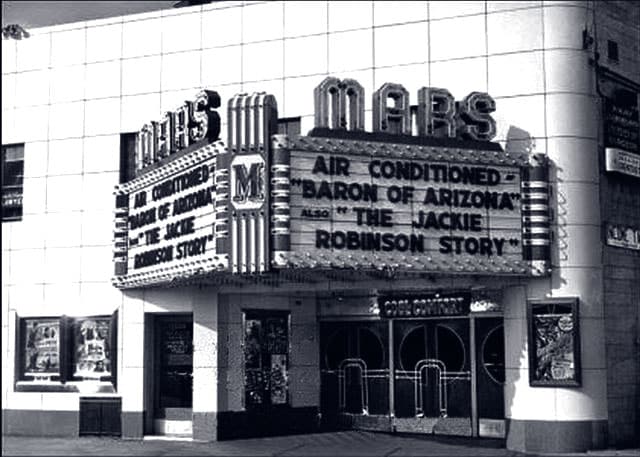
     

  • 1956 Oscars 28th Academy Awards

    1956 Oscars 28th Academy Awards

    1956 Oscars 28th Academy Awards

    • Winners Announced: March 21, 1956
    • Venues: RKO Pantages Theatre, Hollywood, California & NBC Century Theatre, New York City, New York
    • Hosts: Jerry Lewis (Los Angeles), Claudette Colbert & Joseph L. Mankiewicz (New York)
    • Eligibility Year: 1955

    Major Wins:

    • Marty swept the major awards, clinching Best Picture.
    • Ernest Borgnine claimed Best Actor for Marty.
    • Anna Magnani won Best Actress for The Rose Tattoo.

    Directing & Screenplay:

    • Delbert Mann earned the Best Director accolade for Marty.
    • Marty also won Best Adapted Screenplay.

    Additional Info:

    • Jack Lemmon was honored as Best Supporting Actor for Mister Roberts.
    • Jo Van Fleet secured Best Supporting Actress for East of Eden.
    • Love Is a Many-Splendored Thing, Marty, and The Rose Tattoo each earned eight nominations.
      Love Is a Many-Splendored Thing, and The Rose Tattoo each won 3 Oscars.
      Marty won 4.
    • Marty was 90 minutes long, the shortest to win for Best Picture.

    Trivia:

    • Love Is a Many-Splendored Thing won Best Costume Design, Color, a category that only existed from 1957 to 1966.
    • Oklahoma! was the first film to be shot in the Todd-AO 70mm widescreen process and won two Oscars.
    • The Best Animated Short Subject went to Speedy Gonzales, featuring the titular Mexican mouse from Looney Tunes.

    1956 Oscar Nominees and Winners

    Best Motion Picture:
    Marty – Harold Hecht for United Artists (WINNER)
    Love Is a Many-Splendored Thing – Buddy Adler for 20th Century Fox
    Mister Roberts – Leland Hayward for Warner Bros.
    Picnic – Fred Kohlmar for Columbia Pictures
    The Rose Tattoo – Hal B. Wallis for Paramount Pictures
    Best Director:
    Delbert Mann – Marty (WINNER)
    John Sturges – Bad Day at Black Rock
    Elia Kazan – East of Eden
    Joshua Logan – Picnic
    David Lean – Summertime
    Best Actor:
    Ernest Borgnine – Marty as Marty Piletti (WINNER)
    James Cagney – Love Me or Leave Me as Martin Snyder
    James Dean (posthumous nomination) – East of Eden as Caleb Trask
    Frank Sinatra – The Man with the Golden Arm as Frankie “Dealer” Machine
    Spencer Tracy – Bad Day at Black Rock as John J. Macreedy
    Best Actress:
    Anna Magnani – The Rose Tattoo as Serafina Delle Rose (WINNER)
    Susan Hayward – I’ll Cry Tomorrow as Lillian Roth
    Katharine Hepburn – Summertime as Jane Hudson
    Jennifer Jones – Love Is a Many-Splendored Thing as Dr. Han Suyin
    Eleanor Parker – Interrupted Melody as Marjorie Lawrence
    Best Supporting Actor:
    Jack Lemmon – Mister Roberts as Ensign Frank Thurlowe Pulver (WINNER)
    Arthur Kennedy – Trial as Bernard Castle
    Joe Mantell – Marty as Angie
    Sal Mineo – Rebel Without a Cause as John “Plato” Crawford
    Arthur O’Connell – Picnic as Howard Bevans
    Best Supporting Actress:
    Jo Van Fleet – East of Eden as Cathy Ames/Kate Trask (WINNER)
    Betsy Blair – Marty as Clara
    Peggy Lee – Pete Kelly’s Blues as Rose Hopkins
    Marisa Pavan – The Rose Tattoo as Rosa Delle Rose
    Natalie Wood – Rebel Without a Cause as Judy
    Best Screenplay:
    Marty – Paddy Chayefsky from Marty by Paddy Chayefsky (WINNER)
    Bad Day at Black Rock – Millard Kaufman from “Bad Time at Honda” by Howard Breslin
    Blackboard Jungle – Richard Brooks from Blackboard Jungle by Evan Hunter
    East of Eden – Paul Osborn from East of Eden by John Steinbeck
    Love Me or Leave Me – Daniel Fuchs and Isobel Lennart
    Best Story and Screenplay:
    Interrupted Melody – William Ludwig and Sonya Levien (WINNER)
    The Court-Martial of Billy Mitchell – Milton Sperling and Emmet Lavery
    It’s Always Fair Weather – Betty Comden and Adolph Green
    Mr. Hulot’s Holiday – Jacques Tati and Henri Marquet
    The Seven Little Foys – Melville Shavelson and Jack Rose
    Best Motion Picture Story:
    Love Me or Leave Me – Daniel Fuchs (WINNER)
    The Private War of Major Benson – Joe Connelly and Bob Mosher
    Rebel Without a Cause – Nicholas Ray
    The Sheep Has Five Legs – Jean Marsan, Henri Troyat, Jacques Perret, Henri Verneuil, and Raoul Ploquin
    Strategic Air Command – Beirne Lay Jr.
    Best Short Subject – Cartoons:
    Speedy Gonzales (WINNER)
    Good Will to Men
    The Legend of Rockabye Point
    No Hunting
    Best Documentary Feature:
    Helen Keller in Her Story (WINNER)
    Heartbreak Ridge
    Best Documentary Short Subject:
    Men Against the Arctic – Walt Disney (WINNER)
    The Battle of Gettysburg
    The Face of Lincoln
    Best Live Action Short Subject, One-Reel:
    Survival City – Edmund Reek (WINNER)
    3rd Ave. El – Carson Davidson
    Gadgets Galore – Robert Youngson
    Three Kisses – Justin Herman
    Best Live Action Short Subject, Two-Reel:
    The Face of Lincoln (WINNER)
    24-Hour Alert
    The Battle of Gettysburg
    On The Twelfth Day
    Switzerland
    Best Scoring of a Dramatic or Comedy Picture:
    Love Is a Many-Splendored Thing – Alfred Newman (WINNER)
    Battle Cry – Max Steiner
    The Man with the Golden Arm – Elmer Bernstein
    Picnic – George Duning
    The Rose Tattoo – Alex North
    Best Scoring of a Musical Picture:
    Oklahoma! – Robert Russell Bennett, Jay Blackton and Adolph Deutsch (WINNER)
    Daddy Long Legs – Alfred Newman
    Guys and Dolls – Jay Blackton and Cyril J. Mockridge
    It’s Always Fair Weather – André Previn
    Love Me or Leave Me – Percy Faith and Georgie Stoll
    Best Song:
    “Love Is a Many-Splendored Thing” from Love Is a Many-Splendored Thing – Music by Sammy Fain; Lyrics by Paul Francis Webster (WINNER)
    “I’ll Never Stop Loving You” from Love Me or Leave Me – Music by Nicholas Brodszky; Lyrics by Sammy Cahn
    “Something’s Gotta Give” from Daddy Long Legs – Music and Lyrics by Johnny Mercer
    “The Tender Trap” from The Tender Trap – Music by Jimmy Van Heusen; Lyrics by Sammy Cahn
    “Unchained Melody” from Unchained – Music by Alex North; Lyrics by Hy Zaret
    Best Sound Recording:
    Oklahoma! – Fred Hynes (WINNER)
    Love Is a Many-Splendored Thing – Carlton W. Faulkner
    Love Me or Leave Me – Wesley C. Miller
    Mister Roberts – William A. Mueller
    Not as a Stranger – Watson Jones
    Best Art Direction, Black-and-White:
    The Rose Tattoo – Art Direction: Hal Pereira and Tambi Larsen; Set Decoration: Samuel M. Comer and Arthur Krams (WINNER)
    Blackboard Jungle – Art Direction: Cedric Gibbons and Randall Duell; Set Decoration: Edwin B. Willis and Henry Grace
    I’ll Cry Tomorrow – Art Direction: Cedric Gibbons and Malcolm Brown; Set Decoration: Edwin B. Willis and Hugh Hunt
    The Man with the Golden Arm – Art Direction: Joseph C. Wright; Set Decoration: Darrell Silvera
    Marty – Art Direction: Ted Haworth and Walter M. Simonds; Set Decoration: Robert Priestley
    Best Art Direction, Color:
    Picnic – Art Direction: William Flannery and Jo Mielziner; Set Decoration: Robert Priestley (WINNER)
    Daddy Long Legs – Art Direction: Lyle R. Wheeler and John DeCuir; Set Decoration: Walter M. Scott and Paul S. Fox
    Guys and Dolls – Art Direction: Oliver Smith and Joseph C. Wright; Set Decoration: Howard Bristol
    Love Is a Many-Splendored Thing – Art Direction: Lyle R. Wheeler and George Davis; Set Decoration: Walter M. Scott and Jack Stubbs
    To Catch a Thief – Art Direction: Hal Pereira and Joseph McMillan Johnson; Set Decoration: Samuel M. Comer and Arthur Krams
    Best Cinematography, Black-and-White:
    The Rose Tattoo – James Wong Howe (WINNER)
    Blackboard Jungle – Russell Harlan
    I’ll Cry Tomorrow – Arthur Arling
    Marty – Joseph LaShelle
    Queen Bee – Charles Lang
    Best Cinematography, Color:
    To Catch a Thief – Robert Burks (WINNER)
    Guys and Dolls – Harry Stradling
    Love Is a Many-Splendored Thing – Leon Shamroy
    A Man Called Peter – Harold Lipstein
    Oklahoma! – Robert Surtees
    Best Costume Design, Black-and-White:
    I’ll Cry Tomorrow – Helen Rose (WINNER)
    The Pickwick Papers – Beatrice Dawson
    Queen Bee – Jean Louis
    The Rose Tattoo – Edith Head
    Ugetsu – Tadaoto Kainosho
    Best Costume Design, Color:
    Love Is a Many-Splendored Thing – Charles LeMaire (WINNER)
    Guys and Dolls – Irene Sharaff
    Interrupted Melody – Helen Rose
    To Catch a Thief – Edith Head
    The Virgin Queen – Charles LeMaire and Mary Wills
    Best Film Editing:
    Picnic – Charles Nelson and William Lyon (WINNER)
    Blackboard Jungle – Ferris Webster
    The Bridges at Toko-Ri – Alma Macrorie
    Oklahoma! – Gene Ruggiero and George Boemler
    The Rose Tattoo – Warren Low
    Best Special Effects:
    The Bridges at Toko-Ri (WINNER)
    The Dam Busters
    The Rains of Ranchipur
    Best Foreign Language Film:
    Samurai, The Legend of Musashi (Japan)
    Oscar® and Academy Awards® and Oscar® design mark are the trademarks and service marks and the Oscar© statuette the copyrighted property, of the Academy of Motion Picture Arts and Sciences. Pop Culture Madness is neither endorsed by nor affiliated with the Academy of Motion Picture Arts and Sciences.


  • 1955 Oscars 27th Academy Awards

    1955 Oscars 27th Academy Awards


    1955 Oscars 27th Academy Awards

    • Winners Announced: March 30, 1955
    • Venues: RKO Pantages Theatre, Hollywood, California and NBC Century Theatre, New York City, New York
    • Hosts: Bob Hope (Hollywood) and Thelma Ritter (New York City)
    • Eligibility Year: 1954

    Major Wins:

    • On the Waterfront clinched the Best Picture Award.
    • Marlon Brando won Best Actor for his unforgettable role in On the Waterfront.
    • Grace Kelly took home the Best Actress statuette for The Country Girl.

    Directing & Screenplay:

    • Elia Kazan received the Best Director award for On the Waterfront.
    • On the Waterfront also won for Best Story and Screenplay.

    Additional Info:

    • Edmond O’Brien received Best Supporting Actor for The Barefoot Contessa.
    • Eva Marie Saint got the Best Supporting Actress nod for On the Waterfront.
    • On The Waterfront had twelve Oscar nominations and eight wins.
    • “This is one night I wish I smoked and drank.” – Grace Kelly, Best Actress, The Country Girl
    • Dorothy Dandridge was the first African-American actress to receive a nomination for Best Actress.

    Trivia:

    • This ceremony saw the first-ever awards for Best Animated Short Subject.
    • The category of Best Original Song had a major shakeup: Three songs from Seven Brides for Seven Brothers were nominated, but all lost to Three Coins in the Fountain.
    • The Best Documentary Feature was awarded to Walt Disney for The Vanishing Prairie.

    1955 Oscar Nominees and Winners

    Best Motion Picture:
    On the Waterfront – Sam Spiegel for Columbia Pictures (WINNER)
    The Caine Mutiny – Stanley Kramer for Columbia Pictures
    The Country Girl – William Perlberg for Paramount Pictures
    Seven Brides for Seven Brothers – Jack Cummings for Metro-Goldwyn-Mayer
    Three Coins in the Fountain – Sol C. Siegel for 20th Century Fox
    Best Director:
    Elia Kazan – On the Waterfront (WINNER)
    George Seaton – The Country Girl
    William A. Wellman – The High and the Mighty
    Alfred Hitchcock – Rear Window
    Billy Wilder – Sabrina
    Best Actor:
    Marlon Brando – On the Waterfront as Terry Malloy (WINNER)
    Humphrey Bogart – The Caine Mutiny as Lieutenant Commander Philip Francis Queeg
    Bing Crosby – The Country Girl as Frank Elgin
    James Mason – A Star Is Born as Norman Maine
    Dan O’Herlihy – Robinson Crusoe as Robinson Crusoe
    Best Actress:
    Grace Kelly – The Country Girl as Georgie Elgin (WINNER)
    Dorothy Dandridge – Carmen Jones as Carmen Jones
    Judy Garland – A Star Is Born as Esther Blodgett
    Audrey Hepburn – Sabrina as Sabrina Fairchild
    Jane Wyman – Magnificent Obsession as Helen Phillips
    Best Supporting Actor:
    Edmond O’Brien – The Barefoot Contessa as Oscar Muldoon (WINNER)
    Lee J. Cobb – On the Waterfront as Michael J. Skelly aka “Johnny Friendly”
    Karl Malden – On the Waterfront as Father Barry
    Rod Steiger – On the Waterfront as Charley “the Gent” Malloy
    Tom Tully – The Caine Mutiny as Lieutenant Commander William H. De Vriess
    Best Supporting Actress:
    Eva Marie Saint – On the Waterfront as Edie Doyle (WINNER)
    Nina Foch – Executive Suite as Erica Martin
    Katy Jurado – Broken Lance as Señora Devereaux
    Jan Sterling – The High and the Mighty as Sally McKee
    Claire Trevor – The High and the Mighty as May Holst
    Best Screenplay:
    The Country Girl – George Seaton based on the play by Clifford Odets (WINNER)
    The Caine Mutiny – Stanley Roberts based on the novel by Herman Wouk
    Rear Window – John Michael Hayes based on the story “It Had To Be Murder” by Cornell Woolrich
    Sabrina – Billy Wilder, Samuel A. Taylor, and Ernest Lehman based on the novel by Samuel Taylor
    Seven Brides for Seven Brothers – Albert Hackett, Frances Goodrich, and Dorothy Kingsley based on the story “The Sobbin’ Women” by Stephen Vincent Benét
    Best Story and Screenplay:
    On the Waterfront – Budd Schulberg (WINNER)
    The Barefoot Contessa – Joseph L. Mankiewicz
    Genevieve – William Rose
    The Glenn Miller Story – Valentine Davies and Oscar Brodney
    Knock on Wood – Norman Panama and Melvin Frank
    Best Story:
    Broken Lance – Philip Yordan (WINNER)
    Bread, Love and Dreams – Ettore Maria Margadonna
    Forbidden Games – Francois Boyer
    Night People – Jed Harris and Tom Reed
    There’s No Business Like Show Business – Lamar Trotti (posthumous nomination)
    Best Short Subject – Cartoons:
    When Magoo Flew (WINNER)
    Crazy Mixed Up Pup
    Pigs Is Pigs
    Sandy Claws
    Touché, Pussy Cat!
    Best Documentary Feature:
    The Vanishing Prairie – Walt Disney (WINNER)
    The Stratford Adventure – Guy Glover
    Best Documentary Short Subject:
    Thursday’s Children (WINNER)
    Jet Carrier
    Rembrandt: A Self-Portrait
    Best Live Action Short Subject, One-Reel:
    This Mechanical Age – Robert Youngson (WINNER)
    The First Piano Quartette – Otto Lang
    The Strauss Fantasy – Johnny Green
    Best Live Action Short Subject, Two-Reel:
    A Time Out of War – Denis Sanders and Terry Sanders (WINNER)
    Beauty and the Bull – Cedric Francis
    Jet Carrier – Otto Lang
    Siam – Walt Disney Productions
    Best Music Score of a Dramatic or Comedy Picture:
    The High and the Mighty – Dimitri Tiomkin (WINNER)
    The Caine Mutiny – Max Steiner
    Genevieve – Larry Adler
    On the Waterfront – Leonard Bernstein
    The Silver Chalice – Franz Waxman
    Best Scoring of a Musical Picture:
    Seven Brides for Seven Brothers – Adolph Deutsch and Saul Chaplin (WINNER)
    Carmen Jones – Herschel Burke Gilbert
    The Glenn Miller Story – Joseph Gershenson and Henry Mancini
    A Star Is Born – Ray Heindorf
    There’s No Business Like Show Business – Alfred Newman and Lionel Newman
    Best Song:
    “Three Coins in the Fountain” from Three Coins in the Fountain – Music by Jule Styne; Lyrics by Sammy Cahn (WINNER)
    “Count Your Blessings Instead of Sheep” from White Christmas – Music and Lyrics by Irving Berlin
    “The High and the Mighty” from The High and the Mighty – Music by Dimitri Tiomkin; Lyrics by Ned Washington
    “Hold My Hand” from Susan Slept Here – Music and Lyrics by Jack Lawrence and Richard Myers
    “The Man That Got Away” from A Star Is Born – Music by Harold Arlen; Lyrics by Ira Gershwin
    Best Sound Recording:
    The Glenn Miller Story – Leslie I. Carey (WINNER)
    Brigadoon – Wesley C. Miller
    The Caine Mutiny – John P. Livadary
    Rear Window – Loren L. Ryder
    Susan Slept Here – John O. Aalberg
    Best Art Direction, Black-and-White:
    On the Waterfront – Art Direction and Set Decoration: Richard Day (WINNER)
    The Country Girl – Art Direction: Hal Pereira and Roland Anderson; Set Decoration: Samuel M. Comer and Grace Gregory
    Executive Suite – Art Direction: Cedric Gibbons and Edward Carfagno; Set Decoration: Edwin B. Willis and Emile Kuri
    Le Plaisir – Art Direction and Set Decoration: Max Ophüls
    Sabrina – Art Direction: Hal Pereira and Walter Tyler; Set Decoration: Samuel M. Comer and Ray Moyer
    Best Art Direction, Color:
    20,000 Leagues Under the Sea – Art Direction: John Meehan; Set Decoration: Emile Kuri (WINNER)
    A Star Is Born – Art Direction: Malcolm Bert, Gene Allen and Irene Sharaff; Set Decoration: George James Hopkins
    Brigadoon – Art Direction: Cedric Gibbons and E. Preston Ames; Set Decoration: Edwin B. Willis and Keogh Gleason
    Désirée – Art Direction: Lyle R. Wheeler and Leland Fuller; Set Decoration: Walter M. Scott and Paul S. Fox
    Red Garters – Art Direction: Hal Pereira and Roland Anderson; Set Decoration: Samuel M. Comer and Ray Moyer
    Best Cinematography, Black-and-White:
    On the Waterfront – Boris Kaufman (WINNER)
    The Country Girl – John F. Warren
    Executive Suite – George Folsey
    Rogue Cop – John Seitz
    Sabrina – Charles Lang
    Best Cinematography, Color: 
    Three Coins in the Fountain – Milton Krasner (WINNER)
    The Egyptian – Leon Shamroy
    Rear Window – Robert Burks
    Seven Brides for Seven Brothers – George Folsey
    The Silver Chalice – William V. Skall
    Best Costume Design, Black-and-White:
    Sabrina – Edith Head (WINNER)
    The Earrings of Madame de… – Georges Annenkov and Rosine Delamare
    Executive Suite – Helen Rose
    Indiscretion of an American Wife – Christian Dior
    It Should Happen to You – Jean Louis
    Best Costume Design, Color:
    Gate of Hell – Sanzo Wada (WINNER)
    Brigadoon – Irene Sharaff
    Désirée – Charles LeMaire and René Hubert
    A Star Is Born – Jean Louis, Mary Ann Nyberg and Irene Sharaff
    There’s No Business Like Show Business – Charles LeMaire, Travilla and Miles White
    Best Film Editing:
    On the Waterfront – Gene Milford (WINNER)
    20,000 Leagues Under the Sea – Elmo Williams
    The Caine Mutiny – William A. Lyon and Henry Batista
    The High and the Mighty – Ralph Dawson
    Seven Brides for Seven Brothers – Ralph E. Winters
    Best Special Effects:
    20,000 Leagues Under the Sea (WINNER)
    Hell and High Water
    Them!
    Academy Honorary Awards:
    Bausch and Lomb Optical “for their contributions to the advancement of the motion picture industry.”

    Kemp R. Niver “for the development of the Renovare Process which has made possible the restoration of the Library of Congress Paper Film Collection.”

    Greta Garbo “for her unforgettable screen performances.”

    Danny Kaye “for his unique talents, his service to the Academy, the motion picture industry, and the American people.”

    Jon Whiteley “for his outstanding juvenile performance in The Little Kidnappers

    Vincent Winter “for his outstanding juvenile performance in The Little Kidnappers

    Best Foreign Language Film:
    Jigokumon (Gate of Hell) (Japan)
    Oscar® and Academy Awards® and Oscar® design mark are the trademarks and service marks and the Oscar© statuette the copyrighted property, of the Academy of Motion Picture Arts and Sciences. Pop Culture Madness is neither endorsed by nor affiliated with the Academy of Motion Picture Arts and Sciences.


  • 1954 Oscars 26th Academy Awards

    1954 Oscars 26th Academy Awards

    1954 Oscars 26th Academy Awards

    • Winners Announced: March 25, 1954
    • Venues: RKO Pantages Theatre, Hollywood, California and NBC Century Theatre, New York City, New York
    • Hosts: Donald O’Connor (Los Angeles) and Fredric March (New York City)
    • Eligibility Year: 1953

    Major Wins:

    • From Here to Eternity reigned supreme, taking home the Best Picture award.
    • William Holden secured the Best Actor trophy for his role in Stalag 17.
    • Audrey Hepburn was the night’s darling, winning Best Actress for Roman Holiday.

    Directing & Screenplay:

    • Fred Zinnemann scored Best Director for From Here to Eternity.
    • Titanic won for its screenplay, though not the one you’re probably thinking of—this was the 1953 version.

    Additional Info:

    • Frank Sinatra, the ultimate triple threat, won Best Supporting Actor for From Here to Eternity.
    • Donna Reed snagged Best Supporting Actress for the same film.

    Trivia:

    • This Oscars ceremony was a night to remember for From Here to Eternity, which won eight Oscars.
    • Audrey Hepburn’s win for Roman Holiday was her first nomination and first win.
    • Walt Disney won four Academy Awards this year, including for Best Documentary Feature (The Living Desert) and another for Best Documentary Short Subject (The Alaskan Eskimo).
    • Take the PCM Hollywood Sign Quiz!

    1954 Oscar Nominees and Winners

    Best Motion Picture:
    From Here to Eternity – Buddy Adler for Columbia Pictures (WINNER)
    Julius Caesar – John Houseman for Metro-Goldwyn-Mayer
    The Robe – Frank Ross for 20th Century Fox
    Roman Holiday – William Wyler for Paramount Pictures
    Shane – George Stevens for Paramount Pictures
    Best Director:
    Fred Zinnemann – From Here to Eternity (WINNER)
    Charles Walters – Lili
    William Wyler – Roman Holiday
    George Stevens – Shane
    Billy Wilder – Stalag 17
    Best Actor:
    William Holden – Stalag 17 as J. J. Sefton (WINNER)
    Marlon Brando – Julius Caesar as Mark Antony
    Richard Burton – The Robe as Marcellus Gallio
    Montgomery Clift – From Here to Eternity as Private Robert E. Lee “Prew” Prewitt
    Burt Lancaster – From Here to Eternity as First Sergeant Milton Warden
    Best Actress:
    Audrey Hepburn – Roman Holiday as Princess Ann (WINNER)
    Leslie Caron – Lili as Lili Daurier
    Ava Gardner – Mogambo as Eloise Kelly
    Deborah Kerr – From Here to Eternity as Karen Holmes
    Maggie McNamara – The Moon Is Blue as Patty O’Neill
    Best Supporting Actor:
    Frank Sinatra – From Here to Eternity as Private Angelo Maggio (WINNER)
    Eddie Albert – Roman Holiday as Irving Radovich
    Brandon deWilde – Shane as Joey Starrett
    Jack Palance – Shane as Jack Wilson
    Robert Strauss – Stalag 17 as Stanislas “Animal” Kuzawa
    Best Supporting Actress:
    Donna Reed – From Here to Eternity as Alma Burke/Lorene (WINNER)
    Grace Kelly – Mogambo as Linda Nordley
    Geraldine Page – Hondo as Angie Lowe
    Marjorie Rambeau – Torch Song as Mrs. Stewart
    Thelma Ritter – Pickup on South Street as Moe
    Best Screenplay:
    From Here to Eternity – Daniel Taradash from From Here to Eternity by James Jones (WINNER)
    The Cruel Sea – Eric Ambler from The Cruel Sea by Nicholas Monsarrat
    Lili – Helen Deutsch from “Love of Seven Dolls” by Paul Gallico
    Roman Holiday – Ian McLellan Hunter and John Dighton from a story by Dalton Trumbo
    Shane – A. B. Guthrie Jr. from Shane by Jack Schaefer
    Best Story and Screenplay:
    Titanic – Charles Brackett, Walter Reisch and Richard L. Breen (WINNER)
    The Band Wagon – Betty Comden and Adolph Green
    The Desert Rats – Richard Murphy
    The Naked Spur – Sam Rolfe and Harold Jack Bloom
    Take the High Ground! – Millard Kaufman
    Best Story:
    Roman Holiday – Dalton Trumbo (WINNER) (awarded posthumously as Trumbo was on the Hollywood blacklist)
    Above and Beyond – Beirne Lay Jr.
    The Captain’s Paradise – Alec Coppel
    Hondo – Louis L’Amour (disqualified)
    Little Fugitive – Ray Ashley, Morris Engel, and Ruth Orkin
    Best Short Subject – Cartoons:
    Toot, Whistle, Plunk and Boom – Walt Disney (WINNER)
    Christopher Crumpet
    From A to Z-Z-Z-Z
    Rugged Bear
    The Tell Tale Heart
    Best Documentary Feature:
    The Living Desert – Walt Disney (WINNER)
    The Conquest of Everest
    A Queen Is Crowned
    Best Documentary Short Subject:
    The Alaskan Eskimo – Walt Disney (WINNER)
    The Living City
    Operation Blue Jay
    They Planted a Stone
    The Word
    Best Live Action Short Subject, One-Reel:
    Overture to The Merry Wives of Windsor – Johnny Green (WINNER)
    Christ Among the Primitives
    Herring Hunt
    Joy of Living
    Wee Water Wonders
    Best Live Action Short Subject, Two-Reel:
    Bear Country – Walt Disney (WINNER)
    Ben and Me
    Return to Glennascaul
    Vesuvius Express
    Winter Paradise
    Best Music Score of a Dramatic or Comedy Picture:
    Lili – Bronislaw Kaper (WINNER)
    Above and Beyond – Hugo Friedhofer
    From Here to Eternity – Morris Stoloff and George Duning
    Julius Caesar – Miklós Rózsa
    This Is Cinerama – Louis Forbes
    Best Scoring of a Musical Picture:
    Call Me Madam – Alfred Newman (WINNER)
    The 5,000 Fingers of Dr. T. – Frederick Hollander and Morris Stoloff
    The Band Wagon – Adolph Deutsch
    Calamity Jane – Ray Heindorf
    Kiss Me Kate – André Previn and Saul Chaplin
    Best Song:
    “Secret Love” from Calamity Jane – Music by Sammy Fain; Lyrics by Paul Francis Webster (WINNER)
    “The Moon Is Blue” from The Moon Is Blue – Music by Herschel Burke Gilbert; Lyrics by Sylvia Fine
    “My Flaming Heart” from Small Town Girl – Music by Nicholas Brodszky; Lyrics by Leo Robin
    “Sadie Thompson’s Song” from Miss Sadie Thompson – Music by Lester Lee; Lyrics by Ned Washington
    “That’s Amore” from The Caddy – Music by Harry Warren; Lyrics by Jack Brooks
    Best Sound Recording:
    From Here to Eternity – John P. Livadary (WINNER)
    Calamity Jane – William A. Mueller
    Knights of the Round Table – A. W. Watkins
    The Mississippi Gambler – Leslie I. Carey
    The War of the Worlds – Loren L. Ryder
    Best Art Direction, Black-and-White:
    Julius Caesar – Art Direction: Cedric Gibbons and Edward Carfagno; Set Decoration: Edwin B. Willis and Hugh Hunt (WINNER)
    Martin Luther – Art Direction and Set Decoration: Fritz Maurischat and Paul Markwitz
    The President’s Lady – Art Direction: Lyle R. Wheeler and Leland Fuller; Set Decoration: Paul S. Fox
    Roman Holiday – Art Direction and Set Decoration: Hal Pereira and Walter Tyler
    Titanic – Art Direction: Lyle R. Wheeler and Maurice Ransford; Set Decoration: Stuart A. Reiss
    Best Art Direction, Color:
    The Robe – Art Direction: Lyle R. Wheeler and George Davis; Set Decoration: Walter M. Scott and Paul S. Fox (WINNER)
    Knights of the Round Table – Art Direction: Alfred Junge and Hans Peters; Set Decoration: John Jarvis
    Lili – Art Direction: Cedric Gibbons and Paul Groesse; Set Decoration: Edwin B. Willis and Arthur Krams
    The Story of Three Loves – Art Direction: Cedric Gibbons, E. Preston Ames, Edward Carfagno and Gabriel Scognamillo; Set Decoration: Edwin B. Willis, F. Keogh Gleason, Arthur Krams and Jack D. Moore
    Young Bess – Art Direction: Cedric Gibbons and Urie McCleary; Set Decoration: Edwin B. Willis and Jack D. Moore
    Best Cinematography, Black-and-White:
    From Here to Eternity – Burnett Guffey (WINNER)
    The Four Poster – Hal Mohr
    Julius Caesar – Joseph Ruttenberg
    Martin Luther – Joseph C. Brun
    Roman Holiday – Franz Planer and Henri Alekan
    Best Cinematography, Color:
    Shane – Loyal Griggs (WINNER)
    All the Brothers Were Valiant – George Folsey
    Beneath the 12-Mile Reef – Edward Cronjager
    Lili – Robert Planck
    The Robe – Leon Shamroy
    Best Costume Design, Black-and-White:
    Roman Holiday – Edith Head (WINNER)
    The Actress – Walter Plunkett
    Dream Wife – Helen Rose and Herschel McCoy
    From Here to Eternity – Jean Louis
    The President’s Lady – Charles LeMaire and Renié
    Best Costume Design, Color:
    The Robe – Charles LeMaire and Emile Santiago (WINNER)
    The Band Wagon – Mary Ann Nyberg
    Call Me Madam – Irene Sharaff
    How to Marry a Millionaire – Charles LeMaire and William Travilla
    Young Bess – Walter Plunkett
    Best Film Editing:
    From Here to Eternity – William Lyon (WINNER)
    Crazylegs – Irvine (Cotton) Warburton
    The Moon Is Blue – Otto Ludwig
    Roman Holiday – Robert Swink
    The War of the Worlds – Everett Douglas
    Academy Honorary Awards:
    Pete Smith – “For his witty and pungent observations on the American scene in his series of “Pete Smith Specialties”.”

    Twentieth Century-Fox Film Corporation – “In recognition of their imagination, showmanship and foresight in introducing the revolutionary process known as CinemaScope.”

    Joseph I. Breen – “For his conscientious, open-minded and dignified management of the Motion Picture Production Code.”

    Bell and Howell Company – “For their pioneering and basic achievements in the advancement of the motion picture industry.”

    The War of the Worlds for Best Special Effects.

    Irving G. Thalberg Memorial Award:
    George Stevens
    Oscar® and Academy Awards® and Oscar® design mark are the trademarks and service marks and the Oscar© statuette the copyrighted property, of the Academy of Motion Picture Arts and Sciences. Pop Culture Madness is neither endorsed by nor affiliated with the Academy of Motion Picture Arts and Sciences.
     

  • 1953 Oscars 25th Academy Awards

    1953 Oscars 25th Academy Awards

    1953 Oscars 25th Academy Awards

    • Winners Announced: March 19, 1953
    • Venue: RKO Pantages Theatre, Hollywood, California and NBC International Theatre, New York City, New York
    • Hosts: Conrad Nagel (emcee), Bob Hope (Hollywood), Fredric March (New York City)
    • Eligibility Year: Films released in 1952

    Major Wins:

    • The Greatest Show on Earth won Best Picture, a controversial pick still debated by film buffs.
    • Gary Cooper earned Best Actor for High Noon.
    • Shirley Booth claimed Best Actress for Come Back, Little Sheba.

    Directing & Screenplay:

    • John Ford snatched Best Director for The Quiet Man.
    • The Bad and the Beautiful got Best Story and Screenplay.

    Additional Info:

    • Anthony Quinn won Best Supporting Actor for Viva Zapata!.
    • Gloria Grahame won Best Supporting Actress for The Bad and the Beautiful.

    Trivia:

    • Ronald Reagan Announcer for the 25th Academy Awards.
    • John Ford’s fourth win for Best Director set a record for the most wins in that category.
    • The Bad and the Beautiful won five awards, the most wins ever for a film not nominated for Best Picture.
    • It was the first Academy Awards ceremony to be televised, on NBC.
    • The Greatest Show on Earth is considered one of the weakest Best Picture winners, according to critics.
    • High Noon won four Academy Awards but missed out on Best Picture and Best Director.

    1953 Oscar Nominees and Winners

    Best Motion Picture:
    The Greatest Show on Earth – Cecil B. DeMille for Paramount Pictures (WINNER)
    High Noon – Stanley Kramer for United Artists
    Ivanhoe – Pandro S. Berman for Metro-Goldwyn-Mayer
    Moulin Rouge – John Huston for United Artists
    The Quiet Man – John Ford and Merian C. Cooper for Republic Pictures
    Best Director:
    John Ford – The Quiet Man (WINNER)
    Joseph L. Mankiewicz – Five Fingers
    Cecil B. DeMille – The Greatest Show on Earth
    Fred Zinnemann – High Noon
    John Huston – Moulin Rouge
    Best Actor:
    Gary Cooper – High Noon as Marshall Will Kane (WINNER)
    Marlon Brando – Viva Zapata! as Emiliano Zapata
    Kirk Douglas – The Bad and the Beautiful as Jonathan Shields
    José Ferrer – Moulin Rouge as Henri de Toulouse-Lautrec/Comte Alphonse de Toulouse-Lautrec
    Alec Guinness – The Lavender Hill Mob as Henry “Dutch” Holland
    Best Actress:
    Shirley Booth – Come Back, Little Sheba as Lola Delaney (WINNER)
    Joan Crawford – Sudden Fear as Myra Hudson
    Bette Davis – The Star as Margaret “Maggie” Elliot
    Julie Harris – The Member of the Wedding as Frankie Addams
    Susan Hayward – With a Song in My Heart as Jane Froman
    Best Supporting Actor:
    Anthony Quinn – Viva Zapata! as Eufemio Zapata (WINNER)
    Richard Burton – My Cousin Rachel as Philip Ashley
    Arthur Hunnicutt – The Big Sky as Zeb Calloway
    Victor McLaglen – The Quiet Man as Squire “Red” Will Danaher
    Jack Palance – Sudden Fear as Lester Blaine
    Best Supporting Actress:
    Gloria Grahame – The Bad and the Beautiful as Rosemary Bartlow (WINNER)
    Jean Hagen – Singin’ in the Rain as Lina Lamont
    Colette Marchand – Moulin Rouge as Marie Charlet
    Terry Moore – Come Back, Little Sheba as Marie Burkholder
    Thelma Ritter – With a Song in My Heart as Clancy
    Best Story and Screenplay:
    The Bad and the Beautiful – Charles Schnee from “Tribute to a Badman” by George Bradshaw (WINNER)
    Five Fingers – Michael Wilson from Operation Cicero by Ludwig Carl Moyzisch
    High Noon – Carl Foreman from “The Tin Star” by John W. Cunningham
    The Man in the White Suit – Roger MacDougall, John Dighton and Alexander Mackendrick from The Man in the White Suit by Roger MacDougall
    The Quiet Man – Frank S. Nugent from “Green Rushes” by Maurice Walsh
    Best Screenplay:
    The Lavender Hill Mob – T. E. B. Clarke (WINNER)
    The Atomic City – Sydney Boehm
    Breaking the Sound Barrier – Terence Rattigan
    Pat and Mike – Ruth Gordon and Garson Kanin
    Viva Zapata! – John Steinbeck
    Best Story:
    The Greatest Show on Earth – Fredric M. Frank, Theodore St. John and Frank Cavett (WINNER)
    My Son John – Leo McCarey
    The Narrow Margin – Martin Goldsmith and Jack Leonard
    The Pride of St. Louis – Guy Trosper
    The Sniper – Edna Anhalt and Edward Anhalt
    Best Short Subject – Cartoons:
    Johann Mouse (WINNER)
    Little Johnny Jet
    Madeline
    Pink and Blue Blues
    The Romance of Transportation in Canada
    Best Documentary Feature:
    The Sea Around Us (WINNER)
    The Hoaxters
    Navajo
    Best Documentary Short Subject:
    Neighbours (WINNER)
    Devil Take Us
    The Garden Spider
    Man Alive!
    Best Live Action Short Subject, One-Reel:
    Light in the Window (WINNER)
    Athletes of the Saddle
    Desert Killer
    Neighbours
    Royal Scotland
    Best Live Action Short Subject, Two-Reel:
    Water Birds (WINNER)
    Bridge of Time
    Devil Take Us
    Thar She Blows!
    Best Scoring of a Dramatic or Comedy Picture:
    High Noon – Dimitri Tiomkin (WINNER)
    Ivanhoe – Miklós Rózsa
    The Miracle of Our Lady of Fatima – Max Steiner
    The Thief – Herschel Burke Gilbert
    Viva Zapata! – Alex North
    Best Scoring of a Musical Picture:
    With a Song in My Heart – Alfred Newman (WINNER)
    Hans Christian Andersen – Walter Scharf
    The Jazz Singer – Ray Heindorf and Max Steiner
    The Medium – Gian Carlo Menotti
    Singin’ in the Rain – Lennie Hayton
    Best Song:
    “The Ballad of High Noon (“Do Not Forsake Me, O My Darlin’”)” from High Noon – Music by Dimitri Tiomkin; Lyrics by Ned Washington (WINNER)
    “Am I in Love?” from Son of Paleface – Music and Lyrics by Jack Brooks
    “Because You’re Mine” from Because You’re Mine – Music by Nicholas Brodszky; Lyrics by Sammy Cahn
    “Thumbelina” from Hans Christian Andersen – Music and Lyrics by Frank Loesser
    “Zing a Little Zong” from Just for You – Music by Harry Warren; Lyrics by Leo Robin
    Best Sound Recording:
    Breaking the Sound Barrier – London Films Sound Department (WINNER)
    The Card – Pinewood Studios Sound Department
    Hans Christian Andersen – Gordon E. Sawyer
    The Quiet Man – Daniel J. Bloomberg
    With a Song in My Heart – Thomas T. Moulton
    Best Art Direction, Black-and-White:
    The Bad and the Beautiful – Art Direction: Cedric Gibbons and Edward Carfagno; Set Decoration: Edwin B. Willis and F. Keogh Gleason (WINNER)
    Carrie – Art Direction: Hal Pereira and Roland Anderson; Set Decoration: Emile Kuri
    My Cousin Rachel – Art Direction: Lyle R. Wheeler and John DeCuir; Set Decoration: Walter M. Scott
    Rashomon – Art Direction: So Matsuyama; Set Decoration: H. Matsumoto
    Viva Zapata! – Art Direction: Lyle R. Wheeler and Leland Fuller; Set Decoration: Thomas Little and Claude Carpenter
    Best Art Direction, Color:
    Moulin Rouge – Art Direction: Paul Sheriff; Set Decoration: Marcel Vertès (WINNER)
    Hans Christian Andersen – Art Direction: Richard Day and Antoni Clavé; Set Decoration: Howard Bristol
    The Merry Widow – Art Direction: Cedric Gibbons and Paul Groesse; Set Decoration: Edwin B. Willis and Arthur Krams
    The Quiet Man – Art Direction: Frank Hotaling; Set Decoration: John McCarthy Jr. and Charles Thompson
    The Snows of Kilimanjaro – Art Direction: Lyle R. Wheeler and John DeCuir; Set Decoration: Thomas Little and Paul S. Fox
    Best Cinematography, Black-and-White:
    The Bad and the Beautiful – Robert Surtees (WINNER)
    The Big Sky – Russell Harlan
    My Cousin Rachel – Joseph LaShelle
    Navajo – Virgil Miller
    Sudden Fear – Charles Lang
    Best Cinematography, Color:
    The Quiet Man – Winton C. Hoch and Archie Stout (WINNER)
    Hans Christian Andersen – Harry Stradling
    Ivanhoe – F. A. Young
    Million Dollar Mermaid – George Folsey
    The Snows of Kilimanjaro – Leon Shamroy
    Best Costume Design, Black-and-White:
    The Bad and the Beautiful – Helen Rose (WINNER)
    Affair in Trinidad – Jean Louis
    Carrie – Edith Head
    My Cousin Rachel – Charles LeMaire and Dorothy Jeakins
    Sudden Fear – Sheila O’Brien
    Best Costume Design, Color:
    Moulin Rouge – Marcel Vertès (WINNER)
    The Greatest Show on Earth – Edith Head, Dorothy Jeakins and Miles White
    Hans Christian Andersen – Antoni Clavé, Mary Wills and Barbara Karinska
    The Merry Widow – Helen Rose and Gile Steele (posthumous nomination)
    With a Song in My Heart – Charles LeMaire
    Best Film Editing:
    High Noon – Elmo Williams and Harry W. Gerstad (WINNER)
    Come Back, Little Sheba – Warren Low
    Flat Top – William Austin
    The Greatest Show on Earth – Anne Bauchens
    Moulin Rouge – Ralph Kemplen
    Academy Honorary Awards:
    George Alfred Mitchell “for the design and development of the camera which bears his name and for his continued and dominant presence in the field of cinematography.”

    Joseph M. Schenck “for long and distinguished service to the motion picture industry.”

    Merian C. Cooper “for his many innovations and contributions to the art of motion pictures.”

    Harold Lloyd “master comedian and good citizen.”

    Bob Hope “for his contribution to the laughter of the world, his service to the motion picture industry, and his devotion to the American premise.”

    Plymouth Adventure for Best Special Effects.

    Best Foreign Language Film:
    Forbidden Games (France)
    Irving G. Thalberg Memorial Award:
    Cecil B. DeMille
    Oscar® and Academy Awards® and Oscar® design mark are the trademarks and service marks and the Oscar© statuette the copyrighted property, of the Academy of Motion Picture Arts and Sciences. Pop Culture Madness is neither endorsed by nor affiliated with the Academy of Motion Picture Arts and Sciences.
     

  • 1952 Oscars 24th Academy Awards

    1952 Oscars 24th Academy Awards

    1952 Oscars 24th Academy Awards

    • Winners Announced: March 20, 1952
    • Venue: RKO Pantages Theatre, Hollywood, California
    • Host: Danny Kaye
    • Eligibility Year: Films released in 1951

    Major Wins:

    • Best Picture was swept by An American in Paris, shocking some as A Streetcar Named Desire was a strong contender.
    • Humphrey Bogart grabbed the Best Actor award for The African Queen.
    • Vivien Leigh took home Best Actress for her role in A Streetcar Named Desire.

    Directing & Screenplay:

    • George Stevens won Best Director for A Place in the Sun.
    • Best Adapted Screenplay went to A Place in the Sun as well.

    Additional Info:

    • Karl Malden won Best Supporting Actor for A Streetcar Named Desire.
    • Kim Hunter got the Best Supporting Actress nod for the same film.

    Trivia:

    • An American in Paris won six Oscars but did not receive any acting nominations, a rarity for Best Picture winners.
    • A Streetcar Named Desire became the first film to win three acting Oscars. Marlon Brando, as Stanley Kowalski, did not win.
    • This was Danny Kaye’s first and only time hosting the Oscars. His sense of humor and lightness added a different flair to the evening.
    • A Place in the Sun earned nine nominations, winning 6.

    1952 Oscar Nominees and Winners

    Best Motion Picture:
    An American in Paris – Arthur Freed for Metro-Goldwyn-Mayer (WINNER)
    Decision Before Dawn – Anatole Litvak and Frank McCarthy for 20th Century Fox
    A Place in the Sun – George Stevens for Paramount Pictures
    Quo Vadis – Sam Zimbalist for Metro-Goldwyn-Mayer
    A Streetcar Named Desire – Charles K. Feldman for Warner Bros.
    Best Director:
    George Stevens – A Place in the Sun (WINNER)
    John Huston – The African Queen
    Vincente Minnelli – An American in Paris
    William Wyler – Detective Story
    Elia Kazan – A Streetcar Named Desire
    Best Actor:
    Humphrey Bogart – The African Queen as Charlie Allnut (WINNER)
    Marlon Brando – A Streetcar Named Desire as Stanley Kowalski
    Montgomery Clift – A Place in the Sun as George Eastman
    Arthur Kennedy – Bright Victory as Larry Nevins
    Fredric March – Death of a Salesman as Willy Loman
    Best Actress:
    Vivien Leigh – A Streetcar Named Desire as Blanche Dubois (WINNER)
    Katharine Hepburn – The African Queen as Rose Sayer
    Eleanor Parker – Detective Story as Mary McLeod
    Shelley Winters – A Place in the Sun as Alice Tripp
    Jane Wyman – The Blue Veil as LouLou Mason
    Best Supporting Actor:
    Karl Malden – A Streetcar Named Desire as Harold “Mitch” Mitchell (WINNER)
    Leo Genn – Quo Vadis as Petronius
    Kevin McCarthy – Death of a Salesman as Biff Loman
    Peter Ustinov – Quo Vadis as Nero
    Gig Young – Come Fill the Cup as Boyd Copeland
    Best Supporting Actress:
    Kim Hunter – A Streetcar Named Desire as Stella Kowalski (WINNER)
    Joan Blondell – The Blue Veil as Annie Rawlins
    Mildred Dunnock – Death of a Salesman as Linda Loman
    Lee Grant – Detective Story as Shoplifter
    Thelma Ritter – The Mating Season as Ellen McNulty
    Best Story and Screenplay:
    An American in Paris – Alan Jay Lerner (WINNER)
    Ace in the Hole – Billy Wilder, Lesser Samuels and Walter Newman
    David and Bathsheba – Philip Dunne
    Go for Broke! – Robert Pirosh
    The Well – Clarence Greene and Russell Rouse
    Best Screenplay:
    A Place in the Sun – Michael Wilson and Harry Brown from An American Tragedy by Theodore Dreiser (WINNER)
    The African Queen – James Agee and John Huston from The African Queen by C. S. Forester
    Detective Story – Philip Yordan and Robert Wyler from Detective Story by Sidney Kingsley
    La Ronde – Jacques Natanson and Max Ophüls from Reigen by Arthur Schnitzler
    A Streetcar Named Desire – Tennessee Williams from A Streetcar Named Desire by Tennessee Williams
    Best Story:
    Seven Days to Noon – Paul Dehn and James Bernard (WINNER)
    Bullfighter and the Lady – Budd Boetticher and Ray Nazarro
    The Frogmen – Oscar Millard
    Here Comes the Groom – Robert Riskin and Liam O’Brien
    Teresa – Alfred Hayes and Stewart Stern
    Best Short Subject – Cartoons:
    The Two Mouseketeers (WINNER)
    Lambert the Sheepish Lion
    Rooty Toot Toot
    Best Documentary Feature:
    Kon-Tiki (WINNER)
    I Was a Communist for the FBI
    Best Documentary Short Subject:
    Benjy (WINNER)
    One Who Came Back
    The Seeing Eye
    Best Live Action Short Subject, One-Reel:
    World of Kids (WINNER)
    Ridin’ the Rails
    The Story of Time
    Nature’s Half Acre (WINNER)
    Balzac
    Danger Under the Sea
    Best Scoring of a Dramatic or Comedy Picture:
    A Place in the Sun – Franz Waxman (WINNER)
    A Streetcar Named Desire – Alex North
    David and Bathsheba – Alfred Newman
    Death of a Salesman – Alex North
    Quo Vadis – Miklós Rózsa
    Best Scoring of a Musical Picture:
    An American in Paris – Johnny Green and Saul Chaplin (WINNER)
    Alice in Wonderland – Oliver Wallace
    On the Riviera – Alfred Newman
    The Great Caruso – Peter Herman Adler and Johnny Green
    Show Boat – Adolph Deutsch and Conrad Salinger
    Best Song:
    “In the Cool, Cool, Cool of the Evening” from Here Comes the Groom – Music by Hoagy Carmichael; Lyrics by Johnny Mercer (WINNER)
    “A Kiss to Build a Dream On” from The Strip – Music and Lyrics by Bert Kalmar (posthumous nomination), Harry Ruby and Oscar Hammerstein II
    “Never” from Golden Girl – Music by Lionel Newman; Lyrics by Eliot Daniel
    “Too Late Now” from Royal Wedding – Music by Burton Lane; Lyrics by Alan Jay Lerner
    “Wonder Why” from Rich, Young and Pretty – Music by Nicholas Brodszky; Lyrics by Sammy Cahn
    Best Sound Recording:
    The Great Caruso – Douglas Shearer (WINNER)
    Bright Victory – Leslie I. Carey
    I Want You – Gordon E. Sawyer
    A Streetcar Named Desire – Nathan Levinson
    Two Tickets to Broadway – John O. Aalberg
    Best Art Direction, Black-and-White:
    A Streetcar Named Desire – Art Direction: Richard Day; Set Decoration: George James Hopkins (WINNER)
    Fourteen Hours – Art Direction: Lyle R. Wheeler and Leland Fuller; Set Decoration: Thomas Little and Fred J. Rode
    The House on Telegraph Hill – Art Direction: Lyle R. Wheeler and John DeCuir; Set Decoration: Thomas Little and Paul S. Fox
    La Ronde – Art Direction and Set Decoration: D’Eaubonne
    Too Young to Kiss – Art Direction: Cedric Gibbons and Paul Groesse; Set Decoration: Edwin B. Willis and Jack D. Moore
    Best Art Direction, Color:
    An American in Paris – Art Direction: Cedric Gibbons and E. Preston Ames; Set Decoration: Edwin B. Willis and F. Keogh Gleason (WINNER)
    David and Bathsheba – Art Direction: Lyle R. Wheeler and George Davis; Set Decoration: Thomas Little and Paul S. Fox
    On the Riviera – Art Direction: Lyle R. Wheeler and Leland Fuller; Set Decoration: Thomas Little and Walter M. Scott; Musical Settings: Joseph C. Wright
    Quo Vadis – Art Direction: William A. Horning, Cedric Gibbons and Edward Carfagno; Set Decoration: Hugh Hunt
    Tales of Hoffmann – Art Direction and Set Decoration: Hein Heckroth
    Best Cinematography, Black-and-White:
    A Place in the Sun – William C. Mellor (WINNER)
    Death of a Salesman – Franz Planer
    The Frogmen – Norbert Brodine
    Strangers on a Train – Robert Burks
    A Streetcar Named Desire – Harry Stradling
    Best Cinematography, Color:
    An American in Paris – Alfred Gilks; Ballet Photography by John Alton (WINNER)
    David and Bathsheba – Leon Shamroy
    Quo Vadis – Robert Surtees and William V. Skall
    Show Boat – Charles Rosher
    When Worlds Collide – John F. Seitz and W. Howard Greene
    Best Costume Design, Black-and-White:
    A Place in the Sun – Edith Head (WINNER)
    Kind Lady – Walter Plunkett and Gile Steele (posthumous nomination)
    The Model and the Marriage Broker – Charles LeMaire and Renié
    The Mudlark – Edward Stevenson and Margaret Furse
    A Streetcar Named Desire – Lucinda Ballard
    Best Costume Design, Color:
    An American in Paris – Orry-Kelly, Walter Plunkett and Irene Sharaff (WINNER)
    David and Bathsheba – Charles LeMaire and Edward Stevenson
    The Great Caruso – Helen Rose and Gile Steele (posthumous nomination)
    Quo Vadis – Herschel McCoy
    Tales of Hoffmann – Hein Heckroth
    Best Film Editing:
    A Place in the Sun – William Hornbeck (WINNER)
    An American in Paris – Adrienne Fazan
    Decision Before Dawn – Dorothy Spencer
    Quo Vadis – Ralph E. Winters
    The Well – Chester Schaeffer
    Academy Honorary Award:
    Gene Kelly for “his versatility as an actor, singer, director and dancer, and specifically for his brilliant achievements in the art of choreography on film” for An American in Paris.

    When Worlds Collide for Best Special Effects

    Best Foreign Language Film:
    Rashomon (Japan)
    Irving G. Thalberg Memorial Award:
    Arthur Freed
    Oscar® and Academy Awards® and Oscar® design mark are the trademarks and service marks and the Oscar© statuette the copyrighted property, of the Academy of Motion Picture Arts and Sciences. Pop Culture Madness is neither endorsed by nor affiliated with the Academy of Motion Picture Arts and Sciences.
     

  • 1951 Oscars 23rd Academy Awards

    1951 Oscars 23rd Academy Awards

    1951 Oscars 23rd Academy Awards

    • Winners Announced: March 29, 1951
    • Venue: RKO Pantages Theatre, Hollywood, California
    • Host: Fred Astaire
    • Eligibility Year: Films released in 1950

    Major Wins:

    • All About Eve triumphed with the Best Picture award.
    • José Ferrer nabbed Best Actor for his role in Cyrano de Bergerac.
    • Judy Holliday surprised many by winning Best Actress for her performance in Born Yesterday.

    Directing & Screenplay:

    • Joseph L. Mankiewicz took home the Best Director award for All About Eve.
    • The Best Adapted Screenplay also went to All About Eve.

    Additional Info:

    • George Sanders won Best Supporting Actor for All About Eve.
    • Josephine Hull received Best Supporting Actress for Harvey.

    Trivia:

    • All About Eve received 14 nominations, a record that stood until tied by Titanic in 1997 and La La Land in 2016.
    • This was the only time a film (Sunset Boulevard) received nominations for Best Actor, Actress, Supporting Actor, and Supporting Actress but didn’t win in any of these categories.
    • The event marked Fred Astaire’s only time hosting the Oscars, bringing a touch of dance magic to the ceremony.
    • Fred Astaire graced the Oscars stage, adding a sprinkle of dance and elegance to the proceedings.
    • All About Eve was clearly the darling of the 23rd Academy Awards, a fact underlined by its astounding 14 nominations and numerous wins.
    1951 Oscar Nominees and Winners
    Best Motion Picture:
    All About Eve – Darryl F. Zanuck for 20th Century Fox (WINNER)
    Born Yesterday – S. Sylvan Simon for Columbia Pictures
    Father of the Bride – Pandro S. Berman for Metro-Goldwyn-Mayer
    King Solomon’s Mines – Sam Zimbalist for Metro-Goldwyn-Mayer
    Sunset Boulevard – Charles Brackett for Paramount Pictures
    Best Director:
    Joseph L. Mankiewicz – All About Eve (WINNER)
    John Huston – The Asphalt Jungle
    George Cukor – Born Yesterday
    Billy Wilder – Sunset Boulevard
    Carol Reed – The Third Man
    Best Actor:
    José Ferrer – Cyrano de Bergerac as Cyrano de Bergerac (WINNER)
    Louis Calhern – The Magnificent Yankee as Oliver Wendell Holmes Jr.
    William Holden – Sunset Boulevard as Joe Gillis
    James Stewart – Harvey as Elwood P. Dowd
    Spencer Tracy – Father of the Bride as Stanley T. Banks
    Best Actress:
    Judy Holliday – Born Yesterday as Emma “Billie” Dawn (WINNER)
    Anne Baxter – All About Eve as Eve Harrington
    Bette Davis – All About Eve as Margo Channing
    Eleanor Parker – Caged as Marie Allen
    Gloria Swanson – Sunset Boulevard as Norma Desmond
    Best Supporting Actor:
    George Sanders – All About Eve as Addison DeWitt (WINNER)
    Jeff Chandler – Broken Arrow as Cochise
    Edmund Gwenn – Mister 880 as “Skipper” Miller
    Sam Jaffe – The Asphalt Jungle as “Doc” Erwin Riedenschneider
    Erich von Stroheim – Sunset Boulevard as Max von Mayerling
    Best Supporting Actress:
    Josephine Hull – Harvey as Veta Louise Simmons (WINNER)
    Hope Emerson – Caged as Evelyn Harper
    Celeste Holm – All About Eve as Karen Richards
    Nancy Olson – Sunset Boulevard as Betty Schaefer
    Thelma Ritter – All About Eve as Birdie
    Best Screenplay:
    All About Eve – Joseph L. Mankiewicz from “The Wisdom of Eve” by Mary Orr (WINNER)
    The Asphalt Jungle – Ben Maddow and John Huston from The Asphalt Jungle by W. R. Burnett
    Born Yesterday – Albert Mannheimer from Born Yesterday by Garson Kanin
    Broken Arrow – Albert Maltz from Blood Brother by Elliott Arnold
    Father of the Bride – Frances Goodrich and Albert Hackett from Father of the Bride by Edward Streeter
    Best Story and Screenplay:
    Sunset Boulevard – Charles Brackett, Billy Wilder, and D. M. Marshman Jr. (WINNER)
    Adam’s Rib – Ruth Gordon and Garson Kanin
    Caged – Virginia Kellogg and Bernard C. Schoenfeld
    The Men – Carl Foreman
    No Way Out – Joseph L. Mankiewicz and Lesser Samuels
    Best Motion Picture Story:
    Panic in the Streets – Edna Anhalt and Edward Anhalt (WINNER)
    Bitter Rice – Giuseppe De Santis and Carlo Lizzani
    The Gunfighter – William Bowers and André de Toth
    Mystery Street – Leonard Spigelgass
    When Willie Comes Marching Home – Sy Gomberg
    Best Short Subject – Cartoons:
    Gerald McBoing-Boing (WINNER)
    Jerry’s Cousin
    Trouble Indemnity
    Best Documentary Feature:
    The Titan: Story of Michelangelo (WINNER)
    With These Hands
    Best Documentary Short Subject:
    Why Korea? (WINNER)
    The Fight: Science Against Cancer
    The Stairs
    Best Live Action Short Subject, One-Reel:
    Grandad of Races – Gordon Hollingshead (WINNER)
    Blaze Busters – Robert Youngson
    Wrong Way Butch – Pete Smith
    Best Live Action Short Subject, Two-Reel:
    In Beaver Valley (WINNER)
    Grandma Moses
    My Country ‘Tis of Thee
    Best Scoring of a Dramatic or Comedy Picture:
    Sunset Boulevard – Franz Waxman (WINNER)
    All About Eve – Alfred Newman
    The Flame and the Arrow – Max Steiner
    No Sad Songs for Me – George Duning
    Samson and Delilah – Victor Young
    Best Scoring of a Musical Picture:
    Annie Get Your Gun – Adolph Deutsch and Roger Edens (WINNER)
    Cinderella – Oliver Wallace and Paul J. Smith
    I’ll Get By – Lionel Newman
    Three Little Words – André Previn
    The West Point Story – Ray Heindorf
    Best Original Song:
    “Mona Lisa” from Captain Carey, U.S.A. – Music and Lyrics by Ray Evans and Jay Livingston (WINNER)
    “Be My Love” from The Toast of New Orleans – Music by Nicholas Brodszky; Lyrics by Sammy Cahn
    “Bibbidi-Bobbidi-Boo” from Cinderella – Music and Lyrics by Mack David, Al Hoffman, and Jerry Livingston
    “Mule Train” from Singing Guns – Music and Lyrics by Fred Glickman, Hy Heath, and Johnny Lange
    “Wilhelmina” from Wabash Avenue – Music by Josef Myrow; Lyrics by Mack Gordon
    Best Sound Recording:
    All About Eve – Thomas T. Moulton (WINNER)
    Cinderella – C. O. Slyfield
    Louisa – Leslie I. Carey
    Our Very Own – Gordon E. Sawyer
    Trio – Cyril Crowhurst
    Best Art Direction – Set Decoration, Black-and-White:
    Sunset Boulevard – Art Direction: Hans Dreier and John Meehan; Set Decoration: Samuel M. Comer and Ray Moyer (WINNER)
    All About Eve – Art Direction: Lyle R. Wheeler and George Davis; Set Decoration: Thomas Little and Walter M. Scott
    The Red Danube – Art Direction: Cedric Gibbons and Hans Peters; Set Decoration: Edwin B. Willis and Hugh Hunt
    Best Art Direction – Set Decoration, Color:
    Samson and Delilah – Art Direction: Hans Dreier and Walter Tyler; Set Decoration: Samuel M. Comer and Ray Moyer (WINNER)
    Annie Get Your Gun – Art Direction: Cedric Gibbons and Paul Groesse; Set Decoration: Edwin B. Willis and Richard A. Pefferle
    Destination Moon – Art Direction: Ernst Fegté; Set Decoration: George Sawley
    Best Cinematography, Black-and-White:
    The Third Man – Robert Krasker (WINNER)
    All About Eve – Milton Krasner
    The Asphalt Jungle – Harold Rosson
    The Furies – Victor Milner
    Sunset Boulevard – John F. Seitz
    Best Cinematography, Color:
    King Solomon’s Mines – Robert Surtees (WINNER)
    Annie Get Your Gun – Charles Rosher
    Broken Arrow – Ernest Palmer
    The Flame and the Arrow – Ernest Haller
    Samson and Delilah – George Barnes
    Best Costume Design, Black-and-White:
    All About Eve – Edith Head and Charles LeMaire (WINNER)
    Born Yesterday – Jean Louis
    The Magnificent Yankee – Walter Plunkett
    Best Costume Design, Color:
    Samson and Delilah – Edith Head, Dorothy Jeakins, Elois Jenssen, Gile Steele, and Gwen Wakeling (WINNER)
    The Black Rose – Michael Whittaker
    That Forsyte Woman – Walter Plunkett and Valles
    Best Film Editing:
    King Solomon’s Mines – Ralph E. Winters and Conrad A. Nervig (WINNER)
    All About Eve – Barbara McLean
    Annie Get Your Gun – James E. Newcom
    Sunset Boulevard – Arthur P. Schmidt and Doane Harrison
    The Third Man – Oswald Hafenrichter
    Best Special Effects:
    Destination Moon – George Pal Productions and Eagle Lion Classics (WINNER)
    Samson and Delilah – Cecil B. DeMille Productions and Paramount
    Academy Honorary Awards
    George Murphy “for his services in interpreting the film industry to the country at large.”
    Louis B. Mayer “for distinguished service to the motion picture industry.”
    Best Foreign Language Film:
    The Walls of Malapaga (France/Italy)
    Irving G. Thalberg Memorial Award
    Darryl F. Zanuck

    Academy Honorary Awards:
    George Murphy “for his services in interpreting the film industry to the country at large.”

    Louis B. Mayer “for distinguished service to the motion picture industry.”

    Best Foreign Language Film:
    The Walls of Malapaga (France/Italy)
    Irving G. Thalberg Memorial Award:
    Darryl F. Zanuck
    Oscar® and Academy Awards® and Oscar® design mark are the trademarks and service marks and the Oscar© statuette the copyrighted property, of the Academy of Motion Picture Arts and Sciences. Pop Culture Madness is neither endorsed by nor affiliated with the Academy of Motion Picture Arts and Sciences.
     

  • 1950 Oscars 22nd Academy Awards

    1950 Oscars 22nd Academy Awards

    1950 Oscars 22nd Academy Awards

    Winners Announced: March 23, 1950
    Held at: RKO Pantages Theatre, Hollywood, California
    Host: Paul Douglas
    Eligibility Year: 1949
    • Winners Announced: March 23, 1950
    • Venue: RKO Pantages Theatre, Hollywood, California
    • Host: Paul Douglas
    • Eligibility Year: Films released in 1949

    Major Wins:

    • All the King’s Men scooped up Best Picture.
    • Best Actor went to Broderick Crawford for his performance in All the King’s Men.
    • Olivia de Havilland took home Best Actress for her role in The Heiress.

    Directing & Screenplay:

    • Joseph L. Mankiewicz received the Best Director Oscar for A Letter to Three Wives.
    • Mankiewicz also clinched Best Adapted Screenplay for the same film.

    Additional Info:

    • Dean Jagger got Best Supporting Actor for Twelve O’Clock High.
    • Mercedes McCambridge snagged Best Supporting Actress for her role in All the King’s Men.
    • The Heiress earned eight nominations, winning 4.
    • All the Kings Men earned seven nominations, winning 3
    • Twelve O’Clock High earned four nominations, winning 2.

    Trivia:

    • This was the first year the Academy recognized Costume Design as a separate category.
    • It was a Mankiewicz family affair; Herman J. Mankiewicz, Joseph’s brother, was also nominated for co-writing The Third Man.
    • This was also the year when the Academy stopped giving out miniature Oscars to child actors. They introduced a new Juvenile Award but it didn’t last long and was eventually discontinued.
    • Take our 1950 Quiz!

    1950 Oscar Nominees and Winners

    Best Motion Picture:
    All the King’s Men – Robert Rossen for Columbia Pictures (WINNER)
    Battleground – Dore Schary for Metro-Goldwyn-Mayer
    The Heiress – William Wyler for Paramount Pictures
    A Letter to Three Wives – Sol C. Siegel for 20th Century Fox
    Twelve O’Clock High – Darryl F. Zanuck for 20th Century Fox
    Best Director:
    Joseph L. Mankiewicz – A Letter to Three Wives (WINNER)
    Robert Rossen – All the King’s Men
    William A. Wellman – Battleground
    Carol Reed – The Fallen Idol
    William Wyler – The Heiress
    Best Actor:
    Broderick Crawford – All the King’s Men as Willie Stark (WINNER)
    Kirk Douglas – Champion as Midge Kelly
    Gregory Peck – Twelve O’Clock High as Brigadier General Frank Savage
    Richard Todd – The Hasty Heart as Cpl. Lachlan “Lachie” MacLachlan
    John Wayne – Sands of Iwo Jima as Sgt. John M. Stryker
    Best Actress:
    Olivia de Havilland – The Heiress as Catherine Sloper (WINNER)
    Jeanne Crain – Pinky as Patricia “Pinky” Johnson
    Susan Hayward – My Foolish Heart as Eloise Winters
    Deborah Kerr – Edward, My Son as Evelyn Boult
    Loretta Young – Come to the Stable as Sister Margaret
    Best Supporting Actor:
    Dean Jagger – Twelve O’Clock High as Major Harvey Stovall (WINNER)
    John Ireland – All the King’s Men as Jack Burden
    Arthur Kennedy – Champion as Connie
    Ralph Richardson – The Heiress as Dr. Austin Sloper
    James Whitmore – Battleground as Sgt. Kinnie
    Best Supporting Actress:
    Mercedes McCambridge – All the King’s Men as Sadie Burke (WINNER)
    Ethel Barrymore – Pinky as Miss Em
    Celeste Holm – Come to the Stable as Sister Scholastica
    Elsa Lanchester – Come to the Stable as Amelia Potts
    Ethel Waters – Pinky as Dicey Johnson
    Best Screenplay:
    A Letter to Three Wives – Joseph L. Mankiewicz from Letter to Five Wives by John Klempner (WINNER)
    All the King’s Men – Robert Rossen from All the King’s Men by Robert Penn Warren
    Bicycle Thieves – Cesare Zavattini from The Bicycle Thief by Luigi Bartolini
    Champion – Carl Foreman from “Champion” by Ring Lardner
    The Fallen Idol – Graham Greene from “The Basement Room” by Graham Greene
    Best Story and Screenplay:
    Battleground – Robert Pirosh (WINNER)
    Jolson Sings Again – Sidney Buchman
    Paisan – Alfred Hayes, Federico Fellini, Sergio Amidei, Marcello Pagliero, and Roberto Rossellini
    Passport to Pimlico – T. E. B. Clarke
    The Quiet One – Helen Levitt, Janice Loeb, and Sidney Meyers
    Best Motion Picture Story:
    The Stratton Story – Douglas Morrow (WINNER)
    Come to the Stable – Clare Boothe Luce
    It Happens Every Spring – Shirley W. Smith and Valentine Davies
    Sands of Iwo Jima – Harry Brown
    White Heat – Virginia Kellogg
    Best Animated Short Film:
    For Scent-imental Reasons (WINNER)
    Canary Row
    Hatch Up Your Troubles
    The Magic Fluke
    Toy Tinkers
    Best Documentary Feature:
    Daybreak in Udi (WINNER)
    Kenji Comes Home
    Best Documentary Short Subject:
    A Chance to Live (WINNER)
    So Much for So Little
    1848
    The Rising Tide
    Best Live Action Short Subject, One-Reel:
    Aquatic House Party – Jack Eaton (WINNER)
    Roller Derby Girl – Justin Herman
    So You Think You’re Not Guilty – Gordon Hollingshead
    Spills and Chills – Walton C. Ament
    Water Trix – Pete Smith
    Best Live Action Short Subject, Two-Reel:
    Van Gogh – Gaston Diehl and Robert Hessens (WINNER)
    The Boy and the Eagle – William Lasky
    Chase of Death – Irving Allen
    The Grass Is Always Greener – Gordon Hollingshead
    Snow Carnival – Gordon Hollingshead
    Best Scoring of a Dramatic or Comedy Picture:
    The Heiress – Aaron Copland (WINNER)
    Beyond the Forest – Max Steiner
    Champion – Dimitri Tiomkin
    Best Scoring of a Musical Picture:
    On the Town – Roger Edens and Lennie Hayton (WINNER)
    Jolson Sings Again – Morris Stoloff and George Duning
    Look for the Silver Lining – Ray Heindorf
    Best Original Song:
    “Baby, It’s Cold Outside” from Neptune’s Daughter – Music and Lyrics by Frank Loesser (WINNER)
    “It’s a Great Feeling” from It’s a Great Feeling – Music by Jule Styne; Lyrics by Sammy Cahn
    “Lavender Blue” from So Dear to My Heart – Music by Eliot Daniel; Lyrics by Larry Morey
    “My Foolish Heart” from My Foolish Heart – Music by Victor Young; Lyrics by Ned Washington
    “Through a Long and Sleepless Night” from Come to the Stable – Music by Alfred Newman; Lyrics by Mack Gordon
    Best Sound Recording:
    Twelve O’Clock High – Thomas T. Moulton (WINNER)
    Once More, My Darling – Leslie I. Carey
    Sands of Iwo Jima – Daniel J. Bloomberg
    Best Art Direction – Set Decoration, Black-and-White:
    The Heiress – Art Direction: John Meehan and Harry Horner; Set Decoration: Emile Kuri (WINNER)
    Come to the Stable – Art Direction: Lyle R. Wheeler and Joseph C. Wright; Set Decoration: Thomas Little and Paul S. Fox
    Madame Bovary – Art Direction: Cedric Gibbons and Jack Martin Smith; Set Decoration: Edwin B. Willis and Richard Pefferle
    Best Art Direction – Set Decoration, Color:
    Little Women – Art Direction: Cedric Gibbons and Paul Groesse; Set Decoration: Edwin B. Willis and Jack D. Moore (WINNER)
    Adventures of Don Juan – Art Direction: Edward Carrere; Set Decoration: Lyle Reifsnider
    Saraband for Dead Lovers – Art Direction and Set Direction: Jim Morahan, William Kellner and Michael Relph
    Best Cinematography, Black-and-White:
    Battleground – Paul C. Vogel (WINNER)
    Champion – Franz Planer
    Come to the Stable – Joseph LaShelle
    The Heiress – Leo Tover
    Prince of Foxes – Leon Shamroy
    Best Cinematography, Color:
    She Wore a Yellow Ribbon – Winton C. Hoch (WINNER)
    The Barkleys of Broadway – Harry Stradling
    Jolson Sings Again – William Snyder
    Little Women – Robert Planck and Charles Schoenbaum
    Sand – Charles G. Clarke
    Best Costume Design, Black-and-White:
    The Heiress – Edith Head and Gile Steele (WINNER)
    Prince of Foxes – Vittorio Nino Novarese
    Best Costume Design, Color:
    Adventures of Don Juan – Leah Rhodes, Travilla and Marjorie Best (WINNER)
    Mother Is a Freshman – Kay Nelson
    Best Film Editing:
    Champion – Harry W. Gerstad (WINNER)
    All the King’s Men – Robert Parrish and Al Clark
    Battleground – John Dunning
    Sands of Iwo Jima – Richard L. Van Enger
    The Window – Frederic Knudtson
    Best Special Effects:
    Mighty Joe Young – Arko Production; RKO Radio (WINNER)
    Tulsa – Walter Wagner; Eagle Lion

    Academy Honorary Awards:
    Fred Astaire “for his unique artistry and his contributions to the technique of musical pictures.”

    Cecil B. DeMille “distinguished motion picture pioneer for 37 years of brilliant showmanship.”

    Jean Hersholt “in recognition of his service to the Academy during four terms as president.”

    Best Foreign Language Film:
    The Bicycle Thief (Italy)
    Academy Juvenile Award:
    Bobby Driscoll
    Oscar® and Academy Awards® and Oscar® design mark are the trademarks and service marks and the Oscar© statuette the copyrighted property, of the Academy of Motion Picture Arts and Sciences. Pop Culture Madness is neither endorsed by nor affiliated with the Academy of Motion Picture Arts and Sciences.


  • 1949 Oscars 21st Academy Awards

    1949 Oscars 21st Academy Awards

    1949 Oscars 21st Academy Awards

    • Winners Announced: March 24, 1949
    • Venue: The Academy Theater, Hollywood, California, USA
    • Host: Robert Montgomery
    • Eligibility Year: Films released in 1948

    Major Wins:

    • Best Picture went to Hamlet, starring Laurence Olivier.
    • Olivier also won Best Actor for his role in the same movie.
    • Jane Wyman bagged Best Actress for her performance in Johnny Belinda.

    Directing & Screenplay:

    • Laurence Olivier, who was the man of the night, directed Hamlet, but the Best Director nod went to John Huston for The Treasure of the Sierra Madre.
    • The screenplay Oscars were divided, with The Treasure of the Sierra Madre taking Adapted and A Letter to Three Wives winning Original.

    Additional Info:

    • Walter Huston won Best Supporting Actor for The Treasure of the Sierra Madre, a film directed by his son, John Huston.
    • Claire Trevor got Best Supporting Actress for her role in Key Largo.

    Trivia:

    • This was the first time a non-Hollywood film, Hamlet, won Best Picture.
    • Hamlet was the first time an individual (Laurence Olivier) directed himself in an Oscar-winning performance.
    • Johnny Belinda earned 12 Oscar nominations, winning 1.
    • The event was also notable as the first Oscars to be emceed by someone other than an Academy president.
    • The Oscars this year had a substantial number of nominations for films adapted from plays, which was a sign of Hollywood’s increasing reliance on tried-and-true source material.

    1949 Oscar Nominees and Winners

    Best Motion Picture:
    Hamlet – Laurence Olivier for Universal Studios and General Film Distributors, Ltd. (WINNER)
    Johnny Belinda – Jerry Wald for Warner Bros.
    The Red Shoes – Michael Powell and Emeric Pressburger for Eagle-Lion Films and General Film Distributors, Ltd.
    The Snake Pit – Anatole Litvak and Robert Bassler for 20th Century Fox
    The Treasure of the Sierra Madre – Henry Blanke for Warner Bros.
    Best Director:
    John Huston – The Treasure of the Sierra Madre (WINNER)
    Laurence Olivier – Hamlet
    Jean Negulesco – Johnny Belinda
    Fred Zinnemann – The Search
    Anatole Litvak – The Snake Pit
    Best Actor:
    Laurence Olivier – Hamlet as Hamlet (WINNER)
    Lew Ayres – Johnny Belinda as Dr. Robert Richardson
    Montgomery Clift – The Search as Ralph “Steve” Stevenson
    Dan Dailey – When My Baby Smiles at Me as “Skid” Johnson
    Clifton Webb – Sitting Pretty as Lynn Belvedere
    Best Actress:
    Jane Wyman – Johnny Belinda as Belinda MacDonald (WINNER)
    Ingrid Bergman – Joan of Arc as Jeanne d’Arc
    Olivia de Havilland – The Snake Pit as Virginia Stuart Cunningham
    Irene Dunne – I Remember Mama as Marta “Mama” Hanson
    Barbara Stanwyck – Sorry, Wrong Number as Leona Stevenson
    Best Supporting Actor:
    Walter Huston – The Treasure of the Sierra Madre as Howard (WINNER)
    Charles Bickford – Johnny Belinda as Black MacDonald
    José Ferrer – Joan of Arc as The Dauphin, later Charles VII of France
    Oscar Homolka – I Remember Mama as Uncle Chris Halvorsen
    Cecil Kellaway – The Luck of the Irish as Horace
    Best Supporting Actress:
    Claire Trevor – Key Largo as Gaye Dawn (WINNER)
    Barbara Bel Geddes – I Remember Mama as Katrin Hanson
    Ellen Corby – I Remember Mama as Aunt Trina
    Agnes Moorehead – Johnny Belinda as Aggie MacDonald
    Jean Simmons – Hamlet as Ophelia
    Best Motion Picture Story:
    The Search – Richard Schweizer and David Wechsler (WINNER)
    Louisiana Story – Robert Flaherty and Frances Flaherty
    The Naked City – Malvin Wald
    Red River – Borden Chase
    The Red Shoes – Emeric Pressburger
    Best Screenplay:
    The Treasure of the Sierra Madre – John Huston from The Treasure of the Sierra Madre by B. Traven (WINNER)
    A Foreign Affair – Charles Brackett, Billy Wilder, and Richard L. Breen from a story by David Shaw
    Johnny Belinda – Irma von Cube and Allen Vincent from Johnny Belinda by Elmer Blaney Harris
    The Search – Richard Schweizer and David Wechsler
    The Snake Pit – Frank Partos and Millen Brand from The Snake Pit by Mary Jane Ward
    Best Documentary Feature:
    The Secret Land – Orville O. Dull (WINNER)
    The Quiet One – Janice Loeb
    Best Documentary Short Subject:
    Toward Independence (WINNER)
    Heart to Heart
    Operation Vittles
    Best Live Action Short Subject, One-Reel:
    Symphony of a City – Edmund H. Reek (WINNER)
    Annie Was a Wonder – Herbert Moulton
    Cinderella Horse – Gordon Hollingshead
    So You Want to Be on the Radio – Gordon Hollingshead
    You Can’t Win – Pete Smith
    Best Live Action Short Subject, Two-Reel:
    Seal Island – Walt Disney (WINNER)
    Calgary Stampede – Gordon Hollingshead
    Going to Blazes – Herbert Morgan
    Samba-Mania – Harry Grey
    Snow Capers – Thomas Head
    Best Short Subject – Cartoons:
    The Little Orphan – Fred Quimby (WINNER)
    Mickey and the Seal – Walt Disney
    Mouse Wreckers – Edward Selzer
    Robin Hoodlum – United Productions of America
    Tea for Two Hundred – Walt Disney
    Best Scoring of a Dramatic or Comedy Picture:
    The Red Shoes – Brian Easdale (WINNER)
    Hamlet – William Walton
    Joan of Arc – Hugo Friedhofer
    Johnny Belinda – Max Steiner
    The Snake Pit – Alfred Newman
    Best Scoring of a Musical Picture:
    Easter Parade – Johnny Green and Roger Edens (WINNER)
    The Emperor Waltz – Victor Young
    The Pirate – Lennie Hayton
    Romance on the High Seas – Ray Heindorf
    When My Baby Smiles at Me – Alfred Newman
    Best Original Song:
    “Buttons and Bows” from The Paleface – Music and Lyrics by Jay Livingston and Ray Evans (WINNER)
    “For Every Man There is a Woman” from Casbah – Music by Harold Arlen; Lyrics by Leo Robin
    “It’s Magic” from Romance on the High Seas – Music by Jule Styne; Lyrics by Sammy Cahn
    “This is the Moment” from That Lady in Ermine – Music by Frederick Hollander; Lyrics by Leo Robin
    “The Woody Woodpecker Song” from Wet Blanket Policy – Music and Lyrics by Ramey Idriss and George Tibbles
    Best Sound Recording:
    The Snake Pit – Thomas T. Moulton (WINNER)
    Johnny Belinda – Nathan Levinson
    Moonrise – Daniel J. Bloomberg
    Best Art Direction – Set Decoration, Black-and-White:
    Hamlet – Art Direction: Roger K. Furse; Set Decoration: Carmen Dillon (WINNER)
    Johnny Belinda – Art Direction: Robert M. Haas; Set Decoration: William O. Wallace
    Best Art Direction – Set Decoration, Color:
    The Red Shoes – Art Direction: Hein Heckroth; Set Decoration: Arthur Lawson (WINNER)
    Joan of Arc – Art Direction: Richard Day; Set Decoration: Casey Roberts and Joseph Kish
    Best Cinematography, Black-and-White:
    The Naked City – William Daniels (WINNER)
    A Foreign Affair – Charles Lang
    I Remember Mama – Nicholas Musuraca
    Johnny Belinda – Ted D. McCord
    Portrait of Jennie – Joseph August
    Best Cinematography, Color:
    Joan of Arc – Joseph Valentine, William V. Skall, and Winton C. Hoch (WINNER)
    Green Grass of Wyoming – Charles G. Clarke
    The Loves of Carmen – William Snyder
    The Three Musketeers – Robert Planck
    Best Costume Design, Black-and-White:
    Hamlet – Roger K. Furse (WINNER)
    B.F.’s Daughter – Irene Lentz
    Best Costume Design, Color:
    Joan of Arc – Dorothy Jeakins and Barbara Karinska (WINNER)
    The Emperor Waltz – Edith Head and Gile Steele
    Best Film Editing:
    The Naked City – Paul Weatherwax (WINNER)
    Joan of Arc – Frank Sullivan
    Johnny Belinda – David Weisbart
    Red River – Christian Nyby
    The Red Shoes – Reginald Mills
    Best Special Effects:
    Portrait of Jennie – Paul Eagler, Joseph McMillan Johnson, Russell Shearman and Clarence Slifer; Special Audible Effects: Charles L. Freeman and James G. Stewart (WINNER)
    Deep Waters – Ralph Hammeras, Fred Sersen and Edward Snyder; Special Audible Effects: Roger Heman Sr.
    Academy Honorary Awards:
    Sid Grauman “master showman, who raised the standard of exhibition of motion pictures.”
    Adolph Zukor “a man who has been called the father of the feature film in America, for his services to the industry over a period of forty years.”
    Walter Wanger “for distinguished service to the industry in adding to its moral stature in the world community by his production of the picture Joan of Arc.”
    Best Foreign Language Film:
    Monsieur Vincent (France)
    Academy Juvenile Award:
    Ivan Jandl
    Irving G. Thalberg Memorial Award:
    Jerry Wald
    Oscar® and Academy Awards® and Oscar® design mark are the trademarks and service marks and the Oscar© statuette the copyrighted property, of the Academy of Motion Picture Arts and Sciences. Pop Culture Madness is neither endorsed by nor affiliated with the Academy of Motion Picture Arts and Sciences.


  • 1948 Oscars 20th Academy Awards

    1948 Oscars 20th Academy Awards

    1948 Oscars 20th Academy Awards

    • Winners Announced: March 20, 1948
    • Venue: Shrine Auditorium, Los Angeles, California
    • Hosts: Agnes Moorehead and Dick Powell
    • Eligibility Year: Films released in 1947

    Major Wins:

    • Gentleman’s Agreement nabbed the Best Picture award, a film that tackled the issue of anti-Semitism in America.
    • Ronald Colman won Best Actor for A Double Life, and Loretta Young scored Best Actress for The Farmer’s Daughter.

    Directing & Screenplay:

    • Elia Kazan was awarded Best Director for Gentleman’s Agreement, while George Seaton took home Best Screenplay for Miracle on 34th Street.

    Additional Info:

    • Celeste Holm snagged Best Supporting Actress for her role in Gentleman’s Agreement.
    • Edmund Gwenn as Kris Kringle in Miracle on 34th Street charmed his way to a Best Supporting Actor Oscar.
    • This was the first year the Oscars were televised locally in Los Angeles, a precursor to the global telecasts we have today.
    • The “Jean Hersholt Humanitarian Award” was introduced this year, named after the Danish actor and humanitarian.
    • Black Narcissus had Jack Cardiff win for Best Cinematography, a category usually dominated by American cinematographers.
    • No film received more than three awards at the 20th Academy Awards.
    • James Baskett received an Academy Honorary Award for his portrayal of Uncle Remus in Song of the South, which made him the first African-American man and the first Walt Disney star to win an Academy Award for acting

    1948 Oscar Nominees and Winners

    Best Motion Picture:
    Gentleman’s Agreement – Darryl F. Zanuck for 20th Century Fox (WINNER)
    The Bishop’s Wife – Samuel Goldwyn for RKO Radio Pictures
    Crossfire – Adrian Scott for RKO Radio Pictures
    Great Expectations – Ronald Neame for Universal Studios and General Film Distributors, Ltd.
    Miracle on 34th Street – William Perlberg for 20th Century Fox – Miracle on 34th Street
    Best Director:
    Elia Kazan – Gentleman’s Agreement (WINNER)
    Henry Koster – The Bishop’s Wife
    Edward Dmytryk – Crossfire
    George Cukor – A Double Life
    David Lean – Great Expectations
    Best Actor:
    Ronald Colman – A Double Life as Anthony John (WINNER)
    John Garfield – Body and Soul as Charlie Davis
    Gregory Peck – Gentleman’s Agreement as Philip Schuyler Green
    William Powell – Life with Father as Clarence Day, Sr.
    Michael Redgrave – Mourning Becomes Electra as Orin Mannon
    Best Actress:
    Loretta Young – The Farmer’s Daughter as Katie Holstrom (WINNER)
    Joan Crawford – Possessed as Louise Howell
    Susan Hayward – Smash-Up, the Story of a Woman as Angie Evans
    Dorothy McGuire – Gentleman’s Agreement as Kathy Lacey
    Rosalind Russell – Mourning Becomes Electra as Lavinia Mannon
    Best Supporting Actor:
    Edmund Gwenn – Miracle on 34th Street as Kris Kringle (WINNER)
    Charles Bickford – The Farmer’s Daughter as Joseph Clancy
    Thomas Gomez – Ride the Pink Horse as Pancho
    Robert Ryan – Crossfire as Montgomery
    Richard Widmark – Kiss of Death as Tommy Udo
    Best Supporting Actress:
    Celeste Holm – Gentleman’s Agreement as Anne Dettrey (WINNER)
    Ethel Barrymore – The Paradine Case as Lady Sophie Horfield
    Gloria Grahame – Crossfire as Ginny Tremaine
    Marjorie Main – The Egg and I as Ma Kettle
    Anne Revere – Gentleman’s Agreement as Mrs Green
    Best Original Screenplay:
    The Bachelor and the Bobby-Soxer – Sidney Sheldon (WINNER)
    Body and Soul – Abraham Polonsky
    A Double Life – Ruth Gordon and Garson Kanin
    Monsieur Verdoux – Charlie Chaplin
    Shoeshine – Sergio Amidei, Adolfo Franci, Cesare Giulio Viola and Cesare Zavattini
    Best Screenplay:
    Miracle on 34th Street – George Seaton from a story by Valentine Davies (WINNER)
    Boomerang! – Richard Murphy from a Reader’s Digest article by Anthony Abbot
    Crossfire – John Paxton from The Brick Foxhole by Richard Brooks
    Gentleman’s Agreement – Moss Hart from Gentleman’s Agreement by Laura Z. Hobson
    Great Expectations – David Lean, Ronald Neame and Anthony Havelock-Allan from Great Expectations by Charles Dickens
    Best Motion Picture Story:
    Miracle on 34th Street – Valentine Davies (WINNER)
    A Cage of Nightingales – Georges Chaperot and René Wheeler
    It Happened on Fifth Avenue – Herbert Clyde Lewis and Frederick Stephani
    Kiss of Death – Eleazar Lipsky
    Smash-Up, the Story of a Woman – Dorothy Parker and Frank Cavett
    Best Short Subject – Cartoons:
    Tweetie Pie – Edward Selzer (WINNER)
    Chip an’ Dale – Walt Disney
    Dr. Jekyll and Mr. Mouse – Fred Quimby
    Pluto’s Blue Note – Walt Disney
    Tubby the Tuba – George Pal
    Best Documentary Feature:
    Design for Death (WINNER)
    Journey into Medicine
    The World Is Rich
    Best Documentary Short Subject:
    First Steps (WINNER)
    Passport to Nowhere
    School in the Mailbox
    Best Live Action Short Subject, One-Reel:
    Goodbye, Miss Turlock – Herbert Moulton (WINNER)
    Brooklyn, U.S.A. – Thomas Mead
    Moon Rockets – Jerry Fairbanks
    Now You See It – Pete Smith
    So You Want to Be in Pictures – Gordon Hollingshead
    Best Live Action Short Subject, Two-Reel:
    Climbing the Matterhorn – Irving Allen (WINNER)
    Champagne for Two – Harry Grey
    Fight of the Wild Stallions – Thomas Mead
    Give Us the Earth – Herbert Morgan
    A Voice Is Born: The Story of Niklos Gafni – Ben Blake
    Best Scoring of a Dramatic or Comedy Picture:
    A Double Life – Miklós Rózsa (WINNER)
    The Bishop’s Wife – Hugo Friedhofer
    Captain from Castile – Alfred Newman
    Forever Amber – David Raksin
    Life with Father – Max Steiner
    Best Scoring of a Musical Picture:
    Mother Wore Tights – Alfred Newman (WINNER)
    Fiesta – Johnny Green
    My Wild Irish Rose – Ray Heindorf and Max Steiner
    Road to Rio – Robert Emmett Dolan
    Song of the South – Daniele Amfitheatrof, Paul J. Smith and Charles Wolcott
    Best Original Song:
    “Zip-a-Dee-Doo-Dah” from Song of the South – Music by Allie Wrubel; Lyrics by Ray Gilbert (WINNER)
    “A Gal in Calico” from The Time, the Place and the Girl – Music by Arthur Schwartz; Lyrics by Leo Robin
    “I Wish I Didn’t Love You So” from The Perils of Pauline – Music and Lyrics by Frank Loesser
    “Pass That Peace Pipe” from Good News – Music and Lyrics by Ralph Blane, Hugh Martin and Roger Edens
    “You Do” from Mother Wore Tights – Music by Josef Myrow; Lyrics by Mack Gordon
    Best Sound Recording:
    The Bishop’s Wife – Gordon E. Sawyer (WINNER)
    Green Dolphin Street – Douglas Shearer
    T-Men – Jack Whitney
    Best Art Direction – Set Decoration, Black-and-White:
    Great Expectations – Art Direction: John Bryan; Set Decoration: Wilfred Shingleton (WINNER)
    The Foxes of Harrow – Art Direction: Lyle R. Wheeler and Maurice Ransford; Set Decoration: Thomas Little and Paul S. Fox
    Best Art Direction – Set Decoration, Color:
    Black Narcissus – Art Direction and Set Decoration: Alfred Junge (WINNER)
    Life with Father – Art Direction: Robert M. Haas; Set Decoration: George James Hopkins
    Best Cinematography, Black-and-White:
    Great Expectations – Guy Green (WINNER)
    The Ghost and Mrs. Muir – Charles Lang
    Green Dolphin Street – George J. Folsey
    Best Cinematography, Color:
    Black Narcissus – Jack Cardiff (WINNER)
    Life with Father – Peverell Marley and William V. Skall
    Mother Wore Tights – Harry Jackson
    Best Film Editing:
    Body and Soul – Francis D. Lyon and Robert Parrish (WINNER)
    The Bishop’s Wife – Monica Collingwood
    Gentleman’s Agreement – Harmon Jones
    Green Dolphin Street – George White
    Odd Man Out – Fergus McDonell
    Best Special Effects:
    Green Dolphin Street – A. Arnold Gillespie and Warren Newcombe; Special Audible Effects: Douglas Shearer and Michael Steinore (WINNER)
    Unconquered – Farciot Edouart, Devereux Jennings, Gordon Jennings, Wallace Kelley and Paul Lerpae; Special Audible Effects: George Dutton
    Academy Honorary Awards:
    James Baskett “for his able and heart-warming characterization of Uncle Remus, friend and story teller to the children of the world in Walt Disney’s Song of the South.” Bill and Coo “in which artistry and patience blended in a novel and entertaining use of the medium of motion pictures.” Colonel William N. Selig, Albert E. Smith, Thomas Armat and George K. Spoor members of “the small group of pioneers whose belief in a new medium, and whose contributions to its development, blazed the trail along which the motion picture has progressed, in their lifetime, from obscurity to world-wide acclaim.”
    Best Foreign Language Film:
    Shoeshine (Italy)
    Oscar® and Academy Awards® and Oscar® design mark are the trademarks and service marks and the Oscar© statuette the copyrighted property, of the Academy of Motion Picture Arts and Sciences. Pop Culture Madness is neither endorsed by nor affiliated with the Academy of Motion Picture Arts and Sciences.


  • 1947 Oscars 19th Academy Awards

    1947 Oscars 19th Academy Awards

    1947 Oscars 19th Academy Awards

    • Winners Announced: March 13, 1947
    • Venue: Shrine Auditorium, Los Angeles, California
    • Host: Jack Benny
    • Eligibility Year: Films released in 1946

    Major Wins:

    • The Best Years of Our Lives scooped up the Best Picture award.
    • Fredric March garnered Best Actor for the same film, while Olivia de Havilland was named Best Actress for To Each His Own.

    Directing & Screenplay:

    • William Wyler took home the Best Director trophy for The Best Years of Our Lives.
    • The Best Original Screenplay went to The Seventh Veil.

    Additional Info:

    • Harold Russell, a non-professional actor, won Best Supporting Actor for The Best Years of Our Lives and also received an Honorary Oscar for bringing hope and courage to fellow veterans.
    • Anne Baxter clinched Best Supporting Actress for The Razor’s Edge.
    • This was the first time since the 2nd Academy Awards that every category had at most 5 nominations.
    • The “Academy Award of Merit” is what the Oscar statue is officially called.
    • Homer Parrish won a special award and Best Supporting actor, making him the first actor to win 2 Oscars for the same performance.

    1947 Oscar Nominees and Winners

    Best Motion Picture:
    The Best Years of Our Lives – Samuel Goldwyn for RKO Radio Pictures (WINNER)
    Henry V – Laurence Olivier for United Artists
    It’s a Wonderful Life – Frank Capra for RKO Radio Pictures
    The Razor’s Edge – Darryl F. Zanuck for 20th Century Fox
    The Yearling – Sidney Franklin for Metro-Goldwyn-Mayer
    Best Director:
    William Wyler – The Best Years of Our Lives (WINNER)
    David Lean – Brief Encounter
    Frank Capra – It’s a Wonderful Life
    Robert Siodmak – The Killers
    Clarence Brown – The Yearling
    Best Actor:
    Fredric March – The Best Years of Our Lives as Platoon Sergeant Al Stephenson (WINNER)
    Laurence Olivier – Henry V as King Henry V of England
    Larry Parks – The Jolson Story as Al Jolson
    Gregory Peck – The Yearling as Ezra “Penny” Baxter
    James Stewart – It’s a Wonderful Life as George Bailey
    Best Actress:
    Olivia de Havilland – To Each His Own as Miss Josephine “Jody” Norris (WINNER)
    Celia Johnson – Brief Encounter as Laura Jesson
    Jennifer Jones – Duel in the Sun as Pearl Chavez
    Rosalind Russell – Sister Kenny as Elizabeth Kenny
    Jane Wyman – The Yearling as Ora Baxter
    Best Supporting Actor:
    Harold Russell – The Best Years of Our Lives as Petty Officer 2nd Class Homer Parrish (WINNER)
    Charles Coburn – The Green Years as Alexander Gow
    William Demarest – The Jolson Story as Steve Martin
    Claude Rains – Notorious as Alexander Sebastian
    Clifton Webb – The Razor’s Edge as Elliott Templeton
    Best Supporting Actress:
    Anne Baxter – The Razor’s Edge as Sophie MacDonald (WINNER)
    Ethel Barrymore – The Spiral Staircase as Mrs Warren
    Lillian Gish – Duel in the Sun as Laura Belle McCanles
    Flora Robson – Saratoga Trunk as Angelique Buiton
    Gale Sondergaard – Anna and the King of Siam as Lady Thiang
    Best Original Screenplay:
    The Seventh Veil – Muriel Box and Sydney Box (WINNER)
    The Blue Dahlia – Raymond Chandler
    Children of Paradise – Jacques Prévert
    Notorious – Ben Hecht
    Road to Utopia – Norman Panama and Melvin Frank
    Best Screenplay:
    The Best Years of Our Lives – Robert E. Sherwood from Glory For Me by MacKinlay Kantor (WINNER)
    Anna and the King of Siam – Sally Benson and Talbot Jennings from Anna and the King of Siam by Margaret Landon
    Brief Encounter – Anthony Havelock-Allan, David Lean and Ronald Neame from Still Life by Noël Coward
    The Killers – Anthony Veiller from “The Killers” by Ernest Hemingway
    Rome, Open City – Sergio Amidei and Federico Fellini[2] from a story by Sergio Amidei and Alberto Consiglio
    Best Motion Picture Story:
    Vacation From Marriage – Clemence Dane (WINNER)
    The Dark Mirror – Vladimir Pozner
    The Strange Love of Martha Ivers – Jack Patrick
    The Stranger – Victor Trivas
    To Each His Own – Charles Brackett
    Best Documentary Short Subject:
    Seeds of Destiny (WINNER)
    Atomic Power
    Life at the Zoo
    Paramount News Issue #37
    Traffic with the Devil
    Best Short Subject – Cartoons:
    The Cat Concerto – Fred Quimby (WINNER)
    John Henry and the Inky Poo – George Pal
    Musical Moments from Chopin – Walter Lantz
    Squatter’s Rights – Walt Disney
    Walky Talky Hawky – Edward Selzer
    Best Live Action Short Subject, One-Reel:
    Facing Your Danger – Gordon Hollingshead (WINNER)
    Dive-Hi Champs – Jack Eaton
    Golden Horses – Edmund Reek
    Smart as a Fox – Gordon Hollingshead
    Sure Cures – Pete Smith
    Best Live Action Short Subject, Two-Reel:
    A Boy and His Dog – Gordon Hollingshead (WINNER)
    College Queen – George B. Templeton
    Hiss and Yell – Jules White
    The Luckiest Guy in the World – Jerry Bresler
    Best Scoring of a Dramatic or Comedy Picture:
    The Best Years of Our Lives – Hugo Friedhofer (WINNER)
    Anna and the King of Siam – Bernard Herrmann
    Henry V – William Walton
    Humoresque – Franz Waxman
    The Killers – Miklós Rózsa
    Best Scoring of a Musical Picture:
    The Jolson Story – Morris Stoloff (WINNER)
    Blue Skies – Robert Emmett Dolan
    Centennial Summer – Alfred Newman
    The Harvey Girls – Lennie Hayton
    Night and Day – Ray Heindorf and Max Steiner
    Best Original Song:
    “On the Atchison, Topeka and the Santa Fe” from The Harvey Girls – Music by Harry Warren; Lyrics by Johnny Mercer (WINNER)
    “All Through the Day” from Centennial Summer – Music by Jerome Kern (posthumous nomination); Lyrics by Oscar Hammerstein II
    “I Can’t Begin to Tell You” from The Dolly Sisters – Music by James V. Monaco (posthumous nomination); Lyrics by Mack Gordon
    “Ole Buttermilk Sky” from Canyon Passage – Music by Hoagy Carmichael; Lyrics by Jack Brooks
    “You Keep Coming Back Like a Song” from Blue Skies – Music and Lyrics by Irving Berlin
    Best Sound Recording:
    The Jolson Story – John P. Livadary (WINNER)
    The Best Years of Our Lives – Gordon E. Sawyer
    It’s a Wonderful Life – John O. Aalberg
    Best Art Direction – Interior Decoration, Black-and-White:
    Anna and the King of Siam – Art Direction: Lyle R. Wheeler and William S. Darling; Interior Decoration: Thomas Little and Frank E. Hughes (WINNER)
    Kitty – Art Direction: Hans Dreier and Walter Tyler; Interior Decoration: Samuel M. Comer and Ray Moyer
    The Razor’s Edge – Art Direction: Richard Day and Nathan H. Juran; Interior Decoration: Thomas Little and Paul S. Fox
    Best Art Direction – Interior Decoration, Color:
    The Yearling – Art Direction: Cedric Gibbons and Paul Groesse; Interior Decoration: Edwin B. Willis
    Caesar and Cleopatra – Art Direction and Interior Decoration: John Bryan
    Henry V – Art Direction and Interior Decoration: Paul Sheriff and Carmen Dillon
    Best Cinematography, Black-and-White:
    Anna and the King of Siam – Arthur Miller (WINNER)
    The Green Years – George J. Folsey
    Best Cinematography, Color:
    The Yearling – Charles Rosher, Leonard Smith and Arthur Arling (WINNER)
    The Jolson Story – Joseph Walker
    Best Film Editing:
    The Best Years of Our Lives – Daniel Mandell (WINNER)
    It’s a Wonderful Life – William Hornbeck
    The Jolson Story – William Lyon
    The Killers – Arthur Hilton
    The Yearling – Harold F. Kress
    Best Special Effects:
    Blithe Spirit – Tom Howard (WINNER)
    A Stolen Life – William C. McGann; Special Audible Effects: Nathan Levinson
    Academy Honorary Awards:
    Laurence Olivier “for his outstanding achievement as actor, producer and director in bringing Henry V to the screen.”
    Harold Russell “for bringing hope and courage to his fellow veterans through his appearance in The Best Years of Our Lives”
    Ernst Lubitsch “for his distinguished contributions to the art of the motion picture.”
    Irving G. Thalberg Memorial Award:
    Samuel Goldwyn
    Academy Juvenile Award:
    Claude Jarman Jr.
    Oscar® and Academy Awards® and Oscar® design mark are the trademarks and service marks and the Oscar© statuette the copyrighted property, of the Academy of Motion Picture Arts and Sciences. Pop Culture Madness is neither endorsed by nor affiliated with the Academy of Motion Picture Arts and Sciences.
     

  • Bing Crosby, Bob Hope, Dorothy Lamour Road Films

    Bing Crosby, Bob Hope, Dorothy Lamour Road Films

    Road Films With Bob Hope, Bing Crosby, and Dorothy Lamour

    The Road to Singapore (1940)

    US Release Date: March 14, 1940
    Starring: Bing Crosby, Bob Hope, Dorothy Lamour\
    Plot: Best friends Josh (Bing Crosby) and Ace (Bob Hope) flee their impending marriages and sail to the exotic port of Singapore. There, they meet Mima (Dorothy Lamour), a captivating dancer, and both vie for her affections, sparking a series of comedic rivalries and adventures.

    The Road to Zanzibar (1941)
    US Release Date: April 11, 1941
    Starring: Bing Crosby, Bob Hope, Dorothy Lamour
    Plot: After escaping from a circus con, Josh and Ace embark on a wild African adventure. They cross paths with diamond smugglers and a princess in need of a husband, leading to a chaotic scramble through the jungle filled with humor and danger.

    The Road to Morocco (1942)

    US Release Date: October 5, 1942
    Starring: Bing Crosby, Bob Hope, Dorothy Lamour
    Plot: Shipwreck survivors Josh and Ace wash up on the shores of Morocco, where they stumble into a plot involving a beautiful princess and a scheming sheik. The duo’s hilarious misadventures include romantic entanglements and mistaken identities.

    The Road to Utopia (1946)

    US Release Date: March 27, 1946
    Starring: Bing Crosby, Bob Hope, Dorothy Lamour
    Plot: Seeking gold in Alaska, Josh and Ace impersonate dangerous criminals to claim a fortune. Their plans are complicated when they encounter a crooked saloon owner and a charming singer, leading to a treasure hunt filled with comic mishaps.

    The Road to Rio (1947)

    US Release Date: December 25, 1947
    Starring: Bing Crosby, Bob Hope, Dorothy Lamour
    Plot: After accidentally boarding a ship to Brazil, Josh and Ace find themselves entangled in a plot to steal a priceless diamond. Their journey is fraught with zany schemes and pursuits by international criminals, all set against the backdrop of Rio’s vibrant culture.

    The Road to Bali (1952)

    US Release Date: November 19, 1952
    Starring: Bing Crosby, Bob Hope, Dorothy Lamour
    Plot: Shipwrecked on a lush tropical island, Josh and Ace compete for the love of a beautiful native woman while dealing with the perils of a mad scientist and a legendary giant squid. The duo’s comic rivalry is tested in this exotic paradise.

    The Road to Hong Kong (1962)

    US Release Date: May 22, 1962
    Starring: Bing Crosby, Bob Hope, and Joan Collins, with an extended cameo featuring Dorothy Lamour
    Plot: In the series’ final film, Josh and Ace find themselves involved in a mistaken top-secret espionage plot. With the help of a mysterious spy (Joan Collins) and their old flame (Dorothy Lamour), they embark on a globe-trotting adventure that takes them from Hong Kong to the Himalayas, filled with classic antics and comedic confusion.

    Brief Biographies of Bob Hope, Bing Crosby, and Dorothy Lamour

    Bob Hope

    • Personality: Known for his quick wit and impeccable comedic timing, Bob Hope was one of the most beloved entertainers of the 20th century. His on-stage persona was that of a wise-cracking everyman, often poking fun at himself, which endeared him to audiences worldwide. Hope was also famous for his tireless support of American troops, performing in numerous USO shows over the decades.
    • Involvement in Road Films: Hope played a central role in the “Road” film series, often portraying characters that were lovable yet bumbling sidekicks to Bing Crosby’s slightly more composed figures. His humorous and light-hearted approach perfectly counterbalanced Crosby’s smooth demeanor, creating a dynamic and entertaining duo.

    Bing Crosby

    • Personality: Bing Crosby was known for his smooth baritone voice and laid-back, easygoing charm. He exuded a warm, approachable on-screen presence that made him a favorite in American homes. Off-camera, Crosby was a passionate golfer and a significant figure in the development of recorded media technology.
    • Involvement in Road Films: Crosby often played the “straight man” to Bob Hope’s comedic antics in the “Road” movies. His character usually initiated the duo’s various escapades and romantic entanglements. Crosby’s smooth singing voice was a highlight in many films, contributing to several memorable musical sequences.

    Dorothy Lamour

    • Personality: Dorothy Lamour was known for her exotic beauty and versatility as an actress. She often played the romantic interest or the damsel in distress with a touch of intelligence and moxie. Her warm demeanor and talent for comedy and drama made her a valuable and memorable part of any cast.
    • Involvement in Road Films: Lamour was famously dubbed the “Road” series’ leading lady, appearing in all but one of the films. She often played the role of a smart, resourceful woman who competed with and romanced Hope and Crosby’s characters. Lamour’s performances added charm and a romantic flair to the series, and her presence was integral to the trio’s chemistry.

    25 Bits of Trivia About the “Road Films”

    1. Improvised Genius: Much of Bob Hope’s and Bing Crosby’s dialogue was ad-libbed, contributing to the films’ spontaneous and humorous atmosphere.

    2. Recurring Leading Lady: Dorothy Lamour starred in all but the last of the original “Road” films, often wearing a sarong, which became her trademark look.

    3. Musical Highlights: Each film featured at least one song that became a hit, including classics like “Moonlight Becomes You” and “Road to Morocco.”

    4. Cameo Appearances: The series is known for its cameo appearances by well-known era stars, including Dean Martin, Jerry Lewis, and even Frank Sinatra.

    5. The Formula: The “Road” films followed a successful formula where Hope and Crosby would play two adventurers who end up in exotic locales, compete for Lamour’s affections, and sing songs.

    6. Breaking the Fourth Wall: Bob Hope and Bing Crosby frequently broke the fourth wall, directly addressing the audience, which was innovative for its time.

    7. Last-Minute Title: The Road to Hong Kong was initially titled The Road to the Moon but was changed due to the space race context of the time.

    8. Not the End: The Road to Hong Kong was intended to be followed by The Road to the Fountain of Youth, but it was never made due to Crosby’s death in 1977.

    9. Technicolor Triumph: The Road to Singapore, the first in the series, was one of the early films to use Technicolor, helping to popularize the technology.

    10. Critical Acclaim: While known for their comedic elements, the films were also critically acclaimed and received several award nominations.

    11. Parody Element: The films often parodied other popular genres and films of the time, including adventure epics and film noir.

    12. Animal Antics: Animals frequently played significant roles in the films, including an orangutan in The Road to Bali.

    13. Economic Impact: The series was extremely profitable, consistently earning more than double their production costs.

    14. Script Changes: Scripts were often rewritten on set to accommodate new jokes or plot ideas, particularly those improvised by Hope and Crosby.

    15. Innovative Marketing: The films were among the first to use extensive cross-promotion, often featuring in radio shows and comic strips.

    16. Film References: The series often referenced other films Hope, Crosby, and Lamour were filming at the time, poking fun at Hollywood itself.

    17. Impact on Pop Culture: Phrases from the films, such as “pat it and mark it with a ‘B’,” became catchphrases that entered popular vocabulary.

    18. Global Appeal: Despite their American sense of humor, the films enjoyed international success, helping to globalize Hollywood cinema.

    19. Directorial Shifts: The films had various directors; however, Hal Walker directed several, setting much of the stylistic tone.

    20. Unscripted Songs: Many of the songs were written impromptu on set and integrated into the films’ plots.

    21. Costume Influence: Dorothy Lamour’s sarong became so popular that it sparked a fashion trend in the 1940s.

    22. Legacy: The series influenced later buddy comedies, establishing a genre template of combining humor with exotic adventure.

    23. Adaptations: There were numerous adaptations of the series in other media, including radio plays and a comic book series.

    24. Ratings Success: The films were consistently among the top box office draws of their years of release.

    25. Enduring Popularity: The “Road” films remain popular today, frequently screened at film festivals and on classic movie channels.

  • 1946 Oscars 18th Academy Awards

    1946 Oscars 18th Academy Awards

    1946 Oscars 18th Academy Awards

    • Winners Announced: March 7, 1946
    • Venue: Grauman’s Chinese Theater, Hollywood, California
    • Hosts: Jimmy Stewart and Bob Hope
    • Eligibility Year: Films released in 1945

    Major Wins:

    • The Lost Weekend claimed Best Picture, and its lead, Ray Milland, won Best Actor
    • Joan Crawford took home Best Actress for her role in Mildred Pierce

    Directing & Screenplay:

    • Billy Wilder didn’t just win for directing The Lost Weekend; he also shared the Best Screenplay win with Charles Brackett
    • The adapted screenplay award went to The Lost Weekend as well

    Additional Info:

    • The year 1946 marked the introduction of the Best Supporting Actor and Actress categories, won by James Dunn for A Tree Grows in Brooklyn and Anne Revere for National Velvet
    • This was the first year that the awards were broadcast on the radio coast-to-coast
    • Bing Crosby was the first actor to be nominated twice for playing the same character in two films, Father Chuck O’Malley.
    • This was the first year every film nominated for Best Picture won at least one Oscar.
    • The Bells of St. Marys had 8 Nominations and won 1 Oscar.
    • The Lost Weekend had seven nominations and won 4 Oscars.
    • National Velvet had five nominations and won 2.

    1946 Oscar Nominees and Winners

    Best Motion Picture:
    The Lost Weekend – Charles Brackett for Paramount Pictures (WINNER)
    Anchors Aweigh – Joe Pasternak for Metro-Goldwyn-Mayer
    The Bells of St. Mary’s – Leo McCarey for RKO Radio Pictures
    Mildred Pierce – Jerry Wald for Warner Bros.
    Spellbound – David O. Selznick for United Artists
    Best Director:
    Billy Wilder – The Lost Weekend (WINNER)
    Leo McCarey – The Bells of St. Mary’s
    Clarence Brown – National Velvet
    Jean Renoir – The Southerner
    Alfred Hitchcock – Spellbound
    Best Actor:
    Ray Milland – The Lost Weekend as Don Birnam (WINNER)
    Bing Crosby – The Bells of St. Mary’s as Father Chuck O’Malley
    Gene Kelly – Anchors Aweigh as Joseph “Joe” Brady
    Gregory Peck – The Keys of the Kingdom as Father Francis Chisholm
    Cornel Wilde – A Song to Remember as Frédéric Chopin
    Best Actress:
    Joan Crawford – Mildred Pierce as Mildred Pierce Beragon (WINNER)
    Ingrid Bergman – The Bells of St. Mary’s as Sister Mary Benedict
    Greer Garson – The Valley of Decision as Mary Rafferty
    Jennifer Jones – Love Letters as Singleton/Victoria Morland
    Gene Tierney – Leave Her to Heaven as Ellen Berent Harland
    Best Supporting Actor:
    James Dunn – A Tree Grows in Brooklyn as Johnny Nolan (WINNER)
    Michael Chekhov – Spellbound as Dr Alexander “Alex” Brulov
    John Dall – The Corn Is Green as Morgan Evans
    Robert Mitchum – The Story of G.I. Joe as Lt/Cpt. Bill Walker
    J. Carrol Naish – A Medal for Benny as Charley Martin
    Best Supporting Actress:
    Anne Revere – National Velvet as Mrs Araminty Brown (WINNER)
    Eve Arden – Mildred Pierce as Ida Corwin
    Ann Blyth – Mildred Pierce as Veda Pierce Forrester
    Angela Lansbury – The Picture of Dorian Gray as Sibyl Vane
    Joan Lorring – The Corn Is Green as Bessie Watty
    Best Original Screenplay:
    Marie-Louise – Richard Schweizer (WINNER)
    Dillinger – Philip Yordan
    Music for Millions – Myles Connolly
    Salty O’Rourke – Milton Holmes
    What Next, Corporal Hargrove? – Harry Kurnitz
    Best Screenplay:
    The Lost Weekend – Charles Brackett and Billy Wilder from The Lost Weekend by Charles R. Jackson (WINNER)
    Mildred Pierce – Ranald MacDougall from Mildred Pierce by James M. Cain
    Pride of the Marines – Albert Maltz from Al Schmid, Marine by Roger Butterfield
    The Story of G.I. Joe – Leopold Atlas, Guy Endore and Philip Stevenson from Brave Men and Here Is Your War by Ernie Pyle
    A Tree Grows in Brooklyn – Frank Davis and Tess Slesinger (posthumous nomination) from A Tree Grows in Brooklyn by Betty Smith
    Best Motion Picture Story:
    The House on 92nd Street – Charles G. Booth (WINNER)
    The Affairs of Susan – László Görög and Thomas Monroe
    A Medal for Benny – John Steinbeck and Jack Wagner
    Objective, Burma! – Alvah Bessie
    A Song to Remember – Ernst Marischka
    Best Short Subject – Cartoons:
    Quiet Please! (WINNER)
    Donald’s Crime
    Jasper and the Beanstalk
    Life with Feathers
    Mighty Mouse in Gypsy Life
    The Poet and Peasant
    Rippling Romance
    Best Documentary Feature:
    The True Glory (WINNER)
    The Last Bomb
    Best Documentary Short Subject:
    Hitler Lives (WINNER)
    Library of Congress
    To the Shores of Iwo Jima
    Best Live Action Short Subject, One-Reel:
    Stairway to Light – Herbert Moulton and Jerry Bresler (WINNER)
    Along the Rainbow Trail – Edmund Reek
    Screen Snapshots’ 25th Anniversary – Ralph Staub
    Story of a Dog – Gordon Hollingshead
    White Rhapsody – Grantland Rice
    Your National Gallery – Joseph O’Brien (posthumous nomination) and Thomas Mead
    Best Live Action Short Subject, Two-Reel:
    Star in the Night – Gordon Hollingshead (WINNER)
    A Gun in His Hand – Chester Franklin
    The Jury Goes Round ‘N’ Round – Jules White
    The Little Witch – George Templeton
    Best Scoring of a Dramatic or Comedy Picture:
    Spellbound – Miklós Rózsa (WINNER)
    The Bells of St. Mary’s – Robert Emmett Dolan
    Brewster’s Millions – Lou Forbes
    Captain Kidd – Werner Janssen
    The Enchanted Cottage – Roy Webb
    Flame of Barbary Coast – Dale Butts and Morton Scott
    G. I. Honeymoon – Edward J. Kay
    Guest in the House – Werner Janssen
    Guest Wife – Daniele Amfitheatrof
    The Keys of the Kingdom – Alfred Newman
    The Lost Weekend – Miklós Rózsa
    Love Letters – Victor Young
    The Man Who Walked Alone – Karl Hajos
    Objective, Burma! – Franz Waxman
    Paris Underground – Alexandre Tansman
    A Song to Remember – Miklós Rózsa and Morris Stoloff
    The Southerner – Werner Janssen
    The Story of G.I. Joe – Louis Applebaum and Ann Ronell
    This Love of Ours – H. J. Salter
    The Valley of Decision – Herbert Stothart
    The Woman in the Window – Hugo Friedhofer and Arthur Lange
    Best Scoring of a Musical Picture:
    Anchors Aweigh – Georgie Stoll (WINNER)
    Belle of the Yukon – Arthur Lange
    Can’t Help Singing – Jerome Kern (posthumous nomination) and H. J. Salter
    Hitchhike to Happiness – Morton Scott
    Incendiary Blonde – Robert Emmett Dolan
    Rhapsody in Blue – Ray Heindorf and Max Steiner
    State Fair – Charles Henderson and Alfred Newman
    Sunbonnet Sue – Edward J. Kay
    The Three Caballeros – Edward H. Plumb, Paul J. Smith and Charles Wolcott
    Tonight and Every Night – Marlin Skiles and Morris Stoloff
    Why Girls Leave Home – Walter Greene
    Wonder Man – Lou Forbes and Ray Heindorf
    Best Original Song:
    “It Might as Well Be Spring” from State Fair – Music by Richard Rodgers; Lyrics by Oscar Hammerstein II (WINNER)
    “Accentuate the Positive” from Here Come the Waves – Music by Harold Arlen; Lyrics by Johnny Mercer
    “Anywhere” from Tonight and Every Night – Music by Jule Styne; Lyrics by Sammy Cahn
    “Aren’t You Glad You’re You” from The Bells of St. Mary’s – Music by James Van Heusen; Lyrics by Johnny Burke
    “The Cat and the Canary” from Why Girls Leave Home – Music by Jay Livingston; Lyrics by Ray Evans
    “Endlessly” from Earl Carroll Vanities – Music by Walter Kent; Lyrics by Kim Gannon
    “I Fall in Love Too Easily” from Anchors Aweigh – Music by Jule Styne; Lyrics by Sammy Cahn
    “I’ll Buy That Dream” from Sing Your Way Home – Music by Allie Wrubel; Lyrics by Herb Magidson
    “Linda” from The Story of G.I. Joe – Music and Lyrics by Ann Ronell
    “Love Letters” from Love Letters – Music by Victor Young; Lyrics by Edward Heyman
    “More and More” from Can’t Help Singing – Music by Jerome Kern (posthumous nomination); Lyrics by E. Y. Harburg
    “Sleighride in July” from Belle of the Yukon – Music by James Van Heusen; Lyrics by Johnny Burke
    “So in Love” from Wonder Man – Music by David Rose; Lyrics by Leo Robin
    “Some Sunday Morning” from San Antonio – Music by Ray Heindorf and M. K. Jerome; Lyrics by Ted Koehler
    Best Sound Recording:
    The Bells of St. Mary’s – Stephen Dunn (WINNER)
    Flame of Barbary Coast – Daniel J. Bloomberg
    Lady on a Train – Bernard B. Brown
    Leave Her to Heaven – Thomas T. Moulton
    Rhapsody in Blue – Nathan Levinson
    A Song to Remember – John P. Livadary
    The Southerner – Jack Whitney
    They Were Expendable – Douglas Shearer
    The Three Caballeros – C. O. Slyfield
    Three Is a Family – W. V. Wolfe
    The Unseen – Loren L. Ryder
    Wonder Man – Gordon E. Sawyer
    Best Art Direction – Interior Decoration, Black-and-White:
    Blood on the Sun – Art Direction: Wiard Ihnen; Interior Decoration: A. Roland Fields (WINNER)
    Experiment Perilous – Art Direction: Albert S. D’Agostino and Jack Okey; Interior Decoration: Darrell Silvera and Claude E. Carpenter
    The Keys of the Kingdom – Art Direction: James Basevi and William S. Darling; Interior Decoration: Thomas Little and Frank E. Hughes
    Love Letters – Art Decoration: Hans Dreier and Roland Anderson; Interior Decoration: Samuel M. Comer and Ray Moyer
    The Picture of Dorian Gray – Art Direction: Cedric Gibbons and Hans Peters; Interior Decoration: Edwin B. Willis, John Bonar and Hugh Hunt
    Best Art Direction – Interior Decoration, Color:
    Frenchman’s Creek – Art Direction: Hans Dreier and Ernst Fegté; Interior Decoration: Samuel M. Comer (WINNER)
    Leave Her to Heaven – Art Direction: Lyle R. Wheeler and Maurice Ransford; Interior Decoration: Thomas Little
    National Velvet – Art Direction: Cedric Gibbons and Urie McCleary; Interior Decoration: Edwin B. Willis and Mildred Griffiths
    San Antonio – Art Direction: Ted Smith; Interior Decoration: Jack McConaghy
    A Thousand and One Nights – Art Direction: Stephen Goosson and Rudolph Sternad; Interior Decoration: Frank Tuttle
    Best Cinematography, Black-and-White:
    The Picture of Dorian Gray – Harry Stradling (WINNER)
    The Keys of the Kingdom – Arthur C. Miller
    The Lost Weekend – John F. Seitz
    Mildred Pierce – Ernest Haller
    Spellbound – George Barnes
    Best Cinematography, Color:
    Leave Her to Heaven – Leon Shamroy (WINNER)
    Anchors Aweigh – Robert Planck and Charles P. Boyle
    National Velvet – Leonard Smith
    A Song to Remember – Tony Gaudio and Allen M. Davey (posthumous nomination)
    The Spanish Main – George Barnes
    Best Film Editing:
    National Velvet – Robert J. Kern (WINNER)
    The Bells of St. Mary’s – Harry Marker
    The Lost Weekend – Doane Harrison
    Objective, Burma! – George Amy
    A Song to Remember – Charles Nelson
    Best Special Effects:
    Wonder Man – Photographic Effects: John P. Fulton; Sound Effects: Arthur Johns (WINNER)
    Captain Eddie – Photographic Effects: Fred Sersen and Sol Halperin; Sound Effects: Roger Heman Sr. and Harry M. Leonard
    Spellbound – Photographic Effects: Jack Cosgrove
    They Were Expendable – Photographic Effects: A. Arnold Gillespie, Donald Jahraus and R. A. MacDonald; Sound Effects: Michael Steinore
    A Thousand and One Nights – Photographic Effects: Lawrence W. Butler; Sound Effects: Ray Bomba
    Academy Honorary Awards:
    Walter Wanger “for his six years service as President of the Academy of Motion Picture Arts and Sciences.”
    The House I Live In tolerance short subject; produced by Frank Ross and Mervyn LeRoy; directed by Mervyn LeRoy; screenplay by Albert Maltz; song “The House I Live In”, music by Earl Robinson, lyrics by Lewis Allan; starring Frank Sinatra; released by RKO Radio.
    Republic Studio, Daniel J. Bloomberg and the Republic Sound Department “for the building of an outstanding musical scoring auditorium which provides optimum recording conditions and combines all elements of acoustic and engineering design.
    Academy Juvenile Award:
    Peggy Ann Garner
    Oscar® and Academy Awards® and Oscar® design mark are the trademarks and service marks and the Oscar© statuette the copyrighted property, of the Academy of Motion Picture Arts and Sciences. Pop Culture Madness is neither endorsed by nor affiliated with the Academy of Motion Picture Arts and Sciences.
     

  • 1945 Oscars 17th Academy Awards

    1945 Oscars 17th Academy Awards

    1945 Oscars 17th Academy Awards

    • The 17th Academy Awards unfolded on March 15, 1945
    • Venue: Grauman’s Chinese Theater in Hollywood, California
    • Hosts: John Cromwell and the return of Bob Hope
    • Eligibility Year: Films of 1944

    Major Wins:

    • Going My Way dominated by winning Best Picture
    • Bing Crosby snagged Best Actor for the same film
    • Ingrid Bergman was honored as Best Actress for Gaslight

    Directing & Screenplay:

    • Going My Way also won Leo McCarey the Best Director award
    • The film also scored Best Original Story for Frank Butler and Frank Cavett

    Additional Info:

    • Going My Way received a total of 10 nominations and secured 7 wins
    • This was Ingrid Bergman’s first Oscar win; she would go on to win two more
    • Bob Hope served as one of the hosts, continuing his long association with the Academy Awards
    • This was the first and only time an individual was nominated for Best Actor and Best Supporting Actor for playing the same role in the same film; Barry Fitzgerald for the character of Father Fitzgibbon in Going My Way. He won for Best Supporting Actor.
    • Wilson and Going My Way earned ten nominations each; Wilson won 5, and Going My Way won 7.
    • Gaslight had seven nominations and won 2 Oscars

    1945 Oscar Nominees and Winners

    Best Motion Picture:
    Going My Way – Leo McCarey for Paramount (WINNER)
    Double Indemnity – Joseph Sistrom for Paramount
    Gaslight – Arthur Hornblow Jr. for Metro-Goldwyn-Mayer
    Since You Went Away – David O. Selznick for United Artists
    Wilson – Darryl F. Zanuck for 20th Century Fox
    Best Director:
    Leo McCarey – Going My Way (WINNER)
    Billy Wilder – Double Indemnity
    Otto Preminger – Laura
    Alfred Hitchcock – Lifeboat
    Henry King – Wilson
    Best Actor:
    Bing Crosby – Going My Way as Father Chuck O’Malley (WINNER)
    Charles Boyer – Gaslight as Gregory Anton/Sergius Bauer
    Barry Fitzgerald – Going My Way as Father Fitzgibbon
    Cary Grant – None but the Lonely Heart as Ernie Mott
    Alexander Knox – Wilson as Woodrow Wilson
    Best Actress:
    Ingrid Bergman – Gaslight as Paula Alquist Anton (WINNER)
    Claudette Colbert – Since You Went Away as Mrs Anne Hilton
    Bette Davis – Mr. Skeffington as Frances Beatrice “Fanny” Trellis Skeffington
    Greer Garson – Mrs. Parkington as Susie Parkington
    Barbara Stanwyck – Double Indemnity as Phyllis Dietrichson
    Best Supporting Actor:
    Barry Fitzgerald – Going My Way as Father Fitzgibbon (WINNER)
    Hume Cronyn – The Seventh Cross as Paul Roeder
    Claude Rains – Mr. Skeffington as Job Skeffington
    Clifton Webb – Laura as Waldo Lydecker
    Monty Woolley – Since You Went Away as Colonel William G. Smollett
    Best Supporting Actress:
    Ethel Barrymore – None But the Lonely Heart as Ma Mott (WINNER)
    Jennifer Jones – Since You Went Away as Jane Deborah Hilton
    Angela Lansbury – Gaslight as Nancy Oliver
    Aline MacMahon – Dragon Seed as Ling Tan’s Wife
    Agnes Moorehead – Mrs. Parkington as Baroness Aspasia Conti
    Best Original Screenplay:
    Wilson – Lamar Trotti (WINNER)
    Hail the Conquering Hero – Preston Sturges
    The Miracle of Morgan’s Creek – Preston Sturges
    Two Girls and a Sailor – Richard Connell and Gladys Lehman
    Wing and a Prayer – Jerome Cady
    Best Screenplay:
    Going My Way – Frank Butler and Frank Cavett, based on a story by Leo McCarey (WINNER)
    Double Indemnity – Raymond Chandler and Billy Wilder, based on Double Indemnity in Three of a Kind by James M. Cain
    Gaslight – John L. Balderston, Walter Reisch, and John Van Druten, based on Angel Street by Patrick Hamilton
    Laura – Jay Dratler, Samuel Hoffenstein, and Elizabeth Reinhardt, based on the novel by Vera Caspary
    Meet Me in St. Louis – Irving Brecher and Fred F. Finklehoffe, based on the novel by Sally Benson
    Best Original Motion Picture Story:
    Going My Way – Leo McCarey (WINNER)
    A Guy Named Joe – David Boehm and Chandler Sprague
    Lifeboat – John Steinbeck
    None Shall Escape – Alfred Neumann and Joseph Than
    The Sullivans – Edward Doherty and Jules Schermer
    Best Short Subjects – Cartoons:
    Mouse Trouble – Fred Quimby (WINNER)
    And to Think I Saw It on Mulberry Street – George Pal
    Dog, Cat and Canary – Raymond Katz
    Fish Fry – Walter Lantz
    How to Play Football – Walt Disney
    My Boy, Johnny – Paul Terry
    Swooner Crooner – Edward Selzer
    Best Documentary Feature:
    The Fighting Lady – United States Navy (WINNER)
    Resisting Enemy Interrogation – United States Army Air Force
    Best Documentary Short Subject:
    With the Marines at Tarawa – United States Marine Corps (WINNER)
    Hymn of the Nations – United States Office of War Information, Overseas Motion Picture Bureau
    New Americans – RKO Radio
    Best Live Action Short Subject, One-Reel:
    Who’s Who in Animal Land – Jerry Fairbanks (WINNER)
    Blue Grass Gentlemen – Edmund Reek
    Jammin’ the Blues – Gordon Hollingshead
    Movie Pests – Pete Smith
    Screen Snapshots’ 50th Anniversary of Motion Pictures – Ralph Staub
    Best Live Action Short Subject, Two-Reel:
    I Won’t Play – Gordon Hollingshead (WINNER)
    Bombalera – Louis Harris
    Main Street Today – Jerry Bresler
    Best Scoring of a Dramatic or Comedy Picture:
    Since You Went Away – Max Steiner (WINNER)
    Address Unknown – Morris Stoloff and Ernst Toch
    The Adventures of Mark Twain – Max Steiner
    The Bridge of San Luis Rey – Dimitri Tiomkin
    Casanova Brown – Arthur Lange
    Christmas Holiday – H. J. Salter
    Double Indemnity – Miklós Rózsa
    The Fighting Seabees – Walter Scharf and Roy Webb
    The Hairy Ape – Edward Paul and Michel Michelet
    It Happened Tomorrow – Robert Stolz
    Jack London – Frederic Efrem Rich
    Kismet – Herbert Stothart
    None but the Lonely Heart – Hanns Eisler and C. Bakaleinikoff
    The Princess and the Pirate – David Rose
    Summer Storm – Karl Hajos
    Three Russian Girls – W. Franke Harling
    Up in Mabel’s Room – Edward Paul
    Voice in the Wind – Michel Michelet
    Wilson – Alfred Newman
    The Woman of the Town – Miklós Rózsa
    Best Scoring of a Musical Picture:
    Cover Girl – Morris Stoloff and Carmen Dragon (WINNER)
    Brazil – Walter Scharf
    Higher and Higher – C. Bakaleinikoff
    Hollywood Canteen – Ray Heindorf
    Irish Eyes Are Smiling – Alfred Newman
    Knickerbocker Holiday – Werner R. Heymann and Kurt Weill
    Lady in the Dark – Robert Emmett Dolan
    Lady, Let’s Dance – Edward Kay
    Meet Me in St. Louis – Georgie Stoll
    The Merry Monahans – H. J. Salter
    Minstrel Man – Ferde Grofé and Leo Erdody
    Sensations of 1945 – Mahlon Merrick
    Song of the Open Road – Charles Previn
    Up in Arms – Ray Heindorf and Louis Forbes
    Best Song:
    “Swinging on a Star” from Going My Way – Music by James Van Heusen; Lyrics by Johnny Burke (WINNER)
    “I Couldn’t Sleep a Wink Last Night” from Higher and Higher – Music by Jimmy McHugh; Lyrics by Harold Adamson
    “I’ll Walk Alone” from Follow the Boys – Music by Jule Styne; Lyrics by Sammy Cahn
    “I’m Making Believe” from Sweet and Lowdown – Music by James V. Monaco; Lyrics by Mack Gordon
    “Long Ago and Far Away” from Cover Girl – Music by Jerome Kern; Lyrics by Ira Gershwin
    “Now I Know” from Up in Arms – Music by Harold Arlen; Lyrics by Ted Koehler
    “Remember Me to Carolina” from Minstrel Man – Music by Harry Revel; Lyrics by Paul Webster
    “Rio de Janeiro” from Brazil – Music by Ary Barroso; Lyrics by Ned Washington
    “Silver Shadows and Golden Dreams” from Lady, Let’s Dance – Music by Lew Pollack; Lyrics by Charles Newman
    “Sweet Dreams Sweetheart” from Hollywood Canteen – Music by Maurice K. Jerome; Lyrics by Ted Koehler
    “Too Much in Love” from Song of the Open Road – Music by Walter Kent; Lyrics by Kim Gannon
    “The Trolley Song” from Meet Me in St. Louis – Music and Lyrics by Ralph Blane and Hugh Martin
    Best Sound Recording:
    Wilson – Edmund H. Hansen (WINNER)
    Brazil – Daniel J. Bloomberg
    Casanova Brown – Thomas T. Moulton
    Cover Girl – John P. Livadary
    Double Indemnity – Loren L. Ryder
    His Butler’s Sister – Bernard B. Brown
    Hollywood Canteen – Nathan Levinson
    It Happened Tomorrow – Jack Whitney
    Kismet – Douglas Shearer
    Music in Manhattan – Stephen Dunn
    Voice in the Wind – W. M. Dalgleish
    Best Art Direction, Black-and-White:
    Gaslight – Art Direction: Cedric Gibbons and William Ferrari; Interior Decoration: Paul Huldschinsky and Edwin B. Willis (WINNER)
    Address Unknown – Art Direction: Lionel Banks and Walter Holscher; Interior Decoration: Joseph Kish
    The Adventures of Mark Twain – Art Direction: John Hughes; Interior Decoration: Fred M. MacLean
    Casanova Brown – Art Direction: Perry Ferguson; Interior Decoration: Julia Heron
    Laura – Art Direction: Lyle R. Wheeler and Leland Fuller; Interior Decoration: Thomas Little
    No Time for Love – Art Direction: Hans Dreier and Robert Usher; Interior Decoration: Samuel M. Comer
    Since You Went Away – Art Direction: Mark-Lee Kirk; Interior Decoration: Victor A. Gangelin
    Step Lively – Art Direction: Albert S. D’Agostino and Carroll Clark; Interior Decoration: Darrell Silvera and Claude Carpenter
    Song of the Open Road – N/A (nomination withdrawn)
    Best Art Direction, Color:
    Wilson – Art Direction: Wiard Ihnen; Interior Decoration: Thomas Little (WINNER)
    The Climax – Art Direction: John B. Goodman and Alexander Golitzen; Interior Decoration: Russell A. Gausman and Ira S. Webb
    Cover Girl – Art Direction: Lionel Banks and Cary Odell; Interior Decoration: Fay Babcock
    The Desert Song – Art Direction: Charles Novi; Interior Decoration: Jack McConaghy
    Kismet – Art Direction: Cedric Gibbons and Daniel B. Cathcart; Interior Decoration: Edwin B. Willis and Richard Pefferle
    Lady in the Dark – Art Direction: Hans Dreier and Raoul Pene Du Bois; Interior Decoration: Ray Moyer
    The Princess and the Pirate – Art Direction: Ernst Fegté; Interior Decoration: Howard Bristol
    Best Cinematography, Black-and-White:
    Laura – Joseph LaShelle (WINNER)
    Double Indemnity – John F. Seitz
    Dragon Seed – Sidney Wagner
    Gaslight – Joseph Ruttenberg
    Going My Way – Lionel Lindon
    Lifeboat – Glen MacWilliams
    Since You Went Away – Stanley Cortez and Lee Garmes
    Thirty Seconds Over Tokyo – Robert L. Surtees and Harold Rosson
    The Uninvited – Charles Lang
    The White Cliffs of Dover – George J. Folsey
    Best Cinematography, Color:
    Wilson – Leon Shamroy (WINNER)
    Cover Girl – Rudolph Maté and Allen M. Davey
    Home in Indiana – Edward Cronjager
    Kismet – Charles Rosher
    Lady in the Dark – Ray Rennahan
    Meet Me in St. Louis – George J. Folsey
    Best Film Editing:
    Wilson – Barbara McLean (WINNER)
    Going My Way – Leroy Stone
    Janie – Owen Marks
    None but the Lonely Heart – Roland Gross
    Since You Went Away – Hal C. Kern and James E. Newcom
    Best Special Effects:
    Thirty Seconds Over Tokyo – Photographic Effects A. Arnold Gillespie, Donald Jahraus and Warren Newcombe; Sound Effects: Douglas Shearer
    The Adventures of Mark Twain – Photographic Effects: Paul Detlefsen and John Crouse; Sound Effects: Nathan Levinson
    Days of Glory – Photographic Effects Vernon L. Walker; Sound Effects: James G. Stewart and Roy Granville
    Secret Command – Photographic Effects: David Allen, Ray Cory and Robert Wright; Sound Effects: Russell Malmgren and Harry Kusnick
    Since You Went Away – Photographic Effects: Jack Cosgrove; Sound Effects: Arthur Johns
    The Story of Dr. Wassell – Photographic Effects: Farciot Edouart and Gordon Jennings; Sound Effects: George Dutton
    Wilson – Photographic Effects: Fred Sersen; Sound Effects: Roger Heman Sr.
    Academy Honorary Award:
    Bob Hope “for his many services to the Academy.”
    Academy Juvenile Award:
    Margaret O’Brien
    Irving G. Thalberg Memorial Award:
    Darryl F. Zanuck
    Oscar® and Academy Awards® and Oscar® design mark are the trademarks and service marks and the Oscar© statuette the copyrighted property, of the Academy of Motion Picture Arts and Sciences. Pop Culture Madness is neither endorsed by nor affiliated with the Academy of Motion Picture Arts and Sciences.
  • About Me: Fredric Durrette

    About Me: Fredric Durrette

    I am an American.
    I’ve been called Colored, Negro, Black, African American, high yellow, and even uncle Tom by some. I’ve also been called bubblehead, Super Fly, senior chief by others. But first and foremost I am an American. I will always be an American even though America isn’t a perfect country.

    I once swore an oath to defend America from it’s enemies, both domestic and foreign. That oath still stands. Further, I will not be pandered to nor will I accept the pandering from anyone because of my race or ethnicity. And I will not accept special consideration because of my race or ethnicity. Likewise, I will not not accept being harassed, mistreated, or denied because of my race or ethnicity. I am a man and can stand on my own through success or failure.

    I have faith and I trust my life to God. We are all brothers on this planet whether we like it or not and often what’s good for one is good for the other. I also walk to the beat of my own drum, so don’t expect me to be what you think I should be.

    I love my fellow man, so I try not to use harsh or vulgar language towards those I don’t agree with. I’ve seen war, death, and injustices throughout the years of my life, yet I still shed a tear when I see my country being torn apart. I’ve also seen kindness, good will, friendship, and the positive things that happen when people come together. That is the real strength of America and it makes me even more proud.

    Those are the things that I am. I neither hate nor condone hate, so if you disagree with me or even dislike me, it doesn’t matter. I am who I am, given my strength by my grandparents, my family, and my mother and guided by someone far greater than most of you know.

    If anyone wonders why I often post on racial issues, it’s because I believe that if we know our history, we can appreciate how far we’ve come. I’ve lived through the segregated bathrooms, the threat of KKK raids, the civil rights struggles, the riots in Detroit and a lot more. But, the one thing I have seen in my 75 years is the greatness of America and the civility of her people. Since “racism” and “racist” seem to have been entranced into the rhetoric of the left, it’s more important now than ever to put out the truth, without color or bias. Also, you can’t hold present or future generations responsible for what happened 200 years ago. The country was different then and the world was certainly less civilized. Holding grudges is the last resort of the ignorant.

    However, we also need to keep in mind that no matter how oppressive America was in the past, it allowed people of all ethnicities to gain an education, become doctors, lawyers, and scientists. African Americans who were the sons of ex slaves became millionaires. “Poverty”? Americans of all ethnicities have suffered poverty at some point of their history, as well as some form of discrimination..

    America has a constitution and a bill of rights. There are also volumes of state and city laws that have been passed to protect the rights of everyone. But, passing laws doesn’t change the minds of people. Only people can do that. You also have to realize that a law only gives you legal rights. You don’t eliminate racism by calling everything racist and you don’t end discrimination by burning flags or tearing down monuments. Burning the confederate flag didn’t eliminate racism, it only strengthened the position of real racists and alienated others to identify with extreme groups..

    The first time I went to the movies in Grenada, Mississippi back in 1955, we had to sit in the balcony. I didn’t quite understand this as the balcony seats were probably the best seats in the house. We weren’t allowed to buy concessions in the main lobby, so the adults would carry in some sodas and bags of fried chicken for us to snack on.

    I wish our politicians and world leaders would concentrate more on bringing us together that tearing us apart. We are all of one family and share the same needs and wants. Even those we call “enemies” have families, wives, sisters and brothers. The world is full of richness if we stop, look, and think… Hate, anger, avarice, and prejudice doesn’t benefit anyone. But most of all, think of what kind of world do you want your children to inherit. Each of us should strive to make the world a better place than what we were born into and it can be done by one person or with one gesture at a time.

    Fredric Durrette served one tour in Vietnam, retired as E8 in the navy submarine service after 23 years. Major hobbies are collecting old stuff from the 20s and restoring old racing bicycles. Worked as a commercial photographer at JL Hudsons in Detroit and continue photography as a hobby. Love Sade, sixties soul, seventies rock, and all jazz. Attended Woodstock in 69!
    http://snakesafe.jalbum.net/