web analytics

Author: Joe Hummel III

  • 1993 History, Facts and Trivia

    1993 History, Facts and Trivia

    1993 History, Facts and Trivia

    Quick Facts from 1993:

    • World-Changing Event: Intel introduced the Pentium family of 32-bit microprocessors.
    • The biggest song was Dreamlover by Mariah Carey
    • The Movies to Watch include Jurassic Park, Schindler’s List, Sleepless in Seattle, and Free Willy.
    • The Most Famous People in America were probably Denzel Washington and Julia Roberts.
    • Notable books include The Celestine Prophecy by James Redfield and The Shipping News by E. Annie Prouls.
    • Sony (radio) Walkman: $29.98
      Price of Domino’s large pizza, two toppings in 1993: $9.99
    • The Funny Guy was: Jeff Foxworthy
      The Other Funny Guy was: Bill Hicks
      The Funny Late Night Host: Jay Leno
    • The Conversation: Ted Danson wore blackface and used the n-word at his girlfriend Whoopi Goldberg’s roast at The Friar’s Club.

    Significant news events that occurred in 1993:

    • January: Bill Clinton was inaugurated as the 42nd President of the United States.
    • February: 1993 World Trade Center bombing: In New York City, a van bomb parked below the North Tower of the World Trade Center explodes, killing six and injuring over 1,000.
    • March: Rodney King testified at the federal trial of four Los Angeles, California police officers accused of violating his civil rights when they beat him during an arrest.
    • April: the Waco siege ended in a fire at the Branch Davidian compound in Texas, resulting in the deaths of 76 people.
    • May: the Supreme Court of the United States ruled in Daubert v. Merrell Dow Pharmaceuticals that expert testimony must be based on the scientific knowledge established through the scientific method.
    • June: the Signing of the Oslo Accords marked the beginning of the peace process between Israel and the Palestine Liberation Organization.
    • July: the Great Flood of 1993 began in the Mississippi and Missouri River basins, resulting in widespread damage and dozens of deaths.
    • August: the Chemical Weapons Convention, which banned the production, stockpiling, and use of chemical weapons, came into force.
    • September: 47 people were killed in the Big Bayou Canot Rail Accident: An Amtrak Sunset Limited derails on a bridge that a barge had damaged near Mobile, Alabama. It is the deadliest train wreck in Amtrak’s history.
    • October: Actor River Phoenix died of drug-induced heart failure on the sidewalk outside the West Hollywood nightclub The Viper Room.
    • November: The Maastricht Treaty, which established the European Union, came into effect.
    • December: STS-61: NASA launched the Space Shuttle Endeavour on a mission to repair an optical flaw in the Hubble Space Telescope.
    Top Ten Baby Names of 1993:
    Jessica, Ashley, Sarah, Samantha, Emily, Michael, Chris, Topher, Matthew, Joshua, Tyler
    Fashion Icons and Sex Symbols:
    Claudia Schiffer, Elle Macpherson
    Hollywood Hunks & Leading Men:
    Leonardo DiCaprio, Robert Redford
    “The Quotes”
    “I’m not a role model… Just because I dunk a basketball doesn’t mean I should raise your kids.”
    – Charles Barkley

    “Got Milk?”
    – California Milk Processor Board

    “The Truth is out there”
    X-Files

    Time Magazine’s Men of the Year:
    The Peacemakers, Represented by Yasser Arafat, F.W. de Klerk, Nelson Mandela, and Yitzhak Rabin
    Miss America:
    Leanza Cornett (Jacksonville, FL)
    Miss USA:
    Kenya Moore (Michigan)
    The Scandals:
    Pepsi ran a contest in the Philippines in which it promised 1 million pesos, roughly $40,000, to the person who found the number 349 inside his bottle cap. Pepsi went on to mistakenly print 800,000 winning caps. #uhoh

    A writer by the name of “Lisa Holst” created an article in 1993 that “around 8 spiders crawl into your mouth every year whilst you sleep”, but that “fact” was entirely made up. (snopes.com)

    WWF boss Vince McMahon was charged with steroid distribution

    Celebrity Accidental Movie Set Death:
    Brandon Lee, on the set of The Crow
    Celebrity Drug-related Death:
    River Phoenix outside of the Viper Room in Los Angeles
    US Politics:
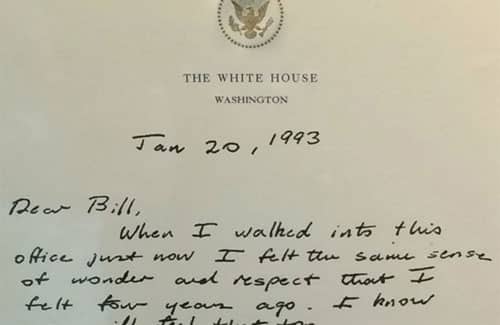
    January 20, 1993 (Wednesday) First inauguration of Bill Clinton.

    Women were forbidden to wear pants on the floor of Congress until 1993.

    The first time a state was represented in the U.S. Senate by two women was in 1993, with California’s Dianne Feinstein and Barbara Boxer. Since then, women have only represented the state in the Senate.

    Wut?
    Creedence Clearwater Revival’s record label sued former lead singer John Fogerty because his song The Old Man Down the Road sounded similar to Run Through the Jungle. Although Fogerty was awarded attorney fees, the judge found that “an artist can’t plagiarize himself.”
    World News:
    The Chemical Weapons Convention has prohibited the use of tear gas in warfare but explicitly allows its use in riot control.

    June 30, 1993, Gohan saved the world after defeating Cell in Dragonball Z episode 191: The Battle is Over… Thank You, Son Goku.

    The Odd:
    In 1893, prominent feminist Mary Elizabeth Lease predicted that by 1993, all food would be synthetic, thus “liberating women from the drudgery of the kitchen.”
    Pop Culture Facts & History:
    The Aaron Burr “Got Milk?” commercial from 1993 was the first in its series and was directed by Michael Bay.
    Earring Magic Ken was released in 1993. The re-designed Ken looked like a stereotypical gay man. Kitsch-minded gay men bought the doll in record numbers, making Earring Magic Ken the best-selling Ken model in Mattel’s history.

    Dark Horse Comics released a one-shot comic where NBA player Charles Barkley fought against Godzilla.

    Reggae singer Snow’s single Informer hit No.1 on the Billboard charts in 1993 while in jail. He only learned from a fellow inmate who got out, heard the song, and called Snow in jail.

    Hawaiian singer Israel Kamakawiwo’ole’s 1993 album Facing Future is the best-selling album of all time by a Hawaiian artist. His version of Over the Rainbow has been licensed for many films, TV shows, and commercials. The album reached platinum status in 2005.

    In Harry Potter and the Prisoner of Azkaban, Professor Lupin sleeps through most of the train ride to Hogwarts. The date is September 1, 1993. There really was a full moon the previous night; he was exhausted because he’d transformed the night before. #details

    Hocus Pocus was released in July 1993 instead of October because Disney did not want it to compete against their other Halloween-themed film, The Nightmare Before Christmas, which was due for release in October by Touchstone Pictures.

    Ted Turner, media mogul and founder of CNN, had a cameo in the 1993 movie Gettysburg, which Turner Pictures helped produce. He appeared briefly as Confederate Col. Waller T. Patton and is shot during the Pickett’s Charge scene. He also reprised his role in the prequel Gods and Generals.

    While filming Mrs. Doubtfire, Robin Williams improvised so much that there were PG, PG-13, R, and NC-17 edits of the film.

    Sharon Stone played the same character from 1992’s Basic Instinct in the 1993 Schwarzenegger action movie Last Action Hero.

    The European release of the futuristic film Demolition Man replaces Taco Bell references with Pizza Hut.

    Wendy’s founder, Dave Thomas, dropped out of high school to work full-time and did not graduate until 1993, when he obtained a GED.

    The McDonald’s Super Size option started as a cross-promotion for the 1993 Jurassic Park movie. It was called ‘Dino Size’ and was so successful that after the movie left theaters the option remained under its new name ‘Super Size’.

    Despite the title of the 1990 novel and 1993 movie Jurassic Park, most of the dinosaurs depicted in these sources were from the Cretaceous period, not the Jurassic.

    Steven Spielberg received a bachelor’s degree for completing a course on film and electronic arts at university. He submitted his own Schindler’s List to pass the advanced filmmaking class exam.

    After Steven Spielberg screened Schindler’s List for John Williams to compose the score, Williams was so moved he had to walk outside for several minutes. Upon returning, Williams said that the movie needed a better composer than him to which Spielberg replied “I know, but they’re all dead.”

    Cosmonaut Aleksandr Serebrov was the first person to play a videogame in space, Tetris, on his Game Boy, while orbiting Earth on the MIR Space Station in 1993

    On Frazier, the character of Roz Doyle (played by Peri Gilpin) is named in tribute to a producer of the television series Wings (which has the same creators as Frasier), who died from breast cancer in 1991.

    Wheel of Fortune’s Vanna White sued Samsung Electronics in 1993 over its use of a humorous ad featuring a robot turning letters on a game show, alleging a violation of her personality rights. White was awarded $403,000 in damages.

    Elvis Presley’s 1961 song Can’t Help Falling in Love With You peaked at #2 on the Billboard Hot 100. In 1993, the UB40 version spent 7 weeks in the #1 spot.

    At the 1993 Lollapalooza show, Rage Against the Machine stood on stage naked with duct-taped mouths for 14 minutes in protest against the Parents Music Resource Council. The only sound was feedback from the guitars.

    Vijay Singh played the lowest PGA score of 63.

    Only two players in MLB history have hit a game-winning, bottom-of-the-ninth home run to win the World Series; Bill Mazeroski for the Pittsburgh Pirates in 1960, and Joe Carter for the Toronto Blue Jays in 1993.

    The NFL’s’ New England Patriots had the worst record in the NFL from 1989-1993. They went 19-61 during that span.

    The 1988 Jamaican Bobsled Team were the underdogs representing the tropical nation in the 1988 Winter Olympics in Calgary, Canada, and were mortalized in the 1993 film Cool Runnings.

    Cost of a Super Bowl ad in 1993: $850,000

    The Habit:
    Magic: The Gathering collectible cards
    1st Appearances & 1993’s Most Popular Christmas Gifts, Toys and Presents:
    Power Rangers action figures, 1850’s Southern Belle Barbie, Barbie Batgirl giftset, Beanie Babies were released, with a fairly small market, and  Magic: The Gathering role-playing card game
    Popular and Best-selling Books From 1993:
    The Bridges of Madison County by Robert James Waller
    Cat’s Cradle by Anne Akers Johnson and Sarah Boore
    The Celestine Prophecy by James Redfield
    The Client by John Grisham
    Dolores Claiborne by Stephen King
    Dragon Tears by Dean Koontz
    The Giver by Lois Lowry
    Lasher by Anne Rice
    Like Water for Chocolate by Laura Esquivel
    Nightmares & Dreamscapes by Stephen King
    Paddy Clarke Ha Ha Ha by Roddy Doyle
    Pleading Guilty by Scott Turow
    The Scorpio Illusion by Robert Ludlum
    See I Told You So by Rush Limbaugh
    The Shipping News by E. Annie Prouls
    Slow Waltz in Cedar Bend by Robert James Waller
    Without Remorse by Tom Clancy
    Vanished by Danielle Steel
    The Virgin Suicides by Jeffrey Eugenides
    Best Film Oscar Winner:
    Unforgiven (presented in 1993)
    1993 Entries to The National Film Registry:
    An American in Paris (released in 1951)
    Badlands (released in 1973)
    The Black Pirate (released in 1926)
    Blade Runner (released in 1982)
    Cat People (released in 1942)
    The Cheat (released in 1915)
    Chulas Fronteras (released in 1976)
    Eaux d’artifice (released in 1953)
    The Godfather Part II (released in 1974)
    His Girl Friday (released in 1940)
    It Happened One Night (released in 1934)
    Lassie Come Home (released in 1943)
    Magical Maestro (released in 1952)
    March of Time: Inside Nazi Germany (released in 1938)
    A Night at the Opera (released in 1935)
    Nothing But a Man (released in 1964)
    One Flew Over the Cuckoo’s Nest (released in 1975)
    Point of Order (released in 1964)
    Shadows (released in 1959)
    Shane (released in 1953)
    Sweet Smell of Success (released in 1957)
    Touch of Evil (released in 1958)
    Where Are My Children? (released in 1916)
    The Wind (released in 1928)
    Yankee Doodle Dandy (released in 1942)
    The Big Movies: (according to boxofficemojo)
    1. Jurassic Park
    2. Mrs. Doubtfire
    3. The Fugitive
    4. The Firm
    5. Sleepless In Seattle
    6. Indecent Proposal
    7. In The Line Of Fire
    8. The Pelican Brief
    9. Schindler’s List
    10. Cliffhanger
    1993 Most Popular TV Shows:
    1. 60 Minutes (CBS)
    2. Home Improvement (ABC)
    3. Seinfeld (NBC)
    4. Roseanne (ABC)
    5. Grace Under Fire (ABC)
    6. Coach (ABC)
    7. Frasier (NBC)
    8. Murphy Brown (CBS)
    9. Murder, She Wrote (CBS)
    10. Thunder Alley (ABC)

    1993 Billboard Number One Songs:
    November 29, 1992 – March 5, 1993:
    I Will Always Love You – Whitney Houston

    March 6 – March 12:
    A Whole New World (Aladdin’s Theme) – Peabo Bryson & Regina Belle

    March 13 – April 30:
    Informer – Snow

    May 1 – May 14:
    Freak Me – Silk

    May 15 – July 9:
    That’s The Way Love Goes – Janet Jackson

    July 10 – July 23:
    Weak – SWV (Sisters With Voices)

    July 24 – September 11:
    I Can’t Help Falling In Love – UB40

    September 11 – November 5:
    Dreamlover – Mariah Carey

    November 6 – December 10:
    I’d Do Anything For Love (But I Won’t Do That) – Meat Loaf

    December 11 – December 24:
    Again – Janet Jackson

    December 25, 1993 – January 21, 1994:
    Hero – Mariah Carey

    Sports:
    World Series Champions: Toronto Blue Jays
    Super Bowl XXVII Champions: Dallas Cowboys
    NBA Champions: Chicago Bulls
    Stanley Cup Champs: Montreal Canadiens
    U.S. Open Golf Lee Janzen
    U.S. Tennis: (Men/Ladies) Pete Sampras/Steffi Graf
    Wimbledon (Men/Women): Pete Sampras/Steffi Graf
    NCAA Football Champions: Florida State
    NCAA Basketball Champions: North Carolina
    Kentucky Derby: Sea Hero
     

  • “Don’t Ask, Don’t Tell”

    “Don’t Ask, Don’t Tell”

    “Don’t Ask, Don’t Tell”

    “Don’t Ask, Don’t Tell” (DADT) was a controversial United States military policy that prohibited openly gay, lesbian, and bisexual individuals from serving while barring military officials from inquiring about a service member’s sexual orientation.

    DADT was enacted on December 21, 1993, as a compromise between then-President Bill Clinton and the United States Congress. Clinton had sought to lift the ban on gay and lesbian service members altogether but faced strong opposition from conservative politicians and military leaders. As a result, DADT was presented as a middle ground, allowing gay, lesbian, and bisexual individuals to serve in the military as long as they kept their sexual orientation private.

    The policy led to the discharge of over 13,000 service members during its 18-year tenure, often causing personal and professional turmoil for those affected. DADT also impacted pop culture, as it became a subject of debate in films, television shows, books, and music. The policy was widely criticized by LGBTQ+ activists and human rights organizations, who argued that it perpetuated discrimination and prevented capable individuals from serving their country.

    Efforts to repeal DADT gained momentum during the presidency of Barack Obama, who had pledged to end the policy during his 2008 election campaign. On December 22, 2010, President Obama signed the Don’t Ask, Don’t Tell Repeal Act, which allowed for the policy’s repeal after completing a military review and certification process. The repeal took effect on September 20, 2011, enabling openly LGBTQ+ individuals to serve in the United States military without fear of discrimination or discharge.

    In summary, “Don’t Ask, Don’t Tell” was a contentious military policy in the United States that prohibited openly LGBTQ+ individuals from serving in the armed forces. Enacted in 1993 as a compromise under President Clinton, the policy was widely criticized and debated in both political and pop culture. It was finally repealed in 2011 under President Obama, allowing for greater inclusivity and equality within the military.

  • The North American Free Trade Agreement (NAFTA)

    The North American Free Trade Agreement (NAFTA)

    The North American Free Trade Agreement (NAFTA)

    The North American Free Trade Agreement (NAFTA) is a trilateral trade agreement between the United States, Canada, and Mexico that took effect on January 1, 1994, to eliminate trade barriers and foster economic cooperation among the three countries.

    The idea for NAFTA originated in the late 1980s when the U.S. and Canada began discussing a free trade agreement. After negotiations between the two countries, the Canada-United States Free Trade Agreement (CUSFTA) was implemented in 1989. Mexican President Carlos Salinas de Gortari, seeking to modernize Mexico’s economy, expressed interest in joining a trilateral trade agreement.

    Negotiations between the three countries began in 1990, led by U.S. President George H.W. Bush, Canadian Prime Minister Brian Mulroney, and Mexican President Carlos Salinas. After two years of talks, the leaders signed the NAFTA agreement on December 17, 1992. It was then ratified by the legislatures of each country in 1993, with U.S. President Bill Clinton signing the agreement into law on December 8, 1993.

    NAFTA eliminated most tariffs on goods traded between the three countries and established rules for investment, intellectual property rights, and dispute resolution. The agreement aimed to increase cross-border trade and investment, boost economic growth, and create jobs in all three countries. However, NAFTA has faced criticism over the years for its impact on job losses in certain industries, particularly manufacturing in the United States, and for its environmental effects.

    In 2018, NAFTA was renegotiated and replaced by the United States-Mexico-Canada Agreement (USMCA), which aimed to address some of the concerns raised about the original agreement. The USMCA entered into force on July 1, 2020.

  • Assassination of Pablo Escobar

    Assassination of Pablo Escobar

    Assassination of Pablo Escobar

    Pablo Escobar, the notorious Colombian drug lord, was killed on December 2, 1993, in a shootout with Colombian National Police, marking the end of his infamous reign and profoundly influencing popular culture and crime narratives around the world.

    Pablo Escobar, born on December 1, 1949, in Rionegro, Colombia, was the head of the Medellín Cartel, responsible for up to 80% of the global cocaine trade during the 1980s and early 1990s. Escobar’s cartel was earning an estimated $420 million per week at the height of his power, making him one of the richest and most powerful criminals in history.

    Escobar’s wealth and influence allowed him to evade capture for years, despite being pursued by the Colombian government, the United States Drug Enforcement Administration (DEA), and rival criminal organizations. He famously built a luxurious private prison called “La Catedral” in 1991, where he continued his criminal activities while supposedly serving a prison sentence.

    1992 Escobar escaped from La Catedral, leading to an extensive manhunt. The Colombian government, aided by the DEA and a vigilante group called Los Pepes, pursued him relentlessly. On December 2, 1993, after a 16-month-long search, Colombian National Police tracked him down to a safe house in Medellín, where he was killed in a rooftop shootout.

    The death of Pablo Escobar marked the decline of the Medellín Cartel and the rise of the rival Cali Cartel. His life and death have had a lasting impact on popular culture, with countless movies, television shows, books, and songs being inspired by his story. Notable examples include the 2001 film “Blow,” starring Johnny Depp, and the popular Netflix series “Narcos.” Escobar’s story has become emblematic of the dangers and allure of the drug trade and the complex interplay between crime, politics, and law enforcement in Latin America.

  • Druglord Pablo Escobar  Killed By Authorities

    Druglord Pablo Escobar Killed By Authorities

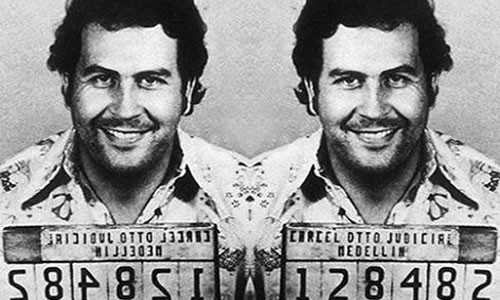
    EscobarThis is the first mugshot of Druglord Pablo Escobar, which ruined his hopes for presidency in Mexico and Solidified his drug lord empire. Before all of this, he was still well in depth in the criminal world. There are multiple stories behind how he started. According to Pablo himself, he started by selling oranges to make money to feed his family while other accounts include him taking, sanding down, and reselling gravestones. Some stories say he stoles the gravestones while others say that the owners of the cemetary would give them to him when families stop paying for plots.

    He is one of the major contributors to the surge in cocaine throughout the 80s. It’s estimated that 70 to 80 tons a month come across the border to the US from Pablo’s empire.

    Pablo was also one never afraid to deal with authorities. There have been multiple incidents in the ast where he’s attempted to bribe officers and if they turn it down, they end up dead. His motto was “plata o plomo” which translates to silver or lead, insinuating that you take the money or they take your life.

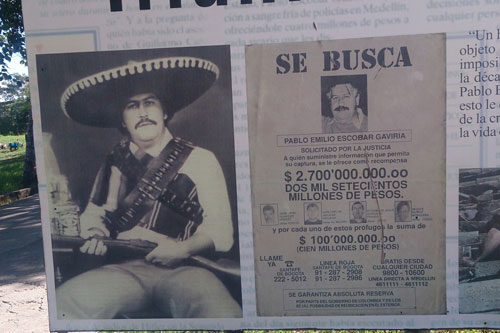
    While seen as an enemy of the United States and Colombian governments, Escobar was a hero to many in Medellín, especially the poor people; he was a natural at public relations and he worked to create goodwill among the poor people of Colombia. A lifelong sports fan, he was credited with building football fields and multi-sports courts, as well as sponsoring children’s football teams. Escobar was responsible for the construction of many hospitals, schools and churches in western Colombia, which gained him popularity inside the local Roman Catholic Church. He worked hard to cultivate his Robin Hood image, and frequently distributed money through housing projects and other civic activities, which gained him notable popularity among the poor.

    The population of Medellín often helped Escobar by serving as lookouts, hiding information from the authorities, or doing whatever else they could to protect him. At the height of his power, drug trafficers from Medellín and other areas were handing over between 20% and 35% of their Colombian cocaine-related profits to Escobar, because he was the one who shipped the cocaine successfully to the US.

    The Colombian cartels’ continuing struggles to maintain supremacy resulted in Colombia quickly becoming the world’s murder capital with 25,100 violent deaths in 1991 and 27,100 in 1992. This increased murder rate was fueled by Escobar’s giving money to his hitmen as a reward for killing police officers, over 600 of whom died as a result.

    Things took a rough turn for him after he organized to have Luis Carlos Galán assassinated. Once the plan went through, the Mexican government recoiled against him and all the other drug lords in Mexico and offered to give all of them reduced sentences to stop all criminal activity. It didn’t work.

    The war against Pablo Escobar ended on December 2, 1993, amid another of Escobar’s attempts to elude the Search Bloc. Using radio triangulation technology, a Colombian electronic surveillance team, led by Brigadier Hugo Martínez, found him hiding in a middle-class barrio in Medellín.

    With authorities closing in, a firefight with Escobar and his bodyguard, Alvaro de Jesús Agudelo (a.k.a. “El Limón”), ensued. The two fugitives attempted to escape by running across the roofs of adjoining houses to reach a back street, but both were shot and killed by Colombian National Police. Escobar suffered gunshots to the leg and torso, and a fatal gunshot through the ear. It has never been proven who actually fired the final shot into his head, or determined whether this shot was made during the gunfight or as part of a possible execution, and there is wide speculation about the subject.

    Some of Escobar’s relatives believe that he could have committed suicide.His two brothers, Roberto Escobar and Fernando Sánchez Arellano, believe that he shot himself through the ears: “He committed suicide, he did not get killed. During all the years they went after him, he would say to me every day that if he was really cornered without a way out, he would shoot himself through the ears.”

    Soon after Escobar’s death and the subsequent fragmentation of the Medellín Cartel, the cocaine market became dominated by the rival Cali Cartel until the mid-1990s when its leaders, too, were either killed or captured by the Colombian government. The Robin Hood image that Escobar had cultivated maintained a lasting influence in Medellín. Many there, especially many of the city’s poor whom Escobar had aided while he was alive, mourned his death. About 25,000 were present for his burial.

  • Brady Bill: Gun Control Legislation

    Brady Bill: Gun Control Legislation

    Brady Bill: Gun Control Legislation

    The Brady Bill, officially known as the Brady Handgun Violence Prevention Act, is a U.S. federal law enacted in 1993 that established background checks and waiting periods for individuals attempting to purchase firearms, aimed at reducing gun violence.

    The bill was named after James Brady, the White House Press Secretary who was shot and severely injured during an assassination attempt on President Ronald Reagan in 1981. After the shooting, Brady and his wife, Sarah, became prominent advocates for gun control.

    The Brady Bill was first introduced to Congress in 1987 but faced significant opposition from gun rights groups, most notably the National Rifle Association (NRA). After several years of debate and revisions, the bill gained momentum following the 1992 election of President Bill Clinton, who was a vocal supporter of gun control measures.

    On November 30, 1993, President Clinton signed the Brady Bill into law. The legislation mandated a five-day waiting period and background check for handgun purchases from federally licensed dealers. This waiting period allowed local law enforcement officials time to perform background checks on potential buyers, with the intent to prevent individuals with a criminal history or other disqualifying factors from purchasing firearms.

    In 1998, the National Instant Criminal Background Check System (NICS) was implemented, allowing for instant background checks and eliminating the five-day waiting period in most cases. Despite ongoing debates over its effectiveness, the Brady Bill has been credited with preventing thousands of prohibited individuals from obtaining firearms since its enactment.

  • 1993 Music – The 100 Most Popular Songs

    1993 Music – The 100 Most Popular Songs

    1993 Music Hits Chart

    1. What A Wonderful World/Somewhere Over The Rainbow – Israel Kamakawiwo’ole
    2. What Is Love – Haddaway
    3. Hero – Mariah Carey
    4. Bed of Roses – Bon Jovi
    5. Have I Told You Lately – Rod Stewart
    6. Can’t Help Falling In Love – UB40
    7. All that She Wants – Ace Of Base
    8. In The Still Of The Night (I’ll Remember) – Boyz II Men
    9. Dreamlover – Mariah Carey
    10. Cryin’ – Aerosmith
    11. Murder She Wrote – Chaka Demus and Pliers
    12. Shoop – Salt N Pepa
    13. A Whole New World – Peabo Bryson & Regina Belle
    14. Show Me Love – Robin S
    15. I’m Gonna Be (500 miles) – the Proclaimers
    16. Hip Hop Hooray – Naughty By Nature
    17. Rhythm Is A Dancer – Snap!
    18. Supermodel (You Better Work) – RuPaul
    19. When I Fall In Love – Celine Dion & Clive Griffin
    20. Come Baby Come – K7
    21. Man On The Moon – REM
    22. That’s The Way Love Goes – Janet Jackson
    23. T-R-O-U-B-L-E – Travis Tritt
    24. Bad Boys – Inner Circle
    25. Nuthin’ But A “G” Thang – Dr. Dre
    26. I Get Around – 2 Pac
    27. Weak – SWV
    28. Please Forgive Me – Bryan Adams
    29. Whoot, There It Is – 95 South
    30. More And More – Captain Hollywood Project
    31. I’m So Into You – SWV
    32. I’m Every Woman – Whitney Houston
    33. Hey Jealousy – Gin Blossoms
    34. I’d Do Anything For Love (But I Won’t Do that) – Meatloaf
    35. Love U More – Sunscreem
    36. No Ordinary Love – Sade
    37. Will You Be There – Michael Jackson
    38. Connected – Stereo MCs
    39. Passionate Kisses – Mary Chapin-Carpenter
    40. Boom! Shake The Room – Jazzy Jeff & Fresh Prince
    41. Baby, I’m Yours – Shai
    42. Freak Me – Silk
    43. Reason To Believe – Rod Stewart & Ronnie Wood
    44. Sweat (A La La La La Long) – Inner Circle
    45. Deeper and Deeper – Madonna
    46. Another Sad Love Song – Toni Braxton
    47. Can’t Get Enough Of Your Love – Taylor Dayne
    48. Ooh Child – Dino
    49. Whoomp! There It Is – Tag Team
    50. Two Princes – Spin Doctors
    51. Informer – Snow
    52. Slam – Onyx
    53. Just Kickin’ It – Xscape
    54. Insane In The Brain – Cypress Hill
    55. Knockin Da Boots – H-Town
    56. Creep – Radiohead
    57. Runaway Train – Soul Asylum
    58. Cat’s In The Cradle – Ugly Kid Joe
    59. I Got A Man – Positive K
    60. I See Your Smile – Gloria Estefan
    61. Into Your Arms – The Lemonheads
    62. Candy Everybody Wants – 10,000 Maniacs
    63. Everybody Hurts – R.E.M.
    64. Give It Up – The Goodmen
    65. Hey Mr. D.J. – Zhane
    66. Jimmy Olson’s Blues – Spin Doctors
    67. What’s Up – 4 non-Blondes
    68. Kiss Of Life – Sade
    69. River Of Dreams – Billy Joel
    70. Rubberband Girl – Kate Bush
    71. No Rain – Blind Melon
    72. Plush – Stone Temple Pilots
    73. Dazzey Dukes – Duice
    74. I’ll Sleep When I’m Dead – Bon Jovi
    75. Chattahoochee – Alan Jackson
    76. Forever In Love – Kenny G
    77. Heal The World – Michael Jackson
    78. Feed The Tree – Belly
    79. I Don’t Wanna Fight – Tina Turner
    80. Should’ve Been A Cowboy – Toby Keith
    81. I’m A Player – Too Short
    82. It Was A Good Day – Ice Cube
    83. Who Is It – Michael Jackson
    84. Gangsta lean – D.R.S.
    85. Never A Time – Genesis
    86. Mr. Wendal – Arrested Development
    87. Alright – Kris Kross
    88. Rebirth of Slick – Digable Planets
    89. Ditty – Paperboy
    90. If I Had No Loot – Tony Toni Tone
    91. Livin’ On The Edge – Aerosmith
    92. Right Here/Human Nature – SWV
    93. Just Kickin’ It – Xscape
    94. By The Time This Night Is Over – Kenny G With Peabo Bryson
    95. The CRying game – Boy George
    96. Knock-N-Boots – Wreckx-N-Effect
    97. Fields of Gold – Sting
    98. I Love The Way You Love Me – John Michael Montgomery
    99. Method Man – Wu-Tang Clan
    100. Few & Far Between – 10,000 Maniacs
  • The European Union: Maastricht Treaty implementation

    The European Union: Maastricht Treaty implementation

    The European Union: Formation and Maastricht Treaty implementation

    The European Union (EU) is a political and economic union of European countries, which was formally established by the Maastricht Treaty in 1993, paving the way for greater cooperation and integration among its member states.

    The idea of a unified Europe can be traced back to the aftermath of World War II when leaders sought to prevent future conflicts through increased cooperation and economic interdependence. The first step towards this goal was the creation of the European Coal and Steel Community (ECSC) in 1951, which brought together six countries: France, Germany, Italy, Belgium, the Netherlands, and Luxembourg.

    In 1957, these six countries signed the Treaty of Rome, creating the European Economic Community (EEC) and the European Atomic Energy Community (Euratom). The EEC aimed to establish a common market for goods, services, capital, and labor, while Euratom promoted cooperation in the field of nuclear energy.

    Over the years, the EEC expanded its membership and evolved through several treaties. The Single European Act (SEA) of 1986 aimed to complete the single market, and the fall of the Berlin Wall in 1989 accelerated the push for even greater integration.

    The Treaty on European Union, commonly known as the Maastricht Treaty, was signed on February 7, 1992, and entered into force on November 1, 1993. This treaty formally established the European Union, creating a three-pillar structure: the European Communities (including the EEC, which later became the European Community), Common Foreign and Security Policy (CFSP), and Police and Judicial Cooperation in Criminal Matters (PJCCM).

    The Maastricht Treaty also introduced the concept of European citizenship, granting EU citizens the right to live, work, and vote in elections in any member state. Additionally, the treaty laid the groundwork for the creation of the euro, a single currency that was ultimately launched on January 1, 1999, and began circulating as physical currency on January 1, 2002.

    Prominent figures involved in the development of the EU and the Maastricht Treaty include French President François Mitterrand, German Chancellor Helmut Kohl, and European Commission President Jacques Delors, among others.

    In summary, the European Union was established by the Maastricht Treaty in 1993 as a political and economic union of European countries, building upon previous efforts such as the ECSC and EEC. The treaty implemented a three-pillar structure, introduced European citizenship, and laid the foundation for the euro currency.

  • Nelson Mandela and Frederik Willem de Klerk Joint Peace Prize

    Nelson Mandela and Frederik Willem de Klerk Joint Peace Prize

    Nelson Mandela and Frederik Willem de Klerk Both Got A (Peace) Prize

    Nelson Mandela and Frederik Willem de Klerk, key figures in dismantling apartheid and transitioning South Africa towards democracy, were jointly awarded the Nobel Peace Prize in 1993 for their efforts in bringing peace and reconciliation to their country.

    Nelson Mandela, the leader of the African National Congress (ANC), had been imprisoned for 27 years for his anti-apartheid activities. In 1990, then-South African President Frederik Willem de Klerk, a reform-minded leader of the National Party, ordered Mandela’s release from prison, recognizing the need for change in the country. This marked the beginning of negotiations to end the apartheid system and establish multiracial elections in South Africa.

    During the negotiations, Mandela and de Klerk faced numerous challenges, including violence between various political factions and the reluctance of some within their own parties to embrace change. Despite these obstacles, both leaders remained committed to a peaceful transition to democracy.

    On April 27, 1994, South Africa held its first democratic elections, in which all citizens, regardless of race, were allowed to vote. Nelson Mandela became the first black president of South Africa, while Frederik Willem de Klerk served as his deputy president.

    In recognition of their efforts to end apartheid and establish a new democratic South Africa, the Norwegian Nobel Committee awarded Mandela and de Klerk the Nobel Peace Prize on October 15, 1993. The award highlighted the importance of their cooperation and mutual trust, which had laid the foundation for a peaceful and democratic future for South Africa.

  • The Battle of Mogadishu:  Black Hawk Down

    The Battle of Mogadishu:  Black Hawk Down

    The Battle of Mogadishu:  Black Hawk Down

    The Battle of Mogadishu, also known as “Black Hawk Down,” was a significant military operation conducted by the United States in Somalia in 1993, aimed at capturing a Somali warlord, which resulted in intense urban combat and the loss of 18 American soldiers.

    The operation took place on October 3-4, 1993, in the Somali capital, Mogadishu, as part of a broader UN-backed humanitarian mission to provide aid to the famine-stricken population and restore stability in the country. The central target of the operation was Somali warlord Mohamed Farrah Aidid, whose forces controlled much of the city and had been implicated in attacks on UN personnel.

    US Task Force Ranger, which included elite soldiers from the Army Rangers, Delta Force, and Navy SEALs, was deployed to capture Aidid’s top lieutenants. The operation began on October 3, when the Task Force launched a raid on a building in Mogadishu believed to be hosting a meeting of Aidid’s top officials. Although the US forces managed to capture the intended targets, the mission took a turn for the worse when rocket-propelled grenades shot down two Black Hawk helicopters.

    The downing of the helicopters treggired an intense urban battle, as US forces attempted to reach the crash sites and rescue the trapped crew members. Throughout the night, the US soldiers encountered fierce resistance from Somali militia and civilians, resulting in the deaths of 18 American soldiers and injuries to more than 70 others. An estimated 1,000 Somali fighters and civilians were also killed in the conflict.

    The Battle of Mogadishu garnered significant international attention, and the graphic images of dead American soldiers being dragged through the streets of Mogadishu shocked the US public. As a result, the US scaled back its involvement in Somalia, and President Bill Clinton ordered the withdrawal of American troops by March 31, 1994.

    The events of the battle were later recounted in the book “Black Hawk Down” by journalist Mark Bowden and adapted into a successful film of the same name directed by Ridley Scott in 2001. The Battle of Mogadishu remains a pivotal moment in US military history, as it highlighted the challenges of urban warfare and the risks of intervention in complex and volatile regions.

  • The Latur Earthquake: Disaster in Maharashtra, India

    The Latur Earthquake: Disaster in Maharashtra, India

    Latur Earthquake: Disaster in Maharashtra, India

    The Latur Earthquake was a devastating disaster that struck Maharashtra, India, on September 30, 1993, causing widespread destruction and loss of life in the region.

    The earthquake, which measured 6.2 on the Richter scale, struck in the early morning at 3:56 am local time. The epicenter was located near the town of Killari in the Latur district of Maharashtra. The powerful quake caused extensive damage to buildings and infrastructure, particularly in rural areas with mud and stone houses.

    The official death toll from the Latur Earthquake was estimated at around 9,748 people, with over 30,000 injured and hundreds of thousands left homeless. In the immediate aftermath, rescue and relief efforts were carried out by the Indian government, the Indian Army, and various national and international NGOs. Aid poured in from around the world to help the victims, and the Indian government launched a massive reconstruction and rehabilitation program to rebuild the affected areas.

    The Latur Earthquake raised concerns about the vulnerability of many rural areas in India to natural disasters. It highlighted the need for better building codes, construction practices, and improved disaster management and preparedness. In response, the Indian government established the National Disaster Management Authority (NDMA) in 2005 to coordinate disaster response and risk reduction activities across the country.

  • The Oslo Accords: Israeli-Palestinian Peace Process Agreement

    The Oslo Accords: Israeli-Palestinian Peace Process Agreement

    The Oslo Accords: Israeli-Palestinian Peace Process Agreement

    The Oslo Accords were a series of secret peace negotiations and agreements between Israel and the Palestine Liberation Organization (PLO) in the early 1990s, which aimed to establish a framework for resolving the Israeli-Palestinian conflict.

    The talks began in 1992 when Israeli and Palestinian representatives met secretly in Oslo, Norway, with the facilitation of Norwegian diplomats. Key figures in the negotiations included Israeli Prime Minister Yitzhak Rabin, Israeli Foreign Minister Shimon Peres, and PLO Chairman Yasser Arafat. The meetings led to a breakthrough in the peace process, as both parties agreed to recognize each other’s existence and engage in direct negotiations for the first time.

    On September 13, 1993, the Declaration of Principles, also known as Oslo I, was signed in Washington, D.C., by U.S. President Bill Clinton. The agreement called for establishing a Palestinian interim self-governing authority in the West Bank and Gaza Strip and the withdrawal of Israeli forces from parts of these territories. The accords also outlined a five-year plan for further negotiations on issues such as the status of Jerusalem, Israeli settlements, Palestinian refugees, and final borders.

    In September 1995, the Oslo II agreement was signed, which divided the West Bank into three administrative areas (Areas A, B, and C) with different levels of Palestinian autonomy and Israeli control. The accord also laid the groundwork for Palestinian elections, which took place in 1996.

    Despite initial optimism, the peace process was marred by ongoing violence, including a series of suicide bombings by Palestinian militants and the assassination of Israeli Prime Minister Yitzhak Rabin by an Israeli extremist in 1995. The Oslo Accords ultimately failed to resolve the Israeli-Palestinian conflict, as key issues remained unresolved, and the cycle of violence continued.

    Nevertheless, the accords marked an important milestone in the history of the conflict, as they were the first-ever direct negotiations between Israel and the PLO, and they provided a framework for future peace talks, such as the Camp David Summit in 2000 and the Roadmap for Peace in 2003.

  • Premiere of The X-Files on FOX

    Premiere of The X-Files on FOX

    Premiere of The X-Files on FOX

    The X-Files, a groundbreaking sci-fi television series, premiered on the FOX network on September 10, 1993, captivating audiences and influencing popular culture with its mix of paranormal investigations and government conspiracies.

    Created by Chris Carter, The X-Files followed the adventures of FBI Special Agents Fox Mulder (played by David Duchovny) and Dana Scully (played by Gillian Anderson) as they investigated unsolved cases involving paranormal phenomena. The show’s unique blend of suspense, horror, and drama, along with its “monster of the week” and overarching mythology storylines, quickly gained a loyal following.

    The X-Files had a profound impact on popular culture, inspiring a new wave of television series that explored supernatural and conspiracy themes, such as “Buffy the Vampire Slayer,” “Fringe,” and “Supernatural.” The show also popularized the catchphrase “The truth is out there,” which became synonymous with the series and an iconic symbol of 1990s pop culture.

    The series garnered critical acclaim and numerous awards, including 16 Primetime Emmy Awards, five Golden Globe Awards, and a Peabody Award. Duchovny and Anderson both received multiple awards for their performances, and their on-screen chemistry contributed significantly to the show’s success. Additionally, Carter’s creative vision and storytelling abilities earned him a place among the most influential television writers and producers of the time.

    The X-Files also led to a spin-off series, “The Lone Gunmen,” two feature films, comic books, novels, and merchandise. The show was revived in 2016 for a limited series and returned for an eleventh season in 2018, further solidifying its status as a cultural phenomenon.

    In summary, the premiere of The X-Files on FOX in 1993 marked the beginning of a highly influential and successful television series that shaped the landscape of popular culture in the 1990s and beyond. Its lasting impact can still be seen in the numerous supernatural-themed TV shows and films that followed and in the enduring popularity of the show’s characters, catchphrases, and themes.

  • Jurassic Park Released

    Jurassic Park Released

    Jurassic Park (Film) Released

    Jurassic Park, a groundbreaking science-fiction film directed by Steven Spielberg, was released on June 11, 1993, and quickly became a worldwide phenomenon, captivating audiences with its groundbreaking special effects and thrilling story.

    Based on the 1990 novel of the same name by Michael Crichton, Jurassic Park tells the story of a billionaire philanthropist who creates a theme park featuring cloned dinosaurs on a remote island. The film starred Sam Neill, Laura Dern, Jeff Goldblum, and Richard Attenborough, among others. The film was produced by Universal Pictures and Amblin Entertainment, with Spielberg at the helm.

    The movie’s groundbreaking use of computer-generated imagery (CGI) and animatronics, designed by Industrial Light & Magic (ILM) and Stan Winston Studio, brought dinosaurs to life like never before, creating a new benchmark for visual effects in the film industry. The film’s score, composed by the legendary John Williams, also became iconic, further enhancing the movie’s impact on popular culture.

    Jurassic Park became the highest-grossing film at the time, earning over $914 million worldwide and winning three Academy Awards for its visual effects, sound editing, and sound mixing. The film’s success spawned a franchise, including sequels, merchandise, theme park attractions, and even video games.

    Jurassic Park’s influence on pop culture can be seen in the growing interest in paleontology, the resurgence of dinosaur-themed media, and the increased use of CGI in filmmaking. The movie left a lasting legacy on the film industry and has been hailed as one of the greatest science-fiction films ever.

  • Declaration of Eritrea’s Independence: Separation from Ethiopia

    Declaration of Eritrea’s Independence: Separation from Ethiopia

    Eritrea’s Independence: Separation from Ethiopia

    Eritrea gained its independence from Ethiopia on May 24, 1993, following a 30-year-long armed struggle, and its successful transition to nationhood had wide-ranging effects on the Horn of Africa region and beyond.

    The struggle for Eritrean independence began in 1961 when the Eritrean Liberation Front (ELF) initiated armed resistance against Ethiopian rule. In 1970, a faction of the ELF formed a new group called the Eritrean People’s Liberation Front (EPLF), led by Isaias Afwerki. Over the years, the EPLF gradually became the dominant liberation movement.

    The conflict intensified during the 1980s, fueled by the overarching Cold War geopolitics and the strategic significance of the Red Sea. Eritrea finally achieved a major military victory in 1991, when the EPLF, in alliance with Ethiopian rebels, overthrew the Ethiopian government led by Mengistu Haile Mariam.

    Following the end of the armed struggle, Eritrea held a United Nations-monitored referendum from April 23 to 25, 1993, in which an overwhelming 99.83% of voters chose independence. Eritrea officially declared its independence on May 24, 1993, and became a member of the United Nations later that year.

    Eritrea’s independence had a profound impact on the Horn of Africa, with its newfound freedom serving as a symbol of resilience and self-determination for other independence movements in the region. Eritrean culture, including its unique blend of African, Middle Eastern, and Italian influences, gained greater prominence on the world stage. Eritrean music, art, and cuisine spread to other countries, often through the Eritrean diaspora.

    Despite the initial optimism surrounding Eritrea’s independence, the country has faced significant challenges, including an unresolved border dispute with Ethiopia that led to a devastating war between 1998 and 2000. Additionally, concerns have been raised about Eritrea’s human rights record and its lack of political freedom under the leadership of Isaias Afwerki.

  • The American Midwest Great Flood of 1993

    The American Midwest Great Flood of 1993

    The Great Flood of 1993

    The Great Flood of 1993 was a historic and devastating flood that affected large parts of the American Midwest, causing widespread damage and loss of life due to the record-breaking rainfall and extensive flooding of the Mississippi and Missouri rivers.

    The flood event began in the spring of 1993, when the Midwest experienced unusually heavy and persistent rainfall. The rain continued throughout the summer, resulting in one of the wettest periods in American history. The Mississippi and Missouri rivers and their tributaries swelled to unprecedented levels, breaching levees and inundating vast farmland, towns, and cities.

    The flood affected nine states in total, including Illinois, Iowa, Kansas, Minnesota, Missouri, Nebraska, North Dakota, South Dakota, and Wisconsin. Major cities like St. Louis, Missouri, and Davenport, Iowa, were severely impacted. The flooding persisted for several months, peaking in July and August, and it was not until September that the floodwaters began to recede.

    The disaster took the lives of 48 people and caused an estimated $15 to $20 billion in damages, making it one of the costliest and most widespread natural disasters in U.S. history. Thousands of homes were destroyed, and more than 50,000 people were displaced. Agricultural losses were also significant, with millions of acres of farmland submerged and crop production severely affected.

    The U.S. government, led by President Bill Clinton, declared a state of emergency in the affected states and mobilized federal assistance through the Federal Emergency Management Agency (FEMA) and other agencies. The National Guard and volunteers from across the country provided support in the form of sandbagging, evacuations, and relief efforts.

    The Great Flood of 1993 highlighted the vulnerability of the Midwest to extreme weather events and prompted a reevaluation of flood management strategies, including improvements in levee systems, floodplain zoning, and the development of better flood forecasting and warning systems.

  • The Introduction of the World Wide Web: Birth of the Modern Internet

    The Introduction of the World Wide Web: Birth of the Modern Internet

    WWW: The Birth of the Modern Internet

    The introduction of the World Wide Web in 1993 revolutionized how people access and share information, marking the beginning of the modern Internet era and transforming global communication.

    British computer scientist Sir Tim Berners-Lee laid the foundation for the World Wide Web, who first proposed the concept in 1989 while working at CERN, the European Organization for Nuclear Research in Switzerland. He envisioned a system that would enable scientists around the world to easily share and access research data through a global network of interconnected computers.

    Berners-Lee developed the core components that would make the web possible, including the Hypertext Markup Language (HTML), the Hypertext Transfer Protocol (HTTP), and the Universal Resource Identifier (URI), which later became the Uniform Resource Locator (URL).

    In 1991, the first web page was created, but it wasn’t until April 30, 1993, that CERN made the World Wide Web technology available to the public on a royalty-free basis, paving the way for widespread adoption and development. This decision transformed the internet from a primarily academic and military network into a platform accessible to the general public.

    In the years that followed, the introduction of graphical web browsers like Mosaic and Netscape Navigator made the web even more user-friendly and accessible, increasing the number of websites and users. As the web grew, it became a platform for diverse applications, including online shopping, social media, and multimedia streaming, forever changing how people communicate, work, and access information.

    Today, the World Wide Web is an essential part of everyday life for billions of people around the globe and has had a profound impact on society, culture, and the global economy.

  • The Waco Siege: Branch Davidian Standoff

    The Waco Siege: Branch Davidian Standoff

    The Waco Siege: Branch Davidian Standoff

    The Waco Siege was a 51-day standoff between the Branch Davidians, a religious sect led by David Koresh, and the US federal government that took place from February 28 to April 19, 1993, resulting in the deaths of 76 people, including Koresh.

    The Branch Davidians, an offshoot of the Seventh-day Adventist Church, were based in a compound called Mount Carmel, near Waco, Texas. The group was led by David Koresh, who claimed to be the final prophet and preached an apocalyptic message. The Bureau of Alcohol, Tobacco, and Firearms (ATF) began investigating the Branch Davidians after receiving allegations of illegal firearms possession and child abuse within the compound.

    On February 28, 1993, the ATF attempted to execute a search warrant at the Mount Carmel compound, which led to a deadly gun battle between the agents and the Branch Davidians. Four ATF agents were killed, 16 others were injured, and six Branch Davidians died in the exchange. The events of that day marked the beginning of the Waco Siege.

    Following the failed raid, the Federal Bureau of Investigation (FBI) took over the operation and initiated negotiations with Koresh and his followers. The standoff continued for 51 days, during which the FBI used various tactics to pressure the Branch Davidians into surrendering, including cutting off utilities, playing loud music, and using psychological warfare.

    On April 19, 1993, after the negotiations had reached an impasse, the FBI launched an assault on the compound using tear gas in an attempt to force the occupants out. However, a fire broke out within the compound during the operation, rapidly engulfing the entire building. A total of 76 people, including Koresh and 25 children, died in the fire. The cause of the fire remains controversial, with some claiming that the Branch Davidians deliberately started it, while others argue that the FBI’s tactics contributed to the tragedy.

    The Waco Siege remains one of the most controversial incidents in modern US history, raising questions about the use of force by law enforcement and the government’s handling of the situation. The events at Waco have since become a rallying point for anti-government sentiments and have been cited as a motivation for other violent incidents, such as the Oklahoma City bombing in 1995.

  • Grand National Horse Race Cancellation

    Grand National Horse Race Cancellation

    Grand National Horse Race Cancellation

    The 1993 Grand National horse race was declared void due to a false start, leading to confusion and disappointment for spectators and participants alike.

    The Grand National is an annual horse racing event held at Aintree Racecourse near Liverpool, England, and is one of the world’s most prestigious and challenging steeplechase races. On April 3, 1993, the race was set to occur as usual, but unforeseen events led to its eventual cancellation.

    Several horses tangled in the starting tape during the first attempt to start the race, causing a false start. The race was stopped, and the horses were brought back to the starting line. However, a second false start occurred when the starting tape tangled again, and the officials failed to recall the horses.

    As a result, 30 of the 39 horses continued to race, unaware that the event had been declared void. Many jockeys only realized the situation when they saw the second circuit flag at the end of the first lap. Meanwhile, the remaining horses were either pulled up or completed the race, adding to the confusion.

    The cancellation of the 1993 Grand National had significant consequences for the horse racing industry and the betting public, with an estimated £75 million in wagers becoming void. The incident received widespread media coverage and was dubbed “the race that never was.”

    In popular culture, the 1993 Grand National is often cited as a cautionary tale about the importance of clear communication and effective event management. The fiasco led to changes in the starting procedures for future races, including the use of a more reliable starting tape system and better methods to recall horses in case of a false start.

    The cancellation of the 1993 race remains the only time in the history of the Grand National that the event was declared void, making it a unique and notorious moment in horse racing history.

  • 1993 Oscars 65th Academy Awards

    1993 Oscars 65th Academy Awards

    1993 Oscars 65th Academy Awards

    • Winners Announced: March 29, 1993
    • Held at: Dorothy Chandler Pavilion, Los Angeles, California
    • Host: Billy Crystal
    • Eligibility Year: 1992

    Trivia

    • Comedy Kingpin: Billy Crystal was back, hosting the Oscars for the fourth time and delivering his iconic humorous monologues.
    • Unforgiven Unleashed: Clint Eastwood’s Unforgiven dominated the night, winning Best Picture, Best Director for Eastwood, and Best Supporting Actor for Gene Hackman.
    • Actress Ascent: Emma Thompson won Best Actress for her role in Howards End, and she also wrote the screenplay for Sense and Sensibility, which would later earn her another Oscar.
    • Historic Win for Pacino: Al Pacino finally snagged his first competitive Oscar for Best Actor in Scent of a Woman after eight nominations.
    • Marisa’s Moment: Marisa Tomei won Best Supporting Actress for My Cousin Vinny, a comedy film, which is rare in the Oscars.
    • Animated Achievements: Aladdin bagged two Oscars, one for Best Original Score and another for Best Original Song for A Whole New World.
    • Sorrowful Score: Bram Stoker’s Dracula by Wojciech Kilar took home the Oscar for Best Costume Design.
    • War Winner: Indochine, a French film, won Best Foreign Language Film.
    • Woody’s Words: Woody Allen’s Husbands and Wives was nominated for Best Original Screenplay, a nod that came amidst a tumultuous period in Allen’s personal life.

    1993 Oscar Nominees and Winners

    Best Picture:
    Unforgiven – Clint Eastwood, producer (WINNER)
    The Crying Game – Stephen Woolley, producer
    A Few Good Men – David Brown, Rob Reiner and Andrew Scheinman, producers
    Howards End – Ismail Merchant, producer
    Scent of a Woman – Martin Brest, producer
    Best Director:
    Clint Eastwood – Unforgiven (WINNER)
    Neil Jordan – The Crying Game
    James Ivory – Howards End
    Robert Altman – The Player
    Martin Brest – Scent of a Woman
    Best Actor:
    Al Pacino – Scent of a Woman as Lieutenant Colonel Frank Slade (WINNER)
    Robert Downey Jr. – Chaplin as Charlie Chaplin
    Clint Eastwood – Unforgiven as William “Will” Munny
    Stephen Rea – The Crying Game as Fergus
    Denzel Washington – Malcolm X as Malcolm X
    Best Actress:
    Emma Thompson – Howards End as Margaret Schlegel (WINNER)
    Catherine Deneuve – Indochine as Éliane Devries
    Mary McDonnell – Passion Fish as May-Alice Culhane
    Michelle Pfeiffer – Love Field as Lurene Hallett
    Susan Sarandon – Lorenzo’s Oil as Michaela Odone
    Best Supporting Actor:
    Gene Hackman – Unforgiven as Little Bill Daggett (WINNER)
    Jaye Davidson – The Crying Game as Dil
    Jack Nicholson – A Few Good Men as Colonel Nathan R. Jessup
    Al Pacino – Glengarry Glen Ross as Ricky Roma
    David Paymer – Mr. Saturday Night as Stan Young
    Best Supporting Actress:
    Marisa Tomei – My Cousin Vinny as Mona Lisa Vito (WINNER)
    Judy Davis – Husbands and Wives as Sally Wainwright
    Joan Plowright – Enchanted April as Mrs. Fisher
    Vanessa Redgrave – Howards End as Ruth Wilcox
    Miranda Richardson – Damage as Ingrid Fleming
    Best Screenplay Written Directly for the Screen:
    The Crying Game – Neil Jordan (WINNER)
    Husbands and Wives – Woody Allen
    Lorenzo’s Oil – George Miller and Nick Enright
    Passion Fish – John Sayles
    Unforgiven – David Webb Peoples
    Best Screenplay Based on Material Previously Produced or Published:
    Howards End – Ruth Prawer Jhabvala based on the novel by E.M. Forster (WINNER)
    Enchanted April – Peter Barnes based on the novel by Elizabeth von Arnim
    The Player – Michael Tolkin based on his novel
    A River Runs Through It – Richard Friedenberg based upon the story by Norman Maclean
    Scent of a Woman – Bo Goldman based on the previous film Profumo di donna by Ruggero Maccari and Dino Risi and the novel Il Buio E Il Miele by Giovanni Arpino
    Best Foreign Language Film:
    Indochine (France) in French – Régis Wargnier, director (WINNER)
    Close to Eden (Russia) in Russian – Nikita Mikhalkov, director
    Daens (Belgium) in Dutch – Stijn Coninx, director
    Schtonk! (Germany) in German – Helmut Dietl, director
    Best Documentary Feature:
    The Panama Deception – Barbara Trent and David Kasper (WINNER)
    Changing Our Minds: The Story of Dr. Evelyn Hooker – David Haugland
    Fires of Kuwait – Sally Dundas
    Liberators: Fighting on Two Fronts in World War II – Bill Miles and Nina Rosenblum
    Music for the Movies: Bernard Herrmann – Margaret Smilow and Roma Baran
    Best Documentary Short Subject:
    Educating Peter – Thomas C. Goodwin (posthumous award) and Gerardine Wurzburg (WINNER)
    At the Edge of Conquest: The Journey of Chief Wai-Wai – Geoffrey O’Connor
    Beyond Imagining: Margaret Anderson and the ‘Little Review’ – Wendy L. Weinberg
    The Colours of My Father: A Portrait of Sam Borenstein – Richard Elson and Sally Bochner
    When Abortion Was Illegal: Untold Stories – Dorothy Fadiman
    Best Live Action Short Film:
    Omnibus – Sam Karmann (WINNER)
    Contact – Jonathan Darby and Jana Sue Memel
    Cruise Control – Matt Palmieri
    The Lady in Waiting – Christian M. Taylor
    Swan Song – Kenneth Branagh and David Parfitt
    Best Animated Short Film:
    Mona Lisa Descending a Staircase – Joan C. Gratz (WINNER)
    Adam – Peter Lord
    Reci, reci, reci – Michaela Pavlátová
    The Sandman – Paul Berry
    Screen Play – Barry Purves
    Best Original Score:
    Aladdin – Alan Menken (WINNER)
    Basic Instinct – Jerry Goldsmith
    Chaplin – John Barry
    Howards End – Richard Robbins
    A River Runs Through It – Mark Isham
    Best Original Song:
    “A Whole New World” from Aladdin – Music by Alan Menken; Lyrics by Tim Rice (WINNER)
    “Friend Like Me” from Aladdin – Music by Alan Menken; Lyrics by Howard Ashman (posthumous nomination)
    “I Have Nothing” from The Bodyguard – Music by David Foster; Lyrics by Linda Thompson
    “Run to You” from The Bodyguard – Music by Jud Friedman; Lyrics by Allan Rich
    “Beautiful Maria of My Soul” from The Mambo Kings – Music by Robert Kraft; Lyrics by Arne Glimcher
    Best Sound Effects Editing:
    Bram Stoker’s Dracula – David E. Stone and Tom McCarthy (WINNER)
    Aladdin – Mark Mangini
    Under Siege – John Leveque and Bruce Stambler
    Best Sound:
    The Last of the Mohicans – Chris Jenkins, Doug Hemphill, Mark Smith and Simon Kaye (WINNER)
    Aladdin – Terry Porter, Mel Metcalfe, David J. Hudson and Doc Kane
    A Few Good Men – Kevin O’Connell, Rick Kline and Robert Eber
    Under Siege – Donald O. Mitchell, Frank A. Montaño, Rick Hart and Scott D. Smith
    Unforgiven – Les Fresholtz, Vern Poore, Dick Alexander and Rob Young
    Best Art Direction:
    Howards End – Art Direction: Luciana Arrighi; Set Decoration: Ian Whittaker (WINNER)
    Bram Stoker’s Dracula – Art Direction: Thomas E. Sanders; Set Decoration: Garrett Lewis
    Chaplin – Art Direction: Stuart Craig; Set Decoration: Chris A. Butler
    Toys – Art Direction: Ferdinando Scarfiotti; Set Decoration: Linda DeScenna
    Unforgiven – Art Direction: Henry Bumstead; Set Decoration: Janice Blackie-Goodine
    Best Cinematography:
    A River Runs Through It – Philippe Rousselot (WINNER)
    Hoffa – Stephen H. Burum
    Howards End – Tony Pierce-Roberts
    The Lover – Robert Fraisse
    Unforgiven – Jack N. Green
    Best Makeup:
    Bram Stoker’s Dracula – Greg Cannom, Michèle Burke and Matthew W. Mungle (WINNER)
    Batman Returns – Ve Neill, Ronnie Specter and Stan Winston
    Hoffa – Ve Neill, Greg Cannom and John Blake
    Best Costume Design:
    Bram Stoker’s Dracula – Eiko Ishioka (WINNER)
    Enchanted April – Sheena Napier
    Howards End – Jenny Beavan and John Bright
    Malcolm X – Ruth E. Carter
    Toys – Albert Wolsky
    Best Film Editing:
    Unforgiven – Joel Cox (WINNER)
    Basic Instinct – Frank J. Urioste
    The Crying Game – Kant Pan
    A Few Good Men – Robert Leighton
    The Player – Geraldine Peroni
    Best Visual Effects:
    Death Becomes Her – Ken Ralston, Doug Chiang, Douglas Smythe and Tom Woodruff Jr. (WINNER)
    Alien³ – Richard Edlund, Alec Gillis, Tom Woodruff Jr. and George Gibbs
    Batman Returns – Michael L. Fink, Craig Barron, John Bruno and Dennis Skotak
    Academy Honorary Award:
    Federico Fellini – In recognition of his place as one of the screen’s master storytellers.
    Jean Hersholt Humanitarian Awards:
    The award recognizes individuals whose humanitarian efforts have brought credit to the motion picture industry.
    Audrey Hepburn (posthumous award)
    Elizabeth Taylor


  • Intel’s Release of the Pentium Processor

    Intel’s Release of the Pentium Processor

    Intel’s Release of the Pentium Processor

    Intel released the Pentium processor in 1993, revolutionizing the personal computer industry and impacting how people experienced technology during the 1990s and beyond.

    The Pentium processor, developed by the American technology company Intel Corporation, was introduced on March 22, 1993. It was a significant advancement in computer processing technology, representing the fifth generation of Intel’s x86 architecture. The name “Pentium” was derived from the Greek word “pente,” meaning five, and the Latin ending “-ium.”

    The first Pentium processor, the P5, operated at a clock speed of 60 MHz and featured 3.1 million transistors, providing significantly faster and more efficient computing power than its predecessor, the Intel 486. The Pentium processor’s architecture allowed for improved graphics, multimedia capabilities, and multitasking performance, enabling users to run multiple applications simultaneously with greater ease.

    The release of the Pentium processor significantly impacted the personal computer industry, as it drove the development of more powerful and feature-rich PCs. It enabled the rise of multimedia applications, 3D gaming, and the widespread adoption of the Internet during the 1990s. The Pentium brand became synonymous with high-performance computing, and Intel’s “Intel Inside” marketing campaign helped establish the company as a dominant force in the semiconductor industry.

    The Pentium processor’s influence on popular culture was evident in its role as a driving force behind the growth of computer gaming, digital multimedia, and the Internet. It played a critical role in popularizing the World Wide Web, enabling users to browse web pages, send emails, and participate in online chat rooms relatively easily. The processor’s power also allowed software developers to create more sophisticated applications and games, giving rise to popular franchises like Doom, Quake, and other iconic titles from the 1990s.

  • The World Trade Center Bombing: 1993 Terrorist Attack on the WTC

    The World Trade Center Bombing: 1993 Terrorist Attack on the WTC

    1993 Terrorist Attack on the World Trade Center

    The 1993 World Trade Center bombing was a terrorist attack carried out on February 26, 1993, when a truck bomb was detonated in the underground parking garage beneath the North Tower of the World Trade Center in New York City, killing six people and injuring over a thousand.

    The attack was orchestrated by a group of Islamic extremists led by Ramzi Yousef, who had entered the United States in September 1992. Yousef and his accomplices, including Mohammed Salameh, Mahmud Abouhalima, Nidal Ayyad, and Ahmad Ajaj, had connections to various extremist groups, such as al-Qaeda, and sought to retaliate against the United States for its perceived support of Israel and interference in Middle Eastern affairs.

    The terrorists rented a van, which they loaded with approximately 1,200 pounds of explosives made from fertilizer and other chemicals. They then drove the van into the underground parking garage beneath the North Tower and set a timer to detonate the explosives. The blast occurred at 12:18 PM, causing extensive damage to the building’s infrastructure and collapsing several floors of the parking garage.

    In the aftermath of the bombing, the FBI, New York City Police Department (NYPD), and other law enforcement agencies launched a massive investigation to identify and apprehend the individuals responsible for the attack. Within days, several key suspects were arrested, including Salameh, who had returned to the van rental agency to retrieve his deposit. Yousef, however, managed to flee the country but was eventually captured in Pakistan in 1995.

    The suspects were tried and convicted for their roles in the attack, with Yousef receiving a life sentence without parole, while his accomplices received lengthy prison terms. The 1993 bombing marked the first major terrorist attack on the World Trade Center, which would later become the target of the devastating September 11, 2001, attacks.

    In summary, the 1993 World Trade Center bombing was a terrorist attack carried out by Islamic extremists on February 26, 1993, resulting in six deaths and over a thousand injuries. The attack led to significant changes in security measures and counterterrorism efforts in the United States.

  • Election of Kim Young-sam

    Election of Kim Young-sam

    Election of Kim Young-sam: First Civilian President of South Korea

    Kim Young-sam became the first civilian president of South Korea in 1993, marking a pivotal moment in the country’s transition to democracy and the end of decades-long military rule.

    Kim Young-sam, a long-time opposition leader, was elected as South Korea’s president on December 18, 1992, and took office on February 25, 1993. His election marked the end of a series of military-backed governments that had ruled the country since the 1960s. Kim’s presidency was an important step in South Korea’s democratization process, as it signified a peaceful transfer of power from the military to a civilian government.

    During his tenure, President Kim Young-sam focused on political and economic reforms, including eliminating corruption, improving transparency, and stabilizing the economy. He introduced the “real-name financial transaction system,” which aimed to reduce corruption by requiring individuals and businesses to use their real names for financial transactions. This policy was instrumental in curbing illicit dealings and promoting a more transparent business environment.

    President Kim also pursued a policy of reconciliation with North Korea, known as the “Sunshine Policy.” The policy aimed to ease tensions between the two Koreas and promote cooperation and exchanges in various sectors, such as culture, sports, and humanitarian aid. This approach represented a significant shift in South Korea’s stance toward the North and contributed to establishing a more conciliatory atmosphere on the Korean Peninsula.

    Kim Young-sam’s presidency had an impact on South Korean pop culture as well. His administration supported the growth of the domestic film industry, which had been stifled under previous military governments. The government lifted restrictions on film production, enabling South Korean filmmakers to create more diverse and innovative works. This period saw the emergence of internationally acclaimed South Korean directors, such as Park Chan-wook and Bong Joon-ho.

    In summary, the election of Kim Young-sam as the first civilian president of South Korea in 1993 marked a turning point in the country’s political landscape and its transition to democracy. His presidency brought about significant political, economic, and cultural reforms, paving the way for a more transparent, prosperous, and culturally vibrant South Korea.

  • 1993 Grammy Award Winners

    1993 Grammy Award Winners

    1993 Grammy Award Winners

    • Winners Announced: February 24, 1993
    • Held at: Shrine Auditorium, Los Angeles, California
    • Host: Garry Shandling
    • Eligibility Year: October 1, 1991 – September 30, 1992

    Trivia

    • Hosting Hijinks: Garry Shandling, known for his deadpan humor, hosted the ceremony for the second time.
    • Whitney’s Ballad: I Will Always Love You, performed by Whitney Houston, was the night’s big winner, snagging Record of the Year, Album of the Year, and Best Female Pop Vocal Performance.
    • Rap Recognition: Sir Mix-a-Lot’s Baby Got Back took home the award for Best Rap Solo Performance, marking a milestone for mainstream acceptance of rap.
    • Rocking the House: Unplugged by Eric Clapton got six awards, including Song of the Year for Tears in Heaven.
    • Blues Master: The legendary B.B. King won Best Traditional Blues Album for Blues Summit.
    • Jazz Notes: The Wynton Marsalis Septet’s album Citi Movement was awarded Best Jazz Instrumental Performance.
    • Crossover Appeal: The soundtrack to Beauty and the Beast received a Grammy for Best Song Written Specifically for a Motion Picture or for Television.
    • World Music Wonder: The Gipsy Kings snagged the Best World Music Album award for their album Estrellas.

    1993 Grammy Winners

    Record of the Year:
    Tears in Heaven – Eric Clapton
    Album of the Year :
    Unplugged, Eric Clapton (Reprise)
    Song of the Year:
    Tears in Heaven – Eric Clapton, songwriter
    Best New Artist:
    Arrested Development
    Best Pop Vocal Performance, Male:
    Tears in Heaven – Eric Clapton
    Best Pop Vocal Performance, Female:
    Constant Craving – k.d. lang
    Best Pop Performance By a Duo or Group With Vocal:
    Beauty and the Beast – Celine Dion and Peabo Bryson
    Best Traditional Pop Vocal Performance:
    Perfectly Frank, Tony Bennett
    Best Pop Instrumental Performance:
    Beauty and the Beast – Richard Kaufman conducting Nurenberg Symphony Orchestra
    Best Rock/Contemporary Gospel Album:
    Unseen Power, Petra (Dayspring)
    Best Rock Song:
    Layla – Eric Clapton and Jim Gordon, songwriters
    Best Rock Vocal Performance, Male:
    Unplugged, Eric Clapton
    Best Rock Vocal Performance, Female:
    Ain’t It Heavy – Melissa Etheridge
    Best Rock Performance By a Duo or Group With Vocal:
    Achtung Baby, U2
    Best Rock Instrumental Performance:
    Little Wing – Stevie Ray Vaughan and Double Trouble
    Best Hard Rock Performance With Vocal:
    Give It Away – Red Hot Chili Peppers
    Best Metal Performance With Vocal:
    Wish – Nine Inch Nails
    Best Alternative Music Album:
    Bone Machine, Tom Waits (Island)
    Best Rhythm and Blues Song:
    End of the Road – L.A. Reid, Babyface and Daryl Simmons, songwriters
    Best Rhythm and Blues Vocal Performance, Male:
    Heaven and Earth, Al Jarreau
    Best Rhythm and Blues Vocal Performance, Female:
    The Woman I Am, Chaka Khan
    Best Rhythm and Blues Performance By a Duo or Group With Vocal:
    End of the Road – Boys II Men
    Best Rhythm and Blues Instrumental Performance:
    Doo-Bop, Miles Davis
    Best Rap Solo Performance:
    Baby Got Back – Sir Mix-A-Lot
    Best Rap Performance By a Duo or Group:
    Tennessee – Arrested Development
    Best Jazz Vocal Performance:
    ‘Round Midnight – Bobby McFerrin
    Best Jazz Instrumental Performance, Solo:
    Lush Life – Joe Henderson
    Best Jazz Instrumental Performance, Individual or Group:
    I Heard You Twice the First Time, Branford Marsalis
    Best Large Jazz Ensemble Performance:
    The Turning Point, McCoy Tyner Big Band
    Best Contemporary Jazz Performance, Instrumental:
    Secret Story, Pat Metheny
    Best Country Song:
    I Still Believe in You – Vince Gill and John Barlow Jarvis, songwriters
    Best Country Vocal Performance, Male:
    I Still Believe in You, Vince Gill
    Best Country Vocal Performance, Female:”
    I Feel Lucky – Mary Chapin Carpenter
    Best Country Performance By a Duo or Group With Vocal:
    Emmylou Harris and the Nash Ramblers at the Ryman, Emmylou Harris and the Nash Ramblers at the Ryman
    Best Country Vocal Collaboration:
    The Whiskey Ain’t Workin’ – Travis Tritt and Marty Stuart
    Best Country Instrumental Performance:
    Sneakin’ Around, Chet Atkins and Jerry Reed
    Best Bluegrass Album:
    Every Time You Say Goodbye, Alison Krauss and Union Station (Rounder)
    Best Traditional Soul Gospel Album:
    He’s Working It Out for You, Shirley Caesar (Word)
    Best Contemporary Soul Gospel Album:
    Handel’s Messiah?A Soulful Celebration, various artists (Reprise)
    Best Pop Gospel Album:
    The Great Adventure, Steven Curtis Chapman (Sparrow)
    Best Southern Gospel Album:
    Sometimes Miracles Hide, Bruce Carroll (Word)
    Best Gospel Album By a Choir or Chorus:
    Edwin Hawkins Music and Arts Seminar Mass Choir?Recorded Live in Los Angeles, Music and Arts Seminar Mass Choir; Edwin Hawkins, choir director (Fixit)
    Best Latin Pop Album:
    Otro Dia Mas Sin Verte, Jon Secada (Capitol-EMI-Latin)
    Best Tropical Latin Album:
    Frenesi, Linda Ronstadt (Elektra Entertainment)
    Best Mexican/American Album:
    Mas Canciones, Linda Ronstadt (Elektra)
    Best Traditional Blues Album:
    Goin’ Back to New Orleans, Dr. John (Warner Bros.)
    Best Contemporary Folk Album:
    Another Country, Chieftains (RCA Victor)
    Best Contemporary Blues Album:
    The Sky Is Crying, Stevie Ray Vaughan and Double Trouble (Epic)
    Best Traditional Folk Album:
    An Irish Evening Live at the Grand Opera House, Belfast, Chieftains (RCA Victor)
    Best Reggae Album:
    X-Tra Naked, Shabba Ranks (Epic)
    Best New Age Album:
    Shepherd Moons, Enya (Reprise)
    Best World Music Album:
    Brasileiro, Sergio Mendes (Elektra Entertainment)
    Best Polka Album:
    35th Anniversary, Walter Ostanek (World Renowned Sounds)
    Best Arrangement on an Instrumental:
    Strike Up the Band – Rob McConnell, arranger
    Best Instrumental Arrangement Accompanying Vocal(s):
    Here’s to Life – Johnny Mandel, arranger
    Best Instrumental Composition:
    Harlem Renaissance Suite – Benny Carter, composer
    Best Musical Show Album:
    Guys and Dolls – The New Broadway Cast Recording, New Broadway cast (RCA Victor)
    Best Instrumental Composition Written for a Motion Picture or for Television:
    Beauty and the Beast, Alan Menken, composer
    Best Song Written Specifically for a Motion Picture or for Television:
    Beauty and the Beast – Howard Ashman and Alan Menken, songwriters
    Best Contemporary Composition:
    The Lovers, Samuel Barber, composer
    Best Classical Album:
    Mahler, Symphony No. 9, Leonard Bernstein conducting Berlin Philharmonic Orchestra (Deutsche Grammophon)
    Best Orchestral Performance:
    Mahler, Symphony No. 9, Leonard Bernstein conducting Berlin Philharmonic Orchestra
    Best Chamber Music Performance:
    Brahms, Sonatas for Cello and Piano, Yo-Yo Ma, cello; Emanuel Ax, piano
    Best Classical Performance, Instrumental Soloist(s) (With Orchestra):
    Prokofiev, Sinfonia Concertante; Tchaikovsky, Variations on a Rococo Theme, Yo-Yo Ma, cello; Lorin Maazel conducting Pittsburgh Symphony Orchestra
    Best Classical Performance, Instrumental Soloist(s) (Without Orchestra):
    Horowitz – Discovered Treasures (Chopin, Clementi, Liszt, Scarlatti and Scriabin), Vladimir Horowitz, piano
    Best Opera Recording:
    Strauss, Die Frau Ohne Schatten, Sir Georg Solti conducting Vienna Philharmonic; solos: Domingo, Varady, Van Dam, Behrens, Runkel and Jo (London)
    Best Performance of a Choral Work:
    Orff, Carmina Burana, Herbert Blomstedt conducting San Francisco Girls and Boys Chorus, SFS Chorus and San Francisco Symphony Orchestra
    Best Classical Vocal Performance:
    Kathleen Battle at Carnegie Hall (Handel, Mozart, Liszt, Strauss, Charpentier, etc.), Kathleen Battle, soprano; Margo Garrett, accompanist
    Best Comedy Album:
    P.D.Q. Bach, Music for an Awful Lot of Winds and Percussion, Professor Peter Schickele (Telarc)
    Best Spoken Word or Non-Musical Album:
    What You Can Do to Avoid AIDS, Earvin Magic Johnson and Robert O’Keefe (Random House Audiobooks)
    Best Album for Children:
    Beauty and the Beast – Original Motion Picture Soundtrack, various artists (Walt Disney)
    Best Album Package:
    Spellbound – Compact (Special Package), Melanie Nissen, art director (Capitol/Virgin)
    Best Album Notes:
    Queen of Soul – The Atlantic Recordings, Dave Marsh, Jerry Wexler, David Ritz, Thulani Davis, Ahmet Ertegun, Tom Dowd and Arif Mardin, annotators (Rhino)
    Best Historical Album:
    The Complete Capitol Recordings of the Nat King Cole Trio, Nat King Cole Trio (Mosaic)
    Best Music Video, Short Form:
    Digging in the Dirt – Peter Gabriel
    Best Music Video, Long Form:
    Diva – Annie Lennox
    Producers of the Year (Non-Classical) (tie):
    Daniel Lanois and Brian Eno
    L.A. Reid and Babyface
    Classical Producer of the Year:
    Michael Fine
  • Debut of Beanie Babies

    Debut of Beanie Babies

    The Debut of Ty’s Beanie Babies

    Beanie Babies, a line of small, plush animals filled with plastic pellets, debuted in 1993 and went on to become a cultural phenomenon and a significant collector’s item in the 1990s.

    Ty Warner, an American entrepreneur, introduced Beanie Babies in 1993 under his company, Ty Inc. The first release featured nine original Beanie Babies: Legs the Frog, Squealer the Pig, Spot the Dog, Flash the Dolphin, Splash the Whale, Chocolate the Moose, Patti the Platypus, Brownie the Bear (later renamed as Cubbie), and Pinchers the Lobster.

    The Beanie Babies’ popularity skyrocketed in the mid-1990s, partly due to their affordability and unique marketing strategy. They were sold cheaply, making them accessible to a wide range of consumers. Furthermore, Ty Inc. employed a tactic of deliberate scarcity, regularly retiring certain designs, which fueled demand and led to a thriving secondary market. Many collectors believed that Beanie Babies would appreciate in value over time, and some even considered them as investments.

    Beanie Babies became a significant part of pop culture in the late 1990s. They were frequently mentioned in news articles, TV shows, and movies, and their popularity inspired similar products from competitors. Celebrities were often seen with their favorite Beanie Babies, further propelling their fame.

    At the height of their popularity, Beanie Babies were more than just toys; they were a symbol of the times, representing the era’s consumer culture and the power of effective marketing. However, by the early 2000s, the craze began to wane, and the market became saturated with various designs.

    Despite their decline in popularity, Beanie Babies remain an iconic part of the 1990s. They continue to hold nostalgic value for those who grew up during that time and serve as a reminder of the power of fads and marketing strategies in shaping consumer behavior.

  • Inauguration of Bill Clinton

    Inauguration of Bill Clinton

    Inauguration of Bill Clinton: 42nd President of the United States

    Bill Clinton was inaugurated as the 42nd President of the United States on January 20, 1993, marking the beginning of his two-term presidency and influencing American politics and popular culture during the 1990s.

    William Jefferson Clinton, born on August 19, 1946, in Hope, Arkansas, was a former Arkansas governor and attorney general who defeated incumbent President George H.W. Bush in the 1992 election. Clinton, a member of the Democratic Party, focused on domestic issues such as the economy, healthcare, and welfare reform during his campaign, gaining popularity among the American public with his charisma and empathetic approach.

    Clinton’s inauguration took place at the United States Capitol in Washington, D.C., with Vice President Al Gore being sworn in alongside him. Clinton’s inaugural address emphasized unity, responsibility, and the need for change, calling for a “new covenant” between the government and the American people.

    Clinton’s presidency brought significant changes to American politics and popular culture. His administration oversaw economic prosperity, with a period of low unemployment, high growth, and budget surpluses. Notable policies and events during his presidency include the signing of the North American Free Trade Agreement (NAFTA), the 1994 assault weapons ban, the “Don’t Ask, Don’t Tell” policy for the military, and the failed attempt at healthcare reform led by First Lady Hillary Rodham Clinton.

    However, Clinton’s presidency was also marred by controversies, including the Whitewater investigation and his affair with White House intern Monica Lewinsky, which led to his impeachment by the House of Representatives in 1998. He was acquitted by the Senate in 1999 and finished his term in office in 2001.

    Clinton’s presidency has been portrayed in various films, television shows, and books, often highlighting the political and cultural climate of the 1990s. The West Wing, a popular television series that aired from 1999 to 2006, was inspired by the Clinton White House, and his administration’s policies and controversies have been discussed in numerous documentaries and political dramas.

  • George H.W. Bush’s Letter to Bill Clinton

    George H.W. Bush’s Letter to Bill Clinton

    George H.W. Bush’s Letter to Bill Clinton
    January 20, 1993

    Dear Bill,

    When I walked into this office just now I felt the same sense of wonder and respect that I felt four years ago. I know you will feel that, too.

    I wish you great happiness here. I never felt the loneliness some Presidents have described.

    There will be very tough times, made even more difficult by criticism you may not think is fair. I’m not a very good one to give advice; but just don’t let the critics discourage you or push you off course.

    You will be our President when you read this note. I wish you well. I wish your family well.

    Your success now is our country’s success. I am rooting hard for you.

    Good luck – George

  • Launch of the European Single Market

    Launch of the European Single Market

    Launch of the European Single Market

    The European Single Market, launched on January 1, 1993, was an ambitious project aimed at removing trade barriers between European Union (EU) member states and promoting the free movement of goods, services, capital, and people within the region.

    The roots of the European Single Market can be traced back to the 1957 Treaty of Rome, which established the European Economic Community (EEC) and outlined the goal of creating a common market. However, it wasn’t until the Single European Act of 1986 that the groundwork was laid for a more comprehensive single market. The Act set 1992 as the target year for completing the market, leading to a series of reforms and legislation that culminated in its launch in 1993.

    The European Single Market has significantly impacted trade, the economy, and the lives of EU citizens. It has facilitated cross-border trade by eliminating tariffs, harmonizing regulations, and standardizing products. This has allowed businesses to access a larger market and consumers to benefit from increased competition and a wider range of products and services.

    Moreover, the single market has promoted the free movement of people, enabling EU citizens to live, work, and study in other member states without the need for visas or work permits. This has led to greater cultural exchange and collaboration, enriching the lives of many Europeans.

    The European Single Market has also influenced pop culture by creating a more interconnected European entertainment industry. By removing trade barriers, films, TV shows, and music can be more easily distributed across borders, allowing artists and creators to reach a wider audience. This has contributed to a shared European cultural identity, in which different nationalities can appreciate and enjoy each other’s creative works.

    Prominent figures involved in developing and promoting the European Single Market include Jacques Delors, the European Commission President from 1985 to 1995, who played a crucial role in pushing for its creation. Various politicians, leaders, and policymakers across the EU member states have also been instrumental in its implementation and continued development.

    In conclusion, the launch of the European Single Market has profoundly affected the economy, society, and culture of EU member states, fostering increased collaboration, exchange, and a sense of shared identity among European citizens.

  • 1992 Number One Hits

    1992 Number One Hits

    1992 Billboard Number One Hits:

    December 7, 1991- January 24, 1992:
    Black Or White – Michael Jackson
    January 25 – January 31:
    All 4 Love – Color Me Badd
    February 1 – February 7:
    Don’t Let The Sun Go Down On Me – George Michael/Elton John
    February 8 – February 28:
    I’m Too Sexy – Right Said Fred
    February 29 – March 20:
    To Be With You – Mr. Big
    March 21 – April 24:
    Save the Best For Last – Vanessa Williams
    April 25 – June 19:
    Jump – Kris Kross
    June 20 -July 3:
    I’ll Be There – Mariah Carey
    July 4 – August 7:
    Baby Got Back – Sir Mix-A-Lot
    August 8 – August 14:
    This Used To Be My Playground – Madonna
    August 15 – November 13:
    End of the Road – Boyz II Men
    November 14 – November 27:
    How Do You Talk To An Angel – The Heights
    November 28, 1992 – March 5, 1993:
    I Will Always Love You – Whitney Houston

    (Data is compiled from various charts including Billboard’s “Pop,” “Rock,” “Airplay,” “R&B/Dance” and “Singles” Charts. The “Hot 100” is the primary chart used for this list.)

  • 1992 History, Facts and Trivia

    1992 History, Facts and Trivia

    1992 Trivia, History and Fun Facts

    Quick Facts from 1992:

    • The New Word: A Japanese word, “Bushusuru,” was coined after George H.W. Bush publicly vomited on the Prime Minister of Japan during a formal state dinner. The word means “to do the ‘Bush’ thing” or to “vomit in public.”
    • The Top Song was I Will Always Love You by Whitney Houston
    • The Movies to Watch include A League of Their Own, Sister Act, The Bodyguard, Unforgiven, and A Few Good Men.
    • The Most Famous Person in America was probably Kevin Costner.
    • Notable books include The Bridges of Madison County by Robert James Walker and Dr. Atkins’s New Diet Revolution by Robert Atkins.
    • Price of CD (Compact Disk) in 1992: $11.98
      Cost of a daily newspaper: 25 cents
      Skippy peanut butter, 64 oz: $5.99
    • The Funny Late Night Host: Johnny Carson
    • Acting Awards: Jack Nicholson was nominated for a Golden Globe for Best Actor and a Razzie for Worst Actor for his role in 1992’s Hoffa.

    The Year of The Monkey

    The year of the monkey is one of the 12 years in the Chinese zodiac cycle.
    The monkey is the ninth animal in the cycle. The years of the monkey include 1932, 1944, 1956, 1968, 1980, 1992, 2004, 2016, 2028, 2040, 2052, and 2064.
    The Year of the Monkey is associated with intelligence, curiosity, and versatility. People born in the year of the monkey are said to be quick-witted, curious, and have a good sense of humor. They are also said to be adaptable and able to think independently. They are known to be very good problem solvers and can often devise creative solutions to difficult problems. They are considered quite independent and don’t like to be told what to do. They are also known to be quite mischievous and can be quite impulsive. They are also said to be quite successful in their careers and can often achieve great things.

    Top Ten Baby Names of 1992:

    Ashley, Jessica, Amanda, Brittany, Sarah, Michael, Chris, Topher, Matthew, Joshua, Andrew

    Fashion Icons and Sex Symbols:

    Elle Macpherson

    The Heartthrobs:

    Antonio Sabàto, Jr., ‘Marky’ Mark Wahlberg, Fabio

    “The 1992 Quotes”

    “You can’t handle the truth!”
    – Jack Nicholson, in A Few Good Men

    “There’s no crying in baseball!”
    – Tom Hanks, in A League of Their Own

    “Friends don’t let friends drive drunk.”
    – U.S. Dept. of Transportation

    “It’s the economy, stupid.”
    “I didn’t inhale.”
    – Candidate for President Bill Clinton

    “Giant sucking sound”
    – Candidate for President Ross Perot

    “Made from the best stuff on Earth.”
    -Snapple ad

    “Can we all just get along?”
    -Beating victim (from the LAPD) Rodney King to help quell the riots taking place in his name.

    Time Magazine’s Man of the Year:

    Bill Clinton

    Miss America:

    Carolyn Sapp (Honolulu, HI)

    Miss USA:

    Shannon Marketic (California)

    The Scandals:

    Woody Allen (age 56) left his long-term partner, Mia Farrow after she discovered his secret affair with her adopted daughter, Soon-Yi Previn (age 21).

    Long Island Lolita Amy Fisher shot the wife of her lover, Joey Buttafuoco (pronounced Butt-a-foo-co), Mary Jo Buttafuoco, in the face. Mary Jo survived and later divorced her husband.

    Booty-shaking dancing entered the mainstream with Sir Mixx-a-Lot’s Baby Got Back.

    Princess Diana and Prince Charles separated and later divorced shortly after his affair with his long-time love Camilla Parker Bowels was revealed.

    Comedian Automobile Death:

    Sam Kinison (drunk driver hit his car)

    Pop Culture Facts & History:

    Energy Star is a program run by the U.S. Environmental Protection Agency and the US Department of Energy since 1992 that promotes energy efficiency.

    Since 1992, the US Military has collected and stored a DNA record on every service member.

    There are no longer any battleships in the United States Navy; the last one, USS Missouri, was retired in 1992.

    Taco Bell first tried to enter the Mexican market in 1992, but the restaurants closed within two years.

    In 1992, 28800 rubber duckys fell off a cargo ship in the middle of the Pacific Ocean.

    Paul Lynch (Great Britain) did 124 push-ups with one finger.

    Home Alone (1990) is the highest-grossing Christmas film of all time in the US Box Office, having a gross of $285.76 million. It was followed by How the Grinch Stole Christmas (2000), The Grinch (2018), Polar Express (2004), and Home Alone 2 (1992) respectively.

    Disney’s Aladdin was originally to be set in Baghdad, but the studio was forced to change it due to the outbreak of the Gulf War. They scrambled the letters in Baghdad to create the fictional city of Agrabah.

    The opening scene in Robert Altman’s The Player is a continuous tracking shot lasting over eight minutes.

    Sharon Stone played the same character from 1992’s Basic Instinct in the 1993 Schwarzenegger action movie Last Action Hero.

    A 28-pound meteor hit 18-year-old Michelle Knapp’s 1980 Chevy Malibu on October 9, 1992.

    The first SMS text message ever sent was on December 3, 1992. It was sent by a 22-year-old test engineer from his computer to a phone. The message read, “Merry Christmas”.

    Sega orchestrated the world’s first global video game launch, Sonic the Hedgehog 2. They chose a Tuesday and dubbed the event “Sonic 2sday”. At the time, new games would be released at different stores on different days. Thanks to Sega, Tuesday is now the industry standard.

    A Calvin and Hobbes comic in 1992 referred to the start of the universe as the Horrendous Space Kablooie, saying that “The Big Bang” was too boring. The term Horrendous Space Kablooie (or HSK) has since become popular among scientists and has been used in books and university courses.

    The hippest company founded in 1992 was probably Tony Hawk and Per Welinder’s Birdhouse Skateboards.

    Rock band Weezer got its name because frontman Rivers Cuomo had the nickname due to his asthma, and the band thought it would make a great name when they formed in 1992.

    The Red Hot Chili Peppers have never had a number 1 single on the US Billboard Hot 100 charts. Under the Bridge peaked at number 2 in 1992.

    MTV introduced The Real World reality TV show. Before this, the network was known for running music videos 24 hours a day, believe it or not.

    National Public Radio (NPR) ran a spot with former President Richard Nixon saying he was running for president again. It was an actor, not Nixon, and the segment was an April Fools’ prank.

    Toronto Blue Jays baseball player Joe Carter pulled an amazing prank on teammate Derek Bell by pretending to raffle off his car mid-game. He rode onto the field in it, and the announcer read off a fake winning ticket. #pranks

    Famous boxing announcer Michael Buffer got his catchphrase “Let’s Get Ready to Rumble” trademarked in 1992. He has earned hundreds of millions of dollars in royalties.

    After the breakup of the Soviet Union, Lithuania could not afford to send its men’s basketball team to the 1992 Olympics, so the Grateful Dead sent the team colorful, free-flowing tie-dye warm-up jerseys. The team took the bronze medal.

    Nike made a Super Bowl commercial where an animated Bugs Bunny played basketball with a real-life Michael Jordan. The commercial was so successful that Warner Brothers decided to turn it into a whole movie, Space Jam.

    The Walt Disney Company founded the Anaheim Mighty Ducks, and the team name was inspired by the 1992 Disney film The Mighty Ducks.

    Cost of a Super Bowl ad in 1992: $850,000

    The Basketball Dream Team

    The 1992 Dream Team consisted of the best basketball players in the world. The team played against all comers at the 1992 Summer Olympics held in Barcelona and won by an average of 44 points. An initial 10-player roster was announced on September 21, 1991, with Magic Johnson and Larry Bird as co-captains. They were joined by Michael Jordan, Scottie Pippen, Charles Barkley, Karl Malone, John Stockton, Chris Mullin, David Robinson and Patrick Ewing.

    The final 12-player roster was announced in May 1992. The Dream Team dominated its opponents, winning the gold medal against Croatia with a score of 117-85.

    Some players who did not make the initial cut but were eventually added to the team included Clyde Drexler, Christian Laettner and Magic Johnson. Magic Johnson said, “I look to my right, there’s Michael Jordan… I look to my left; there’s Charles Barkley or Larry Bird… I didn’t know who to throw the ball to!”

    Michael Jordan said that the biggest benefit for him was that he learned more about his teammates’ weaknesses.

    Shocking News:

    A North Dakotan teen, John Thompson, was home alone when he had both of his arms chopped off by a tractor in a freak farming accident. However, he still managed to get up, go inside, and dial for help by holding a pencil in his mouth. He survived.

    There were 2,641 bank robberies in Los Angeles in 1992 – averaging one every 45 minutes.

    Singer Sinéad O’Connor tore up a picture of Pope John Paul II during a performance on Saturday Night Live to protest the abuse of children within the Catholic Church.

    Ryugyong Hotel is an unopened 105-story hotel in North Korea. Despite being erected in 1992, it is still unfinished and known as the “hotel of doom.”

    George H.W. Bush attended a banquet hosted by Japanese Prime Minister Kiichi Miyazawa, which Bush vomited on his lap and fainted.

    China did not establish relations with South Korea until 1992. Throughout the 1950s, 1960s, 1970s, and 1980s, China recognized only North Korea.

    Chewing gum has been banned in Singapore since 1992. Exceptions have been made since 2004 for chewing for medical or therapeutic reasons.

    The 27th amendment, which forbids Congress from raising their pay during their term, was proposed by James Madison in 1789 and wasn’t ratified until 1992.

    Marlon Wayans was cast as Robin in the 1992 film “Batman Returns” and still receives income despite his character getting cut from the film.

    Antarctica is the only continent on Earth where dogs are banned. They were used as sled dogs for exploration until 1992 when they were banned from Antarctica over concerns that the dogs might transfer diseases to the seal population.

    Burmese pythons have overrun the Florida Everglades partly because Hurricane Andrew destroyed a breeding facility in 1992, which released hundreds of snakes.

    The Habit:

    Reading The Bridges of Madison County by Robert James Waller

    1st Appearances & 1992’s Most Popular Christmas Gifts, Toys and Presents:

    Trolls dolls, Super Soaker 100

    Popular and Best-selling Books From 1992:

    All Around the Town by Mary Higgins Clark
    The Bridges of Madison County by Robert James Walker
    Dolores Claiborne by Stephen King
    Dr. Atkins’s New Diet Revolution by Robert Atkins
    The English Patient by Michael Ondaatje
    Gerald’s Game by Stephen King
    Hideaway by Dean Koontz
    Jewels by Danielle Steel
    Men Are from Mars, Women Are from Venus by John Gray
    Mexico by James A. Michener
    Mixed Blessings by Danielle Steel
    Oh, the Places You’ll Go by Dr. Seuss
    The Pelican Brief by John Grisham
    The Rainbow Fish by Marcus Pfister
    Rising Sun by Michael Crichton
    Scarlett by Alexandra Ripley
    The Secret History by Donna Tartt
    Snow Crash by Neal Stephenson
    The Stars Shine Down by Sidney Sheldon
    The Tale of the Body Thief by Anne Rice
    The Volcano Lover by Susan Sontag
    Waiting to Exhale by Terry McMillan
    The Way Things Ought To Be by Rush Limbaugh
    Where is Joe Merchant? by Jimmy Buffet

    Broadway Shows:
    Crazy for You (Musical) Opened on February 19, 1992, and closed on January 7, 1996
    Guys and Dolls (Musical) Opened on April 14, 1992, and closed on January 8, 1995 (revival)

    Best Film Oscar Winner:

    The Silence of the Lambs (presented in 1992)

    1992 Entries to The National Film Registry:

    Adam’s Rib (released in 1949)
    Annie Hall (released in 1977)
    The Bank Dick (released in 1940)
    Big Business (released in 1929)
    The Big Parade (released in 1925)
    The Birth of a Nation (released in 1915)
    Bonnie and Clyde (released in 1967)
    Carmen Jones (released in 1954)
    Castro Street (The Coming of Consciousness) (released in 1966)
    Detour (released in 1945)
    Dog Star Man (released in 1964)
    Double Indemnity (released in 1944)
    Footlight Parade (released in 1933)
    The Gold Rush (released in 1925)
    Letter from an Unknown Woman (released in 1948)
    Morocco (released in 1930)
    Nashville (released in 1975)
    The Night of the Hunter (released in 1955)
    Paths of Glory (released in 1957)
    Psycho (released in 1960)
    Ride the High Country (released in 1962)
    Salesman (released in 1968)
    Salt of the Earth (released in 1954)
    What’s Opera, Doc? (released in 1957)
    Within Our Gates (released in 1920)

    The Big Movies: (according to boxofficemojo)

    1. Aladdin
    2. Home Alone 2: Lost In New York
    3. Batman Returns
    4. Lethal Weapon 3
    5. A Few Good Men
    6. Sister Act
    7. The Bodyguard
    8. Wayne’s World
    9. Basic Instinct
    10. A League Of Their Own

    1992 Most Popular TV Shows:

    1. 60 Minutes (CBS)
    2. Roseanne (ABC)
    3. Home Improvement (ABC)
    4. Murphy Brown (CBS)
    5. Murder, She Wrote (CBS)
    6. Coach (ABC)
    7. Cheers (NBC)
    8. Full House (ABC)
    9. Northern Exposure (CBS)
    10. Rescue 911 (CBS)

    1992 Billboard Number One Songs:

    December 7, 1991- January 24, 1992:
    Black Or White – Michael Jackson

    January 25 – January 31:
    All 4 Love – Color Me Badd

    February 1February 7:
    Don’t Let The Sun Go Down On Me – George Michael/Elton John

    February 8 – February 28:
    I’m Too Sexy – Right Said Fred

    February 29March 20:
    To Be With You – Mr. Big

    March 21 – April 24:
    Save the Best For Last – Vanessa Williams

    April 25June 19:
    Jump – Kris Kross

    June 20 -July 3:
    I’ll Be There – Mariah Carey

    July 4August 7:
    Baby Got Back – Sir Mix-A-Lot

    August 8August 14:
    This Used To Be My Playground – Madonna

    August 15 – November 13:
    End of the Road – Boyz II Men

    November 14 – November 28:
    How Do You Talk To An Angel – The Heights

    November 29, 1992 – March 5, 1993:
    I Will Always Love You – Whitney Houston

    Sports:

    World Series Champions: Toronto Blue Jays
    Super Bowl XXVI Champions: Washington Redskins
    NBA Champions: Chicago Bulls
    Stanley Cup Champs: Pittsburgh Penguins
    U.S. Open Golf Tom Kite
    U.S. Tennis: (Men/Ladies) Stefan Edberg/Monica Seles
    Wimbledon (Men/Women): Andre Agassi/Steffi Graf
    NCAA Football Champions: Alabama
    NCAA Basketball Champions: Duke
    Kentucky Derby: Lil E Tee

    More 1992 Facts and History Resources:

    Most Popular Baby Names (BabyCenter.com)
    Popular and Notable Books (popculture.us)
    Broadway Shows that Opened in 1992X
    1992 Calendar, courtesy of Time and Date.com
    1992 Facts For Kids
    Fact Monster
    Hurricane Andrew
    1990s, Infoplease.com World History
    Millennial Generation (1981-1996)
    1992 in Movies (according to IMDB)
    1992 Top Movies (according to BoxOfficeMojo)
    The People’s History
    1992 Presidential Election
    Retrowaste Vintage Culture
    80s and 90s Classic NES Games (1985-1994)
    Wikipedia 1992
    Breakup of Yugoslavia 1990-1992