December 12, 1987 January 8, 1988: Faith – George Michael January 9 – January 15: So Emotional – Whitney Houston January 16 – January 22: Got My Mind Set on You – George Harrison January 23 – January 29: The Way You Make Me Feel – Michael Jackson January 30 – February 5: Need You Tonight – INXS February 6 – February 19: Could’ve Been – Tiffany February 20 – February 26: Seasons Change – Exposé February 27 – March 11: Father Figure – George Michael March 12 – March 20: Never Gonna Give You Up – Rick Astley March 26 – April 8: Man In The Mirror – Michael Jackson April 9 – April 22: Get Outta My Dreams, Get Into My Car – Billy Ocean April 23 – May 6: Where Do Broken Hearts Go – Whitney Houston May 7 – May 13: Wishing Well – Terence Trent D’Arby May 14 – May 27: Anything For You – Gloria Estefan & Miami Sound Machine May 28 – July 17: One More Try – George Michael June 18 – July 24: Together Forever – Rick Astley June 25 – July 1: Foolish Beat – Debbie Gibson July 2 – July 8: Dirty Diana – Michael Jackson July 9 – July 22: The Flame – Cheap Trick July 23 – July 29: Hold On to The Nights – Richard Marx July 30 – August 26: Roll With It – Steve Winwood August 27 – September 9: Monkey – George Michael September 10 – September 23: Sweet Child O’ Mine – Guns N’ Roses September 24 – October 7: Don’t Worry Be Happy – Bobby McFerrin October 8 – October 14: Love Bites – Def Leppard October 15 – October 21: Red Red Wine – UB40 October 22 – November 4: Groovy Kind Of Love – Phil Collins November 5 – November 11: Kokomo – The Beach Boys November 12 – November 18: Wild, Wild West – The Escape Club November 19 – December 2: Bad Medicine – Bon Jovi December 3 – December 9: Baby, I Love Your Way/Freebird Medley – Will To Power December 10 – December 23: Look Away – Chicago December 24, 1988- January 13, 1989: Every Rose Has Its Thorn – Poison
(Data is compiled from various charts including Billboard’s “Pop,” “Rock,” “Airplay,” “R&B/Dance” and “Singles” Charts. The “Hot 100” is the primary chart used for this list.)
World Changing Event: The Morris worm was among the first computer worms distributed via the Internet on November 2, 1988.
The Top Song was Roll With It by Steve Winwood
Influential Songs include It Takes Two by Rob Base & E-Z Rock, Push It by Salt N Pepa, Never Gonna Give You Up by Rick Astley, and Welcome To The Jungle by Guns N Roses.
The Movies to Watch include Who Framed Roger Rabbit, Rain Man, Coming to America, Big, Die Hard, Beaches, Beetlejuice, Cocktail, and A Fish Called Wanda.
People Magazine’s Sexiest Man Alive: John F. Kennedy, Jr.
The Most Famous Person in America was probably Roseanne Barr
Notable books include: A Brief History of Time by Stephen Hawking and The Queen of the Damned by Anne Rice, and Matilda by Roald Dahl
Price of a Little Tykes Turtle Sandbox in 1988: $34.99 Price of a movie ticket: $4.00
The animated film The Land Before Time was executive produced by the legendary Steven Spielberg and George Lucas.
The Funny Guy was Dennis Miller The Funny Lady: Roseanne Barr
The Unexpected Celebrity Crossover: Michael Jackson’s 1988 autobiography Moonwalk was edited by Jacqueline Kennedy Onassis
Year of the Dragon
The year of the dragon is one of the 12 years in the Chinese zodiac cycle. The dragon is the fifth animal in the cycle. The years of the dragon include 1928, 1940, 1952, 1964, 1976, 1988, 2000, 2012, 2024, 2036, 2048, and 2060 The year of the dragon is associated with strength, power, and good fortune. People born in the year of the dragon are said to be ambitious, charismatic, and confident. They are also considered independent, intelligent, and have a strong sense of purpose. They are often leaders and respected by others. They are also said to be lucky in their careers and wealth. They are also known to be very passionate and can be intense. They are also known to be a bit impulsive and can sometimes be stubborn.
“Senator, you are no Jack Kennedy.” – Lloyd Bentson to Dan Quayle
“Read my lips: no new taxes” – Presidential Candidate George Bush
“Just do it” -Nike
“It’s everywhere you want to be.” – Visa
“I’m not bad- I’m just drawn that way.” – Jessica Rabbit
Time Magazine’s Planet of the Year:
‘The Endangered’ Earth
Miss America:
Kaye Lani Rae Rafko (Monroe, MI)
Miss USA:
Courtney Gibbs (Texas)
The Scandals:
Television evangelist Jimmy Swaggart was photographed in a series of hook-ups with prostitutes.
Barbara Hershey had collagen injected into her lips, a new scandalous thing then. There was a false rumor that her lips swelled and blew up while flying in an airplane. We were so naive back then.
The Morris Worm, the first internet-distributed computer worm to gain significant mainstream media attention, was launched from MIT.
Rob and Fab, Milli Vanilli’s frontmen, didn’t sing, although they were considered good-looking guys who could lip-sync rather well. They were also smooth stage dancers.
The Lockerbie, Scotland airplane bombing, ordered by Libya, killed 270 people. The Four Tops, as well as Sex Pistol’s lead singer Johnny Rotten, were all scheduled to be on the Pan Am Flight 103.
The Shroud of Turin had radiocarbon tests indicating that it was from the 13th or 14th century. It should be noted that it had been repaired, even though there had been a fire over the past 2000 (or 600) years.
The Consumer Product Safety Commission banned the sale of Lawn Darts in 1988 after the deaths of 3 children.
The U.S.S. Vincennes accidentally shot down an Iranian civilian airliner, killing 290 people.
1988 Pop Culture Facts & History:
In 1988, Israel Kamakawiwoʻole called a studio at 3 am and asked if he could record because he had a good idea. The studio owner said yes even though he already closed the studio. 15 minutes later, he recorded Israel playing his ukulele and recorded What A Wonderful World/ Over the Rainbow in one take.
In 1988, the Australian Parliament “borrowed” the original copy of the Australian Constitution from Britain (it was originally a British Act of Parliament) and has not given it back.
Christian Andreas Doppler invented the Doppler radar.
During Robert Bork’s (failed) Supreme Court nomination in 1987, his movie rental history was leaked to the press. This led to the 1988 Video Privacy Protection Act. A $2500 fine can be given to a video rental service for disclosing your rental.
Quentin Tarantino appeared as an Elvis impersonator in a 1988 episode of The Golden Girls.
George Lucas gave a speech in 1988 to Congress about the need to protect films from being altered. “People who alter or destroy works of art and our cultural heritage for profit or as an exercise of power are barbarians.” #hanshotfirst #starwars
In 1988, Harvard Medical School partnered with film and TV studios to insert the “Designated Driver” concept into Pop Culture. The project was a huge success.
DC ran a phone poll asking viewers to vote on whether Batman’s sidekick, Robin, should live or die in a storyline, Death In The Family. 10,614 votes were tallied: 5,343 in favor of Robin’s death and 5,271 for his survival- a margin of 72 votes.
Snapple lemon-flavored iced tea was distributed nationwide.
The terrified expression on Hans Gruber (Alan Rickman)’s face in Die Hard is completely genuine as his stunt team dropped him on the count of 1 instead of the previously promised 3.
Hans Gruber was the main antagonist in the 1988 film Die Hard. Dr. Hans Gruber was a character in the 1985 film Re-Animator. Corporal Hans Gruber was also a character in the television series Combat! A different Hans Gruber was the antagonist in the 1966 film Our Man Flint.
Pink Floyd’s Dark Side of the Moon album was on the Billboard charts for 741 consecutive weeks from 1973 to 1988.
Debbie Gibson became the youngest person to write, produce, and sing a number-one single entirely independently when Foolish Beat reached Number One on the Billboard Hot 100 singles chart in 1988.
Doves were traditionally released during the opening ceremony of the Olympic games, but the tradition ended after Seoul in 1988. Instead of flying away, several birds settled on the cauldron housing the Olympic flame and were subsequently incinerated in front of the crowd when it was lit.
In 1988, 13% of Americans surveyed thought the Moon was made of cheese. #wut
George Harrison was the first and last Beatle to have a U.S. No.1 with My Sweet Lord in 1970 and Got My Mind Set on You in 1988.
Before becoming a popular children’s character in the 1990 TV series Barney & Friends, Barney the Dinosaur starred in a direct-to-video series titled Barney and the Backyard Gang. 8 episodes were produced between August 1988 and October 1991.
The Soviet Union became freer when Mikhail Gorbachov introduced ‘glasnost’ – allowing political expression and dissent.
Some say that The Brave Little Toaster nearly took home the top award at the 1988 Sundance Film Festival, but the judges feared the festival would lose respect by picking a cartoon. (although it was a great cartoon)
Table Tennis (Ping Pong) became an Olympic Sport.
The Fog Bowl: The NFL game held December 31, 1988, between the Philadelphia Eagles and Chicago Bears had a fog rollover so dense that the fans couldn’t see the players. The refs had to call what happened after every play because the players couldn’t even see the sidelines. The Bears won 20 to 12.
Wrigley Field, Chicago, was the last baseball stadium to get floodlights. The Cubs’ first night game was on August 8, 1988.
Duracell had a mascot called the Duracell Bunny that debuted several years before the Energizer Bunny. In 1988, Duracell’s trademark lapsed, and Duracell’s North American rival, Energizer, created the Energizer Bunny.
Tennis Champion Steffi Graf is the first and only Golden Slam winner: four Grand Slams and an Olympic Gold in the same year, 1988
CDs out-sold vinyl records for the first time.
The Never-Ending Tour is the unofficial name for Bob Dylan’s endless touring schedule since June 7, 1988.
The last major album released in 8-track format was Fleetwood Mac’s Greatest Hits in 1988.
Seventh Generation’s nontoxic, environmentally safe household products began to be marketed.
Cosmopolitan magazine ran an erroneous article stating that women had no chance of contracting HIV from sex with a man because HIV could not be transmitted in the missionary position.
Pete Maravich, during an interview in 1974, said, “I don’t want to play ten years (in the NBA) and then die of a heart attack when I’m 40.” He died of a heart attack in 1988, at age 40, after a 10-year career in the NBA.
Silly String is illegal in Marlborough, MA. It was banned in 1988 because so many kids sprayed pedestrians and vehicles during the Labor Day Parade.
Cost of a Super Bowl ad in 1988: $645,000
Politics:
Gary Hart, running for president in 1988, invited the media to follow him around after he was alleged to be a womanizer. He was quoted as saying, “Follow me around. I don’t care. I’m serious.” Members of the media complied, and he was caught having an affair with Donna Rice two weeks later.
Democratic nominee Michael Dukakis tried to improve his image by having a photo op with an M1 Abrams tank. The image completely backfired, and he lost to George H.W. Bush. “Dukakis in the tank” remains shorthand for backfired public relations outings.
Judge Douglas Ginsburg was nominated for the Supreme Court in 1988. He had to withdraw his nomination because it was revealed that he smoked pot when he was in college 18 years earlier.
On Airforce One, limited edition packs of red, white, and blue colored M&M’s are given to guests instead of cigarette boxes. This was due to Nancy Reagan’s request to ban smoking on Air Force One in 1988.
Doomsday Clock:
6 minutes to midnight, according to the Bulletin of Atomic Scientists. 1988: “The United States and Soviet Union sign the historic Intermediate-Range Nuclear Forces Treaty, the first agreement to actually ban a whole category of nuclear weapons. The leadership shown by President Ronald Reagan and Soviet Premier Mikhail Gorbachev makes the treaty a reality, but public opposition to U.S. nuclear weapons in Western Europe inspires it. For years, such intermediate-range missiles had kept Western Europe in the crosshairs of the two superpowers.”
Nobel Prize Winners:
Physics – Leon M. Lederman, Melvin Schwartz, Jack Steinberger Chemistry – Johann Deisenhofer, Robert Huber, Hartmut Michel Medicine – Sir James W. Black, Gertrude B. Elion*, George H. Hitchings Literature – Naguib Mahfouz Peace – The United Nations Peace-Keeping Forces. The Bank of Sweden Prize in Economic Sciences in Memory of Alfred Nobel – Maurice Allais
*Pharmacologist and biochemist Gertrude Belle Elion helped develop drugs for treating leukemia, malaria, herpes, and AIDS. She shared the 1988 Nobel Prize in Medicine despite never completing her Ph.D.
1st Appearances & 1988’s Most Popular Christmas Gifts, Toys and Presents:
Scattergories
Popular and Best-selling Books From 1988:
Alaska by James A. Michener The Alchemist (Portuguese: O Alquimista) by Paulo Coelho Bad Behavior by Mary Gaitskill Batman: The Killing Joke by Alan Moore and Brian Bolland To Be the Best by Barbara Taylor Bradford The Bonfire of the Vanities by Tim Wolfe The Cardinal of the Kremlin by Tom Clancy The Icarus Agenda by Robert Ludlum The Magic Locket by Elizabeth Koda-Callan Matilda by Roald Dahl Mitla Pass by Leon Uris One by Richard Bach Oscar and Lucinda by Peter Carey The Queen of the Damned by Anne Rice The Sands of Time by Sidney Sheldon The Satanic Verses by Salman Rushdie Till We Meet Again by Judith Krantz The Tommyknockers by Stephen King Watchmen by Alan Moore and Dave Gibbons Wittgenstein’s Mistress by David Markson Zoya by Danielle Steel
1. Rain Man 2. Who Framed Roger Rabbit 3. Coming To America 4. Big 5. Twins 6. Crocodile Dundee II 7. Die Hard 8. The Naked Gun: From The Files Of Police Squad 9. Cocktail 10. Beetlejuice
Broadway Show: The Phantom of the Opera (Musical) Opened on January 26, 1988
East End Show: Blood Brothers (Musical) Opened on July 28, 1988, and closed on November 10, 2012
1988 Most Popular TV Shows:
1. The Cosby Show (NBC) 2. A Different World (NBC) 3. Cheers (NBC) 4. The Golden Girls (NBC) 5. Growing Pains (ABC) 6. Who’s the Boss? (ABC) 7. Night Court (NBC) 8. 60 Minutes (CBS) 9. Murder, She Wrote (CBS) 10. Alf (NBC)
1988 Billboard Number One Songs:
December 12, 1987 – January 8, 1988: Faith – George Michael
January 9 – January 15: So Emotional – Whitney Houston
January 16 – January 22: Got My Mind Set on You – George Harrison
January 23 – January 29: The Way You Make Me Feel – Michael Jackson
January 30 – February 5: Need You Tonight – INXS
February 6 – February 19: Could’ve Been – Tiffany
February 20 – February 26: Seasons Change – Exposé
February 27 – March 11: Father Figure – George Michael
March 12 – March 20: Never Gonna Give You Up – Rick Astley
March 26 – April 8: Man In The Mirror – Michael Jackson
April 9 – April 22: Get Outta My Dreams, Get Into My Car – Billy Ocean
April 23 – May 6: Where Do Broken Hearts Go – Whitney Houston
May 7 – May 13: Wishing Well – Terence Trent D’Arby
May 14 – May 27: Anything For You – Gloria Estefan & Miami Sound Machine
December 3 – December 9: Baby, I Love Your Way – Will To Power
December 10 – December 23: Look Away – Chicago
December 24, 1988- January 13, 1989: Every Rose Has Its Thorn – Poison
Sports
World Series Champions: Los Angeles Dodgers Super Bowl XXII Champions: Washington Redskins NBA Champions: Los Angeles Lakers Stanley Cup Champs: Edmonton Oilers U.S. Open Golf Curtis Strange U.S. Tennis: (Men/Ladies) Mats Wilander/Steffi Graf Wimbledon (Men/Women): Stefan Edberg/Steffi Graf NCAA Football Champions: Notre Dame NCAA Basketball Champions: Kansas Kentucky Derby: Winning Colors
Held at: Shrine Auditorium, Los Angeles, California
Host: Chevy Chase
Eligibility Year: 1987
In-Depth Details and Trivia
New Venue: After years at the Dorothy Chandler Pavilion, the Oscars moved to the Shrine Auditorium in Los Angeles.
One-Man Show: Unlike previous years featuring multiple hosts, Chevy Chase held the reins alone, bringing his comedic chops to the stage.
The Last Emperor Reigns: The film The Last Emperor cleaned house, winning nine Oscars including Best Picture and Best Director for Bernardo Bertolucci.
Michael Douglas’ Moment: Michael Douglas took home Best Actor for his role in Wall Street, while Sally Kirkland was a strong contender for Best Actress but ultimately lost to Kathy Bates for Moonstruck.
Unexpected Music Wins: Dirty Dancing surprised many by winning Best Original Song for “(I’ve Had) The Time of My Life,” beating out favorites from La Bamba.
Sean Connery’s First: The iconic actor won his first and only Oscar for his role in The Untouchables as Best Supporting Actor.
Historic Animation: This year marked the debut of the Best Animated Short category, a significant milestone for the world of animation.
Foreign Film Winner: Denmark’s Babette’s Feast took home the Oscar for Best Foreign Language Film, an adaptation of a story by Isak Dinesen.
1988 Oscar Nominees and Winners
Best Picture: The Last Emperor – Jeremy Thomas, producer (WINNER) Broadcast News – James L. Brooks, producer Fatal Attraction – Stanley R. Jaffe and Sherry Lansing, producers Hope and Glory – John Boorman, producer Moonstruck – Norman Jewison and Patrick Palmer, producers
Best Director: Bernardo Bertolucci – The Last Emperor (WINNER) Adrian Lyne – Fatal Attraction John Boorman – Hope and Glory Norman Jewison – Moonstruck Lasse Hallström – My Life as a Dog
Best Actor: Michael Douglas – Wall Street as Gordon Gekko (WINNER) William Hurt – Broadcast News as Tom Grunick Marcello Mastroianni – Dark Eyes as Romano Jack Nicholson – Ironweed as Francis Phelan Robin Williams – Good Morning, Vietnam as Adrian Cronauer
Best Actress: Cher – Moonstruck as Loretta Castorini (WINNER) Glenn Close – Fatal Attraction as Alex Forrest Holly Hunter – Broadcast News as Jane Craig Sally Kirkland – Anna as Anna Meryl Streep – Ironweed as Helen Archer
Best Supporting Actor: Sean Connery – The Untouchables as Jim Malone (WINNER) Albert Brooks – Broadcast News as Aaron Altman Morgan Freeman – Street Smart as Leo “Fast Black” Smalls Jr. Vincent Gardenia – Moonstruck as Cosmo Castorini Denzel Washington – Cry Freedom as Steve Biko
Best Supporting Actress: Olympia Dukakis – Moonstruck as Rose Castorini (WINNER) Norma Aleandro – Gaby: A True Story as Florencia Sánchez Morales Anne Archer – Fatal Attraction as Beth Gallagher Anne Ramsey – Throw Momma from the Train as Mrs. Lift Ann Sothern – The Whales of August as Tisha Doughty
Best Screenplay Written Directly for the Screen: Moonstruck – John Patrick Shanley (WINNER) Au revoir les enfants – Louis Malle Broadcast News – James L. Brooks Hope and Glory – John Boorman Radio Days – Woody Allen
Best Screenplay Based on Material from Another Medium: The Last Emperor – Mark Peploe and Bernardo Bertolucci based on the autobiography From Emperor to Citizen: The Autobiography of Aisin-Gioro Pu Yi by Henry Pu Yi (WINNER) The Dead – Tony Huston based on the short story by James Joyce Fatal Attraction – James Dearden based on the teleplay Diversion by James Dearden Full Metal Jacket – Stanley Kubrick, Michael Herr, and Gustav Hasford based on the novel The Short-Timers by Gustav Hasford My Life as a Dog – Lasse Hallström, Reidar Jonsson, Brasse Brännström, and Per Berglund based on the novel Mitt liv som hund by Reidar Jönsson
Best Foreign Language Film: Babette’s Feast (Denmark) in Danish and French – Gabriel Axel (WINNER) Au revoir les enfants (France) in French – Louis Malle Course Completed (Spain) in Spanish – José Luis Garci The Family (Italy) in Italian – Ettore Scola Pathfinder (Norway) in Sami – Nils Gaup
Best Documentary Feature: The Ten-Year Lunch: The Wit and Legend of the Algonquin Round Table – Aviva Slesin (WINNER) Eyes on the Prize: America’s Civil Rights Years/Bridge to Freedom 1965 – Callie Crossley and James A. DeVinney Hellfire: A Journey from Hiroshima – John Junkerman and John W. Dower Radio Bikini – Robert Stone A Stitch for Time – Barbara Herbich and Cyril Christo
Best Documentary Short Subject: Young at Heart – Sue Marx and Pamela Conn (WINNER) Frances Steloff: Memoirs of a Bookseller – Deborah Dickson In the Wee Wee Hours… – Frank Daniel and Izak Ben-Meir Language Says It All – Megan Williams Silver into Gold – Lynn Mueller
Best Live Action Short Film: Ray’s Male Heterosexual Dance Hall – Jonathan Sanger and Jana Sue Memel (WINNER) Making Waves – Ann Wingate Shoeshine – Robert A. Katz
Best Animated Short Film: The Man Who Planted Trees – Frédéric Back (WINNER) George and Rosemary – Eunice Macaulay Your Face – Bill Plympton
Best Original Score: The Last Emperor – David Byrne, Cong Su, and Ryuichi Sakamoto (WINNER) Cry Freedom – George Fenton and Jonas Gwangwa Empire of the Sun – John Williams The Untouchables – Ennio Morricone The Witches of Eastwick – John Williams
Best Original Song: “(I’ve Had) The Time of My Life” from Dirty Dancing – Music by Franke Previte, John DeNicola, and Donald Markowitz; Lyrics by Franke Previte (WINNER) “Cry Freedom” from Cry Freedom – Music and Lyrics by George Fenton and Jonas Gwangwa “Nothing’s Gonna Stop Us Now” from Mannequin – Music and Lyrics by Albert Hammond and Diane Warren “Shakedown” from Beverly Hills Cop II – Music by Harold Faltermeyer and Keith Forsey; Lyrics by Harold Faltermeyer, Keith Forsey, and Bob Seger “Storybook Love” from The Princess Bride – Music and Lyrics by Willy DeVille
Best Sound: The Last Emperor – Bill Rowe and Ivan Sharrock (WINNER) Empire of the Sun – Robert Knudson, Don Digirolamo, John Boyd, and Tony Dawe Lethal Weapon – Les Fresholtz, Dick Alexander, Vern Poore, and Bill Nelson RoboCop – Michael J. Kohut, Carlos Delarios, Aaron Rochin, and Robert Wald The Witches of Eastwick – Wayne Artman, Tom Beckert, Tom E. Dahl, and Art Rochester
Best Art Direction: The Last Emperor – Art Direction: Ferdinando Scarfiotti; Set Decoration: Bruno Cesari and Osvaldo Desideri (WINNER) Empire of the Sun – Art Direction: Norman Reynolds; Set Decoration: Harry Cordwell Hope and Glory – Art Direction: Anthony D. G. Pratt; Set Decoration: Joanne Woollard Radio Days – Art Direction: Santo Loquasto; Set Decoration: Carol Joffe, Leslie Bloom, and George DeTitta Jr. The Untouchables – Art Direction: Patrizia von Brandenstein and William A. Elliott; Set Decoration: Hal Gausman
Best Cinematography: The Last Emperor – Vittorio Storaro (WINNER) Broadcast News – Michael Ballhaus Empire of the Sun – Allen Daviau Hope and Glory – Philippe Rousselot Matewan – Haskell Wexler
Best Makeup: Harry and the Hendersons – Rick Baker (WINNER) Happy New Year – Bob Laden
Best Costume Design: The Last Emperor – James Acheson (WINNER) The Dead – Dorothy Jeakins Empire of the Sun – Bob Ringwood Maurice – Jenny Beavan and John Bright The Untouchables – Marilyn Vance-Straker
Best Film Editing: The Last Emperor – Gabriella Cristiani (WINNER) Broadcast News – Richard Marks Empire of the Sun – Michael Kahn Fatal Attraction – Michael Kahn and Peter E. Berger RoboCop – Frank J. Urioste
Best Visual Effects: Innerspace – Dennis Muren, Bill George, Harley Jessup, and Kenneth F. Smith (WINNER) Predator – Joel Hynek, Robert M. Greenberg, Richard Greenberg, and Stan Winston
Irving G. Thalberg Memorial Award: The award honors “creative producers whose bodies of work reflect a consistently high quality of motion picture production”. Billy Wilder
Special Achievement Award: Stephen Hunter Flick and John Pospisil, for the sound effects editing of RoboCop
Eligibility Year: October 1, 1987 – September 30, 1988
In-Depth Details and Trivia
East Coast Venue: After being mostly hosted in Los Angeles, the Grammys took a bite of the Big Apple by hosting the event at New York’s iconic Radio City Music Hall.
Crystal Clear Hosting: Comedian Billy Crystal was back as the host, bringing his unique style of humor to the stage.
U2’s Big Night: The Irish rock band U2 stole the show with their album The Joshua Tree, winning Album of the Year and Best Rock Performance by a Duo or Group with Vocal.
Michael Jackson Thrills Again: The King of Pop won Best Engineered Album, Non-Classical for Bad.
Jazzy Lady: Jazz pianist and singer Diana Krall made her Grammy debut, though she wouldn’t win until later years.
Country Crossovers: Trio by Dolly Parton, Linda Ronstadt, and Emmylou Harris won Best Country Performance by a Duo or Group with Vocal, highlighting the genre’s versatile appeal.
New Age Arrival: This was the first year that the New Age category was introduced, with Andreas Vollenweider winning for Down to the Moon.
A Cappella Excellence: Manhattan Transfer bagged the Best Jazz Fusion Performance Vocal or Instrumental for their album Brasil.
1988 Grammy Winners
Record of the Year:
Graceland – Paul Simon
Album of the Year:
Joshua Tree, U2 (Island)
Song of the Year:
Somewhere Out There – James Horner, Barry Mann and Cynthia Weil, songwriters
Best New Artist:
Jody Watley
Best Pop Vocal Performance, Male:
Bring on the Night, Sting
Best Pop Vocal Performance, Female:
I Wanna Dance With Somebody (Who Loves Me) – Whitney Houston
Best Pop Performance By a Duo or Group With Vocal:
(I’ve Had) The Time of My Life – Bill Medley and Jennifer Warnes
Best Pop Instrumental Performance (Orchestra, Group or Soloist):
Minute by Minute – Larry Carlton
Best Rock Vocal Performance, Solo:
Tunnel of Love, Bruce Springsteen
Best Rock Performance By a Duo or Group With Vocal:
The Joshua Tree, U2
Best Rock Instrumental Performance (Orchestra, Group or Soloist):
Jazz From Hell, Frank Zappa
Best Rhythm and Blues Song:
Lean on Me – Bill Withers, songwriter
Best Rhythm and Blues Vocal Performance, Male:
Just to See Her – Smokey Robinson
Best Rhythm and Blues Vocal Performance, Female:
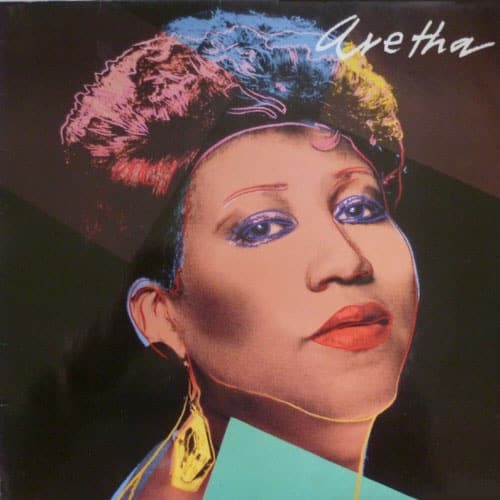
Aretha, Aretha Franklin
Best Rhythm and Blues Performance By a Duo or Group With Vocal:
I Knew You Were Waiting (For Me) – Aretha Franklin and George Michael
Best Rhythm and Blues Instrumental Performance (Orchestra, Group or Soloist):
Chicago Song – David Sanborn
Best Jazz Vocal Performance, Male:
What Is This Thing Called Love – Bobby McFerrin
Best Jazz Vocal Performance, Female:
Diane Schuur and the Count Basie Orchestra, Diane Schuur
Best Jazz Instrumental Performance, Soloist:
The Other Side of Round Midnight, Dexter Gordon
Best Jazz Instrumental Performance, Group:
Marsalis Standard Time, Volume 1, Wynton Marsalis
Best Jazz Instrumental Performance, Big Band:
Digital Duke, Duke Ellington Orchestra conducted by Mercer Ellington
Best Jazz Fusion Performance, Vocal or Instrumental:
Still Life (Talking), Pat Metheny Group
Best Country Song:
Forever and Ever, Amen – Paul Overstreet and Don Schlitz, songwriters
Best Country Vocal Performance, Male:
Always and Forever, Randy Travis
Best Country Vocal Performance, Female:
’80’s Ladies – K.T. Oslin
Best Country Performance By a Duo or Group With Vocal:
Trio, Dolly Parton, Linda Ronstadt and Emmylou Harris
Best Country Vocal Performance, Duet:
Make No Mistake, She’s Mine – Ronnie Milsap and Kenny Rogers
Best Country Instrumental Performance (Orchestra, Group or Soloist):
String of Pars – Asleep at the Wheel
Best Gospel Performance, Male:
The Father Hath Provided, Larnelle Harris
Best Gospel Performance, Female:
I Believe in You – Deniece Williams
Best Gospel Performance By a Duo, Group, Choir or Chorus:
Crack the Sky, Mylon LeFevre and Broken Heart
Best Soul Gospel Performance, Male:
Everything’s Gonna Be Alright – Al Green
Best Soul Gospel Performance, Female:
For Always – CeCe Winans
Best Soul Gospel Performance By a Duo, Group, Choir or Chorus:
Ain’t No Need to Worry – Winans and Anita Baker
Best Latin Pop Performance:
Un Hombre Solo, Julio Iglesias
Best Tropical Latin Performance:
La Verdad?The Truth, Eddie Palmieri
Best Mexican/American Performance:
Gracias! America sin Fronteras, Los Tigres Del Norte
Best Traditional Blues Recording:
Houseparty New Orleans Style, Professor Longhair (Rounder)
Best Contemporary Blues Recording:
Strong Persuader, Robert Cray Band (Mercury/Hightone)
Best Traditional Folk Recording:
Shaka Zulu, Ladysmith Black Mambazo (Warner Bros.)
Best Contemporary Folk Recording:
Unfinished Business, Steve Goodman (Red Pajamas)
Best Reggae Recording:
No Nuclear War, Peter Tosh (EMI-America)
Best New Age Performance:
Yusef Lateef’s Little Symphony, Yusef Lateef
Best Polka Recording:
A Polka Just for Me, Jimmy Sturr and His Orchestra (Starr)
Best Arrangement on an Instrumental:
Take the A Train – Bill Holman, arranger
Best Instrumental Arrangement Accompanying Vocal(s):
Deedle’s Blues – Frank Foster, arranger
Best Instrumental Composition:
Call Sheet Blues – Dexter Gordon, Wayne Shorter, Herbie Hancock, Ron Carter and Billy Higgins, composers
Best Musical Cast Show Album:
Les Miserables (Geffen)
Best Album of Original Instrumental Background Score Written for a Motion Picture or Television:
The Untouchables (Original Motion Picture Soundtrack), Ennio Morricone, composer (A&M)
Best Song Written Specifically for a Motion Picture or Television:
Somewhere Out There (From the animated movie An American Tale), James Horner, Barry Mann and Cynthia Weil, songwriters
Best Contemporary Composition:
Cello Concerto No. 2, Krzysztof Penderecki, composer
Best Classical Album:
Horowitz in Moscow, Vladimir Horowitz (Deutsche Grammophon)
Best Orchestral Recording:
Beethoven, Symphony No. 9 in D Minor (Choral), Sir Georg Solti conducting Chicago Symphony Orchestra (London)
Best Chamber Music Performance, Instrumental or Vocal:
Beethoven, The Complete Piano Trios, Itzhak Perlman, Lynn Harrell and Vladimir Ashkenazy
Best Classical Performance, Instrumental Soloist(s) (With Orchestra):
Mozart, Violin Concertos nos. 2 and 4 in D, Itzhak Perlman; James Levine conducting Vienna Philarmonic
Best Classical Performance, Instrumental Soloist(s) (Without Orchestra):
Horowitz in Moscow, Vladimir Horowitz, piano
Best Opera Recording:
Strauss, Ariadne auf Naxos, James Levine conducting Vienna Philharmonic; solos: Tomowa-Sintow, Battle, Baltsa, Lakes and Prey (Deutsche Grammophon)
Best Choral Performance (Other Than Opera):
Hindemith, When Lilacs Last in the Dooryard Bloom’d (A Requiem for Those We Love); Robert Shaw conducting Atlanta Symphony Chorus and Orchestra
Best Classical Vocal Soloist Performance:
Kathleen Battle, Salzburg Recital, Kathleen Battle; James Levine, accompanist
Best Comedy Recording:
A Night at The Met, Robin Williams (Columbia/CBS)
Best Spoken Word or Non-Musical Recording:
Lake Wobegon Days, Garrison Keillor (PHC)
Best Recording for Children:
The Elephant’s Child, Jack Nicholson, narrator; Bobby McFerrin, music (Windham Hill)
Best Album Package:
King’s Record Shop, Bill Johnson, art director (Columbia/CBS)
Best Album Notes:
Thelonious Monk, the Complete Riverside Recordings, Orrin Keepnews, annotator (Riverside)
Best Historical Album:
Thelonious Monk, the Complete Riverside Recordings, Thelonious Monk (Riverside)
Best Performance Music Video:
The Prince’s Trust All-Star Rock Concert, Elton John, Tina Turner, Sting and others
Best Concept Music Video:
Land of Confusion – Genesis
Producer of the Year (Non-Classical):
Narada Michael Walden
December 20, 1986 – January 16, 1987: Walk Like an Egyptian – The Bangles January 17 – January 23: Shake You Down – Gregory Abbott January 24 – February 6: At this Moment – Billy Vera and The Beaters February 7 – February 13: Open Your Heart – Madonna February 14 – March 13: Livin’ On a Prayer – Bon Jovi March 14 – March 11: Jacob’s Ladder – Huey Lewis & the News March 21 – April 3: Lean On Me – Club Nouveau April 4 – April 17: Nothing’s Gonna Stop Us Now – Starship April 18 – May 1: I Knew You Were Waiting (For Me) – Aretha Franklin & George Michael May 2 – May 15: (I Just) Died In Your Arms – Cutting Crew May 16 – June 5: With Or Without You – U2 June 6 – June 12: You Keep Me Hangin’ On – Kim Wilde June 13 – June 19: Always – Atlantic Starr June 20 – June 6: Head to Toe – Lisa Lisa & Cult Jam June 27 – July 10: I Wanna Dance With Somebody (Who Loves Me) – Whitney Houston July 11 – July 31: Alone – Heart August 1 – August 7: Shakedown – Bob Seger August 8 – August 21: I Still Haven’t Found What I’m Looking For – U2 August 22 – August 28: Who’s That Girl – Madonna August 29 – September 18: La Bamba – Los Lobos September 19 – September 25: I Just Can’t Stop Loving You – Michael Jackson September 26 – October 9: Didn’t We Almost Have It All – Whitney Houston October 10 – October 16: Here I Go Again – Whitesnake October 17 – October 23: Lost In Emotion – Lisa Lisa & Cult Jam October 24 – November 6: Bad – Michael Jackson November 7 – November 20: I Think We’re Alone Now – Tiffany November 21 – November 27: Mony Mony “Live” – Billy Idol November 28 – December 4: (I’ve Had) The Time Of My Life – Bill Medley & Jennifer Warnes December 5 – December 11: Heaven Is a Place On Earth – Belinda Carlisle December 12, 1987 January 8, 1988: Faith – George Michael
(Data is compiled from various charts including Billboard’s “Pop,” “Rock,” “Airplay,” “R&B/Dance” and “Singles” Charts. The “Hot 100” is the primary chart used for this list.)
World Changing Event: The Black Monday crash on Oct. 19, 1987, the Dow Jones Industrial Average dropped 508 points or 22.6%.
The Top Song was Faith by George Michael
The Movies to Watch include The Princess Bride, Good Morning Vietnam, Moonstruck, Dirty Dancing, Wall Street, and Lethal Weapon.
The Most Famous Person in America was probably Robin Williams.
Notable books include Misery by Stephen King and Watchmen by Alan Moore and Dave Gibbons.
The price of a daily newspaper in 1987 was 25 cents Videocassette, VHS: $3.49 Gummi Bears: $2.99/pound
The Giants defeated the Broncos 39-20, and Simms was named MVP of Super Bowl XXI. He is credited for being the first to use the phrase “I’m going to Disney World!” At Super Bowl XXI, Phil Simms was named MVP of Super Bowl XXI. He is credited for being the first to use the phrase “I’m going to Disney World!”
The Funny Late Night Host: Johnny Carson The Funny Lady: Roseanne Barr
The Unusual TV Show Factoid of 1987: Valerie Harper was fired from her sitcom Valerie. It was the first time an actor was fired from a show named for them and replaced with a different lead actor.
The Simpsons started as an animated short on The Tracey Ullman Show, and Tracey Ullman was the original voice of Marge Simpson.
The Conversation: All eyes were on 18-month-old Jessica McClure, who fell into a well in Midland, Texas. After two days, she made it out alive.
Johnny Depp, Michael Jackson, Sean Connery, Mel Gibson, Michael Hutchence, Morrissey, Mickey Rourke, Patrick Swayze, Tom Jones
“The Quotes”
“I’m going to Disney World.” – Phil Simms after winning Super Bowl XXI
“This is your brain… This is drugs… This is your brain on drugs.”
“Greed, for lack of a better word, is good.” – Michael Douglass, as Gordon Gekko, in Wall Street
“Snap out of it!” – Cher, in Moonstruck
“Nobody puts ‘Baby’ in a corner.” – Patrick Swayze, in Dirty Dancing
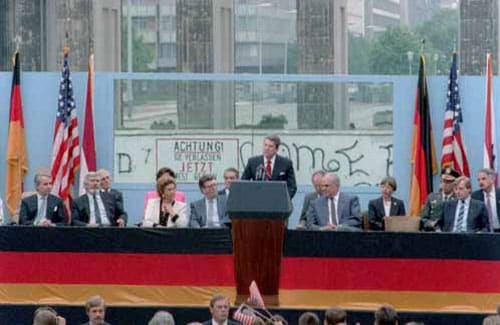
“Mr. Gorbachev, tear down this wall.” – Ronald Reagan requesting the elimination of the Berlin Wall
Time Magazine’s Man of the Year:
Mikhail Gorbachev
Miss America:
Kellye Cash (Memphis, TN)
Miss USA:
Michelle Royer (Texas)
The Scandals:
Jim Bakker resigned as the PTL (Praise The Lord) Club host in 1987 after a scandal involving former secretary Jessica Hahn.
Gary Hart, a Democrat, abandoned his 1988 campaign for U.S. president after details of his alleged affair with Donna Rice became public. Prior, he challenged reporters to “Follow me” around, and they did.
Robert “Budd” Dwyer was a former Pennsylvania politician who, on January 22, committed suicide by shooting himself in the mouth with a handgun during a live televised press conference.
Iran-Contra – Reagan security advisor Ollie North was part of a plan to help anti-communist Contra guerrillas in Nicaragua with funds from Iran, which directly (or indirectly) got hostages out of Iran. Israel may or may not have been involved in the deal as well. It was much more confusing than it sounds here.
Pop Culture Facts & History:
Eli Lilly & Company’s Prozak was first sold to the public.
The Garbage Pail Kids were made into a live-action movie in 1987, with a cast of little people.
Beastie Boys Licensed to Ill album made history in 1987 as the first rap album to hit No. 1 on the Billboard 200 chart, and it spent seven straight weeks at No.1.
Red M&Ms were discontinued in 1976 in response to the “red dye scare” over Red Dyes #2 and #4, which had been considered cancerous. M&M’s were made with Red Dye #40, but the public was afraid of any food being dyed red. Red M&M’s were reintroduced in 1987.
1987 was the year that Red Bull started accelerating parties.
Actress Jamie Lee Curtis invented and patented (#4,753,647) a diaper modification, a moisture-proof pocket containing wipes for easy access. She refused to allow it to be marketed until companies started selling biodegradable diapers; the patent expired in 2007 and is now in the public domain.
The heaviest newspaper ever delivered was the September 14, 1987 edition of the New York Times. It weighed 12 lbs. and contained 1,612 pages.
In 1987, Steve Rothstein bought a lifetime unlimited first-class American Airlines ticket. He flew over 10,000 flights, costing the company $21,000,000. They terminated his ticket in 2008. In addition to his AAirpass for $250,000, he got a companion ticket for $150,000 more.
Italy’s Andrea de Cesaris, the driver who placed 3rd in the 1987 Belgian Grand Prix, finished the race by pushing his car over the finish line because the car had run out of gas.
In 1987, 50% of the US population had access to 9-1-1 emergency service numbers.
When the Pope visited Arizona in 1987, 75,000 Catholics attended mass at a local university’s stadium. The stadium’s name and the mascot’s image had to be covered because their mascot is the devil holding a pitchfork, and the stadium’s name was Sun Devil Stadium.
During their 1987 Joshua Tree tour, the Irish rock band U2 occasionally appeared on stage as a “local” country band known as “The Dalton Brothers,” complete with wigs and costumes.
A new word, “Borked,” came into the political arena, meaning “railroaded through an interview, with no chance of being approved.”
Some 7 million American children suddenly disappeared in 1987 when the IRS started demanding that their Social Security numbers be included on the tax returns of those claiming them as dependents.
In 1987 Harvey Comics sued Columbia Pictures for $50 million, claiming that the Ghostbusters logo was too reminiscent of Fatso from ‘Casper the Friendly Ghost’. The court ruled in Columbia’s favor, citing the “limited ways to draw a figure of a cartoon ghost.”
Roger Cadenhead registered the domain name benedictxvi.com several weeks before Pope Benedict XVI chose the name. He said he would give it to the Vatican for a miter and “complete absolution, no questions asked, for the third week of March 1987”. His offer was declined, and he donated the domain to ModestNeedsorg.
Since 1720, the Baltic Sea has frozen over 20 times, and the most recent case was in early 1987.
Tennis bracelets became known as ‘tennis bracelets’ in 1987 when that type of bracelet became popular after the tennis player Chris Evert lost her bracelet on air at the US Open.
In 1987, Bruce Willis released a Motown R&B album called The Return of Bruno, with Respect Yourself reaching #5 on the US Billboard Pop Chart.
Steven Spielberg’s film Empire of the Sun (1987), about a boy surviving Japanese occupation during World War II, received six Oscar nominations but lost all of them to The Last Emperor ( also 1987), the story of the final Emperor of China.
There is no national minimum drinking age in the United States. Instead, a law called the National Minimum Drinking Age Act of 1984 punishes states that allow anyone under 21 to purchase alcohol by cutting their federal highway funds by 10%. The last state to comply was Louisiana in 1987.
To lower the retail price of the VHS release of Top Gun in 1987 to a more affordable $27, Pepsi sponsored a 60-second ad before the film. $27 is $60 in today’s dollars.
Bras were not shown on live models in TV commercials until 1987… before that, they had to be displayed on headless/armless mannequins.
A treasure hunter named Tommy Thompson located a ship that sank in 1857 called the SS Central America. The ship carried several tons of gold; in 1987, he recovered up to $1 billion worth of gold. He never paid back his crew or investors.
Tom’s Restaurant, the inspiration for Suzanne Vega’s 1987 song Tom’s Diner, is the same diner used as the exterior for the fictional Monk’s Café in the television sitcom Seinfeld.
In 1987 someone wearing a Max Headroom mask interrupted 2 TV broadcasts in Chicago. The FBI investigation was never solved.
Jon Bon Jovi’s parents were attending a wedding in 1987 when they recommended the wedding singer try out for Jon’s friend’s band. The singer was Sebastian Bach, and that band became Skid Row.
The tallest unoccupied building in the world is a 3,000-room hotel in Pyongyang, North Korea. Construction on the 1,082-foot Ryugyong Hotel began in 1987 and was halted in 1992. After many attempts to resurrect the project, the hotel still hasn’t opened 28 years after construction began.
Bebop & Rocksteady were added to the 1987 Teenage Mutant Ninja Turtles cartoon primarily because the toy company wanted more characters to sell.
Thousands of cans filled with 1.5 kg of pot started washing ashore on the coast of Rio and São Paulo. In total, there were 22 tons of marijuana dumped by traffickers scared of the DEA while parked near Brazil. The cans were collected at the beaches. The Summer of 1987 was known as the ‘Summer of the Can.’
The 1987 Porsche 944 was the first car sold with standard driver and passenger-side airbags.
Mötley Crüe bassist Nikki Sixx suffered a heroin overdose that left him legally dead for two minutes. One of his paramedics, who was a Crüe fan, revived him with two shots of adrenaline. This is what motivated the song “Kickstart My Heart”.
In 1987, Mike Hayes convinced 2.8 million people to send him a penny each for his college education at the University of Illinois. Some people sent more. He raised $29,000, one thousand more than his target.
The famous “Keyboard Cat” video was originally filmed in 1984, and its star, Fatso, died in 1987, twenty years before it was posted on YouTube.
300,000+ People joined on San Francisco’s Golden Gate Bridge to celebrate its 75th anniversary. The sheer weight of all those people flattened the bridge and caused the middle to sag 7 feet (or 15 feet, depending on who is telling the story).
Until 1987, surgeries could be performed on babies with no anesthesia, as it was commonly thought that babies could not feel pain. #wut
“Baby Jessica” (Jessica McClure), who fell down a well in October of 1987 and was rescued after 58 hours, received $1.2 million for a trust fund from multiple donations. She used part of those funds at age 25 to purchase a home but lost most of what was left in the stock market crash in 2008.
Cost of a Super Bowl ad in 1987: $600,000
Hard Rock Stadium in Miami Gardens, Florida, has gone through 9 name changes since being built in 1987. Joe Robbie Stadium (August 16, 1987 – August 25, 1996) Pro Player Park August (26, 1996 – September 9, 1996) Pro Player Stadium (September 10, 1996 – January 9, 2005) Dolphins Stadium (January 10, 2005 – April 7, 2006) Dolphin Stadium (April 8, 2006 – May 7, 2009) Land Shark Stadium (May 8, 2009 – January 5, 2010) Dolphin Stadium (January 6, 2010 – January 19, 2010) Sun Life Stadium (January 20, 2010 – January 31, 2016) New Miami Stadium (February 1, 2016 – August 16, 2016) Hard Rock Stadium (August 17, 2016–present)
The Spy:
In 1987, FBI agent Robert Hanssen was tasked by his superiors to find a mole within the agency after the FBI’s moles in the KGB were caught. He was the mole, working with the KGB since 1979. He was caught in 2001.
The Feuds:
Singer/songwriter Debbie ‘Foolish Beat’ Gibson vs Tiffany, who sang Tommy James’ I Think We’re Alone Now. (not really; they barely knew each other, but they did battle it out a few years later on Syfy’s Mega Python vs. Gatoroid in 2011)
After two and a half seasons, David and Maddie ‘did it’ on TV’s Moonlighting. Then, the audience stopped watching the show. At this point, Stars Bruce Willis and Cybil Shepard were barely speaking in real life.
The U.S. Senate rejected Robert Bork as a Ronald Reagan Supreme Court Justice.
The Habit:
Watching Moonlighting until about 1/2 way through the season.
Nobel Prize Winners:
Physics – J. Georg Bednorz, Karl Alexander Müller Chemistry – Donald J. Cram, Jean-Marie Lehn, Charles J. Pedersen Medicine – Susumu Tonegawa Literature – Joseph Brodsky Peace – Óscar Arias Sánchez Bank of Sweden Prize in Economic Sciences in Memory of Alfred Nobel – Robert Solow
1st Appearances & 1987’s Most Popular Christmas Gifts, Toys and Presents:
Double Loves transforming plush animals, Jenga, Koosh ball, and Pictionary (Pictionary has been available in small markets since 1985)
Spuds MacKenzie first appeared in Bud Light beer advertisements.
Popular and Best-selling Books From 1987:
A Brief History of Time by Stephen Hawking Beloved – Toni Morrison Bonfire of the Vanities by Tom Wolfe The Dark Tower II: The Drawing of the Three by Stephen King The Eyes of the Dragon by Stephen King Fine Things by Danielle Steel The Haunted Mesa by Louis L’Amour Hatchet by Gary Paulson Heaven and Hell by John Jakes I Am Not Going to Get Up Today! by Dr. Seuss and James Stevenson It by Stephen King Kaleidoscopeby Danielle Steel Leaving Home by Garrison Keillor Misery by Stephen King New York Trilogy by Paul Auster Patriot Games by Tom Clancy Presumed Innocent by Scott Turow Red Storm Rising by Tom Clancy The Tommyknockers by Stephen King Watchmen by Alan Moore and Dave Gibbons Where’s Waldo? by Martin Handford Windmills of the Gods by Sidney Sheldon
Broadway Show:
Les Miserables (Musical) Opened on March 12, 1987, and closed on May 18, 2003
1. Three Men and A Baby 2. Fatal Attraction 3. Beverly Hills Cop II 4. Good Morning, Vietnam 5. Moonstruck 6. The Untouchables 7. The Secret Of My Success 8. Stakeout 9. Lethal Weapon 10. The Witches of Eastwick
1987 Most Popular TV Shows:
1. The Cosby Show (NBC) 2. Roseanne (ABC) 3. A Different World (NBC) 4. Cheers (NBC) 5. 60 Minutes (CBS) 6. The Golden Girls (NBC) 7. Who’s the Boss? ( ABC) 8. Murder, She Wrote (CBS) 9. Empty Nest (NBC) 10. Anything But Love (ABC)
1987 Billboard Number One Songs:
December 20, 1986 – January 16, 1987: Walk Like an Egyptian – The Bangles
World Series Champions: Minnesota Twins Super Bowl XXI Champions: New York Giants NBA Champions: Los Angeles Lakers Stanley Cup Champs: Edmonton Oilers U.S. Open Golf Scott Simpson U.S. Tennis: (Men/Ladies) Ivan Lendl/Martina Navratilova Wimbledon (Men/Women): Pat Cash/Martina Navratilova NCAA Football Champions: Miami NCAA Basketball Champions: Indiana Kentucky Derby: Alysheb
“Remarks at the Brandenburg Gate” by Ronald Reagan, on June 12, 1987, in Berlin
Chancellor Kohl, Governing Mayor Diepgen, ladies and gentlemen: Twenty four years ago, President John F. Kennedy visited Berlin, and speaking to the people of this city and the world at the city hall. Well since then two other presidents have come, each in his turn to Berlin. And today, I, myself, make my second visit to your city.
We come to Berlin, we American Presidents, because it’s our duty to speak in this place of freedom. But I must confess, we’re drawn here by other things as well; by the feeling of history in this city- more than 500 years older than our own nation; by the beauty of the Grunewald and the Tiergarten; most of all, by your courage and determination. Perhaps the composer, Paul Linke, understood something about American Presidents. You see, like so many Presidents before me, I come here today because wherever I go, whatever I do: Ich hab noch einen Koffer in Berlin. [I still have a suitcase in Berlin.]
Our gathering today is being broadcast throughout Western Europe and North America. I understand that it is being seen and heard as well in the East. To those listening throughout Eastern Europe, I extend my warmest greetings and the good will of the American people. To those listening in East Berlin, a special word: Although I cannot be with you, I address my remarks to you just as surely as to those standing here before me. For I join you, as I join your fellow countrymen in the West, in this firm, this unalterable belief: Es gibt nur ein Berlin. [There is only one Berlin.]
Behind me stands a wall that encircles the free sectors of this city, part of a vast system of barriers that divides the entire continent of Europe. From the Baltic South, those barriers cut across Germany in a gash of barbed wire, concrete, dog runs, and guard towers. Farther south, there may be no visible, no obvious wall. But there remain armed guards and checkpoints all the same- still a restriction on the right to travel, still an instrument to impose upon ordinary men and women the will of a totalitarian state.
Yet, it is here in Berlin where the wall emerges most clearly; here, cutting across your city, where the news photo and the television screen have imprinted this brutal division of a continent upon the mind of the world.
Standing before the Brandenburg Gate, every man is a German separated from his fellow men.
Every man is a Berliner, forced to look upon a scar.
President Von Weizsäcker has said, “The German question is open as long as the Brandenburg Gate is closed.” Well today- today I say: As long as this gate is closed, as long as this scar of a wall is permitted to stand, it is not the German question alone that remains open, but the question of freedom for all mankind.
Yet, I do not come here to lament. For I find in Berlin a message of hope, even in the shadow of this wall, a message of triumph.
In this season of spring in 1945, the people of Berlin emerged from their air-raid shelters to find devastation. Thousands of miles away, the people of the United States reached out to help. And in 1947 Secretary of State- as you’ve been told- George Marshall announced the creation of what would become known as the Marshall Plan. Speaking precisely 40 years ago this month, he said: “Our policy is directed not against any country or doctrine, but against hunger, poverty, desperation, and chaos.”
In the Reichstag a few moments ago, I saw a display commemorating this 40th anniversary of the Marshall Plan. I was struck by a sign- the sign on a burnt-out, gutted structure that was being rebuilt. I understand that Berliners of my own generation can remember seeing signs like it dotted throughout the western sectors of the city. The sign read simply: “The Marshall Plan is helping here to strengthen the free world.” A strong, free world in the West- that dream became real. Japan rose from ruin to become an economic giant. Italy, France, Belgium- virtually every nation in Western Europe saw political and economic rebirth; the European Community was founded.
In West Germany and here in Berlin, there took place an economic miracle, the Wirtschaftswunder [Miracle on the Rhine]. Adenauer, Erhard, Reuter, and other leaders understood the practical importance of liberty- that just as truth can flourish only when the journalist is given freedom of speech, so prosperity can come about only when the farmer and businessman enjoy economic freedom. The German leaders- the German leaders reduced tariffs, expanded free trade, lowered taxes. From 1950 to 1960 alone, the standard of living in West Germany and Berlin doubled.
Where four decades ago there was rubble, today in West Berlin there is the greatest industrial output of any city in Germany: busy office blocks, fine homes and apartments, proud avenues, and the spreading lawns of parkland. Where a city’s culture seemed to have been destroyed, today there are two great universities, orchestras and an opera, countless theaters, and museums. Where there was want, today there’s abundance- food, clothing, automobiles- the wonderful goods of the Kudamm.1 From devastation, from utter ruin, you Berliners have, in freedom, rebuilt a city that once again ranks as one of the greatest on earth. Now the Soviets may have had other plans. But my friends, there were a few things the Soviets didn’t count on: Berliner Herz, Berliner Humor, ja, und Berliner Schnauze. [Berliner heart, Berliner humor, yes, and a Berliner Schnauze.2]
In the 1950s- In the 1950s Khrushchev predicted: “We will bury you.”
But in the West today, we see a free world that has achieved a level of prosperity and well-being unprecedented in all human history. In the Communist world, we see failure, technological backwardness, declining standards of health, even want of the most basic kind- too little food. Even today, the Soviet Union still cannot feed itself. After these four decades, then, there stands before the entire world one great and inescapable conclusion: Freedom leads to prosperity. Freedom replaces the ancient hatreds among nations with comity and peace. Freedom is the victor.
And now- now the Soviets themselves may, in a limited way, be coming to understand the importance of freedom. We hear much from Moscow about a new policy of reform and openness. Some political prisoners have been released. Certain foreign news broadcasts are no longer being jammed. Some economic enterprises have been permitted to operate with greater freedom from state control.
Are these the beginnings of profound changes in the Soviet state? Or are they token gestures intended to raise false hopes in the West, or to strengthen the Soviet system without changing it? We welcome change and openness; for we believe that freedom and security go together, that the advance of human liberty- the advance of human liberty can only strengthen the cause of world peace.
There is one sign the Soviets can make that would be unmistakable, that would advance dramatically the cause of freedom and peace.
General Secretary Gorbachev, if you seek peace, if you seek prosperity for the Soviet Union and Eastern Europe, if you seek liberalization: Come here to this gate.
Mr. Gorbachev, open this gate.
Mr. Gorbachev- Mr. Gorbachev, tear down this wall!
I understand the fear of war and the pain of division that afflict this continent, and I pledge to you my country’s efforts to help overcome these burdens. To be sure, we in the West must resist Soviet expansion. So, we must maintain defenses of unassailable strength. Yet we seek peace; so we must strive to reduce arms on both sides.
Beginning 10 years ago, the Soviets challenged the Western alliance with a grave new threat, hundreds of new and more deadly SS-20 nuclear missiles capable of striking every capital in Europe. The Western alliance responded by committing itself to a counter-deployment (unless the Soviets agreed to negotiate a better solution)- namely, the elimination of such weapons on both sides. For many months, the Soviets refused to bargain in earnestness. As the alliance, in turn, prepared to go forward with its counter-deployment, there were difficult days, days of protests like those during my 1982 visit to this city; and the Soviets later walked away from the table.
But through it all, the alliance held firm. And I invite those who protested then- I invite those who protest today- to mark this fact: Because we remained strong, the Soviets came back to the table. Because we remained strong, today we have within reach the possibility, not merely of limiting the growth of arms, but of eliminating, for the first time, an entire class of nuclear weapons from the face of the earth.
As I speak, NATO ministers are meeting in Iceland to review the progress of our proposals for eliminating these weapons. At the talks in Geneva, we have also proposed deep cuts in strategic offensive weapons. And the Western allies have likewise made far-reaching proposals to reduce the danger of conventional war and to place a total ban on chemical weapons.
While we pursue these arms reductions, I pledge to you that we will maintain the capacity to deter Soviet aggression at any level at which it might occur. And in cooperation with many of our allies, the United States is pursuing the Strategic Defense Initiative- research to base deterrence not on the threat of offensive retaliation, but on defenses that truly defend; on systems, in short, that will not target populations, but shield them. By these means we seek to increase the safety of Europe and all the world. But we must remember a crucial fact: East and West do not mistrust each other because we are armed; we are armed because we mistrust each other. And our differences are not about weapons but about liberty. When President Kennedy spoke at the City Hall those 24 years ago, freedom was encircled; Berlin was under siege. And today, despite all the pressures upon this city, Berlin stands secure in its liberty. And freedom itself is transforming the globe.
In the Philippines, in South and Central America, democracy has been given a rebirth. Throughout the Pacific, free markets are working miracle after miracle of economic growth. In the industrialized nations, a technological revolution is taking place, a revolution marked by rapid, dramatic advances in computers and telecommunications.
In Europe, only one nation and those it controls refuse to join the community of freedom. Yet in this age of redoubled economic growth, of information and innovation, the Soviet Union faces a choice: It must make fundamental changes, or it will become obsolete.
Today, thus, represents a moment of hope. We in the West stand ready to cooperate with the East to promote true openness, to break down barriers that separate people, to create a safer, freer world. And surely there is no better place than Berlin, the meeting place of East and West, to make a start.
Free people of Berlin: Today, as in the past, the United States stands for the strict observance and full implementation of all parts of the Four Power Agreement of 1971. Let us use this occasion, the 750th anniversary of this city, to usher in a new era, to seek a still fuller, richer life for the Berlin of the future. Together, let us maintain and develop the ties between the Federal Republic and the Western sectors of Berlin, which is permitted by the 1971 agreement.
And I invite Mr. Gorbachev: Let us work to bring the Eastern and Western parts of the city closer together, so that all the inhabitants of all Berlin can enjoy the benefits that come with life in one of the great cities of the world.
To open Berlin still further to all Europe, East and West, let us expand the vital air access to this city, finding ways of making commercial air service to Berlin more convenient, more comfortable, and more economical. We look to the day when West Berlin can become one of the chief aviation hubs in all central Europe.
With- With our French- With our French and British partners, the United States is prepared to help bring international meetings to Berlin. It would be only fitting for Berlin to serve as the site of United Nations meetings, or world conferences on human rights and arms control, or other issues that call for international cooperation.
There is no better way to establish hope for the future than to enlighten young minds, and we would be honored to sponsor summer youth exchanges, cultural events, and other programs for young Berliners from the East. Our French and British friends, I’m certain, will do the same. And it’s my hope that an authority can be found in East Berlin to sponsor visits from young people of the Western sectors.
One final proposal, one close to my heart: Sport represents a source of enjoyment and ennoblement, and you may have noted that the Republic of Korea- South Korea- has offered to permit certain events of the 1988 Olympics to take place in the North. International sports competitions of all kinds could take place in both parts of this city. And what better way to demonstrate to the world the openness of this city than to offer in some future year to hold the Olympic games here in Berlin, East and West.
In these four decades, as I have said, you Berliners have built a great city. You’ve done so in spite of threats- the Soviet attempts to impose the East-mark, the blockade. Today the city thrives in spite of the challenges implicit in the very presence of this wall. What keeps you here? Certainly there’s a great deal to be said for your fortitude, for your defiant courage.
But I believe there’s something deeper, something that involves Berlin’s whole look and feel and way of life- not mere sentiment. No one could live long in Berlin without being completely disabused of illusions. Something, instead, that has seen the difficulties of life in Berlin but chose to accept them, that continues to build this good and proud city in contrast to a surrounding totalitarian presence, that refuses to release human energies or aspirations, something that speaks with a powerful voice of affirmation, that says “yes” to this city, yes to the future, yes to freedom. In a word, I would submit that what keeps you in Berlin- is “love.”
Love both profound and abiding.
Perhaps this gets to the root of the matter, to the most fundamental distinction of all between East and West. The totalitarian world produces backwardness because it does such violence to the spirit, thwarting the human impulse to create, to enjoy, to worship. The totalitarian world finds even symbols of love and of worship an affront.
Years ago, before the East Germans began rebuilding their churches, they erected a secular structure: the television tower at Alexander Platz. Virtually ever since, the authorities have been working to correct what they view as the tower’s one major flaw: treating the glass sphere at the top with paints and chemicals of every kind. Yet even today when the sun strikes that sphere, that sphere that towers over all Berlin, the light makes the sign of the cross. There in Berlin, like the city itself, symbols of love, symbols of worship, cannot be suppressed.
As I looked out a moment ago from the Reichstag, that embodiment of German unity, I noticed words crudely spray-painted upon the wall, perhaps by a young Berliner (quote):
“This wall will fall. Beliefs become reality.”
Yes, across Europe, this wall will fall, for it cannot withstand faith; it cannot withstand truth. The wall cannot withstand freedom.
And I would like, before I close, to say one word. I have read, and I have been questioned since I’ve been here about certain demonstrations against my coming. And I would like to say just one thing, and to those who demonstrate so. I wonder if they have ever asked themselves that if they should have the kind of government they apparently seek, no one would ever be able to do what they’re doing again.
Held at: Dorothy Chandler Pavilion, Los Angeles, California
Hosts: Chevy Chase, Goldie Hawn, Paul Hogan
Eligibility Year: 1986
In-Depth Details and Trivia
Triple Hosting Power: A unique trio of Chevy Chase, Goldie Hawn, and Paul Hogan added a mix of humor and charm to the event.
Platoon Dominates: Oliver Stone’s Platoon was the big winner, taking home four Oscars including Best Picture and Best Director.
Paul Newman Finally Wins: Paul Newman won his first Oscar for Best Actor for his role in The Color of Money, after seven previous nominations.
Marlee Matlin’s Historic Win: At 21, Marlee Matlin became the youngest and only deaf actress to win Best Actress for her role in Children of a Lesser God.
Top Tunes: Take My Breath Away from Top Gun won Best Original Song, marking a victory for pop music in the Oscars.
A Touch of Animation: The Best Animated Short Film was awarded to A Greek Tragedy.
Woody Allen Stays Strong: Woody Allen’s Hannah and Her Sisters snagged three awards, including Best Supporting Actor for Michael Caine.
Special Achievements: Ralph Bellamy received an Honorary Award for his unique artistry and distinguished service to the profession of acting.
1987 Oscar Nominees and Winners
Best Picture: Platoon – Arnold Kopelson, producer (WINNER) Children of a Lesser God – Burt Sugarman and Patrick J. Palmer, producers Hannah and Her Sisters – Robert Greenhut, producer The Mission – Fernando Ghia and David Puttnam, producers A Room with a View – Ismail Merchant, producer
Best Director: Oliver Stone – Platoon (WINNER) David Lynch – Blue Velvet Woody Allen – Hannah and Her Sisters Roland Joffé – The Mission James Ivory – A Room with a View
Best Actor: Paul Newman – The Color of Money as “Fast Eddie” Felson (WINNER) Dexter Gordon – Round Midnight as Dale Turner Bob Hoskins – Mona Lisa as George William Hurt – Children of a Lesser God as James Leeds James Woods – Salvador as Richard Boyle
Best Actress: Marlee Matlin – Children of a Lesser God as Sarah Norman (WINNER) Jane Fonda – The Morning After as Alex Sternbergen Sissy Spacek – Crimes of the Heart as Babe Magrath Kathleen Turner – Peggy Sue Got Married as Peggy Sue Bodell Sigourney Weaver – Aliens as Ellen Ripley
Best Supporting Actor: Michael Caine – Hannah and Her Sisters as Elliott Daniels (WINNER) Tom Berenger – Platoon as Sgt. Bob Barnes Willem Dafoe – Platoon as Sgt. Elias Grodin Denholm Elliott – A Room with a View as Mr. Emerson Dennis Hopper – Hoosiers as Wilbur “Shooter” Flatch
Best Supporting Actress: Dianne Wiest – Hannah and Her Sisters as Holly (WINNER) Tess Harper – Crimes of the Heart as Chick Boyle Piper Laurie – Children of a Lesser God as Mrs. Norman Mary Elizabeth Mastrantonio – The Color of Money as Carmen Maggie Smith – A Room with a View as Charlotte Bartlett
Best Screenplay Written Directly for the Screen: Hannah and Her Sisters – Woody Allen (WINNER) Crocodile Dundee – Screenplay by Paul Hogan, Ken Shadie, and John Cornell; Story by Paul Hogan My Beautiful Laundrette – Hanif Kureishi Platoon – Oliver Stone Salvador – Oliver Stone and Rick Boyle
Best Screenplay Based on Material from Another Medium: A Room with a View – Ruth Prawer Jhabvala based on the novel by E. M. Forster (WINNER) Children of a Lesser God – Hesper Anderson and Mark Medoff based on the play by Mark Medoff The Color of Money – Richard Price based on the novel by Walter Tevis Crimes of the Heart – Beth Henley based on the play by Beth Henley Stand by Me – Raynold Gideon and Bruce A. Evans based on the novella The Body by Stephen King
Best Foreign Language Film: The Assault (The Netherlands) in Dutch and German – Fons Rademakers (WINNER) 38 (Austria) in German – Wolfgang Glück Betty Blue (France) in French – Jean-Jacques Beineix The Decline of the American Empire (Canada) in French – Denys Arcand My Sweet Little Village (Czechoslovakia) in Czech – Jirí Menzel
Best Documentary Feature: Artie Shaw: Time Is All You’ve Got – Brigitte Berman (WINNER/TIE) Down and Out in America – Joseph Feury and Milton Justice (WINNER/TIE) Chile: Hasta Cuando? – David Bradbury Isaac in America: A Journey with Isaac Bashevis Singer – Kirk Simon and Amram Nowak Witness to Apartheid – Sharon I. Sopher
Best Documentary Short Subject: Women – for America, for the World – Vivienne Verdon-Roe (WINNER) Debonair Dancers – Alison Nigh-Strelich The Masters of Disaster – Sonya Friedman Red Grooms: Sunflower in a Hothouse – Thomas L. Neff and Madeline Bell Sam – Aaron D. Weisblatt
Best Live Action Short Film: Precious Images – Chuck Workman (WINNER) Exit – Stefano Reali and Pino Quartullo Love Struck – Fredda Weiss
Best Animated Short Film: Greek Tragedy – Nicole van Goethem (WINNER) The Frog, the Dog and the Devil – Bob Stenhouse Luxo Jr. – John Lasseter and William Reeves
Best Original Score: Round Midnight – Herbie Hancock (WINNER) Aliens – James Horner Hoosiers – Jerry Goldsmith The Mission – Ennio Morricone Star Trek IV: The Voyage Home – Leonard Rosenman
Best Original Song: “Take My Breath Away” from Top Gun – Music and Lyrics by Giorgio Moroder and Tom Whitlock (WINNER) “Glory of Love” from The Karate Kid Part II – Music by Peter Cetera and David Foster; Lyrics by Peter Cetera and Diane Nini “Life in a Looking Glass” from That’s Life! – Music by Henry Mancini; Lyrics by Leslie Bricusse “Mean Green Mother from Outer Space” from Little Shop of Horrors – Music by Alan Menken; Lyrics by Howard Ashman “Somewhere Out There” from An American Tail – Music by James Horner and Barry Mann; Lyrics by Cynthia Weil
Best Sound Effects Editing: Aliens – Don Sharpe (WINNER) Star Trek IV: The Voyage Home – Mark Mangini Top Gun – Cecelia Hall and George Watters II
Best Sound: Platoon – John K. Wilkinson, Richard Rogers, Charles “Bud” Grenzbach, and Simon Kaye (WINNER) Aliens – Graham V. Hartstone, Nicolas Le Messurier, Michael A. Carter, and Roy Charman Heartbreak Ridge – Les Fresholtz, Dick Alexander, Vern Poore, and William Nelson Star Trek IV: The Voyage Home – Terry Porter, Dave Hudson, Mel Metcalfe, and Gene S. Cantamessa Top Gun – Donald O. Mitchell, Kevin O’Connell, Rick Kline, and William B. Kaplan
Best Art Direction: A Room with a View – Art Direction: Gianni Quaranta and Brian Ackland-Snow; Set Decoration: Brian Savegar and Elio Altramura (WINNER) Aliens – Art Direction: Peter Lamont; Set Decoration: Crispian Sallis The Color of Money – Art Direction: Boris Leven (posthumous nomination) ; Set Decoration: Karen O’Hara Hannah and Her Sisters – Art Direction: Stuart Wurtzel; Set Decoration: Carol Joffe The Mission – Art Direction: Stuart Craig; Set Decoration: Jack Stephens
Best Cinematography: The Mission – Chris Menges (WINNER) Peggy Sue Got Married – Jordan Cronenweth Platoon – Robert Richardson A Room with a View – Tony Pierce-Roberts Star Trek IV: The Voyage Home – Donald Peterman
Best Makeup: The Fly – Chris Walas and Stephan Dupuis (WINNER) The Clan of the Cave Bear – Michael Westmore and Michèle Burke Legend – Rob Bottin and Peter Robb-King
Best Costume Design: A Room with a View – Jenny Beavan and John Bright (WINNER) The Mission – Enrico Sabbatini Otello – Anna Anni and Maurizio Millenotti Peggy Sue Got Married – Theadora Van Runkle Pirates – Anthony Powell
Best Film Editing: Platoon – Claire Simpson (WINNER) Aliens – Ray Lovejoy Hannah and Her Sisters – Susan E. Morse The Mission – Jim Clark Top Gun – Billy Weber and Chris Lebenzon
Best Visual Effects: Aliens – Robert Skotak, Stan Winston, John Richardson, and Suzanne M. Benson (WINNER) Little Shop of Horrors – Lyle Conway, Bran Ferren, and Martin Gutteridge Poltergeist II: The Other Side – Richard Edlund, John Bruno, Garry Waller, and William Neil
Honorary Academy Award: Ralph Bellamy
Irving G. Thalberg Memorial Award: Steven Spielberg
Eligibility Year: October 1, 1985 – September 30, 1986
Trivia
Billy Crystal’s Debut: Known for his comedic brilliance, Billy Crystal hosted the Grammys, adding humor and wit to the evening.
Paul Simon’s Triumph: Paul Simon’s album Graceland won Album of the Year and was hailed for its eclectic mix of genres, including South African music.
Whitney Houston’s Arrival: Whitney Houston won her first Grammy for Best Female Pop Vocal Performance for “Greatest Love of All.”
Duets and Collaborations: That’s What Friends Are For, performed by Dionne Warwick, Stevie Wonder, Elton John, and Gladys Knight, won Song of the Year.
Jazz Legends Honored: Miles Davis won Best Jazz Instrumental Performance for his album Tutu, continuing his tradition of Grammy wins.
Classical Shines: The Best Classical Album was awarded to Horowitz: The Studio Recordings, New York 1985, featuring pianist Vladimir Horowitz.
Top Newcomers: Bruce Hornsby and the Range took home the Grammy for Best New Artist.
Metal Makes Its Mark: Metallica’s Master of Puppets was released during this eligibility year and though it didn’t win, it was a milestone in bringing metal music into mainstream awareness.
1987 Grammy Winners
Record of the Year:
Higher Love – Steve Winwood
Album of the Year:
Graceland, Paul Simon (Warner Bros.)
Song of the Year:
That’s What Friends Are For – Burt Bacharach and Carole Bayer Sager, songwriters
Best New Artist:
Bruce Hornsby and the Range
Best Pop Vocal Performance, Male:
Higher Love – Steve Winwood
Best Pop Vocal Performance, Female:
The Broadway Album, Barbra Streisand
Best Pop Performance By a Duo or Group With Vocal:
That’s What Friends Are For – Dionne Warwick and Friends Featuring Elton John, Gladys Knight and Stevie Wonder
Best Pop Instrumental Performance (Orchestra, Group or Soloist):
Top Gun Anthem – Harold Faltermeyer and Steve Stevens
Best Rock Vocal Performance, Male:
Addicted to Love – Robert Palmer
Best Rock Vocal Performance, Female:
Back Where You Started – Tina Turner
Best Rock Performance By a Duo or Group With Vocal:
Missionary Man – Eurythmics
Best Rock Instrumental Performance (Orchestra, Group or Soloist):
Peter Gunn – Art of Noise featuring Duane Eddy
Best Rhythm and Blues Song:
Sweet Love – Anita Baker, Louis A. Johnson and Gary Bias, songwriters
Best Rhythm and Blues Vocal Performance, Male:
Living in America – James Brown
Best Rhythm and Blues Vocal Performance, Female:
Rapture, Anita Baker
Best Rhythm and Blues Performance By a Duo or Group With Vocal:
Kiss – Prince and the Revolution
Best Rhythm and Blues Instrumental Performance (Orchestra, Group or Soloist):
And You Know That – Yellowjackets
Best Jazz Vocal Performance, Male:
Round Midnight – Bobby McFerrin
Best Jazz Vocal Performance, Female:
Timeless, Diane Schuur
Best Jazz Vocal Performance, Duo or Group:
Free Fall, 2 + 2 Plus (Clare Fischer and His Latin Jazz Sextet)
Best Jazz Instrumental Performance, Soloist:
Tutu, Miles Davis
Best Jazz Instrumental Performance, Group:
J Mood, Wynton Marsalis
Best Jazz Instrumental Performance, Big Band:
The Tonight Show Band With Doc Severinsen, The Tonight Show Band With Doc Severinsen
Best Jazz Fusion Performance, Vocal or Instrumental:
Double Vision, Bob James and David Sanborn
Best Country Song:
Grandpa (Tell Me ‘Bout the Good Old Days) – Jamie O’Hara, songwriter
Best Country Vocal Performance, Male:
Lost in the Fifties Tonight, Ronnie Milsap
Best Country Vocal Performance, Female:
Whoever’s in New England – Reba McEntire
Best Country Performance By a Duo or Group With Vocal:
Grandpa (Tell Me ‘Bout the Good Old Days) – Judds
Best Country Instrumental Performance (Orchestra, Group or Soloist):
Raisin’ the Dickens – Ricky Skaggs
Best Gospel Performance, Male:
Triumph, Philip Bailey
Best Gospel Performance, Female:
Morning Like This, Sandi Patti
Best Gospel Performance By a Duo or Group, Choir or Chorus:
They Say – Sandi Patti and Deniece Williams
Best Soul Gospel Performance, Male:
Going Away – Al Green
Best Soul Gospel Performance, Female:
I Surrender All – Deniece Williams
Best Soul Gospel Performance By a Duo or Group, Choir or Chorus:
Let My People Go, Winans
Best Latin Pop Performance:
Lelolai – José Feliciano
Best Tropical Latin Performance:
Escenas, Ruben Blades
Best Mexican/American Performance:
Ay Te Dejo en San Antonio, Flaco Jimenez
Best Traditional Blues Recording:
Showdown!, Albert Collins, Robert Cray and Johnny Copeland (Alligator)
Best Traditional Folk Recording:
Riding the Midnight Train, Doc Watson (Sugar Hill)
Best Contemporary Folk Recording:
Tribute to Steve Goodman, Arlo Guthrie, John Hartford, Richie Havens, Bonnie Koloc, Nitty Gritty Dirt Band, John Prine and others (Red Pajamas)
Best Reggae Recording:
Babylon the Bandit, Steel Pulse (Elektra)
Best New Age Recording:
Down to the Moon, Andreas Vollenweider (FM/CBS)
Best Polka Recording (tie):
Another Polka Celebration, Eddie Blazonczyk’s Versatones (Bel Aire)
I Remember Warsaw, Jimmy Sturr and His Orchestra (Starr)
Best Arrangement on an Instrumental:
Suite Memories – Patrick Williams, arranger
Best Instrumental Arrangement Accompanying Vocal(s):
Somewhere – David Foster, arranger
Best Instrumental Composition:
Out of Africa (Original Motion Picture Soundtrack), John Barry, composer
Best Musical Cast Show:
Album Follies in Concert (RCA)
Best Classical Album:
Horowitz: The Studio Recordings, New York 1985, Vladimir Horowitz (Deutsche Grammophon)
Best Contemporary Composition:
Symphony No. 3, Witold Lutoslawski, composer
Best Classical Orchestral Recording:
Liszt, A Faust Symphony, Sir Georg Solti conducting the Chicago Symphony Orchestra (London)
Best Chamber Music Performance, Instrumental or Vocal:
Beethoven, Cello and Piano Sonata No. 4 in C Major and Variations, Yo-Yo Ma and Emanuel Ax
Best Classical Performance, Instrumental Soloist(s) (With or Without Orchestra):
Horowitz, The Studio Recordings, New York 1985, Vladimir Horowitz
Best Opera Recording:
Bernstein, Candide, John Mauceri conducting New York City Opera Chorus and Orchestra; solos: Mills, Eisler, Lankston, Castle, Reeve, Harrold, Billings and Clement (New World)
Best Choral Performance (Other Than Opera):
Orff, Carmina Burana, James Levine conducting Chicago Symphony Orchestra and Chorus
Best Comedy Recording:
Those of You With or Without Children, You’ll Understand, Bill Cosby (Geffen)
Best Spoken Word or Non-Musical Recording:
Interviews From the Class of ’55 Recording Sessions, Carl Perkins, Jerry Lee Lewis, Roy Orbison, Johnny Cash, Sam Phillips, Rick Nelson and Chips Moman (America Record Corp.)
Best Recording for Children:
The Alphabet, Sesame Street Muppets; Jim Henson (Golden Books)
Best Album Package:
Tutu, Eiko Ishioka, art director (Warner Bros.)
Best Album Notes:
The Voice, the Columbia Years 1943 – 1952, Gary Giddins, Wilfrid Sheed, Jonathan Schwartz, Murray Kempton, Andrew Sarris, Stephen Holden and Frank Conroy, annotators (Columbia/CBS)
Best Historical Album:
Atlantic Rhythm and Blues 1947 – 1974 vols. 1 – 7, various artists (Atlantic)
Best Music Video, Short Form (VHS):
Dire Straits Brothers in Arms – Dire Straits
Best Music Video, Short Form (Vhs) (beta) (disk):
Bring on the Night – Sting
Producers of the Year (Non-Classical):
Jimmy Jam and Terry Lewis
December 21, 1985 – January 17, 1986: Say You, Say Me – Lionel Richie January 18 – February 14: That’s What Friends Are For – Dionne Warwick featuring Elton John, Gladys Knight and Stevie Wonder February 15 – February 28: How Will I Know – Whitney Houston March 1 – March 14: Kyrie – Mr. Mister March 15 – March 21: Sara – Starship March 22 – March 28: These Dreams – Heart March 29 – April 18: Rock Me Amadeus – Falco April 19 – May 2: Kiss – Prince May 3 – May 9: Addicted to Love – Robert Palmer May 10 – May 16: West End Girls – Pet Shop Boys May 17 – June 6: Greatest Love of All – Whitney Houston June 7 – June 13: Live to Tell – Madonna June 14 – July 4: On My Own – Patti LaBelle & Michael McDonald July 5 – July 11: There’ll Be Sad Songs (to Make You Cry) – Billy Ocean July 12 – July 18: Holding Back the Years – Simply Red July 19 – July 25: Invisible Touch – Genesis July 26 – August 1: Sledgehammer – Peter Gabriel August 2 – August 15: Glory of Love – Peter Cetera August 16 – August 29: Papa Don’t Preach – Madonna August 30 – September 5: Higher Love – Steve Winwood September 6 – September 12: Venus – Bananarama September 13 – September 19: Take My Breath Away – Berlin September 20 – October 10: Stuck with You – Huey Lewis & the News October 11 – October 24: When I Think of You – Janet Jackson October 25 – November 7: True Colors – Cyndi Lauper November 8 – November 21: Amanda – Boston November 22 – November 28: Human – Human League November 29 – December 5: You Give Love a Bad Name – Bon Jovi December 6 – December 12: The Next Time I Fall – Peter Cetera featuring Amy Grant December 13 – December 19: The Way It Is – Bruce Hornsby & the Range December 20, 1986 – January 16, 1987: Walk Like an Egyptian – The Bangles
(Data is compiled from various charts including Billboard’s “Pop,” “Rock,” “Airplay,” “R&B/Dance” and “Singles” Charts. The “Hot 100” is the primary chart used for this list.)
World Changing Event: Chernobyl Nuclear Plant Explosion killed more than 7,000 people in the USSR.
The Top Song was That’s What Friends Are For by Dionne Warwick, Elton John, Gladys Knight, and Stevie Wonder
The Movies to Watch include Top Gun, Pretty in Pink, Little Shop of Horrors, Crocodile Dundee, Stand By Me and Ferris Bueller’s Day Off
The Most Famous Person in America was probably Paul Hogan (Crocodile Dundee)
Notable books include: Love You Forever by Robert Munsch and It by Stephen King, and Lake Wobegon Days by Garrison Keillor
Price of a Cabbage Patch Kid in 1986: $29.97 AA Batteries, four pack: $3.38
The Funny Guy was Robin Williams
12 members of a Florida jury got stuck in the courthouse (Otis) elevator for 20 minutes. The jurors were hearing a case against the Otis elevator company. Otis lost, paying $135,000.
The Disaster: On January 28, 1986, Space Shuttle Challenger disintegrated 73 seconds into its flight, leading to the death of all seven members of the crew. Because teacher Christa McAuliffe was on the crew, millions of young students watched the accident happen.
Tom Cruise, Michael Hutchence, Mickey Rourke, Paul Newman
“The Quotes”
“With heart, faith, and steel. In the end, there can only be one.” – Sean Connery, in Highlander
“I feel the need… the need for speed!” – Tom Cruise and Anthony Edwards in Top Gun
“Pork. The other white meat.” – National Pork Board
“Yeah… That’s The Ticket.” – Jon Lovitz as Tommy Flanagan (‘Fla-Nay-Gan’)
“I’m not a doctor, but I play one on TV.” – Vick’s commercial
Time Magazine’s Man of the Year:
Corazon Aquino
Miss America:
Susan Akin (Meridian, MS)
Miss USA:
Christy Fichtner (Texas)
The Little Recognized Invention:
Jim Moylan invented the gas tank indicator arrow (the little triangle on your gas gauge indicating which side your gas tank is on) in 1986 and was introduced in select Ford models in 1989. He chose not to patent it, and other manufacturers soon copied his idea in their vehicles.
The Hero:
Neerja Bhanot (September 7, 1963 – September 5, 1986) was the Senior Flight attendant on the infamous Pan Am Flight 73 on September 5, 1986. The plane was scheduled to fly from Mumbai to the United States. Before takeoff, four hijackers boarded the plane at Karachi airport in Pakistan and held 380 passengers and 13 crew members hostage at gunpoint during a 17-hour standoff. When the hijackers demanded the passports of the Americans on board to take those passengers as collateral for a trade, Bhanot hid the passports under seat cushions, flushed them down the toilet, and threw them down the trash shoot.
The hijackers were unable to distinguish the American passengers from non-American passengers. The situation escalated as the hijackers began shooting and detonating explosives. Bhanot deployed the emergency escape doors and began frantically guiding passengers out of the plane. One of the last to remain, a hijacker grabbed her by her ponytail and shot her point-blank while she was shielding three American children from gunfire. She died two days before her 22nd birthday. She saved the majority of the passengers and the flight crew.
The Tragedies:
Space Shuttle Challenger blew up 73 seconds after take-off, killing all seven crew members. Thousands of school-age children watched the flight live because teacher Christa McAuliffe was a crew member.
During one of the strangest natural disasters in history, Lake Nyos suffocated over 1,700 people in one night with CO2.
The Scandals:
The term “Going postal” originated from a mass shooting committed by a US Postal Service employee, Patrick Sherrill, in an act of workplace rage. Fourteen people were killed in the rampage.
Iran-Contra: Several members of the Reagan Administration helped sell arms to Iran, a known enemy of the United States, and used the proceeds to fund the Contras, an anti-communist guerrilla organization in Nicaragua.
The USSR’s Chernobyl Nuclear Power Plant reactor # 4 had a mishap, giving radiation poisoning to an estimated 500,000 to 6,000,000 people. The remaining three reactors operated until 1991, 1996 and 2000 respectively. The USSR created and distributed a forged letter that “exposed” the US government’s “conspiracy” to overstate the seriousness of Chernobyl meltdown.
Cleveland, Ohio’s Balloonfest released 1.5 million balloons in the air to break a Guinness World Record. Guinness never recognized the event.
Tonight Show host Johnny Carson’s good friend and occasional guest Tonight Show host, Joan Rivers, started a late-night talk show on FOX. He never spoke to her again.
Bobby Ewing came out of the shower alive. The prior season of Dallas had been a dream.
12 members of a Florida jury got stuck in the courthouse elevator for 20 minutes. The jurors were hearing a case against the Otis elevator company.
Pop Culture Facts & History:
Andy Warhol’s final work before his death was the cover of Aretha Franklin’s 1986 album Aretha.
‘The Wave’ was first brought to worldwide attention during the 1986 FIFA World Cup in Mexico.
Initially released in 1979 and worldwide in 1986, the word “Walkman” entered the Oxford English Dictionary.
Teacher Pleasant Rowland created the first ‘American Girl’ dolls. Mattel bought the product line in 1998.
Burning Man started in the Black Rock Desert of northwest Nevada in 1986 with 35 attendees and free admission.
The phrase “Be afraid. Be very afraid” was first spoken (in Pop Culture) by Geena Davis in the 1986 film The Fly.
James Cameron got the approval to make Aliens by writing the word ‘Alien’ on a board, then adding an ‘s’ and turning it into a dollar sign.
Pixar started as a computer division of Lucasfilm in 1979. Then, George Lucas sold the company to Steve Jobs and renamed it “Pixar” in 1986. Both Lucasfilm and Pixar are the sister companies and part of The Walt Disney Company.
Hosted by Geraldo Rivera, The Mystery of Al Capone’s Vaults was the most-watched live television special of 1986, with an audience of 30 million. The vault was hidden under the Lexington Hotel in Chicago, where the Prohibition-era gangster Capone ran his criminal operations until his arrest in 1931.
A Food Packing Plant owner in California came up with the baby carrot as a way of not wasting misshapen carrots. They became an instant hit.
Camcorders started to become a regular household item.
While working as a marine biology teacher in 1986, Stephen Hillenburg was asked to create an educational comic about anthropomorphized sea life. He later adapted the characters within it, such as “Bob the Sponge,” into one of the most popular and longest-running children’s series of all time. #spongebob
Aerosmith and Run DMC mixed rock and hip hop with Walk This Way.
Two unknown men attacked CBS broadcaster Dan Rather in 1986 in New York while repeating, “Kenneth, what is the frequency?” R.E.M. turned the phrase into the song What’s The Frequency, Kenneth? and it was the first song to debut at number one on the Billboard Modern Rock Chart.
Peter Gabriel’s stop-motion music video for Sledgehammer raised the bar for video production.
Harrods, a small restaurant in the town of Otorohanga, New Zealand, was threatened with a lawsuit by the famous department store of the same name. In response, the town changed its name to Harrodsville and renamed all its businesses ‘Harrods.’
Orson Welles gave his voice in the 1986 animated adaptation of The Transformers. This was his last role before his death.
Mets fan Mike Sergio parachuted onto the Shea Stadium field during the 1986 World Series. Although jailed for 21 days and given 500 hours of community service, he refused to reveal the pilot’s name. #notarat
In 1986, Danny Heep became the first player in a World Series to be a designated hitter (DH) with the initials “D.H.”
Top Gun, starring Tom Cruise, increased Navy recruitment by 500%.
Five-year-old Levan Merritt fell into the gorilla enclosure and lost consciousness. Jambo, a gorilla, stood guard over the boy, even petting him, while the boy was unconscious, placing himself between the boy and other gorillas in what ethologists analyze as a protective gesture.
The cost of a Super Bowl ad in 1986: $550,000.
American History:
During the Civil War, Scott County of Tennessee broke away from the rest of the state to join the Union and technically did not rejoin the state until 1986.
King County, the largest county in Washington state, was named after slave owner (and former US Vice President) William Rufus King. In 1986, the county council voted to retroactively change the namesake without changing names – King County is now officially named in honor of Martin Luther King Jr.
The Disappointment:
Finding out that last year’s Dallas TV show’s entire season was just Bobby Ewing’s (Patrick Duffy) dream
The Habits:
Participating with ‘Hands Across America’ on Sunday, May 25, 1986. Over six million people participated and at 3:00 EST, radio stations across America played the song Hands Across America.
1st Appearances & 1986’s Most Popular Christmas Gifts, Toys and Presents:
Real Ghostbusters action figures, My Pet Monster, Panini Football stickers, Outburst, Balderdash
Popular and Best-selling Books From 1986:
A Perfect Spy by John le Carre Batman: The Dark Knight Returns by Frank Miller and Klaus Janson The Bourne Supremacy by Robert Ludlum Hollywood Husbands by Jackie Collins I’ll Take Manhattan by Judith Krantz It by Stephen King Lake Wobegon Days by Garrison Keillor Last of the Breed by Louis L’Amour Lie Down with Lions by Ken Follett The Mammoth Hunters by Jean M. Auel Maus: A Survivor’s Tale by Art Spiegelman The Prince of Tides by Pat Conroy Red Storm Rising by Tom Clancy Wanderlust by Danielle Steel Whirlwind by James Clavell
Broadway Show:
Me and My Girl (Musical) Opened on August 10, 1986, and closed on December 31, 1989
East End Show:
The Phantom of the Opera (Musical) Opened on October 9, 1986
1. Top Gun 2. Crocodile Dundee 3. Platoon 4. The Karate Kid Part II 5. Star Trek IV: The Voyage Home 6. Back To School 7. Aliens 8. The Golden Child 9. Ruthless People 10. Ferris Bueller’s Day Off
1986 Most Popular TV Shows:
1. The Cosby Show (NBC) 2. Family Ties (NBC) 3. Cheers (NBC) 4. Murder She Wrote (NBC) 5. The Golden Girls (NBC) 6. 60 Minutes (CBS) 7. Night Court (NBC) 8. Growing Pains (ABC) 9. Moonlighting (ABC) 10. Who’s the Boss? ( ABC)
1986 Billboard Number One Songs
December 21, 1985 – January 17, 1986: Say You, Say Me – Lionel Richie
January 18 – February 14: That’s What Friends Are For – Dionne Warwick featuring Elton John, Gladys Knight, and Stevie Wonder
February 15 – February 28: How Will I Know – Whitney Houston
November 29 – December 5: You Give Love a Bad Name – Bon Jovi
December 6 – December 12: The Next Time I Fall – Peter Cetera featuring Amy Grant
December 13 – December 19: The Way It Is – Bruce Hornsby & the Range
December 20, 1986 – January 16, 1987: Walk Like an Egyptian – The Bangles
Sports:
World Series Champions: New York Mets Super Bowl XX Champions: Chicago Bears NBA Champions: Boston Celtics Stanley Cup Champs: Montreal Canadians U.S. Open Golf Ray Floyd U.S. Tennis: (Men/Ladies) Ivan Lendl/Martina Navratilova Wimbledon (Men/Women): Boris Becker/Marina Navratilova NCAA Football Champions: Penn State NCAA Basketball Champions: Louisville Kentucky Derby: Ferdinand World Cup (Soccer): Argentina
American Girl is a line of dolls that is marketed towards young girls, released on May 5, 1986. The dolls are 18 inches tall and come from various ethnicities, religions, and social classes from different eras in history. Each doll is sold with a book that provides a backstory for the doll and details the experiences and adventures of the character from the character’s point of view.
Initially, the stories and dolls focused on different periods of American history but have since expanded to include contemporary characters and settings. The dolls and accompanying books are designed to be educational, inspiring, and entertaining, and they are often used in educational settings and for play. American Girl also offers a range of accessories and clothing for dolls, as well as special events, stores, and online experiences designed to enhance the overall American Girl experience.
Pleasant Company was established in 1986 by Pleasant Rowland in Middleton, Wisconsin. The company initially sold its products exclusively through mail orders and became known for its high-quality, educational, and inspiring products for young girls. In 1998, Mattel Inc., one of the world’s largest toy manufacturers, acquired Pleasant Company for $700 million. As a result, Pleasant Company became a subsidiary of Mattel and expanded its reach and distribution to include brick-and-mortar stores and online sales channels. This acquisition allowed Pleasant Company to bring its beloved products, including the American Girl dolls and accompanying books, to an even wider audience and solidified its position as a leading player in the toy and educational products industry.
The first American Girl dolls were in the Historical Characters collection, which included dolls and books based on fictional girls from different eras in American history. Each of these dolls was sold with a book that provided a detailed backstory for the character and chronicled their experiences and adventures. These original dolls and books were well-received and established the American Girl brand as a leader in the doll and toy market.
The original lineup of American Girl Dolls included:
Kirsten Larson: A pioneer girl from Sweden who travels to America in the mid-1800s.
Samantha Parkington: An orphan growing up in the Edwardian era of the early 1900s.
Molly McIntire: A girl growing up in the United States during World War II.
Felicity Merriman: A colonial girl living in Virginia in the late 1700s.
Addy Walker: A former slave who escapes to freedom in the North during the Civil War.
Josefina Montoya: A girl living in New Mexico in the 1820s.
Held at: Dorothy Chandler Pavilion, Los Angeles, California
Hosts: Alan Alda, Jane Fonda and Robin Williams
Eligibility Year: 1985
Trivia
Dynamic Hosting Trio: Alan Alda brought his charm, Jane Fonda added an activist’s perspective, and Robin Williams unleashed his comedic energy as hosts.
Out of Africa Dominance: The film Out of Africa, starring Meryl Streep and Robert Redford, won seven awards including Best Picture and Best Director for Sydney Pollack.
Comedy and Drama: Prizzi’s Honor was noted for its mix of dark comedy and drama, earning Anjelica Huston a Best Supporting Actress award.
Spielberg’s First: This year marked the first Best Director nomination for Steven Spielberg for his work on The Color Purple, though he didn’t win.
The Age of Cocoon: Don Ameche, at the age of 77, won Best Supporting Actor for his role in Cocoon, beating younger talents.
Geraldine Page’s Win: Geraldine Page finally snagged a Best Actress win for The Trip to Bountiful after seven previous nominations.
Song Hit: Say You, Say Me by Lionel Richie from White Nights won Best Original Song.
Foreign Flair: The Official Story from Argentina took home the Best Foreign Language Film award.
1986 Oscar Nominees and Winners
Best Picture: Out of Africa – Sydney Pollack, producer (WINNER) The Color Purple – Steven Spielberg, Kathleen Kennedy, Frank Marshall and Quincy Jones, producers Kiss of the Spider Woman – David Weisman, producer Prizzi’s Honor – John Foreman, producer Witness – Edward S. Feldman, producer
Best Director: Sydney Pollack – Out of Africa (WINNER) Héctor Babenco – Kiss of the Spider Woman John Huston – Prizzi’s Honor Akira Kurosawa – Ran Peter Weir – Witness
Best Actor: William Hurt – Kiss of the Spider Woman as Luis Molina (WINNER) Harrison Ford – Witness as Detective Captain John Book James Garner – Murphy’s Romance as Murphy Jones Jack Nicholson – Prizzi’s Honor as Charley Partanna Jon Voight – Runaway Train as Oscar “Manny” Manheim
Best Actress: Geraldine Page – The Trip to Bountiful as Carrie Watts (WINNER) Anne Bancroft – Agnes of God as Miriam Ruth Whoopi Goldberg – The Color Purple as Celie Harris Johnson Jessica Lange – Sweet Dreams as Patsy Cline Meryl Streep – Out of Africa as Karen Blixen
Best Supporting Actor: Don Ameche – Cocoon as Arthur Selwyn (WINNER) Klaus Maria Brandauer – Out of Africa as Baron Bror von Blixen-Finecke William Hickey – Prizzi’s Honor as Don Corrado Prizzi Robert Loggia – Jagged Edge as Sam Ransom Eric Roberts – Runaway Train as Buck
Best Supporting Actress: Anjelica Huston – Prizzi’s Honor as Maerose Prizzi (WINNER) Margaret Avery – The Color Purple as Shug Avery Amy Madigan – Twice in a Lifetime as Sunny Sobel Meg Tilly – Agnes of God as Sister Agnes Oprah Winfrey – The Color Purple as Sofia Johnson
Best Screenplay Written Directly for the Screen: Witness – Screenplay by Earl W. Wallace and William Kelley; Story by William Kelley, Pamela Wallace and Earl W. Wallace (WINNER) Back to the Future – Robert Zemeckis and Bob Gale Brazil – Terry Gilliam, Tom Stoppard and Charles McKeown The Official Story – Luis Puenzo and Aída Bortnik The Purple Rose of Cairo – Woody Allen
Best Screenplay Based on Material from Another Medium: Out of Africa – Kurt Luedtke based on the memoir by Isak Dinesen and the books Silence Will Speak by Errol Trzebinski and Isak Dinesen: The Life of a Storyteller by Judith Thurman (WINNER) The Color Purple – Menno Meyjes based on the novel by Alice Walker Kiss of the Spider Woman – Leonard Schrader based on the novel by Manuel Puig Prizzi’s Honor – Richard Condon and Janet Roach based on the novel by Richard Condon The Trip to Bountiful – Horton Foote based on his teleplay
Best Foreign Language Film: The Official Story (Argentina) in Spanish – Luis Puenzo (WINNER) Angry Harvest (Federal Republic of Germany) in German – Agnieszka Holland Colonel Redl (Hungary) in German – István Szabó Three Men and a Cradle (France) in French – Coline Serreau When Father Was Away on Business (Yugoslavia) in Serbo-Croatian – Emir Kusturica
Best Documentary Feature: Broken Rainbow – Maria Florio and Victoria Mudd (WINNER) The Mothers of Plaza de Mayo – Susana Muñoz and Lourdes Portillo Soldiers in Hiding – Japhet Asher The Statue of Liberty – Ken Burns and Buddy Squires Unfinished Business – Steven Okazaki
Best Documentary Short Subject: Witness to War: Dr. Charlie Clements – David Goodman (WINNER) The Courage to Care – Robert H. Gardner Keats and His Nightingale: A Blind Date – Michael Crowley and James Wolpaw Making Overtures: The Story of a Community Orchestra – Barbara Willis Sweete The Wizard of the Strings – Alan Edelstein
Best Live Action Short Film: Molly’s Pilgrim – Jeffrey D. Brown and Chris Pelzer (WINNER) Graffiti – Dianna Costello Rainbow War – Bob Rogers
Best Animated Short Film: Anna & Bella – Cilia van Dijk (WINNER) The Big Snit – Richard Condie and Michael J. F. Scott Second Class Mail – Alison Snowden
Best Original Score: Out of Africa – John Barry (WINNER) Agnes of God – Georges Delerue The Color Purple – Quincy Jones, Jeremy Lubbock, Rod Temperton, Caiphus Semenya, Andraé Crouch, Chris Boardman, Jorge Calandrelli, Joel Rosenbaum, Fred Steiner, Jack Hayes, Jerry Hey and Randy Kerber Silverado – Bruce Broughton Witness – Maurice Jarre
Best Original Song: “Say You, Say Me” from White Nights – Music and Lyrics by Lionel Richie (WINNER) “Miss Celie’s Blues (Sister)” from The Color Purple – Music by Quincy Jones and Rod Temperton; Lyrics by Quincy Jones, Rod Temperton and Lionel Richie “The Power of Love” from Back to the Future – Music by Chris Hayes and Johnny Colla; Lyrics by Huey Lewis “Separate Lives” from White Nights – Music and Lyrics by Stephen Bishop “Surprise Surprise” from A Chorus Line – Music by Marvin Hamlisch; Lyrics by Edward Kleban
Best Sound Effects Editing: Back to the Future – Charles L. Campbell and Robert Rutledge (WINNER) Ladyhawke – Robert G. Henderson and Alan Robert Murray Rambo: First Blood Part II – Frederick Brown
Best Sound: Out of Africa – Chris Jenkins, Gary Alexander, Larry Stensvold and Peter Handford (WINNER) Back to the Future – Bill Varney, B. Tennyson Sebastian II, Robert Thirlwell and William B. Kaplan A Chorus Line – Donald O. Mitchell, Michael Minkler, Gerry Humphreys and Christopher Newman Ladyhawke – Les Fresholtz, Dick Alexander, Vern Poore and Bud Alper Silverado – Donald O. Mitchell, Rick Kline, Kevin O’Connell and David M. Ronne
Best Art Direction: Out of Africa – Art Direction: Stephen B. Grimes; Set Decoration: Josie MacAvin (WINNER) Brazil – Art Direction: Norman Garwood; Set Decoration: Maggie Gray The Color Purple – Art Direction: J. Michael Riva and Robert W. Welch; Set Decoration: Linda DeScenna Ran – Art Direction and Set Decoration: Yoshiro Muraki and Shinobu Muraki Witness – Art Direction: Stan Jolley; Set Decoration: John H. Anderson
Best Cinematography: Out of Africa – David Watkin (WINNER) The Color Purple – Allen Daviau Murphy’s Romance – William A. Fraker Ran – Takao Saito, Masaharu Ueda and Asakazu Nakai Witness – John Seale
Best Makeup: Mask – Michael Westmore and Zoltan Elek (WINNER) The Color Purple – Ken Chase Remo Williams: The Adventure Begins – Carl Fullerton
Best Costume Design: Ran – Emi Wada (WINNER) The Color Purple – Aggie Guerard Rodgers The Journey of Natty Gann – Albert Wolsky Out of Africa – Milena Canonero Prizzi’s Honor – Donfeld
Best Film Editing: Witness – Thom Noble (WINNER) A Chorus Line – John Bloom Out of Africa – Fredric Steinkamp, William Steinkamp, Pembroke J. Herring and Sheldon Kahn Prizzi’s Honor – Rudi Fehr and Kaja Fehr Runaway Train – Henry Richardson
Best Visual Effects: Cocoon – Ken Ralston, Ralph McQuarrie, Scott Farrar and David Berry (WINNER) Return to Oz – Will Vinton, Ian Wingrove, Zoran Perisic and Michael Lloyd Young Sherlock Holmes – Dennis Muren, Kit West, John R. Ellis and David W. Allen
Honorary Academy Awards Paul Newman Alex North
Jean Hersholt Humanitarian Award: Charles “Buddy” Rogers
Eligibility Year: October 1, 1984 – September 30, 1985
Trivia
We Are the World Spotlight: The charity single We Are the World became the evening’s star, winning Song of the Year, Record of the Year, and Best Pop Performance by a Duo or Group with Vocals.
Michael Jackson’s Thrilling Night: The King of Pop, Michael Jackson, received Best Male Pop Vocal Performance accolades for his contribution to We Are the World.
Country Milestones: Young Dwight Yoakam caught the limelight, getting nominated for Best Country & Western Vocal Performance for his album Guitars, Cadillacs, Etc., Etc.
Clapton’s Musical Magic: Eric Clapton won Best Rock Instrumental Performance for the track Escape, a part of the Lethal Weapon movie soundtrack.
Sade’s Smooth Arrival: British-Nigerian band Sade, led by Sade Adu, notched the Best New Artist win.
Jazz Ingenuity: New York Scene by Art Blakey and the Jazz Messengers secured the Best Jazz Instrumental Performance Group.
Genre Diversity: The awards recognized a wide array of genres, from Classical and Comedy to R&B and Latin, emphasizing the diversity of the music industry at the time.
Host Charisma: Kenny Rogers, with his smooth, seasoned voice and engaging persona, added a unique charm as the ceremony host.
1986 Grammy Winners
Record of the Year:
We Are the World – USA for Africa
Album of the Year:
No Jacket Required, Phil Collins (Atlantic)
Song of the Year:
We Are the World – Michael Jackson and Lionel Richie, songwriters
Best New Artist:
Sade
Best Pop Vocal Performance, Male:
No Jacket Required, Phil Collins
Best Pop Vocal Performance, Female:
Saving All My Love for You – Whitney Houston
Best Pop Performance By a Duo or Group With Vocal:
We Are the World – USA for Africa
Best Pop Instrumental Performance:
Miami Vice Theme – Jan Hammer
Best Rock Vocal Performance, Male:
The Boys of Summer – Don Henley
Best Rock Vocal Performance, Female:
One of the Living – Tina Turner
Best Rock Performance By a Duo or Group With Vocal:
Money for Nothing – Dire Straits
Best Rock Instrumental Performance:
Escape – Jeff Beck
Best Rhythm and Blues Song:
Freeway of Love – Narada Michael Walden and Jeffrey Cohen, songwriters
Best Rhythm and Blues Vocal Performance, Male:
In Square Circle, Stevie Wonder
Best Rhythm and Blues Vocal Performance, Female:
Freeway of Love – Aretha Franklin
Best Rhythm and Blues Performance By a Duo or Group With Vocal:
Nightshift – Commodores
Best Rhythm and Blues Instrumental Performance:
Musician, Ernie Watts
Best Jazz Vocal Performance, Male:
Another Night in Tunisia – Jon Hendricks and Bobby McFerrin
Best Jazz Vocal Performance, Female:
Cleo at Carnegie (The 10th Anniversary Concert), Cleo Laine
Best Jazz Vocal Performance, Duo or Group:
Vocalese, Manhattan Transfer
Best Jazz Instrumental Performance, Soloist:
Black Codes From the Underground, Wynton Marsalis
Best Jazz Instrumental Performance, Group:
Black Codes From the Underground, Wynton Marsalis Group
Best Jazz Instrumental Performance, Big Band:
The Cotton Club?Original Motion Picture Soundtrack, John Barry and Bob Wilber
Best Jazz Fusion Performance, Vocal or Instrumental:
Straight to the Heart, David Sanborn
Best Country Song:
Highwayman – Jimmy L. Webb, songwriter
Best Country Vocal Performance, Male:
Lost in the Fifties Tonight (In the Still of the Night), Ronnie Milsap
Best Country Vocal Performance, Female:
I Don’t Know Why You Don’t Want Me – Rosanne Cash
Best Country Performance By a Duo or Group With Vocal:
Why Not Me, Judds
Best Country Instrumental Performance:
Cosmic Square Dance – Chet Atkins and Mark Knopfler
Best Gospel Performance, Male:
How Excellent Is Thy Name – Larnelle Harris
Best Gospel Performance, Female:
Unguarded, Amy Grant
Best Soul Gospel Performance, Male:
Bring Back the Days of Yea and Nay – Marvin Winans
Best Soul Gospel Performance, Female:
Martin – Shirley Caesar
Best Soul Gospel Performance By a Duo or Group:
Tomorrow, Winans
Best Latin Pop Performance:
Ec Facil Amar, Lani Hall
Best Tropical Latin Performance (tie):
Mambo Diablo, Tito Puente and His Latin Ensemble
Solito, Eddie Palmieri
Best Mexican/American Performance:
Simplemente Mujer, Vikki Carr
Best Inspirational Performance:
Come Sunday – Jennifer Holliday
Best Traditional Blues Recording:
My Guitar Sings the Blues – B.B. King (MCA)
Best Ethnic or Traditional Folk Recording:
My Toot Toot – Rockin’ Sidney (Maison De Soul)
Best Reggae Recording:
Cliff Hanger, Jimmy Cliff (Columbia/CBS)
Best Polka Recording:
70 Years of Hits, Frank Yankovic (Cleveland International/CBS)
Best Arrangement on an Instrumental:
Early a.m. Attitude – Dave Grusin and Lee Ritenour, arrangers
Best Instrumental Arrangement Accompanying Vocal(s):
Lush Life – Nelson Riddle, arranger
Best Vocal Arrangement for Two or More Voices:
Another Night in Tunisia – Cheryl Bentyne and Bobby McFerrin, arrangers
Best Instrumental Composition:
Miami Vice Theme – Jan Hammer, composer
Best Cast Show Album:
West Side Story, Stephen Sondheim, lyricist; Leonard Bernstein, composer (Deutsche Grammophone)
Best Album of Original Score Written for a Motion Picture or Television Special:
Beverly Hills Cop, Sharon Robinson, Jon Gilutin, Bunny Hull, Hawk, Howard Hewett, Micki Free, Sue Sheridan, Howie Rice, Keith Forsey, Harold Faltermeyer, Allee Willis, Dan Sembello, Marc Benno and Richard Theisen, composers and songwriters (MCA)
Best Contemporary Composition:
Requiem, Andrew Lloyd Webber, composer (Angel)
Best Classical Album:
Berlioz, Requiem, Robert Shaw conducting Atlanta Symphony Orchestra and Chorus; solo: Aler (Telarc)
Best New Classical Artist:
Chicago Pro Musica
Best Classical Orchestral Recording:
Fauré, Pelléas et Mélisande, Robert Shaw conducting Atlanta Symphony Orchestra
Best Chamber Music Performance:
Brahms, Cello and Piano Sonatas in E Minor and F Major, Emanuel Ax and Yo-Yo Ma
Best Classical Performance, Instrumental Soloist(s) (With Orchestra):
Elgar, Cello Concerto, Op. 85; Walton, Concerto for Cello and Orchestra, Yo-Yo Ma; André Previn conducting London Symphony Orchestra
Best Classical Performance, Instrumental Soloist(s) (Without Orchestra):
Ravel, Gaspard de la Nuit, Pavane Pour Une Infant Defunte, Valses Nobles et Sentimentales, Vladimir Ashkenazy
Best Opera Recording:
Schoenberg, Moses und Aron, Sir Georg Solti conducting Chicago Symphony Orchestra and Chorus; solos: Mazura and Langridge (London)
Best Choral Performance (Other Than Opera):
Berlioz, Requiem, Robert Shaw conducting Atlanta Symphony Chorus and Orchestra
Best Classical Vocal Soloist Performance:
Berlioz, Requiem, John Aler; Robert Shaw conducting Atlanta Symphony Orchestra and Chorus
Best Comedy Recording:
Whoopi Goldberg (Original Broadway Show Recording), Whoopi Goldberg (Geffen)
Best Spoken Word or Non-Musical Recording:
Ma Rainey’s Black Bottom, Original Broadway cast (Manhattan)
Best Recording for Children:
Follow That Bird (Original Motion Picture Soundtrack), Jim Henson’s Muppets and the Sesame Street cast (RCA)
Best Album Package:
Lush Life, Kosh and Ron Larson, art directors (Asylum)
Best Album Notes:
Sam Cooke Live at the Harlem Square Club, 1963, Peter Guralnick, annotator (RCA)
Best Historical Album:
RCA/MET 100 Singers-100 Years, Melba, Schumann-Heink, Caruso, Price, Verrett, Domingo and 94 others (RCA Red Seal)
Best Music Video, Short Form:
We Are the World, the Video Event – USA for Africa
Best Music Video, Long Form:
Huey Lewis and the News: The Heart of Rock ‘n Roll – Huey Lewis and the News
Producers of the Year (Non-Classical):
Phil Collins and Hugh Padgham
Address to the Nation on the Challenger by Ronald Reagan, on January 28, 1986, in Washington, DC
Ladies and Gentlemen, I’d planned to speak to you tonight to report on the state of the Union, but the events of earlier today have led me to change those plans. Today is a day for mourning and remembering. Nancy and I are pained to the core by the tragedy of the shuttle Challenger. We know we share this pain with all of the people of our country. This is truly a national loss.
Nineteen years ago, almost to the day, we lost three astronauts in a terrible accident on the ground. But, we’ve never lost an astronaut in flight; we’ve never had a tragedy like this. And perhaps we’ve forgotten the courage it took for the crew of the shuttle; but they, the Challenger Seven, were aware of the dangers, but overcame them and did their jobs brilliantly. We mourn seven heroes: Michael Smith, Dick Scobee, Judith Resnik, Ronald McNair, Ellison Onizuka, Gregory Jarvis, and Christa McAuliffe. We mourn their loss as a nation together.
For the families of the seven, we cannot bear, as you do, the full impact of this tragedy. But we feel the loss, and we’re thinking about you so very much. Your loved ones were daring and brave, and they had that special grace, that special spirit that says, ‘Give me a challenge and I’ll meet it with joy.’ They had a hunger to explore the universe and discover its truths. They wished to serve, and they did. They served all of us.
We’ve grown used to wonders in this century. It’s hard to dazzle us. But for twenty-five years the United States space program has been doing just that. We’ve grown used to the idea of space, and perhaps we forget that we’ve only just begun. We’re still pioneers. They, the members of the Challenger crew, were pioneers.
And I want to say something to the schoolchildren of America who were watching the live coverage of the shuttle’s takeoff. I know it is hard to understand, but sometimes painful things like this happen. It’s all part of the process of exploration and discovery. It’s all part of taking a chance and expanding man’s horizons. The future doesn’t belong to the fainthearted; it belongs to the brave. The Challenger crew was pulling us into the future, and we’ll continue to follow them.
I’ve always had great faith in and respect for our space program, and what happened today does nothing to diminish it. We don’t hide our space program. We don’t keep secrets and cover things up. We do it all up front and in public. That’s the way freedom is, and we wouldn’t change it for a minute. We’ll continue our quest in space. There will be more shuttle flights and more shuttle crews and, yes, more volunteers, more civilians, more teachers in space. Nothing ends here; our hopes and our journeys continue. I want to add that I wish I could talk to every man and woman who works for NASA or who worked on this mission and tell them: “Your dedication and professionalism have moved and impressed us for decades. And we know of your anguish. We share it.”
There’s a coincidence today. On this day 390 years ago, the great explorer Sir Francis Drake died aboard ship off the coast of Panama. In his lifetime the great frontiers were the oceans, and a historian later said, ‘He lived by the sea, died on it, and was buried in it.’ Well, today we can say of the Challenger crew: Their dedication was, like Drake’s, complete.
The crew of the space shuttle Challenger honoured us by the manner in which they lived their lives. We will never forget them, nor the last time we saw them, this morning, as they prepared for the journey and waved goodbye and ‘slipped the surly bonds of earth’ to ‘touch the face of God.’
The International Whaling Commission (IWC) Moratorium is an international agreement that banned commercial whaling, aiming to conserve whale populations and promote their recovery. It was adopted in 1982 and came into effect in 1986.
The IWC, established in 1946 under the International Convention for the Regulation of Whaling (ICRW), initially aimed to regulate the whaling industry and ensure the sustainable exploitation of whale stocks. However, as awareness of environmental issues and the precarious status of many whale species grew, the IWC shifted its focus towards conservation.
In 1982, the IWC adopted a resolution to establish a moratorium on commercial whaling, which was set to come into effect in 1986. This decision was driven by concerns over dwindling whale populations and the inability of the commission to enforce sustainable whaling practices among member countries. The moratorium prohibited the hunting of all large whale species, except for specific exceptions such as aboriginal subsistence whaling and scientific research.
Despite opposition from whaling nations such as Japan, Norway, and Iceland, the moratorium has successfully allowed many whale populations to recover. Some countries, however, have continued whaling under the guise of scientific research or have objected to the moratorium and continued limited commercial whaling, leading to ongoing disputes within the IWC.
In recent years, there have been efforts to establish a revised management scheme that would allow for limited, sustainable whaling. However, these proposals have been met with resistance from both pro- and anti-whaling countries, resulting in a deadlock within the IWC.
In summary, the International Whaling Commission Moratorium was adopted in 1982 and implemented in 1986 as a response to concerns over the decline of whale populations due to commercial whaling. The moratorium has been successful in promoting the recovery of many whale species, although disputes and tensions within the IWC persist regarding the future of commercial whaling.
December 22, 1984 – February 1, 1985: Like a Virgin- Madonna February 2 – February 15: I Want to Know What Love Is – Foreigner February 16 – March 8: Careless Whisper – Wham! featuring George Michael March 9 – March 29: Can’t Fight This Feeling – REO Speedwagon March 30 – April 12: One More Night – Phil Collins April 13 – May 10: We Are The World – USA For Africa May 11 – May 17: Crazy for You – Madonna May 18 – May 24: Don’t You (Forget About Me) – Simple Minds May 25 – June 7: Everything She Wants – Wham! June 8 – June 21: Everybody Wants To Rule The World – Tears For Fears June 22 – July 5: Heaven – Bryan Adams July 6 – July 12: Sussudio – Phil Collins July 13 – July 26: A View to a Kill – Duran Duran July 27 – August 2: Everytime You Go Away – Paul Young August 3 – August 23: Shout – Tears For Fears August 24 – September 6: The Power of Love – Huey Lewis & The News September 7 – September 20: St. Elmo’s Fire (Man In Motion) – John Parr September 21 – October 11: Money For Nothing – Dire Straits October 12 – October 18: Oh Sheila – Ready For the World October 19 – October 25: Take On Me – a-ha October 26 – November 1: Saving All My Love For You – Whitney Houston November 2 – November 8: Part Time Lover – Stevie Wonder November 9 – November 15: Miami Vice Theme – Jan Hammer November 16 – November 29: We Built This City – Starship November 30 – December 6: Separate Lives – Phil Collins & Marilyn Martin December 7 – December 20: Broken Wings – Mr. Mister December 21, 1985 – January 17, 1986: Say You, Say Me – Lionel Richie
(Data is compiled from various charts including Billboard’s “Pop,” “Rock,” “Airplay,” “R&B/Dance” and “Singles” Charts. The “Hot 100” is the primary chart used for this list.)
World Changing Event: Mikhail Gorbachev became the Soviet Premier, beginning the era of “Glasnost” – openness and transparency.
Microsoft Windows 1.0 was released.
The Top Song was Careless Whisper by George Micheal and Wham!
The Movies to Watch include Back to the Future, The Color Purple, Cocoon, Witness, The Breakfast Club, Desperately Seeking Susan, and Prizzi’s Honor
The Most Famous Person in America was probably Phil Collins
Notable books include A Handmaid’s Tale by Margaret Atwood, The Vampire Lestat by Anne Rice, and The Ciderhouse Rules by John Irving
“Don’t Mess with Texas” began as an anti-littering campaign in 1985.
Price of a Swatch Watch: $29.99 The price of a postage stamp in 1985 was 22 cents Swiss Miss Cocoa: 99 cents/9 pack
1 ounce of gold value: $327.00
The Funny Guy was: Steven Wright The Funny Late Night Host: Johnny Carson The Funny Later Night Host: David Letterman
Pop Culture Censorship: The Chinese government banned Back to the Future because of its use of time travel and it was a “disrespectful portrayal of history.”
Catherine Bach, Kim Basinger, Jennifer Beals, Joan Collins, Lydia Cornell, E.G. Daily, Elvira, Morgan Fairchild, Melanie Griffith, Daryl Hannah, Kathy Ireland, Heather Langenkamp, Kelly LeBrock, Heather Locklear, Madonna, Kelli Maroney, Dolly Parton, Tatjana Patitz, Paulina Porizkova, Victoria Principal, Linnea Quigley, Tanya Roberts, Jewel Shepard, Helen Slater, Suzanne Somers, Brinke Stevens, Heather Thomas
Leading Men and Hollywood Heartthrobs:
Harrison Ford, Mick Jagger, John Travolta, Robert Redford
“The Quotes:”
“Courage” – Dan Rather, a new ending for his daily news broadcast.
“Thank you for your support.” – Bartles & Jaymes
“You Look Mah Va Lous” -Billy Crystal as Fernando Lamsa
Time Magazine’s Man of the Year:
Deng Xiaoping
Miss America:
Sharlene Wells (Salt Lake City, UT)
Miss USA:
Laura Martinez-Herring (Texas)
Celebrity RIP:
Airplane Celebrity Death: Ricky Nelson
Yul Brynner died of lung cancer in 1985. After his death, he had a commercial aired: ‘Now that I’m gone, I tell you: ‘Don’t smoke, whatever you do, just don’t smoke.’
The Scandals:
“Project Kansas” secretly tested a new formula for Coca-Cola that became “New Coke.” Old Coke was gone, and New Coke sold poorly for three months. ABC’s Peter Jennings interrupted General Hospital to announce the return of “Coke Classic.” New Coke was available until 1992.
American Jonathon Pollard was captured spying on the U.S. for the State of Israel.
In 1985, the mayors of Carthage and Rome formally met to end the 3rd Punic War after 2,131 years.
Space Shuttle Challenger on the mission STS-61-A in 1985 carried eight people into space from launch to landing, making it the record for the largest crew flown on a single mission.
The US Supreme Court ruled in 1985 that Long Island is legally not an island. Despite the legal decision, the United States Board on Geographic Names still considers it an island, as it is surrounded by water.
1942-1985 quick fact: Dentists used uranium in dental porcelains because it helped give them a natural color.
World News:
Space Shuttle Challenger on the mission STS-61-A in 1985 carried 8 people into space from launch to landing, making it the record for the largest crew flown on a single mission.
Nitrous Oxide (laughing gas) was discovered in 1793 by the English scientist Joseph Priestley, who also discovered oxygen. For the first 40 years, it was used for recreational enjoyment and public shows. Until 1985, scientists had no idea how the gas actually worked.
Germany passed legislation in 1985 that made it illegal to deny the existence of the Holocaust.
The McRib is sold year-round at McDonald’s in Germany and has been a permanent menu item since 1985.
The US Supreme Court ruled in 1985 that Long Island is legally not an island. Despite the legal decision, the United States Board on Geographic Names still considers it an island, as it is surrounded by water.
US Politics:
January 21, 1985 (Monday): Second inauguration of Ronald Reagan
Pop Culture Facts & History:
The plastic table thingy that saves hot pizza from the top of the box was invented by Carmela Vitale (patent #4,498,586). It’s called a ”package saver.” Some people call it a “pressure guard.”
Tommy Hilfiger started selling his menswear clothing line.
The Titanic was found 370 miles from Newfoundland.
The largest diamond in the world weighed 755.5 carats before it was cut down to 545.67 carats, and it was found in South Africa in 1985.
Queen’s 1985 Live Aid performance (seen at the end of the Bohemian Rhapsody movie) was voted the greatest live performance in rock history. Jimi Hendrix’s appearance at Woodstock in August 1969 came second, followed by the Sex Pistols in 1976, according to the BBC’s World’s Greatest Gigs.
Ferris Bueller’s actual “day off” was June 5, 1985, pinpointed by the data from the Braves vs. Cubs game he attended.
The film Mask is based on the true story of Roy Lee “Rocky” Dennis, an American boy with craniodiaphyseal dysplasia, an extremely rare sclerotic bone disorder.
The Abraham Lincoln family line has been extinct since December 24, 1985, when its last undisputed descendant, Robert Todd Lincoln Beckwith, died without any children.
In 1985, the most powerful supercomputer on Earth had 1.9 GFLOPS of processing power. Today, one Nintendo GameCube has 9.4. The world’s fastest supercomputer was a Cray-2. A modern iPad2 has as much computing power as the Cray-2 system.
Robert Downey Jr. was on Saturday Night Live as a full-time cast member for one season in 1985.
Madison was not a name for girls until 1985. Its rise in popularity (eventually peaking at #2 in 2001) is probably because of the 1984 movie Splash, a rom-com directed by Ron Howard.
The 12-year-old girl in the photo on the June 1985 cover of National Geographic is Sharbat Gula during the Soviet occupation of Afghanistan.
Coke was the first soft drink consumed in Space when astronauts aboard the Space Shuttle Challenger tested the “Coca-Cola Space Can” on July 12, 1985.
1985’s We Built This City by Starship was named the worst song of all time by Blender, Gentlemen’s Quarterly, Rolling Stone magazines, and VHS’s special episode “The 50 Most Awesomely Bad Songs… Ever.“
The movie Clue in 1985 had three different endings randomly distributed to theaters.
The 1985 film Young Sherlock Holmes was the first feature film to have a completely CGI character: the knight emerging from the stained glass window. The effect was created by Pixar’s John Lasseter, who worked at Lucasfilm then.
Disney’s The Black Cauldron (1985) did so poorly at the box office that it was released on VHS until 13 years later, and to this day, it has yet to make back even half of its $44 million budget.
Katrina and the Waves, best known for the 1985 hit Walking on Sunshine, won the Eurovision Song Contest in 1997.
In 1985, Aretha Franklin’s voice was legally declared as one of Michigan’s natural resources.
Sour Patch Kids were originally called Mars Men, but the name changed in 1985 to capitalize on the popularity of Cabbage Patch Kids.
Super Mario Brothers was so wildly popular the best-selling book in Japan in 1985 was a strategy guide for Super Mario Bros.
Phil Collins took a supersonic jet to perform for Live Aid 1985 at Wembley Stadium and JFK Stadium on the same day. On the Concorde flight, he ran into Cher, who had no idea about the concert. She attended the concert and can be seen performing as part of the concert’s We Are the World finale.
Dennis Farina was the only cast member of Law & Order who was a Cop. He served in the Burglary Division of the Chicago Police Department from 1967 – 1985.
Cloudbusting” was a term coined by psychoanalyst Wilhelm Reich to describe the manipulation of “orgone energy” to change the weather through a specially designed machine. The term was later used as the subject and title of Katie Bush’s 1985 single, Cloudbusting.
Hulk Hogan and Mr. T were guests on Richard Belzer’s talk show Hot Properties. Belzer asked Hogan to put him in a wrestling move. Pressured by the audience, Hogan put Belzer in a front chin lock, and Belzer passed out and hit his head on the floor, resulting in 9 stitches.
The song 1985 by Bowling For Soup is a cover song, the original being released a year earlier by SR-71.
Heart’s 1985 hit What About Love is a cover song, too, originally written and performed by the Canadian band Toronto.
There is an official Goonies Day every year on June 7 in Astoria, Oregon. The majority of the film Goonies was filmed in Astoria, and June 7th is the day the movie was released in 1985.
Cost of a Super Bowl ad in 1985: $525,000
1985 Oops!
Roberto P. Hernandez was jailed for a robbery he did not commit. The authorities confused him with another man because they had the same name, birthday, weight, height, brown hair and eyes, and tattoos on their left arms. Their Social Security Numbers differed by only one digit. #oops
The Habits:
Wondering whether David (Bruce Willis) and Maddie (Cybill Shepard) would get together on TV’s Moonlighting. They did in season 3.
Watching one of the most innovative music videos of all time – Take on Me by A-ha!
1st Appearances & 1985’s Most Popular Christmas Gifts, Toys and Presents:
Wearing Swatch Watches. Playing with Super Mario Brothers, She-Ra Princess of Power action figures, Care Bears, Teddy Ruxpin, My Buddy dolls, Pound Puppies, Wheel of Fortune Game
David Letterman’s First Top Ten List Appeared…
Top 10 Words That Almost Rhyme With “Peas” 10. Heats 9. Rice 8. Moss 7. ties 6. Needs 5. Lens 4. Ice 3. Nurse 2. Leaks 1. Meats
Popular and Best-selling Books From 1985:
A Handmaid’s Tale by Margaret Atwood Baby’s First Words by Lars Wik Chapterhouse: Dune by Frank Herbert The Ciderhouse Rules by John Irving The Class by Erich Segal Contact by Carl Sagan Family Album by Danielle Steel Hold The Dream by Barbara Taylor Bradford If Tomorrow Comes by Sidney Sheldon If You Give a Mouse a Cookie by Laura Numeroff and Felicia Bond Jubal Sackett by Louis L’Amour Lake Wobegon Days by Garrison Keillor Love in the Time of Cholera by Gabriel Garcia Marquez Lucky by Jackie Collins The Mammoth Hunters by Jean M. Auel The Polar Express by Chris Van Allsburg Secrets by Danielle Steel Self-Help by Lorrie Moore The Sicilian by Mario Puzo Skeleton Crew by Stephen King The Talisman by Stephen King and Peter Straub Texas by James A. Michener The Vampire Lestat by Anne Rice White Noise by Don DeLillo
East End Shows:
Me and My Girl (Musical) Opened on February 12, 1985, and closed on January 16, 1993 (revival of the 1937 musical) Les Miserables (Musical) Opened on October 8, 1985
Broadway Show:
Big River (Musical) Opened on April 25, 1985, and closed on September 20, 1987
1. Back To The Future 2. Rambo: First Blood Part II 3. Rocky IV 4. The Color Purple 5. Out Of Africa 6. Cocoon 7. The Jewel of the Nile 8. Witness 9. The Goonies 10. Spies Like Us
1985 Most Popular TV Shows:
1. The Cosby Show (NBC) 2. Family Ties (NBC) 3. Murder, She Wrote (CBS) 4. 60 Minutes (CBS) 5. Cheers (NBC) 6. Dallas (CBS) 7. Dynasty (ABC) 8. The Golden Girls (NBC) 9. Miami Vice (NBC) 10. Who’s the Boss? (ABC)
1985 Billboard Number One Songs:
December 22, 1984 – February 1, 1985: Like a Virgin– Madonna
February 2 – February 15: I Want to Know What Love Is – Foreigner
February 16 – March 8: Careless Whisper – Wham! Featuring George Michael
March 9 – March 29: Can’t Fight This Feeling – REO Speedwagon
March 30 – April 12: One More Night – Phil Collins
April 13 – May 10: We Are The World – USA For Africa
October 26 – November 1: Saving All My Love For You – Whitney Houston
November 2 – November 8: Part-Time Lover – Stevie Wonder
November 9 – November 15: Miami Vice Theme – Jan Hammer
November 16 – November 29: We Built This City – Starship
November 30 – December 6: Separate Lives – Phil Collins & Marilyn Martin
December 7 – December 20: Broken Wings – Mr. Mister
December 21, 1985 – January 17, 1986: Say You, Say Me – Lionel Richie
Sports:
World Series Champions: Kansas City Royals Super Bowl XIX Champions: San Francisco 49ers NBA Champions: Los Angeles Lakers Stanley Cup Champs: Edmonton Oilers U.S. Open Golf Andy North U.S. Tennis: (Men/Ladies) Ivan Lendl/Hana Mandlikova Wimbledon (Men/Women): Boris Becker/Martina Navratilova NCAA Football Champions: Oklahoma NCAA Basketball Champions: Villanova Kentucky Derby: Spend A Buck
Just a little illustration of how the navy had changed during my life. I was attached to the USS James Monroe SSBN-622, a ballistic missile submarine in 1985. We had just returned from our three month deployment from Holy Loch, Scotland, to transit to Charleston, South Carolina. I was looking forward to the next three months off, back in the states. When I returned home, however, I received a call from my detailer (the person who arranges our transfers) that I was to report to the USS Nathan Hale (SSBN-623) back in Holy Loch, Scotland in one week. The reason being that the Auxiliary gang chief had just been busted for homosexual activities and was being discharged from the navy. That was terrible news, not simply because I had just returned from patrol, but because the Monroe would be operating out of Charleston. So, I would report on board the Hale under questionable circumstances and have to adjust to an entirely new crew of guys. In turn, those same guys would have to put their trust into an entirely new supervisor.
Luckily, I was married to a wonderful woman then who understood what military commitment meant. She gave me the emotional support I needed to face another patrol so soon. What we “boomers” called back to back patrols. In a six month period, I had one week at home.
Being a Black CPO probably threw more doubts into the mix, but we quickly gelled into an efficient, capable, working unit. When I reported to the Clay, they were having problems with one of the periscopes and no one could figure out the problem in the hydraulic system. I had had a similar problem on the Monroe and gave directions on how to fix it. Everyone was doubtful, including me. If it didn’t work, my reputation as a knowledgeable leader would be crap. The fix worked and suddenly I went from being a questionable replacement into a hero. Everything worked out very well from that time on.
I learned each man’s strengths and weaknesses and used both to manage the fifteen men team. When other CPOs were micro managing their men, I let my team go, just stayed accessible enough in case they had a problem. Instead of direct supervision, I gave each a chance to excel or fail, they all excelled and because of our teamwork, we actually accomplished many repairs in record time.
I made 31 FBM patrols in my career, at one time next to the most for an individual. There was one person ahead of me and as long as he stayed in the navy, I could never exceed his record. The last edition of the “Fractured Funnies”, my underground newspaper, was completed on the Nathan Hale.
This picture is the James Monroe flying her homecoming pennant, meaning that she has made her last overseas refit period and would be operating out of the United States.
Held at: Dorothy Chandler Pavilion, Los Angeles, California
Host: Jack Lemmon
Eligibility Year: 1984
Trivia
Amadeus Rules the Night: The film Amadeus directed by Milos Forman swept the Oscars, taking home eight awards including Best Picture, Best Director, and Best Actor for F. Murray Abraham.
Sally’s Field Day: Sally Field won Best Actress for her role in Places in the Heart, delivering her iconic “You like me!” acceptance speech.
“I haven’t had an orthodox career and I wanted more than anything to have your respect. The first time I didn’t feel it, but this time I feel it, and I can’t deny the fact that you like me… right now, you like me!”
Prince Makes History: Purple Rain earned Prince an Oscar for Best Original Song Score, a category that was retired after this win.
Cates Debuts: The Oscars broadcast saw the first appearance of “Oscar Family Album,” an idea introduced by producer Gil Cates, who was new to the job that year.
Eastwood Honored: Clint Eastwood received the Irving G. Thalberg Memorial Award for consistently high-quality film production.
Foreign Film Spotlight: Dangerous Moves, a Swiss film, won Best Foreign Language Film.
Aging Elegance: Peggy Ashcroft at 77 became the oldest actress to win an Academy Award at that time, for her Supporting role in A Passage to India.
1985 Oscar Nominees and Winners
Best Picture:
Amadeus – Saul Zaentz, producer (WINNER)
The Killing Fields – David Puttnam, producer
A Passage to India – John Brabourne and Richard B. Goodwin, producers
Places in the Heart – Arlene Donovan, producer
A Soldier’s Story – Norman Jewison, Ronald L. Schwary and Patrick Palmer, producers
Best Director:
Miloš Forman – Amadeus (WINNER)
Woody Allen – Broadway Danny Rose
Roland Joffé – The Killing Fields
David Lean – A Passage to India
Robert Benton – Places in the Heart
Best Actor:
F. Murray Abraham – Amadeus as Antonio Salieri (WINNER)
Jeff Bridges – Starman as Starman/Scott Hayden
Albert Finney – Under the Volcano as Geoffrey Firmin
Tom Hulce – Amadeus as Wolfgang Amadeus Mozart
Sam Waterston – The Killing Fields as Sydney Schanberg
Best Actress:
Sally Field – Places in the Heart as Edna Spalding (WINNER)
Judy Davis – A Passage to India as Adela Quested
Jessica Lange – Country as Jewell Ivy
Vanessa Redgrave – The Bostonians as Olive Chancellor
Sissy Spacek – The River as Mae Garvey
Best Supporting Actor:
Haing S. Ngor – The Killing Fields as Dith Pran (WINNER)
Adolph Caesar – A Soldier’s Story as Sgt. Waters
John Malkovich – Places in the Heart as Mr. Will
Pat Morita – The Karate Kid as Kesuke Miyagi
Ralph Richardson (posthumous nomination) – Greystoke: The Legend of Tarzan, Lord of the Apes as 6th Earl of Greystoke
Best Supporting Actress:
Peggy Ashcroft – A Passage to India as Mrs. Moore (WINNER)
Glenn Close – The Natural as Iris Gaines
Lindsay Crouse – Places in the Heart as Margaret Lomax
Christine Lahti – Swing Shift as Hazel Zanussi
Geraldine Page – The Pope of Greenwich Village as Mrs. Ritter
Best Screenplay Written Directly for the Screen:
Places in the Heart – Robert Benton (WINNER)
Beverly Hills Cop – Screenplay by Daniel Petrie Jr.; Story by Danilo Bach and Daniel Petrie Jr.
Broadway Danny Rose – Woody Allen
The North – Gregory Nava and Anna Thomas
Splash – Screenplay by Lowell Ganz, Babaloo Mandel and Bruce Jay Friedman; Screen Story by Bruce Jay Friedman based on a story by Brian Grazer
Best Screenplay Based on Material from Another Medium:
Amadeus – Peter Shaffer based on his play (WINNER)
Greystoke: The Legend of Tarzan, Lord of the Apes – P.H. Vazak and Michael Austin[5] based on the novel Tarzan of the Apes by Edgar Rice Burroughs
The Killing Fields – Bruce Robinson based on the article “The Death and Life of Dith Pran” by Sydney Schanberg
A Passage to India – David Lean based on the novel by E. M. Forster
A Soldier’s Story – Charles Fuller based on his play A Soldier’s Play
Best Foreign Language Film:
Dangerous Moves (Switzerland) (WINNER)
Beyond the Walls (Israel)
Camila (Argentina)
Double Feature (Spain)
Wartime Romance (USSR)
Best Documentary Feature:
The Times of Harvey Milk – Robert Epstein and Richard Schmiechen (WINNER)
High Schools – Charles Guggenheim and Nancy Sloss
In the Name of the People – Alex W. Drehsler and Frank Christopher
Marlene – Karel Dirka and Zev Braun
Streetwise – Cheryl McCall
Best Documentary Short Subject:
The Stone Carvers – Marjorie Hunt and Paul Wagner (WINNER)
The Children of Soong Ching Ling – Gary Bush and Paul T.K. Lin
Code Gray: Ethical Dilemmas in Nursing – Ben Achtenberg and Joan Sawyer
The Garden of Eden – Lawrence R. Hott and Roger M. Sherman
Recollections of Pavlovsk – Irina Kalinina
Best Live Action Short Film:
Up – Mike Hoover (WINNER)
The Painted Door – Michael MacMillan and Janice L. Platt
Tales of Meeting and Parting – Sharon Oreck and Lesli Linka Glatter
Best Animated Short Film:
Charade – Jon Minnis (WINNER)
Doctor DeSoto – Morton Schindel and Michael Sporn
Paradise – Ishu Patel
Best Original Score:
A Passage to India – Maurice Jarre (WINNER)
Indiana Jones and the Temple of Doom – John Williams
The Natural – Randy Newman
The River – John Williams
Under the Volcano – Alex North
Best Original Song: Score
Purple Rain – Prince (WINNER)
The Muppets Take Manhattan – Jeff Moss
Songwriter – Kris Kristofferson
Best Original Song:
“I Just Called to Say I Love You” from The Woman in Red – Music and Lyrics by Stevie Wonder (WINNER)
“Against All Odds (Take a Look at Me Now)” from Against All Odds – Music and Lyrics by Phil Collins
“Footloose” from Footloose – Music and Lyrics by Kenny Loggins and Dean Pitchford
“Let’s Hear It for the Boy” from Footloose – Music and Lyrics by Dean Pitchford and Tom Snow
“Ghostbusters” from Ghostbusters – Music and Lyrics by Ray Parker Jr.
Best Sound:
Amadeus – Mark Berger, Tom Scott, Todd Boekelheide and Chris Newman (WINNER)
2010 – Michael J. Kohut, Aaron Rochin, Carlos Delarios and Gene Cantamessa
Dune – Bill Varney, Steve Maslow, Kevin O’Connell and Nelson Stoll
A Passage to India – Graham V. Hartstone, Nicolas Le Messurier, Michael A. Carter and John W. Mitchell
The River – Nick Alphin, Robert Thirlwell, Richard Portman and David M. Ronne
Best Art Direction:
Amadeus – Art Direction: Patrizia von Brandenstein; Set Decoration: Karel Cerný (WINNER)
2010 – Art Direction: Albert Brenner; Set Decoration: Rick Simpson
The Cotton Club – Art Direction: Richard Sylbert; Set Decoration: George Gaines and Leslie Bloom
The Natural – Art Direction: Mel Bourne, Angelo P. Graham, James J. Murakami and Speed Hopkins; Set Decoration: Bruce Weintraub
A Passage to India – Art Direction: John Box and Leslie Tomkins; Set Decoration: Hugh Scaife
Best Costume Design:
Amadeus – Theodor Pištek (WINNER)
2010 – Patricia Norris
The Bostonians – Jenny Beavan and John Bright
A Passage to India – Judy Moorcroft
Places in the Heart – Ann Roth
Best Makeup:
Amadeus – Dick Smith and Paul LeBlanc (WINNER)
2010 – Michael Westmore
Greystoke: The Legend of Tarzan, Lord of the Apes – Rick Baker and Paul Engelen
Best Cinematography:
The Killing Fields – Chris Menges (WINNER)
Amadeus – Miroslav Ondrícek
The Natural – Caleb Deschanel
A Passage to India – Ernest Day
The River – Vilmos Zsigmond
Best Film Editing:
The Killing Fields – Jim Clark (WINNER)
Amadeus – Nena Danevic and Michael Chandler
The Cotton Club – Barry Malkin and Robert Q. Lovett
A Passage to India – David Lean
Romancing the Stone – Donn Cambern and Frank Morriss
Best Visual Effects:
Indiana Jones and the Temple of Doom – Dennis Muren, Michael J. McAlister, Lorne Peterson and George Gibbs (WINNER)
2010 – Richard Edlund, Neil Krepela, George Jenson and Mark Stetson
Ghostbusters – Richard Edlund, John Bruno, Mark Vargo and Chuck Gaspar
Honorary Academy Awards
James Stewart “for his fifty years of memorable performances. For his high ideals both on and off the screen. With the respect and affection of his colleagues.”
National Endowment for the Arts “in recognition of its 20th anniversary and its dedicated commitment to fostering artistic and creative activity and excellence in every area of the arts.”
Jean Hersholt Humanitarian Award:
David L. Wolper
Special Achievement Academy Award:
The River – Kay Rose for Sound Effects Editing
Introduction of the Internet Domain Name System (DNS)
The introduction of the Internet domain name system (DNS) revolutionized the way users navigated the internet by providing an easy-to-understand naming structure for addressing computer systems and resources, replacing the need to remember numerical IP addresses.
The development of the DNS began in the early 1980s, as the internet, then known as ARPANET, continued to expand, and the need for a more scalable and user-friendly system to organize and locate resources became apparent. Paul Mockapetris, a computer scientist at the University of Southern California’s Information Sciences Institute, played a pivotal role in creating the DNS. In November 1983, Mockapetris published the first two DNS specifications, RFC 882 and RFC 883, which detailed the initial design and functionality of the system.
The DNS is a hierarchical and distributed database that maps human-readable domain names, such as “example.com,” to their corresponding numerical IP addresses, which are used by computers to identify and locate one another on the internet. The DNS infrastructure consists of a global network of servers called name servers, which store information about domain names and their associated IP addresses.
One of the key features of the DNS is its use of top-level domains (TLDs), such as “.com,” “.org,” and “.gov,” which provide a simple and organized structure for categorizing and managing domain names. The first set of TLDs was introduced in 1984, and the first domain name, symbolics.com, was registered on March 15, 1985.
The DNS has continued to evolve since its inception, with the addition of new TLDs, improvements in security, and increased support for internationalization. Today, the DNS remains a critical component of the internet’s infrastructure, enabling users to access websites and other online resources through easily memorable domain names.
The introduction of the DNS marked a significant milestone in the development of the internet, transforming the way users interacted with the network and paving the way for the rapid growth and adoption of online services and resources worldwide.
Eligibility Year: October 1, 1983 – September 30, 1984
Trivia
Thriller Triumphs: Michael Jackson’s album Thriller won multiple awards, including Best Engineered Recording, Non-Classical.
Sade’s Smooth Introduction: The British band Sade won Best New Artist, riding high on the success of their debut album Diamond Life.
Tina’s Comeback: Tina Turner’s What’s Love Got to Do With It snagged three Grammys, including Record of the Year and Song of the Year.
Cyndi Lauper’s Debut: Cyndi Lauper took home the Best New Artist award, further cementing the staying power of her debut album She’s So Unusual.
Rock Meets Classical: Purple Rain, Prince’s soundtrack album for the film of the same name, won Best Score Soundtrack for Visual Media.
A Jazzy Note: Wynton Marsalis gained the Best Jazz Instrumental Performance for his work Hot House Flowers.
Country Gets Its Due: The Judds’ Why Not Me won Best Country Performance by a Duo or Group with Vocal.
1985 Grammy Winners
Record of the Year: What’s Love Got to Do With It – Tina Turner
Album of the Year: Can’t Slow Down, Lionel Richie (Motown)
Song of the Year: What’s Love Got to Do With It – Graham Lyle and Terry Britten, songwriters
Best New Artist: Cyndi Lauper
Best Pop Vocal Performance, Male: Against All Odds (Take a Look at Me Now) – Phil Collins
Best Pop Vocal Performance, Female: What’s Love Got to Do With It – Tina Turner
Best Pop Performance By a Duo or Group With Vocal: Jump (For My Love) – Pointer Sisters
Best Pop Instrumental Performance: Ghostbusters (instrumental version), Ray Parker, Jr.
Best Rock Vocal Performance, Male: Dancing in the Dark – Bruce Springsteen
Best Rock Vocal Performance, Female: Better Be Good to Me – Tina Turner
Best Rock Performance By a Duo or Group With Vocal: Purple Rain?Music From the Motion Picture, Prince and the Revolution
Best Rock Instrumental Performance: Cinema – Yes
Best New Rhythm and Blues Song: I Feel for You – Prince, songwriter
Best Rhythm and Blues Vocal Performance, Male: Caribbean Queen (No More Love on the Run) – Billy Ocean
Best Rhythm and Blues Vocal Performance, Female: I Feel for You – Chaka Khan
Best Rhythm and Blues Performance By a Duo or Group With Vocal: Yah Mo B There – James Ingram and Michael McDonald
Best Rhythm and Blues Instrumental Performance: Sound-System, Herbie Hancock
Best Jazz Vocal Performance: Nothin’ but the Blues, Joe Williams
Best Jazz Instrumental Performance, Soloist: Hot House Flowers, Wynton Marsalis
Best Jazz Instrumental Performance, Group: New York Scene – Art Blakey
Best Jazz Instrumental Performance, Big Band: 88 Basie Street, Count Basie and His Orchestra
Best Jazz Fusion Performance, Vocal or Instrumental: First Circle, Pat Metheny Group
Best Country Song: City of New Orleans – Steve Goodman, songwriter
Best Country Vocal Performance, Male: That’s the Way Love Goes – Merle Haggard
Best Country Vocal Performance, Female: In My Dreams – Emmylou Harris
Best Country Performance By a Duo or Group With Vocal: Mama He’s Crazy – Judds
Best Country Instrumental Performance: Wheel Hoss – Ricky Skaggs
Best Gospel Performance, Male: Michael W. Smith, Michael W. Smith
Best Gospel Performance, Female: Angels – Amy Grant
Best Gospel Performance By a Duo or Group: Keep the Flame Burning – Debby Boone and Phil Driscoll
Best Soul Gospel Performance, Male: Always Remember – Andrae Crouch
Best Soul Gospel Performance, Female: Sailin’, Shirley Caesar
Best Soul Gospel Performance By a Duo or Group: Sailin’ on the Sea of Your Love – Shirley Caeser and Al Green
Best Latin Pop Performance: Always in My Heart (Siempre en mi Corazón), Placido Domingo
Best Tropical Latin Performance: Palo Pa Rumba, Eddie Palmieri
Best Mexican/American Performance: Me Gustas Tal Como Eres – Sheena Easton and Luis Miguel
Best Inspirational Performance: Forgive Me – Donna Summer
Best Traditional Blues Recording: Blues Explosion, John Hammond, Stevie Ray Vaughan and Double Trouble, Sugar Blue, Koko Taylor and the Blues Machine, Luther Guitar Junior Johnson and J.B. Hutto and the New Hawks (Atlantic)
Best Ethnic or Traditional Folk Recording: Elizabeth Cotten Live!, Elizabeth Cotten (Arhoolie)
Best Reggae Recording: Anthem, Black Uhuru (Island)
Best Arrangement on an Instrumental: Grace (Gymnastics Theme), Quincy Jones and Jeremy Lubbock, arrangers
Best Instrumental Arrangement Accompanying Vocal(s): Hard Habit to Break – David Foster and Jeremy Lubbock, arrangers
Best Vocal Arrangement for Two or More Voices: Automatic – Pointer Sisters, arrangers
Best Instrumental Composition (tie): The Natural – Randy Newman, composer Olympic Fanfare and Theme – John Williams, composer
Best Cast Show Album: Sunday in the Park With George, Stephen Sondheim, composer and lyricist (RCA)
Best Album of Original Score Written for a Motion Picture or a Television Special: Purple Rain, Prince, John L. Nelson, Lisa and Wendy, songwriters (Warner Bros.)
Best New Classical Composition: Antony and Cleopatra, Samuel Barber, composer
Best Classical Album: Amadeus (Original Soundrack), Neville Marriner conducting the Academy of St. Martin-in-the-Fields; Ambrosian Opera Chorus; Choristers of Westminster Abbey (Fantasy)
Best Classical Orchestral Recording: Prokofiev, Symphony No. 5 in B-Flat, Op. 100, Leonard Slatkin conducting Saint Louis Symphony (RCA)
Best Chamber Music Performance: Beethoven, The Late String Quartets, Juilliard String Quartet
Best Classical Performance, Instrumental Soloist(s) (With Orchestra): Wynton Marsalis, Edita Gruberova: Handel, Purcell, Torelli, Fasch, Molter, Wynton Marsalis and Edita Gruberova; Raymond Leppard conducting English Chamber Orchestra
Best Classical Performance, Instrumental Soloist(s) (Without Orchestra): Bach, The Unaccompanied Cello Suites, Yo-Yo Ma
Best Opera Recording: Bizet, Carmen (Original Soundtrack), Lorin Maazel conducting Orchestre National de France; Choeurs et Maitrise de Radio France; solos: Johnson, Esham, Domingo and Raimondi (Erato)
Best Choral Performance (Other Than Opera): Brahms, A German Requiem, James Levine conducting Chicago Symphony Orchestra; Margaret Hillis, choral director, Chicago Symphony Chorus
Best Classical Vocal Soloist Performance: Ravel, Songs of Maurice Ravel, Jessye Norman, Jose Van Dam and Heather Harper; Pierre Boulez conducting the Members of Ensemble Intercontemporain and BBC Symphony Orchestra
Best Comedy Recording: Eat It, Weird Al Yankovic (Rock and Roll)
Best Spoken Word or Non-Musical Recording: The Words of Gandhi, Ben Kingsley (Caedmon)
Best Recording for Children: Where the Sidewalk Ends, Shel Silverstein (Columbia)
Best Album Package: She’s So Unusual, Janet Perr, art director (Portrait/CBS)
Best Album Notes Big Band: Jazz, Gunther Schuller and Martin Williams, songwriters (Smithsonian)
Best Historical Album Big Band: Jazz, Paul Whiteman, Fletcher Henderson, Chick Webb, Tommy Dorsey, Count Basie, Benny Goodman and others (Smithsonian)
Best Video, Short Form: David Bowie – David Bowie
Best Video Album: Making Michael Jackson’s Thriller, Michael Jackson (Vestron Music Video)
Producers of the Year: (Non-Classical) (tie) David Foster Lionel Richie and James Anthony Carmichael
December 10, 1983 – January 20, 1984:
Say Say Say – Paul McCartney featuring Michael Jackson
January 21 – February 3:
Owner of a Lonely Heart – Yes
February 4 – February 24:
Karma Chameleon – Culture Club
February 25 – March 20:
Jump – Van Halen
March 31 – April 20:
Footloose – Kenny Loggins
April 21 – May 11:
Against All Odds (Take A Look At Me Now) – Phil Collins
May 12 – May 25:
Hello – Lionel Richie
May 26 – June 8:
Let’s Hear It For the Boy – Deniece Williams
June 9 – June 22:
Time After Time – Cyndi Lauper
June 23 – July 6:
The Reflex – Duran Duran
July 7 – August 10:
When Doves Cry – Prince
August 11 – August 31:
Ghostbusters – Ray Parker, Jr.
September 1 – September 21:
What’s Love Got to Do With It – Tina Turner
September 22 – September 28:
Missing You – John Waite
September 29 – October 12:
Let’s Go Crazy – Prince & The Revolution
October 13 – November 2:
I Just Called To Say I Love You – Stevie Wonder
November 3 – November 16:
Caribbean Queen (No More Love On the Run) – Billy Ocean
November 17 – December 7:
Wake Me Up Before You Go-Go – Wham!
December 8 – December 21:
Out of Touch – Hall & Oates
December 22, 1984 – February 1, 1985:
Like a Virgin – Madonna
(Data is compiled from various charts including Billboard’s “Pop,” “Rock,” “Airplay,” “R&B/Dance” and “Singles” Charts. The “Hot 100” is the primary chart used for this list.)
World Changing Event: Apple Computer Inc. unveiled the Macintosh personal computer for $1,995, selling almost 250,000 in 1984.
The Top Song was Like A Virgin by Madonna
Influential Songs include: White Horse by Laid Back, Better Be Good to Me by Tina Turner, Jam on It by Newcleus and Thriller by Michael Jackson
The Movies to Watch include Gremlins, Karate Kid, Ghostbusters, 16 Candles, Footloose, The Adventures of Buckaroo Banzai, Red Dawn, The Natural, Purple Rain, This is Spinal Tap, The Gods Must Be Crazy and Amadeus
The Most Famous Person in The World was probably Bob Geldof
US Life Expectancy: Males: 71.1 years, Females: 78.2 years
Notable books include You Can Heal Your Life by Louise Hay and What to Expect When You’re Expecting by Arlene Eisenberg & Heidi Murkoff
Price of a Panasonic VCR in 1984: $419 to 499.00 120-minute JVC videotape: $9.99 Health Club membership: $99.00/year
The Funny Band was Spinal Tap The Funny Musician was: Weird Al Yankovic The Funny Lady was Joan Rivers
The Question: “Where’s The Beef?” – Clara Peller, in a Wendy’s advertisement.
The Conversation/Mystery: Did performance artist/comedian Andy Kaufman die at age 34?
Loni Anderson, Catherine Bach, Kim Basinger, Jacqueline Bisset, Linda Blair, Christie Brinkley, Phoebe Cates, Joan Collins, Lydia Cornell, Sybil Danning, Bo Derek, Farrah Fawcett, Melanie Griffith, Daryl Hannah, Kathy Ireland, Grace Jones, Nastassja Kinski, Jessica Lange, Heather Langenkamp, Kelly LeBrock, Heather Locklear, Madonna, Kelli Maroney, Dolly Parton, Paulina Porizkova, Victoria Principal, Helen Slater, Suzanne Somers, Brinke Stevens, Catherine Mary Stewart, Heather Thomas, Mary Woronov
Leading Men and Hollywood Heartthrobs:
Mel Gibson, Michael Hutchence, Christopher Reeve, Patrick Swayze, Robert Redford
“The Quotes”
“Where’s the Beef?” – Clara Peller, Wendy’s commercial
“I’ll be back.” – Arnold Schwarzenegger, in The Terminator
At the height of the Cold War in 1984, President Reagan was about to appear on a radio interview and, as a soundcheck, said, “My fellow Americans, I’m pleased to tell you today that I’ve signed legislation that will outlaw Russia forever. We begin bombing in five minutes.”
Time Magazine’s Man of the Year:
Peter Ueberroth
Miss America:
Vanessa Williams (9/17/83-7/23/84) (Millwood, NJ) Suzette Charles (7/23/84-9/15/84) (Mays Landing, NJ)
Miss USA:
Mai Shanley (New Mexico)
The Scandals:
On December 3rd, a Union Carbide plant in Bhopal, India, began leaking 27 tons of the deadly gas methyl isocyanate. The poisonous gas leak was found at 11:45 pm, immediately before the Bhopal disaster that killed thousands; a decision was made to do something about it after the 12:15 am tea break. 20,000 people were killed, and an additional 120,000 suffered ailments from this disaster later.
Fantasy Records sued John Fogarty for copyright infringement because his 1984 hit The Old Man Down The Road sounded too much like CCR’s 1970 hit Run Through The Jungle, a song that Fogarty wrote and produced.
Vanessa Williams, the first black Miss America, lost her crown because some ‘artsy’ nude photos taken several years earlier were published in Penthouse magazine… It was also the first time a male (George Burns) appeared on the cover. Since an underage Traci Lords was the centerfold, no one is allowed to own this particular issue either. Vanessa went on to become one of the most successful Miss Americas ever.
Singer Marvin Gaye (April 2, 1939 – April 1, 1984) was shot and killed by his father on the day before his 45th birthday.
Pop Culture Facts & History:
In Minnesota, Ronald Reagan was 3,761 votes shy of winning every state in the 1984 Presidential Election. He won 49 states and 525 electoral votes in the 1984 presidential election, the most in history.
In July 1984, President Ronald Reagan called ice cream “a nutritious and wholesome food” and established National Ice Cream Month.
In 1984, a young boy named Andy Smith wrote a letter to Ronald Reagan asking for federal funds to clean his bedroom after his mother called it a “disaster area.”
The New Zealand Prime Minister, Robert Muldoon, of the National Party, got drunk and decided to call a general election, which he lost spontaneously.
The US Federal law enacted in July 1984, which established the national minimum drinking age as 21 years old, allowed the government to withhold Federal aid to highways from States that did not quickly adapt.
The United States severed direct diplomatic relations with the Vatican in 1867 in the wake of rumors of Catholic implications in the Lincoln assassination. Direct relations were reestablished in 1984.
Bruce McCandless floated in space utterly unattached to anything, 320 feet away from the space shuttle with only a nitrogen jetpack back in 1984.
Apple’s infamous “1984” ad for the Macintosh computer was secretly aired once on local television in Twin Falls, Idaho, in December 1983, a month before its national premier during Super Bowl XVIII. This allowed it to qualify for the 1984 Clio Advertising Awards.
The famous “Keyboard Cat” video was originally filmed in 1984, and its star, Fatso, died in 1987, twenty years before it was posted on YouTube.
SEGA was founded as an American company in 1953 as Service Games, and it wasn’t until 1984 that it became a Japanese company through a corporate buyout.
It took 12 years before Alexy Pajitnov, creator of Tetris in 1984, received any royalties because the rights to the game were the property of his Soviet government.
English grandmother Jane Snowball ordered groceries with her TV remote, sending them to her local store through her phone line. She was the first person ever to shop online.
Michael Dell started selling Dell Computers, targeting small businesses and households instead of high-end consumers like his competitors (IBM, Apple, Compaq).
Molecular biologist Alec Jeffreys developed DNA testing.
John Wayne Gacy’s former attorney, Sam Amirante, who heard Gacy’s original confession to over 30 murders, later went on to author the Missing Child Recovery Act of 1984, which removed the 72-hour waiting period to begin the search for a missing child.
The Boston Beer Company, makers of Samuel Adams Beer, was founded.
Chocolate Chip Cookie Dough Ice Cream was invented by ‘Ben and Jerry’s’ in 1984 after a fan anonymously listed it as an idea on their ‘flavor board.’
The ‘EGOT’ – an acronym used to designate people who have won an Emmy, Grammy, Oscar, and Tony – was coined in 1984 by newly-famous Miami Vice actor Philip Michael Thomas, who stated a desire to achieve EGOT status within five years. He has never been nominated for any of the EGOT awards.
In 1984, the U.S. Army gave Donald Duck an honorable discharge in honor of his military service for appearances in Disney WWII cartoons and WWII mascots embodied in combat units of various U.S. military branches.
Bill Murray coined the modern use of the phrase “you’re toast” by ad-libbing a line in Ghostbusters.
When Dune (1984) was originally released in theaters, some locations gave out “cheat sheets” for people confused with the terminology of the Dune universe.
“Madison” was nearly unheard of as a girl’s name until 1984. In the film Splash, Daryl Hannah’s character names herself Madison after reading a street sign. Tom Hanks’ character tells her that Madison isn’t a real name.
The first movie rated PG-13 was 1984’s Red Dawn, starring Patrick Swayze.
Marvel Comics G.I. Joe #21 (1984) was a completely silent issue. Writer/Artist Larry Hama told a complete story: beginning, middle, end, conflict, characterization, action, and solid resolution, without word balloons, captions, or sound effects.
Teenage Mutant Ninja Turtles first appeared in comic books. In 1987, the first TMNT cartoons appeared.
Only eight actors voiced all 66 characters with speaking roles in the 1984 cartoon series ThunderCats.
Ringo Starr was the narrator for Thomas the Tank Engine from 1984 to 1990.
British comedian Tommy Cooper had a heart attack and died on live television. The audience assumed it was part of his act and laughed/applauded during his final moments.
Weird Al Yankovic’s single “Eat It” reached number 1 in Australia. It outranked the song that it was making a parody of, Michael Jackson’s “Beat It,” which only reached number 3.
Freddie Mercury took a nasty fall and severely hurt his leg midway through a show. He and the band decided it wouldn’t be fair to fans to end it, so he performed Bohemian Rhapsody, We Will Rock You & We Are the Champions, seated at his piano.
In 1984, the band Yes created 18 different versions of the music video for their song Leave It, which was played in a marathon on MTV.
American Kim Coberly Hula-Hooped for 72 hours in October 2004.
The 1984 World Chess Championship was abandoned with no winner after 48 games over five months, with 40 of the games ending in draws.
Gary Player played the lowest PGA score of 63.
Uday Hussein, son of Saddam Hussein, was named Chairman of the Iraqi Olympic Committee in 1984. Athletes who disappointed him were subject to torture and imprisonment.
Mcdonald’s introduced the McDLT, which sold in a specially designed two-sided container that kept the hamburger “hot” while keeping the lettuce, tomato, cheese, pickles, and sauces “cool.” It was discontinued in the early 90s as McDonald’s removed polystyrene packaging.
During the 1984 Summer Olympics in Los Angeles, Mcdonalds ran a nationwide promotion offering free products every time a US athlete won a medal. It turned into their most costly promotion ever when the Soviet Union, the powerhouse team of the time, boycotted the event, letting the USA win many more medals than expected.
Javelin thrower Uwe Hohn threw a distance of 104.8m and became the first and only athlete in history to break the 100m barrier. Shortly afterwards some changes in the design of javelins were implemented and the records had to be restarted, turning his mark into an “eternal world record”.
Cost of a Super Bowl ad in 1984: $368,000
Doomsday Clock:
3 minutes to midnight, according to the Bulletin of Atomic Scientists. 1984: “U.S.-Soviet relations reach their iciest point in decades. Dialogue between the two superpowers virtually stops. “Every channel of communications has been constricted or shut down; every form of contact has been attenuated or cut off. And arms control negotiations have been reduced to a species of propaganda,” a concerned Bulletin informs readers. The United States seems to flout the few arms control agreements in place by seeking an expansive, space-based anti-ballistic missile capability, raising worries that a new arms race will begin.”
The Habit:
Playing Trivial Pursuit, listening to a sex therapist and expert Dr. Ruth Westheimer (born June 4, 1928), and watching Robin Leach’s Lifestyles of the Rich and Famous.
1st Appearances & 1984’s Most Popular Christmas Gifts, Toys and Presents:
Written by Bob Geldof and Midge Ure, it was produced by Trevor Horn to help people in Ethiopia. The band was named “Band-Aid” and recorded the song and raw video footage within a day. The band included:
Adam Clayton (U2) Phil Collins (Genesis) Bob Geldof (The Boomtown Rats) Steve Norman (Spandau Ballet) Chris Cross (Ultravox) John Taylor (Duran Duran) Paul Young Tony Hadley (Spandau Ballet) Glenn Gregory (Heaven 17) Simon Le Bon (Duran Duran) Simon Crowe (The Boomtown Rats) Marilyn Keren Woodward (Bananarama) Martin Kemp (Spandau Ballet) Jody Watley (Shalamar) Bono (U2) Paul Weller (The Style Council) James “J.T.” Taylor (Kool & the Gang) George Michael (Wham!) Midge Ure (Ultravox) Martyn Ware (Heaven 17) John Keeble (Spandau Ballet) Gary Kemp (Spandau Ballet) Roger Taylor (Duran Duran) Sarah Dallin (Bananarama) Siobhan Fahey (Bananarama) Pete Briquette (The Boomtown Rats) Francis Rossi (Status Quo) Robert ‘Kool’ Bell (Kool & the Gang) Dennis J. T. Thomas (Kool & the Gang) Andy Taylor (Duran Duran) Jon Moss (Culture Club) Sting (The Police) Rick Parfitt (Status Quo) Nick Rhodes (Duran Duran) Johnny Fingers (The Boomtown Rats) David Bowie Boy George (Culture Club) Holly Johnson (Frankie Goes to Hollywood) Paul McCartney Stuart Adamson (Big Country) Bruce Watson (Big Country) Tony Butler (Big Country) Mark Brzezicki (Big Country)
**Wham! donated all the royalties from “Last Christmas”—released December 1984—to Ethiopia famine aid.**
Popular and Best-selling Books From 1984:
“…And Ladies of the Club” by Helen Hooven Santmyer The Aquitaine Progression by Robert Ludlum The Butter Battle Book by Dr. Seuss First Among Equals by Jeffrey Archer First Lady from Plains by Rosalynn Carter The Fourth Protocol by Frederick Forsyth Full Circle by Danielle Steel Heretics of Dune by Frank Herbert The House on Mango Street by Sandra Cisneros Iacocca: an Autobiography by Lee Iacocca with William Novak In Search of Excellence by Thomas J. Peters and Robert H. Waterman Jr. The Kennedys: an American Drama by Peter Collier and David Horowitz The Life and Hard Times of Heidi Abromowitz by Joan Rivers Lincoln by Gore Vidal Love and War by John Jakes Loving Each Other by Leo Buscaglia Mayor by Edward I. Koch with William Rauch Money by Martin Amis Motherhood: the Second Oldest Profession by Erma Bombeck Neuromancer by William Gibson The Sicilian by Mario Puzo The Talisman by Stephen King and Peter Straub Thinner by Stephen King The Wasp Family by Iain Banks The Unbearable Lightness of Being by Milan Kundra Who Killed the Robins Family? by Thomas Chastain
1. Beverly Hills Cop 2. Ghostbusters 3. Indiana Jones and the Temple of Doom 4. Gremlins 5. The Karate Kid 6. Police Academy 7. Footloose 8. Romancing The Stone 9. Star Trek III: The Search For Spock 10. Splash
1984 Most Popular TV Shows:
1. Dynasty (ABC) 2. Dallas (CBS) 3. The Cosby Show (NBC) 4. 60 Minutes (CBS) 5. Family Ties (NBC) 6. The A-Team (NBC) 7. Simon & Simon (CBS) 8. Murder, She Wrote (CBS) 9. Knots Landing (CBS) 10. Falcon Crest (CBS)
1984 Billboard Number One Songs
December 10, 1983 – January 20, 1984: Say Say Say – Paul McCartney featuring Michael Jackson
January 21 – February 3: Owner of a Lonely Heart – Yes
February 4 – February 24: Karma Chameleon – Culture Club
February 25 – March 20: Jump – Van Halen
March 31 – April 20: Footloose – Kenny Loggins
April 21 – May 11: Against All Odds (Take A Look At Me Now) – Phil Collins
May 12 – May 25: Hello – Lionel Richie
May 26 – June 8: Let’s Hear It For The Boy – Deniece Williams
August 11 – August 31: Ghostbusters – Ray Parker, Jr.
September 1 – September 21: What’s Love Got to Do With It – Tina Turner
September 22 – September 28: Missing You – John Waite
September 29 – October 12: Let’s Go Crazy – Prince & The Revolution
October 13 – November 2: I Just Called To Say I Love You – Stevie Wonder
November 3 – November 16: Caribbean Queen (No More Love On the Run) – Billy Ocean
November 17 – December 7: Wake Me Up Before You Go-Go – Wham!
December 8 – December 21: Out of Touch – Hall & Oates
December 22, 1984 – February 1, 1985: Like a Virgin – Madonna
Sports:
World Series Champions: Detroit Tigers Super Bowl XVIII Champions: Los Angeles Raiders NBA Champions: Boston Celtics Stanley Cup Champs: Edmonton Oilers U.S. Open Golf Fuzzy Zoeller U.S. Tennis: (Men/Ladies) John McEnroe/Martina Navratilova Wimbledon (Men/Women): John McEnroe/Martina Navratilova NCAA Football Champions: BYU NCAA Basketball Champions: Georgetown Kentucky Derby: Swale
The establishment of the International Olympic Committee (IOC) on June 23, 1894, marked a turning point in the history of sports, as it led to the revival of the Olympic Games and the promotion of international cooperation and understanding through sports.
Dates: The International Olympic Committee was established on June 23, 1894.
Details: The IOC was created during a congress organized by Frenchman Pierre de Coubertin at the Sorbonne University in Paris, France. The committee was founded with the purpose of reviving the ancient Olympic Games and organizing the modern Olympic Games, which would be held every four years. The first modern Olympic Games occurred in Athens, Greece, in 1896.
Representatives from 12 countries attended the first IOC session.
Pierre de Coubertin, who designed the iconic Olympic symbol of five interlocking rings, also wrote the motto “Citius, Altius, Fortius,” which means “Faster, Higher, Stronger.”
The IOC initially struggled financially, and its members had to fund the organization themselves.
Effects on Pop Culture: The establishment of the IOC and the revival of the Olympic Games profoundly impacted popular culture. The Olympic Games have since become a global event, bringing together athletes from around the world to compete in various sports, fostering international cooperation and understanding. The Games have also inspired numerous films, books, and television shows, as well as the creation of the Paralympic Games, which allow athletes with disabilities to compete.
Prominent People and Countries Involved: Pierre de Coubertin (1863-1937), the founder of the IOC, was a French educator, historian, and sports enthusiast who believed in the power of sports to promote peace and understanding among nations. His vision and dedication led to the revival of the Olympic Games and the creation of a global sporting event that continues to bring people together. Countries involved in the first IOC session included Belgium, France, Germany, Great Britain, Greece, Hungary, Italy, Russia, Spain, Sweden, Switzerland, and the United States.
Establishing the International Olympic Committee in 1894 was a pivotal moment in the history of sports, as it led to the revival of the Olympic Games and the promotion of international cooperation and understanding through athletic competition. The IOC and the Olympic Games have had a lasting impact on global culture, inspiring generations of athletes and fostering a spirit of unity and friendly competition among nations.
{% if featuredImage and featuredImage != "" %}
{% endif %}
{% if excerpt %}