Sarah Lougue’s letter to her runaway slave Jermain Wesley Logan (Jarm Logue)
His response is included below.
February 20th, 1860.
To JARM:-
I now take my pen to write you a few lines, to let you know how well we all are. I am a cripple, but I am still able to get about. The rest of the family are all well. Cherry is as well as Common. I write you these lines to let you the situation we are in—partly in consequence of your running away and stealing Old Rock, our fine mare. Though we got the mare back, she was never worth much after you took her; and as I now stand in need of some funds, I have determined to sell you; and I have had an offer for you, but did not see fit to take it. If you will send me one thousand dollars and pay for the old mare, I will give up all claim I have to you. Write to me as soon as you get these lines, and let me know if you will accept my proposition. In consequence of your running away, we had to sell Abe and Ann and twelve acres of land; and I want you to send me the money that I may be able to redeem the land that you was the cause of our selling, and on receipt of the above named sum of money, I will send you your bill of sale. If you do not comply with my request, I will sell you to some one else, and you may rest assured that the time is not far distant when things will be changed with you. Write to me as soon as you get these lines. Direct your letter to Bigbyville, Maury County, Tennessee. You had better comply with my request.
I understand that you are a preacher. As the Southern people are so bad, you had better come and preach to your old acquaintances. I would like to know if you read your Bible? If so can you tell what will become of the thief if he does not repent? and, if the the blind lead the blind, what will the consequence be? I deem it unnecessary to say much more at present. A word to the wise is sufficient. You know where the liar has his part. You know that we reared you as we reared our own children; that you was never abused, and that shortly before you ran away, when your master asked if you would like to be sold, you said you would not leave him to go with anybody.
Sarah Logue.
Jermain Wesley Logan’s response to Sarah Logue
March 28, 1860.
MRS. SARAH LOGUE-
Yours of the 20th of February is duly received, and I thank you for it. It is a long time since I heard from my poor old mother, and I am glad to know she is yet alive, and, as you say, “as well as common.” What that means I don’t know. I wish you had said more about her.
You are a woman; but had you a woman’s heart you could never have insulted a brother by telling him you sold his only remaining brother and sister, because he put himself beyond your power to convert him into money.
You sold my brother and sister, ABE and ANN, and 12 acres of land, you say, because I ran away. Now you have the unutterable meanness to ask me to return and be your miserable chattel, or in lieu thereof send you $1000 to enable you to redeem the land, but not to redeem my poor brother and sister! If I were to send you money it would be to get my brother and sister, and not that you should get land. You say you are a cripple, and doubtless you say it to stir my pity, for you know I was susceptible in that direction. I do pity you from the bottom of my heart. Nevertheless I am indignant beyond the power of words to express, that you should be so sunken and cruel as to tear the hearts I love so much all in pieces; that you should be willing to impale and crucify us out of all compassion for your poor foot or leg. Wretched woman! Be it known to you that I value my freedom, to say nothing of my mother, brothers and sisters, more than your whole body; more, indeed, than my own life; more than all the lives of all the slaveholders and tyrants under Heaven.
You say you have offers to buy me, and that you shall sell me if I do not send you $1000, and in the same breath and almost in the same sentence, you say, “you know we raised you as we did our own children.” Woman, did you raise your own children for the market? Did you raise them for the whipping-post? Did you raise them to be driven off in a coffle in chains? Where are my poor bleeding brothers and sisters? Can you tell? Who was it that sent them off into sugar and cotton fields, to be kicked, and cuffed, and whipped, and to groan and die; and where no kin can hear their groans, or attend and sympathize at their dying bed, or follow in their funeral? Wretched woman! Do you say you did not do it? Then I reply, your husband did, and you approved the deed- and the very letter you sent me shows that your heart approves it all. Shame on you.
But, by the way, where is your husband? You don’t speak of him. I infer, therefore, that he is dead; that he has gone to his great account, with all his sins against my poor family upon his head. Poor man! gone to meet the spirits of my poor, outraged and murdered people, in a world where Liberty and Justice are MASTERS.
But you say I am a thief, because I took the old mare along with me. Have you got to learn that I had a better right to the old mare, as you call her, than MANNASSETH LOGUE had to me? Is it a greater sin for me to steal his horse, than it was for him to rob my mother’s cradle and steal me? If he and you infer that I forfeit all my rights to you, shall not I infer that you forfeit all your rights to me? Have you got to learn that human rights are mutual and reciprocal, and if you take my liberty and life, you forfeit your own liberty and life? Before God and High Heaven, is there a law for one man which is not a law for every other man?
If you or any other speculator on my body and rights, wish to know how I regard my rights, they need but come here and lay their hands on me to enslave me. Did you think to terrify me by presenting the alternative to give my money to you, or give my body to Slavery? Then let me say to you, that I meet the proposition with unutterable scorn and contempt. The proposition is an outrage and an insult. I will not budge one hair’s breadth. I will not breathe a shorter breath, even to save me from your persecutions. I stand among a free people, who, I thank God, sympathize with my rights, and the rights of mankind; and if your emissaries and venders come here to re-enslave me, and escape the unshrinking vigor of my own right arm, I trust my strong and brave friends, in this City and State, will be my rescuers and avengers.
The Matrimonial Causes Act, enacted in the United Kingdom in 1857, significantly reformed the country’s divorce and marriage dissolution laws. Prior to this act, divorce was a complicated and costly process, only accessible to the wealthy. The legislation marked a turning point in British society by making divorce more accessible, with lasting effects on pop culture and societal norms.
Date: The Matrimonial Causes Act was passed on August 28, 1857, in the United Kingdom.
Before the Act: Prior to the Matrimonial Causes Act, obtaining a divorce in the United Kingdom was a difficult, expensive, and time-consuming process. It required an Act of Parliament and could cost up to £1,000, making it accessible only to the very wealthy. For the average person, obtaining a legal separation was nearly impossible.
Key Provisions: The Matrimonial Causes Act established several important provisions that made divorce more accessible:
It transferred jurisdiction over divorce from the ecclesiastical courts to a new civil court called the Court for Divorce and Matrimonial Causes.
It allowed either spouse to petition for divorce on the grounds of adultery, cruelty, or desertion for at least two years.
It made divorce more affordable by significantly reducing the cost of the process.
Gender Inequality: Despite the progress made by the Matrimonial Causes Act, there were still elements of gender inequality embedded in the legislation. For example, a husband could divorce his wife solely on the grounds of adultery, while a wife needed to prove additional “aggravating factors,” such as cruelty or desertion, in addition to adultery.
Effects on Pop Culture: The Matrimonial Causes Act significantly impacted pop culture and societal norms in the United Kingdom. As divorce became more accessible, it became more acceptable, leading to a shift in public opinion and increased representation in literature, theater, and other forms of entertainment. The act laid the groundwork for more progressive reforms and continued dialogue on marriage, divorce, and gender equality in British society.
Prominent People: Some key figures involved in the passage of the Matrimonial Causes Act include Lord Chancellor Lord Cranworth, who introduced the bill in the House of Lords, and Lord Chief Justice Lord Campbell, who supported the legislation.
The Matrimonial Causes Act of 1857 transformed the United Kingdom’s divorce laws by making the process more accessible and affordable. Although it still contained elements of gender inequality, the act marked a turning point in British society. It had lasting effects on pop culture and societal norms surrounding marriage and divorce.
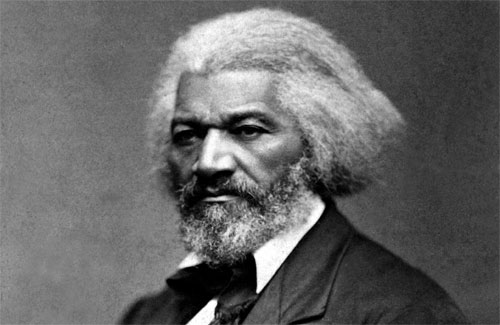
“What to the Slave is the Fourth of July?”
by Frederick Douglass on July 5, 1852Mr. President, Friends and Fellow Citizens:
He who could address this audience without a quailing sensation, has stronger nerves than I have. I do not remember ever to have appeared as a speaker before any assembly more shrinkingly, nor with greater distrust of my ability, than I do this day. A feeling has crept over me, quite unfavorable to the exercise of my limited powers of speech. The task before me is one which requires much previous thought and study for its proper performance. I know that apologies of this sort are generally considered flat and unmeaning. I trust, however, that mine will not be so considered. Should I seem at ease, my appearance would much misrepresent me. The little experience I have had in addressing public meetings, in country schoolhouses, avails me nothing on the present occasion.
The papers and placards say, that I am to deliver a 4th [of] July oration. This certainly sounds large, and out of the common way, for it is true that I have often had the privilege to speak in this beautiful Hall, and to address many who now honor me with their presence. But neither their familiar faces, nor the perfect gage I think I have of Corinthian Hall, seems to free me from embarrassment.
The fact is, ladies and gentlemen, the distance between this platform and the slave plantation, from which I escaped, is considerable – and the difficulties to be overcome in getting from the latter to the former, are by no means slight. That I am here to-day is, to me, a matter of astonishment as well as of gratitude. You will not, therefore, be surprised, if in what I have to say I evince no elaborate preparation, nor grace my speech with any high sounding exordium. With little experience and with less learning, I have been able to throw my thoughts hastily and imperfectly together; and trusting to your patient and generous indulgence, I will proceed to lay them before you.
This, for the purpose of this celebration, is the 4th of July. It is the birthday of your National Independence, and of your political freedom. This, to you, is what the Passover was to the emancipated people of God. It carries your minds back to the day, and to the act of your great deliverance; and to the signs, and to the wonders, associated with that act, and that day. This celebration also marks the beginning of another year of your national life; and reminds you that the Republic of America is now 76 years old. I am glad, fellow-citizens, that your nation is so young. Seventy-six years, though a good old age for a man, is but a mere speck in the life of a nation. Three score years and ten is the allotted time for individual men; but nations number their years by thousands. According to this fact, you are, even now, only in the beginning of your national career, still lingering in the period of childhood.
I repeat, I am glad this is so. There is hope in the thought, and hope is much needed, under the dark clouds which lower above the horizon. The eye of the reformer is met with angry flashes, portending disastrous times; but his heart may well beat lighter at the thought that America is young, and that she is still in the impressible stage of her existence. May he not hope that high lessons of wisdom, of justice and of truth, will yet give direction to her destiny? Were the nation older, the patriot’s heart might be sadder, and the reformer’s brow heavier. Its future might be shrouded in gloom, and the hope of its prophets go out in sorrow.
There is consolation in the thought that America is young. Great streams are not easily turned from channels, worn deep in the course of ages. They may sometimes rise in quiet and stately majesty, and inundate the land, refreshing and fertilizing the earth with their mysterious properties. They may also rise in wrath and fury, and bear away, on their angry waves, the accumulated wealth of years of toil and hardship. They, however, gradually flow back to the same old channel, and flow on as serenely as ever. But, while the river may not be turned aside, it may dry up, and leave nothing behind but the withered branch, and the unsightly rock, to howl in the abyss-sweeping wind, the sad tale of departed glory. As with rivers so with nations.
Fellow-citizens, I shall not presume to dwell at length on the associations that cluster about this day. The simple story of it is that, 76 years ago, the people of this country were British subjects. The style and title of your “sovereign people” (in which you now glory) was not then born. You were under the British Crown. Your fathers esteemed the English Government as the home government; and England as the fatherland. This home government, you know, although a considerable distance from your home, did, in the exercise of its parental prerogatives, impose upon its colonial children, such restraints, burdens and limitations, as, in its mature judgment, it deemed wise, right and proper.
But, your fathers, who had not adopted the fashionable idea of this day, of the infallibility of government, and the absolute character of its acts, presumed to differ from the home government in respect to the wisdom and the justice of some of those burdens and restraints. They went so far in their excitement as to pronounce the measures of government unjust, unreasonable, and oppressive, and altogether such as ought not to be quietly submitted to. I scarcely need say, fellow-citizens, that my opinion of those measures fully accords with that of your fathers. Such a declaration of agreement on my part would not be worth much to anybody. It would, certainly, prove nothing, as to what part I might have taken, had I lived during the great controversy of 1776. To say now that America was right, and England wrong, is exceedingly easy.
Everybody can say it; the dastard, not less than the noble brave, can flippantly discant on the tyranny of England towards the American Colonies. It is fashionable to do so; but there was a time when to pronounce against England, and in favor of the cause of the colonies, tried men’s souls. They who did so were accounted in their day, plotters of mischief, agitators and rebels, dangerous men. To side with the right, against the wrong, with the weak against the strong, and with the oppressed against the oppressor! here lies the merit, and the one which, of all others, seems unfashionable in our day. The cause of liberty may be stabbed by the men who glory in the deeds of your fathers. But, to proceed.
Feeling themselves harshly and unjustly treated by the home government, your fathers, like men of honesty, and men of spirit, earnestly sought redress. They petitioned and remonstrated; they did so in a decorous, respectful, and loyal manner. Their conduct was wholly unexceptionable. This, however, did not answer the purpose. They saw themselves treated with sovereign indifference, coldness and scorn. Yet they persevered. They were not the men to look back.
As the sheet anchor takes a firmer hold, when the ship is tossed by the storm, so did the cause of your fathers grow stronger, as it breasted the chilling blasts of kingly displeasure. The greatest and best of British statesmen admitted its justice, and the loftiest eloquence of the British Senate came to its support. But, with that blindness which seems to be the unvarying characteristic of tyrants, since Pharaoh and his hosts were drowned in the Red Sea, the British Government persisted in the exactions complained of.
The madness of this course, we believe, is admitted now, even by England; but we fear the lesson is wholly lost on our present ruler.
Oppression makes a wise man mad. Your fathers were wise men, and if they did not go mad, they became restive under this treatment. They felt themselves the victims of grievous wrongs, wholly incurable in their colonial capacity. With brave men there is always a remedy for oppression. Just here, the idea of a total separation of the colonies from the crown was born! It was a startling idea, much more so, than we, at this distance of time, regard it. The timid and the prudent (as has been intimated) of that day, were, of course, shocked and alarmed by it.
Such people lived then, had lived before, and will, probably, ever have a place on this planet; and their course, in respect to any great change, (no matter how great the good to be attained, or the wrong to be redressed by it), may be calculated with as much precision as can be the course of the stars. They hate all changes, but silver, gold and copper change! Of this sort of change they are always strongly in favor.
These people were called Tories in the days of your fathers; and the appellation, probably, conveyed the same idea that is meant by a more modern, though a somewhat less euphonious term, which we often find in our papers, applied to some of our old politicians.
Their opposition to the then dangerous thought was earnest and powerful; but, amid all their terror and affrighted vociferations against it, the alarming and revolutionary idea moved on, and the country with it.
On the 2d of July, 1776, the old Continental Congress, to the dismay of the lovers of ease, and the worshipers of property, clothed that dreadful idea with all the authority of national sanction. They did so in the form of a resolution; and as we seldom hit upon resolutions, drawn up in our day whose transparency is at all equal to this, it may refresh your minds and help my story if I read it. “Resolved, That these united colonies are, and of right, ought to be free and Independent States; that they are absolved from all allegiance to the British Crown; and that all political connection between them and the State of Great Britain is, and ought to be, dissolved.”
Citizens, your fathers made good that resolution. They succeeded; and to-day you reap the fruits of their success. The freedom gained is yours; and you, therefore, may properly celebrate this anniversary. The 4th of July is the first great fact in your nation’s history – the very ring-bolt in the chain of your yet undeveloped destiny.
Pride and patriotism, not less than gratitude, prompt you to celebrate and to hold it in perpetual remembrance. I have said that the Declaration of Independence is the ring-bolt to the chain of your nation’s destiny; so, indeed, I regard it. The principles contained in that instrument are saving principles. Stand by those principles, be true to them on all occasions, in all places, against all foes, and at whatever cost.
From the round top of your ship of state, dark and threatening clouds may be seen. Heavy billows, like mountains in the distance, disclose to the leeward huge forms of flinty rocks! That bolt drawn, that chain broken, and all is lost. Cling to this day – cling to it, and to its principles, with the grasp of a storm-tossed mariner to a spar at midnight.
The coming into being of a nation, in any circumstances, is an interesting event. But, besides general considerations, there were peculiar circumstances which make the advent of this republic an event of special attractiveness.
The whole scene, as I look back to it, was simple, dignified and sublime.
The population of the country, at the time, stood at the insignificant number of three millions. The country was poor in the munitions of war. The population was weak and scattered, and the country a wilderness unsubdued. There were then no means of concert and combination, such as exist now. Neither steam nor lightning had then been reduced to order and discipline. From the Potomac to the Delaware was a journey of many days. Under these, and innumerable other disadvantages, your fathers declared for liberty and independence and triumphed.
Fellow Citizens, I am not wanting in respect for the fathers of this republic. The signers of the Declaration of Independence were brave men. They were great men too – great enough to give fame to a great age. It does not often happen to a nation to raise, at one time, such a number of truly great men. The point from which I am compelled to view them is not, certainly, the most favorable; and yet I cannot contemplate their great deeds with less than admiration. They were statesmen, patriots and heroes, and for the good they did, and the principles they contended for, I will unite with you to honor their memory.
They loved their country better than their own private interests; and, though this is not the highest form of human excellence, all will concede that it is a rare virtue, and that when it is exhibited, it ought to command respect. He who will, intelligently, lay down his life for his country, is a man whom it is not in human nature to despise. Your fathers staked their lives, their fortunes, and their sacred honor, on the cause of their country. In their admiration of liberty, they lost sight of all other interests.
They were peace men; but they preferred revolution to peaceful submission to bondage. They were quiet men; but they did not shrink from agitating against oppression. They showed forbearance; but that they knew its limits. They believed in order; but not in the order of tyranny. With them, nothing was “settled” that was not right. With them, justice, liberty and humanity were “final;” not slavery and oppression. You may well cherish the memory of such men. They were great in their day and generation. Their solid manhood stands out the more as we contrast it with these degenerate times.
How circumspect, exact and proportionate were all their movements! How unlike the politicians of an hour! Their statesmanship looked beyond the passing moment, and stretched away in strength into the distant future. They seized upon eternal principles, and set a glorious example in their defense. Mark them!
Fully appreciating the hardship to be encountered, firmly believing in the right of their cause, honorably inviting the scrutiny of an on-looking world, reverently appealing to heaven to attest their sincerity, soundly comprehending the solemn responsibility they were about to assume, wisely measuring the terrible odds against them, your fathers, the fathers of this republic, did, most deliberately, under the inspiration of a glorious patriotism, and with a sublime faith in the great principles of justice and freedom, lay deep the corner-stone of the national superstructure, which has risen and still rises in grandeur around you.
Of this fundamental work, this day is the anniversary. Our eyes are met with demonstrations of joyous enthusiasm. Banners and pennants wave exultingly on the breeze. The din of business, too, is hushed. Even Mammon seems to have quitted his grasp on this day. The ear-piercing fife and the stirring drum unite their accents with the ascending peal of a thousand church bells. Prayers are made, hymns are sung, and sermons are preached in honor of this day; while the quick martial tramp of a great and multitudinous nation, echoed back by all the hills, valleys and mountains of a vast continent, bespeak the occasion one of thrilling and universal interest – a nation’s jubilee.
Friends and citizens, I need not enter further into the causes which led to this anniversary. Many of you understand them better than I do. You could instruct me in regard to them. That is a branch of knowledge in which you feel, perhaps, a much deeper interest than your speaker. The causes which led to the separation of the colonies from the British crown have never lacked for a tongue. They have all been taught in your common schools, narrated at your firesides, unfolded from your pulpits, and thundered from your legislative halls, and are as familiar to you as household words. They form the staple of your national poetry and eloquence.
I remember, also, that, as a people, Americans are remarkably familiar with all facts which make in their own favor. This is esteemed by some as a national trait – perhaps a national weakness. It is a fact, that whatever makes for the wealth or for the reputation of Americans, and can be had cheap! will be found by Americans. I shall not be charged with slandering Americans, if I say I think the American side of any question may be safely left in American hands.
I leave, therefore, the great deeds of your fathers to other gentlemen whose claim to have been regularly descended will be less likely to be disputed than mine!
My business, if I have any here to-day, is with the present. The accepted time with God and his cause is the ever-living now.
Trust no future, however pleasant,
Let the dead past bury its dead;
Act, act in the living present,
Heart within, and God overhead.
We have to do with the past only as we can make it useful to the present and to the future. To all inspiring motives, to noble deeds which can be gained from the past, we are welcome. But now is the time, the important time. Your fathers have lived, died, and have done their work, and have done much of it well. You live and must die, and you must do your work. You have no right to enjoy a child’s share in the labor of your fathers, unless your children are to be blest by your labors. You have no right to wear out and waste the hard-earned fame of your fathers to cover your indolence. Sydney Smith tells us that men seldom eulogize the wisdom and virtues of their fathers, but to excuse some folly or wickedness of their own.
This truth is not a doubtful one. There are illustrations of it near and remote, ancient and modern. It was fashionable, hundreds of years ago, for the children of Jacob to boast, we have “Abraham to our father,” when they had long lost Abraham’s faith and spirit. That people contented themselves under the shadow of Abraham’s great name, while they repudiated the deeds which made his name great. Need I remind you that a similar thing is being done all over this country to-day? Need I tell you that the Jews are not the only people who built the tombs of the prophets, and garnished the sepulchres of the righteous? Washington could not die till he had broken the chains of his slaves. Yet his monument is built up by the price of human blood, and the traders in the bodies and souls of men shout – “We have Washington to our father.” – Alas! that it should be so; yet so it is.
The evil that men do, lives after them, The good is oft-interred with their bones.
Fellow-citizens, pardon me, allow me to ask, why am I called upon to speak here to-day? What have I, or those I represent, to do with your national independence? Are the great principles of political freedom and of natural justice, embodied in that Declaration of Independence, extended to us? and am I, therefore, called upon to bring our humble offering to the national altar, and to confess the benefits and express devout gratitude for the blessings resulting from your independence to us?
Would to God, both for your sakes and ours, that an affirmative answer could be truthfully returned to these questions! Then would my task be light, and my burden easy and delightful. For who is there so cold, that a nation’s sympathy could not warm him? Who so obdurate and dead to the claims of gratitude, that would not thankfully acknowledge such priceless benefits? Who so stolid and selfish, that would not give his voice to swell the hallelujahs of a nation’s jubilee, when the chains of servitude had been torn from his limbs? I am not that man. In a case like that, the dumb might eloquently speak, and the “lame man leap as an hart.”
But, such is not the state of the case. I say it with a sad sense of the disparity between us. I am not included within the pale of this glorious anniversary! Your high independence only reveals the immeasurable distance between us. The blessings in which you, this day, rejoice, are not enjoyed in common. – The rich inheritance of justice, liberty, prosperity and independence, bequeathed by your fathers, is shared by you, not by me. The sunlight that brought life and healing to you, has brought stripes and death to me. This Fourth [of] July is yours, not mine. You may rejoice, I must mourn.
To drag a man in fetters into the grand illuminated temple of liberty, and call upon him to join you in joyous anthems, were inhuman mockery and sacrilegious irony. Do you mean, citizens, to mock me, by asking me to speak to-day? If so, there is a parallel to your conduct. And let me warn you that it is dangerous to copy the example of a nation whose crimes, lowering up to heaven, were thrown down by the breath of the Almighty, burying that nation in irrecoverable ruin! I can to-day take up the plaintive lament of a peeled and woe-smitten people!
“By the rivers of Babylon, there we sat down. Yea! we wept when we remembered Zion. We hanged our harps upon the willows in the midst thereof. For there, they that carried us away captive, required of us a song; and they who wasted us required of us mirth, saying, Sing us one of the songs of Zion. How can we sing the Lord’s song in a strange land? If I forget thee, O Jerusalem, let my right hand forget her cunning. If I do not remember thee, let my tongue cleave to the roof of my mouth.”
Fellow-citizens; above your national, tumultuous joy, I hear the mournful wail of millions! whose chains, heavy and grievous yesterday, are, to-day, rendered more intolerable by the jubilee shouts that reach them. If I do forget, if I do not faithfully remember those bleeding children of sorrow this day, “may my right hand forget her cunning, and may my tongue cleave to the roof of my mouth!” To forget them, to pass lightly over their wrongs, and to chime in with the popular theme, would be treason most scandalous and shocking, and would make me a reproach before God and the world. My subject, then fellow-citizens, is AMERICAN SLAVERY. I shall see, this day, and its popular characteristics, from the slave’s point of view. Standing, there, identified with the American bondman, making his wrongs mine, I do not hesitate to declare, with all my soul, that the character and conduct of this nation never looked blacker to me than on this 4th of July!
Whether we turn to the declarations of the past, or to the professions of the present, the conduct of the nation seems equally hideous and revolting. America is false to the past, false to the present, and solemnly binds herself to be false to the future. Standing with God and the crushed and bleeding slave on this occasion, I will, in the name of humanity which is outraged, in the name of liberty which is fettered, in the name of the constitution and the Bible, which are disregarded and trampled upon, dare to call in question and to denounce, with all the emphasis I can command, everything that serves to perpetuate slavery – the great sin and shame of America! “I will not equivocate; I will not excuse;” I will use the severest language I can command; and yet not one word shall escape me that any man, whose judgment is not blinded by prejudice, or who is not at heart a slaveholder, shall not confess to be right and just.
But I fancy I hear some one of my audience say, it is just in this circumstance that you and your brother abolitionists fail to make a favorable impression on the public mind. Would you argue more, and denounce less, would you persuade more, and rebuke less, your cause would be much more likely to succeed. But, I submit, where all is plain there is nothing to be argued. What point in the anti-slavery creed would you have me argue? On what branch of the subject do the people of this country need light?
Must I undertake to prove that the slave is a man? That point is conceded already. Nobody doubts it. The slaveholders themselves acknowledge it in the enactment of laws for their government. They acknowledge it when they punish disobedience on the part of the slave. There are seventy-two crimes in the State of Virginia, which, if committed by a black man, (no matter how ignorant he be), subject him to the punishment of death; while only two of the same crimes will subject a white man to the like punishment.
What is this but the acknowledgement that the slave is a moral, intellectual and responsible being? The manhood of the slave is conceded. It is admitted in the fact that Southern statute books are covered with enactments forbidding, under severe fines and penalties, the teaching of the slave to read or to write. When you can point to any such laws, in reference to the beasts of the field, then I may consent to argue the manhood of the slave. When the dogs in your streets, when the fowls of the air, when the cattle on your hills, when the fish of the sea, and the reptiles that crawl, shall be unable to distinguish the slave from a brute, then will I argue with you that the slave is a man!
For the present, it is enough to affirm the equal manhood of the Negro race. Is it not astonishing that, while we are ploughing, planting and reaping, using all kinds of mechanical tools, erecting houses, constructing bridges, building ships, working in metals of brass, iron, copper, silver and gold; that, while we are reading, writing and cyphering, acting as clerks, merchants and secretaries, having among us lawyers, doctors, ministers, poets, authors, editors, orators and teachers; that, while we are engaged in all manner of enterprises common to other men, digging gold in California, capturing the whale in the Pacific, feeding sheep and cattle on the hill-side, living, moving, acting, thinking, planning, living in families as husbands, wives and children, and, above all, confessing and worshipping the Christian’s God, and looking hopefully for life and immortality beyond the grave, we are called upon to prove that we are men!
Would you have me argue that man is entitled to liberty? that he is the rightful owner of his own body? You have already declared it. Must I argue the wrongfulness of slavery? Is that a question for Republicans? Is it to be settled by the rules of logic and argumentation, as a matter beset with great difficulty, involving a doubtful application of the principle of justice, hard to be understood? How should I look to-day, in the presence of Americans, dividing, and subdividing a discourse, to show that men have a natural right to freedom? speaking of it relatively, and positively, negatively, and affirmatively. To do so, would be to make myself ridiculous, and to offer an insult to your understanding. – There is not a man beneath the canopy of heaven, that does not know that slavery is wrong for him.
What, am I to argue that it is wrong to make men brutes, to rob them of their liberty, to work them without wages, to keep them ignorant of their relations to their fellow men, to beat them with sticks, to flay their flesh with the lash, to load their limbs with irons, to hunt them with dogs, to sell them at auction, to sunder their families, to knock out their teeth, to burn their flesh, to starve them into obedience and submission to their masters? Must I argue that a system thus marked with blood, and stained with pollution, is wrong? No! I will not. I have better employments for my time and strength than such arguments would imply.
What, then, remains to be argued? Is it that slavery is not divine; that God did not establish it; that our doctors of divinity are mistaken? There is blasphemy in the thought. That which is inhuman, cannot be divine! Who can reason on such a proposition? They that can, may; I cannot. The time for such argument is passed.
At a time like this, scorching irony, not convincing argument, is needed. O! had I the ability, and could I reach the nation’s ear, I would, to-day, pour out a fiery stream of biting ridicule, blasting reproach, withering sarcasm, and stern rebuke. For it is not light that is needed, but fire; it is not the gentle shower, but thunder. We need the storm, the whirlwind, and the earthquake. The feeling of the nation must be quickened; the conscience of the nation must be roused; the propriety of the nation must be startled; the hypocrisy of the nation must be exposed; and its crimes against God and man must be proclaimed and denounced.
What, to the American slave, is your 4th of July? I answer: a day that reveals to him, more than all other days in the year, the gross injustice and cruelty to which he is the constant victim. To him, your celebration is a sham; your boasted liberty, an unholy license; your national greatness, swelling vanity; your sounds of rejoicing are empty and heartless; your denunciations of tyrants, brass fronted impudence; your shouts of liberty and equality, hollow mockery; your prayers and hymns, your sermons and thanksgivings, with all your religious parade, and solemnity, are, to him, mere bombast, fraud, deception, impiety, and hypocrisy – a thin veil to cover up crimes which would disgrace a nation of savages. There is not a nation on the earth guilty of practices, more shocking and bloody, than are the people of these United States, at this very hour.
Go where you may, search where you will, roam through all the monarchies and despotisms of the old world, travel through South America, search out every abuse, and when you have found the last, lay your facts by the side of the everyday practices of this nation, and you will say with me, that, for revolting barbarity and shameless hypocrisy, America reigns without a rival.
Take the American slave-trade, which, we are told by the papers, is especially prosperous just now. Ex-Senator Benton tells us that the price of men was never higher than now. He mentions the fact to show that slavery is in no danger. This trade is one of the peculiarities of American institutions. It is carried on in all the large towns and cities in one-half of this confederacy; and millions are pocketed every year, by dealers in this horrid traffic. In several states, this trade is a chief source of wealth. It is called (in contradistinction to the foreign slave-trade) “the internal slave trade.” It is, probably, called so, too, in order to divert from it the horror with which the foreign slave-trade is contemplated. That trade has long since been denounced by this government, as piracy. It has been denounced with burning words, from the high places of the nation, as an execrable traffic. To arrest it, to put an end to it, this nation keeps a squadron, at immense cost, on the coast of Africa.
Everywhere, in this country, it is safe to speak of this foreign slave-trade, as a most inhuman traffic, opposed alike to the laws of God and of man. The duty to extirpate and destroy it, is admitted even by our DOCTORS OF DIVINITY. In order to put an end to it, some of these last have consented that their colored brethren (nominally free) should leave this country, and establish themselves on the western coast of Africa! It is, however, a notable fact that, while so much execration is poured out by Americans upon those engaged in the foreign slave-trade, the men engaged in the slave-trade between the states pass without condemnation, and their business is deemed honorable.
Behold the practical operation of this internal slave-trade, the American slave-trade, sustained by American politics and America religion. Here you will see men and women reared like swine for the market. You know what is a swine-drover? I will show you a man-drover. They inhabit all our Southern States. They perambulate the country, and crowd the highways of the nation, with droves of human stock. You will see one of these human flesh-jobbers, armed with pistol, whip and bowie-knife, driving a company of a hundred men, women, and children, from the Potomac to the slave market at New Orleans. These wretched people are to be sold singly, or in lots, to suit purchasers. They are food for the cotton-field, and the deadly sugar-mill.
Mark the sad procession, as it moves wearily along, and the inhuman wretch who drives them. Hear his savage yells and his blood-chilling oaths, as he hurries on his affrighted captives! There, see the old man, with locks thinned and gray. Cast one glance, if you please, upon that young mother, whose shoulders are bare to the scorching sun, her briny tears falling on the brow of the babe in her arms. See, too, that girl of thirteen, weeping, yes! weeping, as she thinks of the mother from whom she has been torn! The drove moves tardily. Heat and sorrow have nearly consumed their strength; suddenly you hear a quick snap, like the discharge of a rifle; the fetters clank, and the chain rattles simultaneously; your ears are saluted with a scream, that seems to have torn its way to the center of your soul!
The crack you heard, was the sound of the slave-whip; the scream you heard, was from the woman you saw with the babe. Her speed had faltered under the weight of her child and her chains! that gash on her shoulder tells her to move on. Follow the drove to New Orleans. Attend the auction; see men examined like horses; see the forms of women rudely and brutally exposed to the shocking gaze of American slave-buyers. See this drove sold and separated forever; and never forget the deep, sad sobs that arose from that scattered multitude. Tell me citizens, WHERE, under the sun, you can witness a spectacle more fiendish and shocking. Yet this is but a glance at the American slave-trade, as it exists, at this moment, in the ruling part of the United States.
I was born amid such sights and scenes. To me the American slave-trade is a terrible reality. When a child, my soul was often pierced with a sense of its horrors. I lived on Philpot Street, Fell’s Point, Baltimore, and have watched from the wharves, the slave ships in the Basin, anchored from the shore, with their cargoes of human flesh, waiting for favorable winds to waft them down the Chesapeake. There was, at that time, a grand slave mart kept at the head of Pratt Street, by Austin Woldfolk. His agents were sent into every town and county in Maryland, announcing their arrival, through the papers, and on flaming “hand-bills,” headed CASH FOR NEGROES. These men were generally well dressed men, and very captivating in their manners. Ever ready to drink, to treat, and to gamble. The fate of many a slave has depended upon the turn of a single card; and many a child has been snatched from the arms of its mother by bargains arranged in a state of brutal drunkenness.
The flesh-mongers gather up their victims by dozens, and drive them, chained, to the general depot at Baltimore. When a sufficient number have been collected here, a ship is chartered, for the purpose of conveying the forlorn crew to Mobile, or to New Orleans. From the slave prison to the ship, they are usually driven in the darkness of night; for since the antislavery agitation, a certain caution is observed.
In the deep still darkness of midnight, I have been often aroused by the dead heavy footsteps, and the piteous cries of the chained gangs that passed our door. The anguish of my boyish heart was intense; and I was often consoled, when speaking to my mistress in the morning, to hear her say that the custom was very wicked; that she hated to hear the rattle of the chains, and the heart-rending cries. I was glad to find one who sympathized with me in my horror.
Fellow-citizens, this murderous traffic is, to-day, in active operation in this boasted republic. In the solitude of my spirit, I see clouds of dust raised on the highways of the South; I see the bleeding footsteps; I hear the doleful wail of fettered humanity, on the way to the slave-markets, where the victims are to be sold like horses, sheep, and swine, knocked off to the highest bidder. There I see the tenderest ties ruthlessly broken, to gratify the lust, caprice and rapacity of the buyers and sellers of men. My soul sickens at the sight.
Is this the land your Fathers loved,
The freedom which they toiled to win?
Is this the earth whereon they moved?
Are these the graves they slumber in?
But a still more inhuman, disgraceful, and scandalous state of things remains to be presented. By an act of the American Congress, not yet two years old, slavery has been nationalized in its most horrible and revolting form. By that act, Mason and Dixon’s line has been obliterated; New York has become as Virginia; and the power to hold, hunt, and sell men, women, and children as slaves remains no longer a mere state institution, but is now an institution of the whole United States. The power is co-extensive with the Star-Spangled Banner and American Christianity. Where these go, may also go the merciless slave-hunter. Where these are, man is not sacred. He is a bird for the sportsman’s gun. By that most foul and fiendish of all human decrees, the liberty and person of every man are put in peril. Your broad republican domain is hunting ground for men. Not for thieves and robbers, enemies of society, merely, but for men guilty of no crime. Your lawmakers have commanded all good citizens to engage in this hellish sport. Your President, your Secretary of State, our lords, nobles, and ecclesiastics, enforce, as a duty you owe to your free and glorious country, and to your God, that you do this accursed thing. Not fewer than forty Americans have, within the past two years, been hunted down and, without a moment’s warning, hurried away in chains, and consigned to slavery and excruciating torture. Some of these have had wives and children, dependent on them for bread; but of this, no account was made. The right of the hunter to his prey stands superior to the right of marriage, and to all rights in this republic, the rights of God included!
For black men there are neither law, justice, humanity, not religion. The Fugitive Slave Law makes mercy to them a crime; and bribes the judge who tries them. An American judge gets ten dollars for every victim he consigns to slavery, and five, when he fails to do so. The oath of any two villains is sufficient, under this hell-black enactment, to send the most pious and exemplary black man into the remorseless jaws of slavery! His own testimony is nothing. He can bring no witnesses for himself. The minister of American justice is bound by the law to hear but one side; and that side, is the side of the oppressor. Let this damning fact be perpetually told. Let it be thundered around the world, that, in tyrant-killing, king-hating, people-loving, democratic, Christian America, the seats of justice are filled with judges, who hold their offices under an open and palpable bribe, and are bound, in deciding in the case of a man’s liberty, hear only his accusers!
In glaring violation of justice, in shameless disregard of the forms of administering law, in cunning arrangement to entrap the defenseless, and in diabolical intent, this Fugitive Slave Law stands alone in the annals of tyrannical legislation. I doubt if there be another nation on the globe, having the brass and the baseness to put such a law on the statute-book. If any man in this assembly thinks differently from me in this matter, and feels able to disprove my statements, I will gladly confront him at any suitable time and place he may select.
I take this law to be one of the grossest infringements of Christian Liberty, and, if the churches and ministers of our country were not stupidly blind, or most wickedly indifferent, they, too, would so regard it.
At the very moment that they are thanking God for the enjoyment of civil and religious liberty, and for the right to worship God according to the dictates of their own consciences, they are utterly silent in respect to a law which robs religion of its chief significance, and makes it utterly worthless to a world lying in wickedness. Did this law concern the “mint, anise, and cumin” – abridge the right to sing psalms, to partake of the sacrament, or to engage in any of the ceremonies of religion, it would be smitten by the thunder of a thousand pulpits. A general shout would go up from the church, demanding repeal, repeal, instant repeal! – And it would go hard with that politician who presumed to solicit the votes of the people without inscribing this motto on his banner. Further, if this demand were not complied with, another Scotland would be added to the history of religious liberty, and the stern old Covenanters would be thrown into the shade.
A John Knox would be seen at every church door, and heard from every pulpit, and Fillmore would have no more quarter than was shown by Knox, to the beautiful, but treacherous queen Mary of Scotland. The fact that the church of our country, (with fractional exceptions), does not esteem “the Fugitive Slave Law” as a declaration of war against religious liberty, implies that that church regards religion simply as a form of worship, an empty ceremony, and not a vital principle, requiring active benevolence, justice, love and good will towards man. It esteems sacrifice above mercy; psalm-singing above right doing; solemn meetings above practical righteousness. A worship that can be conducted by persons who refuse to give shelter to the houseless, to give bread to the hungry, clothing to the naked, and who enjoin obedience to a law forbidding these acts of mercy, is a curse, not a blessing to mankind. The Bible addresses all such persons as “scribes, Pharisees, hypocrites, who pay tithe of mint, anise, and cumin, and have omitted the weightier matters of the law, judgment, mercy and faith.”
But the church of this country is not only indifferent to the wrongs of the slave, it actually takes sides with the oppressors. It has made itself the bulwark of American slavery, and the shield of American slave-hunters. Many of its most eloquent Divines. who stand as the very lights of the church, have shamelessly given the sanction of religion and the Bible to the whole slave system. They have taught that man may, properly, be a slave; that the relation of master and slave is ordained of God; that to send back an escaped bondman to his master is clearly the duty of all the followers of the Lord Jesus Christ; and this horrible blasphemy is palmed off upon the world for Christianity.
For my part, I would say, welcome infidelity! welcome atheism! welcome anything! in preference to the gospel, as preached by those Divines! They convert the very name of religion into an engine of tyranny, and barbarous cruelty, and serve to confirm more infidels, in this age, than all the infidel writings of Thomas Paine, Voltaire, and Bolingbroke, put together, have done! These ministers make religion a cold and flinty-hearted thing, having neither principles of right action, nor bowels of compassion. They strip the love of God of its beauty, and leave the throng of religion a huge, horrible, repulsive form.
It is a religion for oppressors, tyrants, man-stealers, and thugs. It is not that “pure and undefiled religion” which is from above, and which is “first pure, then peaceable, easy to be entreated, full of mercy and good fruits, without partiality, and without hypocrisy.” But a religion which favors the rich against the poor; which exalts the proud above the humble; which divides mankind into two classes, tyrants and slaves; which says to the man in chains, stay there; and to the oppressor, oppress on; it is a religion which may be professed and enjoyed by all the robbers and enslavers of mankind; it makes God a respecter of persons, denies his fatherhood of the race, and tramples in the dust the great truth of the brotherhood of man.
All this we affirm to be true of the popular church, and the popular worship of our land and nation – a religion, a church, and a worship which, on the authority of inspired wisdom, we pronounce to be an abomination in the sight of God. In the language of Isaiah, the American church might be well addressed, “Bring no more vain ablations; incense is an abomination unto me: the new moons and Sabbaths, the calling of assemblies, I cannot away with; it is iniquity even the solemn meeting. Your new moons and your appointed feasts my soul hateth. They are a trouble to me; I am weary to bear them; and when ye spread forth your hands I will hide mine eyes from you. Yea! when ye make many prayers, I will not hear. YOUR HANDS ARE FULL OF BLOOD; cease to do evil, learn to do well; seek judgment; relieve the oppressed; judge for the fatherless; plead for the widow.”
The American church is guilty, when viewed in connection with what it is doing to uphold slavery; but it is superlatively guilty when viewed in connection with its ability to abolish slavery. The sin of which it is guilty is one of omission as well as of commission. Albert Barnes but uttered what the common sense of every man at all observant of the actual state of the case will receive as truth, when he declared that “There is no power out of the church that could sustain slavery an hour, if it were not sustained in it.”
Let the religious press, the pulpit, the Sunday school, the conference meeting, the great ecclesiastical, missionary, Bible and tract associations of the land array their immense powers against slavery and slave-holding; and the whole system of crime and blood would be scattered to the winds; and that they do not do this involves them in the most awful responsibility of which the mind can conceive.
In prosecuting the anti-slavery enterprise, we have been asked to spare the church, to spare the ministry; but how, we ask, could such a thing be done? We are met on the threshold of our efforts for the redemption of the slave, by the church and ministry of the country, in battle arrayed against us; and we are compelled to fight or flee. From what quarter, I beg to know, has proceeded a fire so deadly upon our ranks, during the last two years, as from the Northern pulpit? As the champions of oppressors, the chosen men of American theology have appeared – men, honored for their so-called piety, and their real learning. The Lords of Buffalo, the Springs of New York, the Lathrops of Auburn, the Coxes and Spencers of Brooklyn, the Gannets and Sharps of Boston, the Deweys of Washington, and other great religious lights of the land have, in utter denial of the authority of Him by whom they professed to be called to the ministry, deliberately taught us, against the example or the Hebrews and against the remonstrance of the Apostles, they teach that we ought to obey man’s law before the law of God.
My spirit wearies of such blasphemy; and how such men can be supported, as the “standing types and representatives of Jesus Christ,” is a mystery which I leave others to penetrate. In speaking of the American church, however, let it be distinctly understood that I mean the great mass of the religious organizations of our land. There are exceptions, and I thank God that there are. Noble men may be found, scattered all over these Northern States, of whom Henry Ward Beecher of Brooklyn, Samuel J. May of Syracuse, and my esteemed friend (Rev. R. R. Raymond) on the platform, are shining examples; and let me say further, that upon these men lies the duty to inspire our ranks with high religious faith and zeal, and to cheer us on in the great mission of the slave’s redemption from his chains.
One is struck with the difference between the attitude of the American church towards the anti-slavery movement, and that occupied by the churches in England towards a similar movement in that country. There, the church, true to its mission of ameliorating, elevating, and improving the condition of mankind, came forward promptly, bound up the wounds of the West Indian slave, and restored him to his liberty. There, the question of emancipation was a high religious question. It was demanded, in the name of humanity, and according to the law of the living God. The Sharps, the Clarksons, the Wilberforces, the Buxtons, and Burchells and the Knibbs, were alike famous for their piety, and for their philanthropy. The anti-slavery movement there was not an anti-church movement, for the reason that the church took its full share in prosecuting that movement: and the anti-slavery movement in this country will cease to be an anti-church movement, when the church of this country shall assume a favorable, instead of a hostile position towards that movement.
Americans! your republican politics, not less than your republican religion, are flagrantly inconsistent. You boast of your love of liberty, your superior civilization, and your pure Christianity, while the whole political power of the nation (as embodied in the two great political parties), is solemnly pledged to support and perpetuate the enslavement of three millions of your countrymen. You hurl your anathemas at the crowned headed tyrants of Russia and Austria, and pride yourselves on your Democratic institutions, while you yourselves consent to be the mere tools and body-guards of the tyrants of Virginia and Carolina. You invite to your shores fugitives of oppression from abroad, honor them with banquets, greet them with ovations, cheer them, toast them, salute them, protect them, and pour out your money to them like water; but the fugitives from your own land you advertise, hunt, arrest, shoot and kill. You glory in your refinement and your universal education yet you maintain a system as barbarous and dreadful as ever stained the character of a nation – a system begun in avarice, supported in pride, and perpetuated in cruelty. You shed tears over fallen Hungary, and make the sad story of her wrongs the theme of your poets, statesmen and orators, till your gallant sons are ready to fly to arms to vindicate her cause against her oppressors; but, in regard to the ten thousand wrongs of the American slave, you would enforce the strictest silence, and would hail him as an enemy of the nation who dares to make those wrongs the subject of public discourse!
You are all on fire at the mention of liberty for France or for Ireland; but are as cold as an iceberg at the thought of liberty for the enslaved of America. You discourse eloquently on the dignity of labor; yet, you sustain a system which, in its very essence, casts a stigma upon labor. You can bare your bosom to the storm of British artillery to throw off a threepenny tax on tea; and yet wring the last hard-earned farthing from the grasp of the black laborers of your country. You profess to believe “that, of one blood, God made all nations of men to dwell on the face of all the earth,” and hath commanded all men, everywhere to love one another; yet you notoriously hate, (and glory in your hatred), all men whose skins are not colored like your own. You declare, before the world, and are understood by the world to declare, that you “hold these truths to be self evident, that all men are created equal; and are endowed by their Creator with certain inalienable rights; and that, among these are, life, liberty, and the pursuit of happiness;” and yet, you hold securely, in a bondage which, according to your own Thomas Jefferson, “is worse than ages of that which your fathers rose in rebellion to oppose,” a seventh part of the inhabitants of your country.
Fellow-citizens! I will not enlarge further on your national inconsistencies. The existence of slavery in this country brands your republicanism as a sham, your humanity as a base pretence, and your Christianity as a lie. It destroys your moral power abroad; it corrupts your politicians at home. It saps the foundation of religion; it makes your name a hissing, and a bye-word to a mocking earth. It is the antagonistic force in your government, the only thing that seriously disturbs and endangers your Union. It fetters your progress; it is the enemy of improvement, the deadly foe of education; it fosters pride; it breeds insolence; it promotes vice; it shelters crime; it is a curse to the earth that supports it; and yet, you cling to it, as if it were the sheet anchor of all your hopes. Oh! be warned! be warned! a horrible reptile is coiled up in your nation’s bosom; the venomous creature is nursing at the tender breast of your youthful republic; for the love of God, tear away, and fling from you the hideous monster, and let the weight of twenty millions crush and destroy it forever!
But it is answered in reply to all this, that precisely what I have now denounced is, in fact, guaranteed and sanctioned by the Constitution of the United States; that the right to hold and to hunt slaves is a part of that Constitution framed by the illustrious Fathers of this Republic.
Then, I dare to affirm, notwithstanding all I have said before, your fathers stooped, basely stooped
To palter with us in a double sense:
And keep the word of promise to the ear,
But break it to the heart.
And instead of being the honest men I have before declared them to be, they were the veriest imposters that ever practiced on mankind. This is the inevitable conclusion, and from it there is no escape. But I differ from those who charge this baseness on the framers of the Constitution of the United States. It is a slander upon their memory, at least, so I believe. There is not time now to argue the constitutional question at length – nor have I the ability to discuss it as it ought to be discussed. The subject has been handled with masterly power by Lysander Spooner, Esq., by William Goodell, by Samuel E. Sewall, Esq., and last, though not least, by Gerritt Smith, Esq. These gentlemen have, as I think, fully and clearly vindicated the Constitution from any design to support slavery for an hour.
Fellow-citizens! there is no matter in respect to which, the people of the North have allowed themselves to be so ruinously imposed upon, as that of the pro-slavery character of the Constitution. In that instrument I hold there is neither warrant, license, nor sanction of the hateful thing; but, interpreted as it ought to be interpreted, the Constitution is a GLORIOUS LIBERTY DOCUMENT. Read its preamble, consider its purposes. Is slavery among them? Is it at the gateway? or is it in the temple? It is neither. While I do not intend to argue this question on the present occasion, let me ask, if it be not somewhat singular that, if the Constitution were intended to be, by its framers and adopters, a slave-holding instrument, why neither slavery, slaveholding, nor slave can anywhere be found in it. What would be thought of an instrument, drawn up, legally drawn up, for the purpose of entitling the city of Rochester to a track of land, in which no mention of land was made?
Now, there are certain rules of interpretation, for the proper understanding of all legal instruments. These rules are well established. They are plain, common-sense rules, such as you and I, and all of us, can understand and apply, without having passed years in the study of law. I scout the idea that the question of the constitutionality or unconstitutionality of slavery is not a question for the people. I hold that every American citizen has a right to form an opinion of the constitution, and to propagate that opinion, and to use all honorable means to make his opinion the prevailing one. Without this right, the liberty of an American citizen would be as insecure as that of a Frenchman.
Ex-Vice-President Dallas tells us that the Constitution is an object to which no American mind can be too attentive, and no American heart too devoted. He further says, the Constitution, in its words, is plain and intelligible, and is meant for the home-bred, unsophisticated understandings of our fellow-citizens. Senator Berrien tell us that the Constitution is the fundamental law, that which controls all others. The charter of our liberties, which every citizen has a personal interest in understanding thoroughly. The testimony of Senator Breese, Lewis Cass, and many others that might be named, who are everywhere esteemed as sound lawyers, so regard the constitution. I take it, therefore, that it is not presumption in a private citizen to form an opinion of that instrument.
Now, take the Constitution according to its plain reading, and I defy the presentation of a single pro-slavery clause in it. On the other hand it will be found to contain principles and purposes, entirely hostile to the existence of slavery.
I have detained my audience entirely too long already. At some future period I will gladly avail myself of an opportunity to give this subject a full and fair discussion.
Allow me to say, in conclusion, notwithstanding the dark picture I have this day presented of the state of the nation, I do not despair of this country. There are forces in operation, which must inevitably work the downfall of slavery. “The arm of the Lord is not shortened,” and the doom of slavery is certain. I, therefore, leave off where I began, with hope. While drawing encouragement from the Declaration of Independence, the great principles it contains, and the genius of American Institutions, my spirit is also cheered by the obvious tendencies of the age. Nations do not now stand in the same relation to each other that they did ages ago. No nation can now shut itself up from the surrounding world, and trot round in the same old path of its fathers without interference. The time was when such could be done. Long established customs of hurtful character could formerly fence themselves in, and do their evil work with social impunity. Knowledge was then confined and enjoyed by the privileged few, and the multitude walked on in mental darkness. But a change has now come over the affairs of mankind. Walled cities and empires have become unfashionable. The arm of commerce has borne away the gates of the strong city. Intelligence is penetrating the darkest corners of the globe. It makes its pathway over and under the sea, as well as on the earth. Wind, steam, and lightning are its chartered agents. Oceans no longer divide, but link nations together. From Boston to London is now a holiday excursion. Space is comparatively annihilated. Thoughts expressed on one side of the Atlantic, are distinctly heard on the other. The far off and almost fabulous Pacific rolls in grandeur at our feet. The Celestial Empire, the mystery of ages, is being solved. The fiat of the Almighty, “Let there be Light,” has not yet spent its force. No abuse, no outrage whether in taste, sport or avarice, can now hide itself from the all-pervading light. The iron shoe, and crippled foot of China must be seen, in contrast with nature. Africa must rise and put on her yet unwoven garment. “Ethiopia shall stretch out her hand unto God.” In the fervent aspirations of William Lloyd Garrison, I say, and let every heart join in saying it:
God speed the year of jubilee
The wide world o’er
When from their galling chains set free,
Th’ oppress’d shall vilely bend the knee,
And wear the yoke of tyranny
Like brutes no more.
That year will come, and freedom’s reign,
To man his plundered fights again
Restore.
God speed the day when human blood
Shall cease to flow!
In every clime be understood,
The claims of human brotherhood,
And each return for evil, good,
Not blow for blow;
That day will come all feuds to end.
And change into a faithful friend
Each foe.
God speed the hour, the glorious hour,
When none on earth
Shall exercise a lordly power,
Nor in a tyrant’s presence cower;
But all to manhood’s stature tower,
By equal birth!
That hour will come, to each, to all,
And from his prison-house, the thrall
Go forth.
Until that year, day, hour, arrive,
With head, and heart, and hand I’ll strive,
To break the rod, and rend the gyve,
The spoiler of his prey deprive –
So witness Heaven!
And never from my chosen post,
Whate’er the peril or the cost,
Be driven.
Ay, tear her tattered ensign down!
Long has it waved on high,
And many an eye has danced to see
That banner in the sky;
Beneath it rung the battle shout,
And burst the cannon’s roar;
The meteor of the ocean air
Shall sweep the clouds no more!
Her deck, once red with heroes’ blood
Where knelt the vanquished foe,
When winds were hurrying o’er the flood
And waves were white below,
No more shall feel the victor’s tread,
Or know the conquered knee;
The harpies of the shore shall pluck
The eagle of the sea!
O, better that her shattered hulk
Should sink beneath the wave;
Her thunders shook the mighty deep,
And there should be her grave;
Nail to the mast her holy flag,
Set every thread-bare sail,
And give her to the god of storms,
The lightning and the gale!
Charles Lamb’s letter to Bernard Barton, regarding his cold
January 9th, 1824
Dear B.B.-
Do you know what it is to succumb under an insurmountable day-mare,- “a whoreson lethargy,” Falstaff calls it, -an indisposition to do anything, or to be anything, -a total deadness and distaste,-a suspension of vitality, -an indifference to locality,- a numb, soporifical, good-for-nothingness, -an ossification all over,- an oyster-like insensibility to the passing events, -a mind-stupor,- a brawny defiance to the needles of a thrusting-in conscience. Did you ever have a very bad cold, with a total irresolution to submit to water-gruel processes? This has been for many weeks my lot, and my excuse; my fingers drag heavily over this paper, and to my thinking it is three-and-twenty furlongs from here to the end of this demi-sheet.
I have not a thing to say; nothing is of more importance than another; I am flatter than a denial or a pancake; emptier than Judge Parke’s wig when the head is in it; duller than a country stage when the actors are off it; a cipher, an o! I acknowledge life at all, only by an occasional convulsional cough, and a permanent phlegmatic pain in the chest. I am weary of the world; life is weary of me. My day is gone into twilight, and I don’t think it worth the expense of candles. My wick hath a thief in it, but I can’t muster courage to snuff it.
I inhale suffocation; I can’t distinguish veal from mutton; nothing interests me. ‘Tis twelve o’clock, and Thurtell is just now coming out upon the New Drop, Jack Ketch alertly tucking up his greasy sleeves to do the last office of mortality, yet cannot I elicit a groan or a moral reflection. If you told me the world will be at an end to-morrow, I should just say, “Will it?” I have not volition enough left to dot my i’s, much less to comb my eyebrows; my eyes are set in my head; my brains are gone out to see a poor relation in Moorfields, and they did not say when they’d come back again; my skull is a Grub-street attic to let- not so much as a joint-stool or a crack’d jordan left in it; my hand writes, not I, from habit, as chickens run about a little, when their heads are off. O for a vigorous fit of gout, cholic, toothache, -an earwig in my auditory, a fly in my visual organs; pain is life- the sharper, the more evidence of life; but this apathy, this death!
Did you ever have an obstinate cold, a six or seven weeks’ unintermitting chill and suspension of hope, fear, conscience, and everything? Yet do I try all I can to cure it; I try wine, and spirits, and smoking, and snuff in unsparing quantities, but they all only seem to make me worse, instead of better. I sleep in a damp room, but it does me no good; I come home late o’nights, but do not find any visible amendment! Who shall deliver me from the body of this death?
It is just fifteen minutes after twelve; Thurtell is by this time a good way on his journey, baiting at Scorpion perhaps; Ketch is bargaining for his cast coat and waistcoat; and the Jew demurs at first at three half-crowns, but on consideration that he may get somewhat by showing ’em in the town, finally closes.
Sydney Smith’s Letter to Lady Georgiana Morpeth
February 16, 1820
Dear Lady Georgiana,
Nobody has suffered more from low spirits than I have done- so I feel for you.
1st. Live as well as you dare.
2nd. Go into the shower-bath with a small quantity of water at a temperature low enough to give you a slight sensation of cold, 75° or 80°.
3rd. Amusing books.
4th. Short views of human life- not further than dinner or tea.
5th. Be as busy as you can.
6th. See as much as you can of those friends who respect and like you.
7th. And of those acquaintances who amuse you.
8th. Make no secret of low spirits to your friends, but talk of them freely- they are always worse for dignified concealment.
9th. Attend to the effects tea and coffee produce upon you.
10th. Compare your lot with that of other people.
11th. Don’t expect too much from human life- a sorry business at the best.
12th. Avoid poetry, dramatic representations (except comedy), music, serious novels, melancholy sentimental people, and every thing likely to excite feeling or emotion not ending in active benevolence.
13th. Do good, and endeavour to please everybody of every degree.
14th. Be as much as you can in the open air without fatigue.
15th. Make the room where you commonly sit, gay and pleasant.
16th. Struggle by little and little against idleness.
17th. Don’t be too severe upon yourself, or underrate yourself, but do yourself justice.
18th. Keep good blazing fires.
19th. Be firm and constant in the exercise of rational religion.
20th. Believe me, dear Georgiana, your devoted servant, Sydney Smith
George Washington’s Farewell Address
September 17, 1796, To the People of the United States
Friends and Fellow Citizens:
The period for a new election of a citizen, to administer the executive government of the United States, being not far distant, and the time actually arrived, when your thoughts must be employed designating the person, who is to be clothed with that important trust, it appears to me proper, especially as it may conduce to a more distinct expression of the public voice, that I should now apprize you of the resolution I have formed, to decline being considered among the number of those out of whom a choice is to be made.
The acceptance of, and continuance hitherto in, the office to which your suffrages have twice called me, have been a uniform sacrifice of inclination to the opinion of duty, and to a deference for what appeared to be your desire. I constantly hoped, that it would have been much earlier in my power, consistently with motives, which I was not at liberty to disregard, to return to that retirement, from which I had been reluctantly drawn. The strength of my inclination to do this, previous to the last election, had even led to the preparation of an address to declare it to you; but mature reflection on the then perplexed and critical posture of our affairs with foreign nations, and the unanimous advice of persons entitled to my confidence impelled me to abandon the idea.2 I beg you at the same time to do me the justice to be assured that this resolution has not been taken without a strict regard to all the considerations appertaining to the relation which binds a dutiful citizen to his country; and that in withdrawing the tender of service, which silence in my situation might imply, I am influenced by no diminution of zeal for your future interest, no deficiency of grateful respect for your past kindness, but am supported by a full conviction that the step is compatible with both.
I rejoice, that the state of your concerns, external as well as internal, no longer renders the pursuit of inclination incompatible with the sentiment of duty, or propriety; and am persuaded, whatever partiality may be retained for my services, that, in the present circumstances of our country, you will not disapprove my determination to retire.
The impressions, with which I first undertook the arduous trust, were explained on the proper occasion. In the discharge of this trust, I will only say, that I have, with good intentions, contributed towards the organization and administration of the government the best exertions of which a very fallible judgment was capable. Not unconscious, in the outset, of the inferiority of my qualifications, experience in my own eyes, perhaps still more in the eyes of others, has strengthened the motives to diffidence of myself; and every day the increasing weight of years admonishes me more and more, that the shade of retirement is as necessary to me as it will be welcome. Satisfied, that, if any circumstances have given peculiar value to my services, they were temporary, I have the consolation to believe, that, while choice and prudence invite me to quit the political scene, patriotism does not forbid it.
In looking forward to the moment, which is intended to terminate the career of my public life, my feelings do not permit me to suspend the deep acknowledgment of that debt of gratitude, which I owe to my beloved country for the many honors it has conferred upon me; still more for the steadfast confidence with which it has supported me; and for the opportunities I have thence enjoyed of manifesting my inviolable attachment, by services faithful and persevering, though in usefulness unequal to my zeal. If benefits have resulted to our country from these services, let it always be remembered to your praise, and as an instructive example in our annals, that under circumstances in which the passions, agitated in every direction, were liable to mislead, amidst appearances sometimes dubious, vicissitudes of fortune often discouraging, in situations in which not unfrequently want of success has countenanced the spirit of criticism, the constancy of your support was the essential prop of the efforts, and a guarantee of the plans by which they were effected. Profoundly penetrated with this idea, I shall carry it with me to my grave, as a strong incitement to unceasing vows that Heaven may continue to you the choicest tokens of its beneficence; that your union and brotherly affection may be perpetual; that the free constitution, which is the work of your hands, may be sacredly maintained; that its administration in every department may be stamped with wisdom and virtue; than, in fine, the happiness of the people of these States, under the auspices of liberty, may be made complete, by so careful a preservation and so prudent a use of this blessing, as will acquire to them the glory of recommending it to the applause, the affection, and adoption of every nation, which is yet a stranger to it.
Here, perhaps I ought to stop. But a solicitude for your welfare which cannot end but with my life, and the apprehension of danger, natural to that solicitude, urge me, on an occasion like the present, to offer to your solemn contemplation, and to recommend to your frequent review, some sentiments which are the result of much reflection, of no inconsiderable observation, and which appear to me all-important to the permanency of your felicity as a people. These will be offered to you with the more freedom, as you can only see in them the disinterested warnings of a parting friend, who can possibly have no personal motive to bias his counsel. Nor can I forget, as an encouragement to it, your indulgent reception of my sentiments on a former and not dissimilar occasion.
Interwoven as is the love of liberty with every ligament of your hearts, no recommendation of mine is necessary to fortify or confirm the attachment.
The unity of Government, which constitutes you one people, is also now dear to you. It is justly so; for it is a main pillar in the edifice of your real independence, the support of your tranquillity at home, your peace abroad; of your safety; of your prosperity; of that very Liberty, which you so highly prize. But as it is easy to foresee, that, from different causes and from different quarters, much pains will be taken, many artifices employed, to weaken in your minds the conviction of this truth; as this is the point in your political fortress against which the batteries of internal and external enemies will be most constantly and actively (though often covertly and insidiously) directed, it is of infinite moment, that you should properly estimate the immense value of your national Union to your collective and individual happiness; that you should cherish a cordial, habitual, and immovable attachment to it; accustoming yourselves to think and speak of it as of the Palladium of your political safety and prosperity; watching for its preservation with jealous anxiety; discountenancing whatever may suggest even a suspicion, that it can in any event be abandoned; and indignantly frowning upon the first dawning of every attempt to alienate any portion of our country from the rest, or to enfeeble the sacred ties which now link together the various parts.
For this you have every inducement of sympathy and interest. Citizens, by birth or choice, of a common country, that country has a right to concentrate your affections. The name of american, which belongs to you, in your national capacity, must always exalt the just pride of Patriotism, more than any appellation derived from local discriminations. With slight shades of difference, you have the same religion, manners, habits, and political principles. You have in a common cause fought and triumphed together; the Independence and Liberty you possess are the work of joint counsels, and joint efforts, of common dangers, sufferings, and successes.
But these considerations, however powerfully they address themselves to your sensibility, are greatly outweighed by those, which apply more immediately to your interest. Here every portion of our country finds the most commanding motives for carefully guarding and preserving the Union of the whole.
The North, in an unrestrained intercourse with the South, protected by the equal laws of a common government, finds, in the productions of the latter, great additional resources of maritime and commercial enterprise and precious materials of manufacturing industry. The South, in the same intercourse, benefiting by the agency of the North, sees its agriculture grow and its commerce expand. Turning partly into its own channels the seamen of the North, it finds its particular navigation invigorated; and, while it contributes, in different ways, to nourish and increase the general mass of the national navigation, it looks forward to the protection of a maritime strength, to which itself is unequally adapted. The East, in a like intercourse with the West, already finds, and in the progressive improvement of interior communications by land and water, will more and more find, a valuable vent for the commodities which it brings from abroad, or manufactures at home. The West derives from the East supplies requisite to its growth and comfort, and, what is perhaps of still greater consequence, it must of necessity owe the secure enjoyment of indispensable outlets for its own productions to the weight, influence, and the future maritime strength of the Atlantic side of the Union, directed by an indissoluble community of interest as one nation. Any other tenure by which the West can hold this essential advantage, whether derived from its own separate strength, or from an apostate and unnatural connexion with any foreign power, must be intrinsically precarious.
While, then, every part of our country thus feels an immediate and particular interest in Union, all the parts combined cannot fail to find in the united mass of means and efforts greater strength, greater resource, proportionably greater security from external danger, a less frequent interruption of their peace by foreign nations; and, what is of inestimable value, they must derive from Union an exemption from those broils and wars between themselves, which so frequently afflict neighbouring countries not tied together by the same governments, which their own rivalships alone would be sufficient to produce, but which opposite foreign alliances, attachments, and intrigues would stimulate and embitter. Hence, likewise, they will avoid the necessity of those overgrown military establishments, which, under any form of government, are inauspicious to liberty, and which are to be regarded as particularly hostile to Republican Liberty. In this sense it is, that your Union ought to be considered as a main prop of your liberty, and that the love of the one ought to endear to you the preservation of the other.
These considerations speak a persuasive language to every reflecting and virtuous mind, and exhibit the continuance of the union as a primary object of Patriotic desire. Is there a doubt, whether a common government can embrace so large a sphere? Let experience solve it. To listen to mere speculation in such a case were criminal. We are authorized to hope, that a proper organization of the whole, with the auxiliary agency of governments for the respective subdivisions, will afford a happy issue to the experiment. It is well worth a fair and full experiment. With such powerful and obvious motives to Union, affecting all parts of our country, while experience shall not have demonstrated its impracticability, there will always be reason to distrust the patriotism of those, who in any quarter may endeavour to weaken its bands.
In contemplating the causes, which may disturb our Union, it occurs as matter of serious concern, that any ground should have been furnished for characterizing parties by Geographical discriminations, Northern and Southern, Atlantic and Western; whence designing men may endeavour to excite a belief, that there is a real difference of local interests and views. One of the expedients of party to acquire influence, within particular districts, is to misrepresent the opinions and aims of other districts. You cannot shield yourselves too much against the jealousies and heart-burnings, which spring from these misrepresentations; they tend to render alien to each other those, who ought to be bound together by fraternal affection. The inhabitants of our western country have lately had a useful lesson on this head; they have seen, in the negotiation by the Executive, and in the unanimous ratification by the Senate, of the treaty with Spain, and in the universal satisfaction at that event, throughout the United States, a decisive proof how unfounded were the suspicions propagated among them of a policy in the General Government and in the Atlantic States unfriendly to their interests in regard to the mississippi; they have been witnesses to the formation of two treaties, that with Great Britain, and that with Spain, which secure to them every thing they could desire, in respect to our foreign relations, towards confirming their prosperity. Will it not be their wisdom to rely for the preservation of these advantages on the union by which they were procured? Will they not henceforth be deaf to those advisers, if such there are, who would sever them from their brethren, and connect them with aliens?
To the efficacy and permanency of your Union, a Government for the whole is indispensable. No alliances, however strict, between the parts can be an adequate substitute; they must inevitably experience the infractions and interruptions, which all alliances in all times have experienced. Sensible of this momentous truth, you have improved upon your first essay, by the adoption of a Constitution of Government better calculated than your former for an intimate Union, and for the efficacious management of your common concerns. This Government, the offspring of our own choice, uninfluenced and unawed, adopted upon full investigation and mature deliberation, completely free in its principles, in the distribution of its powers, uniting security with energy, and containing within itself a provision for its own amendment, has a just claim to your confidence and your support. Respect for its authority, compliance with its laws, acquiescence in its measures, are duties enjoined by the fundamental maxims of true Liberty. The basis of our political systems is the right of the people to make and to alter their Constitutions of Government. But the Constitution which at any time exists, till changed by an explicit and authentic act of the whole people, is sacredly obligatory upon all. The very idea of the power and the right of the people to establish Government presupposes the duty of every individual to obey the established Government.
All obstructions to the execution of the Laws, all combinations and associations, under whatever plausible character, with the real design to direct, control, counteract, or awe the regular deliberation and action of the constituted authorities, are destructive of this fundamental principle, and of fatal tendency. They serve to organize faction, to give it an artificial and extraordinary force; to put, in the place of the delegated will of the nation, the will of a party, often a small but artful and enterprising minority of the community; and, according to the alternate triumphs of different parties, to make the public administration the mirror of the ill-concerted and incongruous projects of faction, rather than the organ of consistent and wholesome plans digested by common counsels, and modified by mutual interests.
However combinations or associations of the above description may now and then answer popular ends, they are likely, in the course of time and things, to become potent engines, by which cunning, ambitious, and unprincipled men will be enabled to subvert the power of the people, and to usurp for themselves the reins of government; destroying afterwards the very engines, which have lifted them to unjust dominion.
Towards the preservation of your government, and the permanency of your present happy state, it is requisite, not only that you steadily discountenance irregular oppositions to its acknowledged authority, but also that you resist with care the spirit of innovation upon its principles, however specious the pretexts. One method of assault may be to effect, in the forms of the constitution, alterations, which will impair the energy of the system, and thus to undermine what cannot be directly overthrown. In all the changes to which you may be invited, remember that time and habit are at least as necessary to fix the true character of governments, as of other human institutions; that experience is the surest standard, by which to test the real tendency of the existing constitution of a country; that facility in changes, upon the credit of mere hypothesis and opinion, exposes to perpetual change, from the endless variety of hypothesis and opinion; and remember, especially, that, for the efficient management of our common interests, in a country so extensive as ours, a government of as much vigor as is consistent with the perfect security of liberty is indispensable. Liberty itself will find in such a government, with powers properly distributed and adjusted, its surest guardian. It is, indeed, little else than a name, where the government is too feeble to withstand the enterprises of faction, to confine each member of the society within the limits prescribed by the laws, and to maintain all in the secure and tranquil enjoyment of the rights of person and property.
I have already intimated to you the danger of parties in the state, with particular reference to the founding of them on geographical discriminations. Let me now take a more comprehensive view, and warn you in the most solemn manner against the baneful effects of the spirit of party, generally.
This spirit, unfortunately, is inseparable from our nature, having its root in the strongest passions of the human mind. It exists under different shapes in all governments, more or less stifled, controlled, or repressed; but, in those of the popular form, it is seen in its greatest rankness, and is truly their worst enemy.
The alternate domination of one faction over another, sharpened by the spirit of revenge, natural to party dissension, which in different ages and countries has perpetrated the most horrid enormities, is itself a frightful despotism. But this leads at length to a more formal and permanent despotism. The disorders and miseries, which result, gradually incline the minds of men to seek security and repose in the absolute power of an individual; and sooner or later the chief of some prevailing faction, more able or more fortunate than his competitors, turns this disposition to the purposes of his own elevation, on the ruins of Public Liberty.
Without looking forward to an extremity of this kind, (which nevertheless ought not to be entirely out of sight,) the common and continual mischiefs of the spirit of party are sufficient to make it the interest and duty of a wise people to discourage and restrain it.
It serves always to distract the Public Councils, and enfeeble the Public Administration. It agitates the Community with ill-founded jealousies and false alarms; kindles the animosity of one part against another, foments occasionally riot and insurrection. It opens the door to foreign influence and corruption, which find a facilitated access to the government itself through the channels of party passions. Thus the policy and the will of one country are subjected to the policy and will of another.
There is an opinion, that parties in free countries are useful checks upon the administration of the Government, and serve to keep alive the spirit of Liberty. This within certain limits is probably true; and in Governments of a Monarchical cast, Patriotism may look with indulgence, if not with favor, upon the spirit of party. But in those of the popular character, in Governments purely elective, it is a spirit not to be encouraged. From their natural tendency, it is certain there will always be enough of that spirit for every salutary purpose. And, there being constant danger of excess, the effort ought to be, by force of public opinion, to mitigate and assuage it. A fire not to be quenched, it demands a uniform vigilance to prevent its bursting into a flame, lest, instead of warming, it should consume.
It is important, likewise, that the habits of thinking in a free country should inspire caution, in those intrusted with its administration, to confine themselves within their respective constitutional spheres, avoiding in the exercise of the powers of one department to encroach upon another. The spirit of encroachment tends to consolidate the powers of all the departments in one, and thus to create, whatever the form of government, a real despotism. A just estimate of that love of power, and proneness to abuse it, which predominates in the human heart, is sufficient to satisfy us of the truth of this position. The necessity of reciprocal checks in the exercise of political power, by dividing and distributing it into different depositories, and constituting each the Guardian of the Public Weal against invasions by the others, has been evinced by experiments ancient and modern; some of them in our country and under our own eyes. To preserve them must be as necessary as to institute them. If, in the opinion of the people, the distribution or modification of the constitutional powers be in any particular wrong, let it be corrected by an amendment in the way, which the constitution designates. But let there be no change by usurpation; for, though this, in one instance, may be the instrument of good, it is the customary weapon by which free governments are destroyed. The precedent must always greatly overbalance in permanent evil any partial or transient benefit, which the use can at any time yield.
Of all the dispositions and habits, which lead to political prosperity, Religion and Morality are indispensable supports. In vain would that man claim the tribute of Patriotism, who should labor to subvert these great pillars of human happiness, these firmest props of the duties of Men and Citizens. The mere Politician, equally with the pious man, ought to respect and to cherish them. A volume could not trace all their connexions with private and public felicity. Let it simply be asked, Where is the security for property, for reputation, for life, if the sense of religious obligation desert the oaths, which are the instruments of investigation in Courts of Justice? And let us with caution indulge the supposition, that morality can be maintained without religion. Whatever may be conceded to the influence of refined education on minds of peculiar structure, reason and experience both forbid us to expect, that national morality can prevail in exclusion of religious principle.
It is substantially true, that virtue or morality is a necessary spring of popular government. The rule, indeed, extends with more or less force to every species of free government. Who, that is a sincere friend to it, can look with indifference upon attempts to shake the foundation of the fabric ?
Promote, then, as an object of primary importance, institutions for the general diffusion of knowledge. In proportion as the structure of a government gives force to public opinion, it is essential that public opinion should be enlightened.
As a very important source of strength and security, cherish public credit. One method of preserving it is, to use it as sparingly as possible; avoiding occasions of expense by cultivating peace, but remembering also that timely disbursements to prepare for danger frequently prevent much greater disbursements to repel it; avoiding likewise the accumulation of debt, not only by shunning occasions of expense, but by vigorous exertions in time of peace to discharge the debts, which unavoidable wars may have occasioned, not ungenerously throwing upon posterity the burthen, which we ourselves ought to bear. The execution of these maxims belongs to your representatives, but it is necessary that public opinion should cooperate. To facilitate to them the performance of their duty, it is essential that you should practically bear in mind, that towards the payment of debts there must be Revenue; that to have Revenue there must be taxes; that no taxes can be devised, which are not more or less inconvenient and unpleasant; that the intrinsic embarrassment, inseparable from the selection of the proper objects (which is always a choice of difficulties), ought to be a decisive motive for a candid construction of the conduct of the government in making it, and for a spirit of acquiescence in the measures for obtaining revenue, which the public exigencies may at any time dictate.
Observe good faith and justice towards all Nations; cultivate peace and harmony with all. Religion and Morality enjoin this conduct; and can it be, that good policy does not equally enjoin it? It will be worthy of a free, enlightened, and, at no distant period, a great Nation, to give to mankind the magnanimous and too novel example of a people always guided by an exalted justice and benevolence. Who can doubt, that, in the course of time and things, the fruits of such a plan would richly repay any temporary advantages, which might be lost by a steady adherence to it ? Can it be, that Providence has not connected the permanent felicity of a Nation with its Virtue? The experiment, at least, is recommended by every sentiment which ennobles human nature. Alas! is it rendered impossible by its vices ?
In the execution of such a plan, nothing is more essential, than that permanent, inveterate antipathies against particular Nations, and passionate attachments for others, should be excluded; and that, in place of them, just and amicable feelings towards all should be cultivated. The Nation, which indulges towards another an habitual hatred, or an habitual fondness, is in some degree a slave. It is a slave to its animosity or to its affection, either of which is sufficient to lead it astray from its duty and its interest. Antipathy in one nation against another disposes each more readily to offer insult and injury, to lay hold of slight causes of umbrage, and to be haughty and intractable, when accidental or trifling occasions of dispute occur. Hence frequent collisions, obstinate, envenomed, and bloody contests. The Nation, prompted by ill-will and resentment, sometimes impels to war the Government, contrary to the best calculations of policy. The Government sometimes participates in the national propensity, and adopts through passion what reason would reject; at other times, it makes the animosity of the nation subservient to projects of hostility instigated by pride, ambition, and other sinister and pernicious motives. The peace often, sometimes perhaps the liberty, of Nations has been the victim.
So likewise, a passionate attachment of one Nation for another produces a variety of evils. Sympathy for the favorite Nation, facilitating the illusion of an imaginary common interest, in cases where no real common interest exists, and infusing into one the enmities of the other, betrays the former into a participation in the quarrels and wars of the latter, without adequate inducement or justification. It leads also to concessions to the favorite Nation of privileges denied to others, which is apt doubly to injure the Nation making the concessions; by unnecessarily parting with what ought to have been retained; and by exciting jealousy, ill-will, and a disposition to retaliate, in the parties from whom equal privileges are withheld. And it gives to ambitious, corrupted, or deluded citizens, (who devote themselves to the favorite nation,) facility to betray or sacrifice the interests of their own country, without odium, sometimes even with popularity; gilding, with the appearances of a virtuous sense of obligation, a commendable deference for public opinion, or a laudable zeal for public good, the base or foolish compliances of ambition, corruption, or infatuation.
As avenues to foreign influence in innumerable ways, such attachments are particularly alarming to the truly enlightened and independent Patriot. How many opportunities do they afford to tamper with domestic factions, to practise the arts of seduction, to mislead public opinion, to influence or awe the Public Councils! Such an attachment of a small or weak, towards a great and powerful nation, dooms the former to be the satellite of the latter.
Against the insidious wiles of foreign influence (I conjure you to believe me, fellow-citizens,) the jealousy of a free people ought to be constantly awake; since history and experience prove, that foreign influence is one of the most baneful foes of Republican Government. But that jealousy, to be useful, must be impartial; else it becomes the instrument of the very influence to be avoided, instead of a defence against it. Excessive partiality for one foreign nation, and excessive dislike of another, cause those whom they actuate to see danger only on one side, and serve to veil and even second the arts of influence on the other. Real patriots, who may resist the intrigues of the favorite, are liable to become suspected and odious; while its tools and dupes usurp the applause and confidence of the people, to surrender their interests.
The great rule of conduct for us, in regard to foreign nations, is, in extending our commercial relations, to have with them as little political connexion as possible. So far as we have already formed engagements, let them be fulfilled with perfect good faith. Here let us stop.
Europe has a set of primary interests, which to us have none, or a very remote relation. Hence she must be engaged in frequent controversies, the causes of which are essentially foreign to our concerns. Hence, therefore, it must be unwise in us to implicate ourselves, by artificial ties, in the ordinary vicissitudes of her politics, or the ordinary combinations and collisions of her friendships or enmities.
Our detached and distant situation invites and enables us to pursue a different course. If we remain one people, under an efficient government, the period is not far off, when we may defy material injury from external annoyance; when we may take such an attitude as will cause the neutrality, we may at any time resolve upon, to be scrupulously respected; when belligerent nations, under the impossibility of making acquisitions upon us, will not lightly hazard the giving us provocation; when we may choose peace or war, as our interest, guided by justice, shall counsel.
Why forego the advantages of so peculiar a situation? Why quit our own to stand upon foreign ground? Why, by interweaving our destiny with that of any part of Europe, entangle our peace and prosperity in the toils of European ambition, rivalship, interest, humor, or caprice?
It is our true policy to steer clear of permanent alliances with any portion of the foreign world; so far, I mean, as we are now at liberty to do it; for let me not be understood as capable of patronizing infidelity to existing engagements. I hold the maxim no less applicable to public than to private affairs, that honesty is always the best policy. I repeat it, therefore, let those engagements be observed in their genuine sense. But, in my opinion, it is unnecessary and would be unwise to extend them.
Taking care always to keep ourselves, by suitable establishments, on a respectable defensive posture, we may safely trust to temporary alliances for extraordinary emergencies.
Harmony, liberal intercourse with all nations, are recommended by policy, humanity, and interest. But even our commercial policy should hold an equal and impartial hand; neither seeking nor granting exclusive favors or preferences; consulting the natural course of things; diffusing and diversifying by gentle means the streams of commerce, but forcing nothing; establishing, with powers so disposed, in order to give trade a stable course, to define the rights of our merchants, and to enable the government to support them, conventional rules of intercourse, the best that present circumstances and mutual opinion will permit, but temporary, and liable to be from time to time abandoned or varied, as experience and circumstances shall dictate; constantly keeping in view, that it is folly in one nation to look for disinterested favors from another; that it must pay with a portion of its independence for whatever it may accept under that character; that, by such acceptance, it may place itself in the condition of having given equivalents for nominal favors, and yet of being reproached with ingratitude for not giving more. There can be no greater error than to expect or calculate upon real favors from nation to nation. It is an illusion, which experience must cure, which a just pride ought to discard.
In offering to you, my countrymen, these counsels of an old and affectionate friend, I dare not hope they will make the strong and lasting impression I could wish; that they will control the usual current of the passions, or prevent our nation from running the course, which has hitherto marked the destiny of nations. But, if I may even flatter myself, that they may be productive of some partial benefit, some occasional good; that they may now and then recur to moderate the fury of party spirit, to warn against the mischiefs of foreign intrigue, to guard against the impostures of pretended patriotism; this hope will be a full recompense for the solicitude for your welfare, by which they have been dictated.
How far in the discharge of my official duties, I have been guided by the principles which have been delineated, the public records and other evidences of my conduct must witness to you and to the world. To myself, the assurance of my own conscience is, that I have at least believed myself to be guided by them.
In relation to the still subsisting war in Europe, my Proclamation of the 22d of April 1793, is the index to my Plan. Sanctioned by your approving voice, and by that of your Representatives in both Houses of Congress, the spirit of that measure has continually governed me, uninfluenced by any attempts to deter or divert me from it.
After deliberate examination, with the aid of the best lights I could obtain, I was well satisfied that our country, under all the circumstances of the case, had a right to take, and was bound in duty and interest to take, a neutral position. Having taken it, I determined, as far as should depend upon me, to maintain it, with moderation, perseverance, and firmness.
The considerations, which respect the right to hold this conduct, it is not necessary on this occasion to detail. I will only observe, that, according to my understanding of the matter, that right, so far from being denied by any of the Belligerent Powers, has been virtually admitted by all.
The duty of holding a neutral conduct may be inferred, without any thing more, from the obligation which justice and humanity impose on every nation, in cases in which it is free to act, to maintain inviolate the relations of peace and amity towards other nations.
The inducements of interest for observing that conduct will best be referred to your own reflections and experience. With me, a predominant motive has been to endeavour to gain time to our country to settle and mature its yet recent institutions, and to progress without interruption to that degree of strength and consistency, which is necessary to give it, humanly speaking, the command of its own fortunes.
Though, in reviewing the incidents of my administration, I am unconscious of intentional error, I am nevertheless too sensible of my defects not to think it probable that I may have committed many errors. Whatever they may be, I fervently beseech the Almighty to avert or mitigate the evils to which they may tend. I shall also carry with me the hope, that my Country will never cease to view them with indulgence; and that, after forty-five years of my life dedicated to its service with an upright zeal, the faults of incompetent abilities will be consigned to oblivion, as myself must soon be to the mansions of rest.
Relying on its kindness in this as in other things, and actuated by that fervent love towards it, which is so natural to a man, who views it in the native soil of himself and his progenitors for several generations; I anticipate with pleasing expectation that retreat, in which I promise myself to realize, without alloy, the sweet enjoyment of partaking, in the midst of my fellow-citizens, the benign influence of good laws under a free government, the ever favorite object of my heart, and the happy reward, as I trust, of our mutual cares, labors, and dangers.
When I consider the magnitude of the subject which I am to bring before the House, a subject in which the interests, not of this country nor of Europe alone, but of the whole world and of posterity are involved, and when I think at the same time on the weakness of the advocate who has undertaken this great cause; when these reflections press upon my mind, it is impossible for me not to feel both terrified and concerned at my own inadequacy to such a task.
But when I reflect, however, on the encouragement which I have had, through the whole course of a long and laborious examination of this question, and how much candor I have experienced, and how conviction has increased within my own mind, in proportion as I have advanced in my labors; when I reflect, especially, that however averse any gentleman may now be, yet we shall all be of one opinion in the end; when I turn myself to these thoughts, I take courage.
I determine to forget all my other fears, and I march forward with a firmer step in the full assurance that my cause will bear me out, and that I shall be able to justify upon the clearest principles, every resolution in my hand, the avowed end of which is, the total abolition of the slave trade.
I wish exceedingly, in the outset, to guard both myself and the House from entering into the subject with any sort of passion. It is not their passions I shall appeal to I ask only for their cool and impartial reason; and I wish not to take them by surprise, but to deliberate, point by point, upon every part of this question.
I mean not to accuse any one, but to take the shame upon myself, in common, indeed, with the whole Parliament of Great Britain, for having suffered this horrid trade to be carried on under their authority. We are all guilty we ought all to plead guilty, and not to exculpate ourselves by throwing the blame on others; and I therefore deprecate every kind of reflection against the various descriptions of people who are more immediately involved in this wretched business.
In opening the nature of the slave trade, I need only observe, that it is found by experience to be just such as every man, who uses his reason, would infallibly conclude it to be. For my own part, so clearly am I convinced of the mischiefs inseparable from it, that I should hardly want any further evidence than my own mind would furnish, by the most simple deductions.
Facts, however, are now laid before the House.
A report has been made by His Majesty’s Privy Council, which, I trust, every gentleman has read, and which ascertains the slave trade to be just such in practice as we know, from theory, it must be.
What should we suppose must naturally be the consequence of our carrying on a slave trade with Africa? With a country vast in its extent, not utterly barbarous, but civilized in a very small degree? Does any one suppose a slave trade would
help their civilization? Is it not plain that she must suffer from it? That civilization must be checked; that her barbarous manners must be made more barbarous; and that the happiness of her millions of inhabitants must be prejudiced with her intercourse with Britain? Does not every one see that a slave trade, carried on around her coasts must carry violence and desolation to her very center?
That in a continent just emerging from barbarism, if a trade in men is established, if her men are all converted into goods, and become commodities that can be bartered, it follows they must be subject to ravage just as goods are; and this, too, at a period of civilization, when there is no protecting legislature to defend this their only sort of property, in the same manner as the rights of property are maintained by the legislature of every civilized country.
We see then, in the nature of things, how easily the practices of Africa are to be accounted for. Her kings are never compelled to war, that we can hear of, by public principles, by national glory, still less by the love of their people.
In Europe it is the extension of commerce, the maintenance of national honor, or some great public object, that is ever the motive to war with every monarch; but, in Africa, it is the personal avarice and sensuality, of their kings. These two vices of avarice and sensuality, the most powerful and predominant in natures thus corrupt, we tempt, we stimulate in all these African princes, and we depend upon these vices for the very maintenance of the slave trade.
Does the king of Barbessin want brandy? He has only to send his troops, in the nighttime, to burn and desolate a village; the captives will serve as commodities, that may be bartered with the British trader.
What a striking view of the wretched state of Africa does the tragedy of Calabar furnish! Two towns, formerly hostile, had settled their differences, and by an intermarriage among their chiefs, had each pledged themselves to peace; but the trade in slaves was prejudiced by such pacifications, and it became, therefore, the policy of our traders to renew the hostilities. This, their policy, was soon put in practice, and the scene of carnage which followed was such, that it is better, perhaps, to refer gentlemen to the Privy Council’s report, than to agitate their minds by dwelling on it.
The slave trade, in its very nature, is the source of such kind of tragedies; nor has there been a single person, almost, before the Privy Council, who does not add something by his testimony to the mass of evidence upon this point. Some indeed, of these gentlemen, and particularly the delegates from Liverpool, have endeavored to reason down this plain principle: some have palliated it; but there is not one, I believe, who does not more or less admit it. Some, nay most, I believe, have admitted the slave trade to be the chief cause of wars in Africa.
Mr. Penny, a Liverpool delegate, has called it the concurrent cause; some confess it to be sometimes the cause, but argue that it cannot often be so. Here I must make one observation, which I hope may be done without offence to any one, and which I do, once for all, though it applies equally to many other evidences upon this subject. I mean to lay it down as my principle, that evidences, and especially interested evidences, are not to be judges of the argument. In matters of fact, of which they speak, I admit their competency. I mean not to suspect their credibility with respect to any thing they see or hear, or themselves personally know; but, in reasoning about causes and effects, I hold them to be totally incompetent.
So far, therefore, from submitting to their conclusions in this respect, I utterly discard them. I take their premises readily and fairly; but, upon these premises, I must judge for myself. And the House, I trust, nay, I perfectly well know, will in like manner judge for itself. Confident assertions, therefore, not of facts but of supposed consequences of facts, however pressed by the Liverpool delegates, or any other interested persons, go for nothing in my estimation. And it is necessary that Parliament should proceed upon this principle, as well in this as every other public question in which interested evidences must be examined.
Thus the African committee have reported that very few enormities, in their opinion, can have been practiced in Africa. Because, in forty years, only two complaints have been made to them. I admit the fact to them undoubtedly. But, I trust gentlemen will judge for themselves, whether Parliament is to rest satisfied that there are no abuses in Africa, in spite of all the positive proofs of so many witnesses on the spot to the contrary. Whether, for instance, Mr. Wardstrom’s evidence, Dr. Spaerman’s, Captain Hill’s, are to go for nothing, many of whom either saw the battles, were told by the kings themselves, that it was for the sake of slaves they went to battle, or conversed with a variety of prisoners taken by these means.
In truth as inquiry from the African committee whether any foul play prevails in Africa, is somewhat like an application to the Custom-house officers to know whether any smuggling is going on. The officer may tell you that very few seizures are made, and very few frauds come to his knowledge. But does it follow that Parliament must agree to all the reasonings of the officer? And though smuggling be ever so notorious through the land, must agree there is no smuggling, because the officer reports that he makes very few seizures, and seldom hears of it?
I will not believe, therefore, the mere opinions of African traders, concerning the nature and consequences of the slave trade. It is a trade in its principle most inevitably calculated to spread disunion among the African princes, to sow the seeds of every mischief, to inspire enmity, to destroy humanity. And it is found in practice, by the most abundant testimony, to have had the effect in Africa of carrying misery, devastation, and ruin wherever its baneful influence has extended.
Having now disposed of the first part of this subject, I must speak of the transit of the slaves in the West Indies. This I confess, in my own opinion, is the most wretched part of the whole subject. So much misery condensed in so little room is more than the human imagination had ever before conceived.
I will not accuse the Liverpool merchants. I will allow, them, nay, I will believe them, to be men of humanity. And I will therefore believe, if it were not for the multitude of these wretched objects, if it were not for the enormous magnitude and extent of the evil which distracts their attention from individual cases, and makes them think generally, and therefore less feelingly on the subject, they never would have persisted in the trade.
I verily believe, therefore, if the wretchedness of any one of the many hundred negroes stowed in each ship could be brought before their view, and remain within the sight of the African merchant, that there is no one among them whose heart would bear it. Let any one imagine to himself six or seven hundred of these wretches chained two and two, surrounded with every object that is nauseous and disgusting, diseased, and struggling under every kind of wretchedness!
How can we bear to think of such a scene as this? One would think it had been determined to heap on them all the varieties of bodily pain, for the purpose of blunting the feelings of the mind. And yet, in this very point, to show the power of
human prejudice, the situation of the slaves has been described by Mr. Norris, one of the Liverpool delegates, in a manner which, I am sure will convince the House how interest can draw a film over the eyes, so thick, that total blindness could do no more; and how it is our duty therefore to trust not to the reasonings of interested men, or to their way of coloring a transaction.
“Their apartments,” says Mr. Norris, “are fitted up as much for their advantage as circumstances will admit. The right ankle of one, indeed, is connected with the left ankle of another by a small iron fetter, and if they are turbulent, by another on their wrists. They have several meals a day; some of their own country provisions, with the best sauces of African cookery; and by the way of variety, another meal of pulse etc. according to European taste. After breakfast they have water to wash themselves, while their apartments are perfumed with frankincense and lime juice. Before dinner, they are amused after the manner of their country. The song and the dance are promoted,” and, as if the whole was really a scene of pleasure and dissipation, it is added that games of chance are furnished. “The men play and sing, while the women and girls make fanciful ornaments with beads, which they
are plentifully supplied with.”
Such is the sort of strain in which the Liverpool delegates, and particularly Mr. Norris, gave evidence before the Privy Council.
What will the House think when, by the concurring testimony of other witnesses, the true history is laid open. The slaves, who are sometimes described as rejoicing
at their captivity, are so wrung with misery at leaving their country, that it is the constant practice to set sail in the night, lest they should be sensible of their departure.
The pulse which Mr. Norris talks of are horse beans; and the scantiness, both of water and provision, was suggested by the very legislature of Jamaica, in the report of their committee, to be a subject that called for the interference of Parliament. Mr. Norris talks of frankincense and lime juice, when the surgeons tell you the slaves are stowed so close that there is not room to tread among them, and when you have it in evidence from Sir George Yonge, that even in a ship which wanted 200 of her complement, the stench was intolerable.
The song and the dance, says Mr. Norris, are promoted. It had been more fair, perhaps, if he had explained that word promoted. The truth is, that for the sake of exercise, these miserable wretches, loaded with chains, oppressed with disease and wretchedness, are forced to dance by the terror of the lash, and sometimes by the actual use of it. “I,” says one of the other evidences, “was employed to dance the men, while another person danced the women.” Such, then, is the meaning of the word promoted. And it may be observed too, with respect to food, that an instrument is sometimes carried out, in order to force them to eat, which is the same sort of proof how much they enjoy themselves in that instance also.
As to their singing, what shall we say when we are told that their songs are songs of lamentation upon their departure which, while they sing, are always in tears, insomuch that one captain (more humane as I should conceive him, therefore, than the rest) threatened one of the women with a flogging, because the mournfulness of her song was too painful for his feelings.
In order, however, not to trust too much to any sort of description, I will call the attention of the House to one species of evidence, which is absolutely infallible. Death, at least, is a sure ground of evidence, and the proportion of deaths will not only confirm, but, if possible, will even aggravate our suspicion of their misery in the transit.
It will be found, upon an average of all the ships of which evidence has been given at the Privy Council, that, exclusive of those who perish before they sail, not less than 12 1/2 per cent perish in the passage. Besides these, the Jamaica report tells you that not less than 4 1/2 per cent die on shore before the day of sale, which is only a week or two from the time of landing. One-third more die in the seasoning, and this in a country exactly like their own, where they are healthy and happy, as some of the evidences would pretend. The diseases, however, which they contract on shipboard, the astringent washes, which are to hide their wounds, and the mischievous tricks used to make them up for sale, are, as the Jamaica report says, (a most precious and valuable report, which I shall often have to advert to) one principal cause of this mortality. Upon the whole, however, here is a mortality of about 50 per cent, and this among negroes who are not bought unless quite healthy at first, and unless (as the phrase is with cattle) they are sound in wind and limb.
How then can the House refuse its belief to the multiplied testimonies, before the Privy Council, of the savage treatment of the negroes in the middle passage? Nay, indeed, what need is there of any evidence? The number of deaths speaks for itself, and makes all such inquiry superfluous. As soon as ever I had arrived thus far in my investigation of the slave trade, I confess to you, sir, so enormous, so dreadful, so irremediable did its wickedness appear, that my own mind was completely made up for the abolition. A trade founded in iniquity, and carried on as this was, must be abolished, let the policy be what it might, let the consequences be what they would, I from this time determined that I would never rest till I had effected its abolition.
Such enormities as these having once come within my knowledge I should not have been faithful to the sight of my eyes, to the use of my senses and my reason, if I had shrunk from attempting the abolition. It is true, indeed, my mind was harassed beyond measure. For when West-India planters and merchants reported it upon me that it was the British Parliament had authorized this trade, when they said to me, “It is your acts of Parliament, it is your encouragement, it is faith in your laws, in your protection, that has tempted us into this trade, and has now made it necessary to us.” It became difficult, indeed, what to answer; if the ruin of the West-Indies threatened us on the one hand, while this load of wickedness pressed upon us on the other, the alternative, indeed, was awful.
It naturally suggested itself to me, ho strange it was that providence, however mysterious in its ways, should so have constituted the world, as to make one part of it depend for its existence on the depopulation and devastation of another. I could not therefore, help distrusting the arguments of those, who insisted that the plundering of Africa was necessary for the cultivation of the West Indies. I could not believe that the same Being who forbids rapine and bloodshed, had made rapine and bloodshed necessary to the well-being of any part of his universe.
I felt a confidence in this principle, and took the resolution to act upon it. Soon, indeed, the light broke in upon me. The suspicion of my mind was every day confirmed by increasing information, the truth became clear. The evidence I have to offer upon this point is now decisive and complete. And I wish to observe with submission, but with perfect conviction of heart what an instance is this, how safely we may trust the rules of justice, the dictates of conscience, and the laws of God in opposition even to the seeming impolicy of these eternal principles.
I hope now to prove, by authentic evidence, that in truth the West Indies have nothing to fear from the total and immediate abolition of the slave trade. I will enter minutely into this point, and I do entreat the most exact attention of gentlemen most interested in this part of the question. The resolutions I have to offer are many and particular, for the purpose of bringing each point under a separate discussion. And thus I hope it will be shown that Parliament is not disposed to overlook the interests of the West Indies.
The principle, however, upon which I found the necessity of abolition is not policy but justice; but though justice be the principle of the measure, yet, I trust, I shall distinctly prove it to be reconcilable with our truest political interest.
In entering therefore into the next branch of my subject, namely the state of slaves in the West Indies, I would observe that here, as in many other cases, it happens that the owner of principal generally sends out the best orders imaginable, which the manager upon the spot may pursue or not, as he pleases.
I do not accuse even the manager of any native cruelty, he is a person made like ourselves (for nature is much the same in all persons) but it is habit that generates cruelty. This man looking down upon his slaves as a set of beings of another nature from himself, can have no sympathy for them, and it is sympathy, and nothing else than sympathy, which, according to the best writers and judges of the subject, is the true spring of humanity.
Let us ask then what are the causes of the mortality in the West Indies.
In the first place, the disproportion of sexes; an evil, which, when the slave trade is abolished, must in the course of nature cure itself.
In the second place, the disorders contracted in the middle passage. And here let me touch upon an argument for ever used by the advocates for the slave trade, the fallacy of which is no where more notorious that in this place. It is said to be the interest of the traders to use their slaves well; the astringent washes, escarotics, and mercurial ointments, by which they are made up for sale, is one answer to this argument. In this instance, it is not their interest to use them well. And although in some respects self-interest and humanity will go together, yet unhappily through the whole progress of the slave trade, the very converse of this principle is continually occurring.
A third cause of deaths in the West Indies is excessive labor joined with improper food. I mean not to blame the West Indians, for this evil springs from the very nature of things.
In this country the work is fairly paid for and distributed among our laborers according to the reasonableness of things. And if a trader or manufacturer finds his profits decrease, he retrenches his own expenses, he lessens the number of his hands, and every branch of trade fins its proper level. In the West Indies the whole number of slaves remains with the same master. Is the master pinched in his profits, the slave allowance is pinched in consequence. For as charity begins at home, the usual gratification of the master will never be given up, so long as there is a possibility of making the retrenchment from the allowance of the slaves. There is therefore a constant tendency to the very minimum with respect to slaves’ allowance. And if in any one hard year the slaves get through upon a reduces allowance, from the very nature of man it must happen, that this becomes a precedent upon other occasions; nor is the gradual destruction of the slave a consideration sufficient to counteract the immediate advantage and profit that is got by their hard usage.
Here then we perceive again how the argument of interest fails also with respect to the treatment of slaves in the West Indies. Interest is undoubtedly the great spring of action in the affairs of mankind. But it is immediate and present, not future and distant interest, however real, that is apt to actuate us. We may trust that men will follow their interest when present impulse and interest correspond, but not otherwise. That this is a true observation may be proved by everything in life. Why do we make laws to punish men? It is their interest to be upright and virtuous, without these laws. But there is a present impulse continually breaking in upon their better judgment; an impulse contrary to their permanent and known interest, which it is not even in the power of all our laws sufficiently to restrain.
It is ridiculous to say, therefore, that men will be bound by their interest, when present gain or when the force of passion is urging them. It is no less ridiculous than if we were to say that a stone cannot be thrown into the air, nor any body move along the earth, because the great principle of gravitation must keep them for ever fast. The principle of gravitation is true. And yet, in spite of it, there are a thousand motions which bodies may be driven into continually, and upon which we ought as much to reckon as on gravitation itself.
This principle, therefore, of self-interest, which is brought in to answer every charge of cruelty throughout the slave trade, is not to be thus generally admitted. That the allowance is too short in the West Indies appears very plain also from the evidence. The allowance in the prisons I conceive must be an under allowance, and yet I find it to be somewhat less that this.
Dr. Adair (who is not very favorable to my propositions, and who by way of evidence, wrote a sort of pamphlet against me to the Privy Council) has said that even he thinks their food at crop-time too little. And I observe from Governor Ord’s statement that he accounts for their being more healthy at a less favorable seasons of the year, from their being better fed at the unfavorable season.
Another cause of the mortality of slaves is the dreadful dissoluteness of their manners. Here it might be said that self-interest must induce the planters to wish for some order and decency around their families. But in this case also it is slavery itself that is the mischief.
Slaves, considered as cattle, left without instruction, without any institution of marriage, so depressed as to have no means almost of civilization, will undoubtedly be dissolute. And, until attempts are made to raise them a little above their present situation, this source of mortality will remain.
Some evidences, indeed, have endeavored to disprove that there is any particular wretchedness among the slaves in the West Indies. Admiral Barrington tells you he has seen them look so happy that he has sometimes wished himself one of them. I conceive that in a case like this an admiral’s evidence is perhaps the very worst that can be taken. It is as if a king were to judge of the private happiness of his soldiers by seeing them on a review day. The sight of the admiral would, no doubt, exhilarate their faces. He would see them in their best clothes, and they, perhaps, might hope for a few of the crumbs which fell from the admiral’s table. But does it follow that there is no hard treatment of slaves in the West Indies? The admiral’s wish to be one of these slaves himself proves perhaps that he was in an odd humor at the moment, or perhaps it might mean (for all the world knows his humanity) that he could wish to alleviate their sufferings by taking a share upon himself. But at least it proves nothing of their general treatment. And, at any rate, it is but a negative proof which affects not the other evidences to the contrary.
It is now to be remarked that all these causes of mortality among the slaves do undoubtedly admit of a remedy, and it is the abolition of the slave trade that will serve as this remedy.
When the manager shall know that a fresh importation is not to be had from Africa, and that he cannot retrieve the deaths he occasions by any new purchases, humanity must be introduced; an improvement in the system of treating them will thus infallibly be effected, an assiduous care of their health and of their morals, marriage institutions, and many other things, as yet little thought of, will take place; because they will be absolutely necessary.
Births will thus increase naturally instead of fresh accessions of the same negroes from Africa, each generation will then improve upon the former, and thus will the West Indies themselves eventually profit by the abolition of the slave trade.
But, sir, I will show by experience already had, how the multiplication of slaves depends upon their good treatment. All sides agree that slaves are much better treated now than they were thirty years ago in the West Indies, and that there is every day a growing improvement. I will show, therefore, by authentic documents, how their numbers have increased (or rather how the decrease has lessened) in the same proportion as the treatment has improved.
There were in Jamaica in the year 1761, 147,000 slaves. In the year 1787, there were 256,000 slaves. In all this period of 26 years, 165,000 were imported, which would be upon an average 2150 per annum, there being, on an average of the whole 26 years, 1 1-15th per cent yearly diminution of the number of slaves on the island.
In fact, however, I find that the diminution in the first period, when they were the worst used was 2 1/4 per cent. In the next 7 years it was 1 per cent. And the average of the last period is 3-5ths per cent. It should also be observed that there has lately been, on account of the war, a much more than ordinary diminution, which was the case also in the former war, besides that 15,000 have been destroyed by the late famine and hurricanes.
Upon these premises I ground a conclusion, that in Jamaica there is at this time an actual increase of population among the slaves begun. It may fairly be presumed, that since the year 1782, this has been the case, and that the births by this time exceed the deaths by about 1,000 or 1,100 per annum.
It is true the sexes are not altogether equal. But this difference is so small that if the proper number of women were added, the births to be expected in consequence would be no more than 300 per annum, which shows this to be a matter of little consequence.
In the island of Barbados, the case is nearly the same as Jamaica. In St. Christopher’s there are 9,600 females, and 10,300 males. So that an increase by birth if the treatment is tolerable, may fairly be expected. In Dominica, Governor Ord writes, that there is a natural increase, though it is yet inconsiderable, and though the smuggling in that island makes it not appear so favorably. In Nevis there are absolutely five women to four men. In Antigua, the epidemical disorders have lately cut off 1-4th or 1-5th of the negroes; but this cannot be expected to return, especially when the grand cause of epidemical disorders is removed. In Bermudas and the Bahamas there is an actual increase. In Montserrat there is much the same decrease as there has been in Jamaica, which is to be accounted for by the emigrations from that island.
Such, sir, is the state of the negroes in our West India islands. And it is not only founded upon authentic documents from thence, but it is also confirmed by a variety of other proofs.
Mr. Long, whose works are looked up to as a sort of West India gospel upon these subjects, lays it down as a principle, that when there are two negroes upon an island to three hogsheads of sugar, the work for them will be so moderate, as to ensure a natural increase; and there is now much more than this proportion.
It can be proved too, that a variety of individuals by good usage have more than kept up their stock. But, allowing even the number of negroes to be deficient, still there are many other resources to be had – the waste of labor which now prevails, the introduction of the plough and other machinery, the division of work, which in free and civilized countries is the grand source of wealth, the reduction of the number of negroe servants, of whom not less than from 20 to 40 are kept in ordinary families.
All these I touch upon merely as hints, to show that the West Indies are not bereaved of all the means of cultivation their estates, as some persons have feared.
But, sir, even if these suppositions are all false and idle, if every one of these succedanea should fail, I still do maintain that the West India planters can and will indemnify themselves by the increased price of their produce in our market; a principle which is so clear, that in questions of taxation, or any other question of policy, this sort of argument would undoubtedly be admitted.
I say, therefore, that the West Indians who contend against the abolition, are non-suited in every part of the argument. Do they say that importations are necessary? I have shown that the very numbers in the gang may be kept up by procreation. Is this denied? I say, the plough, horses, machinery, domestic slaves, and all the other succedanea will supply the deficiency. It is persisted that the deficiency can in no way be supplied, and that the quantity of produce must diminish? I then revert to that irrefragable argument that the increase of price will make up their loss, and is a clear ultimate security.
I have in my hand the extract from a pamphlet which states in very dreadful colors what thousands and tens of thousands will be ruined; how our wealth will be impaired; one third of our commerce cut off for ever; how our manufactures will droop in consequence, our land-tax will be raised, our marine destroyed, while France, our natural enemy and rival, will strengthen herself by our weakness.
I beg, sir, that gentlemen will not mistake me. The pamphlet from whence this prophecy is taken was written by Mr. Glover in 1774, on a very different occasion; and I would therefore ask gentlemen, whether it is indeed fulfilled? Is our wealth decayed, our commerce cut off? Are our manufactures and our marine destroyed? Is France raised upon our ruins? On the contrary. Do we not see by the instance of this pamphlet, how men in a desponding moment will picture to themselves the most gloomy consequences, from causes by no means to be apprehended?
We are all, in this respect, apt sometimes to be carried away by a frightened imagination. Like poor negroes, we are all in our turn, subject to Obiha; and when we have an interest to bias us, we are carried away ten thousand times more. The African merchants told us last year that if less than two men to a ton were to be allowed, the trade could not continue. Mr. Tarleton, instructed by the whole trade of Liverpool, declared the same: told us that commerce would be ruined and our manufactures would migrate to France.
We have petitions on the table from the manufacturers, but I believe they are not dated at Havre or any port in France. And yet it is certain that out of 20 ships last year from Liverpool, not less than 13 carried this very ruinous proportion of less than two to a ton. It is said that Liverpool will be undone. “The trade,” says Mr. Dalziel, “at this time hangs upon a thread, and the smallest matter will overthrow it.”
I believe, indeed, the trade is a losing trade to Liverpool at this time. It is a lottery in which some men have made large fortunes, chiefly by being their own insurers, while others follow the example of a few lucky adventurers and lose money by it. It is absurd to say, therefore, that Liverpool will be ruined by the abolition, or that it will feel the difference very sensibly, since the whole outward-bound tonnage of the slave trade amounts only to one-fifteenth of the outward-bound tonnage of Liverpool.
We ought to remember also, that the slave trade actually was suspended during some years of the war; nor did any calamity follow from it.
As to shipping, our fisheries and other trades will furnish so many innocent and bloodless ways of employing vessels that no mischief need be dreaded from this quarter.
The next subject which I shall touch upon is the influence of the slave trade upon our marine; and instead of being a benefit to our sailors, as some have ignorantly argued, I do assert it is their grave. The evidence upon the point is clear; for, by the indefatigable industry and public spirit of Mr. Clarkson, the muster rolls of all the slave ships have been collected and compared with those of other trades. And it appears in the result that more sailors die in one year in the slave trade than die in two years in all our other trades put together.
It appears by the muster roll, to 88 slave ships which sailed from Liverpool in 1787, that the original crews consisted of 3,170 sailors. Of these only 1,428 returned: 642 died or were lost, and 1,100 were discharged on the voyage or deserted either in Africa or the West Indies. It appeared to me for a long time unaccountable how so vast a proportion of these sailors should leave their ships in the West Indies. But I shall quote here a letter from Governor Parry at Barbados to Lord Sydney, dated May 13, 1788, transmitting two petitions, and which explains this difficulty.
“To the African trade on the coast I cannot venture to speak, not being sufficiently acquainted with it; but am fearful such monstrous abuses have crept into it, as to make the interference of the British legislature absolutely necessary; and have to lament that it falls to my lot to possess your lordship with the unpleasing information contained in the enclosed petitions, which is fully demonstrative of the shameful practices carried on in that unnatural commerce.”
He then speaks of having seen Captain Bibby, who is the person mentioned in the following petitions, though the other captain had endeavored to prevent it, and, he says, he has sent back the pawns (mentioned also in the petition) to their enraged parents, adding,
“That I cannot help having my suspicions; and I was yesterday told, that he had private instructions from the petitioners not to present the petitions to me, if Bibby would quietly resign the pawns; which leads me to believe there was a general combination in these unwarrantable practices among all the masters of the vessels then in Cameroons river.”
He then comes to the subject of the British sailors.
“Your lordship,” says he, “is perfectly informed of the nefarious practices of the African trade, and the cruel manner in which the greater number of the masters treat their seamen. There is scarcely a vessel in that trade that calls at Barbados, from which I have not a complaint made to me, either by the master of the seamen; but more frequently the latter, who are often shamefully used; for the African traders at home being obliged to send out their ships very strong handed, as well from the unhealthiness of the climate, as the necessity of guarding the slaves, soon feel the expense of seamen’s wages.
And as soon as they come amongst these islands, and all danger of insurrection is removed, the masters quarrel with their seamen, upon the most frivolous pretences, and turn them on shore on the first island they stop at, sometimes with, and sometimes without paying them their wages; and Barbados being windward station, had generally a large proportion of these men thrown in upon her; and sorry am I to say, that many of these valuable subjects are, from sickness and the dire necessity of entering into foreign employ for maintenance, lost to the British nation.”
Thus do we see how Mr. Clarkson’s account of the muster rolls is verified, and why it is that so vast a proportion of sailors in the slave ships are lost to this country. But let us touch also on the petitions which Governor Parry speaks of. It seems that Captain Bibby, before mentioned, had carried off from Africa 30 of the king’s children and relations left in pawn with him, who retaliated by seizing five English captains. These captains dispatch a vessel with petitions to Governor Parry to send back the king’s sons in order to their own release. Now, sir, let us mark the style of these petitions.
“I, James M’Gauty, I, William Willoughby, etc. being on shore on the execution of our business, were seized by a body of armed natives, who lay in ambush in order to take us.”
What villains must these Africans be, to seize so designedly such friends as the British subjects, and this merely with a view to get back their children!
“This,” says the petition, “they effected, and dragged us to their town, where they treated us in a most savage and barbarous manner, and loaded us with irons.”
Observe, sir, the indignant spirit of these captains; British freemen to be loaded with irons! White men in custody of these barbarous negroes? But what was the cause of this abominable outrage?
“On account,” say they, “of the imprudent behavior of Captain Robert Bibby,” – but what was the imprudence? “who carried off 30 pawns, who were the king’s and traders’ sons, daughters, and relations.”
Here, then, we have a picture of the equitable spirit in which this trade is carried on. These princes and chiefs, who, by Captain Bibby’s imprudence, had lost all their families and children, propose, however, to satisfy every demand, and to give these captains their liberty, provided only they may have their children back again.
“But,” say two of the captains, “We, finding that we could not comply with their extravagant conditions, did endeavor to regain our liberty, which we effected. But we verily believe, that our respective voyages are entirely ruined, the natives being determined to make no farther trade with either of us, nor pay the above debts, until their sons, daughters, etc are returned, and debarring us of wood, water, or any country provisions. Therefore, we shall be forced to leave the river immediately and, on that account, we think our voyages ruined, as before.”
It has been urged by some persons, in proof of the wicked barbarity of these kings and chiefs, that they pawn their own children, from which it is concluded that they feel no sort of affection for them, and therefore deserve all the evils which we inflict upon them.
The contrary is in truth the case. For the captains, knowing the affection they have for their relations, are willing to take them as hostages for very considerable debts, and are sensible of their ideal value, though the real value is trifling. And the scene which I have just laid before you, very fairly shows both the general spirit of our captains, and the wretched situation to which our commerce has reduced these African princes.
And if, sir, at the very moment when Parliament was known to be inquiring into this trade, these abuses are thus boldly persisted in, how can we suppose that any regulations or any palliatives can overcome these enormities, and justify our continuance of the trade?
It is true, the African committee hear little of the matter; for we find that even these captains, who were in prison, instructed the bearer of their petition not to apply to Governor Parry, except in the last necessity, but merely to get back the king’s sons, meaning quietly to compromise matters with Captain Bibby; and if it were not for the vigilance of Governor Parry, the truth would never have come out.
In like manner, we find that although very few sailors, when they come to Liverpool, go into an expensive prosecution of their captains, yet Governor Parry hears of complaints against them every day. And we find that Justice Otley, in the island of St. Vincent, were law is cheap, both hears their grievances and redresses them.
There is one other argument, in my opinion a very weak and absurd one, which many persons, however, have much dwelt upon. I mean that, if we relinquish the slave trade, France will take it up.
If the slave trade be such as I have described it, and if the House is also convinced of this, if it be in truth both wicked and impolitic, we cannot wish a greater mischief to France than that she should adopt it. For the sake of France, however, and for the sake of humanity, I trust, nay, I am sure, she will not. France is too enlightened a nation to begin pushing a scandalous as well as ruinous traffic, at the very time when England sees her folly and resolves to give it up.
It is clearly no argument whatever against the wickedness of the trade, that France will adopt it. For those who argue thus may argue equally that we may rob, murder, and commit any crime, which any one else would have committed, if we did not. The truth is that by our example we shall produce the contrary effect. If we refuse the abolition, we shall lie, therefore, under the twofold guilt of knowingly persisting in this wicked trade ourselves, and, as far as we can, of inducing France to do the same.
Let us, therefore, lead the way. Let this enlightened country take precedence in this noble cause, and we shall soon find that France is not backward to follow, nay, perhaps to accompany our steps. If they should be mad enough to adopt it, they will have every disadvantage to cope with. They must buy the negroes much dearer than we; the manufacturers they sell, must probably be ours; and expensive floating factory, ruinous to the health of sailors, which we have hitherto maintained, must be set up. And, after all, the trade can serve only as a sort of Gibraltar, upon which they may spend their strength, while the productive branches of their commerce must in proportion be neglected and starved.
But I have every ground for believing that the French will not be thus wicked and absurd. M. Necker, the enlightened minister of that country, a man who has introduced moral and religious principles into government, more than has been common with many ministers, has actually recorded his abhorrence of the slave trade. He has, under his own hand in his publication of the finances, pledged himself, as it were, to the abolition, and it is impossible that a man can be so lost to all sense of decency and common consistency of character as not to forward, by every influence in his power, a cause in which he has so publicly declared himself.
There is another anecdote which I mention here with pleasure, which is that the king of France very lately being requested to dissolve a society set up in France, for the abolition of the slave trade, made answer, “That he certainly should not, for that he was very glad it existed.”
I believe, sir, I have now touched upon all the objections of any consequence, which are made to the abolition of this trade.
When we consider the vastness of the continent of Africa; when we reflect how all other countries have for some centuries past been advancing in happiness and civilization; when we think how in this same period all improvement in Africa has been defeated by her intercourse with Britain; when we reflect it is we ourselves that have degraded them to that wretched brutishness and barbarity which we now plead as the justification of our guilt; how the slave trade has enslaved their minds, blackened their character, and sunk them so low in the scale of animal beings that some think the apes are of a higher class, and fancy the orangutan has given them the go-by. What a mortification must we feel at having so long neglected to think of our guilt, or to attempt any reparation!
It seems, indeed, as if we had determined to forbear from all interference until the measure of our folly and wickedness was so full and complete, until the impolicy which eventually belongs to vice, was become so plain and glaring that not an individual in the country should refuse to join in the abolition; it seems as if we had waited until the persons most interested should be tired out with the folly and nefariousness of the trade, and should unite in petitioning against it.
Let us then make such amends as we can for the mischiefs we have done to that unhappy continent.
Let us recollect what Europe itself was no longer ago than three or four centuries. What if I should be able to show this House that in a civilized part of Europe, in the time of our Henry VII, there were people who actually sold their own children? What if I should tell them that England itself was that country? What if I should point out to them that the very place where this inhuman traffic was carried on was the city of Bristol? Ireland at that time used to drive a considerable trade in slaves with these neighboring barbarians; but a great plague having infested the country, the Irish were struck with a panic, suspected (I am sure very properly) that the plague was a punishment sent from Heaven, for the sin of the slave trade, and therefore abolished it.
All I ask, therefore, of the people of Bristol is, that they would become as civilized now as Irishmen were four hundred years ago. Let us put an end at once to this inhuman traffic. Let us stop this effusion of human blood. The true way to virtue is by withdrawing from temptation. Let us then withdraw from these wretched Africans those temptations to fraud, violence, cruelty, and injustice, which the slave trade furnishes.
Wherever the sun shines, let us go round the world with him, diffusing our beneficence; but let us not traffic, only that we may set kings against their subjects, subjects against their kings, sowing discord in every village, fear and terror in every family, setting millions of our fellow-creatures a hunting each other for slaves, creating fairs and markets for human flesh, through one whole continent of the world, and, under the name of policy, concealing from ourselves all the baseness and iniquity of such a traffic.
Why may we not hope, ere long, to see Hans-towns established on the coast of Africa as they were on the Baltic ? It is said the Africans are idle, but they are not too idle, at least, to catch one another. Seven hundred to one thousand tons of rice are annually bought of them. By the same rule, why should we not buy more? At Gambia one thousand of them are seen continually at work. Why should not some more thousands be set to work in the same manner? It is the slave trade that causes their idleness and every other mischief. We are told by one witness, “They sell one another as they can.” And while they can get brandy by catching one another, no wonder they are too idle for any regular work.
I have one word more to add upon a most material point. But it is a point so self-evident that I shall be extremely short.
It will appear from everything which I have said, that it is not regulation, it is not mere palliatives, that can cure this enormous evil. Total abolition is the only possible cure for it.
The Jamaica report, indeed, admits much of the evil, but recommends it to us so to regulate the trade, that no persons should be kidnapped or made slaves contrary to the custom of Africa. But may they not be made slaves unjustly, and yet by no means contrary to the custom of Africa? I have shown they may; for all the customs of Africa are rendered savage and unjust through the influence of this trade; besides, how can we discriminate between the slaves justly and unjustly made? Can we know them by physiognomy? Or, if we could, does any man believe that the British captains can, by any regulation in this country, be prevailed upon to refuse all such slaves as have not been fairly, honestly, and uprightly enslaved? But granting even that they should do this, yet how would the rejected slaves be recompensed? They are brought, as we are told, from three or four thousand miles off, and exchanged like cattle from one hand to another, until they reach the coast.
We see then that it is the existence of the slave trade that is the spring of all this
internal traffic, and that the remedy cannot be applied without abolition.
Again, as to the middle passage, the evil is radical there also; the merchant’s profit depends upon the number that can be crowded together, and upon the shortness of their allowance. Astringents, escarotics, and all the other arts of making them up for sale, are of the very essence of the trade; these arts will be concealed both from the purchaser and the legislature. They are necessary to the owner’s profit, and they will be practiced. Again, chains and arbitrary treatment must be used in transporting them; our seamen must be taught to play the tyrant, and that depravation of manners among them (which some very judicious persons have treated of as the very worst part of the business) cannot be hindered, while the trade itself continues.
As to the slave merchants, they have already told you that if two slaves to a ton are not permitted, the trade cannot continue; so that the objections are done away by themselves on this quarter; and in the West Indies, I have shown that the abolition is the only possible stimulus whereby a regard to population, and consequently to the happiness of the negroes, can be effectually excited in those islands.
I trust, therefore, I have shown that upon every ground the total abolition ought to take place.
I have urged many things which are not my own leading motives for proposing it, since I have wished to show every description of gentlemen, and particularly the West India planters, who deserve every attention, that the abolition is politic upon their own principles also.
Policy, however, sir, is not my principle, and I am not ashamed to say it. There is a principle above everything that is political; and when I reflect on the command which says, “Thou shalt do no murder,” believing the authority to be divine, how can I dare to set up any reasonings of my own against it? And, sir, when we think of eternity, and of the future consequences of all human conduct, what is there in this life that should make any man contradict the dictates of his conscience, the principles of justice, the laws of religion, and of God.
Sir, the nature and all the circumstances of this trade are now laid open to us; we can no longer plead ignorance, we cannot evade it, it is now an object placed before us, we cannot pass it. We may spurn it, we may kick it out of our way, but we cannot turn aside so as to avoid seeing it; for it is brought now so directly before our eyes that this House must decide, and must justify to all the world, and to their own consciences, the rectitude of the grounds and principles of their decision.
A society has been established for the abolition of this trade, in which dissenters, Quakers, churchmen, in which the most conscientious of all persuasions have all united, and made a common cause in this great question.
Let not Parliament be the only body that is insensible to the principles of national justice.
Let us make a reparation to Africa, so far as we can, by establishing a trade upon true commercial principles, and we shall soon find the rectitude of our conduct rewarded by the benefits of a regular and a growing commerce.
I shall now move to several Resolutions upon which I do not ask the House to decide tonight, but shall consider the debate as adjourned to any day next week that may be thought most convenient, viz.
1. That the number of slaves annually carried from the coast of Africa, in British vessels, is supposed to be about 38,000. That the number annually carried to the British West-India islands has on an average of four years, to the year 1787 inclusive, amounted to about 22,500. That the number annually retained in the said islands, as far as appears by the Custom House accounts, has amounted, on the same average, to about 17,500.
2. That much the greater number of the negroes, carried away by European vessels, are brought from the interior parts of the continent of Africa, and many of them from a very great distance. That no precise information appears to have been obtained of the manner in which these persons have been made slaves. But that from the accounts, as far as any have been procured on this subject, with respect to the slaves brought from the interior parts of Africa, and from the information which has been received respecting the countries nearer to the coast, the slaves may in general be classed under some of the following descriptions:
1st, Prisoners taken in war.
2nd, Free persons sold for debt, or on account of real or imputed crimes, particularly adultery and witchcraft, in which cases they are frequently sold with their whole families, and sometimes for the profit of those by whom they are condemned.
3rd, Domestic slaves sold for the profit of their masters, in some places at the will of the masters, and in some places on being condemned for real or imputed crimes.
4th, Persons made slaves by various acts of oppression, violence, or fraud, committed either by the princes and chiefs of those countries on their subjects, or by private individuals on each other, or lastly by Europeans engaged in this traffic.
3. That the trade carried on by European nations on the coast of Africa, for the purchase of slaves, has necessarily a tendency to occasion frequent and cruel wars among the natives, to produce unjust convictions and punishments for pretended or aggravated crimes, to encourage acts of oppression, violence, and fraud, and to obstruct the natural course of civilization and improvements in those countries.
4. That the continent of Africa, in its present state, furnishes several valuable articles of commerce highly important to the trade and manufactures of this kingdom, and which are in a great measure peculiar to that quarter of the globe; and that the soil and climate have been found, by experience, well adapted to the production of other articles, with which we are now either wholly, or in great part, supplied by foreign nations. That an extensive commerce with Africa in these commodities, might probably be substituted in the place of that which is now carried on in slaves, so as at least to afford a return for the same quantity of goods as has annually been carried thither in British vessels. And lastly, that such a commerce might reasonably be expected to increase in proportion to the progress of civilization and improvement on that continent.
5. That the slave trade has been found, by experience, to be peculiarly injurious and destructive to the British seamen who have been employed therein; and that the mortality among them has been much greater than in His Majesty’s ships stationed on the coast of Africa, or than has been usual in British vessels employed in any other trade.
6. That the mode of transporting the slaves from Africa to the West Indies necessarily exposes them to many and grievous sufferings, for which no regulation can provide an adequate remedy; and that, in consequence thereof a large proportion of them has annually perished during the voyage.
7. That a large proportion of the slaves so transported has also perished in the harbors in the West Indies previous to their being sold. That this loss is stated by the assembly of the island of Jamaica at about four and a half per cent of the number imported; and is, by medical persons of experience in that island, ascribed inn great measure to diseases contracted during the voyage and to the mode of treatment on board the ships by which those diseases have been suppressed for a time in order to render the slaves fit for immediate sale.
8. That the loss of newly imported negroes within the first three years of their importation bears a large proportion to the whole number imported.
9. That the natural increase of population among the slaves in the islands appear to have been impeded principally by the following causes.
1st, The inequality of the number of the sexes in the importations from Africa.
2nd, The general dissoluteness of manners among the slaves, and the want of proper regulations for the encouragement of marriages and of rearing children.
3rd, Particular diseases which are prevalent among them and which are in some instances attributed to too severe labor or rigorous treatment and in others to insufficient or improper food.
4th, Those diseases which affect a large proportion of negro children in their infancy, and those to which the negroes newly imported from Africa have been found to be particularly liable.
10. That the whole number of slaves in the island of Jamaica in 1768 was about 167,000. That the number in 1774 was stated by Governor Keith about 193,000. And that the number in December 1787 as stated by Lieut. Governor Clarke was about 256,000. That by comparing these numbers with the numbers imported into and retained in the island, in the several years from 1768 to 1774 inclusive, as appearing from the accounts delivered to the committee of trade by Mr. Fuller; and in the several years from 1775 inclusive, to 1787 also inclusive, as appearing by the accounts delivered in by the inspector general; and allowing for a loss of about one twenty-second part b deaths on ship board after entry, as stated in the report of the assembly of the said island of Jamaica, it appears, that the annual excess of deaths above births in the island in the whole period of nineteen years has been in the proportion of about seven eights per cent, computing on the medium number of slaves in the island during that period. That in the first six years of the said nineteen, the excess of deaths was in the proportion of rather more than one on every hundred on the medium number. That in the last thirteen years of the said nineteen, the excess of deaths was in the proportion of about three-fifths on every hundred on the medium number; and that a number of slaves, amounting to 15,000, is stated by the report of the island of Jamaica to have perished, during the latter period, in consequence of repeated hurricanes, and of the want of foreign supplies of provisions.
11. That the whole number of slaves in the island of Barbados was, in the year 1764, according to the account given in to the committee of trade by Mr. Braithwaite 70,706. That in 1774, the number was, by the same account 74,874. In 1780, by ditto 68,270. In 1781, after the hurricane, according to the same account 63,248. In 1786, by ditto 62,115. That by comparing these numbers with the number imported into this island, according to the same account (not allowing for any re-exportation), the annual excess of deaths above births, in the ten years from 1764 to 1774, was in the proportion of about five on every hundred, computing on the medium number of slaves in the island during that period. That in the seven years from 1774 to 1780, both inclusive, the excess of deaths was in the proportion of about one and one-third on every hundred, on the medium number. That between the year 1780 and 1781, there appears to have been a decrease in the number of slaves of about 5,000. That in the six years from 1781 to 1786, both inclusive, the excess of deaths was in the proportion of rather less than seven-eighths in every hundred, on the medium number. And that in the four years from 1783 to 1786, both inclusive, the excess of deaths was in the proportion of rather less than one-third in every hundred on the medium number. And that during the whole period there is no doubt that somewhere exported in the first part of this period than in the last.
12. That the accounts from the Leeward islands and from Dominica, Grenada, and St. Vincent’s, do not furnish sufficient grounds for comparing the state of population in the said islands at different periods, with the number of slaves which have been, from time to time, imported into the said islands, and exported therefrom. But that from the evidence which has been received respecting the present state of these islands, as well as of Jamaica and Barbados, and from a consideration of the means of obviating the causes which have hitherto operated to impede the natural increase of the slaves, and of lessening the demand of manual labor, without diminishing the profit of the planter, it appears that no considerable or permanent inconvenience would result from discontinuing the further importation of African slaves.
Benjamin Franklin’s Letter to William Strahan
July 5, 1775
Mr. Strahan
You are a Member of Parliament, and one of that Majority which has doomed my Country to Destruction. You have begun to burn our Towns and murder our People. — Look upon your hands! They are stained with the Blood of your Relations! — You and I were long Friends:— You are now my Enemy, — and
Give Me Liberty Or Give Me Death
by Patrick Henry, on March 23, 1775, in Richmond, VA
No man thinks more highly than I do of the patriotism, as well as abilities, of the very worthy gentlemen who have just addressed the House. But different men often see the same subject in different lights; and, therefore, I hope it will not be thought disrespectful to those gentlemen if, entertaining as I do opinions of a character very opposite to theirs, I shall speak forth my sentiments freely and without reserve. This is no time for ceremony. The question before the House is one of awful moment to this country. For my own part, I consider it as nothing less than a question of freedom or slavery; and in proportion to the magnitude of the subject ought to be the freedom of the debate. It is only in this way that we can hope to arrive at truth, and fulfill the great responsibility which we hold to God and our country. Should I keep back my opinions at such a time, through fear of giving offense, I should consider myself as guilty of treason towards my country, and of an act of disloyalty toward the Majesty of Heaven, which I revere above all earthly kings.
Mr. President, it is natural to man to indulge in the illusions of hope. We are apt to shut our eyes against a painful truth, and listen to the song of that siren till she transforms us into beasts. Is this the part of wise men, engaged in a great and arduous struggle for liberty? Are we disposed to be of the number of those who, having eyes, see not, and, having ears, hear not, the things which so nearly concern their temporal salvation? For my part, whatever anguish of spirit it may cost, I am willing to know the whole truth; to know the worst, and to provide for it.
I have but one lamp by which my feet are guided, and that is the lamp of experience. I know of no way of judging of the future but by the past. And judging by the past, I wish to know what there has been in the conduct of the British ministry for the last ten years to justify those hopes with which gentlemen have been pleased to solace themselves and the House. Is it that insidious smile with which our petition has been lately received? Trust it not, sir; it will prove a snare to your feet. Suffer not yourselves to be betrayed with a kiss. Ask yourselves how this gracious reception of our petition comports with those warlike preparations which cover our waters and darken our land. Are fleets and armies necessary to a work of love and reconciliation? Have we shown ourselves so unwilling to be reconciled that force must be called in to win back our love? Let us not deceive ourselves, sir. These are the implements of war and subjugation; the last arguments to which kings resort. I ask gentlemen, sir, what means this martial array, if its purpose be not to force us to submission? Can gentlemen assign any other possible motive for it? Has Great Britain any enemy, in this quarter of the world, to call for all this accumulation of navies and armies? No, sir, she has none. They are meant for us: they can be meant for no other. They are sent over to bind and rivet upon us those chains which the British ministry have been so long forging. And what have we to oppose to them? Shall we try argument?
Sir, we have been trying that for the last ten years. Have we anything new to offer upon the subject? Nothing. We have held the subject up in every light of which it is capable; but it has been all in vain. Shall we resort to entreaty and humble supplication? What terms shall we find which have not been already exhausted? Let us not, I beseech you, sir, deceive ourselves. Sir, we have done everything that could be done to avert the storm which is now coming on. We have petitioned; we have remonstrated; we have supplicated; we have prostrated ourselves before the throne, and have implored its interposition to arrest the tyrannical hands of the ministry and Parliament. Our petitions have been slighted; our remonstrances have produced additional violence and insult; our supplications have been disregarded; and we have been spurned, with contempt, from the foot of the throne! In vain, after these things, may we indulge the fond hope of peace and reconciliation. There is no longer any room for hope. If we wish to be free- if we mean to preserve inviolate those inestimable privileges for which we have been so long contending-if we mean not basely to abandon the noble struggle in which we have been so long engaged, and which we have pledged ourselves never to abandon until the glorious object of our contest shall be obtained-we must fight! I repeat it, sir, we must fight! An appeal to arms and to the God of hosts is all that is left us!
They tell us, sir, that we are weak; unable to cope with so formidable an adversary. But when shall we be stronger? Will it be the next week, or the next year? Will it be when we are totally disarmed, and when a British guard shall be stationed in every house? Shall we gather strength by irresolution and inaction? Shall we acquire the means of effectual resistance by lying supinely on our backs and hugging the delusive phantom of hope, until our enemies shall have bound us hand and foot? Sir, we are not weak if we make a proper use of those means which the God of nature hath placed in our power. The millions of people, armed in the holy cause of liberty, and in such a country as that which we possess, are invincible by any force which our enemy can send against us.
Besides, sir, we shall not fight our battles alone. There is a just God who presides over the destinies of nations, and who will raise up friends to fight our battles for us. The battle, sir, is not to the strong alone; it is to the vigilant, the active, the brave. Besides, sir, we have no election. If we were base enough to desire it, it is now too late to retire from the contest. There is no retreat but in submission and slavery! Our chains are forged! Their clanking may be heard on the plains of Boston! The war is inevitable-and let it come! I repeat it, sir, let it come.
It is in vain, sir, to extenuate the matter. Gentlemen may cry, Peace, Peace- but there is no peace. The war is actually begun! The next gale that sweeps from the north will bring to our ears the clash of resounding arms! Our brethren are already in the field! Why stand we here idle? What is it that gentlemen wish? What would they have? Is life so dear, or peace so sweet, as to be purchased at the price of chains and slavery? Forbid it, Almighty God! I know not what course others may take; but as for me, give me liberty or give me death!
Canasatego and the CollegeAnother passage from the letter I wrote Peter Collinson on May 9, 1753. This contains a story I told more than once. I have added to it the official minutes of the same transaction, which I printed, which are rather different.
_____________________________
The little value Indians set on what we prize so highly under the name of learning appears from a pleasant passage that happened some years since at a treaty between one of our colonies and the Six Nations. When everything had been settled to the satisfaction of both sides, and nothing remained but a mutual exchange of civilities, the English commissioners told the Indians, they had in their country a college for the instruction of youth who were there taught various languages, arts, and sciences; that there was a particular foundation in favor of the Indians to defray the expense of the education of any of their sons who should desire to take the benefit of it. And now if the Indians would accept of the offer, the English would take half a dozen of their brightest lads and bring them up in the best manner.
The Indians after consulting on the proposal replied that it was remembered some of their youths had formerly been educated in that college, but it had been observed that for a long time after they returned to their friends, they were absolutely good for nothing, being neither acquainted with the true methods of killing deer, catching beaver, or surprising an enemy. The proposition however, they looked on as a mark of the kindness and good will of the English to the Indian nations, which merited a grateful return; and therefore if the English gentlemen would send a dozen or two of their children to Onondago, the great Council would take care of their education, bring them up in really what was the best manner, and make men of them.
____________________
A TREATY, Held at the town of Lancaster, in Pennsylvania, by … the lieutenant governor of the province [George Thomas], and … the commissioners for the provinces Virginia and Maryland, with the Indians of the Six Nations, in June, 1744. … Printed and sold by B. Franklin, at the new printing office, near the market. MDCCXLIV.
A commissioner from Virginia:
Our friend, [the interpreter] Conrad Weiser, when he is old, will go into the other world, as our fathers have done; our children will then want such a friend to go between them and your children, to reconcile any differences that may happen to arise between them, that, like him, may have the ears and tongues of our children and yours.
The way to have such a friend, is for you to send three or four of your boys to Virginia, where we have a fine house for them to live in, and a man on purpose to teach the children of you, our friends, the religion, language, and customs of the white people. To this place [i.e. the Brafferton School at the College of William and Mary] we kindly invite you to send some of your children, and we promise you they shall have the fame care taken of them, and be instructed in the same manner as our own children, and returned to you again when you please.
Canasatego, speaking for the Six Nations:
You told us … you had a great house provided for the education of youth, and that there were feveral white people and Indians’ children there to learn languages, and to write and read, and invited us to fend some of our children amongst you, &c.
We must let you know we love our children too well to fend them so great a way, and the Indians are not inclined to give their children learning. We allow it to be good, and we thank you for your invitation, but our customs differing from yours, you will be so good as to excuse us.
[Later the same day, Canasatego made the following remarks, and though they do not regard the subject at hand, I thought them worthy of your notice.]
We have one thing further to say, and that is we heartily recommend union and a good agreement between you our brethren. Never disagree, but preserve a strict friendship for one another, and thereby you as well as we will become the stronger.
Our wise forefathers established union and amity between the Five Nations; this has made us formidable, this has given us great weight and authority with our neighboring nations.
We are a powerful confederacy, and, by your observing the same methods our wise forefathers have taken, you will acquire fresh strength and power; therefore, whatever befalls you, never fall out with one another.
The following is a little piece I put together for my 1739 almanac. I took some passages from Francois Rabelais, added a good deal of my own observation or invention, and recalculated for America. I jested a bit here with the manner of speaking I heard in different places, and other things. I was not yet 26 years of age when I composed this, and ’twas written to be read by low and high alike. If you find its humor not to your liking, pray forgive my youthful self.
________________________________
A TRUE PROGNOSTICATION FOR 1739.
Courteous Readers,
Having considered the infinite abuses arising from the false prognostications published among you, made under the shadow of a pot of drink, or so, I have here calculated one of the most sure and unerring that ever was seen in black and white, as hereafter you’ll find. For doubtless it is a heinous, foul, and crying sin, to deceive the poor gaping world, greedy of the knowledge of futurity, as we Americans all are.
Take notice by the by, that having been at a great deal of pains in the calculation, if you don’t believe every syllable, jot, and tittle of it, you do me a great deal of wrong; for which either here or elsewhere, you may chance to be clawed off with a vengeance. A good cowskin, crabtree, or bull’s pizzle [i.e. whip, stick, or (ahem) rawhide] may be plentifully bestowed on your outward man. You may snuff up your noses as much as you please, ’tis all one for that.
Well however, come, snite [wipe] your noses my little children; and you old doting Father Greybeards, pull out your best eyes, on with your barnacles [spectacles], and carefully observe every scruple of what I’m going to tell you.
Of the Golden Number.
The Golden Number, non est inventus [legal phrase, “not found’]. I cannot find it this year by any calculation I have made. I must content myself with a number of copper. No matter, go on.
Of the Eclipses this Year.
There are so many invisible eclipses this year, that I fear, not unjustly, our pockets will suffer inanition, be full empty, and our feeling at a loss. During the first visible eclipse Saturn is retrograde; for which reason the crabs will go sidelong, and the ropemakers backward. The belly will wag before, and the arse shall sit down first. Mercury will have his share in these affairs, and so confound the speech of people, that when a Pennsylvanian would say PANTHER, he shall say PAINTER. When a New Yorker thinks to say THIS he shall say DISS and the people in New England and Cape May will not be able to say COW for their lives, but will be forced to say KEOW by a certain involuntary twist in the root of their tongues. No Connecticut Man nor Marylander will be able to open his mouth this year, but SIR shall be the first or last syllable he pronounces, and sometimes both. Brutes shall speak in may places, and there will be above seven and twenty irregular verbs made this year, if grammar don’t interpose. Who can help these misfortunes!
Of the Diseases this Year.
This year the stone-blind shall see but very little; the deaf shall hear but poorly; and the dumb shan’t speak very plain. And it’s much, if my Dame Bridget talks at all this year. Whole flocks, herds and droves of sheep, swine and oxen, cocks and hens, ducks and drakes, geese and ganders shall go to pot; but the mortality will not be altogether so great among cats, dogs, and horses. As for old age, ’twill be incurable this year, because of the years past. And towards the fall some people will be seized with an unaccountable inclination to roast and eat their own ears. Should this be called madness, doctors? I think not. — But the worst disease of all will be a certain most horrid, dreadful, malignant, catching, perverse and odious malady, almost epidemical, insomuch that many shall run mad upon it; I quake for very fear when I think on it; for I assure you very few will escape this disease; which is called by the learned Albumazar, LACKO’MONY.
Of the Fruits of the Earth.
I find that this will be a plentiful year of all manner of good things, to those who have enough; but the orange trees in Greenland will go near to fare the worse for the cold. As for oats, they’ll be a great help to horses. I dare say there won’t be much more bacon than swine. Mercury somewhat threatens our parsley beds, yet parsley will be to be had for money. Hemp will grow faster than the children of this age, and some will find there’s but too much on it. As for corn, fruit, cider, and turnips, there never was such plenty as will be now; if poor folks may have their wish.
Of the Condition of some Countries.
I foresee an universal drought this Year through all the northern colonies. Hence there will be dry rice in Carolina, dry tobacco in Virginia and Maryland, dry bread in Pennsylvania and New York; and, in New England, dry fish and dry doctrine. Dry throats there will be everywhere; but then how pleasant it will be to drink cool cider! Though some will tell you nothing is more contrary to thirst. I believe it; and indeed, Contraria contrariis curantur [opposites cure opposites].
A letter to Lord Monteagle, regarding The GunPowder Plot
October 26, 1605
My lord, out of the love I beare to some of youere frends, I have a care of youre preservacion, therefore I would aduyse you as you tender your life to devise some excuse to shift youer attendance at this parliament, for God and man hath concurred to punishe the wickedness of this tyme, and thinke not slightly of this advertisement, but retire yourself into your country, where you may expect the event in safety, for though there be no apparance of anni stir, yet I saye they shall receive a terrible blow this parliament and yet they shall not seie who hurts them this cowncel is not to be contemned because it may do yowe good and can do yowe no harme for the dangere is passed as soon as yowe have burnt the letter and i hope God will give yowe the grace to mak good use of it to whose holy proteccion i comend yowe.
Martin Luther’s 95 Theses: The Start of the Protestant Reformation
Martin Luther’s 95 Theses didn’t just challenge a religious practice—they cracked the foundation of the Catholic Church’s authority and launched the Protestant Reformation. Nailed (or mailed) on October 31, 1517, the 95 Theses questioned the legitimacy of selling indulgences and ignited a global reform movement.
What Were Martin Luther’s 95 Theses?
Martin Luther’s 95 Theses, officially titled Disputation on the Power and Efficacy of Indulgences, were a series of academic statements that challenged the Catholic Church’s teachings, particularly its practice of selling indulgences.
Written in Latin, the document wasn’t a public protest but a formal call for scholarly debate. Luther, a theology professor at the University of Wittenberg, aimed to address corrupt practices he believed misled faithful Christians.
Key term: An indulgence was a certificate sold by the Church promising forgiveness of sins and reduced time in purgatory.
Why Did Martin Luther Write the 95 Theses?
In 1517, a Dominican friar named Johann Tetzel aggressively marketed indulgences across German territories. His famous line, “As soon as a coin in the coffer rings, the soul from purgatory springs,” perfectly captured what Luther found so wrong.
Luther believed that salvation came by faith alone (sola fide), not by purchasing forgiveness. He argued that the pope had no authority to sell divine grace and that true repentance could not be bought.
Key Events and Dates in Martin Luther’s 95 Theses
???? October 31, 1517
Luther likely mailed his 95 Theses to Archbishop Albrecht of Mainz and may have also posted them on the door of All Saints’ Church in Wittenberg, following academic custom. This symbolic act is now recognized as the start of the Protestant Reformation.
???? December 10, 1520
Luther burned the papal bull Exsurge Domine, which had ordered him to recant under threat of excommunication.
???? January 3, 1521
Pope Leo X officially excommunicated Martin Luther via the decree Decet Romanum Pontificem.
???? April 17–18, 1521
Luther appeared before the Diet of Worms, a formal assembly of the Holy Roman Empire. When asked to recant, he allegedly declared, “Here I stand, I can do no other.”
How the Printing Press Helped Spread the 95 Theses
While Luther intended the theses for internal academic discussion, unauthorized German translations quickly circulated—thanks to the printing press, invented by Johannes Gutenberg in the mid-1400s.
Within weeks, copies of Luther’s theses had spread throughout Germany. Within months, they had reached most of Europe. The Reformation went viral by 16th-century standards.
Was the 95 Theses Event Really a Protest?
Yes and no. The tone of the 95 Theses was academic and respectful, not rebellious. Luther didn’t originally seek to leave the Church but to correct what he saw as abuses. He addressed the pope directly and used Church-approved debate methods. But once the controversy gained public traction, the Church’s backlash radicalized Luther and his supporters.
Legacy of Martin Luther’s 95 Theses
The 95 Theses didn’t just launch a religious reformation—they reshaped European history. The movement led to:
The creation of Lutheranism and other Protestant denominations
The Counter-Reformation and the Council of Trent
Translation of the Bible into the vernacular (German)
Centuries of religious conflict and political upheaval
Today, the event is commemorated every October 31st as Reformation Day, particularly in Germany and among Protestant communities worldwide.
Quick Facts About Martin Luther’s 95 Theses
Fact
Detail
Date Posted
October 31, 1517
Location
Wittenberg, Saxony (Holy Roman Empire)
Original Language
Latin
Full Title
Disputatio pro declaratione virtutis indulgentiarum
Number of Theses
95
Target of Criticism
Indulgences and papal authority
Historical Outcome
Sparked the Protestant Reformation
Out of love for the truth and from desire to elucidate it, the Reverend Father Martin Luther, Master of Arts and Sacred Theology, and ordinary lecturer therein at Wittenberg, intends to defend the following statements and to dispute on them in that place. Therefore he asks that those who cannot be present and dispute with him orally shall do so in their absence by letter. In the name of our Lord Jesus Christ, Amen.
When our Lord and Master Jesus Christ said, “Repent” (Mt 4:17), he willed the entire life of believers to be one of repentance.
This word cannot be understood as referring to the sacrament of penance, that is, confession and satisfaction, as administered by the clergy.
Yet it does not mean solely inner repentance; such inner repentance is worthless unless it produces various outward mortification of the flesh.
The penalty of sin remains as long as the hatred of self (that is, true inner repentance), namely till our entrance into the kingdom of heaven.
The pope neither desires nor is able to remit any penalties except those imposed by his own authority or that of the canons.
The pope cannot remit any guilt, except by declaring and showing that it has been remitted by God; or, to be sure, by remitting guilt in cases reserved to his judgment. If his right to grant remission in these cases were disregarded, the guilt would certainly remain unforgiven.
God remits guilt to no one unless at the same time he humbles him in all things and makes him submissive to the vicar, the priest.
The penitential canons are imposed only on the living, and, according to the canons themselves, nothing should be imposed on the dying.
Therefore the Holy Spirit through the pope is kind to us insofar as the pope in his decrees always makes exception of the article of death and of necessity.
Those priests act ignorantly and wickedly who, in the case of the dying, reserve canonical penalties for purgatory.
Those tares of changing the canonical penalty to the penalty of purgatory were evidently sown while the bishops slept (Mt 13:25).
In former times canonical penalties were imposed, not after, but before absolution, as tests of true contrition.
The dying are freed by death from all penalties, are already dead as far as the canon laws are concerned, and have a right to be released from them.
Imperfect piety or love on the part of the dying person necessarily brings with it great fear; and the smaller the love, the greater the fear.
This fear or horror is sufficient in itself, to say nothing of other things, to constitute the penalty of purgatory, since it is very near to the horror of despair.
Hell, purgatory, and heaven seem to differ the same as despair, fear, and assurance of salvation.
It seems as though for the souls in purgatory fear should necessarily decrease and love increase.
Furthermore, it does not seem proved, either by reason or by Scripture, that souls in purgatory are outside the state of merit, that is, unable to grow in love.
Nor does it seem proved that souls in purgatory, at least not all of them, are certain and assured of their own salvation, even if we ourselves may be entirely certain of it.
Therefore the pope, when he uses the words “plenary remission of all penalties,” does not actually mean “all penalties,” but only those imposed by himself.
Thus those indulgence preachers are in error who say that a man is absolved from every penalty and saved by papal indulgences.
As a matter of fact, the pope remits to souls in purgatory no penalty which, according to canon law, they should have paid in this life.
If remission of all penalties whatsoever could be granted to anyone at all, certainly it would be granted only to the most perfect, that is, to very few.
For this reason most people are necessarily deceived by that indiscriminate and high-sounding promise of release from penalty.
That power which the pope has in general over purgatory corresponds to the power which any bishop or curate has in a particular way in his own diocese and parish.
The pope does very well when he grants remission to souls in purgatory, not by the power of the keys, which he does not have, but by way of intercession for them.
They preach only human doctrines who say that as soon as the money clinks into the money chest, the soul flies out of purgatory.
It is certain that when money clinks in the money chest, greed and avarice can be increased; but when the church intercedes, the result is in the hands of God alone.
Who knows whether all souls in purgatory wish to be redeemed, since we have exceptions in St. Severinus and St. Paschal, as related in a legend.
No one is sure of the integrity of his own contrition, much less of having received plenary remission.
The man who actually buys indulgences is as rare as he who is really penitent; indeed, he is exceedingly rare.
Those who believe that they can be certain of their salvation because they have indulgence letters will be eternally damned, together with their teachers.
Men must especially be on guard against those who say that the pope’s pardons are that inestimable gift of God by which man is reconciled to him.
For the graces of indulgences are concerned only with the penalties of sacramental satisfaction established by man.
They who teach that contrition is not necessary on the part of those who intend to buy souls out of purgatory or to buy confessional privileges preach unchristian doctrine.
Any truly repentant Christian has a right to full remission of penalty and guilt, even without indulgence letters.
Any true Christian, whether living or dead, participates in all the blessings of Christ and the church; and this is granted him by God, even without indulgence letters.
Nevertheless, papal remission and blessing are by no means to be disregarded, for they are, as I have said (Thesis 6), the proclamation of the divine remission.
It is very difficult, even for the most learned theologians, at one and the same time to commend to the people the bounty of indulgences and the need of true contrition.
A Christian who is truly contrite seeks and loves to pay penalties for his sins; the bounty of indulgences, however, relaxes penalties and causes men to hate them — at least it furnishes occasion for hating them.
Papal indulgences must be preached with caution, lest people erroneously think that they are preferable to other good works of love.
Christians are to be taught that the pope does not intend that the buying of indulgences should in any way be compared with works of mercy.
Christians are to be taught that he who gives to the poor or lends to the needy does a better deed than he who buys indulgences.
Because love grows by works of love, man thereby becomes better. Man does not, however, become better by means of indulgences but is merely freed from penalties.
Christians are to be taught that he who sees a needy man and passes him by, yet gives his money for indulgences, does not buy papal indulgences but God’s wrath.
Christians are to be taught that, unless they have more than they need, they must reserve enough for their family needs and by no means squander it on indulgences.
Christians are to be taught that they buying of indulgences is a matter of free choice, not commanded.
Christians are to be taught that the pope, in granting indulgences, needs and thus desires their devout prayer more than their money.
Christians are to be taught that papal indulgences are useful only if they do not put their trust in them, but very harmful if they lose their fear of God because of them.
Christians are to be taught that if the pope knew the exactions of the indulgence preachers, he would rather that the basilica of St. Peter were burned to ashes than built up with the skin, flesh, and bones of his sheep.
Christians are to be taught that the pope would and should wish to give of his own money, even though he had to sell the basilica of St. Peter, to many of those from whom certain hawkers of indulgences cajole money.
It is vain to trust in salvation by indulgence letters, even though the indulgence commissary, or even the pope, were to offer his soul as security.
They are the enemies of Christ and the pope who forbid altogether the preaching of the Word of God in some churches in order that indulgences may be preached in others.
Injury is done to the Word of God when, in the same sermon, an equal or larger amount of time is devoted to indulgences than to the Word.
It is certainly the pope’s sentiment that if indulgences, which are a very insignificant thing, are celebrated with one bell, one procession, and one ceremony, then the gospel, which is the very greatest thing, should be preached with a hundred bells, a hundred processions, a hundred ceremonies.
The true treasures of the church, out of which the pope distributes indulgences, are not sufficiently discussed or known among the people of Christ.
That indulgences are not temporal treasures is certainly clear, for many indulgence sellers do not distribute them freely but only gather them.
Nor are they the merits of Christ and the saints, for, even without the pope, the latter always work grace for the inner man, and the cross, death, and hell for the outer man.
St. Lawrence said that the poor of the church were the treasures of the church, but he spoke according to the usage of the word in his own time.
Without want of consideration we say that the keys of the church, given by the merits of Christ, are that treasure.
For it is clear that the pope’s power is of itself sufficient for the remission of penalties and cases reserved by himself.
The true treasure of the church is the most holy gospel of the glory and grace of God.
But this treasure is naturally most odious, for it makes the first to be last (Mt. 20:16).
On the other hand, the treasure of indulgences is naturally most acceptable, for it makes the last to be first.
Therefore the treasures of the gospel are nets with which one formerly fished for men of wealth.
The treasures of indulgences are nets with which one now fishes for the wealth of men.
The indulgences which the demagogues acclaim as the greatest graces are actually understood to be such only insofar as they promote gain.
They are nevertheless in truth the most insignificant graces when compared with the grace of God and the piety of the cross.
Bishops and curates are bound to admit the commissaries of papal indulgences with all reverence.
But they are much more bound to strain their eyes and ears lest these men preach their own dreams instead of what the pope has commissioned.
Let him who speaks against the truth concerning papal indulgences be anathema and accursed.
But let him who guards against the lust and license of the indulgence preachers be blessed.
Just as the pope justly thunders against those who by any means whatever contrive harm to the sale of indulgences.
Much more does he intend to thunder against those who use indulgences as a pretext to contrive harm to holy love and truth.
To consider papal indulgences so great that they could absolve a man even if he had done the impossible and had violated the mother of God is madness.
We say on the contrary that papal indulgences cannot remove the very least of venial sins as far as guilt is concerned.
To say that even St. Peter if he were now pope, could not grant greater graces is blasphemy against St. Peter and the pope.
We say on the contrary that even the present pope, or any pope whatsoever, has greater graces at his disposal, that is, the gospel, spiritual powers, gifts of healing, etc., as it is written. (1 Co 12[:28])
To say that the cross emblazoned with the papal coat of arms, and set up by the indulgence preachers is equal in worth to the cross of Christ is blasphemy.
The bishops, curates, and theologians who permit such talk to be spread among the people will have to answer for this.
This unbridled preaching of indulgences makes it difficult even for learned men to rescue the reverence which is due the pope from slander or from the shrewd questions of the laity.
Such as: “Why does not the pope empty purgatory for the sake of holy love and the dire need of the souls that are there if he redeems an infinite number of souls for the sake of miserable money with which to build a church?” The former reason would be most just; the latter is most trivial.
Again, “Why are funeral and anniversary masses for the dead continued and why does he not return or permit the withdrawal of the endowments founded for them, since it is wrong to pray for the redeemed?”
Again, “What is this new piety of God and the pope that for a consideration of money they permit a man who is impious and their enemy to buy out of purgatory the pious soul of a friend of God and do not rather, beca use of the need of that pious and beloved soul, free it for pure love’s sake?”
Again, “Why are the penitential canons, long since abrogated and dead in actual fact and through disuse, now satisfied by the granting of indulgences as though they were still alive and in force?”
Again, “Why does not the pope, whose wealth is today greater than the wealth of the richest Crassus, build this one basilica of St. Peter with his own money rather than with the money of poor believers?”
Again, “What does the pope remit or grant to those who by perfect contrition already have a right to full remission and blessings?”
Again, “What greater blessing could come to the church than if the pope were to bestow these remissions and blessings on every believer a hundred times a day, as he now does but once?”
“Since the pope seeks the salvation of souls rather than money by his indulgences, why does he suspend the indulgences and pardons previously granted when they have equal efficacy?”
To repress these very sharp arguments of the laity by force alone, and not to resolve them by giving reasons, is to expose the church and the pope to the ridicule of their enemies and to make Christians unhappy.
If, therefore, indulgences were preached according to the spirit and intention of the pope, all these doubts would be readily resolved. Indeed, they would not exist.
Away, then, with all those prophets who say to the people of Christ, “Peace, peace,” and there is no peace! (Jer 6:14)
Blessed be all those prophets who say to the people of Christ, “Cross, cross,” and there is no cross!
Christians should be exhorted to be diligent in following Christ, their Head, through penalties, death and hell.
And thus be confident of entering into heaven through many tribulations rather than through the false security of peace (Acts 14:22).
King of France Philip IV’s letter to Pope Boniface VIII, regarding William Wallace
November 7, 1300
Philip by the grace of God King of the French to our loved and faithful our agents appointed to the Roman Court, greetings and love. We command/ you to request the Supreme Pontiff to consider with favor our beloved William le Walois of Scotland, knight/ in those things which he has to transact with him. Given at Pierrefonds on Monday after the feast of All Saints.
The Sermon on the Mount: Historical Context and Spiritual Meaning
by Jesus Christ, circa 33 AD in Jerusalem, from the Gospel of Matthew.
The Sermon on the Mount is one of the most influential discourses in human history. Found in the Gospel of Matthew (chapters 5-7), this powerful teaching is attributed to Jesus of Nazareth and was delivered early in His public ministry—likely around AD 27–29, during a period of growing popularity in Galilee.
According to the text, Jesus spoke to a crowd that had gathered on a hillside near Capernaum, a fishing village on the northwestern shore of the Sea of Galilee. This setting was both symbolic and strategic. Hillsides naturally amplify sound, making it easier for crowds to hear. More importantly, the elevated setting mirrored Moses on Mount Sinai, signaling that Jesus was offering a new interpretation—some would say fulfillment—of Jewish law.
At the time, Galilee was under Roman occupation. Social unrest, economic inequality, and spiritual longing were widespread throughout society. The people of Israel were waiting for a political Messiah to free them from oppression. But instead of calling for revolution or retaliation, Jesus offered a radically different message—one that elevated inner transformation, humility, and mercy.
“Blessed are the poor in spirit,” He began, “for theirs is the kingdom of heaven.”
With those words, He flipped conventional wisdom on its head. Wealth, power, and social status were no longer the measure of blessing. Instead, Jesus praised the meek, the persecuted, and the peacemakers. He warned against hypocrisy, challenged listeners to forgive their enemies, and redefined righteousness as something that begins in the heart.
The Sermon on the Mount includes some of the most enduring teachings in the Bible:
The Beatitudes (Matthew 5:3–12)
The Lord’s Prayer (Matthew 6:9–13)
The Golden Rule (Matthew 7:12)
Teachings on anger, lust, divorce, generosity, fasting, judging others, and more
This sermon was not delivered to kings or scholars but to everyday people—fishermen, farmers, widows, and tax collectors. And yet, it continues to influence ethics, civil rights, and personal conduct more than 2,000 years later. Leaders such as Leo Tolstoy, Mahatma Gandhi, and Martin Luther King Jr. all cited the Sermon on the Mount as central to their worldviews.
Far from being a lofty set of ideals for saints alone, the Sermon on the Mount invites everyone into a deeper, more honest way of living. It’s not about religion for appearance’s sake—it’s about a kingdom built on grace, justice, and love.
Now when Jesus saw the crowds, he went up on a mountainside and sat down. His disciples came to him, and he began to teach them. The Beatitudes
He said:
“Blessed are the poor in spirit,
for theirs is the kingdom of heaven.
Blessed are those who mourn,
for they will be comforted.
Blessed are the meek,
for they will inherit the earth.
Blessed are those who hunger and thirst for righteousness,
for they will be filled.
Blessed are the merciful,
for they will be shown mercy.
Blessed are the pure in heart,
for they will see God.
Blessed are the peacemakers,
for they will be called children of God.
Blessed are those who are persecuted because of righteousness,
for theirs is the kingdom of heaven.
“Blessed are you when people insult you, persecute you and falsely say all kinds of evil against you because of me. 12 Rejoice and be glad, because great is your reward in heaven, for in the same way they persecuted the prophets who were before you.”
“You are the salt of the earth. But if the salt loses its saltiness, how can it be made salty again? It is no longer good for anything, except to be thrown out and trampled underfoot.”
“You are the light of the world. A town built on a hill cannot be hidden. Neither do people light a lamp and put it under a bowl. Instead they put it on its stand, and it gives light to everyone in the house. In the same way, let your light shine before others, that they may see your good deeds and glorify your Father in heaven.”
“Do not think that I have come to abolish the Law or the Prophets; I have not come to abolish them but to fulfill them. For truly I tell you, until heaven and earth disappear, not the smallest letter, not the least stroke of a pen, will by any means disappear from the Law until everything is accomplished. Therefore anyone who sets aside one of the least of these commands and teaches others accordingly will be called least in the kingdom of heaven, but whoever practices and teaches these commands will be called great in the kingdom of heaven. For I tell you that unless your righteousness surpasses that of the Pharisees and the teachers of the law, you will certainly not enter the kingdom of heaven.”
“You have heard that it was said to the people long ago, ‘You shall not murder, and anyone who murders will be subject to judgment.’ But I tell you that anyone who is angry with a brother or sister will be subject to judgment. Again, anyone who says to a brother or sister, ‘Raca,’ is answerable to the court. And anyone who says, ‘You fool!’ will be in danger of the fire of hell.”
“Therefore, if you are offering your gift at the altar and there remember that your brother or sister has something against you, leave your gift there in front of the altar. First go and be reconciled to them; then come and offer your gift.”
“Settle matters quickly with your adversary who is taking you to court. Do it while you are still together on the way, or your adversary may hand you over to the judge, and the judge may hand you over to the officer, and you may be thrown into prison. Truly I tell you, you will not get out until you have paid the last penny.”
“You have heard that it was said, ‘You shall not commit adultery.’ But I tell you that anyone who looks at a woman lustfully has already committed adultery with her in his heart. 29 If your right eye causes you to stumble, gouge it out and throw it away. It is better for you to lose one part of your body than for your whole body to be thrown into hell. And if your right hand causes you to stumble, cut it off and throw it away. It is better for you to lose one part of your body than for your whole body to go into hell.”
“It has been said, ‘Anyone who divorces his wife must give her a certificate of divorce.’ But I tell you that anyone who divorces his wife, except for sexual immorality, makes her the victim of adultery, and anyone who marries a divorced woman commits adultery.”
“Again, you have heard that it was said to the people long ago, ‘Do not break your oath, but fulfill to the Lord the vows you have made.’ But I tell you, do not swear an oath at all: either by heaven, for it is God’s throne; or by the earth, for it is his footstool; or by Jerusalem, for it is the city of the Great King. And do not swear by your head, for you cannot make even one hair white or black. All you need to say is simply ‘Yes’ or ‘No’; anything beyond this comes from the evil one.”
“You have heard that it was said, ‘Eye for eye, and tooth for tooth.’But I tell you, do not resist an evil person. If anyone slaps you on the right cheek, turn to them the other cheek also. And if anyone wants to sue you and take your shirt, hand over your coat as well. If anyone forces you to go one mile, go with them two miles. Give to the one who asks you, and do not turn away from the one who wants to borrow from you.”
“You have heard that it was said, ‘Love your neighbor[i] and hate your enemy.’ But I tell you, love your enemies and pray for those who persecute you, that you may be children of your Father in heaven. He causes his sun to rise on the evil and the good, and sends rain on the righteous and the unrighteous. If you love those who love you, what reward will you get? Are not even the tax collectors doing that? And if you greet only your own people, what are you doing more than others? Do not even pagans do that? Be perfect, therefore, as your heavenly Father is perfect.”
“Be careful not to practice your righteousness in front of others to be seen by them. If you do, you will have no reward from your Father in heaven.”
“So when you give to the needy, do not announce it with trumpets, as the hypocrites do in the synagogues and on the streets, to be honored by others. Truly I tell you, they have received their reward in full. But when you give to the needy, do not let your left hand know what your right hand is doing, so that your giving may be in secret. Then your Father, who sees what is done in secret, will reward you.”
“And when you pray, do not be like the hypocrites, for they love to pray standing in the synagogues and on the street corners to be seen by others. Truly I tell you, they have received their reward in full. But when you pray, go into your room, close the door and pray to your Father, who is unseen. Then your Father, who sees what is done in secret, will reward you. And when you pray, do not keep on babbling like pagans, for they think they will be heard because of their many words. 8 Do not be like them, for your Father knows what you need before you ask him.”
“This, then, is how you should pray:
‘Our Father in heaven,
hallowed be your name,
your kingdom come,
your will be done,
on earth as it is in heaven.
Give us today our daily bread.
And forgive us our debts,
as we also have forgiven our debtors.
And lead us not into temptation,
but deliver us from the evil one.’”
“For if you forgive other people when they sin against you, your heavenly Father will also forgive you. But if you do not forgive others their sins, your Father will not forgive your sins.”
“When you fast, do not look somber as the hypocrites do, for they disfigure their faces to show others they are fasting. Truly I tell you, they have received their reward in full. But when you fast, put oil on your head and wash your face, so that it will not be obvious to others that you are fasting, but only to your Father, who is unseen; and your Father, who sees what is done in secret, will reward you.”
“Do not store up for yourselves treasures on earth, where moths and vermin destroy, and where thieves break in and steal. But store up for yourselves treasures in heaven, where moths and vermin do not destroy, and where thieves do not break in and steal. For where your treasure is, there your heart will be also.”
“The eye is the lamp of the body. If your eyes are healthy, your whole body will be full of light. But if your eyes are unhealthy, your whole body will be full of darkness. If then the light within you is darkness, how great is that darkness!”
“No one can serve two masters. Either you will hate the one and love the other, or you will be devoted to the one and despise the other. You cannot serve both God and money.”
“Therefore I tell you, do not worry about your life, what you will eat or drink; or about your body, what you will wear. Is not life more than food, and the body more than clothes? Look at the birds of the air; they do not sow or reap or store away in barns, and yet your heavenly Father feeds them. Are you not much more valuable than they? Can any one of you by worrying add a single hour to your life?”
“And why do you worry about clothes? See how the flowers of the field grow. They do not labor or spin. Yet I tell you that not even Solomon in all his splendor was dressed like one of these. If that is how God clothes the grass of the field, which is here today and tomorrow is thrown into the fire, will he not much more clothe you—you of little faith? So do not worry, saying, ‘What shall we eat?’ or ‘What shall we drink?’ or ‘What shall we wear?’ For the pagans run after all these things, and your heavenly Father knows that you need them. But seek first his kingdom and his righteousness, and all these things will be given to you as well. Therefore do not worry about tomorrow, for tomorrow will worry about itself. Each day has enough trouble of its own.”
“Do not judge, or you too will be judged. For in the same way you judge others, you will be judged, and with the measure you use, it will be measured to you.”
“Why do you look at the speck of sawdust in your brother’s eye and pay no attention to the plank in your own eye? How can you say to your brother, ‘Let me take the speck out of your eye,’ when all the time there is a plank in your own eye? You hypocrite, first take the plank out of your own eye, and then you will see clearly to remove the speck from your brother’s eye.”
“Do not give dogs what is sacred; do not throw your pearls to pigs. If you do, they may trample them under their feet, and turn and tear you to pieces.”
“Ask and it will be given to you; seek and you will find; knock and the door will be opened to you. For everyone who asks receives; the one who seeks finds; and to the one who knocks, the door will be opened.”
“Which of you, if your son asks for bread, will give him a stone? Or if he asks for a fish, will give him a snake? If you, then, though you are evil, know how to give good gifts to your children, how much more will your Father in heaven give good gifts to those who ask him! So in everything, do to others what you would have them do to you, for this sums up the Law and the Prophets.”
“Enter through the narrow gate. For wide is the gate and broad is the road that leads to destruction, and many enter through it. But small is the gate and narrow the road that leads to life, and only a few find it.”
“Watch out for false prophets. They come to you in sheep’s clothing, but inwardly they are ferocious wolves. By their fruit you will recognize them. Do people pick grapes from thornbushes, or figs from thistles? Likewise, every good tree bears good fruit, but a bad tree bears bad fruit. A good tree cannot bear bad fruit, and a bad tree cannot bear good fruit. Every tree that does not bear good fruit is cut down and thrown into the fire. Thus, by their fruit you will recognize them.”
“Not everyone who says to me, ‘Lord, Lord,’ will enter the kingdom of heaven, but only the one who does the will of my Father who is in heaven. Many will say to me on that day, ‘Lord, Lord, did we not prophesy in your name and in your name drive out demons and in your name perform many miracles?’ Then I will tell them plainly, ‘I never knew you. Away from me, you evildoers!’.”
“Therefore everyone who hears these words of mine and puts them into practice is like a wise man who built his house on the rock. The rain came down, the streams rose, and the winds blew and beat against that house; yet it did not fall, because it had its foundation on the rock. But everyone who hears these words of mine and does not put them into practice is like a foolish man who built his house on sand. The rain came down, the streams rose, and the winds blew and beat against that house, and it fell with a great crash.”
When Jesus had finished saying these things, the crowds were amazed at his teaching, because he taught as one who had authority, and not as their teachers of the law.
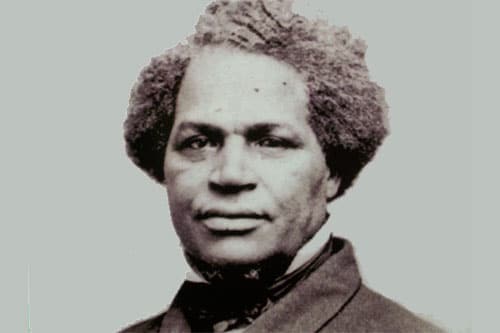 Sarah Lougue’s letter to her runaway slave Jermain Wesley Logan (Jarm Logue)